
Articles | Volume 24, issue 5
https://doi.org/10.5194/hess-24-2841-2020
© Author(s) 2020. This work is distributed under
the Creative Commons Attribution 4.0 License.
the Creative Commons Attribution 4.0 License.
https://doi.org/10.5194/hess-24-2841-2020
© Author(s) 2020. This work is distributed under
the Creative Commons Attribution 4.0 License.
the Creative Commons Attribution 4.0 License.
Research article
| 
29 May 2020
Research article |
| 29 May 2020
| 29 May 2020
Nonstationary stochastic rain type generation: accounting for climate drivers
Lionel Benoit
CORRESPONDING AUTHOR
Institute of Earth Surface Dynamics (IDYST), University of Lausanne, Lausanne, Switzerland
Mathieu Vrac
Laboratory for Sciences of Climate and Environment (LSCE-IPSL), CNRS/CEA/UVSQ, Orme des Merisiers, France
Gregoire Mariethoz
Institute of Earth Surface Dynamics (IDYST), University of Lausanne, Lausanne, Switzerland
Related authors
Tristan Jaouen, Lionel Benoit, Louis Héraut, and Eric Sauquet
Hydrol. Earth Syst. Sci., 29, 3629–3671, https://doi.org/10.5194/hess-29-3629-2025, https://doi.org/10.5194/hess-29-3629-2025, 2025
Short summary
Short summary
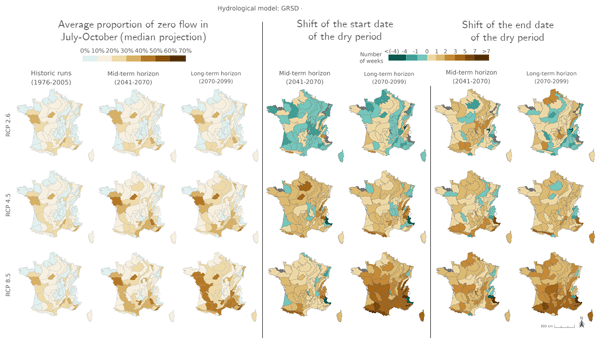
This study uses a multi-model approach to assess future changes in river flow intermittency across France under climate change. Combining projections from the Explore2 project with historical flow observations, logistic regressions estimate the daily probability of flow intermittency (PFI) under RCP2.6, RCP4.5, and RCP8.5 scenarios. Results suggest intensifying and prolonged dry spells throughout the 21st century, with southern France more affected, while uncertainty remains higher in northern regions.
Lionel Benoit, Matthew P. Lucas, Denis Allard, Keri M. Kodama, and Thomas W. Giambelluca
EGUsphere, https://doi.org/10.5194/egusphere-2025-2181, https://doi.org/10.5194/egusphere-2025-2181, 2025
Short summary
Short summary
In mountainous regions the interactions between topography and prevailing winds generate orographic effects, which modulate rainfall occurrence and intensity depending on slope exposure, finally creating strong rainfall gradients. This study introduces a geostatistical model dedicated to rainfall mapping in mountainous areas, which therefore explicitly account for possible orographic effects.

Nadav Peleg, Herminia Torelló-Sentelles, Grégoire Mariéthoz, Lionel Benoit, João P. Leitão, and Francesco Marra
Nat. Hazards Earth Syst. Sci., 23, 1233–1240, https://doi.org/10.5194/nhess-23-1233-2023, https://doi.org/10.5194/nhess-23-1233-2023, 2023
Short summary
Short summary
Floods in urban areas are one of the most common natural hazards. Due to climate change enhancing extreme rainfall and cities becoming larger and denser, the impacts of these events are expected to increase. A fast and reliable flood warning system should thus be implemented in flood-prone cities to warn the public of upcoming floods. The purpose of this brief communication is to discuss the potential implementation of low-cost acoustic rainfall sensors in short-term flood warning systems.

Lionel Benoit, Lydie Sichoix, Alison D. Nugent, Matthew P. Lucas, and Thomas W. Giambelluca
Hydrol. Earth Syst. Sci., 26, 2113–2129, https://doi.org/10.5194/hess-26-2113-2022, https://doi.org/10.5194/hess-26-2113-2022, 2022
Short summary
Short summary
This study presents a probabilistic model able to reproduce the spatial patterns of rainfall on tropical islands with complex topography. It sheds new light on rainfall variability at the island scale, and explores the links between rainfall patterns and atmospheric circulation. The proposed model has been tested on two islands of the tropical Pacific, and demonstrates good skills in simulating both site-specific and island-scale rain behavior.
Clara Naldesi, Nathalie Bertrand, Davide Faranda, and Mathieu Vrac
EGUsphere, https://doi.org/10.5194/egusphere-2026-1466, https://doi.org/10.5194/egusphere-2026-1466, 2026
This preprint is open for discussion and under review for Weather and Climate Dynamics (WCD).
Short summary
Short summary
The public increasingly needs to know whether and how climate change influences specific extreme events. ClimaMeter is a scientific tool designed to address this demand. This paper reviews the ClimaMeter methodology, focusing on how it estimates the relative roles of natural variability and climate change. We propose a more flexible and general approach within the same framework, enabling a more nuanced assessment of natural variability.
Yoann Robin, Mathieu Vrac, Aurélien Ribes, Occitane Barbaux, and Philippe Naveau
Geosci. Model Dev., 19, 2349–2372, https://doi.org/10.5194/gmd-19-2349-2026, https://doi.org/10.5194/gmd-19-2349-2026, 2026
Short summary
Short summary
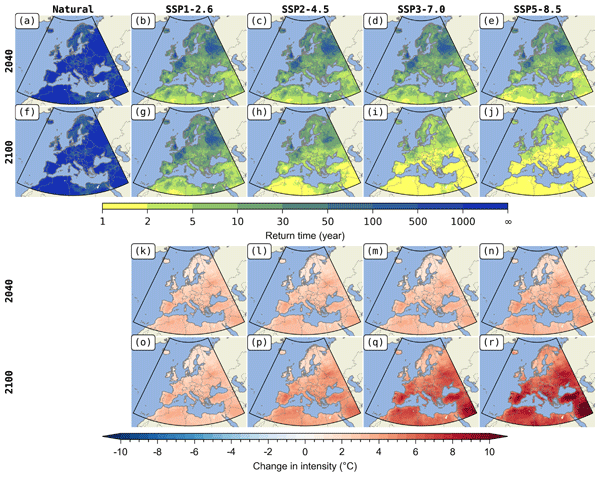
We describe an improved method and the associated free licensed package ANKIALE (ANalysis of Klimate with bayesian Inference: AppLication to extreme Events) for estimating the statistics of temperature extremes. This method uses climate model simulations (including multiple scenarios simultaneously) to provide a prior of the real-world changes, constrained by the observations. The method and the tool are illustrated via an application to temperature over Europe until 2100, for four scenarios.
Greta Cazzaniga, Anastasia Akakpo-Numado, Patrick Brockmann, Adrien Burq, Mathieu Vrac, and Davide Faranda
EGUsphere, https://doi.org/10.5194/egusphere-2026-1175, https://doi.org/10.5194/egusphere-2026-1175, 2026
Short summary
Short summary
Extreme weather events are becoming more frequent and severe, creating a strong need for rapid and reliable information. We developed an open tool that automatically detects and tracks heatwaves, cold spells, heavy rain, and strong winds across Europe, both in real time and in past decades. By comparing current events with long historical records, the tool shows how unusual an event is and reveals clear increases in heatwaves, while other hazards show more mixed changes.
Joséphine Schmutz, Mathieu Vrac, Bastien François, and Burak Bulut
Nat. Hazards Earth Syst. Sci., 26, 881–900, https://doi.org/10.5194/nhess-26-881-2026, https://doi.org/10.5194/nhess-26-881-2026, 2026
Short summary
Short summary
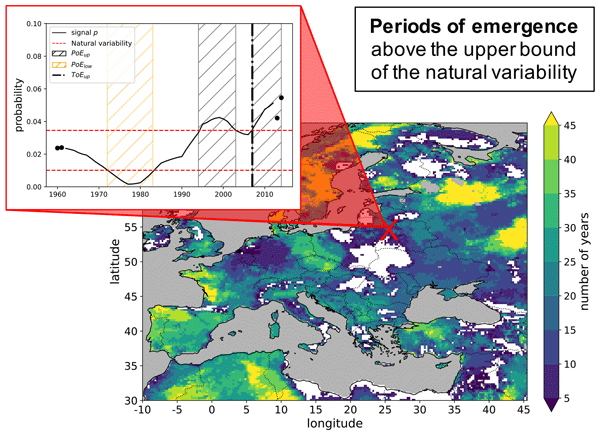
In recent years, Europe has faced severe hot and dry events affecting biodiversity, agriculture, and health. Understanding past significant variation in their occurrence is key for adaptation. This paper identifies emerging hotspots in Europe and North Africa. Since the 1970s, the Iberian Peninsula, Maghreb, and Central Europe have seen more frequent events, driven by rising temperature maxima, while Eastern Europe has experienced a decline due to changes in drought.
Guillaume Evin, Benoit Hingray, Guillaume Thirel, Agnès Ducharne, Laurent Strohmenger, Lola Corre, Yves Tramblay, Jean-Philippe Vidal, Jérémie Bonneau, François Colleoni, Joël Gailhard, Florence Habets, Frédéric Hendrickx, Louis Héraut, Peng Huang, Matthieu Le Lay, Claire Magand, Paola Marson, Céline Monteil, Simon Munier, Alix Reverdy, Jean-Michel Soubeyroux, Yoann Robin, Jean-Pierre Vergnes, Mathieu Vrac, and Eric Sauquet
Hydrol. Earth Syst. Sci., 30, 1023–1051, https://doi.org/10.5194/hess-30-1023-2026, https://doi.org/10.5194/hess-30-1023-2026, 2026
Short summary
Short summary
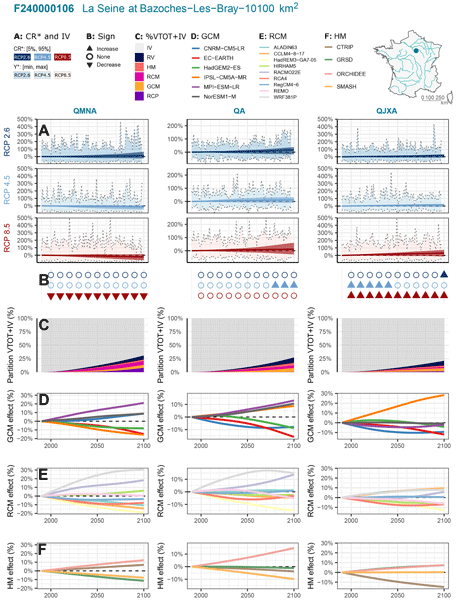
Explore2 provides hydrological projections for 1,735 French catchments. Using QUALYPSO (Quasi-Ergodic Analysis of Climate Projections Using Data Augmentation), this study assesses uncertainties, including internal variability. By the end of the century, low flows are projected to decline in southern France under high emissions, while other indicators remain uncertain. Emission scenarios and regional climate models are key uncertainty sources. Internal variability is often as large as climate-driven changes.
Fatemeh Zakeri, Gregoire Mariethoz, and Manuela Girotto
Hydrol. Earth Syst. Sci., 29, 6935–6958, https://doi.org/10.5194/hess-29-6935-2025, https://doi.org/10.5194/hess-29-6935-2025, 2025
Short summary
Short summary
Our study presents a method to estimate high-resolution snow water equivalent (HR-SWE) using low-resolution climate data (LR-CD). By using a data-driven approach, we analyze historical weather patterns from LR-CD to generate HR-SWE maps. Machine learning and statistical relationships between LR-CD and HR-SWE enable estimation for dates without HR-SWE data. This method enhances water resource management and climate impact assessments, especially in data-scarce regions.
Pradeebane Vaittinada Ayar, Stella Bourdin, Davide Faranda, and Mathieu Vrac
Nat. Hazards Earth Syst. Sci., 25, 4655–4672, https://doi.org/10.5194/nhess-25-4655-2025, https://doi.org/10.5194/nhess-25-4655-2025, 2025
Short summary
Short summary
Tracking tropical cyclones (TCs) remains a matter of interest for investigating observed and simulated tropical cyclones. In this study, Random Forest (RF), a machine learning approach, is considered to track TCs. RF associates the TC occurrence or absence with different atmospheric configurations. Compared to trackers found in the literature, it shows similar performance for tracking TCs, better control over false alarms, more flexibility, and reveals key variables for TCs' detection.
Germain Bénard, Marion Gehlen, and Mathieu Vrac
EGUsphere, https://doi.org/10.5194/egusphere-2025-4680, https://doi.org/10.5194/egusphere-2025-4680, 2025
Short summary
Short summary
Climate change is transforming ocean ecosystem dynamics. We used causality methods to study how the relationships between ocean physics and biogeochemistry will change in the North Atlantic over the next century. By analyzing five different climate models, we discovered that environmental drivers' influence on ocean productivity evolves in complex ways under global warming. One environmental driver can become of major importance while others can become irrelevant.
Paul C. Astagneau, Raul R. Wood, Mathieu Vrac, Sven Kotlarski, Pradeebane Vaittinada Ayar, Bastien François, and Manuela I. Brunner
Hydrol. Earth Syst. Sci., 29, 5695–5718, https://doi.org/10.5194/hess-29-5695-2025, https://doi.org/10.5194/hess-29-5695-2025, 2025
Short summary
Short summary
To study floods and droughts that are likely to change in the future, we use climate projections from climate models. However, we first need to adjust the systematic biases of these projections at the catchment scale before using them in hydrological models. Our study compares statistical methods that can adjust these biases but specifically for climate projections that enable a quantification of internal climate variability. We provide recommendations on the most appropriate methods.
Pau Wiersma, Jan Magnusson, Nadav Peleg, Bettina Schaefli, and Grégoire Mariéthoz
EGUsphere, https://doi.org/10.5194/egusphere-2025-3610, https://doi.org/10.5194/egusphere-2025-3610, 2025
Short summary
Short summary
Using a newly introduced inverse hydrological modeling framework, we demonstrate that streamflow observations have the potential to improve snow mass reconstructions, but that non-uniqueness in the snow-streamflow relationship and uncertainties in the inverse modeling chain can easily stand in the way. We also show that streamflow is most helpful in estimating catchment-aggregated properties of snow mass reconstructions, in particular catchment-aggregated melt rates.
Denis Allard, Mathieu Vrac, Bastien François, and Iñaki García de Cortázar-Atauri
Hydrol. Earth Syst. Sci., 29, 4711–4738, https://doi.org/10.5194/hess-29-4711-2025, https://doi.org/10.5194/hess-29-4711-2025, 2025
Short summary
Short summary
Atmospheric variables from climate models often present biases relative to the past. In order to use these models to assess the impact of climate change on processes of interest, it is necessary to correct these biases. We tested several Multivariate Bias Correction Methods (MBCMs) for 5 physical variables that are input variables for 4 process models. We provide recommendations regarding the use of MBCMs when multivariate and time dependent processes are involved.
Tristan Jaouen, Lionel Benoit, Louis Héraut, and Eric Sauquet
Hydrol. Earth Syst. Sci., 29, 3629–3671, https://doi.org/10.5194/hess-29-3629-2025, https://doi.org/10.5194/hess-29-3629-2025, 2025
Short summary
Short summary
This study uses a multi-model approach to assess future changes in river flow intermittency across France under climate change. Combining projections from the Explore2 project with historical flow observations, logistic regressions estimate the daily probability of flow intermittency (PFI) under RCP2.6, RCP4.5, and RCP8.5 scenarios. Results suggest intensifying and prolonged dry spells throughout the 21st century, with southern France more affected, while uncertainty remains higher in northern regions.
Robin Noyelle, Davide Faranda, Yoann Robin, Mathieu Vrac, and Pascal Yiou
Weather Clim. Dynam., 6, 817–839, https://doi.org/10.5194/wcd-6-817-2025, https://doi.org/10.5194/wcd-6-817-2025, 2025
Short summary
Short summary
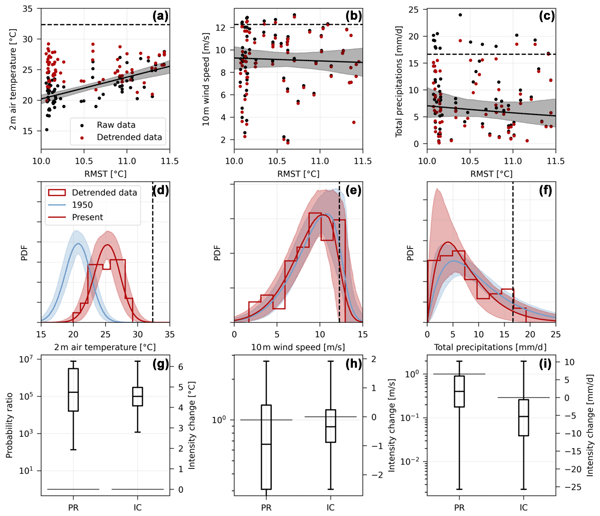
Properties of extreme meteorological and climatological events are changing under human-caused climate change. Extreme event attribution methods seek to estimate the contribution of global warming in the probability and intensity changes of extreme events. Here we propose a procedure to estimate these quantities for the flow analogue method, which compares the observed event to similar events in the past.
Duncan Pappert, Alexandre Tuel, Dim Coumou, Mathieu Vrac, and Olivia Martius
Weather Clim. Dynam., 6, 769–788, https://doi.org/10.5194/wcd-6-769-2025, https://doi.org/10.5194/wcd-6-769-2025, 2025
Short summary
Short summary
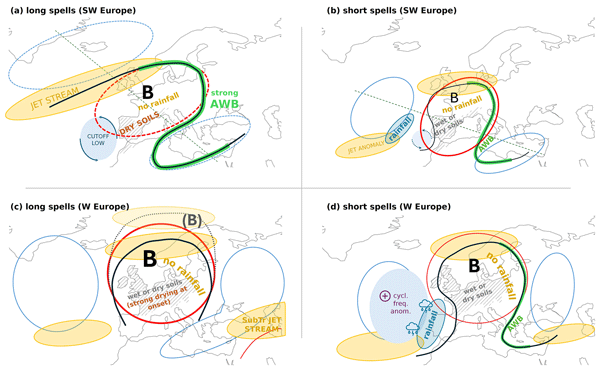
This study compares the dynamical structures that characterise long-lasting (persistent) and short hot spells in Western Europe. We find differences in large-scale atmospheric flow patterns during the events and particular soil moisture evolutions, which can account for the variation in event duration. There is variability in how drivers combine in individual events. Understanding persistent heat extremes can help improve their representation in models and ultimately their prediction.
Germain Bénard, Marion Gehlen, and Mathieu Vrac
Earth Syst. Dynam., 16, 1085–1102, https://doi.org/10.5194/esd-16-1085-2025, https://doi.org/10.5194/esd-16-1085-2025, 2025
Short summary
Short summary
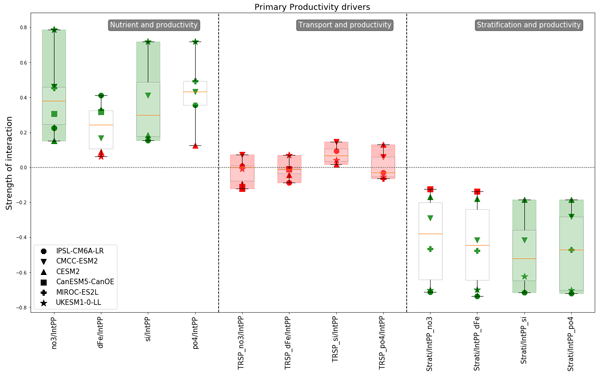
We introduce a novel approach to compare Earth system model output using a causality-based approach. The analysis of interactions between atmospheric, oceanic and biogeochemical variables in the North Atlantic subpolar gyre highlights the dynamics of each model. This method reveals potential underlying causes of model differences, offering a tool for enhanced model evaluation and improved understanding of complex Earth system dynamics under past and future climates.
Lionel Benoit, Matthew P. Lucas, Denis Allard, Keri M. Kodama, and Thomas W. Giambelluca
EGUsphere, https://doi.org/10.5194/egusphere-2025-2181, https://doi.org/10.5194/egusphere-2025-2181, 2025
Short summary
Short summary
In mountainous regions the interactions between topography and prevailing winds generate orographic effects, which modulate rainfall occurrence and intensity depending on slope exposure, finally creating strong rainfall gradients. This study introduces a geostatistical model dedicated to rainfall mapping in mountainous areas, which therefore explicitly account for possible orographic effects.
Ségolène Crossouard, Soulivanh Thao, Thomas Dubos, Masa Kageyama, Mathieu Vrac, and Yann Meurdesoif
EGUsphere, https://doi.org/10.5194/egusphere-2025-1418, https://doi.org/10.5194/egusphere-2025-1418, 2025
Short summary
Short summary
Current atmospheric models are limited by the computational time required for physical processes, known as physical parameterizations. To address this, we developed neural network-based emulators to replace these parameterizations in the IPSL climate model, using a simplified aquaplanet setup. We found that incorporating some physical knowledge, such as latent variables, into the learning process can improve predictions.
Davide Faranda, Gabriele Messori, Erika Coppola, Tommaso Alberti, Mathieu Vrac, Flavio Pons, Pascal Yiou, Marion Saint Lu, Andreia N. S. Hisi, Patrick Brockmann, Stavros Dafis, Gianmarco Mengaldo, and Robert Vautard
Weather Clim. Dynam., 5, 959–983, https://doi.org/10.5194/wcd-5-959-2024, https://doi.org/10.5194/wcd-5-959-2024, 2024
Short summary
Short summary
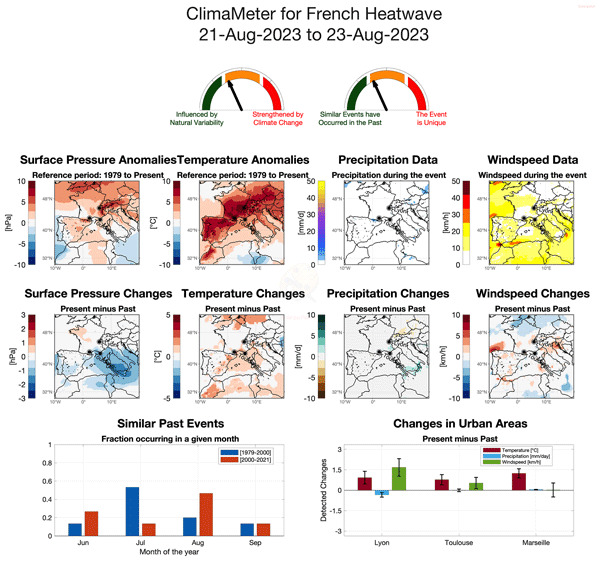
We introduce ClimaMeter, a tool offering real-time insights into extreme-weather events. Our tool unveils how climate change and natural variability affect these events, affecting communities worldwide. Our research equips policymakers and the public with essential knowledge, fostering informed decisions and enhancing climate resilience. We analysed two distinct events, showcasing ClimaMeter's global relevance.
Mathieu Vrac, Denis Allard, Grégoire Mariéthoz, Soulivanh Thao, and Lucas Schmutz
Earth Syst. Dynam., 15, 735–762, https://doi.org/10.5194/esd-15-735-2024, https://doi.org/10.5194/esd-15-735-2024, 2024
Short summary
Short summary
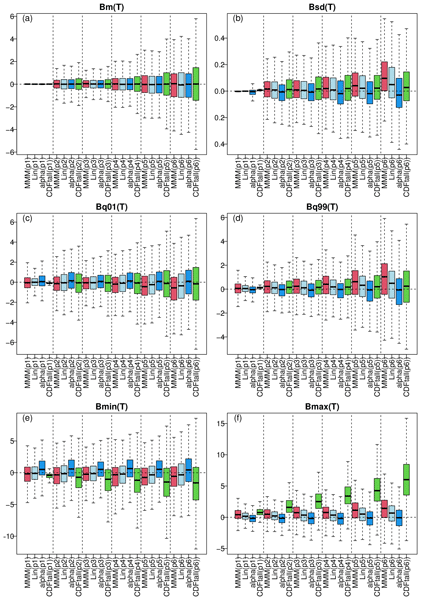
We aim to combine multiple global climate models (GCMs) to enhance the robustness of future projections. We introduce a novel approach, called "α pooling", aggregating the cumulative distribution functions (CDFs) of the models into a CDF more aligned with historical data. The new CDFs allow us to perform bias adjustment of all the raw climate simulations at once. Experiments with European temperature and precipitation demonstrate the superiority of this approach over conventional techniques.
Moctar Dembélé, Mathieu Vrac, Natalie Ceperley, Sander J. Zwart, Josh Larsen, Simon J. Dadson, Grégoire Mariéthoz, and Bettina Schaefli
Proc. IAHS, 385, 121–127, https://doi.org/10.5194/piahs-385-121-2024, https://doi.org/10.5194/piahs-385-121-2024, 2024
Short summary
Short summary
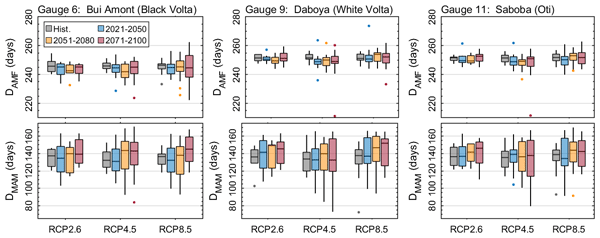
This study assesses the impact of climate change on the timing, seasonality and magnitude of mean annual minimum (MAM) flows and annual maximum flows (AMF) in the Volta River basin (VRB). Several climate change projection data are use to simulate river flow under multiple greenhouse gas emission scenarios. Future projections show that AMF could increase with various magnitude but negligible shift in time across the VRB, while MAM could decrease with up to 14 days of delay in occurrence.
Fabio Oriani, Gregoire Mariethoz, and Manuel Chevalier
Earth Syst. Sci. Data, 16, 731–742, https://doi.org/10.5194/essd-16-731-2024, https://doi.org/10.5194/essd-16-731-2024, 2024
Short summary
Short summary
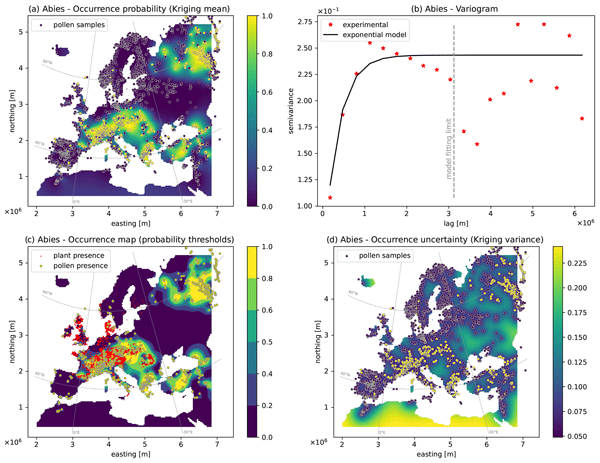
Modern and fossil pollen data contain precious information for reconstructing the climate and environment of the past. However, these data are only achieved for single locations with no continuity in space. We present here a systematic atlas of 194 digital maps containing the spatial estimation of contemporary pollen presence over Europe. This dataset constitutes a free and ready-to-use tool to study climate, biodiversity, and environment in time and space.
Mathieu Gravey and Grégoire Mariethoz
Geosci. Model Dev., 16, 5265–5279, https://doi.org/10.5194/gmd-16-5265-2023, https://doi.org/10.5194/gmd-16-5265-2023, 2023
Short summary
Short summary
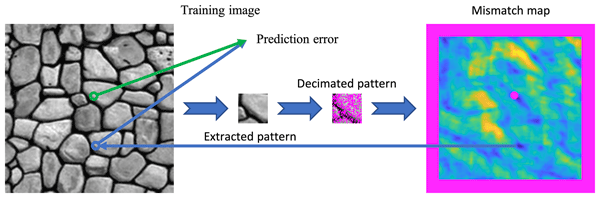
Multiple‐point geostatistics are widely used to simulate complex spatial structures based on a training image. The use of these methods relies on the possibility of finding optimal training images and parametrization of the simulation algorithms. Here, we propose finding an optimal set of parameters using only the training image as input. The main advantage of our approach is to remove the risk of overfitting an objective function.
Cedric Gacial Ngoungue Langue, Christophe Lavaysse, Mathieu Vrac, and Cyrille Flamant
Nat. Hazards Earth Syst. Sci., 23, 1313–1333, https://doi.org/10.5194/nhess-23-1313-2023, https://doi.org/10.5194/nhess-23-1313-2023, 2023
Short summary
Short summary
Heat waves (HWs) are climatic hazards that affect the planet. We assess here uncertainties encountered in the process of HW detection and analyse their recent trends in West Africa using reanalysis data. Three types of uncertainty have been investigated. We identified 6 years with higher frequency of HWs, possibly due to higher sea surface temperatures in the equatorial Atlantic. We noticed an increase in HW characteristics during the last decade, which could be a consequence of climate change.
Nadav Peleg, Herminia Torelló-Sentelles, Grégoire Mariéthoz, Lionel Benoit, João P. Leitão, and Francesco Marra
Nat. Hazards Earth Syst. Sci., 23, 1233–1240, https://doi.org/10.5194/nhess-23-1233-2023, https://doi.org/10.5194/nhess-23-1233-2023, 2023
Short summary
Short summary
Floods in urban areas are one of the most common natural hazards. Due to climate change enhancing extreme rainfall and cities becoming larger and denser, the impacts of these events are expected to increase. A fast and reliable flood warning system should thus be implemented in flood-prone cities to warn the public of upcoming floods. The purpose of this brief communication is to discuss the potential implementation of low-cost acoustic rainfall sensors in short-term flood warning systems.
Bastien François and Mathieu Vrac
Nat. Hazards Earth Syst. Sci., 23, 21–44, https://doi.org/10.5194/nhess-23-21-2023, https://doi.org/10.5194/nhess-23-21-2023, 2023
Short summary
Short summary
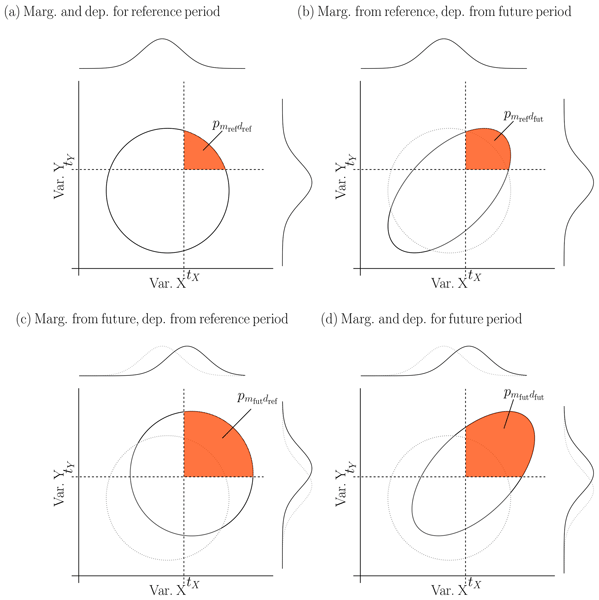
Compound events (CEs) result from a combination of several climate phenomena. In this study, we propose a new methodology to assess the time of emergence of CE probabilities and to quantify the contribution of marginal and dependence properties of climate phenomena to the overall CE probability changes. By applying our methodology to two case studies, we show the importance of considering changes in both marginal and dependence properties for future risk assessments related to CEs.

Antoine Grisart, Mathieu Casado, Vasileios Gkinis, Bo Vinther, Philippe Naveau, Mathieu Vrac, Thomas Laepple, Bénédicte Minster, Frederic Prié, Barbara Stenni, Elise Fourré, Hans Christian Steen-Larsen, Jean Jouzel, Martin Werner, Katy Pol, Valérie Masson-Delmotte, Maria Hoerhold, Trevor Popp, and Amaelle Landais
Clim. Past, 18, 2289–2301, https://doi.org/10.5194/cp-18-2289-2022, https://doi.org/10.5194/cp-18-2289-2022, 2022
Short summary
Short summary
This paper presents a compilation of high-resolution (11 cm) water isotopic records, including published and new measurements, for the last 800 000 years from the EPICA Dome C ice core, Antarctica. Using this new combined water isotopes (δ18O and δD) dataset, we study the variability and possible influence of diffusion at the multi-decadal to multi-centennial scale. We observe a stronger variability at the onset of the interglacial interval corresponding to a warm period.
Lionel Benoit, Lydie Sichoix, Alison D. Nugent, Matthew P. Lucas, and Thomas W. Giambelluca
Hydrol. Earth Syst. Sci., 26, 2113–2129, https://doi.org/10.5194/hess-26-2113-2022, https://doi.org/10.5194/hess-26-2113-2022, 2022
Short summary
Short summary
This study presents a probabilistic model able to reproduce the spatial patterns of rainfall on tropical islands with complex topography. It sheds new light on rainfall variability at the island scale, and explores the links between rainfall patterns and atmospheric circulation. The proposed model has been tested on two islands of the tropical Pacific, and demonstrates good skills in simulating both site-specific and island-scale rain behavior.
Moctar Dembélé, Mathieu Vrac, Natalie Ceperley, Sander J. Zwart, Josh Larsen, Simon J. Dadson, Grégoire Mariéthoz, and Bettina Schaefli
Hydrol. Earth Syst. Sci., 26, 1481–1506, https://doi.org/10.5194/hess-26-1481-2022, https://doi.org/10.5194/hess-26-1481-2022, 2022
Short summary
Short summary
Climate change impacts on water resources in the Volta River basin are investigated under various global warming scenarios. Results reveal contrasting changes in future hydrological processes and water availability, depending on greenhouse gas emission scenarios, with implications for floods and drought occurrence over the 21st century. These findings provide insights for the elaboration of regional adaptation and mitigation strategies for climate change.
Yoann Robin and Mathieu Vrac
Earth Syst. Dynam., 12, 1253–1273, https://doi.org/10.5194/esd-12-1253-2021, https://doi.org/10.5194/esd-12-1253-2021, 2021
Short summary
Short summary
We propose a new multivariate downscaling and bias correction approach called
time-shifted multivariate bias correction, which aims to correct temporal dependencies in addition to inter-variable and spatial ones. Our method is evaluated in a
perfect model experimentcontext where simulations are used as pseudo-observations. The results show a large reduction of the biases in the temporal properties, while inter-variable and spatial dependence structures are still correctly adjusted.

Cedric G. Ngoungue Langue, Christophe Lavaysse, Mathieu Vrac, Philippe Peyrillé, and Cyrille Flamant
Weather Clim. Dynam., 2, 893–912, https://doi.org/10.5194/wcd-2-893-2021, https://doi.org/10.5194/wcd-2-893-2021, 2021
Short summary
Short summary
This work assesses the forecast of the temperature over the Sahara, a key driver of the West African Monsoon, at a seasonal timescale. The seasonal models are able to reproduce the climatological state and some characteristics of the temperature during the rainy season in the Sahel. But, because of errors in the timing, the forecast skill scores are significant only for the first 4 weeks.
Anna Denvil-Sommer, Marion Gehlen, and Mathieu Vrac
Ocean Sci., 17, 1011–1030, https://doi.org/10.5194/os-17-1011-2021, https://doi.org/10.5194/os-17-1011-2021, 2021
Short summary
Short summary
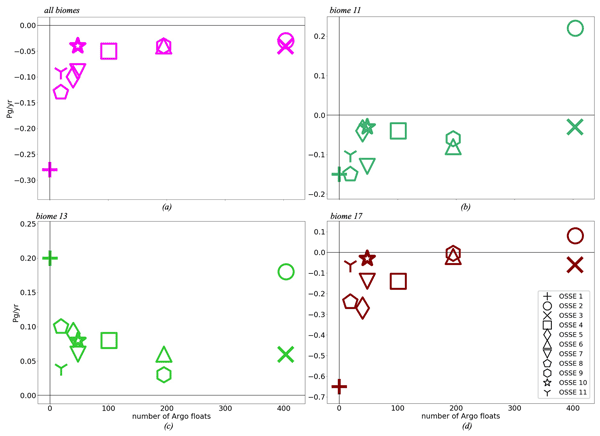
In this work we explored design options for a future Atlantic-scale observational network enabling the release of carbon system estimates by combining data streams from various platforms. We used outputs of a physical–biogeochemical global ocean model at sites of real-world observations to reconstruct surface ocean pCO2 by applying a non-linear feed-forward neural network. The results provide important information for future BGC-Argo deployment, i.e. important regions and the number of floats.
Zhenjiao Jiang, Dirk Mallants, Lei Gao, Tim Munday, Gregoire Mariethoz, and Luk Peeters
Geosci. Model Dev., 14, 3421–3435, https://doi.org/10.5194/gmd-14-3421-2021, https://doi.org/10.5194/gmd-14-3421-2021, 2021
Short summary
Short summary
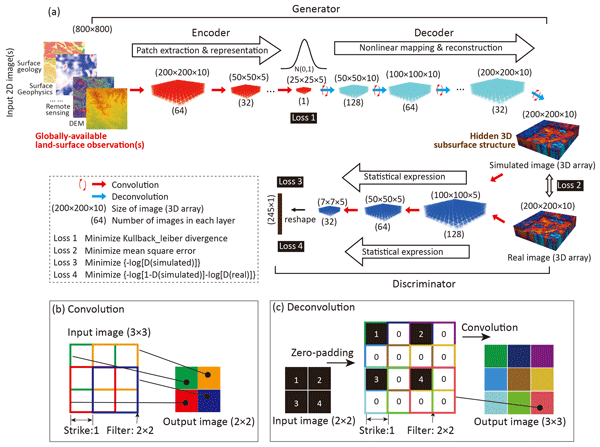
Fast and reliable tools are required to extract hidden information from big geophysical and remote sensing data. A deep-learning model in 3D image construction from 2D image(s) is here developed for paleovalley mapping from globally available digital elevation data. The outstanding performance for 3D subsurface imaging gives confidence that this generic novel tool will make better use of existing geophysical and remote sensing data for improved management of limited earth resources.
Cited articles
Ailliot, P., Allard, D., Monbet, V., and Naveau, P.: Stochastic weather generators: an overview of weather type models, Journal de la société française de statistiques, 156, 101–113, 2015. a
Bárdossy, A. and Pegram, G. G. S.: Space-time conditional disaggregation of precipitation at high resolution via simulation, Water Resour. Res., 52, 920–937, https://doi.org/10.1002/2015WR018037, 2016. a
Bárdossy, A. and Plate, E. J.: Modelling daily rainfall using a semi-Markov representation of circulation pattern occurence, J. Hydrol., 122, 33–47, https://doi.org/10.1016/0022-1694(91)90170-M, 1991. a
Benoit, L.: Rain type data over Thuringia for the period 2001–2017, available at: https://github.com/LionelBenoit/Stochastic_Raintype_Generator/Raintype_data (last access: 27 May 2020), 2020a. a
Benoit, L.: Rain typing software, available at: https://github.com/LionelBenoit/Rain_typing (last access: 27 May 2020), 2020b. a
Benoit, L.: Stochastic rainfall generator software, available at: https://github.com/LionelBenoit/Stochastic_Raintype_Generator/codes (last access: 27 May 2020), 2020c. a
Benoit, L., Allard, D., and Mariethoz, G.: Stochastic Rainfall Modelling at Sub-Kilometer Scale, Water Resour. Res., 54, 4108–4130, https://doi.org/10.1029/2018WR022817, 2018a. a, b, c, d
Burton, A., Fowler, H. J., Blenkinsop, S., and Kilsby, C. G.: Downscaling transient climate change using a Neyman–Scott Rectangular Pulses stochastic rainfall model, J. Hydrol., 381, 18–32, https://doi.org/10.1016/j.jhydrol.2009.10.031, 2010. a
Caseri, A., Javelle, P., Ramos, M. H., and Leblois, E.: Generating precipitation ensembles for flood alert and risk management, J. Flood Risk Manage., 9, 402–415, https://doi.org/10.1111/jfr3.12203, 2016. a
DWD – Deutcher Wetterdienst: Radolan radar products, available at: https://opendata.dwd.de/climate_environment/CDC/grids_germany/5_minutes/radolan, last access: 27 May 2020. a
Emery, X. and Lantuéjoul, C.: TBSIM: A computer program for conditional simulation of three-dimensional Gaussian random fields via the turning bands method, Comput. Geosci., 32, 1615–1628, https://doi.org/10.1016/j.cageo.2006.03.001, 2014. a
Emmanuel, I., Andrieu, H., Leblois, E., and Flahaut, B.: Temporal and spatial variability of rainfall at the urban hydrological scale, J. Hydrol., 430–431, 162–172, https://doi.org/10.1016/j.jhydrol.2012.02.013, 2012. a, b
Faranda, D., Alvarez-Castro, C., Messori, G., Rodrigues, D., and Yiou, P.: The hammam effect or how a warm ocean enhances large scale atmospheric predictability, Nat. Commun., 10, 1316, https://doi.org/10.1038/s41467-019-09305-8, 2019. a
Fitzpatrick, M. C. and Dunn, R. R.: Contemporary climatic analogs for 540 North American urban areas in the late 21st century, Nat. Commun., 10, 614, https://doi.org/10.1038/s41467-019-08540-3, 2019. a
Foufoula-Georgiou, E. and Lettenmaier, D.: A Markov Renewal Model for Rainfall Occurence, Water Resour. Res., 23, 875–884, https://doi.org/10.1029/WR023i005p00875, 1987. a
Furrer, E. M. and Katz, R. W.: Generalized linear modeling approach to stochastic weather generators, Clim. Res., 34, 129–144, https://doi.org/10.3354/cr034129, 2007. a
Ghada, W., Estrella, N., and Menzel, A.: Machine Learning Approach to Classify Rain Type Based on Thies Disdrometers and Cloud Observations, Atmosphere, 10, 251, https://doi.org/10.3390/atmos10050251, 2019. a
Gires, A., Tchiguirinskaia, I., Schertzer, D., Schellart, A., Berne, A., and Lovejoy, S.: Influence of small scale rainfall variability on standard comparison tools between radar and rain gauge data, Atmos. Res., 138, 125–138, https://doi.org/10.1016/j.atmosres.2013.11.008, 2014. a
Gravey, M.: G2S: The GeoStatistical Server, available at: https://github.com/GAIA-UNIL/G2S, last access: 27 May 2020. a
Gravey, M. and Mariethoz, G.: Quantile Sampling: a new approach for multiple-point statistics simulation, in: IAMG 2018 Conference, Olomouc, Czech Republic, 2018. a
Gravey, M. and Mariethoz, G.: Quantile Sampling: a robust and simplified pixel-based multiple-point simulation approach, Geosci. Model Dev. Discuss., https://doi.org/10.5194/gmd-2019-211, in review, 2019. a
Hallegatte, S., Hourcade, J. C., and Ambrosi, P.: Using climate analogues for assessing climate change economic impacts in urban areas, Climatic Change, 82, 47–60, https://doi.org/10.1007/s10584-006-9161-z, 2007. a
Hersbach, H., de Rosnay, P., Bell, B., Schepers, D., Simmons, A., Soci, C., Abdalla, S., Alonso-Balmaseda, M., Balsamo, G., Bechtold, P., Berrisford, P., Bidlot, J.-R., de Boisséson, E., Bonavita, M., Browne, P., Buizza, R., Dahlgren, P., Dee, D., Dragani, R., Diamantakis, M., Flemming, J., Forbes, R., Geer, A. J., Haiden, T., Hólm, E., Haimberger, L., Hogan, R., Horányi, A., Janiskova, M., Laloyaux, P., Lopez, P., Munoz-Sabater, J., Peubey, C., Radu, R., Richardson, D., Thŕpaut, J.-N., Vitart, F., Yang, X., Zsótér, E., and Zuo, H.: Operational global reanalysis: progress, future directions and synergies with NWPRep, in: ERA Report Series, ECMWF report, ECMWF, Reading, England, 2018. a
Hughes, J. P. and Guttorp, P.: A non-homogeneous hidden Markov model for precipitation occurence, Appl. Stat., 48, 15–30, https://doi.org/10.1111/1467-9876.00136, 1999. a
Jacob, D., Petersen, J., Eggert, B., Alias, A., Bøssing Christensen, O., Bouwer, L. M., Braun, A., Colette, A., Déqué, M., Georgievski, G., Georgopoulou, E., Gobiet, A., Menut, L., Nikulin, G., Haensler, A., Hempelmann, N., Jones, C., Keuler, K., Kovats, S., Kröner, N., Kotlarski, S., Kriegsmann, A., Martin, E., van Meijgaard, E., Moseley, C., Pfeifer, S., Preuschmann, S., Radermacher, C., Radtke, K., Rechid, D., Rounsevell, M., Samuelsson, P., Somot, S., Soussana, J. F., Teichmann, C., Valentini, R., Vautard, R., Weber, B., and Yiou, P.: EURO-CORDEX: new high-resolution climate change projections for European impact research, Reg. Environ. Change, 14, 563–578, 2014. a
Kaspar, F., Muller-Westermeier, G., Penda, E., Machel, H., Zimmermann, K., Keiser-Weiss, A., and Deutschlander, T.: Monitoring of climate change in Germany – data, products and services of Germany's National Climate Data Centre, Adv. Sci. Res., 10, 99–106, https://doi.org/10.5194/asr-10-99-2013, 2013. a
Krajewski, W. F., Ciach, G., and Habib, E.: An analysis of small-scale rainfall variability in different climatic regimes, Hydrolog. Sci. J., 48, 151–162, https://doi.org/10.1623/hysj.48.2.151.44694, 2003. a
Kumar, L. S., Lee, Y. H., Yeo, J. X., and Ong, J. T.: Tropical rain classification and estimation of rain from Z–R relationships, Prog. Electromag. Res., 32, 107–127, https://doi.org/10.2528/pierb11040402, 2011. a
Lagrange, M., Andrieu, H., Emmanuel, I., Busquets, G., and Loubrié, S.: Classification of rainfall radar images using the scattering transform, J. Hydrol., 556, 972–979, https://doi.org/10.1016/j.jhydrol.2016.06.063, 2018. a
Leblois, E. and Creutin, J. D.: Space-time simulation of intermittent rainfall with prescribed advection field: Adaptation of the turning band method, Water Resour. Res., 49, 3375–3387, https://doi.org/10.1002/wrcr.20190, 2013. a, b
Mariethoz, G. and Caers, J.: Multiple-Point Geostatistics: Stochastic Modeling with Training Images, Wiley Blackwell, Hoboken, USA, 364 pp., 2015. a
Mariethoz, G., Renard, P., and Straubhaar, J.: The Direct Sampling method to perform multiple‐point geostatistical simulations, Water Resour. Res., 46, W11536, https://doi.org/10.1029/2008WR007621, 2010. a
Marra, F. and Morin, E.: Autocorrelation structure of convective rainfall in semiarid-arid climate derived from high-resolution X-Band radar estimates, Atmos. Res., 200, 126–138, https://doi.org/10.1016/j.atmosres.2017.09.020, 2018. a
Mascaro, G., Deidda, R., and Hellies, M.: On the nature of rainfall intermittency as revealed by different metrics and sampling approaches, Hydrol. Earth Syst. Sci., 17, 355–369, https://doi.org/10.5194/hess-17-355-2013, 2013. a
Mavromatis, T. and Hansen, J. W.: Interannual variability characteristics and simulated crop response of four stochastic weather generators, Agr. Forest Meteorol., 109, 283–296, https://doi.org/10.1016/S0168-1923(01)00272-6, 2001. a
Molnar, P., Fatichi, S., Gaàl, L., Szolgay, J., and Burlando, P.: Storm type effects on super Clausius–Clapeyron scaling of intense rainstorm properties with air temperature, Hydrol. Earth Syst. Sci., 19, 1753–1766, https://doi.org/10.5194/hess-19-1753-2015, 2013. a
Nerini, D., Besic, N., Sideris, I. V., Germann, U., and Foresti, L.: A non-stationary stochastic ensemble generator for radar rainfall fields based on the short-space Fourier transform, Hydrol. Earth Syst. Sci., 21, 2777–2797, https://doi.org/10.5194/hess-21-2777-2017, 2017. a, b
Oriani, F., Mehrotra, R., Mariethoz, G., Straubhaar, J., Sharma, A., and Renard, P.: Simulation of rainfall time series from different climatic regions using the direct sampling technique, Hydrol. Earth Syst. Sci., 18, 3015–3031, https://doi.org/10.5194/hess-18-3015-2014, 2014. a
Oriani, F., Straubhaar, Renard, P., and Mariethoz, G.: Simulating rainfall time-series: how to account for statistical variability at multiple scales?, Stoch. Environ. Res. Risk Assess., 32, 321–340, https://doi.org/10.1007/s00477-017-1414-z, 2018. a
Pardo-Igúzquiza, E., Grimes, D. I. F., and Teo, C. K.: Assessing the uncertainty associated with intermittent rainfall fields, Water Resour. Res., 42, W01412, https://doi.org/10.1029/2004WR003740, 2006. a
Paschalis, A., Molnar, P., Fatichi, S., and Burlando, P.: A stochastic model for high-resolution space-time precipitation simulation, Water Resour. Res., 49, 8400–8417, https://doi.org/10.1002/2013WR014437, 2013. a, b, c
Paschalis, A., Fatichi, S., Molnar, P., and Burlando, P.: On the effects of small scale space-time variability of rainfall on basin flood response, J. Hydrol., 514, 313–327, https://doi.org/10.1016/j.jhydrol.2014.04.014, 2014. a
Peleg, N., Fatichi, S., Paschalis, A., Molnar, P., and Burlando, P.: An advanced stochastic weather generator for simulating 2-D high-resolution climate variables, J. Adv. Model. Earth Syst., 9, 1595–1627,
https://doi.org/10.1002/2016MS000854, 2017. a, b
Peleg, N., Molnar, P., Burlando, P., and Fatichi, S.: Exploring stochastic climate uncertainty in space and time using a griddedhourly weather generator, J. Hydrol., 571, 627–641, https://doi.org/10.1016/j.jhydrol.2019.02.010, 2019. a
Prein, A. F., Langhans, W., Fosser, G., Ferrone, A., Ban, N., Goergen, K., Keller, M., Tolle, M., Gutjahr, O., Feser, F., Brisson, E., Kollet, S., Schmidli, J., van Lipzig, N., and Leung, R.: A review on regional convection-permitting climate modeling: Demonstrations, prospects, and challenges, Rev. Geophys., 53, 323–361, https://doi.org/10.1002/2014RG000475, 2015. a
Richardson, C. W.: Stochastic simulation of daily precipitation, temperature, and solar radiation, Water Resour. Res., 17, 182–190, https://doi.org/10.1029/WR017i001p00182, 1981. a, b
Rust, H. W., Vrac, M., Sultan, B., and Lengaigne, M.: Mapping Weather-Type Influence on Senegal Precipitation Based on a Spatial–Temporal Statistical Model, J. Climate, 26, 8189–8209, https://doi.org/10.1175/jcli-d-12-00302.1, 2013. a
Schleiss, M., Jaffrain, J., and Berne, A.: Statistical analysis of rainfall intermittency at small spatial and temporal scales, Geophys. Res. Lett., 38, L18403, https://doi.org/10.1029/2011GL049000, 2011. a
Smith, J. A., Hui, E., Steiner, M., Krajewski, W. F., and Ntelekos, A. A.: Variability of rainfall rate and raindrop size distributions in heavy rain, Water Resour. Res., 45, W04430, https://doi.org/10.1029/2008WR006840, 2009. a
Van Meijgaard, E., Van Ulft, L. H., Van de Berg, W. J., Bosveld, F. C., Van den Hurk, J. M. Lenderink, G., and Siebesma, A. P.: The KNMI regional atmospheric climate model RACMO version 2.1, Report of Koninklijk Nederlands Meteorologisch Instituut, Koninklijk Nederlands Meteorologisch Instituut, De Bilt, the Netherlands, 2008. a
Verdin, A., Rajagopalan, B., Kleiber, W., and Katz, R. W.: Coupled stochastic weather generation using spatial and generalized linear models, Stoch. Environ. Res. Risk Assess., 29, 347–356, https://doi.org/10.1007/s00477-014-0911-6, 2015. a
Vischel, T., Quantin, G., Lebel, T., Viarre, J., Gosset, M., Cazenave, F., and Panthou, G.: Generation of High-Resolution Rain Fields in West Africa: Evaluation of Dynamic Interpolation Methods, J. Hydrometeorol., 12, 1465–1482, https://doi.org/10.1175/JHM-D-10-05015.1, 2011.
a, b
Voldoire, A., Sanchez-Gomez, E., Salas y Mélia, D., Decharme, B., Cassou, C., Sénési, S., Valcke, S., Beau, I., Alias, A., Chevallier, M., Déqué, M., Deshayes, J., Douville, H., Fernandez, E., Madec, G., Maisonnave, E., Moine, M.-P., Planton, S., Saint-Martin, D., Szopa, S., Tyteca, S., Alkama, R., Belamari, S., Braun, A., Coquart, L., and Chauvin, F.: The CNRM-CM5.1 global climate model: description and basic evaluation, Clim. Dynam., 40, 2091–2121, https://doi.org/10.1007/s00382-011-1259-y, 2013. a
Volosciuk, C., Maraun, D., Vrac, M., and Widmann, M.: A combined statistical bias correction and stochastic downscaling method for precipitation, Hydrol. Earth Syst. Sci., 21, 1693–1719, https://doi.org/10.5194/hess-21-1693-2017, 2017. a
Vrac, M., Stein, M., and Hayhoe, K.: Statistical downscaling of precipitation through nonhomogeneous stochastic weather typing, Clim. Res., 34, 169–184, https://doi.org/10.3354/cr00696, 2007. a, b
Vrac, M., Drobinski, P., Merlo, A., Herrmann, M., Lavaysse, C., Li, L., and Somot, S.: Dynamical and statistical downscaling of the French Mediterranean climate: uncertainty assessment, Nat. Hazards Earth Syst. Sci., 12, 2769–2784, https://doi.org/10.5194/nhess-12-2769-2012, 2012. a
Wilby, R. L.: Stochastic weather type simulation for regional climate change assessment, Water Resour. Res., 30, 3395–3403, https://doi.org/10.1029/94wr01840, 1994. a
Wilks, D. S.: Use of stochastic weather generators for precipitation downscaling, WIREs Clim. Change, 1, 898–907, https://doi.org/10.1002/wcc.85, 2010. a
Wilks, D. S. and Wilby, R. L.: The weather generation game: a review of stochastic weather models, Prog. Phys. Geogr., 23, 329–357, https://doi.org/10.1177/030913339902300302, 1999. a, b, c
Willems, P.: A spatial rainfall generator for small spatial scales, J. Hydrol., 252, 126–144, https://doi.org/10.1016/S0022-1694(01)00446-2, 2001. a
Winterrath, T., Rosenow, W., and Weigl, E.: On the DWD quantitative precipitation analysis and nowcasting system for real-time application in German flood risk management, Weather Radar Hydrol., 351, 323–329, 2012. a
Short summary
At subdaily resolution, rain intensity exhibits a strong variability in space and time due to the diversity of processes that produce rain (e.g., frontal storms, mesoscale convective systems and local convection). In this paper we explore a new method to simulate rain type time series conditional to meteorological covariates. Afterwards, we apply stochastic rain type simulation to the downscaling of precipitation of a regional climate model.
At subdaily resolution, rain intensity exhibits a strong variability in space and time due to...


