
Articles | Volume 29, issue 6
https://doi.org/10.5194/hess-29-1525-2025
© Author(s) 2025. This work is distributed under
the Creative Commons Attribution 4.0 License.
the Creative Commons Attribution 4.0 License.
https://doi.org/10.5194/hess-29-1525-2025
© Author(s) 2025. This work is distributed under
the Creative Commons Attribution 4.0 License.
the Creative Commons Attribution 4.0 License.
Research article
| 
20 Mar 2025
Research article |
| 20 Mar 2025
| 20 Mar 2025
Constructing a geography of heavy-tailed flood distributions: insights from common streamflow dynamics

Graduate Institute of Environmental Engineering, National Taiwan University, Taipei City, 106319, Republic of China
Ralf Merz
Institute of Geosciences and Geography, Martin-Luther University Halle-Wittenberg, 06120 Halle (Saale), Germany
Department Catchment Hydrology, Helmholtz-Centre for Environmental Research, Halle (Saale), Germany
Stefano Basso
Department of Geography, Norwegian University of Science and Technology, Trondheim, 7491, Norway
Related authors
Che-You Liu, Jun-Hao Chen, Sung-Ching Lee, Shijie Jiang, Hsing-Jui Wang, and Shao-Yiu Hsu
EGUsphere, https://doi.org/10.5194/egusphere-2026-2483, https://doi.org/10.5194/egusphere-2026-2483, 2026
Short summary
Short summary
Predicting how rainfall becomes streamflow is vital for water and flood management. Traditional models rely on fixed equations that may miss local features, while purely artificial-intelligence models lack physical meaning. We developed a framework that bridges both: it learns catchment characteristics and response patterns from data while remaining physically interpretable. Tested in three Taiwan catchments, it outperformed conventional approaches and revealed meaningful local dynamics.
Hsing-Jui Wang, Ralf Merz, Soohyun Yang, and Stefano Basso
Hydrol. Earth Syst. Sci., 27, 4369–4384, https://doi.org/10.5194/hess-27-4369-2023, https://doi.org/10.5194/hess-27-4369-2023, 2023
Short summary
Short summary
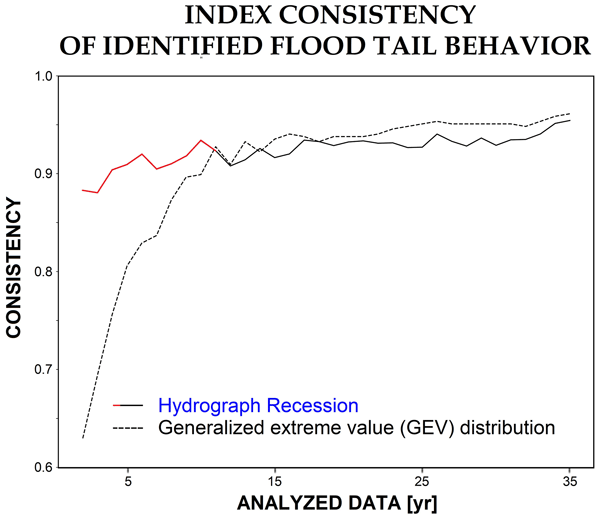
Accurately assessing heavy-tailed flood behavior with limited data records is challenging and can lead to inaccurate hazard estimates. Our research introduces a new index that uses hydrograph recession to identify heavy-tailed flood behavior, compare severity, and produce reliable results with short data records. This index overcomes the limitations of current metrics, which lack physical meaning and require long records. It thus provides valuable insight into the flood hazard of river basins.
Che-You Liu, Jun-Hao Chen, Sung-Ching Lee, Shijie Jiang, Hsing-Jui Wang, and Shao-Yiu Hsu
EGUsphere, https://doi.org/10.5194/egusphere-2026-2483, https://doi.org/10.5194/egusphere-2026-2483, 2026
Short summary
Short summary
Predicting how rainfall becomes streamflow is vital for water and flood management. Traditional models rely on fixed equations that may miss local features, while purely artificial-intelligence models lack physical meaning. We developed a framework that bridges both: it learns catchment characteristics and response patterns from data while remaining physically interpretable. Tested in three Taiwan catchments, it outperformed conventional approaches and revealed meaningful local dynamics.
Christina Franziska Radtke, Xiaoqiang Yang, Christin Müller, Jarno Rouhiainen, Ralf Merz, Stefanie R. Lutz, Paolo Benettin, Hong Wei, and Kay Knöller
Hydrol. Earth Syst. Sci. Discuss., https://doi.org/10.5194/hess-2024-109, https://doi.org/10.5194/hess-2024-109, 2024
Revised manuscript not accepted
Short summary
Short summary
Most studies assume no difference between transit times of water and nitrate, because nitrate is transported by water. With an 8-year high-frequency dataset of isotopic signatures of both, water and nitrate, and a transit time model, we show the temporal varying difference of nitrate and water transit times. This finding is highly relevant for applied future research related to nutrient dynamics in landscapes under anthropogenic forcing and for managing impacts of nitrate on aquatic ecosystems.
Matteo Pesce, Alberto Viglione, Jost von Hardenberg, Larisa Tarasova, Stefano Basso, Ralf Merz, Juraj Parajka, and Rui Tong
Proc. IAHS, 385, 65–69, https://doi.org/10.5194/piahs-385-65-2024, https://doi.org/10.5194/piahs-385-65-2024, 2024
Short summary
Short summary
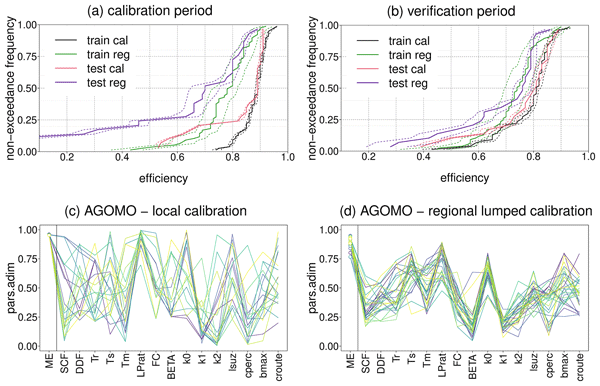
The manuscript describes an application of PArameter Set Shuffling (PASS) approach in the Alpine region. A machine learning decision-tree algorithm is applied for the regional calibration of a conceptual semi-distributed hydrological model. Regional model efficiencies don't decrease significantly when moving in space from catchments used for the regional calibration (training) to catchments used for the procedure validation (test) and, in time, from the calibration to the verification period.
Hsing-Jui Wang, Ralf Merz, Soohyun Yang, and Stefano Basso
Hydrol. Earth Syst. Sci., 27, 4369–4384, https://doi.org/10.5194/hess-27-4369-2023, https://doi.org/10.5194/hess-27-4369-2023, 2023
Short summary
Short summary
Accurately assessing heavy-tailed flood behavior with limited data records is challenging and can lead to inaccurate hazard estimates. Our research introduces a new index that uses hydrograph recession to identify heavy-tailed flood behavior, compare severity, and produce reliable results with short data records. This index overcomes the limitations of current metrics, which lack physical meaning and require long records. It thus provides valuable insight into the flood hazard of river basins.
Felipe A. Saavedra, Andreas Musolff, Jana von Freyberg, Ralf Merz, Stefano Basso, and Larisa Tarasova
Hydrol. Earth Syst. Sci., 26, 6227–6245, https://doi.org/10.5194/hess-26-6227-2022, https://doi.org/10.5194/hess-26-6227-2022, 2022
Short summary
Short summary
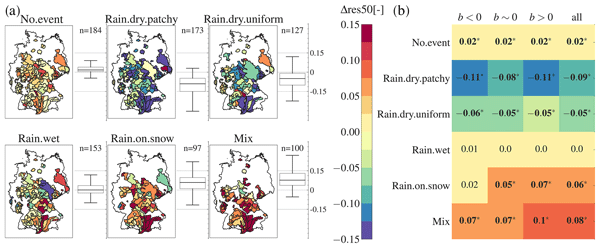
Nitrate contamination of rivers from agricultural sources is a challenge for water quality management. During runoff events, different transport paths within the catchment might be activated, generating a variety of responses in nitrate concentration in stream water. Using nitrate samples from 184 German catchments and a runoff event classification, we show that hydrologic connectivity during runoff events is a key control of nitrate transport from catchments to streams in our study domain.
Cited articles
Allen, R. G., Pereira, L. S., Raes, D., and Smith, M.: Crop evapotranspiration – guidelines for computing crop water requirements – FAO Irrigation and drainage paper 56, Rome, ISBN 92-5-104219-5,998.
Alstott, J., Bullmore, E., and Plenz, D.: Powerlaw: A python package for analysis of heavy-tailed distributions, PLoS One, 9, e95816, https://doi.org/10.1371/journal.pone.0085777, 2014.
Arai, R., Toyoda, Y., and Kazama, S.: Runoff recession features in an analytical probabilistic streamflow model, J. Hydrol., 597, 125745, https://doi.org/10.1016/j.jhydrol.2020.125745, 2020.
Barnes, B. S.: The structure of discharge-recession curves, EOS T. AGU, 20, 721–725, https://doi.org/10.1029/TR020i004p00721, 1939.
Basso, S., Botter, G., Merz, R., and Miniussi, A.: PHEV! The PHysically-based Extreme Value distribution of river flows, Environ. Res. Lett., 16, 124065, https://doi.org/10.1088/1748-9326/ac3d59, 2021.
Basso, S., Schirmer, M., and Botter, G.: On the emergence of heavy-tailed streamflow distributions, Adv. Water Resour., 82, 98–105, https://doi.org/10.1016/j.advwatres.2015.04.013, 2015.
Basso, S., Schirmer, M., and Botter, G.: A physically based analytical model of flood frequency curves, Geophys. Res. Lett., 43, 9070–9076, https://doi.org/10.1002/2016GL069915, 2016.
Basso, S., Merz, R., Tarasova, L., and Miniussi, A.: Extreme flooding controlled by stream network organization and flow regime, Nat. Geosci., 16, 339–343, https://doi.org/10.1038/s41561-023-01155-w, 2023.
Bayerisches Landesamt für Umwelt: Abfluss Bayern, Bayerisches Landesamt für Umwelt [data set], https://www.gkd.bayern.de/de/fluesse/abfluss, last access: 26 August 2022.
Beck, H. E., Zimmermann, N. E., McVicar, T. R., Vergopolan, N., Berg, A., and Wood, E. F.: Present and future Köppen-Geiger climate classification maps at 1-km resolution, Sci. Data, 5, 180214, https://doi.org/10.1038/sdata.2018.214, 2018.
Bernardara, P., Schertzer, D., Sauquet, E., Tchiguirinskaia, I., and Lang, M.: The flood probability distribution tail: How heavy is it?, Stoch. Env. Res. Risk A., 22, 107–122, https://doi.org/10.1007/s00477-006-0101-2, 2008.
Bevere, L. and Remondi, F.: Natural catastrophes in 2021: the floodgates are open, Swiss Re Institute sigma research, https://www.swissre.com/press-release/Extreme-flood-events-once-again-drive-high-losses-in-2021-yet-75-of-flood-risks-remain-uninsured-Swiss-Re-Institute-reveals/3269ad99-b743-4398-82e3-534a87783910 (last access: 5 December 2022), 2022.
Biswal, B. and Kumar, D. N.: Study of dynamic behaviour of recession curves, Hydrol. Process., 792, 784–792, https://doi.org/10.1002/hyp.9604, 2014.
Biswal, B. and Marani, M.: Geomorphological origin of recession curves, Geophys. Res. Lett., 37, L24403, https://doi.org/10.1029/2010GL045415, 2010.
Botter, G.: Stochastic recession rates and the probabilistic structure of stream flows, Water Resour. Res., 46, W12527, https://doi.org/10.1029/2010WR009217, 2010.
Botter, G., Peratoner, F., Porporato, A., Rodriguez-Iturbe, I., and Rinaldo, A.: Signatures of large-scale soil moisture dynamics on streamflow statistics across U.S. climate regimes, Water Resour. Res., 43, 1–10, https://doi.org/10.1029/2007WR006162, 2007a.
Botter, G., Porporato, A., Rodriguez-Iturbe, I., and Rinaldo, A.: Basin-scale soil moisture dynamics and the probabilistic characterization of carrier hydrologic flows: Slow, leaching-prone components of the hydrologic response, Water Resour. Res., 43, 1–14, https://doi.org/10.1029/2006WR005043, 2007b.
Botter, G., Porporato, A., Rodriguez-Iturbe, I., and Rinaldo, A.: Nonlinear storage-discharge relations and catchment streamflow regimes, Water Resour. Res., 45, 1–16, https://doi.org/10.1029/2008WR007658, 2009.
Botter, G., Basso, S., Porporato, A., Rodriguez-Iturbe, I., and Rinaldo, A.: Natural streamflow regime alterations: Damming of the Piave river basin (Italy), Water Resour. Res., 46, 1–14, https://doi.org/10.1029/2009WR008523, 2010.
Brutsaert, W. and Nieber, J. L.: Regionalized drought flow hydrographs from a mature glaciated plateau, Water Resour. Res., 13, 637–643, https://doi.org/10.1029/WR013i003p00637, 1977.
Bundesanstalt für Gewässerkunde: Global Runoff Database, Bundesanstalt für Gewässerkunde [data set], https://grdc.bafg.de/data/data_portal_guide/, last access: 29 August 2022.
Cai, Y. and Hames, D.: Minimum sample size determination for generalized extreme value distribution, Commun. Stat. Simulat., 40, 87–98, https://doi.org/10.1080/03610918.2010.530368, 2010.
Ceola, S., Botter, G., Bertuzzo, E., Porporato, A., Rodriguez-Iturbe, I., and Rinaldo, A.: Comparative study of ecohydrological streamflow probability distributions, Water Resour. Res., 46, 1–12, https://doi.org/10.1029/2010WR009102, 2010.
CGIAR Consortium for Spatial Information: SRTM 90m Digital Elevation Database v4.1, CGIAR Consortium for Spatial Information [data set], https://cgiarcsi.community/data/srtm-90m-digital-elevation-database-v4-1, last access: 21 August 2022.
Chen, B. and Krajewski, W.: Analysing individual recession events: sensitivity of parameter determination to the calculation procedure, Hydrolog. Sci. J., 61, 2887–2901, https://doi.org/10.1080/02626667.2016.1170940, 2016.
Clauset, A., Shalizi, C. R., and Newman, M. E. J.: Power-law distributions in empirical data, SIAM Rev., 51, 661–703, https://doi.org/10.1137/070710111, 2009.
Clauset, A., Young, M., and Gleditsch, K. S.: On the Frequency of Severe Terrorist Events, J. Conflict Resolut., 51, 58–87, https://doi.org/10.1177/0022002706296157, 2007.
Cunderlik, J. M. and Burn, D. H.: Utilisation d'une information sur le régime des crues dans une analyse fréquentielle régionale des crues, Hydrolog. Sci. J., 47, 77–92, https://doi.org/10.1080/02626660209492909, 2002.
Doulatyari, B., Betterle, A., Basso, S., Biswal, B., Schirmer, M., and Botter, G.: Predicting streamflow distributions and flow duration curves from landscape and climate, Adv. Water Resour., 83, 285–298, https://doi.org/10.1016/j.advwatres.2015.06.013, 2015.
Dralle, D. N., Karst, N. J., Charalampous, K., Veenstra, A., and Thompson, S. E.: Event-scale power law recession analysis: quantifying methodological uncertainty, Hydrol. Earth Syst. Sci., 21, 65–81, https://doi.org/10.5194/hess-21-65-2017, 2017.
Duan, Q., Schaake, J., Andréassian, V., Franks, S., Goteti, G., Gupta, H. V, Gusev, Y. M., Habets, F., Hall, A., Hay, L., Hogue, T., Huang, M., Leavesley, G., Liang, X., Nasonova, O. N., Noilhan, J., Oudin, L., Sorooshian, S., Wagener, T., and Wood, E. F.: Model Parameter Estimation Experiment (MOPEX): An overview of science strategy and major results from the second and third workshops, J. Hydrol., 320, 3–17, https://doi.org/10.1016/j.jhydrol.2005.07.031, 2006.
Durrans, S. R., Eiffe, M. A., Thomas, W. O., and Goranflo, H. M.: Joint Seasonal/Annual Flood Frequency Analysis, J. Hydrol. Eng., 8, 181–189, https://doi.org/10.1061/(asce)1084-0699(2003)8:4(181), 2003.
El Adlouni, S., Bobée, B., and Ouarda, T. B. M. J.: On the tails of extreme event distributions in hydrology, J. Hydrol., 355, 16–33, https://doi.org/10.1016/j.jhydrol.2008.02.011, 2008.
European Environmental Agency: Mapping the impacts of natural hazards and technological accidents in Europe An overview of the last decade, Publications Office of the European Union, https://doi.org/10.2800/62638, 2010.
Farquharson, F. A. K., Meigh, J. R., and Sutcliffe, J. V.: Regional flood frequency analysis in arid and semi-arid areas, J. Hydrol., 138, 487–501, https://doi.org/10.1016/0022-1694(92)90132-F, 1992.
Fick, S. E. and Hijmans, R. J.: WorldClim 2 new 1-km spatial resolution climate surfaces for global land areas.pdf.crdownload, Int. J. Climatol., 37, 4302–4315, https://doi.org/10.1002/joc.5086, 2017.
Fiorentino, M., Manfreda, S., and Iacobellis, V.: Peak runoff contributing area as hydrological signature of the probability distribution of floods, Adv. Water Resour., 30, 2123–2134, https://doi.org/10.1016/j.advwatres.2006.11.017, 2007.
Fischer, S. and Schumann, A.: Robust flood statistics: comparison of peak over threshold approaches based on monthly maxima and TL-moments, Hydrolog. Sci. J., 61, 457–470, https://doi.org/10.1080/02626667.2015.1054391, 2016.
Gaume, E.: On the asymptotic behavior of flood peak distributions, Hydrol. Earth Syst. Sci., 10, 233–243, https://doi.org/10.5194/hess-10-233-2006, 2006.
Gioia, A., Iacobellis, V., Manfreda, S., and Fiorentino, M.: Runoff thresholds in derived flood frequency distributions, Hydrol. Earth Syst. Sci., 12, 1295–1307, https://doi.org/10.5194/hess-12-1295-2008, 2008.
Gumbel, E. J.: Statistics of Extremes, Columbia University Press, https://doi.org/10.7312/gumb92958, 1958.
Guo, J., Li, H.-Y., Leung, L. R., Guo, S., Liu, P., and Sivapalan, M.: Links between flood frequency and annual water balance behaviors: A basis for similarity and regionalization, Water Resour. Res., 50, 937–953, https://doi.org/10.1002/2013WR014374, 2014.
Hosking, J. R. M.: L-Moments: Analysis and Estimation of Distributions Using Linear Combinations of Order Statistics, J. R. Stat. Soc., 52, 105–124, 1990.
Hosking, J. R. M. and Wallis, J. R.: Parameter and quantile estimation for the generalized Pareto distribution, Technometrics, 29, 339–349, https://doi.org/10.1080/00401706.1987.10488243, 1987.
Hosking, J. R. M., Wallis, J. R., and Wood, E. F.: Estimation of the generalized extreme-value distribution by the method of probability-weighted moments, Technometrics, 27, 251–261, https://doi.org/10.1080/00401706.1985.10488049, 1985.
Huntingford, C., Marsh, T., Scaife, A. A., Kendon, E. J., Hannaford, J., Kay, A. L., Lockwood, M., Prudhomme, C., Reynard, N. S., Parry, S., Lowe, J. A., Screen, J. A., Ward, H. C., Roberts, M., Stott, P. A., Bell, V. A., Bailey, M., Jenkins, A., Legg, T., Otto, F. E. L., Massey, N., Schaller, N., Slingo, J., and Allen, M. R.: Potential influences on the United Kingdom's floods of winter 2013/14, Nat. Clim. Change, 4, 769–777, https://doi.org/10.1038/nclimate2314, 2014.
Interagency Advisory Committee on Water Data: Guidelines for determining flood flow frequency: Bulletin 17B, https://water.usgs.gov/osw/bulletin17b/dl_flow.pdf (last access: 12 October 2024), 1982.
Jachens, E. R., Rupp, D. E., Roques, C., and Selker, J. S.: Recession analysis revisited: impacts of climate on parameter estimation, Hydrol. Earth Syst. Sci., 24, 1159–1170, https://doi.org/10.5194/hess-24-1159-2020, 2020.
Katz, R.: Statistics of Extremes in Climatology and Hydrology, Adv. Water Resour., 25, 1287–1304, 2002.
Kirchner, J. W.: Catchments as simple dynamical systems: Catchment characterization, rainfall-runoff modeling, and doing hydrology backward, Water Resour. Res., 45, 1–34, https://doi.org/10.1029/2008WR006912, 2009.
Klaus, A., Yu, S., and Plenz, D.: Statistical analyses support power law distributions found in neuronal avalanches, PLoS One, 6, e19779, https://doi.org/10.1371/journal.pone.0019779, 2011.
Kondor, D., Pósfai, M., Csabai, I., and Vattay, G.: Do the rich get richer? An empirical analysis of the Bitcoin transaction network, PLoS One, 9, e86197, https://doi.org/10.1371/journal.pone.0086197, 2014.
Laio, F., Porporato, A., Fernandez-Illescas, C. P., and Rodriguez-Iturbe, I.: Plants in water-controlled ecosystems: Active role in hydrologic processes and responce to water stress IV. Discussion of real cases, Adv. Water Resour., 24, 745–762, https://doi.org/10.1016/S0309-1708(01)00007-0, 2001.
Lehner, B., Liermann, C. R., Revenga, C., Vörömsmarty, C., Fekete, B., Crouzet, P., Döll, P., Endejan, M., Frenken, K., Magome, J., Nilsson, C., Robertson, J. C., Rödel, R., Sindorf, N., and Wisser, D.: High-resolution mapping of the world's reservoirs and dams for sustainable river-flow management, Front. Ecol. Environ., 9, 494–502, https://doi.org/10.1890/100125, 2011.
Lins, H. F.: Challenges to hydrological observations, WMO Bull., 57, 55–58, 2008.
Macdonald, E., Merz, B., Guse, B., Wietzke, L., Ullrich, S., Kemter, M., Ahrens, B., and Vorogushyn, S.: Event and Catchment Controls of Heavy Tail Behavior of Floods, Water Resour. Res., 58, 1–25, https://doi.org/10.1029/2021wr031260, 2022.
Malamud, B. D.: Tails of natural hazards, Phys. World, 17, 31–35, https://doi.org/10.1088/2058-7058/17/8/35, 2004.
Malamud, B. D. and Turcotte, D. L.: The applicability of power-law frequency statistics to floods, J. Hydrol., 322, 168–180, https://doi.org/10.1016/j.jhydrol.2005.02.032, 2006.
Mathai, J. and Mujumdar, P. P.: Use of streamflow indices to identify the catchment drivers of hydrographs, Hydrol. Earth Syst. Sci., 26, 2019–2033, https://doi.org/10.5194/hess-26-2019-2022, 2022.
McCuen, R. H. and Smith, E.: Origin of Flood Skew, J. Hydrol. Eng., 13, 771–775, https://doi.org/10.1061/(asce)1084-0699(2008)13:9(771), 2008.
McDermott, T. K. J.: Global exposure to flood risk and poverty, Nat. Commun., 13, 6–8, https://doi.org/10.1038/s41467-022-30725-6, 2022.
Meigh, J. R., Farquharson, F. A. K., and Sutcliffe, J. V.: A worldwide comparison of regional flood estimation methods and climate, Hydrolog. Sci. J., 42, 225–244, https://doi.org/10.1080/02626669709492022, 1997.
Mejía, A., Daly, E., Rossel, F., Javanovic, T., and Gironás, J.: A stochastic model of streamflow for urbanized basins, Water Resour. Res., 50, 1984–2001, https://doi.org/10.1002/2013WR014834, 2014.
Merz, B., Basso, S., Fischer, S., Lun, D., Blöschl, G., Merz, R., Guse, B., Viglione, A., Vorogushyn, S., Macdonald, E., Wietzke, L., and Schumann, A.: Understanding heavy tails of flood peak distributions, Water Resour. Res., 58, 1–37, https://doi.org/10.1029/2021wr030506, 2022.
Merz, B., Blöschl, G., Vorogushyn, S., Dottori, F., Aerts, J. C. J. H., Bates, P., Bertola, M., Kemter, M., Kreibich, H., Lall, U., and Macdonald, E.: Causes, impacts and patterns of disastrous river floods, Nat. Rev. Earth Environ., 2, 592–609, https://doi.org/10.1038/s43017-021-00195-3, 2021.
Merz, R. and Blöschl, G.: Process controls on the statistical flood moments – a data based analysis, Hydrol. Process., 23, 675–696, https://doi.org/10.1002/hyp, 2009.
Molnar, P., Anderson, R. S., Kier, G., and Rose, J.: Relationships among probability distributions of stream discharges in floods, climate, bed load transport, and river incision, J. Geophys. Res.-Earth, 111, 1–10, https://doi.org/10.1029/2005JF000310, 2006.
Morrison, J. E. and Smith, J. A.: Stochastic modeling of flood peaks using the generalized extreme value distribution, Water Resour. Res., 38, 41-1–41-12, https://doi.org/10.1029/2001wr000502, 2002.
Müller, M. F., Dralle, D. N., and Thompson, S. E.: Analytical model for flow duration curves in seasonally dry climates, Water Resour. Res., 50, 5510–5531, https://doi.org/10.1002/2014WR015301, 2014.
Müller, M. F., Roche, K. R., and Dralle, D. N.: Catchment processes can amplify the effect of increasing rainfall variability, Environ. Res. Lett., 16, 084032, https://doi.org/10.1088/1748-9326/ac153e, 2021.
Mushtaq, S., Miniussi, A., Merz, R., and Basso, S.: Reliable estimation of high floods: A method to select the most suitable ordinary distribution in the Metastatistical extreme value framework, Adv. Water Resour., 161, 104127, https://doi.org/10.1016/j.advwatres.2022.104127, 2022.
Mutzner, R., Bertuzzo, E., Tarolli, P., Weijs, S. V., Nicotina, L., Ceola, S., Tomasic, N., Rodriguez-Iturbe, I., Parlange, M. B., and Rinaldo, A.: Geomorphic signatures on Brutsaert base flow recession analysis, Water Resour. Res., 49, 5462–5472, https://doi.org/10.1002/wrcr.20417, 2013.
Nair, J., Wierman, A., and Zwart, B.: The Fundamentals of Heavy Tails: Properties, Emergence, and Estimation, Cambridge University Press, https://doi.org/10.1017/9781009053730, 2022.
Németh, L., Hübnerová, Z., and Zempléni, A.: Trend detection in GEV models, 1–13, arXiv [preprint], https://doi.org/10.48550/arXiv.1907.09435, 2019.
NOAA-National Weather Service-Office of Hydrologic Development: MOPEX, NOAA [data set], https://hiscentral.cuahsi.org/pub_network.aspx?n=5599, last access: 5 September 2022.
Osborn, T. J., Hulme, M., Jones, P. D., and Basnett, T. A.: Observed trends in the daily intensity of United Kingdom precipitation, Int. J. Climatol., 20, 347–364, https://doi.org/10.1002/(SICI)1097-0088(20000330)20:4<347::AID-JOC475>3.0.CO;2-C, 2000.
Pallard, B., Castellarin, A., and Montanari, A.: A look at the links between drainage density and flood statistics, Hydrol. Earth Syst. Sci., 13, 1019–1029, https://doi.org/10.5194/hess-13-1019-2009, 2009.
Papalexiou, S. M., Koutsoyiannis, D., and Makropoulos, C.: How extreme is extreme? An assessment of daily rainfall distribution tails, Hydrol. Earth Syst. Sci., 17, 851–862, https://doi.org/10.5194/hess-17-851-2013, 2013.
Papalexiou, S. M. and Koutsoyiannis, D.: Battle of extreme value distributions: A global survey on extreme daily rainfall, Water Resour. Res., 49, 187–201, https://doi.org/10.1029/2012WR012557, 2013.
Porporato, A., Daly, E., and Rodriguez-Iturbe, I.: Soil water balance and ecosystem response to climate change, Am. Nat., 164, 625–632, https://doi.org/10.1086/424970, 2004.
Pumo, D., Viola, F., La Loggia, G., and Noto, L. V.: Annual flow duration curves assessment in ephemeral small basins, J. Hydrol., 519, 258–270, https://doi.org/10.1016/j.jhydrol.2014.07.024, 2014.
Robson, A. J.: Evidence for trends in UK flooding, Philos. T. R. Soc. A, 360, 1327–1343, https://doi.org/10.1098/rsta.2002.1003, 2002.
Rogger, M., Pirkl, H., Viglione, A., Komma, J., Kohl, B., Kirnbauer, R., and Merz, R.: Step changes in the flood frequency curve: Process controls, Water Resour. Res., 48, 1–15, https://doi.org/10.1029/2011WR011187, 2012.
Rudd, A. C., Kay, A. L., and Sayers, P. B.: Climate change impacts on flood peaks in Britain for a range of global mean surface temperature changes, J. Flood Risk Manag., 16, 1–15, https://doi.org/10.1111/jfr3.12863, 2023.
Santos, A. C., Portela, M. M., Rinaldo, A., and Schaefli, B.: Analytical flow duration curves for summer streamflow in Switzerland, Hydrol. Earth Syst. Sci., 22, 2377–2389, https://doi.org/10.5194/hess-22-2377-2018, 2018.
Sartori, M. and Schiavo, S.: Connected we stand: A network perspective on trade and global food security, Food Policy, 57, 114–127, https://doi.org/10.1016/j.foodpol.2015.10.004, 2015.
Schaefli, B., Rinaldo, A., and Botter, G.: Analytic probability distributions for snow-dominated streamflow, Water Resour. Res., 49, 2701–2713, https://doi.org/10.1002/wrcr.20234, 2013.
Shaw, S. B.: Investigating the linkage between streamflow recession rates and channel network contraction in a mesoscale catchment in New York state, Hydrol. Process., 30, 479–492, https://doi.org/10.1002/hyp.10626, 2016.
Shaw, S. B. and Riha, S. J.: Examining individual recession events instead of a data cloud: Using a modified interpretation of dQ/dt−Q streamflow recession in glaciated watersheds to better inform models of low flow, J. Hydrol., 434–435, 46–54, https://doi.org/10.1016/j.jhydrol.2012.02.034, 2012.
Smith, J. A., Cox, A. A., Baeck, M. L., Yang, L., and Bates, P.: Strange Floods: The Upper Tail of Flood Peaks in the United States, Water Resour. Res., 54, 6510–6542, https://doi.org/10.1029/2018WR022539, 2018.
Spearman, C.: The proof and measurement of association between two things, Am. J. Psychol., 15, 72–101, https://doi.org/10.2307/1412159, 1904.
Struthers, I. and Sivapalan, M.: A conceptual investigation of process controls upon flood frequency: role of thresholds, Hydrol. Earth Syst. Sci., 11, 1405–1416, https://doi.org/10.5194/hess-11-1405-2007, 2007.
Tarasova, L., Basso, S., and Merz, R.: Transformation of Generation Processes From Small Runoff Events to Large Floods, Geophys. Res. Lett., 47, e2020GL090547, https://doi.org/10.1029/2020GL090547, 2020.
Tarasova, L., Basso, S., Zink, M., and Merz, R.: Exploring Controls on Rainfall-Runoff Events: 1. Time Series-Based Event Separation and Temporal Dynamics of Event Runoff Response in Germany, Water Resour. Res., 54, 7711–7732, https://doi.org/10.1029/2018WR022587, 2018.
Tarasova, L., Lun, D., Merz, R., Blöschl, G., Basso, S., Bertola, M., Miniussi, A., Rakovec, O., Samaniego, L., Thober, S., and Kumar, R.: Shifts in flood generation processes exacerbate regional flood anomalies in Europe, Commun. Earth Environ., 4, 49, https://doi.org/10.1038/s43247-023-00714-8, 2023.
Tashie, A., Pavelsky, T., and Band, L. E.: An Empirical Reevaluation of Streamflow Recession Analysis at the Continental Scale, Water Resour. Res., 56, e2019WR025448, https://doi.org/10.1029/2019WR025448, 2020a.
Tashie, A., Pavelsky, T., and Emanuel, R. E.: Spatial and Temporal Patterns in Baseflow Recession in the Continental United States, Water Resour. Res., 56, e2019WR026425, https://doi.org/10.1029/2019WR026425, 2020b.
Tashie, A., Scaife, C. I., and Band, L. E.: Transpiration and subsurface controls of streamflow recession characteristics, Hydrol. Process., 33, 2561–2575, https://doi.org/10.1002/hyp.13530, 2019.
Thomas, B. F., Vogel, R. M., and Famiglietti, J. S.: Objective hydrograph baseflow recession analysis, J. Hydrol., 525, 102–112, https://doi.org/10.1016/j.jhydrol.2015.03.028, 2015.
Thorarinsdottir, T. L., Hellton, K. H., Steinbakk, G. H., Schlichting, L., and Engeland, K.: Bayesian Regional Flood Frequency Analysis for Large Catchments, Water Resour. Res., 54, 6929–6947, https://doi.org/10.1029/2017WR022460, 2018.
Viglione, A., Merz, R., and Blöschl, G.: On the role of the runoff coefficient in the mapping of rainfall to flood return periods, Hydrol. Earth Syst. Sci., 13, 577–593, https://doi.org/10.5194/hess-13-577-2009, 2009.
Villarini, G. and Smith, J. A.: Flood peak distributions for the eastern United States, Water Resour. Res., 46, 1–17, https://doi.org/10.1029/2009WR008395, 2010.
Vogel, R. M. and Fennesse, N. M.: L moment diagrams should replace product moment diagrams, Water Resour. Res., 29, 1745–1752, https://doi.org/10.1029/93WR00341, 1993.
Vormoor, K., Lawrence, D., Schlichting, L., Wilson, D., and Wong, W. K.: Evidence for changes in the magnitude and frequency of observed rainfall vs. snowmelt driven floods in Norway, J. Hydrol., 538, 33–48, https://doi.org/10.1016/j.jhydrol.2016.03.066, 2016.
Wang, H., Merz, R., Yang, S., Tarasova, L., and Basso, S.: Emergence of heavy tails in streamflow distributions: the role of spatial rainfall variability, Adv. Water Resour. J., 171, 104359, https://doi.org/10.1016/j.advwatres.2022.104359, 2023.
Wang, J., Walter, B. A., Yao, F., Song, C., Ding, M., Maroof, A. S., Zhu, J., Fan, C., McAlister, J. M., Sikder, S., Sheng, Y., Allen, G. H., Crétaux, J.-F., and Wada, Y.: GeoDAR: georeferenced global dams and reservoirs dataset for bridging attributes and geolocations, Earth Syst. Sci. Data, 14, 1869–1899, https://doi.org/10.5194/essd-14-1869-2022, 2022a.
Wang, J., Walter, B. A., Yao, F., Song, C., Ding, M., Maroof, A. S., Zhu, J., Fan, C., McAlister, J. M., Sikder, M. S., Sheng, Y., Allen, G. H., Crétaux, J.-F., and Wada, Y.: GeoDAR: Georeferenced global Dams And Reservoirs dataset for bridging attributes and geolocations, Zenodo [data set], https://doi.org/10.5281/zenodo.6163413, 2022b.
Ward, A. S., Wondzell, S. M., Schmadel, N. M., and Herzog, S. P.: Climate Change Causes River Network Contraction and Disconnection in the H.J. Andrews Experimental Forest, Oregon, USA, Front. Water, 2, 1–10, https://doi.org/10.3389/frwa.2020.00007, 2020.
Werner, T. and Upper, C.: Time Variation in the Tail Behaviour of Bund Futures Returns, https://ideas.repec.org/p/zbw/bubdp1/4190.html (last access: 6 September 2023), 2002.
Wietzke, L. M., Merz, B., Gerlitz, L., Kreibich, H., Guse, B., Castellarin, A., and Vorogushyn, S.: Comparative analysis of scalar upper tail indicators, Hydrolog. Sci. J., 65, 1625–1639, https://doi.org/10.1080/02626667.2020.1769104, 2020.
Wilcoxon, F.: Individual comparisons by ranking methods, Biometrics Bull., 1, 80–83, https://doi.org/10.2307/3001968, 1945.
Wu, Q., Ke, L., Wang, J., Pavelsky, T. M., Allen, G. H., Sheng, Y., Duan, X., Zhu, Y., Wu, J., Wang, L., Liu, K., Chen, T., Zhang, W., Fan, C., Yong, B., and Song, C.: Satellites reveal hotspots of global river extent change, Nat. Commun., 14, 1587, https://doi.org/10.1038/s41467-023-37061-3, 2023.
Ye, S., Li, H. Y., Huang, M., Alebachew, M. A., Leng, G., Leung, L. R., Wang, S. wen, and Sivapalan, M.: Regionalization of subsurface stormflow parameters of hydrologic models: Derivation from regional analysis of streamflow recession curves, J. Hydrol., 519, 670–682, https://doi.org/10.1016/j.jhydrol.2014.07.017, 2014.
Zaerpour, M., Papalexiou, S. M., Pietroniro, A., &Nazemi, A.: How extreme are flood peak distributions? A quasi-global analysis of daily discharge records, J. Hydrol., 631, 130849, https://doi.org/10.1016/j.jhydrol.2024.130849, 2024.
Zhou, X., Sheng, Z., Yang, Y., Han, S., Zhang, Q., Li, H., and Yang, Y.: Catchment water storage dynamics and its role in modulating streamflow generation in spectral perspective: a case study in the headwater of Baiyang Lake, China, Hydrol. Earth Syst. Sci. Discuss. [preprint], https://doi.org/10.5194/hess-2022-357, 2022.
Zomer, R. J., Xu, J., and Trabucco, A.: Version 3 of the Global Aridity Index and Potential Evapotranspiration Database, Sci. Data, 9, 1–15, https://doi.org/10.1038/s41597-022-01493-1, 2022.
Short summary
Extreme floods are more common than expected. Knowing where these floods are likely to occur is key for risk management. Traditional methods struggle with limited data, causing uncertainty. We use common streamflow dynamics to indicate extreme flood propensity. Analyzing data from Atlantic Europe, northern Europe, and the US, we validate this novel approach and unravel intrinsic linkages between regional geographic patterns and extreme flood drivers.
Extreme floods are more common than expected. Knowing where these floods are likely to occur is...


