
Articles | Volume 30, issue 3
https://doi.org/10.5194/hess-30-825-2026
© Author(s) 2026. This work is distributed under
the Creative Commons Attribution 4.0 License.
the Creative Commons Attribution 4.0 License.
https://doi.org/10.5194/hess-30-825-2026
© Author(s) 2026. This work is distributed under
the Creative Commons Attribution 4.0 License.
the Creative Commons Attribution 4.0 License.
Research article
| 
12 Feb 2026
Research article |
| 12 Feb 2026
| 12 Feb 2026
How well do hydrological models simulate streamflow extremes and drought-to-flood transitions?
Eduardo Muñoz-Castro
CORRESPONDING AUTHOR

WSL Institute for Snow and Avalanche Research SLF, Davos Dorf, Switzerland
Climate Change, Extremes and Natural Hazards in Alpine Regions Research Center CERC, Davos Dorf, Switzerland
Institute for Atmospheric and Climate Science, ETH Zurich, Zurich, Switzerland
Bailey J. Anderson
WSL Institute for Snow and Avalanche Research SLF, Davos Dorf, Switzerland
Climate Change, Extremes and Natural Hazards in Alpine Regions Research Center CERC, Davos Dorf, Switzerland
Institute for Atmospheric and Climate Science, ETH Zurich, Zurich, Switzerland
Paul C. Astagneau
WSL Institute for Snow and Avalanche Research SLF, Davos Dorf, Switzerland
Climate Change, Extremes and Natural Hazards in Alpine Regions Research Center CERC, Davos Dorf, Switzerland
Institute for Atmospheric and Climate Science, ETH Zurich, Zurich, Switzerland
Daniel L. Swain
California Institute for Water Resources, University of California Agriculture and Natural Resources, Davis, CA, USA
Weather Extremes Across Scales, NSF National Center for Atmospheric Research, Boulder, CO, USA
Pablo A. Mendoza
Civil Engineering Department, Universidad de Chile, Santiago, Chile
Advanced Mining Technology Centre (AMTC), Universidad de Chile, Santiago, Chile
Manuela I. Brunner
WSL Institute for Snow and Avalanche Research SLF, Davos Dorf, Switzerland
Climate Change, Extremes and Natural Hazards in Alpine Regions Research Center CERC, Davos Dorf, Switzerland
Institute for Atmospheric and Climate Science, ETH Zurich, Zurich, Switzerland
Related authors
Matías Moreno, Pablo Mendoza, Eduardo Muñoz-Castro, Mauricio Zambrano-Bigiarini, and Alonso Pizarro
EGUsphere, https://doi.org/10.5194/egusphere-2026-2912, https://doi.org/10.5194/egusphere-2026-2912, 2026
Short summary
Short summary
We developed a new method called SPEAK to better evaluate how well hydrological models reproduce spatial patterns such as evapotranspiration across different regions. We tested it in 99 Chilean catchments with different climates and terrain types. Compared with existing methods, SPEAK more accurately represented spatial patterns and was less affected by map resolution or catchment characteristics. This could help improve water resource modelling and planning across diverse local conditions.
Bailey J. Anderson, Eduardo Muñoz-Castro, Lena M. Tallaksen, Alessia Matano, Jonas Götte, Rachael Armitage, Eugene Magee, and Manuela I. Brunner
Hydrol. Earth Syst. Sci., 29, 6069–6092, https://doi.org/10.5194/hess-29-6069-2025, https://doi.org/10.5194/hess-29-6069-2025, 2025
Short summary
Short summary
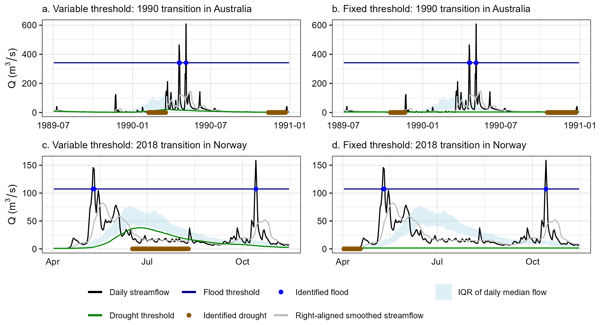
When floods happen during or shortly after droughts, the impacts of each of the events can be magnified. In hydrological research, defining these events represents a challenging and important task in the process of understanding where and why they occur. We have used real-word examples to address some of these challenges and show different approaches influence outcomes. We make suggestions on when to use which approach and outline some pitfalls of which researchers should be aware.
Diego Araya, Pablo A. Mendoza, Eduardo Muñoz-Castro, and James McPhee
Hydrol. Earth Syst. Sci., 27, 4385–4408, https://doi.org/10.5194/hess-27-4385-2023, https://doi.org/10.5194/hess-27-4385-2023, 2023
Short summary
Short summary
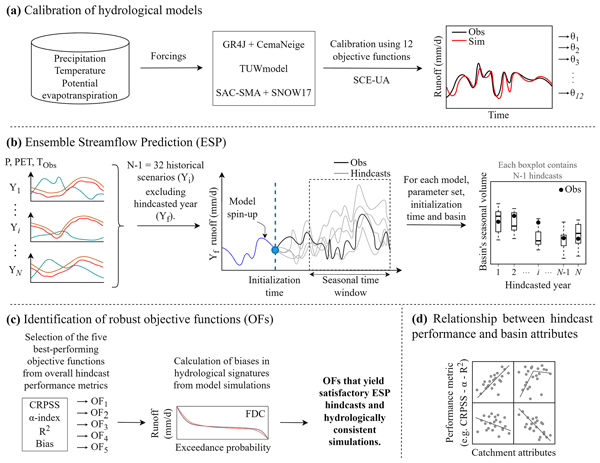
Dynamical systems are used by many agencies worldwide to produce seasonal streamflow forecasts, which are critical for decision-making. Such systems rely on hydrology models, which contain parameters that are typically estimated using a target performance metric (i.e., objective function). This study explores the effects of this decision across mountainous basins in Chile, illustrating tradeoffs between seasonal forecast quality and the models' capability to simulate streamflow characteristics.
Jens Oprel, Tobias Jonas, Andreas S. Stordal, Felix N. Matt, Gaute Lappegard, Manuela I. Brunner, and Jan Magnusson
EGUsphere, https://doi.org/10.5194/egusphere-2026-5026, https://doi.org/10.5194/egusphere-2026-5026, 2026
This preprint is open for discussion and under review for The Cryosphere (TC).
Short summary
Short summary
Snow models can be improved by adjusting snowfall inputs to match high-quality snow depth observations from airborne lidar scans. Existing methods cannot reliably adjust these inputs, especially in regions where melt occurred before the observations. By accounting for such losses, our new loss-compensated method provides a reliable way to integrate snow observations into models. Furthermore, this approach can also improve results in years without observations, using data from previous years.
Jonas Götte, Paul C. Astagneau, and Manuela I. Brunner
Hydrol. Earth Syst. Sci., 30, 6235–6248, https://doi.org/10.5194/hess-30-6235-2026, https://doi.org/10.5194/hess-30-6235-2026, 2026
Short summary
Short summary
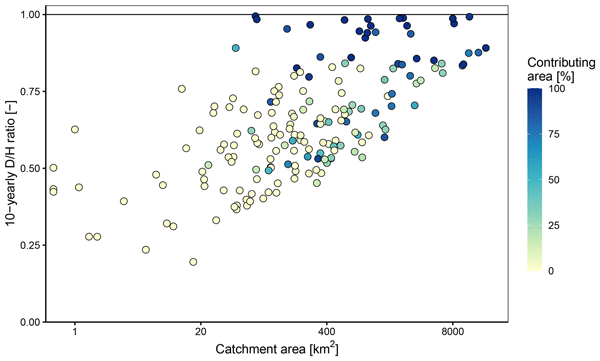
While the effect of water bodies on flood peaks at different time resolutions has been demonstrated in the past, it remains unclear how they affect the ratio between daily and hourly peaks. Our results show that (1) hourly flows are dampened much more strongly than daily flows, which leads to similar daily and hourly flood peaks downstream of reservoirs; and (2) the attenuation effect is particularly pronounced in catchments that are heavily influenced by water bodies.
Millie C. Spencer, Alfonso Fernandez, Emma Tyrrell, Robert Clasing, Enrique Muñoz, Pablo A. Mendoza, Jorge Berkhoff, and Noah P. Molotch
The Cryosphere, 20, 5559–5583, https://doi.org/10.5194/tc-20-5559-2026, https://doi.org/10.5194/tc-20-5559-2026, 2026
Short summary
Short summary
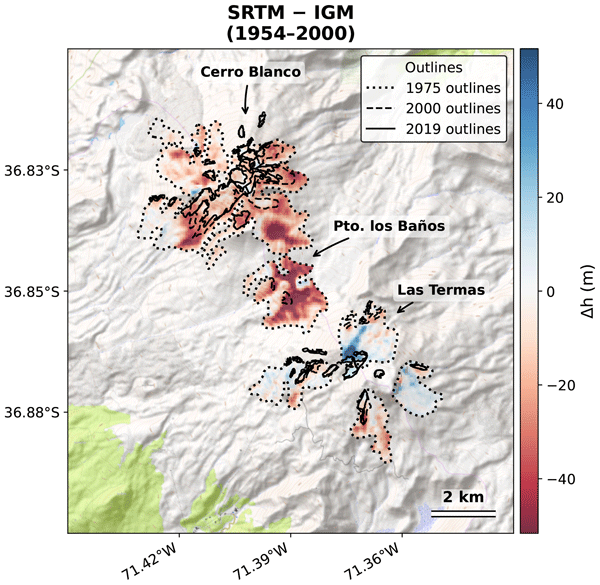
Mountain glaciers are important freshwater reservoirs. Quantifying their loss is essential for forecasting water availability. While glacier retreat is well studied in many regions, glacier loss on the Nevados de Chillán volcanic complex in south-central Chile remains uncertain. Using satellite and drone images, we find all 28 glaciers on Nevados de Chillán lost volume over the past 7 decades, with melt rates accelerating markedly since 2000.
Jerónimo Sota, Pablo A. Mendoza, and Miguel Lagos-Zúñiga
EGUsphere, https://doi.org/10.5194/egusphere-2026-4067, https://doi.org/10.5194/egusphere-2026-4067, 2026
This preprint is open for discussion and under review for Hydrology and Earth System Sciences (HESS).
Short summary
Short summary
Despite snowmelt runoff from mountainous domains is a vital water source, river flows months ahead remain difficult to predict. This study tested several ways to improve dynamical forecasts across 21 Andean basins using nearly four decades of past data. Results show that some configurations improve forecasts only at specific times or in certain basins, while others can reduce accuracy. The results can help water managers choose more reliable forecasting tools for decision making.
Joren Janzing and Manuela I. Brunner
EGUsphere, https://doi.org/10.5194/egusphere-2026-3487, https://doi.org/10.5194/egusphere-2026-3487, 2026
This preprint is open for discussion and under review for Hydrology and Earth System Sciences (HESS).
Short summary
Short summary
Large streamflow droughts seem to be related to spatially more homogeneous drivers than smaller droughts. Mechanisms causing this difference are not well understood. We bridge the scale gap between large and small droughts using observations and a drought typology. We find that large droughts are characterized by one or two drought types and each type has its own spatial footprint. Common drought types in a river do not always lead to large droughts, which can be important for water managers.
Jan P. Bohl, Raul R. Wood, Corinna Frank, Paul C. Astagneau, Jonas Peters, and Manuela I. Brunner
Hydrol. Earth Syst. Sci., 30, 4667–4698, https://doi.org/10.5194/hess-30-4667-2026, https://doi.org/10.5194/hess-30-4667-2026, 2026
Short summary
Short summary
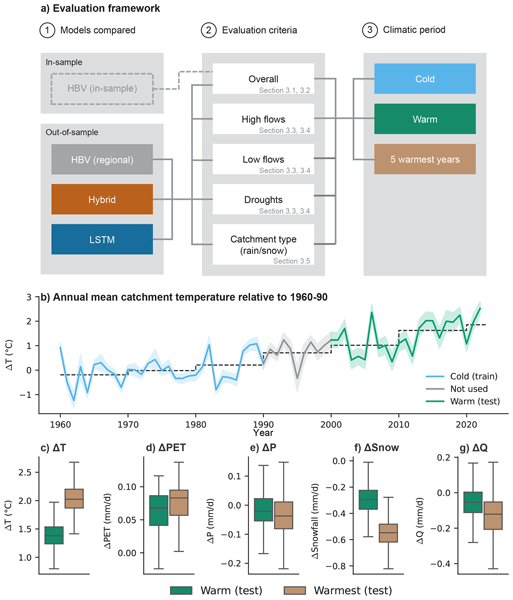
To assess climate impacts on streamflow, we need models that can predict streamflow under future conditions. This study compares three model types: data-driven (LSTM - long short-term memory), conceptual (HBV - Hydrologiska Byråns Vattenbalansavdelning), and hybrid (LSTM-HBV). LSTMs perform best overall, but HBV and hybrid models generalize better to warmer climates. Hybrid models are a promising tool for climate impact assessments, combining LSTMs accuracy with better generalizability of traditional models. In snowy regions, all models struggle to generalize.
Rashid Akbary, Eleonora Dallan, Paul C. Astagneau, Raul R. Wood, Francesco Marra, Manuela I. Brunner, and Marco Borga
Hydrol. Earth Syst. Sci., 30, 4117–4139, https://doi.org/10.5194/hess-30-4117-2026, https://doi.org/10.5194/hess-30-4117-2026, 2026
Short summary
Short summary
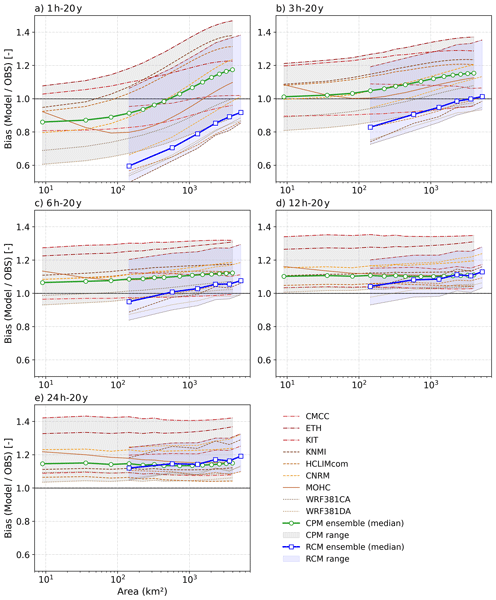
Heavy short rain can trigger flash floods and debris flows. In this study we evaluated how well climate models reproduce these events in Switzerland. We compared finer and coarser resolution models with high-quality hourly precipitation observations across small to large areas. The finer models better captured where short, intense precipitation occurs, but their errors changed with area size. Flood risk studies should therefore account for these scale-related errors.
Matías Moreno, Pablo Mendoza, Eduardo Muñoz-Castro, Mauricio Zambrano-Bigiarini, and Alonso Pizarro
EGUsphere, https://doi.org/10.5194/egusphere-2026-2912, https://doi.org/10.5194/egusphere-2026-2912, 2026
Short summary
Short summary
We developed a new method called SPEAK to better evaluate how well hydrological models reproduce spatial patterns such as evapotranspiration across different regions. We tested it in 99 Chilean catchments with different climates and terrain types. Compared with existing methods, SPEAK more accurately represented spatial patterns and was less affected by map resolution or catchment characteristics. This could help improve water resource modelling and planning across diverse local conditions.
Nicolás A. Vásquez, Pablo A. Mendoza, Wouter Knoben, Martyn Clark, Tricia Stadnyk, and Naoki Mizukami
EGUsphere, https://doi.org/10.5194/egusphere-2026-1363, https://doi.org/10.5194/egusphere-2026-1363, 2026
Short summary
Short summary
Although distributed hydrological models are often calibrated using only streamflow data, this practice may provide unrealistic representations of the water cycle. We show that, while streamflow annual cycles can be reasonably simulated, the seasonality of other key variables - such as evapotranspiration, soil moisture, and snow cover - may be severely misrepresented. Our results highlight the need to assess seasonal patterns of variables beyond streamflow when calibrating hydrological models.
Emma Ford, Manuela I. Brunner, Hannah Christensen, and Louise Slater
Hydrol. Earth Syst. Sci., 30, 2135–2160, https://doi.org/10.5194/hess-30-2135-2026, https://doi.org/10.5194/hess-30-2135-2026, 2026
Short summary
Short summary
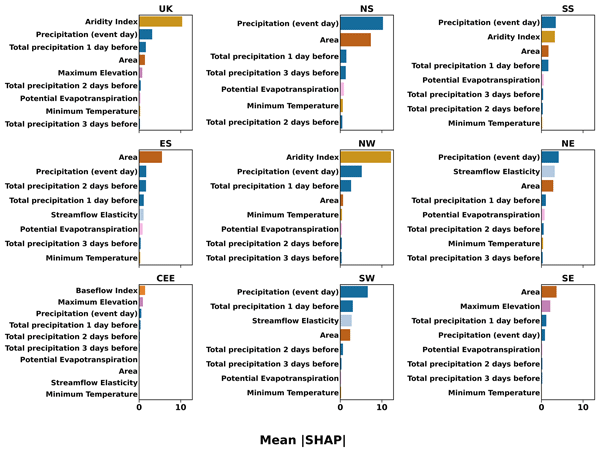
This study aims to improve prediction and understanding of extreme flood events in near-natural catchments across the United Kingdom. We develop a machine learning framework to assess the contribution of different features to flood magnitude estimation. We find weather patterns are weak predictors and stress the importance of evaluating model performance across and within catchments.
Sadaf Nasreen, Oldrich Rakovec, Rohini Kumar, Manuela I. Brunner, Ujjwal Singh, Petr Maca, Yannis Markonis, and Martin Hanel
EGUsphere, https://doi.org/10.5194/egusphere-2026-973, https://doi.org/10.5194/egusphere-2026-973, 2026
Short summary
Short summary
European droughts threaten water and agriculture, but how distinct drought processes will change under warming is uncertain. We examine seven mechanisms across Europe using 1971 to 2000 observations and 2070 to 2099 projections. Changes are regional: the Mediterranean shifts to longer, more severe droughts, while Northern and Western Central Europe often improve. Temperature-driven mechanisms, especially rain to snow transitions, respond most, guiding targeted adaptation.

Sebastian Gnann, Bailey J. Anderson, and Markus Weiler
Hydrol. Earth Syst. Sci., 30, 779–795, https://doi.org/10.5194/hess-30-779-2026, https://doi.org/10.5194/hess-30-779-2026, 2026
Short summary
Short summary
The extent to which streamflow varies in response to variability in precipitation and potential evaporation is essential for understanding climate change impacts on water resources. This so-called streamflow sensitivity is often estimated directly from observational data, but the robustness of these estimates remains unclear. Through systematic examination of existing approaches, we highlight uncertainties inherent in all approaches and discuss their origins.
Joren Janzing, Niko Wanders, Marit van Tiel, Barry van Jaarsveld, Dirk N. Karger, and Manuela I. Brunner
Hydrol. Earth Syst. Sci., 29, 7041–7071, https://doi.org/10.5194/hess-29-7041-2025, https://doi.org/10.5194/hess-29-7041-2025, 2025
Short summary
Short summary
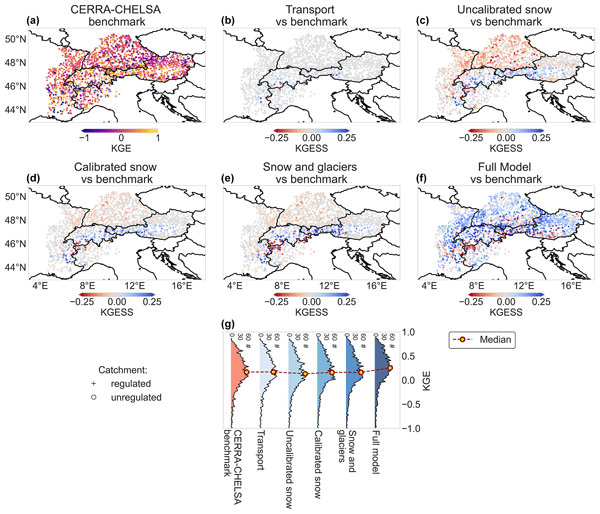
Process representation in hyper-resolution large-scale hydrological models (LHMs) limits model performance, particularly in mountain regions. Here, we update mountain process representation in an LHM and compare different meteorological forcing products. Structural and parametric changes in snow, glacier, and soil processes improve discharge simulations, while meteorological forcing remains a major control on model performance. Our work can guide future development of LHMs.
Bailey J. Anderson, Eduardo Muñoz-Castro, Lena M. Tallaksen, Alessia Matano, Jonas Götte, Rachael Armitage, Eugene Magee, and Manuela I. Brunner
Hydrol. Earth Syst. Sci., 29, 6069–6092, https://doi.org/10.5194/hess-29-6069-2025, https://doi.org/10.5194/hess-29-6069-2025, 2025
Short summary
Short summary
When floods happen during or shortly after droughts, the impacts of each of the events can be magnified. In hydrological research, defining these events represents a challenging and important task in the process of understanding where and why they occur. We have used real-word examples to address some of these challenges and show different approaches influence outcomes. We make suggestions on when to use which approach and outline some pitfalls of which researchers should be aware.
Paul C. Astagneau, Raul R. Wood, Mathieu Vrac, Sven Kotlarski, Pradeebane Vaittinada Ayar, Bastien François, and Manuela I. Brunner
Hydrol. Earth Syst. Sci., 29, 5695–5718, https://doi.org/10.5194/hess-29-5695-2025, https://doi.org/10.5194/hess-29-5695-2025, 2025
Short summary
Short summary
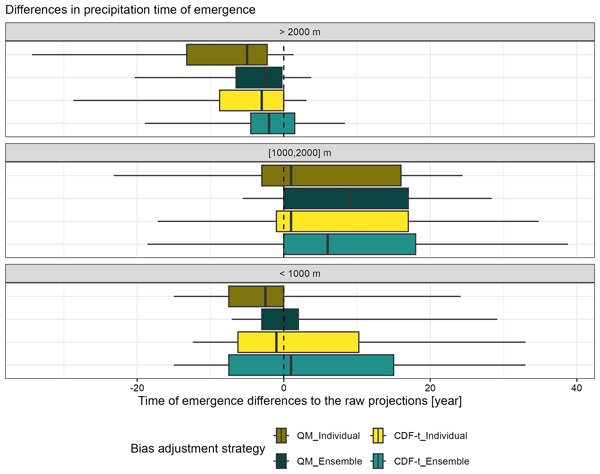
To study floods and droughts that are likely to change in the future, we use climate projections from climate models. However, we first need to adjust the systematic biases of these projections at the catchment scale before using them in hydrological models. Our study compares statistical methods that can adjust these biases but specifically for climate projections that enable a quantification of internal climate variability. We provide recommendations on the most appropriate methods.
Raul R. Wood, Joren Janzing, Amber van Hamel, Jonas Götte, Dominik L. Schumacher, and Manuela I. Brunner
Hydrol. Earth Syst. Sci., 29, 4153–4178, https://doi.org/10.5194/hess-29-4153-2025, https://doi.org/10.5194/hess-29-4153-2025, 2025
Short summary
Short summary
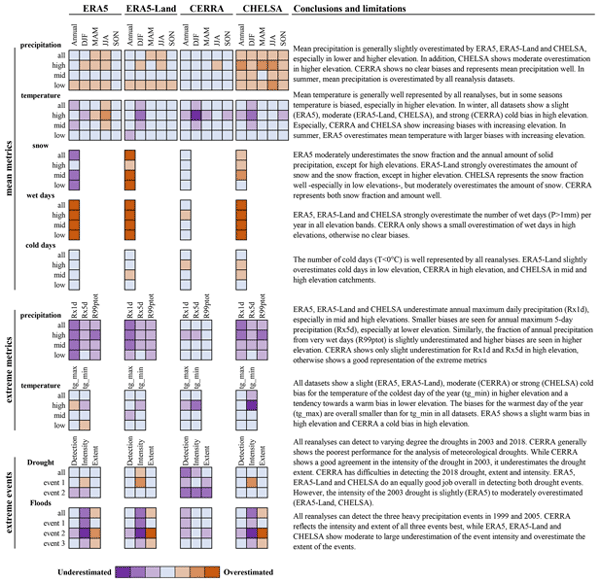
Continuous and high-quality meteorological datasets are crucial to study extreme hydro-climatic events. We here conduct a comprehensive spatio-temporal evaluation of precipitation and temperature for four climate reanalysis datasets, focusing on mean and extreme metrics, variability, trends, and the representation of droughts and floods over Switzerland. Our analysis shows that all datasets have some merit when limitations are considered, and that one dataset performs better than the others.
Sofía Segovia, Pablo A. Mendoza, Miguel Lagos-Zúñiga, Lucía Scaff, and Andreas Prein
EGUsphere, https://doi.org/10.5194/egusphere-2025-3061, https://doi.org/10.5194/egusphere-2025-3061, 2025
Short summary
Short summary
High-resolution climate simulations can improve our understanding of precipitation and temperature patterns in regions with complex terrain. We evaluate a new climate dataset against in-situ observations, and its potencial for hydrological modeling. Results show that, despite some limitations in dry areas, high-resolution climate models can provide information of a quality comparable to that of observation-based products, supporting their use in water resources planning and decision-making.
Amber van Hamel, Peter Molnar, Joren Janzing, and Manuela Irene Brunner
Hydrol. Earth Syst. Sci., 29, 2975–2995, https://doi.org/10.5194/hess-29-2975-2025, https://doi.org/10.5194/hess-29-2975-2025, 2025
Short summary
Short summary
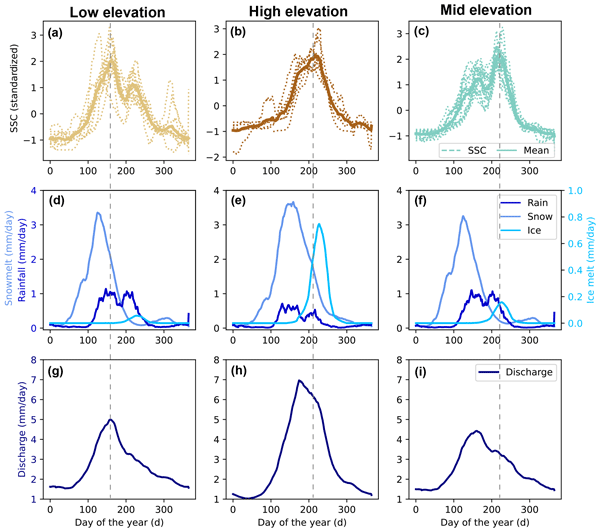
Suspended sediment is a natural component of rivers, but extreme suspended sediment concentrations (SSCs) can have negative impacts on water use and aquatic ecosystems. We identify the main factors influencing the spatial and temporal variability of annual SSC regimes and extreme SSC events. Our analysis shows that different processes are more important for annual SSC regimes than for extreme events and that compound events driven by glacial melt and high-intensity rainfall led to the highest SSCs.
Alessia Matanó, Raed Hamed, Manuela I. Brunner, Marlies H. Barendrecht, and Anne F. Van Loon
Hydrol. Earth Syst. Sci., 29, 2749–2764, https://doi.org/10.5194/hess-29-2749-2025, https://doi.org/10.5194/hess-29-2749-2025, 2025
Short summary
Short summary
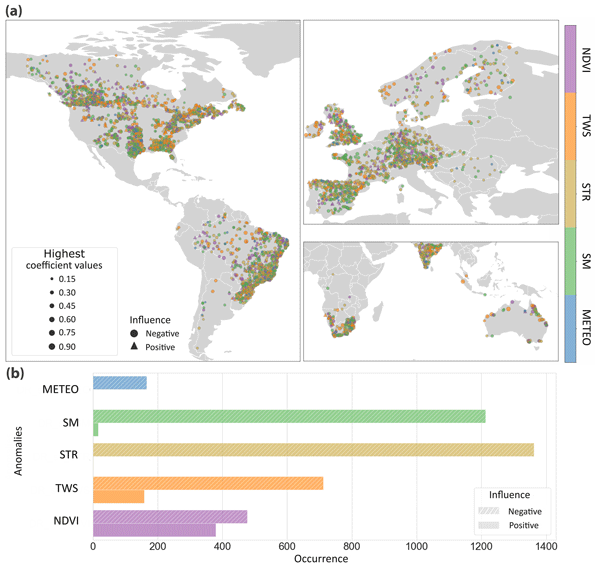
Persistent droughts change how rivers respond to rainfall. Our study of over 5000 catchments worldwide found that hydrological and soil moisture droughts decrease river-flow response to rain, especially in arid regions, while vegetation decline slightly increases it. Snow-covered areas are more resilient due to stored water buffering changes. Droughts can also cause long-lasting changes, with short and intense droughts reducing river response to rainfall and prolonged droughts increasing it.
Fabián Lema, Pablo A. Mendoza, Nicolás A. Vásquez, Naoki Mizukami, Mauricio Zambrano-Bigiarini, and Ximena Vargas
Hydrol. Earth Syst. Sci., 29, 1981–2002, https://doi.org/10.5194/hess-29-1981-2025, https://doi.org/10.5194/hess-29-1981-2025, 2025
Short summary
Short summary
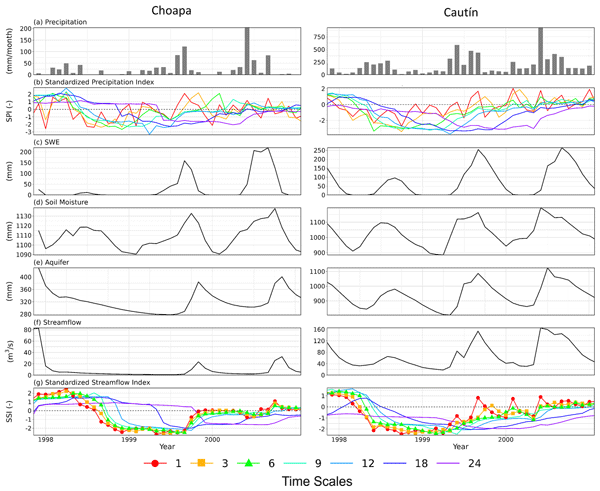
Hydrological droughts affect ecosystems and socioeconomic activities worldwide. Despite the fact that they are commonly described with the Standardized Streamflow Index (SSI), there is limited understanding of what they truly reflect in terms of water cycle processes. Here, we used state-of-the-art hydrological models in Andean basins to examine drivers of SSI fluctuations. The results highlight the importance of careful selection of indices and timescales for accurate drought characterization and monitoring.
Wouter R. Berghuijs, Ross A. Woods, Bailey J. Anderson, Anna Luisa Hemshorn de Sánchez, and Markus Hrachowitz
Hydrol. Earth Syst. Sci., 29, 1319–1333, https://doi.org/10.5194/hess-29-1319-2025, https://doi.org/10.5194/hess-29-1319-2025, 2025
Short summary
Short summary
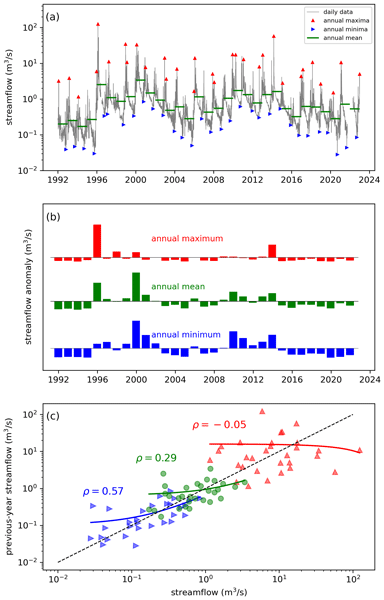
Water balances of catchments will often strongly depend on their state in the recent past, but such memory effects may persist at annual timescales. We use global data sets to show that annual memory is typically absent in precipitation but strong in terrestrial water stores and also present in evaporation and streamflow (including low flows and floods). Our experiments show that hysteretic models provide behaviour that is consistent with these observed memory behaviours.
Bailey J. Anderson, Manuela I. Brunner, Louise J. Slater, and Simon J. Dadson
Hydrol. Earth Syst. Sci., 28, 1567–1583, https://doi.org/10.5194/hess-28-1567-2024, https://doi.org/10.5194/hess-28-1567-2024, 2024
Short summary
Short summary
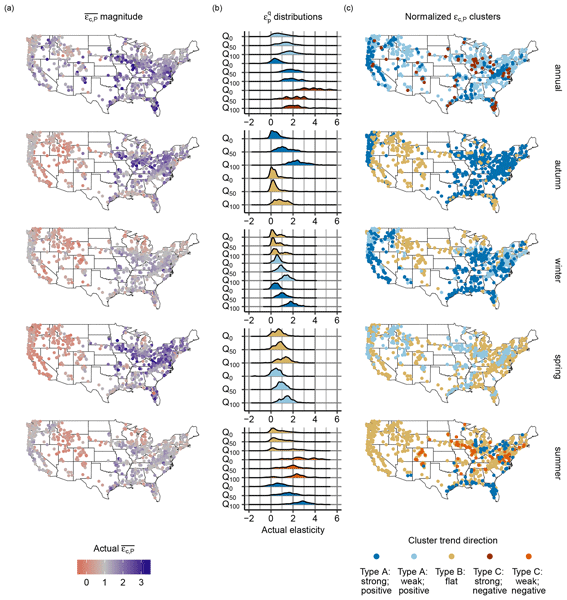
Elasticityrefers to how much the amount of water in a river changes with precipitation. We usually calculate this using average streamflow values; however, the amount of water within rivers is also dependent on stored water sources. Here, we look at how elasticity varies across the streamflow distribution and show that not only do low and high streamflows respond differently to precipitation change, but also these differences vary with water storage availability.
Julia Miller, Andrea Böhnisch, Ralf Ludwig, and Manuela I. Brunner
Nat. Hazards Earth Syst. Sci., 24, 411–428, https://doi.org/10.5194/nhess-24-411-2024, https://doi.org/10.5194/nhess-24-411-2024, 2024
Short summary
Short summary
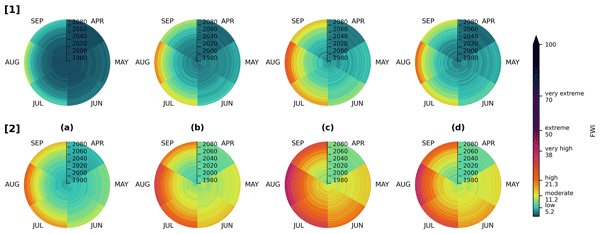
We assess the impacts of climate change on fire danger for 1980–2099 in different landscapes of central Europe, using the Canadian Forest Fire Weather Index (FWI) as a fire danger indicator. We find that today's 100-year FWI event will occur every 30 years by 2050 and every 10 years by 2099. High fire danger (FWI > 21.3) becomes the mean condition by 2099 under an RCP8.5 scenario. This study highlights the potential for severe fire events in central Europe from a meteorological perspective.
Marvin Höge, Martina Kauzlaric, Rosi Siber, Ursula Schönenberger, Pascal Horton, Jan Schwanbeck, Marius Günter Floriancic, Daniel Viviroli, Sibylle Wilhelm, Anna E. Sikorska-Senoner, Nans Addor, Manuela Brunner, Sandra Pool, Massimiliano Zappa, and Fabrizio Fenicia
Earth Syst. Sci. Data, 15, 5755–5784, https://doi.org/10.5194/essd-15-5755-2023, https://doi.org/10.5194/essd-15-5755-2023, 2023
Short summary
Short summary
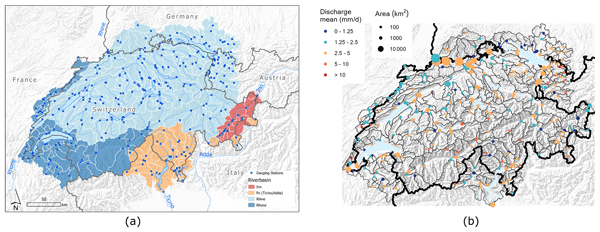
CAMELS-CH is an open large-sample hydro-meteorological data set that covers 331 catchments in hydrologic Switzerland from 1 January 1981 to 31 December 2020. It comprises (a) daily data of river discharge and water level as well as meteorologic variables like precipitation and temperature; (b) yearly glacier and land cover data; (c) static attributes of, e.g, topography or human impact; and (d) catchment delineations. CAMELS-CH enables water and climate research and modeling at catchment level.
Diego Araya, Pablo A. Mendoza, Eduardo Muñoz-Castro, and James McPhee
Hydrol. Earth Syst. Sci., 27, 4385–4408, https://doi.org/10.5194/hess-27-4385-2023, https://doi.org/10.5194/hess-27-4385-2023, 2023
Short summary
Short summary
Dynamical systems are used by many agencies worldwide to produce seasonal streamflow forecasts, which are critical for decision-making. Such systems rely on hydrology models, which contain parameters that are typically estimated using a target performance metric (i.e., objective function). This study explores the effects of this decision across mountainous basins in Chile, illustrating tradeoffs between seasonal forecast quality and the models' capability to simulate streamflow characteristics.
Nicolás Cortés-Salazar, Nicolás Vásquez, Naoki Mizukami, Pablo A. Mendoza, and Ximena Vargas
Hydrol. Earth Syst. Sci., 27, 3505–3524, https://doi.org/10.5194/hess-27-3505-2023, https://doi.org/10.5194/hess-27-3505-2023, 2023
Short summary
Short summary
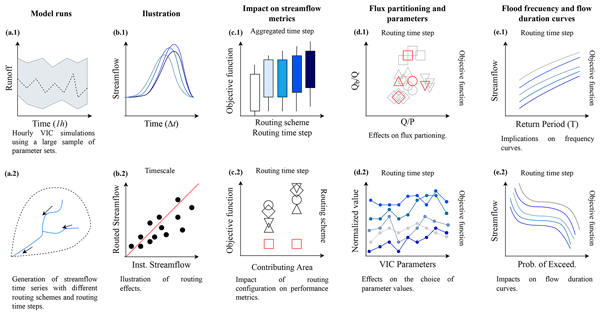
This paper shows how important river models can be for water resource applications that involve hydrological models and, in particular, parameter calibration. To this end, we conduct numerical experiments in a pilot basin using a combination of hydrologic model simulations obtained from a large sample of parameter sets and different routing methods. We find that routing can affect streamflow simulations, even at monthly time steps; the choice of parameters; and relevant streamflow metrics.

Manuela Irene Brunner
Hydrol. Earth Syst. Sci., 27, 2479–2497, https://doi.org/10.5194/hess-27-2479-2023, https://doi.org/10.5194/hess-27-2479-2023, 2023
Short summary
Short summary
I discuss different types of multivariate hydrological extremes and their dependencies, including regional extremes affecting multiple locations, such as spatially connected flood events; consecutive extremes occurring in close temporal succession, such as successive droughts; extremes characterized by multiple characteristics, such as floods with jointly high peak discharge and flood volume; and transitions between different types of extremes, such as drought-to-flood transitions.
Manuela Irene Brunner and Philippe Naveau
Hydrol. Earth Syst. Sci., 27, 673–687, https://doi.org/10.5194/hess-27-673-2023, https://doi.org/10.5194/hess-27-673-2023, 2023
Short summary
Short summary
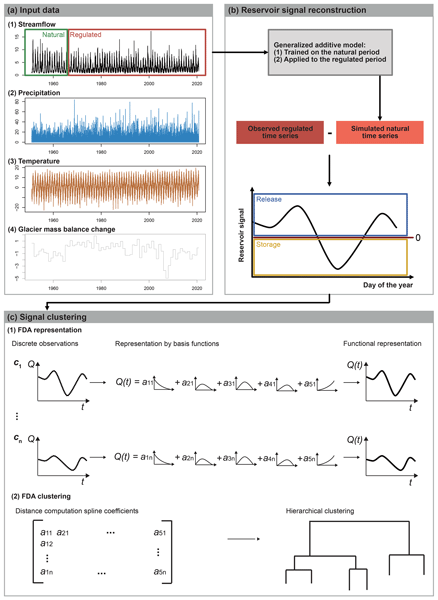
Reservoir regulation affects various streamflow characteristics. Still, information on when water is stored in and released from reservoirs is hardly available. We develop a statistical model to reconstruct reservoir operation signals from observed streamflow time series. By applying this approach to 74 catchments in the Alps, we find that reservoir management varies by catchment elevation and that seasonal redistribution from summer to winter is strongest in high-elevation catchments.
Ulises M. Sepúlveda, Pablo A. Mendoza, Naoki Mizukami, and Andrew J. Newman
Hydrol. Earth Syst. Sci., 26, 3419–3445, https://doi.org/10.5194/hess-26-3419-2022, https://doi.org/10.5194/hess-26-3419-2022, 2022
Short summary
Short summary
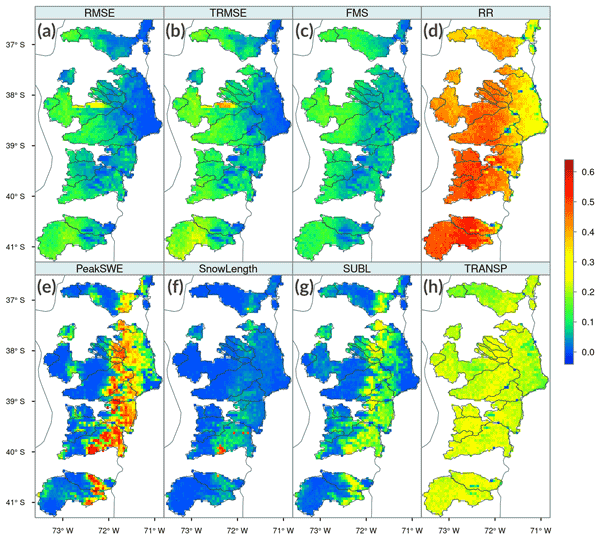
This paper characterizes parameter sensitivities across more than 5500 grid cells for a commonly used macroscale hydrological model, including a suite of eight performance metrics and 43 soil, vegetation and snow parameters. The results show that the model is highly overparameterized and, more importantly, help to provide guidance on the most relevant parameters for specific target processes across diverse climatic types.
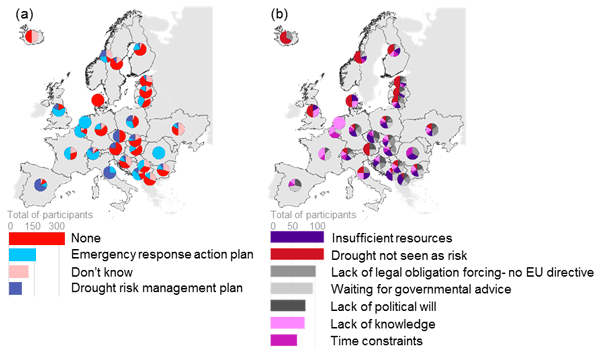
Veit Blauhut, Michael Stoelzle, Lauri Ahopelto, Manuela I. Brunner, Claudia Teutschbein, Doris E. Wendt, Vytautas Akstinas, Sigrid J. Bakke, Lucy J. Barker, Lenka Bartošová, Agrita Briede, Carmelo Cammalleri, Ksenija Cindrić Kalin, Lucia De Stefano, Miriam Fendeková, David C. Finger, Marijke Huysmans, Mirjana Ivanov, Jaak Jaagus, Jiří Jakubínský, Svitlana Krakovska, Gregor Laaha, Monika Lakatos, Kiril Manevski, Mathias Neumann Andersen, Nina Nikolova, Marzena Osuch, Pieter van Oel, Kalina Radeva, Renata J. Romanowicz, Elena Toth, Mirek Trnka, Marko Urošev, Julia Urquijo Reguera, Eric Sauquet, Aleksandra Stevkov, Lena M. Tallaksen, Iryna Trofimova, Anne F. Van Loon, Michelle T. H. van Vliet, Jean-Philippe Vidal, Niko Wanders, Micha Werner, Patrick Willems, and Nenad Živković
Nat. Hazards Earth Syst. Sci., 22, 2201–2217, https://doi.org/10.5194/nhess-22-2201-2022, https://doi.org/10.5194/nhess-22-2201-2022, 2022
Short summary
Short summary
Recent drought events caused enormous damage in Europe. We therefore questioned the existence and effect of current drought management strategies on the actual impacts and how drought is perceived by relevant stakeholders. Over 700 participants from 28 European countries provided insights into drought hazard and impact perception and current management strategies. The study concludes with an urgent need to collectively combat drought risk via a European macro-level drought governance approach.

Manuela I. Brunner and Louise J. Slater
Hydrol. Earth Syst. Sci., 26, 469–482, https://doi.org/10.5194/hess-26-469-2022, https://doi.org/10.5194/hess-26-469-2022, 2022
Short summary
Short summary
Assessing the rarity and magnitude of very extreme flood events occurring less than twice a century is challenging due to the lack of observations of such rare events. Here we develop a new approach, pooling reforecast ensemble members from the European Flood Awareness System to increase the sample size available to estimate the frequency of extreme flood events. We demonstrate that such ensemble pooling produces more robust estimates than observation-based estimates.
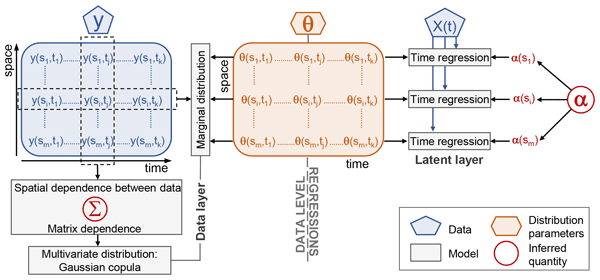
Álvaro Ossandón, Manuela I. Brunner, Balaji Rajagopalan, and William Kleiber
Hydrol. Earth Syst. Sci., 26, 149–166, https://doi.org/10.5194/hess-26-149-2022, https://doi.org/10.5194/hess-26-149-2022, 2022
Short summary
Short summary
Timely projections of seasonal streamflow extremes on a river network can be useful for flood risk mitigation, but this is challenging, particularly under space–time nonstationarity. We develop a space–time Bayesian hierarchical model (BHM) using temporal climate covariates and copulas to project seasonal streamflow extremes and the attendant uncertainties. We demonstrate this on the Upper Colorado River basin to project spring flow extremes using the preceding winter’s climate teleconnections.
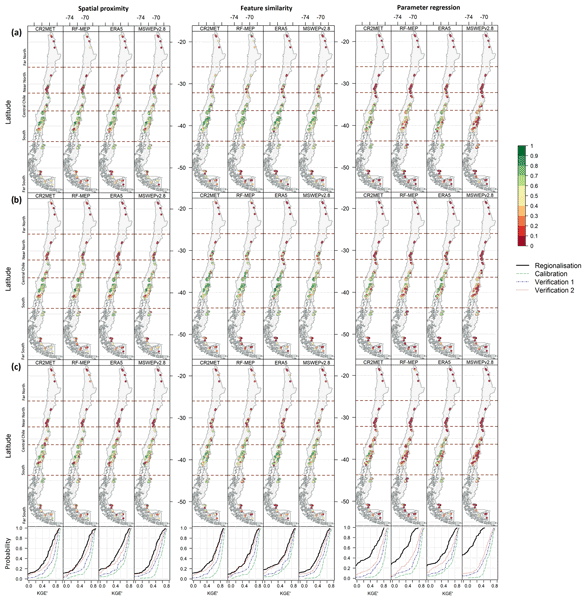
Oscar M. Baez-Villanueva, Mauricio Zambrano-Bigiarini, Pablo A. Mendoza, Ian McNamara, Hylke E. Beck, Joschka Thurner, Alexandra Nauditt, Lars Ribbe, and Nguyen Xuan Thinh
Hydrol. Earth Syst. Sci., 25, 5805–5837, https://doi.org/10.5194/hess-25-5805-2021, https://doi.org/10.5194/hess-25-5805-2021, 2021
Short summary
Short summary
Most rivers worldwide are ungauged, which hinders the sustainable management of water resources. Regionalisation methods use information from gauged rivers to estimate streamflow over ungauged ones. Through hydrological modelling, we assessed how the selection of precipitation products affects the performance of three regionalisation methods. We found that a precipitation product that provides the best results in hydrological modelling does not necessarily perform the best for regionalisation.
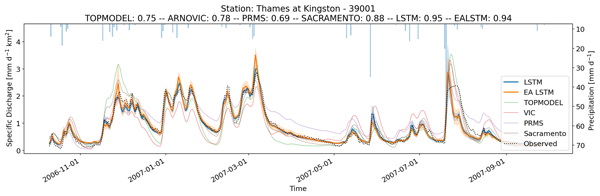
Thomas Lees, Marcus Buechel, Bailey Anderson, Louise Slater, Steven Reece, Gemma Coxon, and Simon J. Dadson
Hydrol. Earth Syst. Sci., 25, 5517–5534, https://doi.org/10.5194/hess-25-5517-2021, https://doi.org/10.5194/hess-25-5517-2021, 2021
Short summary
Short summary
We used deep learning (DL) models to simulate the amount of water moving through a river channel (discharge) based on the rainfall, temperature and potential evaporation in the previous days. We tested the DL models on catchments across Great Britain finding that the model can accurately simulate hydrological systems across a variety of catchment conditions. Ultimately, the model struggled most in areas where there is chalky bedrock and where human influence on the catchment is large.
Cited articles
Acuña Espinoza, E., Loritz, R., Kratzert, F., Klotz, D., Gauch, M., Álvarez Chaves, M., and Ehret, U.: Analyzing the generalization capabilities of a hybrid hydrological model for extrapolation to extreme events, Hydrol. Earth Syst. Sci., 29, 1277–1294, https://doi.org/10.5194/hess-29-1277-2025, 2025. a
Addor, N. and Melsen, L. A.: Legacy, Rather Than Adequacy, Drives the Selection of Hydrological Models, Water Resources Research, 55, 378–390, https://doi.org/10.1029/2018WR022958, 2019. a
Alexander, A. A., Kumar, D. N., Knoben, W. J. M., and Clark, M. P.: Evaluating the parameter sensitivity and impact of hydrologic modeling decisions on flood simulations, Advances in Water Resources, 181, 104560, https://doi.org/10.1016/j.advwatres.2023.104560, 2023. a, b
Althoff, D. and Rodrigues, L. N.: Goodness-of-fit criteria for hydrological models: Model calibration and performance assessment, Journal of Hydrology, 600, 126674, https://doi.org/10.1016/j.jhydrol.2021.126674, 2021. a
Alvarez-Garreton, C., Mendoza, P. A., Boisier, J. P., Addor, N., Galleguillos, M., Zambrano-Bigiarini, M., Lara, A., Puelma, C., Cortes, G., Garreaud, R., McPhee, J., and Ayala, A.: The CAMELS-CL dataset: catchment attributes and meteorology for large sample studies – Chile dataset, Hydrol. Earth Syst. Sci., 22, 5817–5846, https://doi.org/10.5194/hess-22-5817-2018, 2018a. a, b
Alvarez-Garreton, C., Mendoza, P. A., Boisier, J. P., Addor, N., Galleguillos, M., Zambrano-Bigiarini, M., Lara, A., Puelma, C., Cortes, G., Garreaud, R., McPhee, J., and Ayala, A.: Links to files – The CAMELS-CL dataset, PANGAEA [data set], https://doi.org/10.1594/PANGAEA.894885, 2018b. a
Alvarez-Garreton, C., Boisier, J. P., Garreaud, R., Seibert, J., and Vis, M.: Progressive water deficits during multiyear droughts in basins with long hydrological memory in Chile, Hydrol. Earth Syst. Sci., 25, 429–446, https://doi.org/10.5194/hess-25-429-2021, 2021. a
Araya, D., Mendoza, P. A., Muñoz-Castro, E., and McPhee, J.: Towards robust seasonal streamflow forecasts in mountainous catchments: impact of calibration metric selection in hydrological modeling, Hydrol. Earth Syst. Sci., 27, 4385–4408, https://doi.org/10.5194/hess-27-4385-2023, 2023. a, b
Asadieh, B. and Krakauer, N. Y.: Global change in streamflow extremes under climate change over the 21st century, Hydrol. Earth Syst. Sci., 21, 5863–5874, https://doi.org/10.5194/hess-21-5863-2017, 2017. a
Astagneau, P. C., Bourgin, F., Andréassian, V., and Perrin, C.: When does a parsimonious model fail to simulate floods? Learning from the seasonality of model bias, Hydrological Sciences Journal, 66, 1288–1305, https://doi.org/10.1080/02626667.2021.1923720, 2021a. a
Astagneau, P. C., Thirel, G., Delaigue, O., Guillaume, J. H. A., Parajka, J., Brauer, C. C., Viglione, A., Buytaert, W., and Beven, K. J.: Technical note: Hydrology modelling R packages – a unified analysis of models and practicalities from a user perspective, Hydrol. Earth Syst. Sci., 25, 3937–3973, https://doi.org/10.5194/hess-25-3937-2021, 2021b. a
Astagneau, P. C., Bourgin, F., Andréassian, V., and Perrin, C.: Catchment response to intense rainfall: Evaluating modelling hypotheses, Hydrological Processes, 36, e14676, https://doi.org/10.1002/hyp.14676, 2022. a, b, c
Baez-Villanueva, O. M., Zambrano-Bigiarini, M., Mendoza, P. A., McNamara, I., Beck, H. E., Thurner, J., Nauditt, A., Ribbe, L., and Thinh, N. X.: On the selection of precipitation products for the regionalisation of hydrological model parameters, Hydrol. Earth Syst. Sci., 25, 5805–5837, https://doi.org/10.5194/hess-25-5805-2021, 2021. a
Banfi, F. and De Michele, C.: Compound flood hazard at Lake Como, Italy, is driven by temporal clustering of rainfall events, Communications Earth & Environment, 3, 1–10, https://doi.org/10.1038/s43247-022-00557-9, 2022. a
Barendrecht, M. H., Matanó, A., Mendoza, H., Weesie, R., Rohse, M., Koehler, J., de Ruiter, M., Garcia, M., Mazzoleni, M., Aerts, J. C. J. H., Ward, P. J., Di Baldassarre, G., Day, R., and Van Loon, A. F.: Exploring drought-to-flood interactions and dynamics: A global case review, WIREs Water, 11, e1726, https://doi.org/10.1002/wat2.1726, 2024. a, b
Berghuijs, W. R., Sivapalan, M., Woods, R. A., and Savenije, H. H. G.: Patterns of similarity of seasonal water balances: A window into streamflow variability over a range of time scales, Water Resources Research, 50, 5638–5661, https://doi.org/10.1002/2014WR015692, 2014. a
Bergström, S. and Forsman, A.: Development of a conceptual deterministic rainfall-runoff model, Nordic Hydrol., 4, 147–170, https://doi.org/10.2166/nh.1973.0012, 1973. a, b
Beven, K.: How to make advances in hydrological modelling, Hydrology Research, 50, 1481–1494, https://doi.org/10.2166/nh.2019.134, 2019. a
Beven, K. J.: A short history of philosophies of hydrological model evaluation and hypothesis testing, WIREs Water, 12, e1761, https://doi.org/10.1002/wat2.1761, 2025. a, b, c
Blöschl, G., Hall, J., Viglione, A., Perdigão, R. A. P., Parajka, J., Merz, B., Lun, D., Arheimer, B., Aronica, G. T., Bilibashi, A., Boháč, M., Bonacci, O., Borga, M., Čanjevac, I., Castellarin, A., Chirico, G. B., Claps, P., Frolova, N., Ganora, D., Gorbachova, L., Gül, A., Hannaford, J., Harrigan, S., Kireeva, M., Kiss, A., Kjeldsen, T. R., Kohnová, S., Koskela, J. J., Ledvinka, O., Macdonald, N., Mavrova-Guirguinova, M., Mediero, L., Merz, R., Molnar, P., Montanari, A., Murphy, C., Osuch, M., Ovcharuk, V., Radevski, I., Salinas, J. L., Sauquet, E., Šraj, M., Szolgay, J., Volpi, E., Wilson, D., Zaimi, K., and Živković, N.: Changing climate both increases and decreases European river floods, Nature, 573, 108–111, https://doi.org/10.1038/s41586-019-1495-6, 2019. a
Boisier, J. P.: CR2MET: A high-resolution precipitation and temperature dataset for the period 1960-2021 in continental Chile, Zenodo [data set], https://doi.org/10.5281/zenodo.7529682, 2023. a
Brunner, M. I. and Sikorska-Senoner, A. E.: Dependence of flood peaks and volumes in modeled discharge time series: Effect of different uncertainty sources, Journal of Hydrology, 572, 620–629, https://doi.org/10.1016/j.jhydrol.2019.03.024, 2019. a
Brunner, M. I., Gilleland, E., Wood, A., Swain, D. L., and Clark, M.: Spatial Dependence of Floods Shaped by Spatiotemporal Variations in Meteorological and Land-Surface Processes, Geophysical Research Letters, 47, e2020GL088000, https://doi.org/10.1029/2020GL088000, 2020. a
Brunner, M. I., Melsen, L. A., Wood, A. W., Rakovec, O., Mizukami, N., Knoben, W. J. M., and Clark, M. P.: Flood spatial coherence, triggers, and performance in hydrological simulations: large-sample evaluation of four streamflow-calibrated models, Hydrol. Earth Syst. Sci., 25, 105–119, https://doi.org/10.5194/hess-25-105-2021, 2021. a, b, c
Brunner, M. I., Anderson, B., and Muñoz-Castro, E.: Meteorological and hydrological dry-to-wet transition events are only weakly related over European catchments, Environmental Research Letters, 20, 084013, https://doi.org/10.1088/1748-9326/ade72c, 2025. a, b
Bruno, G., Avanzi, F., Alfieri, L., Libertino, A., Gabellani, S., and Duethmann, D.: Hydrological model skills change with drought severity; insights from multi-variable evaluation, Journal of Hydrology, 634, 131023, https://doi.org/10.1016/j.jhydrol.2024.131023, 2024. a, b, c
Cinkus, G., Mazzilli, N., Jourde, H., Wunsch, A., Liesch, T., Ravbar, N., Chen, Z., and Goldscheider, N.: When best is the enemy of good – critical evaluation of performance criteria in hydrological models, Hydrol. Earth Syst. Sci., 27, 2397–2411, https://doi.org/10.5194/hess-27-2397-2023, 2023. a
Clark, M. P. and Vrugt, J. A.: Unraveling uncertainties in hydrologic model calibration: Addressing the problem of compensatory parameters, Geophysical Research Letters, 33, https://doi.org/10.1029/2005GL025604, 2006. a
Clark, M. P., Bierkens, M. F. P., Samaniego, L., Woods, R. A., Uijlenhoet, R., Bennett, K. E., Pauwels, V. R. N., Cai, X., Wood, A. W., and Peters-Lidard, C. D.: The evolution of process-based hydrologic models: historical challenges and the collective quest for physical realism, Hydrol. Earth Syst. Sci., 21, 3427–3440, https://doi.org/10.5194/hess-21-3427-2017, 2017. a, b
Clerc-Schwarzenbach, F., Selleri, G., Neri, M., Toth, E., van Meerveld, I., and Seibert, J.: Large-sample hydrology – a few camels or a whole caravan?, Hydrol. Earth Syst. Sci., 28, 4219–4237, https://doi.org/10.5194/hess-28-4219-2024, 2024. a
Cortés, G. and Margulis, S.: Impacts of El Niño and La Niña on interannual snow accumulation in the Andes: Results from a high-resolution 31 year reanalysis, Geophysical Research Letters, 44, 6859–6867, https://doi.org/10.1002/2017GL073826, 2017. a
Dembélé, M., Hrachowitz, M., Savenije, H. H. G., Mariéthoz, G., and Schaefli, B.: Improving the Predictive Skill of a Distributed Hydrological Model by Calibration on Spatial Patterns With Multiple Satellite Data Sets, Water Resources Research, 56, e2019WR026085, https://doi.org/10.1029/2019WR026085, 2020. a
Di Baldassarre, G., Martinez, F., Kalantari, Z., and Viglione, A.: Drought and flood in the Anthropocene: feedback mechanisms in reservoir operation, Earth Syst. Dynam., 8, 225–233, https://doi.org/10.5194/esd-8-225-2017, 2017. a
Dietze, M., Bell, R., Ozturk, U., Cook, K. L., Andermann, C., Beer, A. R., Damm, B., Lucia, A., Fauer, F. S., Nissen, K. M., Sieg, T., and Thieken, A. H.: More than heavy rain turning into fast-flowing water – a landscape perspective on the 2021 Eifel floods, Nat. Hazards Earth Syst. Sci., 22, 1845–1856, https://doi.org/10.5194/nhess-22-1845-2022, 2022. a
Döll, P., Douville, H., Güntner, A., Müller Schmied, H., and Wada, Y.: Modelling Freshwater Resources at the Global Scale: Challenges and Prospects, Surveys in Geophysics, 37, 195–221, https://doi.org/10.1007/s10712-015-9343-1, 2016. a
Doerr, S. H., Ritsema, C. J., Dekker, L. W., Scott, D. F., and Carter, D.: Water repellence of soils: new insights and emerging research needs, Hydrological Processes, 21, 2223–2228, https://doi.org/10.1002/hyp.6762, 2007. a
Doocy, S., Daniels, A., Murray, S., and Kirsch, T. D.: The Human Impact of Floods: a Historical Review of Events 1980–2009 and Systematic Literature Review, PLoS Currents, 5, https://pmc.ncbi.nlm.nih.gov/articles/PMC3644291/ (last access: 9 February 2026), 2013. a
dos Santos, J. C. N., de Andrade, E. M., Guerreiro, M. J. S., Medeiros, P. H. A., de Queiroz Palácio, H. A., and de Araújo Neto, J. R.: Effect of dry spells and soil cracking on runoff generation in a semiarid micro watershed under land use change, Journal of Hydrology, 541, 1057–1066, https://doi.org/10.1016/j.jhydrol.2016.08.016, 2016. a
Fatichi, S., Rimkus, S., Burlando, P., Bordoy, R., and Molnar, P.: High-resolution distributed analysis of climate and anthropogenic changes on the hydrology of an Alpine catchment, Journal of Hydrology, 525, 362–382, https://doi.org/10.1016/j.jhydrol.2015.03.036, 2015. a
Fisher, R. A.: Statistical Methods for Research Workers, in: Breakthroughs in Statistics: Methodology and Distribution, edited by: Kotz, S. and Johnson, N. L., Springer, New York, NY, 66–70, https://doi.org/10.1007/978-1-4612-4380-9_6, 1992. a
Fleig, A. K., Tallaksen, L. M., Hisdal, H., and Demuth, S.: A global evaluation of streamflow drought characteristics, Hydrol. Earth Syst. Sci., 10, 535–552, https://doi.org/10.5194/hess-10-535-2006, 2006. a
Fowler, K., Peel, M., Western, A., and Zhang, L.: Improved Rainfall-Runoff Calibration for Drying Climate: Choice of Objective Function, Water Resources Research, 54, 3392–3408, https://doi.org/10.1029/2017WR022466, 2018. a, b
Frame, J. M., Kratzert, F., Klotz, D., Gauch, M., Shalev, G., Gilon, O., Qualls, L. M., Gupta, H. V., and Nearing, G. S.: Deep learning rainfall–runoff predictions of extreme events, Hydrol. Earth Syst. Sci., 26, 3377–3392, https://doi.org/10.5194/hess-26-3377-2022, 2022. a
Gimbel, K. F., Puhlmann, H., and Weiler, M.: Does drought alter hydrological functions in forest soils?, Hydrol. Earth Syst. Sci., 20, 1301–1317, https://doi.org/10.5194/hess-20-1301-2016, 2016. a
Götte, J. and Brunner, M. I.: Hydrological Drought-To-Flood Transitions Across Different Hydroclimates in the United States, Water Resources Research, 60, e2023WR036504, https://doi.org/10.1029/2023WR036504, 2024. a, b, c
Griffin, D. and Anchukaitis, K. J.: How unusual is the 2012–2014 California drought?, Geophysical Research Letters, 41, 9017–9023, https://doi.org/10.1002/2014GL062433, 2014. a
Gu, L., Yin, J., Slater, L. J., Chen, J., Do, H. X., Wang, H.-M., Chen, L., Jiang, Z., and Zhao, T.: Intensification of Global Hydrological Droughts Under Anthropogenic Climate Warming, Water Resources Research, 59, e2022WR032997, https://doi.org/10.1029/2022WR032997, 2023. a, b
Günther, D., Marke, T., Essery, R., and Strasser, U.: Uncertainties in Snowpack Simulations – Assessing the Impact of Model Structure, Parameter Choice, and Forcing Data Error on Point-Scale Energy Balance Snow Model Performance, Water Resources Research, 55, 2779–2800, https://doi.org/10.1029/2018WR023403, 2019. a
Guo, D., Westra, S., and Maier, H. R.: Impact of evapotranspiration process representation on runoff projections from conceptual rainfall-runoff models, Water Resources Research, 53, 435–454, https://doi.org/10.1002/2016WR019627, 2017. a
Hammond, J., Anderson, B., Simeone, C., Brunner, M., Muñoz-Castro, E., Archfield, S., Magee, E., and Armitage, R.: Hydrological Whiplash: Highlighting the Need for Better Understanding and Quantification of Sub-Seasonal Hydrological Extreme Transitions, Hydrological Processes, 39, e70113, https://doi.org/10.1002/hyp.70113, 2025. a, b
Handwerger, A. L., Huang, M.-H., Fielding, E. J., Booth, A. M., and Bürgmann, R.: A shift from drought to extreme rainfall drives a stable landslide to catastrophic failure, Scientific Reports, 9, 1569, https://doi.org/10.1038/s41598-018-38300-0, 2019. a
He, X. and Sheffield, J.: Lagged Compound Occurrence of Droughts and Pluvials Globally Over the Past Seven Decades, Geophysical Research Letters, 47, e2020GL087924, https://doi.org/10.1029/2020GL087924, 2020. a
Hersbach, H., Bell, B., Berrisford, P., Hirahara, S., Horányi, A., Muñoz-Sabater, J., Nicolas, J., Peubey, C., Radu, R., Schepers, D., Simmons, A., Soci, C., Abdalla, S., Abellan, X., Balsamo, G., Bechtold, P., Biavati, G., Bidlot, J., Bonavita, M., De Chiara, G., Dahlgren, P., Dee, D., Diamantakis, M., Dragani, R., Flemming, J., Forbes, R., Fuentes, M., Geer, A., Haimberger, L., Healy, S., Hogan, R. J., Hólm, E., Janisková, M., Keeley, S., Laloyaux, P., Lopez, P., Lupu, C., Radnoti, G., de Rosnay, P., Rozum, I., Vamborg, F., Villaume, S., and Thépaut, J.-N.: The ERA5 global reanalysis, Quarterly Journal of the Royal Meteorological Society, 146, 1999–2049, https://doi.org/10.1002/qj.3803, 2020. a
Hirpa, F. A., Salamon, P., Beck, H. E., Lorini, V., Alfieri, L., Zsoter, E., and Dadson, S. J.: Calibration of the Global Flood Awareness System (GloFAS) using daily streamflow data, Journal of Hydrology, 566, 595–606, https://doi.org/10.1016/j.jhydrol.2018.09.052, 2018. a
Höge, M., Kauzlaric, M., Siber, R., Schönenberger, U., Horton, P., Schwanbeck, J., Floriancic, M. G., Viviroli, D., Wilhelm, S., Sikorska-Senoner, A. E., Addor, N., Brunner, M., Pool, S., Zappa, M., and Fenicia, F.: CAMELS-CH: hydro-meteorological time series and landscape attributes for 331 catchments in hydrologic Switzerland, Earth Syst. Sci. Data, 15, 5755–5784, https://doi.org/10.5194/essd-15-5755-2023, 2023a. a, b
Höge, M., Kauzlaric, M., Siber, R., Schönenberger, U., Horton, P., Schwanbeck, J., Floriancic, M. G., Viviroli, D., Wilhelm, S., Sikorska-Senoner, A. E., Addor, N., Brunner, M., Pool, S., Zappa, M., and Fenicia, F.: Catchment attributes and hydro-meteorological time series for large-sample studies across hydrologic Switzerland (CAMELS-CH), Zenodo [data set], https://doi.org/10.5281/zenodo.7784633, 2023b. a
Hrachowitz, M. and Clark, M. P.: HESS Opinions: The complementary merits of competing modelling philosophies in hydrology, Hydrol. Earth Syst. Sci., 21, 3953–3973, https://doi.org/10.5194/hess-21-3953-2017, 2017. a, b
Hrachowitz, M., Fovet, O., Ruiz, L., Euser, T., Gharari, S., Nijzink, R., Freer, J., Savenije, H. H. G., and Gascuel-Odoux, C.: Process consistency in models: The importance of system signatures, expert knowledge, and process complexity, Water Resources Research, 50, 7445–7469, https://doi.org/10.1002/2014WR015484, 2014. a
Hughes, D., Birkinshaw, S., and Parkin, G.: A method to include reservoir operations in catchment hydrological models using SHETRAN, Environmental Modelling & Software, 138, 104980, https://doi.org/10.1016/j.envsoft.2021.104980, 2021. a
Hughes, D. A.: Adjusting rainfall inputs to hydrological models in a data-scarce area of Southern Africa, Hydrological Sciences Journal, 69, 1186–1197, https://doi.org/10.1080/02626667.2024.2360971, 2024. a
Hurlbert, M. and Gupta, J.: The adaptive capacity of institutions in Canada, Argentina, and Chile to droughts and floods, Regional Environmental Change, 17, 865–877, https://doi.org/10.1007/s10113-016-1078-0, 2017. a
Kaufmann, J. and Schering, A.: Analysis of Variance ANOVA, in: Wiley StatsRef: Statistics Reference Online, John Wiley & Sons, Ltd, https://doi.org/10.1002/9781118445112.stat06938, 2014. a
Kiem, A. S. and Austin, E. K.: Drought and the future of rural communities: Opportunities and challenges for climate change adaptation in regional Victoria, Australia, Global Environmental Change, 23, 1307–1316, https://doi.org/10.1016/j.gloenvcha.2013.06.003, 2013. a
Klemeš, V., V.: Operational testing of hydrological simulation models, Hydrological Sciences Journal, 31, 13–24, https://doi.org/10.1080/02626668609491024, 1986. a, b
Kling, H., Fuchs, M., and Paulin, M.: Runoff conditions in the upper Danube basin under an ensemble of climate change scenarios, Journal of Hydrology, 424–425, 264–277, https://doi.org/10.1016/j.jhydrol.2012.01.011, 2012. a, b, c
Knoben, W. J. M.: Setting expectations for hydrologic model performance with an ensemble of simple benchmarks, Hydrological Processes, 38, e15288, https://doi.org/10.1002/hyp.15288, 2024. a
Knoben, W. J. M., Freer, J. E., Peel, M. C., Fowler, K. J. A., and Woods, R. A.: A Brief Analysis of Conceptual Model Structure Uncertainty Using 36 Models and 559 Catchments, Water Resources Research, 56, e2019WR025975, https://doi.org/10.1029/2019WR025975, 2020. a, b, c
Kratzert, F., Klotz, D., Brenner, C., Schulz, K., and Herrnegger, M.: Rainfall–runoff modelling using Long Short-Term Memory (LSTM) networks, Hydrol. Earth Syst. Sci., 22, 6005–6022, https://doi.org/10.5194/hess-22-6005-2018, 2018. a
Le Moine, N.: Le bassin versant de surface vu par le souterrain: une voie d'amélioration des performances et du réalisme des modèles pluie-débit?, PhD thesis, Doctorat Géosciences et Ressources Naturelles, Université Pierre et Marie Curie Paris VI, 348 pp., https://hal.inrae.fr/tel-02591478 (last access: 9 February 2026), 2008. a
Legates, D. R. and McCabe Jr., G. J.: Evaluating the use of “goodness-of-fit” Measures in hydrologic and hydroclimatic model validation, Water Resources Research, 35, 233–241, https://doi.org/10.1029/1998WR900018, 1999. a
Lehner, B., Döll, P., Alcamo, J., Henrichs, T., and Kaspar, F.: Estimating the Impact of Global Change on Flood and Drought Risks in Europe: A Continental, Integrated Analysis, Climatic Change, 75, 273–299, https://doi.org/10.1007/s10584-006-6338-4, 2006. a
Leighton-Boyce, G., Doerr, S. H., Shakesby, R. A., and Walsh, R. P. D.: Quantifying the impact of soil water repellency on overland flow generation and erosion: a new approach using rainfall simulation and wetting agent on in situ soil, Hydrological Processes, 21, 2337–2345, https://doi.org/10.1002/hyp.6744, 2007. a
Lema, F., Mendoza, P. A., Vásquez, N. A., Mizukami, N., Zambrano-Bigiarini, M., and Vargas, X.: Technical note: What does the Standardized Streamflow Index actually reflect? Insights and implications for hydrological drought analysis, Hydrol. Earth Syst. Sci., 29, 1981–2002, https://doi.org/10.5194/hess-29-1981-2025, 2025. a, b
Li, H., Xu, C. Y., and Beldring, S.: How much can we gain with increasing model complexity with the same model concepts?, Journal of Hydrology, 527, 858–871, https://doi.org/10.1016/j.jhydrol.2015.05.044, 2015. a
Macdonald, E., Merz, B., Nguyen, V. D., and Vorogushyn, S.: Heavy-tailed flood peak distributions: what is the effect of the spatial variability of rainfall and runoff generation?, Hydrol. Earth Syst. Sci., 29, 447–463, https://doi.org/10.5194/hess-29-447-2025, 2025. a
Magnusson, J., Gustafsson, D., Hüsler, F., and Jonas, T.: Assimilation of point SWE data into a distributed snow cover model comparing two contrasting methods, Water Resources Research, 50, 7816–7835, https://doi.org/10.1002/2014WR015302, 2014. a
Martin, E. R.: Future Projections of Global Pluvial and Drought Event Characteristics, Geophysical Research Letters, 45, 11913–11920, https://doi.org/10.1029/2018GL079807, 2018. a
Matanó, A., de Ruiter, M. C., Koehler, J., Ward, P. J., and Van Loon, A. F.: Caught Between Extremes: Understanding Human-Water Interactions During Drought-To-Flood Events in the Horn of Africa, Earths Future, 10, e2022EF002747, https://doi.org/10.1029/2022EF002747, 2022. a
Matanó, A., Berghuijs, W. R., Mazzoleni, M., Ruiter, M. C. d., Ward, P. J., and Loon, A. F. V.: Compound and consecutive drought-flood events at a global scale, Environmental Research Letters, 19, 064048, https://doi.org/10.1088/1748-9326/ad4b46, 2024. a
Mathevet, T., Gupta, H., Perrin, C., Andréassian, V., and Le Moine, N.: Assessing the performance and robustness of two conceptual rainfall-runoff models on a worldwide sample of watersheds, Journal of Hydrology, 585, 124698, https://doi.org/10.1016/j.jhydrol.2020.124698, 2020. a
McClymont, K., Morrison, D., Beevers, L., and Carmen, E.: Flood resilience: a systematic review, Journal of Environmental Planning and Management, 63, 1151–1176, https://doi.org/10.1080/09640568.2019.1641474 2020. a
McMartin, D. W., Hernani Merino, B. H., Bonsal, B., Hurlbert, M., Villalba, R., Ocampo, O. L., Upegui, J. J. V., Poveda, G., and Sauchyn, D. J.: Limitations of Water Resources Infrastructure for Reducing Community Vulnerabilities to Extremes and Uncertainty of Flood and Drought, Environmental Management, 62, 1038–1047, https://doi.org/10.1007/s00267-018-1104-8, 2018. a
McMillan, H. K.: Linking hydrologic signatures to hydrologic processes: A review, Hydrological Processes, 34, 1393–1409, https://doi.org/10.1002/hyp.13632, 2020. a
McMillan, H. K., Westerberg, I. K., and Krueger, T.: Hydrological data uncertainty and its implications, WIREs Water, 5, e1319, https://doi.org/10.1002/wat2.1319, 2018. a
Melsen, L. A. and Guse, B.: Hydrological Drought Simulations: How Climate and Model Structure Control Parameter Sensitivity, Water Resources Research, 55, 10527–10547, https://doi.org/10.1029/2019WR025230, 2019. a, b
Melsen, L. A., Teuling, A. J., Torfs, P. J. J. F., Zappa, M., Mizukami, N., Mendoza, P. A., Clark, M. P., and Uijlenhoet, R.: Subjective modeling decisions can significantly impact the simulation of flood and drought events, Journal of Hydrology, 568, 1093–1104, https://doi.org/10.1016/j.jhydrol.2018.11.046, 2019. a, b
Mendoza, P. A., Clark, M. P., Mizukami, N., Gutmann, E. D., Arnold, J. R., Brekke, L. D., and Rajagopalan, B.: How do hydrologic modeling decisions affect the portrayal of climate change impacts?, Hydrological Processes, 30, 1071–1095, https://doi.org/10.1002/hyp.10684, 2016. a
Merz, R., Miniussi, A., Basso, S., Petersen, K.-J., and Tarasova, L.: More Complex is Not Necessarily Better in Large-Scale Hydrological Modeling: A Model Complexity Experiment across the Contiguous United States, Bulletin of the American Meteorological Society, 103, E1947–E1967, https://doi.org/10.1175/BAMS-D-21-0284.1, 2022. a
MeteoSwiss: Documentation of MeteoSwiss Grid-Data Products. Daily Mean, Minimum and MaximumTemperature: TabsD, TminD, TmaxD, Technical Report, Bundesamt für Meteorologie und Klimatologie MeteoSchweiz, Zürich, Switzerland, https://www.meteoschweiz.admin.ch/dam/jcr:818a4d17-cb0c-4e8b-92c6-1a1bdf5348b7/ProdDoc_TabsD.pdf (last access: 19 December 2025), 2021a. a
MeteoSwiss: Documentation of MeteoSwiss Grid-Data Products. Daily Precipitation (final analysis): RhiresD, Technical Report, Bundesamt für Meteorologie und Klimatologie MeteoSchweiz, Zürich, Switzerland, https://www.meteoschweiz.admin.ch/dam/jcr:4f51f0f1-0fe3-48b5-9de0-15666327e63c/ProdDoc_RhiresD.pdf (last access: 19 December 2025), 2021b. a
Meylan, P., Favre, A.-C., and Musy, A.: Predictive Hydrology: A Frequency Analysis Approach, CRC Press, ISBN 9780429066603, https://doi.org/10.1201/b11832, 2012. a
Miralles, D. G., Holmes, T. R. H., De Jeu, R. A. M., Gash, J. H., Meesters, A. G. C. A., and Dolman, A. J.: Global land-surface evaporation estimated from satellite-based observations, Hydrol. Earth Syst. Sci., 15, 453–469, https://doi.org/10.5194/hess-15-453-2011, 2011. a, b
Mizukami, N., Clark, M. P., Gutmann, E. D., Mendoza, P. A., Newman, A. J., Nijssen, B., Livneh, B., Hay, L. E., Arnold, J. R., and Brekke, L. D.: Implications of the Methodological Choices for Hydrologic Portrayals of Climate Change over the Contiguous United States: Statistically Downscaled Forcing Data and Hydrologic Models, Journal of Hydrometeorology, 17, 73–98, https://doi.org/10.1175/JHM-D-14-0187.1, 2016. a
Motavita, D., Chow, R., Guthke, A., and Nowak, W.: The comprehensive differential split-sample test: A stress-test for hydrological model robustness under climate variability, Journal of Hydrology, 573, 501–515, https://doi.org/10.1016/j.jhydrol.2019.03.054, 2019. a
Muñoz-Castro, E., Mendoza, P. A., Vásquez, N., and Vargas, X.: Exploring parameter (dis)agreement due to calibration metric selection in conceptual rainfall–runoff models, Hydrological Sciences Journal, 68, 1754–1768, https://doi.org/10.1080/02626667.2023.2231434, 2023. a
Muñoz-Castro, E., Anderson, B., and Brunner, M. I.: Implementation of four conceptual rainfall-runoff models to simulate drought-to-flood transitions in Chile and Switzerland, Zenodo [data set], https://doi.org/10.5281/zenodo.14803500, 2025. a
Nash, J. E. and Sutcliffe, J. V.: River flow forecasting through conceptual models part I – A discussion of principles, Journal of Hydrology, 10, 282–290, https://doi.org/10.1016/0022-1694(70)90255-6, 1970. a
Nasonova, O. N., Gusev, Y. M., and Kovalev, Y. E.: Impact of uncertainties in meteorological forcing data and land surface parameters on global estimates of terrestrial water balance components, Hydrological Processes, 25, 1074–1090, https://doi.org/10.1002/hyp.7651, 2011. a
Newman, A. J., Clark, M. P., Sampson, K., Wood, A., Hay, L. E., Bock, A., Viger, R. J., Blodgett, D., Brekke, L., Arnold, J. R., Hopson, T., and Duan, Q.: Development of a large-sample watershed-scale hydrometeorological data set for the contiguous USA: data set characteristics and assessment of regional variability in hydrologic model performance, Hydrol. Earth Syst. Sci., 19, 209–223, https://doi.org/10.5194/hess-19-209-2015, 2015. a
Or, D., Lehmann, P., Shahraeeni, E., and Shokri, N.: Advances in Soil Evaporation Physics – A Review, Vadose Zone Journal, 12, vzj2012.0163, https://doi.org/10.2136/vzj2012.0163, 2013. a
Orth, R., Staudinger, M., Seneviratne, S. I., Seibert, J., and Zappa, M.: Does model performance improve with complexity? A case study with three hydrological models, Journal of Hydrology, 523, 147–159, https://doi.org/10.1016/j.jhydrol.2015.01.044, 2015. a, b
Oudin, L., Hervieu, F., Michel, C., Perrin, C., Andréassian, V., Anctil, F., and Loumagne, C.: Which potential evapotranspiration input for a lumped rainfall–runoff model?: Part 2 – Towards a simple and efficient potential evapotranspiration model for rainfall–runoff modelling, Journal of Hydrology, 303, 290–306, https://doi.org/10.1016/j.jhydrol.2004.08.026, 2005. a
Parajka, J., Merz, R., and Blöschl, G.: Uncertainty and multiple objective calibration in regional water balance modelling: case study in 320 Austrian catchments, Hydrological Processes, 21, 435–446, https://doi.org/10.1002/hyp.6253, 2007. a
Peleg, N., Skinner, C., Fatichi, S., and Molnar, P.: Temperature effects on the spatial structure of heavy rainfall modify catchment hydro-morphological response, Earth Surf. Dynam., 8, 17–36, https://doi.org/10.5194/esurf-8-17-2020, 2020. a
Pelletier, A. and Andréassian, V.: On constraining a lumped hydrological model with both piezometry and streamflow: results of a large sample evaluation, Hydrol. Earth Syst. Sci., 26, 2733–2758, https://doi.org/10.5194/hess-26-2733-2022, 2022. a
Perrin, C., Michel, C., and Andréassian, V.: Improvement of a parsimonious model for streamflow simulation, Journal of Hydrology, 279, 275–289, https://doi.org/10.1016/S0022-1694(03)00225-7, 2003. a
Pizarro, A. and Jorquera, J.: Advancing objective functions in hydrological modelling: Integrating knowable moments for improved simulation accuracy, Journal of Hydrology, 634, 131071, https://doi.org/10.1016/j.jhydrol.2024.131071, 2024. a, b, c
Poncelet, C., Merz, R., Merz, B., Parajka, J., Oudin, L., Andréassian, V., and Perrin, C.: Process-based interpretation of conceptual hydrological model performance using a multinational catchment set, Water Resources Research, 53, 7247–7268, https://doi.org/10.1002/2016WR019991, 2017. a
Pool, S., Vis, M., and Seibert, J.: Evaluating model performance: towards a non-parametric variant of the Kling-Gupta efficiency, Hydrological Sciences Journal, 63, 1941–1953, https://doi.org/10.1080/02626667.2018.1552002, 2018. a, b, c
Probst, E. and Mauser, W.: Evaluation of ERA5 and WFDE5 forcing data for hydrological modelling and the impact of bias correction with regional climatologies: A case study in the Danube River Basin, Journal of Hydrology: Regional Studies, 40, 101023, https://doi.org/10.1016/j.ejrh.2022.101023, 2022. a
Pushpalatha, R., Perrin, C., Le Moine, N., Mathevet, T., and Andréassian, V.: A downward structural sensitivity analysis of hydrological models to improve low-flow simulation, Journal of Hydrology, 411, 66–76, https://doi.org/10.1016/j.jhydrol.2011.09.034, 2011. a, b
Pushpalatha, R., Perrin, C., Moine, N. L., and Andréassian, V.: A review of efficiency criteria suitable for evaluating low-flow simulations, Journal of Hydrology, 420–421, 171–182, https://doi.org/10.1016/j.jhydrol.2011.11.055, 2012. a
Quesada-Montano, B., Di Baldassarre, G., Rangecroft, S., and Van Loon, A. F.: Hydrological change: Towards a consistent approach to assess changes on both floods and droughts, Advances in Water Resources, 111, 31–35, https://doi.org/10.1016/j.advwatres.2017.10.038, 2018. a
Rashid, M. M. and Wahl, T.: Hydrologic risk from consecutive dry and wet extremes at the global scale, Environmental Research Communications, 4, 071001, https://doi.org/10.1088/2515-7620/ac77de, 2022. a
Robeson, S. M.: Revisiting the recent California drought as an extreme value, Geophysical Research Letters, 42, 6771–6779, https://doi.org/10.1002/2015GL064593, 2015. a
Saavedra, D., Mendoza, P. A., Addor, N., Llauca, H., and Vargas, X.: A multi-objective approach to select hydrological models and constrain structural uncertainties for climate impact assessments, Hydrological Processes, 36, e14446, https://doi.org/10.1002/hyp.14446, 2022. a
Santos, L., Andréassian, V., Sonnenborg, T. O., Lindström, G., de Lavenne, A., Perrin, C., Collet, L., and Thirel, G.: Lack of robustness of hydrological models: a large-sample diagnosis and an attempt to identify hydrological and climatic drivers, Hydrol. Earth Syst. Sci., 29, 683–700, https://doi.org/10.5194/hess-29-683-2025, 2025. a
Seibert, J. and Bergström, S.: A retrospective on hydrological catchment modelling based on half a century with the HBV model, Hydrol. Earth Syst. Sci., 26, 1371–1388, https://doi.org/10.5194/hess-26-1371-2022, 2022. a
Seibert, J., Staudinger, M., and van Meerveld, H. J. I.: Validation and Over-Parameterization – Experiences from Hydrological Modeling, in: Computer Simulation Validation: Fundamental Concepts, Methodological Frameworks, and Philosophical Perspectives, edited by: Beisbart, C. and Saam, N. J., Springer International Publishing, Cham, 811–834, https://doi.org/10.1007/978-3-319-70766-2_33, 2019. a
Sivakumar, B.: Global climate change and its impacts on water resources planning and management: assessment and challenges, Stochastic Environmental Research and Risk Assessment, 25, 583–600, https://doi.org/10.1007/s00477-010-0423-y, 2011. a
Spieler, D. and Schütze, N.: Investigating the Model Hypothesis Space: Benchmarking Automatic Model Structure Identification With a Large Model Ensemble, Water Resources Research, 60, e2023WR036199, https://doi.org/10.1029/2023WR036199, 2024. a, b
Stisen, S., Højberg, A. L., Troldborg, L., Refsgaard, J. C., Christensen, B. S. B., Olsen, M., and Henriksen, H. J.: On the importance of appropriate precipitation gauge catch correction for hydrological modelling at mid to high latitudes, Hydrol. Earth Syst. Sci., 16, 4157–4176, https://doi.org/10.5194/hess-16-4157-2012, 2012. a
Swain, D. L., Langenbrunner, B., Neelin, J. D., and Hall, A.: Increasing precipitation volatility in twenty-first-century California, Nature Climate Change, 8, 427–433, https://doi.org/10.1038/s41558-018-0140-y, 2018. a
Swain, D. L., Prein, A. F., Abatzoglou, J. T., Albano, C. M., Brunner, M., Diffenbaugh, N. S., Singh, D., Skinner, C. B., and Touma, D.: Hydroclimate volatility on a warming Earth, Nature Reviews Earth & Environment, 6, 35–50, https://doi.org/10.1038/s43017-024-00624-z, 2025. a, b
Tabari, H., Hosseinzadehtalaei, P., Thiery, W., and Willems, P.: Amplified Drought and Flood Risk Under Future Socioeconomic and Climatic Change, Earths Future, 9, e2021EF002295, https://doi.org/10.1029/2021EF002295, 2021. a
Tallaksen, L. M., Madsen, H., and Clausen, B.: On the definition and modelling of streamflow drought duration and deficit volume, Hydrological Sciences Journal, 42, 15–33, https://doi.org/10.1080/02626669709492003, 1997. a
Tang, G., Clark, M. P., and Papalexiou, S. M.: SC-Earth: A Station-Based Serially Complete Earth Dataset from 1950 to 2019, Journal of Climate, 34, 6493–6511, https://doi.org/10.1175/JCLI-D-21-0067.1, 2021. a, b, c
Tang, G., Clark, M. P., Knoben, W. J. M., Liu, H., Gharari, S., Arnal, L., Beck, H. E., Wood, A. W., Newman, A. J., and Papalexiou, S. M.: The Impact of Meteorological Forcing Uncertainty on Hydrological Modeling: A Global Analysis of Cryosphere Basins, Water Resources Research, 59, e2022WR033767, https://doi.org/10.1029/2022WR033767, 2023. a, b
Tang, G., Clark, M. P., Knoben, W. J. M., Liu, H., Gharari, S., Arnal, L., Wood, A. W., Newman, A. J., Freer, J., and Papalexiou, S. M.: Uncertainty Hotspots in Global Hydrologic Modeling: The Impact of Precipitation and Temperature Forcings, Bulletin of the American Meteorological Society, https://doi.org/10.1175/BAMS-D-24-0007.1, 2025. a
Thirel, G., Santos, L., Delaigue, O., and Perrin, C.: On the use of streamflow transformations for hydrological model calibration, Hydrol. Earth Syst. Sci., 28, 4837–4860, https://doi.org/10.5194/hess-28-4837-2024, 2024. a, b
Tolson, B. A. and Shoemaker, C. A.: Dynamically dimensioned search algorithm for computationally efficient watershed model calibration, Water Resources Research, 43, https://doi.org/10.1029/2005WR004723, 2007. a
Tuel, A., Schaefli, B., Zscheischler, J., and Martius, O.: On the links between sub-seasonal clustering of extreme precipitation and high discharge in Switzerland and Europe, Hydrol. Earth Syst. Sci., 26, 2649–2669, https://doi.org/10.5194/hess-26-2649-2022, 2022. a
Valenzuela, R., Garreaud, R., Vergara, I., Campos, D., Viale, M., and Rondanelli, R.: An extraordinary dry season precipitation event in the subtropical Andes: Drivers, impacts and predictability, Weather and Climate Extremes, 37, 100472, https://doi.org/10.1016/j.wace.2022.100472, 2022. a
Valéry, A., Andréassian, V., and Perrin, C.: Regionalization of precipitation and air temperature over high-altitude catchments – learning from outliers, Hydrological Sciences Journal, 55, 928–940, https://doi.org/10.1080/02626667.2010.504676, 2010. a
Valéry, A., Andréassian, V., and Perrin, C.: `As simple as possible but not simpler': What is useful in a temperature-based snow-accounting routine? Part 1 – Comparison of six snow accounting routines on 380 catchments, Journal of Hydrology, 517, 1166–1175, https://doi.org/10.1016/j.jhydrol.2014.04.059, 2014a. a, b
Valéry, A., Andréassian, V., and Perrin, C.: `As simple as possible but not simpler': What is useful in a temperature-based snow-accounting routine? Part 2 – Sensitivity analysis of the Cemaneige snow accounting routine on 380 catchments, Journal of Hydrology, 517, 1176–1187, https://doi.org/10.1016/j.jhydrol.2014.04.058, 2014b. a
van Kempen, G., van der Wiel, K., and Melsen, L. A.: The impact of hydrological model structure on the simulation of extreme runoff events, Nat. Hazards Earth Syst. Sci., 21, 961–976, https://doi.org/10.5194/nhess-21-961-2021, 2021. a, b
Van Loon, A. F. and Van Lanen, H. A. J.: A process-based typology of hydrological drought, Hydrol. Earth Syst. Sci., 16, 1915–1946, https://doi.org/10.5194/hess-16-1915-2012, 2012. a
Vásquez, N., Cepeda, J., Gómez, T., Mendoza, P. A., Lagos, M., Boisier, J. P., Álvarez Garretón, C., and Vargas, X.: Catchment-Scale Natural Water Balance in Chile, in: Water Resources of Chile, edited by: Fernández, B. and Gironás, J., Springer International Publishing, Cham, 189–208, https://doi.org/10.1007/978-3-030-56901-3_9, 2021. a
Visconti, G.: After the Flood: Disasters, Ideological Voting and Electoral Choices in Chile, Political Behavior, 44, 1985–2004, https://doi.org/10.1007/s11109-022-09814-1, 2022. a
Vrugt, J. A., Diks, C. G. H., Gupta, H. V., Bouten, W., and Verstraten, J. M.: Improved treatment of uncertainty in hydrologic modeling: Combining the strengths of global optimization and data assimilation, Water Resources Research, 41, https://doi.org/10.1029/2004WR003059, 2005. a
Wang, S.-Y. S., Yoon, J.-H., Becker, E., and Gillies, R.: California from drought to deluge, Nature Climate Change, 7, 465–468, https://doi.org/10.1038/nclimate3330, 2017. a
Ward, P. J., de Ruiter, M. C., Mård, J., Schröter, K., Van Loon, A., Veldkamp, T., von Uexkull, N., Wanders, N., AghaKouchak, A., Arnbjerg-Nielsen, K., Capewell, L., Carmen Llasat, M., Day, R., Dewals, B., Di Baldassarre, G., Huning, L. S., Kreibich, H., Mazzoleni, M., Savelli, E., Teutschbein, C., van den Berg, H., van der Heijden, A., Vincken, J. M. R., Waterloo, M. J., and Wens, M.: The need to integrate flood and drought disaster risk reduction strategies, Water Security, 11, 100070, https://doi.org/10.1016/j.wasec.2020.100070, 2020. a
Wasti, A., Ray, P., Wi, S., Folch, C., Ubierna, M., and Karki, P.: Climate change and the hydropower sector: A global review, WIREs Climate Change, 13, e757, https://doi.org/10.1002/wcc.757, 2022. a
Wilcoxon, F.: Individual Comparisons by Ranking Methods, Biometrics Bulletin, 1, 80–83, https://doi.org/10.2307/3001968, 1945. a
Woods, R. A.: Analytical model of seasonal climate impacts on snow hydrology: Continuous snowpacks, Advances in Water Resources, 32, 1465–1481, https://doi.org/10.1016/j.advwatres.2009.06.011, 2009. a, b
Wu, S., Zhao, J., and Sivapalan, M.: A parsimonious daily water balance model based on the proportionality hypothesis, Journal of Hydrology, 649, 132414, https://doi.org/10.1016/j.jhydrol.2024.132414, 2025. a, b
Yamazaki, D., Ikeshima, D., Sosa, J., Bates, P. D., Allen, G. H., and Pavelsky, T. M.: MERIT Hydro: A High-Resolution Global Hydrography Map Based on Latest Topography Dataset, Water Resources Research, 55, 5053–5073, https://doi.org/10.1029/2019WR024873, 2019. a
Yilmaz, K. K., Gupta, H. V., and Wagener, T.: A process-based diagnostic approach to model evaluation: Application to the NWS distributed hydrologic model, Water Resources Research, 44, https://doi.org/10.1029/2007WR006716, 2008. a
Zhao, F., Nie, N., Liu, Y., Yi, C., Guillaumot, L., Wada, Y., Burek, P., Smilovic, M., Frieler, K., Buechner, M., Schewe, J., and Gosling, S. N.: Benefits of Calibrating a Global Hydrological Model for Regional Analyses of Flood and Drought Projections: A Case Study of the Yangtze River Basin, Water Resources Research, 61, e2024WR037153, https://doi.org/10.1029/2024WR037153, 2025. a
Short summary
Flood impacts can be enhanced when they occur after droughts, yet the effectiveness of hydrological models in simulating these events remains unclear. Here, we calibrated four conceptual hydrological models across 63 catchments in Chile and Switzerland to assess their ability to detect streamflow extremes and their transitions. We show that drought-to-flood transitions are generally poorly captured, especially in semi-arid high-mountain catchments than in humid low-elevation ones.
Flood impacts can be enhanced when they occur after droughts, yet the effectiveness of...


