
Articles | Volume 30, issue 12
https://doi.org/10.5194/hess-30-3945-2026
© Author(s) 2026. This work is distributed under
the Creative Commons Attribution 4.0 License.
the Creative Commons Attribution 4.0 License.
https://doi.org/10.5194/hess-30-3945-2026
© Author(s) 2026. This work is distributed under
the Creative Commons Attribution 4.0 License.
the Creative Commons Attribution 4.0 License.
Research article
| 
29 Jun 2026
Research article |
| 29 Jun 2026
| 29 Jun 2026
Comparing multi-model mosaic and multi-model combination methods to simulate streamflow across the contiguous USA
Cyril Thébault
CORRESPONDING AUTHOR

Schulich School of Engineering, University of Calgary, Calgary, Alberta, Canada
Wouter J. M. Knoben
Schulich School of Engineering, University of Calgary, Calgary, Alberta, Canada
Nans Addor
Fathom, Bristol, UK
Geography, University of Exeter, Exeter, UK
Andrew J. Newman
RAL, NSF National Center for Atmospheric Research, Boulder, Colorado, USA
Diana Spieler
Schulich School of Engineering, University of Calgary, Calgary, Alberta, Canada
Nicolás A. Vásquez
Schulich School of Engineering, University of Calgary, Calgary, Alberta, Canada
Yalan Song
Civil and Environmental Engineering, The Pennsylvania State University, University Park, Pennsylvania, USA
Gaby J. Gründemann
Schulich School of Engineering, University of Calgary, Calgary, Alberta, Canada
Shaun Carney
Research Triangle Institute, Research Triangle Park, North Carolina, USA
Mukesh Kumar
Civil, Construction, and Environmental Engineering, University of Alabama, Tuscaloosa, Alabama, USA
Katie van Werkhoven
Research Triangle Institute, Research Triangle Park, North Carolina, USA
Chaopeng Shen
Civil and Environmental Engineering, The Pennsylvania State University, University Park, Pennsylvania, USA
Andrew W. Wood
CGD, NSF National Center for Atmospheric Research, Boulder, Colorado, USA
Civil and Environmental Engineering, Colorado School of Mines, Golden, Colorado, USA
Martyn P. Clark
Schulich School of Engineering, University of Calgary, Calgary, Alberta, Canada
Related authors
Wouter J. M. Knoben, Cyril Thébault, Kasra Keshavarz, Laura Torres-Rojas, Nathaniel W. Chaney, Alain Pietroniro, and Martyn P. Clark
Hydrol. Earth Syst. Sci., 29, 5791–5833, https://doi.org/10.5194/hess-29-5791-2025, https://doi.org/10.5194/hess-29-5791-2025, 2025
Short summary
Short summary
Many existing datasets for hydrologic analysis tend to treat catchments as single spatially homogeneous units focusing on daily data and typically do not support more complex models. This paper introduces a dataset that goes beyond this set-up by (1) providing data at a higher spatial and temporal resolution, (2) specifically considering the data requirements of all common hydrologic model types, and (3) using statistical summaries of the data aimed at quantifying spatial and temporal heterogeneity.
Wouter J. M. Knoben, Ashwin Raman, Gaby J. Gründemann, Mukesh Kumar, Alain Pietroniro, Chaopeng Shen, Yalan Song, Cyril Thébault, Katie van Werkhoven, Andrew W. Wood, and Martyn P. Clark
Hydrol. Earth Syst. Sci., 29, 2361–2375, https://doi.org/10.5194/hess-29-2361-2025, https://doi.org/10.5194/hess-29-2361-2025, 2025
Short summary
Short summary
Hydrologic models are needed to provide simulations of water availability, floods, and droughts. The accuracy of these simulations is often quantified with so-called performance scores. A common thought is that different models are more or less applicable to different landscapes, depending on how the model works. We show that performance scores are not helpful in distinguishing between different models and thus cannot easily be used to select an appropriate model for a specific place.
Cyril Thébault, Charles Perrin, Vazken Andréassian, Guillaume Thirel, Sébastien Legrand, and Olivier Delaigue
Hydrol. Earth Syst. Sci., 28, 1539–1566, https://doi.org/10.5194/hess-28-1539-2024, https://doi.org/10.5194/hess-28-1539-2024, 2024
Short summary
Short summary
Streamflow forecasting is useful for many applications, ranging from population safety (e.g. floods) to water resource management (e.g. agriculture or hydropower). To this end, hydrological models must be optimized. However, a model is inherently wrong. This study aims to analyse the contribution of a multi-model approach within a variable spatial framework to improve streamflow simulations. The underlying idea is to take advantage of the strength of each modelling framework tested.
Lauren H. North, Adrienne M. Marshall, Glenn A. Tootle, Lisa Davis, Andy W. Wood, and Eric J. Anderson
Hydrol. Earth Syst. Sci., 30, 5195–5214, https://doi.org/10.5194/hess-30-5195-2026, https://doi.org/10.5194/hess-30-5195-2026, 2026
Short summary
Short summary
We assessed the U.S. National Hydrologic Model's ability to simulate several components of the water cycle using multiple datasets of environmental variables. We find that the model's accuracy in streamflow simulation is positively and negatively impacted by the additional constraints, and more model parameters are identified as important. Our results inform operational hydrologic modeling by illuminating the complexities of using the continually expanding suite of data products.
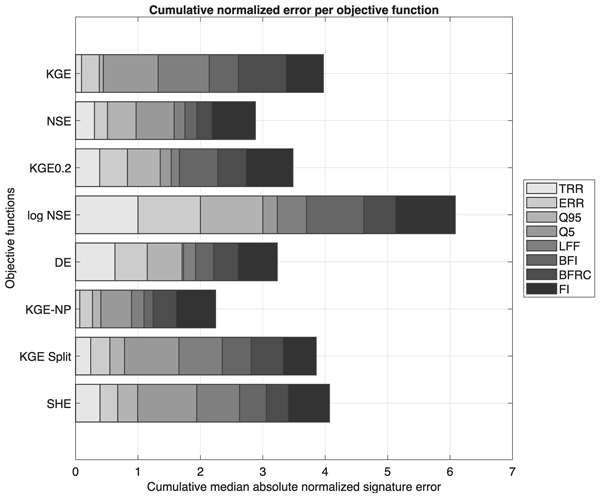
Peter Wagener, Wouter J. M. Knoben, Niels Schütze, and Diana Spieler
Hydrol. Earth Syst. Sci., 30, 4867–4888, https://doi.org/10.5194/hess-30-4867-2026, https://doi.org/10.5194/hess-30-4867-2026, 2026
Short summary
Short summary
Hydrologic models help predict floods and droughts, but how we calibrate them changes what they get right. Across 47 model structures and 10 diverse catchments, we tested how 8 metrics shape the reproduction of 15 streamflow features, from runoff ratios to high and low flows. Metric choice often mattered more than model structure, yet no single metric is best for all flow conditions. We provide guidance on metric strengths and weaknesses to help match the calibration metric to the study purpose.
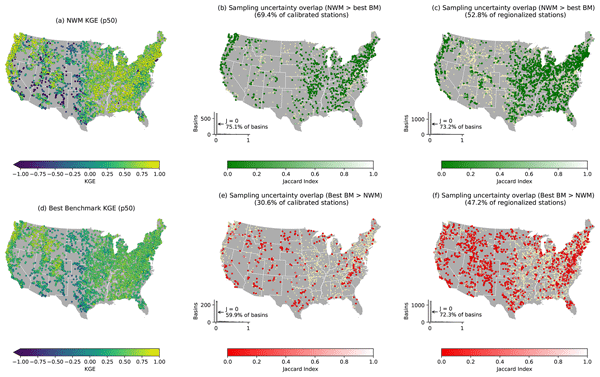
Gaby J. Gründemann, Wouter J. M. Knoben, Yalan Song, Katie van Werkhoven, and Martyn P. Clark
Hydrol. Earth Syst. Sci., 30, 3439–3453, https://doi.org/10.5194/hess-30-3439-2026, https://doi.org/10.5194/hess-30-3439-2026, 2026
Short summary
Short summary
The quality of large-domain hydrologic model simulations is often quantified with so-called accuracy metrics. Here we use simple benchmarks to provide relevant context for these accuracy metrics. Results show that areas where the model cannot beat the benchmarks do not always align with areas where the accuracy metrics are low. This suggests that model improvements are possible in regions that under more typical model evaluation approaches (i.e., without benchmarks) might not be obvious.
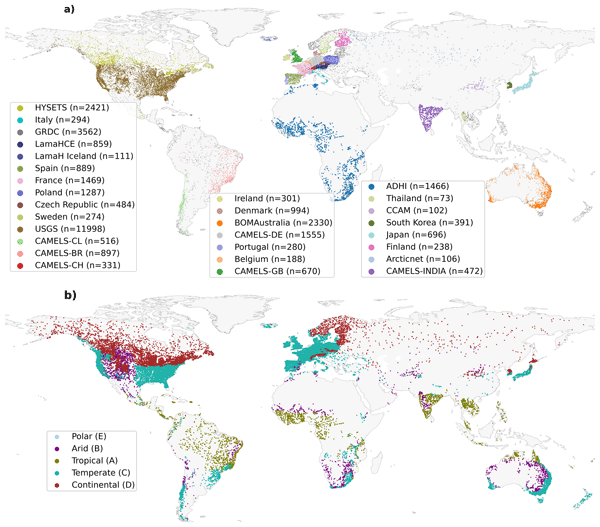
Ather Abbas, Yuan Yang, Ming Pan, Yves Tramblay, Chaopeng Shen, Haoyu Ji, Solomon H. Gebrechorkos, Florian Pappenberger, JongCheol Pyo, Dapeng Feng, George Huffman, Phu Nguyen, Christian Massari, Luca Brocca, Jackson Tan, and Hylke E. Beck
Hydrol. Earth Syst. Sci., 30, 3399–3423, https://doi.org/10.5194/hess-30-3399-2026, https://doi.org/10.5194/hess-30-3399-2026, 2026
Short summary
Short summary
Our study evaluated 24 precipitation datasets using a hydrological model at global scale to assess their suitability and accuracy. We found that MSWEP (Multi-Source Weighted-Ensemble Precipitation) V2.8 excels due to its ability to integrate data from multiple sources, while others, such as IMERG (Integrated Multi-satellitE Retrievals for Global Precipitation Mission) and GDAS (Global Data Assimilation System), demonstrated strong regional performances. This research assists in selecting the appropriate dataset for applications in water resource management, hazard assessment, agriculture, and environmental monitoring.
Kamlesh Sawadekar, Seth McGinnis, Peijun Li, Kathryn Lawson, and Chaopeng Shen
EGUsphere, https://doi.org/10.48550/arXiv.2604.23045, https://doi.org/10.48550/arXiv.2604.23045, 2026
Short summary
Short summary
δCLIMBA can fix consistent errors with global circulation models so their precipitation is locally relevant. Instead of making corrections
directly, it predicts the coefficients of interpretable formulas to minimize bias. δCLIMBA learns to make interpretable corrections that,
once trained, can be easily applied on places without data. It accurately corrects both average rainfall and extreme storm events and
shows the promise to preserve future trends, and generalizes to new regions.
Abdolmehdi Behroozi, Kathryn Lawson, and Chaopeng Shen
EGUsphere, https://doi.org/10.5194/egusphere-2026-1982, https://doi.org/10.5194/egusphere-2026-1982, 2026
Short summary
Short summary
A hyper-efficient learnable model predicts flooding faster and more accurately than traditional methods. The two-part approach captures broad water movement then refines local flood details. Tested on rivers, dam breaks, and floodplains, it reproduced water depth, flooded areas, and flow timing. Water volume stays consistent and uncertain terrain data is handled well. The model delivers high-resolution predictions with far less computing effort, enabling faster, scalable flood risk assessment.
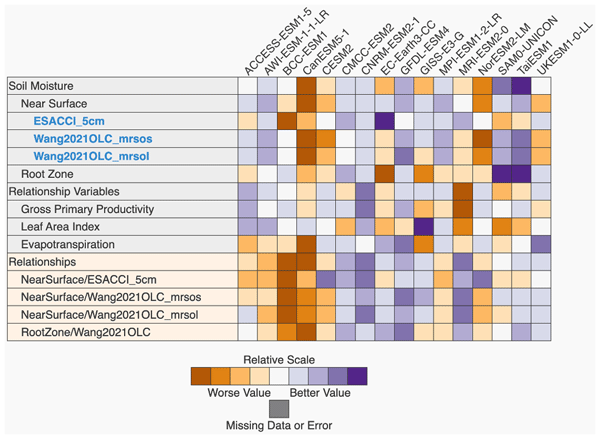
Elias C. Massoud, Nathan Collier, Yaoping Wang, Jiafu Mao, Adrian Harpold, Steven A. Kannenberg, Gerbrand Koren, Mukesh Kumar, Pushpendra Raghav, Pallav Ray, Mingjie Shi, Jing Tao, Sreedevi P. Vasu, Huiqi Wang, Qing Zhu, and Forrest M. Hoffman
Geosci. Model Dev., 19, 3427–3453, https://doi.org/10.5194/gmd-19-3427-2026, https://doi.org/10.5194/gmd-19-3427-2026, 2026
Short summary
Short summary
Soil moisture helps control how plants grow and how land exchanges water and energy with the atmosphere. We evaluated how well 16 Earth System Models represent soil moisture and its links to plant activity using a benchmarking system and observational data. Many models simulate surface soil moisture well but show larger errors deeper in the soil and in colder regions. Models that represent plant–soil water interactions more directly better capture how ecosystems respond to water availability.
Sacha W. Ruzzante, Wouter J. M. Knoben, Thorsten Wagener, Tom Gleeson, and Markus Schnorbus
Hydrol. Earth Syst. Sci., 30, 2337–2355, https://doi.org/10.5194/hess-30-2337-2026, https://doi.org/10.5194/hess-30-2337-2026, 2026
Short summary
Short summary
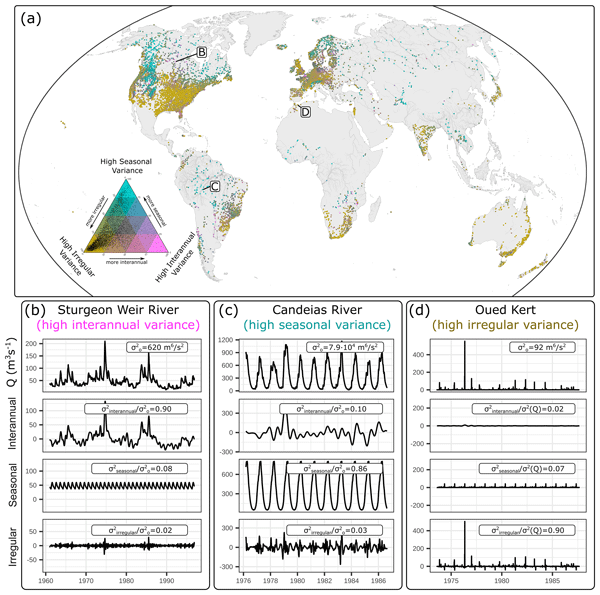
Common metrics used to evaluate hydrologic models make it relatively easy to achieve high performance scores in highly seasonal catchments. However, we analysed 18 hydrologic models and found that almost all were worse at simulating interannual variability and change in seasonal streamflow regimes. This suggests that climate change impacts on streamflow may not be accurately predicted in highly seasonal tropical, alpine, and polar regions, which are highly vulnerable to climate change.
Nicolás A. Vásquez, Pablo A. Mendoza, Wouter Knoben, Martyn Clark, Tricia Stadnyk, and Naoki Mizukami
EGUsphere, https://doi.org/10.5194/egusphere-2026-1363, https://doi.org/10.5194/egusphere-2026-1363, 2026
Short summary
Short summary
Although distributed hydrological models are often calibrated using only streamflow data, this practice may provide unrealistic representations of the water cycle. We show that, while streamflow annual cycles can be reasonably simulated, the seasonality of other key variables - such as evapotranspiration, soil moisture, and snow cover - may be severely misrepresented. Our results highlight the need to assess seasonal patterns of variables beyond streamflow when calibrating hydrological models.
Delanie Williams, Mukesh Kumar, Katie van Werkhoven, Martyn Clark, Christopher Wilson, and Paul Miller
EGUsphere, https://doi.org/10.5194/egusphere-2026-583, https://doi.org/10.5194/egusphere-2026-583, 2026
Preprint archived
Short summary
Short summary
Machine learning (ML) models have potential within water resource management to be used in place of traditional models. However, there is hesitance for many agencies and institutions to pursue ML models, due to existing familiarity, reliability, interpretability, resources, and workflows. Thus, instead of opting for complete retention of traditional models, or complete replacement by ML models, this perspective argues for the selective integration of ML within existing models.
Scott Peckham, Keith Jennings, Wanru Wu, Andy Wood, and Lauren Bolotin
EGUsphere, https://doi.org/10.5194/egusphere-2025-5786, https://doi.org/10.5194/egusphere-2025-5786, 2026
Preprint archived
Short summary
Short summary
Several US federal agencies (e.g., USGS, NOAA, USDA, and NSF) collect information for river basins to support their water-related missions. Data is published online in named collection that each have their own attributes and objectives. HARBOR harmonizes and brings together all these datasets, just as many large cargo ships can be moored in one harbor. It also classifies basins based on hydrologic similarity, helping researchers find the best model for predicting their hydrologic response.
David R. Casson, Guoqiang Tang, Nicolás Vásquez, Andrew W. Wood, and Martyn P. Clark
EGUsphere, https://doi.org/10.5194/egusphere-2025-6066, https://doi.org/10.5194/egusphere-2025-6066, 2026
Short summary
Short summary
This study generates meteorological ensembles tailored for mountain snow estimation, accounting for topography, wind-driven undercatch, and large-scale atmospheric patterns. Driving a physics-based snow model with these ensembles allowed uncertainty in weather inputs to carry through to estimates of snow accumulation and melt. Across three mountain basins, this led to realistic and reliable snow estimates useful for data assimilation, water supply and forecasting applications.

Peijun Li, Yalan Song, Ming Pan, Kathryn Lawson, and Chaopeng Shen
Hydrol. Earth Syst. Sci., 29, 6829–6861, https://doi.org/10.5194/hess-29-6829-2025, https://doi.org/10.5194/hess-29-6829-2025, 2025
Short summary
Short summary
This study explores how combining different model types improves streamflow predictions, especially in data-sparse scenarios. By integrating two highly accurate models with distinct mechanisms and leveraging multiple meteorological datasets, we highlight their unique strengths and set new accuracy benchmarks across spatiotemporal conditions. Our findings enhance the understanding of how diverse models and multi-source data can be effectively used to improve hydrological predictions.

Jiangtao Liu, Chaopeng Shen, Fearghal O'Donncha, Yalan Song, Wei Zhi, Hylke E. Beck, Tadd Bindas, Nicholas Kraabel, and Kathryn Lawson
Hydrol. Earth Syst. Sci., 29, 6811–6828, https://doi.org/10.5194/hess-29-6811-2025, https://doi.org/10.5194/hess-29-6811-2025, 2025
Short summary
Short summary
Using global and regional datasets, we compared attention-based models and Long Short-Term Memory (LSTM) models to predict hydrologic variables. Our results show LSTM models perform better in simpler tasks, whereas attention-based models perform better in complex scenarios, offering insights for improved water resource management.
Ethan Ritchie, Andrew W. Wood, Ryan Johnson, Adrienne Marshall, Josh Sturtevant, Dane Liljestrand, and Emily Golitzin
EGUsphere, https://doi.org/10.5194/egusphere-2025-5514, https://doi.org/10.5194/egusphere-2025-5514, 2025
Short summary
Short summary
Snow water equivalent (SWE) is a critical water resource to many regions globally. Estimating SWE remains a challenge in hydrology highlighting the need for consistent evaluation frameworks. This study applied a standard approach for SWE evaluation across a range of datasets in the western US, using the Airborne Snow Observatory (ASO) SWE dataset as the reference observational dataset. We outline and demonstrate an example of a community evaluation protocol using datasets in this study.
Wouter J. M. Knoben, Cyril Thébault, Kasra Keshavarz, Laura Torres-Rojas, Nathaniel W. Chaney, Alain Pietroniro, and Martyn P. Clark
Hydrol. Earth Syst. Sci., 29, 5791–5833, https://doi.org/10.5194/hess-29-5791-2025, https://doi.org/10.5194/hess-29-5791-2025, 2025
Short summary
Short summary
Many existing datasets for hydrologic analysis tend to treat catchments as single spatially homogeneous units focusing on daily data and typically do not support more complex models. This paper introduces a dataset that goes beyond this set-up by (1) providing data at a higher spatial and temporal resolution, (2) specifically considering the data requirements of all common hydrologic model types, and (3) using statistical summaries of the data aimed at quantifying spatial and temporal heterogeneity.
Yuan Yang, Ming Pan, Dapeng Feng, Mu Xiao, Taylor Dixon, Robert Hartman, Chaopeng Shen, Yalan Song, Agniv Sengupta, Luca Delle Monache, and F. Martin Ralph
Hydrol. Earth Syst. Sci., 29, 5453–5476, https://doi.org/10.5194/hess-29-5453-2025, https://doi.org/10.5194/hess-29-5453-2025, 2025
Short summary
Short summary
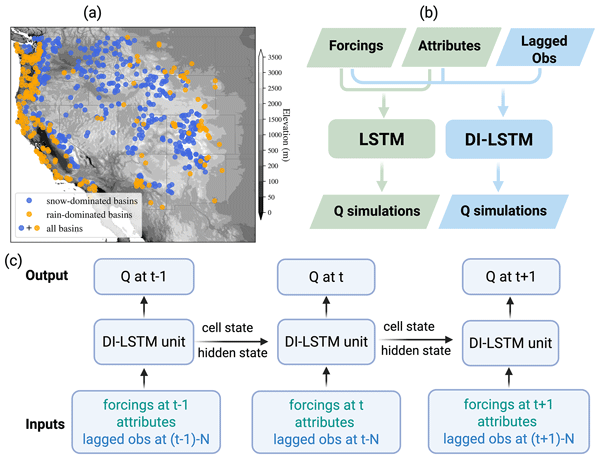
We explore a machine learning-based data integration method that integrates streamflow (Q) and snow water equivalent (SWE) to improve streamflow estimates at various lag times (1–10 d, 1–6 months) and timescales (daily and monthly) over Western US basins. Benefits rank as: integrating Q at the daily scale > Q at the monthly scale > SWE at the monthly scale > SWE at the daily scale. Results highlight the method’s potential for short- and long-term streamflow forecasting in the Western US.
Maria Staudinger, Anna Herzog, Ralf Loritz, Tobias Houska, Sandra Pool, Diana Spieler, Paul D. Wagner, Juliane Mai, Jens Kiesel, Stephan Thober, Björn Guse, and Uwe Ehret
Hydrol. Earth Syst. Sci., 29, 5005–5029, https://doi.org/10.5194/hess-29-5005-2025, https://doi.org/10.5194/hess-29-5005-2025, 2025
Short summary
Short summary
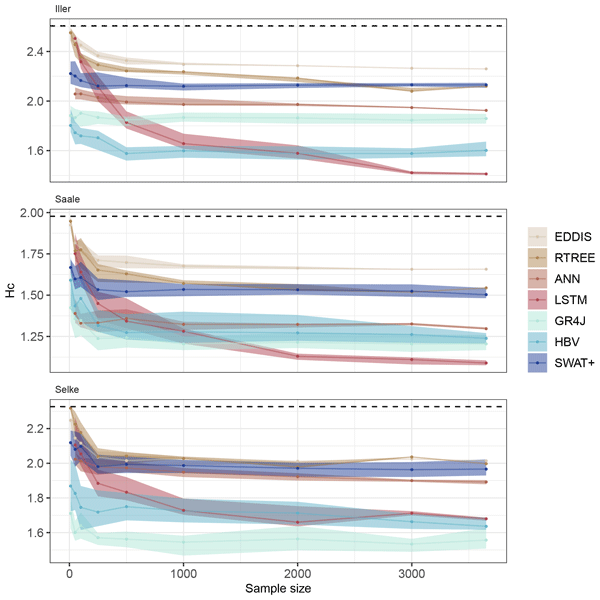
Three process-based and four data-driven hydrological models are compared using different training data. We found that process-based models perform better with small datasets but stop learning soon, while data-driven models learn longer. The study highlights the importance of memory in data and the impact of different data sampling methods on model performance. The direct comparison of these models is novel and provides a clear understanding of their performance under various data conditions.
Mozhgan A. Farahani, Andrew W. Wood, Guoqiang Tang, and Naoki Mizukami
Hydrol. Earth Syst. Sci., 29, 4515–4537, https://doi.org/10.5194/hess-29-4515-2025, https://doi.org/10.5194/hess-29-4515-2025, 2025
Short summary
Short summary
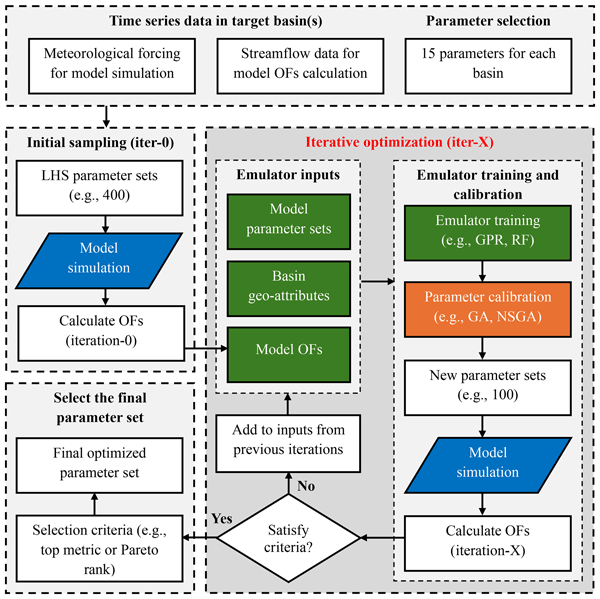
We present a new strategy to calibrate large-domain land/hydrology models over diverse regions. Using the Structure for Unifying Multiple Modeling Alternatives (SUMMA) and mizuRoute models, our approach integrates catchment attributes, parameters, and performance metrics to optimize streamflow simulations. Leveraging advances in machine learning for hydrology, we improve calibration and enable regionalization to ungauged basins, which is valuable for national-scale water security studies.
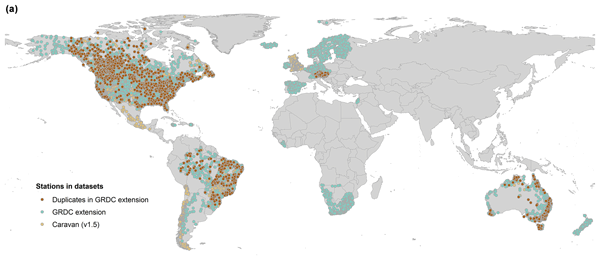
Claudia Färber, Henning Plessow, Simon A. Mischel, Frederik Kratzert, Nans Addor, Guy Shalev, and Ulrich Looser
Earth Syst. Sci. Data, 17, 4613–4625, https://doi.org/10.5194/essd-17-4613-2025, https://doi.org/10.5194/essd-17-4613-2025, 2025
Short summary
Short summary
Large-sample datasets are essential in hydrological science to support modelling studies and advance process understanding. Caravan is a community initiative to create a large-sample hydrology dataset of meteorological forcing data, catchment attributes and discharge data for catchments around the world. This dataset is a subset of hydrological discharge data and station-based watersheds from the Global Runoff Data Centre (GRDC), which are covered by an open data policy.
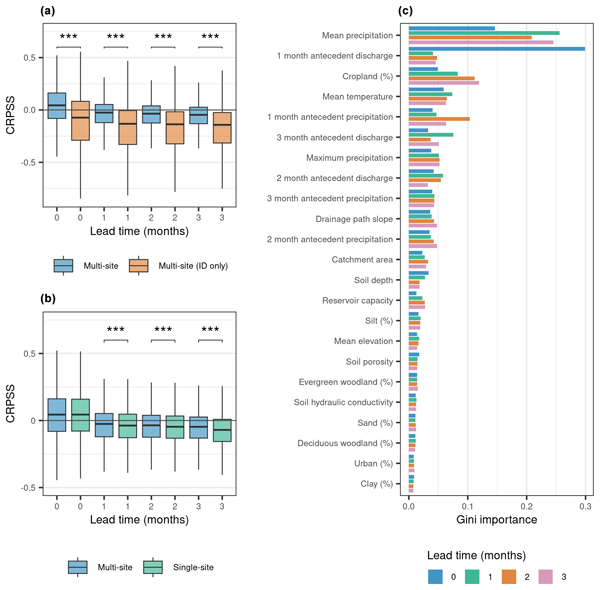
Simon Moulds, Louise Slater, Louise Arnal, and Andrew W. Wood
Hydrol. Earth Syst. Sci., 29, 2393–2406, https://doi.org/10.5194/hess-29-2393-2025, https://doi.org/10.5194/hess-29-2393-2025, 2025
Short summary
Short summary
Seasonal streamflow forecasts are an important component of flood risk management. Here, we train and test a machine learning model to predict the monthly maximum daily streamflow up to 4 months ahead. We train the model on precipitation and temperature forecasts to produce probabilistic hindcasts for 579 stations across the UK for the period 2004–2016. We show skilful results up to 4 months ahead in many locations, although, in general, the skill declines with increasing lead time.
Wouter J. M. Knoben, Ashwin Raman, Gaby J. Gründemann, Mukesh Kumar, Alain Pietroniro, Chaopeng Shen, Yalan Song, Cyril Thébault, Katie van Werkhoven, Andrew W. Wood, and Martyn P. Clark
Hydrol. Earth Syst. Sci., 29, 2361–2375, https://doi.org/10.5194/hess-29-2361-2025, https://doi.org/10.5194/hess-29-2361-2025, 2025
Short summary
Short summary
Hydrologic models are needed to provide simulations of water availability, floods, and droughts. The accuracy of these simulations is often quantified with so-called performance scores. A common thought is that different models are more or less applicable to different landscapes, depending on how the model works. We show that performance scores are not helpful in distinguishing between different models and thus cannot easily be used to select an appropriate model for a specific place.
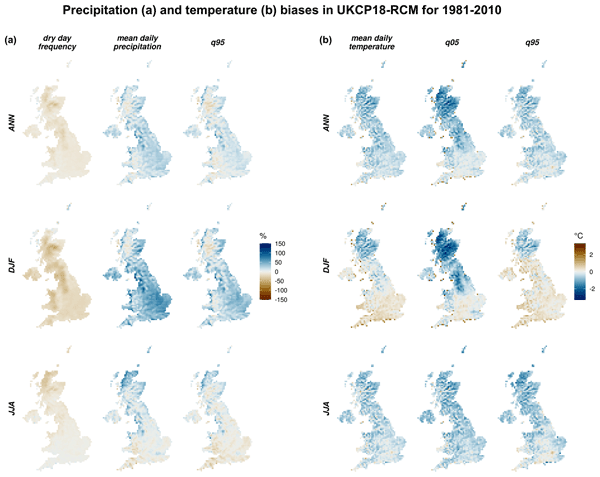
Nele Reyniers, Qianyu Zha, Nans Addor, Timothy J. Osborn, Nicole Forstenhäusler, and Yi He
Earth Syst. Sci. Data, 17, 2113–2133, https://doi.org/10.5194/essd-17-2113-2025, https://doi.org/10.5194/essd-17-2113-2025, 2025
Short summary
Short summary
We present bias-corrected UK Climate Projections 2018 (UKCP18) regional datasets for temperature, precipitation, and potential evapotranspiration (1981–2080). All 12 members of the 12 km ensemble were corrected using quantile mapping and a change-preserving variant. Both methods effectively reduce biases in multiple statistics while maintaining projected climatic changes. We provide guidance on using the bias-corrected datasets for climate change impact assessment.
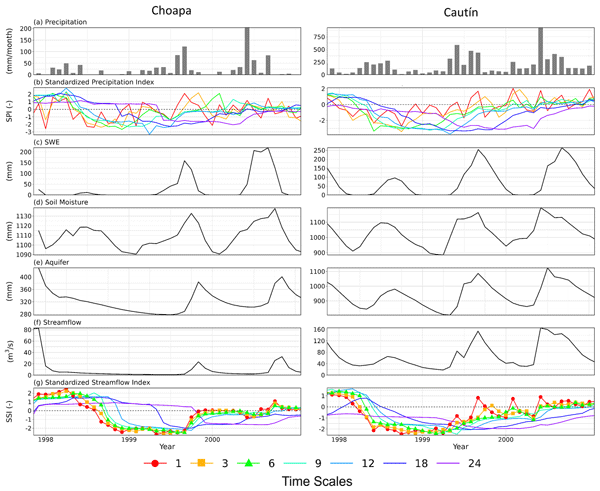
Fabián Lema, Pablo A. Mendoza, Nicolás A. Vásquez, Naoki Mizukami, Mauricio Zambrano-Bigiarini, and Ximena Vargas
Hydrol. Earth Syst. Sci., 29, 1981–2002, https://doi.org/10.5194/hess-29-1981-2025, https://doi.org/10.5194/hess-29-1981-2025, 2025
Short summary
Short summary
Hydrological droughts affect ecosystems and socioeconomic activities worldwide. Despite the fact that they are commonly described with the Standardized Streamflow Index (SSI), there is limited understanding of what they truly reflect in terms of water cycle processes. Here, we used state-of-the-art hydrological models in Andean basins to examine drivers of SSI fluctuations. The results highlight the importance of careful selection of indices and timescales for accurate drought characterization and monitoring.
Pragnaditya Malakar, Aatish Anshuman, Mukesh Kumar, Georgios Boumis, T. Prabhakar Clement, Arik Tashie, Hitesh Thakur, Nagaraj Bhat, and Lokendra Rathore
Earth Syst. Sci. Data, 17, 1515–1528, https://doi.org/10.5194/essd-17-1515-2025, https://doi.org/10.5194/essd-17-1515-2025, 2025
Short summary
Short summary
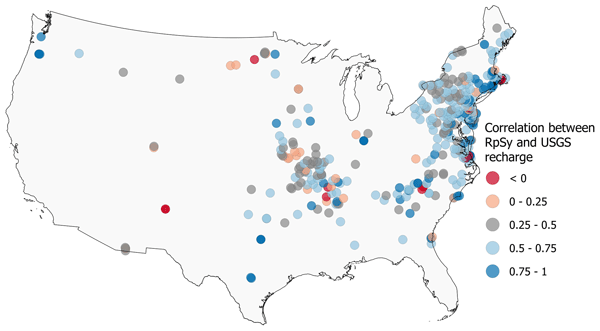
Groundwater dynamics depend on groundwater recharge, but daily benchmark data of recharge are scarce. Here we present a daily groundwater recharge per unit specified yield (RpSy) data at 485 US groundwater monitoring wells. RpSy can be used to validate the temporal consistency of recharge products from land surface and hydrologic models and facilitate assessment of recharge-driver functional relationships in them.
Olivier Delaigue, Guilherme Mendoza Guimarães, Pierre Brigode, Benoît Génot, Charles Perrin, Jean-Michel Soubeyroux, Bruno Janet, Nans Addor, and Vazken Andréassian
Earth Syst. Sci. Data, 17, 1461–1479, https://doi.org/10.5194/essd-17-1461-2025, https://doi.org/10.5194/essd-17-1461-2025, 2025
Short summary
Short summary
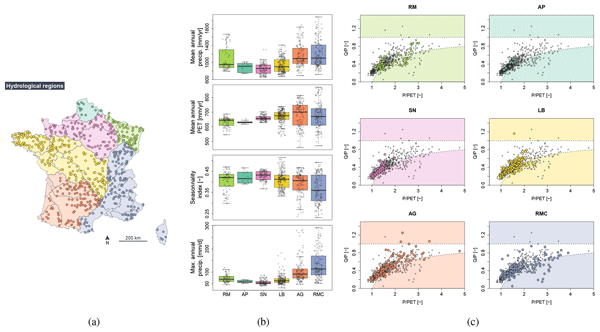
This dataset covers 654 rivers all flowing in France. The provided time series and catchment attributes will be of interest to those modelers wishing to analyze hydrological behavior and perform model assessments.
Mohammad Sina Jahangir, John Quilty, Chaopeng Shen, Andrea Scott, Scott Steinschneider, and Jan Adamowski
EGUsphere, https://doi.org/10.5194/egusphere-2025-846, https://doi.org/10.5194/egusphere-2025-846, 2025
This preprint is open for discussion and under review for The Cryosphere (TC).
Short summary
Short summary
This study presents a novel hybrid approach to streamflow prediction, significantly improving the efficiency and accuracy of fine-tuning deep learning models for hydrological prediction. Tested across numerous catchments in the U.S. and Europe, this method accelerates the fine-tuning process and improves prediction accuracy in locations beyond the training data. This innovative approach sets the stage for future hydrological models leveraging transfer learning.
Mari R. Tye, Ming Ge, Jadwiga H. Richter, Ethan D. Gutmann, Allyson Rugg, Cindy L. Bruyère, Sue Ellen Haupt, Flavio Lehner, Rachel McCrary, Andrew J. Newman, and Andy Wood
Hydrol. Earth Syst. Sci., 29, 1117–1133, https://doi.org/10.5194/hess-29-1117-2025, https://doi.org/10.5194/hess-29-1117-2025, 2025
Short summary
Short summary
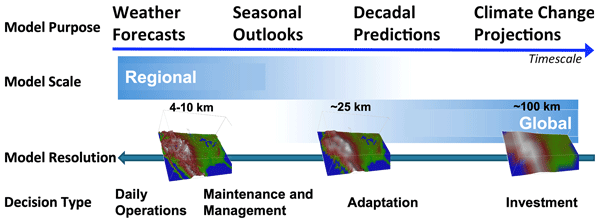
There is a perceived mismatch between the spatial scales on which global climate models can produce data and those needed for water management decisions. However, poor communication of specific metrics relevant to local decisions is also a problem. We assessed the credibility of a set of water management decision metrics in the Community Earth System Model v2 (CESM2). CESM2 shows potentially greater use of its output in long-range water management decisions.
Gab Abramowitz, Anna Ukkola, Sanaa Hobeichi, Jon Cranko Page, Mathew Lipson, Martin G. De Kauwe, Samuel Green, Claire Brenner, Jonathan Frame, Grey Nearing, Martyn Clark, Martin Best, Peter Anthoni, Gabriele Arduini, Souhail Boussetta, Silvia Caldararu, Kyeungwoo Cho, Matthias Cuntz, David Fairbairn, Craig R. Ferguson, Hyungjun Kim, Yeonjoo Kim, Jürgen Knauer, David Lawrence, Xiangzhong Luo, Sergey Malyshev, Tomoko Nitta, Jerome Ogee, Keith Oleson, Catherine Ottlé, Phillipe Peylin, Patricia de Rosnay, Heather Rumbold, Bob Su, Nicolas Vuichard, Anthony P. Walker, Xiaoni Wang-Faivre, Yunfei Wang, and Yijian Zeng
Biogeosciences, 21, 5517–5538, https://doi.org/10.5194/bg-21-5517-2024, https://doi.org/10.5194/bg-21-5517-2024, 2024
Short summary
Short summary
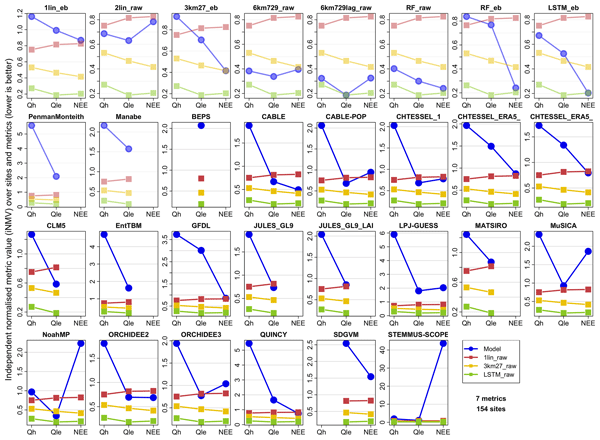
This paper evaluates land models – computer-based models that simulate ecosystem dynamics; land carbon, water, and energy cycles; and the role of land in the climate system. It uses machine learning and AI approaches to show that, despite the complexity of land models, they do not perform nearly as well as they could given the amount of information they are provided with about the prediction problem.
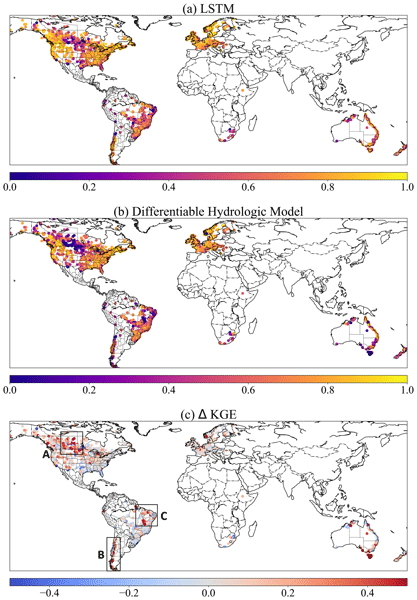
Dapeng Feng, Hylke Beck, Jens de Bruijn, Reetik Kumar Sahu, Yusuke Satoh, Yoshihide Wada, Jiangtao Liu, Ming Pan, Kathryn Lawson, and Chaopeng Shen
Geosci. Model Dev., 17, 7181–7198, https://doi.org/10.5194/gmd-17-7181-2024, https://doi.org/10.5194/gmd-17-7181-2024, 2024
Short summary
Short summary
Accurate hydrologic modeling is vital to characterizing water cycle responses to climate change. For the first time at this scale, we use differentiable physics-informed machine learning hydrologic models to simulate rainfall–runoff processes for 3753 basins around the world and compare them with purely data-driven and traditional modeling approaches. This sets a benchmark for hydrologic estimates around the world and builds foundations for improving global hydrologic simulations.
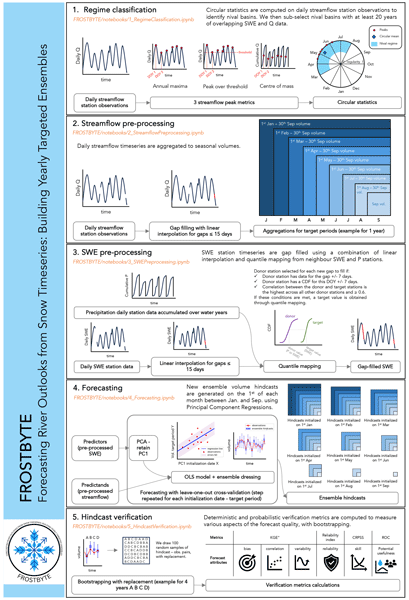
Louise Arnal, Martyn P. Clark, Alain Pietroniro, Vincent Vionnet, David R. Casson, Paul H. Whitfield, Vincent Fortin, Andrew W. Wood, Wouter J. M. Knoben, Brandi W. Newton, and Colleen Walford
Hydrol. Earth Syst. Sci., 28, 4127–4155, https://doi.org/10.5194/hess-28-4127-2024, https://doi.org/10.5194/hess-28-4127-2024, 2024
Short summary
Short summary
Forecasting river flow months in advance is crucial for water sectors and society. In North America, snowmelt is a key driver of flow. This study presents a statistical workflow using snow data to forecast flow months ahead in North American snow-fed rivers. Variations in the river flow predictability across the continent are evident, raising concerns about future predictability in a changing (snow) climate. The reproducible workflow hosted on GitHub supports collaborative and open science.
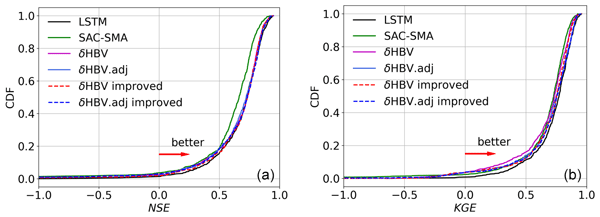
Yalan Song, Wouter J. M. Knoben, Martyn P. Clark, Dapeng Feng, Kathryn Lawson, Kamlesh Sawadekar, and Chaopeng Shen
Hydrol. Earth Syst. Sci., 28, 3051–3077, https://doi.org/10.5194/hess-28-3051-2024, https://doi.org/10.5194/hess-28-3051-2024, 2024
Short summary
Short summary
Differentiable models (DMs) integrate neural networks and physical equations for accuracy, interpretability, and knowledge discovery. We developed an adjoint-based DM for ordinary differential equations (ODEs) for hydrological modeling, reducing distorted fluxes and physical parameters from errors in models that use explicit and operation-splitting schemes. With a better numerical scheme and improved structure, the adjoint-based DM matches or surpasses long short-term memory (LSTM) performance.
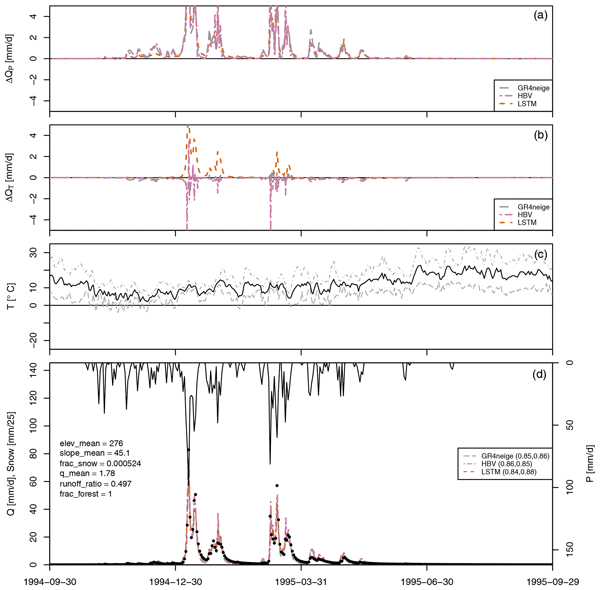
Peter Reichert, Kai Ma, Marvin Höge, Fabrizio Fenicia, Marco Baity-Jesi, Dapeng Feng, and Chaopeng Shen
Hydrol. Earth Syst. Sci., 28, 2505–2529, https://doi.org/10.5194/hess-28-2505-2024, https://doi.org/10.5194/hess-28-2505-2024, 2024
Short summary
Short summary
We compared the predicted change in catchment outlet discharge to precipitation and temperature change for conceptual and machine learning hydrological models. We found that machine learning models, despite providing excellent fit and prediction capabilities, can be unreliable regarding the prediction of the effect of temperature change for low-elevation catchments. This indicates the need for caution when applying them for the prediction of the effect of climate change.
Cyril Thébault, Charles Perrin, Vazken Andréassian, Guillaume Thirel, Sébastien Legrand, and Olivier Delaigue
Hydrol. Earth Syst. Sci., 28, 1539–1566, https://doi.org/10.5194/hess-28-1539-2024, https://doi.org/10.5194/hess-28-1539-2024, 2024
Short summary
Short summary
Streamflow forecasting is useful for many applications, ranging from population safety (e.g. floods) to water resource management (e.g. agriculture or hydropower). To this end, hydrological models must be optimized. However, a model is inherently wrong. This study aims to analyse the contribution of a multi-model approach within a variable spatial framework to improve streamflow simulations. The underlying idea is to take advantage of the strength of each modelling framework tested.
Guoqiang Tang, Andrew W. Wood, Andrew J. Newman, Martyn P. Clark, and Simon Michael Papalexiou
Geosci. Model Dev., 17, 1153–1173, https://doi.org/10.5194/gmd-17-1153-2024, https://doi.org/10.5194/gmd-17-1153-2024, 2024
Short summary
Short summary
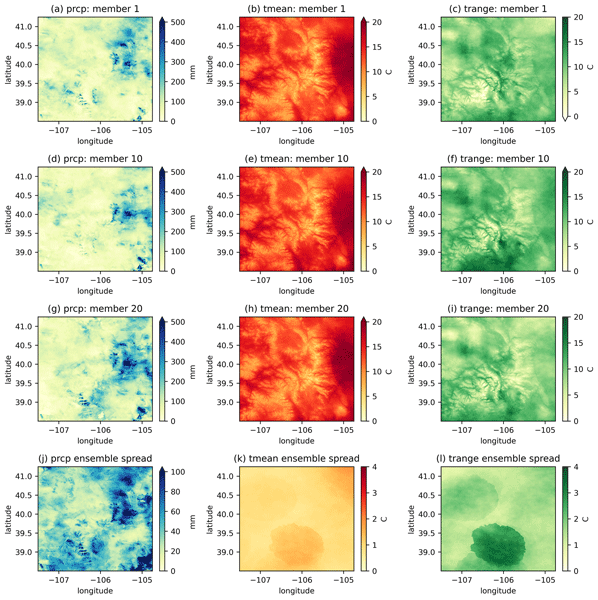
Ensemble geophysical datasets are crucial for understanding uncertainties and supporting probabilistic estimation/prediction. However, open-access tools for creating these datasets are limited. We have developed the Python-based Geospatial Probabilistic Estimation Package (GPEP). Through several experiments, we demonstrate GPEP's ability to estimate precipitation, temperature, and snow water equivalent. GPEP will be a useful tool to support uncertainty analysis in Earth science applications.
Marvin Höge, Martina Kauzlaric, Rosi Siber, Ursula Schönenberger, Pascal Horton, Jan Schwanbeck, Marius Günter Floriancic, Daniel Viviroli, Sibylle Wilhelm, Anna E. Sikorska-Senoner, Nans Addor, Manuela Brunner, Sandra Pool, Massimiliano Zappa, and Fabrizio Fenicia
Earth Syst. Sci. Data, 15, 5755–5784, https://doi.org/10.5194/essd-15-5755-2023, https://doi.org/10.5194/essd-15-5755-2023, 2023
Short summary
Short summary
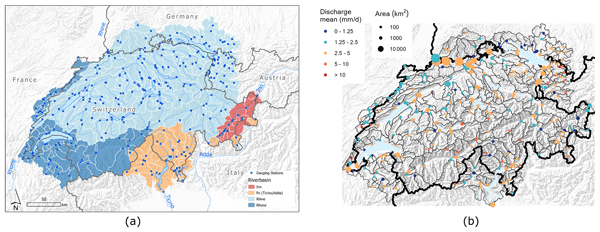
CAMELS-CH is an open large-sample hydro-meteorological data set that covers 331 catchments in hydrologic Switzerland from 1 January 1981 to 31 December 2020. It comprises (a) daily data of river discharge and water level as well as meteorologic variables like precipitation and temperature; (b) yearly glacier and land cover data; (c) static attributes of, e.g, topography or human impact; and (d) catchment delineations. CAMELS-CH enables water and climate research and modeling at catchment level.
Diogo Costa, Kyle Klenk, Wouter Knoben, Andrew Ireson, Raymond J. Spiteri, and Martyn Clark
EGUsphere, https://doi.org/10.5194/egusphere-2023-2787, https://doi.org/10.5194/egusphere-2023-2787, 2023
Preprint archived
Short summary
Short summary
This work helps improve water quality simulations in aquatic ecosystems through a new modeling concept, which we termed “OpenWQ”. It allows tailoring biogeochemistry calculations and integration with existing hydrological (water quantity) simulation tools. The integration is demonstrated with two hydrological models. The models were tested for different pollution scenarios. This paper helps improve interoperability, transparency, flexibility, and reproducibility in water quality simulations.
Nicolás Cortés-Salazar, Nicolás Vásquez, Naoki Mizukami, Pablo A. Mendoza, and Ximena Vargas
Hydrol. Earth Syst. Sci., 27, 3505–3524, https://doi.org/10.5194/hess-27-3505-2023, https://doi.org/10.5194/hess-27-3505-2023, 2023
Short summary
Short summary
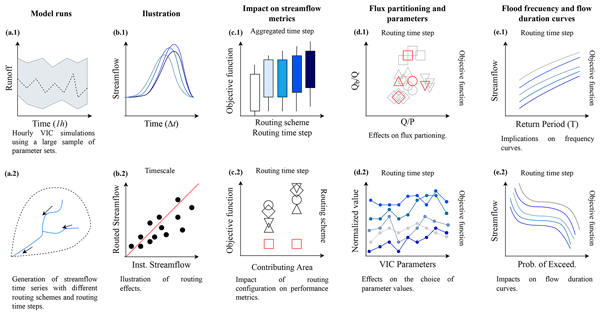
This paper shows how important river models can be for water resource applications that involve hydrological models and, in particular, parameter calibration. To this end, we conduct numerical experiments in a pilot basin using a combination of hydrologic model simulations obtained from a large sample of parameter sets and different routing methods. We find that routing can affect streamflow simulations, even at monthly time steps; the choice of parameters; and relevant streamflow metrics.
Doaa Aboelyazeed, Chonggang Xu, Forrest M. Hoffman, Jiangtao Liu, Alex W. Jones, Chris Rackauckas, Kathryn Lawson, and Chaopeng Shen
Biogeosciences, 20, 2671–2692, https://doi.org/10.5194/bg-20-2671-2023, https://doi.org/10.5194/bg-20-2671-2023, 2023
Short summary
Short summary
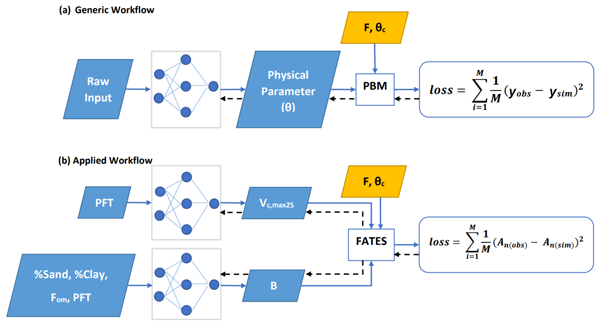
Photosynthesis is critical for life and has been affected by the changing climate. Many parameters come into play while modeling, but traditional calibration approaches face many issues. Our framework trains coupled neural networks to provide parameters to a photosynthesis model. Using big data, we independently found parameter values that were correlated with those in the literature while giving higher correlation and reduced biases in photosynthesis rates.
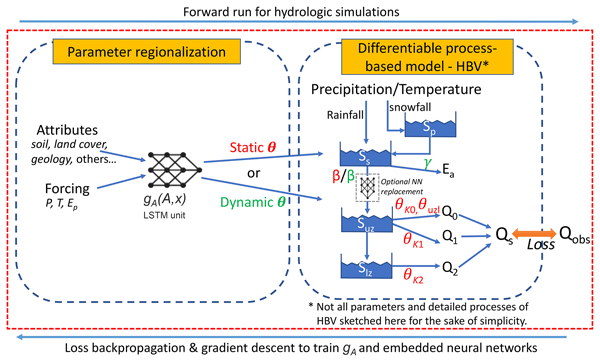
Dapeng Feng, Hylke Beck, Kathryn Lawson, and Chaopeng Shen
Hydrol. Earth Syst. Sci., 27, 2357–2373, https://doi.org/10.5194/hess-27-2357-2023, https://doi.org/10.5194/hess-27-2357-2023, 2023
Short summary
Short summary
Powerful hybrid models (called δ or delta models) embrace the fundamental learning capability of AI and can also explain the physical processes. Here we test their performance when applied to regions not in the training data. δ models rivaled the accuracy of state-of-the-art AI models under the data-dense scenario and even surpassed them for the data-sparse one. They generalize well due to the physical structure included. δ models could be ideal candidates for global hydrologic assessment.
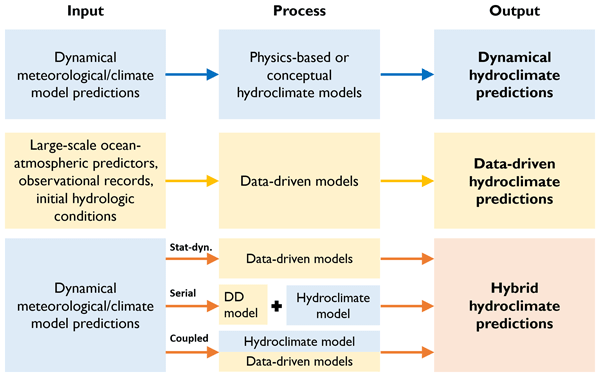
Louise J. Slater, Louise Arnal, Marie-Amélie Boucher, Annie Y.-Y. Chang, Simon Moulds, Conor Murphy, Grey Nearing, Guy Shalev, Chaopeng Shen, Linda Speight, Gabriele Villarini, Robert L. Wilby, Andrew Wood, and Massimiliano Zappa
Hydrol. Earth Syst. Sci., 27, 1865–1889, https://doi.org/10.5194/hess-27-1865-2023, https://doi.org/10.5194/hess-27-1865-2023, 2023
Short summary
Short summary
Hybrid forecasting systems combine data-driven methods with physics-based weather and climate models to improve the accuracy of predictions for meteorological and hydroclimatic events such as rainfall, temperature, streamflow, floods, droughts, tropical cyclones, or atmospheric rivers. We review recent developments in hybrid forecasting and outline key challenges and opportunities in the field.
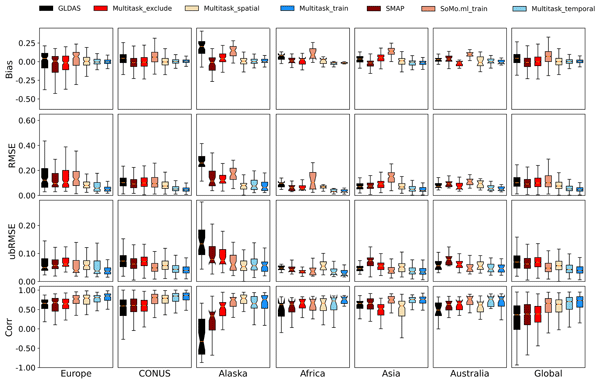
Jiangtao Liu, David Hughes, Farshid Rahmani, Kathryn Lawson, and Chaopeng Shen
Geosci. Model Dev., 16, 1553–1567, https://doi.org/10.5194/gmd-16-1553-2023, https://doi.org/10.5194/gmd-16-1553-2023, 2023
Short summary
Short summary
Under-monitored regions like Africa need high-quality soil moisture predictions to help with food production, but it is not clear if soil moisture processes are similar enough around the world for data-driven models to maintain accuracy. We present a deep-learning-based soil moisture model that learns from both in situ data and satellite data and performs better than satellite products at the global scale. These results help us apply our model globally while better understanding its limitations.
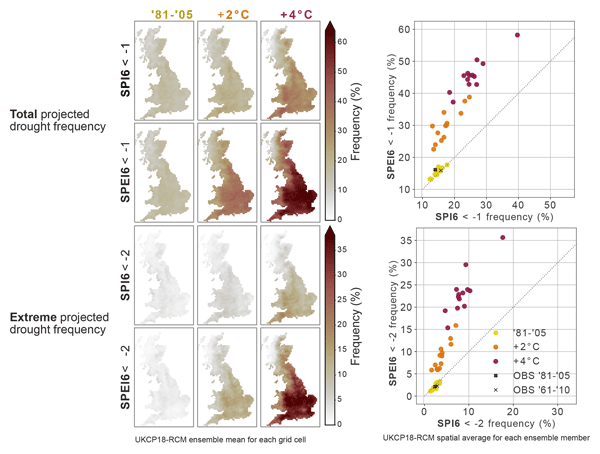
Nele Reyniers, Timothy J. Osborn, Nans Addor, and Geoff Darch
Hydrol. Earth Syst. Sci., 27, 1151–1171, https://doi.org/10.5194/hess-27-1151-2023, https://doi.org/10.5194/hess-27-1151-2023, 2023
Short summary
Short summary
In an analysis of future drought projections for Great Britain based on the Standardised Precipitation Index and the Standardised Precipitation Evapotranspiration Index, we show that the choice of drought indicator has a decisive influence on the resulting projected changes in drought characteristics, although both result in increased drying. This highlights the need to understand the interplay between increasing atmospheric evaporative demand and drought impacts under a changing climate.
Luca Trotter, Wouter J. M. Knoben, Keirnan J. A. Fowler, Margarita Saft, and Murray C. Peel
Geosci. Model Dev., 15, 6359–6369, https://doi.org/10.5194/gmd-15-6359-2022, https://doi.org/10.5194/gmd-15-6359-2022, 2022
Short summary
Short summary
MARRMoT is a piece of software that emulates 47 common models for hydrological simulations. It can be used to run and calibrate these models within a common environment as well as to easily modify them. We restructured and recoded MARRMoT in order to make the models run faster and to simplify their use, while also providing some new features. This new MARRMoT version runs models on average 3.6 times faster while maintaining very strong consistency in their outputs to the previous version.
Ulises M. Sepúlveda, Pablo A. Mendoza, Naoki Mizukami, and Andrew J. Newman
Hydrol. Earth Syst. Sci., 26, 3419–3445, https://doi.org/10.5194/hess-26-3419-2022, https://doi.org/10.5194/hess-26-3419-2022, 2022
Short summary
Short summary
This paper characterizes parameter sensitivities across more than 5500 grid cells for a commonly used macroscale hydrological model, including a suite of eight performance metrics and 43 soil, vegetation and snow parameters. The results show that the model is highly overparameterized and, more importantly, help to provide guidance on the most relevant parameters for specific target processes across diverse climatic types.
Wouter J. M. Knoben and Diana Spieler
Hydrol. Earth Syst. Sci., 26, 3299–3314, https://doi.org/10.5194/hess-26-3299-2022, https://doi.org/10.5194/hess-26-3299-2022, 2022
Short summary
Short summary
This paper introduces educational materials that can be used to teach students about model structure uncertainty in hydrological modelling. There are many different hydrological models and differences between these models impact their usefulness in different places. Such models are often used to support decision making about water resources and to perform hydrological science, and it is thus important for students to understand that model choice matters.
Andrew J. Newman, Amanda G. Stone, Manabendra Saharia, Kathleen D. Holman, Nans Addor, and Martyn P. Clark
Hydrol. Earth Syst. Sci., 25, 5603–5621, https://doi.org/10.5194/hess-25-5603-2021, https://doi.org/10.5194/hess-25-5603-2021, 2021
Short summary
Short summary
This study assesses methods that estimate flood return periods to identify when we would obtain a large flood return estimate change if the method or input data were changed (sensitivities). We include an examination of multiple flood-generating models, which is a novel addition to the flood estimation literature. We highlight the need to select appropriate flood models for the study watershed. These results will help operational water agencies develop more robust risk assessments.
Peter T. La Follette, Adriaan J. Teuling, Nans Addor, Martyn Clark, Koen Jansen, and Lieke A. Melsen
Hydrol. Earth Syst. Sci., 25, 5425–5446, https://doi.org/10.5194/hess-25-5425-2021, https://doi.org/10.5194/hess-25-5425-2021, 2021
Short summary
Short summary
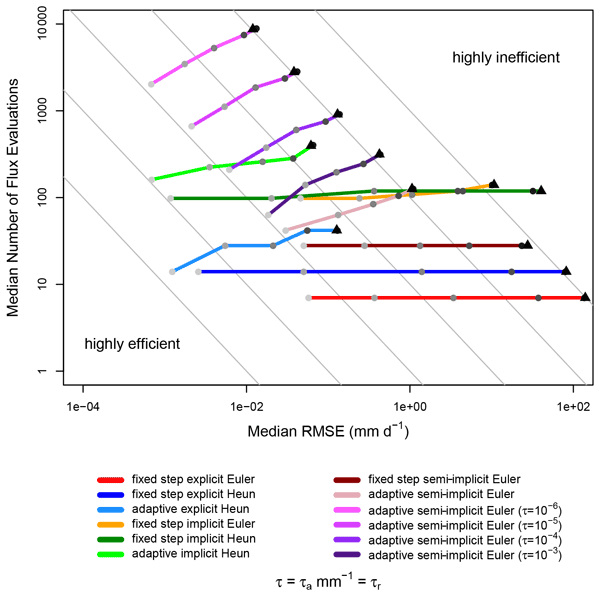
Hydrological models are useful tools that allow us to predict distributions and movement of water. A variety of numerical methods are used by these models. We demonstrate which numerical methods yield large errors when subject to extreme precipitation. As the climate is changing such that extreme precipitation is more common, we find that some numerical methods are better suited for use in hydrological models. Also, we find that many current hydrological models use relatively inaccurate methods.
Cited articles
Addor, N. and Melsen, L. A.: Legacy, Rather Than Adequacy, Drives the Selection of Hydrological Models, Water Resour. Res., 55, 378–390, https://doi.org/10.1029/2018WR022958, 2019.
Addor, N., Newman, A. J., Mizukami, N., and Clark, M. P.: The CAMELS data set: catchment attributes and meteorology for large-sample studies, Hydrol. Earth Syst. Sci., 21, 5293–5313, https://doi.org/10.5194/hess-21-5293-2017, 2017.
Addor, N., Nearing, G., Prieto, C., Newman, A. J., Le Vine, N., and Clark, M. P.: A Ranking of Hydrological Signatures Based on Their Predictability in Space, Water Resour. Res., 54, 8792–8812, https://doi.org/10.1029/2018WR022606, 2018.
Ajami, N. K., Duan, Q., Gao, X., and Sorooshian, S.: Multimodel Combination Techniques for Analysis of Hydrological Simulations: Application to Distributed Model Intercomparison Project Results, J. Hydrometeorol., 7, 755–768, https://doi.org/10.1175/JHM519.1, 2006.
Althoff, D. and Rodrigues, L. N.: Goodness-of-fit criteria for hydrological models: Model calibration and performance assessment, J. Hydrol., 600, 126674, https://doi.org/10.1016/j.jhydrol.2021.126674, 2021.
Anderson, E.: Snow accumulation and ablation model – SNOW-17, https://www.weather.gov/media/owp/oh/hrl/docs/22snow17.pdf (last access: 11 June 2026), 2006.
Andréassian, V., Perrin, C., Berthet, L., Le Moine, N., Lerat, J., Loumagne, C., Oudin, L., Mathevet, T., Ramos, M.-H., and Valéry, A.: HESS Opinions “Crash tests for a standardized evaluation of hydrological models”, Hydrol. Earth Syst. Sci., 13, 1757–1764, https://doi.org/10.5194/hess-13-1757-2009, 2009.
Arheimer, B., Pimentel, R., Isberg, K., Crochemore, L., Andersson, J. C. M., Hasan, A., and Pineda, L.: Global catchment modelling using World-Wide HYPE (WWH), open data, and stepwise parameter estimation, Hydrol. Earth Syst. Sci., 24, 535–559, https://doi.org/10.5194/hess-24-535-2020, 2020.
Arsenault, R., Gatien, P., Renaud, B., Brissette, F., and Martel, J.-L.: A comparative analysis of 9 multi-model averaging approaches in hydrological continuous streamflow simulation, J. Hydrol., 529, 754–767, https://doi.org/10.1016/j.jhydrol.2015.09.001, 2015.
Beck, H. E., van Dijk, A. I. J. M., de Roo, A., Miralles, D. G., McVicar, T. R., Schellekens, J., and Bruijnzeel, L. A.: Global-scale regionalization of hydrologic model parameters, Water Resour. Res., 52, 3599–3622, https://doi.org/10.1002/2015WR018247, 2016.
Beven, K.: A manifesto for the equifinality thesis, J. Hydrol., 320, 18–36, https://doi.org/10.1016/j.jhydrol.2005.07.007, 2006.
Booij, M. J. and Krol, M. S.: Balance between calibration objectives in a conceptual hydrological model, Hydrolog. Sci. J., 55, 1017–1032, https://doi.org/10.1080/02626667.2010.505892, 2010.
Bouaziz, L. J. E., Fenicia, F., Thirel, G., de Boer-Euser, T., Buitink, J., Brauer, C. C., De Niel, J., Dewals, B. J., Drogue, G., Grelier, B., Melsen, L. A., Moustakas, S., Nossent, J., Pereira, F., Sprokkereef, E., Stam, J., Weerts, A. H., Willems, P., Savenije, H. H. G., and Hrachowitz, M.: Behind the scenes of streamflow model performance, Hydrol. Earth Syst. Sci., 25, 1069–1095, https://doi.org/10.5194/hess-25-1069-2021, 2021.
Brigode, P., Paquet, E., Bernardara, P., Gailhard, J., Garavaglia, F., Ribstein, P., Bourgin, F., Perrin, C., and Andréassian, V.: Dependence of model-based extreme flood estimation on the calibration period: case study of the Kamp River (Austria), Hydrolog. Sci. J., 60, 1424–1437, https://doi.org/10.1080/02626667.2015.1006632, 2015.
Butts, M. B., Payne, J. T., Kristensen, M., and Madsen, H.: An evaluation of the impact of model structure on hydrological modelling uncertainty for streamflow simulation, J. Hydrol., 298, 242–266, https://doi.org/10.1016/j.jhydrol.2004.03.042, 2004.
Caillouet, L., Celie, S., Vannier, O., Bontron, G., and Legrand, S.: Operational hydrometeorological forecasting on the Rhône River in France: moving toward a seamless probabilistic approach, La Houille Blanche, 108, 2061312, https://doi.org/10.1080/27678490.2022.2061312, 2022.
Cinkus, G., Mazzilli, N., Jourde, H., Wunsch, A., Liesch, T., Ravbar, N., Chen, Z., and Goldscheider, N.: When best is the enemy of good – critical evaluation of performance criteria in hydrological models, Hydrol. Earth Syst. Sci., 27, 2397–2411, https://doi.org/10.5194/hess-27-2397-2023, 2023.
Clark, M. P. and Shook, K.: gumboot: Bootstrap Analyses of Sampling Uncertainty in Goodness-of-Fit Statistics, R package version 1.0.1, https://doi.org/10.32614/CRAN.package.gumboot, 2021.
Clark, M. P., Slater, A. G., Rupp, D. E., Woods, R. A., Vrugt, J. A., Gupta, H. V., Wagener, T., and Hay, L. E.: Framework for Understanding Structural Errors (FUSE): A modular framework to diagnose differences between hydrological models, Water Resour. Res., 44, https://doi.org/10.1029/2007WR006735, 2008.
Clark, M. P., Kavetski, D., and Fenicia, F.: Pursuing the method of multiple working hypotheses for hydrological modeling, Water Resour. Res., 47, https://doi.org/10.1029/2010WR009827, 2011.
Clark, M. P., Wilby, R. L., Gutmann, E. D., Vano, J. A., Gangopadhyay, S., Wood, A. W., Fowler, H. J., Prudhomme, C., Arnold, J. R., and Brekke, L. D.: Characterizing Uncertainty of the Hydrologic Impacts of Climate Change, Curr. Clim. Change Rep., 2, 55–64, https://doi.org/10.1007/s40641-016-0034-x, 2016.
Clark, M. P., Vogel, R. M., Lamontagne, J. R., Mizukami, N., Knoben, W. J. M., Tang, G., Gharari, S., Freer, J. E., Whitfield, P. H., Shook, K. R., and Papalexiou, S. M.: The Abuse of Popular Performance Metrics in Hydrologic Modeling, Water Resour. Res., 57, e2020WR029001, https://doi.org/10.1029/2020WR029001, 2021.
Commission for Environmental Cooperation: North American Atlas – Political Boundaries, statistics Canada, United States Census Bureau, Instituto Nacional de Estadística y Geografía (INEGI), http://www.cec.org/north-american-environmental-atlas/political-boundaries-2021/ (last access: 11 June 2026), 2022.
Csárdi, G. and Berkelaar, M.: lpSolve: Interface to “Lp_solve” v. 5.5 to Solve Linear/Integer Programs, R package version 5.6.21, https://doi.org/10.32614/CRAN.package.lpSolve, 2024.
David, P. C., Chaffe, P. L. B., Chagas, V. B. P., Dal Molin, M., Oliveira, D. Y., Klein, A. H. F., and Fenicia, F.: Correspondence Between Model Structures and Hydrological Signatures: A Large-Sample Case Study Using 508 Brazilian Catchments, Water Resour. Res., 58, e2021WR030619, https://doi.org/10.1029/2021WR030619, 2022.
Dion, P., Martel, J.-L., and Arsenault, R.: Hydrological ensemble forecasting using a multi-model framework, J. Hydrol., 600, 126537, https://doi.org/10.1016/j.jhydrol.2021.126537, 2021.
Duan, Q., Sorooshian, S., and Gupta, V. K.: Optimal use of the SCE-UA global optimization method for calibrating watershed models, J. Hydrol., 158, 265–284, https://doi.org/10.1016/0022-1694(94)90057-4, 1994.
Duan, Q. Y., Gupta, V. K., and Sorooshian, S.: Shuffled complex evolution approach for effective and efficient global minimization, J. Optimiz. Theory App., 76, 501–521, https://doi.org/10.1007/BF00939380, 1993.
Efstratiadis, A. and Koutsoyiannis, D.: One decade of multi-objective calibration approaches in hydrological modelling: a review, Hydrolog. Sci. J., 55, 58–78, https://doi.org/10.1080/02626660903526292, 2010.
Evans, J. P., Ji, F., Abramowitz, G., and Ekström, M.: Optimally choosing small ensemble members to produce robust climate simulations, Environ. Res. Lett., 8, 044050, https://doi.org/10.1088/1748-9326/8/4/044050, 2013.
Farahani, M. A., Wood, A. W., Tang, G., and Mizukami, N.: Calibrating a large-domain land/hydrology process model in the age of AI: the SUMMA CAMELS emulator experiments, Hydrol. Earth Syst. Sci., 29, 4515–4537, https://doi.org/10.5194/hess-29-4515-2025, 2025.
Feng, D., Liu, J., Lawson, K., and Shen, C.: Differentiable, Learnable, Regionalized Process-Based Models With Multiphysical Outputs can Approach State-Of-The-Art Hydrologic Prediction Accuracy, Water Resour. Res., 58, e2022WR032404, https://doi.org/10.1029/2022WR032404, 2022.
Feyen, L., Kalas, M., and Vrugt, J. A.: Semi-distributed parameter optimization and uncertainty assessment for large-scale streamflow simulation using global optimization / Optimisation de paramètres semi-distribués et évaluation de l'incertitude pour la simulation de débits à grande échelle par l'utilisation d'une optimisation globale, Hydrolog. Sci. J., 53, 293–308, https://doi.org/10.1623/hysj.53.2.293, 2008.
Garcia, F., Folton, N., and Oudin, L.: Which objective function to calibrate rainfall–runoff models for low-flow index simulations?, Hydrolog. Sci. J., 62, 1149–1166, https://doi.org/10.1080/02626667.2017.1308511, 2017.
Georgakakos, K. P., Seo, D.-J., Gupta, H., Schaake, J., and Butts, M. B.: Towards the characterization of streamflow simulation uncertainty through multimodel ensembles, J. Hydrol., 298, 222–241, https://doi.org/10.1016/j.jhydrol.2004.03.037, 2004.
Gupta, A. and Govindaraju, R. S.: Propagation of structural uncertainty in watershed hydrologic models, J. Hydrol., 575, 66–81, https://doi.org/10.1016/j.jhydrol.2019.05.026, 2019.
Gupta, H. V., Sorooshian, S., and Yapo, P. O.: Toward improved calibration of hydrologic models: Multiple and noncommensurable measures of information, Water Resour. Res., 34, 751–763, https://doi.org/10.1029/97WR03495, 1998.
Gupta, H. V., Kling, H., Yilmaz, K. K., and Martinez, G. F.: Decomposition of the mean squared error and NSE performance criteria: Implications for improving hydrological modelling, J. Hydrol., 377, 80–91, https://doi.org/10.1016/j.jhydrol.2009.08.003, 2009.
Hallouin, T., Bruen, M., and O'Loughlin, F. E.: Calibration of hydrological models for ecologically relevant streamflow predictions: a trade-off between fitting well to data and estimating consistent parameter sets?, Hydrol. Earth Syst. Sci., 24, 1031–1054, https://doi.org/10.5194/hess-24-1031-2020, 2020.
Henn, B., Clark, M. P., Kavetski, D., and Lundquist, J. D.: Estimating mountain basin-mean precipitation from streamflow using Bayesian inference, Water Resour. Res., 51, 8012–8033, https://doi.org/10.1002/2014WR016736, 2015.
Horton, P., Schaefli, B., and Kauzlaric, M.: Why do we have so many different hydrological models? A review based on the case of Switzerland, WIREs Water, 9, e1574, https://doi.org/10.1002/wat2.1574, 2022.
Johnson, J. M., Fang, S., Sankarasubramanian, A., Rad, A. M., Kindl da Cunha, L., Jennings, K. S., Clarke, K. C., Mazrooei, A., and Yeghiazarian, L.: Comprehensive Analysis of the NOAA National Water Model: A Call for Heterogeneous Formulations and Diagnostic Model Selection, J. Geophys. Res.-Atmos., 128, e2023JD038534, https://doi.org/10.1029/2023JD038534, 2023.
Khatami, S., Peel, M. C., Peterson, T. J., and Western, A. W.: Equifinality and Flux Mapping: A New Approach to Model Evaluation and Process Representation Under Uncertainty, Water Resour. Res., 55, 8922–8941, https://doi.org/10.1029/2018WR023750, 2019.
Kiraz, M., Coxon, G., and Wagener, T.: A priori selection of hydrological model structures in modular modelling frameworks: application to Great Britain, Hydrolog. Sci. J., 68, 2042–2056, https://doi.org/10.1080/02626667.2023.2251968, 2023.
Kirchner, J. W.: Getting the right answers for the right reasons: Linking measurements, analyses, and models to advance the science of hydrology, Water Resour. Res., 42, https://doi.org/10.1029/2005WR004362, 2006.
Klotz, D., Gauch, M., Kratzert, F., Nearing, G., and Zscheischler, J.: Technical Note: The divide and measure nonconformity – how metrics can mislead when we evaluate on different data partitions, Hydrol. Earth Syst. Sci., 28, 3665–3673, https://doi.org/10.5194/hess-28-3665-2024, 2024.
Knoben, W. J. M., Freer, J. E., and Woods, R. A.: Technical note: Inherent benchmark or not? Comparing Nash–Sutcliffe and Kling–Gupta efficiency scores, Hydrol. Earth Syst. Sci., 23, 4323–4331, https://doi.org/10.5194/hess-23-4323-2019, 2019.
Knoben, W. J. M., Freer, J. E., Peel, M. C., Fowler, K. J. A., and Woods, R. A.: A Brief Analysis of Conceptual Model Structure Uncertainty Using 36 Models and 559 Catchments, Water Resour. Res., 56, e2019WR025975, https://doi.org/10.1029/2019WR025975, 2020.
Knoben, W. J. M., Raman, A., Gründemann, G. J., Kumar, M., Pietroniro, A., Shen, C., Song, Y., Thébault, C., van Werkhoven, K., Wood, A. W., and Clark, M. P.: Technical note: How many models do we need to simulate hydrologic processes across large geographical domains?, Hydrol. Earth Syst. Sci., 29, 2361–2375, https://doi.org/10.5194/hess-29-2361-2025, 2025.
Knutti, R., Masson, D., and Gettelman, A.: Climate model genealogy: Generation CMIP5 and how we got there, Geophys. Res. Lett., 40, 1194–1199, https://doi.org/10.1002/grl.50256, 2013.
Kollat, J. B., Reed, P. M., and Wagener, T.: When are multiobjective calibration trade-offs in hydrologic models meaningful?, Water Resour. Res., 48, https://doi.org/10.1029/2011WR011534, 2012.
Kratzert, F., Klotz, D., Hochreiter, S., and Nearing, G. S.: A note on leveraging synergy in multiple meteorological data sets with deep learning for rainfall–runoff modeling, Hydrol. Earth Syst. Sci., 25, 2685–2703, https://doi.org/10.5194/hess-25-2685-2021, 2021.
Lamontagne, J. R., Barber, C. A., and Vogel, R. M.: Improved Estimators of Model Performance Efficiency for Skewed Hydrologic Data, Water Resour. Res., 56, e2020WR027101, https://doi.org/10.1029/2020WR027101, 2020.
Lan, T., Lin, K., Xu, C.-Y., Liu, Z., and Cai, H.: A framework for seasonal variations of hydrological model parameters: impact on model results and response to dynamic catchment characteristics, Hydrol. Earth Syst. Sci., 24, 5859–5874, https://doi.org/10.5194/hess-24-5859-2020, 2020.
Linsley, R. K.: Rainfall-runoff models – an overview, in: Rainfall-Runoff Relationship: Proceedings of the International Symposium on Rainfall-Runoff Modeling, edited by: Singh, V. P., 3–22, Water Resources Publications, Littleton, CO, ISBN 978-0-918334-45-9, 1982.
Livneh, B., Rosenberg, E. A., Lin, C., Nijssen, B., Mishra, V., Andreadis, K. M., Maurer, E. P., and Lettenmaier, D. P.: A Long-Term Hydrologically Based Dataset of Land Surface Fluxes and States for the Conterminous United States: Update and Extensions, https://doi.org/10.1175/JCLI-D-12-00508.1, 2013.
Mai, J.: Ten strategies towards successful calibration of environmental models, J. Hydrol., 620, 129414, https://doi.org/10.1016/j.jhydrol.2023.129414, 2023.
Mai, J., Shen, H., Tolson, B. A., Gaborit, É., Arsenault, R., Craig, J. R., Fortin, V., Fry, L. M., Gauch, M., Klotz, D., Kratzert, F., O'Brien, N., Princz, D. G., Rasiya Koya, S., Roy, T., Seglenieks, F., Shrestha, N. K., Temgoua, A. G. T., Vionnet, V., and Waddell, J. W.: The Great Lakes Runoff Intercomparison Project Phase 4: the Great Lakes (GRIP-GL), Hydrol. Earth Syst. Sci., 26, 3537–3572, https://doi.org/10.5194/hess-26-3537-2022, 2022.
Mathevet, T., Gupta, H., Perrin, C., Andréassian, V., and Le Moine, N.: Assessing the performance and robustness of two conceptual rainfall-runoff models on a worldwide sample of watersheds, J. Hydrol., 585, 124698, https://doi.org/10.1016/j.jhydrol.2020.124698, 2020.
McMillan, H., Araki, R., Gnann, S., Woods, R., and Wagener, T.: How do hydrologists perceive watersheds? A survey and analysis of perceptual model figures for experimental watersheds, Hydrol. Process., 37, e14845, https://doi.org/10.1002/hyp.14845, 2023.
Newman, A. J., Clark, M. P., Sampson, K., Wood, A., Hay, L. E., Bock, A., Viger, R. J., Blodgett, D., Brekke, L., Arnold, J. R., Hopson, T., and Duan, Q.: Development of a large-sample watershed-scale hydrometeorological data set for the contiguous USA: data set characteristics and assessment of regional variability in hydrologic model performance, Hydrol. Earth Syst. Sci., 19, 209–223, https://doi.org/10.5194/hess-19-209-2015, 2015.
Newman, A. J., Sampson, K., Clark, M., Bock, A., Viger, R., Blodgett, D., Addor, N., and Mizukami, M.: CAMELS: Catchment Attributes and MEteorology for Large-sample Studies, https://doi.org/10.5065/D6MW2F4D, 2022.
Nicolle, P., Andréassian, V., Royer-Gaspard, P., Perrin, C., Thirel, G., Coron, L., and Santos, L.: Technical note: RAT – a robustness assessment test for calibrated and uncalibrated hydrological models, Hydrol. Earth Syst. Sci., 25, 5013–5027, https://doi.org/10.5194/hess-25-5013-2021, 2021.
Ogden, F., Avant, B., Bartel, R., Blodgett, D., Clark, E., Coon, E., Cosgrove, B., Cui, S., Kindl da Cunha, L., Farthing, M., Flowers, T., Frame, J., Frazier, N., Graziano, T., Gutenson, J., Johnson, D., McDaniel, R., Moulton, J., Loney, D., Peckham, S., Mattern, D., Jennings, K., Williamson, M., Savant, G., Tubbs, C., Garrett, J., Wood, A., and Johnson, J.: The Next Generation Water Resources Modeling Framework: Open Source, Standards Based, Community Accessible, Model Interoperability for Large Scale Water Prediction, AGU Fall Meeting 2021, New Orleans, LA, USA, 13–17 December 2021, abstract H43D-01, 2021.
Ogden, F. L., Jennings, K., Clark, E. P., Coon, E., Cosgrove, B., da Cunha, L. K., Farthing, M. W., Flowers, T., Frame, J. M., Frazier, N. J., Garrett, J. L., Graziano, T. M., Hughes, J. D., Johnson, J. M., McDaniel, R., Moulton, J. D., Peckham, S. D., Salas, F. R., Savant, G., Viger, R., and Wood, A.: The NextGen Water Resources Modeling Framework: Community Innovation at the Intersection of Hydrologic, Data and Computer Sciences, J. Am. Water Resour. As., 62, e70089, https://doi.org/10.1111/1752-1688.70089, 2026.
Oudin, L., Hervieu, F., Michel, C., Perrin, C., Andréassian, V., Anctil, F., and Loumagne, C.: Which potential evapotranspiration input for a lumped rainfall–runoff model?: Part 2 – Towards a simple and efficient potential evapotranspiration model for rainfall–runoff modelling, J. Hydrol., 303, 290–306, https://doi.org/10.1016/j.jhydrol.2004.08.026, 2005.
Oudin, L., Andréassian, V., Mathevet, T., Perrin, C., and Michel, C.: Dynamic Averaging of Rainfall-Runoff Model Simulations from Complementary Model Parameterizations, Water Resour. Res., 42, https://doi.org/10.1029/2005WR004636, 2006.
Perrin, C., Michel, C., and Andréassian, V.: Does a large number of parameters enhance model performance? Comparative assessment of common catchment model structures on 429 catchments, J. Hydrol., 242, 275–301, https://doi.org/10.1016/S0022-1694(00)00393-0, 2001.
Perrin, C., Michel, C., and Andréassian, V.: Improvement of a parsimonious model for streamflow simulation, J. Hydrol., 279, 275–289, https://doi.org/10.1016/S0022-1694(03)00225-7, 2003.
Pushpalatha, R., Perrin, C., Moine, N. L., and Andréassian, V.: A review of efficiency criteria suitable for evaluating low-flow simulations, J. Hydrol., 420–421, 171–182, https://doi.org/10.1016/j.jhydrol.2011.11.055, 2012.
Raftery, A. E., Gneiting, T., Balabdaoui, F., and Polakowski, M.: Using Bayesian Model Averaging to Calibrate Forecast Ensembles, Mon. Weather Rev., 133, 1155–1174, https://doi.org/10.1175/MWR2906.1, 2005.
Ramos, M. H., van Andel, S. J., and Pappenberger, F.: Do probabilistic forecasts lead to better decisions?, Hydrol. Earth Syst. Sci., 17, 2219–2232, https://doi.org/10.5194/hess-17-2219-2013, 2013.
Ramos, M.-H., Pappenberger, F., Wood, A., Wetterhall, F., Wang, Q. J., Verkade, J., Pechlivanidis, I., Thielen-del Pozo, J., Buizza, R., and Schaake, J.: The history of HEPEX – a community of practice in hydrologic prediction, Geophys. Res. Abstr., 20, EGU2018-10137, EGU General Assembly 2018, Vienna, Austria, 2018.
Refsgaard, J. C., van der Sluijs, J. P., Højberg, A. L., and Vanrolleghem, P. A.: Uncertainty in the environmental modelling process – A framework and guidance, Environ. Modell. Softw., 22, 1543–1556, https://doi.org/10.1016/j.envsoft.2007.02.004, 2007.
Renard, B., Kavetski, D., Kuczera, G., Thyer, M., and Franks, S. W.: Understanding predictive uncertainty in hydrologic modeling: The challenge of identifying input and structural errors, Water Resour. Res., 46, https://doi.org/10.1029/2009WR008328, 2010.
Savenije, H. H. G.: HESS Opinions “The art of hydrology”*, Hydrol. Earth Syst. Sci., 13, 157–161, https://doi.org/10.5194/hess-13-157-2009, 2009.
Sawadekar, K., Song, Y., Pan, M., Beck, H., McCrary, R., Ullrich, P., Lawson, K., and Shen, C.: Improving differentiable hydrologic modeling with interpretable forcing fusion, J. Hydrol., 659, 133320, https://doi.org/10.1016/j.jhydrol.2025.133320, 2025.
Schaake, J. C., Hamill, T. M., Buizza, R., and Clark, M.: HEPEX: The Hydrological Ensemble Prediction Experiment, B. Am. Meteorol. Soc., 88, 1541–1548, https://doi.org/10.1175/BAMS-88-10-1541, 2007.
Schaefli, B. and Gupta, H. V.: Do Nash values have value?, Hydrol. Process., 21, 2075–2080, https://doi.org/10.1002/hyp.6825, 2007.
Seiller, G., Anctil, F., and Perrin, C.: Multimodel evaluation of twenty lumped hydrological models under contrasted climate conditions, Hydrol. Earth Syst. Sci., 16, 1171–1189, https://doi.org/10.5194/hess-16-1171-2012, 2012.
Shamseldin, A. Y., O'Connor, K. M., and Liang, G. C.: Methods for combining the outputs of different rainfall runoff models, J. Hydrol., 197, 203–229, https://doi.org/10.1016/S0022-1694(96)03259-3, 1997.
Sidle, R. C.: Strategies for smarter catchment hydrology models: incorporating scaling and better process representation, Geoscience Letters, 8, 24, https://doi.org/10.1186/s40562-021-00193-9, 2021.
Singh, V. P. and Woolhiser, D. A.: Mathematical Modeling of Watershed Hydrology, J. Hydrol. Eng., 7, 270–292, https://doi.org/10.1061/(ASCE)1084-0699(2002)7:4(270), 2002.
Song, Y., Knoben, W. J. M., Clark, M. P., Feng, D., Lawson, K., Sawadekar, K., and Shen, C.: When ancient numerical demons meet physics-informed machine learning: adjoint-based gradients for implicit differentiable modeling, Hydrol. Earth Syst. Sci., 28, 3051–3077, https://doi.org/10.5194/hess-28-3051-2024, 2024.
Spieler, D. and Schütze, N.: Investigating the Model Hypothesis Space: Benchmarking Automatic Model Structure Identification With a Large Model Ensemble, Water Resour. Res., 60, e2023WR036199, https://doi.org/10.1029/2023WR036199, 2024.
Spieler, D., Mai, J., Craig, J. R., Tolson, B. A., and Schütze, N.: Automatic Model Structure Identification for Conceptual Hydrologic Models, Water Resour. Res., 56, e2019WR027009, https://doi.org/10.1029/2019WR027009, 2020.
Tang, G., Wood, A. W., and Swenson, S.: On Using AI-Based Large-Sample Emulators for Land/Hydrology Model Calibration and Regionalization, Water Resour. Res., 61, e2024WR039525, https://doi.org/10.1029/2024WR039525, 2025.
Thébault, C.: CyrilThebault/FUSE-MMComparison-paper: FUSE-MMComparison-paper v1.0 (v1.0), Zenodo [code], https://doi.org/10.5281/zenodo.20500212, 2026.
Thébault, C., Perrin, C., Andréassian, V., Thirel, G., Legrand, S., and Delaigue, O.: Multi-model approach in a variable spatial framework for streamflow simulation, Hydrol. Earth Syst. Sci., 28, 1539–1566, https://doi.org/10.5194/hess-28-1539-2024, 2024.
Thébault, C., Knoben, W. J. M., Addor, N., Newman, A. J., and Clark, M. P.: Varying the Combination of Hydrological Models in Time and Space: Towards a More Accurate Representation of Streamflow Across Large Domains, https://doi.org/10.22541/essoar.175855455.54894703/v1, 2025a.
Thébault, C., Perrin, C., Legrand, S., Andréassian, V., Thirel, G., and Delaigue, O.: What can be expected from a semi-distributed multi-model approach for streamflow forecasting? Tailoring the structure and size of a super-ensemble on the Rhône basin, J. Hydrol., 661, 133589, https://doi.org/10.1016/j.jhydrol.2025.133589, 2025b.
Thébault, C., Addor, N., Gutmann, E., Uhe, P., and Clark, M.: CyrilThebault/fuse: FUSE version for multi-model comparison paper (v1.0_MMpaper), Zenodo [code], https://doi.org/10.5281/zenodo.20500504, 2026.
Thirel, G., Santos, L., Delaigue, O., and Perrin, C.: On the use of streamflow transformations for hydrological model calibration, Hydrol. Earth Syst. Sci., 28, 4837–4860, https://doi.org/10.5194/hess-28-4837-2024, 2024.
Thornton, M. M., Shrestha, R., Wei, Y., Thornton, P. E., and Kao, S.-C.: Daymet: Daily Surface Weather Data on a 1-km Grid for North America, Version 4 R1. ORNL DAAC, Oak Ridge, Tennessee, USA, https://doi.org/10.3334/ORNLDAAC/2129, 2012.
Todorović, A., Grabs, T., and Teutschbein, C.: Advancing traditional strategies for testing hydrological model fitness in a changing climate, Hydrolog. Sci. J., 67, 1790–1811, https://doi.org/10.1080/02626667.2022.2104646, 2022.
Todorović, A., Grabs, T., and Teutschbein, C.: Improving performance of bucket-type hydrological models in high latitudes with multi-model combination methods: Can we wring water from a stone?, J. Hydrol., 632, 130829, https://doi.org/10.1016/j.jhydrol.2024.130829, 2024.
Tolson, B. A. and Shoemaker, C. A.: Dynamically dimensioned search algorithm for computationally efficient watershed model calibration, Water Resour. Res., 43, https://doi.org/10.1029/2005WR004723, 2007.
van Esse, W. R., Perrin, C., Booij, M. J., Augustijn, D. C. M., Fenicia, F., Kavetski, D., and Lobligeois, F.: The influence of conceptual model structure on model performance: a comparative study for 237 French catchments, Hydrol. Earth Syst. Sci., 17, 4227–4239, https://doi.org/10.5194/hess-17-4227-2013, 2013.
Vrugt, J. A., Diks, C. G. H., and Clark, M. P.: Ensemble Bayesian model averaging using Markov Chain Monte Carlo sampling, Environ. Fluid Mech., 8, 579–595, https://doi.org/10.1007/s10652-008-9106-3, 2008.
Wagener, T. and Gupta, H. V.: Model identification for hydrological forecasting under uncertainty, Stoch. Env. Res. Risk A., 19, 378–387, https://doi.org/10.1007/s00477-005-0006-5, 2005.
Wan, Y., Chen, J., Xu, C.-Y., Xie, P., Qi, W., Li, D., and Zhang, S.: Performance dependence of multi-model combination methods on hydrological model calibration strategy and ensemble size, J. Hydrol., 603, 127065, https://doi.org/10.1016/j.jhydrol.2021.127065, 2021.
Williams, G. P.: Friends don't let friends use Nash-Sutcliffe Efficiency (NSE) or KGE for hydrologic model accuracy evaluation: A rant with data and suggestions for better practice, Environ. Modell. Softw., 194, 106665, https://doi.org/10.1016/j.envsoft.2025.106665, 2025.
Winter, C. L. and Nychka, D.: Forecasting skill of model averages, Stoch. Env. Res. Risk A., 24, 633–638, https://doi.org/10.1007/s00477-009-0350-y, 2010.
Wood, A. W., Leung, L. R., Sridhar, V., and Lettenmaier, D. P.: Hydrologic Implications of Dynamical and Statistical Approaches to Downscaling Climate Model Outputs, Climatic Change, 62, 189–216, https://doi.org/10.1023/B:CLIM.0000013685.99609.9e, 2004.
Xia, Y., Mitchell, K., Ek, M., Sheffield, J., Cosgrove, B., Wood, E., Luo, L., Alonge, C., Wei, H., Meng, J., Livneh, B., Lettenmaier, D., Koren, V., Duan, Q., Mo, K., Fan, Y., and Mocko, D.: Continental-scale water and energy flux analysis and validation for the North American Land Data Assimilation System project phase 2 (NLDAS-2): 1. Intercomparison and application of model products, J. Geophys. Res.-Atmos., 117, https://doi.org/10.1029/2011JD016048, 2012.
Yilmaz, K. K., Gupta, H. V., and Wagener, T.: A process-based diagnostic approach to model evaluation: Application to the NWS distributed hydrologic model, Water Resour. Res., 44, https://doi.org/10.1029/2007WR006716, 2008.
Zhang, R., Liu, J., Gao, H., and Mao, G.: Can multi-objective calibration of streamflow guarantee better hydrological model accuracy?, J. Hydroinform., 20, 687–698, https://doi.org/10.2166/hydro.2018.131, 2018.
Short summary
Reliable river flow prediction guide water supply planning and flood protection. We tested whether selecting or combining multiple models improves accuracy compared with a single model. 78 models were used and tested in 559 river basins across the United States. A carefully chosen single model nearly matched more complex multi-model approaches, while combining models gave slightly higher accuracy and lower uncertainty. However, no approach worked best everywhere.
Reliable river flow prediction guide water supply planning and flood protection. We tested...


