Articles | Volume 30, issue 9
https://doi.org/10.5194/hess-30-2879-2026
© Author(s) 2026. This work is distributed under
the Creative Commons Attribution 4.0 License.

https://doi.org/10.5194/hess-30-2879-2026
© Author(s) 2026. This work is distributed under
the Creative Commons Attribution 4.0 License.
From soil to stream: modeling the catchment-scale hydrological effects of increased soil organic carbon

Oeschger Centre for Climate Change Research, University of Bern, Bern, Switzerland
Agroecology and Environment, Agroscope, Zürich, Switzerland
Institute of Geography, University of Bern, Bern, Switzerland
Invited contribution by Malve Heinz, recipient of the EGU Hydrological Sciences Outstanding Student and PhD candidate Presentation Award 2025.
Annelie Holzkämper
Oeschger Centre for Climate Change Research, University of Bern, Bern, Switzerland
Agroecology and Environment, Agroscope, Zürich, Switzerland
Rohini Kumar
Department of Computational Hydrosystems, Helmholtz Centre for Environmental Research – UFZ, Leipzig, Germany
Sélène Ledain
Agroecology and Environment, Agroscope, Zürich, Switzerland
Pascal Horton
Oeschger Centre for Climate Change Research, University of Bern, Bern, Switzerland
Institute of Geography, University of Bern, Bern, Switzerland
Bettina Schaefli
Oeschger Centre for Climate Change Research, University of Bern, Bern, Switzerland
Institute of Geography, University of Bern, Bern, Switzerland
Related authors
Malve Heinz, Maria Eliza Turek, Bettina Schaefli, Andreas Keiser, and Annelie Holzkämper
Hydrol. Earth Syst. Sci., 29, 1807–1827, https://doi.org/10.5194/hess-29-1807-2025, https://doi.org/10.5194/hess-29-1807-2025, 2025
Short summary
Short summary
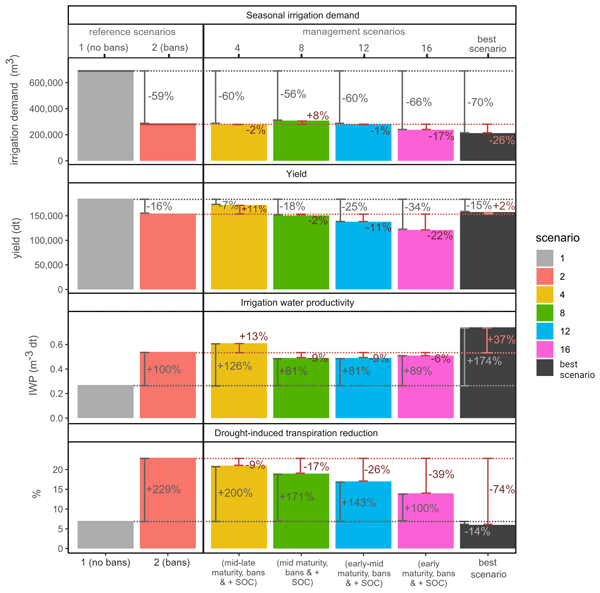
Potato farmers in Switzerland are facing drier conditions and water restrictions. We explored how improving soil health and planting early-maturing potato varieties might help them to adapt. Using a computer model, we simulated potato yields and irrigation water needs under water scarcity. Our results show that earlier-maturing potato varieties reduce the reliance on irrigation but result in lower yields. However, improving soil health can significantly reduce yield losses.
Pau Wiersma, Jan Magnusson, Nadav Peleg, Bettina Schaefli, and Gregoire Mariethoz
Hydrol. Earth Syst. Sci., 30, 3331–3350, https://doi.org/10.5194/hess-30-3331-2026, https://doi.org/10.5194/hess-30-3331-2026, 2026
Short summary
Short summary
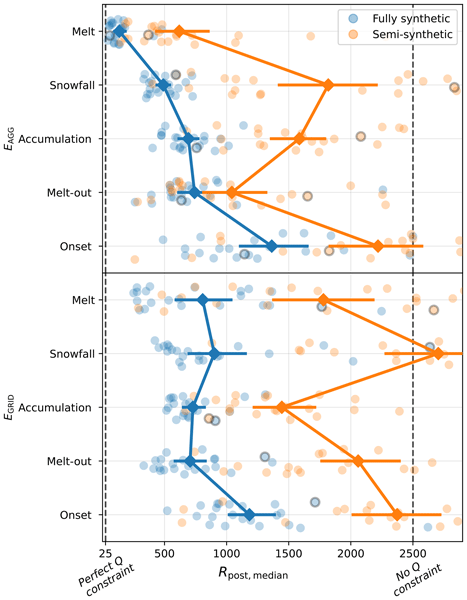
Streamflow observations contain information about snow, but their potential to constrain seasonal snow mass reconstructions remains underexplored. Using inverse hydrological modeling, we show that streamflow is particularly effective at constraining catchment-aggregated melt rates, but that non-uniqueness in the snow–streamflow relationship and uncertainties in the inverse modeling chain can easily limit inversion performance.
Katja Frieler, Stefan Lange, Jacob Schewe, Matthias Mengel, Simon Treu, Christian Otto, Jan Volkholz, Christopher P. O. Reyer, Stefanie Heinicke, Colin Jones, Julia L. Blanchard, Cheryl S. Harrison, Colleen M. Petrik, Tyler D. Eddy, Kelly Ortega-Cisneros, Camilla Novaglio, Ryan Heneghan, Derek P. Tittensor, Olivier Maury, Matthias Büchner, Thomas Vogt, Dánnell Quesada-Chacón, Kerry Emanuel, Chia-Ying Lee, Suzana J. Camargo, Linn Hamester, Jonas Jägermeyr, Sam Rabin, Jochen Klar, Iliusi D. Vega del Valle, Lisa Novak, Inga J. Sauer, Gitta Lasslop, Sarah Chadburn, Eleanor Burke, Angela Gallego-Sala, Noah Smith, Jinfeng Chang, Stijn Hantson, Chantelle Burton, Anne Gädeke, Fang Li, Simon N. Gosling, Hannes Müller Schmied, Fred Hattermann, Thomas Hickler, Rafael Marcé, Don Pierson, Wim Thiery, Daniel Mercado-Bettín, Robert Ladwig, Ana Isabel Ayala, Matthew Forrest, Michel Bechtold, Robert Reinecke, Inge de Graaf, Jed O. Kaplan, Alexander Koch, Matthieu Lengaigne, Rohini Kumar, and Maryna Strokal
Geosci. Model Dev., 19, 4095–4135, https://doi.org/10.5194/gmd-19-4095-2026, https://doi.org/10.5194/gmd-19-4095-2026, 2026
Short summary
Short summary
This paper describes the experiments and data sets necessary to run historic and future impact projections, and the underlying assumptions of future climate change as defined by the 3rd round of the ISIMIP Project (Inter-sectoral Impactmodel Intercomparison Project, isimip.org). ISIMIP provides a framework for cross-sectorally consistent climate impact simulations to contribute to a comprehensive and consistent picture of the world under different climate-change scenarios.
Katoria Lekarkar, Oldrich Rakovec, Rohini Kumar, Stefaan Dondeyne, and Ann van Griensven
Hydrol. Earth Syst. Sci., 30, 2817–2835, https://doi.org/10.5194/hess-30-2817-2026, https://doi.org/10.5194/hess-30-2817-2026, 2026
Short summary
Short summary
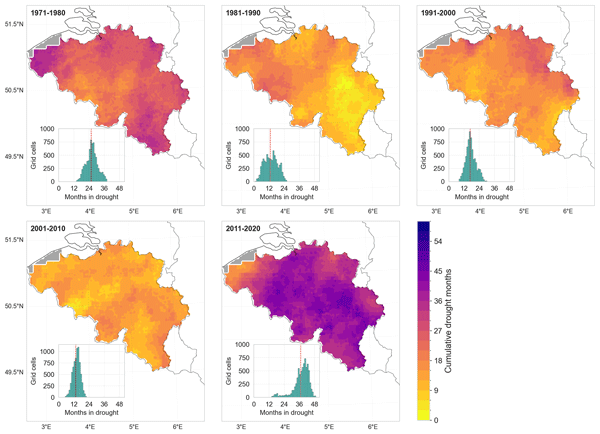
Belgium has faced intense droughts in recent years, causing major losses across sectors. To assess their rarity, we used a hydrological model to reconstruct fifty years of soil moisture in the country. We show that 2011–2020 experienced the most severe droughts since 1971, with nearly 30% of the decade under drought. We also show that rainfall-based indicators underestimate soil moisture droughts, so including soil-moisture monitoring can give decision-makers a clearer picture of drought risks.
Adrià Fontrodona-Bach, Bettina Schaefli, Ross Woods, and Joshua R. Larsen
Hydrol. Earth Syst. Sci., 30, 2613–2636, https://doi.org/10.5194/hess-30-2613-2026, https://doi.org/10.5194/hess-30-2613-2026, 2026
Short summary
Short summary
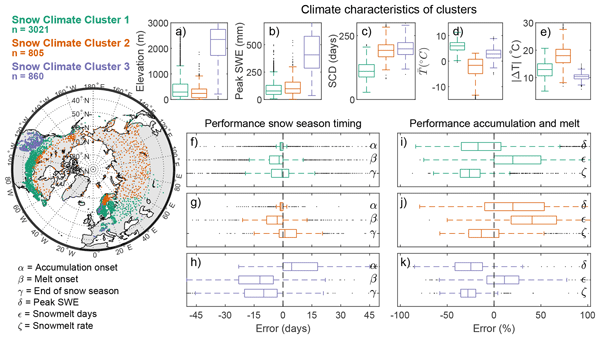
Investigating changing snow in response to global warming can be done with a simple model and only temperature and precipitation data, simplifying snow dynamics with assumptions and parameters. We provide a large-scale and long-term evaluation of this approach and its performance across diverse climates. Temperature thresholds are more robust over cold climates but melt parameters are more robust over warmer climates with deep snow. The model performs well across climates despite its simplicity.
Sadaf Nasreen, Oldrich Rakovec, Rohini Kumar, Manuela I. Brunner, Ujjwal Singh, Petr Maca, Yannis Markonis, and Martin Hanel
EGUsphere, https://doi.org/10.5194/egusphere-2026-973, https://doi.org/10.5194/egusphere-2026-973, 2026
Short summary
Short summary
European droughts threaten water and agriculture, but how distinct drought processes will change under warming is uncertain. We examine seven mechanisms across Europe using 1971 to 2000 observations and 2070 to 2099 projections. Changes are regional: the Mediterranean shifts to longer, more severe droughts, while Northern and Western Central Europe often improve. Temperature-driven mechanisms, especially rain to snow transitions, respond most, guiding targeted adaptation.
Justine Berg, Pascal Horton, Martina Kauzlaric, Alexandra von der Esch, and Bettina Schaefli
EGUsphere, https://doi.org/10.5194/egusphere-2026-439, https://doi.org/10.5194/egusphere-2026-439, 2026
This preprint is open for discussion and under review for Hydrology and Earth System Sciences (HESS).
Short summary
Short summary
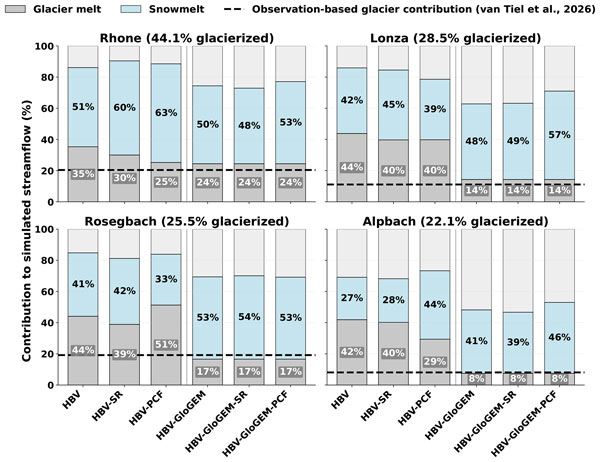
Snow and glacier melt are essential for water supply in mountain regions, but it is challenging to determine how much each source contributes to streamflow. To improve these estimates, we simulated 14 headwater catchments in Switzerland using a hydrological model modified to include snow redistribution and integrating glacier melt from a glacier evolution model. This allowed more accurate estimates of snow and glacier melt contributions, supporting future predictions of water availability.
Tam V. Nguyen, Rohini Kumar, José L. J. Ledesma, Pia Ebeling, Jan Fleckenstein, and Andreas Musolff
EGUsphere, https://doi.org/10.5194/egusphere-2025-6246, https://doi.org/10.5194/egusphere-2025-6246, 2026
Short summary
Short summary
Lumped and landscape-explicit dissolved organic carbon (DOC) models are commonly calibrated using stream DOC concentrations, while internal DOC dynamics in different model compartments are not given enough attention. Our study shows that stream DOC alone is insufficient to constrain DOC dynamics. Applying models calibrated in this way under changing boundary conditions may therefore lead to unrealistic results.
Annelie Holzkämper, Ernst Spiess, Clay Humphrys, Karin Meier-Zimmermann, Olivier Heller, Thomas Keller, and Volker Prasuhn
EGUsphere, https://doi.org/10.5194/egusphere-2026-330, https://doi.org/10.5194/egusphere-2026-330, 2026
Short summary
Short summary
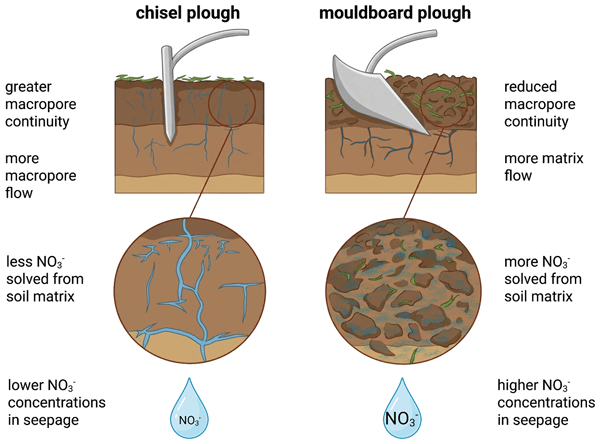
Over three years of observation in a Swiss lysimeter, our results show that cumulative nitrate leaching was 26 % higher under conventional tillage than under non-inversion tillage. This difference was driven by nitrate concentrations in seepage water rather than by differences in seepage water volumes. The beneficial effect of non-inversion tillage was most pronounced during and shortly after a bare-soil period following sugar beet cultivation, coinciding with above-average spring precipitation.
Pia Ebeling, Alexander Hubig, Alexander Wachholz, Ulrike Scharfenberger, Sarah Haug, Tam Nguyen, Fanny Sarrazin, Masooma Batool, Andreas Musolff, and Rohini Kumar
Earth Syst. Sci. Data, 18, 691–712, https://doi.org/10.5194/essd-18-691-2026, https://doi.org/10.5194/essd-18-691-2026, 2026
Short summary
Short summary
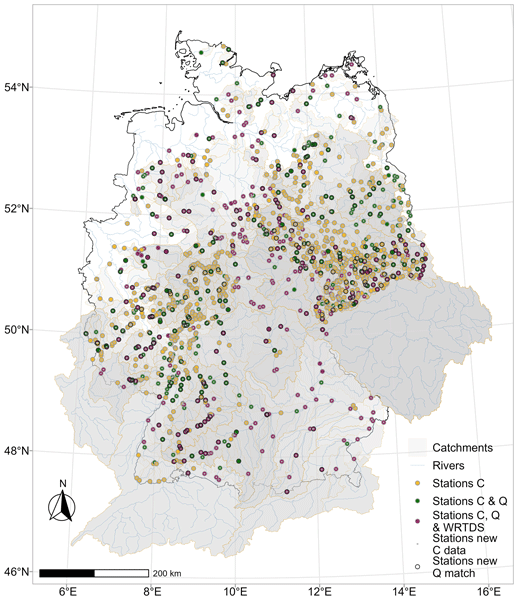
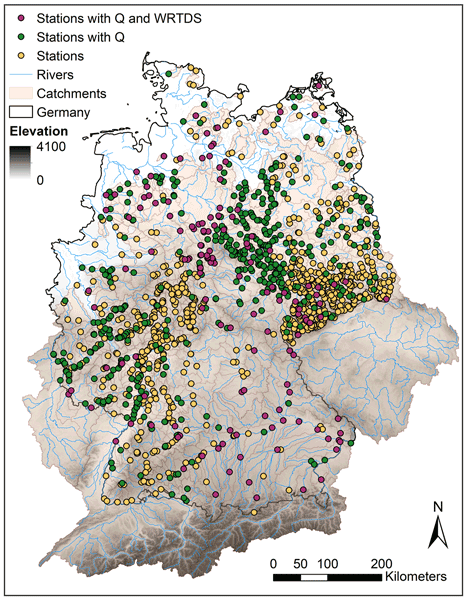
The updated river water quality data set for Germany offers longer records, new variables such as water temperature and oxygen, and time series of pollution sources, and it adds more stations with both water quality and flow data. These improvements provide clearer insights into how stream water quality changes over time and how human activities affect aquatic ecosystems.
Robert Reinecke, Tanjila Akhter, Annemarie Bäthge, Ricarda Dietrich, Sebastian Gnann, Simon N. Gosling, Danielle Grogan, Andreas Hartmann, Stefan Kollet, Rohini Kumar, Richard Lammers, Sida Liu, Yan Liu, Nils Moosdorf, Bibi Naz, Sara Nazari, Chibuike Orazulike, Yadu Pokhrel, Jacob Schewe, Mikhail Smilovic, Maryna Strokal, Wim Thiery, Yoshihide Wada, Shan Zuidema, and Inge de Graaf
Geosci. Model Dev., 19, 523–542, https://doi.org/10.5194/gmd-19-523-2026, https://doi.org/10.5194/gmd-19-523-2026, 2026
Short summary
Short summary
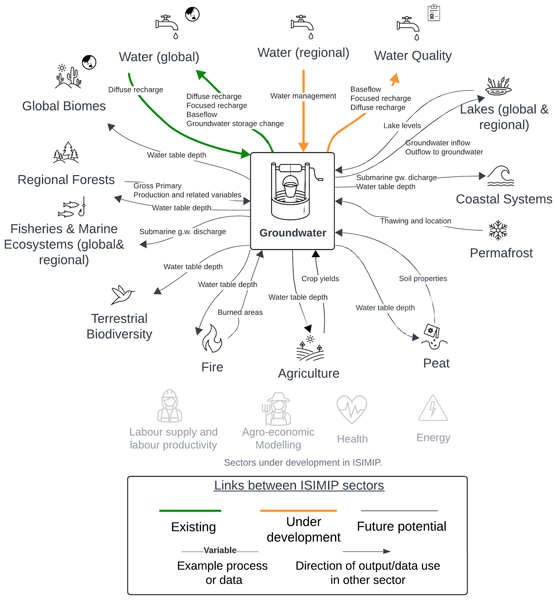
Here we describe a collaborative effort to improve predictions of how climate change will affect groundwater. The ISIMIP (The Inter-Sectoral Impact Model Intercomparison Project) groundwater sector combines multiple global groundwater models to capture a range of possible outcomes and reduce uncertainty. Initial comparisons reveal significant differences between models in key metrics like water table depth and recharge rates, highlighting the need for structured model intercomparisons.
Xinyang Fan, Florentin Hofmeister, Bettina Schaefli, and Gabriele Chiogna
EGUsphere, https://doi.org/10.5194/egusphere-2025-6065, https://doi.org/10.5194/egusphere-2025-6065, 2025
Short summary
Short summary
We adopt a physics-based, fully-integrated hydrological modeling approach to understand streamflow variations and their interactions with groundwater in a high-elevation glaciated environment. We demonstrate opportunities and challenges of integrating point-scale groundwater observations into a distributed model. This study sheds new lights on surface-subsurface processes in high alpine environments and highlights the importance of improving subsurface representation in hydrological modeling.
Vishal Thakur, Yannis Markonis, Rohini Kumar, Johanna Ruth Thomson, Mijael Rodrigo Vargas Godoy, Martin Hanel, and Oldrich Rakovec
Hydrol. Earth Syst. Sci., 29, 4395–4416, https://doi.org/10.5194/hess-29-4395-2025, https://doi.org/10.5194/hess-29-4395-2025, 2025
Short summary
Short summary
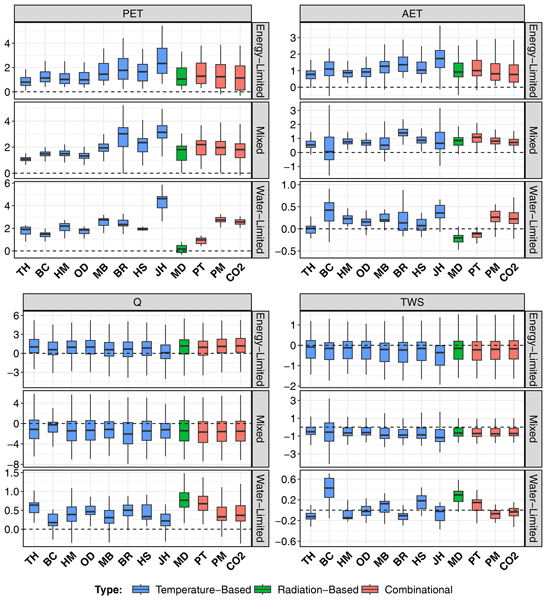
Understanding the changes in water movement in earth is crucial for everyone. To quantify this water movement there are several techniques. We examined how different methods of estimating evaporation impact predictions of various types of water movement across Europe. We found that, while these methods generally agree on whether changes are increasing or decreasing, they differ in magnitude. This means selecting the right evaporation method is crucial for accurate predictions of water movement.
Florentin Hofmeister, Xinyang Fan, Madlene Pfeiffer, Ben Marzeion, Bettina Schaefli, and Gabriele Chiogna
EGUsphere, https://doi.org/10.5194/egusphere-2025-3256, https://doi.org/10.5194/egusphere-2025-3256, 2025
Short summary
Short summary
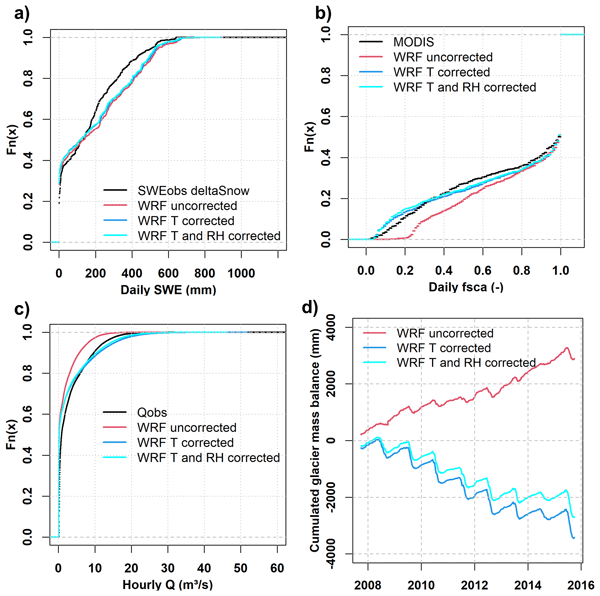
We use the WRF model for dynamically downscaling a global reanalysis product for the period 1850 to 2015 for the central European Alps. We demonstrate a workflow for transferring coarse-resolution (2 km) WRF temperature and precipitation to a much finer spatial resolution (25 m) of a physics-based hydrological model (WaSiM) and evaluate the results in a multi-data approach covering different simulation periods. Our results highlight the need for plausible and consistent elevation gradients.
Jan Řehoř, Rudolf Brázdil, Oldřich Rakovec, Martin Hanel, Milan Fischer, Rohini Kumar, Jan Balek, Markéta Poděbradská, Vojtěch Moravec, Luis Samaniego, Yannis Markonis, and Miroslav Trnka
Hydrol. Earth Syst. Sci., 29, 3341–3358, https://doi.org/10.5194/hess-29-3341-2025, https://doi.org/10.5194/hess-29-3341-2025, 2025
Short summary
Short summary
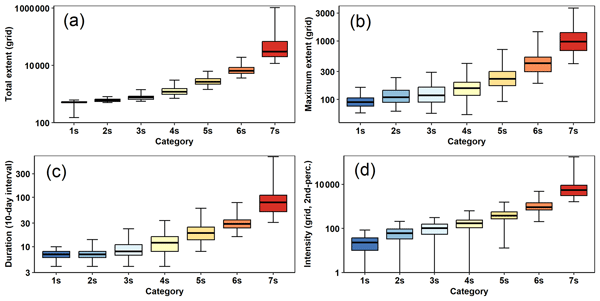
We present a robust method for identification and classification of global land drought events (GLDEs) based on soil moisture. Two models were used to calculate soil moisture and delimit soil drought over global land from 1980–2022, with clusters of 775 and 630 GLDEs. Using four spatiotemporal and three motion-related characteristics, we categorized GLDEs into seven severity and seven dynamic categories. The frequency of GLDEs has generally increased in recent decades.
Pia Ebeling, Andreas Musolff, Rohini Kumar, Andreas Hartmann, and Jan H. Fleckenstein
Hydrol. Earth Syst. Sci., 29, 2925–2950, https://doi.org/10.5194/hess-29-2925-2025, https://doi.org/10.5194/hess-29-2925-2025, 2025
Short summary
Short summary
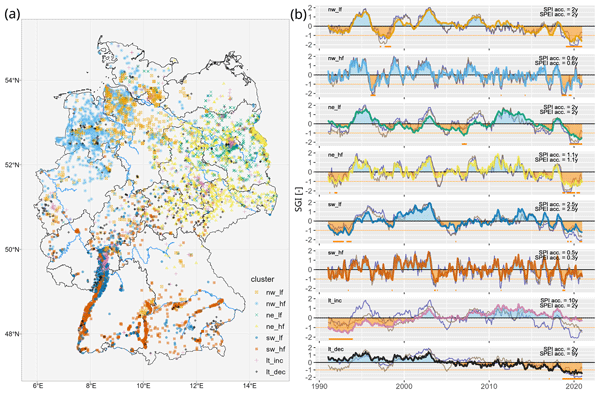
Groundwater is a crucial resource at risk due to droughts. To understand drought effects on groundwater levels in Germany, we grouped 6626 wells into six regional and two national patterns. Weather explained half of the level variations with varied response times. Shallow groundwater responds fast and is more vulnerable to short droughts (a few months). Dampened deep heads buffer short droughts but suffer from long droughts and recoveries. Two nationwide trend patterns were linked to human water use.
Hannes Müller Schmied, Simon Newland Gosling, Marlo Garnsworthy, Laura Müller, Camelia-Eliza Telteu, Atiq Kainan Ahmed, Lauren Seaby Andersen, Julien Boulange, Peter Burek, Jinfeng Chang, He Chen, Lukas Gudmundsson, Manolis Grillakis, Luca Guillaumot, Naota Hanasaki, Aristeidis Koutroulis, Rohini Kumar, Guoyong Leng, Junguo Liu, Xingcai Liu, Inga Menke, Vimal Mishra, Yadu Pokhrel, Oldrich Rakovec, Luis Samaniego, Yusuke Satoh, Harsh Lovekumar Shah, Mikhail Smilovic, Tobias Stacke, Edwin Sutanudjaja, Wim Thiery, Athanasios Tsilimigkras, Yoshihide Wada, Niko Wanders, and Tokuta Yokohata
Geosci. Model Dev., 18, 2409–2425, https://doi.org/10.5194/gmd-18-2409-2025, https://doi.org/10.5194/gmd-18-2409-2025, 2025
Short summary
Short summary
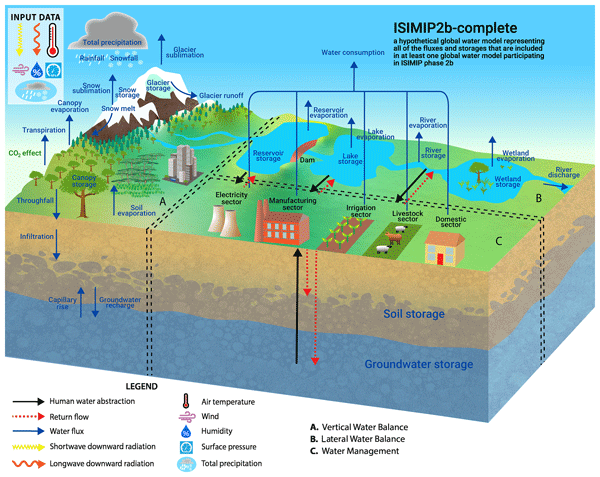
Global water models contribute to the evaluation of important natural and societal issues but are – as all models – simplified representation of reality. So, there are many ways to calculate the water fluxes and storages. This paper presents a visualization of 16 global water models using a standardized visualization and the pathway towards this common understanding. Next to academic education purposes, we envisage that these diagrams will help researchers, model developers, and data users.
Xinyang Fan, Florentin Hofmeister, Bettina Schaefli, and Gabriele Chiogna
EGUsphere, https://doi.org/10.5194/egusphere-2025-1500, https://doi.org/10.5194/egusphere-2025-1500, 2025
Preprint archived
Short summary
Short summary
We adopt a fully-distributed, physics-based hydrological modeling approach, to understand streamflow variations and their interactions with groundwater in a high-elevation glaciated environment. We demonstrate opportunities and challenges of integrating point-scale groundwater observations into a distributed model. This study sheds new lights on surface-subsurface processes in high alpine environments and highlights the importance of improving subsurface representation in hydrological modeling.
Malve Heinz, Maria Eliza Turek, Bettina Schaefli, Andreas Keiser, and Annelie Holzkämper
Hydrol. Earth Syst. Sci., 29, 1807–1827, https://doi.org/10.5194/hess-29-1807-2025, https://doi.org/10.5194/hess-29-1807-2025, 2025
Short summary
Short summary
Potato farmers in Switzerland are facing drier conditions and water restrictions. We explored how improving soil health and planting early-maturing potato varieties might help them to adapt. Using a computer model, we simulated potato yields and irrigation water needs under water scarcity. Our results show that earlier-maturing potato varieties reduce the reliance on irrigation but result in lower yields. However, improving soil health can significantly reduce yield losses.
Anne-Laure Argentin, Pascal Horton, Bettina Schaefli, Jamal Shokory, Felix Pitscheider, Leona Repnik, Mattia Gianini, Simone Bizzi, Stuart N. Lane, and Francesco Comiti
Hydrol. Earth Syst. Sci., 29, 1725–1748, https://doi.org/10.5194/hess-29-1725-2025, https://doi.org/10.5194/hess-29-1725-2025, 2025
Short summary
Short summary
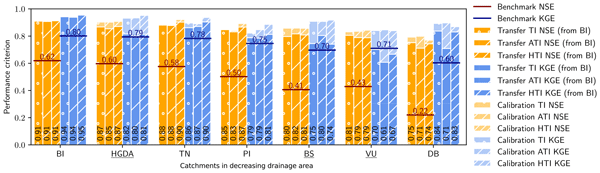
In this article, we show that by taking the optimal parameters calibrated with a semi-lumped model for the discharge at a catchment's outlet, we can accurately simulate runoff at various points within the study area, including three nested and three neighboring catchments. In addition, we demonstrate that employing more intricate melt models, which better represent physical processes, enhances the transfer of parameters in the simulation, until we observe overparameterization.
Masooma Batool, Fanny J. Sarrazin, and Rohini Kumar
Earth Syst. Sci. Data, 17, 881–916, https://doi.org/10.5194/essd-17-881-2025, https://doi.org/10.5194/essd-17-881-2025, 2025
Short summary
Short summary
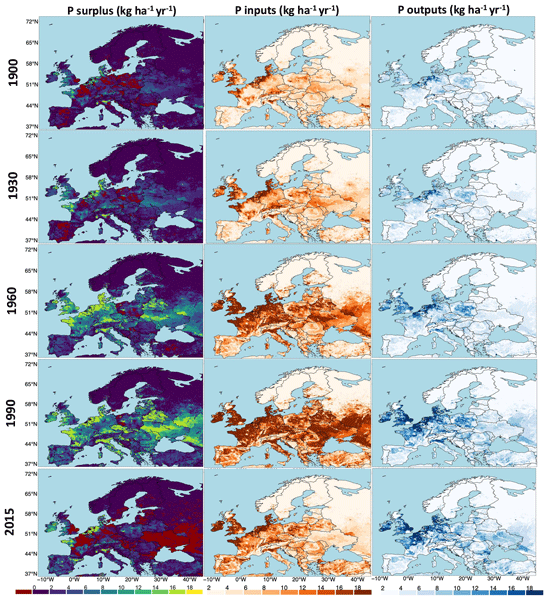
Our paper presents a reconstruction and analysis of the gridded P surplus in European landscapes from 1850 to 2019 at a 5 arcmin resolution. By utilizing 48 different estimates, we account for uncertainties in major components of the P surplus. Our findings highlight substantial historical changes, with the total P surplus in the EU 27 tripling over 170 years. Our dataset enables flexible aggregation at various spatial scales, providing critical insights for land and water management strategies.
Tom Müller, Mauro Fischer, Stuart N. Lane, and Bettina Schaefli
The Cryosphere, 19, 423–458, https://doi.org/10.5194/tc-19-423-2025, https://doi.org/10.5194/tc-19-423-2025, 2025
Short summary
Short summary
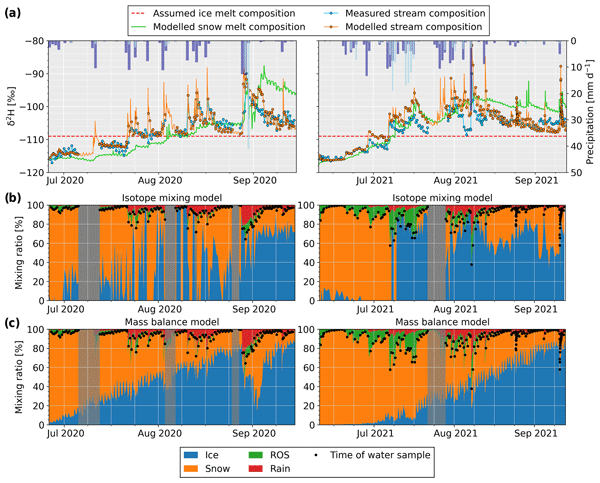
Based on extensive field observations in a highly glacierized catchment in the Swiss Alps, we develop a combined isotopic and glacio-hydrological model. We show that water stable isotopes may help to better constrain model parameters, especially those linked to water transfer. However, we highlight that separating snow and ice melt for temperate glaciers based on isotope mixing models alone is not advised and should only be considered if their isotopic signatures have clearly different values.
Eshrat Fatima, Rohini Kumar, Sabine Attinger, Maren Kaluza, Oldrich Rakovec, Corinna Rebmann, Rafael Rosolem, Sascha E. Oswald, Luis Samaniego, Steffen Zacharias, and Martin Schrön
Hydrol. Earth Syst. Sci., 28, 5419–5441, https://doi.org/10.5194/hess-28-5419-2024, https://doi.org/10.5194/hess-28-5419-2024, 2024
Short summary
Short summary
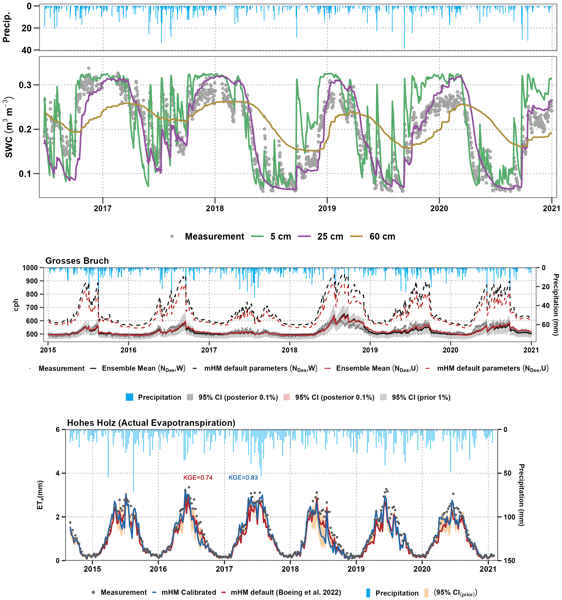
This study establishes a framework to incorporate cosmic-ray neutron measurements into the mesoscale Hydrological Model (mHM). We evaluate different approaches to estimate neutron counts within the mHM using the Desilets equation, with uniformly and non-uniformly weighted average soil moisture, and the physically based code COSMIC. The data improved not only soil moisture simulations but also the parameterisation of evapotranspiration in the model.
Fanny J. Sarrazin, Sabine Attinger, and Rohini Kumar
Earth Syst. Sci. Data, 16, 4673–4708, https://doi.org/10.5194/essd-16-4673-2024, https://doi.org/10.5194/essd-16-4673-2024, 2024
Short summary
Short summary
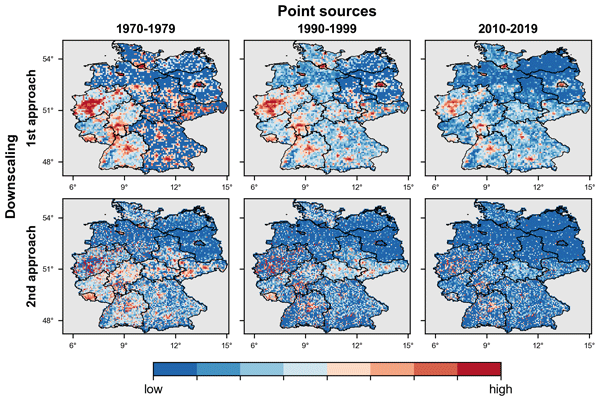
Nitrogen (N) and phosphorus (P) contamination of water bodies is a long-term issue due to the long history of N and P inputs to the environment and their persistence. Here, we introduce a long-term and high-resolution dataset of N and P inputs from wastewater (point sources) for Germany, combining data from different sources and conceptual understanding. We also account for uncertainties in modelling choices, thus facilitating robust long-term and large-scale water quality studies.
Moctar Dembélé, Mathieu Vrac, Natalie Ceperley, Sander J. Zwart, Josh Larsen, Simon J. Dadson, Grégoire Mariéthoz, and Bettina Schaefli
Proc. IAHS, 385, 121–127, https://doi.org/10.5194/piahs-385-121-2024, https://doi.org/10.5194/piahs-385-121-2024, 2024
Short summary
Short summary
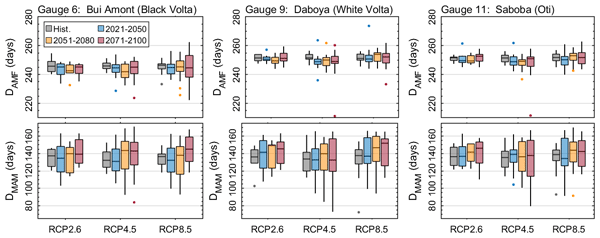
This study assesses the impact of climate change on the timing, seasonality and magnitude of mean annual minimum (MAM) flows and annual maximum flows (AMF) in the Volta River basin (VRB). Several climate change projection data are use to simulate river flow under multiple greenhouse gas emission scenarios. Future projections show that AMF could increase with various magnitude but negligible shift in time across the VRB, while MAM could decrease with up to 14 days of delay in occurrence.
Tom Müller, Matteo Roncoroni, Davide Mancini, Stuart N. Lane, and Bettina Schaefli
Hydrol. Earth Syst. Sci., 28, 735–759, https://doi.org/10.5194/hess-28-735-2024, https://doi.org/10.5194/hess-28-735-2024, 2024
Short summary
Short summary
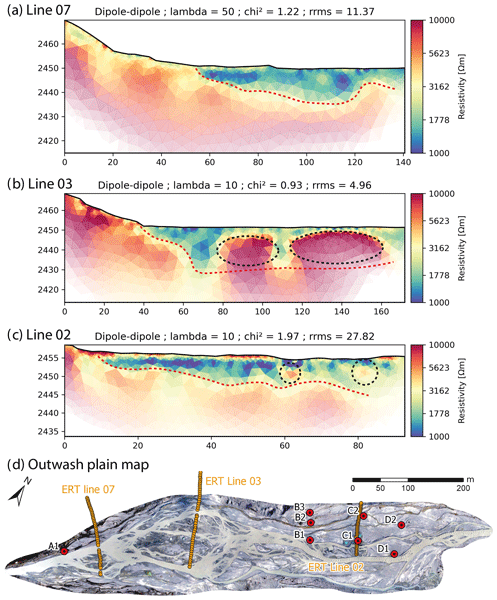
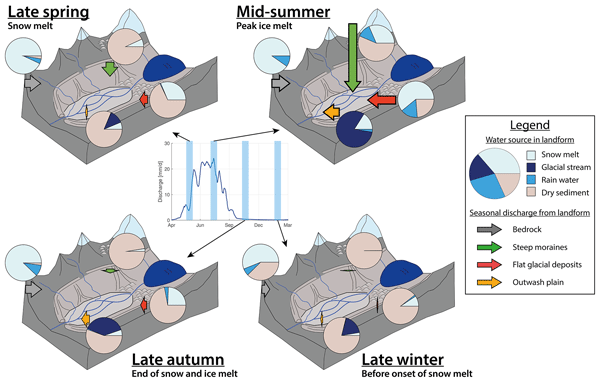
We investigate the role of a newly formed floodplain in an alpine glaciated catchment to store and release water. Based on field measurements, we built a numerical model to simulate the water fluxes and show that recharge occurs mainly due to the ice-melt-fed river. We identify three future floodplains, which could emerge from glacier retreat, and show that their combined storage leads to some additional groundwater storage but contributes little additional baseflow for the downstream river.
Marvin Höge, Martina Kauzlaric, Rosi Siber, Ursula Schönenberger, Pascal Horton, Jan Schwanbeck, Marius Günter Floriancic, Daniel Viviroli, Sibylle Wilhelm, Anna E. Sikorska-Senoner, Nans Addor, Manuela Brunner, Sandra Pool, Massimiliano Zappa, and Fabrizio Fenicia
Earth Syst. Sci. Data, 15, 5755–5784, https://doi.org/10.5194/essd-15-5755-2023, https://doi.org/10.5194/essd-15-5755-2023, 2023
Short summary
Short summary
CAMELS-CH is an open large-sample hydro-meteorological data set that covers 331 catchments in hydrologic Switzerland from 1 January 1981 to 31 December 2020. It comprises (a) daily data of river discharge and water level as well as meteorologic variables like precipitation and temperature; (b) yearly glacier and land cover data; (c) static attributes of, e.g, topography or human impact; and (d) catchment delineations. CAMELS-CH enables water and climate research and modeling at catchment level.
Maria Eliza Turek, Attila Nemes, and Annelie Holzkämper
SOIL, 9, 545–560, https://doi.org/10.5194/soil-9-545-2023, https://doi.org/10.5194/soil-9-545-2023, 2023
Short summary
Short summary
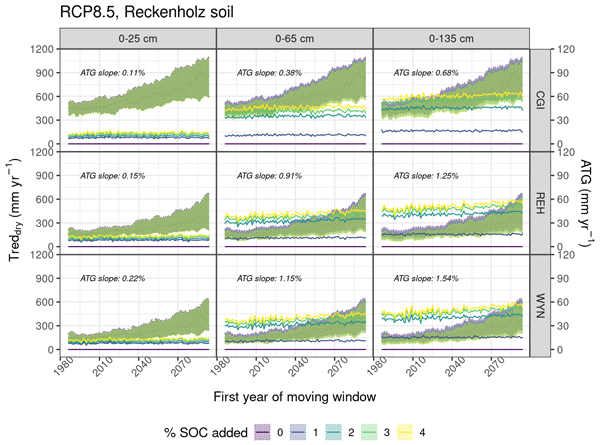
In this study, we systematically evaluated prospective crop transpiration benefits of sequestering soil organic carbon (SOC) under current and future climatic conditions based on the model SWAP. We found that adding at least 2% SOC down to at least 65 cm depth could increase transpiration annually by almost 40 mm, which can play a role in mitigating drought impacts in rain-fed cropping. Beyond this threshold, additional crop transpiration benefits of sequestering SOC are only marginal.
Arianna Borriero, Rohini Kumar, Tam V. Nguyen, Jan H. Fleckenstein, and Stefanie R. Lutz
Hydrol. Earth Syst. Sci., 27, 2989–3004, https://doi.org/10.5194/hess-27-2989-2023, https://doi.org/10.5194/hess-27-2989-2023, 2023
Short summary
Short summary
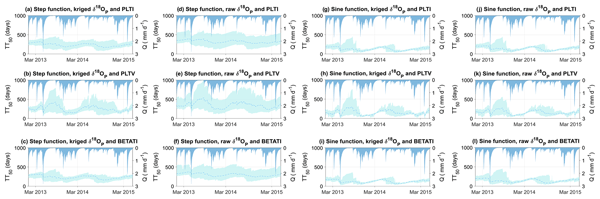
We analyzed the uncertainty of the water transit time distribution (TTD) arising from model input (interpolated tracer data) and structure (StorAge Selection, SAS, functions). We found that uncertainty was mainly associated with temporal interpolation, choice of SAS function, nonspatial interpolation, and low-flow conditions. It is important to characterize the specific uncertainty sources and their combined effects on TTD, as this has relevant implications for both water quantity and quality.
Adrià Fontrodona-Bach, Bettina Schaefli, Ross Woods, Adriaan J. Teuling, and Joshua R. Larsen
Earth Syst. Sci. Data, 15, 2577–2599, https://doi.org/10.5194/essd-15-2577-2023, https://doi.org/10.5194/essd-15-2577-2023, 2023
Short summary
Short summary
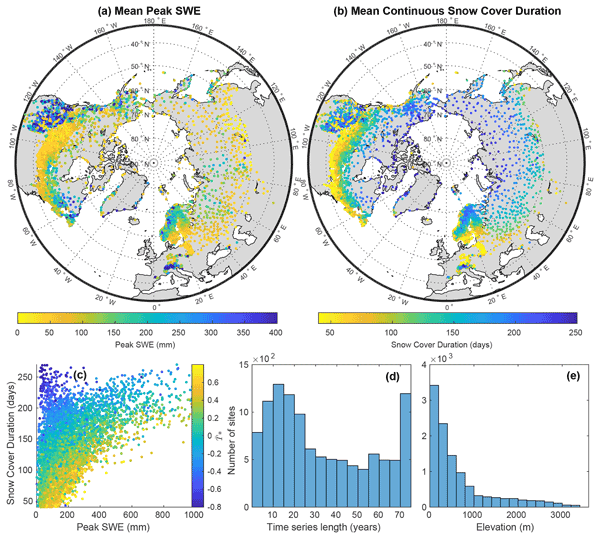
We provide a dataset of snow water equivalent, the depth of liquid water that results from melting a given depth of snow. The dataset contains 11 071 sites over the Northern Hemisphere, spans the period 1950–2022, and is based on daily observations of snow depth on the ground and a model. The dataset fills a lack of accessible historical ground snow data, and it can be used for a variety of applications such as the impact of climate change on global and regional snow and water resources.
Alessio Gentile, Davide Canone, Natalie Ceperley, Davide Gisolo, Maurizio Previati, Giulia Zuecco, Bettina Schaefli, and Stefano Ferraris
Hydrol. Earth Syst. Sci., 27, 2301–2323, https://doi.org/10.5194/hess-27-2301-2023, https://doi.org/10.5194/hess-27-2301-2023, 2023
Short summary
Short summary
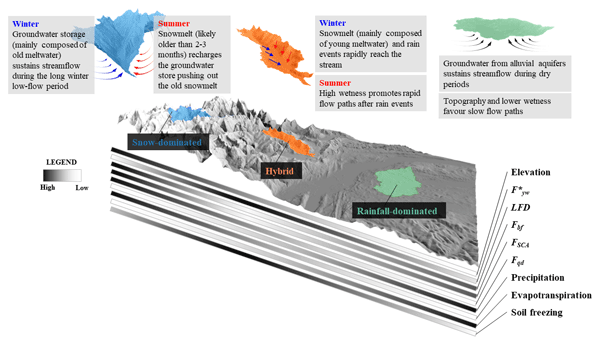
What drives young water fraction, F*yw (i.e., the fraction of water in streamflow younger than 2–3 months), variations with elevation? Why is F*yw counterintuitively low in high-elevation catchments, in spite of steeper topography? In this paper, we present a perceptual model explaining how the longer low-flow duration at high elevations, driven by the persistence of winter snowpacks, increases the proportion of stored (old) water contributing to the stream, thus reducing F*yw.
Anthony Michelon, Natalie Ceperley, Harsh Beria, Joshua Larsen, Torsten Vennemann, and Bettina Schaefli
Hydrol. Earth Syst. Sci., 27, 1403–1430, https://doi.org/10.5194/hess-27-1403-2023, https://doi.org/10.5194/hess-27-1403-2023, 2023
Short summary
Short summary
Streamflow generation processes in high-elevation catchments are largely influenced by snow accumulation and melt. For this work, we collected and analyzed more than 2800 water samples (temperature, electric conductivity, and stable isotopes of water) to characterize the hydrological processes in such a high Alpine environment. Our results underline the critical role of subsurface flow during all melt periods and the presence of snowmelt even during the winter periods.
Carolin Winter, Tam V. Nguyen, Andreas Musolff, Stefanie R. Lutz, Michael Rode, Rohini Kumar, and Jan H. Fleckenstein
Hydrol. Earth Syst. Sci., 27, 303–318, https://doi.org/10.5194/hess-27-303-2023, https://doi.org/10.5194/hess-27-303-2023, 2023
Short summary
Short summary
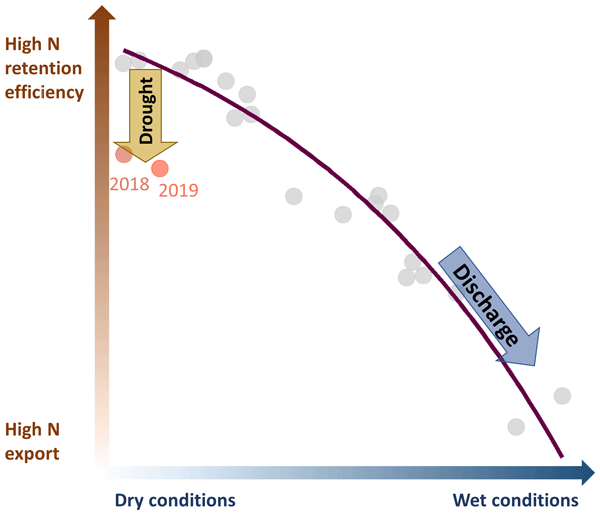
The increasing frequency of severe and prolonged droughts threatens our freshwater resources. While we understand drought impacts on water quantity, its effects on water quality remain largely unknown. Here, we studied the impact of the unprecedented 2018–2019 drought in Central Europe on nitrate export in a heterogeneous mesoscale catchment in Germany. We show that severe drought can reduce a catchment's capacity to retain nitrogen, intensifying the internal pollution and export of nitrate.
Tom Müller, Stuart N. Lane, and Bettina Schaefli
Hydrol. Earth Syst. Sci., 26, 6029–6054, https://doi.org/10.5194/hess-26-6029-2022, https://doi.org/10.5194/hess-26-6029-2022, 2022
Short summary
Short summary
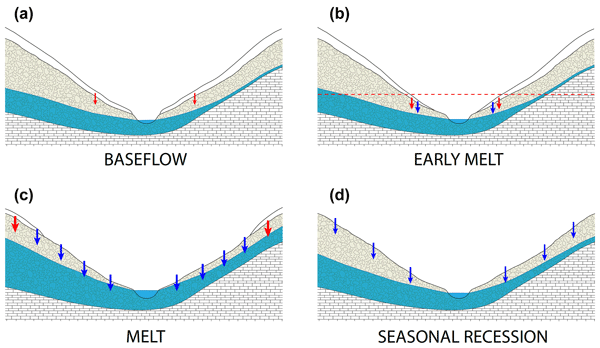
This research provides a comprehensive analysis of groundwater storage in Alpine glacier forefields, a zone rapidly evolving with glacier retreat. Based on data analysis of a case study, it provides a simple perceptual model showing where and how groundwater is stored and released in a high Alpine environment. It especially points out the presence of groundwater storages in both fluvial and bedrock aquifers, which may become more important with future glacier retreat.
Friedrich Boeing, Oldrich Rakovec, Rohini Kumar, Luis Samaniego, Martin Schrön, Anke Hildebrandt, Corinna Rebmann, Stephan Thober, Sebastian Müller, Steffen Zacharias, Heye Bogena, Katrin Schneider, Ralf Kiese, Sabine Attinger, and Andreas Marx
Hydrol. Earth Syst. Sci., 26, 5137–5161, https://doi.org/10.5194/hess-26-5137-2022, https://doi.org/10.5194/hess-26-5137-2022, 2022
Short summary
Short summary
In this paper, we deliver an evaluation of the second generation operational German drought monitor (https://www.ufz.de/duerremonitor) with a state-of-the-art compilation of observed soil moisture data from 40 locations and four different measurement methods in Germany. We show that the expressed stakeholder needs for higher resolution drought information at the one-kilometer scale can be met and that the agreement of simulated and observed soil moisture dynamics can be moderately improved.
Bahar Bahrami, Anke Hildebrandt, Stephan Thober, Corinna Rebmann, Rico Fischer, Luis Samaniego, Oldrich Rakovec, and Rohini Kumar
Geosci. Model Dev., 15, 6957–6984, https://doi.org/10.5194/gmd-15-6957-2022, https://doi.org/10.5194/gmd-15-6957-2022, 2022
Short summary
Short summary
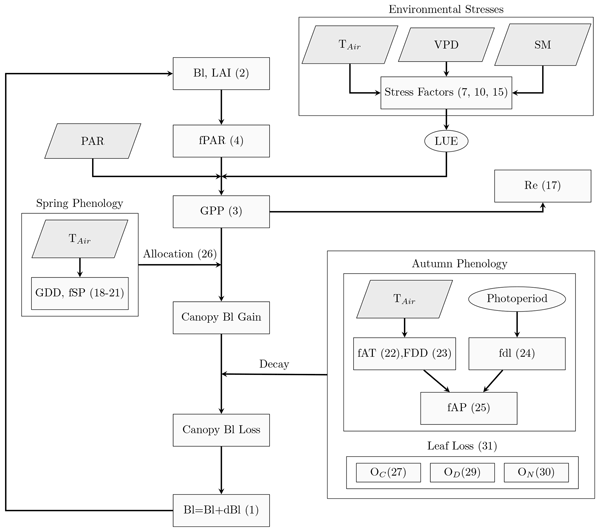
Leaf area index (LAI) and gross primary productivity (GPP) are crucial components to carbon cycle, and are closely linked to water cycle in many ways. We develop a Parsimonious Canopy Model (PCM) to simulate GPP and LAI at stand scale, and show its applicability over a diverse range of deciduous broad-leaved forest biomes. With its modular structure, the PCM is able to adapt with existing data requirements, and run in either a stand-alone mode or as an interface linked to hydrologic models.
Sadaf Nasreen, Markéta Součková, Mijael Rodrigo Vargas Godoy, Ujjwal Singh, Yannis Markonis, Rohini Kumar, Oldrich Rakovec, and Martin Hanel
Earth Syst. Sci. Data, 14, 4035–4056, https://doi.org/10.5194/essd-14-4035-2022, https://doi.org/10.5194/essd-14-4035-2022, 2022
Short summary
Short summary
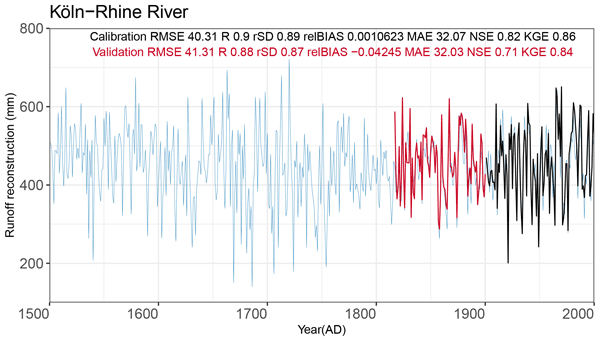
This article presents a 500-year reconstructed annual runoff dataset for several European catchments. Several data-driven and hydrological models were used to derive the runoff series using reconstructed precipitation and temperature and a set of proxy data. The simulated runoff was validated using independent observed runoff data and documentary evidence. The validation revealed a good fit between the observed and reconstructed series for 14 catchments, which are available for further analysis.
Pia Ebeling, Rohini Kumar, Stefanie R. Lutz, Tam Nguyen, Fanny Sarrazin, Michael Weber, Olaf Büttner, Sabine Attinger, and Andreas Musolff
Earth Syst. Sci. Data, 14, 3715–3741, https://doi.org/10.5194/essd-14-3715-2022, https://doi.org/10.5194/essd-14-3715-2022, 2022
Short summary
Short summary
Environmental data are critical for understanding and managing ecosystems, including the mitigation of water quality degradation. To increase data availability, we present the first large-sample water quality data set (QUADICA) of riverine macronutrient concentrations combined with water quantity, meteorological, and nutrient forcing data as well as catchment attributes. QUADICA covers 1386 German catchments to facilitate large-sample data-driven and modeling water quality assessments.
Feiko Bernard van Zadelhoff, Adel Albaba, Denis Cohen, Chris Phillips, Bettina Schaefli, Luuk Dorren, and Massimiliano Schwarz
Nat. Hazards Earth Syst. Sci., 22, 2611–2635, https://doi.org/10.5194/nhess-22-2611-2022, https://doi.org/10.5194/nhess-22-2611-2022, 2022
Short summary
Short summary
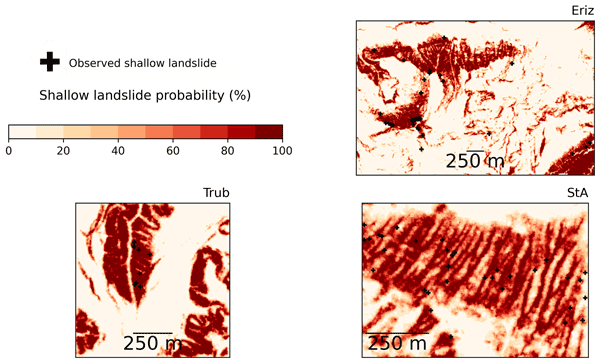
Shallow landslides pose a risk to people, property and infrastructure. Assessment of this hazard and the impact of protective measures can reduce losses. We developed a model (SlideforMAP) that can assess the shallow-landslide risk on a regional scale for specific rainfall events. Trees are an effective and cheap protective measure on a regional scale. Our model can assess their hazard reduction down to the individual tree level.
Alexandre Tuel, Bettina Schaefli, Jakob Zscheischler, and Olivia Martius
Hydrol. Earth Syst. Sci., 26, 2649–2669, https://doi.org/10.5194/hess-26-2649-2022, https://doi.org/10.5194/hess-26-2649-2022, 2022
Short summary
Short summary
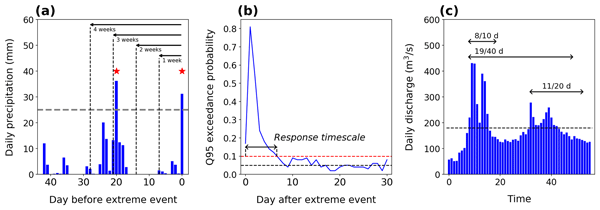
River discharge is strongly influenced by the temporal structure of precipitation. Here, we show how extreme precipitation events that occur a few days or weeks after a previous event have a larger effect on river discharge than events occurring in isolation. Windows of 2 weeks or less between events have the most impact. Similarly, periods of persistent high discharge tend to be associated with the occurrence of several extreme precipitation events in close succession.
Stefan Brönnimann, Peter Stucki, Jörg Franke, Veronika Valler, Yuri Brugnara, Ralf Hand, Laura C. Slivinski, Gilbert P. Compo, Prashant D. Sardeshmukh, Michel Lang, and Bettina Schaefli
Clim. Past, 18, 919–933, https://doi.org/10.5194/cp-18-919-2022, https://doi.org/10.5194/cp-18-919-2022, 2022
Short summary
Short summary
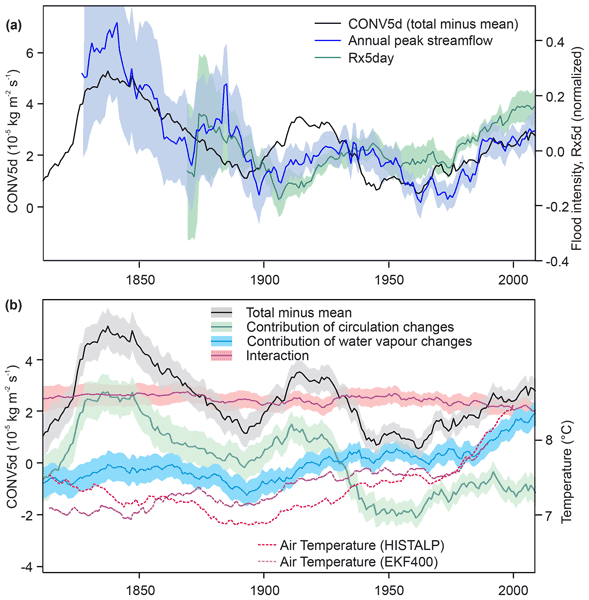
Floods in Europe vary on time scales of several decades. Flood-rich and flood-poor periods alternate. Recently floods have again become more frequent. Long time series of peak stream flow, precipitation, and atmospheric variables reveal that until around 1980, these changes were mostly due to changes in atmospheric circulation. However, in recent decades the role of increasing atmospheric moisture due to climate warming has become more important and is now the main driver of flood changes.
Moctar Dembélé, Mathieu Vrac, Natalie Ceperley, Sander J. Zwart, Josh Larsen, Simon J. Dadson, Grégoire Mariéthoz, and Bettina Schaefli
Hydrol. Earth Syst. Sci., 26, 1481–1506, https://doi.org/10.5194/hess-26-1481-2022, https://doi.org/10.5194/hess-26-1481-2022, 2022
Short summary
Short summary
Climate change impacts on water resources in the Volta River basin are investigated under various global warming scenarios. Results reveal contrasting changes in future hydrological processes and water availability, depending on greenhouse gas emission scenarios, with implications for floods and drought occurrence over the 21st century. These findings provide insights for the elaboration of regional adaptation and mitigation strategies for climate change.
Adrien Michel, Bettina Schaefli, Nander Wever, Harry Zekollari, Michael Lehning, and Hendrik Huwald
Hydrol. Earth Syst. Sci., 26, 1063–1087, https://doi.org/10.5194/hess-26-1063-2022, https://doi.org/10.5194/hess-26-1063-2022, 2022
Short summary
Short summary
This study presents an extensive study of climate change impacts on river temperature in Switzerland. Results show that, even for low-emission scenarios, water temperature increase will lead to adverse effects for both ecosystems and socio-economic sectors throughout the 21st century. For high-emission scenarios, the effect will worsen. This study also shows that water seasonal warming will be different between the Alpine regions and the lowlands. Finally, efficiency of models is assessed.
Robert Schweppe, Stephan Thober, Sebastian Müller, Matthias Kelbling, Rohini Kumar, Sabine Attinger, and Luis Samaniego
Geosci. Model Dev., 15, 859–882, https://doi.org/10.5194/gmd-15-859-2022, https://doi.org/10.5194/gmd-15-859-2022, 2022
Short summary
Short summary
The recently released multiscale parameter regionalization (MPR) tool enables
environmental modelers to efficiently use extensive datasets for model setups.
It flexibly ingests the datasets using user-defined data–parameter relationships
and rescales parameter fields to given model resolutions. Modern
land surface models especially benefit from MPR through increased transparency and
flexibility in modeling decisions. Thus, MPR empowers more sound and robust
simulations of the Earth system.
Joni Dehaspe, Fanny Sarrazin, Rohini Kumar, Jan H. Fleckenstein, and Andreas Musolff
Hydrol. Earth Syst. Sci., 25, 6437–6463, https://doi.org/10.5194/hess-25-6437-2021, https://doi.org/10.5194/hess-25-6437-2021, 2021
Short summary
Short summary
Increased nitrate concentrations in surface waters can compromise river ecosystem health. As riverine nitrate uptake is hard to measure, we explore how low-frequency nitrate concentration and discharge observations (that are widely available) can help to identify (in)efficient uptake in river networks. We find that channel geometry and water velocity rather than the biological uptake capacity dominate the nitrate-discharge pattern at the outlet. The former can be used to predict uptake.
Cited articles
Abdallah, A. M., Jat, H. S., Choudhary, M., Abdelaty, E. F., Sharma, P. C., and Jat, M. L.: Conservation Agriculture Effects on Soil Water Holding Capacity and Water-Saving Varied with Management Practices and Agroecological Conditions: A Review, Agronomy, 11, https://doi.org/10.3390/agronomy11091681, 2021. a, b
Antolini, F., Tate, E., Dalzell, B., Young, N., Johnson, K., and Hawthorne, P. L.: Flood Risk Reduction from Agricultural Best Management Practices, JAWRA J. Am. Water Resour. As., 56, 161–179, https://doi.org/10.1111/1752-1688.12812, 2019. a
Bai, X., Huang, Y., Ren, W., Coyne, M., Jacinthe, P. A., Tao, B., Hui, D., Yang, J., and Matocha, C.: Responses of soil carbon sequestration to climate-smart agriculture practices: A meta-analysis, Glob. Change Biol., 25, 2591–2606, https://doi.org/10.1111/gcb.14658, 2019. a
Bartens, A., Shehu, B., and Haberlandt, U.: Flood frequency analysis using mean daily flows vs. instantaneous peak flows, Hydrol. Earth Syst. Sci., 28, 1687–1709, https://doi.org/10.5194/hess-28-1687-2024, 2024. a
Bartos, M.: pysheds: simple and fast watershed delineation in python, Zenodo [code], https://doi.org/10.5281/zenodo.3822494, 2020. a
Baumgartner, T., Heinz, M., Turek, M., Erismann, G., Kohling, M., Aasen, H., and Holzkämper, A.: SwissIrrigationInfo, Report, Bundesamtes für Umwelt BAFU, https://doi.org/10.34776/as212g, 2025. a
Begill, N., Don, A., and Poeplau, C.: No detectable upper limit of mineral-associated organic carbon in temperate agricultural soils, Glob. Change Biol., 29, 4662–4669, https://doi.org/10.1111/gcb.16804, 2023. a
Bergström, S.: The HBV model, in: Computer Models of Watershed Hydrology, edited by: Singh, V. P., Highlands Ranch, Colorado, Chap. 13, 443–476, ISBN 9780918334916, 0918334918, 1995. a
Blanco-Canqui, H., Stone, L. R., Schlegel, A. J., Lyon, D. J., Vigil, M. F., Mikha, M. M., Stahlman, P. W., and Rice, C. W.: No‐till Induced Increase in Organic Carbon Reduces Maximum Bulk Density of Soils, Soil Sci. Soc. Am. J., 73, 1871–1879, https://doi.org/10.2136/sssaj2008.0353, 2009. a, b, c, d, e
BLW, BLV and BAFU: Klimastrategie Landwirtschaft und Ernährung 2050 Verminderung von Treibhausgasemissionen und Anpassung an die Folgen des Klimawandels für ein nachhaltiges Schweizer Ernährungssystem 1. Teil: Grundsätze, Ziele und Stossrichtungen, Report, Bundesamt für Landwirtschaft BLW, Bundesamt für Lebensmittelsicherheit und Veterinärwesen BLV, Bundesamt für Umwelt BAFU, https://www.blw.admin.ch/de/klimastrategie-landwirtschaft-und-ernaehrung-2050 (last access: 10 May 2026), 2026. a, b
Boeing, F., Attinger, S., Wagener, T., Rakovec, O., Samaniego, L., Thober, S., Schlaak, J., Müller, S., Teichmann, C., Kumar, R., and Marx, A.: Spatially and Seasonally Differentiated Response of Soil Moisture Droughts to Climate Change in Germany, Earth's Future, 13, https://doi.org/10.1029/2024ef005495, 2025. a
Bormann, H., Breuer, L., Gräff, T., and Huisman, J. A.: Analysing the effects of soil properties changes associated with land use changes on the simulated water balance: A comparison of three hydrological catchment models for scenario analysis, Ecol. Model., 209, 29–40, https://doi.org/10.1016/j.ecolmodel.2007.07.004, 2007. a, b, c
Bragazza, L., Fontana, M., Johannes, A., Koestel, J., Charles, R., Büchi, L., Mendoza, O., and Guillaume, T.: Effects of tillage on winter wheat productivity and soil fertility: Results from 13 years of no-till in western Switzerland, Eur. J. Agron., 170, https://doi.org/10.1016/j.eja.2025.127722, 2025. a
Brunner, M. I., Bjornsen Gurung, A., Zappa, M., Zekollari, H., Farinotti, D., and Stahli, M.: Present and future water scarcity in Switzerland: Potential for alleviation through reservoirs and lakes, Sci. Total Environ., 666, 1033–1047, https://doi.org/10.1016/j.scitotenv.2019.02.169, 2019. a, b
Button, E. S., Pett-Ridge, J., Murphy, D. V., Kuzyakov, Y., Chadwick, D. R., and Jones, D. L.: Deep-C storage: Biological, chemical and physical strategies to enhance carbon stocks in agricultural subsoils, Soil Biol. Biochem., 170, https://doi.org/10.1016/j.soilbio.2022.108697, 2022. a
Canton of Bern: Discharge of the river Bibere at gauging station Kerzers 2007 to 2018, https://www.bvd.be.ch/de/start/themen/wasser/hydrologische-daten/datenbezug/datenkiosk-oberflaechengewaesser.html (last access: 10 May 2026), 2025. a
Canton of Vaud: Discharge of river Chandon at gauging stations Faoug Route Salavaux and Faoug Seuil 1993 to 2020, https://www.vhv.ch/xt_vh_718536/station_view.php?measurement_set_id=45&cfg=0 (last access: 10 May 2026), 2025a. a
Canton of Vaud: Dischargeof river Arbogne at gauging station Avenches 1993 to 2022, https://www.vhv.ch/xt_vh_718536/station_view.php?measurement_set_id=16&cfg=0 (last access: 10 May 2026), 2025b. a
Canton of Vaud: Discharge of river Flon at gauging station Oron-la-Ville 1993 to 2022, https://www.vhv.ch/xt_vh_718536/station_view.php?measurement_set_id=65&cfg=0 (last access: 10 May 2026), 2025c. a
Chalise, K. S., Singh, S., Wegner, B. R., Kumar, S., Pérez‐Gutiérrez, J. D., Osborne, S. L., Nleya, T., Guzman, J., and Rohila, J. S.: Cover Crops and Returning Residue Impact on Soil Organic Carbon, Bulk Density, Penetration Resistance, Water Retention, Infiltration, and Soybean Yield, Agron. J., 111, 99–108, https://doi.org/10.2134/agronj2018.03.0213, 2019. a
Collentine, D. and Futter, M. N.: Realising the potential of natural water retention measures in catchment flood management: trade‐offs and matching interests, J. Flood Risk Manag., 11, 76–84, https://doi.org/10.1111/jfr3.12269, 2018. a
Cosby, B. J., Hornberger, G., Clapp, R., and Ginn, T.: A Statistical Exploration of the Relationships of Soil Moisture, Water Resour. Res., 20, 683–690, 1984. a
Crowther, T. W., Todd-Brown, K. E., Rowe, C. W., Wieder, W. R., Carey, J. C., Machmuller, M. B., Snoek, B. L., Fang, S., Zhou, G., Allison, S. D., Blair, J. M., Bridgham, S. D., Burton, A. J., Carrillo, Y., Reich, P. B., Clark, J. S., Classen, A. T., Dijkstra, F. A., Elberling, B., Emmett, B. A., Estiarte, M., Frey, S. D., Guo, J., Harte, J., Jiang, L., Johnson, B. R., Kroel-Dulay, G., Larsen, K. S., Laudon, H., Lavallee, J. M., Luo, Y., Lupascu, M., Ma, L. N., Marhan, S., Michelsen, A., Mohan, J., Niu, S., Pendall, E., Penuelas, J., Pfeifer-Meister, L., Poll, C., Reinsch, S., Reynolds, L. L., Schmidt, I. K., Sistla, S., Sokol, N. W., Templer, P. H., Treseder, K. K., Welker, J. M., and Bradford, M. A.: Quantifying global soil carbon losses in response to warming, Nature, 540, 104–108, https://doi.org/10.1038/nature20150, 2016. a
Córdova, S. C., Kravchenko, A. N., Miesel, J. R., and Robertson, G. P.: Soil carbon change in intensive agriculture after 25 years of conservation management, Geoderma, 453, https://doi.org/10.1016/j.geoderma.2024.117133, 2025. a
Demirci, U. and Demirel, M. C.: Effect of Dynamic PET Scaling with LAI and Aspect on the Spatial Performance of a Distributed Hydrologic Model, Agronomy, 13, https://doi.org/10.3390/agronomy13020534, 2023. a
Demirel, M. C., Mai, J., Mendiguren, G., Koch, J., Samaniego, L., and Stisen, S.: Combining satellite data and appropriate objective functions for improved spatial pattern performance of a distributed hydrologic model, Hydrol. Earth Syst. Sci., 22, 1299–1315, https://doi.org/10.5194/hess-22-1299-2018, 2018. a, b, c, d, e, f
Deng, C., Zhang, G., Liu, Y., Nie, X., Li, Z., Liu, J., and Zhu, D.: Advantages and disadvantages of terracing: A comprehensive review, International Soil and Water Conservation Research, 9, 344–359, https://doi.org/10.1016/j.iswcr.2021.03.002, 2021. a, b
Der Bundesrat: Kohlenstoffsequestrierung in Böden, Report, https://www.admin.ch/de/nsb?id=94002 (last access: 10 May 2026), 2023. a
De Vos, B., Van Meirvenne, M., Quataert, P., Deckers, J., and Muys, B.: Predictive Quality of Pedotransfer Functions for Estimating Bulk Density of Forest Soils, Soil Sci. Soc. Am. J., 69, 500–510, https://doi.org/10.2136/sssaj2005.0500, 2005. a
Dietz, K. J., Zorb, C., and Geilfus, C. M.: Drought and crop yield, Plant Biol.-Stuttg., 23, 881–893, https://doi.org/10.1111/plb.13304, 2021. a
Fatichi, S., Ivanov, V. Y., and Caporali, E.: A mechanistic ecohydrological model to investigate complex interactions in cold and warm water‐controlled environments: 1. Theoretical framework and plot‐scale analysis, J. Adv. Model. Earth Sy., 4, https://doi.org/10.1029/2011ms000086, 2012. a, b
Fatichi, S., Zeeman, M. J., Fuhrer, J., and Burlando, P.: Ecohydrological effects of management on subalpine grasslands: From local to catchment scale, Water Resour. Res., 50, 148–164, https://doi.org/10.1002/2013wr014535, 2014. a, b, c
Feddes, R. A., Kowalik, P., Kolinska-Malinka, K., and Zaradny, H.: Simulation of field water uptake by plants using a soil water dependent root extraction function, J. Hydrol., 31, 13–26, https://doi.org/10.1016/0022-1694(76)90017-2, 1976. a
Federal Office for the Environment (FOEN): Hydrogeological sketch, https://www.bafu.admin.ch/en/publication?id=w3B6w4VEgLPM (last access: 10 May 2026), 2009. a
Federal Office for the Environment (FOEN): Discharge hourly mean Broye (station 2034) 1974–2022, https://www.bafu.admin.ch/de/datenservice-hydrologie-fuer-fliessgewaesser-und-seen (last access: 10 May 2026), 2023. a
Feifel, M., Durner, W., Hohenbrink, T. L., and Peters, A.: Effects of improved water retention by increased soil organic matter on the water balance of arable soils: A numerical analysis, Vadose Zone J., 23, https://doi.org/10.1002/vzj2.20302, 2023. a, b, c
Feigl, M., Thober, S., Schweppe, R., Herrnegger, M., Samaniego, L., and Schulz, K.: Automatic Regionalization of Model Parameters for Hydrological Models, Water Resour. Res., 58, e2022WR031966, https://doi.org/10.1029/2022WR031966, 2022. a
Fry, E. L., Evans, A. L., Sturrock, C. J., Bullock, J. M., and Bardgett, R. D.: Root architecture governs plasticity in response to drought, Plant Soil, 433, 189–200, https://doi.org/10.1007/s11104-018-3824-1, 2018. a
García-Palacios, P., Crowther, T. W., Dacal, M., Hartley, I. P., Reinsch, S., Rinnan, R., Rousk, J., van den Hoogen, J., Ye, J.-S., and Bradford, M. A.: Evidence for large microbial-mediated losses of soil carbon under anthropogenic warming, Nature Reviews Earth & Environment, 2, 507–517, https://doi.org/10.1038/s43017-021-00178-4, 2021. a
Ghanem, K. Z., Hasham, M. M. A., El-Sheshtawy, A. A., El-Serafy, R. S., and Sheta, M. H.: Biochar Stimulated Actual Evapotranspiration and Wheat Productivity under Water Deficit Conditions in Sandy Soil Based on Non-Weighing Lysimeter, Plants-Basel, 11, https://doi.org/10.3390/plants11233346, 2022. a
Guillaume, T., Makowski, D., Libohova, Z., Elfouki, S., Fontana, M., Leifeld, J., Bragazza, L., and Sinaj, S.: Carbon storage in agricultural topsoils and subsoils is promoted by including temporary grasslands into the crop rotation, Geoderma, 422, https://doi.org/10.1016/j.geoderma.2022.115937, 2022. a, b
Gupta, H. V., Kling, H., Yilmaz, K. K., and Martinez, G. F.: Decomposition of the mean squared error and NSE performance criteria: Implications for improving hydrological modelling, J. Hydrol., 377, 80–91, https://doi.org/10.1016/j.jhydrol.2009.08.003, 2009. a
Heinz, M.: Precipitation input file aggregated from RhiresD and stationdata for the Broye catchment, Zenodo [data set], https://doi.org/10.5281/zenodo.17243147, 2025a. a
Heinz, M.: mHM_simulations: processing scripts for mHM application (v.1.1), Zenodo [code], https://doi.org/10.5281/zenodo.17515165, 2025b. a
Hou, M., Li, Y., Biswas, A., Chen, X., Xie, L., Liu, D., Li, L., Feng, H., Wu, S., Satoh, Y., Pulatov, A., and Siddique, K. H. M.: Concurrent drought threatens wheat and maize production and will widen crop yield gaps in the future, Agr. Syst., 220, https://doi.org/10.1016/j.agsy.2024.104056, 2024. a, b
Hudson, B. D.: Soil organic matter and available water capacity, J. Soil Water Conserv., 49, 189–194, https://doi.org/10.1080/00224561.1994.12456850, 1994. a, b
Jackson, R., Canadell, J., Ehleringer, J., Mooney, H., Sala, O., and Schulze, E.: A global analysis of root distributions for terrestrial biomes, Oecologia, 389–411, https://doi.org/10.1007/BF00333714, 1996. a, b
Jacquemoud, S., Verhoef, W., Baret, F., Bacour, C., Zarco-Tejada, P. J., Asner, G. P., François, C., and Ustin, S. L.: PROSPECT+SAIL models: A review of use for vegetation characterization, Remote Sens. Environ., 113, S56–S66, https://doi.org/10.1016/j.rse.2008.01.026, 2009. a
Jäger, N., Stange, C. F., Ludwig, B., and Flessa, H.: Emission rates of N2O and CO2 from soils with different organic matter content from three long-term fertilization experiments – a laboratory study, Biol. Fert. Soils, 47, 483–494, https://doi.org/10.1007/s00374-011-0553-5, 2011. a
Keel, S., Ammann, C., Bretscher, D., Gross, T., Guillaume, T., Huguenin-Elie, O., Moll-Mielewczik, J., Nemecek, T., Roesch, A., Volk, M., Wüst-Galley, C., and Leifeld, J.: Dauergrünlandböden der Schweiz: Quelle oder Senke von Kohlendioxid?, Agroscope Science, 189, https://doi.org/10.34776/as189g, 2024. a, b
Keel, S. G., Anken, T., Büchi, L., Chervet, A., Fliessbach, A., Flisch, R., Huguenin-Elie, O., Mäder, P., Mayer, J., Sinaj, S., Sturny, W., Wüst-Galley, C., Zihlmann, U., and Leifeld, J.: Loss of soil organic carbon in Swiss long-term agricultural experiments over a wide range of management practices, Agr. Ecosyst. Environ., 286, https://doi.org/10.1016/j.agee.2019.106654, 2019. a
Keller, T., Sandin, M., Colombi, T., Horn, R., and Or, D.: Historical increase in agricultural machinery weights enhanced soil stress levels and adversely affected soil functioning, Soil Till. Res., 194, https://doi.org/10.1016/j.still.2019.104293, 2019. a
Kojima, Y., Heitman, J. L., Sakai, M., Kato, C., and Horton, R.: Bulk density effects on soil hydrologic and thermal characteristics: A numerical investigation, Hydrol. Process., 32, 2203–2216, https://doi.org/10.1002/hyp.13152, 2018. a, b
Krois, J. and Schulte, A.: Modeling the Hydrological Response of Soil and Water Conservation Measures in the Ronquillo Watershed in the Northern Andes of Peru, German National Committee for the International Hydrological Programme (IHP) of UNESCO and the Hydrology and Water Resources Program (HWRP) of WMO, https://doi.org/10.5675/ICWRER_2013, 2012. a, b
Kumar, R., Samaniego, L., and Attinger, S.: The effects of spatial discretization and model parameterization on the prediction of extreme runoff characteristics, J. Hydrol., 392, 54–69, https://doi.org/10.1016/j.jhydrol.2010.07.047, 2010. a
Lal, R.: Soil Carbon Sequestration Impacts on Global Climate Change and Food Security, Science, 304, 1623–1627, https://doi.org/10.1126/science.1097396, 2004. a
Lal, R.: Intensive Agriculture and the Soil Carbon Pool, Journal of Crop Improvement, 27, 735–751, https://doi.org/10.1080/15427528.2013.845053, 2013. a
Lal, R.: Soil organic matter and water retention, Agron. J., 112, 3265–3277, https://doi.org/10.1002/agj2.20282, 2020. a, b, c
Lee, D.-H.: Comparing the inverse parameter estimation approach with pedo-transfer function method for estimating soil hydraulic conductivity, Geosci. J., 9, 267–276, 2005. a
Lehning, M., Völksch, I., Gustafsson, D., Nguyen, T. A., Stähli, M., and Zappa, M.: ALPINE3D: a detailed model of mountain surface processes and its application to snow hydrology, Hydrol. Process., 20, 2111–2128, https://doi.org/10.1002/hyp.6204, 2006. a
Liang, X., Lettenmaier, D. P., Wood, E., And Burges, S.: A simple hydrologically based model of land surface water and energy fluxes for general circulation models, J. Geophys. Res.-Atmos., 99, 14415–14428, https://doi.org/10.1029/94JD00483, 1994, a
Libohova, Z., Seybold, C., Wysocki, D., Wills, S., Schoeneberger, P., Williams, C., Lindbo, D., Stott, D., and Owens, P. R.: Reevaluating the effects of soil organic matter and other properties on available water-holding capacity using the National Cooperative Soil Survey Characterization Database, J. Soil Water Conserv., 73, 411–421, https://doi.org/10.2489/jswc.73.4.411, 2018. a, b, c, d, e
Livneh, B., Kumar, R., and Samaniego, L.: Influence of soil textural properties on hydrologic fluxes in the Mississippi river basin, Hydrol. Process., 29, 4638–4655, https://doi.org/10.1002/hyp.10601, 2015. a, b, c
Maan, C., ten Veldhuis, M.-C., and van de Wiel, B. J. H.: Dynamic root growth in response to depth-varying soil moisture availability: a rhizobox study, Hydrol. Earth Syst. Sci., 27, 2341–2355, https://doi.org/10.5194/hess-27-2341-2023, 2023. a, b
Manrique, L. A. and Jones, C. A.: Bulk Density of Soils in Relation to Soil Physical and Chemical Properties, Soil Sci. Soc. Am. J., 55, 476–481, 1991. a
Marx, A., Kumar, R., Thober, S., Rakovec, O., Wanders, N., Zink, M., Wood, E. F., Pan, M., Sheffield, J., and Samaniego, L.: Climate change alters low flows in Europe under global warming of 1.5, 2, and 3 °C, Hydrol. Earth Syst. Sci., 22, 1017–1032, https://doi.org/10.5194/hess-22-1017-2018, 2018. a
Minasny, B. and McBratney, A. B.: Limited effect of organic matter on soil available water capacity, Eur. J. Soil Sci., 69, 39–47, https://doi.org/10.1111/ejss.12475, 2018. a, b, c
Minasny, B., Malone, B. P., McBratney, A. B., Angers, D. A., Arrouays, D., Chambers, A., Chaplot, V., Chen, Z.-S., Cheng, K., Das, B. S., Field, D. J., Gimona, A., Hedley, C. B., Hong, S. Y., Mandal, B., Marchant, B. P., Martin, M., McConkey, B. G., Mulder, V. L., O'Rourke, S., Richer-de Forges, A. C., Odeh, I., Padarian, J., Paustian, K., Pan, G., Poggio, L., Savin, I., Stolbovoy, V., Stockmann, U., Sulaeman, Y., Tsui, C.-C., Vågen, T.-G., van Wesemael, B., and Winowiecki, L.: Soil carbon 4 per mille, Geoderma, 292, 59–86, https://doi.org/10.1016/j.geoderma.2017.01.002, 2017. a, b
Mittelbach, H. and Seneviratne, S. I.: A new perspective on the spatio-temporal variability of soil moisture: temporal dynamics versus time-invariant contributions, Hydrol. Earth Syst. Sci., 16, 2169–2179, https://doi.org/10.5194/hess-16-2169-2012, 2012. a
Moussa, R., Voltz, M., and Andrieux, P.: Effects of the spatial organization of agricultural management on the hydrological behaviour of a farmed catchment during flood events, Hydrol. Process., 16, 393–412, https://doi.org/10.1002/hyp.333, 2002. a, b
Muelchi, R., Rössler, O., Schwanbeck, J., Weingartner, R., and Martius, O.: River runoff in Switzerland in a changing climate – changes in moderate extremes and their seasonality, Hydrol. Earth Syst. Sci., 25, 3577–3594, https://doi.org/10.5194/hess-25-3577-2021, 2021. a, b, c
Ni, X., Parajuli, P. B., Ouyang, Y., Dash, P., and Siegert, C.: Assessing land use change impact on stream discharge and stream water quality in an agricultural watershed, Catena, 198, https://doi.org/10.1016/j.catena.2020.105055, 2021. a
O'Callaghan, J. F. and Mark, D. M.: The extraction of drainage networks from digital elevation data, Comput. Geosci., 10, 323–336, 1984. a
Olness, A. and Archer, D.: Effect Of Organic Carbon On Available Water In Soil, Soil Sci., 170, 90–101, https://doi.org/10.1097/00010694-200502000-00002, 2005. a, b
Öztürk, M., Copty, N. K., and Saysel, A. K.: Modeling the impact of land use change on the hydrology of a rural watershed, J. Hydrol., 497, 97–109, https://doi.org/10.1016/j.jhydrol.2013.05.022, 2013. a
Paschalis, A., Bonetti, S., Guo, Y., and Fatichi, S.: On the Uncertainty Induced by Pedotransfer Functions in Terrestrial Biosphere Modeling, Water Resour. Res., 58, https://doi.org/10.1029/2021wr031871, 2022. a
Poeplau, C.: Grassland soil organic carbon stocks along management intensity and warming gradients, Grass Forage Sci., 76, 186–195, https://doi.org/10.1111/gfs.12537, 2021. a, b
Poeplau, C. and Don, A.: Carbon sequestration in agricultural soils via cultivation of cover crops – A meta-analysis, Agr. Ecosyst. Environ., 200, 33–41, https://doi.org/10.1016/j.agee.2014.10.024, 2015. a
Priestley, R. and Taylor, C.: On the Assessment of Surface Heat Flux and Evaporation Using Large-Scale Parameters, Mon. Weather Rev., 100, 81–92, 1972. a
Ramos, T. B., Darouich, H., and Pereira, L. S.: Mulching effects on soil evaporation, crop evapotranspiration and crop coefficients: a review aimed at improved irrigation management, Irrigation Sci., 42, 525–539, https://doi.org/10.1007/s00271-024-00924-8, 2024. a
Rawls, W. J., Pachepsky, Y. A., Ritchie, J. C., Sobecki, T. M., and Bloodworth, H.: Effect of soil organic carbon on soil water retention, Geoderma, 116, 61–76, https://doi.org/10.1016/s0016-7061(03)00094-6, 2003. a
Saco, P. M., McDonough, K. R., Rodriguez, J. F., Rivera-Zayas, J., and Sandi, S. G.: The role of soils in the regulation of hazards and extreme events, Philos. T. R. Soc. B, 376, 20200178, https://doi.org/10.1098/rstb.2020.0178, 2021. a
Samaniego, L., Kumar, R., Thober, S., Rakovec, O., Zink, M., Wanders, N., Eisner, S., Müller Schmied, H., Sutanudjaja, E. H., Warrach-Sagi, K., and Attinger, S.: Toward seamless hydrologic predictions across spatial scales, Hydrol. Earth Syst. Sci., 21, 4323–4346, https://doi.org/10.5194/hess-21-4323-2017, 2017. a, b
Samaniego, L., Thober, S., Kumar, R., Wanders, N., Rakovec, O., Pan, M., Zink, M., Sheffield, J., Wood, E. F., and Marx, A.: Anthropogenic warming exacerbates European soil moisture droughts, Nat. Clim. Change, 8, 421–426, https://doi.org/10.1038/s41558-018-0138-5, 2018. a, b
Samaniego, L., Kumar, R., M.Zink, M., Mai, J., Thober, S., Schneider, C., Dalmasso, G., Musuuza, J., Rakovec, O., Craven, J., Schäfer, D., Prykhodko, V., Schrön, M., Spieler, D., Brenner, J., Langenberg, B., Schüler, L., Stisen, S., Demirel, C. M., Jing, M., Kaluza, M., Schweppe, R., Shrestha, P., Müller, S., and Döring, N.: The mesoscale hydrologic model mHM. Documentation for version 5.13.1, Report, Helmholtz Centre for Environmental Research, https://git.ufz.de/mhm/mhm/-/tree/v5.13.1/doc (last access: 10 May 2026), 2024. a
Samaniego, L., Kumar, R., Zink, M., Cuntz, M., Mai, J., Thober, S., Schneider, C., Dalmasso, G., Musuuza, J., Rakovec, O., Craven, J., Schäfer, D., Prykhodko, V., Schrön, M., Spieler, D., Brenner, J., Langenberg, B., Schüler, L.. Stisen, S., Demirel, C. M., Jing, M., Kaluza, M., Schweppe, R., Shrestha, P. K., Döring, N., and Müller, S.: mhm-ufz/mHM: v5.13.2 (v5.13.2), Zenodo [code], https://doi.org/10.5281/zenodo.1069202, 2025. a
Samaniego, O. R., Kumar, R., Mai, J., Cuntz, M., Thober, S., Zink, M., Attinger, S., Schäfer, D., Schrön, M., and Luis: Multiscale and Multivariate Evaluation of Water Fluxes and States over European River Basins, J. Hydrometeorol., 17, 287–307, https://doi.org/10.1175/jhm-d-15-0054.1, 2016. a
Sanderman, J., Hengl, T., and Fiske, G. J.: Soil carbon debt of 12,000 years of human land use, P. Natl. Acad. Sci. USA, 114, 9575–9580, https://doi.org/10.1073/pnas.1706103114, 2017. a
Saxton, K. E. and Rawls, W. J.: Soil Water Characteristic Estimates by Texture and Organic Matter for Hydrologic Solutions, Soil Sci. Soc. Am. J., 70, 1569–1578, https://doi.org/10.2136/sssaj2005.0117, 2006. a
Schulla, J.: Hydrologische Modellierung von Flussgebieten zur Abschätzung der Folgen von Klimaänderunge, thesis, ETH Zürich, https://doi.org/10.3929/ethz-a-001763261, 1997. a
Shrestha, P., Samaniego, L., Rakovec, O., Kumar, K., and Thober, S.: A Novel Stream Network Upscaling Scheme for Accurate Local Streamflow Simulations in Gridded Global Hydrological Models, Water Resour. Res., 61, 1–26, https://doi.org/10.1029/2024WR038183, 2025. a, b
Shrestha, P. K., Samaniego, L., Rakovec, O., Kumar, R., Mi, C., Rinke, K., and Thober, S.: Toward Improved Simulations of Disruptive Reservoirs in Global Hydrological Modeling, Water Resour. Res., 60, https://doi.org/10.1029/2023wr035433, 2024. a
Šimůnek, J., Šejna, M., Saito, H., Sakai, M., and van Genuchten, M. T.: The hydrus-1D software package for simulating the movement of water, heat, and multiple solutes in variably saturated media, https://www.pc-progress.com (last access: 10 May 2026), 2013. a
Skadell, L. E., Dettmann, U., Guggenberger, G., and Don, A.: Effects of Agricultural Management on Water Retention via Changes in Organic Carbon in Topsoil and Subsoil, J. Plant Nutr. Soil Sc., https://doi.org/10.1002/jpln.70004, 2025. a
Stöckli, R.: The HelioMont Surface Solar Radiation Processing (2022 Version), 93, 120 pp., https://www.meteoswiss.admin.ch/services-and-publications/publications/scientific-publications/2013/the-heliomont-surface-solar-radiation-processing.html (last access: 10 May 2026), 2013. a
Swiss Confederation: Waters Protection Act, https://www.fedlex.admin.ch/eli/cc/1992/1860_1860_1860/en (last access: 10 May 2026), 1991. a
Söderström, B., Hedlundand, K., Jackson, L. E., Kätterer, T., Lugato, E., Thomsen, I., and Jørgensen, H. B.: What are the effects of agricultural management on soil organic carbon (SOC) stocks?, Environmental Evidence, 3, https://doi.org/10.1186/2047-2382-3-2, 2014. a
Tajima, R.: Importance of individual root traits to understand crop root system in agronomic and environmental contexts, Breed Sci., 71, 13–19, https://doi.org/10.1270/jsbbs.20095, 2021. a
Tesemma, Z. K., Wei, Y., Peel, M. C., and Western, A. W.: Effect of year-to-year variability of leaf area index on variable infiltration capacity model performance and simulation of streamflow during drought, Hydrol. Earth Syst. Sci. Discuss., 11, 10515–10552, https://doi.org/10.5194/hessd-11-10515-2014, 2014. a
Thober, S., Kumar, R., Sheffield, J., Mai, J., Schäfer, D., and Samaniego, L.: Seasonal Soil Moisture Drought Prediction over Europe Using the North American Multi-Model Ensemble (NMME), J. Hydrometeorol., 16, 2329–2344, https://doi.org/10.1175/jhm-d-15-0053.1, 2015. a
Thober, S., Cuntz, M., Kelbling, M., Kumar, R., Mai, J., and Samaniego, L.: The multiscale routing model mRM v1.0: simple river routing at resolutions from 1 to 50 km, Geosci. Model Dev., 12, 2501–2521, https://doi.org/10.5194/gmd-12-2501-2019, 2019. a, b
Thomas, B., Steidl, J., Dietrich, O., and Lischeid, G.: Measures to sustain seasonal minimum runoff in small catchments in the mid-latitudes: A review, J. Hydrol., 408, 296–307, https://doi.org/10.1016/j.jhydrol.2011.07.045, 2011. a
Tijdeman, E., Blauhut, V., Stoelzle, M., Menzel, L., and Stahl, K.: Different drought types and the spatial variability in their hazard, impact, and propagation characteristics, Nat. Hazards Earth Syst. Sci., 22, 2099–2116, https://doi.org/10.5194/nhess-22-2099-2022, 2022. a
Tolson, B. A. and Shoemaker, C. A.: Dynamically dimensioned search algorithm for computationally efficient watershed model calibration, Water Resour. Res., 43, https://doi.org/10.1029/2005wr004723, 2007. a
Turek, M. E., Nemes, A., and Holzkämper, A.: Sequestering carbon in the subsoil benefits crop transpiration at the onset of drought, SOIL, 9, 545–560, https://doi.org/10.5194/soil-9-545-2023, 2023. a, b, c
Turek, M. E., Pullens, J. W. M., Meurer, K. H. E., Moura Lima, E., Mehdi‐Schulz, B., and Holzkämper, A.: Pedotransfer Functions Versus Model Structure: What Drives Variance in Agro‐Hydrological Model Results?, Eur. J. Soil Sci., 76, https://doi.org/10.1111/ejss.70088, 2025. a
Twarakavi, N. K. C., Sakai, M., and Šimůnek, J.: An objective analysis of the dynamic nature of field capacity, Water Resour. Res., 45, https://doi.org/10.1029/2009wr007944, 2009. a, b
Vann, J., Marjoribanks, T. I., and Chmutina, K.: Reframing Natural in Flood Management, WIREs Water, 12, https://doi.org/10.1002/wat2.70016, 2025. a, b
Veettil, A. V., Rahman, A., Awal, R., Fares, A., Melaku, N. D., Thapa, B., Elhassan, A., and Woldesenbet, S.: Transforming Soil: Climate-Smart Amendments Boost Soil Physical and Hydrological Properties, Soil Systems, 8, https://doi.org/10.3390/soilsystems8040134, 2024. a, b
Vereecken, H., Maes, J., and Feyen, J.: Estimating unsaturated hydraulic conductivity from easily measured soil properties, Soil Sci., 149, 1–12, 1990. a
Verrelst, J., Malenovský, Z., Van der Tol, C., Camps-Valls, G., Gastellu-Etchegorry, J.-P., Lewis, P., North, P., and Moreno, J.: Quantifying Vegetation Biophysical Variables from Imaging Spectroscopy Data: A Review on Retrieval Methods, Surv. Geophys., 40, 589–629, https://doi.org/10.1007/s10712-018-9478-y, 2019. a
Volk, M., Heinz, M., Giger, R., and Schneider, M. K.: Medium management intensity supports largest topsoil organic carbon stocks in mountain grassland, Arch. Agron. Soil Sci., 71, 1–15, https://doi.org/10.1080/03650340.2025.2490082, 2025. a, b
Walker, T. W. N., Kaiser, C., Strasser, F., Herbold, C. W., Leblans, N. I. W., Woebken, D., Janssens, I. A., Sigurdsson, B. D., and Richter, A.: Microbial temperature sensitivity and biomass change explain soil carbon loss with warming, Nat. Clim. Change, 8, 885–889, https://doi.org/10.1038/s41558-018-0259-x, 2018. a
Weiss, M. and Baret, F.: S2ToolBox Level 2 Products: LAI, FAPAR, FCOVER, http://step.esa.int/docs/extra/ATBD_S2ToolBox_L2B_V1.1.pdf (last access: 16 September 2024), 2016. a
Wriedt, G., Van der Velde, M., Aloe, A., and Bouraoui, F.: Estimating irrigation water requirements in Europe, J. Hydrol., 373, 527–544, https://doi.org/10.1016/j.jhydrol.2009.05.018, 2009. a
Yu, B., Liu, G., Liu, Q., Huang, C., Li, H., and Zhao, Z.: Seasonal variation of deep soil moisture under different land uses on the semi-arid Loess Plateau of China, J. Soil. Sediment., 19, 1179–1189, https://doi.org/10.1007/s11368-018-2119-8, 2019. a
Zacharias, S. and Wessolek, G.: Excluding Organic Matter Content from Pedotransfer Predictors of Soil Water Retention, Soil Sci. Soc. Am. J., 71, 43–50, https://doi.org/10.2136/sssaj2006.0098, 2007. a, b
Zanaga, D., Van De Kerchove, R., Daems, D., De Keersmaecker, W., Brockmann, C., Kirches, G., Wevers, J., Cartus, O., Santoro, M., Fritz, S., Lesiv, M., Herold, M., Tsendbazar, N., Xu, P., Ramoino, F., and Arino, O.: ESA WorldCover 10 m 2021 v200, Zenodo [data set], https://doi.org/10.5281/zenodo.7254221, 2022. a, b
Zarrineh, N., Abbaspour, K., Van Griensven, A., Jeangros, B., and Holzkämper, A.: Model-Based Evaluation of Land Management Strategies with Regard to Multiple Ecosystem Services, Sustainability, 10, https://doi.org/10.3390/su10113844, 2018. a
Short summary
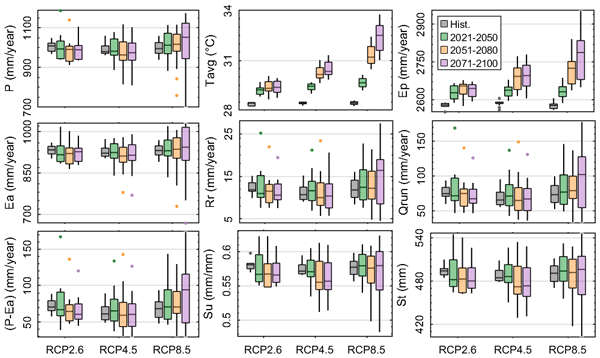
Droughts increasingly threaten agriculture. Improving soils to store more water, for example by increasing soil organic carbon, can help. We simulated this in a Swiss catchment and found that more soil carbon slightly increased soil water storage and evapotranspiration, modestly reduced floods, and shortened periods with very little streamflow. However in warmer, drier areas, these periods with little streamflow could sometimes last longer.
Droughts increasingly threaten agriculture. Improving soils to store more water, for example by...