
Articles | Volume 30, issue 8
https://doi.org/10.5194/hess-30-2277-2026
© Author(s) 2026. This work is distributed under
the Creative Commons Attribution 4.0 License.
the Creative Commons Attribution 4.0 License.
https://doi.org/10.5194/hess-30-2277-2026
© Author(s) 2026. This work is distributed under
the Creative Commons Attribution 4.0 License.
the Creative Commons Attribution 4.0 License.
Research article
| 
22 Apr 2026
Research article |
| 22 Apr 2026
| 22 Apr 2026
A large transient multi-scenario multi-model ensemble of future streamflow and groundwater projections in France

UR RiverLy, INRAE, Villeurbanne, France
Guillaume Evin
Univ. Grenoble Alpes, INRAE, CNRS, IRD, Grenoble INP, IGE, Grenoble, France
Sonia Siauve
OiEau, Limoges, France
Ryma Aissat
BRGM – French Geological Survey, Orléans, France
Patrick Arnaud
UMR RECOVER, INRAE, Aix-Marseille University, Le Tholonet, France
Maud Bérel
MTEECPR, La Défense, France
Jérémie Bonneau
UR RiverLy, INRAE, Villeurbanne, France
INSA Lyon, DEEP, UR 7429, Villeurbanne, France
Flora Branger
UR RiverLy, INRAE, Villeurbanne, France
Yvan Caballero
UMR 183 G-Eau, INRAE, CIRAD, IRD, AgroParisTech, Institut Agro, BRGM, Montpellier, France
François Colléoni
UMR RECOVER, INRAE, Aix-Marseille University, Le Tholonet, France
Agnès Ducharne
Sorbonne Université/CNRS/EPHE, METIS-IPSL, Paris, France
Joël Gailhard
Département Eau Environnement, EDF-DTG, Saint Martin le Vinoux, France
Florence Habets
Geology Laboratory of Ecole Normale Supérieure, Pierre Simon Laplace Research University, CNRS UMR 8538, Paris, France
Frédéric Hendrickx
Département LNHE, EDF-R&D, Chatou, France
Louis Héraut
UR RiverLy, INRAE, Villeurbanne, France
Benoît Hingray
Univ. Grenoble Alpes, INRAE, CNRS, IRD, Grenoble INP, IGE, Grenoble, France
Peng Huang
Sorbonne Université/CNRS/EPHE, METIS-IPSL, Paris, France
Tristan Jaouen
UR RiverLy, INRAE, Villeurbanne, France
Alexis Jeantet
CNRM, Université de Toulouse, Météo-France, CNRS, Toulouse, France
Sandra Lanini
UMR 183 G-Eau, INRAE, CIRAD, IRD, AgroParisTech, Institut Agro, BRGM, Montpellier, France
Matthieu Le Lay
Département Eau Environnement, EDF-DTG, Saint Martin le Vinoux, France
Claire Magand
OFB, Direction de la recherche et de l'appui scientifique, Nantes, France
Louise Mimeau
UR RiverLy, INRAE, Villeurbanne, France
Céline Monteil
Département LNHE, EDF-R&D, Chatou, France
Simon Munier
CNRM, Université de Toulouse, Météo-France, CNRS, Toulouse, France
Charles Perrin
Université Paris-Saclay, INRAE, UR HYCAR, Antony, France
Olivier Robelin
UR RiverLy, INRAE, Villeurbanne, France
UMR 183 G-Eau, INRAE, CIRAD, IRD, AgroParisTech, Institut Agro, BRGM, Montpellier, France
Fabienne Rousset
Météo-France, Direction de la Climatologie et des Services Climatiques, Toulouse, France
Jean-Michel Soubeyroux
Météo-France, Direction de la Climatologie et des Services Climatiques, Toulouse, France
Laurent Strohmenger
Université Paris-Saclay, INRAE, UR HYCAR, Antony, France
Guillaume Thirel
Université Paris-Saclay, INRAE, UR HYCAR, Antony, France
Univ Toulouse, CNES/IRD/CNRS/INRAE, CESBIO, Toulouse, France
Flore Tocquer
Météo-France, Direction de la Climatologie et des Services Climatiques, Toulouse, France
Yves Tramblay
UMR Espace Dev, Univ. Montpellier, IRD, Montpellier, France
Jean-Pierre Vergnes
BRGM – French Geological Survey, Orléans, France
Jean-Philippe Vidal
UR RiverLy, INRAE, Villeurbanne, France
Related authors
Guillaume Evin, Benoit Hingray, Guillaume Thirel, Agnès Ducharne, Laurent Strohmenger, Lola Corre, Yves Tramblay, Jean-Philippe Vidal, Jérémie Bonneau, François Colleoni, Joël Gailhard, Florence Habets, Frédéric Hendrickx, Louis Héraut, Peng Huang, Matthieu Le Lay, Claire Magand, Paola Marson, Céline Monteil, Simon Munier, Alix Reverdy, Jean-Michel Soubeyroux, Yoann Robin, Jean-Pierre Vergnes, Mathieu Vrac, and Eric Sauquet
Hydrol. Earth Syst. Sci., 30, 1023–1051, https://doi.org/10.5194/hess-30-1023-2026, https://doi.org/10.5194/hess-30-1023-2026, 2026
Short summary
Short summary
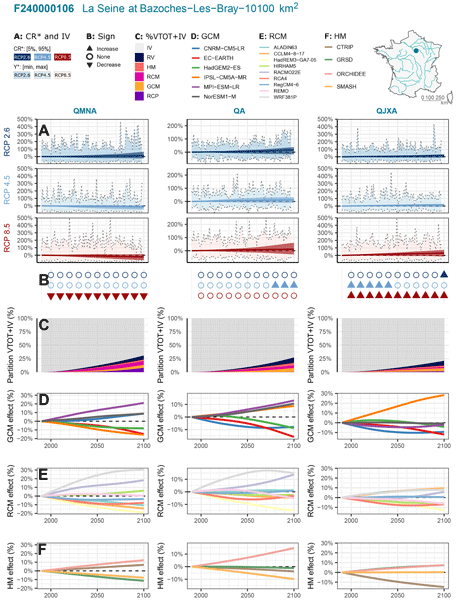
Explore2 provides hydrological projections for 1,735 French catchments. Using QUALYPSO (Quasi-Ergodic Analysis of Climate Projections Using Data Augmentation), this study assesses uncertainties, including internal variability. By the end of the century, low flows are projected to decline in southern France under high emissions, while other indicators remain uncertain. Emission scenarios and regional climate models are key uncertainty sources. Internal variability is often as large as climate-driven changes.
Yves Tramblay, Guillaume Thirel, Laurent Strohmenger, Guillaume Evin, Lola Corre, Louis Heraut, and Eric Sauquet
Hydrol. Earth Syst. Sci., 29, 7023–7039, https://doi.org/10.5194/hess-29-7023-2025, https://doi.org/10.5194/hess-29-7023-2025, 2025
Short summary
Short summary
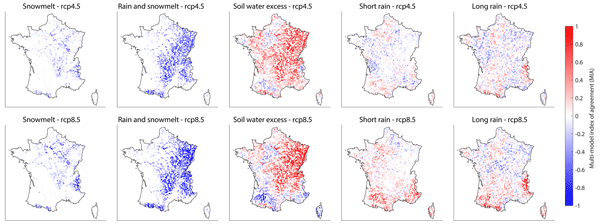
How does climate change impact floods in France? Using simulations for 3727 rivers with climate projections, results show that flood trends vary depending on the region. In the north, floods may become more severe, but in the south, the trends are mixed. Floods from intense rainfall are becoming more frequent, while snowmelt floods are strongly decreasing. Overall, the study shows that understanding what causes floods is key to predicting how they are likely to change with the climate.
Tristan Jaouen, Lionel Benoit, Louis Héraut, and Eric Sauquet
Hydrol. Earth Syst. Sci., 29, 3629–3671, https://doi.org/10.5194/hess-29-3629-2025, https://doi.org/10.5194/hess-29-3629-2025, 2025
Short summary
Short summary
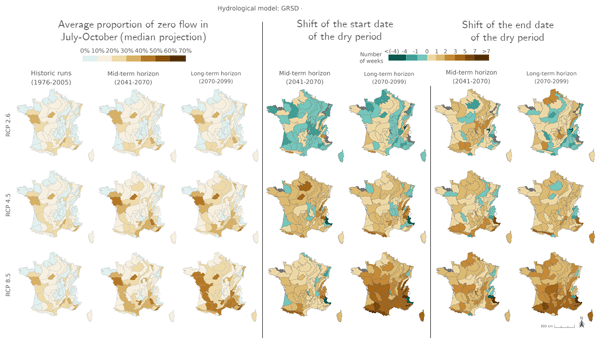
This study uses a multi-model approach to assess future changes in river flow intermittency across France under climate change. Combining projections from the Explore2 project with historical flow observations, logistic regressions estimate the daily probability of flow intermittency (PFI) under RCP2.6, RCP4.5, and RCP8.5 scenarios. Results suggest intensifying and prolonged dry spells throughout the 21st century, with southern France more affected, while uncertainty remains higher in northern regions.
Peng Huang, Agnès Ducharne, Lucia Rinchiuso, Jan Polcher, Laure Baratgin, Vladislav Bastrikov, and Eric Sauquet
Hydrol. Earth Syst. Sci., 28, 4455–4476, https://doi.org/10.5194/hess-28-4455-2024, https://doi.org/10.5194/hess-28-4455-2024, 2024
Short summary
Short summary
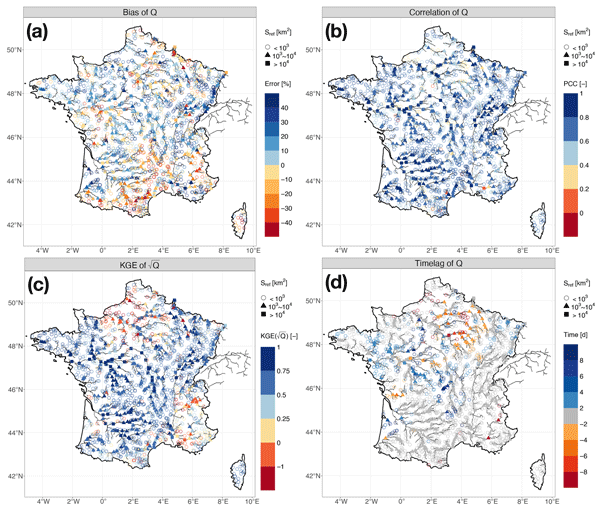
We conducted a high-resolution hydrological simulation from 1959 to 2020 across France. We used a simple trial-and-error calibration to reduce the biases of the simulated water budget compared to observations. The selected simulation satisfactorily reproduces water fluxes, including their spatial contrasts and temporal trends. This work offers a reliable historical overview of water resources and a robust configuration for climate change impact analysis at the nationwide scale of France.
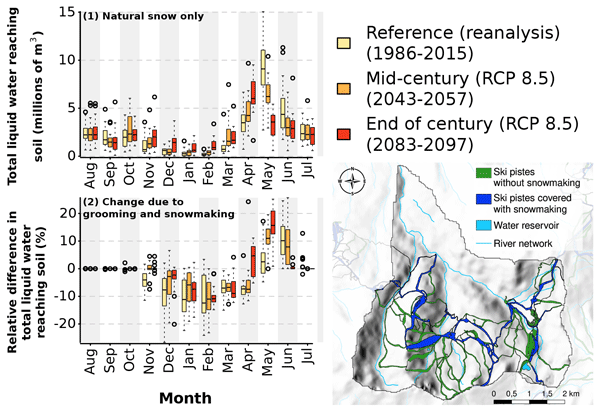
Samuel Morin, Hugues François, Marion Réveillet, Eric Sauquet, Louise Crochemore, Flora Branger, Étienne Leblois, and Marie Dumont
Hydrol. Earth Syst. Sci., 27, 4257–4277, https://doi.org/10.5194/hess-27-4257-2023, https://doi.org/10.5194/hess-27-4257-2023, 2023
Short summary
Short summary
Ski resorts are a key socio-economic asset of several mountain areas. Grooming and snowmaking are routinely used to manage the snow cover on ski pistes, but despite vivid debate, little is known about their impact on water resources downstream. This study quantifies, for the pilot ski resort La Plagne in the French Alps, the impact of grooming and snowmaking on downstream river flow. Hydrological impacts are mostly apparent at the seasonal scale and rather neutral on the annual scale.
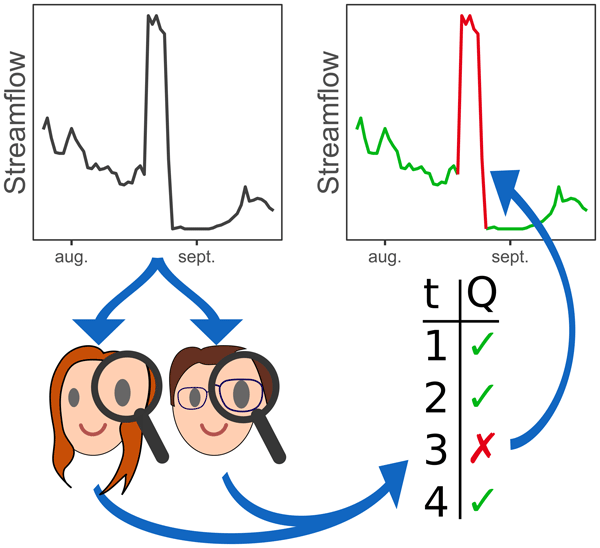
Laurent Strohmenger, Eric Sauquet, Claire Bernard, Jérémie Bonneau, Flora Branger, Amélie Bresson, Pierre Brigode, Rémy Buzier, Olivier Delaigue, Alexandre Devers, Guillaume Evin, Maïté Fournier, Shu-Chen Hsu, Sandra Lanini, Alban de Lavenne, Thibault Lemaitre-Basset, Claire Magand, Guilherme Mendoza Guimarães, Max Mentha, Simon Munier, Charles Perrin, Tristan Podechard, Léo Rouchy, Malak Sadki, Myriam Soutif-Bellenger, François Tilmant, Yves Tramblay, Anne-Lise Véron, Jean-Philippe Vidal, and Guillaume Thirel
Hydrol. Earth Syst. Sci., 27, 3375–3391, https://doi.org/10.5194/hess-27-3375-2023, https://doi.org/10.5194/hess-27-3375-2023, 2023
Short summary
Short summary
We present the results of a large visual inspection campaign of 674 streamflow time series in France. The objective was to detect non-natural records resulting from instrument failure or anthropogenic influences, such as hydroelectric power generation or reservoir management. We conclude that the identification of flaws in flow time series is highly dependent on the objectives and skills of individual evaluators, and we raise the need for better practices for data cleaning.
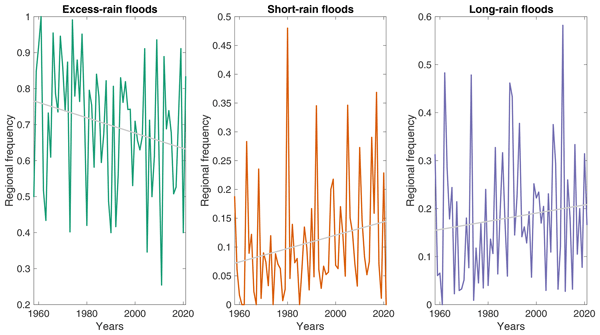
Yves Tramblay, Patrick Arnaud, Guillaume Artigue, Michel Lang, Emmanuel Paquet, Luc Neppel, and Eric Sauquet
Hydrol. Earth Syst. Sci., 27, 2973–2987, https://doi.org/10.5194/hess-27-2973-2023, https://doi.org/10.5194/hess-27-2973-2023, 2023
Short summary
Short summary
Mediterranean floods are causing major damage, and recent studies have shown that, despite the increase in intense rainfall, there has been no increase in river floods. This study reveals that the seasonality of floods changed in the Mediterranean Basin during 1959–2021. There was also an increased frequency of floods linked to short episodes of intense rain, associated with a decrease in soil moisture. These changes need to be taken into consideration to adapt flood warning systems.
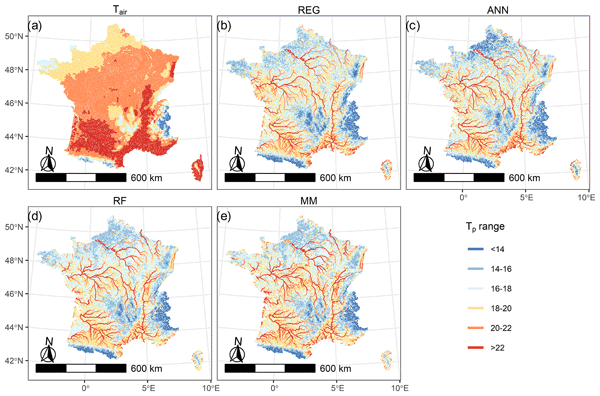
Aurélien Beaufort, Jacob S. Diamond, Eric Sauquet, and Florentina Moatar
Hydrol. Earth Syst. Sci., 26, 3477–3495, https://doi.org/10.5194/hess-26-3477-2022, https://doi.org/10.5194/hess-26-3477-2022, 2022
Short summary
Short summary
We developed one of the largest stream temperature databases to calculate a simple, ecologically relevant metric – the thermal peak – that captures the magnitude of summer thermal extremes. Using statistical models, we extrapolated the thermal peak to nearly every stream in France, finding the hottest thermal peaks along large rivers without forested riparian zones and groundwater inputs. Air temperature was a poor proxy for the thermal peak, highlighting the need to grow monitoring networks.
Veit Blauhut, Michael Stoelzle, Lauri Ahopelto, Manuela I. Brunner, Claudia Teutschbein, Doris E. Wendt, Vytautas Akstinas, Sigrid J. Bakke, Lucy J. Barker, Lenka Bartošová, Agrita Briede, Carmelo Cammalleri, Ksenija Cindrić Kalin, Lucia De Stefano, Miriam Fendeková, David C. Finger, Marijke Huysmans, Mirjana Ivanov, Jaak Jaagus, Jiří Jakubínský, Svitlana Krakovska, Gregor Laaha, Monika Lakatos, Kiril Manevski, Mathias Neumann Andersen, Nina Nikolova, Marzena Osuch, Pieter van Oel, Kalina Radeva, Renata J. Romanowicz, Elena Toth, Mirek Trnka, Marko Urošev, Julia Urquijo Reguera, Eric Sauquet, Aleksandra Stevkov, Lena M. Tallaksen, Iryna Trofimova, Anne F. Van Loon, Michelle T. H. van Vliet, Jean-Philippe Vidal, Niko Wanders, Micha Werner, Patrick Willems, and Nenad Živković
Nat. Hazards Earth Syst. Sci., 22, 2201–2217, https://doi.org/10.5194/nhess-22-2201-2022, https://doi.org/10.5194/nhess-22-2201-2022, 2022
Short summary
Short summary
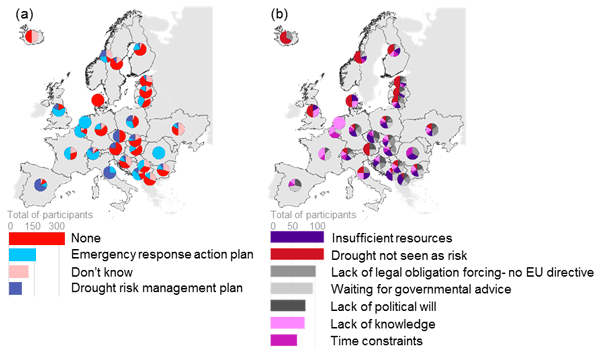
Recent drought events caused enormous damage in Europe. We therefore questioned the existence and effect of current drought management strategies on the actual impacts and how drought is perceived by relevant stakeholders. Over 700 participants from 28 European countries provided insights into drought hazard and impact perception and current management strategies. The study concludes with an urgent need to collectively combat drought risk via a European macro-level drought governance approach.
Olivier Champagne, Flora Branger, Anthony Lemoine, Jordi Bolibar, Louise Mimeau, Gilles Delaygue, Isabelle Gouttevin, Sophie Cauvy-Fraunié, and Thomas Condom
EGUsphere, https://doi.org/10.5194/egusphere-2026-3523, https://doi.org/10.5194/egusphere-2026-3523, 2026
This preprint is open for discussion and under review for Hydrology and Earth System Sciences (HESS).
Short summary
Short summary
This study using a hydrological model shows the projections of icemelt contribution to streamflow until the end of the century in many rivers in the Rhône basin. The results show a streamflow decrease in summer, due to the decrease of precipitations, snowmelt, and glacier melt. In many catchments, icemelt will completely disappear by the end of the century. In the Arve and highly glaciated catchments of the upper Rhône, icemelt will remains sufficiently large to sustain streamflow in summer.
Julien Lefebve, Sylvain Biancamaria, Alejandro Blazquez, Simon Munier, Laetitia Gal, Rômulo Augusto Jucá Oliveira, and Jordi Etchanchu
EGUsphere, https://doi.org/10.5194/egusphere-2026-4569, https://doi.org/10.5194/egusphere-2026-4569, 2026
This preprint is open for discussion and under review for Hydrology and Earth System Sciences (HESS).
Short summary
Short summary
Approaching the water budget closure of a basin gives confidence in our understanding of its water cycle. By analysing 82 major basins worldwide with the most up‑to‑date data, we demonstrate that the large spread in precipitation (44 %), evapotranspiration (33 %) and runoff (36 %) can produce compensations and lead to erroneous conclusions about water budget closure. In the absence of gauge records, calculating discharge from satellite observations rather than from models reduces these errors.
Pierre Tiengou, Agnès Ducharne, and Frédérique Cheruy
Earth Syst. Dynam., 17, 843–876, https://doi.org/10.5194/esd-17-843-2026, https://doi.org/10.5194/esd-17-843-2026, 2026
Short summary
Short summary
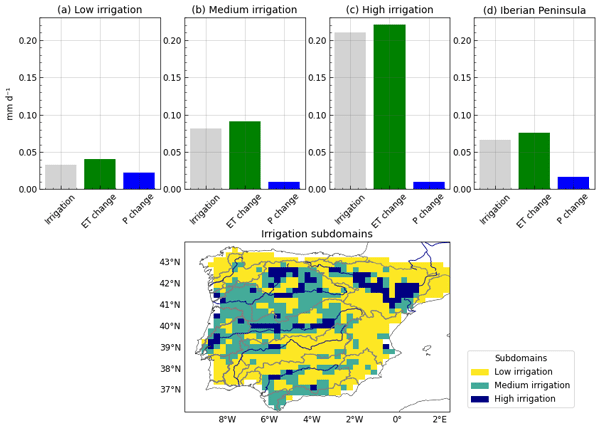
This study analyses simulations of regional climate over the Iberian Peninsula, with and without an explicit simulation of irrigation. It shows that the model matches observations much better with irrigation, particularly river discharge and evapotranspiration. The presence of simulated irrigation also makes the air cooler over irrigated areas and more humid over the whole Peninsula, leading to increases in rainfall, mostly located in the mountains that surround the highly irrigated Ebro Valley.
Henri Lechevallier, Cécile Dagès, Delphine Burger-Leenhardt, Claire Magand, and Jérôme Molénat
Hydrol. Earth Syst. Sci., 30, 3853–3874, https://doi.org/10.5194/hess-30-3853-2026, https://doi.org/10.5194/hess-30-3853-2026, 2026
Short summary
Short summary
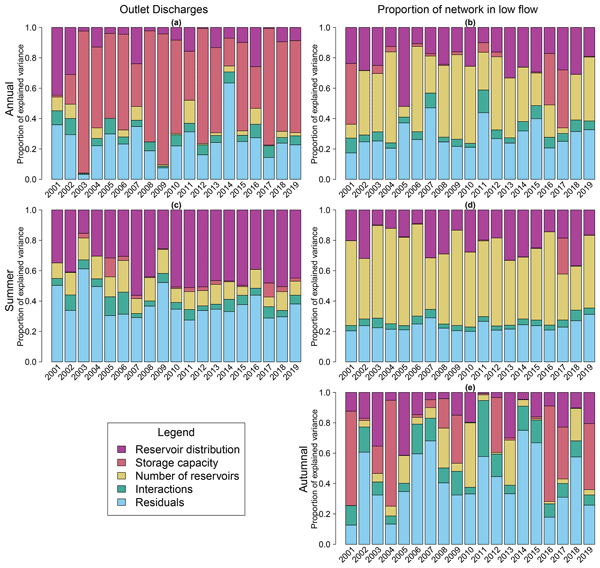
Small farm reservoirs are infrastructures for storing water that farmers can use to irrigate their crops, and thereby secure or enhance food production. These are found in many regions of the world. However, small reservoirs can modify flow regimes as they store water derived or extracted from the stream. In this study, we use a modeling approach to evaluate how flows are influenced by the number, capacity, and distribution along the stream of small reservoirs.
Taha-Abderrahman El Ouahabi, François Bourgin, Charles Perrin, and Vazken Andréassian
Hydrol. Earth Syst. Sci., 30, 3549–3574, https://doi.org/10.5194/hess-30-3549-2026, https://doi.org/10.5194/hess-30-3549-2026, 2026
Short summary
Short summary
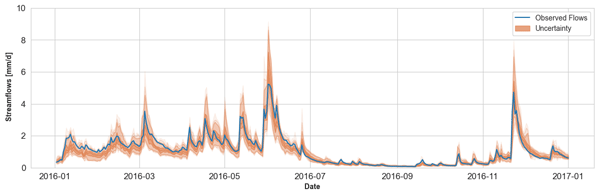
To improve hydrological uncertainty estimation, recent studies have explored machine learning (ML)-based post-processing approaches. Among these, quantile random forests (QRF) are increasingly used for their balance between interpretability and performance. We develop a hydrologically informed QRF trained in a multi-site setting. Our results show that the regional QRF approach is beneficial, particularly in catchments where local information is insufficient.
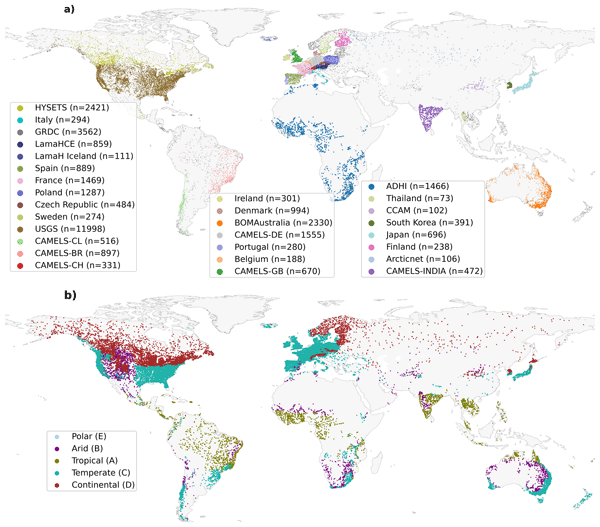
Ather Abbas, Yuan Yang, Ming Pan, Yves Tramblay, Chaopeng Shen, Haoyu Ji, Solomon H. Gebrechorkos, Florian Pappenberger, JongCheol Pyo, Dapeng Feng, George Huffman, Phu Nguyen, Christian Massari, Luca Brocca, Jackson Tan, and Hylke E. Beck
Hydrol. Earth Syst. Sci., 30, 3399–3423, https://doi.org/10.5194/hess-30-3399-2026, https://doi.org/10.5194/hess-30-3399-2026, 2026
Short summary
Short summary
Our study evaluated 24 precipitation datasets using a hydrological model at global scale to assess their suitability and accuracy. We found that MSWEP (Multi-Source Weighted-Ensemble Precipitation) V2.8 excels due to its ability to integrate data from multiple sources, while others, such as IMERG (Integrated Multi-satellitE Retrievals for Global Precipitation Mission) and GDAS (Global Data Assimilation System), demonstrated strong regional performances. This research assists in selecting the appropriate dataset for applications in water resource management, hazard assessment, agriculture, and environmental monitoring.
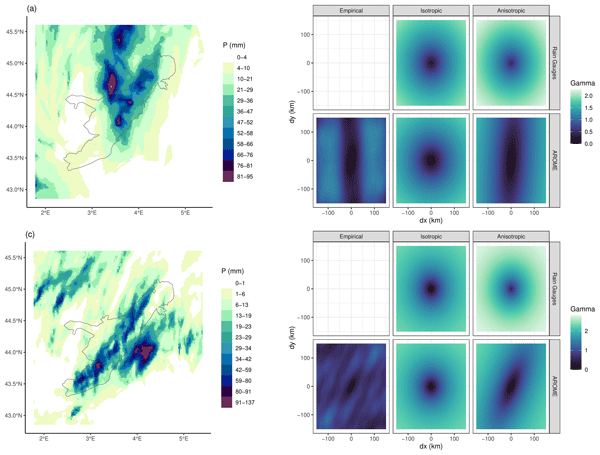
Valentin Dura, Guillaume Evin, Anne-Catherine Favre, and David Penot
Hydrol. Earth Syst. Sci., 30, 2953–2971, https://doi.org/10.5194/hess-30-2953-2026, https://doi.org/10.5194/hess-30-2953-2026, 2026
Short summary
Short summary
Traditional precipitation analyses often misrepresent intense rainfall's spatial variability. This study evaluates different spatial covariances to capture this variability in a geostatistical framework. The best covariance includes anisotropy derived from daily climate model simulations, offering a reliable alternative to anisotropy estimation using rain gauges. These findings highlight the importance of including anisotropy when generating precipitation inputs for hydrological modeling.
Adrien Manlay, Jean-Pierre Vergnes, Simon Munier, and Florence Habets
EGUsphere, https://doi.org/10.5194/egusphere-2026-1504, https://doi.org/10.5194/egusphere-2026-1504, 2026
Short summary
Short summary
Groundwater is a key resource for human activities, predicting its evolution months in advance poses a significant challenge. Forecasts can be erroneous due to model uncertainties. In this study, we developed a method that integrates observed groundwater levels into a numerical model to improve seasonal forecasts. By continuously updating the model with observations, we achieved more accurate water level simulations and predictions up to six months ahead.
Eleni Kritidou, Martina Kauzlaric, Maria Staudinger, Guillaume Evin, Marc Vis, and Daniel Viviroli
EGUsphere, https://doi.org/10.5194/egusphere-2026-2338, https://doi.org/10.5194/egusphere-2026-2338, 2026
Short summary
Short summary
In mountain regions, precipitation varies with elevation, but models often simplify this relationship. We used simulations combining a weather generator and a hydrological model to explore how different precipitation different lapse rates affect runoff and floods in Switzerland. We found that they impact yearly and seasonal river flow and flood behavior. Higher-elevation catchments were less sensitive, and higher lapse rates increased summer floods, while lower rates increased winter floods.
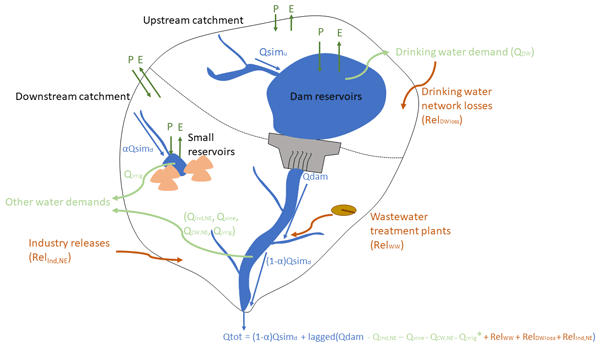
Léonard Santos, Anthony Thomas, Gaëlle Tallec, Laurent Mounereau, Aaron Bluche, Bruno J. Lemaire, Rania Louafi, and Guillaume Thirel
Hydrol. Earth Syst. Sci., 30, 1915–1949, https://doi.org/10.5194/hess-30-1915-2026, https://doi.org/10.5194/hess-30-1915-2026, 2026
Short summary
Short summary
Water resources will be heavily impacted by climate change in the future, with low flows and water demand satisfaction expected to decline. This study uses an integrated water resources management model to examine future water demand scenarios, revealing that climate change will be the primary driver of changes. While adapting water uses could mitigate negative impacts, this will not be enough to adapt to climate change. The irrigation sector is expected to be the most impacted.
Gabrielle Sorini, Juliette Blanchet, Gérémy Panthou, Théo Vischel, and Yves Tramblay
EGUsphere, https://doi.org/10.5194/egusphere-2026-1176, https://doi.org/10.5194/egusphere-2026-1176, 2026
Short summary
Short summary
This study investigates regional flood trends across West Africa using time-varying extreme-value distributions. While most catchments show declining flood magnitudes up to the 1970s–1990s, recent trends diverge, ranging from decrease to intensification, revealing an original typology of regional hydrosystems. These results refine the narrative of hydrological changes in West Africa and provide clues to their attribution.
Benjamin Renard, Renaud Barbero, Issa Goukouni, Jean-Philippe Vidal, Louise Mimeau, Carina Furusho-Percot, Iñaki García de Cortázar-Atauri, Maël Aubry, Thomas Opitz, and Denis Allard
EGUsphere, https://doi.org/10.5194/egusphere-2026-1406, https://doi.org/10.5194/egusphere-2026-1406, 2026
This preprint is open for discussion and under review for Natural Hazards and Earth System Sciences (NHESS).
Short summary
Short summary
In France, the 2022 summer witnessed severe drought conditions, leading to very low flows in rivers and widespread wildfire occurrences. This article proposes a model to estimate the probability of occurrence of the 2022 event, viewed from various angles: intensity of the drought and fire weather conditions, duration and spatial extent of the event. The model can also be used to estimate how this probability will evolve in the future under global warming.

Abubakar Haruna, Juliette Blanchet, Guillaume Evin, and Emmanuel Paquet
Adv. Stat. Clim. Meteorol. Oceanogr., 12, 87–109, https://doi.org/10.5194/ascmo-12-87-2026, https://doi.org/10.5194/ascmo-12-87-2026, 2026
Short summary
Short summary
This study advances nonstationary precipitation modeling by using single, flexible distributions to analyze trends across the full daily spectrum. We demonstrate that evolving shape parameters are critical for accurately capturing observed differential changes in low, medium, and extreme quantiles. This method ensures statistical consistency, providing reliable trend assessments over the two-component framework common in climate impact analysis.
Morgane Lalonde, Sophie Bastin, Ludovic Oudin, Pedro Felipe Arboleda-Obando, and Agnès Ducharne
EGUsphere, https://doi.org/10.5194/egusphere-2026-551, https://doi.org/10.5194/egusphere-2026-551, 2026
Short summary
Short summary
Some climate models still represent cities as if they were natural ground. For one of these models, we built a new way to represent cities. The update includes how reflective surfaces are, building height, stored heat, and how much ground is sealed. The novelty is to treat sealed ground not only at the surface, but also below it. Tested at twenty urban sites, the new version better represents exchanges of energy between the ground and the air, supporting more reliable urban climate studies.
Antoine Degenne, François Bourgin, Charles Perrin, and Vazken Andréassian
EGUsphere, https://doi.org/10.5194/egusphere-2026-1197, https://doi.org/10.5194/egusphere-2026-1197, 2026
Short summary
Short summary
We tested whether a simple model combining basic water balance principles with artificial intelligence can predict yearly river flow across many regions and years. Using data from over 3,000 river basins in eight countries, we found that the model works well when predicting future years in the same basin, but is less accurate in new regions because estimating long-term average flow remains difficult. This highlights both the promise and limits of this approach for large-scale water management.
Simon Filhol, Clément Misset, Noélie Bontemps, Diego Cusicanqui, Emmanuel Paquet, Marie Dumont, Olivier Gagliardini, Pascal Lacroix, Simon Gascoin, Guillaume Thirel, Julien Brondex, Pascal Hagenmuller, Eric Larose, Philipp Schoeneich, Denis Roy, Emmanuel Thibert, Nicolas Eckert, Félix de Montety, Robin Mainieri, Alexandre Hauet, Frédéric Gottardi, Johan Berthet, Alexandre Baratier, Frédéric Liébault, Małgorzata Chmiel, Guillaume Piton, Guillaume Chambon, Guillaume James, Philippe Frey, Philip Deline, Laurent Astrade, Christian Vincent, Dominique Laigle, Alain Recking, Fatima Karbou, Adrien Mauss, Mylène Bonnefoy-Demongeot, Firmin Fontaine, Mickael Langlais, Etienne Berthier, and Antoine Blanc
EGUsphere, https://doi.org/10.5194/egusphere-2026-971, https://doi.org/10.5194/egusphere-2026-971, 2026
Short summary
Short summary
On June 21 2024, the village of La Bérarde, in the French Alps, was devastated by a flood destroying centuries old buildings. This study is an interdisciplinary work to decipher the causes and chronology of the event. The flood started with decadal rain falling on a thick snowpack. A lake observed on top of a glacier few days prior, had drained post event. With climate change, should we expect more similar compound events for alpine communities?
Guillaume Evin, Benoit Hingray, Guillaume Thirel, Agnès Ducharne, Laurent Strohmenger, Lola Corre, Yves Tramblay, Jean-Philippe Vidal, Jérémie Bonneau, François Colleoni, Joël Gailhard, Florence Habets, Frédéric Hendrickx, Louis Héraut, Peng Huang, Matthieu Le Lay, Claire Magand, Paola Marson, Céline Monteil, Simon Munier, Alix Reverdy, Jean-Michel Soubeyroux, Yoann Robin, Jean-Pierre Vergnes, Mathieu Vrac, and Eric Sauquet
Hydrol. Earth Syst. Sci., 30, 1023–1051, https://doi.org/10.5194/hess-30-1023-2026, https://doi.org/10.5194/hess-30-1023-2026, 2026
Short summary
Short summary
Explore2 provides hydrological projections for 1,735 French catchments. Using QUALYPSO (Quasi-Ergodic Analysis of Climate Projections Using Data Augmentation), this study assesses uncertainties, including internal variability. By the end of the century, low flows are projected to decline in southern France under high emissions, while other indicators remain uncertain. Emission scenarios and regional climate models are key uncertainty sources. Internal variability is often as large as climate-driven changes.
Kaushlendra Verma and Simon Munier
EGUsphere, https://doi.org/10.5194/egusphere-2026-509, https://doi.org/10.5194/egusphere-2026-509, 2026
Short summary
Short summary
Satellite provide river observations as vector reaches, while large-scale hydrological models represent rivers on gridded routing networks. This structural mismatch limits direct data assimilation. We present a global, confidence-aware framework that assigns vector river reaches to routing pixels using geometric and hydrological consistency criteria. Results show that most routing pixels can be assigned with high confidence while preserving basin-scale drainage topology into hydrological models.
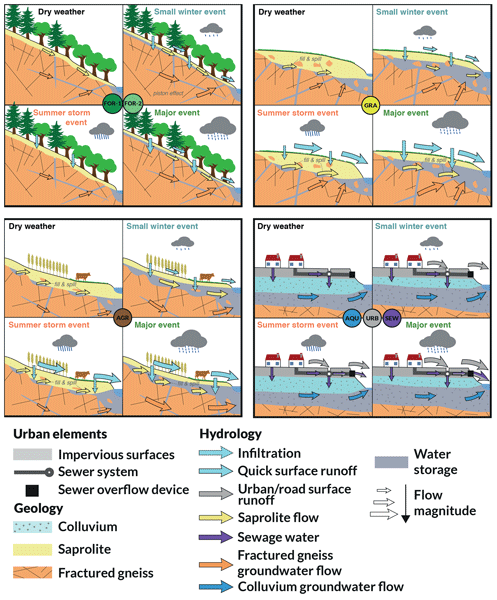
Olivier Grandjouan, Flora Branger, Matthieu Masson, Benoit Cournoyer, Nicolas Robinet, Pauline Dusseux, Angélique Dominguez Lage, and Marina Coquery
Hydrol. Earth Syst. Sci., 30, 591–627, https://doi.org/10.5194/hess-30-591-2026, https://doi.org/10.5194/hess-30-591-2026, 2026
Short summary
Short summary
This study presents a novel approach aimed at using biogeochemical data from surface water to decompose streamwater flow into spatial and vertical contributions. A selection of tracers was used in a mixing model to estimate contributions at the outlet of a peri-urban catchment. Results provided a better understanding of hydrological processes in the catchment and demonstrated the potential of biogeochemical data to discriminate spatial contributions according to land use.

Elisa Kamir, Samuel Morin, Guillaume Evin, Penelope Gehring, Bodo Wichura, and Ali Nadir Arslan
Earth Syst. Sci. Data, 18, 17–32, https://doi.org/10.5194/essd-18-17-2026, https://doi.org/10.5194/essd-18-17-2026, 2026
Short summary
Short summary
This article describes a dataset of annual snow depth maximum across Europe, from 1961 to 2015, based on a regional reanalysis. It evaluates the performance of the dataset, against in-situ snow depth observations. This dataset is found to perform well in most environments, with challenges at high elevation and some coastal areas. Assessing the quality of this dataset is necessary in order to use it as a baseline to infer future changes of extreme snow loads under climate change.
Pedro Felipe Arboleda-Obando, Agnès Ducharne, Frédérique Cheruy, and Josefine Ghattas
Earth Syst. Dynam., 16, 2201–2223, https://doi.org/10.5194/esd-16-2201-2025, https://doi.org/10.5194/esd-16-2201-2025, 2025
Short summary
Short summary
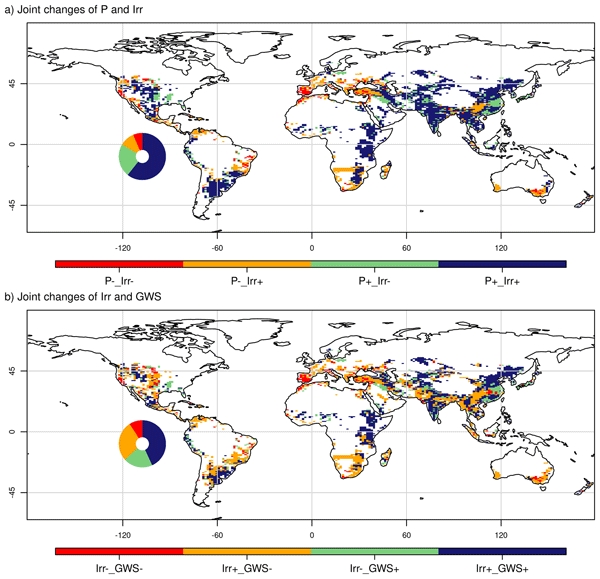
The evolution of irrigation under climate change is analyzed between 1950 and 2100. Results indicate that the influence of irrigation on evapotranspiration in irrigated areas increases in the future (compared to an historical period). Also, the effect of irrigation on water resources is also higher in the future than in the historical period. Finally, we identify areas where future hydroclimate conditions can limit irrigation, or areas where irrigation can increase tensions around water use.
Yves Tramblay, Guillaume Thirel, Laurent Strohmenger, Guillaume Evin, Lola Corre, Louis Heraut, and Eric Sauquet
Hydrol. Earth Syst. Sci., 29, 7023–7039, https://doi.org/10.5194/hess-29-7023-2025, https://doi.org/10.5194/hess-29-7023-2025, 2025
Short summary
Short summary
How does climate change impact floods in France? Using simulations for 3727 rivers with climate projections, results show that flood trends vary depending on the region. In the north, floods may become more severe, but in the south, the trends are mixed. Floods from intense rainfall are becoming more frequent, while snowmelt floods are strongly decreasing. Overall, the study shows that understanding what causes floods is key to predicting how they are likely to change with the climate.
Valentin Dura, Guillaume Evin, Anne-Catherine Favre, and David Penot
EGUsphere, https://doi.org/10.5194/egusphere-2025-5679, https://doi.org/10.5194/egusphere-2025-5679, 2025
Preprint archived
Short summary
Short summary
Traditional precipitation analysis often misrepresent seasonal totals and spatial variability of intense rainfall in mountains. This study introduces a reproducible workflow to generate a daily precipitation ensembles, conditioned on rain gauges. It outperforms standard products by better capturing seasonal totals. It also quantifies interpolation uncertainty, improving flood modeling. The open-source workflow is transferable to regions with sparse rain-gauge networks or limited radar coverage.
Riccardo Biella, Anastasiya Shyrokaya, Monica Ionita, Raffaele Vignola, Samuel J. Sutanto, Andrijana Todorovic, Claudia Teutschbein, Daniela Cid, Maria Carmen Llasat, Pedro Alencar, Alessia Matanó, Elena Ridolfi, Benedetta Moccia, Ilias Pechlivanidis, Anne van Loon, Doris E. Wendt, Elin Stenfors, Fabio Russo, Jean-Philippe Vidal, Lucy Barker, Mariana Madruga de Brito, Marleen Lam, Monika Bláhová, Patricia Trambauer, Raed Hamed, Scott J. McGrane, Serena Ceola, Sigrid J. Bakke, Svitlana Krakovska, Viorica Nagavciuc, Faranak Tootoonchi, Giuliano Di Baldassarre, Sandra Hauswirth, Shreedhar Maskey, Svitlana Zubkovych, Marthe Wens, and Lena M. Tallaksen
Nat. Hazards Earth Syst. Sci., 25, 4475–4501, https://doi.org/10.5194/nhess-25-4475-2025, https://doi.org/10.5194/nhess-25-4475-2025, 2025
Short summary
Short summary
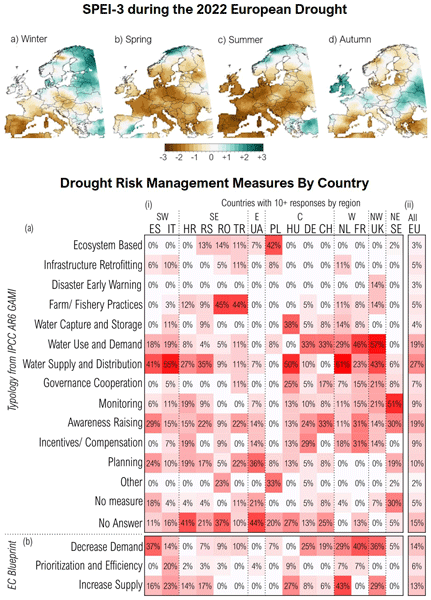
The DitA (Drought in the Anthropocene) network's study on the 2022 European drought reveals growing risks, varied impacts, and fragmented, short-term management. Based on a survey of water managers, it explores risk, impacts, strategies, and their evolution. While challenges persist, signs of improvement show readiness for change. The authors call for a European Drought Directive to unify and guide future drought risk management.
Giulia Bruno, Laurent Strohmenger, and Doris Duethmann
Hydrol. Earth Syst. Sci., 29, 4473–4489, https://doi.org/10.5194/hess-29-4473-2025, https://doi.org/10.5194/hess-29-4473-2025, 2025
Short summary
Short summary
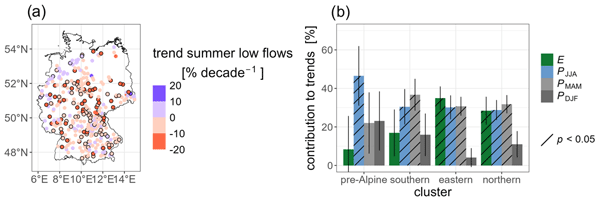
Decreases in streamflow during dry periods threaten ecosystems and society, and increases in evapotranspiration may contribute to them. From data for small catchments in Germany, summer low flows decreased over 1970–2019, and evapotranspiration increases significantly contributed to that. Lower-than-expected annual streamflow occurred during the 1989–1993 drought in catchments with increases in evapotranspiration. Changes in evapotranspiration need full consideration for streamflow prediction.
Serigne Bassirou Diop, Job Ekolu, Yves Tramblay, Bastien Dieppois, Stefania Grimaldi, Ansoumana Bodian, Juliette Blanchet, Ponnambalam Rameshwaran, Peter Salamon, and Benjamin Sultan
Nat. Hazards Earth Syst. Sci., 25, 3161–3184, https://doi.org/10.5194/nhess-25-3161-2025, https://doi.org/10.5194/nhess-25-3161-2025, 2025
Short summary
Short summary
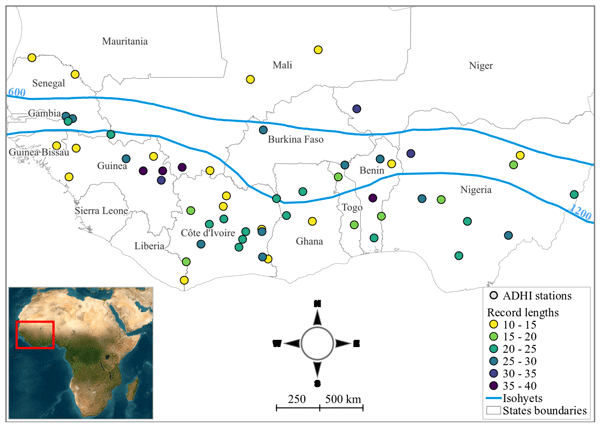
West Africa is very vulnerable to river floods. Current flood hazards are poorly understood due to limited data. This study is filling this knowledge gap using recent databases and two regional hydrological models to analyze changes in flood risk under two climate scenarios. Results show that most areas will see more frequent and severe floods, with some increasing by over 45 %. These findings stress the urgent need for climate-resilient strategies to protect communities and infrastructure.
Tristan Jaouen, Lionel Benoit, Louis Héraut, and Eric Sauquet
Hydrol. Earth Syst. Sci., 29, 3629–3671, https://doi.org/10.5194/hess-29-3629-2025, https://doi.org/10.5194/hess-29-3629-2025, 2025
Short summary
Short summary
This study uses a multi-model approach to assess future changes in river flow intermittency across France under climate change. Combining projections from the Explore2 project with historical flow observations, logistic regressions estimate the daily probability of flow intermittency (PFI) under RCP2.6, RCP4.5, and RCP8.5 scenarios. Results suggest intensifying and prolonged dry spells throughout the 21st century, with southern France more affected, while uncertainty remains higher in northern regions.
Elodie Salmon, Bertrand Guenet, and Agnès Ducharne
EGUsphere, https://doi.org/10.5194/egusphere-2025-3511, https://doi.org/10.5194/egusphere-2025-3511, 2025
Short summary
Short summary
Soil organic carbon stockage is a key process to mitigate climate change and is intertwined with soil temperature and moisture and of other secondary soil properties. This study shows the significance of secondary drivers in the relationship between soil moisture and microbial efficiency in soil organic carbon degradation. Using empirical relationships in a global ecosystem model enhanced significantly the heterogeneous spatial pattern of soil organic carbon stock and carbon dioxide fluxes.
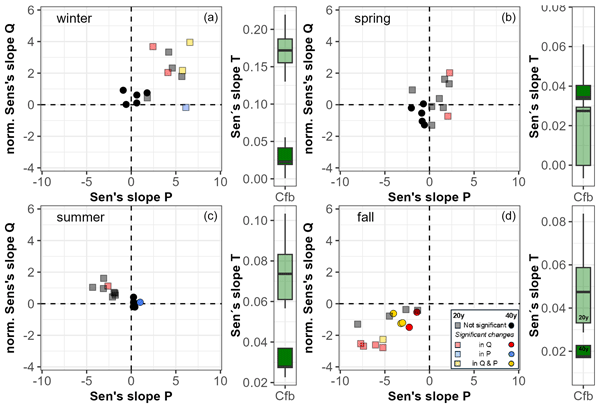
Markus Giese, Yvan Caballero, Andreas Hartmann, and Jean-Baptiste Charlier
Hydrol. Earth Syst. Sci., 29, 3037–3054, https://doi.org/10.5194/hess-29-3037-2025, https://doi.org/10.5194/hess-29-3037-2025, 2025
Short summary
Short summary
Karst springs respond quickly to environmental changes, making them crucial to understanding climate impacts on groundwater. This study analyses long-term trends in precipitation, temperature, and discharge from more than 50 springs across Europe. Results show that while historical discharge trends align with those of rivers, recent changes are driven by rising temperatures rather than precipitation. These findings highlight climate-driven shifts in groundwater recharge and storage processes.
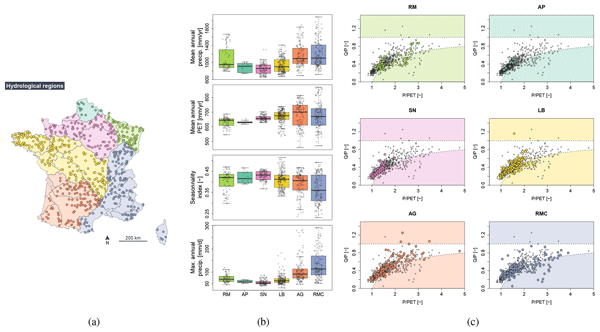
Olivier Delaigue, Guilherme Mendoza Guimarães, Pierre Brigode, Benoît Génot, Charles Perrin, Jean-Michel Soubeyroux, Bruno Janet, Nans Addor, and Vazken Andréassian
Earth Syst. Sci. Data, 17, 1461–1479, https://doi.org/10.5194/essd-17-1461-2025, https://doi.org/10.5194/essd-17-1461-2025, 2025
Short summary
Short summary
This dataset covers 654 rivers all flowing in France. The provided time series and catchment attributes will be of interest to those modelers wishing to analyze hydrological behavior and perform model assessments.
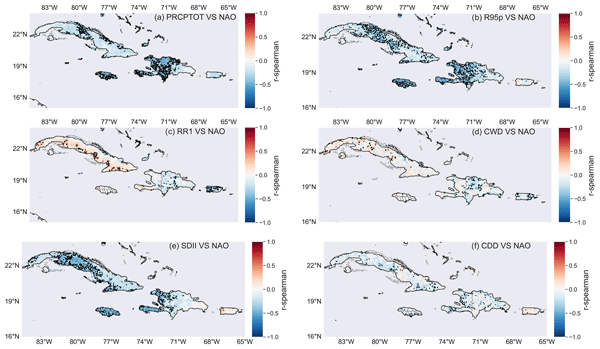
Carlo Destouches, Arona Diedhiou, Sandrine Anquetin, Benoit Hingray, Armand Pierre, Dominique Boisson, and Adermus Joseph
Earth Syst. Dynam., 16, 497–512, https://doi.org/10.5194/esd-16-497-2025, https://doi.org/10.5194/esd-16-497-2025, 2025
Short summary
Short summary
This work provides a relevant analysis of changes in extreme precipitation over the Caribbean and their link with warming in different ocean basins. It also improves our understanding of the impact of warming on extreme precipitation events, which can cause devastating damage to economic sectors such as agriculture, biodiversity, health, and energy.
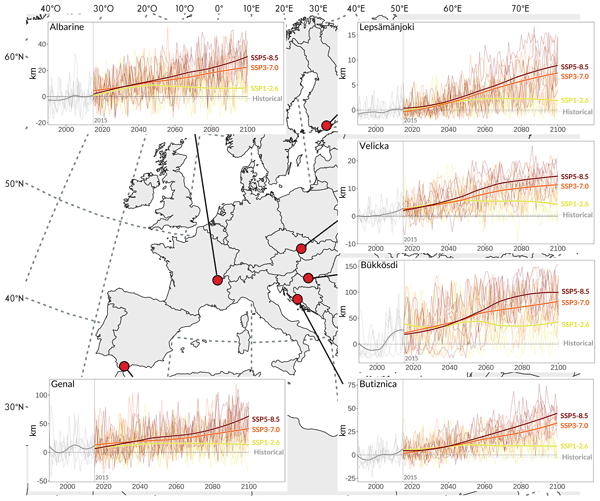
Louise Mimeau, Annika Künne, Alexandre Devers, Flora Branger, Sven Kralisch, Claire Lauvernet, Jean-Philippe Vidal, Núria Bonada, Zoltán Csabai, Heikki Mykrä, Petr Pařil, Luka Polović, and Thibault Datry
Hydrol. Earth Syst. Sci., 29, 1615–1636, https://doi.org/10.5194/hess-29-1615-2025, https://doi.org/10.5194/hess-29-1615-2025, 2025
Short summary
Short summary
Our study projects how climate change will affect the drying of river segments and stream networks in Europe, using advanced modelling techniques to assess changes in six river networks across diverse ecoregions. We found that drying events will become more frequent and intense and will start earlier or last longer, potentially turning some river sections from perennial to intermittent. The results are valuable for river ecologists for evaluating the ecological health of river ecosystem.
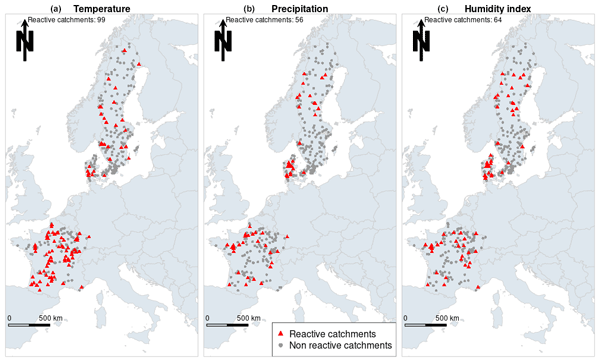
Léonard Santos, Vazken Andréassian, Torben O. Sonnenborg, Göran Lindström, Alban de Lavenne, Charles Perrin, Lila Collet, and Guillaume Thirel
Hydrol. Earth Syst. Sci., 29, 683–700, https://doi.org/10.5194/hess-29-683-2025, https://doi.org/10.5194/hess-29-683-2025, 2025
Short summary
Short summary
This work investigates how hydrological models are transferred to a period in which climate conditions are different to the ones of the period in which they were set up. The robustness assessment test built to detect dependencies between model error and climatic drivers was applied to three hydrological models in 352 catchments in Denmark, France and Sweden. Potential issues are seen in a significant number of catchments for the models, even though the catchments differ for each model.
Alexis Jeantet, Jean-Pierre Vergnes, Simon Munier, and Florence Habets
EGUsphere, https://doi.org/10.5194/egusphere-2025-93, https://doi.org/10.5194/egusphere-2025-93, 2025
Short summary
Short summary
The AquiFR hydrogeological modelling plateform is forced by 36 climate projections in order to simulate future groundwater levels over France. The results show significant scatters between regional climate models and RCPs. Overall, a rise in groundwater levels, affecting most of the study area, is the dominant signal. Four storylines have been selected to to illustrate the impacts of worst-case scenarios and help decision-makers to adopt sustainable groundwater management policies.
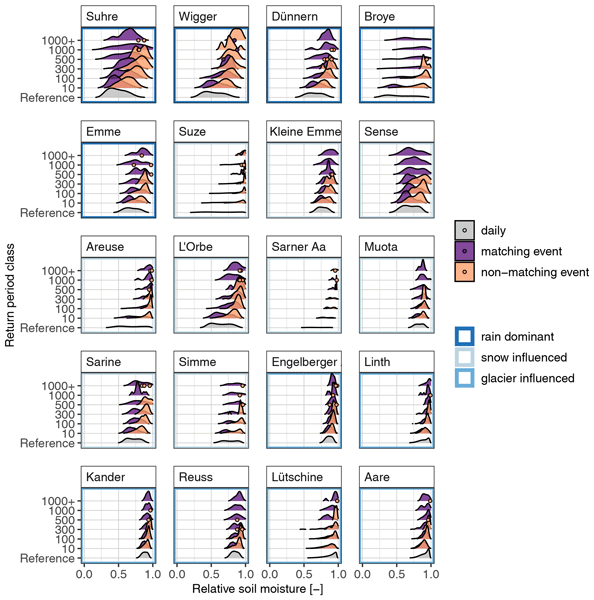
Maria Staudinger, Martina Kauzlaric, Alexandre Mas, Guillaume Evin, Benoit Hingray, and Daniel Viviroli
Nat. Hazards Earth Syst. Sci., 25, 247–265, https://doi.org/10.5194/nhess-25-247-2025, https://doi.org/10.5194/nhess-25-247-2025, 2025
Short summary
Short summary
Various combinations of antecedent conditions and precipitation result in floods of varying degrees. Antecedent conditions played a crucial role in generating even large ones. The key predictors and spatial patterns of antecedent conditions leading to flooding at the basin's outlet were distinct. Precipitation and soil moisture from almost all sub-catchments were important for more frequent floods. For rarer events, only the predictors of specific sub-catchments were important.
Malak Sadki, Gaëtan Noual, Simon Munier, Vanessa Pedinotti, Kaushlendra Verma, Clément Albergel, Sylvain Biancamaria, and Alice Andral
Hydrol. Earth Syst. Sci. Discuss., https://doi.org/10.5194/hess-2024-328, https://doi.org/10.5194/hess-2024-328, 2024
Revised manuscript accepted for HESS
Short summary
Short summary
This study explores how 20 years of remote-sensed discharge data from the ESA CCI improve large-scale hydrological models, CTRIP and MGB, through data assimilation. Using an EnKF framework across the Niger and Congo basins, it shows how assimilating denser temporal discharge data reduces biases and improves flow variability, enhancing accuracy. These findings underscore the role of long-term discharge data in refining models for climate assessments, water management, and forecasting.
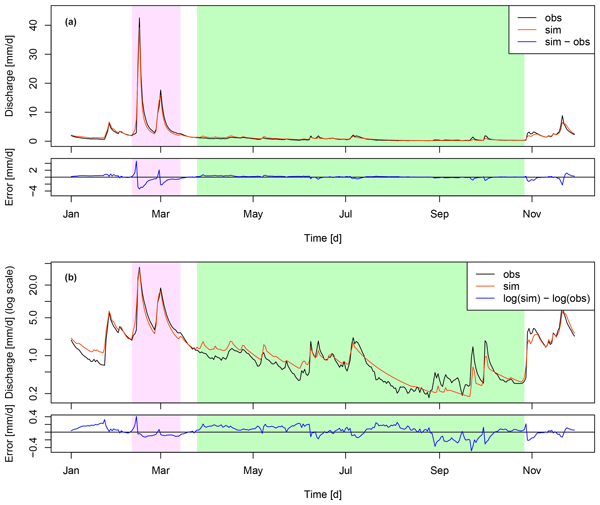
Guillaume Thirel, Léonard Santos, Olivier Delaigue, and Charles Perrin
Hydrol. Earth Syst. Sci., 28, 4837–4860, https://doi.org/10.5194/hess-28-4837-2024, https://doi.org/10.5194/hess-28-4837-2024, 2024
Short summary
Short summary
We discuss how mathematical transformations impact calibrated hydrological model simulations. We assess how 11 transformations behave over the complete range of streamflows. Extreme transformations lead to models that are specialized for extreme streamflows but show poor performance outside the range of targeted streamflows and are less robust. We show that no a priori assumption about transformations can be taken as warranted.
Peng Huang, Agnès Ducharne, Lucia Rinchiuso, Jan Polcher, Laure Baratgin, Vladislav Bastrikov, and Eric Sauquet
Hydrol. Earth Syst. Sci., 28, 4455–4476, https://doi.org/10.5194/hess-28-4455-2024, https://doi.org/10.5194/hess-28-4455-2024, 2024
Short summary
Short summary
We conducted a high-resolution hydrological simulation from 1959 to 2020 across France. We used a simple trial-and-error calibration to reduce the biases of the simulated water budget compared to observations. The selected simulation satisfactorily reproduces water fluxes, including their spatial contrasts and temporal trends. This work offers a reliable historical overview of water resources and a robust configuration for climate change impact analysis at the nationwide scale of France.
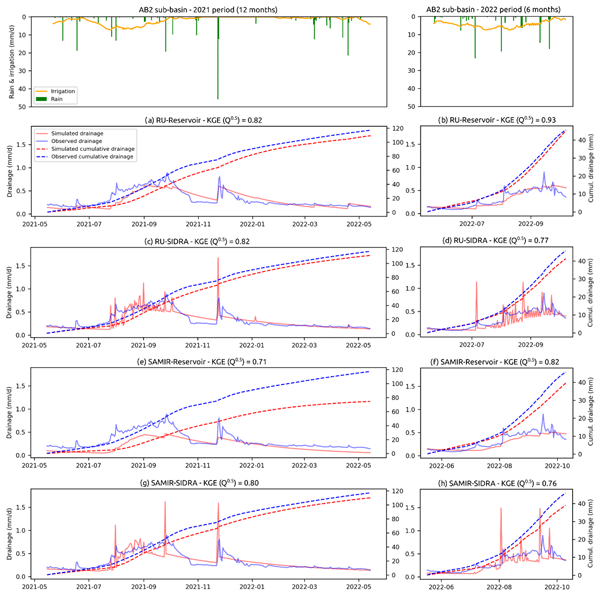
Pierre Laluet, Luis Olivera-Guerra, Víctor Altés, Vincent Rivalland, Alexis Jeantet, Julien Tournebize, Omar Cenobio-Cruz, Anaïs Barella-Ortiz, Pere Quintana-Seguí, Josep Maria Villar, and Olivier Merlin
Hydrol. Earth Syst. Sci., 28, 3695–3716, https://doi.org/10.5194/hess-28-3695-2024, https://doi.org/10.5194/hess-28-3695-2024, 2024
Short summary
Short summary
Monitoring agricultural drainage flow in irrigated areas is key to water and soil management. In this paper, four simple drainage models are evaluated on two irrigated sub-basins where drainage flow is measured daily. The evaluation of their precision shows that they simulate drainage very well when calibrated with drainage data and that one of them is slightly better. The evaluation of their accuracy shows that only one model can provide rough drainage estimates without calibration data.
Alexandre Devers, Jean-Philippe Vidal, Claire Lauvernet, Olivier Vannier, and Laurie Caillouet
Hydrol. Earth Syst. Sci., 28, 3457–3474, https://doi.org/10.5194/hess-28-3457-2024, https://doi.org/10.5194/hess-28-3457-2024, 2024
Short summary
Short summary
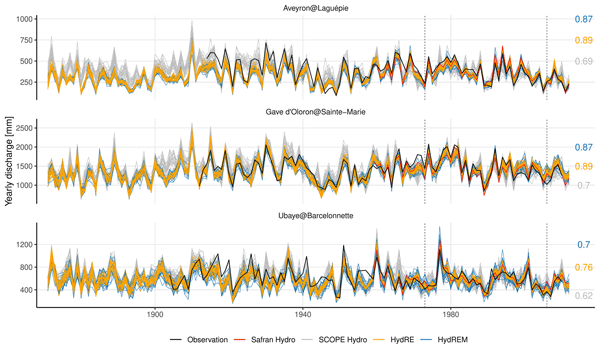
Daily streamflow series for 661 near-natural French catchments are reconstructed over 1871–2012 using two ensemble datasets: HydRE and HydREM. They include uncertainties coming from climate forcings, streamflow measurement, and hydrological model error (for HydrREM). Comparisons with other hydrological reconstructions and independent/dependent observations show the added value of the two reconstructions in terms of quality, uncertainty estimation, and representation of extremes.
Valentin Dura, Guillaume Evin, Anne-Catherine Favre, and David Penot
Hydrol. Earth Syst. Sci., 28, 2579–2601, https://doi.org/10.5194/hess-28-2579-2024, https://doi.org/10.5194/hess-28-2579-2024, 2024
Short summary
Short summary
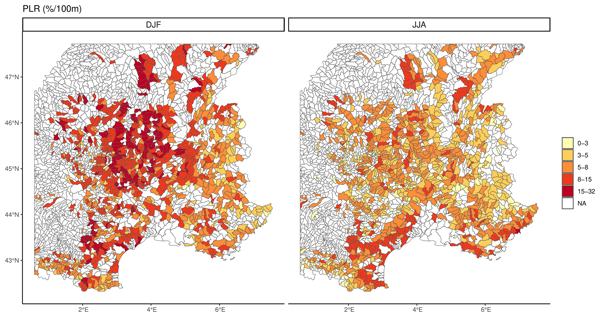
The increase in precipitation as a function of elevation is poorly understood in areas with complex topography. In this article, the reproduction of these orographic gradients is assessed with several precipitation products. The best product is a simulation from a convection-permitting regional climate model. The corresponding seasonal gradients vary significantly in space, with higher values for the first topographical barriers exposed to the dominant air mass circulations.

Thibault Hallouin, François Bourgin, Charles Perrin, Maria-Helena Ramos, and Vazken Andréassian
Geosci. Model Dev., 17, 4561–4578, https://doi.org/10.5194/gmd-17-4561-2024, https://doi.org/10.5194/gmd-17-4561-2024, 2024
Short summary
Short summary
The evaluation of the quality of hydrological model outputs against streamflow observations is widespread in the hydrological literature. In order to improve on the reproducibility of published studies, a new evaluation tool dedicated to hydrological applications is presented. It is open source and usable in a variety of programming languages to make it as accessible as possible to the community. Thus, authors and readers alike can use the same tool to produce and reproduce the results.

Caroline Legrand, Benoît Hingray, Bruno Wilhelm, and Martin Ménégoz
Hydrol. Earth Syst. Sci., 28, 2139–2166, https://doi.org/10.5194/hess-28-2139-2024, https://doi.org/10.5194/hess-28-2139-2024, 2024
Short summary
Short summary
Climate change is expected to increase flood hazard worldwide. The evolution is typically estimated from multi-model chains, where regional hydrological scenarios are simulated from weather scenarios derived from coarse-resolution atmospheric outputs of climate models. We show that two such chains are able to reproduce, from an atmospheric reanalysis, the 1902–2009 discharge variations and floods of the upper Rhône alpine river, provided that the weather scenarios are bias-corrected.
Ralph Bathelemy, Pierre Brigode, Vazken Andréassian, Charles Perrin, Vincent Moron, Cédric Gaucherel, Emmanuel Tric, and Dominique Boisson
Earth Syst. Sci. Data, 16, 2073–2098, https://doi.org/10.5194/essd-16-2073-2024, https://doi.org/10.5194/essd-16-2073-2024, 2024
Short summary
Short summary
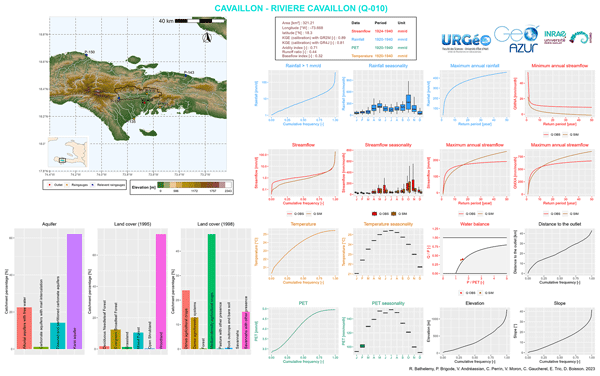
The aim of this work is to provide the first hydroclimatic database for Haiti, a Caribbean country particularly vulnerable to meteorological and hydrological hazards. The resulting database, named Simbi, provides hydroclimatic time series for around 150 stations and 24 catchment areas.
Maxime Jay-Allemand, Julie Demargne, Pierre-André Garambois, Pierre Javelle, Igor Gejadze, François Colleoni, Didier Organde, Patrick Arnaud, and Catherine Fouchier
Proc. IAHS, 385, 281–290, https://doi.org/10.5194/piahs-385-281-2024, https://doi.org/10.5194/piahs-385-281-2024, 2024
Short summary
Short summary
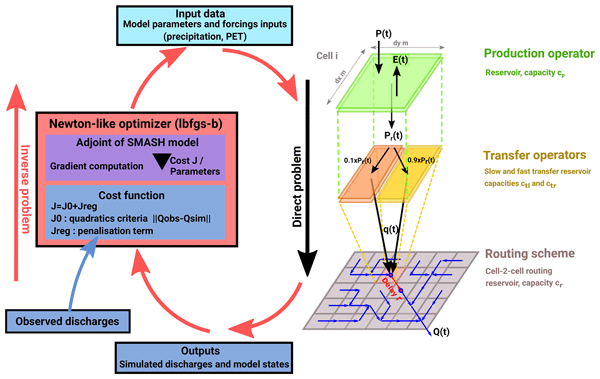
This work targets the improvement of a hydrologic model used for flash flood warnings. A gridded model is used to spatially describe the hydrological processes. We develop a method to estimate the best model setup based on scarce river flow observations. It uses a complex algorithm combined with geographical descriptors to generate gridded parameters that better capture catchment characteristics. Results are promising, improving the discharge estimations where no observations are available.
Sandra Lanini, Bernard Ladouche, Benoit Dewandel, Melissande Ibba, Vincent Bailly-Comte, and Marie Genevier
Proc. IAHS, 385, 275–279, https://doi.org/10.5194/piahs-385-275-2024, https://doi.org/10.5194/piahs-385-275-2024, 2024
Short summary
Short summary
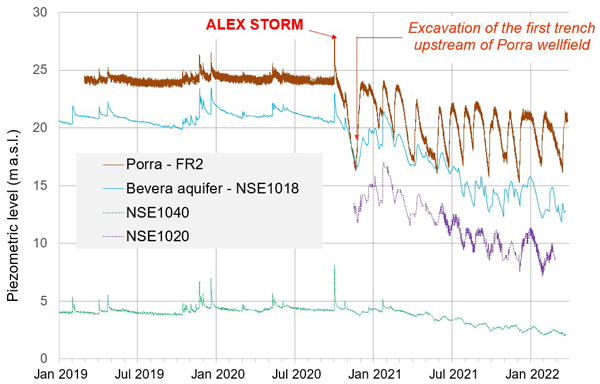
A monitoring network has been implemented to improve the understanding of the functioning of the Roya River alluvial aquifer. Data analysis proved the predominant role of surface water in the recharge of the aquifer. Following the storm Alex in October 2020, a general decrease of the piezometric levels was observed. It is explained by the changes in the river morphology and in the riverbed granulometry which limit the aquifer recharge by river water infiltration.
Cyril Thébault, Charles Perrin, Vazken Andréassian, Guillaume Thirel, Sébastien Legrand, and Olivier Delaigue
Hydrol. Earth Syst. Sci., 28, 1539–1566, https://doi.org/10.5194/hess-28-1539-2024, https://doi.org/10.5194/hess-28-1539-2024, 2024
Short summary
Short summary
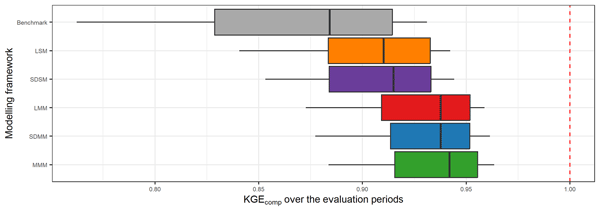
Streamflow forecasting is useful for many applications, ranging from population safety (e.g. floods) to water resource management (e.g. agriculture or hydropower). To this end, hydrological models must be optimized. However, a model is inherently wrong. This study aims to analyse the contribution of a multi-model approach within a variable spatial framework to improve streamflow simulations. The underlying idea is to take advantage of the strength of each modelling framework tested.
Nils Poncet, Philippe Lucas-Picher, Yves Tramblay, Guillaume Thirel, Humberto Vergara, Jonathan Gourley, and Antoinette Alias
Nat. Hazards Earth Syst. Sci., 24, 1163–1183, https://doi.org/10.5194/nhess-24-1163-2024, https://doi.org/10.5194/nhess-24-1163-2024, 2024
Short summary
Short summary
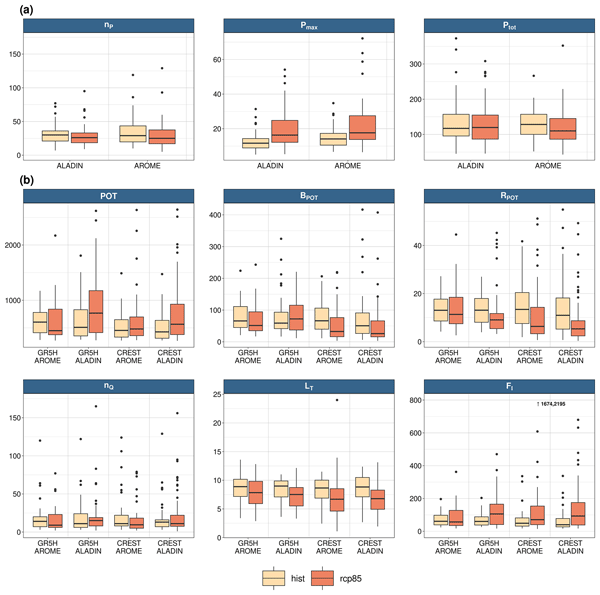
High-resolution convection-permitting climate models (CPMs) are now available to better simulate rainstorm events leading to flash floods. In this study, two hydrological models are compared to simulate floods in a Mediterranean basin, showing a better ability of the CPM to reproduce flood peaks compared to coarser-resolution climate models. Future projections are also different, with a projected increase for the most severe floods and a potential decrease for the most frequent events.
Pedro Felipe Arboleda-Obando, Agnès Ducharne, Zun Yin, and Philippe Ciais
Geosci. Model Dev., 17, 2141–2164, https://doi.org/10.5194/gmd-17-2141-2024, https://doi.org/10.5194/gmd-17-2141-2024, 2024
Short summary
Short summary
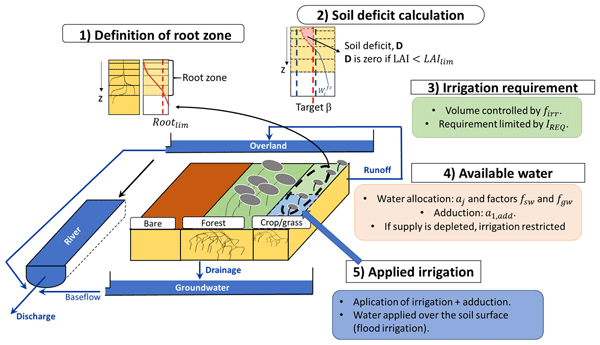
We show a new irrigation scheme included in the ORCHIDEE land surface model. The new irrigation scheme restrains irrigation due to water shortage, includes water adduction, and represents environmental limits and facilities to access water, due to representing infrastructure in a simple way. Our results show that the new irrigation scheme helps simulate acceptable land surface conditions and fluxes in irrigated areas, even if there are difficulties due to shortcomings and limited information.
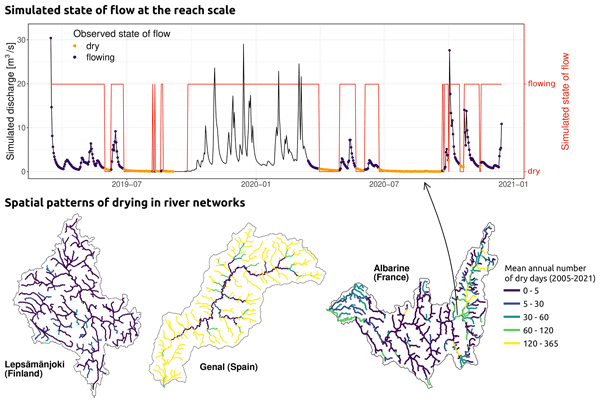
Louise Mimeau, Annika Künne, Flora Branger, Sven Kralisch, Alexandre Devers, and Jean-Philippe Vidal
Hydrol. Earth Syst. Sci., 28, 851–871, https://doi.org/10.5194/hess-28-851-2024, https://doi.org/10.5194/hess-28-851-2024, 2024
Short summary
Short summary
Modelling flow intermittence is essential for predicting the future evolution of drying in river networks and better understanding the ecological and socio-economic impacts. However, modelling flow intermittence is challenging, and observed data on temporary rivers are scarce. This study presents a new modelling approach for predicting flow intermittence in river networks and shows that combining different sources of observed data reduces the model uncertainty.
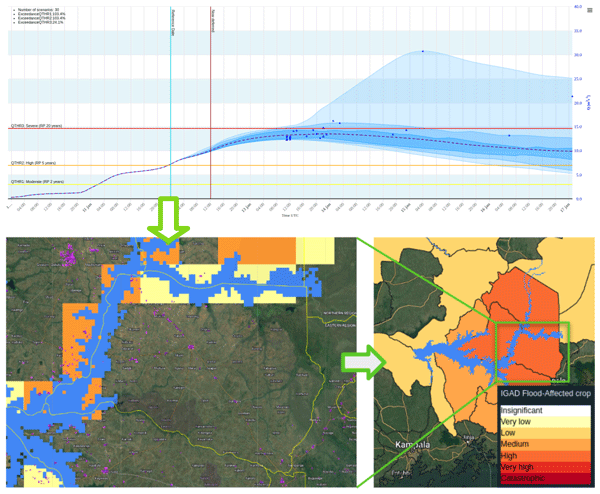
Lorenzo Alfieri, Andrea Libertino, Lorenzo Campo, Francesco Dottori, Simone Gabellani, Tatiana Ghizzoni, Alessandro Masoero, Lauro Rossi, Roberto Rudari, Nicola Testa, Eva Trasforini, Ahmed Amdihun, Jully Ouma, Luca Rossi, Yves Tramblay, Huan Wu, and Marco Massabò
Nat. Hazards Earth Syst. Sci., 24, 199–224, https://doi.org/10.5194/nhess-24-199-2024, https://doi.org/10.5194/nhess-24-199-2024, 2024
Short summary
Short summary
This work describes Flood-PROOFS East Africa, an impact-based flood forecasting system for the Greater Horn of Africa. It is based on hydrological simulations, inundation mapping, and estimation of population and assets exposed to upcoming river floods. The system supports duty officers in African institutions in the daily monitoring of hydro-meteorological disasters. A first evaluation shows the system performance for the catastrophic floods in the Nile River basin in summer 2020.
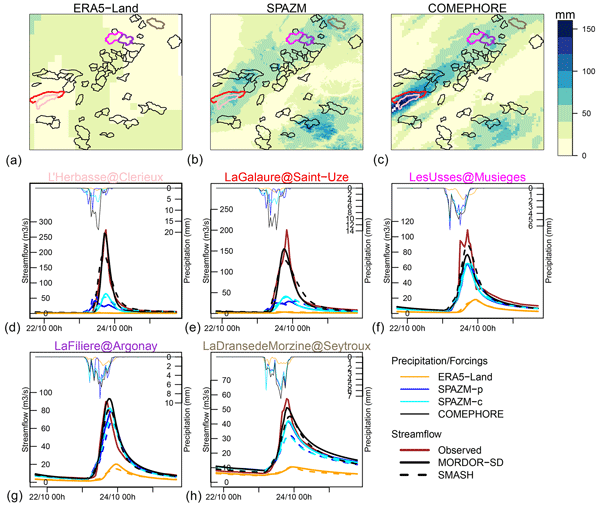
Guillaume Evin, Matthieu Le Lay, Catherine Fouchier, David Penot, Francois Colleoni, Alexandre Mas, Pierre-André Garambois, and Olivier Laurantin
Hydrol. Earth Syst. Sci., 28, 261–281, https://doi.org/10.5194/hess-28-261-2024, https://doi.org/10.5194/hess-28-261-2024, 2024
Short summary
Short summary
Hydrological modelling of mountainous catchments is challenging for many reasons, the main one being the temporal and spatial representation of precipitation forcings. This study presents an evaluation of the hydrological modelling of 55 small mountainous catchments of the northern French Alps, focusing on the influence of the type of precipitation reanalyses used as inputs. These evaluations emphasize the added value of radar measurements, in particular for the reproduction of flood events.
Samuel Morin, Hugues François, Marion Réveillet, Eric Sauquet, Louise Crochemore, Flora Branger, Étienne Leblois, and Marie Dumont
Hydrol. Earth Syst. Sci., 27, 4257–4277, https://doi.org/10.5194/hess-27-4257-2023, https://doi.org/10.5194/hess-27-4257-2023, 2023
Short summary
Short summary
Ski resorts are a key socio-economic asset of several mountain areas. Grooming and snowmaking are routinely used to manage the snow cover on ski pistes, but despite vivid debate, little is known about their impact on water resources downstream. This study quantifies, for the pilot ski resort La Plagne in the French Alps, the impact of grooming and snowmaking on downstream river flow. Hydrological impacts are mostly apparent at the seasonal scale and rather neutral on the annual scale.
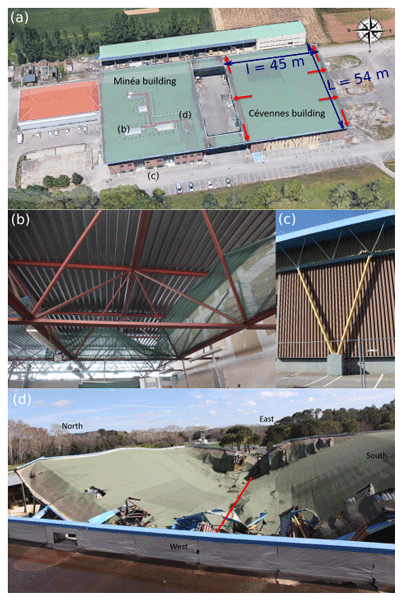
Isabelle Ousset, Guillaume Evin, Damien Raynaud, and Thierry Faug
Nat. Hazards Earth Syst. Sci., 23, 3509–3523, https://doi.org/10.5194/nhess-23-3509-2023, https://doi.org/10.5194/nhess-23-3509-2023, 2023
Short summary
Short summary
This paper deals with an exceptional snow and rain event in a Mediterranean region of France which is usually not prone to heavy snowfall and its consequences on a particular building that collapsed completely. Independent analyses of the meteorological episode are carried out, and the response of the building to different snow and rain loads is confronted to identify the main critical factors that led to the collapse.
Erwan Le Roux, Guillaume Evin, Raphaëlle Samacoïts, Nicolas Eckert, Juliette Blanchet, and Samuel Morin
The Cryosphere, 17, 4691–4704, https://doi.org/10.5194/tc-17-4691-2023, https://doi.org/10.5194/tc-17-4691-2023, 2023
Short summary
Short summary
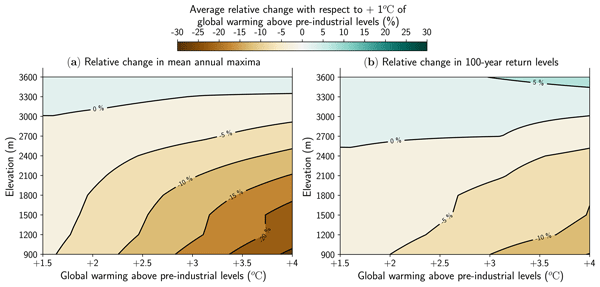
We assess projected changes in snowfall extremes in the French Alps as a function of elevation and global warming level for a high-emission scenario. On average, heavy snowfall is projected to decrease below 3000 m and increase above 3600 m, while extreme snowfall is projected to decrease below 2400 m and increase above 3300 m. At elevations in between, an increase is projected until +3 °C of global warming and then a decrease. These results have implications for the management of risks.
Julia Pfeffer, Anny Cazenave, Alejandro Blazquez, Bertrand Decharme, Simon Munier, and Anne Barnoud
Hydrol. Earth Syst. Sci., 27, 3743–3768, https://doi.org/10.5194/hess-27-3743-2023, https://doi.org/10.5194/hess-27-3743-2023, 2023
Short summary
Short summary
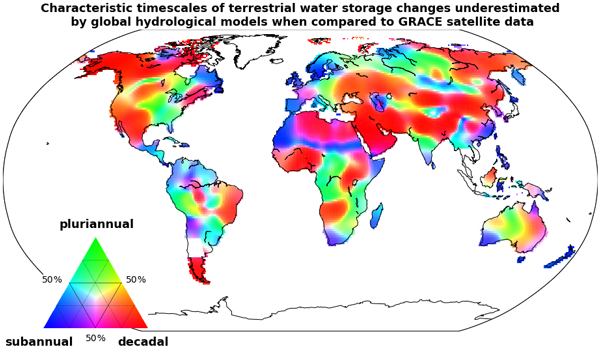
The GRACE (Gravity Recovery And Climate Experiment) satellite mission enabled the quantification of water mass redistributions from 2002 to 2017. The analysis of GRACE satellite data shows here that slow changes in terrestrial water storage occurring over a few years to a decade are severely underestimated by global hydrological models. Several sources of errors may explain such biases, likely including the inaccurate representation of groundwater storage changes.
Kaltrina Maloku, Benoit Hingray, and Guillaume Evin
Hydrol. Earth Syst. Sci., 27, 3643–3661, https://doi.org/10.5194/hess-27-3643-2023, https://doi.org/10.5194/hess-27-3643-2023, 2023
Short summary
Short summary
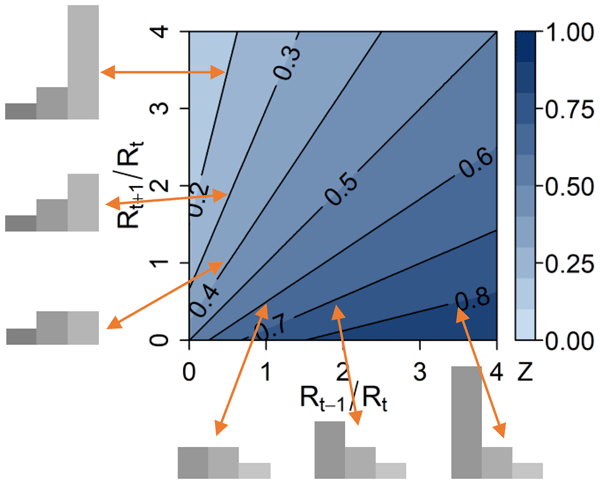
High-resolution precipitation data, needed for many applications in hydrology, are typically rare. Such data can be simulated from daily precipitation with stochastic disaggregation. In this work, multiplicative random cascades are used to disaggregate time series of 40 min precipitation from daily precipitation for 81 Swiss stations. We show that very relevant statistics of precipitation are obtained when precipitation asymmetry is accounted for in a continuous way in the cascade generator.
Juliette Blanchet, Alix Reverdy, Antoine Blanc, Jean-Dominique Creutin, Périne Kiennemann, and Guillaume Evin
Hydrol. Earth Syst. Sci. Discuss., https://doi.org/10.5194/hess-2023-197, https://doi.org/10.5194/hess-2023-197, 2023
Revised manuscript not accepted
Short summary
Short summary
The Alpine region is strongly affected by torrential floods, sometimes leading to severe negative impacts on society, economy, and the environment. Understanding such natural hazards and their drivers is essential to mitigate related risks. In this article we study the atmospheric conditions at the origin of damaging torrential events in the Northern French Alps over the long run, using a database of reported occurrence of damaging torrential flooding in the Grenoble conurbation since 1851.
Laurent Strohmenger, Eric Sauquet, Claire Bernard, Jérémie Bonneau, Flora Branger, Amélie Bresson, Pierre Brigode, Rémy Buzier, Olivier Delaigue, Alexandre Devers, Guillaume Evin, Maïté Fournier, Shu-Chen Hsu, Sandra Lanini, Alban de Lavenne, Thibault Lemaitre-Basset, Claire Magand, Guilherme Mendoza Guimarães, Max Mentha, Simon Munier, Charles Perrin, Tristan Podechard, Léo Rouchy, Malak Sadki, Myriam Soutif-Bellenger, François Tilmant, Yves Tramblay, Anne-Lise Véron, Jean-Philippe Vidal, and Guillaume Thirel
Hydrol. Earth Syst. Sci., 27, 3375–3391, https://doi.org/10.5194/hess-27-3375-2023, https://doi.org/10.5194/hess-27-3375-2023, 2023
Short summary
Short summary
We present the results of a large visual inspection campaign of 674 streamflow time series in France. The objective was to detect non-natural records resulting from instrument failure or anthropogenic influences, such as hydroelectric power generation or reservoir management. We conclude that the identification of flaws in flow time series is highly dependent on the objectives and skills of individual evaluators, and we raise the need for better practices for data cleaning.
Olivier Delaigue, Pierre Brigode, Guillaume Thirel, and Laurent Coron
Hydrol. Earth Syst. Sci., 27, 3293–3327, https://doi.org/10.5194/hess-27-3293-2023, https://doi.org/10.5194/hess-27-3293-2023, 2023
Short summary
Short summary
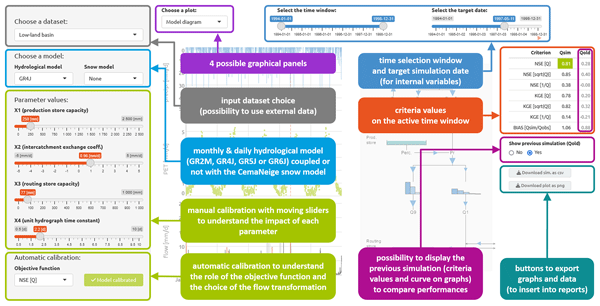
Teaching hydrological modeling is an important, but difficult, matter. It requires appropriate tools and teaching material. In this article, we present the airGRteaching package, which is an open-source software tool relying on widely used hydrological models. This tool proposes an interface and numerous hydrological modeling exercises representing a wide range of hydrological applications. We show how this tool can be applied to simple but real-life cases.
Yves Tramblay, Patrick Arnaud, Guillaume Artigue, Michel Lang, Emmanuel Paquet, Luc Neppel, and Eric Sauquet
Hydrol. Earth Syst. Sci., 27, 2973–2987, https://doi.org/10.5194/hess-27-2973-2023, https://doi.org/10.5194/hess-27-2973-2023, 2023
Short summary
Short summary
Mediterranean floods are causing major damage, and recent studies have shown that, despite the increase in intense rainfall, there has been no increase in river floods. This study reveals that the seasonality of floods changed in the Mediterranean Basin during 1959–2021. There was also an increased frequency of floods linked to short episodes of intense rain, associated with a decrease in soil moisture. These changes need to be taken into consideration to adapt flood warning systems.
Hanieh Seyedhashemi, Florentina Moatar, Jean-Philippe Vidal, and Dominique Thiéry
Earth Syst. Sci. Data, 15, 2827–2839, https://doi.org/10.5194/essd-15-2827-2023, https://doi.org/10.5194/essd-15-2827-2023, 2023
Short summary
Short summary
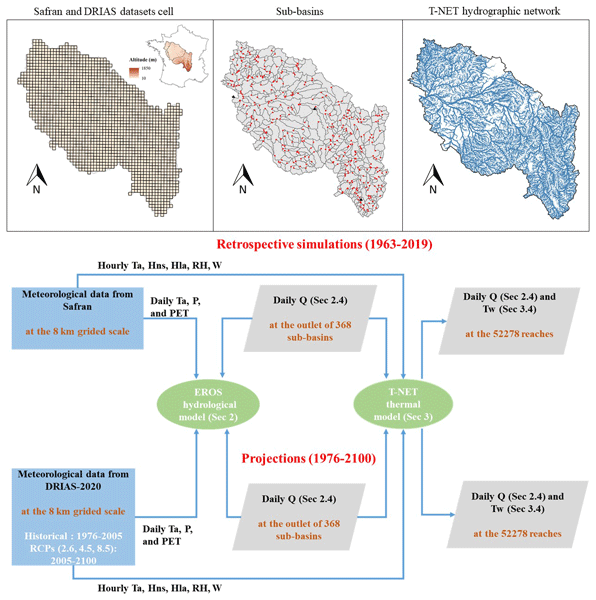
This paper presents a past and future dataset of daily time series of discharge and stream temperature for 52 278 reaches over the Loire River basin (100 000 km2) in France, using thermal and hydrological models. Past data are provided over 1963–2019. Future data are available over the 1976–2100 period under different future climate change models (warm and wet, intermediate, and hot and dry) and scenarios (optimistic, intermediate, and pessimistic).
Antoine Sobaga, Bertrand Decharme, Florence Habets, Christine Delire, Noële Enjelvin, Paul-Olivier Redon, Pierre Faure-Catteloin, and Patrick Le Moigne
Hydrol. Earth Syst. Sci., 27, 2437–2461, https://doi.org/10.5194/hess-27-2437-2023, https://doi.org/10.5194/hess-27-2437-2023, 2023
Short summary
Short summary
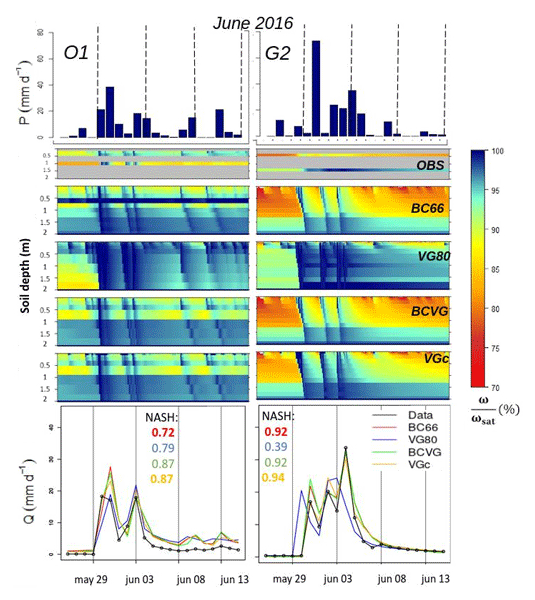
Seven instrumented lysimeters are used to assess the simulation of the soil water dynamic in one land surface model. Four water potential and hydraulic conductivity closed-form equations, including one mixed form, are evaluated. One form is more relevant for simulating drainage, especially during intense drainage events. The soil profile heterogeneity of one parameter of the closed-form equations is shown to be important.
Sammy Metref, Emmanuel Cosme, Matthieu Le Lay, and Joël Gailhard
Hydrol. Earth Syst. Sci., 27, 2283–2299, https://doi.org/10.5194/hess-27-2283-2023, https://doi.org/10.5194/hess-27-2283-2023, 2023
Short summary
Short summary
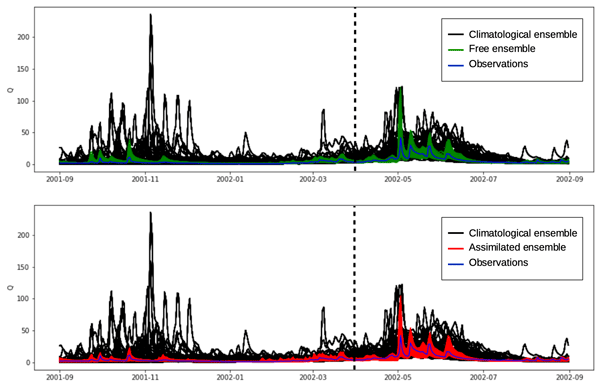
Predicting the seasonal streamflow supply of water in a mountainous basin is critical to anticipating the operation of hydroelectric dams and avoiding hydrology-related hazard. This quantity partly depends on the snowpack accumulated during winter. The study addresses this prediction problem using information from streamflow data and both direct and indirect snow measurements. In this study, the prediction is improved by integrating the data information into a basin-scale hydrological model.
Maxime Morel, Guillaume Piton, Damien Kuss, Guillaume Evin, and Caroline Le Bouteiller
Nat. Hazards Earth Syst. Sci., 23, 1769–1787, https://doi.org/10.5194/nhess-23-1769-2023, https://doi.org/10.5194/nhess-23-1769-2023, 2023
Short summary
Short summary
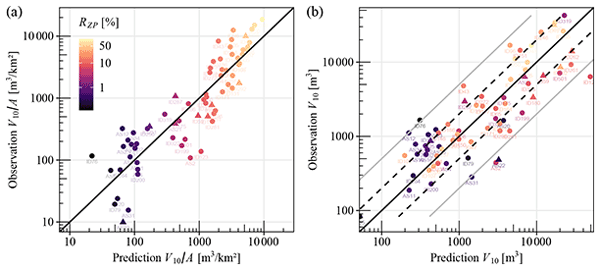
In mountain catchments, damage during floods is generally primarily driven by the supply of a massive amount of sediment. Predicting how much sediment can be delivered by frequent and infrequent events is thus important in hazard studies. This paper uses data gathered during the maintenance operation of about 100 debris retention basins to build simple equations aiming at predicting sediment supply from simple parameters describing the upstream catchment.
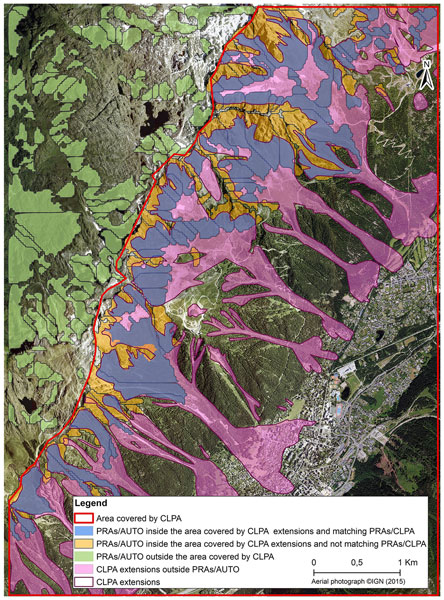
Cécile Duvillier, Nicolas Eckert, Guillaume Evin, and Michael Deschâtres
Nat. Hazards Earth Syst. Sci., 23, 1383–1408, https://doi.org/10.5194/nhess-23-1383-2023, https://doi.org/10.5194/nhess-23-1383-2023, 2023
Short summary
Short summary
This study develops a method that identifies individual potential release areas (PRAs) of snow avalanches based on terrain analysis and watershed delineation and demonstrates its efficiency in the French Alps context using an extensive cadastre of past avalanche limits. Results may contribute to better understanding local avalanche hazard. The work may also foster the development of more efficient PRA detection methods based on a rigorous evaluation scheme.
Alexandre Devers, Jean-Philippe Vidal, Claire Lauvernet, Olivier Vannier, and Laurie Caillouet
Hydrol. Earth Syst. Sci. Discuss., https://doi.org/10.5194/hess-2023-78, https://doi.org/10.5194/hess-2023-78, 2023
Publication in HESS not foreseen
Short summary
Short summary
The recent development of the a new meteorological dataset providing precipitation and temperature over France – FYRE Climate – has been transformed to streamflow time series over 1871–2012 through the used of a hydrological model. This led to the creation of the daily hydrological reconstructions called HyDRE and HyDRE. These two reconstructions are evaluated allow to better understand the variability of past hydrology over France.

Robert Vautard, Geert Jan van Oldenborgh, Rémy Bonnet, Sihan Li, Yoann Robin, Sarah Kew, Sjoukje Philip, Jean-Michel Soubeyroux, Brigitte Dubuisson, Nicolas Viovy, Markus Reichstein, Friederike Otto, and Iñaki Garcia de Cortazar-Atauri
Nat. Hazards Earth Syst. Sci., 23, 1045–1058, https://doi.org/10.5194/nhess-23-1045-2023, https://doi.org/10.5194/nhess-23-1045-2023, 2023
Short summary
Short summary
A deep frost occurred in early April 2021, inducing severe damages in grapevine and fruit trees in France. We found that such extreme frosts occurring after the start of the growing season such as those of April 2021 are currently about 2°C colder [0.5 °C to 3.3 °C] in observations than in preindustrial climate. This observed intensification of growing-period frosts is attributable, at least in part, to human-caused climate change, making the 2021 event 50 % more likely [10 %–110 %].

Malak Sadki, Simon Munier, Aaron Boone, and Sophie Ricci
Geosci. Model Dev., 16, 427–448, https://doi.org/10.5194/gmd-16-427-2023, https://doi.org/10.5194/gmd-16-427-2023, 2023
Short summary
Short summary
Predicting water resource evolution is a key challenge for the coming century.
Anthropogenic impacts on water resources, and particularly the effects of dams and reservoirs on river flows, are still poorly known and generally neglected in global hydrological studies. A parameterized reservoir model is reproduced to compute monthly releases in Spanish anthropized river basins. For global application, an exhaustive sensitivity analysis of the model parameters is performed on flows and volumes.
Juliette Blanchet, Alix Reverdy, Antoine Blanc, Jean-Dominique Creutin, Périne Kiennemann, and Guillaume Evin
Nat. Hazards Earth Syst. Sci. Discuss., https://doi.org/10.5194/nhess-2022-276, https://doi.org/10.5194/nhess-2022-276, 2023
Manuscript not accepted for further review
Short summary
Short summary
We study the atmospheric conditions at the origin of damaging torrential events in the Northern French Alps over the long run. We consider seven atmospheric variables that describe the nature of the air masses involved and the possible triggers of precipitation and we try to isolate the most discriminating variables. The results show that humidity and particularly humidity transport plays the greatest role under westerly flows while instability potential is mostly at play under southerly flows.
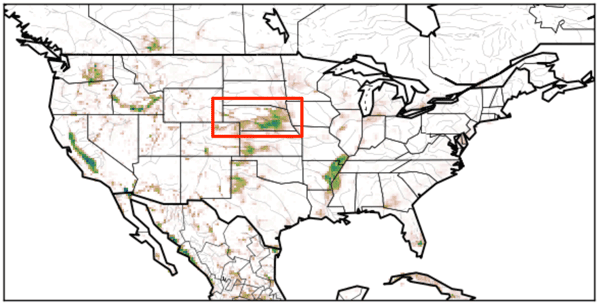
Arsène Druel, Simon Munier, Anthony Mucia, Clément Albergel, and Jean-Christophe Calvet
Geosci. Model Dev., 15, 8453–8471, https://doi.org/10.5194/gmd-15-8453-2022, https://doi.org/10.5194/gmd-15-8453-2022, 2022
Short summary
Short summary
Crop phenology and irrigation is implemented into a land surface model able to work at a global scale. A case study is presented over Nebraska (USA). Simulations with and without the new scheme are compared to different satellite-based observations. The model is able to produce a realistic yearly irrigation water amount. The irrigation scheme improves the simulated leaf area index, gross primary productivity, evapotransipiration, and land surface temperature.
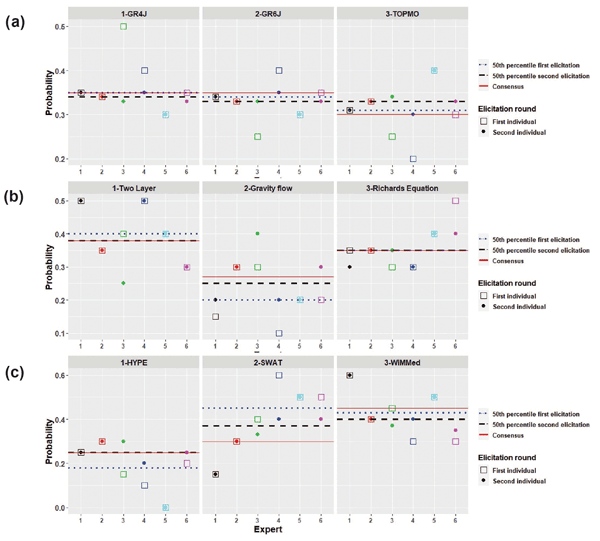
Eva Sebok, Hans Jørgen Henriksen, Ernesto Pastén-Zapata, Peter Berg, Guillaume Thirel, Anthony Lemoine, Andrea Lira-Loarca, Christiana Photiadou, Rafael Pimentel, Paul Royer-Gaspard, Erik Kjellström, Jens Hesselbjerg Christensen, Jean Philippe Vidal, Philippe Lucas-Picher, Markus G. Donat, Giovanni Besio, María José Polo, Simon Stisen, Yvan Caballero, Ilias G. Pechlivanidis, Lars Troldborg, and Jens Christian Refsgaard
Hydrol. Earth Syst. Sci., 26, 5605–5625, https://doi.org/10.5194/hess-26-5605-2022, https://doi.org/10.5194/hess-26-5605-2022, 2022
Short summary
Short summary
Hydrological models projecting the impact of changing climate carry a lot of uncertainty. Thus, these models usually have a multitude of simulations using different future climate data. This study used the subjective opinion of experts to assess which climate and hydrological models are the most likely to correctly predict climate impacts, thereby easing the computational burden. The experts could select more likely hydrological models, while the climate models were deemed equally probable.
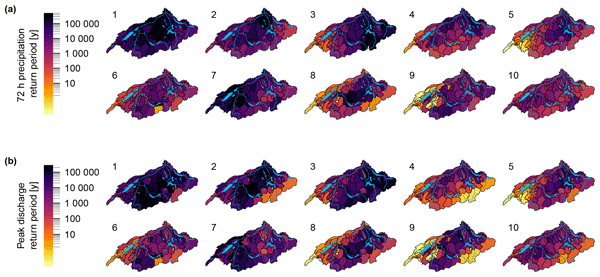
Daniel Viviroli, Anna E. Sikorska-Senoner, Guillaume Evin, Maria Staudinger, Martina Kauzlaric, Jérémy Chardon, Anne-Catherine Favre, Benoit Hingray, Gilles Nicolet, Damien Raynaud, Jan Seibert, Rolf Weingartner, and Calvin Whealton
Nat. Hazards Earth Syst. Sci., 22, 2891–2920, https://doi.org/10.5194/nhess-22-2891-2022, https://doi.org/10.5194/nhess-22-2891-2022, 2022
Short summary
Short summary
Estimating the magnitude of rare to very rare floods is a challenging task due to a lack of sufficiently long observations. The challenge is even greater in large river basins, where precipitation patterns and amounts differ considerably between individual events and floods from different parts of the basin coincide. We show that a hydrometeorological model chain can provide plausible estimates in this setting and can thus inform flood risk and safety assessments for critical infrastructure.
François Colleoni, Pierre-André Garambois, Pierre Javelle, Maxime Jay-Allemand, and Patrick Arnaud
EGUsphere, https://doi.org/10.5194/egusphere-2022-506, https://doi.org/10.5194/egusphere-2022-506, 2022
Preprint archived
Short summary
Short summary
This contribution presents the first evaluation of Variational Data Assimilation successfully applied over a large sample to the spatially distributed calibration of a newly taylored grid-based parsimonious model structure and corresponding adjoint. High performances are obtained in spatio-temporal validation and at flood time scales, especially for mediterranenan and oceanic catchments. Regional sensitivity analysis revealed the importance of the non conservative and production components.
Aurélien Beaufort, Jacob S. Diamond, Eric Sauquet, and Florentina Moatar
Hydrol. Earth Syst. Sci., 26, 3477–3495, https://doi.org/10.5194/hess-26-3477-2022, https://doi.org/10.5194/hess-26-3477-2022, 2022
Short summary
Short summary
We developed one of the largest stream temperature databases to calculate a simple, ecologically relevant metric – the thermal peak – that captures the magnitude of summer thermal extremes. Using statistical models, we extrapolated the thermal peak to nearly every stream in France, finding the hottest thermal peaks along large rivers without forested riparian zones and groundwater inputs. Air temperature was a poor proxy for the thermal peak, highlighting the need to grow monitoring networks.
Erwan Le Roux, Guillaume Evin, Nicolas Eckert, Juliette Blanchet, and Samuel Morin
Earth Syst. Dynam., 13, 1059–1075, https://doi.org/10.5194/esd-13-1059-2022, https://doi.org/10.5194/esd-13-1059-2022, 2022
Short summary
Short summary
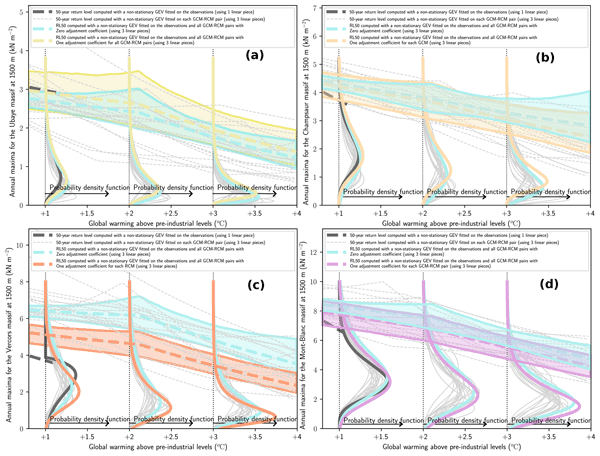
Anticipating risks related to climate extremes is critical for societal adaptation to climate change. In this study, we propose a statistical method in order to estimate future climate extremes from past observations and an ensemble of climate change simulations. We apply this approach to snow load data available in the French Alps at 1500 m elevation and find that extreme snow load is projected to decrease by −2.9 kN m−2 (−50 %) between 1986–2005 and 2080–2099 for a high-emission scenario.
Veit Blauhut, Michael Stoelzle, Lauri Ahopelto, Manuela I. Brunner, Claudia Teutschbein, Doris E. Wendt, Vytautas Akstinas, Sigrid J. Bakke, Lucy J. Barker, Lenka Bartošová, Agrita Briede, Carmelo Cammalleri, Ksenija Cindrić Kalin, Lucia De Stefano, Miriam Fendeková, David C. Finger, Marijke Huysmans, Mirjana Ivanov, Jaak Jaagus, Jiří Jakubínský, Svitlana Krakovska, Gregor Laaha, Monika Lakatos, Kiril Manevski, Mathias Neumann Andersen, Nina Nikolova, Marzena Osuch, Pieter van Oel, Kalina Radeva, Renata J. Romanowicz, Elena Toth, Mirek Trnka, Marko Urošev, Julia Urquijo Reguera, Eric Sauquet, Aleksandra Stevkov, Lena M. Tallaksen, Iryna Trofimova, Anne F. Van Loon, Michelle T. H. van Vliet, Jean-Philippe Vidal, Niko Wanders, Micha Werner, Patrick Willems, and Nenad Živković
Nat. Hazards Earth Syst. Sci., 22, 2201–2217, https://doi.org/10.5194/nhess-22-2201-2022, https://doi.org/10.5194/nhess-22-2201-2022, 2022
Short summary
Short summary
Recent drought events caused enormous damage in Europe. We therefore questioned the existence and effect of current drought management strategies on the actual impacts and how drought is perceived by relevant stakeholders. Over 700 participants from 28 European countries provided insights into drought hazard and impact perception and current management strategies. The study concludes with an urgent need to collectively combat drought risk via a European macro-level drought governance approach.
Antoine Sobaga, Bertrand Decharme, Florence Habets, Christine Delire, Noële Enjelvin, Paul-Olivier Redon, Pierre Faure-Catteloin, and Patrick Le Moigne
EGUsphere, https://doi.org/10.5194/egusphere-2022-274, https://doi.org/10.5194/egusphere-2022-274, 2022
Preprint archived
Short summary
Short summary
Seven instrumented lysimeters are used to assess the simulation of the soil water dynamic in one land surface model. Three water potential and hydraulic conductivity closed-form equations including one mixed form are evaluated. The mixed form is more relevant to simulate drainage especially during intense drainage events. Soil profile heterogeneity of one parameter of the closed-form equations is shown to be important.
Hanieh Seyedhashemi, Jean-Philippe Vidal, Jacob S. Diamond, Dominique Thiéry, Céline Monteil, Frédéric Hendrickx, Anthony Maire, and Florentina Moatar
Hydrol. Earth Syst. Sci., 26, 2583–2603, https://doi.org/10.5194/hess-26-2583-2022, https://doi.org/10.5194/hess-26-2583-2022, 2022
Short summary
Short summary
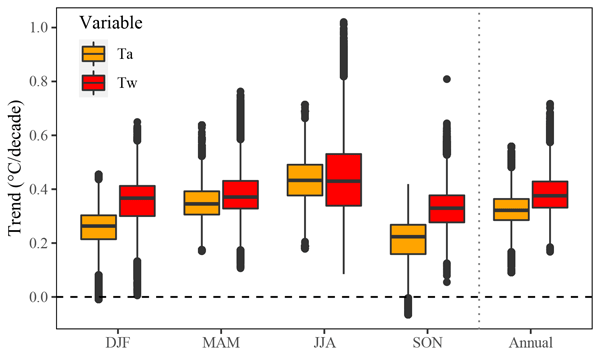
Stream temperature appears to be increasing globally, but its rate remains poorly constrained due to a paucity of long-term data. Using a thermal model, this study provides a large-scale understanding of the evolution of stream temperature over a long period (1963–2019). This research highlights that air temperature and streamflow can exert joint influence on stream temperature trends, and riparian shading in small mountainous streams may mitigate warming in stream temperatures.

Simon Munier and Bertrand Decharme
Earth Syst. Sci. Data, 14, 2239–2258, https://doi.org/10.5194/essd-14-2239-2022, https://doi.org/10.5194/essd-14-2239-2022, 2022
Short summary
Short summary
This paper presents a new global-scale river network at 1/12°, generated automatically and assessed over the 69 largest basins of the world. A set of hydro-geomorphological parameters are derived at the same spatial resolution, including a description of river stretches (length, slope, width, roughness, bankfull depth), floodplains (roughness, sub-grid topography) and aquifers (transmissivity, porosity, sub-grid topography). The dataset may be useful for hydrology modelling or climate studies.
Thibault Lemaitre-Basset, Ludovic Oudin, Guillaume Thirel, and Lila Collet
Hydrol. Earth Syst. Sci., 26, 2147–2159, https://doi.org/10.5194/hess-26-2147-2022, https://doi.org/10.5194/hess-26-2147-2022, 2022
Short summary
Short summary
Increasing temperature will impact evaporation and water resource management. Hydrological models are fed with an estimation of the evaporative demand of the atmosphere, called potential evapotranspiration (PE). The objectives of this study were (1) to compute the future PE anomaly over France and (2) to determine the impact of the choice of the method to estimate PE. Our results show that all methods present similar future trends. No method really stands out from the others.
Yves Tramblay and Pere Quintana Seguí
Nat. Hazards Earth Syst. Sci., 22, 1325–1334, https://doi.org/10.5194/nhess-22-1325-2022, https://doi.org/10.5194/nhess-22-1325-2022, 2022
Short summary
Short summary
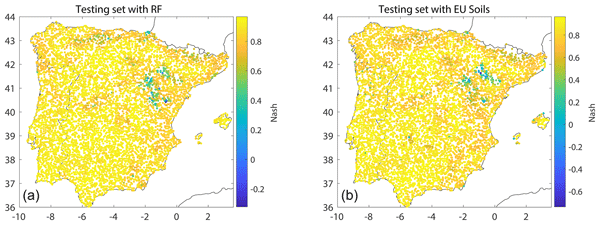
Monitoring soil moisture is important during droughts, but very few measurements are available. Consequently, land-surface models are essential tools for reproducing soil moisture dynamics. In this study, a hybrid approach allowed for regionalizing soil water content using a machine learning method. This approach proved to be efficient, compared to the use of soil property maps, to run a simple soil moisture accounting model, and therefore it can be applied in various regions.
Linh N. Luu, Robert Vautard, Pascal Yiou, and Jean-Michel Soubeyroux
Earth Syst. Dynam., 13, 687–702, https://doi.org/10.5194/esd-13-687-2022, https://doi.org/10.5194/esd-13-687-2022, 2022
Short summary
Short summary
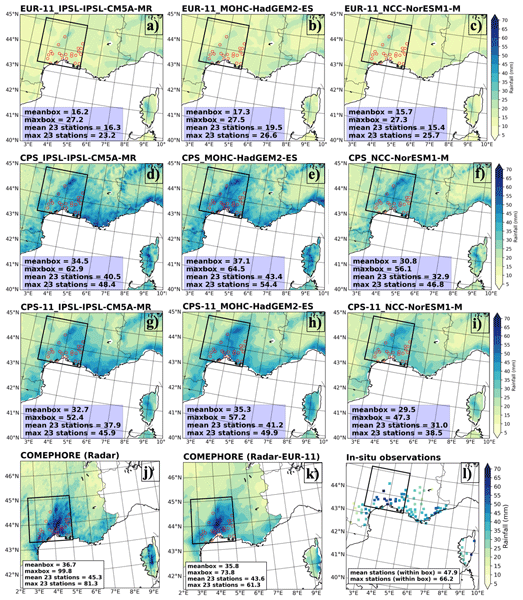
This study downscales climate information from EURO-CORDEX (approx. 12 km) output to a higher horizontal resolution (approx. 3 km) for the south of France. We also propose a matrix of different indices to evaluate the high-resolution precipitation output. We find that a higher resolution reproduces more realistic extreme precipitation events at both daily and sub-daily timescales. Our results and approach are promising to apply to other Mediterranean regions and climate impact studies.
Guillaume Evin, Samuel Somot, and Benoit Hingray
Earth Syst. Dynam., 12, 1543–1569, https://doi.org/10.5194/esd-12-1543-2021, https://doi.org/10.5194/esd-12-1543-2021, 2021
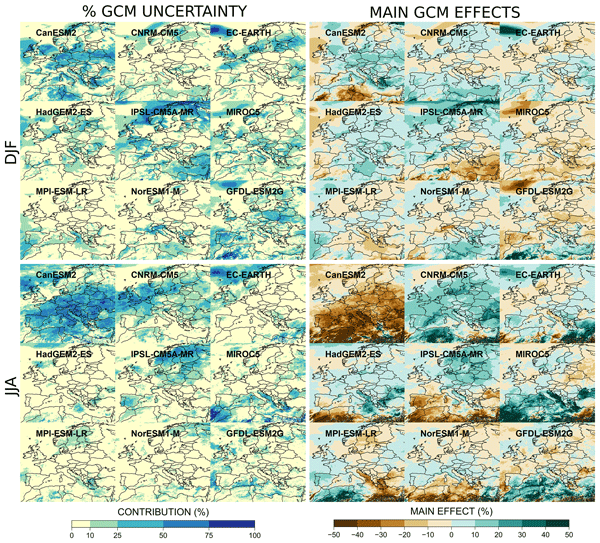
Short summary
Short summary
This research paper proposes an assessment of mean climate change responses and related uncertainties over Europe for mean seasonal temperature and total seasonal precipitation. An advanced statistical approach is applied to a large ensemble of 87 high-resolution EURO-CORDEX projections. For the first time, we provide a comprehensive estimation of the relative contribution of GCMs and RCMs, RCP scenarios, and internal variability to the total variance of a very large ensemble.
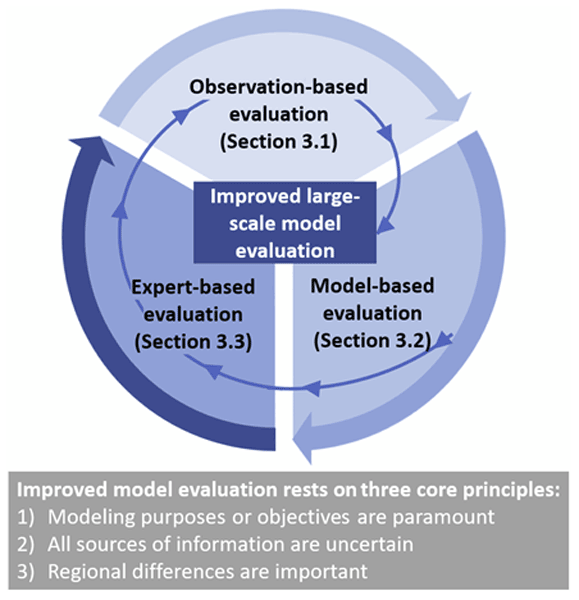
Tom Gleeson, Thorsten Wagener, Petra Döll, Samuel C. Zipper, Charles West, Yoshihide Wada, Richard Taylor, Bridget Scanlon, Rafael Rosolem, Shams Rahman, Nurudeen Oshinlaja, Reed Maxwell, Min-Hui Lo, Hyungjun Kim, Mary Hill, Andreas Hartmann, Graham Fogg, James S. Famiglietti, Agnès Ducharne, Inge de Graaf, Mark Cuthbert, Laura Condon, Etienne Bresciani, and Marc F. P. Bierkens
Geosci. Model Dev., 14, 7545–7571, https://doi.org/10.5194/gmd-14-7545-2021, https://doi.org/10.5194/gmd-14-7545-2021, 2021
Short summary
Short summary
Groundwater is increasingly being included in large-scale (continental to global) land surface and hydrologic simulations. However, it is challenging to evaluate these simulations because groundwater is
hiddenunderground and thus hard to measure. We suggest using multiple complementary strategies to assess the performance of a model (
model evaluation).
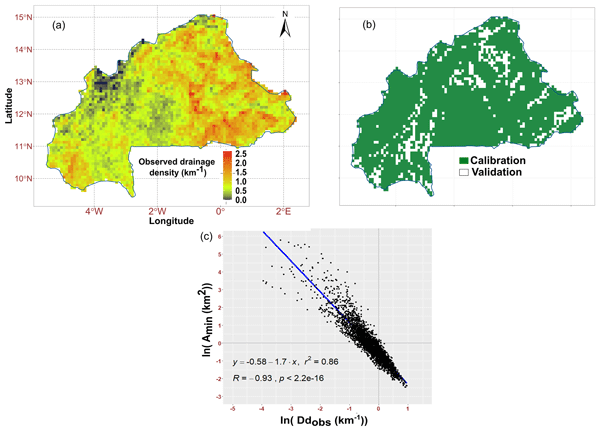
Axel P. Belemtougri, Agnès Ducharne, and Harouna Karambiri
Proc. IAHS, 384, 19–23, https://doi.org/10.5194/piahs-384-19-2021, https://doi.org/10.5194/piahs-384-19-2021, 2021
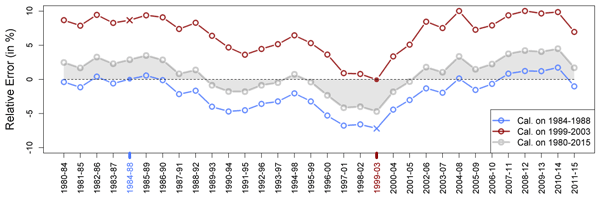
Paul Royer-Gaspard, Vazken Andréassian, and Guillaume Thirel
Hydrol. Earth Syst. Sci., 25, 5703–5716, https://doi.org/10.5194/hess-25-5703-2021, https://doi.org/10.5194/hess-25-5703-2021, 2021
Short summary
Short summary
Most evaluation studies based on the differential split-sample test (DSST) endorse the consensus that rainfall–runoff models lack climatic robustness. In this technical note, we propose a new performance metric to evaluate model robustness without applying the DSST and which can be used with a single hydrological model calibration. Our work makes it possible to evaluate the temporal transferability of any hydrological model, including uncalibrated models, at a very low computational cost.
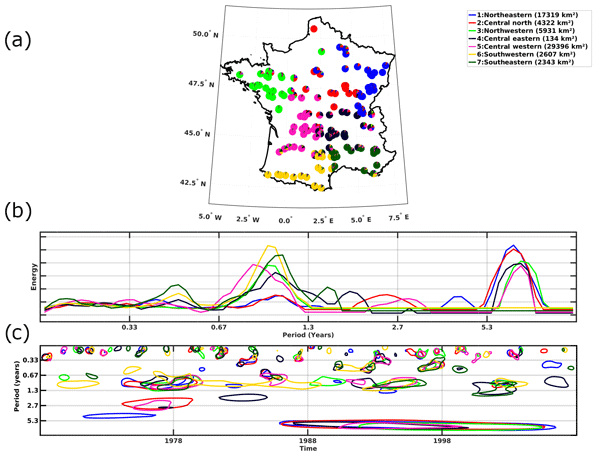
Manuel Fossa, Bastien Dieppois, Nicolas Massei, Matthieu Fournier, Benoit Laignel, and Jean-Philippe Vidal
Hydrol. Earth Syst. Sci., 25, 5683–5702, https://doi.org/10.5194/hess-25-5683-2021, https://doi.org/10.5194/hess-25-5683-2021, 2021
Short summary
Short summary
Hydro-climate observations (such as precipitation, temperature, and river discharge time series) reveal very complex behavior inherited from complex interactions among the physical processes that drive hydro-climate viability. This study shows how even small perturbations of a physical process can have large consequences on some others. Those interactions vary spatially, thus showing the importance of both temporal and spatial dimensions in better understanding hydro-climate variability.
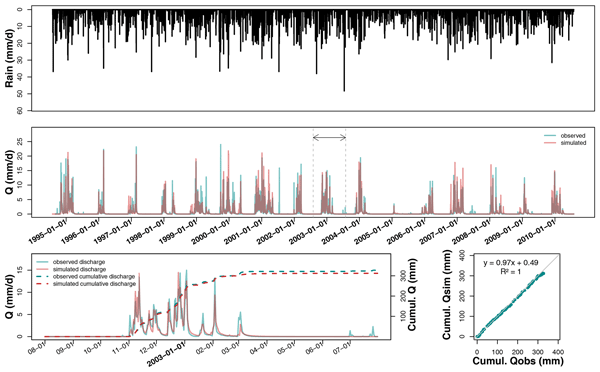
Alexis Jeantet, Hocine Henine, Cédric Chaumont, Lila Collet, Guillaume Thirel, and Julien Tournebize
Hydrol. Earth Syst. Sci., 25, 5447–5471, https://doi.org/10.5194/hess-25-5447-2021, https://doi.org/10.5194/hess-25-5447-2021, 2021
Short summary
Short summary
The hydrological subsurface drainage model SIDRA-RU is assessed at the French national scale, using a unique database representing the large majority of the French drained areas. The model is evaluated following its capacity to simulate the drainage discharge variability and the annual drained water balance. Eventually, the temporal robustness of SIDRA-RU is assessed to demonstrate the utility of this model as a long-term management tool.
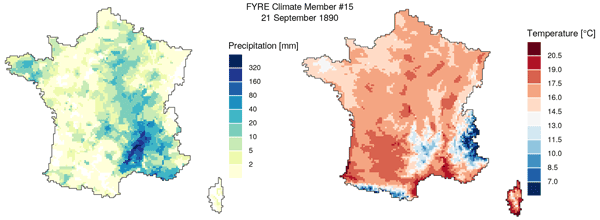
Alexandre Devers, Jean-Philippe Vidal, Claire Lauvernet, and Olivier Vannier
Clim. Past, 17, 1857–1879, https://doi.org/10.5194/cp-17-1857-2021, https://doi.org/10.5194/cp-17-1857-2021, 2021
Short summary
Short summary
This article presents FYRE Climate, a dataset providing daily precipitation and temperature spanning the 1871–2012 period at 8 km resolution over France. FYRE Climate has been obtained through the combination of daily and yearly observations and a gridded reconstruction already available through a statistical technique called data assimilation. Results highlight the quality of FYRE Climate in terms of both long-term variations and reproduction of extreme events.
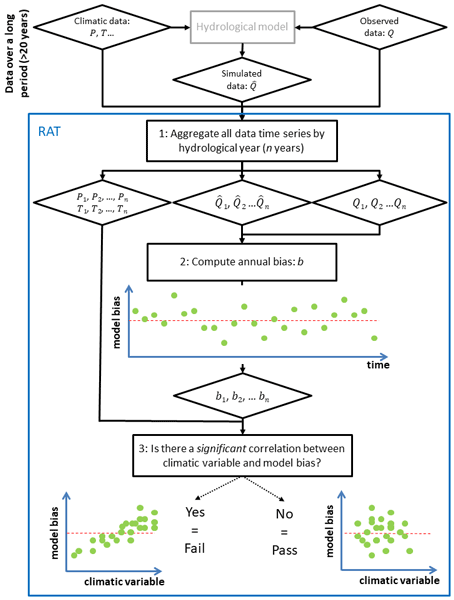
Pierre Nicolle, Vazken Andréassian, Paul Royer-Gaspard, Charles Perrin, Guillaume Thirel, Laurent Coron, and Léonard Santos
Hydrol. Earth Syst. Sci., 25, 5013–5027, https://doi.org/10.5194/hess-25-5013-2021, https://doi.org/10.5194/hess-25-5013-2021, 2021
Short summary
Short summary
In this note, a new method (RAT) is proposed to assess the robustness of hydrological models. The RAT method is particularly interesting because it does not require multiple calibrations (it is therefore applicable to uncalibrated models), and it can be used to determine whether a hydrological model may be safely used for climate change impact studies. Success at the robustness assessment test is a necessary (but not sufficient) condition of model robustness.

Guillaume Evin, Matthieu Lafaysse, Maxime Taillardat, and Michaël Zamo
Nonlin. Processes Geophys., 28, 467–480, https://doi.org/10.5194/npg-28-467-2021, https://doi.org/10.5194/npg-28-467-2021, 2021
Short summary
Short summary
Forecasting the height of new snow is essential for avalanche hazard surveys, road and ski resort management, tourism attractiveness, etc. Météo-France operates a probabilistic forecasting system using a numerical weather prediction system and a snowpack model. It provides better forecasts than direct diagnostics but exhibits significant biases. Post-processing methods can be applied to provide automatic forecasting products from this system.
Cited articles
Aissat, R., Pryet, A., Saltel, M., and Dupuy, A.: Comparison of Different Pilot Point Parameterization Strategies When Measurements Are Unevenly Distributed in Space, Hydrogeol. J., 31, 2381–2400. https://doi.org/10.1007/s10040-023-02737-z, 2023.
Allen, R. G., Pereira, L. S., Raes, D., and Smith, M.: Crop evapotranspiration – guidelines for computing crop water requirements. FAO Irrigation, drainage paper 56, Food Agriculture Organization, Rome, ISBN 92-5-104219-5, 1998.
Amraoui, N., Sbai, M. A., and Stollsteiner, P.: Assessment of Climate Change Impacts on Water Resources in the Somme River Basin (France), Water Resour. Manag., 33, 2073–2092, https://doi.org/10.1007/s11269-019-02230-x, 2019.
Bisselink, B., Bernhard, J., Gelati, E., Adamovic, M., Guenther, S., Mentaschi, L., Feyen, L., and de Roo, A.: Climate change and Europe's water resources, EUR 29951 EN, Publications Office of the European Union, Luxembourg, ISBN 978-92-76-10398-1, https://doi.org/10.2760/15553, 2020.
Bjarke, N., Livneh, B., and Barsugli, J.: Storylines for global hydrologic drought within CMIP6. Earth's Future, 12, e2023EF004117, https://doi.org/10.1029/2023EF004117, 2024.
Blöschl, G., Hall, J., Parajka, J., Perdigão, R. A. P., Merz, B., Arheimer, B., Aronica, G. T., Bilibashi, A., Bonacci, O., Borga, M., Čanjevac, I., Castellarin, A., Chirico, G.B., Claps, P., Fiala, K., Frolova, N., Gorbachova, L., Gül, A., Hannaford, J., Harrigan, S., Kireeva, M., Kiss, A., Kjeldsen, T. R., Kohnová, S., Koskela, J. J., Ledvinka, O., Macdonald, N., Mavrova-Guirguinova, M., Mediero, L., Merz, R., Molnar, P., Montanari, A., Murphy, C., Osuch, M., Ovcharuk, V., Radevski, I., Rogger, M., Salinas, J. L., Sauquet, E., Šraj, M., Szolgay, J., Viglione, A., Volpi, E., Wilson, D., Zaimi, K., and Živković, N.: Changing climate shifts timing of European floods, Science, 357, 588–590, https://doi.org10.1126/science.aan2506, 2017.
Boucher, O., Servonnat, J., Albright, A. L., Aumont, O., Balkanski, Y., Bastrikov, V., Bekki, S., Bonnet, R., Bony, S., Bopp, L., Braconnot, P., Brockmann, P., Cadule, P., Caubel, A., Cheruy, F., Codron, F., Cozic, A., Cugnet, D., D'Andrea, F., Davini, P., de Lavergne, C., Denvil, S., Deshayes, J., Devilliers, M., Ducharne, A., Dufresne, J.-L., Dupont, E., Ethe, C., Fairhead, L., Falletti, L., Flavoni, S., Foujols, M.-A., Gardoll, S., Gastineau, G., Ghattas, J., Grandpeix, J.-Y., Guenet, B., Guez, Lionel, E., Guilyardi, E., Guimberteau, M., Hauglustaine, D., Hourdin, F., Idelkadi, A., Joussaume, S., Kageyama, M., Khodri, M., Krinner, G., Lebas, N., Levavasseur, G., Levy, C., Li, L., Lott, F., Lurton, T., Luyssaert, S., Madec, G., Madeleine, J.-B., Maignan, F., Marchand,M., Marti, O., Mellul, L., Meurdesoif, Y., Mignot, J., Musat, I., Ottle, C., Peylin, P., Planton, Y., Polcher, J., Rio, C., Rochetin, N., Rousset, C., Sepulchre, P., Sima, A., Swingedouw, D., Thieblemont, R., Traore, A. K., Vancoppenolle,M., Vial, J., Vialard, J., Viovy, N., and Vuichard, N.: Presentation and Evaluation of the IPSL-CM6A-LR Climate Model, J. Adv. Model. Earth Syst., 12, e2019MS002010, https://doi.org/10.1029/2019MS002010, 2020.
Caballero, Y., Lanini, S., Le Cointe, P., Pinson, S., Hevin, G., Jódar, J., Lambán, J., Zabaleta, A., Antigüedad, I., and Beguería, S.: Groundwater recharge and groundwater water resources under present and future climate over the Pyrenees (France, Spain, Andorre), EGU General Assembly 2021, online, 19–30 Apr 2021, EGU21-16471, https://doi.org/10.5194/egusphere-egu21-16471, 2021.
Carroget, A., Perrin, C., Sauquet, E., Vidal, J.-P., Chazot, S., Rouchy, N., and Chauveau, M.: Explore 2070 : quelle utilisation d'un exercice prospectif sur les impacts des changements climatiques à l'échelle nationale pour définir des stratégies d'adaptation ?, Sci. Eaux Terr., 22, 4–11, https://doi.org/10.14758/set-revue.2017.22.02, 2017.
Chauveau, M., Chazot S., Perrin C., Bourgin P.-Y., Sauquet E., Vidal J.-P., Rouchy N., Martin E., David J., Norotte T., Maugis P., and De Lacaze X.: Quels impacts des changements climatiques sur les eaux de surface en France à l'horizon 2070 ?, La Houille Blanche, 4, 5–15, https://doi.org/10.1051/lhb/2013027, 2013.
Clemenzi, I., Du, Y., and Pechlivanidis, I.: Attributing European runoff changes to climatic drivers under future conditions, J. Hydrol., 668, 134794, https://doi.org/10.1016/j.jhydrol.2025.134794, 2026.
Coppola, E., Nogherotto, R., Ciarlò, J. M., Giorgi, F., van Meijgaard, E., Kadygrov, N., Iles, C., Corre, L., Sandstad, M., Somot, S., Nabat, P., Vautard, R., Levavasseur, G., Schwingshackl, C., Sillmann, J., Kjellström, E., Nikulin, G., Aalbers, E., Lenderink, G., Christensen O. B., Boberg, F., Sørland, S. L., Demory, M.-E., Bülow, K., Teichmann, C., Warrach-Sagi, K., and Wulfmeyer, V.: Assessment of the European Climate Projections as Simulated by the Large EURO-CORDEX Regional and Global Climate Model Ensemble, J. Geophys. Res.-Atmos., 126, e2019JD032356, https://doi.org/10.1029/2019JD032356, 2021.
Corre, L., Ribes, A., Bernus, S., Drouin, A., Morin, S., and Soubeyroux, J.-M.: Using regional warming levels to describe future climate change for services and adaptation: Application to the French reference trajectory for adaptation, Clim. Ser., 38, 100553, https://doi.org/10.1016/j.cliser.2025.100553, 2025.
Dayon, G., Boé, J., Martin, E., and Gailhard, J.: Impacts of climate change on the hydrological cycle over France and associated uncertainties, Comp. Rendus Geosci., 350, 141–153, https://doi.org/10.1016/j.crte.2018.03.001, 2018.
Decharme, B., Delire, C., Minvielle, M., and Colin, J.: Recent changes in the ISBA-CTRIP land surface system for using in the CNRM-CM6 climate model and in global off-line hydrological applications, J. Adv. Model. Earth Syst., 1, 1–92, https://doi.org/10.1029/2018MS001545, 2019.
de Lavenne, A., Andréassian, V., Thirel, G., Ramos, M.-H., and Perrin, C.: A regularization approach to improve the sequential calibration of a semi-distributed hydrological model, Water Resour. Res., 55, 8821–8839, https://doi.org/10.1029/2018WR024266, 2019.
Di Sante, F., Coppola, E., and Giorgi, F.: Projections of river floods in Europe using EURO-CORDEX, CMIP5 and CMIP6 simulations, Int. J. Climatol., 41, 3203–3221, https://doi.org/10.1002/joc.7014, 2021.
Evin, G., Hingray, B., Thirel, G., Ducharne, A., Strohmenger, L., Corre, L., Tramblay, Y., Vidal, J.-P., Bonneau, J., Colleoni, F., Gailhard, J., Habets, F., Hendrickx, F., Héraut, L., Huang, P., Le Lay, M., Magand, C., Marson, P., Monteil, C., Munier, S., Reverdy, A., Soubeyroux, J.-M., Robin, Y., Vergnes, J.-P., Vrac, M., and Sauquet, E.: Uncertainty sources in a large ensemble of hydrological projections: Regional Climate Models and Internal Variability matter, EGUsphere [preprint], https://doi.org/10.5194/egusphere-2025-2727, 2025.
Evin, G., Hingray, B., Thirel, G., Ducharne, A., Strohmenger, L., Corre, L., Tramblay, Y., Vidal, J.-P., Bonneau, J., Colleoni, F., Gailhard, J., Habets, F., Hendrickx, F., Héraut, L., Huang, P., Le Lay, M., Magand, C., Marson, P., Monteil, C., Munier, S., Reverdy, A., Soubeyroux, J.-M., Robin, Y., Vergnes, J.-P., Vrac, M., and Sauquet, E.: Uncertainty sources in a large ensemble of hydrological projections: Regional Climate Models and Internal Variability matter, Hydrol. Earth Syst. Sci., 30, 1023–1051, https://doi.org/10.5194/hess-30-1023-2026, 2026
Garavaglia, F., Le Lay, M., Gottardi, F., Garçon, R., Gailhard, J., Paquet, E., and Mathevet, T.: Impact of model structure on flow simulation and hydrological realism: from a lumped to a semi distributed approach, Hydrol. Earth Syst. Sci., 21, 3937–3952, https://doi.org/10.5194/hess-21-3937-2017, 2017.
Gibson, P. B., Rampal, N., Dean, S. M., and Morgenstern, O.: Storylines for future projections of precipitation over New Zealand in CMIP6 models, J. Geophys. Res.-Atmos., 129, e2023JD039664, https://doi.org/10.1029/2023JD039664, 2024.
Goulard, F., Rebillard J.-P., and Bourguetou G.: The adaptation plan to climate change in the Adour-Garonne basin: planning to reduce territories' vulnerability (in French), Dynam. Environ., 43/44, 269–281, https://doi.org/10.4000/dynenviron.5320, 2019.
Greve, P., Burek, P., Guillaumot, L., van Meijgaard, E., Aalbers, E., Smilovic, M., Sperna-Weiland, F., Kahil, T., and Wada, Y.: Low flow sensitivity to water withdrawals in Central and Southwestern Europe under 2 K global warming, Environ. Res. Lett., 18, e094020, 10.1088/1748-9326/acec60, 2023.
Gupta, H. V., Kling, H., Yilmaz, K. K., and Martinez, G. F.: Decomposition of the mean squared error and NSE performance criteria: Implications for improving hydrological modelling, J. Hydrol., 377, 80–91, https://doi.org/10.1016/j.jhydrol.2009.08.003, 2009.
Hannaford, J., Mackay, J. D., Ascott, M., Bell, V. A., Chitson, T., Cole, S., Counsell, C., Durant, M., Jackson, C. R., Kay, A. L., Lane, R. A., Mansour, M., Moore, R., Parry, S., Rudd, A. C., Simpson, M., Facer-Childs, K., Turner, S., Wallbank, J. R., Wells, S., and Wilcox, A.: The enhanced future Flows and Groundwater dataset: development and evaluation of nationally consistent hydrological projections based on UKCP18, Earth Syst. Sci. Data, 15, 2391–2415, https://doi.org/10.5194/essd-15-2391-2023, 2023.
Hargreaves, G. H. and Samani, Z. A.: Reference Crop Evapotranspiration from Temperature, Appl. Eng. Agr., 1, 96–99, https://doi.org/10.13031/2013.26773, 1985.
Hingray, B., Blanchet, J., Evin, G., and Vidal, J.-P.: Uncertainty components estimates in transient climate projections. Precision of estimators in the single time and time series approaches, Clim. Dynam. 53, 2501–2516, https://doi.org/10.1007/s00382-019-04635-1, 2019.
IPCC: Climate Change 2007: Synthesis Report. Contribution of Working Groups I, II and III to the Fourth Assessment Report of the Intergovernmental Panel on Climate Change, edited by: Core Writing Team, Pachauri, R. K., and Reisinger, A., IPCC, Geneva, Switzerland, 104 pp., ISBN 92-9169-122-4, 2007.
IPCC: Summary for Policymakers, in: Climate Change 2021: The Physical Science Basis. Contribution of Working Group I to the Sixth Assessment Report of the Intergovernmental Panel on 30 Climate Change, edited by: Masson-Delmotte, V., Zhai, P., Pirani, A., Connors, S. L., Péan, C., Berger, S., Caud, N., Chen, Y., Goldfarb, L., Gomis, M. I., Huang, M., Leitzell, K., Lonnoy, E., Matthews, J. B. R., Maycock, T. K., Waterfield, T., Yelekçi, O., Yu, R., and Zhou, B., Cambridge University Press, 35 Cambridge, United Kingdom and New York, NY, USA, 3–32, https://doi.org/10.1017/9781009157896.001, 2021.
Jaouen, T., Benoit, L., Héraut, L., and Sauquet, E.: Are rivers becoming more intermittent in France? Learning from an extended set of climate projections based on the Coupled Model Intercomparison Project phase 5 (CMIP5), Hydrol. Earth Syst. Sci., 29, 3629–3671, https://doi.org/10.5194/hess-29-3629-2025, 2025.
Jay-Allemand, M., Javelle, P., Gejadze, I., Arnaud, P., Malaterre, P.-O., Fine, J.-A., and Organde, D.: On the potential of variational calibration for a fully distributed hydrological model: application on a Mediterranean catchment, Hydrol. Earth Syst. Sci., 24, 5519–5538, https://doi.org/10.5194/hess-24-5519-2020, 2020.
Jeantet, A., Vergnes, J.-P., Munier, S., and Habets, F.: Climate change impacts on groundwater simulated using the AquiFR modelling platform, EGUsphere [preprint], https://doi.org/10.5194/egusphere-2025-93, 2025.
Krause, P., Bäse, F., Bende-Michl, U., Fink, M., Flügel, W., and Pfennig, B.: Multiscale investigations in a mesoscale catchment–hydrological modelling in the Gera catchment, Adv. Geosci., 9, 53–61, https://doi.org/10.5194/adgeo-9-53-2006, 2006.
Lemaitre-Basset, T., Thirel, G., Oudin, L., and Dorchies, D.: Water use scenarios versus climate change: Investigating future water management of the French part of the Moselle, J. Hydrol.-Reg. Stud., 54, 101855, https://doi.org/10.1016/j.ejrh.2024.101855, 2024.
Le Moigne, P., Besson, F., Martin, E., Boé, J., Boone, A., Decharme, B., Etchevers, P., Faroux, S., Habets, F., Lafaysse, M., Leroux, D., and Rousset-Regimbeau, F.: The latest improvements with SURFEX v8.0 of the Safran-Isba-Modcou hydrometeorological model for France, Geosci. Model Dev. 13, 3925–3946, https://doi.org/10.5194/gmd-13-3925-2020, 2020.
Lhuissier, L., Lamblin, V., Sauquet, E., Arama, Y., Goulard, F., and Strosser, P.: Retour sur l'étude prospective Garonne 2050, La Houille Blanche, 102, 30–35, https://doi.org/10.1051/lhb/2016057, 2016.
Magand, C., Ducharne, A., Tilmant, F., Le Moine, N., Sauquet, E., Mathevet, T., Vidal, J.-P., and Perrin C.: Building hybrid near-surface reanalysis adapted to mountainous regions: example of the DuO product over the Durance basin, France, La Houille Blanche, 3, 77–85, https://doi.org/10.1051/lhb/2018035, 2018.
Mardhel, V. and Normand, M.: Mise en oeuvre de la DCE. Identification et délimitation des masses d'eau souterraine, Mise à jour 2005, Tech. report, BRGM/RP 54605-FR, http://infoterre.brgm.fr/rapports/RP-54605-FR.pdf (last access: 1 April 2026), 2006.
Marson, P., Soubeyroux, J.-M., Corre, L., Samacoïts, R., Sauquet, E., Robin, Y., and Vrac, M.: The Explore2-2022 climate projections dataset for impact studies over France, Data in brief, 66, 112659, https://doi.org/10.1016/j.dib.2026.112659, 2026.
McSweeney, C. F., Jones, R. G., Lee, R. W., and Rowell, D. P.: Selecting CMIP5 GCMs for downscaling over multiple regions, Clim. Dynam., 44, 3237–3260, 2015.
Michelangeli, P.-A., Vrac, M., and Loukos, H.: Probabilistic downscaling approaches: Application to wind cumulative distribution functions, Geophys. Res. Lett., 36, L11708, https://doi.org/10.1029/2009GL038401, 2009.
Morel, M., Pella, H., Branger, F., Sauquet, E., Grenouillet, G., Côte, J., Braud, I., and Lamouroux, N.: Catchment-scale applications of hydraulic habitat models: Climate change effects on fish, Ecohydrology, e2513, https://doi.org/10.1002/eco.2513, 2022.
Nicolle, P., Andréassian, V., Royer-Gaspard, P., Perrin, C., Thirel, G., Coron, L., and Santos, L.: Technical note: RAT – a robustness assessment test for calibrated and uncalibrated hydrological models, Hydrol. Earth Syst. Sci., 25, 5013–5027, https://doi.org/10.5194/hess-25-5013-2021, 2021.
Quintana-Seguí, P., Le Moigne, P., Durand, Y., Martin, E., Habets, F., Baillon, M., Canella, C., Franchisteguy, L., and Morel, S: Analysis of near‐surface atmospheric variables: Validation of the SAFRAN analysis over France, J. Appl. Meteorol. Climatol., 47, 92–107, https://doi.org/10.1175/2007JAMC1636.1, 2008.
Robelin, O., Lanini, S., Caballero, Y., and Sauquet, E.: RECHARGE, a model of aquifer potential recharge applied to mainland France, J. Hydrol. Pt. C, , 664, 134631, https://doi.org/10.1016/j.jhydrol.2025.134631, 2026.
Rouhier, L., Le Lay, M., Garavaglia, F., Le Moine, N., Hendrickx, F., Monteil, C., and Ribstein, P.: Impact of mesoscale spatial variability of climatic inputs and parameters on the hydrological response, J. Hydrol., 553, 13–25, https://doi.org/10.1016/j.jhydrol.2017.07.037, 2017.
Sankarasubramanian, A., Vogel, R. M., and Limbrunner, J. F.: Climate elasticity of streamflow in the United States, Water Resour. Res., 37, 1771–1781, https://doi.org/10.1029/2000WR900330, 1991.
Sauquet, E., Héraut, L., Bonneau, J., Reverdy, A., Strohmenger, L., and Vidal, J.-P.: Diagnostic des modèles hydrologiques : Des données aux résultats, Tech. report, https://doi.org/10.57745/S6PQXD, 2024.
Sauquet, E, Evin, G., Siauve, S., Aissat, R., Arnaud., P., Bérel, M., Bonneau, J., Branger, F., Caballero, Y., Colléoni, F., Ducharne, A., Gailhard, J., Garambois, P.-A., Habets, F., Hendrickx, F., Héraut, L., Hingray, B., Huang, P., Jaouen, T., Jeantet, A., Lanini, S., Le Lay, M., Magand, C., Mimeau, L., Monteil, C., Munier, S., Perrin, C., Robelin, O., Rousset, F., Soubeyroux, J.-M., Strohmenger, L., Thirel, G., Tocquer, F., Tramblay, Y., Vergnes, J.-P., and Vidal, J.-P.: Ensemble des projections hydrologiques Explore2 (débit), Recherche Data Gouv [data set], https://entrepot.recherche.data.gouv.fr/dataverse/explore2 (last access: 1 April 2026), 2025.
Sen, P. K.: Estimates of the regression coefficient based on Kendall’s tau, J. Am. Stat. Assoc., 63, 1379–1389, https://doi.org/10.2307/2285891, 1968.
Seyedhashemi, H., Vidal, J.-P., Diamond, J. S., Thiéry, D., Monteil, C., Hendrickx, F., Maire, A., and Moatar, F.: Regional, multi-decadal analysis on the Loire River basin reveals that stream temperature increases faster than air temperature, Hydrol. Earth Syst. Sci., 26, 2583–2603, https://doi.org/10.5194/hess-26-2583-2022, 2022.
Shepherd, T. G., Boyd, E., Calel, R. A., Chapman, S. C., Dessai, S., Dima-West, I. M., Fowler, H. J., James, R., Maraun, D., Martius, O., Senior, C. A., Sobel, A. H., Stainforth, D. A., Tett, S. F. B., Trenberth, K. E., van den Hurk, B. J. J. M., Watkins, N. W., Wilby, R. L., and Zengheli, D. A.: Storylines: An alternative approach to representing uncertainty in physical aspects of climate change, Climatic Change, 151, 555–571, https://doi.org/10.1007/s10584-018-2317-9, 2018.
Siauve, S. and Bornancin-Plantier, A.: Local water management and climate change: tools provided by the European LIFE Eau&Climat project, TSM, 4, 17–24, https://doi.org/10.36904/tsm/202204017, 2022.
Strohmenger, L., Sauquet, E., Bernard, C., Bonneau, J., Branger, F., Bresson, A., Brigode, P., Buzier, R., Delaigue, O., Devers, A., Evin, G., Fournier, M., Hsu, S.-C., Lanini, S., de Lavenne, A., Lemaitre-Basset, T., Magand, C., Mendoza Guimarães, G., Mentha, M., Munier, S., Perrin, C., Podechard, T., Rouchy, L., Sadki, M., Soutif-Bellenger, M., Tilmant, F., Tramblay, Y., Véron, A.-L., Vidal, J.-P., and Thirel, G.: On the visual detection of non-natural records in streamflow time series: challenges and impacts, Hydrol. Earth Syst. Sci., 27, 3375–3391, https://doi.org/10.5194/hess-27-3375-2023, 2023.
Theil, H.: A rank-invariant method of linear and polynomial regression analysis. I, II, III. Nederl. Akad. Wetensch. Proc., 53, 386–392, 521–525, 1397–1412, 1950.
Thirel, G., Andréassian, V., and Perrin, C.: On the need to test hydrological models under changing conditions, Hydrol. Sci. J., 60, 1165–1173, https://doi.org/10.1080/02626667.2015.1050027, 2015.
Thirel, G., Gerlinger, K., Perrin, C., Drogue, G., Renard, B., and Wagner, J.-P.: Quels futurs possibles pour les débits des affluents français du Rhin (Moselle, Sarre, Ill) ?, La Houille Blanche, 5/6, 140–149, https://doi.org/10.1051/lhb/2019039, 2019.
Tramblay, Y. and Somot, S.: Future evolution of extreme precipitation in the Mediterranean, Climatic Change, 151, 289–302, https://doi.org/10.1007/s10584-018-2300-5, 2018.
Tramblay, Y., Thirel, G., Strohmenger, L., Evin, G., Corre, L., Heraut, L., and Sauquet, E.: Evolution of flood generating processes under climate change in France, EGUsphere [preprint], https://doi.org/10.5194/egusphere-2025-1635, 2025.
Uppala, S. M., Kållberg, P. W., Simmons, A. J., Andrae, U., Bechtold, V. Da Costa, Fiorino, M., Gibson, J. K., Haseler, J., Hernandez, A., Kelly, G. A., Li, X., Onogi, K., Saarinen, S., Sokka, N., Allan, R. P., Andersson, E., Arpe, K., Balmaseda, M. A., Beljaars, A. C. M., Berg, L. Van De, Bidlot, J., Bormann, N., Caires, S., Chevallier, F., Dethof, A., Dragosavac, M., Fisher, M., Fuentes, M., Hagemann, S., Hólm, E., Hoskins, B. J., Isaksen, L., Janssen, P. A. E. M., Jenne, R., Mcnally, A. P., Mahfouf, J.-F., Morcrette, J.-J., Rayner, N. A., Saunders, R. W., Simon, P., Sterl, A., Trenberth, K. E., Untch, A., Vasiljevic, D., Viterbo, P., and Woollen, J.: The ERA-40 re-analysis, Q. J. Roy. Meteor. Soc., 131, 2961–3012, https://doi.org/10.1256/qj.04.176, 2005.
van der Wiel, K., Beersma, J., van den Brink, H., Krikken, F., Selten, F., Severijns, C., Sterl, A., van Meijgaard, E., Reerink, T., and van Dorland, R.: KNMI'23 climate scenarios for the Netherlands: Storyline scenarios of regional climate change, Earth's Future, 12, e2023EF003983, https://doi.org/10.1029/2023EF003983, 2024.
Verfaillie, D., Déqué, M., Morin, S., and Lafaysse, M.: The method ADAMONT v1.0 for statistical adjustment of climate projections applicable to energy balance land surface models, Geosci. Model Dev., 10, 4257–4283, https://doi.org/10.5194/gmd-10-4257-2017, 2017.
Vergnes, J.-P., Roux, N., Habets, F., Ackerer, P., Amraoui, N., Besson, F., Caballero, Y., Courtois, Q., de Dreuzy, J.-R., Etchevers, P., Gallois, N., Leroux, D. J., Longuevergne, L., Le Moigne, P., Morel, T., Munier, S., Regimbeau, F., Thiéry, D., and Viennot, P.: The AquiFR hydrometeorological modelling platform as a tool for improving groundwater resource monitoring over France: evaluation over a 60-year period, Hydrol. Earth Syst. Sci., 24, 633–654, https://doi.org/10.5194/hess-24-633-2020, 2020.
Vergnes, J.-P., Caballero, Y., and Lanini, S.: Assessing climate change impact on French groundwater resources using a spatially distributed hydrogeological model, Hydrol. Sci. J., 68, 209–227. https://doi.org/10.1080/02626667.2022.2150553, 2023.
Vidal, J.-P., Martin, E., Franchistéguy, L., Baillon, M., and Soubeyroux, J.-M.: A 50-year high-resolution atmospheric reanalysis over France with the Safran system. Int. J. Climatol., 30, 1627–1644, https://doi.org/10.1002/joc.2003, 2010.
Zheng, H., Chiew, F. H. S, Post D. A., Robertson, D. E., Charles, S. P., Grose, M. R., and Potter, N. J.: Projections of future streamflow for Australia informed by CMIP6 and previous generations of global climate models, J. Hydrol., 636, https://doi.org/10.1016/j.jhydrol.2024.131286, 2024.
Short summary
The Explore2 project has provided an unprecedented set of hydrological projections in terms of the number of hydrological models used and the spatial and temporal resolution. The results have been made available through various media. Under the high-emission scenario, the hydrological models mostly agree on the decrease in seasonal flows in the south of France, confirming its hotspot status, and on the decrease in summer flows throughout France, with the exception of the northern part of France.
The Explore2 project has provided an unprecedented set of hydrological projections in terms of...


