
Articles | Volume 30, issue 11
https://doi.org/10.5194/hess-30-3399-2026
© Author(s) 2026. This work is distributed under
the Creative Commons Attribution 4.0 License.
the Creative Commons Attribution 4.0 License.
https://doi.org/10.5194/hess-30-3399-2026
© Author(s) 2026. This work is distributed under
the Creative Commons Attribution 4.0 License.
the Creative Commons Attribution 4.0 License.
Research article
| 
03 Jun 2026
Research article |
| 03 Jun 2026
| 03 Jun 2026
Comprehensive Global Assessment of 24 Gridded Precipitation Datasets Across 18 428 Catchments Using Hydrological Modeling
Ather Abbas
Division of Physical Science and Engineering, King Abdullah University of Science and Technology, Thuwal 23955-6900, Saudi Arabia
Yuan Yang
Center for Western Weather and Water Extremes, Scripps Institution of Oceanography, University of California San Diego, La Jolla, CA, USA
Center for Western Weather and Water Extremes, Scripps Institution of Oceanography, University of California San Diego, La Jolla, CA, USA
Yves Tramblay
Espace Dev (University Montpellier, IRD), Montpellier, France
Chaopeng Shen
Civil and Environmental Engineering, The Pennsylvania State University, PA, USA
Haoyu Ji
Civil and Environmental Engineering, The Pennsylvania State University, PA, USA
Solomon H. Gebrechorkos
School of Geography and the Environment, University of Oxford, Oxford, UK
Florian Pappenberger
European Centre for Medium-range Weather Forecasts, Reading, UK
JongCheol Pyo
Department of Environmental Engineering, Pusan National University, Busan, 46241, Republic of Korea
Dapeng Feng
Department of Earth System Science, Stanford University, Stanford, CA 94305, USA
George Huffman
NASA Goddard Space Flight Center, Greenbelt, MD, USA
Phu Nguyen
Center for Hydrometeorology and Remote Sensing (CHRS), Department of Civil and Environmental Engineering, University of California, Irvine, CA 92697, USA
Christian Massari
Research Institute for Geo-Hydrological Protection (CNR-IRPI), National Research Council, Perugia, Italy
Luca Brocca
Research Institute for Geo-Hydrological Protection (CNR-IRPI), National Research Council, Perugia, Italy
Jackson Tan
NASA Goddard Space Flight Center, Greenbelt, MD, USA
Hylke E. Beck
CORRESPONDING AUTHOR

Division of Physical Science and Engineering, King Abdullah University of Science and Technology, Thuwal 23955-6900, Saudi Arabia
Related authors

Ather Abbas, Laurie Boithias, Yakov Pachepsky, Kyunghyun Kim, Jong Ahn Chun, and Kyung Hwa Cho
Geosci. Model Dev., 15, 3021–3039, https://doi.org/10.5194/gmd-15-3021-2022, https://doi.org/10.5194/gmd-15-3021-2022, 2022
Short summary
Short summary
The field of artificial intelligence has shown promising results in a wide variety of fields including hydrological modeling. However, developing and testing hydrological models with artificial intelligence techniques require expertise from diverse fields. In this study, we developed an open-source framework based upon the python programming language to simplify the process of the development of hydrological models of time series data using machine learning.
Marco Dionigi, Tommaso Moramarco, Domenico De Santis, Christian Massari, Silvia Barbetta, and Stefania Camici
EGUsphere, https://doi.org/10.5194/egusphere-2026-5965, https://doi.org/10.5194/egusphere-2026-5965, 2026
This preprint is open for discussion and under review for Natural Hazards and Earth System Sciences (NHESS).
Short summary
Short summary
Flood forecasting is challenging in river basins with sparse monitoring networks. We developed a database of pre-computed flood simulations for the Crati River basin in southern Italy, combining stochastically generated rainfall and air temperature with a hydrological model run under different soil moisture conditions. Satellite soil moisture observations select the most relevant simulations, providing river flows in real time. The same approach could be applied to other poorly gauged basins.
Nunzio Romano, Harry Vereecken, Heye R. Bogena, Giorgio Cassiani, Matteo Censini, Giovanna Armiento, Marco Proposito, Lorenzo De Silvestri, Eyal Ben Dor, Nicolas Francos, Christian Massari, János Mészáros, Tünde Takáts, Caterina Mazzitelli, Benedetto Sica, Ugo Lazzaro, and Paolo Nasta
Earth Syst. Sci. Data Discuss., https://doi.org/10.5194/essd-2026-725, https://doi.org/10.5194/essd-2026-725, 2026
Preprint under review for ESSD
Short summary
Short summary
Understanding how climate and land-use change affect water resources requires observations that connect processes from soils and vegetation to groundwater and streams. The Alento dataset is presented that integrates environmental monitoring with targeted field observations across multiple Critical Zone components and scales. The dataset offers a distinctive resource for studying water storage and movement, evaluating environmental models, and improving understanding of water-limited regions.
Francesco Avanzi, Stefano Terzi, Mariapina Castelli, Francesca Munerol, Margherita Andreaggi, Marta Galvagno, Andrea Galletti, Tessa Maurer, Christian Massari, Grace Carlson, Manuela Girotto, Giacomo Bertoldi, Edoardo Cremonese, Simone Gabellani, Umberto Morra di Cella, Marco Altamura, Lauro Rossi, and Luca Ferraris
Hydrol. Earth Syst. Sci., 30, 5769–5790, https://doi.org/10.5194/hess-30-5769-2026, https://doi.org/10.5194/hess-30-5769-2026, 2026
Short summary
Short summary
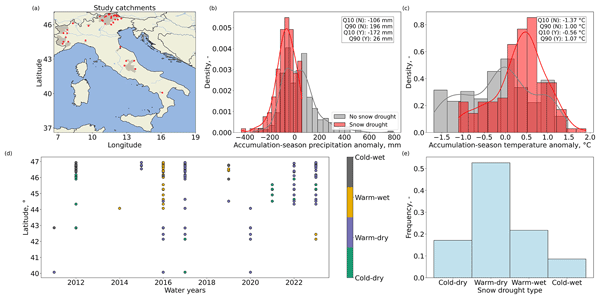
Snow droughts are periods with below-average snow accumulation and are becoming more frequent in a warming climate, yet their ecosystem and societal impacts remain poorly known. Using 13 years of data from 38 Italian catchments, we show that snow droughts reduced snow duration, increased winter melt-out events, and cut summer runoff by ~50 %. Photosynthesis increased by up to 10 % due to earlier meltout. These events also caused widespread water-supply reductions, especially in foothills.
Cinzia Mazzetti, Hannah Cloke, Dai Yamazaki, Gianpaolo Balsamo, Souhail Boussetta, Jasper Denissen, Michel Wortmann, Gabriele Arduini, Gurpreet Dass, Joe McNorton, Anna Agusti-Panareda, Maliko Tanguy, Ervin Zsoter, Margarita Choulga, Emanuel Dutra, Florian Pappenberger, Christoph Rüdiger, and Christel Prudhomme
EGUsphere, https://doi.org/10.5194/egusphere-2026-4305, https://doi.org/10.5194/egusphere-2026-4305, 2026
This preprint is open for discussion and under review for Geoscientific Model Development (GMD).
Short summary
Short summary
Rivers are an essential component of the water cycle, yet many Earth system and weather prediction models do not explicitly represent river flow. We integrated a global river model into ECMWF's forecasting system, enabling the simulation of river discharge, water levels, and flooding within a single operational framework. This development lays the foundation for future land–river–atmosphere interactions, paving the way for more complete Earth system models and improved predictions.
Esmaeel Adrah, Luca Brocca, Emine Senkardesler, and He Yin
Earth Syst. Sci. Data Discuss., https://doi.org/10.5194/essd-2026-603, https://doi.org/10.5194/essd-2026-603, 2026
Preprint under review for ESSD
Short summary
Short summary
The eastern Mediterranean is a hotspot for drought, extreme water scarcity, and geopolitical tension, yet long-term data on irrigation is missing. To address this, we used twenty-six years of satellite imagery to track soil moisture and map winter and summer irrigated lands. This freely available data reveals irrigation changes across the region over time, and support managing scarce water resources, understanding climate impacts, and improving regional food security.
Julia Pfeffer, Benoît Meyssignac, Rory Bingham, Alejandro Blazquez, Marie Bouih, Carla Braitenberg, Luca Brocca, Henryk Dobslaw, Ramiro Ferrari, Ehsan Forootan, Helena Gerdener, Muhammad Tahir Javed, Laura Jensen, Volker Klemann, Anna Kremer, Jürgen Kusche, Gilles Larnicol, Muhammad Usman Liaqat, Francesco Leopardi, Elisavet-Maria Mamagiannou, Gerardo Maurizio, Roland Pail, Isabelle Panet, Thomas Papanikolaou, Peyman Saemian, Ingo Sasgen, Maike Schumacher, Marius Schlaak, Linus Shihora, Alireza Sobouti, Nico Sneeuw, Mohammad Javad Tourian, Dimitrios Tsoulis, Georgios Vergos, Bert Wouters, Fan Yang, and Ilias Daras
EGUsphere, https://doi.org/10.5194/egusphere-2026-4642, https://doi.org/10.5194/egusphere-2026-4642, 2026
This preprint is open for discussion and under review for Earth Observation (EO).
Short summary
Short summary
The ESA SING project demonstrates how the future satellite gravity missions NGGM and MAGIC will improve observations of continental water storage, oceans, glaciers, sea level, earthquakes, and climate change. Their more accurate, higher-resolution gravity measurements will enhance Earth system monitoring, improve climate and hazard assessments, and strengthen operational services for water management, disaster preparedness, and environmental decision-making.
Muhammad Usman Liaqat, Stefania Camici, Francesco Leopardi, Jaime Gaona, and Luca Brocca
Hydrol. Earth Syst. Sci., 30, 4969–4983, https://doi.org/10.5194/hess-30-4969-2026, https://doi.org/10.5194/hess-30-4969-2026, 2026
Short summary
Short summary
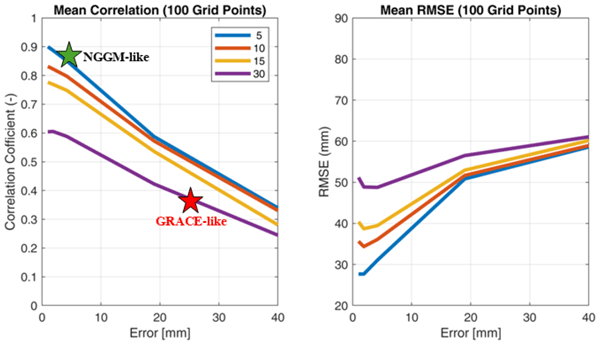
Tracking land water storage helps examine extreme events and manage water resources. GRACE (Gravity Recovery and Climate Experiment) missions observe changes, but coarse resolution in space and time challenges effective management. New gravity mission called MAGIC (Mass Change And Geosciences International Constellation) can offers better accuracy. This study tested MAGIC’s potential to estimate precipitation using the SM2RAIN approach. Results show SM2RAIN works well with frequent, accurate data but deteriorates with noisy/sparse data, emphasizing the need for precise gravity missions.
Yaji Wang, Bin Peng, Mengqi Jia, Zewei Ma, Qianyu Zhao, Ryan Bailey, Daniel Abrams, Jie Yang, Kaiyu Guan, Ming Pan, and Yuanxin Song
EGUsphere, https://doi.org/10.5194/egusphere-2026-4671, https://doi.org/10.5194/egusphere-2026-4671, 2026
This preprint is open for discussion and under review for Hydrology and Earth System Sciences (HESS).
Short summary
Short summary
Groundwater is critical for supplying rivers and transporting nitrogen, but watershed models describe these processes in different ways. We compared three watershed models with different groundwater detail levels. More detailed simulations better captured underground water movement and nitrogen transport, while simpler approaches provided reliable estimates of groundwater contributions to rivers. The results help researchers and water managers choose models that best fit different applications.
Pierre Laluet, Jacopo Dari, Louise Busschaert, Zdenko Heyvaert, Gabrielle De Lannoy, Pia Langhans, Sara Modanesi, Christian Massari, Luca Brocca, Carla Saltalippi, Renato Morbidelli, Clément Albergel, and Wouter Dorigo
Earth Syst. Sci. Data, 18, 4833–4853, https://doi.org/10.5194/essd-18-4833-2026, https://doi.org/10.5194/essd-18-4833-2026, 2026
Short summary
Short summary
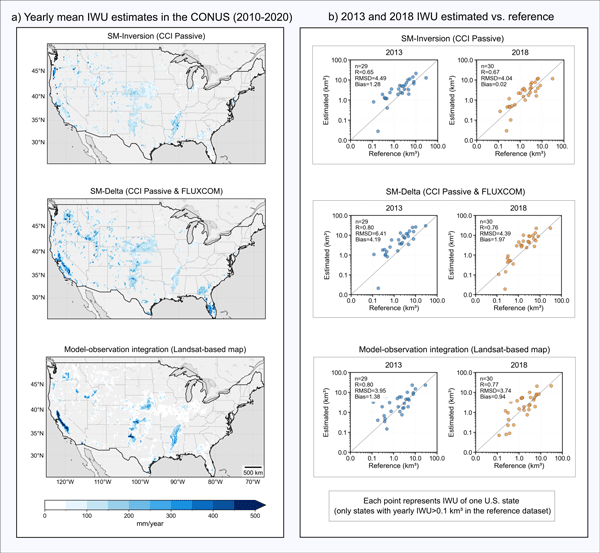
We developed a long-term dataset collection of irrigation water use based on about two decades of satellite observations, three distinct approaches, and many input datasets. The collection provides monthly estimates for major agricultural regions and helps describe how irrigation varies across locations, seasons, and years. It offers a foundation for improving how irrigation is quantified, compared across methods, and integrated into large-scale hydrological and climate studies.
Cyril Thébault, Wouter J. M. Knoben, Nans Addor, Andrew J. Newman, Diana Spieler, Nicolás A. Vásquez, Yalan Song, Gaby J. Gründemann, Shaun Carney, Mukesh Kumar, Katie van Werkhoven, Chaopeng Shen, Andrew W. Wood, and Martyn P. Clark
Hydrol. Earth Syst. Sci., 30, 3945–3977, https://doi.org/10.5194/hess-30-3945-2026, https://doi.org/10.5194/hess-30-3945-2026, 2026
Short summary
Short summary
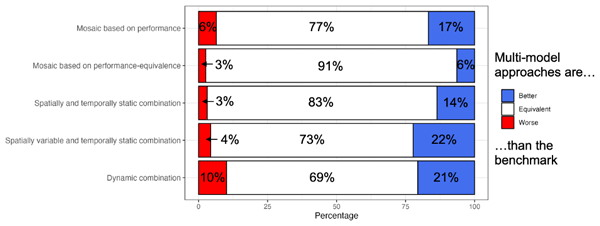
Reliable river flow prediction guide water supply planning and flood protection. We tested whether selecting or combining multiple models improves accuracy compared with a single model. 78 models were used and tested in 559 river basins across the United States. A carefully chosen single model nearly matched more complex multi-model approaches, while combining models gave slightly higher accuracy and lower uncertainty. However, no approach worked best everywhere.
Francesco Avanzi, Hans Lievens, Michael Matiu, Paolo Filippucci, Oscar M. Baez Villanueva, Simone Gabellani, Fabio Delogu, Lorenzo Alfieri, Andrea Libertino, Pere Quintana-Seguì, Diego G. Miralles, Luca Brocca, Christian Massari, and Gabriëlle J. M. De Lannoy
EGUsphere, https://doi.org/10.5194/egusphere-2026-2851, https://doi.org/10.5194/egusphere-2026-2851, 2026
Short summary
Short summary
We developed a new system to map and monitor snow and stored water across large mountain regions using satellite data and computer simulations. Tested in four major European river basins, the system reproduced snow conditions with high accuracy and realistically captured how snow changes with elevation. Because it does not rely on ground measurements, it can help provide consistent information on snow-water resources worldwide, supporting water management and climate adaptation.
Karan Ruparell, Dai Yamazaki, Kieran Hunt, Hannah Cloke, Christel Prudhomme, Florian Pappenberger, and Matthew Chantry
EGUsphere, https://doi.org/10.5194/egusphere-2026-2909, https://doi.org/10.5194/egusphere-2026-2909, 2026
Short summary
Short summary
Reservoirs change how rivers behave, making them harder to predict. We tested whether machine learning models can learn these effects by training on river sites with and without upstream reservoirs across Great Britain. Models without reservoir training overestimated regulated flows, while reservoir-only models performed poorly on natural rivers. Training on both performed well everywhere. All models failed at heavily managed reservoirs where human decisions dominate river flow.
Peyman Afrasiabikia, Atefeh Parvaresh Rizi, and Luca Brocca
ISPRS Ann. Photogramm. Remote Sens. Spatial Inf. Sci., X-4-W8-2025, 33–38, https://doi.org/10.5194/isprs-annals-X-4-W8-2025-33-2026, https://doi.org/10.5194/isprs-annals-X-4-W8-2025-33-2026, 2026
Kamlesh Sawadekar, Seth McGinnis, Peijun Li, Kathryn Lawson, and Chaopeng Shen
EGUsphere, https://doi.org/10.48550/arXiv.2604.23045, https://doi.org/10.48550/arXiv.2604.23045, 2026
Short summary
Short summary
δCLIMBA can fix consistent errors with global circulation models so their precipitation is locally relevant. Instead of making corrections
directly, it predicts the coefficients of interpretable formulas to minimize bias. δCLIMBA learns to make interpretable corrections that,
once trained, can be easily applied on places without data. It accurately corrects both average rainfall and extreme storm events and
shows the promise to preserve future trends, and generalizes to new regions.
Süleyman Selim Çallı, Kübra Özdemir Çallı, Brahim Akdim, Bruno Arfib, Aleksey Benderev, Sandra Beranger, Avi Burg, Onur Can, Jean-Baptiste Charlier, Mehmet Çelik, Arda Melih Çetin, Fehdi Chemseddine, Miroslava Deliyska, Lucio Di Matteo, Marco Dionigi, Romeo Eftimi, Jutta Eybl, Davide Fronzi, Nico Goldscheider, Ergin Gökkaya, Jorge Jodar, Herve Jourde, Eva Kaminsky, Konstantina Katsanou, Alireza Kavousi, Melike Kaya, David Labat, Tanja Liesch, Peter Malik, Christian Massari, Cyril Mayaud, Naomi Mazzilli, Pavel Pracny, Natasa Ravbar, Nathan Rispal, Simon Seelig, Vianney Sivelle, Marc Steinmann, Daniela Valigi, Gerfried Winkler, Ahmet Kemal Yahşi, and Andreas Hartmann
Earth Syst. Sci. Data Discuss., https://doi.org/10.5194/essd-2026-281, https://doi.org/10.5194/essd-2026-281, 2026
Revised manuscript under review for ESSD
Short summary
Short summary
Karst groundwater systems are vital but highly sensitive to climate change. Their complex underground flow makes them hard to manage without good data, so we gathered 118 high-quality records of spring discharge across Mediterranean mountain ranges. With an average of 19 years of data – including one nearly century-long record – this collection provides the detailed information needed to better predict water availability and protect these vulnerable groundwater sources.
Abdolmehdi Behroozi, Kathryn Lawson, and Chaopeng Shen
EGUsphere, https://doi.org/10.5194/egusphere-2026-1982, https://doi.org/10.5194/egusphere-2026-1982, 2026
Short summary
Short summary
A hyper-efficient learnable model predicts flooding faster and more accurately than traditional methods. The two-part approach captures broad water movement then refines local flood details. Tested on rivers, dam breaks, and floodplains, it reproduced water depth, flooded areas, and flow timing. Water volume stays consistent and uncertain terrain data is handled well. The model delivers high-resolution predictions with far less computing effort, enabling faster, scalable flood risk assessment.
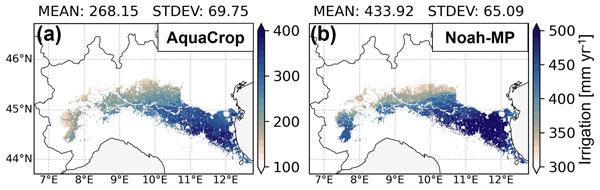
Louise Busschaert, Michel Bechtold, Sara Modanesi, Christian Massari, Dirk Raes, Sujay V. Kumar, and Gabriëlle J. M. De Lannoy
Hydrol. Earth Syst. Sci., 30, 2579–2611, https://doi.org/10.5194/hess-30-2579-2026, https://doi.org/10.5194/hess-30-2579-2026, 2026
Short summary
Short summary
Two models, AquaCrop (crop model) and Noah-MP (land surface model), were compared estimating irrigation in Italy's Po Valley. Noah-MP simulated higher water use (434 mm/yr) than AquaCrop (268 mm/yr), mainly due to extra water losses like runoff. Once losses were accounted for, both aligned with basin-scale reports of around 500 to 600 mm/yr. The study highlights how complex irrigation modeling is, and the need for better observational data to validate results.
Haomei Lin, Peirong Lin, Fenghe Zhang, Louise Slater, Yuan Yang, Ming Pan, Qiming Qin, and Aizhong Hou
EGUsphere, https://doi.org/10.5194/egusphere-2026-1834, https://doi.org/10.5194/egusphere-2026-1834, 2026
Preprint archived
Short summary
Short summary
Accurate streamflow reconstruction is crucial for water resources assessment. Traditional models struggle with land-surface changes and human impacts. This study proposes a residual learning framework that leverages Google’s high-resolution satellite embeddings—compact Earth observation data—to improve hydrologic simulations. Our results show that this AI-driven spatial context enhances river modeling accuracy, offering a scalable solution for data-scarce regions.
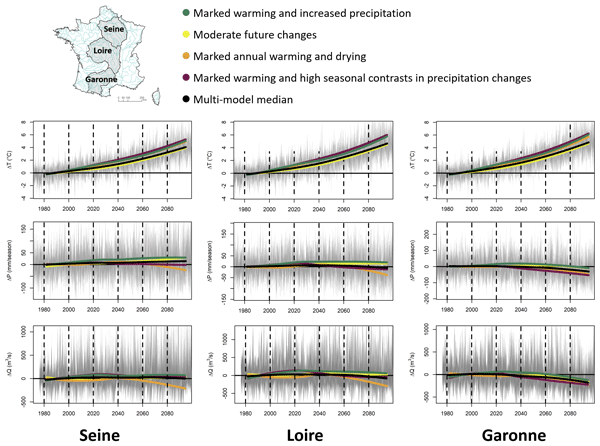
Eric Sauquet, Guillaume Evin, Sonia Siauve, Ryma Aissat, Patrick Arnaud, Maud Bérel, Jérémie Bonneau, Flora Branger, Yvan Caballero, François Colléoni, Agnès Ducharne, Joël Gailhard, Florence Habets, Frédéric Hendrickx, Louis Héraut, Benoît Hingray, Peng Huang, Tristan Jaouen, Alexis Jeantet, Sandra Lanini, Matthieu Le Lay, Claire Magand, Louise Mimeau, Céline Monteil, Simon Munier, Charles Perrin, Olivier Robelin, Fabienne Rousset, Jean-Michel Soubeyroux, Laurent Strohmenger, Guillaume Thirel, Flore Tocquer, Yves Tramblay, Jean-Pierre Vergnes, and Jean-Philippe Vidal
Hydrol. Earth Syst. Sci., 30, 2277–2300, https://doi.org/10.5194/hess-30-2277-2026, https://doi.org/10.5194/hess-30-2277-2026, 2026
Short summary
Short summary
The Explore2 project has provided an unprecedented set of hydrological projections in terms of the number of hydrological models used and the spatial and temporal resolution. The results have been made available through various media. Under the high-emission scenario, the hydrological models mostly agree on the decrease in seasonal flows in the south of France, confirming its hotspot status, and on the decrease in summer flows throughout France, with the exception of the northern part of France.
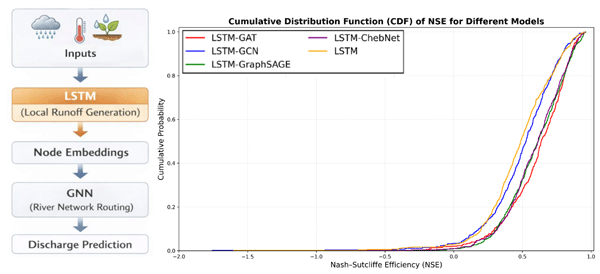
Hamidreza Mosaffa, Florian Pappenberger, Christel Prudhomme, Matthew Chantry, Christoph Rüdiger, and Hannah Cloke
Hydrol. Earth Syst. Sci., 30, 2079–2092, https://doi.org/10.5194/hess-30-2079-2026, https://doi.org/10.5194/hess-30-2079-2026, 2026
Short summary
Short summary
This study improves river flow prediction by combining two types of artificial intelligence models. One model estimates how rainfall becomes runoff in each part of a river basin, while another represents how water moves through the river network. By linking these processes, the approach better captures how water travels across large basins. The results show more accurate streamflow predictions, which can support water management and flood forecasting.
Oscar M. Baez-Villanueva, Alfredo Crespo-Otero, Sara Modanesi, Pierre Laluet, Sergio Vicente-Serrano, Jaap Schellekens, Jacopo Dari, Hylke E. Beck, Wouter Dorigo, Christian Massari, Chiara Corbari, Joppe Massant, Kwint Delbare, Olivier Bonte, Aaron Boone, Diego Fernández-Prieto, and Diego G. Miralles
EGUsphere, https://doi.org/10.5194/egusphere-2026-1856, https://doi.org/10.5194/egusphere-2026-1856, 2026
Short summary
Short summary
We developed a new method to estimate daily land evaporation at high resolution across the Iberian Peninsula, explicitly accounting for irrigation. By combining satellite and meteorological data, we show that irrigation can strongly increase evaporation in agricultural areas. The results better match ground observations and improve understanding of water use. This approach can support farming decisions and water management at the regional scale, and will be extended to global applications.
Fatima M. Pillosu, Mariana Claire, Calum Baugh, Florian Pappenberger, Christel Prudhome, and Hannah L. Cloke
EGUsphere, https://doi.org/10.5194/egusphere-2026-1591, https://doi.org/10.5194/egusphere-2026-1591, 2026
Short summary
Short summary
This paper presents the first global, medium-range probabilistic forecasts of flash flood occurrence. A single XGBoost model trained on coarse impact reports achieves skilful predictions, challenging assumptions that complex architectures and high-resolution data are required. At a time of heightened attention to flash flood risk and early warning, this work demonstrates that skilful global forecasting is achievable in data-sparse regions where flash flood risk is highest.
Ehsan Modiri, Oldrich Rakovec, Pallav Kumar Shrestha, Almudena García-García, Leandro Avila, Katie Blackford, Elizabeth Cooper, Bram Droppers, Paolo Filippucci, Milan Fischer, Matěj Orság, Pietro Stradiotti, Luca Brocca, Douglas B. Clark, Wouter Dorigo, Stefan Kollet, Jian Peng, Niko Wanders, and Luis Samaniego
EGUsphere, https://doi.org/10.5194/egusphere-2026-1012, https://doi.org/10.5194/egusphere-2026-1012, 2026
Short summary
Short summary
Drought impacts water supply, agriculture, and ecosystems, yet hydrological models often disagree on when and where drought occurs. This study tested whether satellite observations can improve how models represent soil moisture drought in the Rhine River basin. Using several models and major drought events, we show that satellite data improve spatial realism and reveal important differences among models, helping to better understand uncertainty in drought monitoring and early warning.
Gabrielle Sorini, Juliette Blanchet, Gérémy Panthou, Théo Vischel, and Yves Tramblay
EGUsphere, https://doi.org/10.5194/egusphere-2026-1176, https://doi.org/10.5194/egusphere-2026-1176, 2026
Short summary
Short summary
This study investigates regional flood trends across West Africa using time-varying extreme-value distributions. While most catchments show declining flood magnitudes up to the 1970s–1990s, recent trends diverge, ranging from decrease to intensification, revealing an original typology of regional hydrosystems. These results refine the narrative of hydrological changes in West Africa and provide clues to their attribution.
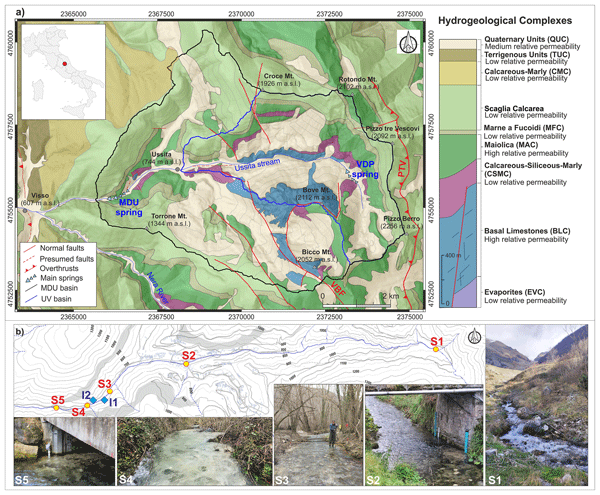
Sofia Ortenzi, Lucio Di Matteo, Daniela Valigi, Marco Donnini, Marco Dionigi, Davide Fronzi, Josie Geris, Fabio Guadagnano, Ivan Marchesini, Paolo Filippucci, Francesco Avanzi, Daniele Penna, and Christian Massari
Hydrol. Earth Syst. Sci., 30, 1755–1778, https://doi.org/10.5194/hess-30-1755-2026, https://doi.org/10.5194/hess-30-1755-2026, 2026
Short summary
Short summary
The study presents an integrated approach to analyze groundwater–surface water interactions in a Central Italy catchment, combining hydrological, hydrochemical–isotopic, thermal drone, and satellite data. Results indicate that fractured limestone aquifers sustain streamflow, with snowmelt accounting for about 18 % of recharge. The workflow is transferable and suitable for similar data-scarce Mediterranean basins.
Shima Azimi, Manuela Girotto, Riccardo Rigon, Gaia Roati, Silvia Barbetta, and Christian Massari
EGUsphere, https://doi.org/10.5194/egusphere-2026-793, https://doi.org/10.5194/egusphere-2026-793, 2026
Short summary
Short summary
Even ground-based precipitation observations, often considered the most reliable, can introduce substantial uncertainty into snow modeling due to sparse gauge coverage at high elevations in mountainous catchments.This challenge motivates the present study, in which we propose a data assimilation framework that integrates satellite-based snow depth into a hydrological model to correct snowfall estimates over the Italian Alps, with implications for water management in data-scarce mountain regions.
Domenico De Santis, Silvia Barbetta, Sumit Sen, Viviana Maggioni, Farhad Bahmanpouri, Ashutosh Sharma, Ankit Agarwal, Sagar Gupta, Francesco Avanzi, and Christian Massari
Nat. Hazards Earth Syst. Sci., 26, 1075–1104, https://doi.org/10.5194/nhess-26-1075-2026, https://doi.org/10.5194/nhess-26-1075-2026, 2026
Short summary
Short summary
A conceptual, semi-distributed hydrological model was tailored to simulate high flows in monsoon-dominated, glacier-influenced and flood-prone Himalayan basins. Multi-data calibration using satellite-based glacier mass loss and evapotranspiration estimates improved process realism in data-scarce environments. The proposed modelling approach captured key streamflow features despite significant input uncertainties, proving to be a useful tool for exploring the local hydrological response dynamics.
Guillaume Evin, Benoit Hingray, Guillaume Thirel, Agnès Ducharne, Laurent Strohmenger, Lola Corre, Yves Tramblay, Jean-Philippe Vidal, Jérémie Bonneau, François Colleoni, Joël Gailhard, Florence Habets, Frédéric Hendrickx, Louis Héraut, Peng Huang, Matthieu Le Lay, Claire Magand, Paola Marson, Céline Monteil, Simon Munier, Alix Reverdy, Jean-Michel Soubeyroux, Yoann Robin, Jean-Pierre Vergnes, Mathieu Vrac, and Eric Sauquet
Hydrol. Earth Syst. Sci., 30, 1023–1051, https://doi.org/10.5194/hess-30-1023-2026, https://doi.org/10.5194/hess-30-1023-2026, 2026
Short summary
Short summary
Explore2 provides hydrological projections for 1,735 French catchments. Using QUALYPSO (Quasi-Ergodic Analysis of Climate Projections Using Data Augmentation), this study assesses uncertainties, including internal variability. By the end of the century, low flows are projected to decline in southern France under high emissions, while other indicators remain uncertain. Emission scenarios and regional climate models are key uncertainty sources. Internal variability is often as large as climate-driven changes.
Senna Bouabdelli, Martin Morlot, Christian Massari, and Giuseppe Formetta
EGUsphere, https://doi.org/10.5194/egusphere-2026-464, https://doi.org/10.5194/egusphere-2026-464, 2026
Short summary
Short summary
Drought is becoming more common in the Alps as warmer winters reduce snow and alter river flow. We used hydrological model simulations in the Adige basin to understand when and why droughts occur. Results show that droughts are happening earlier, becoming more intense, and increasingly driven by lack of rain instead of melting snow at high elevations. This shift toward lower-elevation river behaviour calls for new strategies to manage water for hydropower, agriculture, and tourism.
Rajesh Kumar Sahu, Hamza Kunhu Bangalath, Suleiman Mostamandi, Jason Evans, Paul A. Kucera, and Hylke E. Beck
Nat. Hazards Earth Syst. Sci., 26, 21–40, https://doi.org/10.5194/nhess-26-21-2026, https://doi.org/10.5194/nhess-26-21-2026, 2026
Short summary
Short summary
This study tests 36 combinations of microphysics and boundary layer schemes in the Weather Research and Forecasting model for extreme rainfall over Saudi Arabia. Using the Kling–Gupta Efficiency, the Yonsei University boundary layer with the Thompson microphysics performs best; the Morrison microphysics with the Mellor–Yamada–Nakanishi–Niino boundary layer ranks lowest. Mean temporal efficiency is 0.37, spatial efficiency is 0.26, revealing spatial prediction challenges in arid regions.
Yves Tramblay, Guillaume Thirel, Laurent Strohmenger, Guillaume Evin, Lola Corre, Louis Heraut, and Eric Sauquet
Hydrol. Earth Syst. Sci., 29, 7023–7039, https://doi.org/10.5194/hess-29-7023-2025, https://doi.org/10.5194/hess-29-7023-2025, 2025
Short summary
Short summary
How does climate change impact floods in France? Using simulations for 3727 rivers with climate projections, results show that flood trends vary depending on the region. In the north, floods may become more severe, but in the south, the trends are mixed. Floods from intense rainfall are becoming more frequent, while snowmelt floods are strongly decreasing. Overall, the study shows that understanding what causes floods is key to predicting how they are likely to change with the climate.

Jiangtao Liu, Chaopeng Shen, Fearghal O'Donncha, Yalan Song, Wei Zhi, Hylke E. Beck, Tadd Bindas, Nicholas Kraabel, and Kathryn Lawson
Hydrol. Earth Syst. Sci., 29, 6811–6828, https://doi.org/10.5194/hess-29-6811-2025, https://doi.org/10.5194/hess-29-6811-2025, 2025
Short summary
Short summary
Using global and regional datasets, we compared attention-based models and Long Short-Term Memory (LSTM) models to predict hydrologic variables. Our results show LSTM models perform better in simpler tasks, whereas attention-based models perform better in complex scenarios, offering insights for improved water resource management.

Peijun Li, Yalan Song, Ming Pan, Kathryn Lawson, and Chaopeng Shen
Hydrol. Earth Syst. Sci., 29, 6829–6861, https://doi.org/10.5194/hess-29-6829-2025, https://doi.org/10.5194/hess-29-6829-2025, 2025
Short summary
Short summary
This study explores how combining different model types improves streamflow predictions, especially in data-sparse scenarios. By integrating two highly accurate models with distinct mechanisms and leveraging multiple meteorological datasets, we highlight their unique strengths and set new accuracy benchmarks across spatiotemporal conditions. Our findings enhance the understanding of how diverse models and multi-source data can be effectively used to improve hydrological predictions.
Zewei Ma, Kaiyu Guan, Bin Peng, Wang Zhou, Robert Grant, Jinyun Tang, Murugesu Sivapalan, Ming Pan, Li Li, and Zhenong Jin
Hydrol. Earth Syst. Sci., 29, 6393–6417, https://doi.org/10.5194/hess-29-6393-2025, https://doi.org/10.5194/hess-29-6393-2025, 2025
Short summary
Short summary
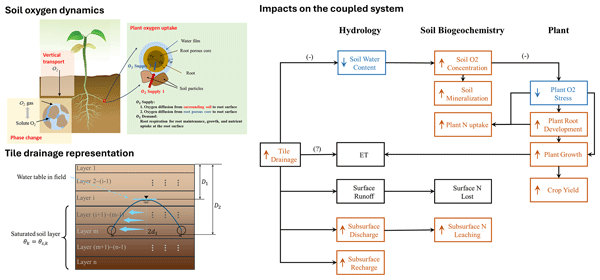
By involving soil oxygen dynamics, we explore tile drainage impacts on the coupled hydrology–biogeochemistry–crop system. We find that soil oxygen dynamics is the key mediator of tile–system dynamics. Tile drainage lowers soil water content and improves soil oxygen levels, helping crops grow during wet springs. The developed roots also help mitigate drought stress in dry summers. Overall, tile drainage increases crop resilience to climate change, making it a valuable future agricultural practice.
Yuan Yang, Ming Pan, Dapeng Feng, Mu Xiao, Taylor Dixon, Robert Hartman, Chaopeng Shen, Yalan Song, Agniv Sengupta, Luca Delle Monache, and F. Martin Ralph
Hydrol. Earth Syst. Sci., 29, 5453–5476, https://doi.org/10.5194/hess-29-5453-2025, https://doi.org/10.5194/hess-29-5453-2025, 2025
Short summary
Short summary
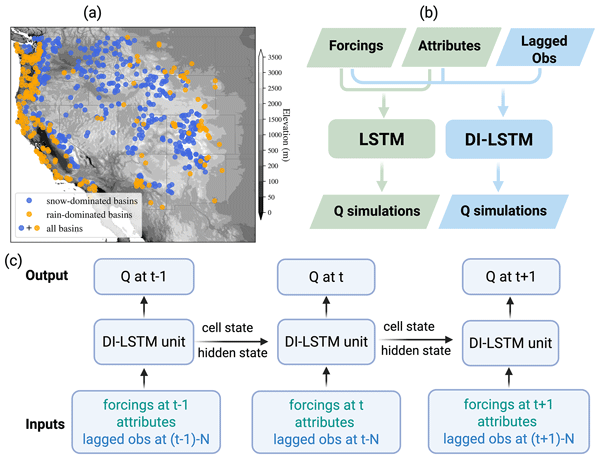
We explore a machine learning-based data integration method that integrates streamflow (Q) and snow water equivalent (SWE) to improve streamflow estimates at various lag times (1–10 d, 1–6 months) and timescales (daily and monthly) over Western US basins. Benefits rank as: integrating Q at the daily scale > Q at the monthly scale > SWE at the monthly scale > SWE at the daily scale. Results highlight the method’s potential for short- and long-term streamflow forecasting in the Western US.
Paolo Filippucci, Luca Brocca, Luca Ciabatta, Hamidreza Mosaffa, Francesco Avanzi, and Christian Massari
Earth Syst. Sci. Data, 17, 5221–5258, https://doi.org/10.5194/essd-17-5221-2025, https://doi.org/10.5194/essd-17-5221-2025, 2025
Short summary
Short summary
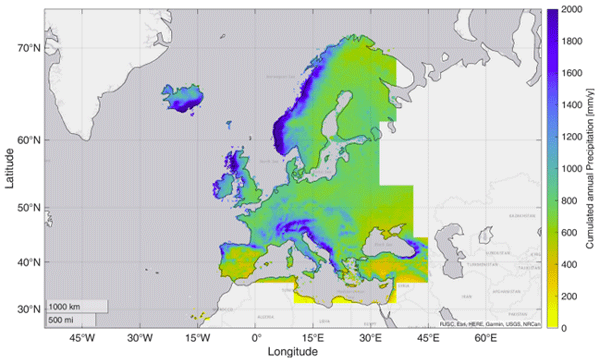
Accurate rainfall data is essential, yet measuring daily precipitation worldwide is challenging. This research presents HYdroclimatic PERformance-enhanced Precipitation (HYPER-P), a dataset combining satellite, ground, and reanalysis data to estimate precipitation at a 1 km scale from 2000 to 2022. HYPER-P improves accuracy, especially in areas with few rain gauges. This dataset supports scientists and decision-makers in understanding and managing water resources more effectively.
Xuetong Wang, Raied S. Alharbi, Oscar M. Baez-Villanueva, Amy Green, Matthew F. McCabe, Yoshihide Wada, Albert I. J. M. Van Dijk, Muhammad A. Abid, and Hylke E. Beck
Hydrol. Earth Syst. Sci., 29, 4983–5003, https://doi.org/10.5194/hess-29-4983-2025, https://doi.org/10.5194/hess-29-4983-2025, 2025
Short summary
Short summary
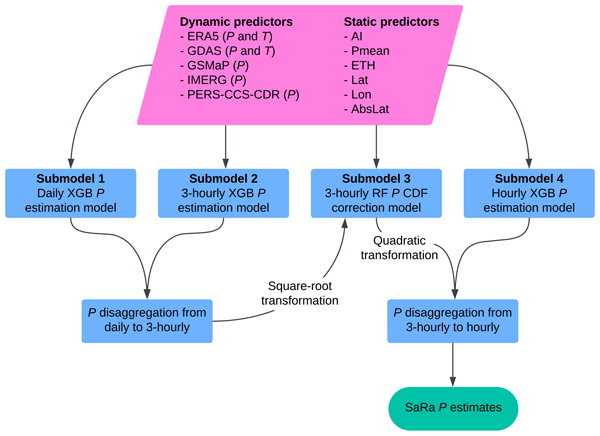
Our paper introduces Saudi Rainfall (SaRa), a high-resolution, near-real-time rainfall product for the Arabian Peninsula. Using machine learning, SaRa combines multiple satellite and (re)analysis datasets with static predictors, outperforming existing products in the region. With the fast development and continuing growth in water demand over this region, SaRa could help to address water challenges and support resource management.
Xiangmei Liu, Peng Shen, Jiaqi Chen, David Andrew Barry, Christian Massari, Jiansheng Chen, Mingming Feng, Xi Zhang, Fenyan Ma, Fei Yang, and Haixia Jin
EGUsphere, https://doi.org/10.5194/egusphere-2025-4263, https://doi.org/10.5194/egusphere-2025-4263, 2025
Preprint archived
Short summary
Short summary
Our research in the Songnen Basin of Northeast China has revealed why numerous lakes remain unfrozen during winter. By studying Lake Chagan, we discovered that deep groundwater sustains these lakes, likely flowing through subterranean channels from the Tibetan Plateau. When earthquakes disrupt these conduits, water rises along fault lines to replenish the lakes. This finding challenges the theory that graben lakes primarily depend on local precipitation.
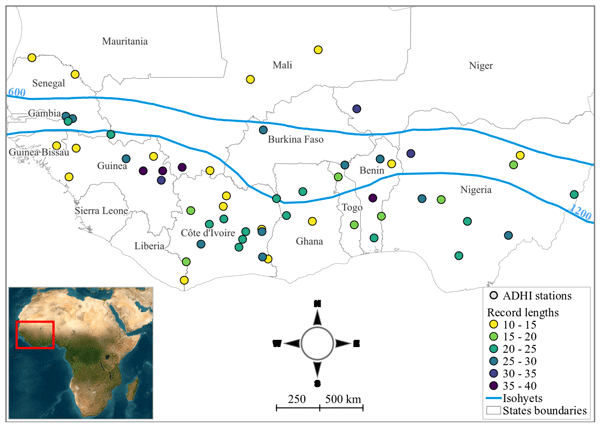
Serigne Bassirou Diop, Job Ekolu, Yves Tramblay, Bastien Dieppois, Stefania Grimaldi, Ansoumana Bodian, Juliette Blanchet, Ponnambalam Rameshwaran, Peter Salamon, and Benjamin Sultan
Nat. Hazards Earth Syst. Sci., 25, 3161–3184, https://doi.org/10.5194/nhess-25-3161-2025, https://doi.org/10.5194/nhess-25-3161-2025, 2025
Short summary
Short summary
West Africa is very vulnerable to river floods. Current flood hazards are poorly understood due to limited data. This study is filling this knowledge gap using recent databases and two regional hydrological models to analyze changes in flood risk under two climate scenarios. Results show that most areas will see more frequent and severe floods, with some increasing by over 45 %. These findings stress the urgent need for climate-resilient strategies to protect communities and infrastructure.
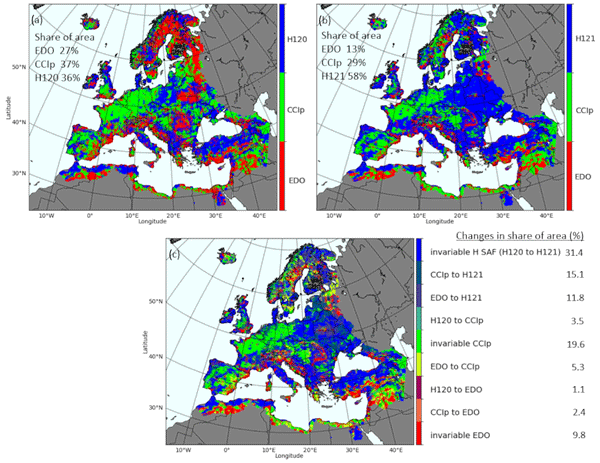
Jaime Gaona, Davide Bavera, Guido Fioravanti, Sebastian Hahn, Pietro Stradiotti, Paolo Filippucci, Stefania Camici, Luca Ciabatta, Hamidreza Mosaffa, Silvia Puca, Nicoletta Roberto, and Luca Brocca
Hydrol. Earth Syst. Sci., 29, 3865–3888, https://doi.org/10.5194/hess-29-3865-2025, https://doi.org/10.5194/hess-29-3865-2025, 2025
Short summary
Short summary
Soil moisture is crucial for the water cycle since it is at the front line of drought. Satellite, model and in situ data help identify soil moisture stress but are challenged by data uncertainties. This study evaluates trends and data coherence of common active/passive microwave sensors and model-based soil moisture data against in situ stations across Europe from 2007 to 2022. Data reliability is increasing, but combining data types improves soil moisture monitoring capabilities.
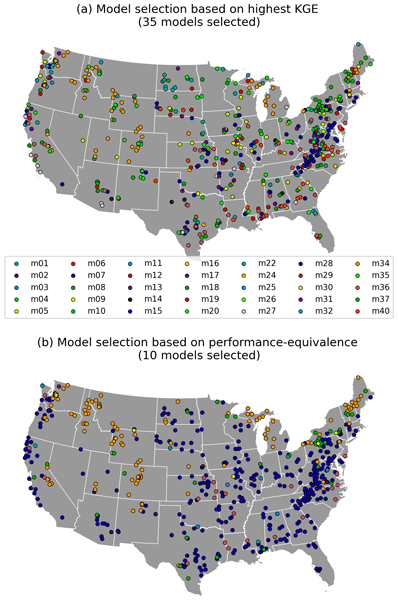
Wouter J. M. Knoben, Ashwin Raman, Gaby J. Gründemann, Mukesh Kumar, Alain Pietroniro, Chaopeng Shen, Yalan Song, Cyril Thébault, Katie van Werkhoven, Andrew W. Wood, and Martyn P. Clark
Hydrol. Earth Syst. Sci., 29, 2361–2375, https://doi.org/10.5194/hess-29-2361-2025, https://doi.org/10.5194/hess-29-2361-2025, 2025
Short summary
Short summary
Hydrologic models are needed to provide simulations of water availability, floods, and droughts. The accuracy of these simulations is often quantified with so-called performance scores. A common thought is that different models are more or less applicable to different landscapes, depending on how the model works. We show that performance scores are not helpful in distinguishing between different models and thus cannot easily be used to select an appropriate model for a specific place.
Mohammad Sina Jahangir, John Quilty, Chaopeng Shen, Andrea Scott, Scott Steinschneider, and Jan Adamowski
EGUsphere, https://doi.org/10.5194/egusphere-2025-846, https://doi.org/10.5194/egusphere-2025-846, 2025
This preprint is open for discussion and under review for Natural Hazards and Earth System Sciences (NHESS).
Short summary
Short summary
This study presents a novel hybrid approach to streamflow prediction, significantly improving the efficiency and accuracy of fine-tuning deep learning models for hydrological prediction. Tested across numerous catchments in the U.S. and Europe, this method accelerates the fine-tuning process and improves prediction accuracy in locations beyond the training data. This innovative approach sets the stage for future hydrological models leveraging transfer learning.
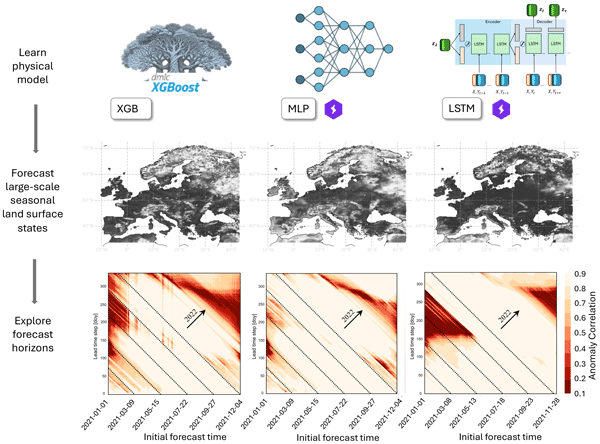
Marieke Wesselkamp, Matthew Chantry, Ewan Pinnington, Margarita Choulga, Souhail Boussetta, Maria Kalweit, Joschka Bödecker, Carsten F. Dormann, Florian Pappenberger, and Gianpaolo Balsamo
Geosci. Model Dev., 18, 921–937, https://doi.org/10.5194/gmd-18-921-2025, https://doi.org/10.5194/gmd-18-921-2025, 2025
Short summary
Short summary
We compared spatiotemporal forecasts of three machine learning models that learned water and energy
states on the land surface from a physical model scheme. The forecasting models were developed with reanalysis data and simulations on a European scale and transferred to the globe. We found that all approaches deliver highly accurate approximations of the physical dynamic at long time horizons, implying their usefulness to advance land surface forecasting with synthetic data.
states on the land surface from a physical model scheme. The forecasting models were developed with reanalysis data and simulations on a European scale and transferred to the globe. We found that all approaches deliver highly accurate approximations of the physical dynamic at long time horizons, implying their usefulness to advance land surface forecasting with synthetic data.
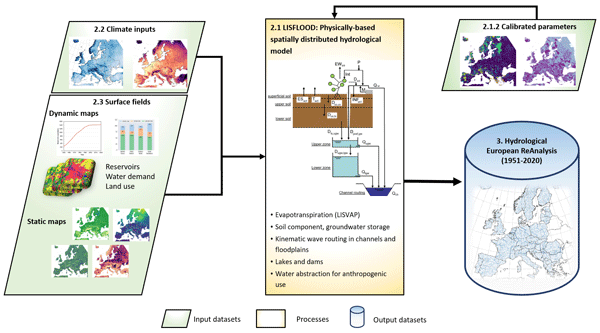
Aloïs Tilloy, Dominik Paprotny, Stefania Grimaldi, Goncalo Gomes, Alessandra Bianchi, Stefan Lange, Hylke Beck, Cinzia Mazzetti, and Luc Feyen
Earth Syst. Sci. Data, 17, 293–316, https://doi.org/10.5194/essd-17-293-2025, https://doi.org/10.5194/essd-17-293-2025, 2025
Short summary
Short summary
This article presents a reanalysis of Europe's river streamflow for the period 1951–2020. Streamflow is estimated through a state-of-the-art hydrological simulation framework benefitting from detailed information about the landscape, climate, and human activities. The resulting Hydrological European ReAnalysis (HERA) can be a valuable tool for studying hydrological dynamics, including the impacts of climate change and human activities on European water resources and flood and drought risks.
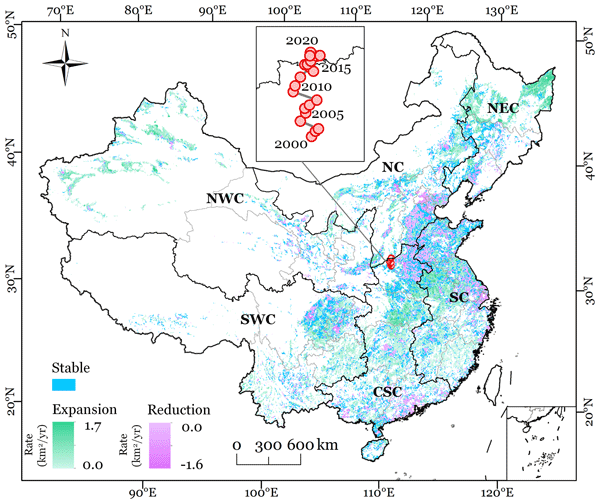
Ling Zhang, Yanhua Xie, Xiufang Zhu, Qimin Ma, and Luca Brocca
Earth Syst. Sci. Data, 16, 5207–5226, https://doi.org/10.5194/essd-16-5207-2024, https://doi.org/10.5194/essd-16-5207-2024, 2024
Short summary
Short summary
This study presented new annual maps of irrigated cropland in China from 2000 to 2020 (CIrrMap250). These maps were developed by integrating remote sensing data, irrigation statistics and surveys, and an irrigation suitability map. CIrrMap250 achieved high accuracy and outperformed currently available products. The new irrigation maps revealed a clear expansion of China’s irrigation area, with the majority (61%) occurring in the water-unsustainable regions facing severe to extreme water stress.
Louise Busschaert, Michel Bechtold, Sara Modanesi, Christian Massari, Dirk Raes, Sujay V. Kumar, and Gabrielle J. M. De Lannoy
EGUsphere, https://doi.org/10.2139/ssrn.4974019, https://doi.org/10.2139/ssrn.4974019, 2024
Preprint archived
Short summary
Short summary
This study estimates irrigation in the Po Valley using AquaCrop and Noah-MP models with sprinkler irrigation. Noah-MP shows higher annual rates than AquaCrop due to more water losses. After adjusting, both align with reported irrigation ranges (500–600 mm/yr). Soil moisture estimates from both models match satellite data, though both have limitations in vegetation and evapotranspiration modeling. The study emphasizes the need for observations to improve irrigation estimates.
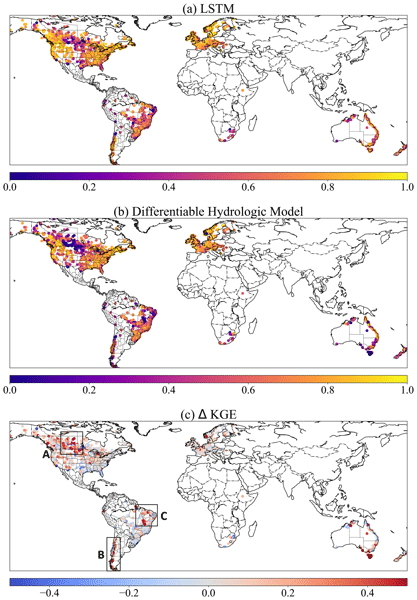
Dapeng Feng, Hylke Beck, Jens de Bruijn, Reetik Kumar Sahu, Yusuke Satoh, Yoshihide Wada, Jiangtao Liu, Ming Pan, Kathryn Lawson, and Chaopeng Shen
Geosci. Model Dev., 17, 7181–7198, https://doi.org/10.5194/gmd-17-7181-2024, https://doi.org/10.5194/gmd-17-7181-2024, 2024
Short summary
Short summary
Accurate hydrologic modeling is vital to characterizing water cycle responses to climate change. For the first time at this scale, we use differentiable physics-informed machine learning hydrologic models to simulate rainfall–runoff processes for 3753 basins around the world and compare them with purely data-driven and traditional modeling approaches. This sets a benchmark for hydrologic estimates around the world and builds foundations for improving global hydrologic simulations.
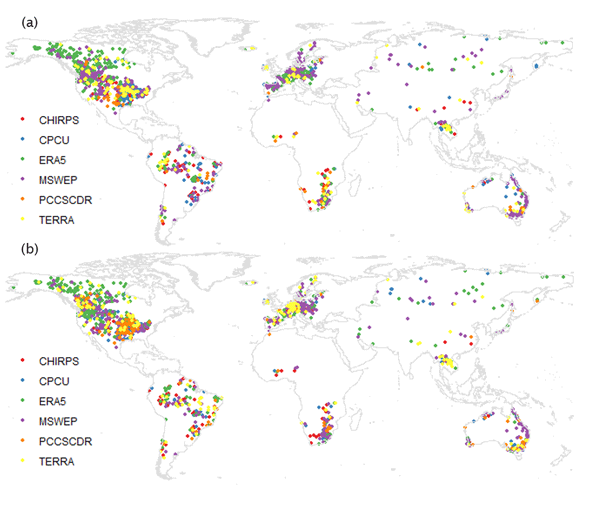
Solomon H. Gebrechorkos, Julian Leyland, Simon J. Dadson, Sagy Cohen, Louise Slater, Michel Wortmann, Philip J. Ashworth, Georgina L. Bennett, Richard Boothroyd, Hannah Cloke, Pauline Delorme, Helen Griffith, Richard Hardy, Laurence Hawker, Stuart McLelland, Jeffrey Neal, Andrew Nicholas, Andrew J. Tatem, Ellie Vahidi, Yinxue Liu, Justin Sheffield, Daniel R. Parsons, and Stephen E. Darby
Hydrol. Earth Syst. Sci., 28, 3099–3118, https://doi.org/10.5194/hess-28-3099-2024, https://doi.org/10.5194/hess-28-3099-2024, 2024
Short summary
Short summary
This study evaluated six high-resolution global precipitation datasets for hydrological modelling. MSWEP and ERA5 showed better performance, but spatial variability was high. The findings highlight the importance of careful dataset selection for river discharge modelling due to the lack of a universally superior dataset. Further improvements in global precipitation data products are needed.
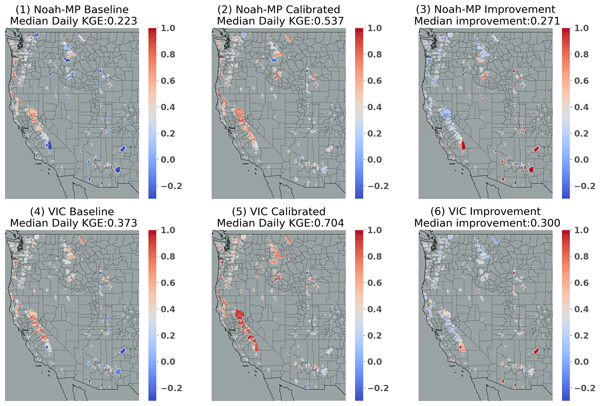
Lu Su, Dennis P. Lettenmaier, Ming Pan, and Benjamin Bass
Hydrol. Earth Syst. Sci., 28, 3079–3097, https://doi.org/10.5194/hess-28-3079-2024, https://doi.org/10.5194/hess-28-3079-2024, 2024
Short summary
Short summary
We fine-tuned the variable infiltration capacity (VIC) and Noah-MP models across 263 river basins in the Western US. We developed transfer relationships to similar basins and extended the fine-tuned parameters to ungauged basins. Both models performed best in humid areas, and the skills improved post-calibration. VIC outperforms Noah-MP in all but interior dry basins following regionalization. VIC simulates annual mean streamflow and high flow well, while Noah-MP performs better for low flows.
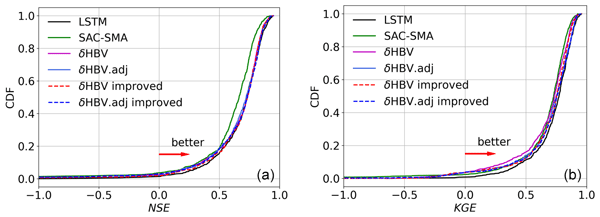
Yalan Song, Wouter J. M. Knoben, Martyn P. Clark, Dapeng Feng, Kathryn Lawson, Kamlesh Sawadekar, and Chaopeng Shen
Hydrol. Earth Syst. Sci., 28, 3051–3077, https://doi.org/10.5194/hess-28-3051-2024, https://doi.org/10.5194/hess-28-3051-2024, 2024
Short summary
Short summary
Differentiable models (DMs) integrate neural networks and physical equations for accuracy, interpretability, and knowledge discovery. We developed an adjoint-based DM for ordinary differential equations (ODEs) for hydrological modeling, reducing distorted fluxes and physical parameters from errors in models that use explicit and operation-splitting schemes. With a better numerical scheme and improved structure, the adjoint-based DM matches or surpasses long short-term memory (LSTM) performance.
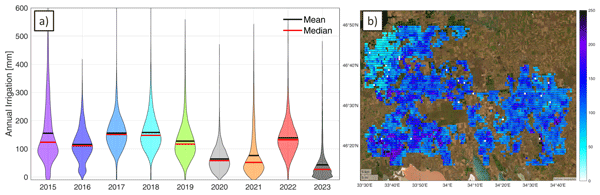
Jacopo Dari, Paolo Filippucci, and Luca Brocca
Hydrol. Earth Syst. Sci., 28, 2651–2659, https://doi.org/10.5194/hess-28-2651-2024, https://doi.org/10.5194/hess-28-2651-2024, 2024
Short summary
Short summary
We have developed the first operational system (10 d latency) for estimating irrigation water use from accessible satellite and reanalysis data. As a proof of concept, the method has been implemented over an irrigated area fed by the Kakhovka Reservoir, in Ukraine, which collapsed on June 6, 2023. Estimates for the period 2015–2023 reveal that, as expected, the irrigation season of 2023 was characterized by the lowest amounts of irrigation.
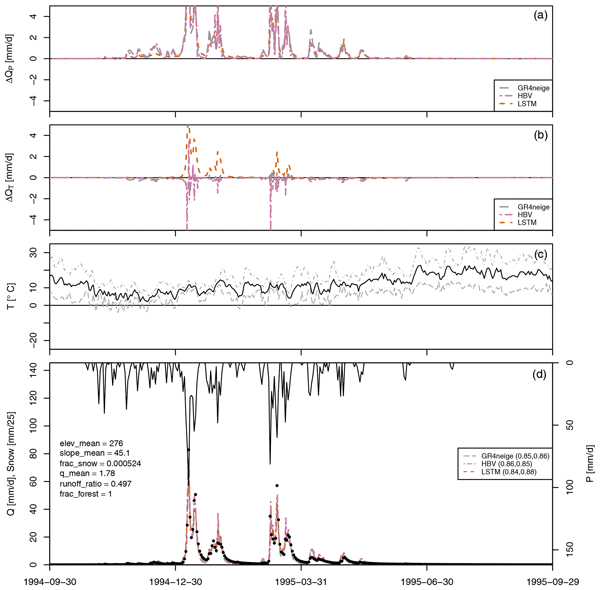
Peter Reichert, Kai Ma, Marvin Höge, Fabrizio Fenicia, Marco Baity-Jesi, Dapeng Feng, and Chaopeng Shen
Hydrol. Earth Syst. Sci., 28, 2505–2529, https://doi.org/10.5194/hess-28-2505-2024, https://doi.org/10.5194/hess-28-2505-2024, 2024
Short summary
Short summary
We compared the predicted change in catchment outlet discharge to precipitation and temperature change for conceptual and machine learning hydrological models. We found that machine learning models, despite providing excellent fit and prediction capabilities, can be unreliable regarding the prediction of the effect of temperature change for low-elevation catchments. This indicates the need for caution when applying them for the prediction of the effect of climate change.
Nils Poncet, Philippe Lucas-Picher, Yves Tramblay, Guillaume Thirel, Humberto Vergara, Jonathan Gourley, and Antoinette Alias
Nat. Hazards Earth Syst. Sci., 24, 1163–1183, https://doi.org/10.5194/nhess-24-1163-2024, https://doi.org/10.5194/nhess-24-1163-2024, 2024
Short summary
Short summary
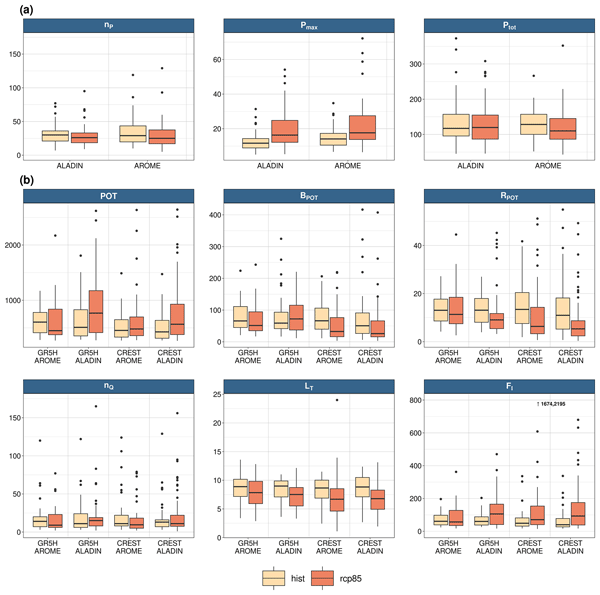
High-resolution convection-permitting climate models (CPMs) are now available to better simulate rainstorm events leading to flash floods. In this study, two hydrological models are compared to simulate floods in a Mediterranean basin, showing a better ability of the CPM to reproduce flood peaks compared to coarser-resolution climate models. Future projections are also different, with a projected increase for the most severe floods and a potential decrease for the most frequent events.
Søren Julsgaard Kragh, Jacopo Dari, Sara Modanesi, Christian Massari, Luca Brocca, Rasmus Fensholt, Simon Stisen, and Julian Koch
Hydrol. Earth Syst. Sci., 28, 441–457, https://doi.org/10.5194/hess-28-441-2024, https://doi.org/10.5194/hess-28-441-2024, 2024
Short summary
Short summary
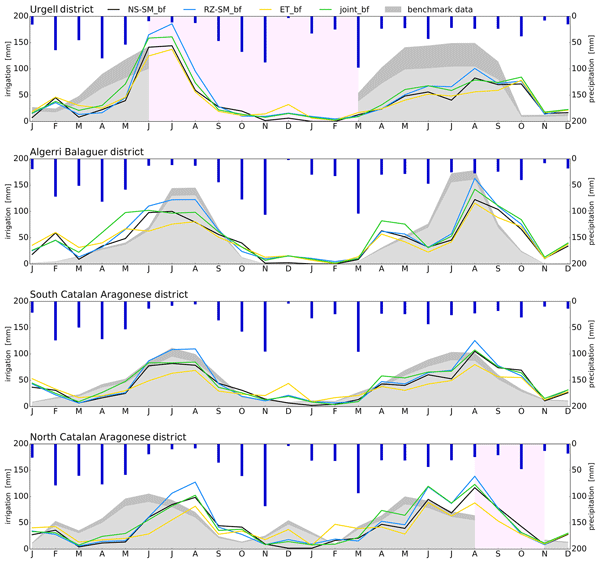
This study provides a comparison of methodologies to quantify irrigation to enhance regional irrigation estimates. To evaluate the methodologies, we compared various approaches to quantify irrigation using soil moisture, evapotranspiration, or both within a novel baseline framework, together with irrigation estimates from other studies. We show that the synergy from using two equally important components in a joint approach within a baseline framework yields better irrigation estimates.
Lorenzo Alfieri, Andrea Libertino, Lorenzo Campo, Francesco Dottori, Simone Gabellani, Tatiana Ghizzoni, Alessandro Masoero, Lauro Rossi, Roberto Rudari, Nicola Testa, Eva Trasforini, Ahmed Amdihun, Jully Ouma, Luca Rossi, Yves Tramblay, Huan Wu, and Marco Massabò
Nat. Hazards Earth Syst. Sci., 24, 199–224, https://doi.org/10.5194/nhess-24-199-2024, https://doi.org/10.5194/nhess-24-199-2024, 2024
Short summary
Short summary
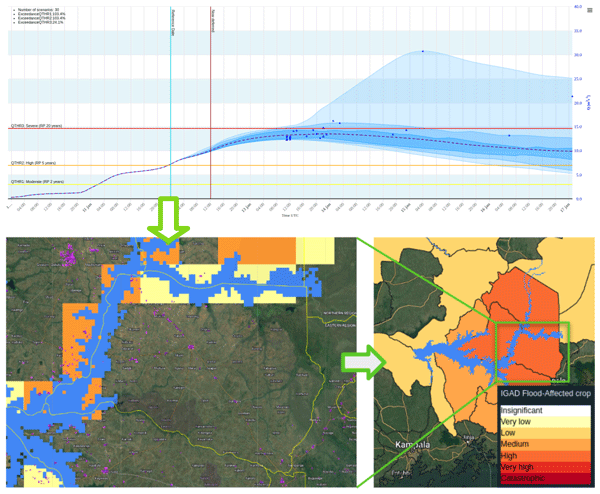
This work describes Flood-PROOFS East Africa, an impact-based flood forecasting system for the Greater Horn of Africa. It is based on hydrological simulations, inundation mapping, and estimation of population and assets exposed to upcoming river floods. The system supports duty officers in African institutions in the daily monitoring of hydro-meteorological disasters. A first evaluation shows the system performance for the catastrophic floods in the Nile River basin in summer 2020.
Yuhang Zhang, Aizhong Ye, Bita Analui, Phu Nguyen, Soroosh Sorooshian, Kuolin Hsu, and Yuxuan Wang
Hydrol. Earth Syst. Sci., 27, 4529–4550, https://doi.org/10.5194/hess-27-4529-2023, https://doi.org/10.5194/hess-27-4529-2023, 2023
Short summary
Short summary
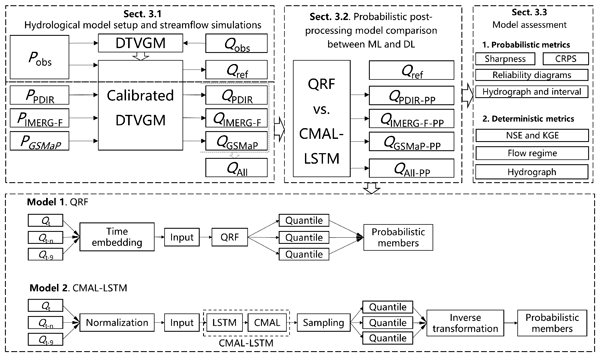
Our study shows that while the quantile regression forest (QRF) and countable mixtures of asymmetric Laplacians long short-term memory (CMAL-LSTM) models demonstrate similar proficiency in multipoint probabilistic predictions, QRF excels in smaller watersheds and CMAL-LSTM in larger ones. CMAL-LSTM performs better in single-point deterministic predictions, whereas QRF model is more efficient overall.
Shima Azimi, Christian Massari, Giuseppe Formetta, Silvia Barbetta, Alberto Tazioli, Davide Fronzi, Sara Modanesi, Angelica Tarpanelli, and Riccardo Rigon
Hydrol. Earth Syst. Sci., 27, 4485–4503, https://doi.org/10.5194/hess-27-4485-2023, https://doi.org/10.5194/hess-27-4485-2023, 2023
Short summary
Short summary
We analyzed the water budget of nested karst catchments using simple methods and modeling. By utilizing the available data on precipitation and discharge, we were able to determine the response lag-time by adopting new techniques. Additionally, we modeled snow cover dynamics and evapotranspiration with the use of Earth observations, providing a concise overview of the water budget for the basin and its subbasins. We have made the data, models, and workflows accessible for further study.
Solomon H. Gebrechorkos, Jian Peng, Ellen Dyer, Diego G. Miralles, Sergio M. Vicente-Serrano, Chris Funk, Hylke E. Beck, Dagmawi T. Asfaw, Michael B. Singer, and Simon J. Dadson
Earth Syst. Sci. Data, 15, 5449–5466, https://doi.org/10.5194/essd-15-5449-2023, https://doi.org/10.5194/essd-15-5449-2023, 2023
Short summary
Short summary
Drought is undeniably one of the most intricate and significant natural hazards with far-reaching consequences for the environment, economy, water resources, agriculture, and societies across the globe. In response to this challenge, we have devised high-resolution drought indices. These indices serve as invaluable indicators for assessing shifts in drought patterns and their associated impacts on a global, regional, and local level facilitating the development of tailored adaptation strategies.
Laurent Strohmenger, Eric Sauquet, Claire Bernard, Jérémie Bonneau, Flora Branger, Amélie Bresson, Pierre Brigode, Rémy Buzier, Olivier Delaigue, Alexandre Devers, Guillaume Evin, Maïté Fournier, Shu-Chen Hsu, Sandra Lanini, Alban de Lavenne, Thibault Lemaitre-Basset, Claire Magand, Guilherme Mendoza Guimarães, Max Mentha, Simon Munier, Charles Perrin, Tristan Podechard, Léo Rouchy, Malak Sadki, Myriam Soutif-Bellenger, François Tilmant, Yves Tramblay, Anne-Lise Véron, Jean-Philippe Vidal, and Guillaume Thirel
Hydrol. Earth Syst. Sci., 27, 3375–3391, https://doi.org/10.5194/hess-27-3375-2023, https://doi.org/10.5194/hess-27-3375-2023, 2023
Short summary
Short summary
We present the results of a large visual inspection campaign of 674 streamflow time series in France. The objective was to detect non-natural records resulting from instrument failure or anthropogenic influences, such as hydroelectric power generation or reservoir management. We conclude that the identification of flaws in flow time series is highly dependent on the objectives and skills of individual evaluators, and we raise the need for better practices for data cleaning.
Yves Tramblay, Patrick Arnaud, Guillaume Artigue, Michel Lang, Emmanuel Paquet, Luc Neppel, and Eric Sauquet
Hydrol. Earth Syst. Sci., 27, 2973–2987, https://doi.org/10.5194/hess-27-2973-2023, https://doi.org/10.5194/hess-27-2973-2023, 2023
Short summary
Short summary
Mediterranean floods are causing major damage, and recent studies have shown that, despite the increase in intense rainfall, there has been no increase in river floods. This study reveals that the seasonality of floods changed in the Mediterranean Basin during 1959–2021. There was also an increased frequency of floods linked to short episodes of intense rain, associated with a decrease in soil moisture. These changes need to be taken into consideration to adapt flood warning systems.
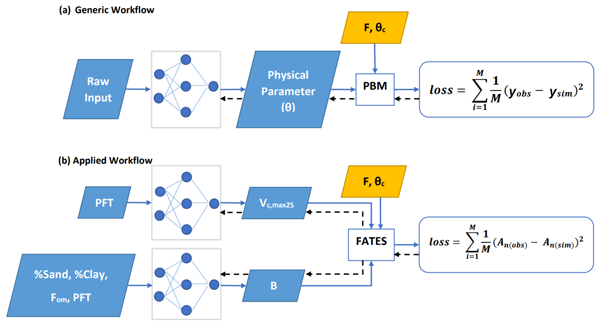
Doaa Aboelyazeed, Chonggang Xu, Forrest M. Hoffman, Jiangtao Liu, Alex W. Jones, Chris Rackauckas, Kathryn Lawson, and Chaopeng Shen
Biogeosciences, 20, 2671–2692, https://doi.org/10.5194/bg-20-2671-2023, https://doi.org/10.5194/bg-20-2671-2023, 2023
Short summary
Short summary
Photosynthesis is critical for life and has been affected by the changing climate. Many parameters come into play while modeling, but traditional calibration approaches face many issues. Our framework trains coupled neural networks to provide parameters to a photosynthesis model. Using big data, we independently found parameter values that were correlated with those in the literature while giving higher correlation and reduced biases in photosynthesis rates.
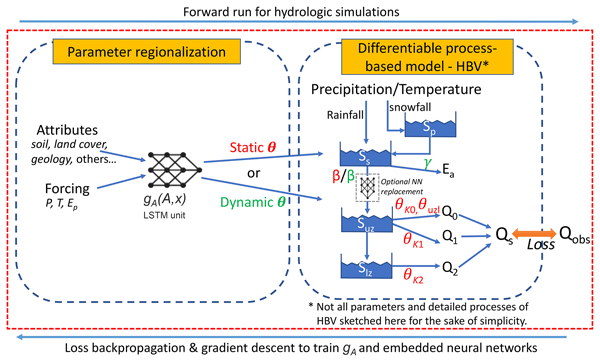
Dapeng Feng, Hylke Beck, Kathryn Lawson, and Chaopeng Shen
Hydrol. Earth Syst. Sci., 27, 2357–2373, https://doi.org/10.5194/hess-27-2357-2023, https://doi.org/10.5194/hess-27-2357-2023, 2023
Short summary
Short summary
Powerful hybrid models (called δ or delta models) embrace the fundamental learning capability of AI and can also explain the physical processes. Here we test their performance when applied to regions not in the training data. δ models rivaled the accuracy of state-of-the-art AI models under the data-dense scenario and even surpassed them for the data-sparse one. They generalize well due to the physical structure included. δ models could be ideal candidates for global hydrologic assessment.
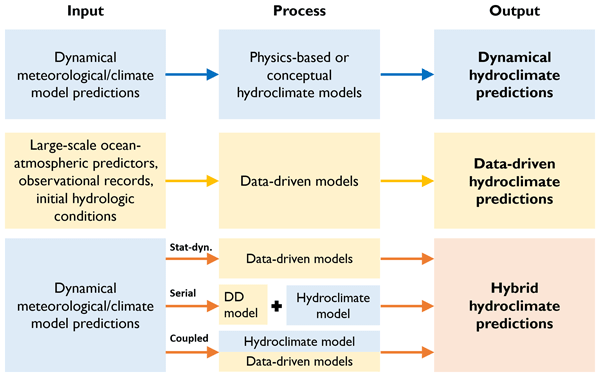
Louise J. Slater, Louise Arnal, Marie-Amélie Boucher, Annie Y.-Y. Chang, Simon Moulds, Conor Murphy, Grey Nearing, Guy Shalev, Chaopeng Shen, Linda Speight, Gabriele Villarini, Robert L. Wilby, Andrew Wood, and Massimiliano Zappa
Hydrol. Earth Syst. Sci., 27, 1865–1889, https://doi.org/10.5194/hess-27-1865-2023, https://doi.org/10.5194/hess-27-1865-2023, 2023
Short summary
Short summary
Hybrid forecasting systems combine data-driven methods with physics-based weather and climate models to improve the accuracy of predictions for meteorological and hydroclimatic events such as rainfall, temperature, streamflow, floods, droughts, tropical cyclones, or atmospheric rivers. We review recent developments in hybrid forecasting and outline key challenges and opportunities in the field.
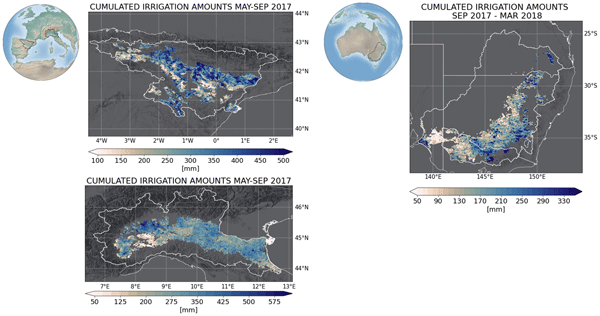
Jacopo Dari, Luca Brocca, Sara Modanesi, Christian Massari, Angelica Tarpanelli, Silvia Barbetta, Raphael Quast, Mariette Vreugdenhil, Vahid Freeman, Anaïs Barella-Ortiz, Pere Quintana-Seguí, David Bretreger, and Espen Volden
Earth Syst. Sci. Data, 15, 1555–1575, https://doi.org/10.5194/essd-15-1555-2023, https://doi.org/10.5194/essd-15-1555-2023, 2023
Short summary
Short summary
Irrigation is the main source of global freshwater consumption. Despite this, a detailed knowledge of irrigation dynamics (i.e., timing, extent of irrigated areas, and amounts of water used) are generally lacking worldwide. Satellites represent a useful tool to fill this knowledge gap and monitor irrigation water from space. In this study, three regional-scale and high-resolution (1 and 6 km) products of irrigation amounts estimated by inverting the satellite soil moisture signals are presented.
Jiangtao Liu, David Hughes, Farshid Rahmani, Kathryn Lawson, and Chaopeng Shen
Geosci. Model Dev., 16, 1553–1567, https://doi.org/10.5194/gmd-16-1553-2023, https://doi.org/10.5194/gmd-16-1553-2023, 2023
Short summary
Short summary
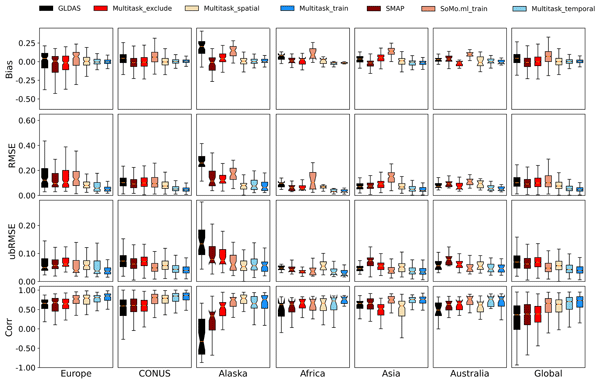
Under-monitored regions like Africa need high-quality soil moisture predictions to help with food production, but it is not clear if soil moisture processes are similar enough around the world for data-driven models to maintain accuracy. We present a deep-learning-based soil moisture model that learns from both in situ data and satellite data and performs better than satellite products at the global scale. These results help us apply our model globally while better understanding its limitations.
Kunlong He, Wei Zhao, Luca Brocca, and Pere Quintana-Seguí
Hydrol. Earth Syst. Sci., 27, 169–190, https://doi.org/10.5194/hess-27-169-2023, https://doi.org/10.5194/hess-27-169-2023, 2023
Short summary
Short summary
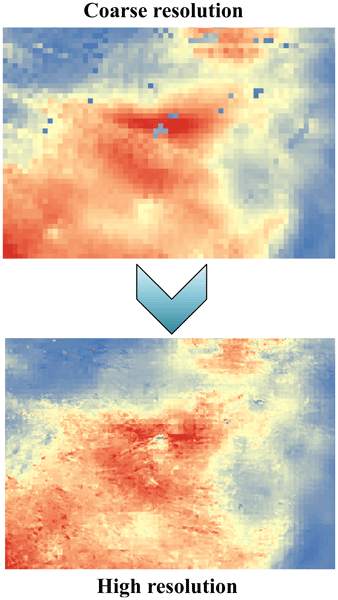
In this study, we developed a soil moisture-based precipitation downscaling (SMPD) method for spatially downscaling the GPM daily precipitation product by exploiting the connection between surface soil moisture and precipitation according to the soil water balance equation. Based on this physical method, the spatial resolution of the daily precipitation product was downscaled to 1 km and the SMPD method shows good potential for the development of the high-resolution precipitation product.
Kieran M. R. Hunt, Gwyneth R. Matthews, Florian Pappenberger, and Christel Prudhomme
Hydrol. Earth Syst. Sci., 26, 5449–5472, https://doi.org/10.5194/hess-26-5449-2022, https://doi.org/10.5194/hess-26-5449-2022, 2022
Short summary
Short summary
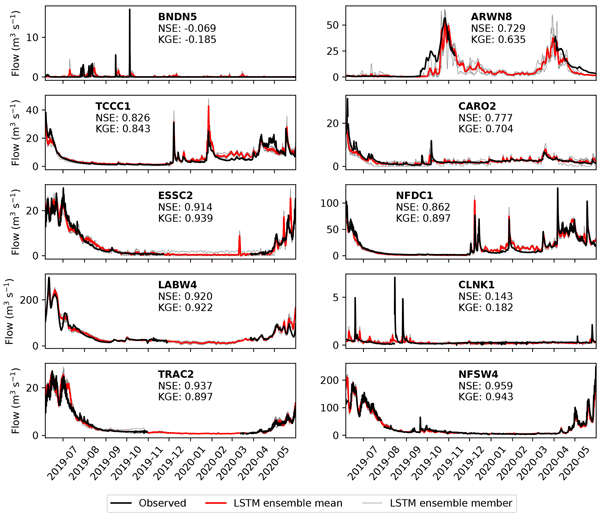
In this study, we use three models to forecast river streamflow operationally for 13 months (September 2020 to October 2021) at 10 gauges in the western US. The first model is a state-of-the-art physics-based streamflow model (GloFAS). The second applies a bias-correction technique to GloFAS. The third is a type of neural network (an LSTM). We find that all three are capable of producing skilful forecasts but that the LSTM performs the best, with skilful 5 d forecasts at nine stations.
Sara Sadri, James S. Famiglietti, Ming Pan, Hylke E. Beck, Aaron Berg, and Eric F. Wood
Hydrol. Earth Syst. Sci., 26, 5373–5390, https://doi.org/10.5194/hess-26-5373-2022, https://doi.org/10.5194/hess-26-5373-2022, 2022
Short summary
Short summary
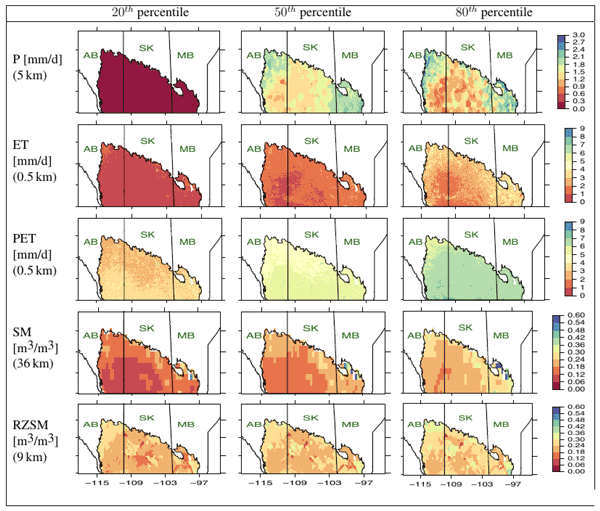
A farm-scale hydroclimatic machine learning framework to advise farmers was developed. FarmCan uses remote sensing data and farmers' input to forecast crop water deficits. The 8 d composite variables are better than daily ones for forecasting water deficit. Evapotranspiration (ET) and potential ET are more effective than soil moisture at predicting crop water deficit. FarmCan uses a crop-specific schedule to use surface or root zone soil moisture.
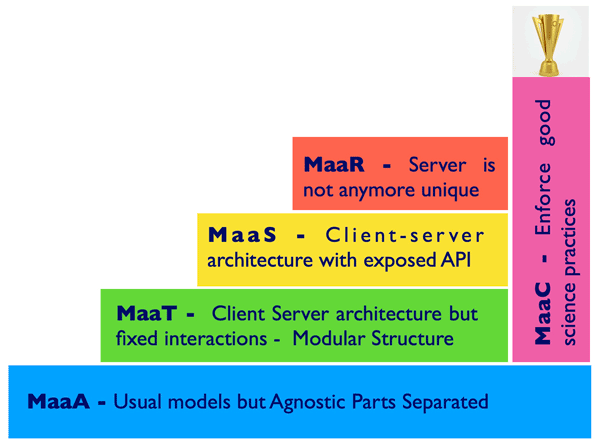
Riccardo Rigon, Giuseppe Formetta, Marialaura Bancheri, Niccolò Tubini, Concetta D'Amato, Olaf David, and Christian Massari
Hydrol. Earth Syst. Sci., 26, 4773–4800, https://doi.org/10.5194/hess-26-4773-2022, https://doi.org/10.5194/hess-26-4773-2022, 2022
Short summary
Short summary
The
Digital Earth(DE) metaphor is very useful for both end users and hydrological modelers. We analyse different categories of models, with the view of making them part of a Digital eARth Twin Hydrology system (called DARTH). We also stress the idea that DARTHs are not models in and of themselves, rather they need to be built on an appropriate information technology infrastructure. It is remarked that DARTHs have to, by construction, support the open-science movement and its ideas.
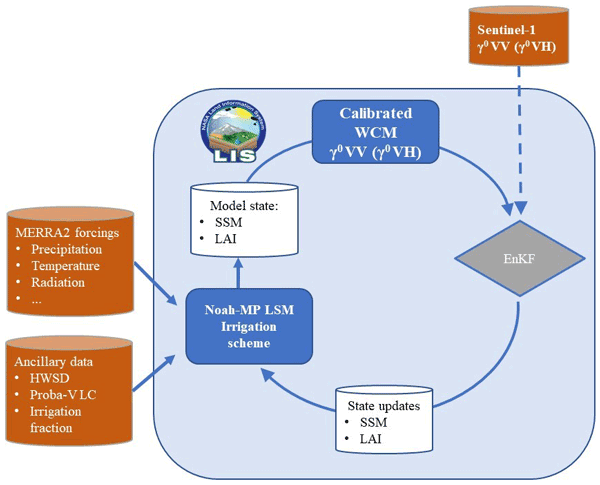
Sara Modanesi, Christian Massari, Michel Bechtold, Hans Lievens, Angelica Tarpanelli, Luca Brocca, Luca Zappa, and Gabriëlle J. M. De Lannoy
Hydrol. Earth Syst. Sci., 26, 4685–4706, https://doi.org/10.5194/hess-26-4685-2022, https://doi.org/10.5194/hess-26-4685-2022, 2022
Short summary
Short summary
Given the crucial impact of irrigation practices on the water cycle, this study aims at estimating irrigation through the development of an innovative data assimilation system able to ingest high-resolution Sentinel-1 radar observations into the Noah-MP land surface model. The developed methodology has important implications for global water resource management and the comprehension of human impacts on the water cycle and identifies main challenges and outlooks for future research.

Stefania Camici, Gabriele Giuliani, Luca Brocca, Christian Massari, Angelica Tarpanelli, Hassan Hashemi Farahani, Nico Sneeuw, Marco Restano, and Jérôme Benveniste
Geosci. Model Dev., 15, 6935–6956, https://doi.org/10.5194/gmd-15-6935-2022, https://doi.org/10.5194/gmd-15-6935-2022, 2022
Short summary
Short summary
This paper presents an innovative approach, STREAM (SaTellite-based Runoff Evaluation And Mapping), to derive daily river discharge and runoff estimates from satellite observations of soil moisture, precipitation, and terrestrial total water storage anomalies. Potentially useful for multiple operational and scientific applications, the added value of the STREAM approach is the ability to increase knowledge on the natural processes, human activities, and their interactions on the land.
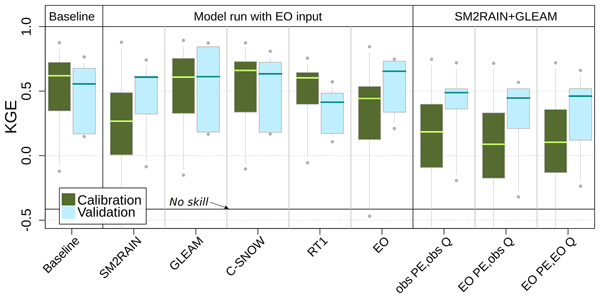
Lorenzo Alfieri, Francesco Avanzi, Fabio Delogu, Simone Gabellani, Giulia Bruno, Lorenzo Campo, Andrea Libertino, Christian Massari, Angelica Tarpanelli, Dominik Rains, Diego G. Miralles, Raphael Quast, Mariette Vreugdenhil, Huan Wu, and Luca Brocca
Hydrol. Earth Syst. Sci., 26, 3921–3939, https://doi.org/10.5194/hess-26-3921-2022, https://doi.org/10.5194/hess-26-3921-2022, 2022
Short summary
Short summary
This work shows advances in high-resolution satellite data for hydrology. We performed hydrological simulations for the Po River basin using various satellite products, including precipitation, evaporation, soil moisture, and snow depth. Evaporation and snow depth improved a simulation based on high-quality ground observations. Interestingly, a model calibration relying on satellite data skillfully reproduces observed discharges, paving the way to satellite-driven hydrological applications.
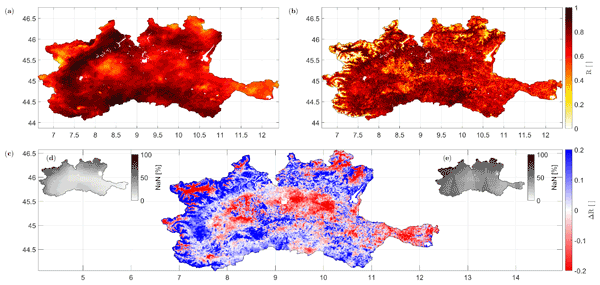
Paolo Filippucci, Luca Brocca, Raphael Quast, Luca Ciabatta, Carla Saltalippi, Wolfgang Wagner, and Angelica Tarpanelli
Hydrol. Earth Syst. Sci., 26, 2481–2497, https://doi.org/10.5194/hess-26-2481-2022, https://doi.org/10.5194/hess-26-2481-2022, 2022
Short summary
Short summary
A high-resolution (1 km) rainfall product with 10–30 d temporal resolution was obtained starting from SM data from Sentinel-1. Good performances are achieved using observed data (gauge and radar) over the Po River Valley, Italy, as a benchmark. The comparison with a product characterized by lower spatial resolution (25 km) highlights areas where the high spatial resolution of Sentinel-1 has great benefits. Possible applications include water management, agriculture and index-based insurances.
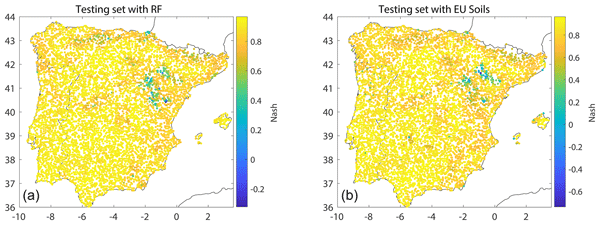
Yves Tramblay and Pere Quintana Seguí
Nat. Hazards Earth Syst. Sci., 22, 1325–1334, https://doi.org/10.5194/nhess-22-1325-2022, https://doi.org/10.5194/nhess-22-1325-2022, 2022
Short summary
Short summary
Monitoring soil moisture is important during droughts, but very few measurements are available. Consequently, land-surface models are essential tools for reproducing soil moisture dynamics. In this study, a hybrid approach allowed for regionalizing soil water content using a machine learning method. This approach proved to be efficient, compared to the use of soil property maps, to run a simple soil moisture accounting model, and therefore it can be applied in various regions.
Ather Abbas, Laurie Boithias, Yakov Pachepsky, Kyunghyun Kim, Jong Ahn Chun, and Kyung Hwa Cho
Geosci. Model Dev., 15, 3021–3039, https://doi.org/10.5194/gmd-15-3021-2022, https://doi.org/10.5194/gmd-15-3021-2022, 2022
Short summary
Short summary
The field of artificial intelligence has shown promising results in a wide variety of fields including hydrological modeling. However, developing and testing hydrological models with artificial intelligence techniques require expertise from diverse fields. In this study, we developed an open-source framework based upon the python programming language to simplify the process of the development of hydrological models of time series data using machine learning.

Christian Massari, Francesco Avanzi, Giulia Bruno, Simone Gabellani, Daniele Penna, and Stefania Camici
Hydrol. Earth Syst. Sci., 26, 1527–1543, https://doi.org/10.5194/hess-26-1527-2022, https://doi.org/10.5194/hess-26-1527-2022, 2022
Short summary
Short summary
Droughts are a creeping disaster, meaning that their onset, duration and recovery are challenging to monitor and forecast. Here, we provide further evidence of an additional challenge of droughts, i.e. the fact that the deficit in water supply during droughts is generally much more than expected based on the observed decline in precipitation. At a European scale we explain this with enhanced evapotranspiration, sustained by higher atmospheric demand for moisture during such dry periods.
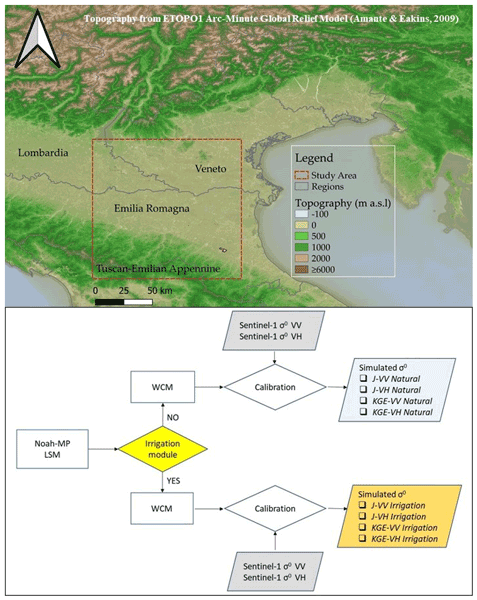
Sara Modanesi, Christian Massari, Alexander Gruber, Hans Lievens, Angelica Tarpanelli, Renato Morbidelli, and Gabrielle J. M. De Lannoy
Hydrol. Earth Syst. Sci., 25, 6283–6307, https://doi.org/10.5194/hess-25-6283-2021, https://doi.org/10.5194/hess-25-6283-2021, 2021
Short summary
Short summary
Worldwide, the amount of water used for agricultural purposes is rising and the quantification of irrigation is becoming a crucial topic. Land surface models are not able to correctly simulate irrigation. Remote sensing observations offer an opportunity to fill this gap as they are directly affected by irrigation. We equipped a land surface model with an observation operator able to transform Sentinel-1 backscatter observations into realistic vegetation and soil states via data assimilation.
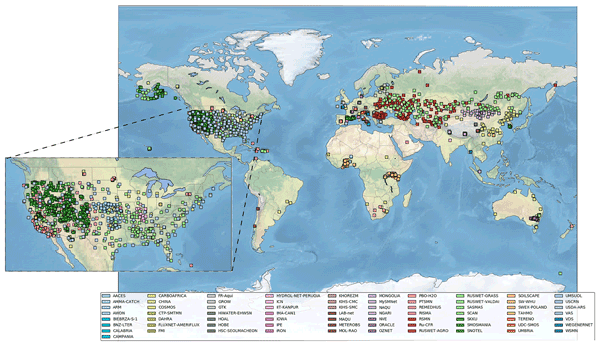
Wouter Dorigo, Irene Himmelbauer, Daniel Aberer, Lukas Schremmer, Ivana Petrakovic, Luca Zappa, Wolfgang Preimesberger, Angelika Xaver, Frank Annor, Jonas Ardö, Dennis Baldocchi, Marco Bitelli, Günter Blöschl, Heye Bogena, Luca Brocca, Jean-Christophe Calvet, J. Julio Camarero, Giorgio Capello, Minha Choi, Michael C. Cosh, Nick van de Giesen, Istvan Hajdu, Jaakko Ikonen, Karsten H. Jensen, Kasturi Devi Kanniah, Ileen de Kat, Gottfried Kirchengast, Pankaj Kumar Rai, Jenni Kyrouac, Kristine Larson, Suxia Liu, Alexander Loew, Mahta Moghaddam, José Martínez Fernández, Cristian Mattar Bader, Renato Morbidelli, Jan P. Musial, Elise Osenga, Michael A. Palecki, Thierry Pellarin, George P. Petropoulos, Isabella Pfeil, Jarrett Powers, Alan Robock, Christoph Rüdiger, Udo Rummel, Michael Strobel, Zhongbo Su, Ryan Sullivan, Torbern Tagesson, Andrej Varlagin, Mariette Vreugdenhil, Jeffrey Walker, Jun Wen, Fred Wenger, Jean Pierre Wigneron, Mel Woods, Kun Yang, Yijian Zeng, Xiang Zhang, Marek Zreda, Stephan Dietrich, Alexander Gruber, Peter van Oevelen, Wolfgang Wagner, Klaus Scipal, Matthias Drusch, and Roberto Sabia
Hydrol. Earth Syst. Sci., 25, 5749–5804, https://doi.org/10.5194/hess-25-5749-2021, https://doi.org/10.5194/hess-25-5749-2021, 2021
Short summary
Short summary
The International Soil Moisture Network (ISMN) is a community-based open-access data portal for soil water measurements taken at the ground and is accessible at https://ismn.earth. Over 1000 scientific publications and thousands of users have made use of the ISMN. The scope of this paper is to inform readers about the data and functionality of the ISMN and to provide a review of the scientific progress facilitated through the ISMN with the scope to shape future research and operations.
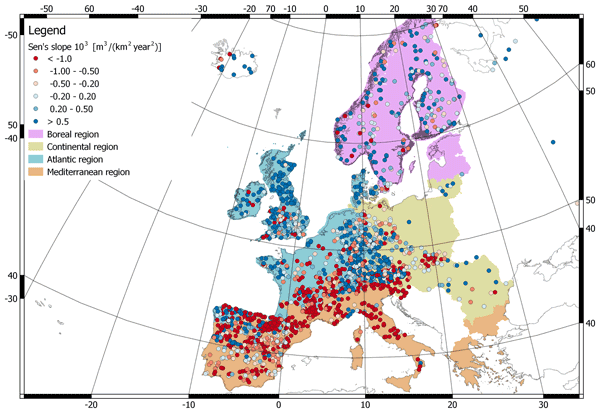
Daniele Masseroni, Stefania Camici, Alessio Cislaghi, Giorgio Vacchiano, Christian Massari, and Luca Brocca
Hydrol. Earth Syst. Sci., 25, 5589–5601, https://doi.org/10.5194/hess-25-5589-2021, https://doi.org/10.5194/hess-25-5589-2021, 2021
Short summary
Short summary
We evaluate 63 years of changes in annual streamflow volume across Europe, using a data set of more than 3000 stations, with a special focus on the Mediterranean basin. The results show decreasing (increasing) volumes in the southern (northern) regions. These trends are strongly consistent with the changes in temperature and precipitation.
Cited articles
Abbas, A., Iftikhar, S., and Beck, H. E.: AquaFetch: A Unified Python Interface for Water Resource Dataset Acquisition and Harmonization. J. Open Sour. Softw., 10, 8051, https://doi.org/10.21105/joss.08051, 2025. a
Adhikari, A. and Behrangi, A.: Assessment of satellite precipitation products in relation with orographic enhancement over the western United States, Earth Space Sci., 9, e2021EA001906, https://doi.org/10.1029/2021EA001906, 2022. a, b, c
Alvarez-Garreton, C., Mendoza, P. A., Boisier, J. P., Addor, N., Galleguillos, M., Zambrano-Bigiarini, M., Lara, A., Puelma, C., Cortes, G., Garreaud, R., McPhee, J., and Ayala, A.: The CAMELS-CL dataset: catchment attributes and meteorology for large sample studies – Chile dataset, Hydrol. Earth Syst. Sci., 22, 5817–5846, https://doi.org/10.5194/hess-22-5817-2018, 2018. a
Arsenault, R., Brissette, F., and Martel, J.-L.: The hazards of split-sample validation in hydrological model calibration, J. Hydrol., 566, 346–362, https://doi.org/10.1016/j.jhydrol.2018.09.027, 2018. a
Arsenault, R., Brissette, F., Martel, J.-L., Troin, M., Lévesque, G., Davidson-Chaput, J., Gonzalez, M. C., Ameli, A., and Poulin, A.: A comprehensive, multisource database for hydrometeorological modeling of 14,425 North American watersheds, Sci. Data, 7, 243, https://doi.org/10.1038/s41597-020-00583-2, 2020. a
Arsenault, R., Martel, J.-L., Brunet, F., Brissette, F., and Mai, J.: Continuous streamflow prediction in ungauged basins: long short-term memory neural networks clearly outperform traditional hydrological models, Hydrol. Earth Syst. Sci., 27, 139–157, https://doi.org/10.5194/hess-27-139-2023, 2023. a
Ashlock, D.: Evolutionary computation for modeling and optimization, Springer Publishing Company, https://doi.org/10.1007/0-387-31909-3, 2010. a
AtrCheema: rain2flow, GitHub [code], https://github.com/AtrCheema/rain2flow (last access: 5 May 2026), 2026. a
Bador, M., Boé, J., Terray, L., Alexander, L. V., Baker, A., Bellucci, A., Haarsma, R., Koenigk, T., Moine, M.-P., Lohmann, K., Putrasahan, D. A., Roberts, C., Roberts, M., Scoccimarro, E., Schiemann, R., Seddon, J., Senan, R., Valcke, S., and Vanniere, B.: Impact of higher spatial atmospheric resolution on precipitation extremes over land in global climate models, J. Geophys. Res.-Atmos., 125, e2019JD032184, https://doi.org/10.1029/2019JD032184, 2020. a
Beck, H. E., van Dijk, A. I. J. M., and de Roo, A.: Global maps of streamflow characteristics based on observations from several thousand catchments, J. Hydrometeorol., 16, 1478–1501, https://doi.org/10.1175/JHM-D-14-0155.1, 2015. a
Beck, H. E., van Dijk, A. I. J. M., de Roo, A., Miralles, D. G., McVicar, T. R., Schellekens, J., and Bruijnzeel, L. A.: Global-scale regionalization of hydrologic model parameters, Water Resour. Res., 52, 3599–3622, https://doi.org/10.1002/2015WR018247, 2016. a
Beck, H. E., van Dijk, A. I. J. M., de Roo, A., Dutra, E., Fink, G., Orth, R., and Schellekens, J.: Global evaluation of runoff from 10 state-of-the-art hydrological models, Hydrol. Earth Syst. Sci., 21, 2881–2903, https://doi.org/10.5194/hess-21-2881-2017, 2017a. a, b, c
Beck, H. E., van Dijk, A. I. J. M., Levizzani, V., Schellekens, J., Miralles, D. G., Martens, B., and de Roo, A.: MSWEP: 3-hourly 0.25° global gridded precipitation (1979–2015) by merging gauge, satellite, and reanalysis data, Hydrol. Earth Syst. Sci., 21, 589–615, https://doi.org/10.5194/hess-21-589-2017, 2017b. a
Beck, H. E., Vergopolan, N., Pan, M., Levizzani, V., van Dijk, A. I. J. M., Weedon, G. P., Brocca, L., Pappenberger, F., Huffman, G. J., and Wood, E. F.: Global-scale evaluation of 22 precipitation datasets using gauge observations and hydrological modeling, Hydrol. Earth Syst. Sci., 21, 6201–6217, https://doi.org/10.5194/hess-21-6201-2017, 2017c. a, b, c, d, e, f, g, h
Beck, H. E., Pan, M., Roy, T., Weedon, G. P., Pappenberger, F., van Dijk, A. I. J. M., Huffman, G. J., Adler, R. F., and Wood, E. F.: Daily evaluation of 26 precipitation datasets using Stage-IV gauge-radar data for the CONUS, Hydrol. Earth Syst. Sci., 23, 207–224, https://doi.org/10.5194/hess-23-207-2019, 2019a. a, b, c
Beck, H. E., Wood, E. F., Pan, M., Fisher, C. K., Miralles, D. G., Van Dijk, A. I., McVicar, T. R., and Adler, R. F.: MSWEP V2 global 3-hourly 0.1 precipitation: methodology and quantitative assessment, B. Am. Meteorol. Soc., 100, 473–500, https://doi.org/10.1175/BAMS-D-17-0138.1, 2019b. a, b, c, d, e, f
Beck, H. E., Westra, S., Tan, J., Pappenberger, F., Huffman, G. J., McVicar, T. R., Gründemann, G. J., Vergopolan, N., Fowler, H. J., Lewis, E., Verbist, K., and Wood, E. F.: PPDIST, global 0.1∘ daily and 3-hourly precipitation probability distribution climatologies for 1979–2018, Sci. Data, 7, https://doi.org/10.1038/s41597-020-00631-x, 2020. a, b
Beck, H. E., van Dijk, A. I. J. M., Larraondo, P. R., McVicar, T. R., Pan, M., Dutra, E., and Miralles, D. G.: MSWX: global 3-hourly 0.1∘ bias-corrected meteorological data including near-real-time updates and forecast ensembles, B. Am. Meteorol. Soc., 103, E710–E732, https://doi.org/10.1175/BAMS-D-21-0145.1, 2022. a
Beck, H. E., McVicar, T. R., Vergopolan, N., Berg, A., Lutsko, N. J., Dufour, A., Zeng, Z., Jiang, X., van Dijk, A. I. J. M., and Miralles, D. G.: High-resolution (1 km) Köppen-Geiger maps for 1901–2099 based on constrained CMIP6 projections, Sci. Data, 10, https://doi.org/10.1038/s41597-023-02549-6, 2023. a, b
Bishop, C. H. and Abramowitz, G.: Climate model dependence and the replicate Earth paradigm, Clim. Dynam., 41, 885–900, https://doi.org/10.1007/s00382-012-1610-y, 2013. a
Bitew, M. M., Gebremichael, M., Ghebremichael, L. T., and Bayissa, Y. A.: Evaluation of high-resolution satellite rainfall products through streamflow simulation in a hydrological modeling of a small mountainous watershed in Ethiopia, J. Hydrometeorol., 13, 338–350, https://doi.org/10.1175/2011JHM1292.1, 2012. a
Bontemps, S., Defourny, P., and van Bogaert, E.: GlobCover 2009, products description and validation report, Tech. rep., ESA GlobCover project, https://due.esrin.esa.int/files/GLOBCOVER2009_Validation_Report_2.2.pdf (last access: 5 May 2026), 2011. a
Brocca, L., Filippucci, P., Hahn, S., Ciabatta, L., Massari, C., Camici, S., Schüller, L., Bojkov, B., and Wagner, W.: SM2RAIN–ASCAT (2007–2018): global daily satellite rainfall data from ASCAT soil moisture observations, Earth Syst. Sci. Data, 11, 1583–1601, https://doi.org/10.5194/essd-11-1583-2019, 2019. a
Brown, J., Ferrians, O. J., Heginbottom, J. A., and Melnikov, E. S.: Circum-Arctic Map of Permafrost and Ground-Ice Conditions. Version 2, Tech. rep., National Snow and Ice Data Center, Boulder, Colorado USA, 1997. a
Brocca, L., Filippucci, P., Hahn, S., Ciabatta, L., Massari, C., Camici, S., Schüller, L., Bojkov, B., and Wagner, W.: SM2RAIN-ASCAT (2007–2022): global daily satellite rainfall from ASCAT soil moisture (2.1.2n), Zenodo [data set], https://doi.org/10.5281/zenodo.10376109, 2023. a
Camici, S., Ciabatta, L., Massari, C., and Brocca, L.: How reliable are satellite precipitation estimates for driving hydrological models: A verification study over the Mediterranean area, J. Hydrol., 563, 950–961, https://doi.org/10.1016/j.jhydrol.2018.06.067, 2018. a
Cao, Q., Painter, T. H., Currier, W. R., Lundquist, J. D., and Lettenmaier, D. P.: Estimation of Precipitation over the OLYMPEX Domain during Winter 2015/16, J. Hydrometeorol., 19, 143–160, https://doi.org/10.1175/JHM-D-17-0076.1, 2018. a, b
Chagas, V. B. P., Chaffe, P. L. B., Addor, N., Fan, F. M., Fleischmann, A. S., Paiva, R. C. D., and Siqueira, V. A.: CAMELS-BR: hydrometeorological time series and landscape attributes for 897 catchments in Brazil, Earth Syst. Sci. Data, 12, 2075–2096, https://doi.org/10.5194/essd-12-2075-2020, 2020. a
Chan, S. C., Kendon, E. J., Fowler, H. J., Blenkinsop, S., Ferro, C. A., and Stephenson, D. B.: Does increasing the spatial resolution of a regional climate model improve the simulated daily precipitation?, Clim. Dynam., 41, 1475–1495, https://doi.org/10.1007/s00382-012-1568-9, 2013. a
Chen, H., Yong, B., Qi, W., Wu, H., Ren, L., and Hong, Y.: Investigating the evaluation uncertainty for satellite precipitation estimates based on two different ground precipitation observation products, J. Hydrometeorol., 21, 2595–2606, https://doi.org/10.1175/JHM-D-20-0103.1, 2020. a, b
Chen, M., Shi, W., Xie, P., Silva, V. B. S., Kousky, V. E., Wayne Higgins, R., and Janowiak, J. E.: Assessing objective techniques for gauge-based analyses of global daily precipitation, J. Geophys. Res.-Atmos., 113, https://doi.org/10.1029/2007JD009132, 2008. a
Ciabatta, L., Massari, C., Brocca, L., Gruber, A., Reimer, C., Hahn, S., Paulik, C., Dorigo, W., Kidd, R., and Wagner, W.: SM2RAIN-CCI: a new global long-term rainfall data set derived from ESA CCI soil moisture, Earth Syst. Sci. Data, 10, 267–280, https://doi.org/10.5194/essd-10-267-2018, 2018a. a
Ciabatta, L., Massari, C., Brocca, L., Gruber, A., Reimer, C., Hahn, S., Paulik, C., Dorigo, W., Kidd, R., and Wagner, W.: SM2RAIN-CCI (1 Jan 1998–31 December 2015) global daily rainfall dataset (Version 2), Zenodo [data set], https://doi.org/10.5281/zenodo.1305021, 2018b. a
Contractor, S., Donat, M. G., Alexander, L. V., Ziese, M., Meyer-Christoffer, A., Schneider, U., Rustemeier, E., Becker, A., Durre, I., and Vose, R. S.: Rainfall Estimates on a Gridded Network (REGEN) – a global land-based gridded dataset of daily precipitation from 1950 to 2016, Hydrol. Earth Syst. Sci., 24, 919–943, https://doi.org/10.5194/hess-24-919-2020, 2020. a
Copernicus Climate Change Service, Climate Data Store: ERA5 hourly data on single levels from 1940 to present, Copernicus Climate Change Service (C3S) Climate Data Store (CDS) [data set], https://doi.org/10.24381/cds.adbb2d47, 2023. a
Coxon, G., Addor, N., Bloomfield, J. P., Freer, J., Fry, M., Hannaford, J., Howden, N. J. K., Lane, R., Lewis, M., Robinson, E. L., Wagener, T., and Woods, R.: CAMELS-GB: hydrometeorological time series and landscape attributes for 671 catchments in Great Britain, Earth Syst. Sci. Data, 12, 2459–2483, https://doi.org/10.5194/essd-12-2459-2020, 2020. a
Crochemore, L., Isberg, K., Pimentel, R., Pineda, L., Hasan, A., and Arheimer, B.: Lessons learnt from checking the quality of openly accessible river flow data worldwide, Hydrol. Sci. J., 65, 699–711, https://doi.org/10.1080/02626667.2019.1659509, 2020. a
Dangar, S., Asoka, A., and Mishra, V.: Causes and implications of groundwater depletion in India: A review, J. Hydrol., 596, 126103, https://doi.org/10.1016/j.jhydrol.2021.126103, 2021. a
Danielson, J. J. and Gesch, D. B.: Global Multi-resolution Terrain Elevation Data 2010 (GMTED2010), Open-File Report 2011–1073, United States Geological Survey (USGS), Reston, Virginia, 2011. a
Dimitrova, A., McElroy, S., Levy, M., Gershunov, A., and Benmarhnia, T.: Precipitation variability and risk of infectious disease in children under 5 years for 32 countries: a global analysis using Demographic and Health Survey data, The Lancet Planetary Health, 6, e147–e155, https://doi.org/10.1016/S2542-5196(21)00325-9, 2022. a
do Nascimento, T. V., Rudlang, J., Höge, M., van der Ent, R., Chappon, M., Seibert, J., Hrachowitz, M., and Fenicia, F.: EStreams: An integrated dataset and catalogue of streamflow, hydro-climatic and landscape variables for Europe, Sci. Data, 11, 879, https://doi.org/10.1038/s41597-024-03706-1, 2024. a
Dresel, P. E., Dean, J. F., Perveen, F., Webb, J. A., Hekmeijer, P., Adelana, S. M., and Daly, E.: Effect of Eucalyptus plantations, geology, and precipitation variability on water resources in upland intermittent catchments, J. Hydrol., 564, 723–739, https://doi.org/10.1016/j.jhydrol.2018.07.019, 2018. a
Ebert, E. E., Janowiak, J. E., and Kidd, C.: Comparison of near-real-time precipitation estimates from satellite observations and numerical models, B. Am. Meteorol. Soc., 88, 47–64, https://doi.org/10.1175/BAMS-88-1-47, 2007. a
Ehsani, M. R. and Behrangi, A.: A comparison of correction factors for the systematic gauge-measurement errors to improve the global land precipitation estimate, J. Hydrol., 610, 127884, https://doi.org/10.1016/j.jhydrol.2022.127884, 2022. a
El Kenawy, A. M., McCabe, M. F., Lopez-Moreno, J. I., Hathal, Y., Robaa, S. M., Al Budeiri, A. L., Jadoon, K. Z., Abouelmagd, A., Eddenjal, A., Domínguez-Castro, F., Trigo, R. M., and Vicente-Serrano, S. M.: Spatial assessment of the performance of multiple high-resolution satellite-based precipitation data sets over the Middle East, Int. J. Climatol., 39, 2522–2543, https://doi.org/10.1002/joc.5968, 2019. a
Ensor, L. A. and Robeson, S. M.: Statistical characteristics of daily precipitation: comparisons of gridded and point datasets, J. Appl. Meteorol. Climatol., 47, 2468–2476, https://doi.org/10.1175/2008JAMC1757.1, 2008. a
FAO: Forest Resource Assessment (FRA) forest cover, https://www.fao.org/forest-resources-assessment/fra-2000/en (last access: 5 May 2026), 2000. a
Fortin, F., De Rainville, F., Gardner, M., Parizeau, M., and Gagné, C.: DEAP: evolutionary algorithms made easy, J. Mach. Learn. Res., 13, 2171–2175, https://doi.org/10.5555/2503308.2503311, 2012. a
Funk, C., Peterson, P., Landsfeld, M., Pedreros, D., Verdin, J., Shukla, S., Husak, G., Rowland, J., Harrison, L., Hoell, A., and Michaelsen, J.: The climate hazards infrared precipitation with stations – a new environmental record for monitoring extremes, Sci. Data, 2, 150066, https://doi.org/10.1038/sdata.2015.66, 2015. a, b
Fuster, B., Sánchez-Zapero, J., Camacho, F., García-Santos, V., Verger, A., Lacaze, R., Weiss, M., Baret, F., and Smets, B.: Quality assessment of PROBA-V LAI, fAPAR and fCOVER collection 300 m products of copernicus global land service, Remote Sens., 12, 1017, https://doi.org/10.3390/rs12061017, 2020. a
Gebrechorkos, S. H., Leyland, J., Dadson, S. J., Cohen, S., Slater, L., Wortmann, M., Ashworth, P. J., Bennett, G. L., Boothroyd, R., Cloke, H., Delorme, P., Griffith, H., Hardy, R., Hawker, L., McLelland, S., Neal, J., Nicholas, A., Tatem, A. J., Vahidi, E., Liu, Y., Sheffield, J., Parsons, D. R., and Darby, S. E.: Global-scale evaluation of precipitation datasets for hydrological modelling, Hydrol. Earth Syst. Sci., 28, 3099–3118, https://doi.org/10.5194/hess-28-3099-2024, 2024. a, b, c, d, e
Gebremichael, M.: Framework for satellite rainfall product evaluation, in: Rainfall: State of the Science, edited by Testik, F. Y. and Gebremichael, M., Geophysical Monograph Series, American Geophysical Union, Washington, D. C., https://doi.org/10.1029/2010GM000974, 2010. a
Gericke, O. J. and Smithers, J. C.: Review of methods used to estimate catchment response time for the purpose of peak discharge estimation, Hydrol. Sci. J., 59, 1935–1971, https://doi.org/10.1080/02626667.2013.866712, 2014. a
Girotto, M., Formetta, G., Azimi, S., Bachand, C., Cowherd, M., De Lannoy, G., Lievens, H., Modanesi, S., Raleigh, M. S., Rigon, R., and Massari, C.: Identifying snowfall elevation patterns by assimilating satellite-based snow depth retrievals, Sci. Total Environ., 906, 167312, https://doi.org/10.1016/j.scitotenv.2023.167312, 2024a. a
Girotto, M., Formetta, G., Azimi, S., Bachand, C., Cowherd, M., De Lannoy, G., Lievens, H., Modanesi, S., Raleigh, M. S., Rigon, R., and Massari, C.: Identifying snowfall elevation patterns by assimilating satellite-based snow depth retrievals, Sci. Total Environ., 906, 167312, https://doi.org/10.1016/j.scitotenv.2023.167312, 2024b. a, b
Gochis, D. J., Nesbitt, S. W., Yu, W., and Williams, S. F.: Comparison of gauge-corrected versus non-gauge corrected satellite-based quantitative precipitation estimates during the 2004 NAME enhanced observing period, Atmósfera, 22, 69–98, 2009. a
Gupta, H. V., Kling, H., Yilmaz, K. K., and Martinez, G. F.: Decomposition of the mean squared error and NSE performance criteria: Implications for improving hydrological modelling, J. Hydrol., 370, 80–91, https://doi.org/10.1016/j.jhydrol.2009.08.003, 2009. a
Hao, Z., Jin, J., Xia, R., Tian, S., Yang, W., Liu, Q., Zhu, M., Ma, T., Jing, C., and Zhang, Y.: CCAM: China Catchment Attributes and Meteorology dataset, Earth Syst. Sci. Data, 13, 5591–5616, https://doi.org/10.5194/essd-13-5591-2021, 2021. a
Helgason, H. B. and Nijssen, B.: LamaH-Ice: LArge-SaMple DAta for Hydrology and Environmental Sciences for Iceland, Earth Syst. Sci. Data, 16, 2741–2771, https://doi.org/10.5194/essd-16-2741-2024, 2024. a
Hengl, T., Mendes de Jesus, J., Heuvelink, G. B., Ruiperez Gonzalez, M., Kilibarda, M., Blagotić, A., Shangguan, W., Wright, M. N., Geng, X., Bauer-Marschallinger, B., Guevara, M. A., Vargas, R., MacMillan, R. A., Batjes, N. H., Leenaars, J. G. B., Ribeiro, E., Wheeler, I., Mantel, S., and Kempen, B.: SoilGrids250m: Global gridded soil information based on machine learning, PLoS one, 12, e0169748, https://doi.org/10.1371/journal.pone.0169748, 2017. a
Herold, N., Alexander, L. V., Donat, M. G., Contractor, S., and Becker, A.: How much does it rain over land?, Geophys. Res. Lett., 43, 341–348, https://doi.org/10.1002/2015GL066615, 2016. a
Hersbach, H., Bell, B., Berrisford, P., Hirahara, S., Horanyi, A., noz Sabater, J. M., Nicolas, J., Peubey, C., Radu, R., Schepers, D., Simmons, A., Soci, C., Abdalla, S., Abellan, X., Balsamo, G., Bechtold, P., Biavati, G., Bidlot, J., Bonavita, M., Chiara, G. D., Dahlgren, P., Dee, D., Diamantakis, M., Dragani, R., Flemming, J., Forbes, R., Fuentes, M., Geer, A., Haimberger, L., Healy, S., Hogan, R. J., Holm, E., Janiskova, M., Keeley, S., Laloyaux, P., Lopez, P., Radnoti, G., de Rosnay, P., Rozum, I., Vamborg, F., Villaume, S., and Thépaut, J.-N.: The ERA5 global reanalysis, Q. J. Roy. Meteor. Soc., 146, 1999–2049, https://doi.org/10.1002/qj.3803, 2020. a, b, c, d, e, f
Hinge, G., Hamouda, M. A., Long, D., and Mohamed, M. M.: Hydrologic utility of satellite precipitation products in flood prediction: A meta-data analysis and lessons learnt, J. Hydrol., 612, 128103, https://doi.org/10.1016/j.jhydrol.2022.128103, 2022. a
Höge, M., Kauzlaric, M., Siber, R., Schönenberger, U., Horton, P., Schwanbeck, J., Floriancic, M. G., Viviroli, D., Wilhelm, S., Sikorska-Senoner, A. E., Addor, N., Brunner, M., Pool, S., Zappa, M., and Fenicia, F.: CAMELS-CH: hydro-meteorological time series and landscape attributes for 331 catchments in hydrologic Switzerland, Earth Syst. Sci. Data, 15, 5755–5784, https://doi.org/10.5194/essd-15-5755-2023, 2023. a
Hong, Y., Hsu, K.-L., Sorooshian, S., and Gao, X.: Precipitation Estimation from Remotely Sensed Imagery Using an Artificial Neural Network Cloud Classification System, J. Appl. Meteorol. Climatol., 43, 1834–1853, https://doi.org/10.1175/JAM2173.1, 2004. a, b
Huang, Y., Bárdossy, A., and Zhang, K.: Sensitivity of hydrological models to temporal and spatial resolutions of rainfall data, Hydrol. Earth Syst. Sci., 23, 2647–2663, https://doi.org/10.5194/hess-23-2647-2019, 2019. a
Huang, Z., Hejazi, M., Li, X., Tang, Q., Vernon, C., Leng, G., Liu, Y., Döll, P., Eisner, S., Gerten, D., Hanasaki, N., and Wada, Y.: Reconstruction of global gridded monthly sectoral water withdrawals for 1971–2010 and analysis of their spatiotemporal patterns, Hydrol. Earth Syst. Sci., 22, 2117–2133, https://doi.org/10.5194/hess-22-2117-2018, 2018. a
Huffman, G. J., Stocker, E. F., Bolvin, D. T., Nelkin, E. J., and Tan, J.: GPM IMERG final precipitation L3 half hourly 0.1 degree x 0.1 degree V06, Goddard Earth Sciences Data and Information Services Center (GES DISC): Greenbelt, MD, USA, https://doi.org/10.5067/GPM/IMERG/3B-HH/07, 2019a. a, b, c, d
Huffman, G. J., Stocker, E. F., Bolvin, D. T., Nelkin, E. J., and Tan, J.: GPM IMERG final precipitation L3 half hourly 0.1 degree x 0.1 degree V06, Goddard Earth Sciences Data and Information Services Center (GES DISC): Greenbelt, MD, USA, 2019b. a
Huffman, G. J., Adler, R. F., Behrangi, A., Bolvin, D. T., Nelkin, E. J., Gu, G., and Ehsani, M. R.: The new version 3.2 global precipitation climatology project (GPCP) monthly and daily precipitation products, J. Climate, 36, 7635–7655, https://doi.org/10.1175/JCLI-D-23-0123.1, 2023. a
Huscroft, J., Gleeson, T., Hartmann, J., and Börker, J.: Compiling and mapping global permeability of the unconsolidated and consolidated Earth: GLobal HYdrogeology MaPS 2.0 (GLHYMPS 2.0), Geophys. Res. Lett., 45, 1897–1904, https://doi.org/10.1002/2017GL075860, 2018. a
Jääskeläinen, E., Kouki, K., and Riihelä, A.: Detecting snowfall events over the Arctic using optical and microwave satellite measurements, Hydrol. Earth Syst. Sci., 28, 3855–3870, https://doi.org/10.5194/hess-28-3855-2024, 2024. a, b
Kling, H., Fuchs, M., and Paulin, M.: Runoff conditions in the upper Danube basin under an ensemble of climate change scenarios, J. Hydrol., 424–425, 264–277, https://doi.org/10.1016/j.jhydrol.2012.01.011, 2012. a
Klingler, C., Schulz, K., and Herrnegger, M.: LamaH-CE: LArge-SaMple DAta for Hydrology and Environmental Sciences for Central Europe, Earth Syst. Sci. Data, 13, 4529–4565, https://doi.org/10.5194/essd-13-4529-2021, 2021. a
Kosaka, Y., Kobayashi, S., Harada, Y., Kobayashi, C., Naoe, H., Koichi, Y., Harada, M., Goto, N., Chiba, J., Miyaoka, K., Sekiguchi, R., Deushi, M., Kamahori, H., Nakaegawa, T., Tanaka, T., Tokuhiro, T., Sato, Y., Matsushia, Y., and Onogi, K.: The JRA-3Q ReanalysisThe JRA-3Q Reanalysis, J. Meteorol. Soc. Jpn. Ser. II, 102, https://doi.org/10.2151/jmsj.2024-004, 2024. a, b, c, d
Krabbenhoft, C. A., Allen, G. H., Lin, P., Godsey, S. E., Allen, D. C., Burrows, R. M., DelVecchia, A. G., Fritz, K. M., Shanafield, M., Burgin, A. J., Zimmer, M. A., Datry, T., Dodds, W. K., Jones, C. N., Mims, M. C., Franklin, C., Hammond, J. C., Zipper, S., Ward, A. S., Costigan, K. H., Beck, H. E., and Olden, J. D.: Assessing placement bias of the global river gauge network, Nature Sustainability, 5, 586–592, https://doi.org/10.1038/s41893-022-00873-0, 2022. a, b
Kubota, T., Aonashi, K., Ushio, T., Shige, S., Takayabu, Y. N., Kachi, M., Arai, Y., Tashima, T., Masaki, T., and Kawamoto, N.: Global Satellite Mapping of Precipitation (GSMaP) products in the GPM era, Satellite Precipitation Measurement: vol. 1, Springer, 355–373, https://doi.org/10.1007/978-3-030-24568-9_20, 2020. a
Kubota, T., Yamamoto, M. K., Ito, M., Tashima, T., Hirose, H., Ushio, T., Aonashi, K., Shige, S., Hamada, A., Yamaji, M., Yoshida, N., and Kachi, M.: Construction of a longer-term and more homogeneous GSMaP precipitation dataset, 355–373, Springer, https://doi.org/10.1007/978-3-030-24568-9_20, 2024. a
Legates, D. R. and Bogart, T. A.: Estimating the proportion of monthly precipitation that falls in solid form, J. Hydrometeorol., 10, 1299–1306, https://doi.org/10.1175/2009JHM1086.1, 2009. a
Lehner, B. and Döll, P.: Development and validation of a global database of lakes, reservoirs and wetlands, J. Hydrol., 296, 1–22, https://doi.org/10.1016/j.jhydrol.2004.03.028, 2004. a
Lehner, B., Reidy Liermann, C., Revenga, C., Vörösmarty, C., Fekete, B., Crouzet, P., Döll, P., Endejan, M., Frenken, K., Magome, J., Nilsson, C., Robertson, J. C., Rödel, R., Sindorf, N., and Wisser, D.: High resolution mapping of the world's reservoirs and dams for sustainable river flow management, Front. Ecol. Environ., 9, 494–502, https://doi.org/10.1890/100125, 2011. a, b, c
Li, Z., Chen, M., Gao, S., Hong, Z., Tang, G., Wen, Y., Gourley, J. J., and Hong, Y.: Cross-examination of similarity, difference and deficiency of gauge, radar and satellite precipitation measuring uncertainties for extreme events using conventional metrics and multiplicative triple collocation, Remote Sens., 12, 1258, https://doi.org/10.3390/rs12081258, 2020. a
Liang, M. and Gornish, E. S.: Rainfall regulation of grazed grasslands, P. Natl. Acad. Sci. USA, 116, 23887–23888, https://doi.org/10.1073/pnas.1915399116, 2019. a
Lin, J., Qian, T., Bechtold, P., Grell, G., Zhang, G. J., Zhu, P., Freitas, S. R., Barnes, H., and Han, J.: Atmospheric convection, Atmosphere-Ocean, 60, 422–476, https://doi.org/10.1080/07055900.2022.2082915, 2022. a
Liu, Z., Liu, Y., Wang, S., Yang, X., Wang, L., Baig, M. H. A., Chi, W., and Wang, Z.: Evaluation of spatial and temporal performances of ERA-Interim precipitation and temperature in Mainland China, J. Climate, 31, 4347–4365, https://doi.org/10.1175/JCLI-D-17-0212.1, 2018. a
Loritz, R., Dolich, A., Acuña Espinoza, E., Ebeling, P., Guse, B., Götte, J., Hassler, S. K., Hauffe, C., Heidbüchel, I., Kiesel, J., Mälicke, M., Müller-Thomy, H., Stölzle, M., and Tarasova, L.: CAMELS-DE: hydro-meteorological time series and attributes for 1582 catchments in Germany, Earth Syst. Sci. Data, 16, 5625–5642, https://doi.org/10.5194/essd-16-5625-2024, 2024. a
Lussana, C., Saloranta, T., Skaugen, T., Magnusson, J., Tveito, O. E., and Andersen, J.: seNorge2 daily precipitation, an observational gridded dataset over Norway from 1957 to the present day, Earth Syst. Sci. Data, 10, 235–249, https://doi.org/10.5194/essd-10-235-2018, 2018. a
Maggioni, V., Meyers, P. C., and Robinson, M. D.: A review of merged high resolution satellite precipitation product accuracy during the Tropical Rainfall Measuring Mission (TRMM)-era, J. Hydrometeorol., 17, 1101–1117, https://doi.org/10.1175/JHM-D-15-0190.1, 2016. a
Maisongrande, P., Duchemin, B., and Dedieu, G.: VEGETATION/SPOT: an operational mission for the Earth monitoring; presentation of new standard products, Int. J. Remote Sens., 25, 9–14, https://doi.org/10.1080/0143116031000115265, 2004. a
Mangukiya, N. K., Kumar, K. B., Dey, P., Sharma, S., Bejagam, V., Mujumdar, P. P., and Sharma, A.: CAMELS-IND: hydrometeorological time series and catchment attributes for 228 catchments in Peninsular India, Earth Syst. Sci. Data, 17, 461–491, https://doi.org/10.5194/essd-17-461-2025, 2025. a, b
Massari, C.: GPM + SM2RAIN (2007-2018): quasi-global 25km/daily rainfall product from the integration of GPM and SM2RAIN-based rainfall products (0.1.0), Zenodo [data set], https://doi.org/10.5281/zenodo.3854817, 2020. a
Massari, C., Brocca, L., Pellarin, T., Abramowitz, G., Filippucci, P., Ciabatta, L., Maggioni, V., Kerr, Y., and Fernandez Prieto, D.: A daily 25 km short-latency rainfall product for data-scarce regions based on the integration of the Global Precipitation Measurement mission rainfall and multiple-satellite soil moisture products, Hydrol. Earth Syst. Sci., 24, 2687–2710, https://doi.org/10.5194/hess-24-2687-2020, 2020. a, b
Mazzoleni, M., Brandimarte, L., and Amaranto, A.: Evaluating precipitation datasets for large-scale distributed hydrological modelling, J. Hydrol., 578, 124076, https://doi.org/10.1016/j.jhydrol.2019.124076, 2019. a
McKinnon, K. A. and Deser, C.: The inherent uncertainty of precipitation variability, trends, and extremes due to internal variability, with implications for Western US water resources, J. Climate, 34, 9605–9622, https://doi.org/10.1175/JCLI-D-21-0251.1, 2021. a
Ménégoz, M., Gallée, H., and Jacobi, H. W.: Precipitation and snow cover in the Himalaya: from reanalysis to regional climate simulations, Hydrol. Earth Syst. Sci., 17, 3921–3936, https://doi.org/10.5194/hess-17-3921-2013, 2013. a
Menne, M. J., Durre, I., Vose, R. S., Gleason, B. E., and Houston, T. G.: An overview of the global historical climatology network-daily database, J. Atmos. Ocean. Tech., 29, 897–910, https://doi.org/10.1175/JTECH-D-11-00103.1, 2012. a, b
Monteith, J. L.: Evaporation and environment, in: Symposia of the society for experimental biology, Cambridge University Press (CUP) Cambridge, 19, 205–234, 1965. a
Müller Schmied, H., Eisner, S., Franz, D., Wattenbach, M., Portmann, F. T., Flörke, M., and Döll, P.: Sensitivity of simulated global-scale freshwater fluxes and storages to input data, hydrological model structure, human water use and calibration, Hydrol. Earth Syst. Sci., 18, 3511–3538, https://doi.org/10.5194/hess-18-3511-2014, 2014. a
NCEP: Global Data Assimilation System (GDAS), https://www.ncei.noaa.gov/products/weather-climate-models/global-data-assimilation (last access: November 2024), 2024. a
Nguyen, P., Ombadi, M., Gorooh, V. A., Shearer, E. J., Sadeghi, M., Sorooshian, S., Hsu, K., Bolvin, D., and Ralph, M. F.: PERSIANN Dynamic Infrared–Rain Rate (PDIR-Now): A Near-Real-Time, Quasi-Global Satellite Precipitation Dataset, J. Hydrometeorol., 21, 2893–2906, https://doi.org/10.1175/JHM-D-20-0177.1, 2020. a, b, c, d, e
Ouyang, W., Lawson, K., Feng, D., Ye, L., Zhang, C., and Shen, C.: Continental-scale streamflow modeling of basins with reservoirs: Towards a coherent deep-learning-based strategy, J. Hydrol., 599, 126455, https://doi.org/10.1016/j.jhydrol.2021.126455, 2021. a
Penman, H. L.: Natural evaporation from open water, bare soil and grass, P. Roy. Soc. A, 193, 120–146, https://doi.org/10.1098/rspa.1948.0037, 1948. a
Peters, K., Hohenegger, C., and Klocke, D.: Different representation of mesoscale convective systems in convection-permitting and convection-parameterizing NWP models and its implications for large-scale forecast evolution, Atmosphere, 10, 503, https://doi.org/10.3390/atmos10090503, 2019. a
Pontoppidan, M., Reuder, J., Mayer, S., and Kolstad, E. W.: Downscaling an intense precipitation event in complex terrain: the importance of high grid resolution, Tellus, 69, 1271561, https://doi.org/10.1080/16000870.2016.1271561, 2017. a
Pradhan, A. and Indu, J.: Assessment of SM2RAIN derived and IMERG based precipitation products for hydrological simulation, J. Hydrol., 603, 127191, https://doi.org/10.1016/j.jhydrol.2021.127191, 2021. a
Prein, A. F. and Gobiet, A.: Impacts of uncertainties in European gridded precipitation observations on regional climate analysis, Int. J. Climatol., 37, 305–327, https://doi.org/10.1002/joc.4706, 2017. a
Puy, A., Lankford, B., Meier, J., Van Der Kooij, S., and Saltelli, A.: Large variations in global irrigation withdrawals caused by uncertain irrigation efficiencies, Environ. Res. Lett., 17, 044014, https://doi.org/10.1088/1748-9326/ac5768, 2022. a
Rasmussen, R. M., Baker, B., Kochendorfer, J., Meyers, T., Landolt, S., Fischer, A. P., Black, J., Thériault, J. M., Kucera, P., Gochis, D., Smith, C., Nitu, R., Hall, M., Ikeda, K., and Gutmann, E.: How well are we measuring snow: The NOAA/FAA/NCAR winter precipitation test bed, B. Am. Meteorol. Soc., 93, 811–829, https://doi.org/10.1175/BAMS-D-11-00052.1, 2012. a, b
Rodell, M., Velicogna, I., and Famiglietti, J. S.: Satellite-based estimates of groundwater depletion in India, Nature, 460, 999–1002, https://doi.org/10.1038/nature08238, 2009. a
Sadeghi, L., Saghafian, B., and Moazami, S.: Evaluation of IMERG and MRMS remotely sensed snowfall products, Int. J. Remote Sens., 40, 4175–4192, https://doi.org/10.1080/01431161.2018.1562259, 2019. a
Sadeghi, M., Nguyen, P., Naeini, M. R., Hsu, K., Braithwaite, D., and Sorooshian, S.: PERSIANN-CCS-CDR, a 3-hourly 0.04° global precipitation climate data record for heavy precipitation studies, Sci. Data, 8, 157, https://doi.org/10.1038/s41597-021-00940-9, 2021. a
Schneider, U., Becker, A., Finger, P., Meyer-Christoffer, A., Ziese, M., and Rudolf, B.: GPCC's new land surface precipitation climatology based on quality-controlled in situ data and its role in quantifying the global water cycle, Theor. Appl. Climatol., 115, 15–40, https://doi.org/10.1007/s00704-013-0860-x, 2014. a
Schumacher, V., Fernández, A., Justino, F., and Comin, A.: WRF High Resolution Dynamical Downscaling of Precipitation for the Central Andes of Chile and Argentina, Front. Earth Sci., 8, https://doi.org/10.3389/feart.2020.00328, 2020. a
Seibert, J. and Bergström, S.: A retrospective on hydrological catchment modelling based on half a century with the HBV model, Hydrol. Earth Syst. Sci., 26, 1371–1388, https://doi.org/10.5194/hess-26-1371-2022, 2022. a, b
Seibert, J. and Vis, M. J. P.: Teaching hydrological modeling with a user-friendly catchment-runoff-model software package, Hydrol. Earth Syst. Sci., 16, 3315–3325, https://doi.org/10.5194/hess-16-3315-2012, 2012. a, b
Sevruk, B., Ondrás, M., and Chvíla, B.: The WMO precipitation measurement intercomparisons, Atmos. Res., 92, 376–380, https://doi.org/10.1016/j.atmosres.2009.01.016, 2009. a, b
Sharma, S., Chen, Y., Zhou, X., Yang, K., Li, X., Niu, X., Hu, X., and Khadka, N.: Evaluation of GPM-Era Satellite Precipitation Products on the Southern Slopes of the Central Himalayas Against Rain Gauge Data, Remote Sens., 12, 1836, https://doi.org/10.3390/rs12111836, 2020a. a
Sharma, S., Khadka, N., Hamal, K., Shrestha, D., Talchabhadel, R., and Chen, Y.: How accurately can satellite products (TMPA and IMERG) detect precipitation patterns, extremities, and drought across the Nepalese Himalaya?, Earth Space Sci., 7, e2020EA001315, https://doi.org/10.1029/2020EA001315, 2020b. a
Shen, Y., Hong, Z., Pan, Y., Yu, J., and Maguire, L.: China’s 1 km Merged Gauge, Radar and Satellite Experimental Precipitation Dataset, Remote Sens., 10, https://doi.org/10.3390/rs10020264, 2018. a
Siebert, S., Döll, P., Hoogeveen, J., Faures, J.-M., Frenken, K., and Feick, S.: Development and validation of the global map of irrigation areas, Hydrol. Earth Syst. Sci., 9, 535–547, https://doi.org/10.5194/hess-9-535-2005, 2005. a
Siebert, S., Henrich, V., Frenken, K., and Burke, J.: Update of the digital global map of irrigation areas to version 5, Rheinische Friedrich-Wilhelms-Universität, Bonn, Germany and Food and Agriculture Organization of the United Nations, Rome, Italy, 10, 2660–6728, https://doi.org/10.13140/2.1.2660.6728, 2013. a
Skamarock, W. C.: Evaluating mesoscale NWP models using kinetic energy spectra, Mon. Weather Rev., 132, 3019–3032, https://doi.org/10.1175/MWR2830.1, 2004. a
Song, Y., Broxton, P. D., Ehsani, M. R., and Behrangi, A.: Assessment of snowfall accumulation from satellite and reanalysis products using SNOTEL observations in Alaska, Remote Sens., 13, 2922, https://doi.org/10.3390/rs13152922, 2021. a
Su, F., Hong, Y., and Lettenmaier, D. P.: Evaluation of TRMM Multisatellite Precipitation Analysis (TMPA) and its utility in hydrologic prediction in the La Plata Basin, J. Hydrometeorol., 9, 622, https://doi.org/10.1175/2007JHM944.1, 2008. a
Sun, Q., Miao, C., Duan, Q., Ashouri, H., Sorooshian, S., and Hsu, K.-L.: A review of global precipitation datasets: data sources, estimation, and intercomparisons, Rev. Geophys., 56, 79–107, https://doi.org/10.1002/2017RG000574, 2018. a, b, c, d
Tang, G., Ma, Y., Long, D., Zhong, L., and Hong, Y.: Evaluation of GPM Day-1 IMERG and TMPA Version-7 legacy products over Mainland China at multiple spatiotemporal scales, J. Hydrol., 533, 152–167, https://doi.org/10.1016/j.jhydrol.2015.12.008, 2016. a
Tarek, M., Brissette, F. P., and Arsenault, R.: Evaluation of the ERA5 reanalysis as a potential reference dataset for hydrological modelling over North America, Hydrol. Earth Syst. Sci., 24, 2527–2544, https://doi.org/10.5194/hess-24-2527-2020, 2020. a
Tarek, M., Brissette, F., and Arsenault, R.: Uncertainty of gridded precipitation and temperature reference datasets in climate change impact studies, Hydrol. Earth Syst. Sci., 25, 3331–3350, https://doi.org/10.5194/hess-25-3331-2021, 2021. a
Tramblay, Y., Rouché, N., Paturel, J.-E., Mahé, G., Boyer, J.-F., Amoussou, E., Bodian, A., Dacosta, H., Dakhlaoui, H., Dezetter, A., Hughes, D., Hanich, L., Peugeot, C., Tshimanga, R., and Lachassagne, P.: ADHI: the African Database of Hydrometric Indices (1950–2018), Earth Syst. Sci. Data, 13, 1547–1560, https://doi.org/10.5194/essd-13-1547-2021, 2021. a, b
Voisin, N., Wood, A. W., and Lettenmaier, D. P.: Evaluation of precipitation products for global hydrological prediction, J. Hydrometeorol., 9, 388–407, https://doi.org/10.1175/2007JHM938.1, 2008. a
Wada, Y., Bierkens, M. F. P., de Roo, A., Dirmeyer, P. A., Famiglietti, J. S., Hanasaki, N., Konar, M., Liu, J., Müller Schmied, H., Oki, T., Pokhrel, Y., Sivapalan, M., Troy, T. J., van Dijk, A. I. J. M., van Emmerik, T., Van Huijgevoort, M. H. J., Van Lanen, H. A. J., Vörösmarty, C. J., Wanders, N., and Wheater, H.: Human–water interface in hydrological modelling: current status and future directions, Hydrol. Earth Syst. Sci., 21, 4169–4193, https://doi.org/10.5194/hess-21-4169-2017, 2017. a
Wang, J., Walter, B. A., Yao, F., Song, C., Ding, M., Maroof, A. S., Zhu, J., Fan, C., McAlister, J. M., Sikder, S., Sheng, Y., Allen, G. H., Crétaux, J.-F., and Wada, Y.: GeoDAR: georeferenced global dams and reservoirs dataset for bridging attributes and geolocations, Earth Syst. Sci. Data, 14, 1869–1899, https://doi.org/10.5194/essd-14-1869-2022, 2022. a
Wang, Y., You, Y., and Kulie, M.: Global Virga Precipitation Distribution Derived From Three Spaceborne Radars and Its Contribution to the False Radiometer Precipitation Detection, Geophys. Res. Lett., 45, 4446–4455, https://doi.org/10.1029/2018GL077891, 2018. a
Williams, G. P.: Friends don't let friends use Nash-Sutcliffe Efficiency (NSE) or KGE for hydrologic model accuracy evaluation: A rant with data and suggestions for better practice, Environ. Model. Softw., 194, 106665, https://doi.org/10.1016/j.envsoft.2025.106665, 2025. a
Xia, Y., Mitchell, K., Ek, M., Sheffield, J., Cosgrove, B., Wood, E., Luo, L., Alonge, C., Wei, H., Meng, J., Livneh, B., Lettenmaier, D., Koren, V., Duan, Q., Mo, K., Fan, Y., and Mocko, D.: Continental-scale water and energy flux analysis and validation for the North American Land Data Assimilation System project phase 2 (NLDAS-2): 1. Intercomparison and application of model products, J. Geophys. Res.-Atmos., 117, https://doi.org/10.1029/2011JD016048, 2012. a
Xiang, Y., Chen, J., Li, L., Peng, T., and Yin, Z.: Evaluation of eight global precipitation datasets in hydrological modeling, Remote Sens., 13, 2831, https://doi.org/10.3390/rs13142831, 2021. a
Xie, P., Joyce, R., Wu, S., Yoo, S.-H., Yarosh, Y., Sun, F., and Lin, R.: Reprocessed, Bias-Corrected CMORPH Global High-Resolution Precipitation Estimates from 1998, J. Hydrometeorol., 18, 1617–1641, https://doi.org/10.1175/JHM-D-16-0168.1, 2017. a
Xie, P., Joyce, R., Wu, S., Yoo, S.-H., Yarosh, Y., Sun, F., Lin, R., and Program, N. C.: NOAA Climate Data Record (CDR) of CPC Morphing Technique (CMORPH) High Resolution Global Precipitation Estimates, Version 1, nOAA National Centers for Environmental Information [data set], https://doi.org/10.25921/w9va-q159 (last access: 1 July 2025), 2019. a
Yamamoto, M. K., Shige, S., Yu, C.-K., and Cheng, L.-W.: Further improvement of the heavy orographic rainfall retrievals in the GSMaP algorithm for microwave radiometers, J. Appl. Meteorol. Climatol., 56, 2607–2619, https://doi.org/10.1175/JAMC-D-16-0332.1, 2017. a, b
Yang, S., Jones, P. D., Jiang, H., and Zhou, Z.: Development of a near-real-time global in situ daily precipitation dataset for 0000–0000 UTC, Int. J. Climatol., 40, 2795–2810, https://doi.org/10.1002/joc.6367, 2020. a, b
Yano, J.-I., Ziemiański, M. Z., Cullen, M., Termonia, P., Onvlee, J., Bengtsson, L., Carrassi, A., Davy, R., Deluca, A., Gray, S. L., Homar, V., Koehler, M., Krichak, S., Michaelides, S., Phillips, V. T. J., Soares, P. M. M., and Wyszogrodzki, A. A.: Scientific challenges of convective-scale numerical weather prediction, B. Am. Meteorol. Soc., 99, 699–710, https://doi.org/10.1175/BAMS-D-17-0125.1, 2018. a
Yatagai, A., Kamiguchi, K., Arakawa, O., Hamada, A., Yasutomi, N., and Kitoh, A.: APHRODITE: constructing a long-term daily gridded precipitation dataset for Asia based on a dense network of rain gauges, B. Am. Meteorol. Soc., 93, 1401–1415, https://doi.org/10.1175/BAMS-D-11-00122.1, 2012. a
Yates, E., Anquetin, S., Ducrocq, V., Creutin, J.-D., Ricard, D., and Chancibault, K.: Point and areal validation of forecast precipitation fields, Meteorol. Appl., 13, 1–20, https://doi.org/10.1017/S1350482705001921, 2006. a
Yin, Z., Lin, P., Riggs, R., Allen, G. H., Lei, X., Zheng, Z., and Cai, S.: A synthesis of Global Streamflow Characteristics, Hydrometeorology, and Catchment Attributes (GSHA) for large sample river-centric studies, Earth Syst. Sci. Data, 16, 1559–1587, https://doi.org/10.5194/essd-16-1559-2024, 2024. a
You, Y., Peters-Lidard, C., Ringerud, S., and Haynes, J. M.: Evaluation of rainfall-snowfall separation performance in remote sensing datasets, Geophys. Res. Lett., 48, e2021GL094180, https://doi.org/10.1029/2021GL094180, 2021. a, b
Zhang, A. T. and Gu, V. X.: Global Dam Tracker: A database of more than 35,000 dams with location, catchment, and attribute information, Sci. Data, 10, 111, https://doi.org/10.1038/s41597-023-02008-2, 2023. a
Zomer, R. J., Trabucco, A., Bossio, D. A., and Verchot, L. V.: Climate change mitigation: A spatial analysis of global land suitability for clean development mechanism afforestation and reforestation, Agr. Ecosyst. Environ., 126, 67–80, https://doi.org/10.1016/j.agee.2008.01.014, 2008. a, b
Zsótér, E., Cloke, H., Prudhomme, C., Harrigan, S., de Rosnay, P., Muñoz-Sabater, J., and Stephens, E.: Trends in the GloFAS-ERA5 river discharge reanalysis, ECMWF Technical Memoranda, https://doi.org/10.21957/p9jrh0xp, 2020. a
Short summary
Our study evaluated 24 precipitation datasets using a hydrological model at global scale to assess their suitability and accuracy. We found that MSWEP (Multi-Source Weighted-Ensemble Precipitation) V2.8 excels due to its ability to integrate data from multiple sources, while others, such as IMERG (Integrated Multi-satellitE Retrievals for Global Precipitation Mission) and GDAS (Global Data Assimilation System), demonstrated strong regional performances. This research assists in selecting the appropriate dataset for applications in water resource management, hazard assessment, agriculture, and environmental monitoring.
Our study evaluated 24 precipitation datasets using a hydrological model at global scale to...


