
Articles | Volume 29, issue 24
https://doi.org/10.5194/hess-29-7173-2025
© Author(s) 2025. This work is distributed under
the Creative Commons Attribution 4.0 License.
the Creative Commons Attribution 4.0 License.
https://doi.org/10.5194/hess-29-7173-2025
© Author(s) 2025. This work is distributed under
the Creative Commons Attribution 4.0 License.
the Creative Commons Attribution 4.0 License.
Research article
| Highlight paper
| 
15 Dec 2025
Research article | Highlight paper |
| 15 Dec 2025
| 15 Dec 2025
How do geological map details influence the identification of geology-streamflow relationships in large-sample hydrology studies?
Thiago V. M. do Nascimento
CORRESPONDING AUTHOR

Eawag: Swiss Federal Institute of Aquatic Science and Technology, Dübendorf, Switzerland
Department of Geography, University of Zurich, Zurich, Switzerland
Julia Rudlang
Department of Water Management, Faculty of Civil Engineering and Geosciences, Delft University of Technology, Delft, the Netherlands
Sebastian Gnann
Chair of Hydrology, Faculty of Environment and Natural Resources, University of Freiburg, Freiburg, Germany
Jan Seibert
Department of Geography, University of Zurich, Zurich, Switzerland
Markus Hrachowitz
Department of Water Management, Faculty of Civil Engineering and Geosciences, Delft University of Technology, Delft, the Netherlands
Fabrizio Fenicia
Eawag: Swiss Federal Institute of Aquatic Science and Technology, Dübendorf, Switzerland
Related authors

Daniel Klotz, Peter Miersch, Thiago V. M. do Nascimento, Fabrizio Fenicia, Corinna Frank, Martin Gauch, and Jakob Zscheischler
Earth Syst. Sci. Data, 18, 5485–5504, https://doi.org/10.5194/essd-18-5485-2026, https://doi.org/10.5194/essd-18-5485-2026, 2026
Short summary
Short summary
Data availability is central to hydrological science. It is the basis for advancing our understanding of hydrological processes, building prediction models, and anticipatory water management. We present a data-driven daily runoff reconstruction product for natural streamflow. We name it EARLS: European aggregated reconstruction for large-sample studies. The reconstructions represent daily simulations of natural streamflow across Europe and cover the period from 1953 to 2020.
Julia M. Rudlang, Thiago V. M. do Nascimento, Ruud van der Ent, Fabrizio Fenicia, and Markus Hrachowitz
Hydrol. Earth Syst. Sci., 30, 4481–4508, https://doi.org/10.5194/hess-30-4481-2026, https://doi.org/10.5194/hess-30-4481-2026, 2026
Short summary
Short summary
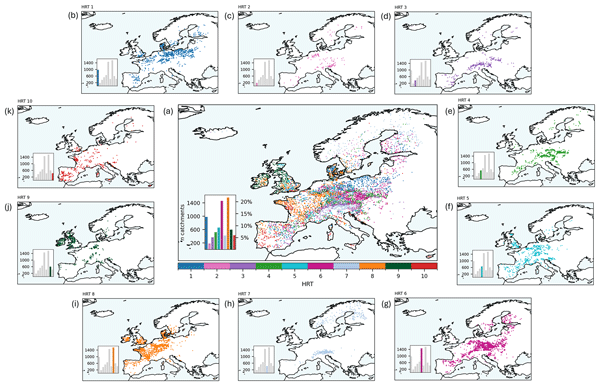
River flow (streamflow) behaviour varies across Europe and is shaped by climate and landscape. Using data from more than 7000 European catchments, we identified 10 hydrological response types based on flow magnitude, timing, and seasonality. At the continental scale, streamflow behaviour is mainly driven by climate, but landscape features are equally or more influential in several regions. These results show that streamflow behaviour emerges from the combined effects of climate and landscape.
Franziska Clerc-Schwarzenbach and Thiago V. M. do Nascimento
Hydrol. Earth Syst. Sci., 30, 119–140, https://doi.org/10.5194/hess-30-119-2026, https://doi.org/10.5194/hess-30-119-2026, 2026
Short summary
Short summary
This study provides the first assessment of an European meteorological dataset (E-OBS) for hydrological applications. We compared the dataset to meteorological datasets developed at a country level, and tested how the different data influenced the simulation of streamflow with hydrological model. Our findings show that, despite some limitations, the European dataset offers a reasonable basis for hydrological modelling in most river catchments across Europe.
Markus Hrachowitz and Roland Kaitna
EGUsphere, https://doi.org/10.5194/egusphere-2026-5589, https://doi.org/10.5194/egusphere-2026-5589, 2026
This preprint is open for discussion and under review for Hydrology and Earth System Sciences (HESS).
Short summary
Short summary
Debris flows are a mountain hazard, frequently predicted based on regional precipitation thresholds over larger areas. Based on debris flow and hydrological data, this study found that (1) channels are characterized by different debris flow timing due to differences in hydrology, (2) local thresholds provide more reliable debris flow predictions than regional ones and (3) precipitation thresholds were outperformed by thresholds that use hydrological variables such as snowmelt and channel flow.
Jan Seibert, Marc Vis, and Sandra Pool
Hydrol. Earth Syst. Sci., 30, 5857–5871, https://doi.org/10.5194/hess-30-5857-2026, https://doi.org/10.5194/hess-30-5857-2026, 2026
Short summary
Short summary
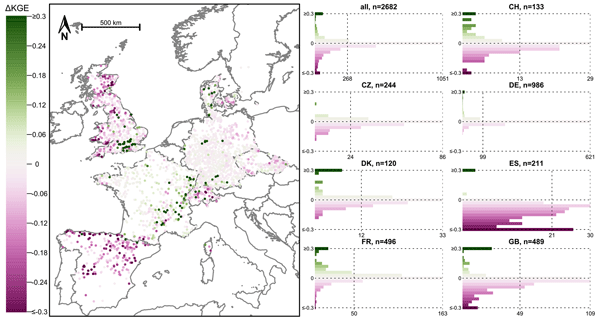
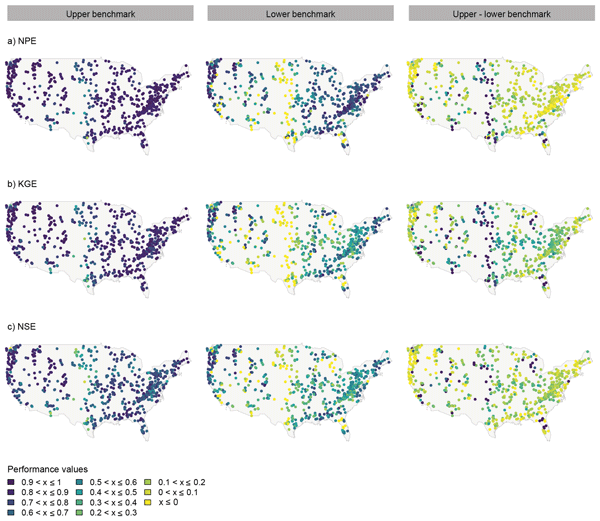
We studied how well simple bucket-type models can reproduce observed river flow using large data sets from many regions in the world. Model performance varies widely depending on local conditions, so fixed performance thresholds are misleading. To better judge model performances, we propose lower and upper benchmarks. These benchmarks help to better understand what level of model performance is achievable and, thus, enable us to compare models across different catchments.
Tamara Leins, Nikolai Späth, Jan Seibert, Francesca Pianosi, Christian Reinhardt-Imjela, and Andreas Hartmann
EGUsphere, https://doi.org/10.5194/egusphere-2026-4470, https://doi.org/10.5194/egusphere-2026-4470, 2026
This preprint is open for discussion and under review for Hydrology and Earth System Sciences (HESS).
Short summary
Short summary
In this study, we found large uncertainties in the simulation of Subsurface Stormflow (SSF) in a lumped hydrological model using only discharge data for parameter estimation. High-flow-based parameter estimation could extract some additional information, but SSF-specific data remain necessary to achieve more realistic SSF simulations. Occurrence uncertainty dominated total SSF uncertainty, suggesting proxy data on SSF occurrence could already substantially reduce SSF simulation uncertainties.
Mirjam Scheller, Nicola Durighetto, Anja Fischer, Reinhard Furrer, Marc Vis, Jan Seibert, Gianluca Botter, and Ilja van Meerveld
EGUsphere, https://doi.org/10.5194/egusphere-2026-4479, https://doi.org/10.5194/egusphere-2026-4479, 2026
This preprint is open for discussion and under review for Hydrology and Earth System Sciences (HESS).
Short summary
Short summary
Many streams do not always contain flowing water. Because these streams are rarely monitored, we tested whether observations by citizen scientists could be used to track whether streams were flowing. Although these observations were irregular in space and time, identifying the order in which sites started or stopped flowing allowed us to fill data gaps and estimate daily flow conditions across the area. This shows that volunteers can effectively monitor streams that sometimes dry up.
Muhammad Ibrahim, Markus Hrachowitz, Miriam Coenders-Gerrits, and Ruud van der Ent
EGUsphere, https://doi.org/10.5194/egusphere-2026-4226, https://doi.org/10.5194/egusphere-2026-4226, 2026
This preprint is open for discussion and under review for Hydrology and Earth System Sciences (HESS).
Short summary
Short summary
Root zone storage capacity is an important parameter in hydrological and land-surface models and is often estimated using the memory method rather than through model calibration. We evaluated the uncertainty associated with this widely used method across thousands of catchments worldwide. Our results show that uncertainty varies systematically with climate, while memory method estimates remain in close agreement with calibrated values, supporting the commonly used 20-year return period.
Daniel Klotz, Peter Miersch, Thiago V. M. do Nascimento, Fabrizio Fenicia, Corinna Frank, Martin Gauch, and Jakob Zscheischler
Earth Syst. Sci. Data, 18, 5485–5504, https://doi.org/10.5194/essd-18-5485-2026, https://doi.org/10.5194/essd-18-5485-2026, 2026
Short summary
Short summary
Data availability is central to hydrological science. It is the basis for advancing our understanding of hydrological processes, building prediction models, and anticipatory water management. We present a data-driven daily runoff reconstruction product for natural streamflow. We name it EARLS: European aggregated reconstruction for large-sample studies. The reconstructions represent daily simulations of natural streamflow across Europe and cover the period from 1953 to 2020.
Julia M. Rudlang, Thiago V. M. do Nascimento, Ruud van der Ent, Fabrizio Fenicia, and Markus Hrachowitz
Hydrol. Earth Syst. Sci., 30, 4481–4508, https://doi.org/10.5194/hess-30-4481-2026, https://doi.org/10.5194/hess-30-4481-2026, 2026
Short summary
Short summary
River flow (streamflow) behaviour varies across Europe and is shaped by climate and landscape. Using data from more than 7000 European catchments, we identified 10 hydrological response types based on flow magnitude, timing, and seasonality. At the continental scale, streamflow behaviour is mainly driven by climate, but landscape features are equally or more influential in several regions. These results show that streamflow behaviour emerges from the combined effects of climate and landscape.
Hatice Türk, Christine Stumpp, Markus Hrachowitz, Peter Strauss, Günter Blöschl, and Michael Stockinger
Hydrol. Earth Syst. Sci., 30, 1053–1076, https://doi.org/10.5194/hess-30-1053-2026, https://doi.org/10.5194/hess-30-1053-2026, 2026
Short summary
Short summary
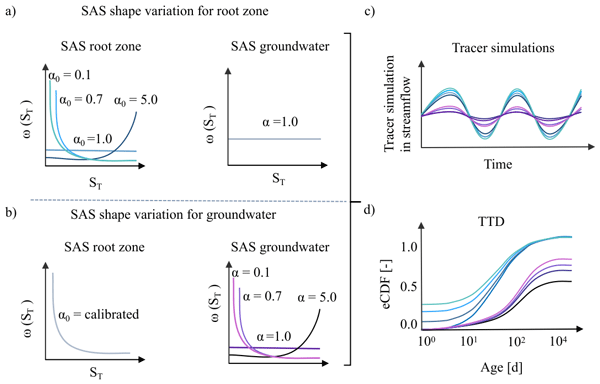
This study shows that streamflow isotope data in a catchment-scale isotope-based transport model were sufficient to isolate preferential flow in the unsaturated zone but insufficient to isolate the preferential release of young groundwater, as isotope signals were strongly damped by large passive groundwater storage. As a result, groundwater age-selection assumptions affected estimates of long transit times, making it difficult to quantify the fraction of stream water older than 100 days.

Sebastian Gnann, Bailey J. Anderson, and Markus Weiler
Hydrol. Earth Syst. Sci., 30, 779–795, https://doi.org/10.5194/hess-30-779-2026, https://doi.org/10.5194/hess-30-779-2026, 2026
Short summary
Short summary
The extent to which streamflow varies in response to variability in precipitation and potential evaporation is essential for understanding climate change impacts on water resources. This so-called streamflow sensitivity is often estimated directly from observational data, but the robustness of these estimates remains unclear. Through systematic examination of existing approaches, we highlight uncertainties inherent in all approaches and discuss their origins.
Cristina Prieto, Dmitri Kavetski, Fabrizio Fenicia, James Kirchner, David McInerney, Mark Thyer, and César Álvarez
EGUsphere, https://doi.org/10.5194/egusphere-2026-483, https://doi.org/10.5194/egusphere-2026-483, 2026
Short summary
Short summary
Hourly streamflow data are increasingly available and can improve streamflow predictions. We tested simple ways to describe uncertainty by transforming flow values and by accounting for how errors persist from hour to hour, using seven catchments in Spain, Switzerland and the United States. Simple transformations and short-term error memory improve the reliability of probabilistic predictions and help combine hourly results into longer time scales for practical operational contexts.
Robert Reinecke, Tanjila Akhter, Annemarie Bäthge, Ricarda Dietrich, Sebastian Gnann, Simon N. Gosling, Danielle Grogan, Andreas Hartmann, Stefan Kollet, Rohini Kumar, Richard Lammers, Sida Liu, Yan Liu, Nils Moosdorf, Bibi Naz, Sara Nazari, Chibuike Orazulike, Yadu Pokhrel, Jacob Schewe, Mikhail Smilovic, Maryna Strokal, Wim Thiery, Yoshihide Wada, Shan Zuidema, and Inge de Graaf
Geosci. Model Dev., 19, 523–542, https://doi.org/10.5194/gmd-19-523-2026, https://doi.org/10.5194/gmd-19-523-2026, 2026
Short summary
Short summary
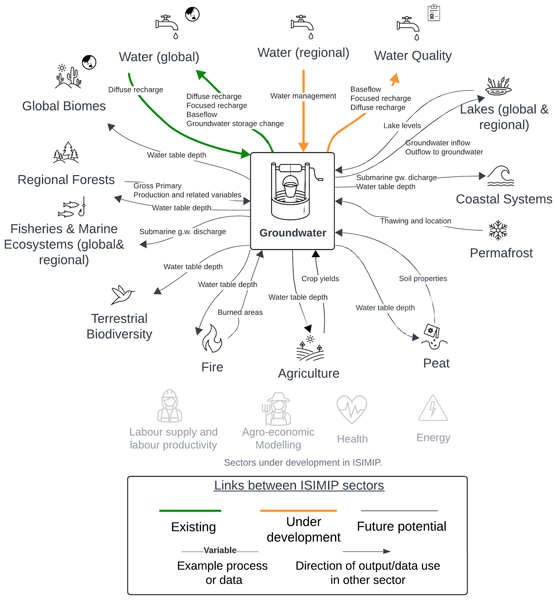
Here we describe a collaborative effort to improve predictions of how climate change will affect groundwater. The ISIMIP (The Inter-Sectoral Impact Model Intercomparison Project) groundwater sector combines multiple global groundwater models to capture a range of possible outcomes and reduce uncertainty. Initial comparisons reveal significant differences between models in key metrics like water table depth and recharge rates, highlighting the need for structured model intercomparisons.
Franziska Clerc-Schwarzenbach and Thiago V. M. do Nascimento
Hydrol. Earth Syst. Sci., 30, 119–140, https://doi.org/10.5194/hess-30-119-2026, https://doi.org/10.5194/hess-30-119-2026, 2026
Short summary
Short summary
This study provides the first assessment of an European meteorological dataset (E-OBS) for hydrological applications. We compared the dataset to meteorological datasets developed at a country level, and tested how the different data influenced the simulation of streamflow with hydrological model. Our findings show that, despite some limitations, the European dataset offers a reasonable basis for hydrological modelling in most river catchments across Europe.
Nathalie Rombeek, Markus Hrachowitz, and Remko Uijlenhoet
Hydrol. Earth Syst. Sci., 29, 6715–6733, https://doi.org/10.5194/hess-29-6715-2025, https://doi.org/10.5194/hess-29-6715-2025, 2025
Short summary
Short summary
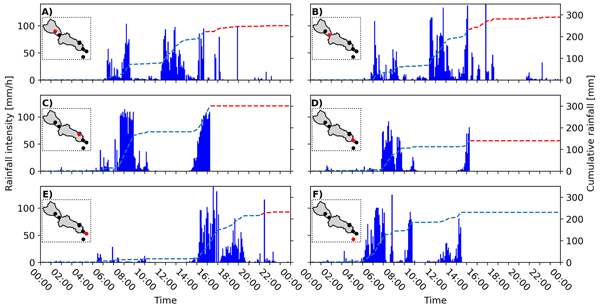
On 29 October 2024 Valencia (Spain) was struck by torrential rainfall, triggering devastating floods in this area. In this study, we quantify and describe the spatial and temporal structure of this rainfall event using personal weather stations (PWSs). These PWSs provide near real-time observations at a temporal resolution of ~5 min. This study shows the potential of PWSs for real-time rainfall monitoring and potentially flood early warning systems by complementing dedicated rain gauge networks.
Nathalie Rombeek, Markus Hrachowitz, Arjan Droste, and Remko Uijlenhoet
Hydrol. Earth Syst. Sci., 29, 4585–4606, https://doi.org/10.5194/hess-29-4585-2025, https://doi.org/10.5194/hess-29-4585-2025, 2025
Short summary
Short summary
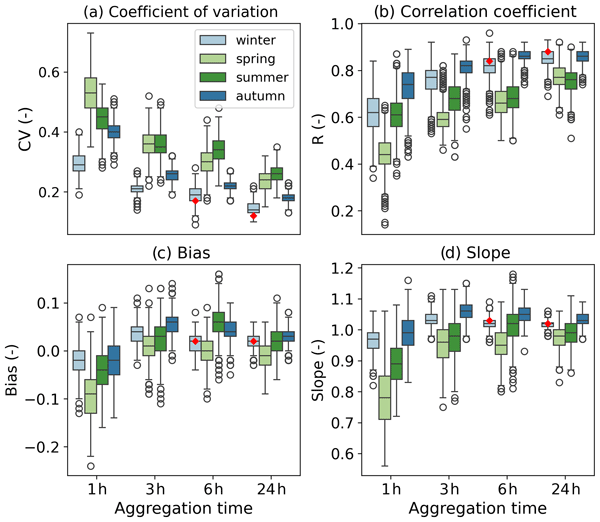
Rain gauge networks from personal weather stations (PWSs) have a network density 100 times higher than dedicated rain gauge networks in the Netherlands. However, PWSs are prone to several sources of error, as they are generally not installed and maintained according to international guidelines. This study systematically quantifies and describes the uncertainties arising from PWS rainfall estimates. In particular, the focus is on the highest rainfall accumulations.
Ondrej Hotovy, Ondrej Nedelcev, Jan Seibert, and Michal Jenicek
Hydrol. Earth Syst. Sci., 29, 4199–4217, https://doi.org/10.5194/hess-29-4199-2025, https://doi.org/10.5194/hess-29-4199-2025, 2025
Short summary
Short summary
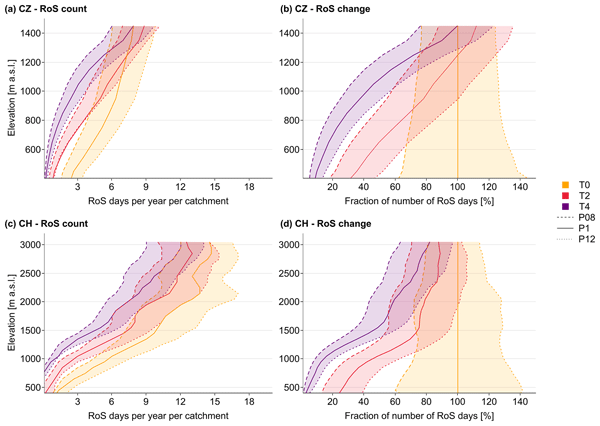
Rain falling on snow (RoS) can accelerate snowmelt and affect runoff, potentially causing severe flooding. We assessed the regional and seasonal variations in the occurrence of RoS in mountainous catchments in central Europe under different perturbations of future climate. Our results showed that RoS changes driven by climate change vary greatly among regions, across elevations, and within the cold season. However, most projections suggested a decrease in RoS events and RoS-driven runoff.
Hatice Türk, Christine Stumpp, Markus Hrachowitz, Karsten Schulz, Peter Strauss, Günter Blöschl, and Michael Stockinger
Hydrol. Earth Syst. Sci., 29, 3935–3956, https://doi.org/10.5194/hess-29-3935-2025, https://doi.org/10.5194/hess-29-3935-2025, 2025
Short summary
Short summary
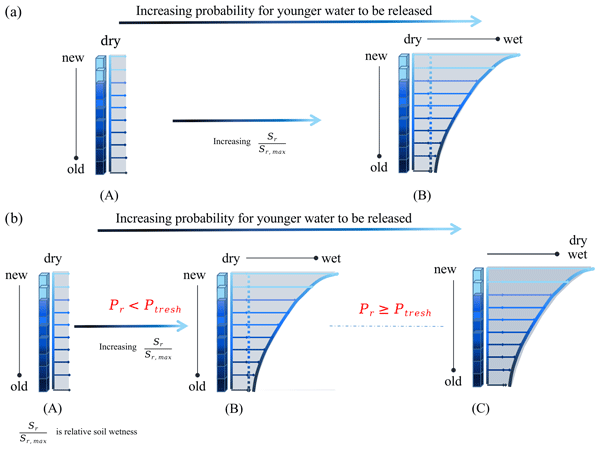
Using advances in transit time estimation and tracer data, we tested if fast-flow transit times are controlled solely by soil moisture or if they are also controlled by precipitation intensity. We used soil-moisture-dependent and precipitation-intensity-conditional transfer functions. We showed that a significant portion of event water bypasses the soil matrix through fast flow paths (overland flow, tile drains, preferential-flow paths) in dry soil conditions for both low- and high-intensity precipitation.
Inhye Kong, Jan Seibert, and Ross S. Purves
Hydrol. Earth Syst. Sci., 29, 3795–3808, https://doi.org/10.5194/hess-29-3795-2025, https://doi.org/10.5194/hess-29-3795-2025, 2025
Short summary
Short summary
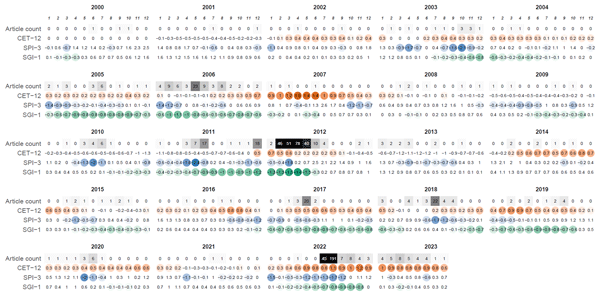
This study examines the timing and topics of newspaper coverage of droughts in England. Media attention correlated with drought-prone hydroclimatic conditions, particularly low precipitation and low groundwater levels, but also showed a seasonality bias, with more coverage in spring and summer, as exemplified by the 2022 summer drought. The findings reveal complex media dynamics in science communication, suggesting potential gaps in how droughts are framed by scientists versus the media.
Magali Ponds, Sarah Hanus, Harry Zekollari, Marie-Claire ten Veldhuis, Gerrit Schoups, Roland Kaitna, and Markus Hrachowitz
Hydrol. Earth Syst. Sci., 29, 3545–3568, https://doi.org/10.5194/hess-29-3545-2025, https://doi.org/10.5194/hess-29-3545-2025, 2025
Short summary
Short summary
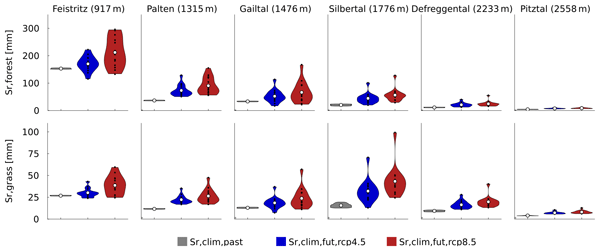
This research examines how future climate changes impact root zone storage, a key hydrological model parameter. Root zone storage – the soil water accessible to plants – adapts to climate but is often kept constant in models. We estimated climate-adapted storage in six Austrian Alps catchments. While storage increased, streamflow projections showed minimal change, which suggests that dynamic root zone representation is less critical in humid regions but warrants further study in arid areas.
Muhammad Ibrahim, Miriam Coenders-Gerrits, Ruud van der Ent, and Markus Hrachowitz
Hydrol. Earth Syst. Sci., 29, 1703–1723, https://doi.org/10.5194/hess-29-1703-2025, https://doi.org/10.5194/hess-29-1703-2025, 2025
Short summary
Short summary
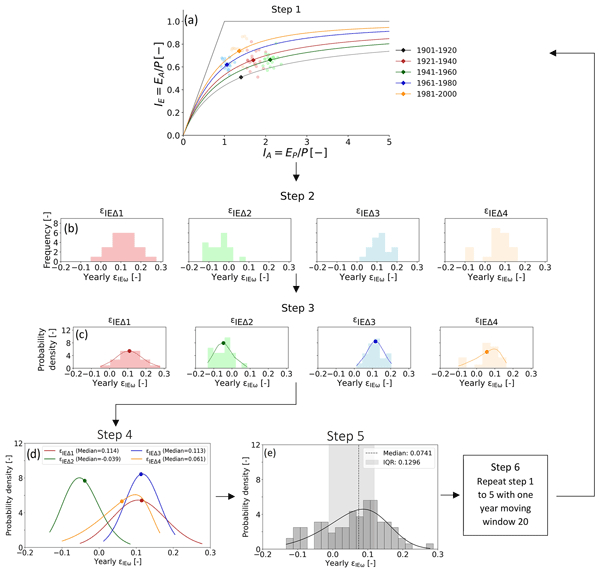
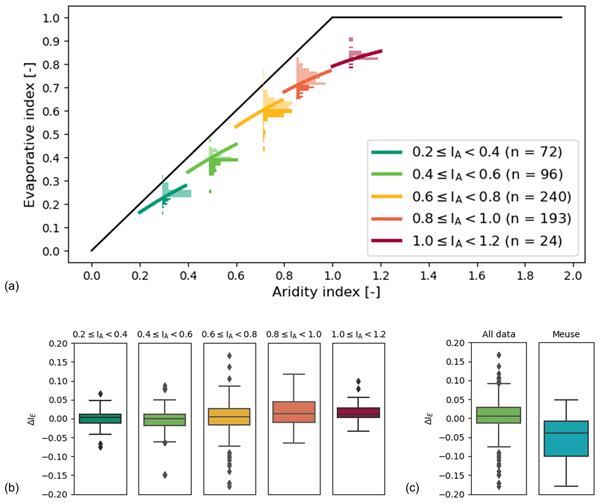
The quantification of precipitation into evaporation and runoff is vital for water resources management. The Budyko framework, based on aridity and evaporative indices of a catchment, can be an ideal tool for that. However, recent research highlights deviations of catchments from the expected evaporative index, casting doubt on its reliability. This study quantifies deviations of 2387 catchments, finding them minor and predictable. Integrating these into predictions upholds the framework's efficacy.
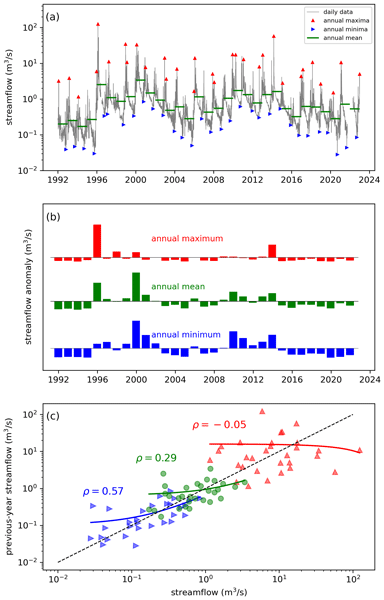
Wouter R. Berghuijs, Ross A. Woods, Bailey J. Anderson, Anna Luisa Hemshorn de Sánchez, and Markus Hrachowitz
Hydrol. Earth Syst. Sci., 29, 1319–1333, https://doi.org/10.5194/hess-29-1319-2025, https://doi.org/10.5194/hess-29-1319-2025, 2025
Short summary
Short summary
Water balances of catchments will often strongly depend on their state in the recent past, but such memory effects may persist at annual timescales. We use global data sets to show that annual memory is typically absent in precipitation but strong in terrestrial water stores and also present in evaporation and streamflow (including low flows and floods). Our experiments show that hysteretic models provide behaviour that is consistent with these observed memory behaviours.
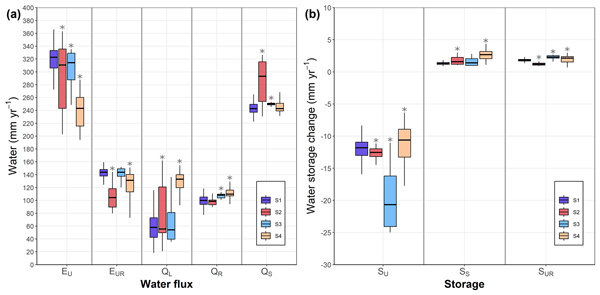
Jordy Salmon-Monviola, Ophélie Fovet, and Markus Hrachowitz
Hydrol. Earth Syst. Sci., 29, 127–158, https://doi.org/10.5194/hess-29-127-2025, https://doi.org/10.5194/hess-29-127-2025, 2025
Short summary
Short summary
To increase the predictive power of hydrological models, it is necessary to improve their consistency, i.e. their physical realism, which is measured by the ability of the model to reproduce observed system dynamics. Using a model to represent the dynamics of water and nitrate and dissolved organic carbon concentrations in an agricultural catchment, we showed that using solute-concentration data for calibration is useful to improve the hydrological consistency of the model.
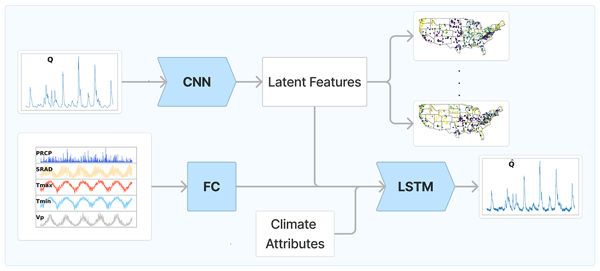
Alberto Bassi, Marvin Höge, Antonietta Mira, Fabrizio Fenicia, and Carlo Albert
Hydrol. Earth Syst. Sci., 28, 4971–4988, https://doi.org/10.5194/hess-28-4971-2024, https://doi.org/10.5194/hess-28-4971-2024, 2024
Short summary
Short summary
The goal is to remove the impact of meteorological drivers in order to uncover the unique landscape fingerprints of a catchment from streamflow data. Our results reveal an optimal two-feature summary for most catchments, with a third feature associated with aridity and intermittent flow that is needed for challenging cases. Baseflow index, aridity, and soil or vegetation attributes strongly correlate with learnt features, indicating their importance for streamflow prediction.
Nienke Tempel, Laurène Bouaziz, Riccardo Taormina, Ellis van Noppen, Jasper Stam, Eric Sprokkereef, and Markus Hrachowitz
Hydrol. Earth Syst. Sci., 28, 4577–4597, https://doi.org/10.5194/hess-28-4577-2024, https://doi.org/10.5194/hess-28-4577-2024, 2024
Short summary
Short summary
This study explores the impact of climatic variability on root zone water storage capacities and, thus, on hydrological predictions. Analysing data from 286 areas in Europe and the US, we found that, despite some variations in root zone storage capacity due to changing climatic conditions over multiple decades, these changes are generally minor and have a limited effect on water storage and river flow predictions.
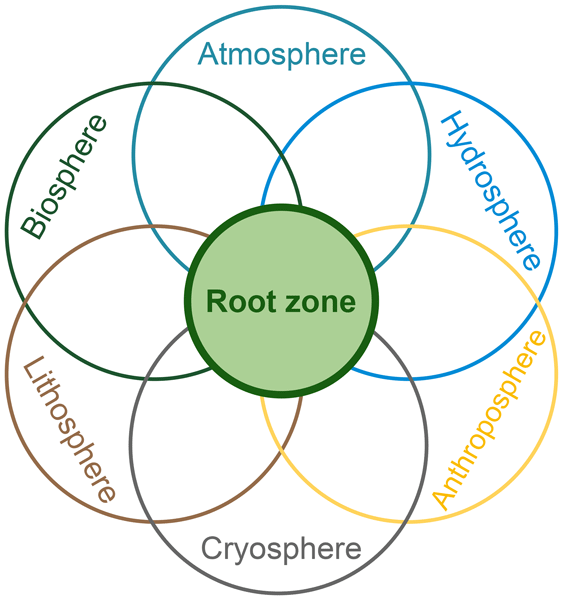
Hongkai Gao, Markus Hrachowitz, Lan Wang-Erlandsson, Fabrizio Fenicia, Qiaojuan Xi, Jianyang Xia, Wei Shao, Ge Sun, and Hubert H. G. Savenije
Hydrol. Earth Syst. Sci., 28, 4477–4499, https://doi.org/10.5194/hess-28-4477-2024, https://doi.org/10.5194/hess-28-4477-2024, 2024
Short summary
Short summary
The concept of the root zone is widely used but lacks a precise definition. Its importance in Earth system science is not well elaborated upon. Here, we clarified its definition with several similar terms to bridge the multi-disciplinary gap. We underscore the key role of the root zone in the Earth system, which links the biosphere, hydrosphere, lithosphere, atmosphere, and anthroposphere. To better represent the root zone, we advocate for a paradigm shift towards ecosystem-centred modelling.
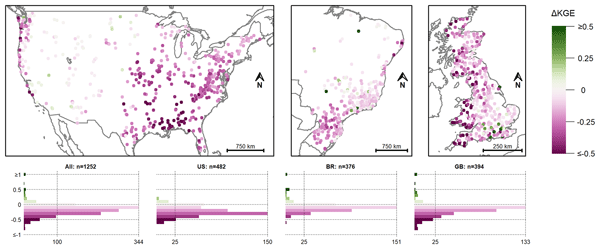
Franziska Clerc-Schwarzenbach, Giovanni Selleri, Mattia Neri, Elena Toth, Ilja van Meerveld, and Jan Seibert
Hydrol. Earth Syst. Sci., 28, 4219–4237, https://doi.org/10.5194/hess-28-4219-2024, https://doi.org/10.5194/hess-28-4219-2024, 2024
Short summary
Short summary
We show that the differences between the forcing data included in three CAMELS datasets (US, BR, GB) and the forcing data included for the same catchments in the Caravan dataset affect model calibration considerably. The model performance dropped when the data from the Caravan dataset were used instead of the original data. Most of the model performance drop could be attributed to the differences in precipitation data. However, differences were largest for the potential evapotranspiration data.
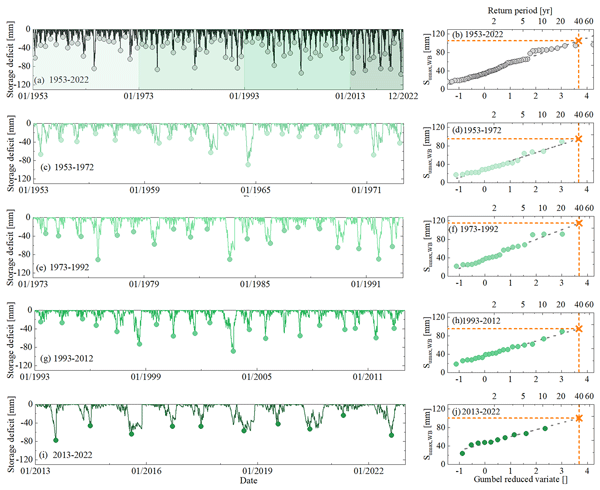
Siyuan Wang, Markus Hrachowitz, and Gerrit Schoups
Hydrol. Earth Syst. Sci., 28, 4011–4033, https://doi.org/10.5194/hess-28-4011-2024, https://doi.org/10.5194/hess-28-4011-2024, 2024
Short summary
Short summary
Root zone storage capacity (Sumax) changes significantly over multiple decades, reflecting vegetation adaptation to climatic variability. However, this temporal evolution of Sumax cannot explain long-term fluctuations in the partitioning of water fluxes as expressed by deviations ΔIE from the parametric Budyko curve over time with different climatic conditions, and it does not have any significant effects on shorter-term hydrological response characteristics of the upper Neckar catchment.
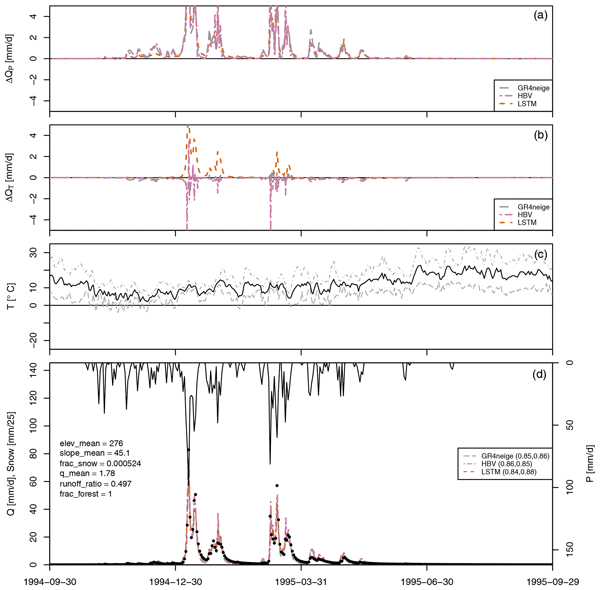
Peter Reichert, Kai Ma, Marvin Höge, Fabrizio Fenicia, Marco Baity-Jesi, Dapeng Feng, and Chaopeng Shen
Hydrol. Earth Syst. Sci., 28, 2505–2529, https://doi.org/10.5194/hess-28-2505-2024, https://doi.org/10.5194/hess-28-2505-2024, 2024
Short summary
Short summary
We compared the predicted change in catchment outlet discharge to precipitation and temperature change for conceptual and machine learning hydrological models. We found that machine learning models, despite providing excellent fit and prediction capabilities, can be unreliable regarding the prediction of the effect of temperature change for low-elevation catchments. This indicates the need for caution when applying them for the prediction of the effect of climate change.
Fransje van Oorschot, Ruud J. van der Ent, Andrea Alessandri, and Markus Hrachowitz
Hydrol. Earth Syst. Sci., 28, 2313–2328, https://doi.org/10.5194/hess-28-2313-2024, https://doi.org/10.5194/hess-28-2313-2024, 2024
Short summary
Short summary
Vegetation plays a crucial role in regulating the water cycle by transporting water from the subsurface to the atmosphere via roots; this transport depends on the extent of the root system. In this study, we quantified the effect of irrigation on roots at a global scale. Our results emphasize the importance of accounting for irrigation in estimating the vegetation root extent, which is essential to adequately represent the water cycle in hydrological and climate models.
Jiaxing Liang, Hongkai Gao, Fabrizio Fenicia, Qiaojuan Xi, Yahui Wang, and Hubert H. G. Savenije
EGUsphere, https://doi.org/10.5194/egusphere-2024-550, https://doi.org/10.5194/egusphere-2024-550, 2024
Preprint archived
Short summary
Short summary
The root zone storage capacity (Sumax) is a key element in hydrology and land-atmospheric interaction. In this study, we utilized a hydrological model and a dynamic parameter identification method, to quantify the temporal trends of Sumax for 497 catchments in the USA. We found that 423 catchments (85 %) showed increasing Sumax, which averagely increased from 178 to 235 mm between 1980 and 2014. The increasing trend was also validated by multi-sources data and independent methods.
Marvin Höge, Martina Kauzlaric, Rosi Siber, Ursula Schönenberger, Pascal Horton, Jan Schwanbeck, Marius Günter Floriancic, Daniel Viviroli, Sibylle Wilhelm, Anna E. Sikorska-Senoner, Nans Addor, Manuela Brunner, Sandra Pool, Massimiliano Zappa, and Fabrizio Fenicia
Earth Syst. Sci. Data, 15, 5755–5784, https://doi.org/10.5194/essd-15-5755-2023, https://doi.org/10.5194/essd-15-5755-2023, 2023
Short summary
Short summary
CAMELS-CH is an open large-sample hydro-meteorological data set that covers 331 catchments in hydrologic Switzerland from 1 January 1981 to 31 December 2020. It comprises (a) daily data of river discharge and water level as well as meteorologic variables like precipitation and temperature; (b) yearly glacier and land cover data; (c) static attributes of, e.g, topography or human impact; and (d) catchment delineations. CAMELS-CH enables water and climate research and modeling at catchment level.
Fransje van Oorschot, Ruud J. van der Ent, Markus Hrachowitz, Emanuele Di Carlo, Franco Catalano, Souhail Boussetta, Gianpaolo Balsamo, and Andrea Alessandri
Earth Syst. Dynam., 14, 1239–1259, https://doi.org/10.5194/esd-14-1239-2023, https://doi.org/10.5194/esd-14-1239-2023, 2023
Short summary
Short summary
Vegetation largely controls land hydrology by transporting water from the subsurface to the atmosphere through roots and is highly variable in space and time. However, current land surface models have limitations in capturing this variability at a global scale, limiting accurate modeling of land hydrology. We found that satellite-based vegetation variability considerably improved modeled land hydrology and therefore has potential to improve climate predictions of, for example, droughts.
Siyuan Wang, Markus Hrachowitz, Gerrit Schoups, and Christine Stumpp
Hydrol. Earth Syst. Sci., 27, 3083–3114, https://doi.org/10.5194/hess-27-3083-2023, https://doi.org/10.5194/hess-27-3083-2023, 2023
Short summary
Short summary
This study shows that previously reported underestimations of water ages are most likely not due to the use of seasonally variable tracers. Rather, these underestimations can be largely attributed to the choices of model approaches which rely on assumptions not frequently met in catchment hydrology. We therefore strongly advocate avoiding the use of this model type in combination with seasonally variable tracers and instead adopting StorAge Selection (SAS)-based or comparable model formulations.
Hongkai Gao, Fabrizio Fenicia, and Hubert H. G. Savenije
Hydrol. Earth Syst. Sci., 27, 2607–2620, https://doi.org/10.5194/hess-27-2607-2023, https://doi.org/10.5194/hess-27-2607-2023, 2023
Short summary
Short summary
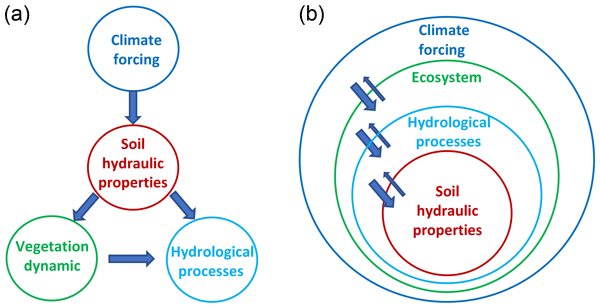
It is a deeply rooted perception that soil is key in hydrology. In this paper, we argue that it is the ecosystem, not the soil, that is in control of hydrology. Firstly, in nature, the dominant flow mechanism is preferential, which is not particularly related to soil properties. Secondly, the ecosystem, not the soil, determines the land–surface water balance and hydrological processes. Moving from a soil- to ecosystem-centred perspective allows more realistic and simpler hydrological models.
Jana Erdbrügger, Ilja van Meerveld, Jan Seibert, and Kevin Bishop
Earth Syst. Sci. Data, 15, 1779–1800, https://doi.org/10.5194/essd-15-1779-2023, https://doi.org/10.5194/essd-15-1779-2023, 2023
Short summary
Short summary
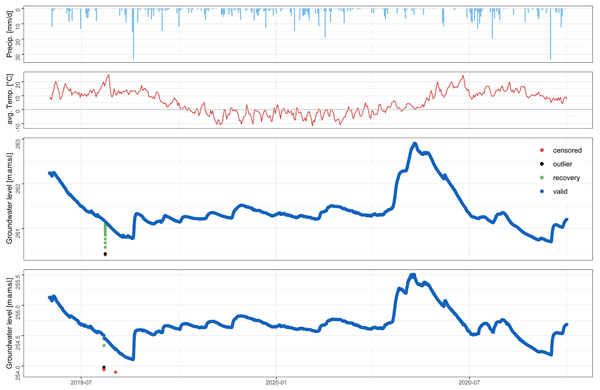
Groundwater can respond quickly to precipitation and is the main source of streamflow in most catchments in humid, temperate climates. To better understand shallow groundwater dynamics, we installed a network of groundwater wells in two boreal headwater catchments in Sweden. We recorded groundwater levels in 75 wells for 2 years and sampled the water and analyzed its chemical composition in one summer. This paper describes these datasets.

Pau Wiersma, Jerom Aerts, Harry Zekollari, Markus Hrachowitz, Niels Drost, Matthias Huss, Edwin H. Sutanudjaja, and Rolf Hut
Hydrol. Earth Syst. Sci., 26, 5971–5986, https://doi.org/10.5194/hess-26-5971-2022, https://doi.org/10.5194/hess-26-5971-2022, 2022
Short summary
Short summary
We test whether coupling a global glacier model (GloGEM) with a global hydrological model (PCR-GLOBWB 2) leads to a more realistic glacier representation and to improved basin runoff simulations across 25 large-scale basins. The coupling does lead to improved glacier representation, mainly by accounting for glacier flow and net glacier mass loss, and to improved basin runoff simulations, mostly in strongly glacier-influenced basins, which is where the coupling has the most impact.
Judith Uwihirwe, Alessia Riveros, Hellen Wanjala, Jaap Schellekens, Frederiek Sperna Weiland, Markus Hrachowitz, and Thom A. Bogaard
Nat. Hazards Earth Syst. Sci., 22, 3641–3661, https://doi.org/10.5194/nhess-22-3641-2022, https://doi.org/10.5194/nhess-22-3641-2022, 2022
Short summary
Short summary
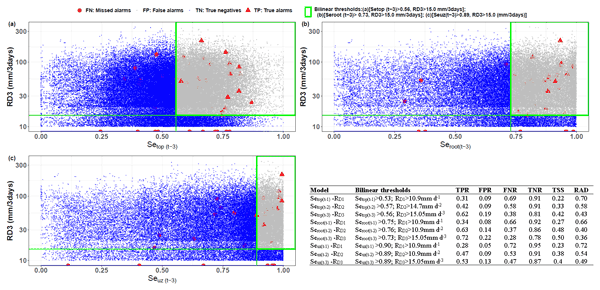
This study compared gauge-based and satellite-based precipitation products. Similarly, satellite- and hydrological model-derived soil moisture was compared to in situ soil moisture and used in landslide hazard assessment and warning. The results reveal the cumulative 3 d rainfall from the NASA-GPM to be the most effective landslide trigger. The modelled antecedent soil moisture in the root zone was the most informative hydrological variable for landslide hazard assessment and warning in Rwanda.
Rosanna A. Lane, Gemma Coxon, Jim Freer, Jan Seibert, and Thorsten Wagener
Hydrol. Earth Syst. Sci., 26, 5535–5554, https://doi.org/10.5194/hess-26-5535-2022, https://doi.org/10.5194/hess-26-5535-2022, 2022
Short summary
Short summary
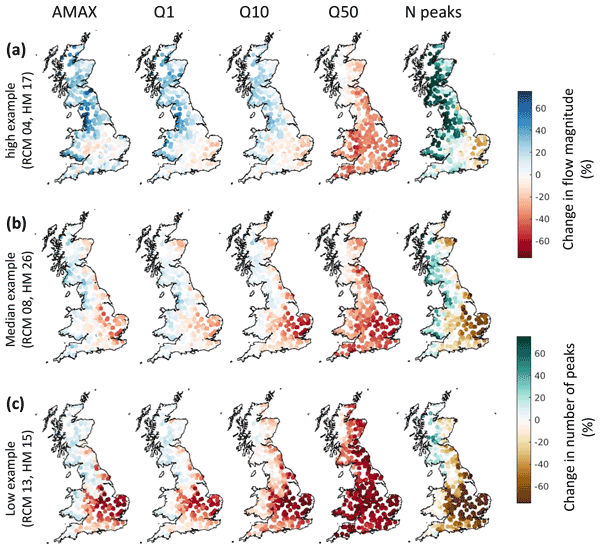
This study modelled the impact of climate change on river high flows across Great Britain (GB). Generally, results indicated an increase in the magnitude and frequency of high flows along the west coast of GB by 2050–2075. In contrast, average flows decreased across GB. All flow projections contained large uncertainties; the climate projections were the largest source of uncertainty overall but hydrological modelling uncertainties were considerable in some regions.
Marvin Höge, Andreas Scheidegger, Marco Baity-Jesi, Carlo Albert, and Fabrizio Fenicia
Hydrol. Earth Syst. Sci., 26, 5085–5102, https://doi.org/10.5194/hess-26-5085-2022, https://doi.org/10.5194/hess-26-5085-2022, 2022
Short summary
Short summary
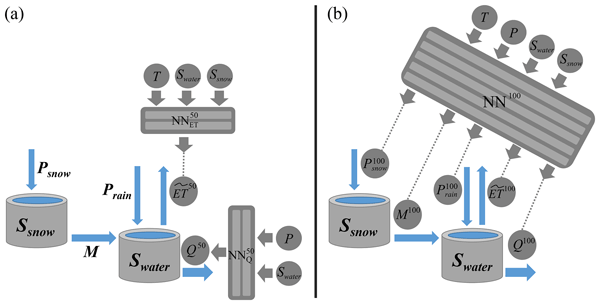
Neural ODEs fuse physics-based models with deep learning: neural networks substitute terms in differential equations that represent the mechanistic structure of the system. The approach combines the flexibility of machine learning with physical constraints for inter- and extrapolation. We demonstrate that neural ODE models achieve state-of-the-art predictive performance while keeping full interpretability of model states and processes in hydrologic modelling over multiple catchments.
Daniel Viviroli, Anna E. Sikorska-Senoner, Guillaume Evin, Maria Staudinger, Martina Kauzlaric, Jérémy Chardon, Anne-Catherine Favre, Benoit Hingray, Gilles Nicolet, Damien Raynaud, Jan Seibert, Rolf Weingartner, and Calvin Whealton
Nat. Hazards Earth Syst. Sci., 22, 2891–2920, https://doi.org/10.5194/nhess-22-2891-2022, https://doi.org/10.5194/nhess-22-2891-2022, 2022
Short summary
Short summary
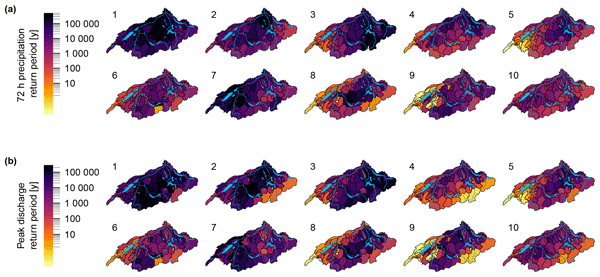
Estimating the magnitude of rare to very rare floods is a challenging task due to a lack of sufficiently long observations. The challenge is even greater in large river basins, where precipitation patterns and amounts differ considerably between individual events and floods from different parts of the basin coincide. We show that a hydrometeorological model chain can provide plausible estimates in this setting and can thus inform flood risk and safety assessments for critical infrastructure.
Hongkai Gao, Chuntan Han, Rensheng Chen, Zijing Feng, Kang Wang, Fabrizio Fenicia, and Hubert Savenije
Hydrol. Earth Syst. Sci., 26, 4187–4208, https://doi.org/10.5194/hess-26-4187-2022, https://doi.org/10.5194/hess-26-4187-2022, 2022
Short summary
Short summary
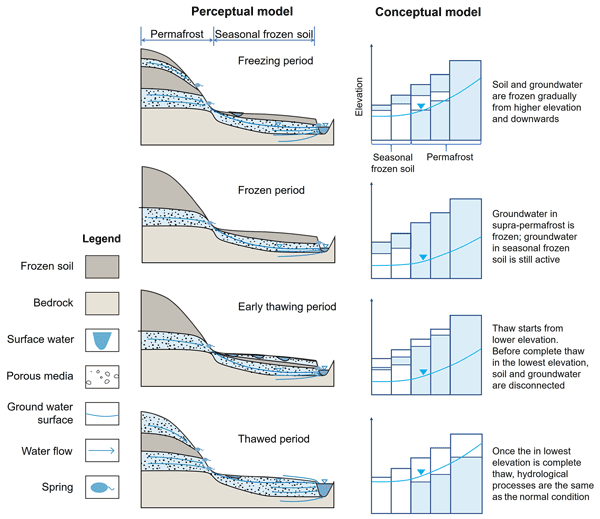
Frozen soil hydrology is one of the 23 unsolved problems in hydrology (UPH). In this study, we developed a novel conceptual frozen soil hydrological model, FLEX-Topo-FS. The model successfully reproduced the soil freeze–thaw process, and its impacts on hydrologic connectivity, runoff generation, and groundwater. We believe this study is a breakthrough for the 23 UPH, giving us new insights on frozen soil hydrology, with broad implications for predicting cold region hydrology in future.
Judith Uwihirwe, Markus Hrachowitz, and Thom Bogaard
Nat. Hazards Earth Syst. Sci., 22, 1723–1742, https://doi.org/10.5194/nhess-22-1723-2022, https://doi.org/10.5194/nhess-22-1723-2022, 2022
Short summary
Short summary
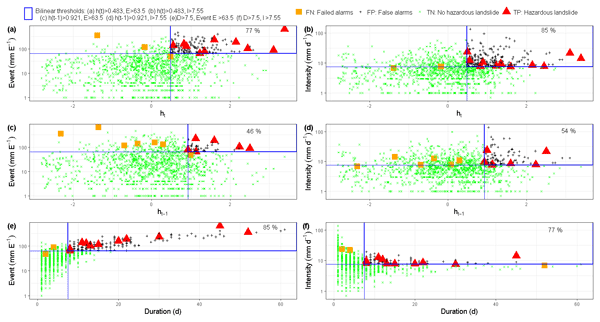
This research tested the value of regional groundwater level information to improve landslide predictions with empirical models based on the concept of threshold levels. In contrast to precipitation-based thresholds, the results indicated that relying on threshold models exclusively defined using hydrological variables such as groundwater levels can lead to improved landslide predictions due to their implicit consideration of long-term antecedent conditions until the day of landslide occurrence.
Elisa Ragno, Markus Hrachowitz, and Oswaldo Morales-Nápoles
Hydrol. Earth Syst. Sci., 26, 1695–1711, https://doi.org/10.5194/hess-26-1695-2022, https://doi.org/10.5194/hess-26-1695-2022, 2022
Short summary
Short summary
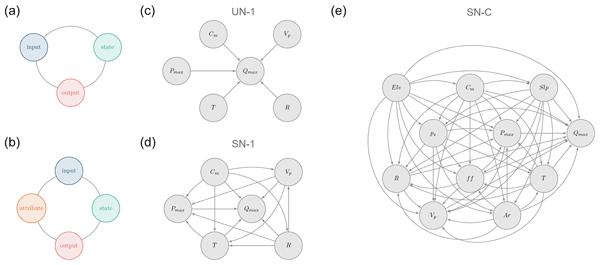
We explore the ability of non-parametric Bayesian networks to reproduce maximum daily discharge in a given month in a catchment when the remaining hydro-meteorological and catchment attributes are known. We show that a saturated network evaluated in an individual catchment can reproduce statistical characteristics of discharge in about ~ 40 % of the cases, while challenges remain when a saturated network considering all the catchments together is evaluated.

Jan Seibert and Sten Bergström
Hydrol. Earth Syst. Sci., 26, 1371–1388, https://doi.org/10.5194/hess-26-1371-2022, https://doi.org/10.5194/hess-26-1371-2022, 2022
Short summary
Short summary
Hydrological catchment models are commonly used as the basis for water resource management planning. The HBV model, which is a typical example of such a model, was first applied about 50 years ago in Sweden. We describe and reflect on the model development and applications. The aim is to provide an understanding of the background of model development and a basis for addressing the balance between model complexity and data availability that will continue to face hydrologists in the future.
Laurène J. E. Bouaziz, Emma E. Aalbers, Albrecht H. Weerts, Mark Hegnauer, Hendrik Buiteveld, Rita Lammersen, Jasper Stam, Eric Sprokkereef, Hubert H. G. Savenije, and Markus Hrachowitz
Hydrol. Earth Syst. Sci., 26, 1295–1318, https://doi.org/10.5194/hess-26-1295-2022, https://doi.org/10.5194/hess-26-1295-2022, 2022
Short summary
Short summary
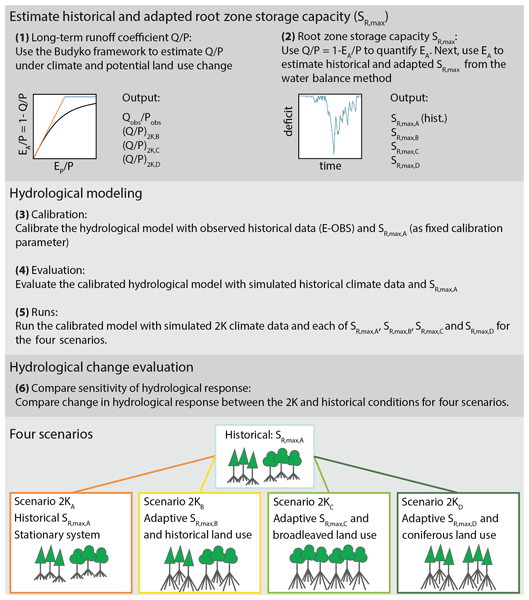
Assuming stationarity of hydrological systems is no longer appropriate when considering land use and climate change. We tested the sensitivity of hydrological predictions to changes in model parameters that reflect ecosystem adaptation to climate and potential land use change. We estimated a 34 % increase in the root zone storage parameter under +2 K global warming, resulting in up to 15 % less streamflow in autumn, due to 14 % higher summer evaporation, compared to a stationary system.

Marco Dal Molin, Dmitri Kavetski, and Fabrizio Fenicia
Geosci. Model Dev., 14, 7047–7072, https://doi.org/10.5194/gmd-14-7047-2021, https://doi.org/10.5194/gmd-14-7047-2021, 2021
Short summary
Short summary
This paper introduces SuperflexPy, an open-source Python framework for building flexible conceptual hydrological models. SuperflexPy is available as open-source code and can be used by the hydrological community to investigate improved process representations, for model comparison, and for operational work.
Cited articles
Addor, N., Newman, A. J., Mizukami, N., and Clark, M. P.: The CAMELS data set: catchment attributes and meteorology for large-sample studies, Hydrol. Earth Syst. Sci., 21, 5293–5313, https://doi.org/10.5194/hess-21-5293-2017, 2017.
Addor, N., Nearing, G., Prieto, C., Newman, A. J., Le Vine, N., and Clark, M. P.: A Ranking of Hydrological Signatures Based on Their Predictability in Space, Water Resour. Res., 54, 8792–8812, https://doi.org/10.1029/2018WR022606, 2018.
Addor, N., Do, H. X., Alvarez-Garreton, C., Coxon, G., Fowler, K., and Mendoza, P. A.: Large-sample hydrology: recent progress, guidelines for new datasets and grand challenges, Hydrological Sciences Journal, 65, 712–725, https://doi.org/10.1080/02626667.2019.1683182, 2020.
AGE: Geological map for Luxembourg at 1:250 000 scale, Administration de la gestion de l’eau, Luxembourg, [data set], https://eau.gouvernement.lu/fr.html (last access: 11 December 2021), 2021.
Almagro, A., Meira Neto, A. A., Vergopolan, N., Roy, T., Troch, P. A., and Oliveira, P. T. S.: The Drivers of Hydrologic Behavior in Brazil: Insights From a Catchment Classification, Water Resour. Res., 60, e2024WR037212, https://doi.org/10.1029/2024WR037212, 2024.
Bagdassarov, N.: Permeability of Rocks, Fundamentals of Rock Physics, 178–210, https://doi.org/10.1017/9781108380713.006, 2021.
BDLISA database: Base de Donnée des Limites des Systèmes Aquifères, version 1, niveau 2, ordre 1, scale:
Beck, H. E., de Roo, A., and van Dijk, A. I. J. M.: Global Maps of Streamflow Characteristics Based on Observations from Several Thousand Catchments, J. Hydrometeorol., 16, 1478–1501, https://doi.org/10.1175/JHM-D-14-0155.1, 2015.
Beven, K. J.: Uniqueness of place and process representations in hydrological modelling, Hydrol. Earth Syst. Sci., 4, 203–213, https://doi.org/10.5194/hess-4-203-2000, 2000.
Bloomfield, J. P., Gong, M., Marchant, B. P., Coxon, G., and Addor, N.: How is Baseflow Index (BFI) impacted by water resource management practices?, Hydrol. Earth Syst. Sci., 25, 5355–5379, https://doi.org/10.5194/hess-25-5355-2021, 2021.
Blöschl, G. and Sivapalan, M.: Scale issues in hydrological modelling: A review, Hydrol. Process., 9, 251–290, https://doi.org/10.1002/HYP.3360090305, 1995.
Boorman, D. B., Hollis, J. M., and Lilly, A.: Hydrology of soil types: a hydrologically-based classification of the soils of United Kingdom, Institute of Hydrology, Wallingford, UK, 146 pp., ISBN 0-948540-73-9, 1995.
Budyko, M. I. and Miller, D. H.: Climate and Life, Academic Press, New York, USA, 508 pp., ISBN 978-0-12-139450-0, 1974.
Chagas, V. B. P., Chaffe, P. L. B., Addor, N., Fan, F. M., Fleischmann, A. S., Paiva, R. C. D., and Siqueira, V. A.: CAMELS-BR: hydrometeorological time series and landscape attributes for 897 catchments in Brazil, Earth Syst. Sci. Data, 12, 2075–2096, https://doi.org/10.5194/essd-12-2075-2020, 2020.
Clerc-Schwarzenbach, F., Selleri, G., Neri, M., Toth, E., van Meerveld, I., and Seibert, J.: Large-sample hydrology – a few camels or a whole caravan?, Hydrol. Earth Syst. Sci., 28, 4219–4237, https://doi.org/10.5194/hess-28-4219-2024, 2024.
Cornes, R. C., van der Schrier, G., van den Besselaar, E. J. M., and Jones, P. D.: An Ensemble Version of the E-OBS Temperature and Precipitation Data Sets, Journal of Geophysical Research: Atmospheres, 123, 9391–9409, https://doi.org/10.1029/2017JD028200, 2018.
Coxon, G., Addor, N., Bloomfield, J. P., Freer, J., Fry, M., Hannaford, J., Howden, N. J. K., Lane, R., Lewis, M., Robinson, E. L., Wagener, T., and Woods, R.: CAMELS-GB: hydrometeorological time series and landscape attributes for 671 catchments in Great Britain, Earth Syst. Sci. Data, 12, 2459–2483, https://doi.org/10.5194/essd-12-2459-2020, 2020.
Didan, K.: MODIS/Terra Vegetation Indices 16-Day L3 Global 500m SIN Grid V006, NASA Land Processes Distributed Active Archive Center [data set], https://doi.org/10.5067/MODIS/MOD13A1.006 (last access: 2 November 2023), 2015.
do Nascimento, T. V. M.: Code from “How do geological map details influence the identification of geology- streamflow relationships in large-sample hydrology studies?”, Zenodo [code], https://doi.org/10.5281/zenodo.17700902, 2025.
do Nascimento, T. V. M., Rudlang, J., Höge, M., van der Ent, R., Chappon, M., Seibert, J., Hrachowitz, M., and Fenicia, F.: EStreams: An integrated dataset and catalogue of streamflow, hydro-climatic and landscape variables for Europe, Scientific Data, 11, 1–19, https://doi.org/10.1038/s41597-024-03706-1, 2024a.
do Nascimento, T. V. M., de Oliveira, R. P., and Condesso de Melo, M. T.: Impacts of large-scale irrigation and climate change on groundwater quality and the hydrological cycle: A case study of the Alqueva irrigation scheme and the Gabros de Beja aquifer system, Science of The Total Environment, 907, 168151, https://doi.org/10.1016/J.SCITOTENV.2023.168151, 2024b.
do Nascimento, T. V. M., Rudlang, J., Höge, M., van der Ent, R., Chappon, M., Seibert, J., Hrachowitz, M., and Fenicia, F.: EStreams: An Integrated Dataset and Catalogue of Streamflow, Hydro-Climatic Variables and Landscape Descriptors for Europe (1.2), Zenodo [data set], https://doi.org/10.5281/zenodo.14778580, 2025.
do Nascimento, T. V. M., Rudlang, J. M., Gnann, S., Seibert, J., Hrachowitz, M., and Fenicia, F.: Data from “How do geological map details influence the identification of geology-streamflow relationships in large-sample hydrology studies?” (0.1), Zenodo [data set], https://doi.org/10.5281/zenodo.14779451, 2025.
Duscher, K., Günther, A., Richts, A., Clos, P., Philipp, U., and Struckmeier, W.: The GIS layers of the BInternational Hydrogeological Map of Europe
EEA: CORINE Land Cover (CLC), European Environment Agency [data set], Copenhagen, Denmark, https://land.copernicus.eu/en/products/corine-land-cover (last access: 2 November 2023), 2020.
ESDD: European Soil Database Derived data, https://esdac.jrc.ec.europa.eu/content/european-soil-database-derived-data, last access: 23 November 2023.
Fenicia, F. and McDonnell, J. J.: Modeling streamflow variability at the regional scale: (1) perceptual model development through signature analysis, J. Hydrol. (Amst.), 605, 127287, https://doi.org/10.1016/J.JHYDROL.2021.127287, 2022.
Floriancic, M. G., Spies, D., van Meerveld, I. H. J., and Molnar, P.: A multi-scale study of the dominant catchment characteristics impacting low-flow metrics, Hydrol. Process., 36, e14462, https://doi.org/10.1002/HYP.14462, 2022.
Fowler, K. J. A., Acharya, S. C., Addor, N., Chou, C., and Peel, M. C.: CAMELS-AUS: hydrometeorological time series and landscape attributes for 222 catchments in Australia, Earth Syst. Sci. Data, 13, 3847–3867, https://doi.org/10.5194/essd-13-3847-2021, 2021.
Freeze, R. A. and Cherry, J. A.: Groundwater, Prentice-Hall, Englewood Cliffs, New Jersey, USA, 604 pp., ISBN 978-0-13-365312-0, 1979.
Gleeson, T., Marklund, L., Smith, L., and Manning, A. H.: Classifying the water table at regional to continental scales, Geophys Res Lett, 38, https://doi.org/10.1029/2010GL046427, 2011a.
Gleeson, T., Smith, L., Moosdorf, N., Hartmann, J., Dürr, H. H., Manning, A. H., Van Beek, L. P. H., and Jellinek, A. M.: Mapping permeability over the surface of the Earth, Geophys. Res. Lett., 38, 2401, https://doi.org/10.1029/2010GL045565, 2011b.
Gnann, S. J., Woods, R. A., and Howden, N. J. K.: Is There a Baseflow Budyko Curve?, Water Resour. Res., 55, 2838–2855, https://doi.org/10.1029/2018WR024464, 2019.
Gnann, S. J., McMillan, H. K., Woods, R. A., and Howden, N. J. K.: Including Regional Knowledge Improves Baseflow Signature Predictions in Large Sample Hydrology, Water Resour. Res., 57, e2020WR028354, https://doi.org/10.1029/2020WR028354, 2021.
GRDC: Report of the 15th Meeting of the GRDC Steering Committee, Federal Institute of Hydrology (BfG), Koblenz, Germany, 9 pp., https://grdc.bafg.de/downloads/GRDC-15th-SCNotes_final.pdf (last access: 3 December 2025), 2024.
GÜK200: Geologische Übersichtskarte der Bundesrepublik Deutschland, scale:
Günther, A. and Duscher, K.: Extended vector data of the International Hydrogeological Map of Europe
Gupta, H. V., Perrin, C., Blöschl, G., Montanari, A., Kumar, R., Clark, M., and Andréassian, V.: Large-sample hydrology: a need to balance depth with breadth, Hydrol. Earth Syst. Sci., 18, 463–477, https://doi.org/10.5194/hess-18-463-2014, 2014.
Hall, D. K. and Riggs, G. A.: MODIS/Terra Snow Cover Daily L3 Global 500m SIN Grid, Version 61, Boulder, Colorado, USA, NASA National Snow and Ice Data Center Distributed Active Archive Center [data set], https://doi.org/10.5067/MODIS/MOD10A1.061 (last access: 2 November 2023), 2021.
Hartmann, J., Moosdorf, N., Hartmann, J., and Moosdorf, N.: The new global lithological map database GLiM: A representation of rock properties at the Earth surface, Geochemistry, Geophysics, Geosystems, 13, 12004, https://doi.org/10.1029/2012GC004370, 2012.
Helgason, H. B. and Nijssen, B.: LamaH-Ice: LArge-SaMple DAta for Hydrology and Environmental Sciences for Iceland, Earth Syst. Sci. Data, 16, 2741–2771, https://doi.org/10.5194/essd-16-2741-2024, 2024.
Hellebrand, H., Hoffmann, L., Juilleret, J., and Pfister, L.: Assessing winter storm flow generation by means of permeability of the lithology and dominating runoff production processes, Hydrol. Earth Syst. Sci., 11, 1673–1682, https://doi.org/10.5194/hess-11-1673-2007, 2007.
Hersbach, H., Bell, B., Berrisford, P., Hirahara, S., Horányi, A., Muñoz-Sabater, J., Nicolas, J., Peubey, C., Radu, R., Schepers, D., Simmons, A., Soci, C., Abdalla, S., Abellan, X., Balsamo, G., Bechtold, P., Biavati, G., Bidlot, J., Bonavita, M., De Chiara, G., Dahlgren, P., Dee, D., Diamantakis, M., Dragani, R., Flemming, J., Forbes, R., Fuentes, M., Geer, A., Haimberger, L., Healy, S., Hogan, R. J., Hólm, E., Janisková, M., Keeley, S., Laloyaux, P., Lopez, P., Lupu, C., Radnoti, G., de Rosnay, P., Rozum, I., Vamborg, F., Villaume, S., and Thépaut, J. N.: The ERA5 global reanalysis, Quarterly Journal of the Royal Meteorological Society, 146, 1999–2049, https://doi.org/10.1002/QJ.3803, 2020.
Hiederer, R.: Mapping Soil Properties for Europe – Spatial Representation of Soil Database Attributes, Publications Office of the European Union, Luxembourg, 47 pp., https://doi.org/10.2788/94128, 2013a.
Hiederer, R.: Mapping Soil Typologies – Spatial Decision Support Applied to European Soil Database, Publications Office of the European Union, Luxembourg, 147 pp., https://doi.org/10.2788/87029, 2013b.
Höge, M., Kauzlaric, M., Siber, R., Schönenberger, U., Horton, P., Schwanbeck, J., Floriancic, M. G., Viviroli, D., Wilhelm, S., Sikorska-Senoner, A. E., Addor, N., Brunner, M., Pool, S., Zappa, M., and Fenicia, F.: CAMELS-CH: hydro-meteorological time series and landscape attributes for 331 catchments in hydrologic Switzerland, Earth Syst. Sci. Data, 15, 5755–5784, https://doi.org/10.5194/essd-15-5755-2023, 2023.
Huang, S., Dong, Q., Zhang, X., and Deng, W.: Catchment natural driving factors and prediction of baseflow index for Continental United States based on Random Forest technique, Stochastic Environmental Research and Risk Assessment, 35, 2567–2581, https://doi.org/10.1007/S00477-021-02057-2, 2021.
Ibrahim, M., Coenders-Gerrits, M., van der Ent, R., and Hrachowitz, M.: Catchments do not strictly follow Budyko curves over multiple decades, but deviations are minor and predictable, Hydrol. Earth Syst. Sci., 29, 1703–1723, https://doi.org/10.5194/hess-29-1703-2025, 2025.
Karlsen, R. H., Seibert, J., Grabs, T., Laudon, H., Blomkvist, P., and Bishop, K.: The assumption of uniform specific discharge: unsafe at any time?, Hydrol. Process., 30, 3978–3988, https://doi.org/10.1002/HYP.10877, 2016.
Kauffeldt, A., Halldin, S., Rodhe, A., Xu, C.-Y., and Westerberg, I. K.: Disinformative data in large-scale hydrological modelling, Hydrol. Earth Syst. Sci., 17, 2845–2857, https://doi.org/10.5194/hess-17-2845-2013, 2013.
Klingler, C., Schulz, K., and Herrnegger, M.: LamaH-CE: LArge-SaMple DAta for Hydrology and Environmental Sciences for Central Europe, Earth Syst. Sci. Data, 13, 4529–4565, https://doi.org/10.5194/essd-13-4529-2021, 2021.
Knoben, W. J. M., Woods, R. A., and Freer, J. E.: A Quantitative Hydrological Climate Classification Evaluated With Independent Streamflow Data, Water Resour. Res., 54, 5088–5109, https://doi.org/10.1029/2018WR022913, 2018.
Kratzert, F., Klotz, D., Shalev, G., Klambauer, G., Hochreiter, S., and Nearing, G.: Towards learning universal, regional, and local hydrological behaviors via machine learning applied to large-sample datasets, Hydrol. Earth Syst. Sci., 23, 5089–5110, https://doi.org/10.5194/hess-23-5089-2019, 2019.
Kratzert, F., Nearing, G., Addor, N., Erickson, T., Gauch, M., Gudmundsson, L., Hassidim, A., Klotz, D., Nevo, S., and Matias, Y.: Caravan – A global community dataset for large-sample hydrology, Sci. Data, 10, 61, https://doi.org/10.1038/s41597-023-01975-w, 2023.
Kuentz, A., Arheimer, B., Hundecha, Y., and Wagener, T.: Understanding hydrologic variability across Europe through catchment classification, Hydrol. Earth Syst. Sci., 21, 2863–2879, https://doi.org/10.5194/hess-21-2863-2017, 2017.
Ladson, A. R., Brown, R., Neal, B., and Nathan, R.: A standard approach to baseflow separation using the Lyne and Hollick filter, Australian Journal of Water Resources, 17, 25–34, https://doi.org/10.7158/W12-028.2013.17.1, 2013.
Mathai, J. and Mujumdar, P. P.: Use of streamflow indices to identify the catchment drivers of hydrographs, Hydrol. Earth Syst. Sci., 26, 2019–2033, https://doi.org/10.5194/hess-26-2019-2022, 2022.
Mwakalila, S., Feyen, J., and Wyseure, G.: The influence of physical catchment properties on baseflow in semi-arid environments, J. Arid Environ., 52, 245–258, https://doi.org/10.1006/JARE.2001.0947, 2002.
Myneni, R., Knyazikhin, Y., and Park, T.: MODIS/Terra Leaf Area Index/FPAR 8-Day L4 Global 500m SIN Grid V061, NASA Land Processes Distributed Active Archive Center, [data set], https://doi.org/10.5067/MODIS/MOD15A2H.061 (last access: 2 November 2023), 2021.
Nearing, G., Cohen, D., Dube, V., Gauch, M., Gilon, O., Harrigan, S., Hassidim, A., Klotz, D., Kratzert, F., Metzger, A., Nevo, S., Pappenberger, F., Prudhomme, C., Shalev, G., Shenzis, S., Tekalign, T. Y., Weitzner, D., and Matias, Y.: Global prediction of extreme floods in ungauged watersheds, Nature, 627, 559–563, https://doi.org/10.1038/S41586-024-07145-1, 2024.
Pelletier, J. D., Broxton, P. D., Hazenberg, P., Zeng, X., Troch, P. A., Niu, G. Y., Williams, Z., Brunke, M. A., and Gochis, D.: A gridded global data set of soil, intact regolith, and sedimentary deposit thicknesses for regional and global land surface modeling, J. Adv. Model Earth. Syst., 8, 41–65, https://doi.org/10.1002/2015MS000526, 2016.
Pfister, L., Martínez-Carreras, N., Hissler, C., Klaus, J., Carrer, G. E., Stewart, M. K., and McDonnell, J. J.: Bedrock geology controls on catchment storage, mixing, and release: A comparative analysis of 16 nested catchments, Hydrol. Process., 31, 1828–1845, https://doi.org/10.1002/HYP.11134, 2017.
Santhi, C., Allen, P. M., Muttiah, R. S., Arnold, J. G., and Tuppad, P.: Regional estimation of base flow for the conterminous United States by hydrologic landscape regions, J. Hydrol. (Amst.), 351, 139–153, https://doi.org/10.1016/J.JHYDROL.2007.12.018, 2008.
Sawicz, K., Wagener, T., Sivapalan, M., Troch, P. A., and Carrillo, G.: Catchment classification: empirical analysis of hydrologic similarity based on catchment function in the eastern USA, Hydrol. Earth Syst. Sci., 15, 2895–2911, https://doi.org/10.5194/hess-15-2895-2011, 2011.
Schneider, M. K., Brunner, F., Hollis, J. M., and Stamm, C.: Towards a hydrological classification of European soils: preliminary test of its predictive power for the base flow index using river discharge data, Hydrol. Earth Syst. Sci., 11, 1501–1513, https://doi.org/10.5194/hess-11-1501-2007, 2007.
Schumm, S. A.: Evolution of drainage systems and slopes in badlands at Perth Amboy, New Jersey, GSA Bulletin, 67, 597–646, 1956.
Tarasova, L., Gnann, S., Yang, S., Hartmann, A., and Wagener, T.: Catchment characterization: Current descriptors, knowledge gaps and future opportunities, Earth Sci. Rev., 252, 104739, https://doi.org/10.1016/J.EARSCIREV.2024.104739, 2024.
Tempel, N., Bouaziz, L., Taormina, R., van Noppen, E., Stam, J., Sprokkereef, E., and Hrachowitz, M.: Catchment response to climatic variability: implications for root zone storage and streamflow predictions, Hydrol. Earth Syst. Sci., 28, 4577–4597, https://doi.org/10.5194/hess-28-4577-2024, 2024.
Van Dijk, A. I. J. M., Peña-Arancibia, J. L., Wood, E. F., Sheffield, J., and Beck, H. E.: Global analysis of seasonal streamflow predictability using an ensemble prediction system and observations from 6192 small catchments worldwide, Water Resour. Res., 49, 2729–2746, https://doi.org/10.1002/WRCR.20251, 2013.
van Oorschot, F., Hrachowitz, M., Viering, T., Alessandri, A., and van der Ent, R. J.: Global patterns in vegetation accessible subsurface water storage emerge from spatially varying importance of individual drivers, Environmental Research Letters, 19, 124018, https://doi.org/10.1088/1748-9326/AD8805, 2024.
Wang, S., Hrachowitz, M., and Schoups, G.: Multi-decadal fluctuations in root zone storage capacity through vegetation adaptation to hydro-climatic variability have minor effects on the hydrological response in the Neckar River basin, Germany, Hydrol. Earth Syst. Sci., 28, 4011–4033, https://doi.org/10.5194/hess-28-4011-2024, 2024.
Woods, R. A.: Analytical model of seasonal climate impacts on snow hydrology: Continuous snowpacks, Adv. Water Resour., 32, 1465–1481, https://doi.org/10.1016/j.advwatres.2009.06.011, 2009.
Wu, S., Zhao, J., Wang, H., and Sivapalan, M.: Regional Patterns and Physical Controls of Streamflow Generation Across the Conterminous United States, Water Resour. Res., 57, e2020WR028086, https://doi.org/10.1029/2020WR028086, 2021.
Yamazaki, D., Ikeshima, D., Sosa, J., Bates, P. D., Allen, G. H., and Pavelsky, T. M.: MERIT Hydro: A High-Resolution Global Hydrography Map Based on Latest Topography Dataset, Water Resour. Res., 55, 5053–5073, https://doi.org/10.1029/2019WR024873, 2019.
Zomlot, Z., Verbeiren, B., Huysmans, M., and Batelaan, O.: Spatial distribution of groundwater recharge and base flow: Assessment of controlling factors, J. Hydrol. Reg. Stud., 4, 349–368, https://doi.org/10.1016/J.EJRH.2015.07.005, 2015.
Editorial statement
This article has been chosen as a highlight paper by the handling editor, for its potential to advance large scale model development in hydrological process modeling. Building on previous work from the author team, the article shows that global hydrological analyses may fail because global datasets are not of sufficiently high quality or sufficiently detailed to fully represent underlying hydrological processes. This paper provides an important perspective for the many global studies currently undertaken by the hydrological community.
This article has been chosen as a highlight paper by the handling editor, for its potential to...
Short summary
We show that geological maps with varying levels of detail may influence the identification of geology–streamflow relationships across European catchments at multiple scales. At the large scale, controls varied between basins, with no map consistently superior. At the intermediate and small scales, however, higher geological detail consistently strengthened correlations, particularly for baseflow signatures, with the regional map highlighting controls more consistent with process understanding.
We show that geological maps with varying levels of detail may influence the identification of...


