Articles | Volume 28, issue 24
https://doi.org/10.5194/hess-28-5541-2024
© Author(s) 2024. This work is distributed under
the Creative Commons Attribution 4.0 License.
https://doi.org/10.5194/hess-28-5541-2024
© Author(s) 2024. This work is distributed under
the Creative Commons Attribution 4.0 License.
Exploring the driving factors of compound flood severity in coastal cities: a comprehensive analytical approach

Yan Liu
State Key Laboratory of Hydraulic Engineering Intelligent Construction and Operation, Tianjin University, Tianjin 300072, China
Yi Ding
Faculty of Architecture, Civil And Transportation Engineering, Beijing University of Technology, Beijing 100124, China
Aiqing Kang
State Key Laboratory of Simulation and Regulation of Water Cycle in River Basin, China Institute of Water Resources and Hydropower Research, Beijing 100038, China
Xiaohui Lei
State Key Laboratory of Simulation and Regulation of Water Cycle in River Basin, China Institute of Water Resources and Hydropower Research, Beijing 100038, China
Jianzhu Li
State Key Laboratory of Hydraulic Engineering Intelligent Construction and Operation, Tianjin University, Tianjin 300072, China
Related authors
No articles found.
Jing Feng, Jiacheng Duan, Jianzhu Li, Hongdong Song, Bin Wang, Xu Chen, and Hao Wang
EGUsphere, https://doi.org/10.5194/egusphere-2026-5897, https://doi.org/10.5194/egusphere-2026-5897, 2026
This preprint is open for discussion and under review for Hydrology and Earth System Sciences (HESS).
Short summary
Short summary
Flood planning needs realistic views of how floods develop, but flood size and timing depend on where rain falls and how wet the ground is beforehand. We developed a method using past rainfall and flood data to capture both effects. With the same rainfall, wetter starting conditions produced floods that were 54.4–100.0 % larger at their peak, reached the peak 19–27 hours earlier, and carried 26.6–59.9 % more water. This approach can improve reservoir safety checks and flood risk planning.
Leijing Li, Liutianjiao Hong, Jianzhu Li, Peng Shi, Shuaihang Wang, and Jiyang Tian
EGUsphere, https://doi.org/10.5194/egusphere-2026-3781, https://doi.org/10.5194/egusphere-2026-3781, 2026
Short summary
Short summary
1. PINAS used a physically constrained searchable routing structure to more flexibly represent basin-scale differences and flood-wave propagation characteristics. 2. The size of the training sample had a significant impact on the performance of PINAS. However, the improvement was not entirely a monotonic trend. 3. SHAP interpretability analysis revealed significant differences in the main sources of information among different basins.
Shenghao Xu, Yonggen Zhang, Xinwang Li, Jianzhu Li, Wenhao Shi, Shaowei Lian, Lei Li, Lutz Weihermüller, and Marcel Schaap
Hydrol. Earth Syst. Sci., 30, 3763–3787, https://doi.org/10.5194/hess-30-3763-2026, https://doi.org/10.5194/hess-30-3763-2026, 2026
Short summary
Short summary
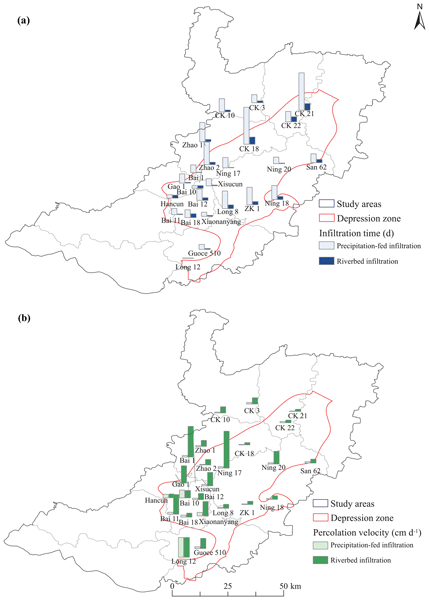
The North China Plain, home to over 300 million people, faces groundwater decline from irrigation, creating 80-meter-deep zones threatening supplies. We modeled rain and river infiltration using borehole and weather records to study restoration. Rain recharge averages 446 days, varying nearly 140 times: 10 days in sandy western foothills to 1395 days in clayey central/eastern plains. River recharge is faster at 91 days, suggesting flood basins could accelerate recovery for sustainable farming.
Ting Zhang, Ran Zhang, Jianzhu Li, and Ping Feng
Hydrol. Earth Syst. Sci., 29, 5955–5974, https://doi.org/10.5194/hess-29-5955-2025, https://doi.org/10.5194/hess-29-5955-2025, 2025
Short summary
Short summary
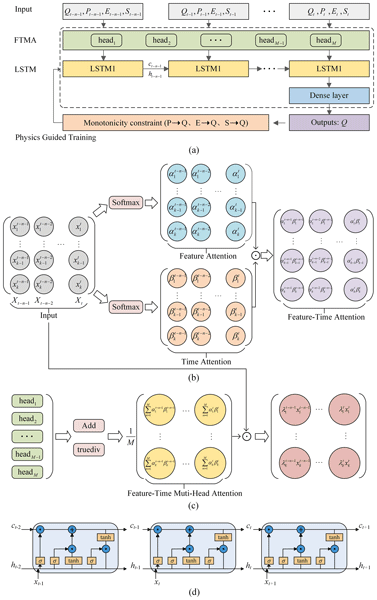
This study presents a model integrating attention mechanisms and physical constraints to improve flood prediction. It forecasts floods up to 6 h in advance. The model enhances accuracy by focusing on critical input features and historical patterns. Results demonstrate its superior performance compared to other models, offering improved flood prediction with greater interpretability and alignment with physical laws.
Siyao Zhang, Jianzhu Li, Ting Zhang, and Ping Feng
Hydrol. Earth Syst. Sci. Discuss., https://doi.org/10.5194/hess-2024-185, https://doi.org/10.5194/hess-2024-185, 2024
Manuscript not accepted for further review
Short summary
Short summary
Flash drought (FD) in the North China Plain (NCP) from 1981 to 2022 was identified by three methods. It occurs more frequently in central and northern NCP than southern, with longer duration in southern and eastern NCP. FD shows seasonal variations. NCP is prone to severe FDs. There is a decreasing trend in FD, with three hotspots in northwestern, eastern and southwestern NCP. The FD frequency is affected by thresholds in the identification methods. This study may be valuable for FD mitigation.
Yanchen Zheng, Gemma Coxon, Ross Woods, Daniel Power, Miguel Angel Rico-Ramirez, David McJannet, Rafael Rosolem, Jianzhu Li, and Ping Feng
Hydrol. Earth Syst. Sci., 28, 1999–2022, https://doi.org/10.5194/hess-28-1999-2024, https://doi.org/10.5194/hess-28-1999-2024, 2024
Short summary
Short summary
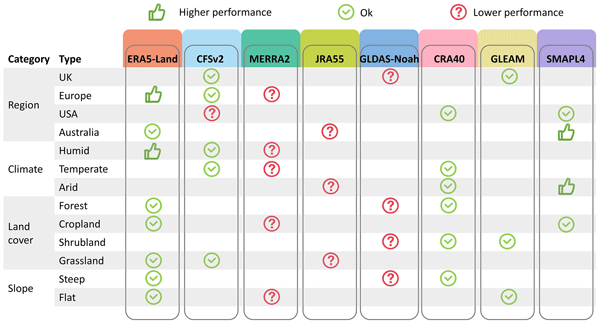
Reanalysis soil moisture products are a vital basis for hydrological and environmental research. Previous product evaluation is limited by the scale difference (point and grid scale). This paper adopts cosmic ray neutron sensor observations, a novel technique that provides root-zone soil moisture at field scale. In this paper, global harmonized CRNS observations were used to assess products. ERA5-Land, SMAPL4, CFSv2, CRA40 and GLEAM show better performance than MERRA2, GLDAS-Noah and JRA55.
Cited articles
Dorrington, J., Wenta, M., Grazzini, F., Magnusson, L., Vitart, F., and Grams, C. M.: Precursors and pathways: dynamically informed extreme event forecasting demonstrated on the historic Emilia-Romagna 2023 flood, Nat. Hazards Earth Syst. Sci., 24, 2995–3012, https://doi.org/10.5194/nhess-24-2995-2024, 2024.
Gibson, S., Wills, A., and Ninness, B.: Maximum-likelihood parameter estimation of bilinear systems, IEEE Trans. Autom. Control, 50, 1581–1596, https://doi.org/10.1109/TAC.2005.856664, 2005.
Guangzhou Water Authority: The Announcement on the Technical Report Summary on the Technical Report on the Compilation of Guangzhou Rainstorm Intensity Formula and Design Rainfall Patterns, http://swj.gz.gov.cn/gkmlpt/content/8/8835/mpost_8835843.html?eqid=b613570d0000e49000000006648a743f#1052 (last access: 15 December 2024), 2023 (in Chinese).
Huang, H., Chen, X., Zhu, Z., Xie, Y., Liu, L., Wang, X., Wang, X., and Liu, K.: The changing pattern of urban flooding in Guangzhou, China, Sci. Total Environ., 622–623, 394–401, https://doi.org/10.1016/j.scitotenv.2017.11.358, 2018.
Huang, H. C., Liao, W. H., Lei, X. H., Wang, C., Cai, Z. P., and Wang, H.: An urban DEM reconstruction method based on multisource data fusion for urban pluvial flooding simulation, J. Hydrol., 617, 128825, https://doi.org/10.1016/j.jhydrol.2022.128825, 2023.
Jiao, Z., Zhang, Z., and Wu, L.: SAR-based dynamic information retrieving of the Beijing-Tianjin-Hebei flood-inundation happened in July 2023, North China, Geomatics, Nat. Hazards Risk, 15, 2366361, https://doi.org/10.1080/19475705.2024.2366361, 2024.
Kavianpour, M., Seyedabadi, M., and Moazami, S.: Spatial and temporal analysis of drought based on a combined index using copula, Environ. Earth Sci., 77, 1–12, https://doi.org/10.1007/s12665-018-7942-0, 2018.
Latif, S. and Simonovic, S. P.: Nonparametric Approach to Copula Estimation in Compounding The Joint Impact of Storm Surge and Rainfall Events in Coastal Flood Analysis, Water Resour. Manage., 36, 5599–5632, https://doi.org/10.1007/s11269-022-03321-y, 2022.
Li, W., Jiang, S., Zhao, Y., Li, H., Zhu, Y., He, G., Xu, Y., and Shang, Y.: A copula-based security risk evaluation and probability calculation for water-energy-food nexus, Sci. Total Environ., 856, 159236, https://doi.org/10.1016/j.scitotenv.2022.159236, 2023.
Lian, J., Xu, H., Xu, K., and Ma, C.: Optimal management of the flooding risk caused by the joint occurrence of extreme rainfall and high tide level in a coastal city, Nat. Hazard., 89, 183–200, https://doi.org/10.1007/s11069-017-2958-4, 2017.
Lian, J. J., Xu, K., and Ma, C.: Joint impact of rainfall and tidal level on flood risk in a coastal city with a complex river network: a case study of Fuzhou City, China, Hydrol. Earth Syst. Sci., 17, 679–689, https://doi.org/10.5194/hess-17-679-2013, 2013.
Marengo, J. A., Cunha, A. P., Seluchi, M. E., Camarinha, P. I., Dolif, G., Sperling, V. B., Alcântara, E. H., Ramos, A. M., Andrade, M. M., and Stabile, R. A.: Heavy rains and hydrogeological disasters on February 18th–19th, 2023, in the city of São Sebastião, São Paulo, Brazil: from meteorological causes to early warnings, Nat. Hazard., 120, 7997–8024, https://doi.org/10.1007/s11069-024-06558-5, 2024.
Masson-Delmotte, V., Zhai, P., Pirani, A., Connors, S. L., Péan, C., Berger, S., Caud, N., Chen, Y., Goldfarb, L., and Gomis, M.: Climate change 2021: the physical science basis, Contribution of working group I to the sixth assessment report of the intergovernmental panel on climate change, Cambridge University Press, Cambridge, United Kingdom and New York, NY, USA, http://hdl.handle.net/10204/12710 (last access: 19 December 2024), 2021.
Mohandes, S. R., Kineber, A. F., Abdelkhalek, S., Kaddoura, K., Elsayed, M., Hosseini, M. R., and Zayed, T.: Evaluation of the critical factors causing sewer overflows through modeling of structural equations and system dynamics, J. Cleaner Prod., 375, 134035, https://doi.org/10.1016/j.jclepro.2022.134035, 2022.
Pappadà, R., Durante, F., Salvadori, G., and De Michele, C.: Clustering of concurrent flood risks via Hazard Scenarios, Spatial Stat., 23, 124–142, https://doi.org/10.1016/j.spasta.2017.12.002, 2018.
Pervin, I. A., Rahman, S. M. M., Nepal, M., Haque, A. K. E., Karim, H., and Dhakal, G.: Adapting to urban flooding: a case of two cities in South Asia, Water Policy, 22, 162–188, https://doi.org/10.2166/wp.2019.174, 2019.
Pilgrim, D. H. and Cordery, I.: Rainfall temporal patterns for design floods, J. Hydraul. Div., 101, 81–95, https://doi.org/10.1061/JYCEAJ.0004197, 1975.
Rossman, L.: Storm Water Management Model User’s Manual Version 5.0,USEPA, Washington, DC, EPA/600/R-05/040, https://cfpub.epa.gov/si/si_public_record_report.cfm?-Lab=NRMRL&dirEntryId=114231 (last access: 19 December 2024), 2004.
Salvadori, G. and De Michele, C.: Multivariate multiparameter extreme value models and return periods: A copula approach, Water Resour. Res., 46, W10501, https://doi.org/10.1029/2009WR009040, 2010.
Shaqiri, M., Iljazi, T., Kamberi, L., and Ramani-halili, R.: Differences Between The Correlation Coefficients Pearson, Kendall And Spearman, J. Nat. Sci. Mathe., 8, 392–397, 2023.
Skougaard Kaspersen, P., Høegh Ravn, N., Arnbjerg-Nielsen, K., Madsen, H., and Drews, M.: Comparison of the impacts of urban development and climate change on exposing European cities to pluvial flooding, Hydrol. Earth Syst. Sci., 21, 4131–4147, https://doi.org/10.5194/hess-21-4131-2017, 2017.
Tong, X., Wang, D., Singh, V., Wu, J., Chen, X., and Chen, Y.: Impact of data length on the uncertainty of hydrological copula modeling, J. Hydrol. Eng., 20, 05014019, https://doi.org/10.1061/(ASCE)HE.1943-5584.0001039, 2015.
van Dijk, E., van der Meulen, J., Kluck, J., and Straatman, J. H. M.: Comparing modelling techniques for analysing urban pluvial flooding, Water Sci. Technol., 69, 305–311, https://doi.org/10.2166/wst.2013.699, 2013.
Wahl, T., Jain, S., Bender, J., Meyers, S. D., and Luther, M. E.: Increasing risk of compound flooding from storm surge and rainfall for major US cities, Nat. Clim. Change, 5, 1093–1097, https://doi.org/10.1038/nclimate2736, 2015.
Wei, J. Y., Luo, X. Y., Huang, H. C., Liao, W. H., Lei, X. H., Zhao, J. S., and Wang, H.: Enable high-resolution, real-time ensemble simulation and data assimilation of flood inundation using distributed GPU parallelization, J. Hydrol., 619, 129277, https://doi.org/10.1016/j.jhydrol.2023.129277, 2023.
Yang, X. and Qian, J.: Joint occurrence probability analysis of typhoon-induced storm surges and rainstorms using trivariate Archimedean copulas, Ocean Eng., 171, 533–539, https://doi.org/10.1016/j.oceaneng.2018.11.039, 2019.
Zellou, B. and Rahali, H.: Assessment of the joint impact of extreme rainfall and storm surge on the risk of flooding in a coastal area, J. Hydrol., 569, 647–665, https://doi.org/10.1016/j.jhydrol.2018.12.028, 2019.
Zhang, H., Wu, C., Chen, W., and Huang, G.: Assessing the Impact of Climate Change on the Waterlogging Risk in Coastal Cities: A Case Study of Guangzhou, South China, J. Hydrometeorol., 18, 1549–1562, https://doi.org/10.1175/JHM-D-16-0157.1, 2017.
Zhang, H., Zhang, J., Fang, H., and Yang, F.: Urban flooding response to rainstorm scenarios under different return period types, Sustain. Cities Soc., 87, 104184, https://doi.org/10.1016/j.scs.2022.104184, 2022.
Zhang, L. and Singh, V.: Bivariate flood frequency analysis using the copula method, J. Hydrol. Eng., 11, 150–164, https://doi.org/10.1061/(ASCE)1084-0699(2006)11:2(150), 2006.
Zhang, M., Xu, M., Wang, Z., and Lai, C.: Assessment of the vulnerability of road networks to urban waterlogging based on a coupled hydrodynamic model, J. Hydrol., 603, 127105, https://doi.org/10.1016/j.jhydrol.2021.127105, 2021.
Zhao, Y., Zhang, G., and Zhao, H.: Spatial network structures of urban agglomeration based on the improved Gravity Model: A case study in China's two urban agglomerations, Complexity, 2021, 6651444, https://doi.org/10.1155/2021/6651444, 2021.
Zou, L., Wang, Z., Lu, Q., Wu, S., Chen, L., and Qin, Z.: The rain-induced urban waterlogging risk and its evaluation: a case study in the central city of Shanghai, Water, 14, 3780, https://doi.org/10.3390/w14223780, 2022.
Short summary
In coastal cities, rainfall and tides contribute to compound flooding. This study quantifies the impacts of rainfall and tides on compound flooding and analyzes interactions between different flood types. Findings show that rainfall generally has a greater effect on flooding than tide levels. The interaction between fluvial and pluvial flooding amplifies the flood disaster, with tide levels having the most significant impact during the interaction phase.
In coastal cities, rainfall and tides contribute to compound flooding. This study quantifies the...