
Articles | Volume 30, issue 20
https://doi.org/10.5194/hess-30-6511-2026
© Author(s) 2026. This work is distributed under
the Creative Commons Attribution 4.0 License.
the Creative Commons Attribution 4.0 License.
https://doi.org/10.5194/hess-30-6511-2026
© Author(s) 2026. This work is distributed under
the Creative Commons Attribution 4.0 License.
the Creative Commons Attribution 4.0 License.
Research article
| 
23 Oct 2026
Research article |
| 23 Oct 2026
| 23 Oct 2026
Integrating a global glacier model into local hydrological modeling: Impacts on melt contributions
Justine Berg
CORRESPONDING AUTHOR

Institute of Geography (GIUB), University of Bern, Bern, Switzerland
Oeschger Centre for Climate Change Research (OCCR), University of Bern, Bern, Switzerland
Pascal Horton
Institute of Geography (GIUB), University of Bern, Bern, Switzerland
Oeschger Centre for Climate Change Research (OCCR), University of Bern, Bern, Switzerland
Martina Kauzlaric
Institute of Geography (GIUB), University of Bern, Bern, Switzerland
Oeschger Centre for Climate Change Research (OCCR), University of Bern, Bern, Switzerland
Alexandra von der Esch
Laboratory of Hydraulics, Hydrology and Glaciology (VAW), ETH Zurich, Zurich, Switzerland
Swiss Federal Institute for Forest, Snow and Landscape Research (WSL), bâtiment ALPOLE, Sion, Switzerland
Bettina Schaefli
Institute of Geography (GIUB), University of Bern, Bern, Switzerland
Oeschger Centre for Climate Change Research (OCCR), University of Bern, Bern, Switzerland
Related authors
Alexandra von der Esch, Matthias Huss, Marit van Tiel, Justine Berg, and Daniel Farinotti
Hydrol. Earth Syst. Sci., 29, 6761–6780, https://doi.org/10.5194/hess-29-6761-2025, https://doi.org/10.5194/hess-29-6761-2025, 2025
Short summary
Short summary
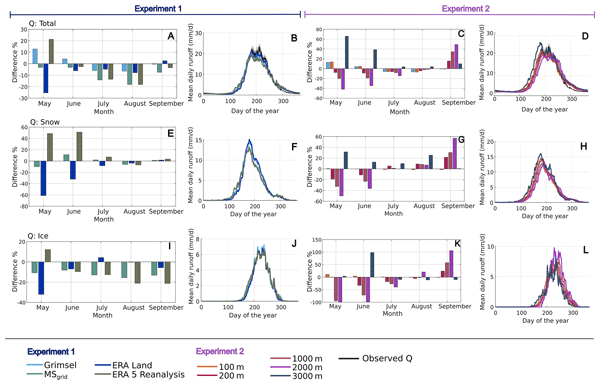
Glaciers are vital water sources, especially in alpine regions. Using the Glacier Evolution Runoff Model (GERM), we examined how forcing data and model resolution impact glacio-hydrological model results. We find that precipitation biases greatly affect results, and coarse resolutions miss critical small-scale details. This highlights the trade-offs between computational efficiency and model accuracy, emphasizing the need for high-resolution data and precise calibration for reliable predictions.
Dylan Reynolds, Louis Quéno, Michael Lehning, Mahdi Jafari, Justine Berg, Tobias Jonas, Michael Haugeneder, and Rebecca Mott
The Cryosphere, 18, 4315–4333, https://doi.org/10.5194/tc-18-4315-2024, https://doi.org/10.5194/tc-18-4315-2024, 2024
Short summary
Short summary
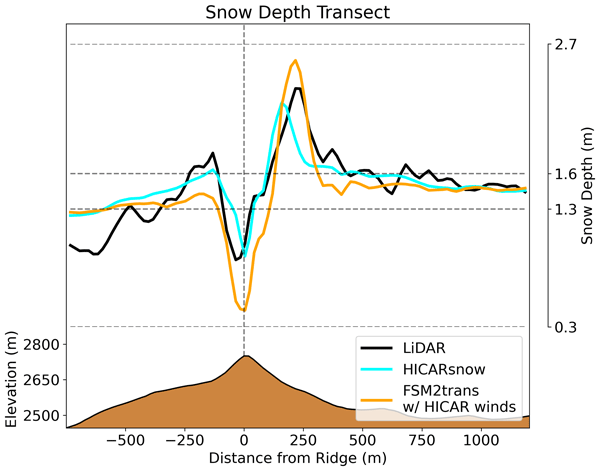
Information about atmospheric variables is needed to produce simulations of mountain snowpacks. We present a model that can represent processes that shape mountain snowpack, focusing on the accumulation of snow. Simulations show that this model can simulate the complex path that a snowflake takes towards the ground and that this leads to differences in the distribution of snow by the end of winter. Overall, this model shows promise with regard to improving forecasts of snow in mountains.
Florentin Hofmeister, Xinyang Fan, Madlene Pfeiffer, Ben Marzeion, Bettina Schaefli, and Gabriele Chiogna
Hydrol. Earth Syst. Sci., 30, 6265–6288, https://doi.org/10.5194/hess-30-6265-2026, https://doi.org/10.5194/hess-30-6265-2026, 2026
Short summary
Short summary
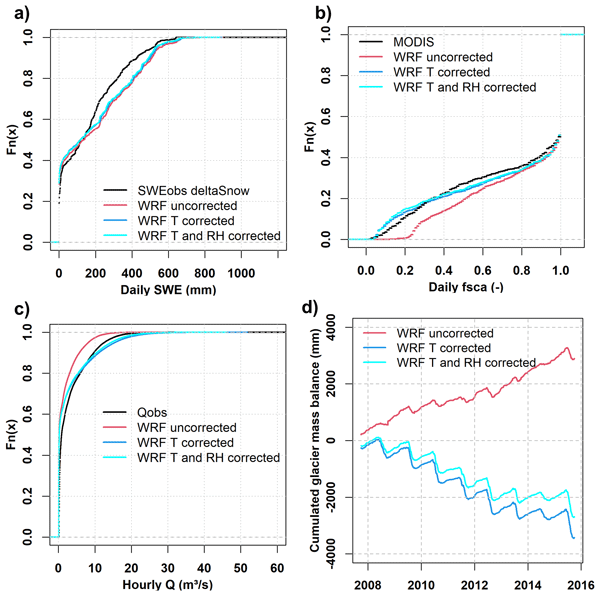
We developed a new approach to improve the climate data used to study water and glaciers in high-mountain regions. By correcting unrealistic air temperatures and moisture while keeping the data physically consistent, we achieved much better agreement with measurements and more accurate simulations of snow, glacier change, and river flow. The method also preserved long-term warming trends, making it useful for studying future climate impacts in mountain areas.
Harsh Beria, Lionel Benoit, Grégoire Mariethoz, Natalie Claire Ceperley, and Bettina Schaefli
EGUsphere, https://doi.org/10.5194/egusphere-2026-4249, https://doi.org/10.5194/egusphere-2026-4249, 2026
Short summary
Short summary
Mountain streams can rise within minutes of heavy rain, but much of the streamwater may have been stored underground for far longer. We combine hydrological measurements with stable water isotopes to simulate streamflow in a Swiss Alpine catchment. The simulations show that >80 % of summer streamflow came from groundwater, while direct rainfall contributions were small and brief. Fast stream rises therefore do not necessarily mean that rainwater moves quickly through the landscape.
Pau Wiersma, Jan Magnusson, Nadav Peleg, Bettina Schaefli, and Gregoire Mariethoz
Hydrol. Earth Syst. Sci., 30, 3331–3350, https://doi.org/10.5194/hess-30-3331-2026, https://doi.org/10.5194/hess-30-3331-2026, 2026
Short summary
Short summary
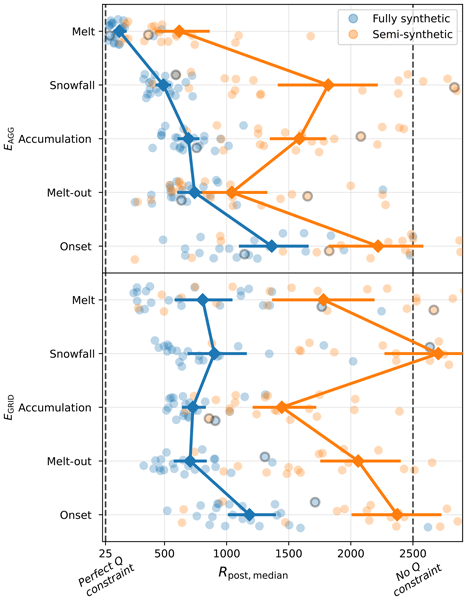
Streamflow observations contain information about snow, but their potential to constrain seasonal snow mass reconstructions remains underexplored. Using inverse hydrological modeling, we show that streamflow is particularly effective at constraining catchment-aggregated melt rates, but that non-uniqueness in the snow–streamflow relationship and uncertainties in the inverse modeling chain can easily limit inversion performance.
Malve Heinz, Annelie Holzkämper, Rohini Kumar, Sélène Ledain, Pascal Horton, and Bettina Schaefli
Hydrol. Earth Syst. Sci., 30, 2879–2911, https://doi.org/10.5194/hess-30-2879-2026, https://doi.org/10.5194/hess-30-2879-2026, 2026
Short summary
Short summary
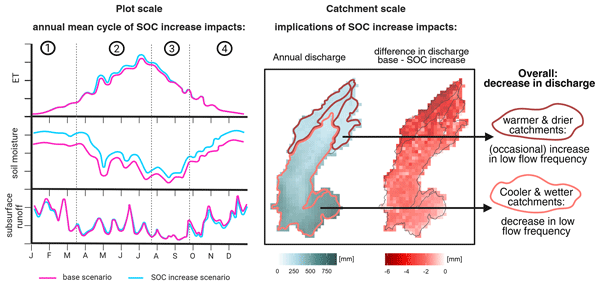
Droughts increasingly threaten agriculture. Improving soils to store more water, for example by increasing soil organic carbon, can help. We simulated this in a Swiss catchment and found that more soil carbon slightly increased soil water storage and evapotranspiration, modestly reduced floods, and shortened periods with very little streamflow. However in warmer, drier areas, these periods with little streamflow could sometimes last longer.
Adrià Fontrodona-Bach, Bettina Schaefli, Ross Woods, and Joshua R. Larsen
Hydrol. Earth Syst. Sci., 30, 2613–2636, https://doi.org/10.5194/hess-30-2613-2026, https://doi.org/10.5194/hess-30-2613-2026, 2026
Short summary
Short summary
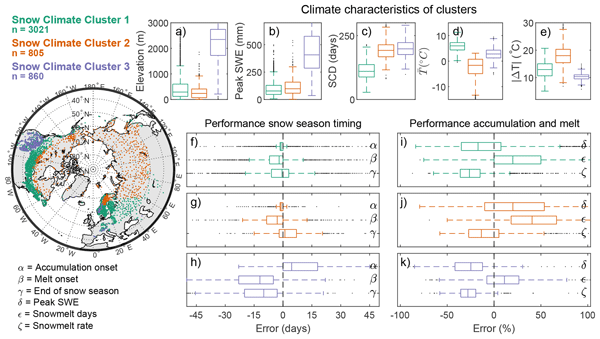
Investigating changing snow in response to global warming can be done with a simple model and only temperature and precipitation data, simplifying snow dynamics with assumptions and parameters. We provide a large-scale and long-term evaluation of this approach and its performance across diverse climates. Temperature thresholds are more robust over cold climates but melt parameters are more robust over warmer climates with deep snow. The model performs well across climates despite its simplicity.
Eleni Kritidou, Martina Kauzlaric, Maria Staudinger, Guillaume Evin, Marc Vis, and Daniel Viviroli
EGUsphere, https://doi.org/10.5194/egusphere-2026-2338, https://doi.org/10.5194/egusphere-2026-2338, 2026
Short summary
Short summary
In mountain regions, precipitation varies with elevation, but models often simplify this relationship. We used simulations combining a weather generator and a hydrological model to explore how different precipitation different lapse rates affect runoff and floods in Switzerland. We found that they impact yearly and seasonal river flow and flood behavior. Higher-elevation catchments were less sensitive, and higher lapse rates increased summer floods, while lower rates increased winter floods.
Xinyang Fan, Florentin Hofmeister, Bettina Schaefli, and Gabriele Chiogna
EGUsphere, https://doi.org/10.5194/egusphere-2025-6065, https://doi.org/10.5194/egusphere-2025-6065, 2025
Short summary
Short summary
We adopt a physics-based, fully-integrated hydrological modeling approach to understand streamflow variations and their interactions with groundwater in a high-elevation glaciated environment. We demonstrate opportunities and challenges of integrating point-scale groundwater observations into a distributed model. This study sheds new lights on surface-subsurface processes in high alpine environments and highlights the importance of improving subsurface representation in hydrological modeling.
Alexandra von der Esch, Matthias Huss, Marit van Tiel, Justine Berg, and Daniel Farinotti
Hydrol. Earth Syst. Sci., 29, 6761–6780, https://doi.org/10.5194/hess-29-6761-2025, https://doi.org/10.5194/hess-29-6761-2025, 2025
Short summary
Short summary
Glaciers are vital water sources, especially in alpine regions. Using the Glacier Evolution Runoff Model (GERM), we examined how forcing data and model resolution impact glacio-hydrological model results. We find that precipitation biases greatly affect results, and coarse resolutions miss critical small-scale details. This highlights the trade-offs between computational efficiency and model accuracy, emphasizing the need for high-resolution data and precise calibration for reliable predictions.
Xinyang Fan, Florentin Hofmeister, Bettina Schaefli, and Gabriele Chiogna
EGUsphere, https://doi.org/10.5194/egusphere-2025-1500, https://doi.org/10.5194/egusphere-2025-1500, 2025
Preprint archived
Short summary
Short summary
We adopt a fully-distributed, physics-based hydrological modeling approach, to understand streamflow variations and their interactions with groundwater in a high-elevation glaciated environment. We demonstrate opportunities and challenges of integrating point-scale groundwater observations into a distributed model. This study sheds new lights on surface-subsurface processes in high alpine environments and highlights the importance of improving subsurface representation in hydrological modeling.
Malve Heinz, Maria Eliza Turek, Bettina Schaefli, Andreas Keiser, and Annelie Holzkämper
Hydrol. Earth Syst. Sci., 29, 1807–1827, https://doi.org/10.5194/hess-29-1807-2025, https://doi.org/10.5194/hess-29-1807-2025, 2025
Short summary
Short summary
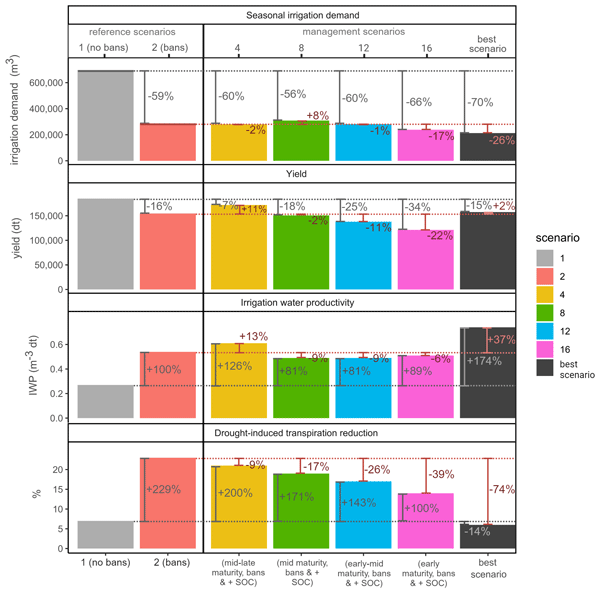
Potato farmers in Switzerland are facing drier conditions and water restrictions. We explored how improving soil health and planting early-maturing potato varieties might help them to adapt. Using a computer model, we simulated potato yields and irrigation water needs under water scarcity. Our results show that earlier-maturing potato varieties reduce the reliance on irrigation but result in lower yields. However, improving soil health can significantly reduce yield losses.
Anne-Laure Argentin, Pascal Horton, Bettina Schaefli, Jamal Shokory, Felix Pitscheider, Leona Repnik, Mattia Gianini, Simone Bizzi, Stuart N. Lane, and Francesco Comiti
Hydrol. Earth Syst. Sci., 29, 1725–1748, https://doi.org/10.5194/hess-29-1725-2025, https://doi.org/10.5194/hess-29-1725-2025, 2025
Short summary
Short summary
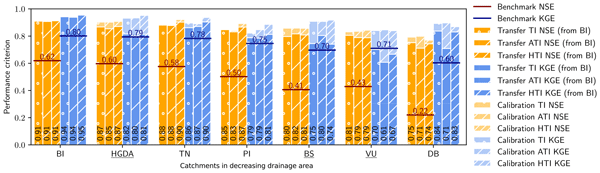
In this article, we show that by taking the optimal parameters calibrated with a semi-lumped model for the discharge at a catchment's outlet, we can accurately simulate runoff at various points within the study area, including three nested and three neighboring catchments. In addition, we demonstrate that employing more intricate melt models, which better represent physical processes, enhances the transfer of parameters in the simulation, until we observe overparameterization.
Markus Mosimann, Martina Kauzlaric, Olivia Martius, and Andreas Paul Zischg
Abstr. Int. Cartogr. Assoc., 9, 26, https://doi.org/10.5194/ica-abs-9-26-2025, https://doi.org/10.5194/ica-abs-9-26-2025, 2025
Tom Müller, Mauro Fischer, Stuart N. Lane, and Bettina Schaefli
The Cryosphere, 19, 423–458, https://doi.org/10.5194/tc-19-423-2025, https://doi.org/10.5194/tc-19-423-2025, 2025
Short summary
Short summary
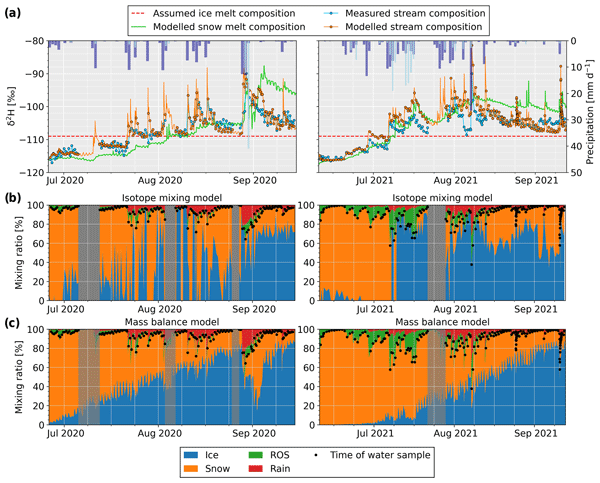
Based on extensive field observations in a highly glacierized catchment in the Swiss Alps, we develop a combined isotopic and glacio-hydrological model. We show that water stable isotopes may help to better constrain model parameters, especially those linked to water transfer. However, we highlight that separating snow and ice melt for temperate glaciers based on isotope mixing models alone is not advised and should only be considered if their isotopic signatures have clearly different values.
Maria Staudinger, Martina Kauzlaric, Alexandre Mas, Guillaume Evin, Benoit Hingray, and Daniel Viviroli
Nat. Hazards Earth Syst. Sci., 25, 247–265, https://doi.org/10.5194/nhess-25-247-2025, https://doi.org/10.5194/nhess-25-247-2025, 2025
Short summary
Short summary
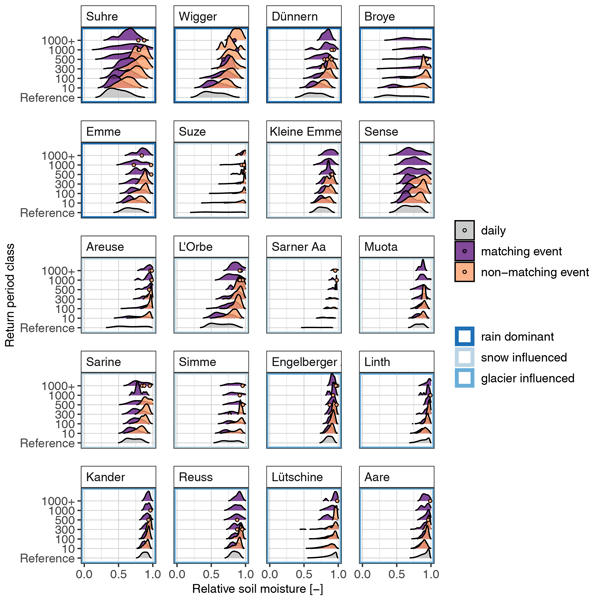
Various combinations of antecedent conditions and precipitation result in floods of varying degrees. Antecedent conditions played a crucial role in generating even large ones. The key predictors and spatial patterns of antecedent conditions leading to flooding at the basin's outlet were distinct. Precipitation and soil moisture from almost all sub-catchments were important for more frequent floods. For rarer events, only the predictors of specific sub-catchments were important.
Dylan Reynolds, Louis Quéno, Michael Lehning, Mahdi Jafari, Justine Berg, Tobias Jonas, Michael Haugeneder, and Rebecca Mott
The Cryosphere, 18, 4315–4333, https://doi.org/10.5194/tc-18-4315-2024, https://doi.org/10.5194/tc-18-4315-2024, 2024
Short summary
Short summary
Information about atmospheric variables is needed to produce simulations of mountain snowpacks. We present a model that can represent processes that shape mountain snowpack, focusing on the accumulation of snow. Simulations show that this model can simulate the complex path that a snowflake takes towards the ground and that this leads to differences in the distribution of snow by the end of winter. Overall, this model shows promise with regard to improving forecasts of snow in mountains.
Moctar Dembélé, Mathieu Vrac, Natalie Ceperley, Sander J. Zwart, Josh Larsen, Simon J. Dadson, Grégoire Mariéthoz, and Bettina Schaefli
Proc. IAHS, 385, 121–127, https://doi.org/10.5194/piahs-385-121-2024, https://doi.org/10.5194/piahs-385-121-2024, 2024
Short summary
Short summary
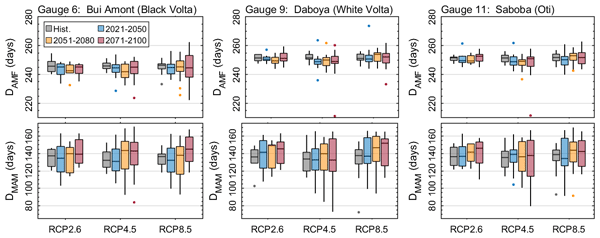
This study assesses the impact of climate change on the timing, seasonality and magnitude of mean annual minimum (MAM) flows and annual maximum flows (AMF) in the Volta River basin (VRB). Several climate change projection data are use to simulate river flow under multiple greenhouse gas emission scenarios. Future projections show that AMF could increase with various magnitude but negligible shift in time across the VRB, while MAM could decrease with up to 14 days of delay in occurrence.
Tom Müller, Matteo Roncoroni, Davide Mancini, Stuart N. Lane, and Bettina Schaefli
Hydrol. Earth Syst. Sci., 28, 735–759, https://doi.org/10.5194/hess-28-735-2024, https://doi.org/10.5194/hess-28-735-2024, 2024
Short summary
Short summary
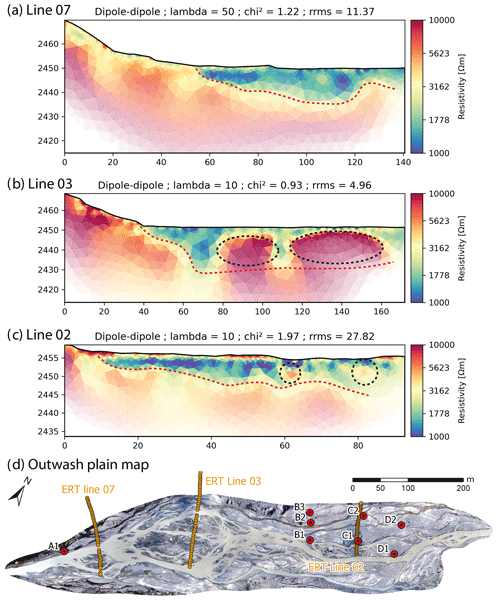
We investigate the role of a newly formed floodplain in an alpine glaciated catchment to store and release water. Based on field measurements, we built a numerical model to simulate the water fluxes and show that recharge occurs mainly due to the ice-melt-fed river. We identify three future floodplains, which could emerge from glacier retreat, and show that their combined storage leads to some additional groundwater storage but contributes little additional baseflow for the downstream river.
Marvin Höge, Martina Kauzlaric, Rosi Siber, Ursula Schönenberger, Pascal Horton, Jan Schwanbeck, Marius Günter Floriancic, Daniel Viviroli, Sibylle Wilhelm, Anna E. Sikorska-Senoner, Nans Addor, Manuela Brunner, Sandra Pool, Massimiliano Zappa, and Fabrizio Fenicia
Earth Syst. Sci. Data, 15, 5755–5784, https://doi.org/10.5194/essd-15-5755-2023, https://doi.org/10.5194/essd-15-5755-2023, 2023
Short summary
Short summary
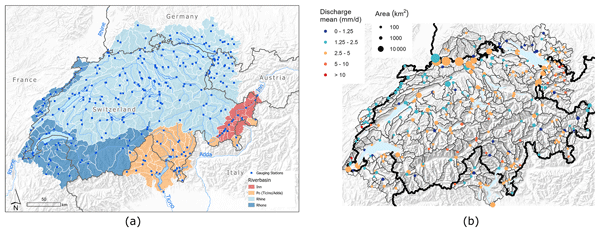
CAMELS-CH is an open large-sample hydro-meteorological data set that covers 331 catchments in hydrologic Switzerland from 1 January 1981 to 31 December 2020. It comprises (a) daily data of river discharge and water level as well as meteorologic variables like precipitation and temperature; (b) yearly glacier and land cover data; (c) static attributes of, e.g, topography or human impact; and (d) catchment delineations. CAMELS-CH enables water and climate research and modeling at catchment level.
Adrià Fontrodona-Bach, Bettina Schaefli, Ross Woods, Adriaan J. Teuling, and Joshua R. Larsen
Earth Syst. Sci. Data, 15, 2577–2599, https://doi.org/10.5194/essd-15-2577-2023, https://doi.org/10.5194/essd-15-2577-2023, 2023
Short summary
Short summary
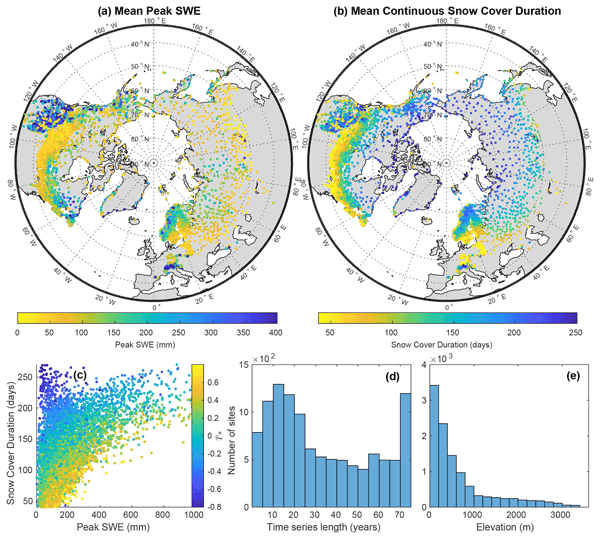
We provide a dataset of snow water equivalent, the depth of liquid water that results from melting a given depth of snow. The dataset contains 11 071 sites over the Northern Hemisphere, spans the period 1950–2022, and is based on daily observations of snow depth on the ground and a model. The dataset fills a lack of accessible historical ground snow data, and it can be used for a variety of applications such as the impact of climate change on global and regional snow and water resources.
Alessio Gentile, Davide Canone, Natalie Ceperley, Davide Gisolo, Maurizio Previati, Giulia Zuecco, Bettina Schaefli, and Stefano Ferraris
Hydrol. Earth Syst. Sci., 27, 2301–2323, https://doi.org/10.5194/hess-27-2301-2023, https://doi.org/10.5194/hess-27-2301-2023, 2023
Short summary
Short summary
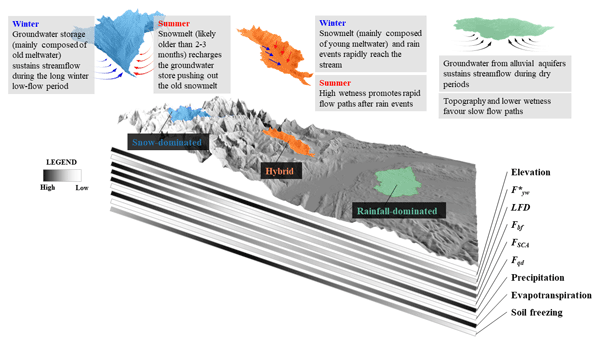
What drives young water fraction, F*yw (i.e., the fraction of water in streamflow younger than 2–3 months), variations with elevation? Why is F*yw counterintuitively low in high-elevation catchments, in spite of steeper topography? In this paper, we present a perceptual model explaining how the longer low-flow duration at high elevations, driven by the persistence of winter snowpacks, increases the proportion of stored (old) water contributing to the stream, thus reducing F*yw.
Anthony Michelon, Natalie Ceperley, Harsh Beria, Joshua Larsen, Torsten Vennemann, and Bettina Schaefli
Hydrol. Earth Syst. Sci., 27, 1403–1430, https://doi.org/10.5194/hess-27-1403-2023, https://doi.org/10.5194/hess-27-1403-2023, 2023
Short summary
Short summary
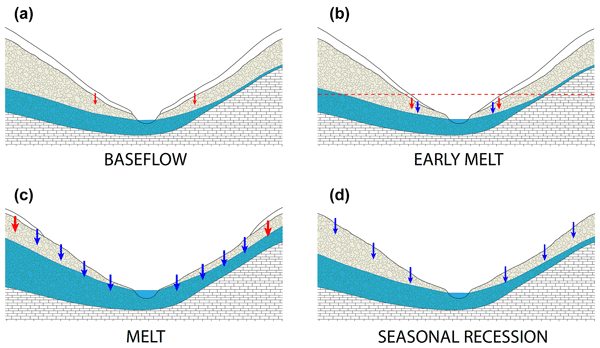
Streamflow generation processes in high-elevation catchments are largely influenced by snow accumulation and melt. For this work, we collected and analyzed more than 2800 water samples (temperature, electric conductivity, and stable isotopes of water) to characterize the hydrological processes in such a high Alpine environment. Our results underline the critical role of subsurface flow during all melt periods and the presence of snowmelt even during the winter periods.
Sarah Shannon, Anthony Payne, Jim Freer, Gemma Coxon, Martina Kauzlaric, David Kriegel, and Stephan Harrison
Hydrol. Earth Syst. Sci., 27, 453–480, https://doi.org/10.5194/hess-27-453-2023, https://doi.org/10.5194/hess-27-453-2023, 2023
Short summary
Short summary
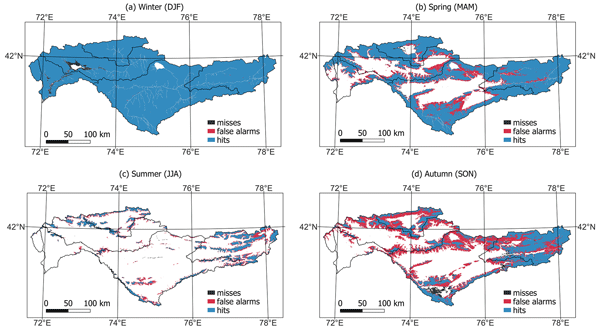
Climate change poses a potential threat to water supply in glaciated river catchments. In this study, we added a snowmelt and glacier melt model to the Dynamic fluxEs and ConnectIvity for Predictions of HydRology model (DECIPHeR). The model is applied to the Naryn River catchment in central Asia and is found to reproduce past change discharge and the spatial extent of seasonal snow cover well.
Tom Müller, Stuart N. Lane, and Bettina Schaefli
Hydrol. Earth Syst. Sci., 26, 6029–6054, https://doi.org/10.5194/hess-26-6029-2022, https://doi.org/10.5194/hess-26-6029-2022, 2022
Short summary
Short summary
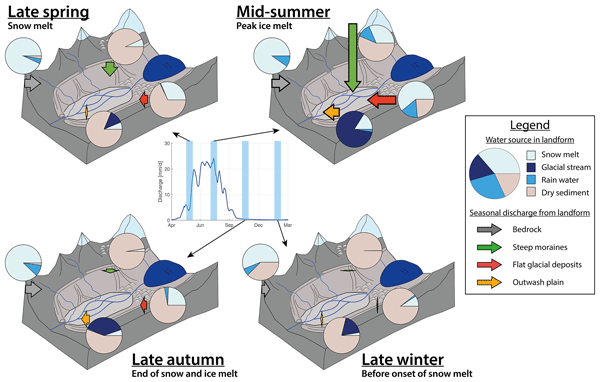
This research provides a comprehensive analysis of groundwater storage in Alpine glacier forefields, a zone rapidly evolving with glacier retreat. Based on data analysis of a case study, it provides a simple perceptual model showing where and how groundwater is stored and released in a high Alpine environment. It especially points out the presence of groundwater storages in both fluvial and bedrock aquifers, which may become more important with future glacier retreat.
Daniel Viviroli, Anna E. Sikorska-Senoner, Guillaume Evin, Maria Staudinger, Martina Kauzlaric, Jérémy Chardon, Anne-Catherine Favre, Benoit Hingray, Gilles Nicolet, Damien Raynaud, Jan Seibert, Rolf Weingartner, and Calvin Whealton
Nat. Hazards Earth Syst. Sci., 22, 2891–2920, https://doi.org/10.5194/nhess-22-2891-2022, https://doi.org/10.5194/nhess-22-2891-2022, 2022
Short summary
Short summary
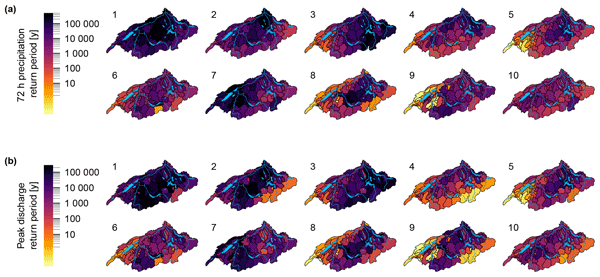
Estimating the magnitude of rare to very rare floods is a challenging task due to a lack of sufficiently long observations. The challenge is even greater in large river basins, where precipitation patterns and amounts differ considerably between individual events and floods from different parts of the basin coincide. We show that a hydrometeorological model chain can provide plausible estimates in this setting and can thus inform flood risk and safety assessments for critical infrastructure.
Feiko Bernard van Zadelhoff, Adel Albaba, Denis Cohen, Chris Phillips, Bettina Schaefli, Luuk Dorren, and Massimiliano Schwarz
Nat. Hazards Earth Syst. Sci., 22, 2611–2635, https://doi.org/10.5194/nhess-22-2611-2022, https://doi.org/10.5194/nhess-22-2611-2022, 2022
Short summary
Short summary
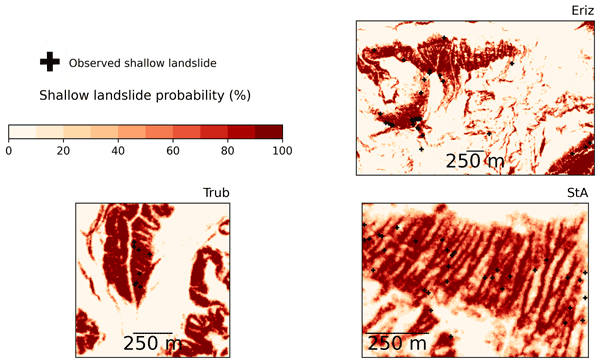
Shallow landslides pose a risk to people, property and infrastructure. Assessment of this hazard and the impact of protective measures can reduce losses. We developed a model (SlideforMAP) that can assess the shallow-landslide risk on a regional scale for specific rainfall events. Trees are an effective and cheap protective measure on a regional scale. Our model can assess their hazard reduction down to the individual tree level.
Alexandre Tuel, Bettina Schaefli, Jakob Zscheischler, and Olivia Martius
Hydrol. Earth Syst. Sci., 26, 2649–2669, https://doi.org/10.5194/hess-26-2649-2022, https://doi.org/10.5194/hess-26-2649-2022, 2022
Short summary
Short summary
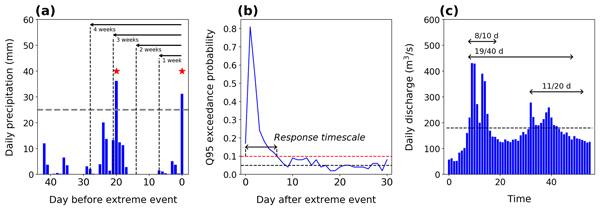
River discharge is strongly influenced by the temporal structure of precipitation. Here, we show how extreme precipitation events that occur a few days or weeks after a previous event have a larger effect on river discharge than events occurring in isolation. Windows of 2 weeks or less between events have the most impact. Similarly, periods of persistent high discharge tend to be associated with the occurrence of several extreme precipitation events in close succession.
Stefan Brönnimann, Peter Stucki, Jörg Franke, Veronika Valler, Yuri Brugnara, Ralf Hand, Laura C. Slivinski, Gilbert P. Compo, Prashant D. Sardeshmukh, Michel Lang, and Bettina Schaefli
Clim. Past, 18, 919–933, https://doi.org/10.5194/cp-18-919-2022, https://doi.org/10.5194/cp-18-919-2022, 2022
Short summary
Short summary
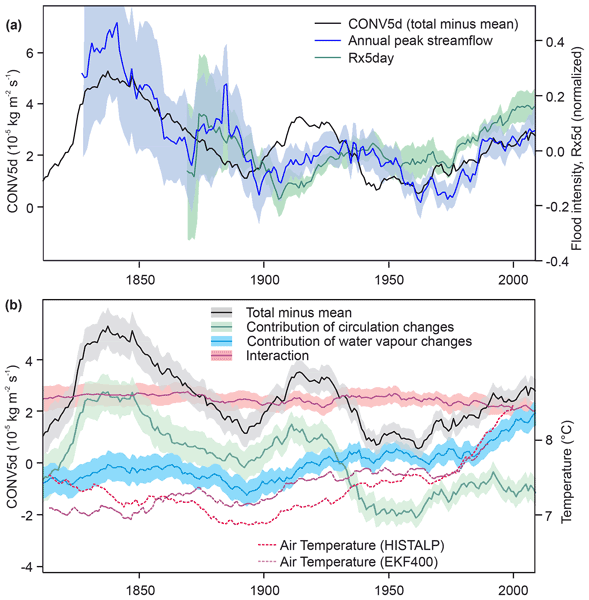
Floods in Europe vary on time scales of several decades. Flood-rich and flood-poor periods alternate. Recently floods have again become more frequent. Long time series of peak stream flow, precipitation, and atmospheric variables reveal that until around 1980, these changes were mostly due to changes in atmospheric circulation. However, in recent decades the role of increasing atmospheric moisture due to climate warming has become more important and is now the main driver of flood changes.
Moctar Dembélé, Mathieu Vrac, Natalie Ceperley, Sander J. Zwart, Josh Larsen, Simon J. Dadson, Grégoire Mariéthoz, and Bettina Schaefli
Hydrol. Earth Syst. Sci., 26, 1481–1506, https://doi.org/10.5194/hess-26-1481-2022, https://doi.org/10.5194/hess-26-1481-2022, 2022
Short summary
Short summary
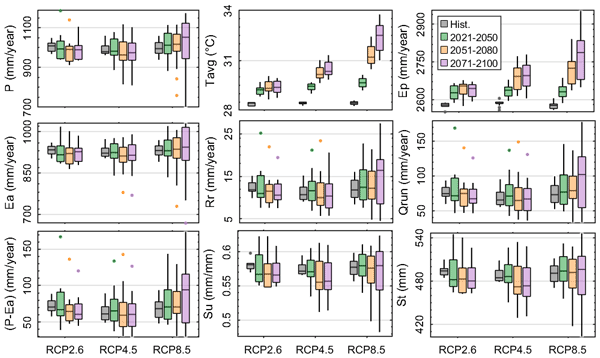
Climate change impacts on water resources in the Volta River basin are investigated under various global warming scenarios. Results reveal contrasting changes in future hydrological processes and water availability, depending on greenhouse gas emission scenarios, with implications for floods and drought occurrence over the 21st century. These findings provide insights for the elaboration of regional adaptation and mitigation strategies for climate change.
Adrien Michel, Bettina Schaefli, Nander Wever, Harry Zekollari, Michael Lehning, and Hendrik Huwald
Hydrol. Earth Syst. Sci., 26, 1063–1087, https://doi.org/10.5194/hess-26-1063-2022, https://doi.org/10.5194/hess-26-1063-2022, 2022
Short summary
Short summary
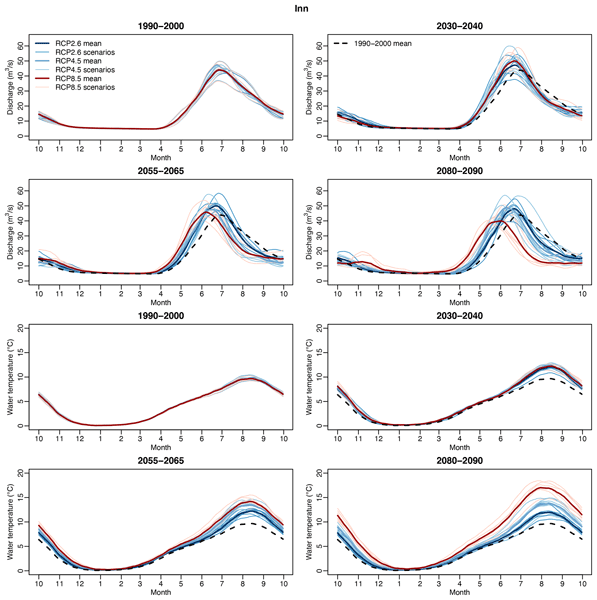
This study presents an extensive study of climate change impacts on river temperature in Switzerland. Results show that, even for low-emission scenarios, water temperature increase will lead to adverse effects for both ecosystems and socio-economic sectors throughout the 21st century. For high-emission scenarios, the effect will worsen. This study also shows that water seasonal warming will be different between the Alpine regions and the lowlands. Finally, efficiency of models is assessed.
Cited articles
Arnoux, M., Brunner, P., Schaefli, B., Mott, R., Cochand, F., and Hunkeler, D.: Low-flow behavior of alpine catchments with varying quaternary cover under current and future climatic conditions, J. Hydrol., 592, 125591, https://doi.org/10.1016/j.jhydrol.2020.125591, 2021. a, b
Bahr, D. B., Meier, M. F., and Peckham, S. D.: The physical basis of glacier volume‐area scaling, J. Geophys. Res.: Solid Earth, 102, 20355–20362, https://doi.org/10.1029/97JB01696, 1997. a
Barandun, M., Huss, M., Usubaliev, R., Azisov, E., Berthier, E., Kääb, A., Bolch, T., and Hoelzle, M.: Multi-decadal mass balance series of three Kyrgyz glaciers inferred from modelling constrained with repeated snow line observations, The Cryosphere, 12, 1899–1919, https://doi.org/10.5194/tc-12-1899-2018, 2018. a
Bartos, M.: pysheds: Simple and Fast Watershed Delineation in Python, GitHub [code], https://github.com/mdbartos/pysheds (last access: 5 October 2026), 2020. a
Berg, J., Horton, P., Kauzlaric, M., von der Esch, A., and Schaefli, B.: Modified Raven Hydrological Modelling Framework used for Berg et al. (2026, HESS) (Version paper1-hess), Zenodo [code], https://doi.org/10.5281/zenodo.21786366, 2026a. a
Berg, J., Horton, P., Kauzlaric, M., von der Esch, A., and Schaefli, B.: Model setup, calibration and analysis workflow for Berg et al. (2026, HESS) (Versions paper1-hess-r1), Zenodo [code], https://doi.org/10.5281/zenodo.21820004, 2026b. a
Berg, J., Horton, P., Kauzlaric, M., von der Esch, A., and Schaefli, B.: Raven-HBV model setups and simulation ensembles for 14 glacierized Swiss catchments, with GloGEM glacier runoff coupling (2000–2020), Zenodo [data set], https://doi.org/10.5281/zenodo.21774506, 2026c. a
Bergström, S.: The HBV model, in: Computer Models of Watershed Hydrology, edited by: Singh, V. P., Water Resources Publications, Highlands Ranch, Colorado, USA, 443–476, 1995. a
Bernhardt, M. and Schulz, K.: SnowSlide: A simple routine for calculating gravitational snow transport, Geophys. Res. Lett., 37, 2010GL043086, https://doi.org/10.1029/2010GL043086, 2010. a, b, c
Beven, K.: A manifesto for the equifinality thesis, J. Hydrol., 320, 18–36, https://doi.org/10.1016/j.jhydrol.2005.07.007, 2006. a, b
Biemans, H., Siderius, C., Lutz, A. F., Nepal, S., Ahmad, B., Hassan, T., von Bloh, W., Wijngaard, R. R., Wester, P., Shrestha, A. B., and Immerzeel, W. W.: Importance of snow and glacier meltwater for agriculture on the Indo-Gangetic Plain, Nat. Sustain., 2, 594–601, https://doi.org/10.1038/s41893-019-0305-3, 2019. a
Craig, J. R. and the Raven Development Team: Raven: User's and Developer's Manual v4.0, http://raven.uwaterloo.ca/ (last access: 5 October 2026.), 2025. a
Craig, J. R., Brown, G., Chlumsky, R., Jenkinson, R. W., Jost, G., Lee, K., Mai, J., Serrer, M., Sgro, N., Shafii, M., Snowdon, A. P., and Tolson, B. A.: Flexible watershed simulation with the Raven hydrological modelling framework, Environ. Model. Softw., 129, https://doi.org/10.1016/j.envsoft.2020.104728, 2020. a, b, c, d
Cremona, A., Huss, M., Landmann, J. M., Schwaizer, G., Paul, F., and Farinotti, D.: Constraining sub-seasonal glacier mass balance in the Swiss Alps using Sentinel-2-derived snow-cover observations, J. Glaciol., 71, e25, https://doi.org/10.1017/jog.2025.1, 2025. a
Di Marco, N., Avesani, D., Righetti, M., Zaramella, M., Majone, B., and Borga, M.: Reducing hydrological modelling uncertainty by using MODIS snow cover data and a topography-based distribution function snowmelt model, J. Hydrol., 599, 126020, https://doi.org/10.1016/j.jhydrol.2021.126020, 2021. a
Duan, Q. Y., Gupta, V. K., and Sorooshian, S.: Shuffled complex evolution approach for effective and efficient global minimization, J. Optim. Theory Appl., 76, 501–521, https://doi.org/10.1007/BF00939380, 1993. a
Duethmann, D., Bolch, T., Farinotti, D., Kriegel, D., Vorogushyn, S., Merz, B., Pieczonka, T., Jiang, T., Su, B., and Güntner, A.: Attribution of streamflow trends in snow and glacier melt-dominated catchments of the Tarim River, Central Asia, Water Resour. Res., 51, 4727–4750, https://doi.org/10.1002/2014WR016716, 2015. a, b, c
ESA WorldCover: ESA WorldCover 10 m 2021, Version 2.0, https://worldcover2020.esa.int/ (last access: 21 June 2024), 2021. a
Farinotti, D., Usselmann, S., Huss, M., Bauder, A., and Funk, M.: Runoff evolution in the Swiss Alps: projections for selected high‐alpine catchments based on ENSEMBLES scenarios, Hydrol. Proc., 26, 1909–1924, https://doi.org/10.1002/hyp.8276, 2012. a
Finger, D., Vis, M., Huss, M., and Seibert, J.: The value of multiple data set calibration versus model complexity for improving the performance of hydrological models in mountain catchments, Water Resour. Res., 51, 1939–1958, https://doi.org/10.1002/2014WR015712, 2015. a
Frei, C. and Schär, C.: A Precipitation Climatology of the Alps from High-Resolution Rain-Gauge Observations, Int. J. Climatol., 18, 873–900, https://doi.org/10.1002/(SICI)1097-0088(19980630)18:8<873::AID-JOC255>3.0.CO;2-9, 1998. a
Frei, P., Kotlarski, S., Liniger, M. A., and Schär, C.: Future snowfall in the Alps: projections based on the EURO-CORDEX regional climate models, The Cryosphere, 12, 1–24, https://doi.org/10.5194/tc-12-1-2018, 2018. a
Frey, S. and Holzmann, H.: A conceptual, distributed snow redistribution model, Hydrol. Earth Syst. Sci., 19, 4517–4530, https://doi.org/10.5194/hess-19-4517-2015, 2015. a
Gabbi, J., Carenzo, M., Pellicciotti, F., Bauder, A., and Funk, M.: A comparison of empirical and physically based glacier surface melt models for long-term simulations of glacier response, J. Glaciol., 60, 1140–1154, https://doi.org/10.3189/2014JoG14J011, 2014. a
Goodison, B. E., Louie, P. Y. T., and Yang, D.: The WMO Solid Precipitation Measurement Intercomparison, Technical Report WMO/TD No. 872, Instruments and Observing Methods Report No. 67, World Meteorological Organization, Geneva, Switzerland, https://library.wmo.int/idurl/4/28336 (last access: 6 October 2026), 1998. a
Gupta, H. V., Kling, H., Yilmaz, K. K., and Martinez, G. F.: Decomposition of the mean squared error and NSE performance criteria: Implications for improving hydrological modelling, J. Hydrol., 377, 80–91, https://doi.org/10.1016/j.jhydrol.2009.08.003, 2009. a
HADES: Hydrological Atlas of Switzerland, Data and Analysis Platform, https://hydromaps.ch/#de/8/46.830/8.193/bl_hds (last access: 12 November 2025), 2025. a
Han, J., Liu, Z., Woods, R., McVicar, T. R., Yang, D., Wang, T., Hou, Y., Guo, Y., Li, C., and Yang, Y.: Streamflow seasonality in a snow-dwindling world, Nature, 629, 1075–1081, https://doi.org/10.1038/s41586-024-07299-y, 2024. a
Hanus, S., Schuster, L., Burek, P., Maussion, F., Wada, Y., and Viviroli, D.: Coupling a large-scale glacier and hydrological model (OGGM v1.5.3 and CWatM V1.08) – towards an improved representation of mountain water resources in global assessments, Geosci. Model Dev., 17, 5123–5144, https://doi.org/10.5194/gmd-17-5123-2024, 2024. a, b, c
Hanzer, F., Förster, K., Nemec, J., and Strasser, U.: Projected cryospheric and hydrological impacts of 21st century climate change in the Ötztal Alps (Austria) simulated using a physically based approach, Hydrol. Earth Syst. Sci., 22, 1593–1614, https://doi.org/10.5194/hess-22-1593-2018, 2018. a, b
He, Z. H., Tian, F. Q., Gupta, H. V., Hu, H. C., and Hu, H. P.: Diagnostic calibration of a hydrological model in a mountain area by hydrograph partitioning, Hydrol. Earth Syst. Sci., 19, 1807–1826, https://doi.org/10.5194/hess-19-1807-2015, 2015. a
Henn, B., Newman, A. J., Livneh, B., Daly, C., and Lundquist, J. D.: An assessment of differences in gridded precipitation datasets in complex terrain, J. Hydrol., 556, 1205–1219, https://doi.org/10.1016/j.jhydrol.2017.03.008, 2018. a
Hock, R.: Temperature index melt modelling in mountain areas, J. Hydrol., 282, 104–115, https://doi.org/10.1016/S0022-1694(03)00257-9, 2003. a, b, c, d
Höge, M., Kauzlaric, M., Siber, R., Schönenberger, U., Horton, P., Schwanbeck, J., Floriancic, M. G., Viviroli, D., Wilhelm, S., Sikorska-Senoner, A. E., Addor, N., Brunner, M., Pool, S., Zappa, M., and Fenicia, F.: CAMELS-CH: hydro-meteorological time series and landscape attributes for 331 catchments in hydrologic Switzerland, Earth Syst. Sci. Data, 15, 5755–5784, https://doi.org/10.5194/essd-15-5755-2023, 2023. a
Höge, M., Kauzlaric, M., Siber, R., Schönenberger, U., Horton, P., Schwanbeck, J., Floriancic, M. G., Viviroli, D., Wilhelm, S., Sikorska-Senoner, A. E., Addor, N., Brunner, M., Pool, S., Zappa, M., and Fenicia, F.: Catchment attributes and hydro-meteorological time series for large-sample studies across hydrologic Switzerland (CAMELS-CH) (Version 0.9), Zenodo [data set], https://doi.org/10.5281/zenodo.15025258, 2025. a
Horton, P. and Argentin, A.-L.: Hydrobricks, Zenodo [code], https://doi.org/10.5281/zenodo.11082505, 2024. a
Horton, P., Schaefli, B., Mezghani, A., Hingray, B., and Musy, A.: Assessment of climate‐change impacts on alpine discharge regimes with climate model uncertainty, Hydrol. Proc., 20, 2091–2109, https://doi.org/10.1002/hyp.6197, 2006. a
Houska, T., Kraft, P., Chamorro-Chavez, A., and Breuer, L.: SPOTting Model Parameters Using a Ready-Made Python Package, PLoS ONE, 10, e0145180, https://doi.org/10.1371/journal.pone.0145180, 2015. a
Huss, M. and Hock, R.: Global-scale hydrological response to future glacier mass loss, Nat. Clim. Change, 8, 135–140, https://doi.org/10.1038/s41558-017-0049-x, 2018. a, b, c
Huss, M., Jouvet, G., Farinotti, D., and Bauder, A.: Future high-mountain hydrology: a new parameterization of glacier retreat, Hydrol. Earth Syst. Sci., 14, 815–829, https://doi.org/10.5194/hess-14-815-2010, 2010. a
Immerzeel, W. W., Petersen, L., Ragettli, S., and Pellicciotti, F.: The importance of observed gradients of air temperature and precipitation for modeling runoff from a glacierized watershed in the Nepalese Himalayas, Water Resour. Res., 50, 2212–2226, https://doi.org/10.1002/2013WR014506, 2014. a
Immerzeel, W. W., Lutz, A. F., Andrade, M., Bahl, A., Biemans, H., Bolch, T., Hyde, S., Brumby, S., Davies, B. J., Elmore, A. C., Emmer, A., Feng, M., Fernández, A., Haritashya, U., Kargel, J. S., Koppes, M., Kraaijenbrink, P. D. A., Kulkarni, A. V., Mayewski, P. A., Nepal, S., Pacheco, P., Painter, T. H., Pellicciotti, F., Rajaram, H., Rupper, S., Sinisalo, A., Shrestha, A. B., Viviroli, D., Wada, Y., Xiao, C., Yao, T., and Baillie, J. E. M.: Importance and vulnerability of the world’s water towers, Nature, 577, 364–369, https://doi.org/10.1038/s41586-019-1822-y, 2020. a, b
Jansson, P., Hock, R., and Schneider, T.: The concept of glacier storage: a review, J. Hydrol., 282, 116–129, https://doi.org/10.1016/S0022-1694(03)00258-0, 2003. a
Kaser, G., Großhauser, M., and Marzeion, B.: Contribution potential of glaciers to water availability in different climate regimes, Proc. Natl. Aca. Sci. USA, 107, 20223–20227, https://doi.org/10.1073/pnas.1008162107, 2010. a
Konz, M. and Seibert, J.: On the Value of Glacier Mass Balances for Hydrological Model Calibration, J. Hydrol., 385, 238–246, https://doi.org/10.1016/j.jhydrol.2010.02.025, 2010. a
Magnusson, J., Farinotti, D., Jonas, T., and Bavay, M.: Quantitative evaluation of different hydrological modelling approaches in a partly glacierized Swiss watershed, Hydrol. Proc., 25, 2071–2084, https://doi.org/10.1002/hyp.7958, 2011. a
Magnusson, J., Gustafsson, D., Hüsler, F., and Jonas, T.: Assimilation of point SWE data into a distributed snow cover model comparing two contrasting methods, Water Resour. Res., 50, 7816–7835, https://doi.org/10.1002/2014WR015302, 2014. a
Mankin, J. S., Viviroli, D., Singh, D., Hoekstra, A. Y., and Diffenbaugh, N. S.: The potential for snow to supply human water demand in the present and future, Environ. Res. Lett., 10, 114016, https://doi.org/10.1088/1748-9326/10/11/114016, 2015. a
Marsoner, T., Simion, H., Giombini, V., Egarter Vigl, L., and Candiago, S.: A detailed land use/land cover map for the European Alps macro region, Sci. Data, 10, 468, https://doi.org/10.1038/s41597-023-02344-3, 2023. a
Marty, C., Michel, A., Jonas, T., Steijn, C., Muelchi, R., and Kotlarski, S.: SPASS – new gridded climatological snow datasets for Switzerland: potential and limitations, The Cryosphere, 19, 4391–4407, https://doi.org/10.5194/tc-19-4391-2025, 2025a. a, b, c
Marty, C., Michel, A., Jonas, T., Steijn, C., Muelchi, R., and Kotlarski, S.: SPASS – new gridded climatological snow datasets for Switzerland, EnviDat [data set], https://doi.org/10.16904/envidat.580, 2025b. a
Maussion, F., Butenko, A., Champollion, N., Dusch, M., Eis, J., Fourteau, K., Gregor, P., Jarosch, A. H., Landmann, J., Oesterle, F., Recinos, B., Rothenpieler, T., Vlug, A., Wild, C. T., and Marzeion, B.: The Open Global Glacier Model (OGGM) v1.1, Geosci. Model Dev., 12, 909–931, https://doi.org/10.5194/gmd-12-909-2019, 2019. a
MeteoSwiss: Documentation of MeteoSwiss grid-data products: daily mean, minimum and maximum temperature: TabsD, TminD, TmaxD, Tech. rep., Federal Office of Meteorology and Climatology MeteoSwiss, Zurich, Switzerland, https://opendatadocs.meteoswiss.ch/c-climate-data/c3-ground-based-climate-data (last access: 6 October 2026), 2013. a, b
Molden, D., Sharma, E., Shrestha, A. B., Chettri, N., Pradhan, N. S., and Kotru, R.: Advancing Regional and Transboundary Cooperation in the Conflict-Prone Hindu Kush–Himalaya, Mt. Res. Dev., 37, 502–508, https://doi.org/10.1659/MRD-JOURNAL-D-17-00108.1, 2017. a
Nash, J. and Sutcliffe, J.: River flow forecasting through conceptual models part I – A discussion of principles, J. Hydrol., 10, 282–290, https://doi.org/10.1016/0022-1694(70)90255-6, 1970. a
O'Callaghan, J. F. and Mark, D. M.: The extraction of drainage networks from digital elevation data, Comput. Gr. Image Process., 27, 247, https://doi.org/10.1016/S0734-189X(84)80047-X, 1984. a
Parajka, J. and Blöschl, G.: The value of MODIS snow cover data in validating and calibrating conceptual hydrologic models, J. Hydrol., 358, 240–258, https://doi.org/10.1016/j.jhydrol.2008.06.006, 2008. a
Pesci, M. H., Schulte Overberg, P., Bosshard, T., and Förster, K.: From global glacier modeling to catchment hydrology: bridging the gap with the WaSiM-OGGM coupling scheme, Front. Water, 5, 1296344, https://doi.org/10.3389/frwa.2023.1296344, 2023. a, b
Quéno, L., Mott, R., Morin, P., Cluzet, B., Mazzotti, G., and Jonas, T.: Snow redistribution in an intermediate-complexity snow hydrology modelling framework, The Cryosphere, 18, 3533–3557, https://doi.org/10.5194/tc-18-3533-2024, 2024. a
Rasmussen, R., Baker, B., Kochendorfer, J., Meyers, T., Landolt, S., Fischer, A. P., Black, J., Thériault, J. M., Kucera, P., Gochis, D., Smith, C., Nitu, R., Hall, M., Ikeda, K., and Gutmann, E.: How Well Are We Measuring Snow: The NOAA/FAA/NCAR Winter Precipitation Test Bed, Bull. Am. Meteorol. Soc., 93, 811–829, https://doi.org/10.1175/BAMS-D-11-00052.1, 2012. a
Reynolds, D. S., Pflug, J. M., and Lundquist, J. D.: Evaluating Wind Fields for Use in Basin-Scale Distributed Snow Models, Water Resour. Res., 57, e2020WR028 536, https://doi.org/10.1029/2020WR028536, 2021. a
RGI Consortium: Randolph Glacier Inventory – A Dataset of Global Glacier Outlines, Version 6. Region 11, Central Europe, https://doi.org/10.7265/4m1f-gd79, 2017. a, b, c, d
Riboust, P., Thirel, G., Le Moine, N., and Ribstein, P.: Revisiting a Simple Degree-Day Model for Integrating Satellite Data: Implementation of SWE-SCA Hystereses, J. Hydrol. Hydromech., 67, 70–81, https://doi.org/10.2478/johh-2018-0004, 2019. a
Rounce, D. R., Hock, R., Maussion, F., Hugonnet, R., Kochtitzky, W., Huss, M., Berthier, E., Brinkerhoff, D., Compagno, L., Copland, L., Farinotti, D., Menounos, B., and McNabb, R. W.: Global glacier change in the 21st century: Every increase in temperature matters, Science, 379, 78–83, https://doi.org/10.1126/science.abo1324, 2023. a
Schulla, J. and Jasper, K.: Model Description WaSiM-ETH, ETH Zurich, Zurich, Switzerland, 181 pp., http://www.wasim.ch/downloads/doku/wasim/wasim_2007_en.pdf (last access: 6 October 2026), 2007. a
Stahl, K., Moore, R. D., Shea, J. M., Hutchinson, D., and Cannon, A. J.: Coupled modelling of glacier and streamflow response to future climate scenarios, Water Resour. Res., 44, W02422, https://doi.org/10.1029/2007WR005956, 2008. a, b, c
Sturm, M., Goldstein, M. A., and Parr, C.: Water and life from snow: A trillion dollar science question, Water Resour. Res., 53, 3534–3544, https://doi.org/10.1002/2017WR020840, 2017. a
van Tiel, M. and Huss, M.: Daily cumulative glacier mass balances Swiss glaciers 1916–2023, ETH Zurich Research Collection [data set], https://doi.org/10.3929/ethz-c-000786939, 2025. a
van Tiel, M., Kohn, I., Van Loon, A. F., and Stahl, K.: The compensating effect of glaciers: Characterizing the relation between interannual streamflow variability and glacier cover, Hydrol. Proc., 34, 553–568, https://doi.org/10.1002/hyp.13603, 2020. a, b, c, d
Viviroli, D., Archer, D. R., Buytaert, W., Fowler, H. J., Greenwood, G. B., Hamlet, A. F., Huang, Y., Koboltschnig, G., Litaor, M. I., López-Moreno, J. I., Lorentz, S., Schädler, B., Schreier, H., Schwaiger, K., Vuille, M., and Woods, R.: Climate change and mountain water resources: overview and recommendations for research, management and policy, Hydrol. Earth Syst. Sci., 15, 471–504, https://doi.org/10.5194/hess-15-471-2011, 2011. a
Viviroli, D., Kummu, M., Meybeck, M., Kallio, M., and Wada, Y.: Increasing dependence of lowland populations on mountain water resources, Nat. Sustain., 3, 917–928, https://doi.org/10.1038/s41893-020-0559-9, 2020. a
von der Esch, A., Huss, M., van Tiel, M., Berg, J., and Farinotti, D.: Modelling runoff in a glacierized catchment: the role of forcing product and spatial model resolution, Hydrol. Earth Syst. Sci., 29, 6761–6780, https://doi.org/10.5194/hess-29-6761-2025, 2025. a
Wang, L. and Liu, H.: An efficient method for identifying and filling surface depressions in digital elevation models for hydrologic analysis and modelling, Int. J. Geogr. Inf. Sci., 20, 193–213, https://doi.org/10.1080/13658810500433453, 2006. a
Wiersma, P., Aerts, J., Zekollari, H., Hrachowitz, M., Drost, N., Huss, M., Sutanudjaja, E. H., and Hut, R.: Coupling a global glacier model to a global hydrological model prevents underestimation of glacier runoff, Hydrol. Earth Syst. Sci., 26, 5971–5986, https://doi.org/10.5194/hess-26-5971-2022, 2022. a, b, c
Winstral, A., Jonas, T., and Helbig, N.: Statistical downscaling of gridded wind speed data using local topography, J. Hydrometeorol., 18, 335–348, https://doi.org/10.1175/JHM-D-16-0054.1, 2017. a
Zekollari, H., Huss, M., Schuster, L., Maussion, F., Rounce, D. R., Aguayo, R., Champollion, N., Compagno, L., Hugonnet, R., Marzeion, B., Mojtabavi, S., and Farinotti, D.: Twenty-first century global glacier evolution under CMIP6 scenarios and the role of glacier-specific observations, The Cryosphere, 18, 5045–5066, https://doi.org/10.5194/tc-18-5045-2024, 2024. a, b, c
Short summary
Snow and glacier melt are essential for water supply in mountain regions, but it is challenging to determine how much each source contributes to streamflow. To improve these estimates, we simulated 14 headwater catchments in Switzerland using a hydrological model modified to include snow redistribution and integrating glacier melt from a glacier evolution model. This allowed more accurate estimates of snow and glacier melt contributions, supporting future predictions of water availability.
Snow and glacier melt are essential for water supply in mountain regions, but it is challenging...


