
Articles | Volume 30, issue 9
https://doi.org/10.5194/hess-30-2817-2026
© Author(s) 2026. This work is distributed under
the Creative Commons Attribution 4.0 License.
the Creative Commons Attribution 4.0 License.
https://doi.org/10.5194/hess-30-2817-2026
© Author(s) 2026. This work is distributed under
the Creative Commons Attribution 4.0 License.
the Creative Commons Attribution 4.0 License.
Research article
| 
11 May 2026
Research article |
| 11 May 2026
| 11 May 2026
Reconstructed soil moisture droughts in Belgium reveal 2011–2020 was the driest decade since 1970
Katoria Lekarkar
CORRESPONDING AUTHOR

Department of Water and Climate, Vrije Universiteit Brussel, Pleinlaan 2, 1050 Brussels, Belgium
Oldrich Rakovec
Faculty of Environmental Sciences, Czech University of Life Sciences Prague, Praha-Suchdol, Czech Republic
Rohini Kumar
UFZ-Helmholtz Centre for Environmental Research, Permoserstraße 15, 04318 Leipzig, Germany
Stefaan Dondeyne
Department of Water and Climate, Vrije Universiteit Brussel, Pleinlaan 2, 1050 Brussels, Belgium
Gembloux Agro-Bio Tech, University of Liège, Pass. des Déportés 2, 5030 Gembloux, Belgium
Department of Soil Science and Land Resources, Universitas Padjadjaran, Jawa Barat 45363, Bandung, Indonesia
Ann van Griensven
Department of Water and Climate, Vrije Universiteit Brussel, Pleinlaan 2, 1050 Brussels, Belgium
Water Science & Engineering Department, IHE Delft Institute for Water Education, 2611 AX Delft, the Netherlands
Related authors
No articles found.

Tam V. Nguyen, Rohini Kumar, José L. J. Ledesma, Pia Ebeling, Jan H. Fleckenstein, and Andreas Musolff
Hydrol. Earth Syst. Sci., 30, 5749–5768, https://doi.org/10.5194/hess-30-5749-2026, https://doi.org/10.5194/hess-30-5749-2026, 2026
Short summary
Short summary
Lumped and landscape-explicit dissolved organic carbon (DOC) models are commonly calibrated using stream DOC concentrations, while internal DOC dynamics in different model compartments are not given enough attention. Our study shows that stream DOC alone is insufficient to constrain internal DOC dynamics. Applying models calibrated in this way under changing boundary conditions may therefore lead to unrealistic results.
Jose P. Teran, Celray J. Chawanda, Albert Nkwasa, Inne Vanderkelen, Jeffrey G. Arnold, and Ann Van Griensven
Geosci. Model Dev., 19, 6879–6907, https://doi.org/10.5194/gmd-19-6879-2026, https://doi.org/10.5194/gmd-19-6879-2026, 2026
Short summary
Short summary
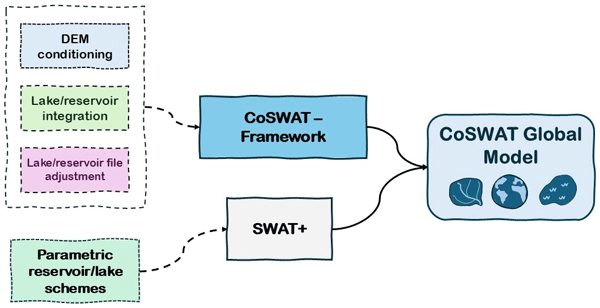
Global water models help us understand how human activities and climate change affect water resources. One of them is the CoSWAT Global Model. In this study we enhanced this model by adding a better representations of lakes, reservoirs, and irrigation demand. Evaluation shows these changes improve river flow simulation and enable explicit assessment of lake and reservoir water balances, producing a more robust tool for global freshwater studies.
Mehrdad Mohannazadeh Bakhtiari, Ehsan Modiri, Viet Dung Nguyen, Oldrich Rakovec, Luis Eduardo Samaniego Eguiguren, and Husain Najafi
EGUsphere, https://doi.org/10.5194/egusphere-2026-1316, https://doi.org/10.5194/egusphere-2026-1316, 2026
Short summary
Short summary
We investigated how weather station data can be used to create detailed hourly maps of rainfall and temperature needed for flood forecasting. Several interpolation methods were tested across Germany and compared with reference data. The results show that simple methods often work as well as more complex ones for rainfall, while temperature benefits from more advanced approaches. The study helps improve real-time flood forecasting by showing which methods are reliable in practice.
Katja Frieler, Stefan Lange, Jacob Schewe, Matthias Mengel, Simon Treu, Christian Otto, Jan Volkholz, Christopher P. O. Reyer, Stefanie Heinicke, Colin Jones, Julia L. Blanchard, Cheryl S. Harrison, Colleen M. Petrik, Tyler D. Eddy, Kelly Ortega-Cisneros, Camilla Novaglio, Ryan Heneghan, Derek P. Tittensor, Olivier Maury, Matthias Büchner, Thomas Vogt, Dánnell Quesada-Chacón, Kerry Emanuel, Chia-Ying Lee, Suzana J. Camargo, Linn Hamester, Jonas Jägermeyr, Sam Rabin, Jochen Klar, Iliusi D. Vega del Valle, Lisa Novak, Inga J. Sauer, Gitta Lasslop, Sarah Chadburn, Eleanor Burke, Angela Gallego-Sala, Noah Smith, Jinfeng Chang, Stijn Hantson, Chantelle Burton, Anne Gädeke, Fang Li, Simon N. Gosling, Hannes Müller Schmied, Fred Hattermann, Thomas Hickler, Rafael Marcé, Don Pierson, Wim Thiery, Daniel Mercado-Bettín, Robert Ladwig, Ana Isabel Ayala, Matthew Forrest, Michel Bechtold, Robert Reinecke, Inge de Graaf, Jed O. Kaplan, Alexander Koch, Matthieu Lengaigne, Rohini Kumar, and Maryna Strokal
Geosci. Model Dev., 19, 4095–4135, https://doi.org/10.5194/gmd-19-4095-2026, https://doi.org/10.5194/gmd-19-4095-2026, 2026
Short summary
Short summary
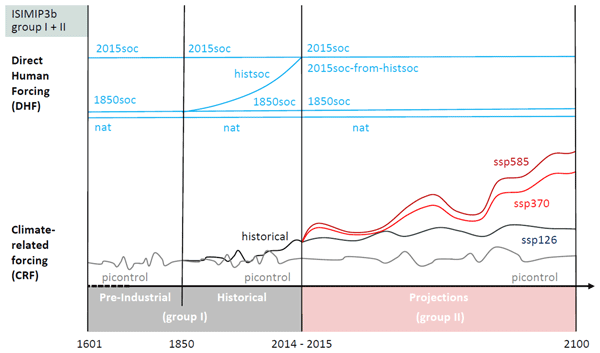
This paper describes the experiments and data sets necessary to run historic and future impact projections, and the underlying assumptions of future climate change as defined by the 3rd round of the ISIMIP Project (Inter-sectoral Impactmodel Intercomparison Project, isimip.org). ISIMIP provides a framework for cross-sectorally consistent climate impact simulations to contribute to a comprehensive and consistent picture of the world under different climate-change scenarios.
Malve Heinz, Annelie Holzkämper, Rohini Kumar, Sélène Ledain, Pascal Horton, and Bettina Schaefli
Hydrol. Earth Syst. Sci., 30, 2879–2911, https://doi.org/10.5194/hess-30-2879-2026, https://doi.org/10.5194/hess-30-2879-2026, 2026
Short summary
Short summary
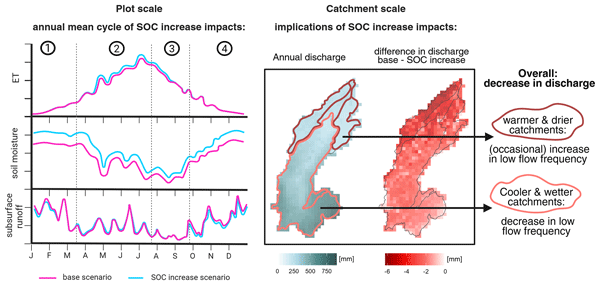
Droughts increasingly threaten agriculture. Improving soils to store more water, for example by increasing soil organic carbon, can help. We simulated this in a Swiss catchment and found that more soil carbon slightly increased soil water storage and evapotranspiration, modestly reduced floods, and shortened periods with very little streamflow. However in warmer, drier areas, these periods with little streamflow could sometimes last longer.
Ehsan Modiri, Oldrich Rakovec, Pallav Kumar Shrestha, Almudena García-García, Leandro Avila, Katie Blackford, Elizabeth Cooper, Bram Droppers, Paolo Filippucci, Milan Fischer, Matěj Orság, Pietro Stradiotti, Luca Brocca, Douglas B. Clark, Wouter Dorigo, Stefan Kollet, Jian Peng, Niko Wanders, and Luis Samaniego
EGUsphere, https://doi.org/10.5194/egusphere-2026-1012, https://doi.org/10.5194/egusphere-2026-1012, 2026
Short summary
Short summary
Drought impacts water supply, agriculture, and ecosystems, yet hydrological models often disagree on when and where drought occurs. This study tested whether satellite observations can improve how models represent soil moisture drought in the Rhine River basin. Using several models and major drought events, we show that satellite data improve spatial realism and reveal important differences among models, helping to better understand uncertainty in drought monitoring and early warning.
Sadaf Nasreen, Oldrich Rakovec, Rohini Kumar, Manuela I. Brunner, Ujjwal Singh, Petr Maca, Yannis Markonis, and Martin Hanel
EGUsphere, https://doi.org/10.5194/egusphere-2026-973, https://doi.org/10.5194/egusphere-2026-973, 2026
Short summary
Short summary
European droughts threaten water and agriculture, but how distinct drought processes will change under warming is uncertain. We examine seven mechanisms across Europe using 1971 to 2000 observations and 2070 to 2099 projections. Changes are regional: the Mediterranean shifts to longer, more severe droughts, while Northern and Western Central Europe often improve. Temperature-driven mechanisms, especially rain to snow transitions, respond most, guiding targeted adaptation.
Pia Ebeling, Alexander Hubig, Alexander Wachholz, Ulrike Scharfenberger, Sarah Haug, Tam Nguyen, Fanny Sarrazin, Masooma Batool, Andreas Musolff, and Rohini Kumar
Earth Syst. Sci. Data, 18, 691–712, https://doi.org/10.5194/essd-18-691-2026, https://doi.org/10.5194/essd-18-691-2026, 2026
Short summary
Short summary
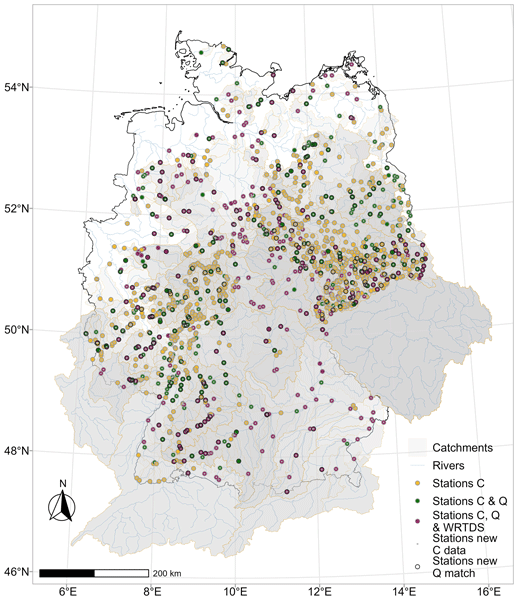
The updated river water quality data set for Germany offers longer records, new variables such as water temperature and oxygen, and time series of pollution sources, and it adds more stations with both water quality and flow data. These improvements provide clearer insights into how stream water quality changes over time and how human activities affect aquatic ecosystems.
Robert Reinecke, Tanjila Akhter, Annemarie Bäthge, Ricarda Dietrich, Sebastian Gnann, Simon N. Gosling, Danielle Grogan, Andreas Hartmann, Stefan Kollet, Rohini Kumar, Richard Lammers, Sida Liu, Yan Liu, Nils Moosdorf, Bibi Naz, Sara Nazari, Chibuike Orazulike, Yadu Pokhrel, Jacob Schewe, Mikhail Smilovic, Maryna Strokal, Wim Thiery, Yoshihide Wada, Shan Zuidema, and Inge de Graaf
Geosci. Model Dev., 19, 523–542, https://doi.org/10.5194/gmd-19-523-2026, https://doi.org/10.5194/gmd-19-523-2026, 2026
Short summary
Short summary
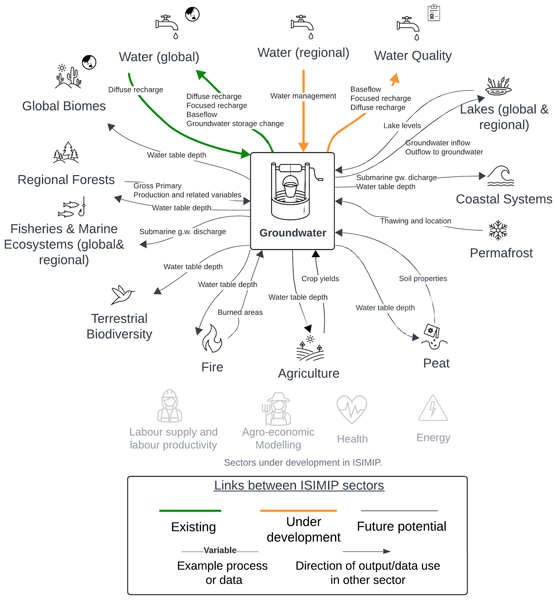
Here we describe a collaborative effort to improve predictions of how climate change will affect groundwater. The ISIMIP (The Inter-Sectoral Impact Model Intercomparison Project) groundwater sector combines multiple global groundwater models to capture a range of possible outcomes and reduce uncertainty. Initial comparisons reveal significant differences between models in key metrics like water table depth and recharge rates, highlighting the need for structured model intercomparisons.
Celray James Chawanda, Ann van Griensven, Albert Nkwasa, Jose Pablo Teran Orsini, Jaehak Jeong, Soon-Kun Choi, Raghavan Srinivasan, and Jeffrey G. Arnold
Hydrol. Earth Syst. Sci., 29, 6901–6916, https://doi.org/10.5194/hess-29-6901-2025, https://doi.org/10.5194/hess-29-6901-2025, 2025
Short summary
Short summary
Water resources face more challenges from climate change and human activities. We improved global water modeling by developing a high-resolution system using Soil and Water Assessment Tool (SWAT+), using automated reproducible workflow. This approach simplifies tracking the progress of global impact assessment modelling efforts. The global model will further help assess water stress hot-spots and inform sustainable water management as further improvements come.
Vishal Thakur, Yannis Markonis, Rohini Kumar, Johanna Ruth Thomson, Mijael Rodrigo Vargas Godoy, Martin Hanel, and Oldrich Rakovec
Hydrol. Earth Syst. Sci., 29, 4395–4416, https://doi.org/10.5194/hess-29-4395-2025, https://doi.org/10.5194/hess-29-4395-2025, 2025
Short summary
Short summary
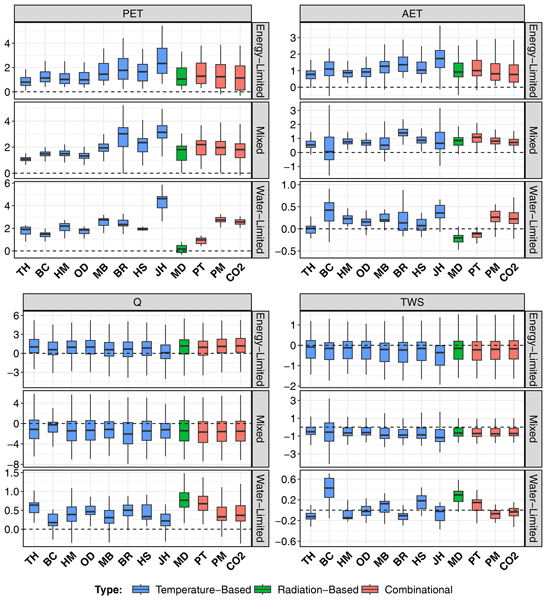
Understanding the changes in water movement in earth is crucial for everyone. To quantify this water movement there are several techniques. We examined how different methods of estimating evaporation impact predictions of various types of water movement across Europe. We found that, while these methods generally agree on whether changes are increasing or decreasing, they differ in magnitude. This means selecting the right evaporation method is crucial for accurate predictions of water movement.
Jan Řehoř, Rudolf Brázdil, Oldřich Rakovec, Martin Hanel, Milan Fischer, Rohini Kumar, Jan Balek, Markéta Poděbradská, Vojtěch Moravec, Luis Samaniego, Yannis Markonis, and Miroslav Trnka
Hydrol. Earth Syst. Sci., 29, 3341–3358, https://doi.org/10.5194/hess-29-3341-2025, https://doi.org/10.5194/hess-29-3341-2025, 2025
Short summary
Short summary
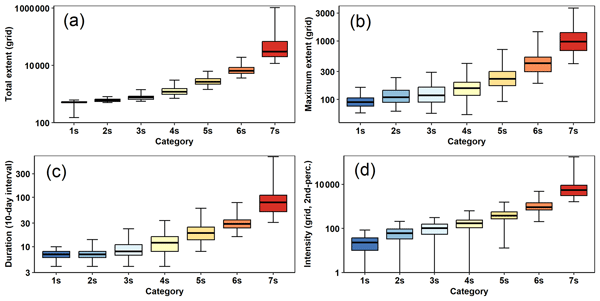
We present a robust method for identification and classification of global land drought events (GLDEs) based on soil moisture. Two models were used to calculate soil moisture and delimit soil drought over global land from 1980–2022, with clusters of 775 and 630 GLDEs. Using four spatiotemporal and three motion-related characteristics, we categorized GLDEs into seven severity and seven dynamic categories. The frequency of GLDEs has generally increased in recent decades.
Pia Ebeling, Andreas Musolff, Rohini Kumar, Andreas Hartmann, and Jan H. Fleckenstein
Hydrol. Earth Syst. Sci., 29, 2925–2950, https://doi.org/10.5194/hess-29-2925-2025, https://doi.org/10.5194/hess-29-2925-2025, 2025
Short summary
Short summary
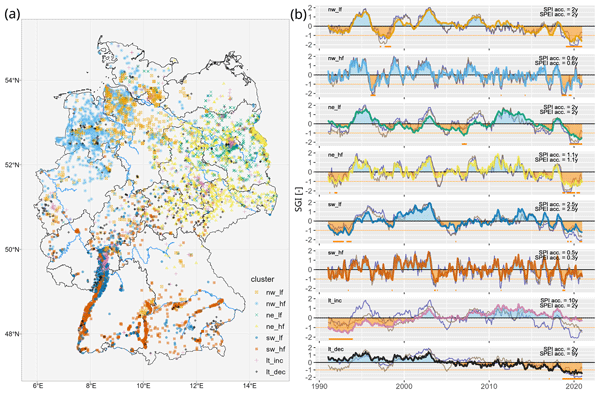
Groundwater is a crucial resource at risk due to droughts. To understand drought effects on groundwater levels in Germany, we grouped 6626 wells into six regional and two national patterns. Weather explained half of the level variations with varied response times. Shallow groundwater responds fast and is more vulnerable to short droughts (a few months). Dampened deep heads buffer short droughts but suffer from long droughts and recoveries. Two nationwide trend patterns were linked to human water use.
Sergiy Vorogushyn, Li Han, Heiko Apel, Viet Dung Nguyen, Björn Guse, Xiaoxiang Guan, Oldrich Rakovec, Husain Najafi, Luis Samaniego, and Bruno Merz
Nat. Hazards Earth Syst. Sci., 25, 2007–2029, https://doi.org/10.5194/nhess-25-2007-2025, https://doi.org/10.5194/nhess-25-2007-2025, 2025
Short summary
Short summary
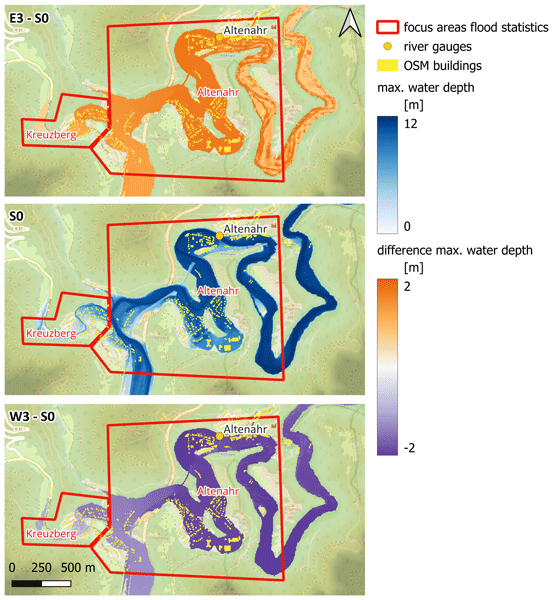
The July 2021 flood in central Europe was one of the deadliest floods in Europe in the recent decades and the most expensive flood in Germany. In this paper, we show that the hydrological impact of this event in the Ahr valley could have been even worse if the rainfall footprint trajectory had been only slightly different. The presented methodology of spatial counterfactuals generates plausible unprecedented events and helps to better prepare for future extreme floods.
Hannes Müller Schmied, Simon Newland Gosling, Marlo Garnsworthy, Laura Müller, Camelia-Eliza Telteu, Atiq Kainan Ahmed, Lauren Seaby Andersen, Julien Boulange, Peter Burek, Jinfeng Chang, He Chen, Lukas Gudmundsson, Manolis Grillakis, Luca Guillaumot, Naota Hanasaki, Aristeidis Koutroulis, Rohini Kumar, Guoyong Leng, Junguo Liu, Xingcai Liu, Inga Menke, Vimal Mishra, Yadu Pokhrel, Oldrich Rakovec, Luis Samaniego, Yusuke Satoh, Harsh Lovekumar Shah, Mikhail Smilovic, Tobias Stacke, Edwin Sutanudjaja, Wim Thiery, Athanasios Tsilimigkras, Yoshihide Wada, Niko Wanders, and Tokuta Yokohata
Geosci. Model Dev., 18, 2409–2425, https://doi.org/10.5194/gmd-18-2409-2025, https://doi.org/10.5194/gmd-18-2409-2025, 2025
Short summary
Short summary
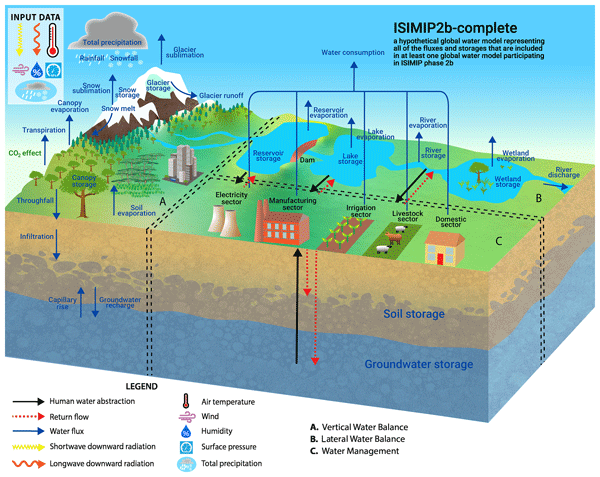
Global water models contribute to the evaluation of important natural and societal issues but are – as all models – simplified representation of reality. So, there are many ways to calculate the water fluxes and storages. This paper presents a visualization of 16 global water models using a standardized visualization and the pathway towards this common understanding. Next to academic education purposes, we envisage that these diagrams will help researchers, model developers, and data users.
Masooma Batool, Fanny J. Sarrazin, and Rohini Kumar
Earth Syst. Sci. Data, 17, 881–916, https://doi.org/10.5194/essd-17-881-2025, https://doi.org/10.5194/essd-17-881-2025, 2025
Short summary
Short summary
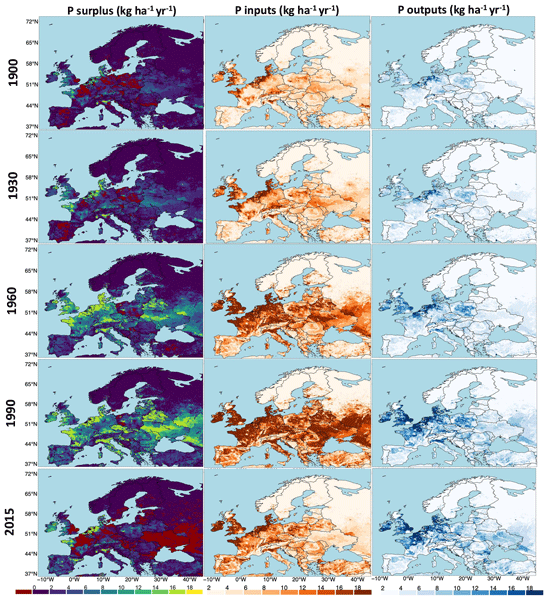
Our paper presents a reconstruction and analysis of the gridded P surplus in European landscapes from 1850 to 2019 at a 5 arcmin resolution. By utilizing 48 different estimates, we account for uncertainties in major components of the P surplus. Our findings highlight substantial historical changes, with the total P surplus in the EU 27 tripling over 170 years. Our dataset enables flexible aggregation at various spatial scales, providing critical insights for land and water management strategies.
Albert Nkwasa, Celray James Chawanda, Maria Theresa Nakkazi, and Ann van Griensven
EGUsphere, https://doi.org/10.5194/egusphere-2025-703, https://doi.org/10.5194/egusphere-2025-703, 2025
Preprint archived
Short summary
Short summary
Limited monitoring data make it difficult to assess human impacts on freshwater quality, especially in low-income regions. To address this, we developed a global water quality model that simulates river nutrient loads (Total Nitrogen and Total Phosphorus). The model provides high-resolution insights into freshwater pollution, supporting ecological risk assessments and policy decisions. While some uncertainties remain, this model offers a crucial tool for addressing global water quality.
Eshrat Fatima, Rohini Kumar, Sabine Attinger, Maren Kaluza, Oldrich Rakovec, Corinna Rebmann, Rafael Rosolem, Sascha E. Oswald, Luis Samaniego, Steffen Zacharias, and Martin Schrön
Hydrol. Earth Syst. Sci., 28, 5419–5441, https://doi.org/10.5194/hess-28-5419-2024, https://doi.org/10.5194/hess-28-5419-2024, 2024
Short summary
Short summary
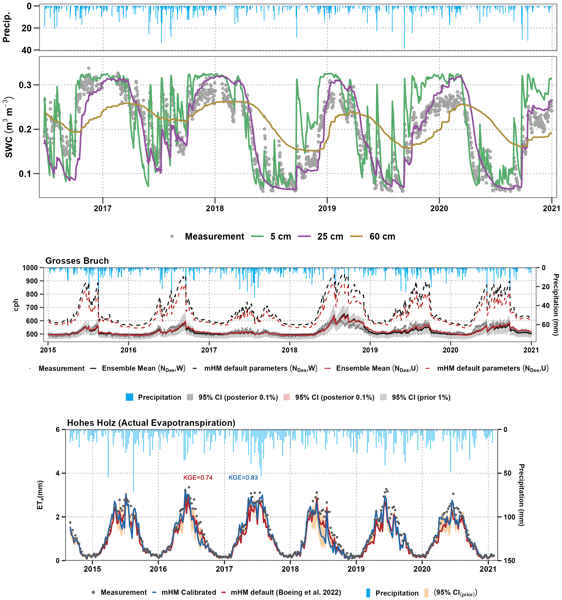
This study establishes a framework to incorporate cosmic-ray neutron measurements into the mesoscale Hydrological Model (mHM). We evaluate different approaches to estimate neutron counts within the mHM using the Desilets equation, with uniformly and non-uniformly weighted average soil moisture, and the physically based code COSMIC. The data improved not only soil moisture simulations but also the parameterisation of evapotranspiration in the model.
Fanny J. Sarrazin, Sabine Attinger, and Rohini Kumar
Earth Syst. Sci. Data, 16, 4673–4708, https://doi.org/10.5194/essd-16-4673-2024, https://doi.org/10.5194/essd-16-4673-2024, 2024
Short summary
Short summary
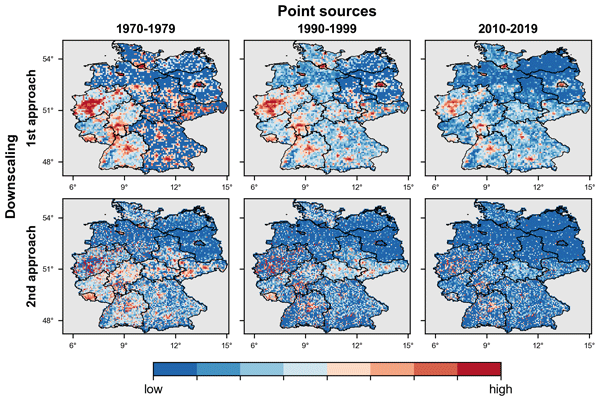
Nitrogen (N) and phosphorus (P) contamination of water bodies is a long-term issue due to the long history of N and P inputs to the environment and their persistence. Here, we introduce a long-term and high-resolution dataset of N and P inputs from wastewater (point sources) for Germany, combining data from different sources and conceptual understanding. We also account for uncertainties in modelling choices, thus facilitating robust long-term and large-scale water quality studies.
Beijing Fang, Emanuele Bevacqua, Oldrich Rakovec, and Jakob Zscheischler
Hydrol. Earth Syst. Sci., 28, 3755–3775, https://doi.org/10.5194/hess-28-3755-2024, https://doi.org/10.5194/hess-28-3755-2024, 2024
Short summary
Short summary
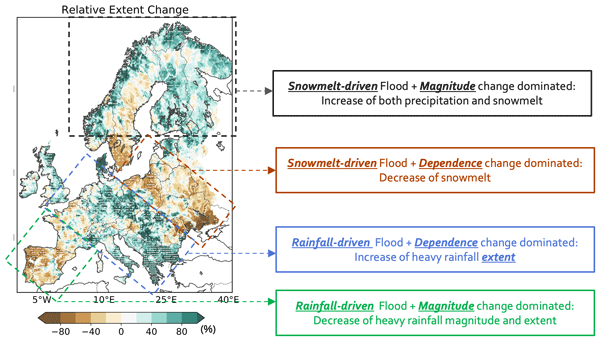
We use grid-based runoff from a hydrological model to identify large spatiotemporally connected flood events in Europe, assess extent trends over the last 70 years, and attribute the trends to different drivers. Our findings reveal a general increase in flood extent, with regional variations driven by diverse factors. The study not only enables a thorough examination of flood events across multiple basins but also highlights the potential challenges arising from changing flood extents.
Kingsley Nnaemeka Ogbu, Oldrich Rakovec, Luis Samaniego, Gloria Chinwendu Okafor, Bernhard Tischbein, and Hadush Meresa
Proc. IAHS, 385, 211–218, https://doi.org/10.5194/piahs-385-211-2024, https://doi.org/10.5194/piahs-385-211-2024, 2024
Short summary
Short summary
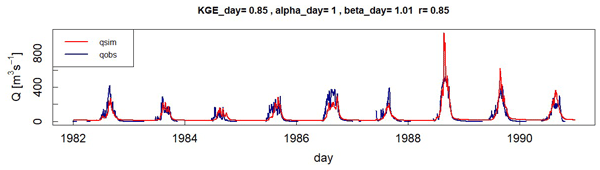
In this study, the MPR-mHM technique was applied in four data-scarce basins in Nigeria. Remotely sensed rainfall datasets were used as model forcings to evaluate the mHM capability in reproducing observed stream discharge under single and multivariable model calibration frameworks. Overall, model calibration performances displayed satisfactory outputs as evident in the Kling-Gupta Efficiency (KGE) scores across most basins.
Celray James Chawanda, Albert Nkwasa, Wim Thiery, and Ann van Griensven
Hydrol. Earth Syst. Sci., 28, 117–138, https://doi.org/10.5194/hess-28-117-2024, https://doi.org/10.5194/hess-28-117-2024, 2024
Short summary
Short summary
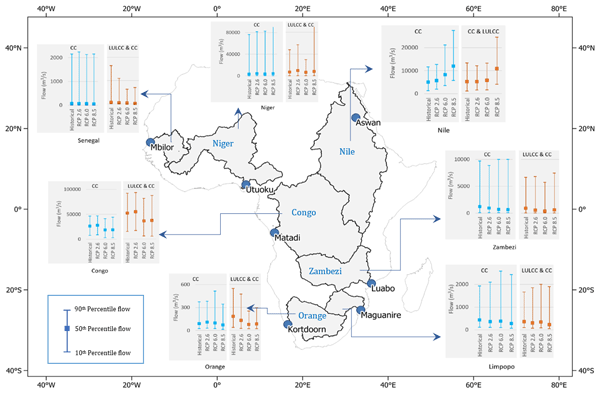
Africa's water resources are being negatively impacted by climate change and land-use change. The SWAT+ hydrological model was used to simulate the hydrological cycle in Africa, and results show likely decreases in river flows in the Zambezi and Congo rivers and highest flows in the Niger River basins due to climate change. Land cover change had the biggest impact in the Congo River basin, emphasizing the importance of including land-use change in studies.
Mijael Rodrigo Vargas Godoy, Yannis Markonis, Oldrich Rakovec, Michal Jenicek, Riya Dutta, Rajani Kumar Pradhan, Zuzana Bešťáková, Jan Kyselý, Roman Juras, Simon Michael Papalexiou, and Martin Hanel
Hydrol. Earth Syst. Sci., 28, 1–19, https://doi.org/10.5194/hess-28-1-2024, https://doi.org/10.5194/hess-28-1-2024, 2024
Short summary
Short summary
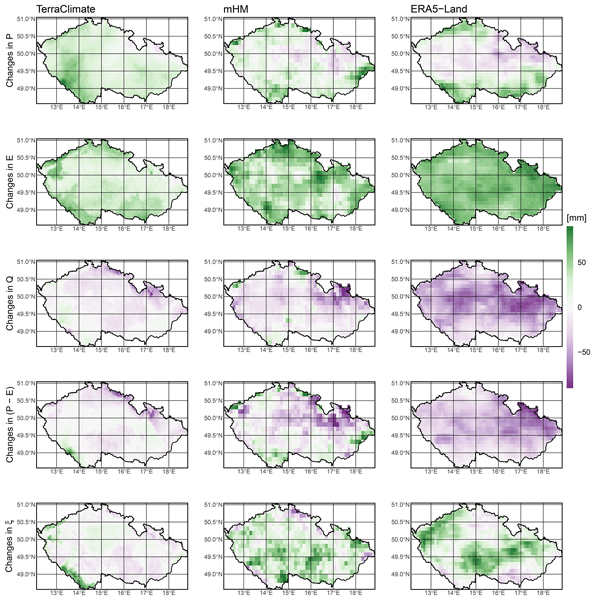
The study introduces a novel benchmarking method based on the water cycle budget for hydroclimate data fusion. Using this method and multiple state-of-the-art datasets to assess the spatiotemporal patterns of water cycle changes in Czechia, we found that differences in water availability distribution are dominated by evapotranspiration. Furthermore, while the most significant temporal changes in Czechia occur during spring, the median spatial patterns stem from summer changes in the water cycle.
Arianna Borriero, Rohini Kumar, Tam V. Nguyen, Jan H. Fleckenstein, and Stefanie R. Lutz
Hydrol. Earth Syst. Sci., 27, 2989–3004, https://doi.org/10.5194/hess-27-2989-2023, https://doi.org/10.5194/hess-27-2989-2023, 2023
Short summary
Short summary
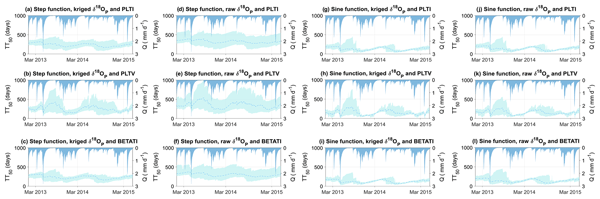
We analyzed the uncertainty of the water transit time distribution (TTD) arising from model input (interpolated tracer data) and structure (StorAge Selection, SAS, functions). We found that uncertainty was mainly associated with temporal interpolation, choice of SAS function, nonspatial interpolation, and low-flow conditions. It is important to characterize the specific uncertainty sources and their combined effects on TTD, as this has relevant implications for both water quantity and quality.
Carolin Winter, Tam V. Nguyen, Andreas Musolff, Stefanie R. Lutz, Michael Rode, Rohini Kumar, and Jan H. Fleckenstein
Hydrol. Earth Syst. Sci., 27, 303–318, https://doi.org/10.5194/hess-27-303-2023, https://doi.org/10.5194/hess-27-303-2023, 2023
Short summary
Short summary
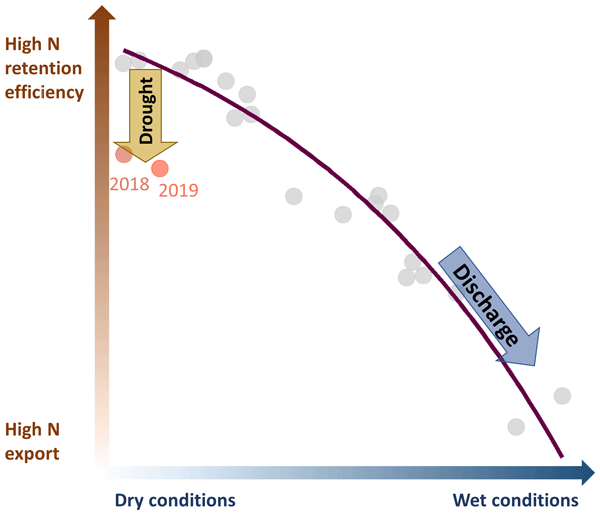
The increasing frequency of severe and prolonged droughts threatens our freshwater resources. While we understand drought impacts on water quantity, its effects on water quality remain largely unknown. Here, we studied the impact of the unprecedented 2018–2019 drought in Central Europe on nitrate export in a heterogeneous mesoscale catchment in Germany. We show that severe drought can reduce a catchment's capacity to retain nitrogen, intensifying the internal pollution and export of nitrate.
Friedrich Boeing, Oldrich Rakovec, Rohini Kumar, Luis Samaniego, Martin Schrön, Anke Hildebrandt, Corinna Rebmann, Stephan Thober, Sebastian Müller, Steffen Zacharias, Heye Bogena, Katrin Schneider, Ralf Kiese, Sabine Attinger, and Andreas Marx
Hydrol. Earth Syst. Sci., 26, 5137–5161, https://doi.org/10.5194/hess-26-5137-2022, https://doi.org/10.5194/hess-26-5137-2022, 2022
Short summary
Short summary
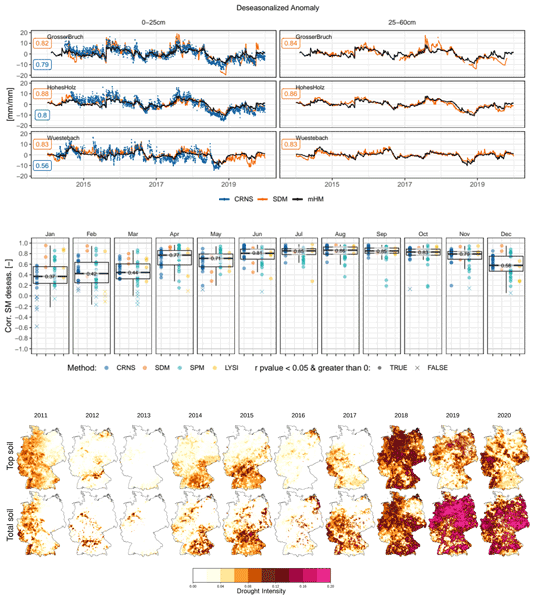
In this paper, we deliver an evaluation of the second generation operational German drought monitor (https://www.ufz.de/duerremonitor) with a state-of-the-art compilation of observed soil moisture data from 40 locations and four different measurement methods in Germany. We show that the expressed stakeholder needs for higher resolution drought information at the one-kilometer scale can be met and that the agreement of simulated and observed soil moisture dynamics can be moderately improved.
Bahar Bahrami, Anke Hildebrandt, Stephan Thober, Corinna Rebmann, Rico Fischer, Luis Samaniego, Oldrich Rakovec, and Rohini Kumar
Geosci. Model Dev., 15, 6957–6984, https://doi.org/10.5194/gmd-15-6957-2022, https://doi.org/10.5194/gmd-15-6957-2022, 2022
Short summary
Short summary
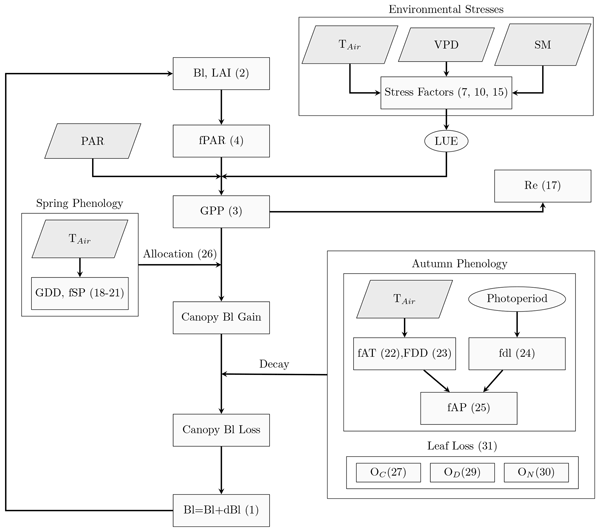
Leaf area index (LAI) and gross primary productivity (GPP) are crucial components to carbon cycle, and are closely linked to water cycle in many ways. We develop a Parsimonious Canopy Model (PCM) to simulate GPP and LAI at stand scale, and show its applicability over a diverse range of deciduous broad-leaved forest biomes. With its modular structure, the PCM is able to adapt with existing data requirements, and run in either a stand-alone mode or as an interface linked to hydrologic models.
Sadaf Nasreen, Markéta Součková, Mijael Rodrigo Vargas Godoy, Ujjwal Singh, Yannis Markonis, Rohini Kumar, Oldrich Rakovec, and Martin Hanel
Earth Syst. Sci. Data, 14, 4035–4056, https://doi.org/10.5194/essd-14-4035-2022, https://doi.org/10.5194/essd-14-4035-2022, 2022
Short summary
Short summary
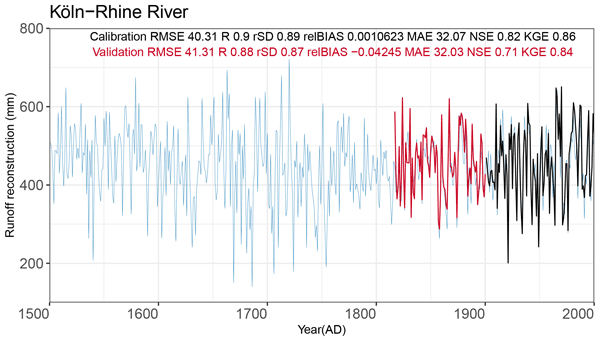
This article presents a 500-year reconstructed annual runoff dataset for several European catchments. Several data-driven and hydrological models were used to derive the runoff series using reconstructed precipitation and temperature and a set of proxy data. The simulated runoff was validated using independent observed runoff data and documentary evidence. The validation revealed a good fit between the observed and reconstructed series for 14 catchments, which are available for further analysis.
Anna Msigwa, Celray James Chawanda, Hans C. Komakech, Albert Nkwasa, and Ann van Griensven
Hydrol. Earth Syst. Sci., 26, 4447–4468, https://doi.org/10.5194/hess-26-4447-2022, https://doi.org/10.5194/hess-26-4447-2022, 2022
Short summary
Short summary
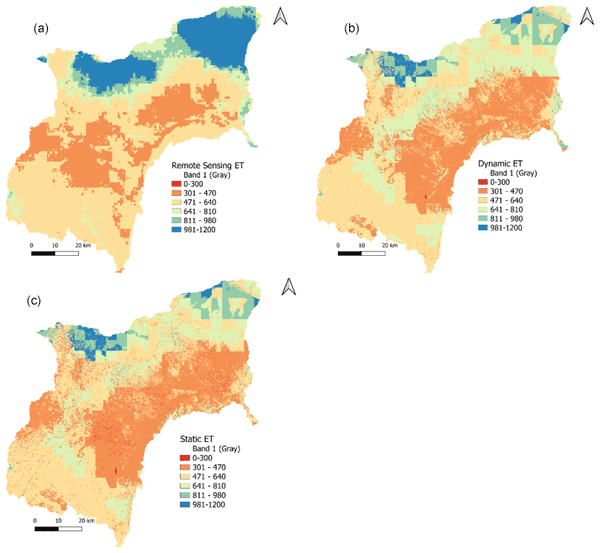
Studies using agro-hydrological models, like the Soil and Water Assessment Tool (SWAT), to map evapotranspiration (ET) do not account for cropping seasons. A comparison between the default SWAT+ set-up (with static land use representation) and a dynamic SWAT+ model set-up (with seasonal land use representation) is made by spatial mapping of the ET. The results show that ET with seasonal representation is closer to remote sensing estimates, giving better performance than ET with static land use.
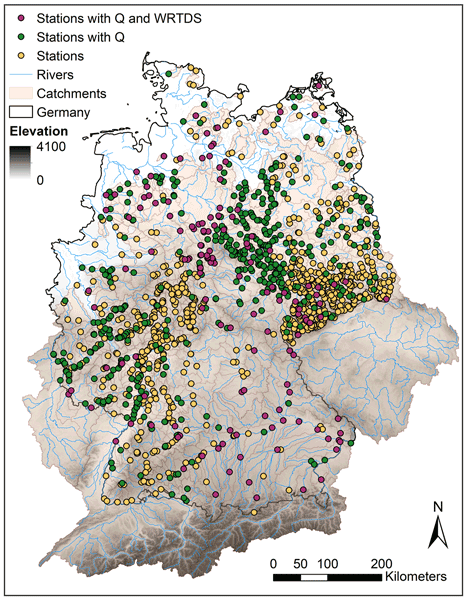
Pia Ebeling, Rohini Kumar, Stefanie R. Lutz, Tam Nguyen, Fanny Sarrazin, Michael Weber, Olaf Büttner, Sabine Attinger, and Andreas Musolff
Earth Syst. Sci. Data, 14, 3715–3741, https://doi.org/10.5194/essd-14-3715-2022, https://doi.org/10.5194/essd-14-3715-2022, 2022
Short summary
Short summary
Environmental data are critical for understanding and managing ecosystems, including the mitigation of water quality degradation. To increase data availability, we present the first large-sample water quality data set (QUADICA) of riverine macronutrient concentrations combined with water quantity, meteorological, and nutrient forcing data as well as catchment attributes. QUADICA covers 1386 German catchments to facilitate large-sample data-driven and modeling water quality assessments.

Inne Vanderkelen, Shervan Gharari, Naoki Mizukami, Martyn P. Clark, David M. Lawrence, Sean Swenson, Yadu Pokhrel, Naota Hanasaki, Ann van Griensven, and Wim Thiery
Geosci. Model Dev., 15, 4163–4192, https://doi.org/10.5194/gmd-15-4163-2022, https://doi.org/10.5194/gmd-15-4163-2022, 2022
Short summary
Short summary
Human-controlled reservoirs have a large influence on the global water cycle. However, dam operations are rarely represented in Earth system models. We implement and evaluate a widely used reservoir parametrization in a global river-routing model. Using observations of individual reservoirs, the reservoir scheme outperforms the natural lake scheme. However, both schemes show a similar performance due to biases in runoff timing and magnitude when using simulated runoff.
Estifanos Addisu Yimer, Ryan T. Bailey, Lise Leda Piepers, Jiri Nossent, and Ann van Griensven
Hydrol. Earth Syst. Sci. Discuss., https://doi.org/10.5194/hess-2022-169, https://doi.org/10.5194/hess-2022-169, 2022
Manuscript not accepted for further review
Short summary
Short summary
A recently developed groundwater module (gwflow) coupled with the soil water assessment tool (SWAT+) is used to simulate the streamflow of the Dijle catchment, Belgium. The standalone model (SWAT+) resulted in unsatisfactory streamflow simulations while SWAT+gwflow produced streamflow that considerably mimics the measured river discharge. Furthermore, modifications to the gwflow module are made to account for the vital hydrological process (groundwater-soil profile interactions).
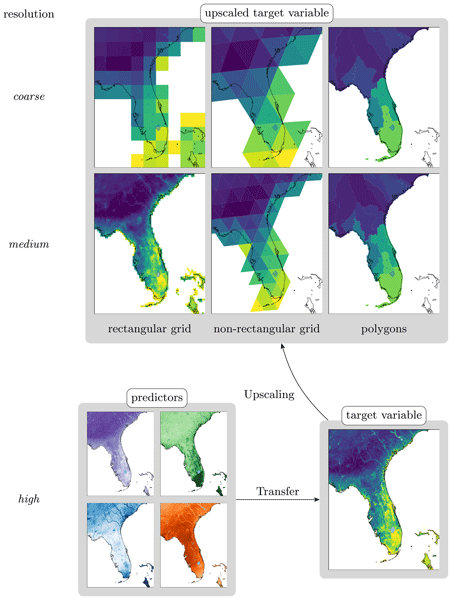
Robert Schweppe, Stephan Thober, Sebastian Müller, Matthias Kelbling, Rohini Kumar, Sabine Attinger, and Luis Samaniego
Geosci. Model Dev., 15, 859–882, https://doi.org/10.5194/gmd-15-859-2022, https://doi.org/10.5194/gmd-15-859-2022, 2022
Short summary
Short summary
The recently released multiscale parameter regionalization (MPR) tool enables
environmental modelers to efficiently use extensive datasets for model setups.
It flexibly ingests the datasets using user-defined data–parameter relationships
and rescales parameter fields to given model resolutions. Modern
land surface models especially benefit from MPR through increased transparency and
flexibility in modeling decisions. Thus, MPR empowers more sound and robust
simulations of the Earth system.
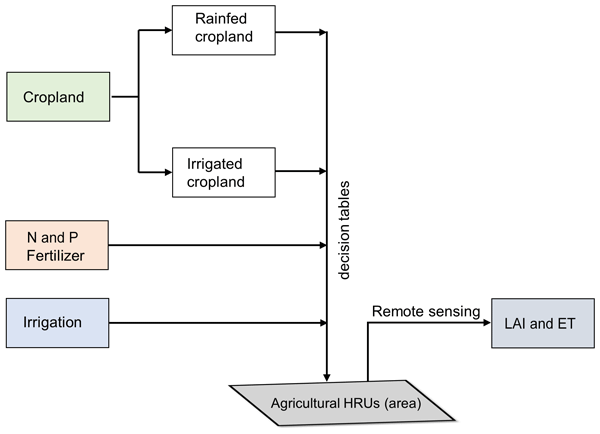
Albert Nkwasa, Celray James Chawanda, Jonas Jägermeyr, and Ann van Griensven
Hydrol. Earth Syst. Sci., 26, 71–89, https://doi.org/10.5194/hess-26-71-2022, https://doi.org/10.5194/hess-26-71-2022, 2022
Short summary
Short summary
We present an approach on how to incorporate crop phenology in a regional hydrological model using decision tables and global datasets of rainfed and irrigated cropland with the associated cropping calendar and management practices. Results indicate improved temporal patterns of leaf area index (LAI) and evapotranspiration (ET) simulations in comparison with remote sensing data. In addition, the improvement of the cropping season also helps to improve soil erosion estimates in cultivated areas.
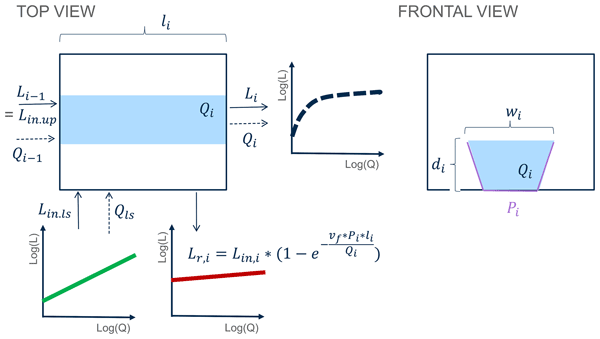
Joni Dehaspe, Fanny Sarrazin, Rohini Kumar, Jan H. Fleckenstein, and Andreas Musolff
Hydrol. Earth Syst. Sci., 25, 6437–6463, https://doi.org/10.5194/hess-25-6437-2021, https://doi.org/10.5194/hess-25-6437-2021, 2021
Short summary
Short summary
Increased nitrate concentrations in surface waters can compromise river ecosystem health. As riverine nitrate uptake is hard to measure, we explore how low-frequency nitrate concentration and discharge observations (that are widely available) can help to identify (in)efficient uptake in river networks. We find that channel geometry and water velocity rather than the biological uptake capacity dominate the nitrate-discharge pattern at the outlet. The former can be used to predict uptake.
Alemu Yenehun, Mekete Dessie, Fenta Nigate, Ashebir Sewale Belay, Mulugeta Azeze, Marc Van Camp, Derbew Fenetie Taye, Desale Kidane, Enyew Adgo, Jan Nyssen, Ann van Griensven, and Kristine Walraevens
Hydrol. Earth Syst. Sci. Discuss., https://doi.org/10.5194/hess-2021-527, https://doi.org/10.5194/hess-2021-527, 2021
Manuscript not accepted for further review
Short summary
Short summary
Population growth, industrial expansion, and climate change are causing stress on the limited freshwater resources of the globe. Groundwater is one of the important freshwater resources. Hence, managing these limited resources is a key task for the sector experts. To do so, understanding recharge processes and its quantification is vital. In this study, three different methods using measured data are applied to estimate recharge and identify the controlling factors.
Cited articles
Banjara, P., Shrestha, P. K., Pandey, V. P., Sah, M., and Panday, P.: Quantifying agricultural drought in the Koshi River basin through soil moisture simulation, J. Hydrol. Reg. Stud., 57, 102132, https://doi.org/10.1016/j.ejrh.2024.102132, 2025. a
Beck, H. E., McVicar, T. R., Vergopolan, N., Berg, A., Lutsko, N. J., Dufour, A., Zeng, Z., Jiang, X., Van Dijk, A. I. J. M., and Miralles, D. G.: High-resolution (1 km) Köppen-Geiger maps for 1901–2099 based on constrained CMIP6 projections, Sci. Data, 10, 724, https://doi.org/10.1038/s41597-023-02549-6, 2023. a
Beckers, V., Beckers, J., Vanmaercke, M., Van Hecke, E., Van Rompaey, A., and Dendoncker, N.: Modelling Farm Growth and Its Impact on Agricultural Land Use: A Country Scale Application of an Agent-Based Model, Land, 7, 109, https://doi.org/10.3390/land7030109, 2018. a
Beckers, V., Poelmans, L., Van Rompaey, A., and Dendoncker, N.: The impact of urbanization on agricultural dynamics: a case study in Belgium, J. Land Use Sci., 15, 626–643, https://doi.org/10.1080/1747423X.2020.1769211, 2020. a, b
Boeing, F., Rakovec, O., Kumar, R., Samaniego, L., Schrön, M., Hildebrandt, A., Rebmann, C., Thober, S., Müller, S., Zacharias, S., Bogena, H., Schneider, K., Kiese, R., Attinger, S., and Marx, A.: High-resolution drought simulations and comparison to soil moisture observations in Germany, Hydrol. Earth Syst. Sci., 26, 5137–5161, https://doi.org/10.5194/hess-26-5137-2022, 2022. a
Bogena, H., Montzka, C., Huisman, J., Graf, A., Schmidt, M., Stockinger, M., Von Hebel, C., Hendricks-Franssen, H., Van Der Kruk, J., Tappe, W., Lücke, A., Baatz, R., Bol, R., Groh, J., Pütz, T., Jakobi, J., Kunkel, R., Sorg, J., and Vereecken, H.: The TERENO‐Rur Hydrological Observatory: A Multiscale Multi‐Compartment Research Platform for the Advancement of Hydrological Science, Vadose Zone J., 17, 1–22, https://doi.org/10.2136/vzj2018.03.0055, 2018. a
Bonan, G. B. and Stillwell-Soller, L. M.: Soil water and the persistence of floods and droughts in the Mississippi River Basin, Water Resour. Res., 34, 2693–2701, https://doi.org/10.1029/98WR02073, 1998. a
Brisson, E., Demuzere, M., Kwakernaak, B., and Van Lipzig, N. P. M.: Relations between atmospheric circulation and precipitation in Belgium, Meteorol. Atmos. Phys., 111, 27–39, https://doi.org/10.1007/s00703-010-0103-y, 2011. a
Büntgen, U., Urban, O., Krusic, P. J., Rybníček, M., Kolář, T., Kyncl, T., Ač, A., Koňasová, E., Čáslavský, J., Esper, J., Wagner, S., Saurer, M., Tegel, W., Dobrovolný, P., Cherubini, P., Reinig, F., and Trnka, M.: Recent European drought extremes beyond Common Era background variability, Nat. Geosci., 14, 190–196, https://doi.org/10.1038/s41561-021-00698-0, 2021. a
Cao, S., Li, M., Zhu, Z., Wang, Z., Zha, J., Zhao, W., Duanmu, Z., Chen, J., Zheng, Y., Chen, Y., Myneni, R. B., and Piao, S.: Spatiotemporally consistent global dataset of the GIMMS leaf area index (GIMMS LAI4g) from 1982 to 2020, Earth Syst. Sci. Data, 15, 4877–4899, https://doi.org/10.5194/essd-15-4877-2023, 2023. a
Cornes, R. C., Van Der Schrier, G., Van Den Besselaar, E. J., and Jones, P. D.: An ensemble version of the E-OBS temperature and precipitation data sets, J. Geophys. Res. Atmos., 123, 9391–9409, https://doi.org/10.1029/2017JD028200, 2018. a
De Ridder, K., Coudere, K., Depoorter, M., Liekens, I., Pourria, X., Steinmetz, D., Vanuytrecht, E., Verhaegen, K., and Wouters, H.: Evaluation of the Socio-Economic Impact of Climate Change in Belgium, Summary for policymakers, National Climate Commission, https://climat.be/doc/seclim-be-2020-spm-en.pdf (last access: 16 May 2025), 2020. a, b
De Vlaamse Waterweg nv: Economische schade van droogte voor de binnenvaart in Vlaanderen, Tech. rep., De Vlaamse Waterweg nv, https://www.vlaamsewaterweg.be/sites/default/files/2025-06/Economische%20schade%20van%20droogte%20voor%20de%20binnenvaart%20in%20Vlaanderen.pdf (last access: 18 February 2026), 2022. a
Dembélé, M., Hrachowitz, M., Savenije, H. H. G., Mariéthoz, G., and Schaefli, B.: Improving the Predictive Skill of a Distributed Hydrological Model by Calibration on Spatial Patterns With Multiple Satellite Data Sets, Water Resour. Res., 56, e2019WR026 085, https://doi.org/10.1029/2019WR026085, 2020. a
Demirel, M., Koch, J., Rakovec, O., Kumar, R., Mai, J., Müller, S., Thober, S., Samaniego, L., and Stisen, S.: Tradeoffs between temporal and spatial pattern calibration and their impacts on robustness and transferability of hydrologic model parameters to ungauged basins, Water Resour. Res., 60, https://doi.org/10.1029/2022WR034193, 2024. a
Dirmeyer, P. A., Guo, Z., and Gao, X.: Comparison, validation, and transferability of eight multiyear global soil wetness products, J. Hydrometeorol., 5, 1011–1033, https://doi.org/10.1175/JHM-388.1, 2004. a
Dorigo, W., Xaver, A., Vreugdenhil, M., Gruber, A., Hegyiova, A., Sanchis-Dufau, A. D., Zamojski, D., Cordes, C., Wagner, W., and Drusch, M.: Global automated quality control of in situ soil moisture data from the International Soil Moisture Network, Vadose Zone J., 12, vzj2012–0097, https://doi.org/10.2136/vzj2012.0097, 2013. a
Dorigo, W., Himmelbauer, I., Aberer, D., Schremmer, L., Petrakovic, I., Zappa, L., Preimesberger, W., Xaver, A., Annor, F., Ardö, J., Baldocchi, D., Bitelli, M., Blöschl, G., Bogena, H., Brocca, L., Calvet, J.-C., Camarero, J. J., Capello, G., Choi, M., Cosh, M. C., van de Giesen, N., Hajdu, I., Ikonen, J., Jensen, K. H., Kanniah, K. D., de Kat, I., Kirchengast, G., Kumar Rai, P., Kyrouac, J., Larson, K., Liu, S., Loew, A., Moghaddam, M., Martínez Fernández, J., Mattar Bader, C., Morbidelli, R., Musial, J. P., Osenga, E., Palecki, M. A., Pellarin, T., Petropoulos, G. P., Pfeil, I., Powers, J., Robock, A., Rüdiger, C., Rummel, U., Strobel, M., Su, Z., Sullivan, R., Tagesson, T., Varlagin, A., Vreugdenhil, M., Walker, J., Wen, J., Wenger, F., Wigneron, J. P., Woods, M., Yang, K., Zeng, Y., Zhang, X., Zreda, M., Dietrich, S., Gruber, A., van Oevelen, P., Wagner, W., Scipal, K., Drusch, M., and Sabia, R.: The International Soil Moisture Network: serving Earth system science for over a decade, Hydrol. Earth Syst. Sci., 25, 5749–5804, https://doi.org/10.5194/hess-25-5749-2021, 2021. a
DOV: Databank Ondergrond Vlaanderen: Actuele grondwaterstandindicator, https://www.dov.vlaanderen.be/page/actuele-grondwaterstandindicator (last access: 27 October 2025), 2025. a
Duniway, M. C., Petrie, M. D., Peters, D. P. C., Anderson, J. P., Crossland, K., and Herrick, J. E.: Soil water dynamics at 15 locations distributed across a desert landscape: insights from a 27‐yr dataset, Ecosphere, 9, e02335, https://doi.org/10.1002/ecs2.2335, 2018. a
Erpicum, M., Nouri, M., and Demoulin, A.: The Climate of Belgium and Luxembourg, in: Landscapes and Landforms of Belgium and Luxembourg, edited by: Demoulin, A., Springer International Publishing, Cham, ISBN 978-3-319-58239-9, pp. 35–41, https://doi.org/10.1007/978-3-319-58239-9_3, 2018. a, b
FAO and IIASA: Harmonized world soil database version 2.0, FAO and IIASA, Rome and Laxenburg, https://doi.org/10.4060/cc3823en, 2023. a
Farr, T. G., Rosen, P. A., Caro, E., Crippen, R., Duren, R., Hensley, S., Kobrick, M., Paller, M., Rodriguez, E., Roth, L., Seal, D., Shaffer, S., Shimada, J., Umland, J., Werner, M., Oskin, M., Burbank, D., and Alsdorf, D.: The Shuttle Radar Topography Mission, Rev. Geophys., 45, https://doi.org/10.1029/2005RG000183, 2007. a
Feddes, R.: Simulation of field water use and crop yield, Simulation monographs, Pudoc, Netherlands, 194–209, ISBN 9789022008096, https://edepot.wur.nl/172222 (last access: 16 May 2025), 1982. a
Filipović, V., Weninger, T., Filipović, L., Schwen, A., Bristow, K. L., Zechmeister-Boltenstern, S., and Leitner, S.: Inverse estimation of soil hydraulic properties and water repellency following artificially induced drought stress, J. Hydrol. Hydromech., 66, 170–180, https://doi.org/10.2478/johh-2018-0002, 2018. a
Ford, T. W. and Quiring, S. M.: Comparison of Contemporary In Situ, Model, and Satellite Remote Sensing Soil Moisture With a Focus on Drought Monitoring, Water Resour. Res., 55, 1565–1582, https://doi.org/10.1029/2018WR024039, 2019. a
García-Herrera, R., Garrido-Perez, J. M., Barriopedro, D., Ordóñez, C., Vicente-Serrano, S. M., Nieto, R., Gimeno, L., Sorí, R., and Yiou, P.: The European 2016/17 Drought, J. Clim., 32, 3169–3187, https://doi.org/10.1175/JCLI-D-18-0331.1, 2019. a, b
Gimbel, K. F., Puhlmann, H., and Weiler, M.: Does drought alter hydrological functions in forest soils?, Hydrol. Earth Syst. Sci., 20, 1301–1317, https://doi.org/10.5194/hess-20-1301-2016, 2016. a
Goudenhoofdt, E. and Delobbe, L.: Statistical Characteristics of Convective Storms in Belgium Derived from Volumetric Weather Radar Observations, J. Appl. Meteorol. Climatol., 52, 918–934, https://doi.org/10.1175/JAMC-D-12-079.1, 2013. a
Hargreaves, G. H. and Samani, Z. A.: Reference crop evapotranspiration from temperature, Appl. Eng. Agric., 1, 96–99, https://doi.org/10.13031/2013.26773, 1985. a
Hari, V., Rakovec, O., Markonis, Y., Hanel, M., and Kumar, R.: Increased future occurrences of the exceptional 2018–2019 Central European drought under global warming, Sci. Rep., 10, 12207, https://doi.org/10.1038/s41598-020-68872-9, 2020. a, b, c
Hartmann, J. and Moosdorf, N.: The new global lithological map database GLiM: A representation of rock properties at the Earth surface, Geochem. Geophys. Geosyst., 13, https://doi.org/10.1029/2012GC004370, 2012. a
Ionita, M., Nagavciuc, V., Kumar, R., and Rakovec, O.: On the curious case of the recent decade, mid-spring precipitation deficit in central Europe, npj Clim. Atmos. Sci., 3, 49, https://doi.org/10.1038/s41612-020-00153-8, 2020. a
Jarvis, N.: A simple empirical model of root water uptake, J. Hydrol., 107, 57–72, https://doi.org/10.1016/0022-1694(89)90050-4, 1989. a
Journée, M., Delvaux, C., and Bertrand, C.: Precipitation climate maps of Belgium, Adv. Sci. Res., 12, 73–78, https://doi.org/10.5194/asr-12-73-2015, 2015. a
Koster, R. D., Guo, Z., Yang, R., Dirmeyer, P. A., Mitchell, K., and Puma, M. J.: On the nature of soil moisture in land surface models, J. Clim., 22, 4322–4335, https://doi.org/10.1175/2009JCLI2832.1, 2009. a, b, c, d
Kumar, R., Samaniego, L., and Attinger, S.: Implications of distributed hydrologic model parameterization on water fluxes at multiple scales and locations, Water Resour. Res., 49, 360–379, https://doi.org/10.1029/2012WR012195, 2013. a, b
Kumar, R., Musuuza, J. L., Van Loon, A. F., Teuling, A. J., Barthel, R., Ten Broek, J., Mai, J., Samaniego, L., and Attinger, S.: Multiscale evaluation of the Standardized Precipitation Index as a groundwater drought indicator, Hydrol. Earth Syst. Sci., 20, 1117–1131, https://doi.org/10.5194/hess-20-1117-2016, 2016. a
Kumar, R., Samaniego, L., Thober, S., Rakovec, O., Marx, A., Wanders, N., Pan, M., Hesse, F., and Attinger, S.: Multi‐Model Assessment of Groundwater Recharge Across Europe Under Warming Climate, Earth's Future, 13, e2024EF005 020, https://doi.org/10.1029/2024EF005020, 2025. a
Le sillon Belge: Une indemnisation pour les agriculteurs victimes de la sécheresse 2018, https://www.sillonbelge.be/5310/article/2019-12-18/ une-indemnisation-pour-les-agriculteurs-victimes-de-la-secheresse-2018 (last access: 21 February 2026), 2019. a
Livneh, B., Kumar, R., and Samaniego, L.: Influence of soil textural properties on hydrologic fluxes in the Mississippi river basin, Hydrol. Process., 29, 4638–4655, https://doi.org/10.1002/hyp.10601, 2015. a, b
Meersmans, J., Van Weverberg, K., De Baets, S., De Ridder, F., Palmer, S., Van Wesemael, B., and Quine, T.: Mapping mean total annual precipitation in Belgium, by investigating the scale of topographic control at the regional scale, J. Hydrol., 540, 96–105, https://doi.org/10.1016/j.jhydrol.2016.06.013, 2016. a
Mishra, A. K. and Singh, V. P.: A review of drought concepts, Journal of Hydrology, 391, 202–216, https://doi.org/10.1016/j.jhydrol.2010.07.012, 2010. a, b
Moravec, V., Markonis, Y., Rakovec, O., Kumar, R., and Hanel, M.: A 250‐Year European Drought Inventory Derived From Ensemble Hydrologic Modeling, Geophys. Res. Lett., 46, 5909–5917, https://doi.org/10.1029/2019GL082783, 2019. a
Nicholson, S.: Land surface processes and Sahel climate, Rev. Geophys., 38, 117–139, https://doi.org/10.1029/1999RG900014, 2000. a
Nicolai-Shaw, N., Hirschi, M., Mittelbach, H., and Seneviratne, S. I.: Spatial representativeness of soil moisture using in situ, remote sensing, and land reanalysis data, J. Geophys. Res. Atmos., 120, 9955–9964, https://doi.org/10.1002/2015JD023305, 2015. a
Peng, L., Sheffield, J., Wei, Z., Ek, M., and Wood, E. F.: An enhanced Standardized Precipitation–Evapotranspiration Index (SPEI) drought-monitoring method integrating land surface characteristics, Earth Syst. Dyn., 15, 1277–1300, https://doi.org/10.5194/esd-15-1277-2024, 2024. a
Peng, C., Zeng, J., Chen, K.-S., Ma, H., Letu, H., Zhang, X., Shi, P., and Bi, H.: Spatial Representativeness of Soil Moisture Stations and Its Influential Factors at a Global Scale, IEEE Trans. Geosci. Remote Sens., 63, 1–15, https://doi.org/10.1109/TGRS.2024.3523484, 2025. a
Piézométrie du Service Public de Wallonie: La Piézométrie en Wallonie, https://piezometrie.wallonie.be/home.html (last access: 16 May 2025), 2025. a
Rakovec, O., Mizukami, N., Kumar, R., Newman, A. J., Thober, S., Wood, A. W., Clark, M. P., and Samaniego, L.: Diagnostic Evaluation of Large‐Domain Hydrologic Models Calibrated Across the Contiguous United States, J. Geophys. Res. Atmos., 124, 13991–14007, https://doi.org/10.1029/2019JD030767, 2019. a
Rakovec, O., Samaniego, L., Hari, V., Markonis, Y., Moravec, V., Thober, S., Hanel, M., and Kumar, R.: The 2018–2020 Multi‐Year Drought Sets a New Benchmark in Europe, Earth's Future, 10, e2021EF002394, https://doi.org/10.1029/2021EF002394, 2022. a, b
Řehoř, J., Brázdil, R., Rakovec, O., Hanel, M., Fischer, M., Kumar, R., Balek, J., Poděbradská, M., Moravec, V., Samaniego, L., Markonis, Y., and Trnka, M.: Global catalog of soil moisture droughts over the past four decades, Hydrol. Earth Syst. Sci., 29, 3341–3358, https://doi.org/10.5194/hess-29-3341-2025, 2025. a
Samaniego, L., Kumar, R., and Attinger, S.: Multiscale parameter regionalization of a grid‐based hydrologic model at the mesoscale, Water Resour. Res., 46, 2008WR007 327, https://doi.org/10.1029/2008WR007327, 2010. a, b, c, d
Samaniego, L., Kumar, R., and Jackisch, C.: Predictions in a data-sparse region using a regionalized grid-based hydrologic model driven by remotely sensed data, Hydrol. Res., 42, 338–355, https://doi.org/10.2166/nh.2011.156, 2011. a
Samaniego, L., Thober, S., Kumar, R., Wanders, N., Rakovec, O., Pan, M., Zink, M., Sheffield, J., Wood, E. F., and Marx, A.: Anthropogenic warming exacerbates European soil moisture droughts, Nat. Clim. Change, 8, 421–426, https://doi.org/10.1038/s41558-018-0138-5, 2018. a, b, c, d
Seneviratne, S. I., Lüthi, D., Litschi, M., and Schär, C.: Land–atmosphere coupling and climate change in Europe, Nature, 443, 205–209, https://doi.org/10.1038/nature05095, 2006. a
Sheffield, J., Goteti, G., Wen, F., and Wood, E. F.: A simulated soil moisture based drought analysis for the United States, J. Geophys. Res. Atmos., 109, 2004JD005182, https://doi.org/10.1029/2004JD005182, 2004. a, b
Shen, X., Liu, J., Han, X., Yang, H., Liu, H., and Ni, F.: Modelling Infiltration Based on Source‐Responsive Method for Improving Simulation of Rapid Subsurface Stormflow, Water Resour. Res., 61, e2024WR037487, https://doi.org/10.1029/2024WR037487, 2025. a
Shrestha, P., Samaniego, L., Rakovec, O., Kumar, R., and Thober, S.: A novel stream network upscaling scheme for accurate local streamflow simulations in gridded global hydrological models, Water Resour. Res., 61, e2024WR038183, https://doi.org/10.1029/2024WR038183, 2025. a
Sousa-Silva, R., Ponette, Q., Verheyen, K., Van Herzele, A., and Muys, B.: Adaptation of forest management to climate change as perceived by forest owners and managers in Belgium, For. Ecosyst., 3, 22, https://doi.org/10.1186/s40663-016-0082-7, 2016. a, b
Statbel: Population density, https://statbel.fgov.be/en/news/population-density-385-inhabitants-km2-belgium (last access: 16 May 2025), 2025b. a
Svoboda, M., LeComte, D., Hayes, M., Heim, R., Gleason, K., Angel, J., Rippey, B., Tinker, R., Palecki, M., Stooksbury, D., Miskus, D., and Stephens, S.: THE DROUGHT MONITOR, Bull. Amer. Meteor. Soc., 83, 1181–1190, https://doi.org/10.1175/1520-0477-83.8.1181, 2002. a, b, c, d
Thibaut, K., Ayral, P.-A., and Ozer, P.: Development of the Chrono-Systemic Timeline as a Tool for Cross-Sectional Analysis of Droughts–Application in Wallonia, Water, 15, 4150, https://doi.org/10.3390/w15234150, 2023. a
Tröltzsch, J., Vidaurre, R., Bressers, H., Browne, A., La Jeunesse, I., Lordkipanidze, M., Defloor, W., Maetens, W., and Cauwenberghs, K.: Flanders: Regional Organization of Water and Drought and Using Data as Driver for Change, Springer International Publishing, Cham, pp. 139–158, ISBN 978-3-319-29671-5, https://doi.org/10.1007/978-3-319-29671-5_7, 2016. a
Van Loon, A. F., Kchouk, S., Matanó, A., Tootoonchi, F., Alvarez-Garreton, C., Hassaballah, K. E. A., Wu, M., Wens, M. L. K., Shyrokaya, A., Ridolfi, E., Biella, R., Nagavciuc, V., Barendrecht, M. H., Bastos, A., Cavalcante, L., de Vries, F. T., Garcia, M., Mård, J., Streefkerk, I. N., Teutschbein, C., Tootoonchi, R., Weesie, R., Aich, V., Boisier, J. P., Di Baldassarre, G., Du, Y., Galleguillos, M., Garreaud, R., Ionita, M., Khatami, S., Koehler, J. K. L., Luce, C. H., Maskey, S., Mendoza, H. D., Mwangi, M. N., Pechlivanidis, I. G., Ribeiro Neto, G. G., Roy, T., Stefanski, R., Trambauer, P., Koebele, E. A., Vico, G., and Werner, M.: Review article: Drought as a continuum – memory effects in interlinked hydrological, ecological, and social systems, Nat. Hazards Earth Syst. Sci., 24, 3173–3205, https://doi.org/10.5194/nhess-24-3173-2024, 2024. a
Vicente-Serrano, S. M., Beguería, S., and L´pez-Moreno, J. I.: A Multiscalar Drought Index Sensitive to Global Warming: The Standardized Precipitation Evapotranspiration Index, J. Clim., 23, 1696–1718, https://doi.org/10.1175/2009JCLI2909.1, 2010. a
VMM: Toestand van het watersysteem, https://waterinfo.vlaanderen.be/download/c91f13e4-5971-4631-9c35-bf30c3927743?dl=0 (last access: 6 December 2025), 2023. a
Vonk, M. A.: SPEI: A simple Python package to calculate and visualize drought indices, Zenodo [code], https://doi.org/10.5281/zenodo.10816741, 2024. a
Wang, A., Lettenmaier, D. P., and Sheffield, J.: Soil Moisture Drought in China, 1950–2006, J. Clim., 24, 3257–3271, https://doi.org/10.1175/2011JCLI3733.1, 2011. a, b
Wu, W., Geller, M. A., and Dickinson, R. E.: The response of soil moisture to long-term variability of precipitation, J. Hydrometeorol., 3, 604–613, https://doi.org/10.1175/1525-7541(2002)003<0604:TROSMT>2.0.CO;2, 2002. a, b
Xaver, A., Zappa, L., Rab, G., Pfeil, I., Vreugdenhil, M., Hemment, D., and Dorigo, W. A.: Evaluating the suitability of the consumer low-cost Parrot Flower Power soil moisture sensor for scientific environmental applications, Geosci. Instrum. Method. Data Syst., 9, 117–139, https://doi.org/10.5194/gi-9-117-2020, 2020. a
Xu, Z., Wu, Z., He, H., Guo, X., and Zhang, Y.: Comparison of soil moisture at different depths for drought monitoring based on improved soil moisture anomaly percentage index, Water Sci. Eng., 14, 171–183, https://doi.org/10.1016/j.wse.2021.08.008, 2021. a
Yang, Y., McVicar, T. R., Donohue, R. J., Zhang, Y., Roderick, M. L., Chiew, F. H., Zhang, L., and Zhang, J.: Lags in hydrologic recovery following an extreme drought: Assessing the roles of climate and catchment characteristics, Water Resour. Res., 53, 4821–4837, https://doi.org/10.1002/2017WR020683, 2017. a
Zhu, L., Gong, H., Dai, Z., Xu, T., and Su, X.: An integrated assessment of the impact of precipitation and groundwater on vegetation growth in arid and semiarid areas, Environ. Earth Sci., 74, 5009–5021, https://doi.org/10.1007/s12665-015-4513-5, 2015. a
Zink, M., Kumar, R., Cuntz, M., and Samaniego, L.: A high-resolution dataset of water fluxes and states for Germany accounting for parametric uncertainty, Hydrol. Earth Syst. Sci., 21, 1769–1790, https://doi.org/10.5194/hess-21-1769-2017, 2017. a
Zreda, M., Desilets, D., Ferré, T. P. A., and Scott, R. L.: Measuring soil moisture content non‐invasively at intermediate spatial scale using cosmic‐ray neutrons, Geophys. Res. Lett., 35, 2008GL035655, https://doi.org/10.1029/2008GL035655, 2008. a
Short summary
Belgium has faced intense droughts in recent years, causing major losses across sectors. To assess their rarity, we used a hydrological model to reconstruct fifty years of soil moisture in the country. We show that 2011–2020 experienced the most severe droughts since 1971, with nearly 30% of the decade under drought. We also show that rainfall-based indicators underestimate soil moisture droughts, so including soil-moisture monitoring can give decision-makers a clearer picture of drought risks.
Belgium has faced intense droughts in recent years, causing major losses across sectors. To...


