
Articles | Volume 29, issue 23
https://doi.org/10.5194/hess-29-7041-2025
© Author(s) 2025. This work is distributed under
the Creative Commons Attribution 4.0 License.
the Creative Commons Attribution 4.0 License.
https://doi.org/10.5194/hess-29-7041-2025
© Author(s) 2025. This work is distributed under
the Creative Commons Attribution 4.0 License.
the Creative Commons Attribution 4.0 License.
Research article
| 
08 Dec 2025
Research article |
| 08 Dec 2025
| 08 Dec 2025
Hyper-resolution large-scale hydrological modelling benefits from improved process representation in mountain regions
WSL Institute for Snow and Avalanche Research SLF, Davos Dorf, Switzerland
Institute for Atmospheric and Climate Science, ETH Zurich, Zurich, Switzerland
Climate Change, Extremes and Natural Hazards in Alpine Regions Research Center CERC, Davos Dorf, Switzerland
Niko Wanders
Department of Physical Geography, Utrecht University, Utrecht, the Netherlands
Marit van Tiel
Laboratory of Hydraulics, Hydrology and Glaciology, ETH Zurich, Zurich, Switzerland
Swiss Federal Institute for Forest, Snow and Landscape Research WSL, bâtiment ALPOLE, Sion, Switzerland
Barry van Jaarsveld
Department of Physical Geography, Utrecht University, Utrecht, the Netherlands
Dirk N. Karger
Swiss Federal Institute for Forest, Snow and Landscape Research WSL, Birmensdorf, Switzerland
Manuela I. Brunner
WSL Institute for Snow and Avalanche Research SLF, Davos Dorf, Switzerland
Institute for Atmospheric and Climate Science, ETH Zurich, Zurich, Switzerland
Climate Change, Extremes and Natural Hazards in Alpine Regions Research Center CERC, Davos Dorf, Switzerland
Related authors
Raul R. Wood, Joren Janzing, Amber van Hamel, Jonas Götte, Dominik L. Schumacher, and Manuela I. Brunner
Hydrol. Earth Syst. Sci., 29, 4153–4178, https://doi.org/10.5194/hess-29-4153-2025, https://doi.org/10.5194/hess-29-4153-2025, 2025
Short summary
Short summary
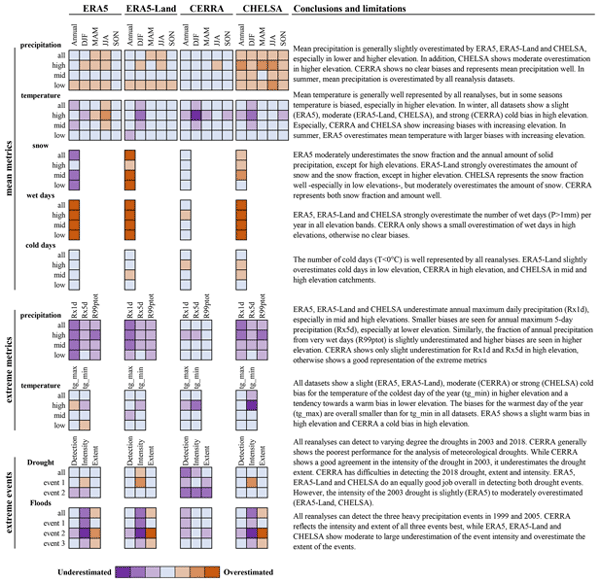
Continuous and high-quality meteorological datasets are crucial to study extreme hydro-climatic events. We here conduct a comprehensive spatio-temporal evaluation of precipitation and temperature for four climate reanalysis datasets, focusing on mean and extreme metrics, variability, trends, and the representation of droughts and floods over Switzerland. Our analysis shows that all datasets have some merit when limitations are considered, and that one dataset performs better than the others.
Amber van Hamel, Peter Molnar, Joren Janzing, and Manuela Irene Brunner
Hydrol. Earth Syst. Sci., 29, 2975–2995, https://doi.org/10.5194/hess-29-2975-2025, https://doi.org/10.5194/hess-29-2975-2025, 2025
Short summary
Short summary
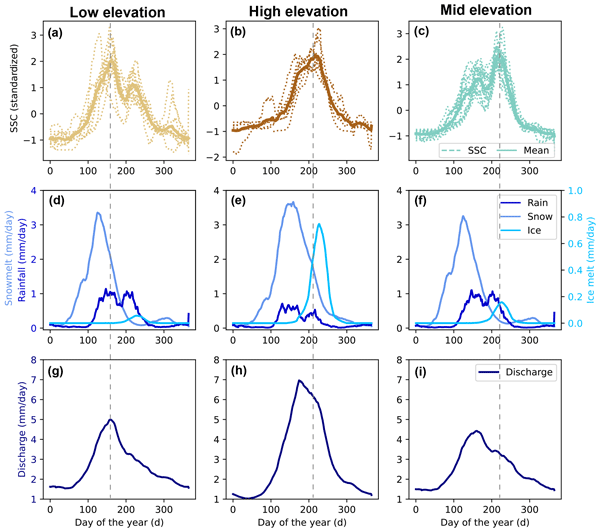
Suspended sediment is a natural component of rivers, but extreme suspended sediment concentrations (SSCs) can have negative impacts on water use and aquatic ecosystems. We identify the main factors influencing the spatial and temporal variability of annual SSC regimes and extreme SSC events. Our analysis shows that different processes are more important for annual SSC regimes than for extreme events and that compound events driven by glacial melt and high-intensity rainfall led to the highest SSCs.
Barry van Jaarsveld, Niko Wanders, Edwin H. Sutanudjaja, Jannis Hoch, Bram Droppers, Joren Janzing, Rens L. P. H. van Beek, and Marc F. P. Bierkens
Earth Syst. Dynam., 16, 29–54, https://doi.org/10.5194/esd-16-29-2025, https://doi.org/10.5194/esd-16-29-2025, 2025
Short summary
Short summary
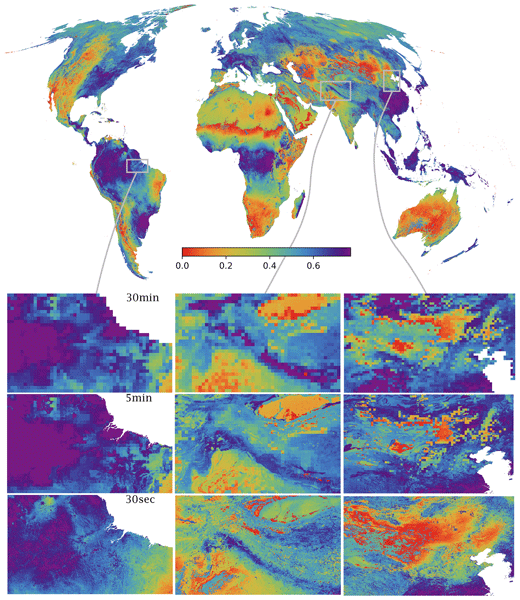
Policy makers use global hydrological models to develop water management strategies and policies. However, it would be better if these models provided information at higher resolution. We present a first-of-its-kind, truly global hyper-resolution model and show that hyper-resolution brings about better estimates of river discharge, and this is especially true for smaller catchments. Our results also suggest that future hyper-resolution models need to include more detailed land cover information.
Xueying Li, Yan Sun, Xihui Gu, Niko Wanders, Bridget R. Scanlon, and Louise J. Slater
Earth Syst. Sci. Data Discuss., https://doi.org/10.5194/essd-2026-282, https://doi.org/10.5194/essd-2026-282, 2026
Preprint under review for ESSD
Short summary
Short summary
Existing datasets of terrestrial water storage anomalies are too coarse to capture sub-regional variations, limiting understanding of fine-scale water processes. Here we use physically guided deep learning to produce a higher-resolution dataset across China for 2002–2023, increasing spatial detail from 3° to 0.1° resolution. The dataset preserves large-scale satellite observations and shows good consistency in process-based evaluations, supporting sub-regional hydrologic analysis.
Rashid Akbary, Eleonora Dallan, Paul C. Astagneau, Raul R. Wood, Francesco Marra, Manuela I. Brunner, and Marco Borga
Hydrol. Earth Syst. Sci., 30, 4117–4139, https://doi.org/10.5194/hess-30-4117-2026, https://doi.org/10.5194/hess-30-4117-2026, 2026
Short summary
Short summary
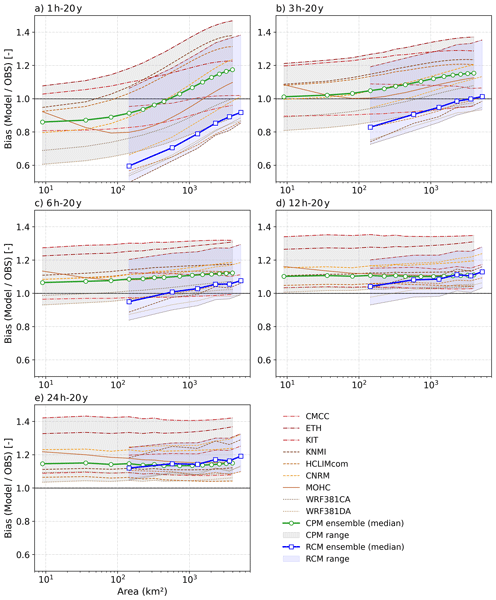
Heavy short rain can trigger flash floods and debris flows. In this study we evaluated how well climate models reproduce these events in Switzerland. We compared finer and coarser resolution models with high-quality hourly precipitation observations across small to large areas. The finer models better captured where short, intense precipitation occurs, but their errors changed with area size. Flood risk studies should therefore account for these scale-related errors.
Denise Ruijsch, Sandra Margrit Hauswirth, Hester Biemans, and Niko Wanders
Earth Syst. Dynam., 17, 607–630, https://doi.org/10.5194/esd-17-607-2026, https://doi.org/10.5194/esd-17-607-2026, 2026
Short summary
Short summary
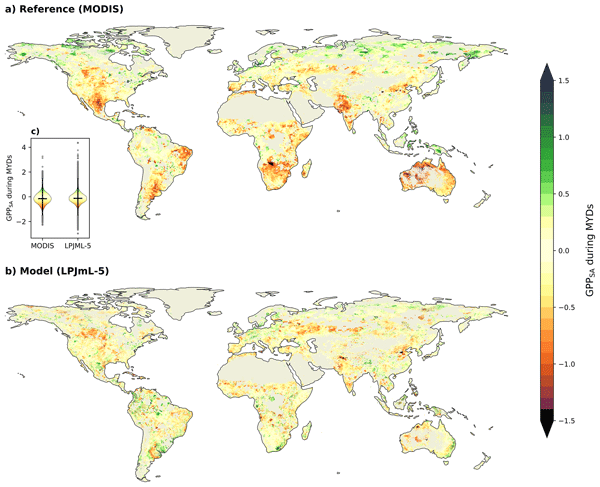
We studied how plants respond to long droughts using model simulations and satellite data. The model reproduces drought impacts fairly well but tends to show plants recovering too quickly. Improving how the model represents plant stress and recovery will help predict how ecosystems respond to more frequent and severe droughts in the future.
Saskia Salwey, Sandra Hauswirth, Denise Ruijsch, Barry van Jaarsveld, Jonna van Mourik, and Niko Wanders
EGUsphere, https://doi.org/10.5194/egusphere-2026-2335, https://doi.org/10.5194/egusphere-2026-2335, 2026
This preprint is open for discussion and under review for Earth System Dynamics (ESD).
Short summary
Short summary
This paper investigates how weather conditions influence droughts in groundwater. We focus on understanding why some groundwater droughts last for several years, since these long events can be difficult to manage and have particularly bad impacts. We find that some features of the groundwater system can worsen the effects of dry weather, making long groundwater droughts more likely. We categorize global groundwater data into three groups to describe how it is impacted by the weather.
Emma Ford, Manuela I. Brunner, Hannah Christensen, and Louise Slater
Hydrol. Earth Syst. Sci., 30, 2135–2160, https://doi.org/10.5194/hess-30-2135-2026, https://doi.org/10.5194/hess-30-2135-2026, 2026
Short summary
Short summary
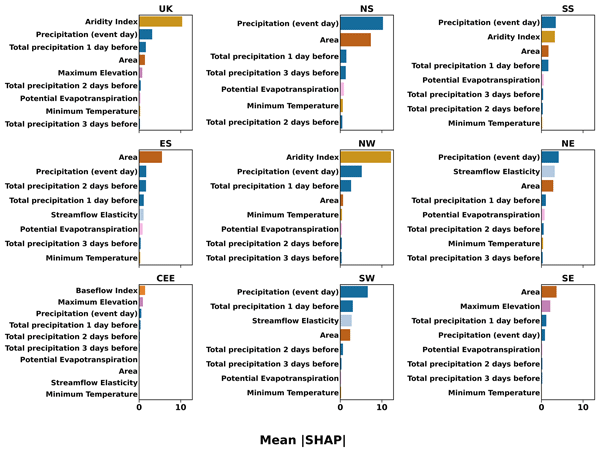
This study aims to improve prediction and understanding of extreme flood events in near-natural catchments across the United Kingdom. We develop a machine learning framework to assess the contribution of different features to flood magnitude estimation. We find weather patterns are weak predictors and stress the importance of evaluating model performance across and within catchments.
Ehsan Modiri, Oldrich Rakovec, Pallav Kumar Shrestha, Almudena García-García, Leandro Avila, Katie Blackford, Elizabeth Cooper, Bram Droppers, Paolo Filippucci, Milan Fischer, Matěj Orság, Pietro Stradiotti, Luca Brocca, Douglas B. Clark, Wouter Dorigo, Stefan Kollet, Jian Peng, Niko Wanders, and Luis Samaniego
EGUsphere, https://doi.org/10.5194/egusphere-2026-1012, https://doi.org/10.5194/egusphere-2026-1012, 2026
This preprint is open for discussion and under review for Hydrology and Earth System Sciences (HESS).
Short summary
Short summary
Drought impacts water supply, agriculture, and ecosystems, yet hydrological models often disagree on when and where drought occurs. This study tested whether satellite observations can improve how models represent soil moisture drought in the Rhine River basin. Using several models and major drought events, we show that satellite data improve spatial realism and reveal important differences among models, helping to better understand uncertainty in drought monitoring and early warning.
Barry van Jaarsveld, Niko Wanders, Nicole Gyakowah Otoo, Edwin H. Sutanudjaja, Jarno Verkaik, Daniel Zamrsky, and Marc F. P. Bierkens
EGUsphere, https://doi.org/10.5194/egusphere-2026-804, https://doi.org/10.5194/egusphere-2026-804, 2026
Short summary
Short summary
We simulated how global groundwater levels have changed in the past and how they might change in the future. By improving model accuracy and using hyper-resolution data, we can now see where water tables are falling or rising across the world. These results help communities and decision-makers plan for more sustainable water use in a changing climate.
Sadaf Nasreen, Oldrich Rakovec, Rohini Kumar, Manuela I. Brunner, Ujjwal Singh, Petr Maca, Yannis Markonis, and Martin Hanel
EGUsphere, https://doi.org/10.5194/egusphere-2026-973, https://doi.org/10.5194/egusphere-2026-973, 2026
Short summary
Short summary
European droughts threaten water and agriculture, but how distinct drought processes will change under warming is uncertain. We examine seven mechanisms across Europe using 1971 to 2000 observations and 2070 to 2099 projections. Changes are regional: the Mediterranean shifts to longer, more severe droughts, while Northern and Western Central Europe often improve. Temperature-driven mechanisms, especially rain to snow transitions, respond most, guiding targeted adaptation.
Eduardo Muñoz-Castro, Bailey J. Anderson, Paul C. Astagneau, Daniel L. Swain, Pablo A. Mendoza, and Manuela I. Brunner
Hydrol. Earth Syst. Sci., 30, 825–848, https://doi.org/10.5194/hess-30-825-2026, https://doi.org/10.5194/hess-30-825-2026, 2026
Short summary
Short summary
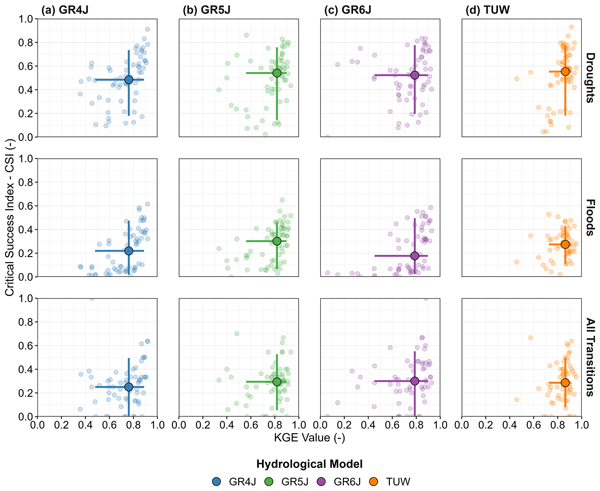
Flood impacts can be enhanced when they occur after droughts, yet the effectiveness of hydrological models in simulating these events remains unclear. Here, we calibrated four conceptual hydrological models across 63 catchments in Chile and Switzerland to assess their ability to detect streamflow extremes and their transitions. We show that drought-to-flood transitions are generally poorly captured, especially in semi-arid high-mountain catchments than in humid low-elevation ones.
Jonas Götte, Paul Charles Astagneau, and Manuela Irene Brunner
EGUsphere, https://doi.org/10.5194/egusphere-2025-6119, https://doi.org/10.5194/egusphere-2025-6119, 2026
Short summary
Short summary
While the effect of water bodies on flood peaks at different time resolutions has been demonstrated in the past, it remains unclear how they affect the ratio between daily and hourly peaks. Our results show that (1) hourly flows are dampened much more strongly than daily flows, which leads to similar daily and hourly flood peaks downstream of reservoirs; and (2) the attenuation effect is particularly pronounced in catchments that are heavily influenced by water bodies.
Marit van Tiel, Matthias Huss, Massimiliano Zappa, Tobias Jonas, and Daniel Farinotti
Hydrol. Earth Syst. Sci., 30, 23–43, https://doi.org/10.5194/hess-30-23-2026, https://doi.org/10.5194/hess-30-23-2026, 2026
Short summary
Short summary
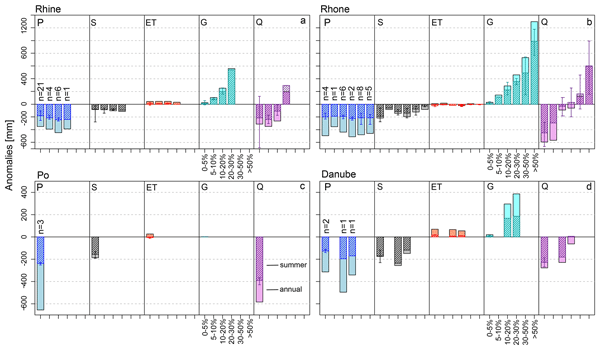
The summer of 2022 was extremely warm and dry in Europe, severely impacting water availability. We calculated water balance anomalies for 88 glacierized catchments in Switzerland, showing that glaciers played a crucial role in alleviating the drought situation by melting at record rates, partially compensating for the lack of rain and snowmelt. By comparing 2022 with past extreme years, we show that while glacier meltwater remains essential during droughts, its contribution is declining.
Alexandra von der Esch, Matthias Huss, Marit van Tiel, Justine Berg, and Daniel Farinotti
Hydrol. Earth Syst. Sci., 29, 6761–6780, https://doi.org/10.5194/hess-29-6761-2025, https://doi.org/10.5194/hess-29-6761-2025, 2025
Short summary
Short summary
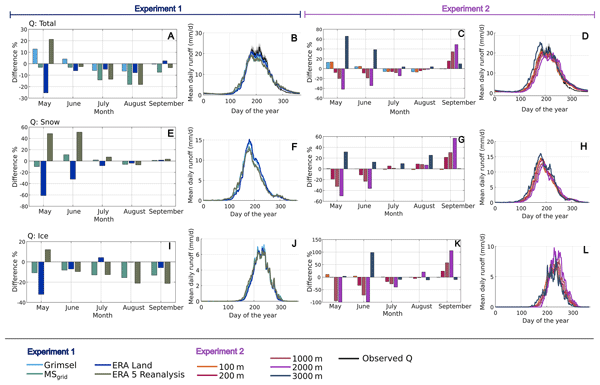
Glaciers are vital water sources, especially in alpine regions. Using the Glacier Evolution Runoff Model (GERM), we examined how forcing data and model resolution impact glacio-hydrological model results. We find that precipitation biases greatly affect results, and coarse resolutions miss critical small-scale details. This highlights the trade-offs between computational efficiency and model accuracy, emphasizing the need for high-resolution data and precise calibration for reliable predictions.
Jennie C. Steyaert, Edwin H. Sutanudjaja, Marc Bierkens, and Niko Wanders
Hydrol. Earth Syst. Sci., 29, 6499–6527, https://doi.org/10.5194/hess-29-6499-2025, https://doi.org/10.5194/hess-29-6499-2025, 2025
Short summary
Short summary
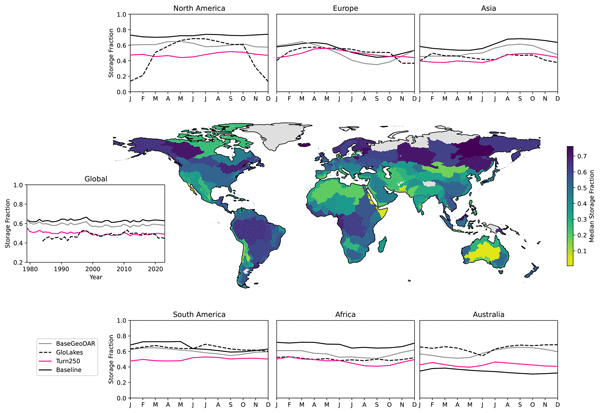
Using machine learning techniques and remotely sensed reservoir data, we develop a workflow to derive reservoir storage bounds. We put these bounds in a global hydrologic model, PCR-GLOBWB 2, and evaluate the difference between generalized operations (the schemes typically in global models) and this data derived method. We find that modelled storage is more accurate in the data derived operations. We also find that generalized operations over estimate storage and can underestimate water gaps.
Bailey J. Anderson, Eduardo Muñoz-Castro, Lena M. Tallaksen, Alessia Matano, Jonas Götte, Rachael Armitage, Eugene Magee, and Manuela I. Brunner
Hydrol. Earth Syst. Sci., 29, 6069–6092, https://doi.org/10.5194/hess-29-6069-2025, https://doi.org/10.5194/hess-29-6069-2025, 2025
Short summary
Short summary
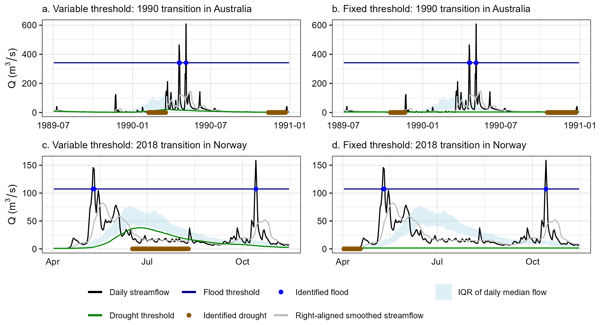
When floods happen during or shortly after droughts, the impacts of each of the events can be magnified. In hydrological research, defining these events represents a challenging and important task in the process of understanding where and why they occur. We have used real-word examples to address some of these challenges and show different approaches influence outcomes. We make suggestions on when to use which approach and outline some pitfalls of which researchers should be aware.
Jan P. Bohl, Raul R. Wood, Corinna Frank, Paul C. Astagneau, Jonas Peters, and Manuela I. Brunner
EGUsphere, https://doi.org/10.5194/egusphere-2025-5201, https://doi.org/10.5194/egusphere-2025-5201, 2025
Short summary
Short summary
To assess climate impacts on streamflow, we need models that can predict streamflow under future conditions. This study compares three model types: data-driven (LSTM), conceptual (HBV), and hybrid (LSTM-HBV). LSTMs perform best overall, but HBV and hybrid models generalize better to warmer climates. Hybrid models are a promising tool for climate impact assessments, combining LSTMs accuracy with better generalizability of traditional models. In snowy regions, all models struggle to generalize.
Paul C. Astagneau, Raul R. Wood, Mathieu Vrac, Sven Kotlarski, Pradeebane Vaittinada Ayar, Bastien François, and Manuela I. Brunner
Hydrol. Earth Syst. Sci., 29, 5695–5718, https://doi.org/10.5194/hess-29-5695-2025, https://doi.org/10.5194/hess-29-5695-2025, 2025
Short summary
Short summary
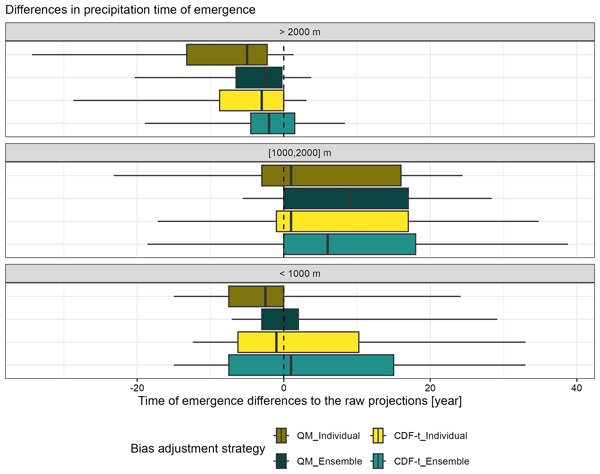
To study floods and droughts that are likely to change in the future, we use climate projections from climate models. However, we first need to adjust the systematic biases of these projections at the catchment scale before using them in hydrological models. Our study compares statistical methods that can adjust these biases but specifically for climate projections that enable a quantification of internal climate variability. We provide recommendations on the most appropriate methods.
Raul R. Wood, Joren Janzing, Amber van Hamel, Jonas Götte, Dominik L. Schumacher, and Manuela I. Brunner
Hydrol. Earth Syst. Sci., 29, 4153–4178, https://doi.org/10.5194/hess-29-4153-2025, https://doi.org/10.5194/hess-29-4153-2025, 2025
Short summary
Short summary
Continuous and high-quality meteorological datasets are crucial to study extreme hydro-climatic events. We here conduct a comprehensive spatio-temporal evaluation of precipitation and temperature for four climate reanalysis datasets, focusing on mean and extreme metrics, variability, trends, and the representation of droughts and floods over Switzerland. Our analysis shows that all datasets have some merit when limitations are considered, and that one dataset performs better than the others.
Amber van Hamel, Peter Molnar, Joren Janzing, and Manuela Irene Brunner
Hydrol. Earth Syst. Sci., 29, 2975–2995, https://doi.org/10.5194/hess-29-2975-2025, https://doi.org/10.5194/hess-29-2975-2025, 2025
Short summary
Short summary
Suspended sediment is a natural component of rivers, but extreme suspended sediment concentrations (SSCs) can have negative impacts on water use and aquatic ecosystems. We identify the main factors influencing the spatial and temporal variability of annual SSC regimes and extreme SSC events. Our analysis shows that different processes are more important for annual SSC regimes than for extreme events and that compound events driven by glacial melt and high-intensity rainfall led to the highest SSCs.
Alessia Matanó, Raed Hamed, Manuela I. Brunner, Marlies H. Barendrecht, and Anne F. Van Loon
Hydrol. Earth Syst. Sci., 29, 2749–2764, https://doi.org/10.5194/hess-29-2749-2025, https://doi.org/10.5194/hess-29-2749-2025, 2025
Short summary
Short summary
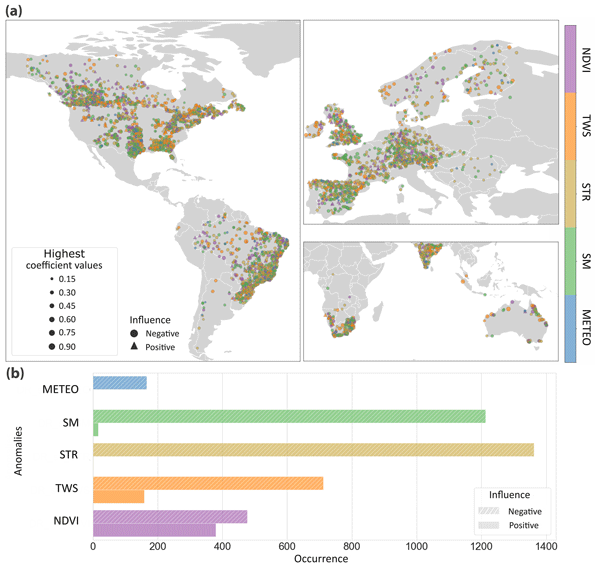
Persistent droughts change how rivers respond to rainfall. Our study of over 5000 catchments worldwide found that hydrological and soil moisture droughts decrease river-flow response to rain, especially in arid regions, while vegetation decline slightly increases it. Snow-covered areas are more resilient due to stored water buffering changes. Droughts can also cause long-lasting changes, with short and intense droughts reducing river response to rainfall and prolonged droughts increasing it.
Hannes Müller Schmied, Simon Newland Gosling, Marlo Garnsworthy, Laura Müller, Camelia-Eliza Telteu, Atiq Kainan Ahmed, Lauren Seaby Andersen, Julien Boulange, Peter Burek, Jinfeng Chang, He Chen, Lukas Gudmundsson, Manolis Grillakis, Luca Guillaumot, Naota Hanasaki, Aristeidis Koutroulis, Rohini Kumar, Guoyong Leng, Junguo Liu, Xingcai Liu, Inga Menke, Vimal Mishra, Yadu Pokhrel, Oldrich Rakovec, Luis Samaniego, Yusuke Satoh, Harsh Lovekumar Shah, Mikhail Smilovic, Tobias Stacke, Edwin Sutanudjaja, Wim Thiery, Athanasios Tsilimigkras, Yoshihide Wada, Niko Wanders, and Tokuta Yokohata
Geosci. Model Dev., 18, 2409–2425, https://doi.org/10.5194/gmd-18-2409-2025, https://doi.org/10.5194/gmd-18-2409-2025, 2025
Short summary
Short summary
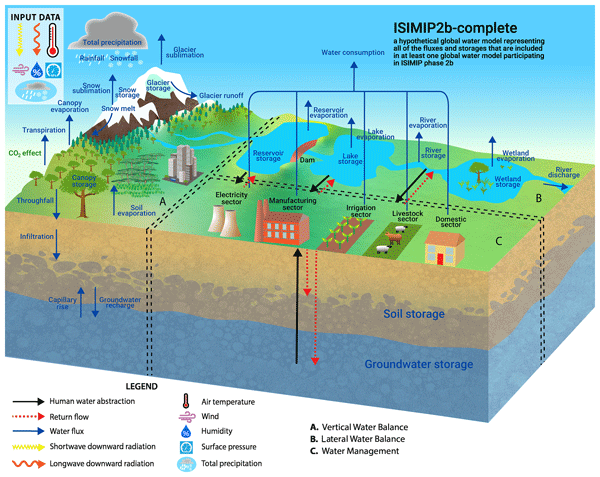
Global water models contribute to the evaluation of important natural and societal issues but are – as all models – simplified representation of reality. So, there are many ways to calculate the water fluxes and storages. This paper presents a visualization of 16 global water models using a standardized visualization and the pathway towards this common understanding. Next to academic education purposes, we envisage that these diagrams will help researchers, model developers, and data users.
Barry van Jaarsveld, Niko Wanders, Edwin H. Sutanudjaja, Jannis Hoch, Bram Droppers, Joren Janzing, Rens L. P. H. van Beek, and Marc F. P. Bierkens
Earth Syst. Dynam., 16, 29–54, https://doi.org/10.5194/esd-16-29-2025, https://doi.org/10.5194/esd-16-29-2025, 2025
Short summary
Short summary
Policy makers use global hydrological models to develop water management strategies and policies. However, it would be better if these models provided information at higher resolution. We present a first-of-its-kind, truly global hyper-resolution model and show that hyper-resolution brings about better estimates of river discharge, and this is especially true for smaller catchments. Our results also suggest that future hyper-resolution models need to include more detailed land cover information.
Johanna Teresa Malle, Giulia Mazzotti, Dirk Nikolaus Karger, and Tobias Jonas
Earth Syst. Dynam., 15, 1073–1115, https://doi.org/10.5194/esd-15-1073-2024, https://doi.org/10.5194/esd-15-1073-2024, 2024
Short summary
Short summary
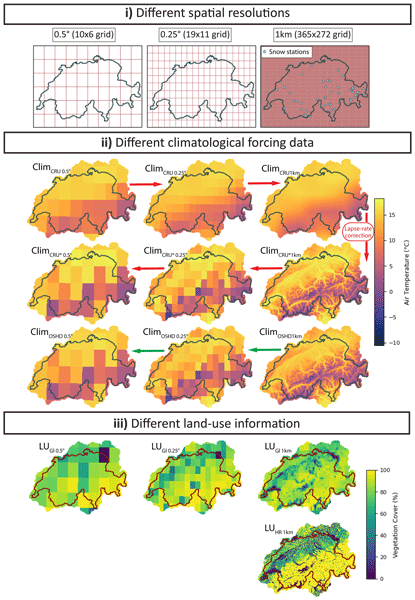
Land surface processes are crucial for the exchange of carbon, nitrogen, and energy in the Earth system. Using meteorological and land use data, we found that higher resolution improved not only the model representation of snow cover but also plant productivity and that water returned to the atmosphere. Only by combining high-resolution models with high-quality input data can we accurately represent complex spatially heterogeneous processes and improve our understanding of the Earth system.
Barry van Jaarsveld, Sandra M. Hauswirth, and Niko Wanders
Hydrol. Earth Syst. Sci., 28, 2357–2374, https://doi.org/10.5194/hess-28-2357-2024, https://doi.org/10.5194/hess-28-2357-2024, 2024
Short summary
Short summary
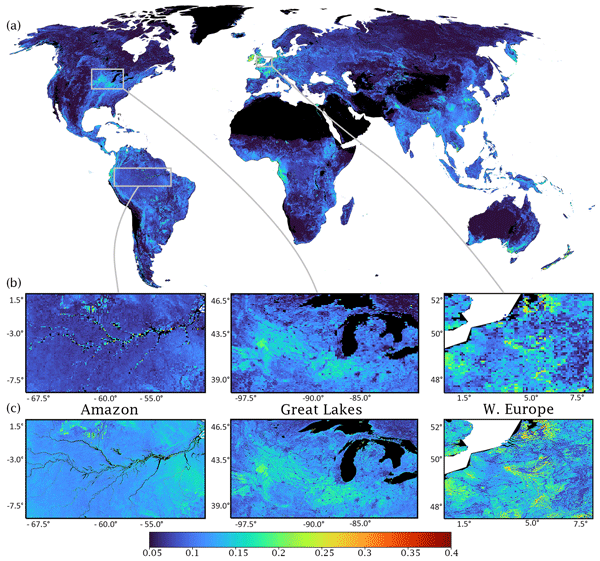
Drought often manifests itself in vegetation; however, obtaining high-resolution remote-sensing products that are spatially and temporally consistent is difficult. In this study, we show that machine learning (ML) can fill data gaps in existing products. We also demonstrate that ML can be used as a downscaling tool. By relying on ML for gap filling and downscaling, we can obtain a more holistic view of the impacts of drought on vegetation.
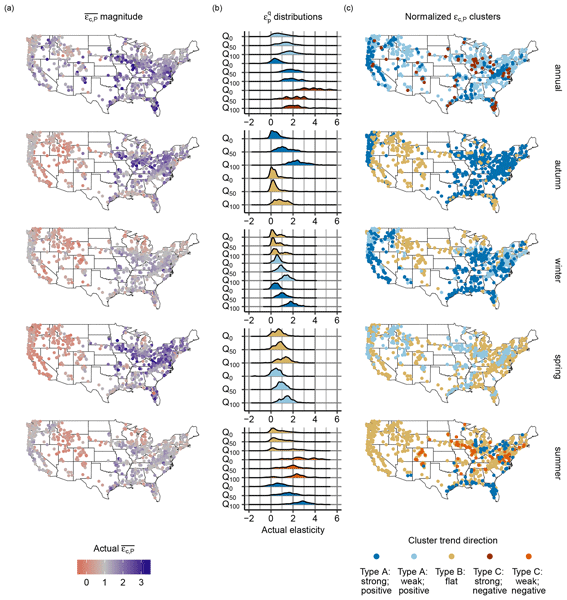
Bailey J. Anderson, Manuela I. Brunner, Louise J. Slater, and Simon J. Dadson
Hydrol. Earth Syst. Sci., 28, 1567–1583, https://doi.org/10.5194/hess-28-1567-2024, https://doi.org/10.5194/hess-28-1567-2024, 2024
Short summary
Short summary
Elasticityrefers to how much the amount of water in a river changes with precipitation. We usually calculate this using average streamflow values; however, the amount of water within rivers is also dependent on stored water sources. Here, we look at how elasticity varies across the streamflow distribution and show that not only do low and high streamflows respond differently to precipitation change, but also these differences vary with water storage availability.
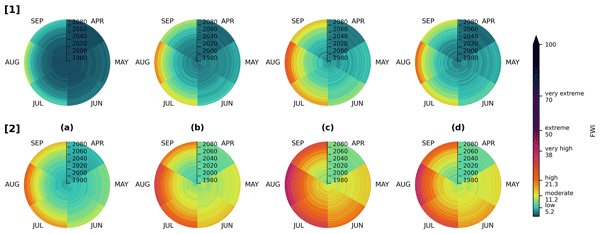
Julia Miller, Andrea Böhnisch, Ralf Ludwig, and Manuela I. Brunner
Nat. Hazards Earth Syst. Sci., 24, 411–428, https://doi.org/10.5194/nhess-24-411-2024, https://doi.org/10.5194/nhess-24-411-2024, 2024
Short summary
Short summary
We assess the impacts of climate change on fire danger for 1980–2099 in different landscapes of central Europe, using the Canadian Forest Fire Weather Index (FWI) as a fire danger indicator. We find that today's 100-year FWI event will occur every 30 years by 2050 and every 10 years by 2099. High fire danger (FWI > 21.3) becomes the mean condition by 2099 under an RCP8.5 scenario. This study highlights the potential for severe fire events in central Europe from a meteorological perspective.
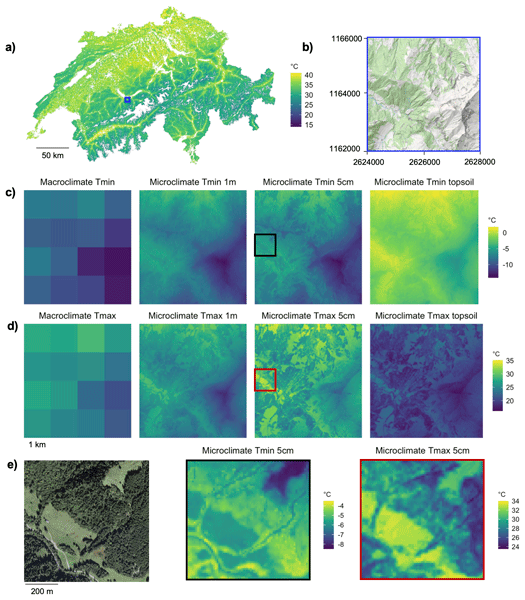
Florian Zellweger, Eric Sulmoni, Johanna T. Malle, Andri Baltensweiler, Tobias Jonas, Niklaus E. Zimmermann, Christian Ginzler, Dirk Nikolaus Karger, Pieter De Frenne, David Frey, and Clare Webster
Biogeosciences, 21, 605–623, https://doi.org/10.5194/bg-21-605-2024, https://doi.org/10.5194/bg-21-605-2024, 2024
Short summary
Short summary
The microclimatic conditions experienced by organisms living close to the ground are not well represented in currently used climate datasets derived from weather stations. Therefore, we measured and mapped ground microclimate temperatures at 10 m spatial resolution across Switzerland using a novel radiation model. Our results reveal a high variability in microclimates across different habitats and will help to better understand climate and land use impacts on biodiversity and ecosystems.
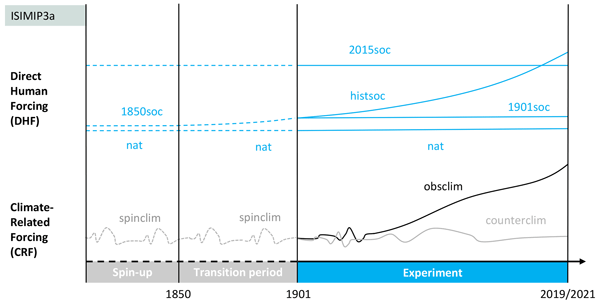
Katja Frieler, Jan Volkholz, Stefan Lange, Jacob Schewe, Matthias Mengel, María del Rocío Rivas López, Christian Otto, Christopher P. O. Reyer, Dirk Nikolaus Karger, Johanna T. Malle, Simon Treu, Christoph Menz, Julia L. Blanchard, Cheryl S. Harrison, Colleen M. Petrik, Tyler D. Eddy, Kelly Ortega-Cisneros, Camilla Novaglio, Yannick Rousseau, Reg A. Watson, Charles Stock, Xiao Liu, Ryan Heneghan, Derek Tittensor, Olivier Maury, Matthias Büchner, Thomas Vogt, Tingting Wang, Fubao Sun, Inga J. Sauer, Johannes Koch, Inne Vanderkelen, Jonas Jägermeyr, Christoph Müller, Sam Rabin, Jochen Klar, Iliusi D. Vega del Valle, Gitta Lasslop, Sarah Chadburn, Eleanor Burke, Angela Gallego-Sala, Noah Smith, Jinfeng Chang, Stijn Hantson, Chantelle Burton, Anne Gädeke, Fang Li, Simon N. Gosling, Hannes Müller Schmied, Fred Hattermann, Jida Wang, Fangfang Yao, Thomas Hickler, Rafael Marcé, Don Pierson, Wim Thiery, Daniel Mercado-Bettín, Robert Ladwig, Ana Isabel Ayala-Zamora, Matthew Forrest, and Michel Bechtold
Geosci. Model Dev., 17, 1–51, https://doi.org/10.5194/gmd-17-1-2024, https://doi.org/10.5194/gmd-17-1-2024, 2024
Short summary
Short summary
Our paper provides an overview of all observational climate-related and socioeconomic forcing data used as input for the impact model evaluation and impact attribution experiments within the third round of the Inter-Sectoral Impact Model Intercomparison Project. The experiments are designed to test our understanding of observed changes in natural and human systems and to quantify to what degree these changes have already been induced by climate change.
Marvin Höge, Martina Kauzlaric, Rosi Siber, Ursula Schönenberger, Pascal Horton, Jan Schwanbeck, Marius Günter Floriancic, Daniel Viviroli, Sibylle Wilhelm, Anna E. Sikorska-Senoner, Nans Addor, Manuela Brunner, Sandra Pool, Massimiliano Zappa, and Fabrizio Fenicia
Earth Syst. Sci. Data, 15, 5755–5784, https://doi.org/10.5194/essd-15-5755-2023, https://doi.org/10.5194/essd-15-5755-2023, 2023
Short summary
Short summary
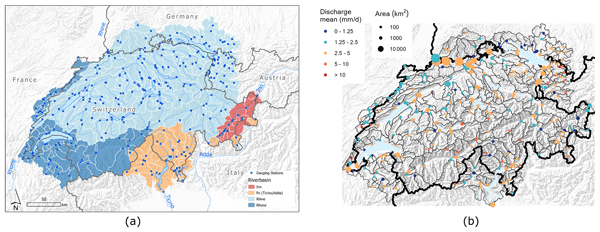
CAMELS-CH is an open large-sample hydro-meteorological data set that covers 331 catchments in hydrologic Switzerland from 1 January 1981 to 31 December 2020. It comprises (a) daily data of river discharge and water level as well as meteorologic variables like precipitation and temperature; (b) yearly glacier and land cover data; (c) static attributes of, e.g, topography or human impact; and (d) catchment delineations. CAMELS-CH enables water and climate research and modeling at catchment level.
Edward R. Jones, Marc F. P. Bierkens, Niko Wanders, Edwin H. Sutanudjaja, Ludovicus P. H. van Beek, and Michelle T. H. van Vliet
Geosci. Model Dev., 16, 4481–4500, https://doi.org/10.5194/gmd-16-4481-2023, https://doi.org/10.5194/gmd-16-4481-2023, 2023
Short summary
Short summary
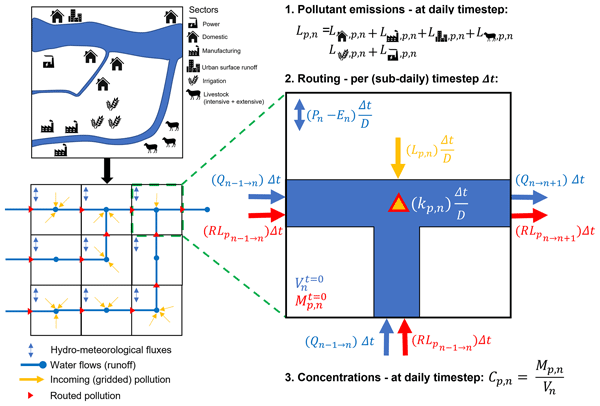
DynQual is a new high-resolution global water quality model for simulating total dissolved solids, biological oxygen demand and fecal coliform as indicators of salinity, organic pollution and pathogen pollution, respectively. Output data from DynQual can supplement the observational record of water quality data, which is highly fragmented across space and time, and has the potential to inform assessments in a broad range of fields including ecological, human health and water scarcity studies.

Manuela Irene Brunner
Hydrol. Earth Syst. Sci., 27, 2479–2497, https://doi.org/10.5194/hess-27-2479-2023, https://doi.org/10.5194/hess-27-2479-2023, 2023
Short summary
Short summary
I discuss different types of multivariate hydrological extremes and their dependencies, including regional extremes affecting multiple locations, such as spatially connected flood events; consecutive extremes occurring in close temporal succession, such as successive droughts; extremes characterized by multiple characteristics, such as floods with jointly high peak discharge and flood volume; and transitions between different types of extremes, such as drought-to-flood transitions.
Dirk Nikolaus Karger, Stefan Lange, Chantal Hari, Christopher P. O. Reyer, Olaf Conrad, Niklaus E. Zimmermann, and Katja Frieler
Earth Syst. Sci. Data, 15, 2445–2464, https://doi.org/10.5194/essd-15-2445-2023, https://doi.org/10.5194/essd-15-2445-2023, 2023
Short summary
Short summary
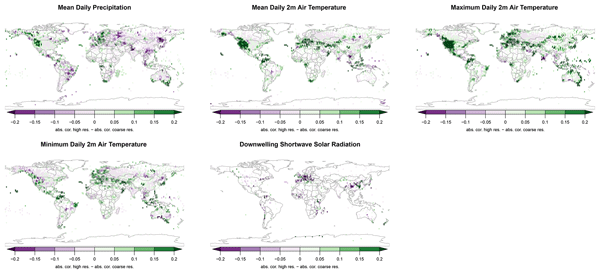
We present the first 1 km, daily, global climate dataset for climate impact studies. We show that the high-resolution data have a decreased bias and higher correlation with measurements from meteorological stations than coarser data. The dataset will be of value for a wide range of climate change impact studies both at global and regional level that benefit from using a consistent global dataset.
Tobias Siegfried, Aziz Ul Haq Mujahid, Beatrice Sabine Marti, Peter Molnar, Dirk Nikolaus Karger, and Andrey Yakovlev
EGUsphere, https://doi.org/10.5194/egusphere-2023-520, https://doi.org/10.5194/egusphere-2023-520, 2023
Preprint archived
Short summary
Short summary
Our study investigates climate change impacts on water resources in Central Asia's high-mountain regions. Using new data and a stochastic soil moisture model, we found increased precipitation and higher temperatures in the future, leading to higher water discharge despite decreasing glacier melt contributions. These findings are crucial for understanding and preparing for climate change effects on Central Asia's water resources, with further research needed on extreme weather event impacts.
Jannis M. Hoch, Edwin H. Sutanudjaja, Niko Wanders, Rens L. P. H. van Beek, and Marc F. P. Bierkens
Hydrol. Earth Syst. Sci., 27, 1383–1401, https://doi.org/10.5194/hess-27-1383-2023, https://doi.org/10.5194/hess-27-1383-2023, 2023
Short summary
Short summary
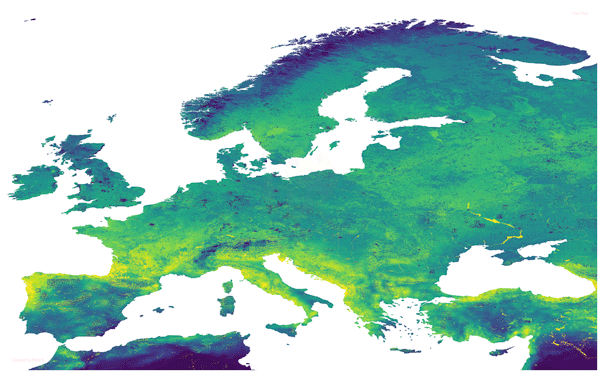
To facilitate locally relevant simulations over large areas, global hydrological models (GHMs) have moved towards ever finer spatial resolutions. After a decade-long quest for hyper-resolution (i.e. equal to or smaller than 1 km), the presented work is a first application of a GHM at 1 km resolution over Europe. This not only shows that hyper-resolution can be achieved but also allows for a thorough evaluation of model results at unprecedented detail and the formulation of future research.
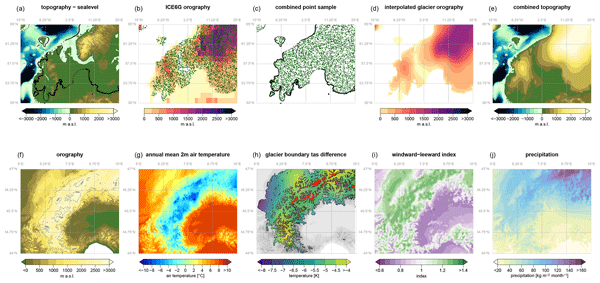
Dirk Nikolaus Karger, Michael P. Nobis, Signe Normand, Catherine H. Graham, and Niklaus E. Zimmermann
Clim. Past, 19, 439–456, https://doi.org/10.5194/cp-19-439-2023, https://doi.org/10.5194/cp-19-439-2023, 2023
Short summary
Short summary
Here we present global monthly climate time series for air temperature and precipitation at 1 km resolution for the last 21 000 years. The topography at all time steps is created by combining high-resolution information on glacial cover from current and Last Glacial Maximum glacier databases with the interpolation of an ice sheet model and a coupling to mean annual temperatures from a global circulation model.
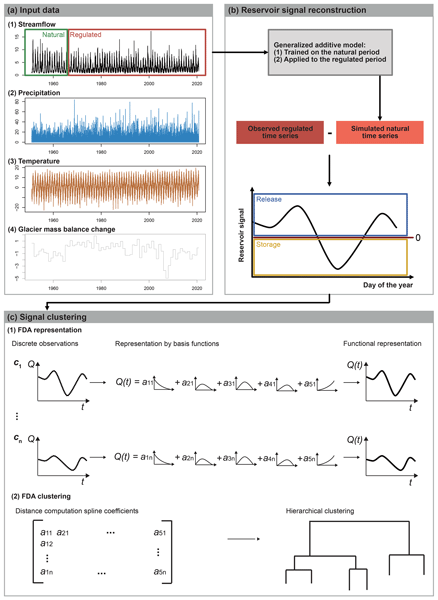
Manuela Irene Brunner and Philippe Naveau
Hydrol. Earth Syst. Sci., 27, 673–687, https://doi.org/10.5194/hess-27-673-2023, https://doi.org/10.5194/hess-27-673-2023, 2023
Short summary
Short summary
Reservoir regulation affects various streamflow characteristics. Still, information on when water is stored in and released from reservoirs is hardly available. We develop a statistical model to reconstruct reservoir operation signals from observed streamflow time series. By applying this approach to 74 catchments in the Alps, we find that reservoir management varies by catchment elevation and that seasonal redistribution from summer to winter is strongest in high-elevation catchments.
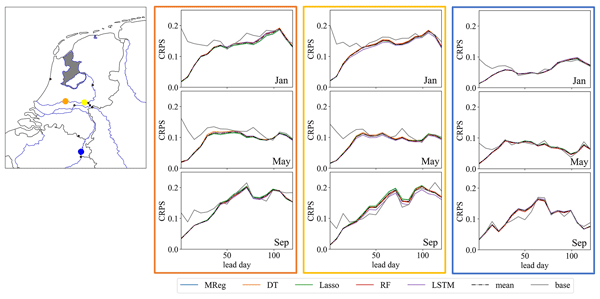
Sandra M. Hauswirth, Marc F. P. Bierkens, Vincent Beijk, and Niko Wanders
Hydrol. Earth Syst. Sci., 27, 501–517, https://doi.org/10.5194/hess-27-501-2023, https://doi.org/10.5194/hess-27-501-2023, 2023
Short summary
Short summary
Forecasts on water availability are important for water managers. We test a hybrid framework based on machine learning models and global input data for generating seasonal forecasts. Our evaluation shows that our discharge and surface water level predictions are able to create reliable forecasts up to 2 months ahead. We show that a hybrid framework, developed for local purposes and combined and rerun with global data, can create valuable information similar to large-scale forecasting models.
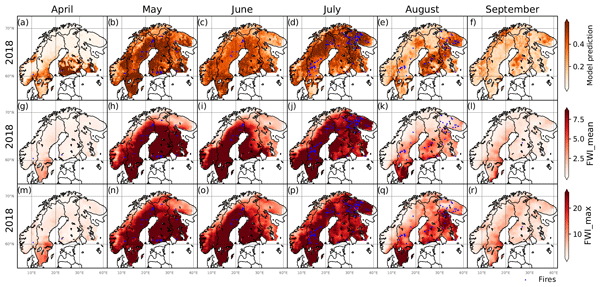
Sigrid Jørgensen Bakke, Niko Wanders, Karin van der Wiel, and Lena Merete Tallaksen
Nat. Hazards Earth Syst. Sci., 23, 65–89, https://doi.org/10.5194/nhess-23-65-2023, https://doi.org/10.5194/nhess-23-65-2023, 2023
Short summary
Short summary
In this study, we developed a machine learning model to identify dominant controls of wildfire in Fennoscandia and produce monthly fire danger probability maps. The dominant control was shallow-soil water anomaly, followed by air temperature and deep soil water. The model proved skilful with a similar performance as the existing Canadian Forest Fire Weather Index (FWI). We highlight the benefit of using data-driven models jointly with other fire models to improve fire monitoring and prediction.
Philipp Brun, Niklaus E. Zimmermann, Chantal Hari, Loïc Pellissier, and Dirk Nikolaus Karger
Earth Syst. Sci. Data, 14, 5573–5603, https://doi.org/10.5194/essd-14-5573-2022, https://doi.org/10.5194/essd-14-5573-2022, 2022
Short summary
Short summary
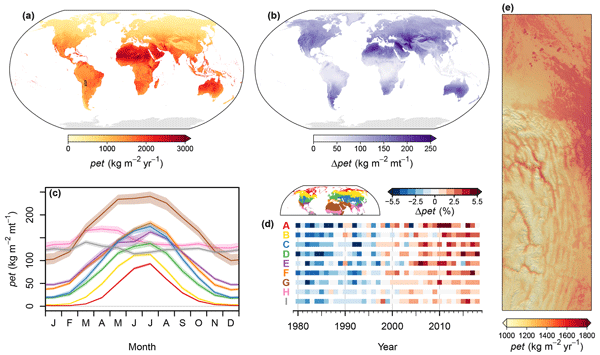
Using mechanistic downscaling, we developed CHELSA-BIOCLIM+, a set of 15 biologically relevant, climate-related variables at unprecedented resolution, as a basis for environmental analyses. It includes monthly time series for 38+ years and 30-year averages for three future periods and three emission scenarios. Estimates matched well with station measurements, but few biases existed. The data allow for detailed assessments of climate-change impact on ecosystems and their services to societies.
Vili Virkki, Elina Alanärä, Miina Porkka, Lauri Ahopelto, Tom Gleeson, Chinchu Mohan, Lan Wang-Erlandsson, Martina Flörke, Dieter Gerten, Simon N. Gosling, Naota Hanasaki, Hannes Müller Schmied, Niko Wanders, and Matti Kummu
Hydrol. Earth Syst. Sci., 26, 3315–3336, https://doi.org/10.5194/hess-26-3315-2022, https://doi.org/10.5194/hess-26-3315-2022, 2022
Short summary
Short summary
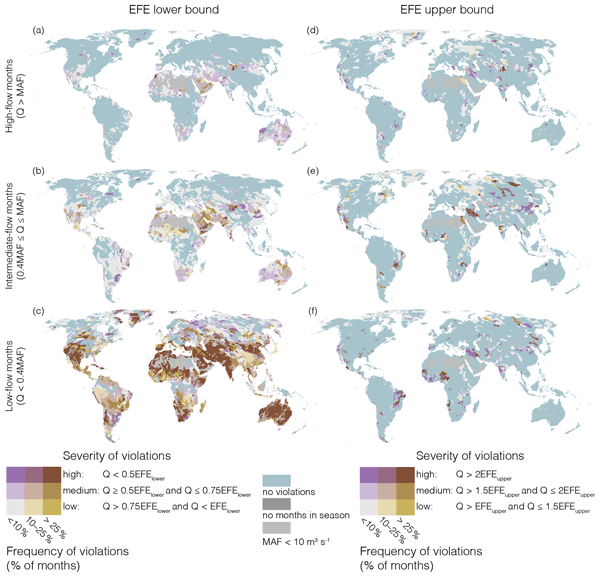
Direct and indirect human actions have altered streamflow across the world since pre-industrial times. Here, we apply a method of environmental flow envelopes (EFEs) that develops the existing global environmental flow assessments by methodological advances and better consideration of uncertainty. By assessing the violations of the EFE, we comprehensively quantify the frequency, severity, and trends of flow alteration during the past decades, illustrating anthropogenic effects on streamflow.
Veit Blauhut, Michael Stoelzle, Lauri Ahopelto, Manuela I. Brunner, Claudia Teutschbein, Doris E. Wendt, Vytautas Akstinas, Sigrid J. Bakke, Lucy J. Barker, Lenka Bartošová, Agrita Briede, Carmelo Cammalleri, Ksenija Cindrić Kalin, Lucia De Stefano, Miriam Fendeková, David C. Finger, Marijke Huysmans, Mirjana Ivanov, Jaak Jaagus, Jiří Jakubínský, Svitlana Krakovska, Gregor Laaha, Monika Lakatos, Kiril Manevski, Mathias Neumann Andersen, Nina Nikolova, Marzena Osuch, Pieter van Oel, Kalina Radeva, Renata J. Romanowicz, Elena Toth, Mirek Trnka, Marko Urošev, Julia Urquijo Reguera, Eric Sauquet, Aleksandra Stevkov, Lena M. Tallaksen, Iryna Trofimova, Anne F. Van Loon, Michelle T. H. van Vliet, Jean-Philippe Vidal, Niko Wanders, Micha Werner, Patrick Willems, and Nenad Živković
Nat. Hazards Earth Syst. Sci., 22, 2201–2217, https://doi.org/10.5194/nhess-22-2201-2022, https://doi.org/10.5194/nhess-22-2201-2022, 2022
Short summary
Short summary
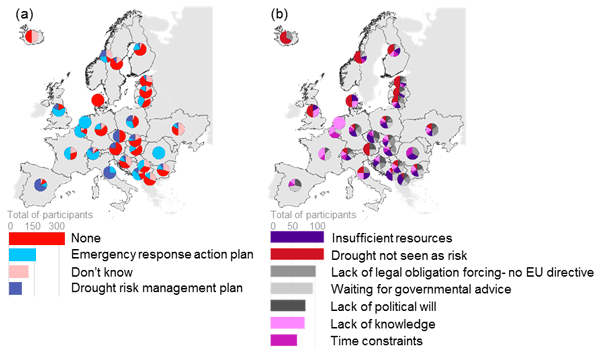
Recent drought events caused enormous damage in Europe. We therefore questioned the existence and effect of current drought management strategies on the actual impacts and how drought is perceived by relevant stakeholders. Over 700 participants from 28 European countries provided insights into drought hazard and impact perception and current management strategies. The study concludes with an urgent need to collectively combat drought risk via a European macro-level drought governance approach.

Manuela I. Brunner and Louise J. Slater
Hydrol. Earth Syst. Sci., 26, 469–482, https://doi.org/10.5194/hess-26-469-2022, https://doi.org/10.5194/hess-26-469-2022, 2022
Short summary
Short summary
Assessing the rarity and magnitude of very extreme flood events occurring less than twice a century is challenging due to the lack of observations of such rare events. Here we develop a new approach, pooling reforecast ensemble members from the European Flood Awareness System to increase the sample size available to estimate the frequency of extreme flood events. We demonstrate that such ensemble pooling produces more robust estimates than observation-based estimates.
Álvaro Ossandón, Manuela I. Brunner, Balaji Rajagopalan, and William Kleiber
Hydrol. Earth Syst. Sci., 26, 149–166, https://doi.org/10.5194/hess-26-149-2022, https://doi.org/10.5194/hess-26-149-2022, 2022
Short summary
Short summary
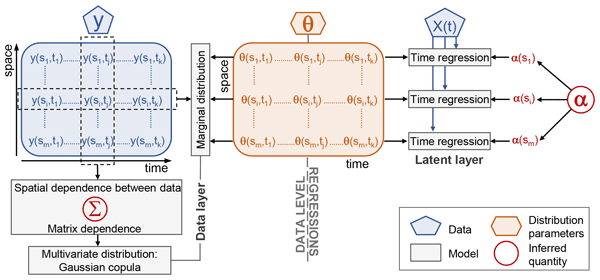
Timely projections of seasonal streamflow extremes on a river network can be useful for flood risk mitigation, but this is challenging, particularly under space–time nonstationarity. We develop a space–time Bayesian hierarchical model (BHM) using temporal climate covariates and copulas to project seasonal streamflow extremes and the attendant uncertainties. We demonstrate this on the Upper Colorado River basin to project spring flow extremes using the preceding winter’s climate teleconnections.
Ionuț Iosifescu Enescu, David Hanimann, Dominik Haas-Artho, Marius Rüetschi, Dirk Nikolaus Karger, Gian-Kasper Plattner, Martin Hägeli, Rebecca Kurup Buchholz, Lucia de Espona, Niklaus E. Zimmermann, and Loïc Pellissier
Abstr. Int. Cartogr. Assoc., 3, 120, https://doi.org/10.5194/ica-abs-3-120-2021, https://doi.org/10.5194/ica-abs-3-120-2021, 2021
Ionuț Iosifescu Enescu, David Hanimann, Dominik Haas-Artho, Marius Rüetschi, Dirk Nikolaus Karger, Gian-Kasper Plattner, Martin Hägeli, Rebecca Kurup Buchholz, Lucia de Espona, Niklaus E. Zimmermann, and Loïc Pellissier
Abstr. Int. Cartogr. Assoc., 3, 119, https://doi.org/10.5194/ica-abs-3-119-2021, https://doi.org/10.5194/ica-abs-3-119-2021, 2021
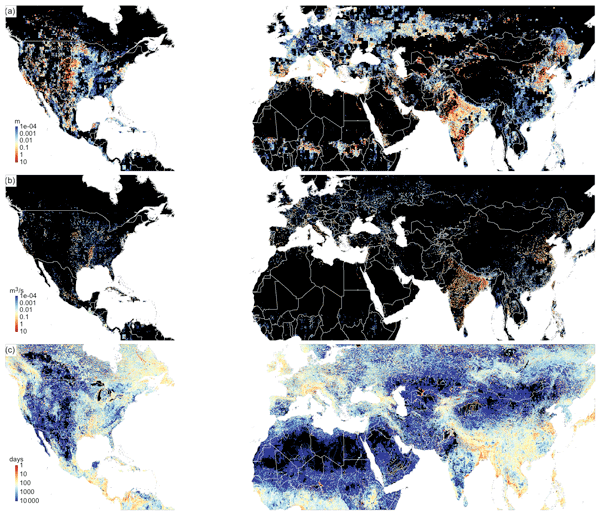
Marc F. P. Bierkens, Edwin H. Sutanudjaja, and Niko Wanders
Hydrol. Earth Syst. Sci., 25, 5859–5878, https://doi.org/10.5194/hess-25-5859-2021, https://doi.org/10.5194/hess-25-5859-2021, 2021
Short summary
Short summary
We introduce a simple analytical framework that allows us to estimate to what extent large-scale groundwater withdrawal affects groundwater levels and streamflow. It also calculates which part of the groundwater withdrawal comes out of groundwater storage and which part from a reduction in streamflow. Global depletion rates obtained with the framework are compared with estimates from satellites, from global- and continental-scale groundwater models, and from in situ datasets.
Cited articles
Abeshu, G. W., Tian, F., Wild, T., Zhao, M., Turner, S., Chowdhury, A. F. M. K., Vernon, C. R., Hu, H., Zhuang, Y., Hejazi, M., and Li, H.-Y.: Enhancing the representation of water management in global hydrological models, Geosci. Model Dev., 16, 5449–5472, https://doi.org/10.5194/gmd-16-5449-2023, 2023. a
Andréassian, V., Le Moine, N., Perrin, C., Ramos, M.-H., Oudin, L., Mathevet, T., Lerat, J., and Berthet, L.: All that glitters is not gold: the case of calibrating hydrological models, Hydrological Processes, 26, 2206–2210, https://doi.org/10.1002/hyp.9264, 2012. a
Arheimer, B., Donnelly, C., and Lindström, G.: Regulation of snow-fed rivers affects flow regimes more than climate change, Nature Communications, 8, 62, https://doi.org/10.1038/s41467-017-00092-8, 2017. a
Bandhauer, M., Isotta, F., Lakatos, M., Lussana, C., Båserud, L., Izsák, B., Szentes, O., Tveito, O. E., and Frei, C.: Evaluation of daily precipitation analyses in E-OBS (v19.0e) and ERA5 by comparison to regional high-resolution datasets in European regions, International Journal of Climatology, 42, 727–747, https://doi.org/10.1002/joc.7269, 2022. a
Bierkens, M. F. P. and Van Beek, L. P. H.: The global hydrological model PCR-GLOBWB: conceptualization, parameterization and verification, Tech. rep., Department of Physical Geography, Utrecht University, Utrecht, the Netherlands, https://vanbeek.geo.uu.nl/suppinfo/vanbeekbierkens2009.pdf (last access: 27 February 2023), 2009. a
Bierkens, M. F. P., Bell, V. A., Burek, P., Chaney, N., Condon, L. E., David, C. H., de Roo, A., Döll, P., Drost, N., Famiglietti, J. S., Flörke, M., Gochis, D. J., Houser, P., Hut, R., Keune, J., Kollet, S., Maxwell, R. M., Reager, J. T., Samaniego, L., Sudicky, E., Sutanudjaja, E. H., van de Giesen, N., Winsemius, H., and Wood, E. F.: Hyper-resolution global hydrological modelling: what is next?, Hydrological Processes, 29, 310–320, https://doi.org/10.1002/hyp.10391, 2015. a
Brun, P., Zimmermann, N. E., Hari, C., Pellissier, L., and Karger, D. N.: CHELSA-BIOCLIM+ A novel set of global climate-related predictors at kilometre-resolution, EnviDat [data set], https://doi.org/10.16904/ENVIDAT.332, 2022a. a
Brun, P., Zimmermann, N. E., Hari, C., Pellissier, L., and Karger, D. N.: Global climate-related predictors at kilometer resolution for the past and future, Earth Syst. Sci. Data, 14, 5573–5603, https://doi.org/10.5194/essd-14-5573-2022, 2022b. a
Brunner, M. I. and Naveau, P.: Spatial variability in Alpine reservoir regulation: deriving reservoir operations from streamflow using generalized additive models, Hydrol. Earth Syst. Sci., 27, 673–687, https://doi.org/10.5194/hess-27-673-2023, 2023. a
Burek, P., Satoh, Y., Kahil, T., Tang, T., Greve, P., Smilovic, M., Guillaumot, L., Zhao, F., and Wada, Y.: Development of the Community Water Model (CWatM v1.04) – a high-resolution hydrological model for global and regional assessment of integrated water resources management, Geosci. Model Dev., 13, 3267–3298, https://doi.org/10.5194/gmd-13-3267-2020, 2020. a, b, c, d
Carletti, F., Michel, A., Casale, F., Burri, A., Bocchiola, D., Bavay, M., and Lehning, M.: A comparison of hydrological models with different level of complexity in Alpine regions in the context of climate change, Hydrol. Earth Syst. Sci., 26, 3447–3475, https://doi.org/10.5194/hess-26-3447-2022, 2022. a
Colombo, N., Guyennon, N., Valt, M., Salerno, F., Godone, D., Cianfarra, P., Freppaz, M., Maugeri, M., Manara, V., Acquaotta, F., Petrangeli, A. B., and Romano, E.: Unprecedented snow-drought conditions in the Italian Alps during the early 2020s, Environmental Research Letters, 18, 074014, https://doi.org/10.1088/1748-9326/acdb88, 2023. a
Copernicus Climate Change Service: ERA5-Land hourly data from 1950 to present, Copernicus Climate Change Service (C3S) Climate Data Store (CDS) [data set], https://doi.org/10.24381/CDS.E2161BAC, 2019. a, b, c
Daly, C., Taylor, G., and Gibson, W.: The PRISM approach to mapping precipitation and temperature, in: Proceedings of the 10th AMS Conference on Applied Climatology, 10–12, Reno, United States, 1997. a
Dolan, F., Lamontagne, J., Link, R., Hejazi, M., Reed, P., and Edmonds, J.: Evaluating the economic impact of water scarcity in a changing world, Nature Communications, 12, 1915, https://doi.org/10.1038/s41467-021-22194-0, 2021. a
Dorigo, W., Wagner, W., Albergel, C., Albrecht, F., Balsamo, G., Brocca, L., Chung, D., Ertl, M., Forkel, M., Gruber, A., Haas, E., Hamer, P. D., Hirschi, M., Ikonen, J., De Jeu, R., Kidd, R., Lahoz, W., Liu, Y. Y., Miralles, D., Mistelbauer, T., Nicolai-Shaw, N., Parinussa, R., Pratola, C., Reimer, C., Van Der Schalie, R., Seneviratne, S. I., Smolander, T., and Lecomte, P.: ESA CCI Soil Moisture for improved Earth system understanding: State-of-the art and future directions, Remote Sensing of Environment, 203, 185–215, https://doi.org/10.1016/j.rse.2017.07.001, 2017. a, b, c
Dorigo, W., Preimesberger, W., Hahn, S., Van Der Schalie, R., De Jeu, R., Kidd, R., Rodríguez-Fernández, N., Hirschi, M., Stradiotti, P., Frederikse, T., Gruber, A., and Madelon, R.: ESA Soil Moisture Climate Change Initiative (Soil_Moisture_cci): COMBINED product, Version 08.1, NERC EDS Centre for Environmental Data Analysis [data set], https://catalogue.ceda.ac.uk/uuid/6f99cdb86a9e4d3da2d47c79612c00a2/ (last access: 30 September 2024), 2023. a, b
Dorigo, W. A., Gruber, A., De Jeu, R. A. M., Wagner, W., Stacke, T., Loew, A., Albergel, C., Brocca, L., Chung, D., Parinussa, R. M., and Kidd, R.: Evaluation of the ESA CCI soil moisture product using ground-based observations, Remote Sensing of Environment, 162, 380–395, https://doi.org/10.1016/j.rse.2014.07.023, 2015. a
Duethmann, D., Peters, J., Blume, T., Vorogushyn, S., and Güntner, A.: The value of satellite-derived snow cover images for calibrating a hydrological model in snow-dominated catchments in Central Asia, Water Resources Research, 50, 2002–2021, https://doi.org/10.1002/2013WR014382, 2014. a
European Space Agency and Airbus: Copernicus DEM, Copernicus [data set], https://doi.org/10.5270/ESA-c5d3d65, 2022. a, b
Fan, Y., Clark, M., Lawrence, D. M., Swenson, S., Band, L. E., Brantley, S. L., Brooks, P. D., Dietrich, W. E., Flores, A., Grant, G., Kirchner, J. W., Mackay, D. S., McDonnell, J. J., Milly, P. C. D., Sullivan, P. L., Tague, C., Ajami, H., Chaney, N., Hartmann, A., Hazenberg, P., McNamara, J., Pelletier, J., Perket, J., Rouholahnejad-Freund, E., Wagener, T., Zeng, X., Beighley, E., Buzan, J., Huang, M., Livneh, B., Mohanty, B. P., Nijssen, B., Safeeq, M., Shen, C., van Verseveld, W., Volk, J., and Yamazaki, D.: Hillslope hydrology in global change research and earth system modeling, Water Resources Research, 55, 1737–1772, https://doi.org/10.1029/2018WR023903, 2019. a
Farinotti, D.: A consensus estimate for the ice thickness distribution of all glaciers on Earth – dataset, ETH Zurich [data set], https://doi.org/10.3929/ETHZ-B-000315707, 2019. a
Farinotti, D., Usselmann, S., Huss, M., Bauder, A., and Funk, M.: Runoff evolution in the Swiss Alps: projections for selected high-alpine catchments based on ENSEMBLES scenarios, Hydrological Processes, 26, 1909–1924, https://doi.org/10.1002/hyp.8276, 2012. a
Farinotti, D., Huss, M., Fürst, J. J., Landmann, J., Machguth, H., Maussion, F., and Pandit, A.: A consensus estimate for the ice thickness distribution of all glaciers on Earth, Nature Geoscience, 12, 168–173, https://doi.org/10.1038/s41561-019-0300-3, 2019. a, b, c
Finger, D., Vis, M., Huss, M., and Seibert, J.: The value of multiple data set calibration versus model complexity for improving the performance of hydrological models in mountain catchments, Water Resources Research, 51, 1939–1958, https://doi.org/10.1002/2014WR015712, 2015. a
Fontrodona-Bach, A., Schaefli, B., Woods, R., Teuling, A. J., and Larsen, J. R.: NH-SWE: Northern Hemisphere Snow Water Equivalent dataset based on in-situ snow depth time series and the regionalisation of the ΔSNOW model, Zenodo [data set], https://doi.org/10.5281/ZENODO.7565252, 2023a. a
Fontrodona-Bach, A., Schaefli, B., Woods, R., Teuling, A. J., and Larsen, J. R.: NH-SWE: Northern Hemisphere Snow Water Equivalent dataset based on in situ snow depth time series, Earth Syst. Sci. Data, 15, 2577–2599, https://doi.org/10.5194/essd-15-2577-2023, 2023b. a, b, c
Freudiger, D., Kohn, I., Seibert, J., Stahl, K., and Weiler, M.: Snow redistribution for the hydrological modeling of alpine catchments: Snow redistribution for hydrological modeling, Wiley Interdisciplinary Reviews: Water, 4, e1232, https://doi.org/10.1002/wat2.1232, 2017. a, b
Frey, S. and Holzmann, H.: A conceptual, distributed snow redistribution model, Hydrol. Earth Syst. Sci., 19, 4517–4530, https://doi.org/10.5194/hess-19-4517-2015, 2015. a, b
Gampe, D. and Ludwig, R.: Evaluation of gridded precipitation data products for hydrological applications in complex topography, Hydrology, 4, 53, https://doi.org/10.3390/hydrology4040053, 2017. a
Gebrechorkos, S. H., Leyland, J., Dadson, S. J., Cohen, S., Slater, L., Wortmann, M., Ashworth, P. J., Bennett, G. L., Boothroyd, R., Cloke, H., Delorme, P., Griffith, H., Hardy, R., Hawker, L., McLelland, S., Neal, J., Nicholas, A., Tatem, A. J., Vahidi, E., Liu, Y., Sheffield, J., Parsons, D. R., and Darby, S. E.: Global-scale evaluation of precipitation datasets for hydrological modelling, Hydrol. Earth Syst. Sci., 28, 3099–3118, https://doi.org/10.5194/hess-28-3099-2024, 2024. a
GeoSphere Austria: SNOWGRID Klima v2.1, GeoSphere Austria [data set], https://doi.org/10.60669/FSXX-6977, 2022. a
Gharari, S., Clark, M. P., Mizukami, N., Wong, J. S., Pietroniro, A., and Wheater, H. S.: Improving the representation of subsurface water movement in land models, Journal of Hydrometeorology, 20, 2401–2418, https://doi.org/10.1175/JHM-D-19-0108.1, 2019. a, b
Girons Lopez, M., Vis, M. J. P., Jenicek, M., Griessinger, N., and Seibert, J.: Assessing the degree of detail of temperature-based snow routines for runoff modelling in mountainous areas in central Europe, Hydrol. Earth Syst. Sci., 24, 4441–4461, https://doi.org/10.5194/hess-24-4441-2020, 2020. a, b, c
Glacier Monitoring Switzerland (GLAMOS): Swiss glacier mass balance (release 2022), GLAMOS – Glacier Monitoring Switzerland [data set], https://doi.org/10.18750/MASSBALANCE.2022.R2022, 2022. a, b, c, d
GLIMS Consortium: GLIMS Glacier Database, Version 1, National Snow and Ice Data Center [data set], https://doi.org/10.7265/N5V98602, 2018. a, b, c, d
Godet, J., Gaume, E., Javelle, P., Nicolle, P., and Payrastre, O.: Technical note: Comparing three different methods for allocating river points to coarse-resolution hydrological modelling grid cells, Hydrol. Earth Syst. Sci., 28, 1403–1413, https://doi.org/10.5194/hess-28-1403-2024, 2024. a
Gosling, S. N. and Arnell, N. W.: Simulating current global river runoff with a global hydrological model: model revisions, validation, and sensitivity analysis, Hydrological Processes, 25, 1129–1145, https://doi.org/10.1002/hyp.7727, 2011. a
Gruber, A., Scanlon, T., van der Schalie, R., Wagner, W., and Dorigo, W.: Evolution of the ESA CCI Soil Moisture climate data records and their underlying merging methodology, Earth Syst. Sci. Data, 11, 717–739, https://doi.org/10.5194/essd-11-717-2019, 2019. a, b
Gupta, H. V., Kling, H., Yilmaz, K. K., and Martinez, G. F.: Decomposition of the mean squared error and NSE performance criteria: Implications for improving hydrological modelling, Journal of Hydrology, 377, 80–91, https://doi.org/10.1016/j.jhydrol.2009.08.003, 2009. a
Gädeke, A., Krysanova, V., Aryal, A., Chang, J., Grillakis, M., Hanasaki, N., Koutroulis, A., Pokhrel, Y., Satoh, Y., Schaphoff, S., Müller Schmied, H., Stacke, T., Tang, Q., Wada, Y., and Thonicke, K.: Performance evaluation of global hydrological models in six large Pan-Arctic watersheds, Climatic Change, 163, 1329–1351, https://doi.org/10.1007/s10584-020-02892-2, 2020. a, b, c, d, e
Hamon, W. R.: Estimating potential evapotranspiration, Transactions of the American Society of Civil Engineers, 128, 324–338, https://doi.org/10.1061/TACEAT.0008673, 1963. a
Hanasaki, N., Kanae, S., and Oki, T.: A reservoir operation scheme for global river routing models, Journal of Hydrology, 327, 22–41, https://doi.org/10.1016/j.jhydrol.2005.11.011, 2006. a
Hanus, S., Schuster, L., Burek, P., Maussion, F., Wada, Y., and Viviroli, D.: Coupling a large-scale glacier and hydrological model (OGGM v1.5.3 and CWatM V1.08) – towards an improved representation of mountain water resources in global assessments, Geosci. Model Dev., 17, 5123–5144, https://doi.org/10.5194/gmd-17-5123-2024, 2024. a, b, c, d, e, f
Heinicke, S., Volkholz, J., Schewe, J., Gosling, S. N., Schmied, H. M., Zimmermann, S., Mengel, M., Sauer, I. J., Burek, P., Chang, J., Kou-Giesbrecht, S., Grillakis, M., Guillaumot, L., Hanasaki, N., Koutroulis, A., Otta, K., Qi, W., Satoh, Y., Stacke, T., Yokohata, T., and Frieler, K.: Global hydrological models continue to overestimate river discharge, Environmental Research Letters, 19, 074005, https://doi.org/10.1088/1748-9326/ad52b0, 2024. a, b
Hersbach, H., Bell, B., Berrisford, P., Hirahara, S., Horányi, A., Muñoz-Sabater, J., Nicolas, J., Peubey, C., Radu, R., Schepers, D., Simmons, A., Soci, C., Abdalla, S., Abellan, X., Balsamo, G., Bechtold, P., Biavati, G., Bidlot, J., Bonavita, M., De Chiara, G., Dahlgren, P., Dee, D., Diamantakis, M., Dragani, R., Flemming, J., Forbes, R., Fuentes, M., Geer, A., Haimberger, L., Healy, S., Hogan, R. J., Hólm, E., Janisková, M., Keeley, S., Laloyaux, P., Lopez, P., Lupu, C., Radnoti, G., de Rosnay, P., Rozum, I., Vamborg, F., Villaume, S., and Thépaut, J.-N.: The ERA5 global reanalysis, Quarterly Journal of the Royal Meteorological Society, 146, 1999–2049, https://doi.org/10.1002/qj.3803, 2020. a
Hoch, J. M., Sutanudjaja, E. H., Wanders, N., van Beek, R. L. P. H., and Bierkens, M. F. P.: Hyper-resolution PCR-GLOBWB: opportunities and challenges from refining model spatial resolution to 1 km over the European continent, Hydrol. Earth Syst. Sci., 27, 1383–1401, https://doi.org/10.5194/hess-27-1383-2023, 2023. a, b, c, d, e, f, g, h
Hock, R.: A distributed temperature-index ice- and snowmelt model including potential direct solar radiation, Journal of Glaciology, 45, 101–111, https://doi.org/10.3189/S0022143000003087, 1999. a
Hock, R.: Temperature index melt modelling in mountain areas, Journal of Hydrology, 282, 104–115, https://doi.org/10.1016/S0022-1694(03)00257-9, 2003. a, b
Hou, Y., Guo, H., Yang, Y., and Liu, W.: Global evaluation of runoff simulation from climate, hydrological and land surface models, Water Resources Research, 59, https://doi.org/10.1029/2021WR031817, 2023. a
Houska, T., Kraft, P., Chamorro-Chavez, A., and Breuer, L.: SPOTting model parameters using a ready-made python package, PLoS ONE, 10, e0145180, https://doi.org/10.1371/journal.pone.0145180, 2015. a
Hugonnet, R., McNabb, R., Berthier, E., Menounos, B., Nuth, C., Girod, L., Farinotti, D., Huss, M., Dussaillant, I., Brun, F., and Kääb, A.: Accelerated global glacier mass loss in the early twenty-first century – Dataset, Theia [data set], https://doi.org/10.6096/13, 2021b. a
Huss, M.: Present and future contribution of glacier storage change to runoff from macroscale drainage basins in Europe, Water Resources Research, 47, https://doi.org/10.1029/2010WR010299, 2011. a
Huss, M. and Hock, R.: A new model for global glacier change and sea-level rise, Frontiers in Earth Science, 3, https://doi.org/10.3389/feart.2015.00054, 2015. a
Huss, M. and Hock, R.: Global-scale hydrological response to future glacier mass loss, Nature Climate Change, 8, 135–140, https://doi.org/10.1038/s41558-017-0049-x, 2018. a
Immerzeel, W. W., van Beek, L. P. H., and Bierkens, M. F. P.: Climate change will affect the Asian water towers, Science, 328, 1382–1385, https://doi.org/10.1126/science.1183188, 2010. a
Immerzeel, W. W., van Beek, L. P. H., Konz, M., Shrestha, A. B., and Bierkens, M. F. P.: Hydrological response to climate change in a glacierized catchment in the Himalayas, Climatic Change, 110, 721–736, https://doi.org/10.1007/s10584-011-0143-4, 2012. a
Immerzeel, W. W., Lutz, A. F., Andrade, M., Bahl, A., Biemans, H., Bolch, T., Hyde, S., Brumby, S., Davies, B. J., Elmore, A. C., Emmer, A., Feng, M., Fernández, A., Haritashya, U., Kargel, J. S., Koppes, M., Kraaijenbrink, P. D. A., Kulkarni, A. V., Mayewski, P. A., Nepal, S., Pacheco, P., Painter, T. H., Pellicciotti, F., Rajaram, H., Rupper, S., Sinisalo, A., Shrestha, A. B., Viviroli, D., Wada, Y., Xiao, C., Yao, T., and Baillie, J. E. M.: Importance and vulnerability of the world’s water towers, Nature, 577, 364–369, https://doi.org/10.1038/s41586-019-1822-y, 2020. a
Ismail, M. F., Bogacki, W., Disse, M., Schäfer, M., and Kirschbauer, L.: Estimating degree-day factors of snow based on energy flux components, The Cryosphere, 17, 211–231, https://doi.org/10.5194/tc-17-211-2023, 2023. a
Isotta, F. and Frei, C.: APGD: Alpine precipitation grid dataset, Federal Office of Meteorology and Climatology MeteoSwiss [data set], https://doi.org/10.18751/CLIMATE/GRIDDATA/APGD/1.0, 2013. a, b
Isotta, F. A., Frei, C., Weilguni, V., Perčec Tadić, M., Lassègues, P., Rudolf, B., Pavan, V., Cacciamani, C., Antolini, G., Ratto, S. M., Munari, M., Micheletti, S., Bonati, V., Lussana, C., Ronchi, C., Panettieri, E., Marigo, G., and Vertačnik, G.: The climate of daily precipitation in the Alps: development and analysis of a high-resolution grid dataset from pan-Alpine rain-gauge data, International Journal of Climatology, 34, 1657–1675, https://doi.org/10.1002/joc.3794, 2014. a, b
Isotta, F. A., Vogel, R., and Frei, C.: Evaluation of European regional reanalyses and downscalings for precipitation in the Alpine region, Meteorologische Zeitschrift, 24, 15–37, https://doi.org/10.1127/metz/2014/0584, 2015. a, b, c
Janzing, J., Wanders, N., Van Tiel, M., Van Jaarsveld, B., Karger, D., and Brunner, M.: Data supplement to Hyper-resolution large-scale hydrological modelling benefits from improved process representation in mountain regions, EnviDat, https://doi.org/10.16904/envidat.705, 2025. a
Karger, D. N. and Janzing, J.: CHELSAcerra-daily, EnviDat. https://doi.org/10.16904/envidat.703, 2025. a
Karger, D. N., Conrad, O., Böhner, J., Kawohl, T., Kreft, H., Soria-Auza, R. W., Zimmermann, N. E., Linder, H. P., and Kessler, M.: Climatologies at high resolution for the earth's land surface areas, Scientific Data, 4, 170122, https://doi.org/10.1038/sdata.2017.122, 2017. a, b
Karger, D. N., Conrad, O., Böhner, J., Kawohl, T., Kreft, H., Soria-Auza, R. W., Zimmermann, N. E., Linder, H. P., and Kessler, M.: Climatologies at high resolution for the earth's land surface areas, EnviDat [data set], https://doi.org/10.16904/ENVIDAT.228, 2021a. a, b, c
Karger, D. N., Wilson, A. M., Mahony, C., Zimmermann, N. E., and Jetz, W.: Global daily 1 km land surface precipitation based on cloud cover-informed downscaling, Scientific Data, 8, 307, https://doi.org/10.1038/s41597-021-01084-6, 2021b. a, b, c, d
Karger, D. N., Lange, S., Hari, C., Reyer, C. P. O., Conrad, O., Zimmermann, N. E., and Frieler, K.: CHELSA-W5E5: daily 1 km meteorological forcing data for climate impact studies, Earth Syst. Sci. Data, 15, 2445–2464, https://doi.org/10.5194/essd-15-2445-2023, 2023. a, b, c
Keller, J. D. and Wahl, S.: Representation of climate in reanalyses: an intercomparison for Europe and North America, Journal of Climate, 34, 1667–1684, https://doi.org/10.1175/JCLI-D-20-0609.1, 2021. a
Khanal, S., Lutz, A., Kraaijenbrink, P. D. A., van den Hurk, B., Yao, T., and Immerzeel, W. W.: Variable 21st century climate change response for rivers in High Mountain Asia at seasonal to decadal time scales, Water Resources Research, 57, e2020WR029266, https://doi.org/10.1029/2020WR029266, 2021. a
Klemeš, V.: Operational testing of hydrological simulation models, Hydrological Sciences Journal, 31, 13–24, https://doi.org/10.1080/02626668609491024, 1986. a
Klingler, C., Kratzert, F., Schulz, K., and Herrnegger, M.: LamaH-CE: LArge-SaMple DAta for Hydrology and Environmental Sciences for Central Europe – files, Zenodo [data set], https://doi.org/10.5281/ZENODO.4525244, 2021. a
Knoben, W. J. M., Freer, J. E., and Woods, R. A.: Technical note: Inherent benchmark or not? Comparing Nash–Sutcliffe and Kling–Gupta efficiency scores, Hydrol. Earth Syst. Sci., 23, 4323–4331, https://doi.org/10.5194/hess-23-4323-2019, 2019. a
Knoben, W. J. M., Freer, J. E., Peel, M. C., Fowler, K. J. A., and Woods, R. A.: A brief analysis of conceptual model structure uncertainty using 36 models and 559 catchments, Water Resources Research, 56, e2019WR025975, https://doi.org/10.1029/2019WR025975, 2020. a
Kraaijenbrink, P. D. A., Bierkens, M. F. P., Lutz, A. F., and Immerzeel, W. W.: Impact of a global temperature rise of 1.5 degrees Celsius on Asia's glaciers, Nature, 549, 257–260, https://doi.org/10.1038/nature23878, 2017. a
Kraaijenbrink, P. D. A., Stigter, E. E., Yao, T., and Immerzeel, W. W.: Climate change decisive for Asia's snow meltwater supply, Nature Climate Change, 11, 591–597, https://doi.org/10.1038/s41558-021-01074-x, 2021. a
Kuhn, M.: Redistribution of snow and glacier mass balance from a hydrometeorological model, Journal of Hydrology, 282, 95–103, https://doi.org/10.1016/S0022-1694(03)00256-7, 2003. a
Kuusisto, E.: On the Values and Variability of Degree-Day Melting Factor in Finland, Hydrology Research, 11, 235–242, https://doi.org/10.2166/nh.1980.0011, 1980. a
Lange, S., Menz, C., Gleixner, S., Cucchi, M., Weedon, G. P., Amici, A., Bellouin, N., Müller Schmied, H., Hersbach, H., Buontempo, C., and Cagnazzo, C.: WFDE5 over land merged with ERA5 over the ocean (W5E5 v2.0), ISIMIP Repository [data set], https://doi.org/10.48364/ISIMIP.342217, 2021. a, b
Lehner, B., Czisch, G., and Vassolo, S.: The impact of global change on the hydropower potential of Europe: a model-based analysis, Energy Policy, 33, 839–855, https://doi.org/10.1016/j.enpol.2003.10.018, 2005. a, b
Leijnse, M., Bierkens, M. F. P., Gommans, K. H. M., Lin, D., Tait, A., and Wanders, N.: Key drivers and pressures of global water scarcity hotspots, Environmental Research Letters, 19, 054035, https://doi.org/10.1088/1748-9326/ad3c54, 2024. a
Magnusson, J., Wever, N., Essery, R., Helbig, N., Winstral, A., and Jonas, T.: Evaluating snow models with varying process representations for hydrological applications, Water Resources Research, 51, 2707–2723, https://doi.org/10.1002/2014WR016498, 2015. a
Malle, J. T., Mazzotti, G., Karger, D. N., and Jonas, T.: Regionally optimized high-resolution input datasets enhance the representation of snow cover in CLM5, Earth Syst. Dynam., 15, 1073–1115, https://doi.org/10.5194/esd-15-1073-2024, 2024. a, b
Maussion, F., Butenko, A., Champollion, N., Dusch, M., Eis, J., Fourteau, K., Gregor, P., Jarosch, A. H., Landmann, J., Oesterle, F., Recinos, B., Rothenpieler, T., Vlug, A., Wild, C. T., and Marzeion, B.: The Open Global Glacier Model (OGGM) v1.1, Geosci. Model Dev., 12, 909–931, https://doi.org/10.5194/gmd-12-909-2019, 2019. a
Mortimer, C., Mudryk, L., Derksen, C., Luojus, K., Brown, R., Kelly, R., and Tedesco, M.: Evaluation of long-term Northern Hemisphere snow water equivalent products, The Cryosphere, 14, 1579–1594, https://doi.org/10.5194/tc-14-1579-2020, 2020. a, b
Mott, R.: Climatological snow data since 1998, OSHD, EnviDat [data set], https://doi.org/10.16904/ENVIDAT.401, 2023. a, b
Mott, R., Winstral, A., Cluzet, B., Helbig, N., Magnusson, J., Mazzotti, G., Quéno, L., Schirmer, M., Webster, C., and Jonas, T.: Operational snow-hydrological modeling for Switzerland, Frontiers in Earth Science, 11, https://doi.org/10.3389/feart.2023.1228158, 2023. a, b, c, d
Mudryk, L., Mortimer, C., Derksen, C., Elias Chereque, A., and Kushner, P.: Benchmarking of snow water equivalent (SWE) products based on outcomes of the SnowPEx+ Intercomparison Project, The Cryosphere, 19, 201–218, https://doi.org/10.5194/tc-19-201-2025, 2025. a
Müller Schmied, H., Cáceres, D., Eisner, S., Flörke, M., Herbert, C., Niemann, C., Peiris, T. A., Popat, E., Portmann, F. T., Reinecke, R., Schumacher, M., Shadkam, S., Telteu, C.-E., Trautmann, T., and Döll, P.: The global water resources and use model WaterGAP v2.2d: model description and evaluation, Geosci. Model Dev., 14, 1037–1079, https://doi.org/10.5194/gmd-14-1037-2021, 2021. a, b
Nash, J. E. and Sutcliffe, J. V.: River flow forecasting through conceptual models part I – A discussion of principles, Journal of Hydrology, 10, 282–290, https://doi.org/10.1016/0022-1694(70)90255-6, 1970. a
Olefs, M., Schöner, W., Suklitsch, M., Wittmann, C., Niedermoser, B., Neururer, A., and Wurzer, A.: SNOWGRID – A new operational snow cover model in Austria, in: Proceedings of the International Snow Science Workshop 2013, 38–45, Grenoble, France, https://www.semanticscholar.org/paper/SNOWGRID—A-New-Operational-Snow-Cover-Model-in-Olefs-Schöner (last access: 31 July 2024), 2013. a
Olefs, M., Koch, R., Schöner, W., and Marke, T.: Changes in snow depth, snow cover duration, and potential snowmaking conditions in Austria, 1961–2020 – a model based approach, Atmosphere, 11, 1330, https://doi.org/10.3390/atmos11121330, 2020. a, b, c
Partl, R.: Statistik 1977 der großen Talsperren und Flußstauwerke Österreichs, Österreichischer Wasserwirtschaftsverband, ISBN 978-0-387-81461-2, 1977. a
Pfeffer, W. T., Arendt, A. A., Bliss, A., Bolch, T., Cogley, J. G., Gardner, A. S., Hagen, J.-O., Hock, R., Kaser, G., Kienholz, C., Miles, E. S., Moholdt, G., Mölg, N., Paul, F., Radić, V., Rastner, P., Raup, B. H., Rich, J., Sharp, M. J., and Consortium, T. R.: The Randolph Glacier Inventory: a globally complete inventory of glaciers, Journal of Glaciology, 60, 537–552, https://doi.org/10.3189/2014JoG13J176, 2014. a, b, c
Preimesberger, W., Scanlon, T., Su, C.-H., Gruber, A., and Dorigo, W.: Homogenization of structural breaks in the Global ESA CCI Soil Moisture Multisatellite Climate Data Record, IEEE Transactions on Geoscience and Remote Sensing, 59, 2845–2862, https://doi.org/10.1109/TGRS.2020.3012896, 2021. a, b
Rahman, M. and Rosolem, R.: Towards a simple representation of chalk hydrology in land surface modelling, Hydrol. Earth Syst. Sci., 21, 459–471, https://doi.org/10.5194/hess-21-459-2017, 2017. a
Raimonet, M., Oudin, L., Thieu, V., Silvestre, M., Vautard, R., Rabouille, C., and Moigne, P. L.: Evaluation of gridded meteorological datasets for hydrological modeling, Journal of Hydrometeorology, 18, 3027–3041, https://doi.org/10.1175/JHM-D-17-0018.1, 2017. a
Rango, A. and Martinec, J.: Revisiting the Degree-Day Method for Snowmelt Computations, JAWRA Journal of the American Water Resources Association, 31, 657–669, https://doi.org/10.1111/j.1752-1688.1995.tb03392.x, 1995. a
Raup, B., Racoviteanu, A., Khalsa, S. J. S., Helm, C., Armstrong, R., and Arnaud, Y.: The GLIMS geospatial glacier database: A new tool for studying glacier change, Global and Planetary Change, 56, 101–110, https://doi.org/10.1016/j.gloplacha.2006.07.018, 2007. a, b
Refsgaard, J. C. and Storm, B.: Construction, calibration and validation of hydrological models, in: Distributed hydrological modelling, edited by: Abbott, M. B. and Refsgaard, J. C., 41–54, Springer Netherlands, Dordrecht, ISBN 978-94-009-0257-2, https://doi.org/10.1007/978-94-009-0257-2_3, 1996. a, b
RGI Consortium: Randolph Glacier Inventory – a dataset of global glacier outlines, Version 6, National Snow and Ice Data Center [data set], https://doi.org/10.7265/4M1F-GD79, 2017. a, b
Ridal, M., Bazile, E., Le Moigne, P., Randriamampianina, R., Schimanke, S., Andrae, U., Berggren, L., Brousseau, P., Dahlgren, P., Edvinsson, L., El-Said, A., Glinton, M., Hagelin, S., Hopsch, S., Isaksson, L., Medeiros, P., Olsson, E., Unden, P., and Wang, Z. Q.: CERRA, the Copernicus European Regional Reanalysis system, Quarterly Journal of the Royal Meteorological Society, https://doi.org/10.1002/qj.4764, 2024. a, b
Salwey, S., Coxon, G., Pianosi, F., Singer, M. B., and Hutton, C.: National-scale detection of reservoir impacts through hydrological signatures, Water Resources Research, 59, e2022WR033893, https://doi.org/10.1029/2022WR033893, 2023. a, b
Schaefli, B., Manso, P., Fischer, M., Huss, M., and Farinotti, D.: The role of glacier retreat for Swiss hydropower production, Renewable Energy, 132, 615–627, https://doi.org/10.1016/j.renene.2018.07.104, 2019. a
Schellekens, J., Dutra, E., Martínez-de la Torre, A., Balsamo, G., van Dijk, A., Sperna Weiland, F., Minvielle, M., Calvet, J.-C., Decharme, B., Eisner, S., Fink, G., Flörke, M., Peßenteiner, S., van Beek, R., Polcher, J., Beck, H., Orth, R., Calton, B., Burke, S., Dorigo, W., and Weedon, G. P.: A global water resources ensemble of hydrological models: the eartH2Observe Tier-1 dataset, Earth Syst. Sci. Data, 9, 389–413, https://doi.org/10.5194/essd-9-389-2017, 2017. a
Schimanke, S., Ridal, M., Moigne, P. L., Berggren, L., Undén, P., Randriamampianina, Roger, R., Andrea, U., Bazile, E., Bertelsen, A., and Brousseau, P.: CERRA sub-daily regional reanalysis data for Europe on single levels from 1984 to present, ECMWF [data set], https://doi.org/10.24381/CDS.622A565A, 2021. a, b, c
Schlemper, C., Götte, J., and Brunner, M.: Large-sample hydro-meteorological dataset for the Alps, HydroShare [data set], https://doi.org/10.4211/hs.f1c12fa6c5be4c61a5ec617fa62e13d6, 2024. a, b
Seibert, J.: Reliability of model predictions outside calibration conditions: Paper presented at the Nordic Hydrological Conference (Røros, Norway 4–7 August 2002), Hydrology Research, 34, 477–492, https://doi.org/10.2166/nh.2003.0019, 2003. a
Seibert, J. and Vis, M. J. P.: Teaching hydrological modeling with a user-friendly catchment-runoff-model software package, Hydrol. Earth Syst. Sci., 16, 3315–3325, https://doi.org/10.5194/hess-16-3315-2012, 2012. a
Seibert, J., Vis, M. J. P., Lewis, E., and van Meerveld, H.: Upper and lower benchmarks in hydrological modelling, Hydrological Processes, 32, 1120–1125, https://doi.org/10.1002/hyp.11476, 2018b. a
Sevruk, B.: Correction of precipitation measurements: Swiss experience, in: Papers presented at the workshop on the correction of precipitation measurements, 187–196, Zurich, Switzerland, https://library.wmo.int/records/item/41746-papers-presented-at-the-workshop-on-the-correction-of-precipitation-measurements?offset=58 (last access: 6 September 2024), 1985. a
Shin, S., Pokhrel, Y., and Miguez-Macho, G.: High-resolution modeling of reservoir release and storage dynamics at the continental scale, Water Resources Research, 55, 787–810, https://doi.org/10.1029/2018WR023025, 2019. a
Simmler, H.: Die Talsperren Österreichs: Statistik 1961, Springer-Verlag, ISBN 978-3-7091-5546-2, 1961. a
Slater, A. G. and Clark, M. P.: Snow data assimilation via an ensemble Kalman filter, Journal of Hydrometeorology, 7, 478–493, https://doi.org/10.1175/JHM505.1, 2006. a
Sleziak, P., Szolgay, J., Hlavčová, K., Danko, M., and Parajka, J.: The effect of the snow weighting on the temporal stability of hydrologic model efficiency and parameters, Journal of Hydrology, 583, 124639, https://doi.org/10.1016/j.jhydrol.2020.124639, 2020. a, b
Speckhann, G., Kreibich, H., and Merz, B.: Inventory of dams in Germany, GFZ Data Services [data set], https://doi.org/10.5880/GFZ.4.4.2020.005, 2020. a
Speckhann, G. A., Kreibich, H., and Merz, B.: Inventory of dams in Germany, Earth Syst. Sci. Data, 13, 731–740, https://doi.org/10.5194/essd-13-731-2021, 2021. a
Stacke, T. and Hagemann, S.: HydroPy (v1.0): a new global hydrology model written in Python, Geosci. Model Dev., 14, 7795–7816, https://doi.org/10.5194/gmd-14-7795-2021, 2021. a
Stahl, K., Moore, R. D., Shea, J. M., Hutchinson, D., and Cannon, A. J.: Coupled modelling of glacier and streamflow response to future climate scenarios: modelling of glacier and streamflow, Water Resources Research, 44, https://doi.org/10.1029/2007WR005956, 2008. a
Sutanudjaja, E. H., van Beek, R., Wanders, N., Wada, Y., Bosmans, J. H. C., Drost, N., van der Ent, R. J., de Graaf, I. E. M., Hoch, J. M., de Jong, K., Karssenberg, D., López López, P., Peßenteiner, S., Schmitz, O., Straatsma, M. W., Vannametee, E., Wisser, D., and Bierkens, M. F. P.: PCR-GLOBWB 2: a 5 arcmin global hydrological and water resources model, Geosci. Model Dev., 11, 2429–2453, https://doi.org/10.5194/gmd-11-2429-2018, 2018. a, b, c, d, e
Tang, G., Clark, M. P., Knoben, W. J. M., Liu, H., Gharari, S., Arnal, L., Beck, H. E., Wood, A. W., Newman, A. J., and Papalexiou, S. M.: The impact of meteorological forcing uncertainty on hydrological modeling: a global analysis of cryosphere basins, Water Resources Research, 59, e2022WR033767, https://doi.org/10.1029/2022WR033767, 2023. a
Telteu, C.-E., Müller Schmied, H., Thiery, W., Leng, G., Burek, P., Liu, X., Boulange, J. E. S., Andersen, L. S., Grillakis, M., Gosling, S. N., Satoh, Y., Rakovec, O., Stacke, T., Chang, J., Wanders, N., Shah, H. L., Trautmann, T., Mao, G., Hanasaki, N., Koutroulis, A., Pokhrel, Y., Samaniego, L., Wada, Y., Mishra, V., Liu, J., Döll, P., Zhao, F., Gädeke, A., Rabin, S. S., and Herz, F.: Understanding each other's models: an introduction and a standard representation of 16 global water models to support intercomparison, improvement, and communication, Geosci. Model Dev., 14, 3843–3878, https://doi.org/10.5194/gmd-14-3843-2021, 2021. a, b, c, d, e
Tu, T., Wang, J., Zhao, G., Zhao, T., and Dong, X.: Scaling from global to regional river flow with global hydrological models: Choice matters, Journal of Hydrology, 633, 130960, https://doi.org/10.1016/j.jhydrol.2024.130960, 2024. a
Turner, S. W. D. and Voisin, N.: Simulation of hydropower at subcontinental to global scales: a state-of-the-art review, Environmental Research Letters, 17, 023002, https://doi.org/10.1088/1748-9326/ac4e38, 2022. a
Van Jaarsveld, B., Wanders, N., Sutanudjaja, E. H., Hoch, J., Droppers, B., Janzing, J., van Beek, R. L. P. H., and Bierkens, M. F. P.: A first attempt to model global hydrology at hyper-resolution, Earth Syst. Dynam., 16, 29–54, https://doi.org/10.5194/esd-16-29-2025, 2025. a, b, c, d, e, f, g, h, i
Van Tiel, M., Van Loon, A. F., Seibert, J., and Stahl, K.: Hydrological response to warm and dry weather: do glaciers compensate?, Hydrol. Earth Syst. Sci., 25, 3245–3265, https://doi.org/10.5194/hess-25-3245-2021, 2021. a
Van Tiel, M., Weiler, M., Freudiger, D., Moretti, G., Kohn, I., Gerlinger, K., and Stahl, K.: Melting alpine water towers aggravate downstream low flows: a stress-test storyline approach, Earth's Future, 11, e2022EF003408, https://doi.org/10.1029/2022EF003408, 2023. a, b, c
Veldkamp, T. I. E., Zhao, F., Ward, P. J., Moel, H. d., Aerts, J. C. J. H., Schmied, H. M., Portmann, F. T., Masaki, Y., Pokhrel, Y., Liu, X., Satoh, Y., Gerten, D., Gosling, S. N., Zaherpour, J., and Wada, Y.: Human impact parameterizations in global hydrological models improve estimates of monthly discharges and hydrological extremes: a multi-model validation study, Environmental Research Letters, 13, 055008, https://doi.org/10.1088/1748-9326/aab96f, 2018. a
Verkaik, J. and Sutanudjaja, E. H.: Data supplement to the GLOBGM v1.0: a parallel implementation of a 30 arcsec PCR-GLOBWB-MODFLOW global-scale groundwater model, Utrecht University, https://doi.org/10.24416/UU01-44L775, 2024. a
Verrelle, A., Glinton, M., Bazile, E., Le Moigne, P., Randriamampianina, Roger, R., Ridal, M., Berggren, L., Undén, P., Schimanke, S., Mladek, R., and Soci, C.: CERRA-Land sub-daily regional reanalysis data for Europe from 1984 to present, ECMWF [data set], https://doi.org/10.24381/CDS.A7F3CD0B, 2022. a, b, c, d, e, f
Viviroli, D., Dürr, H. H., Messerli, B., Meybeck, M., and Weingartner, R.: Mountains of the world, water towers for humanity: Typology, mapping, and global significance, Water Resources Research, 43, https://doi.org/10.1029/2006WR005653, 2007. a, b
Viviroli, D., Kummu, M., Meybeck, M., Kallio, M., and Wada, Y.: Increasing dependence of lowland populations on mountain water resources, Nature Sustainability, 3, 917–928, https://doi.org/10.1038/s41893-020-0559-9, 2020. a
Warszawski, L., Frieler, K., Huber, V., Piontek, F., Serdeczny, O., and Schewe, J.: The Inter-Sectoral Impact Model Intercomparison Project (ISI–MIP): Project framework, Proceedings of the National Academy of Sciences, 111, 3228–3232, https://doi.org/10.1073/pnas.1312330110, 2014. a
Weingartner, R., Barben, M., and Spreafico, M.: Floods in mountain areas—an overview based on examples from Switzerland, Journal of Hydrology, 282, 10–24, https://doi.org/10.1016/S0022-1694(03)00249-X, 2003. a, b, c
Wiersma, P., Aerts, J., Zekollari, H., Hrachowitz, M., Drost, N., Huss, M., Sutanudjaja, E. H., and Hut, R.: Coupling a global glacier model to a global hydrological model prevents underestimation of glacier runoff, Hydrol. Earth Syst. Sci., 26, 5971–5986, https://doi.org/10.5194/hess-26-5971-2022, 2022. a, b, c
Wilby, R. L.: A global hydrology research agenda fit for the 2030s, Hydrology Research, 50, 1464–1480, https://doi.org/10.2166/nh.2019.100, 2019. a
Wood, E. F., Roundy, J. K., Troy, T. J., van Beek, L. P. H., Bierkens, M. F. P., Blyth, E., de Roo, A., Döll, P., Ek, M., Famiglietti, J., Gochis, D., van de Giesen, N., Houser, P., Jaffé, P. R., Kollet, S., Lehner, B., Lettenmaier, D. P., Peters-Lidard, C., Sivapalan, M., Sheffield, J., Wade, A., and Whitehead, P.: Hyperresolution global land surface modeling: Meeting a grand challenge for monitoring Earth's terrestrial water: OPINION, Water Resources Research, 47, https://doi.org/10.1029/2010WR010090, 2011. a
World Glacier Monitoring Service (WGMS): Fluctuations of Glaciers Database, World Glacier Monitoring Service (WGMS) [data set], https://doi.org/10.5904/WGMS-FOG-2023-09, 2023. a, b, c, d
Yamazaki, D., Ikeshima, D., Sosa, J., Bates, P. D., Allen, G. H., and Pavelsky, T. M.: MERIT Hydro: A high-resolution global hydrography map based on latest topography dataset, Water Resources Research, 55, 5053–5073, https://doi.org/10.1029/2019WR024873, 2019. a, b, c, d
Yang, C., Tijerina-Kreuzer, D. T., Tran, H. V., Condon, L. E., and Maxwell, R. M.: A high-resolution, 3D groundwater-surface water simulation of the contiguous US: Advances in the integrated ParFlow CONUS 2.0 modeling platform, Journal of Hydrology, 626, 130294, https://doi.org/10.1016/j.jhydrol.2023.130294, 2023. a
Yang, Y., Chen, R., Liu, G., Liu, Z., and Wang, X.: Trends and variability in snowmelt in China under climate change, Hydrol. Earth Syst. Sci., 26, 305–329, https://doi.org/10.5194/hess-26-305-2022, 2022. a
Download
The requested paper has a corresponding corrigendum published. Please read the corrigendum first before downloading the article.
- Article
(12144 KB) - Full-text XML
- Corrigendum
-
Supplement
(5833 KB) - BibTeX
- EndNote
Short summary
Process representation in hyper-resolution large-scale hydrological models (LHMs) limits model performance, particularly in mountain regions. Here, we update mountain process representation in an LHM and compare different meteorological forcing products. Structural and parametric changes in snow, glacier, and soil processes improve discharge simulations, while meteorological forcing remains a major control on model performance. Our work can guide future development of LHMs.
Process representation in hyper-resolution large-scale hydrological models (LHMs) limits model...


