
Articles | Volume 30, issue 12
https://doi.org/10.5194/hess-30-4117-2026
© Author(s) 2026. This work is distributed under
the Creative Commons Attribution 4.0 License.
the Creative Commons Attribution 4.0 License.
https://doi.org/10.5194/hess-30-4117-2026
© Author(s) 2026. This work is distributed under
the Creative Commons Attribution 4.0 License.
the Creative Commons Attribution 4.0 License.
Research article
| 
30 Jun 2026
Research article |
| 30 Jun 2026
| 30 Jun 2026
Scale-dependent biases in Alpine sub-daily areal precipitation extremes: added value of convection permitting models
Rashid Akbary
CORRESPONDING AUTHOR

Department of Land Environment Agriculture and Forestry, University of Padova, Padova, Italy
Eleonora Dallan
Department of Land Environment Agriculture and Forestry, University of Padova, Padova, Italy
Research Center on Climate Change Impacts, University of Padova, Rovigo, Italy
Paul C. Astagneau
WSL Institute for Snow and Avalanche Research SLF, Davos Dorf, Switzerland
Institute for Atmospheric and Climate Science, ETH Zurich, Zurich, Switzerland
Climate Change, Extremes and Natural Hazards in Alpine Regions Research Center CERC, Davos Dorf, Switzerland
Raul R. Wood
WSL Institute for Snow and Avalanche Research SLF, Davos Dorf, Switzerland
Institute for Atmospheric and Climate Science, ETH Zurich, Zurich, Switzerland
Climate Change, Extremes and Natural Hazards in Alpine Regions Research Center CERC, Davos Dorf, Switzerland
Francesco Marra
Department of Geosciences, University of Padova, Padova, Italy
Manuela I. Brunner
WSL Institute for Snow and Avalanche Research SLF, Davos Dorf, Switzerland
Institute for Atmospheric and Climate Science, ETH Zurich, Zurich, Switzerland
Climate Change, Extremes and Natural Hazards in Alpine Regions Research Center CERC, Davos Dorf, Switzerland
Marco Borga
Department of Land Environment Agriculture and Forestry, University of Padova, Padova, Italy
Research Center on Climate Change Impacts, University of Padova, Rovigo, Italy
Related authors
No articles found.
Jonas Götte, Paul C. Astagneau, and Manuela I. Brunner
Hydrol. Earth Syst. Sci., 30, 6235–6248, https://doi.org/10.5194/hess-30-6235-2026, https://doi.org/10.5194/hess-30-6235-2026, 2026
Short summary
Short summary
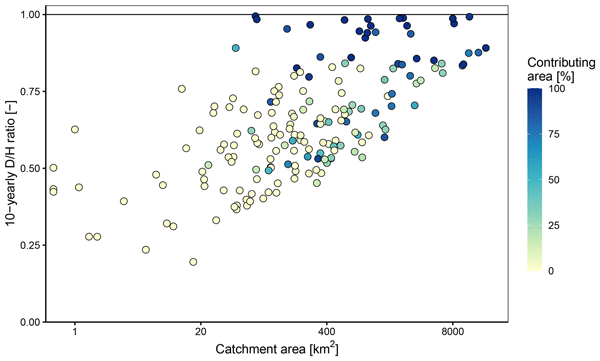
While the effect of water bodies on flood peaks at different time resolutions has been demonstrated in the past, it remains unclear how they affect the ratio between daily and hourly peaks. Our results show that (1) hourly flows are dampened much more strongly than daily flows, which leads to similar daily and hourly flood peaks downstream of reservoirs; and (2) the attenuation effect is particularly pronounced in catchments that are heavily influenced by water bodies.
Nathalia Correa-Sánchez, Xiaoli Guo Larsén, Eleonora Dallan, Marco Borga, and Francesco Marra
Wind Energ. Sci., 11, 2961–2985, https://doi.org/10.5194/wes-11-2961-2026, https://doi.org/10.5194/wes-11-2961-2026, 2026
Short summary
Short summary
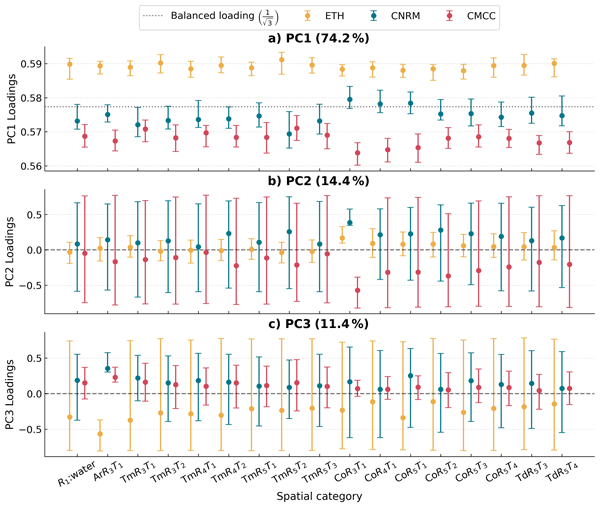
This research presents the first use of the simplified metastatistical extreme value approach for wind extremes, extending it to wind energy applications. We use a categorical framework that combines climate, roughness, and topography to evaluate convection-permitted models. We find that model formulation drives inter-model uncertainties, rather than surface conditions. Convection-permitted models' uncertainty analysis improves the reliability of extreme wind estimates for design parameters.
Joren Janzing and Manuela I. Brunner
EGUsphere, https://doi.org/10.5194/egusphere-2026-3487, https://doi.org/10.5194/egusphere-2026-3487, 2026
This preprint is open for discussion and under review for Hydrology and Earth System Sciences (HESS).
Short summary
Short summary
Large streamflow droughts seem to be related to spatially more homogeneous drivers than smaller droughts. Mechanisms causing this difference are not well understood. We bridge the scale gap between large and small droughts using observations and a drought typology. We find that large droughts are characterized by one or two drought types and each type has its own spatial footprint. Common drought types in a river do not always lead to large droughts, which can be important for water managers.

Ella Thomas, Petr Vohnicky, Marco Borga, Nadav Peleg, and Francesco Marra
Hydrol. Earth Syst. Sci., 30, 4957–4967, https://doi.org/10.5194/hess-30-4957-2026, https://doi.org/10.5194/hess-30-4957-2026, 2026
Short summary
Short summary
Extreme rainfall is expected to grow in magnitude with increasing temperature. We assess whether very rare extremes increase with temperature faster than moderate extremes, and we test methods to include this effect into a model to predict future extremes called TENAX. We find that this dependence on temperature is typically observed but including it in the model without prior information on its magnitude may lead to disproportionately large uncertainty.
Jan P. Bohl, Raul R. Wood, Corinna Frank, Paul C. Astagneau, Jonas Peters, and Manuela I. Brunner
Hydrol. Earth Syst. Sci., 30, 4667–4698, https://doi.org/10.5194/hess-30-4667-2026, https://doi.org/10.5194/hess-30-4667-2026, 2026
Short summary
Short summary
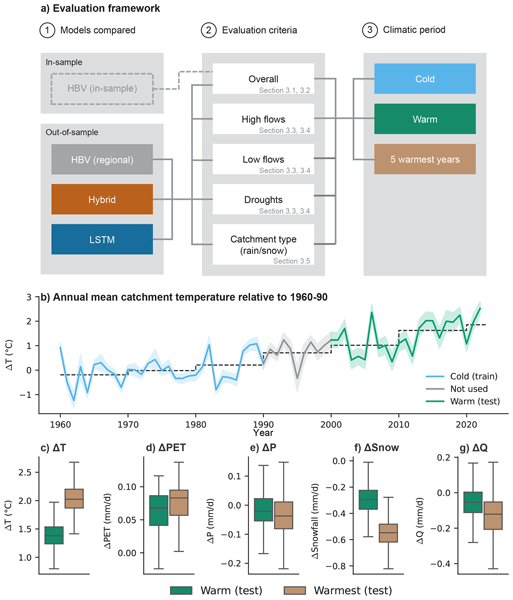
To assess climate impacts on streamflow, we need models that can predict streamflow under future conditions. This study compares three model types: data-driven (LSTM - long short-term memory), conceptual (HBV - Hydrologiska Byråns Vattenbalansavdelning), and hybrid (LSTM-HBV). LSTMs perform best overall, but HBV and hybrid models generalize better to warmer climates. Hybrid models are a promising tool for climate impact assessments, combining LSTMs accuracy with better generalizability of traditional models. In snowy regions, all models struggle to generalize.
Talia Rosin, Francesco Marra, Marco Gabella, Urs Germann, Daniel Wolfensberger, and Efrat Morin
EGUsphere, https://doi.org/10.5194/egusphere-2026-1800, https://doi.org/10.5194/egusphere-2026-1800, 2026
Short summary
Short summary
Extreme rainfall in mountainous regions is difficult to assess as it varies strongly across space and time, and rain gauges are often too sparse to capture it. Using 9 years of radar data, we analyse summer rainfall extremes across Switzerland for different durations and areas. We show that rainfall intensity depends strongly on scale and topography, and that radar better captures local extremes, improving flood hazard assessment, as demonstrated for three recent major flood-producing storms.
Emma Ford, Manuela I. Brunner, Hannah Christensen, and Louise Slater
Hydrol. Earth Syst. Sci., 30, 2135–2160, https://doi.org/10.5194/hess-30-2135-2026, https://doi.org/10.5194/hess-30-2135-2026, 2026
Short summary
Short summary
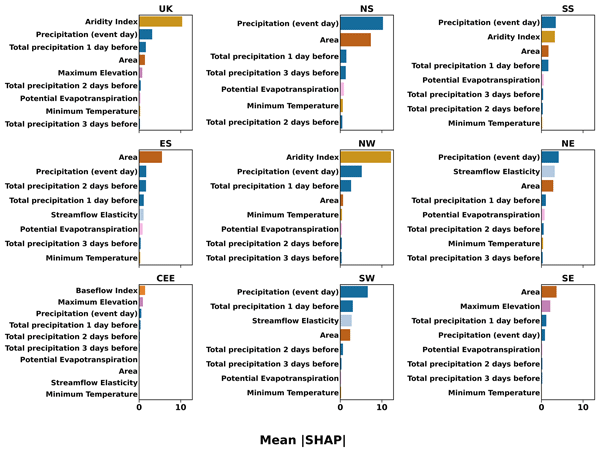
This study aims to improve prediction and understanding of extreme flood events in near-natural catchments across the United Kingdom. We develop a machine learning framework to assess the contribution of different features to flood magnitude estimation. We find weather patterns are weak predictors and stress the importance of evaluating model performance across and within catchments.
Sadaf Nasreen, Oldrich Rakovec, Rohini Kumar, Manuela I. Brunner, Ujjwal Singh, Petr Maca, Yannis Markonis, and Martin Hanel
EGUsphere, https://doi.org/10.5194/egusphere-2026-973, https://doi.org/10.5194/egusphere-2026-973, 2026
Short summary
Short summary
European droughts threaten water and agriculture, but how distinct drought processes will change under warming is uncertain. We examine seven mechanisms across Europe using 1971 to 2000 observations and 2070 to 2099 projections. Changes are regional: the Mediterranean shifts to longer, more severe droughts, while Northern and Western Central Europe often improve. Temperature-driven mechanisms, especially rain to snow transitions, respond most, guiding targeted adaptation.
Eduardo Muñoz-Castro, Bailey J. Anderson, Paul C. Astagneau, Daniel L. Swain, Pablo A. Mendoza, and Manuela I. Brunner
Hydrol. Earth Syst. Sci., 30, 825–848, https://doi.org/10.5194/hess-30-825-2026, https://doi.org/10.5194/hess-30-825-2026, 2026
Short summary
Short summary
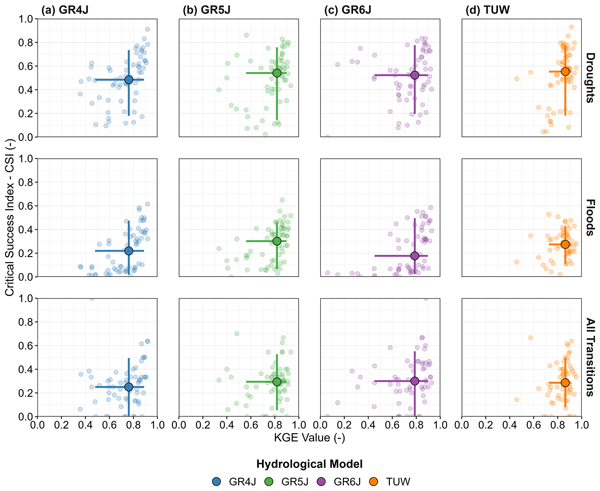
Flood impacts can be enhanced when they occur after droughts, yet the effectiveness of hydrological models in simulating these events remains unclear. Here, we calibrated four conceptual hydrological models across 63 catchments in Chile and Switzerland to assess their ability to detect streamflow extremes and their transitions. We show that drought-to-flood transitions are generally poorly captured, especially in semi-arid high-mountain catchments than in humid low-elevation ones.
Susen Shrestha, Stefano Terzi, Davide Zoccatelli, Mattia Zaramella, Marco Borga, Andrea Galletti, Mattia Callegari, Roberto Dinale, Massimiliano Pittore, and Giacomo Bertoldi
EGUsphere, https://doi.org/10.5194/egusphere-2025-6387, https://doi.org/10.5194/egusphere-2025-6387, 2026
Short summary
Short summary
Glaciers and snow contribute to buffer river streamflow during droughts. Due to climate change, their role is shrinking with severe implications for water management. Here we investigated the role of glaciers to buffer the 2003, 2005 and 2022 droughts that occurred in the upper Adige River Basin (Italy). Glaciers provided 4 to 12 % of summer water during droughts and their buffering is weakening due to their retreat with lower contribution in 2022 compared to the similar drought of 2003.
Francesco Marra, Eleonora Dallan, Marco Borga, Roberto Greco, and Thom Bogaard
Nat. Hazards Earth Syst. Sci., 25, 5055–5061, https://doi.org/10.5194/nhess-25-5055-2025, https://doi.org/10.5194/nhess-25-5055-2025, 2025
Short summary
Short summary
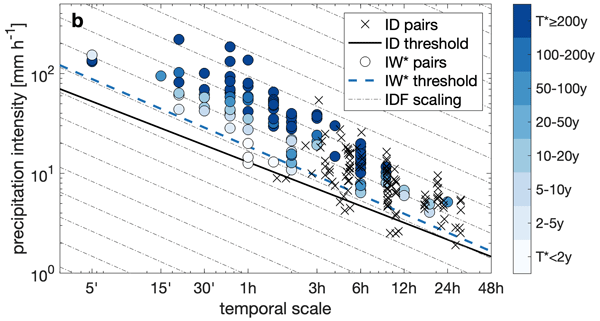
We highlight an important conceptual difference between the duration used in intensity-duration thresholds and the duration used in the intensity-duration-frequency curves that has been overlooked by the landslide literature so far.
Joren Janzing, Niko Wanders, Marit van Tiel, Barry van Jaarsveld, Dirk N. Karger, and Manuela I. Brunner
Hydrol. Earth Syst. Sci., 29, 7041–7071, https://doi.org/10.5194/hess-29-7041-2025, https://doi.org/10.5194/hess-29-7041-2025, 2025
Short summary
Short summary
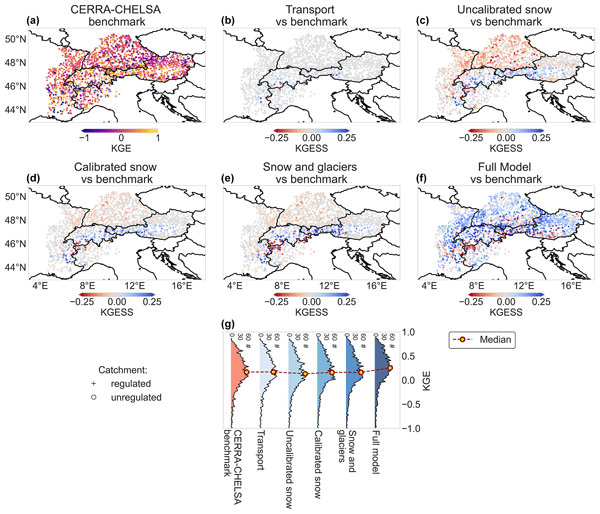
Process representation in hyper-resolution large-scale hydrological models (LHMs) limits model performance, particularly in mountain regions. Here, we update mountain process representation in an LHM and compare different meteorological forcing products. Structural and parametric changes in snow, glacier, and soil processes improve discharge simulations, while meteorological forcing remains a major control on model performance. Our work can guide future development of LHMs.
Nathalia Correa-Sánchez, Xiaoli Guo Larsén, Giorgia Fosser, Eleonora Dallan, Marco Borga, and Francesco Marra
Wind Energ. Sci., 10, 2551–2561, https://doi.org/10.5194/wes-10-2551-2025, https://doi.org/10.5194/wes-10-2551-2025, 2025
Short summary
Short summary
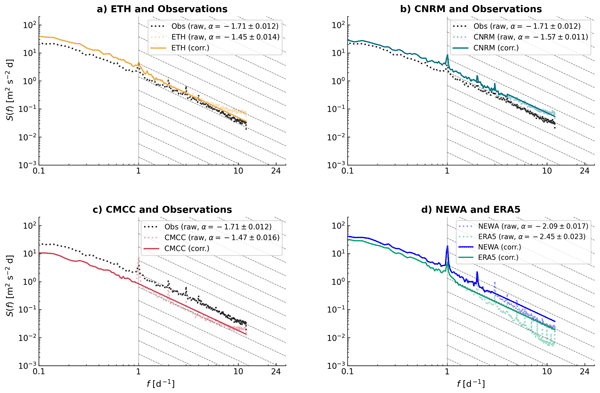
We examined the power spectra of wind speed in three convection-permitting models in central Europe and found that these models have a better representation of wind variability characteristics than standard wind datasets like the New European Wind Atlas, due to different simulation approaches, providing more reliable extreme wind predictions.
Bailey J. Anderson, Eduardo Muñoz-Castro, Lena M. Tallaksen, Alessia Matano, Jonas Götte, Rachael Armitage, Eugene Magee, and Manuela I. Brunner
Hydrol. Earth Syst. Sci., 29, 6069–6092, https://doi.org/10.5194/hess-29-6069-2025, https://doi.org/10.5194/hess-29-6069-2025, 2025
Short summary
Short summary
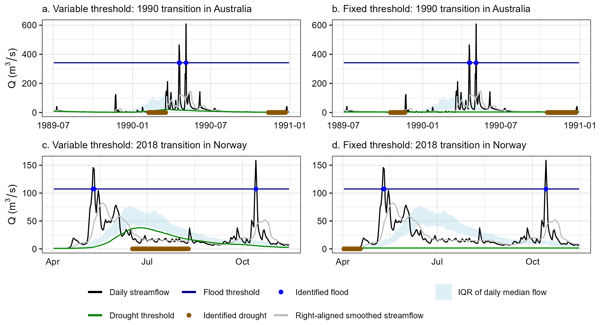
When floods happen during or shortly after droughts, the impacts of each of the events can be magnified. In hydrological research, defining these events represents a challenging and important task in the process of understanding where and why they occur. We have used real-word examples to address some of these challenges and show different approaches influence outcomes. We make suggestions on when to use which approach and outline some pitfalls of which researchers should be aware.
Paul C. Astagneau, Raul R. Wood, Mathieu Vrac, Sven Kotlarski, Pradeebane Vaittinada Ayar, Bastien François, and Manuela I. Brunner
Hydrol. Earth Syst. Sci., 29, 5695–5718, https://doi.org/10.5194/hess-29-5695-2025, https://doi.org/10.5194/hess-29-5695-2025, 2025
Short summary
Short summary
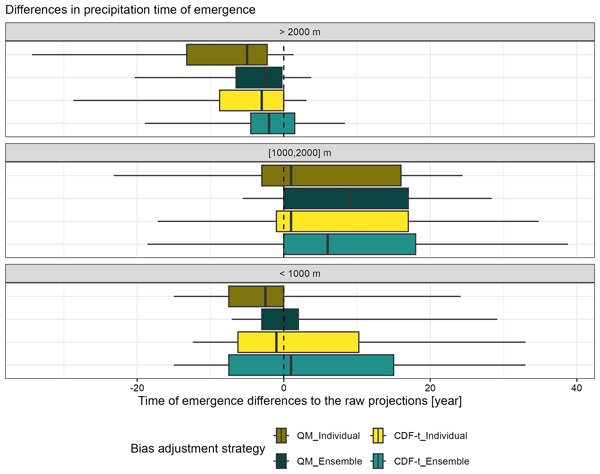
To study floods and droughts that are likely to change in the future, we use climate projections from climate models. However, we first need to adjust the systematic biases of these projections at the catchment scale before using them in hydrological models. Our study compares statistical methods that can adjust these biases but specifically for climate projections that enable a quantification of internal climate variability. We provide recommendations on the most appropriate methods.
Rajani Kumar Pradhan, Yannis Markonis, Francesco Marra, Efthymios I. Nikolopoulos, Simon Michael Papalexiou, and Vincenzo Levizzani
Hydrol. Earth Syst. Sci., 29, 4929–4949, https://doi.org/10.5194/hess-29-4929-2025, https://doi.org/10.5194/hess-29-4929-2025, 2025
Short summary
Short summary
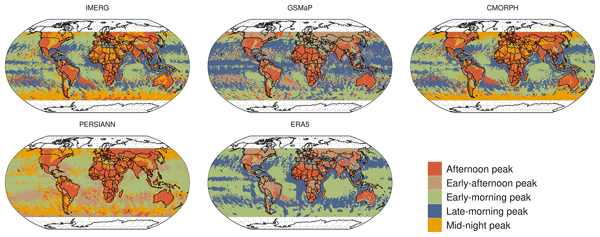
This study compared global satellite and reanalysis precipitation datasets to assess diurnal variability. We found that all datasets capture key diurnal precipitation patterns, with maximum precipitation in the afternoon over land and early morning over the ocean. However, there are differences in the exact timing and amount of precipitation. This suggests that it is better to use a combination of datasets for potential applications rather than relying on a single dataset.
Raul R. Wood, Joren Janzing, Amber van Hamel, Jonas Götte, Dominik L. Schumacher, and Manuela I. Brunner
Hydrol. Earth Syst. Sci., 29, 4153–4178, https://doi.org/10.5194/hess-29-4153-2025, https://doi.org/10.5194/hess-29-4153-2025, 2025
Short summary
Short summary
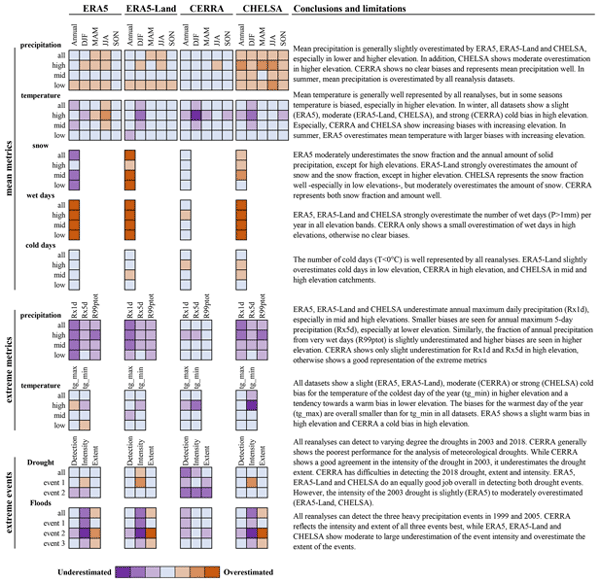
Continuous and high-quality meteorological datasets are crucial to study extreme hydro-climatic events. We here conduct a comprehensive spatio-temporal evaluation of precipitation and temperature for four climate reanalysis datasets, focusing on mean and extreme metrics, variability, trends, and the representation of droughts and floods over Switzerland. Our analysis shows that all datasets have some merit when limitations are considered, and that one dataset performs better than the others.
Francesco Marra, Nadav Peleg, Elena Cristiano, Efthymios I. Nikolopoulos, Federica Remondi, and Paolo Tarolli
Nat. Hazards Earth Syst. Sci., 25, 2565–2570, https://doi.org/10.5194/nhess-25-2565-2025, https://doi.org/10.5194/nhess-25-2565-2025, 2025
Short summary
Short summary
Climate change is escalating the risks related to hydro-meteorological extremes. This preface introduces a special issue originating from a European Geosciences Union (EGU) session. It highlights the challenges posed by these extremes, ranging from hazard assessment to mitigation strategies, and covers both water excess events like floods, landslides, and coastal hazards and water deficit events such as droughts and fire weather. The collection aims to advance understanding, improve resilience, and inform policy-making.
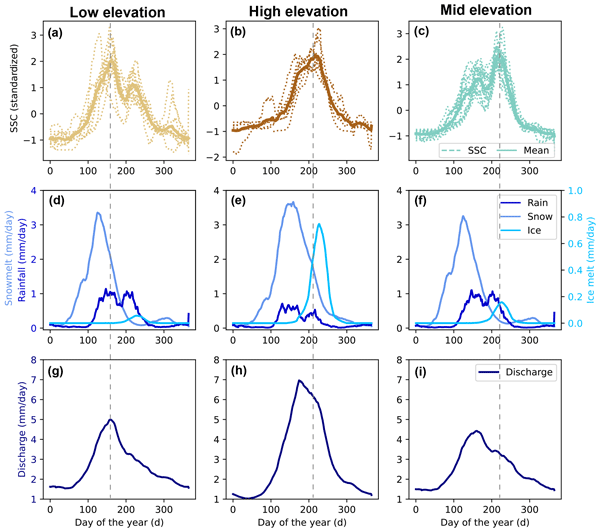
Amber van Hamel, Peter Molnar, Joren Janzing, and Manuela Irene Brunner
Hydrol. Earth Syst. Sci., 29, 2975–2995, https://doi.org/10.5194/hess-29-2975-2025, https://doi.org/10.5194/hess-29-2975-2025, 2025
Short summary
Short summary
Suspended sediment is a natural component of rivers, but extreme suspended sediment concentrations (SSCs) can have negative impacts on water use and aquatic ecosystems. We identify the main factors influencing the spatial and temporal variability of annual SSC regimes and extreme SSC events. Our analysis shows that different processes are more important for annual SSC regimes than for extreme events and that compound events driven by glacial melt and high-intensity rainfall led to the highest SSCs.
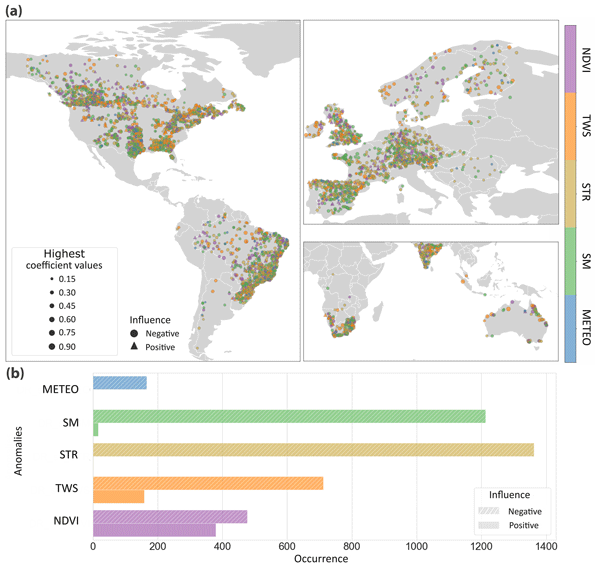
Alessia Matanó, Raed Hamed, Manuela I. Brunner, Marlies H. Barendrecht, and Anne F. Van Loon
Hydrol. Earth Syst. Sci., 29, 2749–2764, https://doi.org/10.5194/hess-29-2749-2025, https://doi.org/10.5194/hess-29-2749-2025, 2025
Short summary
Short summary
Persistent droughts change how rivers respond to rainfall. Our study of over 5000 catchments worldwide found that hydrological and soil moisture droughts decrease river-flow response to rain, especially in arid regions, while vegetation decline slightly increases it. Snow-covered areas are more resilient due to stored water buffering changes. Droughts can also cause long-lasting changes, with short and intense droughts reducing river response to rainfall and prolonged droughts increasing it.
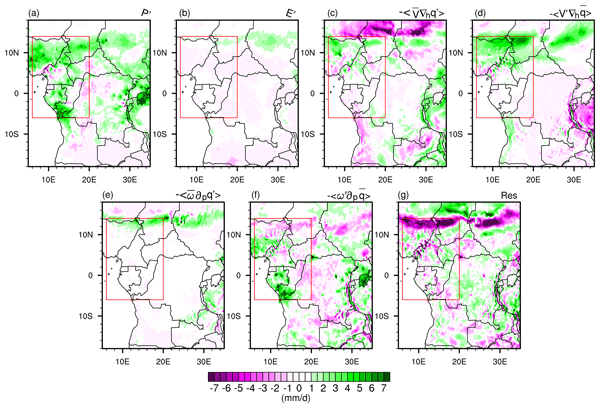
Kevin Kenfack, Francesco Marra, Zéphirin Yepdo Djomou, Lucie Angennes Djiotang Tchotchou, Alain Tchio Tamoffo, and Derbetini Appolinaire Vondou
Weather Clim. Dynam., 5, 1457–1472, https://doi.org/10.5194/wcd-5-1457-2024, https://doi.org/10.5194/wcd-5-1457-2024, 2024
Short summary
Short summary
The results of this study show that moisture advection induced by horizontal wind anomalies and vertical moisture advection induced by vertical velocity anomalies were crucial mechanisms behind the anomalous October 2019 exceptional rainfall increase over western central Africa. The information we derive can be used to support risk assessment and management in the region and to improve our resilience to ongoing climate change.
Carolin Boos, Sophie Reinermann, Raul Wood, Ralf Ludwig, Anne Schucknecht, David Kraus, and Ralf Kiese
EGUsphere, https://doi.org/10.5194/egusphere-2024-2864, https://doi.org/10.5194/egusphere-2024-2864, 2024
Preprint archived
Short summary
Short summary
We applied a biogeochemical model on grasslands in the pre-Alpine Ammer region in Germany and analyzed the influence of soil and climate on annual yields. In drought affected years, total yields were decreased by 4 %. Overall, yields decrease with rising elevation, but less so in drier and hotter years, whereas soil organic carbon has a positive impact on yields, especially in drier years. Our findings imply, that adapted management in the region allows to mitigate yield losses from drought.
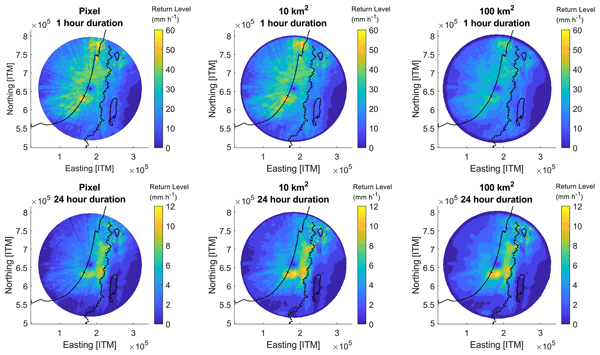
Talia Rosin, Francesco Marra, and Efrat Morin
Hydrol. Earth Syst. Sci., 28, 3549–3566, https://doi.org/10.5194/hess-28-3549-2024, https://doi.org/10.5194/hess-28-3549-2024, 2024
Short summary
Short summary
Knowledge of extreme precipitation probability at various spatial–temporal scales is crucial. We estimate extreme precipitation return levels at multiple scales (10 min–24 h, 0.25–500 km2) in the eastern Mediterranean using radar data. We show our estimates are comparable to those derived from averaged daily rain gauges. We then explore multi-scale extreme precipitation across coastal, mountainous, and desert regions.
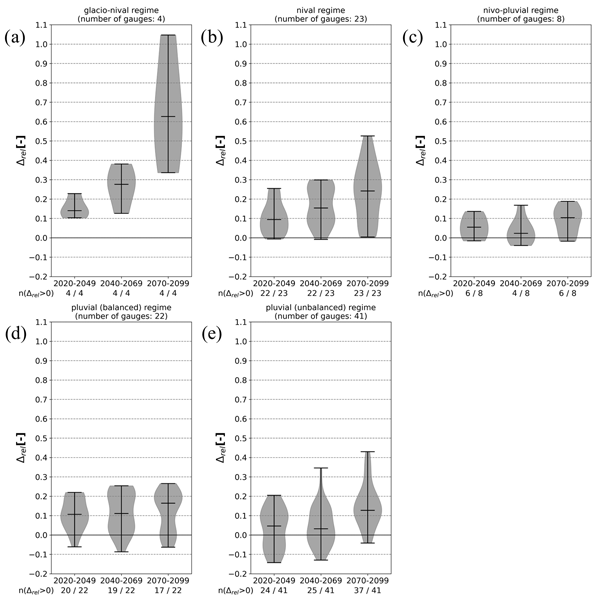
Florian Willkofer, Raul R. Wood, and Ralf Ludwig
Hydrol. Earth Syst. Sci., 28, 2969–2989, https://doi.org/10.5194/hess-28-2969-2024, https://doi.org/10.5194/hess-28-2969-2024, 2024
Short summary
Short summary
Severe flood events pose a threat to riverine areas, yet robust estimates of the dynamics of these events in the future due to climate change are rarely available. Hence, this study uses data from a regional climate model, SMILE, to drive a high-resolution hydrological model for 98 catchments of hydrological Bavaria and exploits the large database to derive robust values for the 100-year flood events. Results indicate an increase in frequency and intensity for most catchments in the future.
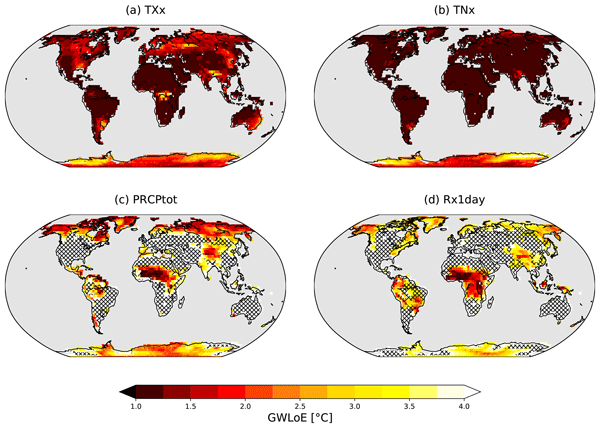
David Gampe, Clemens Schwingshackl, Andrea Böhnisch, Magdalena Mittermeier, Marit Sandstad, and Raul R. Wood
Earth Syst. Dynam., 15, 589–605, https://doi.org/10.5194/esd-15-589-2024, https://doi.org/10.5194/esd-15-589-2024, 2024
Short summary
Short summary
Using a special suite of climate simulations, we determine if and when climate change is detectable and translate this to the global warming prevalent in the corresponding year. Our results show that, at 1.5°C warming, >85 % of the global population (>95 % at 2.0° warming) is already exposed to nighttime temperatures altered by climate change beyond natural variability. Furthermore, even incremental changes in global warming levels result in increased human exposure to emerged climate signals.
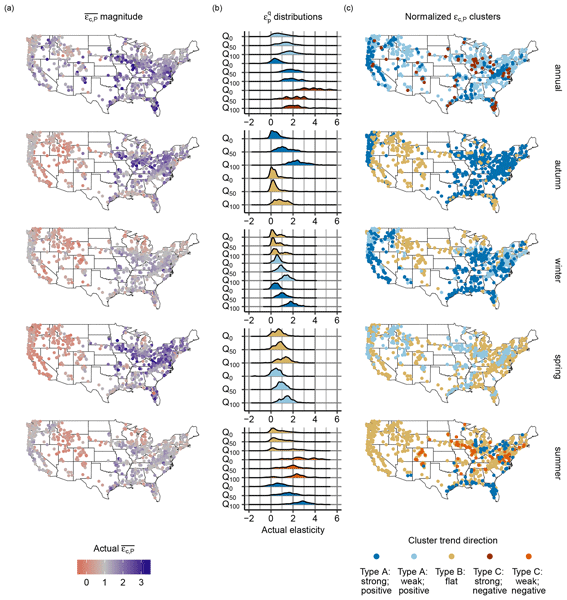
Bailey J. Anderson, Manuela I. Brunner, Louise J. Slater, and Simon J. Dadson
Hydrol. Earth Syst. Sci., 28, 1567–1583, https://doi.org/10.5194/hess-28-1567-2024, https://doi.org/10.5194/hess-28-1567-2024, 2024
Short summary
Short summary
Elasticityrefers to how much the amount of water in a river changes with precipitation. We usually calculate this using average streamflow values; however, the amount of water within rivers is also dependent on stored water sources. Here, we look at how elasticity varies across the streamflow distribution and show that not only do low and high streamflows respond differently to precipitation change, but also these differences vary with water storage availability.
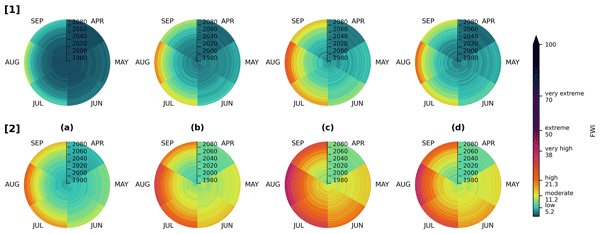
Julia Miller, Andrea Böhnisch, Ralf Ludwig, and Manuela I. Brunner
Nat. Hazards Earth Syst. Sci., 24, 411–428, https://doi.org/10.5194/nhess-24-411-2024, https://doi.org/10.5194/nhess-24-411-2024, 2024
Short summary
Short summary
We assess the impacts of climate change on fire danger for 1980–2099 in different landscapes of central Europe, using the Canadian Forest Fire Weather Index (FWI) as a fire danger indicator. We find that today's 100-year FWI event will occur every 30 years by 2050 and every 10 years by 2099. High fire danger (FWI > 21.3) becomes the mean condition by 2099 under an RCP8.5 scenario. This study highlights the potential for severe fire events in central Europe from a meteorological perspective.
Francesco Marra, Marika Koukoula, Antonio Canale, and Nadav Peleg
Hydrol. Earth Syst. Sci., 28, 375–389, https://doi.org/10.5194/hess-28-375-2024, https://doi.org/10.5194/hess-28-375-2024, 2024
Short summary
Short summary
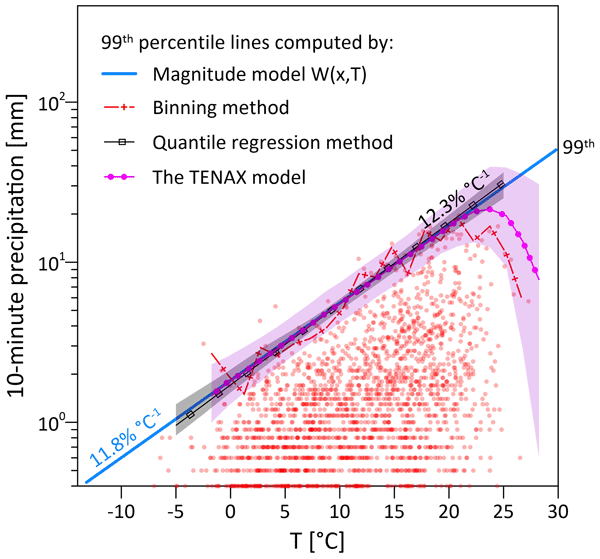
We present a new physical-based method for estimating extreme sub-hourly precipitation return levels (i.e., intensity–duration–frequency, IDF, curves), which are critical for the estimation of future floods. The proposed model, named TENAX, incorporates temperature as a covariate in a physically consistent manner. It has only a few parameters and can be easily set for any climate station given sub-hourly precipitation and temperature data are available.
Marvin Höge, Martina Kauzlaric, Rosi Siber, Ursula Schönenberger, Pascal Horton, Jan Schwanbeck, Marius Günter Floriancic, Daniel Viviroli, Sibylle Wilhelm, Anna E. Sikorska-Senoner, Nans Addor, Manuela Brunner, Sandra Pool, Massimiliano Zappa, and Fabrizio Fenicia
Earth Syst. Sci. Data, 15, 5755–5784, https://doi.org/10.5194/essd-15-5755-2023, https://doi.org/10.5194/essd-15-5755-2023, 2023
Short summary
Short summary
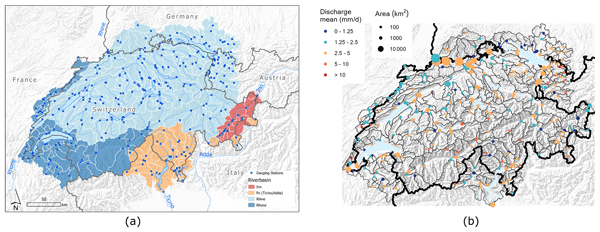
CAMELS-CH is an open large-sample hydro-meteorological data set that covers 331 catchments in hydrologic Switzerland from 1 January 1981 to 31 December 2020. It comprises (a) daily data of river discharge and water level as well as meteorologic variables like precipitation and temperature; (b) yearly glacier and land cover data; (c) static attributes of, e.g, topography or human impact; and (d) catchment delineations. CAMELS-CH enables water and climate research and modeling at catchment level.
Raul R. Wood
Earth Syst. Dynam., 14, 797–816, https://doi.org/10.5194/esd-14-797-2023, https://doi.org/10.5194/esd-14-797-2023, 2023
Short summary
Short summary
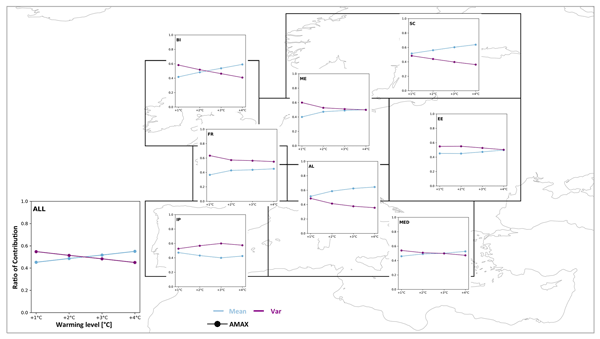
The change in extreme-event occurrence is influenced by both a shift in the mean and a change in variability. How large the individual contributions are remains largely unknown. Large-ensemble climate simulations and probability risk ratio are used to partition the change in extreme precipitation events into contributions from a change in the mean and variability. The results reveal that the change in variability can be equally as important as or even more important than the mean change.

Manuela Irene Brunner
Hydrol. Earth Syst. Sci., 27, 2479–2497, https://doi.org/10.5194/hess-27-2479-2023, https://doi.org/10.5194/hess-27-2479-2023, 2023
Short summary
Short summary
I discuss different types of multivariate hydrological extremes and their dependencies, including regional extremes affecting multiple locations, such as spatially connected flood events; consecutive extremes occurring in close temporal succession, such as successive droughts; extremes characterized by multiple characteristics, such as floods with jointly high peak discharge and flood volume; and transitions between different types of extremes, such as drought-to-flood transitions.
Stefan Steger, Mateo Moreno, Alice Crespi, Peter James Zellner, Stefano Luigi Gariano, Maria Teresa Brunetti, Massimo Melillo, Silvia Peruccacci, Francesco Marra, Robin Kohrs, Jason Goetz, Volkmar Mair, and Massimiliano Pittore
Nat. Hazards Earth Syst. Sci., 23, 1483–1506, https://doi.org/10.5194/nhess-23-1483-2023, https://doi.org/10.5194/nhess-23-1483-2023, 2023
Short summary
Short summary
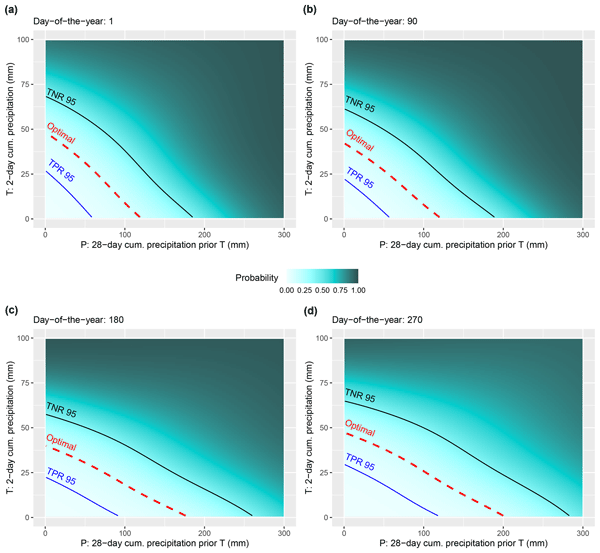
We present a novel data-driven modelling approach to determine season-specific critical precipitation conditions for landslide occurrence. It is shown that the amount of precipitation required to trigger a landslide in South Tyrol varies from season to season. In summer, a higher amount of preparatory precipitation is required to trigger a landslide, probably due to denser vegetation and higher temperatures. We derive dynamic thresholds that directly relate to hit rates and false-alarm rates.

Nadav Peleg, Herminia Torelló-Sentelles, Grégoire Mariéthoz, Lionel Benoit, João P. Leitão, and Francesco Marra
Nat. Hazards Earth Syst. Sci., 23, 1233–1240, https://doi.org/10.5194/nhess-23-1233-2023, https://doi.org/10.5194/nhess-23-1233-2023, 2023
Short summary
Short summary
Floods in urban areas are one of the most common natural hazards. Due to climate change enhancing extreme rainfall and cities becoming larger and denser, the impacts of these events are expected to increase. A fast and reliable flood warning system should thus be implemented in flood-prone cities to warn the public of upcoming floods. The purpose of this brief communication is to discuss the potential implementation of low-cost acoustic rainfall sensors in short-term flood warning systems.
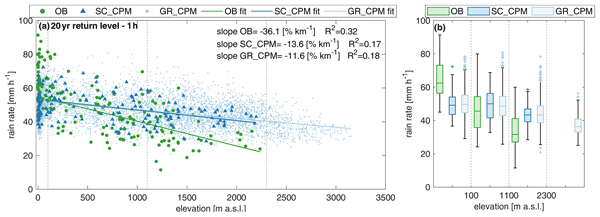
Eleonora Dallan, Francesco Marra, Giorgia Fosser, Marco Marani, Giuseppe Formetta, Christoph Schär, and Marco Borga
Hydrol. Earth Syst. Sci., 27, 1133–1149, https://doi.org/10.5194/hess-27-1133-2023, https://doi.org/10.5194/hess-27-1133-2023, 2023
Short summary
Short summary
Convection-permitting climate models could represent future changes in extreme short-duration precipitation, which is critical for risk management. We use a non-asymptotic statistical method to estimate extremes from 10 years of simulations in an orographically complex area. Despite overall good agreement with rain gauges, the observed decrease of hourly extremes with elevation is not fully represented by the model. Climate model adjustment methods should consider the role of orography.
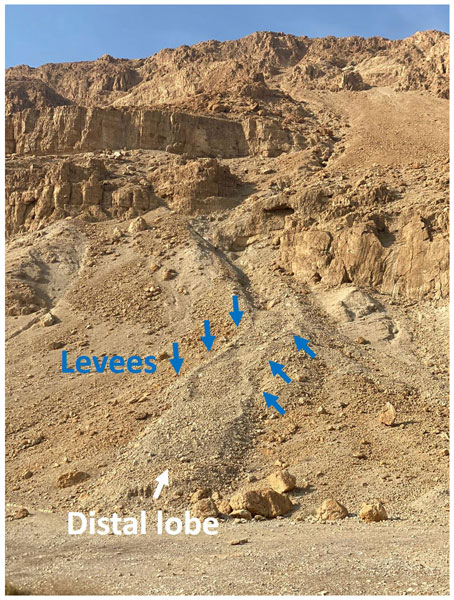
Shalev Siman-Tov and Francesco Marra
Nat. Hazards Earth Syst. Sci., 23, 1079–1093, https://doi.org/10.5194/nhess-23-1079-2023, https://doi.org/10.5194/nhess-23-1079-2023, 2023
Short summary
Short summary
Debris flows represent a threat to infrastructure and the population. In arid areas, they are observed when heavy rainfall hits steep slopes with sediments. Here, we use digital surface models and radar rainfall data to detect and characterize the triggering and non-triggering rainfall conditions. We find that rainfall intensity alone is insufficient to explain the triggering. We suggest that antecedent rainfall could represent a critical factor for debris flow triggering in arid regions.
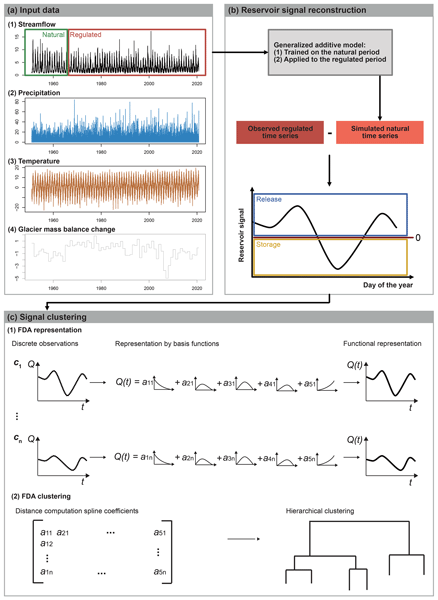
Manuela Irene Brunner and Philippe Naveau
Hydrol. Earth Syst. Sci., 27, 673–687, https://doi.org/10.5194/hess-27-673-2023, https://doi.org/10.5194/hess-27-673-2023, 2023
Short summary
Short summary
Reservoir regulation affects various streamflow characteristics. Still, information on when water is stored in and released from reservoirs is hardly available. We develop a statistical model to reconstruct reservoir operation signals from observed streamflow time series. By applying this approach to 74 catchments in the Alps, we find that reservoir management varies by catchment elevation and that seasonal redistribution from summer to winter is strongest in high-elevation catchments.
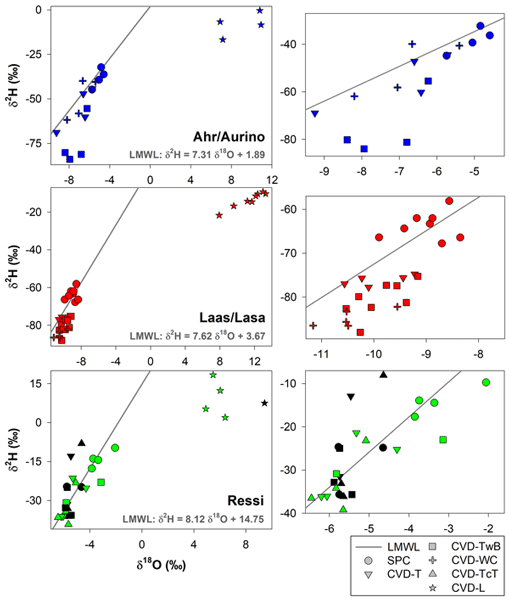
Giulia Zuecco, Anam Amin, Jay Frentress, Michael Engel, Chiara Marchina, Tommaso Anfodillo, Marco Borga, Vinicio Carraro, Francesca Scandellari, Massimo Tagliavini, Damiano Zanotelli, Francesco Comiti, and Daniele Penna
Hydrol. Earth Syst. Sci., 26, 3673–3689, https://doi.org/10.5194/hess-26-3673-2022, https://doi.org/10.5194/hess-26-3673-2022, 2022
Short summary
Short summary
We analyzed the variability in the isotopic composition of plant water extracted by two different methods, i.e., cryogenic vacuum distillation (CVD) and Scholander-type pressure chamber (SPC). Our results indicated that the isotopic composition of plant water extracted by CVD and SPC was significantly different. We concluded that plant water extraction by SPC is not an alternative for CVD as SPC mostly extracts the mobile plant water whereas CVD retrieves all water stored in the sampled tissue.
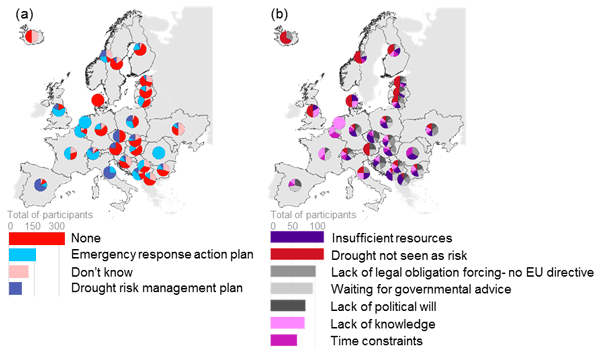
Veit Blauhut, Michael Stoelzle, Lauri Ahopelto, Manuela I. Brunner, Claudia Teutschbein, Doris E. Wendt, Vytautas Akstinas, Sigrid J. Bakke, Lucy J. Barker, Lenka Bartošová, Agrita Briede, Carmelo Cammalleri, Ksenija Cindrić Kalin, Lucia De Stefano, Miriam Fendeková, David C. Finger, Marijke Huysmans, Mirjana Ivanov, Jaak Jaagus, Jiří Jakubínský, Svitlana Krakovska, Gregor Laaha, Monika Lakatos, Kiril Manevski, Mathias Neumann Andersen, Nina Nikolova, Marzena Osuch, Pieter van Oel, Kalina Radeva, Renata J. Romanowicz, Elena Toth, Mirek Trnka, Marko Urošev, Julia Urquijo Reguera, Eric Sauquet, Aleksandra Stevkov, Lena M. Tallaksen, Iryna Trofimova, Anne F. Van Loon, Michelle T. H. van Vliet, Jean-Philippe Vidal, Niko Wanders, Micha Werner, Patrick Willems, and Nenad Živković
Nat. Hazards Earth Syst. Sci., 22, 2201–2217, https://doi.org/10.5194/nhess-22-2201-2022, https://doi.org/10.5194/nhess-22-2201-2022, 2022
Short summary
Short summary
Recent drought events caused enormous damage in Europe. We therefore questioned the existence and effect of current drought management strategies on the actual impacts and how drought is perceived by relevant stakeholders. Over 700 participants from 28 European countries provided insights into drought hazard and impact perception and current management strategies. The study concludes with an urgent need to collectively combat drought risk via a European macro-level drought governance approach.
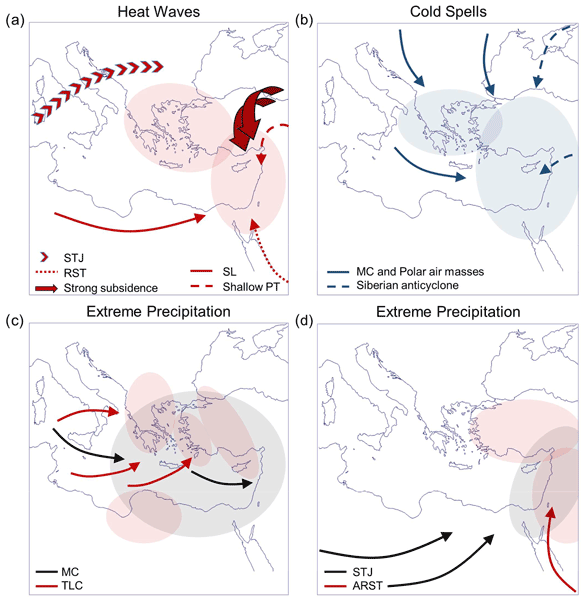
Assaf Hochman, Francesco Marra, Gabriele Messori, Joaquim G. Pinto, Shira Raveh-Rubin, Yizhak Yosef, and Georgios Zittis
Earth Syst. Dynam., 13, 749–777, https://doi.org/10.5194/esd-13-749-2022, https://doi.org/10.5194/esd-13-749-2022, 2022
Short summary
Short summary
Gaining a complete understanding of extreme weather, from its physical drivers to its impacts on society, is important in supporting future risk reduction and adaptation measures. Here, we provide a review of the available scientific literature, knowledge gaps and key open questions in the study of extreme weather events over the vulnerable eastern Mediterranean region.
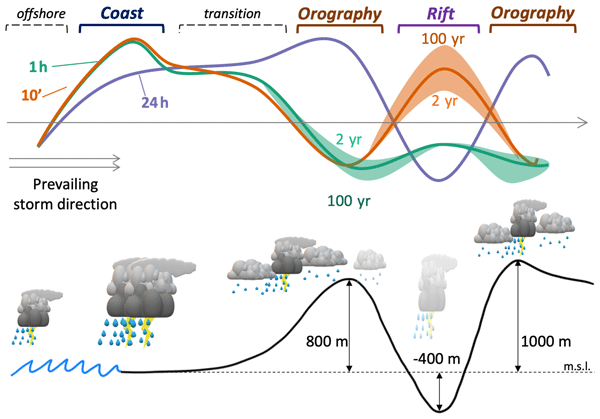
Francesco Marra, Moshe Armon, and Efrat Morin
Hydrol. Earth Syst. Sci., 26, 1439–1458, https://doi.org/10.5194/hess-26-1439-2022, https://doi.org/10.5194/hess-26-1439-2022, 2022
Short summary
Short summary
We present a new method for quantifying the probability of occurrence of extreme rainfall using radar data, and we use it to examine coastal and orographic effects on extremes. We identify three regimes, directly related to precipitation physical processes, which respond differently to these forcings. The methods and results are of interest for researchers and practitioners using radar for the analysis of extremes, risk managers, water resources managers, and climate change impact studies.

Manuela I. Brunner and Louise J. Slater
Hydrol. Earth Syst. Sci., 26, 469–482, https://doi.org/10.5194/hess-26-469-2022, https://doi.org/10.5194/hess-26-469-2022, 2022
Short summary
Short summary
Assessing the rarity and magnitude of very extreme flood events occurring less than twice a century is challenging due to the lack of observations of such rare events. Here we develop a new approach, pooling reforecast ensemble members from the European Flood Awareness System to increase the sample size available to estimate the frequency of extreme flood events. We demonstrate that such ensemble pooling produces more robust estimates than observation-based estimates.
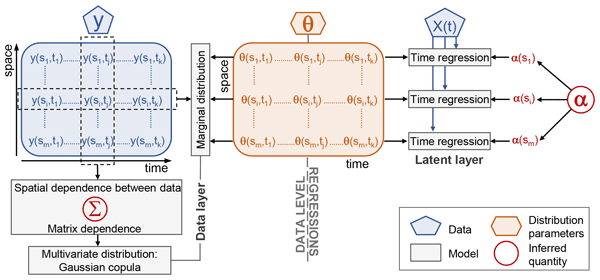
Álvaro Ossandón, Manuela I. Brunner, Balaji Rajagopalan, and William Kleiber
Hydrol. Earth Syst. Sci., 26, 149–166, https://doi.org/10.5194/hess-26-149-2022, https://doi.org/10.5194/hess-26-149-2022, 2022
Short summary
Short summary
Timely projections of seasonal streamflow extremes on a river network can be useful for flood risk mitigation, but this is challenging, particularly under space–time nonstationarity. We develop a space–time Bayesian hierarchical model (BHM) using temporal climate covariates and copulas to project seasonal streamflow extremes and the attendant uncertainties. We demonstrate this on the Upper Colorado River basin to project spring flow extremes using the preceding winter’s climate teleconnections.
Yoav Ben Dor, Francesco Marra, Moshe Armon, Yehouda Enzel, Achim Brauer, Markus Julius Schwab, and Efrat Morin
Clim. Past, 17, 2653–2677, https://doi.org/10.5194/cp-17-2653-2021, https://doi.org/10.5194/cp-17-2653-2021, 2021
Short summary
Short summary
Laminated sediments from the deepest part of the Dead Sea unravel the hydrological response of the eastern Mediterranean to past climate changes. This study demonstrates the importance of geological archives in complementing modern hydrological measurements that do not fully capture natural hydroclimatic variability, which is crucial to configure for understanding the impact of climate change on the hydrological cycle in subtropical regions.
Cited articles
Adinolfi, M., Raffa, M., Reder, A., and Mercogliano, P.: Evaluation and Expected Changes of Summer Precipitation at Convection Permitting Scale with COSMO-CLM over Alpine Space, Atmosphere, 12, 54, https://doi.org/10.3390/atmos12010054, 2020.
Alexandru, A., De Elia, R., and Laprise, R.: Internal Variability in Regional Climate Downscaling at the Seasonal Scale, Mon. Weather Rev., 135, 3221–3238, https://doi.org/10.1175/MWR3456.1, 2007.
Baldauf, M., Seifert, A., Förstner, J., Majewski, D., Raschendorfer, M., and Reinhardt, T.: Operational Convective-Scale Numerical Weather Prediction with the COSMO Model: Description and Sensitivities, Mon. Weather Rev., 139, 3887–3905, https://doi.org/10.1175/MWR-D-10-05013.1, 2011.
Ban, N., Schmidli, J., and Schär, C.: Evaluation of the convection-resolving regional climate modeling approach in decade-long simulations, J. Geophys. Res.-Atmos., 119, 7889–7907, https://doi.org/10.1002/2014JD021478, 2014.
Ban, N., Caillaud, C., Coppola, E., Pichelli, E., Sobolowski, S., Adinolfi, M., Ahrens, B., Alias, A., Anders, I., Bastin, S., Belušić, D., Berthou, S., Brisson, E., Cardoso, R. M., Chan, S. C., Christensen, O. B., Fernández, J., Fita, L., Frisius, T., Gašparac, G., Giorgi, F., Goergen, K., Haugen, J. E., Hodnebrog, Ø., Kartsios, S., Katragkou, E., Kendon, E. J., Keuler, K., Lavin-Gullon, A., Lenderink, G., Leutwyler, D., Lorenz, T., Maraun, D., Mercogliano, P., Milovac, J., Panitz, H.-J., Raffa, M., Remedio, A. R., Schär, C., Soares, P. M. M., Srnec, L., Steensen, B. M., Stocchi, P., Tölle, M. H., Truhetz, H., Vergara-Temprado, J., De Vries, H., Warrach-Sagi, K., Wulfmeyer, V., and Zander, M. J.: The first multi-model ensemble of regional climate simulations at kilometer-scale resolution, part I: evaluation of precipitation, Clim. Dynam., 57, 275–302, https://doi.org/10.1007/s00382-021-05708-w, 2021.
Barton, Y., Sideris, I. V., Raupach, T. H., Gabella, M., Germann, U., and Martius, O.: A multi‐year assessment of sub‐hourly gridded precipitation for Switzerland based on a blended radar – Rain‐gauge dataset, Int. J. Climatol., 40, 5208–5222, https://doi.org/10.1002/joc.6514, 2020.
Bauer, V. M. and Scherrer, S. C.: The observed evolution of sub-daily to multi-day heavy precipitation in Switzerland, Atmos. Sci. Lett., 25, e1240, https://doi.org/10.1002/asl.1240, 2024.
Belušić, D., de Vries, H., Dobler, A., Landgren, O., Lind, P., Lindstedt, D., Pedersen, R. A., Sánchez-Perrino, J. C., Toivonen, E., van Ulft, B., Wang, F., Andrae, U., Batrak, Y., Kjellström, E., Lenderink, G., Nikulin, G., Pietikäinen, J.-P., Rodríguez-Camino, E., Samuelsson, P., van Meijgaard, E., and Wu, M.: HCLIM38: a flexible regional climate model applicable for different climate zones from coarse to convection-permitting scales, Geosci. Model Dev., 13, 1311–1333, https://doi.org/10.5194/gmd-13-1311-2020, 2020.
Berthou, S., Kendon, E. J., Chan, S. C., Ban, N., Leutwyler, D., Schär, C., and Fosser, G.: Pan-European climate at convection-permitting scale: a model intercomparison study, Clim. Dynam., 55, 35–59, https://doi.org/10.1007/s00382-018-4114-6, 2020.
Borga, M., Stoffel, M., Marchi, L., Marra, F., and Jakob, M.: Hydrogeomorphic response to extreme rainfall in headwater systems: Flash floods and debris flows, J. Hydrol., 518, 194–205, https://doi.org/10.1016/j.jhydrol.2014.05.022, 2014.
Breinl, K., Müller-Thomy, H., and Blöschl, G.: Space–Time Characteristics of Areal Reduction Factors and Rainfall Processes, J. Hydrometeorol., 21, 671–689, https://doi.org/10.1175/JHM-D-19-0228.1, 2020.
Brunner, L., Poschlod, B., Dutra, E., Fischer, E. M., Martius, O., and Sillmann, J.: A global perspective on the spatial representation of climate extremes from km-scale models, Environ. Res. Lett., 20, 074054, https://doi.org/10.1088/1748-9326/ade1ef, 2025.
Caillaud, C., Somot, S., Alias, A., Bernard-Bouissières, I., Fumière, Q., Laurantin, O., Seity, Y., and Ducrocq, V.: Modelling Mediterranean heavy precipitation events at climate scale: an object-oriented evaluation of the CNRM-AROME convection-permitting regional climate model, Clim. Dynam., 56, 1717–1752, https://doi.org/10.1007/s00382-020-05558-y, 2021.
Caldas-Alvarez, A., Feldmann, H., Lucio-Eceiza, E., and Pinto, J. G.: Convection-parameterized and convection-permitting modelling of heavy precipitation in decadal simulations of the greater Alpine region with COSMO-CLM, Weather Clim. Dynam., 4, 543–565, https://doi.org/10.5194/wcd-4-543-2023, 2023.
Cetti, C., Buzzi, M., and Sprenger, M.: Climatology of Alpine north foehn, Scientific Report MeteoSwiss, 100, 76 pp., 2015.
Chan, S. C., Kendon, E. J., Fowler, H. J., Blenkinsop, S., Roberts, N. M., and Ferro, C. A. T.: The Value of High-Resolution Met Office Regional Climate Models in the Simulation of Multihourly Precipitation Extremes, J. Climate, 27, 6155–6174, https://doi.org/10.1175/JCLI-D-13-00723.1, 2014.
Chan, S. C., Kendon, E. J., Berthou, S., Fosser, G., Lewis, E., and Fowler, H. J.: Europe-wide precipitation projections at convection permitting scale with the Unified Model, Clim. Dynam., 55, 409–428, https://doi.org/10.1007/s00382-020-05192-8, 2020.
Coppola, E., Sobolowski, S., Pichelli, E., Raffaele, F., Ahrens, B., Anders, I., Ban, N., Bastin, S., Belda, M., Belusic, D., Caldas-Alvarez, A., Cardoso, R. M., Davolio, S., Dobler, A., Fernandez, J., Fita, L., Fumiere, Q., Giorgi, F., Goergen, K., Güttler, I., Halenka, T., Heinzeller, D., Hodnebrog, Ø., Jacob, D., Kartsios, S., Katragkou, E., Kendon, E., Khodayar, S., Kunstmann, H., Knist, S., Lavín-Gullón, A., Lind, P., Lorenz, T., Maraun, D., Marelle, L., Van Meijgaard, E., Milovac, J., Myhre, G., Panitz, H.-J., Piazza, M., Raffa, M., Raub, T., Rockel, B., Schär, C., Sieck, K., Soares, P. M. M., Somot, S., Srnec, L., Stocchi, P., Tölle, M. H., Truhetz, H., Vautard, R., De Vries, H., and Warrach-Sagi, K.: A first-of-its-kind multi-model convection permitting ensemble for investigating convective phenomena over Europe and the Mediterranean, Clim. Dynam., 55, 3–34, https://doi.org/10.1007/s00382-018-4521-8, 2020.
Correa-Sánchez, N., Dallan, E., Marra, F., Fosser, G., and Borga, M.: Orographic control on bias and uncertainty in extreme sub-daily precipitation simulations from a convection-permitting ensemble, J. Hydrol., 659, 133324, https://doi.org/10.1016/j.jhydrol.2025.133324, 2025.
Cortés-Hernández, V. E., Caillaud, C., Bellon, G., Brisson, E., Alias, A., and Lucas-Picher, P.: Evaluation of the convection permitting regional climate model CNRM-AROME on the orographically complex island of Corsica, Clim. Dynam., 62, 4673–4696, https://doi.org/10.1007/s00382-024-07232-z, 2024.
Dallan, E., Marra, F., Fosser, G., Marani, M., Formetta, G., Schär, C., and Borga, M.: How well does a convection-permitting regional climate model represent the reverse orographic effect of extreme hourly precipitation?, Hydrol. Earth Syst. Sci., 27, 1133–1149, https://doi.org/10.5194/hess-27-1133-2023, 2023.
Dallan, E., Borga, M., Fosser, G., Canale, A., Roghani, B., Marani, M., and Marra, F.: A Method to Assess and Explain Changes in Sub-Daily Precipitation Return Levels From Convection-Permitting Simulations, Water Resour. Res., 60, e2023WR035969, https://doi.org/10.1029/2023WR035969, 2024a.
Dallan, E., Marra, F., Fosser, G., Marani, M., and Borga, M.: Dynamical Factors Heavily Modulate the Future Increase of Sub-Daily Extreme Precipitation in the Alpine-Mediterranean Region, Earth's Future, 12, e2024EF005185, https://doi.org/10.1029/2024EF005185, 2024b.
De Michele, C., Kottegoda, N. T., and Rosso, R.: The derivation of areal reduction factor of storm rainfall from its scaling properties, Water Resour. Res., 37, 3247–3252, https://doi.org/10.1029/2001WR000346, 2001.
Estermann, R., Rajczak, J., Velasquez, P., Lorenz, R., and Schär, C.: Projections of Heavy Precipitation Characteristics Over the Greater Alpine Region Using a Kilometer–Scale Climate Model Ensemble, J. Geophys. Res.-Atmos., 130, e2024JD040901, https://doi.org/10.1029/2024JD040901, 2025.
Fantini, A., Raffaele, F., Torma, C., Bacer, S., Coppola, E., Giorgi, F., Ahrens, B., Dubois, C., Sanchez, E., and Verdecchia, M.: Assessment of multiple daily precipitation statistics in ERA-Interim driven Med-CORDEX and EURO-CORDEX experiments against high resolution observations, Clim. Dynam., 51, 877–900, https://doi.org/10.1007/s00382-016-3453-4, 2018.
Fisher, R. A. and Tippett, L. H. C.: Limiting forms of the frequency distribution of the largest or smallest member of a sample, Math. Proc. Cambridge, 24, 180–190, https://doi.org/10.1017/S0305004100015681, 1928.
Flamig, Z. L., Vergara, H., and Gourley, J. J.: The Ensemble Framework For Flash Flood Forecasting (EF5) v1.2: description and case study, Geosci. Model Dev., 13, 4943–4958, https://doi.org/10.5194/gmd-13-4943-2020, 2020.
Fosser, G., Khodayar, S., and Berg, P.: Benefit of convection permitting climate model simulations in the representation of convective precipitation, Clim. Dynam., 44, 45–60, https://doi.org/10.1007/s00382-014-2242-1, 2015.
Fosser, G., Gaetani, M., Kendon, E. J., Adinolfi, M., Ban, N., Belušić, D., Caillaud, C., Careto, J. A. M., Coppola, E., Demory, M.-E., De Vries, H., Dobler, A., Feldmann, H., Goergen, K., Lenderink, G., Pichelli, E., Schär, C., Soares, P. M. M., Somot, S., and Tölle, M. H.: Convection-permitting climate models offer more certain extreme rainfall projections, npj Clim. Atmos. Sci., 7, 51, https://doi.org/10.1038/s41612-024-00600-w, 2024.
Frei, C. and Schär, C.: A precipitation climatology of the Alps from high-resolution rain-gauge observations, Int. J. Climatol., 18, 873–900, https://doi.org/10.1002/(SICI)1097-0088(19980630)18:8<873::AID-JOC255>3.0.CO;2-9, 1998.
Frei, C., Germann, U., Fukutome, S., and Liniger, M.: Möglichkeiten und grenzen der niederschlagsanalysen zum hochwasser 2005, in: Ereignisanalyse Hochwasser 2005: Teil 2 – Analyse von Prozessen, Massnahmen und Gefahrengrundlagen, 15–32, https://www.meteoschweiz.admin.ch/service-und-publikationen/publikationen/berichte-und-bulletins/2008/
moeglichkeit-und-grenzen-der-niederschlagsanalyse-zum-hochwasser-2006.html (last access: 22 June 2026), 2008.
Fumière, Q., Déqué, M., Nuissier, O., Somot, S., Alias, A., Caillaud, C., Laurantin, O., and Seity, Y.: Extreme rainfall in Mediterranean France during the fall: added value of the CNRM-AROME Convection-Permitting Regional Climate Model, Clim. Dynam., 55, 77–91, https://doi.org/10.1007/s00382-019-04898-8, 2020.
Gabella, M., Speirs, P., Hamann, U., Germann, U., and Berne, A.: Measurement of Precipitation in the Alps Using Dual-Polarization C-Band Ground-Based Radars, the GPM Spaceborne Ku-Band Radar, and Rain Gauges, Remote Sens., 9, 1147, https://doi.org/10.3390/rs9111147, 2017.
Gericke, O. and Pietersen, J. P. J.: Estimation of areai reduction factors using daily rainfall data and a geographically centred approach, J. S. Afr. Inst. Civ. Eng., 62, 20–31, https://doi.org/10.17159/2309-8775/2020/v62n4a3, 2020.
Germann, U., Galli, G., Boscacci, M., and Bolliger, M.: Radar precipitation measurement in a mountainous region, Q. J. Roy. Meteor. Soc., 132, 1669–1692, https://doi.org/10.1256/qj.05.190, 2006.
Germann, U., Boscacci, M., Clementi, L., Gabella, M., Hering, A., Sartori, M., Sideris, I. V., and Calpini, B.: Weather Radar in Complex Orography, Remote Sens., 14, 503, https://doi.org/10.3390/rs14030503, 2022.
Ghaemi, E., Gabella, M., Foelsche, U., Sideris, I., and Nerini, D.: The effect of altitude on the uncertainty of radar-based precipitation estimates over Switzerland, Int. J. Remote Sens., 44, 2495–2517, https://doi.org/10.1080/01431161.2023.2203339, 2023.
Giorgetta, M. A., Jungclaus, J., Reick, C. H., Legutke, S., Bader, J., Böttinger, M., Brovkin, V., Crueger, T., Esch, M., Fieg, K., Glushak, K., Gayler, V., Haak, H., Hollweg, H., Ilyina, T., Kinne, S., Kornblueh, L., Matei, D., Mauritsen, T., Mikolajewicz, U., Mueller, W., Notz, D., Pithan, F., Raddatz, T., Rast, S., Redler, R., Roeckner, E., Schmidt, H., Schnur, R., Segschneider, J., Six, K. D., Stockhause, M., Timmreck, C., Wegner, J., Widmann, H., Wieners, K., Claussen, M., Marotzke, J., and Stevens, B.: Climate and carbon cycle changes from 1850 to 2100 in MPI-ESM simulations for the Coupled Model Intercomparison Project phase 5, J. Adv. Model. Earth Sy., 5, 572–597, https://doi.org/10.1002/jame.20038, 2013.
Gnedenko, B.: Sur La Distribution Limite Du Terme Maximum D'Une Serie Aleatoire, Ann. Math., 44, 423–453, https://doi.org/10.2307/1968974, 1943.
Gugerli, R., Guidicelli, M., Gabella, M., Huss, M., and Salzmann, N.: Multi-sensor analysis of monthly gridded snow precipitation on alpine glaciers, Adv. Sci. Res., 18, 7–20, https://doi.org/10.5194/asr-18-7-2021, 2021.
Haslinger, K., Breinl, K., Pavlin, L., Pistotnik, G., Bertola, M., Olefs, M., Greilinger, M., Schöner, W., and Blöschl, G.: Increasing hourly heavy rainfall in Austria reflected in flood changes, Nature, 639, 667–672, https://doi.org/10.1038/s41586-025-08647-2, 2025.
Hazeleger, W., Severijns, C., Semmler, T., Ştefănescu, S., Yang, S., Wang, X., Wyser, K., Dutra, E., Baldasano, J. M., Bintanja, R., Bougeault, P., Caballero, R., Ekman, A. M. L., Christensen, J. H., Van Den Hurk, B., Jimenez, P., Jones, C., Kållberg, P., Koenigk, T., McGrath, R., Miranda, P., Van Noije, T., Palmer, T., Parodi, J. A., Schmith, T., Selten, F., Storelvmo, T., Sterl, A., Tapamo, H., Vancoppenolle, M., Viterbo, P., and Willén, U.: EC-Earth: A Seamless Earth-System Prediction Approach in Action, B. Am. Meteorol. Soc., 91, 1357–1364, https://doi.org/10.1175/2010BAMS2877.1, 2010.
Hazeleger, W., Wang, X., Severijns, C., Ştefănescu, S., Bintanja, R., Sterl, A., Wyser, K., Semmler, T., Yang, S., Van Den Hurk, B., Van Noije, T., Van Der Linden, E., and Van Der Wiel, K.: EC-Earth V2.2: description and validation of a new seamless earth system prediction model, Clim. Dynam., 39, 2611–2629, https://doi.org/10.1007/s00382-011-1228-5, 2012.
Höge, M., Kauzlaric, M., Siber, R., Schönenberger, U., Horton, P., Schwanbeck, J., Floriancic, M. G., Viviroli, D., Wilhelm, S., Sikorska-Senoner, A. E., Addor, N., Brunner, M., Pool, S., Zappa, M., and Fenicia, F.: CAMELS-CH: hydro-meteorological time series and landscape attributes for 331 catchments in hydrologic Switzerland, Earth Syst. Sci. Data, 15, 5755–5784, https://doi.org/10.5194/essd-15-5755-2023, 2023.
Isotta, F. A., Frei, C., Weilguni, V., Perčec Tadić, M., Lassègues, P., Rudolf, B., Pavan, V., Cacciamani, C., Antolini, G., Ratto, S. M., Munari, M., Micheletti, S., Bonati, V., Lussana, C., Ronchi, C., Panettieri, E., Marigo, G., and Vertačnik, G.: The climate of daily precipitation in the Alps: development and analysis of a high-resolution grid dataset from pan-Alpine rain-gauge data, Int. J. Climatol., 34, 1657–1675, https://doi.org/10.1002/joc.3794, 2014.
Jenkinson, A. F.: The frequency distribution of the annual maximum (or minimum) values of meteorological elements, Q. J. Roy. Meteor. Soc., 81, 158–171, https://doi.org/10.1002/qj.49708134804, 1955.
Kendon, E. J., Roberts, N. M., Senior, C. A., and Roberts, M. J.: Realism of Rainfall in a Very High-Resolution Regional Climate Model, J. Climate, 25, 5791–5806, https://doi.org/10.1175/JCLI-D-11-00562.1, 2012.
Kendon, E. J., Ban, N., Roberts, N. M., Fowler, H. J., Roberts, M. J., Chan, S. C., Evans, J. P., Fosser, G., and Wilkinson, J. M.: Do Convection-Permitting Regional Climate Models Improve Projections of Future Precipitation Change?, B. Am. Meteorol. Soc., 98, 79–93, https://doi.org/10.1175/BAMS-D-15-0004.1, 2017.
Kendon, E. J., Prein, A. F., Senior, C. A., and Stirling, A.: Challenges and outlook for convection-permitting climate modelling, Philos. Trans. R. Soc. Math. Phys. Eng. Sci., 379, 20190547, https://doi.org/10.1098/rsta.2019.0547, 2021.
Keuler, K., Radtke, K., Kotlarski, S., and Lüthi, D.: Regional climate change over Europe in COSMO-CLM: Influence of emission scenario and driving global model, Meteorol. Z., 25, 121–136, https://doi.org/10.1127/metz/2016/0662, 2016.
Kuhlbrodt, T., Jones, C. G., Sellar, A., Storkey, D., Blockley, E., Stringer, M., Hill, R., Graham, T., Ridley, J., Blaker, A., Calvert, D., Copsey, D., Ellis, R., Hewitt, H., Hyder, P., Ineson, S., Mulcahy, J., Siahaan, A., and Walton, J.: The Low-Resolution Version of HadGEM3 GC3.1: Development and Evaluation for Global Climate, J. Adv. Model. Earth Sy., 10, 2865–2888, https://doi.org/10.1029/2018MS001370, 2018.
La Barbera, P., Lanza, L. G., and Stagi, L.: Tipping bucket mechanical errors and their influence on rainfall statistics and extremes, Water Sci. Technol., 45, 1–9, https://doi.org/10.2166/wst.2002.0020, 2002.
Leutwyler, D., Fuhrer, O., Lapillonne, X., Lüthi, D., and Schär, C.: Towards European-scale convection-resolving climate simulations with GPUs: a study with COSMO 4.19, Geosci. Model Dev., 9, 3393–3412, https://doi.org/10.5194/gmd-9-3393-2016, 2016.
Lucas-Picher, P., Argüeso, D., Brisson, E., Tramblay, Y., Berg, P., Lemonsu, A., Kotlarski, S., and Caillaud, C.: Convection -permitting modeling with regional climate models: Latest developments and next steps, WIREs Clim. Change, 12, https://doi.org/10.1002/wcc.731, 2021.
Lucas-Picher, P., Brisson, E., Caillaud, C., Alias, A., Nabat, P., Lemonsu, A., Poncet, N., Cortés Hernandez, V. E., Michau, Y., Doury, A., Monteiro, D., and Somot, S.: Evaluation of the convection-permitting regional climate model CNRM-AROME41t1 over Northwestern Europe, Clim. Dynam., 62, 4587–4615, https://doi.org/10.1007/s00382-022-06637-y, 2024.
Marchi, L., Borga, M., Preciso, E., and Gaume, E.: Characterisation of selected extreme flash floods in Europe and implications for flood risk management, J. Hydrol., 394, 118–133, https://doi.org/10.1016/j.jhydrol.2010.07.017, 2010.
Marra, F.: A test for the hypothesis: block maxima are samples from a parent distribution with Weibull tail, Zenodo [code], https://doi.org/10.5281/zenodo.7234708, 2022.
Marra, F.: A Unified Framework for Extreme Sub-daily Precipitation Frequency Analyses based on Ordinary Events - data & codes - v1.2, Zenodo [data set/code], https://doi.org/10.5281/zenodo.11934843, 2024.
Marra, F., Zoccatelli, D., Armon, M., and Morin, E.: A simplified MEV formulation to model extremes emerging from multiple nonstationary underlying processes, Adv. Water Resour., 127, 280–290, https://doi.org/10.1016/j.advwatres.2019.04.002, 2019.
Marra, F., Borga, M., and Morin, E.: A Unified Framework for Extreme Subdaily Precipitation Frequency Analyses Based on Ordinary Events, Geophys. Res. Lett., 47, https://doi.org/10.1029/2020GL090209, 2020.
Marra, F., Amponsah, W., and Papalexiou, S. M.: Non-asymptotic Weibull tails explain the statistics of extreme daily precipitation, Adv. Water Resour., 173, 104388, https://doi.org/10.1016/j.advwatres.2023.104388, 2023.
MeteoSwiss – Federal Office of Meteorology and Climatology: Climatology of heavy precipitation, https://www.meteoswiss.admin.ch/climate/the-climate-of-switzerland/records-and-extremes/climatology-of-heavy-precipitation.html(last access: 22 June 2026), 2025a.
MeteoSwiss – Federal Office of Meteorology and Climatology: CombiPrecip precipitation data, https://www.meteoswiss.admin.ch/dam/jcr:2691db4e-7253-41c6-a413-2c75c9de11e3/ProdDoc_CPC.pdf (last access: 22 June 2026), 2025b.
Nabat, P., Somot, S., Cassou, C., Mallet, M., Michou, M., Bouniol, D., Decharme, B., Drugé, T., Roehrig, R., and Saint-Martin, D.: Modulation of radiative aerosols effects by atmospheric circulation over the Euro-Mediterranean region, Atmos. Chem. Phys., 20, 8315–8349, https://doi.org/10.5194/acp-20-8315-2020, 2020.
Noël, B., van de Berg, W. J., van Meijgaard, E., Kuipers Munneke, P., van de Wal, R. S. W., and van den Broeke, M. R.: Evaluation of the updated regional climate model RACMO2.3: summer snowfall impact on the Greenland Ice Sheet, The Cryosphere, 9, 1831–1844, https://doi.org/10.5194/tc-9-1831-2015, 2015.
Panziera, L., Gabella, M., Germann, U., and Martius, O.: A 12-year radar-based climatology of daily and sub-daily extreme precipitation over the Swiss Alps, Int. J. Climatol., 38, 3749–3769, https://doi.org/10.1002/joc.5528, 2018.
Papalexiou, S. M. and Koutsoyiannis, D.: Battle of extreme value distributions: A global survey on extreme daily rainfall, Water Resour. Res., 49, 187–201, https://doi.org/10.1029/2012WR012557, 2013.
Papalexiou, S. M., AghaKouchak, A., and Foufoula-Georgiou, E.: A Diagnostic Framework for Understanding Climatology of Tails of Hourly Precipitation Extremes in the United States, Water Resour. Res., 54, 6725–6738, https://doi.org/10.1029/2018WR022732, 2018.
Pichelli, E., Coppola, E., Sobolowski, S., Ban, N., Giorgi, F., Stocchi, P., Alias, A., Belušić, D., Berthou, S., Caillaud, C., Cardoso, R. M., Chan, S., Christensen, O. B., Dobler, A., De Vries, H., Goergen, K., Kendon, E. J., Keuler, K., Lenderink, G., Lorenz, T., Mishra, A. N., Panitz, H.-J., Schär, C., Soares, P. M. M., Truhetz, H., and Vergara-Temprado, J.: The first multi-model ensemble of regional climate simulations at kilometer-scale resolution part 2: historical and future simulations of precipitation, Clim. Dynam., 56, 3581–3602, https://doi.org/10.1007/s00382-021-05657-4, 2021.
Pinty, J.-P., Cosma, S., Cohard, J.-M., Richard, E., and Chaboureau, J.-P.: CCN sensitivity of a warm precipitation event over fine scale orography with an advanced microphysical scheme, Atmos. Res., 59–60, 419–446, https://doi.org/10.1016/S0169-8095(01)00128-4, 2001.
Poncet, N., Lucas-Picher, P., Tramblay, Y., Thirel, G., Vergara, H., Gourley, J., and Alias, A.: Does a convection-permitting regional climate model bring new perspectives on the projection of Mediterranean floods?, Nat. Hazards Earth Syst. Sci., 24, 1163–1183, https://doi.org/10.5194/nhess-24-1163-2024, 2024.
Poschlod, B. and Koh, J.: Convection-Permitting Climate Models Can Support Observations to Generate Rainfall Return Levels, Water Resour. Res., 60, e2023WR035159, https://doi.org/10.1029/2023WR035159, 2024.
Powers, J. G., Klemp, J. B., Skamarock, W. C., Davis, C. A., Dudhia, J., Gill, D. O., Coen, J. L., Gochis, D. J., Ahmadov, R., Peckham, S. E., Grell, G. A., Michalakes, J., Trahan, S., Benjamin, S. G., Alexander, C. R., Dimego, G. J., Wang, W., Schwartz, C. S., Romine, G. S., Liu, Z., Snyder, C., Chen, F., Barlage, M. J., Yu, W., and Duda, M. G.: The Weather Research and Forecasting Model: Overview, System Efforts, and Future Directions, B. Am. Meteorol. Soc., 98, 1717–1737, https://doi.org/10.1175/BAMS-D-15-00308.1, 2017.
Prein, A. F., Langhans, W., Fosser, G., Ferrone, A., Ban, N., Goergen, K., Keller, M., Tölle, M., Gutjahr, O., Feser, F., Brisson, E., Kollet, S., Schmidli, J., Lipzig, N. P. M., and Leung, R.: A review on regional convection-permitting climate modeling: Demonstrations, prospects, and challenges, Rev. Geophys., 53, 323–361, https://doi.org/10.1002/2014RG000475, 2015.
Prein, A. F., Gobiet, A., Truhetz, H., Keuler, K., Goergen, K., Teichmann, C., Fox Maule, C., Van Meijgaard, E., Déqué, M., Nikulin, G., Vautard, R., Colette, A., Kjellström, E., and Jacob, D.: Precipitation in the EURO-CORDEX 0.11° and 0.44° simulations: high resolution, high benefits?, Clim. Dynam., 46, 383–412, https://doi.org/10.1007/s00382-015-2589-y, 2016.
Rajulapati, C. R., Papalexiou, S. M., Clark, M. P., and Pomeroy, J. W.: The Perils of Regridding: Examples using a Global Precipitation Dataset, J. Appl. Meteorol. Clim., 60, 1561–1573, https://doi.org/10.1175/JAMC-D-20-0259.1, 2021.
Rasmussen, S. H., Christensen, J. H., Drews, M., Gochis, D. J., and Refsgaard, J. C.: Spatial-Scale Characteristics of Precipitation Simulated by Regional Climate Models and the Implications for Hydrological Modeling, J. Hydrometeorol., 13, 1817–1835, https://doi.org/10.1175/JHM-D-12-07.1, 2012.
Roberts, M. J., Baker, A., Blockley, E. W., Calvert, D., Coward, A., Hewitt, H. T., Jackson, L. C., Kuhlbrodt, T., Mathiot, P., Roberts, C. D., Schiemann, R., Seddon, J., Vannière, B., and Vidale, P. L.: Description of the resolution hierarchy of the global coupled HadGEM3-GC3.1 model as used in CMIP6 HighResMIP experiments, Geosci. Model Dev., 12, 4999–5028, https://doi.org/10.5194/gmd-12-4999-2019, 2019.
Rockel, B., Will, A., and Hense, A.: The Regional Climate Model COSMO-CLM (CCLM), Meteorol. Z., 17, 347–348, https://doi.org/10.1127/0941-2948/2008/0309, 2008.
Rosin, T., Marra, F., and Morin, E.: Exploring patterns in precipitation intensity–duration–area–frequency relationships using weather radar data, Hydrol. Earth Syst. Sci., 28, 3549–3566, https://doi.org/10.5194/hess-28-3549-2024, 2024.
Rotunno, R. and Houze, R. A.: Lessons on orographic precipitation from the Mesoscale Alpine Programme, Q. J. Roy. Meteor. Soc., 133, 811–830, https://doi.org/10.1002/qj.67, 2007.
Rybka, H., Haller, M., Brienen, S., Brauch, J., Früh, B., Junghänel, T., Lengfeld, K., Walter, A., and Winterrath, T.: Convection-permitting climate simulations with COSMO-CLM for Germany: Analysis of present and future daily and sub-daily extreme precipitation, Meteorol. Z., 32, 91–111, https://doi.org/10.1127/metz/2022/1147, 2023.
Schär, C., Fuhrer, O., Arteaga, A., Ban, N., Charpilloz, C., Di Girolamo, S., Hentgen, L., Hoefler, T., Lapillonne, X., Leutwyler, D., Osterried, K., Panosetti, D., Rüdisühli, S., Schlemmer, L., Schulthess, T. C., Sprenger, M., Ubbiali, S., and Wernli, H.: Kilometer-Scale Climate Models: Prospects and Challenges, B. Am. Meteorol. Soc., 101, E567–E587, https://doi.org/10.1175/BAMS-D-18-0167.1, 2020.
Schulzweida, U.: CDO User Guide, Zenodo, https://doi.org/10.5281/ZENODO.7112925, 2022.
Sideris, I. V., Gabella, M., Erdin, R., and Germann, U.: Real-time radar–rain-gauge merging using spatio-temporal co-kriging with external drift in the alpine terrain of Switzerland, Q. J. Roy. Meteor. Soc., 140, 1097–1111, https://doi.org/10.1002/qj.2188, 2014.
Sørland, S. L., Brogli, R., Pothapakula, P. K., Russo, E., Van de Walle, J., Ahrens, B., Anders, I., Bucchignani, E., Davin, E. L., Demory, M.-E., Dosio, A., Feldmann, H., Früh, B., Geyer, B., Keuler, K., Lee, D., Li, D., van Lipzig, N. P. M., Min, S.-K., Panitz, H.-J., Rockel, B., Schär, C., Steger, C., and Thiery, W.: COSMO-CLM regional climate simulations in the Coordinated Regional Climate Downscaling Experiment (CORDEX) framework: a review, Geosci. Model Dev., 14, 5125–5154, https://doi.org/10.5194/gmd-14-5125-2021, 2021.
Stuart, S. J., Dean, S. M., Mackintosh, A. N., Sood, A., Gibson, P. B., Moore, S., and Kendon, E. J.: Precipitation Over Complex Mountain Terrain in a Convection-Permitting Regional Climate Model, J. Geophys. Res.-Atmos., 130, e2024JD042773, https://doi.org/10.1029/2024JD042773, 2025.
Svensson, C. and Jones, D. A.: Review of methods for deriving areal reduction factors, J. Flood Risk Manag., 3, 232–245, https://doi.org/10.1111/j.1753-318X.2010.01075.x, 2010.
Tocher, K. D. and Gumbel, E. J.: Statistical Theory of Extreme Values and Some Practical Applications, J. R. Stat. Soc. Ser. Gen., 118, p. 106, https://doi.org/10.2307/2342529, 1955.
Vidrio-Sahagún, C. T. and He, J.: Hydrological frequency analysis under nonstationarity using the Metastatistical approach and its simplified version, Adv. Water Resour., 166, 104244, https://doi.org/10.1016/j.advwatres.2022.104244, 2022.
Vidrio-Sahagún, C. T., He, J., and Pietroniro, A.: Improved Correction of Extreme Precipitation Through Explicit and Continuous Nonstationarity Treatment and the Metastatistical Approach, Water Resour. Res., 61, e2024WR037721, https://doi.org/10.1029/2024WR037721, 2025.
Viglione, A. and Blöschl, G.: On the role of storm duration in the mapping of rainfall to flood return periods, Hydrol. Earth Syst. Sci., 13, 205–216, https://doi.org/10.5194/hess-13-205-2009, 2009.
Vohnicky, P., Dallan, E., Marra, F., Fosser, G., and Borga, M.: Future precipitation extremes: Differential changes from point to catchment scale revealed by a convection-permitting model ensemble, J. Hydrol., 662, 133822, https://doi.org/10.1016/j.jhydrol.2025.133822, 2025.
Voldoire, A., Sanchez-Gomez, E., Salas Y Mélia, D., Decharme, B., Cassou, C., Sénési, S., Valcke, S., Beau, I., Alias, A., Chevallier, M., Déqué, M., Deshayes, J., Douville, H., Fernandez, E., Madec, G., Maisonnave, E., Moine, M.-P., Planton, S., Saint-Martin, D., Szopa, S., Tyteca, S., Alkama, R., Belamari, S., Braun, A., Coquart, L., and Chauvin, F.: The CNRM-CM5.1 global climate model: description and basic evaluation, Clim. Dynam., 40, 2091–2121, https://doi.org/10.1007/s00382-011-1259-y, 2013.
Weibull, W.: A Statistical Distribution Function of Wide Applicability, J. Appl. Mech., 18, 293–297, https://doi.org/10.1115/1.4010337, 1951.
Wilson, P. S. and Toumi, R.: A fundamental probability distribution for heavy rainfall, Geophys. Res. Lett., 32, 2005GL022465, https://doi.org/10.1029/2005GL022465, 2005.
Zorzetto, E., Canale, A., and Marani, M.: A Bayesian non-asymptotic extreme value model for daily rainfall data, J. Hydrol., 628, 130378, https://doi.org/10.1016/j.jhydrol.2023.130378, 2024.
Short summary
Heavy short rain can trigger flash floods and debris flows. In this study we evaluated how well climate models reproduce these events in Switzerland. We compared finer and coarser resolution models with high-quality hourly precipitation observations across small to large areas. The finer models better captured where short, intense precipitation occurs, but their errors changed with area size. Flood risk studies should therefore account for these scale-related errors.
Heavy short rain can trigger flash floods and debris flows. In this study we evaluated how well...


