
Articles | Volume 30, issue 7
https://doi.org/10.5194/hess-30-2135-2026
© Author(s) 2026. This work is distributed under
the Creative Commons Attribution 4.0 License.
the Creative Commons Attribution 4.0 License.
https://doi.org/10.5194/hess-30-2135-2026
© Author(s) 2026. This work is distributed under
the Creative Commons Attribution 4.0 License.
the Creative Commons Attribution 4.0 License.
Research article
| 
16 Apr 2026
Research article |
| 16 Apr 2026
| 16 Apr 2026
Interpretable feature incorporation machine-learning framework for flood magnitude estimation

Atmospheric, Oceanic and Planetary Physics, University of Oxford, Oxford, UK
School of Geography and the Environment, University of Oxford, Oxford, UK
Manuela I. Brunner
Institute for Atmospheric and Climate Science, ETH Zurich, Zurich, Switzerland
WSL Institute for Snow and Avalanche Research SLF, Davos Dorf, Switzerland
Climate Change, Extremes and Natural Hazards in Alpine Regions Research Center CERC, Davos Dorf, Switzerland
Hannah Christensen
Atmospheric, Oceanic and Planetary Physics, University of Oxford, Oxford, UK
Louise Slater
School of Geography and the Environment, University of Oxford, Oxford, UK
Related authors
No articles found.
Simon L. L. Michel, Kristian Strommen, and Hannah M. Christensen
EGUsphere, https://doi.org/10.5194/egusphere-2026-5397, https://doi.org/10.5194/egusphere-2026-5397, 2026
This preprint is open for discussion and under review for Earth System Dynamics (ESD).
Short summary
Short summary
Uncertainty reduction methods for climate projections usually treat natural climate variability as noise to remove, which makes future uncertainty overconfident. We instead use deep learning to learn from the recent observed temperature trajectory and predict future local climate while retaining this variability. The method reduces total uncertainty in future warming and gives spatially resolved predictions from the 2030s to the 2090s, including at regional scales relevant for adaptation.
Joren Janzing and Manuela I. Brunner
EGUsphere, https://doi.org/10.5194/egusphere-2026-3487, https://doi.org/10.5194/egusphere-2026-3487, 2026
This preprint is open for discussion and under review for Hydrology and Earth System Sciences (HESS).
Short summary
Short summary
Large streamflow droughts seem to be related to spatially more homogeneous drivers than smaller droughts. Mechanisms causing this difference are not well understood. We bridge the scale gap between large and small droughts using observations and a drought typology. We find that large droughts are characterized by one or two drought types and each type has its own spatial footprint. Common drought types in a river do not always lead to large droughts, which can be important for water managers.
Andrew J. Nicoll, Hannah M. Christensen, Chris Huntingford, and Doug Smith
Earth Syst. Dynam., 17, 1061–1079, https://doi.org/10.5194/esd-17-1061-2026, https://doi.org/10.5194/esd-17-1061-2026, 2026
Short summary
Short summary
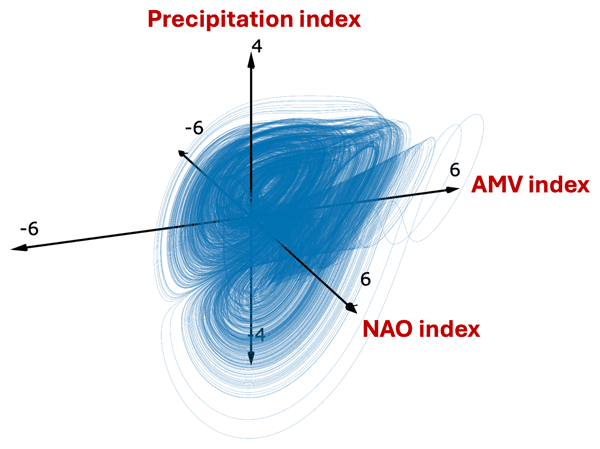
We use artificial intelligence to learn simple equations from historical climate data that describe how North Atlantic ocean temperature, air pressure and rainfall vary and influence each other over decades. Analysing the model's behaviour and equation terms, we find rainfall strongly feeds back on both the ocean and the atmosphere. These interactions are well captured by the models and allow rainfall to be predicted over the ocean, and nearby regions such as Europe over coming decades.
Jan P. Bohl, Raul R. Wood, Corinna Frank, Paul C. Astagneau, Jonas Peters, and Manuela I. Brunner
Hydrol. Earth Syst. Sci., 30, 4667–4698, https://doi.org/10.5194/hess-30-4667-2026, https://doi.org/10.5194/hess-30-4667-2026, 2026
Short summary
Short summary
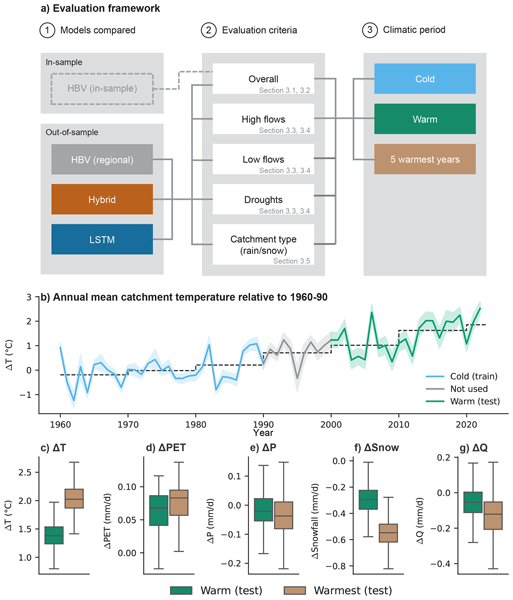
To assess climate impacts on streamflow, we need models that can predict streamflow under future conditions. This study compares three model types: data-driven (LSTM - long short-term memory), conceptual (HBV - Hydrologiska Byråns Vattenbalansavdelning), and hybrid (LSTM-HBV). LSTMs perform best overall, but HBV and hybrid models generalize better to warmer climates. Hybrid models are a promising tool for climate impact assessments, combining LSTMs accuracy with better generalizability of traditional models. In snowy regions, all models struggle to generalize.
Xueying Li, Yan Sun, Xihui Gu, Niko Wanders, Bridget R. Scanlon, and Louise J. Slater
Earth Syst. Sci. Data Discuss., https://doi.org/10.5194/essd-2026-282, https://doi.org/10.5194/essd-2026-282, 2026
Preprint under review for ESSD
Short summary
Short summary
Existing datasets of terrestrial water storage anomalies are too coarse to capture sub-regional variations, limiting understanding of fine-scale water processes. Here we use physically guided deep learning to produce a higher-resolution dataset across China for 2002–2023, increasing spatial detail from 3° to 0.1° resolution. The dataset preserves large-scale satellite observations and shows good consistency in process-based evaluations, supporting sub-regional hydrologic analysis.
Rashid Akbary, Eleonora Dallan, Paul C. Astagneau, Raul R. Wood, Francesco Marra, Manuela I. Brunner, and Marco Borga
Hydrol. Earth Syst. Sci., 30, 4117–4139, https://doi.org/10.5194/hess-30-4117-2026, https://doi.org/10.5194/hess-30-4117-2026, 2026
Short summary
Short summary
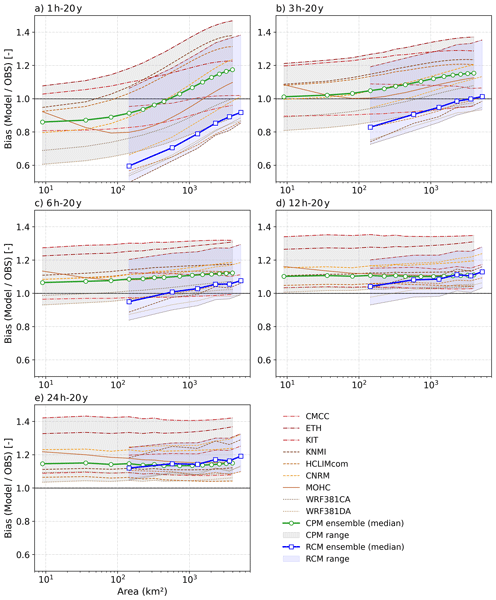
Heavy short rain can trigger flash floods and debris flows. In this study we evaluated how well climate models reproduce these events in Switzerland. We compared finer and coarser resolution models with high-quality hourly precipitation observations across small to large areas. The finer models better captured where short, intense precipitation occurs, but their errors changed with area size. Flood risk studies should therefore account for these scale-related errors.
Boen Zhang, Michel Wortmann, Yinxue Liu, Frederik Kratzert, Simon Moulds, and Louise Slater
Earth Syst. Sci. Data Discuss., https://doi.org/10.5194/essd-2026-279, https://doi.org/10.5194/essd-2026-279, 2026
Preprint under review for ESSD
Short summary
Short summary
We created a new global hydro-environmental database to better describe how rivers are connected and how surrounding environments vary across space and time. Most existing databases simplify river networks, miss complex flow paths, and are largely based on older global datasets. Our database provides more than 300 attributes for 19.6 million km of rivers and streams. It supports more accurate study of water movement, environmental change, and climate impacts worldwide.
Edward Groot, Hannah Christensen, Xia Sun, Kathryn Newman, Wahiba Lfarh, Romain Roehrig, Lisa Bengtsson, Julia Simonson, Keith Williams, and Hugo Lambert
EGUsphere, https://doi.org/10.5194/egusphere-2026-1445, https://doi.org/10.5194/egusphere-2026-1445, 2026
Short summary
Short summary
We analyse diagnostic variables associated with thunderstorm clouds potential (height) and precipitation in model uncertainty model intercomparison project, where multiple numerical submodels are pre-conditioned with each other. We quantify the adjustment rules that occur in vertical columns the climate simulations. The result is that low-level drying is important for the thunderstorm potential diagnostics, which strongly varies among the models, despite not relating to actual storm occurrence.
Haomei Lin, Peirong Lin, Fenghe Zhang, Louise Slater, Yuan Yang, Ming Pan, Qiming Qin, and Aizhong Hou
EGUsphere, https://doi.org/10.5194/egusphere-2026-1834, https://doi.org/10.5194/egusphere-2026-1834, 2026
Preprint archived
Short summary
Short summary
Accurate streamflow reconstruction is crucial for water resources assessment. Traditional models struggle with land-surface changes and human impacts. This study proposes a residual learning framework that leverages Google’s high-resolution satellite embeddings—compact Earth observation data—to improve hydrologic simulations. Our results show that this AI-driven spatial context enhances river modeling accuracy, offering a scalable solution for data-scarce regions.
Sadaf Nasreen, Oldrich Rakovec, Rohini Kumar, Manuela I. Brunner, Ujjwal Singh, Petr Maca, Yannis Markonis, and Martin Hanel
EGUsphere, https://doi.org/10.5194/egusphere-2026-973, https://doi.org/10.5194/egusphere-2026-973, 2026
Short summary
Short summary
European droughts threaten water and agriculture, but how distinct drought processes will change under warming is uncertain. We examine seven mechanisms across Europe using 1971 to 2000 observations and 2070 to 2099 projections. Changes are regional: the Mediterranean shifts to longer, more severe droughts, while Northern and Western Central Europe often improve. Temperature-driven mechanisms, especially rain to snow transitions, respond most, guiding targeted adaptation.
Eduardo Muñoz-Castro, Bailey J. Anderson, Paul C. Astagneau, Daniel L. Swain, Pablo A. Mendoza, and Manuela I. Brunner
Hydrol. Earth Syst. Sci., 30, 825–848, https://doi.org/10.5194/hess-30-825-2026, https://doi.org/10.5194/hess-30-825-2026, 2026
Short summary
Short summary
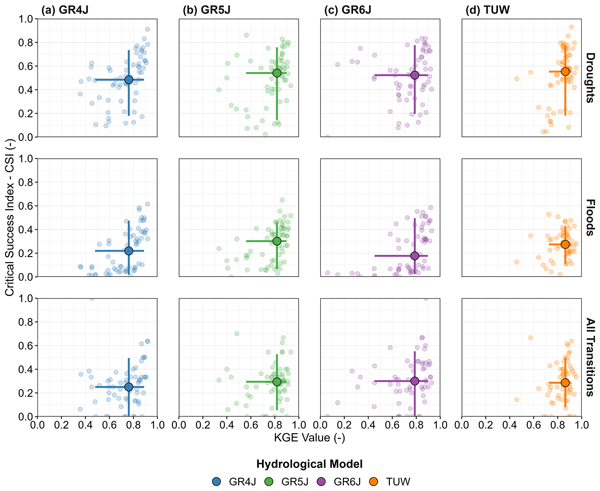
Flood impacts can be enhanced when they occur after droughts, yet the effectiveness of hydrological models in simulating these events remains unclear. Here, we calibrated four conceptual hydrological models across 63 catchments in Chile and Switzerland to assess their ability to detect streamflow extremes and their transitions. We show that drought-to-flood transitions are generally poorly captured, especially in semi-arid high-mountain catchments than in humid low-elevation ones.
Jonas Götte, Paul Charles Astagneau, and Manuela Irene Brunner
EGUsphere, https://doi.org/10.5194/egusphere-2025-6119, https://doi.org/10.5194/egusphere-2025-6119, 2026
Short summary
Short summary
While the effect of water bodies on flood peaks at different time resolutions has been demonstrated in the past, it remains unclear how they affect the ratio between daily and hourly peaks. Our results show that (1) hourly flows are dampened much more strongly than daily flows, which leads to similar daily and hourly flood peaks downstream of reservoirs; and (2) the attenuation effect is particularly pronounced in catchments that are heavily influenced by water bodies.
Joren Janzing, Niko Wanders, Marit van Tiel, Barry van Jaarsveld, Dirk N. Karger, and Manuela I. Brunner
Hydrol. Earth Syst. Sci., 29, 7041–7071, https://doi.org/10.5194/hess-29-7041-2025, https://doi.org/10.5194/hess-29-7041-2025, 2025
Short summary
Short summary
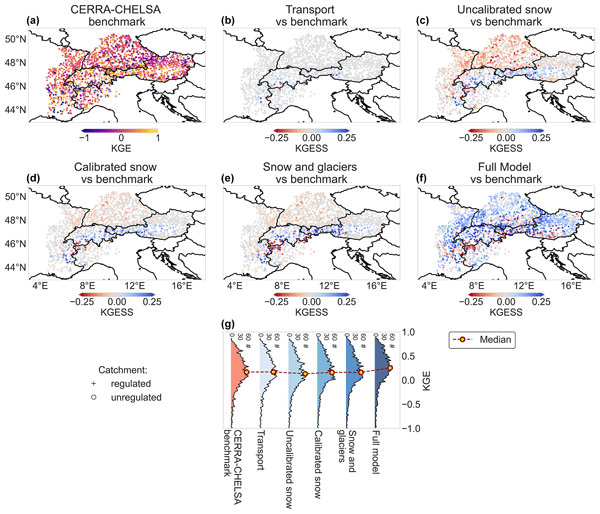
Process representation in hyper-resolution large-scale hydrological models (LHMs) limits model performance, particularly in mountain regions. Here, we update mountain process representation in an LHM and compare different meteorological forcing products. Structural and parametric changes in snow, glacier, and soil processes improve discharge simulations, while meteorological forcing remains a major control on model performance. Our work can guide future development of LHMs.
Bailey J. Anderson, Eduardo Muñoz-Castro, Lena M. Tallaksen, Alessia Matano, Jonas Götte, Rachael Armitage, Eugene Magee, and Manuela I. Brunner
Hydrol. Earth Syst. Sci., 29, 6069–6092, https://doi.org/10.5194/hess-29-6069-2025, https://doi.org/10.5194/hess-29-6069-2025, 2025
Short summary
Short summary
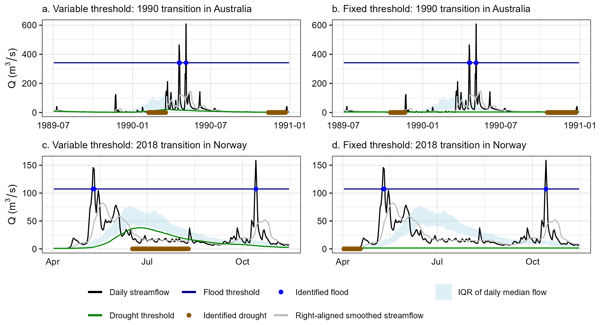
When floods happen during or shortly after droughts, the impacts of each of the events can be magnified. In hydrological research, defining these events represents a challenging and important task in the process of understanding where and why they occur. We have used real-word examples to address some of these challenges and show different approaches influence outcomes. We make suggestions on when to use which approach and outline some pitfalls of which researchers should be aware.
Paul C. Astagneau, Raul R. Wood, Mathieu Vrac, Sven Kotlarski, Pradeebane Vaittinada Ayar, Bastien François, and Manuela I. Brunner
Hydrol. Earth Syst. Sci., 29, 5695–5718, https://doi.org/10.5194/hess-29-5695-2025, https://doi.org/10.5194/hess-29-5695-2025, 2025
Short summary
Short summary
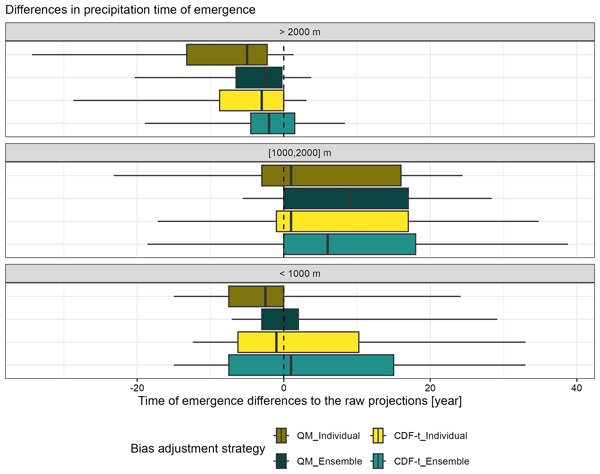
To study floods and droughts that are likely to change in the future, we use climate projections from climate models. However, we first need to adjust the systematic biases of these projections at the catchment scale before using them in hydrological models. Our study compares statistical methods that can adjust these biases but specifically for climate projections that enable a quantification of internal climate variability. We provide recommendations on the most appropriate methods.
Raul R. Wood, Joren Janzing, Amber van Hamel, Jonas Götte, Dominik L. Schumacher, and Manuela I. Brunner
Hydrol. Earth Syst. Sci., 29, 4153–4178, https://doi.org/10.5194/hess-29-4153-2025, https://doi.org/10.5194/hess-29-4153-2025, 2025
Short summary
Short summary
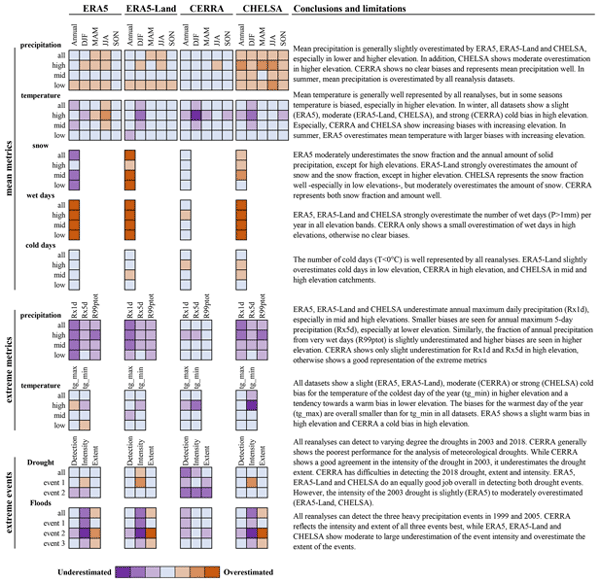
Continuous and high-quality meteorological datasets are crucial to study extreme hydro-climatic events. We here conduct a comprehensive spatio-temporal evaluation of precipitation and temperature for four climate reanalysis datasets, focusing on mean and extreme metrics, variability, trends, and the representation of droughts and floods over Switzerland. Our analysis shows that all datasets have some merit when limitations are considered, and that one dataset performs better than the others.
Amber van Hamel, Peter Molnar, Joren Janzing, and Manuela Irene Brunner
Hydrol. Earth Syst. Sci., 29, 2975–2995, https://doi.org/10.5194/hess-29-2975-2025, https://doi.org/10.5194/hess-29-2975-2025, 2025
Short summary
Short summary
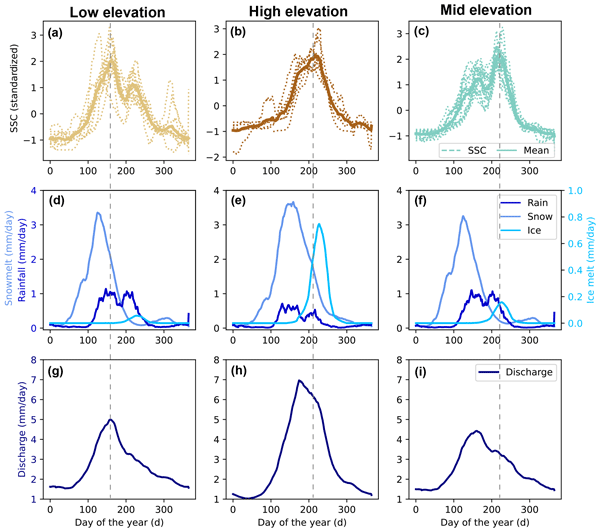
Suspended sediment is a natural component of rivers, but extreme suspended sediment concentrations (SSCs) can have negative impacts on water use and aquatic ecosystems. We identify the main factors influencing the spatial and temporal variability of annual SSC regimes and extreme SSC events. Our analysis shows that different processes are more important for annual SSC regimes than for extreme events and that compound events driven by glacial melt and high-intensity rainfall led to the highest SSCs.
Alessia Matanó, Raed Hamed, Manuela I. Brunner, Marlies H. Barendrecht, and Anne F. Van Loon
Hydrol. Earth Syst. Sci., 29, 2749–2764, https://doi.org/10.5194/hess-29-2749-2025, https://doi.org/10.5194/hess-29-2749-2025, 2025
Short summary
Short summary
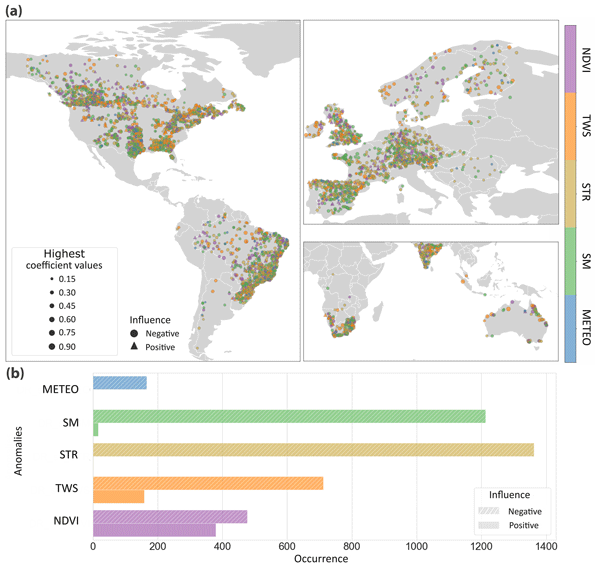
Persistent droughts change how rivers respond to rainfall. Our study of over 5000 catchments worldwide found that hydrological and soil moisture droughts decrease river-flow response to rain, especially in arid regions, while vegetation decline slightly increases it. Snow-covered areas are more resilient due to stored water buffering changes. Droughts can also cause long-lasting changes, with short and intense droughts reducing river response to rainfall and prolonged droughts increasing it.
Simon Moulds, Louise Slater, Louise Arnal, and Andrew W. Wood
Hydrol. Earth Syst. Sci., 29, 2393–2406, https://doi.org/10.5194/hess-29-2393-2025, https://doi.org/10.5194/hess-29-2393-2025, 2025
Short summary
Short summary
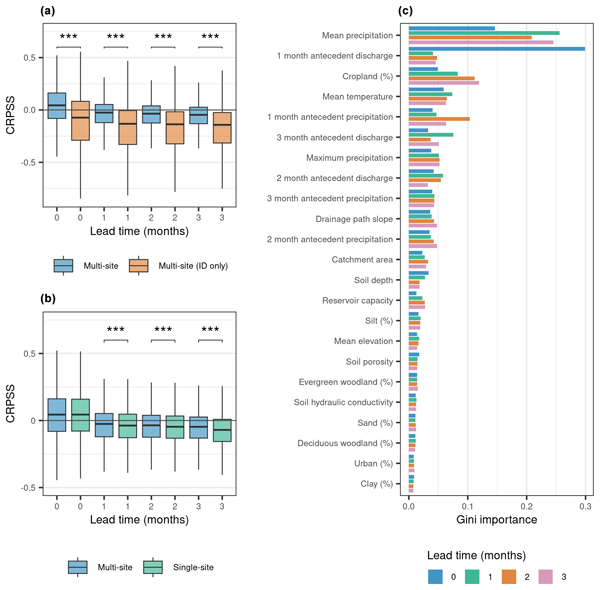
Seasonal streamflow forecasts are an important component of flood risk management. Here, we train and test a machine learning model to predict the monthly maximum daily streamflow up to 4 months ahead. We train the model on precipitation and temperature forecasts to produce probabilistic hindcasts for 579 stations across the UK for the period 2004–2016. We show skilful results up to 4 months ahead in many locations, although, in general, the skill declines with increasing lead time.
Malcolm J. Roberts, Kevin A. Reed, Qing Bao, Joseph J. Barsugli, Suzana J. Camargo, Louis-Philippe Caron, Ping Chang, Cheng-Ta Chen, Hannah M. Christensen, Gokhan Danabasoglu, Ivy Frenger, Neven S. Fučkar, Shabeh ul Hasson, Helene T. Hewitt, Huanping Huang, Daehyun Kim, Chihiro Kodama, Michael Lai, Lai-Yung Ruby Leung, Ryo Mizuta, Paulo Nobre, Pablo Ortega, Dominique Paquin, Christopher D. Roberts, Enrico Scoccimarro, Jon Seddon, Anne Marie Treguier, Chia-Ying Tu, Paul A. Ullrich, Pier Luigi Vidale, Michael F. Wehner, Colin M. Zarzycki, Bosong Zhang, Wei Zhang, and Ming Zhao
Geosci. Model Dev., 18, 1307–1332, https://doi.org/10.5194/gmd-18-1307-2025, https://doi.org/10.5194/gmd-18-1307-2025, 2025
Short summary
Short summary
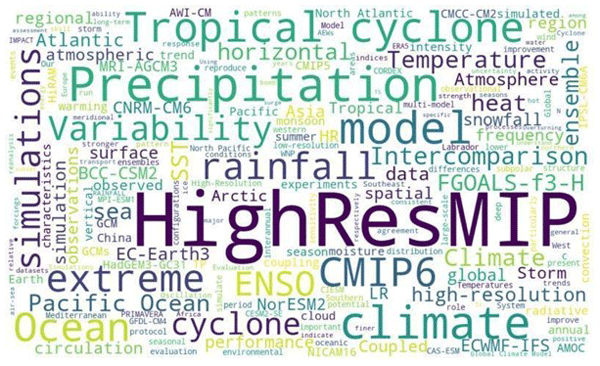
HighResMIP2 is a model intercomparison project focusing on high-resolution global climate models, that is, those with grid spacings of 25 km or less in the atmosphere and ocean, using simulations of decades to a century in length. We are proposing an update of our simulation protocol to make the models more applicable to key questions for climate variability and hazard in present-day and future projections and to build links with other communities to provide more robust climate information.
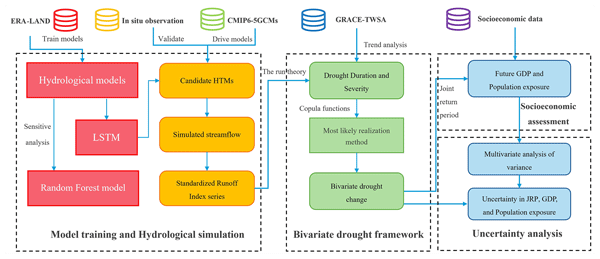
Rutong Liu, Jiabo Yin, Louise Slater, Shengyu Kang, Yuanhang Yang, Pan Liu, Jiali Guo, Xihui Gu, Xiang Zhang, and Aliaksandr Volchak
Hydrol. Earth Syst. Sci., 28, 3305–3326, https://doi.org/10.5194/hess-28-3305-2024, https://doi.org/10.5194/hess-28-3305-2024, 2024
Short summary
Short summary
Climate change accelerates the water cycle and alters the spatiotemporal distribution of hydrological variables, thus complicating the projection of future streamflow and hydrological droughts. We develop a cascade modeling chain to project future bivariate hydrological drought characteristics over China, using five bias-corrected global climate model outputs under three shared socioeconomic pathways, five hydrological models, and a deep-learning model.
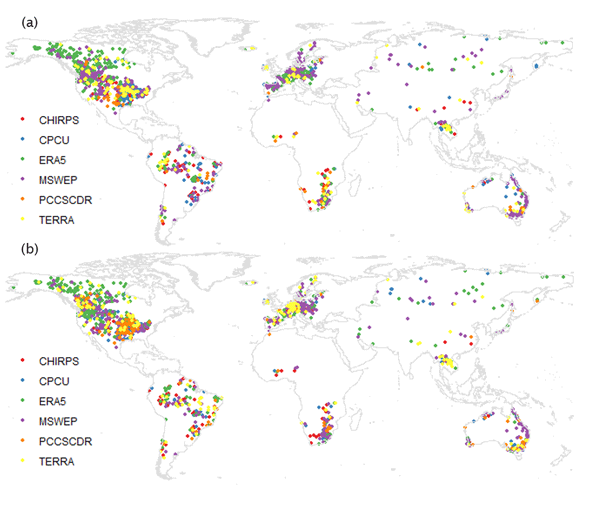
Solomon H. Gebrechorkos, Julian Leyland, Simon J. Dadson, Sagy Cohen, Louise Slater, Michel Wortmann, Philip J. Ashworth, Georgina L. Bennett, Richard Boothroyd, Hannah Cloke, Pauline Delorme, Helen Griffith, Richard Hardy, Laurence Hawker, Stuart McLelland, Jeffrey Neal, Andrew Nicholas, Andrew J. Tatem, Ellie Vahidi, Yinxue Liu, Justin Sheffield, Daniel R. Parsons, and Stephen E. Darby
Hydrol. Earth Syst. Sci., 28, 3099–3118, https://doi.org/10.5194/hess-28-3099-2024, https://doi.org/10.5194/hess-28-3099-2024, 2024
Short summary
Short summary
This study evaluated six high-resolution global precipitation datasets for hydrological modelling. MSWEP and ERA5 showed better performance, but spatial variability was high. The findings highlight the importance of careful dataset selection for river discharge modelling due to the lack of a universally superior dataset. Further improvements in global precipitation data products are needed.
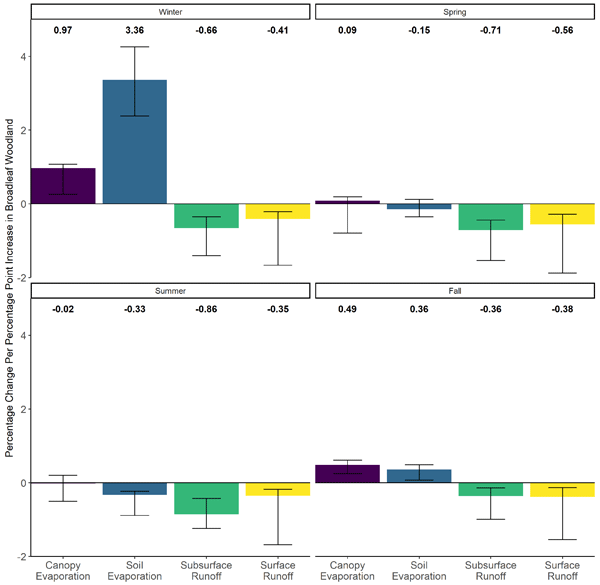
Marcus Buechel, Louise Slater, and Simon Dadson
Hydrol. Earth Syst. Sci., 28, 2081–2105, https://doi.org/10.5194/hess-28-2081-2024, https://doi.org/10.5194/hess-28-2081-2024, 2024
Short summary
Short summary
Afforestation has been proposed internationally, but the hydrological implications of such large increases in the spatial extent of woodland are not fully understood. In this study, we use a land surface model to simulate hydrology across Great Britain with realistic afforestation scenarios and potential climate changes. Countrywide afforestation minimally influences hydrology, when compared to climate change, and reduces low streamflow whilst not lowering the highest flows.
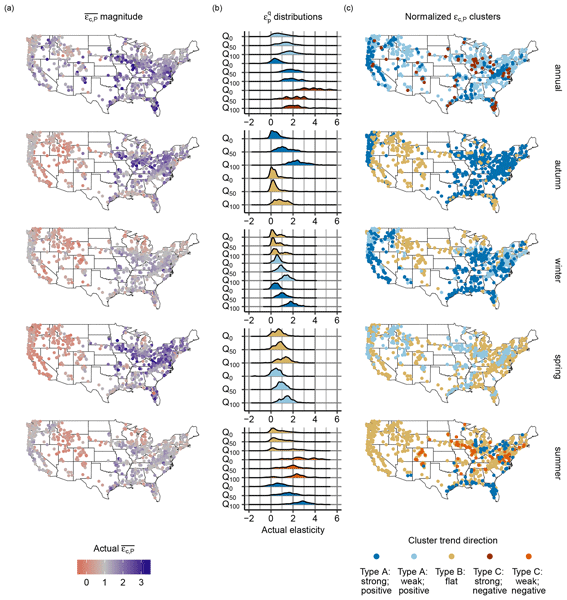
Bailey J. Anderson, Manuela I. Brunner, Louise J. Slater, and Simon J. Dadson
Hydrol. Earth Syst. Sci., 28, 1567–1583, https://doi.org/10.5194/hess-28-1567-2024, https://doi.org/10.5194/hess-28-1567-2024, 2024
Short summary
Short summary
Elasticityrefers to how much the amount of water in a river changes with precipitation. We usually calculate this using average streamflow values; however, the amount of water within rivers is also dependent on stored water sources. Here, we look at how elasticity varies across the streamflow distribution and show that not only do low and high streamflows respond differently to precipitation change, but also these differences vary with water storage availability.
Julia Miller, Andrea Böhnisch, Ralf Ludwig, and Manuela I. Brunner
Nat. Hazards Earth Syst. Sci., 24, 411–428, https://doi.org/10.5194/nhess-24-411-2024, https://doi.org/10.5194/nhess-24-411-2024, 2024
Short summary
Short summary
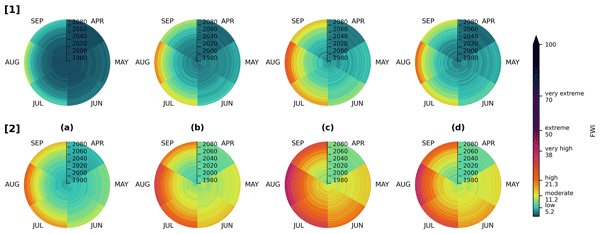
We assess the impacts of climate change on fire danger for 1980–2099 in different landscapes of central Europe, using the Canadian Forest Fire Weather Index (FWI) as a fire danger indicator. We find that today's 100-year FWI event will occur every 30 years by 2050 and every 10 years by 2099. High fire danger (FWI > 21.3) becomes the mean condition by 2099 under an RCP8.5 scenario. This study highlights the potential for severe fire events in central Europe from a meteorological perspective.
Marvin Höge, Martina Kauzlaric, Rosi Siber, Ursula Schönenberger, Pascal Horton, Jan Schwanbeck, Marius Günter Floriancic, Daniel Viviroli, Sibylle Wilhelm, Anna E. Sikorska-Senoner, Nans Addor, Manuela Brunner, Sandra Pool, Massimiliano Zappa, and Fabrizio Fenicia
Earth Syst. Sci. Data, 15, 5755–5784, https://doi.org/10.5194/essd-15-5755-2023, https://doi.org/10.5194/essd-15-5755-2023, 2023
Short summary
Short summary
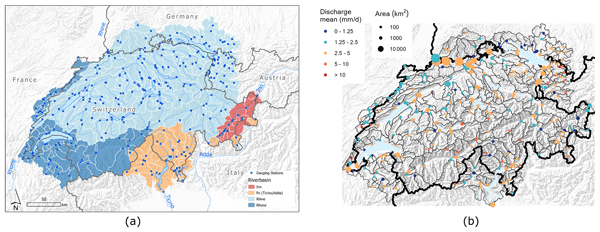
CAMELS-CH is an open large-sample hydro-meteorological data set that covers 331 catchments in hydrologic Switzerland from 1 January 1981 to 31 December 2020. It comprises (a) daily data of river discharge and water level as well as meteorologic variables like precipitation and temperature; (b) yearly glacier and land cover data; (c) static attributes of, e.g, topography or human impact; and (d) catchment delineations. CAMELS-CH enables water and climate research and modeling at catchment level.
Jiabo Yin, Louise J. Slater, Abdou Khouakhi, Le Yu, Pan Liu, Fupeng Li, Yadu Pokhrel, and Pierre Gentine
Earth Syst. Sci. Data, 15, 5597–5615, https://doi.org/10.5194/essd-15-5597-2023, https://doi.org/10.5194/essd-15-5597-2023, 2023
Short summary
Short summary
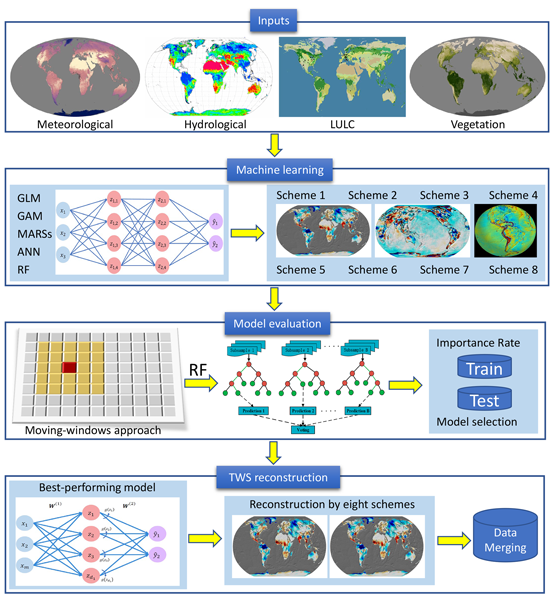
This study presents long-term (i.e., 1940–2022) and high-resolution (i.e., 0.25°) monthly time series of TWS anomalies over the global land surface. The reconstruction is achieved by using a set of machine learning models with a large number of predictors, including climatic and hydrological variables, land use/land cover data, and vegetation indicators (e.g., leaf area index). Our proposed GTWS-MLrec performs overall as well as, or is more reliable than, previous TWS datasets.
Raghul Parthipan, Hannah M. Christensen, J. Scott Hosking, and Damon J. Wischik
Geosci. Model Dev., 16, 4501–4519, https://doi.org/10.5194/gmd-16-4501-2023, https://doi.org/10.5194/gmd-16-4501-2023, 2023
Short summary
Short summary
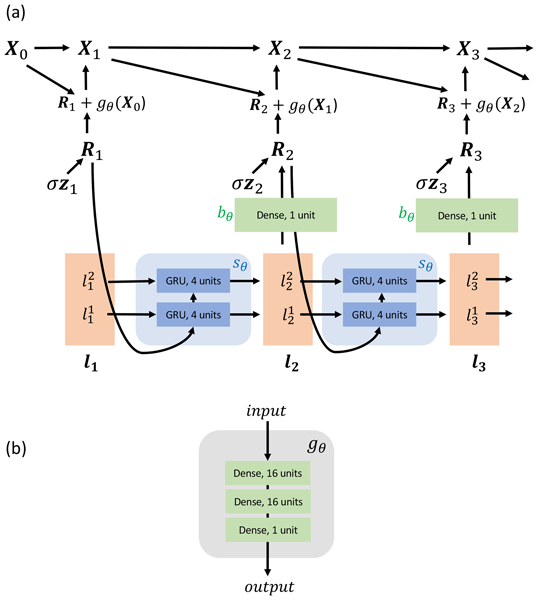
How can we create better climate models? We tackle this by proposing a data-driven successor to the existing approach for capturing key temporal trends in climate models. We combine probability, allowing us to represent uncertainty, with machine learning, a technique to learn relationships from data which are undiscoverable to humans. Our model is often superior to existing baselines when tested in a simple atmospheric simulation.

Manuela Irene Brunner
Hydrol. Earth Syst. Sci., 27, 2479–2497, https://doi.org/10.5194/hess-27-2479-2023, https://doi.org/10.5194/hess-27-2479-2023, 2023
Short summary
Short summary
I discuss different types of multivariate hydrological extremes and their dependencies, including regional extremes affecting multiple locations, such as spatially connected flood events; consecutive extremes occurring in close temporal succession, such as successive droughts; extremes characterized by multiple characteristics, such as floods with jointly high peak discharge and flood volume; and transitions between different types of extremes, such as drought-to-flood transitions.
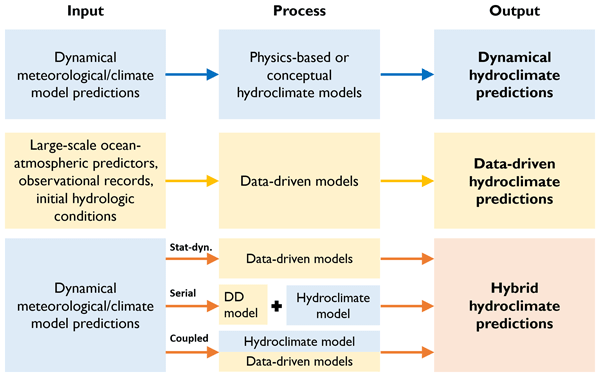
Louise J. Slater, Louise Arnal, Marie-Amélie Boucher, Annie Y.-Y. Chang, Simon Moulds, Conor Murphy, Grey Nearing, Guy Shalev, Chaopeng Shen, Linda Speight, Gabriele Villarini, Robert L. Wilby, Andrew Wood, and Massimiliano Zappa
Hydrol. Earth Syst. Sci., 27, 1865–1889, https://doi.org/10.5194/hess-27-1865-2023, https://doi.org/10.5194/hess-27-1865-2023, 2023
Short summary
Short summary
Hybrid forecasting systems combine data-driven methods with physics-based weather and climate models to improve the accuracy of predictions for meteorological and hydroclimatic events such as rainfall, temperature, streamflow, floods, droughts, tropical cyclones, or atmospheric rivers. We review recent developments in hybrid forecasting and outline key challenges and opportunities in the field.
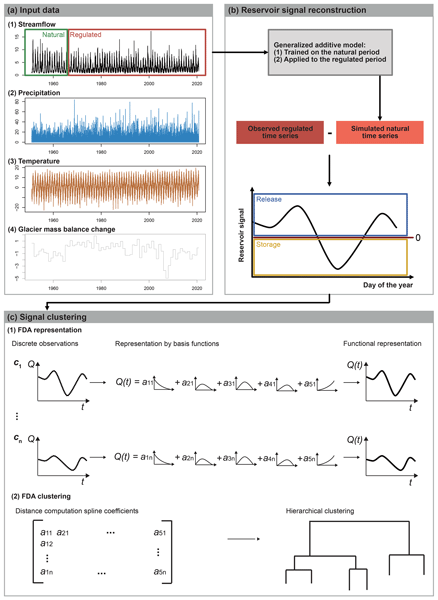
Manuela Irene Brunner and Philippe Naveau
Hydrol. Earth Syst. Sci., 27, 673–687, https://doi.org/10.5194/hess-27-673-2023, https://doi.org/10.5194/hess-27-673-2023, 2023
Short summary
Short summary
Reservoir regulation affects various streamflow characteristics. Still, information on when water is stored in and released from reservoirs is hardly available. We develop a statistical model to reconstruct reservoir operation signals from observed streamflow time series. By applying this approach to 74 catchments in the Alps, we find that reservoir management varies by catchment elevation and that seasonal redistribution from summer to winter is strongest in high-elevation catchments.

Louise J. Slater, Chris Huntingford, Richard F. Pywell, John W. Redhead, and Elizabeth J. Kendon
Earth Syst. Dynam., 13, 1377–1396, https://doi.org/10.5194/esd-13-1377-2022, https://doi.org/10.5194/esd-13-1377-2022, 2022
Short summary
Short summary
This work considers how wheat yields are affected by weather conditions during the three main wheat growth stages in the UK. Impacts are strongest in years with compound weather extremes across multiple growth stages. Future climate projections are beneficial for wheat yields, on average, but indicate a high risk of unseen weather conditions which farmers may struggle to adapt to and mitigate against.
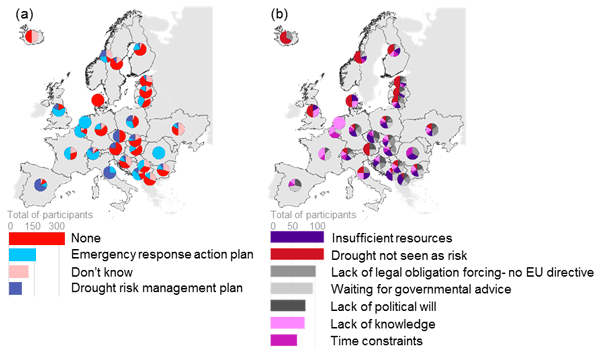
Veit Blauhut, Michael Stoelzle, Lauri Ahopelto, Manuela I. Brunner, Claudia Teutschbein, Doris E. Wendt, Vytautas Akstinas, Sigrid J. Bakke, Lucy J. Barker, Lenka Bartošová, Agrita Briede, Carmelo Cammalleri, Ksenija Cindrić Kalin, Lucia De Stefano, Miriam Fendeková, David C. Finger, Marijke Huysmans, Mirjana Ivanov, Jaak Jaagus, Jiří Jakubínský, Svitlana Krakovska, Gregor Laaha, Monika Lakatos, Kiril Manevski, Mathias Neumann Andersen, Nina Nikolova, Marzena Osuch, Pieter van Oel, Kalina Radeva, Renata J. Romanowicz, Elena Toth, Mirek Trnka, Marko Urošev, Julia Urquijo Reguera, Eric Sauquet, Aleksandra Stevkov, Lena M. Tallaksen, Iryna Trofimova, Anne F. Van Loon, Michelle T. H. van Vliet, Jean-Philippe Vidal, Niko Wanders, Micha Werner, Patrick Willems, and Nenad Živković
Nat. Hazards Earth Syst. Sci., 22, 2201–2217, https://doi.org/10.5194/nhess-22-2201-2022, https://doi.org/10.5194/nhess-22-2201-2022, 2022
Short summary
Short summary
Recent drought events caused enormous damage in Europe. We therefore questioned the existence and effect of current drought management strategies on the actual impacts and how drought is perceived by relevant stakeholders. Over 700 participants from 28 European countries provided insights into drought hazard and impact perception and current management strategies. The study concludes with an urgent need to collectively combat drought risk via a European macro-level drought governance approach.
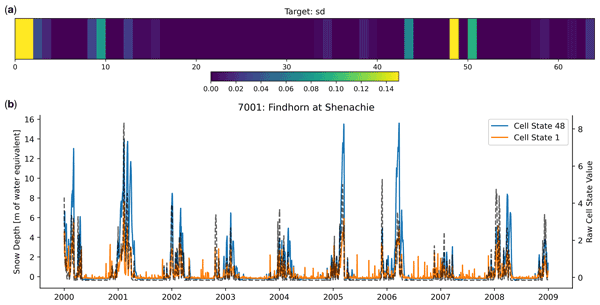
Thomas Lees, Steven Reece, Frederik Kratzert, Daniel Klotz, Martin Gauch, Jens De Bruijn, Reetik Kumar Sahu, Peter Greve, Louise Slater, and Simon J. Dadson
Hydrol. Earth Syst. Sci., 26, 3079–3101, https://doi.org/10.5194/hess-26-3079-2022, https://doi.org/10.5194/hess-26-3079-2022, 2022
Short summary
Short summary
Despite the accuracy of deep learning rainfall-runoff models, we are currently uncertain of what these models have learned. In this study we explore the internals of one deep learning architecture and demonstrate that the model learns about intermediate hydrological stores of soil moisture and snow water, despite never having seen data about these processes during training. Therefore, we find evidence that the deep learning approach learns a physically realistic mapping from inputs to outputs.

Manuela I. Brunner and Louise J. Slater
Hydrol. Earth Syst. Sci., 26, 469–482, https://doi.org/10.5194/hess-26-469-2022, https://doi.org/10.5194/hess-26-469-2022, 2022
Short summary
Short summary
Assessing the rarity and magnitude of very extreme flood events occurring less than twice a century is challenging due to the lack of observations of such rare events. Here we develop a new approach, pooling reforecast ensemble members from the European Flood Awareness System to increase the sample size available to estimate the frequency of extreme flood events. We demonstrate that such ensemble pooling produces more robust estimates than observation-based estimates.
Álvaro Ossandón, Manuela I. Brunner, Balaji Rajagopalan, and William Kleiber
Hydrol. Earth Syst. Sci., 26, 149–166, https://doi.org/10.5194/hess-26-149-2022, https://doi.org/10.5194/hess-26-149-2022, 2022
Short summary
Short summary
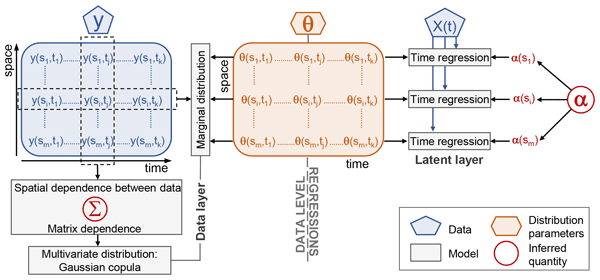
Timely projections of seasonal streamflow extremes on a river network can be useful for flood risk mitigation, but this is challenging, particularly under space–time nonstationarity. We develop a space–time Bayesian hierarchical model (BHM) using temporal climate covariates and copulas to project seasonal streamflow extremes and the attendant uncertainties. We demonstrate this on the Upper Colorado River basin to project spring flow extremes using the preceding winter’s climate teleconnections.
Thomas Lees, Marcus Buechel, Bailey Anderson, Louise Slater, Steven Reece, Gemma Coxon, and Simon J. Dadson
Hydrol. Earth Syst. Sci., 25, 5517–5534, https://doi.org/10.5194/hess-25-5517-2021, https://doi.org/10.5194/hess-25-5517-2021, 2021
Short summary
Short summary
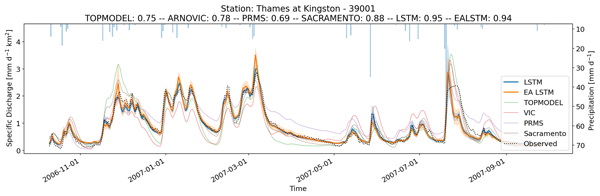
We used deep learning (DL) models to simulate the amount of water moving through a river channel (discharge) based on the rainfall, temperature and potential evaporation in the previous days. We tested the DL models on catchments across Great Britain finding that the model can accurately simulate hydrological systems across a variety of catchment conditions. Ultimately, the model struggled most in areas where there is chalky bedrock and where human influence on the catchment is large.
Cited articles
Ansell, T. J., Jones, P. D., Allan, R. J., Lister, D., Parker, D. E., Brunet, M., Moberg, A., Jacobeit, J., Brohan, P., Rayner, N. A., Aguilar, E., Alexandersson, H., Barriendos, M., Brandsma, T., Cox, N. J., Della-Marta, P. M., Drebs, A., Founda, D., Gerstengarbe, F., Hickey, K., Jónsson, T., Luterbacher, J., Nordli, Ø., Oesterle, H., Petrakis, M., Philipp, A., Rodwell, M. J., Saladie, O., Sigro, J., Slonosky, V., Srnec, L., Swail, V., García-Suárez, A. M., Tuomenvirta, H., Wang, X., Wanner, H., Werner, P., Wheeler, D., and Xoplaki, E.: Daily Mean Sea Level Pressure Reconstructions for the European–North Atlantic Region for the Period 1850–2003, J. Climate, 19, 2717–2742, https://doi.org/10.1175/JCLI3775.1, 2006. a
Bárdossy, A. and Filiz, F.: Identification of flood producing atmospheric circulation patterns, J. Hydrol., 313, 48–57, https://doi.org/10.1016/j.jhydrol.2005.02.006, 2005. a, b
Bartens, A., Shehu, B., and Haberlandt, U.: Flood frequency analysis using mean daily flows vs. instantaneous peak flows, Hydrol. Earth Syst. Sci., 28, 1687–1709, https://doi.org/10.5194/hess-28-1687-2024, 2024. a
Beck, C. and Philipp, A.: Evaluation and comparison of circulation type classifications for the European domain, Phys. Chem. Earth Pt. A/B/C, 35, 374–387, https://doi.org/10.1016/J.PCE.2010.01.001, 2010. a
Berghuijs, W. R., Woods, R. A., Hutton, C. J., and Sivapalan, M.: Dominant flood generating mechanisms across the United States, Geophys. Res. Lett., 43, 4382–4390, https://doi.org/10.1002/2016GL068070, 2016. a, b, c
Bertola, M., Viglione, A., Lun, D., Hall, J., and Blöschl, G.: Flood trends in Europe: are changes in small and big floods different?, Hydrol. Earth Syst. Sci., 24, 1805–1822, https://doi.org/10.5194/hess-24-1805-2020, 2020. a
Blöschl, G., Hall, J., Viglione, A., Perdigão, R. A., Parajka, J., Merz, B., Lun, D., Arheimer, B., Aronica, G. T., Bilibashi, A., Boháč, M., Bonacci, O., Borga, M., Čanjevac, I., Castellarin, A., Chirico, G. B., Claps, P., Frolova, N., Ganora, D., Gorbachova, L., Gül, A., Hannaford, J., Harrigan, S., Kireeva, M., Kiss, A., Kjeldsen, T. R., Kohnová, S., Koskela, J. J., Ledvinka, O., Macdonald, N., Mavrova-Guirguinova, M., Mediero, L., Merz, R., Molnar, P., Montanari, A., Murphy, C., Osuch, M., Ovcharuk, V., Radevski, I., Salinas, J. L., Sauquet, E., Šraj, M., Szolgay, J., Volpi, E., Wilson, D., Zaimi, K., and Živković, N.: Changing climate both increases and decreases European river floods, Nature, 573, 108–111, https://doi.org/10.1038/S41586-019-1495-6, 2019. a, b, c
Botache, D., Dingel, K., Huhnstock, R., Ehresmann, A., and Sick, B.: Unraveling the Complexity of Splitting Sequential Data: Tackling Challenges in Video and Time Series Analysis, arXiv [preprint], https://doi.org/10.48550/arXiv.2307.14294, 2023. a
Breiman, L.: Random forests, Mach. Learn., 45, 5–32, https://doi.org/10.1023/A:1010933404324, 2001. a
Brown, M., Robinson, E., Kay, A., Chapman, R., Bell, V., and Blyth, E.: Potential evapotranspiration derived from HadUK-Grid 1km gridded climate observations 1969–2022 (Hydro-PE HadUK-Grid), https://doi.org/10.5285/BEB62085-BA81-480C-9ED0-2D31C27FF196, 2023. a
Brunner, M. I. and Slater, L. J.: Extreme floods in Europe: going beyond observations using reforecast ensemble pooling, Hydrol. Earth Syst. Sci., 26, 469–482, https://doi.org/10.5194/hess-26-469-2022, 2022. a
Brunner, M. I., Slater, L., Tallaksen, L. M., and Clark, M.: Challenges in modeling and predicting floods and droughts: A review, Wiley Interdisciplinary Reviews: Water, 8, e1520, https://doi.org/10.1002/WAT2.1520, 2021. a
Chicco, D., Warrens, M. J., and Jurman, G.: The coefficient of determination R-squared is more informative than SMAPE, MAE, MAPE, MSE and RMSE in regression analysis evaluation, PeerJ Computer Science, 7, 1–24, https://doi.org/10.7717/PEERJ-CS.623/SUPP-1, 2021. a
Coxon, G., Addor, N., Bloomfield, J. P., Freer, J., Fry, M., Hannaford, J., Howden, N. J. K., Lane, R., Lewis, M., Robinson, E. L., Wagener, T., and Woods, R.: CAMELS-GB: hydrometeorological time series and landscape attributes for 671 catchments in Great Britain, Earth Syst. Sci. Data, 12, 2459–2483, https://doi.org/10.5194/essd-12-2459-2020, 2020. a, b, c, d, e, f, g, h, i, j, k
Coxon, G., McMillan, H., Bloomfield, J. P., Bolotin, L., Dean, J. F., Kelleher, C., Slater, L., and Zheng, Y.: Wastewater discharges and urban land cover dominate urban hydrology signals across England and Wales, Environ. Res. Lett., 19, 084016, https://doi.org/10.1088/1748-9326/AD5BF2, 2024. a, b, c
Coxon, G., Zheng, Y., Barbedo, R., Cooper, H., Fileni, F., Fowler, H. J., Fry, M., Green, A., Gribbin, T., Harfoot, H., Lewis, E., Gondim, G., Neto, R., Qiu, X., Salwey, S., and Wendt, D. E.: CAMELS-GB v2: hydrometeorological time series and landscape attributes for 671 catchments in Great Britain, Earth Syst. Sci. Data Discuss. [preprint], https://doi.org/10.5194/essd-2025-608, in review, 2025. a, b, c, d, e, f, g
Cutler, A., Cutler, D. R., and Stevens, J. R.: Random Forests, Ensemble Machine Learning, 157–175, https://doi.org/10.1007/978-1-4419-9326-7_5, 2012. a
Duckstein, L., Bárdossy, A., and Bogárdi, I.: Linkage between the occurrence of daily atmospheric circulation patterns and floods: an Arizona case study, J. Hydrol., 143, 413–428, https://doi.org/10.1016/0022-1694(93)90202-K, 1993. a, b, c
Fabiano, F., Meccia, V. L., Davini, P., Ghinassi, P., and Corti, S.: A regime view of future atmospheric circulation changes in northern mid-latitudes, Weather Clim. Dynam., 2, 163–180, https://doi.org/10.5194/wcd-2-163-2021, 2021. a
Fawagreh, K., Gaber, M. M., and Elyan, E.: Random forests: From early developments to recent advancements, Systems Science and Control Engineering, 2, 602–609, https://doi.org/10.1080/21642583.2014.956265, 2014. a
Fileni, F., Fowler, H. J., Lewis, E., McLay, F., and Yang, L.: A quality-control framework for sub-daily flow and level data for hydrological modelling in Great Britain, Hydrol. Res., 54, 1357–1367, https://doi.org/10.2166/NH.2023.045, 2023. a
Fleming, S. W., Watson, J. R., Ellenson, A., Cannon, A. J., and Vesselinov, V. C.: Machine learning in Earth and environmental science requires education and research policy reforms, Nat. Geosci., 14, 878–880, https://doi.org/10.1038/s41561-021-00865-3, 2021. a
Frame, J. M., Kratzert, F., Klotz, D., Gauch, M., Shalev, G., Gilon, O., Qualls, L. M., Gupta, H. V., and Nearing, G. S.: Deep learning rainfall–runoff predictions of extreme events, Hydrol. Earth Syst. Sci., 26, 3377–3392, https://doi.org/10.5194/hess-26-3377-2022, 2022. a
Graham, Y., Mathur, N., and Baldwin, T.: Randomized Significance Tests in Machine Translation, Proceedings of the Annual Meeting of the Association for Computational Linguistics, 266–274, https://doi.org/10.3115/V1/W14-3333, 2014. a, b
Griffin, A., Vesuviano, G., and Stewart, E.: Have trends changed over time? A study of UK peak flow data and sensitivity to observation period, Nat. Hazards Earth Syst. Sci., 19, 2157–2167, https://doi.org/10.5194/nhess-19-2157-2019, 2019. a
Griffin, A., Kay, A. L., Sayers, P., Bell, V., Stewart, E., and Carr, S.: Widespread flooding dynamics under climate change: characterising floods using grid-based hydrological modelling and regional climate projections, Hydrol. Earth Syst. Sci., 28, 2635–2650, https://doi.org/10.5194/hess-28-2635-2024, 2024. a
Griffin, A., Vesuviano, G., Wilson, D., Sefton, C., Turner, S., Armitage, R., and Suman, G.: Putting the English Flooding of 2019–2021 in the Context of Antecedent Conditions, J. Flood Risk Manag., 18, e70016, https://doi.org/10.1111/JFR3.70016, 2025. a
Hakim, D. K., Gernowo, R., and Nirwansyah, A. W.: Flood prediction with time series data mining: Systematic review, Natural Hazards Research, 4, 194–220, https://doi.org/10.1016/J.NHRES.2023.10.001, 2024. a
Harrigan, S., Hannaford, J., Muchan, K., and Marsh, T. J.: Designation and trend analysis of the updated UK Benchmark Network of river flow stations: the UKBN2 dataset, Hydrol. Res., 49, 552–567, https://doi.org/10.2166/NH.2017.058, 2018. a, b
Hendry, A., Haigh, I. D., Nicholls, R. J., Winter, H., Neal, R., Wahl, T., Joly-Laugel, A., and Darby, S. E.: Assessing the characteristics and drivers of compound flooding events around the UK coast, Hydrol. Earth Syst. Sci., 23, 3117–3139, https://doi.org/10.5194/hess-23-3117-2019, 2019. a
Hollis, D., McCarthy, M., Kendon, M., Legg, T., and Simpson, I.: HadUK-Grid – A new UK dataset of gridded climate observations, Geosci. Data J., 6, 151–159, https://doi.org/10.1002/GDJ3.78, 2019. a, b, c, d
Horner, I., Renard, B., Le Coz, J., Branger, F., McMillan, H. K., and Pierrefeu, G.: Impact of Stage Measurement Errors on Streamflow Uncertainty, Water Resour. Res., 54, 1952–1976, https://doi.org/10.1002/2017WR022039, 2018. a
Huang, W. T. K., Charlton-Perez, A., Lee, R. W., Neal, R., Sarran, C., and Sun, T.: Weather regimes and patterns associated with temperature-related excess mortality in the UK: a pathway to sub-seasonal risk forecasting, Environ. Res. Lett., 15, 124052, https://doi.org/10.1088/1748-9326/ABCBBA, 2020. a, b
Jiang, S., Bevacqua, E., and Zscheischler, J.: River flooding mechanisms and their changes in Europe revealed by explainable machine learning, Hydrol. Earth Syst. Sci., 26, 6339–6359, https://doi.org/10.5194/hess-26-6339-2022, 2022. a, b, c, d
Kratzert, F., Klotz, D., Brenner, C., Schulz, K., and Herrnegger, M.: Rainfall–runoff modelling using Long Short-Term Memory (LSTM) networks, Hydrol. Earth Syst. Sci., 22, 6005–6022, https://doi.org/10.5194/hess-22-6005-2018, 2018. a
Kratzert, F., Klotz, D., Shalev, G., Klambauer, G., Hochreiter, S., and Nearing, G.: Towards learning universal, regional, and local hydrological behaviors via machine learning applied to large-sample datasets, Hydrol. Earth Syst. Sci., 23, 5089–5110, https://doi.org/10.5194/hess-23-5089-2019, 2019. a, b, c
Kratzert, F., Gauch, M., Nearing, G., and Klotz, D.: NeuralHydrology – A Python library for Deep Learning research in hydrology, J. Open Source Softw., 7, 4050, https://doi.org/10.21105/JOSS.04050, 2022. a
Kratzert, F., Gauch, M., Klotz, D., and Nearing, G.: HESS Opinions: Never train a Long Short-Term Memory (LSTM) network on a single basin, Hydrol. Earth Syst. Sci., 28, 4187–4201, https://doi.org/10.5194/hess-28-4187-2024, 2024. a, b, c
Lamane, H., Mouhir, L., Moussadek, R., Baghdad, B., Kisi, O., and El Bilali, A.: Interpreting machine learning models based on SHAP values in predicting suspended sediment concentration, Int. J. Sediment Res., https://doi.org/10.1016/J.IJSRC.2024.10.002, 2024. a
Lamb, H. H.: British Isles weather types and a register of daily sequence of circulation patterns, 1861–1971, https://openlibrary.org/works/OL3523120W/British_Isles_weather_types_and_a_register_of_the_daily_sequence_of_circulation_patterns_1861-1971, 1972. a
Lane, R. A., Coxon, G., Freer, J. E., Wagener, T., Johnes, P. J., Bloomfield, J. P., Greene, S., Macleod, C. J. A., and Reaney, S. M.: Benchmarking the predictive capability of hydrological models for river flow and flood peak predictions across over 1000 catchments in Great Britain, Hydrol. Earth Syst. Sci., 23, 4011–4032, https://doi.org/10.5194/hess-23-4011-2019, 2019. a
Lavers, D., Prudhomme, C., and Hannah, D. M.: Large-scale climate, precipitation and British river flows: Identifying hydroclimatological connections and dynamics, J. Hydrol., 395, 242–255, https://doi.org/10.1016/J.JHYDROL.2010.10.036, 2010. a
Lavers, D. A., Villarini, G., Allan, R. P., Wood, E. F., and Wade, A. J.: The detection of atmospheric rivers in atmospheric reanalyses and their links to British winter floods and the large-scale climatic circulation, J. Geophys. Res.-Atmos., 117, 20106, https://doi.org/10.1029/2012JD018027, 2012. a
Lavers, D. A., Ralph, F. M., Richardson, D. S., and Pappenberger, F.: Improved forecasts of atmospheric rivers through systematic reconnaissance, better modelling, and insights on conversion of rain to flooding, Commun. Earth Environ., 1, 1–7, https://doi.org/10.1038/s43247-020-00042-1, 2020. a
Ledingham, J., Archer, D., Lewis, E., Fowler, H., and Kilsby, C.: Contrasting seasonality of storm rainfall and flood runoff in the UK and some implications for rainfall-runoff methods of flood estimation, Hydrol. Res., 50, 1309–1323, https://doi.org/10.2166/NH.2019.040, 2019. a
Lees, T., Buechel, M., Anderson, B., Slater, L., Reece, S., Coxon, G., and Dadson, S. J.: Benchmarking data-driven rainfall–runoff models in Great Britain: a comparison of long short-term memory (LSTM)-based models with four lumped conceptual models, Hydrol. Earth Syst. Sci., 25, 5517–5534, https://doi.org/10.5194/hess-25-5517-2021, 2021. a, b, c
Lees, T., Reece, S., Kratzert, F., Klotz, D., Gauch, M., De Bruijn, J., Kumar Sahu, R., Greve, P., Slater, L., and Dadson, S. J.: Hydrological concept formation inside long short-term memory (LSTM) networks, Hydrol. Earth Syst. Sci., 26, 3079–3101, https://doi.org/10.5194/hess-26-3079-2022, 2022. a, b
Ley, A., Bormann, H., and Casper, M.: Linking explainable artificial intelligence and soil moisture dynamics in a machine learning streamflow model, Hydrol. Res., 55, 613–627, https://doi.org/10.2166/NH.2024.003, 2024. a
Liu, J., Feng, S., Gu, X., Zhang, Y., Beck, H. E., Zhang, J., and Yan, S.: Global changes in floods and their drivers, J. Hydrol., 614, 128553, https://doi.org/10.1016/J.JHYDROL.2022.128553, 2022. a
Lundberg, S. M., Erion, G., Chen, H., DeGrave, A., Prutkin, J. M., Nair, B., Katz, R., Himmelfarb, J., Bansal, N., and Lee, S. I.: From local explanations to global understanding with explainable AI for trees, Nature Machine Intelligence, 2, 56–67, https://doi.org/10.1038/s42256-019-0138-9, 2020. a, b
Mailhot, A., Lachance-Cloutier, S., Talbot, G., and Favre, A. C.: Regional estimates of intense rainfall based on the Peak-Over-Threshold (POT) approach, J. Hydrol., 476, 188–199, https://doi.org/10.1016/J.JHYDROL.2012.10.036, 2013. a
Massari, C., Pellet, V., Tramblay, Y., Crow, W. T., Gründemann, G. J., Hascoetf, T., Penna, D., Modanesi, S., Brocca, L., Camici, S., and Marra, F.: On the relation between antecedent basin conditions and runoff coefficient for European floods, J. Hydrol., 625, 130012, https://doi.org/10.1016/J.JHYDROL.2023.130012, 2023. a
Meira Neto, A. A., Roy, T., de Oliveira, P. T. S., and Troch, P. A.: An Aridity Index-Based Formulation of Streamflow Components, Water Resour. Res., 56, e2020WR027123, https://doi.org/10.1029/2020WR027123, 2020. a
Merz, B., Nguyen, V. D., and Vorogushyn, S.: Temporal clustering of floods in Germany: Do flood-rich and flood-poor periods exist?, J. Hydrol., 541, 824–838, https://doi.org/10.1016/J.JHYDROL.2016.07.041, 2016. a
Merz, R. and Blöschl, G.: A process typology of regional floods, Water Resour. Res., 39, https://doi.org/10.1029/2002WR001952, 2003. a
Morlot, T., Perret, C., Favre, A. C., and Jalbert, J.: Dynamic rating curve assessment for hydrometric stations and computation of the associated uncertainties: Quality and station management indicators, J. Hydrol., 517, 173–186, https://doi.org/10.1016/J.JHYDROL.2014.05.007, 2014. a
Mushtaq, H., Akhtar, T., Hashmi, M. Z. u. R., Masood, A., and Saeed, F.: Hydrologic interpretation of machine learning models for 10-daily streamflow simulation in climate sensitive upper Indus catchments, Theor. Appl. Climatol., 155, 5525–5542, https://doi.org/10.1007/s00704-024-04932-8, 2024. a
Nariya, M. K., Mills, C. E., Sorger, P. K., and Sokolov, A.: Paired evaluation of machine-learning models characterizes effects of confounders and outliers, Patterns, 4, 100791, https://doi.org/10.1016/J.PATTER.2023.100791, 2023. a
Neal, R., Dankers, R., Saulter, A., Lane, A., Millard, J., Robbins, G., and Price, D.: Use of probabilistic medium- to long-range weather-pattern forecasts for identifying periods with an increased likelihood of coastal flooding around the UK, Meteorol. Appl., 25, 534–547, https://doi.org/10.1002/MET.1719, 2018. a, b, c, d
Nevo, S., Morin, E., Gerzi Rosenthal, A., Metzger, A., Barshai, C., Weitzner, D., Voloshin, D., Kratzert, F., Elidan, G., Dror, G., Begelman, G., Nearing, G., Shalev, G., Noga, H., Shavitt, I., Yuklea, L., Royz, M., Giladi, N., Peled Levi, N., Reich, O., Gilon, O., Maor, R., Timnat, S., Shechter, T., Anisimov, V., Gigi, Y., Levin, Y., Moshe, Z., Ben-Haim, Z., Hassidim, A., and Matias, Y.: Flood forecasting with machine learning models in an operational framework, Hydrol. Earth Syst. Sci., 26, 4013–4032, https://doi.org/10.5194/hess-26-4013-2022, 2022. a
Nied, M., Pardowitz, T., Nissen, K., Ulbrich, U., Hundecha, Y., and Merz, B.: On the relationship between hydro-meteorological patterns and flood types, J. Hydrol., 519, 3249–3262, https://doi.org/10.1016/j.jhydrol.2014.09.089, 2014. a
NRFA: National River Flow Archive (NRFA): River flow and catchment shapefiles for Great Britain, https://nrfa.ceh.ac.uk/ (last access: 15 April 2026), 2023. a
O'Brien, R. M.: A Caution Regarding Rules of Thumb for Variance Inflation Factors, Qual. Quant., 41, 673–690, https://doi.org/10.1007/S11135-006-9018-6, 2007. a
Ojala, M. and Garriga, G. C.: Permutation Tests for Studying Classifier Performance, J. Mach. Learn. Res., 11, 1833–1863, 2010. a
Pan, X., Rahman, A., Haddad, K., and Ouarda, T. B.: Peaks-over-threshold model in flood frequency analysis: a scoping review, Stoch. Env. Res. Risk A., 36, 2419–2435, https://doi.org/10.1007/S00477-022-02174-6, 2022. a
Pedregosa, F., Varoquaux, G., Gramfort, A., Michel, V., Thirion, B., Grisel, O., Blondel, M., Müller, A., Nothman, J., Louppe, G., Prettenhofer, P., Weiss, R., Dubourg, V., Vanderplas, J., Cournapeau, D., Brucher, M., and Perrot, M.: Scikit-learn: Machine Learning in Python, J. Mach. Learn. Res., 12, 2825–2830, 2011. a
Perks, R. J., Bernie, D., Lowe, J., and Neal, R.: The influence of future weather pattern changes and projected sea-level rise on coastal flood impacts around the UK, Climatic Change, 176, 1–21, https://doi.org/10.1007/S10584-023-03496-2, 2023. a, b
Pope, J. O., Brown, K., Fung, F., Hanlon, H. M., Neal, R., Palin, E. J., and Reid, A.: Investigation of future climate change over the british isles using weather patterns, Clim. Dynam., 58, 2405–2419, https://doi.org/10.1007/s00382-021-06031-0, 2021. a, b
Prudhomme, C. and Genevier, M.: Can atmospheric circulation be linked to flooding in Europe?, Hydrol. Process., 25, 1180–1190, https://doi.org/10.1002/HYP.7879, 2011. a
Richardson, D., Fowler, H. J., Kilsby, C. G., and Neal, R.: A new precipitation and drought climatology based on weather patterns, Int. J. Climatol., 38, 630–648, https://doi.org/10.1002/JOC.5199, 2018. a, b, c
Richardson, D., Neal, R., Dankers, R., Mylne, K., Cowling, R., Clements, H., and Millard, J.: Linking weather patterns to regional extreme precipitation for highlighting potential flood events in medium- to long-range forecasts, Meteorol. Appl., 27, https://doi.org/10.1002/met.1931, 2020. a, b, c, d
Rodding Kjeldsen, T. and Prosdocimi, I.: Use of peak over threshold data for flood frequency estimation: An application at the UK national scale, J. Hydrol., 626, 130235, https://doi.org/10.1016/J.JHYDROL.2023.130235, 2023. a
Rosso, G.: Extreme Value Theory for Time Series using Peak-Over-Threshold method-Gianluca Rosso (2015) Extreme Value Theory for Time Series using Peak-Over-Threshold method, https://api.semanticscholar.org/CorpusID:88521862, 2015. a
Schlef, K. E., Moradkhani, H., and Lall, U.: Atmospheric Circulation Patterns Associated with Extreme United States Floods Identified via Machine Learning, Sci. Rep.-UK, 9, 1–12, https://doi.org/10.1038/s41598-019-43496-w, 2019. a, b, c
Scussolini, P., Luu, L. N., Philip, S., Berghuijs, W. R., Eilander, D., Aerts, J. C., Kew, S. F., van Oldenborgh, G. J., Toonen, W. H., Volkholz, J., and Coumou, D.: Challenges in the attribution of river flood events, WIRes Clim. Change, 15, e874, https://doi.org/10.1002/WCC.874, 2024. a
Sefton, C., Muchan, K., Parry, S., Matthews, B., Barker, L. J., Turner, S., and Hannaford, J.: The 2019/2020 floods in the UK: a hydrological appraisal, Weather, 76, 378–384, https://doi.org/10.1002/WEA.3993, 2021. a, b
Sillmann, J., Thorarinsdottir, T., Keenlyside, N., Schaller, N., Alexander, L. V., Hegerl, G., Seneviratne, S. I., Vautard, R., Zhang, X., and Zwiers, F. W.: Understanding, modeling and predicting weather and climate extremes: Challenges and opportunities, Weather and Climate Extremes, 18, 65–74, https://doi.org/10.1016/J.WACE.2017.10.003, 2017. a
Slater, L., Coxon, G., Brunner, M., McMillan, H., Yu, L., Zheng, Y., Khouakhi, A., Moulds, S., and Berghuijs, W.: Spatial Sensitivity of River Flooding to Changes in Climate and Land Cover Through Explainable AI, Earths Future, 12, e2023EF004035, https://doi.org/10.1029/2023EF004035, 2024. a, b, c, d, e, f, g
Slater, L., Blougouras, G., Deng, L., Deng, Q., Ford, E., Hoek Van Dijke, A., Huang, F., Jiang, S., Liu, Y., Moulds, S., Schepen, A., Yin, J., and Zhang, B.: Challenges and opportunities of ML and explainable AI in large-sample hydrology, Philos. T. R. Soc. A, 383, https://doi.org/10.1098/rsta.2024.0287, 2025. a, b, c
Staudinger, M., Kauzlaric, M., Mas, A., Evin, G., Hingray, B., and Viviroli, D.: The role of antecedent conditions in translating precipitation events into extreme floods at the catchment scale and in a large-basin context, Nat. Hazards Earth Syst. Sci., 25, 247–265, https://doi.org/10.5194/nhess-25-247-2025, 2025. a, b
Tabari, H.: Extreme value analysis dilemma for climate change impact assessment on global flood and extreme precipitation, J. Hydrol., 593, 125932, https://doi.org/10.1016/J.JHYDROL.2020.125932, 2021. a
Tarasova, L., Lun, D., Merz, R., Blöschl, G., Basso, S., Bertola, M., Miniussi, A., Rakovec, O., Samaniego, L., Thober, S., and Kumar, R.: Shifts in flood generation processes exacerbate regional flood anomalies in Europe, Communications Earth & Environment, 4, 1–12, https://doi.org/10.1038/s43247-023-00714-8, 2023. a
Towler, E., Foks, S. S., Dugger, A. L., Dickinson, J. E., Essaid, H. I., Gochis, D., Viger, R. J., and Zhang, Y.: Benchmarking high-resolution hydrologic model performance of long-term retrospective streamflow simulations in the contiguous United States, Hydrol. Earth Syst. Sci., 27, 1809–1825, https://doi.org/10.5194/hess-27-1809-2023, 2023. a
van Hamel, A. and Brunner, M. I.: Trends and Drivers of Water Temperature Extremes in Mountain Rivers, Water Resour. Res., 60, e2024WR037518, https://doi.org/10.1029/2024WR037518, 2024. a, b, c
Wang, Y., Li, Y., Pu, W., Wen, K., Shugart, Y. Y., Xiong, M., and Jin, L.: Random Bits Forest: a Strong Classifier/Regressor for Big Data, Sci. Rep.-UK, 6, 1–8, https://doi.org/10.1038/srep30086, 2016. a
Westerberg, I. K., Sikorska-Senoner, A. E., Viviroli, D., Vis, M., and Seibert, J.: Hydrological model calibration with uncertain discharge data, Hydrolog. Sci. J., 67, 2441–2456, https://doi.org/10.1080/02626667.2020.1735638, 2022. a
Wilby, R. L.: The influence of variable weather patterns on river water quantity and quality regimes, Int. J. Climatol., 13, 447–459, https://doi.org/10.1002/JOC.3370130408, 1993. a, b
Yuan, Y. and Lozano-Durán, A.: Limits to extreme event forecasting in chaotic systems, Physica D, 467, 134246, https://doi.org/10.1016/J.PHYSD.2024.134246, 2024. a
Short summary
This study aims to improve prediction and understanding of extreme flood events in near-natural catchments across the United Kingdom. We develop a machine learning framework to assess the contribution of different features to flood magnitude estimation. We find weather patterns are weak predictors and stress the importance of evaluating model performance across and within catchments.
This study aims to improve prediction and understanding of extreme flood events in near-natural...


