
Articles | Volume 30, issue 14
https://doi.org/10.5194/hess-30-4667-2026
© Author(s) 2026. This work is distributed under
the Creative Commons Attribution 4.0 License.
the Creative Commons Attribution 4.0 License.
https://doi.org/10.5194/hess-30-4667-2026
© Author(s) 2026. This work is distributed under
the Creative Commons Attribution 4.0 License.
the Creative Commons Attribution 4.0 License.
Research article
| 
27 Jul 2026
Research article |
| 27 Jul 2026
| 27 Jul 2026
Hybrid models generalize better to warmer climate conditions than process-based and purely data-driven models
Jan P. Bohl
WSL Institute for Snow and Avalanche Research SLF, Davos Dorf, Switzerland
Climate Change, Extremes and Natural Hazards in Alpine Regions Research Center CERC, Davos Dorf, Switzerland
Department of Mathematics, ETH Zurich, Zurich, Switzerland

WSL Institute for Snow and Avalanche Research SLF, Davos Dorf, Switzerland
Institute for Atmospheric and Climate Science, ETH Zurich, Zurich, Switzerland
Climate Change, Extremes and Natural Hazards in Alpine Regions Research Center CERC, Davos Dorf, Switzerland
Corinna Frank
WSL Institute for Snow and Avalanche Research SLF, Davos Dorf, Switzerland
Institute for Atmospheric and Climate Science, ETH Zurich, Zurich, Switzerland
Climate Change, Extremes and Natural Hazards in Alpine Regions Research Center CERC, Davos Dorf, Switzerland
Paul C. Astagneau
WSL Institute for Snow and Avalanche Research SLF, Davos Dorf, Switzerland
Institute for Atmospheric and Climate Science, ETH Zurich, Zurich, Switzerland
Climate Change, Extremes and Natural Hazards in Alpine Regions Research Center CERC, Davos Dorf, Switzerland
Jonas Peters
Department of Mathematics, ETH Zurich, Zurich, Switzerland
Manuela I. Brunner
WSL Institute for Snow and Avalanche Research SLF, Davos Dorf, Switzerland
Institute for Atmospheric and Climate Science, ETH Zurich, Zurich, Switzerland
Climate Change, Extremes and Natural Hazards in Alpine Regions Research Center CERC, Davos Dorf, Switzerland
Related authors
No articles found.
Emma Ford, Manuela I. Brunner, Hannah M. Christensen, Elizabeth Lewis, Simon Moulds, Lorna Shires, and Louise Slater
EGUsphere, https://doi.org/10.5194/egusphere-2026-5890, https://doi.org/10.5194/egusphere-2026-5890, 2026
This preprint is open for discussion and under review for Hydrology and Earth System Sciences (HESS).
Short summary
Short summary
Machine learning models are used to estimate flood magnitudes and explain what drives them in Great Britain. We assessed two model types and tested how stable their feature importance structures were to changes in setup. Both predicted where floods are larger better than how large they are. Catchment descriptors both corrected a systematic bias and shortened the antecedent rainfall the models relied on. Feature importance should be tested for robustness before inferring physical understanding.
Jens Oprel, Tobias Jonas, Andreas S. Stordal, Felix N. Matt, Gaute Lappegard, Manuela I. Brunner, and Jan Magnusson
EGUsphere, https://doi.org/10.5194/egusphere-2026-5026, https://doi.org/10.5194/egusphere-2026-5026, 2026
This preprint is open for discussion and under review for The Cryosphere (TC).
Short summary
Short summary
Snow models can be improved by adjusting snowfall inputs to match high-quality snow depth observations from airborne lidar scans. Existing methods cannot reliably adjust these inputs, especially in regions where melt occurred before the observations. By accounting for such losses, our new loss-compensated method provides a reliable way to integrate snow observations into models. Furthermore, this approach can also improve results in years without observations, using data from previous years.
Jonas Götte, Paul C. Astagneau, and Manuela I. Brunner
Hydrol. Earth Syst. Sci., 30, 6235–6248, https://doi.org/10.5194/hess-30-6235-2026, https://doi.org/10.5194/hess-30-6235-2026, 2026
Short summary
Short summary
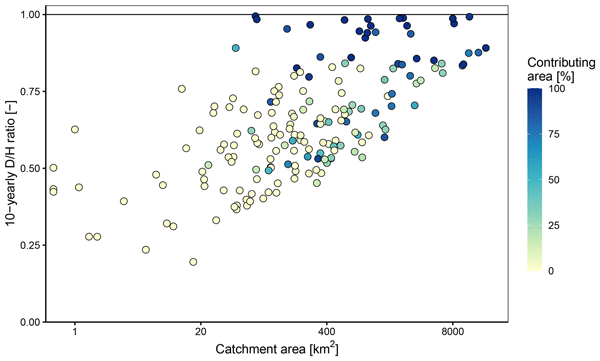
While the effect of water bodies on flood peaks at different time resolutions has been demonstrated in the past, it remains unclear how they affect the ratio between daily and hourly peaks. Our results show that (1) hourly flows are dampened much more strongly than daily flows, which leads to similar daily and hourly flood peaks downstream of reservoirs; and (2) the attenuation effect is particularly pronounced in catchments that are heavily influenced by water bodies.
Joren Janzing and Manuela I. Brunner
EGUsphere, https://doi.org/10.5194/egusphere-2026-3487, https://doi.org/10.5194/egusphere-2026-3487, 2026
This preprint is open for discussion and under review for Hydrology and Earth System Sciences (HESS).
Short summary
Short summary
Large streamflow droughts seem to be related to spatially more homogeneous drivers than smaller droughts. Mechanisms causing this difference are not well understood. We bridge the scale gap between large and small droughts using observations and a drought typology. We find that large droughts are characterized by one or two drought types and each type has its own spatial footprint. Common drought types in a river do not always lead to large droughts, which can be important for water managers.

Daniel Klotz, Peter Miersch, Thiago V. M. do Nascimento, Fabrizio Fenicia, Corinna Frank, Martin Gauch, and Jakob Zscheischler
Earth Syst. Sci. Data, 18, 5485–5504, https://doi.org/10.5194/essd-18-5485-2026, https://doi.org/10.5194/essd-18-5485-2026, 2026
Short summary
Short summary
Data availability is central to hydrological science. It is the basis for advancing our understanding of hydrological processes, building prediction models, and anticipatory water management. We present a data-driven daily runoff reconstruction product for natural streamflow. We name it EARLS: European aggregated reconstruction for large-sample studies. The reconstructions represent daily simulations of natural streamflow across Europe and cover the period from 1953 to 2020.
Rashid Akbary, Eleonora Dallan, Paul C. Astagneau, Raul R. Wood, Francesco Marra, Manuela I. Brunner, and Marco Borga
Hydrol. Earth Syst. Sci., 30, 4117–4139, https://doi.org/10.5194/hess-30-4117-2026, https://doi.org/10.5194/hess-30-4117-2026, 2026
Short summary
Short summary
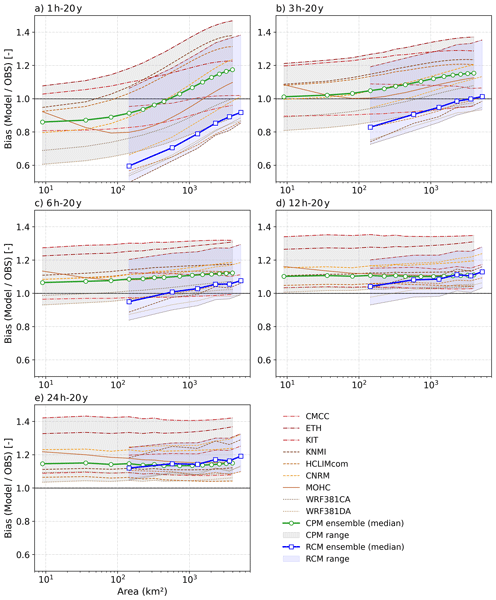
Heavy short rain can trigger flash floods and debris flows. In this study we evaluated how well climate models reproduce these events in Switzerland. We compared finer and coarser resolution models with high-quality hourly precipitation observations across small to large areas. The finer models better captured where short, intense precipitation occurs, but their errors changed with area size. Flood risk studies should therefore account for these scale-related errors.
Emma Ford, Manuela I. Brunner, Hannah Christensen, and Louise Slater
Hydrol. Earth Syst. Sci., 30, 2135–2160, https://doi.org/10.5194/hess-30-2135-2026, https://doi.org/10.5194/hess-30-2135-2026, 2026
Short summary
Short summary
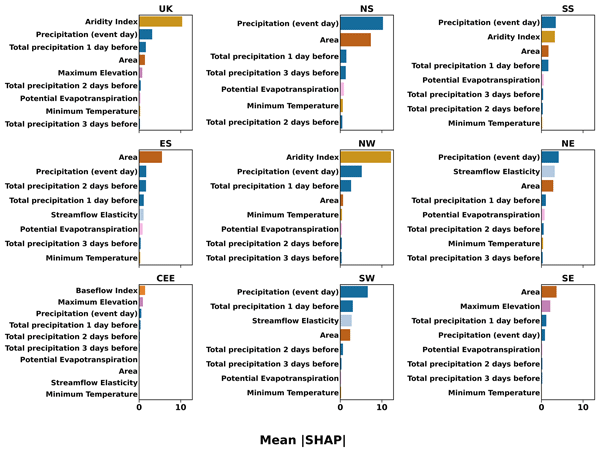
This study aims to improve prediction and understanding of extreme flood events in near-natural catchments across the United Kingdom. We develop a machine learning framework to assess the contribution of different features to flood magnitude estimation. We find weather patterns are weak predictors and stress the importance of evaluating model performance across and within catchments.
Sadaf Nasreen, Oldrich Rakovec, Rohini Kumar, Manuela I. Brunner, Ujjwal Singh, Petr Maca, Yannis Markonis, and Martin Hanel
EGUsphere, https://doi.org/10.5194/egusphere-2026-973, https://doi.org/10.5194/egusphere-2026-973, 2026
Short summary
Short summary
European droughts threaten water and agriculture, but how distinct drought processes will change under warming is uncertain. We examine seven mechanisms across Europe using 1971 to 2000 observations and 2070 to 2099 projections. Changes are regional: the Mediterranean shifts to longer, more severe droughts, while Northern and Western Central Europe often improve. Temperature-driven mechanisms, especially rain to snow transitions, respond most, guiding targeted adaptation.
Eduardo Muñoz-Castro, Bailey J. Anderson, Paul C. Astagneau, Daniel L. Swain, Pablo A. Mendoza, and Manuela I. Brunner
Hydrol. Earth Syst. Sci., 30, 825–848, https://doi.org/10.5194/hess-30-825-2026, https://doi.org/10.5194/hess-30-825-2026, 2026
Short summary
Short summary
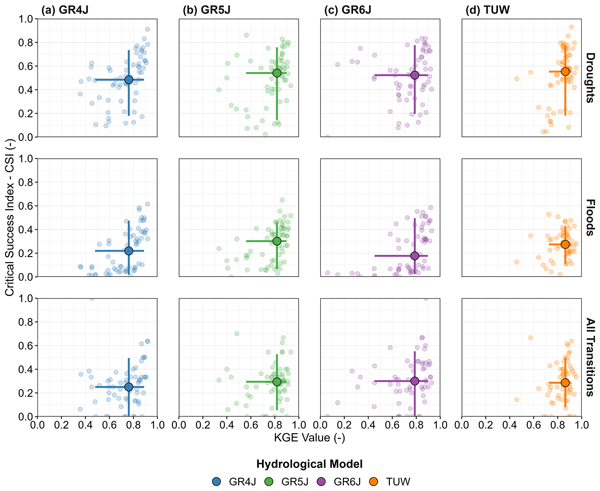
Flood impacts can be enhanced when they occur after droughts, yet the effectiveness of hydrological models in simulating these events remains unclear. Here, we calibrated four conceptual hydrological models across 63 catchments in Chile and Switzerland to assess their ability to detect streamflow extremes and their transitions. We show that drought-to-flood transitions are generally poorly captured, especially in semi-arid high-mountain catchments than in humid low-elevation ones.
Joren Janzing, Niko Wanders, Marit van Tiel, Barry van Jaarsveld, Dirk N. Karger, and Manuela I. Brunner
Hydrol. Earth Syst. Sci., 29, 7041–7071, https://doi.org/10.5194/hess-29-7041-2025, https://doi.org/10.5194/hess-29-7041-2025, 2025
Short summary
Short summary
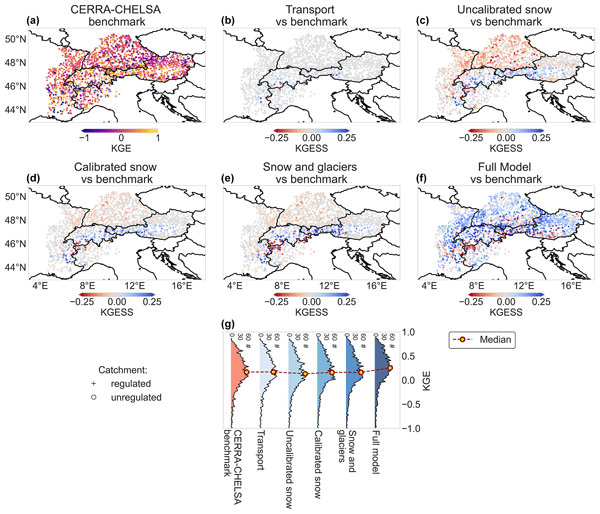
Process representation in hyper-resolution large-scale hydrological models (LHMs) limits model performance, particularly in mountain regions. Here, we update mountain process representation in an LHM and compare different meteorological forcing products. Structural and parametric changes in snow, glacier, and soil processes improve discharge simulations, while meteorological forcing remains a major control on model performance. Our work can guide future development of LHMs.
Bailey J. Anderson, Eduardo Muñoz-Castro, Lena M. Tallaksen, Alessia Matano, Jonas Götte, Rachael Armitage, Eugene Magee, and Manuela I. Brunner
Hydrol. Earth Syst. Sci., 29, 6069–6092, https://doi.org/10.5194/hess-29-6069-2025, https://doi.org/10.5194/hess-29-6069-2025, 2025
Short summary
Short summary
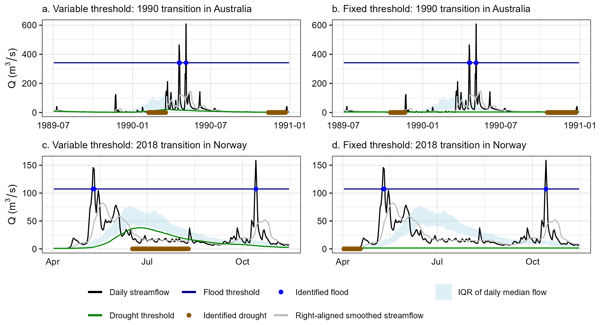
When floods happen during or shortly after droughts, the impacts of each of the events can be magnified. In hydrological research, defining these events represents a challenging and important task in the process of understanding where and why they occur. We have used real-word examples to address some of these challenges and show different approaches influence outcomes. We make suggestions on when to use which approach and outline some pitfalls of which researchers should be aware.
Paul C. Astagneau, Raul R. Wood, Mathieu Vrac, Sven Kotlarski, Pradeebane Vaittinada Ayar, Bastien François, and Manuela I. Brunner
Hydrol. Earth Syst. Sci., 29, 5695–5718, https://doi.org/10.5194/hess-29-5695-2025, https://doi.org/10.5194/hess-29-5695-2025, 2025
Short summary
Short summary
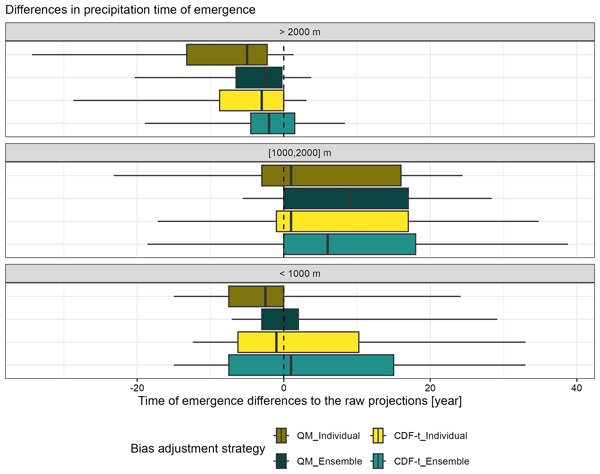
To study floods and droughts that are likely to change in the future, we use climate projections from climate models. However, we first need to adjust the systematic biases of these projections at the catchment scale before using them in hydrological models. Our study compares statistical methods that can adjust these biases but specifically for climate projections that enable a quantification of internal climate variability. We provide recommendations on the most appropriate methods.
Raul R. Wood, Joren Janzing, Amber van Hamel, Jonas Götte, Dominik L. Schumacher, and Manuela I. Brunner
Hydrol. Earth Syst. Sci., 29, 4153–4178, https://doi.org/10.5194/hess-29-4153-2025, https://doi.org/10.5194/hess-29-4153-2025, 2025
Short summary
Short summary
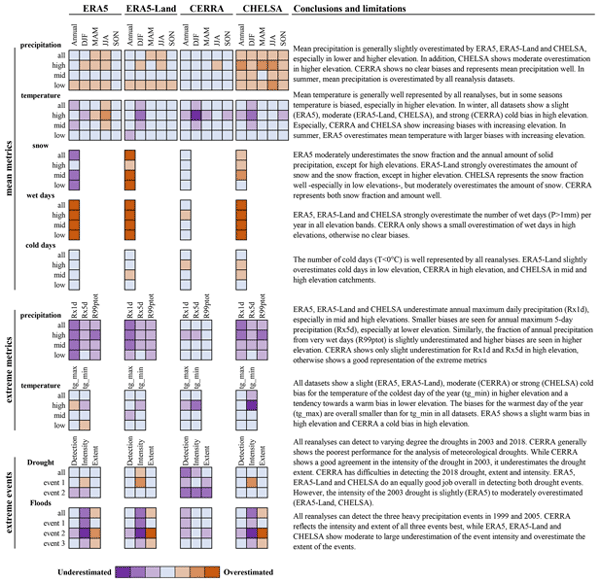
Continuous and high-quality meteorological datasets are crucial to study extreme hydro-climatic events. We here conduct a comprehensive spatio-temporal evaluation of precipitation and temperature for four climate reanalysis datasets, focusing on mean and extreme metrics, variability, trends, and the representation of droughts and floods over Switzerland. Our analysis shows that all datasets have some merit when limitations are considered, and that one dataset performs better than the others.
Amber van Hamel, Peter Molnar, Joren Janzing, and Manuela Irene Brunner
Hydrol. Earth Syst. Sci., 29, 2975–2995, https://doi.org/10.5194/hess-29-2975-2025, https://doi.org/10.5194/hess-29-2975-2025, 2025
Short summary
Short summary
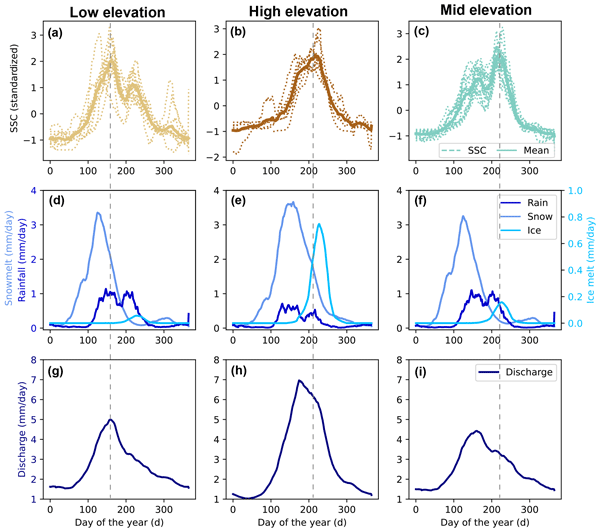
Suspended sediment is a natural component of rivers, but extreme suspended sediment concentrations (SSCs) can have negative impacts on water use and aquatic ecosystems. We identify the main factors influencing the spatial and temporal variability of annual SSC regimes and extreme SSC events. Our analysis shows that different processes are more important for annual SSC regimes than for extreme events and that compound events driven by glacial melt and high-intensity rainfall led to the highest SSCs.
Alessia Matanó, Raed Hamed, Manuela I. Brunner, Marlies H. Barendrecht, and Anne F. Van Loon
Hydrol. Earth Syst. Sci., 29, 2749–2764, https://doi.org/10.5194/hess-29-2749-2025, https://doi.org/10.5194/hess-29-2749-2025, 2025
Short summary
Short summary
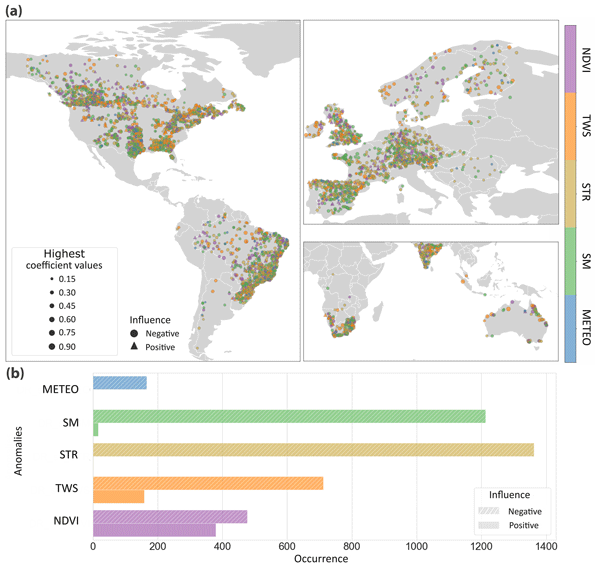
Persistent droughts change how rivers respond to rainfall. Our study of over 5000 catchments worldwide found that hydrological and soil moisture droughts decrease river-flow response to rain, especially in arid regions, while vegetation decline slightly increases it. Snow-covered areas are more resilient due to stored water buffering changes. Droughts can also cause long-lasting changes, with short and intense droughts reducing river response to rainfall and prolonged droughts increasing it.
Carolin Boos, Sophie Reinermann, Raul Wood, Ralf Ludwig, Anne Schucknecht, David Kraus, and Ralf Kiese
EGUsphere, https://doi.org/10.5194/egusphere-2024-2864, https://doi.org/10.5194/egusphere-2024-2864, 2024
Preprint archived
Short summary
Short summary
We applied a biogeochemical model on grasslands in the pre-Alpine Ammer region in Germany and analyzed the influence of soil and climate on annual yields. In drought affected years, total yields were decreased by 4 %. Overall, yields decrease with rising elevation, but less so in drier and hotter years, whereas soil organic carbon has a positive impact on yields, especially in drier years. Our findings imply, that adapted management in the region allows to mitigate yield losses from drought.
Florian Willkofer, Raul R. Wood, and Ralf Ludwig
Hydrol. Earth Syst. Sci., 28, 2969–2989, https://doi.org/10.5194/hess-28-2969-2024, https://doi.org/10.5194/hess-28-2969-2024, 2024
Short summary
Short summary
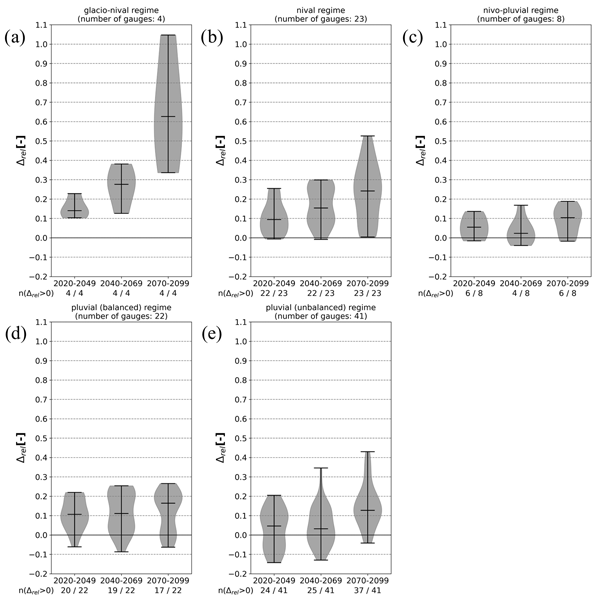
Severe flood events pose a threat to riverine areas, yet robust estimates of the dynamics of these events in the future due to climate change are rarely available. Hence, this study uses data from a regional climate model, SMILE, to drive a high-resolution hydrological model for 98 catchments of hydrological Bavaria and exploits the large database to derive robust values for the 100-year flood events. Results indicate an increase in frequency and intensity for most catchments in the future.
David Gampe, Clemens Schwingshackl, Andrea Böhnisch, Magdalena Mittermeier, Marit Sandstad, and Raul R. Wood
Earth Syst. Dynam., 15, 589–605, https://doi.org/10.5194/esd-15-589-2024, https://doi.org/10.5194/esd-15-589-2024, 2024
Short summary
Short summary
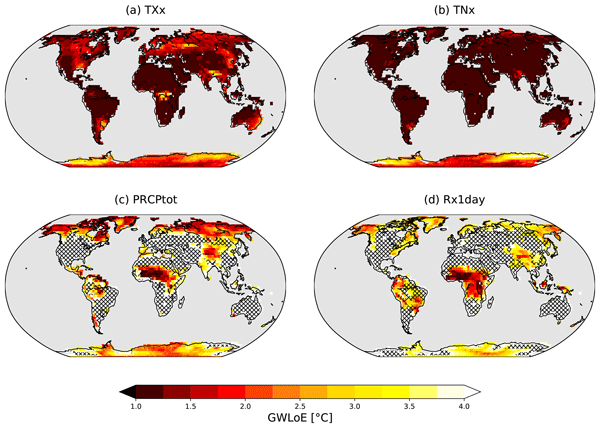
Using a special suite of climate simulations, we determine if and when climate change is detectable and translate this to the global warming prevalent in the corresponding year. Our results show that, at 1.5°C warming, >85 % of the global population (>95 % at 2.0° warming) is already exposed to nighttime temperatures altered by climate change beyond natural variability. Furthermore, even incremental changes in global warming levels result in increased human exposure to emerged climate signals.
Bailey J. Anderson, Manuela I. Brunner, Louise J. Slater, and Simon J. Dadson
Hydrol. Earth Syst. Sci., 28, 1567–1583, https://doi.org/10.5194/hess-28-1567-2024, https://doi.org/10.5194/hess-28-1567-2024, 2024
Short summary
Short summary
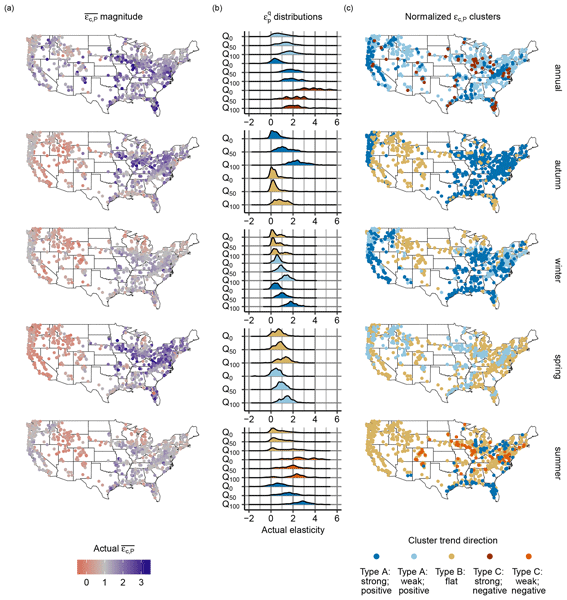
Elasticityrefers to how much the amount of water in a river changes with precipitation. We usually calculate this using average streamflow values; however, the amount of water within rivers is also dependent on stored water sources. Here, we look at how elasticity varies across the streamflow distribution and show that not only do low and high streamflows respond differently to precipitation change, but also these differences vary with water storage availability.
Julia Miller, Andrea Böhnisch, Ralf Ludwig, and Manuela I. Brunner
Nat. Hazards Earth Syst. Sci., 24, 411–428, https://doi.org/10.5194/nhess-24-411-2024, https://doi.org/10.5194/nhess-24-411-2024, 2024
Short summary
Short summary
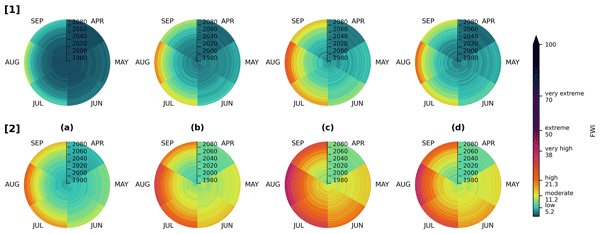
We assess the impacts of climate change on fire danger for 1980–2099 in different landscapes of central Europe, using the Canadian Forest Fire Weather Index (FWI) as a fire danger indicator. We find that today's 100-year FWI event will occur every 30 years by 2050 and every 10 years by 2099. High fire danger (FWI > 21.3) becomes the mean condition by 2099 under an RCP8.5 scenario. This study highlights the potential for severe fire events in central Europe from a meteorological perspective.
Marvin Höge, Martina Kauzlaric, Rosi Siber, Ursula Schönenberger, Pascal Horton, Jan Schwanbeck, Marius Günter Floriancic, Daniel Viviroli, Sibylle Wilhelm, Anna E. Sikorska-Senoner, Nans Addor, Manuela Brunner, Sandra Pool, Massimiliano Zappa, and Fabrizio Fenicia
Earth Syst. Sci. Data, 15, 5755–5784, https://doi.org/10.5194/essd-15-5755-2023, https://doi.org/10.5194/essd-15-5755-2023, 2023
Short summary
Short summary
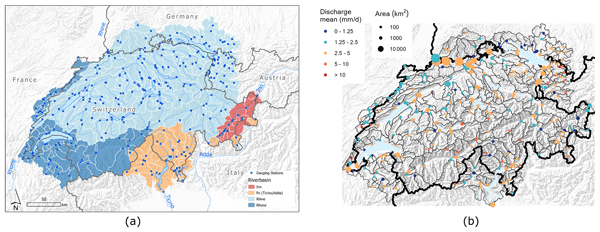
CAMELS-CH is an open large-sample hydro-meteorological data set that covers 331 catchments in hydrologic Switzerland from 1 January 1981 to 31 December 2020. It comprises (a) daily data of river discharge and water level as well as meteorologic variables like precipitation and temperature; (b) yearly glacier and land cover data; (c) static attributes of, e.g, topography or human impact; and (d) catchment delineations. CAMELS-CH enables water and climate research and modeling at catchment level.
Raul R. Wood
Earth Syst. Dynam., 14, 797–816, https://doi.org/10.5194/esd-14-797-2023, https://doi.org/10.5194/esd-14-797-2023, 2023
Short summary
Short summary
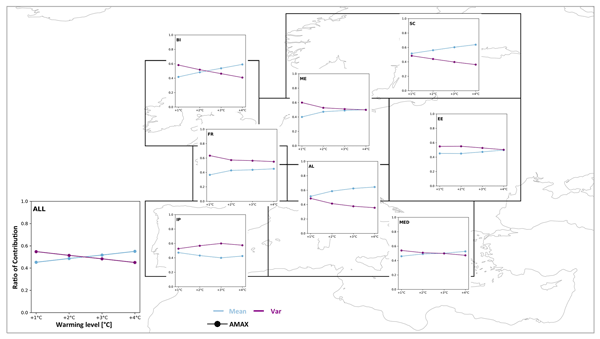
The change in extreme-event occurrence is influenced by both a shift in the mean and a change in variability. How large the individual contributions are remains largely unknown. Large-ensemble climate simulations and probability risk ratio are used to partition the change in extreme precipitation events into contributions from a change in the mean and variability. The results reveal that the change in variability can be equally as important as or even more important than the mean change.

Manuela Irene Brunner
Hydrol. Earth Syst. Sci., 27, 2479–2497, https://doi.org/10.5194/hess-27-2479-2023, https://doi.org/10.5194/hess-27-2479-2023, 2023
Short summary
Short summary
I discuss different types of multivariate hydrological extremes and their dependencies, including regional extremes affecting multiple locations, such as spatially connected flood events; consecutive extremes occurring in close temporal succession, such as successive droughts; extremes characterized by multiple characteristics, such as floods with jointly high peak discharge and flood volume; and transitions between different types of extremes, such as drought-to-flood transitions.
Manuela Irene Brunner and Philippe Naveau
Hydrol. Earth Syst. Sci., 27, 673–687, https://doi.org/10.5194/hess-27-673-2023, https://doi.org/10.5194/hess-27-673-2023, 2023
Short summary
Short summary
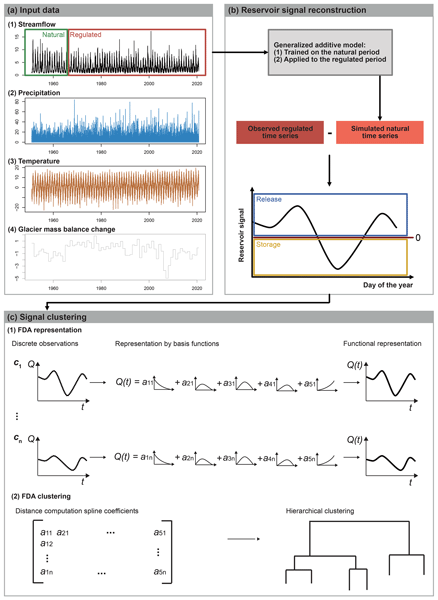
Reservoir regulation affects various streamflow characteristics. Still, information on when water is stored in and released from reservoirs is hardly available. We develop a statistical model to reconstruct reservoir operation signals from observed streamflow time series. By applying this approach to 74 catchments in the Alps, we find that reservoir management varies by catchment elevation and that seasonal redistribution from summer to winter is strongest in high-elevation catchments.
Veit Blauhut, Michael Stoelzle, Lauri Ahopelto, Manuela I. Brunner, Claudia Teutschbein, Doris E. Wendt, Vytautas Akstinas, Sigrid J. Bakke, Lucy J. Barker, Lenka Bartošová, Agrita Briede, Carmelo Cammalleri, Ksenija Cindrić Kalin, Lucia De Stefano, Miriam Fendeková, David C. Finger, Marijke Huysmans, Mirjana Ivanov, Jaak Jaagus, Jiří Jakubínský, Svitlana Krakovska, Gregor Laaha, Monika Lakatos, Kiril Manevski, Mathias Neumann Andersen, Nina Nikolova, Marzena Osuch, Pieter van Oel, Kalina Radeva, Renata J. Romanowicz, Elena Toth, Mirek Trnka, Marko Urošev, Julia Urquijo Reguera, Eric Sauquet, Aleksandra Stevkov, Lena M. Tallaksen, Iryna Trofimova, Anne F. Van Loon, Michelle T. H. van Vliet, Jean-Philippe Vidal, Niko Wanders, Micha Werner, Patrick Willems, and Nenad Živković
Nat. Hazards Earth Syst. Sci., 22, 2201–2217, https://doi.org/10.5194/nhess-22-2201-2022, https://doi.org/10.5194/nhess-22-2201-2022, 2022
Short summary
Short summary
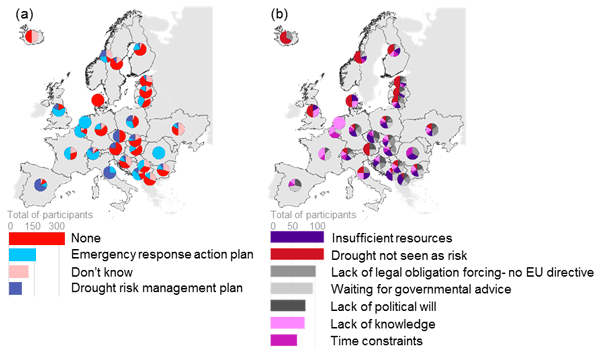
Recent drought events caused enormous damage in Europe. We therefore questioned the existence and effect of current drought management strategies on the actual impacts and how drought is perceived by relevant stakeholders. Over 700 participants from 28 European countries provided insights into drought hazard and impact perception and current management strategies. The study concludes with an urgent need to collectively combat drought risk via a European macro-level drought governance approach.

Manuela I. Brunner and Louise J. Slater
Hydrol. Earth Syst. Sci., 26, 469–482, https://doi.org/10.5194/hess-26-469-2022, https://doi.org/10.5194/hess-26-469-2022, 2022
Short summary
Short summary
Assessing the rarity and magnitude of very extreme flood events occurring less than twice a century is challenging due to the lack of observations of such rare events. Here we develop a new approach, pooling reforecast ensemble members from the European Flood Awareness System to increase the sample size available to estimate the frequency of extreme flood events. We demonstrate that such ensemble pooling produces more robust estimates than observation-based estimates.
Álvaro Ossandón, Manuela I. Brunner, Balaji Rajagopalan, and William Kleiber
Hydrol. Earth Syst. Sci., 26, 149–166, https://doi.org/10.5194/hess-26-149-2022, https://doi.org/10.5194/hess-26-149-2022, 2022
Short summary
Short summary
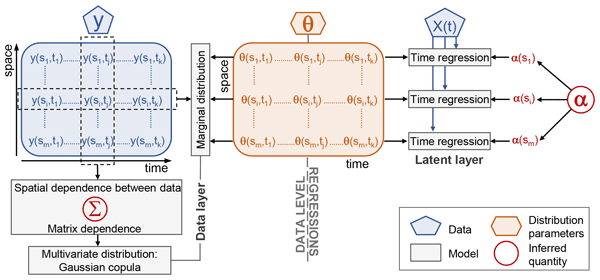
Timely projections of seasonal streamflow extremes on a river network can be useful for flood risk mitigation, but this is challenging, particularly under space–time nonstationarity. We develop a space–time Bayesian hierarchical model (BHM) using temporal climate covariates and copulas to project seasonal streamflow extremes and the attendant uncertainties. We demonstrate this on the Upper Colorado River basin to project spring flow extremes using the preceding winter’s climate teleconnections.
Cited articles
Acuna Espinoza, E.: Analyzing the generalization capabilities of hybrid hydrological models for extrapolation to extreme events, Zenodo [code], https://doi.org/10.5281/ZENODO.14191623, 2024. a
Acuña Espinoza, E., Loritz, R., Kratzert, F., Klotz, D., Gauch, M., Álvarez Chaves, M., and Ehret, U.: Analyzing the generalization capabilities of a hybrid hydrological model for extrapolation to extreme events, Hydrol. Earth Syst. Sci., 29, 1277–1294, https://doi.org/10.5194/hess-29-1277-2025, 2025. a, b, c
Andréassian, V., Bourgin, F., Oudin, L., Mathevet, T., Perrin, C., Lerat, J., Coron, L., and Berthet, L.: Seeking Genericity in the Selection of Parameter Sets: Impact on Hydrological Model Efficiency, Water Resour. Res., 50, 8356–8366, https://doi.org/10.1002/2013WR014761, 2014. a
Arsenault, R., Martel, J.-L., Brunet, F., Brissette, F., and Mai, J.: Continuous streamflow prediction in ungauged basins: long short-term memory neural networks clearly outperform traditional hydrological models, Hydrol. Earth Syst. Sci., 27, 139–157, https://doi.org/10.5194/hess-27-139-2023, 2023. a
Astagneau, P., Peters, J., Sandra, P., Muñoz-Castro, E., and Brunner, M. I.: RESIdual STability (RESIST) Calibration for Improved Hydrological Model Time Generalizability, Water Resour. Res., 62, https://doi.org/10.1029/2025WR041435, 2026. a
Bai, P., Liu, X., and Xie, J.: Simulating Runoff under Changing Climatic Conditions: A Comparison of the Long Short-Term Memory Network with Two Conceptual Hydrologic Models, J. Hydrol., 592, 125779, https://doi.org/10.1016/j.jhydrol.2020.125779, 2021. a, b
Barnett, T. P., Adam, J. C., and Lettenmaier, D. P.: Potential Impacts of a Warming Climate on Water Availability in Snow-Dominated Regions, Nature, 438, 303–309, https://doi.org/10.1038/nature04141, 2005. a
Baste, S., Klotz, D., Acuña Espinoza, E., Bardossy, A., and Loritz, R.: Unveiling the limits of deep learning models in hydrological extrapolation tasks, Hydrol. Earth Syst. Sci., 29, 5871–5891, https://doi.org/10.5194/hess-29-5871-2025, 2025. a, b
Beck, H. E., van Dijk, A. I. J. M., de Roo, A., Miralles, D. G., McVicar, T. R., Schellekens, J., and Bruijnzeel, L. A.: Global-Scale Regionalization of Hydrologic Model Parameters, Water Resour. Res., 52, 3599–3622, https://doi.org/10.1002/2015WR018247, 2016. a, b, c
Beniston, M.: Mountain Weather and Climate: A General Overview and a Focus on Climatic Change in the Alps, Hydrobiologia, 562, 3–16, https://doi.org/10.1007/s10750-005-1802-0, 2006. a
Berghuijs, W. R., Allen, S. T., Harrigan, S., and Kirchner, J. W.: Growing Spatial Scales of Synchronous River Flooding in Europe, Geophys. Res. Lett., 46, 1423–1428, https://doi.org/10.1029/2018GL081883, 2019. a, b
Berghuijs, W. R., Woods, R. A., Anderson, B. J., Hemshorn de Sánchez, A. L., and Hrachowitz, M.: Annual memory in the terrestrial water cycle, Hydrol. Earth Syst. Sci., 29, 1319–1333, https://doi.org/10.5194/hess-29-1319-2025, 2025. a
Bertola, M., Viglione, A., Lun, D., Hall, J., and Blöschl, G.: Flood trends in Europe: are changes in small and big floods different?, Hydrol. Earth Syst. Sci., 24, 1805–1822, https://doi.org/10.5194/hess-24-1805-2020, 2020. a, b
Beven, K.: Rainfall-Runoff Modelling: The Primer, Wiley, 1st edn., ISBN 978-0-470-71459-1 978-1-119-95100-1, https://doi.org/10.1002/9781119951001, 2012. a, b
Blöschl, G., Hall, J., Parajka, J., Perdigão, R. A. P., Merz, B., Arheimer, B., Aronica, G. T., Bilibashi, A., Bonacci, O., Borga, M., Čanjevac, I., Castellarin, A., Chirico, G. B., Claps, P., Fiala, K., Frolova, N., Gorbachova, L., Gül, A., Hannaford, J., Harrigan, S., Kireeva, M., Kiss, A., Kjeldsen, T. R., Kohnová, S., Koskela, J. J., Ledvinka, O., Macdonald, N., Mavrova-Guirguinova, M., Mediero, L., Merz, R., Molnar, P., Montanari, A., Murphy, C., Osuch, M., Ovcharuk, V., Radevski, I., Rogger, M., Salinas, J. L., Sauquet, E., Šraj, M., Szolgay, J., Viglione, A., Volpi, E., Wilson, D., Zaimi, K., and Živković, N.: Changing Climate Shifts Timing of European Floods, Science, 357, 588–590, https://doi.org/10.1126/science.aan2506, 2017. a
Bohl, J. P., Wood, R. R., Götte, J., and Brunner, M.: Generalizability of data-driven hydrological models in the European Alps, HydroShare [data set], http://www.hydroshare.org/resource/0e708f4a9f8440c880408221d3fa86b5 (last access: 10 July 2026), 2025. a
Braun, L. N. and Renner, C. B.: Application of a Conceptual Runoff Model in Different Physiographic Regions of Switzerland, Hydrol. Sci. J., 37, 217–231, https://doi.org/10.1080/02626669209492583, 1992. a
Breiman, L.: Random Forests, Mach. Learn., 45, 5–32, https://doi.org/10.1023/A:1010933404324, 2001. a
Brunner, M. I., Farinotti, D., Zekollari, H., Huss, M., and Zappa, M.: Future shifts in extreme flow regimes in Alpine regions, Hydrol. Earth Syst. Sci., 23, 4471–4489, https://doi.org/10.5194/hess-23-4471-2019, 2019. a
Brunner, M. I., Melsen, L. A., Wood, A. W., Rakovec, O., Mizukami, N., Knoben, W. J. M., and Clark, M. P.: Flood spatial coherence, triggers, and performance in hydrological simulations: large-sample evaluation of four streamflow-calibrated models, Hydrol. Earth Syst. Sci., 25, 105–119, https://doi.org/10.5194/hess-25-105-2021, 2021a. a
Brunner, M. I., Slater, L., Tallaksen, L. M., and Clark, M.: Challenges in Modeling and Predicting Floods and Droughts: A Review, WIREs Water, 8, e1520, https://doi.org/10.1002/wat2.1520, 2021b. a
Brunner, M. I., Swain, D. L., Wood, R. R., Willkofer, F., Done, J. M., Gilleland, E., and Ludwig, R.: An Extremeness Threshold Determines the Regional Response of Floods to Changes in Rainfall Extremes, Commun. Earth Environ., 2, 173, https://doi.org/10.1038/s43247-021-00248-x, 2021c. a
Brunner, M. I., Götte, J., Schlemper, C., and Van Loon, A. F.: Hydrological Drought Generation Processes and Severity Are Changing in the Alps, Geophys. Res. Lett., 50, e2022GL101776, https://doi.org/10.1029/2022GL101776, 2023. a, b
Bruno, G., Avanzi, F., Alfieri, L., Libertino, A., Gabellani, S., and Duethmann, D.: Hydrological Model Skills Change with Drought Severity; Insights from Multi-Variable Evaluation, J. Hydrol., 634, 131023, https://doi.org/10.1016/j.jhydrol.2024.131023, 2024. a, b
Carletti, F., Michel, A., Casale, F., Burri, A., Bocchiola, D., Bavay, M., and Lehning, M.: A comparison of hydrological models with different level of complexity in Alpine regions in the context of climate change, Hydrol. Earth Syst. Sci., 26, 3447–3475, https://doi.org/10.5194/hess-26-3447-2022, 2022. a
Clark, M. P., Bierkens, M. F. P., Samaniego, L., Woods, R. A., Uijlenhoet, R., Bennett, K. E., Pauwels, V. R. N., Cai, X., Wood, A. W., and Peters-Lidard, C. D.: The evolution of process-based hydrologic models: historical challenges and the collective quest for physical realism, Hydrol. Earth Syst. Sci., 21, 3427–3440, https://doi.org/10.5194/hess-21-3427-2017, 2017. a
Copernicus Climate Change Service: E-OBS Daily Gridded Meteorological Data for Europe from 1950 to Present Derived from in-Situ Observations, Copernicus Climate Change Service (C3S) Climate Data Store (CDS) [data set], https://doi.org/10.24381/CDS.151D3EC6, 2020. a, b, c, d, e, f, g, h, i, j, k, l, m
Coron, L., Andréassian, V., Perrin, C., Lerat, J., Vaze, J., Bourqui, M., and Hendrickx, F.: Crash Testing Hydrological Models in Contrasted Climate Conditions: An Experiment on 216 Australian Catchments, Water Resour. Res., 48, 2011WR011721, https://doi.org/10.1029/2011WR011721, 2012. a, b, c
Dai, A.: Increasing Drought under Global Warming in Observations and Models, Nat. Clim. Change, 3, 52–58, https://doi.org/10.1038/nclimate1633, 2013. a, b
Dakhlaoui, H., Ruelland, D., Tramblay, Y., and Bargaoui, Z.: Evaluating the Robustness of Conceptual Rainfall-Runoff Models under Climate Variability in Northern Tunisia, J. Hydrol., 550, 201–217, https://doi.org/10.1016/j.jhydrol.2017.04.032, 2017. a
DeWalle, D. R. R. A.: Modelling snowmelt runoff, 266–305 pp., Cambridge University Press, ISBN 9780521290326, https://doi.org/10.1017/cbo9780511535673.011, 2008. a
Feng, D., Lawson, K., and Shen, C.: Mitigating Prediction Error of Deep Learning Streamflow Models in Large Data-Sparse Regions With Ensemble Modeling and Soft Data, Geophys. Res. Lett., 48, e2021GL092999, https://doi.org/10.1029/2021GL092999, 2021. a
Feng, D., Shen, C., Liu, J., Lawson, K., and Beck, H.: differentiable parameter learning (dPL) + HBV hydrologic model, Zenodo [code], https://doi.org/10.5281/ZENODO.7943626, 2022b. a
Feng, D., Beck, H., Lawson, K., and Shen, C.: The suitability of differentiable, physics-informed machine learning hydrologic models for ungauged regions and climate change impact assessment, Hydrol. Earth Syst. Sci., 27, 2357–2373, https://doi.org/10.5194/hess-27-2357-2023, 2023. a, b, c, d, e, f, g, h, i, j, k
Feng, D., Beck, H., de Bruijn, J., Sahu, R. K., Satoh, Y., Wada, Y., Liu, J., Pan, M., Lawson, K., and Shen, C.: Deep dive into hydrologic simulations at global scale: harnessing the power of deep learning and physics-informed differentiable models (δHBV-globe1.0-hydroDL), Geosci. Model Dev., 17, 7181–7198, https://doi.org/10.5194/gmd-17-7181-2024, 2024. a, b, c, d, e, f
Finger, D., Vis, M., Huss, M., and Seibert, J.: The Value of Multiple Data Set Calibration versus Model Complexity for Improving the Performance of Hydrological Models in Mountain Catchments, Water Resour. Res., 51, 1939–1958, https://doi.org/10.1002/2014WR015712, 2015. a
Fowler, K., Coxon, G., Freer, J., Peel, M., Wagener, T., Western, A., Woods, R., and Zhang, L.: Simulating Runoff Under Changing Climatic Conditions: A Framework for Model Improvement, Water Resour. Res., 54, 9812–9832, https://doi.org/10.1029/2018WR023989, 2018a. a
Fowler, K., Peel, M., Western, A., and Zhang, L.: Improved Rainfall-Runoff Calibration for Drying Climate: Choice of Objective Function, Water Resour. Res., 54, 3392–3408, https://doi.org/10.1029/2017WR022466, 2018b. a
Fowler, K. J. A., Peel, M. C., Western, A. W., Zhang, L., and Peterson, T. J.: Simulating Runoff under Changing Climatic Conditions: Revisiting an Apparent Deficiency of Conceptual Rainfall-runoff Models, Water Resour. Res., 52, 1820–1846, https://doi.org/10.1002/2015WR018068, 2016. a, b
Frame, J. M., Kratzert, F., Raney II, A., Rahman, M., Salas, F. R., and Nearing, G. S.: Post-Processing the National Water Model with Long Short-Term Memory Networks for Streamflow Predictions and Model Diagnostics, J. Am. Water Resour. As., 57, 885–905, https://doi.org/10.1111/1752-1688.12964, 2021. a, b
Frame, J. M., Kratzert, F., Klotz, D., Gauch, M., Shalev, G., Gilon, O., Qualls, L. M., Gupta, H. V., and Nearing, G. S.: Deep learning rainfall–runoff predictions of extreme events, Hydrol. Earth Syst. Sci., 26, 3377–3392, https://doi.org/10.5194/hess-26-3377-2022, 2022. a
Frame, J. M., Kratzert, F., Gupta, H. V., Ullrich, P., and Nearing, G. S.: On Strictly Enforced Mass Conservation Constraints for Modelling the Rainfall-Runoff Process, Hydrol. Process., 37, e14847, https://doi.org/10.1002/hyp.14847, 2023. a
Frei, P., Kotlarski, S., Liniger, M. A., and Schär, C.: Future snowfall in the Alps: projections based on the EURO-CORDEX regional climate models, The Cryosphere, 12, 1–24, https://doi.org/10.5194/tc-12-1-2018, 2018. a
Freudiger, D., Vis, M., and Seibert, J.: Quantifying the Contributions to Discharge of Snow and Glacier Melt. Hydro-CH2018 Project., Tech. rep., Commissioned by the Federal Office for the Environment (FOEN), Bern, Switzerland, 2020. a
Gebrechorkos, S. H., Sheffield, J., Vicente-Serrano, S. M., Funk, C., Miralles, D. G., Peng, J., Dyer, E., Talib, J., Beck, H. E., Singer, M. B., and Dadson, S. J.: Warming Accelerates Global Drought Severity, Nature, 642, 628–635, https://doi.org/10.1038/s41586-025-09047-2, 2025. a
GeoSphere Austria: SNOWGRID Klima v2.1, GeoSphere Austria [data set], https://doi.org/10.60669/FSXX-6977, 2022. a, b
Girons Lopez, M., Vis, M. J. P., Jenicek, M., Griessinger, N., and Seibert, J.: Assessing the degree of detail of temperature-based snow routines for runoff modelling in mountainous areas in central Europe, Hydrol. Earth Syst. Sci., 24, 4441–4461, https://doi.org/10.5194/hess-24-4441-2020, 2020. a, b
Goodison, B. E., Louie, P. Y. T., and Yang, D.: WMO Solid Precipitation Measurement Intercomparison, Tech. Rep. 67, WMO, Geneva, 1998. a
Götte, J., Schlemper, C., Zappa, M., and Brunner, M. I.: How Do Reservoirs Influence Streamflow Extremes? Insights from a Large-Sample Analysis in the Alpine Region, Environmental: Research Water, 1, https://doi.org/10.1088/3033-4942/ae0151, 2025. a
Gudmundsson, L., Boulange, J., Do, H. X., Gosling, S. N., Grillakis, M. G., Koutroulis, A. G., Leonard, M., Liu, J., Müller Schmied, H., Papadimitriou, L., Pokhrel, Y., Seneviratne, S. I., Satoh, Y., Thiery, W., Westra, S., Zhang, X., and Zhao, F.: Globally Observed Trends in Mean and Extreme River Flow Attributed to Climate Change, Science, 371, 1159–1162, https://doi.org/10.1126/science.aba3996, 2021. a
Guo, D., Zheng, F., Gupta, H., and Maier, H. R.: On the Robustness of Conceptual Rainfall-Runoff Models to Calibration and Evaluation Data Set Splits Selection: A Large Sample Investigation, Water Resour. Res., 56, e2019WR026752, https://doi.org/10.1029/2019WR026752, 2020. a
Hakala, K., Addor, N., Teutschbein, C., Vis, M., Dakhlaoui, H., and Seibert, J.: Hydrological Modeling of Climate Change Impacts, in: Encyclopedia of Water, 1–20, John Wiley & Sons, Ltd, ISBN 978-1-119-30076-2, https://doi.org/10.1002/9781119300762.wsts0062, 2019. a
Hengl, T., De Jesus, J. M., MacMillan, R. A., Batjes, N. H., Heuvelink, G. B. M., Ribeiro, E., Samuel-Rosa, A., Kempen, B., Leenaars, J. G. B., Walsh, M. G., and Gonzalez, M. R.: SoilGrids1km – Global Soil Information Based on Automated Mapping, PLoS ONE, 9, e105992, https://doi.org/10.1371/journal.pone.0105992, 2014. a, b, c, d, e, f
Hochreiter, S. and Schmidhuber, J.: Long Short-Term Memory, Neural Comput., 9, 1735–1780, https://doi.org/10.1162/neco.1997.9.8.1735, 1997. a, b
Höge, M., Scheidegger, A., Baity-Jesi, M., Albert, C., and Fenicia, F.: Improving hydrologic models for predictions and process understanding using neural ODEs, Hydrol. Earth Syst. Sci., 26, 5085–5102, https://doi.org/10.5194/hess-26-5085-2022, 2022. a, b
Hrachowitz, M., Savenije, H., Blöschl, G., McDonnell, J., Sivapalan, M., Pomeroy, J., Arheimer, B., Blume, T., Clark, M., Ehret, U., Fenicia, F., Freer, J., Gelfan, A., Gupta, H., Hughes, D., Hut, R., Montanari, A., Pande, S., Tetzlaff, D., Troch, P., Uhlenbrook, S., Wagener, T., Winsemius, H., Woods, R., Zehe, E., and Cudennec, C.: A Decade of Predictions in Ungauged Basins (PUB) – a Review, Hydrol. Sci. J., 58, 1198–1255, https://doi.org/10.1080/02626667.2013.803183, 2013. a, b
Janzing, J., Wanders, N., van Tiel, M., van Jaarsveld, B., Karger, D. N., and Brunner, M. I.: Hyper-resolution large-scale hydrological modelling benefits from improved process representation in mountain regions, Hydrol. Earth Syst. Sci., 29, 7041–7071, https://doi.org/10.5194/hess-29-7041-2025, 2025. a
Ji, H. K., Mirzaei, M., Lai, S. H., Dehghani, A., and Dehghani, A.: The Robustness of Conceptual Rainfall-Runoff Modelling under Climate Variability – A Review, J. Hydrol., 621, 129666, https://doi.org/10.1016/j.jhydrol.2023.129666, 2023. a
Karpatne, A., Atluri, G., Faghmous, J. H., Steinbach, M., Banerjee, A., Ganguly, A., Shekhar, S., Samatova, N., and Kumar, V.: Theory-Guided Data Science: A New Paradigm for Scientific Discovery from Data, IEEE T. Knowl. Data Eng., 29, 2318–2331, https://doi.org/10.1109/TKDE.2017.2720168, 2017. a
Keller, A. A., Garner, K., Rao, N., Knipping, E., and Thomas, J.: Hydrological Models for Climate-Based Assessments at the Watershed Scale: A Critical Review of Existing Hydrologic and Water Quality Models, Sci. Total Environ., 867, 161209, https://doi.org/10.1016/j.scitotenv.2022.161209, 2023. a
Kingma, D. P. and Ba, J.: Adam: A Method for Stochastic Optimization, arXiv [preprint], https://doi.org/10.48550/arXiv.1412.6980, 2017. a
Klemeš, V.: Operational Testing of Hydrological Simulation Models, Hydrol. Sci. J., 31, 13–24, https://doi.org/10.1080/02626668609491024, 1986. a, b
Klingler, C., Schulz, K., and Herrnegger, M.: LamaH-CE: LArge-SaMple DAta for Hydrology and Environmental Sciences for Central Europe, Earth Syst. Sci. Data, 13, 4529–4565, https://doi.org/10.5194/essd-13-4529-2021, 2021. a
Klotz, D., Miersch, P., do Nascimento, T. V. M., Fenicia, F., Gauch, M., and Zscheischler, J.: EARLS: A runoff reconstruction dataset for Europe, Earth Syst. Sci. Data Discuss. [preprint], https://doi.org/10.5194/essd-2024-450, in review, 2025. a
Koh, P. W., Sagawa, S., Marklund, H., Xie, S. M., Zhang, M., Balsubramani, A., Hu, W., Yasunaga, M., Phillips, R. L., Gao, I., Lee, T., David, E., Stavness, I., Guo, W., Earnshaw, B., Haque, I., Beery, S. M., Leskovec, J., Kundaje, A., Pierson, E., Levine, S., Finn, C., and Liang, P.: WILDS: A Benchmark of in-the-Wild Distribution Shifts, in: Proceedings of the 38th International Conference on Machine Learning, edited by: Meila, M. and Zhang, T., vol. 139 of Proceedings of Machine Learning Research, pp. 5637–5664, PMLR, 2021. a
Kraft, B., Jung, M., Körner, M., Koirala, S., and Reichstein, M.: Towards hybrid modeling of the global hydrological cycle, Hydrol. Earth Syst. Sci., 26, 1579–1614, https://doi.org/10.5194/hess-26-1579-2022, 2022. a, b
Kraft, B., Schirmer, M., Aeberhard, W. H., Zappa, M., Seneviratne, S. I., and Gudmundsson, L.: CH-RUN: a deep-learning-based spatially contiguous runoff reconstruction for Switzerland, Hydrol. Earth Syst. Sci., 29, 1061–1082, https://doi.org/10.5194/hess-29-1061-2025, 2025. a, b
Kratzert, F., Klotz, D., Brenner, C., Schulz, K., and Herrnegger, M.: Rainfall–runoff modelling using Long Short-Term Memory (LSTM) networks, Hydrol. Earth Syst. Sci., 22, 6005–6022, https://doi.org/10.5194/hess-22-6005-2018, 2018. a, b
Kratzert, F., Klotz, D., Herrnegger, M., Sampson, A. K., Hochreiter, S., and Nearing, G. S.: Toward Improved Predictions in Ungauged Basins: Exploiting the Power of Machine Learning, Water Resour. Res., 55, 11344–11354, https://doi.org/10.1029/2019WR026065, 2019a. a, b
Kratzert, F., Klotz, D., Shalev, G., Klambauer, G., Hochreiter, S., and Nearing, G.: Towards learning universal, regional, and local hydrological behaviors via machine learning applied to large-sample datasets, Hydrol. Earth Syst. Sci., 23, 5089–5110, https://doi.org/10.5194/hess-23-5089-2019, 2019b. a, b, c, d, e, f, g, h
Kratzert, F., Gauch, M., Nearing, G., and Klotz, D.: NeuralHydrology — A Python Library for Deep Learningresearch in Hydrology, J. Open Source Softw., 7, 4050, https://doi.org/10.21105/joss.04050, 2022. a, b
Kratzert, F., Nearing, G., Addor, N., Erickson, T., Gauch, M., Gilon, O., Gudmundsson, L., Hassidim, A., Klotz, D., Nevo, S., Shalev, G., and Matias, Y.: Caravan – A Global Community Dataset for Large-Sample Hydrology, Sci. Data, 10, 61, https://doi.org/10.1038/s41597-023-01975-w, 2023. a, b
Kratzert, F., Gauch, M., Klotz, D., and Nearing, G.: HESS Opinions: Never train a Long Short-Term Memory (LSTM) network on a single basin, Hydrol. Earth Syst. Sci., 28, 4187–4201, https://doi.org/10.5194/hess-28-4187-2024, 2024. a
Krueger, D., Caballero, E., Jacobsen, J.-H., Zhang, A., Binas, J., Zhang, D., Priol, R. L., and Courville, A.: Out-of-Distribution Generalization via Risk Extrapolation (REx), in: Proceedings of the 38th International Conference on Machine Learning, 5815–5826, PMLR, ISSN 2640-3498, 2021. a
Kuhn, D., Shafiee, S., and Wiesemann, W.: Distributionally Robust Optimization, arXiv [preprint], https://doi.org/10.48550/arXiv.2411.02549, 2024. a
Comité Français des Barrages et Réservoirs: Monographies Barrages, http://www.barrages-cfbr.eu/ (last access: 10 July 2026), 2022. a
LeCun, Y. A., Bottou, L., Orr, G. B., and Müller, K.-R.: Efficient BackProp, in: Neural Networks: Tricks of the Trade: Second Edition, edited by: Montavon, G., Orr, G. B., and Müller, K.-R., 9–48, Springer, Berlin, Heidelberg, ISBN 978-3-642-35289-8, https://doi.org/10.1007/978-3-642-35289-8_3, 2012. a
Lehner, B., Messager, M. L., Korver, M. C., and Linke, S.: Global Hydro-Environmental Lake Characteristics at High Spatial Resolution, Sci. Data, 9, 351, https://doi.org/10.1038/s41597-022-01425-z, 2022. a
Lemaitre-Basset, T., Collet, L., Thirel, G., Parajka, J., Evin, G., and Hingray, B.: Climate Change Impact and Uncertainty Analysis on Hydrological Extremes in a French Mediterranean Catchment, Hydrol. Sci. J., 66, 888–903, https://doi.org/10.1080/02626667.2021.1895437, 2021. a
Lindström, G., Johansson, B., Persson, M., Gardelin, M., and Bergström, S.: Development and Test of the Distributed HBV-96 Hydrological Model, J. Hydrol., 201, 272–288, https://doi.org/10.1016/S0022-1694(97)00041-3, 1997. a, b
Linke, S., Lehner, B., Ouellet Dallaire, C., Ariwi, J., Grill, G., Anand, M., Beames, P., Burchard-Levine, V., Maxwell, S., Moidu, H., Tan, F., and Thieme, M.: Global Hydro-Environmental Sub-Basin and River Reach Characteristics at High Spatial Resolution, Sci. Data, 6, 283, https://doi.org/10.1038/s41597-019-0300-6, 2019. a
Liu, J., Hu, Z., Cui, P., Li, B., and Shen, Z.: Heterogeneous Risk Minimization, arXiv [preprint], https://doi.org/10.48550/arXiv.2105.03818, 2021. a
Liu, J., Shen, Z., He, Y., Zhang, X., Xu, R., Yu, H., and Cui, P.: Towards Out-Of-Distribution Generalization: A Survey, arXiv [preprint], https://doi.org/10.48550/arXiv.2108.13624, 2023. a
Liu, J., Koch, J., Stisen, S., Troldborg, L., and Schneider, R. J. M.: A national-scale hybrid model for enhanced streamflow estimation – consolidating a physically based hydrological model with long short-term memory (LSTM) networks, Hydrol. Earth Syst. Sci., 28, 2871–2893, https://doi.org/10.5194/hess-28-2871-2024, 2024. a
Madsen, H., Lawrence, D., Lang, M., Martinkova, M., and Kjeldsen, T. R.: Review of Trend Analysis and Climate Change Projections of Extreme Precipitation and Floods in Europe, J. Hydrol., 519, 3634–3650, https://doi.org/10.1016/j.jhydrol.2014.11.003, 2014. a
Mai, J., Shen, H., Tolson, B. A., Gaborit, É., Arsenault, R., Craig, J. R., Fortin, V., Fry, L. M., Gauch, M., Klotz, D., Kratzert, F., O'Brien, N., Princz, D. G., Rasiya Koya, S., Roy, T., Seglenieks, F., Shrestha, N. K., Temgoua, A. G. T., Vionnet, V., and Waddell, J. W.: The Great Lakes Runoff Intercomparison Project Phase 4: the Great Lakes (GRIP-GL), Hydrol. Earth Syst. Sci., 26, 3537–3572, https://doi.org/10.5194/hess-26-3537-2022, 2022. a
Martel, J.-L., Brissette, F., Arsenault, R., Turcotte, R., Castañeda-Gonzalez, M., Armstrong, W., Mailhot, E., Pelletier-Dumont, J., Rondeau-Genesse, G., and Caron, L.-P.: Assessing the adequacy of traditional hydrological models for climate change impact studies: a case for long short-term memory (LSTM) neural networks, Hydrol. Earth Syst. Sci., 29, 2811–2836, https://doi.org/10.5194/hess-29-2811-2025, 2025. a, b, c
Marty, C., Michel, A., and Jonas, T.: SPASS – New Gridded Climatological Snow Datasets for Switzerland, EnviDat [data set], https://doi.org/10.16904/envidat.580, 2025. a, b
Mendenhall, W., Wackerly, D. D., and Scheaffer, R. L.: Mathematical Statistics with Applications, International Student Edition, PWS-Kent Publ. Co., Boston, 4th edn., ISBN 0-534-98166-6, 1990. a
Meyer, J., Kohn, I., Stahl, K., Hakala, K., Seibert, J., and Cannon, A. J.: Effects of univariate and multivariate bias correction on hydrological impact projections in alpine catchments, Hydrol. Earth Syst. Sci., 23, 1339–1354, https://doi.org/10.5194/hess-23-1339-2019, 2019. a
Michel, A., Aschauer, J., Jonas, T., Gubler, S., Kotlarski, S., and Marty, C.: SnowQM 1.0: a fast R package for bias-correcting spatial fields of snow water equivalent using quantile mapping, Geosci. Model Dev., 17, 8969–8988, https://doi.org/10.5194/gmd-17-8969-2024, 2024. a
Mizukami, N., Rakovec, O., Newman, A. J., Clark, M. P., Wood, A. W., Gupta, H. V., and Kumar, R.: On the choice of calibration metrics for “high-flow” estimation using hydrologic models, Hydrol. Earth Syst. Sci., 23, 2601–2614, https://doi.org/10.5194/hess-23-2601-2019, 2019. a
Mountain Research Initiative EDW Working Group: Elevation-Dependent Warming in Mountain Regions of the World, Nat. Clim. Change, 5, 424–430, https://doi.org/10.1038/nclimate2563, 2015. a
Muelchi, R., Rössler, O., Schwanbeck, J., Weingartner, R., and Martius, O.: An Ensemble of Daily Simulated Runoff Data (1981–2099) under Climate Change Conditions for 93 Catchments in Switzerland (Hydro-CH2018-Runoff Ensemble), Geosci. Data J., 9, 46–57, https://doi.org/10.1002/gdj3.117, 2022. a
Muñoz-Castro, E., Anderson, B. J., Astagneau, P. C., Swain, D. L., Mendoza, P. A., and Brunner, M. I.: How well do hydrological models simulate streamflow extremes and drought-to-flood transitions?, Hydrol. Earth Syst. Sci., 30, 825–848, https://doi.org/10.5194/hess-30-825-2026, 2026. a
Nash, J. and Sutcliffe, J.: River Flow Forecasting through Conceptual Models Part I — A Discussion of Principles, J. Hydrol., 10, 282–290, https://doi.org/10.1016/0022-1694(70)90255-6, 1970. a, b
Nicolle, P., Andréassian, V., Royer-Gaspard, P., Perrin, C., Thirel, G., Coron, L., and Santos, L.: Technical note: RAT – a robustness assessment test for calibrated and uncalibrated hydrological models, Hydrol. Earth Syst. Sci., 25, 5013–5027, https://doi.org/10.5194/hess-25-5013-2021, 2021. a
Olefs, M., Koch, R., Schöner, W., and Marke, T.: Changes in Snow Depth, Snow Cover Duration, and Potential Snowmaking Conditions in Austria, 1961–2020 – A Model Based Approach, Atmosphere, 11, 1330, https://doi.org/10.3390/atmos11121330, 2020. a
Oudin, L., Andréassian, V., Perrin, C., Michel, C., and Le Moine, N.: Spatial Proximity, Physical Similarity, Regression and Ungaged Catchments: A Comparison of Regionalization Approaches Based on 913 French Catchments, Water Resour. Res., 44, https://doi.org/10.1029/2007WR006240, 2008. a
Páez Mendieta, J. D., Geriberto Hidalgo, I., and Cioffi, F.: Impact of Different Hydrological Models on Hydroelectric Operation Planning, Renewable Energy, 232, 120975, https://doi.org/10.1016/j.renene.2024.120975, 2024. a
Peters, J., Bühlmann, P., and Meinshausen, N.: Causal Inference by Using Invariant Prediction: Identification and Confidence Intervals, J. Roy. Stat. Soc. B, 78, 947–1012, https://doi.org/10.1111/rssb.12167, 2016. a
Rentschler, J., Salhab, M., and Jafino, B. A.: Flood Exposure and Poverty in 188 Countries, Nat. Commun., 13, 3527, https://doi.org/10.1038/s41467-022-30727-4, 2022. a
RGI Consortium: Randolph Glacier Inventory – a Dataset of Global Glacier Outlines, Version 2, Boulder, Colorado USA, National Snow and Ice Data Center [data set], https://doi.org/10.7265/cc6e-zp12, 2012. a, b
Rumelhart, D. E., Hinton, G. E. and Williams, R. J.: Learning Internal Representations by Error Propagation, in: Parallel Distributed Processing: Explorations in the Microstructure of Cognition: Foundations, edited by: Rumelhart, D. E. and McClelland, J. L., 318–362, MIT Press, ISBN 9780262291408, https://doi.org/10.7551/mitpress/5236.001.0001, 1987. a
Santos, L., Andréassian, V., Sonnenborg, T. O., Lindström, G., de Lavenne, A., Perrin, C., Collet, L., and Thirel, G.: Lack of robustness of hydrological models: a large-sample diagnosis and an attempt to identify hydrological and climatic drivers, Hydrol. Earth Syst. Sci., 29, 683–700, https://doi.org/10.5194/hess-29-683-2025, 2025. a, b
Sauquet, E., Beaufort, A., Sarremejane, R., and Thirel, G.: Predicting Flow Intermittence in France under Climate Change, Hydrol. Sci. J., 66, 2046–2059, https://doi.org/10.1080/02626667.2021.1963444, 2021. a
Schwarb, M.: The Alpine Precipitation Climate: Evaluation of a High-Resolution Analysis Scheme Using Comprehensive Rain-Gauge Data, Ph.D. thesis, ETH Zurich, https://doi.org/10.3929/ETHZ-A-004121274, 2000. a
Schwarzwald, K. and Geil, K.: Xagg: A Python Package to Aggregate Gridded Data onto Polygons, J. Open Source Softw., 9, 7239, https://doi.org/10.21105/joss.07239, 2024. a
Seibert, J.: Reliability of Model Predictions Outside Calibration Conditions, Hydrol. Res., 34, 477–492, https://doi.org/10.2166/nh.2003.0019, 2003. a, b
Seibert, J. and Bergström, S.: A retrospective on hydrological catchment modelling based on half a century with the HBV model, Hydrol. Earth Syst. Sci., 26, 1371–1388, https://doi.org/10.5194/hess-26-1371-2022, 2022. a
Seibert, J. and Vis, M. J. P.: Teaching hydrological modeling with a user-friendly catchment-runoff-model software package, Hydrol. Earth Syst. Sci., 16, 3315–3325, https://doi.org/10.5194/hess-16-3315-2012, 2012. a, b
Shen, C., Appling, A. P., Gentine, P., Bandai, T., Gupta, H., Tartakovsky, A., Baity-Jesi, M., Fenicia, F., Kifer, D., Li, L., Liu, X., Ren, W., Zheng, Y., Harman, C. J., Clark, M., Farthing, M., Feng, D., Kumar, P., Aboelyazeed, D., Rahmani, F., Song, Y., Beck, H. E., Bindas, T., Dwivedi, D., Fang, K., Höge, M., Rackauckas, C., Mohanty, B., Roy, T., Xu, C., and Lawson, K.: Differentiable Modelling to Unify Machine Learning and Physical Models for Geosciences, Nat. Rev. Earth Environ., 4, 552–567, https://doi.org/10.1038/s43017-023-00450-9, 2023. a
Slater, L. J., Arnal, L., Boucher, M.-A., Chang, A. Y.-Y., Moulds, S., Murphy, C., Nearing, G., Shalev, G., Shen, C., Speight, L., Villarini, G., Wilby, R. L., Wood, A., and Zappa, M.: Hybrid forecasting: blending climate predictions with AI models, Hydrol. Earth Syst. Sci., 27, 1865–1889, https://doi.org/10.5194/hess-27-1865-2023, 2023. a
Speckhann, G. A., Kreibich, H., and Merz, B.: Inventory of dams in Germany, Earth Syst. Sci. Data, 13, 731–740, https://doi.org/10.5194/essd-13-731-2021, 2021. a, b, c
Thirel, G., Santos, L., Delaigue, O., and Perrin, C.: On the use of streamflow transformations for hydrological model calibration, Hydrol. Earth Syst. Sci., 28, 4837–4860, https://doi.org/10.5194/hess-28-4837-2024, 2024. a, b
Tolson, B. A. and Shoemaker, C. A.: Dynamically Dimensioned Search Algorithm for Computationally Efficient Watershed Model Calibration, Water Resour. Res., 43, 2005WR004723, https://doi.org/10.1029/2005WR004723, 2007. a
Tsai, W.-P., Feng, D., Pan, M., Beck, H., Lawson, K., Yang, Y., Liu, J., and Shen, C.: From Calibration to Parameter Learning: Harnessing the Scaling Effects of Big Data in Geoscientific Modeling, Nat. Commun., 12, 5988, https://doi.org/10.1038/s41467-021-26107-z, 2021. a
United Nations Office for Disaster Risk Reduction (UNDRR) and Centre for Research on the Epidemiology of Disasters (CRED): The Human Cost of Disasters: An Overview of the Last 20 Years (2000–2019), Tech. rep., United Nations Office for Disaster Reduction, and Centre for Research on the Epidemiology of Disasters, https://www.undrr.org/publication/human-cost-disasters-overview-last-20-years-2000-2019 (last access: 10 July 2026), 2020. a
Uzun, S., Tanir, T., Coelho, G. d. A., de Souza de Lima, A., Cassalho, F., and Ferreira, C. M.: Changes in Snowmelt Runoff Timing in the Contiguous United States, Hydrol. Process., 35, e14430, https://doi.org/10.1002/hyp.14430, 2021. a
Van Der Wiel, K., Wanders, N., Selten, F. M., and Bierkens, M. F. P.: Added Value of Large Ensemble Simulations for Assessing Extreme River Discharge in a 2 ∘C Warmer World, Geophys. Res. Lett., 46, 2093–2102, https://doi.org/10.1029/2019GL081967, 2019. a
Vasudevan, R. K., Ziatdinov, M., Vlcek, L., and Kalinin, S. V.: Off-the-Shelf Deep Learning Is Not Enough, and Requires Parsimony, Bayesianity, and Causality, npj Computational Materials, 7, 16, https://doi.org/10.1038/s41524-020-00487-0, 2021. a
Vaze, J., Post, D., Chiew, F., Perraud, J.-M., Viney, N., and Teng, J.: Climate Non-Stationarity – Validity of Calibrated Rainfall–Runoff Models for Use in Climate Change Studies, J. Hydrol., 394, 447–457, https://doi.org/10.1016/j.jhydrol.2010.09.018, 2010. a, b
Wagener, T., McIntyre, N., Lees, M. J., Wheater, H. S., and Gupta, H. V.: Towards Reduced Uncertainty in Conceptual Rainfall-runoff Modelling: Dynamic Identifiability Analysis, Hydrol. Process., 17, 455–476, https://doi.org/10.1002/hyp.1135, 2003. a
Wang, J., Lan, C., Liu, C., Ouyang, Y., Qin, T., Lu, W., Chen, Y., Zeng, W., and Yu, P.: Generalizing to Unseen Domains: A Survey on Domain Generalization, IEEE T. Knowl. Data Eng., 35, 8052–8072, https://doi.org/10.1109/TKDE.2022.3178128, 2022. a
Warscher, M., Strasser, U., Kraller, G., Marke, T., Franz, H., and Kunstmann, H.: Performance of Complex Snow Cover Descriptions in a Distributed Hydrological Model System: A Case Study for the High Alpine Terrain of the Berchtesgaden Alps, Water Resour. Res., 49, 2619–2637, https://doi.org/10.1002/wrcr.20219, 2013. a
Wi, S. and Steinschneider, S.: On the need for physical constraints in deep learning rainfall–runoff projections under climate change: a sensitivity analysis to warming and shifts in potential evapotranspiration, Hydrol. Earth Syst. Sci., 28, 479–503, https://doi.org/10.5194/hess-28-479-2024, 2024. a, b, c, d, e, f, g, h
Williams, P. and Ford, D. C.: Global Distribution of Carbonate Rocks, Schweizerbart Science Publishers, ISBN 9783443211479, 2006. a
Willkofer, F., Wood, R. R., von Trentini, F., Weismüller, J., Poschlod, B., and Ludwig, R.: A Holistic Modelling Approach for the Estimation of Return Levels of Peak Flows in Bavaria, Water, 12, 2349, https://doi.org/10.3390/w12092349, 2020. a
Willkofer, F., Wood, R. R., and Ludwig, R.: Assessing the impact of climate change on high return levels of peak flows in Bavaria applying the CRCM5 large ensemble, Hydrol. Earth Syst. Sci., 28, 2969–2989, https://doi.org/10.5194/hess-28-2969-2024, 2024. a, b
Xing, Z., Ma, M., Su, Z., Lv, J., Yi, P., and Song, W.: A review of the adaptability of hydrological models for drought forecasting, Proc. IAHS, 383, 261–266, https://doi.org/10.5194/piahs-383-261-2020, 2020. a
Short summary
To assess climate impacts on streamflow, we need models that can predict streamflow under future conditions. This study compares three model types: data-driven (LSTM - long short-term memory), conceptual (HBV - Hydrologiska Byråns Vattenbalansavdelning), and hybrid (LSTM-HBV). LSTMs perform best overall, but HBV and hybrid models generalize better to warmer climates. Hybrid models are a promising tool for climate impact assessments, combining LSTMs accuracy with better generalizability of traditional models. In snowy regions, all models struggle to generalize.
To assess climate impacts on streamflow, we need models that can predict streamflow under future...


