
Articles | Volume 30, issue 10
https://doi.org/10.5194/hess-30-3331-2026
© Author(s) 2026. This work is distributed under
the Creative Commons Attribution 4.0 License.
the Creative Commons Attribution 4.0 License.
https://doi.org/10.5194/hess-30-3331-2026
© Author(s) 2026. This work is distributed under
the Creative Commons Attribution 4.0 License.
the Creative Commons Attribution 4.0 License.
Research article
| 
28 May 2026
Research article |
| 28 May 2026
| 28 May 2026
Can streamflow observations constrain snow mass reconstructions? Lessons from two synthetic numerical experiments

Institute of Earth Surface Dynamics, University of Lausanne, Lausanne, Switzerland
Jan Magnusson
WSL Institute for Snow and Avalanche Research SLF, Davos, Switzerland
Nadav Peleg
Institute of Earth Surface Dynamics, University of Lausanne, Lausanne, Switzerland
Expertise Center for Climate Extremes, University of Lausanne, Lausanne, Switzerland
Bettina Schaefli
Institute of Geography, University of Bern, Bern, Switzerland
Oeschger Center on Climate Change Research, University of Bern, Bern, Switzerland
Gregoire Mariethoz
Institute of Earth Surface Dynamics, University of Lausanne, Lausanne, Switzerland
Expertise Center for Climate Extremes, University of Lausanne, Lausanne, Switzerland
Related authors
Pau Wiersma, Ralf Loritz, Sanika Baste, Katharina Hafner, and Grégoire Mariéthoz
EGUsphere, https://doi.org/10.5194/egusphere-2026-5373, https://doi.org/10.5194/egusphere-2026-5373, 2026
This preprint is open for discussion and under review for Hydrology and Earth System Sciences (HESS).
Short summary
Short summary
Despite their long record length and information on catchment-wide snowmelt, streamflow observations have not previously been used to constrain snow reanalyses. We show that a bidirectional LSTM can learn the snowmelt-streamflow relationship and subsequently reconstruct snowmelt from streamflow in unseen years and catchments. Combining streamflow and meteorology as inputs yields the best performance, while a streamflow-only model already widely outperforms the ERA5-Land snowmelt benchmark.

Pau Wiersma, Jerom Aerts, Harry Zekollari, Markus Hrachowitz, Niels Drost, Matthias Huss, Edwin H. Sutanudjaja, and Rolf Hut
Hydrol. Earth Syst. Sci., 26, 5971–5986, https://doi.org/10.5194/hess-26-5971-2022, https://doi.org/10.5194/hess-26-5971-2022, 2022
Short summary
Short summary
We test whether coupling a global glacier model (GloGEM) with a global hydrological model (PCR-GLOBWB 2) leads to a more realistic glacier representation and to improved basin runoff simulations across 25 large-scale basins. The coupling does lead to improved glacier representation, mainly by accounting for glacier flow and net glacier mass loss, and to improved basin runoff simulations, mostly in strongly glacier-influenced basins, which is where the coupling has the most impact.
Jens Oprel, Tobias Jonas, Andreas S. Stordal, Felix N. Matt, Gaute Lappegard, Manuela I. Brunner, and Jan Magnusson
EGUsphere, https://doi.org/10.5194/egusphere-2026-5026, https://doi.org/10.5194/egusphere-2026-5026, 2026
This preprint is open for discussion and under review for The Cryosphere (TC).
Short summary
Short summary
Snow models can be improved by adjusting snowfall inputs to match high-quality snow depth observations from airborne lidar scans. Existing methods cannot reliably adjust these inputs, especially in regions where melt occurred before the observations. By accounting for such losses, our new loss-compensated method provides a reliable way to integrate snow observations into models. Furthermore, this approach can also improve results in years without observations, using data from previous years.
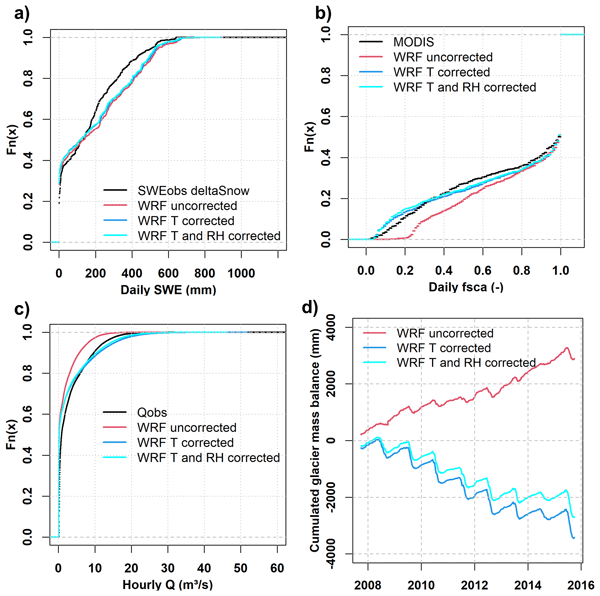
Florentin Hofmeister, Xinyang Fan, Madlene Pfeiffer, Ben Marzeion, Bettina Schaefli, and Gabriele Chiogna
Hydrol. Earth Syst. Sci., 30, 6265–6288, https://doi.org/10.5194/hess-30-6265-2026, https://doi.org/10.5194/hess-30-6265-2026, 2026
Short summary
Short summary
We developed a new approach to improve the climate data used to study water and glaciers in high-mountain regions. By correcting unrealistic air temperatures and moisture while keeping the data physically consistent, we achieved much better agreement with measurements and more accurate simulations of snow, glacier change, and river flow. The method also preserved long-term warming trends, making it useful for studying future climate impacts in mountain areas.
Pau Wiersma, Ralf Loritz, Sanika Baste, Katharina Hafner, and Grégoire Mariéthoz
EGUsphere, https://doi.org/10.5194/egusphere-2026-5373, https://doi.org/10.5194/egusphere-2026-5373, 2026
This preprint is open for discussion and under review for Hydrology and Earth System Sciences (HESS).
Short summary
Short summary
Despite their long record length and information on catchment-wide snowmelt, streamflow observations have not previously been used to constrain snow reanalyses. We show that a bidirectional LSTM can learn the snowmelt-streamflow relationship and subsequently reconstruct snowmelt from streamflow in unseen years and catchments. Combining streamflow and meteorology as inputs yields the best performance, while a streamflow-only model already widely outperforms the ERA5-Land snowmelt benchmark.
Loïc Gerber, Mathieu Gravey, and Grégoire Mariéthoz
EGUsphere, https://doi.org/10.5194/egusphere-2026-4283, https://doi.org/10.5194/egusphere-2026-4283, 2026
This preprint is open for discussion and under review for Geoscientific Model Development (GMD).
Short summary
Short summary
We tested whether environmental maps can be reconstructed better by selecting similar past situations locally and combining past maps in three ways, including simple averaging and two MPS-based stochastic methods. Each method has advantages: averaging was fastest and most accurate overall, while stochastic methods better preserved some spatial variability and high values. Overall, the simpler averaging approach remains the best baseline, but the preferred method depends on the goal.
Harsh Beria, Lionel Benoit, Grégoire Mariethoz, Natalie Claire Ceperley, and Bettina Schaefli
EGUsphere, https://doi.org/10.5194/egusphere-2026-4249, https://doi.org/10.5194/egusphere-2026-4249, 2026
This preprint is open for discussion and under review for Hydrology and Earth System Sciences (HESS).
Short summary
Short summary
Mountain streams can rise within minutes of heavy rain, but much of the streamwater may have been stored underground for far longer. We combine hydrological measurements with stable water isotopes to simulate streamflow in a Swiss Alpine catchment. The simulations show that >80 % of summer streamflow came from groundwater, while direct rainfall contributions were small and brief. Fast stream rises therefore do not necessarily mean that rainwater moves quickly through the landscape.
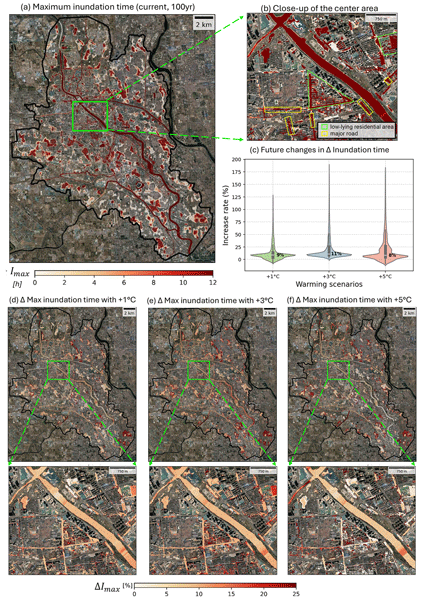
Wenyue Zou, Ruidong Li, Daniel B. Wright, Jovan Blagojevic, Peter Molnar, Mohammad A. Hussain, Yue Zhu, Yongkun Li, Guangheng Ni, and Nadav Peleg
Hydrol. Earth Syst. Sci., 30, 5097–5116, https://doi.org/10.5194/hess-30-5097-2026, https://doi.org/10.5194/hess-30-5097-2026, 2026
Short summary
Short summary
We present a framework using observed rainfall and temperature to generate realistic storms and simulate street-scale flooding for present and future climates. It integrates temperature-based rainfall scaling, storm-frequency estimation, and urban flood modeling, demonstrated in Beijing to assess changes in regional storm and flood depth, timing, and flow velocity. The workflow is data-light, physically grounded, and transferable worldwide.

Ella Thomas, Petr Vohnicky, Marco Borga, Nadav Peleg, and Francesco Marra
Hydrol. Earth Syst. Sci., 30, 4957–4967, https://doi.org/10.5194/hess-30-4957-2026, https://doi.org/10.5194/hess-30-4957-2026, 2026
Short summary
Short summary
Extreme rainfall is expected to grow in magnitude with increasing temperature. We assess whether very rare extremes increase with temperature faster than moderate extremes, and we test methods to include this effect into a model to predict future extremes called TENAX. We find that this dependence on temperature is typically observed but including it in the model without prior information on its magnitude may lead to disproportionately large uncertainty.
Harsh Beria, Sven Kotlarski, Adrien Michel, Jan Magnusson, and Christoph Marty
EGUsphere, https://doi.org/10.5194/egusphere-2026-3478, https://doi.org/10.5194/egusphere-2026-3478, 2026
Short summary
Short summary
Snow is a vital water store for Switzerland, supporting hydropower, winter tourism, and aquatic ecosystems. Using the latest Swiss climate projections, we project future snow water across Switzerland at high spatial resolution. By the end of this century under high emission scenarios, low-lying regions are projected to become nearly snow-free, while even high mountains lose much of their snow. These results can support planning for future Alpine water resources under a warming climate.
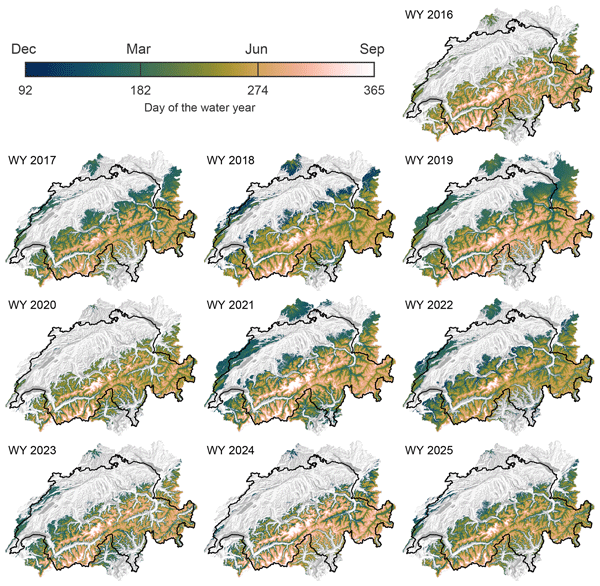
Moritz Oberrauch, Bertrand Cluzet, Jan Magnusson, Giulia Mazzotti, Rebecca Mott, Louis Quéno, Clare Webster, Tobias Zolles, and Tobias Jonas
The Cryosphere, 20, 3387–3403, https://doi.org/10.5194/tc-20-3387-2026, https://doi.org/10.5194/tc-20-3387-2026, 2026
Short summary
Short summary
We present a snow dataset that provides daily information on snow depth, snow amount, and meltwater for Switzerland from 2016 to 2025. It combines weather data, computer simulations, and ground observations to give the most complete picture of how snow changes over time. Because mountain snow strongly affects avalanches, floods, water resources, and ecosystems, this freely available dataset supports better understanding and decision-making in these areas.
Moritz Oberrauch, Bertrand Cluzet, Jan Magnusson, Gabriele Schwaizer, and Tobias Jonas
EGUsphere, https://doi.org/10.5194/egusphere-2026-2725, https://doi.org/10.5194/egusphere-2026-2725, 2026
Short summary
Short summary
In mountain regions like the Swiss Alps, knowing how much snow is on the ground is important for managing water resources and natural hazards. Computer simulations are needed to estimate snow conditions across the terrain, and can be improved when combined with observations. This study uses snow-station measurements and satellite images to correct errors in both the weather input data and the model's representation of terrain effects, thereby reducing the snow model errors by around half.
Giulia Mazzotti, Félix Vaccaro, Antoine Courteaud, Mathieu Fructus, Jan Magnusson, Isabelle Gouttevin, Jari-Pekka Nousu, and Matthieu Lafaysse
EGUsphere, https://doi.org/10.5194/egusphere-2026-1464, https://doi.org/10.5194/egusphere-2026-1464, 2026
Short summary
Short summary
This study evaluates spatial simulations with the new snow model MEB-Crocus over mountainous, forested terrain. In lack of forest snow observations over large areas, simulations are assessed against simulations with the state-of-the art model FSM2oshd. Results show that the data characterizing the vegetation is as important for model performance as the mathematical description of physical processes. These insights inform future improvements of MEB-Crocus for its application to alpine regions.
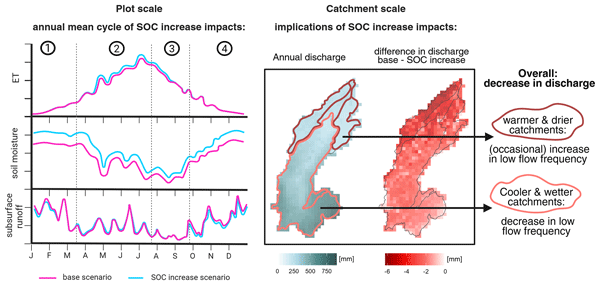
Malve Heinz, Annelie Holzkämper, Rohini Kumar, Sélène Ledain, Pascal Horton, and Bettina Schaefli
Hydrol. Earth Syst. Sci., 30, 2879–2911, https://doi.org/10.5194/hess-30-2879-2026, https://doi.org/10.5194/hess-30-2879-2026, 2026
Short summary
Short summary
Droughts increasingly threaten agriculture. Improving soils to store more water, for example by increasing soil organic carbon, can help. We simulated this in a Swiss catchment and found that more soil carbon slightly increased soil water storage and evapotranspiration, modestly reduced floods, and shortened periods with very little streamflow. However in warmer, drier areas, these periods with little streamflow could sometimes last longer.
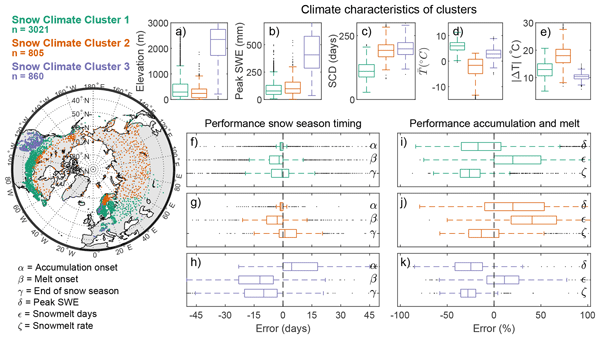
Adrià Fontrodona-Bach, Bettina Schaefli, Ross Woods, and Joshua R. Larsen
Hydrol. Earth Syst. Sci., 30, 2613–2636, https://doi.org/10.5194/hess-30-2613-2026, https://doi.org/10.5194/hess-30-2613-2026, 2026
Short summary
Short summary
Investigating changing snow in response to global warming can be done with a simple model and only temperature and precipitation data, simplifying snow dynamics with assumptions and parameters. We provide a large-scale and long-term evaluation of this approach and its performance across diverse climates. Temperature thresholds are more robust over cold climates but melt parameters are more robust over warmer climates with deep snow. The model performs well across climates despite its simplicity.
Justine Berg, Pascal Horton, Martina Kauzlaric, Alexandra von der Esch, and Bettina Schaefli
EGUsphere, https://doi.org/10.5194/egusphere-2026-439, https://doi.org/10.5194/egusphere-2026-439, 2026
Short summary
Short summary
Snow and glacier melt are essential for water supply in mountain regions, but it is challenging to determine how much each source contributes to streamflow. To improve these estimates, we simulated 14 headwater catchments in Switzerland using a hydrological model modified to include snow redistribution and integrating glacier melt from a glacier evolution model. This allowed more accurate estimates of snow and glacier melt contributions, supporting future predictions of water availability.
Xinyang Fan, Florentin Hofmeister, Bettina Schaefli, and Gabriele Chiogna
EGUsphere, https://doi.org/10.5194/egusphere-2025-6065, https://doi.org/10.5194/egusphere-2025-6065, 2025
Short summary
Short summary
We adopt a physics-based, fully-integrated hydrological modeling approach to understand streamflow variations and their interactions with groundwater in a high-elevation glaciated environment. We demonstrate opportunities and challenges of integrating point-scale groundwater observations into a distributed model. This study sheds new lights on surface-subsurface processes in high alpine environments and highlights the importance of improving subsurface representation in hydrological modeling.
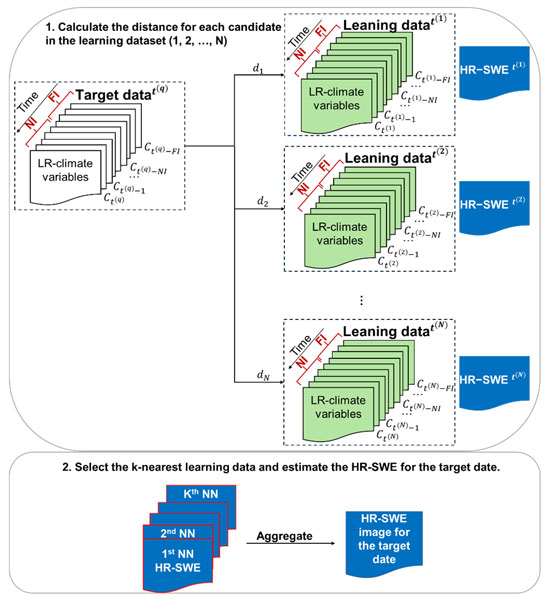
Fatemeh Zakeri, Gregoire Mariethoz, and Manuela Girotto
Hydrol. Earth Syst. Sci., 29, 6935–6958, https://doi.org/10.5194/hess-29-6935-2025, https://doi.org/10.5194/hess-29-6935-2025, 2025
Short summary
Short summary
Our study presents a method to estimate high-resolution snow water equivalent (HR-SWE) using low-resolution climate data (LR-CD). By using a data-driven approach, we analyze historical weather patterns from LR-CD to generate HR-SWE maps. Machine learning and statistical relationships between LR-CD and HR-SWE enable estimation for dates without HR-SWE data. This method enhances water resource management and climate impact assessments, especially in data-scarce regions.
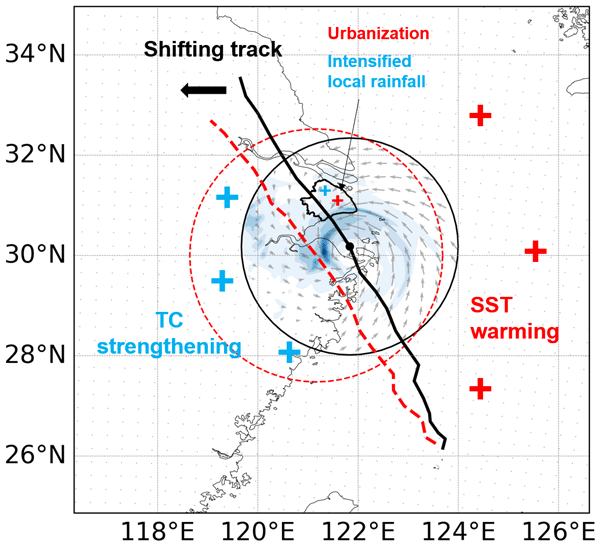
Qi Zhuang, Marika Koukoula, Shuguang Liu, Zhengzheng Zhou, and Nadav Peleg
Weather Clim. Dynam., 6, 1267–1281, https://doi.org/10.5194/wcd-6-1267-2025, https://doi.org/10.5194/wcd-6-1267-2025, 2025
Short summary
Short summary
Understanding how projected urbanization and climate change affect typhoons, which may cause the most destructive natural catastrophes, is crucial. Based on numerical simulations of five landfalling typhoons in Shanghai, China, our results highlight that warming sea surface temperatures significantly shift typhoon tracks with intensified structures (increased size, intensity, and affected time) on the big scale. Meanwhile, urbanization further amplifies local rainfall intensity.
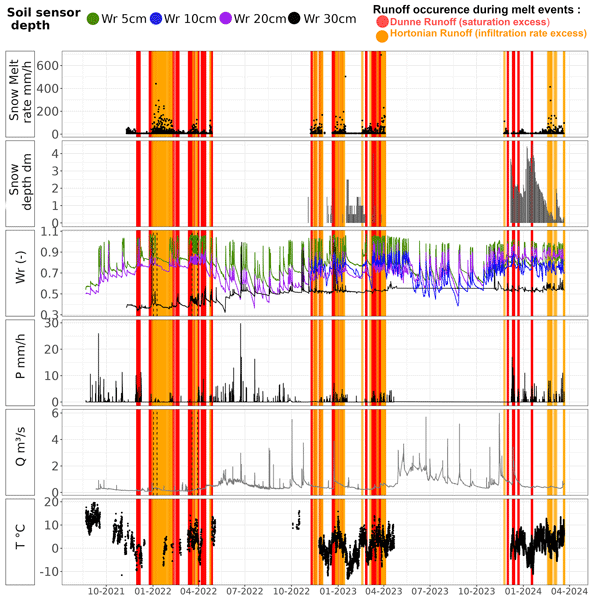
Judith Eeckman, Brian De Grenus, Floreana Marie Miesen, James Thornton, Philip Brunner, and Nadav Peleg
Hydrol. Earth Syst. Sci., 29, 4093–4107, https://doi.org/10.5194/hess-29-4093-2025, https://doi.org/10.5194/hess-29-4093-2025, 2025
Short summary
Short summary
The fate of liquid water from melting snow in winter and spring is difficult to understand in the mountains. This work uses a multi-instrumental network to accurately monitor the dynamics of snowmelt and infiltration at different depths in the ground and at different altitudes. The results show that melting snow quickly infiltrates into the upper layers of the soil but is also quickly transferred through the soil along the slopes towards the river.
Francesco Marra, Nadav Peleg, Elena Cristiano, Efthymios I. Nikolopoulos, Federica Remondi, and Paolo Tarolli
Nat. Hazards Earth Syst. Sci., 25, 2565–2570, https://doi.org/10.5194/nhess-25-2565-2025, https://doi.org/10.5194/nhess-25-2565-2025, 2025
Short summary
Short summary
Climate change is escalating the risks related to hydro-meteorological extremes. This preface introduces a special issue originating from a European Geosciences Union (EGU) session. It highlights the challenges posed by these extremes, ranging from hazard assessment to mitigation strategies, and covers both water excess events like floods, landslides, and coastal hazards and water deficit events such as droughts and fire weather. The collection aims to advance understanding, improve resilience, and inform policy-making.
Xinyang Fan, Florentin Hofmeister, Bettina Schaefli, and Gabriele Chiogna
EGUsphere, https://doi.org/10.5194/egusphere-2025-1500, https://doi.org/10.5194/egusphere-2025-1500, 2025
Preprint archived
Short summary
Short summary
We adopt a fully-distributed, physics-based hydrological modeling approach, to understand streamflow variations and their interactions with groundwater in a high-elevation glaciated environment. We demonstrate opportunities and challenges of integrating point-scale groundwater observations into a distributed model. This study sheds new lights on surface-subsurface processes in high alpine environments and highlights the importance of improving subsurface representation in hydrological modeling.
Malve Heinz, Maria Eliza Turek, Bettina Schaefli, Andreas Keiser, and Annelie Holzkämper
Hydrol. Earth Syst. Sci., 29, 1807–1827, https://doi.org/10.5194/hess-29-1807-2025, https://doi.org/10.5194/hess-29-1807-2025, 2025
Short summary
Short summary
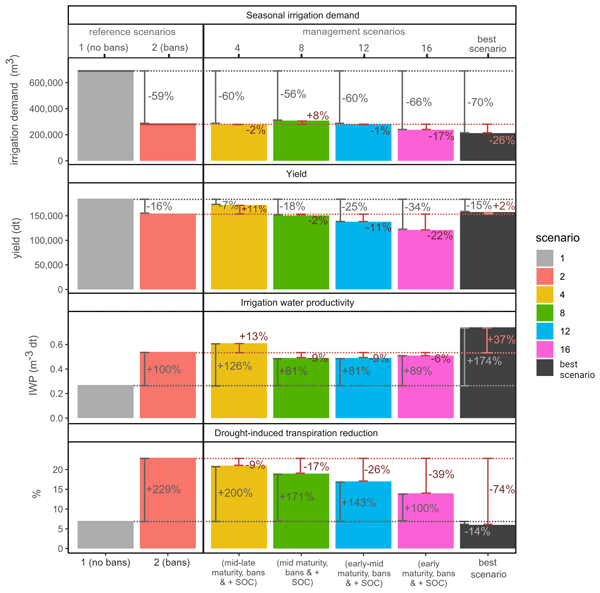
Potato farmers in Switzerland are facing drier conditions and water restrictions. We explored how improving soil health and planting early-maturing potato varieties might help them to adapt. Using a computer model, we simulated potato yields and irrigation water needs under water scarcity. Our results show that earlier-maturing potato varieties reduce the reliance on irrigation but result in lower yields. However, improving soil health can significantly reduce yield losses.
Anne-Laure Argentin, Pascal Horton, Bettina Schaefli, Jamal Shokory, Felix Pitscheider, Leona Repnik, Mattia Gianini, Simone Bizzi, Stuart N. Lane, and Francesco Comiti
Hydrol. Earth Syst. Sci., 29, 1725–1748, https://doi.org/10.5194/hess-29-1725-2025, https://doi.org/10.5194/hess-29-1725-2025, 2025
Short summary
Short summary
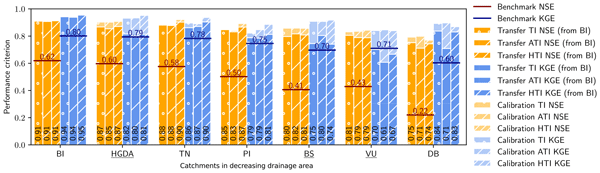
In this article, we show that by taking the optimal parameters calibrated with a semi-lumped model for the discharge at a catchment's outlet, we can accurately simulate runoff at various points within the study area, including three nested and three neighboring catchments. In addition, we demonstrate that employing more intricate melt models, which better represent physical processes, enhances the transfer of parameters in the simulation, until we observe overparameterization.
Jan Magnusson, Yves Bühler, Louis Quéno, Bertrand Cluzet, Giulia Mazzotti, Clare Webster, Rebecca Mott, and Tobias Jonas
Earth Syst. Sci. Data, 17, 703–717, https://doi.org/10.5194/essd-17-703-2025, https://doi.org/10.5194/essd-17-703-2025, 2025
Short summary
Short summary
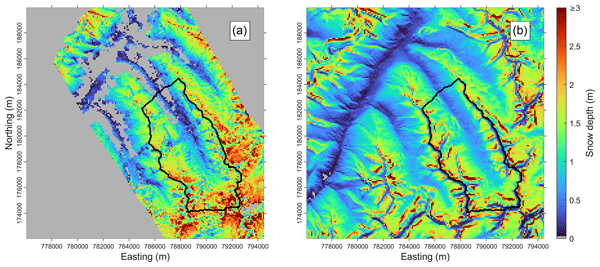
In this study, we present a dataset for the Dischma catchment in eastern Switzerland, which represents a typical high-alpine watershed in the European Alps. Accurate monitoring and reliable forecasting of snow and water resources in such basins are crucial for a wide range of applications. Our dataset is valuable for improving physics-based snow, land surface, and hydrological models, with potential applications in similar high-alpine catchments.
Mosisa Tujuba Wakjira, Nadav Peleg, Johan Six, and Peter Molnar
Hydrol. Earth Syst. Sci., 29, 863–886, https://doi.org/10.5194/hess-29-863-2025, https://doi.org/10.5194/hess-29-863-2025, 2025
Short summary
Short summary
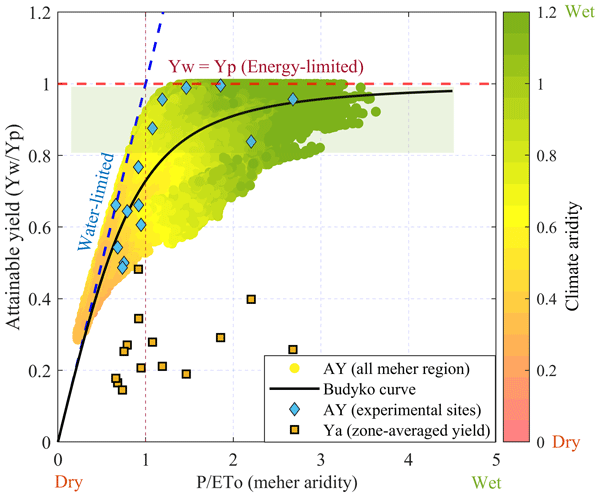
In this study, we implement a climate, water, and crop interaction model to evaluate current conditions and project future changes in rainwater availability and its yield potential, with the goal of informing adaptation policies and strategies in Ethiopia. Although climate change is likely to increase rainfall in Ethiopia, our findings suggest that water-scarce croplands in Ethiopia are expected to face reduced crop yields during the main growing season due to increases in temperature.
Tom Müller, Mauro Fischer, Stuart N. Lane, and Bettina Schaefli
The Cryosphere, 19, 423–458, https://doi.org/10.5194/tc-19-423-2025, https://doi.org/10.5194/tc-19-423-2025, 2025
Short summary
Short summary
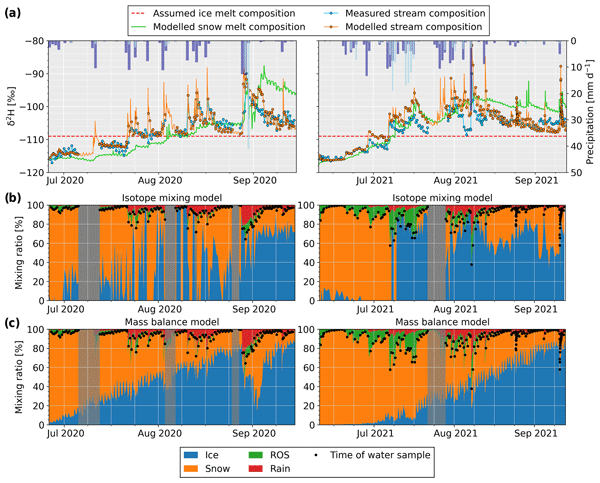
Based on extensive field observations in a highly glacierized catchment in the Swiss Alps, we develop a combined isotopic and glacio-hydrological model. We show that water stable isotopes may help to better constrain model parameters, especially those linked to water transfer. However, we highlight that separating snow and ice melt for temperate glaciers based on isotope mixing models alone is not advised and should only be considered if their isotopic signatures have clearly different values.
Tabea Cache, Milton Salvador Gomez, Tom Beucler, Jovan Blagojevic, João Paulo Leitao, and Nadav Peleg
Hydrol. Earth Syst. Sci., 28, 5443–5458, https://doi.org/10.5194/hess-28-5443-2024, https://doi.org/10.5194/hess-28-5443-2024, 2024
Short summary
Short summary
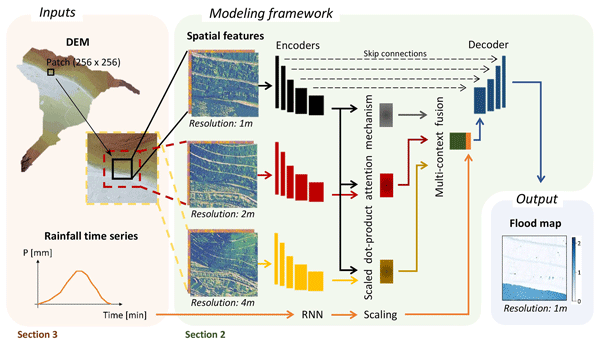
We introduce a new deep-learning model that addresses the limitations of existing urban flood models in handling varied terrains and rainfall events. Our model subdivides a city into small patches and presents a novel approach to incorporate broader terrain information. It accurately predicts high-resolution flood maps across diverse rainfall events and cities (on minute and meter scales) that haven’t been seen by the model, which offers valuable insights for urban flood mitigation strategies.
Bertrand Cluzet, Jan Magnusson, Louis Quéno, Giulia Mazzotti, Rebecca Mott, and Tobias Jonas
The Cryosphere, 18, 5753–5767, https://doi.org/10.5194/tc-18-5753-2024, https://doi.org/10.5194/tc-18-5753-2024, 2024
Short summary
Short summary
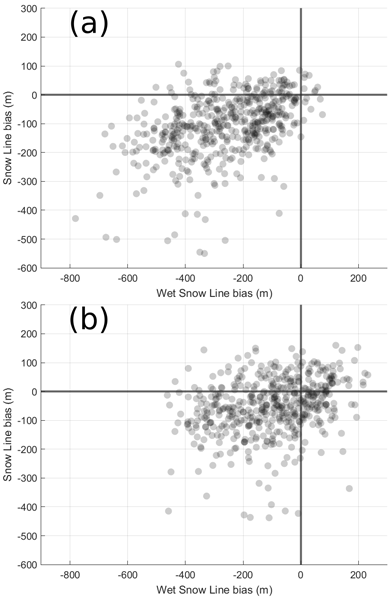
We use novel wet-snow maps from Sentinel-1 to evaluate simulations of a snow-hydrological model over Switzerland. These data are complementary to available in situ snow depth observations as they capture a broad diversity of topographic conditions. Wet-snow maps allow us to detect a delayed melt onset in the model, which we resolve thanks to an improved parametrization. This paves the way to further evaluation, calibration, and data assimilation using wet-snow maps.
Mathieu Vrac, Denis Allard, Grégoire Mariéthoz, Soulivanh Thao, and Lucas Schmutz
Earth Syst. Dynam., 15, 735–762, https://doi.org/10.5194/esd-15-735-2024, https://doi.org/10.5194/esd-15-735-2024, 2024
Short summary
Short summary
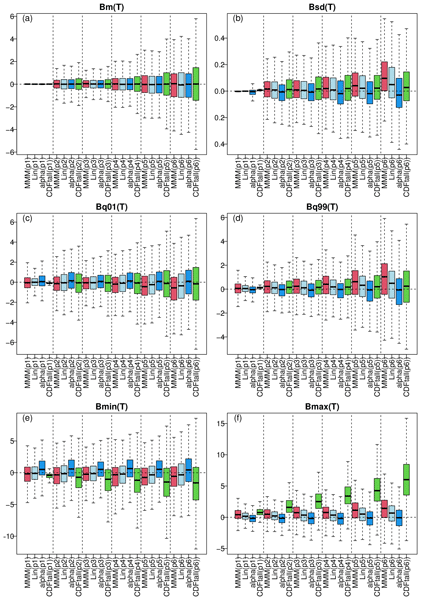
We aim to combine multiple global climate models (GCMs) to enhance the robustness of future projections. We introduce a novel approach, called "α pooling", aggregating the cumulative distribution functions (CDFs) of the models into a CDF more aligned with historical data. The new CDFs allow us to perform bias adjustment of all the raw climate simulations at once. Experiments with European temperature and precipitation demonstrate the superiority of this approach over conventional techniques.
Moctar Dembélé, Mathieu Vrac, Natalie Ceperley, Sander J. Zwart, Josh Larsen, Simon J. Dadson, Grégoire Mariéthoz, and Bettina Schaefli
Proc. IAHS, 385, 121–127, https://doi.org/10.5194/piahs-385-121-2024, https://doi.org/10.5194/piahs-385-121-2024, 2024
Short summary
Short summary
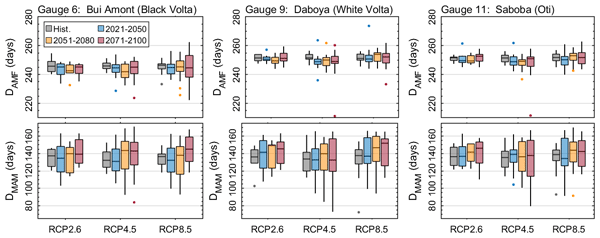
This study assesses the impact of climate change on the timing, seasonality and magnitude of mean annual minimum (MAM) flows and annual maximum flows (AMF) in the Volta River basin (VRB). Several climate change projection data are use to simulate river flow under multiple greenhouse gas emission scenarios. Future projections show that AMF could increase with various magnitude but negligible shift in time across the VRB, while MAM could decrease with up to 14 days of delay in occurrence.
Tom Müller, Matteo Roncoroni, Davide Mancini, Stuart N. Lane, and Bettina Schaefli
Hydrol. Earth Syst. Sci., 28, 735–759, https://doi.org/10.5194/hess-28-735-2024, https://doi.org/10.5194/hess-28-735-2024, 2024
Short summary
Short summary
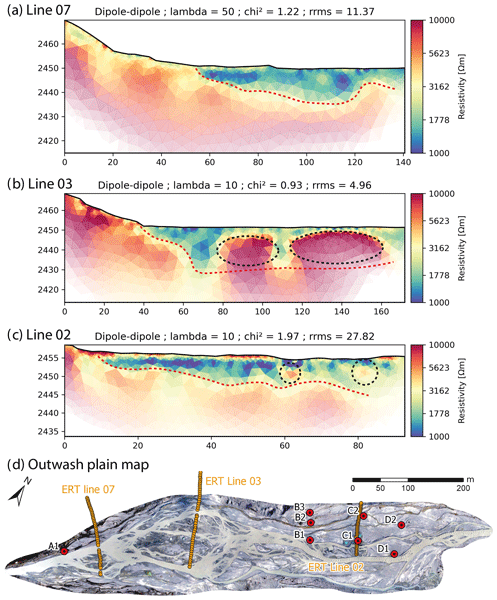
We investigate the role of a newly formed floodplain in an alpine glaciated catchment to store and release water. Based on field measurements, we built a numerical model to simulate the water fluxes and show that recharge occurs mainly due to the ice-melt-fed river. We identify three future floodplains, which could emerge from glacier retreat, and show that their combined storage leads to some additional groundwater storage but contributes little additional baseflow for the downstream river.
Fabio Oriani, Gregoire Mariethoz, and Manuel Chevalier
Earth Syst. Sci. Data, 16, 731–742, https://doi.org/10.5194/essd-16-731-2024, https://doi.org/10.5194/essd-16-731-2024, 2024
Short summary
Short summary
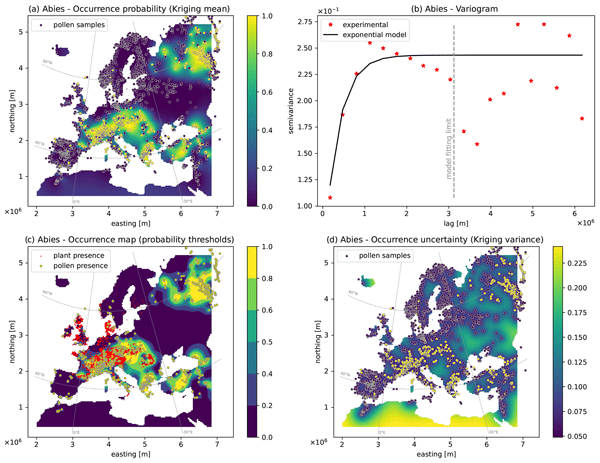
Modern and fossil pollen data contain precious information for reconstructing the climate and environment of the past. However, these data are only achieved for single locations with no continuity in space. We present here a systematic atlas of 194 digital maps containing the spatial estimation of contemporary pollen presence over Europe. This dataset constitutes a free and ready-to-use tool to study climate, biodiversity, and environment in time and space.
Francesco Marra, Marika Koukoula, Antonio Canale, and Nadav Peleg
Hydrol. Earth Syst. Sci., 28, 375–389, https://doi.org/10.5194/hess-28-375-2024, https://doi.org/10.5194/hess-28-375-2024, 2024
Short summary
Short summary
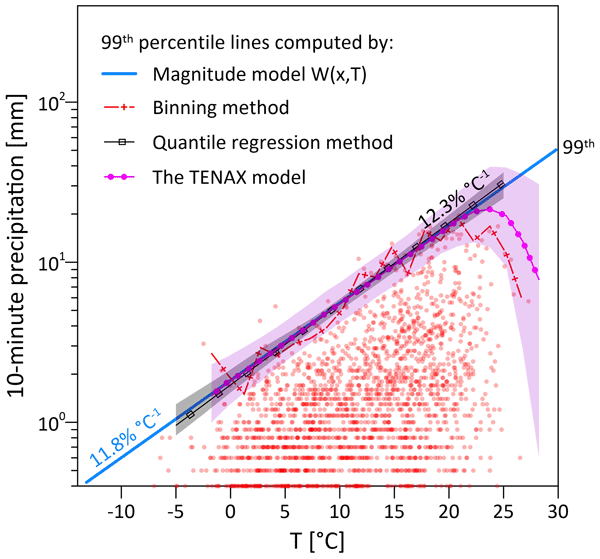
We present a new physical-based method for estimating extreme sub-hourly precipitation return levels (i.e., intensity–duration–frequency, IDF, curves), which are critical for the estimation of future floods. The proposed model, named TENAX, incorporates temperature as a covariate in a physically consistent manner. It has only a few parameters and can be easily set for any climate station given sub-hourly precipitation and temperature data are available.
Mathieu Gravey and Grégoire Mariethoz
Geosci. Model Dev., 16, 5265–5279, https://doi.org/10.5194/gmd-16-5265-2023, https://doi.org/10.5194/gmd-16-5265-2023, 2023
Short summary
Short summary
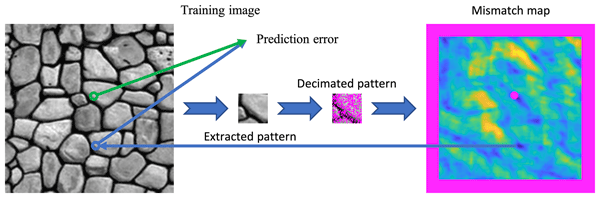
Multiple‐point geostatistics are widely used to simulate complex spatial structures based on a training image. The use of these methods relies on the possibility of finding optimal training images and parametrization of the simulation algorithms. Here, we propose finding an optimal set of parameters using only the training image as input. The main advantage of our approach is to remove the risk of overfitting an objective function.
Adrià Fontrodona-Bach, Bettina Schaefli, Ross Woods, Adriaan J. Teuling, and Joshua R. Larsen
Earth Syst. Sci. Data, 15, 2577–2599, https://doi.org/10.5194/essd-15-2577-2023, https://doi.org/10.5194/essd-15-2577-2023, 2023
Short summary
Short summary
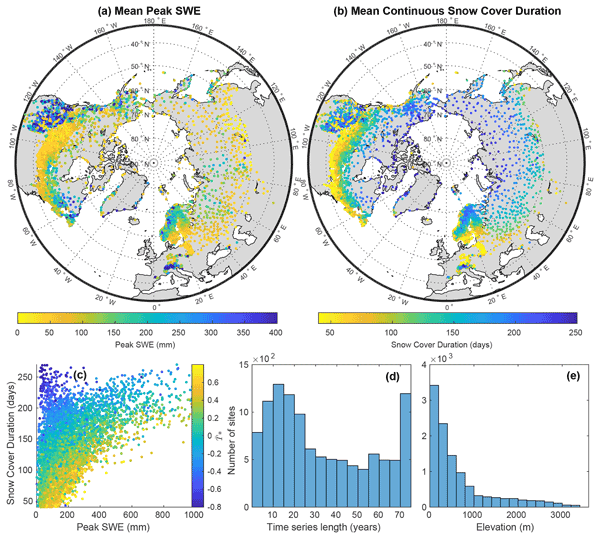
We provide a dataset of snow water equivalent, the depth of liquid water that results from melting a given depth of snow. The dataset contains 11 071 sites over the Northern Hemisphere, spans the period 1950–2022, and is based on daily observations of snow depth on the ground and a model. The dataset fills a lack of accessible historical ground snow data, and it can be used for a variety of applications such as the impact of climate change on global and regional snow and water resources.
Alessio Gentile, Davide Canone, Natalie Ceperley, Davide Gisolo, Maurizio Previati, Giulia Zuecco, Bettina Schaefli, and Stefano Ferraris
Hydrol. Earth Syst. Sci., 27, 2301–2323, https://doi.org/10.5194/hess-27-2301-2023, https://doi.org/10.5194/hess-27-2301-2023, 2023
Short summary
Short summary
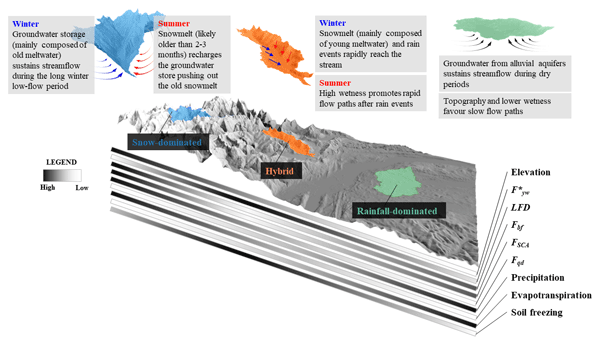
What drives young water fraction, F*yw (i.e., the fraction of water in streamflow younger than 2–3 months), variations with elevation? Why is F*yw counterintuitively low in high-elevation catchments, in spite of steeper topography? In this paper, we present a perceptual model explaining how the longer low-flow duration at high elevations, driven by the persistence of winter snowpacks, increases the proportion of stored (old) water contributing to the stream, thus reducing F*yw.
Anthony Michelon, Natalie Ceperley, Harsh Beria, Joshua Larsen, Torsten Vennemann, and Bettina Schaefli
Hydrol. Earth Syst. Sci., 27, 1403–1430, https://doi.org/10.5194/hess-27-1403-2023, https://doi.org/10.5194/hess-27-1403-2023, 2023
Short summary
Short summary
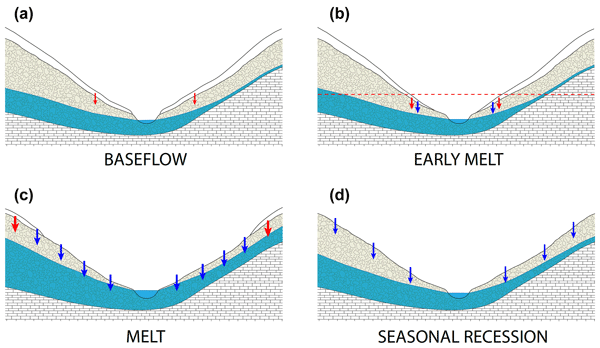
Streamflow generation processes in high-elevation catchments are largely influenced by snow accumulation and melt. For this work, we collected and analyzed more than 2800 water samples (temperature, electric conductivity, and stable isotopes of water) to characterize the hydrological processes in such a high Alpine environment. Our results underline the critical role of subsurface flow during all melt periods and the presence of snowmelt even during the winter periods.

Nadav Peleg, Herminia Torelló-Sentelles, Grégoire Mariéthoz, Lionel Benoit, João P. Leitão, and Francesco Marra
Nat. Hazards Earth Syst. Sci., 23, 1233–1240, https://doi.org/10.5194/nhess-23-1233-2023, https://doi.org/10.5194/nhess-23-1233-2023, 2023
Short summary
Short summary
Floods in urban areas are one of the most common natural hazards. Due to climate change enhancing extreme rainfall and cities becoming larger and denser, the impacts of these events are expected to increase. A fast and reliable flood warning system should thus be implemented in flood-prone cities to warn the public of upcoming floods. The purpose of this brief communication is to discuss the potential implementation of low-cost acoustic rainfall sensors in short-term flood warning systems.
Pau Wiersma, Jerom Aerts, Harry Zekollari, Markus Hrachowitz, Niels Drost, Matthias Huss, Edwin H. Sutanudjaja, and Rolf Hut
Hydrol. Earth Syst. Sci., 26, 5971–5986, https://doi.org/10.5194/hess-26-5971-2022, https://doi.org/10.5194/hess-26-5971-2022, 2022
Short summary
Short summary
We test whether coupling a global glacier model (GloGEM) with a global hydrological model (PCR-GLOBWB 2) leads to a more realistic glacier representation and to improved basin runoff simulations across 25 large-scale basins. The coupling does lead to improved glacier representation, mainly by accounting for glacier flow and net glacier mass loss, and to improved basin runoff simulations, mostly in strongly glacier-influenced basins, which is where the coupling has the most impact.
Tom Müller, Stuart N. Lane, and Bettina Schaefli
Hydrol. Earth Syst. Sci., 26, 6029–6054, https://doi.org/10.5194/hess-26-6029-2022, https://doi.org/10.5194/hess-26-6029-2022, 2022
Short summary
Short summary
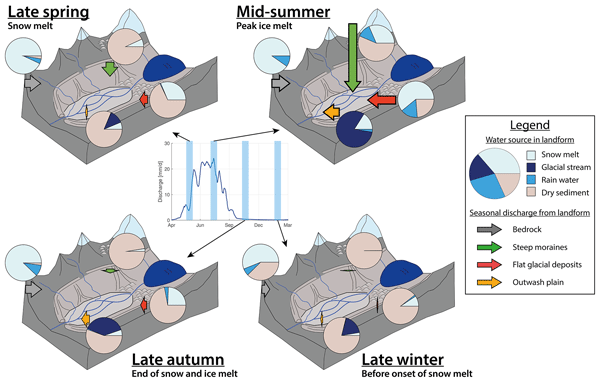
This research provides a comprehensive analysis of groundwater storage in Alpine glacier forefields, a zone rapidly evolving with glacier retreat. Based on data analysis of a case study, it provides a simple perceptual model showing where and how groundwater is stored and released in a high Alpine environment. It especially points out the presence of groundwater storages in both fluvial and bedrock aquifers, which may become more important with future glacier retreat.
Michael Schirmer, Adam Winstral, Tobias Jonas, Paolo Burlando, and Nadav Peleg
The Cryosphere, 16, 3469–3488, https://doi.org/10.5194/tc-16-3469-2022, https://doi.org/10.5194/tc-16-3469-2022, 2022
Short summary
Short summary
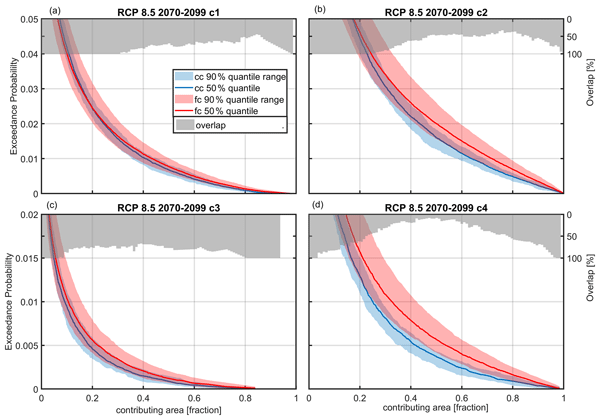
Rain is highly variable in time at a given location so that there can be both wet and dry climate periods. In this study, we quantify the effects of this natural climate variability and other sources of uncertainty on changes in flooding events due to rain on snow (ROS) caused by climate change. For ROS events with a significant contribution of snowmelt to runoff, the change due to climate was too small to draw firm conclusions about whether there are more ROS events of this important type.
Feiko Bernard van Zadelhoff, Adel Albaba, Denis Cohen, Chris Phillips, Bettina Schaefli, Luuk Dorren, and Massimiliano Schwarz
Nat. Hazards Earth Syst. Sci., 22, 2611–2635, https://doi.org/10.5194/nhess-22-2611-2022, https://doi.org/10.5194/nhess-22-2611-2022, 2022
Short summary
Short summary
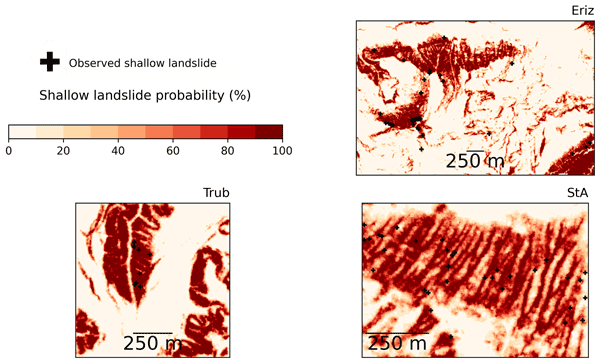
Shallow landslides pose a risk to people, property and infrastructure. Assessment of this hazard and the impact of protective measures can reduce losses. We developed a model (SlideforMAP) that can assess the shallow-landslide risk on a regional scale for specific rainfall events. Trees are an effective and cheap protective measure on a regional scale. Our model can assess their hazard reduction down to the individual tree level.
Alexandre Tuel, Bettina Schaefli, Jakob Zscheischler, and Olivia Martius
Hydrol. Earth Syst. Sci., 26, 2649–2669, https://doi.org/10.5194/hess-26-2649-2022, https://doi.org/10.5194/hess-26-2649-2022, 2022
Short summary
Short summary
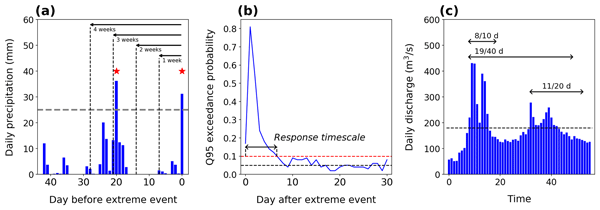
River discharge is strongly influenced by the temporal structure of precipitation. Here, we show how extreme precipitation events that occur a few days or weeks after a previous event have a larger effect on river discharge than events occurring in isolation. Windows of 2 weeks or less between events have the most impact. Similarly, periods of persistent high discharge tend to be associated with the occurrence of several extreme precipitation events in close succession.
Stefan Brönnimann, Peter Stucki, Jörg Franke, Veronika Valler, Yuri Brugnara, Ralf Hand, Laura C. Slivinski, Gilbert P. Compo, Prashant D. Sardeshmukh, Michel Lang, and Bettina Schaefli
Clim. Past, 18, 919–933, https://doi.org/10.5194/cp-18-919-2022, https://doi.org/10.5194/cp-18-919-2022, 2022
Short summary
Short summary
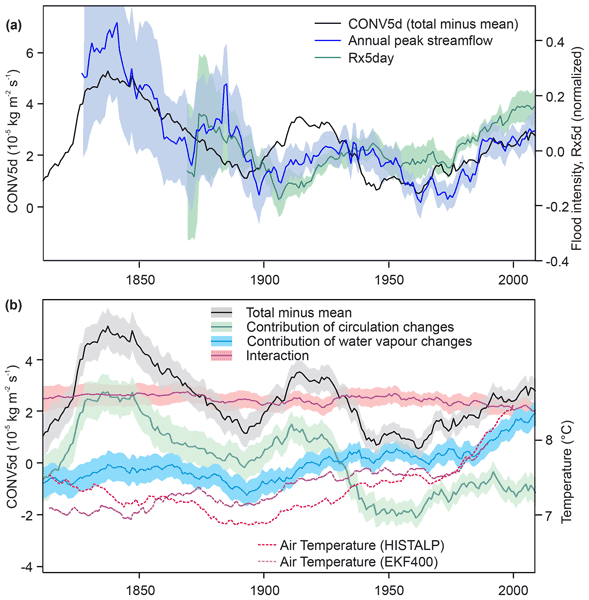
Floods in Europe vary on time scales of several decades. Flood-rich and flood-poor periods alternate. Recently floods have again become more frequent. Long time series of peak stream flow, precipitation, and atmospheric variables reveal that until around 1980, these changes were mostly due to changes in atmospheric circulation. However, in recent decades the role of increasing atmospheric moisture due to climate warming has become more important and is now the main driver of flood changes.
Moctar Dembélé, Mathieu Vrac, Natalie Ceperley, Sander J. Zwart, Josh Larsen, Simon J. Dadson, Grégoire Mariéthoz, and Bettina Schaefli
Hydrol. Earth Syst. Sci., 26, 1481–1506, https://doi.org/10.5194/hess-26-1481-2022, https://doi.org/10.5194/hess-26-1481-2022, 2022
Short summary
Short summary
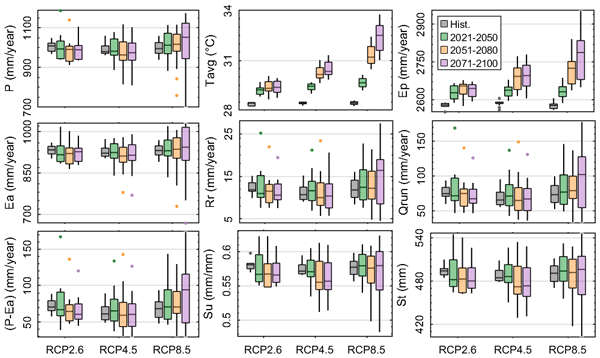
Climate change impacts on water resources in the Volta River basin are investigated under various global warming scenarios. Results reveal contrasting changes in future hydrological processes and water availability, depending on greenhouse gas emission scenarios, with implications for floods and drought occurrence over the 21st century. These findings provide insights for the elaboration of regional adaptation and mitigation strategies for climate change.
Adrien Michel, Bettina Schaefli, Nander Wever, Harry Zekollari, Michael Lehning, and Hendrik Huwald
Hydrol. Earth Syst. Sci., 26, 1063–1087, https://doi.org/10.5194/hess-26-1063-2022, https://doi.org/10.5194/hess-26-1063-2022, 2022
Short summary
Short summary
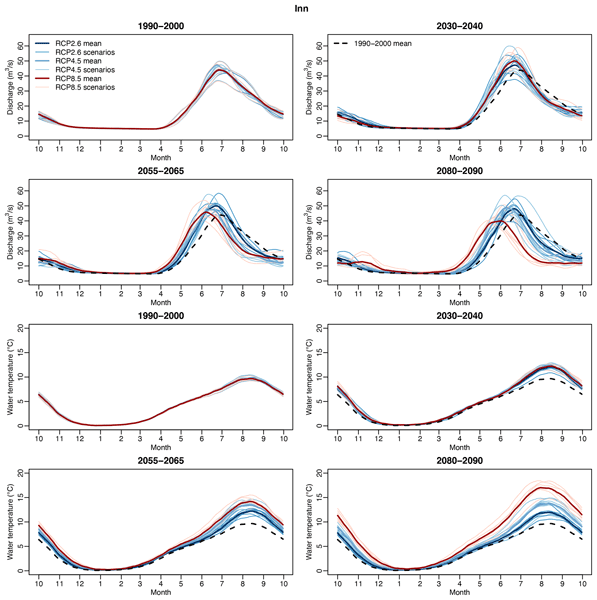
This study presents an extensive study of climate change impacts on river temperature in Switzerland. Results show that, even for low-emission scenarios, water temperature increase will lead to adverse effects for both ecosystems and socio-economic sectors throughout the 21st century. For high-emission scenarios, the effect will worsen. This study also shows that water seasonal warming will be different between the Alpine regions and the lowlands. Finally, efficiency of models is assessed.
Cited articles
Argentin, A.-L., Horton, P., Schaefli, B., Shokory, J., Pitscheider, F., Repnik, L., Gianini, M., Bizzi, S., Lane, S. N., and Comiti, F.: Scale dependency in modeling nivo-glacial hydrological systems: the case of the Arolla basin, Switzerland, Hydrol. Earth Syst. Sci., 29, 1725–1748, https://doi.org/10.5194/hess-29-1725-2025, 2025. a
Avanzi, F., Gabellani, S., Delogu, F., Silvestro, F., Pignone, F., Bruno, G., Pulvirenti, L., Squicciarino, G., Fiori, E., Rossi, L., Puca, S., Toniazzo, A., Giordano, P., Falzacappa, M., Ratto, S., Stevenin, H., Cardillo, A., Fioletti, M., Cazzuli, O., Cremonese, E., Morra di Cella, U., and Ferraris, L.: IT-SNOW: a snow reanalysis for Italy blending modeling, in situ data, and satellite observations (2010–2021), Earth Syst. Sci. Data, 15, 639–660, https://doi.org/10.5194/essd-15-639-2023, 2023. a
Beaton, A. D., Han, M., Tolson, B. A., Buttle, J. M., and Metcalfe, R. A.: Assessing the Impact of Distributed Snow Water Equivalent Calibration and Assimilation of Copernicus Snow Water Equivalent on Modelled Snow and Streamflow Performance, Hydrol. Process., 38, https://doi.org/10.1002/hyp.15075, 2024. a
Beck, H. E., Wood, E. F., McVicar, T. R., Zambrano-Bigiarini, M., Alvarez-Garreton, C., Baez-Villanueva, O. M., Sheffield, J., and Karger, D. N.: Bias Correction of Global High-Resolution Precipitation Climatologies Using Streamflow Observations from 9372 Catchments Bias Correction of Global High-Resolution Precipitation Climatologies Using Streamflow Observations from 9372 Catchments, J. Climate, 33, 1299–1315, https://doi.org/10.1175/jcli-d-19-0332.1, 2019. a
Beniston, M., Farinotti, D., Stoffel, M., Andreassen, L. M., Coppola, E., Eckert, N., Fantini, A., Giacona, F., Hauck, C., Huss, M., Huwald, H., Lehning, M., López-Moreno, J.-I., Magnusson, J., Marty, C., Morán-Tejéda, E., Morin, S., Naaim, M., Provenzale, A., Rabatel, A., Six, D., Stötter, J., Strasser, U., Terzago, S., and Vincent, C.: The European mountain cryosphere: a review of its current state, trends, and future challenges, The Cryosphere, 12, 759–794, https://doi.org/10.5194/tc-12-759-2018, 2018. a
Berghuijs, W. R., Woods, R. A., and Hrachowitz, M.: A Precipitation Shift from Snow towards Rain Leads to a Decrease in Streamflow, Nat. Clim. Change, 4, 583–586, https://doi.org/10.1038/nclimate2246, 2014. a
Berghuijs, W. R., Hale, K., and Beria, H.: Technical note: Streamflow seasonality using directional statistics, Hydrol. Earth Syst. Sci., 29, 2851–2862, https://doi.org/10.5194/hess-29-2851-2025, 2025. a
Besso, H., Shean, D., and Lundquist, J. D.: Mountain Snow Depth Retrievals from Customized Processing of ICESat-2 Satellite Laser Altimetry, Remote Sens. Environ., 300, 113843, https://doi.org/10.1016/j.rse.2023.113843, 2024. a
Beven, K.: A Manifesto for the Equifinality Thesis, J. Hydrol., 320, 18–36, https://doi.org/10.1016/j.jhydrol.2005.07.007, 2006. a
Beven, K. and Binley, A.: The Future of Distributed Models: Model Calibration and Uncertainty Prediction, Hydrol. Process., 6, 279–298, https://doi.org/10.1002/hyp.3360060305, 1992. a
Beven, K. and Freer, J.: Equifinality, data assimilation, and uncertainty estimation in mechanistic modelling of complex environmental systems using the GLUE methodology, J. Hydrol., 249, 11–29, https://doi.org/10.1016/S0022-1694(01)00421-8, 2001. a
Brauchli, T., Trujillo, E., Huwald, H., and Lehning, M.: Influence of Slope-scale Snowmelt on Catchment Response Simulated with the Alpine3D Model, Water Resour. Res., 53, 10723–10739, https://doi.org/10.1002/2017wr021278, 2017. a
Broxton, P. D., Dawson, N., and Zeng, X.: Linking Snowfall and Snow Accumulation to Generate Spatial Maps of SWE and Snow Depth, Earth Space Sci., 3, 246–256, https://doi.org/10.1002/2016ea000174, 2016. a
Broxton, P. D., Leeuwen, W. J. D., and Biederman, J. A.: Improving Snow Water Equivalent Maps with Machine Learning of Snow Survey and Lidar Measurements, Water Resour. Res., 55, 3739–3757, https://doi.org/10.1029/2018wr024146, 2019. a
Brunner, M. I., Götte, J., Schlemper, C., and Loon, A. F. V.: Hydrological Drought Generation Processes and Severity Are Changing in the Alps, Geophys. Res. Lett., 50, https://doi.org/10.1029/2022gl101776, 2023. a
Buchhorn, M. and smets, B.: Copernicus Global Land Service: Land Cover 100 m: Collection 3: Epoch 2019: Globe (V3.0.1), Zenodo [data set], https://doi.org/10.5281/zenodo.3939050, 2020. a
Burrell, B., Beltaos, S., and Turcotte, B.: Effects of climate change on river-ice processes and ice jams, International Journal of River Basin Management, 21, 421–441, 2023. a
Casson, D. R., Werner, M., Weerts, A., and Solomatine, D.: Global re-analysis datasets to improve hydrological assessment and snow water equivalent estimation in a sub-Arctic watershed, Hydrol. Earth Syst. Sci., 22, 4685–4697, https://doi.org/10.5194/hess-22-4685-2018, 2018. a
Cluzet, B., Magnusson, J., Quéno, L., Mazzotti, G., Mott, R., and Jonas, T.: Exploring how Sentinel-1 wet-snow maps can inform fully distributed physically based snowpack models, The Cryosphere, 18, 5753–5767, https://doi.org/10.5194/tc-18-5753-2024, 2024. a
Comola, F., Schaefli, B., Rinaldo, A., and Lehning, M.: Thermodynamics in the Hydrologic Response: Travel Time Formulation and Application to Alpine Catchments, Water Resour. Res., 51, 1671–1687, https://doi.org/10.1002/2014wr016228, 2015. a
de Bruin, H. A. R., Trigo, I. F., Bosveld, F. C., and Meirink, J. F.: A Thermodynamically Based Model for Actual Evapotranspiration of an Extensive Grass Field Close to FAO Reference, Suitable for Remote Sensing Application, J. Hydrometeorol., 17, 1373–1382, https://doi.org/10.1175/jhm-d-15-0006.1, 2016. a
Dettinger, M.: Impacts in the third dimension, Nat. Geosci., 7, 166–167, https://doi.org/10.1038/ngeo2096, 2014. a
Di Baldassarre, G. and Montanari, A.: Uncertainty in river discharge observations: a quantitative analysis, Hydrol. Earth Syst. Sci., 13, 913–921, https://doi.org/10.5194/hess-13-913-2009, 2009. a
Do, H. X., Gudmundsson, L., Leonard, M., and Westra, S.: The Global Streamflow Indices and Metadata Archive (GSIM) – Part 1: The production of a daily streamflow archive and metadata, Earth Syst. Sci. Data, 10, 765–785, https://doi.org/10.5194/essd-10-765-2018, 2018. a
Eilander, D., Boisgontier, H., Bouaziz, L. J. E., Buitink, J., Couasnon, A., Dalmijn, B., Hegnauer, M., de Jong, T., Loos, S., Marth, I., and van Verseveld, W.: HydroMT: Automated and Reproducible Model Building and Analysis, Journal of Open Source Software, 8, 4897, https://doi.org/10.21105/joss.04897, 2023. a
Essery, R. and Pomeroy, J.: Implications of Spatial Distributions of Snow Mass and Melt Rate for Snow-Cover Depletion: Theoretical Considerations, Ann. Glaciol., 38, 261–265, https://doi.org/10.3189/172756404781815275, 2004. a
Eyring, V., Bock, L., Lauer, A., Righi, M., Schlund, M., Andela, B., Arnone, E., Bellprat, O., Brötz, B., Caron, L.-P., Carvalhais, N., Cionni, I., Cortesi, N., Crezee, B., Davin, E. L., Davini, P., Debeire, K., de Mora, L., Deser, C., Docquier, D., Earnshaw, P., Ehbrecht, C., Gier, B. K., Gonzalez-Reviriego, N., Goodman, P., Hagemann, S., Hardiman, S., Hassler, B., Hunter, A., Kadow, C., Kindermann, S., Koirala, S., Koldunov, N., Lejeune, Q., Lembo, V., Lovato, T., Lucarini, V., Massonnet, F., Müller, B., Pandde, A., Pérez-Zanón, N., Phillips, A., Predoi, V., Russell, J., Sellar, A., Serva, F., Stacke, T., Swaminathan, R., Torralba, V., Vegas-Regidor, J., von Hardenberg, J., Weigel, K., and Zimmermann, K.: Earth System Model Evaluation Tool (ESMValTool) v2.0 – an extended set of large-scale diagnostics for quasi-operational and comprehensive evaluation of Earth system models in CMIP, Geosci. Model Dev., 13, 3383–3438, https://doi.org/10.5194/gmd-13-3383-2020, 2020. a
Fang, Y., Liu, Y., and Margulis, S. A.: A Western United States Snow Reanalysis Dataset over the Landsat Era from Water Years 1985 to 2021, Scientific Data, 9, 677, https://doi.org/10.1038/s41597-022-01768-7, 2022. a
Fiddes, J., Aalstad, K., and Westermann, S.: Hyper-resolution ensemble-based snow reanalysis in mountain regions using clustering, Hydrol. Earth Syst. Sci., 23, 4717–4736, https://doi.org/10.5194/hess-23-4717-2019, 2019. a
Fontrodona-Bach, A., Schaefli, B., Woods, R., Teuling, A. J., and Larsen, J. R.: NH-SWE: Northern Hemisphere Snow Water Equivalent dataset based on in situ snow depth time series, Earth Syst. Sci. Data, 15, 2577–2599, https://doi.org/10.5194/essd-15-2577-2023, 2023. a
Frey, S. and Holzmann, H.: A conceptual, distributed snow redistribution model, Hydrol. Earth Syst. Sci., 19, 4517–4530, https://doi.org/10.5194/hess-19-4517-2015, 2015. a
Gascoin, S., Grizonnet, M., Bouchet, M., Salgues, G., and Hagolle, O.: Theia Snow collection: high-resolution operational snow cover maps from Sentinel-2 and Landsat-8 data, Earth Syst. Sci. Data, 11, 493–514, https://doi.org/10.5194/essd-11-493-2019, 2019. a
Geissler, J.: Referee Comment RC1, https://doi.org/10.5194/egusphere-2025-3610-RC1, 2026. a
Geissler, J., Mazzotti, G., Rathmann, L., Webster, C., and Weiler, M.: Forest Snow Patterns Derived Using ClustSnow Are Temporally Persistent Under Variable Environmental Conditions, Water Resour. Res., 61, https://doi.org/10.1029/2024wr038442, 2025. a, b
Gordon, B. L., Brooks, P. D., Krogh, S. A., Boisrame, G. F. S., Carroll, R. W. H., McNamara, J. P., and Harpold, A. A.: Why Does Snowmelt-Driven Streamflow Response to Warming Vary? A Data-Driven Review and Predictive Framework, Environ. Res. Lett., 17, 053004, https://doi.org/10.1088/1748-9326/ac64b4, 2022. a
Gottlieb, A. R. and Mankin, J. S.: Evidence of Human Influence on Northern Hemisphere Snow Loss, Nature, 625, 293–300, https://doi.org/10.1038/s41586-023-06794-y, 2024. a
Griessinger, N., Seibert, J., Magnusson, J., and Jonas, T.: Assessing the benefit of snow data assimilation for runoff modeling in Alpine catchments, Hydrol. Earth Syst. Sci., 20, 3895–3905, https://doi.org/10.5194/hess-20-3895-2016, 2016. a
Grünewald, T., Schirmer, M., Mott, R., and Lehning, M.: Spatial and temporal variability of snow depth and ablation rates in a small mountain catchment, The Cryosphere, 4, 215–225, https://doi.org/10.5194/tc-4-215-2010, 2010. a
Grünewald, T., Stötter, J., Pomeroy, J. W., Dadic, R., Moreno Baños, I., Marturià, J., Spross, M., Hopkinson, C., Burlando, P., and Lehning, M.: Statistical modelling of the snow depth distribution in open alpine terrain, Hydrol. Earth Syst. Sci., 17, 3005–3021, https://doi.org/10.5194/hess-17-3005-2013, 2013. a
Günther, D., Hanzer, F., Warscher, M., Essery, R., and Strasser, U.: Including parameter uncertainty in an intercomparison of physically-based snow models, Front. Earth Sci., 8, https://doi.org/10.3389/feart.2020.542599, 2020. a
Haberkorn, A., López-Moreno, J. I., Helmert, J., Pirazzini, R., and Leppänen, L.: European Snow Booklet, EnviDat, https://doi.org/10.16904/envidat.59, 2019. a
Han, J., Liu, Z., Woods, R., McVicar, T. R., Yang, D., Wang, T., Hou, Y., Guo, Y., Li, C., and Yang, Y.: Streamflow Seasonality in a Snow-Dwindling World, Nature, 629, 1075–1081, https://doi.org/10.1038/s41586-024-07299-y, 2024. a, b
Harrigan, S., Zsoter, E., Cloke, H., Salamon, P., and Prudhomme, C.: Daily ensemble river discharge reforecasts and real-time forecasts from the operational Global Flood Awareness System, Hydrol. Earth Syst. Sci., 27, 1–19, https://doi.org/10.5194/hess-27-1-2023, 2023. a
Helbig, N. and van Herwijnen, A.: Subgrid Parameterization for Snow Depth over Mountainous Terrain from Flat Field Snow Depth, Water Resour. Res., 53, 1444–1456, https://doi.org/10.1002/2016wr019872, 2017. a
Helbig, N., Bühler, Y., Eberhard, L., Deschamps-Berger, C., Gascoin, S., Dumont, M., Revuelto, J., Deems, J. S., and Jonas, T.: Fractional snow-covered area: scale-independent peak of winter parameterization, The Cryosphere, 15, 615–632, https://doi.org/10.5194/tc-15-615-2021, 2021. a
Henn, B., Clark, M. P., Kavetski, D., and Lundquist, J. D.: Estimating Mountain Basin-mean Precipitation from Streamflow Using Bayesian Inference, Water Resour. Res., 51, 8012–8033, https://doi.org/10.1002/2014wr016736, 2015. a, b, c, d
Henn, B., Clark, M. P., Kavetski, D., Newman, A. J., Hughes, M., McGurk, B., and Lundquist, J. D.: Spatiotemporal Patterns of Precipitation Inferred from Streamflow Observations across the Sierra Nevada Mountain Range, J. Hydrol., 556, 993–1012, https://doi.org/10.1016/j.jhydrol.2016.08.009, 2018. a, b, c
Hock, R.: A Distributed Temperature-Index Ice- and Snowmelt Model Including Potential Direct Solar Radiation, J. Glaciol., 45, 101–111, https://doi.org/10.3189/s0022143000003087, 1999. a, b, c
Höge, M., Kauzlaric, M., Siber, R., Schönenberger, U., Horton, P., Schwanbeck, J., Floriancic, M. G., Viviroli, D., Wilhelm, S., Sikorska-Senoner, A. E., Addor, N., Brunner, M., Pool, S., Zappa, M., and Fenicia, F.: CAMELS-CH: hydro-meteorological time series and landscape attributes for 331 catchments in hydrologic Switzerland, Earth Syst. Sci. Data, 15, 5755–5784, https://doi.org/10.5194/essd-15-5755-2023, 2023. a
Horner, I., Branger, F., McMillan, H., Vannier, O., and Braud, I.: Information Content of Snow Hydrological Signatures Based on Streamflow, Precipitation and Air Temperature, Hydrol. Process., 34, 2763–2779, https://doi.org/10.1002/hyp.13762, 2020. a
Horton, P. and Argentin, A.-L.: hydrobricks: v0.7.2, Zenodo [code], https://doi.org/10.5281/zenodo.11082505, 2024. a
Hou, Y., Han, J., Woods, R., Guo, Y., and Yang, Y.: Understanding Long-term Streamflow Response to Snowfall Change: Insights from a Multivariate Analysis, Water Resour. Res., 61, https://doi.org/10.1029/2024wr038215, 2025. a
Houska, T., Kraft, P., Chamorro-Chavez, A., and Breuer, L.: SPOTting Model Parameters Using a Ready-Made Python Package, PLOS ONE, 10, e0145180, https://doi.org/10.1371/journal.pone.0145180, 2015. a
Hut, R., Drost, N., van de Giesen, N., van Werkhoven, B., Abdollahi, B., Aerts, J., Albers, T., Alidoost, F., Andela, B., Camphuijsen, J., Dzigan, Y., van Haren, R., Hutton, E., Kalverla, P., van Meersbergen, M., van den Oord, G., Pelupessy, I., Smeets, S., Verhoeven, S., de Vos, M., and Weel, B.: The eWaterCycle platform for open and FAIR hydrological collaboration, Geosci. Model Dev., 15, 5371–5390, https://doi.org/10.5194/gmd-15-5371-2022, 2022. a
Imhoff, R. O., van Verseveld, W. J., van Osnabrugge, B., and Weerts, A. H.: Scaling Point-scale (Pedo)Transfer Functions to Seamless Large-domain Parameter Estimates for High-resolution Distributed Hydrologic Modeling: An Example for the Rhine River, Water Resour. Res., 56, https://doi.org/10.1029/2019wr026807, 2020. a, b
Karger, D. N., Conrad, O., Böhner, J., Kawohl, T., Kreft, H., Soria-Auza, R. W., Zimmermann, N. E., Linder, H. P., and Kessler, M.: Climatologies at High Resolution for the Earth's Land Surface Areas, Scientific Data, 4, 170122, https://doi.org/10.1038/sdata.2017.122, 2017. a
Kavetski, D., Kuczera, G., and Franks, S. W.: Bayesian Analysis of Input Uncertainty in Hydrological Modeling: 1. Theory, Water Resour. Res., 42, https://doi.org/10.1029/2005wr004368, 2006. a
Kirchner, J. W.: Catchments as Simple Dynamical Systems: Catchment Characterization, Rainfall-runoff Modeling, and Doing Hydrology Backward, Water Resour. Res., 45, https://doi.org/10.1029/2008wr006912, 2009. a, b
Kottek, M., Grieser, J., Beck, C., Rudolf, B., and Rubel, F.: World Map of the Köppen–Geiger Climate Classification Updated, Meteorol. Z., 15, 259–263, https://doi.org/10.1127/0941-2948/2006/0130, 2006. a
Kouki, K., Luojus, K., and Riihelä, A.: Evaluation of snow cover properties in ERA5 and ERA5-Land with several satellite-based datasets in the Northern Hemisphere in spring 1982–2018, The Cryosphere, 17, 5007–5026, https://doi.org/10.5194/tc-17-5007-2023, 2023. a
Le Moine, N., Hendrickx, F., Gailhard, J., Garçon, R., and Gottardi, F.: Hydrologically Aided Interpolation of Daily Precipitation and Temperature Fields in a Mesoscale Alpine Catchment, J. Hydrometeorol., 16, 2595–2618, https://doi.org/10.1175/jhm-d-14-0162.1, 2015. a, b
Lehning, M., Grünewald, T., and Schirmer, M.: Mountain Snow Distribution Governed by an Altitudinal Gradient and Terrain Roughness, Geophys. Res. Lett., 38, https://doi.org/10.1029/2011gl048927, 2011. a
Lievens, H., Brangers, I., Marshall, H.-P., Jonas, T., Olefs, M., and De Lannoy, G.: Sentinel-1 snow depth retrieval at sub-kilometer resolution over the European Alps, The Cryosphere, 16, 159–177, https://doi.org/10.5194/tc-16-159-2022, 2022. a
Luojus, K., Pulliainen, J., Takala, M., Lemmetyinen, J., Mortimer, C., Derksen, C., Mudryk, L., Moisander, M., Hiltunen, M., Smolander, T., Ikonen, J., Cohen, J., Salminen, M., Norberg, J., Veijola, K., and Venäläinen, P.: GlobSnow v3.0 Northern Hemisphere Snow Water Equivalent Dataset, Scientific Data, 8, 163, https://doi.org/10.1038/s41597-021-00939-2, 2021. a
López-Moreno, J., Fassnacht, S., Heath, J., Musselman, K., Revuelto, J., Latron, J., Morán-Tejeda, E., and Jonas, T.: Small scale spatial variability of snow density and depth over complex alpine terrain: Implications for estimating snow water equivalent, Adv. Water Resour., 55, 40–52, https://doi.org/10.1016/j.advwatres.2012.08.010, 2013. a
Magnusson, J., Gustafsson, D., Hüsler, F., and Jonas, T.: Assimilation of Point SWE Data into a Distributed Snow Cover Model Comparing Two Contrasting Methods, Water Resour. Res., 50, 7816–7835, https://doi.org/10.1002/2014wr015302, 2014. a, b
Magnusson, J., Wever, N., Essery, R., Helbig, N., Winstral, A., and Jonas, T.: Evaluating Snow Models with Varying Process Representations for Hydrological Applications, Water Resour. Res., 51, 2707–2723, https://doi.org/10.1002/2014wr016498, 2015. a
Magnusson, J., Bühler, Y., Quéno, L., Cluzet, B., Mazzotti, G., Webster, C., Mott, R., and Jonas, T.: High-resolution hydrometeorological and snow data for the Dischma catchment in Switzerland, Earth Syst. Sci. Data, 17, 703–717, https://doi.org/10.5194/essd-17-703-2025, 2025. a
Margulis, S. A., Cortés, G., Girotto, M., Huning, L. S., Li, D., and Durand, M.: Characterizing the Extreme 2015 Snowpack Deficit in the Sierra Nevada (USA) and the Implications for Drought Recovery, Geophys. Res. Lett., 43, 6341–6349, https://doi.org/10.1002/2016gl068520, 2016. a
Mazzotti, G., Currier, W. R., Deems, J. S., Pflug, J. M., Lundquist, J. D., and Jonas, T.: Revisiting Snow Cover Variability and Canopy Structure within Forest Stands: Insights from Airborne Lidar Data, Water Resour. Res., 55, 6198–6216, https://doi.org/10.1029/2019wr024898, 2019. a
McKay, M. D., Beckman, R. J., and Conover, W. J.: A comparison of three methods for selecting values of input variables in the analysis of output from a computer code, Technometrics, 42, 55–61, 2000. a
MeteoSwiss: MeteoSwiss RhiresD, Federal Office of Meteorology and Climatology, 2024. a
Michel, A., Aschauer, J., Jonas, T., Gubler, S., Kotlarski, S., and Marty, C.: SnowQM 1.0: a fast R package for bias-correcting spatial fields of snow water equivalent using quantile mapping, Geosci. Model Dev., 17, 8969–8988, https://doi.org/10.5194/gmd-17-8969-2024, 2024. a
Mooney, K. L. and Webb, R. W.: Aspect controls on the spatial redistribution of snow water equivalence through the lateral flow of liquid water in a subalpine catchment, The Cryosphere, 19, 2507–2526, https://doi.org/10.5194/tc-19-2507-2025, 2025. a
Mott, R.: Climatological snow data since 1998, OSHD, https://doi.org/10.16904/envidat.401, 2023. a
Mott, R., Winstral, A., Cluzet, B., Helbig, N., Magnusson, J., Mazzotti, G., Quéno, L., Schirmer, M., Webster, C., and Jonas, T.: Operational Snow-Hydrological Modeling for Switzerland, Front. Earth Sci., 11, 1228158, https://doi.org/10.3389/feart.2023.1228158, 2023. a, b, c
Mudryk, L., Mortimer, C., Derksen, C., Elias Chereque, A., and Kushner, P.: Benchmarking of snow water equivalent (SWE) products based on outcomes of the SnowPEx+ Intercomparison Project, The Cryosphere, 19, 201–218, https://doi.org/10.5194/tc-19-201-2025, 2025. a
Myeni, R., Knyazikhin, Y., and Park, T.: MCD15A3H MODIS/Terra+aqua Leaf Area Index/FPAR 4-Day L4 Global 500 m SIN Grid V006, NASA Land Processes Distributed Active Archive Center [data set], https://doi.org/10.5067/MODIS/MCD15A3H.006, 2015. a
Napoli, A., Crespi, A., Ragone, F., Maugeri, M., and Pasquero, C.: Variability of orographic enhancement of precipitation in the Alpine region, Sci. Rep., 9, 13352, https://doi.org/10.1038/s41598-019-49974-5, 2019. a
Nash, J. and Sutcliffe, J.: River Flow Forecasting through Conceptual Models Part I — A Discussion of Principles, J. Hydrol., 10, 282–290, https://doi.org/10.1016/0022-1694(70)90255-6, 1970. a
Nott, D. J., Marshall, L., and Brown, J.: Generalized Likelihood Uncertainty Estimation (GLUE) and Approximate Bayesian Computation: What's the Connection?, Water Resour. Res., 48, https://doi.org/10.1029/2011wr011128, 2012. a, b
Painter, T. H., Berisford, D. F., Boardman, J. W., Bormann, K. J., Deems, J. S., Gehrke, F., Hedrick, A., Joyce, M., Laidlaw, R., Marks, D., Mattmann, C., McGurk, B., Ramirez, P., Richardson, M., Skiles, S. M., Seidel, F. C., and Winstral, A.: The Airborne Snow Observatory: Fusion of Scanning Lidar, Imaging Spectrometer, and Physically-Based Modeling for Mapping Snow Water Equivalent and Snow Albedo, Remote Sens. Environ., 184, 139–152, https://doi.org/10.1016/j.rse.2016.06.018, 2016. a
Pflug, J. M. and Lundquist, J. D.: Inferring Distributed Snow Depth by Leveraging Snow Pattern Repeatability: Investigation Using 47 Lidar Observations in the Tuolumne Watershed, Sierra Nevada, California, Water Resour. Res., 56, https://doi.org/10.1029/2020wr027243, 2020. a, b
Poggio, L., de Sousa, L. M., Batjes, N. H., Heuvelink, G. B. M., Kempen, B., Ribeiro, E., and Rossiter, D.: SoilGrids 2.0: producing soil information for the globe with quantified spatial uncertainty, SOIL, 7, 217–240, https://doi.org/10.5194/soil-7-217-2021, 2021. a
Premier, V., Marin, C., Bertoldi, G., Barella, R., Notarnicola, C., and Bruzzone, L.: Exploring the use of multi-source high-resolution satellite data for snow water equivalent reconstruction over mountainous catchments, The Cryosphere, 17, 2387–2407, https://doi.org/10.5194/tc-17-2387-2023, 2023. a
Pulka, T., Herrnegger, M., Ehrendorfer, C., Lücking, S., Avanzi, F., Formayer, H., Schulz, K., and Koch, F.: Evaluating Precipitation Corrections to Enhance High-Alpine Hydrological Modeling for Hydropower, J. Hydrol., https://doi.org/10.1016/j.jhydrol.2024.132202, 2024. a
Raleigh, M. S. and Small, E. E.: Snowpack Density Modeling Is the Primary Source of Uncertainty When Mapping Basin-wide SWE with Lidar, Geophys. Res. Lett., 44, 3700–3709, https://doi.org/10.1002/2016gl071999, 2017. a
Renard, B., Kavetski, D., Kuczera, G., Thyer, M., and Franks, S. W.: Understanding Predictive Uncertainty in Hydrologic Modeling: The Challenge of Identifying Input and Structural Errors, Water Resour. Res., 46, https://doi.org/10.1029/2009wr008328, 2010. a
Revuelto, J., López-Moreno, J. I., Azorin-Molina, C., and Vicente-Serrano, S. M.: Topographic control of snowpack distribution in a small catchment in the central Spanish Pyrenees: intra- and inter-annual persistence, The Cryosphere, 8, 1989–2006, https://doi.org/10.5194/tc-8-1989-2014, 2014. a
Revuelto, J., López-Moreno, J. I., and Alonso-González, E.: Light and Shadow in Mapping Alpine Snowpack With Unmanned Aerial Vehicles in the Absence of Ground Control Points, Water Resour. Res., 57, https://doi.org/10.1029/2020wr028980, 2021. a
Revuelto, J., Alonso-González, E., Deschamps-Berger, C., Gutmann, E. D., and López-Moreno, J. I.: Recent Advances in Snow Monitoring from Local to Global Scales, Current Climate Change Reports, 11, 10, https://doi.org/10.1007/s40641-025-00207-0, 2025. a, b
Rhoades, A. M., Jones, A. D., and Ullrich, P. A.: Assessing Mountains as Natural Reservoirs with a Multimetric Framework, Earths Future, 6, 1221–1241, https://doi.org/10.1002/2017ef000789, 2018. a, b, c
Rinaldo, A., Vogel, G. K., Rigon, R., and Rodriguez-Iturbe, I.: Can One Gauge the Shape of a Basin?, Water Resour. Res., 31, 1119–1127, https://doi.org/10.1029/94wr03290, 1995. a
Rudisill, W., Flores, A., and Carroll, R.: Evaluating 3 decades of precipitation in the Upper Colorado River basin from a high-resolution regional climate model, Geosci. Model Dev., 16, 6531–6552, https://doi.org/10.5194/gmd-16-6531-2023, 2023. a
Ruelland, D.: Should altitudinal gradients of temperature and precipitation inputs be inferred from key parameters in snow-hydrological models?, Hydrol. Earth Syst. Sci., 24, 2609–2632, https://doi.org/10.5194/hess-24-2609-2020, 2020. a, b
Schaefli, B.: Snow Hydrology Signatures for Model Identification within a Limits-of-acceptability Approach, Hydrol. Process., 30, 4019–4035, https://doi.org/10.1002/hyp.10972, 2016. a, b, c
Schaefli, B. and Gupta, H. V.: Do Nash Values Have Value?, Hydrol. Process., 21, 2075–2080, https://doi.org/10.1002/hyp.6825, 2007. a
Thornton, J., Brauchli, T., Mariethoz, G., and Brunner, P.: Efficient Multi-Objective Calibration and Uncertainty Analysis of Distributed Snow Simulations in Rugged Alpine Terrain, J. Hydrol., 598, 126241, https://doi.org/10.1016/j.jhydrol.2021.126241, 2021. a, b
Trujillo, E. and Molotch, N. P.: Snowpack Regimes of the Western United States, Water Resour. Res., 50, 5611–5623, https://doi.org/10.1002/2013wr014753, 2014. a
Trujillo, E., Ramírez, J. A., and Elder, K. J.: Topographic, Meteorologic, and Canopy Controls on the Scaling Characteristics of the Spatial Distribution of Snow Depth Fields, Water Resour. Res., 43, https://doi.org/10.1029/2006wr005317, 2007. a
van Verseveld, W. J., Weerts, A. H., Visser, M., Buitink, J., Imhoff, R. O., Boisgontier, H., Bouaziz, L., Eilander, D., Hegnauer, M., ten Velden, C., and Russell, B.: Wflow_sbm v0.7.3, a spatially distributed hydrological model: from global data to local applications, Geosci. Model Dev., 17, 3199–3234, https://doi.org/10.5194/gmd-17-3199-2024, 2024. a, b, c, d, e
van Verseveld, W., Visser, M., Buitink, J., Boisgontier, H., Bouaziz, L., Weerts, A., Bootsma, H., Baptista, C. F., de Koning, B., Hartgring, S., Shin, P., Pronk, M., Dalmijn, B., Eilander, D., Hofer, J., Hegnauer, M., Mendoza, R., Nelemans, P., and Meshgi, A.: Wflow.jl (v1.0.0-rc1), Zenodo [code], https://doi.org/10.5281/zenodo.15722493, 2025. a
Verhoeven, S., Drost, N., Weel, B., Smeets, S., Kalverla, P., Alidoost, F., Vreede, B., Schilperoort, B., Hut, R., Aerts, J., Haasnoot, D., van Werkhoven, B., and van de Giesen, N.: eWaterCycle Python package (2.4.0), Zenodo [code], https://doi.org/10.5281/zenodo.14275521, 2024. a
Vögeli, C., Lehning, M., Wever, N., and Bavay, M.: Scaling Precipitation Input to Spatially Distributed Hydrological Models by Measured Snow Distribution, Front. Earth Sci., 4, 108, https://doi.org/10.3389/feart.2016.00108, 2016. a
Vrugt, J. A.: Markov Chain Monte Carlo Simulation Using the DREAM Software Package: Theory, Concepts, and MATLAB Implementation, Environ. Modell. Softw., 75, 273–316, https://doi.org/10.1016/j.envsoft.2015.08.013, 2016. a, b
Whittaker, C. and Leconte, R.: A Hydrograph-Based Approach to Improve Satellite-Derived Snow Water Equivalent at the Watershed Scale, Water, 14, 3575, https://doi.org/10.3390/w14213575, 2022. a
Wiersma, P.: Data and Code accompanying “Can streamflow constrain snow mass reconstructions? Lessons from two synthetic numerical experiments”, Zenodo [data set] and [code], https://doi.org/10.5281/zenodo.16146617, 2025. a
Wirgin, A.: The Inverse Crime, arXiv [preprint], https://doi.org/10.48550/arxiv.math-ph/0401050, 2004. a
Yamazaki, D., Ikeshima, D., Tawatari, R., Yamaguchi, T., O'Loughlin, F., Neal, J. C., Sampson, C. C., Kanae, S., and Bates, P. D.: A High-accuracy Map of Global Terrain Elevations, Geophys. Res. Lett., 44, 5844–5853, https://doi.org/10.1002/2017gl072874, 2017. a, b
Yamazaki, D., Ikeshima, D., Sosa, J., Bates, P. D., Allen, G. H., and Pavelsky, T. M.: MERIT Hydro: A High-resolution Global Hydrography Map Based on Latest Topography Dataset, Water Resour. Res., 55, 5053–5073, https://doi.org/10.1029/2019wr024873, 2019. a
Ylönen, M., Marttila, H., Geissler, J., Kuzmin, A., Korpelainen, P., Kumpula, T., and Ala-Aho, P.: UAV LiDAR surveys and machine learning improve snow depth and water equivalent estimates in boreal landscapes, The Cryosphere, 19, 4585–4610, https://doi.org/10.5194/tc-19-4585-2025, 2025. a
Zakeri, F., Mariethoz, G., and Girotto, M.: High-resolution snow water equivalent estimation: a data-driven method for localized downscaling of climate data, Hydrol. Earth Syst. Sci., 29, 6935–6958, https://doi.org/10.5194/hess-29-6935-2025, 2025. a
Short summary
Streamflow observations contain information about snow, but their potential to constrain seasonal snow mass reconstructions remains underexplored. Using inverse hydrological modeling, we show that streamflow is particularly effective at constraining catchment-aggregated melt rates, but that non-uniqueness in the snow–streamflow relationship and uncertainties in the inverse modeling chain can easily limit inversion performance.
Streamflow observations contain information about snow, but their potential to constrain...


