
Articles | Volume 30, issue 2
https://doi.org/10.5194/hess-30-249-2026
© Author(s) 2026. This work is distributed under
the Creative Commons Attribution 4.0 License.
the Creative Commons Attribution 4.0 License.
https://doi.org/10.5194/hess-30-249-2026
© Author(s) 2026. This work is distributed under
the Creative Commons Attribution 4.0 License.
the Creative Commons Attribution 4.0 License.
Research article
| 
19 Jan 2026
Research article |
| 19 Jan 2026
| 19 Jan 2026
Rain-on-wet-soil compound floods in lowlands: the combined effect of large rain events and shallow groundwater on discharge peaks in a changing climate

Hydrology and Environmental Hydraulics Group, Wageningen University, Wageningen, the Netherlands
Ruben O. Imhoff
Department of Operational Water Management & Early Warning, Deltares, Delft, the Netherlands
Remko Uijlenhoet
Department of Water Management, Faculty of Civil Engineering and Geosciences, Delft University of Technology, Delft, the Netherlands
Related authors
Bas J. M. Wullems, Claudia C. Brauer, Fedor Baart, and Albrecht H. Weerts
Hydrol. Earth Syst. Sci., 27, 3823–3850, https://doi.org/10.5194/hess-27-3823-2023, https://doi.org/10.5194/hess-27-3823-2023, 2023
Short summary
Short summary
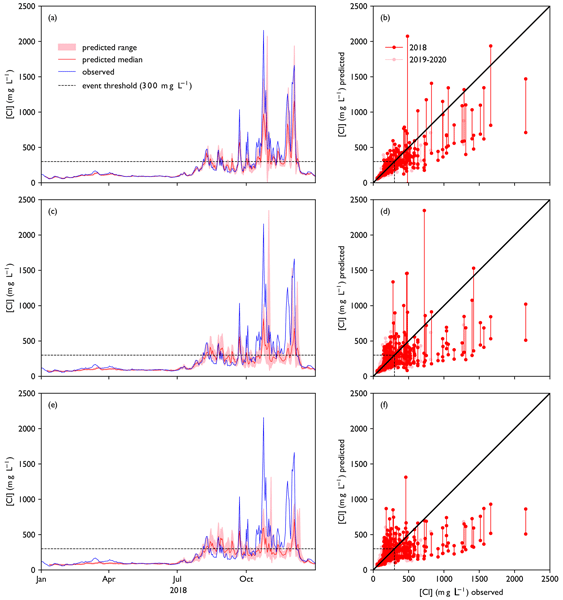
In deltas, saltwater sometimes intrudes far inland and causes problems with freshwater availability. We created a model to forecast salt concentrations at a critical location in the Rhine–Meuse delta in the Netherlands. It requires a rather small number of data to make a prediction and runs fast. It predicts the occurrence of salt concentration peaks well but underestimates the highest peaks. Its speed gives water managers more time to reduce the problems caused by salt intrusion.
Gionata Ghiggi, Kim Candolfi, Anne-Claire Billault-Roux, Régis Longchamp, Son Pham-Ba, Charlotte Weil, Remko Uijlenhoet, and Alexis Berne
Atmos. Meas. Tech., 19, 4943–4987, https://doi.org/10.5194/amt-19-4943-2026, https://doi.org/10.5194/amt-19-4943-2026, 2026
Short summary
Short summary
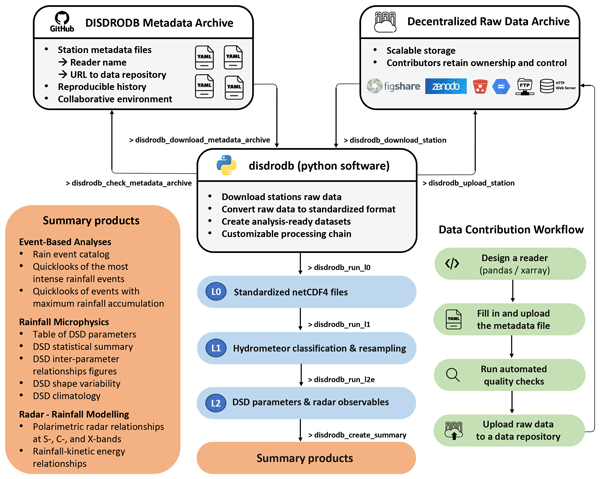
disdrodb is a Python package for standardized sharing, processing, and analysis of disdrometer observations. It makes precipitation particle size distribution datasets easier to discover, access, and download, and converts heterogeneous raw measurements into global harmonized products for remote sensing precipitation retrievals and particle size distribution studies.
Kwinten Van Weverberg, Nina Neutens, Simon De Corte, Armani Passtoors, Stephan Calderan, Nicolas Ghilain, Ricardo Reinoso-Rondinel, Maarten Reyniers, Aart Overeem, Hans Van de Vyver, Bert Van Schaeybroeck, Bart De Wit, and Remko Uijlenhoet
EGUsphere, https://doi.org/10.5194/egusphere-2026-457, https://doi.org/10.5194/egusphere-2026-457, 2026
Short summary
Short summary
Accurate rainfall estimation remains challenging. This study tested whether signals from telecommunications networks could help track rainfall alongside traditional rain gauges and weather radar. Analyzing four intense summer storms in Belgium using over 2800 microwave links, researchers found that with careful processing, these signals match or outperform standard methods, especially in cities. Integrating such data could improve predictions for urban flooding and extreme weather.
Nathalie Rombeek, Markus Hrachowitz, and Remko Uijlenhoet
Hydrol. Earth Syst. Sci., 29, 6715–6733, https://doi.org/10.5194/hess-29-6715-2025, https://doi.org/10.5194/hess-29-6715-2025, 2025
Short summary
Short summary
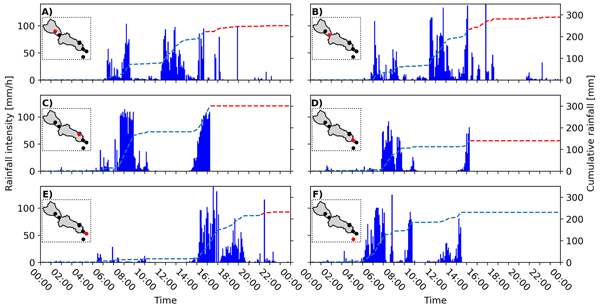
On 29 October 2024 Valencia (Spain) was struck by torrential rainfall, triggering devastating floods in this area. In this study, we quantify and describe the spatial and temporal structure of this rainfall event using personal weather stations (PWSs). These PWSs provide near real-time observations at a temporal resolution of ~5 min. This study shows the potential of PWSs for real-time rainfall monitoring and potentially flood early warning systems by complementing dedicated rain gauge networks.
Luuk D. van der Valk, Oscar K. Hartogensis, Miriam Coenders-Gerrits, Rolf W. Hut, and Remko Uijlenhoet
Hydrol. Earth Syst. Sci., 29, 6589–6606, https://doi.org/10.5194/hess-29-6589-2025, https://doi.org/10.5194/hess-29-6589-2025, 2025
Short summary
Short summary
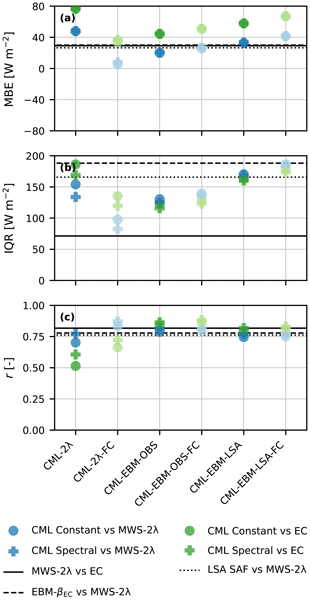
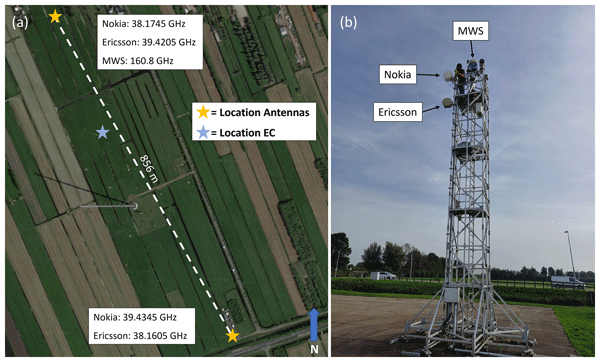
Commercial microwave links (CMLs), part of mobile phone networks, transmit comparable signals as instruments specially designed to estimate evaporation. Therefore, we investigate if CMLs could be used to estimate evaporation, even though they have not been designed for this purpose. Our results illustrate the potential of using CMLs to estimate evaporation, especially given their global coverage, but also outline some major drawbacks, often a consequence of unfavourable design choices for CMLs.
Indy van Grinsven, Meiert Willem Grootes, Remko Uijlenhoet, and Gert-Jan Steeneveld
EGUsphere, https://doi.org/10.5194/egusphere-2025-2634, https://doi.org/10.5194/egusphere-2025-2634, 2025
Short summary
Short summary
This study explores the use the signal attenuation of cellular communication networks, combined with machine learning approaches, to observe fog events. We use the McFly software package that selects the most appropriate machine leaning technique (out of ~20 available techniques) based on small samples of the input datasets. This approach is developed for a microwave link over Wageningen in The Netherlands, while in a second part of the paper the approach is upscaled to the whole country.
Luuk D. van der Valk, Oscar K. Hartogensis, Miriam Coenders-Gerrits, Rolf W. Hut, Bas Walraven, and Remko Uijlenhoet
Atmos. Meas. Tech., 18, 6143–6165, https://doi.org/10.5194/amt-18-6143-2025, https://doi.org/10.5194/amt-18-6143-2025, 2025
Short summary
Short summary
Commercial microwave links (CMLs), part of mobile phone networks, transmit comparable signals to instruments specially designed to estimate evaporation. Therefore, we investigate if CMLs could be used to estimate evaporation, even though they have not been designed for this purpose. Our results illustrate the potential for using CMLs to estimate evaporation, especially given their global coverage, but also outline some major drawbacks, often a consequence of unfavourable design choices for CMLs.
Nathalie Rombeek, Markus Hrachowitz, Arjan Droste, and Remko Uijlenhoet
Hydrol. Earth Syst. Sci., 29, 4585–4606, https://doi.org/10.5194/hess-29-4585-2025, https://doi.org/10.5194/hess-29-4585-2025, 2025
Short summary
Short summary
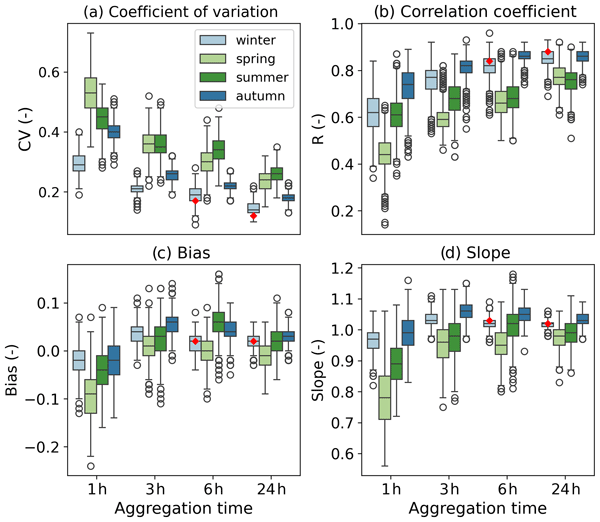
Rain gauge networks from personal weather stations (PWSs) have a network density 100 times higher than dedicated rain gauge networks in the Netherlands. However, PWSs are prone to several sources of error, as they are generally not installed and maintained according to international guidelines. This study systematically quantifies and describes the uncertainties arising from PWS rainfall estimates. In particular, the focus is on the highest rainfall accumulations.
Xuan Chen, Job Augustijn van der Werf, Arjan Droste, Miriam Coenders-Gerrits, and Remko Uijlenhoet
Hydrol. Earth Syst. Sci., 29, 3447–3480, https://doi.org/10.5194/hess-29-3447-2025, https://doi.org/10.5194/hess-29-3447-2025, 2025
Short summary
Short summary
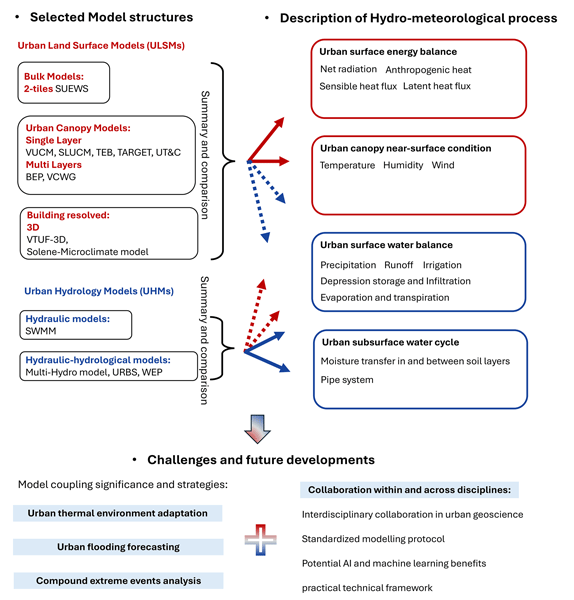
The review highlights the need to integrate urban land surface and hydrological models to better predict and manage compound climate events in cities. We find that inadequate representation of water surfaces, hydraulic systems and detailed building representations are key areas for improvement in future models. Coupled models show promise but face challenges at regional and neighbourhood scales. Interdisciplinary communication is crucial to enhance urban hydrometeorological simulations.
Abbas El Hachem, Jochen Seidel, Tess O'Hara, Roberto Villalobos Herrera, Aart Overeem, Remko Uijlenhoet, András Bárdossy, and Lotte de Vos
Hydrol. Earth Syst. Sci., 28, 4715–4731, https://doi.org/10.5194/hess-28-4715-2024, https://doi.org/10.5194/hess-28-4715-2024, 2024
Short summary
Short summary
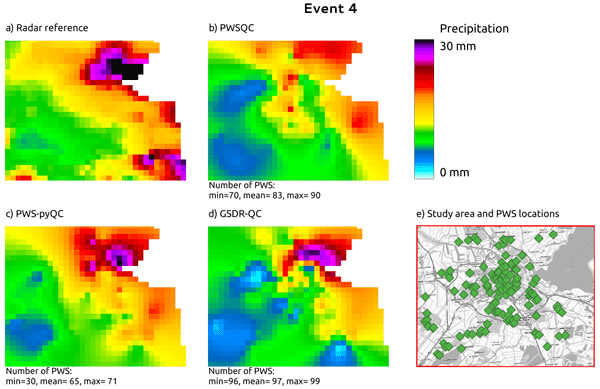
This study presents an overview of open-source quality control (QC) algorithms for rainfall data from personal weather stations (PWSs). The methodology and usability along technical and operational guidelines for using every QC algorithm are presented. All three QC algorithms are available for users to explore in the OpenSense sandbox. They were applied in a case study using PWS data from the Amsterdam region in the Netherlands. The results highlight the necessity for data quality control.
Athanasios Tsiokanos, Martine Rutten, Ruud J. van der Ent, and Remko Uijlenhoet
Hydrol. Earth Syst. Sci., 28, 3327–3345, https://doi.org/10.5194/hess-28-3327-2024, https://doi.org/10.5194/hess-28-3327-2024, 2024
Short summary
Short summary
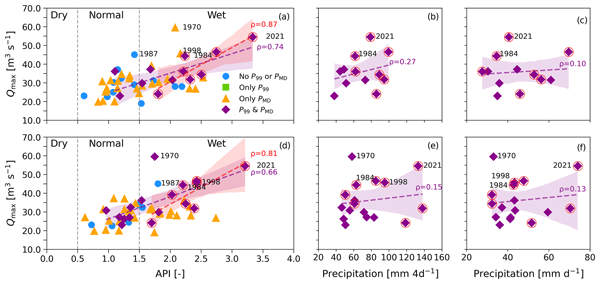
We focus on past high-flow events to find flood drivers in the Geul. We also explore flood drivers’ trends across various timescales and develop a new method to detect the main direction of a trend. Our results show that extreme 24 h precipitation alone is typically insufficient to cause floods. The combination of extreme rainfall and wet initial conditions determines the chance of flooding. Precipitation that leads to floods increases in winter, whereas no consistent trends are found in summer.
Luuk D. van der Valk, Miriam Coenders-Gerrits, Rolf W. Hut, Aart Overeem, Bas Walraven, and Remko Uijlenhoet
Atmos. Meas. Tech., 17, 2811–2832, https://doi.org/10.5194/amt-17-2811-2024, https://doi.org/10.5194/amt-17-2811-2024, 2024
Short summary
Short summary
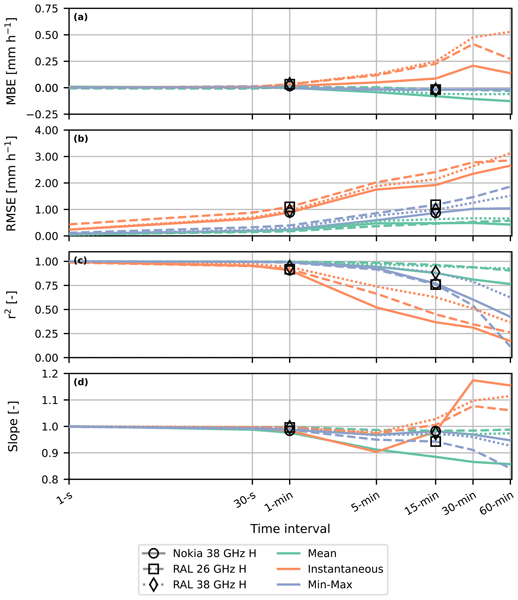
Microwave links, often part of mobile phone networks, can be used to measure rainfall along the link path by determining the signal loss caused by rainfall. We use high-frequency data of multiple microwave links to recreate commonly used sampling strategies. For time intervals up to 1 min, the influence of sampling strategies on estimated rainfall intensities is relatively little, while for intervals longer than 5–15 min, the sampling strategy can have significant influences on the estimates.
Willem J. van Verseveld, Albrecht H. Weerts, Martijn Visser, Joost Buitink, Ruben O. Imhoff, Hélène Boisgontier, Laurène Bouaziz, Dirk Eilander, Mark Hegnauer, Corine ten Velden, and Bobby Russell
Geosci. Model Dev., 17, 3199–3234, https://doi.org/10.5194/gmd-17-3199-2024, https://doi.org/10.5194/gmd-17-3199-2024, 2024
Short summary
Short summary
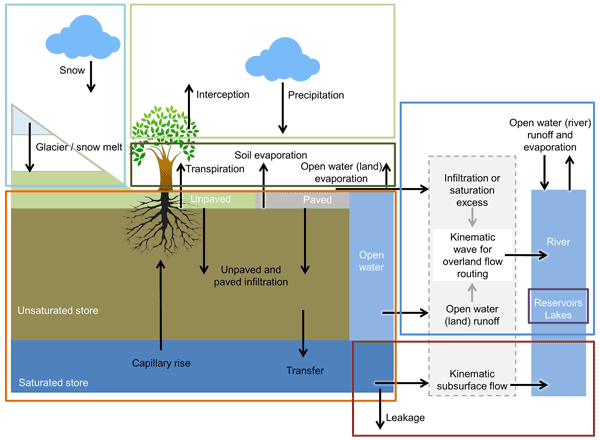
We present the wflow_sbm distributed hydrological model, recently released by Deltares, as part of the Wflow.jl open-source modelling framework in the programming language Julia. Wflow_sbm has a fast runtime, making it suitable for large-scale modelling. Wflow_sbm models can be set a priori for any catchment with the Python tool HydroMT-Wflow based on globally available datasets, which results in satisfactory to good performance (without much tuning). We show this for a number of specific cases.
Louise J. Schreyers, Tim H. M. van Emmerik, Thanh-Khiet L. Bui, Khoa L. van Thi, Bart Vermeulen, Hong-Q. Nguyen, Nicholas Wallerstein, Remko Uijlenhoet, and Martine van der Ploeg
Hydrol. Earth Syst. Sci., 28, 589–610, https://doi.org/10.5194/hess-28-589-2024, https://doi.org/10.5194/hess-28-589-2024, 2024
Short summary
Short summary
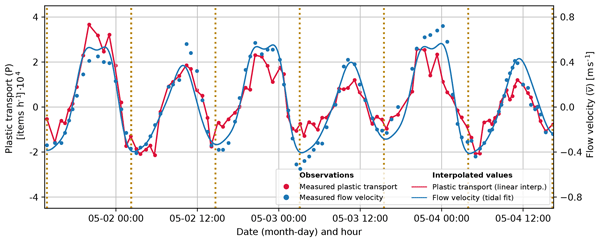
River plastic emissions into the ocean are of global concern, but the transfer dynamics between fresh water and the marine environment remain poorly understood. We developed a simple Eulerian approach to estimate the net and total plastic transport in tidal rivers. Applied to the Saigon River, Vietnam, we found that net plastic transport amounted to less than one-third of total transport, highlighting the need to better integrate tidal dynamics in plastic transport and emission models.
Linda Bogerd, Hidde Leijnse, Aart Overeem, and Remko Uijlenhoet
Atmos. Meas. Tech., 17, 247–259, https://doi.org/10.5194/amt-17-247-2024, https://doi.org/10.5194/amt-17-247-2024, 2024
Short summary
Short summary
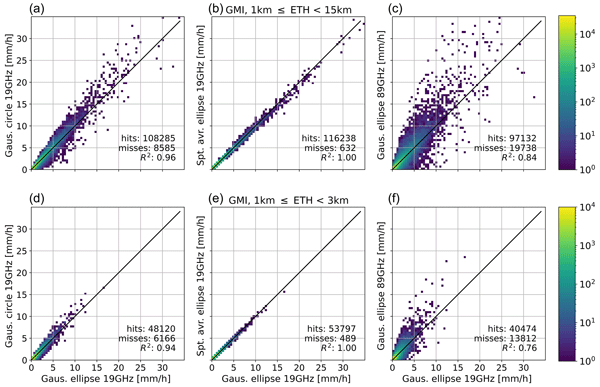
Algorithms merge satellite radiometer data from various frequency channels, each tied to a different footprint size. We studied the uncertainty associated with sampling (over the Netherlands using 4 years of data) as precipitation is highly variable in space and time by simulating ground-based data as satellite footprints. Though sampling affects precipitation estimates, it doesn’t explain all discrepancies. Overall, uncertainties in the algorithm seem more influential than how data is sampled.
Bich Ngoc Tran, Johannes van der Kwast, Solomon Seyoum, Remko Uijlenhoet, Graham Jewitt, and Marloes Mul
Hydrol. Earth Syst. Sci., 27, 4505–4528, https://doi.org/10.5194/hess-27-4505-2023, https://doi.org/10.5194/hess-27-4505-2023, 2023
Short summary
Short summary
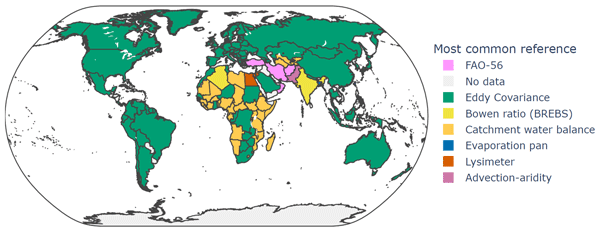
Satellite data are increasingly used to estimate evapotranspiration (ET) or the amount of water moving from plants, soils, and water bodies into the atmosphere over large areas. Uncertainties from various sources affect the accuracy of these calculations. This study reviews the methods to assess the uncertainties of such ET estimations. It provides specific recommendations for a comprehensive assessment that assists in the potential uses of these data for research, monitoring, and management.
Bas J. M. Wullems, Claudia C. Brauer, Fedor Baart, and Albrecht H. Weerts
Hydrol. Earth Syst. Sci., 27, 3823–3850, https://doi.org/10.5194/hess-27-3823-2023, https://doi.org/10.5194/hess-27-3823-2023, 2023
Short summary
Short summary
In deltas, saltwater sometimes intrudes far inland and causes problems with freshwater availability. We created a model to forecast salt concentrations at a critical location in the Rhine–Meuse delta in the Netherlands. It requires a rather small number of data to make a prediction and runs fast. It predicts the occurrence of salt concentration peaks well but underestimates the highest peaks. Its speed gives water managers more time to reduce the problems caused by salt intrusion.
Femke A. Jansen, Remko Uijlenhoet, Cor M. J. Jacobs, and Adriaan J. Teuling
Hydrol. Earth Syst. Sci., 26, 2875–2898, https://doi.org/10.5194/hess-26-2875-2022, https://doi.org/10.5194/hess-26-2875-2022, 2022
Short summary
Short summary
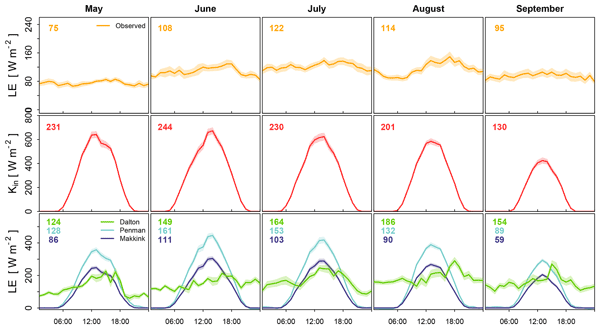
We studied the controls on open water evaporation with a focus on Lake IJssel, the Netherlands, by analysing eddy covariance observations over two summer periods at two locations at the borders of the lake. Wind speed and the vertical vapour pressure gradient can explain most of the variation in observed evaporation, which is in agreement with Dalton's model. We argue that the distinct characteristics of inland waterbodies need to be taken into account when parameterizing their evaporation.
Wagner Wolff, Aart Overeem, Hidde Leijnse, and Remko Uijlenhoet
Atmos. Meas. Tech., 15, 485–502, https://doi.org/10.5194/amt-15-485-2022, https://doi.org/10.5194/amt-15-485-2022, 2022
Short summary
Short summary
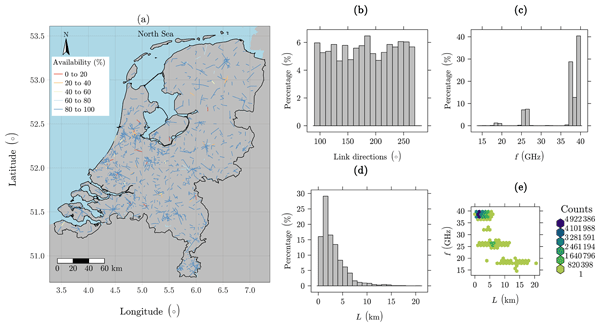
The existing infrastructure for cellular communication is promising for ground-based rainfall remote sensing. Rain-induced signal attenuation is used in dedicated algorithms for retrieving rainfall depth along commercial microwave links (CMLs) between cell phone towers. This processing is a source of many uncertainties about input data, algorithm structures, parameters, CML network, and local climate. Application of a stochastic optimization method leads to improved CML rainfall estimates.
Cited articles
Akima, H.: A Method of bivariate interpolation and smooth surface fitting for irregularly distributed data points, ACM Trans. Math. Softw., 4, 148–159, https://doi.org/10.1145/355780.355786, 1978. a
Appels, W. M.: Water redistribution at the soil surface: ponding and surface runoff in flat areas, PhD thesis, Wageningen University, https://doi.org/10.18174/250242, 2013. a
Appels, W. M., Bogaart, P. W., and van der Zee, S. E. A. T. M.: Influence of spatial variations of microtopography and infiltration on surface runoff and field scale hydrological connectivity, Adv. Water Resour., 34, 303–313, 2011. a
Bakker, A. and Bessembinder, J.: Time series transformation tool: description of the program to generate time series consistent with the KNMI'06 climate scenarios., Tech. Rep. 326, KNMI, https://cdn.knmi.nl/knmi/pdf/bibliotheek/knmipubTR/TR326.pdf (last access: 19 December 2025), 2012. a
Bartholomeus, R. P., Van der Wiel, K., Van Loon, A. F., Van Huijgevoort, M. H. J., Van Vliet, M. T. H., Mens, M., Muurling-van Geffen, S., Wanders, N., and Pot, W.: Managing water across the flood–drought spectrum: Experiences from and challenges for the Netherlands, Cambridge Prisms: Water, 1, e2, https://doi.org/10.1017/wat.2023.4, 2023. a
Beersma, J. J., Bessembinder, J., Brandsma, T., Versteeg, R., and Hakvoort, H.: Actualisation of meteo data for water management, Tech. Rep. 10, STOWA, https://cdn.knmi.nl/system/data_center_publications/files/000/069/861/original/stowa_2015_10_webversie_lr2.pdf?1495622009 (last access: 19 December 2025), 2015 (in Dutch). a, b, c, d
Berghuijs, W. R. and Slater, L. J.: Groundwater shapes North American river floods, Environ. Res. Lett., 18, 034043, https://doi.org/10.1088/1748-9326/acbecc, 2023. a, b, c
Berghuijs, W. R., Harrigan, S., Molnar, P., Slater, L. J., and Kirchner, J. W.: The relative importance of different flood‐generating mechanisms across Europe, Water Resources Res., 55, 4582–4593, https://doi.org/10.1029/2019WR024841, 2019. a, b, c
Bertola, M., Viglione, A., Lun, D., Hall, J., and Blöschl, G.: Flood trends in Europe: are changes in small and big floods different?, Hydrol. Earth Syst. Sci., 24, 1805–1822, https://doi.org/10.5194/hess-24-1805-2020, 2020. a, b
Beurton, S. and Thieken, A. H.: Seasonality of floods in Germany, Hydrol. Sci. J., 54, 62–76, https://doi.org/10.1623/hysj.54.1.62, 2009. a
Blöschl, G.: Three hypotheses on changing river flood hazards, Hydrol. Earth Syst. Sci., 26, 5015–5033, https://doi.org/10.5194/hess-26-5015-2022, 2022. a
Blöschl, G., Hall, J., Parajka, J., Perdigão, R. A. P., Merz, B., Arheimer, B., Aronica, G. T., Bilibashi, A., Bonacci, O., Borga, M., Castellarin, A., Chirico, G. B., Claps, P., Fiala, K., Frolova, N., Gorbachova, L. , Gül, A., Hannaford, J., Harrigan, S., Kireeva, M., Kiss, A. Kjeldsen, T. R., Kohnová, S., Koskela, J. J., Ledvinka, O. Macdonald, N., Mavrova-Guirguinova, M., Mediero, L. Merz, R., Molnar, P., Montanari, A., Murphy, C., Osuch, M., Ovcharuk, V., Radevski, I., Rogger, M., Salinas, J. L. Sauquet, E., Šraj, M., Szolgay, J., Viglione, A., Volpi, E., Wilson, D., Zaimi, K., and Živković, N: Changing climate shifts timing of European floods, Science, 357, 588–590, https://doi.org/10.1126/science.aan2506, 2017. a, b, c, d
Blöschl, G., Hall, J., Viglione, A., Perdigão, R. A., Parajka, J., Merz, B., Lun, D., Arheimer, B., Aronica, G. T., Bilibashi, A., Boháč, M., Bonacci, O., Borga, M., Čanjevac, I., Castellarin, A., Chirico, G. B., Claps, P., Frolova, N., Ganora, D., Gorbachova, L., Gül, A., Hannaford, J., Harrigan, S., Kireeva, M., Kiss, A., Kjeldsen, T. R., Kohnová, S., Koskela, J. J., Ledvinka, O., Macdonald, N., Mavrova-Guirguinova, M., Mediero, L., Merz, R., Molnar, P., Montanari, A., Murphy, C., Osuch, M., Ovcharuk, V., Radevski, I., Salinas, J. L., Sauquet, E., Šraj, M., Szolgay, J., Volpi, E., Wilson, D., Zaimi, K., and Živković, N.: Changing climate both increases and decreases European river floods, Nature, 573, 108–111, https://doi.org/10.1038/s41586-019-1495-6, 2019. a
Borga, M., Comiti, F., Ruin, I., and Marra, F.: Forensic analysis of flash flood response, Wiley Interdisciplinary Reviews: Water, 6, e1338, https://doi.org/10.1002/wat2.1338, 2019. a
Bouaziz, L. J. E., Aalbers, E. E., Weerts, A. H., Hegnauer, M., Buiteveld, H., Lammersen, R., Stam, J., Sprokkereef, E., Savenije, H. H. G., and Hrachowitz, M.: Ecosystem adaptation to climate change: the sensitivity of hydrological predictions to time-dynamic model parameters, Hydrol. Earth Syst. Sci., 26, 1295–1318, https://doi.org/10.5194/hess-26-1295-2022, 2022. a, b
Brauer, C. C.: Modelling rainfall-runoff processes in lowland catchments, PhD thesis, Wageningen University, https://doi.org/10.18174/296285, 2014. a
Brauer, C. C., Van der Velde, Y., Teuling, A. J., and Uijlenhoet, R.: The Hupsel Brook Catchment: Insights from Five Decades of Lowland Observations, Vadose Zone J., 17, 180056, https://doi.org/10.2136/vzj2018.03.0056, 2018. a, b, c, d
Brauer, C. C., Uijlenhoet, R., Torfs, P. J. J. F., and Teuling, A. J.: R package for WALRUS (Wageningen Lowland Runoff Simulator), Version 1, 4TU.ResearchData [software], https://doi.org/10.4121/19107734, 2022. a, b
Brunner, M. I., Swain, D. L., Wood, R. R., Willkofer, F., Done, J. M., Gilleland, E., and Ludwig, R.: An extremeness threshold determines the regional response of floods to changes in rainfall extremes, Comm. Earth Environ., 2, 173, https://doi.org/10.1038/s43247-021-00248-x, 2021. a
Buitink, J., Tsiokanos, A., Geertsma, T., ten Velden, C., Bouaziz, L., and Sperna Weiland, F.: Implications of the KNMI'23 climate scenarios for the discharge of the Rhine and Meuse, Tech. Rep. 11209265-002-ZWS-0003, Deltares, https://publications.deltares.nl/11209265_002_0003.pdf (last access: 19 December 2025), 2023. a
Burke, E., Van den Houten, G., Weerts, A., and Van Osnabrugge, B.: Modern data assimilation in operational flood forecasting systems, Stromingen, 27, 3–16, 2021 (in Dutch). a
Cao, Q., Mehran, A., Ralph, F. M., and Lettenmaier, D. P.: The role of hydrological initial conditions on atmospheric river floods in the Russian River basin, J. Hydrometeorol., 20, 1667–1686, https://doi.org/10.1175/JHM-D-19-0030.1, 2019. a
Christiansen, J. S., Thorsen, M., Clausen, T., Hansen, S., and Refsgaard, J. C.: Modelling of macropore flow and transport processes at catchment scale, J. Hydrol., 299, 136–158, https://doi.org/10.1016/j.jhydrol.2004.04.029, 2004. a
Deasy, C., Brazier, R., Heathwaite, A., and Hodgkinson, R.: Pathways of runoff and sediment transfer in small agricultural catchments, Hydrol. Processes, 23, 1349–1358, https://doi.org/10.1002/hyp.7257, 2009. a
Fischer, S., Schumann, A., and Bühler, P.: Timescale-based flood typing to estimate temporal changes in flood frequencies, Hydrol. Sci. J., 64, 1867–1892, https://doi.org/10.1080/02626667.2019.1679376, 2019. a
Garg, S. and Mishra, V.: Role of extreme precipitation and initial hydrologic conditions on floods in Godavari river basin, India, Water Resour. Res., 55, 9191–9210, https://doi.org/10.1029/2019WR025863, 2019. a
Gründemann, G. J., van de Giesen, N., Brunner, L., and van der Ent, R.: Rarest rainfall events will see the greatest relative increase in magnitude under future climate change, Commun. Earth Environ., 3, 235, https://doi.org/10.1038/s43247-022-00558-8, 2022. a
Hall, J., Arheimer, B., Borga, M., Brázdil, R., Claps, P., Kiss, A., Kjeldsen, T. R., Kriaučiūnienė, J., Kundzewicz, Z. W., Lang, M., Llasat, M. C., Macdonald, N., McIntyre, N., Mediero, L., Merz, B., Merz, R., Molnar, P., Montanari, A., Neuhold, C., Parajka, J., Perdigão, R. A. P., Plavcová, L., Rogger, M., Salinas, J. L., Sauquet, E., Schär, C., Szolgay, J., Viglione, A., and Blöschl, G.: Understanding flood regime changes in Europe: a state-of-the-art assessment, Hydrol. Earth Syst. Sci., 18, 2735–2772, https://doi.org/10.5194/hess-18-2735-2014, 2014. a
Hall, J., Arheimer, B., Aronica, G. T., Bilibashi, A., Boháč, M., Bonacci, O., Borga, M., Burlando, P., Castellarin, A., Chirico, G. B., Claps, P., Fiala, K., Gaál, L., Gorbachova, L., Gül, A., Hannaford, J., Kiss, A., Kjeldsen, T., Kohnová, S., Koskela, J. J., Macdonald, N., Mavrova-Guirguinova, M., Ledvinka, O., Mediero, L., Merz, B., Merz, R., Molnar, P., Montanari, A., Osuch, M., Parajka, J., Perdigão, R. A. P., Radevski, I., Renard, B., Rogger, M., Salinas, J. L., Sauquet, E., Šraj, M., Szolgay, J., Viglione, A., Volpi, E., Wilson, D., Zaimi, K., and Blöschl, G.: A European Flood Database: facilitating comprehensive flood research beyond administrative boundaries, Proc. IAHS, 370, 89–95, https://doi.org/10.5194/piahs-370-89-2015, 2015. a
Hansen, A., Jakobsen, R., Refsgaard, J., Højberg, A., Iversen, B., and Kjærgaard, C.: Groundwater dynamics and effect of tile drainage on water flow across the redox interface in a Danish Weichsel till area, Adv. Water Resour., 123, 23–39, https://doi.org/10.1016/j.advwatres.2018.10.022, 2019. a
Hazeleger, W., Wang, X., Severijns, C., Ştefănescu, S., Bintanja, R., Sterl, A., Wyser, K., Semmler, T., Yang, S., Van den Hurk, B., Van Noije, T., Van der Linden, E., and Van der Wiel, K.: EC-Earth V2. 2: description and validation of a new seamless earth system prediction model, Clim. Dyn., 39, 2611–2629, https://doi.org/10.1007/s00382-011-1228-5, 2012. a
Heuvelink, D.: The role of simultaneous occurrence of extreme precipitation and high groundwater levels in producing extreme discharges, Bachelor's thesis, Wageningen University, 2016. a
Heuvelink, D., Berenguer, M., Brauer, C. C., and Uijlenhoet, R.: Hydrological application of radar rainfall nowcasting in the Netherlands, Environ. Int., 136, 105431, https://doi.org/10.1016/j.envint.2019.105431, 2020. a
Jacob, D., Petersen, J., Eggert, B., Alias, A., Christensen, O. B., Bouwer, L. M., Braun, A., Colette, A., Déqué, M., Georgievski, G., Georgopoulou, E., Gobiet, A., Menut, L., Nikulin, G., Haensler , A., Hempelmann, N., Jones, C., Keuler, K., Kovats, S., Kröner, N., Kotlarski, S., Kriegsmann, A., Martin, E., Van Meijgaard, E., Moseley, C., Pfeifer, S., Preuschmann, S., Radermacher, C., Radtke, K., Rechid, D., Rounsevell, M., Samuelsson.P., Somot, S., Soussana, J.-F., Teichmann, C., Valentini, R., Vautard, R. Weber, B., and Yiou, P.: EURO-CORDEX: new high-resolution climate change projections for European impact research, Regional Environmental Change, 14, 563–578, https://doi.org/10.1007/s10113-013-0499-2, 2014. a
Jiang, S., Bevacqua, E., and Zscheischler, J.: River flooding mechanisms and their changes in Europe revealed by explainable machine learning, Hydrol. Earth Syst. Sci., 26, 6339–6359, https://doi.org/10.5194/hess-26-6339-2022, 2022. a
Jiang, S., Tarasova, L., Yu, G., and Zscheischler, J.: Compounding effects in flood drivers challenge estimates of extreme river floods, Science Advances, 10, eadl4005, https://doi.org/10.1126/sciadv.adl4005, 2024. a
King, K., Fausey, N., and Williams, M.: Effect of subsurface drainage on streamflow in an agricultural headwater watershed, J. Hydrol., 519, 438–445, https://doi.org/10.1016/j.jhydrol.2014.07.035, 2014. a
KNMI, 2024: KNMI: Map archive per month: Monthly averages/sums, normal values and anomalies, https://www.knmi.nl/nederland-nu/klimatologie/geografische-overzichten/archief/maand, last access: 3 March 2025. a
Lenderink, G., Van den Hurk, B. J. J. M., Klein Tank, A. M. G., Van Oldenborgh, G., Van Meijgaard, E., De Vries, H., and Beersma, J.: Preparing local climate change scenarios for the Netherlands using resampling of climate model output, Environ. Res. Lett., 9, 115008, https://doi.org/10.1088/1748-9326/9/11/115008, 2014. a
Levenberg, K.: A method for the solution of certain non-linear problems in least squares, Quarterly of Applied Mathematics, 2, 164–168, 1944. a
Liu, J., Feng, S., Gu, X., Zhang, Y., Beck, H. E., Zhang, J., and Yan, S.: Global changes in floods and their drivers, J. Hydrol., 614, 128553, https://doi.org/10.1016/j.jhydrol.2022.128553, 2022. a, b
Loos, R. E.: Development of WALRUS models for FEWS Vecht, Tech. rep., Water Board Vechtstromen, 2015 (in Dutch). a
Manola, I., van den Hurk, B., De Moel, H., and Aerts, J. C. J. H.: Future extreme precipitation intensities based on a historic event, Hydrol. Earth Syst. Sci., 22, 3777–3788, https://doi.org/10.5194/hess-22-3777-2018, 2018. a
Marquardt, D. W.: An algorithm for least-squares estimation of nonlinear parameters, Journal of the Society for Industrial and Applied Mathematics, 11, 431–441, 1963. a
McKay, M. D., Beckman, R. J., and Conover, W. J.: A comparison of three methods for selecting values of input variables in the analysis of output from a computer code, Technometrics, 21, 239–245, https://doi.org/10.2307/1271432, 1979. a
Meijers, M.: Drought indices: an analysis of low flow in lowland catchments before and after climate change, Bachelor's thesis, Wageningen University, 2017. a
Merz, R. and Blöschl, G.: A process typology of regional floods, Water Resources Res., 39, https://doi.org/10.1029/2002WR001952, 2003. a
Moekestorm, B., Altayeb, M., Van Deijl, D., Terink, W., and Van den Eertwegh, G.: New functionalities for the Drought Portal: standardized indices for soil moisture and streamflow drought, Stromingen, 31, 22–36, 2025. a
O'Neill, B. C., Tebaldi, C., van Vuuren, D. P., Eyring, V., Friedlingstein, P., Hurtt, G., Knutti, R., Kriegler, E., Lamarque, J.-F., Lowe, J., Meehl, G. A., Moss, R., Riahi, K., and Sanderson, B. M.: The Scenario Model Intercomparison Project (ScenarioMIP) for CMIP6, Geosci. Model Dev., 9, 3461–3482, https://doi.org/10.5194/gmd-9-3461-2016, 2016. a
Rathore, S. S., Svyatsky, D. S., Coon, E. T., Son, K., and Painter, S. L.: Modeling the effects of artificial drainage on agriculture-dominated watersheds using a fully distributed integrated hydrology model, Water Resour. Res., 60, e2023WR035993, https://doi.org/10.1029/2023WR035993, 2024. a
Sawicz, K., Wagener, T., Sivapalan, M., Troch, P. A., and Carrillo, G.: Catchment classification: empirical analysis of hydrologic similarity based on catchment function in the eastern USA, Hydrol. Earth Syst. Sci., 15, 2895–2911, https://doi.org/10.5194/hess-15-2895-2011, 2011. a
Schaap, P., Van der Velde, Y., De Louw, P., and Bartholomeus, H.: DTM resolution controls the accuracy of estimating surface runoff indicators in flat, lowland landscapes, Hydrol. Process., 38, e15173, https://doi.org/10.1002/hyp.15173, 2024. a
Sun, Y., Bao, W., Valk, K., Brauer, C., Sumihar, J., and Weerts, A.: Improving forecast skill of lowland hydrological models using ensemble Kalman filter and unscented Kalman filter, Water Resour. Res., 56, e2020WR027468, https://doi.org/10.1029/2020WR027468, 2020. a
Tarasova, L., Basso, S., and Merz, R.: Transformation of generation processes from small runoff events to large floods, Geophys. Res. Lett., 47, e2020GL090547, https://doi.org/10.1029/2020GL090547, 2020a. a, b
Tarasova, L., Basso, S., Wendi, D., Viglione, A., Kumar, R., and Merz, R.: A process-based framework to characterize and classify runoff events: The event typology of Germany, Water Resources Res., 56, e2019WR026951, https://doi.org/10.1029/2019WR026951, 2020b. a, b
Tarasova, L., Lun, D., Merz, R., Blöschl, G., Basso, S., Bertola, M., Miniussi, A., Rakovec, O., Samaniego, L., Thober, S., and Kumar, R.: Shifts in flood generation processes exacerbate regional flood anomalies in Europe, Commun. Earth Environ., 4, 49, https://doi.org/10.1038/s43247-023-00714-8, 2023. a, b
Taylor, K. E., Stouffer, R. J., and Meehl, G. A.: An overview of CMIP5 and the experiment design, B. Am. Meteorol. Soc., 93, 485–498, https://doi.org/10.1175/BAMS-D-11-00094.1, 2012. a, b
Tiemeyer, B., Moussa, R., Lennartz, B., and Voltz, M.: MHYDAS-DRAIN: A spatially distributed model for small, artificially drained lowland catchments, Ecol. Modell., 209, 2–20, 2007. a
TNO: Dinoloket: Data and Information of the Dutch Subsurface, TNO [data set], http://www.dinoloket.nl, last access: 19 December 2025 (in Dutch). a
Tsiokanos, A., Rutten, M., van der Ent, R. J., and Uijlenhoet, R.: Flood drivers and trends: a case study of the Geul River catchment (the Netherlands) over the past half century, Hydrol. Earth Syst. Sci., 28, 3327–3345, https://doi.org/10.5194/hess-28-3327-2024, 2024. a
Van der Velde, Y., Rozemeijer, J. C., de Rooij, G. H., van Geer, F. C., and Broers, H. P.: Field scale measurements for separation of catchment discharge into flow route contributions, Vadose Zone J., 9, 25–35, https://doi.org/10.2136/vzj2008.0141, 2010. a
Van der Wiel, K., Beersma, J., Van den Brink, H., Krikken, F., Selten, F., Severijns, C., Sterl, A., Van Meijgaard, E., Reerink, T., and Van Dorland, R.: KNMI'23 climate scenarios for the Netherlands: storyline scenarios of regional climate change, Earth's Future, 12, e2023EF003983, https://doi.org/10.1029/2023EF003983, 2024. a
Van Dorland, R., Beersma, J., Bessembinder, J., Bloemendaal, N., van den Brink, H., Brotons Blanes, M., Drijfhout, S., Groenland, R., Haarsma, R., Homan, C., Keizer, I., Krikken, F., Le Bars, D., Lenderink, G., van Meijgaard, E., Meirink, J. F., Overbeek, B., Reerink, T., Selten, F., Severijns, C., Siegmund, P., Sterl, A., de Valk, C., van Velthoven, P., de Vries, H., van Weele, M., Wichers Schreur, B., and van der Wiel, K.: KNMI National Climate Scenarios 2023 for the Netherlands, Tech. Rep. WR-23-02, KNMI, https://cdn.knmi.nl/system/data_center_publications/files/000/071/902/original/KNMI23_climate_scenarios_scientific_report_WR23-02.pdf?1710489430 (last access: 19 December 2025), 2023. a, b, c
Van Meijgaard, E., Van Ulft, L. H., Van de Berg, W. J., Bosveld, F. C., Van den Hurk, B. J. J. M., Lenderink, G., and Siebesma, A. P.: The KNMI regional atmospheric climate model RACMO, version 2.1, KNMI, De Bilt, the Netherlands, https://cdn.knmi.nl/system/data_center_publications/files/000/068/251/original/tr302_racmo2v1.pdf?1495621093 (last access: 19 December 2025), 2008. a
Villarini, G.: On the seasonality of flooding across the continental United States, Adv. Water Resour., 87, 80–91, https://doi.org/10.1016/j.advwatres.2015.11.009, 2016. a
Wannasin, C., Brauer, C., Uijlenhoet, R., van Verseveld, W., and Weerts, A.: Daily flow simulation in Thailand Part II: Unraveling effects of reservoir operation, J. Hydrol.: Reg. Stud., 34, 100792, https://doi.org/10.1016/j.ejrh.2021.100792, 2021. a
Wasko, C. and Sharma, A.: Global assessment of flood and storm extremes with increased temperatures, Sci. Rep., 7, 1–8, https://doi.org/10.1038/s41598-017-08481-1, 2017. a
Short summary
In lowland catchments, flood severity is determined by both the amount of rain and the groundwater depth prior to the rain event. We investigated the trade-off between these two factors and how this affects peaks in the river discharge, for both the current and future climate. We found that with climate change floods will increase in winter and spring, but decrease in fall. The number and severity of floods will increase. This can help water managers to design climate robust water management.
In lowland catchments, flood severity is determined by both the amount of rain and the...


