
Articles | Volume 30, issue 3
https://doi.org/10.5194/hess-30-779-2026
© Author(s) 2026. This work is distributed under
the Creative Commons Attribution 4.0 License.
the Creative Commons Attribution 4.0 License.
https://doi.org/10.5194/hess-30-779-2026
© Author(s) 2026. This work is distributed under
the Creative Commons Attribution 4.0 License.
the Creative Commons Attribution 4.0 License.
Research article
| 
10 Feb 2026
Research article |
| 10 Feb 2026
| 10 Feb 2026
Uncertainty, temporal variability, and influencing factors of empirical streamflow sensitivities
Sebastian Gnann
CORRESPONDING AUTHOR

Faculty of Environment and Natural Resources, University of Freiburg, Freiburg, 79098, Germany
Bailey J. Anderson
WSL Institute for Snow and Avalanche Research SLF, Davos Dorf, Switzerland
Institute for Atmospheric and Climate Science, ETH Zurich, Zurich, Switzerland
Climate Change, Extremes and Natural Hazards in Alpine Regions Research Center CERC, Davos Dorf, Switzerland
Markus Weiler
Faculty of Environment and Natural Resources, University of Freiburg, Freiburg, 79098, Germany
Related authors
Robert Reinecke, Tanjila Akhter, Annemarie Bäthge, Ricarda Dietrich, Sebastian Gnann, Simon N. Gosling, Danielle Grogan, Andreas Hartmann, Stefan Kollet, Rohini Kumar, Richard Lammers, Sida Liu, Yan Liu, Nils Moosdorf, Bibi Naz, Sara Nazari, Chibuike Orazulike, Yadu Pokhrel, Jacob Schewe, Mikhail Smilovic, Maryna Strokal, Wim Thiery, Yoshihide Wada, Shan Zuidema, and Inge de Graaf
Geosci. Model Dev., 19, 523–542, https://doi.org/10.5194/gmd-19-523-2026, https://doi.org/10.5194/gmd-19-523-2026, 2026
Short summary
Short summary
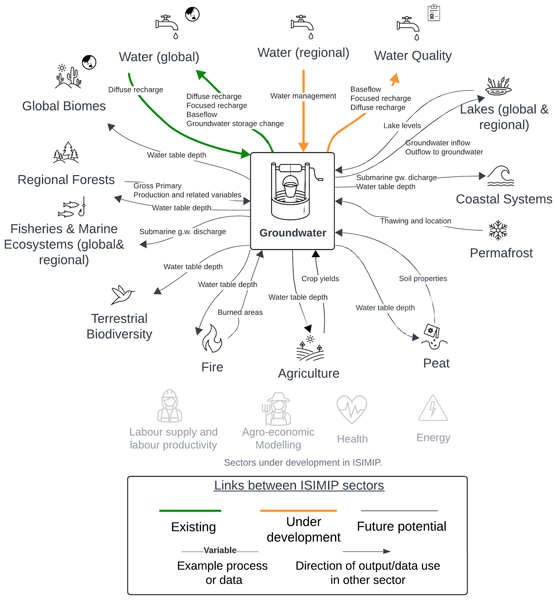
Here we describe a collaborative effort to improve predictions of how climate change will affect groundwater. The ISIMIP (The Inter-Sectoral Impact Model Intercomparison Project) groundwater sector combines multiple global groundwater models to capture a range of possible outcomes and reduce uncertainty. Initial comparisons reveal significant differences between models in key metrics like water table depth and recharge rates, highlighting the need for structured model intercomparisons.
Thiago V. M. do Nascimento, Julia Rudlang, Sebastian Gnann, Jan Seibert, Markus Hrachowitz, and Fabrizio Fenicia
Hydrol. Earth Syst. Sci., 29, 7173–7200, https://doi.org/10.5194/hess-29-7173-2025, https://doi.org/10.5194/hess-29-7173-2025, 2025
Short summary
Short summary
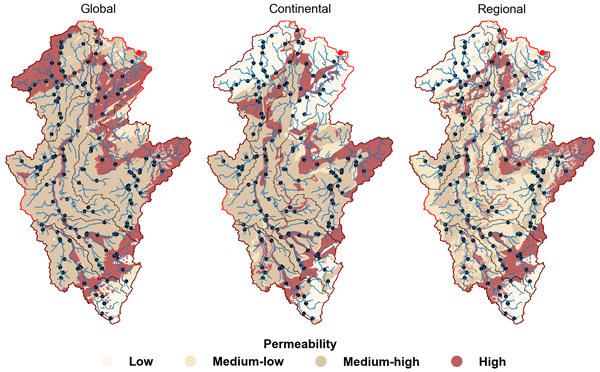
We show that geological maps with varying levels of detail may influence the identification of geology–streamflow relationships across European catchments at multiple scales. At the large scale, controls varied between basins, with no map consistently superior. At the intermediate and small scales, however, higher geological detail consistently strengthened correlations, particularly for baseflow signatures, with the regional map highlighting controls more consistent with process understanding.
Jasmin Tesch, Kathrin Kühnhammer, Delon Wagner, Andreas Christen, Carsten Dormann, Julian Frey, Rüdiger Grote, Teja Kattenborn, Markus Sulzer, Ulrike Wallrabe, Markus Weiler, Christiane Werner, Samaneh Baghbani, Julian Brzozon, Laura Maria Comella, Lea Dedden, Stefanie Dumberger, Yasmina Frey, Matthias Gassilloud, Timo Gerach, Anna Göritz, Simon Haberstroh, Johannes Klüppel, Luis Kremer, Jürgen Kreuzwieser, Hojin Lee, Joachim Maack, Julian Müller, Oswald Prucker, Sanam K. Rajak, Jürgen Rühe, Stefan J. Rupitsch, Helmer Schack-Kirchner, Christian Scharinger, Uttunga Shinde, Till Steinmann, Clara Stock, and Josef Strack
Geosci. Instrum. Method. Data Syst., 15, 253–272, https://doi.org/10.5194/gi-15-253-2026, https://doi.org/10.5194/gi-15-253-2026, 2026
Short summary
Short summary
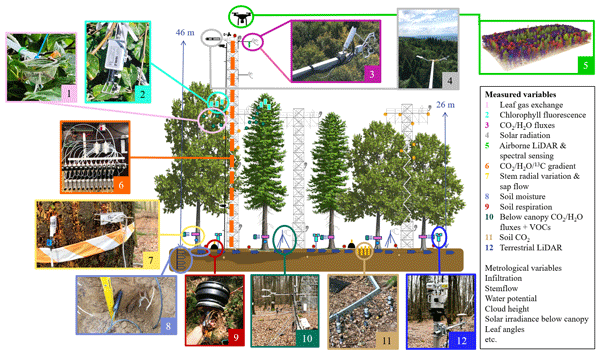
In the ECOSENSE forest, we developed a robust infrastructure for distributed forest sensing. Reliable power supply, stable network connection, and smart data collection systems enable the operation of hundreds of sensors under challenging conditions. By detailing the infrastructure design and implementation, we provide a transferable blueprint for building complex monitoring sites that support high-resolution, long-term ecosystem observations.
Lea Dedden and Markus Weiler
EGUsphere, https://doi.org/10.5194/egusphere-2026-4703, https://doi.org/10.5194/egusphere-2026-4703, 2026
Short summary
Short summary
Using a dense 400 sensor network over 2.5 years, we studied how tree types influence forest soil moisture. We found soil moisture varies largely in space and time. In pure tree plots, the moisture variability peaks during intermediate wetness – when vegetation influence is strongest – but remains low during dry and wet phases. Consistently wet and dry zones indicate that spatial pattern are temporally stable. This work highlights small-scale spatiotemporal variability of forest water fluxes.
Jonas Pyschik, Veronica Cordero, Jakob Wilk, Veronika Lechner, Emanuel Thoenes, Stefan Achleitner, Bernhard Kohl, Markus Weiler, and Stefan Hergarten
EGUsphere, https://doi.org/10.5194/egusphere-2026-4469, https://doi.org/10.5194/egusphere-2026-4469, 2026
Short summary
Short summary
When it rains, much of the water reaching a stream has been stored in the soil for a long time, but why was unclear. We sprinkled two forested slopes with labelled water and used electrical imaging to watch it move. Only a small share moved quickly to the slope base; most of the outflow was older water pushed out by the pressure of the new rain. Much of the new water stayed in the topsoil and was released weeks later, affecting how soils carry nutrients and pollutants to streams.
Emanuel Thoenes, Theresa Blume, Markus Weiler, Bernhard Kohl, Luisa Hopp, and Stefan Achleitner
Hydrol. Earth Syst. Sci., 30, 4405–4436, https://doi.org/10.5194/hess-30-4405-2026, https://doi.org/10.5194/hess-30-4405-2026, 2026
Short summary
Short summary
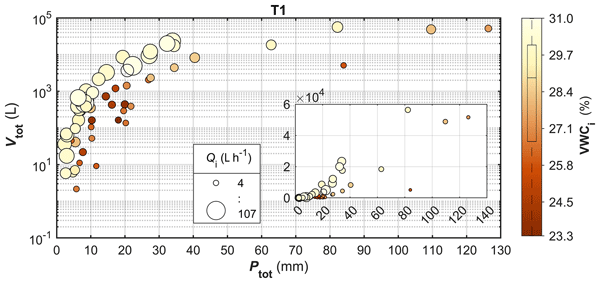
Subsurface stormflow (SSF) is a key runoff mechanism in upland environments. The analysis of SSF at two trenched hillslopes showed that SSF volume was controlled by total rainfall and initial wetness. Peakflow depended on rainfall amount, with initial wetness and rainfall intensity being important for small and large events, respectively. The rate at which SSF increased was linked to rainfall intensity and amount.
Heinke Paulsen and Markus Weiler
Hydrol. Earth Syst. Sci., 30, 4305–4319, https://doi.org/10.5194/hess-30-4305-2026, https://doi.org/10.5194/hess-30-4305-2026, 2026
Short summary
Short summary
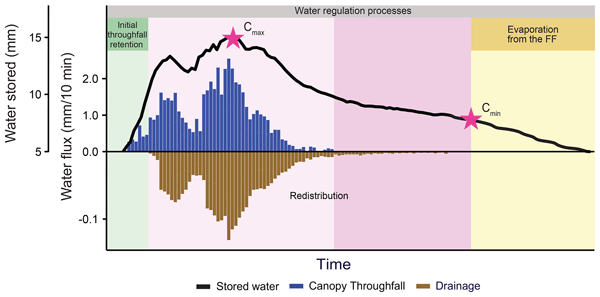
Using 12 Forest floor (FF) lysimeters at three beech‑dominated sites, we recorded 1570 rain events and measured throughfall, drainage, and evaporation. Initial retention depended on pre‑event moisture, not litter thickness. Low‑intensity, long‑duration rains filled the FF more efficiently than brief, intense storms. Evaporation was low and consistent across sites, showing the FF protects the soil. Spatial data revealed frequent water redistribution, creating heterogeneous flow paths.
Markus Weiler, Julia Krumm, Ingo Haag, Hannes Leistert, Max Schmit, Andreas Steinbrich, and Andreas Hänsler
Nat. Hazards Earth Syst. Sci., 26, 2673–2689, https://doi.org/10.5194/nhess-26-2673-2026, https://doi.org/10.5194/nhess-26-2673-2026, 2026
Short summary
Short summary
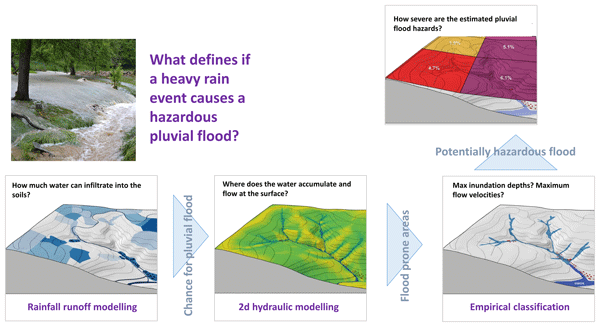
Pluvial (flash) floods, caused by intense local rainfall, result in surface runoff and overland flow, making them different from fluvial floods. A new Pluvial Flood Index (PFI) combines precipitation, hydrological, and hydrodynamic processes to assess surface flooding hazards. The PFI, based on flood hazard areas, helps forecast flash floods and supports real-time warning systems, aiding municipal decision-making, preparedness, and planning.
Lea Dedden and Markus Weiler
Hydrol. Earth Syst. Sci., 30, 3245–3261, https://doi.org/10.5194/hess-30-3245-2026, https://doi.org/10.5194/hess-30-3245-2026, 2026
Short summary
Short summary
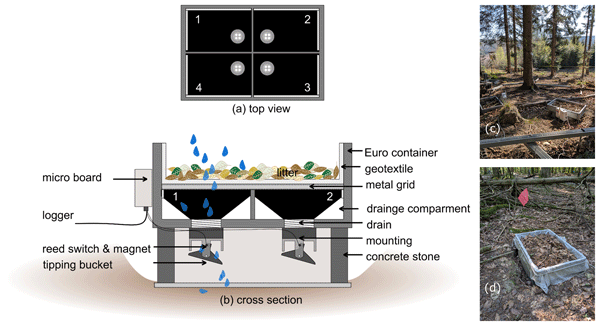
Throughfall in forests varies in space and time creating distinct patterns. We developed a novel throughfall monitoring approach for continuous, automated measurement that features 60 self-built and cost effective throughfall samplers. Collected data show the potential of the approach to capture throughfall variability at small distances, among and within rainfall events and between different trees species.
Hannes Leistert, Andreas Hänsler, Max Schmit, Andreas Steinbrich, and Markus Weiler
Geosci. Model Dev., 19, 2023–2037, https://doi.org/10.5194/gmd-19-2023-2026, https://doi.org/10.5194/gmd-19-2023-2026, 2026
Short summary
Short summary
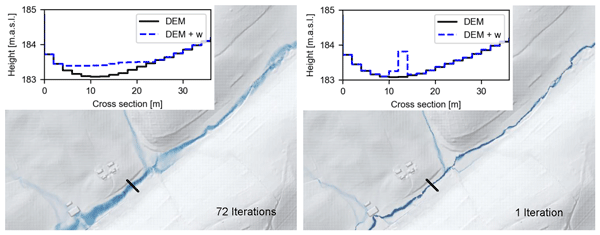
The newly developed model AccRo (Accumulation-based Runoff and Pluvial Flood Estimation Tool) is a computationally efficient method to derive key parameters for estimating pluvial flood hazards. Here, we compare results of AccRo with the data of two hydrodynamic models for different cases. We find that AccRo is able to represent the simulations of the hydrodynamic models in high quality, but with much lower computational effort, making it a valuable tool for assessing pluvial flood hazards.
Hassane Moutahir, Markus Sulzer, Ralf Kiese, Andreas Christen, Markus Weiler, Lea Dedden, Julian Brzozon, Pia Labenski, Prajwal Khanal, Ladislav Šigut, and Rüdiger Grote
Biogeosciences, 23, 1719–1738, https://doi.org/10.5194/bg-23-1719-2026, https://doi.org/10.5194/bg-23-1719-2026, 2026
Short summary
Short summary
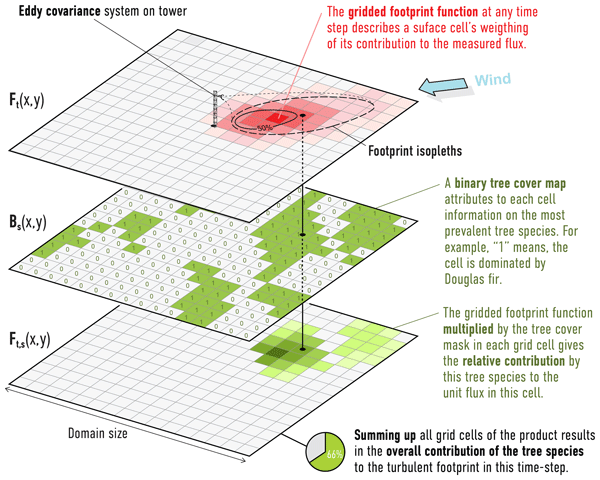
Eddy covariance (EC) data are vital for studying carbon and water fluxes but often mask species-specific responses in mixed forests. At a Black Forest site with beech and Douglas fir, we combined EC data with ecosystem modeling to separate species contributions. Results show EC fluxes reflect species abundance within flux footprints, though responses vary seasonally. Accounting for these differences is key for gap-filling, accurate budgets, and understanding mixed forests’ climate resilience.
Eduardo Muñoz-Castro, Bailey J. Anderson, Paul C. Astagneau, Daniel L. Swain, Pablo A. Mendoza, and Manuela I. Brunner
Hydrol. Earth Syst. Sci., 30, 825–848, https://doi.org/10.5194/hess-30-825-2026, https://doi.org/10.5194/hess-30-825-2026, 2026
Short summary
Short summary
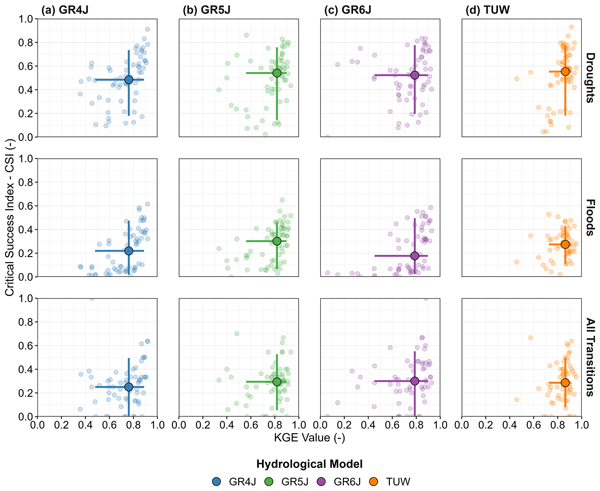
Flood impacts can be enhanced when they occur after droughts, yet the effectiveness of hydrological models in simulating these events remains unclear. Here, we calibrated four conceptual hydrological models across 63 catchments in Chile and Switzerland to assess their ability to detect streamflow extremes and their transitions. We show that drought-to-flood transitions are generally poorly captured, especially in semi-arid high-mountain catchments than in humid low-elevation ones.
Jonas Pyschik and Markus Weiler
Hydrol. Earth Syst. Sci., 30, 485–501, https://doi.org/10.5194/hess-30-485-2026, https://doi.org/10.5194/hess-30-485-2026, 2026
Short summary
Short summary
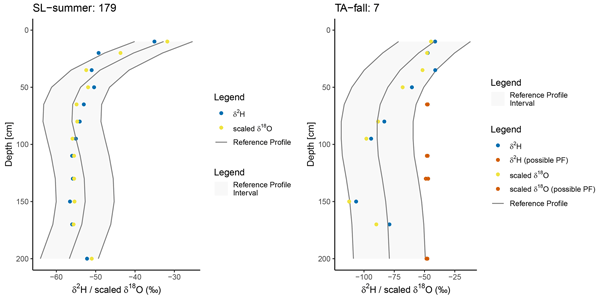
This study introduces a new method of detecting how water moves quickly through certain paths in soil, bypassing the usual, slower flow. By analysing natural water markers in soil samples taken at different depths, we identified unusual flow patterns. Our method is simple and non-invasive, and can be used to cover large areas. This helps us to better understand how water travels through the ground, which is important for managing water resources and protecting the environment.
Robert Reinecke, Tanjila Akhter, Annemarie Bäthge, Ricarda Dietrich, Sebastian Gnann, Simon N. Gosling, Danielle Grogan, Andreas Hartmann, Stefan Kollet, Rohini Kumar, Richard Lammers, Sida Liu, Yan Liu, Nils Moosdorf, Bibi Naz, Sara Nazari, Chibuike Orazulike, Yadu Pokhrel, Jacob Schewe, Mikhail Smilovic, Maryna Strokal, Wim Thiery, Yoshihide Wada, Shan Zuidema, and Inge de Graaf
Geosci. Model Dev., 19, 523–542, https://doi.org/10.5194/gmd-19-523-2026, https://doi.org/10.5194/gmd-19-523-2026, 2026
Short summary
Short summary
Here we describe a collaborative effort to improve predictions of how climate change will affect groundwater. The ISIMIP (The Inter-Sectoral Impact Model Intercomparison Project) groundwater sector combines multiple global groundwater models to capture a range of possible outcomes and reduce uncertainty. Initial comparisons reveal significant differences between models in key metrics like water table depth and recharge rates, highlighting the need for structured model intercomparisons.
Thiago V. M. do Nascimento, Julia Rudlang, Sebastian Gnann, Jan Seibert, Markus Hrachowitz, and Fabrizio Fenicia
Hydrol. Earth Syst. Sci., 29, 7173–7200, https://doi.org/10.5194/hess-29-7173-2025, https://doi.org/10.5194/hess-29-7173-2025, 2025
Short summary
Short summary
We show that geological maps with varying levels of detail may influence the identification of geology–streamflow relationships across European catchments at multiple scales. At the large scale, controls varied between basins, with no map consistently superior. At the intermediate and small scales, however, higher geological detail consistently strengthened correlations, particularly for baseflow signatures, with the regional map highlighting controls more consistent with process understanding.
Bailey J. Anderson, Eduardo Muñoz-Castro, Lena M. Tallaksen, Alessia Matano, Jonas Götte, Rachael Armitage, Eugene Magee, and Manuela I. Brunner
Hydrol. Earth Syst. Sci., 29, 6069–6092, https://doi.org/10.5194/hess-29-6069-2025, https://doi.org/10.5194/hess-29-6069-2025, 2025
Short summary
Short summary
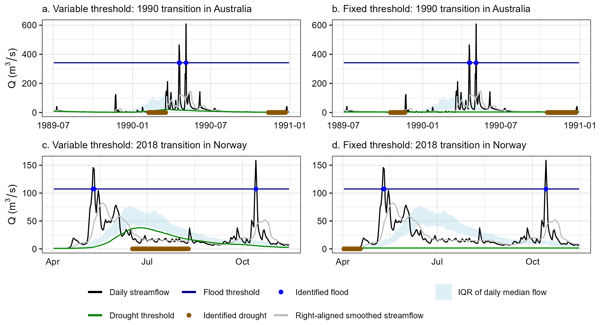
When floods happen during or shortly after droughts, the impacts of each of the events can be magnified. In hydrological research, defining these events represents a challenging and important task in the process of understanding where and why they occur. We have used real-word examples to address some of these challenges and show different approaches influence outcomes. We make suggestions on when to use which approach and outline some pitfalls of which researchers should be aware.
Theresa Blume, Peter Chifflard, Stefan Achleitner, Andreas Hartmann, Stefan Hergarten, Luisa Hopp, Bernhard Kohl, Florian Leese, Ilja van Meerveld, Christian Reinhardt-Imjela, and Markus Weiler
EGUsphere, https://doi.org/10.5194/egusphere-2025-4424, https://doi.org/10.5194/egusphere-2025-4424, 2025
Short summary
Short summary
Subsurface stormflow (SSF) is one of the least studied and therefore least understood runoff generation processes because detecting and quantifying SSF is extremely challenging. We present an ongoing concerted experimental effort to systematically investigate SSF across four catchments using a variety of methods covering different spatial scales. Centerpiece of this effort is the construction of 12 large trenches to capture and monitor SSF.
Heinke Paulsen and Markus Weiler
Hydrol. Earth Syst. Sci., 29, 2309–2319, https://doi.org/10.5194/hess-29-2309-2025, https://doi.org/10.5194/hess-29-2309-2025, 2025
Short summary
Short summary
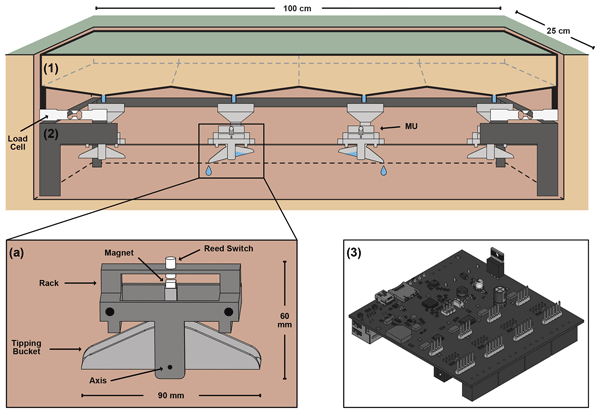
This technical note describes the development of a weighing forest floor grid lysimeter. The device is needed to investigate the dynamics of the water balance components of the organic layer in forests, quantifying precipitation, drainage, evaporation, and storage. We designed a setup that can be easily rebuilt and that is cost-effective, which allows for customized applications. Performance metrics from laboratory results and initial field data are presented.
Wouter R. Berghuijs, Ross A. Woods, Bailey J. Anderson, Anna Luisa Hemshorn de Sánchez, and Markus Hrachowitz
Hydrol. Earth Syst. Sci., 29, 1319–1333, https://doi.org/10.5194/hess-29-1319-2025, https://doi.org/10.5194/hess-29-1319-2025, 2025
Short summary
Short summary
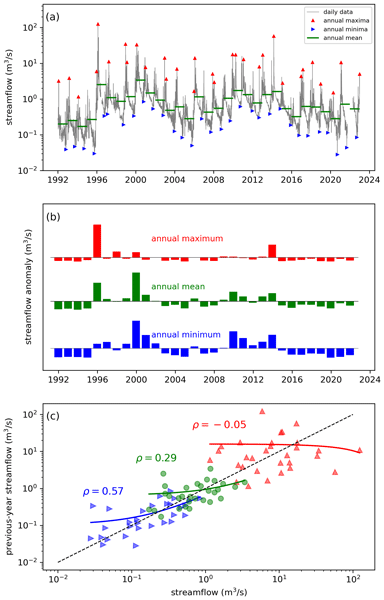
Water balances of catchments will often strongly depend on their state in the recent past, but such memory effects may persist at annual timescales. We use global data sets to show that annual memory is typically absent in precipitation but strong in terrestrial water stores and also present in evaporation and streamflow (including low flows and floods). Our experiments show that hysteretic models provide behaviour that is consistent with these observed memory behaviours.
Jonas Pyschik, Stefan Seeger, Barbara Herbstritt, and Markus Weiler
Hydrol. Earth Syst. Sci., 29, 525–534, https://doi.org/10.5194/hess-29-525-2025, https://doi.org/10.5194/hess-29-525-2025, 2025
Short summary
Short summary
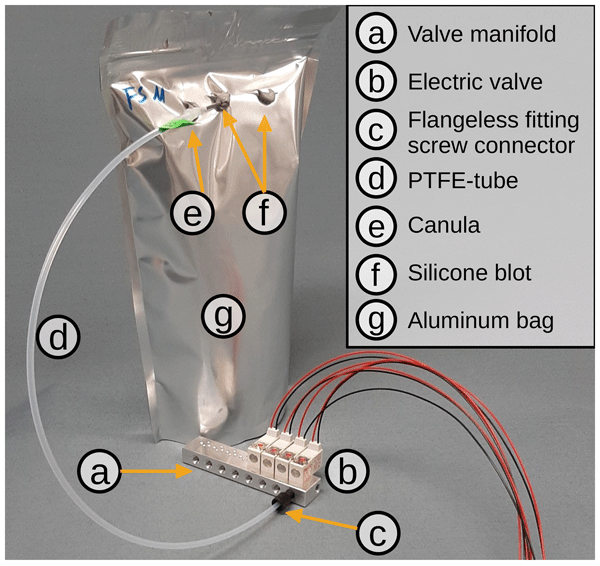
We developed a device (named VapAuSa) that automates stable water isotope analysis. Stable water isotopes are a natural tracer that many researchers use to investigate water (re-)distribution processes in environmental systems. VapAuSa helps to analyse such environmental samples by automating a formerly tedious manual process, allowing for higher sample throughput. This enables larger sampling campaigns, as more samples can be processed before reaching their limited storage time.
Robin Schwemmle, Hannes Leistert, Andreas Steinbrich, and Markus Weiler
Geosci. Model Dev., 17, 5249–5262, https://doi.org/10.5194/gmd-17-5249-2024, https://doi.org/10.5194/gmd-17-5249-2024, 2024
Short summary
Short summary
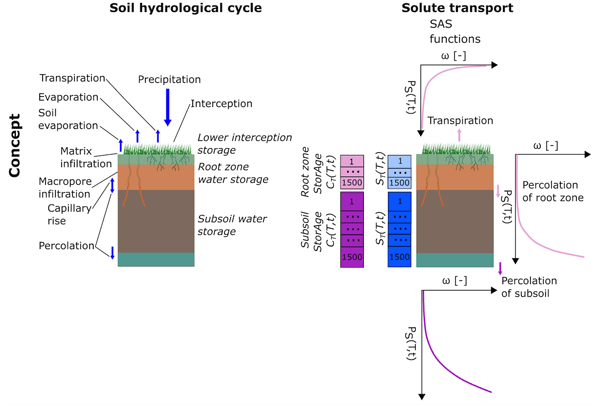
The new process-based hydrological toolbox model, RoGeR (https://roger.readthedocs.io/), can be used to estimate the components of the hydrological cycle and the related travel times of pollutants through parts of the hydrological cycle. These estimations may contribute to effective water resources management. This paper presents the toolbox concept and provides a simple example of providing estimations to water resources management.
Bailey J. Anderson, Manuela I. Brunner, Louise J. Slater, and Simon J. Dadson
Hydrol. Earth Syst. Sci., 28, 1567–1583, https://doi.org/10.5194/hess-28-1567-2024, https://doi.org/10.5194/hess-28-1567-2024, 2024
Short summary
Short summary
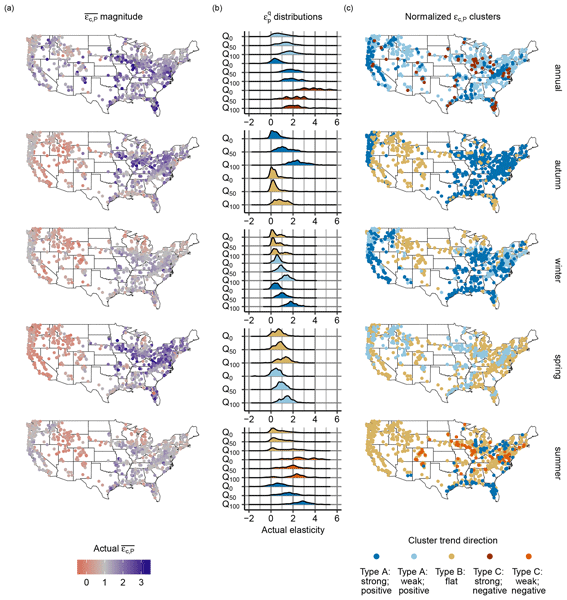
Elasticityrefers to how much the amount of water in a river changes with precipitation. We usually calculate this using average streamflow values; however, the amount of water within rivers is also dependent on stored water sources. Here, we look at how elasticity varies across the streamflow distribution and show that not only do low and high streamflows respond differently to precipitation change, but also these differences vary with water storage availability.
Barbara Herbstritt, Benjamin Gralher, Stefan Seeger, Michael Rinderer, and Markus Weiler
Hydrol. Earth Syst. Sci., 27, 3701–3718, https://doi.org/10.5194/hess-27-3701-2023, https://doi.org/10.5194/hess-27-3701-2023, 2023
Short summary
Short summary
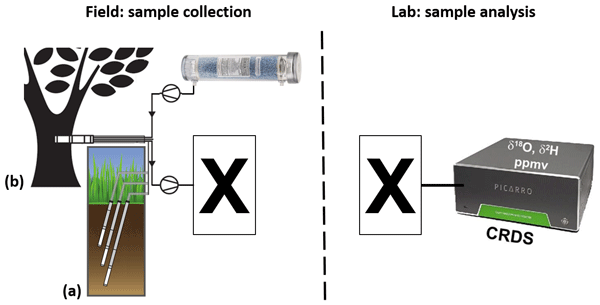
We present a method to collect water vapor samples into bags in the field without an in-field analyser, followed by isotope analysis in the lab. This new method resolves even fine-scaled natural isotope variations. It combines low-cost and lightweight components for maximum spatial and temporal flexibility regarding environmental setups. Hence, it allows for sampling even in terrains that are rather difficult to access, enabling future extended isotope datasets in soil sciences and ecohydrology.
Stefan Seeger and Markus Weiler
Hydrol. Earth Syst. Sci., 27, 3393–3404, https://doi.org/10.5194/hess-27-3393-2023, https://doi.org/10.5194/hess-27-3393-2023, 2023
Short summary
Short summary
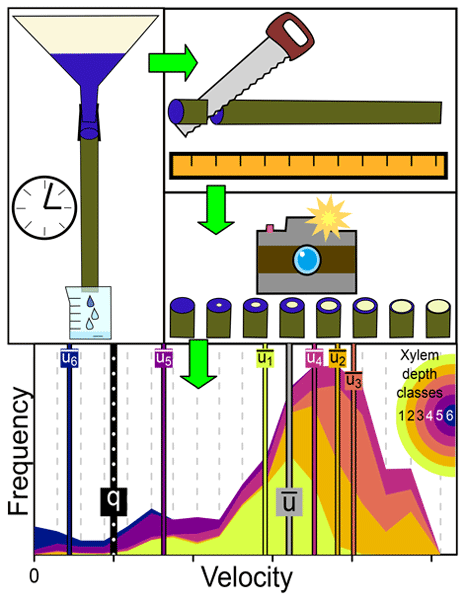
This study proposes a low-budget method to quantify the radial distribution of water transport velocities within trees at a high spatial resolution. We observed a wide spread of water transport velocities within a tree stem section, which were on average 3 times faster than the flux velocity. The distribution of transport velocities has implications for studies that use water isotopic signatures to study root water uptake and usually assume uniform or even implicitly infinite velocities.
Andreas Hänsler and Markus Weiler
Hydrol. Earth Syst. Sci., 26, 5069–5084, https://doi.org/10.5194/hess-26-5069-2022, https://doi.org/10.5194/hess-26-5069-2022, 2022
Short summary
Short summary
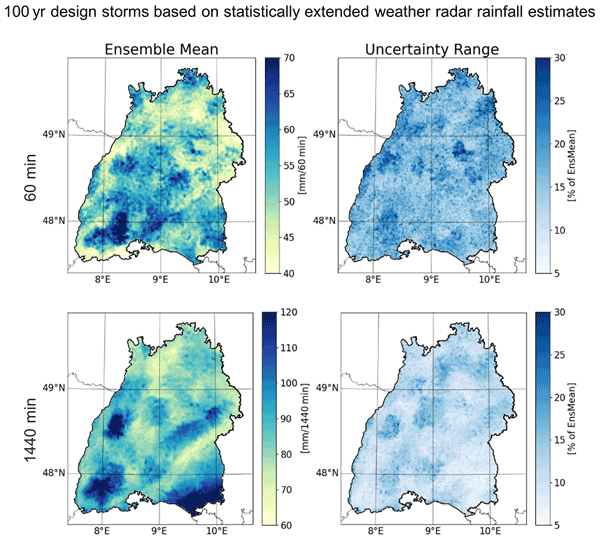
Spatially explicit quantification of design storms is essential for flood risk assessment and planning. However, available datasets are mainly based on spatially interpolated station-based design storms. Since the spatial interpolation of the data inherits a large potential for uncertainty, we develop an approach to be able to derive spatially explicit design storms on the basis of weather radar data. We find that our approach leads to an improved spatial representation of design storms.
Anne Hartmann, Markus Weiler, Konrad Greinwald, and Theresa Blume
Hydrol. Earth Syst. Sci., 26, 4953–4974, https://doi.org/10.5194/hess-26-4953-2022, https://doi.org/10.5194/hess-26-4953-2022, 2022
Short summary
Short summary
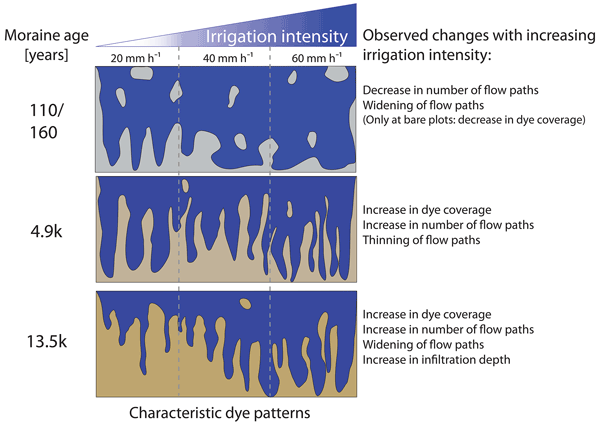
Analyzing the impact of soil age and rainfall intensity on vertical subsurface flow paths in calcareous soils, with a special focus on preferential flow occurrence, shows how water flow paths are linked to the organization of evolving landscapes. The observed increase in preferential flow occurrence with increasing moraine age provides important but rare data for a proper representation of hydrological processes within the feedback cycle of the hydro-pedo-geomorphological system.
Nils Hinrich Kaplan, Theresa Blume, and Markus Weiler
Hydrol. Earth Syst. Sci., 26, 2671–2696, https://doi.org/10.5194/hess-26-2671-2022, https://doi.org/10.5194/hess-26-2671-2022, 2022
Short summary
Short summary
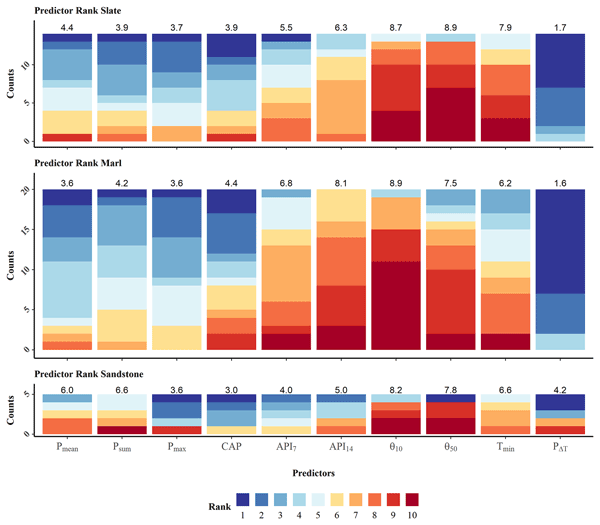
This study is analyses how characteristics of precipitation events and soil moisture and temperature dynamics during these events can be used to model the associated streamflow responses in intermittent streams. The models are used to identify differences between the dominant controls of streamflow intermittency in three distinct geologies of the Attert catchment, Luxembourg. Overall, soil moisture was found to be the most important control of intermittent streamflow in all geologies.
Thomas Lees, Marcus Buechel, Bailey Anderson, Louise Slater, Steven Reece, Gemma Coxon, and Simon J. Dadson
Hydrol. Earth Syst. Sci., 25, 5517–5534, https://doi.org/10.5194/hess-25-5517-2021, https://doi.org/10.5194/hess-25-5517-2021, 2021
Short summary
Short summary
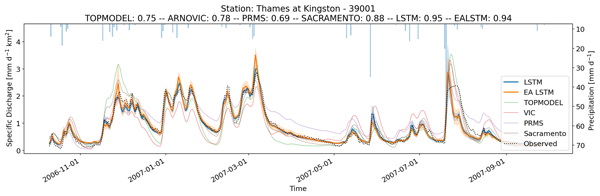
We used deep learning (DL) models to simulate the amount of water moving through a river channel (discharge) based on the rainfall, temperature and potential evaporation in the previous days. We tested the DL models on catchments across Great Britain finding that the model can accurately simulate hydrological systems across a variety of catchment conditions. Ultimately, the model struggled most in areas where there is chalky bedrock and where human influence on the catchment is large.
Cited articles
Addor, N., Newman, A. J., Mizukami, N., and Clark, M. P.: The CAMELS data set: catchment attributes and meteorology for large-sample studies, Hydrol. Earth Syst. Sci., 21, 5293–5313, https://doi.org/10.5194/hess-21-5293-2017, 2017.
Addor, N., Nearing, G., Prieto, C., Newman, A. J., Le Vine, N., and Clark, M. P.: A Ranking of Hydrological Signatures Based on Their Predictability in Space, Water Resour. Res., 54, 8792–8812, https://doi.org/10.1029/2018WR022606, 2018.
Almagro, A., Meira Neto, A. A., Vergopolan, N., Roy, T., Troch, P. A., and Oliveira, P. T. S.: The Drivers of Hydrologic Behavior in Brazil: Insights From a Catchment Classification, Water Resour. Res., 60, e2024WR037212, https://doi.org/10.1029/2024WR037212, 2024.
Anderson, B. J., Slater, L. J., Dadson, S. J., Blum, A. G., and Prosdocimi, I.: Statistical Attribution of the Influence of Urban and Tree Cover Change on Streamflow: A Comparison of Large Sample Statistical Approaches, Water Resour. Res., 58, e2021WR030742, https://doi.org/10.1029/2021WR030742, 2022.
Anderson, B. J., Brunner, M. I., Slater, L. J., and Dadson, S. J.: Elasticity curves describe streamflow sensitivity to precipitation across the entire flow distribution, Hydrol. Earth Syst. Sci., 28, 1567–1583, https://doi.org/10.5194/hess-28-1567-2024, 2024.
Anderson, B. J., Slater, L. J., Rapson, J., Brunner, M. I., Dadson, S. J., Yin, J., and Buechel, M.: Stationarity Assumptions in Streamflow Sensitivity to Precipitation May Bias Future Projections, Earths Future, 13, e2025EF006188, https://doi.org/10.1029/2025EF006188, 2025.
Andréassian, V., Coron, L., Lerat, J., and Le Moine, N.: Climate elasticity of streamflow revisited – an elasticity index based on long-term hydrometeorological records, Hydrol. Earth Syst. Sci., 20, 4503–4524, https://doi.org/10.5194/hess-20-4503-2016, 2016.
Andréassian, V., Guimarães, G. M., Lerat, J., and de Lavenne, A.: Streamflow elasticity as a function of aridity, EGUsphere [preprint], https://doi.org/10.5194/egusphere-2025-4912, 2025a.
Andréassian, V., Guimarães, G. M., de Lavenne, A., and Lerat, J.: Time shift between precipitation and evaporation has more impact on annual streamflow variability than the elasticity of potential evaporation, Hydrol. Earth Syst. Sci., 29, 5477–5491, https://doi.org/10.5194/hess-29-5477-2025, 2025b.
Awasthi, C., Vogel, R. M., and Sankarasubramanian, A.: Regionalization of Climate Elasticity Preserves Dooge's Complementary Relationship, Water Resour. Res., 60, e2023WR036606, https://doi.org/10.1029/2023WR036606, 2024.
Ban, Z., Das, T., Cayan, D., Xiao, M., and Lettenmaier, D. P.: Understanding the Asymmetry of Annual Streamflow Responses to Seasonal Warming in the Western United States, Water Resour. Res., 56, e2020WR027158, https://doi.org/10.1029/2020WR027158, 2020.
Berghuijs, W. R., Hartmann, A., and Woods, R. A.: Streamflow sensitivity to water storage changes across Europe, Geophys. Res. Lett., 43, 1980–1987, https://doi.org/10.1002/2016GL067927, 2016.
Berghuijs, W. R., Larsen, J. R., van Emmerik, T. H. M., and Woods, R. A.: A Global Assessment of Runoff Sensitivity to Changes in Precipitation, Potential Evaporation, and Other Factors, Water Resour. Res., 53, 8475–8486, https://doi.org/10.1002/2017WR021593, 2017.
Budyko, M. I.: Climate and life, No. 18; International Geophysics Series, Academic Press, ISBN 9780080954530, 1974.
Chiew, F. H. S.: Estimation of rainfall elasticity of streamflow in Australia, Hydrol. Sci. J., 51, 613–625, https://doi.org/10.1623/hysj.51.4.613, 2006.
Chiew, F. H. S., Potter, N. J., Vaze, J., Petheram, C., Zhang, L., Teng, J., and Post, D. A.: Observed hydrologic non-stationarity in far south-eastern Australia: implications for modelling and prediction, Stoch. Environ. Res. Risk Assess., 28, 3–15, https://doi.org/10.1007/s00477-013-0755-5, 2014.
Clerc-Schwarzenbach, F., Selleri, G., Neri, M., Toth, E., van Meerveld, I., and Seibert, J.: Large-sample hydrology – a few camels or a whole caravan?, Hydrol. Earth Syst. Sci., 28, 4219–4237, https://doi.org/10.5194/hess-28-4219-2024, 2024.
Coxon, G., Addor, N., Bloomfield, J. P., Freer, J., Fry, M., Hannaford, J., Howden, N. J. K., Lane, R., Lewis, M., Robinson, E. L., Wagener, T., and Woods, R.: CAMELS-GB: hydrometeorological time series and landscape attributes for 671 catchments in Great Britain, Earth Syst. Sci. Data, 12, 2459–2483, https://doi.org/10.5194/essd-12-2459-2020, 2020a.
Coxon, G., Addor, N., Bloomfield, J. P., Freer, J., Fry, M., Hannaford, J., Howden, N. J. K., Lane, R., Lewis, M., Robinson, E. L., Wagener, T., and Woods, R.: Catchment attributes and hydro-meteorological timeseries for 671 catchments across Great Britain (CAMELS-GB), UKCEH [data set], https://doi.org/10.5285/8344e4f3-d2ea-44f5-8afa-86d2987543a9, 2020b.
de Lavenne, A., Andréassian, V., Crochemore, L., Lindström, G., and Arheimer, B.: Quantifying multi-year hydrological memory with Catchment Forgetting Curves, Hydrol. Earth Syst. Sci., 26, 2715–2732, https://doi.org/10.5194/hess-26-2715-2022, 2022.
Dolich, A., Espinoza, E. A., Ebeling, P., Guse, B., Götte, J., Hassler, S., Hauffe, C., Kiesel, J., Heidbüchel, I., Mälicke, M., Müller-Thomy, H., Stölzle, M., Tarasova, L., and Loritz, R.: CAMELS-DE: hydrometeorological time series and attributes for 1582 catchments in Germany (1.0.0), Zenodo [data set], https://doi.org/10.5281/zenodo.13837553, 2024.
Dooge, J. C.: Sensitivity of runoff to climate change: A Hortonian approach, Bulletin of the American Meteorological Society, 73, 2013–2024, 1992.
Dormann, C. F., Elith, J., Bacher, S., Buchmann, C., Carl, G., Carré, G., Marquéz, J. R. G., Gruber, B., Lafourcade, B., Leitão, P. J., Münkemüller, T., McClean, C., Osborne, P. E., Reineking, B., Schröder, B., Skidmore, A. K., Zurell, D., and Lautenbach, S.: Collinearity: a review of methods to deal with it and a simulation study evaluating their performance, Ecography, 36, 27–46, https://doi.org/10.1111/j.1600-0587.2012.07348.x, 2013.
Fowler, K., Zhang, Z., and Hou, X.: CAMELS-AUS v2: updated hydrometeorological timeseries and landscape attributes for an enlarged set of catchments in Australia (2.03), Zenodo [data set], https://doi.org/10.5281/zenodo.14289037, 2024.
Fowler, K. J. A., Zhang, Z., and Hou, X.: CAMELS-AUS v2: updated hydrometeorological time series and landscape attributes for an enlarged set of catchments in Australia, Earth Syst. Sci. Data, 17, 4079–4095, https://doi.org/10.5194/essd-17-4079-2025, 2025.
Fu, G., Charles, S. P., and Chiew, F. H. S.: A two-parameter climate elasticity of streamflow index to assess climate change effects on annual streamflow, Water Resour. Res., 43, https://doi.org/10.1029/2007WR005890, 2007.
Gnann, S.: SebastianGnann/Streamflow_sensitivities: First release (v1.0.0), Zenodo [code], https://doi.org/10.5281/zenodo.18302902, 2026.
Harman, C. J., Troch, P. A., and Sivapalan, M.: Functional model of water balance variability at the catchment scale: 2. Elasticity of fast and slow runoff components to precipitation change in the continental United States, Water Resour. Res., 47, 1–12, https://doi.org/10.1029/2010WR009656, 2011.
Harrigan, S., Hannaford, J., Muchan, K., and Marsh, T. J.: Designation and trend analysis of the updated UK Benchmark Network of river flow stations: the UKBN2 dataset, Hydrol. Res., 49, 552–567, https://doi.org/10.2166/nh.2017.058, 2018.
Institute of Hydrology: Low flow studies report No. 1: Research report, Wallingford, UK: Institute of Hydrology, 1980.
Kratzert, F., Nearing, G., Addor, N., Erickson, T., Gauch, M., Gilon, O., Gudmundsson, L., Hassidim, A., Klotz, D., Nevo, S., Shalev, G., and Matias, Y.: Caravan – A global community dataset for large-sample hydrology, Sci. Data, 10, 61, https://doi.org/10.1038/s41597-023-01975-w, 2023.
Kratzert, F., Nearing, G., Addor, N., Erickson, T., Gauch, M., Gilon, O., Gudmundsson, L., Hassidim, A., Klotz, D., Nevo, S., Shalev, G., and Matias, Y.: Caravan – A global community dataset for large-sample hydrology (1.6), Zenodo [data set], https://doi.org/10.5281/zenodo.7944025, 2025.
Lebecherel, L., Andréassian, V., and Perrin, C.: On regionalizing the Turc–Mezentsev water balance formula, Water Resour. Res., 49, 7508–7517, https://doi.org/10.1002/2013WR013575, 2013.
Lehner, F., Wood, A. W., Vano, J. A., Lawrence, D. M., Clark, M. P., and Mankin, J. S.: The potential to reduce uncertainty in regional runoff projections from climate models, Nat. Clim. Change, 9, 926–933, https://doi.org/10.1038/s41558-019-0639-x, 2019.
Loritz, R., Dolich, A., Acuña Espinoza, E., Ebeling, P., Guse, B., Götte, J., Hassler, S. K., Hauffe, C., Heidbüchel, I., Kiesel, J., Mälicke, M., Müller-Thomy, H., Stölzle, M., and Tarasova, L.: CAMELS-DE: hydro-meteorological time series and attributes for 1582 catchments in Germany, Earth Syst. Sci. Data, 16, 5625–5642, https://doi.org/10.5194/essd-16-5625-2024, 2024.
Matanó, A., Hamed, R., Brunner, M. I., Barendrecht, M. H., and Van Loon, A. F.: Drought decreases annual streamflow response to precipitation, especially in arid regions, Hydrol. Earth Syst. Sci., 29, 2749–2764, https://doi.org/10.5194/hess-29-2749-2025, 2025.
McMillan, H. K., Krueger, T., and Freer, J. E.: Benchmarking observational uncertainties for hydrology: Rainfall, river discharge and water quality, Hydrol. Process., 26, 4078–4111, https://doi.org/10.1002/hyp.9384, 2012.
McMillan, H. K., Westerberg, I. K., and Krueger, T.: Hydrological data uncertainty and its implications, WIREs Water, 5, e1319, https://doi.org/10.1002/wat2.1319, 2018.
Milly, P. C. D. and Dunne, K. A.: Potential evapotranspiration and continental drying, Nat. Clim. Change, 6, 946–949, https://doi.org/10.1038/nclimate3046, 2016.
Němec, J. and Schaake, J.: Sensitivity of water resource systems to climate variation, Hydrol. Sci. J., 27, 327–343, https://doi.org/10.1080/02626668209491113, 1982.
Newman, A. J., Clark, M. P., Sampson, K., Wood, A., Hay, L. E., Bock, A., Viger, R. J., Blodgett, D., Brekke, L., Arnold, J. R., Hopson, T., and Duan, Q.: Development of a large-sample watershed-scale hydrometeorological data set for the contiguous USA: data set characteristics and assessment of regional variability in hydrologic model performance, Hydrol. Earth Syst. Sci., 19, 209–223, https://doi.org/10.5194/hess-19-209-2015, 2015.
Newman, A. J., Sampson, K., Clark, M., Bock, A., Viger, R., Blodgett, D., Addor, N., and Mizukami, M: CAMELS: Catchment Attributes and MEteorology for Large-sample Studies (1.2), Zenodo [data set], https://doi.org/10.5065/D6MW2F4D, 2022.
Nijssen, B., O'Donnell, G. M., Hamlet, A. F., and Lettenmaier, D. P.: Hydrologic Sensitivity of Global Rivers to Climate Change, Clim. Change, 50, 143–175, https://doi.org/10.1023/A:1010616428763, 2001.
Nijzink, R. C. and Schymanski, S. J.: Vegetation optimality explains the convergence of catchments on the Budyko curve, Hydrol. Earth Syst. Sci., 26, 6289–6309, https://doi.org/10.5194/hess-26-6289-2022, 2022.
Peterson, T. J., Saft, M., Peel, M. C., and John, A.: Watersheds may not recover from drought, Science, 372, 745–749, https://doi.org/10.1126/science.abd5085, 2021.
Roderick, M. L. and Farquhar, G. D.: A simple framework for relating variations in runoff to variations in climatic conditions and catchment properties, Water Resour. Res., 47, 1–11, https://doi.org/10.1029/2010WR009826, 2011.
Saft, M., Western, A. W., Zhang, L., Peel, M. C., and Potter, N. J.: The influence of multiyear drought on the annual rainfall-runoff relationship: An Australian perspective, Water Resour. Res., 51, 2444–2463, https://doi.org/10.1002/2014WR015348, 2015.
Sankarasubramanian, A., Vogel, R. M., and Limbrunner, J. F.: Climate elasticity of streamflow in the United States, Water Resour. Res., 37, 1771–1781, https://doi.org/10.1029/2000WR900330, 2001.
Sawicz, K., Wagener, T., Sivapalan, M., Troch, P. A., and Carrillo, G.: Catchment classification: empirical analysis of hydrologic similarity based on catchment function in the eastern USA, Hydrol. Earth Syst. Sci., 15, 2895–2911, https://doi.org/10.5194/hess-15-2895-2011, 2011.
Schaake, J. C.: From climate to flow., John Wiley and Sons Inc., New York, 177–206, ISBN 978-0-471-61838-6, 1990.
Sen, P. K.: Estimates of the Regression Coefficient Based on Kendall's Tau, J. Am. Stat. Assoc., 63, 1379–1389, https://doi.org/10.1080/01621459.1968.10480934, 1968.
Steinschneider, S., Yang, Y.-C. E., and Brown, C.: Panel regression techniques for identifying impacts of anthropogenic landscape change on hydrologic response, Water Resour. Res., 49, 7874–7886, https://doi.org/10.1002/2013WR013818, 2013.
Tang, Y., Tang, Q., Wang, Z., Chiew, F. H. S., Zhang, X., and Xiao, H.: Different Precipitation Elasticity of Runoff for Precipitation Increase and Decrease at Watershed Scale, J. Geophys. Res. Atmospheres, 124, 11932–11943, https://doi.org/10.1029/2018JD030129, 2019.
Tang, Y., Tang, Q., and Zhang, L.: Derivation of Interannual Climate Elasticity of Streamflow, Water Resour. Res., 56, e2020WR027703, https://doi.org/10.1029/2020WR027703, 2020.
Turner, S., Hannaford, J., Barker, L. J., Suman, G., Killeen, A., Armitage, R., Chan, W., Davies, H., Griffin, A., Kumar, A., Dixon, H., Albuquerque, M. T. D., Almeida Ribeiro, N., Alvarez-Garreton, C., Amoussou, E., Arheimer, B., Asano, Y., Berezowski, T., Bodian, A., Boutaghane, H., Capell, R., Dakhaoui, H., Daòhelka, J., Do, H. X., Ekkawatpanit, C., El Khalki, E. M., Fleig, A. K., Fonseca, R., Giraldo-Osorio, J. D., Goula, A. B. T., Hanel, M., Horton, S., Kan, C., Kingston, D. G., Laaha, G., Laugesen, R., Lopes, W., Mager, S., Rachdane, M., Markonis, Y., Medeiro, L., Midgley, G., Murphy, C., O'Connor, P., Pedersen, A. I., Pham, H. T., Piniewski, M., Renard, B., Saidi, M. E., Schmocker-Fackel, P., Stahl, K., Thyer, M., Toucher, M., Tramblay, Y., Uusikivi, J., Venegas-Cordero, N., Visessri, S., Watson, A., Westra, S., and Whitfield, P. H.: ROBIN: Reference observatory of basins for international hydrological climate change detection, Sci. Data, 12, 654, https://doi.org/10.1038/s41597-025-04907-y, 2025.
Wagener, T., Reinecke, R., and Pianosi, F.: On the evaluation of climate change impact models, WIREs Clim. Change, 13, e772, https://doi.org/10.1002/wcc.772, 2022.
Weiler, M., Gnann, S., and Stahl, K.: Streamflow sensitivity regimes of alpine catchments: seasonal relationships with elevation, temperature, and glacier cover, Environ. Res. Lett., 20, 074068, https://doi.org/10.1088/1748-9326/ade26c, 2025.
Woods, R. A.: Analytical model of seasonal climate impacts on snow hydrology: Continuous snowpacks, Adv. Water Resour., 32, 1465–1481, https://doi.org/10.1016/j.advwatres.2009.06.011, 2009.
Xiao, M., Gao, M., Vogel, R. M., and Lettenmaier, D. P.: Runoff and Evapotranspiration Elasticities in the Western United States: Are They Consistent With Dooge's Complementary Relationship?, Water Resour. Res., 56, e2019WR026719, https://doi.org/10.1029/2019WR026719, 2020.
Zhang, L., Dawes, W. R., and Walker, G. R.: Response of mean annual evapotranspiration to vegetation changes at catchment scale, Water Resour. Res., 37, 701–708, https://doi.org/10.1029/2000WR900325, 2001.
Zhang, Y., Viglione, A., and Blöschl, G.: Temporal Scaling of Streamflow Elasticity to Precipitation: A Global Analysis, Water Resour. Res., 58, e2021WR030601, https://doi.org/10.1029/2021WR030601, 2022.
Zhang, Y., Zheng, H., Zhang, X., Leung, L. R., Liu, C., Zheng, C., Guo, Y., Chiew, F. H. S., Post, D., Kong, D., Beck, H. E., Li, C., and Blöschl, G.: Future global streamflow declines are probably more severe than previously estimated, Nat. Water, 1, https://doi.org/10.1038/s44221-023-00030-7, 2023.
Zhou, S., Yu, B., Huang, Y., and Wang, G.: The complementary relationship and generation of the Budyko functions, Geophys. Res. Lett., 42, 1781–1790, https://doi.org/10.1002/2015GL063511, 2015.
Short summary
The extent to which streamflow varies in response to variability in precipitation and potential evaporation is essential for understanding climate change impacts on water resources. This so-called streamflow sensitivity is often estimated directly from observational data, but the robustness of these estimates remains unclear. Through systematic examination of existing approaches, we highlight uncertainties inherent in all approaches and discuss their origins.
The extent to which streamflow varies in response to variability in precipitation and potential...


