
the Creative Commons Attribution 4.0 License.
the Creative Commons Attribution 4.0 License.
 | 05 Nov 2026
Dam-regulated flow fragmentation and sand-mining-driven threshold shifts shorten the Mekong–Tonle Sap reverse-flow season
Khosro Morovati
Hongling Zhao

Related authors
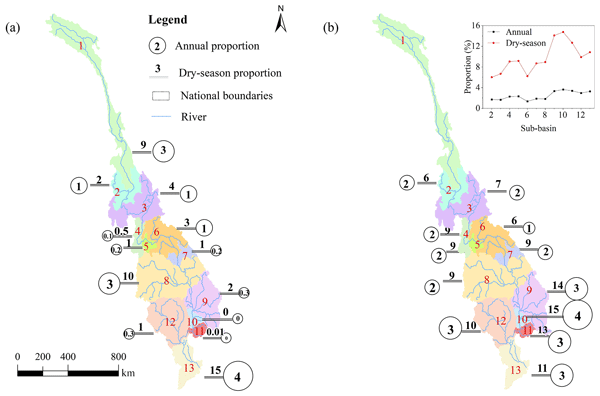
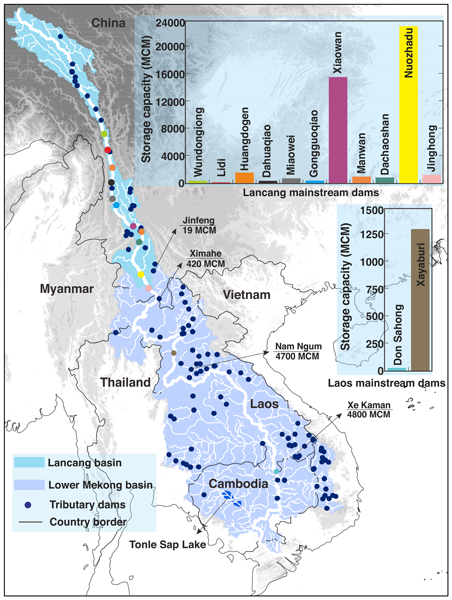
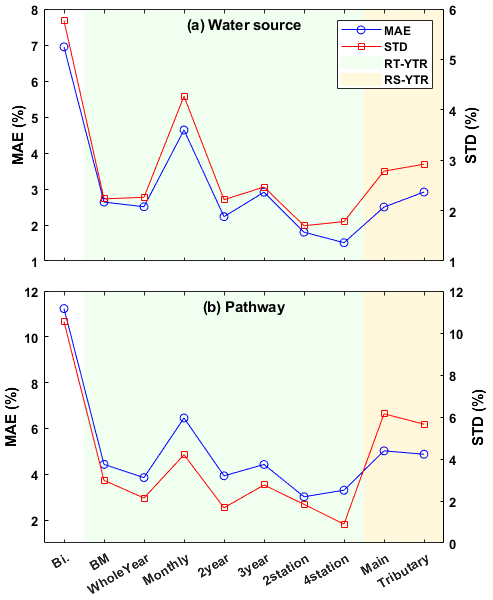
This study examines large daily river flow fluctuations in the dammed Mekong River, developing integrated 3D hydrodynamic and response time models alongside a hydrological model with an embedded reservoir module. This approach allows estimation of travel times between hydrological stations and contributions of subbasins and upstream regions. Findings show a power correlation between upstream discharge and travel time, and significant fluctuations occurred even before dam construction.
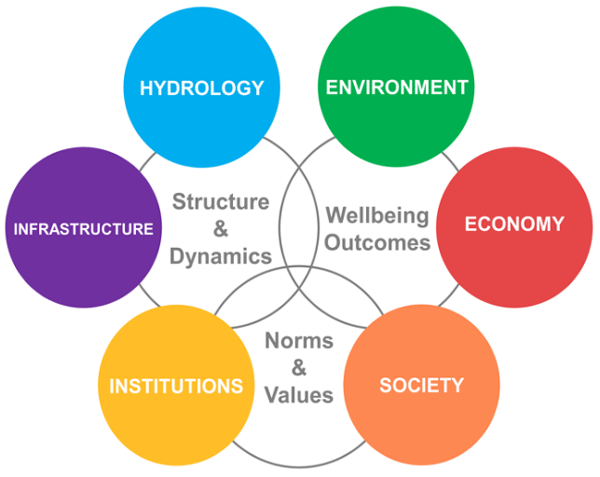
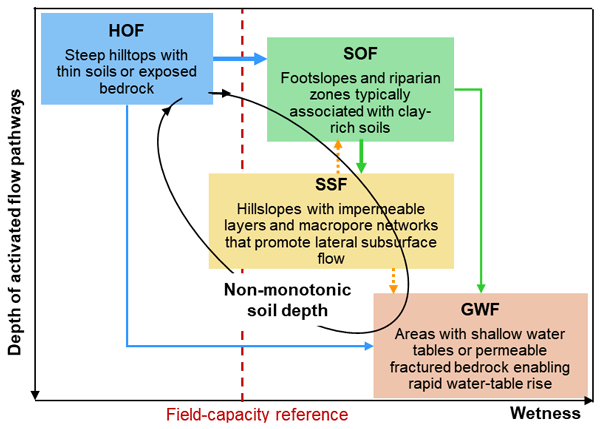

This study examines large daily river flow fluctuations in the dammed Mekong River, developing integrated 3D hydrodynamic and response time models alongside a hydrological model with an embedded reservoir module. This approach allows estimation of travel times between hydrological stations and contributions of subbasins and upstream regions. Findings show a power correlation between upstream discharge and travel time, and significant fluctuations occurred even before dam construction.



Cited articles
Each wet season, the Mekong River flows into Cambodia's Tonle Sap Lake, supporting fisheries and farming. We used river records and simulations to study changes linked to dams, climate variability and sand mining. Altered river flows and a lowered riverbed now require stronger flows to bring water into the lake. Together, these changes have shortened the inflow season by about 28 days compared with earlier decades. Protecting the lake depends on when water arrives, not just how much.
Each wet season, the Mekong River flows into Cambodia's Tonle Sap Lake, supporting fisheries and...


