
Articles | Volume 30, issue 18
https://doi.org/10.5194/hess-30-5873-2026
© Author(s) 2026. This work is distributed under
the Creative Commons Attribution 4.0 License.
the Creative Commons Attribution 4.0 License.
https://doi.org/10.5194/hess-30-5873-2026
© Author(s) 2026. This work is distributed under
the Creative Commons Attribution 4.0 License.
the Creative Commons Attribution 4.0 License.
Research article
| 
16 Sep 2026
Research article |
| 16 Sep 2026
| 16 Sep 2026
Assessing the stability of LSTM runoff projections in Switzerland under climate scenarios
Fabien Courvoisier
CORRESPONDING AUTHOR

Institute for Atmospheric and Climate Science, ETH Zurich, Zurich, Switzerland
Basil Kraft
Institute for Atmospheric and Climate Science, ETH Zurich, Zurich, Switzerland
Yann Yasser Haddad
Institute for Atmospheric and Climate Science, ETH Zurich, Zurich, Switzerland
Massimiliano Zappa
Swiss Federal Institute for Forest, Snow and Landscape Research WSL, Birmensdorf, Switzerland
Lukas Gudmundsson
Institute for Atmospheric and Climate Science, ETH Zurich, Zurich, Switzerland
Related authors
No articles found.
Yann Yasser Haddad, Elena Raycheva, Jonas Savelsberg, Petra Sieber, Lukas Gudmundsson, and Sonia I. Seneviratne
Earth Syst. Sci. Data Discuss., https://doi.org/10.5194/essd-2026-448, https://doi.org/10.5194/essd-2026-448, 2026
Preprint under review for ESSD
Short summary
Short summary
Hydropower is vital for the energy transition, but planning is hard without knowing where the water flowing through its infrastructure comes from. We introduce an open-access dataset detailing the hydropower infrastructure and connecting it to its local hydrological basins. The water inflows into reservoirs and run-of-river power plants are estimated using this tool, revealing large regional differences. This dataset can directly inform reliable and resilient energy transition planning.
Matthias Cuntz, Stephan Thober, Anne Verhoef, Yijian Zeng, Aaron Boone, Agnès Ducharne, Sujan Koirala, David M. Lawrence, Philipp de Vrese, Carsten Montzka, Sonia I. Seneviratne, Harry Vereecken, Dani Or, Salma Tafasca, Naoki Mizukami, Rich Ellis, Patrick C. McGuire, and Lukas Gudmundsson
EGUsphere, https://doi.org/10.5194/egusphere-2026-4223, https://doi.org/10.5194/egusphere-2026-4223, 2026
Preprint archived
Short summary
Short summary
Land surface models (LSMs) are essential tools to analyze future climate change. Here we pushed state-of-the-art LSMs out of their comfort zone revealing hidden connections between processes encoded into the models. The LSMs reacted differently due to complex, sometimes counter-intuitive interactions of different water fluxes. We identified surface runoff and soil evaporation as the two main reasons behind model differences, which should be improved by using more mechanistic descriptions.
Victoria M. Bauer, Mathias Hauser, Yann Quilcaille, Sarah Schöngart, Lukas Gudmundsson, and Sonia I. Seneviratne
Geosci. Model Dev., 19, 5669–5688, https://doi.org/10.5194/gmd-19-5669-2026, https://doi.org/10.5194/gmd-19-5669-2026, 2026
Short summary
Short summary
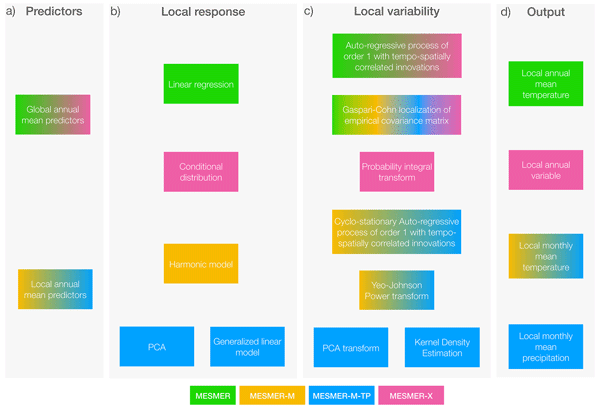
MESMER is a Python-based climate emulator that provides spatially resolved realizations of multiple climate variables. Version 1.0.0 of MESMER consolidates previous emulation methods into one numerically stable, well-documented, and user-friendly software package. It can generate large ensembles of annual and monthly mean temperatures, as well as several climate extreme indicators, within minutes. The software is shared together with pre-calibrated parameters to enable broad community adoption.
Zavud Baghirov, Markus Reichstein, Basil Kraft, Bernhard Ahrens, Marco Körner, and Martin Jung
Geosci. Model Dev., 19, 4467–4496, https://doi.org/10.5194/gmd-19-4467-2026, https://doi.org/10.5194/gmd-19-4467-2026, 2026
Short summary
Short summary
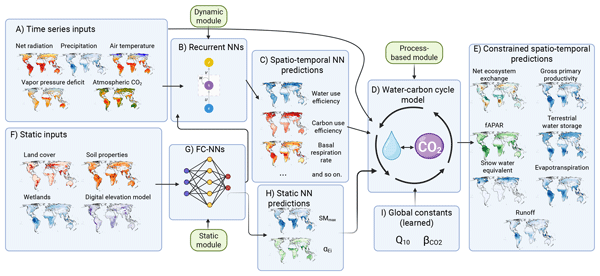
We introduce a new global model that links how water and carbon move through land ecosystems. By combining process knowledge with artificial intelligence that learns from observations, we model daily changes in vegetation, water and carbon cycle processes. This model outperforms both purely data-driven and traditional process models, especially in dry and tropical regions. This advance could improve current understanding of water–carbon cycle relationships.

Hao Pan, Lukas Gudmundsson, Mathias Hauser, Jonas Schwaab, Yann Quilcaille, and Sonia I. Seneviratne
Nonlin. Processes Geophys., 33, 73–83, https://doi.org/10.5194/npg-33-73-2026, https://doi.org/10.5194/npg-33-73-2026, 2026
Short summary
Short summary
Existing regional climate model (RCM) emulators mainly provide deterministic emulations, while internal RCM variability is typically not represented. We develop MESMER-RCM, a probabilistic RCM emulator for annual 2-m temperature, using a simple and physically interpretable approach. We demonstrate its ability to emulate both RCM trends and internal variability in a high-dimensional spatial setting, where existing approaches typically struggle.
Seppe Lampe, Lukas Gudmundsson, Basil Kraft, Stijn Hantson, Douglas Kelley, Vincent Humphrey, Bertrand Le Saux, Emilio Chuvieco, and Wim Thiery
Geosci. Model Dev., 19, 955–988, https://doi.org/10.5194/gmd-19-955-2026, https://doi.org/10.5194/gmd-19-955-2026, 2026
Short summary
Short summary
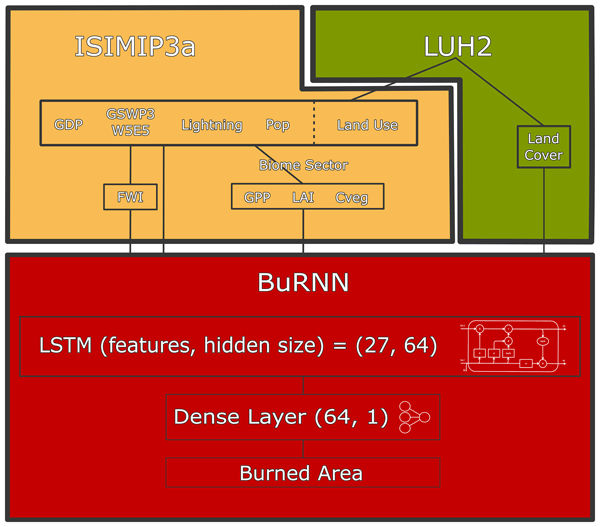
We introduce BuRNN (BUrned area modelling by Recurrent Neural Networks), a model which estimates monthly burned area based on satellite observations and climate, vegetation, and socio-economic data using machine learning. BuRNN outperforms existing process-based fire models, which improves our capabilities of modelling past and future burned areas.
Marit van Tiel, Matthias Huss, Massimiliano Zappa, Tobias Jonas, and Daniel Farinotti
Hydrol. Earth Syst. Sci., 30, 23–43, https://doi.org/10.5194/hess-30-23-2026, https://doi.org/10.5194/hess-30-23-2026, 2026
Short summary
Short summary
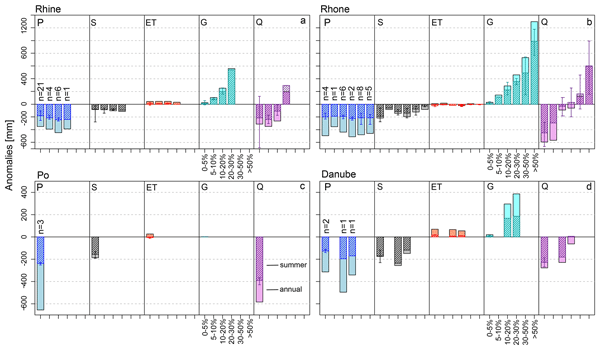
The summer of 2022 was extremely warm and dry in Europe, severely impacting water availability. We calculated water balance anomalies for 88 glacierized catchments in Switzerland, showing that glaciers played a crucial role in alleviating the drought situation by melting at record rates, partially compensating for the lack of rain and snowmelt. By comparing 2022 with past extreme years, we show that while glacier meltwater remains essential during droughts, its contribution is declining.
Raoul A. Collenteur, Konrad Bogner, Massimiliano Zappa, Mario Schirmer, and Christian Moeck
EGUsphere, https://doi.org/10.5194/egusphere-2025-4653, https://doi.org/10.5194/egusphere-2025-4653, 2025
Short summary
Short summary
Groundwater is vital for drinking water and farming, but recent droughts revealed it is less reliable than once believed. We developed and tested a new system in Switzerland that combines detailed weather forecasts with a groundwater model to anticipate changes weeks in advance. The system often predicted levels up to a month ahead well, though mountain regions proved harder to forecast. These results highlight both the promise and limits of such tools for improving future water planning.
Annie Y.-Y. Chang, Shaun Harrigan, Maria-Helena Ramos, Massimiliano Zappa, Christian M. Grams, Daniela I. V. Domeisen, and Konrad Bogner
EGUsphere, https://doi.org/10.5194/egusphere-2025-3411, https://doi.org/10.5194/egusphere-2025-3411, 2025
Short summary
Short summary
This study presents a machine learning-aided hybrid forecasting framework to improve early warnings of low flows in the European Alps. It combines weather regime information, streamflow observations, and model simulations (EFAS). Even using only weather regime data improves predictions over climatology, while integrating different data sources yields the best result, emphasizing the value of integrating diverse data sources.
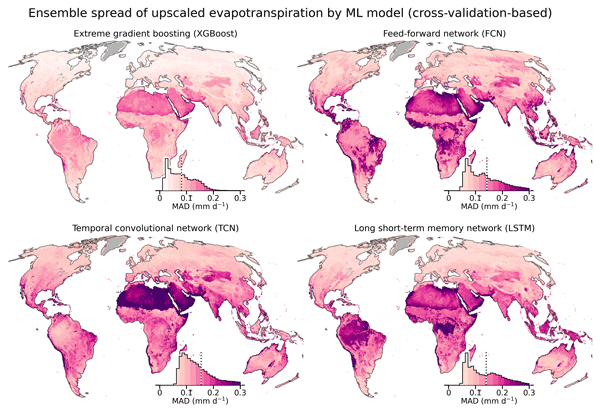
Basil Kraft, Jacob A. Nelson, Sophia Walther, Fabian Gans, Ulrich Weber, Gregory Duveiller, Markus Reichstein, Weijie Zhang, Marc Rußwurm, Devis Tuia, Marco Körner, Zayd Hamdi, and Martin Jung
Biogeosciences, 22, 3965–3987, https://doi.org/10.5194/bg-22-3965-2025, https://doi.org/10.5194/bg-22-3965-2025, 2025
Short summary
Short summary
This study evaluates machine learning approaches for upscaling evapotranspiration from the site to the global scale. Sequential models capture temporal dynamics better, especially with precipitation data, but all models show biases in data-scarce regions. Improved upscaling requires richer training data, informed covariate selection, and physical constraints to enhance robustness and reduce extrapolation errors.
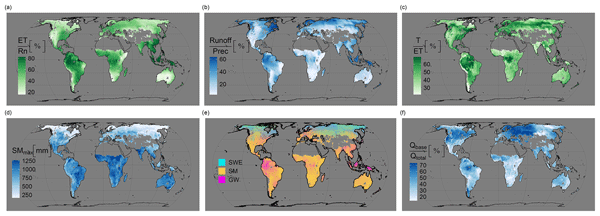
Zavud Baghirov, Martin Jung, Markus Reichstein, Marco Körner, and Basil Kraft
Geosci. Model Dev., 18, 2921–2943, https://doi.org/10.5194/gmd-18-2921-2025, https://doi.org/10.5194/gmd-18-2921-2025, 2025
Short summary
Short summary
We use an innovative approach to studying the Earth's water cycle by integrating advanced machine learning techniques with a traditional water cycle model. Our model is designed to learn from observational data, with a particular emphasis on understanding the influence of vegetation on water movement. By closely aligning with real-world observations, our model offers new possibilities for enhancing our understanding of the water cycle and its interactions with vegetation.
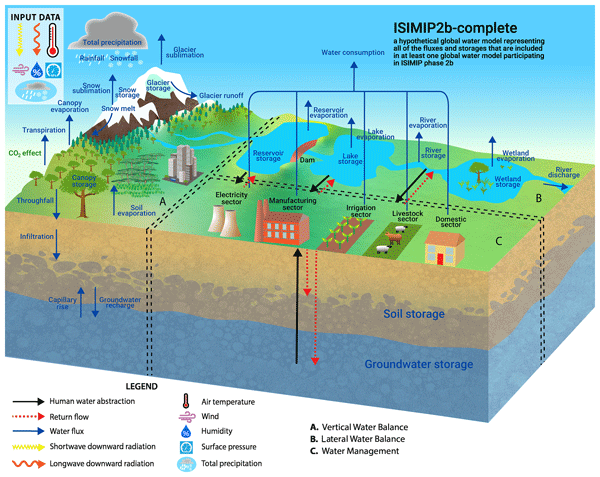
Hannes Müller Schmied, Simon Newland Gosling, Marlo Garnsworthy, Laura Müller, Camelia-Eliza Telteu, Atiq Kainan Ahmed, Lauren Seaby Andersen, Julien Boulange, Peter Burek, Jinfeng Chang, He Chen, Lukas Gudmundsson, Manolis Grillakis, Luca Guillaumot, Naota Hanasaki, Aristeidis Koutroulis, Rohini Kumar, Guoyong Leng, Junguo Liu, Xingcai Liu, Inga Menke, Vimal Mishra, Yadu Pokhrel, Oldrich Rakovec, Luis Samaniego, Yusuke Satoh, Harsh Lovekumar Shah, Mikhail Smilovic, Tobias Stacke, Edwin Sutanudjaja, Wim Thiery, Athanasios Tsilimigkras, Yoshihide Wada, Niko Wanders, and Tokuta Yokohata
Geosci. Model Dev., 18, 2409–2425, https://doi.org/10.5194/gmd-18-2409-2025, https://doi.org/10.5194/gmd-18-2409-2025, 2025
Short summary
Short summary
Global water models contribute to the evaluation of important natural and societal issues but are – as all models – simplified representation of reality. So, there are many ways to calculate the water fluxes and storages. This paper presents a visualization of 16 global water models using a standardized visualization and the pathway towards this common understanding. Next to academic education purposes, we envisage that these diagrams will help researchers, model developers, and data users.
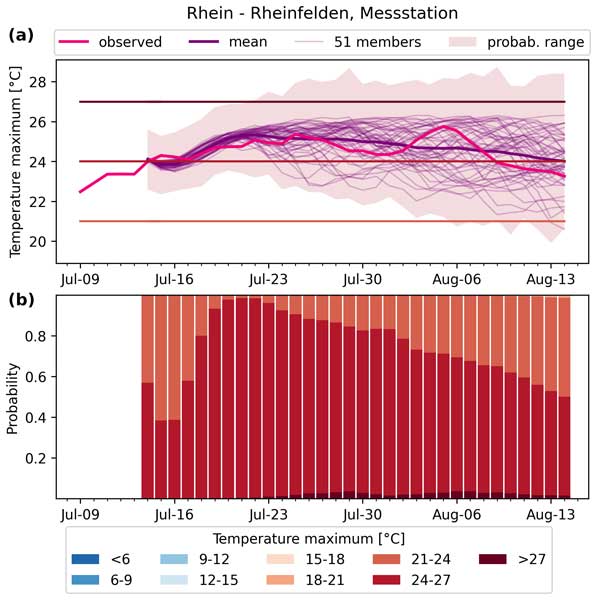
Ryan S. Padrón, Massimiliano Zappa, Luzi Bernhard, and Konrad Bogner
Hydrol. Earth Syst. Sci., 29, 1685–1702, https://doi.org/10.5194/hess-29-1685-2025, https://doi.org/10.5194/hess-29-1685-2025, 2025
Short summary
Short summary
We generate operational forecasts of daily maximum stream water temperature for 32 consecutive days at 54 stations in Switzerland with our best-performing data-driven model. The average forecast error is 0.38 °C for 1 d ahead and increases to 0.90 °C for 32 d ahead given the uncertainty in the meteorological variables influencing water temperature. Here we compare the skill of several models, how well they can forecast at new and ungauged stations, and the importance of different model inputs.
Raoul Alexandre Collenteur, Konrad Bogner, Christian Moeck, Massimiliano Zappa, and Mario Schirmer
Abstr. Int. Cartogr. Assoc., 9, 5, https://doi.org/10.5194/ica-abs-9-5-2025, https://doi.org/10.5194/ica-abs-9-5-2025, 2025
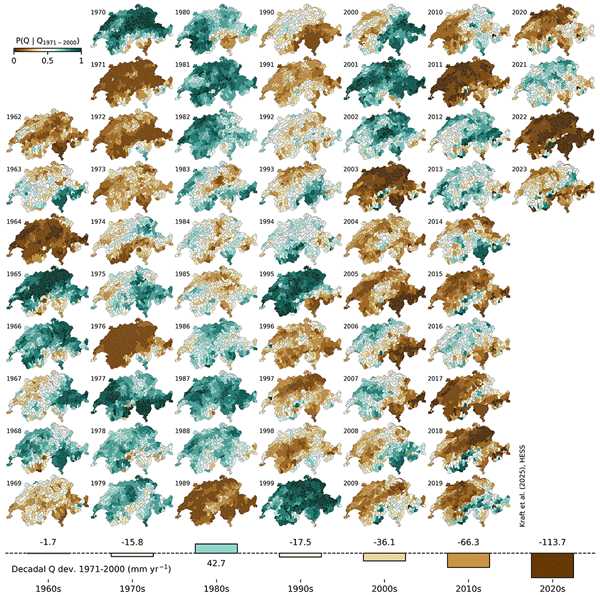
Basil Kraft, Michael Schirmer, William H. Aeberhard, Massimiliano Zappa, Sonia I. Seneviratne, and Lukas Gudmundsson
Hydrol. Earth Syst. Sci., 29, 1061–1082, https://doi.org/10.5194/hess-29-1061-2025, https://doi.org/10.5194/hess-29-1061-2025, 2025
Short summary
Short summary
This study reconstructs daily runoff in Switzerland (1962–2023) using a deep-learning model, providing a spatially contiguous dataset on a medium-sized catchment grid. The model outperforms traditional hydrological methods, revealing shifts in Swiss water resources, including more frequent dry years and declining summer runoff. The reconstruction is publicly available.
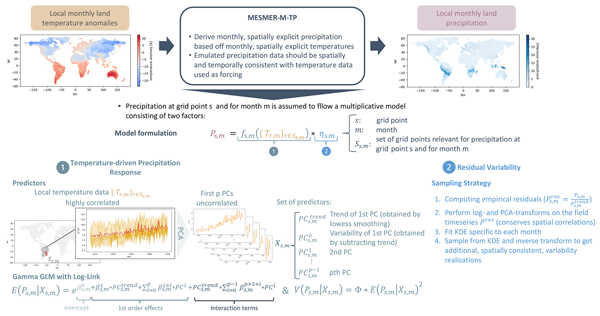
Sarah Schöngart, Lukas Gudmundsson, Mathias Hauser, Peter Pfleiderer, Quentin Lejeune, Shruti Nath, Sonia Isabelle Seneviratne, and Carl-Friedrich Schleussner
Geosci. Model Dev., 17, 8283–8320, https://doi.org/10.5194/gmd-17-8283-2024, https://doi.org/10.5194/gmd-17-8283-2024, 2024
Short summary
Short summary
Precipitation and temperature are two of the most impact-relevant climatic variables. Yet, projecting future precipitation and temperature data under different emission scenarios relies on complex models that are computationally expensive. In this study, we propose a method that allows us to generate monthly means of local precipitation and temperature at low computational costs. Our modelling framework is particularly useful for all downstream applications of climate model data.
Michael Margreth, Florian Lustenberger, Dorothea Hug Peter, Fritz Schlunegger, and Massimiliano Zappa
Nat. Hazards Earth Syst. Sci. Discuss., https://doi.org/10.5194/nhess-2024-78, https://doi.org/10.5194/nhess-2024-78, 2024
Publication in NHESS not foreseen
Short summary
Short summary
Recession models (RM) are crucial for observing the low flow behavior of a catchment. We developed two novel RM, which are designed to represent slowly draining catchment conditions. With a newly designed low flow prediction procedure we tested the prediction capability of these two models and three others from literature. One of our novel products delivered the best results, because it best represents the slowly draining catchment conditions.
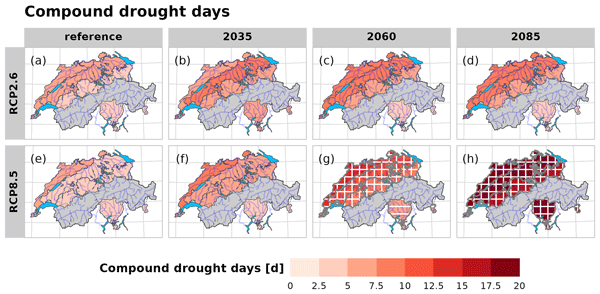
Christoph Nathanael von Matt, Regula Muelchi, Lukas Gudmundsson, and Olivia Martius
Nat. Hazards Earth Syst. Sci., 24, 1975–2001, https://doi.org/10.5194/nhess-24-1975-2024, https://doi.org/10.5194/nhess-24-1975-2024, 2024
Short summary
Short summary
The simultaneous occurrence of meteorological (precipitation), agricultural (soil moisture), and hydrological (streamflow) drought can lead to augmented impacts. By analysing drought indices derived from the newest climate scenarios for Switzerland (CH2018, Hydro-CH2018), we show that with climate change the concurrence of all drought types will increase in all studied regions of Switzerland. Our results stress the benefits of and need for both mitigation and adaptation measures at early stages.
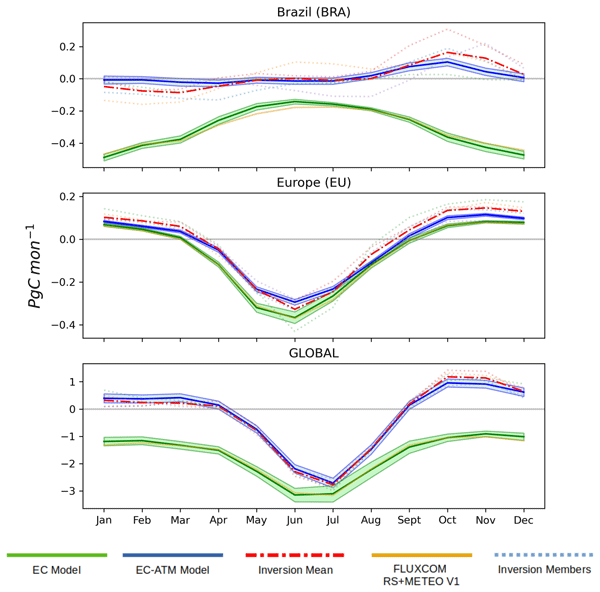
Samuel Upton, Markus Reichstein, Fabian Gans, Wouter Peters, Basil Kraft, and Ana Bastos
Atmos. Chem. Phys., 24, 2555–2582, https://doi.org/10.5194/acp-24-2555-2024, https://doi.org/10.5194/acp-24-2555-2024, 2024
Short summary
Short summary
Data-driven eddy-covariance upscaled estimates of the global land–atmosphere net CO2 exchange (NEE) show important mismatches with regional and global estimates based on atmospheric information. To address this, we create a model with a dual constraint based on bottom-up eddy-covariance data and top-down atmospheric inversion data. Our model overcomes shortcomings of each approach, producing improved NEE estimates from local to global scale, helping to reduce uncertainty in the carbon budget.
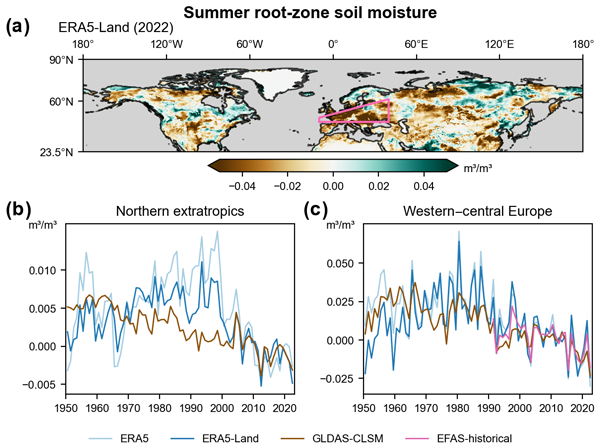
Dominik L. Schumacher, Mariam Zachariah, Friederike Otto, Clair Barnes, Sjoukje Philip, Sarah Kew, Maja Vahlberg, Roop Singh, Dorothy Heinrich, Julie Arrighi, Maarten van Aalst, Mathias Hauser, Martin Hirschi, Verena Bessenbacher, Lukas Gudmundsson, Hiroko K. Beaudoing, Matthew Rodell, Sihan Li, Wenchang Yang, Gabriel A. Vecchi, Luke J. Harrington, Flavio Lehner, Gianpaolo Balsamo, and Sonia I. Seneviratne
Earth Syst. Dynam., 15, 131–154, https://doi.org/10.5194/esd-15-131-2024, https://doi.org/10.5194/esd-15-131-2024, 2024
Short summary
Short summary
The 2022 summer was accompanied by widespread soil moisture deficits, including an unprecedented drought in Europe. Combining several observation-based estimates and models, we find that such an event has become at least 5 and 20 times more likely due to human-induced climate change in western Europe and the northern extratropics, respectively. Strong regional warming fuels soil desiccation; hence, projections indicate even more potent future droughts as we progress towards a 2 °C warmer world.
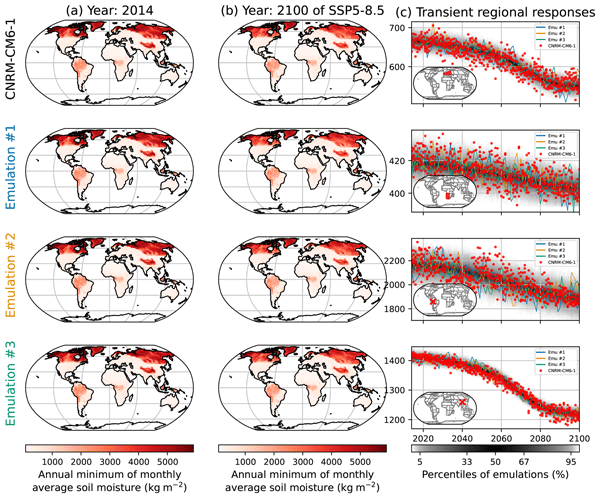
Yann Quilcaille, Lukas Gudmundsson, and Sonia I. Seneviratne
Earth Syst. Dynam., 14, 1333–1362, https://doi.org/10.5194/esd-14-1333-2023, https://doi.org/10.5194/esd-14-1333-2023, 2023
Short summary
Short summary
Climate models are powerful tools, but they have high computational costs, hindering their use in exploring future climate extremes. We demonstrate MESMER-X, the only existing emulator for spatial climate extremes (heatwaves, fires, droughts) that mimics all of their relevant properties. Thanks to its negligible computational cost, MESMER-X may greatly accelerate the exploration of future climate extremes or enable the integration of climate extremes in economic and financial models.
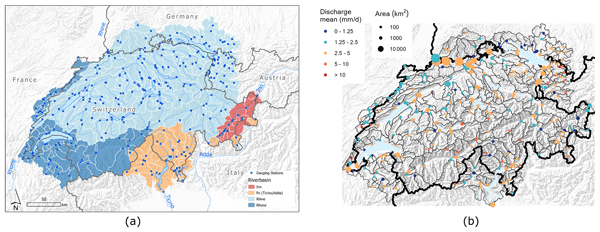
Marvin Höge, Martina Kauzlaric, Rosi Siber, Ursula Schönenberger, Pascal Horton, Jan Schwanbeck, Marius Günter Floriancic, Daniel Viviroli, Sibylle Wilhelm, Anna E. Sikorska-Senoner, Nans Addor, Manuela Brunner, Sandra Pool, Massimiliano Zappa, and Fabrizio Fenicia
Earth Syst. Sci. Data, 15, 5755–5784, https://doi.org/10.5194/essd-15-5755-2023, https://doi.org/10.5194/essd-15-5755-2023, 2023
Short summary
Short summary
CAMELS-CH is an open large-sample hydro-meteorological data set that covers 331 catchments in hydrologic Switzerland from 1 January 1981 to 31 December 2020. It comprises (a) daily data of river discharge and water level as well as meteorologic variables like precipitation and temperature; (b) yearly glacier and land cover data; (c) static attributes of, e.g, topography or human impact; and (d) catchment delineations. CAMELS-CH enables water and climate research and modeling at catchment level.
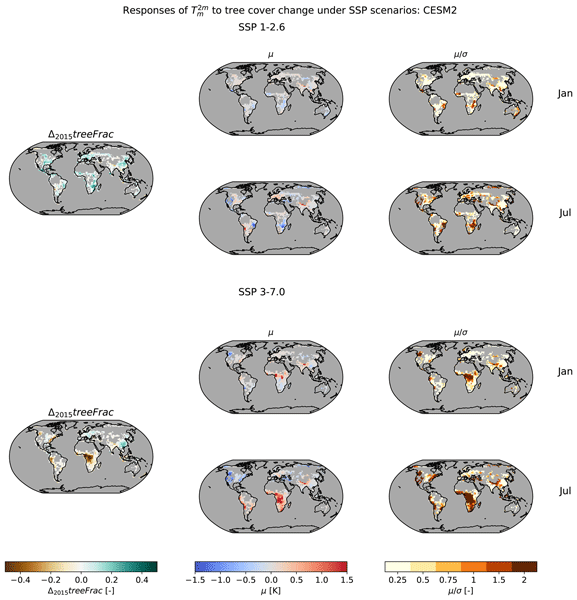
Shruti Nath, Lukas Gudmundsson, Jonas Schwaab, Gregory Duveiller, Steven J. De Hertog, Suqi Guo, Felix Havermann, Fei Luo, Iris Manola, Julia Pongratz, Sonia I. Seneviratne, Carl F. Schleussner, Wim Thiery, and Quentin Lejeune
Geosci. Model Dev., 16, 4283–4313, https://doi.org/10.5194/gmd-16-4283-2023, https://doi.org/10.5194/gmd-16-4283-2023, 2023
Short summary
Short summary
Tree cover changes play a significant role in climate mitigation and adaptation. Their regional impacts are key in informing national-level decisions and prioritising areas for conservation efforts. We present a first step towards exploring these regional impacts using a simple statistical device, i.e. emulator. The emulator only needs to train on climate model outputs representing the maximal impacts of aff-, re-, and deforestation, from which it explores plausible in-between outcomes itself.
Louise J. Slater, Louise Arnal, Marie-Amélie Boucher, Annie Y.-Y. Chang, Simon Moulds, Conor Murphy, Grey Nearing, Guy Shalev, Chaopeng Shen, Linda Speight, Gabriele Villarini, Robert L. Wilby, Andrew Wood, and Massimiliano Zappa
Hydrol. Earth Syst. Sci., 27, 1865–1889, https://doi.org/10.5194/hess-27-1865-2023, https://doi.org/10.5194/hess-27-1865-2023, 2023
Short summary
Short summary
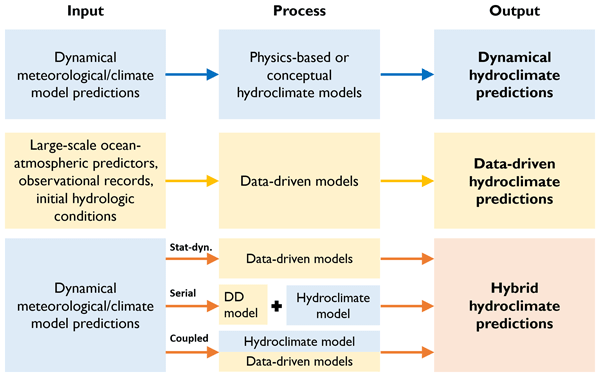
Hybrid forecasting systems combine data-driven methods with physics-based weather and climate models to improve the accuracy of predictions for meteorological and hydroclimatic events such as rainfall, temperature, streamflow, floods, droughts, tropical cyclones, or atmospheric rivers. We review recent developments in hybrid forecasting and outline key challenges and opportunities in the field.
Hoontaek Lee, Martin Jung, Nuno Carvalhais, Tina Trautmann, Basil Kraft, Markus Reichstein, Matthias Forkel, and Sujan Koirala
Hydrol. Earth Syst. Sci., 27, 1531–1563, https://doi.org/10.5194/hess-27-1531-2023, https://doi.org/10.5194/hess-27-1531-2023, 2023
Short summary
Short summary
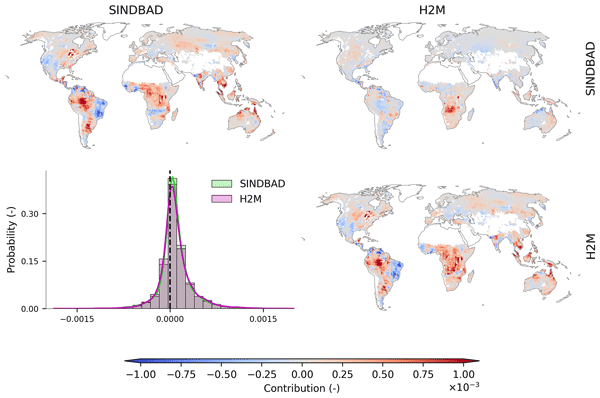
We spatially attribute the variance in global terrestrial water storage (TWS) interannual variability (IAV) and its modeling error with two data-driven hydrological models. We find error hotspot regions that show a disproportionately large significance in the global mismatch and the association of the error regions with a smaller-scale lateral convergence of water. Our findings imply that TWS IAV modeling can be efficiently improved by focusing on model representations for the error hotspots.

Ryan S. Padrón, Lukas Gudmundsson, Laibao Liu, Vincent Humphrey, and Sonia I. Seneviratne
Biogeosciences, 19, 5435–5448, https://doi.org/10.5194/bg-19-5435-2022, https://doi.org/10.5194/bg-19-5435-2022, 2022
Short summary
Short summary
The answer to how much carbon land ecosystems are projected to remove from the atmosphere until 2100 is different for each Earth system model. We find that differences across models are primarily explained by the annual land carbon sink dependence on temperature and soil moisture, followed by the dependence on CO2 air concentration, and by average climate conditions. Our insights on why each model projects a relatively high or low land carbon sink can help to reduce the underlying uncertainty.

Verena Bessenbacher, Sonia Isabelle Seneviratne, and Lukas Gudmundsson
Geosci. Model Dev., 15, 4569–4596, https://doi.org/10.5194/gmd-15-4569-2022, https://doi.org/10.5194/gmd-15-4569-2022, 2022
Short summary
Short summary
Earth observations have many missing values. They are often filled using information from spatial and temporal contexts that mostly ignore information from related observed variables. We propose the gap-filling method CLIMFILL that additionally uses information from related variables. We test CLIMFILL using gap-free reanalysis data of variables related to soil–moisture climate interactions. CLIMFILL creates estimates for the missing values that recover the original dependence structure.
Basil Kraft, Martin Jung, Marco Körner, Sujan Koirala, and Markus Reichstein
Hydrol. Earth Syst. Sci., 26, 1579–1614, https://doi.org/10.5194/hess-26-1579-2022, https://doi.org/10.5194/hess-26-1579-2022, 2022
Short summary
Short summary
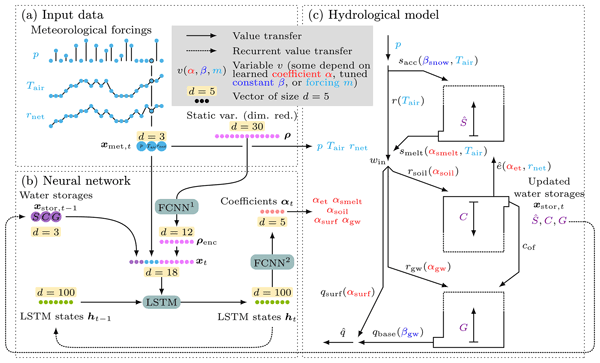
We present a physics-aware machine learning model of the global hydrological cycle. As the model uses neural networks under the hood, the simulations of the water cycle are learned from data, and yet they are informed and constrained by physical knowledge. The simulated patterns lie within the range of existing hydrological models and are plausible. The hybrid modeling approach has the potential to tackle key environmental questions from a novel perspective.
Lea Beusch, Zebedee Nicholls, Lukas Gudmundsson, Mathias Hauser, Malte Meinshausen, and Sonia I. Seneviratne
Geosci. Model Dev., 15, 2085–2103, https://doi.org/10.5194/gmd-15-2085-2022, https://doi.org/10.5194/gmd-15-2085-2022, 2022
Short summary
Short summary
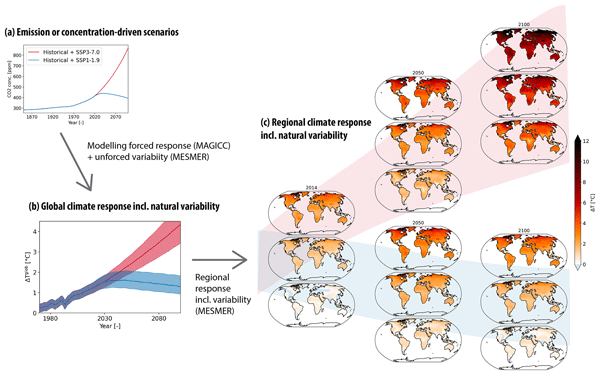
We introduce the first chain of computationally efficient Earth system model (ESM) emulators to translate user-defined greenhouse gas emission pathways into regional temperature change time series accounting for all major sources of climate change projection uncertainty. By combining the global mean emulator MAGICC with the spatially resolved emulator MESMER, we can derive ESM-specific and constrained probabilistic emulations to rapidly provide targeted climate information at the local scale.
Cited articles
Akiba, T., Sano, S., Yanase, T., Ohta, T., and Koyama, M.: Optuna: A Next-generation Hyperparameter Optimization Framework, in: Proceedings of the 25th ACM SIGKDD International Conference on Knowledge Discovery & Data Mining, KDD'19, 2623–2631, Association for Computing Machinery, New York, NY, USA, ISBN 978-1-4503-6201-6, https://doi.org/10.1145/3292500.3330701, 2019. a
Ali, M. H., Popescu, I., Jonoski, A., and Solomatine, D. P.: Remote Sensed and/or Global Datasets for Distributed Hydrological Modelling: A Review, Remote Sens., 15, 1642, https://doi.org/10.3390/rs15061642, 2023. a
Amari, S.-I.: Backpropagation and Stochastic Gradient Descent Method, Neurocomputing, 5, 185–196, https://doi.org/10.1016/0925-2312(93)90006-O, 1993. a
Arsenault, R., Martel, J.-L., Brunet, F., Brissette, F., and Mai, J.: Continuous Streamflow Prediction in Ungauged Basins: Long Short-Term Memory Neural Networks Clearly Outperform Traditional Hydrological Models, Hydrol. Earth Syst. Sci., 27, 139–157, https://doi.org/10.5194/hess-27-139-2023, 2023. a, b, c
BAFU: Einzugsgebietsgliederung Schweiz EZGG-CH, https://files.be.ch/bve/agi/geoportal/geo/lpi/EZGGCH_2015_01_LANG_DE.pdf (last access: 5 September 2026), 2016. a
Beniston, M.: Climatic Change in Mountain Regions: A Review of Possible Impacts, Climatic Change, 59, 5–31, https://doi.org/10.1023/A:1024458411589, 2003. a
Brunner, M. I., Björnsen Gurung, A., Zappa, M., Zekollari, H., Farinotti, D., and Stähli, M.: Present and Future Water Scarcity in Switzerland: Potential for Alleviation through Reservoirs and Lakes, Sci. Total Environ., 666, 1033–1047, https://doi.org/10.1016/j.scitotenv.2019.02.169, 2019a. a, b, c, d, e, f, g, h, i, j, k
Brunner, M. I., Liechti, K., and Zappa, M.: Extremeness of Recent Drought Events in Switzerland: Dependence on Variable and Return Period Choice, Nat. Hazards Earth Syst. Sci., 19, 2311–2323, https://doi.org/10.5194/nhess-19-2311-2019, 2019c. a, b
Brunner, M. I., Zappa, M., Gurung, A. B., and Stähli, M.: Hydro-CH2018 Reservoirs, EnviDat [data set], https://doi.org/10.16904/envidat.69, 2019d. a, b
Caretta, M., Mukherji, A., Arfanuzzaman, M., Betts, R., Gelfan, A., Hirabayashi, Y., Lissner, T., Liu, J., Lopez Gunn, E., Morgan, R., Mwanga, S., and Supratid, S.: Water, in: Impacts, Adaptation and Vulnerability, Contribution of Working Group II to the Sixth Assessment Report of the Intergovernmental Panel on Climate Change, Cambridge University Press, Cambridge, UK and New York, NY, USA, 551–712, https://doi.org/10.1017/9781009325844, 2022. a
Clark, S. R., Lerat, J., Perraud, J.-M., and Fitch, P.: Deep Learning for Monthly Rainfall–Runoff Modelling: A Large-Sample Comparison with Conceptual Models across Australia, Hydrol. Earth Syst. Sci., 28, 1191–1213, https://doi.org/10.5194/hess-28-1191-2024, 2024. a, b, c
Daly, C., Neilson, R. P., and Phillips, D. L.: A Statistical-Topographic Model for Mapping Climatological Precipitation over Mountainous Terrain, J. Appl. Meteorol. Climato., 33, 140–158, https://doi.org/10.1175/1520-0450(1994)033<0140:ASTMFM>2.0.CO;2, 1994. a
De la Fuente, L. A., Ehsani, M. R., Gupta, H. V., and Condon, L. E.: Toward interpretable LSTM-based modeling of hydrological systems, Hydrol. Earth Syst. Sci., 28, 945–971, https://doi.org/10.5194/hess-28-945-2024, 2024. a, b
De Silva, B. M., Higdon, D. M., Brunton, S. L., and Kutz, J. N.: Discovery of Physics From Data: Universal Laws and Discrepancies, Front. Artif. Intell., 3, 25, https://doi.org/10.3389/frai.2020.00025, 2020. a, b
ElGhawi, R., Winkler, A. J., Reimers, C., Schall, A., Gensheimer, J., and Kraft, B.: Imitation or Identification: Limitations of Deep Learning in Extrapolating to Future Climate-Carbon Cycle Change, Mach. Learn. Earth, 1, 01LT02, https://doi.org/10.1088/3049-4753/ae2279, 2025. a
Engel, M., Penna, D., Bertoldi, G., Dell'Agnese, A., Soulsby, C., and Comiti, F.: Identifying Run-off Contributions during Melt-Induced Run-off Events in a Glacierized Alpine Catchment, Hydrol. Process., 30, 343–364, https://doi.org/10.1002/hyp.10577, 2015. a
European Environment Agency: CORINE Land Cover 2018, Copernicus Land Monitoring Service, https://land.copernicus.eu/en/products/corine-land-cover/clc2018 (last access: 5 September 2026), 2018. a
Fathi, M. M., Al Mehedi, M. A., Smith, V., Fernandes, A. M., Hren, M. T., and Terry, D. O.: Evaluation of LSTM vs. Conceptual Models for Hourly Rainfall Runoff Simulations with Varied Training Period Lengths, Sci. Rep., 15, 15820, https://doi.org/10.1038/s41598-025-96577-4, 2025. a
Fischer, A., Strassmann, K., Croci-Maspoli, M., Hama, A., Knutti, R., Kotlarski, S., Schär, C., Schnadt Poberaj, C., Ban, N., Bavay, M., Beyerle, U., Bresch, D., Brönnimann, S., Burlando, P., Casanueva, A., Fatichi, S., Feigenwinter, I., Fischer, E., Hirschi, M., Liniger, M., Marty, C., Medhaug, I., Peleg, N., Pickl, M., Raible, C., Rajczak, J., Rössler, O., Scherrer, S., Schwierz, C., Seneviratne, S., Skelton, M., Sørland, S., Spirig, C., Tschurr, F., Zeder, J., and Zubler, E.: Climate Scenarios for Switzerland CH2018 – Approach and Implications, Climate Services, 26, 100288, https://doi.org/10.1016/j.cliser.2022.100288, 2022. a
FOEN: Hydrological Data Service for watercourses and lakes, Federal Office for the Environment (FOEN), https://www.bafu.admin.ch/en/hydrological-data-service-for-watercourses-and-lakes (last access: 5 September 2026), 2026. a
Frame, J. M., Kratzert, F., Klotz, D., Gauch, M., Shalev, G., Gilon, O., Qualls, L. M., Gupta, H. V., and Nearing, G. S.: Deep Learning Rainfall–Runoff Predictions of Extreme Events, Hydrol. Earth Syst. Sci., 26, 3377–3392, https://doi.org/10.5194/hess-26-3377-2022, 2022. a
Gauch, M., Kratzert, F., Klotz, D., Nearing, G., Lin, J., and Hochreiter, S.: Rainfall–Runoff Prediction at Multiple Timescales with a Single Long Short-Term Memory Network, Hydrol. Earth Syst. Sci., 25, 2045–2062, https://doi.org/10.5194/hess-25-2045-2021, 2021. a
Gers, F. A., Schmidhuber, J., and Cummins, F.: Learning to Forget: Continual Prediction with LSTM, Neural Comput., 12, 2451–2471, https://doi.org/10.1162/089976600300015015, 2000. a
Gudmundsson, L., Bremnes, J. B., Haugen, J. E., and Engen-Skaugen, T.: Technical Note: Downscaling RCM precipitation to the station scale using statistical transformations – a comparison of methods, Hydrol. Earth Syst. Sci., 16, 3383–3390, https://doi.org/10.5194/hess-16-3383-2012, 2012. a
Gudmundsson, L., Boulange, J., Do, H. X., Gosling, S. N., Grillakis, M. G., Koutroulis, A. G., Leonard, M., Liu, J., Müller Schmied, H., Papadimitriou, L., Pokhrel, Y., Seneviratne, S. I., Satoh, Y., Thiery, W., Westra, S., Zhang, X., and Zhao, F.: Globally Observed Trends in Mean and Extreme River Flow Attributed to Climate Change, Science, 371, 1159–1162, https://doi.org/10.1126/science.aba3996, 2021. a
Gudmundsson, L., Brunner, M. I., Döll, P., Fluet-Chouinard, E., Frolova, N., Gosling, S. N., Hirabayashi, Y., Kireeva, M. B., Liu, X., Müller Schmied, H., Magritskiy, D., Slater, L. J., Stein, L., Tramblay, Y., Wang, K., Wasko, C., Yamazaki, D., and Zhou, X.: Past and Future Change in Global River Flows, Nat. Rev. Earth Environ., 7, 7–23, https://doi.org/10.1038/s43017-025-00745-z, 2026. a
Gurtz, J., Zappa, M., Jasper, K., Lang, H., Verbunt, M., Badoux, A., and Vitvar, T.: A Comparative Study in Modelling Runoff and Its Components in Two Mountainous Catchments, Hydrol. Process., 297–311, https://doi.org/10.1002/hyp.1125, 2003. a
Haddad, Y. Y., Gudmundsson, L., Savelsberg, J., Garrison, J. B., Raycheva, E., Wechsler, T., Zappa, M., Hug, G., and Seneviratne, S. I.: Recent Climate Impacts on Run-of-River Hydropower and Electricity Systems Planning in Switzerland, Environ. Res. Lett., 20, 084020, https://doi.org/10.1088/1748-9326/ade4df, 2025. a, b
He, H., Queen, O., Koker, T., Cuevas, C., Tsiligkaridis, T., and Zitnik, M.: Domain Adaptation for Time Series Under Feature and Label Shifts, in: Proceedings of the 40th International Conference on Machine Learning, 12746–12774, Proceedings of Machine Learning Research (PMLR), ISSN 2640-3498, https://proceedings.mlr.press/v202/he23b.html (last access: 5 September 2026), 2023. a
Hengl, T., Mendes De Jesus, J., Heuvelink, G. B. M., Ruiperez Gonzalez, M., Kilibarda, M., Blagotić, A., Shangguan, W., Wright, M. N., Geng, X., Bauer-Marschallinger, B., Guevara, M. A., Vargas, R., MacMillan, R. A., Batjes, N. H., Leenaars, J. G. B., Ribeiro, E., Wheeler, I., Mantel, S., and Kempen, B.: SoilGrids250m: Global Gridded Soil Information Based on Machine Learning, PLoS ONE, 12, e0169748, https://doi.org/10.1371/journal.pone.0169748, 2017. a
Hochreiter, S. and Schmidhuber, J.: Long Short-Term Memory, Neural Comput., 9, 1735–1780, https://doi.org/10.1162/neco.1997.9.8.1735, 1997. a, b
Hock, R., Rasul, G., Adler, C., Cáceres, B., Gruber, S., Hirabayashi, Y., Jackson, M., Kääb, A., Kang, S., Kutuzov, S., Milner, A., Molau, U., Morin, S., Orlove, B., and Steltzer, H.: High Mountain Areas, Tech. rep., Cambridge University Press, UK and New York, https://doi.org/10.1017/9781009157964, 2019. a, b, c, d, e, f, g, h
Höge, M., Kauzlaric, M., Siber, R., Schönenberger, U., Horton, P., Schwanbeck, J., Floriancic, M. G., Viviroli, D., Wilhelm, S., Sikorska-Senoner, A. E., Addor, N., Brunner, M., Pool, S., Zappa, M., and Fenicia, F.: CAMELS-CH: Hydro-Meteorological Time Series and Landscape Attributes for 331 Catchments in Hydrologic Switzerland, Earth Syst. Sci. Data, 15, 5755–5784, https://doi.org/10.5194/essd-15-5755-2023, 2023. a, b, c
Huss, M. and Hock, R.: A New Model for Global Glacier Change and Sea-Level Rise, Front. Earth Sci., 3, https://doi.org/10.3389/feart.2015.00054, 2015. a
Huss, M. and Hock, R.: Global-Scale Hydrological Response to Future Glacier Mass Loss, Nat. Clim Change, 8, 135–140, https://doi.org/10.1038/s41558-017-0049-x, 2018. a, b, c, d
Huss, M., Hock, R., Bauder, A., and Funk, M.: 100-year Mass Changes in the Swiss Alps Linked to the Atlantic Multidecadal Oscillation, Geophys. Res. Lett., 37, 2010GL042616, https://doi.org/10.1029/2010GL042616, 2010. a
Jenicek, M., Seibert, J., Zappa, M., Staudinger, M., and Jonas, T.: Importance of maximum snow accumulation for summer low flows in humid catchments, Hydrol. Earth Syst. Sci., 20, 859–874, https://doi.org/10.5194/hess-20-859-2016, 2016. a
Karpatne, A., Atluri, G., Faghmous, J. H., Steinbach, M., Banerjee, A., Ganguly, A., Shekhar, S., Samatova, N., and Kumar, V.: Theory-Guided Data Science: A New Paradigm for Scientific Discovery from Data, IEEE T. Knowl. Data En., 29, 2318–2331, https://doi.org/10.1109/TKDE.2017.2720168, 2017. a
Köplin, N., Viviroli, D., Schädler, B., and Weingartner, R.: How does climate change affect mesoscale catchments in Switzerland? – a framework for a comprehensive assessment, Adv. Geosci., 27, 111–119, https://doi.org/10.5194/adgeo-27-111-2010, 2010. a
Kraft, B., Jung, M., Körner, M., Koirala, S., and Reichstein, M.: Towards hybrid modeling of the global hydrological cycle, Hydrol. Earth Syst. Sci., 26, 1579–1614, https://doi.org/10.5194/hess-26-1579-2022, 2022. a
Kraft, B., Schirmer, M., Aeberhard, W. H., Zappa, M., Seneviratne, S. I., and Gudmundsson, L.: CH-RUN: a deep-learning-based spatially contiguous runoff reconstruction for Switzerland, Hydrol. Earth Syst. Sci., 29, 1061–1082, https://doi.org/10.5194/hess-29-1061-2025, 2025. a, b, c, d, e, f, g, h, i, j, k, l, m, n, o, p, q, r, s, t, u, v, w, x, y
Kratzert, F., Klotz, D., Brenner, C., Schulz, K., and Herrnegger, M.: Rainfall–Runoff Modelling Using Long Short-Term Memory (LSTM) Networks, Hydrol. Earth Syst. Sci., 22, 6005–6022, https://doi.org/10.5194/hess-22-6005-2018, 2018. a, b, c
Kratzert, F., Klotz, D., Herrnegger, M., Sampson, A. K., Hochreiter, S., and Nearing, G. S.: Toward Improved Predictions in Ungauged Basins: Exploiting the Power of Machine Learning, Water Resour. Res., 55, 11344–11354, https://doi.org/10.1029/2019WR026065, 2019a. a, b, c, d
Kratzert, F., Klotz, D., Shalev, G., Klambauer, G., Hochreiter, S., and Nearing, G.: Towards Learning Universal, Regional, and Local Hydrological Behaviors via Machine Learning Applied to Large-Sample Datasets, Hydrol. Earth Syst. Sci., 23, 5089–5110, https://doi.org/10.5194/hess-23-5089-2019, 2019b. a, b, c
Kratzert, F., Klotz, D., Hochreiter, S., and Nearing, G. S.: A note on leveraging synergy in multiple meteorological data sets with deep learning for rainfall–runoff modeling, Hydrol. Earth Syst. Sci., 25, 2685–2703, https://doi.org/10.5194/hess-25-2685-2021, 2021. a
Lee, D., Lee, G., Kim, S., and Jung, S.: Future Runoff Analysis in the Mekong River Basin under a Climate Change Scenario Using Deep Learning, Water, 12, 1556, https://doi.org/10.3390/w12061556, 2020. a
Lees, T., Buechel, M., Anderson, B., Slater, L., Reece, S., Coxon, G., and Dadson, S. J.: Benchmarking Data-Driven Rainfall–Runoff Models in Great Britain: A Comparison of Long Short-Term Memory (LSTM)-Based Models with Four Lumped Conceptual Models, Hydrol. Earth Syst. Sci., 25, 5517–5534, https://doi.org/10.5194/hess-25-5517-2021, 2021. a, b
Lees, T., Reece, S., Kratzert, F., Klotz, D., Gauch, M., De Bruijn, J., Kumar Sahu, R., Greve, P., Slater, L., and Dadson, S. J.: Hydrological Concept Formation inside Long Short-Term Memory (LSTM) Networks, Hydrol. Earth Syst. Sci., 26, 3079–3101, https://doi.org/10.5194/hess-26-3079-2022, 2022. a
Liu, B., Tang, Q., Zhao, G., Gao, L., Shen, C., and Pan, B.: Physics-Guided Long Short-Term Memory Network for Streamflow and Flood Simulations in the Lancang–Mekong River Basin, Water, 14, 1429, https://doi.org/10.3390/w14091429, 2022. a
Loshchilov, I. and Hutter, F.: Decoupled Weight Decay Regularization, arXiv, https://doi.org/10.48550/arXiv.1711.05101, 2019. a
Maity, R., Srivastava, A., Sarkar, S., and Khan, M. I.: Revolutionizing the Future of Hydrological Science: Impact of Machine Learning and Deep Learning amidst Emerging Explainable AI and Transfer Learning, Appl. Comput. Geosci., 24, 100206, https://doi.org/10.1016/j.acags.2024.100206, 2024. a
Man, Y., Yang, Q., Shao, J., Wang, G., Bai, L., and Xue, Y.: Enhanced LSTM Model for Daily Runoff Prediction in the Upper Huai River Basin, China, Engineering, 24, 229–238, https://doi.org/10.1016/j.eng.2021.12.022, 2023. a
Maraun, D., Shepherd, T. G., Widmann, M., Zappa, G., Walton, D., Gutiérrez, J. M., Hagemann, S., Richter, I., Soares, P. M. M., Hall, A., and Mearns, L. O.: Towards Process-Informed Bias Correction of Climate Change Simulations, Nat. Clim. Change, 7, 764–773, https://doi.org/10.1038/nclimate3418, 2017. a
Martel, J.-L., Brissette, F., Arsenault, R., Turcotte, R., Castañeda-Gonzalez, M., Armstrong, W., Mailhot, E., Pelletier-Dumont, J., Rondeau-Genesse, G., and Caron, L.-P.: Assessing the adequacy of traditional hydrological models for climate change impact studies: A case for long-short-term memory (LSTM) neural networks, EGUsphere [preprint], https://doi.org/10.5194/egusphere-2024-2133, 2024. a, b, c
MeteoSwiss: Documentation of MeteoSwiss Grid-Data Products – Daily Precipitation (Final Analysis): RhiresD, https://www.meteoschweiz.admin.ch/dam/jcr:4f51f0f1-0fe3-48b5-9de0-15666327e63c/ProdDoc_RhiresD.pdf (last access: 5 September 2026), 2021a. a
MeteoSwiss: Documentation of MeteoSwiss Grid-Data Products – Daily Mean, Minimum and Maximum Temperature: TabsD, TminD, TmaxD, https://www.meteoschweiz.admin.ch/dam/jcr:818a4d17-cb0c-4e8b-92c6-1a1bdf5348b7/ProdDoc_TabsD.pdf (last access: 5 September 2026), 2021b. a
MeteoSwiss and ETH Zurich: Climate CH2025 – Scientific Report, Tech. rep., Federal Office of Meteorology and Climatology MeteoSwiss, Zurich, https://doi.org/10.18751/climate/scenarios/ch2025/sr/1.0/, 2025. a
Muelchi, R., Rössler, O., Schwanbeck, J., Weingartner, R., and Martius, O.: An Ensemble of Daily Simulated Runoff Data (1981–2099) under Climate Change Conditions for 93 Catchments in Switzerland (Hydro-CH2018-Runoff Ensemble), Geosci. Data J., 9, 46–57, https://doi.org/10.1002/gdj3.117, 2021b. a
Natel De Moura, C., Seibert, J., and Detzel, D. H. M.: Evaluating the Long Short-Term Memory (LSTM) Network for Discharge Prediction under Changing Climate Conditions, Hydrol. Res., 53, 657–667, https://doi.org/10.2166/nh.2022.044, 2022. a, b, c
NCCS: Swiss Water Bodies in a Changing Climate, Tech. rep., National Centre for Climate Services, Zurich, https://www.nccs.admin.ch/dam/nccs/en/dokumente/website/ (last access: 5 September 2026), 2021a. a, b
NCCS: Snow and Glaciers, https://www.nccs.admin.ch/nccs/en (last access: 5 September 2026), 2021b. a
Nearing, G., Cohen, D., Dube, V., Gauch, M., Gilon, O., Harrigan, S., Hassidim, A., Klotz, D., Kratzert, F., Metzger, A., Nevo, S., Pappenberger, F., Prudhomme, C., Shalev, G., Shenzis, S., Tekalign, T. Y., Weitzner, D., and Matias, Y.: Global Prediction of Extreme Floods in Ungauged Watersheds, Nature, 627, 559–563, https://doi.org/10.1038/s41586-024-07145-1, 2024. a
Poggio, L., De Sousa, L. M., Batjes, N. H., Heuvelink, G. B. M., Kempen, B., Ribeiro, E., and Rossiter, D.: SoilGrids 2.0: Producing Soil Information for the Globe with Quantified Spatial Uncertainty, SOIL, 7, 217–240, https://doi.org/10.5194/soil-7-217-2021, 2021. a
Read, J. S., Jia, X., Willard, J., Appling, A. P., Zwart, J. A., Oliver, S. K., Karpatne, A., Hansen, G. J. A., Hanson, P. C., Watkins, W., Steinbach, M., and Kumar, V.: Process-Guided Deep Learning Predictions of Lake Water Temperature, Water Resour. Res., 55, 9173–9190, https://doi.org/10.1029/2019WR024922, 2019. a
Schumacher, D. L., Singh, J., Hauser, M., Fischer, E. M., Wild, M., and Seneviratne, S. I.: Exacerbated Summer European Warming Not Captured by Climate Models Neglecting Long-Term Aerosol Changes, Commun. Earth Environ., 5, 182, https://doi.org/10.1038/s43247-024-01332-8, 2024. a
Seneviratne, S., Zhang, X., Adnan, N., Badi, W., Dereczynski, C., Di Luca, A., Ghosh, S., Iskandar, I., Kossin, J., Lewis, S., Otto, F., Pinto, I., Satoh, M., Vicente-Serrano, S., Wehner, M., and Zhou, B.: Weather and Climate Extreme Events in a Changing Climate, in: Climate Change 2021: The Physical Science Basis, Contribution of Working Group I to the Sixth Assessment Report of the Intergovernmental Panel on Climate Change, Cambridge University Press, Cambridge, United Kingdom and New York, NY, USA, 1513–1766, https://doi.org/10.1017/9781009157896, 2021. a, b, c
Shepard, D.: A Two-Dimensional Interpolation Function for Irregularly-Spaced Data, in: Proceedings of the 1968 23rd ACM National Conference, ACM'68, 517–524, Association for Computing Machinery, New York, NY, USA, ISBN 978-1-4503-7486-6, https://doi.org/10.1145/800186.810616, 1968. a
Shortridge, J. E., Guikema, S. D., and Zaitchik, B. F.: Machine Learning Methods for Empirical Streamflow Simulation: A Comparison of Model Accuracy, Interpretability, and Uncertainty in Seasonal Watersheds, Hydrol. Earth Syst. Sci., 20, 2611–2628, https://doi.org/10.5194/hess-20-2611-2016, 2016. a
Slater, L., Blougouras, G., Deng, L., Deng, Q., Ford, E., Hoek van Dijke, A., Huang, F., Jiang, S., Liu, Y., Moulds, S., Schepen, A., Yin, J., and Zhang, B.: Challenges and opportunities of ML and explainable AI in large-sample hydrology, Philos. T. R. Soc. A, 383, 20240287, https://doi.org/10.1098/rsta.2024.0287, 2025 a
Song, Y. H., Chung, E.-S., and Shahid, S.: Differences in Extremes and Uncertainties in Future Runoff Simulations Using SWAT and LSTM for SSP Scenarios, Sci. Total Environ., 838, 156162, https://doi.org/10.1016/j.scitotenv.2022.156162, 2022. a
Viviroli, D., Mittelbach, H., Gurtz, J., and Weingartner, R.: Continuous Simulation for Flood Estimation in Ungauged Mesoscale Catchments of Switzerland – Part II: Parameter Regionalisation and Flood Estimation Results, J. Hydrol., 377, 208–225, https://doi.org/10.1016/j.jhydrol.2009.08.022, 2009a. a
Viviroli, D., Zappa, M., Gurtz, J., and Weingartner, R.: An Introduction to the Hydrological Modelling System PREVAH and Its Pre- and Post-Processing-Tools, Environ. Model. Softw., 24, 1209–1222, https://doi.org/10.1016/j.envsoft.2009.04.001, 2009b. a, b, c
Viviroli, D., Zappa, M., Schwanbeck, J., Gurtz, J., and Weingartner, R.: Continuous Simulation for Flood Estimation in Ungauged Mesoscale Catchments of Switzerland – Part I: Modelling Framework and Calibration Results, J. Hydrol., 377, 191–207, https://doi.org/10.1016/j.jhydrol.2009.08.023, 2009c. a
Waqas, M. and Humphries, U. W.: A Critical Review of RNN and LSTM Variants in Hydrological Time Series Predictions, MethodsX, 13, 102946, https://doi.org/10.1016/j.mex.2024.102946, 2024. a, b, c, d
Wi, S. and Steinschneider, S.: Assessing the Physical Realism of Deep Learning Hydrologic Model Projections Under Climate Change, Water Resour. Res., 58, e2022WR032123, https://doi.org/10.1029/2022WR032123, 2022. a, b, c, d
Wi, S. and Steinschneider, S.: On the Need for Physical Constraints in Deep Learning Rainfall–Runoff Projections under Climate Change: A Sensitivity Analysis to Warming and Shifts in Potential Evapotranspiration, Hydrol. Earth Syst. Sci., 28, 479–503, https://doi.org/10.5194/hess-28-479-2024, 2024. a, b, c
Xie, K., Liu, P., Zhang, J., Han, D., Wang, G., and Shen, C.: Physics-Guided Deep Learning for Rainfall-Runoff Modeling by Considering Extreme Events and Monotonic Relationships, J. Hydrol., 603, 127043, https://doi.org/10.1016/j.jhydrol.2021.127043, 2021. a
Yamazaki, D., Ikeshima, D., Tawatari, R., Yamaguchi, T., O'Loughlin, F., Neal, J. C., Sampson, C. C., Kanae, S., and Bates, P. D.: A High-accuracy Map of Global Terrain Elevations, Geophys. Res. Lett., 44, 5844–5853, https://doi.org/10.1002/2017GL072874, 2017. a
Yu, Q., Jiang, L., Schneider, R., Zheng, Y., and Liu, J.: Deciphering the Mechanism of Better Predictions of Regional LSTM Models in Ungauged Basins, Water Resour. Res., 60, e2023WR035876, https://doi.org/10.1029/2023WR035876, 2024. a
Zhong, L., Lei, H., and Yang, J.: Development of a Distributed Physics-Informed Deep Learning Hydrological Model for Data-Scarce Regions, Water Resour. Res., 60, e2023WR036333, https://doi.org/10.1029/2023WR036333, 2024. a
Short summary
Climate change strongly modifies runoff in alpine regions like Switzerland, altering water supply and affecting both human sectors and natural ecosystems. We test whether a model that learns only from past observations can credibly project future runoff under climate scenarios. It captures major expected shifts and reveals known limits for extremes. Its speed and ability to generalize across catchments make it a promising tool for assessing climate impacts on water resources.
Climate change strongly modifies runoff in alpine regions like Switzerland, altering water...


