
Articles | Volume 30, issue 13
https://doi.org/10.5194/hess-30-4405-2026
© Author(s) 2026. This work is distributed under
the Creative Commons Attribution 4.0 License.
the Creative Commons Attribution 4.0 License.
https://doi.org/10.5194/hess-30-4405-2026
© Author(s) 2026. This work is distributed under
the Creative Commons Attribution 4.0 License.
the Creative Commons Attribution 4.0 License.
Research article
| 
16 Jul 2026
Research article |
| 16 Jul 2026
| 16 Jul 2026
Influence of rainfall event characteristics and antecedent conditions on subsurface stormflow response of two forested hillslopes
Emanuel Thoenes
CORRESPONDING AUTHOR

Unit of Hydraulic Engineering, Department of Infrastructure, University of Innsbruck, Innsbruck, 6020, Austria
Theresa Blume
Section Hydrology, GFZ Helmholtz Centre for Geosciences, Potsdam, 14473, Germany
Markus Weiler
Department of Hydrology, University of Freiburg, Freiburg, 79098, Germany
Bernhard Kohl
Austrian Research Centre for Forests (BFW), Innsbruck, 6020, Austria
Luisa Hopp
Department of Hydrology, Bayreuth Center of Ecology and Environmental Research (BayCEER), University of Bayreuth, 95440 Bayreuth, Germany
Stefan Achleitner
CORRESPONDING AUTHOR
Unit of Hydraulic Engineering, Department of Infrastructure, University of Innsbruck, Innsbruck, 6020, Austria
Related authors
Jonas Pyschik, Veronica Cordero, Jakob Wilk, Veronika Lechner, Emanuel Thoenes, Stefan Achleitner, Bernhard Kohl, Markus Weiler, and Stefan Hergarten
EGUsphere, https://doi.org/10.5194/egusphere-2026-4469, https://doi.org/10.5194/egusphere-2026-4469, 2026
Short summary
Short summary
When it rains, much of the water reaching a stream has been stored in the soil for a long time, but why was unclear. We sprinkled two forested slopes with labelled water and used electrical imaging to watch it move. Only a small share moved quickly to the slope base; most of the outflow was older water pushed out by the pressure of the new rain. Much of the new water stayed in the topsoil and was released weeks later, affecting how soils carry nutrients and pollutants to streams.
Ulrike Proske, John Hillier, Stefan Gaillard, Theresa Blume, Eduardo Queiroz Alves, Susanne Buiter, Ken S. Carslaw, Kirsten von Elverfeldt, Tim H. M. van Emmerik, Barbara Ervens, Rolf Hut, Sam Illingworth, Daniel Klotz, and Jonas Pyschik
Geosci. Commun., 9, 371–383, https://doi.org/10.5194/gc-9-371-2026, https://doi.org/10.5194/gc-9-371-2026, 2026
Short summary
Short summary
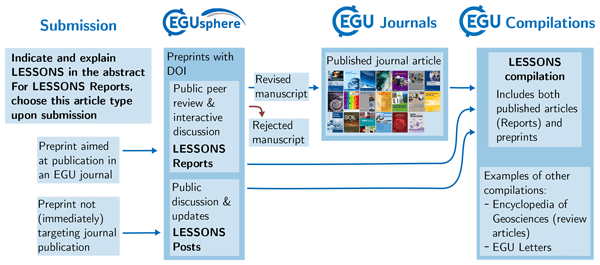
We explain a new article type that is being introduced in participating EGU publications. "LESSONS" articles describe the Limitations, Errors, Surprises, Shortcomings and Opportunities for New Science emerging from the scientific process. The publication of non-positive results and associated learnings aims to complete an unbiased record of the research effort, contributes to open and transparent science, allows the authors and others to learn, and may open opportunities for new science.
Lea Dedden and Markus Weiler
EGUsphere, https://doi.org/10.5194/egusphere-2026-4703, https://doi.org/10.5194/egusphere-2026-4703, 2026
Short summary
Short summary
Using a dense 400 sensor network over 2.5 years, we studied how tree types influence forest soil moisture. We found soil moisture varies largely in space and time. In pure tree plots, the moisture variability peaks during intermediate wetness – when vegetation influence is strongest – but remains low during dry and wet phases. Consistently wet and dry zones indicate that spatial pattern are temporally stable. This work highlights small-scale spatiotemporal variability of forest water fluxes.
Jonas Pyschik, Veronica Cordero, Jakob Wilk, Veronika Lechner, Emanuel Thoenes, Stefan Achleitner, Bernhard Kohl, Markus Weiler, and Stefan Hergarten
EGUsphere, https://doi.org/10.5194/egusphere-2026-4469, https://doi.org/10.5194/egusphere-2026-4469, 2026
Short summary
Short summary
When it rains, much of the water reaching a stream has been stored in the soil for a long time, but why was unclear. We sprinkled two forested slopes with labelled water and used electrical imaging to watch it move. Only a small share moved quickly to the slope base; most of the outflow was older water pushed out by the pressure of the new rain. Much of the new water stayed in the topsoil and was released weeks later, affecting how soils carry nutrients and pollutants to streams.

David Mair, Guillaume Witz, Ariel Do Prado, Philippos Garefalakis, Amanda Wild, Fanny Ville, Bennet Schuster, Michael Horn, Jürgen Österle, Stefano C. Fabbri, Camille Litty, Stefan Achleitner, Sebastian Leistner, Clemens Hiller, and Fritz Schlunegger
Earth Surf. Dynam., 14, 527–551, https://doi.org/10.5194/esurf-14-527-2026, https://doi.org/10.5194/esurf-14-527-2026, 2026
Short summary
Short summary
This study introduces an updated image analysis framework for automatically identifying and measuring sediment grains in various types of images and scans. We employ a high-performing segmentation approach for a wide range of geoscientific data, using carefully curated ground truth data. The method achieves higher accuracy and more consistent measurements than existing approaches. The data and algorithm are openly available and provided in a user-friendly way.
Heinke Paulsen and Markus Weiler
Hydrol. Earth Syst. Sci., 30, 4305–4319, https://doi.org/10.5194/hess-30-4305-2026, https://doi.org/10.5194/hess-30-4305-2026, 2026
Short summary
Short summary
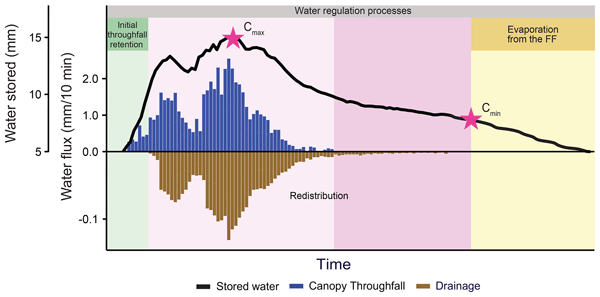
Using 12 Forest floor (FF) lysimeters at three beech‑dominated sites, we recorded 1570 rain events and measured throughfall, drainage, and evaporation. Initial retention depended on pre‑event moisture, not litter thickness. Low‑intensity, long‑duration rains filled the FF more efficiently than brief, intense storms. Evaporation was low and consistent across sites, showing the FF protects the soil. Spatial data revealed frequent water redistribution, creating heterogeneous flow paths.
Markus Weiler, Julia Krumm, Ingo Haag, Hannes Leistert, Max Schmit, Andreas Steinbrich, and Andreas Hänsler
Nat. Hazards Earth Syst. Sci., 26, 2673–2689, https://doi.org/10.5194/nhess-26-2673-2026, https://doi.org/10.5194/nhess-26-2673-2026, 2026
Short summary
Short summary
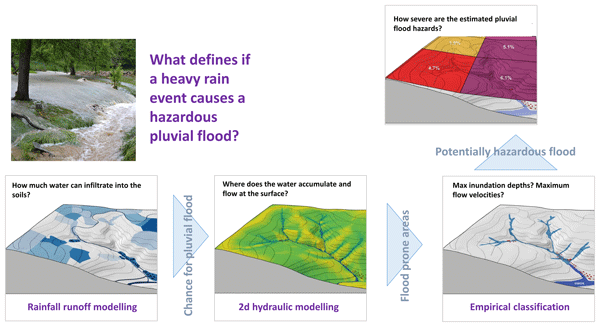
Pluvial (flash) floods, caused by intense local rainfall, result in surface runoff and overland flow, making them different from fluvial floods. A new Pluvial Flood Index (PFI) combines precipitation, hydrological, and hydrodynamic processes to assess surface flooding hazards. The PFI, based on flood hazard areas, helps forecast flash floods and supports real-time warning systems, aiding municipal decision-making, preparedness, and planning.
Lea Dedden and Markus Weiler
Hydrol. Earth Syst. Sci., 30, 3245–3261, https://doi.org/10.5194/hess-30-3245-2026, https://doi.org/10.5194/hess-30-3245-2026, 2026
Short summary
Short summary
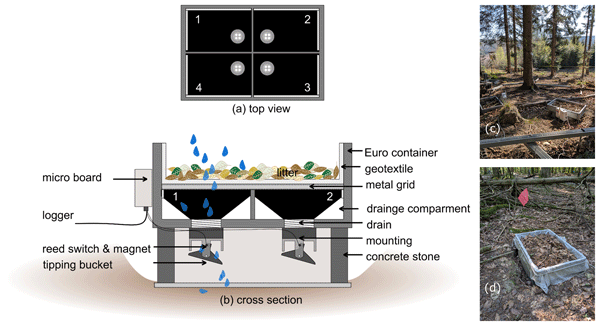
Throughfall in forests varies in space and time creating distinct patterns. We developed a novel throughfall monitoring approach for continuous, automated measurement that features 60 self-built and cost effective throughfall samplers. Collected data show the potential of the approach to capture throughfall variability at small distances, among and within rainfall events and between different trees species.
Daniel Rasche, Cosimo Brogi, Markus Köhli, David McJannet, Jannis Weimar, Martin Schrön, Theresa Blume, and Andreas Güntner
EGUsphere, https://doi.org/10.5194/egusphere-2026-1495, https://doi.org/10.5194/egusphere-2026-1495, 2026
Short summary
Short summary
Cosmic-Ray Neutron Sensing is a passive technique to estimate soil moisture, plant traits and snow at the field scale by using instruments sensitive to different neutron energy ranges. For devices sensitive to lower energies, a generalised assessment of the signal response under varying environmental conditions is currently missing. Our simulation-based study highlights the differing signal response of different instruments to environmental variables and provides a baseline for further research.
Hannes Leistert, Andreas Hänsler, Max Schmit, Andreas Steinbrich, and Markus Weiler
Geosci. Model Dev., 19, 2023–2037, https://doi.org/10.5194/gmd-19-2023-2026, https://doi.org/10.5194/gmd-19-2023-2026, 2026
Short summary
Short summary
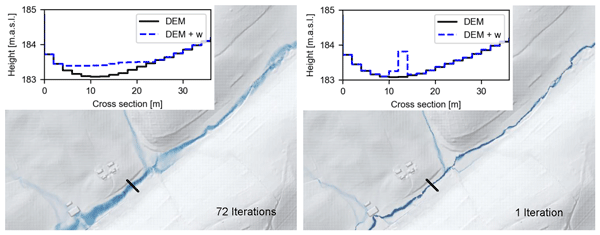
The newly developed model AccRo (Accumulation-based Runoff and Pluvial Flood Estimation Tool) is a computationally efficient method to derive key parameters for estimating pluvial flood hazards. Here, we compare results of AccRo with the data of two hydrodynamic models for different cases. We find that AccRo is able to represent the simulations of the hydrodynamic models in high quality, but with much lower computational effort, making it a valuable tool for assessing pluvial flood hazards.
Hassane Moutahir, Markus Sulzer, Ralf Kiese, Andreas Christen, Markus Weiler, Lea Dedden, Julian Brzozon, Pia Labenski, Prajwal Khanal, Ladislav Šigut, and Rüdiger Grote
Biogeosciences, 23, 1719–1738, https://doi.org/10.5194/bg-23-1719-2026, https://doi.org/10.5194/bg-23-1719-2026, 2026
Short summary
Short summary
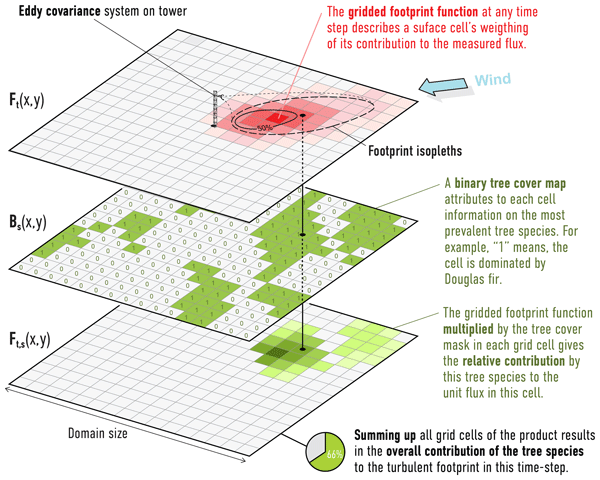
Eddy covariance (EC) data are vital for studying carbon and water fluxes but often mask species-specific responses in mixed forests. At a Black Forest site with beech and Douglas fir, we combined EC data with ecosystem modeling to separate species contributions. Results show EC fluxes reflect species abundance within flux footprints, though responses vary seasonally. Accounting for these differences is key for gap-filling, accurate budgets, and understanding mixed forests’ climate resilience.

Sebastian Gnann, Bailey J. Anderson, and Markus Weiler
Hydrol. Earth Syst. Sci., 30, 779–795, https://doi.org/10.5194/hess-30-779-2026, https://doi.org/10.5194/hess-30-779-2026, 2026
Short summary
Short summary
The extent to which streamflow varies in response to variability in precipitation and potential evaporation is essential for understanding climate change impacts on water resources. This so-called streamflow sensitivity is often estimated directly from observational data, but the robustness of these estimates remains unclear. Through systematic examination of existing approaches, we highlight uncertainties inherent in all approaches and discuss their origins.
Jonas Pyschik and Markus Weiler
Hydrol. Earth Syst. Sci., 30, 485–501, https://doi.org/10.5194/hess-30-485-2026, https://doi.org/10.5194/hess-30-485-2026, 2026
Short summary
Short summary
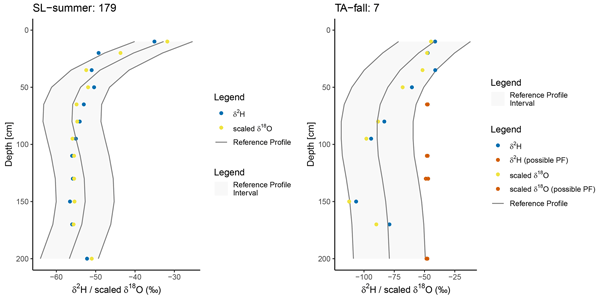
This study introduces a new method of detecting how water moves quickly through certain paths in soil, bypassing the usual, slower flow. By analysing natural water markers in soil samples taken at different depths, we identified unusual flow patterns. Our method is simple and non-invasive, and can be used to cover large areas. This helps us to better understand how water travels through the ground, which is important for managing water resources and protecting the environment.
Jasmin Tesch, Kathrin Kühnhammer, Delon Wagner, Andreas Christen, Carsten Dormann, Julian Frey, Rüdiger Grote, Teja Kattenborn, Markus Sulzer, Ulrike Wallrabe, Markus Weiler, Christiane Werner, Samaneh Baghbani, Julian Brzozon, Laura Maria Comella, Lea Dedden, Stefanie Dumberger, Yasmina Frey, Matthias Gassilloud, Timo Gerach, Anna Göritz, Simon Haberstroh, Johannes Klüppel, Luis Kremer, Jürgen Kreuzwieser, Hojin Lee, Joachim Maack, Julian Müller, Oswald Prucker, Sanam Kumari Rajak, Jürgen Rühe, Stefan J. Rupitsch, Helmer Schack-Kirchner, Christian Scharinger, Uttunga Shinde, Till Steinmann, Clara Stock, and Josef Strack
EGUsphere, https://doi.org/10.5194/egusphere-2025-4979, https://doi.org/10.5194/egusphere-2025-4979, 2025
Short summary
Short summary
In the ECOSENSE forest, we developed a robust infrastructure for distributed forest sensing. Reliable power supply, stable network connection, and smart data collection systems enable the operation of hundreds of sensors under challenging conditions. By detailing the infrastructure design and implementation, we provide a transferable blueprint for building complex monitoring sites that support high-resolution, long-term ecosystem observations.
Theresa Blume, Peter Chifflard, Stefan Achleitner, Andreas Hartmann, Stefan Hergarten, Luisa Hopp, Bernhard Kohl, Florian Leese, Ilja van Meerveld, Christian Reinhardt-Imjela, and Markus Weiler
EGUsphere, https://doi.org/10.5194/egusphere-2025-4424, https://doi.org/10.5194/egusphere-2025-4424, 2025
Short summary
Short summary
Subsurface stormflow (SSF) is one of the least studied and therefore least understood runoff generation processes because detecting and quantifying SSF is extremely challenging. We present an ongoing concerted experimental effort to systematically investigate SSF across four catchments using a variety of methods covering different spatial scales. Centerpiece of this effort is the construction of 12 large trenches to capture and monitor SSF.
Katharina Blaurock, Burkhard Beudert, and Luisa Hopp
Hydrol. Earth Syst. Sci., 29, 2377–2391, https://doi.org/10.5194/hess-29-2377-2025, https://doi.org/10.5194/hess-29-2377-2025, 2025
Short summary
Short summary
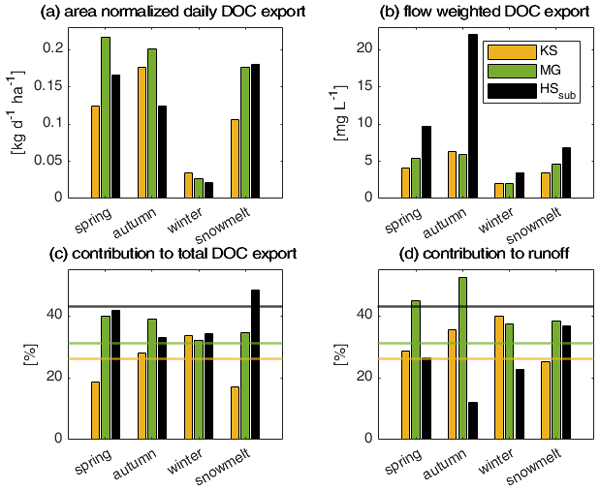
The release of carbon from landscapes into streams is one important component within the global carbon cycle. We measured the concentrations of dissolved organic carbon (DOC), one of the forms in which carbon can be present, in the streams of three nested forested subcatchments over 12 months. The export of DOC is closely linked to water flow processes within the subcatchments, but the interplay of soils, vegetation, topography, and microclimate results in distinct seasonal DOC release patterns.
Heinke Paulsen and Markus Weiler
Hydrol. Earth Syst. Sci., 29, 2309–2319, https://doi.org/10.5194/hess-29-2309-2025, https://doi.org/10.5194/hess-29-2309-2025, 2025
Short summary
Short summary
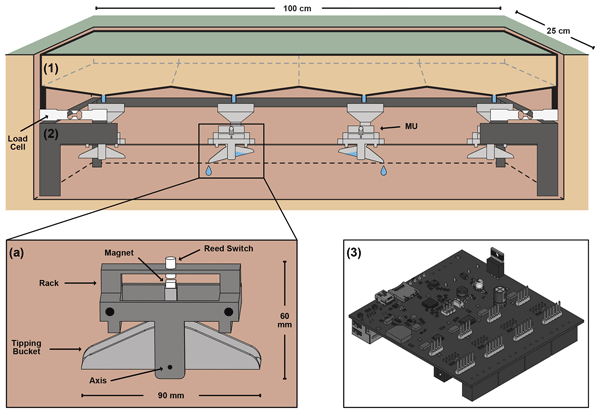
This technical note describes the development of a weighing forest floor grid lysimeter. The device is needed to investigate the dynamics of the water balance components of the organic layer in forests, quantifying precipitation, drainage, evaporation, and storage. We designed a setup that can be easily rebuilt and that is cost-effective, which allows for customized applications. Performance metrics from laboratory results and initial field data are presented.
Jonas Pyschik, Stefan Seeger, Barbara Herbstritt, and Markus Weiler
Hydrol. Earth Syst. Sci., 29, 525–534, https://doi.org/10.5194/hess-29-525-2025, https://doi.org/10.5194/hess-29-525-2025, 2025
Short summary
Short summary
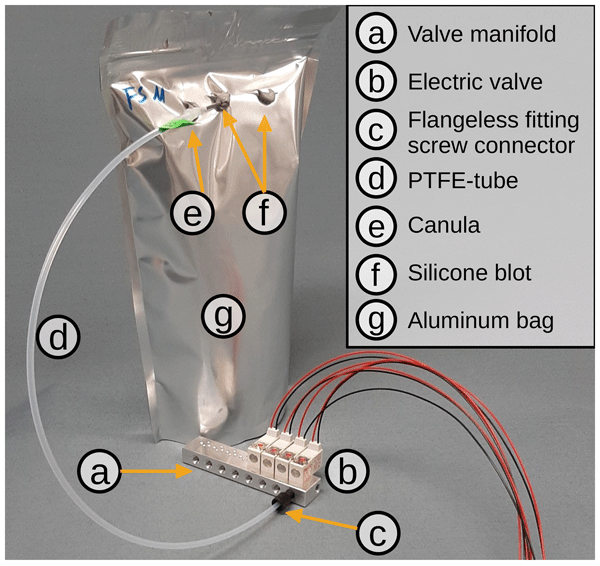
We developed a device (named VapAuSa) that automates stable water isotope analysis. Stable water isotopes are a natural tracer that many researchers use to investigate water (re-)distribution processes in environmental systems. VapAuSa helps to analyse such environmental samples by automating a formerly tedious manual process, allowing for higher sample throughput. This enables larger sampling campaigns, as more samples can be processed before reaching their limited storage time.
Daniel Rasche, Theresa Blume, and Andreas Güntner
SOIL, 10, 655–677, https://doi.org/10.5194/soil-10-655-2024, https://doi.org/10.5194/soil-10-655-2024, 2024
Short summary
Short summary
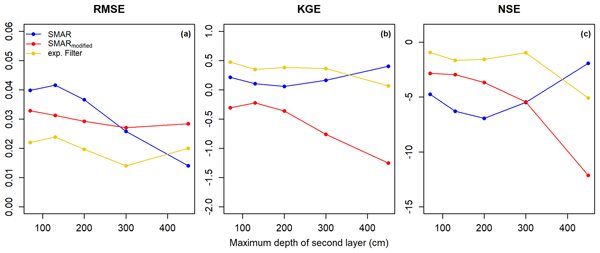
Soil moisture measurements at the field scale are highly beneficial for numerous (soil) hydrological applications. Cosmic-ray neutron sensing (CRNS) allows for the non-invasive monitoring of field-scale soil moisture across several hectares but only for the first few tens of centimetres of the soil. In this study, we modify and test a simple modeling approach to extrapolate CRNS-derived surface soil moisture information down to 450 cm depth and compare calibrated and uncalibrated model results.
Robin Schwemmle, Hannes Leistert, Andreas Steinbrich, and Markus Weiler
Geosci. Model Dev., 17, 5249–5262, https://doi.org/10.5194/gmd-17-5249-2024, https://doi.org/10.5194/gmd-17-5249-2024, 2024
Short summary
Short summary
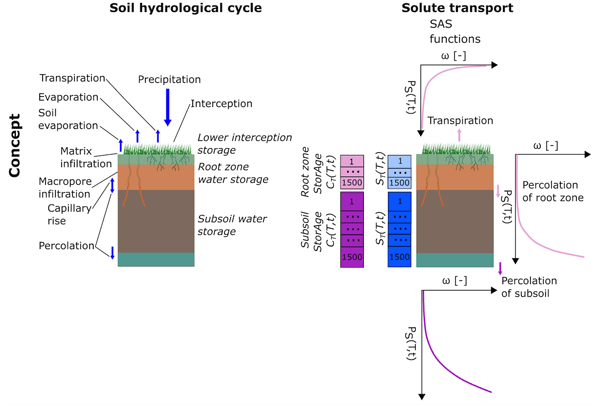
The new process-based hydrological toolbox model, RoGeR (https://roger.readthedocs.io/), can be used to estimate the components of the hydrological cycle and the related travel times of pollutants through parts of the hydrological cycle. These estimations may contribute to effective water resources management. This paper presents the toolbox concept and provides a simple example of providing estimations to water resources management.
Barbara Herbstritt, Benjamin Gralher, Stefan Seeger, Michael Rinderer, and Markus Weiler
Hydrol. Earth Syst. Sci., 27, 3701–3718, https://doi.org/10.5194/hess-27-3701-2023, https://doi.org/10.5194/hess-27-3701-2023, 2023
Short summary
Short summary
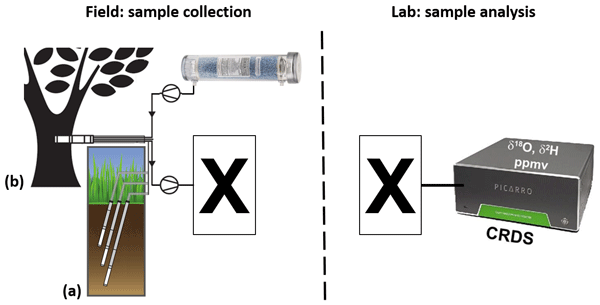
We present a method to collect water vapor samples into bags in the field without an in-field analyser, followed by isotope analysis in the lab. This new method resolves even fine-scaled natural isotope variations. It combines low-cost and lightweight components for maximum spatial and temporal flexibility regarding environmental setups. Hence, it allows for sampling even in terrains that are rather difficult to access, enabling future extended isotope datasets in soil sciences and ecohydrology.
Stefan Seeger and Markus Weiler
Hydrol. Earth Syst. Sci., 27, 3393–3404, https://doi.org/10.5194/hess-27-3393-2023, https://doi.org/10.5194/hess-27-3393-2023, 2023
Short summary
Short summary
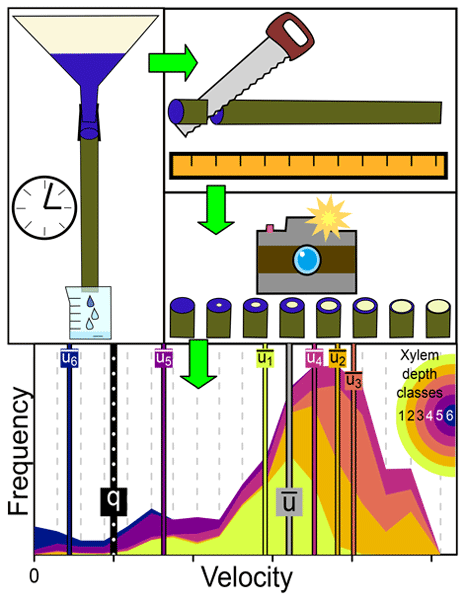
This study proposes a low-budget method to quantify the radial distribution of water transport velocities within trees at a high spatial resolution. We observed a wide spread of water transport velocities within a tree stem section, which were on average 3 times faster than the flux velocity. The distribution of transport velocities has implications for studies that use water isotopic signatures to study root water uptake and usually assume uniform or even implicitly infinite velocities.
Daniel Rasche, Jannis Weimar, Martin Schrön, Markus Köhli, Markus Morgner, Andreas Güntner, and Theresa Blume
Hydrol. Earth Syst. Sci., 27, 3059–3082, https://doi.org/10.5194/hess-27-3059-2023, https://doi.org/10.5194/hess-27-3059-2023, 2023
Short summary
Short summary
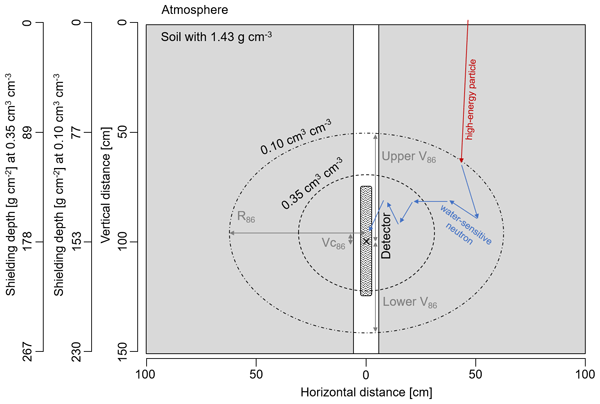
We introduce passive downhole cosmic-ray neutron sensing (d-CRNS) as an approach for the non-invasive estimation of soil moisture in deeper layers of the unsaturated zone which exceed the observational window of above-ground CRNS applications. Neutron transport simulations are used to derive mathematical descriptions and transfer functions, while experimental measurements in an existing groundwater observation well illustrate the feasibility and applicability of the approach.
Andreas Hartmann, Jean-Lionel Payeur-Poirier, and Luisa Hopp
Hydrol. Earth Syst. Sci., 27, 1325–1341, https://doi.org/10.5194/hess-27-1325-2023, https://doi.org/10.5194/hess-27-1325-2023, 2023
Short summary
Short summary
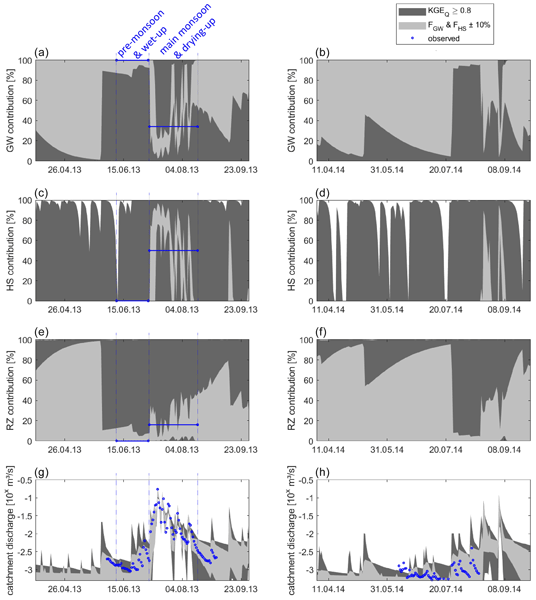
We advance our understanding of including information derived from environmental tracers into hydrological modeling. We present a simple approach that integrates streamflow observations and tracer-derived streamflow contributions for model parameter estimation. We consider multiple observed streamflow components and their variation over time to quantify the impact of their inclusion for streamflow prediction at the catchment scale.
Andreas Hänsler and Markus Weiler
Hydrol. Earth Syst. Sci., 26, 5069–5084, https://doi.org/10.5194/hess-26-5069-2022, https://doi.org/10.5194/hess-26-5069-2022, 2022
Short summary
Short summary
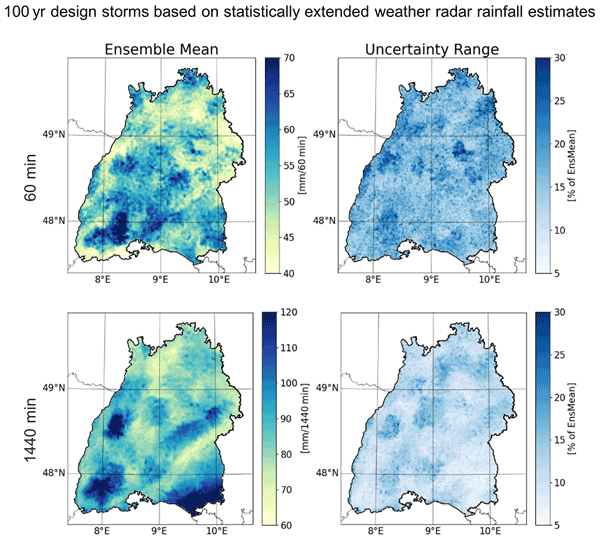
Spatially explicit quantification of design storms is essential for flood risk assessment and planning. However, available datasets are mainly based on spatially interpolated station-based design storms. Since the spatial interpolation of the data inherits a large potential for uncertainty, we develop an approach to be able to derive spatially explicit design storms on the basis of weather radar data. We find that our approach leads to an improved spatial representation of design storms.
Anne Hartmann, Markus Weiler, Konrad Greinwald, and Theresa Blume
Hydrol. Earth Syst. Sci., 26, 4953–4974, https://doi.org/10.5194/hess-26-4953-2022, https://doi.org/10.5194/hess-26-4953-2022, 2022
Short summary
Short summary
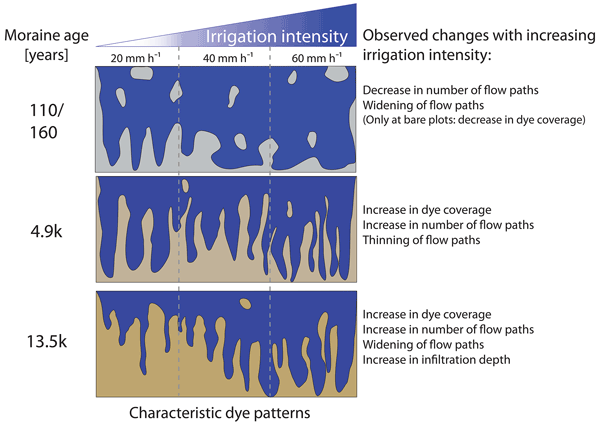
Analyzing the impact of soil age and rainfall intensity on vertical subsurface flow paths in calcareous soils, with a special focus on preferential flow occurrence, shows how water flow paths are linked to the organization of evolving landscapes. The observed increase in preferential flow occurrence with increasing moraine age provides important but rare data for a proper representation of hydrological processes within the feedback cycle of the hydro-pedo-geomorphological system.
Achim Brauer, Ingo Heinrich, Markus J. Schwab, Birgit Plessen, Brian Brademann, Matthias Köppl, Sylvia Pinkerneil, Daniel Balanzategui, Gerhard Helle, and Theresa Blume
DEUQUA Spec. Pub., 4, 41–58, https://doi.org/10.5194/deuquasp-4-41-2022, https://doi.org/10.5194/deuquasp-4-41-2022, 2022
Lena Katharina Schmidt, Till Francke, Erwin Rottler, Theresa Blume, Johannes Schöber, and Axel Bronstert
Earth Surf. Dynam., 10, 653–669, https://doi.org/10.5194/esurf-10-653-2022, https://doi.org/10.5194/esurf-10-653-2022, 2022
Short summary
Short summary
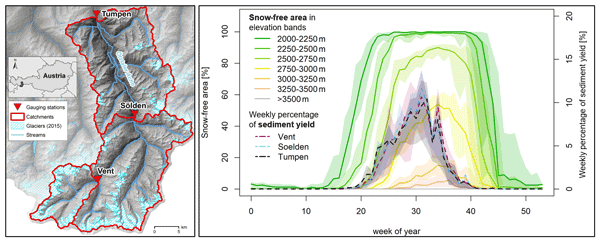
Climate change fundamentally alters glaciated high-alpine areas, but it is unclear how this affects riverine sediment transport. As a first step, we aimed to identify the most important processes and source areas in three nested catchments in the Ötztal, Austria, in the past 15 years. We found that areas above 2500 m were crucial and that summer rainstorms were less influential than glacier melt. These findings provide a baseline for studies on future changes in high-alpine sediment dynamics.
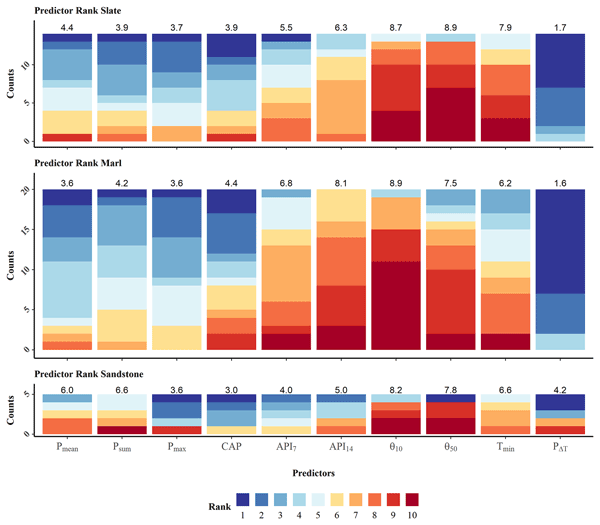
Nils Hinrich Kaplan, Theresa Blume, and Markus Weiler
Hydrol. Earth Syst. Sci., 26, 2671–2696, https://doi.org/10.5194/hess-26-2671-2022, https://doi.org/10.5194/hess-26-2671-2022, 2022
Short summary
Short summary
This study is analyses how characteristics of precipitation events and soil moisture and temperature dynamics during these events can be used to model the associated streamflow responses in intermittent streams. The models are used to identify differences between the dominant controls of streamflow intermittency in three distinct geologies of the Attert catchment, Luxembourg. Overall, soil moisture was found to be the most important control of intermittent streamflow in all geologies.
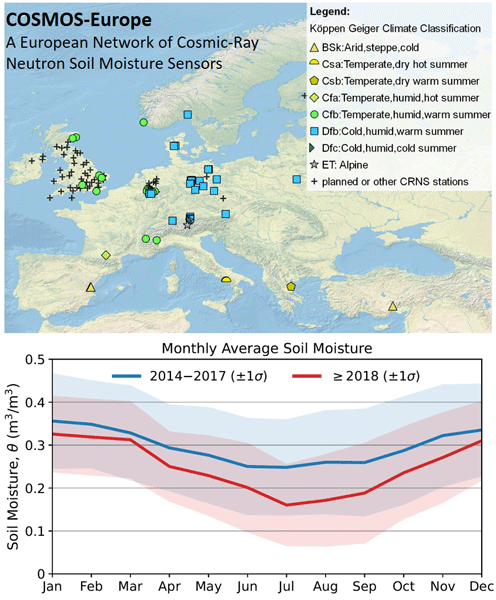
Heye Reemt Bogena, Martin Schrön, Jannis Jakobi, Patrizia Ney, Steffen Zacharias, Mie Andreasen, Roland Baatz, David Boorman, Mustafa Berk Duygu, Miguel Angel Eguibar-Galán, Benjamin Fersch, Till Franke, Josie Geris, María González Sanchis, Yann Kerr, Tobias Korf, Zalalem Mengistu, Arnaud Mialon, Paolo Nasta, Jerzy Nitychoruk, Vassilios Pisinaras, Daniel Rasche, Rafael Rosolem, Hami Said, Paul Schattan, Marek Zreda, Stefan Achleitner, Eduardo Albentosa-Hernández, Zuhal Akyürek, Theresa Blume, Antonio del Campo, Davide Canone, Katya Dimitrova-Petrova, John G. Evans, Stefano Ferraris, Félix Frances, Davide Gisolo, Andreas Güntner, Frank Herrmann, Joost Iwema, Karsten H. Jensen, Harald Kunstmann, Antonio Lidón, Majken Caroline Looms, Sascha Oswald, Andreas Panagopoulos, Amol Patil, Daniel Power, Corinna Rebmann, Nunzio Romano, Lena Scheiffele, Sonia Seneviratne, Georg Weltin, and Harry Vereecken
Earth Syst. Sci. Data, 14, 1125–1151, https://doi.org/10.5194/essd-14-1125-2022, https://doi.org/10.5194/essd-14-1125-2022, 2022
Short summary
Short summary
Monitoring of increasingly frequent droughts is a prerequisite for climate adaptation strategies. This data paper presents long-term soil moisture measurements recorded by 66 cosmic-ray neutron sensors (CRNS) operated by 24 institutions and distributed across major climate zones in Europe. Data processing followed harmonized protocols and state-of-the-art methods to generate consistent and comparable soil moisture products and to facilitate continental-scale analysis of hydrological extremes.

Daniel Rasche, Markus Köhli, Martin Schrön, Theresa Blume, and Andreas Güntner
Hydrol. Earth Syst. Sci., 25, 6547–6566, https://doi.org/10.5194/hess-25-6547-2021, https://doi.org/10.5194/hess-25-6547-2021, 2021
Short summary
Short summary
Cosmic-ray neutron sensing provides areal average soil moisture measurements. We investigated how distinct differences in spatial soil moisture patterns influence the soil moisture estimates and present two approaches to improve the estimate of soil moisture close to the instrument by reducing the influence of soil moisture further afield. Additionally, we show that the heterogeneity of soil moisture can be assessed based on the relationship of different neutron energies.
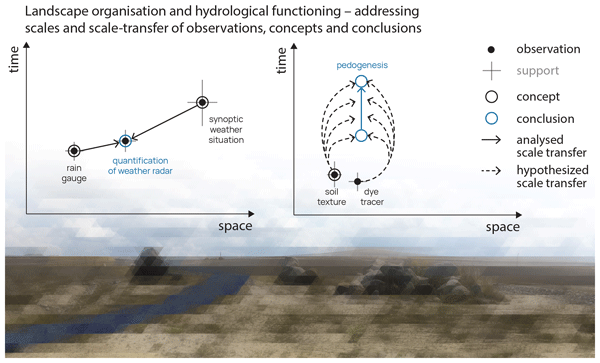
Conrad Jackisch, Sibylle K. Hassler, Tobias L. Hohenbrink, Theresa Blume, Hjalmar Laudon, Hilary McMillan, Patricia Saco, and Loes van Schaik
Hydrol. Earth Syst. Sci., 25, 5277–5285, https://doi.org/10.5194/hess-25-5277-2021, https://doi.org/10.5194/hess-25-5277-2021, 2021
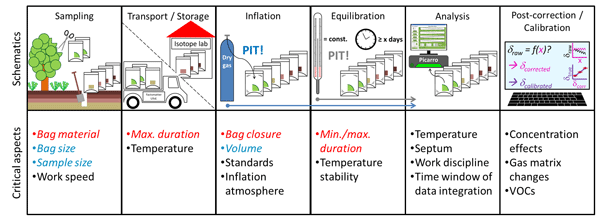
Benjamin Gralher, Barbara Herbstritt, and Markus Weiler
Hydrol. Earth Syst. Sci., 25, 5219–5235, https://doi.org/10.5194/hess-25-5219-2021, https://doi.org/10.5194/hess-25-5219-2021, 2021
Short summary
Short summary
We scrutinized the quickest currently available method for stable isotope analysis of matrix-bound water. Simulating common procedures, we demonstrated the limits of certain materials currently used and identified a reliable and cost-efficient alternative. Further, we calculated the optimum proportions of important protocol aspects critical for precise and accurate analyses. Our unifying protocol suggestions increase data quality and comparability as well as the method's general applicability.

Katharina Blaurock, Burkhard Beudert, Benjamin S. Gilfedder, Jan H. Fleckenstein, Stefan Peiffer, and Luisa Hopp
Hydrol. Earth Syst. Sci., 25, 5133–5151, https://doi.org/10.5194/hess-25-5133-2021, https://doi.org/10.5194/hess-25-5133-2021, 2021
Short summary
Short summary
Dissolved organic carbon (DOC) is an important part of the global carbon cycle with regards to carbon storage, greenhouse gas emissions and drinking water treatment. In this study, we compared DOC export of a small, forested catchment during precipitation events after dry and wet preconditions. We found that the DOC export from areas that are usually important for DOC export was inhibited after long drought periods.
Cited articles
Anderson, A. E., Weiler, M., Alila, Y., and Hudson, R. O.: Dye staining and excavation of a lateral preferential flow network, Hydrol. Earth Syst. Sci., 13, 935–944, https://doi.org/10.5194/hess-13-935-2009, 2009.
Angermann, L., Jackisch, C., Allroggen, N., Sprenger, M., Zehe, E., Tronicke, J., Weiler, M., and Blume, T.: Form and function in hillslope hydrology: characterization of subsurface flow based on response observations, Hydrol. Earth Syst. Sci., 21, 3727–3748, https://doi.org/10.5194/hess-21-3727-2017, 2017.
Behari, J.: Microwave Dielectric Behavior of Wet Soils, 1st edn., Springer Netherlands, Dordrecht, https://doi.org/10.1007/1-4020-3288-9, 2005.
Bishop, K. H., Grip, H., and O'Neill, A.: The origins of acid runoff in a hillslope during storm events, J. Hydrol., 116, 35–61, https://doi.org/10.1016/0022-1694(90)90114-D, 1990.
Blume, T. and van Meerveld, I.: From hillslope to stream: methods to investigate subsurface connectivity, Wiley Interdisciplinary Reviews: Water, 2, 177–198, https://doi.org/10.1002/wat2.1071, 2015.
Blume, T., Zehe, E., and Bronstert, A.: Rainfall – runoff response, event-based runoff coefficients and hydrograph separation, Hydrolog. Sci. J., 52, 843–862, https://doi.org/10.1623/hysj.52.5.843, 2007.
Blume, T., Zehe, E., and Bronstert, A.: Use of soil moisture dynamics and patterns at different spatio-temporal scales for the investigation of subsurface flow processes, Hydrol. Earth Syst. Sci., 13, 1215–1233, https://doi.org/10.5194/hess-13-1215-2009, 2009.
Blume, T., Chifflard, P., Achleitner, S., Hartmann, A., Hergarten, S., Hopp, L., Kohl, B., Leese, F., van Meerveld, I., Reinhardt-Imjela, C., and Weiler, M.: Brief Communication: Investigating the invisible subsurface stormflow process through a thorough and systematic study across sites and scales, EGUsphere [preprint], https://doi.org/10.5194/egusphere-2025-4424, 2025.
Brasil, J. B., Guerreiro, M. S., de Andrade, E. M., de Queiroz Palácio, H. A., Medeiros, P. H. A., and Ribeiro Filho, J. C.: Minimum Rainfall Inter-Event Time to Separate Rainfall Events in a Low Latitude Semi-Arid Environment, Sustainability-Basel, 14, 1721, https://doi.org/10.3390/su14031721, 2022.
Buttle, J. M. and Turcotte, D. S.: Runoff Processes on a Forested Slope on the Canadian Shield, Hydrol. Res., 30, 1–20, https://doi.org/10.2166/nh.1999.0001, 1999.
Chan, C. Y. and Knight, R. J.: Determining water content and saturation from dielectric measurements in layered materials, Water Resour. Res., 35, 85–93, https://doi.org/10.1029/1998WR900039, 1999.
Curtin, F. and Schulz, P.: Multiple correlations and bonferroni's correction, Biol. Psychiat., 44, 775–777, https://doi.org/10.1016/S0006-3223(98)00043-2, 1998.
Detty, J. M. and McGuire, K. J.: Threshold changes in storm runoff generation at a till-mantled headwater catchment, Water Resour. Res., 46, W07525, https://doi.org/10.1029/2009WR008102, 2010.
Dickinson, W. T. and Whiteley, H.: Watershed areas contributing to runoff, IAHS-AISH P., 96, 12–26, 1970.
Du, E., Rhett Jackson, C., Klaus, J., McDonnell, J. J., Griffiths, N. A., Williamson, M. F., Greco, J. L., and Bitew, M.: Interflow dynamics on a low relief forested hillslope: Lots of fill, little spill, J. Hydrol., 534, 648–658, https://doi.org/10.1016/j.jhydrol.2016.01.039, 2016.
Dunkerley, D.: Identifying individual rain events from pluviograph records: a review with analysis of data from an Australian dryland site, Hydrol. Process., 22, 5024–5036, https://doi.org/10.1002/hyp.7122, 2008.
Efron, B. and Tibshirani, R.: Bootstrap Methods for Standard Errors, Confidence Intervals, and Other Measures of Statistical Accuracy, Stat. Sci., 1, https://doi.org/10.1214/ss/1177013815, 1986.
Faé, G. S., Montes, F., Bazilevskaya, E., Añó, R. M., and Kemanian, A. R.: Making Soil Particle Size Analysis by Laser Diffraction Compatible with Standard Soil Texture Determination Methods, Soil Sci. Soc. Am. J., 83, 1244–1252, https://doi.org/10.2136/sssaj2018.10.0385, 2019.
Freer, J., McDonnell, J. J., Beven, K. J., Peters, N. E., Burns, D. A., Hooper, R. P., Aulenbach, B., and Kendall, C.: The role of bedrock topography on subsurface storm flow, Water Resour. Res., 38, 1269, https://doi.org/10.1029/2001WR000872, 2002.
Fu, C., Chen, J., Jiang, H., and Dong, L.: Threshold behavior in a fissured granitic catchment in southern China: 1. Analysis of field monitoring results, Water Resour. Res., 49, 2519–2535, https://doi.org/10.1002/wrcr.20191, 2013.
Graham, C. B., Woods, R. A., and McDonnell, J. J.: Hillslope threshold response to rainfall: (1) A field based forensic approach, J. Hydrol., 393, 65–76, https://doi.org/10.1016/j.jhydrol.2009.12.015, 2010.
Guo, L., Chen, J., and Lin, H.: Subsurface lateral preferential flow network revealed by time-lapse ground-penetrating radar in a hillslope, Water Resour. Res., 50, 9127–9147, https://doi.org/10.1002/2013WR014603, 2014.
Haga, H., Matsumoto, Y., Matsutani, J., Fujita, M., Nishida, K., and Sakamoto, Y.: Flow paths, rainfall properties, and antecedent soil moisture controlling lags to peak discharge in a granitic unchanneled catchment, Water Resour. Res., 41, W12410, https://doi.org/10.1029/2005WR004236, 2005.
Han, X., Liu, J., Srivastava, P., Mitra, S., and He, R.: Effects of critical zone structure on patterns of flow connectivity induced by rainstorms in a steep forested catchment, J. Hydrol., 587, 125032, https://doi.org/10.1016/j.jhydrol.2020.125032, 2020.
Haukoos, J. S. and Lewis, R. J.: Advanced Statistics: Bootstrapping Confidence Intervals for Statistics with “Difficult” Distributions, Acad. Emerg. Med., 12, 360–365, https://doi.org/10.1197/j.aem.2004.11.018, 2005.
Heller, K. and Kleber, A.: Hillslope runoff generation influenced by layered subsurface in a headwater catchment in Ore Mountains, Germany, Environ. Earth Sci., 75, 943, https://doi.org/10.1007/s12665-016-5750-y, 2016.
Hopp, L. and McDonnell, J. J.: Connectivity at the hillslope scale: Identifying interactions between storm size, bedrock permeability, slope angle and soil depth, J. Hydrol., 376, 378–391, https://doi.org/10.1016/j.jhydrol.2009.07.047, 2009.
Hrnčíř, M., Šanda, M., Kulasová, A., and Císlerová, M.: Runoff formation in a small catchment at hillslope and catchment scales, Hydrol. Process., 24, 2248–2256, https://doi.org/10.1002/hyp.7614, 2010.
Hübner, R., Günther, T., Heller, K., Noell, U., and Kleber, A.: Impacts of a capillary barrier on infiltration and subsurface stormflow in layered slope deposits monitored with 3-D ERT and hydrometric measurements, Hydrol. Earth Syst. Sci., 21, 5181–5199, https://doi.org/10.5194/hess-21-5181-2017, 2017.
Kenney, B. C.: Beware of spurious self-correlations!, Water Resour. Res., 18, 1041–1048, https://doi.org/10.1029/WR018i004p01041, 1982.
Kienzler, P. M. and Naef, F.: Subsurface storm flow formation at different hillslopes and implications for the “old water paradox,” Hydrol. Process., 22, 104–116, https://doi.org/10.1002/hyp.6687, 2008.
Kirchner, J. W.: Getting the right answers for the right reasons: Linking measurements, analyses, and models to advance the science of hydrology, Water Resour. Res., 42, W03S04, https://doi.org/10.1029/2005WR004362, 2006.
Kirsch, R. (Ed.): Groundwater Geophysics: A Tool for Hydrogeology, 2nd edn., Springer Berlin Heidelberg, Berlin, Heidelberg, https://doi.org/10.1007/978-3-540-88405-7, 2009.
Knapp, J. L. A., Berghuijs, W. R., Floriancic, M. G., and Kirchner, J. W.: Catchment hydrological response and transport are affected differently by precipitation intensity and antecedent wetness, Hydrol. Earth Syst. Sci., 29, 3673–3685, https://doi.org/10.5194/hess-29-3673-2025, 2025.
Koskelo, A. I., Fisher, T. R., Utz, R. M., and Jordan, T. E.: A new precipitation-based method of baseflow separation and event identification for small watersheds (<50 km2), J. Hydrol., 450–451, 267–278, https://doi.org/10.1016/j.jhydrol.2012.04.055, 2012.
LGRB-Kartenviewer: https://maps.lgrb-bw.de/, last access: 26 August 2024.
Maidment, D. R. (Ed.): Handbook of hydrology, 6. edn., McGraw-Hill, New York, ISBN 13 978-0-07-039732-3, ISBN 10 0-07-039732-5, 1993.
McGlynn, B. L., McDonnel, J. J., and Brammer, D. D.: A review of the evolving perceptual model of hillslope flowpaths at the Maimai catchments, New Zealand, J. Hydrol., 257, 1–26, https://doi.org/10.1016/S0022-1694(01)00559-5, 2002.
McGuire, K. J., Klaus, J., and Jackson, C. R.: JAMES BUTTLE REVIEW: Interflow, subsurface stormflow and throughflow: A synthesis of field work and modelling, Hydrol. Process., 38, e15263, https://doi.org/10.1002/hyp.15263, 2024.
Meerveld, I. T. and Weiler, M.: Hillslope dynamics modeled with increasing complexity, J. Hydrol., 361, 24–40, https://doi.org/10.1016/j.jhydrol.2008.07.019, 2008.
Mei, Y. and Anagnostou, E. N.: A hydrograph separation method based on information from rainfall and runoff records, J. Hydrol., 523, 636–649, https://doi.org/10.1016/j.jhydrol.2015.01.083, 2015.
Millar, D., Buda, A., Duncan, J., and Kennedy, C.: An open-source automated workflow to delineate storm events and evaluate concentration-discharge relationships, Hydrol. Process., 36, e14456, https://doi.org/10.1002/hyp.14456, 2022.
Mosley, M. P.: Streamflow generation in a forested watershed, New Zealand, Water Resour. Res., 15, 795–806, https://doi.org/10.1029/WR015i004p00795, 1979.
Netto, A. M., Pieritz, R. A., and Gaudet, J. P.: Field study on the local variability of soil water content and solute concentration, J. Hydrol., 215, 23–37, https://doi.org/10.1016/S0022-1694(98)00259-5, 1999.
Noguchi, S., Tsuboyama, Y., Sidle, R. C., and Hosoda, I.: Subsurface runoff characteristics from a forest hillslope soil profile including macropores, Hitachi Ohta, Japan, Hydrol. Process., 15, 2131–2149, https://doi.org/10.1002/hyp.278, 2001.
Pangle, L. A., Gregg, J. W., and McDonnell, J. J.: Rainfall seasonality and an ecohydrological feedback offset the potential impact of climate warming on evapotranspiration and groundwater recharge, Water Resour. Res., 50, 1308–1321, https://doi.org/10.1002/2012WR013253, 2014.
Peel, M. C., Finlayson, B. L., and McMahon, T. A.: Updated world map of the Köppen-Geiger climate classification, Hydrol. Earth Syst. Sci., 11, 1633–1644, https://doi.org/10.5194/hess-11-1633-2007, 2007.
Penna, D., Tromp-van Meerveld, H. J., Gobbi, A., Borga, M., and Dalla Fontana, G.: The influence of soil moisture on threshold runoff generation processes in an alpine headwater catchment, Hydrol. Earth Syst. Sci., 15, 689–702, https://doi.org/10.5194/hess-15-689-2011, 2011.
Penna, D., Van Meerveld, H. J., Oliviero, O., Zuecco, G., Assendelft, R. S., Dalla Fontana, G., and Borga, M.: Seasonal changes in runoff generation in a small forested mountain catchment, Hydrol. Process., 29, 2027–2042, https://doi.org/10.1002/hyp.10347, 2015.
Peters, D. L., Buttle, J. M., Taylor, C. H., and LaZerte, B. D.: Runoff Production in a Forested, Shallow Soil, Canadian Shield Basin, Water Resour. Res., 31, 1291–1304, https://doi.org/10.1029/94WR03286, 1995.
Peters, N. E. and Ratcliffe, E. B.: Tracing Hydrologic Pathways Using Chloride at the Panola Mountain Research Watershed, Georgia, USA, Water Air Soil Poll., 105, 263–275, https://doi.org/10.1023/A:1005082332332, 1998.
Pyschik, J. and Weiler, M.: Detecting the occurrence of preferential flow in soils with stable water isotopes, Hydrol. Earth Syst. Sci., 30, 485–501, https://doi.org/10.5194/hess-30-485-2026, 2026.
Roth, K., Schulin, R., Flühler, H., and Attinger, W.: Calibration of time domain reflectometry for water content measurement using a composite dielectric approach, Water Resour. Res., 26, 2267–2273, https://doi.org/10.1029/WR026i010p02267, 1990.
Šanda, M. and Císlerová, M.: Transforming Hydrographs in the Hillslope Subsurface, J. Hydrol. Hydromech., 57, 264–275, https://doi.org/10.2478/v10098-009-0023-z, 2009.
Schmidt, S. A. and Ahn, C.: A Comparative Review of Methods of Using Soil Colors and their Patterns for Wetland Ecology and Management, Commun. Soil Sci. Plan., 50, 1293–1309, https://doi.org/10.1080/00103624.2019.1604737, 2019.
Schwamback, D., Anache, J. A. A., and Wendland, E. C.: Calibration and error investigation of large tipping bucket flow meters, Catena, 209, 105834, https://doi.org/10.1016/j.catena.2021.105834, 2022.
Sidle, R. C., Tsuboyama, Y., Noguchi, S., Hosoda, I., Fujieda, M., and Shimizu, T.: Seasonal hydrologic response at various spatial scales in a small forested catchment, Hitachi Ohta, Japan, J. Hydrol., 168, 227–250, https://doi.org/10.1016/0022-1694(94)02639-S, 1995.
Smirnova, M. A. and Kozlov, D. N.: Soil Properties as Indicators of Soil Water Regime: A Review, Eurasian Soil Sci+., 56, 306–320, https://doi.org/10.1134/S1064229322602396, 2023.
Stewart, R. D., Liu, Z., Rupp, D. E., Higgins, C. W., and Selker, J. S.: A new instrument to measure plot-scale runoff, Geosci. Instrum. Method. Data Syst., 4, 57–64, https://doi.org/10.5194/gi-4-57-2015, 2015.
Tabari, H.: Climate change impact on flood and extreme precipitation increases with water availability, Sci. Rep.-UK, 10, 13768, https://doi.org/10.1038/s41598-020-70816-2, 2020.
Tani, M.: Runoff generation processes estimated from hydrological observations on a steep forested hillslope with a thin soil layer, J. Hydrol., 200, 84–109, https://doi.org/10.1016/S0022-1694(97)00018-8, 1997.
The MathWorks Inc: MATLAB version: 9.11.0 (R2021b), https://www.mathworks.com (last access: 23 June 2026), 2021.
Thoenes, E.: Rainfall and subsurface stormflow event characteristics (1.0.0), https://doi.org/10.48323/VJRR0-EYA46, 2025.
Topp, G. C., Davis, J. L., and Annan, A. P.: Electromagnetic determination of soil water content: Measurements in coaxial transmission lines, Water Resour. Res., 16, 574–582, https://doi.org/10.1029/WR016i003p00574, 1980.
Tromp-van Meerveld, H. J. and McDonnell, J. J.: Threshold relations in subsurface stormflow: 1. A 147-storm analysis of the Panola hillslope, Water Resour. Res., 42, W02410, https://doi.org/10.1029/2004WR003778, 2006a.
Tromp-van Meerveld, H. J. and McDonnell, J. J.: Threshold relations in subsurface stormflow: 2. The fill and spill hypothesis, Water Resour. Res., 420, W02411, https://doi.org/10.1029/2004WR003800, 2006b.
Tsuboyama, Y., Sidle, R. C., Noguchi, S., and Hosoda, I.: Flow and solute transport through the soil matrix and macropores of a hillslope segment, Water Resour. Res., 30, 879–890, https://doi.org/10.1029/93WR03245, 1994.
Uchida, T., Tromp-van Meerveld, I., and McDonnell, J. J.: The role of lateral pipe flow in hillslope runoff response: an intercomparison of non-linear hillslope response, J. Hydrol., 311, 117–133, https://doi.org/10.1016/j.jhydrol.2005.01.012, 2005.
Uhlemann, S., Peruzzo, L., Chou, C., Williams, K. H., Wielandt, S., Wang, C., Falco, N., Wu, Y., Carr, B., Meldrum, P., Chambers, J., and Dafflon, B.: Variations in Bedrock and Vegetation Cover Modulate Subsurface Water Flow Dynamics of a Mountainous Hillslope, Water Resour. Res., 60, e2023WR036137, https://doi.org/10.1029/2023WR036137, 2024.
Weast, R. C.: CRC Handbook of Chemistry and Physics, 67th edn., CRC Press, Boca Raton, FL, USA, ISBN 0849304679, 1986.
Wei, L., Qiu, Z., Zhou, G., Kinouchi, T., and Liu, Y.: Stormflow threshold behaviour in a subtropical mountainous headwater catchment during forest recovery period, Hydrol. Process., 34, 1728–1740, https://doi.org/10.1002/hyp.13658, 2020.
Weiler, M. and McDonnell, J.: Virtual experiments: a new approach for improving process conceptualization in hillslope hydrology, J. Hydrol., 285, 3–18, https://doi.org/10.1016/S0022-1694(03)00271-3, 2004.
Weiler, M. and McDonnell, J.: Conceptualizing lateral preferential flow networks and simulating the effects on gauged and ungauged hillslopes, Water Resour. Res., 430, W03403, https://doi.org/10.1029/2006WR004867, 2007.
Weiler, M. and Naef, F.: Simulating surface and subsurface initiation of macropore flow, J. Hydrol., 273, 139–154, https://doi.org/10.1016/S0022-1694(02)00361-X, 2003.
Weiler, M., McDonnell, J., van Meerveld, I., and Uchida, T.: Subsurface Stormflow, in: Encyclopedia of Hydrological Sciences, vol. 3, https://doi.org/10.1002/0470848944.hsa119, 2006.
Wienhöfer, J. and Zehe, E.: Predicting subsurface stormflow response of a forested hillslope – the role of connected flow paths, Hydrol. Earth Syst. Sci., 18, 121–138, https://doi.org/10.5194/hess-18-121-2014, 2014.
Wilcox, R. R.: Comparing dependent robust correlations, Brit. J. Math. Stat. Psy., 69, 215–224, https://doi.org/10.1111/bmsp.12069, 2016.
Wraith, J. M. and Or, D.: Temperature effects on soil bulk dielectric permittivity measured by time domain reflectometry: Experimental evidence and hypothesis development, Water Resour. Res., 35, 361–369, https://doi.org/10.1029/1998WR900006, 1999.
Zadhoush, H., Giannopoulos, A., and Giannakis, I.: Optimising the Complex Refractive Index Model for Estimating the Permittivity of Heterogeneous Concrete Models, Remote Sens.-Basel, 13, 723, https://doi.org/10.3390/rs13040723, 2021.
Zhang, G., Cui, P., Gualtieri, C., Zhang, J., Ahmed Bazai, N., Zhang, Z., Wang, J., Tang, J., Chen, R., and Lei, M.: Stormflow generation in a humid forest watershed controlled by antecedent wetness and rainfall amounts, J. Hydrol., 603, 127107, https://doi.org/10.1016/j.jhydrol.2021.127107, 2021.
Zwartendijk, B. W., Van Meerveld, H. J., Teuling, A. J., Ghimire, C. P., and Bruijnzeel, L. A.: Rainfall-runoff responses and hillslope moisture thresholds for an upland tropical catchment in Eastern Madagascar subject to long-term slash-and-burn practices, Hydrol. Process., 37, e14937, https://doi.org/10.1002/hyp.14937, 2023.
Short summary
Subsurface stormflow (SSF) is a key runoff mechanism in upland environments. The analysis of SSF at two trenched hillslopes showed that SSF volume was controlled by total rainfall and initial wetness. Peakflow depended on rainfall amount, with initial wetness and rainfall intensity being important for small and large events, respectively. The rate at which SSF increased was linked to rainfall intensity and amount.
Subsurface stormflow (SSF) is a key runoff mechanism in upland environments. The analysis of SSF...


