
Articles | Volume 30, issue 11
https://doi.org/10.5194/hess-30-3455-2026
© Author(s) 2026. This work is distributed under
the Creative Commons Attribution 4.0 License.
the Creative Commons Attribution 4.0 License.
https://doi.org/10.5194/hess-30-3455-2026
© Author(s) 2026. This work is distributed under
the Creative Commons Attribution 4.0 License.
the Creative Commons Attribution 4.0 License.
Research article
| 
05 Jun 2026
Research article |
| 05 Jun 2026
| 05 Jun 2026
Cause-effect discovery in hydrometeorological systems: evaluation of causal discovery methods

Interdisciplinary Centre for Water Research, Indian Institute of Science, Bengaluru, 560012, India
Faculty of Engineering and Information Technology, The University of Melbourne, Melbourne 3010, Victoria, Australia
Murray C. Peel
Faculty of Engineering and Information Technology, The University of Melbourne, Melbourne 3010, Victoria, Australia
Keirnan Fowler
Faculty of Engineering and Information Technology, The University of Melbourne, Melbourne 3010, Victoria, Australia
Dongryeol Ryu
Faculty of Engineering and Information Technology, The University of Melbourne, Melbourne 3010, Victoria, Australia
Bramha Dutt Vishwakarma
Interdisciplinary Centre for Water Research, Indian Institute of Science, Bengaluru, 560012, India
Centre for Earth Sciences, Indian Institute of Science, Bengaluru, 560012, India
Related authors
No articles found.
Maya Raghunath Suryawanshi, Kuruva Satish Kumar, Amin Shakya, Shard Chander, Bhaskar R. Nikam, Nagesh Kumar Dasika, and Bramha Dutt Vishwakarma
EGUsphere, https://doi.org/10.5194/egusphere-2026-5587, https://doi.org/10.5194/egusphere-2026-5587, 2026
This preprint is open for discussion and under review for Hydrology and Earth System Sciences (HESS).
Short summary
Short summary
This study validates mascon (3°) and downscaled (0.5°) GRACE TWSA products using in-situ groundwater observations across India. We improve the downscaling approach of Vishwakarma et al. (2021) by imposing mass conservation at the GRACE mascon scale, enhancing spatial representation while preserving mass consistency. The proposed product is evaluated against existing downscaled datasets and is publicly available through Figshare.
Vandana Sukumaran and Bramha Dutt Vishwakarma
EGUsphere, https://doi.org/10.5194/egusphere-2026-4902, https://doi.org/10.5194/egusphere-2026-4902, 2026
This preprint is open for discussion and under review for Ocean Science (OS).
Short summary
Short summary
Sea level rise poses an imminent threat to coastal communities worldwide. We introduce the Dynamic Search Radius (DSR) algorithm, that chooses altimetry observations within the coastal shelf to represent sea level variability at the coast. DSR-applied coastal altimetry product agree well with tide gauges, with the largest improvements at narrow-shelf coasts, indicating reliable coastal sea level monitoring at monthly or longer scales.
Ziqi Zhang, Keirnan Fowler, Margot Turner, and Joel Hall
EGUsphere, https://doi.org/10.5194/egusphere-2026-4407, https://doi.org/10.5194/egusphere-2026-4407, 2026
Short summary
Short summary
Water planners need reliable tools for dry periods, but many models struggle when drought lasts for years. We simplified the Large Scale Catchment Model (LASCAM) by identifying settings that could be fixed without losing much accuracy. The new version uses fewer settings, is faster to run, and performed as well as or better than the original model and two widely used alternatives, making it a more practical option for future water planning.
Gabrielle Burns, Keirnan Fowler, Murray Peel, and Clare Stephens
Hydrol. Earth Syst. Sci., 30, 4509–4528, https://doi.org/10.5194/hess-30-4509-2026, https://doi.org/10.5194/hess-30-4509-2026, 2026
Short summary
Short summary
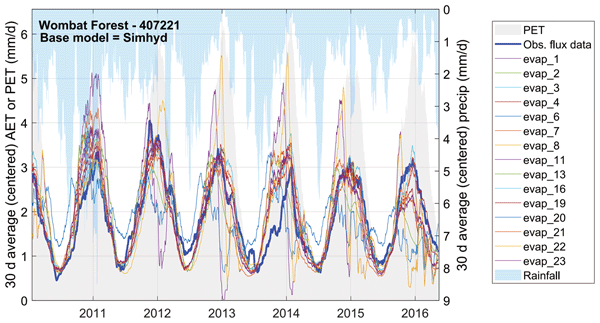
Improving how rainfall-runoff models estimate evapotranspiration is key to better reproducing water partitioning under current conditions, and will increase model realism under future changing conditions. We tested how well different conceptual rainfall-runoff model equations simulate evapotranspiration using Australian catchment and flux tower data. We found one equation consistently worked better than the others. However, even this equation had flaws, pointing to missing vegetation processes.
Hansini Gardiya Weligamage, Keirnan Fowler, Margarita Saft, Tim Peterson, Dongryeol Ryu, and Murray C. Peel
Hydrol. Earth Syst. Sci., 30, 4057–4074, https://doi.org/10.5194/hess-30-4057-2026, https://doi.org/10.5194/hess-30-4057-2026, 2026
Short summary
Short summary
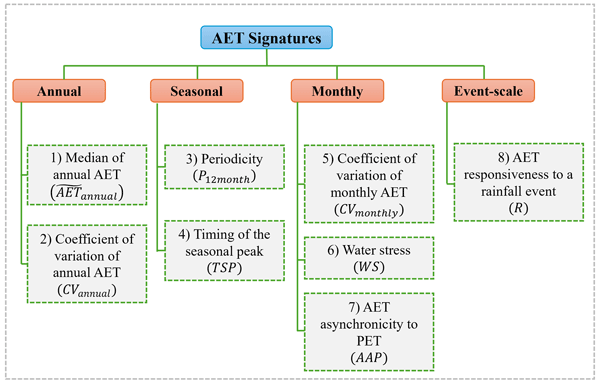
This study is the first to propose actual evapotranspiration (AET) signatures, which can be used to assess multiple aspects of AET dynamics across various temporal scales. As a demonstration, we applied AET signatures to evaluate two remotely sensed (RS) AET products against flux tower AET. The results reveal specific deficiencies in RS AET and provide guidance for selecting appropriate RS AET, including for modelling studies.
Sandra Pool, Keirnan Fowler, Hansini Gardiya Weligamage, and Murray Peel
Hydrol. Earth Syst. Sci., 30, 2797–2815, https://doi.org/10.5194/hess-30-2797-2026, https://doi.org/10.5194/hess-30-2797-2026, 2026
Short summary
Short summary
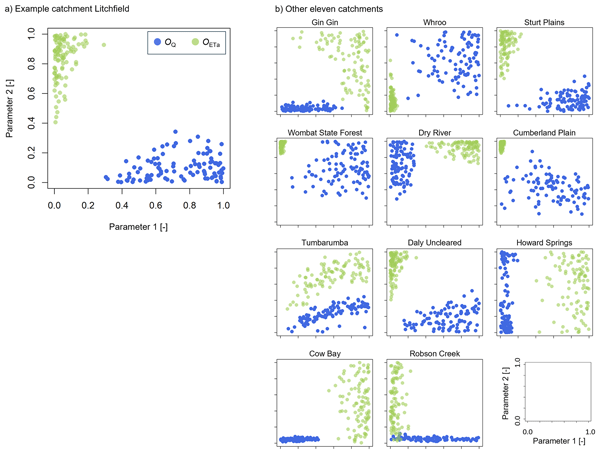
Multivariate calibration has become a widely used method to improve model realism. We found that multivariate calibration can lead to less constrained flux maps and more uncertain hydrographs relative to univariate calibration. These symptoms could be caused by non-overlapping behavioural parameter distributions for the individual calibration variables. The results emphasize that the value of non-discharge data in calibration is contingent on the suitability of the model structure.
Nyree Campion, Keirnan Fowler, Margot Turner, and Joel Hall
EGUsphere, https://doi.org/10.5194/egusphere-2026-378, https://doi.org/10.5194/egusphere-2026-378, 2026
Short summary
Short summary
Globally, many river systems have seen less flow for the same rainfall after periods of long drought. This study investigates this behaviour in over 300 catchments across the south-east and south-west of Australia. Through comparison we infer possible underlying causes, expanding on current studies limited to single locations. Over half the catchments studied displayed a drop in flow. We suggest the influence of pre-existing trends in groundwater and highlight the importance of land use history.
Matthew O. Grant, Anna M. Ukkola, Elisabeth Vogel, Sanaa Hobeichi, Andy J. Pitman, Alex Raymond Borowiak, and Keirnan Fowler
Hydrol. Earth Syst. Sci., 29, 5555–5573, https://doi.org/10.5194/hess-29-5555-2025, https://doi.org/10.5194/hess-29-5555-2025, 2025
Short summary
Short summary
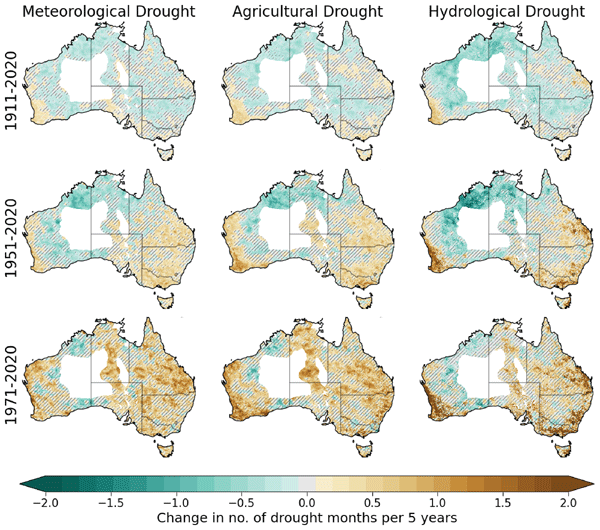
Australia is regularly subjected to severe and widespread drought. By using multiple drought indicators, we show that although there have been widespread decreases in droughts since the beginning of the 20th century, many regions have seen an increase in droughts in more recent decades. Despite these changes, our analysis shows that they remain within the range of observed variability and are not unprecedented in the context of past droughts.
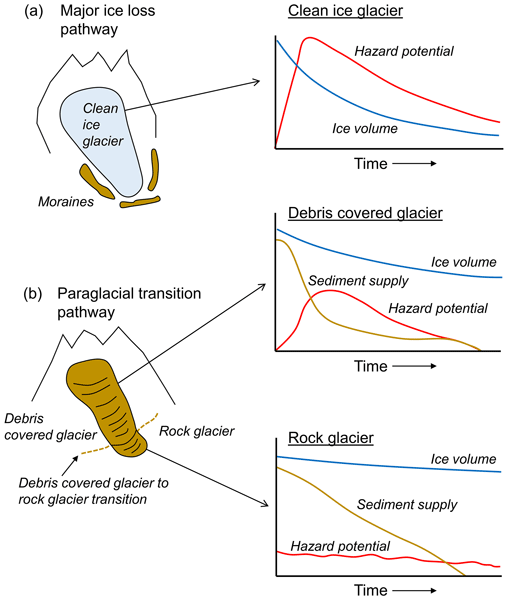
Stephan Harrison, Adina Racoviteanu, Sarah Shannon, Darren Jones, Karen Anderson, Neil Glasser, Jasper Knight, Anna Ranger, Arindan Mandal, Bramha Dutt Vishwakarma, Jeffrey S. Kargel, Dan Shugar, Umesh Haritashya, Dongfeng Li, Aristeidis Koutroulis, Klaus Wyser, and Sam Inglis
The Cryosphere, 19, 4113–4124, https://doi.org/10.5194/tc-19-4113-2025, https://doi.org/10.5194/tc-19-4113-2025, 2025
Short summary
Short summary
Climate change is leading to a global recession of mountain glaciers, and numerical modelling suggests that this will result in the rapid disappearance of many glaciers, impacting water supplies. However, an alternative scenario suggests that increased rock fall and debris flows to valley bottoms will cover glaciers with thick rock debris, slowing melting and transforming glaciers into rock–ice mixtures called rock glaciers. This paper explores these scenarios.
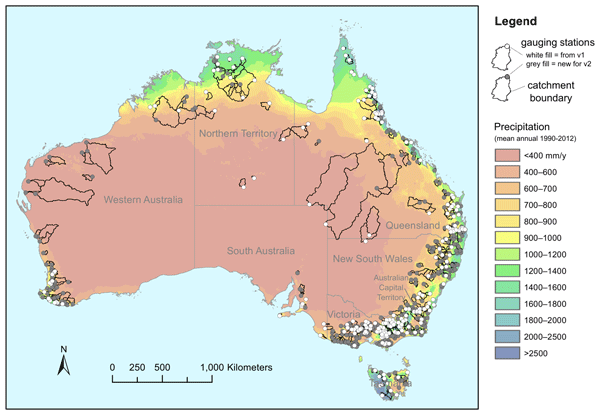
Keirnan J. A. Fowler, Ziqi Zhang, and Xue Hou
Earth Syst. Sci. Data, 17, 4079–4095, https://doi.org/10.5194/essd-17-4079-2025, https://doi.org/10.5194/essd-17-4079-2025, 2025
Short summary
Short summary
This paper presents version 2 of the Australian edition of the Catchment Attributes and Meteorology for Large-sample Studies (CAMELS) series of datasets. CAMELS-AUS (Australia) v2 comprises data for an increased number (561) of catchments, each with long-term monitoring, combining hydrometeorological time series with attributes related to geology, soil, topography, land cover, anthropogenic influence and hydroclimatology. It is freely downloadable from https://zenodo.org/doi/10.5281/zenodo.12575680.
Maya Raghunath Suryawanshi, K. Satish Kumar, Amin Shakya, Shard Chander, Bhaskar Nikam, Nagesh Kumar Dasika, and Bramha Dutt Vishwakarma
EGUsphere, https://doi.org/10.5194/egusphere-2025-2888, https://doi.org/10.5194/egusphere-2025-2888, 2025
Preprint archived
Short summary
Short summary
Several GRACE downscaling products already available for regional analysis owing to its coarse resolution (~3°). But they lack validation (both original GRACE and downscaled product). Here for the first time, we have validated both, Original GRACE and downscaled product. Along with developed a new product which is outperforming the existing products over most of the parts of India. Thereby, we are offering a valuable tool for regional water resource analysis.
Hansini Gardiya Weligamage, Keirnan Fowler, Margarita Saft, Tim Peterson, Dongryeol Ryu, and Murray Peel
EGUsphere, https://doi.org/10.5194/egusphere-2025-3373, https://doi.org/10.5194/egusphere-2025-3373, 2025
Short summary
Short summary
This study adopts actual evapotranspiration (AET) signatures to diagnose deficiencies in simulation of AET within conceptual rainfall-runoff models. Five models are assessed using flux tower data at 14 Australian sites. Even when AET is included in the calibration, the models struggle to represent aspects of AET dynamics, including interannual variability and timing on seasonal and event scales. The approach shows promise for more insightful critique of model simulations.
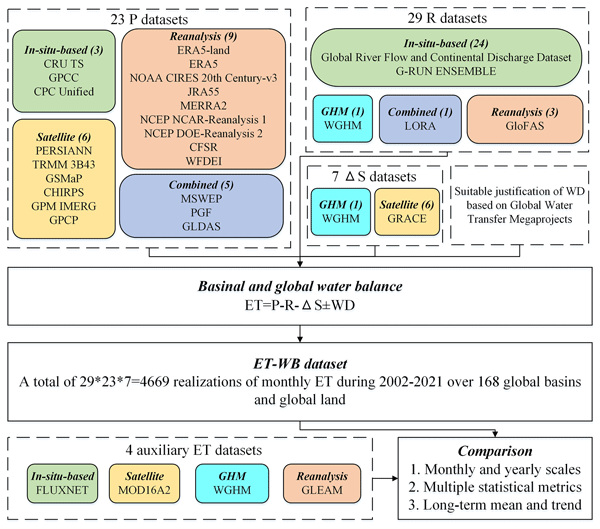
Jinghua Xiong, Abhishek, Li Xu, Hrishikesh A. Chandanpurkar, James S. Famiglietti, Chong Zhang, Gionata Ghiggi, Shenglian Guo, Yun Pan, and Bramha Dutt Vishwakarma
Earth Syst. Sci. Data, 15, 4571–4597, https://doi.org/10.5194/essd-15-4571-2023, https://doi.org/10.5194/essd-15-4571-2023, 2023
Short summary
Short summary
To overcome the shortcomings associated with limited spatiotemporal coverage, input data quality, and model simplifications in prevailing evaporation (ET) estimates, we developed an ensemble of 4669 unique terrestrial ET subsets using an independent mass balance approach. Long-term mean annual ET is within 500–600 mm yr−1 with a unimodal seasonal cycle and several piecewise trends during 2002–2021. The uncertainty-constrained results underpin the notion of increasing ET in a warming climate.
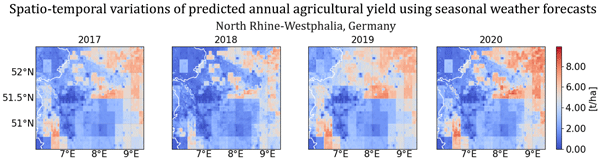
Theresa Boas, Heye Reemt Bogena, Dongryeol Ryu, Harry Vereecken, Andrew Western, and Harrie-Jan Hendricks Franssen
Hydrol. Earth Syst. Sci., 27, 3143–3167, https://doi.org/10.5194/hess-27-3143-2023, https://doi.org/10.5194/hess-27-3143-2023, 2023
Short summary
Short summary
In our study, we tested the utility and skill of a state-of-the-art forecasting product for the prediction of regional crop productivity using a land surface model. Our results illustrate the potential value and skill of combining seasonal forecasts with modelling applications to generate variables of interest for stakeholders, such as annual crop yield for specific cash crops and regions. In addition, this study provides useful insights for future technical model evaluations and improvements.
Inès N. Otosaka, Andrew Shepherd, Erik R. Ivins, Nicole-Jeanne Schlegel, Charles Amory, Michiel R. van den Broeke, Martin Horwath, Ian Joughin, Michalea D. King, Gerhard Krinner, Sophie Nowicki, Anthony J. Payne, Eric Rignot, Ted Scambos, Karen M. Simon, Benjamin E. Smith, Louise S. Sørensen, Isabella Velicogna, Pippa L. Whitehouse, Geruo A, Cécile Agosta, Andreas P. Ahlstrøm, Alejandro Blazquez, William Colgan, Marcus E. Engdahl, Xavier Fettweis, Rene Forsberg, Hubert Gallée, Alex Gardner, Lin Gilbert, Noel Gourmelen, Andreas Groh, Brian C. Gunter, Christopher Harig, Veit Helm, Shfaqat Abbas Khan, Christoph Kittel, Hannes Konrad, Peter L. Langen, Benoit S. Lecavalier, Chia-Chun Liang, Bryant D. Loomis, Malcolm McMillan, Daniele Melini, Sebastian H. Mernild, Ruth Mottram, Jeremie Mouginot, Johan Nilsson, Brice Noël, Mark E. Pattle, William R. Peltier, Nadege Pie, Mònica Roca, Ingo Sasgen, Himanshu V. Save, Ki-Weon Seo, Bernd Scheuchl, Ernst J. O. Schrama, Ludwig Schröder, Sebastian B. Simonsen, Thomas Slater, Giorgio Spada, Tyler C. Sutterley, Bramha Dutt Vishwakarma, Jan Melchior van Wessem, David Wiese, Wouter van der Wal, and Bert Wouters
Earth Syst. Sci. Data, 15, 1597–1616, https://doi.org/10.5194/essd-15-1597-2023, https://doi.org/10.5194/essd-15-1597-2023, 2023
Short summary
Short summary
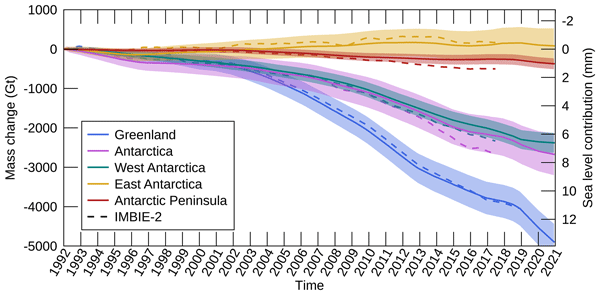
By measuring changes in the volume, gravitational attraction, and ice flow of Greenland and Antarctica from space, we can monitor their mass gain and loss over time. Here, we present a new record of the Earth’s polar ice sheet mass balance produced by aggregating 50 satellite-based estimates of ice sheet mass change. This new assessment shows that the ice sheets have lost (7.5 x 10¹²) t of ice between 1992 and 2020, contributing 21 mm to sea level rise.
Keirnan Fowler, Murray Peel, Margarita Saft, Tim J. Peterson, Andrew Western, Lawrence Band, Cuan Petheram, Sandra Dharmadi, Kim Seong Tan, Lu Zhang, Patrick Lane, Anthony Kiem, Lucy Marshall, Anne Griebel, Belinda E. Medlyn, Dongryeol Ryu, Giancarlo Bonotto, Conrad Wasko, Anna Ukkola, Clare Stephens, Andrew Frost, Hansini Gardiya Weligamage, Patricia Saco, Hongxing Zheng, Francis Chiew, Edoardo Daly, Glen Walker, R. Willem Vervoort, Justin Hughes, Luca Trotter, Brad Neal, Ian Cartwright, and Rory Nathan
Hydrol. Earth Syst. Sci., 26, 6073–6120, https://doi.org/10.5194/hess-26-6073-2022, https://doi.org/10.5194/hess-26-6073-2022, 2022
Short summary
Short summary
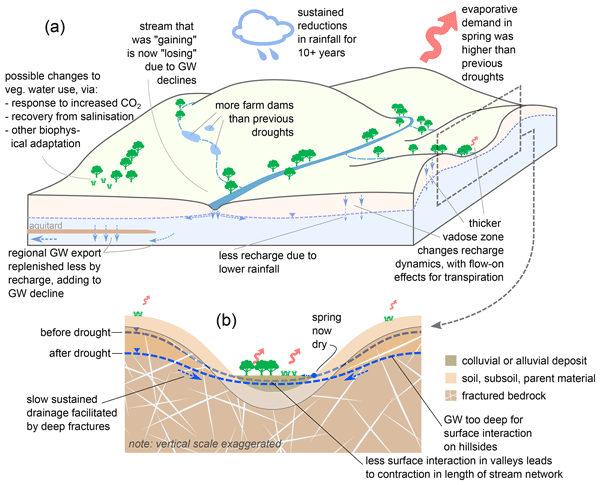
Recently, we have seen multi-year droughts tending to cause shifts in the relationship between rainfall and streamflow. In shifted catchments that have not recovered, an average rainfall year produces less streamflow today than it did pre-drought. We take a multi-disciplinary approach to understand why these shifts occur, focusing on Australia's over-10-year Millennium Drought. We evaluate multiple hypotheses against evidence, with particular focus on the key role of groundwater processes.
Luca Trotter, Wouter J. M. Knoben, Keirnan J. A. Fowler, Margarita Saft, and Murray C. Peel
Geosci. Model Dev., 15, 6359–6369, https://doi.org/10.5194/gmd-15-6359-2022, https://doi.org/10.5194/gmd-15-6359-2022, 2022
Short summary
Short summary
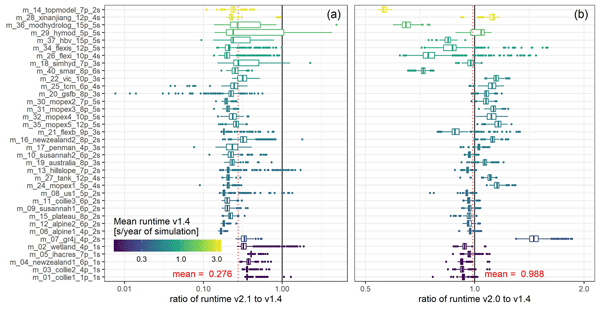
MARRMoT is a piece of software that emulates 47 common models for hydrological simulations. It can be used to run and calibrate these models within a common environment as well as to easily modify them. We restructured and recoded MARRMoT in order to make the models run faster and to simplify their use, while also providing some new features. This new MARRMoT version runs models on average 3.6 times faster while maintaining very strong consistency in their outputs to the previous version.
Fanny Lehmann, Bramha Dutt Vishwakarma, and Jonathan Bamber
Hydrol. Earth Syst. Sci., 26, 35–54, https://doi.org/10.5194/hess-26-35-2022, https://doi.org/10.5194/hess-26-35-2022, 2022
Short summary
Short summary
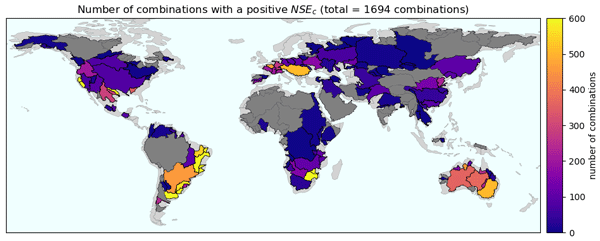
Many data sources are available to evaluate components of the water cycle (precipitation, evapotranspiration, runoff, and terrestrial water storage). Despite this variety, it remains unclear how different combinations of datasets satisfy the conservation of mass. We conducted the most comprehensive analysis of water budget closure on a global scale to date. Our results can serve as a basis to select appropriate datasets for regional hydrological studies.
Cited articles
Abbasizadeh, H., Maca, P., Hanel, M., Troldborg, M., and AghaKouchak, A.: Can causal discovery lead to a more robust prediction model for runoff signatures?, Hydrol. Earth Syst. Sci., 29, 4761–4790, https://doi.org/10.5194/hess-29-4761-2025, 2025. a
Ali, S., Hasan, U., Li, X., Faruque, O., Sampath, A., Huang, Y., Gani, M. O., and Wang, J.: Causality for Earth Science – A Review on Time-series and Spatiotemporal Causality Methods, arXiv [preprint], https://doi.org/10.48550/arXiv.2404.05746, 2024. a
Barriopedro, D., García-Herrera, R., Ordóñez, C., Miralles, D. G., and Salcedo-Sanz, S.: Heat Waves: Physical Understanding and Scientific Challenges, Rev. Geophys., 61, e2022RG000780, https://doi.org/10.1029/2022RG000780, 2023. a
Beven, K.: Changing ideas in hydrology – The case of physically-based models, J. Hydrol., 105, 157–172, https://doi.org/10.1016/0022-1694(89)90101-7, 1989. a
Beven, K., Kirkby, M., Schofield, N., and Tagg, A.: Testing a physically-based flood forecasting model (TOPMODEL) for three U.K. catchments, J. Hydrol., 69, 119–143, https://doi.org/10.1016/0022-1694(84)90159-8, 1984. a
Beven, K. J. and Kirkby, M. J.: A physically based, variable contributing area model of basin hydrology/Un modèle à base physique de zone d'appel variable de l'hydrologie du bassin versant, Hydrol. Sci. J., 24, 43–69, https://doi.org/10.1080/02626667909491834, 1979. a, b, c, d
Bonotto, G., Peterson, T. J., Fowler, K., and Western, A. W.: Identifying Causal Interactions Between Groundwater and Streamflow Using Convergent Cross-Mapping, Water Resour. Res., 58, e2021WR030231, https://doi.org/10.1029/2021WR030231, 2022. a
Bui, H. X., Li, Y.-X., Sherwood, S. C., Reid, K. J., and Dommenget, D.: Assessing the soil moisture-precipitation feedback in Australia: CYGNSS observations, Environ. Res. Lett., 19, 014055, https://doi.org/10.1088/1748-9326/ad15b7, 2023. a
Byrd, R. H., Lu, P., Nocedal, J., and Zhu, C.: A Limited Memory Algorithm for Bound Constrained Optimization, SIAM Journal on Scientific Computing, 16, 1190–1208, https://doi.org/10.1137/0916069, 1995. a
Chauhan, T., Devanand, A., Roxy, M. K., Ashok, K., and Ghosh, S.: River interlinking alters land-atmosphere feedback and changes the Indian summer monsoon, Nat. Commun., 14, 5928, https://doi.org/10.1038/s41467-023-41668-x, 2023. a, b
Chicco, D. and Jurman, G.: The advantages of the Matthews correlation coefficient (MCC) over F1 score and accuracy in binary classification evaluation, BMC Genomics, 21, 6, https://doi.org/10.1186/s12864-019-6413-7, 2020. a
Chollet, F.: Keras, https://keras.io (last access: May 2024), 2015. a
Christian, J. I., Hobbins, M., Hoell, A., Otkin, J. A., Ford, T. W., Cravens, A. E., Powlen, K. A., Wang, H., and Mishra, V.: Flash drought: A state of the science review, WIREs Water, 11, e1714, https://doi.org/10.1002/wat2.1714, 2024. a
Clapp, R. B. and Hornberger, G. M.: Empirical equations for some soil hydraulic properties, Water Resour. Res., 14, 601–604, https://doi.org/10.1029/WR014i004p00601, 1978. a, b, c
Cunningham, W. J. C. W. H. and Schrijver, W. R. P. A.: Combinatorial optimization, NY, United States, https://doi.org/10.1002/9781118033142, 1998. a
Devanand, A., Roxy, M. K., and Ghosh, S.: Coupled Land-Atmosphere Regional Model Reduces Dry Bias in Indian Summer Monsoon Rainfall Simulated by CFSv2, Geophys. Res. Lett., 45, 2476–2486, https://doi.org/10.1002/2018GL077218, 2018. a
Ducharne, A., Koster, R. D., Suarez, M. J., Stieglitz, M., and Kumar, P.: A catchment-based approach to modeling land surface processes in a general circulation model: 2. Parameter estimation and model demonstration, J. Geophys. Res.-Atmos., 105, 24823–24838, https://doi.org/10.1029/2000JD900327, 2000. a, b
Dutra, E., Balsamo, G., Calvet, J., Munier, S., Burke, S., Fink, G., van Dijk, A., Martinez-de la Torre, A., van Beek, R., De Roo, A., Balsamo, G., Calvet, J.-C., Munier, S., Burke, S., Fink, G., van Dijk, A., Martinez-de la Torre, A., van Beek, R., De Roo, A., and Polcher, J.: Report on the improved water resources reanalysis, Tech. rep., EartH2Observe, https://doi.org/10.13140/RG.2.2.14523.67369, 2017. a
Feng, D., Beck, H., Lawson, K., and Shen, C.: The suitability of differentiable, physics-informed machine learning hydrologic models for ungauged regions and climate change impact assessment, Hydrol. Earth Syst. Sci., 27, 2357–2373, https://doi.org/10.5194/hess-27-2357-2023, 2023. a
Gong, C., Zhang, C., Yao, D., Bi, J., Li, W., and Xu, Y.: Causal Discovery from Temporal Data: An Overview and New Perspectives, ACM Comput. Surv., 57, https://doi.org/10.1145/3705297, 2024. a, b
Gong, M., Zhang, K., Schölkopf, B., Glymour, C., and Tao, D.: Causal discovery from temporally aggregated time series, in: Proceedings of the 33rd Conference on Uncertainty in Artificial Intelligence ID 269, edited by: Elidan, G., Kersting, K., and Ihler, A. T., AUAI Press, Corvallis, Oregon, USA, 2017. a
Goodwell, A. E., Jiang, P., Ruddell, B. L., and Kumar, P.: Debates – Does Information Theory Provide a New Paradigm for Earth Science? Causality, Interaction, and Feedback, Water Resour. Res., 56, e2019WR024940, https://doi.org/10.1029/2019WR024940, 2020. a
Gosling, S. N., Müller Schmied, H., Betts, R., Chang, J., Chen, H., Ciais, P., Dankers, R., Döll, P., Eisner, S., Flörke, M., Gerten, D., Grillakis, M., Hagemann, S., Hanasaki, N., Huang, M., Huang, Z., Jerez, S., Kim, H., Koutroulis, A., Leng, G., Liu, J., Liu, X., Mao, G., Masaki, Y., Montavez, J. P., Morfopoulos, C., Oki, T., Orth, R., Ostberg, S., Papadimitriou, L., Pokhrel, Y., Portmann, F., Qi, W., Satoh, Y., Seneviratne, S., Sommer, P. S., Stacke, T., Tang, Q., Tsanis, I., Wada, Y., Wang, X., Zhou, T., Büchner, M., Schewe, J., and Zhao, F.: ISIMIP2a Simulation Data from the Global Water Sector, ISIMIP2a Simulation Data from the Global Water Sector, ISIMIP Repository [data set], https://doi.org/10.48364/ISIMIP.882536, 2023. a, b
Granger, C. W. J.: Investigating Causal Relations by Econometric Models and Cross-spectral Methods, Econometrica, 37, 424–438, https://doi.org/10.2307/1912791, 1969. a, b
Guillod, B. P., Orlowsky, B., Miralles, D. G., Teuling, A. J., and Seneviratne, S. I.: Reconciling spatial and temporal soil moisture effects on afternoon rainfall, Nat. Commun., 6, 6443, https://doi.org/10.1038/ncomms7443, 2015. a
Harris, C. R., Millman, K. J., van der Walt, S. J., Gommers, R., Virtanen, P., Cournapeau, D., Wieser, E., Taylor, J., Berg, S., Smith, N. J., Kern, R., Picus, M., Hoyer, S., van Kerkwijk, M. H., Brett, M., Haldane, A., del Río, J. F., Wiebe, M., Peterson, P., Gérard-Marchant, P., Sheppard, K., Reddy, T., Weckesser, W., Abbasi, H., Gohlke, C., and Oliphant, T. E.: Array programming with NumPy, Nature, 585, 357–362, https://doi.org/10.1038/s41586-020-2649-2, 2020. a
Hasan, U., Hossain, E., and Gani, M. O.: A Survey on Causal Discovery Methods for I.I.D. and Time Series Data, arXiv [preprint], https://doi.org/10.48550/arXiv.2303.15027, 2024. a
Höge, M., Scheidegger, A., Baity-Jesi, M., Albert, C., and Fenicia, F.: Improving hydrologic models for predictions and process understanding using neural ODEs, Hydrol. Earth Syst. Sci., 26, 5085–5102, https://doi.org/10.5194/hess-26-5085-2022, 2022. a
Holder, R.: Multiple regression in hydrology, Institute of hydrology, ISBN 0948540001, 1985. a
Hunter, J. D.: Matplotlib: A 2D graphics environment, Comput. Sci. Eng., 9, 90–95, https://doi.org/10.1109/MCSE.2007.55, 2007. a
Hyvärinen, A., Karhunen, J., and Oja, E.: What is Independent Component Analysis?, chap. 7, 145–164, John Wiley and Sons, Ltd, ISBN 9780471221319, https://doi.org/10.1002/0471221317.ch7, 2001. a, b
Hyvärinen, A., Shimizu, S., and Hoyer, P. O.: Causal modelling combining instantaneous and lagged effects: an identifiable model based on non-Gaussianity, in: Proceedings of the 25th International Conference on Machine Learning, ICML '08, p. 424–431, Association for Computing Machinery, New York, NY, USA, ISBN 9781605582054, https://doi.org/10.1145/1390156.1390210, 2008. a, b, c
Ikeuchi, T., Ide, M., Zeng, Y., Maeda, T. N., and Shimizu, S.: Python package for causal discovery based on LiNGAM, J. Mach. Learn. Res., 24, 1–8, 2023 (code available at: https://github.com/cdt15/lingam, last access: May 2024). a
Jackson, E. K., Roberts, W., Nelsen, B., Williams, G. P., Nelson, E. J., and Ames, D. P.: Introductory overview: Error metrics for hydrologic modelling – A review of common practices and an open source library to facilitate use and adoption, Environ. Model. Softw., 119, 32–48, https://doi.org/10.1016/j.envsoft.2019.05.001, 2019. a
Kirchner, J. W.: Getting the right answers for the right reasons: Linking measurements, analyses, and models to advance the science of hydrology, Water Resour. Res., 42, https://doi.org/10.1029/2005WR004362, 2006. a
Koster, R. D. and Suarez, M. J.: Modeling the land surface boundary in climate models as a composite of independent vegetation stands, J. Geophys. Res.-Atmos., 97, 2697–2715, https://doi.org/10.1029/91JD01696, 1992. a, b, c
Koster, R. D. and Suarez, M. J.: Energy and water balance calculations in the Mosaic LSM, NASA Technical Memorandum 104606, Technical Report Series on Global Modeling and Data Assimilation, vol. 9, 60 pp., 1996. a
Koster, R. D., Suarez, M. J., Ducharne, A., Stieglitz, M., and Kumar, P.: A catchment-based approach to modeling land surface processes in a general circulation model: 1. Model structure, J. Geophys. Res.-Atmos., 105, 24809–24822, https://doi.org/10.1029/2000JD900327, 2000. a, b, c
Kratzert, F., Klotz, D., Herrnegger, M., Sampson, A. K., Hochreiter, S., and Nearing, G. S.: Toward Improved Predictions in Ungauged Basins: Exploiting the Power of Machine Learning, Water Resour. Res., 55, 11344–11354, https://doi.org/10.1029/2019WR026065, 2019. a, b, c
Lehner, B., Verdin, K., and Jarvis, A.: New Global Hydrography Derived From Spaceborne Elevation Data, Eos, Transactions American Geophysical Union, 89, 93–94, https://doi.org/10.1029/2008EO100001, 2008. a
Li, B., Beaudoing, H., and Rodell, M.: NASA/GSFC/HSL (2018), GLDAS Catchment Land Surface Model L4 daily 0.25 x 0.25 degree V2.0, Greenbelt, Maryland, USA, Goddard Earth Sciences Data and Information Services Center (GES DISC), Tech. rep., Goddard Earth Sciences Data and Information Services Center (GES DISC) [data set], https://doi.org/10.5067/LYHA9088MFWQ (last access: 17 April 2024), 2018. a, b, c, d
Li, L., Dai, Y., Shangguan, W., Wei, Z., Wei, N., and Li, Q.: Causality-Structured Deep Learning for Soil Moisture Predictions, J. Hydrometeorol., 23, 1315–1331, https://doi.org/10.1175/JHM-D-21-0206.1, 2022. a
Lynch-Stieglitz, M.: The development and validation of a simple snow model for the GISS GCM, J. Climate, 7, 1842–1855, https://doi.org/10.1175/1520-0442(1994)007<1842:TDAVOA>2.0.CO;2, 1994. a, b
Mishra, A., Mukherjee, S., Merz, B., Singh, V. P., Wright, D. B., Villarini, G., Paul, S., Kumar, D. N., Khedun, C. P., Niyogi, D., Schumann, G., and Stedinger, J. R.: An Overview of Flood Concepts, Challenges, and Future Directions, J. Hydrol. Eng., 27, 03122001, https://doi.org/10.1061/(ASCE)HE.1943-5584.0002164, 2022. a
Nearing, G. S., Kratzert, F., Sampson, A. K., Pelissier, C. S., Klotz, D., Frame, J. M., Prieto, C., and Gupta, H. V.: What Role Does Hydrological Science Play in the Age of Machine Learning?, Water Resour. Res., 57, e2020WR028091, https://doi.org/10.1029/2020WR028091, 2021. a, b, c
Pamfil, R., Sriwattanaworachai, N., Desai, S., Pilgerstorfer, P., Georgatzis, K., Beaumont, P., and Aragam, B.: DYNOTEARS: Structure Learning from Time-Series Data, Proceedings of Machine Learning Research, arXiv, 108, 1595–1605, https://doi.org/10.48550/arXiv.2002.00498, 2020. a, b, c
Park, Y. W. and Klabjan, D.: Bayesian Network Learning via Topological Order, J. Mach. Learn. Res., 18, 1–32, 2017. a
Pearl, J.: Graphs, Causality, and Structural Equation Models, Sociol. Method. Res., 27, 226–284, https://doi.org/10.1177/0049124198027002004, 1998. a
Pedregosa, F., Varoquaux, G., Gramfort, A., Michel, V., Thirion, B., Grisel, O., Blondel, M., Prettenhofer, P., Weiss, R., Dubourg, V., Vanderplas, J., Passos, A., Cournapeau, D., Brucher, M., Perrot, M., and Duchesnay, E.: Scikit-learn: Machine Learning in Python, J. Mach. Learn. Res., 12, 2825–2830, 2011. a
Peel, M. C. and McMahon, T. A.: Historical development of rainfall-runoff modeling, WIREs Water, 7, e1471, https://doi.org/10.1002/wat2.1471, 2020. a
Powers, D. M. W.: Evaluation: from precision, recall and F-measure to ROC, informedness, markedness and correlation, arXiv [preprint], https://doi.org/10.48550/arXiv.2010.16061, 2020. a, b
Project Jupyter, Bussonnier, M., Forde, J., Freeman, J., Granger, B., Head, T., Holdgraf, C., Kelley, K., Nalvarte, G., Osheroff, A., Pacer, M., Panda, Y., Perez, F., Kelley, B. R., and Willing, C.: Binder 2.0 – Reproducible, interactive, sharable environments for science at scale, in: Proceedings of the 17th Python in Science Conference, edited by: Akici, F., Lippa, D., Niederhut, D., and Pacer, M., 113–120, https://doi.org/10.25080/Majora-4af1f417-011, 2018. a
Rinderer, M., Ali, G., and Larsen, L. G.: Assessing structural, functional and effective hydrologic connectivity with brain neuroscience methods: State-of-the-art and research directions, Earth-Sci. Rev., 178, 29–47, https://doi.org/10.1016/j.earscirev.2018.01.009, 2018. a
Ruddell, B. L. and Kumar, P.: Ecohydrologic process networks: 1. Identification, Water Resour. Res., 45, https://doi.org/10.1029/2008WR007279, 2009. a
Runge, J.: Causal network reconstruction from time series: From theoretical assumptions to practical estimation, Chaos, 28, 075310, https://doi.org/10.1063/1.5025050, 2018. a, b
Runge, J., Heitzig, J., Petoukhov, V., and Kurths, J.: Escaping the Curse of Dimensionality in Estimating Multivariate Transfer Entropy, Phys. Rev. Lett., 108, 258701, https://doi.org/10.1103/PhysRevLett.108.258701, 2012. a, b
Runge, J., Nowack, P., Kretschmer, M., Flaxman, S., and Sejdinovic, D.: Detecting and quantifying causal associations in large nonlinear time series datasets, Sci. Adv., 5, eaau4996, https://doi.org/10.1126/sciadv.aau4996, 2019a. a, b
Runge, J., Nowack, P., Kretschmer, M., Flaxman, S., and Sejdinovic, D.: Detecting and quantifying causal associations in large nonlinear time series datasets, Sci. Adv., 5, eaau4996, https://doi.org/10.1126/sciadv.aau4996, 2019b. a, b, c
Samek, W., Montavon, G., Vedaldi, A., Hansen, L. K., and Müller, K.-R.: Explainable AI: interpreting, explaining and visualizing deep learning, vol. 11700, Springer Nature, https://doi.org/10.1007/978-3-030-28954-6, 2019. a
Schellekens, J., Dutra, E., Martínez-de la Torre, A., Balsamo, G., van Dijk, A., Sperna Weiland, F., Minvielle, M., Calvet, J.-C., Decharme, B., Eisner, S., Fink, G., Flörke, M., Peßenteiner, S., van Beek, R., Polcher, J., Beck, H., Orth, R., Calton, B., Burke, S., Dorigo, W., and Weedon, G. P.: A global water resources ensemble of hydrological models: the eartH2Observe Tier-1 dataset, Earth Syst. Sci. Data, 9, 389–413, https://doi.org/10.5194/essd-9-389-2017, 2017. a, b
Schreiber, T.: Measuring Information Transfer, Phys. Rev. Lett., 85, 461–464, https://doi.org/10.1103/PhysRevLett.85.461, 2000. a
Seneviratne, S. I., Corti, T., Davin, E. L., Hirschi, M., Jaeger, E. B., Lehner, I., Orlowsky, B., and Teuling, A. J.: Investigating soil moisture–climate interactions in a changing climate: A review, Earth-Sci. Rev., 99, 125–161, https://doi.org/10.1016/j.earscirev.2010.02.004, 2010. a
Shannon, C. E.: A Mathematical Theory of Communication, Bell System Technical Journal, 27, 379–423, https://doi.org/10.1002/j.1538-7305.1948.tb01338.x, 1948. a
Sheffield, J., Goteti, G., and Wood, E. F.: Development of a 50-Year High-Resolution Global Dataset of Meteorological Forcings for Land Surface Modeling, J. Climate, 19, 3088–3111, https://doi.org/10.1175/JCLI3790.1, 2006. a
Shi, H., Zhao, Y., Liu, S., Cai, H., and Zhou, Z.: A New Perspective on Drought Propagation: Causality, Geophys. Res. Lett., 49, e2021GL096758, https://doi.org/10.1029/2021GL096758, 2022. a
Shimizu, S., Hoyer, P., Hyvärinen, A., and Kerminen, A.: A linear non-gaussian acyclic model for causal discovery, J. Mach. Learn. Res., 7, 2003–2030, 2006. a
Spirtes, P. and Glymour, C.: An algorithm for fast recovery of sparse causal graphs, Soc. Sci. Comput. Rev., 9, 62–72, https://doi.org/10.1177/089443939100900106, 1991. a, b
Tasker, G. D.: Hydrologic regression with weighted least squares, Water Resour. Res., 16, 1107–1113, https://doi.org/10.1029/WR016i006p01107, 1980. a
Tripathy, K. P. and Mishra, A. K.: Deep learning in hydrology and water resources disciplines: concepts, methods, applications, and research directions, J. Hydrol., 628, 130458, https://doi.org/10.1016/j.jhydrol.2023.130458, 2024. a
Tuttle, S. E. and Salvucci, G. D.: Confounding factors in determining causal soil moisture-precipitation feedback, Water Resour. Res., 53, 5531–5544, https://doi.org/10.1002/2016WR019869, 2017. a, b, c
Van Oldenborgh, G. J., Wehner, M. F., Vautard, R., Otto, F. E. L., Seneviratne, S. I., Stott, P. A., Hegerl, G. C., Philip, S. Y., and Kew, S. F.: Attributing and Projecting Heatwaves Is Hard: We Can Do Better, Earth's Future, 10, e2021EF002271, https://doi.org/10.1029/2021EF002271, 2022. a
Vázquez-Patiño, A., Samaniego, E., Campozano, L., and Avilés, A.: Effectiveness of causality-based predictor selection for statistical downscaling: a case study of rainfall in an Ecuadorian Andes basin, Theor. Appl. Climatol., 150, 987–1013, https://doi.org/10.1007/s00704-022-04205-2, 2022. a
Virtanen, P., Gommers, R., Oliphant, T. E., Haberland, M., Reddy, T., Cournapeau, D., Burovski, E., Peterson, P., Weckesser, W., Bright, J., van der Walt, S. J., Brett, M., Wilson, J., Millman, K. J., Mayorov, N., Nelson, A. R. J., Jones, E., Kern, R., Larson, E., Carey, C. J., Polat, İ., Feng, Y., Moore, E. W., VanderPlas, J., Laxalde, D., Perktold, J., Cimrman, R., Henriksen, I., Quintero, E. A., Harris, C. R., Archibald, A. M., Ribeiro, A. H., Pedregosa, F., van Mulbregt, P., and SciPy 1.0 Contributors: SciPy 1.0: Fundamental Algorithms for Scientific Computing in Python, Nature Methods, 17, 261–272, https://doi.org/10.1038/s41592-019-0686-2, 2020. a
Vivek Kumar, Y.: lsmvivek/project_ci_eval: Release for Zenodo archive (hess-accepted-v1), Zenodo [code], https://doi.org/10.5281/zenodo.20337850, 2026. a
Voortman, M., Dash, D., and Druzdzel, M. J.: Learning why things change: the difference-based causality learner, in: Proceedings of the Twenty-Sixth Conference on Uncertainty in Artificial Intelligence, UAI'10, 641–650, AUAI Press, Arlington, Virginia, USA, ISBN 9780974903965, 2010. a
Wang, L., Gu, H., Liu, L., Liang, X., Chen, S., and Xu, Y.-P.: Revealing joint evolutions and causal interactions in complex ecohydrological systems by a network-based framework, Hydrol. Earth Syst. Sci., 29, 361–379, https://doi.org/10.5194/hess-29-361-2025, 2025. a
Wang, Y., Yang, J., Chen, Y., De Maeyer, P., Li, Z., and Duan, W.: Detecting the causal effect of soil moisture on precipitation using convergent cross mapping, Sci. Rep., 8, 12171, https://doi.org/10.1038/s41598-018-30669-2, 2018. a
Warszawski, L., Frieler, K., Huber, V., Piontek, F., Serdeczny, O., and Schewe, J.: The Inter-Sectoral Impact Model Intercomparison Project (ISI–MIP): Project framework, P. Natl. Acad. Sci. USA, 111, 3228–3232, https://doi.org/10.1073/pnas.1312330110, 2014. a
Waskom, M. L.: seaborn: statistical data visualization, J. Open Source Softw., 6, 3021, https://doi.org/10.21105/joss.03021, 2021. a
Wu, C. and Chau, K.: Rainfall–runoff modeling using artificial neural network coupled with singular spectrum analysis, J. Hydrol., 399, 394–409, https://doi.org/10.1016/j.jhydrol.2011.01.017, 2011. a
Wu, T., Xu, L., Lv, Y., Cai, R., Pan, Z., Zhang, X., Zhang, X., and Chen, N.: Integrating causal inference with ConvLSTM networks for spatiotemporal forecasting of root zone soil moisture, J. Hydrol., 659, 133246, https://doi.org/10.1016/j.jhydrol.2025.133246, 2025. a
Xu, T. and Liang, F.: Machine learning for hydrologic sciences: An introductory overview, WIREs Water, 8, e1533, https://doi.org/10.1002/wat2.1533, 2021. a
Yuan, K., Zhu, Q., Li, F., Riley, W. J., Torn, M., Chu, H., McNicol, G., Chen, M., Knox, S., Delwiche, K., Wu, H., Baldocchi, D., Ma, H., Desai, A. R., Chen, J., Sachs, T., Ueyama, M., Sonnentag, O., Helbig, M., Tuittila, E.-S., Jurasinski, G., Koebsch, F., Campbell, D., Schmid, H. P., Lohila, A., Goeckede, M., Nilsson, M. B., Friborg, T., Jansen, J., Zona, D., Euskirchen, E., Ward, E. J., Bohrer, G., Jin, Z., Liu, L., Iwata, H., Goodrich, J., and Jackson, R.: Causality guided machine learning model on wetland CH4 emissions across global wetlands, Agr. Forest Meteorol., 324, 109115, https://doi.org/10.1016/j.agrformet.2022.109115, 2022. a
Zhang, W. and Montgomery, D. R.: Digital elevation model grid size, landscape representation, and hydrologic simulations, Water Resour. Res., 30, 1019–1028, https://doi.org/10.1029/93WR03553, 1994. a
Zhang, Y., Chiew, F. H. S., Li, M., and Post, D.: Predicting Runoff Signatures Using Regression and Hydrological Modeling Approaches, Water Resour. Res., 54, 7859–7878, https://doi.org/10.1029/2018WR023325, 2018. a
Zheng, X., Aragam, B., Ravikumar, P. K., and Xing, E. P.: DAGs with NO TEARS: Continuous Optimization for Structure Learning, in: Advances in Neural Information Processing Systems, edited by Bengio, S., Wallach, H., Larochelle, H., Grauman, K., Cesa-Bianchi, N., and Garnett, R., vol. 31, Curran Associates, Inc., arXiv [preprint], https://doi.org/10.48550/arXiv.1803.01422, 2018. a
Zou, L., Zha, Y., Diao, Y., Tang, C., Gu, W., and Shao, D.: Coupling the causal inference and informer networks for short-term forecasting in irrigation water usage, Water Resour. Manage., 37, 427–449, https://doi.org/10.1007/s11269-022-03381-0, 2023. a, b
Short summary
Identifying drivers is crucial for process understanding and predictions. In Hydrometeorological systems, many variables are closely related, and common methods often rely on correlation. We describe theoretically distinct methods of discovering cause-effect relations from data. We evaluate them in a large simulated environment. Results show that finding cause-effect relations provides a parsimonious picture and to obtain robust predictions, especially under changing environmental conditions.
Identifying drivers is crucial for process understanding and predictions. In Hydrometeorological...


