
Articles | Volume 30, issue 9
https://doi.org/10.5194/hess-30-2837-2026
© Author(s) 2026. This work is distributed under
the Creative Commons Attribution 4.0 License.
the Creative Commons Attribution 4.0 License.
https://doi.org/10.5194/hess-30-2837-2026
© Author(s) 2026. This work is distributed under
the Creative Commons Attribution 4.0 License.
the Creative Commons Attribution 4.0 License.
Research article
| 
12 May 2026
Research article |
| 12 May 2026
| 12 May 2026
Evaluation of a socio-hydrological water resource model for drought management in groundwater-rich areas

School of Geographical Sciences, University of Bristol, Bristol, United Kingdom
British Geological Survey, Edinburgh, United Kingdom
Gemma Coxon
School of Geographical Sciences, University of Bristol, Bristol, United Kingdom
Saskia Salwey
Department of Physical Geography, Faculty of Geosciences, Utrecht University, Utrecht, the Netherlands
Francesca Pianosi
School of Civil, Aerospace and Design Engineering, University of Bristol, Bristol, United Kingdom
Related authors
Riccardo Biella, Anastasiya Shyrokaya, Monica Ionita, Raffaele Vignola, Samuel J. Sutanto, Andrijana Todorovic, Claudia Teutschbein, Daniela Cid, Maria Carmen Llasat, Pedro Alencar, Alessia Matanó, Elena Ridolfi, Benedetta Moccia, Ilias Pechlivanidis, Anne van Loon, Doris E. Wendt, Elin Stenfors, Fabio Russo, Jean-Philippe Vidal, Lucy Barker, Mariana Madruga de Brito, Marleen Lam, Monika Bláhová, Patricia Trambauer, Raed Hamed, Scott J. McGrane, Serena Ceola, Sigrid J. Bakke, Svitlana Krakovska, Viorica Nagavciuc, Faranak Tootoonchi, Giuliano Di Baldassarre, Sandra Hauswirth, Shreedhar Maskey, Svitlana Zubkovych, Marthe Wens, and Lena M. Tallaksen
Nat. Hazards Earth Syst. Sci., 25, 4475–4501, https://doi.org/10.5194/nhess-25-4475-2025, https://doi.org/10.5194/nhess-25-4475-2025, 2025
Short summary
Short summary
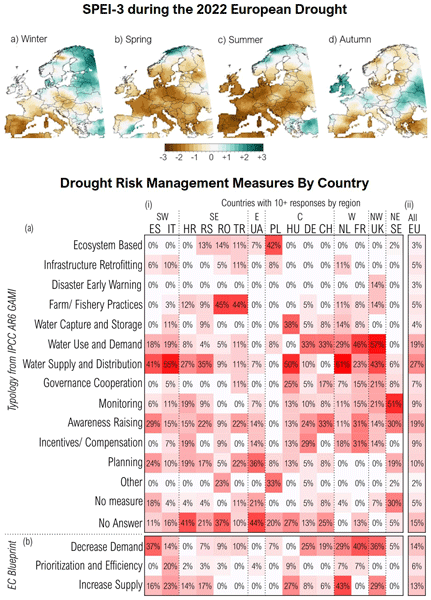
The DitA (Drought in the Anthropocene) network's study on the 2022 European drought reveals growing risks, varied impacts, and fragmented, short-term management. Based on a survey of water managers, it explores risk, impacts, strategies, and their evolution. While challenges persist, signs of improvement show readiness for change. The authors call for a European Drought Directive to unify and guide future drought risk management.
Yanchen Zheng, Gemma Coxon, Mostaquimur Rahman, Ross Woods, Saskia Salwey, Youtong Rong, and Doris E. Wendt
Geosci. Model Dev., 18, 4247–4271, https://doi.org/10.5194/gmd-18-4247-2025, https://doi.org/10.5194/gmd-18-4247-2025, 2025
Short summary
Short summary
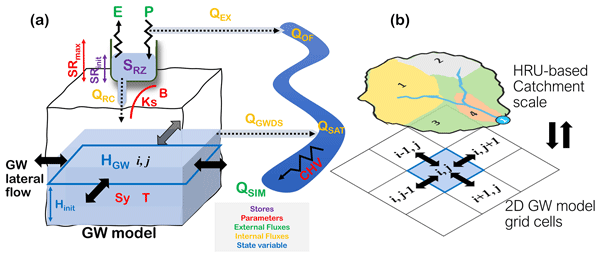
Groundwater is vital for people and ecosystems, but most physical models lack the representation of surface–groundwater interactions, leading to inaccurate streamflow predictions in groundwater-rich areas. This study presents DECIPHeR-GW v1, which links surface and groundwater systems to improve predictions of streamflow and groundwater levels. Tested across England and Wales, DECIPHeR-GW shows high accuracy, especially in southeast England, making it a valuable tool for large-scale water management.
Heidi Kreibich, Kai Schröter, Giuliano Di Baldassarre, Anne F. Van Loon, Maurizio Mazzoleni, Guta Wakbulcho Abeshu, Svetlana Agafonova, Amir AghaKouchak, Hafzullah Aksoy, Camila Alvarez-Garreton, Blanca Aznar, Laila Balkhi, Marlies H. Barendrecht, Sylvain Biancamaria, Liduin Bos-Burgering, Chris Bradley, Yus Budiyono, Wouter Buytaert, Lucinda Capewell, Hayley Carlson, Yonca Cavus, Anaïs Couasnon, Gemma Coxon, Ioannis Daliakopoulos, Marleen C. de Ruiter, Claire Delus, Mathilde Erfurt, Giuseppe Esposito, Didier François, Frédéric Frappart, Jim Freer, Natalia Frolova, Animesh K. Gain, Manolis Grillakis, Jordi Oriol Grima, Diego A. Guzmán, Laurie S. Huning, Monica Ionita, Maxim Kharlamov, Dao Nguyen Khoi, Natalie Kieboom, Maria Kireeva, Aristeidis Koutroulis, Waldo Lavado-Casimiro, Hong-Yi Li, Maria Carmen LLasat, David Macdonald, Johanna Mård, Hannah Mathew-Richards, Andrew McKenzie, Alfonso Mejia, Eduardo Mario Mendiondo, Marjolein Mens, Shifteh Mobini, Guilherme Samprogna Mohor, Viorica Nagavciuc, Thanh Ngo-Duc, Huynh Thi Thao Nguyen, Pham Thi Thao Nhi, Olga Petrucci, Nguyen Hong Quan, Pere Quintana-Seguí, Saman Razavi, Elena Ridolfi, Jannik Riegel, Md Shibly Sadik, Nivedita Sairam, Elisa Savelli, Alexey Sazonov, Sanjib Sharma, Johanna Sörensen, Felipe Augusto Arguello Souza, Kerstin Stahl, Max Steinhausen, Michael Stoelzle, Wiwiana Szalińska, Qiuhong Tang, Fuqiang Tian, Tamara Tokarczyk, Carolina Tovar, Thi Van Thu Tran, Marjolein H. J. van Huijgevoort, Michelle T. H. van Vliet, Sergiy Vorogushyn, Thorsten Wagener, Yueling Wang, Doris E. Wendt, Elliot Wickham, Long Yang, Mauricio Zambrano-Bigiarini, and Philip J. Ward
Earth Syst. Sci. Data, 15, 2009–2023, https://doi.org/10.5194/essd-15-2009-2023, https://doi.org/10.5194/essd-15-2009-2023, 2023
Short summary
Short summary
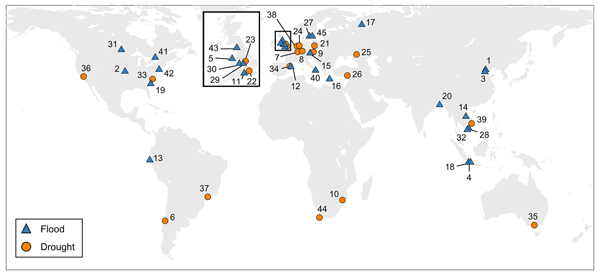
As the adverse impacts of hydrological extremes increase in many regions of the world, a better understanding of the drivers of changes in risk and impacts is essential for effective flood and drought risk management. We present a dataset containing data of paired events, i.e. two floods or two droughts that occurred in the same area. The dataset enables comparative analyses and allows detailed context-specific assessments. Additionally, it supports the testing of socio-hydrological models.
Veit Blauhut, Michael Stoelzle, Lauri Ahopelto, Manuela I. Brunner, Claudia Teutschbein, Doris E. Wendt, Vytautas Akstinas, Sigrid J. Bakke, Lucy J. Barker, Lenka Bartošová, Agrita Briede, Carmelo Cammalleri, Ksenija Cindrić Kalin, Lucia De Stefano, Miriam Fendeková, David C. Finger, Marijke Huysmans, Mirjana Ivanov, Jaak Jaagus, Jiří Jakubínský, Svitlana Krakovska, Gregor Laaha, Monika Lakatos, Kiril Manevski, Mathias Neumann Andersen, Nina Nikolova, Marzena Osuch, Pieter van Oel, Kalina Radeva, Renata J. Romanowicz, Elena Toth, Mirek Trnka, Marko Urošev, Julia Urquijo Reguera, Eric Sauquet, Aleksandra Stevkov, Lena M. Tallaksen, Iryna Trofimova, Anne F. Van Loon, Michelle T. H. van Vliet, Jean-Philippe Vidal, Niko Wanders, Micha Werner, Patrick Willems, and Nenad Živković
Nat. Hazards Earth Syst. Sci., 22, 2201–2217, https://doi.org/10.5194/nhess-22-2201-2022, https://doi.org/10.5194/nhess-22-2201-2022, 2022
Short summary
Short summary
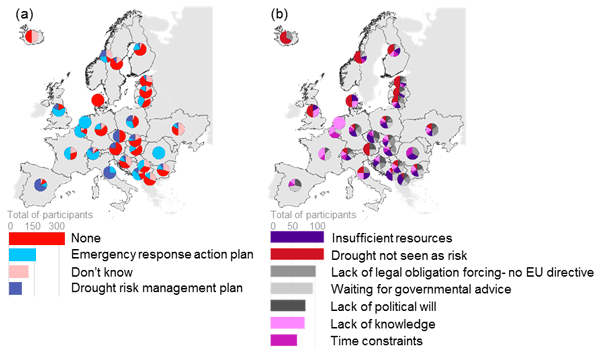
Recent drought events caused enormous damage in Europe. We therefore questioned the existence and effect of current drought management strategies on the actual impacts and how drought is perceived by relevant stakeholders. Over 700 participants from 28 European countries provided insights into drought hazard and impact perception and current management strategies. The study concludes with an urgent need to collectively combat drought risk via a European macro-level drought governance approach.
Doris E. Wendt, John P. Bloomfield, Anne F. Van Loon, Margaret Garcia, Benedikt Heudorfer, Joshua Larsen, and David M. Hannah
Nat. Hazards Earth Syst. Sci., 21, 3113–3139, https://doi.org/10.5194/nhess-21-3113-2021, https://doi.org/10.5194/nhess-21-3113-2021, 2021
Short summary
Short summary
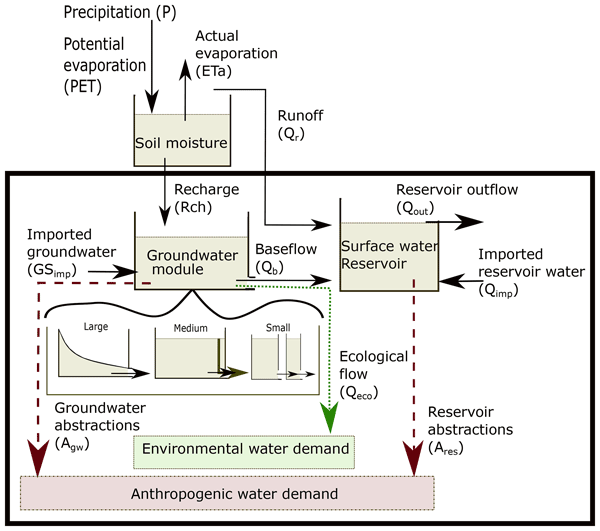
Managing water demand and supply during droughts is complex, as highly pressured human–water systems can overuse water sources to maintain water supply. We evaluated the impact of drought policies on water resources using a socio-hydrological model. For a range of hydrogeological conditions, we found that integrated drought policies reduce baseflow and groundwater droughts most if extra surface water is imported, reducing the pressure on water resources during droughts.
Tamara Leins, Nikolai Späth, Jan Seibert, Francesca Pianosi, Christian Reinhardt-Imjela, and Andreas Hartmann
EGUsphere, https://doi.org/10.5194/egusphere-2026-4470, https://doi.org/10.5194/egusphere-2026-4470, 2026
This preprint is open for discussion and under review for Hydrology and Earth System Sciences (HESS).
Short summary
Short summary
In this study, we found large uncertainties in the simulation of Subsurface Stormflow (SSF) in a lumped hydrological model using only discharge data for parameter estimation. High-flow-based parameter estimation could extract some additional information, but SSF-specific data remain necessary to achieve more realistic SSF simulations. Occurrence uncertainty dominated total SSF uncertainty, suggesting proxy data on SSF occurrence could already substantially reduce SSF simulation uncertainties.
Gemma Coxon, Yanchen Zheng, Rafael Barbedo, Hollie Cooper, Felipe Fileni, Hayley J. Fowler, Matt Fry, Amy Green, Tom Gribbin, Helen Harfoot, Elizabeth Lewis, Germano Gondim Ribeiro Neto, Xiaobin Qiu, Saskia Salwey, and Doris E. Wendt
Earth Syst. Sci. Data, 18, 4345–4371, https://doi.org/10.5194/essd-18-4345-2026, https://doi.org/10.5194/essd-18-4345-2026, 2026
Short summary
Short summary
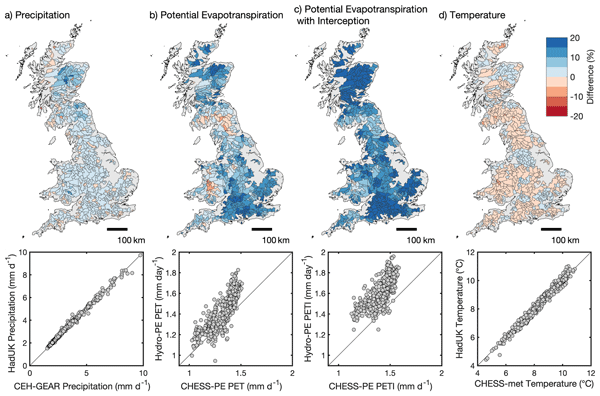
We present the second version of a large-sample catchment hydrology dataset for Great Britain. The dataset collates (1) climate, river flow and groundwater timeseries at hourly to monthly timescales, (2) catchment attributes characterising topography, climate, streamflow, land cover, soils, hydrogeology and human influences, and (3) catchment boundaries for 671 catchments across Great Britain. The dataset is publicly available to use in a wide range of environmental and modelling analyses.
Qidong Fang, Mostaquimur Rahman, Thorsten Wagener, and Francesca Pianosi
EGUsphere, https://doi.org/10.5194/egusphere-2026-3267, https://doi.org/10.5194/egusphere-2026-3267, 2026
This preprint is open for discussion and under review for Hydrology and Earth System Sciences (HESS).
Short summary
Short summary
It is unclear whether deep learning models can predict groundwater level at places without measurements using attributes of the places. Our deep learning model captured temporal variation well, especially in more responsive aquifers, similarly to a process-based model. Interpretation tools showed that meteorological and environmental information at places helped predictions at unseen wells. We highlight the potential of deep learning models for regional groundwater level predictions.
Ryoko Araki, Anne Holt, John C. Hammond, Admin Husic, Gemma Coxon, and Hilary K. McMillan
Hydrol. Earth Syst. Sci., 30, 3647–3673, https://doi.org/10.5194/hess-30-3647-2026, https://doi.org/10.5194/hess-30-3647-2026, 2026
Short summary
Short summary
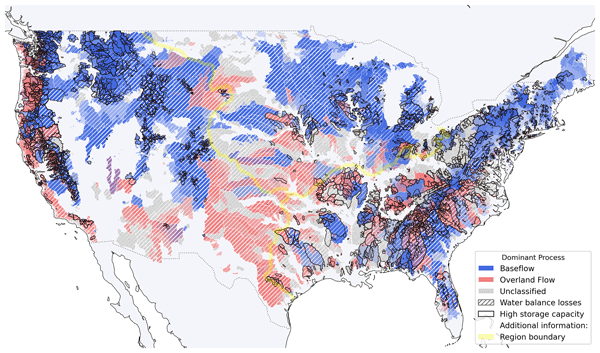
We mapped dominant hydrologic processes across the United States by analyzing observed streamflow dynamics. Using random forest models and interpretable machine learning techniques, we predicted processes in data-scarce regions and identified key drivers such as climate, soil and geology, land cover, topography, and human influence. The resulting maps of dominant processes and their drivers reveal strong regional patterns that guide hydrologic model selection and water resource management.
Francesca Pianosi, Georgios Sarailidis, Kirsty Styles, Philip Oldham, Stephen Hutchings, Rob Lamb, and Thorsten Wagener
Nat. Hazards Earth Syst. Sci., 26, 1727–1743, https://doi.org/10.5194/nhess-26-1727-2026, https://doi.org/10.5194/nhess-26-1727-2026, 2026
Short summary
Short summary
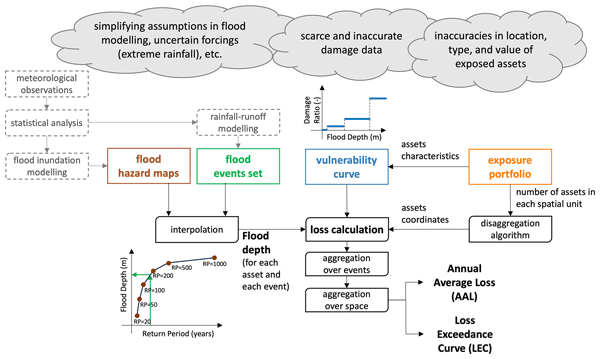
Mathematical modelling is essential to support flood risk management. As these models simulate complex interactions between climate, the natural and the built environment, they unavoidably embed a range of simplifying assumptions. In this paper, we propose a more rigorous approach to analyse the impact of uncertain assumptions on modelling results. This is important to improve model transparency and set priorities for improving models.
Felipe Fileni, Hayley J. Fowler, Elizabeth Lewis, Fiona McLay, Gemma Coxon, David Archer, Emma Bruce, Longzhi Yang, Matt Fry, Hollie Cooper, and Ollie Swain
EGUsphere, https://doi.org/10.5194/egusphere-2026-277, https://doi.org/10.5194/egusphere-2026-277, 2026
Short summary
Short summary
This study develops and applies a national framework to identify and flag issues in UK river flow data by combining systematic visual checks with automated tests. We demonstrate the importance of visual inspection, refine and sensitivity-test traditional quality-control methods, and develop new high-flow checks tailored to high-resolution data. We then quantify the frequency of these issues and demonstrate that, if overlooked, they can impact scientific results and lead to misleading conclusions
Felipe Fileni, Hayley J. Fowler, Elizabeth Lewis, Matt Fry, Hollie Cooper, Ollie Swain, Fiona McLay, Gemma Coxon, Emma Bruce, Longzhi Yang, and David Archer
Earth Syst. Sci. Data Discuss., https://doi.org/10.5194/essd-2026-152, https://doi.org/10.5194/essd-2026-152, 2026
Revised manuscript under review for ESSD
Short summary
Short summary
River flow data recorded at 15-minute resolution has been collected across the UK for over 70 years, but it has been difficult to access and use consistently. We brought these records together into a single national dataset, checked them for errors, harmonised different records, and clearly documented any issues and suspect values. The result is a reliable and transparent resource that supports better flood forecasting, water management, and research on climate change impacts on river flows.
William Veness, Alejandro Dussaillant, Gemma Coxon, Simon De Stercke, Gareth H. Old, Matthew Fry, Jonathan G. Evans, and Wouter Buytaert
Hydrol. Earth Syst. Sci., 29, 6201–6219, https://doi.org/10.5194/hess-29-6201-2025, https://doi.org/10.5194/hess-29-6201-2025, 2025
Short summary
Short summary
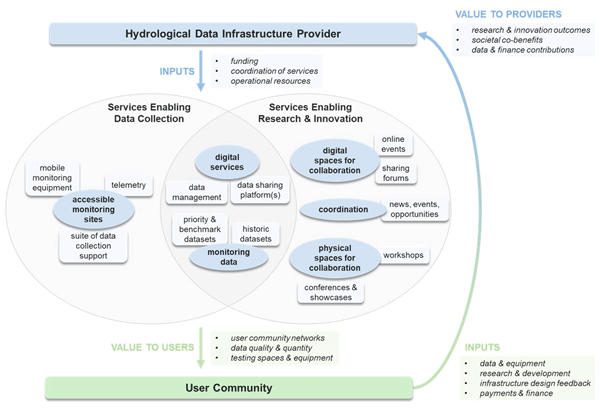
We investigated what users want from the next-generation of hydrological monitoring systems to better support science and innovation. Through literature review and interviews with UK experts, we found that beyond providing high-quality data, users particularly value additional support for collecting their own data, sharing it with others, and building collaborations with other data users. Designing systems with these needs in mind can greatly boost long-term engagement, data coverage and impact.
Riccardo Biella, Anastasiya Shyrokaya, Monica Ionita, Raffaele Vignola, Samuel J. Sutanto, Andrijana Todorovic, Claudia Teutschbein, Daniela Cid, Maria Carmen Llasat, Pedro Alencar, Alessia Matanó, Elena Ridolfi, Benedetta Moccia, Ilias Pechlivanidis, Anne van Loon, Doris E. Wendt, Elin Stenfors, Fabio Russo, Jean-Philippe Vidal, Lucy Barker, Mariana Madruga de Brito, Marleen Lam, Monika Bláhová, Patricia Trambauer, Raed Hamed, Scott J. McGrane, Serena Ceola, Sigrid J. Bakke, Svitlana Krakovska, Viorica Nagavciuc, Faranak Tootoonchi, Giuliano Di Baldassarre, Sandra Hauswirth, Shreedhar Maskey, Svitlana Zubkovych, Marthe Wens, and Lena M. Tallaksen
Nat. Hazards Earth Syst. Sci., 25, 4475–4501, https://doi.org/10.5194/nhess-25-4475-2025, https://doi.org/10.5194/nhess-25-4475-2025, 2025
Short summary
Short summary
The DitA (Drought in the Anthropocene) network's study on the 2022 European drought reveals growing risks, varied impacts, and fragmented, short-term management. Based on a survey of water managers, it explores risk, impacts, strategies, and their evolution. While challenges persist, signs of improvement show readiness for change. The authors call for a European Drought Directive to unify and guide future drought risk management.
Yanchen Zheng, Gemma Coxon, Mostaquimur Rahman, Ross Woods, Saskia Salwey, Youtong Rong, and Doris E. Wendt
Geosci. Model Dev., 18, 4247–4271, https://doi.org/10.5194/gmd-18-4247-2025, https://doi.org/10.5194/gmd-18-4247-2025, 2025
Short summary
Short summary
Groundwater is vital for people and ecosystems, but most physical models lack the representation of surface–groundwater interactions, leading to inaccurate streamflow predictions in groundwater-rich areas. This study presents DECIPHeR-GW v1, which links surface and groundwater systems to improve predictions of streamflow and groundwater levels. Tested across England and Wales, DECIPHeR-GW shows high accuracy, especially in southeast England, making it a valuable tool for large-scale water management.
Yongshin Lee, Andres Peñuela, Francesca Pianosi, and Miguel Angel Rico-Ramirez
Hydrol. Earth Syst. Sci., 29, 1429–1447, https://doi.org/10.5194/hess-29-1429-2025, https://doi.org/10.5194/hess-29-1429-2025, 2025
Short summary
Short summary
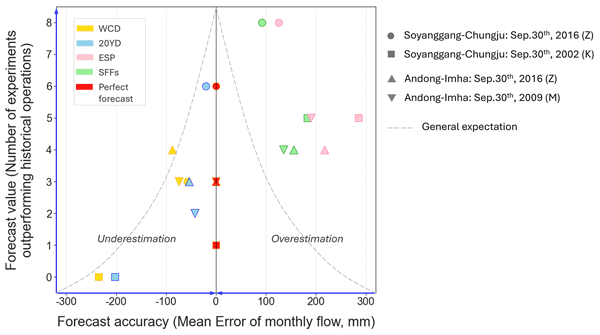
This study assesses the value of seasonal flow forecasts (SFFs) in informing decision-making for drought management in South Korea and introduces a novel method for assessing values benchmarked against historical operations. Our results showed the importance of considering flow forecast uncertainty in reservoir operations. There was no significant correlation between the forecast accuracy and value. The method for selecting a compromise release schedule was a key control of the value.
Jerom P. M. Aerts, Jannis M. Hoch, Gemma Coxon, Nick C. van de Giesen, and Rolf W. Hut
Hydrol. Earth Syst. Sci., 28, 5011–5030, https://doi.org/10.5194/hess-28-5011-2024, https://doi.org/10.5194/hess-28-5011-2024, 2024
Short summary
Short summary
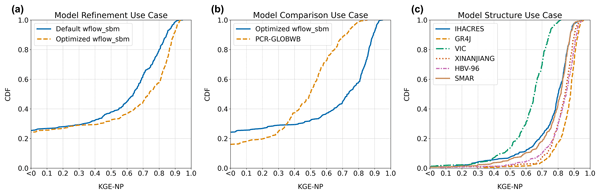
For users of hydrological models, model suitability often hinges on how well simulated outputs match observed discharge. This study highlights the importance of including discharge observation uncertainty in hydrological model performance assessment. We highlight the need to account for this uncertainty in model comparisons and introduce a practical method suitable for any observational time series with available uncertainty estimates.
Saskia Salwey, Gemma Coxon, Francesca Pianosi, Rosanna Lane, Chris Hutton, Michael Bliss Singer, Hilary McMillan, and Jim Freer
Hydrol. Earth Syst. Sci., 28, 4203–4218, https://doi.org/10.5194/hess-28-4203-2024, https://doi.org/10.5194/hess-28-4203-2024, 2024
Short summary
Short summary
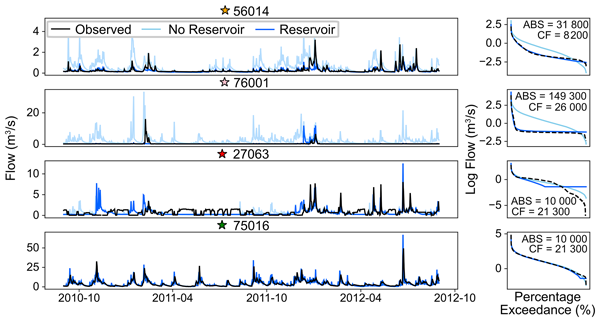
Reservoirs are essential for water resource management and can significantly impact downstream flow. However, representing reservoirs in hydrological models can be challenging, particularly across large scales. We design a new and simple method for simulating river flow downstream of water supply reservoirs using only open-access data. We demonstrate the approach in 264 reservoir catchments across Great Britain, where we can significantly improve the simulation of reservoir-impacted flow.
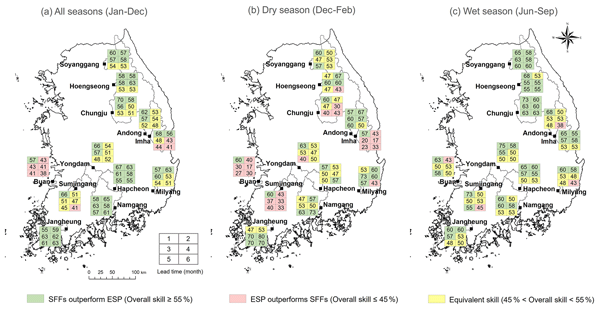
Yongshin Lee, Francesca Pianosi, Andres Peñuela, and Miguel Angel Rico-Ramirez
Hydrol. Earth Syst. Sci., 28, 3261–3279, https://doi.org/10.5194/hess-28-3261-2024, https://doi.org/10.5194/hess-28-3261-2024, 2024
Short summary
Short summary
Following recent advancements in weather prediction technology, we explored how seasonal weather forecasts (1 or more months ahead) could benefit practical water management in South Korea. Our findings highlight that using seasonal weather forecasts for predicting flow patterns 1 to 3 months ahead is effective, especially during dry years. This suggest that seasonal weather forecasts can be helpful in improving the management of water resources.
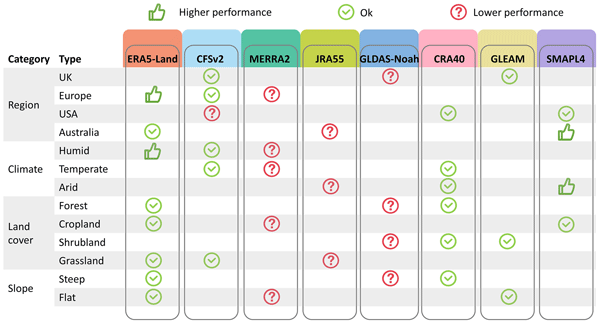
Yanchen Zheng, Gemma Coxon, Ross Woods, Daniel Power, Miguel Angel Rico-Ramirez, David McJannet, Rafael Rosolem, Jianzhu Li, and Ping Feng
Hydrol. Earth Syst. Sci., 28, 1999–2022, https://doi.org/10.5194/hess-28-1999-2024, https://doi.org/10.5194/hess-28-1999-2024, 2024
Short summary
Short summary
Reanalysis soil moisture products are a vital basis for hydrological and environmental research. Previous product evaluation is limited by the scale difference (point and grid scale). This paper adopts cosmic ray neutron sensor observations, a novel technique that provides root-zone soil moisture at field scale. In this paper, global harmonized CRNS observations were used to assess products. ERA5-Land, SMAPL4, CFSv2, CRA40 and GLEAM show better performance than MERRA2, GLDAS-Noah and JRA55.
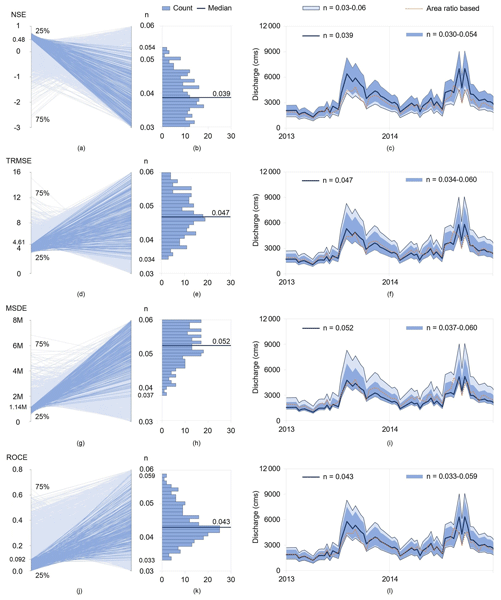
Dung Trung Vu, Thanh Duc Dang, Francesca Pianosi, and Stefano Galelli
Hydrol. Earth Syst. Sci., 27, 3485–3504, https://doi.org/10.5194/hess-27-3485-2023, https://doi.org/10.5194/hess-27-3485-2023, 2023
Short summary
Short summary
The calibration of hydrological models over extensive spatial domains is often challenged by the lack of data on river discharge and the operations of hydraulic infrastructures. Here, we use satellite data to address the lack of data that could unintentionally bias the calibration process. Our study is underpinned by a computational framework that quantifies this bias and provides a safe approach to the calibration of models in poorly gauged and heavily regulated basins.
Kathryn A. Leeming, John P. Bloomfield, Gemma Coxon, and Yanchen Zheng
Hydrol. Earth Syst. Sci. Discuss., https://doi.org/10.5194/hess-2023-202, https://doi.org/10.5194/hess-2023-202, 2023
Preprint withdrawn
Short summary
Short summary
In this work we characterise annual patterns in baseflow, the component of streamflow that comes from subsurface storage. Our research identified early-, mid-, and late-seasonality of baseflow across catchments in Great Britain over two time blocks: 1976–1995 and 1996–2015, and found that many catchments have earlier seasonal patterns of baseflow in the second time period. These changes are linked to changes in climate signals: snow-melt in highland catchments and effective rainfall changes.
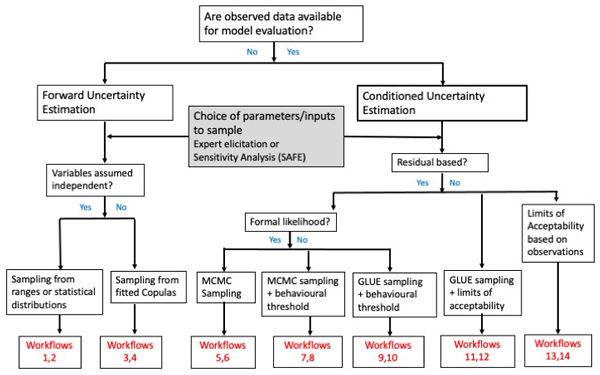
Trevor Page, Paul Smith, Keith Beven, Francesca Pianosi, Fanny Sarrazin, Susana Almeida, Liz Holcombe, Jim Freer, Nick Chappell, and Thorsten Wagener
Hydrol. Earth Syst. Sci., 27, 2523–2534, https://doi.org/10.5194/hess-27-2523-2023, https://doi.org/10.5194/hess-27-2523-2023, 2023
Short summary
Short summary
This publication provides an introduction to the CREDIBLE Uncertainty Estimation (CURE) toolbox. CURE offers workflows for a variety of uncertainty estimation methods. One of its most important features is the requirement that all of the assumptions on which a workflow analysis depends be defined. This facilitates communication with potential users of an analysis. An audit trail log is produced automatically from a workflow for future reference.
Heidi Kreibich, Kai Schröter, Giuliano Di Baldassarre, Anne F. Van Loon, Maurizio Mazzoleni, Guta Wakbulcho Abeshu, Svetlana Agafonova, Amir AghaKouchak, Hafzullah Aksoy, Camila Alvarez-Garreton, Blanca Aznar, Laila Balkhi, Marlies H. Barendrecht, Sylvain Biancamaria, Liduin Bos-Burgering, Chris Bradley, Yus Budiyono, Wouter Buytaert, Lucinda Capewell, Hayley Carlson, Yonca Cavus, Anaïs Couasnon, Gemma Coxon, Ioannis Daliakopoulos, Marleen C. de Ruiter, Claire Delus, Mathilde Erfurt, Giuseppe Esposito, Didier François, Frédéric Frappart, Jim Freer, Natalia Frolova, Animesh K. Gain, Manolis Grillakis, Jordi Oriol Grima, Diego A. Guzmán, Laurie S. Huning, Monica Ionita, Maxim Kharlamov, Dao Nguyen Khoi, Natalie Kieboom, Maria Kireeva, Aristeidis Koutroulis, Waldo Lavado-Casimiro, Hong-Yi Li, Maria Carmen LLasat, David Macdonald, Johanna Mård, Hannah Mathew-Richards, Andrew McKenzie, Alfonso Mejia, Eduardo Mario Mendiondo, Marjolein Mens, Shifteh Mobini, Guilherme Samprogna Mohor, Viorica Nagavciuc, Thanh Ngo-Duc, Huynh Thi Thao Nguyen, Pham Thi Thao Nhi, Olga Petrucci, Nguyen Hong Quan, Pere Quintana-Seguí, Saman Razavi, Elena Ridolfi, Jannik Riegel, Md Shibly Sadik, Nivedita Sairam, Elisa Savelli, Alexey Sazonov, Sanjib Sharma, Johanna Sörensen, Felipe Augusto Arguello Souza, Kerstin Stahl, Max Steinhausen, Michael Stoelzle, Wiwiana Szalińska, Qiuhong Tang, Fuqiang Tian, Tamara Tokarczyk, Carolina Tovar, Thi Van Thu Tran, Marjolein H. J. van Huijgevoort, Michelle T. H. van Vliet, Sergiy Vorogushyn, Thorsten Wagener, Yueling Wang, Doris E. Wendt, Elliot Wickham, Long Yang, Mauricio Zambrano-Bigiarini, and Philip J. Ward
Earth Syst. Sci. Data, 15, 2009–2023, https://doi.org/10.5194/essd-15-2009-2023, https://doi.org/10.5194/essd-15-2009-2023, 2023
Short summary
Short summary
As the adverse impacts of hydrological extremes increase in many regions of the world, a better understanding of the drivers of changes in risk and impacts is essential for effective flood and drought risk management. We present a dataset containing data of paired events, i.e. two floods or two droughts that occurred in the same area. The dataset enables comparative analyses and allows detailed context-specific assessments. Additionally, it supports the testing of socio-hydrological models.
Louisa D. Oldham, Jim Freer, Gemma Coxon, Nicholas Howden, John P. Bloomfield, and Christopher Jackson
Hydrol. Earth Syst. Sci., 27, 761–781, https://doi.org/10.5194/hess-27-761-2023, https://doi.org/10.5194/hess-27-761-2023, 2023
Short summary
Short summary
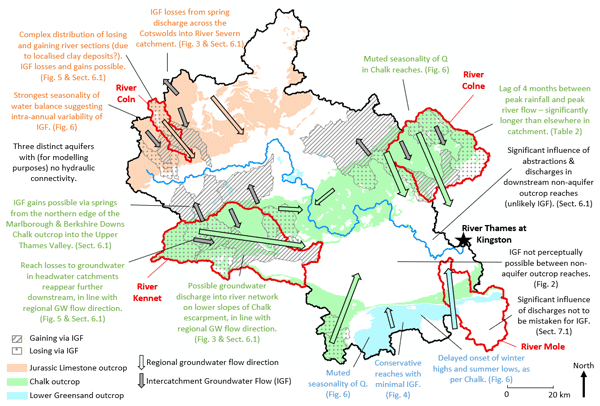
Water can move between river catchments via the subsurface, termed intercatchment groundwater flow (IGF). We show how a perceptual model of IGF can be developed with relatively simple geological interpretation and data requirements. We find that IGF dynamics vary in space, correlated to the dominant underlying geology. We recommend that IGF
loss functionsmay be used in conceptual rainfall–runoff models but should be supported by perceptualisation of IGF processes and connectivities.
Sarah Shannon, Anthony Payne, Jim Freer, Gemma Coxon, Martina Kauzlaric, David Kriegel, and Stephan Harrison
Hydrol. Earth Syst. Sci., 27, 453–480, https://doi.org/10.5194/hess-27-453-2023, https://doi.org/10.5194/hess-27-453-2023, 2023
Short summary
Short summary
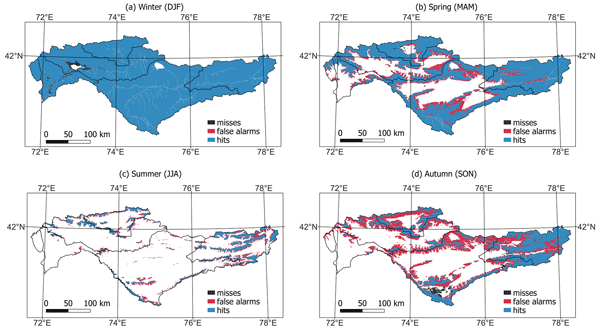
Climate change poses a potential threat to water supply in glaciated river catchments. In this study, we added a snowmelt and glacier melt model to the Dynamic fluxEs and ConnectIvity for Predictions of HydRology model (DECIPHeR). The model is applied to the Naryn River catchment in central Asia and is found to reproduce past change discharge and the spatial extent of seasonal snow cover well.
Rosanna A. Lane, Gemma Coxon, Jim Freer, Jan Seibert, and Thorsten Wagener
Hydrol. Earth Syst. Sci., 26, 5535–5554, https://doi.org/10.5194/hess-26-5535-2022, https://doi.org/10.5194/hess-26-5535-2022, 2022
Short summary
Short summary
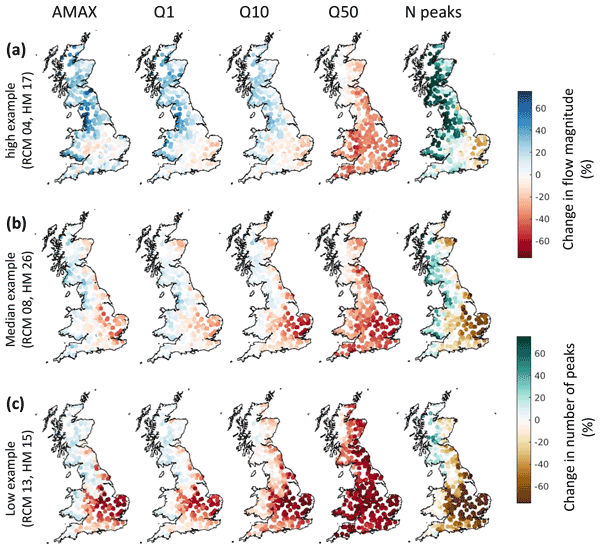
This study modelled the impact of climate change on river high flows across Great Britain (GB). Generally, results indicated an increase in the magnitude and frequency of high flows along the west coast of GB by 2050–2075. In contrast, average flows decreased across GB. All flow projections contained large uncertainties; the climate projections were the largest source of uncertainty overall but hydrological modelling uncertainties were considerable in some regions.
Veit Blauhut, Michael Stoelzle, Lauri Ahopelto, Manuela I. Brunner, Claudia Teutschbein, Doris E. Wendt, Vytautas Akstinas, Sigrid J. Bakke, Lucy J. Barker, Lenka Bartošová, Agrita Briede, Carmelo Cammalleri, Ksenija Cindrić Kalin, Lucia De Stefano, Miriam Fendeková, David C. Finger, Marijke Huysmans, Mirjana Ivanov, Jaak Jaagus, Jiří Jakubínský, Svitlana Krakovska, Gregor Laaha, Monika Lakatos, Kiril Manevski, Mathias Neumann Andersen, Nina Nikolova, Marzena Osuch, Pieter van Oel, Kalina Radeva, Renata J. Romanowicz, Elena Toth, Mirek Trnka, Marko Urošev, Julia Urquijo Reguera, Eric Sauquet, Aleksandra Stevkov, Lena M. Tallaksen, Iryna Trofimova, Anne F. Van Loon, Michelle T. H. van Vliet, Jean-Philippe Vidal, Niko Wanders, Micha Werner, Patrick Willems, and Nenad Živković
Nat. Hazards Earth Syst. Sci., 22, 2201–2217, https://doi.org/10.5194/nhess-22-2201-2022, https://doi.org/10.5194/nhess-22-2201-2022, 2022
Short summary
Short summary
Recent drought events caused enormous damage in Europe. We therefore questioned the existence and effect of current drought management strategies on the actual impacts and how drought is perceived by relevant stakeholders. Over 700 participants from 28 European countries provided insights into drought hazard and impact perception and current management strategies. The study concludes with an urgent need to collectively combat drought risk via a European macro-level drought governance approach.
Thomas Lees, Marcus Buechel, Bailey Anderson, Louise Slater, Steven Reece, Gemma Coxon, and Simon J. Dadson
Hydrol. Earth Syst. Sci., 25, 5517–5534, https://doi.org/10.5194/hess-25-5517-2021, https://doi.org/10.5194/hess-25-5517-2021, 2021
Short summary
Short summary
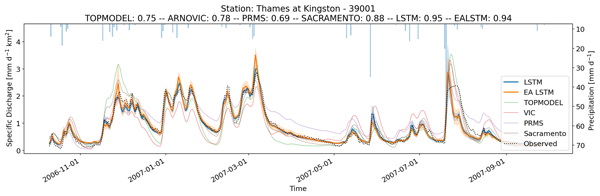
We used deep learning (DL) models to simulate the amount of water moving through a river channel (discharge) based on the rainfall, temperature and potential evaporation in the previous days. We tested the DL models on catchments across Great Britain finding that the model can accurately simulate hydrological systems across a variety of catchment conditions. Ultimately, the model struggled most in areas where there is chalky bedrock and where human influence on the catchment is large.
Doris E. Wendt, John P. Bloomfield, Anne F. Van Loon, Margaret Garcia, Benedikt Heudorfer, Joshua Larsen, and David M. Hannah
Nat. Hazards Earth Syst. Sci., 21, 3113–3139, https://doi.org/10.5194/nhess-21-3113-2021, https://doi.org/10.5194/nhess-21-3113-2021, 2021
Short summary
Short summary
Managing water demand and supply during droughts is complex, as highly pressured human–water systems can overuse water sources to maintain water supply. We evaluated the impact of drought policies on water resources using a socio-hydrological model. For a range of hydrogeological conditions, we found that integrated drought policies reduce baseflow and groundwater droughts most if extra surface water is imported, reducing the pressure on water resources during droughts.
Cited articles
Abbott, B. W., Bishop, K., Zarnetske, J. P., Minaudo, C., Chapin, F. S., Krause, S., Hannah, D. M., Conner, L., Ellison, D., Godsey, S. E., Plont, S., Marçais, J., Kolbe, T., Huebner, A., Frei, R. J., Hampton, T., Gu, S., Buhman, M., Sara Sayedi, S., Ursache, O., Chapin, M., Henderson, K. D., and Pinay, G.: Human domination of the global water cycle absent from depictions and perceptions, Nat. Geosci., 12, 533–540, https://doi.org/10.1038/s41561-019-0374-y, 2019. a
Addor, N., Newman, A. J., Mizukami, N., and Clark, M. P.: The CAMELS data set: catchment attributes and meteorology for large-sample studies, Hydrol. Earth Syst. Sci., 21, 5293–5313, https://doi.org/10.5194/hess-21-5293-2017, 2017. a
Althoff, D. and Rodrigues, L. N.: Goodness-of-fit criteria for hydrological models: Model calibration and performance assessment, J. Hydrol., 600, 126674, https://doi.org/10.1016/j.jhydrol.2021.126674, 2021. a
Aranguren-Díaz, Y., Galán-Freyle, N. J., Guerra, A., Manares-Romero, A., Pacheco-Londoño, L. C., Romero-Coronado, A., Vidal-Figueroa, N., and Machado-Sierra, E.: Aquifers and Groundwater: Challenges and Opportunities in Water Resource Management in Colombia, Water, 16, https://doi.org/10.3390/w16050685, 2024. a
Arheimer, B., Cudennec, C., Castellarin, A., Grimaldi, S., Heal, K. V., Lupton, C., Sarkar, A., Tian, F., Kileshye Onema, J.-M., Archfield, S., Blöschl, G., Chaffe, P. L. B., Croke, B. F. W., Dembélé, M., Leong, C., Mijic, A., Mosquera, G. M., Nlend, B., Olusola, A. O., Polo, M. J., Sandells, M., Sheffield, J., van Hateren, T. C., Shafiei, M., Adla, S., Agarwal, A., Aguilar, C., Andersson, J. C. M., Andraos, C., Andreu, A., Avanzi, F., Bart, R. R., Bartosova, A., Batelaan, O., Bennett, J. C., Bertola, M., Bezak, N., Boekee, J., Bogaard, T., Booij, M. J., Brigode, P., Buytaert, W., Bziava, K., Castelli, G., Castro, C. V., Ceperley, N. C., Chidepudi, S. K. R., Chiew, F. H. S., Chun, K. P., Dagnew, A. G., Dekongmen, B. W., Del Jesus, M., Dezetter, A., Do Nascimento Batista, J. A., Doble, R. C., Dogulu, N., Eekhout, J. P. C., Elçi, A., Elenius, M., Finger, D. C., Fiori, A., Fischer, S., Förster, K., Ganora, D., Gargouri Ellouze, E., Ghoreishi, M., Harvey, N., Hrachowitz, M., Jampani, M., Jaramillo, F., Jongen, H. J., Kareem, K. Y., Khan, U. T., Khatami, S., Kingston, D. G., Koren, G., Krause, S., Kreibich, H., Lerat, J., Liu, J., Liu, S., Madruga de Brito, M., Mahé, G., Makurira, H., Mazzoglio, P., Merheb, M., Mishra, A., Mohammad, H., Montanari, A., Mujere, N., Nabavi, E., Nkwasa, A., Orduna Alegria, M. E., Orieschnig, C., Ovcharuk, V., Palmate, S. S., Pande, S., Pandey, S., Papacharalampous, G., Pechlivanidis, I., Penny, G., Pimentel, R., Post, D. A., Prieto, C., Razavi, S., Salazar-Galán, S., Sankaran Namboothiri, A., Santos, P. P., Savenije, H., Shanono, N. J., Sharma, A., Sivapalan, M., Smagulov, Z., Szolgay, J., Teng, J., Teuling, A. J., Teutschbein, C., Tyralis, H., Griensven, A. v., van Schalkwyk, A. J., van Tiel, M., Viglione, A., Volpi, E., Wagener, T., Wang, X., Wang-Erlandsson, L., Wens, M., and Xia, J.: The IAHS Science for Solutions decade, with Hydrology Engaging Local People IN one Global world (HELPING), Hydrolog. Sci. J., 69, 1417–1435, https://doi.org/10.1080/02626667.2024.2355202, 2024. a
Ascott, M. J., Bloomfield, J. P., Karapanos, I., Jackson, C. R., Ward, R. S., McBride, A. B., Dobson, B., Kieboom, N., Holman, I. P., Van Loon, A. F., Crane, E. J., Brauns, B., Rodriguez-Yebra, A., and Upton, K. A.: Managing groundwater supplies subject to drought: perspectives on current status and future priorities from England (UK), Hydrogeol. J., 29, 921–924, https://doi.org/10.1007/s10040-020-02249-0, 2021. a
Ashraf, S., Nazemi, A., and AghaKouchak, A.: Anthropogenic drought dominates groundwater depletion in Iran, Sci. Rep.-UK, 11, 9135, https://doi.org/10.1038/s41598-021-88522-y, 2021. a
Barnett, S., Harrington, N., Cook, P., and Simmons, C. T.: Groundwater in Australia: Occurrence and Management Issues, Springer International Publishing, Cham, 109–127, https://doi.org/10.1007/978-3-030-32766-8_6, 2020. a
Batelis, S.-C., Rahman, M., Kollet, S., Woods, R., and Rosolem, R.: Towards the representation of groundwater in the Joint UK Land Environment Simulator, Hydrol. Process., 34, 2843–2863, https://doi.org/10.1002/hyp.13767, 2020. a
Bell, V. A., Kay, A. L., Jones, R. G., and Moore, R. J.: Development of a high resolution grid-based river flow model for use with regional climate model output, Hydrol. Earth Syst. Sci., 11, 532–549, https://doi.org/10.5194/hess-11-532-2007, 2007. a, b
Beven, K. J.: Rainfall-runoff modelling: the primer, John Wiley & Sons, ISBN: 9780470714591, 2012. a
BGS: Groundwater resources in the UK, https://www.bgs.ac.uk/geology-projects/groundwater-research/groundwater-resources-in-the-uk/ (last access: 9 February 2026), 2024. a
Bianchi, M., Scheidegger, J., Hughes, A., Jackson, C., Lee, J., Lewis, M., Mansour, M., Newell, A., O’Dochartaigh, B., Patton, A., and Dadson, S.: Simulation of national-scale groundwater dynamics in geologically complex aquifer systems: an example from Great Britain, Hydrolog. Sci. J., 69, 572–591, https://doi.org/10.1080/02626667.2024.2320847, 2024. a, b, c, d
Bloomfield, J. P., Marchant, B. P., and McKenzie, A. A.: Changes in groundwater drought associated with anthropogenic warming, Hydrol. Earth Syst. Sci., 23, 1393–1408, https://doi.org/10.5194/hess-23-1393-2019, 2019. a
Cao, G., Zheng, C., Scanlon, B. R., Liu, J., and Li, W.: Use of flow modeling to assess sustainability of groundwater resources in the North China Plain, Water Resour. Res., 49, 159–175, https://doi.org/10.1029/2012WR011899, 2013. a
Chagas, V. B. P., Chaffe, P. L. B., Addor, N., Fan, F. M., Fleischmann, A. S., Paiva, R. C. D., and Siqueira, V. A.: CAMELS-BR: hydrometeorological time series and landscape attributes for 897 catchments in Brazil, Earth Syst. Sci. Data, 12, 2075–2096, https://doi.org/10.5194/essd-12-2075-2020, 2020. a
Coron, L., Thirel, G., Delaigue, O., Perrin, C., and Andréassian, V.: The suite of lumped GR hydrological models in an R package, Environ. Modell. Softw., 94, 166–171, https://doi.org/10.1016/j.envsoft.2017.05.002, 2017. a, b
Coxon, G., Freer, J., Lane, R., Dunne, T., Knoben, W. J. M., Howden, N. J. K., Quinn, N., Wagener, T., and Woods, R.: DECIPHeR v1: Dynamic fluxEs and ConnectIvity for Predictions of HydRology, Geosci. Model Dev., 12, 2285–2306, https://doi.org/10.5194/gmd-12-2285-2019, 2019. a, b, c
Coxon, G., Addor, N., Bloomfield, J. P., Freer, J., Fry, M., Hannaford, J., Howden, N. J. K., Lane, R., Lewis, M., Robinson, E. L., Wagener, T., and Woods, R.: CAMELS-GB: hydrometeorological time series and landscape attributes for 671 catchments in Great Britain, Earth Syst. Sci. Data, 12, 2459–2483, https://doi.org/10.5194/essd-12-2459-2020, 2020a. a, b, c, d, e, f, g, h, i, j
Coxon, G., Addor, N., Bloomfield, J. P., Freer, J., Fry, M., Hannaford, J., Howden, N. J. K., Lane, R., Lewis, M., Robinson, E. L., Wagener, T., and Woods, R.: Catchment attributes and hydro-meteorological timeseries for 671 catchments across Great Britain (CAMELS-GB), NERC Environmental Information Data Centre [data set], https://doi.org/10.5285/8344e4f3-d2ea-44f5-8afa-86d2987543a9, 2020b. a
Coxon, G., McMillan, H., Bloomfield, J. P., Bolotin, L., Dean, J. F., Kelleher, C., Slater, L., and Zheng, Y.: Wastewater discharges and urban land cover dominate urban hydrology signals across England and Wales, Environ. Res. Lett., 19, 084016, https://doi.org/10.1088/1748-9326/ad5bf2, 2024. a
de Graaf, I. E., Gleeson, T., van Beek, L. R., Sutanudjaja, E. H., and Bierkens, M. F.: Environmental flow limits to global groundwater pumping, Nature, 574, 90–94, 2019. a
Di Baldassarre, G., Viglione, A., Carr, G., Kuil, L., Yan, K., Brandimarte, L., and Bloschl, G.: Debates–Perspectives on socio-hydrology: Capturing feedbacks between physical and social processes, Water Resour. Res., 4770–4781, https://doi.org/10.1002/2014WR016416, 2015. a
Dobson, B., Coxon, G., Freer, J., Gavin, H., Mortazavi-Naeini, M., and Hall, J. W.: The Spatial Dynamics of Droughts and Water Scarcity in England and Wales, Water Resour. Res., 56, e2020WR027187, https://doi.org/10.1029/2020WR027187, 2020. a
Döll, P., Hoffmann-Dobrev, H., Portmann, F., Siebert, S., Eicker, A., Rodell, M., Strassberg, G., and Scanlon, B.: Impact of water withdrawals from groundwater and surface water on continental water storage variations, J. Geodyn., 59, 143–156, https://doi.org/10.1016/j.jog.2011.05.001, 2012. a, b
Elvira Hernández-García, M. and Custodio, E.: Natural baseline quality of Madrid Tertiary Detrital Aquifer groundwater (Spain): a basis for aquifer management, Environ. Geol., 46, 173–188, https://doi.org/10.1007/s00254-004-1024-1, 2004. a
Environment Agency: Revised Draft Water Resources Management Plan 2019 Supply-Demand Data at Company Level 2020/21 to 2044/45, Webiste [data set], https://data.gov.uk/dataset/fb38a40c-ebc1-4e6e-912c-bb47a76f6149/revised-draft-water-resources-management-plan-2019-supply-demand-data-at-company-level-2020-21-to-2044-45#licence-info, last access: 9 October 2019. a, b, c, d
Environment Agency: Review of the research and scientific understanding of drought: summary report, Tech. rep., Environment Agency, https://www.gov.uk/government/publications/review-of-the-research-and-scientific-understanding-of-drought/review-of-the-research-and-scientific-understanding-of-drought-summary-report (last access: 9 February 2026), 2023. a, b
Esteller, M. V., Rodríguez, R., Cardona, A., and Padilla-Sánchez, L.: Evaluation of hydrochemical changes due to intensive aquifer exploitation: case studies from Mexico, Environ. Monit. Assess., 184, 5725–5741, https://doi.org/10.1007/s10661-011-2376-0, 2012. a
Fowler, K. J. A., Acharya, S. C., Addor, N., Chou, C., and Peel, M. C.: CAMELS-AUS: hydrometeorological time series and landscape attributes for 222 catchments in Australia, Earth Syst. Sci. Data, 13, 3847–3867, https://doi.org/10.5194/essd-13-3847-2021, 2021. a
Garcia, M., Portney, K., and Islam, S.: A question driven socio-hydrological modeling process, Hydrol. Earth Syst. Sci., 20, 73–92, https://doi.org/10.5194/hess-20-73-2016, 2016. a
Gleeson, T., Villholth, K., Taylor, R., Perrone, D., and Hyndman, D.: Groundwater: a call to action, Nature, 576, 213, https://doi.org/10.1038/d41586-019-03711-0, 2019. a
Gleeson, T., Cuthbert, M., Ferguson, G., and Perrone, D.: Global Groundwater Sustainability, Resources, and Systems in the Anthropocene, Annu. Rev. Earth Pl. Sc., 48, 431–463, https://doi.org/10.1146/annurev-earth-071719-055251, 2020. a
Hannaford, J., Mackay, J. D., Ascott, M., Bell, V. A., Chitson, T., Cole, S., Counsell, C., Durant, M., Jackson, C. R., Kay, A. L., Lane, R. A., Mansour, M., Moore, R., Parry, S., Rudd, A. C., Simpson, M., Facer-Childs, K., Turner, S., Wallbank, J. R., Wells, S., and Wilcox, A.: The enhanced future Flows and Groundwater dataset: development and evaluation of nationally consistent hydrological projections based on UKCP18, Earth Syst. Sci. Data, 15, 2391–2415, https://doi.org/10.5194/essd-15-2391-2023, 2023a. a, b
Hannaford, J., Mackay, J. D., Ascott, M., Bell, V. A., Chitson, T., Cole, S., Counsell, C., Durant, M., Jackson, C. R., Kay, A. L., Lane, R. A., Mansour, M., Moore, R., Parry, S., Rudd, A. C., Simpson, M., Facer-Childs, K., Turner, S., Wallbank, J. R., Wells, S., and Wilcox, A.: The enhanced future Flows and Groundwater dataset: development and evaluation of nationally consistent hydrological projections based on UKCP18, Earth Syst. Sci. Data, 15, 2391–2415, https://doi.org/10.5194/essd-15-2391-2023, 2023b. a
Hartmann, A., Gleeson, T., Rosolem, R., Pianosi, F., Wada, Y., and Wagener, T.: A large-scale simulation model to assess karstic groundwater recharge over Europe and the Mediterranean, Geosci. Model Dev., 8, 1729–1746, https://doi.org/10.5194/gmd-8-1729-2015, 2015. a
Hisdal, H., Tallaksen, L. M., Gauster, T., Bloomfield, J. P., Parry, S., Prudhomme, C., and Wanders, N.: Chapter 5 – Hydrological drought characteristics, in: Hydrological Drought, 2nd edn., edited by: Tallaksen, L. M. and van Lanen, H. A., Elsevier, 157–231, https://doi.org/10.1016/B978-0-12-819082-1.00006-0, 2024. a
Huggins, X., Gleeson, T., Villholth, K. G., Rocha, J. C., and Famiglietti, J. S.: Groundwaterscapes: A Global Classification and Mapping of Groundwater's Large-Scale Socioeconomic, Ecological, and Earth System Functions, Water Resour. Res., 60, e2023WR036287, https://doi.org/10.1029/2023WR036287, 2024. a
Hughes, D., Birkinshaw, S., and Parkin, G.: A method to include reservoir operations in catchment hydrological models using SHETRAN, Environ. Modell. Softw., 138, 104980, https://doi.org/10.1016/j.envsoft.2021.104980, 2021. a, b, c
Jakeman, A., Barreteau, O., Hunt, R., Rinaudo, J., and Ross, A.: Integrated groundwater management: concepts, approaches and challenges, Springer International Publishing, https://doi.org/10.1007/978-3-319-23576-9, 2016. a
Kendon, M., Marsh, T., and Parry, S.: The 2010–2012 drought in England and Wales, Weather, 68, 88–95, https://doi.org/10.1002/wea.2101, 2013. a
Kirchner, J. W.: Getting the right answers for the right reasons: Linking measurements, analyses, and models to advance the science of hydrology, Water Resour. Res., 42, https://doi.org/10.1029/2005WR004362, 2006. a
Kløve, B., Ala-aho, P., Bertrand, G., Boukalova, Z., Ertürk, A., Goldscheider, N., Ilmonen, J., Karakaya, N., Kupfersberger, H., Kvœrner, J., Lundberg, A., Mileusnić, M., Moszczynska, A., Muotka, T., Preda, E., Rossi, P., Siergieiev, D., Šimek, J., Wachniew, P., Angheluta, V., and Widerlund, A.: Groundwater dependent ecosystems. Part I: Hydroecological status and trends, Environ. Sci. Policy, 14, 770–781, https://doi.org/10.1016/j.envsci.2011.04.002, 2011. a
Kollat, J. B., Reed, P. M., and Wagener, T.: When are multiobjective calibration trade-offs in hydrologic models meaningful?, Water Resour. Res., 48, https://doi.org/10.1029/2011WR011534, 2012. a
Kreibich, H., Van Loon, A. F., Schröter, K., Ward, P. J., Mazzoleni, M., Sairam, N., Abeshu, G. W., Agafonova, S., AghaKouchak, A., Aksoy, H., Alvarez-Garreton, C., Aznar, B., Balkhi, L., Barendrecht, M. H., Biancamaria, S., Bos-Burgering, L., Bradley, C., Budiyono, Y., Buytaert, W., Capewell, L., Carlson, H., Cavus, Y., Couasnon, A., Coxon, G., Daliakopoulos, I., de Ruiter, M. C., Delus, C., Erfurt, M., Esposito, G., François, D., Frappart, F., Freer, J., Frolova, N., Gain, A. K., Grillakis, M., Grima, J. O., Guzmán, D. A., Huning, L. S., Ionita, M., Kharlamov, M., Khoi, D. N., Kieboom, N., Kireeva, M., Koutroulis, A., Lavado-Casimiro, W., Li, H.-Y., LLasat, M. C., Macdonald, D., Mård, J., Mathew-Richards, H., McKenzie, A., Mejia, A., Mendiondo, E. M., Mens, M., Mobini, S., Mohor, G. S., Nagavciuc, V., Ngo-Duc, T., Thao Nguyen Huynh, T., Nhi, P. T. T., Petrucci, O., Nguyen, H. Q., Quintana-Seguí, P., Razavi, S., Ridolfi, E., Riegel, J., Sadik, M. S., Savelli, E., Sazonov, A., Sharma, S., Sörensen, J., Arguello Souza, F. A., Stahl, K., Steinhausen, M., Stoelzle, M., Szalińska, W., Tang, Q., Tian, F., Tokarczyk, T., Tovar, C., Tran, T. V. T., Van Huijgevoort, M. H. J., van Vliet, M. T. H., Vorogushyn, S., Wagener, T., Wang, Y., Wendt, D. E., Wickham, E., Yang, L., Zambrano-Bigiarini, M., Blöschl, G., and Di Baldassarre, G.: The challenge of unprecedented floods and droughts in risk management, Nature, 608, 80–86, https://doi.org/10.1038/s41586-022-04917-5, 2022. a
Lane, R. A., Freer, J. E., Coxon, G., and Wagener, T.: Incorporating Uncertainty Into Multiscale Parameter Regionalization to Evaluate the Performance of Nationally Consistent Parameter Fields for a Hydrological Model, Water Resour. Res., 57, e2020WR028393, https://doi.org/10.1029/2020WR028393, 2021. a
Lewis, E., Birkinshaw, S., Kilsby, C., and Fowler, H. J.: Development of a system for automated setup of a physically-based, spatially-distributed hydrological model for catchments in Great Britain, Environ. Modell. Softw., 108, 102–110, https://doi.org/10.1016/j.envsoft.2018.07.006, 2018. a, b, c, d, e
Liu, J., Koch, J., Stisen, S., Troldborg, L., and Schneider, R. J. M.: A national-scale hybrid model for enhanced streamflow estimation – consolidating a physically based hydrological model with long short-term memory (LSTM) networks, Hydrol. Earth Syst. Sci., 28, 2871–2893, https://doi.org/10.5194/hess-28-2871-2024, 2024. a
Mackay, J., Jackson, C., and Wang, L.: A lumped conceptual model to simulate groundwater level time-series, Environ. Modell. Softw., 61, 229–245, https://doi.org/10.1016/j.envsoft.2014.06.003, 2014. a, b, c
Melsen, L.: It takes a village to run a model – The social practices of hydrological modeling, Water Resour. Res., 58, e2021WR030600, https://doi.org/10.1029/2021WR030600, 2022. a
Melsen, L. A. and Guse, B.: Hydrological Drought Simulations: How Climate and Model Structure Control Parameter Sensitivity, Water Resour. Res., 55, 10527–10547, https://doi.org/10.1029/2019WR025230, 2019. a
Murgatroyd, A., Gavin, H., Becher, O., Coxon, G., Hunt, D., Fallon, E., Wilson, J., Cuceloglu, G., and Hall, J. W.: Strategic analysis of the drought resilience of water supply systems, Philos. T. R. Soc. A, 380, 20210292, https://doi.org/10.1098/rsta.2021.0292, 2022. a, b, c
Panagos, P., Van Liedekerke, M., Borrelli, P., Köninger, J., Ballabio, C., Orgiazzi, A., Lugato, E., Liakos, L., Hervas, J., Jones, A., and Montanarella, L.: European Soil Data Centre 2.0: Soil data and knowledge in support of the EU policies, Eur. J. Soil Sci., 73, e13315, https://doi.org/10.1111/ejss.13315, 2022. a, b, c, d, e, f, g, h
Pianosi, F. and Wagener, T.: Distribution-based sensitivity analysis from a generic input-output sample, Environ. Modell. Softw., 108, 197–207, https://doi.org/10.1016/j.envsoft.2018.07.019, 2018a. a
Pianosi, F. and Wagener, T.: Distribution-based sensitivity analysis from a generic input-output sample, Environ. Modell. Softw., 108, 197–207, https://doi.org/10.1016/j.envsoft.2018.07.019, 2018b. a
Pianosi, F., Sarrazin, F., and Wagener, T.: A Matlab toolbox for Global Sensitivity Analysis, Environ. Modell. Softw., 70, 80–85, https://doi.org/10.1016/j.envsoft.2015.04.009, 2015. a
Pool, S., Vis, M., and Seibert, J.: Evaluating model performance: towards a non-parametric variant of the Kling–Gupta efficiency, Hydrolog. Sci. J., 63, 1941–1953, https://doi.org/10.1080/02626667.2018.1552002, 2018. a
Rahman, M., Pianosi, F., and Woods, R.: Simulating spatial variability of groundwater table in England and Wales, Hydrol. Process., 37, e14849, https://doi.org/10.1002/hyp.14849, 2023. a, b, c
Rameshwaran, P., Bell, V. A., Brown, M. J., Davies, H. N., Kay, A. L., Rudd, A. C., and Sefton, C.: Use of Abstraction and Discharge Data to Improve the Performance of a National-Scale Hydrological Model, Water Resour. Res., 58, e2021WR029787, https://doi.org/10.1029/2021WR029787, 2022. a, b, c
Rateb, A., Scanlon, B. R., Pool, D. R., Sun, A., Zhang, Z., Chen, J., Clark, B., Faunt, C. C., Haugh, C. J., Hill, M., Hobza, C., McGuire, V. L., Reitz, M., Müller Schmied, H., Sutanudjaja, E. H., Swenson, S., Wiese, D., Xia, Y., and Zell, W.: Comparison of Groundwater Storage Changes from GRACE Satellites with Monitoring and Modeling of Major U.S. Aquifers, Water Resour. Res., 56, e2020WR027556, https://doi.org/10.1029/2020WR027556, 2020. a
Robinson, E. L., Blyth, E., Clark, D. B., Comyn-Platt, E., Finch, J., and Rudd, A. C.: Climate hydrology and ecology research support system potential evapotranspiration dataset for Great Britain (1961–2015) [CHESS-PE], https://doi.org/10.5285/8baf805d-39ce-4dac-b224-c926ada353b7, 2016. a, b
Robinson, E. L., Kay, A. L., Brown, M. J., Lane, R. A., Bell, V. A., and Blyth, E. M.: Potential evapotranspiration derived from Climate Hydrology and Ecology Research Support System meteorological gridded climate observations (Hydro-PE CHESS), 1961–2019, NERC EDS Environmental Information Data Centre [data set], https://doi.org/10.5285/bcec9c33-f863-464e-ac28-73b981bd40a4, 2024. a
Salwey, S.: saskiasalwey/Reservoir_Impact_Signatures: Reservoir Impact Signatures (Version v2), Zenodo [code], https://doi.org/10.5281/zenodo.7712750, 2023. a
Salwey, S., Coxon, G., Pianosi, F., Lane, R., Hutton, C., Bliss Singer, M., McMillan, H., and Freer, J.: Developing water supply reservoir operating rules for large-scale hydrological modelling, Hydrol. Earth Syst. Sci., 28, 4203–4218, https://doi.org/10.5194/hess-28-4203-2024, 2024. a, b
Scanlon, B. R., Reedy, R. C., Faunt, C. C., Pool, D., and Uhlman, K.: Enhancing drought resilience with conjunctive use and managed aquifer recharge in California and Arizona, Environ. Res. Lett., 11, 035013, https://doi.org/10.1088/1748-9326/11/3/035013, 2016. a
Seo, S. B., Mahinthakumar, G., Sankarasubramanian, A., and Kumar, M.: Conjunctive Management of Surface Water and Groundwater Resources under Drought Conditions Using a Fully Coupled Hydrological Model, J. Water Res. Plan. Man., 144, https://doi.org/10.1061/(ASCE)WR.1943-5452.0000978, 2018. a
Shamsudduha, M., Chandler, R. E., Taylor, R. G., and Ahmed, K. M.: Recent trends in groundwater levels in a highly seasonal hydrological system: the Ganges–Brahmaputra–Meghna Delta, Hydrol. Earth Syst. Sci., 13, 2373–2385, https://doi.org/10.5194/hess-13-2373-2009, 2009. a
Shepley, M., Pearson, A., Smith, G., and Banton, C.: The impacts of coal mining subsidence on groundwater resources management of the East Midlands Permo-Triassic Sandstone aquifer, England, Q. J. Eng. Geol. Hydroge., 41, 425–438, https://doi.org/10.1144/1470-9236/07-210, 2008. a
Shepley, M., Streetly, M., Voyce, K., and Bamford, F.: Management of stream compensation for a large conjunctive use scheme, Shropshire, UK, Water Environ. J., 23, 263–271, https://doi.org/10.1111/j.1747-6593.2008.00158.x, 2009. a
Shepley, M. G., Whiteman, M., Hulme, P., and Grout, M.: Introduction: groundwater resources modelling: a case study from the UK, Geological Society, London, Special Publications, 364, 1–6, https://doi.org/10.1144/SP364.1, 2012. a
Siebert, S., Burke, J., Faures, J. M., Frenken, K., Hoogeveen, J., Döll, P., and Portmann, F. T.: Groundwater use for irrigation – a global inventory, Hydrol. Earth Syst. Sci., 14, 1863–1880, https://doi.org/10.5194/hess-14-1863-2010, 2010. a
Sivapalan, M., Savenije, H. H. G., and Blöschl, G.: Socio-hydrology: A new science of people and water, Hydrol. Process., 26, 1270–1276, https://doi.org/10.1002/hyp.8426, 2012. a
Smith, K. A., Barker, L. J., Tanguy, M., Parry, S., Harrigan, S., Legg, T. P., Prudhomme, C., and Hannaford, J.: A multi-objective ensemble approach to hydrological modelling in the UK: an application to historic drought reconstruction, Hydrol. Earth Syst. Sci., 23, 3247–3268, https://doi.org/10.5194/hess-23-3247-2019, 2019. a
Sutanudjaja, E. H., van Beek, L. P. H., de Jong, S. M., van Geer, F. C., and Bierkens, M. F. P.: Large-scale groundwater modeling using global datasets: a test case for the Rhine-Meuse basin, Hydrol. Earth Syst. Sci., 15, 2913–2935, https://doi.org/10.5194/hess-15-2913-2011, 2011. a
Tallaksen, L. M. and van Lanen, H. A. J.: Hydrological drought: processes and estimation methods for streamflow and groundwater, Elsevier, ISBN: 9780444516886, 2004. a
Taylor, R. G., Scanlon, B., Döll, P., Rodell, M., Van Beek, R., Wada, Y., Longuevergne, L., Leblanc, M., Famiglietti, J. S., Edmunds, M., Konikow, L., Green, T. R., Chen, J., Taniguchi, M., Bierkens, M. F. P., MacDonald, A., Fan, Y., Maxwell, R. M., Yechieli, Y., Gurdak, J. J., Allen, D. M., Shamsudduha, M., Hiscock, K., Yeh, P. J.-F., Holman, I., and Treidel, H.: Ground water and climate change, Nat. Clim. Change, 3, 322–329, 2013. a
Urquijo, J., Pereira, D., Dias, S., and De Stefano, L.: A methodology to assess drought management as applied to six European case studies, Int. J. Water Resour. D., 33, 246–269, https://doi.org/10.1080/07900627.2016.1174106, 2017. a
Van Lanen, H. A. J., Wanders, N., Tallaksen, L. M., and Van Loon, A. F.: Hydrological drought across the world: impact of climate and physical catchment structure, Hydrol. Earth Syst. Sci., 17, 1715–1732, https://doi.org/10.5194/hess-17-1715-2013, 2013. a, b
Vanelli, F. M., Kobiyama, M., and de Brito, M. M.: To which extent are socio-hydrology studies truly integrative? The case of natural hazards and disaster research, Hydrol. Earth Syst. Sci., 26, 2301–2317, https://doi.org/10.5194/hess-26-2301-2022, 2022. a
Wagener, T., Reinecke, R., and Pianosi, F.: On the evaluation of climate change impact models, WIREs Clim. Change, e772, https://doi.org/10.1002/wcc.772, 2022. a, b
Wendt, D. E.: saskiasalwey/SHOWER: v1.0.0 (v1.0.0), Zenodo [code], https://doi.org/10.5281/zenodo.20117472, 2026. a
Wendt, D. E., Van Loon, A. F., Bloomfield, J. P., and Hannah, D. M.: Asymmetric impact of groundwater use on groundwater droughts, Hydrol. Earth Syst. Sci., 24, 4853–4868, https://doi.org/10.5194/hess-24-4853-2020, 2020. a
Wendt, D. E., Bloomfield, J. P., Van Loon, A. F., Garcia, M., Heudorfer, B., Larsen, J., and Hannah, D. M.: Evaluating integrated water management strategies to inform hydrological drought mitigation, Nat. Hazards Earth Syst. Sci., 21, 3113–3139, https://doi.org/10.5194/nhess-21-3113-2021, 2021. a, b, c, d, e, f, g, h, i, j, k
West, L. J., Farrell, R. P., Foley, A. E., Howlett, P. R., and Massei, N.: An introduction to the chalk aquifers of northern Europe, Geological Society, London, Special Publications, 517, 1–14, https://doi.org/10.1144/SP517-2023-3, 2023. a
WHS: Qube – Technical Guide to low flow simulation, Tech. rep., Wallingford HydroSolutions, https://www.hydrosolutions.co.uk/software/qube/supporting_literature/ (last access: 9 February 2026), 2024. a
Wilby, R., Greenfield, B., and Glenny, C.: A coupled synoptic-hydrological model for climate change impact assessment, J. Hydrol., 153, 265–290, https://doi.org/10.1016/0022-1694(94)90195-3, 1994. a
Wittenberg, H.: Effects of season and man-made changes on baseflow and flow recession: case studies, Hydrol. Process., 17, 2113–2123, https://doi.org/10.1002/hyp.1324, 2003. a, b, c, d
Zheng, Y., Coxon, G., Rahman, M., Woods, R., Salwey, S., Rong, Y., and Wendt, D. E.: DECIPHeR-GW v1: a coupled hydrological model with improved representation of surface–groundwater interactions, Geosci. Model Dev., 18, 4247–4271, https://doi.org/10.5194/gmd-18-4247-2025, 2025. a, b, c, d
Short summary
Groundwater is a highly-used water source, which drought management is complicated. We introduce a socio-hydrological water resource model (SHOWER) to aid drought management in groundwater-rich managed environments. Results show which and when drought management interventions influence surface water and groundwater storage, with integrated interventions having most effect on reducing droughts. This encourages further exploration to reduce water shortages and improve future drought resilience.
Groundwater is a highly-used water source, which drought management is complicated. We introduce...


