
Articles | Volume 30, issue 9
https://doi.org/10.5194/hess-30-2579-2026
© Author(s) 2026. This work is distributed under
the Creative Commons Attribution 4.0 License.
the Creative Commons Attribution 4.0 License.
https://doi.org/10.5194/hess-30-2579-2026
© Author(s) 2026. This work is distributed under
the Creative Commons Attribution 4.0 License.
the Creative Commons Attribution 4.0 License.
Research article
| 
04 May 2026
Research article |
| 04 May 2026
| 04 May 2026
On the gap between crop and land surface models: comparing irrigation and other land surface estimates from AquaCrop and Noah-MP over the Po Valley
Louise Busschaert
CORRESPONDING AUTHOR

Department of Earth and Environmental Sciences, KU Leuven, Heverlee, Belgium
Michel Bechtold
Department of Earth and Environmental Sciences, KU Leuven, Heverlee, Belgium
Sara Modanesi
Research Institute for Geo-hydrological Protection, National Research Council, Perugia, Italy
Christian Massari
Research Institute for Geo-hydrological Protection, National Research Council, Perugia, Italy
Dirk Raes
Department of Earth and Environmental Sciences, KU Leuven, Heverlee, Belgium
Sujay V. Kumar
Hydrological Science Laboratory, NASA Goddard Space Flight Center, Greenbelt (MD), USA
Gabriëlle J. M. De Lannoy
Department of Earth and Environmental Sciences, KU Leuven, Heverlee, Belgium
Related authors
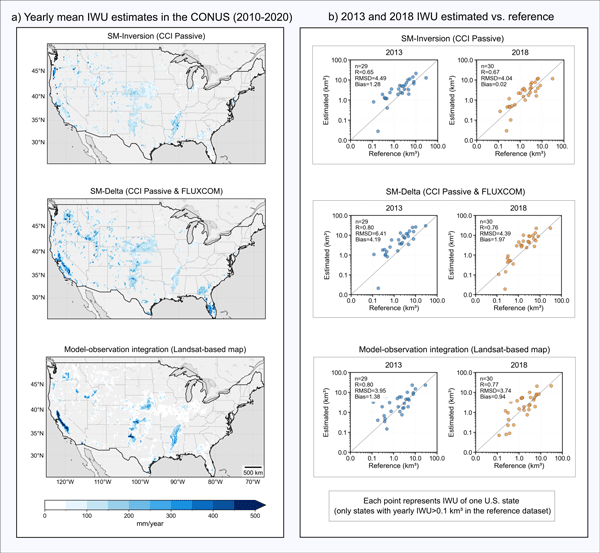
Pierre Laluet, Jacopo Dari, Louise Busschaert, Zdenko Heyvaert, Gabrielle De Lannoy, Pia Langhans, Sara Modanesi, Christian Massari, Luca Brocca, Carla Saltalippi, Renato Morbidelli, Clément Albergel, and Wouter Dorigo
Earth Syst. Sci. Data, 18, 4833–4853, https://doi.org/10.5194/essd-18-4833-2026, https://doi.org/10.5194/essd-18-4833-2026, 2026
Short summary
Short summary
We developed a long-term dataset collection of irrigation water use based on about two decades of satellite observations, three distinct approaches, and many input datasets. The collection provides monthly estimates for major agricultural regions and helps describe how irrigation varies across locations, seasons, and years. It offers a foundation for improving how irrigation is quantified, compared across methods, and integrated into large-scale hydrological and climate studies.
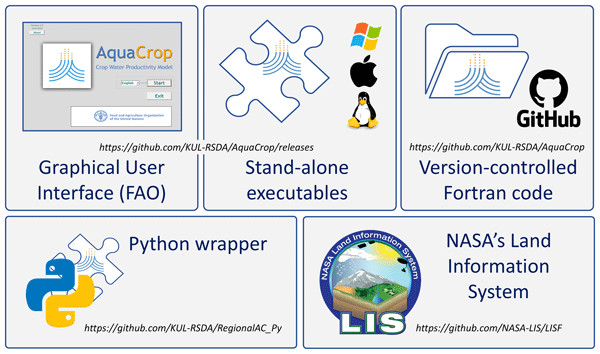
Gabriëlle J. M. De Lannoy, Louise Busschaert, Michel Bechtold, Niccolò Lanfranco, Shannon de Roos, Zdenko Heyvaert, Martynas Bielinis, Jonas Mortelmans, Samuel A. Scherrer, Maxime Van den Bossche, Sujay Kumar, David M. Mocko, Eric Kemp, Lee Heng, Pasquale Steduto, and Dirk Raes
Geosci. Model Dev., 19, 2551–2575, https://doi.org/10.5194/gmd-19-2551-2026, https://doi.org/10.5194/gmd-19-2551-2026, 2026
Short summary
Short summary
The AquaCrop model has been incorporated into the NASA Land Information System, to advance regional crop growth simulations at any spatial resolution, with a range of different input sources for meteorology, soil and crop parameters. This system also facilitates the assimilation of satellite data to update the crop and water conditions during model simulations. We present three exploratory applications to highlight pathways for future research on regional-scale crop estimation.
Louise Busschaert, Michel Bechtold, Sara Modanesi, Christian Massari, Dirk Raes, Sujay V. Kumar, and Gabrielle J. M. De Lannoy
EGUsphere, https://doi.org/10.2139/ssrn.4974019, https://doi.org/10.2139/ssrn.4974019, 2024
Preprint archived
Short summary
Short summary
This study estimates irrigation in the Po Valley using AquaCrop and Noah-MP models with sprinkler irrigation. Noah-MP shows higher annual rates than AquaCrop due to more water losses. After adjusting, both align with reported irrigation ranges (500–600 mm/yr). Soil moisture estimates from both models match satellite data, though both have limitations in vegetation and evapotranspiration modeling. The study emphasizes the need for observations to improve irrigation estimates.

Louise Busschaert, Shannon de Roos, Wim Thiery, Dirk Raes, and Gabriëlle J. M. De Lannoy
Hydrol. Earth Syst. Sci., 26, 3731–3752, https://doi.org/10.5194/hess-26-3731-2022, https://doi.org/10.5194/hess-26-3731-2022, 2022
Short summary
Short summary
Increasing amounts of water are used for agriculture. Therefore, we looked into how irrigation requirements will evolve under a changing climate over Europe. Our results show that, by the end of the century and under high emissions, irrigation water will increase by 30 % on average compared to the year 2000. Also, the irrigation requirement is likely to vary more from 1 year to another. However, if emissions are mitigated, these effects are reduced.
Marco Dionigi, Tommaso Moramarco, Domenico De Santis, Christian Massari, Silvia Barbetta, and Stefania Camici
EGUsphere, https://doi.org/10.5194/egusphere-2026-5965, https://doi.org/10.5194/egusphere-2026-5965, 2026
This preprint is open for discussion and under review for Natural Hazards and Earth System Sciences (NHESS).
Short summary
Short summary
Flood forecasting is challenging in river basins with sparse monitoring networks. We developed a database of pre-computed flood simulations for the Crati River basin in southern Italy, combining stochastically generated rainfall and air temperature with a hydrological model run under different soil moisture conditions. Satellite soil moisture observations select the most relevant simulations, providing river flows in real time. The same approach could be applied to other poorly gauged basins.
Nunzio Romano, Harry Vereecken, Heye R. Bogena, Giorgio Cassiani, Matteo Censini, Giovanna Armiento, Marco Proposito, Lorenzo De Silvestri, Eyal Ben Dor, Nicolas Francos, Christian Massari, János Mészáros, Tünde Takáts, Caterina Mazzitelli, Benedetto Sica, Ugo Lazzaro, and Paolo Nasta
Earth Syst. Sci. Data Discuss., https://doi.org/10.5194/essd-2026-725, https://doi.org/10.5194/essd-2026-725, 2026
Preprint under review for ESSD
Short summary
Short summary
Understanding how climate and land-use change affect water resources requires observations that connect processes from soils and vegetation to groundwater and streams. The Alento dataset is presented that integrates environmental monitoring with targeted field observations across multiple Critical Zone components and scales. The dataset offers a distinctive resource for studying water storage and movement, evaluating environmental models, and improving understanding of water-limited regions.
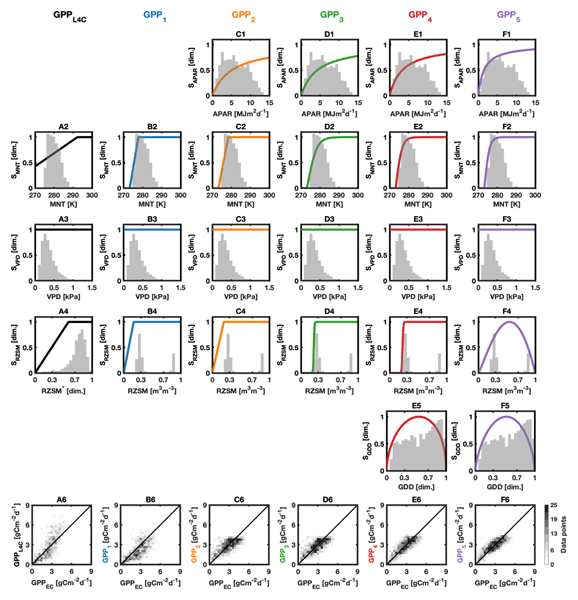
Rémi Madelon, K. Arthur Endsley, John S. Kimball, Gabriëlle J. M. De Lannoy, Oliver Sonnentag, Haley Alcock, Alex Mavrovic, Scott N. Williamson, Vincent Maire, Arnaud Mialon, and Alexandre Roy
Biogeosciences, 23, 6359–6407, https://doi.org/10.5194/bg-23-6359-2026, https://doi.org/10.5194/bg-23-6359-2026, 2026
Short summary
Short summary
This study aims to improve estimates of carbon dioxide release and uptake in the North American Arctic and subarctic regions. Several modeling approaches were tested, showing that a better representation of sunlight and temperature effects on ecosystems leads to improved estimates. This work provides new perspectives to better assess whether these regions act as sources or sinks of greenhouse gases and how they may influence the climate system by amplifying or slowing global warming.
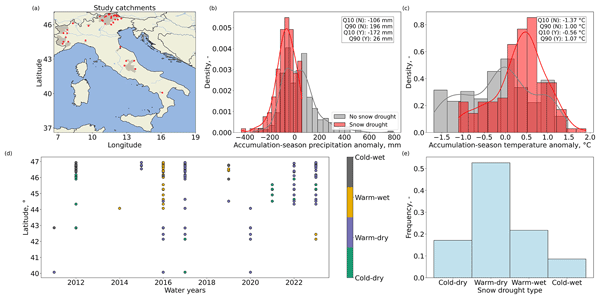
Francesco Avanzi, Stefano Terzi, Mariapina Castelli, Francesca Munerol, Margherita Andreaggi, Marta Galvagno, Andrea Galletti, Tessa Maurer, Christian Massari, Grace Carlson, Manuela Girotto, Giacomo Bertoldi, Edoardo Cremonese, Simone Gabellani, Umberto Morra di Cella, Marco Altamura, Lauro Rossi, and Luca Ferraris
Hydrol. Earth Syst. Sci., 30, 5769–5790, https://doi.org/10.5194/hess-30-5769-2026, https://doi.org/10.5194/hess-30-5769-2026, 2026
Short summary
Short summary
Snow droughts are periods with below-average snow accumulation and are becoming more frequent in a warming climate, yet their ecosystem and societal impacts remain poorly known. Using 13 years of data from 38 Italian catchments, we show that snow droughts reduced snow duration, increased winter melt-out events, and cut summer runoff by ~50 %. Photosynthesis increased by up to 10 % due to earlier meltout. These events also caused widespread water-supply reductions, especially in foothills.
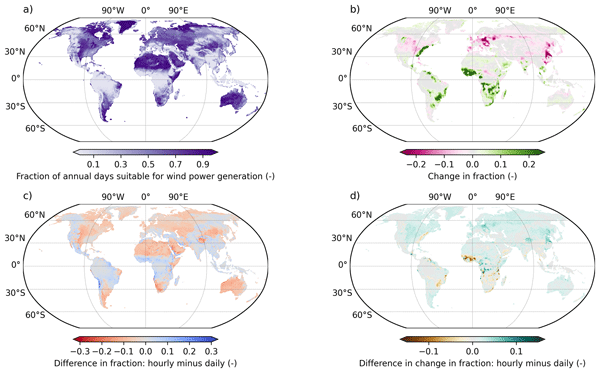
Michel Bechtold, Benjamin Poschlod, Christian Otto, Jan Volkholz, Matthias Büchner, and Florian Zabel
Earth Syst. Sci. Data, 18, 6637–6648, https://doi.org/10.5194/essd-18-6637-2026, https://doi.org/10.5194/essd-18-6637-2026, 2026
Short summary
Short summary
Many climate impacts depend on what happens within a day: heat stress peaks in the afternoon and solar or wind power rise and fall hour by hour. Yet global climate projections are usually published only as daily averages. We converted them into hourly data for global land areas, covering 1850 to 2100 and several future scenarios. The dataset is freely available and lets researchers estimate impacts on health, water and energy far more realistically.
Justin Matthew Pflug, Kehan Yang, Nicoleta Cristea, Emma T. Boudreau, Carrie M. Vuyovich, and Sujay V. Kumar
EGUsphere, https://doi.org/10.5194/egusphere-2026-4850, https://doi.org/10.5194/egusphere-2026-4850, 2026
Short summary
Short summary
Fine scale snow cover is important for hydrological and ecological applications. We test whether commercial satellite imagery can downscale 3 m snow cover from free, coarse-resolution snow cover observations. While machine learning estimates work best, combining 30 m snow cover estimates from Landsat and Sentinel with information about the terrain can also achieve high accuracies. These results can inform the most data and cost-effective approaches for tracking snow cover in montane regions.
Pierre Laluet, Jacopo Dari, Louise Busschaert, Zdenko Heyvaert, Gabrielle De Lannoy, Pia Langhans, Sara Modanesi, Christian Massari, Luca Brocca, Carla Saltalippi, Renato Morbidelli, Clément Albergel, and Wouter Dorigo
Earth Syst. Sci. Data, 18, 4833–4853, https://doi.org/10.5194/essd-18-4833-2026, https://doi.org/10.5194/essd-18-4833-2026, 2026
Short summary
Short summary
We developed a long-term dataset collection of irrigation water use based on about two decades of satellite observations, three distinct approaches, and many input datasets. The collection provides monthly estimates for major agricultural regions and helps describe how irrigation varies across locations, seasons, and years. It offers a foundation for improving how irrigation is quantified, compared across methods, and integrated into large-scale hydrological and climate studies.
Francesco Avanzi, Hans Lievens, Michael Matiu, Paolo Filippucci, Oscar M. Baez Villanueva, Simone Gabellani, Fabio Delogu, Lorenzo Alfieri, Andrea Libertino, Pere Quintana-Seguì, Diego G. Miralles, Luca Brocca, Christian Massari, and Gabriëlle J. M. De Lannoy
EGUsphere, https://doi.org/10.5194/egusphere-2026-2851, https://doi.org/10.5194/egusphere-2026-2851, 2026
Short summary
Short summary
We developed a new system to map and monitor snow and stored water across large mountain regions using satellite data and computer simulations. Tested in four major European river basins, the system reproduced snow conditions with high accuracy and realistically captured how snow changes with elevation. Because it does not rely on ground measurements, it can help provide consistent information on snow-water resources worldwide, supporting water management and climate adaptation.
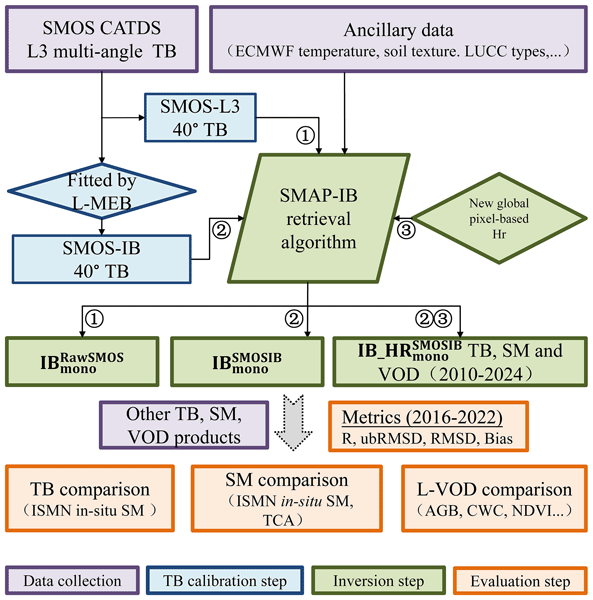
Zanpin Xing, Xiaojun Li, Frédéric Frappart, Gabrielle De Lannoy, Thomas Jagdhuber, Jian Peng, Lei Fan, Hongliang Ma, Lanka Karthikeyan, Xiangzhuo Liu, Mengjia Wang, Lin Zhao, Yongqin Liu, and Jean-Pierre Wigneron
Earth Syst. Sci. Data, 18, 4047–4073, https://doi.org/10.5194/essd-18-4047-2026, https://doi.org/10.5194/essd-18-4047-2026, 2026
Short summary
Short summary
Microwave satellite observations of Earth’s land surface are important for tracking global soil moisture and vegetation water content. We use data from the Soil Moisture and Ocean Salinity satellite to first reduce noise and contamination in microwave signals, then produce more reliable long-term records of these variables. Tests against ground stations and other satellites show that the new record performs better than existing products and supports drought, freeze-thaw, and carbon monitoring.
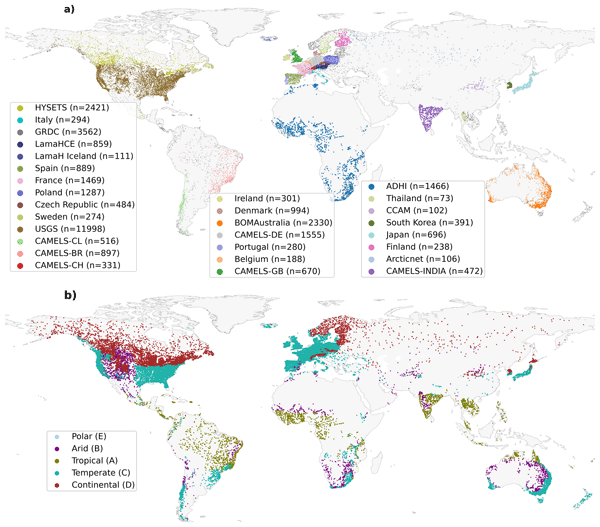
Ather Abbas, Yuan Yang, Ming Pan, Yves Tramblay, Chaopeng Shen, Haoyu Ji, Solomon H. Gebrechorkos, Florian Pappenberger, JongCheol Pyo, Dapeng Feng, George Huffman, Phu Nguyen, Christian Massari, Luca Brocca, Jackson Tan, and Hylke E. Beck
Hydrol. Earth Syst. Sci., 30, 3399–3423, https://doi.org/10.5194/hess-30-3399-2026, https://doi.org/10.5194/hess-30-3399-2026, 2026
Short summary
Short summary
Our study evaluated 24 precipitation datasets using a hydrological model at global scale to assess their suitability and accuracy. We found that MSWEP (Multi-Source Weighted-Ensemble Precipitation) V2.8 excels due to its ability to integrate data from multiple sources, while others, such as IMERG (Integrated Multi-satellitE Retrievals for Global Precipitation Mission) and GDAS (Global Data Assimilation System), demonstrated strong regional performances. This research assists in selecting the appropriate dataset for applications in water resource management, hazard assessment, agriculture, and environmental monitoring.
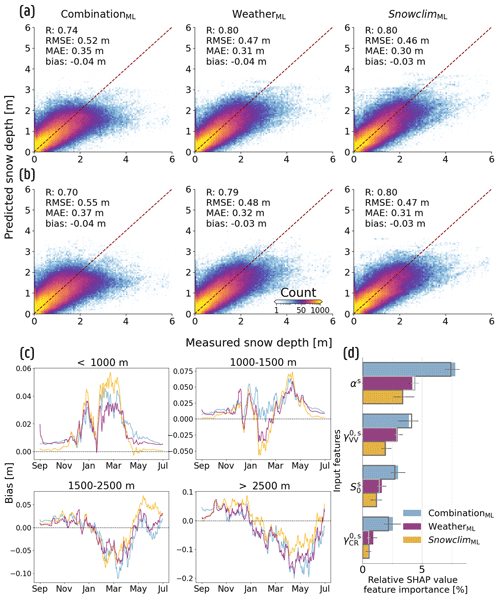
Lucas Boeykens, Devon Dunmire, Jonas-Frederik Jans, Willem Waegeman, Gabriëlle De Lannoy, Ezra Beernaert, Niko E. C. Verhoest, and Hans Lievens
The Cryosphere, 20, 3187–3216, https://doi.org/10.5194/tc-20-3187-2026, https://doi.org/10.5194/tc-20-3187-2026, 2026
Short summary
Short summary
We used AI to better estimate the height of the snowpack present on the ground across the European Alps, by using novel satellite data, complemented by weather information or snow depth estimates from a computer model. We found that both combinations improve the accuracy of our AI-based snow depth estimates, performing almost equally well. This helps us better monitor how much water is stored as snow, which is vital for drinking water, farming, and clean energy production in Europe.
Süleyman Selim Çallı, Kübra Özdemir Çallı, Brahim Akdim, Bruno Arfib, Aleksey Benderev, Sandra Beranger, Avi Burg, Onur Can, Jean-Baptiste Charlier, Mehmet Çelik, Arda Melih Çetin, Fehdi Chemseddine, Miroslava Deliyska, Lucio Di Matteo, Marco Dionigi, Romeo Eftimi, Jutta Eybl, Davide Fronzi, Nico Goldscheider, Ergin Gökkaya, Jorge Jodar, Herve Jourde, Eva Kaminsky, Konstantina Katsanou, Alireza Kavousi, Melike Kaya, David Labat, Tanja Liesch, Peter Malik, Christian Massari, Cyril Mayaud, Naomi Mazzilli, Pavel Pracny, Natasa Ravbar, Nathan Rispal, Simon Seelig, Vianney Sivelle, Marc Steinmann, Daniela Valigi, Gerfried Winkler, Ahmet Kemal Yahşi, and Andreas Hartmann
Earth Syst. Sci. Data Discuss., https://doi.org/10.5194/essd-2026-281, https://doi.org/10.5194/essd-2026-281, 2026
Revised manuscript under review for ESSD
Short summary
Short summary
Karst groundwater systems are vital but highly sensitive to climate change. Their complex underground flow makes them hard to manage without good data, so we gathered 118 high-quality records of spring discharge across Mediterranean mountain ranges. With an average of 19 years of data – including one nearly century-long record – this collection provides the detailed information needed to better predict water availability and protect these vulnerable groundwater sources.
Katja Frieler, Stefan Lange, Jacob Schewe, Matthias Mengel, Simon Treu, Christian Otto, Jan Volkholz, Christopher P. O. Reyer, Stefanie Heinicke, Colin Jones, Julia L. Blanchard, Cheryl S. Harrison, Colleen M. Petrik, Tyler D. Eddy, Kelly Ortega-Cisneros, Camilla Novaglio, Ryan Heneghan, Derek P. Tittensor, Olivier Maury, Matthias Büchner, Thomas Vogt, Dánnell Quesada-Chacón, Kerry Emanuel, Chia-Ying Lee, Suzana J. Camargo, Linn Hamester, Jonas Jägermeyr, Sam Rabin, Jochen Klar, Iliusi D. Vega del Valle, Lisa Novak, Inga J. Sauer, Gitta Lasslop, Sarah Chadburn, Eleanor Burke, Angela Gallego-Sala, Noah Smith, Jinfeng Chang, Stijn Hantson, Chantelle Burton, Anne Gädeke, Fang Li, Simon N. Gosling, Hannes Müller Schmied, Fred Hattermann, Thomas Hickler, Rafael Marcé, Don Pierson, Wim Thiery, Daniel Mercado-Bettín, Robert Ladwig, Ana Isabel Ayala, Matthew Forrest, Michel Bechtold, Robert Reinecke, Inge de Graaf, Jed O. Kaplan, Alexander Koch, Matthieu Lengaigne, Rohini Kumar, and Maryna Strokal
Geosci. Model Dev., 19, 4095–4135, https://doi.org/10.5194/gmd-19-4095-2026, https://doi.org/10.5194/gmd-19-4095-2026, 2026
Short summary
Short summary
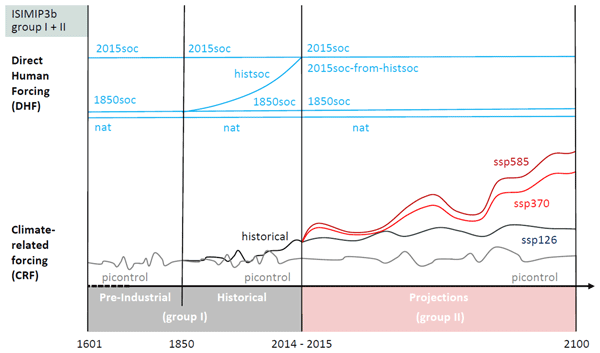
This paper describes the experiments and data sets necessary to run historic and future impact projections, and the underlying assumptions of future climate change as defined by the 3rd round of the ISIMIP Project (Inter-sectoral Impactmodel Intercomparison Project, isimip.org). ISIMIP provides a framework for cross-sectorally consistent climate impact simulations to contribute to a comprehensive and consistent picture of the world under different climate-change scenarios.
Oscar M. Baez-Villanueva, Alfredo Crespo-Otero, Sara Modanesi, Pierre Laluet, Sergio Vicente-Serrano, Jaap Schellekens, Jacopo Dari, Hylke E. Beck, Wouter Dorigo, Christian Massari, Chiara Corbari, Joppe Massant, Kwint Delbare, Olivier Bonte, Aaron Boone, Diego Fernández-Prieto, and Diego G. Miralles
EGUsphere, https://doi.org/10.5194/egusphere-2026-1856, https://doi.org/10.5194/egusphere-2026-1856, 2026
Short summary
Short summary
We developed a new method to estimate daily land evaporation at high resolution across the Iberian Peninsula, explicitly accounting for irrigation. By combining satellite and meteorological data, we show that irrigation can strongly increase evaporation in agricultural areas. The results better match ground observations and improve understanding of water use. This approach can support farming decisions and water management at the regional scale, and will be extended to global applications.
Gabriëlle J. M. De Lannoy, Louise Busschaert, Michel Bechtold, Niccolò Lanfranco, Shannon de Roos, Zdenko Heyvaert, Martynas Bielinis, Jonas Mortelmans, Samuel A. Scherrer, Maxime Van den Bossche, Sujay Kumar, David M. Mocko, Eric Kemp, Lee Heng, Pasquale Steduto, and Dirk Raes
Geosci. Model Dev., 19, 2551–2575, https://doi.org/10.5194/gmd-19-2551-2026, https://doi.org/10.5194/gmd-19-2551-2026, 2026
Short summary
Short summary
The AquaCrop model has been incorporated into the NASA Land Information System, to advance regional crop growth simulations at any spatial resolution, with a range of different input sources for meteorology, soil and crop parameters. This system also facilitates the assimilation of satellite data to update the crop and water conditions during model simulations. We present three exploratory applications to highlight pathways for future research on regional-scale crop estimation.
Sofia Ortenzi, Lucio Di Matteo, Daniela Valigi, Marco Donnini, Marco Dionigi, Davide Fronzi, Josie Geris, Fabio Guadagnano, Ivan Marchesini, Paolo Filippucci, Francesco Avanzi, Daniele Penna, and Christian Massari
Hydrol. Earth Syst. Sci., 30, 1755–1778, https://doi.org/10.5194/hess-30-1755-2026, https://doi.org/10.5194/hess-30-1755-2026, 2026
Short summary
Short summary
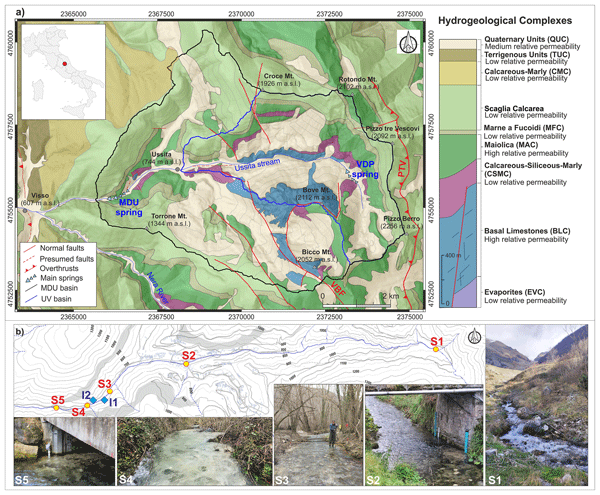
The study presents an integrated approach to analyze groundwater–surface water interactions in a Central Italy catchment, combining hydrological, hydrochemical–isotopic, thermal drone, and satellite data. Results indicate that fractured limestone aquifers sustain streamflow, with snowmelt accounting for about 18 % of recharge. The workflow is transferable and suitable for similar data-scarce Mediterranean basins.
Shima Azimi, Manuela Girotto, Riccardo Rigon, Gaia Roati, Silvia Barbetta, and Christian Massari
EGUsphere, https://doi.org/10.5194/egusphere-2026-793, https://doi.org/10.5194/egusphere-2026-793, 2026
Short summary
Short summary
Even ground-based precipitation observations, often considered the most reliable, can introduce substantial uncertainty into snow modeling due to sparse gauge coverage at high elevations in mountainous catchments.This challenge motivates the present study, in which we propose a data assimilation framework that integrates satellite-based snow depth into a hydrological model to correct snowfall estimates over the Italian Alps, with implications for water management in data-scarce mountain regions.
Domenico De Santis, Silvia Barbetta, Sumit Sen, Viviana Maggioni, Farhad Bahmanpouri, Ashutosh Sharma, Ankit Agarwal, Sagar Gupta, Francesco Avanzi, and Christian Massari
Nat. Hazards Earth Syst. Sci., 26, 1075–1104, https://doi.org/10.5194/nhess-26-1075-2026, https://doi.org/10.5194/nhess-26-1075-2026, 2026
Short summary
Short summary
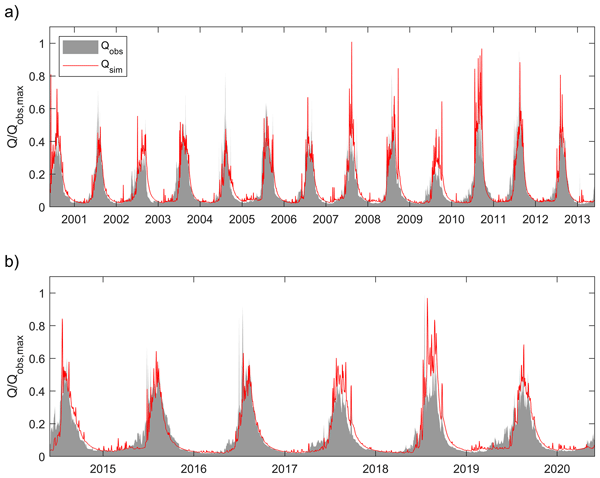
A conceptual, semi-distributed hydrological model was tailored to simulate high flows in monsoon-dominated, glacier-influenced and flood-prone Himalayan basins. Multi-data calibration using satellite-based glacier mass loss and evapotranspiration estimates improved process realism in data-scarce environments. The proposed modelling approach captured key streamflow features despite significant input uncertainties, proving to be a useful tool for exploring the local hydrological response dynamics.
Anne Springer, Gabriëlle De Lannoy, Matthew Rodell, Yorck Ewerdwalbesloh, Helena Gerdener, Mehdi Khaki, Bailing Li, Fupeng Li, Maike Schumacher, Natthachet Tangdamrongsub, Mohammad J. Tourian, Wanshu Nie, and Jürgen Kusche
Hydrol. Earth Syst. Sci., 30, 985–1022, https://doi.org/10.5194/hess-30-985-2026, https://doi.org/10.5194/hess-30-985-2026, 2026
Short summary
Short summary
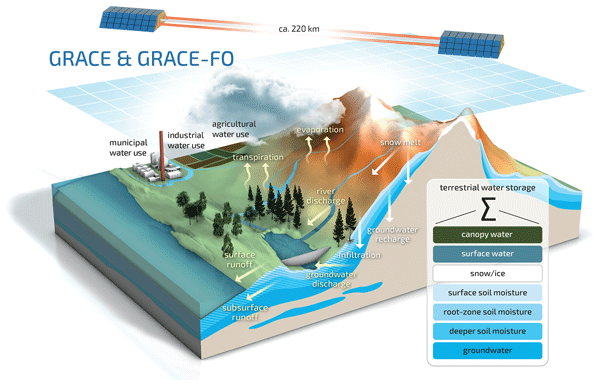
The GRACE (Gravity Recovery and Climate Experiment) and GRACE Follow-On satellites monitor changes in Earth's water storage by observing gravity variations. By integrating these observations into hydrological models through data assimilation, estimates of groundwater, soil moisture, and hydrological trends are improved, helping to monitor droughts, floods, and human water use. This review highlights recent advances in GRACE data assimilation, identifies key challenges, and discusses future directions with upcoming satellite missions.
Senna Bouabdelli, Martin Morlot, Christian Massari, and Giuseppe Formetta
EGUsphere, https://doi.org/10.5194/egusphere-2026-464, https://doi.org/10.5194/egusphere-2026-464, 2026
Short summary
Short summary
Drought is becoming more common in the Alps as warmer winters reduce snow and alter river flow. We used hydrological model simulations in the Adige basin to understand when and why droughts occur. Results show that droughts are happening earlier, becoming more intense, and increasingly driven by lack of rain instead of melting snow at high elevations. This shift toward lower-elevation river behaviour calls for new strategies to manage water for hydropower, agriculture, and tourism.
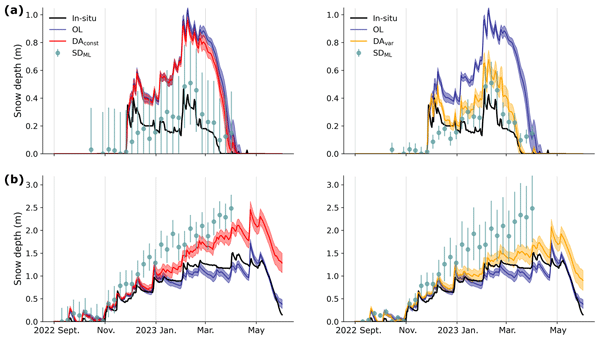
Devon Dunmire, Michel Bechtold, Lucas Boeykens, and Gabriëlle J. M. De Lannoy
The Cryosphere, 20, 609–628, https://doi.org/10.5194/tc-20-609-2026, https://doi.org/10.5194/tc-20-609-2026, 2026
Short summary
Short summary
Snow is vital for society and the climate, yet estimates of snowpack remain uncertain due to observational and modeling limitations. Data assimilation (DA) helps by integrating observations with models. Here, we integrate snow depth retrievals into a physically-based snow model across the European Alps. This work offers advancements for snow data assimilation, such as incorporating a dynamic observational uncertainty, which is essential for forecasting and water resource management.
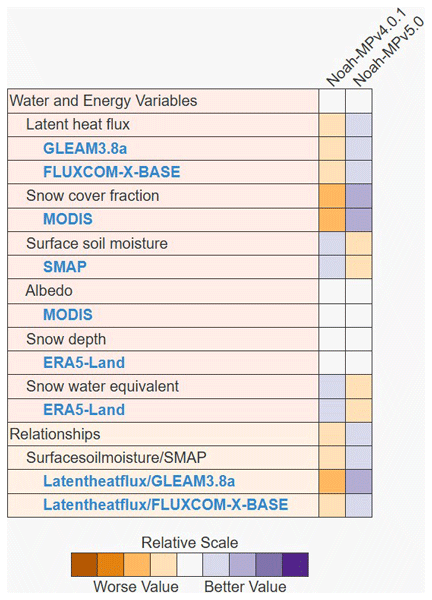
Cenlin He, Tzu-Shun Lin, David M. Mocko, Ronnie Abolafia-Rosenzweig, Jerry W. Wegiel, and Sujay V. Kumar
Geosci. Model Dev., 18, 8439–8460, https://doi.org/10.5194/gmd-18-8439-2025, https://doi.org/10.5194/gmd-18-8439-2025, 2025
Short summary
Short summary
This study integrates the refactored community Noah-MP version 5.0 model with the NASA Land Information System (LIS) version 7.5.2 to streamline the synchronization, development, and maintenance of Noah-MP within LIS and to enhance their interoperability and applicability. The model benchmarking and evaluation results reveal key model strengths and weaknesses in simulating land surface quantities and show implications for future model improvements.
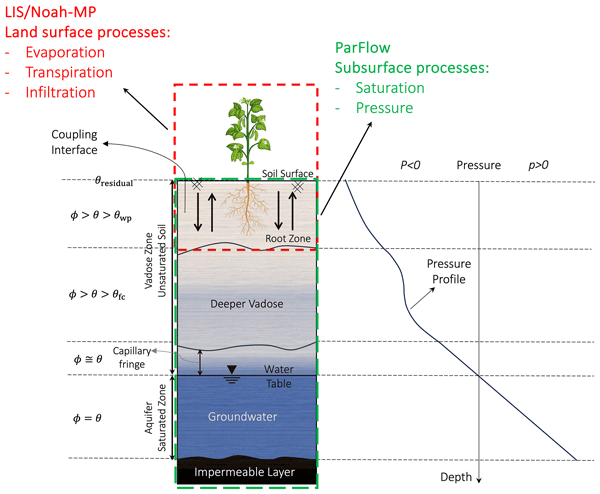
Peyman Abbaszadeh, Fadji Zaouna Maina, Chen Yang, Dan Rosen, Sujay Kumar, Matthew Rodell, and Reed Maxwell
Hydrol. Earth Syst. Sci., 29, 5429–5452, https://doi.org/10.5194/hess-29-5429-2025, https://doi.org/10.5194/hess-29-5429-2025, 2025
Short summary
Short summary
To manage Earth's water resources effectively amid climate change, it is crucial to understand both surface and groundwater processes. We developed a new modeling system that combines two advanced tools, ParFlow and LIS (Land Information System)/Noah-MP, to better simulate both land surface and groundwater interactions. By testing this integrated model in the Upper Colorado River Basin, we found it improves predictions of hydrologic processes, especially in complex terrains.
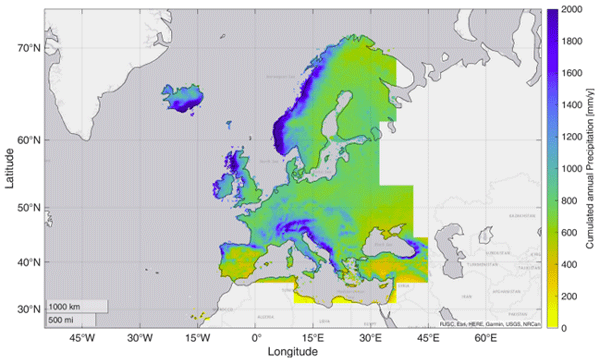
Paolo Filippucci, Luca Brocca, Luca Ciabatta, Hamidreza Mosaffa, Francesco Avanzi, and Christian Massari
Earth Syst. Sci. Data, 17, 5221–5258, https://doi.org/10.5194/essd-17-5221-2025, https://doi.org/10.5194/essd-17-5221-2025, 2025
Short summary
Short summary
Accurate rainfall data is essential, yet measuring daily precipitation worldwide is challenging. This research presents HYdroclimatic PERformance-enhanced Precipitation (HYPER-P), a dataset combining satellite, ground, and reanalysis data to estimate precipitation at a 1 km scale from 2000 to 2022. HYPER-P improves accuracy, especially in areas with few rain gauges. This dataset supports scientists and decision-makers in understanding and managing water resources more effectively.
Xiangmei Liu, Peng Shen, Jiaqi Chen, David Andrew Barry, Christian Massari, Jiansheng Chen, Mingming Feng, Xi Zhang, Fenyan Ma, Fei Yang, and Haixia Jin
EGUsphere, https://doi.org/10.5194/egusphere-2025-4263, https://doi.org/10.5194/egusphere-2025-4263, 2025
Preprint archived
Short summary
Short summary
Our research in the Songnen Basin of Northeast China has revealed why numerous lakes remain unfrozen during winter. By studying Lake Chagan, we discovered that deep groundwater sustains these lakes, likely flowing through subterranean channels from the Tibetan Plateau. When earthquakes disrupt these conduits, water rises along fault lines to replenish the lakes. This finding challenges the theory that graben lakes primarily depend on local precipitation.
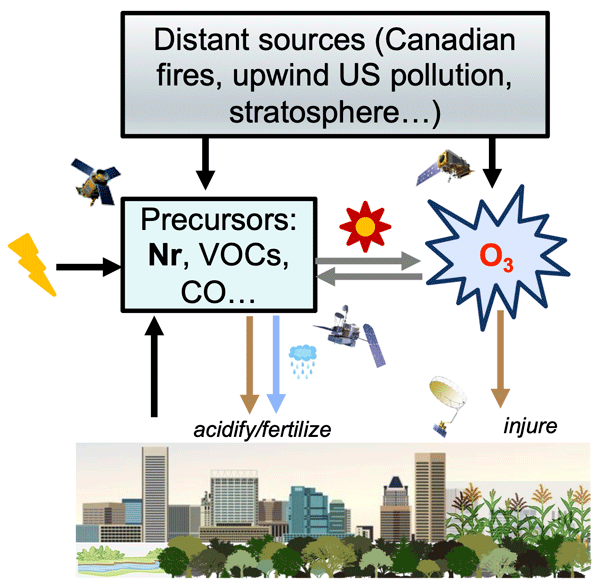
Min Huang, Gregory R. Carmichael, Kevin W. Bowman, Isabelle De Smedt, Andreas Colliander, Michael H. Cosh, Sujay V. Kumar, Alex B. Guenther, Scott J. Janz, Ryan M. Stauffer, Anne M. Thompson, Niko M. Fedkin, Robert J. Swap, John D. Bolten, and Alicia T. Joseph
Atmos. Chem. Phys., 25, 1449–1476, https://doi.org/10.5194/acp-25-1449-2025, https://doi.org/10.5194/acp-25-1449-2025, 2025
Short summary
Short summary
We use model simulations along with multiplatform, multidisciplinary observations and a range of analysis methods to estimate and understand the distributions, temporal changes, and impacts of reactive nitrogen and ozone over the most populous US region that has undergone significant environmental changes. Deposition, biogenic emissions, and extra-regional sources have been playing increasingly important roles in controlling pollutant budgets in this area as local anthropogenic emissions drop.
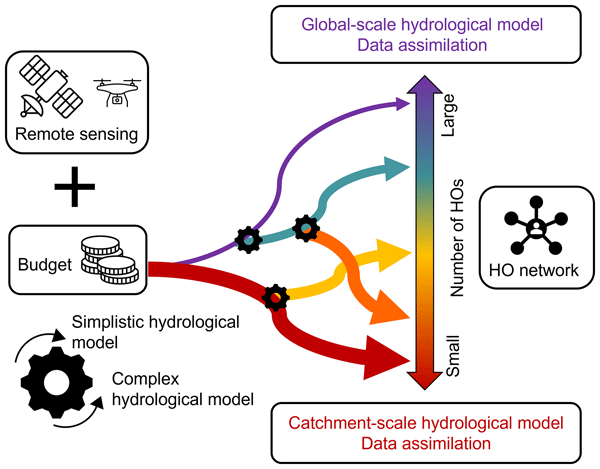
Paolo Nasta, Günter Blöschl, Heye R. Bogena, Steffen Zacharias, Roland Baatz, Gabriëlle De Lannoy, Karsten H. Jensen, Salvatore Manfreda, Laurent Pfister, Ana M. Tarquis, Ilja van Meerveld, Marc Voltz, Yijian Zeng, William Kustas, Xin Li, Harry Vereecken, and Nunzio Romano
Hydrol. Earth Syst. Sci., 29, 465–483, https://doi.org/10.5194/hess-29-465-2025, https://doi.org/10.5194/hess-29-465-2025, 2025
Short summary
Short summary
The Unsolved Problems in Hydrology (UPH) initiative has emphasized the need to establish networks of multi-decadal hydrological observatories to tackle catchment-scale challenges on a global scale. This opinion paper provocatively discusses two endmembers of possible future hydrological observatory (HO) networks for a given hypothesized community budget: a comprehensive set of moderately instrumented observatories or, alternatively, a small number of highly instrumented supersites.
Louise Busschaert, Michel Bechtold, Sara Modanesi, Christian Massari, Dirk Raes, Sujay V. Kumar, and Gabrielle J. M. De Lannoy
EGUsphere, https://doi.org/10.2139/ssrn.4974019, https://doi.org/10.2139/ssrn.4974019, 2024
Preprint archived
Short summary
Short summary
This study estimates irrigation in the Po Valley using AquaCrop and Noah-MP models with sprinkler irrigation. Noah-MP shows higher annual rates than AquaCrop due to more water losses. After adjusting, both align with reported irrigation ranges (500–600 mm/yr). Soil moisture estimates from both models match satellite data, though both have limitations in vegetation and evapotranspiration modeling. The study emphasizes the need for observations to improve irrigation estimates.
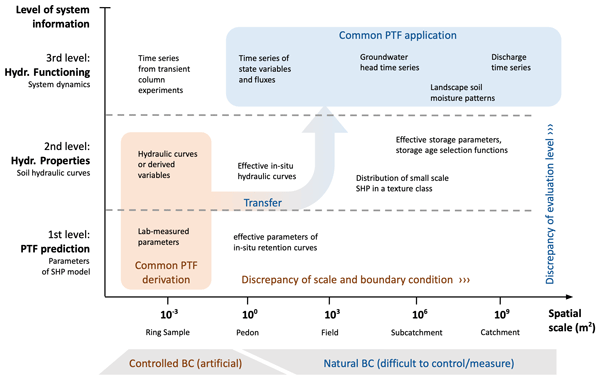
Tobias Karl David Weber, Lutz Weihermüller, Attila Nemes, Michel Bechtold, Aurore Degré, Efstathios Diamantopoulos, Simone Fatichi, Vilim Filipović, Surya Gupta, Tobias L. Hohenbrink, Daniel R. Hirmas, Conrad Jackisch, Quirijn de Jong van Lier, John Koestel, Peter Lehmann, Toby R. Marthews, Budiman Minasny, Holger Pagel, Martine van der Ploeg, Shahab Aldin Shojaeezadeh, Simon Fiil Svane, Brigitta Szabó, Harry Vereecken, Anne Verhoef, Michael Young, Yijian Zeng, Yonggen Zhang, and Sara Bonetti
Hydrol. Earth Syst. Sci., 28, 3391–3433, https://doi.org/10.5194/hess-28-3391-2024, https://doi.org/10.5194/hess-28-3391-2024, 2024
Short summary
Short summary
Pedotransfer functions (PTFs) are used to predict parameters of models describing the hydraulic properties of soils. The appropriateness of these predictions critically relies on the nature of the datasets for training the PTFs and the physical comprehensiveness of the models. This roadmap paper is addressed to PTF developers and users and critically reflects the utility and future of PTFs. To this end, we present a manifesto aiming at a paradigm shift in PTF research.
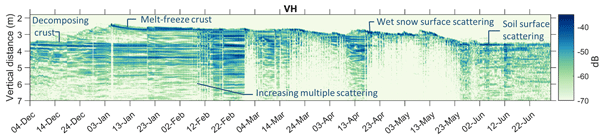
Isis Brangers, Hans-Peter Marshall, Gabrielle De Lannoy, Devon Dunmire, Christian Mätzler, and Hans Lievens
The Cryosphere, 18, 3177–3193, https://doi.org/10.5194/tc-18-3177-2024, https://doi.org/10.5194/tc-18-3177-2024, 2024
Short summary
Short summary
To better understand the interactions between C-band radar waves and snow, a tower-based experiment was set up in the Idaho Rocky Mountains. The reflections were collected in the time domain to measure the backscatter profile from the various snowpack and ground surface layers. The results demonstrate that C-band radar is sensitive to seasonal patterns in snow accumulation but that changes in microstructure, stratigraphy and snow wetness may complicate satellite-based snow depth retrievals.
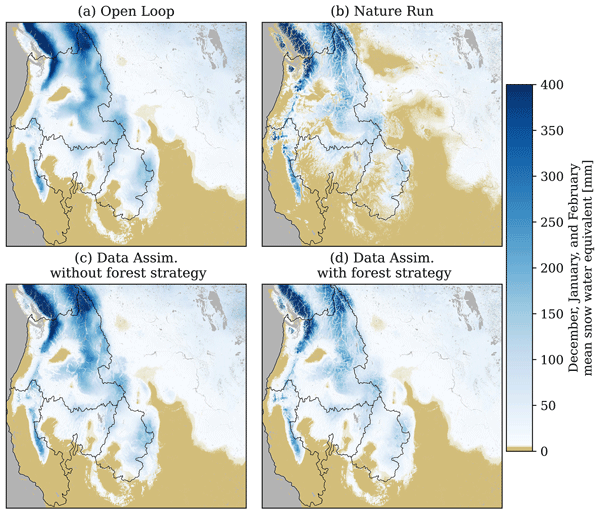
Justin M. Pflug, Melissa L. Wrzesien, Sujay V. Kumar, Eunsang Cho, Kristi R. Arsenault, Paul R. Houser, and Carrie M. Vuyovich
Hydrol. Earth Syst. Sci., 28, 631–648, https://doi.org/10.5194/hess-28-631-2024, https://doi.org/10.5194/hess-28-631-2024, 2024
Short summary
Short summary
Estimates of 250 m of snow water equivalent in the western USA and Canada are improved by assimilating observations representative of a snow-focused satellite mission with a land surface model. Here, by including a gap-filling strategy, snow estimates could be improved in forested regions where remote sensing is challenging. This approach improved estimates of winter maximum snow water volume to within 4 %, on average, with persistent improvements to both spring snow and runoff in many regions.
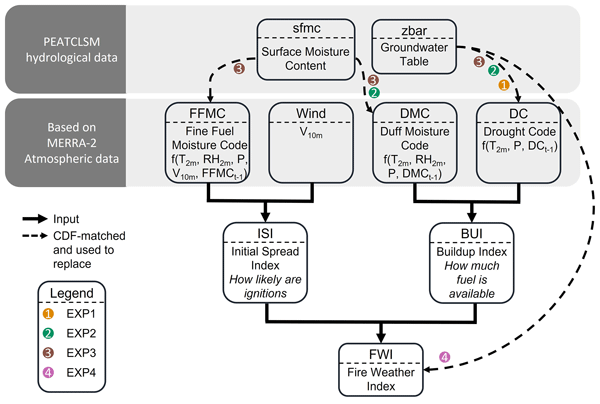
Jonas Mortelmans, Anne Felsberg, Gabriëlle J. M. De Lannoy, Sander Veraverbeke, Robert D. Field, Niels Andela, and Michel Bechtold
Nat. Hazards Earth Syst. Sci., 24, 445–464, https://doi.org/10.5194/nhess-24-445-2024, https://doi.org/10.5194/nhess-24-445-2024, 2024
Short summary
Short summary
With global warming increasing the frequency and intensity of wildfires in the boreal region, accurate risk assessments are becoming more crucial than ever before. The Canadian Fire Weather Index (FWI) is a renowned system, yet its effectiveness in peatlands, where hydrology plays a key role, is limited. By incorporating groundwater data from numerical models and satellite observations, our modified FWI improves the accuracy of fire danger predictions, especially over summer.
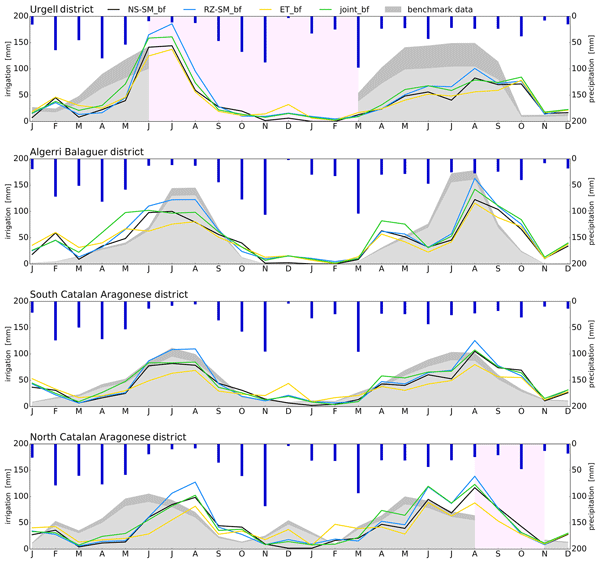
Søren Julsgaard Kragh, Jacopo Dari, Sara Modanesi, Christian Massari, Luca Brocca, Rasmus Fensholt, Simon Stisen, and Julian Koch
Hydrol. Earth Syst. Sci., 28, 441–457, https://doi.org/10.5194/hess-28-441-2024, https://doi.org/10.5194/hess-28-441-2024, 2024
Short summary
Short summary
This study provides a comparison of methodologies to quantify irrigation to enhance regional irrigation estimates. To evaluate the methodologies, we compared various approaches to quantify irrigation using soil moisture, evapotranspiration, or both within a novel baseline framework, together with irrigation estimates from other studies. We show that the synergy from using two equally important components in a joint approach within a baseline framework yields better irrigation estimates.
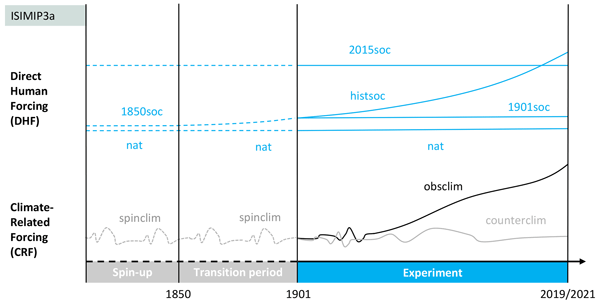
Katja Frieler, Jan Volkholz, Stefan Lange, Jacob Schewe, Matthias Mengel, María del Rocío Rivas López, Christian Otto, Christopher P. O. Reyer, Dirk Nikolaus Karger, Johanna T. Malle, Simon Treu, Christoph Menz, Julia L. Blanchard, Cheryl S. Harrison, Colleen M. Petrik, Tyler D. Eddy, Kelly Ortega-Cisneros, Camilla Novaglio, Yannick Rousseau, Reg A. Watson, Charles Stock, Xiao Liu, Ryan Heneghan, Derek Tittensor, Olivier Maury, Matthias Büchner, Thomas Vogt, Tingting Wang, Fubao Sun, Inga J. Sauer, Johannes Koch, Inne Vanderkelen, Jonas Jägermeyr, Christoph Müller, Sam Rabin, Jochen Klar, Iliusi D. Vega del Valle, Gitta Lasslop, Sarah Chadburn, Eleanor Burke, Angela Gallego-Sala, Noah Smith, Jinfeng Chang, Stijn Hantson, Chantelle Burton, Anne Gädeke, Fang Li, Simon N. Gosling, Hannes Müller Schmied, Fred Hattermann, Jida Wang, Fangfang Yao, Thomas Hickler, Rafael Marcé, Don Pierson, Wim Thiery, Daniel Mercado-Bettín, Robert Ladwig, Ana Isabel Ayala-Zamora, Matthew Forrest, and Michel Bechtold
Geosci. Model Dev., 17, 1–51, https://doi.org/10.5194/gmd-17-1-2024, https://doi.org/10.5194/gmd-17-1-2024, 2024
Short summary
Short summary
Our paper provides an overview of all observational climate-related and socioeconomic forcing data used as input for the impact model evaluation and impact attribution experiments within the third round of the Inter-Sectoral Impact Model Intercomparison Project. The experiments are designed to test our understanding of observed changes in natural and human systems and to quantify to what degree these changes have already been induced by climate change.
Shima Azimi, Christian Massari, Giuseppe Formetta, Silvia Barbetta, Alberto Tazioli, Davide Fronzi, Sara Modanesi, Angelica Tarpanelli, and Riccardo Rigon
Hydrol. Earth Syst. Sci., 27, 4485–4503, https://doi.org/10.5194/hess-27-4485-2023, https://doi.org/10.5194/hess-27-4485-2023, 2023
Short summary
Short summary
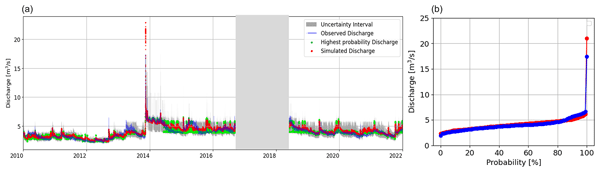
We analyzed the water budget of nested karst catchments using simple methods and modeling. By utilizing the available data on precipitation and discharge, we were able to determine the response lag-time by adopting new techniques. Additionally, we modeled snow cover dynamics and evapotranspiration with the use of Earth observations, providing a concise overview of the water budget for the basin and its subbasins. We have made the data, models, and workflows accessible for further study.
Anne Felsberg, Zdenko Heyvaert, Jean Poesen, Thomas Stanley, and Gabriëlle J. M. De Lannoy
Nat. Hazards Earth Syst. Sci., 23, 3805–3821, https://doi.org/10.5194/nhess-23-3805-2023, https://doi.org/10.5194/nhess-23-3805-2023, 2023
Short summary
Short summary
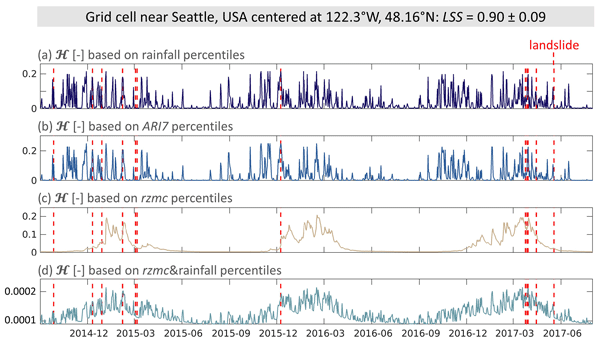
The Probabilistic Hydrological Estimation of LandSlides (PHELS) model combines ensembles of landslide susceptibility and of hydrological predictor variables to provide daily, global ensembles of hazard for hydrologically triggered landslides. Testing different hydrological predictors showed that the combination of rainfall and soil moisture performed best, with the lowest number of missed and false alarms. The ensemble approach allowed the estimation of the associated prediction uncertainty.
Samuel Scherrer, Gabriëlle De Lannoy, Zdenko Heyvaert, Michel Bechtold, Clement Albergel, Tarek S. El-Madany, and Wouter Dorigo
Hydrol. Earth Syst. Sci., 27, 4087–4114, https://doi.org/10.5194/hess-27-4087-2023, https://doi.org/10.5194/hess-27-4087-2023, 2023
Short summary
Short summary
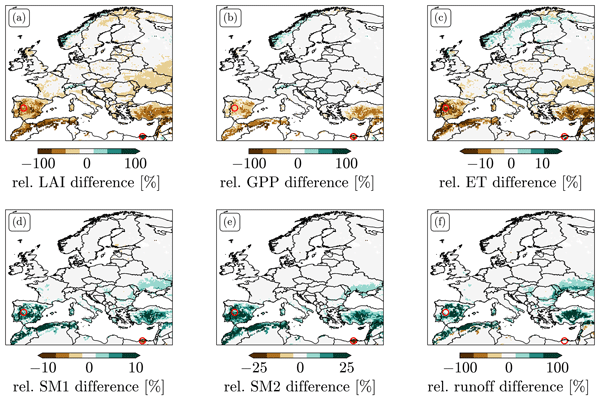
We explored different options for data assimilation (DA) of the remotely sensed leaf area index (LAI). We found strong biases between LAI predicted by Noah-MP and observations. LAI DA that does not take these biases into account can induce unphysical patterns in the resulting LAI and flux estimates and leads to large changes in the climatology of root zone soil moisture. We tested two bias-correction approaches and explored alternative solutions to treating bias in LAI DA.
Eunsang Cho, Yonghwan Kwon, Sujay V. Kumar, and Carrie M. Vuyovich
Hydrol. Earth Syst. Sci., 27, 4039–4056, https://doi.org/10.5194/hess-27-4039-2023, https://doi.org/10.5194/hess-27-4039-2023, 2023
Short summary
Short summary
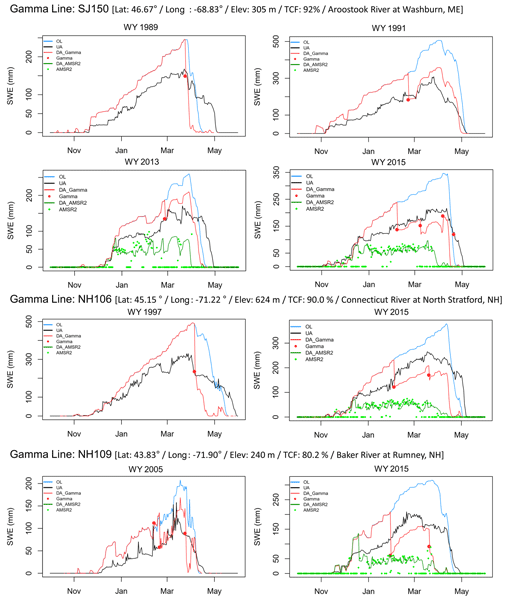
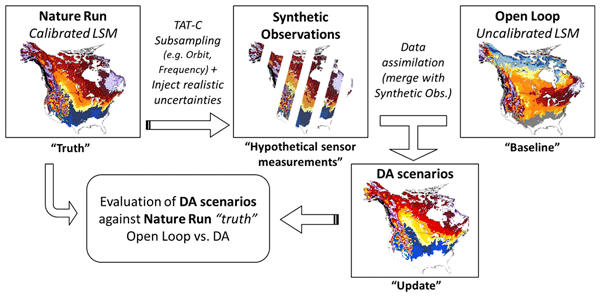
An airborne gamma-ray remote-sensing technique provides reliable snow water equivalent (SWE) in a forested area where remote-sensing techniques (e.g., passive microwave) typically have large uncertainties. Here, we explore the utility of assimilating the gamma snow data into a land surface model to improve the modeled SWE estimates in the northeastern US. Results provide new insights into utilizing the gamma SWE data for enhanced land surface model simulations in forested environments.
Eunsang Cho, Carrie M. Vuyovich, Sujay V. Kumar, Melissa L. Wrzesien, and Rhae Sung Kim
The Cryosphere, 17, 3915–3931, https://doi.org/10.5194/tc-17-3915-2023, https://doi.org/10.5194/tc-17-3915-2023, 2023
Short summary
Short summary
As a future snow mission concept, active microwave sensors have the potential to measure snow water equivalent (SWE) in deep snowpack and forested environments. We used a modeling and data assimilation approach (a so-called observing system simulation experiment) to quantify the usefulness of active microwave-based SWE retrievals over western Colorado. We found that active microwave sensors with a mature retrieval algorithm can improve SWE simulations by about 20 % in the mountainous domain.
Jacopo Dari, Luca Brocca, Sara Modanesi, Christian Massari, Angelica Tarpanelli, Silvia Barbetta, Raphael Quast, Mariette Vreugdenhil, Vahid Freeman, Anaïs Barella-Ortiz, Pere Quintana-Seguí, David Bretreger, and Espen Volden
Earth Syst. Sci. Data, 15, 1555–1575, https://doi.org/10.5194/essd-15-1555-2023, https://doi.org/10.5194/essd-15-1555-2023, 2023
Short summary
Short summary
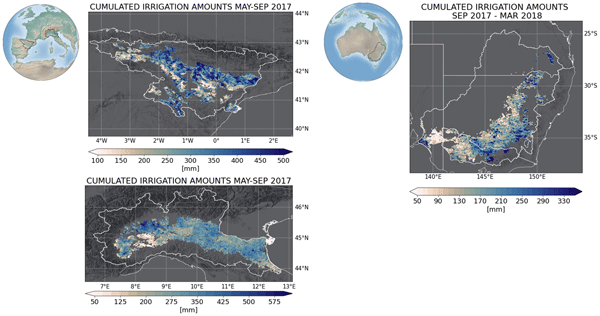
Irrigation is the main source of global freshwater consumption. Despite this, a detailed knowledge of irrigation dynamics (i.e., timing, extent of irrigated areas, and amounts of water used) are generally lacking worldwide. Satellites represent a useful tool to fill this knowledge gap and monitor irrigation water from space. In this study, three regional-scale and high-resolution (1 and 6 km) products of irrigation amounts estimated by inverting the satellite soil moisture signals are presented.

Eunsang Cho, Carrie M. Vuyovich, Sujay V. Kumar, Melissa L. Wrzesien, Rhae Sung Kim, and Jennifer M. Jacobs
Hydrol. Earth Syst. Sci., 26, 5721–5735, https://doi.org/10.5194/hess-26-5721-2022, https://doi.org/10.5194/hess-26-5721-2022, 2022
Short summary
Short summary
While land surface models are a common approach for estimating macroscale snow water equivalent (SWE), the SWE accuracy is often limited by uncertainties in model physics and forcing inputs. In this study, we found large underestimations of modeled SWE compared to observations. Precipitation forcings and melting physics limitations dominantly contribute to the SWE underestimations. Results provide insights into prioritizing strategies to improve the SWE simulations for hydrologic applications.
Riccardo Rigon, Giuseppe Formetta, Marialaura Bancheri, Niccolò Tubini, Concetta D'Amato, Olaf David, and Christian Massari
Hydrol. Earth Syst. Sci., 26, 4773–4800, https://doi.org/10.5194/hess-26-4773-2022, https://doi.org/10.5194/hess-26-4773-2022, 2022
Short summary
Short summary
The
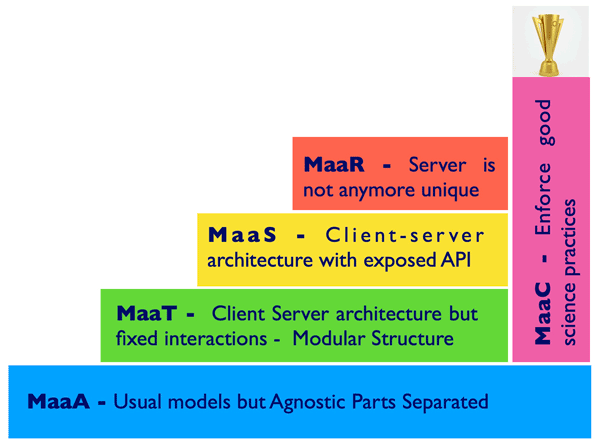
Digital Earth(DE) metaphor is very useful for both end users and hydrological modelers. We analyse different categories of models, with the view of making them part of a Digital eARth Twin Hydrology system (called DARTH). We also stress the idea that DARTHs are not models in and of themselves, rather they need to be built on an appropriate information technology infrastructure. It is remarked that DARTHs have to, by construction, support the open-science movement and its ideas.
Sara Modanesi, Christian Massari, Michel Bechtold, Hans Lievens, Angelica Tarpanelli, Luca Brocca, Luca Zappa, and Gabriëlle J. M. De Lannoy
Hydrol. Earth Syst. Sci., 26, 4685–4706, https://doi.org/10.5194/hess-26-4685-2022, https://doi.org/10.5194/hess-26-4685-2022, 2022
Short summary
Short summary
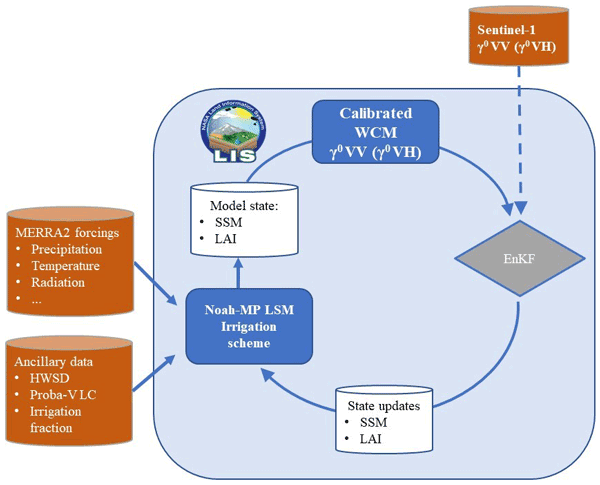
Given the crucial impact of irrigation practices on the water cycle, this study aims at estimating irrigation through the development of an innovative data assimilation system able to ingest high-resolution Sentinel-1 radar observations into the Noah-MP land surface model. The developed methodology has important implications for global water resource management and the comprehension of human impacts on the water cycle and identifies main challenges and outlooks for future research.
Anne Felsberg, Jean Poesen, Michel Bechtold, Matthias Vanmaercke, and Gabriëlle J. M. De Lannoy
Nat. Hazards Earth Syst. Sci., 22, 3063–3082, https://doi.org/10.5194/nhess-22-3063-2022, https://doi.org/10.5194/nhess-22-3063-2022, 2022
Short summary
Short summary
In this study we assessed global landslide susceptibility at the coarse 36 km spatial resolution of global satellite soil moisture observations to prepare for a subsequent combination of the two. Specifically, we focus therefore on the susceptibility of hydrologically triggered landslides. We introduce ensemble techniques, common in, for example, meteorology but not yet in the landslide community, to retrieve reliable estimates of the total prediction uncertainty.

Stefania Camici, Gabriele Giuliani, Luca Brocca, Christian Massari, Angelica Tarpanelli, Hassan Hashemi Farahani, Nico Sneeuw, Marco Restano, and Jérôme Benveniste
Geosci. Model Dev., 15, 6935–6956, https://doi.org/10.5194/gmd-15-6935-2022, https://doi.org/10.5194/gmd-15-6935-2022, 2022
Short summary
Short summary
This paper presents an innovative approach, STREAM (SaTellite-based Runoff Evaluation And Mapping), to derive daily river discharge and runoff estimates from satellite observations of soil moisture, precipitation, and terrestrial total water storage anomalies. Potentially useful for multiple operational and scientific applications, the added value of the STREAM approach is the ability to increase knowledge on the natural processes, human activities, and their interactions on the land.
Lorenzo Alfieri, Francesco Avanzi, Fabio Delogu, Simone Gabellani, Giulia Bruno, Lorenzo Campo, Andrea Libertino, Christian Massari, Angelica Tarpanelli, Dominik Rains, Diego G. Miralles, Raphael Quast, Mariette Vreugdenhil, Huan Wu, and Luca Brocca
Hydrol. Earth Syst. Sci., 26, 3921–3939, https://doi.org/10.5194/hess-26-3921-2022, https://doi.org/10.5194/hess-26-3921-2022, 2022
Short summary
Short summary
This work shows advances in high-resolution satellite data for hydrology. We performed hydrological simulations for the Po River basin using various satellite products, including precipitation, evaporation, soil moisture, and snow depth. Evaporation and snow depth improved a simulation based on high-quality ground observations. Interestingly, a model calibration relying on satellite data skillfully reproduces observed discharges, paving the way to satellite-driven hydrological applications.
Louise Busschaert, Shannon de Roos, Wim Thiery, Dirk Raes, and Gabriëlle J. M. De Lannoy
Hydrol. Earth Syst. Sci., 26, 3731–3752, https://doi.org/10.5194/hess-26-3731-2022, https://doi.org/10.5194/hess-26-3731-2022, 2022
Short summary
Short summary
Increasing amounts of water are used for agriculture. Therefore, we looked into how irrigation requirements will evolve under a changing climate over Europe. Our results show that, by the end of the century and under high emissions, irrigation water will increase by 30 % on average compared to the year 2000. Also, the irrigation requirement is likely to vary more from 1 year to another. However, if emissions are mitigated, these effects are reduced.
Amy McNally, Jossy Jacob, Kristi Arsenault, Kimberly Slinski, Daniel P. Sarmiento, Andrew Hoell, Shahriar Pervez, James Rowland, Mike Budde, Sujay Kumar, Christa Peters-Lidard, and James P. Verdin
Earth Syst. Sci. Data, 14, 3115–3135, https://doi.org/10.5194/essd-14-3115-2022, https://doi.org/10.5194/essd-14-3115-2022, 2022
Short summary
Short summary
The Famine Early Warning Systems Network (FEWS NET) Land Data Assimilation System (FLDAS) global and Central Asia data streams described here generate routine estimates of snow, soil moisture, runoff, and other variables useful for tracking water availability. These data are hosted by NASA and USGS data portals for public use.
Min Huang, James H. Crawford, Gregory R. Carmichael, Kevin W. Bowman, Sujay V. Kumar, and Colm Sweeney
Atmos. Chem. Phys., 22, 7461–7487, https://doi.org/10.5194/acp-22-7461-2022, https://doi.org/10.5194/acp-22-7461-2022, 2022
Short summary
Short summary
This study demonstrates that ozone dry-deposition modeling can be improved by revising the model's dry-deposition parameterizations to better represent the effects of environmental conditions including the soil moisture fields. Applying satellite soil moisture data assimilation is shown to also have added value. Such advancements in coupled modeling and data assimilation can benefit the assessments of ozone impacts on human and vegetation health.
Wanshu Nie, Sujay V. Kumar, Kristi R. Arsenault, Christa D. Peters-Lidard, Iliana E. Mladenova, Karim Bergaoui, Abheera Hazra, Benjamin F. Zaitchik, Sarith P. Mahanama, Rachael McDonnell, David M. Mocko, and Mahdi Navari
Hydrol. Earth Syst. Sci., 26, 2365–2386, https://doi.org/10.5194/hess-26-2365-2022, https://doi.org/10.5194/hess-26-2365-2022, 2022
Short summary
Short summary
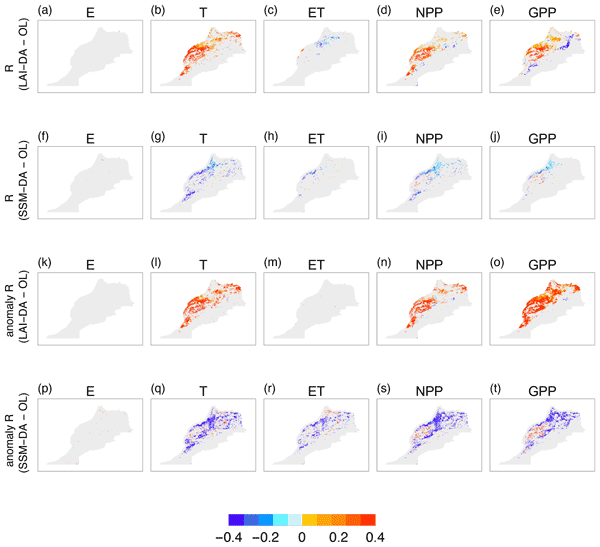
The MENA (Middle East and North Africa) region faces significant food and water insecurity and hydrological hazards. Here we investigate the value of assimilating remote sensing data sets into an Earth system model to help build an effective drought monitoring system and support risk mitigation and management by countries in the region. We highlight incorporating satellite-informed vegetation conditions into the model as being one of the key processes for a successful application for the region.
Jawairia A. Ahmad, Barton A. Forman, and Sujay V. Kumar
Hydrol. Earth Syst. Sci., 26, 2221–2243, https://doi.org/10.5194/hess-26-2221-2022, https://doi.org/10.5194/hess-26-2221-2022, 2022
Short summary
Short summary
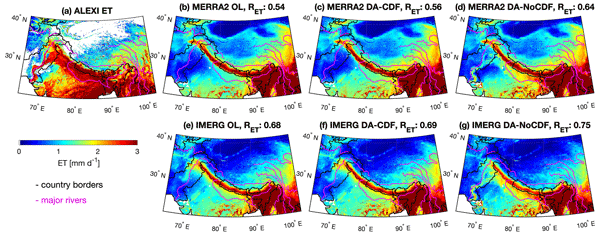
Assimilation of remotely sensed data into a land surface model to improve the spatiotemporal estimation of soil moisture across South Asia exhibits potential. Satellite retrieval assimilation corrects biases that are generated due to an unmodeled hydrologic phenomenon, i.e., irrigation. The improvements in fine-scale, modeled soil moisture estimates by assimilating coarse-scale retrievals indicates the utility of the described methodology for data-scarce regions.

Christian Massari, Francesco Avanzi, Giulia Bruno, Simone Gabellani, Daniele Penna, and Stefania Camici
Hydrol. Earth Syst. Sci., 26, 1527–1543, https://doi.org/10.5194/hess-26-1527-2022, https://doi.org/10.5194/hess-26-1527-2022, 2022
Short summary
Short summary
Droughts are a creeping disaster, meaning that their onset, duration and recovery are challenging to monitor and forecast. Here, we provide further evidence of an additional challenge of droughts, i.e. the fact that the deficit in water supply during droughts is generally much more than expected based on the observed decline in precipitation. At a European scale we explain this with enhanced evapotranspiration, sustained by higher atmospheric demand for moisture during such dry periods.
Hans Lievens, Isis Brangers, Hans-Peter Marshall, Tobias Jonas, Marc Olefs, and Gabriëlle De Lannoy
The Cryosphere, 16, 159–177, https://doi.org/10.5194/tc-16-159-2022, https://doi.org/10.5194/tc-16-159-2022, 2022
Short summary
Short summary
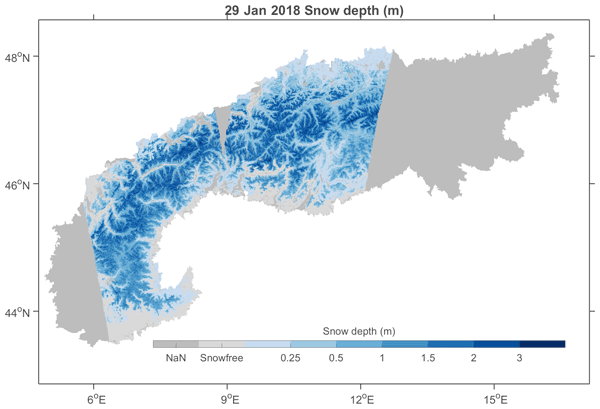
Snow depth observations at high spatial resolution from the Sentinel-1 satellite mission are presented over the European Alps. The novel observations can improve our knowledge of seasonal snow mass in areas with complex topography, where satellite-based estimates are currently lacking, and benefit a number of applications including water resource management, flood forecasting, and numerical weather prediction.
Sara Modanesi, Christian Massari, Alexander Gruber, Hans Lievens, Angelica Tarpanelli, Renato Morbidelli, and Gabrielle J. M. De Lannoy
Hydrol. Earth Syst. Sci., 25, 6283–6307, https://doi.org/10.5194/hess-25-6283-2021, https://doi.org/10.5194/hess-25-6283-2021, 2021
Short summary
Short summary
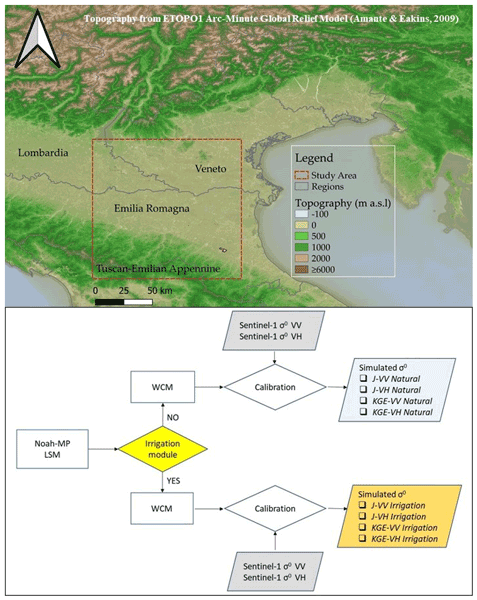
Worldwide, the amount of water used for agricultural purposes is rising and the quantification of irrigation is becoming a crucial topic. Land surface models are not able to correctly simulate irrigation. Remote sensing observations offer an opportunity to fill this gap as they are directly affected by irrigation. We equipped a land surface model with an observation operator able to transform Sentinel-1 backscatter observations into realistic vegetation and soil states via data assimilation.
Shannon de Roos, Gabriëlle J. M. De Lannoy, and Dirk Raes
Geosci. Model Dev., 14, 7309–7328, https://doi.org/10.5194/gmd-14-7309-2021, https://doi.org/10.5194/gmd-14-7309-2021, 2021
Short summary
Short summary
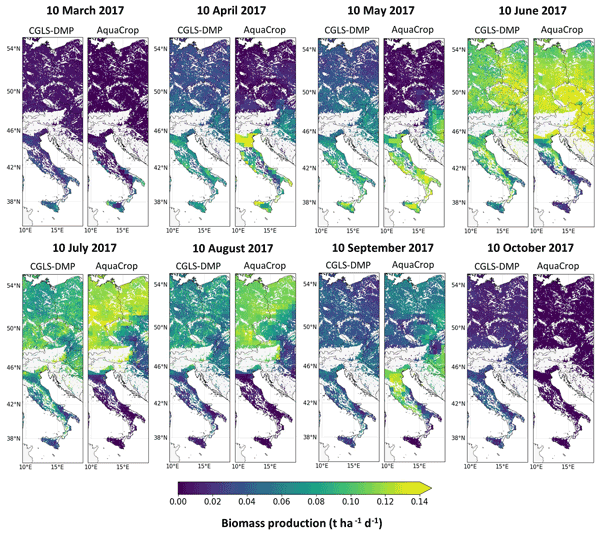
A spatially distributed version of the field-scale crop model AquaCrop v6.1 was developed for applications at various spatial scales. Multi-year 1 km simulations over central Europe were evaluated against biomass and surface soil moisture products derived from optical and microwave satellite missions, as well as in situ observations of soil moisture. The regional version of the AquaCrop model provides a suitable setup for subsequent satellite-based data assimilation.
Daniele Masseroni, Stefania Camici, Alessio Cislaghi, Giorgio Vacchiano, Christian Massari, and Luca Brocca
Hydrol. Earth Syst. Sci., 25, 5589–5601, https://doi.org/10.5194/hess-25-5589-2021, https://doi.org/10.5194/hess-25-5589-2021, 2021
Short summary
Short summary
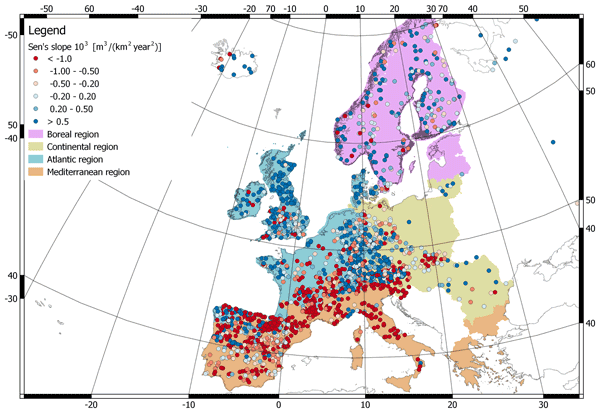
We evaluate 63 years of changes in annual streamflow volume across Europe, using a data set of more than 3000 stations, with a special focus on the Mediterranean basin. The results show decreasing (increasing) volumes in the southern (northern) regions. These trends are strongly consistent with the changes in temperature and precipitation.
Cited articles
Abolafia-Rosenzweig, R., Livneh, B., Small, E., and Kumar, S.: Soil Moisture Data Assimilation to Estimate Irrigation Water Use, J. Adv. Model. Earth Sy., 11, 3670–3690, https://doi.org/10.1029/2019MS001797, 2019. a
Allen, R. G., Pereira, L. S., Raes, D., and Smith, M.: Crop evapotranspiration, Irrig. Drainage Paper, 56, UN Food and Agriculture Organization, Rome, Italy, ISBN 92-5-104219-5, 1998. a
Arboleda-Obando, P. F., Ducharne, A., Yin, Z., and Ciais, P.: Validation of a new global irrigation scheme in the land surface model ORCHIDEE v2.2, Geosci. Model Dev., 17, 2141–2164, https://doi.org/10.5194/gmd-17-2141-2024, 2024. a
Avanzi, F., Munerol, F., Milelli, M., Gabellani, S., Massari, C., Girotto, M., Cremonese, E., Galvagno, M., Bruno, G., Morra di Cella, U., Rossi, L., Altamura, M., and Ferraris, L.: Winter Snow Deficit Was a Harbinger of Summer 2022 Socio-Hydrologic Drought in the Po Basin, Italy, Commun. Earth Environ., 5, 1–12, https://doi.org/10.1038/s43247-024-01222-z, 2024. a
Ball, J. T., Woodrow, I. E., and Berry, J. A.: A Model Predicting Stomatal Conductance and Its Contribution to the Control of Photosynthesis under Different Environmental Conditions, in: Progress in Photosynthesis Research: Volume 4 Proceedings of the VIIth International Congress on Photosynthesis Providence, Rhode Island, USA, August 10–15, 1986, edited by: Biggins, J., 221–224, Dordrecht, ISBN 978-94-017-0519-6, https://doi.org/10.1007/978-94-017-0519-6_48, 1987. a, b
Baronetti, A., González-Hidalgo, J. C., Vicente-Serrano, S. M., Acquaotta, F., and Fratianni, S.: A Weekly Spatio-Temporal Distribution of Drought Events over the Po Plain (North Italy) in the Last Five Decades, Int. J. Climatol., 40, 4463–4476, https://doi.org/10.1002/joc.6467, 2020. a
Bartkowiak, P., Ventura, B., Castelli, M., and Jacob, A.: Daily evaporation product – Po basin (Version v1) [Data set]. Institute for Earth Observation [data set], https://doi.org/10.48784/7ABDBD94-DDFE-48DF-AB09-341AD2F52E47, 2023. a, b
Bartkowiak, P., Ventura, B., Jacob, A., and Castelli, M.: A Copernicus-based evapotranspiration dataset at 100 m spatial resolution over four Mediterranean basins, Earth Syst. Sci. Data, 16, 4709–4734, https://doi.org/10.5194/essd-16-4709-2024, 2024. a
Bonaldo, D., Bellafiore, D., Ferrarin, C., Ferretti, R., Ricchi, A., Sangelantoni, L., and Vitelletti, M. L.: The Summer 2022 Drought: A Taste of Future Climate for the Po Valley (Italy)?, Reg. Environ. Change, 23, 1, https://doi.org/10.1007/s10113-022-02004-z, 2022. a
Brocca, L., Gaona, J., Bavera, D., Fioravanti, G., Puca, S., Ciabatta, L., Filippucci, P., Mosaffa, H., Esposito, G., Roberto, N., Dari, J., Vreugdenhil, M., and Wagner, W.: Exploring the Actual Spatial Resolution of 1 Km Satellite Soil Moisture Products, Sci. Total Environ., 945, 174087, https://doi.org/10.1016/j.scitotenv.2024.174087, 2024. a
Brutsaert, W.: Evaporation into the Atmosphere: Theory, History and Applications, Environmental Fluid Mechanics, ISBN 978-90-277-1247-9, 1982. a
Buchhorn, M., Smets, B., Bertels, L., Roo, B. D., Lesiv, M., Tsendbazar, N.-E., Herold, M., and Fritz, S.: Copernicus Global Land Service: Land Cover 100m: Collection 3: Epoch 2019: Globe, Zenodo [data set], https://doi.org/10.5281/ZENODO.3939050, 2020. a, b
Busschaert, L., de Roos, S., Thiery, W., Raes, D., and De Lannoy, G. J. M.: Net irrigation requirement under different climate scenarios using AquaCrop over Europe, Hydrol. Earth Syst. Sci., 26, 3731–3752, https://doi.org/10.5194/hess-26-3731-2022, 2022. a, b, c
Busschaert, L., Bechtold, M., Modanesi, S., Massari, C., Brocca, L., and De Lannoy, G. J. M.: Irrigation Quantification Through Backscatter Data Assimilation With a Buddy Check Approach, J. Adv. Model. Earth Sy., 16, e2023MS003661, https://doi.org/10.1029/2023MS003661, 2024. a
Busschaert, L., Bechtold, M., and De Lannoy, G.: AquaCrop v7.0 in NASA's Land Information System, Zenodo [code], https://doi.org/10.5281/zenodo.19810040, 2026. a, b
Büttner, G.: CORINE Land Cover and Land Cover Change Products, in: Land Use and Land Cover Mapping in Europe: Practices & Trends, edited by: Manakos, I. and Braun, M., Remote Sensing and Digital Image Processing, 55–74, Dordrecht, ISBN 978-94-007-7969-3, https://doi.org/10.1007/978-94-007-7969-3_5, 2014. a
Campbell, B. M., Beare, D. J., Bennett, E. M., Hall-Spencer, J. M., Ingram, J. S. I., Jaramillo, F., Ortiz, R., Ramankutty, N., Sayer, J. A., and Shindell, D.: Agriculture Production as a Major Driver of the Earth System Exceeding Planetary Boundaries, Ecol. Soc., 22, https://doi.org//10.5751/ES-09595-220408, 2017. a
Chintala, S., Harmya, T. S., Kambhammettu, B. V. N. P., Moharana, S., and Duvvuri, S.: Modelling High-Resolution Evapotranspiration in Fragmented Croplands from the Constellation of Sentinels, Remote Sens. Applications: Society and Environment, 26, 100704, https://doi.org/10.1016/j.rsase.2022.100704, 2022. a
Copernicus Land Monitoring Service: Dry Matter Productivity 2014-2026 (raster 300 m), global, 10-daily – version 1, European Union's Copernicus Land Monitoring Service [data set], https://doi.org/10.2909/67797662-7edc-4a29-b93b-a58af384b137, last access: 28 September 2023a. a
Copernicus Land Monitoring Service: CORINE Land Cover 2018 (vector/raster 100 m), Europe, 6-yearly, European Union's Copernicus Land Monitoring Service [data set], https://doi.org/10.2909/960998c1-1870-4e82-8051-6485205ebbac, last access: 15 December 2023b. a
Cosby, B. J., Hornberger, G. M., Clapp, R. B., and Ginn, T. R.: A Statistical Exploration of the Relationships of Soil Moisture Characteristics to the Physical Properties of Soils, Water Resour. Res., 20, 682–690, https://doi.org/10.1029/WR020i006p00682, 1984. a, b
Crow, W. T., Kim, H., and Kumar, S.: Systematic Modeling Errors Undermine the Application of Land Data Assimilation Systems for Hydrological and Weather Forecasting, J. Hydrometeorol., 25, 3–26, https://doi.org/10.1175/JHM-D-23-0069.1, 2024. a
Dari, J., Brocca, L., Modanesi, S., Massari, C., Tarpanelli, A., Barbetta, S., Quast, R., Vreugdenhil, M., Freeman, V., Barella-Ortiz, A., Quintana-Seguí, P., Bretreger, D., and Volden, E.: Regional data sets of high-resolution (1 and 6 km) irrigation estimates from space, Earth Syst. Sci. Data, 15, 1555–1575, https://doi.org/10.5194/essd-15-1555-2023, 2023. a, b, c, d
De Lannoy, G. J. M., Koster, R. D., Reichle, R. H., Mahanama, S. P. P., and Liu, Q.: An Updated Treatment of Soil Texture and Associated Hydraulic Properties in a Global Land Modeling System, J. Adv. Model. Earth Sy., 6, 957–979, https://doi.org/10.1002/2014MS000330, 2014. a
De Lannoy, G. J. M., Bechtold, M., Busschaert, L., Heyvaert, Z., Modanesi, S., Dunmire, D., Lievens, H., Getirana, A., and Massari, C.: Contributions of Irrigation Modeling, Soil Moisture and Snow Data Assimilation to High-Resolution Water Budget Estimates Over the Po Basin: Progress Towards Digital Replicas, J. Adv. Model. Earth Sy., 16, e2024MS004433, https://doi.org/10.1029/2024MS004433, 2024. a, b, c, d, e, f
de Roos, S., De Lannoy, G., and Raes, D.: source code and datasets for gmd-2021-98, Zenodo [code], https://doi.org/10.5281/zenodo.4770738, 2021. a
de Roos, S., Bechtold, M., Busschaert, L., Lievens, H., and De Lannoy, G. J. M.: Assimilation of Sentinel-1 Backscatter to Update AquaCrop Estimates of Soil Moisture and Crop Biomass, J. Geophys. Res.-Biogeo., 129, e2024JG008231, https://doi.org/10.1029/2024JG008231, 2024. a, b
de Rosnay, P., Polcher, J., Laval, K., and Sabre, M.: Integrated Parameterization of Irrigation in the Land Surface Model ORCHIDEE. Validation over Indian Peninsula, Geophys. Res. Lett., 30, https://doi.org/10.1029/2003GL018024, 2003. a
Döll, P. and Siebert, S.: Global Modeling of Irrigation Water Requirements, Water Resour. Res., 38, 8–1–8–10, https://doi.org/10.1029/2001WR000355, 2002. a, b, c
Droppers, B., Franssen, W. H. P., van Vliet, M. T. H., Nijssen, B., and Ludwig, F.: Simulating human impacts on global water resources using VIC-5, Geosci. Model Dev., 13, 5029–5052, https://doi.org/10.5194/gmd-13-5029-2020, 2020. a
Eini, M. R., Salmani, H., and Piniewski, M.: Comparison of Process-Based and Statistical Approaches for Simulation and Projections of Rainfed Crop Yields, Agr. Water Manage., 277, 108107, https://doi.org/10.1016/j.agwat.2022.108107, 2023. a
Elliott, J., Deryng, D., Müller, C., Frieler, K., Konzmann, M., Gerten, D., Glotter, M., Flörke, M., Wada, Y., Best, N., Eisner, S., Fekete, B. M., Folberth, C., Foster, I., Gosling, S. N., Haddeland, I., Khabarov, N., Ludwig, F., Masaki, Y., Olin, S., Rosenzweig, C., Ruane, A. C., Satoh, Y., Schmid, E., Stacke, T., Tang, Q., and Wisser, D.: Constraints and Potentials of Future Irrigation Water Availability on Agricultural Production under Climate Change, P. Natl. Acad. Sci. USA, 111, 3239–3244, https://doi.org/10.1073/pnas.1222474110, 2014. a
Fang, B., Lakshmi, V., Cosh, M., Liu, P.-W., Bindlish, R., and Jackson, T. J.: A Global 1-Km Downscaled SMAP Soil Moisture Product Based on Thermal Inertia Theory, Vadose Zone J., 21, e20182, https://doi.org/10.1002/vzj2.20182, 2022. a, b, c
Fang, H., Baret, F., Plummer, S., and Schaepman-Strub, G.: An Overview of Global Leaf Area Index (LAI): Methods, Products, Validation, and Applications, Rev. Geophys., 57, 739–799, https://doi.org/10.1029/2018RG000608, 2019. a
Fisher, R. A. and Koven, C. D.: Perspectives on the Future of Land Surface Models and the Challenges of Representing Complex Terrestrial Systems, J. Adv. Model. Earth Sy., 12, e2018MS001453, https://doi.org/10.1029/2018MS001453, 2020. a, b, c, d
Foster, T., Mieno, T., and Brozović, N.: Satellite-Based Monitoring of Irrigation Water Use: Assessing Measurement Errors and Their Implications for Agricultural Water Management Policy, Water Resour. Res., 56, e2020WR028378, https://doi.org/10.1029/2020WR028378, 2020. a, b
Gelaro, R., McCarty, W., Suárez, M. J., Todling, R., Molod, A., Takacs, L., Randles, C. A., Darmenov, A., Bosilovich, M. G., Reichle, R., Wargan, K., Coy, L., Cullather, R., Draper, C., Akella, S., Buchard, V., Conaty, A., da Silva, A. M., Gu, W., Kim, G.-K., Koster, R., Lucchesi, R., Merkova, D., Nielsen, J. E., Partyka, G., Pawson, S., Putman, W., Rienecker, M., Schubert, S. D., Sienkiewicz, M., and Zhao, B.: The Modern-Era Retrospective Analysis for Research and Applications, Version 2 (MERRA-2), J. Climate, 30, 5419–5454, https://doi.org/10.1175/JCLI-D-16-0758.1, 2017. a
Guerra, L. C., Garcia y Garcia, A., Hook, J. E., Harrison, K. A., Thomas, D. L., Stooksbury, D. E., and Hoogenboom, G.: Irrigation Water Use Estimates Based on Crop Simulation Models and Kriging, Agr. Water Manage., 89, 199–207, https://doi.org/10.1016/j.agwat.2007.01.010, 2007. a
Ingwersen, J., Högy, P., Wizemann, H. D., Warrach-Sagi, K., and Streck, T.: Coupling the Land Surface Model Noah-MP with the Generic Crop Growth Model Gecros: Model Description, Calibration and Validation, Agr. Forest Meteorol., 262, 322–339, https://doi.org/10.1016/j.agrformet.2018.06.023, 2018. a
Irmak, S., Odhiambo, L., Kranz, W. L., and Eisenhauer, D.: Irrigation Efficiency and Uniformity, and Crop Water Use Efficiency, Biological Systems Engineering: Papers and Publications, https://digitalcommons.unl.edu/biosysengfacpub/451 (last access: 29 April 2026), 2011. a
Jones, J. W., Antle, J. M., Basso, B., Boote, K. J., Conant, R. T., Foster, I., Godfray, H. C. J., Herrero, M., Howitt, R. E., Janssen, S., Keating, B. A., Munoz-Carpena, R., Porter, C. H., Rosenzweig, C., and Wheeler, T. R.: Brief History of Agricultural Systems Modeling, Agricultural Systems, 155, 240–254, https://doi.org/10.1016/j.agsy.2016.05.014, 2017. a
Kishné, A. S., Yimam, Y. T., Morgan, C. L. S., and Dornblaser, B. C.: Evaluation and Improvement of the Default Soil Hydraulic Parameters for the Noah Land Surface Model, Geoderma, 285, 247–259, https://doi.org/10.1016/j.geoderma.2016.09.022, 2017. a
Knox, J. W., Kay, M. G., and Weatherhead, E. K.: Water Regulation, Crop Production, and Agricultural Water Management—Understanding Farmer Perspectives on Irrigation Efficiency, Agr. Water Manage., 108, 3–8, https://doi.org/10.1016/j.agwat.2011.06.007, 2012. a
Koster, R. D., Guo, Z., Yang, R., Dirmeyer, P. A., Mitchell, K., and Puma, M. J.: On the Nature of Soil Moisture in Land Surface Models, J. Climate, 22, 4322–4335, https://doi.org/10.1175/2009JCLI2832.1, 2009. a
Krinner, G., Viovy, N., de Noblet-Ducoudré, N., Ogée, J., Polcher, J., Friedlingstein, P., Ciais, P., Sitch, S., and Prentice, I. C.: A Dynamic Global Vegetation Model for Studies of the Coupled Atmosphere-Biosphere System, Glob. Biogeochem. Cycles, 19, https://doi.org/10.1029/2003GB002199, 2005. a
Kumar, S. V., Peters-Lidard, C. D., Tian, Y., Houser, P. R., Geiger, J., Olden, S., Lighty, L., Eastman, J. L., Doty, B., Dirmeyer, P., Adams, J., Mitchell, K., Wood, E. F., and Sheffield, J.: Land Information System: An Interoperable Framework for High Resolution Land Surface Modeling, Environ. Model. Softw., 21, 1402–1415, https://doi.org/10.1016/j.envsoft.2005.07.004, 2006. a, b
Kumar, S. V., Reichle, R. H., Peters-Lidard, C. D., Koster, R. D., Zhan, X., Crow, W. T., Eylander, J. B., and Houser, P. R.: A Land Surface Data Assimilation Framework Using the Land Information System: Description and Applications, Adv. Water Resour., 31, 1419–1432, https://doi.org/10.1016/j.advwatres.2008.01.013, 2008. a, b
Lakshmi, V. and Fang, B.: SMAP-Derived 1-km Downscaled Surface Soil Moisture Product. (NSIDC-0779, Version 1), NASA National Snow and Ice Data Center Distributed Active Archive Center [data set], https://doi.org/10.5067/U8QZ2AXE5V7B, 2023. a
Laluet, P., Olivera-Guerra, L. E., Altés, V., Paolini, G., Ouaadi, N., Rivalland, V., Jarlan, L., Villar, J. M., and Merlin, O.: Retrieving the Irrigation Actually Applied at District Scale: Assimilating High-Resolution Sentinel-1-derived Soil Moisture Data into a FAO-56-based Model, Agr. Water Manage., 293, 108704, https://doi.org/10.1016/j.agwat.2024.108704, 2024. a, b, c
Lawrence, D. M., Fisher, R. A., Koven, C. D., Oleson, K. W., Swenson, S. C., Bonan, G., Collier, N., Ghimire, B., van Kampenhout, L., Kennedy, D., Kluzek, E., Lawrence, P. J., Li, F., Li, H., Lombardozzi, D., Riley, W. J., Sacks, W. J., Shi, M., Vertenstein, M., Wieder, W. R., Xu, C., Ali, A. A., Badger, A. M., Bisht, G., van den Broeke, M., Brunke, M. A., Burns, S. P., Buzan, J., Clark, M., Craig, A., Dahlin, K., Drewniak, B., Fisher, J. B., Flanner, M., Fox, A. M., Gentine, P., Hoffman, F., Keppel-Aleks, G., Knox, R., Kumar, S., Lenaerts, J., Leung, L. R., Lipscomb, W. H., Lu, Y., Pandey, A., Pelletier, J. D., Perket, J., Randerson, J. T., Ricciuto, D. M., Sanderson, B. M., Slater, A., Subin, Z. M., Tang, J., Thomas, R. Q., Val Martin, M., and Zeng, X.: The Community Land Model Version 5: Description of New Features, Benchmarking, and Impact of Forcing Uncertainty, J. Adv. Model. Earth Sy., 11, 4245–4287, https://doi.org/10.1029/2018MS001583, 2019. a
Lawston, P. M., Santanello, J. A., Zaitchik, B. F., and Rodell, M.: Impact of Irrigation Methods on Land Surface Model Spinup and Initialization of WRF Forecasts, J. Hydrometeorol., 16, 1135–1154, https://doi.org/10.1175/JHM-D-14-0203.1, 2015. a
Lawston, P. M., Santanello Jr., J. A., Franz, T. E., and Rodell, M.: Assessment of irrigation physics in a land surface modeling framework using non-traditional and human-practice datasets, Hydrol. Earth Syst. Sci., 21, 2953–2966, https://doi.org/10.5194/hess-21-2953-2017, 2017. a
Lawston-Parker, P., Santanello Jr., J. A., and Chaney, N. W.: Investigating the response of land–atmosphere interactions and feedbacks to spatial representation of irrigation in a coupled modeling framework, Hydrol. Earth Syst. Sci., 27, 2787–2805, https://doi.org/10.5194/hess-27-2787-2023, 2023. a
Le Page, M., Nguyen, T., Zribi, M., Boone, A., Dari, J., Modanesi, S., Zappa, L., Ouaadi, N., Jarlan, L., Page, M. L., Nguyen, T., Zribi, M., Boone, A., Dari, J., Modanesi, S., Zappa, L., Ouaadi, N., and Jarlan, L.: Irrigation Timing Retrieval at the Plot Scale Using Surface Soil Moisture Derived from Sentinel Time Series in Europe, Remote Sens., 15, https://doi.org/10.3390/rs15051449, 2023. a
Leng, G., Huang, M., Tang, Q., Sacks, W. J., Lei, H., and Leung, L. R.: Modeling the Effects of Irrigation on Land Surface Fluxes and States over the Conterminous United States: Sensitivity to Input Data and Model Parameters, J. Geophys. Res.-Atmos., 118, 9789–9803, https://doi.org/10.1002/jgrd.50792, 2013. a
Li, J., Miao, C., Zhang, G., Fang, Y.-H., Shangguan, W., and Niu, G.-Y.: Global Evaluation of the Noah-MP Land Surface Model and Suggestions for Selecting Parameterization Schemes, J. Geophys. Res.-Atmos., 127, e2021JD035753, https://doi.org/10.1029/2021JD035753, 2022. a, b
Liang, X., Lettenmaier, D. P., Wood, E. F., and Burges, S. J.: A Simple Hydrologically Based Model of Land Surface Water and Energy Fluxes for General Circulation Models, J. Geophys. Res.-Atmos., 99, 14415–14428, https://doi.org/10.1029/94JD00483, 1994. a
Liu, X., Chen, F., Barlage, M., Zhou, G., and Niyogi, D.: Noah-MP-Crop: Introducing Dynamic Crop Growth in the Noah-MP Land Surface Model, J. Geophys. Res.-Atmos., 121, 13953–13972, https://doi.org/10.1002/2016JD025597, 2016a. a
Liu, Y., Hejazi, M., Kyle, P., Kim, S. H., Davies, E., Miralles, D. G., Teuling, A. J., He, Y., and Niyogi, D.: Global and Regional Evaluation of Energy for Water, Environ. Sci. Technol., 50, 9736–9745, https://doi.org/10.1021/acs.est.6b01065, 2016b. a
Ma, N., Niu, G.-Y., Xia, Y., Cai, X., Zhang, Y., Ma, Y., and Fang, Y.: A Systematic Evaluation of Noah-MP in Simulating Land-Atmosphere Energy, Water, and Carbon Exchanges Over the Continental United States, J. Geophys. Res.-Atmos., 122, 12245–12268, https://doi.org/10.1002/2017JD027597, 2017. a
Maina, F. Z., Getirana, A., Kumar, S. V., Saharia, M., Biswas, N. K., McLarty, S., and Appana, R.: Irrigation-Driven Groundwater Depletion in the Ganges-Brahmaputra Basin Decreases the Streamflow in the Bay of Bengal, Commun. Earth Environ., 5, 1–10, https://doi.org/10.1038/s43247-024-01348-0, 2024. a
Massari, C., Modanesi, S., Dari, J., Gruber, A., De Lannoy, G. J. M., Girotto, M., Quintana-Seguí, P., Le Page, M., Jarlan, L., Zribi, M., Ouaadi, N., Vreugdenhil, M., Zappa, L., Dorigo, W., Wagner, W., Brombacher, J., Pelgrum, H., Jaquot, P., Freeman, V., Volden, E., Fernandez Prieto, D., Tarpanelli, A., Barbetta, S., and Brocca, L.: A Review of Irrigation Information Retrievals from Space and Their Utility for Users, Remote Sens., 13, 4112, https://doi.org/10.3390/rs13204112, 2021. a
McDermid, S., Nocco, M., Lawston-Parker, P., Keune, J., Pokhrel, Y., Jain, M., Jägermeyr, J., Brocca, L., Massari, C., Jones, A. D., Vahmani, P., Thiery, W., Yao, Y., Bell, A., Chen, L., Dorigo, W., Hanasaki, N., Jasechko, S., Lo, M.-H., Mahmood, R., Mishra, V., Mueller, N. D., Niyogi, D., Rabin, S. S., Sloat, L., Wada, Y., Zappa, L., Chen, F., Cook, B. I., Kim, H., Lombardozzi, D., Polcher, J., Ryu, D., Santanello, J., Satoh, Y., Seneviratne, S., Singh, D., and Yokohata, T.: Irrigation in the Earth System, Nat. Rev. Earth Environ., 4, 435–453, https://doi.org/10.1038/s43017-023-00438-5, 2023. a, b, c, d
Merlin, O., Escorihuela, M. J., Mayoral, M. A., Hagolle, O., Al Bitar, A., and Kerr, Y.: Self-Calibrated Evaporation-Based Disaggregation of SMOS Soil Moisture: An Evaluation Study at 3 Km and 100 m Resolution in Catalunya, Spain, Remote Sens. Environ., 130, 25–38, https://doi.org/10.1016/j.rse.2012.11.008, 2013. a
Mialyk, O., Schyns, J. F., Booij, M. J., Su, H., Hogeboom, R. J., and Berger, M.: Water Footprints and Crop Water Use of 175 Individual Crops for 1990–2019 Simulated with a Global Crop Model, Sci. Data, 11, 206, https://doi.org/10.1038/s41597-024-03051-3, 2024. a
Mirschel, W., Schultz, A., Wenkel, K.-O., Wieland, R., and Poluektov, R. A.: Crop Growth Modelling on Different Spatial Scales – a Wide Spectrum of Approaches, Arch. Agron. Soil Sci., 50, 329–343, https://doi.org/10.1080/03650340310001634353, 2004. a
Modanesi, S., Dari, J., Massari, C., Tarpanelli, A., Barbetta, S., Lannoy, G. D., Gruber, A., Lievens, H., Bechtold, M., Quast, R., Vreugdenhil, M., Zribi, M., Page, M. L., and Brocca, L.: A Comparison between Satellite- and Model-Based Approaches Developed in the ESA Irrigation+project Framework to Estimate Irrigation Quantities, in: 2021 IEEE International Workshop on Metrology for Agriculture and Forestry (MetroAgriFor), 268–272, https://doi.org/10.1109/MetroAgriFor52389.2021.9628453, 2021a. a
Modanesi, S., Massari, C., Gruber, A., Lievens, H., Tarpanelli, A., Morbidelli, R., and De Lannoy, G. J. M.: Optimizing a backscatter forward operator using Sentinel-1 data over irrigated land, Hydrol. Earth Syst. Sci., 25, 6283–6307, https://doi.org/10.5194/hess-25-6283-2021, 2021b. a, b
Modanesi, S., Massari, C., Bechtold, M., Lievens, H., Tarpanelli, A., Brocca, L., Zappa, L., and De Lannoy, G. J. M.: Challenges and benefits of quantifying irrigation through the assimilation of Sentinel-1 backscatter observations into Noah-MP, Hydrol. Earth Syst. Sci., 26, 4685–4706, https://doi.org/10.5194/hess-26-4685-2022, 2022. a, b, c, d, e, f
Modanesi, S., Busschaert, L., Lannoy, G. D., Santis, D. D., Natali, M., Dari, J., Quintana-Seguí, P., Castelli, M., Grasso, F. M., and Massari, C.: Accounting for Scaling Effects on Irrigation Optimization within a Land Surface Model Using Satellite Observations, J. Hydrometeorol., 1, https://doi.org/10.1175/JHM-D-25-0057.1, 2025. a
Molle, F. and Sanchis-Ibor, C.: Irrigation Policies in the Mediterranean: Trends and Challenges, in: Irrigation in the Mediterranean: Technologies, Institutions and Policies, edited by: Molle, F., Sanchis-Ibor, C., and Avellà-Reus, L., Global Issues in Water Policy, pp. 279–313, Cham, ISBN 978-3-030-03698-0, https://doi.org/10.1007/978-3-030-03698-0_10, 2019. a
Montanari, A., Nguyen, H., Rubinetti, S., Ceola, S., Galelli, S., Rubino, A., and Zanchettin, D.: Why the 2022 Po River Drought Is the Worst in the Past Two Centuries, Sci. Adv., 9, eadg8304, https://doi.org/10.1126/sciadv.adg8304, 2023. a, b
Monteith, J. L.: Solar Radiation and Productivity in Tropical Ecosystems, J. Appl. Ecol., 9, 747–766, https://doi.org/10.2307/2401901, 1972. a
Nie, W., Kumar, S. V., Peters-Lidard, C. D., Zaitchik, B. F., Arsenault, K. R., Bindlish, R., and Liu, P.-W.: Assimilation of Remotely Sensed Leaf Area Index Enhances the Estimation of Anthropogenic Irrigation Water Use, J. Adv. Model. Earth Sy., 14, e2022MS003040, https://doi.org/10.1029/2022MS003040, 2022. a, b
Niu, G.-Y. and Yang, Z.-L.: Effects of Vegetation Canopy Processes on Snow Surface Energy and Mass Balances, J. Geophys. Res.-Atmos., 109, https://doi.org/10.1029/2004JD004884, 2004. a
Niu, G.-Y. and Yang, Z.-L.: Effects of Frozen Soil on Snowmelt Runoff and Soil Water Storage at a Continental Scale, J. Hydrometeorol., 7, 937–952, https://doi.org/10.1175/JHM538.1, 2006. a, b
Niu, G.-Y., Yang, Z.-L., Mitchell, K. E., Chen, F., Ek, M. B., Barlage, M., Kumar, A., Manning, K., Niyogi, D., Rosero, E., Tewari, M., and Xia, Y.: The Community Noah Land Surface Model with Multiparameterization Options (Noah-MP): 1. Model Description and Evaluation with Local-Scale Measurements, J. Geophys. Res.-Atmos., 116, https://doi.org/10.1029/2010JD015139, 2011. a, b, c, d, e
Olivera-Guerra, L.-E., Laluet, P., Altés, V., Ollivier, C., Pageot, Y., Paolini, G., Chavanon, E., Rivalland, V., Boulet, G., Villar, J.-M., and Merlin, O.: Modeling Actual Water Use under Different Irrigation Regimes at District Scale: Application to the FAO-56 Dual Crop Coefficient Method, Agr. Water Manage., 278, 108119, https://doi.org/10.1016/j.agwat.2022.108119, 2023. a, b
Ozdogan, M., Yang, Y., Allez, G., and Cervantes, C.: Remote Sensing of Irrigated Agriculture: Opportunities and Challenges, Remote Sens., 2, 2274–2304, https://doi.org/10.3390/rs2092274, 2010. a, b, c
Pasquel, D., Roux, S., Richetti, J., Cammarano, D., Tisseyre, B., and Taylor, J. A.: A Review of Methods to Evaluate Crop Model Performance at Multiple and Changing Spatial Scales, Precision Agriculture, 23, 1489–1513, https://doi.org/10.1007/s11119-022-09885-4, 2022. a
Penman, J.: Good Practice Guidance for Land Use, Land-Use Change and Forestry /The Intergovernmental Panel on Climate Change, edited by: by: Penman, J., Hayama, Kanagawa, ISBN 978-4-88788-003-0, 2003. a
Pokhrel, Y. N., Hanasaki, N., Wada, Y., and Kim, H.: Recent Progresses in Incorporating Human Land–Water Management into Global Land Surface Models toward Their Integration into Earth System Models, WIREs Water, 3, 548–574, https://doi.org/10.1002/wat2.1150, 2016. a, b, c
Puy, A., Borgonovo, E., Lo Piano, S., Levin, S. A., and Saltelli, A.: Irrigated Areas Drive Irrigation Water Withdrawals, Nat. Commun., 12, 4525, https://doi.org/10.1038/s41467-021-24508-8, 2021. a, b
Raes, D., Steduto, P., Hsiao, T. C., and Fereres, E.: AquaCrop – The FAO Crop Model to Simulate Yield Response to Water: II. Main Algorithms and Software Description, Agron. J., 101, 438–447, https://doi.org/10.2134/agronj2008.0140s, 2009. a, b
Raes, D., Steduto, P., Hsiao, T., Fereres, E., Busschaert, L., Bechtold, M., de Roos, S., Heyvaert, Z., Mortelmans, J., Scherrer, S., Van den Bossche, M., and De Lannoy, G.: AquaCrop v7.2 Reference Manual, Zenodo, https://doi.org/10.5281/zenodo.18458272, 2026. a, b, c
Rivieccio, R., Di Bene, C., Paolanti, M., Marchetti, M., and Napoli, R.: Soil Rooting Depth of Italy, J. Maps, 16, 36–42, https://doi.org/10.1080/17445647.2019.1690595, 2020. a
Rohwer, J., Gerten, D., and Lucht, W.: Development of functional irrigation types for improved global crop modelling, (PIK Report; 104), Potsdam: Potsdam-Institut für Klimafolgenforschung, 98 pp., https://publications.pik-potsdam.de/pubman/item/item_14687 (last access: 30 April 2026), 2007. a
Romano, N., Palladino, M., and Chirico, G. B.: Parameterization of a bucket model for soil-vegetation-atmosphere modeling under seasonal climatic regimes, Hydrol. Earth Syst. Sci., 15, 3877–3893, https://doi.org/10.5194/hess-15-3877-2011, 2011. a, b, c
Romano, N., Mazzitelli, C., and Nasta, P.: Root-Zone Water-Storage Capacity and Uncertainty: An Intrinsic Factor Affecting Agroecosystem Resilience to Drought, Water Resour. Res., 61, e2024WR037719, https://doi.org/10.1029/2024WR037719, 2025. a
Sakaguchi, K. and Zeng, X.: Effects of Soil Wetness, Plant Litter, and under-Canopy Atmospheric Stability on Ground Evaporation in the Community Land Model (CLM3.5), J. Geophys. Res.-Atmos., 114, https://doi.org/10.1029/2008JD010834, 2009. a
Salmon, J. M., Friedl, M. A., Frolking, S., Wisser, D., and Douglas, E. M.: Global Rain-Fed, Irrigated, and Paddy Croplands: A New High Resolution Map Derived from Remote Sensing, Crop Inventories and Climate Data, Int. J. Appl. Earth Obs., 38, 321–334, https://doi.org/10.1016/j.jag.2015.01.014, 2015. a, b
Sharma, S., Gupta, M., and Sahai, A. K.: Assessing Implications of Irrigation Scheme in NASA-Land Information System Framework on Land Surface Fluxes in Punjab, India, Geocarto International, 37, 6999–7020, https://doi.org/10.1080/10106049.2021.1970244, 2022. a
Spiliotopoulos, M., Alpanakis, N., Tziatzios, G. A., Faraslis, I., Sidiropoulos, P., Sakellariou, S., Karoutsos, G., Dalezios, N. R., and Dercas, N.: Estimation of Remotely Sensed Actual Evapotranspiration in Water-Limited Mediterranean Agroecosystems for Monitoring Crop (Cotton) Water Requirements, Environmental Sciences Proceedings, 25, 9, https://doi.org/10.3390/ECWS-7-14200, 2023. a
Steduto, P., Hsiao, T. C., Raes, D., and Fereres, E.: AquaCrop—The FAO Crop Model to Simulate Yield Response to Water: I. Concepts and Underlying Principles, Agron. J., 101, 426–437, https://doi.org/10.2134/agronj2008.0139s, 2009. a, b
Smets, B., Swinnen, E., and Van Hoolst, R.: Copernicus Global Land Operations “Vegetation and Energy” “CGLOPS-1” – product user manual: Dry Matter Productivity(DMP) – Gross Dry Matter Productivity (GDMP) – Collection 1 km – Version 2, CGLOPS-1 consortium, Brussels, Belgium, 47 pp., I322, 2019. a
Van Tricht, K., Degerickx, J., Gilliams, S., Zanaga, D., Battude, M., Grosu, A., Brombacher, J., Lesiv, M., Bayas, J. C. L., Karanam, S., Fritz, S., Becker-Reshef, I., Franch, B., Mollà-Bononad, B., Boogaard, H., Pratihast, A. K., Koetz, B., and Szantoi, Z.: WorldCereal: a dynamic open-source system for global-scale, seasonal, and reproducible crop and irrigation mapping, Earth Syst. Sci. Data, 15, 5491–5515, https://doi.org/10.5194/essd-15-5491-2023, 2023. a
Wada, Y., van Beek, L. P. H., and Bierkens, M. F. P.: Modelling global water stress of the recent past: on the relative importance of trends in water demand and climate variability, Hydrol. Earth Syst. Sci., 15, 3785–3808, https://doi.org/10.5194/hess-15-3785-2011, 2011. a
Wada, Y., Wisser, D., Eisner, S., Flörke, M., Gerten, D., Haddeland, I., Hanasaki, N., Masaki, Y., Portmann, F. T., Stacke, T., Tessler, Z., and Schewe, J.: Multimodel Projections and Uncertainties of Irrigation Water Demand under Climate Change, Geophys. Res. Lett., 40, 4626–4632, https://doi.org/10.1002/grl.50686, 2013. a, b
Wriedt, G., Van der Velde, M., Aloe, A., and Bouraoui, F.: Estimating Irrigation Water Requirements in Europe, J. Hydrol., 373, 527–544, https://doi.org/10.1016/j.jhydrol.2009.05.018, 2009. a, b
Yang, Z.-L. and Dickinson, R. E.: Description of the Biosphere-Atmosphere Transfer Scheme (BATS) for the Soil Moisture Workshop and Evaluation of Its Performance, Glob. Planet. Change, 13, 117–134, https://doi.org/10.1016/0921-8181(95)00041-0, 1996. a, b, c
Yao, Y., Vanderkelen, I., Lombardozzi, D., Swenson, S., Lawrence, D., Jägermeyr, J., Grant, L., and Thiery, W.: Implementation and Evaluation of Irrigation Techniques in the Community Land Model, J. Adv. Model. Earth Sy., 14, e2022MS003074, https://doi.org/10.1029/2022MS003074, 2022. a
Yao, Y., Thiery, W., Ducharne, A., Cook, B. I., Ding, A., De Hertog, S. J., Sieber, P., Aas, K. S., Arboleda-Obando, P. F., Colin, J., Costantini, M., Decharme, B., Lawrence, D. M., Lawrence, P., Leung, L. R., Lo, M.-H., Devaraju, N., Wu, R.-J., Zhou, T., Jägermeyr, J., McDermid, S. S., Pokhrel, Y., Satoh, Y., Yokohata, T., Gudmundsson, L., and Seneviratne, S. I.: Irrigation-Induced Land Water Depletion Aggravated by Climate Change, Nature Water, 3, 1424–1435, https://doi.org/10.1038/s44221-025-00529-1, 2025. a
Zhang, Z., Barlage, M., Chen, F., Li, Y., Helgason, W., Xu, X., Liu, X., and Li, Z.: Joint Modeling of Crop and Irrigation in the Central United States Using the Noah-MP Land Surface Model, J. Adv. Model. Earth Sy., 12, e2020MS002159, https://doi.org/10.1029/2020MS002159, 2020. a, b
Short summary
Two models, AquaCrop (crop model) and Noah-MP (land surface model), were compared estimating irrigation in Italy's Po Valley. Noah-MP simulated higher water use (434 mm/yr) than AquaCrop (268 mm/yr), mainly due to extra water losses like runoff. Once losses were accounted for, both aligned with basin-scale reports of around 500 to 600 mm/yr. The study highlights how complex irrigation modeling is, and the need for better observational data to validate results.
Two models, AquaCrop (crop model) and Noah-MP (land surface model), were compared estimating...


