
Articles | Volume 30, issue 8
https://doi.org/10.5194/hess-30-2337-2026
© Author(s) 2026. This work is distributed under
the Creative Commons Attribution 4.0 License.
the Creative Commons Attribution 4.0 License.
https://doi.org/10.5194/hess-30-2337-2026
© Author(s) 2026. This work is distributed under
the Creative Commons Attribution 4.0 License.
the Creative Commons Attribution 4.0 License.
Technical note
| Highlight paper
| 
23 Apr 2026
Technical note | Highlight paper |
| 23 Apr 2026
| 23 Apr 2026
Technical note: High Nash–Sutcliffe Efficiencies conceal poor simulations of interannual variance in seasonal regimes

Department of Civil Engineering, University of Victoria, Victoria, Canada
Wouter J. M. Knoben
Department of Civil Engineering, University of Calgary, Calgary, Canada
Thorsten Wagener
Institute for Environmental Science and Geography, University of Potsdam, Potsdam, Germany
Tom Gleeson
Department of Civil Engineering, University of Victoria, Victoria, Canada
Markus Schnorbus
Pacific Climate Impacts Consortium, University of Victoria, Victoria, Canada
Related authors
Sacha Walde Ruzzante
Earth Syst. Sci. Data Discuss., https://doi.org/10.5194/essd-2026-350, https://doi.org/10.5194/essd-2026-350, 2026
Preprint under review for ESSD
Short summary
Short summary
Caravan-CMIP6 provides climate change projections of weather for many rivers worldwide. Using Caravan-CMIP6, researchers will be able to use existing hydrologic models, which are calibrated on historical data, to predict future river flows under three climate change scenarios.
Peter Wagener, Wouter J. M. Knoben, Niels Schütze, and Diana Spieler
Hydrol. Earth Syst. Sci., 30, 4867–4888, https://doi.org/10.5194/hess-30-4867-2026, https://doi.org/10.5194/hess-30-4867-2026, 2026
Short summary
Short summary
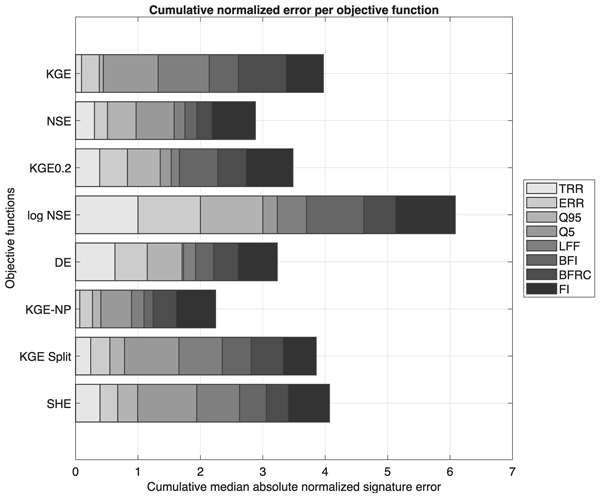
Hydrologic models help predict floods and droughts, but how we calibrate them changes what they get right. Across 47 model structures and 10 diverse catchments, we tested how 8 metrics shape the reproduction of 15 streamflow features, from runoff ratios to high and low flows. Metric choice often mattered more than model structure, yet no single metric is best for all flow conditions. We provide guidance on metric strengths and weaknesses to help match the calibration metric to the study purpose.
Cyril Thébault, Wouter J. M. Knoben, Nans Addor, Andrew J. Newman, Diana Spieler, Nicolás A. Vásquez, Yalan Song, Gaby J. Gründemann, Shaun Carney, Mukesh Kumar, Katie van Werkhoven, Chaopeng Shen, Andrew W. Wood, and Martyn P. Clark
Hydrol. Earth Syst. Sci., 30, 3945–3977, https://doi.org/10.5194/hess-30-3945-2026, https://doi.org/10.5194/hess-30-3945-2026, 2026
Short summary
Short summary
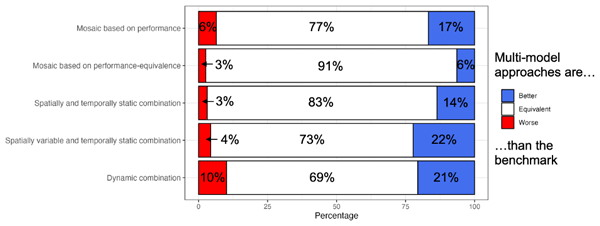
Reliable river flow prediction guide water supply planning and flood protection. We tested whether selecting or combining multiple models improves accuracy compared with a single model. 78 models were used and tested in 559 river basins across the United States. A carefully chosen single model nearly matched more complex multi-model approaches, while combining models gave slightly higher accuracy and lower uncertainty. However, no approach worked best everywhere.
Simon P. Heselschwerdt, Thorsten Wagener, Lan Wang-Erlandsson, Anna M. Ukkola, Yannis Markonis, Yuting Yang, and Peter Greve
Earth Syst. Dynam., 17, 811–827, https://doi.org/10.5194/esd-17-811-2026, https://doi.org/10.5194/esd-17-811-2026, 2026
Short summary
Short summary
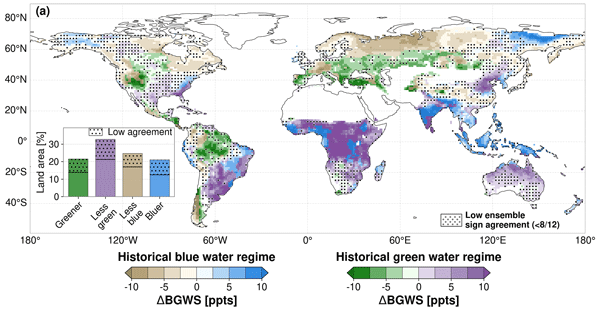
Precipitation on land is split into different pathways, contributing to runoff (blue water) or to plant water use (green water). Climate change alters this balance and shapes how future precipitation is divided. We use Earth system models to study these changes and their controls. We find that stronger extreme five-day precipitation is the main control and routes more future precipitation into blue water, even where average precipitation decreases, with implications for freshwater availability.
Qidong Fang, Mostaquimur Rahman, Thorsten Wagener, and Francesca Pianosi
EGUsphere, https://doi.org/10.5194/egusphere-2026-3267, https://doi.org/10.5194/egusphere-2026-3267, 2026
This preprint is open for discussion and under review for Hydrology and Earth System Sciences (HESS).
Short summary
Short summary
It is unclear whether deep learning models can predict groundwater level at places without measurements using attributes of the places. Our deep learning model captured temporal variation well, especially in more responsive aquifers, similarly to a process-based model. Interpretation tools showed that meteorological and environmental information at places helped predictions at unseen wells. We highlight the potential of deep learning models for regional groundwater level predictions.
Sacha Walde Ruzzante
Earth Syst. Sci. Data Discuss., https://doi.org/10.5194/essd-2026-350, https://doi.org/10.5194/essd-2026-350, 2026
Preprint under review for ESSD
Short summary
Short summary
Caravan-CMIP6 provides climate change projections of weather for many rivers worldwide. Using Caravan-CMIP6, researchers will be able to use existing hydrologic models, which are calibrated on historical data, to predict future river flows under three climate change scenarios.
Gaby J. Gründemann, Wouter J. M. Knoben, Yalan Song, Katie van Werkhoven, and Martyn P. Clark
Hydrol. Earth Syst. Sci., 30, 3439–3453, https://doi.org/10.5194/hess-30-3439-2026, https://doi.org/10.5194/hess-30-3439-2026, 2026
Short summary
Short summary
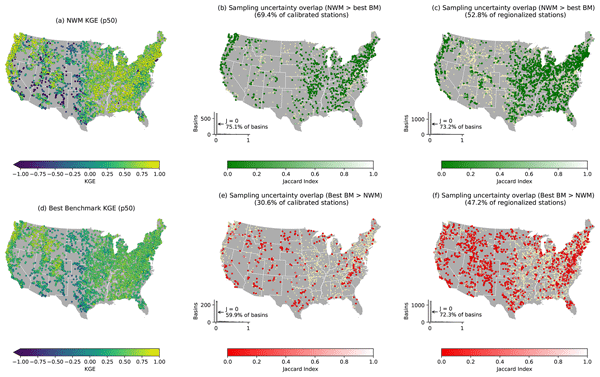
The quality of large-domain hydrologic model simulations is often quantified with so-called accuracy metrics. Here we use simple benchmarks to provide relevant context for these accuracy metrics. Results show that areas where the model cannot beat the benchmarks do not always align with areas where the accuracy metrics are low. This suggests that model improvements are possible in regions that under more typical model evaluation approaches (i.e., without benchmarks) might not be obvious.
Nicolás A. Vásquez, Pablo A. Mendoza, Wouter Knoben, Martyn Clark, Tricia Stadnyk, and Naoki Mizukami
EGUsphere, https://doi.org/10.5194/egusphere-2026-1363, https://doi.org/10.5194/egusphere-2026-1363, 2026
Short summary
Short summary
Although distributed hydrological models are often calibrated using only streamflow data, this practice may provide unrealistic representations of the water cycle. We show that, while streamflow annual cycles can be reasonably simulated, the seasonality of other key variables - such as evapotranspiration, soil moisture, and snow cover - may be severely misrepresented. Our results highlight the need to assess seasonal patterns of variables beyond streamflow when calibrating hydrological models.
Francesca Pianosi, Georgios Sarailidis, Kirsty Styles, Philip Oldham, Stephen Hutchings, Rob Lamb, and Thorsten Wagener
Nat. Hazards Earth Syst. Sci., 26, 1727–1743, https://doi.org/10.5194/nhess-26-1727-2026, https://doi.org/10.5194/nhess-26-1727-2026, 2026
Short summary
Short summary
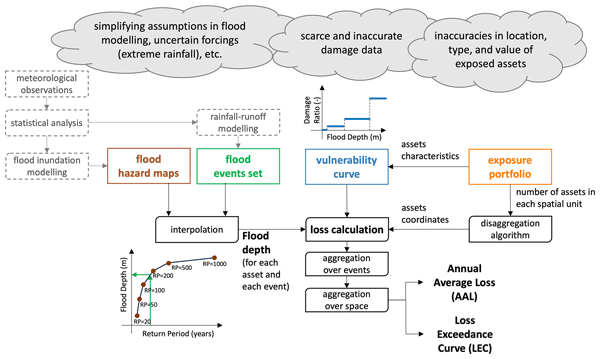
Mathematical modelling is essential to support flood risk management. As these models simulate complex interactions between climate, the natural and the built environment, they unavoidably embed a range of simplifying assumptions. In this paper, we propose a more rigorous approach to analyse the impact of uncertain assumptions on modelling results. This is important to improve model transparency and set priorities for improving models.
Wouter J. M. Knoben, Cyril Thébault, Kasra Keshavarz, Laura Torres-Rojas, Nathaniel W. Chaney, Alain Pietroniro, and Martyn P. Clark
Hydrol. Earth Syst. Sci., 29, 5791–5833, https://doi.org/10.5194/hess-29-5791-2025, https://doi.org/10.5194/hess-29-5791-2025, 2025
Short summary
Short summary
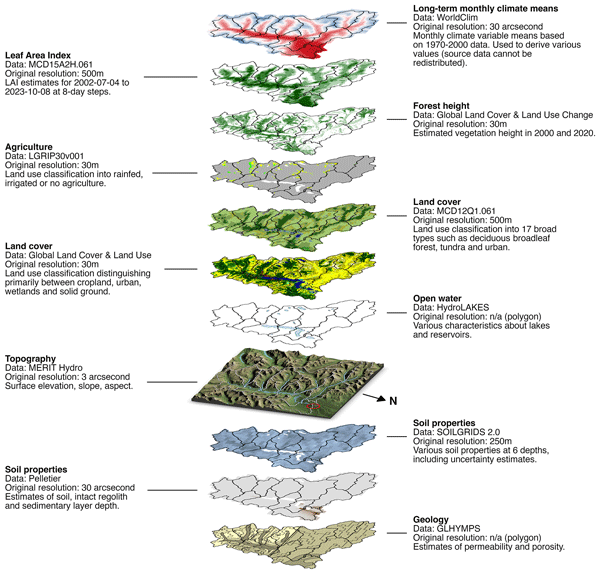
Many existing datasets for hydrologic analysis tend to treat catchments as single spatially homogeneous units focusing on daily data and typically do not support more complex models. This paper introduces a dataset that goes beyond this set-up by (1) providing data at a higher spatial and temporal resolution, (2) specifically considering the data requirements of all common hydrologic model types, and (3) using statistical summaries of the data aimed at quantifying spatial and temporal heterogeneity.
Wouter J. M. Knoben, Ashwin Raman, Gaby J. Gründemann, Mukesh Kumar, Alain Pietroniro, Chaopeng Shen, Yalan Song, Cyril Thébault, Katie van Werkhoven, Andrew W. Wood, and Martyn P. Clark
Hydrol. Earth Syst. Sci., 29, 2361–2375, https://doi.org/10.5194/hess-29-2361-2025, https://doi.org/10.5194/hess-29-2361-2025, 2025
Short summary
Short summary
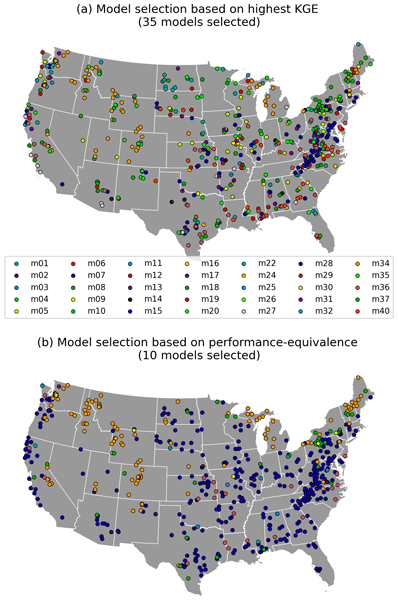
Hydrologic models are needed to provide simulations of water availability, floods, and droughts. The accuracy of these simulations is often quantified with so-called performance scores. A common thought is that different models are more or less applicable to different landscapes, depending on how the model works. We show that performance scores are not helpful in distinguishing between different models and thus cannot easily be used to select an appropriate model for a specific place.
Louise Arnal, Martyn P. Clark, Alain Pietroniro, Vincent Vionnet, David R. Casson, Paul H. Whitfield, Vincent Fortin, Andrew W. Wood, Wouter J. M. Knoben, Brandi W. Newton, and Colleen Walford
Hydrol. Earth Syst. Sci., 28, 4127–4155, https://doi.org/10.5194/hess-28-4127-2024, https://doi.org/10.5194/hess-28-4127-2024, 2024
Short summary
Short summary
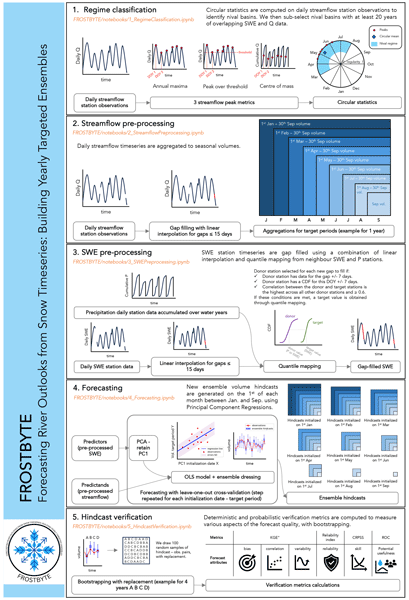
Forecasting river flow months in advance is crucial for water sectors and society. In North America, snowmelt is a key driver of flow. This study presents a statistical workflow using snow data to forecast flow months ahead in North American snow-fed rivers. Variations in the river flow predictability across the continent are evident, raising concerns about future predictability in a changing (snow) climate. The reproducible workflow hosted on GitHub supports collaborative and open science.
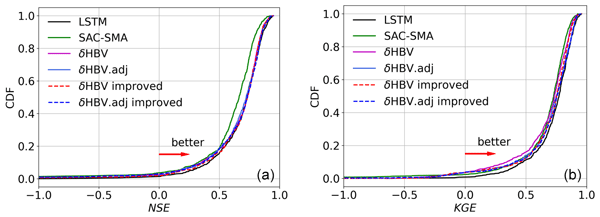
Yalan Song, Wouter J. M. Knoben, Martyn P. Clark, Dapeng Feng, Kathryn Lawson, Kamlesh Sawadekar, and Chaopeng Shen
Hydrol. Earth Syst. Sci., 28, 3051–3077, https://doi.org/10.5194/hess-28-3051-2024, https://doi.org/10.5194/hess-28-3051-2024, 2024
Short summary
Short summary
Differentiable models (DMs) integrate neural networks and physical equations for accuracy, interpretability, and knowledge discovery. We developed an adjoint-based DM for ordinary differential equations (ODEs) for hydrological modeling, reducing distorted fluxes and physical parameters from errors in models that use explicit and operation-splitting schemes. With a better numerical scheme and improved structure, the adjoint-based DM matches or surpasses long short-term memory (LSTM) performance.
Diogo Costa, Kyle Klenk, Wouter Knoben, Andrew Ireson, Raymond J. Spiteri, and Martyn Clark
EGUsphere, https://doi.org/10.5194/egusphere-2023-2787, https://doi.org/10.5194/egusphere-2023-2787, 2023
Preprint archived
Short summary
Short summary
This work helps improve water quality simulations in aquatic ecosystems through a new modeling concept, which we termed “OpenWQ”. It allows tailoring biogeochemistry calculations and integration with existing hydrological (water quantity) simulation tools. The integration is demonstrated with two hydrological models. The models were tested for different pollution scenarios. This paper helps improve interoperability, transparency, flexibility, and reproducibility in water quality simulations.
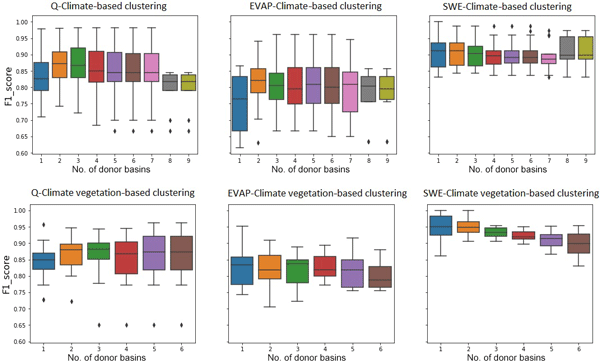
Samah Larabi, Juliane Mai, Markus Schnorbus, Bryan A. Tolson, and Francis Zwiers
Hydrol. Earth Syst. Sci., 27, 3241–3263, https://doi.org/10.5194/hess-27-3241-2023, https://doi.org/10.5194/hess-27-3241-2023, 2023
Short summary
Short summary
The computational cost of sensitivity analysis (SA) becomes prohibitive for large hydrologic modeling domains. Here, using a large-scale Variable Infiltration Capacity (VIC) deployment, we show that watershed classification helps identify the spatial pattern of parameter sensitivity within the domain at a reduced cost. Findings reveal the opportunity to leverage climate and land cover attributes to reduce the cost of SA and facilitate more rapid deployment of large-scale land surface models.
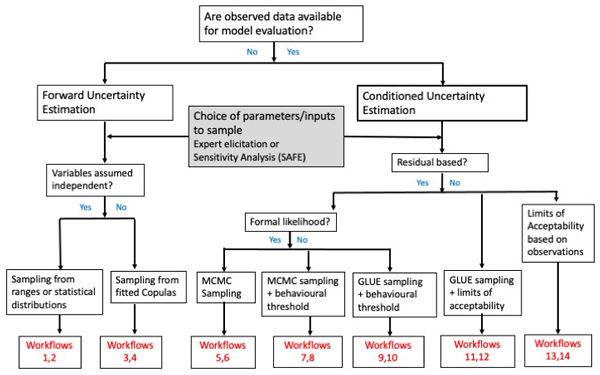
Trevor Page, Paul Smith, Keith Beven, Francesca Pianosi, Fanny Sarrazin, Susana Almeida, Liz Holcombe, Jim Freer, Nick Chappell, and Thorsten Wagener
Hydrol. Earth Syst. Sci., 27, 2523–2534, https://doi.org/10.5194/hess-27-2523-2023, https://doi.org/10.5194/hess-27-2523-2023, 2023
Short summary
Short summary
This publication provides an introduction to the CREDIBLE Uncertainty Estimation (CURE) toolbox. CURE offers workflows for a variety of uncertainty estimation methods. One of its most important features is the requirement that all of the assumptions on which a workflow analysis depends be defined. This facilitates communication with potential users of an analysis. An audit trail log is produced automatically from a workflow for future reference.
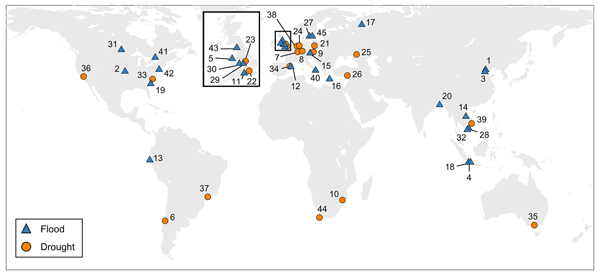
Heidi Kreibich, Kai Schröter, Giuliano Di Baldassarre, Anne F. Van Loon, Maurizio Mazzoleni, Guta Wakbulcho Abeshu, Svetlana Agafonova, Amir AghaKouchak, Hafzullah Aksoy, Camila Alvarez-Garreton, Blanca Aznar, Laila Balkhi, Marlies H. Barendrecht, Sylvain Biancamaria, Liduin Bos-Burgering, Chris Bradley, Yus Budiyono, Wouter Buytaert, Lucinda Capewell, Hayley Carlson, Yonca Cavus, Anaïs Couasnon, Gemma Coxon, Ioannis Daliakopoulos, Marleen C. de Ruiter, Claire Delus, Mathilde Erfurt, Giuseppe Esposito, Didier François, Frédéric Frappart, Jim Freer, Natalia Frolova, Animesh K. Gain, Manolis Grillakis, Jordi Oriol Grima, Diego A. Guzmán, Laurie S. Huning, Monica Ionita, Maxim Kharlamov, Dao Nguyen Khoi, Natalie Kieboom, Maria Kireeva, Aristeidis Koutroulis, Waldo Lavado-Casimiro, Hong-Yi Li, Maria Carmen LLasat, David Macdonald, Johanna Mård, Hannah Mathew-Richards, Andrew McKenzie, Alfonso Mejia, Eduardo Mario Mendiondo, Marjolein Mens, Shifteh Mobini, Guilherme Samprogna Mohor, Viorica Nagavciuc, Thanh Ngo-Duc, Huynh Thi Thao Nguyen, Pham Thi Thao Nhi, Olga Petrucci, Nguyen Hong Quan, Pere Quintana-Seguí, Saman Razavi, Elena Ridolfi, Jannik Riegel, Md Shibly Sadik, Nivedita Sairam, Elisa Savelli, Alexey Sazonov, Sanjib Sharma, Johanna Sörensen, Felipe Augusto Arguello Souza, Kerstin Stahl, Max Steinhausen, Michael Stoelzle, Wiwiana Szalińska, Qiuhong Tang, Fuqiang Tian, Tamara Tokarczyk, Carolina Tovar, Thi Van Thu Tran, Marjolein H. J. van Huijgevoort, Michelle T. H. van Vliet, Sergiy Vorogushyn, Thorsten Wagener, Yueling Wang, Doris E. Wendt, Elliot Wickham, Long Yang, Mauricio Zambrano-Bigiarini, and Philip J. Ward
Earth Syst. Sci. Data, 15, 2009–2023, https://doi.org/10.5194/essd-15-2009-2023, https://doi.org/10.5194/essd-15-2009-2023, 2023
Short summary
Short summary
As the adverse impacts of hydrological extremes increase in many regions of the world, a better understanding of the drivers of changes in risk and impacts is essential for effective flood and drought risk management. We present a dataset containing data of paired events, i.e. two floods or two droughts that occurred in the same area. The dataset enables comparative analyses and allows detailed context-specific assessments. Additionally, it supports the testing of socio-hydrological models.
Chinchu Mohan, Tom Gleeson, James S. Famiglietti, Vili Virkki, Matti Kummu, Miina Porkka, Lan Wang-Erlandsson, Xander Huggins, Dieter Gerten, and Sonja C. Jähnig
Hydrol. Earth Syst. Sci., 26, 6247–6262, https://doi.org/10.5194/hess-26-6247-2022, https://doi.org/10.5194/hess-26-6247-2022, 2022
Short summary
Short summary
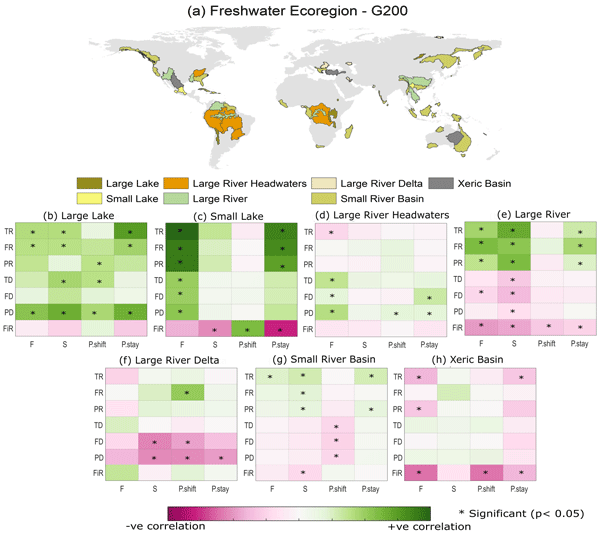
The relationship between environmental flow violations and freshwater biodiversity at a large scale is not well explored. This study intended to carry out an exploratory evaluation of this relationship at a large scale. While our results suggest that streamflow and EF may not be the only determinants of freshwater biodiversity at large scales, they do not preclude the existence of relationships at smaller scales or with more holistic EF methods or with other biodiversity data or metrics.
Rosanna A. Lane, Gemma Coxon, Jim Freer, Jan Seibert, and Thorsten Wagener
Hydrol. Earth Syst. Sci., 26, 5535–5554, https://doi.org/10.5194/hess-26-5535-2022, https://doi.org/10.5194/hess-26-5535-2022, 2022
Short summary
Short summary
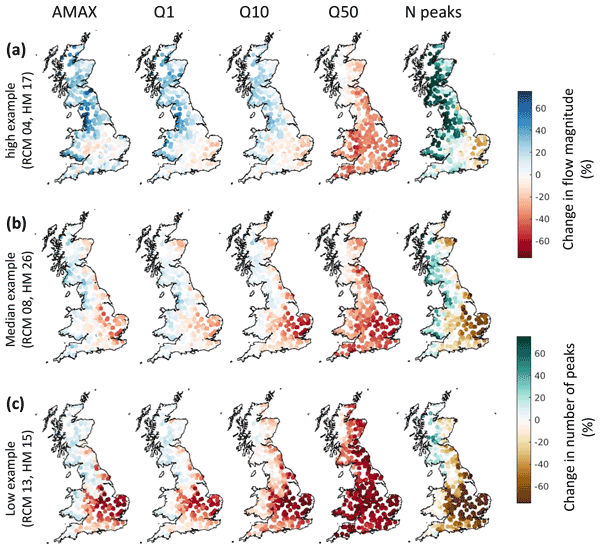
This study modelled the impact of climate change on river high flows across Great Britain (GB). Generally, results indicated an increase in the magnitude and frequency of high flows along the west coast of GB by 2050–2075. In contrast, average flows decreased across GB. All flow projections contained large uncertainties; the climate projections were the largest source of uncertainty overall but hydrological modelling uncertainties were considerable in some regions.
Tunde Olarinoye, Tom Gleeson, and Andreas Hartmann
Hydrol. Earth Syst. Sci., 26, 5431–5447, https://doi.org/10.5194/hess-26-5431-2022, https://doi.org/10.5194/hess-26-5431-2022, 2022
Short summary
Short summary
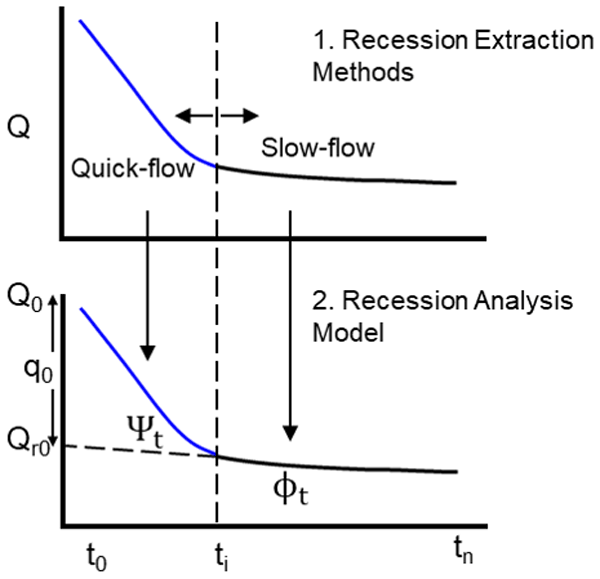
Analysis of karst spring recession is essential for management of groundwater. In karst, recession is dominated by slow and fast components; separating these components is by manual and subjective approaches. In our study, we tested the applicability of automated streamflow recession extraction procedures for a karst spring. Results showed that, by simple modification, streamflow extraction methods can identify slow and fast components: derived recession parameters are within reasonable ranges.
Luca Trotter, Wouter J. M. Knoben, Keirnan J. A. Fowler, Margarita Saft, and Murray C. Peel
Geosci. Model Dev., 15, 6359–6369, https://doi.org/10.5194/gmd-15-6359-2022, https://doi.org/10.5194/gmd-15-6359-2022, 2022
Short summary
Short summary
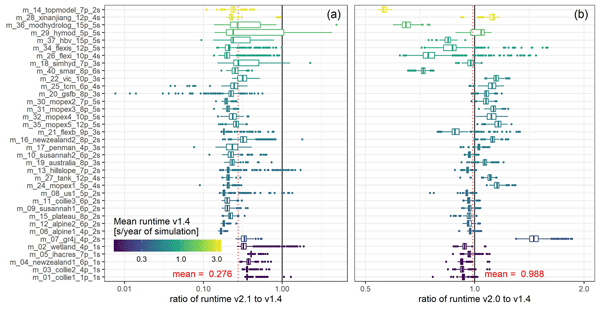
MARRMoT is a piece of software that emulates 47 common models for hydrological simulations. It can be used to run and calibrate these models within a common environment as well as to easily modify them. We restructured and recoded MARRMoT in order to make the models run faster and to simplify their use, while also providing some new features. This new MARRMoT version runs models on average 3.6 times faster while maintaining very strong consistency in their outputs to the previous version.
Vili Virkki, Elina Alanärä, Miina Porkka, Lauri Ahopelto, Tom Gleeson, Chinchu Mohan, Lan Wang-Erlandsson, Martina Flörke, Dieter Gerten, Simon N. Gosling, Naota Hanasaki, Hannes Müller Schmied, Niko Wanders, and Matti Kummu
Hydrol. Earth Syst. Sci., 26, 3315–3336, https://doi.org/10.5194/hess-26-3315-2022, https://doi.org/10.5194/hess-26-3315-2022, 2022
Short summary
Short summary
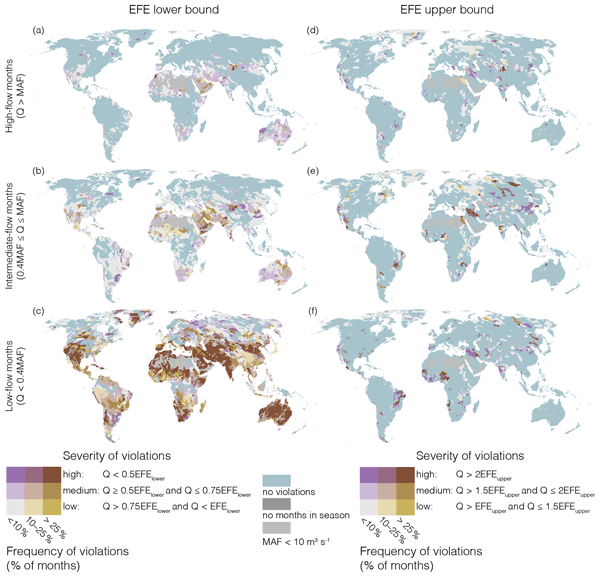
Direct and indirect human actions have altered streamflow across the world since pre-industrial times. Here, we apply a method of environmental flow envelopes (EFEs) that develops the existing global environmental flow assessments by methodological advances and better consideration of uncertainty. By assessing the violations of the EFE, we comprehensively quantify the frequency, severity, and trends of flow alteration during the past decades, illustrating anthropogenic effects on streamflow.
Wouter J. M. Knoben and Diana Spieler
Hydrol. Earth Syst. Sci., 26, 3299–3314, https://doi.org/10.5194/hess-26-3299-2022, https://doi.org/10.5194/hess-26-3299-2022, 2022
Short summary
Short summary
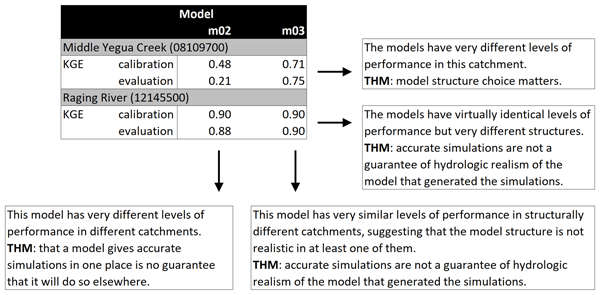
This paper introduces educational materials that can be used to teach students about model structure uncertainty in hydrological modelling. There are many different hydrological models and differences between these models impact their usefulness in different places. Such models are often used to support decision making about water resources and to perform hydrological science, and it is thus important for students to understand that model choice matters.
Tom Gleeson, Thorsten Wagener, Petra Döll, Samuel C. Zipper, Charles West, Yoshihide Wada, Richard Taylor, Bridget Scanlon, Rafael Rosolem, Shams Rahman, Nurudeen Oshinlaja, Reed Maxwell, Min-Hui Lo, Hyungjun Kim, Mary Hill, Andreas Hartmann, Graham Fogg, James S. Famiglietti, Agnès Ducharne, Inge de Graaf, Mark Cuthbert, Laura Condon, Etienne Bresciani, and Marc F. P. Bierkens
Geosci. Model Dev., 14, 7545–7571, https://doi.org/10.5194/gmd-14-7545-2021, https://doi.org/10.5194/gmd-14-7545-2021, 2021
Short summary
Short summary
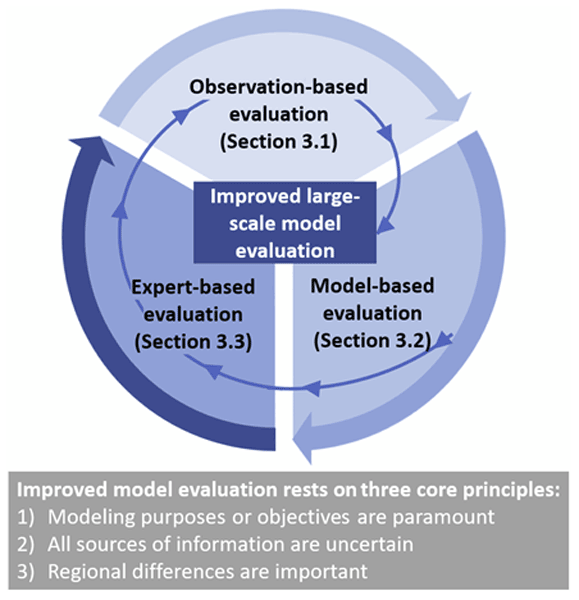
Groundwater is increasingly being included in large-scale (continental to global) land surface and hydrologic simulations. However, it is challenging to evaluate these simulations because groundwater is
hiddenunderground and thus hard to measure. We suggest using multiple complementary strategies to assess the performance of a model (
model evaluation).
Cited articles
Addor, N., Newman, A. J., Mizukami, N., and Clark, M. P.: The CAMELS data set: catchment attributes and meteorology for large-sample studies, Hydrol. Earth Syst. Sci., 21, 5293–5313, https://doi.org/10.5194/hess-21-5293-2017, 2017.
Alvarez-Garreton, C., Mendoza, P. A., Boisier, J. P., Addor, N., Galleguillos, M., Zambrano-Bigiarini, M., Lara, A., Puelma, C., Cortes, G., Garreaud, R., McPhee, J., and Ayala, A.: The CAMELS-CL dataset: catchment attributes and meteorology for large sample studies – Chile dataset, Hydrol. Earth Syst. Sci., 22, 5817–5846, https://doi.org/10.5194/hess-22-5817-2018, 2018a.
Alvarez-Garreton, C., Mendoza, P. A., Boisier, J. P., Addor, N., Galleguillos, M., Zambrano-Bigiarini, M., Lara, A., Puelma, C., Cortes, G., Garreaud, R., McPhee, J., and Ayala, A.: The CAMELS-CL dataset – links to files, data set, PANGAEA [data set], https://doi.org/10.1594/PANGAEA.894885, 2018b.
Araya, K., Muñoz, P., Dezileau, L., Maldonado, A., Campos-Caba, R., Rebolledo, L., Cardenas, P., and Salamanca, M.: Extreme Sea Surges, Tsunamis and Pluvial Flooding Events during the Last ∼ 1000 Years in the Semi-Arid Wetland, Coquimbo Chile, Geosciences, 12, 135, https://doi.org/10.3390/geosciences12030135, 2022.
Arsenault, R., Brissette, F., Martel, J.-L., Troin, M., Lévesque, G., Davidson-Chaput, J., Gonzalez, M. C., Ameli, A., and Poulin, A.: A comprehensive, multisource database for hydrometeorological modeling of 14,425 North American watersheds, Sci. Data, 7, 243, https://doi.org/10.1038/s41597-020-00583-2, 2020a.
Arsenault, R., Brissette, F., Martel, J.-L., Troin, M., Lévesque, G., Davidson-Chaput, J., Gonzalez, M., Ameli, A., and Poulin, A.: HYSETS – A 14425 watershed Hydrometeorological Sandbox over North America, OSF [data set], https://doi.org/10.17605/OSF.IO/RPC3W, 2020b.
Arsenault, R., Brissette, F., and Martel, J.-L.: LSTM regionalization datasets and codes, OSF [data set], https://doi.org/10.17605/OSF.IO/3S2PQ, 2022.
Arsenault, R., Martel, J.-L., Brunet, F., Brissette, F., and Mai, J.: Continuous streamflow prediction in ungauged basins: long short-term memory neural networks clearly outperform traditional hydrological models, Hydrol. Earth Syst. Sci., 27, 139–157, https://doi.org/10.5194/hess-27-139-2023, 2023.
Bathelemy, R., Brigode, P., Andréassian, V., Perrin, C., Moron, V., Gaucherel, C., Tric, E., and Boisson, D.: Simbi: historical hydro-meteorological time series and signatures for 24 catchments in Haiti, Earth Syst. Sci. Data, 16, 2073–2098, https://doi.org/10.5194/essd-16-2073-2024, 2024.
Beck, H. E., Zimmermann, N. E., McVicar, T. R., Vergopolan, N., Berg, A., and Wood, E. F.: Present and future Köppen–Geiger climate classification maps at 1-km resolution, Sci. Data, 5, 180214, https://doi.org/10.1038/sdata.2018.214, 2018.
Berghuijs, W. R., Hale, K., and Beria, H.: Technical note: Streamflow seasonality using directional statistics, Hydrol. Earth Syst. Sci., 29, 2851–2862, https://doi.org/10.5194/hess-29-2851-2025, 2025.
Brown, B. C., Fullerton, A. H., Kopp, D., Tromboni, F., Shogren, A. J., Webb, J. A., Ruffing, C., Heaton, M., Kuglerová, L., Allen, D. C., McGill, L., Zarnetske, J. P., Whiles, M. R., Jones Jr., J. B., and Abbott, B. W.: The Music of Rivers: The Mathematics of Waves Reveals Global Structure and Drivers of Streamflow Regime, Water Resour. Res., 59, e2023WR034484, https://doi.org/10.1029/2023WR034484, 2023.
Burton, C., Rifai, S., and Malhi, Y.: Inter-comparison and assessment of gridded climate products over tropical forests during the 2015/2016 El Niño, Philos. T. R. Soc. B, 373, 20170406, https://doi.org/10.1098/rstb.2017.0406, 2018.
Casado Rodríguez, J.: CAMELS-ES: Catchment Attributes and Meteorology for Large-Sample Studies – Spain (1.0.2), Zenodo [data set], https://doi.org/10.5281/zenodo.8428374, 2023.
Chagas, V. B. P., Chaffe, P. L. B., Addor, N., Fan, F. M., Fleischmann, A. S., Paiva, R. C. D., and Siqueira, V. A.: CAMELS-BR: hydrometeorological time series and landscape attributes for 897 catchments in Brazil, Earth Syst. Sci. Data, 12, 2075–2096, https://doi.org/10.5194/essd-12-2075-2020, 2020.
Chagas, V. B. P., Chaffe, P. L. B., Addor, N., Fan, F. M., Fleischmann, A. S., Paiva, R. C. D., and Siqueira, V. A.: CAMELS-BR: Hydrometeorological time series and landscape attributes for 897 catchments in Brazil – link to files (1.2), Zenodo [data set], https://doi.org/10.5281/zenodo.15025488, 2025.
Cleveland, R. B., Cleveland, W. S., McRae, J. E., and Terpenning, I.: STL: A Seasonal-Trend Decomposition Procedure Based on Loess, J. Off. Stat., 6, 3–73, 1990.
Court, A.: Measures of streamflow timing, J. Geophys. Res., 67, 4335–4339, https://doi.org/10.1029/JZ067i011p04335, 1962.
Coxon, G., Addor, N., Bloomfield, J. P., Freer, J., Fry, M., Hannaford, J., Howden, N. J. K., Lane, R., Lewis, M., Robinson, E. L., Wagener, T., and Woods, R.: CAMELS-GB: hydrometeorological time series and landscape attributes for 671 catchments in Great Britain, Earth Syst. Sci. Data, 12, 2459–2483, https://doi.org/10.5194/essd-12-2459-2020, 2020a.
Coxon, G., Addor, N., Bloomfield, J. P., Freer, J., Fry, M., Hannaford, J., Howden, N. J. K., Lane, R., Lewis, M., Robinson, E. L., Wagener, T., and Woods, R.: Catchment attributes and hydro-meteorological timeseries for 671 catchments across Great Britain (CAMELS-GB), UKCEH Environmental Information Data Centre [data set], https://doi.org/10.5285/8344e4f3-d2ea-44f5-8afa-86d2987543a9, 2020b.
Delaigue, O., Guimarães, G. M., Brigode, P., Génot, B., Perrin, C., Soubeyroux, J.-M., Janet, B., Addor, N., and Andréassian, V.: CAMELS-FR dataset: a large-sample hydroclimatic dataset for France to explore hydrological diversity and support model benchmarking, Earth Syst. Sci. Data, 17, 1461–1479, https://doi.org/10.5194/essd-17-1461-2025, 2025a.
Delaigue, O., Guimarães, G. M., Brigode, P., Génot, B., Perrin, C., and Andréassian, V.: CAMELS-FR dataset (3.2), Recherche Data Gouv [data set], https://doi.org/10.57745/WH7FJR, 2025b.
D'Odorico, P. and Bhattachan, A.: Hydrologic variability in dryland regions: impacts on ecosystem dynamics and food security, Philos. T. R. Soc. B, 367, 3145–3157, https://doi.org/10.1098/rstb.2012.0016, 2012.
D'Odorico, P., Caylor, K., Okin, G. S., and Scanlon, T. M.: On soil moisture–vegetation feedbacks and their possible effects on the dynamics of dryland ecosystems, J. Geophys. Res.-Biogeo., 112, https://doi.org/10.1029/2006JG000379, 2007.
Dolich, A., Espinoza, E. A., Ebeling, P., Guse, B., Götte, J., Hassler, S., Hauffe, C., Kiesel, J., Heidbüchel, I., Mälicke, M., Müller-Thomy, H., Stölzle, M., Tarasova, L., and Loritz, R.: CAMELS-DE: hydrometeorological time series and attributes for 1582 catchments in Germany (1.0.0), Zenodo [data set], https://doi.org/10.5281/zenodo.13837553, 2024.
Dolich, A., Maharjan, A., Mälicke, M., Manoj J, A., and Loritz, R.: Caravan-DE: Caravan extension Germany - German dataset for large-sample hydrology (v1.1.1), Zenodo, data set, https://doi.org/10.5281/zenodo.14755229, 2025.
Döll, P. and Schmied, H. M.: How is the impact of climate change on river flow regimes related to the impact on mean annual runoff? A global-scale analysis, Environ. Res. Lett., 7, 014037, https://doi.org/10.1088/1748-9326/7/1/014037, 2012.
Dralle, D., Karst, N., Müller, M., Vico, G., and Thompson, S. E.: Stochastic modeling of interannual variation of hydrologic variables, Geophys. Res. Lett., 44, 7285–7294, https://doi.org/10.1002/2017GL074139, 2017.
Efrat, M.: Caravan extension Israel – Israel dataset for large-sample hydrology (v4), Zenodo [data set], https://doi.org/10.5281/zenodo.15181680, 2025.
Eker, S., Rovenskaya, E., Obersteiner, M., and Langan, S.: Practice and perspectives in the validation of resource management models, Nat. Commun., 9, 5359, https://doi.org/10.1038/s41467-018-07811-9, 2018.
Falcone, J. A.: GAGES-II: Geospatial Attributes of Gages for Evaluating Streamflow, U. S. Geological Survey, https://doi.org/10.3133/70046617, 2011.
Färber, C., Plessow, H., Mischel, S., Kratzert, F., Addor, N., Shalev, G., and Looser, U.: GRDC-Caravan: extending the original dataset with data from the Global Runoff Data Centre (0.5), Zenodo [data set], https://doi.org/10.5281/zenodo.15124865, 2025.
Flores, B. M., Montoya, E., Sakschewski, B., Nascimento, N., Staal, A., Betts, R. A., Levis, C., Lapola, D. M., Esquível-Muelbert, A., Jakovac, C., Nobre, C. A., Oliveira, R. S., Borma, L. S., Nian, D., Boers, N., Hecht, S. B., ter Steege, H., Arieira, J., Lucas, I. L., Berenguer, E., Marengo, J. A., Gatti, L. V., Mattos, C. R. C., and Hirota, M.: Critical transitions in the Amazon forest system, Nature, 626, 555–564, https://doi.org/10.1038/s41586-023-06970-0, 2024.
Fowler, K., Zhang, Z., and Hou, X.: CAMELS-AUS v2: updated hydrometeorological timeseries and landscape attributes for an enlarged set of catchments in Australia (2.03), Zenodo [data set], https://doi.org/10.5281/zenodo.14289037, 2024.
Fowler, K. J. A., Zhang, Z., and Hou, X.: CAMELS-AUS v2: updated hydrometeorological time series and landscape attributes for an enlarged set of catchments in Australia, Earth Syst. Sci. Data, 17, 4079–4095, https://doi.org/10.5194/essd-17-4079-2025, 2025.
Garrick, M., Cunnane, C., and Nash, J. E.: A criterion of efficiency for rainfall-runoff models, J. Hydrol., 36, 375–381, https://doi.org/10.1016/0022-1694(78)90155-5, 1978.
Gauch, M., Kratzert, F., Gilon, O., Gupta, H., Mai, J., Nearing, G., Tolson, B., Hochreiter, S., and Klotz, D.: In Defense of Metrics: Metrics Sufficiently Encode Typical Human Preferences Regarding Hydrological Model Performance, Water Resour. Res., 59, e2022WR033918, https://doi.org/10.1029/2022WR033918, 2023.
Ghiggi, G., Humphrey, V., Seneviratne, S. I., and Gudmundsson, L.: GRUN: an observation-based global gridded runoff dataset from 1902 to 2014, Earth Syst. Sci. Data, 11, 1655–1674, https://doi.org/10.5194/essd-11-1655-2019, 2019.
Gudmundsson, L., Tallaksen, L. M., Stahl, K., Clark, D. B., Dumont, E., Hagemann, S., Bertrand, N., Gerten, D., Heinke, J., Hanasaki, N., Voss, F., and Koirala, S.: Comparing Large-Scale Hydrological Model Simulations to Observed Runoff Percentiles in Europe, J. Hydrometeorol., https://doi.org/10.1175/JHM-D-11-083.1, 2012.
Gudmundsson, L., Boulange, J., Do, H. X., Gosling, S. N., Grillakis, M. G., Koutroulis, A. G., Leonard, M., Liu, J., Müller Schmied, H., Papadimitriou, L., Pokhrel, Y., Seneviratne, S. I., Satoh, Y., Thiery, W., Westra, S., Zhang, X., and Zhao, F.: Globally observed trends in mean and extreme river flow attributed to climate change, Science, 371, 1159–1162, https://doi.org/10.1126/science.aba3996, 2021.
Gupta, H. V., Kling, H., Yilmaz, K. K., and Martinez, G. F.: Decomposition of the mean squared error and NSE performance criteria: Implications for improving hydrological modelling, J. Hydrol., 377, 80–91, https://doi.org/10.1016/j.jhydrol.2009.08.003, 2009.
Hall, J. W., Grey, D., Garrick, D., Fung, F., Brown, C., Dadson, S. J., and Sadoff, C. W.: Coping with the curse of freshwater variability, Science, https://doi.org/10.1126/science.1257890, 2014.
Han, J., Liu, Z., Woods, R., McVicar, T. R., Yang, D., Wang, T., Hou, Y., Guo, Y., Li, C., and Yang, Y.: Streamflow seasonality in a snow-dwindling world, Nature, 629, 1075–1081, https://doi.org/10.1038/s41586-024-07299-y, 2024.
Hay, L. E. and LaFontaine, J. H.: Application of the National Hydrologic Model Infrastructure with the Precipitation-Runoff Modeling System (NHM-PRMS), 1980-2016, Daymet Version 3 calibration, ScienceBase [data set], https://doi.org/10.5066/P9PGZE0S, 2020.
Helgason, H. B. and Nijssen, B.: LamaH-Ice: LArge-SaMple DAta for Hydrology and Environmental Sciences for Iceland, Earth Syst. Sci. Data, 16, 2741–2771, https://doi.org/10.5194/essd-16-2741-2024, 2024.
Helgason, H. and Nijssen, B.: LamaH-Ice: LArge-SaMple DAta for Hydrology and Environmental Sciences for Iceland, CUAHSI Hydroshare [data set], https://doi.org/10.4211/HS.86117A5F36CC4B7C90A5D54E18161C91, 2024b.
Henck, A. C., Huntington, K. W., Stone, J. O., Montgomery, D. R., and Hallet, B.: Spatial controls on erosion in the Three Rivers Region, southeastern Tibet and southwestern China, Earth Planet. Sc. Lett., 303, 71–83, https://doi.org/10.1016/j.epsl.2010.12.038, 2011.
Höge, M., Kauzlaric, M., Siber, R., Schönenberger, U., Horton, P., Schwanbeck, J., Floriancic, M. G., Viviroli, D., Wilhelm, S., Sikorska-Senoner, A. E., Addor, N., Brunner, M., Pool, S., Zappa, M., and Fenicia, F.: CAMELS-CH: hydro-meteorological time series and landscape attributes for 331 catchments in hydrologic Switzerland, Earth Syst. Sci. Data, 15, 5755–5784, https://doi.org/10.5194/essd-15-5755-2023, 2023.
Höge, M., Kauzlaric, M., Siber, R., Schönenberger, U., Horton, P., Schwanbeck, J., Floriancic, M. G., Viviroli, D., Wilhelm, S., Sikorska-Senoner, A. E., Addor, N., Brunner, M., Pool, S., Zappa, M., and Fenicia, F.: Catchment attributes and hydro-meteorological time series for large-sample studies across hydrologic Switzerland (CAMELS-CH) (0.9), Zenodo [data set], https://doi.org/10.5281/zenodo.15025258, 2025.
Hrachowitz, M., Savenije, H. H. G., Blöschl, G., McDonnell, J. J., Sivapalan, M., Pomeroy, J. W., Arheimer, B., Blume, T., Clark, M. P., Ehret, U., Fenicia, F., Freer, J. E., Gelfan, A., Gupta, H. V., Hughes, D. A., Hut, R. W., Montanari, A., Pande, S., Tetzlaff, D., Troch, P. A., Uhlenbrook, S., Wagener, T., Winsemius, H. C., Woods, R. A., Zehe, E., and Cudennec, C.: A decade of Predictions in Ungauged Basins (PUB) – a review, Hydrolog. Sci. J., 58, 1198–1255, https://doi.org/10.1080/02626667.2013.803183, 2013.
Kendall, M. and Stuart, A.: Time Series: Trend and Seasonality, in: The Advanced Theory of Statistics, vol. 3, Griffin, London, 366–402, ISBN10: 0852640692; ISBN13: 9780852640692, 1966.
Klemeš, V.: Operational testing of hydrological simulation models, Hydrolog. Sci. J., 31, 13–24, https://doi.org/10.1080/02626668609491024, 1986.
Kling, H., Fuchs, M., and Paulin, M.: Runoff conditions in the upper Danube basin under an ensemble of climate change scenarios, J. Hydrol., 424–425, 264–277, https://doi.org/10.1016/j.jhydrol.2012.01.011, 2012.
Klingler, C., Schulz, K., and Herrnegger, M.: LamaH-CE: LArge-SaMple DAta for Hydrology and Environmental Sciences for Central Europe, Earth Syst. Sci. Data, 13, 4529–4565, https://doi.org/10.5194/essd-13-4529-2021, 2021a.
Klingler, C., Kratzert, F., Schulz, K., and Herrnegger, M.: LamaH-CE: LArge-SaMple DAta for Hydrology and Environmental Sciences for Central Europe – files (1.0), Zenodo [data set], https://doi.org/10.5281/zenodo.5153305, 2021b.
Knoben, W. J. M.: Setting expectations for hydrologic model performance with an ensemble of simple benchmarks, Hydrol. Process., 38, e15288, https://doi.org/10.1002/hyp.15288, 2024.
Knoben, W. J. M., Woods, R. A., and Freer, J. E.: A Quantitative Hydrological Climate Classification Evaluated With Independent Streamflow Data, Water Resour. Res., 54, 5088–5109, https://doi.org/10.1029/2018WR022913, 2018.
Koch, J., Liu, J., Stisen, S., Troldborg, L., Højberg, A. L., Thodsen, H., Hansen, M. F. T., and Schneider, R. J. M.: CAMELS-DK: Hydrometeorological Time Series and Landscape Attributes for 3330 Catchments in Denmark (6.0), GEUS Dataverse [data set], https://doi.org/10.22008/FK2/AZXSYP, 2025.
Köplin, N., Schädler, B., Viviroli, D., and Weingartner, R.: The importance of glacier and forest change in hydrological climate-impact studies, Hydrol. Earth Syst. Sci., 17, 619–635, https://doi.org/10.5194/hess-17-619-2013, 2013.
Krabbenhoft, C. A., Allen, G. H., Lin, P., Godsey, S. E., Allen, D. C., Burrows, R. M., DelVecchia, A. G., Fritz, K. M., Shanafield, M., Burgin, A. J., Zimmer, M. A., Datry, T., Dodds, W. K., Jones, C. N., Mims, M. C., Franklin, C., Hammond, J. C., Zipper, S., Ward, A. S., Costigan, K. H., Beck, H. E., and Olden, J. D.: Assessing placement bias of the global river gauge network, Nat. Sustain., 5, 586–592, https://doi.org/10.1038/s41893-022-00873-0, 2022.
Kraft, B., Schirmer, M., Aeberhard, W. H., Zappa, M., Seneviratne, S. I., and Gudmundsson, L.: CH-RUN: a deep-learning-based spatially contiguous runoff reconstruction for Switzerland, Hydrol. Earth Syst. Sci., 29, 1061–1082, https://doi.org/10.5194/hess-29-1061-2025, 2025.
Kratzert, F.: CAMELS benchmark models, CUAHSI Hydroshare [data set], https://doi.org/10.4211/hs.474ecc37e7db45baa425cdb4fc1b61e1, 2019.
Kratzert, F.: Never train an LSTM on a single basin (1.0), Zenodo [data set], https://doi.org/10.5281/zenodo.11247607, 2024.
Kratzert, F., Nearing, G., Addor, N., Erickson, T., Gauch, M., Gilon, O., Gudmundsson, L., Hassidim, A., Klotz, D., Nevo, S., Shalev, G., and Matias, Y.: Caravan – A global community dataset for large-sample hydrology, Sci. Data, 10, 61, https://doi.org/10.1038/s41597-023-01975-w, 2023.
Kratzert, F., Gauch, M., Klotz, D., and Nearing, G.: HESS Opinions: Never train a Long Short-Term Memory (LSTM) network on a single basin, Hydrol. Earth Syst. Sci., 28, 4187–4201, https://doi.org/10.5194/hess-28-4187-2024, 2024.
Krysanova, V., Donnelly, C., Gelfan, A., Gerten, D., Arheimer, B., Hattermann, F., and Kundzewicz, Z. W.: How the performance of hydrological models relates to credibility of projections under climate change, Hydrolog. Sci. J., https://doi.org/10.1080/02626667.2018.1446214, 2018.
Ladson, T., Brown, R., Neal, B., and Nathan, R.: A standard approach to baseflow separation using the Lyne and Hollick filter, Australian Journal of Water Resources, 17, https://doi.org/10.7158/W12-028.2013.17.1, 2013.
Lammers, R. B. and Shiklomanov, A. I.: R-ArcticNet, A Regional Hydrographic Data Network for the Pan-Arctic Region, University of New Hampshire [data set], https://www.r-arcticnet.sr.unh.edu/v4.0/AllData/index.html (last access: 10 April 2025), 2000.
Lehner, B. and Grill, G.: Global river hydrography and network routing: baseline data and new approaches to study the world's large river systems, Hydrol. Process., 27, 2171–2186, https://doi.org/10.1002/hyp.9740, 2013.
Lin, J., Bryan, B. A., Zhou, X., Lin, P., Do, H. X., Gao, L., Gu, X., Liu, Z., Wan, L., Tong, S., Huang, J., Wang, Q., Zhang, Y., Gao, H., Yin, J., Chen, Z., Duan, W., Xie, Z., Cui, T., Liu, J., Li, M., Li, X., Xu, Z., Guo, F., Shu, L., Li, B., Zhang, J., Zhang, P., Fan, B., Wang, Y., Zhang, Y., Huang, J., Li, X., Cai, Y., and Yang, Z.: Making China's water data accessible, usable and shareable, Nat. Water, 1, 328–335, https://doi.org/10.1038/s44221-023-00039-y, 2023.
Liu, J., Koch, J., Stisen, S., Troldborg, L., Højberg, A. L., Thodsen, H., Hansen, M. F. T., and Schneider, R. J. M.: CAMELS-DK: hydrometeorological time series and landscape attributes for 3330 Danish catchments with streamflow observations from 304 gauged stations, Earth Syst. Sci. Data, 17, 1551–1572, https://doi.org/10.5194/essd-17-1551-2025, 2025.
Loritz, R., Dolich, A., Acuña Espinoza, E., Ebeling, P., Guse, B., Götte, J., Hassler, S. K., Hauffe, C., Heidbüchel, I., Kiesel, J., Mälicke, M., Müller-Thomy, H., Stölzle, M., and Tarasova, L.: CAMELS-DE: hydro-meteorological time series and attributes for 1582 catchments in Germany, Earth Syst. Sci. Data, 16, 5625–5642, https://doi.org/10.5194/essd-16-5625-2024, 2024.
Lyne, V. and Hollick, M.: Stochastic time-variable rainfall-runoff modeling, Institute of Engineers Australia National Conference, https://www.researchgate.net/publication/272491803_Stochastic_Time-Variable_Rainfall-Runoff_Modeling (last access: 14 April 2026), 1979.
Mangukiya, N. K., Kumar, K. B., Dey, P., Sharma, S., Bejagam, V., Mujumdar, P. P., and Sharma, A.: CAMELS-IND: hydrometeorological time series and catchment attributes for 228 catchments in Peninsular India, Earth Syst. Sci. Data, 17, 461–491, https://doi.org/10.5194/essd-17-461-2025, 2025a.
Mangukiya, N. K., Kanneganti, B. K., Dey, P., Sharma, S., Bejagam, V., Mujumdar, P. P., and Sharma, A.: CAMELS-IND: hydrometeorological time series and catchment attributes for 472 catchments in Peninsular India (2.2), Zenodo [data set], https://doi.org/10.5281/zenodo.14999580, 2025b.
Mann, H. B. and Whitney, D. R.: On a Test of Whether one of Two Random Variables is Stochastically Larger than the Other, Ann. Math. Stat., 18, 50–60, https://doi.org/10.1214/aoms/1177730491, 1947.
Marsh, T. J. and Dale, M.: The UK Floods of 2000–2001: A Hydrometeorological Appraisal, Water Environ. J., 16, 180–188, https://doi.org/10.1111/j.1747-6593.2002.tb00392.x, 2002.
Martinec, J. and Rango, A.: Merits of Statistical Criteria for the Performance of Hydrological Models, JAWRA J. Am. Water Resour. As., 25, 421–432, https://doi.org/10.1111/j.1752-1688.1989.tb03079.x, 1989.
McMillan, H. K.: A review of hydrologic signatures and their applications, WIREs Water, 8, e1499, https://doi.org/10.1002/wat2.1499, 2021.
Milly, P. C. D., Betancourt, J., Falkenmark, M., Hirsch, R. M., Kundzewicz, Z. W., Lettenmaier, D. P., and Stouffer, R. J.: Stationarity Is Dead: Whither Water Management?, Science, 319, 573–574, https://doi.org/10.1126/science.1151915, 2008.
Mizukami, N., Rakovec, O., Newman, A. J., Clark, M. P., Wood, A. W., Gupta, H. V., and Kumar, R.: On the choice of calibration metrics for “high-flow” estimation using hydrologic models, Hydrol. Earth Syst. Sci., 23, 2601–2614, https://doi.org/10.5194/hess-23-2601-2019, 2019.
Montanari, A., Young,G., Savenije, H. H. G., Hughes, D., Wagener, T., Ren, L. L., Koutsoyiannis, D., Cudennec, C., Toth, E., Grimaldi, S., Blöschl, G., Sivapalan, M., Beven, K., Gupta, H., Hipsey, M., Schaefli, B., Arheimer, B., Boegh, E., Schymanski, S. J., Di Baldassarre, G., Yu, B., Hubert, P., Huang, Y., Schumann, A., Post, D. A., Srinivasan, V., Harman, C., Thompson, S., Rogger, M., Viglione, A., McMillan, H., Characklis, G., Pang, Z., and and Belyaev, V.: “Panta Rhei – Everything Flows”: Change in hydrology and society – The IAHS Scientific Decade 2013–2022, Hydrolog. Sci. J., 58, 1256–1275, https://doi.org/10.1080/02626667.2013.809088, 2013.
Nash, J. E. and Sutcliffe, J. V.: River flow forecasting through conceptual models part I – A discussion of principles, J. Hydrol., 10, 282–290, https://doi.org/10.1016/0022-1694(70)90255-6, 1970.
Nearing, G.: Global prediction of extreme floods in ungauged watersheds (v3), Zenodo [data set], https://doi.org/10.5281/zenodo.10397664, 2023.
Nearing, G., Cohen, D., Dube, V., Gauch, M., Gilon, O., Harrigan, S., Hassidim, A., Klotz, D., Kratzert, F., Metzger, A., Nevo, S., Pappenberger, F., Prudhomme, C., Shalev, G., Shenzis, S., Tekalign, T. Y., Weitzner, D., and Matias, Y.: Global prediction of extreme floods in ungauged watersheds, Nature, 627, 559–563, https://doi.org/10.1038/s41586-024-07145-1, 2024.
Newman, A. J., Clark, M. P., Sampson, K., Wood, A., Hay, L. E., Bock, A., Viger, R. J., Blodgett, D., Brekke, L., Arnold, J. R., Hopson, T., and Duan, Q.: Development of a large-sample watershed-scale hydrometeorological data set for the contiguous USA: data set characteristics and assessment of regional variability in hydrologic model performance, Hydrol. Earth Syst. Sci., 19, 209–223, https://doi.org/10.5194/hess-19-209-2015, 2015.
Newman, A. J., Mizukami, N., Clark, M. P., Wood, A. W., Nijssen, B., and Nearing, G.: Benchmarking of a Physically Based Hydrologic Model, J. Hydrometeorol., https://doi.org/10.1175/JHM-D-16-0284.1, 2017.
Newman, A. J., Sampson, K., Clark, M., Bock, A., Viger, R., Blodgett, D., Addor, N., and Mizukami, M.: CAMELS: Catchment Attributes and MEteorology for Large-sample Studies (1.2), Zenodo [data set], https://doi.org/10.5065/D6MW2F4D, 2022.
Nijzink, J., Loritz, R., Gourdol, L., Zoccatelli, D., Iffly, J. F., and Pfister, L.: CAMELS-LUX: Highly Resolved Hydro-Meteorological and Atmospheric Data for Physiographically Characterized Catchments around Luxembourg: Vol. preprint (v1.1), Zenodo [data set], https://doi.org/10.5281/zenodo.14910359, 2024.
Pellerin, J. and Nzokou Tanekou, F.: Reference Hydrometric Basin Network Update, Environment and Climate Change Canada, Gatineau, QC, https://www.canada.ca/en/environment-climate-change/services/water-overview/quantity/monitoring/survey/data-products-services/reference-hydrometric-basin-network.html (last access: 14 April 2026), 2020.
Pepin, N. C., Arnone, E., Gobiet, A., Haslinger, K., Kotlarski, S., Notarnicola, C., Palazzi, E., Seibert, P., Serafin, S., Schöner, W., Terzago, S., Thornton, J. M., Vuille, M., and Adler, C.: Climate Changes and Their Elevational Patterns in the Mountains of the World, Rev. Geophys., 60, e2020RG000730, https://doi.org/10.1029/2020RG000730, 2022.
Poff, N. L. and Zimmerman, J. K. H.: Ecological responses to altered flow regimes: a literature review to inform the science and management of environmental flows, Freshwater Biol., 55, 194–205, https://doi.org/10.1111/j.1365-2427.2009.02272.x, 2010.
Poff, N. L., Allan, J. D., Bain, M. B., Karr, J. R., Prestegaard, K. L., Richter, B. D., Sparks, R. E., and Stromberg, J. C.: The Natural Flow Regime, BioScience, 47, 769–784, https://doi.org/10.2307/1313099, 1997.
Rantanen, M., Karpechko, A. Y., Lipponen, A., Nordling, K., Hyvärinen, O., Ruosteenoja, K., Vihma, T., and Laaksonen, A.: The Arctic has warmed nearly four times faster than the globe since 1979, Commun. Earth Environ., 3, 1–10, https://doi.org/10.1038/s43247-022-00498-3, 2022.
Refsgaard, J. C., Madsen, H., Andréassian, V., Arnbjerg-Nielsen, K., Davidson, T. A., Drews, M., Hamilton, D. P., Jeppesen, E., Kjellström, E., Olesen, J. E., Sonnenborg, T. O., Trolle, D., Willems, P., and Christensen, J. H.: A framework for testing the ability of models to project climate change and its impacts, Climatic Change, 122, 271–282, https://doi.org/10.1007/s10584-013-0990-2, 2014.
Regan, R. S., Juracek, K. E., Hay, L. E., Markstrom, S. L., Viger, R. J., Driscoll, J. M., LaFontaine, J. H., and Norton, P. A.: The U. S. Geological Survey National Hydrologic Model infrastructure: Rationale, description, and application of a watershed-scale model for the conterminous United States, Environ. Modell. Softw., 111, 192–203, https://doi.org/10.1016/j.envsoft.2018.09.023, 2019.
Richter, B. D., Baumgartner, J. V., Powell, J., and Braun, D. P.: A Method for Assessing Hydrologic Alteration within Ecosystems, Conserv. Biol., 10, 1163–1174, https://doi.org/10.1046/j.1523-1739.1996.10041163.x, 1996.
Rodwell, M. J., Rowell, D. P., and Folland, C. K.: Oceanic forcing of the wintertime North Atlantic Oscillation and European climate, Nature, 398, 320–323, https://doi.org/10.1038/18648, 1999.
Ruzzante, S.: sruzzante/NSE-and-Variance-Components: v1.1, Zenodo [code], https://doi.org/10.5281/zenodo.18705708, 2026.
Ruzzante, S. W. and Gleeson, T.: Rising Temperatures Drive Lower Summer Minimum Flows Across Hydrologically Diverse Catchments in British Columbia, Water Resour. Res., 61, e2024WR038057, https://doi.org/10.1029/2024WR038057, 2025.
Safeeq, M., Grant, G. E., Lewis, S. L., Kramer, M. G., and Staab, B.: A hydrogeologic framework for characterizing summer streamflow sensitivity to climate warming in the Pacific Northwest, USA, Hydrol. Earth Syst. Sci., 18, 3693–3710, https://doi.org/10.5194/hess-18-3693-2014, 2014.
Santos, M. S. and Slater, L. J.: Integrating Hidden Markov and Multinomial models for hydrological drought prediction under nonstationarity, Adv. Water Resour., 200, 104974, https://doi.org/10.1016/j.advwatres.2025.104974, 2025.
Schaefli, B. and Gupta, H. V.: Do Nash values have value?, Hydrol. Process., 21, 2075–2080, https://doi.org/10.1002/hyp.6825, 2007.
Schnorbus, M.: VIC Glacier (VIC-GL) – Description of VIC model changes and upgrades, VIC Generation 2 Deployment Report volume 1, Pacific Climate Impacts Consortium, University of Victoria, Victoria, BC, https://hdl.handle.net/1828/21631 (last access: 14 April 2026), 2018.
Schnorbus, M.: VIC-Glacier (VIC-GL): Model set-up and deployment for the Peace, Fraser, and Columbia: VIC generation 2 deployment report, volume 6, Pacific Climate Impacts Consortium (PCIC), https://hdl.handle.net/1828/21635 (last access: 14 April 2026), 2020.
Seibert, J.: On the need for benchmarks in hydrological modelling, Hydrol. Process., 15, 1063–1064, https://doi.org/10.1002/hyp.446, 2001.
Seibert, J.: Reliability of Model Predictions Outside Calibration Conditions: Paper presented at the Nordic Hydrological Conference (Røros, Norway 4–7 August 2002), Hydrol. Res., 34, 477–492, https://doi.org/10.2166/nh.2003.0019, 2003.
Seibert, J., Vis, M. J. P., Lewis, E., and van Meerveld, H. j.: Upper and lower benchmarks in hydrological modelling, Hydrol. Process., 32, 1120–1125, https://doi.org/10.1002/hyp.11476, 2018.
Shamir, E., Imam, B., Morin, E., Gupta, H. V., and Sorooshian, S.: The role of hydrograph indices in parameter estimation of rainfall–runoff models, Hydrol. Process., 19, 2187–2207, https://doi.org/10.1002/hyp.5676, 2005.
Simeone, C., McCabe, G., Hecht, J., Hammond, J., Hodgkins, G., Olson, C., Wieczorek, M., and and Wolock, D.: Low-flow period seasonality, trends, and climate linkages across the United States, Hydrolog. Sci. J., 69, 1387–1398, https://doi.org/10.1080/02626667.2024.2369639, 2024.
Siqueira, V. A., Paiva, R. C. D., Fleischmann, A. S., Fan, F. M., Ruhoff, A. L., Pontes, P. R. M., Paris, A., Calmant, S., and Collischonn, W.: Toward continental hydrologic–hydrodynamic modeling in South America, Hydrol. Earth Syst. Sci., 22, 4815–4842, https://doi.org/10.5194/hess-22-4815-2018, 2018.
Slater, L. J., Anderson, B., Buechel, M., Dadson, S., Han, S., Harrigan, S., Kelder, T., Kowal, K., Lees, T., Matthews, T., Murphy, C., and Wilby, R. L.: Nonstationary weather and water extremes: a review of methods for their detection, attribution, and management, Hydrol. Earth Syst. Sci., 25, 3897–3935, https://doi.org/10.5194/hess-25-3897-2021, 2021.
Smith, A., Sampson, C., and Bates, P.: Regional flood frequency analysis at the global scale, Water Resour. Res., 51, 539–553, https://doi.org/10.1002/2014WR015814, 2015.
Smith, L. C., Turcotte, D. L., and Isacks, B. L.: Stream flow characterization and feature detection using a discrete wavelet transform, Hydrol. Process., 12, 233–249, https://doi.org/10.1002/(SICI)1099-1085(199802)12:2%3C233::AID-HYP573%3E3.0.CO;2-3, 1998.
Song, Y., Shen, C., Lonzarich, L., Ji, H., and Bindas, T.: Streamflow datasets from the high-resolution, multiscale, differentiable HBV hydrologic models (v6), Zenodo [data set], https://doi.org/10.5281/zenodo.15784945, 2025b.
Song, Y., Bindas, T., Shen, C., Ji, H., Knoben, W. J. M., Lonzarich, L., Clark, M. P., Liu, J., van Werkhoven, K., Lamont, S., Denno, M., Pan, M., Yang, Y., Rapp, J., Kumar, M., Rahmani, F., Thébault, C., Adkins, R., Halgren, J., Patel, T., Patel, A., Sawadekar, K. A., and Lawson, K.: High-Resolution National-Scale Water Modeling Is Enhanced by Multiscale Differentiable Physics-Informed Machine Learning, Water Resour. Res., 61, e2024WR038928, https://doi.org/10.1029/2024WR038928, 2025a.
Song, Y., Shen, C., Lonzarich, L., Ji, H., and Bindas, T.: Streamflow datasets from the high-resolution, multiscale, differentiable HBV hydrologic models (v6), Zenodo [data set], https://doi.org/10.5281/zenodo.15784945, 2025b.
St. Jacques, J.-M., Huang, Y. A., Zhao, Y., Lapp, S. L., and and Sauchyn, D. J.: Detection and attribution of variability and trends in streamflow records from the Canadian Prairie Provinces, Can. Water Resour. J./Revue canadienne des ressources hydriques, 39, 270–284, https://doi.org/10.1080/07011784.2014.942575, 2014.
Staal, A., Fetzer, I., Wang-Erlandsson, L., Bosmans, J. H. C., Dekker, S. C., van Nes, E. H., Rockström, J., and Tuinenburg, O. A.: Hysteresis of tropical forests in the 21st century, Nat. Commun., 11, 4978, https://doi.org/10.1038/s41467-020-18728-7, 2020.
Stein, L., Mukkavilli, S. K., Pfitzmann, B. M., Staar, P. W. J., Ozturk, U., Berrospi, C., Brunschwiler, T., and Wagener, T.: Wealth Over Woe: Global Biases in Hydro-Hazard Research, Earths Future, 12, e2024EF004590, https://doi.org/10.1029/2024EF004590, 2024.
Stewart, I. T., Cayan, D. R., and Dettinger, M. D.: Changes toward Earlier Streamflow Timing across Western North America, J. Climate, https://doi.org/10.1175/JCLI3321.1, 2005.
Taye, M. T. and Dyer, E.: Hydrologic Extremes in a Changing Climate: a Review of Extremes in East Africa, Curr. Clim. Change Rep., 10, 1–11, https://doi.org/10.1007/s40641-024-00193-9, 2024.
Turner, S., Hannaford, J., Barker, L. J., Suman, G., Killeen, A., Armitage, R., Chan, W., Davies, H., Griffin, A., Kumar, A., Dixon, H., Albuquerque, M. T. D., Almeida Ribeiro, N., Alvarez-Garreton, C., Amoussou, E., Arheimer, B., Asano, Y., Berezowski, T., Bodian, A., Boutaghane, H., Capell, R., Dakhaoui, H., Daňhelka, J., Do, H. X., Ekkawatpanit, C., El Khalki, E. M., Fleig, A. K., Fonseca, R., Giraldo-Osorio, J. D., Goula, A. B. T., Hanel, M., Horton, S., Kan, C., Kingston, D. G., Laaha, G., Laugesen, R., Lopes, W., Mager, S., Rachdane, M., Markonis, Y., Medeiro, L., Midgley, G., Murphy, C., O'Connor, P., Pedersen, A. I., Pham, H. T., Piniewski, M., Renard, B., Saidi, M. E., Schmocker-Fackel, P., Stahl, K., Thyer, M., Toucher, M., Tramblay, Y., Uusikivi, J., Venegas-Cordero, N., Visessri, S., Watson, A., Westra, S., and Whitfield, P. H.: ROBIN: Reference observatory of basins for international hydrological climate change detection, Sci. Data, 12, 654, https://doi.org/10.1038/s41597-025-04907-y, 2025.
Wagener, T., Sivapalan, M., Troch, P. A., McGlynn, B. L., Harman, C. J., Gupta, H. V., Kumar, P., Rao, P. S. C., Basu, N. B., and Wilson, J. S.: The future of hydrology: An evolving science for a changing world, Water Resour. Res., 46, https://doi.org/10.1029/2009WR008906, 2010.
Wasko, C., Nathan, R., and Peel, M. C.: Trends in Global Flood and Streamflow Timing Based on Local Water Year, Water Resour. Res., 56, e2020WR027233, https://doi.org/10.1029/2020WR027233, 2020.
West, H., Quinn ,Nevil, and and Horswell, M.: Spatio-temporal propagation of North Atlantic Oscillation (NAO) rainfall deviations to streamflow in British catchments, Hydrolog. Sci. J., 67, 676–688, https://doi.org/10.1080/02626667.2022.2038791, 2022.
Wilks, D. S.: Statistical methods in the atmospheric sciences, 2nd edn., Academic Press, Amsterdam, Boston, 627 pp., ISBN 10: 0-12-751966-1; ISBN 13: 978-0-12-751966-1, 2006.
Xiong, J. and Yang, Y.: Climate Change and Hydrological Extremes, Curr. Clim. Change Rep., 11, 1, https://doi.org/10.1007/s40641-024-00198-4, 2024.
Yadav, M., Wagener, T., and Gupta, H.: Regionalization of constraints on expected watershed response behavior for improved predictions in ungauged basins, Adv. Water Resour., 30, 1756–1774, https://doi.org/10.1016/j.advwatres.2007.01.005, 2007.
Yang, Y. and Pan, M.: Global Daily Discharge Estimation Based on Grid Long Short-Term Memory (LSTM) Model and River Routing (v2), Zenodo [data set], https://doi.org/10.5281/zenodo.15644728, 2025.
Yang, Y., Feng, D., Beck, H. E., Hu, W., Abbas, A., Sengupta, A., Delle Monache, L., Hartman, R., Lin, P., Shen, C., and Pan, M.: Global Daily Discharge Estimation Based on Grid Long Short-Term Memory (LSTM) Model and River Routing, Water Resour. Res., 61, e2024WR039764, https://doi.org/10.1029/2024WR039764, 2025.
Yin, Z., Lin, P., Riggs, R., Allen, G. H., Lei, X., Zheng, Z., and Cai, S.: A synthesis of Global Streamflow Characteristics, Hydrometeorology, and Catchment Attributes (GSHA) for large sample river-centric studies, Earth Syst. Sci. Data, 16, 1559–1587, https://doi.org/10.5194/essd-16-1559-2024, 2024.
Zou, S., Jilili, A., Duan, W., Maeyer, P. D., and de Voorde, T. V.: Human and Natural Impacts on the Water Resources in the Syr Darya River Basin, Central Asia, Sustainability, 11, 3084, https://doi.org/10.3390/su11113084, 2019.
Editorial statement
Are the current hydrologic models able to simulate non-stationary responses to climate change in highly seasonal climates, which include tropical, alpine, and polar regions that are some of the most vulnerable regarding climate change. This paper addresses this research question in a compelling, novel and comprehensive way, with a focus on the suitability of our performance metrics for assessing the reproduction of interannual variability.
Are the current hydrologic models able to simulate non-stationary responses to climate change in...
Short summary
Common metrics used to evaluate hydrologic models make it relatively easy to achieve high performance scores in highly seasonal catchments. However, we analysed 18 hydrologic models and found that almost all were worse at simulating interannual variability and change in seasonal streamflow regimes. This suggests that climate change impacts on streamflow may not be accurately predicted in highly seasonal tropical, alpine, and polar regions, which are highly vulnerable to climate change.
Common metrics used to evaluate hydrologic models make it relatively easy to achieve high...


