
Articles | Volume 30, issue 6
https://doi.org/10.5194/hess-30-1779-2026
© Author(s) 2026. This work is distributed under
the Creative Commons Attribution 4.0 License.
the Creative Commons Attribution 4.0 License.
https://doi.org/10.5194/hess-30-1779-2026
© Author(s) 2026. This work is distributed under
the Creative Commons Attribution 4.0 License.
the Creative Commons Attribution 4.0 License.
Research article
| 
01 Apr 2026
Research article |
| 01 Apr 2026
| 01 Apr 2026
Assessing the suitability of global evapotranspiration products over irrigated areas
Pierre Laluet
CORRESPONDING AUTHOR

Department of Geodesy and Geoinformation, TU Wien, Vienna, Austria
Chiara Corbari
Department of Civil and Environmental Engineering, Politecnico di Milano, Milan, Italy
Oscar Baez-Villanueva
Hydro-Climate Extremes Lab (H-CEL), Ghent University, Ghent, Belgium
Sophia Walther
Max Planck Institute for Biogeochemistry, Jena, Germany
Yongqiang Zhang
Key Laboratory of Water Cycle and Related Land Surface Processes, Institute of Geographic Sciences and Natural Resources Research, Chinese Academy of Sciences, Beijing, China
Joaquín Muñoz-Sabater
European Centre for Medium-Range Weather Forecasts (ECMWF), Reading, UK
Clément Albergel
European Space Agency Climate Office, ECSAT, Didcot, UK
Wouter Dorigo
Department of Geodesy and Geoinformation, TU Wien, Vienna, Austria
Related authors
Pierre Laluet, Jacopo Dari, Louise Busschaert, Zdenko Heyvaert, Gabrielle De Lannoy, Pia Langhans, Sara Modanesi, Christian Massari, Luca Brocca, Carla Saltalippi, Renato Morbidelli, Clément Albergel, and Wouter Dorigo
Earth Syst. Sci. Data, 18, 4833–4853, https://doi.org/10.5194/essd-18-4833-2026, https://doi.org/10.5194/essd-18-4833-2026, 2026
Short summary
Short summary
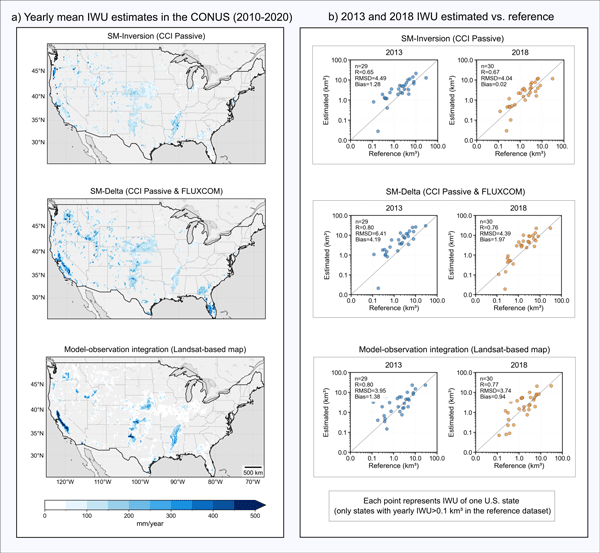
We developed a long-term dataset collection of irrigation water use based on about two decades of satellite observations, three distinct approaches, and many input datasets. The collection provides monthly estimates for major agricultural regions and helps describe how irrigation varies across locations, seasons, and years. It offers a foundation for improving how irrigation is quantified, compared across methods, and integrated into large-scale hydrological and climate studies.
Oscar M. Baez-Villanueva, Alfredo Crespo-Otero, Sara Modanesi, Pierre Laluet, Sergio Vicente-Serrano, Jaap Schellekens, Jacopo Dari, Hylke E. Beck, Wouter Dorigo, Christian Massari, Chiara Corbari, Joppe Massant, Kwint Delbare, Olivier Bonte, Aaron Boone, Diego Fernández-Prieto, and Diego G. Miralles
EGUsphere, https://doi.org/10.5194/egusphere-2026-1856, https://doi.org/10.5194/egusphere-2026-1856, 2026
Short summary
Short summary
We developed a new method to estimate daily land evaporation at high resolution across the Iberian Peninsula, explicitly accounting for irrigation. By combining satellite and meteorological data, we show that irrigation can strongly increase evaporation in agricultural areas. The results better match ground observations and improve understanding of water use. This approach can support farming decisions and water management at the regional scale, and will be extended to global applications.
Pierre Laluet, Luis Olivera-Guerra, Víctor Altés, Vincent Rivalland, Alexis Jeantet, Julien Tournebize, Omar Cenobio-Cruz, Anaïs Barella-Ortiz, Pere Quintana-Seguí, Josep Maria Villar, and Olivier Merlin
Hydrol. Earth Syst. Sci., 28, 3695–3716, https://doi.org/10.5194/hess-28-3695-2024, https://doi.org/10.5194/hess-28-3695-2024, 2024
Short summary
Short summary
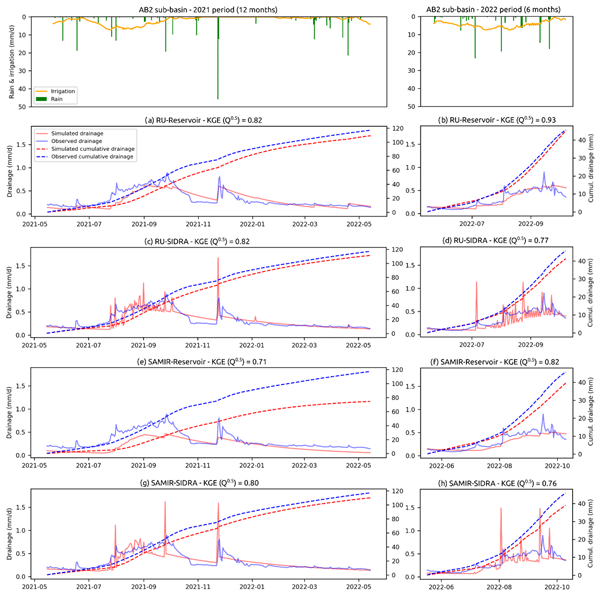
Monitoring agricultural drainage flow in irrigated areas is key to water and soil management. In this paper, four simple drainage models are evaluated on two irrigated sub-basins where drainage flow is measured daily. The evaluation of their precision shows that they simulate drainage very well when calibrated with drainage data and that one of them is slightly better. The evaluation of their accuracy shows that only one model can provide rough drainage estimates without calibration data.
Malak Sadki, Gaëtan Noual, Simon Munier, Vanessa Pedinotti, Kaushlendra Verma, Clément Albergel, Sylvain Biancamaria, and Alice Andral
Hydrol. Earth Syst. Sci., 30, 6159–6187, https://doi.org/10.5194/hess-30-6159-2026, https://doi.org/10.5194/hess-30-6159-2026, 2026
Short summary
Short summary
his study explores how 20 years of European Space Agency Climate Change Initiative discharge products improve large-scale hydrological simulations through data assimilation. Tests in two contrasting models across Niger and Congo basins show that temporally dense discharge data reduces bias and improves internal variability. Although product quality, sampling, and basin processes control gain reliability, the findings support these datasets' value in refining models for climate studies.
Diaa Sheishah, Enas Abdelsamei, Viktoria Blanka-Vegi, Károly Barta, Ahmed M. Ali, Khaldoun Abualhin, Djamil Al-Halbouni, Wouter Dorigo, and Gyorgy Sipos
Earth Syst. Sci. Data Discuss., https://doi.org/10.5194/essd-2026-563, https://doi.org/10.5194/essd-2026-563, 2026
Preprint under review for ESSD
Short summary
Short summary
Soil moisture controls drought, crop water supply, and groundwater recharge, but it is difficult to monitor below the surface. We used national monitoring data from 117 stations and six soil depths to build an open database that links soil moisture, soil type, water retention, and expected electromagnetic responses. The results identify a key mid-depth buffering zone and provide a practical reference for future drought monitoring, irrigation planning, and non-invasive soil-water surveys.
Jawairia A. Ahmad, Christopher M. Taylor, Bethan L. Harris, Dávid D. Kovács, Seonaid Anderson, Adrià Amell, Colin Moldenhauer, Steven Wells, and Wouter Dorigo
EGUsphere, https://doi.org/10.5194/egusphere-2026-4687, https://doi.org/10.5194/egusphere-2026-4687, 2026
This preprint is open for discussion and under review for Hydrology and Earth System Sciences (HESS).
Short summary
Short summary
Evaluating the ability of satellite-observed soil moisture products to represent fine-scale land surface information shows that active microwave radar based product from ASCAT captures spatial variability at fine resolution which passive microwave based products miss. Rainfall dataset evaluation using fine-scale soil moisture information highlights the limitations in ERA5 precipitation. Further, fine-scale soil moisture information improves nowcasting of convective storms over dry regions.
Zhenwu Xu, Yongqiang Zhang, Dongdong Kong, Ning Ma, and Xuanze Zhang
Earth Syst. Sci. Data, 18, 5663–5695, https://doi.org/10.5194/essd-18-5663-2026, https://doi.org/10.5194/essd-18-5663-2026, 2026
Short summary
Short summary
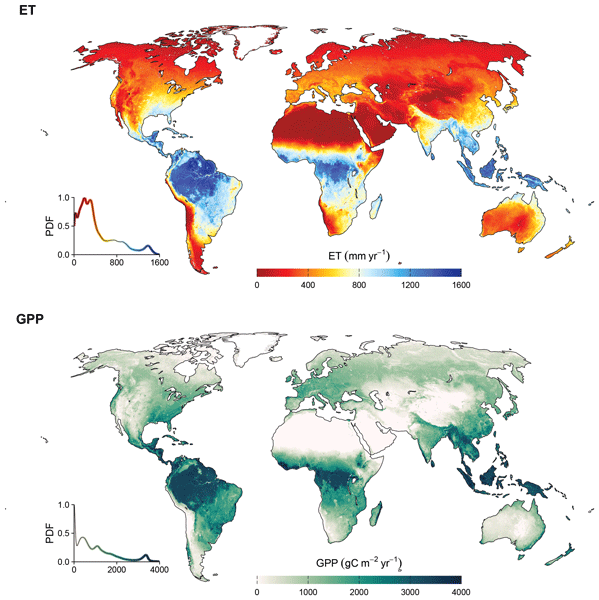
The Penman–Monteith–Leuning Version 2.2 dataset provides remote sensing-based coupled estimates of terrestrial evapotranspiration and gross primary production from 1982 to near present. Calibrated at 208 flux stations and validated against water balances in 152 river basins, this extended record reveals significant increases in global evapotranspiration, vegetation productivity, and water use efficiency, supporting diverse studies in hydrology, ecology, and Earth sciences.
Pierre Laluet, Jacopo Dari, Louise Busschaert, Zdenko Heyvaert, Gabrielle De Lannoy, Pia Langhans, Sara Modanesi, Christian Massari, Luca Brocca, Carla Saltalippi, Renato Morbidelli, Clément Albergel, and Wouter Dorigo
Earth Syst. Sci. Data, 18, 4833–4853, https://doi.org/10.5194/essd-18-4833-2026, https://doi.org/10.5194/essd-18-4833-2026, 2026
Short summary
Short summary
We developed a long-term dataset collection of irrigation water use based on about two decades of satellite observations, three distinct approaches, and many input datasets. The collection provides monthly estimates for major agricultural regions and helps describe how irrigation varies across locations, seasons, and years. It offers a foundation for improving how irrigation is quantified, compared across methods, and integrated into large-scale hydrological and climate studies.
Francesco Avanzi, Hans Lievens, Michael Matiu, Paolo Filippucci, Oscar M. Baez Villanueva, Simone Gabellani, Fabio Delogu, Lorenzo Alfieri, Andrea Libertino, Pere Quintana-Seguì, Diego G. Miralles, Luca Brocca, Christian Massari, and Gabriëlle J. M. De Lannoy
EGUsphere, https://doi.org/10.5194/egusphere-2026-2851, https://doi.org/10.5194/egusphere-2026-2851, 2026
Short summary
Short summary
We developed a new system to map and monitor snow and stored water across large mountain regions using satellite data and computer simulations. Tested in four major European river basins, the system reproduced snow conditions with high accuracy and realistically captured how snow changes with elevation. Because it does not rely on ground measurements, it can help provide consistent information on snow-water resources worldwide, supporting water management and climate adaptation.
Franklin Robertson, Michael Bosilovich, Matthew Rodell, Richard Allan, Bryant Loomis, Hiroko Beaudoing, Joaquin Munoz-Sabater, and Jason Roberts
EGUsphere, https://doi.org/10.5194/egusphere-2026-2539, https://doi.org/10.5194/egusphere-2026-2539, 2026
Short summary
Short summary
Water availability for societies and ecosystems depends upon Terrestrial Water Storage (TWS). By exploiting Gravity Recovery and Climate Experiment gravimetric measurements and TWS reconstructions from reanalysis, global hydrologic modeling and machine learning approaches, we provide evidence that previously documented TWS decline since 2002 extends back to the 1980s and is explained by coincident decline in regional precipitation combined with a growing influence of human water management.
Oscar M. Baez-Villanueva, Alfredo Crespo-Otero, Sara Modanesi, Pierre Laluet, Sergio Vicente-Serrano, Jaap Schellekens, Jacopo Dari, Hylke E. Beck, Wouter Dorigo, Christian Massari, Chiara Corbari, Joppe Massant, Kwint Delbare, Olivier Bonte, Aaron Boone, Diego Fernández-Prieto, and Diego G. Miralles
EGUsphere, https://doi.org/10.5194/egusphere-2026-1856, https://doi.org/10.5194/egusphere-2026-1856, 2026
Short summary
Short summary
We developed a new method to estimate daily land evaporation at high resolution across the Iberian Peninsula, explicitly accounting for irrigation. By combining satellite and meteorological data, we show that irrigation can strongly increase evaporation in agricultural areas. The results better match ground observations and improve understanding of water use. This approach can support farming decisions and water management at the regional scale, and will be extended to global applications.
Ehsan Modiri, Oldrich Rakovec, Pallav Kumar Shrestha, Almudena García-García, Leandro Avila, Katie Blackford, Elizabeth Cooper, Bram Droppers, Paolo Filippucci, Milan Fischer, Matěj Orság, Pietro Stradiotti, Luca Brocca, Douglas B. Clark, Wouter Dorigo, Stefan Kollet, Jian Peng, Niko Wanders, and Luis Samaniego
EGUsphere, https://doi.org/10.5194/egusphere-2026-1012, https://doi.org/10.5194/egusphere-2026-1012, 2026
Short summary
Short summary
Drought impacts water supply, agriculture, and ecosystems, yet hydrological models often disagree on when and where drought occurs. This study tested whether satellite observations can improve how models represent soil moisture drought in the Rhine River basin. Using several models and major drought events, we show that satellite data improve spatial realism and reveal important differences among models, helping to better understand uncertainty in drought monitoring and early warning.
Roland Hohensinn, Junyang Gou, Ulrich Meyer, Vincent Humphrey, Wouter Dorigo, Eva Boergens, Benedikt Soja, Alexander Gruber, Laura Jensen, Annette Eicker, Michael Rast, and Andreas Güntner
EGUsphere, https://doi.org/10.5194/egusphere-2026-975, https://doi.org/10.5194/egusphere-2026-975, 2026
Short summary
Short summary
This study provides a statistically traceable, uncertainty-aware assessment of global terrestrial and groundwater storage trends based on 21.5 years of GRACE/-FO observations using the Global Gravity-based Groundwater Product (G3P). By accounting for long-range memory and interannual variability, we isolate robust trends from climate variability and noise. The analysis refines continental budgets and identifies emerging groundwater gains alongside widespread persistent decline.

Samuel Upton, Markus Reichstein, Wouter Peters, Santiago Botía, Jacob A. Nelson, Sophia Walther, Martin Jung, Fabian Gans, László Haszpra, and Ana Bastos
Atmos. Chem. Phys., 26, 2561–2595, https://doi.org/10.5194/acp-26-2561-2026, https://doi.org/10.5194/acp-26-2561-2026, 2026
Short summary
Short summary
We create a hybrid ecosystem-level carbon flux model using both eddy-covariance observations and observations of the atmospheric mole fraction of CO2 at three tall-tower observatories. Our study uses an atmospheric transport model (STILT) to connect the atmospheric signal to the ecosystem-level model. We show that this inclusion of atmospheric information meaningfully improves the model's representation of the interannual variability of the global net flux of CO2.
Andreas Güntner, Ehsan Sharifi, Julian Haas, Eva Boergens, Feifei Cao, Christoph Dahle, Neda Darbeheshti, Henryk Dobslaw, Inés Dussaillant, Wouter Dorigo, Frank Flechtner, Adrian Jäggi, Miriam Kosmale, Martin Lasser, Kari Luojus, Ulrich Meyer, Adam Pasik, Wolfgang Preimersberger, Claudia Ruz Vargas, and Michael Zemp
Earth Syst. Sci. Data Discuss., https://doi.org/10.5194/essd-2025-797, https://doi.org/10.5194/essd-2025-797, 2026
Revised manuscript accepted for ESSD
Short summary
Short summary
We provide a data set that illustrates how the amount of water that is stored in the subsurface as groundwater varies in time over the continents of the Earth. A main source of the data are observations with satellites that weigh the changing amount of water by its mass attraction effect. The data allow for assessing how groundwater as the most important freshwater resource for mankind and ecosystems is affected by climate variability, climate change and withdrawal by human activities.
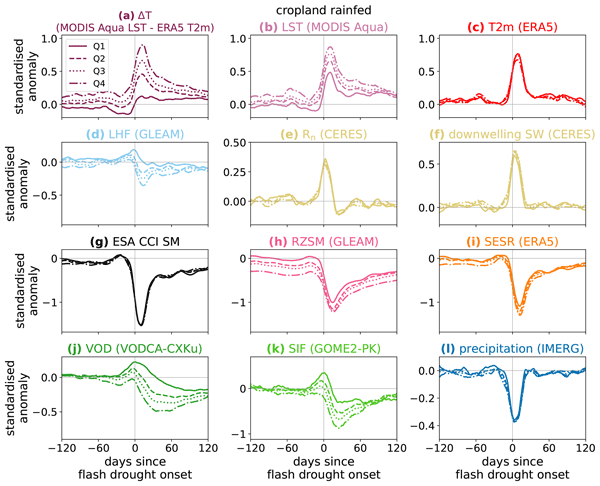
Bethan L. Harris, Christopher M. Taylor, Wouter Dorigo, Ruxandra-Maria Zotta, Darren Ghent, and Iván Noguera
Hydrol. Earth Syst. Sci., 29, 6917–6933, https://doi.org/10.5194/hess-29-6917-2025, https://doi.org/10.5194/hess-29-6917-2025, 2025
Short summary
Short summary
An improved understanding of land-atmosphere coupling processes during flash (rapid-onset) droughts is needed to aid the development of forecasts for these events. We use satellite observations to investigate the surface energy budget during flash droughts globally. The most intense events show a perturbed surface energy budget months before onset. In some regions, vegetation observations 1–2 months before onset provide information on the likelihood of heat extremes during an event.
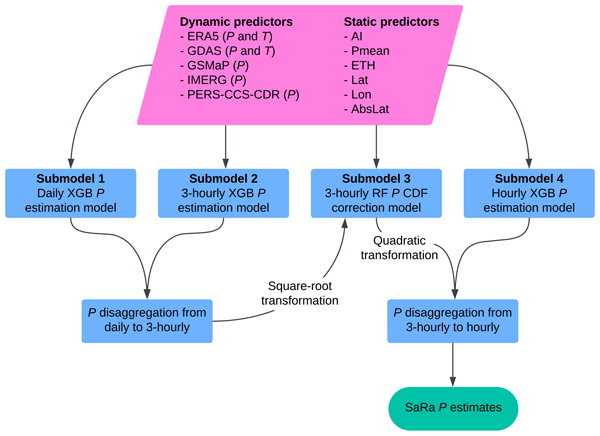
Xuetong Wang, Raied S. Alharbi, Oscar M. Baez-Villanueva, Amy Green, Matthew F. McCabe, Yoshihide Wada, Albert I. J. M. Van Dijk, Muhammad A. Abid, and Hylke E. Beck
Hydrol. Earth Syst. Sci., 29, 4983–5003, https://doi.org/10.5194/hess-29-4983-2025, https://doi.org/10.5194/hess-29-4983-2025, 2025
Short summary
Short summary
Our paper introduces Saudi Rainfall (SaRa), a high-resolution, near-real-time rainfall product for the Arabian Peninsula. Using machine learning, SaRa combines multiple satellite and (re)analysis datasets with static predictors, outperforming existing products in the region. With the fast development and continuing growth in water demand over this region, SaRa could help to address water challenges and support resource management.
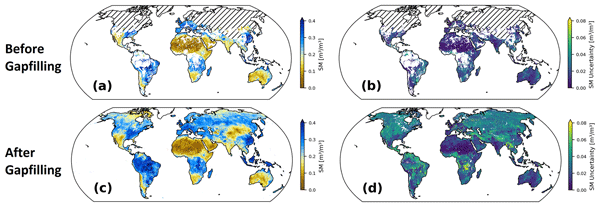
Wolfgang Preimesberger, Pietro Stradiotti, and Wouter Dorigo
Earth Syst. Sci. Data, 17, 4305–4329, https://doi.org/10.5194/essd-17-4305-2025, https://doi.org/10.5194/essd-17-4305-2025, 2025
Short summary
Short summary
We introduce the official ESA CCI Soil Moisture GAPFILLED climate data record. A univariate interpolation algorithm is applied to predict missing data points without relying on ancillary variables. The dataset includes gap-free uncertainty estimates for all predictions and was validated with independent in situ reference measurements. Our data record is recommended for applications which require global long-term gap-free satellite soil moisture data.
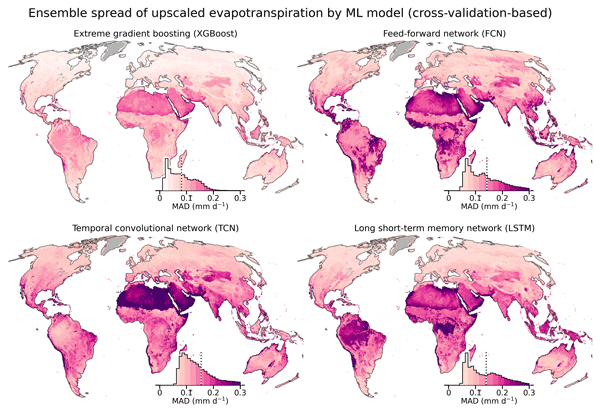
Basil Kraft, Jacob A. Nelson, Sophia Walther, Fabian Gans, Ulrich Weber, Gregory Duveiller, Markus Reichstein, Weijie Zhang, Marc Rußwurm, Devis Tuia, Marco Körner, Zayd Hamdi, and Martin Jung
Biogeosciences, 22, 3965–3987, https://doi.org/10.5194/bg-22-3965-2025, https://doi.org/10.5194/bg-22-3965-2025, 2025
Short summary
Short summary
This study evaluates machine learning approaches for upscaling evapotranspiration from the site to the global scale. Sequential models capture temporal dynamics better, especially with precipitation data, but all models show biases in data-scarce regions. Improved upscaling requires richer training data, informed covariate selection, and physical constraints to enhance robustness and reduce extrapolation errors.
Yongyong Zhang, Yongqiang Zhang, Xiaoyan Zhai, Jun Xia, Qiuhong Tang, Wei Wang, Jian Wu, Xiaoyu Niu, and Bing Han
Hydrol. Earth Syst. Sci., 29, 3257–3275, https://doi.org/10.5194/hess-29-3257-2025, https://doi.org/10.5194/hess-29-3257-2025, 2025
Short summary
Short summary
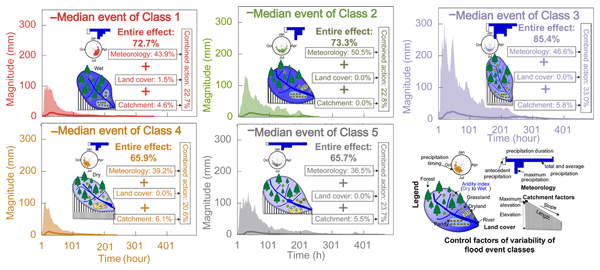
It is challenging to investigate flood variabilities and their formation mechanisms from massive event samples. This study explores spatiotemporal variabilities of 1446 flood events using hierarchical and partitional clustering methods. Control mechanisms of meteorological and physio-geographical factors are explored for individual flood event classes using constrained rank analysis. This gives insights into comprehensive changes in flood events and aids in flood prediction and control.
Mingwei Li, Shouzhi Chen, Fanghua Hao, Nan Wang, Zhaofei Wu, Yue Xu, Jing Zhang, Yongqiang Zhang, and Yongshuo H. Fu
Hydrol. Earth Syst. Sci., 29, 2081–2095, https://doi.org/10.5194/hess-29-2081-2025, https://doi.org/10.5194/hess-29-2081-2025, 2025
Short summary
Short summary
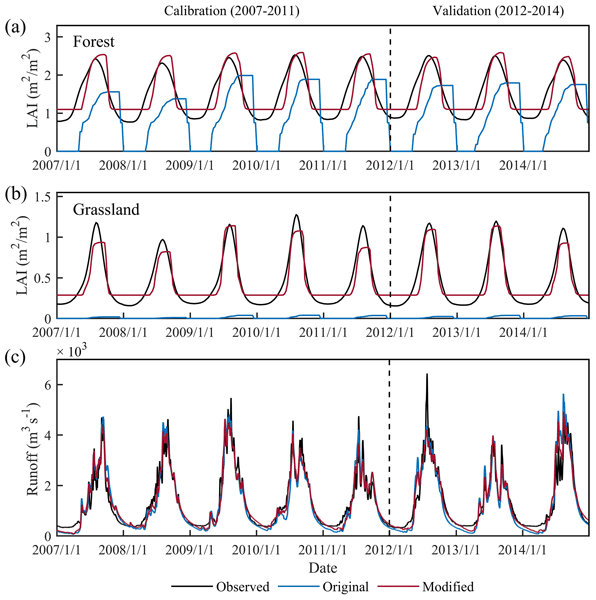
Climate-driven shifts in vegetation phenology have a significant impact on hydrological processes. In this study, we integrated a process-based phenology module into the SWAT-Carbon model, which led to a substantial improvement in the simulation of vegetation dynamics and hydrological processes in the Jinsha River watershed. Our findings highlight the critical need to incorporate vegetation phenology into hydrological models to achieve a more accurate representation of ecohydrological processes.
Wolfgang Knorr, Matthew Williams, Tea Thum, Thomas Kaminski, Michael Voßbeck, Marko Scholze, Tristan Quaife, T. Luke Smallman, Susan C. Steele-Dunne, Mariette Vreugdenhil, Tim Green, Sönke Zaehle, Mika Aurela, Alexandre Bouvet, Emanuel Bueechi, Wouter Dorigo, Tarek S. El-Madany, Mirco Migliavacca, Marika Honkanen, Yann H. Kerr, Anna Kontu, Juha Lemmetyinen, Hannakaisa Lindqvist, Arnaud Mialon, Tuuli Miinalainen, Gaétan Pique, Amanda Ojasalo, Shaun Quegan, Peter J. Rayner, Pablo Reyes-Muñoz, Nemesio Rodríguez-Fernández, Mike Schwank, Jochem Verrelst, Songyan Zhu, Dirk Schüttemeyer, and Matthias Drusch
Geosci. Model Dev., 18, 2137–2159, https://doi.org/10.5194/gmd-18-2137-2025, https://doi.org/10.5194/gmd-18-2137-2025, 2025
Short summary
Short summary
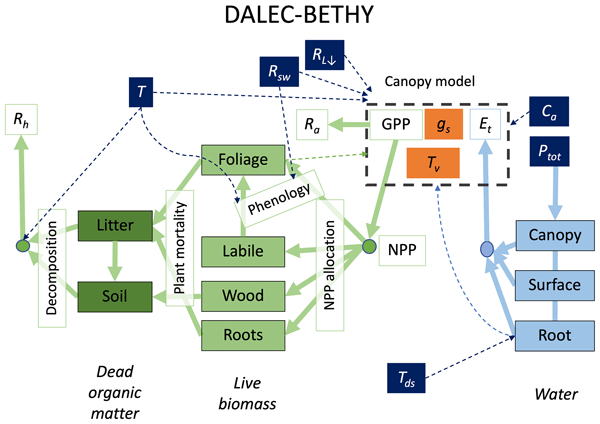
When it comes to climate change, the land surface is where the vast majority of impacts happen. The task of monitoring those impacts across the globe is formidable and must necessarily rely on satellites – at a significant cost: the measurements are only indirect and require comprehensive physical understanding. We have created a comprehensive modelling system that we offer to the research community to explore how satellite data can be better exploited to help us capture the changes that happen on our lands.
Zhu Deng, Philippe Ciais, Liting Hu, Adrien Martinez, Marielle Saunois, Rona L. Thompson, Kushal Tibrewal, Wouter Peters, Brendan Byrne, Giacomo Grassi, Paul I. Palmer, Ingrid T. Luijkx, Zhu Liu, Junjie Liu, Xuekun Fang, Tengjiao Wang, Hanqin Tian, Katsumasa Tanaka, Ana Bastos, Stephen Sitch, Benjamin Poulter, Clément Albergel, Aki Tsuruta, Shamil Maksyutov, Rajesh Janardanan, Yosuke Niwa, Bo Zheng, Joël Thanwerdas, Dmitry Belikov, Arjo Segers, and Frédéric Chevallier
Earth Syst. Sci. Data, 17, 1121–1152, https://doi.org/10.5194/essd-17-1121-2025, https://doi.org/10.5194/essd-17-1121-2025, 2025
Short summary
Short summary
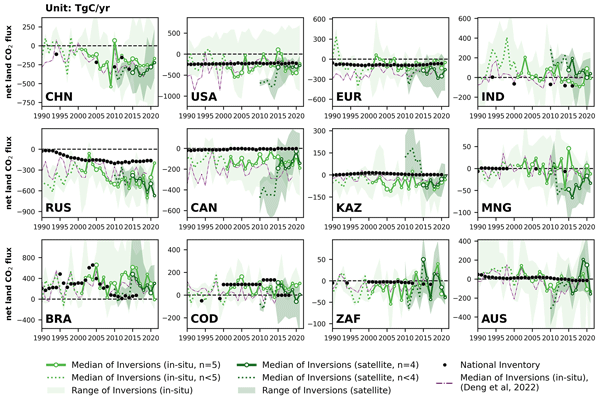
This study reconciles national greenhouse gas (GHG) inventories with updated atmospheric inversion results to evaluate discrepancies for three principal GHG fluxes at the national level. Compared to our previous study, new satellite-based CO2 inversions were included and an updated mask of managed lands was used, improving agreement for Brazil and Canada. The proposed methodology can be regularly applied as a check to assess the gap between top-down inversions and bottom-up inventories.
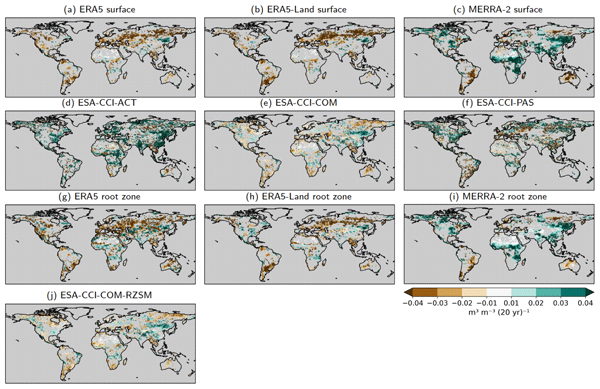
Martin Hirschi, Pietro Stradiotti, Bas Crezee, Wouter Dorigo, and Sonia I. Seneviratne
Hydrol. Earth Syst. Sci., 29, 397–425, https://doi.org/10.5194/hess-29-397-2025, https://doi.org/10.5194/hess-29-397-2025, 2025
Short summary
Short summary
We investigate the potential of long-term satellite and reanalysis products for characterising soil drying by analysing their 2000–2022 soil moisture trends and their representation of agroecological drought events of this period. Soil moisture trends are globally diverse and partly contradictory between products. This also affects the products' drought-detection capacity. Based on the best-estimate products, consistent soil drying is observed over more than 40 % of the land area covered.
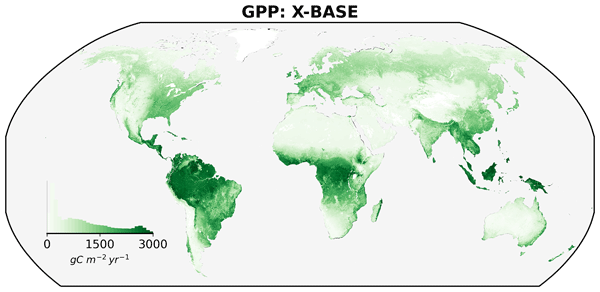
Jacob A. Nelson, Sophia Walther, Fabian Gans, Basil Kraft, Ulrich Weber, Kimberly Novick, Nina Buchmann, Mirco Migliavacca, Georg Wohlfahrt, Ladislav Šigut, Andreas Ibrom, Dario Papale, Mathias Göckede, Gregory Duveiller, Alexander Knohl, Lukas Hörtnagl, Russell L. Scott, Jiří Dušek, Weijie Zhang, Zayd Mahmoud Hamdi, Markus Reichstein, Sergio Aranda-Barranco, Jonas Ardö, Maarten Op de Beeck, Dave Billesbach, David Bowling, Rosvel Bracho, Christian Brümmer, Gustau Camps-Valls, Shiping Chen, Jamie Rose Cleverly, Ankur Desai, Gang Dong, Tarek S. El-Madany, Eugenie Susanne Euskirchen, Iris Feigenwinter, Marta Galvagno, Giacomo A. Gerosa, Bert Gielen, Ignacio Goded, Sarah Goslee, Christopher Michael Gough, Bernard Heinesch, Kazuhito Ichii, Marcin Antoni Jackowicz-Korczynski, Anne Klosterhalfen, Sara Knox, Hideki Kobayashi, Kukka-Maaria Kohonen, Mika Korkiakoski, Ivan Mammarella, Mana Gharun, Riccardo Marzuoli, Roser Matamala, Stefan Metzger, Leonardo Montagnani, Giacomo Nicolini, Thomas O'Halloran, Jean-Marc Ourcival, Matthias Peichl, Elise Pendall, Borja Ruiz Reverter, Marilyn Roland, Simone Sabbatini, Torsten Sachs, Marius Schmidt, Christopher R. Schwalm, Ankit Shekhar, Richard Silberstein, Maria Lucia Silveira, Donatella Spano, Torbern Tagesson, Gianluca Tramontana, Carlo Trotta, Fabio Turco, Timo Vesala, Caroline Vincke, Domenico Vitale, Enrique R. Vivoni, Yi Wang, William Woodgate, Enrico A. Yepez, Junhui Zhang, Donatella Zona, and Martin Jung
Biogeosciences, 21, 5079–5115, https://doi.org/10.5194/bg-21-5079-2024, https://doi.org/10.5194/bg-21-5079-2024, 2024
Short summary
Short summary
The movement of water, carbon, and energy from the Earth's surface to the atmosphere, or flux, is an important process to understand because it impacts our lives. Here, we outline a method called FLUXCOM-X to estimate global water and CO2 fluxes based on direct measurements from sites around the world. We go on to demonstrate how these new estimates of net CO2 uptake/loss, gross CO2 uptake, total water evaporation, and transpiration from plants compare to previous and independent estimates.

Ruxandra-Maria Zotta, Leander Moesinger, Robin van der Schalie, Mariette Vreugdenhil, Wolfgang Preimesberger, Thomas Frederikse, Richard de Jeu, and Wouter Dorigo
Earth Syst. Sci. Data, 16, 4573–4617, https://doi.org/10.5194/essd-16-4573-2024, https://doi.org/10.5194/essd-16-4573-2024, 2024
Short summary
Short summary
VODCA v2 is a dataset providing vegetation indicators for long-term ecosystem monitoring. VODCA v2 comprises two products: VODCA CXKu, spanning 34 years of observations (1987–2021), suitable for monitoring upper canopy dynamics, and VODCA L (2010–2021), for above-ground biomass monitoring. VODCA v2 has lower noise levels than the previous product version and provides valuable insights into plant water dynamics and biomass changes, even in areas where optical data are limited.
Pierre Laluet, Luis Olivera-Guerra, Víctor Altés, Vincent Rivalland, Alexis Jeantet, Julien Tournebize, Omar Cenobio-Cruz, Anaïs Barella-Ortiz, Pere Quintana-Seguí, Josep Maria Villar, and Olivier Merlin
Hydrol. Earth Syst. Sci., 28, 3695–3716, https://doi.org/10.5194/hess-28-3695-2024, https://doi.org/10.5194/hess-28-3695-2024, 2024
Short summary
Short summary
Monitoring agricultural drainage flow in irrigated areas is key to water and soil management. In this paper, four simple drainage models are evaluated on two irrigated sub-basins where drainage flow is measured daily. The evaluation of their precision shows that they simulate drainage very well when calibrated with drainage data and that one of them is slightly better. The evaluation of their accuracy shows that only one model can provide rough drainage estimates without calibration data.
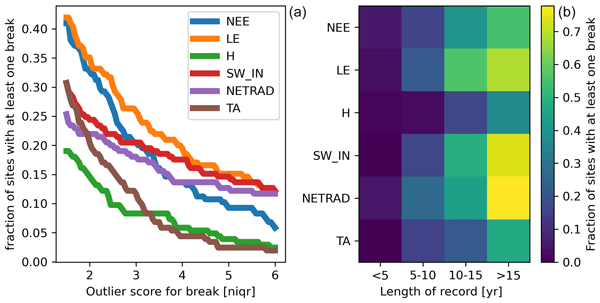
Martin Jung, Jacob Nelson, Mirco Migliavacca, Tarek El-Madany, Dario Papale, Markus Reichstein, Sophia Walther, and Thomas Wutzler
Biogeosciences, 21, 1827–1846, https://doi.org/10.5194/bg-21-1827-2024, https://doi.org/10.5194/bg-21-1827-2024, 2024
Short summary
Short summary
We present a methodology to detect inconsistencies in perhaps the most important data source for measurements of ecosystem–atmosphere carbon, water, and energy fluxes. We expect that the derived consistency flags will be relevant for data users and will help in improving our understanding of and our ability to model ecosystem–climate interactions.
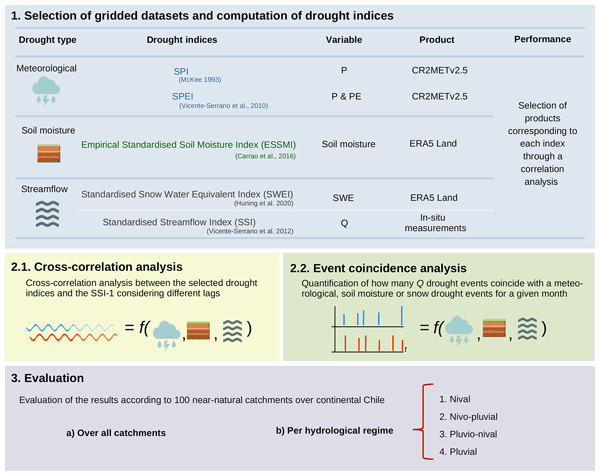
Oscar M. Baez-Villanueva, Mauricio Zambrano-Bigiarini, Diego G. Miralles, Hylke E. Beck, Jonatan F. Siegmund, Camila Alvarez-Garreton, Koen Verbist, René Garreaud, Juan Pablo Boisier, and Mauricio Galleguillos
Hydrol. Earth Syst. Sci., 28, 1415–1439, https://doi.org/10.5194/hess-28-1415-2024, https://doi.org/10.5194/hess-28-1415-2024, 2024
Short summary
Short summary
Various drought indices exist, but there is no consensus on which index to use to assess streamflow droughts. This study addresses meteorological, soil moisture, and snow indices along with their temporal scales to assess streamflow drought across hydrologically diverse catchments. Using data from 100 Chilean catchments, findings suggest that there is not a single drought index that can be used for all catchments and that snow-influenced areas require drought indices with larger temporal scales.
Gregory Duveiller, Mark Pickering, Joaquin Muñoz-Sabater, Luca Caporaso, Souhail Boussetta, Gianpaolo Balsamo, and Alessandro Cescatti
Geosci. Model Dev., 16, 7357–7373, https://doi.org/10.5194/gmd-16-7357-2023, https://doi.org/10.5194/gmd-16-7357-2023, 2023
Short summary
Short summary
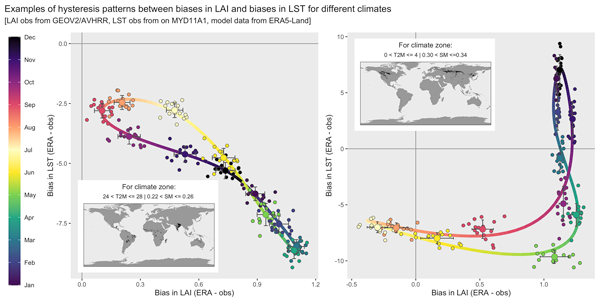
Some of our best tools to describe the state of the land system, including the intensity of heat waves, have a problem. The model currently assumes that the number of leaves in ecosystems always follows the same cycle. By using satellite observations of when leaves are present, we show that capturing the yearly changes in this cycle is important to avoid errors in estimating surface temperature. We show that this has strong implications for our capacity to describe heat waves across Europe.
Samuel Scherrer, Gabriëlle De Lannoy, Zdenko Heyvaert, Michel Bechtold, Clement Albergel, Tarek S. El-Madany, and Wouter Dorigo
Hydrol. Earth Syst. Sci., 27, 4087–4114, https://doi.org/10.5194/hess-27-4087-2023, https://doi.org/10.5194/hess-27-4087-2023, 2023
Short summary
Short summary
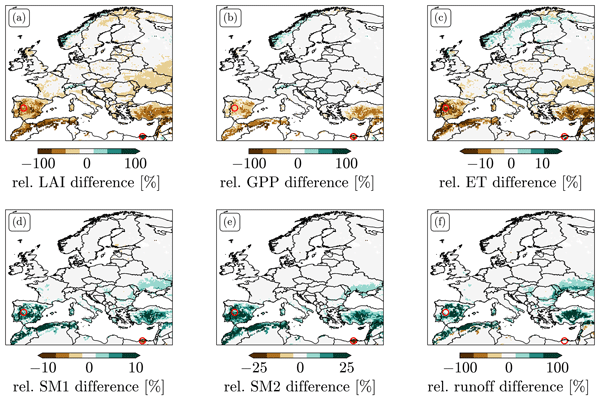
We explored different options for data assimilation (DA) of the remotely sensed leaf area index (LAI). We found strong biases between LAI predicted by Noah-MP and observations. LAI DA that does not take these biases into account can induce unphysical patterns in the resulting LAI and flux estimates and leads to large changes in the climatology of root zone soil moisture. We tested two bias-correction approaches and explored alternative solutions to treating bias in LAI DA.
Matthew J. McGrath, Ana Maria Roxana Petrescu, Philippe Peylin, Robbie M. Andrew, Bradley Matthews, Frank Dentener, Juraj Balkovič, Vladislav Bastrikov, Meike Becker, Gregoire Broquet, Philippe Ciais, Audrey Fortems-Cheiney, Raphael Ganzenmüller, Giacomo Grassi, Ian Harris, Matthew Jones, Jürgen Knauer, Matthias Kuhnert, Guillaume Monteil, Saqr Munassar, Paul I. Palmer, Glen P. Peters, Chunjing Qiu, Mart-Jan Schelhaas, Oksana Tarasova, Matteo Vizzarri, Karina Winkler, Gianpaolo Balsamo, Antoine Berchet, Peter Briggs, Patrick Brockmann, Frédéric Chevallier, Giulia Conchedda, Monica Crippa, Stijn N. C. Dellaert, Hugo A. C. Denier van der Gon, Sara Filipek, Pierre Friedlingstein, Richard Fuchs, Michael Gauss, Christoph Gerbig, Diego Guizzardi, Dirk Günther, Richard A. Houghton, Greet Janssens-Maenhout, Ronny Lauerwald, Bas Lerink, Ingrid T. Luijkx, Géraud Moulas, Marilena Muntean, Gert-Jan Nabuurs, Aurélie Paquirissamy, Lucia Perugini, Wouter Peters, Roberto Pilli, Julia Pongratz, Pierre Regnier, Marko Scholze, Yusuf Serengil, Pete Smith, Efisio Solazzo, Rona L. Thompson, Francesco N. Tubiello, Timo Vesala, and Sophia Walther
Earth Syst. Sci. Data, 15, 4295–4370, https://doi.org/10.5194/essd-15-4295-2023, https://doi.org/10.5194/essd-15-4295-2023, 2023
Short summary
Short summary
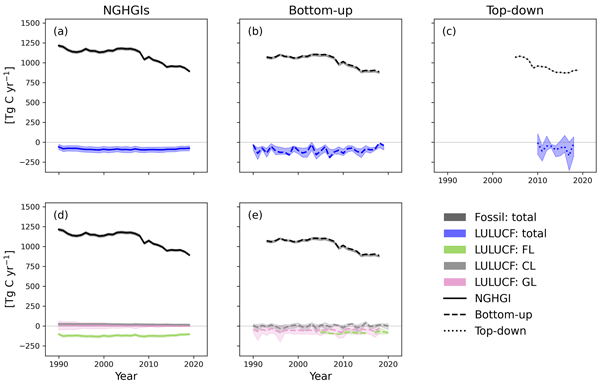
Accurate estimation of fluxes of carbon dioxide from the land surface is essential for understanding future impacts of greenhouse gas emissions on the climate system. A wide variety of methods currently exist to estimate these sources and sinks. We are continuing work to develop annual comparisons of these diverse methods in order to clarify what they all actually calculate and to resolve apparent disagreement, in addition to highlighting opportunities for increased understanding.
Adam Pasik, Alexander Gruber, Wolfgang Preimesberger, Domenico De Santis, and Wouter Dorigo
Geosci. Model Dev., 16, 4957–4976, https://doi.org/10.5194/gmd-16-4957-2023, https://doi.org/10.5194/gmd-16-4957-2023, 2023
Short summary
Short summary
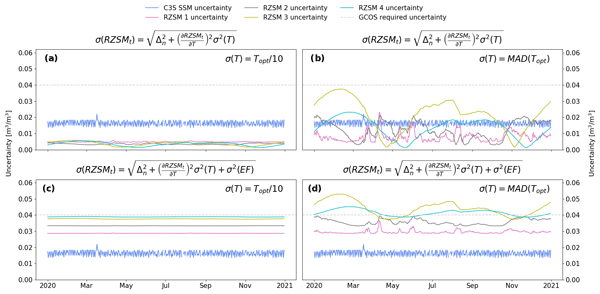
We apply the exponential filter (EF) method to satellite soil moisture retrievals to estimate the water content in the unobserved root zone globally from 2002–2020. Quality assessment against an independent dataset shows satisfactory results. Error characterization is carried out using the standard uncertainty propagation law and empirically estimated values of EF model structural uncertainty and parameter uncertainty. This is followed by analysis of temporal uncertainty variations.
Remi Madelon, Nemesio J. Rodríguez-Fernández, Hassan Bazzi, Nicolas Baghdadi, Clement Albergel, Wouter Dorigo, and Mehrez Zribi
Hydrol. Earth Syst. Sci., 27, 1221–1242, https://doi.org/10.5194/hess-27-1221-2023, https://doi.org/10.5194/hess-27-1221-2023, 2023
Short summary
Short summary
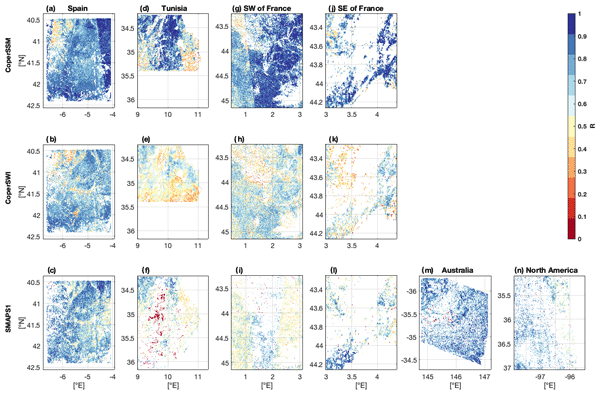
We present an approach to estimate soil moisture (SM) at 1 km resolution using Sentinel-1 and Sentinel-3 satellites. The estimates were compared to other high-resolution (HR) datasets over Europe, northern Africa, Australia, and North America, showing good agreement. However, the discrepancies between the different HR datasets and their lower performances compared with in situ measurements and coarse-resolution datasets show the remaining challenges for large-scale HR SM mapping.
Luisa Schmidt, Matthias Forkel, Ruxandra-Maria Zotta, Samuel Scherrer, Wouter A. Dorigo, Alexander Kuhn-Régnier, Robin van der Schalie, and Marta Yebra
Biogeosciences, 20, 1027–1046, https://doi.org/10.5194/bg-20-1027-2023, https://doi.org/10.5194/bg-20-1027-2023, 2023
Short summary
Short summary
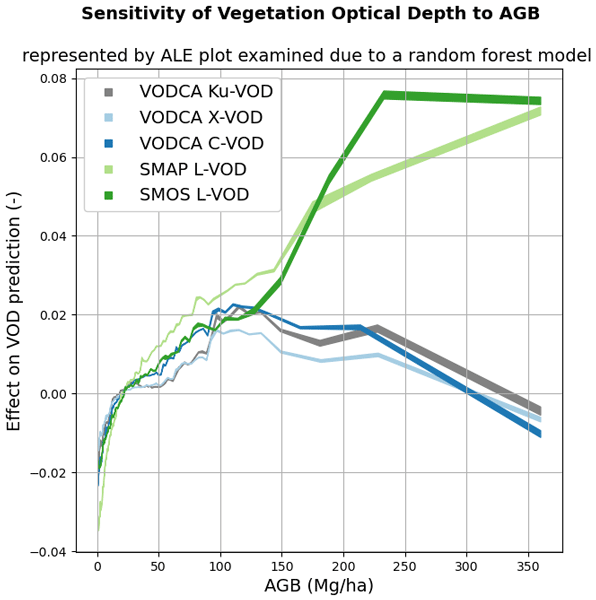
Vegetation attenuates natural microwave emissions from the land surface. The strength of this attenuation is quantified as the vegetation optical depth (VOD) parameter and is influenced by the vegetation mass, structure, water content, and observation wavelength. Here we model the VOD signal as a multi-variate function of several descriptive vegetation variables. The results help in understanding the effects of ecosystem properties on VOD.
Taylor Smith, Ruxandra-Maria Zotta, Chris A. Boulton, Timothy M. Lenton, Wouter Dorigo, and Niklas Boers
Earth Syst. Dynam., 14, 173–183, https://doi.org/10.5194/esd-14-173-2023, https://doi.org/10.5194/esd-14-173-2023, 2023
Short summary
Short summary
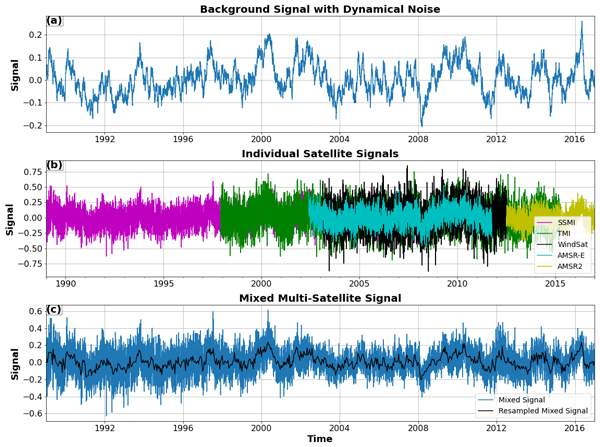
Multi-instrument records with varying signal-to-noise ratios are becoming increasingly common as legacy sensors are upgraded, and data sets are modernized. Induced changes in higher-order statistics such as the autocorrelation and variance are not always well captured by cross-calibration schemes. Here we investigate using synthetic examples how strong resulting biases can be and how they can be avoided in order to make reliable statements about changes in the resilience of a system.
Matthias Forkel, Luisa Schmidt, Ruxandra-Maria Zotta, Wouter Dorigo, and Marta Yebra
Hydrol. Earth Syst. Sci., 27, 39–68, https://doi.org/10.5194/hess-27-39-2023, https://doi.org/10.5194/hess-27-39-2023, 2023
Short summary
Short summary
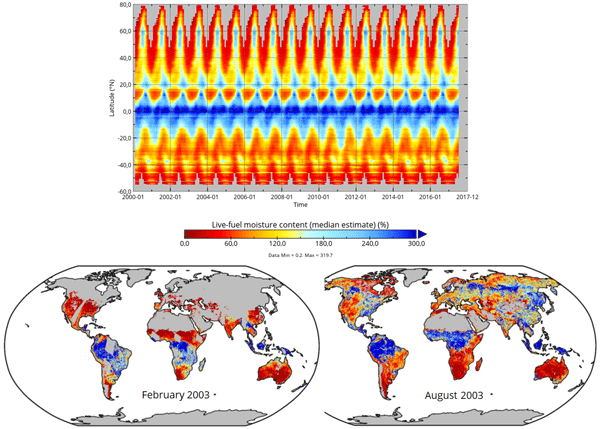
The live fuel moisture content (LFMC) of vegetation canopies is a driver of wildfires. We investigate the relation between LFMC and passive microwave satellite observations of vegetation optical depth (VOD) and develop a method to estimate LFMC from VOD globally. Our global VOD-based estimates of LFMC can be used to investigate drought effects on vegetation and fire risks.
Shaoyang He, Yongqiang Zhang, Ning Ma, Jing Tian, Dongdong Kong, and Changming Liu
Earth Syst. Sci. Data, 14, 5463–5488, https://doi.org/10.5194/essd-14-5463-2022, https://doi.org/10.5194/essd-14-5463-2022, 2022
Short summary
Short summary
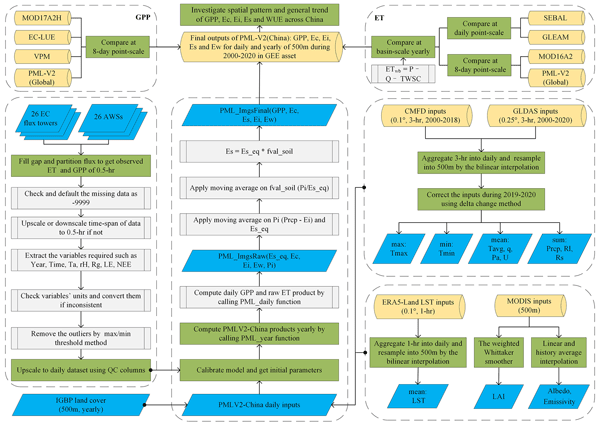
This study developed a daily, 500 m evapotranspiration and gross primary production product (PML-V2(China)) using a locally calibrated water–carbon coupled model, PML-V2, which was well calibrated against observations at 26 flux sites across nine land cover types. PML-V2 (China) performs satisfactorily in the plot- and basin-scale evaluations compared with other mainstream products. It improved intra-annual ET and GPP dynamics, particularly in the cropland ecosystem.
Chiara Corbari, Nicola Paciolla, Giada Restuccia, and Ahmad Al Bitar
Nat. Hazards Earth Syst. Sci. Discuss., https://doi.org/10.5194/nhess-2022-260, https://doi.org/10.5194/nhess-2022-260, 2022
Preprint withdrawn
Short summary
Short summary
We developed an EO-based agricultural drought index (ADMOS) for irrigation management. ADMOS identifies drought levels using rainfall, soil moisture, surface temperature and vegetation anomalies from multiple satellite data. ADMOS was tested in two Italian areas, diverse in climate, crop and irrigation. In one, ADMOS and irrigation volumes were negatively correlated; while in the other, no correlation was found, because the same irrigation is applied every year.
Arsène Druel, Simon Munier, Anthony Mucia, Clément Albergel, and Jean-Christophe Calvet
Geosci. Model Dev., 15, 8453–8471, https://doi.org/10.5194/gmd-15-8453-2022, https://doi.org/10.5194/gmd-15-8453-2022, 2022
Short summary
Short summary
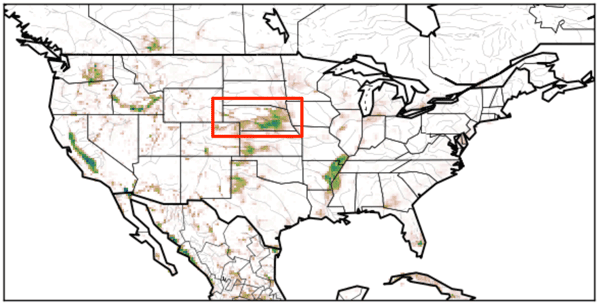
Crop phenology and irrigation is implemented into a land surface model able to work at a global scale. A case study is presented over Nebraska (USA). Simulations with and without the new scheme are compared to different satellite-based observations. The model is able to produce a realistic yearly irrigation water amount. The irrigation scheme improves the simulated leaf area index, gross primary productivity, evapotransipiration, and land surface temperature.
Leander Moesinger, Ruxandra-Maria Zotta, Robin van der Schalie, Tracy Scanlon, Richard de Jeu, and Wouter Dorigo
Biogeosciences, 19, 5107–5123, https://doi.org/10.5194/bg-19-5107-2022, https://doi.org/10.5194/bg-19-5107-2022, 2022
Short summary
Short summary
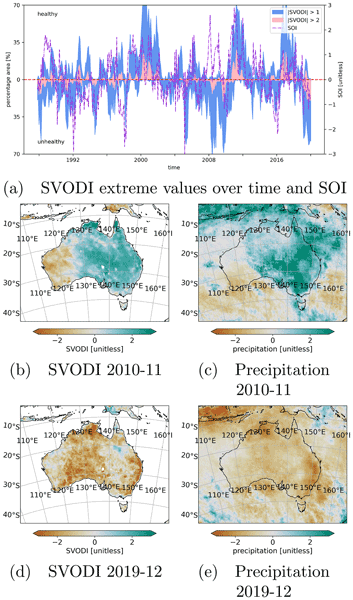
The standardized vegetation optical depth index (SVODI) can be used to monitor the vegetation condition, such as whether the vegetation is unusually dry or wet. SVODI has global coverage, spans the past 3 decades and is derived from multiple spaceborne passive microwave sensors of that period. SVODI is based on a new probabilistic merging method that allows the merging of normally distributed data even if the data are not gap-free.
Xin Yu, René Orth, Markus Reichstein, Michael Bahn, Anne Klosterhalfen, Alexander Knohl, Franziska Koebsch, Mirco Migliavacca, Martina Mund, Jacob A. Nelson, Benjamin D. Stocker, Sophia Walther, and Ana Bastos
Biogeosciences, 19, 4315–4329, https://doi.org/10.5194/bg-19-4315-2022, https://doi.org/10.5194/bg-19-4315-2022, 2022
Short summary
Short summary
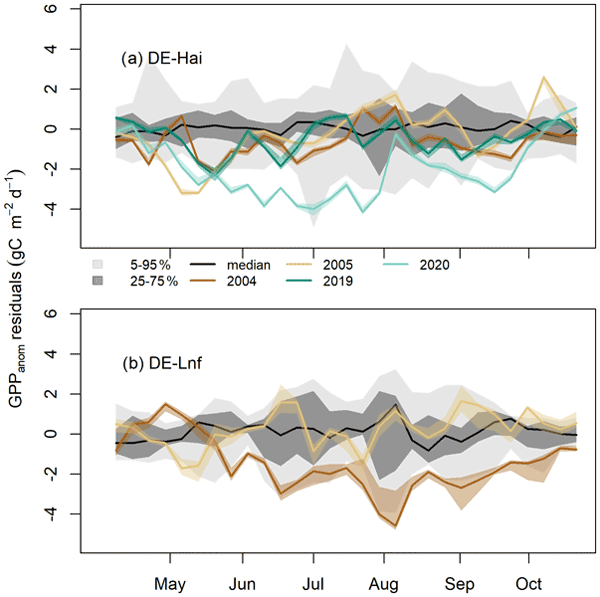
Identifying drought legacy effects is challenging because they are superimposed on variability driven by climate conditions in the recovery period. We develop a residual-based approach to quantify legacies on gross primary productivity (GPP) from eddy covariance data. The GPP reduction due to legacy effects is comparable to the concurrent effects at two sites in Germany, which reveals the importance of legacy effects. Our novel methodology can be used to quantify drought legacies elsewhere.
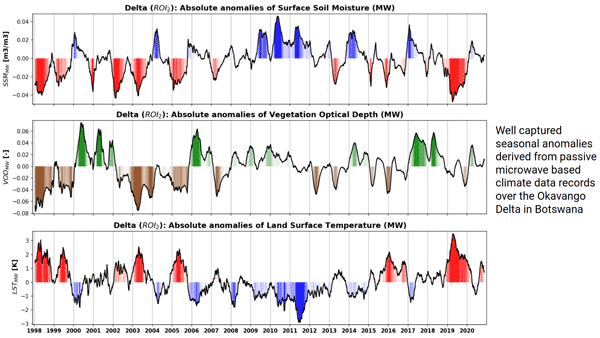
Robin van der Schalie, Mendy van der Vliet, Clément Albergel, Wouter Dorigo, Piotr Wolski, and Richard de Jeu
Hydrol. Earth Syst. Sci., 26, 3611–3627, https://doi.org/10.5194/hess-26-3611-2022, https://doi.org/10.5194/hess-26-3611-2022, 2022
Short summary
Short summary
Climate data records of surface soil moisture, vegetation optical depth, and land surface temperature can be derived from passive microwave observations. The ability of these datasets to properly detect anomalies and extremes is very valuable in climate research and can especially help to improve our insight in complex regions where the current climate reanalysis datasets reach their limitations. Here, we present a case study over the Okavango Delta, where we focus on inter-annual variability.

Roiya Souissi, Mehrez Zribi, Chiara Corbari, Marco Mancini, Sekhar Muddu, Sat Kumar Tomer, Deepti B. Upadhyaya, and Ahmad Al Bitar
Hydrol. Earth Syst. Sci., 26, 3263–3297, https://doi.org/10.5194/hess-26-3263-2022, https://doi.org/10.5194/hess-26-3263-2022, 2022
Short summary
Short summary
In this study, we investigate the combination of surface soil moisture information with process-related features, namely, evaporation efficiency, soil water index and normalized difference vegetation index, using artificial neural networks to predict root-zone soil moisture. The joint use of process-related features yielded more accurate predictions in the case of arid and semiarid conditions. However, they have no to little added value in temperate to tropical conditions.
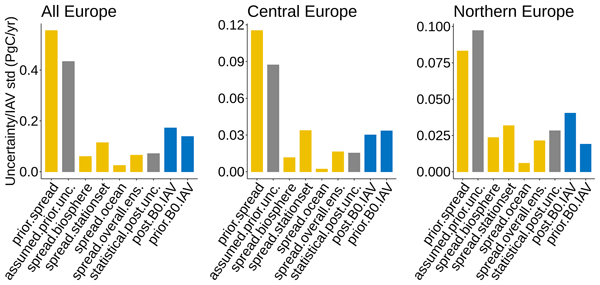
Saqr Munassar, Christian Rödenbeck, Frank-Thomas Koch, Kai U. Totsche, Michał Gałkowski, Sophia Walther, and Christoph Gerbig
Atmos. Chem. Phys., 22, 7875–7892, https://doi.org/10.5194/acp-22-7875-2022, https://doi.org/10.5194/acp-22-7875-2022, 2022
Short summary
Short summary
The results obtained from ensembles of inversions over 13 years show the largest spread in the a posteriori fluxes over the station set ensemble. Using different prior fluxes in the inversions led to a smaller impact. Drought occurrences in 2018 and 2019 affected CO2 fluxes as seen in net ecosystem exchange estimates. Our study highlights the importance of expanding the atmospheric site network across Europe to better constrain CO2 fluxes in inverse modelling.
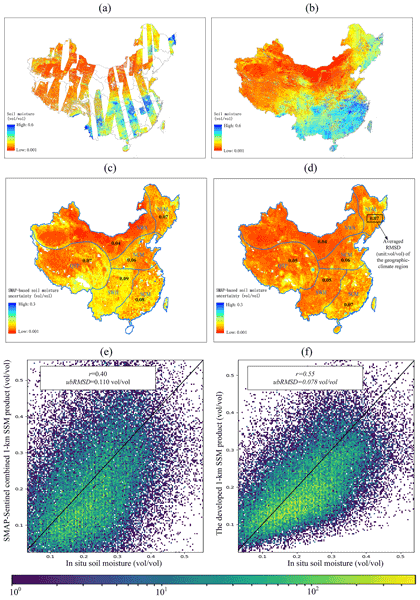
Peilin Song, Yongqiang Zhang, Jianping Guo, Jiancheng Shi, Tianjie Zhao, and Bing Tong
Earth Syst. Sci. Data, 14, 2613–2637, https://doi.org/10.5194/essd-14-2613-2022, https://doi.org/10.5194/essd-14-2613-2022, 2022
Short summary
Short summary
Soil moisture information is crucial for understanding the earth surface, but currently available satellite-based soil moisture datasets are imperfect either in their spatiotemporal resolutions or in ensuring image completeness from cloudy weather. In this study, therefore, we developed one soil moisture data product over China that has tackled most of the above problems. This data product has the potential to promote the investigation of earth hydrology and be extended to the global scale.
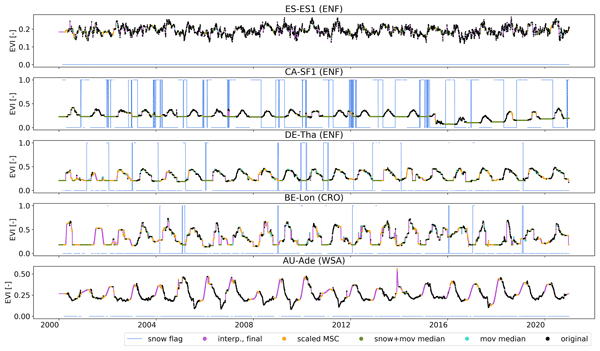
Sophia Walther, Simon Besnard, Jacob Allen Nelson, Tarek Sebastian El-Madany, Mirco Migliavacca, Ulrich Weber, Nuno Carvalhais, Sofia Lorena Ermida, Christian Brümmer, Frederik Schrader, Anatoly Stanislavovich Prokushkin, Alexey Vasilevich Panov, and Martin Jung
Biogeosciences, 19, 2805–2840, https://doi.org/10.5194/bg-19-2805-2022, https://doi.org/10.5194/bg-19-2805-2022, 2022
Short summary
Short summary
Satellite observations help interpret station measurements of local carbon, water, and energy exchange between the land surface and the atmosphere and are indispensable for simulations of the same in land surface models and their evaluation. We propose generalisable and efficient approaches to systematically ensure high quality and to estimate values in data gaps. We apply them to satellite data of surface reflectance and temperature with different resolutions at the stations.
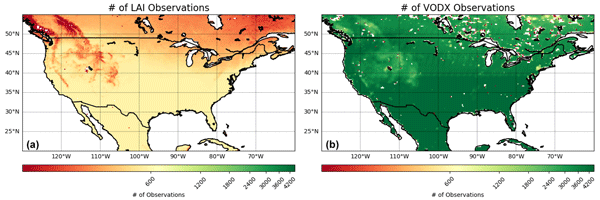
Anthony Mucia, Bertrand Bonan, Clément Albergel, Yongjun Zheng, and Jean-Christophe Calvet
Biogeosciences, 19, 2557–2581, https://doi.org/10.5194/bg-19-2557-2022, https://doi.org/10.5194/bg-19-2557-2022, 2022
Short summary
Short summary
For the first time, microwave vegetation optical depth data are assimilated in a land surface model in order to analyze leaf area index and root zone soil moisture. The advantage of microwave products is the higher observation frequency. A large variety of independent datasets are used to verify the added value of the assimilation. It is shown that the assimilation is able to improve the representation of soil moisture, vegetation conditions, and terrestrial water and carbon fluxes.
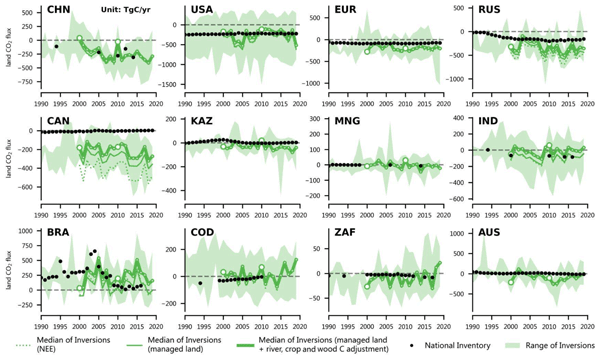
Zhu Deng, Philippe Ciais, Zitely A. Tzompa-Sosa, Marielle Saunois, Chunjing Qiu, Chang Tan, Taochun Sun, Piyu Ke, Yanan Cui, Katsumasa Tanaka, Xin Lin, Rona L. Thompson, Hanqin Tian, Yuanzhi Yao, Yuanyuan Huang, Ronny Lauerwald, Atul K. Jain, Xiaoming Xu, Ana Bastos, Stephen Sitch, Paul I. Palmer, Thomas Lauvaux, Alexandre d'Aspremont, Clément Giron, Antoine Benoit, Benjamin Poulter, Jinfeng Chang, Ana Maria Roxana Petrescu, Steven J. Davis, Zhu Liu, Giacomo Grassi, Clément Albergel, Francesco N. Tubiello, Lucia Perugini, Wouter Peters, and Frédéric Chevallier
Earth Syst. Sci. Data, 14, 1639–1675, https://doi.org/10.5194/essd-14-1639-2022, https://doi.org/10.5194/essd-14-1639-2022, 2022
Short summary
Short summary
In support of the global stocktake of the Paris Agreement on climate change, we proposed a method for reconciling the results of global atmospheric inversions with data from UNFCCC national greenhouse gas inventories (NGHGIs). Here, based on a new global harmonized database that we compiled from the UNFCCC NGHGIs and a comprehensive framework presented in this study to process the results of inversions, we compared their results of carbon dioxide (CO2), methane (CH4), and nitrous oxide (N2O).
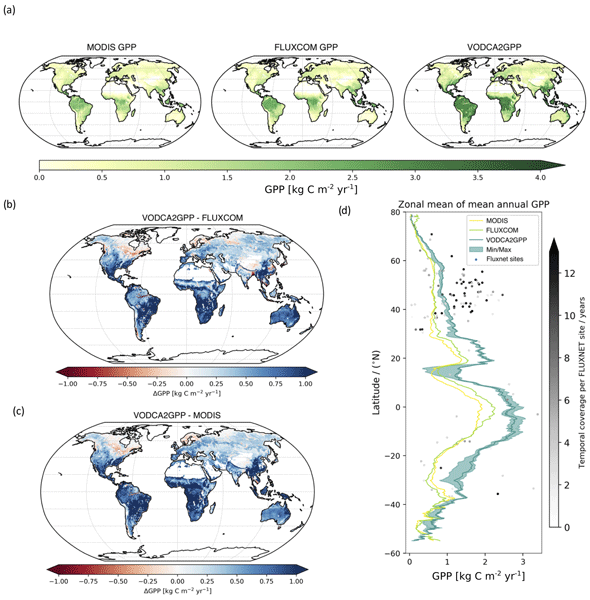
Benjamin Wild, Irene Teubner, Leander Moesinger, Ruxandra-Maria Zotta, Matthias Forkel, Robin van der Schalie, Stephen Sitch, and Wouter Dorigo
Earth Syst. Sci. Data, 14, 1063–1085, https://doi.org/10.5194/essd-14-1063-2022, https://doi.org/10.5194/essd-14-1063-2022, 2022
Short summary
Short summary
Gross primary production (GPP) describes the conversion of CO2 to carbohydrates and can be seen as a filter for our atmosphere of the primary greenhouse gas CO2. We developed VODCA2GPP, a GPP dataset that is based on vegetation optical depth from microwave remote sensing and temperature. Thus, it is mostly independent from existing GPP datasets and also available in regions with frequent cloud coverage. Analysis showed that VODCA2GPP is able to complement existing state-of-the-art GPP datasets.

Stefan Schlaffer, Marco Chini, Wouter Dorigo, and Simon Plank
Hydrol. Earth Syst. Sci., 26, 841–860, https://doi.org/10.5194/hess-26-841-2022, https://doi.org/10.5194/hess-26-841-2022, 2022
Short summary
Short summary
Prairie wetlands are important for biodiversity and water availability. Knowledge about their variability and spatial distribution is of great use in conservation and water resources management. In this study, we propose a novel approach for the classification of small water bodies from satellite radar images and apply it to our study area over 6 years. The retrieved dynamics show the different responses of small and large wetlands to dry and wet periods.
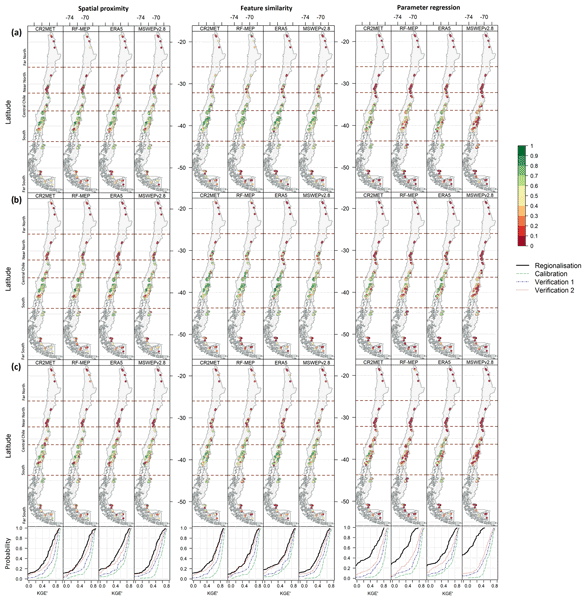
Oscar M. Baez-Villanueva, Mauricio Zambrano-Bigiarini, Pablo A. Mendoza, Ian McNamara, Hylke E. Beck, Joschka Thurner, Alexandra Nauditt, Lars Ribbe, and Nguyen Xuan Thinh
Hydrol. Earth Syst. Sci., 25, 5805–5837, https://doi.org/10.5194/hess-25-5805-2021, https://doi.org/10.5194/hess-25-5805-2021, 2021
Short summary
Short summary
Most rivers worldwide are ungauged, which hinders the sustainable management of water resources. Regionalisation methods use information from gauged rivers to estimate streamflow over ungauged ones. Through hydrological modelling, we assessed how the selection of precipitation products affects the performance of three regionalisation methods. We found that a precipitation product that provides the best results in hydrological modelling does not necessarily perform the best for regionalisation.
Wouter Dorigo, Irene Himmelbauer, Daniel Aberer, Lukas Schremmer, Ivana Petrakovic, Luca Zappa, Wolfgang Preimesberger, Angelika Xaver, Frank Annor, Jonas Ardö, Dennis Baldocchi, Marco Bitelli, Günter Blöschl, Heye Bogena, Luca Brocca, Jean-Christophe Calvet, J. Julio Camarero, Giorgio Capello, Minha Choi, Michael C. Cosh, Nick van de Giesen, Istvan Hajdu, Jaakko Ikonen, Karsten H. Jensen, Kasturi Devi Kanniah, Ileen de Kat, Gottfried Kirchengast, Pankaj Kumar Rai, Jenni Kyrouac, Kristine Larson, Suxia Liu, Alexander Loew, Mahta Moghaddam, José Martínez Fernández, Cristian Mattar Bader, Renato Morbidelli, Jan P. Musial, Elise Osenga, Michael A. Palecki, Thierry Pellarin, George P. Petropoulos, Isabella Pfeil, Jarrett Powers, Alan Robock, Christoph Rüdiger, Udo Rummel, Michael Strobel, Zhongbo Su, Ryan Sullivan, Torbern Tagesson, Andrej Varlagin, Mariette Vreugdenhil, Jeffrey Walker, Jun Wen, Fred Wenger, Jean Pierre Wigneron, Mel Woods, Kun Yang, Yijian Zeng, Xiang Zhang, Marek Zreda, Stephan Dietrich, Alexander Gruber, Peter van Oevelen, Wolfgang Wagner, Klaus Scipal, Matthias Drusch, and Roberto Sabia
Hydrol. Earth Syst. Sci., 25, 5749–5804, https://doi.org/10.5194/hess-25-5749-2021, https://doi.org/10.5194/hess-25-5749-2021, 2021
Short summary
Short summary
The International Soil Moisture Network (ISMN) is a community-based open-access data portal for soil water measurements taken at the ground and is accessible at https://ismn.earth. Over 1000 scientific publications and thousands of users have made use of the ISMN. The scope of this paper is to inform readers about the data and functionality of the ISMN and to provide a review of the scientific progress facilitated through the ISMN with the scope to shape future research and operations.
Cited articles
Abatzoglou, J. T., Dobrowski, S. Z., Parks, S. A., and Hegewisch, K. C.: TerraClimate, a high-resolution global dataset of monthly climate and climatic water balance from 1958–2015, Scientific Data, 5, 170191, https://doi.org/10.1038/sdata.2017.191, 2018. a
Alfieri, L., Avanzi, F., Delogu, F., Gabellani, S., Bruno, G., Campo, L., Libertino, A., Massari, C., Tarpanelli, A., Rains, D., Miralles, D. G., Quast, R., Vreugdenhil, M., Wu, H., and Brocca, L.: High-resolution satellite products improve hydrological modeling in northern Italy, Hydrol. Earth Syst. Sci., 26, 3921–3939, https://doi.org/10.5194/hess-26-3921-2022, 2022. a
Allen, R. G., Tasumi, M., and Trezza, R.: Satellite-Based Energy Balance for Mapping Evapotranspiration with Internalized Calibration (METRIC) – Model, J. Irrig. Drain. E., 133, 380–394, https://doi.org/10.1061/(ASCE)0733-9437(2007)133:4(380), 2007. a, b
Anderson, M. C., Norman, J. M., Kustas, W. P., Houborg, R., Starks, P. J., and Agam, N.: A two-source time-integrated model for estimating surface fluxes using thermal infrared remote sensing, Remote Sens. Environ., 60, 195–216, https://doi.org/10.1016/S0034-4257(96)00215-5, 1997. a
Anderson, M. C., Kustas, W. P., and Norman, J. M.: Upscaling Flux Observations from Local to Continental Scales Using Thermal Remote Sensing, Agron. J., 99, 240–254, https://doi.org/10.2134/agronj2005.0096S, 2007. a
Asmus, C., Hoffmann, P., Pietikäinen, J.-P., Böhner, J., and Rechid, D.: Modeling and evaluating the effects of irrigation on land–atmosphere interaction in southwestern Europe with the regional climate model REMO2020–iMOVE using a newly developed parameterization, Geosci. Model Dev., 16, 7311–7337, https://doi.org/10.5194/gmd-16-7311-2023, 2023. a
Baez-Villanueva, O. M., A., C.-O., Schellekens, J., Modanesi, S., Laluet, P., Massari, C., Söchting, M., Mahecha, M., Bonte, O., Massant, J., Corbari, C., Dari, J., Delbare, K., Dorigo, W., Beck, H. E., Boone, A., and Miralles, D. G.: Incorporating irrigation effects into high-resolution daily land evaporation modelling over the Iberian Peninsula, in preparation, 2026. a, b
Bastiaanssen, W. G. M., Menenti, M., Feddes, R. A., and Holtslag, A. A. M.: A remote sensing surface energy balance algorithm for land (SEBAL): 1. Formulation, J. Hydrol., 212–213, 198–212, https://doi.org/10.1016/S0022-1694(98)00253-4, 1998. a
Beck, H. E., Wood, E. F., Pan, M., Fisher, C. K., Miralles, D. G., van Dijk, A. I. J. M., McVicar, T. R., and Adler, R. F.: MSWEP V2 Global 3-Hourly 0.1° Precipitation: Methodology and Quantitative Assessment, B. Am. Meteorol. Soc., 100, 473–500, https://doi.org/10.1175/BAMS-D-17-0138.1, 2019. a
California Department of Water Resources: Report to the Legislature on the 2012–2016 Drought, Tech. rep., California Natural Resources Agency, https://water.ca.gov/-/media/DWR-Website/Web-Pages/Water-Basics/Drought/Files/Publications-And-Reports/CNRA-Drought-Report-final-March-2021.pdf (last access: 8 August 2025), 2021. a
Chen, L. and Dirmeyer, P. A.: Global observed and modelled impacts of irrigation on surface temperature, Int. J. Climatol., 39, 2587–2600, https://doi.org/10.1002/joc.5973, 2019. a
Crow, W. T., Anderson, M. C., Volk, J. M., and Colliander, A.: Value of microwave soil moisture and thermal-infrared evapotranspiration retrievals for the mapping of irrigation coverage, Int. J. Appl. Earth Obs., 143, 104773, https://doi.org/10.1016/j.jag.2025.104773, 2025. a
Dorigo, W., Dietrich, S., Aires, F., Brocca, L., Carter, S., Cretaux, J.-F., Dunkerley, D., Enomoto, H., Forsberg, R., Güntner, A., Hegglin, M. I., Hollmann, R., Hurst, D. F., Johannessen, J. A., Kummerow, C., Lee, T., Luojus, K., Looser, U., Miralles, D. G., Pellet, V., Recknagel, T., Vargas, C. R., Schneider, U., Schoeneich, P., Schröder, M., Tapper, N., Vuglinsky, V., Wagner, W., Yu, L., Zappa, L., Zemp, M., and Aich, V.: Closing the Water Cycle from Observations across Scales: Where Do We Stand?, B. Am. Meteorol. Soc., 102, E1897–E1935, https://doi.org/10.1175/BAMS-D-19-0316.1, 2021. a
Dorigo, W. A., Wagner, W., Albergel, C., Albrecht, F., Balsamo, G., Brocca, L., Chung, D., Ertl, M., Forkel, M., Gruber, A., Haas, E., Hamer, P. D., Hirschi, M., Ikonen, J., de Jeu, R., Kidd, R., Lahoz, W., Liu, Y.-Y., Miralles, D. G., and Lecomte, P.: ESA CCI Soil Moisture for improved Earth system understanding: State-of-the-art and future directions, Remote Sens. Environ., 203, 185–215, https://doi.org/10.1016/j.rse.2017.07.001, 2017. a
Entekhabi, D., Njoku, E. G., O'Neill, P. E., Kellogg, K. H., Crow, W. T., Edelstein, W. N., Entin, J. K., Goodman, S. D., Jackson, T. J., Johnson, J., Kimball, J., Piepmeier, J. R., Koster, R. D., Martin, N., McDonald, K. C., Moghaddam, M., Moran, S., Reichle, R., Shi, J. C., Spencer, M. W., Thurman, S. W., Tsang, L., and Van Zyl, J.: The Soil Moisture Active Passive (SMAP) Mission, P. IEEE, 98, 704–716, https://doi.org/10.1109/JPROC.2010.2043918, 2010. a
Etchanchu, J., Demarty, J., Dezetter, A., Farhani, N., Thiam, P. B., Allies, A., Bodian, A., Boulet, G., Chahinian, N., Diop, L., Mainassara, I., Ndiaye, P. M., Ollivier, C., Olioso, A., and Roupsard, O.: Multiscale analysis of existing actual evapotranspiration products over agropastoral Sahel, J. Hydrol., 651, 132585, https://doi.org/10.1016/j.jhydrol.2024.132585, 2025. a
FAO: WaPOR, FAO’s portal to monitor water productivity through open access of remotely sensed derived data, Rome: Food and Agriculture Organization of the United Nations, http://www.fao.org/land-water/databases-and-software/wapor/en/ (last access: 27 March 2026), 2018. a
Fisher, J. B., Tu, K. P., and Baldocchi, D. D.: Evapotranspiration models based on the Penman–Monteith equation and energy balance, Remote Sens. Environ., 112, 901–919, https://doi.org/10.1016/j.rse.2007.06.025, 2008. a
Fisher, J. B., Melton, F., Middleton, E., Hain, C., Anderson, M., Allen, R., McCabe, M. F., Hook, S., Baldocchi, D., Townsend, P. A., Kilic, A., Tu, K., Miralles, D. G., Perret, J., Lagouarde, J.-P., Waliser, D., Purdy, A. J., French, A., Schimel, D., Famiglietti, J., Stephens, G., and Wood, E. F.: The future of evapotranspiration: Global requirements for ecosystem functioning, carbon and climate feedbacks, agricultural management, and water resources, Water Resour. Res., 53, 2618–2626, https://doi.org/10.1002/2016WR020175, 2017. a
Gelaro, R., McCarty, W., Suárez, M. J., Todling, R., Molod, A., Takacs, L., Randles, C. A., Darmenov, A., Bosilovich, M. G., Reichle, R., Wargan, K., Coy, L., Cullather, R., Draper, C., Akella, S., Buchard, V., Conaty, A., Silva, A. M. d., Gu, W., Kim, G.-K., Koster, R., Lucchesi, R., Merkova, D., Nielsen, J. E., Partyka, G., Pawson, S., Putman, W., Rienecker, M., Schubert, S. D., Sienkiewicz, M., and Zhao, B.: The Modern-Era Retrospective Analysis for Research and Applications, Version 2 (MERRA-2), J. Climate, 30, 5419–5454, https://doi.org/10.1175/JCLI-D-16-0758.1, 2017. a
Hobeichi, S., Abramowitz, G., Evans, J., and Ukkola, A.: Derived Optimal Linear Combination Evapotranspiration (DOLCE): a global gridded synthesis ET estimate, Hydrol. Earth Syst. Sci., 22, 1317–1336, https://doi.org/10.5194/hess-22-1317-2018, 2018. a
Hong, S., Deng, H., Zheng, Z., Deng, Y., Chen, X., Gao, L., Chen, Y., and Liu, M.: The influence of variations in actual evapotranspiration on drought in China's Southeast River basin, Sci. Rep., 13, 21336, https://doi.org/10.1038/s41598-023-48663-8, 2023. a
Hulley, G. C., Malakar, N. K., Islam, T., and Freepartner, R. J.: NASA's MODIS and VIIRS Land Surface Temperature and Emissivity Products: A Long-Term and Consistent Earth System Data Record, IEEE J. Sel. Top. Appl., 11, 522–535, https://doi.org/10.1109/JSTARS.2017.2779330, 2018. a
Jung, M., Koirala, S., Weber, U., Ichii, K., Gans, F., Camps-Valls, G., Papale, D., Schwalm, C., Tramontana, G., and Reichstein, M.: The FLUXCOM ensemble of global land-atmosphere energy fluxes, Scientific Data, 6, 74, https://doi.org/10.1038/s41597-019-0076-8, 2019. a, b, c
Knipper, K. R., Kustas, W. P., Anderson, M. C., Alsina, M. M., Hain, C. R., Alfieri, J. G., Prueger, J. H., Gao, F., McKee, L. G., and Sanchez, L. A.: Using high-spatiotemporal thermal satellite ET retrievals for operational water use and stress monitoring in a California vineyard, Remote Sens., 11, 2124, https://doi.org/10.3390/rs11182124, 2019. a
Kragh, S. J., Fensholt, R., Stisen, S., and Koch, J.: The precision of satellite-based net irrigation quantification in the Indus and Ganges basins, Hydrol. Earth Syst. Sci., 27, 2463–2478, https://doi.org/10.5194/hess-27-2463-2023, 2023. a, b
Lehmann, F., Vishwakarma, B. D., and Bamber, J.: How well are we able to close the water budget at the global scale?, Hydrol. Earth Syst. Sci., 26, 35–54, https://doi.org/10.5194/hess-26-35-2022, 2022. a
Liu, W., Wang, L., Zhou, J., Li, Y., Sun, F., Fu, G., Li, X., and Sang, Y.-F.: A worldwide evaluation of basin-scale evapotranspiration estimates against the water balance method, J. Hydrol., 538, 82–95, https://doi.org/10.1016/j.jhydrol.2016.04.006, 2016. a
Liu, X., Yang, K., Ferreira, V. G., and Bai, P.: Hydrologic Model Calibration With Remote Sensing Data Products in Global Large Basins, Water Resour. Res., 58, e2022WR032929, https://doi.org/10.1029/2022WR032929, 2022. a
Lunel, T., Boone, A. A., and Le Moigne, P.: Irrigation strongly influences near-surface conditions and induces breeze circulation: Observational and model-based evidence, Q. J. Roy. Meteor. Soc., 150, 2798–2819, https://doi.org/10.1002/qj.4736, 2024. a
Masseroni, D., Ercolani, G., Corbari, C., and Mancini, M.: Accuracy of turbulent flux measurements through the use of high frequency data by eddy covariance tower: the case study of Landriano (PV), Italy, Italian Journal of Agrometeorology, https://air.unimi.it/handle/2434/231850 (last access: 27 March 2026), 2013. a
McCabe, M. F., Ershadi, A., Jimenez, C., Miralles, D. G., Michel, D., and Wood, E. F.: The GEWEX LandFlux project: evaluation of model evaporation using tower-based and globally gridded forcing data, Geosci. Model Dev., 9, 283–305, https://doi.org/10.5194/gmd-9-283-2016, 2016. a
McDermid, S., Nocco, M., Lawston-Parker, P., Keune, J., Pokhrel, Y., Jain, M., Jägermeyr, J., Brocca, L., Massari, C., Jones, A. D., Vahmani, P., Thiery, W., Yao, Y., Bell, A., Chen, L., Dorigo, W., Hanasaki, N., Jasechko, S., Lo, M.-H., Mahmood, R., Mishra, V., Mueller, N. D., Niyogi, D., Rabin, S. S., Sloat, L., Wada, Y., Zappa, L., Chen, F., Cook, B. I., Kim, H., Lombardozzi, D., Polcher, J., Ryu, D., Santanello, J., Satoh, Y., Seneviratne, S., Singh, D., and Yokohata, T.: Irrigation in the Earth system, Nature Reviews Earth & Environment, 4, 435–453, https://doi.org/10.1038/s43017-023-00438-5, 2023. a, b
McDermid, S. S., Montes, C., Cook, B. I., Puma, M. J., Kiang, N. Y., and Aleinov, I.: The Sensitivity of Land–Atmosphere Coupling to Modern Agriculture in the Northern Midlatitudes, J. Climate, 32, 465–484, https://doi.org/10.1175/JCLI-D-17-0799.1, 2019. a
McNamara, I., Baez-Villanueva, O. M., Zomorodian, A., Ayyad, S., Zambrano-Bigiarini, M., Zaroug, M., Mersha, A., Nauditt, A., Mbuliro, M., Wamala, S., and Ribbe, L.: How well do gridded precipitation and actual evapotranspiration products represent the key water balance components in the Nile Basin?, J. Hydrol.: Regional Studies, 37, 100884, https://doi.org/10.1016/j.ejrh.2021.100884, 2021. a
Mehta, P., Siebert, S., Kummu, M., Deng, Q., Ali, T., Marston, L., Xie, W., and Davis, K. F.: Half of twenty-first century global irrigation expansion has been in water-stressed regions, Nature Water, 2, 254–261, https://doi.org/10.1038/s44221-024-00206-9, 2024. a, b
Meier, J., Zabel, F., and Mauser, W.: A global approach to estimate irrigated areas – a comparison between different data and statistics, Hydrol. Earth Syst. Sci., 22, 1119–1133, https://doi.org/10.5194/hess-22-1119-2018, 2018. a
Melton, F. S., Johnson, L. F., Lund, C. P., Pierce, L. L., Michaelis, A. R., Hiatt, S. H., Guzman, A., Adhikari, D. D., Purdy, A. J., Rosevelt, C., Votava, P., Trout, T. J., Temesgen, B., Frame, K., Sheffner, E. J., and Nemani, R. R.: Satellite Irrigation Management Support With the Terrestrial Observation and Prediction System: A Framework for Integration of Satellite and Surface Observations to Support Improvements in Agricultural Water Resource Management, IEEE J. Sel. Top. Appl., 5, 1709–1721, https://doi.org/10.1109/JSTARS.2012.2214474, 2012. a
Melton, F. S., Huntington, J., Grimm, R., Herring, J., Hall, M., Rollison, D., Erickson, T., Allen, R., Anderson, M., Fisher, J. B., Kilic, A., Senay, G. B., Volk, J., Hain, C., Johnson, L., Ruhoff, A., Blankenau, P., Bromley, M., Carrara, W., Daudert, B., Doherty, C., Dunkerly, C., Friedrichs, M., Guzman, A., Halverson, G., Hansen, J., Harding, J., Kang, Y., Ketchum, D., Minor, B., Morton, C., Ortega-Salazar, S., Ott, T., Ozdogan, M., ReVelle, P. M., Schull, M., Wang, C., Yang, Y., and Anderson, R. G.: OpenET: Filling a Critical Data Gap in Water Management for the Western United States, J. Am. Water Resour. As., 58, 971–994, https://doi.org/10.1111/1752-1688.12956, 2022. a
Miralles, D. G., Bonte, O., Koppa, A., Baez-Villanueva, O. M., Tronquo, E., Zhong, F., Beck, H. E., Hulsman, P., Dorigo, W., Verhoest, N. E. C., and Haghdoost, S.: GLEAM4: global land evaporation and soil moisture dataset at 0.1° resolution from 1980 to near present, Scientific Data, 12, 416, https://doi.org/10.1038/s41597-025-04610-y, 2025. a, b, c
Mu, Q., Zhao, M., and Running, S. W.: Improvements to a MODIS global terrestrial evapotranspiration algorithm, Remote Sens. Environ., 115, 1781–1800, https://doi.org/10.1016/j.rse.2011.02.019, 2011. a, b
Mueller, B., Hirschi, M., Jimenez, C., Ciais, P., Dirmeyer, P. A., Dolman, A. J., Fisher, J. B., Jung, M., Ludwig, F., Maignan, F., Miralles, D. G., McCabe, M. F., Reichstein, M., Sheffield, J., Wang, K., Wood, E. F., Zhang, Y., and Seneviratne, S. I.: Benchmark products for land evapotranspiration: LandFlux-EVAL multi-data set synthesis, Hydrol. Earth Syst. Sci., 17, 3707–3720, https://doi.org/10.5194/hess-17-3707-2013, 2013. a
Muñoz-Sabater, J., Dutra, E., Agustí-Panareda, A., Albergel, C., Arduini, G., Balsamo, G., Boussetta, S., Choulga, M., Harrigan, S., Hersbach, H., Martens, B., Miralles, D. G., Piles, M., Rodríguez-Fernández, N. J., Zsoter, E., Buontempo, C., and Thépaut, J.-N.: ERA5-Land: a state-of-the-art global reanalysis dataset for land applications, Earth Syst. Sci. Data, 13, 4349–4383, https://doi.org/10.5194/essd-13-4349-2021, 2021. a, b
Nana, E., Corbari, C., and Bocchiola, D.: A model for crop yield and water footprint assessment: Study of maize in the Po valley, Agr. Syst., 127, 139–149, https://doi.org/10.1016/j.agsy.2014.03.006, 2014. a
Nelson, J. A., Walther, S., Gans, F., Kraft, B., Weber, U., Novick, K., Buchmann, N., Migliavacca, M., Wohlfahrt, G., Šigut, L., Ibrom, A., Papale, D., Göckede, M., Duveiller, G., Knohl, A., Hörtnagl, L., Scott, R. L., Dušek, J., Zhang, W., Hamdi, Z. M., Reichstein, M., Aranda-Barranco, S., Ardö, J., Op de Beeck, M., Billesbach, D., Bowling, D., Bracho, R., Brümmer, C., Camps-Valls, G., Chen, S., Cleverly, J. R., Desai, A., Dong, G., El-Madany, T. S., Euskirchen, E. S., Feigenwinter, I., Galvagno, M., Gerosa, G. A., Gielen, B., Goded, I., Goslee, S., Gough, C. M., Heinesch, B., Ichii, K., Jackowicz-Korczynski, M. A., Klosterhalfen, A., Knox, S., Kobayashi, H., Kohonen, K.-M., Korkiakoski, M., Mammarella, I., Gharun, M., Marzuoli, R., Matamala, R., Metzger, S., Montagnani, L., Nicolini, G., O'Halloran, T., Ourcival, J.-M., Peichl, M., Pendall, E., Ruiz Reverter, B., Roland, M., Sabbatini, S., Sachs, T., Schmidt, M., Schwalm, C. R., Shekhar, A., Silberstein, R., Silveira, M. L., Spano, D., Tagesson, T., Tramontana, G., Trotta, C., Turco, F., Vesala, T., Vincke, C., Vitale, D., Vivoni, E. R., Wang, Y., Woodgate, W., Yepez, E. A., Zhang, J., Zona, D., and Jung, M.: X-BASE: the first terrestrial carbon and water flux products from an extended data-driven scaling framework, FLUXCOM-X, Biogeosciences, 21, 5079–5115, https://doi.org/10.5194/bg-21-5079-2024, 2024. a
Oki, T. and Kanae, S.: Global Hydrological Cycles and World Water Resources, Science, 313, 1068–1072, https://doi.org/10.1126/science.1128845, 2006. a
Pascolini-Campbell, M. A., Reager, J. T., and Fisher, J. B.: GRACE-based Mass Conservation as a Validation Target for Basin-Scale Evapotranspiration in the Contiguous United States, Water Resour. Res., 56, e2019WR026594, https://doi.org/10.1029/2019WR026594, 2020. a
Rodell, M., Houser, P. R., Jambor, U., Gottschalck, J., Mitchell, K., Meng, C.-J., Arsenault, K., Cosgrove, B., Radakovich, J., Bosilovich, M., Entin, J. K., Walker, J. P., Lohmann, D., and Toll, D.: The Global Land Data Assimilation System, B. Am. Meteorol. Soc., 85, 381–394, https://doi.org/10.1175/BAMS-85-3-381, 2004. a
Senay, G.: Satellite Psychrometric Formulation of the Operational Simplified Surface Energy Balance (SSEBop) Model for Quantifying and Mapping Evapotranspiration, Appl. Eng. Agric., 34, 555–566, https://doi.org/10.13031/aea.12614, 2018. a
Senay, G. B., Budde, M. E., Verdin, J. P., and Melesse, A. M.: Operational evapotranspiration mapping using remote sensing and weather datasets: A new parameterization for the SSEB approach, J. Am. Water Resour. As., 49, 577–591, https://doi.org/10.1111/jawr.12057, 2013. a
Senay, G. B., Friedrichs, M., Singh, R. K., and Velpuri, N. M.: Evaluating Landsat 8 evapotranspiration for water use mapping in the Colorado River Basin, Remote Sens. Environ., 185, 171–185, https://doi.org/10.1016/j.rse.2015.12.043, 2016. a
Senay, G. B., Parrish, G. E. L., Schauer, M., Friedrichs, M., Khand, K., Boiko, O., Kagone, S., Dittmeier, R., Arab, S., and Ji, L.: Improving the Operational Simplified Surface Energy Balance Evapotranspiration Model Using the Forcing and Normalizing Operation, Remote Sens., 15, 260, https://doi.org/10.3390/rs15010260, 2023. a, b
Seneviratne, S. I., Corti, T., Davin, E. L., Hirschi, M., Jaeger, E. B., Lehner, I., Orlowsky, B., and Teuling, A. J.: Investigating soil moisture–climate interactions in a changing climate: A review, Earth-Sci. Rev., 99, 125–161, https://doi.org/10.1016/j.earscirev.2010.02.004, 2010. a
Siebert, S., Henrich, V., Frenken, K., and Burke, J.: Update of the digital global map of irrigation areas to version 5, Food and Agriculture Organization of the United Nations (FAO), https://openknowledge.fao.org/items/6029153b-831c-4275-b71d-501b72a1480d (last access: 27 March 2026), 2013. a, b, c
Sriwongsitanon, N., Suwawong, T., Thianpopirug, S., Williams, J., Jia, L., and Bastiaanssen, W.: Validation of seven global remotely sensed ET products across Thailand using water balance measurements and land use classifications, J. Hydrol.: Regional Studies, 30, 100709, https://doi.org/10.1016/j.ejrh.2020.100709, 2020. a
Thiery, W., Davin, E. L., Lawrence, D. M., Hirsch, A. L., Hauser, M., and Seneviratne, S. I.: Present-day irrigation mitigates heat extremes, J. Geophys. Res.-Atmos., 122, 1403–1422, https://doi.org/10.1002/2016JD025740, 2017. a
Thiery, W., Visser, A. J., Fischer, E. M., Hauser, M., Hirsch, A. L., Lawrence, D. M., Lejeune, Q., Davin, E. L., and Seneviratne, S. I.: Warming of hot extremes alleviated by expanding irrigation, Nat. Commun., 11, 290, https://doi.org/10.1038/s41467-019-14075-4, 2020. a
Valentini, R., Arneth, A., Bombelli, A., Castaldi, S., Cazzolla Gatti, R., Chevallier, F., Ciais, P., Grieco, E., Hartmann, J., Henry, M., Houghton, R. A., Jung, M., Kutsch, W. L., Malhi, Y., Mayorga, E., Merbold, L., Murray-Tortarolo, G., Papale, D., Peylin, P., Poulter, B., Raymond, P. A., Santini, M., Sitch, S., Vaglio Laurin, G., van der Werf, G. R., Williams, C. A., and Scholes, R. J.: A full greenhouse gases budget of Africa: synthesis, uncertainties, and vulnerabilities, Biogeosciences, 11, 381–407, https://doi.org/10.5194/bg-11-381-2014, 2014. a
van Dijk, A. I. J. M. and Bruijnzeel, L. A.: Modelling rainfall interception by vegetation of variable density using an adapted analytical model. Part 1. Model description, J. Hydrol., 247, 230–238, https://doi.org/10.1016/s0022-1694(01)00392-4, 2001. a
Van Tricht, K., Degerickx, J., Gilliams, S., Zanaga, D., Battude, M., Grosu, A., Brombacher, J., Lesiv, M., Bayas, J. C. L., Karanam, S., Fritz, S., Becker-Reshef, I., Franch, B., Mollà-Bononad, B., Boogaard, H., Pratihast, A. K., Koetz, B., and Szantoi, Z.: WorldCereal: a dynamic open-source system for global-scale, seasonal, and reproducible crop and irrigation mapping, Earth Syst. Sci. Data, 15, 5491–5515, https://doi.org/10.5194/essd-15-5491-2023, 2023. a
Volk, J. M., Huntington, J. L., Melton, F. S., Allen, R., Anderson, M., Fisher, J. B., Kilic, A., Ruhoff, A., Senay, G. B., Minor, B., Morton, C., Ott, T., Johnson, L., Comini de Andrade, B., Carrara, W., Doherty, C. T., Dunkerly, C., Friedrichs, M., Guzman, A., Hain, C., Halverson, G., Kang, Y., Knipper, K., Laipelt, L., Ortega-Salazar, S., Pearson, C., Parrish, G. E. L., Purdy, A., ReVelle, P., Wang, T., and Yang, Y.: Assessing the accuracy of OpenET satellite-based evapotranspiration data to support water resource and land management applications, Nature Water, 2, 193–205, https://doi.org/10.1038/s44221-023-00181-7, 2024. a, b, c, d
Wang, Z., Zhan, C., Ning, L., and Guo, H.: Evaluation of global terrestrial evapotranspiration in CMIP6 models, Theor. Appl. Climatol., 143, 521–531, https://doi.org/10.1007/s00704-020-03437-4, 2021. a
Weerasinghe, I., Bastiaanssen, W., Mul, M., Jia, L., and van Griensven, A.: Can we trust remote sensing evapotranspiration products over Africa?, Hydrol. Earth Syst. Sci., 24, 1565–1586, https://doi.org/10.5194/hess-24-1565-2020, 2020. a
Zhang, C. and Long, D.: Estimating Spatially Explicit Irrigation Water Use Based on Remotely Sensed Evapotranspiration and Modeled Root Zone Soil Moisture, Water Resour. Res., 57, e2021WR031382, https://doi.org/10.1029/2021WR031382, 2021. a
Zhang, Y., Kong, D., Gan, R., Chiew, F. H. S., McVicar, T. R., Zhang, Q., and Yang, Y.: Coupled estimation of 500 m and 8-day resolution global evapotranspiration and gross primary production in 2002–2017, Remote Sens. Environ., 222, 165–182, https://doi.org/10.1016/j.rse.2018.12.031, 2019. a, b, c, d
Zheng, C., Jia, L., and Hu, G.: Global land surface evapotranspiration monitoring by ETMonitor model driven by multi-source satellite earth observations, J. Hydrol., 613, 128444, https://doi.org/10.1016/j.jhydrol.2022.128444, 2022. a, b, c
Zipper, S., Kastens, J., Foster, T., Wilson, B. B., Melton, F., Grinstead, A., Deines, J. M., Butler, J. J., and Marston, L. T.: Estimating irrigation water use from remotely sensed evapotranspiration data: Accuracy and uncertainties at field, water right, and regional scales, Agr. Water Manage., 303, 109036, https://doi.org/10.1016/j.agwat.2024.109036, 2024. a
Short summary
We examined how well global datasets estimate evapotranspiration, the water moving from land to the air, in irrigated areas. We compared six widely used products with irrigation maps, satellite estimates, and field measurements across different climate regions. Some datasets better capture irrigation effects, especially those using temperature and vegetation satellite data. This work helps guide dataset selection and supports better inclusion of irrigation in hydrological and climate models.
We examined how well global datasets estimate evapotranspiration, the water moving from land to...


