
Articles | Volume 29, issue 23
https://doi.org/10.5194/hess-29-7023-2025
© Author(s) 2025. This work is distributed under
the Creative Commons Attribution 4.0 License.
the Creative Commons Attribution 4.0 License.
https://doi.org/10.5194/hess-29-7023-2025
© Author(s) 2025. This work is distributed under
the Creative Commons Attribution 4.0 License.
the Creative Commons Attribution 4.0 License.
Research article
| 
05 Dec 2025
Research article |
| 05 Dec 2025
| 05 Dec 2025
Evolution of flood generating processes under climate change in France

Espace-Dev, Univ. Montpellier, IRD, Montpellier, France
Guillaume Thirel
University of Paris-Saclay, INRAE, HYCAR, Antony, France
Univ Toulouse, CNES/IRD/CNRS/INRAE, CESBIO, Toulouse, France
Laurent Strohmenger
University of Paris-Saclay, INRAE, HYCAR, Antony, France
Department of Ecohydrology and Biogeochemistry, Leibniz Institute of Freshwater Ecology and Inland Fisheries (IGB), Berlin, Germany
Guillaume Evin
Univ. Grenoble Alpes, INRAE, CNRS, IRD, Grenoble INP, IGE, Grenoble, France
Lola Corre
CNRM, Université de Toulouse, Météo-France CNRS, Toulouse, France
Louis Heraut
INRAE, UR RiverLy, Villeurbanne, France
Eric Sauquet
INRAE, UR RiverLy, Villeurbanne, France
Related authors
Ather Abbas, Yuan Yang, Ming Pan, Yves Tramblay, Chaopeng Shen, Haoyu Ji, Solomon H. Gebrechorkos, Florian Pappenberger, JongCheol Pyo, Dapeng Feng, George Huffman, Phu Nguyen, Christian Massari, Luca Brocca, Jackson Tan, and Hylke E. Beck
Hydrol. Earth Syst. Sci., 30, 3399–3423, https://doi.org/10.5194/hess-30-3399-2026, https://doi.org/10.5194/hess-30-3399-2026, 2026
Short summary
Short summary
Our study evaluated 24 precipitation datasets using a hydrological model at global scale to assess their suitability and accuracy. We found that MSWEP (Multi-Source Weighted-Ensemble Precipitation) V2.8 excels due to its ability to integrate data from multiple sources, while others, such as IMERG (Integrated Multi-satellitE Retrievals for Global Precipitation Mission) and GDAS (Global Data Assimilation System), demonstrated strong regional performances. This research assists in selecting the appropriate dataset for applications in water resource management, hazard assessment, agriculture, and environmental monitoring.
Eric Sauquet, Guillaume Evin, Sonia Siauve, Ryma Aissat, Patrick Arnaud, Maud Bérel, Jérémie Bonneau, Flora Branger, Yvan Caballero, François Colléoni, Agnès Ducharne, Joël Gailhard, Florence Habets, Frédéric Hendrickx, Louis Héraut, Benoît Hingray, Peng Huang, Tristan Jaouen, Alexis Jeantet, Sandra Lanini, Matthieu Le Lay, Claire Magand, Louise Mimeau, Céline Monteil, Simon Munier, Charles Perrin, Olivier Robelin, Fabienne Rousset, Jean-Michel Soubeyroux, Laurent Strohmenger, Guillaume Thirel, Flore Tocquer, Yves Tramblay, Jean-Pierre Vergnes, and Jean-Philippe Vidal
Hydrol. Earth Syst. Sci., 30, 2277–2300, https://doi.org/10.5194/hess-30-2277-2026, https://doi.org/10.5194/hess-30-2277-2026, 2026
Short summary
Short summary
The Explore2 project has provided an unprecedented set of hydrological projections in terms of the number of hydrological models used and the spatial and temporal resolution. The results have been made available through various media. Under the high-emission scenario, the hydrological models mostly agree on the decrease in seasonal flows in the south of France, confirming its hotspot status, and on the decrease in summer flows throughout France, with the exception of the northern part of France.
Gabrielle Sorini, Juliette Blanchet, Gérémy Panthou, Théo Vischel, and Yves Tramblay
EGUsphere, https://doi.org/10.5194/egusphere-2026-1176, https://doi.org/10.5194/egusphere-2026-1176, 2026
Short summary
Short summary
This study investigates regional flood trends across West Africa using time-varying extreme-value distributions. While most catchments show declining flood magnitudes up to the 1970s–1990s, recent trends diverge, ranging from decrease to intensification, revealing an original typology of regional hydrosystems. These results refine the narrative of hydrological changes in West Africa and provide clues to their attribution.
Guillaume Evin, Benoit Hingray, Guillaume Thirel, Agnès Ducharne, Laurent Strohmenger, Lola Corre, Yves Tramblay, Jean-Philippe Vidal, Jérémie Bonneau, François Colleoni, Joël Gailhard, Florence Habets, Frédéric Hendrickx, Louis Héraut, Peng Huang, Matthieu Le Lay, Claire Magand, Paola Marson, Céline Monteil, Simon Munier, Alix Reverdy, Jean-Michel Soubeyroux, Yoann Robin, Jean-Pierre Vergnes, Mathieu Vrac, and Eric Sauquet
Hydrol. Earth Syst. Sci., 30, 1023–1051, https://doi.org/10.5194/hess-30-1023-2026, https://doi.org/10.5194/hess-30-1023-2026, 2026
Short summary
Short summary
Explore2 provides hydrological projections for 1,735 French catchments. Using QUALYPSO (Quasi-Ergodic Analysis of Climate Projections Using Data Augmentation), this study assesses uncertainties, including internal variability. By the end of the century, low flows are projected to decline in southern France under high emissions, while other indicators remain uncertain. Emission scenarios and regional climate models are key uncertainty sources. Internal variability is often as large as climate-driven changes.
Serigne Bassirou Diop, Job Ekolu, Yves Tramblay, Bastien Dieppois, Stefania Grimaldi, Ansoumana Bodian, Juliette Blanchet, Ponnambalam Rameshwaran, Peter Salamon, and Benjamin Sultan
Nat. Hazards Earth Syst. Sci., 25, 3161–3184, https://doi.org/10.5194/nhess-25-3161-2025, https://doi.org/10.5194/nhess-25-3161-2025, 2025
Short summary
Short summary
West Africa is very vulnerable to river floods. Current flood hazards are poorly understood due to limited data. This study is filling this knowledge gap using recent databases and two regional hydrological models to analyze changes in flood risk under two climate scenarios. Results show that most areas will see more frequent and severe floods, with some increasing by over 45 %. These findings stress the urgent need for climate-resilient strategies to protect communities and infrastructure.
Nils Poncet, Philippe Lucas-Picher, Yves Tramblay, Guillaume Thirel, Humberto Vergara, Jonathan Gourley, and Antoinette Alias
Nat. Hazards Earth Syst. Sci., 24, 1163–1183, https://doi.org/10.5194/nhess-24-1163-2024, https://doi.org/10.5194/nhess-24-1163-2024, 2024
Short summary
Short summary
High-resolution convection-permitting climate models (CPMs) are now available to better simulate rainstorm events leading to flash floods. In this study, two hydrological models are compared to simulate floods in a Mediterranean basin, showing a better ability of the CPM to reproduce flood peaks compared to coarser-resolution climate models. Future projections are also different, with a projected increase for the most severe floods and a potential decrease for the most frequent events.
Lorenzo Alfieri, Andrea Libertino, Lorenzo Campo, Francesco Dottori, Simone Gabellani, Tatiana Ghizzoni, Alessandro Masoero, Lauro Rossi, Roberto Rudari, Nicola Testa, Eva Trasforini, Ahmed Amdihun, Jully Ouma, Luca Rossi, Yves Tramblay, Huan Wu, and Marco Massabò
Nat. Hazards Earth Syst. Sci., 24, 199–224, https://doi.org/10.5194/nhess-24-199-2024, https://doi.org/10.5194/nhess-24-199-2024, 2024
Short summary
Short summary
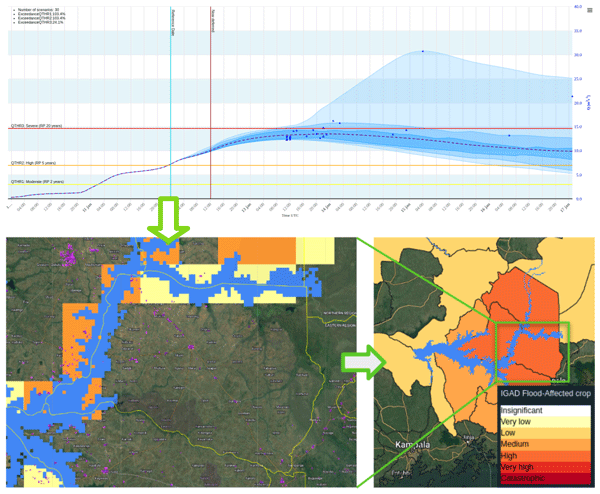
This work describes Flood-PROOFS East Africa, an impact-based flood forecasting system for the Greater Horn of Africa. It is based on hydrological simulations, inundation mapping, and estimation of population and assets exposed to upcoming river floods. The system supports duty officers in African institutions in the daily monitoring of hydro-meteorological disasters. A first evaluation shows the system performance for the catastrophic floods in the Nile River basin in summer 2020.
Laurent Strohmenger, Eric Sauquet, Claire Bernard, Jérémie Bonneau, Flora Branger, Amélie Bresson, Pierre Brigode, Rémy Buzier, Olivier Delaigue, Alexandre Devers, Guillaume Evin, Maïté Fournier, Shu-Chen Hsu, Sandra Lanini, Alban de Lavenne, Thibault Lemaitre-Basset, Claire Magand, Guilherme Mendoza Guimarães, Max Mentha, Simon Munier, Charles Perrin, Tristan Podechard, Léo Rouchy, Malak Sadki, Myriam Soutif-Bellenger, François Tilmant, Yves Tramblay, Anne-Lise Véron, Jean-Philippe Vidal, and Guillaume Thirel
Hydrol. Earth Syst. Sci., 27, 3375–3391, https://doi.org/10.5194/hess-27-3375-2023, https://doi.org/10.5194/hess-27-3375-2023, 2023
Short summary
Short summary
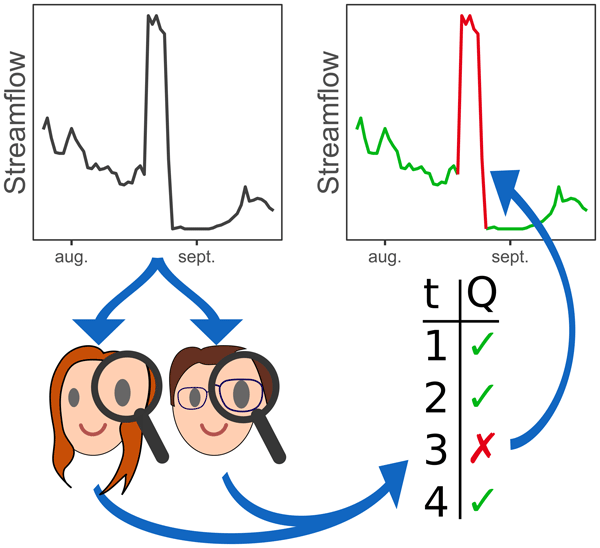
We present the results of a large visual inspection campaign of 674 streamflow time series in France. The objective was to detect non-natural records resulting from instrument failure or anthropogenic influences, such as hydroelectric power generation or reservoir management. We conclude that the identification of flaws in flow time series is highly dependent on the objectives and skills of individual evaluators, and we raise the need for better practices for data cleaning.
Yves Tramblay, Patrick Arnaud, Guillaume Artigue, Michel Lang, Emmanuel Paquet, Luc Neppel, and Eric Sauquet
Hydrol. Earth Syst. Sci., 27, 2973–2987, https://doi.org/10.5194/hess-27-2973-2023, https://doi.org/10.5194/hess-27-2973-2023, 2023
Short summary
Short summary
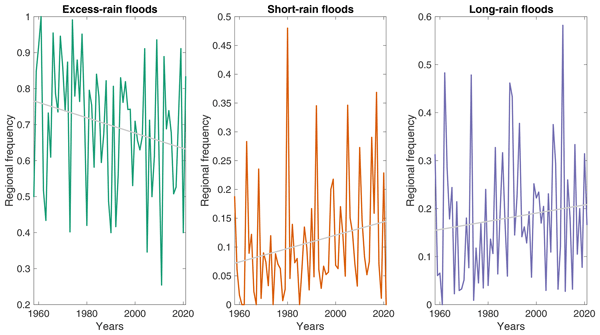
Mediterranean floods are causing major damage, and recent studies have shown that, despite the increase in intense rainfall, there has been no increase in river floods. This study reveals that the seasonality of floods changed in the Mediterranean Basin during 1959–2021. There was also an increased frequency of floods linked to short episodes of intense rain, associated with a decrease in soil moisture. These changes need to be taken into consideration to adapt flood warning systems.
Yves Tramblay and Pere Quintana Seguí
Nat. Hazards Earth Syst. Sci., 22, 1325–1334, https://doi.org/10.5194/nhess-22-1325-2022, https://doi.org/10.5194/nhess-22-1325-2022, 2022
Short summary
Short summary
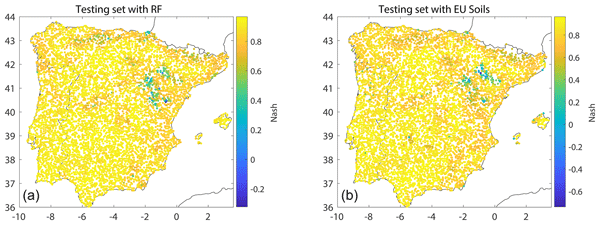
Monitoring soil moisture is important during droughts, but very few measurements are available. Consequently, land-surface models are essential tools for reproducing soil moisture dynamics. In this study, a hybrid approach allowed for regionalizing soil water content using a machine learning method. This approach proved to be efficient, compared to the use of soil property maps, to run a simple soil moisture accounting model, and therefore it can be applied in various regions.
Ather Abbas, Yuan Yang, Ming Pan, Yves Tramblay, Chaopeng Shen, Haoyu Ji, Solomon H. Gebrechorkos, Florian Pappenberger, JongCheol Pyo, Dapeng Feng, George Huffman, Phu Nguyen, Christian Massari, Luca Brocca, Jackson Tan, and Hylke E. Beck
Hydrol. Earth Syst. Sci., 30, 3399–3423, https://doi.org/10.5194/hess-30-3399-2026, https://doi.org/10.5194/hess-30-3399-2026, 2026
Short summary
Short summary
Our study evaluated 24 precipitation datasets using a hydrological model at global scale to assess their suitability and accuracy. We found that MSWEP (Multi-Source Weighted-Ensemble Precipitation) V2.8 excels due to its ability to integrate data from multiple sources, while others, such as IMERG (Integrated Multi-satellitE Retrievals for Global Precipitation Mission) and GDAS (Global Data Assimilation System), demonstrated strong regional performances. This research assists in selecting the appropriate dataset for applications in water resource management, hazard assessment, agriculture, and environmental monitoring.
Valentin Dura, Guillaume Evin, Anne-Catherine Favre, and David Penot
Hydrol. Earth Syst. Sci., 30, 2953–2971, https://doi.org/10.5194/hess-30-2953-2026, https://doi.org/10.5194/hess-30-2953-2026, 2026
Short summary
Short summary
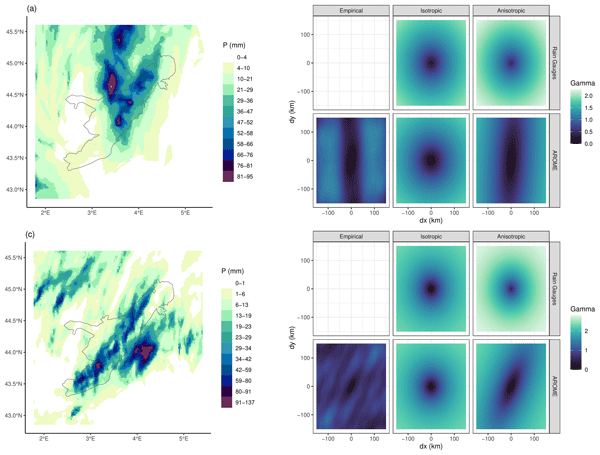
Traditional precipitation analyses often misrepresent intense rainfall's spatial variability. This study evaluates different spatial covariances to capture this variability in a geostatistical framework. The best covariance includes anisotropy derived from daily climate model simulations, offering a reliable alternative to anisotropy estimation using rain gauges. These findings highlight the importance of including anisotropy when generating precipitation inputs for hydrological modeling.
Eleni Kritidou, Martina Kauzlaric, Maria Staudinger, Guillaume Evin, Marc Vis, and Daniel Viviroli
EGUsphere, https://doi.org/10.5194/egusphere-2026-2338, https://doi.org/10.5194/egusphere-2026-2338, 2026
Short summary
Short summary
In mountain regions, precipitation varies with elevation, but models often simplify this relationship. We used simulations combining a weather generator and a hydrological model to explore how different precipitation different lapse rates affect runoff and floods in Switzerland. We found that they impact yearly and seasonal river flow and flood behavior. Higher-elevation catchments were less sensitive, and higher lapse rates increased summer floods, while lower rates increased winter floods.
Eric Sauquet, Guillaume Evin, Sonia Siauve, Ryma Aissat, Patrick Arnaud, Maud Bérel, Jérémie Bonneau, Flora Branger, Yvan Caballero, François Colléoni, Agnès Ducharne, Joël Gailhard, Florence Habets, Frédéric Hendrickx, Louis Héraut, Benoît Hingray, Peng Huang, Tristan Jaouen, Alexis Jeantet, Sandra Lanini, Matthieu Le Lay, Claire Magand, Louise Mimeau, Céline Monteil, Simon Munier, Charles Perrin, Olivier Robelin, Fabienne Rousset, Jean-Michel Soubeyroux, Laurent Strohmenger, Guillaume Thirel, Flore Tocquer, Yves Tramblay, Jean-Pierre Vergnes, and Jean-Philippe Vidal
Hydrol. Earth Syst. Sci., 30, 2277–2300, https://doi.org/10.5194/hess-30-2277-2026, https://doi.org/10.5194/hess-30-2277-2026, 2026
Short summary
Short summary
The Explore2 project has provided an unprecedented set of hydrological projections in terms of the number of hydrological models used and the spatial and temporal resolution. The results have been made available through various media. Under the high-emission scenario, the hydrological models mostly agree on the decrease in seasonal flows in the south of France, confirming its hotspot status, and on the decrease in summer flows throughout France, with the exception of the northern part of France.
Léonard Santos, Anthony Thomas, Gaëlle Tallec, Laurent Mounereau, Aaron Bluche, Bruno J. Lemaire, Rania Louafi, and Guillaume Thirel
Hydrol. Earth Syst. Sci., 30, 1915–1949, https://doi.org/10.5194/hess-30-1915-2026, https://doi.org/10.5194/hess-30-1915-2026, 2026
Short summary
Short summary
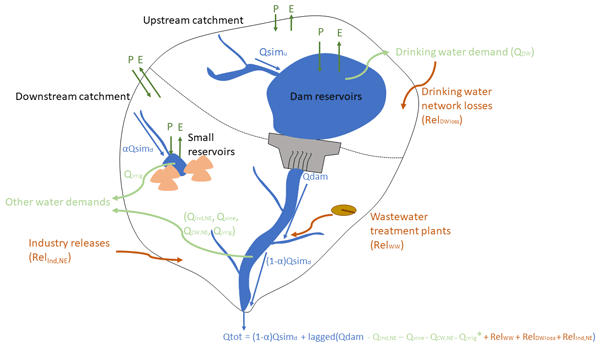
Water resources will be heavily impacted by climate change in the future, with low flows and water demand satisfaction expected to decline. This study uses an integrated water resources management model to examine future water demand scenarios, revealing that climate change will be the primary driver of changes. While adapting water uses could mitigate negative impacts, this will not be enough to adapt to climate change. The irrigation sector is expected to be the most impacted.
Gabrielle Sorini, Juliette Blanchet, Gérémy Panthou, Théo Vischel, and Yves Tramblay
EGUsphere, https://doi.org/10.5194/egusphere-2026-1176, https://doi.org/10.5194/egusphere-2026-1176, 2026
Short summary
Short summary
This study investigates regional flood trends across West Africa using time-varying extreme-value distributions. While most catchments show declining flood magnitudes up to the 1970s–1990s, recent trends diverge, ranging from decrease to intensification, revealing an original typology of regional hydrosystems. These results refine the narrative of hydrological changes in West Africa and provide clues to their attribution.

Abubakar Haruna, Juliette Blanchet, Guillaume Evin, and Emmanuel Paquet
Adv. Stat. Clim. Meteorol. Oceanogr., 12, 87–109, https://doi.org/10.5194/ascmo-12-87-2026, https://doi.org/10.5194/ascmo-12-87-2026, 2026
Short summary
Short summary
This study advances nonstationary precipitation modeling by using single, flexible distributions to analyze trends across the full daily spectrum. We demonstrate that evolving shape parameters are critical for accurately capturing observed differential changes in low, medium, and extreme quantiles. This method ensures statistical consistency, providing reliable trend assessments over the two-component framework common in climate impact analysis.
Simon Filhol, Clément Misset, Noélie Bontemps, Diego Cusicanqui, Emmanuel Paquet, Marie Dumont, Olivier Gagliardini, Pascal Lacroix, Simon Gascoin, Guillaume Thirel, Julien Brondex, Pascal Hagenmuller, Eric Larose, Philipp Schoeneich, Denis Roy, Emmanuel Thibert, Nicolas Eckert, Félix de Montety, Robin Mainieri, Alexandre Hauet, Frédéric Gottardi, Johan Berthet, Alexandre Baratier, Frédéric Liébault, Małgorzata Chmiel, Guillaume Piton, Guillaume Chambon, Guillaume James, Philippe Frey, Philip Deline, Laurent Astrade, Christian Vincent, Dominique Laigle, Alain Recking, Fatima Karbou, Adrien Mauss, Mylène Bonnefoy-Demongeot, Firmin Fontaine, Mickael Langlais, Etienne Berthier, and Antoine Blanc
EGUsphere, https://doi.org/10.5194/egusphere-2026-971, https://doi.org/10.5194/egusphere-2026-971, 2026
Short summary
Short summary
On June 21 2024, the village of La Bérarde, in the French Alps, was devastated by a flood destroying centuries old buildings. This study is an interdisciplinary work to decipher the causes and chronology of the event. The flood started with decadal rain falling on a thick snowpack. A lake observed on top of a glacier few days prior, had drained post event. With climate change, should we expect more similar compound events for alpine communities?
Guillaume Evin, Benoit Hingray, Guillaume Thirel, Agnès Ducharne, Laurent Strohmenger, Lola Corre, Yves Tramblay, Jean-Philippe Vidal, Jérémie Bonneau, François Colleoni, Joël Gailhard, Florence Habets, Frédéric Hendrickx, Louis Héraut, Peng Huang, Matthieu Le Lay, Claire Magand, Paola Marson, Céline Monteil, Simon Munier, Alix Reverdy, Jean-Michel Soubeyroux, Yoann Robin, Jean-Pierre Vergnes, Mathieu Vrac, and Eric Sauquet
Hydrol. Earth Syst. Sci., 30, 1023–1051, https://doi.org/10.5194/hess-30-1023-2026, https://doi.org/10.5194/hess-30-1023-2026, 2026
Short summary
Short summary
Explore2 provides hydrological projections for 1,735 French catchments. Using QUALYPSO (Quasi-Ergodic Analysis of Climate Projections Using Data Augmentation), this study assesses uncertainties, including internal variability. By the end of the century, low flows are projected to decline in southern France under high emissions, while other indicators remain uncertain. Emission scenarios and regional climate models are key uncertainty sources. Internal variability is often as large as climate-driven changes.

Elisa Kamir, Samuel Morin, Guillaume Evin, Penelope Gehring, Bodo Wichura, and Ali Nadir Arslan
Earth Syst. Sci. Data, 18, 17–32, https://doi.org/10.5194/essd-18-17-2026, https://doi.org/10.5194/essd-18-17-2026, 2026
Short summary
Short summary
This article describes a dataset of annual snow depth maximum across Europe, from 1961 to 2015, based on a regional reanalysis. It evaluates the performance of the dataset, against in-situ snow depth observations. This dataset is found to perform well in most environments, with challenges at high elevation and some coastal areas. Assessing the quality of this dataset is necessary in order to use it as a baseline to infer future changes of extreme snow loads under climate change.
Valentin Dura, Guillaume Evin, Anne-Catherine Favre, and David Penot
EGUsphere, https://doi.org/10.5194/egusphere-2025-5679, https://doi.org/10.5194/egusphere-2025-5679, 2025
Preprint archived
Short summary
Short summary
Traditional precipitation analysis often misrepresent seasonal totals and spatial variability of intense rainfall in mountains. This study introduces a reproducible workflow to generate a daily precipitation ensembles, conditioned on rain gauges. It outperforms standard products by better capturing seasonal totals. It also quantifies interpolation uncertainty, improving flood modeling. The open-source workflow is transferable to regions with sparse rain-gauge networks or limited radar coverage.
Giulia Bruno, Laurent Strohmenger, and Doris Duethmann
Hydrol. Earth Syst. Sci., 29, 4473–4489, https://doi.org/10.5194/hess-29-4473-2025, https://doi.org/10.5194/hess-29-4473-2025, 2025
Short summary
Short summary
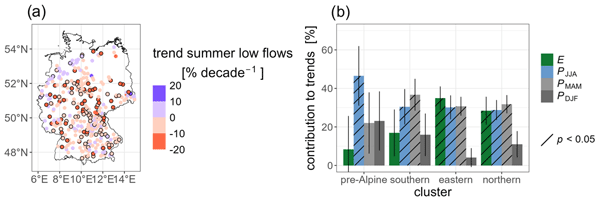
Decreases in streamflow during dry periods threaten ecosystems and society, and increases in evapotranspiration may contribute to them. From data for small catchments in Germany, summer low flows decreased over 1970–2019, and evapotranspiration increases significantly contributed to that. Lower-than-expected annual streamflow occurred during the 1989–1993 drought in catchments with increases in evapotranspiration. Changes in evapotranspiration need full consideration for streamflow prediction.
Serigne Bassirou Diop, Job Ekolu, Yves Tramblay, Bastien Dieppois, Stefania Grimaldi, Ansoumana Bodian, Juliette Blanchet, Ponnambalam Rameshwaran, Peter Salamon, and Benjamin Sultan
Nat. Hazards Earth Syst. Sci., 25, 3161–3184, https://doi.org/10.5194/nhess-25-3161-2025, https://doi.org/10.5194/nhess-25-3161-2025, 2025
Short summary
Short summary
West Africa is very vulnerable to river floods. Current flood hazards are poorly understood due to limited data. This study is filling this knowledge gap using recent databases and two regional hydrological models to analyze changes in flood risk under two climate scenarios. Results show that most areas will see more frequent and severe floods, with some increasing by over 45 %. These findings stress the urgent need for climate-resilient strategies to protect communities and infrastructure.
Tristan Jaouen, Lionel Benoit, Louis Héraut, and Eric Sauquet
Hydrol. Earth Syst. Sci., 29, 3629–3671, https://doi.org/10.5194/hess-29-3629-2025, https://doi.org/10.5194/hess-29-3629-2025, 2025
Short summary
Short summary
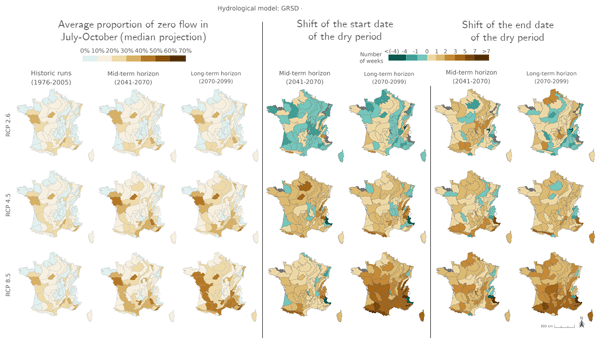
This study uses a multi-model approach to assess future changes in river flow intermittency across France under climate change. Combining projections from the Explore2 project with historical flow observations, logistic regressions estimate the daily probability of flow intermittency (PFI) under RCP2.6, RCP4.5, and RCP8.5 scenarios. Results suggest intensifying and prolonged dry spells throughout the 21st century, with southern France more affected, while uncertainty remains higher in northern regions.
Léonard Santos, Vazken Andréassian, Torben O. Sonnenborg, Göran Lindström, Alban de Lavenne, Charles Perrin, Lila Collet, and Guillaume Thirel
Hydrol. Earth Syst. Sci., 29, 683–700, https://doi.org/10.5194/hess-29-683-2025, https://doi.org/10.5194/hess-29-683-2025, 2025
Short summary
Short summary
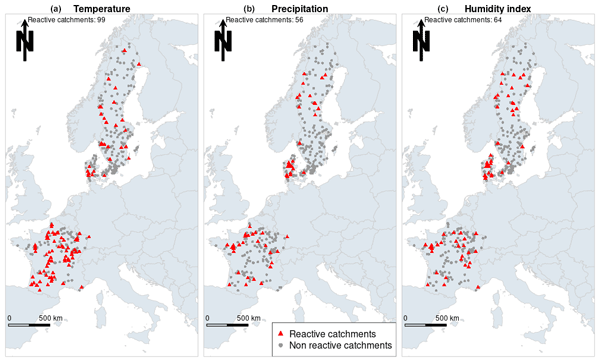
This work investigates how hydrological models are transferred to a period in which climate conditions are different to the ones of the period in which they were set up. The robustness assessment test built to detect dependencies between model error and climatic drivers was applied to three hydrological models in 352 catchments in Denmark, France and Sweden. Potential issues are seen in a significant number of catchments for the models, even though the catchments differ for each model.
Maria Staudinger, Martina Kauzlaric, Alexandre Mas, Guillaume Evin, Benoit Hingray, and Daniel Viviroli
Nat. Hazards Earth Syst. Sci., 25, 247–265, https://doi.org/10.5194/nhess-25-247-2025, https://doi.org/10.5194/nhess-25-247-2025, 2025
Short summary
Short summary
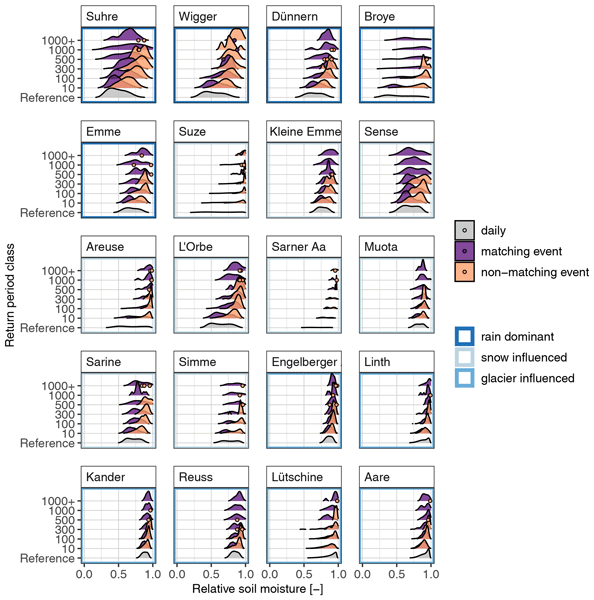
Various combinations of antecedent conditions and precipitation result in floods of varying degrees. Antecedent conditions played a crucial role in generating even large ones. The key predictors and spatial patterns of antecedent conditions leading to flooding at the basin's outlet were distinct. Precipitation and soil moisture from almost all sub-catchments were important for more frequent floods. For rarer events, only the predictors of specific sub-catchments were important.
Guillaume Thirel, Léonard Santos, Olivier Delaigue, and Charles Perrin
Hydrol. Earth Syst. Sci., 28, 4837–4860, https://doi.org/10.5194/hess-28-4837-2024, https://doi.org/10.5194/hess-28-4837-2024, 2024
Short summary
Short summary
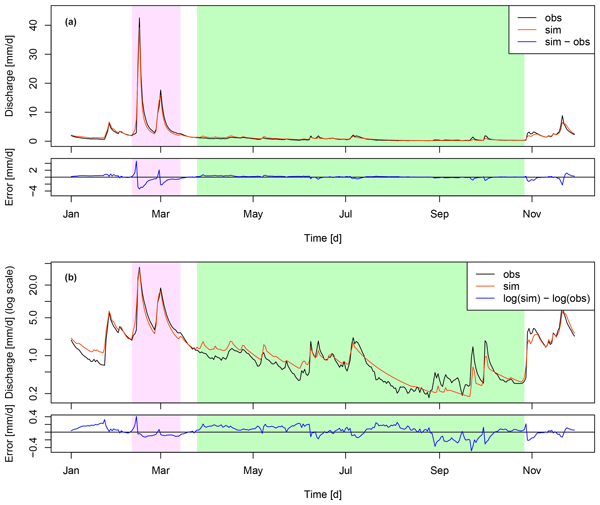
We discuss how mathematical transformations impact calibrated hydrological model simulations. We assess how 11 transformations behave over the complete range of streamflows. Extreme transformations lead to models that are specialized for extreme streamflows but show poor performance outside the range of targeted streamflows and are less robust. We show that no a priori assumption about transformations can be taken as warranted.
Peng Huang, Agnès Ducharne, Lucia Rinchiuso, Jan Polcher, Laure Baratgin, Vladislav Bastrikov, and Eric Sauquet
Hydrol. Earth Syst. Sci., 28, 4455–4476, https://doi.org/10.5194/hess-28-4455-2024, https://doi.org/10.5194/hess-28-4455-2024, 2024
Short summary
Short summary
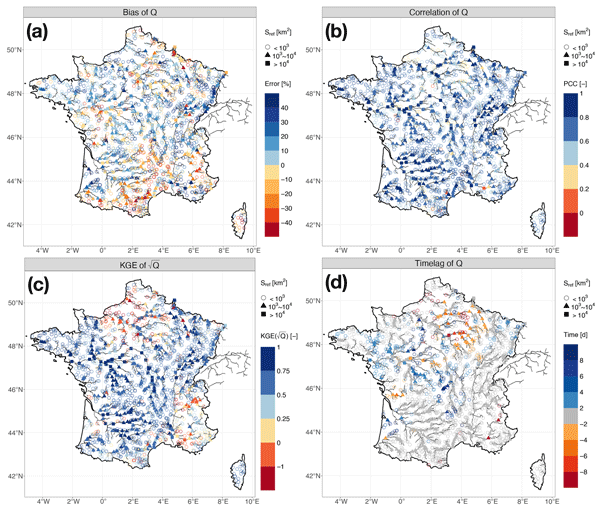
We conducted a high-resolution hydrological simulation from 1959 to 2020 across France. We used a simple trial-and-error calibration to reduce the biases of the simulated water budget compared to observations. The selected simulation satisfactorily reproduces water fluxes, including their spatial contrasts and temporal trends. This work offers a reliable historical overview of water resources and a robust configuration for climate change impact analysis at the nationwide scale of France.
Valentin Dura, Guillaume Evin, Anne-Catherine Favre, and David Penot
Hydrol. Earth Syst. Sci., 28, 2579–2601, https://doi.org/10.5194/hess-28-2579-2024, https://doi.org/10.5194/hess-28-2579-2024, 2024
Short summary
Short summary
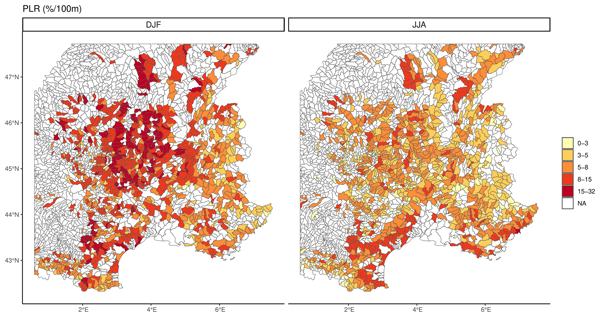
The increase in precipitation as a function of elevation is poorly understood in areas with complex topography. In this article, the reproduction of these orographic gradients is assessed with several precipitation products. The best product is a simulation from a convection-permitting regional climate model. The corresponding seasonal gradients vary significantly in space, with higher values for the first topographical barriers exposed to the dominant air mass circulations.
Cyril Thébault, Charles Perrin, Vazken Andréassian, Guillaume Thirel, Sébastien Legrand, and Olivier Delaigue
Hydrol. Earth Syst. Sci., 28, 1539–1566, https://doi.org/10.5194/hess-28-1539-2024, https://doi.org/10.5194/hess-28-1539-2024, 2024
Short summary
Short summary
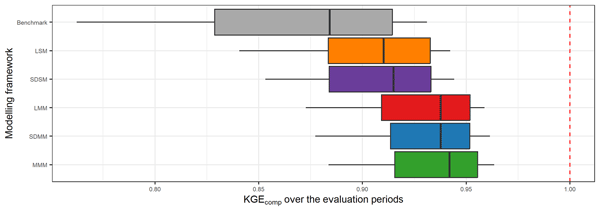
Streamflow forecasting is useful for many applications, ranging from population safety (e.g. floods) to water resource management (e.g. agriculture or hydropower). To this end, hydrological models must be optimized. However, a model is inherently wrong. This study aims to analyse the contribution of a multi-model approach within a variable spatial framework to improve streamflow simulations. The underlying idea is to take advantage of the strength of each modelling framework tested.
Nils Poncet, Philippe Lucas-Picher, Yves Tramblay, Guillaume Thirel, Humberto Vergara, Jonathan Gourley, and Antoinette Alias
Nat. Hazards Earth Syst. Sci., 24, 1163–1183, https://doi.org/10.5194/nhess-24-1163-2024, https://doi.org/10.5194/nhess-24-1163-2024, 2024
Short summary
Short summary
High-resolution convection-permitting climate models (CPMs) are now available to better simulate rainstorm events leading to flash floods. In this study, two hydrological models are compared to simulate floods in a Mediterranean basin, showing a better ability of the CPM to reproduce flood peaks compared to coarser-resolution climate models. Future projections are also different, with a projected increase for the most severe floods and a potential decrease for the most frequent events.
Lorenzo Alfieri, Andrea Libertino, Lorenzo Campo, Francesco Dottori, Simone Gabellani, Tatiana Ghizzoni, Alessandro Masoero, Lauro Rossi, Roberto Rudari, Nicola Testa, Eva Trasforini, Ahmed Amdihun, Jully Ouma, Luca Rossi, Yves Tramblay, Huan Wu, and Marco Massabò
Nat. Hazards Earth Syst. Sci., 24, 199–224, https://doi.org/10.5194/nhess-24-199-2024, https://doi.org/10.5194/nhess-24-199-2024, 2024
Short summary
Short summary
This work describes Flood-PROOFS East Africa, an impact-based flood forecasting system for the Greater Horn of Africa. It is based on hydrological simulations, inundation mapping, and estimation of population and assets exposed to upcoming river floods. The system supports duty officers in African institutions in the daily monitoring of hydro-meteorological disasters. A first evaluation shows the system performance for the catastrophic floods in the Nile River basin in summer 2020.
Guillaume Evin, Matthieu Le Lay, Catherine Fouchier, David Penot, Francois Colleoni, Alexandre Mas, Pierre-André Garambois, and Olivier Laurantin
Hydrol. Earth Syst. Sci., 28, 261–281, https://doi.org/10.5194/hess-28-261-2024, https://doi.org/10.5194/hess-28-261-2024, 2024
Short summary
Short summary
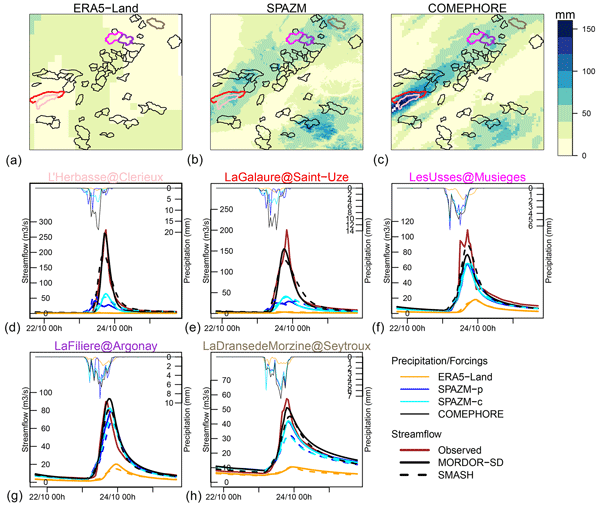
Hydrological modelling of mountainous catchments is challenging for many reasons, the main one being the temporal and spatial representation of precipitation forcings. This study presents an evaluation of the hydrological modelling of 55 small mountainous catchments of the northern French Alps, focusing on the influence of the type of precipitation reanalyses used as inputs. These evaluations emphasize the added value of radar measurements, in particular for the reproduction of flood events.
Samuel Morin, Hugues François, Marion Réveillet, Eric Sauquet, Louise Crochemore, Flora Branger, Étienne Leblois, and Marie Dumont
Hydrol. Earth Syst. Sci., 27, 4257–4277, https://doi.org/10.5194/hess-27-4257-2023, https://doi.org/10.5194/hess-27-4257-2023, 2023
Short summary
Short summary
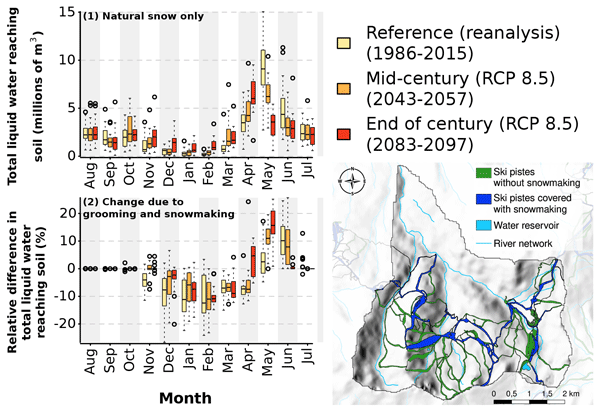
Ski resorts are a key socio-economic asset of several mountain areas. Grooming and snowmaking are routinely used to manage the snow cover on ski pistes, but despite vivid debate, little is known about their impact on water resources downstream. This study quantifies, for the pilot ski resort La Plagne in the French Alps, the impact of grooming and snowmaking on downstream river flow. Hydrological impacts are mostly apparent at the seasonal scale and rather neutral on the annual scale.
Isabelle Ousset, Guillaume Evin, Damien Raynaud, and Thierry Faug
Nat. Hazards Earth Syst. Sci., 23, 3509–3523, https://doi.org/10.5194/nhess-23-3509-2023, https://doi.org/10.5194/nhess-23-3509-2023, 2023
Short summary
Short summary
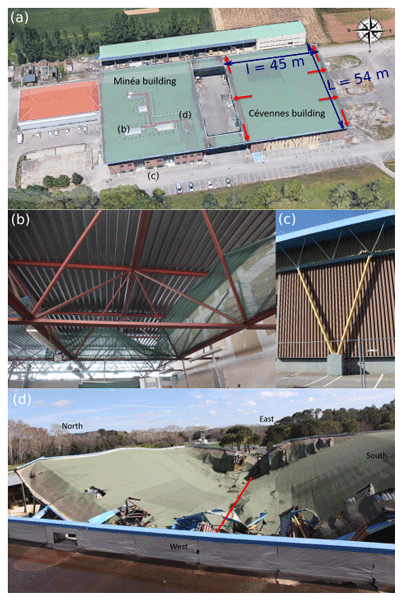
This paper deals with an exceptional snow and rain event in a Mediterranean region of France which is usually not prone to heavy snowfall and its consequences on a particular building that collapsed completely. Independent analyses of the meteorological episode are carried out, and the response of the building to different snow and rain loads is confronted to identify the main critical factors that led to the collapse.
Erwan Le Roux, Guillaume Evin, Raphaëlle Samacoïts, Nicolas Eckert, Juliette Blanchet, and Samuel Morin
The Cryosphere, 17, 4691–4704, https://doi.org/10.5194/tc-17-4691-2023, https://doi.org/10.5194/tc-17-4691-2023, 2023
Short summary
Short summary
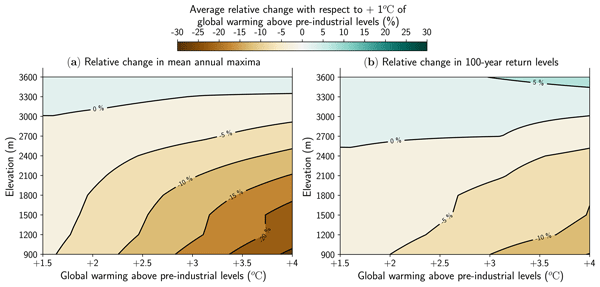
We assess projected changes in snowfall extremes in the French Alps as a function of elevation and global warming level for a high-emission scenario. On average, heavy snowfall is projected to decrease below 3000 m and increase above 3600 m, while extreme snowfall is projected to decrease below 2400 m and increase above 3300 m. At elevations in between, an increase is projected until +3 °C of global warming and then a decrease. These results have implications for the management of risks.
Kaltrina Maloku, Benoit Hingray, and Guillaume Evin
Hydrol. Earth Syst. Sci., 27, 3643–3661, https://doi.org/10.5194/hess-27-3643-2023, https://doi.org/10.5194/hess-27-3643-2023, 2023
Short summary
Short summary
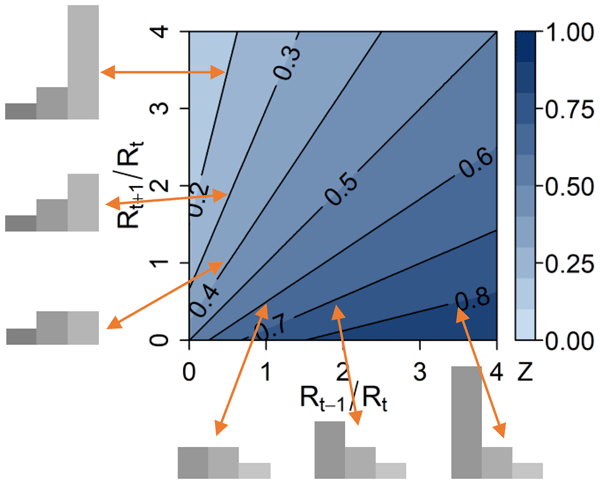
High-resolution precipitation data, needed for many applications in hydrology, are typically rare. Such data can be simulated from daily precipitation with stochastic disaggregation. In this work, multiplicative random cascades are used to disaggregate time series of 40 min precipitation from daily precipitation for 81 Swiss stations. We show that very relevant statistics of precipitation are obtained when precipitation asymmetry is accounted for in a continuous way in the cascade generator.
Juliette Blanchet, Alix Reverdy, Antoine Blanc, Jean-Dominique Creutin, Périne Kiennemann, and Guillaume Evin
Hydrol. Earth Syst. Sci. Discuss., https://doi.org/10.5194/hess-2023-197, https://doi.org/10.5194/hess-2023-197, 2023
Revised manuscript not accepted
Short summary
Short summary
The Alpine region is strongly affected by torrential floods, sometimes leading to severe negative impacts on society, economy, and the environment. Understanding such natural hazards and their drivers is essential to mitigate related risks. In this article we study the atmospheric conditions at the origin of damaging torrential events in the Northern French Alps over the long run, using a database of reported occurrence of damaging torrential flooding in the Grenoble conurbation since 1851.
Laurent Strohmenger, Eric Sauquet, Claire Bernard, Jérémie Bonneau, Flora Branger, Amélie Bresson, Pierre Brigode, Rémy Buzier, Olivier Delaigue, Alexandre Devers, Guillaume Evin, Maïté Fournier, Shu-Chen Hsu, Sandra Lanini, Alban de Lavenne, Thibault Lemaitre-Basset, Claire Magand, Guilherme Mendoza Guimarães, Max Mentha, Simon Munier, Charles Perrin, Tristan Podechard, Léo Rouchy, Malak Sadki, Myriam Soutif-Bellenger, François Tilmant, Yves Tramblay, Anne-Lise Véron, Jean-Philippe Vidal, and Guillaume Thirel
Hydrol. Earth Syst. Sci., 27, 3375–3391, https://doi.org/10.5194/hess-27-3375-2023, https://doi.org/10.5194/hess-27-3375-2023, 2023
Short summary
Short summary
We present the results of a large visual inspection campaign of 674 streamflow time series in France. The objective was to detect non-natural records resulting from instrument failure or anthropogenic influences, such as hydroelectric power generation or reservoir management. We conclude that the identification of flaws in flow time series is highly dependent on the objectives and skills of individual evaluators, and we raise the need for better practices for data cleaning.
Olivier Delaigue, Pierre Brigode, Guillaume Thirel, and Laurent Coron
Hydrol. Earth Syst. Sci., 27, 3293–3327, https://doi.org/10.5194/hess-27-3293-2023, https://doi.org/10.5194/hess-27-3293-2023, 2023
Short summary
Short summary
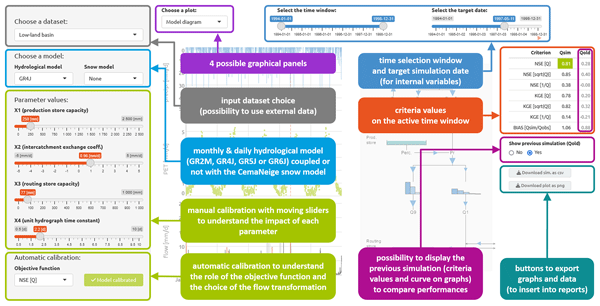
Teaching hydrological modeling is an important, but difficult, matter. It requires appropriate tools and teaching material. In this article, we present the airGRteaching package, which is an open-source software tool relying on widely used hydrological models. This tool proposes an interface and numerous hydrological modeling exercises representing a wide range of hydrological applications. We show how this tool can be applied to simple but real-life cases.
Yves Tramblay, Patrick Arnaud, Guillaume Artigue, Michel Lang, Emmanuel Paquet, Luc Neppel, and Eric Sauquet
Hydrol. Earth Syst. Sci., 27, 2973–2987, https://doi.org/10.5194/hess-27-2973-2023, https://doi.org/10.5194/hess-27-2973-2023, 2023
Short summary
Short summary
Mediterranean floods are causing major damage, and recent studies have shown that, despite the increase in intense rainfall, there has been no increase in river floods. This study reveals that the seasonality of floods changed in the Mediterranean Basin during 1959–2021. There was also an increased frequency of floods linked to short episodes of intense rain, associated with a decrease in soil moisture. These changes need to be taken into consideration to adapt flood warning systems.
Maxime Morel, Guillaume Piton, Damien Kuss, Guillaume Evin, and Caroline Le Bouteiller
Nat. Hazards Earth Syst. Sci., 23, 1769–1787, https://doi.org/10.5194/nhess-23-1769-2023, https://doi.org/10.5194/nhess-23-1769-2023, 2023
Short summary
Short summary
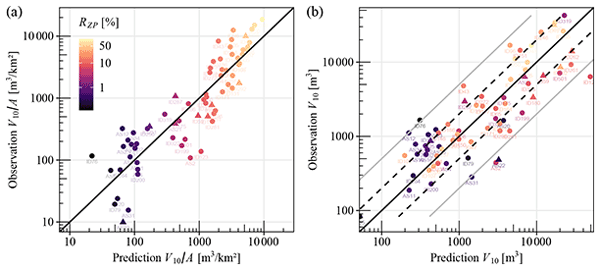
In mountain catchments, damage during floods is generally primarily driven by the supply of a massive amount of sediment. Predicting how much sediment can be delivered by frequent and infrequent events is thus important in hazard studies. This paper uses data gathered during the maintenance operation of about 100 debris retention basins to build simple equations aiming at predicting sediment supply from simple parameters describing the upstream catchment.
Cécile Duvillier, Nicolas Eckert, Guillaume Evin, and Michael Deschâtres
Nat. Hazards Earth Syst. Sci., 23, 1383–1408, https://doi.org/10.5194/nhess-23-1383-2023, https://doi.org/10.5194/nhess-23-1383-2023, 2023
Short summary
Short summary
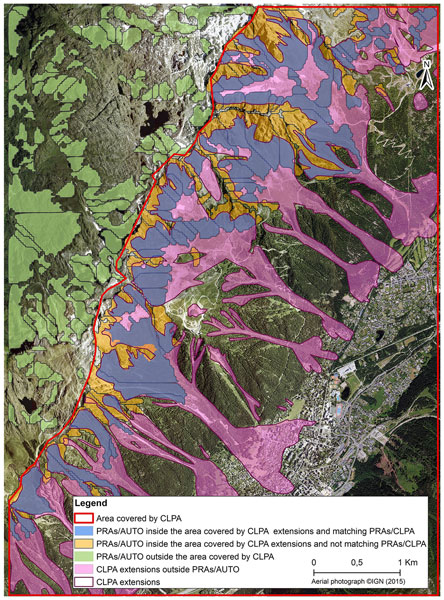
This study develops a method that identifies individual potential release areas (PRAs) of snow avalanches based on terrain analysis and watershed delineation and demonstrates its efficiency in the French Alps context using an extensive cadastre of past avalanche limits. Results may contribute to better understanding local avalanche hazard. The work may also foster the development of more efficient PRA detection methods based on a rigorous evaluation scheme.
Juliette Blanchet, Alix Reverdy, Antoine Blanc, Jean-Dominique Creutin, Périne Kiennemann, and Guillaume Evin
Nat. Hazards Earth Syst. Sci. Discuss., https://doi.org/10.5194/nhess-2022-276, https://doi.org/10.5194/nhess-2022-276, 2023
Manuscript not accepted for further review
Short summary
Short summary
We study the atmospheric conditions at the origin of damaging torrential events in the Northern French Alps over the long run. We consider seven atmospheric variables that describe the nature of the air masses involved and the possible triggers of precipitation and we try to isolate the most discriminating variables. The results show that humidity and particularly humidity transport plays the greatest role under westerly flows while instability potential is mostly at play under southerly flows.
Eva Sebok, Hans Jørgen Henriksen, Ernesto Pastén-Zapata, Peter Berg, Guillaume Thirel, Anthony Lemoine, Andrea Lira-Loarca, Christiana Photiadou, Rafael Pimentel, Paul Royer-Gaspard, Erik Kjellström, Jens Hesselbjerg Christensen, Jean Philippe Vidal, Philippe Lucas-Picher, Markus G. Donat, Giovanni Besio, María José Polo, Simon Stisen, Yvan Caballero, Ilias G. Pechlivanidis, Lars Troldborg, and Jens Christian Refsgaard
Hydrol. Earth Syst. Sci., 26, 5605–5625, https://doi.org/10.5194/hess-26-5605-2022, https://doi.org/10.5194/hess-26-5605-2022, 2022
Short summary
Short summary
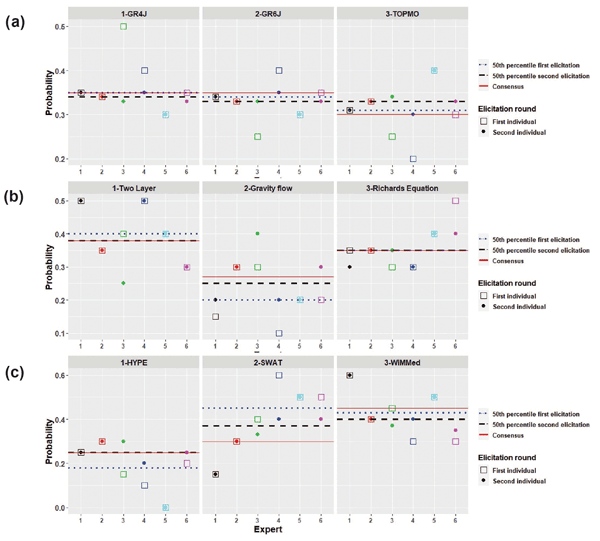
Hydrological models projecting the impact of changing climate carry a lot of uncertainty. Thus, these models usually have a multitude of simulations using different future climate data. This study used the subjective opinion of experts to assess which climate and hydrological models are the most likely to correctly predict climate impacts, thereby easing the computational burden. The experts could select more likely hydrological models, while the climate models were deemed equally probable.
Daniel Viviroli, Anna E. Sikorska-Senoner, Guillaume Evin, Maria Staudinger, Martina Kauzlaric, Jérémy Chardon, Anne-Catherine Favre, Benoit Hingray, Gilles Nicolet, Damien Raynaud, Jan Seibert, Rolf Weingartner, and Calvin Whealton
Nat. Hazards Earth Syst. Sci., 22, 2891–2920, https://doi.org/10.5194/nhess-22-2891-2022, https://doi.org/10.5194/nhess-22-2891-2022, 2022
Short summary
Short summary
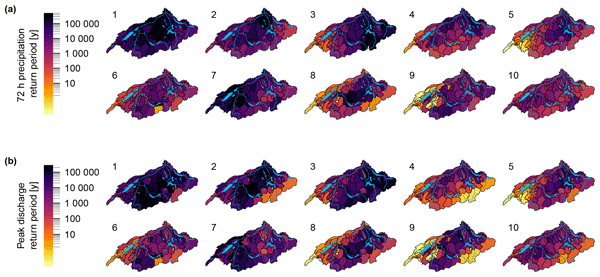
Estimating the magnitude of rare to very rare floods is a challenging task due to a lack of sufficiently long observations. The challenge is even greater in large river basins, where precipitation patterns and amounts differ considerably between individual events and floods from different parts of the basin coincide. We show that a hydrometeorological model chain can provide plausible estimates in this setting and can thus inform flood risk and safety assessments for critical infrastructure.
Aurélien Beaufort, Jacob S. Diamond, Eric Sauquet, and Florentina Moatar
Hydrol. Earth Syst. Sci., 26, 3477–3495, https://doi.org/10.5194/hess-26-3477-2022, https://doi.org/10.5194/hess-26-3477-2022, 2022
Short summary
Short summary
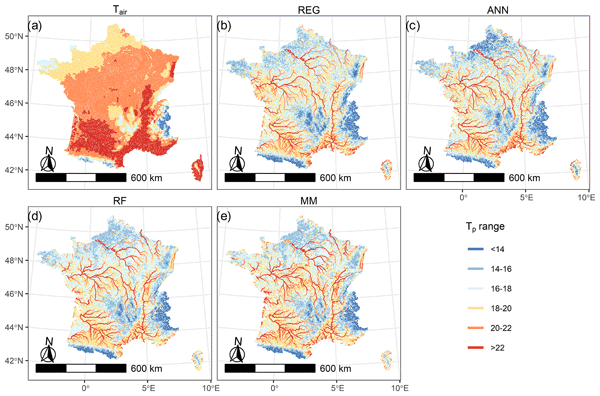
We developed one of the largest stream temperature databases to calculate a simple, ecologically relevant metric – the thermal peak – that captures the magnitude of summer thermal extremes. Using statistical models, we extrapolated the thermal peak to nearly every stream in France, finding the hottest thermal peaks along large rivers without forested riparian zones and groundwater inputs. Air temperature was a poor proxy for the thermal peak, highlighting the need to grow monitoring networks.
Erwan Le Roux, Guillaume Evin, Nicolas Eckert, Juliette Blanchet, and Samuel Morin
Earth Syst. Dynam., 13, 1059–1075, https://doi.org/10.5194/esd-13-1059-2022, https://doi.org/10.5194/esd-13-1059-2022, 2022
Short summary
Short summary
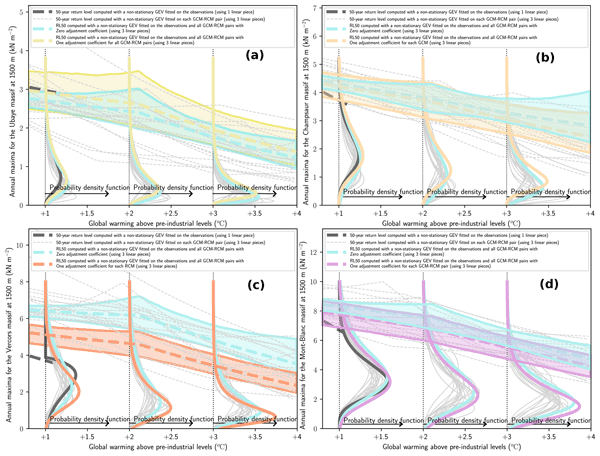
Anticipating risks related to climate extremes is critical for societal adaptation to climate change. In this study, we propose a statistical method in order to estimate future climate extremes from past observations and an ensemble of climate change simulations. We apply this approach to snow load data available in the French Alps at 1500 m elevation and find that extreme snow load is projected to decrease by −2.9 kN m−2 (−50 %) between 1986–2005 and 2080–2099 for a high-emission scenario.
Veit Blauhut, Michael Stoelzle, Lauri Ahopelto, Manuela I. Brunner, Claudia Teutschbein, Doris E. Wendt, Vytautas Akstinas, Sigrid J. Bakke, Lucy J. Barker, Lenka Bartošová, Agrita Briede, Carmelo Cammalleri, Ksenija Cindrić Kalin, Lucia De Stefano, Miriam Fendeková, David C. Finger, Marijke Huysmans, Mirjana Ivanov, Jaak Jaagus, Jiří Jakubínský, Svitlana Krakovska, Gregor Laaha, Monika Lakatos, Kiril Manevski, Mathias Neumann Andersen, Nina Nikolova, Marzena Osuch, Pieter van Oel, Kalina Radeva, Renata J. Romanowicz, Elena Toth, Mirek Trnka, Marko Urošev, Julia Urquijo Reguera, Eric Sauquet, Aleksandra Stevkov, Lena M. Tallaksen, Iryna Trofimova, Anne F. Van Loon, Michelle T. H. van Vliet, Jean-Philippe Vidal, Niko Wanders, Micha Werner, Patrick Willems, and Nenad Živković
Nat. Hazards Earth Syst. Sci., 22, 2201–2217, https://doi.org/10.5194/nhess-22-2201-2022, https://doi.org/10.5194/nhess-22-2201-2022, 2022
Short summary
Short summary
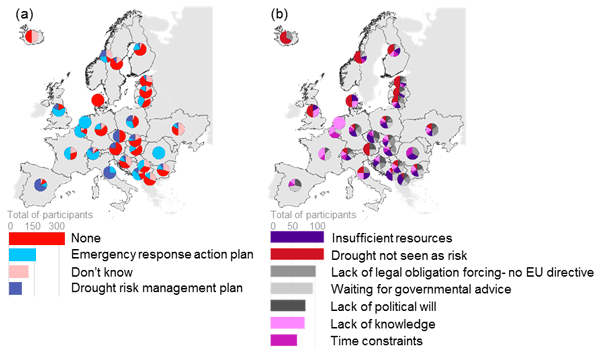
Recent drought events caused enormous damage in Europe. We therefore questioned the existence and effect of current drought management strategies on the actual impacts and how drought is perceived by relevant stakeholders. Over 700 participants from 28 European countries provided insights into drought hazard and impact perception and current management strategies. The study concludes with an urgent need to collectively combat drought risk via a European macro-level drought governance approach.
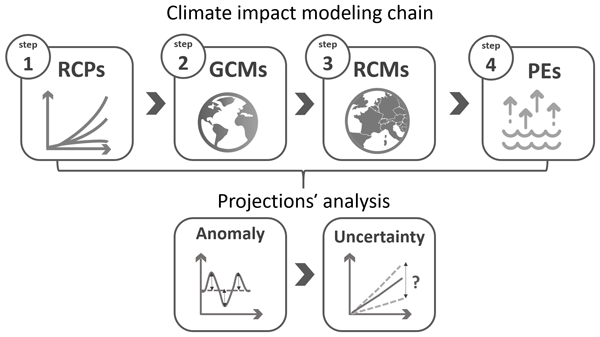
Thibault Lemaitre-Basset, Ludovic Oudin, Guillaume Thirel, and Lila Collet
Hydrol. Earth Syst. Sci., 26, 2147–2159, https://doi.org/10.5194/hess-26-2147-2022, https://doi.org/10.5194/hess-26-2147-2022, 2022
Short summary
Short summary
Increasing temperature will impact evaporation and water resource management. Hydrological models are fed with an estimation of the evaporative demand of the atmosphere, called potential evapotranspiration (PE). The objectives of this study were (1) to compute the future PE anomaly over France and (2) to determine the impact of the choice of the method to estimate PE. Our results show that all methods present similar future trends. No method really stands out from the others.
Yves Tramblay and Pere Quintana Seguí
Nat. Hazards Earth Syst. Sci., 22, 1325–1334, https://doi.org/10.5194/nhess-22-1325-2022, https://doi.org/10.5194/nhess-22-1325-2022, 2022
Short summary
Short summary
Monitoring soil moisture is important during droughts, but very few measurements are available. Consequently, land-surface models are essential tools for reproducing soil moisture dynamics. In this study, a hybrid approach allowed for regionalizing soil water content using a machine learning method. This approach proved to be efficient, compared to the use of soil property maps, to run a simple soil moisture accounting model, and therefore it can be applied in various regions.
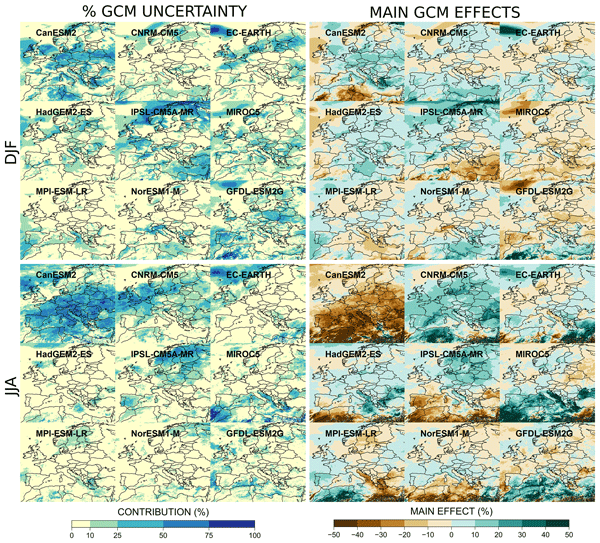
Guillaume Evin, Samuel Somot, and Benoit Hingray
Earth Syst. Dynam., 12, 1543–1569, https://doi.org/10.5194/esd-12-1543-2021, https://doi.org/10.5194/esd-12-1543-2021, 2021
Short summary
Short summary
This research paper proposes an assessment of mean climate change responses and related uncertainties over Europe for mean seasonal temperature and total seasonal precipitation. An advanced statistical approach is applied to a large ensemble of 87 high-resolution EURO-CORDEX projections. For the first time, we provide a comprehensive estimation of the relative contribution of GCMs and RCMs, RCP scenarios, and internal variability to the total variance of a very large ensemble.
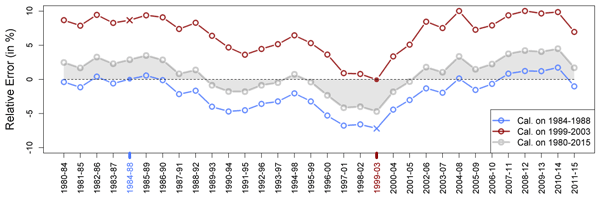
Paul Royer-Gaspard, Vazken Andréassian, and Guillaume Thirel
Hydrol. Earth Syst. Sci., 25, 5703–5716, https://doi.org/10.5194/hess-25-5703-2021, https://doi.org/10.5194/hess-25-5703-2021, 2021
Short summary
Short summary
Most evaluation studies based on the differential split-sample test (DSST) endorse the consensus that rainfall–runoff models lack climatic robustness. In this technical note, we propose a new performance metric to evaluate model robustness without applying the DSST and which can be used with a single hydrological model calibration. Our work makes it possible to evaluate the temporal transferability of any hydrological model, including uncalibrated models, at a very low computational cost.
Cited articles
Abbenante, S. E., Althoff, I., and Valdes-Abellan, J.: Comparative analysis of lumped and semi-distributed hydrological models in humid Mediterranean environments, Hydrological Sciences Journal, 69, 2481–2496, https://doi.org/10.1080/02626667.2024.2413422, 2024.
Alfieri, L., Burek, P., Feyen, L., and Forzieri, G.: Global warming increases the frequency of river floods in Europe, Hydrol. Earth Syst. Sci., 19, 2247–2260, https://doi.org/10.5194/hess-19-2247-2015, 2015.
Bathelemy, R., Brigode, P., Andréassian, V., Perrin, C., Moron, V., Gaucherel, C., Tric, E., and Boisson, D.: Simbi: historical hydro-meteorological time series and signatures for 24 catchments in Haiti, Earth Syst. Sci. Data, 16, 2073–2098, https://doi.org/10.5194/essd-16-2073-2024, 2024.
Berghuijs, W. R., Woods, R. A., Hutton, C. J., and Sivapalan, M.: Dominant flood generating mechanisms across the United States: Flood Mechanisms Across the U.S., Geophys. Res. Lett., 43, 4382–4390, https://doi.org/10.1002/2016GL068070, 2016.
Berghuijs, W. R., Harrigan, S., Molnar, P., Slater, L. J., and Kirchner, J. W.: The Relative Importance of Different Flood-Generating Mechanisms Across Europe, Water Resour. Res., 2019WR024841, https://doi.org/10.1029/2019WR024841, 2019.
Blöschl, G.: Flood generation: process patterns from the raindrop to the ocean, Hydrol. Earth Syst. Sci., 26, 2469–2480, https://doi.org/10.5194/hess-26-2469-2022, 2022a.
Blöschl, G.: Three hypotheses on changing river flood hazards, Hydrol. Earth Syst. Sci., 26, 5015–5033, https://doi.org/10.5194/hess-26-5015-2022, 2022b.
Blöschl, G., Hall, J., Viglione, A., Perdigão, R. A. P., Parajka, J., Merz, B., Lun, D., Arheimer, B., Aronica, G. T., Bilibashi, A., Boháč, M., Bonacci, O., Borga, M., Čanjevac, I., Castellarin, A., Chirico, G. B., Claps, P., Frolova, N., Ganora, D., Gorbachova, L., Gül, A., Hannaford, J., Harrigan, S., Kireeva, M., Kiss, A., Kjeldsen, T. R., Kohnová, S., Koskela, J. J., Ledvinka, O., Macdonald, N., Mavrova-Guirguinova, M., Mediero, L., Merz, R., Molnar, P., Montanari, A., Murphy, C., Osuch, M., Ovcharuk, V., Radevski, I., Salinas, J. L., Sauquet, E., Šraj, M., Szolgay, J., Volpi, E., Wilson, D., Zaimi, K., and Živković, N.: Changing climate both increases and decreases European river floods, Nature, 573, 108–111, https://doi.org/10.1038/s41586-019-1495-6, 2019.
Blöschl, G., Kiss, A., Viglione, A., Barriendos, M., Böhm, O., Brázdil, R., Coeur, D., Demarée, G., Llasat, M. C., Macdonald, N., Retsö, D., Roald, L., Schmocker-Fackel, P., Amorim, I., Bělínová, M., Benito, G., Bertolin, C., Camuffo, D., Cornel, D., Doktor, R., Elleder, L., Enzi, S., Garcia, J. C., Glaser, R., Hall, J., Haslinger, K., Hofstätter, M., Komma, J., Limanówka, D., Lun, D., Panin, A., Parajka, J., Petrić, H., Rodrigo, F. S., Rohr, C., Schönbein, J., Schulte, L., Silva, L. P., Toonen, W. H. J., Valent, P., Waser, J., and Wetter, O.: Current European flood-rich period exceptional compared with past 500 years, Nature, 583, 560–566, https://doi.org/10.1038/s41586-020-2478-3, 2020.
Brigode, P., Oudin, L., and Perrin, C.: Hydrological model parameter instability: A source of additional uncertainty in estimating the hydrological impacts of climate change?, Journal of Hydrology, 476, 410–425, https://doi.org/10.1016/j.jhydrol.2012.11.012, 2013.
Brunner, M. I., Swain, D. L., Wood, R. R., Willkofer, F., Done, J. M., Gilleland, E., and Ludwig, R.: An extremeness threshold determines the regional response of floods to changes in rainfall extremes, Commun Earth Environ, 2, 173, https://doi.org/10.1038/s43247-021-00248-x, 2021.
Chauveau, M., Chazot, S., Perrin, C., Bourgin, P.-Y., Sauquet, E., Vidal, J.-P., Rouchy, N., Martin, E., David, J., Norotte, T., Maugis, P., and De Lacaze, X.: Quels impacts des changements climatiques sur les eaux de surface en France à l'horizon 2070?, La Houille Blanche, 99, 5–15, https://doi.org/10.1051/lhb/2013027, 2013.
Clark, M. P., Wilby, R. L., Gutmann, E. D., Vano, J. A., Gangopadhyay, S., Wood, A. W., Fowler, H. J., Prudhomme, C., Arnold, J. R., and Brekke, L. D.: Characterizing Uncertainty of the Hydrologic Impacts of Climate Change, Curr Clim Change Rep, 2, 55–64, https://doi.org/10.1007/s40641-016-0034-x, 2016.
Coppola, E., Nogherotto, R., Ciarlo', J. M., Giorgi, F., Van Meijgaard, E., Kadygrov, N., Iles, C., Corre, L., Sandstad, M., Somot, S., Nabat, P., Vautard, R., Levavasseur, G., Schwingshackl, C., Sillmann, J., Kjellström, E., Nikulin, G., Aalbers, E., Lenderink, G., Christensen, O. B., Boberg, F., Sørland, S. L., Demory, M., Bülow, K., Teichmann, C., Warrach-Sagi, K., and Wulfmeyer, V.: Assessment of the European Climate Projections as Simulated by the Large EURO-CORDEX Regional and Global Climate Model Ensemble, JGR Atmospheres, 126, e2019JD032356, https://doi.org/10.1029/2019JD032356, 2021.
Cornelissen, T., Diekkrüger, B., and Giertz, S.: A comparison of hydrological models for assessing the impact of land use and climate change on discharge in a tropical catchment, Journal of Hydrology, 498, 221–236, https://doi.org/10.1016/j.jhydrol.2013.06.016, 2013.
Coron, L., Thirel, G., Delaigue, O., Perrin, C., and Andréassian, V.: The suite of lumped GR hydrological models in an R package, Environmental Modelling & Software, 94, 166–171, https://doi.org/10.1016/j.envsoft.2017.05.002, 2017.
Corre, L., Ribes, A., Bernus, S., Drouin, A., Morin, S., and Soubeyroux, J.-M.: Using regional warming levels to describe future climate change for services and adaptation: Application to the French reference trajectory for adaptation, Climate Services, 38, 100553, https://doi.org/10.1016/j.cliser.2025.100553, 2025.
Dakhlaoui, H., Ruelland, D., Tramblay, Y., and Bargaoui, Z.: Evaluating the robustness of conceptual rainfall-runoff models under climate variability in northern Tunisia, Journal of Hydrology, 550, 201–217, https://doi.org/10.1016/j.jhydrol.2017.04.032, 2017.
De Lavenne, A., Andréassian, V., Thirel, G., Ramos, M.-H., and Perrin, C.: A Regularization Approach to Improve the Sequential Calibration of a Semidistributed Hydrological Model, Water Resources Research, 55, 8821–8839, https://doi.org/10.1029/2018WR024266, 2019.
Di Sante, F., Coppola, E., and Giorgi, F.: Projections of river floods in Europe using EURO-CORDEX, CMIP5 and CMIP6 simulations, Int J Climatol, 41, 3203–3221, https://doi.org/10.1002/joc.7014, 2021.
Do, H. X., Zhao, F., Westra, S., Leonard, M., Gudmundsson, L., Boulange, J. E. S., Chang, J., Ciais, P., Gerten, D., Gosling, S. N., Müller Schmied, H., Stacke, T., Telteu, C.-E., and Wada, Y.: Historical and future changes in global flood magnitude – evidence from a model–observation investigation, Hydrol. Earth Syst. Sci., 24, 1543–1564, https://doi.org/10.5194/hess-24-1543-2020, 2020.
Dorchies, D.: hubeau: an R package for the Hub'Eau APIs, https://doi.org/10.57745/XKN6NC, 2022.
Efron, B.: Bootstrap Methods: Another Look at the Jackknife, Ann. Statist., 7, https://doi.org/10.1214/aos/1176344552, 1979.
Evin, G., Hingray, B., Thirel, G., Ducharne, A., Strohmenger, L., Corre, L., Tramblay, Y., Vidal, J.-P., Bonneau, J., Colleoni, F., Gailhard, J., Habets, F., Hendrickx, F., Héraut, L., Huang, P., Le Lay, M., Magand, C., Marson, P., Monteil, C., Munier, S., Reverdy, A., Soubeyroux, J.-M., Robin, Y., Vergnes, J.-P., Vrac, M., and Sauquet, E.: Uncertainty sources in a large ensemble of hydrological projections: Regional Climate Models and Internal Variability matter, EGUsphere [preprint], https://doi.org/10.5194/egusphere-2025-2727, 2025.
Fabre, J., Ruelland, D., Dezetter, A., and Grouillet, B.: Sustainability of water uses in managed hydrosystems: human- and climate-induced changes for the mid-21st century, Hydrol. Earth Syst. Sci., 20, 3129–3147, https://doi.org/10.5194/hess-20-3129-2016, 2016.
Fowler, H. J., Ali, H., Allan, R. P., Ban, N., Barbero, R., Berg, P., Blenkinsop, S., Cabi, N. S., Chan, S., Dale, M., Dunn, R. J. H., Ekström, M., Evans, J. P., Fosser, G., Golding, B., Guerreiro, S. B., Hegerl, G. C., Kahraman, A., Kendon, E. J., Lenderink, G., Lewis, E., Li, X., O'Gorman, P. A., Orr, H. G., Peat, K. L., Prein, A. F., Pritchard, D., Schär, C., Sharma, A., Stott, P. A., Villalobos-Herrera, R., Villarini, G., Wasko, C., Wehner, M. F., Westra, S., and Whitford, A.: Towards advancing scientific knowledge of climate change impacts on short-duration rainfall extremes, Phil. Trans. R. Soc. A., 379, 20190542, https://doi.org/10.1098/rsta.2019.0542, 2021.
Givati, A., Thirel, G., Rosenfeld, D., and Paz, D.: Climate change impacts on streamflow at the upper Jordan River based on an ensemble of regional climate models, Journal of Hydrology: Regional Studies, 21, 92–109, https://doi.org/10.1016/j.ejrh.2018.12.004, 2019.
Grill, G., Lehner, B., Thieme, M., Geenen, B., Tickner, D., Antonelli, F., Babu, S., Borrelli, P., Cheng, L., Crochetiere, H., Ehalt Macedo, H., Filgueiras, R., Goichot, M., Higgins, J., Hogan, Z., Lip, B., McClain, M. E., Meng, J., Mulligan, M., Nilsson, C., Olden, J. D., Opperman, J. J., Petry, P., Reidy Liermann, C., Sáenz, L., Salinas-Rodríguez, S., Schelle, P., Schmitt, R. J. P., Snider, J., Tan, F., Tockner, K., Valdujo, P. H., van Soesbergen, A., and Zarfl, C.: Mapping the world's free-flowing rivers, Nature, 569, 215–221, https://doi.org/10.1038/s41586-019-1111-9, 2019.
Grillakis, M. G.: Increase in severe and extreme soil moisture droughts for Europe under climate change, Science of The Total Environment, 660, 1245–1255, https://doi.org/10.1016/j.scitotenv.2019.01.001, 2019.
Gupta, H. V., Kling, H., Yilmaz, K. K., and Martinez, G. F.: Decomposition of the mean squared error and NSE performance criteria: Implications for improving hydrological modelling, Journal of Hydrology, 377, 80–91, https://doi.org/10.1016/j.jhydrol.2009.08.003, 2009.
Hamed, K. H. and Ramachandra Rao, A.: A modified Mann-Kendall trend test for autocorrelated data, Journal of Hydrology, 204, 182–196, https://doi.org/10.1016/S0022-1694(97)00125-X, 1998.
Héraut, L. and Sauquet, E.: “Fiches de diagnostic régional des modèles hydrologiques de surface du projet Explore2”, Recherche Data Gouv, https://doi.org/10.57745/LNTOKL, 2024.
Ho, M., Nathan, R., Wasko, C., Vogel, E., and Sharma, A.: Projecting changes in flood event runoff coefficients under climate change, Journal of Hydrology, 615, 128689, https://doi.org/10.1016/j.jhydrol.2022.128689, 2022.
Hodgkins, G. A., Whitfield, P. H., Burn, D. H., Hannaford, J., Renard, B., Stahl, K., Fleig, A. K., Madsen, H., Mediero, L., Korhonen, J., Murphy, C., and Wilson, D.: Climate-driven variability in the occurrence of major floods across North America and Europe, Journal of Hydrology, 552, 704–717, https://doi.org/10.1016/j.jhydrol.2017.07.027, 2017.
Hrachowitz, M. and Clark, M. P.: HESS Opinions: The complementary merits of competing modelling philosophies in hydrology, Hydrol. Earth Syst. Sci., 21, 3953–3973, https://doi.org/10.5194/hess-21-3953-2017, 2017.
Intergovernmental Panel On Climate Change (IPCC): Climate Change 2021 – The Physical Science Basis: Working Group I Contribution to the Sixth Assessment Report of the Intergovernmental Panel on Climate Change, 1st edn., Cambridge University Press, https://doi.org/10.1017/9781009157896, 2023.
Ivancic, T. J. and Shaw, S. B.: Examining why trends in very heavy precipitation should not be mistaken for trends in very high river discharge, Climatic Change, 133, 681–693, https://doi.org/10.1007/s10584-015-1476-1, 2015.
Jacob, D., Kotova, L., Teichmann, C., Sobolowski, S. P., Vautard, R., Donnelly, C., Koutroulis, A. G., Grillakis, M. G., Tsanis, I. K., Damm, A., Sakalli, A., and van Vliet, M. T. H.: Climate Impacts in Europe Under +1.5 °C Global Warming, Earth's Future, 6, 264–285, https://doi.org/10.1002/2017EF000710, 2018.
Jahanshahi, A., Booij, M. J., and Patil, S. D.: Dependence of rainfall-runoff model performance on calibration conditions under changing climatic conditions, Hydrological Sciences Journal, 1–16, https://doi.org/10.1080/02626667.2024.2441325, 2025.
Jiang, S., Bevacqua, E., and Zscheischler, J.: River flooding mechanisms and their changes in Europe revealed by explainable machine learning, Hydrol. Earth Syst. Sci., 26, 6339–6359, https://doi.org/10.5194/hess-26-6339-2022, 2022.
Kaufman, L. and Rousseeuw, P. J.: Finding Groups in Data, Wiley Series in Probability and Statistics, https://doi.org/10.1002/9780470316801, 1990.
Kay, A.: Differences in hydrological impacts using regional climate model and nested convection-permitting model data, Climatic Change, 173, 11, https://doi.org/10.1007/s10584-022-03405-z, 2022.
Kemter, M., Merz, B., Marwan, N., Vorogushyn, S., and Blöschl, G.: Joint Trends in Flood Magnitudes and Spatial Extents Across Europe, Geophys. Res. Lett., 47, https://doi.org/10.1029/2020GL087464, 2020.
Kemter, M., Marwan, N., Villarini, G., and Merz, B.: Controls on Flood Trends Across the United States, Water Resources Research, 59, e2021WR031673, https://doi.org/10.1029/2021WR031673, 2023.
Killick, R., Fearnhead, P., and Eckley, I. A.: Optimal Detection of Changepoints With a Linear Computational Cost, Journal of the American Statistical Association, 107, 1590–1598, https://doi.org/10.1080/01621459.2012.737745, 2012.
Klemeš, V.: Operational testing of hydrological simulation models, Hydrological Sciences Journal, 31, 13–24, https://doi.org/10.1080/02626668609491024, 1986.
Knutti, R. and Sedláček, J.: Robustness and uncertainties in the new CMIP5 climate model projections, Nature Clim. Change, 3, 369–373, https://doi.org/10.1038/nclimate1716, 2013.
Koenker, R. and Bassett, G.: Regression Quantiles, Econometrica, 46, 33, https://doi.org/10.2307/1913643, 1978.
Kuana, L. A., Almeida, A. S., Mercuri, E. G. F., and Noe, S. M.: Regionalization of GR4J model parameters for river flow prediction in Paraná, Brazil, Hydrol. Earth Syst. Sci., 28, 3367–3390, https://doi.org/10.5194/hess-28-3367-2024, 2024.
Lemaitre-Basset, T., Collet, L., Thirel, G., Parajka, J., Evin, G., and Hingray, B.: Climate change impact and uncertainty analysis on hydrological extremes in a French Mediterranean catchment, Hydrological Sciences Journal, 66, 888–903, https://doi.org/10.1080/02626667.2021.1895437, 2021.
Lemaitre-Basset, T., Thirel, G., Oudin, L., and Dorchies, D.: Water use scenarios versus climate change: Investigating future water management of the French part of the Moselle, Journal of Hydrology: Regional Studies, 54, 101855, https://doi.org/10.1016/j.ejrh.2024.101855, 2024.
Lucas-Picher, P., Argüeso, D., Brisson, E., Tramblay, Y., Berg, P., Lemonsu, A., Kotlarski, S., and Caillaud, C.: Convection-permitting modeling with regional climate models: Latest developments and next steps, WIREs Climate Change, 12, e731, https://doi.org/10.1002/wcc.731, 2021.
Lun, D., Fischer, S., Viglione, A., and Blöschl, G.: Detecting Flood-Rich and Flood-Poor Periods in Annual Peak Discharges Across Europe, Water Resources Research, 56, e2019WR026575, https://doi.org/10.1029/2019WR026575, 2020.
Lyne, V. D. and Hollick, M.: Stochastic time-variable rainfall runoff modelling, Hydrology and Water Resources Symposium, in: Institute of engineers Australia national conference, Barton, Australia, 79, 89–93, 1979.
Maraun, D., Shepherd, T. G., Widmann, M., Zappa, G., Walton, D., Gutiérrez, J. M., Hagemann, S., Richter, I., Soares, P. M. M., Hall, A., and Mearns, L. O.: Towards process-informed bias correction of climate change simulations, Nature Clim. Change, 7, 764–773, https://doi.org/10.1038/nclimate3418, 2017.
Marson, P., Corre, L., Soubeyroux, J.-M., Sauquet, É., and Explore2: Rapport de synthèse sur les projections climatiques régionalisées, https://doi.org/10.57745/PUR7ML, 2024.
McMillan, H., Araki, R., Bolotin, L., Kim, D.-H., Coxon, G., Clark, M., and Seibert, J.: Global patterns in observed hydrologic processes, Nat Water, https://doi.org/10.1038/s44221-025-00407-w, 2025.
Meinshausen, M., Nicholls, Z. R. J., Lewis, J., Gidden, M. J., Vogel, E., Freund, M., Beyerle, U., Gessner, C., Nauels, A., Bauer, N., Canadell, J. G., Daniel, J. S., John, A., Krummel, P. B., Luderer, G., Meinshausen, N., Montzka, S. A., Rayner, P. J., Reimann, S., Smith, S. J., van den Berg, M., Velders, G. J. M., Vollmer, M. K., and Wang, R. H. J.: The shared socio-economic pathway (SSP) greenhouse gas concentrations and their extensions to 2500, Geosci. Model Dev., 13, 3571–3605, https://doi.org/10.5194/gmd-13-3571-2020, 2020.
Nepal, S., Chen, J., Penton, D. J., Neumann, L. E., Zheng, H., and Wahid, S.: Spatial GR4J conceptualization of the Tamor glaciated alpine catchment in Eastern Nepal: evaluation of GR4JSG against streamflow and MODIS snow extent, Hydrological Processes, 31, 51–68, https://doi.org/10.1002/hyp.10962, 2017.
Oudin, L., Andréassian, V., Perrin, C., Michel, C., and Le Moine, N.: Spatial proximity, physical similarity, regression and ungaged catchments: A comparison of regionalization approaches based on 913 French catchments, Water Resources Research, 44, https://doi.org/10.1029/2007wr006240, 2008.
Penna, D., Tromp-van Meerveld, H. J., Gobbi, A., Borga, M., and Dalla Fontana, G.: The influence of soil moisture on threshold runoff generation processes in an alpine headwater catchment, Hydrol. Earth Syst. Sci., 15, 689–702, https://doi.org/10.5194/hess-15-689-2011, 2011.
Perrin, C., Michel, C., and Andréassian, V.: Improvement of a parsimonious model for streamflow simulation, Journal of Hydrology, 279, 275–289, https://doi.org/10.1016/S0022-1694(03)00225-7, 2003.
Poncet, N., Lucas-Picher, P., Tramblay, Y., Thirel, G., Vergara, H., Gourley, J., and Alias, A.: Does a convection-permitting regional climate model bring new perspectives on the projection of Mediterranean floods?, Nat. Hazards Earth Syst. Sci., 24, 1163–1183, https://doi.org/10.5194/nhess-24-1163-2024, 2024.
Poncet, N., Tramblay, Y., Lucas-Picher, P., Thirel, G., and Caillaud, C.: Projections of extreme rainfall and floods in Mediterranean basins from an ensemble of convection-permitting models, Climatic Change, 178, 141, https://doi.org/10.1007/s10584-025-03983-8, 2025.
Rogger, M., Agnoletti, M., Alaoui, A., Bathurst, J. C., Bodner, G., Borga, M., Chaplot, V., Gallart, F., Glatzel, G., Hall, J., Holden, J., Holko, L., Horn, R., Kiss, A., Kohnová, S., Leitinger, G., Lennartz, B., Parajka, J., Perdigão, R., Peth, S., Plavcová, L., Quinton, J. N., Robinson, M., Salinas, J. L., Santoro, A., Szolgay, J., Tron, S., van den Akker, J. J. H., Viglione, A., and Blöschl, G.: Land use change impacts on floods at the catchment scale: Challenges and opportunities for future research: Land Use Change Impacts on Floods, Water Resour. Res., 53, 5209–5219, https://doi.org/10.1002/2017WR020723, 2017.
Rottler, E., Bronstert, A., Bürger, G., and Rakovec, O.: Projected changes in Rhine River flood seasonality under global warming, Hydrol. Earth Syst. Sci., 25, 2353–2371, https://doi.org/10.5194/hess-25-2353-2021, 2021.
Roudier, P., Andersson, J. C. M., Donnelly, C., Feyen, L., Greuell, W., and Ludwig, F.: Projections of future floods and hydrological droughts in Europe under a +2 °C global warming, Climatic Change, 135, 341–355, https://doi.org/10.1007/s10584-015-1570-4, 2016.
Samaniego, L., Thober, S., Kumar, R., Wanders, N., Rakovec, O., Pan, M., Zink, M., Sheffield, J., Wood, E. F., and Marx, A.: Anthropogenic warming exacerbates European soil moisture droughts, Nature Clim. Change, 8, 421–426, https://doi.org/10.1038/s41558-018-0138-5, 2018.
Santos, L., Andréassian, V., Sonnenborg, T. O., Lindström, G., de Lavenne, A., Perrin, C., Collet, L., and Thirel, G.: Lack of robustness of hydrological models: a large-sample diagnosis and an attempt to identify hydrological and climatic drivers, Hydrol. Earth Syst. Sci., 29, 683–700, https://doi.org/10.5194/hess-29-683-2025, 2025.
Sauquet, É., Héraut, L., Bonneau, J., Reverdy, A., Strohmenger, L., Vidal, J.-P., and Explore2: Diagnostic des modèles hydrologiques: Des données aux résultats, https://doi.org/10.57745/S6PQXD, 2024.
Sauquet, E., Evin, G., Siauve, S., Aissat, R., Arnaud, P., Bérel, M., Bonneau, J., Branger, F., Caballero, Y., Colléoni, F., Ducharne, A., Gailhard, J., Habets, F., Hendrickx, F., Héraut, L., Hingray, B., Huang, P., Jaouen, T., Jeantet, A., Lanini, S., Le Lay, M., Magand, C., Mimeau, L., Monteil, C., Munier, S., Perrin, C., Robelin, O., Rousset, F., Soubeyroux, J.-M., Strohmenger, L., Thirel, G., Tocquer, F., Tramblay, Y., Vergnes, J.-P., and Vidal, J.-P.: A large transient multi-scenario multi-model ensemble of future streamflow and groundwater projections in France, EGUsphere [preprint], https://doi.org/10.5194/egusphere-2025-1788, 2025.
Scussolini, P., Luu, L. N., Philip, S., Berghuijs, W. R., Eilander, D., Aerts, J. C. J. H., Kew, S. F., Van Oldenborgh, G. J., Toonen, W. H. J., Volkholz, J., and Coumou, D.: Challenges in the attribution of river flood events, WIREs Climate Change, e874, https://doi.org/10.1002/wcc.874, 2023.
Sen, P. K.: Estimates of the Regression Coefficient Based on Kendall's Tau, Journal of the American Statistical Association, 63, 1379–1389, https://doi.org/10.1080/01621459.1968.10480934, 1968.
Sharma, A., Wasko, C., and Lettenmaier, D. P.: If Precipitation Extremes Are Increasing, Why Aren't Floods?, Water Resour. Res., 54, 8545–8551, https://doi.org/10.1029/2018WR023749, 2018.
Sikorska-Senoner, A. E. and Seibert, J.: Flood-type trend analysis for alpine catchments, Hydrological Sciences Journal, 65, 1281–1299, https://doi.org/10.1080/02626667.2020.1749761, 2020.
Stein, L., Pianosi, F., and Woods, R.: Event-based classification for global study of river flood generating processes, Hydrological Processes, 34, 1514–1529, https://doi.org/10.1002/hyp.13678, 2020.
Stein, L., Clark, M. P., Knoben, W. J. M., Pianosi, F., and Woods, R. A.: How Do Climate and Catchment Attributes Influence Flood Generating Processes? A Large-Sample Study for 671 Catchments Across the Contiguous USA, Water Res, 57, https://doi.org/10.1029/2020WR028300, 2021.
Stephens, C. M., Johnson, F. M., and Marshall, L. A.: Implications of future climate change for event-based hydrologic models, Advances in Water Resources, 119, 95–110, https://doi.org/10.1016/j.advwatres.2018.07.004, 2018.
Stephens, C. M., Marshall, L. A., and Johnson, F. M.: Investigating strategies to improve hydrologic model performance in a changing climate, Journal of Hydrology, 579, 124219, https://doi.org/10.1016/j.jhydrol.2019.124219, 2019.
Strohmenger, L., Sauquet, E., Bernard, C., Bonneau, J., Branger, F., Bresson, A., Brigode, P., Buzier, R., Delaigue, O., Devers, A., Evin, G., Fournier, M., Hsu, S.-C., Lanini, S., de Lavenne, A., Lemaitre-Basset, T., Magand, C., Mendoza Guimarães, G., Mentha, M., Munier, S., Perrin, C., Podechard, T., Rouchy, L., Sadki, M., Soutif-Bellenger, M., Tilmant, F., Tramblay, Y., Véron, A.-L., Vidal, J.-P., and Thirel, G.: On the visual detection of non-natural records in streamflow time series: challenges and impacts, Hydrol. Earth Syst. Sci., 27, 3375–3391, https://doi.org/10.5194/hess-27-3375-2023, 2023.
Strohmenger, L., Collet, L., Andréassian, V., Corre, L., Rousset, F., and Thirel, G.: Köppen–Geiger climate classification across France based on an ensemble of high-resolution climate projections, Comptes Rendus. Géoscience, 356, 67–82, https://doi.org/10.5802/crgeos.263, 2024.
Tarasova, L., Basso, S., Zink, M., and Merz, R.: Exploring Controls on Rainfall-Runoff Events: 1. Time Series-Based Event Separation and Temporal Dynamics of Event Runoff Response in Germany, Water Resour. Res., 54, 7711–7732, https://doi.org/10.1029/2018WR022587, 2018.
Tarasova, L., Merz, R., Kiss, A., Basso, S., Blöschl, G., Merz, B., Viglione, A., Plötner, S., Guse, B., Schumann, A., Fischer, S., Ahrens, B., Anwar, F., Bárdossy, A., Bühler, P., Haberlandt, U., Kreibich, H., Krug, A., Lun, D., Müller-Thomy, H., Pidoto, R., Primo, C., Seidel, J., Vorogushyn, S., and Wietzke, L.: Causative classification of river flood events, WIREs Water, 6, https://doi.org/10.1002/wat2.1353, 2019.
Tarasova, L., Basso, S., Wendi, D., Viglione, A., Kumar, R., and Merz, R.: A Process-Based Framework to Characterize and Classify Runoff Events: The Event Typology of Germany, Water Resour. Res., 56, https://doi.org/10.1029/2019WR026951, 2020.
Tarasova, L., Lun, D., Merz, R., Blöschl, G., Basso, S., Bertola, M., Miniussi, A., Rakovec, O., Samaniego, L., Thober, S., and Kumar, R.: Shifts in flood generation processes exacerbate regional flood anomalies in Europe, Commun Earth Environ, 4, 49, https://doi.org/10.1038/s43247-023-00714-8, 2023.
Tarek, M., Brissette, F., and Arsenault, R.: Uncertainty of gridded precipitation and temperature reference datasets in climate change impact studies, Hydrol. Earth Syst. Sci., 25, 3331–3350, https://doi.org/10.5194/hess-25-3331-2021, 2021.
Taylor, K. E., Stouffer, R. J., and Meehl, G. A.: An Overview of CMIP5 and the Experiment Design, Bulletin of the American Meteorological Society, 93, 485–498, https://doi.org/10.1175/BAMS-D-11-00094.1, 2012.
Terray, L. and Boé, J.: Quantifying 21st-century France climate change and related uncertainties, Comptes Rendus. Géoscience, 345, 136–149, https://doi.org/10.1016/j.crte.2013.02.003, 2013.
Teutschbein, C. and Seibert, J.: Bias correction of regional climate model simulations for hydrological climate-change impact studies: Review and evaluation of different methods, Journal of Hydrology, 456–457, 12–29, https://doi.org/10.1016/j.jhydrol.2012.05.052, 2012.
Thirel, G., Andréassian, V., Perrin, C., Audouy, J.-N., Berthet, L., Edwards, P., Folton, N., Furusho, C., Kuentz, A., Lerat, J., Lindström, G., Martin, E., Mathevet, T., Merz, R., Parajka, J., Ruelland, D., and Vaze, J.: Hydrology under change: an evaluation protocol to investigate how hydrological models deal with changing catchments, Hydrological Sciences Journal, 60, 1184–1199, https://doi.org/10.1080/02626667.2014.967248, 2015a.
Thirel, G., Andréassian, V., and Perrin, C.: On the need to test hydrological models under changing conditions, Hydrological Sciences Journal, 60, 1165–1173, https://doi.org/10.1080/02626667.2015.1050027, 2015b.
Thirel, G., Gerlinger, K., Perrin, C., Drogue, G., Renard, B., and Wagner, J.-P.: Quels futurs possibles pour les débits des affluents français du Rhin (Moselle, Sarre, Ill)?, La Houille Blanche, 105, 140–149, https://doi.org/10.1051/lhb/2019039, 2019.
Tian, Y., Xu, Y.-P., and Zhang, X.-J.: Assessment of Climate Change Impacts on River High Flows through Comparative Use of GR4J, HBV and Xinanjiang Models, Water Resour Manage, 27, 2871–2888, https://doi.org/10.1007/s11269-013-0321-4, 2013.
Tramblay, Y. and Somot, S.: Future evolution of extreme precipitation in the Mediterranean, Climatic Change, 151, 289–302, https://doi.org/10.1007/s10584-018-2300-5, 2018.
Tramblay, Y., Mimeau, L., Neppel, L., Vinet, F., and Sauquet, E.: Detection and attribution of flood trends in Mediterranean basins, Hydrol. Earth Syst. Sci., 23, 4419–4431, https://doi.org/10.5194/hess-23-4419-2019, 2019.
Tramblay, Y., Villarini, G., Khalki, E. M., Gründemann, G., and Hughes, D.: Evaluation of the Drivers Responsible for Flooding in Africa, Water Resources Research, 57, https://doi.org/10.1029/2021WR029595, 2021.
Tramblay, Y., Villarini, G., Saidi, M. E., Massari, C., and Stein, L.: Classification of flood-generating processes in Africa, Sci Rep, 12, 18920, https://doi.org/10.1038/s41598-022-23725-5, 2022.
Tramblay, Y., Arnaud, P., Artigue, G., Lang, M., Paquet, E., Neppel, L., and Sauquet, E.: Changes in Mediterranean flood processes and seasonality, Hydrol. Earth Syst. Sci., 27, 2973–2987, https://doi.org/10.5194/hess-27-2973-2023, 2023.
Tramblay, Y., Sauquet, É., Arnaud, P., Rousset, F., Soubeyroux, J.-M., Hingray, B., Jaouen, T., Jeantet, A., Munier, S., Vergnes, J.-P., and Explore2: Scénarios d'extrêmes hydrologiques, https://doi.org/10.57745/2XDJ5H, 2024.
Valéry, A., Andréassian, V., and Perrin, C.: “As simple as possible but not simpler”: What is useful in a temperature-based snow-accounting routine? Part 2 – Sensitivity analysis of the Cemaneige snow accounting routine on 380 catchments, Journal of Hydrology, 517, 1176–1187, https://doi.org/10.1016/j.jhydrol.2014.04.058, 2014.
Vautard, R., Kadygrov, N., Iles, C., Boberg, F., Buonomo, E., Bülow, K., Coppola, E., Corre, L., Van Meijgaard, E., Nogherotto, R., Sandstad, M., Schwingshackl, C., Somot, S., Aalbers, E., Christensen, O. B., Ciarlo, J. M., Demory, M., Giorgi, F., Jacob, D., Jones, R. G., Keuler, K., Kjellström, E., Lenderink, G., Levavasseur, G., Nikulin, G., Sillmann, J., Solidoro, C., Sørland, S. L., Steger, C., Teichmann, C., Warrach-Sagi, K., and Wulfmeyer, V.: Evaluation of the Large EURO-CORDEX Regional Climate Model Ensemble, JGR Atmospheres, 126, e2019JD032344, https://doi.org/10.1029/2019JD032344, 2021.
Verfaillie, D., Déqué, M., Morin, S., and Lafaysse, M.: The method ADAMONT v1.0 for statistical adjustment of climate projections applicable to energy balance land surface models, Geosci. Model Dev., 10, 4257–4283, https://doi.org/10.5194/gmd-10-4257-2017, 2017.
Vidal, J., Martin, E., Franchistéguy, L., Baillon, M., and Soubeyroux, J.: A 50 year high-resolution atmospheric reanalysis over France with the Safran system, Intl Journal of Climatology, 30, 1627–1644, https://doi.org/10.1002/joc.2003, 2010.
Vidal, J.-P., Hingray, B., Magand, C., Sauquet, E., and Ducharne, A.: Hierarchy of climate and hydrological uncertainties in transient low-flow projections, Hydrol. Earth Syst. Sci., 20, 3651–3672, https://doi.org/10.5194/hess-20-3651-2016, 2016.
Wasko, C. and Nathan, R.: Influence of changes in rainfall and soil moisture on trends in flooding, Journal of Hydrology, 575, 432–441, https://doi.org/10.1016/j.jhydrol.2019.05.054, 2019.
Wasko, C., Nathan, R., Stein, L., and O'Shea, D.: Evidence of shorter more extreme rainfalls and increased flood variability under climate change, Journal of Hydrology, 603, 126994, https://doi.org/10.1016/j.jhydrol.2021.126994, 2021.
Wasko, C., Guo, D., Ho, M., Nathan, R., and Vogel, E.: Diverging projections for flood and rainfall frequency curves, Journal of Hydrology, 620, 129403, https://doi.org/10.1016/j.jhydrol.2023.129403, 2023.
Yang, L., Yang, Y., Villarini, G., Li, X., Hu, H., Wang, L., Blöschl, G., and Tian, F.: Climate More Important for Chinese Flood Changes Than Reservoirs and Land Use, Geophys Res Lett, 48, https://doi.org/10.1029/2021GL093061, 2021.
Zahar, Y., Ghorbel, A., and Albergel, J.: Impacts of large dams on downstream flow conditions of rivers: Aggradation and reduction of the Medjerda channel capacity downstream of the Sidi Salem dam (Tunisia), Journal of Hydrology, 351, 318–330, https://doi.org/10.1016/j.jhydrol.2007.12.019, 2008.
Zhang, S., Zhou, L., Zhang, L., Yang, Y., Wei, Z., Zhou, S., Yang, D., Yang, X., Wu, X., Zhang, Y., Li, X., and Dai, Y.: Reconciling disagreement on global river flood changes in a warming climate, Nat. Clim. Chang., 12, 1160–1167, https://doi.org/10.1038/s41558-022-01539-7, 2022.
Short summary
How does climate change impact floods in France? Using simulations for 3727 rivers with climate projections, results show that flood trends vary depending on the region. In the north, floods may become more severe, but in the south, the trends are mixed. Floods from intense rainfall are becoming more frequent, while snowmelt floods are strongly decreasing. Overall, the study shows that understanding what causes floods is key to predicting how they are likely to change with the climate.
How does climate change impact floods in France? Using simulations for 3727 rivers with climate...


