
Articles | Volume 30, issue 4
https://doi.org/10.5194/hess-30-905-2026
© Author(s) 2026. This work is distributed under
the Creative Commons Attribution 4.0 License.
the Creative Commons Attribution 4.0 License.
https://doi.org/10.5194/hess-30-905-2026
© Author(s) 2026. This work is distributed under
the Creative Commons Attribution 4.0 License.
the Creative Commons Attribution 4.0 License.
Research article
| 
17 Feb 2026
Research article |
| 17 Feb 2026
| 17 Feb 2026
UK Hydrological Outlook using Historic Weather Analogues

UK Centre for Ecology & Hydrology (UKCEH), Wallingford, OX10 8BB, UK
Katie A. Facer-Childs
UK Centre for Ecology & Hydrology (UKCEH), Wallingford, OX10 8BB, UK
Maliko Tanguy
UK Centre for Ecology & Hydrology (UKCEH), Wallingford, OX10 8BB, UK
European Centre for Medium-Range Weather Forecasts, Reading, RG2 9AX, UK
Eugene Magee
UK Centre for Ecology & Hydrology (UKCEH), Wallingford, OX10 8BB, UK
Burak Bulut
UK Centre for Ecology & Hydrology (UKCEH), Wallingford, OX10 8BB, UK
Nicky Stringer
Met Office, Exeter, EX1 3PB, UK
Jeff Knight
Met Office, Exeter, EX1 3PB, UK
Jamie Hannaford
UK Centre for Ecology & Hydrology (UKCEH), Wallingford, OX10 8BB, UK
Irish Climate Analysis and Research UnitS (ICARUS), Maynooth University, Maynooth, Co. Kildare, UK
Related authors
Rachael Armitage, Eugene Magee, Amulya Chevuturi, Wilson Chan, and Jamie Hannaford
EGUsphere, https://doi.org/10.5194/egusphere-2026-3154, https://doi.org/10.5194/egusphere-2026-3154, 2026
Short summary
Short summary
Transitions between droughts and floods can exacerbate the impacts of the individual events and provide challenges for water resource management. Here, we use river flow and climate projections to assess transitions in the UK over historical and future periods. Our results reveal the characteristics of and spatial pattern in current transitions, and how these are projected to change in the future, with wider implications for water resource management.
Jamie Hannaford, Stephen Turner, Amulya Chevuturi, Wilson Chan, Lucy J. Barker, Maliko Tanguy, Simon Parry, and Stuart Allen
Hydrol. Earth Syst. Sci., 29, 4371–4394, https://doi.org/10.5194/hess-29-4371-2025, https://doi.org/10.5194/hess-29-4371-2025, 2025
Short summary
Short summary
This extended review asks whether hydrological (river flow) droughts have become more severe over time in the UK based on literature review and original analyses. The UK is a good international exemplar, given the richness of available data. We find that there is little compelling evidence for a trend towards worsening river flow droughts, at odds with future climate change projections. We outline reasons for this discrepancy and make recommendations to guide researchers and policymakers.
Wilson C. H. Chan, Nigel W. Arnell, Geoff Darch, Katie Facer-Childs, Theodore G. Shepherd, and Maliko Tanguy
Nat. Hazards Earth Syst. Sci., 24, 1065–1078, https://doi.org/10.5194/nhess-24-1065-2024, https://doi.org/10.5194/nhess-24-1065-2024, 2024
Short summary
Short summary
The most recent drought in the UK was declared in summer 2022. We pooled a large sample of plausible winters from seasonal hindcasts and grouped them into four clusters based on their atmospheric circulation configurations. Drought storylines representative of what the drought could have looked like if winter 2022/23 resembled each winter circulation storyline were created to explore counterfactuals of how bad the 2022 drought could have been over winter 2022/23 and beyond.
Wilson C. H. Chan, Theodore G. Shepherd, Katie Facer-Childs, Geoff Darch, and Nigel W. Arnell
Hydrol. Earth Syst. Sci., 26, 1755–1777, https://doi.org/10.5194/hess-26-1755-2022, https://doi.org/10.5194/hess-26-1755-2022, 2022
Short summary
Short summary
We select the 2010–2012 UK drought and investigate an alternative unfolding of the drought from changes to its attributes. We created storylines of drier preconditions, alternative seasonal contributions, a third dry winter, and climate change. Storylines of the 2010–2012 drought show alternative situations that could have resulted in worse conditions than observed. Event-based storylines exploring plausible situations are used that may lead to high impacts and help stress test existing systems.
Mark D. Rhodes-Smith, Victoria A. Bell, Nicky Stringer, Helen Baron, Helen Davies, and Jeff Knight
Hydrol. Earth Syst. Sci., 30, 6189–6206, https://doi.org/10.5194/hess-30-6189-2026, https://doi.org/10.5194/hess-30-6189-2026, 2026
Short summary
Short summary
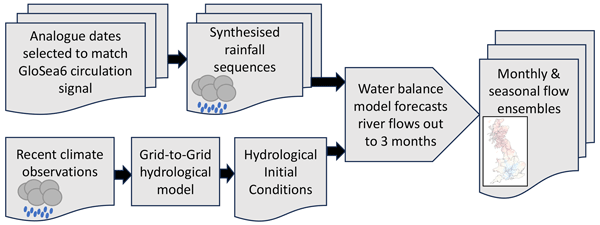
River flow forecasts up to three months ahead can allow early preparations for future floods and droughts. We test a new forecasting system using weather forecasts made by selecting historical weather patterns that match current conditions and running them through a simulation of Great Britain's rivers. Our tests show that this system performs particularly well in the winter and spring, in northern Scotland and in southern England. We now use this system to produce forecasts regularly.
Martin B. Andrews, Neal Butchart, James A. Anstey, Ewa Bednarz, Dillon Elsbury, Jorge L. García-Franco, Vinay Kumar, Froila M. Palmeiro, Natasha E. Trencham, Kohei Yoshida, Zhaoyang Chai, Dong-Chan Hong, Kai Huang, Aleena M. Jaison, Yoshio Kawatani, Jeff R. Knight, Pu Lin, François Lott, Yixiong Lu, Hiroaki Naoe, Scott M. Osprey, Jadwiga H. Richter, Federico Serva, Seok-Woo Son, Qi Tang, Shingo Watanabe, and Jinbo Xie
Weather Clim. Dynam., 7, 1797–1820, https://doi.org/10.5194/wcd-7-1797-2026, https://doi.org/10.5194/wcd-7-1797-2026, 2026
Short summary
Short summary
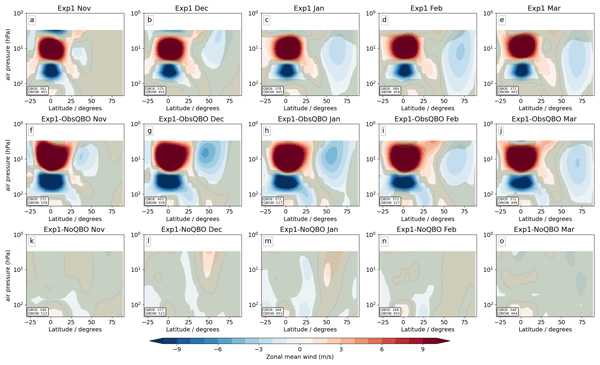
The observed winds in the upper atmosphere over the equator have alternating easterly and westerly regions that descend towards the lower atmosphere before dissipating, with a period of approximately 28 months. This is known as the Quasi-Biennial Oscillation (QBO). The QBO is known to influence remote regions of the atmosphere. This paper details the results of multi-model experiments where the QBO is nudged towards the observed QBO allowing the assessment of these remote connections.
Cinzia Mazzetti, Hannah Cloke, Dai Yamazaki, Gianpaolo Balsamo, Souhail Boussetta, Jasper Denissen, Michel Wortmann, Gabriele Arduini, Gurpreet Dass, Joe McNorton, Anna Agusti-Panareda, Maliko Tanguy, Ervin Zsoter, Margarita Choulga, Emanuel Dutra, Florian Pappenberger, Christoph Rüdiger, and Christel Prudhomme
EGUsphere, https://doi.org/10.5194/egusphere-2026-4305, https://doi.org/10.5194/egusphere-2026-4305, 2026
This preprint is open for discussion and under review for Geoscientific Model Development (GMD).
Short summary
Short summary
Rivers are an essential component of the water cycle, yet many Earth system and weather prediction models do not explicitly represent river flow. We integrated a global river model into ECMWF's forecasting system, enabling the simulation of river discharge, water levels, and flooding within a single operational framework. This development lays the foundation for future land–river–atmosphere interactions, paving the way for more complete Earth system models and improved predictions.
Aleena M. Jaison, Lesley J. Gray, Scott M. Osprey, James A. Anstey, Martin B. Andrews, Neal Butchart, Zhaoyang Chai, Dong-Chan Hong, Kai Huang, Yoshio Kawatani, Jeff R. Knight, Pu Lin, Francois Lott, Yixiong Lu, Hiroaki Naoe, Jadwiga H. Richter, Nan Rosenbloom, Federico Serva, Anne K. Smith, Seok-Woo Son, Qi Tang, Shingo Watanabe, Jinbo Xie, and Kohei Yoshida
EGUsphere, https://doi.org/10.5194/egusphere-2026-4135, https://doi.org/10.5194/egusphere-2026-4135, 2026
Short summary
Short summary
The tropical upper stratosphere has winds that switch between westerly and easterly every six months known as the semi-annual oscillation (SAO). Climate models commonly show an easterly bias in the SAO. We analysed data from many models to test if correcting the biases in winds lower in the stratosphere could improve SAO. We find correcting the lower-level wind biases reduces the SAO easterly bias, though further improvements, such as better representation of atmospheric waves, are still needed.
Rachael Armitage, Eugene Magee, Amulya Chevuturi, Wilson Chan, and Jamie Hannaford
EGUsphere, https://doi.org/10.5194/egusphere-2026-3154, https://doi.org/10.5194/egusphere-2026-3154, 2026
Short summary
Short summary
Transitions between droughts and floods can exacerbate the impacts of the individual events and provide challenges for water resource management. Here, we use river flow and climate projections to assess transitions in the UK over historical and future periods. Our results reveal the characteristics of and spatial pattern in current transitions, and how these are projected to change in the future, with wider implications for water resource management.
Hyun-Kyu Lee, James A. Anstey, Hye-Yeong Chun, Shingo Watanabe, Francois Lott, Zhaoyang Chai, Yixiong Lu, Qi Tang, Jinbo Xie, Dong-Chan Hong, Seok-Woo Son, Federico Serva, Pu Lin, Martin B. Andrews, Neal Butchart, Aleena M. Jaison, Jeff R. Knight, Scott Osprey, Hiroaki Naoe, Kohei Yoshida, Yoshio Kawatani, and Jadwiga H. Richter
EGUsphere, https://doi.org/10.5194/egusphere-2026-2856, https://doi.org/10.5194/egusphere-2026-2856, 2026
Short summary
Short summary
This study investigates the systematic biases in equatorial wave forcing of the quasi-biennial oscillation (QBO) by comparing internally generated and bias-corrected experiments using a multi-model ensemble. Although nudging effectively mitigates QBO biases, systematic biases in wave forcing are not fully resolved. The equatorial wave forcing in the lower stratosphere remains weaker than that in reanalyses, while an eastward wave forcing bias is observed in the mid-to-upper stratosphere.
Srinidhi Jha, Lucy J. Barker, Jamie Hannaford, and Maliko Tanguy
Hydrol. Earth Syst. Sci., 30, 2685–2701, https://doi.org/10.5194/hess-30-2685-2026, https://doi.org/10.5194/hess-30-2685-2026, 2026
Short summary
Short summary
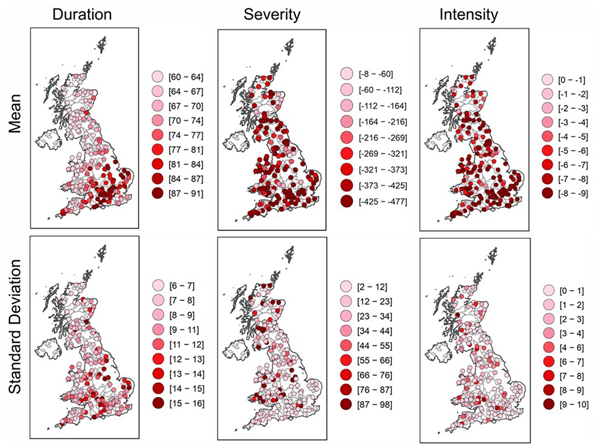
The influence of climate change on drought in the UK has gained attention recently. However, a probabilistic assessment of temperature’s nonstationary influences on hydrological drought characteristics, which could provide key insights into future risks and uncertainties, has not been conducted. This study evaluates changes across seasons and warming scenarios, finding that rare droughts may become more severe, while frequent summer droughts are shorter but more intense.
James A. Anstey, Neal Butchart, Scott Osprey, Yoshio Kawatani, Kevin Hamilton, Jadwiga H. Richter, Tim Stockdale, Martin B. Andrews, Zhaoyang Chai, Paolo Davini, Dong-Chan Hong, Kai Huang, Aleena M. Jaison, Tobias Kerzenmacher, Jeff R. Knight, Pu Lin, Francois Lott, Yixiong Lu, Hiroaki Naoe, Federico Serva, Isla Simpson, Seok-Woo Son, Qi Tang, Shingo Watanabe, Jinbo Xie, and Kohei Yoshida
EGUsphere, https://doi.org/10.5194/egusphere-2026-1165, https://doi.org/10.5194/egusphere-2026-1165, 2026
Short summary
Short summary
We describe experiments where modelled tropical stratosphere winds are adjusted by "nudging" them toward realistic time-evolving eastward and westward Quasi-Biennial Oscillation (QBO) winds. The effects of this bias correction on other atmospheric processes, such as the stratospheric polar vortex or tropical waves that force the QBO, can then be assessed. We describe details of the experiments, the multi-model ensemble that has performed them, and basic validation of the nudging response.
Burak Bulut, Eugene Magee, Rachael Armitage, Opeyemi E. Adedipe, Maliko Tanguy, Lucy J. Barker, and Jamie Hannaford
Nat. Hazards Earth Syst. Sci., 26, 1515–1536, https://doi.org/10.5194/nhess-26-1515-2026, https://doi.org/10.5194/nhess-26-1515-2026, 2026
Short summary
Short summary
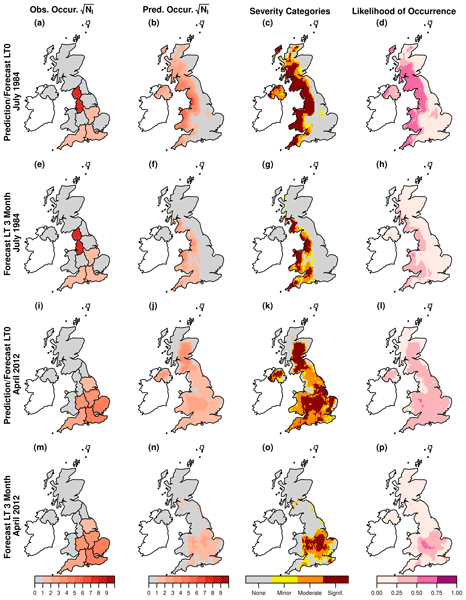
This study presents a data-driven framework to predict real-world drought impacts. Different modelling approaches were tested and evaluated in the United Kingdom using predictions at the time of occurrence, with the best-performing method selected for forecasting impacts months ahead. Both predictions and forecasts were validated using independent UK data and applied to Germany to test transferability. The results support early warning systems and improved drought risk planning.
Joséphine Schmutz, Mathieu Vrac, Bastien François, and Burak Bulut
Nat. Hazards Earth Syst. Sci., 26, 881–900, https://doi.org/10.5194/nhess-26-881-2026, https://doi.org/10.5194/nhess-26-881-2026, 2026
Short summary
Short summary
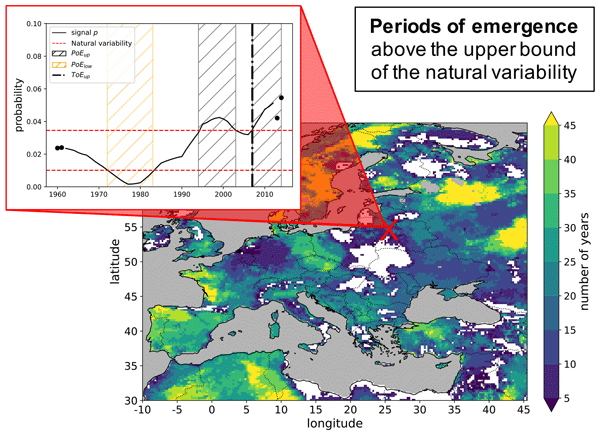
In recent years, Europe has faced severe hot and dry events affecting biodiversity, agriculture, and health. Understanding past significant variation in their occurrence is key for adaptation. This paper identifies emerging hotspots in Europe and North Africa. Since the 1970s, the Iberian Peninsula, Maghreb, and Central Europe have seen more frequent events, driven by rising temperature maxima, while Eastern Europe has experienced a decline due to changes in drought.
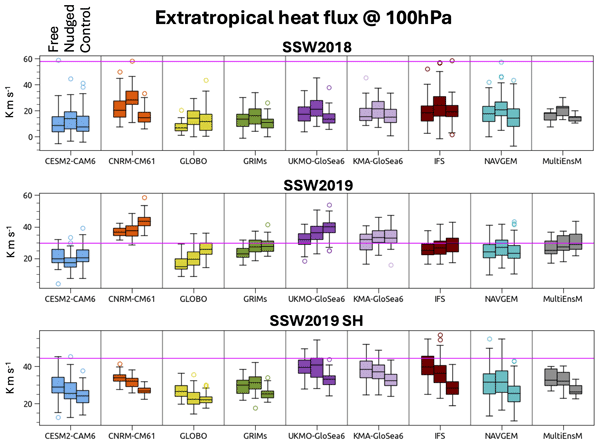
Blanca Ayarzagüena, Amy H. Butler, Peter Hitchcock, Chaim I. Garfinkel, Zac D. Lawrence, Wuhan Ning, Philip Rupp, Zheng Wu, Hilla Afargan-Gerstman, Natalia Calvo, Alvaro de la Cámara, Martin Jucker, Gerbrand Koren, Daniel De Maeseneire, Gloria L. Manney, Marisol Osman, Masakazu Taguchi, Cory Barton, Dong-Chan Hong, Yu-Kyung Hyun, Hera Kim, Jeff Knight, Piero Malguzzi, Daniele Mastrangelo, Jiyoung Oh, Inna Polichtchouk, Jadwiga H. Richter, Isla R. Simpson, Seok-Woo Son, Damien Specq, and Tim Stockdale
Weather Clim. Dynam., 7, 411–437, https://doi.org/10.5194/wcd-7-411-2026, https://doi.org/10.5194/wcd-7-411-2026, 2026
Short summary
Short summary
Sudden Stratospheric Warmings (SSWs) are known to follow a sustained wave dissipation in the stratosphere, which depends on both the tropospheric and stratospheric states. However, the relative role of each state is still unclear. Using a new set of subseasonal to seasonal forecasts, we show that the stratospheric state does not drastically affect the precursors of three recent SSWs, but modulates the stratospheric wave activity, with impacts depending on SSW features.
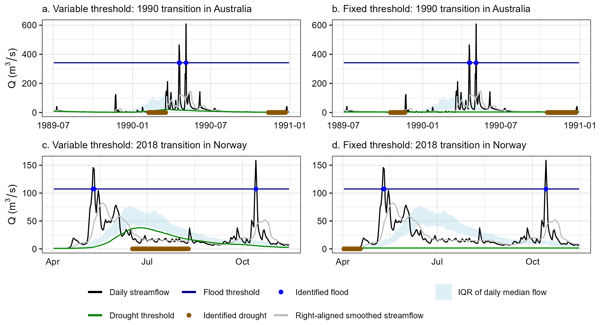
Bailey J. Anderson, Eduardo Muñoz-Castro, Lena M. Tallaksen, Alessia Matano, Jonas Götte, Rachael Armitage, Eugene Magee, and Manuela I. Brunner
Hydrol. Earth Syst. Sci., 29, 6069–6092, https://doi.org/10.5194/hess-29-6069-2025, https://doi.org/10.5194/hess-29-6069-2025, 2025
Short summary
Short summary
When floods happen during or shortly after droughts, the impacts of each of the events can be magnified. In hydrological research, defining these events represents a challenging and important task in the process of understanding where and why they occur. We have used real-word examples to address some of these challenges and show different approaches influence outcomes. We make suggestions on when to use which approach and outline some pitfalls of which researchers should be aware.
Jamie Hannaford, Stephen Turner, Amulya Chevuturi, Wilson Chan, Lucy J. Barker, Maliko Tanguy, Simon Parry, and Stuart Allen
Hydrol. Earth Syst. Sci., 29, 4371–4394, https://doi.org/10.5194/hess-29-4371-2025, https://doi.org/10.5194/hess-29-4371-2025, 2025
Short summary
Short summary
This extended review asks whether hydrological (river flow) droughts have become more severe over time in the UK based on literature review and original analyses. The UK is a good international exemplar, given the richness of available data. We find that there is little compelling evidence for a trend towards worsening river flow droughts, at odds with future climate change projections. We outline reasons for this discrepancy and make recommendations to guide researchers and policymakers.
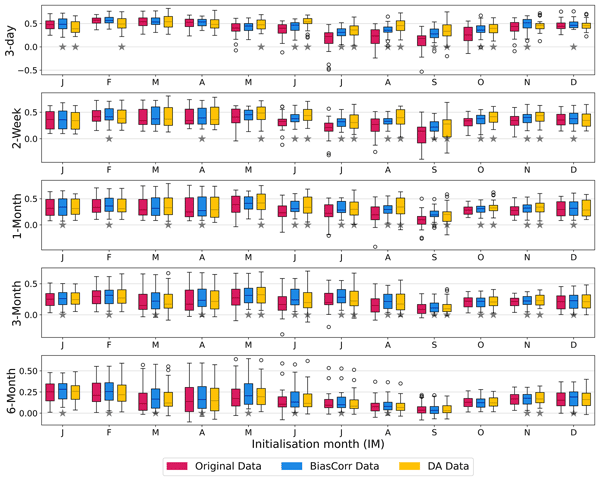
Maliko Tanguy, Michael Eastman, Amulya Chevuturi, Eugene Magee, Elizabeth Cooper, Robert H. B. Johnson, Katie Facer-Childs, and Jamie Hannaford
Hydrol. Earth Syst. Sci., 29, 1587–1614, https://doi.org/10.5194/hess-29-1587-2025, https://doi.org/10.5194/hess-29-1587-2025, 2025
Short summary
Short summary
Our research compares two techniques, bias correction (BC) and data assimilation (DA), for improving river flow forecasts across 316 UK catchments. BC, which corrects errors after simulation, showed broad improvements, while DA, adjusting model states before forecast, excelled under specific conditions like snowmelt and high baseflows. Each method's unique strengths suit different scenarios. These insights can enhance forecasting systems, offering reliable and user-friendly hydrological predictions.
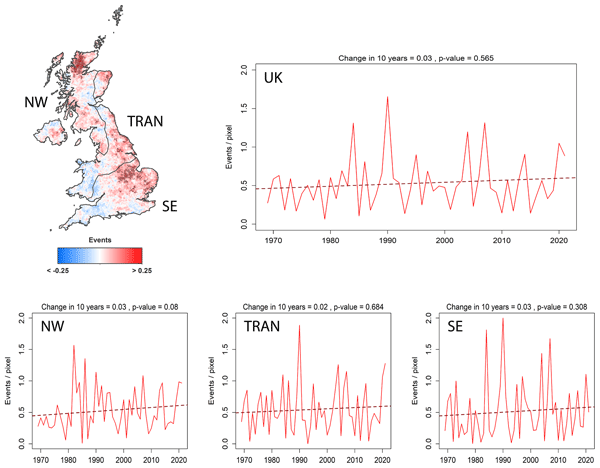
Iván Noguera, Jamie Hannaford, and Maliko Tanguy
Hydrol. Earth Syst. Sci., 29, 1295–1317, https://doi.org/10.5194/hess-29-1295-2025, https://doi.org/10.5194/hess-29-1295-2025, 2025
Short summary
Short summary
The study provides a detailed characterisation of flash drought in the UK for 1969–2021. The spatio-temporal distribution and trends of flash droughts are highly variable, with important regional and seasonal contrasts. In the UK, flash drought development responds primarily to precipitation variability, while the atmospheric evaporative demand plays a secondary role. We also found that the North Atlantic Oscillation is the main circulation pattern controlling flash drought development.
Aleena M. Jaison, Lesley J. Gray, Scott M. Osprey, Jeff R. Knight, and Martin B. Andrews
Weather Clim. Dynam., 5, 1489–1504, https://doi.org/10.5194/wcd-5-1489-2024, https://doi.org/10.5194/wcd-5-1489-2024, 2024
Short summary
Short summary
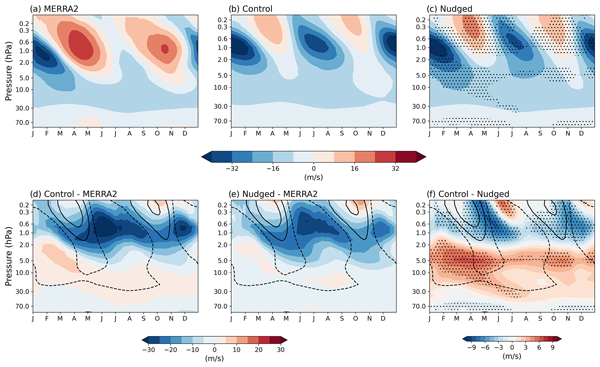
Models have biases in semi-annual oscillation (SAO) representation, mainly due to insufficient eastward wave forcing. We examined if the bias is from increased wave absorption due to circulation biases in the low–middle stratosphere. Alleviating biases at lower altitudes improves the SAO, but substantial bias remains. Alternative methods like gravity wave parameterization changes should be explored to enhance the modelled SAO, potentially improving sudden stratospheric warming predictability.
Alison L. Kay, Nick Dunstone, Gillian Kay, Victoria A. Bell, and Jamie Hannaford
Nat. Hazards Earth Syst. Sci., 24, 2953–2970, https://doi.org/10.5194/nhess-24-2953-2024, https://doi.org/10.5194/nhess-24-2953-2024, 2024
Short summary
Short summary
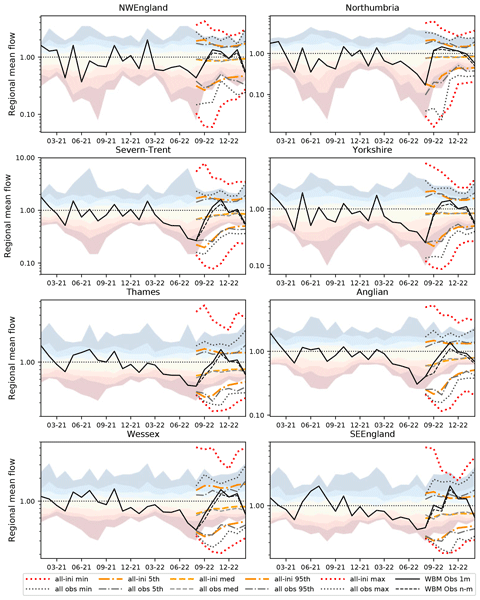
Hydrological hazards affect people and ecosystems, but extremes are not fully understood due to limited observations. A large climate ensemble and simple hydrological model are used to assess unprecedented but plausible floods and droughts. The chain gives extreme flows outside the observed range: summer 2022 ~ 28 % lower and autumn 2023 ~ 42 % higher. Spatial dependence and temporal persistence are analysed. Planning for such events could help water supply resilience and flood risk management.
Ed Hawkins, Nigel Arnell, Jamie Hannaford, and Rowan Sutton
Geosci. Commun., 7, 161–165, https://doi.org/10.5194/gc-7-161-2024, https://doi.org/10.5194/gc-7-161-2024, 2024
Short summary
Short summary
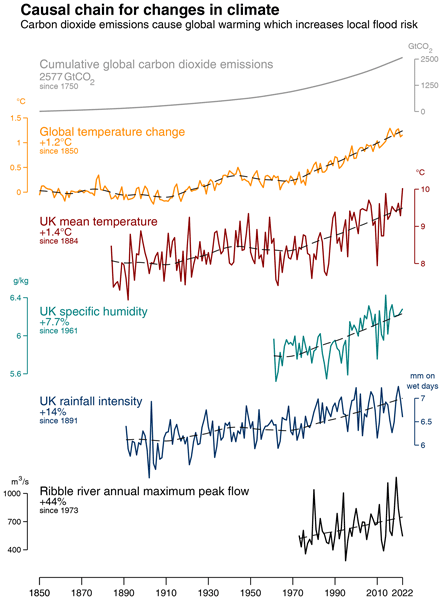
Climate change can often seem rather remote, especially when the discussion is about global averages which appear to have little relevance to local experiences. But those global changes are already affecting people, even if they do not fully realise it, and effective communication of this issue is critical. We use long observations and well-understood physical principles to visually highlight how global emissions influence local flood risk in one river basin in the UK.
Wilson C. H. Chan, Nigel W. Arnell, Geoff Darch, Katie Facer-Childs, Theodore G. Shepherd, and Maliko Tanguy
Nat. Hazards Earth Syst. Sci., 24, 1065–1078, https://doi.org/10.5194/nhess-24-1065-2024, https://doi.org/10.5194/nhess-24-1065-2024, 2024
Short summary
Short summary
The most recent drought in the UK was declared in summer 2022. We pooled a large sample of plausible winters from seasonal hindcasts and grouped them into four clusters based on their atmospheric circulation configurations. Drought storylines representative of what the drought could have looked like if winter 2022/23 resembled each winter circulation storyline were created to explore counterfactuals of how bad the 2022 drought could have been over winter 2022/23 and beyond.
Simon Parry, Jonathan D. Mackay, Thomas Chitson, Jamie Hannaford, Eugene Magee, Maliko Tanguy, Victoria A. Bell, Katie Facer-Childs, Alison Kay, Rosanna Lane, Robert J. Moore, Stephen Turner, and John Wallbank
Hydrol. Earth Syst. Sci., 28, 417–440, https://doi.org/10.5194/hess-28-417-2024, https://doi.org/10.5194/hess-28-417-2024, 2024
Short summary
Short summary
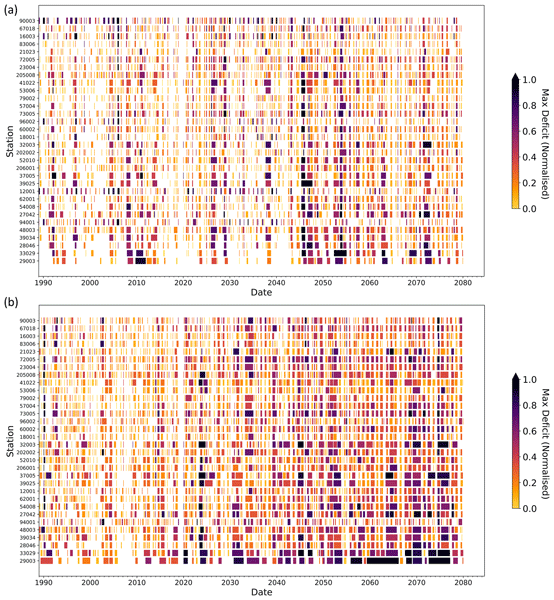
We studied drought in a dataset of possible future river flows and groundwater levels in the UK and found different outcomes for these two sources of water. Throughout the UK, river flows are likely to be lower in future, with droughts more prolonged and severe. However, whilst these changes are also found in some boreholes, in others, higher levels and less severe drought are indicated for the future. This has implications for the future balance between surface water and groundwater below.
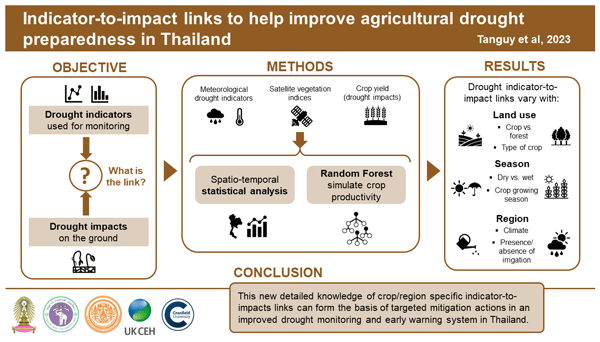
Maliko Tanguy, Michael Eastman, Eugene Magee, Lucy J. Barker, Thomas Chitson, Chaiwat Ekkawatpanit, Daniel Goodwin, Jamie Hannaford, Ian Holman, Liwa Pardthaisong, Simon Parry, Dolores Rey Vicario, and Supattra Visessri
Nat. Hazards Earth Syst. Sci., 23, 2419–2441, https://doi.org/10.5194/nhess-23-2419-2023, https://doi.org/10.5194/nhess-23-2419-2023, 2023
Short summary
Short summary
Droughts in Thailand are becoming more severe due to climate change. Understanding the link between drought impacts on the ground and drought indicators used in drought monitoring systems can help increase a country's preparedness and resilience to drought. With a focus on agricultural droughts, we derive crop- and region-specific indicator-to-impact links that can form the basis of targeted mitigation actions and an improved drought monitoring and early warning system in Thailand.
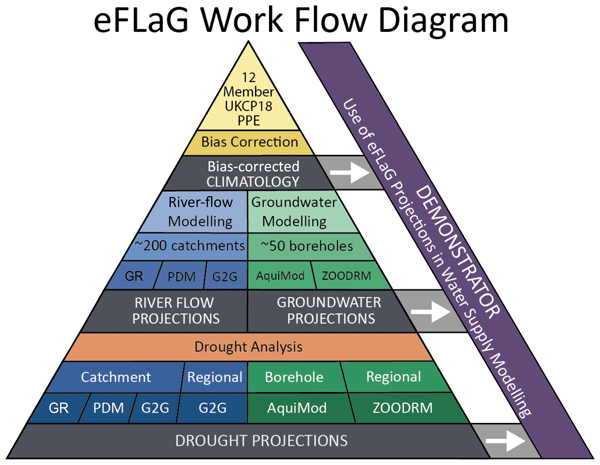
Jamie Hannaford, Jonathan D. Mackay, Matthew Ascott, Victoria A. Bell, Thomas Chitson, Steven Cole, Christian Counsell, Mason Durant, Christopher R. Jackson, Alison L. Kay, Rosanna A. Lane, Majdi Mansour, Robert Moore, Simon Parry, Alison C. Rudd, Michael Simpson, Katie Facer-Childs, Stephen Turner, John R. Wallbank, Steven Wells, and Amy Wilcox
Earth Syst. Sci. Data, 15, 2391–2415, https://doi.org/10.5194/essd-15-2391-2023, https://doi.org/10.5194/essd-15-2391-2023, 2023
Short summary
Short summary
The eFLaG dataset is a nationally consistent set of projections of future climate change impacts on hydrology. eFLaG uses the latest available UK climate projections (UKCP18) run through a series of computer simulation models which enable us to produce future projections of river flows, groundwater levels and groundwater recharge. These simulations are designed for use by water resource planners and managers but could also be used for a wide range of other purposes.
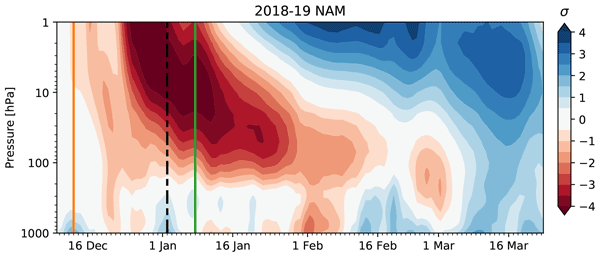
Peter Hitchcock, Amy Butler, Andrew Charlton-Perez, Chaim I. Garfinkel, Tim Stockdale, James Anstey, Dann Mitchell, Daniela I. V. Domeisen, Tongwen Wu, Yixiong Lu, Daniele Mastrangelo, Piero Malguzzi, Hai Lin, Ryan Muncaster, Bill Merryfield, Michael Sigmond, Baoqiang Xiang, Liwei Jia, Yu-Kyung Hyun, Jiyoung Oh, Damien Specq, Isla R. Simpson, Jadwiga H. Richter, Cory Barton, Jeff Knight, Eun-Pa Lim, and Harry Hendon
Geosci. Model Dev., 15, 5073–5092, https://doi.org/10.5194/gmd-15-5073-2022, https://doi.org/10.5194/gmd-15-5073-2022, 2022
Short summary
Short summary
This paper describes an experimental protocol focused on sudden stratospheric warmings to be carried out by subseasonal forecast modeling centers. These will allow for inter-model comparisons of these major disruptions to the stratospheric polar vortex and their impacts on the near-surface flow. The protocol will lead to new insights into the contribution of the stratosphere to subseasonal forecast skill and new approaches to the dynamical attribution of extreme events.
Wilson C. H. Chan, Theodore G. Shepherd, Katie Facer-Childs, Geoff Darch, and Nigel W. Arnell
Hydrol. Earth Syst. Sci., 26, 1755–1777, https://doi.org/10.5194/hess-26-1755-2022, https://doi.org/10.5194/hess-26-1755-2022, 2022
Short summary
Short summary
We select the 2010–2012 UK drought and investigate an alternative unfolding of the drought from changes to its attributes. We created storylines of drier preconditions, alternative seasonal contributions, a third dry winter, and climate change. Storylines of the 2010–2012 drought show alternative situations that could have resulted in worse conditions than observed. Event-based storylines exploring plausible situations are used that may lead to high impacts and help stress test existing systems.
Cited articles
Akbarian, M., Saghafian, B., and Golian, S.: Monthly streamflow forecasting by machine learning methods using dynamic weather prediction model outputs over Iran, Journal of Hydrology, 620, 129480, https://doi.org/10.1016/j.jhydrol.2023.129480, 2023.
Arsenault, R., Gatien, P., Renaud, B., Brissette, F., and Martel, J.-L.: A comparative analysis of 9 multi-model averaging approaches in hydrological continuous streamflow simulation, Journal of Hydrology, 529, 754–767, https://doi.org/10.1016/j.jhydrol.2015.09.001, 2015.
Baker, L. H., Shaffrey, L. C., Sutton, R. T., Weisheimer, A., and Scaife, A. A.: An Intercomparison of Skill and Overconfidence/Underconfidence of the Wintertime North Atlantic Oscillation in Multimodel Seasonal Forecasts, Geophysical Research Letters, 45, 7808–7817, https://doi.org/10.1029/2018GL078838, 2018.
Baker, L. H., Shaffrey, L. C., Johnson, S. J., and Weisheimer, A.: Understanding the Intermittency of the Wintertime North Atlantic Oscillation and East Atlantic Pattern Seasonal Forecast Skill in the Copernicus C3S Multi-Model Ensemble, Geophysical Research Letters, 51, e2024GL108472, https://doi.org/10.1029/2024GL108472, 2024.
Baker, S. A., Rajagopalan, B., and Wood, A. W.: Enhancing Ensemble Seasonal Streamflow Forecasts in the Upper Colorado River Basin Using Multi-Model Climate Forecasts, J. American Water Resour. Assoc., 57, 906–922, https://doi.org/10.1111/1752-1688.12960, 2021.
Beckers, J. V. L., Weerts, A. H., Tijdeman, E., and Welles, E.: ENSO-conditioned weather resampling method for seasonal ensemble streamflow prediction, Hydrol. Earth Syst. Sci., 20, 3277–3287, https://doi.org/10.5194/hess-20-3277-2016, 2016.
Bell, V. A., Davies, H. N., Kay, A. L., Brookshaw, A., and Scaife, A. A.: A national-scale seasonal hydrological forecast system: development and evaluation over Britain, Hydrol. Earth Syst. Sci., 21, 4681–4691, https://doi.org/10.5194/hess-21-4681-2017, 2017.
Chan, W. C. H., Arnell, N. W., Darch, G., Facer-Childs, K., Shepherd, T. G., and Tanguy, M.: Added value of seasonal hindcasts to create UK hydrological drought storylines, Nat. Hazards Earth Syst. Sci., 24, 1065–1078, https://doi.org/10.5194/nhess-24-1065-2024, 2024.
Chan, W. C. H., Barker, L. J., Faranda, D., and Hannaford, J.: River flow amplification under climate change: attribution and climate-driven storylines of the winter 2023/24 UK floods, Environ. Res. Lett., 20, 104035, https://doi.org/10.1088/1748-9326/adfdfe, 2025.
Chevuturi, A., Tanguy, M., Facer-Childs, K., Martínez-de La Torre, A., Sarkar, S., Thober, S., Samaniego, L., Rakovec, O., Kelbling, M., Sutanudjaja, E. H., Wanders, N., and Blyth, E.: Improving global hydrological simulations through bias-correction and multi-model blending, Journal of Hydrology, 621, 129607, https://doi.org/10.1016/j.jhydrol.2023.129607, 2023.
Chevuturi, A., Oltmanns, M., Tanguy, M., Harvey, B., Svensson, C., and Hannaford, J.: Oceanic drivers of UK summer droughts, Commun. Earth Environ., 6, 437, https://doi.org/10.1038/s43247-025-02367-1, 2025.
Chiverton, A., Hannaford, J., Holman, I., Corstanje, R., Prudhomme, C., Bloomfield, J., and Hess, T. M.: Which catchment characteristics control the temporal dependence structure of daily river flows?, Hydrol. Process., 29, 1353–1369, https://doi.org/10.1002/hyp.10252, 2015.
Coron, L., Thirel, G., Delaigue, O., Perrin, C., and Andréassian, V.: The Suite of Lumped GR Hydrological Models in an R package, Environ. Model. Softw., 94, 166–171, https://doi.org/10.1016/j.envsoft.2017.05.002, 2017.
Coron, L., Delaigue, O., Thirel, G., Dorchies, D., Perrin, C., and Michel, C.: airGR: Suite of GR Hydrological Models for Precipitation-Runoff Modelling, R package version 1.7.6, Recherche Data Gouv, V1 [code], https://doi.org/10.15454/EX11NA, 2023.
Cosgrove, B., Gochis, D., Flowers, T., Dugger, A., Ogden, F., Graziano, T., Clark, E., Cabell, R., Casiday, N., Cui, Z., Eicher, K., Fall, G., Feng, X., Fitzgerald, K., Frazier, N., George, C., Gibbs, R., Hernandez, L., Johnson, D., Jones, R., Karsten, L., Kefelegn, H., Kitzmiller, D., Lee, H., Liu, Y., Mashriqui, H., Mattern, D., McCluskey, A., McCreight, J. L., McDaniel, R., Midekisa, A., Newman, A., Pan, L., Pham, C., RafieeiNasab, A., Rasmussen, R., Read, L., Rezaeianzadeh, M., Salas, F., Sang, D., Sampson, K., Schneider, T., Shi, Q., Sood, G., Wood, A., Wu, W., Yates, D., Yu, W., and Zhang, Y.: NOAA's National Water Model: Advancing operational hydrology through continental-scale modeling, J. American Water Resour. Assoc., 60, 247–272, https://doi.org/10.1111/1752-1688.13184, 2024.
Day, G. N.: Extended Streamflow Forecasting Using NWSRFS, J. Water Resour. Plann. Manage., 111, 157–170, https://doi.org/10.1061/(ASCE)0733-9496(1985)111:2(157), 1985.
Donegan, S., Murphy, C., Harrigan, S., Broderick, C., Foran Quinn, D., Golian, S., Knight, J., Matthews, T., Prudhomme, C., Scaife, A. A., Stringer, N., and Wilby, R. L.: Conditioning ensemble streamflow prediction with the North Atlantic Oscillation improves skill at longer lead times, Hydrol. Earth Syst. Sci., 25, 4159–4183, https://doi.org/10.5194/hess-25-4159-2021, 2021.
Dunstone, N., Smith, D., Scaife, A., Hermanson, L., Fereday, D., O'Reilly, C., Stirling, A., Eade, R., Gordon, M., MacLachlan, C., Woollings, T., Sheen, K., and Belcher, S.: Skilful Seasonal Predictions of Summer European Rainfall, Geophysical Research Letters, 45, 3246–3254, https://doi.org/10.1002/2017GL076337, 2018.
Eade, R., Smith, D., Scaife, A., Wallace, E., Dunstone, N., Hermanson, L., and Robinson, N.: Do seasonal-to-decadal climate predictions underestimate the predictability of the real world?, Geophysical Research Letters, 41, 5620–5628, https://doi.org/10.1002/2014GL061146, 2014.
Environment Agency: Monthly Water Situation Report: November 2022, Environment Agency, https://www.gov.uk/government/publications/water-situation-national-monthly-reports-for-england-2025/water-situation-november-2025-summary (last access: 12 February 2026), 2022.
Ferro, C. A. T., Richardson, D. S., and Weigel, A. P.: On the effect of ensemble size on the discrete and continuous ranked probability scores, Meteorological Applications, 15, 19–24, https://doi.org/10.1002/met.45, 2008.
Folland, C. K., Knight, J., Linderholm, H. W., Fereday, D., Ineson, S., and Hurrell, J. W.: The Summer North Atlantic Oscillation: Past, Present, and Future, J. Climate, 22, 1082–1103, https://doi.org/10.1175/2008JCLI2459.1, 2009.
Golian, S., Murphy, C., Wilby, R. L., Matthews, T., Donegan, S., Quinn, D. F., and Harrigan, S.: Dynamical–statistical seasonal forecasts of winter and summer precipitation for the Island of Ireland, Intl. Journal of Climatology, 42, 5714–5731, https://doi.org/10.1002/joc.7557, 2022.
Harrigan, S., Prudhomme, C., Parry, S., Smith, K., and Tanguy, M.: Benchmarking ensemble streamflow prediction skill in the UK, Hydrol. Earth Syst. Sci., 22, 2023–2039, https://doi.org/10.5194/hess-22-2023-2018, 2018.
Harrigan, S., Zsoter, E., Cloke, H., Salamon, P., and Prudhomme, C.: Daily ensemble river discharge reforecasts and real-time forecasts from the operational Global Flood Awareness System, Hydrol. Earth Syst. Sci., 27, 1–19, https://doi.org/10.5194/hess-27-1-2023, 2023.
Hollis, D., McCarthy, M., Kendon, M., Legg, T., and Simpson, I.: HadUK-Grid – A new UK dataset of gridded climate observations, Geosci. Data J., 6, 151–159, https://doi.org/10.1002/gdj3.78, 2019.
Hulme, M. and Barrow, E. (Eds.): Climates of the British Isles: present, past and future, Psychology Press, ISBN-10 0415130174, 1997.
Huntingford, C., Marsh, T., Scaife, A. A., Kendon, E. J., Hannaford, J., Kay, A. L., Lockwood, M., Prudhomme, C., Reynard, N. S., Parry, S., Lowe, J. A., Screen, J. A., Ward, H. C., Roberts, M., Stott, P. A., Bell, V. A., Bailey, M., Jenkins, A., Legg, T., Otto, F. E. L., Massey, N., Schaller, N., Slingo, J., and Allen, M. R.: Potential influences on the United Kingdom's floods of winter 2013/14, Nat. Clim. Change, 4, 769–777, https://doi.org/10.1038/nclimate2314, 2014.
Institute of Hydrology and British Geological Survey: Hydrological data United Kingdom 1995 Yearbook: an account of rainfall, river flows, groundwater levels and river water quality January to December 1995, NERC Institute of Hydrology, Wallingford, https://nora.nerc.ac.uk/id/eprint/6946 (last access: 12 February 2026), 1996.
Kay, A. L., Dunstone, N., Kay, G., Bell, V. A., and Hannaford, J.: Demonstrating the use of UNSEEN climate data for hydrological applications: case studies for extreme floods and droughts in England, Nat. Hazards Earth Syst. Sci., 24, 2953–2970, https://doi.org/10.5194/nhess-24-2953-2024, 2024.
Keel, T., Brierley, C., and Edwards, T.: jsmetrics v0.2.0: a Python package for metrics and algorithms used to identify or characterise atmospheric jet streams, Geosci. Model Dev., 17, 1229–1247, https://doi.org/10.5194/gmd-17-1229-2024, 2024.
Kendon, M., Marsh, T., and Parry, S.: The 2010–2012 drought in England and Wales, Weather, 68, 88–95, https://doi.org/10.1002/wea.2101, 2013.
Kling, H., Fuchs, M., and Paulin, M.: Runoff conditions in the upper Danube basin under an ensemble of climate change scenarios, Journal of Hydrology, 424/425, 264–277, https://doi.org/10.1016/j.jhydrol.2012.01.011, 2012.
Kratzert, F., Klotz, D., Shalev, G., Klambauer, G., Hochreiter, S., and Nearing, G.: Towards learning universal, regional, and local hydrological behaviors via machine learning applied to large-sample datasets, Hydrol. Earth Syst. Sci., 23, 5089–5110, https://doi.org/10.5194/hess-23-5089-2019, 2019.
Lane, R. A., Coxon, G., Freer, J. E., Wagener, T., Johnes, P. J., Bloomfield, J. P., Greene, S., Macleod, C. J. A., and Reaney, S. M.: Benchmarking the predictive capability of hydrological models for river flow and flood peak predictions across over 1000 catchments in Great Britain, Hydrol. Earth Syst. Sci., 23, 4011–4032, https://doi.org/10.5194/hess-23-4011-2019, 2019.
Lees, T., Buechel, M., Anderson, B., Slater, L., Reece, S., Coxon, G., and Dadson, S. J.: Benchmarking data-driven rainfall–runoff models in Great Britain: a comparison of long short-term memory (LSTM)-based models with four lumped conceptual models, Hydrol. Earth Syst. Sci., 25, 5517–5534, https://doi.org/10.5194/hess-25-5517-2021, 2021.
Leutbecher, M. and Haiden, T.: Understanding changes of the continuous ranked probability score using a homogeneous Gaussian approximation, Q. J. Roy. Meteor. Soc., 147, 425–442, https://doi.org/10.1002/qj.3926, 2021.
Li, H., Luo, L., Wood, E. F., and Schaake, J.: The role of initial conditions and forcing uncertainties in seasonal hydrologic forecasting, J. Geophys. Res., 114, 2008JD010969, https://doi.org/10.1029/2008JD010969, 2009.
MacLachlan, C., Arribas, A., Peterson, K. A., Maidens, A., Fereday, D., Scaife, A. A., Gordon, M., Vellinga, M., Williams, A., Comer, R. E., Camp, J., Xavier, P., and Madec, G.: Global Seasonal forecast system version 5 (GloSea5): a high-resolution seasonal forecast system, Q. J. Roy. Meteor. Soc., 141, 1072–1084, https://doi.org/10.1002/qj.2396, 2015.
Marsh, T., Parry, S., Kendon, M., and Hannaford, J.: The 2010-12 drought and subsequent extensive flooding: a remarkable hydrological transformation, NERC/Centre for Ecology & Hydrology, Wallingford, https://nora.nerc.ac.uk/id/eprint/503643 (last access: 12 February 2026), 2013.
Matthews, G., Barnard, C., Cloke, H., Dance, S. L., Jurlina, T., Mazzetti, C., and Prudhomme, C.: Evaluating the impact of post-processing medium-range ensemble streamflow forecasts from the European Flood Awareness System, Hydrol. Earth Syst. Sci., 26, 2939–2968, https://doi.org/10.5194/hess-26-2939-2022, 2022.
Mendoza, P. A., Wood, A. W., Clark, E., Rothwell, E., Clark, M. P., Nijssen, B., Brekke, L. D., and Arnold, J. R.: An intercomparison of approaches for improving operational seasonal streamflow forecasts, Hydrol. Earth Syst. Sci., 21, 3915–3935, https://doi.org/10.5194/hess-21-3915-2017, 2017.
MeteoSwiss: _easyVerification: Ensemble Forecast Verification for Large Data Sets_, R package version 0.4.5, https://CRAN.R-project.org/package=easyVerification (last access: 12 February 2026), 2023.
Moulds, S., Slater, L. J., Dunstone, N. J., and Smith, D. M.: Skillful Decadal Flood Prediction, Geophysical Research Letters, 50, e2022GL100650, https://doi.org/10.1029/2022GL100650, 2023.
National River Flow Archive: Integrated Hydrological Units of the United Kingdom: Hydrometric Areas with Coastline, UKCEH, https://doi.org/10.5285/1957166d-7523-44f4-b279-aa5314163237, 2014.
Pappenberger, F., Ramos, M. H., Cloke, H. L., Wetterhall, F., Alfieri, L., Bogner, K., Mueller, A., and Salamon, P.: How do I know if my forecasts are better? Using benchmarks in hydrological ensemble prediction, Journal of Hydrology, 522, 697–713, https://doi.org/10.1016/j.jhydrol.2015.01.024, 2015.
Prior, J. and Kendon, M.: The UK winter of 2009/2010 compared with severe winters of the last 100 years, Weather, 66, 4–10, https://doi.org/10.1002/wea.735, 2011.
Prudhomme, C., Hannaford, J., Harrigan, S., Boorman, D., Knight, J., Bell, V., Jackson, C., Svensson, C., Parry, S., Bachiller-Jareno, N., Davies, H., Davis, R., Mackay, J., McKenzie, A., Rudd, A., Smith, K., Bloomfield, J., Ward, R., and Jenkins, A.: Hydrological Outlook UK: an operational streamflow and groundwater level forecasting system at monthly to seasonal time scales, Hydrological Sciences Journal, 62, 2753–2768, https://doi.org/10.1080/02626667.2017.1395032, 2017.
Pushpalatha, R., Perrin, C., Le Moine, N., Mathevet, T., and Andréassian, V.: A downward structural sensitivity analysis of hydrological models to improve low-flow simulation, Journal of Hydrology, 411, 66–76, https://doi.org/10.1016/j.jhydrol.2011.09.034, 2011.
Quinn, D. F., Murphy, C., Wilby, R. L., Matthews, T., Broderick, C., Golian, S., Donegan, S., and Harrigan, S.: Benchmarking seasonal forecasting skill using river flow persistence in Irish catchments, Hydrological Sciences Journal, 66, 672–688, https://doi.org/10.1080/02626667.2021.1874612, 2021.
Rhodes-Smith, M. D., Bell, V. A., Stringer, N., Baron, H., Davies, H., and Knight, J.: Improved seasonal hydrological forecasting for Great Britain, EGUsphere [preprint], https://doi.org/10.5194/egusphere-2025-2506, 2025.
Richardson, D., Fowler, H. J., Kilsby, C. G., and Neal, R.: A new precipitation and drought climatology based on weather patterns, International Journal of Climatology, 38, 630–648, https://doi.org/10.1002/joc.5199, 2018.
Scaife, A. A. and Smith, D.: A signal-to-noise paradox in climate science, npj Clim. Atmos. Sci., 1, 28, https://doi.org/10.1038/s41612-018-0038-4, 2018.
Scaife, A. A., Arribas, A., Blockley, E., Brookshaw, A., Clark, R. T., Dunstone, N., Eade, R., Fereday, D., Folland, C. K., Gordon, M., Hermanson, L., Knight, J. R., Lea, D. J., MacLachlan, C., Maidens, A., Martin, M., Peterson, A. K., Smith, D., Vellinga, M., Wallace, E., Waters, J., and Williams, A.: Skillful long-range prediction of European and North American winters, Geophys. Res. Lett., 41, 2514–2519, https://doi.org/10.1002/2014GL059637, 2014.
Scaife, A. A., Dunstone, N., Hardiman, S., Ineson, S., Li, C., Lu, R., Pang, B., Klein-Tank, A., Smith, D., Van Niekerk, A., Renwick, J., and Williams, N.: ENSO affects the North Atlantic Oscillation 1 year later, Science, 386, 82–86, https://doi.org/10.1126/science.adk4671, 2024.
Seager, R., Liu, H., Kushnir, Y., Osborn, T. J., Simpson, I. R., Kelley, C. R., and Nakamura, J.: Mechanisms of Winter Precipitation Variability in the European–Mediterranean Region Associated with the North Atlantic Oscillation, J. Climate, 33, 7179–7196, https://doi.org/10.1175/JCLI-D-20-0011.1, 2020.
Slater, L. J. and Villarini, G.: Enhancing the Predictability of Seasonal Streamflow With a Statistical-Dynamical Approach, Geophysical Research Letters, 45, 6504–6513, https://doi.org/10.1029/2018GL077945, 2018.
Slater, L. J., Arnal, L., Boucher, M.-A., Chang, A. Y.-Y., Moulds, S., Murphy, C., Nearing, G., Shalev, G., Shen, C., Speight, L., Villarini, G., Wilby, R. L., Wood, A., and Zappa, M.: Hybrid forecasting: blending climate predictions with AI models, Hydrol. Earth Syst. Sci., 27, 1865–1889, https://doi.org/10.5194/hess-27-1865-2023, 2023.
Smith, D. M., Scaife, A. A., Eade, R., Athanasiadis, P., Bellucci, A., Bethke, I., Bilbao, R., Borchert, L. F., Caron, L.-P., Counillon, F., Danabasoglu, G., Delworth, T., Doblas-Reyes, F. J., Dunstone, N. J., Estella-Perez, V., Flavoni, S., Hermanson, L., Keenlyside, N., Kharin, V., Kimoto, M., Merryfield, W. J., Mignot, J., Mochizuki, T., Modali, K., Monerie, P.-A., Müller, W. A., Nicolí, D., Ortega, P., Pankatz, K., Pohlmann, H., Robson, J., Ruggieri, P., Sospedra-Alfonso, R., Swingedouw, D., Wang, Y., Wild, S., Yeager, S., Yang, X., and Zhang, L.: North Atlantic climate far more predictable than models imply, Nature, 583, 796–800, https://doi.org/10.1038/s41586-020-2525-0, 2020.
Stringer, N., Knight, J., and Thornton, H.: Improving Meteorological Seasonal Forecasts for Hydrological Modeling in European Winter, Journal of Applied Meteorology and Climatology, 59, 317–332, https://doi.org/10.1175/JAMC-D-19-0094.1, 2020.
Svensson, C.: Seasonal river flow forecasts for the United Kingdom using persistence and historical analogues, Hydrological Sciences Journal, 61, 19–35, https://doi.org/10.1080/02626667.2014.992788, 2016.
Svensson, C. and Jones, D. A.: Dependence between extreme sea surge, river flow and precipitation in eastern Britain, Intl. Journal of Climatology, 22, 1149–1168, https://doi.org/10.1002/joc.794, 2002.
Svensson, C. and Prudhomme, C.: Prediction of British summer river flows using winter predictors, Theor. Appl. Climatol., 82, 1–15, https://doi.org/10.1007/s00704-005-0124-5, 2005.
Svensson, C., Brookshaw, A., Scaife, A. A., Bell, V. A., Mackay, J. D., Jackson, C. R., Hannaford, J., Davies, H. N., Arribas, A., and Stanley, S.: Long-range forecasts of UK winter hydrology, Environ. Res. Lett., 10, 064006, https://doi.org/10.1088/1748-9326/10/6/064006, 2015.
Tanguy, M., Prudhomme, C., Smith, K., and Hannaford, J.: Historical gridded reconstruction of potential evapotranspiration for the UK, Earth Syst. Sci. Data, 10, 951–968, https://doi.org/10.5194/essd-10-951-2018, 2018.
Tanguy, M., Eastman, M., Chevuturi, A., Magee, E., Cooper, E., Johnson, R. H. B., Facer-Childs, K., and Hannaford, J.: Optimising ensemble streamflow predictions with bias correction and data assimilation techniques, Hydrol. Earth Syst. Sci., 29, 1587–1614, https://doi.org/10.5194/hess-29-1587-2025, 2025.
Thompson, V., Dunstone, N. J., Scaife, A. A., Smith, D. M., Slingo, J. M., Brown, S., and Belcher, S. E.: High risk of unprecedented UK rainfall in the current climate, Nature Communications, 8, 107, https://doi.org/10.1038/s41467-017-00275-3, 2017.
Troin, M., Arsenault, R., Wood, A. W., Brissette, F., and Martel, J.: Generating Ensemble Streamflow Forecasts: A Review of Methods and Approaches Over the Past 40 Years, Water Resources Research, 57, e2020WR028392, https://doi.org/10.1029/2020WR028392, 2021.
Vitolo, C., Fry, M., and Buytaert, W.: rnrfa: an R package to retrieve, filter and visualize data from the UK National River Flow Archive, R Journal, 8, 102–116, 2016.
Weisheimer, A. and Palmer, T. N.: On the reliability of seasonal climate forecasts, J. R. Soc. Interface., 11, 20131162, https://doi.org/10.1098/rsif.2013.1162, 2014.
West, H., Quinn, N., and Horswell, M.: Regional rainfall response to the North Atlantic Oscillation (NAO) across Great Britain, Hydrol. Res., 50, 1549–1563, https://doi.org/10.2166/nh.2019.015, 2019.
West, H., Quinn, N., and Horswell, M.: Monthly Rainfall Signatures of the North Atlantic Oscillation and East Atlantic Pattern in Great Britain, Atmosphere, 12, 1533, https://doi.org/10.3390/atmos12111533, 2021.
West, H., Quinn, N., and Horswell, M.: Spatio-temporal propagation of North Atlantic Oscillation (NAO) rainfall deviations to streamflow in British catchments, Hydrological Sciences Journal, 67, 676–688, https://doi.org/10.1080/02626667.2022.2038791, 2022.
Wilby, R. L., Wedgbrow, C. S., and Fox, H. R.: Seasonal predictability of the summer hydrometeorology of the River Thames, UK, Journal of Hydrology, 295, 1–16, https://doi.org/10.1016/j.jhydrol.2004.02.015, 2004.
Wood, A., Sankarasubramanian, A., and Mendoza, P.: Seasonal Ensemble Forecast Post-processing, in: Hydrometeorological Ensemble Forecasting, edited by: Duan, Q., Pappenberger, F., Wood, A., Cloke, H., and Schaake, J., Springer Berlin Heidelberg, Berlin, Heidelberg, 819–845, ISBN 978-3-642-39924-4 2019.
Wood, A. W. and Lettenmaier, D. P.: A Test Bed for New Seasonal Hydrologic Forecasting Approaches in the Western United States, Bull. Amer. Meteor. Soc., 87, 1699–1712, https://doi.org/10.1175/BAMS-87-12-1699, 2006.
Wood, A. W. and Lettenmaier, D. P.: An ensemble approach for attribution of hydrologic prediction uncertainty, Geophysical Research Letters, 35, 2008GL034648, https://doi.org/10.1029/2008GL034648, 2008.
Wood, A. W., Hopson, T., Newman, A., Brekke, L., Arnold, J., and Clark, M.: Quantifying Streamflow Forecast Skill Elasticity to Initial Condition and Climate Prediction Skill, Journal of Hydrometeorology, 17, 651–668, https://doi.org/10.1175/JHM-D-14-0213.1, 2016.
Woollings, T., Hannachi, A., and Hoskins, B.: Variability of the North Atlantic eddy-driven jet stream, Q. J. Roy. Meteor. Soc., 136, 856–868, https://doi.org/10.1002/qj.625, 2010.
Short summary
The UK Hydrological Outlook river flow forecasting system recently implemented the Historic Weather Analogues method. The method improves winter river flow forecast skill across the UK, especially in upland, fast-responding catchments with low catchment storage. Forecast skill is highest in winter due to accurate prediction of atmospheric circulation patterns like the North Atlantic Oscillation. The Ensemble Streamflow prediction method remains a robust benchmark, especially for other seasons.
The UK Hydrological Outlook river flow forecasting system recently implemented the Historic...


