
Articles | Volume 30, issue 21
https://doi.org/10.5194/hess-30-6907-2026
© Author(s) 2026. This work is distributed under
the Creative Commons Attribution 4.0 License.
the Creative Commons Attribution 4.0 License.
https://doi.org/10.5194/hess-30-6907-2026
© Author(s) 2026. This work is distributed under
the Creative Commons Attribution 4.0 License.
the Creative Commons Attribution 4.0 License.
Research article
| 
09 Nov 2026
Research article |
| 09 Nov 2026
| 09 Nov 2026
Simple Box-Cox probabilistic models for hourly streamflow predictions

IHCantabria – Instituto de Hidráulica Ambiental de la Universidad de Cantabria, Santander, Spain
Department of Environmental Systems Science, ETH Zürich, Zürich, Switzerland
Eawag, Swiss Federal Institute of Aquatic Science and Technology, Dübendorf, Switzerland
Dmitri Kavetski
School of Civil Engineering and Construction Management, Adelaide University, Adelaide, SA, Australia
IHCantabria – Instituto de Hidráulica Ambiental de la Universidad de Cantabria, Santander, Spain
Fabrizio Fenicia
Eawag, Swiss Federal Institute of Aquatic Science and Technology, Dübendorf, Switzerland
James W. Kirchner
Department of Environmental Systems Science, ETH Zürich, Zürich, Switzerland
Swiss Federal Research Institute WSL, Birmensdorf, Switzerland
Swedish University of Agricultural Sciences (SLU), Umeå, Sweden
David McInerney
School of Civil Engineering and Construction Management, Adelaide University, Adelaide, SA, Australia
Mark Thyer
School of Civil Engineering and Construction Management, Adelaide University, Adelaide, SA, Australia
César Álvarez
IHCantabria – Instituto de Hidráulica Ambiental de la Universidad de Cantabria, Santander, Spain
Related authors
Cristina Prieto, Dhruvesh Patel, Dawei Han, Benjamin Dewals, Michaela Bray, and Daniela Molinari
Nat. Hazards Earth Syst. Sci., 24, 3381–3386, https://doi.org/10.5194/nhess-24-3381-2024, https://doi.org/10.5194/nhess-24-3381-2024, 2024
Yingxi Zeng, Cong Wang, Bojie Fu, Guangyao Gao, Vinícius B. P. Chagas, Shuai Wang, Yu Liu, Yihe Lü, Marcus Schaub, and James W. Kirchner
EGUsphere, https://doi.org/10.5194/egusphere-2026-4886, https://doi.org/10.5194/egusphere-2026-4886, 2026
This preprint is open for discussion and under review for Hydrology and Earth System Sciences (HESS).
Short summary
Short summary
We studied how river flows across China’s Loess Plateau changed from 1990 to 2020 as vegetation recovery, climate, and human water use evolved. Using records from 13 river basins, we found that both low and high flows generally declined before 2005 but increased afterward. Vegetation recovery was closely linked to changes in low flows, while short-term water availability was more important for high flows. These findings can help guide ecological restoration and flood-risk management.

Daniel Klotz, Peter Miersch, Thiago V. M. do Nascimento, Fabrizio Fenicia, Corinna Frank, Martin Gauch, and Jakob Zscheischler
Earth Syst. Sci. Data, 18, 5485–5504, https://doi.org/10.5194/essd-18-5485-2026, https://doi.org/10.5194/essd-18-5485-2026, 2026
Short summary
Short summary
Data availability is central to hydrological science. It is the basis for advancing our understanding of hydrological processes, building prediction models, and anticipatory water management. We present a data-driven daily runoff reconstruction product for natural streamflow. We name it EARLS: European aggregated reconstruction for large-sample studies. The reconstructions represent daily simulations of natural streamflow across Europe and cover the period from 1953 to 2020.
Julia M. Rudlang, Thiago V. M. do Nascimento, Ruud van der Ent, Fabrizio Fenicia, and Markus Hrachowitz
Hydrol. Earth Syst. Sci., 30, 4481–4508, https://doi.org/10.5194/hess-30-4481-2026, https://doi.org/10.5194/hess-30-4481-2026, 2026
Short summary
Short summary
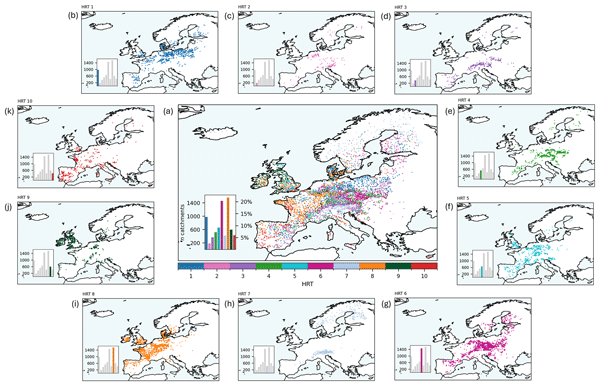
River flow (streamflow) behaviour varies across Europe and is shaped by climate and landscape. Using data from more than 7000 European catchments, we identified 10 hydrological response types based on flow magnitude, timing, and seasonality. At the continental scale, streamflow behaviour is mainly driven by climate, but landscape features are equally or more influential in several regions. These results show that streamflow behaviour emerges from the combined effects of climate and landscape.
Stefano Martinetti, James Kirchner, Peter Molnar, and Marius Floriancic
EGUsphere, https://doi.org/10.5194/egusphere-2026-2481, https://doi.org/10.5194/egusphere-2026-2481, 2026
This preprint is open for discussion and under review for Hydrology and Earth System Sciences (HESS).
Short summary
Short summary
We measured impulse responses of water fluxes to atmospheric forcing in a mixed beech and spruce forest. We found rapid responses to precipitation in soils and trees, and rapid responses to solar radiation and aerodynamic evaporative demand in trees, but not in soils, which suggests that the forest canopy significantly shielded the soils from atmospheric forcing. We also found impulse-response functions to be affected by species-specific stomatal regulation and hydraulic capacitance.
Carolin Winter, Julia L. A. Knapp, and James W. Kirchner
EGUsphere, https://doi.org/10.5194/egusphere-2026-2218, https://doi.org/10.5194/egusphere-2026-2218, 2026
Short summary
Short summary
Droughts not only affect stream water quantity but also its quality, potentially aggravating water scarcity. To understand the underlying mechanisms, we studied the impacts of drought on stream concentrations of ten substances in a forested mountain area. We found that drought affected all substances. The different responses could be explained by changes in the transport by water, combined with biological and chemical processes that alter the availability and mobility of certain substances.
Guilhem Türk, Christoph J. Gey, Bernd R. Schöne, Marius G. Floriancic, James W. Kirchner, Loic Leonard, Laurent Gourdol, Richard F. Keim, and Laurent Pfister
Hydrol. Earth Syst. Sci., 30, 343–369, https://doi.org/10.5194/hess-30-343-2026, https://doi.org/10.5194/hess-30-343-2026, 2026
Short summary
Short summary
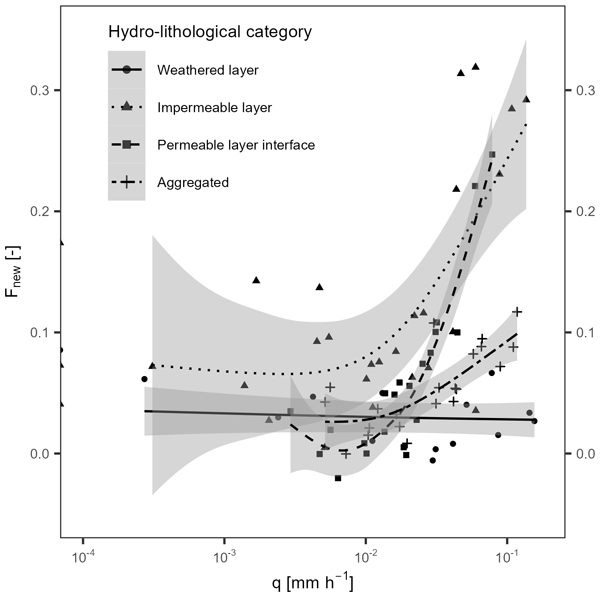
How landscape features affect water storage and release in catchments remains poorly understood. Here we used water stable isotopes in 12 streams to assess the fraction of precipitation reaching streamflow in less than 2 weeks. More recent precipitation was found when streamflow was high and the fraction was linked to the geology (i.e. high when impermeable, low when permeable). Such information is key for better anticipating streamflow responses to a changing climate.
Thiago V. M. do Nascimento, Julia Rudlang, Sebastian Gnann, Jan Seibert, Markus Hrachowitz, and Fabrizio Fenicia
Hydrol. Earth Syst. Sci., 29, 7173–7200, https://doi.org/10.5194/hess-29-7173-2025, https://doi.org/10.5194/hess-29-7173-2025, 2025
Short summary
Short summary
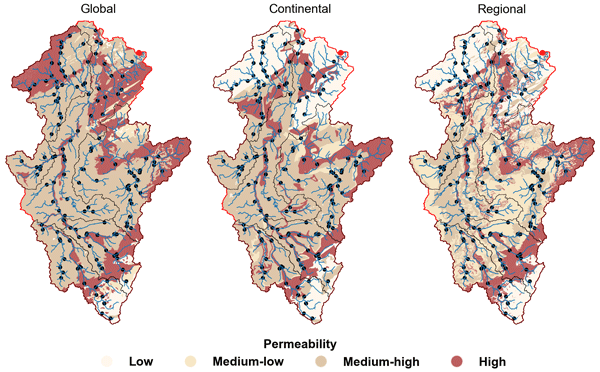
We show that geological maps with varying levels of detail may influence the identification of geology–streamflow relationships across European catchments at multiple scales. At the large scale, controls varied between basins, with no map consistently superior. At the intermediate and small scales, however, higher geological detail consistently strengthened correlations, particularly for baseflow signatures, with the regional map highlighting controls more consistent with process understanding.
Huibin Gao, Laurent Pfister, and James W. Kirchner
Hydrol. Earth Syst. Sci., 29, 6529–6547, https://doi.org/10.5194/hess-29-6529-2025, https://doi.org/10.5194/hess-29-6529-2025, 2025
Short summary
Short summary
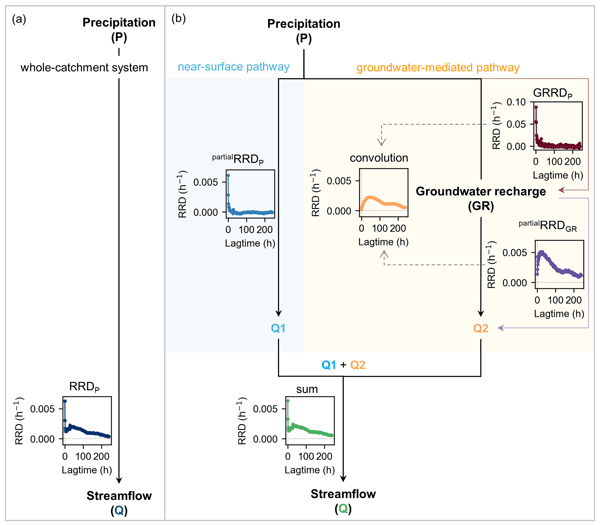
Some streams respond to rainfall with flow that peaks twice: a sharp first peak followed by a broad second peak. We analyzed data from a catchment in Luxembourg to better understand the processes behind this phenomenon. Our results show that the first peak is mostly driven directly by rainfall, and the second peak is mostly driven by rain that infiltrates to groundwater. We also show that the relative importance of these two processes depends on how wet the landscape is before the rain falls.
Quentin Duchemin, Maria Grazia Zanoni, Marius G. Floriancic, Hansjörg Seybold, Guillaume Obozinski, James W. Kirchner, and Paolo Benettin
Geosci. Model Dev., 18, 8663–8678, https://doi.org/10.5194/gmd-18-8663-2025, https://doi.org/10.5194/gmd-18-8663-2025, 2025
Short summary
Short summary
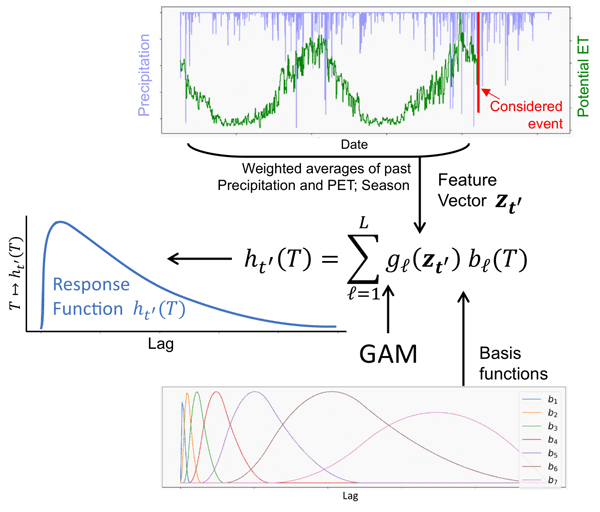
We introduce GAMCR (Generalized Additive Models for Catchment Responses), a data-driven model that estimates how catchments respond to individual precipitation events. We validate GAMCR on synthetic data and demonstrate its ability to investigate the characteristic runoff responses from real-world hydrologic series. GAMCR provides new data-driven opportunities to understand and compare hydrological behavior across different catchments.
Cansu Culha, Sarah Godsey, Shawn Chartrand, Melissa Lafreniere, James McNamara, and James Kirchner
EGUsphere, https://doi.org/10.5194/egusphere-2025-4275, https://doi.org/10.5194/egusphere-2025-4275, 2025
Short summary
Short summary
We study how Arctic rivers respond to rainfall in a warming climate. We show that runoff response can increase more than 5x under wetter conditions, and Active Layer Detachments amplify water and material runoff response to rainfall. Increasing subsurface storage can reduce runoff sensitivity to rainfall. Our results inform the flashiness of rainfall-runoff predictions based on expected weather and erosion conditions.
Zahra Eslami, Hansjörg Seybold, and James W. Kirchner
Hydrol. Earth Syst. Sci., 29, 5121–5130, https://doi.org/10.5194/hess-29-5121-2025, https://doi.org/10.5194/hess-29-5121-2025, 2025
Short summary
Short summary
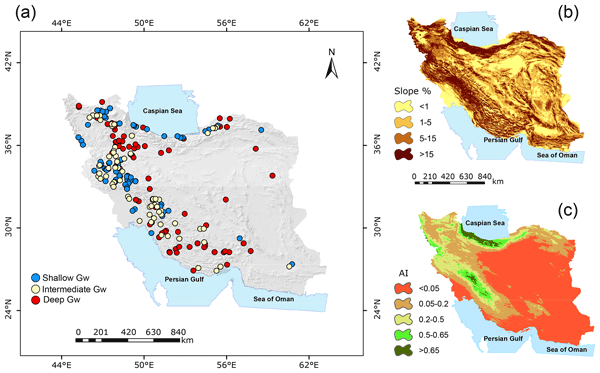
We used a new method to measure how streamflow responds to precipitation across a network of watersheds in Iran. Our analysis shows that streamflow is more sensitive to precipitation when groundwater levels are shallower, climates are more humid, topography is steeper, and drainage basins are smaller. These results are a step toward more sustainable water resource management and more effective flood risk mitigation.
Julia L. A. Knapp, Wouter R. Berghuijs, Marius G. Floriancic, and James W. Kirchner
Hydrol. Earth Syst. Sci., 29, 3673–3685, https://doi.org/10.5194/hess-29-3673-2025, https://doi.org/10.5194/hess-29-3673-2025, 2025
Short summary
Short summary
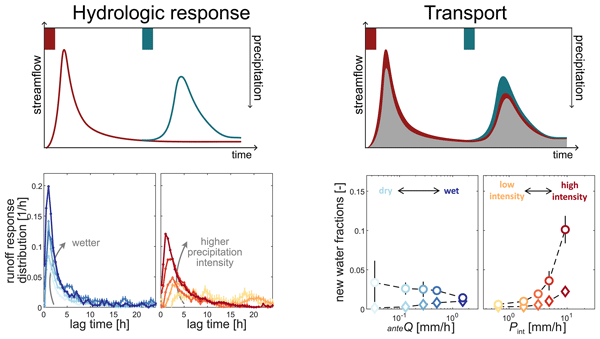
This study explores how streams react to rain and how water travels through the landscape to reach them, two processes rarely studied together. Using detailed data from two temperate areas, we show that streams respond to rain much faster than rainwater travels to them. Wetter conditions lead to stronger runoff by releasing older stored water, while heavy rainfall moves newer rainwater to streams faster. These findings offer new insights into how water moves through the environment.
Zhuoyi Tu, Taihua Wang, Juntai Han, Hansjörg Seybold, Shaozhen Liu, Cansu Culha, Yuting Yang, and James W. Kirchner
EGUsphere, https://doi.org/10.5194/egusphere-2025-3018, https://doi.org/10.5194/egusphere-2025-3018, 2025
Preprint archived
Short summary
Short summary
This study provides the first event-scale observational evidence that runoff sensitivity to precipitation decreases significantly in degrading permafrost regions of the Tibetan Plateau. Data-driven analysis reveals that permafrost thaw enhances infiltration and subsurface storage, reducing peak runoff and runoff coefficients, especially during heavy rainfall. These results are important for drought and flood risk management under climate change.
Alberto Bassi, Marvin Höge, Antonietta Mira, Fabrizio Fenicia, and Carlo Albert
Hydrol. Earth Syst. Sci., 28, 4971–4988, https://doi.org/10.5194/hess-28-4971-2024, https://doi.org/10.5194/hess-28-4971-2024, 2024
Short summary
Short summary
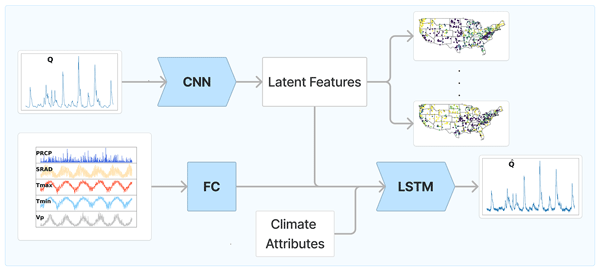
The goal is to remove the impact of meteorological drivers in order to uncover the unique landscape fingerprints of a catchment from streamflow data. Our results reveal an optimal two-feature summary for most catchments, with a third feature associated with aridity and intermittent flow that is needed for challenging cases. Baseflow index, aridity, and soil or vegetation attributes strongly correlate with learnt features, indicating their importance for streamflow prediction.
Hongkai Gao, Markus Hrachowitz, Lan Wang-Erlandsson, Fabrizio Fenicia, Qiaojuan Xi, Jianyang Xia, Wei Shao, Ge Sun, and Hubert H. G. Savenije
Hydrol. Earth Syst. Sci., 28, 4477–4499, https://doi.org/10.5194/hess-28-4477-2024, https://doi.org/10.5194/hess-28-4477-2024, 2024
Short summary
Short summary
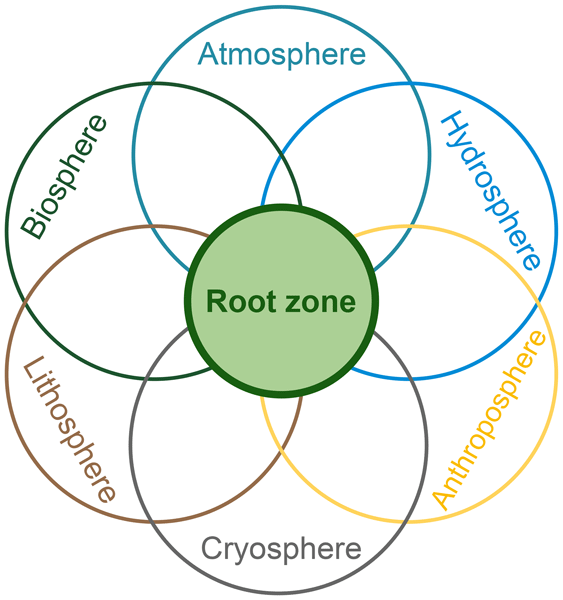
The concept of the root zone is widely used but lacks a precise definition. Its importance in Earth system science is not well elaborated upon. Here, we clarified its definition with several similar terms to bridge the multi-disciplinary gap. We underscore the key role of the root zone in the Earth system, which links the biosphere, hydrosphere, lithosphere, atmosphere, and anthroposphere. To better represent the root zone, we advocate for a paradigm shift towards ecosystem-centred modelling.
James W. Kirchner
Hydrol. Earth Syst. Sci., 28, 4427–4454, https://doi.org/10.5194/hess-28-4427-2024, https://doi.org/10.5194/hess-28-4427-2024, 2024
Short summary
Short summary
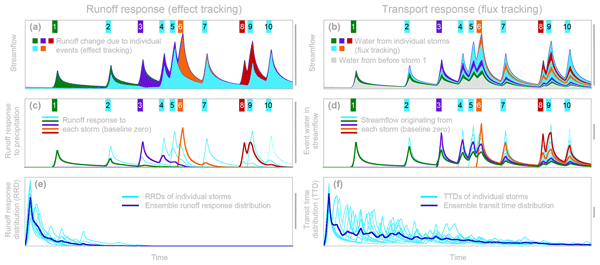
Here, I present a new way to quantify how streamflow responds to rainfall across a range of timescales. This approach can estimate how different rainfall intensities affect streamflow. It can also quantify how runoff response to rainfall varies, depending on how wet the landscape already is before the rain falls. This may help us to understand processes and landscape properties that regulate streamflow and to assess the susceptibility of different landscapes to flooding.
Cristina Prieto, Dhruvesh Patel, Dawei Han, Benjamin Dewals, Michaela Bray, and Daniela Molinari
Nat. Hazards Earth Syst. Sci., 24, 3381–3386, https://doi.org/10.5194/nhess-24-3381-2024, https://doi.org/10.5194/nhess-24-3381-2024, 2024
Marius G. Floriancic, Scott T. Allen, and James W. Kirchner
Hydrol. Earth Syst. Sci., 28, 4295–4308, https://doi.org/10.5194/hess-28-4295-2024, https://doi.org/10.5194/hess-28-4295-2024, 2024
Short summary
Short summary
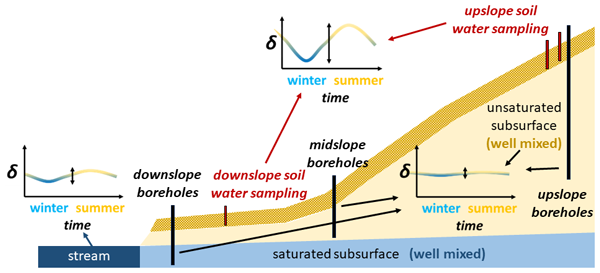
We use a 3-year time series of tracer data of streamflow and soils to show how water moves through the subsurface to become streamflow. Less than 50% of soil water consists of rainfall from the last 3 weeks. Most annual streamflow is older than 3 months, and waters in deep subsurface layers are even older; thus deep layers are not the only source of streamflow. After wet periods more rainfall was found in the subsurface and the stream, suggesting that water moves quicker through wet landscapes.
Marius G. Floriancic, Michael P. Stockinger, James W. Kirchner, and Christine Stumpp
Hydrol. Earth Syst. Sci., 28, 3675–3694, https://doi.org/10.5194/hess-28-3675-2024, https://doi.org/10.5194/hess-28-3675-2024, 2024
Short summary
Short summary
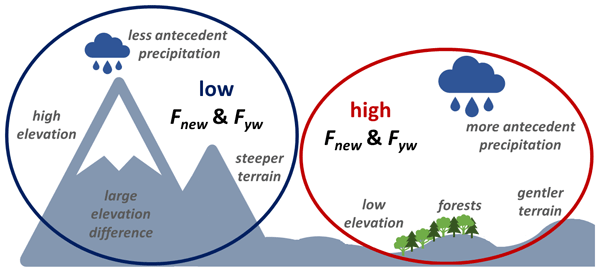
The Alps are a key water resource for central Europe, providing water for drinking, agriculture, and hydropower production. To assess water availability in streams, we need to understand how much streamflow is derived from old water stored in the subsurface versus more recent precipitation. We use tracer data from 32 Alpine streams and statistical tools to assess how much recent precipitation can be found in Alpine rivers and how this amount is related to catchment properties and climate.
Peter Reichert, Kai Ma, Marvin Höge, Fabrizio Fenicia, Marco Baity-Jesi, Dapeng Feng, and Chaopeng Shen
Hydrol. Earth Syst. Sci., 28, 2505–2529, https://doi.org/10.5194/hess-28-2505-2024, https://doi.org/10.5194/hess-28-2505-2024, 2024
Short summary
Short summary
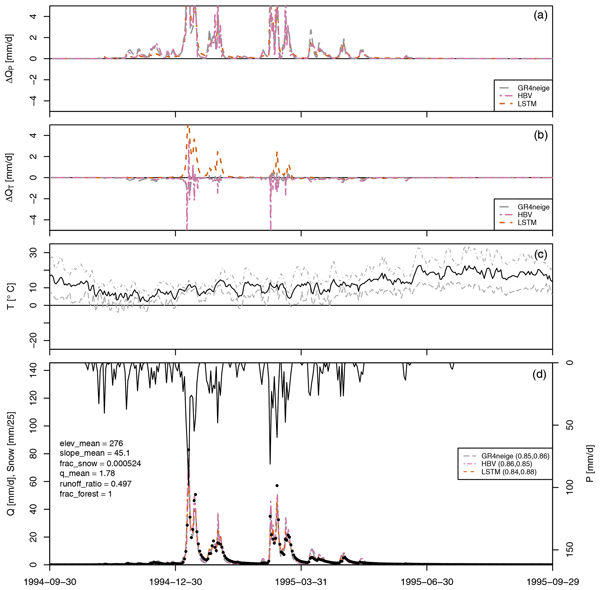
We compared the predicted change in catchment outlet discharge to precipitation and temperature change for conceptual and machine learning hydrological models. We found that machine learning models, despite providing excellent fit and prediction capabilities, can be unreliable regarding the prediction of the effect of temperature change for low-elevation catchments. This indicates the need for caution when applying them for the prediction of the effect of climate change.
Jiaxing Liang, Hongkai Gao, Fabrizio Fenicia, Qiaojuan Xi, Yahui Wang, and Hubert H. G. Savenije
EGUsphere, https://doi.org/10.5194/egusphere-2024-550, https://doi.org/10.5194/egusphere-2024-550, 2024
Preprint archived
Short summary
Short summary
The root zone storage capacity (Sumax) is a key element in hydrology and land-atmospheric interaction. In this study, we utilized a hydrological model and a dynamic parameter identification method, to quantify the temporal trends of Sumax for 497 catchments in the USA. We found that 423 catchments (85 %) showed increasing Sumax, which averagely increased from 178 to 235 mm between 1980 and 2014. The increasing trend was also validated by multi-sources data and independent methods.
Shaozhen Liu, Ilja van Meerveld, Yali Zhao, Yunqiang Wang, and James W. Kirchner
Hydrol. Earth Syst. Sci., 28, 205–216, https://doi.org/10.5194/hess-28-205-2024, https://doi.org/10.5194/hess-28-205-2024, 2024
Short summary
Short summary
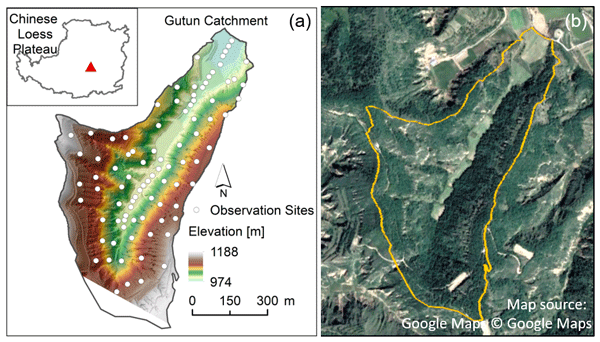
We study the seasonal and spatial patterns of soil moisture in 0–500 cm soil using 89 monitoring sites in a loess catchment with monsoonal climate. Soil moisture is highest during the months of least precipitation and vice versa. Soil moisture patterns at the hillslope scale are dominated by the aspect-controlled evapotranspiration variations (a local control), not by the hillslope convergence-controlled downslope flow (a nonlocal control), under both dry and wet conditions.
Marvin Höge, Martina Kauzlaric, Rosi Siber, Ursula Schönenberger, Pascal Horton, Jan Schwanbeck, Marius Günter Floriancic, Daniel Viviroli, Sibylle Wilhelm, Anna E. Sikorska-Senoner, Nans Addor, Manuela Brunner, Sandra Pool, Massimiliano Zappa, and Fabrizio Fenicia
Earth Syst. Sci. Data, 15, 5755–5784, https://doi.org/10.5194/essd-15-5755-2023, https://doi.org/10.5194/essd-15-5755-2023, 2023
Short summary
Short summary
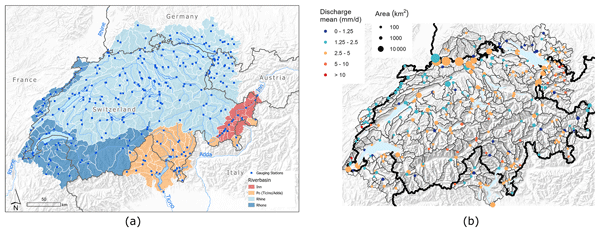
CAMELS-CH is an open large-sample hydro-meteorological data set that covers 331 catchments in hydrologic Switzerland from 1 January 1981 to 31 December 2020. It comprises (a) daily data of river discharge and water level as well as meteorologic variables like precipitation and temperature; (b) yearly glacier and land cover data; (c) static attributes of, e.g, topography or human impact; and (d) catchment delineations. CAMELS-CH enables water and climate research and modeling at catchment level.
Hongkai Gao, Fabrizio Fenicia, and Hubert H. G. Savenije
Hydrol. Earth Syst. Sci., 27, 2607–2620, https://doi.org/10.5194/hess-27-2607-2023, https://doi.org/10.5194/hess-27-2607-2023, 2023
Short summary
Short summary
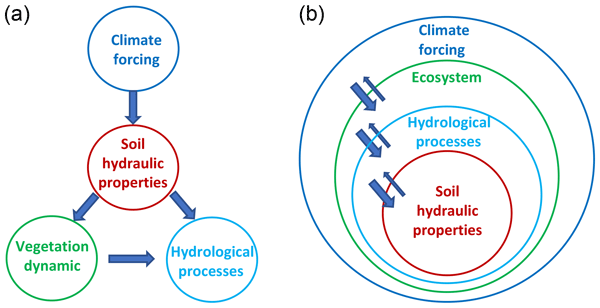
It is a deeply rooted perception that soil is key in hydrology. In this paper, we argue that it is the ecosystem, not the soil, that is in control of hydrology. Firstly, in nature, the dominant flow mechanism is preferential, which is not particularly related to soil properties. Secondly, the ecosystem, not the soil, determines the land–surface water balance and hydrological processes. Moving from a soil- to ecosystem-centred perspective allows more realistic and simpler hydrological models.

Richard Laugesen, Mark Thyer, David McInerney, and Dmitri Kavetski
Hydrol. Earth Syst. Sci., 27, 873–893, https://doi.org/10.5194/hess-27-873-2023, https://doi.org/10.5194/hess-27-873-2023, 2023
Short summary
Short summary
Forecasts may be valuable for user decisions, but current practice to quantify it has critical limitations. This study introduces RUV (relative utility value, a new metric that can be tailored to specific decisions and decision-makers. It illustrates how critical this decision context is when evaluating forecast value. This study paves the way for agencies to tailor the evaluation of their services to customer decisions and researchers to study model improvements through the lens of user impact.

David McInerney, Mark Thyer, Dmitri Kavetski, Richard Laugesen, Fitsum Woldemeskel, Narendra Tuteja, and George Kuczera
Hydrol. Earth Syst. Sci., 26, 5669–5683, https://doi.org/10.5194/hess-26-5669-2022, https://doi.org/10.5194/hess-26-5669-2022, 2022
Short summary
Short summary
Streamflow forecasts a day to a month ahead are highly valuable for water resources management. Current practice often develops forecasts for specific lead times and aggregation timescales. In contrast, a single, seamless forecast can serve multiple lead times/timescales. This study shows seamless forecasts can match the performance of forecasts developed specifically at the monthly scale, while maintaining quality at other lead times. Hence, users need not sacrifice capability for performance.
Marvin Höge, Andreas Scheidegger, Marco Baity-Jesi, Carlo Albert, and Fabrizio Fenicia
Hydrol. Earth Syst. Sci., 26, 5085–5102, https://doi.org/10.5194/hess-26-5085-2022, https://doi.org/10.5194/hess-26-5085-2022, 2022
Short summary
Short summary
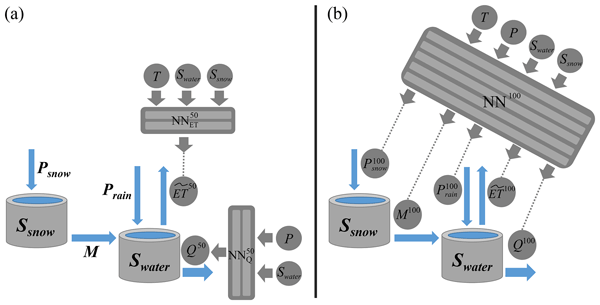
Neural ODEs fuse physics-based models with deep learning: neural networks substitute terms in differential equations that represent the mechanistic structure of the system. The approach combines the flexibility of machine learning with physical constraints for inter- and extrapolation. We demonstrate that neural ODE models achieve state-of-the-art predictive performance while keeping full interpretability of model states and processes in hydrologic modelling over multiple catchments.
Tobias Nicollier, Gilles Antoniazza, Lorenz Ammann, Dieter Rickenmann, and James W. Kirchner
Earth Surf. Dynam., 10, 929–951, https://doi.org/10.5194/esurf-10-929-2022, https://doi.org/10.5194/esurf-10-929-2022, 2022
Short summary
Short summary
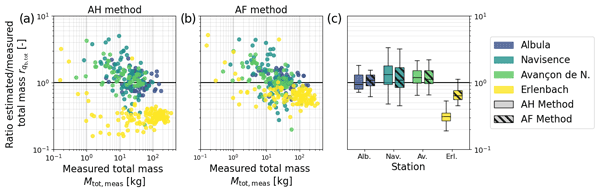
Monitoring sediment transport is relevant for flood safety and river restoration. However, the spatial and temporal variability of sediment transport processes makes their prediction challenging. We investigate the feasibility of a general calibration relationship between sediment transport rates and the impact signals recorded by metal plates installed in the channel bed. We present a new calibration method based on flume experiments and apply it to an extensive dataset of field measurements.
Hongkai Gao, Chuntan Han, Rensheng Chen, Zijing Feng, Kang Wang, Fabrizio Fenicia, and Hubert Savenije
Hydrol. Earth Syst. Sci., 26, 4187–4208, https://doi.org/10.5194/hess-26-4187-2022, https://doi.org/10.5194/hess-26-4187-2022, 2022
Short summary
Short summary
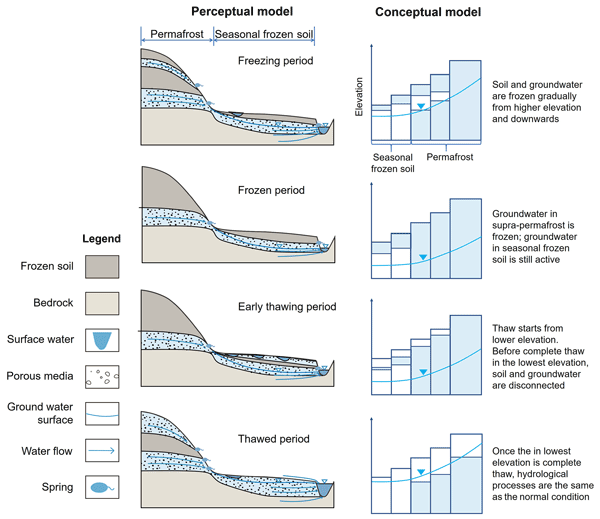
Frozen soil hydrology is one of the 23 unsolved problems in hydrology (UPH). In this study, we developed a novel conceptual frozen soil hydrological model, FLEX-Topo-FS. The model successfully reproduced the soil freeze–thaw process, and its impacts on hydrologic connectivity, runoff generation, and groundwater. We believe this study is a breakthrough for the 23 UPH, giving us new insights on frozen soil hydrology, with broad implications for predicting cold region hydrology in future.
Sebastian A. Krogh, Lucia Scaff, James W. Kirchner, Beatrice Gordon, Gary Sterle, and Adrian Harpold
Hydrol. Earth Syst. Sci., 26, 3393–3417, https://doi.org/10.5194/hess-26-3393-2022, https://doi.org/10.5194/hess-26-3393-2022, 2022
Short summary
Short summary
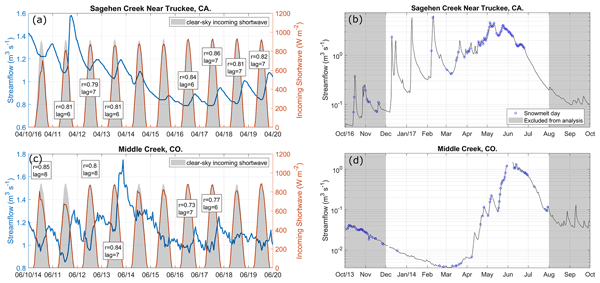
We present a new way to detect snowmelt using daily cycles in streamflow driven by solar radiation. Results show that warmer sites have earlier and more intermittent snowmelt than colder sites, and the timing of early snowmelt events is strongly correlated with the timing of streamflow volume. A space-for-time substitution shows greater sensitivity of streamflow timing to climate change in colder rather than in warmer places, which is then contrasted with land surface simulations.
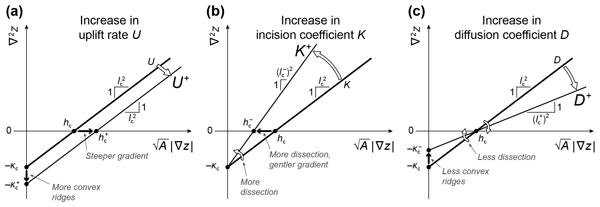
Nikos Theodoratos and James W. Kirchner
Earth Surf. Dynam., 9, 1545–1561, https://doi.org/10.5194/esurf-9-1545-2021, https://doi.org/10.5194/esurf-9-1545-2021, 2021
Short summary
Short summary
We examine stream-power incision and linear diffusion landscape evolution models with and without incision thresholds. We present a steady-state relationship between curvature and the steepness index, which plots as a straight line. We view this line as a counterpart to the slope–area relationship for the case of landscapes with hillslope diffusion. We show that simple shifts and rotations of this line graphically express the topographic response of landscapes to changes in model parameters.

Marco Dal Molin, Dmitri Kavetski, and Fabrizio Fenicia
Geosci. Model Dev., 14, 7047–7072, https://doi.org/10.5194/gmd-14-7047-2021, https://doi.org/10.5194/gmd-14-7047-2021, 2021
Short summary
Short summary
This paper introduces SuperflexPy, an open-source Python framework for building flexible conceptual hydrological models. SuperflexPy is available as open-source code and can be used by the hydrological community to investigate improved process representations, for model comparison, and for operational work.
Cited articles
Addor, N., Newman, A. J., Mizukami, N., and Clark, M. P.: The CAMELS data set: catchment attributes and meteorology for large-sample studies, Hydrol. Earth Syst. Sci., 21, 5293–5313, https://doi.org/10.5194/hess-21-5293-2017, 2017.
Ammann, L., Fenicia, F., and Reichert, P.: A likelihood framework for deterministic hydrological models and the importance of non-stationary autocorrelation, Hydrol. Earth Syst. Sci., 23, 2147–2172, https://doi.org/10.5194/hess-23-2147-2019, 2019.
Arora, V. K.: The use of the aridity index to assess climate change effect on annual runoff, J. Hydrol., 265, 164–177, https://doi.org/10.1016/S0022-1694(02)00101-4, 2002.
Ayzel, G. and Heistermann, M.: The effect of calibration data length on the performance of a conceptual hydrological model versus LSTM and GRU: A case study for six basins from the CAMELS dataset, Comput. Geosci., 149, 104708, https://doi.org/10.1016/j.cageo.2021.104708, 2021.
Basque Water Agency (URA): Gauging station data and data-request service, https://www.uragentzia.euskadi.eus/datos-de-es taciones-de-aforo/webura00-contents/es/, last access: 15 July 2026.
Bauer, D. F.: Constructing Confidence Sets Using Rank Statistics, J. Am. Stat. Assoc., 67, 687–690, https://doi.org/10.1080/01621459.1972.10481279, 1972.
Bieroza, M., Acharya, S., Benisch, J., Ter Borg, R. N., Hallberg, L., Negri, C., Pruitt, A., Pucher, M., Saavedra, F., Staniszewska, K., Van't Veen, S. G. M., Vincent, A., Winter, C., Basu, N. B., Jarvie, H. P., and Kirchner, J. W.: Advances in Catchment Science, Hydrochemistry, and Aquatic Ecology Enabled by High-Frequency Water Quality Measurements, Environ. Sci. Technol., 57, 4701–4719, https://doi.org/10.1021/acs.est.2c07798, 2023.
Blöschl, G., Hall, J., Viglione, A., Perdigão, R. A. P., Parajka, J., Merz, B., Lun, D., Arheimer, B., Aronica, G. T., Bilibashi, A., Boháč, M., Bonacci, O., Borga, M., Čanjevac, I., Castellarin, A., Chirico, G. B., Claps, P., Frolova, N., Ganora, D., Gorbachova, L., Gül, A., Hannaford, J., Harrigan, S., Kireeva, M., Kiss, A., Kjeldsen, T. R., Kohnová, S., Koskela, J. J., Ledvinka, O., Macdonald, N., Mavrova-Guirguinova, M., Mediero, L., Merz, R., Molnar, P., Montanari, A., Murphy, C., Osuch, M., Ovcharuk, V., Radevski, I., Salinas, J. L., Sauquet, E., Šraj, M., Szolgay, J., Volpi, E., Wilson, D., Zaimi, K., and Živković, N.: Changing climate both increases and decreases European river floods, Nature, 573, https://doi.org/10.1038/s41586-019-1495-6, 2019.
Box, G. E. P. and Cox, D. R.: An Analysis of Transformations, J. R. Stat. Soc. Ser. B Methodol., 26, 211–243, https://doi.org/10.1111/j.2517-6161.1964.tb00553.x, 1964.
Box, G. E. P., Jenkins, G. M., and Reinsel, G. C.: Time Series Analysis: Forecasting and Control, Prentice Hall, ISBN 978-0470272848, 1994.
Box, G. E. P., Jenkins, G. M., Reinsel, G. C., and Ljung, G. M.: Time series analysis: forecasting and control, John Wiley and Sons, ISBN: 978-1-118-67502-1, 2015.
Clark, M. P., Slater, A. G., Rupp, D. E., Woods, R. A., Vrugt, J. A., Gupta, H. V., Wagener, T., and Hay, L. E.: Framework for Understanding Structural Errors (FUSE): A modular framework to diagnose differences between hydrological models, Water Resour. Res., 44, https://doi.org/10.1029/2007wr006735, 2008.
Coron, L., Andréassian, V., Perrin, C., Lerat, J., Vaze, J., Bourqui, M., and Hendrickx, F.: Crash testing hydrological models in contrasted climate conditions: An experiment on 216 Australian catchments, Water Resour. Res., 48, https://doi.org/10.1029/2011WR011721, 2012.
Dal Molin, M., Schirmer, M., Zappa, M., and Fenicia, F.: Understanding dominant controls on streamflow spatial variability to set up a semi-distributed hydrological model: the case study of the Thur catchment, Hydrol. Earth Syst. Sci., 24, 1319–1345, https://doi.org/10.5194/hess-24-1319-2020, 2020.
Dal Molin, M., Kavetski, D., Albert, C., and Fenicia, F.: Exploring Signature-Based Model Calibration for Streamflow Prediction in Ungauged Basins, Water Resour. Res., 59, e2022WR031929, https://doi.org/10.1029/2022WR031929, 2023.
de Boer-Euser, T., Bouaziz, L., De Niel, J., Brauer, C., Dewals, B., Drogue, G., Fenicia, F., Grelier, B., Nossent, J., Pereira, F., Savenije, H., Thirel, G., and Willems, P.: Looking beyond general metrics for model comparison – lessons from an international model intercomparison study, Hydrol. Earth Syst. Sci., 21, 423–440, https://doi.org/10.5194/hess-21-423-2017, 2017.
Dieter, F. H. and Arns, S. A.: Estimating Instantaneous Peak Flow from Mean Daily Flow Data, J. Hydrol. Eng., 8, https://doi.org/10.1061/(ASCE)1084-0699(2003)8:6(365), 2003.
do Nascimento, T. V. M., Rudlang, J., Höge, M., van der Ent, R., Chappon, M., Seibert, J., Hrachowitz, M., and Fenicia, F.: EStreams: An integrated dataset and catalogue of streamflow, hydro-climatic and landscape variables for Europe, Sci. Data, 11, 879, https://doi.org/10.1038/s41597-024-03706-1, 2024.
Duan, Q., Schaake, J., Andréassian, V., Franks, S., Goteti, G., Gupta, H. V., Gusev, Y. M., Habets, F., Hall, A., Hay, L., Hogue, T., Huang, M., Leavesley, G., Liang, X., Nasonova, O. N., Noilhan, J., Oudin, L., Sorooshian, S., Wagener, T., and Wood, E. F.: Model Parameter Estimation Experiment (MOPEX): An overview of science strategy and major results from the second and third workshops, J. Hydrol., 320, 3–17, https://doi.org/10.1016/j.jhydrol.2005.07.031, 2006.
Evin, G., Kavetski, D., Thyer, M., and Kuczera, G.: Pitfalls and improvements in the joint inference of heteroscedasticity and autocorrelation in hydrological model calibration, Water Resour. Res., 49, 4518–4524, https://doi.org/10.1002/wrcr.20284, 2013.
Evin, G., Thyer, M., Kavetski, D., McInerney, D., and Kuczera, G.: Comparison of joint versus postprocessor approaches for hydrological uncertainty estimation accounting for error autocorrelation and heteroscedasticity, Water Resour. Res., 50, 2350–2375, https://doi.org/10.1002/2013wr014185, 2014.
Fischer, S., Schumann, A., and Bühler, P.: A statistics-based automated flood event separation, Journal of Hydrology X, 10, 100070, https://doi.org/10.1016/j.hydroa.2020.100070, 2021.
FOEN: Federal Office for the Environment, https://www.bafu.admin.ch/bafu/en/home.html, last access: 21 July 2026.
Forte, G., De Falco, M., Santo, A., Gautam, D., and Santangelo, N.: Flash flood impacts and vulnerability mapping at catchment scale: Insights from southern Apennines, Eng. Geol., 350, 107988, https://doi.org/10.1016/j.enggeo.2025.107988, 2025.
Gauch, M., Kratzert, F., Klotz, D., Nearing, G., Lin, J., and Hochreiter, S.: Rainfall–runoff prediction at multiple timescales with a single Long Short-Term Memory network, Hydrol. Earth Syst. Sci., 25, 2045–2062, https://doi.org/10.5194/hess-25-2045-2021, 2021.
Hamilton, J. D.: Time Series Analysis, Princeton University Press, https://doi.org/10.2307/j.ctv14jx6sm, 1994.
Huang, Z. and Zhao, T.: Predictive performance of ensemble hydroclimatic forecasts: Verification metrics, diagnostic plots and forecast attributes, WIREs Water, 9, e1580, https://doi.org/10.1002/wat2.1580, 2022.
Hunter, J., Thyer, M., McInerney, D., and Kavetski, D.: Achieving high-quality probabilistic predictions from hydrological models calibrated with a wide range of objective functions, J. Hydrol., 603, https://doi.org/10.1016/j.jhydrol.2021.126578, 2021.
Kavetski, D., Fenicia, F., and Clark, M. P.: Impact of temporal data resolution on parameter inference and model identification in conceptual hydrological modeling: Insights from an experimental catchment, Water Resour. Res., 47, https://doi.org/10.1029/2010WR009525, 2011.
Kirchner, J. W.: A double paradox in catchment hydrology and geochemistry, Hydrol. Proc., 17, 871–874, https://doi.org/10.1002/hyp.5108, 2003.
Kirchner, J. W., Feng, X., Neal, C., and Robson, A. J.: The fine structure of water‐quality dynamics: the (high‐frequency) wave of the future, Hydrol. Proc., 18, 1353–1359, https://doi.org/10.1002/hyp.5537, 2004.
Klotz, D., Kratzert, F., Gauch, M., Keefe Sampson, A., Brandstetter, J., Klambauer, G., Hochreiter, S., and Nearing, G.: Uncertainty estimation with deep learning for rainfall–runoff modeling, Hydrol. Earth Syst. Sci., 26, 1673-1693, https://doi.org/10.5194/hess-26-1673-2022, 2022.
Koutsoyiannis, D. and Montanari, A.: Bluecat: A Local Uncertainty Estimator for Deterministic Simulations and Predictions, Water Resour. Res., 58, https://doi.org/10.1029/2021wr031215, 2022.
Laio, F. and Tamea, S.: Verification tools for probabilistic forecasts of continuous hydrological variables, Hydrol. Earth Syst. Sci., 11, 1267–1277, https://doi.org/10.5194/hess-11-1267-2007, 2007.
Li, M., Robertson, D. E., Wang, Q. J., Bennett, J. C., and Perraud, J.-M.: Reliable hourly streamflow forecasting with emphasis on ephemeral rivers, J. Hydrol., 598, https://doi.org/10.1016/j.jhydrol.2020.125739, 2021.
Li, M., Wang, Q. J., Bennett, J. C., and Robertson, D. E.: Error reduction and representation in stages (ERRIS) in hydrological modelling for ensemble streamflow forecasting, Hydrol. Earth Syst. Sci., 20, 3561–3579, https://doi.org/10.5194/hess-20-3561-2016, 2016.
Li, M., Wang, Q. J., Robertson, D. E., and Bennett, J. C.: Improved error modelling for streamflow forecasting at hourly time steps by splitting hydrographs into rising and falling limbs, J. Hydrol., 555, https://doi.org/10.1016/j.jhydrol.2017.10.057, 2017.
Mathevet, T.: Quels modèles pluie-débit globaux au pas de temps horaire? Développements empiriques et comparaison de modèles sur un large échantillon de bassins versants, Doctorat spécialité Sciences de l'eau, ENGREF Paris, Sde Irstea Gip-be Inrae Hycar, https://hal.inrae.fr/tel-02587642 (last access: 25 August 2026), 2005.
McInerney, D., Thyer, M., Kavetski, D., Lerat, J., and Kuczera, G.: Improving probabilistic prediction of daily streamflow by identifying Pareto optimal approaches for modeling heteroscedastic residual errors, Water Resour. Res., 53, 2199–2239, https://doi.org/10.1002/2016wr019168, 2017.
McInerney, D., Thyer, M., Kavetski, D., Bennett, B., Lerat, J., Gibbs, M., and Kuczera, G.: A simplified approach to produce probabilistic hydrological model predictions, Environ. Modell. Softw., 109, 306–314, https://doi.org/10.1016/j.envsoft.2018.07.001, 2018.
McInerney, D., Kavetski, D., Thyer, M., Lerat, J., and Kuczera, G.: Benefits of Explicit Treatment of Zero Flows in Probabilistic Hydrological Modeling of Ephemeral Catchments, Water Resour. Res., 55, 11035–11060, https://doi.org/10.1029/2018wr024148, 2019.
McInerney, D., Thyer, M., Kavetski, D., Laugesen, R., Tuteja, N., and Kuczera, G.: Multi‐temporal Hydrological Residual Error Modeling for Seamless Subseasonal Streamflow Forecasting, Water Resour. Res., 56, https://doi.org/10.1029/2019wr026979, 2020.
McInerney, D., Thyer, M., Kavetski, D., Laugesen, R., Woldemeskel, F., Tuteja, N., and Kuczera, G.: Improving the Reliability of Sub‐Seasonal Forecasts of High and Low Flows by Using a Flow‐Dependent Nonparametric Model, Water Resour. Res., 57, https://doi.org/10.1029/2020wr029317, 2021.
McInerney, D., Thyer, M., Kavetski, D., Laugesen, R., Woldemeskel, F., Tuteja, N., and Kuczera, G.: Seamless streamflow forecasting at daily to monthly scales: MuTHRE lets you have your cake and eat it too, Hydrol. Earth Syst. Sci., 26, 5669–5683, https://doi.org/10.5194/hess-26-5669-2022, 2022.
McInerney, D., Thyer, M., Kavetski, D., Westra, S., Maier, H. R., Shanafield, M., Croke, B., Gupta, H., Bennett, B., and Leonard, M.: Neglecting hydrological errors can severely impact predictions of water resource system performance, J. Hydrol., 634, 130853, https://doi.org/10.1016/j.jhydrol.2024.130853, 2024.
McMillan, H., Jackson, B., Clark, M., Kavetski, D., and Woods, R.: Rainfall uncertainty in hydrological modelling: An evaluation of multiplicative error models, J. Hydrol., 400, 83–94, https://doi.org/10.1016/j.jhydrol.2011.01.026, 2011.
Montanari, A. and Koutsoyiannis, D.: Uncertainty estimation for environmental multimodel predictions: The BLUECAT approach and software, Environ. Modell. Softw., 188, 106419, https://doi.org/10.1016/j.envsoft.2025.106419, 2025.
Nevo, S., Morin, E., Gerzi Rosenthal, A., Metzger, A., Barshai, C., Weitzner, D., Voloshin, D., Kratzert, F., Elidan, G., Dror, G., Begelman, G., Nearing, G., Shalev, G., Noga, H., Shavitt, I., Yuklea, L., Royz, M., Giladi, N., Peled Levi, N., Reich, O., Gilon, O., Maor, R., Timnat, S., Shechter, T., Anisimov, V., Gigi, Y., Levin, Y., Moshe, Z., Ben-Haim, Z., Hassidim, A., and Matias, Y.: Flood forecasting with machine learning models in an operational framework, Hydrol. Earth Syst. Sci., 26, 4013–4032, https://doi.org/10.5194/hess-26-4013-2022, 2022.
Paltan, H., Waliser, D., Lim, W. H., Guan, B., Yamazaki, D., Pant, R., and Dadson, S.: Global Floods and Water Availability Driven by Atmospheric Rivers, Geophys. Res. Lett., 44, 10387–310395, https://doi.org/10.1002/2017GL074882, 2017.
Perrin, C., Michel, C., and Andréassian, V.: Improvement of a parsimonious model for streamflow simulation, J. Hydrol., 279, 275–289, https://doi.org/10.1016/S0022-1694(03)00225-7, 2003.
Prieto, C., Patel, D., and Han, D.: Preface: Advances in flood risk assessment and management, Nat. Hazards Earth Syst. Sci., 20, 1045–1048, https://doi.org/10.5194/nhess-20-1045-2020, 2020.
Prieto, C., Kavetski, D., Le Vine, N., Álvarez, C., and Medina, R.: Identification of Dominant Hydrological Mechanisms Using Bayesian Inference, Multiple Statistical Hypothesis Testing, and Flexible Models, Water Resour. Res., 57, e2020WR028338, https://doi.org/10.1029/2020WR028338, 2021.
Prieto, C., Patel, D., Han, D., Dewals, B., Bray, M., and Molinari, D.: Preface: Advances in pluvial and fluvial flood forecasting and assessment and flood risk management, Nat. Hazards Earth Syst. Sci., 24, 3381–3386, https://doi.org/10.5194/nhess-24-3381-2024, 2024.
Prieto, C., Kavetski, D., Fenicia, F., Kirchner, J., McInerney, D., Thyer, M., and Álvarez, C.: Data: Simple Box-Cox probabilistic models for hourly streamflow predictions, Zenodo [data set], https://doi.org/10.5281/zenodo.18379721, 2026.
Renard, B., Kavetski, D., Kuczera, G., Thyer, M., and Franks, S. W.: Understanding predictive uncertainty in hydrologic modeling: The challenge of identifying input and structural errors, Water Resour. Res., 46, https://doi.org/10.1029/2009wr008328, 2010.
Renard, B., Kavetski, D., Leblois, E., Thyer, M., Kuczera, G., and Franks, S. W.: Toward a reliable decomposition of predictive uncertainty in hydrological modeling: Characterizing rainfall errors using conditional simulation, Water Resour. Res., 47, https://doi.org/10.1029/2011wr010643, 2011.
Schoups, G. and Vrugt, J. A.: A formal likelihood function for parameter and predictive inference of hydrologic models with correlated, heteroscedastic, and non‐Gaussian errors, Water Resour. Res., 46, https://doi.org/10.1029/2009wr008933, 2010.
Sorooshian, S. and Dracup, J. A.: Stochastic parameter estimation procedures for hydrologie rainfall-runoff models: Correlated and heteroscedastic error cases, Water Resour. Res., 16, 430–442, https://doi.org/10.1029/WR016i002p00430, 1980.
Thyer, M., Renard, B., Kavetski, D., Kuczera, G., Franks, S. W., and Srikanthan, S.: Critical evaluation of parameter consistency and predictive uncertainty in hydrological modeling: A case study using Bayesian total error analysis, Water Resour. Res., 45, https://doi.org/10.1029/2008wr006825, 2009.
United States Environmental Protection Agency: An Approach for Using Load Duration Curves in the Development of TMDLs (EPA 841-B-07-006), https://www.epa.gov/tmdl/approach-using-load-duration-curves-development-tmdls (last access: 25 August 2026), 2007.
van Esse, W. R., Perrin, C., Booij, M. J., Augustijn, D. C. M., Fenicia, F., Kavetski, D., and Lobligeois, F.: The influence of conceptual model structure on model performance: a comparative study for 237 French catchments, Hydrol. Earth Syst. Sci., 17, 4227–4239, https://doi.org/10.5194/hess-17-4227-2013, 2013.
Vrugt, J. A.: Distribution-Based Model Evaluation and Diagnostics: Elicitability, Propriety, and Scoring Rules for Hydrograph Functionals, Water Resour. Res., 60, e2023WR036710, https://doi.org/10.1029/2023WR036710, 2024.
Wang, Q. J., Shrestha, D. L., Robertson, D. E., and Pokhrel, P.: A log-sinh transformation for data normalization and variance stabilization, Water Resour. Res., 48, https://doi.org/10.1029/2011WR010973, 2012.
Wani, O., Scheidegger, A., Cecinati, F., Espadas, G., and Rieckermann, J.: Exploring a copula-based alternative to additive error models – for non-negative and autocorrelated time series in hydrology, J. Hydrol., 575, 1031–1040, https://doi.org/10.1016/j.jhydrol.2019.06.006, 2019.
Westerberg, I. K. and McMillan, H. K.: Uncertainty in hydrological signatures, Hydrol. Earth Syst. Sci., 19, 3951–3968, https://doi.org/10.5194/hess-19-3951-2015, 2015.
Westra, S., Fowler, H. J., Evans, J. P., Alexander, L. V., Berg, P., Johnson, F., Kendon, E. J., Lenderink, G., and Roberts, N. M.: Future changes to the intensity and frequency of short-duration extreme rainfall, Rev. Geophys., 52, 522–555, https://doi.org/10.1002/2014RG000464, 2014.
Yilmaz, K. K., Gupta, H. V., and Wagener, T.: A process-based diagnostic approach to model evaluation: Application to the NWS distributed hydrologic model, Water Resour. Res., 44, https://doi.org/10.1029/2007WR006716, 2008.
Yin, J., Gao, Y., Chen, R., Yu, D., Wilby, R., Wright, N., Ge, Y., Bricker, J., Gong, H., and Guan, M.: Flash floods: why are more of them devastating the world's driest regions?, Nature, 615, 212–215, https://doi.org/10.1038/d41586-023-00626-9, 2023.
Zheng, Y., Coxon, G., Woods, R., Li, J., and Feng, P.: Controls on the Spatial and Temporal Patterns of Rainfall-Runoff Event Characteristics – A Large Sample of Catchments Across Great Britain, Water Resour. Res., 59, e2022WR033226, https://doi.org/10.1029/2022WR033226, 2023.
Short summary
Hourly streamflow data are increasingly available and can improve streamflow predictions. We tested simple ways to describe uncertainty by transforming flow values and by accounting for how errors persist from hour to hour, using seven catchments in Spain, Switzerland and the United States. Simple transformations and short-term error memory improve the reliability of probabilistic predictions and help combine hourly results into longer time scales for practical operational contexts.
Hourly streamflow data are increasingly available and can improve streamflow predictions. We...


Altmetrics
Final-revised paper
Preprint