
Articles | Volume 30, issue 20
https://doi.org/10.5194/hess-30-6339-2026
© Author(s) 2026. This work is distributed under
the Creative Commons Attribution 4.0 License.
the Creative Commons Attribution 4.0 License.
https://doi.org/10.5194/hess-30-6339-2026
© Author(s) 2026. This work is distributed under
the Creative Commons Attribution 4.0 License.
the Creative Commons Attribution 4.0 License.
Research article
| 
16 Oct 2026
Research article |
| 16 Oct 2026
| 16 Oct 2026
The need for uncertainty: why probabilistic LSTMs are key to improving flood predictions and enabling learned warning rules

Institute of Water and Environment, Karlsruhe Institute of Technology (KIT), Karlsruhe, Germany
Sebastian Lerch
Department of Mathematics and Computer Science, Marburg University, Marburg, Germany
Daniel Klotz
Machine Learning in Earth Science, Interdisciplinary Transformation University Austria, Linz, Austria
Ralf Loritz
Institute of Water and Environment, Karlsruhe Institute of Technology (KIT), Karlsruhe, Germany
Related authors
Pau Wiersma, Ralf Loritz, Sanika Baste, Katharina Hafner, and Grégoire Mariéthoz
EGUsphere, https://doi.org/10.5194/egusphere-2026-5373, https://doi.org/10.5194/egusphere-2026-5373, 2026
This preprint is open for discussion and under review for Hydrology and Earth System Sciences (HESS).
Short summary
Short summary
Despite their long record length and information on catchment-wide snowmelt, streamflow observations have not previously been used to constrain snow reanalyses. We show that a bidirectional LSTM can learn the snowmelt-streamflow relationship and subsequently reconstruct snowmelt from streamflow in unseen years and catchments. Combining streamflow and meteorology as inputs yields the best performance, while a streamflow-only model already widely outperforms the ERA5-Land snowmelt benchmark.
Sanika Baste, Daniel Klotz, Eduardo Acuña Espinoza, Andras Bardossy, and Ralf Loritz
Hydrol. Earth Syst. Sci., 29, 5871–5891, https://doi.org/10.5194/hess-29-5871-2025, https://doi.org/10.5194/hess-29-5871-2025, 2025
Short summary
Short summary
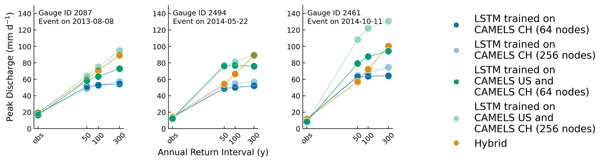
This study evaluates the extrapolation performance of long short-term memory (LSTM) networks in rainfall–runoff modeling, specifically under extreme precipitation conditions. The findings reveal that the LSTM cannot predict discharge values beyond a theoretical limit and that this limit is well below the extremity of its training data. This behavior results from the LSTM's gating structures rather than saturation of the cell states alone.
Uwe Ehret, Jieyu Chen, Fedor Scholz, Sam Allen, and Sebastian Lerch
EGUsphere, https://doi.org/10.5194/egusphere-2026-4514, https://doi.org/10.5194/egusphere-2026-4514, 2026
This preprint is open for discussion and under review for Geoscientific Model Development (GMD).
Short summary
Short summary
Data sets in the geosciences are often very large, therefore data compression methods are required. In this study, we test four such methods: Block Averaging, Principal Component Analysis, Autoencoder, and Ramer-Douglas-Peucker algorithm. "Lossy" means that the original data cannot fully be restored from the compressed data. We tested the methods on rainfall and air temperature data. All methods worked very well, and for the air temperature and rainfall, different methods were best.
Pau Wiersma, Ralf Loritz, Sanika Baste, Katharina Hafner, and Grégoire Mariéthoz
EGUsphere, https://doi.org/10.5194/egusphere-2026-5373, https://doi.org/10.5194/egusphere-2026-5373, 2026
This preprint is open for discussion and under review for Hydrology and Earth System Sciences (HESS).
Short summary
Short summary
Despite their long record length and information on catchment-wide snowmelt, streamflow observations have not previously been used to constrain snow reanalyses. We show that a bidirectional LSTM can learn the snowmelt-streamflow relationship and subsequently reconstruct snowmelt from streamflow in unseen years and catchments. Combining streamflow and meteorology as inputs yields the best performance, while a streamflow-only model already widely outperforms the ERA5-Land snowmelt benchmark.
Eduardo Jose Acuna Espinoza, Manuel Álvarez Chaves, Frederik Kratzert, Daniel Klotz, Martin Gauch, Robert Lang, Dominik Elfgang, Alexander Dolich, Ralf Loritz, and Uwe Ehret
EGUsphere, https://doi.org/10.5194/egusphere-2026-4885, https://doi.org/10.5194/egusphere-2026-4885, 2026
This preprint is open for discussion and under review for Hydrology and Earth System Sciences (HESS).
Short summary
Short summary
We present the Multi-Frequency Masked-Forecasting LSTM (MF2LSTM), a pipeline unifying multi-frequency modeling, missing-data handling, and real-time data assimilation for hourly streamflow forecasting. Forced with ICON-D2 weather data, MF2LSTM yields higher performance than LARSIM, the operational model used in Baden-Württemberg, Germany. Using a single-cell baseline, this work proves that simple deep learning models can deliver high-level operational performance without extra complexity.
Ulrike Proske, John Hillier, Stefan Gaillard, Theresa Blume, Eduardo Queiroz Alves, Susanne Buiter, Ken S. Carslaw, Kirsten von Elverfeldt, Tim H. M. van Emmerik, Barbara Ervens, Rolf Hut, Sam Illingworth, Daniel Klotz, and Jonas Pyschik
Geosci. Commun., 9, 371–383, https://doi.org/10.5194/gc-9-371-2026, https://doi.org/10.5194/gc-9-371-2026, 2026
Short summary
Short summary
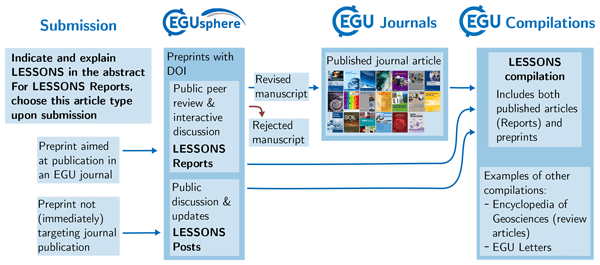
We explain a new article type that is being introduced in participating EGU publications. "LESSONS" articles describe the Limitations, Errors, Surprises, Shortcomings and Opportunities for New Science emerging from the scientific process. The publication of non-positive results and associated learnings aims to complete an unbiased record of the research effort, contributes to open and transparent science, allows the authors and others to learn, and may open opportunities for new science.

Daniel Klotz, Peter Miersch, Thiago V. M. do Nascimento, Fabrizio Fenicia, Corinna Frank, Martin Gauch, and Jakob Zscheischler
Earth Syst. Sci. Data, 18, 5485–5504, https://doi.org/10.5194/essd-18-5485-2026, https://doi.org/10.5194/essd-18-5485-2026, 2026
Short summary
Short summary
Data availability is central to hydrological science. It is the basis for advancing our understanding of hydrological processes, building prediction models, and anticipatory water management. We present a data-driven daily runoff reconstruction product for natural streamflow. We name it EARLS: European aggregated reconstruction for large-sample studies. The reconstructions represent daily simulations of natural streamflow across Europe and cover the period from 1953 to 2020.
Jean-Paul Brede, Pia Ebeling, Jens Kiesel, and Ralf Loritz
EGUsphere, https://doi.org/10.5194/egusphere-2026-3604, https://doi.org/10.5194/egusphere-2026-3604, 2026
Short summary
Short summary
Predicting river water quality is challenging because measurements are sparse and irregular. We trained artificial-intelligence models on 408 German rivers to forecast river flow and six water-quality variables together. A more flexible training approach lets one model predict different variables from whatever data are available, pointing toward unified environmental models.
Alexander Dolich, Eduardo Acuña Espinoza, Uwe Ehret, Michael Kraft, Jan Bondy, Johannes Meuer, and Ralf Loritz
Earth Syst. Sci. Data Discuss., https://doi.org/10.5194/essd-2026-289, https://doi.org/10.5194/essd-2026-289, 2026
Preprint under review for ESSD
Short summary
Short summary
CAMELS-DE-1h provides a unified collection of hourly river flow and weather time series for 1,611 German catchments from 2001 to 2024, alongside operational weather forecasts. Benchmark simulation results serve as a baseline for future model development. This dataset allows researchers to investigate small and medium-sized catchments that react quickly to heavy rainfall and to test models under operational conditions, improving future flood forecasting and early warning systems.
Deborah Cohen, Rony Amira, Rom Aschner, Yuval Carny, Ben Feinstein, Hadas Fester, Shmulik Fronman, Martin Gauch, Oren Gilon, Rotem Green, Avinatan Hassidim, Daniel Klotz, Frederik Kratzert, Dan Korenfeld, Gila Loike, Amit Markel, Yossi Matias, Rotem Mayo, Asher Metzger, Benny Mosheyev, Aviel Niego, Stephanie Rees, Emily Reinstein, Amitay Sicherman, Guy Shalev, Omri Shefi, Yuval Shildan, Ido Zemach, Oleg Zlydenko, and Grey Nearing
EGUsphere, https://doi.org/10.5194/egusphere-2026-2283, https://doi.org/10.5194/egusphere-2026-2283, 2026
Short summary
Short summary
We improved our global river model to provide earlier, more reliable streamflow predictions. Testing over approximately 1,000 watersheds, we found it predicts river flows up to six days further into the future for monitored rivers, and one day further for unmonitored ones. Releasing our code publicly empowers the science community to improve global water forecasting.
Benedikt Heudorfer, Hoshin Gupta, Alexander Dolich, and Ralf Loritz
EGUsphere, https://doi.org/10.5194/egusphere-2026-1965, https://doi.org/10.5194/egusphere-2026-1965, 2026
This preprint is open for discussion and under review for Hydrology and Earth System Sciences (HESS).
Short summary
Short summary
For most rivers, water level is not measured, making flood prediction difficult. But it's still possible with certain models. We want to improve these models and test if better models or better data help when predicting floods with these models in the United States. Results show that better data (measured by satellites) improves predictions more than better model designs. Actually, simple models often worked best. And we show that we need better measurement of landscape information.
Martin Gauch, Frederik Kratzert, Daniel Klotz, Grey Nearing, Deborah Cohen, and Oren Gilon
Hydrol. Earth Syst. Sci., 29, 6221–6235, https://doi.org/10.5194/hess-29-6221-2025, https://doi.org/10.5194/hess-29-6221-2025, 2025
Short summary
Short summary
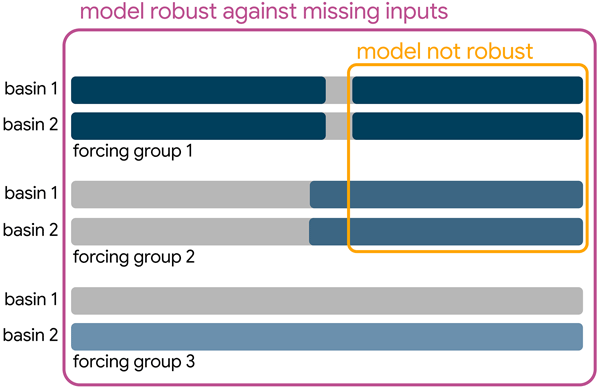
Missing input data are one of the most common challenges when building deep learning hydrological models. We present and analyze different methods that can produce predictions when certain inputs are missing during training or inference. Our proposed strategies provide high accuracy while allowing for more flexible data handling and being robust to outages in operational scenarios.
Ashish Manoj J, Ralf Loritz, Hoshin Gupta, and Erwin Zehe
Hydrol. Earth Syst. Sci., 29, 6115–6135, https://doi.org/10.5194/hess-29-6115-2025, https://doi.org/10.5194/hess-29-6115-2025, 2025
Short summary
Short summary
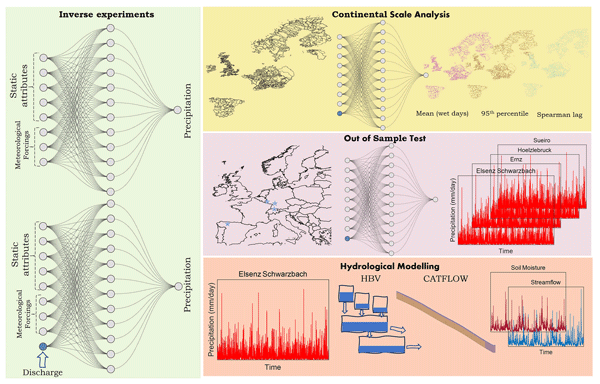
Traditional hydrological models typically operate in a forward mode, simulating streamflow and other catchment fluxes based on precipitation input. In this study, we explored the possibility of reversing this process, inferring precipitation from streamflow data, to improve flood event modelling. We then used the generated precipitation series to run hydrological models, resulting in more accurate estimates of streamflow and soil moisture.
Sanika Baste, Daniel Klotz, Eduardo Acuña Espinoza, Andras Bardossy, and Ralf Loritz
Hydrol. Earth Syst. Sci., 29, 5871–5891, https://doi.org/10.5194/hess-29-5871-2025, https://doi.org/10.5194/hess-29-5871-2025, 2025
Short summary
Short summary
This study evaluates the extrapolation performance of long short-term memory (LSTM) networks in rainfall–runoff modeling, specifically under extreme precipitation conditions. The findings reveal that the LSTM cannot predict discharge values beyond a theoretical limit and that this limit is well below the extremity of its training data. This behavior results from the LSTM's gating structures rather than saturation of the cell states alone.
Maria Staudinger, Anna Herzog, Ralf Loritz, Tobias Houska, Sandra Pool, Diana Spieler, Paul D. Wagner, Juliane Mai, Jens Kiesel, Stephan Thober, Björn Guse, and Uwe Ehret
Hydrol. Earth Syst. Sci., 29, 5005–5029, https://doi.org/10.5194/hess-29-5005-2025, https://doi.org/10.5194/hess-29-5005-2025, 2025
Short summary
Short summary
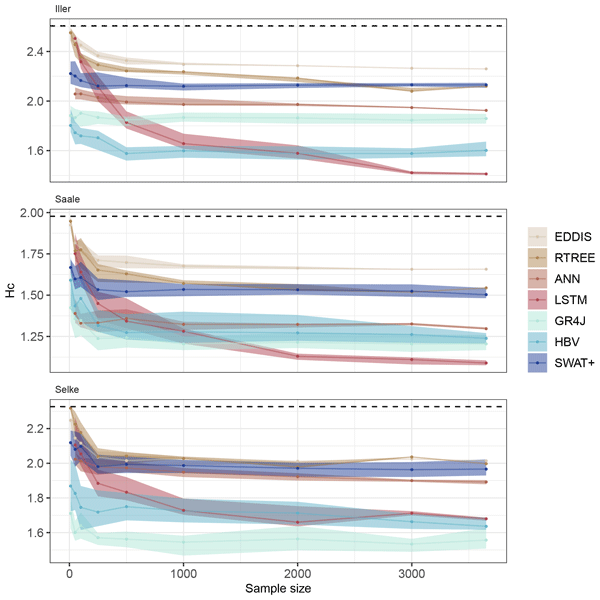
Three process-based and four data-driven hydrological models are compared using different training data. We found that process-based models perform better with small datasets but stop learning soon, while data-driven models learn longer. The study highlights the importance of memory in data and the impact of different data sampling methods on model performance. The direct comparison of these models is novel and provides a clear understanding of their performance under various data conditions.
Judith Nijzink, Ralf Loritz, Laurent Gourdol, Davide Zoccatelli, Jean François Iffly, and Laurent Pfister
Earth Syst. Sci. Data Discuss., https://doi.org/10.5194/essd-2024-482, https://doi.org/10.5194/essd-2024-482, 2025
Revised manuscript under review for ESSD
Short summary
Short summary
The CAMELS-LUX dataset (Catchment Attributes and MEteorology for Large-sample Studies – LUXembourg) contains hydrologic, meteorologic and thunderstorm formation relevant atmospheric time series of 56 Luxembourgish catchments (2004–2021). These catchments are characterized by a large physiographic variety on a relatively small scale in a homogeneous climate. The dataset can be applied for (regional) hydrological analyses.
Eduardo Acuña Espinoza, Frederik Kratzert, Daniel Klotz, Martin Gauch, Manuel Álvarez Chaves, Ralf Loritz, and Uwe Ehret
Hydrol. Earth Syst. Sci., 29, 1749–1758, https://doi.org/10.5194/hess-29-1749-2025, https://doi.org/10.5194/hess-29-1749-2025, 2025
Short summary
Short summary
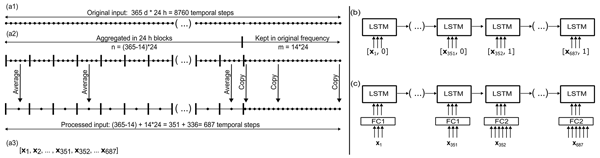
Long short-term memory (LSTM) networks have demonstrated state-of-the-art performance for rainfall-runoff hydrological modelling. However, most studies focus on predictions at a daily scale, limiting the benefits of sub-daily (e.g. hourly) predictions in applications like flood forecasting. In this study, we introduce a new architecture, multi-frequency LSTM (MF-LSTM), designed to use inputs of various temporal frequencies to produce sub-daily (e.g. hourly) predictions at a moderate computational cost.
Eduardo Acuña Espinoza, Ralf Loritz, Frederik Kratzert, Daniel Klotz, Martin Gauch, Manuel Álvarez Chaves, and Uwe Ehret
Hydrol. Earth Syst. Sci., 29, 1277–1294, https://doi.org/10.5194/hess-29-1277-2025, https://doi.org/10.5194/hess-29-1277-2025, 2025
Short summary
Short summary
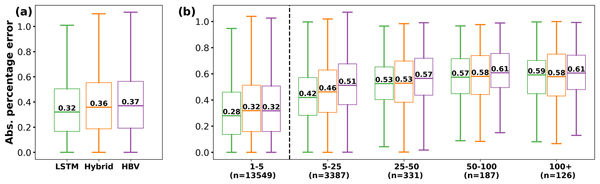
Data-driven techniques have shown the potential to outperform process-based models in rainfall–runoff simulations. Hybrid models, combining both approaches, aim to enhance accuracy and maintain interpretability. Expanding the set of test cases to evaluate hybrid models under different conditions, we test their generalization capabilities for extreme hydrological events.
Ralf Loritz, Alexander Dolich, Eduardo Acuña Espinoza, Pia Ebeling, Björn Guse, Jonas Götte, Sibylle K. Hassler, Corina Hauffe, Ingo Heidbüchel, Jens Kiesel, Mirko Mälicke, Hannes Müller-Thomy, Michael Stölzle, and Larisa Tarasova
Earth Syst. Sci. Data, 16, 5625–5642, https://doi.org/10.5194/essd-16-5625-2024, https://doi.org/10.5194/essd-16-5625-2024, 2024
Short summary
Short summary
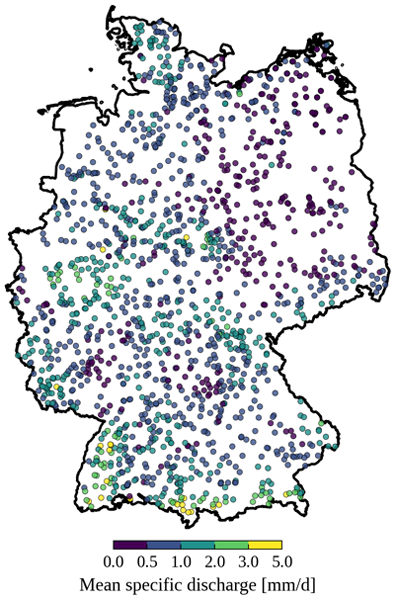
The CAMELS-DE dataset features data from 1582 streamflow gauges across Germany, with records spanning from 1951 to 2020. This comprehensive dataset, which includes time series of up to 70 years (median 46 years), enables advanced research on water flow and environmental trends and supports the development of hydrological models.
Selina M. Kiefer, Patrick Ludwig, Sebastian Lerch, Peter Knippertz, and Joaquim G. Pinto
EGUsphere, https://doi.org/10.5194/egusphere-2024-2955, https://doi.org/10.5194/egusphere-2024-2955, 2024
Preprint withdrawn
Short summary
Short summary
Weather forecasts 14 days in advance generally have a low skill but not always. We identify reasons thereof depending on the atmospheric flow, shown by Weather Regimes (WRs). If the WRs during the forecasts follow climatological patterns, forecast skill is increased. The forecast of a cold-wave day is better when the European Blocking WR (high pressure around the British Isles) is present a few days before a cold-wave day. These results can be used to assess the reliability of predictions.
Andreas Auer, Martin Gauch, Frederik Kratzert, Grey Nearing, Sepp Hochreiter, and Daniel Klotz
Hydrol. Earth Syst. Sci., 28, 4099–4126, https://doi.org/10.5194/hess-28-4099-2024, https://doi.org/10.5194/hess-28-4099-2024, 2024
Short summary
Short summary
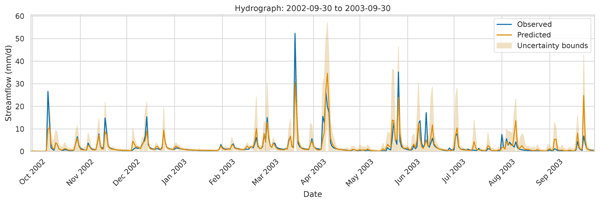
This work examines the impact of temporal and spatial information on the uncertainty estimation of streamflow forecasts. The study emphasizes the importance of data updates and global information for precise uncertainty estimates. We use conformal prediction to show that recent data enhance the estimates, even if only available infrequently. Local data yield reasonable average estimations but fall short for peak-flow events. The use of global data significantly improves these predictions.
Frederik Kratzert, Martin Gauch, Daniel Klotz, and Grey Nearing
Hydrol. Earth Syst. Sci., 28, 4187–4201, https://doi.org/10.5194/hess-28-4187-2024, https://doi.org/10.5194/hess-28-4187-2024, 2024
Short summary
Short summary
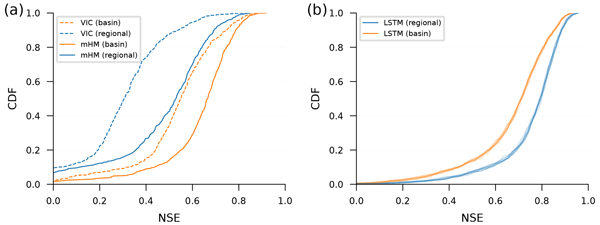
Recently, a special type of neural-network architecture became increasingly popular in hydrology literature. However, in most applications, this model was applied as a one-to-one replacement for hydrology models without adapting or rethinking the experimental setup. In this opinion paper, we show how this is almost always a bad decision and how using these kinds of models requires the use of large-sample hydrology data sets.
Daniel Klotz, Martin Gauch, Frederik Kratzert, Grey Nearing, and Jakob Zscheischler
Hydrol. Earth Syst. Sci., 28, 3665–3673, https://doi.org/10.5194/hess-28-3665-2024, https://doi.org/10.5194/hess-28-3665-2024, 2024
Short summary
Short summary
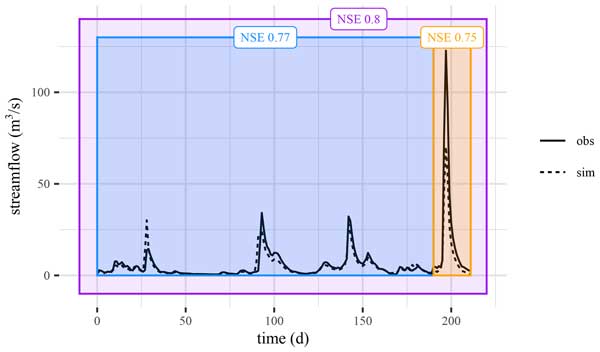
The evaluation of model performance is essential for hydrological modeling. Using performance criteria requires a deep understanding of their properties. We focus on a counterintuitive aspect of the Nash–Sutcliffe efficiency (NSE) and show that if we divide the data into multiple parts, the overall performance can be higher than all the evaluations of the subsets. Although this follows from the definition of the NSE, the resulting behavior can have unintended consequences in practice.
Eduardo Acuña Espinoza, Ralf Loritz, Manuel Álvarez Chaves, Nicole Bäuerle, and Uwe Ehret
Hydrol. Earth Syst. Sci., 28, 2705–2719, https://doi.org/10.5194/hess-28-2705-2024, https://doi.org/10.5194/hess-28-2705-2024, 2024
Short summary
Short summary
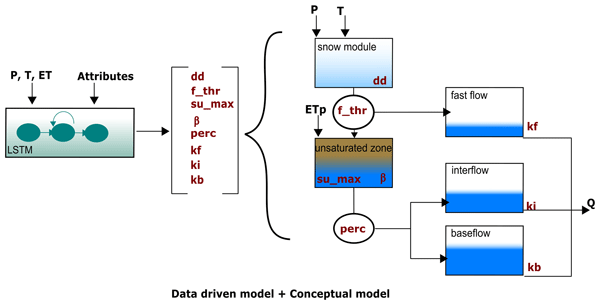
Hydrological hybrid models promise to merge the performance of deep learning methods with the interpretability of process-based models. One hybrid approach is the dynamic parameterization of conceptual models using long short-term memory (LSTM) networks. We explored this method to evaluate the effect of the flexibility given by LSTMs on the process-based part.
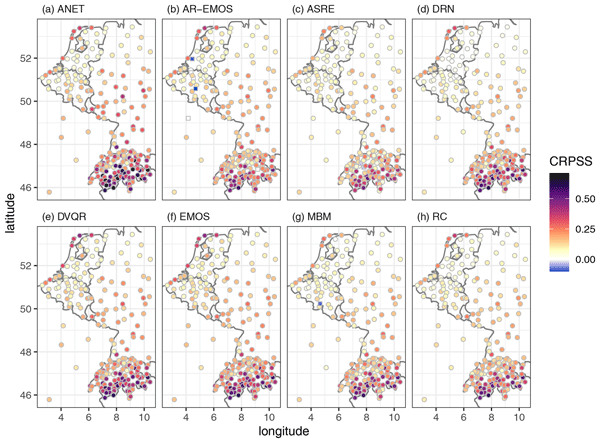
Jonathan Demaeyer, Jonas Bhend, Sebastian Lerch, Cristina Primo, Bert Van Schaeybroeck, Aitor Atencia, Zied Ben Bouallègue, Jieyu Chen, Markus Dabernig, Gavin Evans, Jana Faganeli Pucer, Ben Hooper, Nina Horat, David Jobst, Janko Merše, Peter Mlakar, Annette Möller, Olivier Mestre, Maxime Taillardat, and Stéphane Vannitsem
Earth Syst. Sci. Data, 15, 2635–2653, https://doi.org/10.5194/essd-15-2635-2023, https://doi.org/10.5194/essd-15-2635-2023, 2023
Short summary
Short summary
A benchmark dataset is proposed to compare different statistical postprocessing methods used in forecasting centers to properly calibrate ensemble weather forecasts. This dataset is based on ensemble forecasts covering a portion of central Europe and includes the corresponding observations. Examples on how to download and use the data are provided, a set of evaluation methods is proposed, and a first benchmark of several methods for the correction of 2 m temperature forecasts is performed.
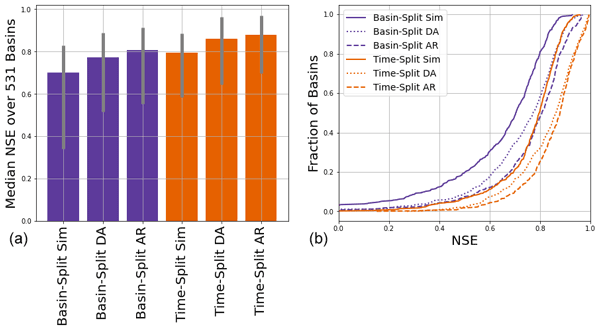
Grey S. Nearing, Daniel Klotz, Jonathan M. Frame, Martin Gauch, Oren Gilon, Frederik Kratzert, Alden Keefe Sampson, Guy Shalev, and Sella Nevo
Hydrol. Earth Syst. Sci., 26, 5493–5513, https://doi.org/10.5194/hess-26-5493-2022, https://doi.org/10.5194/hess-26-5493-2022, 2022
Short summary
Short summary
When designing flood forecasting models, it is necessary to use all available data to achieve the most accurate predictions possible. This manuscript explores two basic ways of ingesting near-real-time streamflow data into machine learning streamflow models. The point we want to make is that when working in the context of machine learning (instead of traditional hydrology models that are based on
bio-geophysics), it is not necessary to use complex statistical methods for injecting sparse data.
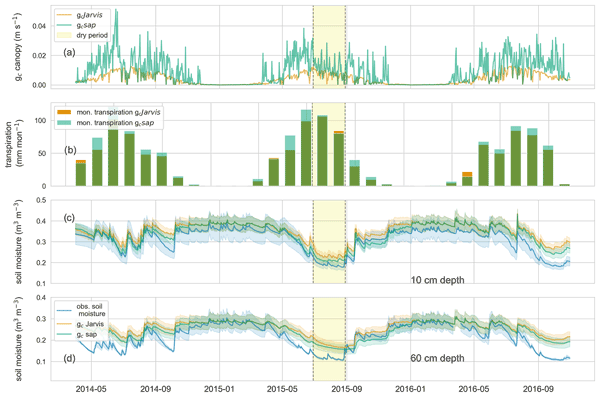
Ralf Loritz, Maoya Bassiouni, Anke Hildebrandt, Sibylle K. Hassler, and Erwin Zehe
Hydrol. Earth Syst. Sci., 26, 4757–4771, https://doi.org/10.5194/hess-26-4757-2022, https://doi.org/10.5194/hess-26-4757-2022, 2022
Short summary
Short summary
In this study, we combine a deep-learning approach that predicts sap flow with a hydrological model to improve soil moisture and transpiration estimates at the catchment scale. Our results highlight that hybrid-model approaches, combining machine learning with physically based models, are a promising way to improve our ability to make hydrological predictions.
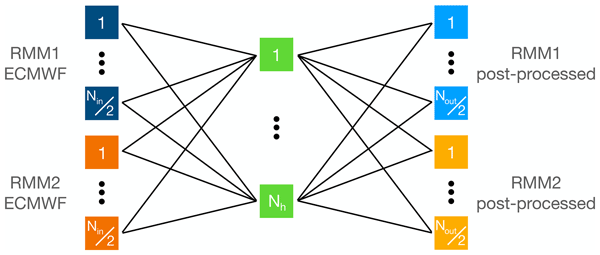
Riccardo Silini, Sebastian Lerch, Nikolaos Mastrantonas, Holger Kantz, Marcelo Barreiro, and Cristina Masoller
Earth Syst. Dynam., 13, 1157–1165, https://doi.org/10.5194/esd-13-1157-2022, https://doi.org/10.5194/esd-13-1157-2022, 2022
Short summary
Short summary
The Madden–Julian Oscillation (MJO) has important socioeconomic impacts due to its influence on both tropical and extratropical weather extremes. In this study, we use machine learning (ML) to correct the predictions of the weather model holding the best performance, developed by the European Centre for Medium-Range Weather Forecasts (ECMWF). We show that the ML post-processing leads to an improved prediction of the MJO geographical location and intensity.
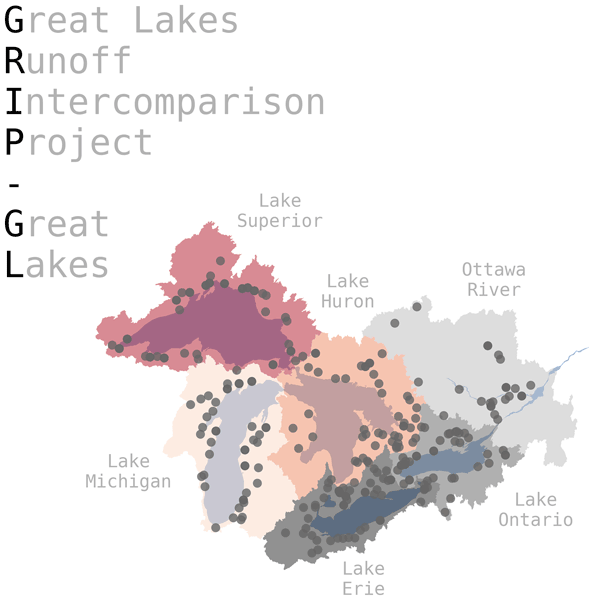
Juliane Mai, Hongren Shen, Bryan A. Tolson, Étienne Gaborit, Richard Arsenault, James R. Craig, Vincent Fortin, Lauren M. Fry, Martin Gauch, Daniel Klotz, Frederik Kratzert, Nicole O'Brien, Daniel G. Princz, Sinan Rasiya Koya, Tirthankar Roy, Frank Seglenieks, Narayan K. Shrestha, André G. T. Temgoua, Vincent Vionnet, and Jonathan W. Waddell
Hydrol. Earth Syst. Sci., 26, 3537–3572, https://doi.org/10.5194/hess-26-3537-2022, https://doi.org/10.5194/hess-26-3537-2022, 2022
Short summary
Short summary
Model intercomparison studies are carried out to test various models and compare the quality of their outputs over the same domain. In this study, 13 diverse model setups using the same input data are evaluated over the Great Lakes region. Various model outputs – such as streamflow, evaporation, soil moisture, and amount of snow on the ground – are compared using standardized methods and metrics. The basin-wise model outputs and observations are made available through an interactive website.

Jonathan M. Frame, Frederik Kratzert, Daniel Klotz, Martin Gauch, Guy Shalev, Oren Gilon, Logan M. Qualls, Hoshin V. Gupta, and Grey S. Nearing
Hydrol. Earth Syst. Sci., 26, 3377–3392, https://doi.org/10.5194/hess-26-3377-2022, https://doi.org/10.5194/hess-26-3377-2022, 2022
Short summary
Short summary
The most accurate rainfall–runoff predictions are currently based on deep learning. There is a concern among hydrologists that deep learning models may not be reliable in extrapolation or for predicting extreme events. This study tests that hypothesis. The deep learning models remained relatively accurate in predicting extreme events compared with traditional models, even when extreme events were not included in the training set.
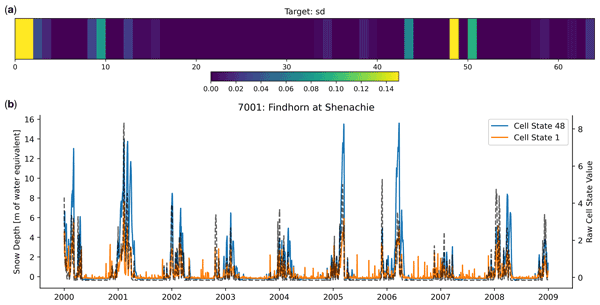
Thomas Lees, Steven Reece, Frederik Kratzert, Daniel Klotz, Martin Gauch, Jens De Bruijn, Reetik Kumar Sahu, Peter Greve, Louise Slater, and Simon J. Dadson
Hydrol. Earth Syst. Sci., 26, 3079–3101, https://doi.org/10.5194/hess-26-3079-2022, https://doi.org/10.5194/hess-26-3079-2022, 2022
Short summary
Short summary
Despite the accuracy of deep learning rainfall-runoff models, we are currently uncertain of what these models have learned. In this study we explore the internals of one deep learning architecture and demonstrate that the model learns about intermediate hydrological stores of soil moisture and snow water, despite never having seen data about these processes during training. Therefore, we find evidence that the deep learning approach learns a physically realistic mapping from inputs to outputs.
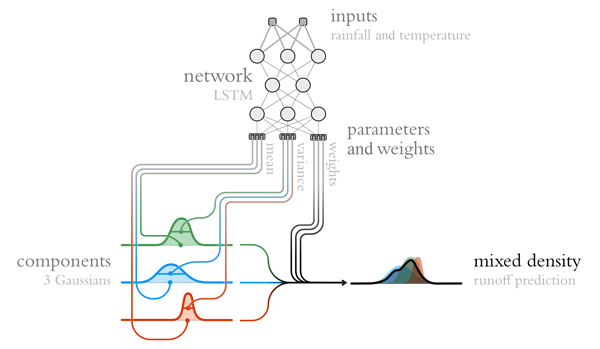
Daniel Klotz, Frederik Kratzert, Martin Gauch, Alden Keefe Sampson, Johannes Brandstetter, Günter Klambauer, Sepp Hochreiter, and Grey Nearing
Hydrol. Earth Syst. Sci., 26, 1673–1693, https://doi.org/10.5194/hess-26-1673-2022, https://doi.org/10.5194/hess-26-1673-2022, 2022
Short summary
Short summary
This contribution evaluates distributional runoff predictions from deep-learning-based approaches. We propose a benchmarking setup and establish four strong baselines. The results show that accurate, precise, and reliable uncertainty estimation can be achieved with deep learning.

Alexander Sternagel, Ralf Loritz, Brian Berkowitz, and Erwin Zehe
Hydrol. Earth Syst. Sci., 26, 1615–1629, https://doi.org/10.5194/hess-26-1615-2022, https://doi.org/10.5194/hess-26-1615-2022, 2022
Short summary
Short summary
We present a (physically based) Lagrangian approach to simulate diffusive mixing processes on the pore scale beyond perfectly mixed conditions. Results show the feasibility of the approach for reproducing measured mixing times and concentrations of isotopes over pore sizes and that typical shapes of breakthrough curves (normally associated with non-uniform transport in heterogeneous soils) may also occur as a result of imperfect subscale mixing in a macroscopically homogeneous soil matrix.
Cited articles
Acuña Espinoza, E., Loritz, R., Kratzert, F., Klotz, D., Gauch, M., Álvarez Chaves, M., and Ehret, U.: Analyzing the generalization capabilities of a hybrid hydrological model for extrapolation to extreme events, Hydrol. Earth Syst. Sci., 29, 1277–1294, https://doi.org/10.5194/hess-29-1277-2025, 2025. a, b
Addor, N., Newman, A. J., Mizukami, N., and Clark, M. P.: The CAMELS data set: catchment attributes and meteorology for large-sample studies, Hydrol. Earth Syst. Sci., 21, 5293–5313, https://doi.org/10.5194/hess-21-5293-2017, 2017. a, b
Amodei, D., Olah, C., Steinhardt, J., Christiano, P., Schulman, J., and Mané, D.: Concrete Problems in AI Safety, arXiv [cs.AI], arXiv:1606.06565, https://doi.org/10.48550/arXiv.1606.06565, 2016. a
BAFU: Hochwasserwahrscheinlichkeiten (Jahreshochwasser), https://www.bafu.admin.ch/de/hochwasserstatistik#Inhalt-der-Resultatbl%C3%A4tter (last access: 7 July 2026), 2024. a
Bálint, G., Csík, A., Bartha, P., Gauzer, B., and Bonta, I.: Application of meteorological ensembles for Danube Flood forecasting and warning, in: Transboundary Floods: Reducing Risks Through Flood Management, edited by: Marsalek, J., Stancalie, G., and Balint, G., Springer Netherlands, 57–68, ISBN 978-1-4020-4902-6, 2006. a
Baste, S.: The need for uncertainty: why probabilistic LSTMs are key to improving flood predictions and enabling learned warning rules, Zenodo [code], https://doi.org/10.5281/zenodo.18385505, 2026. a
Bergström, S.: THE HBV MODEL – its structure and applications, https://www.smhi.se/en/publications/the-hbv-model-its-structure-and-applications-1.83591 (last access: 12 January 2025), 1992. a
Beven, K. and Freer, J.: Equifinality, data assimilation, and uncertainty estimation in mechanistic modelling of complex environmental systems using the GLUE methodology, J. Hydrol., 249, 11–29, https://doi.org/10.1016/S0022-1694(01)00421-8, 2001. a, b
Brando, A., Rodriguez, J. A., Vitria, J., and Rubio Muñoz, A.: Modelling heterogeneous distributions with an uncountable mixture of asymmetric laplacians, Adv. Neur. In., 32, 8107–8117, 2019. a
Bremnes, J. B.: Ensemble Postprocessing Using Quantile Function Regression Based on Neural Networks and Bernstein Polynomials, Mon. Weather Rev., 148, 403–414, https://doi.org/10.1175/MWR-D-19-0227.1, 2020. a, b, c
Buchweitz, E., Romano, J. V., and Tibshirani, R. J.: Asymmetric penalties underlie proper loss functions in probabilistic forecasting, arXiv [preprint] arXiv:2505.00937, https://doi.org/10.48550/arXiv.2505.00937, 2025. a, b
Clark, S. R., Lerat, J., Perraud, J.-M., and Fitch, P.: Deep learning for monthly rainfall–runoff modelling: a large-sample comparison with conceptual models across Australia, Hydrol. Earth Syst. Sci., 28, 1191–1213, https://doi.org/10.5194/hess-28-1191-2024, 2024. a
Cloke, H. and Pappenberger, F.: Ensemble flood forecasting: A review, J. Hydrol., 375, 613–626, https://doi.org/10.1016/j.jhydrol.2009.06.005, 2009. a
Dietrich, J., Denhard, M., and Schumann, A. H.: Can Ensemble Forecasts Improve the Reliability of Flood Alerts?, J. Flood Risk Manage., 2, 232–242, https://doi.org/10.1111/j.1753-318X.2009.01039.x, 2009. a
Federal Office for the Environment (FOEN): The 5 Flood Danger Levels and Recommended Behaviour, https://www.hydrodaten.admin.ch/en/die-5-gefahrenstufen-fuer-hochwasser (last access: 21 June 2026), 2026. a
Feng, D., Liu, J., Lawson, K., and Shen, C.: Differentiable, Learnable, Regionalized Process-Based Models With Multiphysical Outputs can Approach State-Of-The-Art Hydrologic Prediction Accuracy, Water Resour. Res., 58, e2022WR032404, https://doi.org/10.1029/2022WR032404, 2022. a
Frame, J. M., Kratzert, F., Klotz, D., Gauch, M., Shalev, G., Gilon, O., Qualls, L. M., Gupta, H. V., and Nearing, G. S.: Deep learning rainfall–runoff predictions of extreme events, Hydrol. Earth Syst. Sci., 26, 3377–3392, https://doi.org/10.5194/hess-26-3377-2022, 2022. a, b
Frank, C., Rußwurm, M., Fluixa-Sanmartin, J., and Tuia, D.: Short-term runoff forecasting in an alpine catchment with a Long Short-Term Memory (LSTM) neural network, Front. Water, 5, 1126310, https://doi.org/10.3389/frwa.2023.1126310, 2023. a
Ghazvinian, M., Zhang, Y., Seo, D.-J., He, M., and Fernando, N.: A Novel Hybrid Artificial Neural Network – Parametric Scheme for Postprocessing Medium-Range Precipitation Forecasts, Adv. Water Resour., 151, 103907, https://doi.org/10.1016/j.advwatres.2021.103907, 2021. a
Gneiting, T. and Raftery, A. E.: Strictly Proper Scoring Rules, Prediction, and Estimation, J. Am. Stat. A., 102, 359–378, https://doi.org/10.1198/016214506000001437, 2007. a
Gneiting, T. and Ranjan, R.: Comparing Density Forecasts Using Threshold- and Quantile-Weighted Scoring Rules, J. Bus. Econ. Stat., 29, 411–422, https://doi.org/10.1198/jbes.2010.08110, 2011. a, b
Gneiting, T., Balabdaoui, F., and Raftery, A. E.: Probabilistic Forecasts, Calibration and Sharpness, J. R. Stat. Soc. B, 69, 243–268, https://doi.org/10.1111/j.1467-9868.2007.00587.x, 2007. a
Gouweleeuw, B. T., Thielen, J., Franchello, G., De Roo, A. P. J., and Buizza, R.: Flood forecasting using medium-range probabilistic weather prediction, Hydrol. Earth Syst. Sci., 9, 365–380, https://doi.org/10.5194/hess-9-365-2005, 2005. a
Heudorfer, B., Gupta, H. V., and Loritz, R.: Are Deep Learning Models in Hydrology Entity Aware?, Geophys. Res. Lett., 52, e2024GL113036, https://doi.org/10.1029/2024GL113036, 2025. a
Hochreiter, S. and Schmidhuber, J.: Long Short-Term Memory, Neural Comput., 9, 1735–1780, https://doi.org/10.1162/neco.1997.9.8.1735, 1997. a
Höge, M., Kauzlaric, M., Siber, R., Schönenberger, U., Horton, P., Schwanbeck, J., Floriancic, M. G., Viviroli, D., Wilhelm, S., Sikorska-Senoner, A. E., Addor, N., Brunner, M., Pool, S., Zappa, M., and Fenicia, F.: CAMELS-CH: hydro-meteorological time series and landscape attributes for 331 catchments in hydrologic Switzerland, Earth Syst. Sci. Data, 15, 5755–5784, https://doi.org/10.5194/essd-15-5755-2023, 2023. a, b
Höge, M., Kauzlaric, M., Siber, R., Schönenberger, U., Horton, P., Schwanbeck, J., Floriancic, M. G., Viviroli, D., Wilhelm, S., Sikorska-Senoner, A. E., Addor, N., Brunner, M., Pool, S., Zappa, M., and Fenicia, F.: Catchment attributes and hydro-meteorological time series for large-sample studies across hydrologic Switzerland (CAMELS-CH) (Version 0.9), Zenodo [data set], https://doi.org/10.5281/zenodo.7784632, 2025. a
Horat, N., Klerings, S., and Lerch, S.: Improving Model Chain Approaches for Probabilistic Solar Energy Forecasting through Post-processing and Machine Learning, Adv. Atmos. Sci., 42, 297–312, https://doi.org/10.1007/s00376-024-4219-2, 2024. a
Kingma, D. P. and Ba, J.: Adam: A Method for Stochastic Optimization, arXiv [cs.LG], https://doi.org/10.48550/arXiv.1412.6980, 2017. a
Klotz, D., Kratzert, F., Gauch, M., Keefe Sampson, A., Brandstetter, J., Klambauer, G., Hochreiter, S., and Nearing, G.: Uncertainty estimation with deep learning for rainfall–runoff modeling, Hydrol. Earth Syst. Sci., 26, 1673–1693, https://doi.org/10.5194/hess-26-1673-2022, 2022. a, b, c, d, e, f, g, h, i, j, k, l, m, n
Kratzert, F., Klotz, D., Shalev, G., Klambauer, G., Hochreiter, S., and Nearing, G.: Towards learning universal, regional, and local hydrological behaviors via machine learning applied to large-sample datasets, Hydrol. Earth Syst. Sci., 23, 5089–5110, https://doi.org/10.5194/hess-23-5089-2019, 2019. a, b, c, d, e
Kratzert, F., Gauch, M., Klotz, D., and Nearing, G.: HESS Opinions: Never train a Long Short-Term Memory (LSTM) network on a single basin, Hydrol. Earth Syst. Sci., 28, 4187–4201, https://doi.org/10.5194/hess-28-4187-2024, 2024. a, b
Krzysztofowicz, R.: The case for probabilistic forecasting in hydrology, J. Hydrol., 249, 2–9, https://doi.org/10.1016/S0022-1694(01)00420-6, 2001. a
Lees, T., Buechel, M., Anderson, B., Slater, L., Reece, S., Coxon, G., and Dadson, S. J.: Benchmarking data-driven rainfall–runoff models in Great Britain: a comparison of long short-term memory (LSTM)-based models with four lumped conceptual models, Hydrol. Earth Syst. Sci., 25, 5517–5534, https://doi.org/10.5194/hess-25-5517-2021, 2021. a, b
Lorenz, E. N.: Deterministic Nonperiodic Flow, J. Atmos. Sci., 20, 130–141, https://doi.org/10.1175/1520-0469(1963)020<0130:DNF>2.0.CO;2, 1963. a
Loritz, R., Dolich, A., Acuña Espinoza, E., Ebeling, P., Guse, B., Götte, J., Hassler, S. K., Hauffe, C., Heidbüchel, I., Kiesel, J., Mälicke, M., Müller-Thomy, H., Stölzle, M., and Tarasova, L.: CAMELS-DE: hydro-meteorological time series and attributes for 1582 catchments in Germany, Earth Syst. Sci. Data, 16, 5625–5642, https://doi.org/10.5194/essd-16-5625-2024, 2024. a
MeteoSwiss: Extreme Value Analyses, version 2022, https://www.meteoswiss.admin.ch/services-and-publications/applications/ext/climate-extremes-sp.html#https://productbrowser.app.meteoswiss.ch/productbrowser/productDisplay/climate-extremes-sp?lang=en&cg1.duration=1-day-sum&cg1.timeOfYear=DJF-MAM-JJA-SON&cg1.location=SMA&cg1.language=en&cg1.productName=climate-extremes-precipitation-sp-daily (last access: 21 June 2026), 2022. a, b, c
Montanari, A. and Di Baldassarre, G.: Data errors and hydrological modelling: The role of model structure to propagate observation uncertainty, Adv. Water Resour., 51, 498–504, https://doi.org/10.1016/j.advwatres.2012.09.007, 2013. a
Ng, A. Y. and Russell, S.: Algorithms for Inverse Reinforcement Learning, in: Proceedings of the Seventeenth International Conference on Machine Learning (ICML 2000), Stanford, CA, 663–670, 2000. a
Paszke, A., Gross, S., Massa, F., Lerer, A., Bradbury, J., Chanan, G., Killeen, T., Lin, Z., Gimelshein, N., Antiga, L., Desmaison, A., Kopf, A., Yang, E., DeVito, Z., Raison, M., Tejani, A., Chilamkurthy, S., Steiner, B., Fang, L., Bai, J., and Chintala, S.: PyTorch: An Imperative Style, High-Performance Deep Learning Library, in: Advances in Neural Information Processing Systems 32, 8024–8035, Curran Associates, Inc., http://papers.neurips.cc/paper/9015-pytorch-an-imperative-style-high-performance-deep-learning-library.pdf (last access: 7 July 2026), 2019. a
Raffin, A., Hill, A., Gleave, A., Kanervisto, A., Ernestus, M., and Dormann, N.: Stable-Baselines3: Reliable Reinforcement Learning Implementations, J. Mach. Learn. Res., 22, 1–8, 2021. a
Rasp, S. and Lerch, S.: Neural Networks for Postprocessing Ensemble Weather Forecasts, Mon. Weather Rev., 146, 3885–3900, https://doi.org/10.1175/MWR-D-18-0187.1, 2018. a, b
Roulin, E.: Skill and relative economic value of medium-range hydrological ensemble predictions, Hydrol. Earth Syst. Sci., 11, 725–737, https://doi.org/10.5194/hess-11-725-2007, 2007. a, b
Roulin, E. and Vannitsem, S.: Skill of Medium-Range Hydrological Ensemble Predictions, J. Hydrometeorol., 6, 729–744, https://doi.org/10.1175/JHM436.1, 2005. a
Schulman, J., Wolski, F., Dhariwal, P., Radford, A., and Klimov, O.: Proximal Policy Optimization Algorithms, arXiv [cs.LG], arXiv:1707.06347, https://doi.org/10.48550/arXiv.1707.06347, 2017. a
Schulz, B., El Ayari, M., Lerch, S., and Baran, S.: Post-Processing Numerical Weather Prediction Ensembles for Probabilistic Solar Irradiance Forecasting, Sol. Energy, 220, 1016–1031, https://doi.org/10.1016/j.solener.2021.03.023, 2021. a
Schulz, B., Köhler, L., and Lerch, S.: Aggregating Distribution Forecasts from Deep Ensembles, Mach. Learn., 115, https://doi.org/10.1007/s10994-025-06946-3, 2026. a
Sivapalan, M., Takeuchi, K., Franks, S. W., Gupta, V. K., Karambiri, H., Lakshmi, V., Liang, X., McDonnell, J. J., Mendiondo, E. M., O'Connell, P. E., Oki, T., Pomeroy, J. W., Schertzer, D., Uhlenbrook, S., and Zehe, E.: IAHS Decade on Predictions in Ungauged Basins (PUB), 2003–2012: Shaping an exciting future for the hydrological sciences, Hydrol. Sci. J., 48, 857–880, https://doi.org/10.1623/hysj.48.6.857.51421, 2003. a
Skalse, J., Howe, N. H. R., Krasheninnikov, D., and Krueger, D.: Defining and Characterizing Reward Hacking, arXiv [cs.LG], arXiv:2209.13085, https://doi.org/10.48550/arXiv.2209.13085, 2025. a
Thirel, G., Santos, L., Delaigue, O., and Perrin, C.: On the use of streamflow transformations for hydrological model calibration, Hydrol. Earth Syst. Sci., 28, 4837–4860, https://doi.org/10.5194/hess-28-4837-2024, 2024. a, b
Towers, M., Kwiatkowski, A., Terry, J., Balis, J. U., Cola, G. D., Deleu, T., Goulão, M., Kallinteris, A., Krimmel, M., KG, A., Perez-Vicente, R., Pierré, A., Schulhoff, S., Tai, J. J., Tan, H., and Younis, O. G.: Gymnasium: A Standard Interface for Reinforcement Learning Environments, arXiv [cs.LG], arXiv:2407.17032, https://doi.org/10.48550/arXiv.2407.17032, 2025. a
Vogel, P., Knippertz, P., Fink, A. H., Schlueter, A., and Gneiting, T.: Skill of Global Raw and Postprocessed Ensemble Predictions of Rainfall over Northern Tropical Africa, Weather Forecast., 33, 369–388, https://doi.org/10.1175/WAF-D-17-0127.1, 2018. a
Vrugt, J. A.: Distribution‐Based Model Evaluation and Diagnostics: Elicitability, Propriety, and Scoring Rules for Hydrograph Functionals, Water Resour. Res., 60, e2023WR036710, https://doi.org/10.1029/2023WR036710, 2024. a, b, c
Ziebart, B. D., Maas, A. L., Bagnell, J. A., and Dey, A. K.: Maximum Entropy Inverse Reinforcement Learning, in: Proceedings of the AAAI Conference on Artificial Intelligence, vol. 23, 1433–1438, https://aaai.org/papers/ 01433-aaai08-227-maximum-entropy-inverse-reinforcement- learning/ (last access: 7 July 2026), 2008. a
Short summary
Probabilistic runoff predictions capture the likelihood of rare, high-stakes events that deterministic models – which predict only the conditional expectation – tend to underestimate. This added information can improve flood warning communication by learning reward-based rules for selecting predictive quantiles suited to specific hydrological and societal contexts.
Probabilistic runoff predictions capture the likelihood of rare, high-stakes events that...


