
Articles | Volume 30, issue 19
https://doi.org/10.5194/hess-30-6265-2026
© Author(s) 2026. This work is distributed under
the Creative Commons Attribution 4.0 License.
the Creative Commons Attribution 4.0 License.
https://doi.org/10.5194/hess-30-6265-2026
© Author(s) 2026. This work is distributed under
the Creative Commons Attribution 4.0 License.
the Creative Commons Attribution 4.0 License.
Technical note
| 
13 Oct 2026
Technical note |
| 13 Oct 2026
| 13 Oct 2026
Technical note: A physically based correction of WRF temperature using atmospheric lapse rates for high-resolution hydrological simulations in a glacierized catchment
Florentin Hofmeister
Bavarian Academy of Science and Humanities, Geodesy and Glaciology, Munich, Germany
Chair of Hydrology and River Basin Management, Technical University of Munich, Munich, Germany

Institute of Geography and Oeschger Centre for Climate Change Research, University of Bern, Bern, Switzerland
Department of Geography and Geosciences, GeoZentrum Nordbayern, Friedrich‐Alexander‐University Erlangen‐Nuremberg, Erlangen, Germany
Madlene Pfeiffer
Institute of Geography, University of Bremen, Bremen, Germany
Ben Marzeion
Institute of Geography, University of Bremen, Bremen, Germany
MARUM – Center for Marine Environmental Sciences, University of Bremen, Bremen, Germany
Bettina Schaefli
Institute of Geography and Oeschger Centre for Climate Change Research, University of Bern, Bern, Switzerland
Gabriele Chiogna
Department of Geography and Geosciences, GeoZentrum Nordbayern, Friedrich‐Alexander‐University Erlangen‐Nuremberg, Erlangen, Germany
Related authors
Felix Pfluger, Samuel Weber, Natalie Barbosa, Florentin Hofmeister, Johannes Leinauer, Peter Wegmann, and Michael Krautblatter
Earth Surf. Dynam., 14, 601–634, https://doi.org/10.5194/esurf-14-601-2026, https://doi.org/10.5194/esurf-14-601-2026, 2026
Short summary
Short summary
The 2024 Platteikogel rock slope failure (Tyrol, Austria) highlights how cryospheric changes promote slope failure. We demonstrate how the system feedback of ice apron loss, permafrost warming, increase in rockfall activity, and changes in groundwater conditions accelerate mechanical destabilization, and as a consequence likely peaked in the observed failure. Today, rapidly vanishing ice aprons potentially mark source zones for future rock slides.
Xinyang Fan, Florentin Hofmeister, Bettina Schaefli, and Gabriele Chiogna
EGUsphere, https://doi.org/10.5194/egusphere-2025-6065, https://doi.org/10.5194/egusphere-2025-6065, 2025
Short summary
Short summary
We adopt a physics-based, fully-integrated hydrological modeling approach to understand streamflow variations and their interactions with groundwater in a high-elevation glaciated environment. We demonstrate opportunities and challenges of integrating point-scale groundwater observations into a distributed model. This study sheds new lights on surface-subsurface processes in high alpine environments and highlights the importance of improving subsurface representation in hydrological modeling.
Timo Schaffhauser, Florentin Hofmeister, Gabriele Chiogna, Fabian Merk, Ye Tuo, Julian Machnitzke, Lucas Alcamo, Jingshui Huang, and Markus Disse
Hydrol. Earth Syst. Sci., 29, 3227–3256, https://doi.org/10.5194/hess-29-3227-2025, https://doi.org/10.5194/hess-29-3227-2025, 2025
Short summary
Short summary
The glacier-expanded SWAT (Soil Water Assessment Tool) version, SWAT-GL, was tested in four different catchments, highlighting the capabilities of the glacier routine. It was evaluated based on the representation of glacier mass balance, snow cover and glacier hypsometry. The glacier changes over a long timescale could be adequately represented, leading to promising potential future applications in glaciated and high mountain environments and significantly outperforming standard SWAT models.
Xinyang Fan, Florentin Hofmeister, Bettina Schaefli, and Gabriele Chiogna
EGUsphere, https://doi.org/10.5194/egusphere-2025-1500, https://doi.org/10.5194/egusphere-2025-1500, 2025
Preprint archived
Short summary
Short summary
We adopt a fully-distributed, physics-based hydrological modeling approach, to understand streamflow variations and their interactions with groundwater in a high-elevation glaciated environment. We demonstrate opportunities and challenges of integrating point-scale groundwater observations into a distributed model. This study sheds new lights on surface-subsurface processes in high alpine environments and highlights the importance of improving subsurface representation in hydrological modeling.
Katharina Ramskogler, Bettina Knoflach, Bernhard Elsner, Brigitta Erschbamer, Florian Haas, Tobias Heckmann, Florentin Hofmeister, Livia Piermattei, Camillo Ressl, Svenja Trautmann, Michael H. Wimmer, Clemens Geitner, Johann Stötter, and Erich Tasser
Biogeosciences, 20, 2919–2939, https://doi.org/10.5194/bg-20-2919-2023, https://doi.org/10.5194/bg-20-2919-2023, 2023
Short summary
Short summary
Primary succession in proglacial areas depends on complex driving forces. To concretise the complex effects and interaction processes, 39 known explanatory variables assigned to seven spheres were analysed via principal component analysis and generalised additive models. Key results show that in addition to time- and elevation-dependent factors, also disturbances alter vegetation development. The results are useful for debates on vegetation development in a warming climate.
Harsh Beria, Lionel Benoit, Grégoire Mariethoz, Natalie Claire Ceperley, and Bettina Schaefli
EGUsphere, https://doi.org/10.5194/egusphere-2026-4249, https://doi.org/10.5194/egusphere-2026-4249, 2026
This preprint is open for discussion and under review for Hydrology and Earth System Sciences (HESS).
Short summary
Short summary
Mountain streams can rise within minutes of heavy rain, but much of the streamwater may have been stored underground for far longer. We combine hydrological measurements with stable water isotopes to simulate streamflow in a Swiss Alpine catchment. The simulations show that >80 % of summer streamflow came from groundwater, while direct rainfall contributions were small and brief. Fast stream rises therefore do not necessarily mean that rainwater moves quickly through the landscape.
Felix Pfluger, Samuel Weber, Natalie Barbosa, Florentin Hofmeister, Johannes Leinauer, Peter Wegmann, and Michael Krautblatter
Earth Surf. Dynam., 14, 601–634, https://doi.org/10.5194/esurf-14-601-2026, https://doi.org/10.5194/esurf-14-601-2026, 2026
Short summary
Short summary
The 2024 Platteikogel rock slope failure (Tyrol, Austria) highlights how cryospheric changes promote slope failure. We demonstrate how the system feedback of ice apron loss, permafrost warming, increase in rockfall activity, and changes in groundwater conditions accelerate mechanical destabilization, and as a consequence likely peaked in the observed failure. Today, rapidly vanishing ice aprons potentially mark source zones for future rock slides.
Pau Wiersma, Jan Magnusson, Nadav Peleg, Bettina Schaefli, and Gregoire Mariethoz
Hydrol. Earth Syst. Sci., 30, 3331–3350, https://doi.org/10.5194/hess-30-3331-2026, https://doi.org/10.5194/hess-30-3331-2026, 2026
Short summary
Short summary
Streamflow observations contain information about snow, but their potential to constrain seasonal snow mass reconstructions remains underexplored. Using inverse hydrological modeling, we show that streamflow is particularly effective at constraining catchment-aggregated melt rates, but that non-uniqueness in the snow–streamflow relationship and uncertainties in the inverse modeling chain can easily limit inversion performance.
Malve Heinz, Annelie Holzkämper, Rohini Kumar, Sélène Ledain, Pascal Horton, and Bettina Schaefli
Hydrol. Earth Syst. Sci., 30, 2879–2911, https://doi.org/10.5194/hess-30-2879-2026, https://doi.org/10.5194/hess-30-2879-2026, 2026
Short summary
Short summary
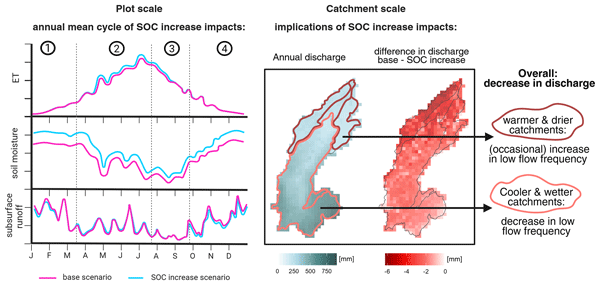
Droughts increasingly threaten agriculture. Improving soils to store more water, for example by increasing soil organic carbon, can help. We simulated this in a Swiss catchment and found that more soil carbon slightly increased soil water storage and evapotranspiration, modestly reduced floods, and shortened periods with very little streamflow. However in warmer, drier areas, these periods with little streamflow could sometimes last longer.
Adrià Fontrodona-Bach, Bettina Schaefli, Ross Woods, and Joshua R. Larsen
Hydrol. Earth Syst. Sci., 30, 2613–2636, https://doi.org/10.5194/hess-30-2613-2026, https://doi.org/10.5194/hess-30-2613-2026, 2026
Short summary
Short summary
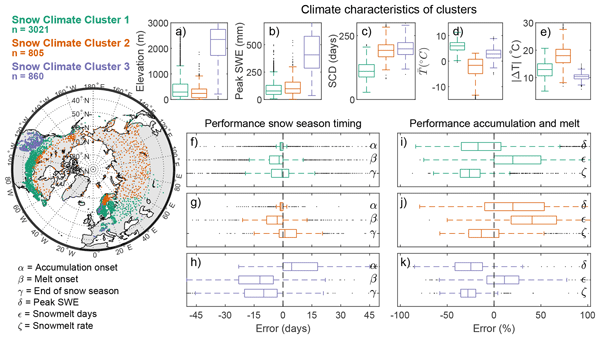
Investigating changing snow in response to global warming can be done with a simple model and only temperature and precipitation data, simplifying snow dynamics with assumptions and parameters. We provide a large-scale and long-term evaluation of this approach and its performance across diverse climates. Temperature thresholds are more robust over cold climates but melt parameters are more robust over warmer climates with deep snow. The model performs well across climates despite its simplicity.
Justine Berg, Pascal Horton, Martina Kauzlaric, Alexandra von der Esch, and Bettina Schaefli
EGUsphere, https://doi.org/10.5194/egusphere-2026-439, https://doi.org/10.5194/egusphere-2026-439, 2026
Short summary
Short summary
Snow and glacier melt are essential for water supply in mountain regions, but it is challenging to determine how much each source contributes to streamflow. To improve these estimates, we simulated 14 headwater catchments in Switzerland using a hydrological model modified to include snow redistribution and integrating glacier melt from a glacier evolution model. This allowed more accurate estimates of snow and glacier melt contributions, supporting future predictions of water availability.
Muhammad Shafeeque, Jan-Hendrik Malles, Anouk Vlug, Marco Möller, and Ben Marzeion
The Cryosphere, 20, 875–903, https://doi.org/10.5194/tc-20-875-2026, https://doi.org/10.5194/tc-20-875-2026, 2026
Short summary
Short summary
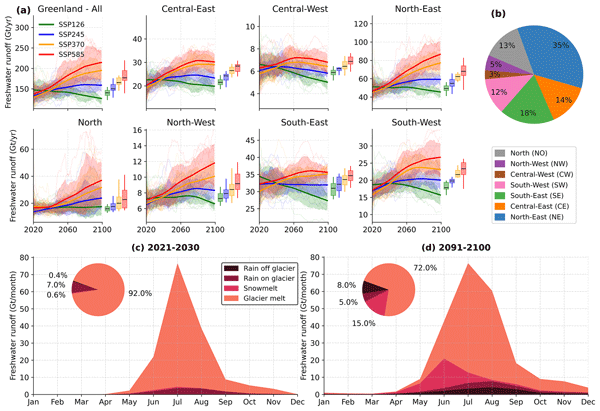
This study projects Greenland's peripheral glaciers' response to climate change using the Open Global Glacier Model (OGGM). They may lose up to 52 % of ice mass by 2100. We predict changes in ice discharge versus melting, affecting fjords, sea levels, and ocean currents. Freshwater runoff composition and peak water timing vary by region and scenario. Our findings highlight the importance of reducing emissions to minimize impacts on these glaciers and their influence on ecosystems.
Xinyang Fan, Florentin Hofmeister, Bettina Schaefli, and Gabriele Chiogna
EGUsphere, https://doi.org/10.5194/egusphere-2025-6065, https://doi.org/10.5194/egusphere-2025-6065, 2025
Short summary
Short summary
We adopt a physics-based, fully-integrated hydrological modeling approach to understand streamflow variations and their interactions with groundwater in a high-elevation glaciated environment. We demonstrate opportunities and challenges of integrating point-scale groundwater observations into a distributed model. This study sheds new lights on surface-subsurface processes in high alpine environments and highlights the importance of improving subsurface representation in hydrological modeling.
Timo Schaffhauser, Florentin Hofmeister, Gabriele Chiogna, Fabian Merk, Ye Tuo, Julian Machnitzke, Lucas Alcamo, Jingshui Huang, and Markus Disse
Hydrol. Earth Syst. Sci., 29, 3227–3256, https://doi.org/10.5194/hess-29-3227-2025, https://doi.org/10.5194/hess-29-3227-2025, 2025
Short summary
Short summary
The glacier-expanded SWAT (Soil Water Assessment Tool) version, SWAT-GL, was tested in four different catchments, highlighting the capabilities of the glacier routine. It was evaluated based on the representation of glacier mass balance, snow cover and glacier hypsometry. The glacier changes over a long timescale could be adequately represented, leading to promising potential future applications in glaciated and high mountain environments and significantly outperforming standard SWAT models.
Torsten Kanzow, Angelika Humbert, Thomas Mölg, Mirko Scheinert, Matthias Braun, Hans Burchard, Francesca Doglioni, Philipp Hochreuther, Martin Horwath, Oliver Huhn, Maria Kappelsberger, Jürgen Kusche, Erik Loebel, Katrina Lutz, Ben Marzeion, Rebecca McPherson, Mahdi Mohammadi-Aragh, Marco Möller, Carolyne Pickler, Markus Reinert, Monika Rhein, Martin Rückamp, Janin Schaffer, Muhammad Shafeeque, Sophie Stolzenberger, Ralph Timmermann, Jenny Turton, Claudia Wekerle, and Ole Zeising
The Cryosphere, 19, 1789–1824, https://doi.org/10.5194/tc-19-1789-2025, https://doi.org/10.5194/tc-19-1789-2025, 2025
Short summary
Short summary
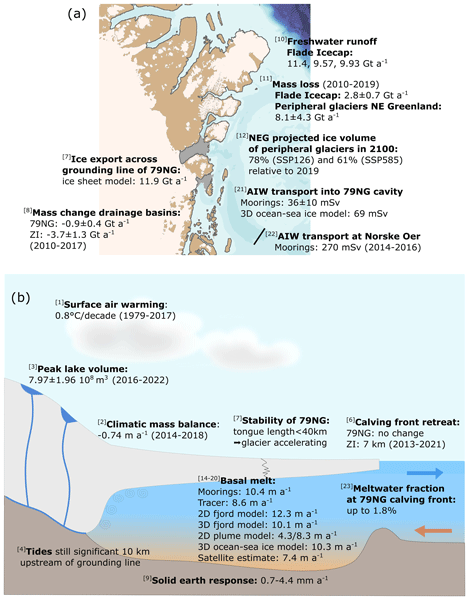
The Greenland Ice Sheet represents the second-largest contributor to global sea-level rise. We quantify atmosphere, ice and ocean processes related to the mass balance of glaciers in northeast Greenland, focusing on Greenland’s largest floating ice tongue, the 79° N Glacier. We find that together, the different in situ and remote sensing observations and model simulations reveal a consistent picture of a coupled atmosphere–ice sheet–ocean system that has entered a phase of major change.
Xinyang Fan, Florentin Hofmeister, Bettina Schaefli, and Gabriele Chiogna
EGUsphere, https://doi.org/10.5194/egusphere-2025-1500, https://doi.org/10.5194/egusphere-2025-1500, 2025
Preprint archived
Short summary
Short summary
We adopt a fully-distributed, physics-based hydrological modeling approach, to understand streamflow variations and their interactions with groundwater in a high-elevation glaciated environment. We demonstrate opportunities and challenges of integrating point-scale groundwater observations into a distributed model. This study sheds new lights on surface-subsurface processes in high alpine environments and highlights the importance of improving subsurface representation in hydrological modeling.
Malve Heinz, Maria Eliza Turek, Bettina Schaefli, Andreas Keiser, and Annelie Holzkämper
Hydrol. Earth Syst. Sci., 29, 1807–1827, https://doi.org/10.5194/hess-29-1807-2025, https://doi.org/10.5194/hess-29-1807-2025, 2025
Short summary
Short summary
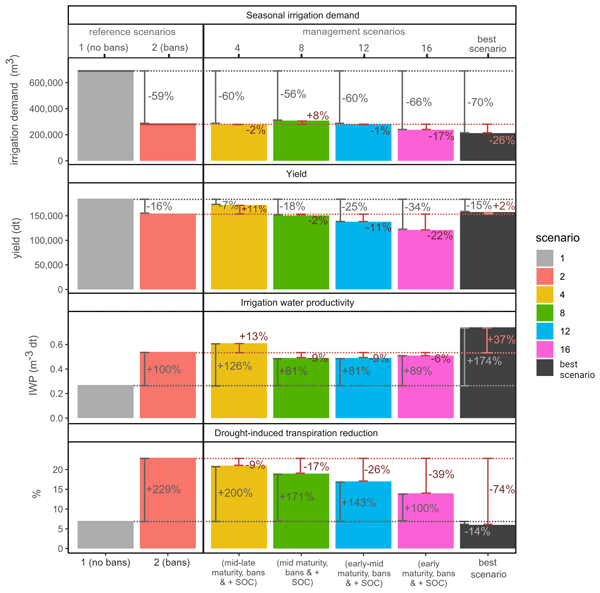
Potato farmers in Switzerland are facing drier conditions and water restrictions. We explored how improving soil health and planting early-maturing potato varieties might help them to adapt. Using a computer model, we simulated potato yields and irrigation water needs under water scarcity. Our results show that earlier-maturing potato varieties reduce the reliance on irrigation but result in lower yields. However, improving soil health can significantly reduce yield losses.
Anne-Laure Argentin, Pascal Horton, Bettina Schaefli, Jamal Shokory, Felix Pitscheider, Leona Repnik, Mattia Gianini, Simone Bizzi, Stuart N. Lane, and Francesco Comiti
Hydrol. Earth Syst. Sci., 29, 1725–1748, https://doi.org/10.5194/hess-29-1725-2025, https://doi.org/10.5194/hess-29-1725-2025, 2025
Short summary
Short summary
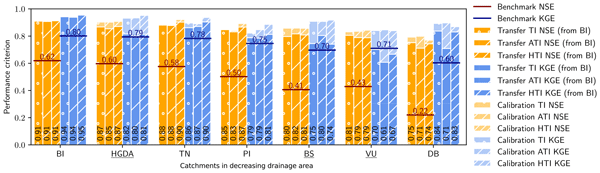
In this article, we show that by taking the optimal parameters calibrated with a semi-lumped model for the discharge at a catchment's outlet, we can accurately simulate runoff at various points within the study area, including three nested and three neighboring catchments. In addition, we demonstrate that employing more intricate melt models, which better represent physical processes, enhances the transfer of parameters in the simulation, until we observe overparameterization.
Jan-Hendrik Malles, Ben Marzeion, and Paul G. Myers
Earth Syst. Dynam., 16, 347–377, https://doi.org/10.5194/esd-16-347-2025, https://doi.org/10.5194/esd-16-347-2025, 2025
Short summary
Short summary
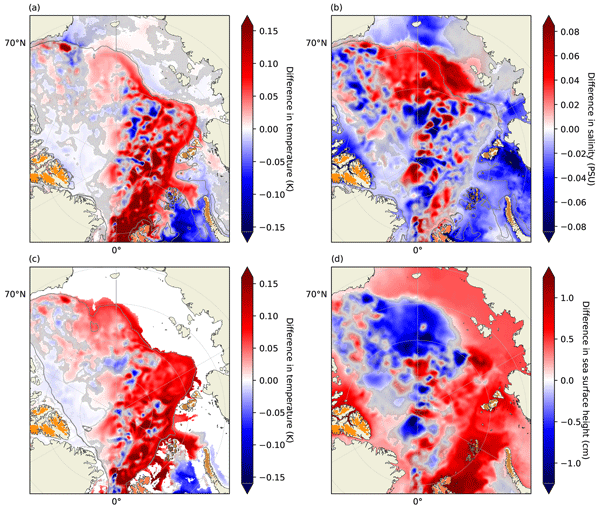
Glaciers in the high-latitude Northern Hemisphere (outside Greenland) are losing mass at roughly half the Greenland ice sheet's rate. Still, this is usually not included in the freshwater input data for ocean circulation models. Also, the submarine melt of glaciers (outside the ice sheets) has not been quantified yet. We tackle both issues by using a glacier model's output as additional fresh water for the ocean model and by using the ocean model's output to model submarine melt.
Tom Müller, Mauro Fischer, Stuart N. Lane, and Bettina Schaefli
The Cryosphere, 19, 423–458, https://doi.org/10.5194/tc-19-423-2025, https://doi.org/10.5194/tc-19-423-2025, 2025
Short summary
Short summary
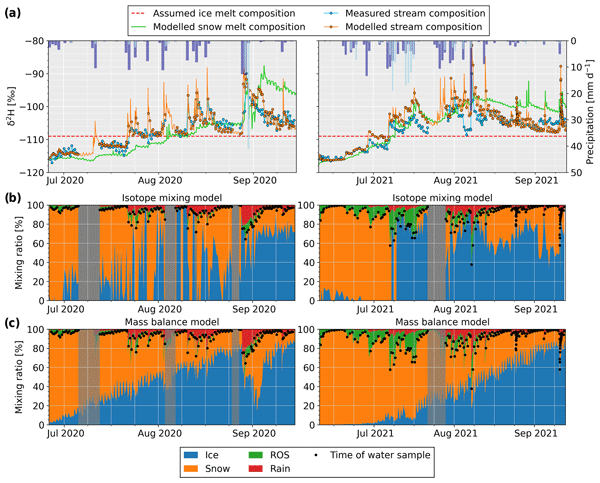
Based on extensive field observations in a highly glacierized catchment in the Swiss Alps, we develop a combined isotopic and glacio-hydrological model. We show that water stable isotopes may help to better constrain model parameters, especially those linked to water transfer. However, we highlight that separating snow and ice melt for temperate glaciers based on isotope mixing models alone is not advised and should only be considered if their isotopic signatures have clearly different values.
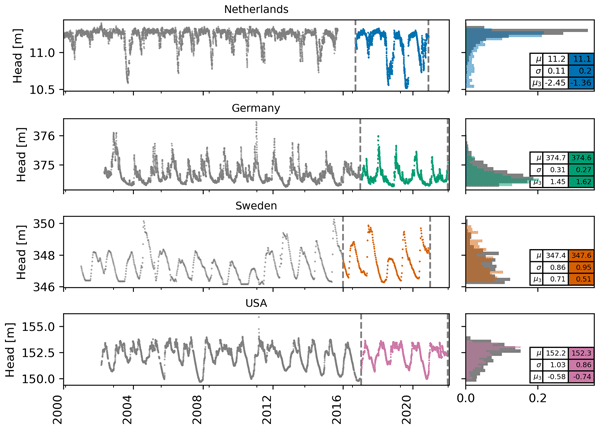
Raoul A. Collenteur, Ezra Haaf, Mark Bakker, Tanja Liesch, Andreas Wunsch, Jenny Soonthornrangsan, Jeremy White, Nick Martin, Rui Hugman, Ed de Sousa, Didier Vanden Berghe, Xinyang Fan, Tim J. Peterson, Jānis Bikše, Antoine Di Ciacca, Xinyue Wang, Yang Zheng, Maximilian Nölscher, Julian Koch, Raphael Schneider, Nikolas Benavides Höglund, Sivarama Krishna Reddy Chidepudi, Abel Henriot, Nicolas Massei, Abderrahim Jardani, Max Gustav Rudolph, Amir Rouhani, J. Jaime Gómez-Hernández, Seifeddine Jomaa, Anna Pölz, Tim Franken, Morteza Behbooei, Jimmy Lin, and Rojin Meysami
Hydrol. Earth Syst. Sci., 28, 5193–5208, https://doi.org/10.5194/hess-28-5193-2024, https://doi.org/10.5194/hess-28-5193-2024, 2024
Short summary
Short summary
We show the results of the 2022 Groundwater Time Series Modelling Challenge; 15 teams applied data-driven models to simulate hydraulic heads, and three model groups were identified: lumped, machine learning, and deep learning. For all wells, reasonable performance was obtained by at least one team from each group. There was not one team that performed best for all wells. In conclusion, the challenge was a successful initiative to compare different models and learn from each other.
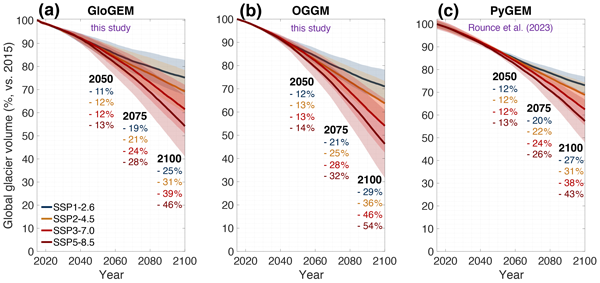
Harry Zekollari, Matthias Huss, Lilian Schuster, Fabien Maussion, David R. Rounce, Rodrigo Aguayo, Nicolas Champollion, Loris Compagno, Romain Hugonnet, Ben Marzeion, Seyedhamidreza Mojtabavi, and Daniel Farinotti
The Cryosphere, 18, 5045–5066, https://doi.org/10.5194/tc-18-5045-2024, https://doi.org/10.5194/tc-18-5045-2024, 2024
Short summary
Short summary
Glaciers are major contributors to sea-level rise and act as key water resources. Here, we model the global evolution of glaciers under the latest generation of climate scenarios. We show that the type of observations used for model calibration can strongly affect the projections at the local scale. Our newly projected 21st century global mass loss is higher than the current community estimate as reported in the latest Intergovernmental Panel on Climate Change (IPCC) report.
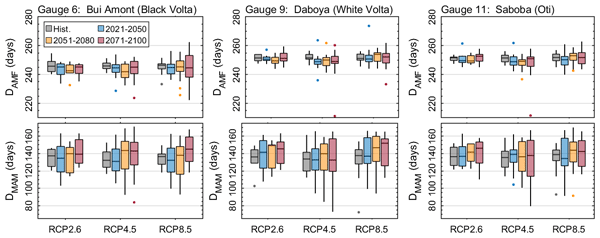
Moctar Dembélé, Mathieu Vrac, Natalie Ceperley, Sander J. Zwart, Josh Larsen, Simon J. Dadson, Grégoire Mariéthoz, and Bettina Schaefli
Proc. IAHS, 385, 121–127, https://doi.org/10.5194/piahs-385-121-2024, https://doi.org/10.5194/piahs-385-121-2024, 2024
Short summary
Short summary
This study assesses the impact of climate change on the timing, seasonality and magnitude of mean annual minimum (MAM) flows and annual maximum flows (AMF) in the Volta River basin (VRB). Several climate change projection data are use to simulate river flow under multiple greenhouse gas emission scenarios. Future projections show that AMF could increase with various magnitude but negligible shift in time across the VRB, while MAM could decrease with up to 14 days of delay in occurrence.
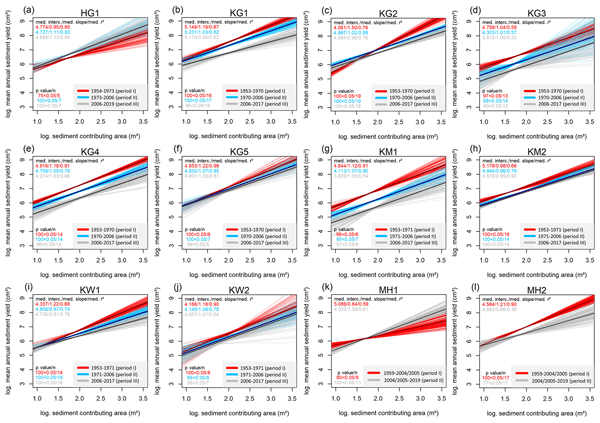
Moritz Altmann, Madlene Pfeiffer, Florian Haas, Jakob Rom, Fabian Fleischer, Tobias Heckmann, Livia Piermattei, Michael Wimmer, Lukas Braun, Manuel Stark, Sarah Betz-Nutz, and Michael Becht
Earth Surf. Dynam., 12, 399–431, https://doi.org/10.5194/esurf-12-399-2024, https://doi.org/10.5194/esurf-12-399-2024, 2024
Short summary
Short summary
We show a long-term erosion monitoring of several sections on Little Ice Age lateral moraines with derived sediment yield from historical and current digital elevation modelling (DEM)-based differences. The first study period shows a clearly higher range of variability of sediment yield within the sites than the later periods. In most cases, a decreasing trend of geomorphic activity was observed.
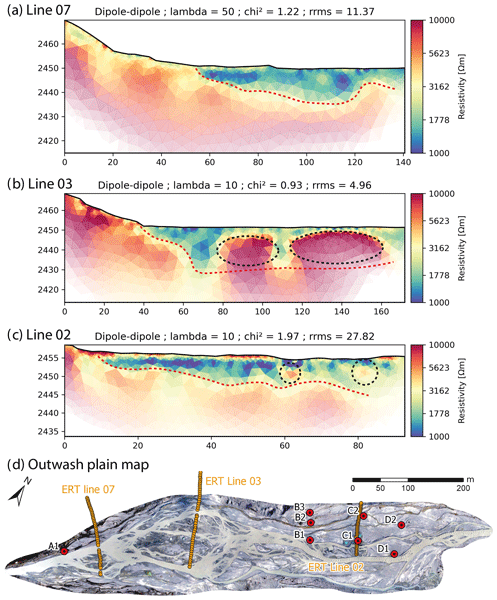
Tom Müller, Matteo Roncoroni, Davide Mancini, Stuart N. Lane, and Bettina Schaefli
Hydrol. Earth Syst. Sci., 28, 735–759, https://doi.org/10.5194/hess-28-735-2024, https://doi.org/10.5194/hess-28-735-2024, 2024
Short summary
Short summary
We investigate the role of a newly formed floodplain in an alpine glaciated catchment to store and release water. Based on field measurements, we built a numerical model to simulate the water fluxes and show that recharge occurs mainly due to the ice-melt-fed river. We identify three future floodplains, which could emerge from glacier retreat, and show that their combined storage leads to some additional groundwater storage but contributes little additional baseflow for the downstream river.
Katharina Ramskogler, Bettina Knoflach, Bernhard Elsner, Brigitta Erschbamer, Florian Haas, Tobias Heckmann, Florentin Hofmeister, Livia Piermattei, Camillo Ressl, Svenja Trautmann, Michael H. Wimmer, Clemens Geitner, Johann Stötter, and Erich Tasser
Biogeosciences, 20, 2919–2939, https://doi.org/10.5194/bg-20-2919-2023, https://doi.org/10.5194/bg-20-2919-2023, 2023
Short summary
Short summary
Primary succession in proglacial areas depends on complex driving forces. To concretise the complex effects and interaction processes, 39 known explanatory variables assigned to seven spheres were analysed via principal component analysis and generalised additive models. Key results show that in addition to time- and elevation-dependent factors, also disturbances alter vegetation development. The results are useful for debates on vegetation development in a warming climate.
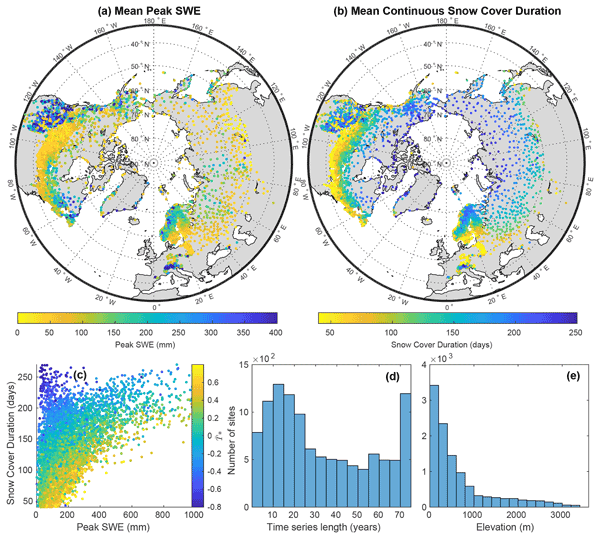
Adrià Fontrodona-Bach, Bettina Schaefli, Ross Woods, Adriaan J. Teuling, and Joshua R. Larsen
Earth Syst. Sci. Data, 15, 2577–2599, https://doi.org/10.5194/essd-15-2577-2023, https://doi.org/10.5194/essd-15-2577-2023, 2023
Short summary
Short summary
We provide a dataset of snow water equivalent, the depth of liquid water that results from melting a given depth of snow. The dataset contains 11 071 sites over the Northern Hemisphere, spans the period 1950–2022, and is based on daily observations of snow depth on the ground and a model. The dataset fills a lack of accessible historical ground snow data, and it can be used for a variety of applications such as the impact of climate change on global and regional snow and water resources.
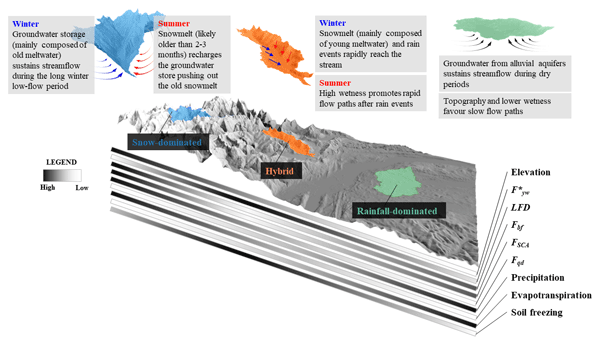
Alessio Gentile, Davide Canone, Natalie Ceperley, Davide Gisolo, Maurizio Previati, Giulia Zuecco, Bettina Schaefli, and Stefano Ferraris
Hydrol. Earth Syst. Sci., 27, 2301–2323, https://doi.org/10.5194/hess-27-2301-2023, https://doi.org/10.5194/hess-27-2301-2023, 2023
Short summary
Short summary
What drives young water fraction, F*yw (i.e., the fraction of water in streamflow younger than 2–3 months), variations with elevation? Why is F*yw counterintuitively low in high-elevation catchments, in spite of steeper topography? In this paper, we present a perceptual model explaining how the longer low-flow duration at high elevations, driven by the persistence of winter snowpacks, increases the proportion of stored (old) water contributing to the stream, thus reducing F*yw.
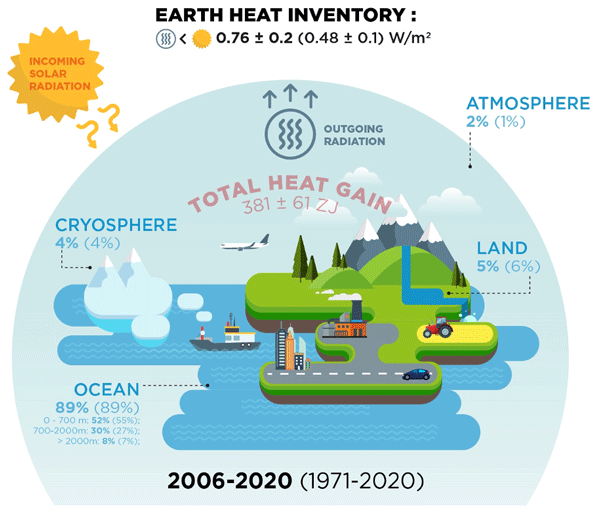
Karina von Schuckmann, Audrey Minière, Flora Gues, Francisco José Cuesta-Valero, Gottfried Kirchengast, Susheel Adusumilli, Fiammetta Straneo, Michaël Ablain, Richard P. Allan, Paul M. Barker, Hugo Beltrami, Alejandro Blazquez, Tim Boyer, Lijing Cheng, John Church, Damien Desbruyeres, Han Dolman, Catia M. Domingues, Almudena García-García, Donata Giglio, John E. Gilson, Maximilian Gorfer, Leopold Haimberger, Maria Z. Hakuba, Stefan Hendricks, Shigeki Hosoda, Gregory C. Johnson, Rachel Killick, Brian King, Nicolas Kolodziejczyk, Anton Korosov, Gerhard Krinner, Mikael Kuusela, Felix W. Landerer, Moritz Langer, Thomas Lavergne, Isobel Lawrence, Yuehua Li, John Lyman, Florence Marti, Ben Marzeion, Michael Mayer, Andrew H. MacDougall, Trevor McDougall, Didier Paolo Monselesan, Jan Nitzbon, Inès Otosaka, Jian Peng, Sarah Purkey, Dean Roemmich, Kanako Sato, Katsunari Sato, Abhishek Savita, Axel Schweiger, Andrew Shepherd, Sonia I. Seneviratne, Leon Simons, Donald A. Slater, Thomas Slater, Andrea K. Steiner, Toshio Suga, Tanguy Szekely, Wim Thiery, Mary-Louise Timmermans, Inne Vanderkelen, Susan E. Wjiffels, Tonghua Wu, and Michael Zemp
Earth Syst. Sci. Data, 15, 1675–1709, https://doi.org/10.5194/essd-15-1675-2023, https://doi.org/10.5194/essd-15-1675-2023, 2023
Short summary
Short summary
Earth's climate is out of energy balance, and this study quantifies how much heat has consequently accumulated over the past decades (ocean: 89 %, land: 6 %, cryosphere: 4 %, atmosphere: 1 %). Since 1971, this accumulated heat reached record values at an increasing pace. The Earth heat inventory provides a comprehensive view on the status and expectation of global warming, and we call for an implementation of this global climate indicator into the Paris Agreement’s Global Stocktake.
Anthony Michelon, Natalie Ceperley, Harsh Beria, Joshua Larsen, Torsten Vennemann, and Bettina Schaefli
Hydrol. Earth Syst. Sci., 27, 1403–1430, https://doi.org/10.5194/hess-27-1403-2023, https://doi.org/10.5194/hess-27-1403-2023, 2023
Short summary
Short summary
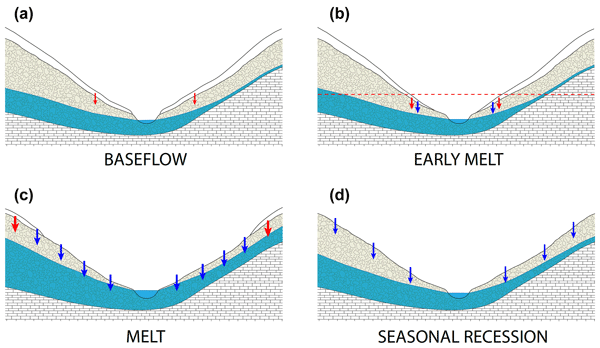
Streamflow generation processes in high-elevation catchments are largely influenced by snow accumulation and melt. For this work, we collected and analyzed more than 2800 water samples (temperature, electric conductivity, and stable isotopes of water) to characterize the hydrological processes in such a high Alpine environment. Our results underline the critical role of subsurface flow during all melt periods and the presence of snowmelt even during the winter periods.
Tom Müller, Stuart N. Lane, and Bettina Schaefli
Hydrol. Earth Syst. Sci., 26, 6029–6054, https://doi.org/10.5194/hess-26-6029-2022, https://doi.org/10.5194/hess-26-6029-2022, 2022
Short summary
Short summary
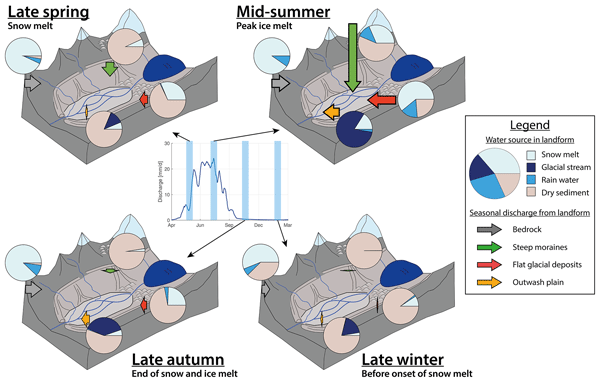
This research provides a comprehensive analysis of groundwater storage in Alpine glacier forefields, a zone rapidly evolving with glacier retreat. Based on data analysis of a case study, it provides a simple perceptual model showing where and how groundwater is stored and released in a high Alpine environment. It especially points out the presence of groundwater storages in both fluvial and bedrock aquifers, which may become more important with future glacier retreat.
Nidheesh Gangadharan, Hugues Goosse, David Parkes, Heiko Goelzer, Fabien Maussion, and Ben Marzeion
Earth Syst. Dynam., 13, 1417–1435, https://doi.org/10.5194/esd-13-1417-2022, https://doi.org/10.5194/esd-13-1417-2022, 2022
Short summary
Short summary
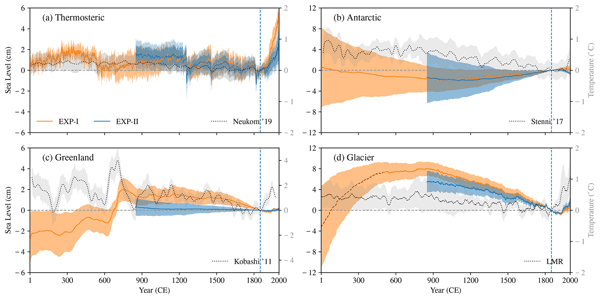
We describe the contributions of ocean thermal expansion and land-ice melting (ice sheets and glaciers) to global-mean sea-level (GMSL) changes in the Common Era. The mass contributions are the major sources of GMSL changes in the pre-industrial Common Era and glaciers are the largest contributor. The paper also describes the current state of climate modelling, uncertainties and knowledge gaps along with the potential implications of the past variabilities in the contemporary sea-level rise.
Feiko Bernard van Zadelhoff, Adel Albaba, Denis Cohen, Chris Phillips, Bettina Schaefli, Luuk Dorren, and Massimiliano Schwarz
Nat. Hazards Earth Syst. Sci., 22, 2611–2635, https://doi.org/10.5194/nhess-22-2611-2022, https://doi.org/10.5194/nhess-22-2611-2022, 2022
Short summary
Short summary
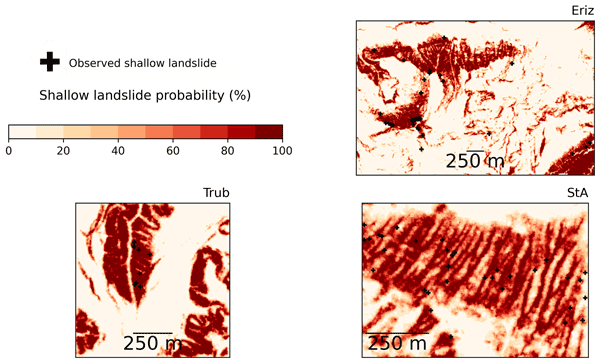
Shallow landslides pose a risk to people, property and infrastructure. Assessment of this hazard and the impact of protective measures can reduce losses. We developed a model (SlideforMAP) that can assess the shallow-landslide risk on a regional scale for specific rainfall events. Trees are an effective and cheap protective measure on a regional scale. Our model can assess their hazard reduction down to the individual tree level.
Alexandre Tuel, Bettina Schaefli, Jakob Zscheischler, and Olivia Martius
Hydrol. Earth Syst. Sci., 26, 2649–2669, https://doi.org/10.5194/hess-26-2649-2022, https://doi.org/10.5194/hess-26-2649-2022, 2022
Short summary
Short summary
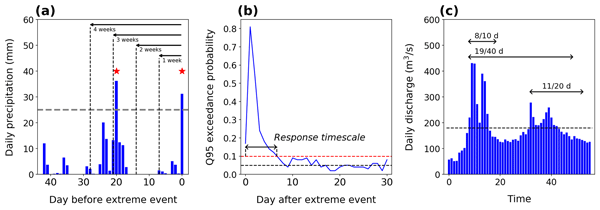
River discharge is strongly influenced by the temporal structure of precipitation. Here, we show how extreme precipitation events that occur a few days or weeks after a previous event have a larger effect on river discharge than events occurring in isolation. Windows of 2 weeks or less between events have the most impact. Similarly, periods of persistent high discharge tend to be associated with the occurrence of several extreme precipitation events in close succession.
Stefan Brönnimann, Peter Stucki, Jörg Franke, Veronika Valler, Yuri Brugnara, Ralf Hand, Laura C. Slivinski, Gilbert P. Compo, Prashant D. Sardeshmukh, Michel Lang, and Bettina Schaefli
Clim. Past, 18, 919–933, https://doi.org/10.5194/cp-18-919-2022, https://doi.org/10.5194/cp-18-919-2022, 2022
Short summary
Short summary
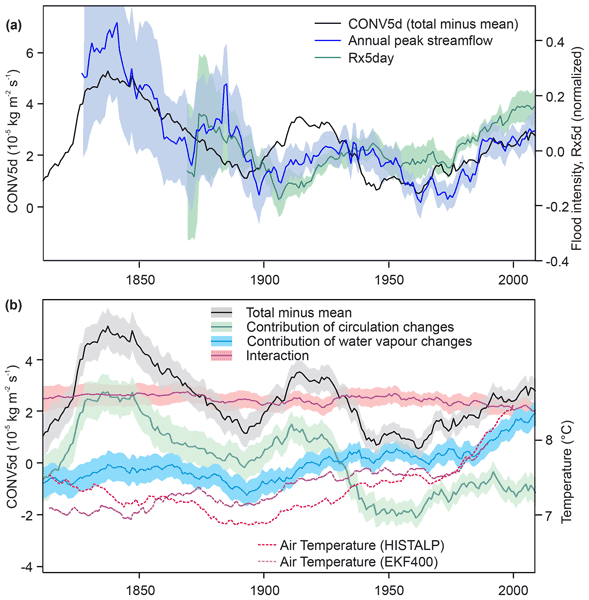
Floods in Europe vary on time scales of several decades. Flood-rich and flood-poor periods alternate. Recently floods have again become more frequent. Long time series of peak stream flow, precipitation, and atmospheric variables reveal that until around 1980, these changes were mostly due to changes in atmospheric circulation. However, in recent decades the role of increasing atmospheric moisture due to climate warming has become more important and is now the main driver of flood changes.
Moctar Dembélé, Mathieu Vrac, Natalie Ceperley, Sander J. Zwart, Josh Larsen, Simon J. Dadson, Grégoire Mariéthoz, and Bettina Schaefli
Hydrol. Earth Syst. Sci., 26, 1481–1506, https://doi.org/10.5194/hess-26-1481-2022, https://doi.org/10.5194/hess-26-1481-2022, 2022
Short summary
Short summary
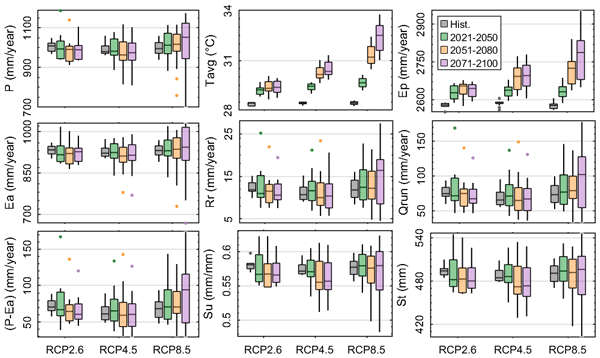
Climate change impacts on water resources in the Volta River basin are investigated under various global warming scenarios. Results reveal contrasting changes in future hydrological processes and water availability, depending on greenhouse gas emission scenarios, with implications for floods and drought occurrence over the 21st century. These findings provide insights for the elaboration of regional adaptation and mitigation strategies for climate change.
Adrien Michel, Bettina Schaefli, Nander Wever, Harry Zekollari, Michael Lehning, and Hendrik Huwald
Hydrol. Earth Syst. Sci., 26, 1063–1087, https://doi.org/10.5194/hess-26-1063-2022, https://doi.org/10.5194/hess-26-1063-2022, 2022
Short summary
Short summary
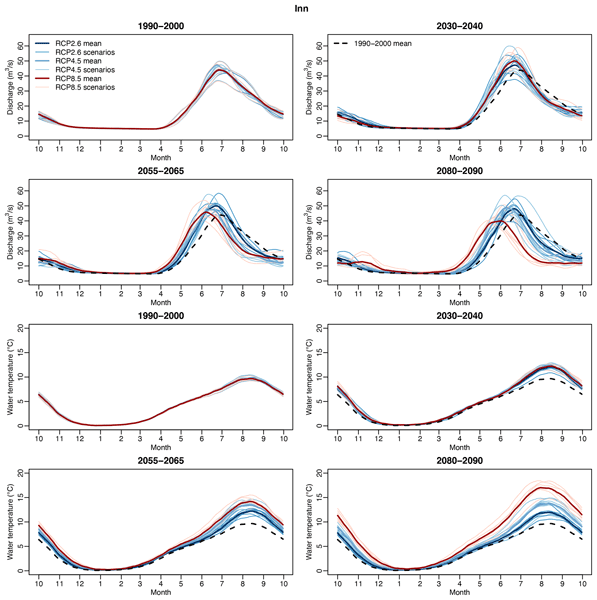
This study presents an extensive study of climate change impacts on river temperature in Switzerland. Results show that, even for low-emission scenarios, water temperature increase will lead to adverse effects for both ecosystems and socio-economic sectors throughout the 21st century. For high-emission scenarios, the effect will worsen. This study also shows that water seasonal warming will be different between the Alpine regions and the lowlands. Finally, efficiency of models is assessed.
Martin Horwath, Benjamin D. Gutknecht, Anny Cazenave, Hindumathi Kulaiappan Palanisamy, Florence Marti, Ben Marzeion, Frank Paul, Raymond Le Bris, Anna E. Hogg, Inès Otosaka, Andrew Shepherd, Petra Döll, Denise Cáceres, Hannes Müller Schmied, Johnny A. Johannessen, Jan Even Øie Nilsen, Roshin P. Raj, René Forsberg, Louise Sandberg Sørensen, Valentina R. Barletta, Sebastian B. Simonsen, Per Knudsen, Ole Baltazar Andersen, Heidi Ranndal, Stine K. Rose, Christopher J. Merchant, Claire R. Macintosh, Karina von Schuckmann, Kristin Novotny, Andreas Groh, Marco Restano, and Jérôme Benveniste
Earth Syst. Sci. Data, 14, 411–447, https://doi.org/10.5194/essd-14-411-2022, https://doi.org/10.5194/essd-14-411-2022, 2022
Short summary
Short summary
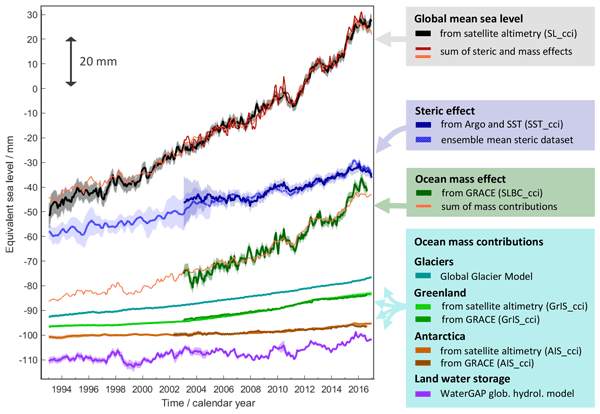
Global mean sea-level change observed from 1993 to 2016 (mean rate of 3.05 mm yr−1) matches the combined effect of changes in water density (thermal expansion) and ocean mass. Ocean-mass change has been assessed through the contributions from glaciers, ice sheets, and land water storage or directly from satellite data since 2003. Our budget assessments of linear trends and monthly anomalies utilise new datasets and uncertainty characterisations developed within ESA's Climate Change Initiative.
Fabian Fleischer, Florian Haas, Livia Piermattei, Madlene Pfeiffer, Tobias Heckmann, Moritz Altmann, Jakob Rom, Manuel Stark, Michael H. Wimmer, Norbert Pfeifer, and Michael Becht
The Cryosphere, 15, 5345–5369, https://doi.org/10.5194/tc-15-5345-2021, https://doi.org/10.5194/tc-15-5345-2021, 2021
Short summary
Short summary
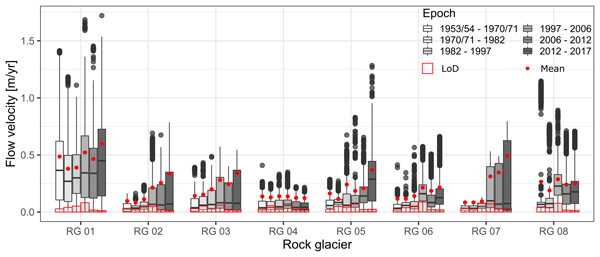
We investigate the long-term (1953–2017) morphodynamic changes in rock glaciers in Kaunertal valley, Austria. Using a combination of historical aerial photographs and laser scanning data, we derive information on flow velocities and surface elevation changes. We observe a loss of volume and an acceleration from the late 1990s onwards. We explain this by changes in the meteorological forcing. Individual rock glaciers react to these changes to varying degrees.

Ben Marzeion
Earth Syst. Dynam., 12, 1057–1060, https://doi.org/10.5194/esd-12-1057-2021, https://doi.org/10.5194/esd-12-1057-2021, 2021
Short summary
Short summary
The oceans are typically darker than land surfaces. Expanding oceans through sea-level rise may thus lead to a darker planet Earth, reflecting less sunlight. The additionally absorbed sunlight may heat planet Earth, leading to further sea-level rise. Here, we provide a rough estimate of the strength of this feedback: it turns out to be very weak, but clearly positive, thereby destabilizing the Earth system.
Cited articles
Abermann, J., Seiser, B., Meran, I., Stocker-Waldhuber, M., Goller, M., and Fischer, A.: The third glacier inventory of North Tyrol, Austria, for 2006, PANGAEA [data set], https://doi.org/10.1594/PANGAEA.806960, 2012. a, b
Altmann, M., Piermattei, L., Haas, F., Heckmann, T., Fleischer, F., Rom, J., Betz-Nutz, S., Knoflach, B., Müller, S., Ramskogler, K., Pfeiffer, M., Hofmeister, F., Ressl, C., and Becht, M.: Long-Term Changes of Morphodynamics on Little Ice Age Lateral Moraines and the Resulting Sediment Transfer into Mountain Streams in the Upper Kauner Valley, Austria, Water, 12, 3375, https://doi.org/10.3390/w12123375, 2020. a, b, c
Altmann, M., Pfeiffer, M., Haas, F., Rom, J., Fleischer, F., Heckmann, T., Piermattei, L., Wimmer, M., Braun, L., Stark, M., Betz-Nutz, S., and Becht, M.: Long-term monitoring (1953–2019) of geomorphologically active sections of Little Ice Age lateral moraines in the context of changing meteorological conditions, Earth Surf. Dynam., 12, 399–431, https://doi.org/10.5194/esurf-12-399-2024, 2024. a, b
Anderson, J. R., Hardy, E. E., Roach, J. T., and Witmer, R. E.: A land use and land cover classification system for use with remote sensor data, U.S. Geological Survey Professional Paper, 964, 3, 28, https://doi.org/10.3133/pp964, 1976. a, b
Auer, I., Böhm, R., Jurković, A., Orlik, A., Potzmann, R., Schöner, W., Ungersböck, M., Brunetti, M., Nanni, T., Maugeri, M., Briffa, K., Jones, P., Efthymiadis, D., Mestre, O., Moisselin, J.-M., Begert, M., Brazdil, R., Bochnicek, O., Cegnar, T., Gajić-Čapka, M., Zaninović, K., Majstorović, Å., Szalai, S., Szentimrey, T., and Mercalli, L.: A new instrumental precipitation dataset for the greater alpine region for the period 1800–2002, Int. J. Climatol., 25, 139–166, https://doi.org/10.1002/joc.1135, 2005. a
Auer, I., Böhm, R., Jurkovic, A., Lipa, W., Orlik, A., Potzmann, R., Schöner, W., Ungersböck, M., Matulla, C., Briffa, K., Jones, P., Efthymiadis, D., Brunetti, M., Nanni, T., Maugeri, M., Mercalli, L., Mestre, O., Moisselin, J.-M., Begert, M., Müller-Westermeier, G., Kveton, V., Bochnicek, O., Stastny, P., Lapin, M., Szalai, S., Szentimrey, T., Cegnar, T., Dolinar, M., Gajic-Capka, M., Zaninovic, K., Majstorovic, Z., and Nieplova, E.: HISTALP – historical instrumental climatological surface time series of the Greater Alpine Region, Int. J. Climatol., 27, 17–46, https://doi.org/10.1002/joc.1377, 2007. a, b
Bahr, D. B., Pfeffer, W. T., and Kaser, G.: A review of volume area scaling of glaciers, Rev. Geophys., 53, 95–140, https://doi.org/10.1002/2014RG000470, 2015. a
Berg, J., Reynolds, D., Quéno, L., Jonas, T., Lehning, M., and Mott, R.: A seasonal snowpack model forced with dynamically downscaled forcing data resolves hydrologically relevant accumulation patterns, Front. Earth Sci., 12, 1393260, https://doi.org/10.3389/feart.2024.1393260, 2024. a, b, c
Buckel, J. and Otto, J.-C.: The Austrian Glacier Inventory GI 4 (2015) in ArcGis (shapefile) format, PANGAEA [data set], https://doi.org/10.1594/PANGAEA.887415, 2018. a, b
Chen, J. and Ohmura, A.: Estimation of Alpine glacier water resources and their change since the 1870s, 193, 127–135, https://www.researchgate.net/profile/Atsumu_Ohmura/publication/241663882_Estimation_of_Alpine_Glacier_Water_Resources_and_their_Change_Since_the_1870s/links/53fcea990cf22f21c2f52215.pdf (last access: 25 September 2026), 1990. a, b
Compo, G. P., Whitaker, J. S., Sardeshmukh, P. D., Matsui, N., Allan, R. J., Yin, X., Gleason, B. E., Vose, R. S., Rutledge, G., Bessemoulin, P., Brönnimann, S., Brunet, M., Crouthamel, R. I., Grant, A. N., Groisman, P. Y., Jones, P. D., Kruk, M. C., Kruger, A. C., Marshall, G. J., Maugeri, M., Mok, H. Y., Nordli, Ã., Ross, T. F., Trigo, R. M., Wang, X. L., Woodruff, S. D., and Worley, S. J.: The Twentieth Century Reanalysis Project, Q. J. R. Meteorol. Soc., 137, 1–28, https://doi.org/10.1002/qj.776, 2011. a
Duethmann, D., Peters, J., Blume, T., Vorogushyn, S., and Güntner, A.: The value of satellite-derived snow cover images for calibrating a hydrological model in snow-dominated catchments in Central Asia, Water Resour. Res., 50, 2002–2021, https://doi.org/10.1002/2013WR014382, 2014. a
Escher-Vetter, H., Braun, L. N., and Siebers, M.: Hydrological and meteorological records from the Vernagtferner Basin – Vernagtbach station, for the years 2002 to 2012, PANGAEA [data set], https://doi.org/10.1594/PANGAEA.829530, 2014. a
Faghih, M., Brissette, F., and Sabeti, P.: Impact of correcting sub-daily climate model biases for hydrological studies, Hydrol. Earth Syst. Sci., 26, 1545–1563, https://doi.org/10.5194/hess-26-1545-2022, 2022. a, b
Foehn, A., García Hernández, J., Schaefli, B., and De Cesare, G.: Spatial interpolation of precipitation from multiple rain gauge networks and weather radar data for operational applications in Alpine catchments, J. Hydrol., 563, 1092–1110, https://doi.org/10.1016/j.jhydrol.2018.05.027, 2018. a
Förster, K., Oesterle, F., Hanzer, F., Schöber, J., Huttenlau, M., and Strasser, U.: A snow and ice melt seasonal prediction modelling system for Alpine reservoirs, Proc. IAHS, 374, 143–150, https://doi.org/10.5194/piahs-374-143-2016, 2016. a
Frei, P., Kotlarski, S., Liniger, M. A., and Schär, C.: Future snowfall in the Alps: projections based on the EURO-CORDEX regional climate models, The Cryosphere, 12, 1–24, https://doi.org/10.5194/tc-12-1-2018, 2018. a
Giese, B. S., Seidel, H. F., Compo, G. P., and Sardeshmukh, P. D.: An ensemble of ocean reanalyses for 1815–2013 with sparse observational input, J. Geophys. Res.-Oceans, 121, 6891–6910, https://doi.org/10.1002/2016JC012079, 2016. a
Gómez-Navarro, J. J., Raible, C. C., and Dierer, S.: Sensitivity of the WRF model to PBL parametrisations and nesting techniques: evaluation of wind storms over complex terrain, Geosci. Model Dev., 8, 3349–3363, https://doi.org/10.5194/gmd-8-3349-2015, 2015. a, b
Hakala, K., Addor, N., and Seibert, J.: Hydrological Modeling to Evaluate Climate Model Simulations and Their Bias Correction, J. Hydrometeorol., 19, 1321–1337, https://doi.org/10.1175/JHM-D-17-0189.1, 2018. a, b, c
Hamed, K. H. and Rao, A. R.: A modified Mann-Kendall trend test for autocorrelated data, J. Hydrol., 204, 182–196, https://doi.org/10.1016/S0022-1694(97)00125-X, 1998. a, b
Hock, R.: A distributed temperature-index ice- and snowmelt model including potential direct solar radiation, J. Glaciol., 45, 101–111, https://doi.org/10.3189/S0022143000003087, 1999. a
Hofmeister, F., Arias-Rodriguez, L. F., Premier, V., Marin, C., Notarnicola, C., Disse, M., and Chiogna, G.: Intercomparison of Sentinel-2 and modelled snow cover maps in a high-elevation Alpine catchment, J. Hydrol., 15, 100123, https://doi.org/10.1016/j.hydroa.2022.100123, 2022. a, b, c
Hofmeister, F., Graziano, F., Marcolini, G., Willems, W., Disse, M., and Chiogna, G.: Quality assessment of hydrometeorological observational data and their influence on hydrological model results in Alpine catchments, Hydrol. Sci. J., 68, 552–571, https://doi.org/10.1080/02626667.2023.2172335, 2023. a, b, c, d, e, f
Hofmeister, F., Fan, X., Pfeiffer, M., Marzeion, B., Schaefli, B., and Chiogna, G.: WRF-downscaled hourly meteorological dataset for the upper Kauner Valley, Austria (1960–2015), Zenodo [data set], https://doi.org/10.5281/zenodo.22794995, 2026. a
Hong, S.-Y., Noh, Y., and Dudhia, J.: A New Vertical Diffusion Package with an Explicit Treatment of Entrainment Processes, Mon. Weather Rev., 134, 2318–2341, https://doi.org/10.1175/MWR3199.1, 2006. a, b
Hugonnet, R., McNabb, R., Berthier, E., Menounos, B., Nuth, C., Girod, L., Farinotti, D., Huss, M., Dussaillant, I., Brun, F., and Kääb, A.: Accelerated global glacier mass loss in the early twenty-first century, Nature, 592, 726–731, https://doi.org/10.1038/s41586-021-03436-z, 2021. a
Jobst, A. M., Kingston, D. G., Cullen, N. J., and Schmid, J.: Intercomparison of different uncertainty sources in hydrological climate change projections for an alpine catchment (upper Clutha River, New Zealand), Hydrol. Earth Syst. Sci., 22, 3125–3142, https://doi.org/10.5194/hess-22-3125-2018, 2018. a
Jonas, T., Marty, C., and Magnusson, J.: Estimating the snow water equivalent from snow depth measurements in the Swiss Alps, J. Hydrol., 378, 161–167, https://doi.org/10.1016/j.jhydrol.2009.09.021, 2009. a
Karki, R., Hasson, S. U., Schickhoff, U., Scholten, T., Böhner, J., and Gerlitz, L.: Near surface air temperature lapse rates over complex terrain: a WRF based analysis of controlling factors and processes for the central Himalayas, Clim. Dynam., 54, 329–349, https://doi.org/10.1007/s00382-019-05003-9, 2020. a
Kotlarski, S., Gobiet, A., Morin, S., Olefs, M., Rajczak, J., and Samacoïts, R.: 21st Century alpine climate change, Clim. Dynam., 60, 65–86, https://doi.org/10.1007/s00382-022-06303-3, 2023. a
Kuhn, M., Lambrecht, A., and Abermann, J.: The Austrian glacier inventory GI 2, 1998, in ArcGIS (shapefile) format, PANGAEA [data set], https://doi.org/10.1594/PANGAEA.844984, 2015. a
Lehning, M., Bartelt, P., Brown, B., Fierz, C., and Satyawali, P.: A physical SNOWPACK model for the Swiss avalanche warning, Cold. Reg. Sci. Technol., 35, 147–167, https://doi.org/10.1016/S0165-232X(02)00073-3, 2002. a, b
Magnusson, J., Nævdal, G., Matt, F., Burkhart, J. F., and Winstral, A.: Improving hydropower inflow forecasts by assimilating snow data, Hydrol. Res., 51, 226–237, https://doi.org/10.2166/nh.2020.025, 2020. a
Marcolini, G., Bellin, A., Disse, M., and Chiogna, G.: Variability in snow depth time series in the Adige catchment, J. Hydrol.-Reg. Stud., 13, 240–254, https://doi.org/10.1016/j.ejrh.2017.08.007, 2017. a
Marcolini, G., Koch, R., Chimani, B., Schöner, W., Bellin, A., Disse, M., and Chiogna, G.: Evaluation of homogenization methods for seasonal snow depth data in the Austrian Alps, 1930–2010, Int. J. Climatol., 39, 4514–4530, https://doi.org/10.1002/joc.6095, 2019. a, b, c
Marty, C.: Regime shift of snow days in Switzerland: REGIME SHIFT OF SNOW DAYS, Geophys. Res. Lett., 35, 12, https://doi.org/10.1029/2008GL033998, 2008. a, b
Matiu, M., Jacob, A., and Notarnicola, C.: Daily MODIS Snow Cover Maps for the European Alps from 2002 onwards at 250 m Horizontal Resolution Along with a Nearly Cloud-Free Version, Data, 5, 1, https://doi.org/10.3390/data5010001, 2019a. a
Matiu, M., Jacob, A., and Notarnicola, C.: Daily MODIS snow cover maps for the European Alps from 2002 onwards at 250 m horizontal resolution along with a nearly cloud-free version, Zenodo [data set], https://doi.org/10.5281/ZENODO.3601891, 2019b. a
Matiu, M., Crespi, A., Bertoldi, G., Carmagnola, C. M., Marty, C., Morin, S., Schöner, W., Cat Berro, D., Chiogna, G., De Gregorio, L., Kotlarski, S., Majone, B., Resch, G., Terzago, S., Valt, M., Beozzo, W., Cianfarra, P., Gouttevin, I., Marcolini, G., Notarnicola, C., Petitta, M., Scherrer, S. C., Strasser, U., Winkler, M., Zebisch, M., Cicogna, A., Cremonini, R., Debernardi, A., Faletto, M., Gaddo, M., Giovannini, L., Mercalli, L., Soubeyroux, J.-M., Sušnik, A., Trenti, A., Urbani, S., and Weilguni, V.: Observed snow depth trends in the European Alps: 1971 to 2019, The Cryosphere, 15, 1343–1382, https://doi.org/10.5194/tc-15-1343-2021, 2021. a
Meyer, J., Kohn, I., Stahl, K., Hakala, K., Seibert, J., and Cannon, A. J.: Effects of univariate and multivariate bias correction on hydrological impact projections in alpine catchments, Hydrol. Earth Syst. Sci., 23, 1339–1354, https://doi.org/10.5194/hess-23-1339-2019, 2019. a, b, c, d, e, f, g, h, i, j, k
Morin, S., Samacoïts, R., François, H., Carmagnola, C. M., Abegg, B., Demiroglu, O. C., Pons, M., Soubeyroux, J.-M., Lafaysse, M., Franklin, S., Griffiths, G., Kite, D., Hoppler, A. A., George, E., Buontempo, C., Almond, S., Dubois, G., and Cauchy, A.: Pan-European meteorological and snow indicators of climate change impact on ski tourism, Climate Services, 22, 100215, https://doi.org/10.1016/j.cliser.2021.100215, 2021. a
Nigrelli, G. and Chiarle, M.: 1991–2020 climate normal in the European Alps: focus on high-elevation environments, J. Mt. Sci., 20, 2149–2163, https://doi.org/10.1007/s11629-023-7951-7, 2023. a
Oke, T. R.: Boundary layer climates, Routledge, 2nd edn., ISBN 978-0-203-71545-1, 2002. a
Patzelt, G.: Austrian glacier inventory 1969 (G I), PANGAEA [data set], https://doi.org/10.1594/PANGAEA.807098, 2013. a, b
Pepin, N. C., Arnone, E., Gobiet, A., Haslinger, K., Kotlarski, S., Notarnicola, C., Palazzi, E., Seibert, P., Serafin, S., Schöner, W., Terzago, S., Thornton, J. M., Vuille, M., and Adler, C.: Climate Changes and Their Elevational Patterns in the Mountains of the World, Rev. Geophys., 60, https://doi.org/10.1029/2020RG000730, 2022. a
Pesci, M. H., Schulte Overberg, P., Bosshard, T., and Förster, K.: From global glacier modeling to catchment hydrology: bridging the gap with the WaSiM-OGGM coupling scheme, Front. Water, 5, 1296344, https://doi.org/10.3389/frwa.2023.1296344, 2023. a, b
Pettitt, A. N.: A Non-Parametric Approach to the Change-Point Problem, Appl. Stat., 28, 126, https://doi.org/10.2307/2346729, 1979. a
Piermattei, L., Heckmann, T., Betz-Nutz, S., Altmann, M., Rom, J., Fleischer, F., Stark, M., Haas, F., Ressl, C., Wimmer, M. H., Pfeifer, N., and Becht, M.: Evolution of an Alpine proglacial river during 7 decades of deglaciation, Earth Surf. Dynam., 11, 383–403, https://doi.org/10.5194/esurf-11-383-2023, 2023. a
Powers, J. G., Klemp, J. B., Skamarock, W. C., Davis, C. A., Dudhia, J., Gill, D. O., Coen, J. L., Gochis, D. J., Ahmadov, R., Peckham, S. E., Grell, G. A., Michalakes, J., Trahan, S., Benjamin, S. G., Alexander, C. R., Dimego, G. J., Wang, W., Schwartz, C. S., Romine, G. S., Liu, Z., Snyder, C., Chen, F., Barlage, M. J., Yu, W., and Duda, M. G.: The Weather Research and Forecasting Model: Overview, System Efforts, and Future Directions, B. Am. Meteorol. Soc., 98, 1717–1737, https://doi.org/10.1175/BAMS-D-15-00308.1, 2017. a
Quéno, L., Mott, R., Morin, P., Cluzet, B., Mazzotti, G., and Jonas, T.: Snow redistribution in an intermediate-complexity snow hydrology modelling framework, The Cryosphere, 18, 3533–3557, https://doi.org/10.5194/tc-18-3533-2024, 2024. a
Rangwala, I. and Miller, J. R.: Climate change in mountains: a review of elevation-dependent warming and its possible causes, Climatic Change, 114, 527–547, https://doi.org/10.1007/s10584-012-0419-3, 2012. a, b
Rogger, M., Chirico, G. B., Hausmann, H., Krainer, K., Brückl, E., Stadler, P., and Blöschl, G.: Impact of mountain permafrost on flow path and runoff response in a high alpine catchment, Water Resour. Res., 53, 1288–1308, https://doi.org/10.1002/2016WR019341, 2017. a
Rumpf, S. B., Gravey, M., Brönnimann, O., Luoto, M., Cianfrani, C., Mariethoz, G., and Guisan, A.: From white to green: Snow cover loss and increased vegetation productivity in the European Alps, Science, 376, 1119–1122, https://doi.org/10.1126/science.abn6697, 2022. a
Schaffhauser, T., Tuo, Y., Hofmeister, F., Chiogna, G., Huang, J., Merk, F., and Disse, M.: SWAT-GL: A new glacier routine for the hydrological model SWAT, J. Am. Water Resour. As., 60, 755–766, https://doi.org/10.1111/1752-1688.13199, 2024. a, b
Schaffhauser, T., Hofmeister, F., Chiogna, G., Merk, F., Tuo, Y., Machnitzke, J., Alcamo, L., Huang, J., and Disse, M.: Merits and limits of SWAT-GL: application in contrasting glaciated catchments, Hydrol. Earth Syst. Sci., 29, 3227–3256, https://doi.org/10.5194/hess-29-3227-2025, 2025. a, b
Schmidt, L. K., Francke, T., Rottler, E., Blume, T., Schöber, J., and Bronstert, A.: Suspended sediment and discharge dynamics in a glaciated alpine environment: identifying crucial areas and time periods on several spatial and temporal scales in the Ötztal, Austria, Earth Surf. Dynam., 10, 653–669, https://doi.org/10.5194/esurf-10-653-2022, 2022. a
Schöber, J., Schneider, K., Helfricht, K., Schattan, P., Achleitner, S., Schöberl, F., and Kirnbauer, R.: Snow cover characteristics in a glacierized catchment in the Tyrolean Alps – Improved spatially distributed modelling by usage of Lidar data, J. Hydrol., 519, 3492–3510, https://doi.org/10.1016/j.jhydrol.2013.12.054, 2014. a
Seibert, J., Vis, M. J. P., Kohn, I., Weiler, M., and Stahl, K.: Technical note: Representing glacier geometry changes in a semi-distributed hydrological model, Hydrol. Earth Syst. Sci., 22, 2211–2224, https://doi.org/10.5194/hess-22-2211-2018, 2018. a
Skamarock, W., Klemp, J., Dudhia, J., Gill, D., Barker, D., Wang, W., Huang, X.-Y., and Duda, M.: A Description of the Advanced Research WRF Version 3, UCAR/NCAR, https://doi.org/10.5065/D68S4MVH, 2008. a
Slivinski, L. C., Compo, G. P., Whitaker, J. S., Sardeshmukh, P. D., Giese, B. S., McColl, C., Allan, R., Yin, X., Vose, R., Titchner, H., Kennedy, J., Spencer, L. J., Ashcroft, L., Brönnimann, S., Brunet, M., Camuffo, D., Cornes, R., Cram, T. A., Crouthamel, R., Domínguez-Castro, F., Freeman, J. E., Gergis, J., Hawkins, E., Jones, P. D., Jourdain, S., Kaplan, A., Kubota, H., Blancq, F. L., Lee, T., Lorrey, A., Luterbacher, J., Maugeri, M., Mock, C. J., Moore, G. K., Przybylak, R., Pudmenzky, C., Reason, C., Slonosky, V. C., Smith, C. A., Tinz, B., Trewin, B., Valente, M. A., Wang, X. L., Wilkinson, C., Wood, K., and Wyszyński, P.: Towards a more reliable historical reanalysis: Improvements for version 3 of the Twentieth Century Reanalysis system, Q. J. Roy. Meteorol. Soc., 145, 2876–2908, https://doi.org/10.1002/qj.3598, 2019. a, b
Stahl, K., Moore, R. D., Shea, J. M., Hutchinson, D., and Cannon, A. J.: Coupled modelling of glacier and streamflow response to future climate scenarios: MODELLING OF GLACIER AND STREAMFLOW, Water Resour. Res., 44, https://doi.org/10.1029/2007WR005956, 2008. a
Stocker-Waldhuber, M., Seiser, B., and Fischer, A.: Meteorological data Weißseespitze/Austria, 2017 et seq., PANGAEA [data set], https://doi.org/10.1594/PANGAEA.939830, 2022. a
Strasser, U., Förster, K., Formayer, H., Hofmeister, F., Marke, T., Meißl, G., Nadeem, I., Stotten, R., and Schermer, M.: Storylines of combined future land use and climate scenarios and their hydrological impacts in an Alpine catchment (Brixental/Austria), Sci. Total Environ., 657, 746–763, https://doi.org/10.1016/j.scitotenv.2018.12.077, 2019. a
Strasser, U., Warscher, M., Rottler, E., and Hanzer, F.: openAMUNDSEN v1.0: an open-source snow-hydrological model for mountain regions, Geosci. Model Dev., 17, 6775–6797, https://doi.org/10.5194/gmd-17-6775-2024, 2024. a
Teutschbein, C. and Seibert, J.: Bias correction of regional climate model simulations for hydrological climate-change impact studies: Review and evaluation of different methods, J. Hydrol., 456–457, 12–29, https://doi.org/10.1016/j.jhydrol.2012.05.052, 2012. a, b, c, d
Tomasi, E., Giovannini, L., Zardi, D., and De Franceschi, M.: Optimization of Noah and Noah_MP WRF Land Surface Schemes in Snow-Melting Conditions over Complex Terrain, Mon. Weather Rev., 145, 12, https://doi.org/10.1175/MWR-D-16-0408.1, 2017. a
Tuo, Y., Marcolini, G., Disse, M., and Chiogna, G.: A multi-objective approach to improve SWAT model calibration in alpine catchments, J. Hydrol., 559, 347–360, https://doi.org/10.1016/j.jhydrol.2018.02.055, 2018. a
van Tiel, M., Stahl, K., Freudiger, D., and Seibert, J.: Glacio-hydrological model calibration and evaluation, WIREs Water, 7, https://doi.org/10.1002/wat2.1483, 2022. a, b
Velasquez, P., Messmer, M., and Raible, C. C.: A new bias-correction method for precipitation over complex terrain suitable for different climate states: a case study using WRF (version 3.8.1), Geosci. Model Dev., 13, 5007–5027, https://doi.org/10.5194/gmd-13-5007-2020, 2020. a, b, c
Vionnet, V., Brun, E., Morin, S., Boone, A., Faroux, S., Le Moigne, P., Martin, E., and Willemet, J.-M.: The detailed snowpack scheme Crocus and its implementation in SURFEX v7.2, Geosci. Model Dev., 5, 773–791, https://doi.org/10.5194/gmd-5-773-2012, 2012. a
Wagenbrenner, N. S., Forthofer, J. M., Lamb, B. K., Shannon, K. S., and Butler, B. W.: Downscaling surface wind predictions from numerical weather prediction models in complex terrain with WindNinja, Atmos. Chem. Phys., 16, 5229–5241, https://doi.org/10.5194/acp-16-5229-2016, 2016. a
Warscher, M., Strasser, U., Kraller, G., Marke, T., Franz, H., and Kunstmann, H.: Performance of complex snow cover descriptions in a distributed hydrological model system: A case study for the high Alpine terrain of the Berchtesgaden Alps, Water Resour. Res., 49, 2619–2637, https://doi.org/10.1002/wrcr.20219, 2013. a
Warscher, M., Wagner, S., Marke, T., Laux, P., Smiatek, G., Strasser, U., and Kunstmann, H.: A 5 km Resolution Regional Climate Simulation for Central Europe: Performance in High Mountain Areas and Seasonal, Regional and Elevation-Dependent Variations, Atmosphere, 10, 682, https://doi.org/10.3390/atmos10110682, 2019. a, b
WGMS: Fluctuations of Glaciers Database, World Glacier Monitoring Service (WGMS) [data set], Zurich, Switzerland, https://doi.org/10.5904/WGMS-FOG-2017-10, 2017. a
WGMS: Vernagtferner, Alps – world glacier monitoring service, https://wgms.ch/products_ref_glaciers/vernagtferner-alps/ (last access: 25 September 2026), 2025. a
Wilhelm, B., Rapuc, W., Amann, B., Anselmetti, F. S., Arnaud, F., Blanchet, J., Brauer, A., Czymzik, M., Giguet-Covex, C., Gilli, A., Glur, L., Grosjean, M., Irmler, R., Nicolle, M., Sabatier, P., Swierczynski, T., and Wirth, S. B.: Impact of warmer climate periods on flood hazard in the European Alps, Nat. Gesosci., 15, 118–123, https://doi.org/10.1038/s41561-021-00878-y, 2022. a
Winkler, M., Schellander, H., and Gruber, S.: Snow water equivalents exclusively from snow depths and their temporal changes: the Δsnow model, Hydrol. Earth Syst. Sci., 25, 1165–1187, https://doi.org/10.5194/hess-25-1165-2021, 2021. a, b, c, d
Short summary
We developed a new approach to improve the climate data used to study water and glaciers in high-mountain regions. By correcting unrealistic air temperatures and moisture while keeping the data physically consistent, we achieved much better agreement with measurements and more accurate simulations of snow, glacier change, and river flow. The method also preserved long-term warming trends, making it useful for studying future climate impacts in mountain areas.
We developed a new approach to improve the climate data used to study water and glaciers in...


