
Articles | Volume 30, issue 15
https://doi.org/10.5194/hess-30-5097-2026
© Author(s) 2026. This work is distributed under
the Creative Commons Attribution 4.0 License.
the Creative Commons Attribution 4.0 License.
https://doi.org/10.5194/hess-30-5097-2026
© Author(s) 2026. This work is distributed under
the Creative Commons Attribution 4.0 License.
the Creative Commons Attribution 4.0 License.
Research article
| 
12 Aug 2026
Research article |
| 12 Aug 2026
| 12 Aug 2026
A process-informed framework linking temperature-rainfall projections and urban flood modeling

Institute of Earth Surface Dynamics, University of Lausanne, Lausanne, Switzerland
Expertise Center for Climate Extremes, University of Lausanne, Lausanne, Switzerland
Institute of Environmental Engineering, ETH Zurich, Zurich, Switzerland
State Key Laboratory of Hydro-science and Engineering, Department of Hydraulic Engineering, Tsinghua University, Beijing, China
Daniel B. Wright
Department of Civil and Environmental Engineering, University of Wisconsin-Madison, Madison, USA
Jovan Blagojevic
Institute of Environmental Engineering, ETH Zurich, Zurich, Switzerland
Peter Molnar
Institute of Environmental Engineering, ETH Zurich, Zurich, Switzerland
Mohammad A. Hussain
Department of Civil and Environmental Engineering, University of Wisconsin-Madison, Madison, USA
Future Cities Laboratory, Singapore-ETH Centre, Singapore
State Key Laboratory of Internet of Things for Smart City and the Department of Architecture and Urban Design, University of Macau, Macao SAR, China
Yongkun Li
State Key Laboratory of Hydro-science and Engineering, Department of Hydraulic Engineering, Tsinghua University, Beijing, China
Beijing Water Science and Technology Institute, Beijing, China
Guangheng Ni
State Key Laboratory of Hydro-science and Engineering, Department of Hydraulic Engineering, Tsinghua University, Beijing, China
Nadav Peleg
Institute of Earth Surface Dynamics, University of Lausanne, Lausanne, Switzerland
Expertise Center for Climate Extremes, University of Lausanne, Lausanne, Switzerland
Related authors
No articles found.
Bu Li, Ting Sun, Fuqiang Tian, and Guangheng Ni
EGUsphere, https://doi.org/10.5194/egusphere-2026-4628, https://doi.org/10.5194/egusphere-2026-4628, 2026
Short summary
Short summary
Hydrological models are increasingly combining scientific knowledge with AI to improve predictions, but it remains unclear whether these improvements also affect the reliability of model results. We found that AI improved prediction accuracy but also increased uncertainty in the processes it directly represented, while internal water storage retained and accumulated this uncertainty. These findings provide guidance for developing more reliable models for understanding water systems.

Ella Thomas, Petr Vohnicky, Marco Borga, Nadav Peleg, and Francesco Marra
Hydrol. Earth Syst. Sci., 30, 4957–4967, https://doi.org/10.5194/hess-30-4957-2026, https://doi.org/10.5194/hess-30-4957-2026, 2026
Short summary
Short summary
Extreme rainfall is expected to grow in magnitude with increasing temperature. We assess whether very rare extremes increase with temperature faster than moderate extremes, and we test methods to include this effect into a model to predict future extremes called TENAX. We find that this dependence on temperature is typically observed but including it in the model without prior information on its magnitude may lead to disproportionately large uncertainty.
Kaidi Peng, Daniel B. Wright, Lei Yan, G. Aaron Alexander, and Yagmur Derin
EGUsphere, https://doi.org/10.5194/egusphere-2026-3466, https://doi.org/10.5194/egusphere-2026-3466, 2026
This preprint is open for discussion and under review for Hydrology and Earth System Sciences (HESS).
Short summary
Short summary
Accurate flood predictions save lives, but many areas lack ground-based rain gauges, and the calibration of the flood models heavily relies on data accuracy. The uncertainties in data and models make the streamflow prediction unreliable. This paper introduces an uncertainty-aware prediction system. It accounts for uncertainties from satellite rainfall, streamflow data, and the model itself without needing perfect rainfall data. This approach can generate more reliable streamflow predictions.
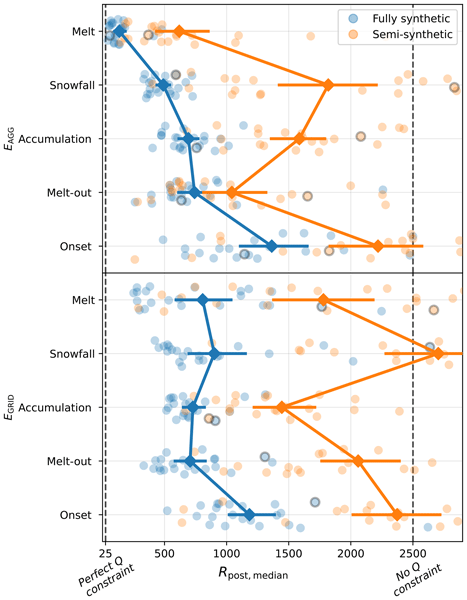
Pau Wiersma, Jan Magnusson, Nadav Peleg, Bettina Schaefli, and Gregoire Mariethoz
Hydrol. Earth Syst. Sci., 30, 3331–3350, https://doi.org/10.5194/hess-30-3331-2026, https://doi.org/10.5194/hess-30-3331-2026, 2026
Short summary
Short summary
Streamflow observations contain information about snow, but their potential to constrain seasonal snow mass reconstructions remains underexplored. Using inverse hydrological modeling, we show that streamflow is particularly effective at constraining catchment-aggregated melt rates, but that non-uniqueness in the snow–streamflow relationship and uncertainties in the inverse modeling chain can easily limit inversion performance.
Stefano Martinetti, James Kirchner, Peter Molnar, and Marius Floriancic
EGUsphere, https://doi.org/10.5194/egusphere-2026-2481, https://doi.org/10.5194/egusphere-2026-2481, 2026
This preprint is open for discussion and under review for Hydrology and Earth System Sciences (HESS).
Short summary
Short summary
We measured impulse responses of water fluxes to atmospheric forcing in a mixed beech and spruce forest. We found rapid responses to precipitation in soils and trees, and rapid responses to solar radiation and aerodynamic evaporative demand in trees, but not in soils, which suggests that the forest canopy significantly shielded the soils from atmospheric forcing. We also found impulse-response functions to be affected by species-specific stomatal regulation and hydraulic capacitance.
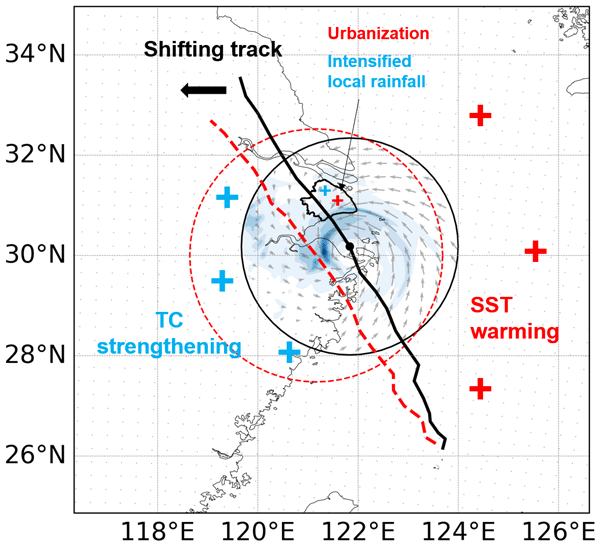
Qi Zhuang, Marika Koukoula, Shuguang Liu, Zhengzheng Zhou, and Nadav Peleg
Weather Clim. Dynam., 6, 1267–1281, https://doi.org/10.5194/wcd-6-1267-2025, https://doi.org/10.5194/wcd-6-1267-2025, 2025
Short summary
Short summary
Understanding how projected urbanization and climate change affect typhoons, which may cause the most destructive natural catastrophes, is crucial. Based on numerical simulations of five landfalling typhoons in Shanghai, China, our results highlight that warming sea surface temperatures significantly shift typhoon tracks with intensified structures (increased size, intensity, and affected time) on the big scale. Meanwhile, urbanization further amplifies local rainfall intensity.
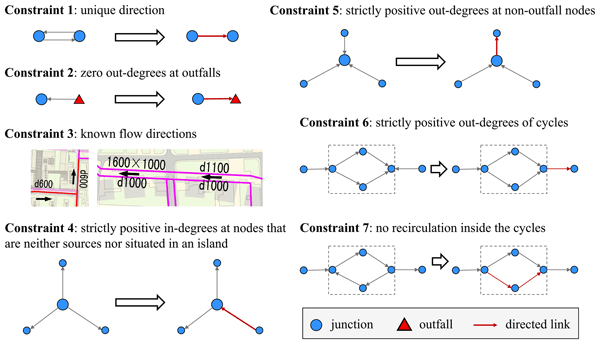
Ruidong Li, Jiapei Liu, Ting Sun, Jian Shao, Fuqiang Tian, and Guangheng Ni
Hydrol. Earth Syst. Sci., 29, 5677–5694, https://doi.org/10.5194/hess-29-5677-2025, https://doi.org/10.5194/hess-29-5677-2025, 2025
Short summary
Short summary
This work presents a new approach to simulate sewer drainage effects from incomplete information in the context of urban flooding, given missing information like flow directions and nodal depths. Tested in Yinchuan, China, our approach exhibits high accuracy in reproducing flood depths and reliably outperforms existing methods in various rainfall scenarios. Our method offers a reliable tool for cities with limited sewer data to improve flood simulation performance.
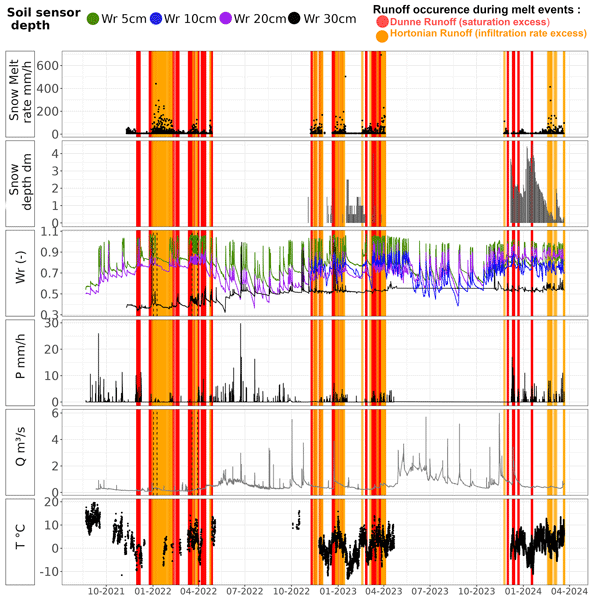
Judith Eeckman, Brian De Grenus, Floreana Marie Miesen, James Thornton, Philip Brunner, and Nadav Peleg
Hydrol. Earth Syst. Sci., 29, 4093–4107, https://doi.org/10.5194/hess-29-4093-2025, https://doi.org/10.5194/hess-29-4093-2025, 2025
Short summary
Short summary
The fate of liquid water from melting snow in winter and spring is difficult to understand in the mountains. This work uses a multi-instrumental network to accurately monitor the dynamics of snowmelt and infiltration at different depths in the ground and at different altitudes. The results show that melting snow quickly infiltrates into the upper layers of the soil but is also quickly transferred through the soil along the slopes towards the river.
Francesco Marra, Nadav Peleg, Elena Cristiano, Efthymios I. Nikolopoulos, Federica Remondi, and Paolo Tarolli
Nat. Hazards Earth Syst. Sci., 25, 2565–2570, https://doi.org/10.5194/nhess-25-2565-2025, https://doi.org/10.5194/nhess-25-2565-2025, 2025
Short summary
Short summary
Climate change is escalating the risks related to hydro-meteorological extremes. This preface introduces a special issue originating from a European Geosciences Union (EGU) session. It highlights the challenges posed by these extremes, ranging from hazard assessment to mitigation strategies, and covers both water excess events like floods, landslides, and coastal hazards and water deficit events such as droughts and fire weather. The collection aims to advance understanding, improve resilience, and inform policy-making.
Amber van Hamel, Peter Molnar, Joren Janzing, and Manuela Irene Brunner
Hydrol. Earth Syst. Sci., 29, 2975–2995, https://doi.org/10.5194/hess-29-2975-2025, https://doi.org/10.5194/hess-29-2975-2025, 2025
Short summary
Short summary
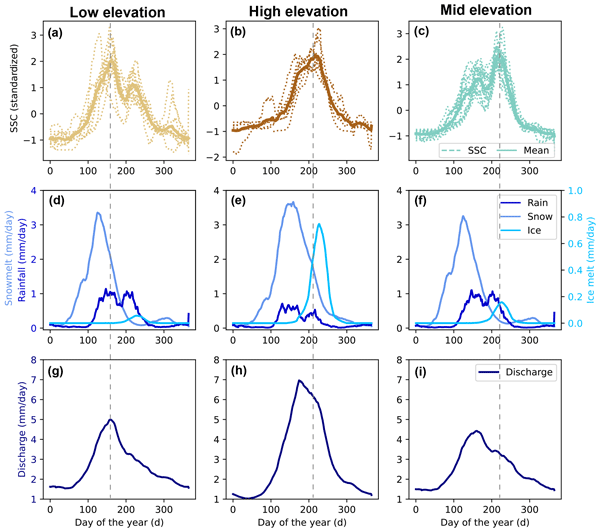
Suspended sediment is a natural component of rivers, but extreme suspended sediment concentrations (SSCs) can have negative impacts on water use and aquatic ecosystems. We identify the main factors influencing the spatial and temporal variability of annual SSC regimes and extreme SSC events. Our analysis shows that different processes are more important for annual SSC regimes than for extreme events and that compound events driven by glacial melt and high-intensity rainfall led to the highest SSCs.
Mosisa Tujuba Wakjira, Nadav Peleg, Johan Six, and Peter Molnar
Hydrol. Earth Syst. Sci., 29, 863–886, https://doi.org/10.5194/hess-29-863-2025, https://doi.org/10.5194/hess-29-863-2025, 2025
Short summary
Short summary
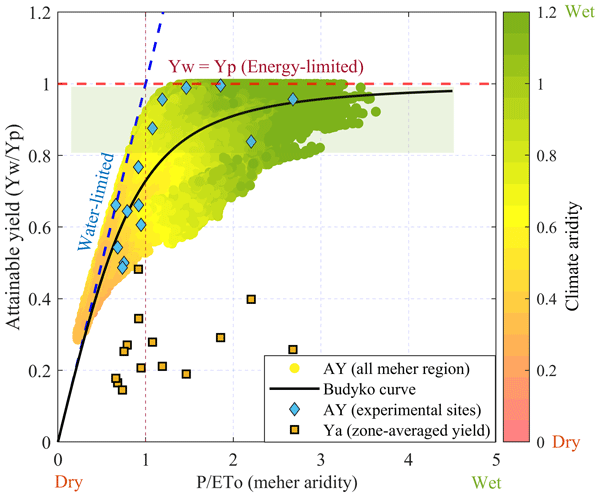
In this study, we implement a climate, water, and crop interaction model to evaluate current conditions and project future changes in rainwater availability and its yield potential, with the goal of informing adaptation policies and strategies in Ethiopia. Although climate change is likely to increase rainfall in Ethiopia, our findings suggest that water-scarce croplands in Ethiopia are expected to face reduced crop yields during the main growing season due to increases in temperature.
Tabea Cache, Milton Salvador Gomez, Tom Beucler, Jovan Blagojevic, João Paulo Leitao, and Nadav Peleg
Hydrol. Earth Syst. Sci., 28, 5443–5458, https://doi.org/10.5194/hess-28-5443-2024, https://doi.org/10.5194/hess-28-5443-2024, 2024
Short summary
Short summary
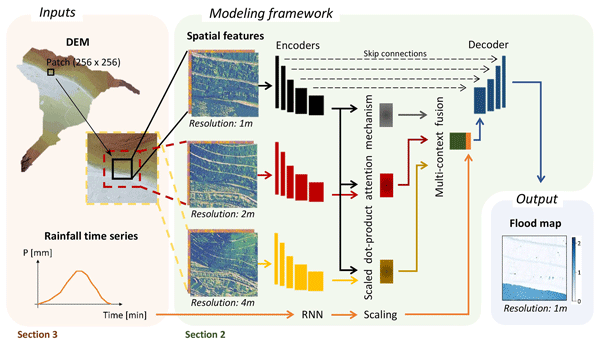
We introduce a new deep-learning model that addresses the limitations of existing urban flood models in handling varied terrains and rainfall events. Our model subdivides a city into small patches and presents a novel approach to incorporate broader terrain information. It accurately predicts high-resolution flood maps across diverse rainfall events and cities (on minute and meter scales) that haven’t been seen by the model, which offers valuable insights for urban flood mitigation strategies.
Bu Li, Ting Sun, Fuqiang Tian, Mahmut Tudaji, Li Qin, and Guangheng Ni
Hydrol. Earth Syst. Sci., 28, 4521–4538, https://doi.org/10.5194/hess-28-4521-2024, https://doi.org/10.5194/hess-28-4521-2024, 2024
Short summary
Short summary
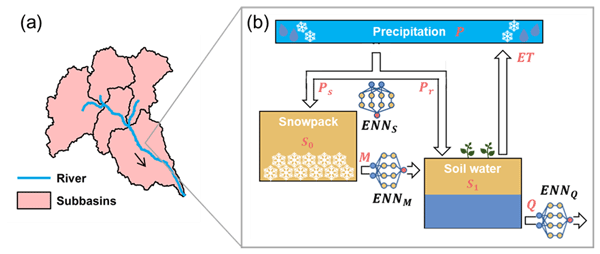
This paper developed hybrid semi-distributed hydrological models by employing a process-based model as the backbone and utilizing deep learning to parameterize and replace internal modules. The main contribution is to provide a high-performance tool enriched with explicit hydrological knowledge for hydrological prediction and to improve understanding about the hydrological sensitivities to climate change in large alpine basins.
Christian Geiß, Jana Maier, Emily So, Elisabeth Schoepfer, Sven Harig, Juan Camilo Gómez Zapata, and Yue Zhu
Nat. Hazards Earth Syst. Sci., 24, 1051–1064, https://doi.org/10.5194/nhess-24-1051-2024, https://doi.org/10.5194/nhess-24-1051-2024, 2024
Short summary
Short summary
We establish a model of future geospatial population distributions to quantify the number of people living in earthquake-prone and tsunami-prone areas of Lima and Callao, Peru, for the year 2035. Areas of high earthquake intensity will experience a population growth of almost 30 %. The population in the tsunami inundation area is estimated to grow by more than 60 %. Uncovering those relations can help urban planners and policymakers to develop effective risk mitigation strategies.
Francesco Marra, Marika Koukoula, Antonio Canale, and Nadav Peleg
Hydrol. Earth Syst. Sci., 28, 375–389, https://doi.org/10.5194/hess-28-375-2024, https://doi.org/10.5194/hess-28-375-2024, 2024
Short summary
Short summary
We present a new physical-based method for estimating extreme sub-hourly precipitation return levels (i.e., intensity–duration–frequency, IDF, curves), which are critical for the estimation of future floods. The proposed model, named TENAX, incorporates temperature as a covariate in a physically consistent manner. It has only a few parameters and can be easily set for any climate station given sub-hourly precipitation and temperature data are available.
Jessica Droujko, Srividya Hariharan Sudha, Gabriel Singer, and Peter Molnar
Earth Surf. Dynam., 11, 881–897, https://doi.org/10.5194/esurf-11-881-2023, https://doi.org/10.5194/esurf-11-881-2023, 2023
Short summary
Short summary
We combined data from satellite images with data measured from a kayak in order to understand the propagation of fine sediment in the Vjosa River. We were able to find some storm-activated and some permanent sources of sediment. We also estimated how much fine sediment is carried into the Adriatic Sea by the Vjosa River: approximately 2.5 Mt per year, which matches previous findings. With our work, we hope to show the potential of open-access satellite images.
Tobias Siegfried, Aziz Ul Haq Mujahid, Beatrice Sabine Marti, Peter Molnar, Dirk Nikolaus Karger, and Andrey Yakovlev
EGUsphere, https://doi.org/10.5194/egusphere-2023-520, https://doi.org/10.5194/egusphere-2023-520, 2023
Preprint archived
Short summary
Short summary
Our study investigates climate change impacts on water resources in Central Asia's high-mountain regions. Using new data and a stochastic soil moisture model, we found increased precipitation and higher temperatures in the future, leading to higher water discharge despite decreasing glacier melt contributions. These findings are crucial for understanding and preparing for climate change effects on Central Asia's water resources, with further research needed on extreme weather event impacts.

Nadav Peleg, Herminia Torelló-Sentelles, Grégoire Mariéthoz, Lionel Benoit, João P. Leitão, and Francesco Marra
Nat. Hazards Earth Syst. Sci., 23, 1233–1240, https://doi.org/10.5194/nhess-23-1233-2023, https://doi.org/10.5194/nhess-23-1233-2023, 2023
Short summary
Short summary
Floods in urban areas are one of the most common natural hazards. Due to climate change enhancing extreme rainfall and cities becoming larger and denser, the impacts of these events are expected to increase. A fast and reliable flood warning system should thus be implemented in flood-prone cities to warn the public of upcoming floods. The purpose of this brief communication is to discuss the potential implementation of low-cost acoustic rainfall sensors in short-term flood warning systems.
Qinggang Gao, Christian Zeman, Jesus Vergara-Temprado, Daniela C. A. Lima, Peter Molnar, and Christoph Schär
Weather Clim. Dynam., 4, 189–211, https://doi.org/10.5194/wcd-4-189-2023, https://doi.org/10.5194/wcd-4-189-2023, 2023
Short summary
Short summary
We developed a vortex identification algorithm for realistic atmospheric simulations. The algorithm enabled us to obtain a climatology of vortex shedding from Madeira Island for a 10-year simulation period. This first objective climatological analysis of vortex streets shows consistency with observed atmospheric conditions. The analysis shows a pronounced annual cycle with an increasing vortex shedding rate from April to August and a sudden decrease in September.
Ruidong Li, Ting Sun, Fuqiang Tian, and Guang-Heng Ni
Geosci. Model Dev., 16, 751–778, https://doi.org/10.5194/gmd-16-751-2023, https://doi.org/10.5194/gmd-16-751-2023, 2023
Short summary
Short summary
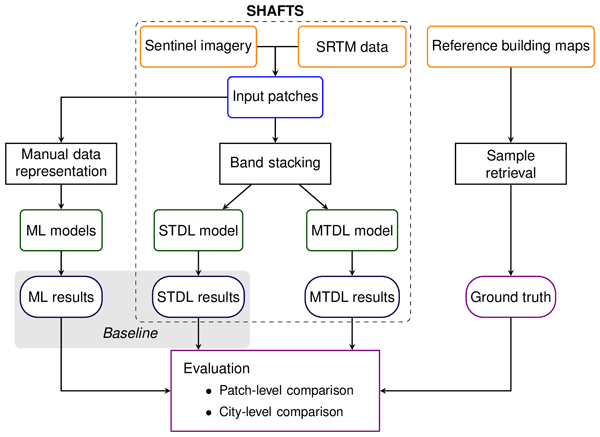
We developed SHAFTS (Simultaneous building Height And FootprinT extraction from Sentinel imagery), a multi-task deep-learning-based Python package, to estimate average building height and footprint from Sentinel imagery. Evaluation in 46 cities worldwide shows that SHAFTS achieves significant improvement over existing machine-learning-based methods.

Fabian Walter, Elias Hodel, Erik S. Mannerfelt, Kristen Cook, Michael Dietze, Livia Estermann, Michaela Wenner, Daniel Farinotti, Martin Fengler, Lukas Hammerschmidt, Flavia Hänsli, Jacob Hirschberg, Brian McArdell, and Peter Molnar
Nat. Hazards Earth Syst. Sci., 22, 4011–4018, https://doi.org/10.5194/nhess-22-4011-2022, https://doi.org/10.5194/nhess-22-4011-2022, 2022
Short summary
Short summary
Debris flows are dangerous sediment–water mixtures in steep terrain. Their formation takes place in poorly accessible terrain where instrumentation cannot be installed. Here we propose to monitor such source terrain with an autonomous drone for mapping sediments which were left behind by debris flows or may contribute to future events. Short flight intervals elucidate changes of such sediments, providing important information for landscape evolution and the likelihood of future debris flows.
Yuan Liu and Daniel B. Wright
Hydrol. Earth Syst. Sci., 26, 5241–5267, https://doi.org/10.5194/hess-26-5241-2022, https://doi.org/10.5194/hess-26-5241-2022, 2022
Short summary
Short summary
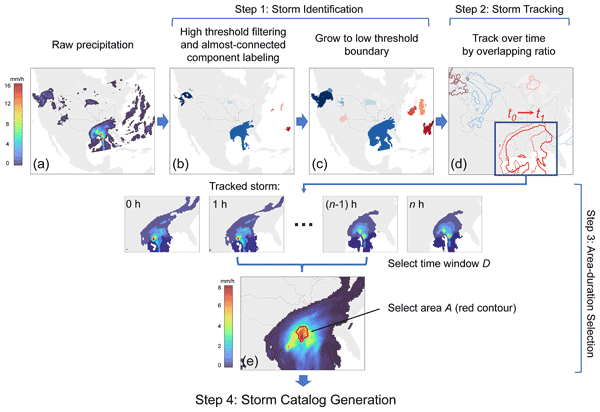
We present a new approach to estimate extreme rainfall probability and severity using the atmospheric water balance, where precipitation is the sum of water vapor components moving in and out of a storm. We apply our method to the Mississippi Basin and its five major subbasins. Our approach achieves a good fit to reference precipitation, indicating that the rainfall probability estimation can benefit from additional information from physical processes that control rainfall.
Michael Schirmer, Adam Winstral, Tobias Jonas, Paolo Burlando, and Nadav Peleg
The Cryosphere, 16, 3469–3488, https://doi.org/10.5194/tc-16-3469-2022, https://doi.org/10.5194/tc-16-3469-2022, 2022
Short summary
Short summary
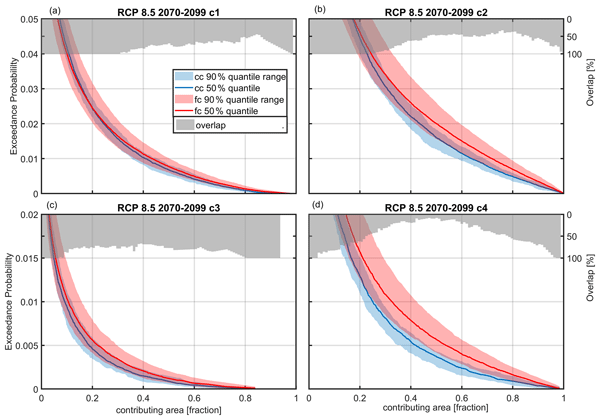
Rain is highly variable in time at a given location so that there can be both wet and dry climate periods. In this study, we quantify the effects of this natural climate variability and other sources of uncertainty on changes in flooding events due to rain on snow (ROS) caused by climate change. For ROS events with a significant contribution of snowmelt to runoff, the change due to climate was too small to draw firm conclusions about whether there are more ROS events of this important type.

Silvan Ragettli, Tabea Donauer, Peter Molnar, Ron Delnoije, and Tobias Siegfried
Earth Surf. Dynam., 10, 797–815, https://doi.org/10.5194/esurf-10-797-2022, https://doi.org/10.5194/esurf-10-797-2022, 2022
Short summary
Short summary
This paper presents a novel methodology to identify and quantitatively analyze deposition and erosion patterns in ephemeral ponds or in perennial lakes with strong water level fluctuations. We apply this method to unravel the water and sediment balance of Lac Wégnia, a designated Ramsar site in Mali. The study can be a showcase for monitoring Sahelian lakes using remote sensing data, as it sheds light on the actual drivers of change in Sahelian lakes.
Elena Leonarduzzi, Brian W. McArdell, and Peter Molnar
Hydrol. Earth Syst. Sci., 25, 5937–5950, https://doi.org/10.5194/hess-25-5937-2021, https://doi.org/10.5194/hess-25-5937-2021, 2021
Short summary
Short summary
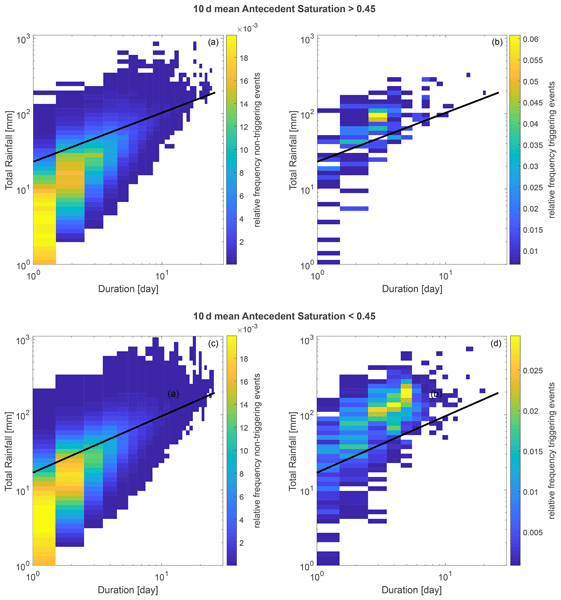
Landslides are a dangerous natural hazard affecting alpine regions, calling for effective warning systems. Here we consider different approaches for the prediction of rainfall-induced shallow landslides at the regional scale, based on open-access datasets and operational hydrological forecasting systems. We find antecedent wetness useful to improve upon the classical rainfall thresholds and the resolution of the hydrological model used for its estimate to be a critical aspect.
Cited articles
Ali, H., Fowler, H. J., Pritchard, D., Lenderink, G., Blenkinsop, S., and Lewis, E.: Towards quantifying the uncertainty in estimating observed scaling rates, Geophys. Res. Lett., 49, https://doi.org/10.1029/2022GL099138, 2022. a
Benjamin, F., Daniel, W., Lei, Y., Alyssa, H. D., and Antonia, S.: An L-Moments-Based Hypothesis Test to Identify Homogeneous Storm Transposition Regions, Social Science Research Network, https://doi.org/10.2139/ssrn.5292988, 2025. a
BMCPNR: the Technical Specification for Construction and Application of Mathematical Model of Urban Flooding Prevention and Control System, DB11/T 2074-2022, Beijing Municipal Commission of Planning and Natural Resources, Beijing, China, https://bzh.scjgj.beijing.gov.cn/bzh/apifile/file/2022/20221230/b9c34c28-9c27-4f24-aa6d-f3e8b452f429.pdf (last access: 27 July 2026), 2022 (in Chinese). a
BWA: Guidelines for the compilation of urban flood risk maps, DB11/T 2449-2025, Beijing Water Authority, Beijing, China, https://bzh.scjgj.beijing.gov.cn/bzh/apifile/file/2025/20250805/7ea39e72-f88d-4da3-bfba-1f703957dfb5.pdf (last access: 27 July 2026), 2025 (in Chinese). a
Cache, T., Gomez, M. S., Beucler, T., Blagojevic, J., Leitao, J. P., and Peleg, N.: Enhancing generalizability of data-driven urban flood models by incorporating contextual information, Hydrol. Earth Syst. Sci., 28, 5443–5458, https://doi.org/10.5194/hess-28-5443-2024, 2024. a
Cea, L., Sañudo, E., Montalvo, C., Farfán, J., Puertas, J., and Tamagnone, P.: Recent advances and future challenges in urban pluvial flood modelling, Urban Water J., 22, 149–173, https://doi.org/10.1080/1573062X.2024.2446528, 2025. a
Chang, W., Stein, M. L., Wang, J., Kotamarthi, V. R., and Moyer, E. J.: Changes in spatiotemporal precipitation patterns in changing climate conditions, J. Climate, 29, 8355–8376, https://doi.org/10.1175/JCLI-D-15-0844.1, 2016. a, b
Corre, L., Ribes, A., Bernus, S., Drouin, A., Morin, S., and Soubeyroux, J.-M.: Using regional warming levels to describe future climate change for services and adaptation: Application to the French reference trajectory for adaptation, Climate Services, 38, 100553, https://doi.org/10.1016/j.cliser.2025.100553, 2025. a
Costabile, P., Costanzo, C., Kalogiros, J., and Bellos, V.: Toward Street-Level Nowcasting of Flash Floods Impacts Based on HPC Hydrodynamic Modeling at the Watershed Scale and High-Resolution Weather Radar Data, Water Resour. Res., 59, https://doi.org/10.1029/2023WR034599, 2023. a
Courant, R., Friedrichs, K., and Lewy, H.: Über die partiellen Differenzengleichungen der mathematischen Physik, Math. Ann., 100, 32–74, 1928. a
Cristiano, E., ten Veldhuis, M.-C., and van de Giesen, N.: Spatial and temporal variability of rainfall and their effects on hydrological response in urban areas – a review, Hydrol. Earth Syst. Sci., 21, 3859–3878, https://doi.org/10.5194/hess-21-3859-2017, 2017. a
Cristiano, E., ten Veldhuis, M.-c., Wright, D. B., Smith, J. A., and van de Giesen, N.: The Influence of Rainfall and Catchment Critical Scales on Urban Hydrological Response Sensitivity, Water Resour. Res., 55, 3375–3390, https://doi.org/10.1029/2018WR024143, 2019. a
Cui, H., Yu, H., Zuo, X., and Wu, G.: Impacts of orography and urbanization on extreme precipitation event in Beijing during 2023, Weather Clim. Dynam., 7, 743–765, https://doi.org/10.5194/wcd-7-743-2026, 2026. a
Cui, Z. and Tian, F.: Delayed stormflow generation in a semi-humid forested watershed controlled by soil water storage and groundwater dynamics, Hydrol. Earth Syst. Sci., 29, 2275–2291, https://doi.org/10.5194/hess-29-2275-2025, 2025. a
Cui, Z., Tian, F., Zhao, Z., Xu, Z., Duan, Y., Wen, J., and Khan, M. Y. A.: Bimodal hydrographs in a semi-humid forested watershed: characteristics and occurrence conditions, Hydrol. Earth Syst. Sci., 28, 3613–3632, https://doi.org/10.5194/hess-28-3613-2024, 2024. a
Duan, W., He, B., Nover, D., Fan, J., Yang, G., Chen, W., Meng, H., and Liu, C.: Floods and associated socioeconomic damages in China over the last century, Nat. Hazards, 82, 401–413, https://doi.org/10.1007/s11069-016-2207-2, 2016. a
Foufoula-Georgiou, E.: A probabilistic storm transposition approach for estimating exceedance probabilities of extreme precipitation depths, Water Resour. Res., 25, 799–815, https://doi.org/10.1029/WR025i005p00799, 1989. a
Fowler, H. J., Wasko, C., and Prein, A. F.: Intensification of short-duration rainfall extremes and implications for flood risk: Current state of the art and future directions, Philos. T. Roy. Soc. A, 379, https://doi.org/10.1098/rsta.2019.0541, 2021. a, b
Fraehr, N., Wang, Q. J., Wu, W., and Nathan, R.: Supercharging hydrodynamic inundation models for instant flood insight, Nature Water, 1, 835–843, https://doi.org/10.1038/s44221-023-00132-2, 2023. a
Fu, C.-C., Liu, J.-H., Wang, H., Xiang, C.-Y., Fu, X.-R., and Luan, Q.-H.: Urban storm flooding: Characteristics and management in Beijing, in: MATEC Web of Conferences, vol. 246, 01042, EDP Sciences, https://doi.org/10.1051/matecconf/201824601042, 2018. a
Fu, S., Schultz, D. M., Lyu, H., Zheng, Z., and Zhang, C.: Creating a national urban flood dataset for China from news texts (2000–2022) at the county level, Hydrol. Earth Syst. Sci., 29, 767–783, https://doi.org/10.5194/hess-29-767-2025, 2025. a
Ghanghas, A., Sharma, A., Dey, S., and Merwade, V.: How is spatial homogeneity in precipitation extremes changing globally?, Geophys. Res. Lett., 50, https://doi.org/10.1029/2023GL103233, 2023. a, b
Guo, K., Guan, M., and Yu, D.: Urban surface water flood modelling – a comprehensive review of current models and future challenges, Hydrol. Earth Syst. Sci., 25, 2843–2860, https://doi.org/10.5194/hess-25-2843-2021, 2021. a
Hall, J.: Direct Rainfall Flood Modelling: The Good, the Bad and the Ugly, Australasian Journal of Water Resources, 19, 74–85, https://www.tandfonline.com/doi/citedby/10.7158/13241583.2015.11465458 (last access: 27 July 2026), 2015. a
He, J., Zhang, L., Xiao, T., Wang, H., and Luo, H.: Deep learning enables super-resolution hydrodynamic flooding process modeling under spatiotemporally varying rainstorms, Water Res., 239, 120057, https://doi.org/10.1016/j.watres.2023.120057, 2023. a
Herath, H. M. V. V., Marshall, L., Saha, A., Rasnayaka, S., and Seneviratne, S.: Subgrid informed neural networks for high-resolution flood mapping, J. Hydrol., 660, 133329, https://doi.org/10.1016/j.jhydrol.2025.133329, 2025. a
Hersbach, H., Bell, B., Berrisford, P., Hirahara, S., Horányi, A., Muñoz-Sabater, J., Nicolas, J., Peubey, C., Radu, R., Schepers, D., Simmons, A., Soci, C., Abdalla, S., Abellan, X., Balsamo, G., Bechtold, P., Biavati, G., Bidlot, J., Bonavita, M., De Chiara, G., Dahlgren, P., Dee, D., Diamantakis, M., Dragani, R., Flemming, J., Forbes, R., Fuentes, M., Geer, A., Haimberger, L., Healy, S., Hogan, R. J., Hólm, E., Janisková, M., Keeley, S., Laloyaux, P., Lopez, P., Lupu, C., Radnoti, G., de Rosnay, P., Rozum, I., Vamborg, F., Villaume, S., and Thépaut, J.-N.: The ERA5 global reanalysis, Q. J. Roy. Meteor. Soc., 146, 1999–2049, https://doi.org/10.1002/qj.3803, 2020. a
Hersbach, H., Bell, B., Berrisford, P., Biavati, G., Horányi, A., Muñoz Sabater, J., Nicolas, J., Peubey, C., Radu, R., Rozum, I., Schepers, D., Simmons, A., Soci, C., Dee, D., and Thépaut, J.-N.: ERA5 hourly data on single levels from 1940 to present, Copernicus Climate Change Service (C3S) Climate Data Store (CDS) [data set], https://doi.org/10.24381/cds.adbb2d47, 2023. a
Hettiarachchi, S., Wasko, C., and Sharma, A.: Increase in flood risk resulting from climate change in a developed urban watershed – the role of storm temporal patterns, Hydrol. Earth Syst. Sci., 22, 2041–2056, https://doi.org/10.5194/hess-22-2041-2018, 2018. a
Huang, J., Fatichi, S., Mascaro, G., Manoli, G., and Peleg, N.: Intensification of sub-daily rainfall extremes in a low-rise urban area, Urban Climate, 42, 101–124, https://doi.org/10.1016/j.uclim.2022.101124, 2022. a
Järvi, L., Grimmond, C., and Christen, A.: The Surface Urban Energy and Water Balance Scheme (SUEWS): Evaluation in Los Angeles and Vancouver, J. Hydrol., 411, 219–237, https://doi.org/10.1016/j.jhydrol.2011.10.001, 2011. a
Katz, R. W., Parlange, M. B., and Naveau, P.: Statistics of extremes in hydrology, Adv. Water Resour., 25, 1287–1304, https://doi.org/10.1016/S0309-1708(02)00056-8, 2002. a
Koutsoyiannis, D., Kozonis, D., and Manetas, A.: A mathematical framework for studying rainfall intensity-duration-frequency relationships, J. Hydrol., 206, 118–135, https://doi.org/10.1016/S0022-1694(98)00097-3, 1998. a
Lacasta, A., Morales-Hernández, M., Murillo, J., and García-Navarro, P.: An optimized GPU implementation of a 2D free surface simulation model on unstructured meshes, Adv. Eng. Softw., 78, 1–15, https://doi.org/10.1016/j.advengsoft.2014.08.007, 2014. a
Lehmkuhl, F., Schüttrumpf, H., Schwarzbauer, J., Brüll, C., Dietze, M., Letmathe, P., Völker, C., and Hollert, H.: Assessment of the 2021 summer flood in Central Europe, https://doi.org/10.1186/s12302-022-00685-1, 2022. a, b
Lenderink, G., Barbero, R., Loriaux, J., and Fowler, H.: Super-Clausius–Clapeyron scaling of extreme hourly convective precipitation and its relation to large-scale atmospheric conditions, J. Climate, 30, 6037–6052, https://doi.org/10.1175/JCLI-D-16-0808.1, 2017. a, b
Li, B., Hou, J., Li, D., Yang, D., Han, H., Bi, X., Wang, X., Hinkelmann, R., and Xia, J.: Application of LiDAR UAV for High-Resolution Flood Modelling, Water Resour. Manag., 35, 1433–1447, https://doi.org/10.1007/s11269-021-02783-w, 2021. a
Li, D., Hou, J., Shen, R., Li, B., Tong, Y., and Wang, T.: Approximation method for the sewer drainage effect for urban flood modeling in areas without drainage-pipe data, Frontiers in Environmental Science, 11, https://doi.org/10.3389/fenvs.2023.1134985, 2023a. a
Li, R. and Zou, W.: AUTOSHED-Beijing Municipal Administrative Center, Zenodo [code], https://doi.org/10.5281/zenodo.15869025, 2025. a
Li, R., Sun, T., Tian, F., and Ni, G.: AUTO-SHEDS: Automated UnsTructured urban flood Simulator using High-rEsolution DEM, in: XXVIII General Assembly of the International Union of Geodesy and Geophysics (IUGG), GFZ German Research Centre for Geosciences, https://doi.org/10.57757/IUGG23-3440, 2023b. a, b
Li, R., Liu, J., Sun, T., Shao, J., Tian, F., and Ni, G.: Enhancing urban pluvial flood modeling through graph reconstruction of incomplete sewer networks, Hydrol. Earth Syst. Sci., 29, 5677–5694, https://doi.org/10.5194/hess-29-5677-2025, 2025. a
Li, X., Zhao, S., and Wang, D.: Roles of synoptic characteristics and microphysics processes on the heavy rain event over Beijing region during 29 July to 2 August 2023, Frontiers in Earth Science, 12, https://doi.org/10.3389/feart.2024.1394342, 2024. a
Li, Z., Li, R., Zhang, Z., and Tian, F.: Flood mapping in SAR images via threshold segmentation with hydrological-hydrodynamic modeling, J. Hydrol., 667, 134825, https://doi.org/10.1016/j.jhydrol.2025.134825, 2026. a
Lin, Y., Fan, J., Jeong, J.-H., Zhang, Y., Homeyer, C. R., and Wang, J.: Urbanization-induced land and aerosol impacts on storm propagation and hail characteristics, J. Atmos. Sci., 78, 925–947, https://doi.org/10.1175/JAS-D-20-0106.1, 2021. a
Liu, J., Fu, C., Xiang, C., Wang, H., and Mei, C.: Urban Storm Flooding Management in Beijing, Urban Planning and Water-related Disaster Management, 23–42, https://doi.org/10.1007/978-3-319-90173-2_3, 2019. a
Liu, L., Sun, J., and Lin, B.: A large-scale waterlogging investigation in a megacity, Nat. Hazards, 114, 1505–1524, https://doi.org/10.1007/s11069-022-05435-3, 2022. a
Luan, G., Hou, J., Wang, T., Zhou, Q., Xu, L., Sun, J., and Wang, C.: Method for analyzing urban waterlogging mechanisms based on a 1D-2D water environment dynamic bidirectional coupling model, J. Environ. Manage., 360, 121024, https://doi.org/10.1016/j.jenvman.2024.121024, 2024. a
Maier, R., Krebs, G., Pichler, M., Muschalla, D., and Gruber, G.: Spatial Rainfall Variability in Urban Environments—High-Density Precipitation Measurements on a City-Scale, Water, 12, https://doi.org/10.3390/w12041157, 2020. a
Marra, F., Koukoula, M., Canale, A., and Peleg, N.: Predicting extreme sub-hourly precipitation intensification based on temperature shifts, Hydrol. Earth Syst. Sci., 28, 375–389, https://doi.org/10.5194/hess-28-375-2024, 2024. a, b, c
Martel, J.-L., Brissette, F. P., Lucas-Picher, P., Troin, M., and Arsenault, R.: Climate change and rainfall intensity–duration–frequency curves: Overview of science and guidelines for adaptation, J. Hydrol. Eng., 26, https://doi.org/10.1061/(ASCE)HE.1943-5584.0002122, 2021. a
Medina, S. and Houze, R. A.: Air motions and precipitation growth in Alpine storms, Q. J. Roy. Meteor. Soc., 129, 345–371, https://doi.org/10.1256/qj.02.13, 2003. a
Meng, D., Liao, Y., Deng, Z., Chen, Y., Lai, C., Chen, X., and Wang, Z.: Spatially moving non-uniform rainstorms may exacerbate urban flooding disasters, J. Hydrol., 660, https://doi.org/10.1016/j.jhydrol.2025.133374, 2025. a
Ming, X., Liang, Q., and Jiang, J.: Large-scale high-resolution hydrodynamic modelling of urban floods: Some practical considerations, J. Hydro-Environ. Res., 59, https://doi.org/10.1016/j.jher.2025.100655, 2025. a, b, c
Myneni, R., Knyazikhin, Y., and Park, T.: MOD15A2H MODIS/Terra Leaf Area Index/FPAR 8-Day L4 Global 500m SIN Grid V006, NASA Land Processes Distributed Active Archive Center [data set], https://doi.org/10.5067/MODIS/MOD15A2H.006, 2015. a
Najafi, H., Shrestha, P. K., Rakovec, O., Apel, H., Vorogushyn, S., Kumar, R., Thober, S., Merz, B., and Samaniego, L.: High-resolution impact-based early warning system for riverine flooding, Nature Commun., 15, 3726, https://doi.org/10.1038/s41467-024-48065-y, 2024. a
Nathan, R.: Improving event-based methods for modelling flood risk in a variable and non-stationary climate, Philos. T. R. Soc. A., 383, https://doi.org/10.1098/rsta.2024.0292, 2025. a
Ni, G.-H., Liu, Z.-Y., Lei, Z.-D., Yang, D.-W., and Wang, L.: Continuous Simulation of Water and Soil Erosion in a Small Watershed of the Loess Plateau with a Distributed Model, J. Hydrol. Eng., 13, 392–399, https://doi.org/10.1061/(ASCE)1084-0699(2008)13:5(392), 2008. a
Nishihama, M., Wolfe, R., Solomon, D., Patt, F., Blanchette, J., Fleig, A., and Masuoka, E.: MODIS Level 1A Earth Location: Algorithm Theoretical Basis Document Version 3.0, https://modis.gsfc.nasa.gov/data/atbd/atbd_mod28_v3.pdf (last access: 27 July 2026), 1997. a
Padulano, R., Rianna, G., Costabile, P., Costanzo, C., Del Giudice, G., and Mercogliano, P.: Propagation of variability in climate projections within urban flood modelling: A multi-purpose impact analysis, J. Hydrol., 602, https://doi.org/10.1016/j.jhydrol.2021.126756, 2021. a
Peleg, N., Marra, F., Fatichi, S., Molnar, P., Morin, E., Sharma, A., and Burlando, P.: Intensification of convective rain cells at warmer temperatures observed from high-resolution weather radar data, J. Hydrometeorol., 19, 715–726, https://doi.org/10.1029/2022GL099138, 2018a. a
Peleg, N., Marra, F., Fatichi, S., Paschalis, A., Molnar, P., and Burlando, P.: Spatial variability of extreme rainfall at radar subpixel scale, J. Hydrol., 556, 922–933, https://doi.org/10.1016/j.jhydrol.2016.05.033, 2018b. a
Peleg, N., Ban, N., Gibson, M. J., Chen, A. S., Paschalis, A., Burlando, P., and Leitão, J. P.: Mapping storm spatial profiles for flood impact assessments, Adv. Water Resour., 166, https://doi.org/10.1016/j.advwatres.2022.104258, 2022. a, b, c
Peleg, N., Koukoula, M., and Marra, F.: A 2°C warming can double the frequency of extreme summer downpours in the Alps, npj Climate and Atmospheric Science, 8, 216, https://doi.org/10.1038/s41612-025-01081-1, 2025. a
Perrini, P., Cea, L., Chiaravalloti, F., Gabriele, S., Manfreda, S., Fiorentino, M., Gioia, A., and Iacobellis, V.: A Runoff-On-Grid Approach to Embed Hydrological Processes in Shallow Water Models, Water Resour. Res., 60, https://doi.org/10.1029/2023WR036421, 2024a. a
Perrini, P., Cea, L., Chiaravalloti, F., Gabriele, S., Manfreda, S., Fiorentino, M., Gioia, A., and Iacobellis, V.: A Runoff-On-Grid Approach to Embed Hydrological Processes in Shallow Water Models, Water Resour. Res., 60, https://doi.org/10.1029/2023WR036421, 2024b. a
Pizzileo, S., Moretti, G., and Orlandini, S.: Flood plain inundation modeling with explicit description of land surface macrostructures, Adv. Water Resour., 188, https://doi.org/10.1016/j.advwatres.2024.104713, 2024. a
Polo-Martín, B.: Valencia’s battle against floods: A cartographic review to assess water management strategies, Cartography, 8, https://doi.org/10.24294/jgc10129, 2025. a, b
Pregnolato, M., Ford, A., Wilkinson, S. M., and Dawson, R. J.: The impact of flooding on road transport: A depth-disruption function, Transport Res. D-Tr. E., 55, 67–81, https://doi.org/10.1016/j.trd.2017.06.020, 2017. a
Prein, A. F., Langhans, W., Fosser, G., Ferrone, A., Ban, N., Goergen, K., Keller, M., Tölle, M., Gutjahr, O., Feser, F., Brisson, E., Kollet, S., Schmidli, J., van Lipzig, N. P. M., and Leung, R. L.: A review on regional convection-permitting climate modeling: Demonstrations, prospects, and challenges, Rev. Geophys., 53, 323–361, https://doi.org/10.1002/2014RG000475, 2015. a, b
Rözer, V., Peche, A., Berkhahn, S., Feng, Y., Fuchs, L., Graf, T., Haberlandt, U., Kreibich, H., Sämann, R., Sester, M., Shehu, B., Wahl, J., and Neuweiler, I.: Impact-Based Forecasting for Pluvial Floods, Earth's Future, 9, https://doi.org/10.1029/2020EF001851, 2021. a, b
Rosenzweig, B. R., Herreros Cantis, P., Kim, Y., Cohn, A., Grove, K., Brock, J., Yesuf, J., Mistry, P., Welty, C., McPhearson, T., Sauer, J., and Chang, H.: The Value of Urban Flood Modeling, Earth's Future, 9, https://doi.org/10.1029/2020EF001739, 2021. a
Saharia, M., Kirstetter, P.-E., Vergara, H., Gourley, J. J., Hong, Y., and Giroud, M.: Mapping flash flood severity in the United States, J. Hydrometeorol., 18, 397–411, https://doi.org/10.1175/JHM-D-16-0082.1, 2017. a
Sanders, B. F., Schubert, J. E., Martin, E.-M. H., Wang, S., Sukop, M. C., and Mach, K. J.: A fast flood inundation model with groundwater interactions and hydraulic structures, Adv. Water Resour., 105057, https://doi.org/10.1029/2024WR038847, 2025. a
Simons, G., Koster, R., and Droogers, P.: Hihydrosoil v2. 0-high resolution soil maps of global hydraulic properties, FutureWater Report, https://www.futurewater.eu/projects/hihydrosoil (last access: 27 July 2026), 2020. a
Song, L., Zhou, J., Li, Q., Yang, X., and Zhang, Y.: An unstructured finite volume model for dam-break floods with wet/dry fronts over complex topography, Int. J. Numer. Meth. Fl., 67, 960–980, https://doi.org/10.1002/fld.2397, 2011. a
Torelló-Sentelles, H., Marra, F., Koukoula, M., Villarini, G., and Peleg, N.: Intensification and Changing Spatial Extent of Heavy Rainfall in Urban Areas, Earth's Future, 12, https://doi.org/10.1029/2024EF004505, 2024. a, b
Torelló-Sentelles, H., Villarini, G., Koukoula, M., and Peleg, N.: Impacts of urban dynamics and thermodynamics on convective rainfall across different urban forms, Urban Climate, 62, https://doi.org/10.1016/j.uclim.2025.102499, 2025. a
Trenberth, K. E., Dai, A., Rasmussen, R. M., and Parsons, D. B.: The changing character of precipitation, B. Am. Meteorol. Soc., 84, 1205–1218, https://doi.org/10.1175/BAMS-84-9-1205, 2003. a, b
Wang, Y., Song, L., Shen, P., and Yang, Y.: Substantial Increase in Sub–Daily Precipitation Extremes of Flooding Season Over China, Geophys. Res. Lett., 51, https://doi.org/10.1029/2024GL112182, 2024. a, b
Wasko, C. and Sharma, A.: Quantile regression for investigating scaling of extreme precipitation with temperature, Water Resour. Res., 50, 3608–3614, https://doi.org/10.1002/2013WR015194, 2014. a, b
Werner, M.: Shuttle radar topography mission (SRTM) mission overview, Frequenz, 55, 75–79, https://doi.org/10.1515/FREQ.2001.55.3-4.75, 2001. a
Westra, S., Fowler, H. J., Evans, J. P., Alexander, L. V., Berg, P., Johnson, F., Kendon, E. J., Lenderink, G., and Roberts, N.: Future changes to the intensity and frequency of short-duration extreme rainfall, Rev. Geophys., 52, 522–555, https://doi.org/10.1002/2014RG000464, 2014. a
Wilson, L. L. and Foufoula-Georgiou, E.: Regional rainfall frequency analysis via stochastic storm transposition, J. Hydraul. Eng., 116, 859–880, https://doi.org/10.1061/(ASCE)0733-9429(1990)116:7(859), 1990. a
Wright, D. B., Smith, J. A., and Baeck, M. L.: Critical examination of area reduction factors, J. Hydrol. Eng., 19, 769–776, https://doi.org/10.1061/(ASCE)HE.1943-5584.0000855, 2014a. a
Wright, D. B., Smith, J. A., and Baeck, M. L.: Flood frequency analysis using radar rainfall fields and stochastic storm transposition, Water Resour. Res., 50, 1592–1615, https://doi.org/10.1002/2013WR014224, 2014b. a, b
Wright, D. B., Mantilla, R., and Peters-Lidard, C. D.: A remote sensing-based tool for assessing rainfall-driven hazards, Environ. Modell. Softw., 90, 34–54, https://doi.org/10.1016/j.envsoft.2016.12.006, 2017. a, b, c
Wright, D. B., Bosma, C. D., and Lopez-Cantu, T.: US hydrologic design standards insufficient due to large increases in frequency of rainfall extremes, Geophys. Res. Lett., 46, 8144–8153, https://doi.org/10.1029/2019GL083235, 2019. a
Xing, Y., Chen, H., Liang, Q., and Ma, X.: Improving the performance of city-scale hydrodynamic flood modelling through a GIS-based DEM correction method, Nat. Hazards, 112, 2313–2335, https://doi.org/10.1007/s11069-022-05267-1, 2022. a
Yan, L., Xiong, L., Jiang, C., Zhang, M., Wang, D., and Xu, C.-Y.: Updating intensity–duration–frequency curves for urban infrastructure design under a changing environment, Wiley Interdisciplinary Reviews: Water, 8, https://doi.org/10.1002/wat2.1519, 2021. a, b
Yang, K., Guan, X., Zuo, X., Gao, Z., and Jin, S.: Impact of Localized High Temperatures on Extreme Rainfall: Insights From the July 2023 Heavy Rainfall Event in the Beijing–Tianjin–Hebei Region Over the Taihang Mountains, Geophys. Res. Lett., 52, https://doi.org/10.1029/2025GL117163, 2025. a
Yu, G., Wright, D. B., and Li, Z.: The upper tail of precipitation in convection-permitting regional climate models and their utility in nonstationary rainfall and flood frequency analysis, Earth's Future, 8, https://doi.org/10.1029/2020EF001613, 2020. a
Zanaga, D., Van De Kerchove, Ruben andDaems, D., De Keersmaecker, W., Brockmann, C., Kirches, G., Wevers, J., Cartus, O., Santoro, M., Fritz, S., Lesiv, M., Herold, M., Tsendbazar, N.-E., Xu, P., Ramoino, F., and Arino, O.: ESA WorldCover 10 m 2021 v200, Zenodo [data set], https://doi.org/10.5281/zenodo.7254221, 2022. a, b
Zheng, Z., Xu, G., and Gao, H.: Characteristics of Summer Hourly Extreme Precipitation Events and Its Local Environmental Influencing Factors in Beijing under Urbanization Background, Atmosphere, 12, 632, https://doi.org/10.3390/atmos12050632, 2021. a
Zhong, L., Mu, R., Zhang, D., Zhao, P., Zhang, Z., and Wang, N.: An observational analysis of warm‐sector rainfall characteristics associated with the 21 July 2012 Beijing extreme rainfall event, Atmospheres, 120, https://doi.org/10.1002/2014JD022686, 2014. a
Zhuang, Q., Koukoula, M., Liu, S., Zhou, Z., Gao, L., and Peleg, N.: Contradictory influences of urbanization on intense convective rainfall in a subtropical city, Environ. Res. Lett., 19, https://doi.org/10.1088/1748-9326/ad7277, 2024. a
Zou, W. and Peleg, N.: Gamma-based Spatial Quantile Mapping (GSQM) of heavy rainfall field – an example of a heavy storm in Beijing (Version MATLAB) [Figure], Zenodo [code], https://doi.org/10.5281/zenodo.13646191, 2024b. a
Zou, W., Hu, G., Wiersma, P., Yin, S., Xiao, Y., Mariethoz, G., and Peleg, N.: Multiple-point geostatistics-based spatial downscaling of heavy rainfall fields, J. Hydrol., 632, https://doi.org/10.1016/j.jhydrol.2024.130899, 2024. a, b
Zou, W.-Y., Yin, S.-Q., and Wang, W.-T.: Spatial interpolation of the extreme hourly precipitation at different return levels in the Haihe River basin, J. Hydrol., 598, https://doi.org/10.1016/j.jhydrol.2021.126273, 2021. a
Short summary
We present a framework using observed rainfall and temperature to generate realistic storms and simulate street-scale flooding for present and future climates. It integrates temperature-based rainfall scaling, storm-frequency estimation, and urban flood modeling, demonstrated in Beijing to assess changes in regional storm and flood depth, timing, and flow velocity. The workflow is data-light, physically grounded, and transferable worldwide.
We present a framework using observed rainfall and temperature to generate realistic storms and...


