Articles | Volume 30, issue 14
https://doi.org/10.5194/hess-30-4509-2026
© Author(s) 2026. This work is distributed under
the Creative Commons Attribution 4.0 License.
https://doi.org/10.5194/hess-30-4509-2026
© Author(s) 2026. This work is distributed under
the Creative Commons Attribution 4.0 License.
A systematic evaluation of 15 actual evapotranspiration formulations within conceptual hydrological models

Gabrielle Burns
CORRESPONDING AUTHOR
Department of Infrastructure Engineering, The University of Melbourne, Parkville, VIC, Australia
Keirnan Fowler
Department of Infrastructure Engineering, The University of Melbourne, Parkville, VIC, Australia
Murray Peel
Department of Infrastructure Engineering, The University of Melbourne, Parkville, VIC, Australia
Clare Stephens
Hawkesbury Institute for the Environment, Western Sydney University, Richmond, NSW, Australia
Related authors
No articles found.
Hansini Gardiya Weligamage, Keirnan Fowler, Margarita Saft, Tim Peterson, Dongryeol Ryu, and Murray C. Peel
Hydrol. Earth Syst. Sci., 30, 4057–4074, https://doi.org/10.5194/hess-30-4057-2026, https://doi.org/10.5194/hess-30-4057-2026, 2026
Short summary
Short summary
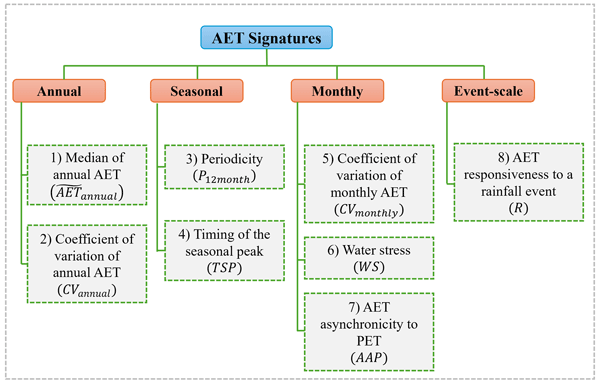
This study is the first to propose actual evapotranspiration (AET) signatures, which can be used to assess multiple aspects of AET dynamics across various temporal scales. As a demonstration, we applied AET signatures to evaluate two remotely sensed (RS) AET products against flux tower AET. The results reveal specific deficiencies in RS AET and provide guidance for selecting appropriate RS AET, including for modelling studies.
Vivek Kumar Yadav, Murray C. Peel, Keirnan Fowler, Dongryeol Ryu, and Bramha Dutt Vishwakarma
Hydrol. Earth Syst. Sci., 30, 3455–3496, https://doi.org/10.5194/hess-30-3455-2026, https://doi.org/10.5194/hess-30-3455-2026, 2026
Short summary
Short summary
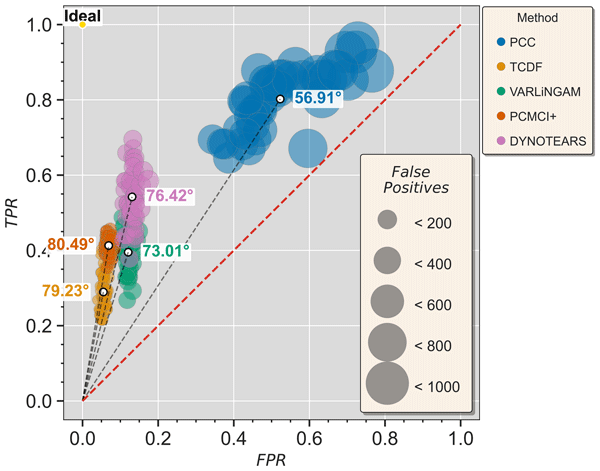
Identifying drivers is crucial for process understanding and predictions. In Hydrometeorological systems, many variables are closely related, and common methods often rely on correlation. We describe theoretically distinct methods of discovering cause-effect relations from data. We evaluate them in a large simulated environment. Results show that finding cause-effect relations provides a parsimonious picture and to obtain robust predictions, especially under changing environmental conditions.
Sandra Pool, Keirnan Fowler, Hansini Gardiya Weligamage, and Murray Peel
Hydrol. Earth Syst. Sci., 30, 2797–2815, https://doi.org/10.5194/hess-30-2797-2026, https://doi.org/10.5194/hess-30-2797-2026, 2026
Short summary
Short summary
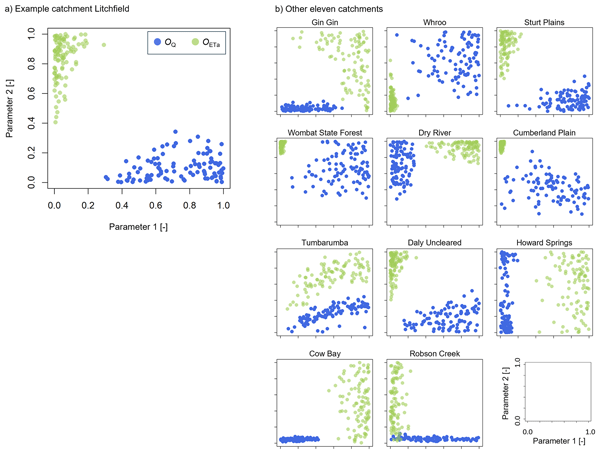
Multivariate calibration has become a widely used method to improve model realism. We found that multivariate calibration can lead to less constrained flux maps and more uncertain hydrographs relative to univariate calibration. These symptoms could be caused by non-overlapping behavioural parameter distributions for the individual calibration variables. The results emphasize that the value of non-discharge data in calibration is contingent on the suitability of the model structure.
Nyree Campion, Keirnan Fowler, Margot Turner, and Joel Hall
EGUsphere, https://doi.org/10.5194/egusphere-2026-378, https://doi.org/10.5194/egusphere-2026-378, 2026
Short summary
Short summary
Globally, many river systems have seen less flow for the same rainfall after periods of long drought. This study investigates this behaviour in over 300 catchments across the south-east and south-west of Australia. Through comparison we infer possible underlying causes, expanding on current studies limited to single locations. Over half the catchments studied displayed a drop in flow. We suggest the influence of pre-existing trends in groundwater and highlight the importance of land use history.
Matthew O. Grant, Anna M. Ukkola, Elisabeth Vogel, Sanaa Hobeichi, Andy J. Pitman, Alex Raymond Borowiak, and Keirnan Fowler
Hydrol. Earth Syst. Sci., 29, 5555–5573, https://doi.org/10.5194/hess-29-5555-2025, https://doi.org/10.5194/hess-29-5555-2025, 2025
Short summary
Short summary
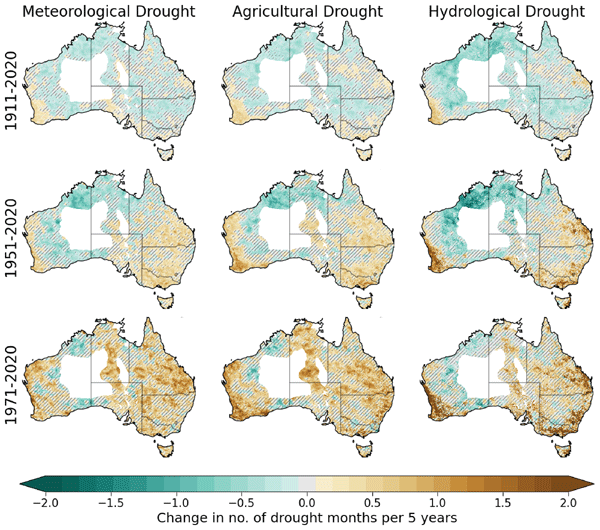
Australia is regularly subjected to severe and widespread drought. By using multiple drought indicators, we show that although there have been widespread decreases in droughts since the beginning of the 20th century, many regions have seen an increase in droughts in more recent decades. Despite these changes, our analysis shows that they remain within the range of observed variability and are not unprecedented in the context of past droughts.
Keirnan J. A. Fowler, Ziqi Zhang, and Xue Hou
Earth Syst. Sci. Data, 17, 4079–4095, https://doi.org/10.5194/essd-17-4079-2025, https://doi.org/10.5194/essd-17-4079-2025, 2025
Short summary
Short summary
This paper presents version 2 of the Australian edition of the Catchment Attributes and Meteorology for Large-sample Studies (CAMELS) series of datasets. CAMELS-AUS (Australia) v2 comprises data for an increased number (561) of catchments, each with long-term monitoring, combining hydrometeorological time series with attributes related to geology, soil, topography, land cover, anthropogenic influence and hydroclimatology. It is freely downloadable from https://zenodo.org/doi/10.5281/zenodo.12575680.
Hansini Gardiya Weligamage, Keirnan Fowler, Margarita Saft, Tim Peterson, Dongryeol Ryu, and Murray Peel
EGUsphere, https://doi.org/10.5194/egusphere-2025-3373, https://doi.org/10.5194/egusphere-2025-3373, 2025
Short summary
Short summary
This study adopts actual evapotranspiration (AET) signatures to diagnose deficiencies in simulation of AET within conceptual rainfall-runoff models. Five models are assessed using flux tower data at 14 Australian sites. Even when AET is included in the calibration, the models struggle to represent aspects of AET dynamics, including interannual variability and timing on seasonal and event scales. The approach shows promise for more insightful critique of model simulations.
Keirnan Fowler, Murray Peel, Margarita Saft, Tim J. Peterson, Andrew Western, Lawrence Band, Cuan Petheram, Sandra Dharmadi, Kim Seong Tan, Lu Zhang, Patrick Lane, Anthony Kiem, Lucy Marshall, Anne Griebel, Belinda E. Medlyn, Dongryeol Ryu, Giancarlo Bonotto, Conrad Wasko, Anna Ukkola, Clare Stephens, Andrew Frost, Hansini Gardiya Weligamage, Patricia Saco, Hongxing Zheng, Francis Chiew, Edoardo Daly, Glen Walker, R. Willem Vervoort, Justin Hughes, Luca Trotter, Brad Neal, Ian Cartwright, and Rory Nathan
Hydrol. Earth Syst. Sci., 26, 6073–6120, https://doi.org/10.5194/hess-26-6073-2022, https://doi.org/10.5194/hess-26-6073-2022, 2022
Short summary
Short summary
Recently, we have seen multi-year droughts tending to cause shifts in the relationship between rainfall and streamflow. In shifted catchments that have not recovered, an average rainfall year produces less streamflow today than it did pre-drought. We take a multi-disciplinary approach to understand why these shifts occur, focusing on Australia's over-10-year Millennium Drought. We evaluate multiple hypotheses against evidence, with particular focus on the key role of groundwater processes.
Luca Trotter, Wouter J. M. Knoben, Keirnan J. A. Fowler, Margarita Saft, and Murray C. Peel
Geosci. Model Dev., 15, 6359–6369, https://doi.org/10.5194/gmd-15-6359-2022, https://doi.org/10.5194/gmd-15-6359-2022, 2022
Short summary
Short summary
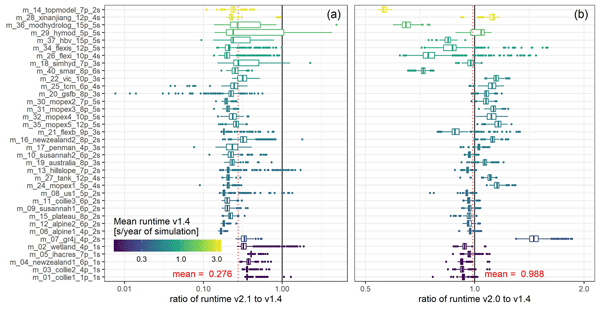
MARRMoT is a piece of software that emulates 47 common models for hydrological simulations. It can be used to run and calibrate these models within a common environment as well as to easily modify them. We restructured and recoded MARRMoT in order to make the models run faster and to simplify their use, while also providing some new features. This new MARRMoT version runs models on average 3.6 times faster while maintaining very strong consistency in their outputs to the previous version.
Keirnan J. A. Fowler, Suwash Chandra Acharya, Nans Addor, Chihchung Chou, and Murray C. Peel
Earth Syst. Sci. Data, 13, 3847–3867, https://doi.org/10.5194/essd-13-3847-2021, https://doi.org/10.5194/essd-13-3847-2021, 2021
Short summary
Short summary
This paper presents the Australian edition of the Catchment Attributes and Meteorology for Large-sample Studies (CAMELS) series of datasets. CAMELS-AUS comprises data for 222 unregulated catchments with long-term monitoring, combining hydrometeorological time series (streamflow and 18 climatic variables) with 134 attributes related to geology, soil, topography, land cover, anthropogenic influence and hydroclimatology. It is freely downloadable from https://doi.pangaea.de/10.1594/PANGAEA.921850.
Cited articles
Arciniega-Esparza, S., Birkel, C., Chavarría-Palma, A., Arheimer, B., and Breña-Naranjo, J. A.: Remote sensing-aided rainfall–runoff modeling in the tropics of Costa Rica, Hydrol. Earth Syst. Sci., 26, 975–999, https://doi.org/10.5194/hess-26-975-2022, 2022.
Arsenault, R., Poulin, A., Côté, P., and Brissette, F.: A Comparison of Stochastic Optimization Algorithms in Hydrological Model Calibration, J. Hydrol. Eng., 19, 1374–1384, https://doi.org/10.1061/(ASCE)HE.1943-5584.0000938, 2014.
Bai, P., Liu, X., Yang, T., Li, F., Liang, K., Hu, S., and Liu, C.: Assessment of the Influences of Different Potential Evapotranspiration Inputs on the Performance of Monthly Hydrological Models under Different Climatic Conditions, J. Hydrometeorol., 17, 2259–2274, https://doi.org/10.1175/JHM-D-15-0202.1, 2016.
Bai, P., Liu, X., and Liu, C.: Improving hydrological simulations by incorporating GRACE data for model calibration, J. Hydrol., 557, 291–304, https://doi.org/10.1016/j.jhydrol.2017.12.025, 2018.
Beringer, J., Hutley, L. B., McHugh, I., Arndt, S. K., Campbell, D., Cleugh, H. A., Cleverly, J., Resco de Dios, V., Eamus, D., Evans, B., Ewenz, C., Grace, P., Griebel, A., Haverd, V., Hinko-Najera, N., Huete, A., Isaac, P., Kanniah, K., Leuning, R., Liddell, M. J., Macfarlane, C., Meyer, W., Moore, C., Pendall, E., Phillips, A., Phillips, R. L., Prober, S. M., Restrepo-Coupe, N., Rutledge, S., Schroder, I., Silberstein, R., Southall, P., Yee, M. S., Tapper, N. J., van Gorsel, E., Vote, C., Walker, J., and Wardlaw, T.: An introduction to the Australian and New Zealand flux tower network – OzFlux, Biogeosciences, 13, 5895–5916, https://doi.org/10.5194/bg-13-5895-2016, 2016.
Beringer, J., Moore, C. E., Cleverly, J., Campbell, D. I., Cleugh, H., De Kauwe, M. G., Kirschbaum, M. U. F., Griebel, A., Grover, S., Huete, A., Hutley, L. B., Laubach, J., Van Niel, T., Arndt, S. K., Bennett, A. C., Cernusak, L. A., Eamus, D., Ewenz, C. M., Goodrich, J. P., Jiang, M., Hinko-Najera, N., Isaac, P., Hobeichi, S., Knauer, J., Koerber, G. R., Liddell, M., Ma, X., Macfarlane, C., McHugh, I. D., Medlyn, B. E., Meyer, W. S., Norton, A. J., Owens, J., Pitman, A., Pendall, E., Prober, S. M., Ray, R. L., Restrepo-Coupe, N., Rifai, S. W., Rowlings, D., Schipper, L., Silberstein, R. P., Teckentrup, L., Thompson, S. E., Ukkola, A. M., Wall, A., Wang, Y.-P., Wardlaw, T. J., and Woodgate, W.: Bridge to the future: Important lessons from 20 years of ecosystem observations made by the OzFlux network, Glob. Change Biol., 28, 3489–3514, https://doi.org/10.1111/gcb.16141, 2022.
Beven, K.: A manifesto for the equifinality thesis, J. Hydrol., 320, 18–36, https://doi.org/10.1016/j.jhydrol.2005.07.007, 2006.
Blöschl, G., Bierkens, M. F. P., Chambel, A., Cudennec, C., Destouni, G., Fiori, A., Kirchner, J. W., McDonnell, J. J., Savenije, H. H. G., Sivapalan, M., Stumpp, C., Toth, E., Volpi, E., Carr, G., Lupton, C., Salinas, J., Széles, B., Viglione, A., Aksoy, H., Allen, S. T., Amin, A., Andréassian, V., Arheimer, B., Aryal, S. K., Baker, V., Bardsley, E., Barendrecht, M. H., Bartosova, A., Batelaan, O., Berghuijs, W. R., Beven, K., Blume, T., Bogaard, T., Borges De Amorim, P., Böttcher, M. E., Boulet, G., Breinl, K., Brilly, M., Brocca, L., Buytaert, W., Castellarin, A., Castelletti, A., Chen, X., Chen, Y., Chen, Y., Chifflard, P., Claps, P., Clark, M. P., Collins, A. L., Croke, B., Dathe, A., David, P. C., De Barros, F. P. J., De Rooij, G., Di Baldassarre, G., Driscoll, J. M., Duethmann, D., Dwivedi, R., Eris, E., Farmer, W. H., Feiccabrino, J., Ferguson, G., Ferrari, E., Ferraris, S., Fersch, B., Finger, D., Foglia, L., Fowler, K., Gartsman, B., Gascoin, S., Gaume, E., Gelfan, A., Geris, J., Gharari, S., Gleeson, T., Glendell, M., Gonzalez Bevacqua, A., González-Dugo, M. P., Grimaldi, S., Gupta, A. B., Guse, B., Han, D., Hannah, D., Harpold, A., Haun, S., Heal, K., Helfricht, K., Herrnegger, M., Hipsey, M., Hlaváčiková, H., Hohmann, C., Holko, L., Hopkinson, C., Hrachowitz, M., Illangasekare, T. H., Inam, A., Innocente, C., Istanbulluoglu, E., Jarihani, B., et al.: Twenty-three unsolved problems in hydrology (UPH) – a community perspective, Hydrol. Sci. J., 64, 1141–1158, https://doi.org/10.1080/02626667.2019.1620507, 2019.
Burns, G.: AETtesting (v1), Zenodo [Computer software], https://doi.org/10.5281/zenodo.21333639, 2026.
Chiew, F. H. S., Peel, M. C., and Western, A. W.: Application and testing of the simple rainfall-runoff model SIMHYD, in: Mathematical Models of Small Watershed Hydrology and Applications, edited by: Singh, V. P. and Frevert, D. K., Water Resources Publications, Colorado, 335–367, ISBN: 978-188720135-3, 2002
Deb, P. and Kiem, A. S.: Evaluation of rainfall–runoff model performance under non-stationary hydroclimatic conditions, Hydrol. Sci. J., 65, 1667–1684, https://doi.org/10.1080/02626667.2020.1754420, 2020.
Dembélé, M., Ceperley, N., Zwart, S. J., Salvadore, E., Mariethoz, G., and Schaefli, B.: Potential of satellite and reanalysis evaporation datasets for hydrological modelling under various model calibration strategies, Adv. Water Resour., 143, 103667, https://doi.org/10.1016/j.advwatres.2020.103667, 2020.
Duethmann, D., Blöschl, G., and Parajka, J.: Why does a conceptual hydrological model fail to correctly predict discharge changes in response to climate change?, Hydrol. Earth Syst. Sci., 24, 3493–3511, https://doi.org/10.5194/hess-24-3493-2020, 2020.
Eamus, D., O'Grady, A. P., and Hutley, L.: Dry season conditions determine wet season water use in the wet–tropical savannas of northern Australia, Tree Physiol., 20, 1219–1226, https://doi.org/10.1093/treephys/20.18.1219, 2000.
Fowler, K., Knoben, W., Peel, M., Peterson, T., Ryu, D., Saft, M., Seo, K.-W., and Western, A.: Many Commonly Used Rainfall-Runoff Models Lack Long, Slow Dynamics: Implications for Runoff Projections, Water Resour. Res., 56, e2019WR025286, https://doi.org/10.1029/2019WR025286, 2020.
Fowler, K. J. A., Coxon, G., Freer, J. E., Knoben, W. J. M., Peel, M. C., Wagener, T., Western, A. W., Woods, R. A., and Zhang, L.: Towards more realistic runoff projections by removing limits on simulated soil moisture deficit, J. Hydrol., 600, 126505, https://doi.org/10.1016/j.jhydrol.2021.126505, 2021.
Fowler, K., Zhang, Z., and Hou, X.: CAMELS-AUS v2: updated hydrometeorological timeseries and landscape attributes for an enlarged set of catchments in Australia (2.03), Zenodo [data set], https://doi.org/10.5281/zenodo.14289037, 2024.
Fowler, K. J. A., Zhang, Z., and Hou, X.: CAMELS-AUS v2: updated hydrometeorological time series and landscape attributes for an enlarged set of catchments in Australia, Earth Syst. Sci. Data, 17, 4079–4095, https://doi.org/10.5194/essd-17-4079-2025, 2025.
Gardiya Weligamage, H., Fowler, K., Saft, M., Peterson, T., Ryu, D., and Peel, M.: Characterising evapotranspiration signatures for improved behavioural insights, Hydrol. Earth Syst. Sci. Discuss. [preprint], https://doi.org/10.5194/hess-2024-373, in review, 2025a.
Gardiya Weligamage, H., Fowler, K., Saft, M., Peterson, T., Ryu, D., and Peel, M.: Using evapotranspiration signatures to assess evapotranspiration realism in rainfall-runoff models, EGUsphere [preprint], https://doi.org/10.5194/egusphere-2025-3373, 2025b.
Grigg, A. H. and Hughes, J. D.: Nonstationarity driven by multidecadal change in catchment groundwater storage: A test of modifications to a common rainfall-run-off model, Hydrol. Process., 32, 3675–3688, https://doi.org/10.1002/hyp.13282, 2018.
Guo, D., Westra, S., and Maier, H. R.: Impact of evapotranspiration process representation on runoff projections from conceptual rainfall-runoff models, Water Resour. Res., 53, 435–454, https://doi.org/10.1002/2016WR019627, 2017.
Gupta, H. V., Kling, H., Yilmaz, K. K., and Martinez, G. F.: Decomposition of the mean squared error and NSE performance criteria: Implications for improving hydrological modelling, J. Hydrol., 377, 80–91, https://doi.org/10.1016/j.jhydrol.2009.08.003, 2009.
Herman, M. R., Nejadhashemi, A. P., Abouali, M., Hernandez-Suarez, J. S., Daneshvar, F., Zhang, Z., Anderson, M. C., Sadeghi, A. M., Hain, C. R., and Sharifi, A.: Evaluating the role of evapotranspiration remote sensing data in improving hydrological modeling predictability, J. Hydrol., 556, 39–49, https://doi.org/10.1016/j.jhydrol.2017.11.009, 2018.
Kelleher, C. A. and Shaw, S. B.: Is ET often oversimplified in hydrologic models? Using long records to elucidate unaccounted for controls on ET, J. Hydrol., 557, 160–172, https://doi.org/10.1016/j.jhydrol.2017.12.018, 2018.
Khatami, S., Peel, M. C., Peterson, T. J., and Western, A. W.: Equifinality and Flux Mapping: A New Approach to Model Evaluation and Process Representation Under Uncertainty, Water Resour. Res., 55, 8922–8941, https://doi.org/10.1029/2018WR023750, 2019.
Knoben, W. J. M., Freer, J. E., Fowler, K. J. A., Peel, M. C., and Woods, R. A.: Modular Assessment of Rainfall–Runoff Models Toolbox (MARRMoT) v1.2: an open-source, extendable framework providing implementations of 46 conceptual hydrologic models as continuous state-space formulations, Geosci. Model Dev., 12, 2463–2480, https://doi.org/10.5194/gmd-12-2463-2019, 2019.
Liang, X., Lettenmaier, D. P., Wood, E. F., and Burges, S. J.: A simple hydrologically based model of land surface water and energy fluxes for general circulation models, J. Geophys. Res.-Atmos., 99, 14415–14428, https://doi.org/10.1029/94JD00483, 1994.
Liu, Z., Wang, Y., Xu, Z., and Duan, Q.: Conceptual Hydrological Models, in: Handbook of Hydrometeorological Ensemble Forecasting, edited by: Duan, Q., Pappenberger, F., Thielen, J., Wood, A., Cloke, H. L., and Schaake, J. C., Springer, Berlin, Heidelberg, 1–23, https://doi.org/10.1007/978-3-642-40457-3_22-1, 2017.
McMillan, H. K.: A review of hydrologic signatures and their applications, WIREs Water, 8, e1499, https://doi.org/10.1002/wat2.1499, 2021.
Norton, A. J., Rayner, P. J., Wang, Y.-P., Parazoo, N. C., Baskaran, L., Briggs, P. R., Haverd, V., and Doughty, R.: Hydrologic connectivity drives extremes and high variability in vegetation productivity across Australian arid and semi-arid ecosystems, Remote Sens. Environ., 272, 112937, https://doi.org/10.1016/j.rse.2022.112937, 2022.
Oudin, L., Hervieu, F., Michel, C., Perrin, C., Andréassian, V., Anctil, F., and Loumagne, C.: Which potential evapotranspiration input for a lumped rainfall–runoff model?: Part 2 – Towards a simple and efficient potential evapotranspiration model for rainfall–runoff modelling, J. Hydrol., 303, 290–306, https://doi.org/10.1016/j.jhydrol.2004.08.026, 2005.
Perrin, C., Michel, C., and Andréassian, V.: Improvement of a parsimonious model for streamflow simulation, J. Hydrol., 279, 275–289, https://doi.org/10.1016/S0022-1694(03)00225-7, 2003.
Pimentel, R., Crochemore, L., Andersson, J. C. M., and Arheimer, B.: Assessing robustness in global hydrological predictions by comparing modelling and Earth observations, Hydrol. Sci. J., 68, 2357–2372, https://doi.org/10.1080/02626667.2023.2267544, 2023.
Pool, S., Fowler, K., and Peel, M.: Benefit of Multivariate Model Calibration for Different Climatic Regions, Water Resour. Res., 60, e2023WR036364, https://doi.org/10.1029/2023WR036364, 2024.
Rientjes, T. H. M., Muthuwatta, L. P., Bos, M. G., Booij, M. J., and Bhatti, H. A.: Multi-variable calibration of a semi-distributed hydrological model using streamflow data and satellite-based evapotranspiration, J. Hydrol., 505, 276–290, https://doi.org/10.1016/j.jhydrol.2013.10.006, 2013.
Saft, M., Peel, M. C., Western, A. W., Perraud, J., and Zhang, L.: Bias in streamflow projections due to climate-induced shifts in catchment response, Geophys. Res. Lett., 43, 1574–1581, https://doi.org/10.1002/2015GL067326, 2016.
Sivapalan, M., Ruprecht, J. K., and Viney, N. R.: Water and salt balance modelling to predict the effects of land-use changes in forested catchments. 1. Small catchment water balance model, Hydrol. Process., 10, 393–411, 1996.
Stephens, C., Medlyn, B., Williams, L., Knauer, J., Inbar, A., Pendall, E., Arndt, S. K., Beringer, J., Ewenz, C. M., Hinko-Najera, N., Hutley, L. B., Isaac, P., Liddell, M., Meyer, W., Moore, C. E., Cranko Page, J., Silberstein, R., and Woodgate, W.: The Response and Recovery of Carbon and Water Fluxes in Australian Ecosystems Exposed to Severe Drought, Glob. Change Biol., 31, e70361, https://doi.org/10.1111/gcb.70361, 2025.
Stephens, C. M., Marshall, L. A., and Johnson, F. M.: Investigating strategies to improve hydrologic model performance in a changing climate, J. Hydrol., 579, 124219, https://doi.org/10.1016/j.jhydrol.2019.124219, 2019.
Taia, S., Scozzari, A., Erraioui, L., Kili, M., Mridekh, A., Haida, S., Chao, J., and El Mansouri, B.: Comparing the ability of different remotely sensed evapotranspiration products in enhancing hydrological model performance and reducing prediction uncertainty, Ecol. Inform., 78, 102352, https://doi.org/10.1016/j.ecoinf.2023.102352, 2023.
Trotter, L. and Knoben, W.: MARRMoT (v2.1.2), Zenodo [Computer software], https://doi.org/10.5281/zenodo.8280679, 2023.
Trotter, L., Knoben, W. J. M., Fowler, K. J. A., Saft, M., and Peel, M. C.: Modular Assessment of Rainfall–Runoff Models Toolbox (MARRMoT) v2.1: an object-oriented implementation of 47 established hydrological models for improved speed and readability, Geosci. Model Dev., 15, 6359–6369, https://doi.org/10.5194/gmd-15-6359-2022, 2022.
Trotter, L., Saft, M., Peel, M. C., and Fowler, K. J. A.: Symptoms of Performance Degradation During Multi-Annual Drought: A Large-Sample, Multi-Model Study, Water Resour. Res., 59, e2021WR031845, https://doi.org/10.1029/2021WR031845, 2023.
Vaze, J., Post, D. A., Chiew, F. H. S., Perraud, J.-M., Viney, N. R., and Teng, J.: Climate non-stationarity – Validity of calibrated rainfall–runoff models for use in climate change studies, J. Hydrol., 394, 447–457, https://doi.org/10.1016/j.jhydrol.2010.09.018, 2010.
Zhao, L., Xia, J., Xu, C., Wang, Z., Sobkowiak, L., and Long, C.: Evapotranspiration estimation methods in hydrological models, J. Geogr. Sci., 23, 359–369, https://doi.org/10.1007/s11442-013-1015-9, 2013.
Short summary
Improving how rainfall-runoff models estimate evapotranspiration is key to better reproducing water partitioning under current conditions, and will increase model realism under future changing conditions. We tested how well different conceptual rainfall-runoff model equations simulate evapotranspiration using Australian catchment and flux tower data. We found one equation consistently worked better than the others. However, even this equation had flaws, pointing to missing vegetation processes.
Improving how rainfall-runoff models estimate evapotranspiration is key to better reproducing...