
Articles | Volume 30, issue 11
https://doi.org/10.5194/hess-30-3647-2026
© Author(s) 2026. This work is distributed under
the Creative Commons Attribution 4.0 License.
the Creative Commons Attribution 4.0 License.
https://doi.org/10.5194/hess-30-3647-2026
© Author(s) 2026. This work is distributed under
the Creative Commons Attribution 4.0 License.
the Creative Commons Attribution 4.0 License.
Research article
| 
16 Jun 2026
Research article |
| 16 Jun 2026
| 16 Jun 2026
Continental-scale prediction of hydrologic signatures and processes
Ryoko Araki
CORRESPONDING AUTHOR

Department of Geography, San Diego State University, San Diego, CA, USA
Department of Geography, University of California, Santa Barbara, Santa Barbara, CA, USA
Anne Holt
Department of Geography, San Diego State University, San Diego, CA, USA
John C. Hammond
U.S. Geological Survey, Maryland–Delaware–DC Water Science Center, Baltimore, MD, USA
Admin Husic
Department of Civil and Environmental Engineering, Virginia Tech, Blacksburg, VA, USA
Gemma Coxon
School of Geographical Sciences, University of Bristol, Bristol, UK
Department of Geography, San Diego State University, San Diego, CA, USA
Related authors
No articles found.
Yining Zang, Pauline C. Treble, Kei Yoshimura, Jayson Gabriel Pinza, Fengbo Zhang, Kübra Özdemir Çallı, Xiaojun Mei, Admin Husic, Alena Gessert, Andrej Stroj, Bartolomé Andreo, Bernard Ladouche, Christine Stumpp, Diana Mance, Eleni Zagana, Fen Huang, Giuseppe Sappa, Harald Kunstmann, Heike Brielmann, Hong Zhou, Huaying Wu, Jakob Garvelmann, James Berglund, Jean-Baptiste Charlier, Jens Lange, Juan Antonio Barberá Fornell, Junbing Pu, Konstantina Katsanou, Kun Ren, Laura Toran, Laurence Gill, Maria Filippini, Martin Kralik, Matías Mudarra Martínez, Min Zhao, Mingming Luo, Nico Goldscheider, Nikolaos Lambrakis, Pantaleone De Vita, Qiong Xiao, Shi Yu, Silvia Iacurto, Silvio Coda, Ted McCormack, Vincenzo Allocca, W. George Darling, Walter D'Alessandro, Xulei Guo, Yundi Hu, Zhijun Wang, Eva Kaminsky, Jiří Faimon, Marek Lang, Pavel Pracný, Aurel Persoiu, and Andreas Hartmann
Earth Syst. Sci. Data, 18, 7199–7225, https://doi.org/10.5194/essd-18-7199-2026, https://doi.org/10.5194/essd-18-7199-2026, 2026
Short summary
Short summary
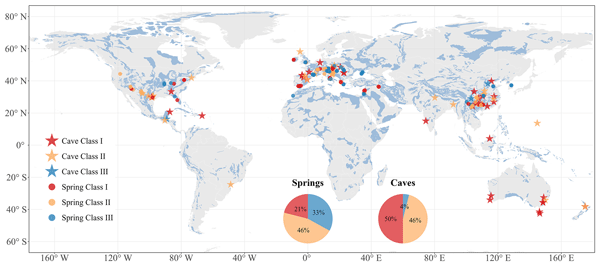
We developed the first global database of water from karst springs and cave drips that records different forms of oxygen and hydrogen, which naturally trace how rainwater moves through rocks. By gathering and checking thousands of measurements from around the globe and linking them with flow and rainfall data, the database provides a comprehensive view of water movement, allows scientists to compare regions, understand groundwater processes, and support sustainable water management worldwide.
Aaron Heldmyer, Roy Sando, Caelan Simeone, Michael Wieczorek, Scott Hamshaw, Phillip Goodling, Ryan McShane, Jeremy Diaz, David Watkins, Bryce Pulver, Apoorva Shastry, Konrad Hafen, and John Hammond
Hydrol. Earth Syst. Sci., 30, 5925–5945, https://doi.org/10.5194/hess-30-5925-2026, https://doi.org/10.5194/hess-30-5925-2026, 2026
Short summary
Short summary
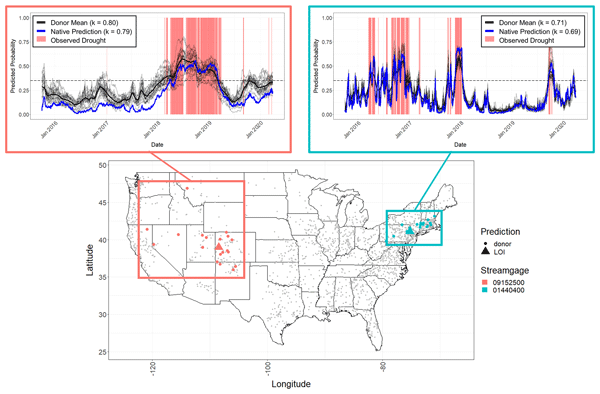
We used machine learning to explore what causes streamflow droughts across the U.S. We found that different regions are influenced by different factors like temperature, snow, and rainfall. Our new method can also predict droughts in areas without streamflow data, helping improve water resource planning.
Gemma Coxon, Yanchen Zheng, Rafael Barbedo, Hollie Cooper, Felipe Fileni, Hayley J. Fowler, Matt Fry, Amy Green, Tom Gribbin, Helen Harfoot, Elizabeth Lewis, Germano Gondim Ribeiro Neto, Xiaobin Qiu, Saskia Salwey, and Doris E. Wendt
Earth Syst. Sci. Data, 18, 4345–4371, https://doi.org/10.5194/essd-18-4345-2026, https://doi.org/10.5194/essd-18-4345-2026, 2026
Short summary
Short summary
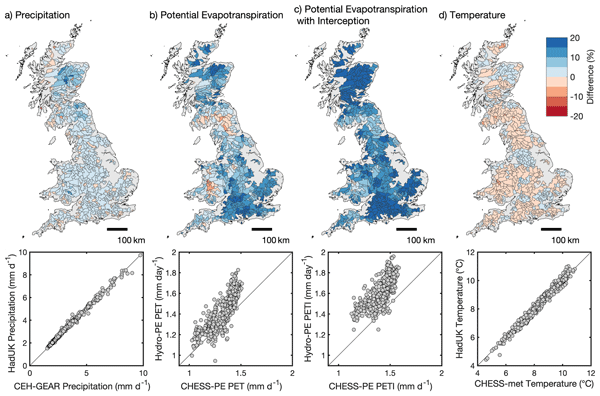
We present the second version of a large-sample catchment hydrology dataset for Great Britain. The dataset collates (1) climate, river flow and groundwater timeseries at hourly to monthly timescales, (2) catchment attributes characterising topography, climate, streamflow, land cover, soils, hydrogeology and human influences, and (3) catchment boundaries for 671 catchments across Great Britain. The dataset is publicly available to use in a wide range of environmental and modelling analyses.
Caelan E. Simeone and John C. Hammond
EGUsphere, https://doi.org/10.5194/egusphere-2026-2731, https://doi.org/10.5194/egusphere-2026-2731, 2026
Short summary
Short summary
This study examines how quickly rivers across the U.S. shift between very dry and very wet conditions, an emerging challenge for water managers because rapid changes compress decision windows and create operational stress. Drought-to-flood transitions occur more quickly and more often than flood-to-drought transitions, with short events concentrated in certain regions. Flood-to-drought transitions are less common but can involve large and rapid declines in flow.
Doris E. Wendt, Gemma Coxon, Saskia Salwey, and Francesca Pianosi
Hydrol. Earth Syst. Sci., 30, 2837–2857, https://doi.org/10.5194/hess-30-2837-2026, https://doi.org/10.5194/hess-30-2837-2026, 2026
Short summary
Short summary
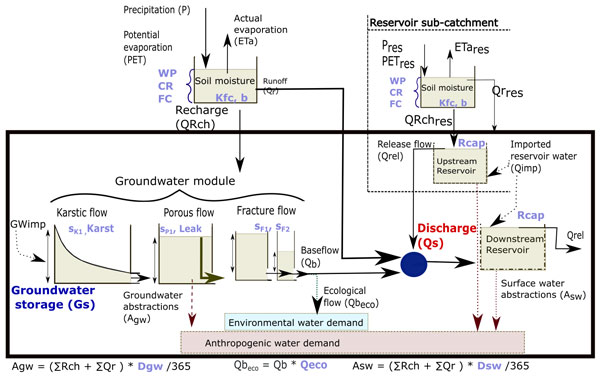
Groundwater is a highly-used water source, which drought management is complicated. We introduce a socio-hydrological water resource model (SHOWER) to aid drought management in groundwater-rich managed environments. Results show which and when drought management interventions influence surface water and groundwater storage, with integrated interventions having most effect on reducing droughts. This encourages further exploration to reduce water shortages and improve future drought resilience.
Felipe Fileni, Hayley J. Fowler, Elizabeth Lewis, Fiona McLay, Gemma Coxon, David Archer, Emma Bruce, Longzhi Yang, Matt Fry, Hollie Cooper, and Ollie Swain
EGUsphere, https://doi.org/10.5194/egusphere-2026-277, https://doi.org/10.5194/egusphere-2026-277, 2026
Short summary
Short summary
This study develops and applies a national framework to identify and flag issues in UK river flow data by combining systematic visual checks with automated tests. We demonstrate the importance of visual inspection, refine and sensitivity-test traditional quality-control methods, and develop new high-flow checks tailored to high-resolution data. We then quantify the frequency of these issues and demonstrate that, if overlooked, they can impact scientific results and lead to misleading conclusions
Felipe Fileni, Hayley J. Fowler, Elizabeth Lewis, Matt Fry, Hollie Cooper, Ollie Swain, Fiona McLay, Gemma Coxon, Emma Bruce, Longzhi Yang, and David Archer
Earth Syst. Sci. Data Discuss., https://doi.org/10.5194/essd-2026-152, https://doi.org/10.5194/essd-2026-152, 2026
Revised manuscript under review for ESSD
Short summary
Short summary
River flow data recorded at 15-minute resolution has been collected across the UK for over 70 years, but it has been difficult to access and use consistently. We brought these records together into a single national dataset, checked them for errors, harmonised different records, and clearly documented any issues and suspect values. The result is a reliable and transparent resource that supports better flood forecasting, water management, and research on climate change impacts on river flows.
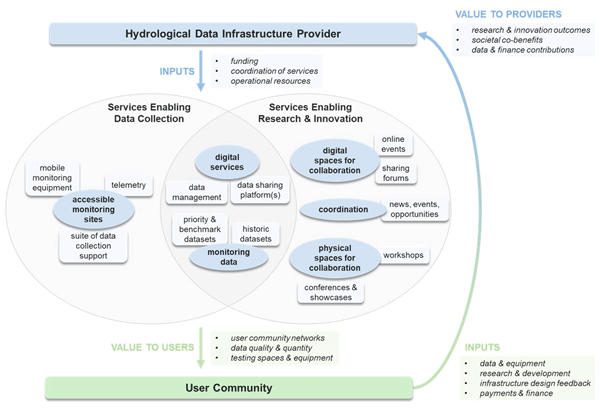
William Veness, Alejandro Dussaillant, Gemma Coxon, Simon De Stercke, Gareth H. Old, Matthew Fry, Jonathan G. Evans, and Wouter Buytaert
Hydrol. Earth Syst. Sci., 29, 6201–6219, https://doi.org/10.5194/hess-29-6201-2025, https://doi.org/10.5194/hess-29-6201-2025, 2025
Short summary
Short summary
We investigated what users want from the next-generation of hydrological monitoring systems to better support science and innovation. Through literature review and interviews with UK experts, we found that beyond providing high-quality data, users particularly value additional support for collecting their own data, sharing it with others, and building collaborations with other data users. Designing systems with these needs in mind can greatly boost long-term engagement, data coverage and impact.
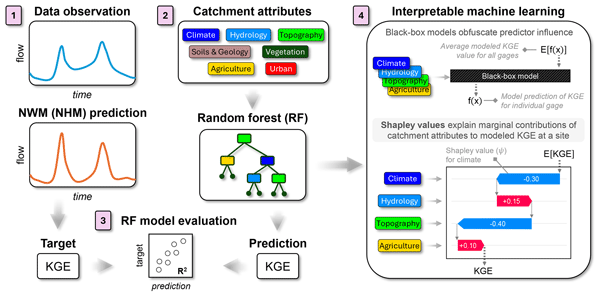
Admin Husic, John Hammond, Adam N. Price, and Joshua K. Roundy
Hydrol. Earth Syst. Sci., 29, 4457–4472, https://doi.org/10.5194/hess-29-4457-2025, https://doi.org/10.5194/hess-29-4457-2025, 2025
Short summary
Short summary
We used interpretable machine learning to evaluate the accuracy of two continental-scale hydrologic models. We analyzed a suite of catchment attributes and found that soil water content had the biggest impact on model performance, especially in dry areas. Key thresholds for variables like precipitation and road density were identified, which could guide future improvements in these models. Our findings highlight the potential of data-driven methods to inform process-based models.
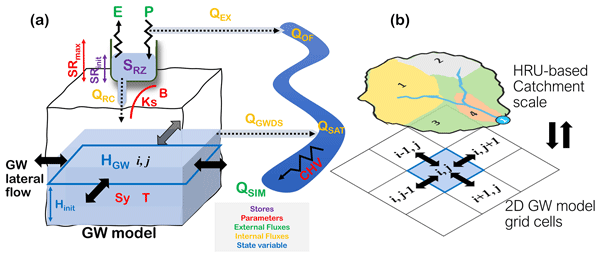
Yanchen Zheng, Gemma Coxon, Mostaquimur Rahman, Ross Woods, Saskia Salwey, Youtong Rong, and Doris E. Wendt
Geosci. Model Dev., 18, 4247–4271, https://doi.org/10.5194/gmd-18-4247-2025, https://doi.org/10.5194/gmd-18-4247-2025, 2025
Short summary
Short summary
Groundwater is vital for people and ecosystems, but most physical models lack the representation of surface–groundwater interactions, leading to inaccurate streamflow predictions in groundwater-rich areas. This study presents DECIPHeR-GW v1, which links surface and groundwater systems to improve predictions of streamflow and groundwater levels. Tested across England and Wales, DECIPHeR-GW shows high accuracy, especially in southeast England, making it a valuable tool for large-scale water management.
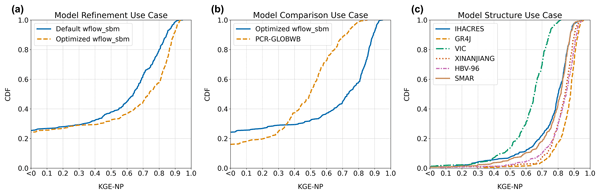
Jerom P. M. Aerts, Jannis M. Hoch, Gemma Coxon, Nick C. van de Giesen, and Rolf W. Hut
Hydrol. Earth Syst. Sci., 28, 5011–5030, https://doi.org/10.5194/hess-28-5011-2024, https://doi.org/10.5194/hess-28-5011-2024, 2024
Short summary
Short summary
For users of hydrological models, model suitability often hinges on how well simulated outputs match observed discharge. This study highlights the importance of including discharge observation uncertainty in hydrological model performance assessment. We highlight the need to account for this uncertainty in model comparisons and introduce a practical method suitable for any observational time series with available uncertainty estimates.
Saskia Salwey, Gemma Coxon, Francesca Pianosi, Rosanna Lane, Chris Hutton, Michael Bliss Singer, Hilary McMillan, and Jim Freer
Hydrol. Earth Syst. Sci., 28, 4203–4218, https://doi.org/10.5194/hess-28-4203-2024, https://doi.org/10.5194/hess-28-4203-2024, 2024
Short summary
Short summary
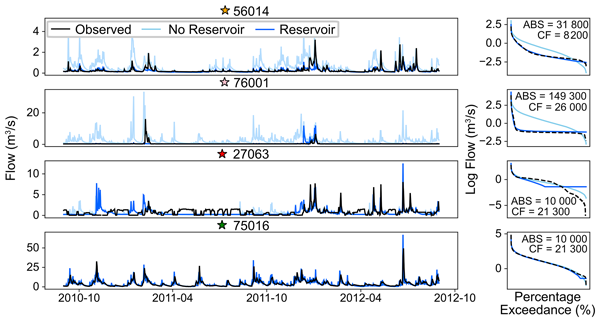
Reservoirs are essential for water resource management and can significantly impact downstream flow. However, representing reservoirs in hydrological models can be challenging, particularly across large scales. We design a new and simple method for simulating river flow downstream of water supply reservoirs using only open-access data. We demonstrate the approach in 264 reservoir catchments across Great Britain, where we can significantly improve the simulation of reservoir-impacted flow.
Yanchen Zheng, Gemma Coxon, Ross Woods, Daniel Power, Miguel Angel Rico-Ramirez, David McJannet, Rafael Rosolem, Jianzhu Li, and Ping Feng
Hydrol. Earth Syst. Sci., 28, 1999–2022, https://doi.org/10.5194/hess-28-1999-2024, https://doi.org/10.5194/hess-28-1999-2024, 2024
Short summary
Short summary
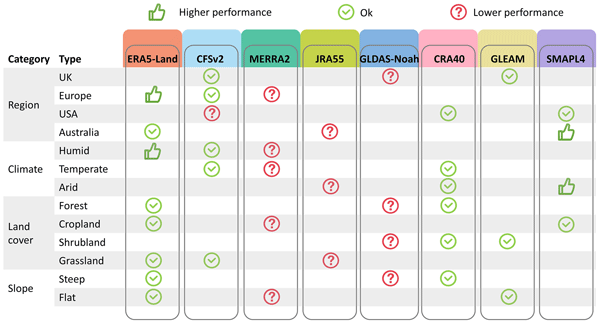
Reanalysis soil moisture products are a vital basis for hydrological and environmental research. Previous product evaluation is limited by the scale difference (point and grid scale). This paper adopts cosmic ray neutron sensor observations, a novel technique that provides root-zone soil moisture at field scale. In this paper, global harmonized CRNS observations were used to assess products. ERA5-Land, SMAPL4, CFSv2, CRA40 and GLEAM show better performance than MERRA2, GLDAS-Noah and JRA55.
Kathryn A. Leeming, John P. Bloomfield, Gemma Coxon, and Yanchen Zheng
Hydrol. Earth Syst. Sci. Discuss., https://doi.org/10.5194/hess-2023-202, https://doi.org/10.5194/hess-2023-202, 2023
Preprint withdrawn
Short summary
Short summary
In this work we characterise annual patterns in baseflow, the component of streamflow that comes from subsurface storage. Our research identified early-, mid-, and late-seasonality of baseflow across catchments in Great Britain over two time blocks: 1976–1995 and 1996–2015, and found that many catchments have earlier seasonal patterns of baseflow in the second time period. These changes are linked to changes in climate signals: snow-melt in highland catchments and effective rainfall changes.
Heidi Kreibich, Kai Schröter, Giuliano Di Baldassarre, Anne F. Van Loon, Maurizio Mazzoleni, Guta Wakbulcho Abeshu, Svetlana Agafonova, Amir AghaKouchak, Hafzullah Aksoy, Camila Alvarez-Garreton, Blanca Aznar, Laila Balkhi, Marlies H. Barendrecht, Sylvain Biancamaria, Liduin Bos-Burgering, Chris Bradley, Yus Budiyono, Wouter Buytaert, Lucinda Capewell, Hayley Carlson, Yonca Cavus, Anaïs Couasnon, Gemma Coxon, Ioannis Daliakopoulos, Marleen C. de Ruiter, Claire Delus, Mathilde Erfurt, Giuseppe Esposito, Didier François, Frédéric Frappart, Jim Freer, Natalia Frolova, Animesh K. Gain, Manolis Grillakis, Jordi Oriol Grima, Diego A. Guzmán, Laurie S. Huning, Monica Ionita, Maxim Kharlamov, Dao Nguyen Khoi, Natalie Kieboom, Maria Kireeva, Aristeidis Koutroulis, Waldo Lavado-Casimiro, Hong-Yi Li, Maria Carmen LLasat, David Macdonald, Johanna Mård, Hannah Mathew-Richards, Andrew McKenzie, Alfonso Mejia, Eduardo Mario Mendiondo, Marjolein Mens, Shifteh Mobini, Guilherme Samprogna Mohor, Viorica Nagavciuc, Thanh Ngo-Duc, Huynh Thi Thao Nguyen, Pham Thi Thao Nhi, Olga Petrucci, Nguyen Hong Quan, Pere Quintana-Seguí, Saman Razavi, Elena Ridolfi, Jannik Riegel, Md Shibly Sadik, Nivedita Sairam, Elisa Savelli, Alexey Sazonov, Sanjib Sharma, Johanna Sörensen, Felipe Augusto Arguello Souza, Kerstin Stahl, Max Steinhausen, Michael Stoelzle, Wiwiana Szalińska, Qiuhong Tang, Fuqiang Tian, Tamara Tokarczyk, Carolina Tovar, Thi Van Thu Tran, Marjolein H. J. van Huijgevoort, Michelle T. H. van Vliet, Sergiy Vorogushyn, Thorsten Wagener, Yueling Wang, Doris E. Wendt, Elliot Wickham, Long Yang, Mauricio Zambrano-Bigiarini, and Philip J. Ward
Earth Syst. Sci. Data, 15, 2009–2023, https://doi.org/10.5194/essd-15-2009-2023, https://doi.org/10.5194/essd-15-2009-2023, 2023
Short summary
Short summary
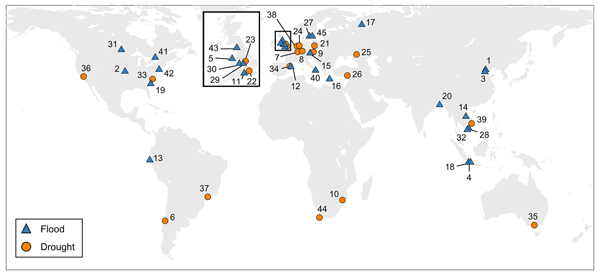
As the adverse impacts of hydrological extremes increase in many regions of the world, a better understanding of the drivers of changes in risk and impacts is essential for effective flood and drought risk management. We present a dataset containing data of paired events, i.e. two floods or two droughts that occurred in the same area. The dataset enables comparative analyses and allows detailed context-specific assessments. Additionally, it supports the testing of socio-hydrological models.
Louisa D. Oldham, Jim Freer, Gemma Coxon, Nicholas Howden, John P. Bloomfield, and Christopher Jackson
Hydrol. Earth Syst. Sci., 27, 761–781, https://doi.org/10.5194/hess-27-761-2023, https://doi.org/10.5194/hess-27-761-2023, 2023
Short summary
Short summary
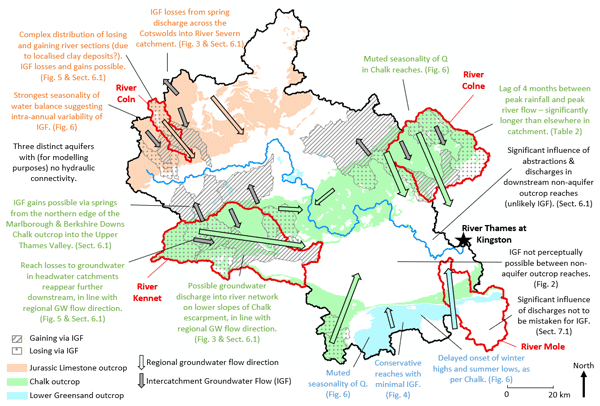
Water can move between river catchments via the subsurface, termed intercatchment groundwater flow (IGF). We show how a perceptual model of IGF can be developed with relatively simple geological interpretation and data requirements. We find that IGF dynamics vary in space, correlated to the dominant underlying geology. We recommend that IGF
loss functionsmay be used in conceptual rainfall–runoff models but should be supported by perceptualisation of IGF processes and connectivities.
Sarah Shannon, Anthony Payne, Jim Freer, Gemma Coxon, Martina Kauzlaric, David Kriegel, and Stephan Harrison
Hydrol. Earth Syst. Sci., 27, 453–480, https://doi.org/10.5194/hess-27-453-2023, https://doi.org/10.5194/hess-27-453-2023, 2023
Short summary
Short summary
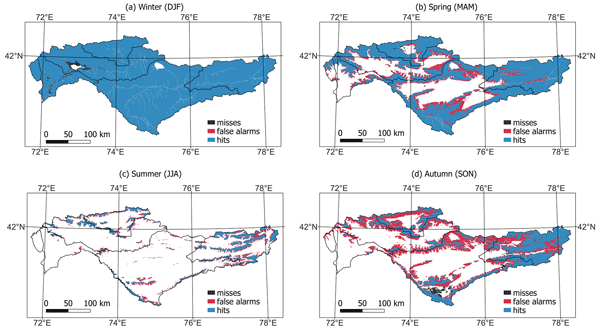
Climate change poses a potential threat to water supply in glaciated river catchments. In this study, we added a snowmelt and glacier melt model to the Dynamic fluxEs and ConnectIvity for Predictions of HydRology model (DECIPHeR). The model is applied to the Naryn River catchment in central Asia and is found to reproduce past change discharge and the spatial extent of seasonal snow cover well.
Rosanna A. Lane, Gemma Coxon, Jim Freer, Jan Seibert, and Thorsten Wagener
Hydrol. Earth Syst. Sci., 26, 5535–5554, https://doi.org/10.5194/hess-26-5535-2022, https://doi.org/10.5194/hess-26-5535-2022, 2022
Short summary
Short summary
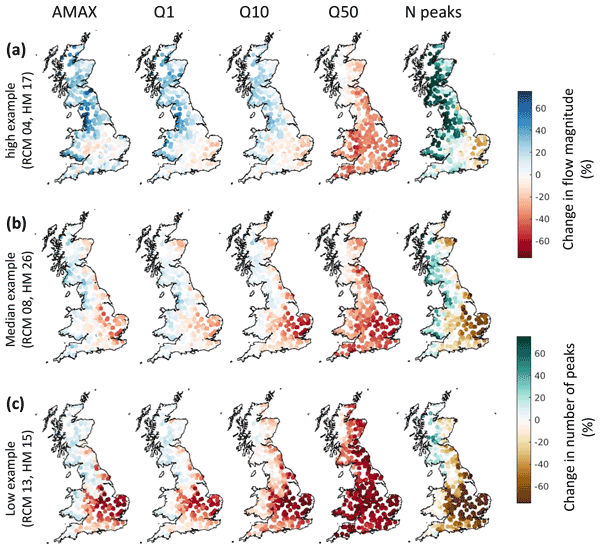
This study modelled the impact of climate change on river high flows across Great Britain (GB). Generally, results indicated an increase in the magnitude and frequency of high flows along the west coast of GB by 2050–2075. In contrast, average flows decreased across GB. All flow projections contained large uncertainties; the climate projections were the largest source of uncertainty overall but hydrological modelling uncertainties were considerable in some regions.
Edward Le, Ali Ameli, Joseph Janssen, and John Hammond
Hydrol. Earth Syst. Sci. Discuss., https://doi.org/10.5194/hess-2022-106, https://doi.org/10.5194/hess-2022-106, 2022
Preprint withdrawn
Short summary
Short summary
We used a statistical method to analyze whether snow persistence, defined as the duration of time that snow remains on the ground, explains the variability of streamflow at low and high flow conditions. Results show that as persistence of snow increases, the magnitude of low flow increases and the variability of low flow decreases, regardless of climatic aridity and seasonality. Snow persistence affects stream high flow variability at a narrow range of climatic aridity and seasonality.
Thomas Lees, Marcus Buechel, Bailey Anderson, Louise Slater, Steven Reece, Gemma Coxon, and Simon J. Dadson
Hydrol. Earth Syst. Sci., 25, 5517–5534, https://doi.org/10.5194/hess-25-5517-2021, https://doi.org/10.5194/hess-25-5517-2021, 2021
Short summary
Short summary
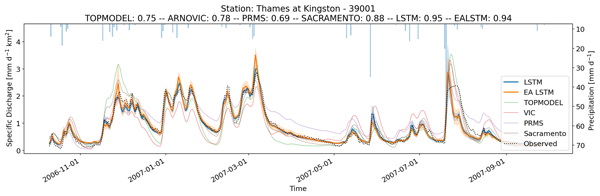
We used deep learning (DL) models to simulate the amount of water moving through a river channel (discharge) based on the rainfall, temperature and potential evaporation in the previous days. We tested the DL models on catchments across Great Britain finding that the model can accurately simulate hydrological systems across a variety of catchment conditions. Ultimately, the model struggled most in areas where there is chalky bedrock and where human influence on the catchment is large.
Cited articles
Abban, B., Papanicolaou, A. N., Cowles, M. K., and Wilson, C. G.: Examining Seasonal Trends in Sediment Source Contributions in an Intensely Cultivated Midwestern Sub-Watershed Using Bayesian Unmixing, in: World Environmental and Water Resources Congress 2014, World Environmental and Water Resources Congress 2014, Portland, Oregon, 1453–1463, https://doi.org/10.1061/9780784413548.146, 2014.
Addor, N., Newman, A. J., Mizukami, N., and Clark, M. P.: The CAMELS data set: catchment attributes and meteorology for large-sample studies, Hydrol. Earth Syst. Sci., 21, 5293–5313, https://doi.org/10.5194/hess-21-5293-2017, 2017.
Addor, N., Nearing, G., Prieto, C., Newman, A. J., Le Vine, N., and Clark, M. P.: A ranking of hydrological signatures based on their predictability in space, Water Resour. Res., 54, 8792–8812, https://doi.org/10.1029/2018WR022606, 2018.
Ali, G., Tetzlaff, D., Soulsby, C., McDonnell, J. J., and Capell, R.: A comparison of similarity indices for catchment classification using a cross-regional dataset, Adv. Water Resour., 40, 11–22, https://doi.org/10.1016/j.advwatres.2012.01.008, 2012.
Ali, G., Oswald, C. J., Spence, C., Cammeraat, E. L. H., McGuire, K. J., Meixner, T., and Reaney, S. M.: Towards a unified threshold-based hydrological theory: necessary components and recurring challenges: INVITED COMMENTARY, Hydrol. Process., 27, 313–318, https://doi.org/10.1002/hyp.9560, 2013.
Allen, R. G., Pereira, L. S., Raes, D., and Smith, M.: Crop Evapotranspiration – Guidelines for Computing Crop Water Requirements, in: FAO Irrigation and drainage paper 56, Food and Agriculture Organization of the United Nations, Rome, Italy, 1998.
Almagro, A., Meira Neto, A. A., Vergopolan, N., Roy, T., Troch, P. A., and Oliveira, P. T. S.: The Drivers of Hydrologic Behavior in Brazil: Insights From a Catchment Classification, Water Resour. Res., 60, https://doi.org/10.1029/2024WR037212, 2024.
Angermann, L., Jackisch, C., Allroggen, N., Sprenger, M., Zehe, E., Tronicke, J., Weiler, M., and Blume, T.: Form and function in hillslope hydrology: characterization of subsurface flow based on response observations, Hydrol. Earth Syst. Sci., 21, 3727–3748, https://doi.org/10.5194/hess-21-3727-2017, 2017.
Araki, R., Branger, F., Wiekenkamp, I., and McMillan, H. K.: A signature-based approach to quantify soil moisture dynamics under contrasting land-uses, Hydrol. Process., 36, e14553, https://doi.org/10.1002/hyp.14553, 2022.
Araki, R., Holt, A., Hammond, J., Husic, A., Coxon, G., and McMillan, H.: Dataset and source codes for Araki et al. (2026) “Continental-scale prediction of hydrologic signatures and processes” (v1.0), Zenodo [code and data set], https://doi.org/10.5281/zenodo.20185650, 2026.
Ariano, S. and Ali, G.: From river flow regime diversity to proxies for hydrologic homogeneity a Canada-wide case study, Sci. Rep., 15, 16743, https://doi.org/10.1038/s41598-025-00244-7, 2025.
Arsenault, R., Brissette, F., Martel, J.-L., Troin, M., Lévesque, G., Davidson-Chaput, J., Gonzalez, M. C., Ameli, A., and Poulin, A.: A comprehensive, multisource database for hydrometeorological modeling of 14,425 North American watersheds, Sci. Data, 7, 243, https://doi.org/10.1038/s41597-020-00583-2, 2020.
Barnhart, T. B., Molotch, N. P., Livneh, B., Harpold, A. A., Knowles, J. F., and Schneider, D.: Snowmelt baseflow contributions: A comparison of methods using nested catchments in the Colorado River basin, Water Resour. Res., 52, 4524–4548, 2016.
Barnhart, T. B., Farmer, W. H., Hammond, J. C., Sexstone, G. A., Curran, J. H., Koch, J. C., and Driscoll, J. M.: Evaluating hydrologic region assignment techniques for ungaged basins in Alaska, USA, River Res. Appl., 38, 1569–1584, https://doi.org/10.1002/rra.4028, 2022.
Beck, H., Dijk, A., Miralles, D., Jeu, R. A. M., Bruijnzeel, L., McVicar, T., and Schellekens, J.: Global patterns in base flow index and recession based on streamflow observations from 3394 catchments, Water Resour. Res., 49, 7843–7863, https://doi.org/10.1002/2013WR013918, 2013.
Beck, H. E., De Roo, A., and van Dijk, A. I.: Global maps of streamflow characteristics based on observations from several thousand catchments, J. Hydrometeorol., 16, 1478–1501, 2015.
Berghuijs, W. R., Sivapalan, M., Woods, R. A., and Savenije, H. H. G.: Patterns of similarity of seasonal water balances: A window into streamflow variability over a range of time scales, Water Resour. Res., 50, 5638–5661, https://doi.org/10.1002/2014WR015692, 2014.
Bergström, S.: The HBV Model: Its Structure and Applications,Swedish Meteorological and Hydrological Institute (SMHI), Hydrology, Norrköping, 35 pp., https://www.smhi.se/download/18.38e7941719209b36a1fb2c4/1728367395288/RH_4.pdf (last access: 10 June 2026), 1992.
Blöschl, G.: Hydrologic synthesis: Across processes, places, and scales, Water Resour. Res., 42, https://doi.org/10.1029/2005wr004319, 2006.
Blöschl, G., Bierkens, M. F. P., Chambel, A. et al.: Twenty-three unsolved problems in hydrology (UPH) – a community perspective, Hydrol. Sci. J., 64, 1141–1158, https://doi.org/10.1080/02626667.2019.1620507, 2019.
Bolotin, L. A. and McMillan, H.: A hydrologic signature approach to analysing wildfire impacts on overland flow, Hydrol. Process., 38, https://doi.org/10.1002/hyp.15215, 2024.
Bracken, L. J., Wainwright, J., Ali, G. A., Tetzlaff, D., Smith, M. W., Reaney, S. M., and Roy, A. G.: Concepts of hydrological connectivity: Research approaches, pathways and future agendas, Earth-Sci. Rev., 119, 17–34, https://doi.org/10.1016/j.earscirev.2013.02.001, 2013.
Brooks, P. D., Chorover, J., Fan, Y., Godsey, S. E., Maxwell, R. M., McNamara, J. P., and Tague, C.: Hydrological partitioning in the critical zone: Recent advances and opportunities for developing transferable understanding of water cycle dynamics: CRITICAL ZONE HYDROLOGY, Water Resour. Res., 51, 6973–6987, https://doi.org/10.1002/2015wr017039, 2015.
Brunner, M. I., Melsen, L. A., Newman, A. J., Wood, A. W., and Clark, M. P.: Future streamflow regime changes in the United States: assessment using functional classification, Hydrol. Earth Syst. Sci., 24, 3951–3966, https://doi.org/10.5194/hess-24-3951-2020, 2020.
Buchanan, B., Auerbach, D. A., Knighton, J., Evensen, D., Fuka, D. R., Easton, Z., Wieczorek, M., Archibald, J. A., McWilliams, B., and Walter, T.: Estimating dominant runoff modes across the conterminous United States, Hydrol. Process., 32, 3881–3890, https://doi.org/10.1002/hyp.13296, 2018.
Bulygina, N., McIntyre, N., and Wheater, H.: Conditioning rainfall-runoff model parameters for ungauged catchments and land management impacts analysis, Hydrol. Earth Syst. Sci., 13, 893–904, https://doi.org/10.5194/hess-13-893-2009, 2009.
Case, J. L., Mocko, D. M., Hain, C. R., Maina, F. Z., Whitney, K. M., Kumar, S. V., Wade, R. A., Locke, K. A., and White, K. D.: NLDAS-3: Next-Generation Land Data Assimilation System to Support North American Water-Informed Decisions, in: 2025 National Soil Moisture Workshop, Fort Collins, CO, 3–5 June 2025, https://ntrs.nasa.gov/citations/20250005424 (last access: 5 June 2026), 2025.
Clark, B. R., Hart, R. M., and Gurdak, J. J.: Groundwater availability of the Mississippi embayment, U.S. Geological Survey, Reston, Virginia, https://doi.org/10.3133/pp1785, 2011.
Clark, M., Rupp, D., Woods, R., Meerveld, H., Peters, N., and Freer, J.: Consistency between hydrological models and field observations: linking processes at the hillslope scale to hydrological responses at the watershed scale, Hydrol. Process., 23, 311–319, https://doi.org/10.1002/HYP.7154, 2009.
Clark, M., Nijssen, B., Lundquist, J., Kavetski, D., Rupp, D., Woods, R., Freer, J., Gutmann, E., Wood, A., Brekke, L., Arnold, J., Gochis, D., and Rasmussen, R.: A unified approach for process-based hydrologic modeling: 1. Modeling concept, Water Resour. Res., 51, 2498–2514, https://doi.org/10.1002/2015WR017198, 2015.
Clerc-Schwarzenbach, F., Selleri, G., Neri, M., Toth, E., van Meerveld, I., and Seibert, J.: Large-sample hydrology – a few camels or a whole caravan?, Hydrol. Earth Syst. Sci., 28, 4219–4237, https://doi.org/10.5194/hess-28-4219-2024, 2024.
Cosgrove, B., Gochis, D., Flowers, T., Dugger, A., Ogden, F., Graziano, T., Clark, E., Cabell, R., Casiday, N., Cui, Z., Eicher, K., Fall, G., Feng, X., Fitzgerald, K., Frazier, N., George, C., Gibbs, R., Hernandez, L., Johnson, D., Jones, R., Karsten, L., Kefelegn, H., Kitzmiller, D., Lee, H., Liu, Y., Mashriqui, H., Mattern, D., McCluskey, A., McCreight, J. L., McDaniel, R., Midekisa, A., Newman, A., Pan, L., Pham, C., RafieeiNasab, A., Rasmussen, R., Read, L., Rezaeianzadeh, M., Salas, F., Sang, D., Sampson, K., Schneider, T., Shi, Q., Sood, G., Wood, A., Wu, W., Yates, D., Yu, W., and Zhang, Y.: NOAA's National Water Model: Advancing operational hydrology through continental-scale modeling, J. Am. Water Resour. Assoc., 60, 247–272, https://doi.org/10.1111/1752-1688.13184, 2024.
Davis, C. A., Ward, A. S., Burgin, A. J., Loecke, T. D., Riveros-Iregui, D. A., Schnoebelen, D. J., Just, C. L., Thomas, S. A., Weber, L. J., and St. Clair, M. A.: Antecedent Moisture Controls on Stream Nitrate Flux in an Agricultural Watershed, J. Environ. Qual., 43, 1494–1503, https://doi.org/10.2134/jeq2013.11.0438, 2014.
DeCicco, L. A., Hirsch, R. M., Lorenz, D., Watkins, D., and Michael Johnson, J.: dataRetrieval, U.S. Geological Survey, https://doi.org/10.5066/P9X4L3GE, 2018.
Destouni, G. and Zarei, M.: Water and climate interplay on land in comparative datasets: Revealing unrealistic major drying bias of climate reanalysis over Africa and the world, AGUFM, 2024, H54B–05, 2024.
Dettinger, M. D. and Diaz, H. F.: Global characteristics of stream flow seasonality and variability, J. Hydrometeorol., 1, 289–310, https://doi.org/10.1175/1525-7541(2000)001<0289:gcosfs>2.0.co;2, 2000.
Detty, J. M. and McGuire, K. J.: Threshold changes in storm runoff generation at a till-mantled headwater catchment, Water Resour. Res., 46, https://doi.org/10.1029/2009wr008102, 2010.
Dhungel, S., Tarboton, D. G., Jin, J., and Hawkins, C. P.: Potential effects of climate change on ecologically relevant streamflow regimes: Climate change and streamflow regimes, River Res. Appl., 32, 1827–1840, https://doi.org/10.1002/rra.3029, 2016.
do Nascimento, T. V. M., Rudlang, J., Gnann, S., Seibert, J., Hrachowitz, M., and Fenicia, F.: How do geological map details influence the identification of geology-streamflow relationships in large-sample hydrology studies?, Hydrol. Earth Syst. Sci., 29, 7173–7200, https://doi.org/10.5194/hess-29-7173-2025, 2025.
Dunne, T.: Field studies of hillslope flow processes, in: Hillslope hydrology, vol. 9, edited by: Kirkby, M. J., John Wiley & Sons, Inc., 227–293, https://doi.org/10.18172/cig.1099, 1978.
Eng, K. and Wolock, D. M.: Evaluation of machine learning approaches for predicting streamflow metrics across the conterminous United States, U.S. Geological Survey, 2022–5058, https://doi.org/10.3133/sir20225058, 2022.
Estrany, J., Garcia, C., and Batalla, R. J.: Hydrological response of a small mediterranean agricultural catchment, J. Hydrol. (Amst.), 380, 180–190, https://doi.org/10.1016/j.jhydrol.2009.10.035, 2010.
Falcone, J.: GAGES-II: Geospatial Attributes of Gages for Evaluating Streamflow, U.S. Geological Survey [data set], https://doi.org/10.5066/P96CPHOT, 2011.
Falcone, J. A., Carlisle, D. M., Wolock, D. M., and Meador, M. R.: GAGES: A stream gage database for evaluating natural and altered flow conditions in the conterminous United States, Ecology, 91, 621–621, https://doi.org/10.1890/09-0889.1, 2010.
Fan, Y., Clark, M., Lawrence, D. M., Swenson, S., Band, L. E., Brantley, S. L., Brooks, P. D., Dietrich, W. E., Flores, A., Grant, G., Kirchner, J. W., Mackay, D. S., McDonnell, J. J., Milly, P. C. D., Sullivan, P. L., Tague, C., Ajami, H., Chaney, N., Hartmann, A., Hazenberg, P., McNamara, J., Pelletier, J., Perket, J., Rouholahnejad-Freund, E., Wagener, T., Zeng, X., Beighley, E., Buzan, J., Huang, M., Livneh, B., Mohanty, B. P., Nijssen, B., Safeeq, M., Shen, C., Verseveld, W., Volk, J., and Yamazaki, D.: Hillslope hydrology in global change research and Earth system modeling, Water Resour. Res., 55, 1737–1772, https://doi.org/10.1029/2018wr023903, 2019.
Fang, K. and Shen, C.: Full-flow-regime storage-streamflow correlation patterns provide insights into hydrologic functioning over the continental US, Water Resour. Res., 53, 8064–8083, https://doi.org/10.1002/2016wr020283, 2017.
Fenicia, F. and McDonnell, J. J.: Modeling streamflow variability regional scale: (1) perceptual model development through signature analysis, J. Hydrology, 605, https://doi.org/10.1016/j.jhydrol.2021.127287, 2022.
Frame, J. M., Araki, R., Bhuiyan, S. A., Bindas, T., Rapp, J., Bolotin, L., Deardorff, E., Liu, Q., Haces-Garcia, F., Liao, M., Frazier, N., and Ogden, F. L.: Machine learning for a heterogeneous water modeling framework, J. Am. Water Resour. Assoc., 61, https://doi.org/10.1111/1752-1688.70000, 2025.
Gesch, D. B., Evans, G. A., Oimoen, M. J., and Arundel, S.: The National Elevation Dataset, USGS Earth Resources Observation and Science Center, https://pubs.usgs.gov/publication/70201572 (last access: 5 June 2026), 2018.
Gnann, S., Baldwin, J. W., Cuthbert, M. O., Gleeson, T., Schwanghart, W., and Wagener, T.: The influence of topography on the global terrestrial water cycle, Rev. Geophys., 63, e2023RG000810, https://doi.org/10.1029/2023rg000810, 2025.
Gnann, S. J., Howden, N. J. K., and Woods, R. A.: Hydrological signatures describing the translation of climate seasonality into streamflow seasonality, Hydrol. Earth Syst. Sci., 24, 561–580, https://doi.org/10.5194/hess-24-561-2020, 2020.
Gnann, S. J., Coxon, G., Woods, R. A., Howden, N. J. K., and McMillan, H. K.: TOSSH: A Toolbox for Streamflow Signatures in Hydrology, Environ. Model. Softw., 138, 104983, https://doi.org/10.1016/j.envsoft.2021.104983, 2021a (code available at: https://github.com/TOSSHtoolbox/TOSSH, last access: 5 June 2026).
Gnann, S. J., McMillan, H. K., Woods, R. A., and Howden, N. J. K.: Including Regional Knowledge Improves Baseflow Signature Predictions in Large Sample Hydrology, Water Resour. Res., 57, e2020WR028354, https://doi.org/10.1029/2020WR028354, 2021b.
Golden, H. E., Christensen, J. R., McMillan, H. K., Kelleher, C. A., Lane, C. R., Husic, A., Li, L., Ward, A. S., Hammond, J., Seybold, E. C., Jaeger, K. L., Zimmer, M., Sando, R., Jones, C. N., Segura, C., Mahoney, D. T., Price, A. N., and Cheng, F.: Advancing the science of headwater streamflow for global water protection, Nat. Water, 1–11, https://doi.org/10.1038/s44221-024-00351-1, 2025.
Gomi, T., Sidle, R. C., Ueno, M., Miyata, S., and Kosugi, K.: Characteristics of overland flow generation on steep forested hillslopes of central Japan, J. Hydrol., 361, 275–290, https://doi.org/10.1016/j.jhydrol.2008.07.045, 2008.
Goodrich, D. C., Lane, L. J., Shillito, R. M., Miller, S. N., Syed, K. H., and Woolhiser, D. A.: Linearity of basin response as a function of scale in a semiarid watershed, Water Resour. Res., 33, 2951–2965, https://doi.org/10.1029/97wr01422, 1997.
Grantham, T. E., Carlisle, D. M., Howard, J., Lane, B., Lusardi, R., Obester, A., Sandoval-Solis, S., Stanford, B., Stein, E. D., Taniguchi-Quan, K. T., Yarnell, S. M., and Zimmerman, J. K. H.: Modeling functional flows in California's rivers, Front. Environ. Sci., 10, https://doi.org/10.3389/fenvs.2022.787473, 2022.
Gudmundsson, L., Brunner, M. I., Döll, P., Fluet-Chouinard, E., Frolova, N., Gosling, S. N., Hirabayashi, Y., Kireeva, M. B., Liu, X., Müller Schmied, H., Magritskiy, D., Slater, L. J., Stein, L., Tramblay, Y., Wang, K., Wasko, C., Yamazaki, D., and Zhou, X.: Past and future change in global river flows, Nat. Rev. Earth Environ., 7, 7–23, https://doi.org/10.1038/s43017-025-00745-z, 2025.
Haines, A., Finlayson, B., and McMahon, T.: A global classification of river regimes, Appl. Geogr., 8, 255–272, https://doi.org/10.1016/0143-6228(88)90035-5, 1988.
Hamon, W. R.: Estimating Potential Evapotranspiration, in: American Society of Civil Engineers, 107–120, https://doi.org/10.1061/taceat.0008673, 1961.
Hammond, J. C.: Daily time series of surface water input from rainfall, rain on snow, and snowmelt for the Conterminous United States from 1990 to 2023, as well as annual series of input seasonality, precipitation seasonality, and average rainfall, rain on snow, and snowmelt rates, U.S. Geological Survey [data set], https://doi.org/10.5066/P9JWJPNC, 2024.
Hammond, J. C. and Kampf, S. K.: Subannual streamflow responses to rainfall and snowmelt inputs in snow-dominated watersheds of the western United States, Water Resour. Res., 56, https://doi.org/10.1029/2019wr026132, 2020.
Hammond, J. C., Zimmer, M., Shanafield, M., Kaiser, K., Godsey, S. E., Mims, M. C., Zipper, S. C., Burrows, R. M., Kampf, S. K., Dodds, W., Jones, C. N., Krabbenhoft, C. A., Boersma, K. S., Datry, T., Olden, J. D., Allen, G. H., Price, A. N., Costigan, K., Hale, R., Ward, A. S., and Allen, D. C.: Spatial patterns and drivers of nonperennial flow regimes in the contiguous United States, Geophys. Res. Lett., 48, https://doi.org/10.1029/2020gl090794, 2021.
Hammond, J. C., Sexstone, G. A., Putman, A. L., Barnhart, T. B., Rey, D. M., Driscoll, J. M., Liston, G. E., Rasmussen, K. L., McGrath, D., Fassnacht, S. R., and Kampf, S. K.: High resolution SnowModel simulations reveal future elevation-dependent snow loss and earlier, flashier surface water input for the upper Colorado river basin, Earths Future, 11, https://doi.org/10.1029/2022ef003092, 2023.
Hay, L. E., LaFontaine, J. H., Van Beusekom, A. E., Norton, P. A., Farmer, W. H., Regan, R. S., Markstrom, S. L., and Dickinson, J. E.: Parameter estimation at the conterminous United States scale and streamflow routing enhancements for the National Hydrologic Model infrastructure application of the Precipitation-Runoff Modeling System (NHM-PRMS), U.S. Geological Survey [data set], 6–B10, 50 p., https://doi.org/10.3133/tm6B10, 2023.
Hobeichi, S., Abramowitz, G., Ukkola, A. M., De Kauwe, M., Pitman, A., Evans, J. P., and Beck, H.: Reconciling historical changes in the hydrological cycle over land, Npj Clim. Atmos. Sci., 5, 17, https://doi.org/10.1038/s41612-022-00240-y, 2022.
Hodgkins, G. A., Renard, B., Whitfield, P. H., Laaha, G., Stahl, K., Hannaford, J., Burn, D. H., Westra, S., Fleig, A. K., Araújo Lopes, W. T., Murphy, C., Mediero, L., and Hanel, M.: Climate driven trends in historical extreme low streamflows on four continents, Water Resour. Res., 60, https://doi.org/10.1029/2022wr034326, 2024.
Holt, A.: New Predictors for Hydrologic Signatures: Wetlands and Geologic Age Across Continental Scales, San Diego State University, United States – California, https://digitalcollections.sdsu.edu/do/1260b4f2-c336-4aed-86c2-a26a3c107b7c (last access: 5 June 2026), 2024.
Holt, A. and McMillan, H.: New predictors for hydrologic signatures: Wetlands and geologic age across continental scales, Hydrol. Process., 39, https://doi.org/10.1002/hyp.70080, 2025.
Horton, J. D., San Juan, C. A., and Stoeser, D. B.: The State Geologic Map Compilation (SGMC) geodatabase of the conterminous United States, https://doi.org/10.3133/ds1052, 2017.
Hrachowitz, M., Fovet, O., Ruiz, L., Euser, T., Gharari, S., Nijzink, R., Freer, J., Savenije, H. H. G., and Gascuel-Odoux, C.: Process consistency in models: The importance of system signatures, expert knowledge, and process complexity, Water Resour. Res., 50, 7445–7469, https://doi.org/10.1002/2014wr015484, 2014.
Hupp, C. R.: Hydrology, geomorphology and vegetation of Coastal Plain rivers in the south-eastern USA, Hydrol. Process., 14, 2991–3010, 2000.
Husic, A.: Game theory for catchment science, ESS Open Archive [data set], https://doi.org/10.22541/essoar.173924202.27840286/v1, 2025.
Husic, A., Hammond, J., Price, A. N., and Roundy, J. K.: Interrogating process deficiencies in large-scale hydrologic models with interpretable machine learning, Hydrol. Earth Syst. Sci., 29, 4457–4472, https://doi.org/10.5194/hess-29-4457-2025, 2025.
Jackisch, C., Angermann, L., Allroggen, N., Sprenger, M., Blume, T., Tronicke, J., and Zehe, E.: Form and function in hillslope hydrology: in situ imaging and characterization of flow-relevant structures, Hydrol. Earth Syst. Sci., 21, 3749–3775, https://doi.org/10.5194/hess-21-3749-2017, 2017.
Janssen, J. and Ameli, A. A.: A hydrologic functional approach for improving large-sample hydrology performance in poorly gauged regions, Water Resour. Res., 57, https://doi.org/10.1029/2021wr030263, 2021.
Jefferson, A., Grant, G. E., Lewis, S. L., and Lancaster, S. T.: Coevolution of hydrology and topography on a basalt landscape in the Oregon Cascade Range, USA, Earth Surf. Process., 35, 803–816, https://doi.org/10.1002/esp.1976, 2010.
Ji, H., Song, Y., Bindas, T., Shen, C., Yang, Y., Pan, M., Liu, J., Rahmani, F., Abbas, A., Beck, H., Lawson, K., and Wada, Y.: Distinct hydrologic response patterns and trends worldwide revealed by physics-embedded learning, arXiv [preprint], https://doi.org/10.48550/arXiv.2504.10707, 2025.
Johnson, J. M., Fang, S., Sankarasubramanian, A., Rad, A. M., Kindl da Cunha, L., Jennings, K. S., Clarke, K. C., Mazrooei, A., and Yeghiazarian, L.: Comprehensive analysis of the NOAA National Water Model: A call for heterogeneous formulations and diagnostic model selection, J. Geophys. Res., 128, https://doi.org/10.1029/2023jd038534, 2023.
Kavetski, D. and Fenicia, F.: Elements of a flexible approach for conceptual hydrological modeling: 2. Application and experimental insights, Water Resour. Res., 47, https://doi.org/10.1029/2011wr010748, 2011.
Kennard, M. J., Pusey, B. J., Olden, J. D., Mackay, S. J., Stein, J. L., and Marsh, N.: Classification of natural flow regimes in Australia to support environmental flow management: Classification of natural flow regimes in Australia, Freshw. Biol., 55, 171–193, https://doi.org/10.1111/j.1365-2427.2009.02307.x, 2010.
Kiang, J. E., Stewart, D. W., Archfield, S. A., Osborne, E. B., and Eng, K.: A national streamflow network gap analysis (No. 2013-5013), US Geological Survey, http://pubs.usgs.gov/sir/2013/5013/ (last access: 5 June 2026), 2013.
Kirchner, J. W.: Catchments as simple dynamical systems: Catchment characterization, rainfall-runoff modeling, and doing hydrology backward, Water Resour. Res., 45, https://doi.org/10.1029/2008WR006912, 2009.
Klemeš, V.: Operational testing of hydrological simulation models, Hydrol. Sci. J., 31, 13–24, https://doi.org/10.1080/02626668609491024, 1986.
Knoben, W. J. M., Woods, R. A., and Freer, J. E.: A quantitative hydrological climate classification evaluated with independent streamflow data, Water Resour. Res., 54, 5088–5109, https://doi.org/10.1029/2018wr022913, 2018.
Knoben, W. J. M., Freer, J. E., Peel, M. C., Fowler, K. J. A., and Woods, R. A.: A brief analysis of conceptual model structure uncertainty using 36 models and 559 catchments, Water Resour. Res., 56, e2019WR025975, https://doi.org/10.1029/2019wr025975, 2020.
Krabbenhoft, C. A., Allen, G. H., Lin, P., Godsey, S. E., Allen, D. C., Burrows, R. M., DelVecchia, A. G., Fritz, K. M., Shanafield, M., Burgin, A. J., Zimmer, M. A., Datry, T., Dodds, W. K., Jones, C. N., Mims, M. C., Franklin, C., Hammond, J. C., Zipper, S., Ward, A. S., Costigan, K. H., Beck, H. E., and Olden, J. D.: Assessing placement bias of the global river gauge network, Nat. Sustain., 5, 586–592, https://doi.org/10.1038/s41893-022-00873-0, 2022.
Kratzert, F., Nearing, G., Addor, N., Erickson, T., Gauch, M., Gilon, O., Gudmundsson, L., Hassidim, A., Klotz, D., Nevo, S., Shalev, G., and Matias, Y.: Caravan – A global community dataset for large-sample hydrology, Sci. Data, 10, 61, https://doi.org/10.1038/s41597-023-01975-w, 2023 (code available at: https://github.com/kratzert/Caravan, last access: 5 June 2026).
Kratzert, F., Nearing, G., Addor, N., Erickson, T., Gauch, M., Gilon, O., Gudmundsson, L., Hassidim, A., Klotz, D., Nevo, S., Shalev, G., and Matias, Y.: Caravan – A global community dataset for large-sample hydrology (1.4), Zenodo [data set], https://doi.org/10.5281/zenodo.10968468, 2024.
Kuentz, A., Arheimer, B., Hundecha, Y., and Wagener, T.: Understanding hydrologic variability across Europe through catchment classification, Hydrol. Earth Syst. Sci., 21, 2863–2879, https://doi.org/10.5194/hess-21-2863-2017, 2017.
Kuhn, M.: Building predictive models in R using the caret package, J. Stat. Softw., 28, 1–26, https://doi.org/10.18637/JSS.V028.I05, 2008.
Lane, B. A., Dahlke, H. E., Pasternack, G. B., and Sandoval-Solis, S.: Revealing the Diversity of Natural Hydrologic Regimes in California with Relevance for Environmental Flows Applications, J. Am. Water Resour. Assoc., 53, 411–430, https://doi.org/10.1111/1752-1688.12504, 2017.
Lane, C. R. and D'Amico, E.: Identification of putative geographically isolated wetlands of the conterminous United States, J. Am. Water Resour. Assoc., 52, 705–722, https://doi.org/10.1111/1752-1688.12421, 2016.
Lapides, D. A., Zipper, S., and Hammond, J. C.: Identifying hydrologic signatures associated with streamflow depletion caused by groundwater pumping, Hydrol. Process., 37, https://doi.org/10.1002/hyp.14877, 2023.
Lee, D., Ward, P., and Block, P.: Defining high-flow seasons using temporal streamflow patterns from a global model, Hydrol. Earth Syst. Sci., 19, 4689–4705, https://doi.org/10.5194/hess-19-4689-2015, 2015.
Linke, S., Lehner, B., Ouellet Dallaire, C., Ariwi, J., Grill, G., Anand, M., Beames, P., Burchard-Levine, V., Maxwell, S., Moidu, H., Tan, F., and Thieme, M.: Global hydro-environmental sub-basin and river reach characteristics at high spatial resolution, Sci. Data, 6, 283, https://doi.org/10.1038/s41597-019-0300-6, 2019.
Lins, H. F.: Regional streamflow regimes and hydroclimatology of the United States, Water Resour. Res., 33, 1655–1667, https://doi.org/10.1029/97WR00615, 1997.
Lohse, K. A. and Dietrich, W. E.: Contrasting effects of soil development on hydrological properties and flow paths, Water Resour. Res., 41, https://doi.org/10.1029/2004wr003403, 2005.
Lundberg, S. and Lee, S.-I.: A unified approach to interpreting model predictions, arXiv [preprint], https://doi.org/10.48550/arXiv.1705.07874, 2017.
Lundberg, S. M., Erion, G. G., and Lee, S.-I.: Consistent individualized feature attribution for tree ensembles, arXiv [preprint], https://doi.org/10.48550/arXiv.1802.03888, 2018.
Markstrom, S. L., Hay, L. E., and Clark, M. P.: Towards simplification of hydrologic modeling: identification of dominant processes, Hydrol. Earth Syst. Sci., 20, 4655–4671, https://doi.org/10.5194/hess-20-4655-2016, 2016.
Mazvimavi, D., Meijerink, A. M. J., Savenije, H. H. G., and Stein, A.: Prediction of flow characteristics using multiple regression and neural networks: A case study in Zimbabwe, Phys. Chem. Earth, 30, 639–647, https://doi.org/10.1016/j.pce.2005.08.003, 2005.
McCabe, G. J. and Wolock, D. M.: Long-Term Variability in Northern Hemisphere Snow Cover and Associations with Warmer Winters, Climatic Change, 99, 141–153, https://doi.org/10.1007/s10584-009-9675-2, 2010.
McGrath, G. S., Hinz, C., and Sivapalan, M.: Temporal dynamics of hydrological threshold events, Hydrol. Earth Syst. Sci., 11, 923–938, https://doi.org/10.5194/hess-11-923-2007, 2007.
McMillan, H.: Linking hydrologic signatures to hydrologic processes: A Review, Hydrol. Process., 34, 1393–1409, https://doi.org/10.1002/hyp.13632, 2020.
McMillan, H., Gueguen, M., Grimon, E., Woods, R., Clark, M., and Rupp, D. E.: Spatial variability of hydrological processes and model structure diagnostics in a 50 km2 catchment, Hydrol. Process., 28, 4896–4913, https://doi.org/10.1002/hyp.9988, 2014.
McMillan, H., Westerberg, I., and Branger, F.: Five guidelines for selecting hydrological signatures, Hydrol. Process., 31, 4757–4761, https://doi.org/10.1002/hyp.11300, 2017.
McMillan, H., Araki, R., Bolotin, L., Kim, D.-H., Coxon, G., Clark, M., and Seibert, J.: Global patterns in observed hydrologic processes, Nat. Water, https://doi.org/10.1038/s44221-025-00407-w, 2025.
McMillan, H. K.: A review of hydrologic signatures and their applications, WIREs Water, 8, https://doi.org/10.1002/wat2.1499, 2021.
McMillan, H. K., Gnann, S. J., and Araki, R.: Large scale evaluation of relationships between hydrologic signatures and processes, Water Resour. Res., 58, https://doi.org/10.1029/2021wr031751, 2022.
McMillan, H., Coxon, G., Araki, R., Salwey, S., Kelleher, C., Zheng, Y., Knoben, W., Gnann, S., Seibert, J., and Bolotin, L.: When good signatures go bad: Applying hydrologic signatures in large sample studies, Hydrol. Process., 37, https://doi.org/10.1002/hyp.14987, 2023.
Merz, R. and Blöschl, G.: A regional analysis of event runoff coefficients with respect to climate and catchment characteristics in Austria, Water Resour. Res., 45, https://doi.org/10.1029/2008WR007163, 2009.
Miller, D. A. and White, R. A.: A conterminous United States multilayer soil characteristics dataset for regional climate and hydrology modeling, Earth Interact., 2, 1–26, https://doi.org/10.1175/1087-3562(1998)002<0001:acusms>2.3.co;2, 1998.
Miller, J. A.: Ground water atlas of the United States: Introduction and national summary (No. 730-A), U.S. Geological Survey, A1–A15, https://doi.org/10.3133/ha730A, 1999.
Molnar, C., Bischl, B., and Casalicchio, G.: iml: An R package for Interpretable Machine Learning, J. Open Source Softw., 3, 786, https://doi.org/10.21105/joss.00786, 2018.
Mosley, M. P.: Delimitation of New Zealand hydrologic regions, J. Hydrol. (Amst.), 49, 173–192, https://doi.org/10.1016/0022-1694(81)90211-0, 1981.
Muñoz Sabater, J.: ERA5-Land monthly averaged data from 1950 to present, Copernicus Climate Change Service (C3S) Climate Data Store (CDS) [data set], https://doi.org/10.24381/cds.68d2bb30, 2019.
Neff, B., Day, S., Piggott, A., and Fuller, L. M.: Base flow in the Great Lakes Basin, U.S. Geological Survey Scientific Investigations Report 2005-5217, iv, 23 p., https://doi.org/10.3133/sir20055217, 2005.
Noguchi, S., Nik, A. R., Yusop, Z., Tani, M., and Sammori, T.: Rainfall-runoff responses and roles of soil moisture variations to the response in tropical Rain Forest, Bukit Tarek, peninsular Malaysia, J. Forest Res., 2, 125–132, https://doi.org/10.1007/bf02348209, 1997.
Ogden, F. L., Jennings, K., Clark, E. P., Coon, E., Cosgrove, B., da Cunha, L. K., Farthing, M. W., Flowers, T., Frame, J. M., Frazier, N. J., Garrett, J. L., Graziano, T. M., Hughes, J. D., Johnson, J. M., McDaniel, R., Moulton, J. D., Peckham, S. D., Salas, F. R., Savant, G., Viger, R., and Wood, A.: The NextGen water resources modeling Framework: Community innovation at the intersection of hydrologic, data and computer sciences, J. Am. Water Resour. Assoc., 62, https://doi.org/10.1111/1752-1688.70089, 2026.
Omernik, J. M.: Ecoregions of the conterminous United States, Ann. Assoc. Am. Geogr., 77, 118–125, 1987.
Omernik, J. M.: Perspectives on the nature and definition of ecological regions, Environ. Manage., 34 Suppl 1, S27–38, https://doi.org/10.1007/s00267-003-5197-2, 2004.
Oswald, C. J., Kelleher, C., Ledford, S. H., Hopkins, K. G., Sytsma, A., Tetzlaff, D., Toran, L., and Voter, C.: Integrating urban water fluxes and moving beyond impervious surface cover: A review, J. Hydrol. (Amst.), 618, 129188, https://doi.org/10.1016/j.jhydrol.2023.129188, 2023.
Oudin, L., Andréassian, V., Perrin, C., Michel, C., and Le Moine, N.: Spatial proximity, physical similarity, regression and ungaged catchments: A comparison of regionalization approaches based on 913 French catchments, Water Resour. Res., 44, https://doi.org/10.1029/2007WR006240, 2008.
Paola, C., Foufoula-Georgiou, E., Dietrich, W. E., Hondzo, M., Mohrig, D., Parker, G., Power, M. E., Rodriguez-Iturbe, I., Voller, V., and Wilcock, P.: Toward a unified science of the Earth’s surface: Opportunities for synthesis among hydrology, geomorphology, geochemistry, and ecology, Water Resour. Res., 42, https://doi.org/10.1029/2005wr004336, 2006.
Payn, R. A., Gooseff, M. N., and McGlynn, B. L.: Exploring changes in the spatial distribution of stream baseflow generation during a seasonal recession, Water Resour. Res., 48, https://doi.org/10.1029/2011WR011552, 2012.
Pechlivanidis, I. G. and Arheimer, B.: Large-scale hydrological modelling by using modified PUB recommendations: the India-HYPE case, Hydrol. Earth Syst. Sci., 19, 4559–4579, https://doi.org/10.5194/hess-19-4559-2015, 2015.
Pedregosa, F., Varoquaux, G., Gramfort, A., Michel, V., Thirion, B., Grisel, O., Blondel, M., Prettenhofer, P., Weiss, R., Dubourg, V., Vanderplas, J., Passos, A., Cournapeau, D., Brucher, M., Perrot, M., and Duchesnay, E.: Scikit-learn: Machine Learning in Python, J. Mach. Learn. Res., 12, 2825–2830, 2011.
Penna, D.: A recipe for why and how to set up and sustain an experimental catchment, Hydrol. Process., 38, https://doi.org/10.1002/hyp.15163, 2024.
Peters, N. E. and Aulenbach, B. T.: Water storage at the Panola mountain research watershed, Georgia, USA: Water storage at pmrw, Hydrol. Process., 25, 3878–3889, https://doi.org/10.1002/hyp.8334, 2011.
Pfister, L., Martínez-Carreras, N., Hissler, C., Klaus, J., Carrer, G. E., Stewart, M. K., and McDonnell, J. J.: Bedrock geology controls on catchment storage, mixing, and release: A comparative analysis of 16 nested catchments, Hydrol. Process., 31, 1828–1845, https://doi.org/10.1002/hyp.11134, 2017.
Prieto, C., Kavetski, D., Le Vine, N., Álvarez, C., and Medina, R.: Identification of dominant hydrological mechanisms using Bayesian inference, multiple statistical hypothesis testing, and flexible models, Water Resour. Res., 57, https://doi.org/10.1029/2020wr028338, 2021.
Qi, S. L. and Mason, C. A.: Data used to prioritize the selection of river basins for intensive monitoring and assessment by the U.S. Geological Survey, U.S. Geological Survey [data set], https://doi.org/10.5066/P98194QR, 2023.
Ray, L. K.: Limitation of automatic watershed delineation tools in coastal region, Ann. GIS, 24, 261–274, https://doi.org/10.1080/19475683.2018.1526212, 2018.
R Core Team: R: A Language and Environment for Statistical Computing, R Foundation for Statistical Computing, Vienna, Austria, https://www.R-project.org/ (last access: 5 June 2026), 2024.
Refsgaard, J. C. and Storm, B.: Construction, Calibration And Validation of Hydrological Models, in: Distributed Hydrological Modelling, Water Science and Technology Library, edited by: Abbott, M. B. and Refsgaard, J. C., vol. 22, Springer, Dordrecht, 41–54, https://doi.org/10.1007/978-94-009-0257-2_3, 1990.
Reinecke, R., Stein, L., Gnann, S., Andersson, J. C. M., Arheimer, B., Bierkens, M., Bonetti, S., Güntner, Kollet, S., Mishra, S., Moosdorf, N., Nazari, S., Pokhrel, Y., Prudhomme, C., Schewe, J., Shen, C., and Wagener, T.: Uncertainties guide global water model advancement, WIREs Water, 12, https://doi.org/10.1002/wat2.70025, 2025.
Renken, R. A.: Ground Water Atlas of the United States: Segment 5, Arkansas, Louisiana, Mississippi, Hydrologic Atlas 730, 28 pp., U.S. Geological Survey, https://doi.org/10.3133/ha730F, 1998.
Robert Maier, H., Rosa Taghikhah, F., Nabavi, E., Razavi, S., Gupta, H., Wu, W., Radford, D. A. G., and Huang, J.: How much X is in XAI: Responsible use of “Explainable” artificial intelligence in hydrology and water resources, J. Hydrol. X, 25, 100185, https://doi.org/10.1016/j.hydroa.2024.100185, 2024.
Rudlang, J. M., do Nascimento, T. V. M., van der Ent, R., Fenicia, F., and Hrachowitz, M.: Climate and landscape jointly control Europe's hydrology, EGUsphere [preprint], https://doi.org/10.5194/egusphere-2025-6372, 2025.
Safeeq, M. and Hunsaker, C. T.: Characterizing runoff and water yield for headwater catchments in the southern Sierra Nevada, J. Am. Water Resour. Assoc., 52, 1327–1346, https://doi.org/10.1111/1752-1688.12457, 2016.
Safeeq, M., Grant, G. E., Lewis, S. L., and Tague, C. L.: Coupling snowpack and groundwater dynamics to interpret historical streamflow trends in the western United States: COUPLING SNOWPACK AND GROUNDWATER DYNAMICS TO INTERPRET STREAMFLOW, Hydrol. Process., 27, 655–668, https://doi.org/10.1002/hyp.9628, 2013.
Salwey, S., Coxon, G., Pianosi, F., Singer, M. B., and Hutton, C.: National‐scale detection of reservoir impacts through hydrological signatures, Water Resour. Res., 59, e2022WR033893, https://doi.org/10.1029/2022wr033893, 2023.
Santhi, C., Allen, P. M., Muttiah, R. S., Arnold, J. G., and Tuppad, P.: Regional estimation of base flow for the conterminous United States by hydrologic landscape regions, J. Hydrol. (Amst.), 351, 139–153, https://doi.org/10.1016/j.jhydrol.2007.12.018, 2008.
Sauquet, E., Shanafield, M., Hammond, J. C., Sefton, C., Leigh, C., and Datry, T.: Classification and trends in intermittent river flow regimes in Australia, northwestern Europe and USA: A global perspective, J. Hydrol. (Amst.), 597, 126170, https://doi.org/10.1016/j.jhydrol.2021.126170, 2021.
Seaber, P. R., Kapinos, F. P., and Knapp, G. L.: Hydrologic unit maps, US Geological Survey [data set], https://doi.org/10.3133/wsp2294, 1987.
Sebestyen, S. D., Shanley, J. B., Blume, T., Duncan, J. M., Jones, J., Segura, C., and Mast, M. A.: Introduction to the special issue on research and observatory catchments, Hydrol. Process., 39, https://doi.org/10.1002/hyp.70069, 2025.
Shalev, G. and Kratzert, F.: Caravan MultiMet: Extending Caravan with multiple weather nowcasts and forecasts, arXiv [preprint], https://doi.org/10.48550/arXiv.2411.09459, 2024.
Shanley, J. B., Sebestyen, S. D., McDonnell, J. J., McGlynn, B. L., and Dunne, T.: Water's Way at Sleepers River watershed – revisiting flow generation in a post-glacial landscape, Vermont USA, Hydrol. Process., 29, 3447–3459, https://doi.org/10.1002/hyp.10377, 2015.
Shapley, L. S.: 17. A Value for n-Person Games, in: Contributions to the Theory of Games (AM-28), Volume II, edited by: Kuhn, H. W. and Tucker, A. W., Princeton University Press, Princeton, 307–318, https://doi.org/10.1515/9781400881970-018, 1953.
Shaw, S. B. and Riha, S. J.: Examining individual recession events instead of a data cloud: Using a modified interpretation of
Shrestha, D., Howard, D., and Benedict, T. D.: Moderate Resolution Imaging Spectroradiometer (MODIS) irrigated Agriculture datasets for the conterminous United States (MIrAD-US), U.S. Geological Survey [data set], https://doi.org/10.5066/P9NA3EO8, 2019.
Sivapalan, M.: Pattern, process and function: Elements of a unified theory of hydrology at the catchment scale, in: Encyclopedia of Hydrological Sciences, Wiley, Chichester, UK, https://doi.org/10.1002/0470848944.hsa012, 2005.
Spieler, D., Mai, J., Craig, J. R., Tolson, B. A., and Schütze, N.: Automatic model structure identification for conceptual hydrologic models, Water Resour. Res., 56, https://doi.org/10.1029/2019wr027009, 2020.
Stein, L., Clark, M. P., Knoben, W. J., Pianosi, F., and Woods, R. A.: How do climate and catchment attributes influence flood generating processes? A large-sample study for 671 catchments across the contiguous USA, Water Resour. Res., 57, e2020WR028300, https://doi.org/10.1029/2020WR028300, 2021.
Stets, E. G., Archer, A. A., Degnan, J. R., Erickson, M. L., Gorski, G., Medalie, L., and Scholl, M. A.: The National integrated water availability assessment, U.S. Geological Survey, https://doi.org/10.3133/pp1894A, 2025.
Tague, C. and Grant, G. E.: A geological framework for interpreting the low-flow regimes of Cascade streams, Willamette River Basin, Oregon: GEOLOGICAL FRAMEWORK FOR LOW-FLOW REGIMES, Water Resour. Res., 40, https://doi.org/10.1029/2003wr002629, 2004.
Tague, C. and Grant, G. E.: Groundwater dynamics mediate low-flow response to climate warming in snow-dominated alpine regions, Water Resour. Res., 45, 2009.
Tallaksen, L. M.: A review of baseflow recession analysis, J. Hydrol., 165, 349–370, https://doi.org/10.1016/0022-1694(94)02540-R, 1995.
Tarasova, L., Gnann, S., Yang, S., Hartmann, A., and Wagener, T.: Catchment characterization: Current descriptors, knowledge gaps and future opportunities, Earth Sci. Rev., 252, 104739, https://doi.org/10.1016/j.earscirev.2024.104739, 2023.
Thompson, J. M., Hathaway, J. M., Perfect, E., and Schwartz, J. S.: The effect of stormwater infiltration and surrounding built infrastructure on local groundwater dynamics: a case study for regenerative stormwater conveyances, Sustain. Resilient Infrastruct., 1–11, https://doi.org/10.1080/23789689.2020.1772636, 2020.
Tran, V. N.: CAMELSH: A Large-Sample Hourly Hydrometeorological Dataset and Attributes at Watershed-Scale for Contiguous United States [data set], Zenodo, https://doi.org/10.5281/zenodo.15070091, 2025.
Tran, V. N. and Kim, T.: CAMELSH: A Large-Sample Hourly Hydrometeorological Dataset and Attributes at Watershed-Scale for Contiguous United States, Zenodo [data set], https://doi.org/10.5281/zenodo.15066778, 2025.
Tran, V. N., Xu, D., Van Nguyen, T., Kim, T., and Ivanov, V. Y.: CAMELSH: A large-sample hourly hydrometeorological dataset and attributes at watershed-scale for CONUS, Sci. Data, 12, 1307, https://doi.org/10.1038/s41597-025-05612-6, 2025.
Trancoso, R., Phinn, S., McVicar, T., Larsen, J., and McAlpine, C.: Regional variation in streamflow drivers across a continental climatic gradient, Ecohydrology, 10, e1816, https://doi.org/10.1002/eco.1816, 2017.
Turner, S., Hannaford, J., Barker, L. J., Suman, G., Killeen, A., Armitage, R., Chan, W., Davies, H., Griffin, A., Kumar, A., Dixon, H., Albuquerque, M. T. D., Almeida Ribeiro, N., Alvarez-Garreton, C., Amoussou, E., Arheimer, B., Asano, Y., Berezowski, T., Bodian, A., Boutaghane, H., Capell, R., Dakhaoui, H., Daňhelka, J., Do, H. X., Ekkawatpanit, C., El Khalki, E. M., Fleig, A. K., Fonseca, R., Giraldo-Osorio, J. D., Goula, A. B. T., Hanel, M., Horton, S., Kan, C., Kingston, D. G., Laaha, G., Laugesen, R., Lopes, W., Mager, S., Rachdane, M., Markonis, Y., Medeiro, L., Midgley, G., Murphy, C., O'Connor, P., Pedersen, A. I., Pham, H. T., Piniewski, M., Renard, B., Saidi, M. E., Schmocker-Fackel, P., Stahl, K., Thyer, M., Toucher, M., Tramblay, Y., Uusikivi, J., Venegas-Cordero, N., Visessri, S., Watson, A., Westra, S., and Whitfield, P. H.: ROBIN: Reference observatory of basins for international hydrological climate change detection, Sci. Data, 12, 654, https://doi.org/10.1038/s41597-025-04907-y, 2025.
UKIH: UK Institute of Hydrology (Great Britain), Low Flow Studies Reports, Institute of Hydrology, https://nora.nerc.ac.uk/id/eprint/9093 (last access: 5 June 2026), 1980.
United States Department of Agriculture, Soil Survey Staff, and Natural Resources Conservation, U.S. General Soil Map (STATSGO), Web Soil Survey, https://sdmdataaccess.sc.egov.usda.gov (last access: 5 June 2026), 2008.
U.S. Environmental Protection Agency: National Hydrography Dataset Plus (NHDPlus), USEPA, USGS, and Horizon Systems Corporation, https://www.epa.gov/waterdata/nhdplus-national-hydrography-dataset-plus (last access: 5 June 2026), 2008.
U.S. Geological Survey (USGS): Gap Analysis Project (GAP): Protected Areas Database of the United States (PAD-US) 4, U.S. Geological Survey [data set], https://doi.org/10.5066/P96WBCHS, 2024.
U.S. Geological Survey: USGS Water Data for the Nation, U.S. Geological Survey National Water Information System Database [data set], https://doi.org/10.5066/F7P55KJN, 2025.
Valeron, B. and Meixner, T.: Overland flow generation in chaparral ecosystems: temporal and spatial variability, Hydrol. Process., 24, 65–75, https://doi.org/10.1002/hyp.7455, 2010.
Van Metre, P. C., Qi, S., Deacon, J., Dieter, C., Driscoll, J. M., Fienen, M., Kenney, T., Lambert, P., Lesmes, D., Mason, C. A., Mueller-Solger, A., Musgrove, M., Painter, J., Rosenberry, D., Sprague, L., Tesoriero, A. J., Windham-Myers, L., and Wolock, D.: Prioritizing river basins for intensive monitoring and assessment by the US Geological Survey, Environ. Monit. Assess., 192, 458, https://doi.org/10.1007/s10661-020-08403-1, 2020.
Veldkamp, T. I. E., Wada, Y., Aerts, J. C. J. H., Döll, P., Gosling, S. N., Liu, J., Masaki, Y., Oki, T., Ostberg, S., Pokhrel, Y., Satoh, Y., Kim, H., and Ward, P. J.: Water scarcity hotspots travel downstream due to human interventions in the 20th and 21st century, Nat. Commun., 8, 15697, https://doi.org/10.1038/ncomms15697, 2017.
Vogel, R. M., Member, J., and Asce, N. M.: Flow-duration curves. I: New interpretation and confidence intervals, https://bpb-us-e1.wpmucdn.com/sites.tufts.edu/dist/a/4406/files/2019/04/flowDuration1.pdf (last access: 5 June 2026), 1994.
Web Soil Survey: http://websoilsurvey.nrcs.usda.gov/, last access: 11 May 2025.
Westerberg, I. K., Wagener, T., Coxon, G., McMillan, H. K., Castellarin, A., Montanari, A., and Freer, J.: Uncertainty in hydrological signatures for gauged and ungauged catchments, Water Resour. Res., 52, 1847–1865, https://doi.org/10.1002/2015WR017635, 2016.
Wieczorek, M. E. and LaMotte, A. E.: Attributes for NHDPlus Catchments (Version 1.1) for the Conterminous United States: Average Saturation Excess-Overland Flow, 2002, U.S. Geological Survey [data set], https://doi.org/10.3133/dds49026, 2010.
Wieczorek, M. E., Staub, L. E., Wnuk, K. C., and Hafen, K. C.: Data-Driven Drought Prediction Project Model Inputs for Upper and Lower Colorado Portions of the National Hydrologic Geo-Spatial Fabric version 1.1 and Select U.S. Geological Survey Streamgage Basins (ver. 2.0, July 2025), U.S. Geological Survey [data set], https://doi.org/10.5066/P98IG8LO, 2023.
Willard, J. D., Ciulla, F., Weierbach, H., Kumar, V., and Varadharajan, C.: Evaluating deep learning approaches for predictions in unmonitored basins with continental-scale stream temperature models, arXiv [preprint], https://doi.org/10.48550/arXiv.2410.19865, 2024.
Williams, P. W. and Ford, D. C.: Global distribution of carbonate rocks, Zeitschrift für Geomorphologie Suppl, 147, 1–2, 2006.
Wilson, C. G., Papanicolaou, A. N. T., and Denn, K. D.: Partitioning fine sediment loads in a headwater system with intensive agriculture, J. Soils Sediments, 12, 966–981, https://doi.org/10.1007/s11368-012-0504-2, 2012.
Winter, T. C.: The Concept of Hydrologic Landscapes, JAWRA Journal of the American Water Resources Association, 37, 335–349, https://doi.org/10.1111/j.1752-1688.2001.tb00973.x, 2001.
Wlostowski, A. N., Molotch, N., Anderson, S. P., Brantley, S. L., Chorover, J., Dralle, D., Kumar, P., Li, L., Lohse, K. A., Mallard, J. M., McIntosh, J. C., Murphy, S. F., Parrish, E., Safeeq, M., Seyfried, M., Shi, Y., and Harman, C.: Signatures of Hydrologic Function Across the Critical Zone Observatory Network, Water Resour. Res., 57, e2019WR026635, https://doi.org/10.1029/2019wr026635, 2021.
Wolock, D. M.: Hydrologic landscape regions of the United States, US Geological Service, U.S. Geological Survey, https://doi.org/10.3133/ofr03145, 2003a.
Wolock, D. M.: Infiltration-excess overland flow estimated by TOPMODEL for the conterminous United States (No. 2003-310), US Geological Survey, https://doi.org/10.3133/ofr03310, 2003b.
Worland, S. C., Farmer, W. H., and Kiang, J. E.: Improving predictions of hydrological low-flow indices in ungaged basins using machine learning, Environ. Model. Softw., 101, 169–182, https://doi.org/10.1016/j.envsoft.2017.12.021, 2018.
Wu, S., Zhao, J., Wang, H., and Sivapalan, M.: Regional patterns and physical controls of streamflow generation across the conterminous United States, Water Resour. Res., 57, e2020WR028086, https://doi.org/10.1029/2020wr028086, 2021.
Xia, Y., Mitchell, K., Ek, M., Sheffield, J., Cosgrove, B., Wood, E., Luo, L., Alonge, C., Wei, H., Meng, J., Livneh, B., Lettenmaier, D., Koren, V., Duan, Q., Mo, K., Fan, Y., and Mocko, D.: Continental-scale water and energy flux analysis and validation for the North American Land Data Assimilation System project phase 2 (NLDAS-2): 1. Intercomparison and application of model products, J. Geophys. Res.-Atmos., 117, https://doi.org/10.1029/2011JD016048, 2012.
Xie, J., Liu, X., Jasechko, S., Berghuijs, W. R., Wang, K., Liu, C., Reichstein, M., Jung, M., and Koirala, S.: Majority of global river flow sustained by groundwater, Nat. Geosci., 17, 770–777, https://doi.org/10.1038/s41561-024-01483-5, 2024.
Yang, L., Jin, S., Danielson, P., Homer, C., Gass, L., Bender, S. M., Case, A., Costello, C., Dewitz, J., Fry, J., Funk, M., Granneman, B., Liknes, G. C., Rigge, M., and Xian, G.: A new generation of the United States National Land Cover Database: Requirements, research priorities, design, and implementation strategies, ISPRS J. Photogramm. Remote Sens., 146, 108–123, https://doi.org/10.1016/j.isprsjprs.2018.09.006, 2018.
Yilmaz, K. K., Gupta, H. V., and Wagener, T.: A process-based diagnostic approach to model evaluation: Application to the NWS distributed hydrologic model, Water Resour. Res., 44, https://doi.org/10.1029/2007wr006716, 2008.
Zimmer, M. A. and Gannon, J. P.: Run-off processes from mountains to foothills: The role of soil stratigraphy and structure in influencing run-off characteristics across high to low relief landscapes, Hydrol. Process., 32, 1546–1560, https://doi.org/10.1002/hyp.11488, 2018.
Zipper, S. C., Hammond, J. C., Shanafield, M., Zimmer, M., Datry, T., Jones, C. N., Kaiser, K. E., Godsey, S. E., Burrows, R. M., Blaszczak, J. R., Busch, M. H., Price, A. N., Boersma, K. S., Ward, A. S., Costigan, K., Allen, G. H., Krabbenhoft, C. A., Dodds, W. K., Mims, M. C., Olden, J. D., Kampf, S. K., Burgin, A. J., and Allen, D. C.: Pervasive changes in stream intermittency across the United States, Environ. Res. Lett., 16, 084033, https://doi.org/10.1088/1748-9326/ac14ec, 2021.
Short summary
We mapped dominant hydrologic processes across the United States by analyzing observed streamflow dynamics. Using random forest models and interpretable machine learning techniques, we predicted processes in data-scarce regions and identified key drivers such as climate, soil and geology, land cover, topography, and human influence. The resulting maps of dominant processes and their drivers reveal strong regional patterns that guide hydrologic model selection and water resource management.
We mapped dominant hydrologic processes across the United States by analyzing observed...


