
Articles | Volume 30, issue 7
https://doi.org/10.5194/hess-30-2079-2026
© Author(s) 2026. This work is distributed under
the Creative Commons Attribution 4.0 License.
the Creative Commons Attribution 4.0 License.
https://doi.org/10.5194/hess-30-2079-2026
© Author(s) 2026. This work is distributed under
the Creative Commons Attribution 4.0 License.
the Creative Commons Attribution 4.0 License.
Research article
| 
15 Apr 2026
Research article |
| 15 Apr 2026
| 15 Apr 2026
A GNN routing module is all you need for LSTM Rainfall–Runoff models
Hamidreza Mosaffa
CORRESPONDING AUTHOR

Department of Geography and Environmental Science, University of Reading, Reading, United Kingdom
European Centre for Medium-Range Weather Forecasts (ECMWF), Reading, United Kingdom
Florian Pappenberger
European Centre for Medium-Range Weather Forecasts (ECMWF), Reading, United Kingdom
Christel Prudhomme
European Centre for Medium-Range Weather Forecasts (ECMWF), Reading, United Kingdom
Matthew Chantry
European Centre for Medium-Range Weather Forecasts (ECMWF), Reading, United Kingdom
Christoph Rüdiger
European Centre for Medium-Range Weather Forecasts (ECMWF), Bonn, Germany
Hannah Cloke
Department of Geography and Environmental Science, University of Reading, Reading, United Kingdom
Department of Meteorology, University of Reading, Reading, United Kingdom
Related authors
Paolo Filippucci, Luca Brocca, Luca Ciabatta, Hamidreza Mosaffa, Francesco Avanzi, and Christian Massari
Earth Syst. Sci. Data, 17, 5221–5258, https://doi.org/10.5194/essd-17-5221-2025, https://doi.org/10.5194/essd-17-5221-2025, 2025
Short summary
Short summary
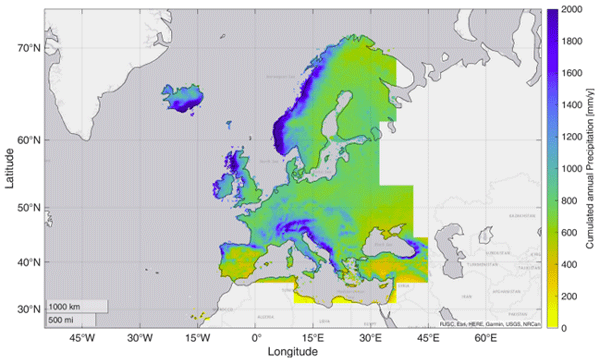
Accurate rainfall data is essential, yet measuring daily precipitation worldwide is challenging. This research presents HYdroclimatic PERformance-enhanced Precipitation (HYPER-P), a dataset combining satellite, ground, and reanalysis data to estimate precipitation at a 1 km scale from 2000 to 2022. HYPER-P improves accuracy, especially in areas with few rain gauges. This dataset supports scientists and decision-makers in understanding and managing water resources more effectively.
Cinzia Mazzetti, Hannah Cloke, Dai Yamazaki, Gianpaolo Balsamo, Souhail Boussetta, Jasper Denissen, Michel Wortmann, Gabriele Arduini, Gurpreet Dass, Joe McNorton, Anna Agusti-Panareda, Maliko Tanguy, Ervin Zsoter, Margarita Choulga, Emanuel Dutra, Florian Pappenberger, Christoph Rüdiger, and Christel Prudhomme
EGUsphere, https://doi.org/10.5194/egusphere-2026-4305, https://doi.org/10.5194/egusphere-2026-4305, 2026
This preprint is open for discussion and under review for Geoscientific Model Development (GMD).
Short summary
Short summary
Rivers are an essential component of the water cycle, yet many Earth system and weather prediction models do not explicitly represent river flow. We integrated a global river model into ECMWF's forecasting system, enabling the simulation of river discharge, water levels, and flooding within a single operational framework. This development lays the foundation for future land–river–atmosphere interactions, paving the way for more complete Earth system models and improved predictions.
Douglas Mulangwa, Evet Naturinda, Charles Koboji, Benon T. Zaake, Emily Black, Hannah Cloke, and Elisabeth M. Stephens
Hydrol. Earth Syst. Sci., 30, 5297–5325, https://doi.org/10.5194/hess-30-5297-2026, https://doi.org/10.5194/hess-30-5297-2026, 2026
Short summary
Short summary
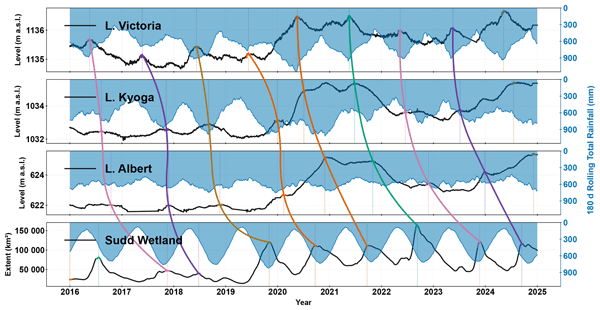
This study traced how water moved from Lake Victoria to the Sudd wetlands to explain the prolonged flooding in South Sudan between 2019 and 2024. Using satellite observations, rainfall records, and lake and river measurements, we found that water takes about 17 months to travel through the system, much longer than previously assumed 5 months. The results show that lakes and wetlands can store and slowly release water over several years, helping improve flood forecasting and early warning.
Nina Raoult, Ewan Pinnington, Mario Santa Cruz, Florian Pinault, Baudouin Raoult, Natalie Zelenka, Gabriele Arduini, Gianpaolo Balsamo, Souhail Boussetta, Matthew Chantry, Patricia de Rosnay, Peter Dueben, and Christoph Rüdiger
EGUsphere, https://doi.org/10.5194/egusphere-2026-3620, https://doi.org/10.5194/egusphere-2026-3620, 2026
Short summary
Short summary
The land surface shapes our weather and climate by controlling how heat and water move between the ground and the air, so the models representing it matter enormously. But they are costly to run and carry built-in errors. We built a faster artificial-intelligence version of one, then used real measurements from sites worldwide to correct some of these errors. The result stays reliable over years and better captures these heat and water exchanges—a quicker, more accurate tool for forecasting.
Karan Ruparell, Dai Yamazaki, Kieran Hunt, Hannah Cloke, Christel Prudhomme, Florian Pappenberger, and Matthew Chantry
EGUsphere, https://doi.org/10.5194/egusphere-2026-2909, https://doi.org/10.5194/egusphere-2026-2909, 2026
Short summary
Short summary
Reservoirs change how rivers behave, making them harder to predict. We tested whether machine learning models can learn these effects by training on river sites with and without upstream reservoirs across Great Britain. Models without reservoir training overestimated regulated flows, while reservoir-only models performed poorly on natural rivers. Training on both performed well everywhere. All models failed at heavily managed reservoirs where human decisions dominate river flow.
Ather Abbas, Yuan Yang, Ming Pan, Yves Tramblay, Chaopeng Shen, Haoyu Ji, Solomon H. Gebrechorkos, Florian Pappenberger, JongCheol Pyo, Dapeng Feng, George Huffman, Phu Nguyen, Christian Massari, Luca Brocca, Jackson Tan, and Hylke E. Beck
Hydrol. Earth Syst. Sci., 30, 3399–3423, https://doi.org/10.5194/hess-30-3399-2026, https://doi.org/10.5194/hess-30-3399-2026, 2026
Short summary
Short summary
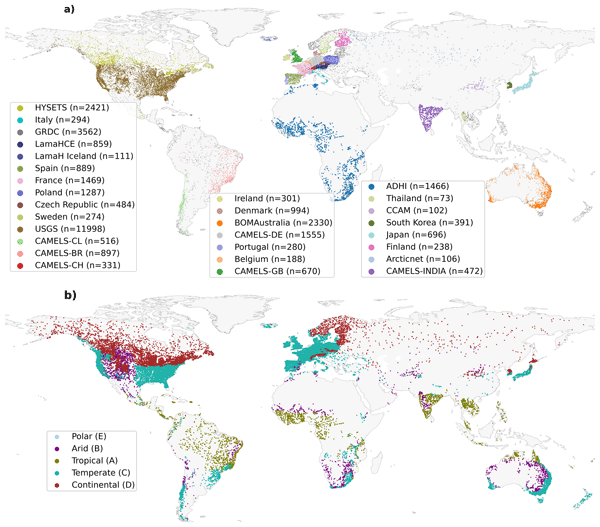
Our study evaluated 24 precipitation datasets using a hydrological model at global scale to assess their suitability and accuracy. We found that MSWEP (Multi-Source Weighted-Ensemble Precipitation) V2.8 excels due to its ability to integrate data from multiple sources, while others, such as IMERG (Integrated Multi-satellitE Retrievals for Global Precipitation Mission) and GDAS (Global Data Assimilation System), demonstrated strong regional performances. This research assists in selecting the appropriate dataset for applications in water resource management, hazard assessment, agriculture, and environmental monitoring.
Gabriel Moldovan, Ewan Pinnington, Ana Prieto Nemesio, Simon Lang, Zied Ben Bouallègue, Jesper Dramsch, Mihai Alexe, Mario Santa Cruz, Sara Hahner, Harrison Cook, Helen Theissen, Mariana Clare, Cathal O'Brien, Jan Polster, Linus Magnusson, Gert Mertes, Florian Pinault, Baudouin Raoult, Patricia de Rosnay, Richard Forbes, and Matthew Chantry
Geosci. Model Dev., 19, 4703–4724, https://doi.org/10.5194/gmd-19-4703-2026, https://doi.org/10.5194/gmd-19-4703-2026, 2026
Short summary
Short summary
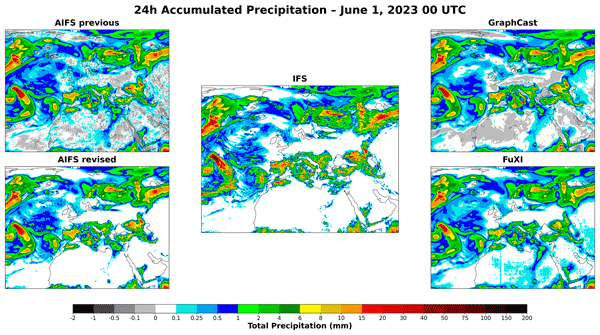
We present the latest release of the Artificial Intelligence Forecasting System, AIFS 1.1.0, which shows improved headline forecasting skill through an expanded dataset and enhanced training schedule. The model also incorporates hard physical constraints that facilitate training and improve rainfall prediction. Finally, we extend the set of forecasted variables to include soil conditions and energy-related fields, strengthening the operational value of AIFS.
Fatima M. Pillosu, Mariana Claire, Calum Baugh, Florian Pappenberger, Christel Prudhome, and Hannah L. Cloke
EGUsphere, https://doi.org/10.5194/egusphere-2026-1591, https://doi.org/10.5194/egusphere-2026-1591, 2026
Short summary
Short summary
This paper presents the first global, medium-range probabilistic forecasts of flash flood occurrence. A single XGBoost model trained on coarse impact reports achieves skilful predictions, challenging assumptions that complex architectures and high-resolution data are required. At a time of heightened attention to flash flood risk and early warning, this work demonstrates that skilful global forecasting is achievable in data-sparse regions where flash flood risk is highest.
Gabriele Arduini, Christoph Rüdiger, and Gianpaolo Balsamo
The Cryosphere, 20, 1119–1137, https://doi.org/10.5194/tc-20-1119-2026, https://doi.org/10.5194/tc-20-1119-2026, 2026
Short summary
Short summary
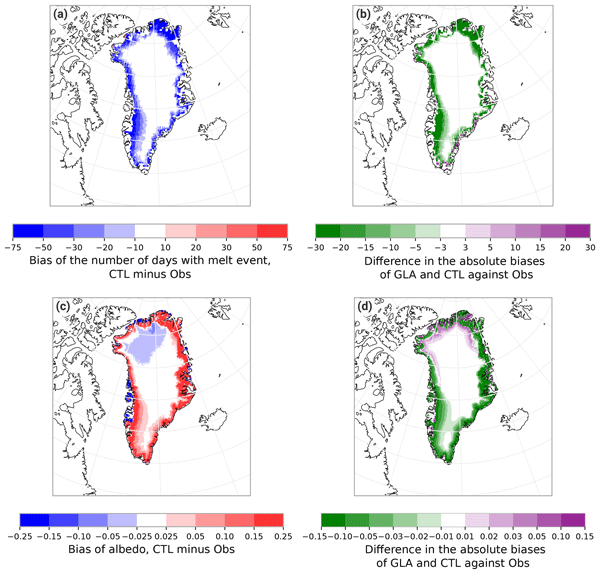
Glaciers and ice sheets are critical components of the climate system. A set of improvements to snow and ice processes, targeting glacier and ice sheet regions, are introduced in a land surface model used to produce Weather Forecasts and climate reanalyses. The results demonstrate that more realistic snow and ice processes can lead to positive impacts on the simulation of various Earth System components, e.g. the surface temperature and the streamflow of rivers contributed by glacier melting.
Jeff Da Costa, Elizabeth Ebert, David Hoffmann, Hannah L. Cloke, and Jessica Neumann
Nat. Hazards Earth Syst. Sci., 26, 343–366, https://doi.org/10.5194/nhess-26-343-2026, https://doi.org/10.5194/nhess-26-343-2026, 2026
Short summary
Short summary
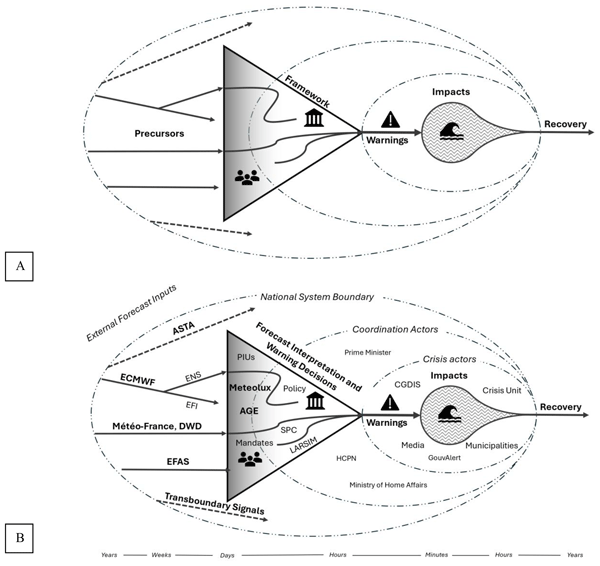
This paper examines why multiple early indicators of the July 2021 floods in Luxembourg did not lead to better anticipatory action. Using a value chain approach and the Waterdrop Model, it identifies how thresholds, procedures, and institutional responsibilities limited the use of available forecast information under uncertainty. The findings show how aligning information with decision processes can improve timely disaster response.
Gwyneth Matthews, Hannah L. Cloke, Sarah L. Dance, and Christel Prudhomme
Hydrol. Earth Syst. Sci., 29, 6157–6179, https://doi.org/10.5194/hess-29-6157-2025, https://doi.org/10.5194/hess-29-6157-2025, 2025
Short summary
Short summary
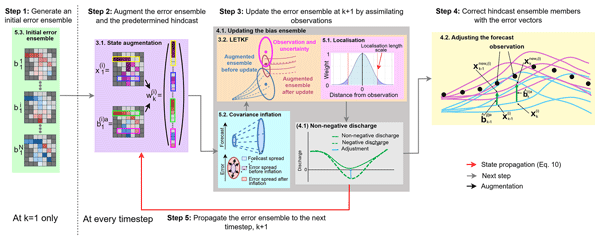
Forecasts provide information crucial for managing floods and for water resource planning, but they often have errors. “Post-processing” reduces these errors but is usually only applied at river gauges, leaving areas without gauges uncorrected. We developed a new method that uses spatial information contained within the forecast to spread information about the errors from gauged locations to ungauged areas. Our results show that the method successfully makes river forecasts more accurate.
Paolo Filippucci, Luca Brocca, Luca Ciabatta, Hamidreza Mosaffa, Francesco Avanzi, and Christian Massari
Earth Syst. Sci. Data, 17, 5221–5258, https://doi.org/10.5194/essd-17-5221-2025, https://doi.org/10.5194/essd-17-5221-2025, 2025
Short summary
Short summary
Accurate rainfall data is essential, yet measuring daily precipitation worldwide is challenging. This research presents HYdroclimatic PERformance-enhanced Precipitation (HYPER-P), a dataset combining satellite, ground, and reanalysis data to estimate precipitation at a 1 km scale from 2000 to 2022. HYPER-P improves accuracy, especially in areas with few rain gauges. This dataset supports scientists and decision-makers in understanding and managing water resources more effectively.
Joy Ommer, Milan Kalas, Jessica Neumann, Sophie Blackburn, and Hannah L. Cloke
Nat. Hazards Earth Syst. Sci., 25, 2929–2938, https://doi.org/10.5194/nhess-25-2929-2025, https://doi.org/10.5194/nhess-25-2929-2025, 2025
Short summary
Short summary
What do we regret about our disaster preparedness? This paper explores the regrets of 438 citizens who were affected by flooding in Germany in 2021. It shows that regret can primarily be associated with inaction (instead of actions), which contrasts with psychological studies from fields other than disaster science. The findings of this study suggest that the no-regret approach could be a suitable framework for moving towards longer-term disaster preparedness to reduce future regrets.
Katherine Egan, Calum Baugh, Rebecca Emerton, Christel Prudhomme, Daniele Castellana, and Sebongile Hlubi
Abstr. Int. Cartogr. Assoc., 9, 8, https://doi.org/10.5194/ica-abs-9-8-2025, https://doi.org/10.5194/ica-abs-9-8-2025, 2025
Marieke Wesselkamp, Matthew Chantry, Ewan Pinnington, Margarita Choulga, Souhail Boussetta, Maria Kalweit, Joschka Bödecker, Carsten F. Dormann, Florian Pappenberger, and Gianpaolo Balsamo
Geosci. Model Dev., 18, 921–937, https://doi.org/10.5194/gmd-18-921-2025, https://doi.org/10.5194/gmd-18-921-2025, 2025
Short summary
Short summary
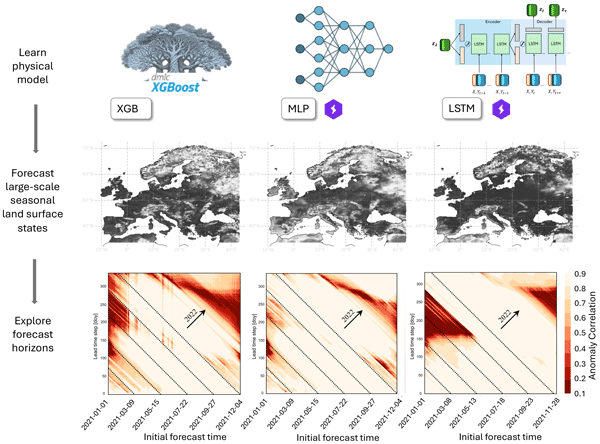
We compared spatiotemporal forecasts of three machine learning models that learned water and energy
states on the land surface from a physical model scheme. The forecasting models were developed with reanalysis data and simulations on a European scale and transferred to the globe. We found that all approaches deliver highly accurate approximations of the physical dynamic at long time horizons, implying their usefulness to advance land surface forecasting with synthetic data.
states on the land surface from a physical model scheme. The forecasting models were developed with reanalysis data and simulations on a European scale and transferred to the globe. We found that all approaches deliver highly accurate approximations of the physical dynamic at long time horizons, implying their usefulness to advance land surface forecasting with synthetic data.
Joy Ommer, Jessica Neumann, Milan Kalas, Sophie Blackburn, and Hannah L. Cloke
Nat. Hazards Earth Syst. Sci., 24, 2633–2646, https://doi.org/10.5194/nhess-24-2633-2024, https://doi.org/10.5194/nhess-24-2633-2024, 2024
Short summary
Short summary
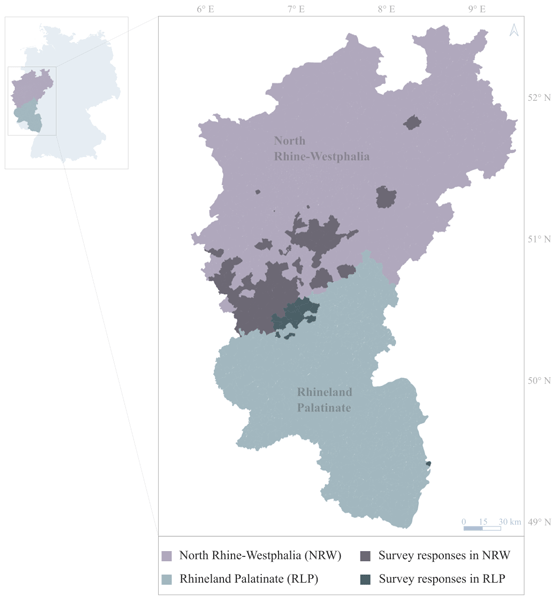
What’s the worst that could happen? Recent floods are often claimed to be beyond our imagination. Imagination is the picturing of a situation in our mind and the emotions that we connect with this situation. But why is this important for disasters? This survey found that when we cannot imagine a devastating flood, we are not preparing in advance. Severe-weather forecasts and warnings need to advance in order to trigger our imagination of what might happen and enable us to start preparing.
Solomon H. Gebrechorkos, Julian Leyland, Simon J. Dadson, Sagy Cohen, Louise Slater, Michel Wortmann, Philip J. Ashworth, Georgina L. Bennett, Richard Boothroyd, Hannah Cloke, Pauline Delorme, Helen Griffith, Richard Hardy, Laurence Hawker, Stuart McLelland, Jeffrey Neal, Andrew Nicholas, Andrew J. Tatem, Ellie Vahidi, Yinxue Liu, Justin Sheffield, Daniel R. Parsons, and Stephen E. Darby
Hydrol. Earth Syst. Sci., 28, 3099–3118, https://doi.org/10.5194/hess-28-3099-2024, https://doi.org/10.5194/hess-28-3099-2024, 2024
Short summary
Short summary
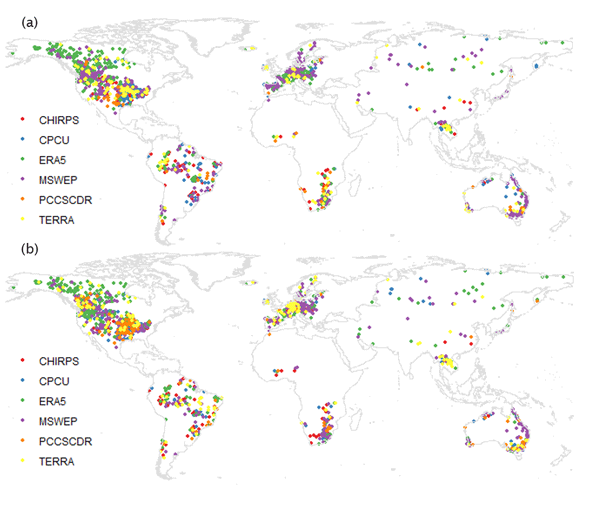
This study evaluated six high-resolution global precipitation datasets for hydrological modelling. MSWEP and ERA5 showed better performance, but spatial variability was high. The findings highlight the importance of careful dataset selection for river discharge modelling due to the lack of a universally superior dataset. Further improvements in global precipitation data products are needed.
Margarita Choulga, Francesca Moschini, Cinzia Mazzetti, Stefania Grimaldi, Juliana Disperati, Hylke Beck, Peter Salamon, and Christel Prudhomme
Hydrol. Earth Syst. Sci., 28, 2991–3036, https://doi.org/10.5194/hess-28-2991-2024, https://doi.org/10.5194/hess-28-2991-2024, 2024
Short summary
Short summary
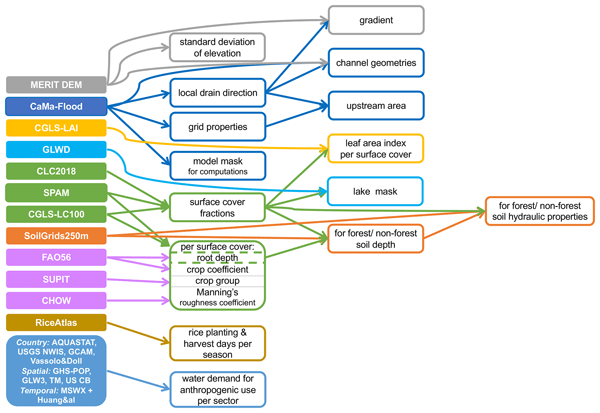
CEMS_SurfaceFields_2022 dataset is a new set of high-resolution maps for land type (e.g. lake, forest), soil properties and population water needs at approximately 2 and 6 km at the Equator, covering Europe and the globe (excluding Antarctica). We describe what and how new high-resolution information can be used to create the dataset. The paper suggests that the dataset can be used as input for river, weather or other models, as well as for statistical descriptions of the region of interest.
Wendy Sharples, Katayoon Bahramian, Kesav Unnithan, Christoph Rüdiger, Jiawei Hou, Christopher Pickett-Heaps, and Elisabetta Carrara
Proc. IAHS, 386, 237–249, https://doi.org/10.5194/piahs-386-237-2024, https://doi.org/10.5194/piahs-386-237-2024, 2024
Short summary
Short summary
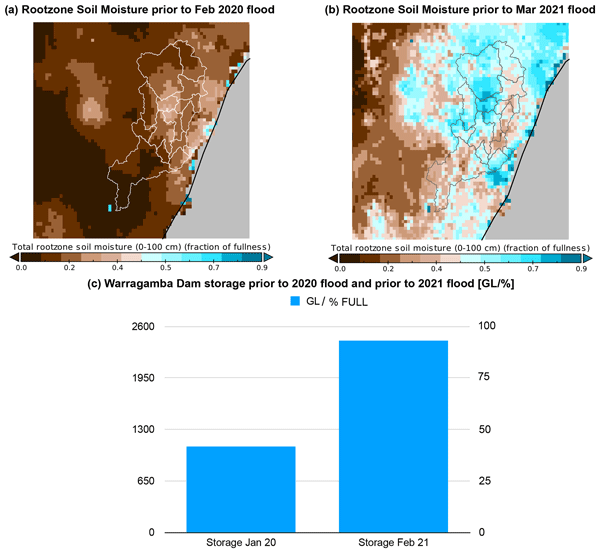
Two flood events occurred in the Hawkesbury-Nepean valley in 2020 and 2021, however, the impact of each of those events was different in terms of lives lost (2 fatalities compared to none) and economic losses (more than 2 billion compared to less than 1 billion AUD). Reasons for the variation in impacts are explored by determining the inundation extents, and examining antecedent and climatic conditions. We found that antecedent conditions exerted a major control on the size of the impact.
Clare Lewis, Tim Smyth, Jess Neumann, and Hannah Cloke
Nat. Hazards Earth Syst. Sci., 24, 121–131, https://doi.org/10.5194/nhess-24-121-2024, https://doi.org/10.5194/nhess-24-121-2024, 2024
Short summary
Short summary
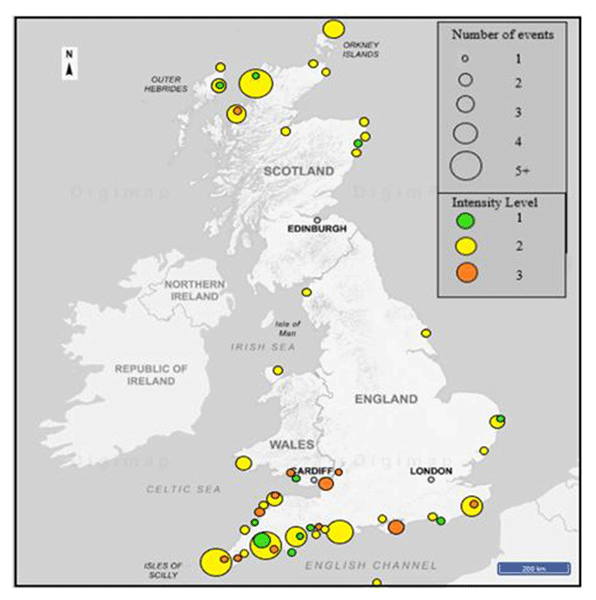
Meteotsunami are the result of atmospheric disturbances and can impact coastlines causing injury, loss of life, and damage to assets. This paper introduces a novel intensity index to allow for the quantification of these events at the shoreline. This has the potential to assist in the field of natural hazard assessment. It was trialled in the UK but designed for global applicability and to become a widely accepted standard in coastal planning, meteotsunami forecasting, and early warning systems.
Tom Kimpson, Margarita Choulga, Matthew Chantry, Gianpaolo Balsamo, Souhail Boussetta, Peter Dueben, and Tim Palmer
Hydrol. Earth Syst. Sci., 27, 4661–4685, https://doi.org/10.5194/hess-27-4661-2023, https://doi.org/10.5194/hess-27-4661-2023, 2023
Short summary
Short summary
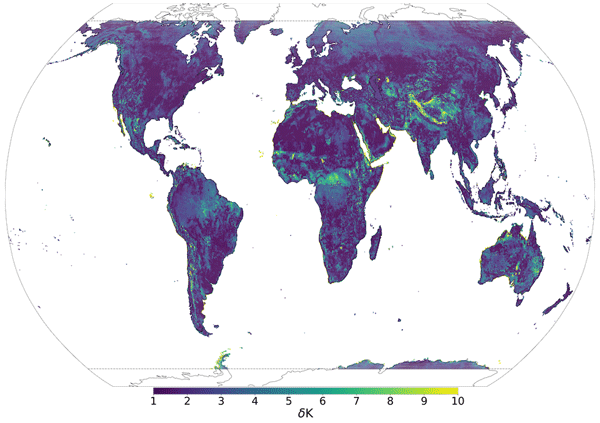
Lakes play an important role when we try to explain and predict the weather. More accurate and up-to-date description of lakes all around the world for numerical models is a continuous task. However, it is difficult to assess the impact of updated lake description within a weather prediction system. In this work, we develop a method to quickly and automatically define how, where, and when updated lake description affects weather prediction.
Clare Lewis, Tim Smyth, David Williams, Jess Neumann, and Hannah Cloke
Nat. Hazards Earth Syst. Sci., 23, 2531–2546, https://doi.org/10.5194/nhess-23-2531-2023, https://doi.org/10.5194/nhess-23-2531-2023, 2023
Short summary
Short summary
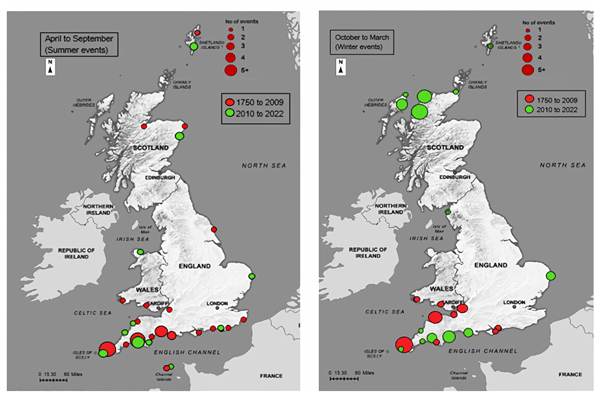
Meteotsunami are globally occurring water waves initiated by atmospheric disturbances. Previous research has suggested that in the UK, meteotsunami are a rare phenomenon and tend to occur in the summer months. This article presents a revised and updated catalogue of 98 meteotsunami that occurred between 1750 and 2022. Results also demonstrate a larger percentage of winter events and a geographical pattern highlighting the
hotspotregions that experience these events.
Shaun Harrigan, Ervin Zsoter, Hannah Cloke, Peter Salamon, and Christel Prudhomme
Hydrol. Earth Syst. Sci., 27, 1–19, https://doi.org/10.5194/hess-27-1-2023, https://doi.org/10.5194/hess-27-1-2023, 2023
Short summary
Short summary
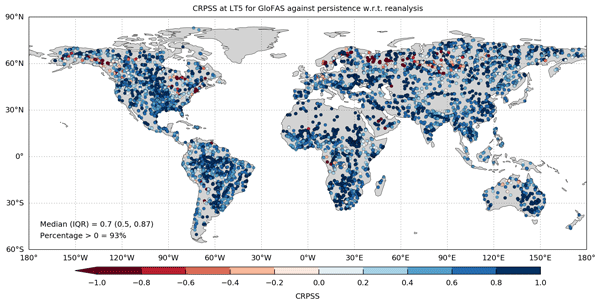
Real-time river discharge forecasts and reforecasts from the Global Flood Awareness System (GloFAS) have been made publicly available, together with an evaluation of forecast skill at the global scale. Results show that GloFAS is skillful in over 93 % of catchments in the short (1–3 d) and medium range (5–15 d) and skillful in over 80 % of catchments in the extended lead time (16–30 d). Skill is summarised in a new layer on the GloFAS Web Map Viewer to aid decision-making.
Kieran M. R. Hunt, Gwyneth R. Matthews, Florian Pappenberger, and Christel Prudhomme
Hydrol. Earth Syst. Sci., 26, 5449–5472, https://doi.org/10.5194/hess-26-5449-2022, https://doi.org/10.5194/hess-26-5449-2022, 2022
Short summary
Short summary
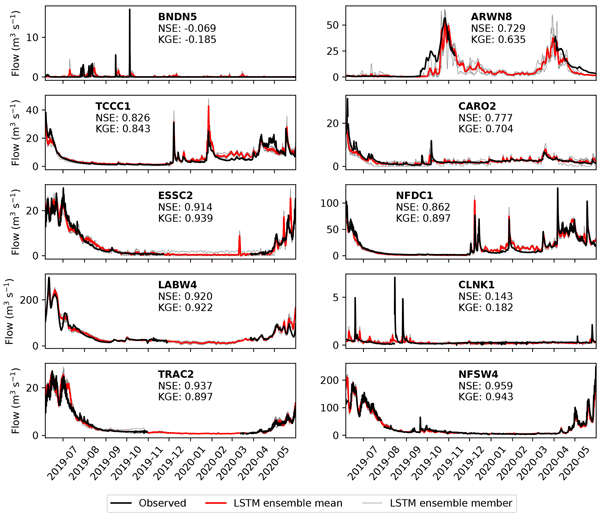
In this study, we use three models to forecast river streamflow operationally for 13 months (September 2020 to October 2021) at 10 gauges in the western US. The first model is a state-of-the-art physics-based streamflow model (GloFAS). The second applies a bias-correction technique to GloFAS. The third is a type of neural network (an LSTM). We find that all three are capable of producing skilful forecasts but that the LSTM performs the best, with skilful 5 d forecasts at nine stations.
Gwyneth Matthews, Christopher Barnard, Hannah Cloke, Sarah L. Dance, Toni Jurlina, Cinzia Mazzetti, and Christel Prudhomme
Hydrol. Earth Syst. Sci., 26, 2939–2968, https://doi.org/10.5194/hess-26-2939-2022, https://doi.org/10.5194/hess-26-2939-2022, 2022
Short summary
Short summary
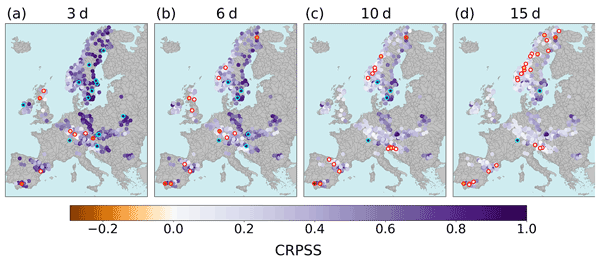
The European Flood Awareness System creates flood forecasts for up to 15 d in the future for the whole of Europe which are made available to local authorities. These forecasts can be erroneous because the weather forecasts include errors or because the hydrological model used does not represent the flow in the rivers correctly. We found that, by using recent observations and a model trained with past observations and forecasts, the real-time forecast can be corrected, thus becoming more useful.
Wouter Dorigo, Irene Himmelbauer, Daniel Aberer, Lukas Schremmer, Ivana Petrakovic, Luca Zappa, Wolfgang Preimesberger, Angelika Xaver, Frank Annor, Jonas Ardö, Dennis Baldocchi, Marco Bitelli, Günter Blöschl, Heye Bogena, Luca Brocca, Jean-Christophe Calvet, J. Julio Camarero, Giorgio Capello, Minha Choi, Michael C. Cosh, Nick van de Giesen, Istvan Hajdu, Jaakko Ikonen, Karsten H. Jensen, Kasturi Devi Kanniah, Ileen de Kat, Gottfried Kirchengast, Pankaj Kumar Rai, Jenni Kyrouac, Kristine Larson, Suxia Liu, Alexander Loew, Mahta Moghaddam, José Martínez Fernández, Cristian Mattar Bader, Renato Morbidelli, Jan P. Musial, Elise Osenga, Michael A. Palecki, Thierry Pellarin, George P. Petropoulos, Isabella Pfeil, Jarrett Powers, Alan Robock, Christoph Rüdiger, Udo Rummel, Michael Strobel, Zhongbo Su, Ryan Sullivan, Torbern Tagesson, Andrej Varlagin, Mariette Vreugdenhil, Jeffrey Walker, Jun Wen, Fred Wenger, Jean Pierre Wigneron, Mel Woods, Kun Yang, Yijian Zeng, Xiang Zhang, Marek Zreda, Stephan Dietrich, Alexander Gruber, Peter van Oevelen, Wolfgang Wagner, Klaus Scipal, Matthias Drusch, and Roberto Sabia
Hydrol. Earth Syst. Sci., 25, 5749–5804, https://doi.org/10.5194/hess-25-5749-2021, https://doi.org/10.5194/hess-25-5749-2021, 2021
Short summary
Short summary
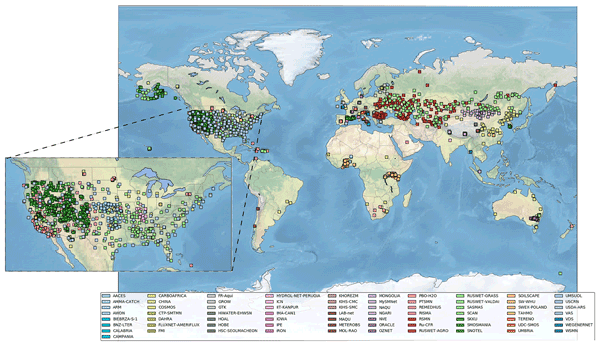
The International Soil Moisture Network (ISMN) is a community-based open-access data portal for soil water measurements taken at the ground and is accessible at https://ismn.earth. Over 1000 scientific publications and thousands of users have made use of the ISMN. The scope of this paper is to inform readers about the data and functionality of the ISMN and to provide a review of the scientific progress facilitated through the ISMN with the scope to shape future research and operations.
Cited articles
Anderson, S. and Radić, V.: Evaluation and interpretation of convolutional long short-term memory networks for regional hydrological modelling, Hydrol. Earth Syst. Sci., 26, 795–825, https://doi.org/10.5194/hess-26-795-2022, 2022.
Arsenault, R., Martel, J.-L., Brunet, F., Brissette, F., and Mai, J.: Continuous streamflow prediction in ungauged basins: long short-term memory neural networks clearly outperform traditional hydrological models, Hydrol. Earth Syst. Sci., 27, 139–157, https://doi.org/10.5194/hess-27-139-2023, 2023.
Baste, S., Klotz, D., Acuña Espinoza, E., Bardossy, A., and Loritz, R.: Unveiling the limits of deep learning models in hydrological extrapolation tasks, Hydrol. Earth Syst. Sci., 29, 5871–5891, https://doi.org/10.5194/hess-29-5871-2025, 2025.
Beven, K. J.: Rainfall-runoff modelling: the primer, John Wiley & Sons, https://doi.org/10.1002/9781119951001, 2012.
Brocca, L., Barbetta, S., Camici, S., Ciabatta, L., Dari, J., Filippucci, P., Massari, C., Modanesi, S., Tarpanelli, A., Bonaccorsi, B., Mosaffa, H., Wagner, W., Vreugdenhil, M., Quast, R., Alfieri, L., Gabellani, S., Avanzi, F., Rains, D., Miralles, D. G., Mantovani, S., Briese, C., Domeneghetti, A., Jacob, A., Castelli, M., Camps-Valls, G., Volden, E., and Fernandez, D.: A Digital Twin of the terrestrial water cycle: a glimpse into the future through high-resolution Earth observations, Frontiers in Science, 1, 1190191, https://doi.org/10.3389/fsci.2023.1190191, 2024.
Clark, M. P., Nijssen, B., Lundquist, J. D., Kavetski, D., Rupp, D. E., Woods, R. A., Freer, J. E., Gutmann, E. D., Wood, A. W., Brekke, L. D., Arnold, J. R., Gochis, D. J., and Rasmussen, R. M.: A unified approach for process-based hydrologic modeling: 1. Modeling concept, Water Resour. Res., 51, 2498–2514, https://doi.org/10.1002/2015WR017198, 2015.
Cortés-Salazar, N., Vásquez, N., Mizukami, N., Mendoza, P. A., and Vargas, X.: To what extent does river routing matter in hydrological modeling?, Hydrol. Earth Syst. Sci., 27, 3505–3524, https://doi.org/10.5194/hess-27-3505-2023, 2023.
Defferrard, M., Bresson, X., and Vandergheynst, P.: Convolutional neural networks on graphs with fast localized spectral filtering, arXiv [preprint], https://doi.org/10.48550/arXiv.1606.09375, 2016.
Deng, L., Zhang, X., Tao, S., Zhao, Y., Wu, K., and Liu, J.: A spatiotemporal graph convolution-based model for daily runoff prediction in a river network with non-Euclidean topological structure, Stoch. Env. Res. Risk A., 37, 1457–1478, https://doi.org/10.1007/s00477-022-02352-6, 2023.
Deng, L., Zhang, X., Slater, L. J., Liu, H., and Tao, S.: Integrating Euclidean and non-Euclidean spatial information for deep learning-based spatiotemporal hydrological simulation, J. Hydrol., 638, 131438, https://doi.org/10.1016/j.jhydrol.2024.131438, 2024.
Gai, Y., Wang, M., Wu, Y., Wang, E., Deng, X., Liu, Y., Yeh, T. C. J., and Hao, Y.: Simulation of spring discharge using graph neural networks at Niangziguan Springs, China, J. Hydrol., 625, 130079, https://doi.org/10.1016/j.jhydrol.2023.130079, 2023.
Hamilton, W., Ying, Z., and Leskovec, J.: Inductive representation learning on large graphs, arXiv [preprint], https://doi.org/10.48550/arXiv.1706.02216, 2017.
Hunt, K. M. R., Matthews, G. R., Pappenberger, F., and Prudhomme, C.: Using a long short-term memory (LSTM) neural network to boost river streamflow forecasts over the western United States, Hydrol. Earth Syst. Sci., 26, 5449–5472, https://doi.org/10.5194/hess-26-5449-2022, 2022.
Kipf, T. N. and Welling, M.: Semi-supervised classification with graph convolutional networks, arXiv [preprint], https://doi.org/10.48550/arXiv.1609.02907, 2016.
Kirpich, Z. P.: Time of concentration of small agricultural watersheds, Civil Eng., 10, 362, https://doi.org/10.13031/2013.33594, 1940.
Klingler, C., Schulz, K., and Herrnegger, M.: LamaH-CE: LArge-SaMple DAta for Hydrology and Environmental Sciences for Central Europe, Earth Syst. Sci. Data, 13, 4529–4565, https://doi.org/10.5194/essd-13-4529-2021, 2021.
Kraft, B., Kauzlaric, M., Aeberhard, W. H., Zappa, M., and Gudmundsson, L.: DROP: A scalable deep learning approach for runoff simulation and river routing, Authorea [preprint], https://doi.org/10.22541/au.176410929.91946608/v1, 2025.
Kratzert, F., Klotz, D., Brenner, C., Schulz, K., and Herrnegger, M.: Rainfall–runoff modelling using Long Short-Term Memory (LSTM) networks, Hydrol. Earth Syst. Sci., 22, 6005–6022, https://doi.org/10.5194/hess-22-6005-2018, 2018.
Li, B., Li, R., Sun, T., Gong, A., Tian, F., Khan, M. Y. A., and Ni, G.: Improving LSTM hydrological modeling with spatiotemporal deep learning and multi-task learning: A case study of three mountainous areas on the Tibetan Plateau, J. Hydrol., 620, 129401, https://doi.org/10.1016/j.jhydrol.2023.129401, 2023.
Muñoz-Sabater, J., Dutra, E., Agustí-Panareda, A., Albergel, C., Arduini, G., Balsamo, G., Boussetta, S., Choulga, M., Harrigan, S., Hersbach, H., Martens, B., Miralles, D. G., Piles, M., Rodríguez-Fernández, N. J., Zsoter, E., Buontempo, C., and Thépaut, J.-N.: ERA5-Land: a state-of-the-art global reanalysis dataset for land applications, Earth Syst. Sci. Data, 13, 4349–4383, https://doi.org/10.5194/essd-13-4349-2021, 2021.
Sun, A. Y., Jiang, P., Mudunuru, M. K., and Chen, X.: Explore spatio-temporal learning of large sample hydrology using graph neural networks, Water Resour. Res., 57, e2021WR030394, https://doi.org/10.1029/2021WR030394, 2021.
Sun, A. Y., Jiang, P., Yang, Z.-L., Xie, Y., and Chen, X.: A graph neural network (GNN) approach to basin-scale river network learning: the role of physics-based connectivity and data fusion, Hydrol. Earth Syst. Sci., 26, 5163–5184, https://doi.org/10.5194/hess-26-5163-2022, 2022.
Tripathy, K. P. and Mishra, A. K.: Deep learning in hydrology and water resources disciplines: concepts, methods, applications, and research directions, J. Hydrol., 628, 130458, https://doi.org/10.1016/j.jhydrol.2023.130458, 2024.
Veličković, P., Cucurull, G., Casanova, A., Romero, A., Lio, P., and Bengio, Y.: Graph attention networks, arXiv [preprint], https://doi.org/10.48550/arXiv.1710.10903, 2017.
Wang, C., Jiang, S., Zheng, Y., Han, F., Kumar, R., Rakovec, O., and Li, S.: Distributed hydrological modeling with physics-encoded deep learning: A general framework and its application in the Amazon, Water Resour. Res., 60, e2023WR036170, https://doi.org/10.1029/2023WR036170, 2024.
Wang, H., Chen, J., Zheng, Y., and Song, X.: Accelerating flood warnings by 10 hours: the power of river network topology in AI-enhanced flood forecasting, npj Nat. Hazards, 2, 45, https://doi.org/10.1038/s44304-025-00083-6, 2025.
Yang, Y., Feng, D., Beck, H. E., Hu, W., Abbas, A., Sengupta, A., Delle Monache, L., Hartman, R., Lin, P., Shen, C., and Pan, M.: Global daily discharge estimation based on grid long short-term memory (LSTM) model and river routing, Water Resour. Res., 61, e2024WR039764, https://doi.org/10.1029/2024WR039764, 2025.
Yu, Q., Tolson, B. A., Shen, H., Han, M., Mai, J., and Lin, J.: Enhancing long short-term memory (LSTM)-based streamflow prediction with a spatially distributed approach, Hydrol. Earth Syst. Sci., 28, 2107–2122, https://doi.org/10.5194/hess-28-2107-2024, 2024.
Zhang, J., Kong, D., Li, J., Qiu, J., Zhang, Y., Gu, X., and Guo, M.: Comparison and integration of hydrological models and machine learning models in global monthly streamflow simulation, J. Hydrol., 650, 132549, https://doi.org/10.1016/j.jhydrol.2024.132549, 2025.
Short summary
This study improves river flow prediction by combining two types of artificial intelligence models. One model estimates how rainfall becomes runoff in each part of a river basin, while another represents how water moves through the river network. By linking these processes, the approach better captures how water travels across large basins. The results show more accurate streamflow predictions, which can support water management and flood forecasting.
This study improves river flow prediction by combining two types of artificial intelligence...


