
Articles | Volume 30, issue 20
https://doi.org/10.5194/hess-30-6599-2026
© Author(s) 2026. This work is distributed under
the Creative Commons Attribution 4.0 License.
the Creative Commons Attribution 4.0 License.
https://doi.org/10.5194/hess-30-6599-2026
© Author(s) 2026. This work is distributed under
the Creative Commons Attribution 4.0 License.
the Creative Commons Attribution 4.0 License.
Research article
| 
27 Oct 2026
Research article |
| 27 Oct 2026
| 27 Oct 2026
Non-stationary low-flow frequency analysis with mixed Weibull components and Copula-based dependence framework
Farhana Sweeta Fitriana
CORRESPONDING AUTHOR

Institute of Statistics, BOKU University, Vienna, Austria
Svenja Fischer
Hydrology and Environmental Hydraulics Group, Wageningen University and Research, Wageningen, the Netherlands
Gabriele Weigelhofer
Institute of Hydrobiology and Water Management, BOKU University, Vienna, Austria
Johannes Laimighofer
Institute of Statistics, BOKU University, Vienna, Austria
Gregor Laaha
Institute of Statistics, BOKU University, Vienna, Austria
Related authors
No articles found.
Fatemeh Firoozi, Johannes laimighofer, and Gregor Laaha
EGUsphere, https://doi.org/10.5194/egusphere-2026-5111, https://doi.org/10.5194/egusphere-2026-5111, 2026
This preprint is open for discussion and under review for Hydrology and Earth System Sciences (HESS).
Short summary
Short summary
Drought is a natural hazard with several connected features, including its duration, total water shortage, and the lowest river flow reached during the event. We developed an approach that estimates how likely a drought is by accounting for how these features depend on one another and shows how many years may pass before similar conditions recur. Applied across Austria, it identified widespread severe drought in 2003 and more localized hotspots in 2015, supporting better drought planning.
Lena Ortega Menjivar, Nur Banu Özcelik, Johannes Laimighofer, and Gregor Laaha
EGUsphere, https://doi.org/10.5194/egusphere-2026-4282, https://doi.org/10.5194/egusphere-2026-4282, 2026
Short summary
Short summary
Computer models that generate artificial rainfall are widely used to plan for floods and water management, but they often struggle to represent the variety of real rain events. We grouped rainfall events from two Austrian weather stations into clusters of similar character and fitted a separate statistical model to each group. Combining these groups describes observed rainfall, including rare heavy events, better than a single model, offering a simple way to improve rainfall simulations.
Vinzent Klaus, Johannes Laimighofer, and Fabian Lehner
Nat. Hazards Earth Syst. Sci., 25, 4807–4814, https://doi.org/10.5194/nhess-25-4807-2025, https://doi.org/10.5194/nhess-25-4807-2025, 2025
Short summary
Short summary
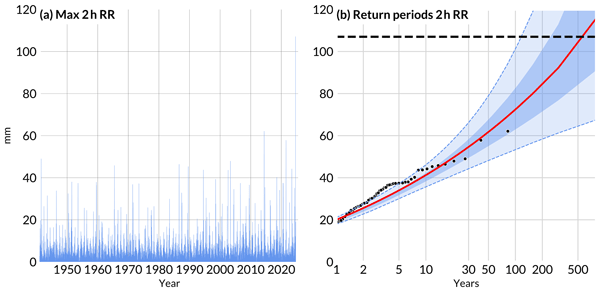
On 17 August 2024, a thunderstorm in Vienna led to a record-breaking rainfall of 107 mm in two hours. An analysis of the exceptionally long hourly rain gauge time series (since 1941) estimates this event's return period at 700 years. The extremity of the event is further confirmed by neighboring weather stations and rain-radar data. Linking the return period to atmospheric temperature shows that such events might occur more often with rising temperatures.

Sameen Bushra, Jeniya Shakya, Céline Cattoën, Svenja Fischer, and Markus Pahlow
Earth Syst. Sci. Data, 17, 5745–5760, https://doi.org/10.5194/essd-17-5745-2025, https://doi.org/10.5194/essd-17-5745-2025, 2025
Short summary
Short summary
To support comparative hydrology and climate impact research, we present a large-sample dataset with hourly and daily streamflow and hydrometeorological data from 369 catchments across Aotearoa New Zealand. It includes detailed catchment attributes and represents diverse hydrological regimes. This open-access resource enables model evaluation and international comparisons and helps fill a key regional gap in global hydrological data.
Daniel Issel, Gregor Laaha, Johannes Laimighofer, Johann G. Zaller, Richard Zink, Daniel Dörler, and Florian Heigl
Web Ecol., 25, 177–188, https://doi.org/10.5194/we-25-177-2025, https://doi.org/10.5194/we-25-177-2025, 2025
Short summary
Short summary
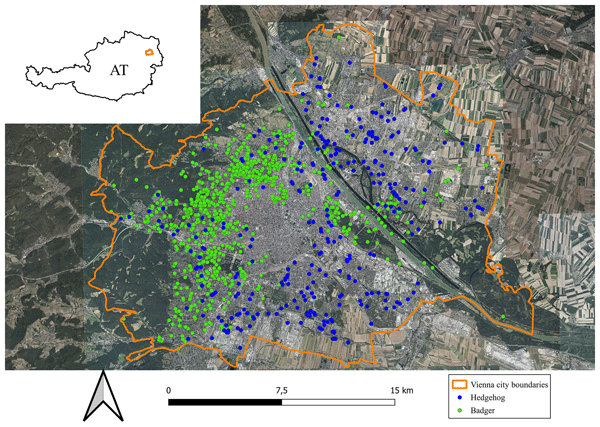
Our study analyzed the distribution of 356 hedgehog and 918 badger sightings from 2012 to 2023 in Vienna, Austria. Both species were reported in areas with a mix of built-up spaces and green areas but not arable land, which can have ecological and methodological reasons. Moreover, hedgehogs and badgers were mostly reported from different areas. Our findings suggest that citizen science can be a good data source to analyze urban human–wildlife interactions.
Christophe Cudennec, Ernest Amoussou, Yonca Cavus, Pedro L. B. Chaffe, Svenja Fischer, Salvatore Grimaldi, Jean-Marie Kileshye Onema, Mohammad Merheb, Maria-Jose Polo, Eric Servat, and Elena Volpi
Proc. IAHS, 385, 501–511, https://doi.org/10.5194/piahs-385-501-2025, https://doi.org/10.5194/piahs-385-501-2025, 2025
Toshio Koike, Shinji Egashira, Miho Ohara, Abdul Wahid Mohamed Rasmy, Tomoki Ushiyama, Mamoru Miyamoto, Daisuke Harada, Kensuke Naito, Christophe Cudennec, and Svenja Fischer
Proc. IAHS, 386, 353–354, https://doi.org/10.5194/piahs-386-353-2025, https://doi.org/10.5194/piahs-386-353-2025, 2025
Leigh Richard MacPherson, Arne Arns, Svenja Fischer, Fernando Javier Méndez, and Jürgen Jensen
Nat. Hazards Earth Syst. Sci., 23, 3685–3701, https://doi.org/10.5194/nhess-23-3685-2023, https://doi.org/10.5194/nhess-23-3685-2023, 2023
Short summary
Short summary
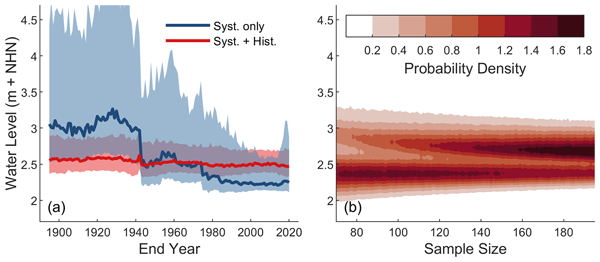
Efficient adaptation planning for coastal flooding caused by extreme sea levels requires accurate assessments of the underlying hazard. Tide-gauge data alone are often insufficient for providing the desired accuracy but may be supplemented with historical information. We estimate extreme sea levels along the German Baltic coast and show that relying solely on tide-gauge data leads to underestimations. Incorporating historical information leads to improved estimates with reduced uncertainties.
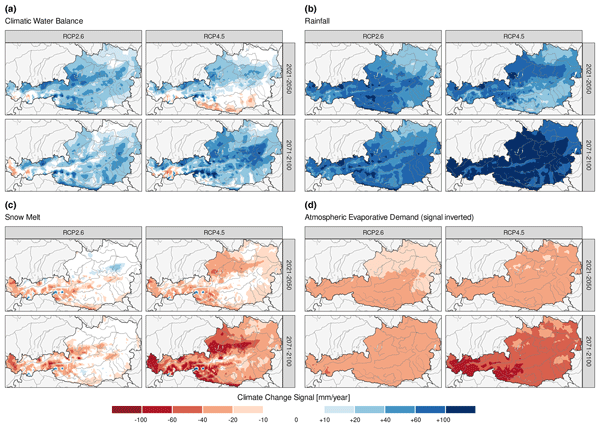
Klaus Haslinger, Wolfgang Schöner, Jakob Abermann, Gregor Laaha, Konrad Andre, Marc Olefs, and Roland Koch
Nat. Hazards Earth Syst. Sci., 23, 2749–2768, https://doi.org/10.5194/nhess-23-2749-2023, https://doi.org/10.5194/nhess-23-2749-2023, 2023
Short summary
Short summary
Future changes of surface water availability in Austria are investigated. Alterations of the climatic water balance and its components are analysed along different levels of elevation. Results indicate in general wetter conditions with particular shifts in timing of the snow melt season. On the contrary, an increasing risk for summer droughts is apparent due to increasing year-to-year variability and decreasing snow melt under future climate conditions.

Gregor Laaha
Hydrol. Earth Syst. Sci., 27, 2019–2034, https://doi.org/10.5194/hess-27-2019-2023, https://doi.org/10.5194/hess-27-2019-2023, 2023
Short summary
Short summary
In seasonal climates with a warm and a cold season, low flows are generated by different processes so that return periods used as a measure of event severity will be inaccurate. We propose a novel mixed copula estimator that is shown to outperform previous calculation methods. The new method is highly relevant for a wide range of European river flow regimes and should be used by default.

Gregor Laaha
Hydrol. Earth Syst. Sci., 27, 689–701, https://doi.org/10.5194/hess-27-689-2023, https://doi.org/10.5194/hess-27-689-2023, 2023
Short summary
Short summary
Knowing the severity of an extreme event is of particular importance to hydrology and water policies. In this paper we propose a mixed distribution approach for low flows. It provides one consistent approach to quantify the severity of summer, winter, and annual low flows based on their respective annualities (or return periods). We show that the new method is much more accurate than existing methods and should therefore be used by engineers and water agencies.
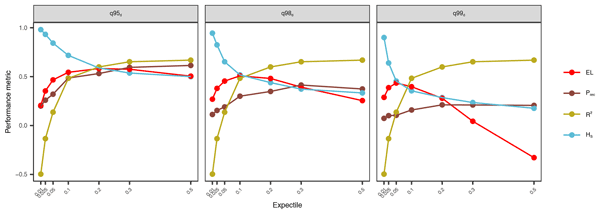
Johannes Laimighofer, Michael Melcher, and Gregor Laaha
Hydrol. Earth Syst. Sci., 26, 4553–4574, https://doi.org/10.5194/hess-26-4553-2022, https://doi.org/10.5194/hess-26-4553-2022, 2022
Short summary
Short summary
Our study uses a statistical boosting model for estimating low flows on a monthly basis, which can be applied to estimate low flows at sites without measurements. We use an extensive dataset of 260 stream gauges in Austria for model development. As we are specifically interested in low-flow events, our method gives specific weight to such events. We found that our method can considerably improve the predictions of low-flow events and yields accurate estimates of the seasonal low-flow variation.
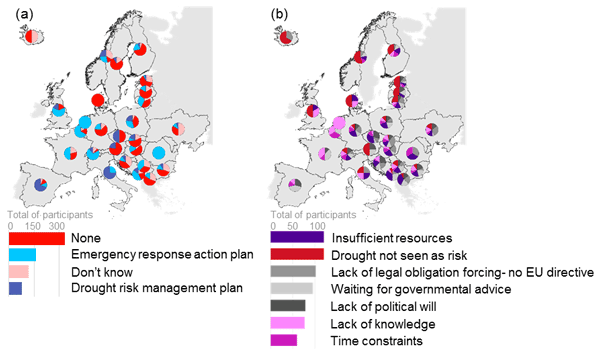
Veit Blauhut, Michael Stoelzle, Lauri Ahopelto, Manuela I. Brunner, Claudia Teutschbein, Doris E. Wendt, Vytautas Akstinas, Sigrid J. Bakke, Lucy J. Barker, Lenka Bartošová, Agrita Briede, Carmelo Cammalleri, Ksenija Cindrić Kalin, Lucia De Stefano, Miriam Fendeková, David C. Finger, Marijke Huysmans, Mirjana Ivanov, Jaak Jaagus, Jiří Jakubínský, Svitlana Krakovska, Gregor Laaha, Monika Lakatos, Kiril Manevski, Mathias Neumann Andersen, Nina Nikolova, Marzena Osuch, Pieter van Oel, Kalina Radeva, Renata J. Romanowicz, Elena Toth, Mirek Trnka, Marko Urošev, Julia Urquijo Reguera, Eric Sauquet, Aleksandra Stevkov, Lena M. Tallaksen, Iryna Trofimova, Anne F. Van Loon, Michelle T. H. van Vliet, Jean-Philippe Vidal, Niko Wanders, Micha Werner, Patrick Willems, and Nenad Živković
Nat. Hazards Earth Syst. Sci., 22, 2201–2217, https://doi.org/10.5194/nhess-22-2201-2022, https://doi.org/10.5194/nhess-22-2201-2022, 2022
Short summary
Short summary
Recent drought events caused enormous damage in Europe. We therefore questioned the existence and effect of current drought management strategies on the actual impacts and how drought is perceived by relevant stakeholders. Over 700 participants from 28 European countries provided insights into drought hazard and impact perception and current management strategies. The study concludes with an urgent need to collectively combat drought risk via a European macro-level drought governance approach.
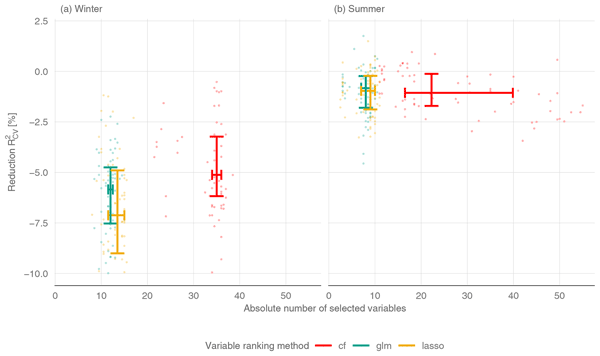
Johannes Laimighofer, Michael Melcher, and Gregor Laaha
Hydrol. Earth Syst. Sci., 26, 129–148, https://doi.org/10.5194/hess-26-129-2022, https://doi.org/10.5194/hess-26-129-2022, 2022
Short summary
Short summary
This study aims to predict long-term averages of low flow on a hydrologically diverse dataset in Austria. We compared seven statistical learning methods and included a backward variable selection approach. We found that separating the low-flow processes into winter and summer low flows leads to good performance for all the models. Variable selection results in more parsimonious and more interpretable models. Linear approaches for prediction and variable selection are sufficient for our dataset.
Leigh R. MacPherson, Arne Arns, Svenja Fischer, Fernando J. Méndez, and Jürgen Jensen
Nat. Hazards Earth Syst. Sci. Discuss., https://doi.org/10.5194/nhess-2021-406, https://doi.org/10.5194/nhess-2021-406, 2022
Preprint withdrawn
Short summary
Short summary
Extreme sea levels represent one of the most damaging natural hazards due to their potential to cause flooding. We developed a new method which incorporates historical information with systematically recorded sea levels, leading to improved estimates of extreme sea levels with reduced uncertainties. Such information helps to improve coastal flood risk analyses, which in turn allows for more efficient planning of coastal protection measures.
Cited articles
Ahn, K.-H. and Palmer, R. N.: Use of a nonstationary copula to predict future bivariate low flow frequency in the Connecticut river basin, Hydrol. Process., 30, 3518–3532, 2016. a
Bhatti, S. J., Kroll, C. N., and Vogel, R. M.: Revisiting the probability distribution of low streamflow series in the United States, J. Hydrol. Eng., 24, 04019043, https://doi.org/10.1061/(ASCE)HE.1943-5584.0001844, 2019. a
Casado Rodríguez, J.: CAMELS-ES: Catchment Attributes and Meteorologyfor Large-Sample Studies – Spain, Zenodo [data set], https://doi.org/10.5281/zenodo.8428374, 2023. a
Chebana, F. and Ouarda, T. B.: Multivariate non-stationary hydrological frequency analysis, J. Hydrol., 593, 125907, https://doi.org/10.1016/j.jhydrol.2020.125907, 2021. a, b
Delaigue, O., Guimarães, G. M., Brigode, P., Génot, B., Perrin, C., Soubeyroux, J.-M., Janet, B., Addor, N., and Andréassian, V.: CAMELS-FR dataset: a large-sample hydroclimatic dataset for France to explore hydrological diversity and support model benchmarking, Earth Syst. Sci. Data, 17, 1461–1479, https://doi.org/10.5194/essd-17-1461-2025, 2025. a
Delgado, J. M., Apel, H., and Merz, B.: Flood trends and variability in the Mekong river, Hydrol. Earth Syst. Sci., 14, 407–418, https://doi.org/10.5194/hess-14-407-2010, 2010. a
Du, T., Xiong, L., Xu, C.-Y., Gippel, C. J., Guo, S., and Liu, P.: Return period and risk analysis of nonstationary low-flow series under climate change, J. Hydrol., 527, 234–250, 2015. a
eHYD: eHYD – der Zugang zu hydrographischen Daten Österreichs, https://ehyd.gv.at/ (last access: 21 November 2025), 2025. a
Fischer, S. and Schumann, A. H.: Temporal changes in the frequency of flood types and their impact on flood statistics, J. Hydrol., 22, 100171, https://doi.org/10.1016/j.hydroa.2024.100171, 2024. a
Fitriana, F. S., Fischer, S., and Laaha, G.: Code to “Non-stationary low-flow frequency analysis with mixed Weibull components and Copula-based dependence framework”, Zenodo [code], https://doi.org/10.5281/zenodo.19406599, 2026. a
Floriancic, M. G., Berghuijs, W. R., Molnar, P., and Kirchner, J. W.: Seasonality and drivers of low flows across Europe and the United States, Water Resour. Res., 57, e2019WR026928, https://doi.org/10.1029/2019WR026928, 2021. a
Graham, D. J., Bierkens, M. F., and van Vliet, M. T.: Impacts of droughts and heatwaves on river water quality worldwide, J. Hydrol., 629, 130590, https://doi.org/10.1016/j.jhydrol.2023.130590, 2024. a
GRDC: Global Runoff Data Centre, https://grdc.bafg.de/ (last access: 21 November 2025), 2025. a
Haslinger, K. and Mayer, K.: Early spring droughts in Central Europe: Indications for atmospheric and oceanic drivers, Atmos. Sci. Lett., 24, e1136, https://doi.org/10.1002/asl.1136, 2023. a
Hodgkins, G. A., Renard, B., Whitfield, P. H., Laaha, G., Stahl, K., Hannaford, J., Burn, D. H., Westra, S., Fleig, A. K., Araújo Lopes, W. T., Murphy, C., Mediero, L., and Hanel, M.: Climate driven trends in historical extreme low streamflows on four continents, Water Resour. Res., 60, e2022WR034326, https://doi.org/10.1029/2022WR034326, 2024. a, b, c
Höge, M., Kauzlaric, M., Siber, R., Schönenberger, U., Horton, P., Schwanbeck, J., Floriancic, M. G., Viviroli, D., Wilhelm, S., Sikorska-Senoner, A. E., Addor, N., Brunner, M., Pool, S., Zappa, M., and Fenicia, F.: CAMELS-CH: hydro-meteorological time series and landscape attributes for 331 catchments in hydrologic Switzerland, Earth Syst. Sci. Data, 15, 5755–5784, https://doi.org/10.5194/essd-15-5755-2023, 2023. a
Ionita, M. and Nagavciuc, V.: Forecasting low flow conditions months in advance through teleconnection patterns, with a special focus on summer 2018, Sci. Rep., 10, 13258, https://doi.org/10.1038/s41598-020-70060-8, 2020. a
Kendall, M. G.: Rank Correlation Methods, 4th edn., Griffin, London, ISBN 978-0-85264-199-6, 1976. a
Klein, B., Schumann, A. H., and Pahlow, M.: Copulas–new risk assessment methodology for dam safety, in: Flood risk assessment and management: How to specify hydrological loads, their consequences and uncertainties, 149–185, Springer, https://doi.org/10.1007/978-90-481-9917-4_8, 2010. a, b
Laaha, G.: Modelling summer and winter droughts as a basis for estimating river low flows, International Association of Hydrological Sciences, Publication, 289–296, ISBN 978-1-901502-81-7, 2002. a
Laaha, G.: Process based regionalisation of low flows, PhD thesis, Technische Universität Wien, https://resolver.obvsg.at/urn:nbn:at:at-ubtuw:1-13474 (last access: 25 May 2025), 2003. a
Laaha, G., Gauster, T., Tallaksen, L. M., Vidal, J.-P., Stahl, K., Prudhomme, C., Heudorfer, B., Vlnas, R., Ionita, M., Van Lanen, H. A. J., Adler, M.-J., Caillouet, L., Delus, C., Fendekova, M., Gailliez, S., Hannaford, J., Kingston, D., Van Loon, A. F., Mediero, L., Osuch, M., Romanowicz, R., Sauquet, E., Stagge, J. H., and Wong, W. K.: The European 2015 drought from a hydrological perspective, Hydrol. Earth Syst. Sci., 21, 3001–3024, https://doi.org/10.5194/hess-21-3001-2017, 2017. a, b
Lee, H., Calvin, K., Dasgupta, D., Krinner, G., Mukherji, A., Thorne, P., Trisos, C., Romero, J., Aldunce, P., Barrett, K., Blanco, G., Cheung, W. W. L., Connors, S. L., Denton, F., Diongue-Niang, A., Dodman, D., Garschagen, M., Geden, O., Hayward, B., Jones, C., Jotzo, F., Krug, T., Lasco, R., Lee, J.-Y., Masson-Delmotte, V., Meinshausen, M., Mintenbeck, K., Mokssit, A., Otto, F. E. L., Pathak, M., Pirani, A., Poloczanska, E., Pörtner, H.-O., Revi, A., Roberts, D. C., Roy, J., Ruane, A. C., Skea, J., Shukla, P. R., Slade, R., Slangen, A., Sokona, Y., Sörensson, A. A., Tignor, M., van Vuuren, D., Wei, Y.-M., Winkler, H., Zhai, P., and Zommers, Z.: Synthesis report of the IPCC Sixth Assessment Report (AR6), Longer report, IPCC, https://doi.org/10.59327/IPCC/AR6-9789291691647, 2023. a
Loritz, R., Dolich, A., Acuña Espinoza, E., Ebeling, P., Guse, B., Götte, J., Hassler, S. K., Hauffe, C., Heidbüchel, I., Kiesel, J., Mälicke, M., Müller-Thomy, H., Stölzle, M., and Tarasova, L.: CAMELS-DE: hydro-meteorological time series and attributes for 1582 catchments in Germany, Earth Syst. Sci. Data, 16, 5625–5642, https://doi.org/10.5194/essd-16-5625-2024, 2024. a
Milly, P. C., Betancourt, J., Falkenmark, M., Hirsch, R. M., Kundzewicz, Z. W., Lettenmaier, D. P., and Stouffer, R. J.: Stationarity is dead: Whither water management?, Science, 319, 573–574, 2008. a
Montanari, A., Young, G., Savenije, H. H. G., Hughes, D., Wagener, T., Ren, L. L., Koutsoyiannis, D., Cudennec, C., Toth, E., Grimaldi, S., Blöschl, G., Sivapalan, M., Beven, K., Gupta, H., Hipsey, M., Schaefli, B., Arheimer, B., Boegh, E., Schymanski, S. J., Di Baldassarre, G., Yu, B., Hubert, P., Huang, Y., Schumann, A., Post, D. A., Srinivasan, V., Harman, C., Thompson, S., Rogger, M., Viglione, A., McMillan, H., Characklis, G., Pang, Z., and Belyaev, V.: “Panta Rhei – Everything Flows”: Change in hydrology and society – The IAHS Scientific Decade 2013–2022, Hydrol. Sci. J., 58, 1256–1275, https://doi.org/10.1080/02626667.2013.809088, 2013. a
Mosley, L. M.: Drought impacts on the water quality of freshwater systems; review and integration, Earth-Sci. Rev., 140, 203–214, 2015. a
Önöz, B. and Bayazit, M.: Block bootstrap for Mann–Kendall trend test of serially dependent data, Hydrol. Process., 26, 3552–3560, 2012. a
Patakamuri, S. K., O'Brien, N., and Patakamuri, M. S. K.: Package “modifiedmk”, Cran, R-project, https://doi.org/10.32614/CRAN.package.modifiedmk, 2020. a, b
Sen, P. K.: Estimates of the regression coefficient based on Kendall's tau, J. Am. Stat. Assoc., 63, 1379–1389, 1968. a
Stahl, K., Hisdal, H., Hannaford, J., Tallaksen, L. M., van Lanen, H. A. J., Sauquet, E., Demuth, S., Fendekova, M., and Jódar, J.: Streamflow trends in Europe: evidence from a dataset of near-natural catchments, Hydrol. Earth Syst. Sci., 14, 2367–2382, https://doi.org/10.5194/hess-14-2367-2010, 2010. a
Stedinger, J. R.: Frequency analysis of extreme events, Handbook of hydrology, ISBN 978-0-07-039732-3, 1993. a
Tallaksen, L. M. and Laaha, G.: Frequency analysis, in: Hydrological Drought: Processes and Estimation Methods for Streamflow and Groundwater, 2nd edn., edited by: Tallaksen, L. M. and van Lanen, H. A. J., Chapter 6, 233–304, Elsevier, https://doi.org/10.1016/B978-0-12-819082-1.00003-5, 2023. a
Tallaksen, L. M. and van Lanen, H. A. J. (Eds.): Hydrological Drought: Processes and Estimation Methods for Streamflow and Groundwater, 2nd edn., Elsevier, 684 pp., ISBN 978-0-12-819082-1, https://doi.org/10.1016/C2017-0-03464-X, 2023. a, b
Tramblay, Y., Rutkowska, A., Sauquet, E., Sefton, C., Laaha, G., Osuch, M., Albuquerque, T., Alves, M. H., Banasik, K., Beaufort, A., Brocca, L., Camici, S., Csabai, Z., Dakhlaoui, H., DeGirolamo, A. M., Dörflinger, G., Gallart, F., Gauster, T., Hanich, L., Kohnová, S., Mediero, L., Ninov, P., Parry, S., Quintana-Seguí, P., Tzoraki, O., and Datry, T.: Trends in flow intermittence for European rivers, Hydrol. Sci. J., 66, 37–49, https://doi.org/10.1080/02626667.2020.1849708, 2021. a
Turner, S., Hannaford, J., Barker, L. J., Suman, G., Killeen, A., Armitage, R., Chan, W., Davies, H., Griffin, A., Kumar, A., Dixon, H., Albuquerque, M. T. D., Almeida Ribeiro, N., Alvarez-Garreton, C., Amoussou, E., Arheimer, B., Asano, Y., Berezowski, T., Bodian, A., Boutaghane, H., Capell, R., Dakhlaoui, H., Daňhelka, J., Do, H. X., Ekkawatpanit, C., El Khalki, E. M., Fleig, A. K., Fonseca, R., Giraldo-Osorio, J. D., Goula, A. B. T., Hanel, M., Horton, S., Kan, C., Kingston, D. G., Laaha, G., Laugesen, R., Lopes, W., Mager, S., Rachdane, M., Markonis, Y., Medeiro, L., Midgley, G., Murphy, C., O’Connor, P., Pedersen, A. I., Pham, H. T., Piniewski, M., Renard, B., Saidi, M. E., Schmocker-Fackel, P., Stahl, K., Thyer, M., Toucher, M., Tramblay, Y., Uusikivi, J., Venegas-Cordero, N., Visessri, S., Watson, A., Westra, S., and Whitfield, P. H.: ROBIN: Reference observatory of basins for international hydrological climate change detection, Sci. Data, 12, 654, https://doi.org/10.1038/s41597-025-04907-y, 2025. a
Van Vliet, M. T. H., Thorslund, J., Strokal, M., Hofstra, N., Flörke, M., Ehalt Macedo, H., Nkwasa, A., Tang, T., Kaushal, S. S., Kumar, R., van Griensven, A., Bouwman, L., and Mosley, L. M.: Global river water quality under climate change and hydroclimatic extremes, Nat. Rev. Earth Environ., 4, 687–702, https://doi.org/10.1038/s43017-023-00472-3, 2023. a
Vogel, R. M. and Kroll, C. N.: Low-flow frequency analysis using probability-plot correlation coefficients, J. Water Res. Pl., 115, 338–357, 1989. a
Vogel, R. M. and Kroll, C. N.: A comparison of estimators of the conditional mean under non-stationary conditions, Adv. Water Res., 143, 103672, https://doi.org/10.1016/j.advwatres.2020.103672., 2020. a
Vogel, R. M. and Kroll, C. N.: On the need for streamflow drought frequency guidelines in the US, Water Policy, 23, 216–231, 2021. a
Vogel, R. M. and Sankarasubramanian, A.: Spatial scaling properties of annual streamflow in the United States, Hydrolog. Sci. J., 45, 465–476, 2000. a
Volpi, E., Grimaldi, S., Aghakouchak, A., Castellarin, A., Chebana, F., Papalexiou, S. M., Aksoy, H., Bárdossy, A., Cancelliere, A., Chen, Y., Deidda, R., Haberlandt, U., Eris, E., Fischer, S., Francés, F., Kavetski, D., Kjeldsen, T. R., Kochanek, K., Langousis, A., Mediero Orduña, L., Montanari, A., Nerantzaki, S. D., Ouarda, T. B. M. J., Prosdocimi, I., Ragno, E., Rajulapati, C. R., Requena, A. I., Ridolfi, E., Sadegh, M., Schumann, A., and Sharma, A.: The legacy of STAHY: milestones, achievements, challenges, and open problems in statistical hydrology, Hydrol. Sci. J., 69, 1913–1949, https://doi.org/10.1080/02626667.2024.2385686, 2024. a, b
Wang, M., Jiang, S., Ren, L., Xu, C.-Y., Shi, P., Yuan, S., Liu, Y., and Fang, X.: Nonstationary flood and low flow frequency analysis in the upper reaches of Huaihe River Basin, China, using climatic variables and reservoir index as covariates, J. Hydrol., 612, 128266, https://doi.org/0.1016/j.jhydrol.2022.128266, 2022. a
Yılmaz, M. and Tosunoğlu, F.: Non-stationary low flow frequency analysis under climate change, Theor. Appl. Climatol., 155, 7479–7497, 2024. a
Yu, X., Cohn, T. A., and Stedinger, J. R.: Flood frequency analysis in the context of climate change, in: World Environmental and Water Resources Congress 2015, 2376–2385, https://doi.org/10.1061/9780784479162.233, 2015. a
Zeder, J. and Fischer, E. M.: Observed extreme precipitation trends and scaling in Central Europe, Weather and Climate Extremes, 29, 100266, https://doi.org/10.1016/j.wace.2020.100266, 2020. a
Short summary
This study improves the estimation of design low flows in rivers under changing climate conditions. We analysed records from more than 700 near-natural European catchments and developed a framework that allows low-flow risk to change over time and differ between summer and winter, including how the seasons are linked. Results show that assuming a constant climate can under-overestimate low-flow events. Accounting for change gives more reliable design values for planning under a warming climate.
This study improves the estimation of design low flows in rivers under changing climate...


