
Articles | Volume 30, issue 19
https://doi.org/10.5194/hess-30-6249-2026
© Author(s) 2026. This work is distributed under
the Creative Commons Attribution 4.0 License.
the Creative Commons Attribution 4.0 License.
https://doi.org/10.5194/hess-30-6249-2026
© Author(s) 2026. This work is distributed under
the Creative Commons Attribution 4.0 License.
the Creative Commons Attribution 4.0 License.
Research article
| 
09 Oct 2026
Research article |
| 09 Oct 2026
| 09 Oct 2026
The influence of vapor pressure deficit changes on global terrestrial evapotranspiration
Yuxin Miao
College of Geography and Environmental Science, Northwest Normal University, Lanzhou 730070, Gansu, China
Comprehensive Observatory of Ecological Environment in Shiyang River Basin, Northwest Normal University, Lanzhou, 730070, Gansu, China
Remote Sensing Application Center of Ministry of Agriculture and Rural Affairs, Lanzhou Branch, Lanzhou, 730070, Gansu, China

College of Geography and Environmental Science, Northwest Normal University, Lanzhou 730070, Gansu, China
Comprehensive Observatory of Ecological Environment in Shiyang River Basin, Northwest Normal University, Lanzhou, 730070, Gansu, China
Gansu Key Laboratory of Oasis Resource Environment and Sustainable Development, Lanzhou, 730070, Gansu, China
Remote Sensing Application Center of Ministry of Agriculture and Rural Affairs, Lanzhou Branch, Lanzhou, 730070, Gansu, China
Yuhao Wang
College of Geography and Environmental Science, Northwest Normal University, Lanzhou 730070, Gansu, China
Comprehensive Observatory of Ecological Environment in Shiyang River Basin, Northwest Normal University, Lanzhou, 730070, Gansu, China
Gansu Key Laboratory of Oasis Resource Environment and Sustainable Development, Lanzhou, 730070, Gansu, China
Remote Sensing Application Center of Ministry of Agriculture and Rural Affairs, Lanzhou Branch, Lanzhou, 730070, Gansu, China
Enwei Huang
College of Geography and Environmental Science, Northwest Normal University, Lanzhou 730070, Gansu, China
Comprehensive Observatory of Ecological Environment in Shiyang River Basin, Northwest Normal University, Lanzhou, 730070, Gansu, China
Gansu Key Laboratory of Oasis Resource Environment and Sustainable Development, Lanzhou, 730070, Gansu, China
Remote Sensing Application Center of Ministry of Agriculture and Rural Affairs, Lanzhou Branch, Lanzhou, 730070, Gansu, China
Qingyang Wang
College of Geography and Environmental Science, Northwest Normal University, Lanzhou 730070, Gansu, China
Comprehensive Observatory of Ecological Environment in Shiyang River Basin, Northwest Normal University, Lanzhou, 730070, Gansu, China
Remote Sensing Application Center of Ministry of Agriculture and Rural Affairs, Lanzhou Branch, Lanzhou, 730070, Gansu, China
Yani Gun
College of Geography and Environmental Science, Northwest Normal University, Lanzhou 730070, Gansu, China
Comprehensive Observatory of Ecological Environment in Shiyang River Basin, Northwest Normal University, Lanzhou, 730070, Gansu, China
Remote Sensing Application Center of Ministry of Agriculture and Rural Affairs, Lanzhou Branch, Lanzhou, 730070, Gansu, China
Zhijie Zheng
College of Geography and Environmental Science, Northwest Normal University, Lanzhou 730070, Gansu, China
Comprehensive Observatory of Ecological Environment in Shiyang River Basin, Northwest Normal University, Lanzhou, 730070, Gansu, China
Remote Sensing Application Center of Ministry of Agriculture and Rural Affairs, Lanzhou Branch, Lanzhou, 730070, Gansu, China
Jiangwei Yang
College of Geography and Environmental Science, Northwest Normal University, Lanzhou 730070, Gansu, China
Comprehensive Observatory of Ecological Environment in Shiyang River Basin, Northwest Normal University, Lanzhou, 730070, Gansu, China
Gansu Key Laboratory of Oasis Resource Environment and Sustainable Development, Lanzhou, 730070, Gansu, China
Wenmin Li
College of Geography and Environmental Science, Northwest Normal University, Lanzhou 730070, Gansu, China
Comprehensive Observatory of Ecological Environment in Shiyang River Basin, Northwest Normal University, Lanzhou, 730070, Gansu, China
Gansu Key Laboratory of Oasis Resource Environment and Sustainable Development, Lanzhou, 730070, Gansu, China
Ziwen Liu
College of Geography and Environmental Science, Northwest Normal University, Lanzhou 730070, Gansu, China
Comprehensive Observatory of Ecological Environment in Shiyang River Basin, Northwest Normal University, Lanzhou, 730070, Gansu, China
Gansu Key Laboratory of Oasis Resource Environment and Sustainable Development, Lanzhou, 730070, Gansu, China
Related authors
Yinying Jiao, Guofeng Zhu, Yuxin Miao, Yani Gun, Jiangwei Yang, and Qinqin Wang
EGUsphere, https://doi.org/10.5194/egusphere-2025-2410, https://doi.org/10.5194/egusphere-2025-2410, 2025
Preprint archived
Short summary
Short summary
This finding constitutes a major breakthrough in our understanding of land–atmosphere interactions in complex environments, advancing climate dynamics theory while also carrying profound implications for climate science—particularly in understanding and predicting vegetation-mediated extreme weather events—and providing essential insights for improving climate models and devising sustainable management strategies for arid regions.
Jiangwei Yang, Liyuan Sang, Guofeng Zhu, Rui Li, Siyu Lu, QInqin Wang, Yinying Jiao, Xiaoyu Qi, Zhijie Zheng, Wenmin Li, Yuxin Miao, and Yani Gun
Hydrol. Earth Syst. Sci. Discuss., https://doi.org/10.5194/hess-2024-277, https://doi.org/10.5194/hess-2024-277, 2024
Manuscript not accepted for further review
Short summary
Short summary
Recent dramatic increase in dam construction on rivers has changed the water cycle pattern in arid areas. Understanding the impact of dams on these processes is a key challenge in the hydrological field. Studies show that the dam destroys the natural hydrological connectivity of rivers and increases the retention time of surface waters. Studies revealed these changes using isotope kinetic analysis, further confirming the profound effect of dams on water circulation in inland river basins.
Xinyue Wang, Dongdong Qiu, Guofeng Zhu, Yuanfeng Liu, Rui Li, Zhijie Zheng, Ru Ma, Wenzhang Sun, Yaxin Li, Dongfei Yang, and Yitian Lei
EGUsphere, https://doi.org/10.5194/egusphere-2026-4760, https://doi.org/10.5194/egusphere-2026-4760, 2026
Short summary
Short summary
This study used stable hydrogen and oxygen isotopes to examine irrigation-water redistribution and maize–poplar water-use interactions in the Minqin Oasis. Irrigation water moved vertically through farmland soil and laterally toward shelterbelts. Maize mainly used shallow–middle soil water, whereas poplar relied more on deeper water. A mean PS index of 73.35 % indicated substantial water-source overlap.
Dongfei Yang, Guofeng Zhu, Jiangwei Yang, Rui Li, Qinqin Wang, Xiaoxiao Su, Yitian Lei, Yurou Zhang, Wenjing Liu, Kang Ning, Xinyue Wang, and Yaxin Li
Earth Syst. Sci. Data Discuss., https://doi.org/10.5194/essd-2025-805, https://doi.org/10.5194/essd-2025-805, 2026
Manuscript not accepted for further review
Short summary
Short summary
To understand where air moisture comes from and how it changes, we created an open global collection of 87,138 measurements of natural chemical signatures in water vapor from 112 locations, covering 1981 to 2021. We gathered records from papers and public archives, then checked, cleaned, and standardized the values, dates, locations, and methods. This baseline can improve weather and climate models and help track water cycle change.
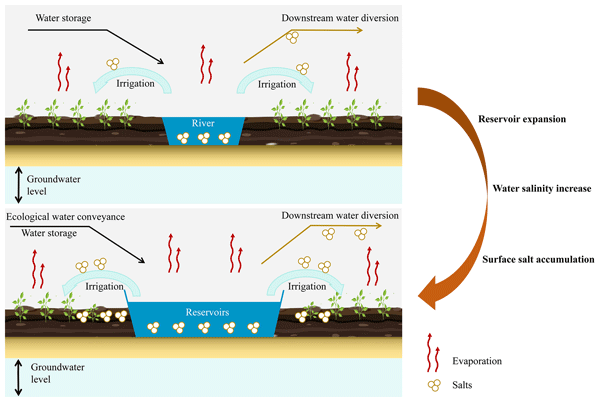
Gaojia Meng, Guofeng Zhu, Yinying Jiao, Dongdong Qiu, Yuhao Wang, Siyu Lu, Rui Li, Jiawei Liu, Longhu Chen, Qinqin Wang, Enwei Huang, and Wentong Li
Hydrol. Earth Syst. Sci., 29, 5049–5063, https://doi.org/10.5194/hess-29-5049-2025, https://doi.org/10.5194/hess-29-5049-2025, 2025
Short summary
Short summary
The Shiyang River basin is a typical inland river basin in the arid zone, and, through this study, it was found that its soil salinization area has a general trend of increasing, and the degree of salinization gradually increases. External water transfers have alleviated water shortage and salinization to a certain extent, but soil salinization has already occurred in its periphery.
Jiangwei Yang, Guofeng Zhu, Rui Li, Yinying Jiao, Xiaoyu Qi, Zhijie Zheng, Wenmin Li, and Yani Gun
EGUsphere, https://doi.org/10.5194/egusphere-2025-4004, https://doi.org/10.5194/egusphere-2025-4004, 2025
Preprint archived
Short summary
Short summary
Using stable isotopes in sprinkler irrigated alfalfa, this study shows: soil water isotopes became depleted after irrigation and returned to preirrigation levels in 9 days; water movement was mainly vertical with minimal horizontal flow; evaporation losses were 32 %, and excess irrigation caused 5 % percolation below 60 cm. sprinklers limit deep percolation but have high evaporation losses. Recommend low level multipoint sprinkling and nighttime irrigation to boost water use efficiency.
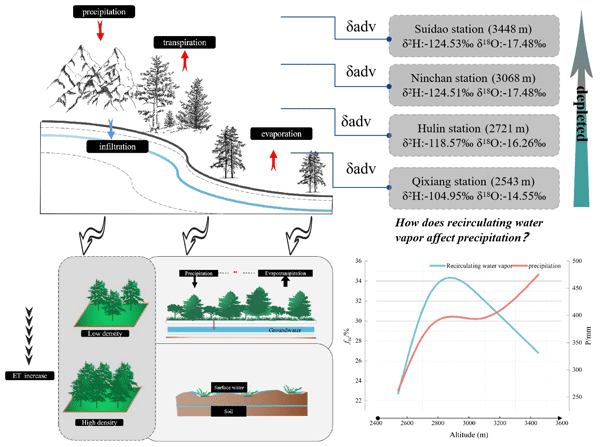
Yinying Jiao, Guofeng Zhu, Dongdong Qiu, Siyu Lu, Gaojia Meng, Rui Li, Qinqin Wang, Longhu Chen, and Wentong Li
Biogeosciences, 22, 4433–4448, https://doi.org/10.5194/bg-22-4433-2025, https://doi.org/10.5194/bg-22-4433-2025, 2025
Short summary
Short summary
This study shows that transpiration is the key reason behind the high-altitude forest zone's limited runoff generation. Furthermore, within the altitude range of 2500–3200 m, an increase in recirculated water vapour was observed alongside an increase in precipitation, suggesting a direct positive correlation between these two factors.
Yinying Jiao, Guofeng Zhu, Yuxin Miao, Yani Gun, Jiangwei Yang, and Qinqin Wang
EGUsphere, https://doi.org/10.5194/egusphere-2025-2410, https://doi.org/10.5194/egusphere-2025-2410, 2025
Preprint archived
Short summary
Short summary
This finding constitutes a major breakthrough in our understanding of land–atmosphere interactions in complex environments, advancing climate dynamics theory while also carrying profound implications for climate science—particularly in understanding and predicting vegetation-mediated extreme weather events—and providing essential insights for improving climate models and devising sustainable management strategies for arid regions.
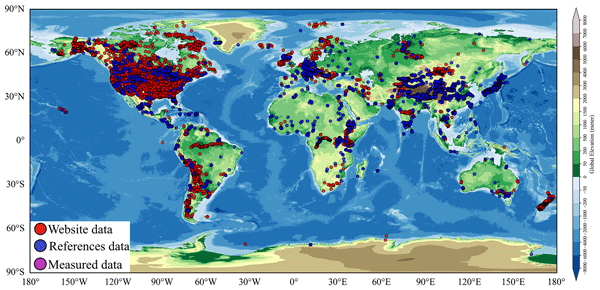
Rui Li, Guofeng Zhu, Longhu Chen, Xiaoyu Qi, Siyu Lu, Gaojia Meng, Yuhao Wang, Wenmin Li, Zhijie Zheng, Jiangwei Yang, and Yani Gun
Earth Syst. Sci. Data, 17, 2135–2145, https://doi.org/10.5194/essd-17-2135-2025, https://doi.org/10.5194/essd-17-2135-2025, 2025
Short summary
Short summary
The study of hydrogen and oxygen stable isotopes in surface water is vital for understanding the global water cycle and its response to climate change. Analysing data from 22 389 global sampling stations over 67 years, we uncover spatial and temporal variations in isotopes, showing depletion from the Equator to the poles and from coastal to inland areas. These variations, influenced by geographic, topographic and meteorological factors, reveal the water cycle's heterogeneity.
Jiangwei Yang, Liyuan Sang, Guofeng Zhu, Rui Li, Siyu Lu, QInqin Wang, Yinying Jiao, Xiaoyu Qi, Zhijie Zheng, Wenmin Li, Yuxin Miao, and Yani Gun
Hydrol. Earth Syst. Sci. Discuss., https://doi.org/10.5194/hess-2024-277, https://doi.org/10.5194/hess-2024-277, 2024
Manuscript not accepted for further review
Short summary
Short summary
Recent dramatic increase in dam construction on rivers has changed the water cycle pattern in arid areas. Understanding the impact of dams on these processes is a key challenge in the hydrological field. Studies show that the dam destroys the natural hydrological connectivity of rivers and increases the retention time of surface waters. Studies revealed these changes using isotope kinetic analysis, further confirming the profound effect of dams on water circulation in inland river basins.
Longhu Chen, Qinqin Wang, Guofeng Zhu, Rui Li, Siyu Lu, Xinrui Lin, Dongdong Qiu, Gaojia Meng, Yinying Jiao, Yuhao Wang, Jing Liu, Yutong He, and Yanan Li
Earth Syst. Sci. Data Discuss., https://doi.org/10.5194/essd-2024-171, https://doi.org/10.5194/essd-2024-171, 2024
Preprint withdrawn
Short summary
Short summary
This study provides a dataset of hydrogen and oxygen stable isotopes from 2,059 sites worldwide, showing variations in global precipitation isotopes since 1961. The dataset offers insights into climate variability and water resource management.
Qinqin Wang, Yuanxiao Xu, Guofeng Zhu, Siyu Lu, Dongdong Qiu, Yinying Jiao, Longhu Chen, Gaojia Meng, Rui Li, Xiaoyu Qi, Wenmin Li, Ling Zhao, Yuhao Wang, Enwei Huang, and Wentong Li
EGUsphere, https://doi.org/10.5194/egusphere-2024-2047, https://doi.org/10.5194/egusphere-2024-2047, 2024
Preprint archived
Short summary
Short summary
We studied the impact of agricultural activities and ecological restoration on soil organic carbon in the terraced areas of the Loess Plateau. This research is of significance for agricultural management and ecological restoration in the terraced areas of the Loess Plateau, and contributes to the formulation of rational policies for carbon sequestration in terraced farmland.
Enwei Huang, Guofeng Zhu, Yuhao Wang, Gaojia Meng, Ling Zhao, Xuan Zhang, Xiaoyu Qi, Qinqin Wang, Yinying Jiao, Jiawei Liu, Siyu Lu, Longhu Chen, and Rui Li
EGUsphere, https://doi.org/10.5194/egusphere-2024-1008, https://doi.org/10.5194/egusphere-2024-1008, 2024
Preprint archived
Short summary
Short summary
(1) the distribution of snow across the Qilian Mountains mainly splits between the central and western areas; (2) the area covered by snow in the Qilian Mountains is growing, but the depth of the snow is on a decline (3) most of the region is witnessing an earlier start of snow onset date (SOD), a longer snow-covered days (SCD), and an earlier snow end date (SED).
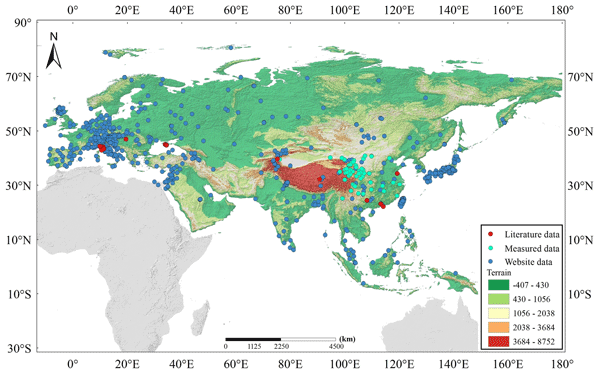
Longhu Chen, Qinqin Wang, Guofeng Zhu, Xinrui Lin, Dongdong Qiu, Yinying Jiao, Siyu Lu, Rui Li, Gaojia Meng, and Yuhao Wang
Earth Syst. Sci. Data, 16, 1543–1557, https://doi.org/10.5194/essd-16-1543-2024, https://doi.org/10.5194/essd-16-1543-2024, 2024
Short summary
Short summary
We have compiled data regarding stable precipitation isotopes from 842 sampling points throughout the Eurasian continent since 1961, accumulating a total of 51 753 data records. The collected data have undergone pre-processing and statistical analysis. We also analysed the spatiotemporal distribution of stable precipitation isotopes across the Eurasian continent and their interrelationships with meteorological elements.
Rui Li, Guofeng Zhu, Siyu Lu, Liyuan Sang, Gaojia Meng, Longhu Chen, Yinying Jiao, and Qinqin Wang
Hydrol. Earth Syst. Sci., 27, 4437–4452, https://doi.org/10.5194/hess-27-4437-2023, https://doi.org/10.5194/hess-27-4437-2023, 2023
Short summary
Short summary
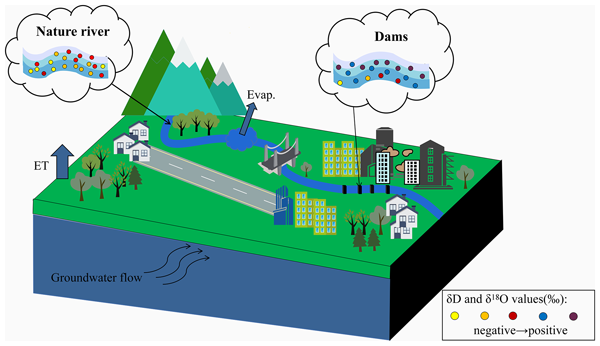
In semi-arid regions, the problem of water shortages is becoming more and more serious with the acceleration of urbanization. Based on isotope data and hydrometeorological data, we analysed the impact of urbanization on the water cycle of the basin. The results showed that urbanization sped up the process of rainfall runoff. The MRT got shorter from upstream to downstream, and the landscape dams that were built during urbanization made the river evaporate even more.
Xinrui Lin, Guofeng Zhu, Dongdong Qiu, Longhu Chen, Dehong Si, Linlin Ye, Siyu Lu, Yinying Jiao, Jiawei Liu, Rui Li, Qinqin Wang, Jiangwei Yang, and Wenhao Zhang
EGUsphere, https://doi.org/10.5194/egusphere-2023-2058, https://doi.org/10.5194/egusphere-2023-2058, 2023
Preprint archived
Short summary
Short summary
This article examines the impacts of high-temperature events on precipitation isotopes. The results show that stable precipitation isotopes are more enriched under the influence of high-temperature events than in the same month of previous years. High temperatures and atmospheric circulation patterns lead to abnormal variations in precipitation isotopes in high-temperature months. This research is instructive for disentangling the influence of high-temperature events on water cycle processes.
Siyu Lu, Guofeng Zhu, Rui Li, Yinying Jiao, Gaojia Meng, Dongdong Qiu, Yuwei Liu, Lei Wang, Xinrui Lin, Yuanxiao Xu, Qinqin Wang, and Longhu Chen
Biogeosciences Discuss., https://doi.org/10.5194/bg-2023-1, https://doi.org/10.5194/bg-2023-1, 2023
Manuscript not accepted for further review
Short summary
Short summary
The study shows that precipitation and soil water are the most important sources for forest trees in the mountainous areas, and that agricultural vegetation in the middle and lower oasis areas mainly absorbs soil water recharged by irrigation. The desert area forms vegetation in the ecological water transfer area, and the vegetation mainly absorbs soil water, lake water and groundwater formed by ecological water transfer.
Yinying Jiao, Guofeng Zhu, Dongdong Qiu, Yuwei Liu, Lei Wang, Siyu Lu, Gaojia Meng, Xinrui Lin, Rui Li, Qinqin Wang, Longhu Chen, and Niu Sun
Hydrol. Earth Syst. Sci. Discuss., https://doi.org/10.5194/hess-2022-375, https://doi.org/10.5194/hess-2022-375, 2023
Revised manuscript not accepted
Short summary
Short summary
Qilian Mountains are an important ecological security barrier and a priority area for biodiversity conservation in central Asia. We quantified the evapotranspiration processes in the forest belts of the Qilian Mountains as well as their contribution to runoff yield and concentration based on precipitation, soil water, and plant water samples and experimental data. We draw a conclusion that the forest zone does not yield flows in the eastern part of the Qilian Mountains.
Guofeng Zhu, Yuwei Liu, Peiji Shi, Wenxiong Jia, Junju Zhou, Yuanfeng Liu, Xinggang Ma, Hanxiong Pan, Yu Zhang, Zhiyuan Zhang, Zhigang Sun, Leilei Yong, and Kailiang Zhao
Earth Syst. Sci. Data, 14, 3773–3789, https://doi.org/10.5194/essd-14-3773-2022, https://doi.org/10.5194/essd-14-3773-2022, 2022
Short summary
Short summary
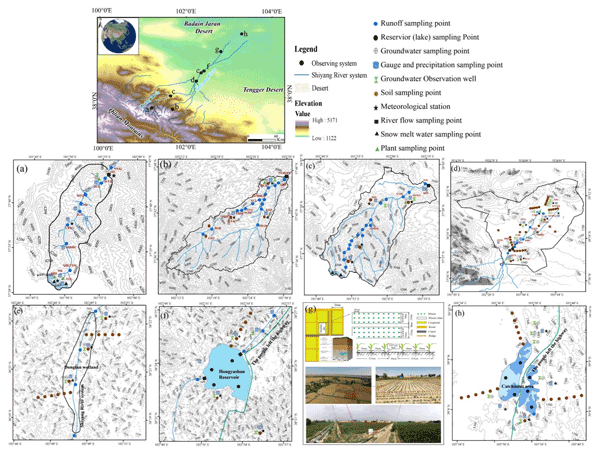
From 2015 to 2020, we studied the Shiyang River basin, which has the highest utilization rate of water resources and the most prominent contradiction of water use, as a typical demonstration basin to establish and improve the isotope hydrology observation system, including river source region, oasis region, reservoir channel system region, oasis farmland region, ecological engineering construction region, and salinization process region.
Guofeng Zhu, Leilei Yong, Xi Zhao, Yuwei Liu, Zhuanxia Zhang, Yuanxiao Xu, Zhigang Sun, Liyuan Sang, and Lei Wang
Hydrol. Earth Syst. Sci., 26, 3771–3784, https://doi.org/10.5194/hess-26-3771-2022, https://doi.org/10.5194/hess-26-3771-2022, 2022
Short summary
Short summary
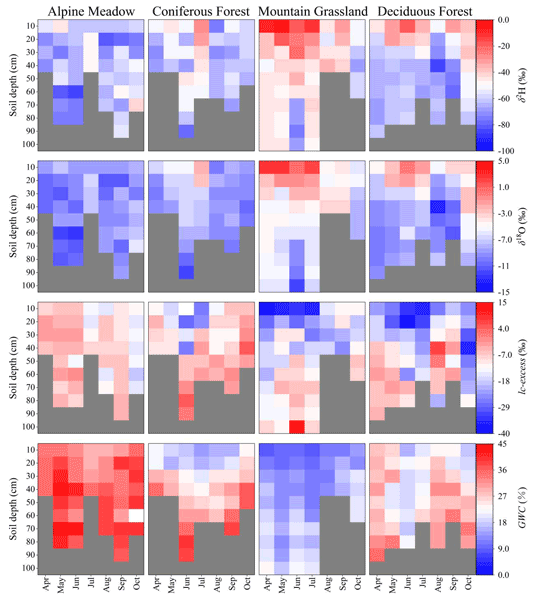
In arid areas, the processes of water storage have not been fully understood in different vegetation zones in mountainous areas. This study monitored the stable isotopes in the precipitation and soil water of the Xiying River Basin. In the four vegetation zones, soil water evaporation intensities were mountain grassland > deciduous forest > coniferous forest > alpine meadow, and soil water storage capacity was alpine meadow > deciduous forest > coniferous forest > mountain grassland.
Guofeng Zhu, Zhigang Sun, Yuanxiao Xu, Yuwei Liu, Zhuanxia Zhang, Liyuan Sang, and Lei Wang
Hydrol. Earth Syst. Sci. Discuss., https://doi.org/10.5194/hess-2022-75, https://doi.org/10.5194/hess-2022-75, 2022
Revised manuscript not accepted
Short summary
Short summary
We analyzed the stable isotopic composition of surface water and estimated its evaporative loss in the Shiyang River Basin. The characteristics of stable isotopes in surface water show a gradual enrichment from mountainous areas to deserts, and the evaporation loss of surface water also shows a gradually increasing trend from upstream to downstream. The study of evaporative losses in the river-lake continuum contributes to the sustainable use of water resources.
Yuwei Liu, Guofeng Zhu, Zhuanxia Zhang, Zhigang Sun, Leilei Yong, Liyuan Sang, Lei Wang, and Kailiang Zhao
Biogeosciences, 19, 877–889, https://doi.org/10.5194/bg-19-877-2022, https://doi.org/10.5194/bg-19-877-2022, 2022
Short summary
Short summary
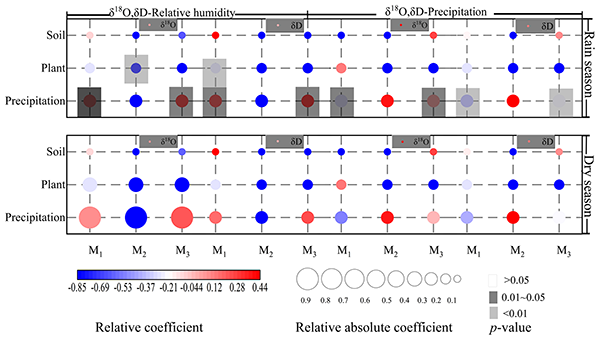
We took the water cycle process of soil–plant–atmospheric precipitation as the research objective. In the water cycle of soil–plant–atmospheric precipitation, precipitation plays the main controlling role. The main source of replenishment for alpine meadow plants is precipitation and alpine meltwater; the main source of replenishment for forest plants is soil water; and the plants in the arid foothills mainly use groundwater.
Cited articles
Bai, H., Zhong, Y., Ma, N., Kong, D., Mao, Y., Feng, W., Wu, Y., and Zhong, M.: Changes and drivers of long-term land evapotranspiration in the Yangtze River Basin: A water balance perspective, J. Hydrol., 653, 132763, https://doi.org/10.1016/j.jhydrol.2025.132763, 2025.
Brunner, M. I. and Naveau, P.: Spatial variability in Alpine reservoir regulation: deriving reservoir operations from streamflow using generalized additive models, Hydrol. Earth Syst. Sci., 27, 673–687, https://doi.org/10.5194/hess-27-673-2023, 2023.
Cao, S., Li, M., Zhu, Z., Wang, Z., Zha, J., Zhao, W., Duanmu, Z., Chen, J., Zheng, Y., Chen, Y., Myneni, R. B., and Piao, S.: Spatiotemporally consistent global dataset of the GIMMS leaf area index (GIMMS LAI4g) from 1982 to 2020, Earth Syst. Sci. Data, 15, 4877–4899, https://doi.org/10.5194/essd-15-4877-2023, 2023a.
Cao, S., Li, M., Zhu, Z., Wang, Z., Zha, J., Zhao, W., Duanmu, Z., Chen, J., Zheng, Y., Chen, Y., Myneni, R. B., and Piao, S.: Spatiotemporally consistent global dataset of the GIMMS Leaf Area Index (GIMMS LAI4g) from 1982 to 2020 (V1.2) (Version V1.2), Zenodo [data set], https://doi.org/10.5281/zenodo.8281930, 2023b.
Chai, Y., Yue, Y., Slater, L., and Miao, C.: Emergent constraints indicate slower increases in future global evapotranspiration, npj Clim. Atmos. Sci., 8, 46, https://doi.org/10.1038/s41612-025-00932-1, 2025.
Chen, N., Zhang, Y., Yuan, F., Song, C., Xu, M., Wang, Q., Hao, G., Bao, T., Zuo, Y., Liu, J., Zhang, T., Song, Y., Sun, L., Guo, Y., Zhang, H., Ma, G., Du, Y., Xu, X., and Wang, X.: Warming-induced vapor pressure deficit suppression of vegetation growth diminished in northern peatlands, Nat. Commun., 14, 7885, https://doi.org/10.1038/s41467-023-42932-w, 2023.
Copernicus Climate Change Service: ERA5-Land monthly averaged data from 1950 to present, Copernicus Climate Change Service (C3S), Climate Data Store (CDS) [data set], https://doi.org/10.24381/CDS.68D2BB30, 2019.
Duque-Gardeazabal, N., Friedman, A. R., and Brönnimann, S.: An Atlantic influence on evapotranspiration in the Orinoco and Amazon basins, Hydrol. Earth Syst. Sci., 29, 3277–3295, https://doi.org/10.5194/hess-29-3277-2025, 2025.
Feng, J., Zhang, K., Chao, L., Zhan, H., and Li, Y.: P-LSHv2: a multi-decadal global daily evapotranspiration dataset enhanced with explicit soil moisture constraints, Earth Syst. Sci. Data, 17, 5039–5064, https://doi.org/10.5194/essd-17-5039-2025, 2025.
Fick, S. E. and Hijmans, R. J.: WorldClim 2: new 1-km spatial resolution climate surfaces for global land areas, Int. J. Climatol., 37, 4302–4315, https://doi.org/10.1002/joc.5086, 2017.
Friedl, M. and Sulla-Menashe, D.: MODIS/Terra + Aqua Land Cover Type Yearly L3 Global 0.05Deg CMG V061, NASA EOSDIS Land Processes DAAC [data set], https://doi.org/10.5067/MODIS/MCD12C1.061, 2022.
Gao, X., Zhuo, W., and Gonsamo, A.: Humid, Warm and Treed Ecosystems Show Longer Time-Lag of Vegetation Response to Climate, Geophys. Res. Lett., 51, e2024GL111737, https://doi.org/10.1029/2024GL111737, 2024.
Gentine, P., Green, J. K., Guérin, M., Humphrey, V., Seneviratne, S. I., Zhang, Y., and Zhou, S.: Coupling between the terrestrial carbon and water cycles – a review, Environ. Res. Lett., 14, 083003, https://doi.org/10.1088/1748-9326/ab22d6, 2019.
Guo, M., Yang, L., Zhang, L., Shen, F., Meadows, M. E., and Zhou, C.: Hydrology, vegetation, and soil properties as key drivers of soil organic carbon in coastal wetlands: A high-resolution study, Environmental Science and Ecotechnology, 23, 100482, https://doi.org/10.1016/j.ese.2024.100482, 2025.
Hermann, M., Wernli, H., and Röthlisberger, M.: Drastic increase in the magnitude of very rare summer-mean vapor pressure deficit extremes, Nat. Commun., 15, 7022, https://doi.org/10.1038/s41467-024-51305-w, 2024.
Hsu, H. and Dirmeyer, P. A.: Nonlinearity and Multivariate Dependencies in the Terrestrial Leg of Land-Atmosphere Coupling, Water Resour. Res., 57, e2020WR028179, https://doi.org/10.1029/2020WR028179, 2021.
Kim, Y. and Johnson, M. S.: Deciphering the role of evapotranspiration in declining relative humidity trends over land, Commun. Earth Environ., 6, 105, https://doi.org/10.1038/s43247-025-02076-9, 2025.
Kumagai, T., Yoshifuji, N., Tanaka, N., Suzuki, M., and Kume, T.: Comparison of soil moisture dynamics between a tropical rain forest and a tropical seasonal forest in Southeast Asia: Impact of seasonal and year-to-year variations in rainfall, Water Resour. Res., 45, 2008WR007307, https://doi.org/10.1029/2008WR007307, 2009.
Lebrija-Trejos, E., Hernández, A., and Wright, S. J.: Effects of moisture and density-dependent interactions on tropical tree diversity, Nature, 615, 100–104, https://doi.org/10.1038/s41586-023-05717-1, 2023.
Li, F., Xiao, J., Chen, J., Ballantyne, A., Jin, K., Li, B., Abraha, M., and John, R.: Global water use efficiency saturation due to increased vapor pressure deficit, Science, 381, 672–677, https://doi.org/10.1126/science.adf5041, 2023a.
Li, T., He, B., Chen, D., Chen, H. W., Guo, L., Yuan, W., Fang, K., Shi, F., Liu, L., Zheng, H., Huang, L., Wu, X., Hao, X., Zhao, X., and Jiang, W.: Increasing Sensitivity of Tree Radial Growth to Precipitation, Geophys. Res. Lett., 51, e2024GL110003, https://doi.org/10.1029/2024GL110003, 2024.
Li, Y., Li, Z.-L., Wu, H., Zhou, C., Liu, X., Leng, P., Yang, P., Wu, W., Tang, R., Shang, G.-F., and Ma, L.: Biophysical impacts of earth greening can substantially mitigate regional land surface temperature warming, Nat. Commun., 14, 121, https://doi.org/10.1038/s41467-023-35799-4, 2023b.
Li, Z., Li, Y., Qin, Y., Liu, L., Bach, E., Armstrong, A., Li, G., Li, M., Wang, Z., Bai, Y., and Chen, Z.: National assessment reveals widespread wind farm impacts on land surface temperature and vegetation in China, Geography and Sustainability, 100460, https://doi.org/10.1016/j.geosus.2026.100460, 2026.
Lian, X., Piao, S., Chen, A., Huntingford, C., Fu, B., Li, L. Z. X., Huang, J., Sheffield, J., Berg, A. M., Keenan, T. F., McVicar, T. R., Wada, Y., Wang, X., Wang, T., Yang, Y., and Roderick, M. L.: Multifaceted characteristics of dryland aridity changes in a warming world, Nat. Rev. Earth Environ., 2, 232–250, https://doi.org/10.1038/s43017-021-00144-0, 2021.
Lin, X., Zhang, S., Zhao, X., Li, R., Wang, S., Yang, L., and Chen, X.: Global thresholds for the climate-driven effects of vegetation restoration on runoff and soil erosion, J. Hydrol., 647, 132374, https://doi.org/10.1016/j.jhydrol.2024.132374, 2025.
Liu, Y., Kumar, M., Katul, G. G., Feng, X., and Konings, A. G.: Plant hydraulics accentuates the effect of atmospheric moisture stress on transpiration, Nat. Clim. Change, 10, 691–695, https://doi.org/10.1038/s41558-020-0781-5, 2020.
Mann, H. B.: Nonparametric Tests Against Trend, Econometrica, 13, 245, https://doi.org/10.2307/1907187, 1945.
Massmann, A., Gentine, P., and Lin, C.: When Does Vapor Pressure Deficit Drive or Reduce Evapotranspiration?, J. Adv. Model. Earth Sy., 11, 3305–3320, https://doi.org/10.1029/2019MS001790, 2019.
Mauder, M., Jung, M., Stoy, P., Nelson, J., and Wanner, L.: Energy balance closure at FLUXNET sites revisited, Agr. Forest Meteorol., 358, 110235, https://doi.org/10.1016/j.agrformet.2024.110235, 2024.
Miner, G. L., Bauerle, W. L., and Baldocchi, D. D.: Estimating the sensitivity of stomatal conductance to photosynthesis: a review, Plant Cell Environ., 40, 1214–1238, https://doi.org/10.1111/pce.12871, 2017.
Miralles, D. G., De Jeu, R. A. M., Gash, J. H., Holmes, T. R. H., and Dolman, A. J.: Magnitude and variability of land evaporation and its components at the global scale, Hydrol. Earth Syst. Sci., 15, 967–981, https://doi.org/10.5194/hess-15-967-2011, 2011.
Miralles, D. G., Bonte, O., Koppa, A., Baez-Villanueva, O. M., Tronquo, E., Zhong, F., Beck, H. E., Hulsman, P., Dorigo, W., Verhoest, N. E. C., and Haghdoost, S.: GLEAM4: global land evaporation and soil moisture dataset at 0.1° resolution from 1980 to near present, Sci. Data, 12, 416, https://doi.org/10.1038/s41597-025-04610-y, 2025.
Peters, W., Van Der Velde, I. R., Van Schaik, E., Miller, J. B., Ciais, P., Duarte, H. F., Van Der Laan-Luijkx, I. T., Van Der Molen, M. K., Scholze, M., Schaefer, K., Vidale, P. L., Verhoef, A., Wårlind, D., Zhu, D., Tans, P. P., Vaughn, B., and White, J. W. C.: Increased water-use efficiency and reduced CO2 uptake by plants during droughts at a continental scale, Nature Geosci., 11, 744–748, https://doi.org/10.1038/s41561-018-0212-7, 2018.
Qiu, Z., Liu, D., Yan, N., Yan, Y., Yang, C., Zhang, C., and Duan, H.: Landsat and dual random forest modelling reveal sediment fining in the Yellow River shaped by ecological restoration on China's loess plateau, Remote Sens. Environ., 330, 114994, https://doi.org/10.1016/j.rse.2025.114994, 2025.
Rahmani, J., Creed, I. F., Badiou, P., and Ameli, A. A.: Wetlands set the pace of annual runoff in the northern Great Plains, Commun. Earth Environ., https://doi.org/10.1038/s43247-026-03318-0, 2026.
Renner, M., Brenner, C., Mallick, K., Wizemann, H.-D., Conte, L., Trebs, I., Wei, J., Wulfmeyer, V., Schulz, K., and Kleidon, A.: Using phase lags to evaluate model biases in simulating the diurnal cycle of evapotranspiration: a case study in Luxembourg, Hydrol. Earth Syst. Sci., 23, 515–535, https://doi.org/10.5194/hess-23-515-2019, 2019.
Sen, P. K.: Estimates of the Regression Coefficient Based on Kendall's Tau, J. Am. Stat. Assoc., 63, 1379–1389, https://doi.org/10.1080/01621459.1968.10480934, 1968.
Shih, C.-H., Jang, Y.-S., Yang, T.-Y., Huang, C.-Y., Juang, J.-Y., and Lo, M.-H.: Impact of diurnal temperature and relative humidity hysteresis on atmospheric dryness in changing climates, Sci. Adv., 11, eadu5713, https://doi.org/10.1126/sciadv.adu5713, 2025.
Wang, J., Niu, H., Zhang, S., Chen, X., Xia, X., Zhang, Y., Lu, X., He, B., Wu, T., Song, C., Fu, Z., Yao, J., and Yuan, W.: Higher warming rate in global arid regions driven by decreased ecosystem latent heat under rising vapor pressure deficit from 1981 to 2022, Agr. For. Meteorol., 371, 110622, https://doi.org/10.1016/j.agrformet.2025.110622, 2025a.
Wang, L., Wei, Z., Zhang, B., Wang, Y., Zhang, X., and Chen, A.: Exploiting the modified surface energy balance system (mSEBS) model and monitoring actual land surface evapotranspiration in China, J. Hydrol., 661, 133596, https://doi.org/10.1016/j.jhydrol.2025.133596, 2025b.
Wang, M., Wang, Y., Liu, X., Hou, W., Wang, J., Li, S., Zhao, L., and Hu, Z.: Vapor pressure deficit dominates vegetation productivity during compound drought and heatwave events in China's arid and semi-arid regions: Evidence from multiple vegetation parameters, Ecol. Inform., 88, 103144, https://doi.org/10.1016/j.ecoinf.2025.103144, 2025c.
Will, R. E., Wilson, S. M., Zou, C. B., and Hennessey, T. C.: Increased vapor pressure deficit due to higher temperature leads to greater transpiration and faster mortality during drought for tree seedlings common to the forest–grassland ecotone, New Phytol., 200, 366–374, https://doi.org/10.1111/nph.12321, 2013.
Xia, Y., Hao, Z., Shi, C., Li, Y., Meng, J., Xu, T., Wu, X., and Zhang, B.: Regional and Global Land Data Assimilation Systems: Innovations, Challenges, and Prospects, J. Meteorol. Res., 33, 159–189, https://doi.org/10.1007/s13351-019-8172-4, 2019.
Xu, T., Guo, Z., Liu, S., He, X., Meng, Y., Xu, Z., Xia, Y., Xiao, J., Zhang, Y., Ma, Y., and Song, L.: Evaluating Different Machine Learning Methods for Upscaling Evapotranspiration from Flux Towers to the Regional Scale, J. Geophys. Res.-Atmos., 123, 8674–8690, https://doi.org/10.1029/2018JD028447, 2018.
Xu, W., Xia, X., Piao, S., Wu, D., Li, W., Yang, S., and Yuan, W.: Weakened Increase in Global Near-Surface Water Vapor Pressure During the Last 20 Years, Geophys. Res. Lett., 51, e2023GL107909, https://doi.org/10.1029/2023GL107909, 2024.
Yang, Q., Ma, Z., Zheng, Z., and Duan, Y.: Sensitivity of potential evapotranspiration estimation to the Thornthwaite and Penman–Monteith methods in the study of global drylands, Adv. Atmos. Sci., 34, 1381–1394, https://doi.org/10.1007/s00376-017-6313-1, 2017.
Yi, K., Senay, G. B., Fisher, J. B., Wang, L., Suvočarev, K., Chu, H., Moore, G. W., Novick, K. A., Barnes, M. L., Keenan, T. F., Mallick, K., Luo, X., Missik, J. E. C., Delwiche, K. B., Nelson, J. A., Good, S. P., Xiao, X., Kannenberg, S. A., Ahmadi, A., Wang, T., Bohrer, G., Litvak, M. E., Reed, D. E., Oishi, A. C., Torn, M. S., and Baldocchi, D.: Challenges and Future Directions in Quantifying Terrestrial Evapotranspiration, Water Resour. Res., 60, e2024WR037622, https://doi.org/10.1029/2024WR037622, 2024.
Yu, H., Xiao, H., and Gu, X.: Integrating species distribution and piecewise linear regression model to identify functional connectivity thresholds to delimit urban ecological corridors, Comput. Environ. Urban, 113, 102177, https://doi.org/10.1016/j.compenvurbsys.2024.102177, 2024.
Yuan, W., Zheng, Y., Piao, S., Ciais, P., Lombardozzi, D., Wang, Y., Ryu, Y., Chen, G., Dong, W., Hu, Z., Jain, A. K., Jiang, C., Kato, E., Li, S., Lienert, S., Liu, S., Nabel, J. E. M. S., Qin, Z., Quine, T., Sitch, S., Smith, W. K., Wang, F., Wu, C., Xiao, Z., and Yang, S.: Increased atmospheric vapor pressure deficit reduces global vegetation growth, Sci. Adv., 5, eaax1396, https://doi.org/10.1126/sciadv.aax1396, 2019.
Zahn, E., Bou-Zeid, E., Good, S. P., Katul, G. G., Thomas, C. K., Ghannam, K., Smith, J. A., Chamecki, M., Dias, N. L., Fuentes, J. D., Alfieri, J. G., Kwon, H., Caylor, K. K., Gao, Z., Soderberg, K., Bambach, N. E., Hipps, L. E., Prueger, J. H., and Kustas, W. P.: Direct partitioning of eddy-covariance water and carbon dioxide fluxes into ground and plant components, Agr. Forest Meteorol., 315, 108790, https://doi.org/10.1016/j.agrformet.2021.108790, 2022.
Zantout, K., Balkovic, J., Billing, M., Folberth, C., Gosling, S. N., Hank, T., Hantson, S., Iizumi, T., Ito, A., Jägermeyr, J., Jain, A. K., Khabarov, N., Kou-Giesbrecht, S., Li, F., Li, M., Lin, T.-S., Liu, W., Müller, C., Okada, M., Ostberg, S., Otta, K., Rabin, S., Reyer, C. P. O., Scheer, C., Schneider, J. M., Zabel, F., Frieler, K., and Schewe, J.: Shifting dominant periods in extreme climate impacts under global warming, Nat. Commun., 16, 9746, https://doi.org/10.1038/s41467-025-65600-7, 2025.
Zhang, J., Guan, K., Peng, B., Pan, M., Zhou, W., Jiang, C., Kimm, H., Franz, T. E., Grant, R. F., Yang, Y., Rudnick, D. R., Heeren, D. M., Suyker, A. E., Bauerle, W. L., and Miner, G. L.: Sustainable irrigation based on co-regulation of soil water supply and atmospheric evaporative demand, Nat. Commun., 12, 5549, https://doi.org/10.1038/s41467-021-25254-7, 2021.
Zhang, Q., Manzoni, S., Katul, G., Porporato, A., and Yang, D.: The hysteretic evapotranspiration – Vapor pressure deficit relation, J. Geophys. Res.-Biogeo., 119, 125–140, https://doi.org/10.1002/2013JG002484, 2014.
Zhang, W., Koch, J., Wei, F., Zeng, Z., Fang, Z., and Fensholt, R.: Soil Moisture and Atmospheric Aridity Impact Spatio-Temporal Changes in Evapotranspiration at a Global Scale, J. Geophys. Res.-Atmos., 128, e2022JD038046, https://doi.org/10.1029/2022JD038046, 2023.
Zhang, Y., Peña-Arancibia, J. L., McVicar, T. R., Chiew, F. H. S., Vaze, J., Liu, C., Lu, X., Zheng, H., Wang, Y., Liu, Y. Y., Miralles, D. G., and Pan, M.: Multi-decadal trends in global terrestrial evapotranspiration and its components, Sci. Rep., 6, 19124, https://doi.org/10.1038/srep19124, 2016.
Zhao, Y. and Feng, Q.: Identifying spatial and temporal dynamics and driving factors of cultivated land fragmentation in Shaanxi province, Agr. Syst., 217, 103948, https://doi.org/10.1016/j.agsy.2024.103948, 2024.
Zhou, S. and Yu, B.: Neglecting land–atmosphere feedbacks overestimates climate-driven increases in evapotranspiration, Nat. Clim. Change, 15, 1099–1106, https://doi.org/10.1038/s41558-025-02428-5, 2025.
Zhou, S., Williams, A. P., Berg, A. M., Cook, B. I., Zhang, Y., Hagemann, S., Lorenz, R., Seneviratne, S. I., and Gentine, P.: Land–atmosphere feedbacks exacerbate concurrent soil drought and atmospheric aridity, P. Natl. Acad. Sci. USA, 116, 18848–18853, https://doi.org/10.1073/pnas.1904955116, 2019.
Zhuang, Y., Fu, R., Santer, B. D., Dickinson, R. E., and Hall, A.: Quantifying contributions of natural variability and anthropogenic forcings on increased fire weather risk over the western United States, P. Natl. Acad. Sci. USA, 118, e2111875118, https://doi.org/10.1073/pnas.2111875118, 2021.
Short summary
As the climate warms, drier air can change how water moves from land to the atmosphere. We used global satellite and climate data from 1981 to 2020 to study this change. We found that drier air was linked to greater water loss over about 61% of land, especially in warm and humid regions. Plant water loss was more strongly linked to air dryness than water loss from bare soil, while dry regions showed limits or declines. These results can improve forecasts of future water-cycle change.
As the climate warms, drier air can change how water moves from land to the atmosphere. We used...


