the Creative Commons Attribution 4.0 License.
the Creative Commons Attribution 4.0 License.
 | 19 Aug 2026
Progressive groundwater decoupling may drive a shift toward shallower and faster terrestrial water cycling
Aoqi Sun
Wenjie Xu
Enze Ma
Hua Yuan
Chen Yang

Related authors
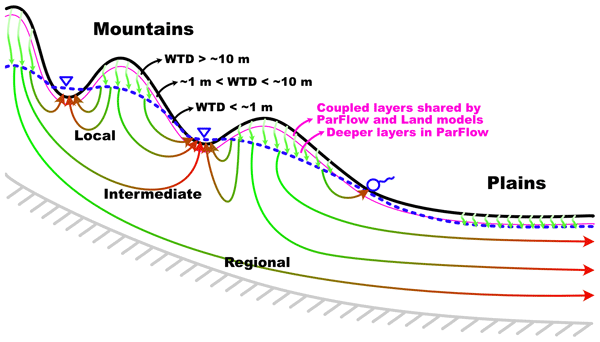
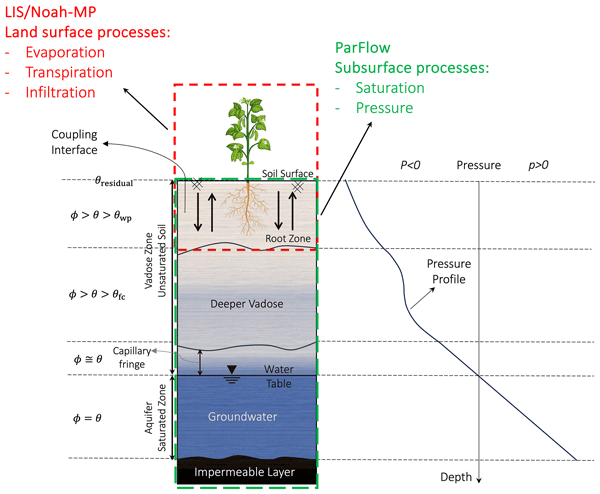
Groundwater plays a key role in land–atmosphere water and energy exchange, yet it is often simplified in large-scale Earth system models. We review 20 years of efforts to couple the groundwater model ParFlow with land surface and atmospheric models, showing how groundwater dynamics shape terrestrial fluxes. We also present an updated coupling framework that enhances model performance and flexibility, and outline a modular strategy to guide future development.
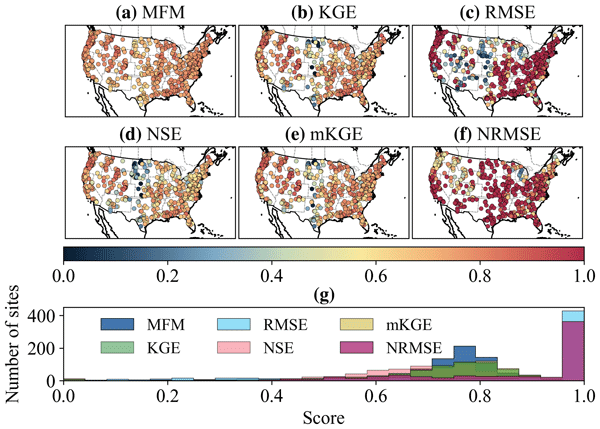
Groundwater plays a key role in land–atmosphere water and energy exchange, yet it is often simplified in large-scale Earth system models. We review 20 years of efforts to couple the groundwater model ParFlow with land surface and atmospheric models, showing how groundwater dynamics shape terrestrial fluxes. We also present an updated coupling framework that enhances model performance and flexibility, and outline a modular strategy to guide future development.