
Articles | Volume 30, issue 9
https://doi.org/10.5194/hess-30-2685-2026
© Author(s) 2026. This work is distributed under
the Creative Commons Attribution 4.0 License.
the Creative Commons Attribution 4.0 License.
https://doi.org/10.5194/hess-30-2685-2026
© Author(s) 2026. This work is distributed under
the Creative Commons Attribution 4.0 License.
the Creative Commons Attribution 4.0 License.
Research article
| 
08 May 2026
Research article |
| 08 May 2026
| 08 May 2026
Evolution of nonstationary hydrological drought characteristics in the UK under warming

UK Centre for Ecology & Hydrology, Maclean Building, Crowmarsh Gifford, Oxfordshire, OX108BB, United Kingdom
Lucy J. Barker
UK Centre for Ecology & Hydrology, Maclean Building, Crowmarsh Gifford, Oxfordshire, OX108BB, United Kingdom
Jamie Hannaford
UK Centre for Ecology & Hydrology, Maclean Building, Crowmarsh Gifford, Oxfordshire, OX108BB, United Kingdom
Irish Climate Analysis and Research UnitS (ICARUS), Maynooth University, Maynooth, Co. Kildare, Ireland
Maliko Tanguy
UK Centre for Ecology & Hydrology, Maclean Building, Crowmarsh Gifford, Oxfordshire, OX108BB, United Kingdom
European Centre for Medium Range Forecasts (ECMWF), Reading, United Kingdom
Related authors
No articles found.
Cinzia Mazzetti, Hannah Cloke, Dai Yamazaki, Gianpaolo Balsamo, Souhail Boussetta, Jasper Denissen, Michel Wortmann, Gabriele Arduini, Gurpreet Dass, Joe McNorton, Anna Agusti-Panareda, Maliko Tanguy, Ervin Zsoter, Margarita Choulga, Emanuel Dutra, Florian Pappenberger, Christoph Rüdiger, and Christel Prudhomme
EGUsphere, https://doi.org/10.5194/egusphere-2026-4305, https://doi.org/10.5194/egusphere-2026-4305, 2026
This preprint is open for discussion and under review for Geoscientific Model Development (GMD).
Short summary
Short summary
Rivers are an essential component of the water cycle, yet many Earth system and weather prediction models do not explicitly represent river flow. We integrated a global river model into ECMWF's forecasting system, enabling the simulation of river discharge, water levels, and flooding within a single operational framework. This development lays the foundation for future land–river–atmosphere interactions, paving the way for more complete Earth system models and improved predictions.
Rachael Armitage, Eugene Magee, Amulya Chevuturi, Wilson Chan, and Jamie Hannaford
EGUsphere, https://doi.org/10.5194/egusphere-2026-3154, https://doi.org/10.5194/egusphere-2026-3154, 2026
Short summary
Short summary
Transitions between droughts and floods can exacerbate the impacts of the individual events and provide challenges for water resource management. Here, we use river flow and climate projections to assess transitions in the UK over historical and future periods. Our results reveal the characteristics of and spatial pattern in current transitions, and how these are projected to change in the future, with wider implications for water resource management.
Burak Bulut, Eugene Magee, Rachael Armitage, Opeyemi E. Adedipe, Maliko Tanguy, Lucy J. Barker, and Jamie Hannaford
Nat. Hazards Earth Syst. Sci., 26, 1515–1536, https://doi.org/10.5194/nhess-26-1515-2026, https://doi.org/10.5194/nhess-26-1515-2026, 2026
Short summary
Short summary
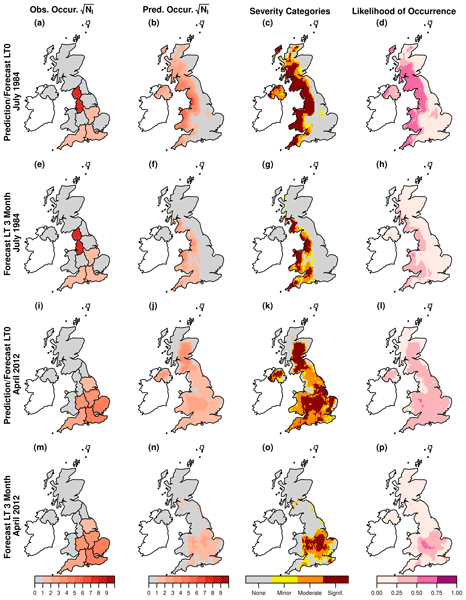
This study presents a data-driven framework to predict real-world drought impacts. Different modelling approaches were tested and evaluated in the United Kingdom using predictions at the time of occurrence, with the best-performing method selected for forecasting impacts months ahead. Both predictions and forecasts were validated using independent UK data and applied to Germany to test transferability. The results support early warning systems and improved drought risk planning.
Wilson Chan, Katie A. Facer-Childs, Maliko Tanguy, Eugene Magee, Burak Bulut, Nicky Stringer, Jeff Knight, and Jamie Hannaford
Hydrol. Earth Syst. Sci., 30, 905–927, https://doi.org/10.5194/hess-30-905-2026, https://doi.org/10.5194/hess-30-905-2026, 2026
Short summary
Short summary
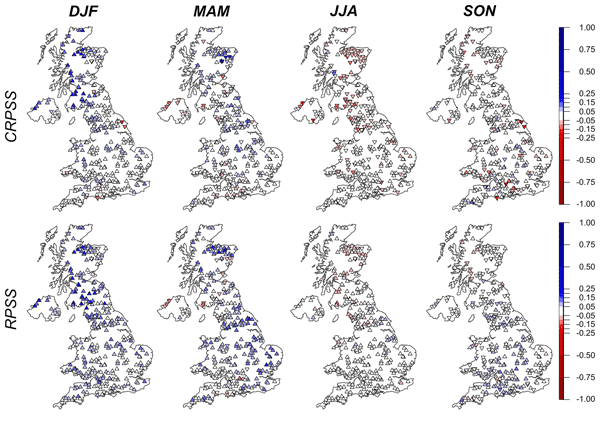
The UK Hydrological Outlook river flow forecasting system recently implemented the Historic Weather Analogues method. The method improves winter river flow forecast skill across the UK, especially in upland, fast-responding catchments with low catchment storage. Forecast skill is highest in winter due to accurate prediction of atmospheric circulation patterns like the North Atlantic Oscillation. The Ensemble Streamflow prediction method remains a robust benchmark, especially for other seasons.
Riccardo Biella, Anastasiya Shyrokaya, Monica Ionita, Raffaele Vignola, Samuel J. Sutanto, Andrijana Todorovic, Claudia Teutschbein, Daniela Cid, Maria Carmen Llasat, Pedro Alencar, Alessia Matanó, Elena Ridolfi, Benedetta Moccia, Ilias Pechlivanidis, Anne van Loon, Doris E. Wendt, Elin Stenfors, Fabio Russo, Jean-Philippe Vidal, Lucy Barker, Mariana Madruga de Brito, Marleen Lam, Monika Bláhová, Patricia Trambauer, Raed Hamed, Scott J. McGrane, Serena Ceola, Sigrid J. Bakke, Svitlana Krakovska, Viorica Nagavciuc, Faranak Tootoonchi, Giuliano Di Baldassarre, Sandra Hauswirth, Shreedhar Maskey, Svitlana Zubkovych, Marthe Wens, and Lena M. Tallaksen
Nat. Hazards Earth Syst. Sci., 25, 4475–4501, https://doi.org/10.5194/nhess-25-4475-2025, https://doi.org/10.5194/nhess-25-4475-2025, 2025
Short summary
Short summary
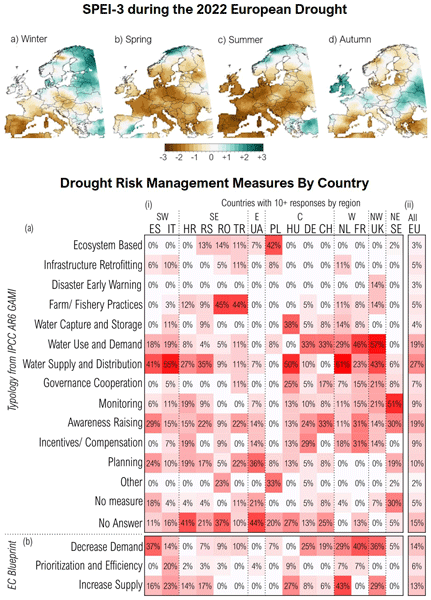
The DitA (Drought in the Anthropocene) network's study on the 2022 European drought reveals growing risks, varied impacts, and fragmented, short-term management. Based on a survey of water managers, it explores risk, impacts, strategies, and their evolution. While challenges persist, signs of improvement show readiness for change. The authors call for a European Drought Directive to unify and guide future drought risk management.
Jamie Hannaford, Stephen Turner, Amulya Chevuturi, Wilson Chan, Lucy J. Barker, Maliko Tanguy, Simon Parry, and Stuart Allen
Hydrol. Earth Syst. Sci., 29, 4371–4394, https://doi.org/10.5194/hess-29-4371-2025, https://doi.org/10.5194/hess-29-4371-2025, 2025
Short summary
Short summary
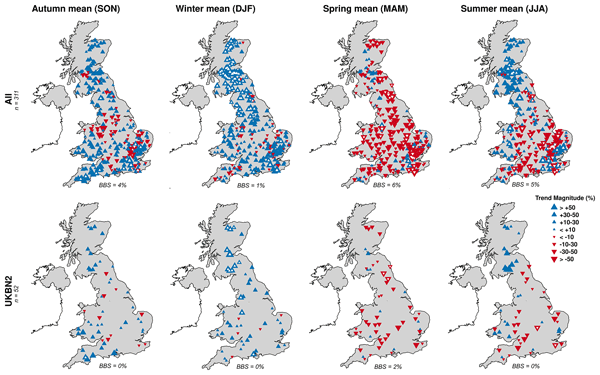
This extended review asks whether hydrological (river flow) droughts have become more severe over time in the UK based on literature review and original analyses. The UK is a good international exemplar, given the richness of available data. We find that there is little compelling evidence for a trend towards worsening river flow droughts, at odds with future climate change projections. We outline reasons for this discrepancy and make recommendations to guide researchers and policymakers.
Maliko Tanguy, Michael Eastman, Amulya Chevuturi, Eugene Magee, Elizabeth Cooper, Robert H. B. Johnson, Katie Facer-Childs, and Jamie Hannaford
Hydrol. Earth Syst. Sci., 29, 1587–1614, https://doi.org/10.5194/hess-29-1587-2025, https://doi.org/10.5194/hess-29-1587-2025, 2025
Short summary
Short summary
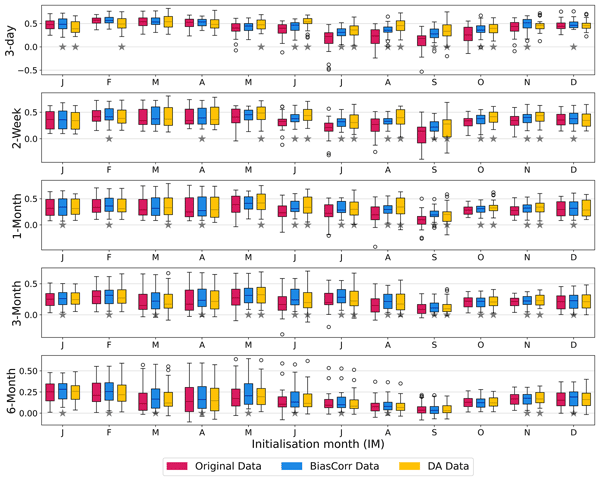
Our research compares two techniques, bias correction (BC) and data assimilation (DA), for improving river flow forecasts across 316 UK catchments. BC, which corrects errors after simulation, showed broad improvements, while DA, adjusting model states before forecast, excelled under specific conditions like snowmelt and high baseflows. Each method's unique strengths suit different scenarios. These insights can enhance forecasting systems, offering reliable and user-friendly hydrological predictions.
Iván Noguera, Jamie Hannaford, and Maliko Tanguy
Hydrol. Earth Syst. Sci., 29, 1295–1317, https://doi.org/10.5194/hess-29-1295-2025, https://doi.org/10.5194/hess-29-1295-2025, 2025
Short summary
Short summary
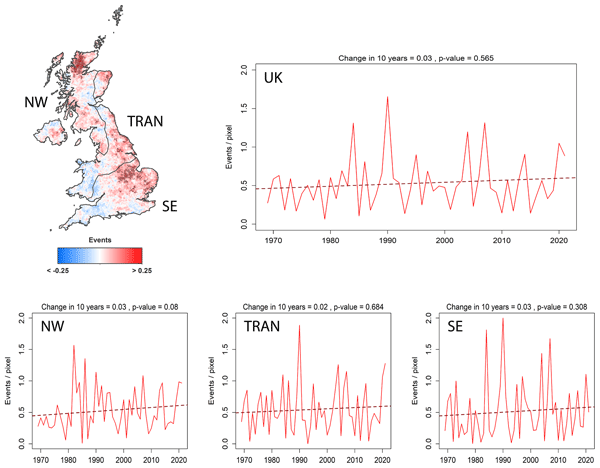
The study provides a detailed characterisation of flash drought in the UK for 1969–2021. The spatio-temporal distribution and trends of flash droughts are highly variable, with important regional and seasonal contrasts. In the UK, flash drought development responds primarily to precipitation variability, while the atmospheric evaporative demand plays a secondary role. We also found that the North Atlantic Oscillation is the main circulation pattern controlling flash drought development.
Alison L. Kay, Nick Dunstone, Gillian Kay, Victoria A. Bell, and Jamie Hannaford
Nat. Hazards Earth Syst. Sci., 24, 2953–2970, https://doi.org/10.5194/nhess-24-2953-2024, https://doi.org/10.5194/nhess-24-2953-2024, 2024
Short summary
Short summary
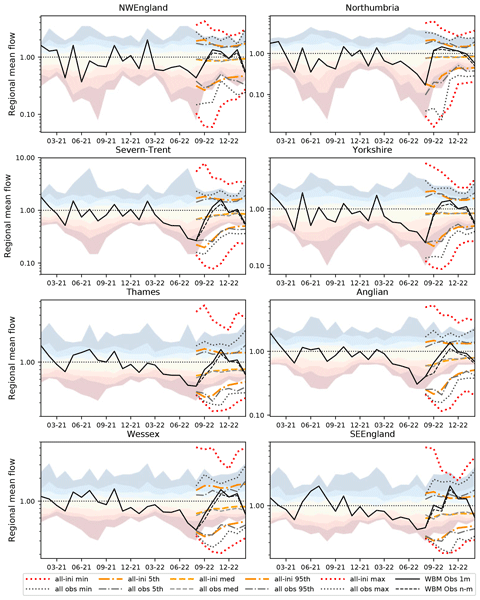
Hydrological hazards affect people and ecosystems, but extremes are not fully understood due to limited observations. A large climate ensemble and simple hydrological model are used to assess unprecedented but plausible floods and droughts. The chain gives extreme flows outside the observed range: summer 2022 ~ 28 % lower and autumn 2023 ~ 42 % higher. Spatial dependence and temporal persistence are analysed. Planning for such events could help water supply resilience and flood risk management.
Ed Hawkins, Nigel Arnell, Jamie Hannaford, and Rowan Sutton
Geosci. Commun., 7, 161–165, https://doi.org/10.5194/gc-7-161-2024, https://doi.org/10.5194/gc-7-161-2024, 2024
Short summary
Short summary
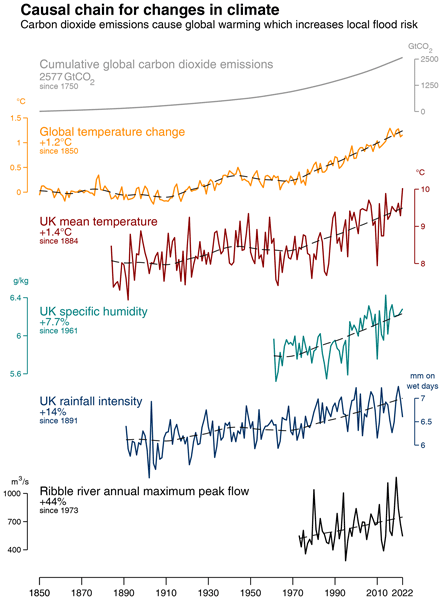
Climate change can often seem rather remote, especially when the discussion is about global averages which appear to have little relevance to local experiences. But those global changes are already affecting people, even if they do not fully realise it, and effective communication of this issue is critical. We use long observations and well-understood physical principles to visually highlight how global emissions influence local flood risk in one river basin in the UK.
Wilson C. H. Chan, Nigel W. Arnell, Geoff Darch, Katie Facer-Childs, Theodore G. Shepherd, and Maliko Tanguy
Nat. Hazards Earth Syst. Sci., 24, 1065–1078, https://doi.org/10.5194/nhess-24-1065-2024, https://doi.org/10.5194/nhess-24-1065-2024, 2024
Short summary
Short summary
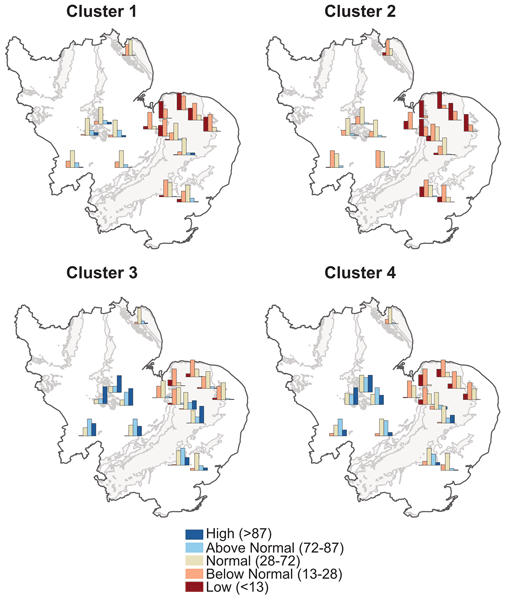
The most recent drought in the UK was declared in summer 2022. We pooled a large sample of plausible winters from seasonal hindcasts and grouped them into four clusters based on their atmospheric circulation configurations. Drought storylines representative of what the drought could have looked like if winter 2022/23 resembled each winter circulation storyline were created to explore counterfactuals of how bad the 2022 drought could have been over winter 2022/23 and beyond.
Simon Parry, Jonathan D. Mackay, Thomas Chitson, Jamie Hannaford, Eugene Magee, Maliko Tanguy, Victoria A. Bell, Katie Facer-Childs, Alison Kay, Rosanna Lane, Robert J. Moore, Stephen Turner, and John Wallbank
Hydrol. Earth Syst. Sci., 28, 417–440, https://doi.org/10.5194/hess-28-417-2024, https://doi.org/10.5194/hess-28-417-2024, 2024
Short summary
Short summary
We studied drought in a dataset of possible future river flows and groundwater levels in the UK and found different outcomes for these two sources of water. Throughout the UK, river flows are likely to be lower in future, with droughts more prolonged and severe. However, whilst these changes are also found in some boreholes, in others, higher levels and less severe drought are indicated for the future. This has implications for the future balance between surface water and groundwater below.
Maliko Tanguy, Michael Eastman, Eugene Magee, Lucy J. Barker, Thomas Chitson, Chaiwat Ekkawatpanit, Daniel Goodwin, Jamie Hannaford, Ian Holman, Liwa Pardthaisong, Simon Parry, Dolores Rey Vicario, and Supattra Visessri
Nat. Hazards Earth Syst. Sci., 23, 2419–2441, https://doi.org/10.5194/nhess-23-2419-2023, https://doi.org/10.5194/nhess-23-2419-2023, 2023
Short summary
Short summary
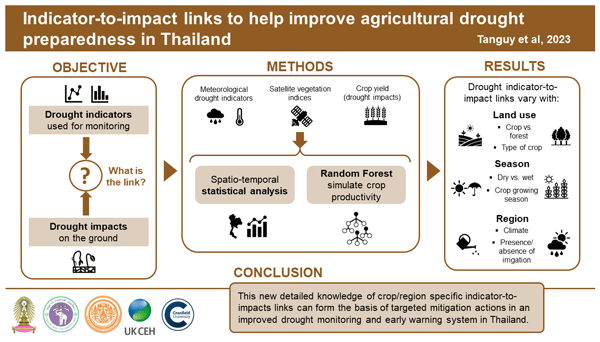
Droughts in Thailand are becoming more severe due to climate change. Understanding the link between drought impacts on the ground and drought indicators used in drought monitoring systems can help increase a country's preparedness and resilience to drought. With a focus on agricultural droughts, we derive crop- and region-specific indicator-to-impact links that can form the basis of targeted mitigation actions and an improved drought monitoring and early warning system in Thailand.
Jamie Hannaford, Jonathan D. Mackay, Matthew Ascott, Victoria A. Bell, Thomas Chitson, Steven Cole, Christian Counsell, Mason Durant, Christopher R. Jackson, Alison L. Kay, Rosanna A. Lane, Majdi Mansour, Robert Moore, Simon Parry, Alison C. Rudd, Michael Simpson, Katie Facer-Childs, Stephen Turner, John R. Wallbank, Steven Wells, and Amy Wilcox
Earth Syst. Sci. Data, 15, 2391–2415, https://doi.org/10.5194/essd-15-2391-2023, https://doi.org/10.5194/essd-15-2391-2023, 2023
Short summary
Short summary
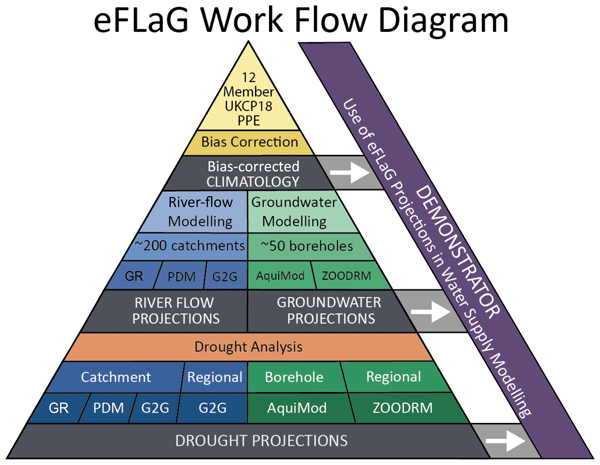
The eFLaG dataset is a nationally consistent set of projections of future climate change impacts on hydrology. eFLaG uses the latest available UK climate projections (UKCP18) run through a series of computer simulation models which enable us to produce future projections of river flows, groundwater levels and groundwater recharge. These simulations are designed for use by water resource planners and managers but could also be used for a wide range of other purposes.
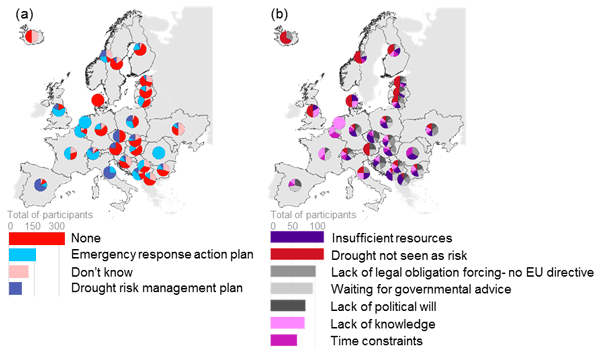
Veit Blauhut, Michael Stoelzle, Lauri Ahopelto, Manuela I. Brunner, Claudia Teutschbein, Doris E. Wendt, Vytautas Akstinas, Sigrid J. Bakke, Lucy J. Barker, Lenka Bartošová, Agrita Briede, Carmelo Cammalleri, Ksenija Cindrić Kalin, Lucia De Stefano, Miriam Fendeková, David C. Finger, Marijke Huysmans, Mirjana Ivanov, Jaak Jaagus, Jiří Jakubínský, Svitlana Krakovska, Gregor Laaha, Monika Lakatos, Kiril Manevski, Mathias Neumann Andersen, Nina Nikolova, Marzena Osuch, Pieter van Oel, Kalina Radeva, Renata J. Romanowicz, Elena Toth, Mirek Trnka, Marko Urošev, Julia Urquijo Reguera, Eric Sauquet, Aleksandra Stevkov, Lena M. Tallaksen, Iryna Trofimova, Anne F. Van Loon, Michelle T. H. van Vliet, Jean-Philippe Vidal, Niko Wanders, Micha Werner, Patrick Willems, and Nenad Živković
Nat. Hazards Earth Syst. Sci., 22, 2201–2217, https://doi.org/10.5194/nhess-22-2201-2022, https://doi.org/10.5194/nhess-22-2201-2022, 2022
Short summary
Short summary
Recent drought events caused enormous damage in Europe. We therefore questioned the existence and effect of current drought management strategies on the actual impacts and how drought is perceived by relevant stakeholders. Over 700 participants from 28 European countries provided insights into drought hazard and impact perception and current management strategies. The study concludes with an urgent need to collectively combat drought risk via a European macro-level drought governance approach.
Cited articles
Ahmadi, B. and Moradkhani, H.: Revisiting hydrological drought propagation and recovery considering water quantity and quality, Hydrol. Process., 33, 1492–1505, https://doi.org/10.1002/hyp.13417, 2019.
Anderson, B. J., Muñoz-Castro, E., Tallaksen, L. M., Matano, A., Götte, J., Armitage, R., Magee, E., and Brunner, M. I.: What is a drought-to-flood transition? Pitfalls and recommendations for defining consecutive hydrological extreme events, Hydrol. Earth Syst. Sci., 29, 6069–6092, https://doi.org/10.5194/hess-29-6069-2025, 2025.
Barker, L. J., Hannaford, J., Parry, S., Smith, K. A., Tanguy, M., and Prudhomme, C.: Historic hydrological droughts 1891–2015: systematic characterisation for a diverse set of catchments across the UK, Hydrol. Earth Syst. Sci., 23, 4583–4602, https://doi.org/10.5194/hess-23-4583-2019, 2019.
Barker, L. J., Hannaford, J., Magee, E., Turner, S., Sefton, C., Parry, S., Evans, J., Szczykulska, M., and Haxton, T.: An appraisal of the severity of the 2022 drought and its impacts, Weather, 79, 208–219, https://doi.org/10.1002/wea.4531, 2024.
Baykal, T., Taylan, E. D., Eriskin, E., and Terzi, Ö.: Predicting Hydrological Droughts of Long-Narrow Type Drainage Basin Using Monte Carlo Technique, J. Hydrol. Eng., 29, 04024013, https://doi.org/10.1061/jhyeff.heeng-6144, 2024.
Bell, V. A., Kay, A. L., Rudd, A. C., and Davies, H. N.: The MaRIUS-G2G datasets: Grid-to-Grid model estimates of flow and soil moisture for Great Britain using observed and climate model driving data, Geosci. Data J., 5, 63–72, https://doi.org/10.1002/gdj3.55, 2018.
Bevan, J.: Escaping the jaws of death: ensuring enough water in 2050, https://www.gov.uk/ (last access: 22 March 2026), 2019.
Bevan, J.: Drought risk in the Anthropocene: from the jaws of death to the waters of life, Philos. T. R. Soc. A, 380, 20220003, https://doi.org/10.1098/rsta.2022.0003, 2022.
Brunner, M. I. and Chartier-Rescan, C.: Drought spatial extent and dependence increase during drought propagation from the atmosphere to the hydrosphere, Geophys. Res. Lett., 51, e2023GL107918, https://doi.org/10.1029/2023GL107918, 2024.
Brunner, M. I., Slater, L., Tallaksen, L. M., and Clark, M.: Challenges in modeling and predicting floods and droughts: A review, Wiley Interdisciplinary Reviews: Water, 8, e1520, https://doi.org/10.1002/wat2.1520, 2021.
Chan, W. C. H., Shepherd, T. G., Facer-Childs, K., Darch, G., and Arnell, N. W.: Storylines of UK drought based on the 2010–2012 event, Hydrol. Earth Syst. Sci., 26, 1755–1777, https://doi.org/10.5194/hess-26-1755-2022, 2022.
Chan, W. C. H., Arnell, N. W., Darch, G., Facer-Childs, K., Shepherd, T. G., and Tanguy, M.: Added value of seasonal hindcasts to create UK hydrological drought storylines, Nat. Hazards Earth Syst. Sci. 24, 1065–1078, https://doi.org/10.5194/nhess-24-1065-2024, 2024.
Chandra, R., Saha, U., and Mujumdar, P. P.: Model and parameter uncertainty in IDF relationships under climate change, Adv. Water Resour., 79, 127–139, https://doi.org/10.1016/j.advwatres.2015.02.011, 2015.
Climate Change Committee: National Infrastructure Commission: Preparing for a drier future-England's water infrastructure needs, https://www.theccc.org.uk/wp-content/uploads/2019/07/Outcomes-Water-stress-case-study.pdf (last access: 22 March 2025), 2018.
Climate Change Committee: Water Stress and Resilience, https://www.theccc.org.uk/wp-content/uploads/2019/07/Outcomes-Water-stress-case-study.pdf (last access: 22 August 2025), 2019.
Climate Change Committee: Independent assessment of UK climate risk, https://www.theccc.org.uk/wp-content/uploads/2021/07/Independent-Assessment-of-UK-Climate-Risk-Advice-to-Govt-for-CCRA3-CCC.pdf (last access: 22 August 2025), 2021.
Coles, S.: An introduction to statistical modeling of extreme values, Springer, London, https://doi.org/10.1007/978-1-4471-3675-0, 2001.
Counsell, C. and Durant, M.: Water supply – observed and projected, in: Environment Agency, https://www.gov.uk/government/publications/national-framework-for-water-resources-2025-water-for-growth-nature-and-a-resilient-future/forewords-executive-summary-and-structure-national-framework-for-water-resources-2025 (last access: 22 March 2026), 2023.
Das, J. and Umamahesh, N. V.: Uncertainty and nonstationarity in streamflow extremes under climate change scenarios over a river basin, J. Hydrol. Eng., 22, 04017042, https://doi.org/10.1061/(ASCE)HE.1943-5584.0001571, 2017.
Di Nunno, F. and Granata, F.: Analysis of trends and abrupt changes in groundwater and meteorological droughts in the United Kingdom, J. Hydrol., 131430, https://doi.org/10.1016/j.jhydrol.2024.131430, 2024.
Durant, M., Hall, E., Morris, A., Walburn, G., Wilcox, A., and Counsell, C.: The future is transient: Barriers and opportunities for improved UK water resource climate change assessments using the enhanced Future Flows and Groundwater (eFLaG) climate service products, Climate Resilience and Sustainability, 3, e69, https://doi.org/10.1002/cli2.69, 2024.
Environment Agency: Impact of long droughts on water resources, Horizon House, Deanery Road, Bristol, BS1 5AH, SC070079/R5, ISBN: 978-1-84911-273-4, 2011.
Environment Agency: Review of stochastic and other approaches in water resources planning, SC220039/R1, https://www.gov.uk/government/publications, last access: 22 August 2025.
Gilleland, E. and Katz, R. W.: extRemes 2.0: An Extreme Value Analysis Package in R, J. Stat. Softw., 72, https://doi.org/10.18637/jss.v072.i08, 2016.
Hammond, J. C., Simeone, C., Hecht, J. S., Hodgkins, G. A., Lombard, M., McCabe, G., Wolock, D., Wieczorek, M., Olson, C., and Caldwell, T.: Going beyond low flows: Streamflow drought deficit and duration illuminate distinct spatiotemporal drought patterns and trends in the US during the last century, Water Resour. Res., 58, e2022WR031930, https://doi.org/10.1029/2022WR031930, 2022.
Hannaford, J., Mackay, J., Ascott, M., Bell, V., Chitson, T., Cole, S., Counsell, C., Durant, M., Facer-Childs, K., Jackson, C., Kay, A., Lane, R., Mansour, M., Moore, R. J., Parry, S., Rudd, A., Simpson, M., Turner, S., Wallbank, J., Wells, S., and Wilcox, A.: Hydrological projections for the UK, based on UK Climate Projections 2018 (UKCP18) data, from the Enhanced Future Flows and Groundwater (eFLaG) project, NERC EDS Environmental Information Data Centre [data set], https://doi.org/10.5285/1bb90673-ad37-4679-90b9-0126109639a9, 2022.
Hannaford, J., Mackay, J. D., Ascott, M., Bell, V. A., Chitson, T., Cole, S., Counsell, C., Durant, M., Jackson, C. R., Kay, A. L., Lane, R. A., Mansour, M., Moore, R., Parry, S., Rudd, A. C., Simpson, M., Facer-Childs, K., Turner, S., Wallbank, J. R., Wells, S., and Wilcox, A.: The enhanced future Flows and Groundwater dataset: development and evaluation of nationally consistent hydrological projections based on UKCP18, Earth Syst. Sci. Data, 15, 2391–2415, https://doi.org/10.5194/essd-15-2391-2023, 2023.
Hannaford, J., Turner, S., Chevuturi, A., Chan, W., Barker, L. J., Tanguy, M., Parry, S., and Allen, S.: Have river flow droughts become more severe? A review of the evidence from the UK – a data-rich, temperate environment, Hydrol. Earth Syst. Sci., 29, 4371–4394, https://doi.org/10.5194/hess-29-4371-2025, 2025.
Hasan, H. H., Mohd Razali, S. F., Muhammad, N. S., and Mohamad Hamzah, F.: Assessment of probability distributions and analysis of the minimum storage draft rate in the equatorial region, Nat. Hazards Earth Syst. Sci., 21, 1–19, https://doi.org/10.5194/nhess-21-1-2021, 2021.
Janicka-Kubiak, E.: Hydrological drought trends and seasonality in selected Polish catchments between 1993 and 2022 using a threshold based approach, Sci. Rep.-UK, 15, 40454, https://doi.org/10.1038/s41598-025-24133-1, 2025.
Jha, S., Goyal, M. K., Gupta, B. B., Hsu, C., Gilleland, E., and Das, J.: A methodological framework for extreme climate risk assessment integrating satellite and location based data sets in intelligent systems, Int. J. Intell. Syst., 37, 10268–10288, https://doi.org/10.1002/int.22475, 2022.
Jha, S., Gudmundsson, L., and Seneviratne, S. I.: Partitioning the uncertainties in compound hot and dry precipitation, soil moisture, and runoff extremes projections in CMIP6, Earths Future, 11, e2022EF003315, https://doi.org/10.1029/2022EF003315, 2023.
Kay, A. L., Griffin, A., Rudd, A. C., Chapman, R. M., Bell, V. A., and Arnell, N. W.: Climate change effects on indicators of high and low river flow across Great Britain, Adv. Water Resour., 151, 103909, https://doi.org/10.1016/j.advwatres.2021.103909, 2021.
Kay, G., Dunstone, N., Smith, D., Dunbar, T., Eade, R., and Scaife, A.: Current likelihood and dynamics of hot summers in the UK, Environ. Res. Lett., 15, 094099, https://doi.org/10.1088/1748-9326/abab32, 2020.
Kendon, M., Doherty, A., Hollis, D., Carlisle, E., Packman, S., McCarthy, M., Jevrejeva, S., Matthews, A., Williams, J., and Garforth, J.: State of the UK Climate 2023, Int. J. Climatol., 44, 1–117, https://doi.org/10.1002/joc.8553, 2024.
Kuana, L. A., Almeida, A. S., Mercuri, E. G. F., and Noe, S. M.: Regionalization of GR4J model parameters for river flow prediction in Paraná, Brazil, Hydrol. Earth Syst. Sci., 28, 3367–3390, https://doi.org/10.5194/hess-28-3367-2024, 2024.
Lane, R. A., Coxon, G., Freer, J., Seibert, J., and Wagener, T.: A large-sample investigation into uncertain climate change impacts on high flows across Great Britain, Hydrol. Earth Syst. Sci., 26, 5535–5554, https://doi.org/10.5194/hess-26-5535-2022, 2022.
Leng, J., Ma, K., Gu, S., Zhang, K., and He, D.: A non-stationary impactquant framework for assessing the human activity impacts on hydrological drought in the Upper Red River, Atmos. Res., 304, 107419, https://doi.org/10.1016/j.atmosres.2024.107419, 2024.
Liu, R., Yin, J., Slater, L., Kang, S., Yang, Y., Liu, P., Guo, J., Gu, X., Zhang, X., and Volchak, A.: Machine-learning-constrained projection of bivariate hydrological drought magnitudes and socioeconomic risks over China, Hydrol. Earth Syst. Sci., 28, 3305–3326, https://doi.org/10.5194/hess-28-3305-2024, 2024.
Lowe, J. A., Bernie, D., Bett, P., Bricheno, L., Brown, S., Calvert, D., Clark, R., Eagle, K., Edwards, T., and Fosser, G.: UKCP18 science overview report, Met Office Hadley Centre, Exeter, UK, 1–73, https://www.metoffice.gov.uk/pub/data/weather/uk/ukcp18/science-reports/UKCP18-Overview-report.pdf (last access: 20 March 2025), 2018.
Lück, A. and Wolf, V.: Generalized method of moments for estimating parameters of stochastic reaction networks, BMC Syst. Biol., 10, 98, https://doi.org/10.1186/s12918-016-0342-8, 2016.
Moore, R. J.: The PDM rainfall-runoff model, Hydrol. Earth Syst. Sci., 11, 483–499, https://doi.org/10.5194/hess-11-483-2007, 2007.
Murphy, C., Wilby, R. L., Matthews, T., Horvath, C., Crampsie, A., Ludlow, F., Noone, S., Brannigan, J., Hannaford, J., and McLeman, R.: The forgotten drought of 1765–1768: Reconstructing and re-evaluating historical droughts in the British and Irish Isles, Int. J. Climatol., 40, 5329, https://doi.org/10.1002/joc.6521, 2020.
Murphy, J. M., Harris, G. R., Sexton, D. M. H., Kendon, E. J., Bett, P. E., Clark, R. T., Eagle, K. E., Fosser, G., Fung, F., and Lowe, J. A.: UKCP18 land projections: science report, https://www.metoffice.gov.uk/ (last access: 23 March 2025), 2018.
Ndiaye, P. M., Bodian, A., Dezetter, A., Ogilvie, A., and Goudiaby, O.: Sensitivity of global hydrological models to potential evapotranspiration estimation methods in the Senegal River Basin (West Africa), J. Hydrol. Reg. Stud., 53, 101823, https://doi.org/10.1016/j.ejrh.2024.101823, 2024.
OFWAT: Towards resilience: how we will embed resilience in our work, https://www.ofwat.gov.uk/wp-content/uploads/2015/07/pap_pos20151210towardsresiliencerev.pdf (last access: 9 August 2025), 2015.
Onyutha, C.: On rigorous drought assessment using daily time scale: Non-stationary frequency analyses, revisited concepts, and a new method to yield non-parametric indices, Hydrology, 4, 48, https://doi.org/10.3390/hydrology4040048, 2017.
Parry, S., Mackay, J. D., Chitson, T., Hannaford, J., Magee, E., Tanguy, M., Bell, V. A., Facer-Childs, K., Kay, A., Lane, R., Moore, R. J., Turner, S., and Wallbank, J.: Divergent future drought projections in UK river flows and groundwater levels, Hydrol. Earth Syst. Sci., 28, 417–440, https://doi.org/10.5194/hess-28-417-2024, 2024.
Parvizi, S., Eslamian, S., Gheysari, M., Gohari, A., and Kopai, S. S.: Regional frequency analysis of drought severity and duration in Karkheh River Basin, Iran using univariate L-moments method, Environ. Monit. Assess., 194, 336, https://doi.org/10.1007/s10661-022-09977-8, 2022.
Posada, D. and Buckley, T.: Model Selection and Model Averaging in Phylogenetics: Advantages of Akaike Information Criterion and Bayesian Approaches Over Likelihood Ratio Tests, Syst. Biol., 53, 793–808, https://doi.org/10.1080/10635150490522304, 2004.
Prudhomme, C., Giuntoli, I., Robinson, E. L., Clark, D. B., Arnell, N. W., Dankers, R., Fekete, B. M., Franssen, W., Gerten, D., and Gosling, S. N.: Hydrological droughts in the 21st century, hotspots and uncertainties from a global multimodel ensemble experiment, P. Natl. Acad. Sci. USA, 111, 3262–3267, https://doi.org/10.1073/pnas.1222473110, 2014.
Ragulina, G. and Reitan, T.: Generalized extreme value shape parameter and its nature for extreme precipitation using long time series and the Bayesian approach, Hydrolog. Sci. J.,62, 863–879, https://doi.org/10.1080/02626667.2016.1260134, 2017.
Raut, A. and Ganguli, P.: Observed trends in timing and severity of streamflow droughts across global tropics, Environ. Res. Lett., 19, 034006, https://doi.org/10.1088/1748-9326/ad25a1, 2024.
Reis, D. S. and Stedinger, J. R.: Bayesian MCMC flood frequency analysis with historical information, J. Hydrol., 313, 97–116, https://doi.org/10.1016/j.jhydrol.2005.02.028, 2005.
Reyniers, N., Osborn, T. J., Addor, N., and Darch, G.: Projected changes in droughts and extreme droughts in Great Britain strongly influenced by the choice of drought index, Hydrol. Earth Syst. Sci., 27, 1151–1171, https://doi.org/10.5194/hess-27-1151-2023, 2023.
Robinson, E. L., Huntingford, C., Semeena, V. S., and Bullock, J. M.: CHESS-SCAPE: Future projections of meteorological variables at 1 km resolution for the United Kingdom 1980–2080 derived from UK Climate Projections 2018, NERC EDS Centre for Environmental Data Analysis [data set], https://doi.org/10.5285/8194b416cbee482b89e0dfbe17c5786c, 2022.
Robinson, E. L., Brown, M. J., Kay, A. L., Lane, R. A., Chapman, R., Bell, V. A., and Blyth, E. M.: Hydro-PE: gridded datasets of historical and future Penman–Monteith potential evaporation for the United Kingdom, Earth Syst. Sci. Data, 15, 4433–4461, https://doi.org/10.5194/essd-15-4433-2023, 2023.
Rudd, A. C., Kay, A. L., and Bell, V. A.: National-scale analysis of future river flow and soil moisture droughts: potential changes in drought characteristics, Climatic Change, 156, 323–340, https://doi.org/10.1007/s10584-019-02528-0, 2019.
Salas, J. D. and Obeysekera, J.: Revisiting the Concepts of Return Period and Risk for Nonstationary Hydrologic Extreme Events, J. Hydrol. Eng., 19, 554–568, https://doi.org/10.1061/(ASCE)HE.1943-5584.0000820, 2014.
Sarailidis, G., Vasiliades, L., and Loukas, A.: Analysis of streamflow droughts using fixed and variable thresholds, Hydrol. Process., 33, 414–431, https://doi.org/10.1002/hyp.13336, 2019.
Sarhadi, A., Burn, D. H., Concepción Ausín, M., and Wiper, M. P.: Time-varying nonstationary multivariate risk analysis using a dynamic Bayesian copula, Water Resour. Res., 52, 2327–2349, https://doi.org/10.1002/2015WR018525, 2016.
Seneviratne, S. and Hauser, M.: Regional climate sensitivity of climate extremes in CMIP6 versus CMIP5 multimodel ensembles, Earths Future, 8, e2019EF001474, https://doi.org/10.1029/2019EF001474, 2020.
Sharma, S. and Mujumdar, P. P.: Modeling concurrent hydroclimatic extremes with parametric multivariate extreme value models, Water Resour. Res., 58, e2021WR031519, https://doi.org/10.1029/2021WR031519, 2022.
Stahl, K., Vidal, J.-P., Hannaford, J., Tijdeman, E., Laaha, G., Gauster, T., and Tallaksen, L. M.: The challenges of hydrological drought definition, quantification and communication: an interdisciplinary perspective, Proc. IAHS, 383, 291–295, https://doi.org/10.5194/piahs-383-291-2020, 2020.
Strupczewski, W. G., Singh, V. P., and Feluch, W.: Non-stationary approach to at-site flood frequency modelling I. Maximum likelihood estimation, J. Hydrol., 248, 123–142,, https://doi.org/10.1016/S0022-1694(01)00397-3, 2001.
Stubbington, R., England, J., Sarremejane, R., Watts, G., and Wood, P. J.: The effects of drought on biodiversity in UK river ecosystems: Drying rivers in a wet country, Wiley Interdisciplinary Reviews: Water, 11, e1745, https://doi.org/10.1002/wat2.1745, 2024.
Tallaksen, L. M. and Van Lanen, H. A. J.: Hydrological drought: processes and estimation methods for streamflow and groundwater, Elsevier, ISBN: 9780128190821, https://doi.org/10.1016/C2017-0-03464-X, 2023.
Tanguy, M., Magee, E., Hannaford, J., Bell, V., Rameshwaran, P., Baron, H., Keller, V., and Barker, L.: CS-N0W-D2 Task 5: Analysis of future scenarios, https://assets.publishing.service.gov.uk/media/672b4fbbabb279b2de1e8c34/cs-now-d2-future-water-resources-output-analysis.pdf (last access: 3 September 2025), 2023a.
Tanguy, M., Chevuturi, A., Marchant, B. P., Mackay, J. D., Parry, S., and Hannaford, J.: How will climate change affect the spatial coherence of streamflow and groundwater droughts in Great Britain?, Environ. Res. Lett., 18, 064048, https://doi.org/10.1088/1748-9326/acd655, 2023b.
Van Loon, A. F. and Laaha, G.: Hydrological drought severity explained by climate and catchment characteristics, J. Hydrol., 526, 3–14, https://doi.org/10.1016/j.jhydrol.2014.10.059, 2015.
Van Loon, A. F. and Van Lanen, H. A. J.: A process-based typology of hydrological drought, Hydrol. Earth Syst. Sci., 16, 1915–1946, https://doi.org/10.5194/hess-16-1915-2012, 2012.
Wu, D., Chen, J., Xiong, L., Lee, J.-H., Kim, J.-S., and Moon, H.-T.: Assessing global drought conditions under climate change: A comparison of stationary and non-stationary approaches and identification of hotspot regions, J. Hydrol., 131663, https://doi.org/10.1016/j.jhydrol.2024.131663, 2024.
Yilmaz, A. G. and Perera, B. J. C.: Extreme Rainfall Nonstationarity Investigation and Intensity – Frequency – Duration Relationship, J. Hydrol. Eng., 19, 1160–1172, https://doi.org/10.1061/(ASCE)HE.1943-5584.0000878, 2014.
Short summary
The influence of climate change on drought in the UK has gained attention recently. However, a probabilistic assessment of temperature’s nonstationary influences on hydrological drought characteristics, which could provide key insights into future risks and uncertainties, has not been conducted. This study evaluates changes across seasons and warming scenarios, finding that rare droughts may become more severe, while frequent summer droughts are shorter but more intense.
The influence of climate change on drought in the UK has gained attention recently. However, a...


