
Articles | Volume 30, issue 9
https://doi.org/10.5194/hess-30-2613-2026
© Author(s) 2026. This work is distributed under
the Creative Commons Attribution 4.0 License.
the Creative Commons Attribution 4.0 License.
https://doi.org/10.5194/hess-30-2613-2026
© Author(s) 2026. This work is distributed under
the Creative Commons Attribution 4.0 License.
the Creative Commons Attribution 4.0 License.
Research article
| 
04 May 2026
Research article |
| 04 May 2026
| 04 May 2026
Estimating robust melt factors and temperature thresholds for snow modelling across the Northern Hemisphere
Adrià Fontrodona-Bach
CORRESPONDING AUTHOR

School of Geography, Earth and Environmental Sciences, University of Birmingham, Birmingham, United Kingdom
Institute of Science and Technology Austria, Klosterneuburg, Austria
Bettina Schaefli
Institute of Geography, GIUB, and Oeschger Centre for Climate Change Research, OCCR, University of Bern, Bern, Switzerland
Ross Woods
Department of Civil Engineering, University of Bristol, Bristol, United Kingdom
Joshua R. Larsen
School of Geography, Earth and Environmental Sciences, University of Birmingham, Birmingham, United Kingdom
Birmingham Institute for Forest Research (BIFoR), Birmingham, United Kingdom
Related authors
Francesca Pellicciotti, Adrià Fontrodona-Bach, David R. Rounce, Catriona L. Fyffe, Leif S. Anderson, Álvaro Ayala, Ben W. Brock, Pascal Buri, Stefan Fugger, Koji Fujita, Prateek Gantayat, Alexander R. Groos, Walter Immerzeel, Marin Kneib, Christoph Mayer, Shelley MacDonell, Michael McCarthy, James McPhee, Evan Miles, Heather Purdie, Ekaterina Rets, Akiko Sakai, Thomas E. Shaw, Jakob Steiner, Patrick Wagnon, and Alex Winter-Billington
The Cryosphere, 20, 1895–1928, https://doi.org/10.5194/tc-20-1895-2026, https://doi.org/10.5194/tc-20-1895-2026, 2026
Short summary
Short summary
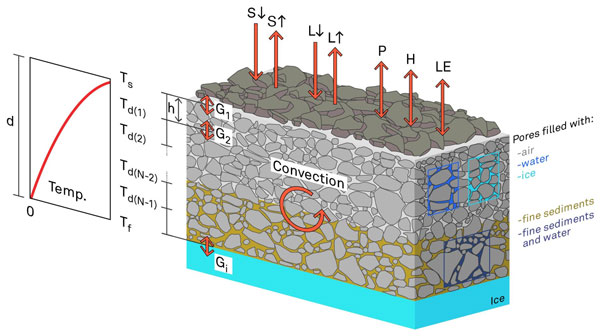
Rock debris covers many of the world glaciers, modifying the transfer of atmospheric energy to the debris and into the ice. Models of different complexity simulate this process, and we compare 15 models at 9 sites to show that the most complex models at the debris-atmosphere interface have the highest performance. However, we lack debris properties and their derivation from measurements is ambiguous, hindering global modelling and calling for both model development and data collection.
Adrià Fontrodona-Bach, Lars Groeneveld, Evan Miles, Michael McCarthy, Thomas Shaw, Vicente Melo Velasco, and Francesca Pellicciotti
Earth Syst. Sci. Data, 17, 4213–4234, https://doi.org/10.5194/essd-17-4213-2025, https://doi.org/10.5194/essd-17-4213-2025, 2025
Short summary
Short summary
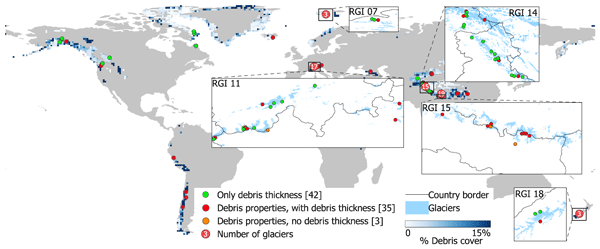
Glaciers with a layer of rocky debris on their surfaces are distinct from clean-ice glaciers, with debris mostly insulating the glacier ice. However, debris data are scarce. We present the Debris Database (DebDaB), a database of debris thickness and physical properties of debris, with data from 84 glaciers in 13 global glacier regions compiled from 172 sources and including previously unpublished data. DebDaB serves as an open central repository for the scientific community to do research on debris-covered glaciers.
Adrià Fontrodona-Bach, Bettina Schaefli, Ross Woods, Adriaan J. Teuling, and Joshua R. Larsen
Earth Syst. Sci. Data, 15, 2577–2599, https://doi.org/10.5194/essd-15-2577-2023, https://doi.org/10.5194/essd-15-2577-2023, 2023
Short summary
Short summary
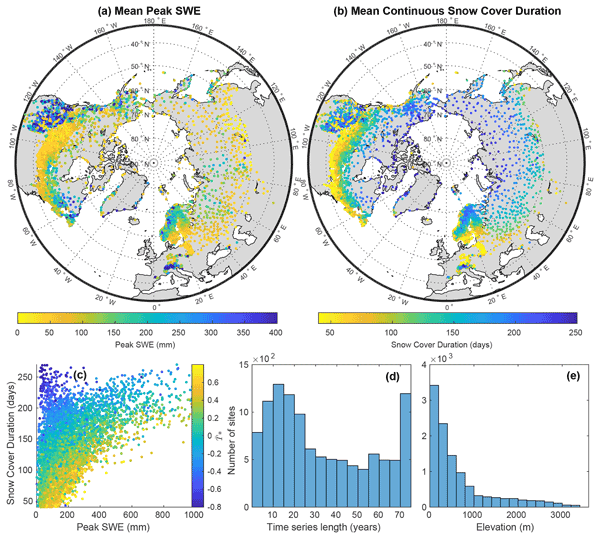
We provide a dataset of snow water equivalent, the depth of liquid water that results from melting a given depth of snow. The dataset contains 11 071 sites over the Northern Hemisphere, spans the period 1950–2022, and is based on daily observations of snow depth on the ground and a model. The dataset fills a lack of accessible historical ground snow data, and it can be used for a variety of applications such as the impact of climate change on global and regional snow and water resources.
Florentin Hofmeister, Xinyang Fan, Madlene Pfeiffer, Ben Marzeion, Bettina Schaefli, and Gabriele Chiogna
Hydrol. Earth Syst. Sci., 30, 6265–6288, https://doi.org/10.5194/hess-30-6265-2026, https://doi.org/10.5194/hess-30-6265-2026, 2026
Short summary
Short summary
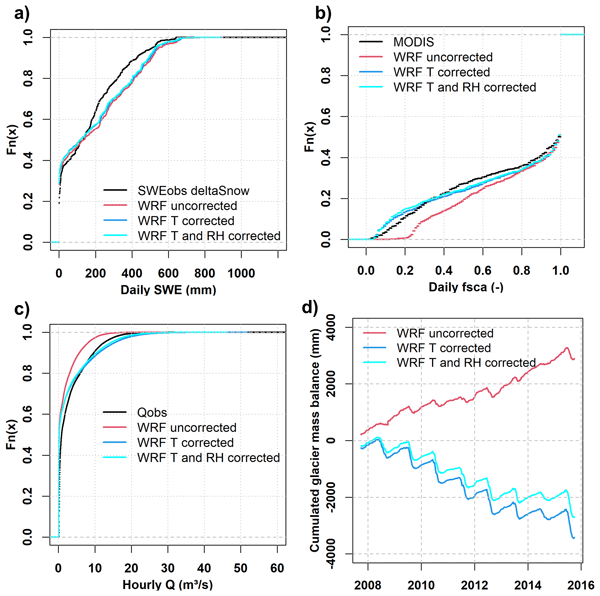
We developed a new approach to improve the climate data used to study water and glaciers in high-mountain regions. By correcting unrealistic air temperatures and moisture while keeping the data physically consistent, we achieved much better agreement with measurements and more accurate simulations of snow, glacier change, and river flow. The method also preserved long-term warming trends, making it useful for studying future climate impacts in mountain areas.
Harsh Beria, Lionel Benoit, Grégoire Mariethoz, Natalie Claire Ceperley, and Bettina Schaefli
EGUsphere, https://doi.org/10.5194/egusphere-2026-4249, https://doi.org/10.5194/egusphere-2026-4249, 2026
This preprint is open for discussion and under review for Hydrology and Earth System Sciences (HESS).
Short summary
Short summary
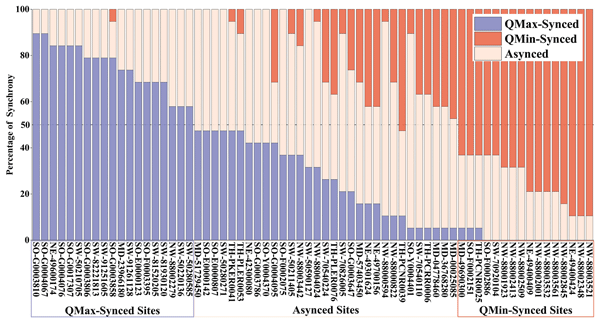
Mountain streams can rise within minutes of heavy rain, but much of the streamwater may have been stored underground for far longer. We combine hydrological measurements with stable water isotopes to simulate streamflow in a Swiss Alpine catchment. The simulations show that >80 % of summer streamflow came from groundwater, while direct rainfall contributions were small and brief. Fast stream rises therefore do not necessarily mean that rainwater moves quickly through the landscape.
Lu Yang, Kieran Khamis, Julia L. A. Knapp, and Joshua R. Larsen
Hydrol. Earth Syst. Sci., 30, 4001–4018, https://doi.org/10.5194/hess-30-4001-2026, https://doi.org/10.5194/hess-30-4001-2026, 2026
Short summary
Short summary
Human activities have greatly increased riverine nitrogen pollution, making it crucial to understand when river nitrate peaks align with high or low flows to improve in management. Across 66 English catchments, agricultural ones peaked during high flows (29%) with wetter winters enhancing hydrological connectivity, whereas urban ones peaked under extremely low-flow conditions (26%). Mixed catchments (45%) shifted towards low-flow peaks in wetter years and to high-flow peaks with rapid runoff.
Pau Wiersma, Jan Magnusson, Nadav Peleg, Bettina Schaefli, and Gregoire Mariethoz
Hydrol. Earth Syst. Sci., 30, 3331–3350, https://doi.org/10.5194/hess-30-3331-2026, https://doi.org/10.5194/hess-30-3331-2026, 2026
Short summary
Short summary
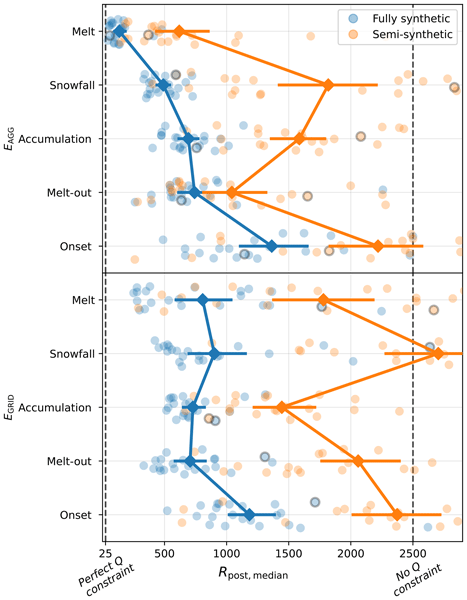
Streamflow observations contain information about snow, but their potential to constrain seasonal snow mass reconstructions remains underexplored. Using inverse hydrological modeling, we show that streamflow is particularly effective at constraining catchment-aggregated melt rates, but that non-uniqueness in the snow–streamflow relationship and uncertainties in the inverse modeling chain can easily limit inversion performance.
Malve Heinz, Annelie Holzkämper, Rohini Kumar, Sélène Ledain, Pascal Horton, and Bettina Schaefli
Hydrol. Earth Syst. Sci., 30, 2879–2911, https://doi.org/10.5194/hess-30-2879-2026, https://doi.org/10.5194/hess-30-2879-2026, 2026
Short summary
Short summary
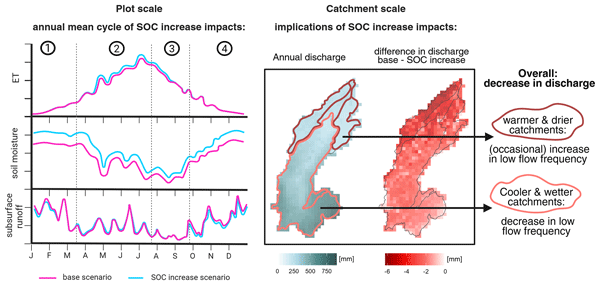
Droughts increasingly threaten agriculture. Improving soils to store more water, for example by increasing soil organic carbon, can help. We simulated this in a Swiss catchment and found that more soil carbon slightly increased soil water storage and evapotranspiration, modestly reduced floods, and shortened periods with very little streamflow. However in warmer, drier areas, these periods with little streamflow could sometimes last longer.
Francesca Pellicciotti, Adrià Fontrodona-Bach, David R. Rounce, Catriona L. Fyffe, Leif S. Anderson, Álvaro Ayala, Ben W. Brock, Pascal Buri, Stefan Fugger, Koji Fujita, Prateek Gantayat, Alexander R. Groos, Walter Immerzeel, Marin Kneib, Christoph Mayer, Shelley MacDonell, Michael McCarthy, James McPhee, Evan Miles, Heather Purdie, Ekaterina Rets, Akiko Sakai, Thomas E. Shaw, Jakob Steiner, Patrick Wagnon, and Alex Winter-Billington
The Cryosphere, 20, 1895–1928, https://doi.org/10.5194/tc-20-1895-2026, https://doi.org/10.5194/tc-20-1895-2026, 2026
Short summary
Short summary
Rock debris covers many of the world glaciers, modifying the transfer of atmospheric energy to the debris and into the ice. Models of different complexity simulate this process, and we compare 15 models at 9 sites to show that the most complex models at the debris-atmosphere interface have the highest performance. However, we lack debris properties and their derivation from measurements is ambiguous, hindering global modelling and calling for both model development and data collection.
Justine Berg, Pascal Horton, Martina Kauzlaric, Alexandra von der Esch, and Bettina Schaefli
EGUsphere, https://doi.org/10.5194/egusphere-2026-439, https://doi.org/10.5194/egusphere-2026-439, 2026
Short summary
Short summary
Snow and glacier melt are essential for water supply in mountain regions, but it is challenging to determine how much each source contributes to streamflow. To improve these estimates, we simulated 14 headwater catchments in Switzerland using a hydrological model modified to include snow redistribution and integrating glacier melt from a glacier evolution model. This allowed more accurate estimates of snow and glacier melt contributions, supporting future predictions of water availability.
Bradly Deeley and Joshua Larsen
EGUsphere, https://doi.org/10.5194/egusphere-2026-185, https://doi.org/10.5194/egusphere-2026-185, 2026
Short summary
Short summary
Rivers form branching networks that shape how water, pollutants, and organisms move through landscapes. We developed a new computational approach allowing river networks to respond dynamically to rain and flow changes over time. We show that small in-channel structures can strongly increase how long water stays locally in rivers, even when overall downstream flow is unchanged. Helping explain why local modifications can have ecological and environmental effects with minimal water balance impact.
Jamie R. C. Brown, Ross Woods, Humberto Ribeiro da Rocha, Debora Regina Roberti, and Rafael Rosolem
Hydrol. Earth Syst. Sci., 30, 141–162, https://doi.org/10.5194/hess-30-141-2026, https://doi.org/10.5194/hess-30-141-2026, 2026
Short summary
Short summary
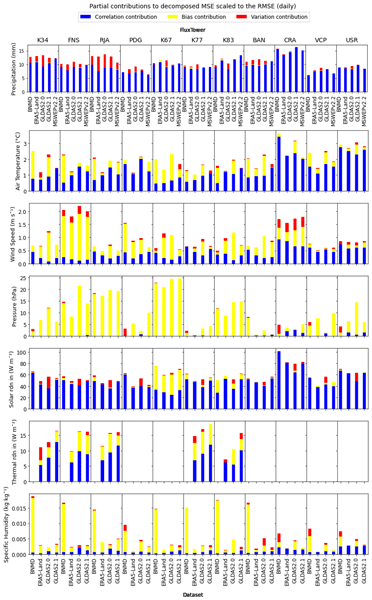
In recent years, global and regional weather datasets have emerged, but validation with real-world data is crucial, especially in diverse regions like Brazil. This study compares seven key weather variables from five datasets with measurements from 11 sites across Brazil’s main biomes. Results show varying performance across variables and timescales, with one reanalysis product outperforming others overall. Findings suggest it may be a strong choice for multi-variable studies in Brazil.
Xinyang Fan, Florentin Hofmeister, Bettina Schaefli, and Gabriele Chiogna
EGUsphere, https://doi.org/10.5194/egusphere-2025-6065, https://doi.org/10.5194/egusphere-2025-6065, 2025
Short summary
Short summary
We adopt a physics-based, fully-integrated hydrological modeling approach to understand streamflow variations and their interactions with groundwater in a high-elevation glaciated environment. We demonstrate opportunities and challenges of integrating point-scale groundwater observations into a distributed model. This study sheds new lights on surface-subsurface processes in high alpine environments and highlights the importance of improving subsurface representation in hydrological modeling.
Adrià Fontrodona-Bach, Lars Groeneveld, Evan Miles, Michael McCarthy, Thomas Shaw, Vicente Melo Velasco, and Francesca Pellicciotti
Earth Syst. Sci. Data, 17, 4213–4234, https://doi.org/10.5194/essd-17-4213-2025, https://doi.org/10.5194/essd-17-4213-2025, 2025
Short summary
Short summary
Glaciers with a layer of rocky debris on their surfaces are distinct from clean-ice glaciers, with debris mostly insulating the glacier ice. However, debris data are scarce. We present the Debris Database (DebDaB), a database of debris thickness and physical properties of debris, with data from 84 glaciers in 13 global glacier regions compiled from 172 sources and including previously unpublished data. DebDaB serves as an open central repository for the scientific community to do research on debris-covered glaciers.
Yanchen Zheng, Gemma Coxon, Mostaquimur Rahman, Ross Woods, Saskia Salwey, Youtong Rong, and Doris E. Wendt
Geosci. Model Dev., 18, 4247–4271, https://doi.org/10.5194/gmd-18-4247-2025, https://doi.org/10.5194/gmd-18-4247-2025, 2025
Short summary
Short summary
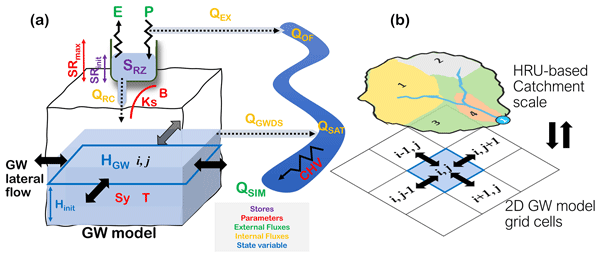
Groundwater is vital for people and ecosystems, but most physical models lack the representation of surface–groundwater interactions, leading to inaccurate streamflow predictions in groundwater-rich areas. This study presents DECIPHeR-GW v1, which links surface and groundwater systems to improve predictions of streamflow and groundwater levels. Tested across England and Wales, DECIPHeR-GW shows high accuracy, especially in southeast England, making it a valuable tool for large-scale water management.
Xinyang Fan, Florentin Hofmeister, Bettina Schaefli, and Gabriele Chiogna
EGUsphere, https://doi.org/10.5194/egusphere-2025-1500, https://doi.org/10.5194/egusphere-2025-1500, 2025
Preprint archived
Short summary
Short summary
We adopt a fully-distributed, physics-based hydrological modeling approach, to understand streamflow variations and their interactions with groundwater in a high-elevation glaciated environment. We demonstrate opportunities and challenges of integrating point-scale groundwater observations into a distributed model. This study sheds new lights on surface-subsurface processes in high alpine environments and highlights the importance of improving subsurface representation in hydrological modeling.
Malve Heinz, Maria Eliza Turek, Bettina Schaefli, Andreas Keiser, and Annelie Holzkämper
Hydrol. Earth Syst. Sci., 29, 1807–1827, https://doi.org/10.5194/hess-29-1807-2025, https://doi.org/10.5194/hess-29-1807-2025, 2025
Short summary
Short summary
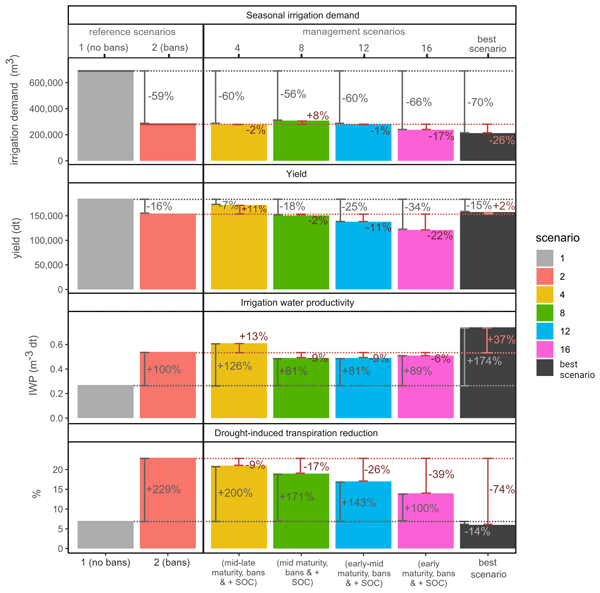
Potato farmers in Switzerland are facing drier conditions and water restrictions. We explored how improving soil health and planting early-maturing potato varieties might help them to adapt. Using a computer model, we simulated potato yields and irrigation water needs under water scarcity. Our results show that earlier-maturing potato varieties reduce the reliance on irrigation but result in lower yields. However, improving soil health can significantly reduce yield losses.
Anne-Laure Argentin, Pascal Horton, Bettina Schaefli, Jamal Shokory, Felix Pitscheider, Leona Repnik, Mattia Gianini, Simone Bizzi, Stuart N. Lane, and Francesco Comiti
Hydrol. Earth Syst. Sci., 29, 1725–1748, https://doi.org/10.5194/hess-29-1725-2025, https://doi.org/10.5194/hess-29-1725-2025, 2025
Short summary
Short summary
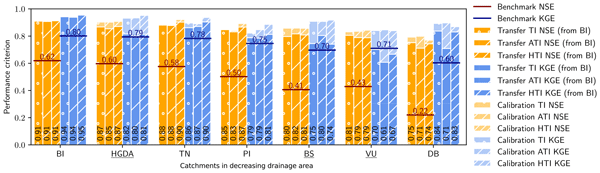
In this article, we show that by taking the optimal parameters calibrated with a semi-lumped model for the discharge at a catchment's outlet, we can accurately simulate runoff at various points within the study area, including three nested and three neighboring catchments. In addition, we demonstrate that employing more intricate melt models, which better represent physical processes, enhances the transfer of parameters in the simulation, until we observe overparameterization.
Wouter R. Berghuijs, Ross A. Woods, Bailey J. Anderson, Anna Luisa Hemshorn de Sánchez, and Markus Hrachowitz
Hydrol. Earth Syst. Sci., 29, 1319–1333, https://doi.org/10.5194/hess-29-1319-2025, https://doi.org/10.5194/hess-29-1319-2025, 2025
Short summary
Short summary
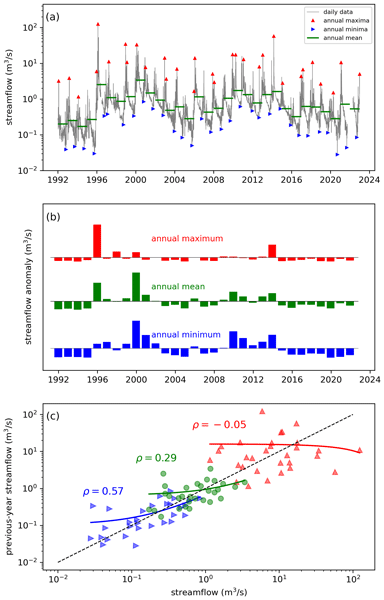
Water balances of catchments will often strongly depend on their state in the recent past, but such memory effects may persist at annual timescales. We use global data sets to show that annual memory is typically absent in precipitation but strong in terrestrial water stores and also present in evaporation and streamflow (including low flows and floods). Our experiments show that hysteretic models provide behaviour that is consistent with these observed memory behaviours.
Tom Müller, Mauro Fischer, Stuart N. Lane, and Bettina Schaefli
The Cryosphere, 19, 423–458, https://doi.org/10.5194/tc-19-423-2025, https://doi.org/10.5194/tc-19-423-2025, 2025
Short summary
Short summary
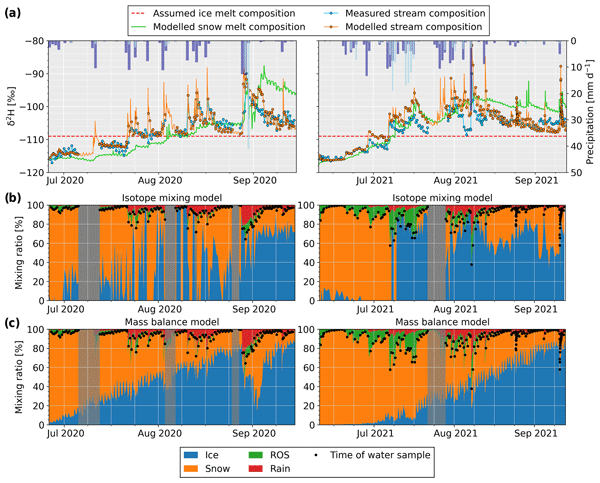
Based on extensive field observations in a highly glacierized catchment in the Swiss Alps, we develop a combined isotopic and glacio-hydrological model. We show that water stable isotopes may help to better constrain model parameters, especially those linked to water transfer. However, we highlight that separating snow and ice melt for temperate glaciers based on isotope mixing models alone is not advised and should only be considered if their isotopic signatures have clearly different values.
Yanchen Zheng, Gemma Coxon, Ross Woods, Daniel Power, Miguel Angel Rico-Ramirez, David McJannet, Rafael Rosolem, Jianzhu Li, and Ping Feng
Hydrol. Earth Syst. Sci., 28, 1999–2022, https://doi.org/10.5194/hess-28-1999-2024, https://doi.org/10.5194/hess-28-1999-2024, 2024
Short summary
Short summary
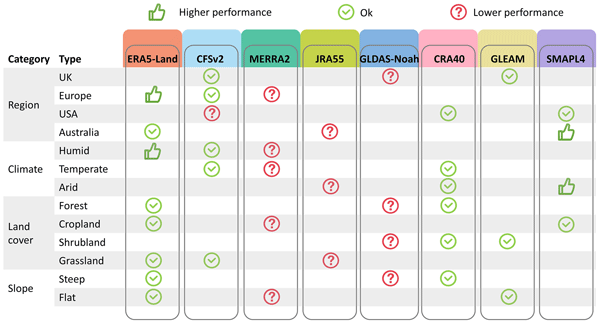
Reanalysis soil moisture products are a vital basis for hydrological and environmental research. Previous product evaluation is limited by the scale difference (point and grid scale). This paper adopts cosmic ray neutron sensor observations, a novel technique that provides root-zone soil moisture at field scale. In this paper, global harmonized CRNS observations were used to assess products. ERA5-Land, SMAPL4, CFSv2, CRA40 and GLEAM show better performance than MERRA2, GLDAS-Noah and JRA55.
Moctar Dembélé, Mathieu Vrac, Natalie Ceperley, Sander J. Zwart, Josh Larsen, Simon J. Dadson, Grégoire Mariéthoz, and Bettina Schaefli
Proc. IAHS, 385, 121–127, https://doi.org/10.5194/piahs-385-121-2024, https://doi.org/10.5194/piahs-385-121-2024, 2024
Short summary
Short summary
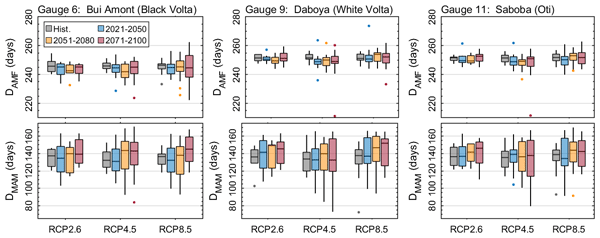
This study assesses the impact of climate change on the timing, seasonality and magnitude of mean annual minimum (MAM) flows and annual maximum flows (AMF) in the Volta River basin (VRB). Several climate change projection data are use to simulate river flow under multiple greenhouse gas emission scenarios. Future projections show that AMF could increase with various magnitude but negligible shift in time across the VRB, while MAM could decrease with up to 14 days of delay in occurrence.
Tom Müller, Matteo Roncoroni, Davide Mancini, Stuart N. Lane, and Bettina Schaefli
Hydrol. Earth Syst. Sci., 28, 735–759, https://doi.org/10.5194/hess-28-735-2024, https://doi.org/10.5194/hess-28-735-2024, 2024
Short summary
Short summary
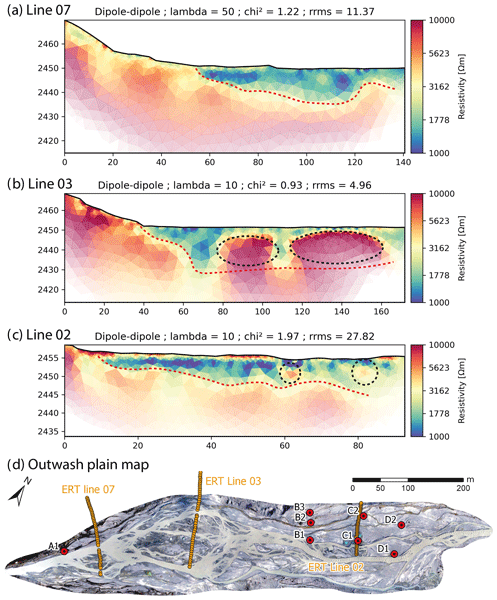
We investigate the role of a newly formed floodplain in an alpine glaciated catchment to store and release water. Based on field measurements, we built a numerical model to simulate the water fluxes and show that recharge occurs mainly due to the ice-melt-fed river. We identify three future floodplains, which could emerge from glacier retreat, and show that their combined storage leads to some additional groundwater storage but contributes little additional baseflow for the downstream river.
Adrià Fontrodona-Bach, Bettina Schaefli, Ross Woods, Adriaan J. Teuling, and Joshua R. Larsen
Earth Syst. Sci. Data, 15, 2577–2599, https://doi.org/10.5194/essd-15-2577-2023, https://doi.org/10.5194/essd-15-2577-2023, 2023
Short summary
Short summary
We provide a dataset of snow water equivalent, the depth of liquid water that results from melting a given depth of snow. The dataset contains 11 071 sites over the Northern Hemisphere, spans the period 1950–2022, and is based on daily observations of snow depth on the ground and a model. The dataset fills a lack of accessible historical ground snow data, and it can be used for a variety of applications such as the impact of climate change on global and regional snow and water resources.
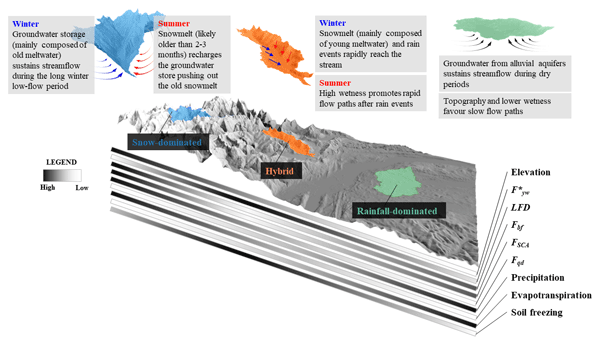
Alessio Gentile, Davide Canone, Natalie Ceperley, Davide Gisolo, Maurizio Previati, Giulia Zuecco, Bettina Schaefli, and Stefano Ferraris
Hydrol. Earth Syst. Sci., 27, 2301–2323, https://doi.org/10.5194/hess-27-2301-2023, https://doi.org/10.5194/hess-27-2301-2023, 2023
Short summary
Short summary
What drives young water fraction, F*yw (i.e., the fraction of water in streamflow younger than 2–3 months), variations with elevation? Why is F*yw counterintuitively low in high-elevation catchments, in spite of steeper topography? In this paper, we present a perceptual model explaining how the longer low-flow duration at high elevations, driven by the persistence of winter snowpacks, increases the proportion of stored (old) water contributing to the stream, thus reducing F*yw.
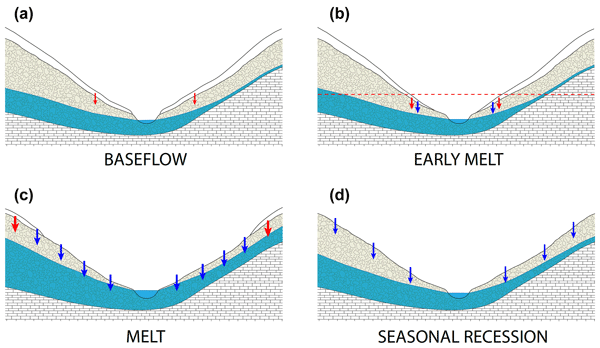
Anthony Michelon, Natalie Ceperley, Harsh Beria, Joshua Larsen, Torsten Vennemann, and Bettina Schaefli
Hydrol. Earth Syst. Sci., 27, 1403–1430, https://doi.org/10.5194/hess-27-1403-2023, https://doi.org/10.5194/hess-27-1403-2023, 2023
Short summary
Short summary
Streamflow generation processes in high-elevation catchments are largely influenced by snow accumulation and melt. For this work, we collected and analyzed more than 2800 water samples (temperature, electric conductivity, and stable isotopes of water) to characterize the hydrological processes in such a high Alpine environment. Our results underline the critical role of subsurface flow during all melt periods and the presence of snowmelt even during the winter periods.
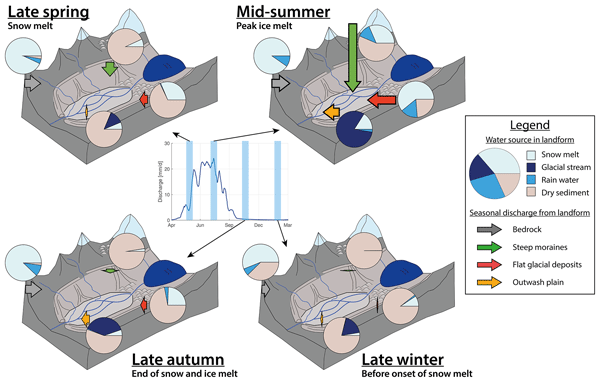
Tom Müller, Stuart N. Lane, and Bettina Schaefli
Hydrol. Earth Syst. Sci., 26, 6029–6054, https://doi.org/10.5194/hess-26-6029-2022, https://doi.org/10.5194/hess-26-6029-2022, 2022
Short summary
Short summary
This research provides a comprehensive analysis of groundwater storage in Alpine glacier forefields, a zone rapidly evolving with glacier retreat. Based on data analysis of a case study, it provides a simple perceptual model showing where and how groundwater is stored and released in a high Alpine environment. It especially points out the presence of groundwater storages in both fluvial and bedrock aquifers, which may become more important with future glacier retreat.
Xu Zhang, Jinbao Li, Qianjin Dong, and Ross A. Woods
Hydrol. Earth Syst. Sci. Discuss., https://doi.org/10.5194/hess-2022-309, https://doi.org/10.5194/hess-2022-309, 2022
Manuscript not accepted for further review
Short summary
Short summary
Accurately estimating long-term evaporation is important for describing water balance. Budyko framework already incorporates precipitation and potential evaporation, while water storage capacity and climate seasonality are usually ignored. Here, we analytically generalize Budyko framework through the Ponce-Shetty model, and physically account these two factors. Our generalized equations perform better than varying Budyko-type equations, and improve the robustness and physical interpretation.
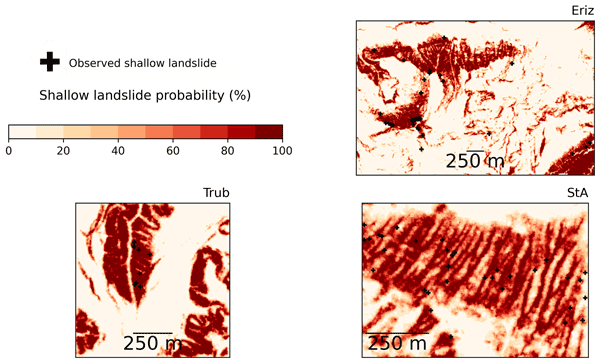
Feiko Bernard van Zadelhoff, Adel Albaba, Denis Cohen, Chris Phillips, Bettina Schaefli, Luuk Dorren, and Massimiliano Schwarz
Nat. Hazards Earth Syst. Sci., 22, 2611–2635, https://doi.org/10.5194/nhess-22-2611-2022, https://doi.org/10.5194/nhess-22-2611-2022, 2022
Short summary
Short summary
Shallow landslides pose a risk to people, property and infrastructure. Assessment of this hazard and the impact of protective measures can reduce losses. We developed a model (SlideforMAP) that can assess the shallow-landslide risk on a regional scale for specific rainfall events. Trees are an effective and cheap protective measure on a regional scale. Our model can assess their hazard reduction down to the individual tree level.
Alexandre Tuel, Bettina Schaefli, Jakob Zscheischler, and Olivia Martius
Hydrol. Earth Syst. Sci., 26, 2649–2669, https://doi.org/10.5194/hess-26-2649-2022, https://doi.org/10.5194/hess-26-2649-2022, 2022
Short summary
Short summary
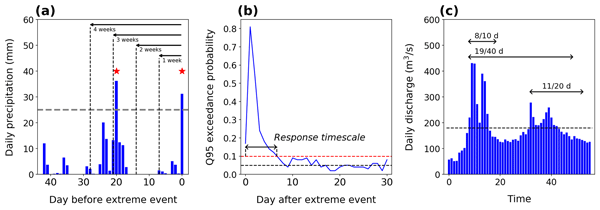
River discharge is strongly influenced by the temporal structure of precipitation. Here, we show how extreme precipitation events that occur a few days or weeks after a previous event have a larger effect on river discharge than events occurring in isolation. Windows of 2 weeks or less between events have the most impact. Similarly, periods of persistent high discharge tend to be associated with the occurrence of several extreme precipitation events in close succession.
Stefan Brönnimann, Peter Stucki, Jörg Franke, Veronika Valler, Yuri Brugnara, Ralf Hand, Laura C. Slivinski, Gilbert P. Compo, Prashant D. Sardeshmukh, Michel Lang, and Bettina Schaefli
Clim. Past, 18, 919–933, https://doi.org/10.5194/cp-18-919-2022, https://doi.org/10.5194/cp-18-919-2022, 2022
Short summary
Short summary
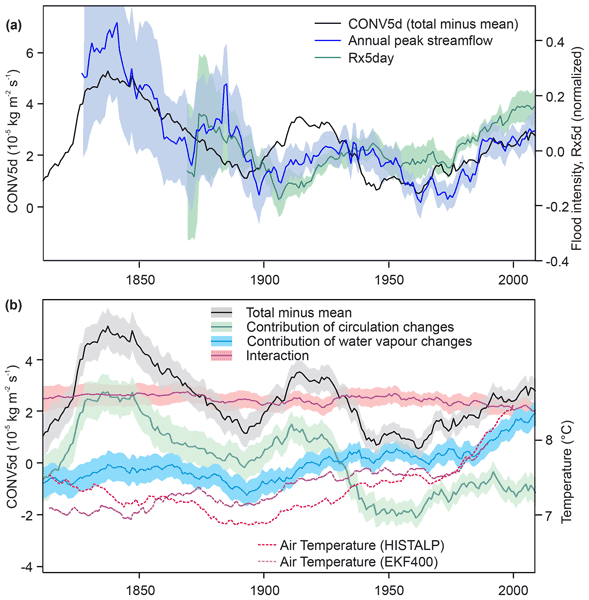
Floods in Europe vary on time scales of several decades. Flood-rich and flood-poor periods alternate. Recently floods have again become more frequent. Long time series of peak stream flow, precipitation, and atmospheric variables reveal that until around 1980, these changes were mostly due to changes in atmospheric circulation. However, in recent decades the role of increasing atmospheric moisture due to climate warming has become more important and is now the main driver of flood changes.
Moctar Dembélé, Mathieu Vrac, Natalie Ceperley, Sander J. Zwart, Josh Larsen, Simon J. Dadson, Grégoire Mariéthoz, and Bettina Schaefli
Hydrol. Earth Syst. Sci., 26, 1481–1506, https://doi.org/10.5194/hess-26-1481-2022, https://doi.org/10.5194/hess-26-1481-2022, 2022
Short summary
Short summary
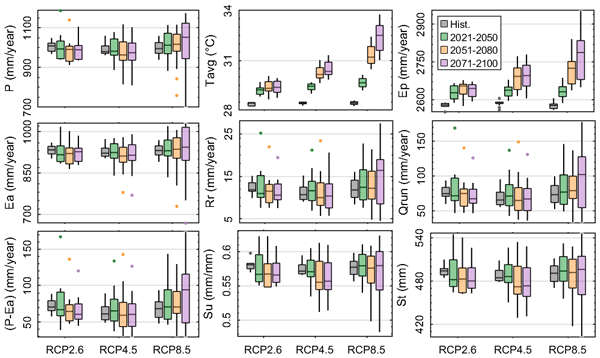
Climate change impacts on water resources in the Volta River basin are investigated under various global warming scenarios. Results reveal contrasting changes in future hydrological processes and water availability, depending on greenhouse gas emission scenarios, with implications for floods and drought occurrence over the 21st century. These findings provide insights for the elaboration of regional adaptation and mitigation strategies for climate change.
Adrien Michel, Bettina Schaefli, Nander Wever, Harry Zekollari, Michael Lehning, and Hendrik Huwald
Hydrol. Earth Syst. Sci., 26, 1063–1087, https://doi.org/10.5194/hess-26-1063-2022, https://doi.org/10.5194/hess-26-1063-2022, 2022
Short summary
Short summary
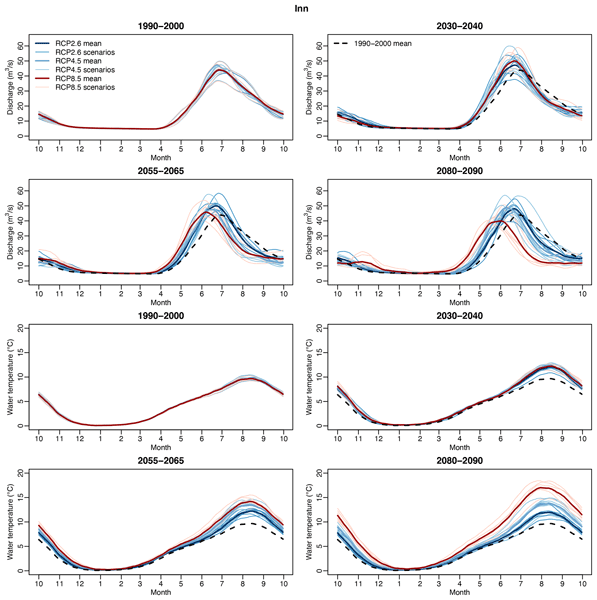
This study presents an extensive study of climate change impacts on river temperature in Switzerland. Results show that, even for low-emission scenarios, water temperature increase will lead to adverse effects for both ecosystems and socio-economic sectors throughout the 21st century. For high-emission scenarios, the effect will worsen. This study also shows that water seasonal warming will be different between the Alpine regions and the lowlands. Finally, efficiency of models is assessed.
Doris E. Wendt, John P. Bloomfield, Anne F. Van Loon, Margaret Garcia, Benedikt Heudorfer, Joshua Larsen, and David M. Hannah
Nat. Hazards Earth Syst. Sci., 21, 3113–3139, https://doi.org/10.5194/nhess-21-3113-2021, https://doi.org/10.5194/nhess-21-3113-2021, 2021
Short summary
Short summary
Managing water demand and supply during droughts is complex, as highly pressured human–water systems can overuse water sources to maintain water supply. We evaluated the impact of drought policies on water resources using a socio-hydrological model. For a range of hydrogeological conditions, we found that integrated drought policies reduce baseflow and groundwater droughts most if extra surface water is imported, reducing the pressure on water resources during droughts.
Cited articles
Adam, J. C. and Lettenmaier, D. P.: Adjustment of global gridded precipitation for systematic bias, J. Geophys. Res.-Atmos., 108, https://doi.org/10.1029/2002JD002499, 2003. a
Asaoka, Y. and Kominami, Y.: Incorporation of satellite-derived snow-cover area in spatial snowmelt modeling for a large area: determination of a gridded degree-day factor, Ann. Glaciol., 54, 205–213, https://doi.org/10.3189/2013AoG62A218, 2013. a, b, c
Avanzi, F., De Michele, C., Ghezzi, A., Jommi, C., and Pepe, M.: A processing–modeling routine to use SNOTEL hourly data in snowpack dynamic models, Adv. Water Resour., 73, 16–29, 2014. a
Avanzi, F., Gabellani, S., Delogu, F., Silvestro, F., Cremonese, E., Morra di Cella, U., Ratto, S., and Stevenin, H.: Snow Multidata Mapping and Modeling (S3M) 5.1: a distributed cryospheric model with dry and wet snow, data assimilation, glacier mass balance, and debris-driven melt, Geosci. Model Dev., 15, 4853–4879, https://doi.org/10.5194/gmd-15-4853-2022, 2022. a, b
Avanzi, F., Gabellani, S., Delogu, F., Silvestro, F., Pignone, F., Bruno, G., Pulvirenti, L., Squicciarino, G., Fiori, E., Rossi, L., Puca, S., Toniazzo, A., Giordano, P., Falzacappa, M., Ratto, S., Stevenin, H., Cardillo, A., Fioletti, M., Cazzuli, O., Cremonese, E., Morra di Cella, U., and Ferraris, L.: IT-SNOW: a snow reanalysis for Italy blending modeling, in situ data, and satellite observations (2010–2021), Earth Syst. Sci. Data, 15, 639–660, https://doi.org/10.5194/essd-15-639-2023, 2023. a
Barnett, T. P., Adam, J. C., and Lettenmaier, D. P.: Potential impacts of a warming climate on water availability in snow-dominated regions, Nature, 438, 303–309, 2005. a
Bartelt, P. and Lehning, M.: A physical SNOWPACK model for the Swiss avalanche warning: Part I: numerical model, Cold Reg. Sci. Technol., 35, 123–145, https://doi.org/10.1016/S0165-232X(02)00074-5, 2002. a
Behrangi, A., Yin, X., Rajagopal, S., Stampoulis, D., and Ye, H.: On distinguishing snowfall from rainfall using near-surface atmospheric information: Comparative analysis, uncertainties and hydrologic importance, Q. J. Roy. Meteor. Soc., 144, 89–102, https://doi.org/10.1002/qj.3240, 2018. a
Berghuijs, W. R., Woods, R. A., and Hrachowitz, M.: A precipitation shift from snow towards rain leads to a decrease in streamflow, Nat. Clim. Change, 4, 583–586, https://doi.org/10.1038/nclimate2246, 2014. a
Bogacki, W. and Ismail, M. F.: Seasonal forecast of Kharif flows from Upper Jhelum catchment, Proc. IAHS, 374, 137–142, https://doi.org/10.5194/piahs-374-137-2016, 2016. a
Bonsoms, J., Oliva, M., Alonso-González, E., Revuelto, J., and López-Moreno, J. I.: Impact of climate change on snowpack dynamics in coastal Central-Western Greenland, Sci. Total Environ., 913, 169616, https://doi.org/10.1016/j.scitotenv.2023.169616, 2024. a
Bormann, K. J., Evans, J. P., and McCabe, M. F.: Constraining snowmelt in a temperature-index model using simulated snow densities, J. Hydrol., 517, 652–667, https://doi.org/10.1016/j.jhydrol.2014.05.073, 2014. a
Bormann, K. J., Brown, R. D., Derksen, C., and Painter, T. H.: Estimating snow-cover trends from space, Nat. Clim. Change, 8, 924–928, 2018. a
Braithwaite, R. J.: Positive degree-day factors for ablation on the Greenland ice sheet studied by energy-balance modelling, J. Glaciol., 41, 153–160, https://doi.org/10.3189/S0022143000017846, 1995. a, b, c
Braithwaite, R. J.: Temperature and precipitation climate at the equilibrium-line altitude of glaciers expressed by the degree-day factor for melting snow, J. Glaciol., 54, 437–444, https://doi.org/10.3189/002214308785836968, 2008. a, b
Cho, E., Vuyovich, C. M., Kumar, S. V., Wrzesien, M. L., Kim, R. S., and Jacobs, J. M.: Precipitation biases and snow physics limitations drive the uncertainties in macroscale modeled snow water equivalent, Hydrol. Earth Syst. Sci., 26, 5721–5735, https://doi.org/10.5194/hess-26-5721-2022, 2022. a, b, c, d
Cohen, J., Ye, H., and Jones, J.: Trends and variability in rain-on-snow events, Geophys. Res. Lett., 42, 7115–7122, https://doi.org/10.1002/2015GL065320, 2015. a
Collados-Lara, A.-J., Pardo-Igúzquiza, E., Pulido-Velazquez, D., and Jiménez-Sánchez, J.: Precipitation fields in an alpine Mediterranean catchment: Inversion of precipitation gradient with elevation or undercatch of snowfall?, Int. J. Climatol., 38, 3565–3578, https://doi.org/10.1002/joc.5517, 2018. a
Dai, A.: Temperature and pressure dependence of the rain-snow phase transition over land and ocean, Geophys. Res. Lett., 35, https://doi.org/10.1029/2008GL033295, 2008. a, b
Elias Chereque, A., Kushner, P. J., Mudryk, L., Derksen, C., and Mortimer, C.: A simple snow temperature index model exposes discrepancies between reanalysis snow water equivalent products, The Cryosphere, 18, 4955–4969, https://doi.org/10.5194/tc-18-4955-2024, 2024. a, b
Essery, R., Morin, S., Lejeune, Y., and Ménard, C. B.: A comparison of 1701 snow models using observations from an alpine site, Adv. Water Resour., 55, 131–148, https://doi.org/10.1016/j.advwatres.2012.07.013, 2013. a
Fabry, F. and Zawadzki, I.: Long-Term Radar Observations of the Melting Layer of Precipitation and Their Interpretation, J. Atmos. Sci., 52, 838–851, https://doi.org/10.1175/1520-0469(1995)052<0838:LTROOT>2.0.CO;2, 1995. a
Follum, M. L., Niemann, J. D., and Fassnacht, S. R.: A comparison of snowmelt-derived streamflow from temperature-index and modified-temperature-index snow models, Hydrol. Process., 33, 3030–3045, https://doi.org/10.1002/hyp.13545, 2019. a
Fontrodona-Bach, A.: Code for analysis and figure production of HESS-2026 paper https://doi.org/10.5194/egusphere-2025-1214 (TImodelling), Zenodo [data set], https://doi.org/10.5281/zenodo.19613695, 2026. a
Fontrodona Bach, A., Van der Schrier, G., Melsen, L., Klein Tank, A., and Teuling, A.: Widespread and accelerated decrease of observed mean and extreme snow depth over Europe, Geophys. Res. Lett., 45, 12–312, 2018. a
Fontrodona-Bach, A., Schaefli, B., Woods, R., Teuling, A. J., and Larsen, J. R.: NH-SWE: Northern Hemisphere Snow Water Equivalent dataset based on in-situ snow depth time series and the regionalisation of the ΔSNOW model, Zenodo, https://doi.org/10.5281/zenodo.7565252, 2023a. a, b, c
Freudiger, D., Kohn, I., Seibert, J., Stahl, K., and Weiler, M.: Snow redistribution for the hydrological modeling of alpine catchments, WIREs Water, 4, e1232, https://doi.org/10.1002/wat2.1232, 2017. a
Gao, H., He, X., Ye, B., and Pu, J.: Modeling the runoff and glacier mass balance in a small watershed on the Central Tibetan Plateau, China, from 1955 to 2008, Hydrol. Process., 26, 1593–1603, https://doi.org/10.1002/hyp.8256, 2012. a
Gao, H., Ding, Y., Zhao, Q., Hrachowitz, M., and Savenije, H. H.: The importance of aspect for modelling the hydrological response in a glacier catchment in Central Asia, Hydrol. Process., 31, 2842–2859, https://doi.org/10.1002/hyp.11224, 2017. a
Günther, D., Marke, T., Essery, R., and Strasser, U.: Uncertainties in Snowpack Simulations-Assessing the Impact of Model Structure, Parameter Choice, and Forcing Data Error on Point-Scale Energy Balance Snow Model Performance, Water Resour. Res., 55, 2779–2800, https://doi.org/10.1029/2018WR023403, 2019. a
Günther, D., Hanzer, F., Warscher, M., Essery, R., and Strasser, U.: Including Parameter Uncertainty in an Intercomparison of Physically-Based Snow Models, Front. Earth Sci., 8, https://doi.org/10.3389/feart.2020.542599, 2020. a, b
Harpold, A. A., Kaplan, M. L., Klos, P. Z., Link, T., McNamara, J. P., Rajagopal, S., Schumer, R., and Steele, C. M.: Rain or snow: hydrologic processes, observations, prediction, and research needs, Hydrol. Earth Syst. Sci., 21, 1–22, https://doi.org/10.5194/hess-21-1-2017, 2017. a
Hou, Y., Guo, H., Yang, Y., and Liu, W.: Global Evaluation of Runoff Simulation From Climate, Hydrological and Land Surface Models, Water Resour. Res., 59, e2021WR031817, https://doi.org/10.1029/2021WR031817, 2023. a
Immerzeel, W. W., van Beek, L. P. H., and Bierkens, M. F. P.: Climate Change Will Affect the Asian Water Towers, Science, 328, 1382–1385, https://doi.org/10.1126/science.1183188, 2010. a
Ismail, M. F., Bogacki, W., Disse, M., Schäfer, M., and Kirschbauer, L.: Estimating degree-day factors of snow based on energy flux components, The Cryosphere, 17, 211–231, https://doi.org/10.5194/tc-17-211-2023, 2023. a, b
Jennings, K. S. and Molotch, N. P.: The sensitivity of modeled snow accumulation and melt to precipitation phase methods across a climatic gradient, Hydrol. Earth Syst. Sci., 23, 3765–3786, https://doi.org/10.5194/hess-23-3765-2019, 2019. a, b
Jennings, K. S., Kittel, T. G. F., and Molotch, N. P.: Observations and simulations of the seasonal evolution of snowpack cold content and its relation to snowmelt and the snowpack energy budget, The Cryosphere, 12, 1595–1614, https://doi.org/10.5194/tc-12-1595-2018, 2018a. a
Jennings, K. S., Winchell, T. S., Livneh, B., and Molotch, N. P.: Spatial variation of the rain–snow temperature threshold across the Northern Hemisphere, Nat. commun., 9, 1148, https://doi.org/10.1038/s41467-018-03629-7, 2018b. a
Jennings, K. S., Collins, M., Hatchett, B. J., Heggli, A., Hur, N., Tonino, S., Nolin, A. W., Yu, G., Zhang, W., and Arienzo, M. M.: Machine learning shows a limit to rain-snow partitioning accuracy when using near-surface meteorology, Nat. Commun., 16, 2929, https://doi.org/10.1038/s41467-025-58234-2, 2025. a, b
Kane, D. L., Gieck, R. E., and Hinzman, L. D.: Snowmelt Modeling at Small Alaskan Arctic Watershed, J. Hydrol. Eng., 2, 204–210, https://doi.org/10.1061/(ASCE)1084-0699(1997)2:4(204), 1997. a, b
Klein Tank, A. M. G., Wijngaard, J. B., Können, G.P ., Böhm, R., Demarée, G., Gocheva, A., Mileta, M., Pashiardis, S., Hejkrlik, L., Kern-Hansen, C., Heino, R., Bessemoulin, P., MüllerWestermeier, G., Tzanakou, M., Szalai, S., Pálsdóttir, T., Fitzgerald, D., Rubin, S., Capaldo, M., Maugeri, M., Leitass, A., Bukantis, A., Aberfeld, R., van Engelen, A. F. V., Forland, E., Mietus, M., Coelho, F., Mares, C., Razuvaev, V., Nieplova, E., Cegnar, T., Antonio López, J., Dahlström, B., Moberg, A., Kirchhofer, W., Ceylan, A., Pachaliuk, O., Alexander, L. V., and Petrovic, P.: Daily dataset of 20th-century surface air temperature and precipitation series for the European Climate Assessment, Int. J. Climatol., 22, 1441–1453, 2002 (data available at: https://www.ecad.eu/dailydata, last access: 3 July 2023). a, b
Kochendorfer, J., Earle, M. E., Hodyss, D., Reverdin, A., Roulet, Y.-A., Nitu, R., Rasmussen, R., Landolt, S., Buisán, S., and Laine, T.: Undercatch Adjustments for Tipping-Bucket Gauge Measurements of Solid Precipitation, J. Hydrometeorol., 21, 1193–1205, https://doi.org/10.1175/JHM-D-19-0256.1, 2020. a
Krinner, G., Derksen, C., Essery, R., Flanner, M., Hagemann, S., Clark, M., Hall, A., Rott, H., Brutel-Vuilmet, C., Kim, H., Ménard, C. B., Mudryk, L., Thackeray, C., Wang, L., Arduini, G., Balsamo, G., Bartlett, P., Boike, J., Boone, A., Chéruy, F., Colin, J., Cuntz, M., Dai, Y., Decharme, B., Derry, J., Ducharne, A., Dutra, E., Fang, X., Fierz, C., Ghattas, J., Gusev, Y., Haverd, V., Kontu, A., Lafaysse, M., Law, R., Lawrence, D., Li, W., Marke, T., Marks, D., Ménégoz, M., Nasonova, O., Nitta, T., Niwano, M., Pomeroy, J., Raleigh, M. S., Schaedler, G., Semenov, V., Smirnova, T. G., Stacke, T., Strasser, U., Svenson, S., Turkov, D., Wang, T., Wever, N., Yuan, H., Zhou, W., and Zhu, D.: ESM-SnowMIP: assessing snow models and quantifying snow-related climate feedbacks, Geosci. Model Dev., 11, 5027–5049, https://doi.org/10.5194/gmd-11-5027-2018, 2018. a
Lang, H. and Braun, L.: On the information content of air temperature in the context of snow melt estimation, IAHS Publ., 190, 347–354, 1990. a
Lefebre, F., Gallée, H., Van Ypersele, J.-P., and Huybrechts, P.: Modelling of large-scale melt parameters with a regional climate model in south Greenland during the 1991 melt season, Ann. Glaciol., 35, 391–397, https://doi.org/10.3189/172756402781816889, 2002. a, b, c
Lehning, M., Bartelt, P., Brown, B., and Fierz, C.: A physical SNOWPACK model for the Swiss avalanche warning: Part III: meteorological forcing, thin layer formation and evaluation, Cold Reg. Sci. Technol., 35, 169–184, https://doi.org/10.1016/S0165-232X(02)00072-1, 2002a. a
Lehning, M., Bartelt, P., Brown, B., Fierz, C., and Satyawali, P.: A physical SNOWPACK model for the Swiss avalanche warning: Part II. Snow microstructure, Cold Reg. Sci. Technol., 35, 147–167, https://doi.org/10.1016/S0165-232X(02)00073-3, 2002b. a
Luomaranta, A., Aalto, J., and Jylhä, K.: Snow cover trends in Finland over 1961–2014 based on gridded snow depth observations, Int. J. Climatol., 39, 3147–3159, https://doi.org/10.1002/joc.6007, 2019. a
López-Moreno, J. I., Fassnacht, S., Heath, J., Musselman, K., Revuelto, J., Latron, J., Morán-Tejeda, E., and Jonas, T.: Small scale spatial variability of snow density and depth over complex alpine terrain: Implications for estimating snow water equivalent, Adv. Water Resour., 55, 40–52, https://doi.org/10.1016/j.advwatres.2012.08.010, 2013. a
López-Moreno, J. I., Revuelto, J., Fassnacht, S. R., Azorín-Molina, C., Vicente-Serrano, S. M., Morán-Tejeda, E., and Sexstone, G. A.: Snowpack variability across various spatio-temporal resolutions, Hydrol. Process., 29, 1213–1224, https://doi.org/10.1002/hyp.10245, 2015. a
López-Moreno, J. I., Pomeroy, J. W., Alonso-González, E., Morán-Tejeda, E., and Revuelto, J.: Decoupling of warming mountain snowpacks from hydrological regimes, Environ. Res. Lett., 15, 114006, https://doi.org/10.1088/1748-9326/abb55f, 2020. a
López-Moreno, J. I., Pomeroy, J. W., Morán-Tejeda, E., Revuelto, J., Navarro-Serrano, F. M., Vidaller, I., and Alonso-González, E.: Changes in the frequency of global high mountain rain-on-snow events due to climate warming, Environ. Res. Lett., 16, 094021, https://doi.org/10.1088/1748-9326/ac0dde, 2021. a
MacQueen, J.: Some methods for classification and analysis of multivariate observations, in: Proceedings of the Fifth Berkeley Symposium on Mathematical Statistics and Probability, Volume 1, edited by: Le Cam, L., Neyman, J., and Scott, E. L., University of California Press, Berkeley, CA, USA, 281–297, 1967. a
Magnusson, J., Gustafsson, D., Hüsler, F., and Jonas, T.: Assimilation of point SWE data into a distributed snow cover model comparing two contrasting methods, Water Resour. Res., 50, 7816–7835, https://doi.org/10.1002/2014WR015302, 2014. a
Magnusson, J., Winstral, A., Stordal, A. S., Essery, R., and Jonas, T.: Improving physically based snow simulations by assimilating snow depths using the particle filter, Water Resour. Res., 53, 1125–1143, https://doi.org/10.1002/2016WR019092, 2017. a
Magnusson, J., Eisner, S., Huang, S., Lussana, C., Mazzotti, G., Essery, R., Saloranta, T., and Beldring, S.: Influence of Spatial Resolution on Snow Cover Dynamics for a Coastal and Mountainous Region at High Latitudes (Norway), Water Resour. Res., 55, 5612–5630, https://doi.org/10.1029/2019WR024925, 2019. a, b
Marsh, C. B., Pomeroy, J. W., and Spiteri, R. J.: Implications of mountain shading on calculating energy for snowmelt using unstructured triangular meshes, Hydrol. Process., 26, 1767–1778, https://doi.org/10.1002/hyp.9329, 2012. a
Marty, C., Michel, A., Jonas, T., Steijn, C., Muelchi, R., and Kotlarski, S.: SPASS – new gridded climatological snow datasets for Switzerland: potential and limitations, The Cryosphere, 19, 4391–4407, https://doi.org/10.5194/tc-19-4391-2025, 2025. a
Matiu, M., Crespi, A., Bertoldi, G., Carmagnola, C. M., Marty, C., Morin, S., Schöner, W., Cat Berro, D., Chiogna, G., De Gregorio, L., Kotlarski, S., Majone, B., Resch, G., Terzago, S., Valt, M., Beozzo, W., Cianfarra, P., Gouttevin, I., Marcolini, G., Notarnicola, C., Petitta, M., Scherrer, S. C., Strasser, U., Winkler, M., Zebisch, M., Cicogna, A., Cremonini, R., Debernardi, A., Faletto, M., Gaddo, M., Giovannini, L., Mercalli, L., Soubeyroux, J.-M., Sušnik, A., Trenti, A., Urbani, S., and Weilguni, V.: Observed snow depth trends in the European Alps: 1971 to 2019, The Cryosphere, 15, 1343–1382, https://doi.org/10.5194/tc-15-1343-2021, 2021. a
Melsen, L. A., Teuling, A. J., Torfs, P. J., Zappa, M., Mizukami, N., Mendoza, P. A., Clark, M. P., and Uijlenhoet, R.: Subjective modeling decisions can significantly impact the simulation of flood and drought events, J. Hydrol., 568, 1093–1104, https://doi.org/10.1016/j.jhydrol.2018.11.046, 2019. a
Menard, C. B., Essery, R., Krinner, G., Arduini, G., Bartlett, P., Boone, A., Brutel-Vuilmet, C., Burke, E., Cuntz, M., Dai, Y., Decharme, B., Dutra, E., Fang, X., Fierz, C., Gusev, Y., Hagemann, S., Haverd, V., Kim, H., Lafaysse, M., Marke, T., Nasonova, O., Nitta, T., Niwano, M., Pomeroy, J., Schädler, G., Semenov, V. A., Smirnova, T., Strasser, U., Swenson, S., Turkov, D., Wever, N., and Yuan, H.: Scientific and Human Errors in a Snow Model Intercomparison, B. Am. Meteor. Soc., 102, E61–E79, https://doi.org/10.1175/BAMS-D-19-0329.1, 2021. a
MeteoSwiss: Open Research Data from the Swiss Meteorological Service through the IDAWEB portal, Includes station data from Meteoswiss, the SLF (WSL Institute for Snow and Avalance Research), and the Autonomous Province of Bolzano – Sudtirol, MeteoSwiss [data set], https://opendata.swiss/ (last access: 17 August 2023), 2023. a, b
Molotch, N. P., Brooks, P. D., Burns, S. P., Litvak, M., Monson, R. K., McConnell, J. R., and Musselman, K.: Ecohydrological controls on snowmelt partitioning in mixed-conifer sub-alpine forests, Ecohydrology, 2, 129–142, https://doi.org/10.1002/eco.48, 2009. a
Mortimer, C. and Vionnet, V.: Northern Hemisphere in situ snow water equivalent dataset (NorSWE, 1979–2021), Earth Syst. Sci. Data, 17, 3619–3640, https://doi.org/10.5194/essd-17-3619-2025, 2025. a
Mudryk, L., Derksen, C., Kushner, P., and Brown, R.: Characterization of Northern Hemisphere snow water equivalent datasets, 1981–2010, J. Climate, 28, 8037–8051, 2015. a
Musselman, K. N., Clark, M. P., Liu, C., Ikeda, K., and Rasmussen, R.: Slower snowmelt in a warmer world, Nat. Clim. Change, 7, 214–219, 2017. a
Nijssen, B., O'Donnell, G. M., Hamlet, A. F., and Lettenmaier, D. P.: Hydrologic sensitivity of global rivers to climate change, Clim. Change, 50, 143–175, 2001. a
Notarnicola, C.: Overall negative trends for snow cover extent and duration in global mountain regions over 1982–2020, Sci. Rep., 12, 13731, https://doi.org/10.1038/s41598-022-16743-w, 2022. a
Ohmura, A.: Physical Basis for the Temperature-Based Melt-Index Method, J. Appl. Meteorol., 40, 753–761, https://doi.org/10.1175/1520-0450(2001)040<0753:PBFTTB>2.0.CO;2, 2001. a
Oreskes, N., Shrader-Frechette, K., and Belitz, K.: Verification, Validation, and Confirmation of Numerical Models in the Earth Sciences, Science, 263, 641–646, https://doi.org/10.1126/science.263.5147.641, 1994. a
Oyler, J. W., Dobrowski, S. Z., Ballantyne, A. P., Klene, A. E., and Running, S. W.: Artificial amplification of warming trends across the mountains of the western United States, Geophys. Res. Lett., 42, 153–161, https://doi.org/10.1002/2014GL062803, 2015. a
Pan, X., Yang, D., Chun, K. P., Zhang, J., and You, Y.: Under-measured daily maximum precipitation from manual gauge observations over the northern regions, Sci. Total Environ., 715, 136970, https://doi.org/10.1016/j.scitotenv.2020.136970, 2020. a
Pellicciotti, F., Brock, B., Strasser, U., Burlando, P., Funk, M., and Corripio, J.: An enhanced temperature-index glacier melt model including the shortwave radiation balance: development and testing for Haut Glacier d'Arolla, Switzerland, J. Glaciol., 51, 573–587, https://doi.org/10.3189/172756505781829124, 2005. a
Pomeroy, J. W., Fang, X., and Rasouli, K.: Sensitivity of snow processes to warming in the Canadian Rockies, in: Proceedings of the 72nd Eastern Snow Conference, 9–11, https://research-groups.usask.ca/hydrology/documents/pubs/papers/pomeroy_et_al_2015_3.pdf (last access: 13 March 2025), 2015. a
Raleigh, M. S. and Clark, M. P.: Are temperature-index models appropriate for assessing climate change impacts on snowmelt, in: Proceedings of the Western Snow Conference, Durango, Colorado, https://westernsnowconference.org/sites/westernsnowconference.org/PDFs/2014Raleigh.pdf (last access: 13 March 2025), 2014. a
Rango, A. and Martinec, J.: Revisiting the degree-day method for snowmelt computations1, J. Am. Water Resour. As., 31, 657–669, https://doi.org/10.1111/j.1752-1688.1995.tb03392.x, 1995. a
Riboust, P., Thirel, G., Moine, N. L., and Ribstein, P.: Revisiting a Simple Degree-Day Model for Integrating Satellite Data: Implementation of Swe-Sca Hystereses, J. Hydrol. Hydromech., 67, 70–81, https://doi.org/10.2478/johh-2018-0004, 2019. a
Rittger, K., Bair, E. H., Kahl, A., and Dozier, J.: Spatial estimates of snow water equivalent from reconstruction, Adv. Water Resour., 94, 345–363, https://doi.org/10.1016/j.advwatres.2016.05.015, 2016. a
Rohrer, M. and Braun, L.: Long-Term Records of Snow Cover Water Equivalent in the Swiss Alps: 2. Simulation, Hydrol. Res., 25, 65–78, https://doi.org/10.2166/nh.1994.0020, 1994. a, b
Rousseeuw, P. J.: Silhouettes: A graphical aid to the interpretation and validation of cluster analysis, J. Comput. Appl. Math., 20, 53–65, https://doi.org/10.1016/0377-0427(87)90125-7, 1987. a
Schaefli, B., Hingray, B., Niggli, M., and Musy, A.: A conceptual glacio-hydrological model for high mountainous catchments, Hydrol. Earth Syst. Sci., 9, 95–109, https://doi.org/10.5194/hess-9-95-2005, 2005. a
Senese, A., Maugeri, M., Vuillermoz, E., Smiraglia, C., and Diolaiuti, G.: Using daily air temperature thresholds to evaluate snow melting occurrence and amount on Alpine glaciers by T-index models: the case study of the Forni Glacier (Italy), The Cryosphere, 8, 1921–1933, https://doi.org/10.5194/tc-8-1921-2014, 2014. a, b
Shea, J. M., Dan Moore, R., and Stahl, K.: Derivation of melt factors from glacier mass-balance records in western Canada, J. Glaciol., 55, 123–130, https://doi.org/10.3189/002214309788608886, 2009. a, b, c
Sicart, J. E., Pomeroy, J. W., Essery, R. L. H., and Bewley, D.: Incoming longwave radiation to melting snow: observations, sensitivity and estimation in Northern environments, Hydrol. Process., 20, 3697–3708, https://doi.org/10.1002/hyp.6383, 2006. a
Terzago, S., Andreoli, V., Arduini, G., Balsamo, G., Campo, L., Cassardo, C., Cremonese, E., Dolia, D., Gabellani, S., von Hardenberg, J., Morra di Cella, U., Palazzi, E., Piazzi, G., Pogliotti, P., and Provenzale, A.: Sensitivity of snow models to the accuracy of meteorological forcings in mountain environments, Hydrol. Earth Syst. Sci., 24, 4061–4090, https://doi.org/10.5194/hess-24-4061-2020, 2020. a
Tobin, C., Rinaldo, A., and Schaefli, B.: Snowfall Limit Forecasts and Hydrological Modeling, J. Hydrometeorol., 13, 1507–1519, https://doi.org/10.1175/JHM-D-11-0147.1, 2012. a, b
Wang, Y.-H., Broxton, P., Fang, Y., Behrangi, A., Barlage, M., Zeng, X., and Niu, G.-Y.: A Wet-Bulb Temperature-Based Rain-Snow Partitioning Scheme Improves Snowpack Prediction Over the Drier Western United States, Geophys. Res. Lett., 46, 13825–13835, https://doi.org/10.1029/2019GL085722, 2019. a, b
Willibald, F., Kotlarski, S., Grêt-Regamey, A., and Ludwig, R.: Anthropogenic climate change versus internal climate variability: impacts on snow cover in the Swiss Alps, The Cryosphere, 14, 2909–2924, https://doi.org/10.5194/tc-14-2909-2020, 2020. a
Winkler, M., Schellander, H., and Gruber, S.: Snow water equivalents exclusively from snow depths and their temporal changes: the Δsnow model, Hydrol. Earth Syst. Sci., 25, 1165–1187, https://doi.org/10.5194/hess-25-1165-2021, 2021. a
Woods, R. A.: Analytical model of seasonal climate impacts on snow hydrology: Continuous snowpacks, Adv. Water Resour., 32, 1465–1481, 2009. a
Yan, H., Sun, N., Wigmosta, M., Skaggs, R., Hou, Z., and Leung, R.: Next-Generation Intensity-Duration-Frequency Curves for Hydrologic Design in Snow-Dominated Environments, Water Resour. Res., 54, 1093–1108, https://doi.org/10.1002/2017WR021290, 2018. a, b
Zhang, F., Zhang, H., Hagen, S. C., Ye, M., Wang, D., Gui, D., Zeng, C., Tian, L., and Liu, J.: Snow cover and runoff modelling in a high mountain catchment with scarce data: effects of temperature and precipitation parameters, Hydrol. Process., 29, 52–65, https://doi.org/10.1002/hyp.10125, 2015. a
Short summary
Investigating changing snow in response to global warming can be done with a simple model and only temperature and precipitation data, simplifying snow dynamics with assumptions and parameters. We provide a large-scale and long-term evaluation of this approach and its performance across diverse climates. Temperature thresholds are more robust over cold climates but melt parameters are more robust over warmer climates with deep snow. The model performs well across climates despite its simplicity.
Investigating changing snow in response to global warming can be done with a simple model and...


