
Articles | Volume 30, issue 7
https://doi.org/10.5194/hess-30-1969-2026
© Author(s) 2026. This work is distributed under
the Creative Commons Attribution 4.0 License.
the Creative Commons Attribution 4.0 License.
https://doi.org/10.5194/hess-30-1969-2026
© Author(s) 2026. This work is distributed under
the Creative Commons Attribution 4.0 License.
the Creative Commons Attribution 4.0 License.
Research article
| 
13 Apr 2026
Research article |
| 13 Apr 2026
| 13 Apr 2026
Diffuse sources of TFA: atmospheric and terrestrial inputs, retention and pathways at the catchment scale
Immanuel Frenzel
CORRESPONDING AUTHOR

Chair of Hydrology, University Freiburg i.Br., 79098 Freiburg, Germany
Dario Nöltge
Institute of Pharmaceutical Sciences, University Freiburg i.Br., 79104 Freiburg, Germany
Finnian Freeling
Technologiezentrum Wasser, 76139 Karlsruhe, Germany
Michael Müller
Institute of Pharmaceutical Sciences, University Freiburg i.Br., 79104 Freiburg, Germany
Jens Lange
Chair of Hydrology, University Freiburg i.Br., 79098 Freiburg, Germany
Related authors
Immanuel Frenzel, Tristan Schröder, Britta Kattenstroth, Barbara Herbstritt, Jonas Pyschik, Michael Müller, and Jens Lange
EGUsphere, https://doi.org/10.5194/egusphere-2026-4811, https://doi.org/10.5194/egusphere-2026-4811, 2026
This preprint is open for discussion and under review for Hydrology and Earth System Sciences (HESS).
Short summary
Short summary
Rain carries the man-made chemical TFA into forests, where it doesn't break down. We sampled water moving sideways through a forested slope in the Black Forest. Fresh autumn leaves hold the most TFA, and the soil water carried far more than the rain did. If earlier rain has already rinsed the soil, TFA just gets diluted. If not, a pulse comes through; bigger storms give longer, multi-peaked signals. TFA keeps a memory of what came before the storm; usual water tracers don't.
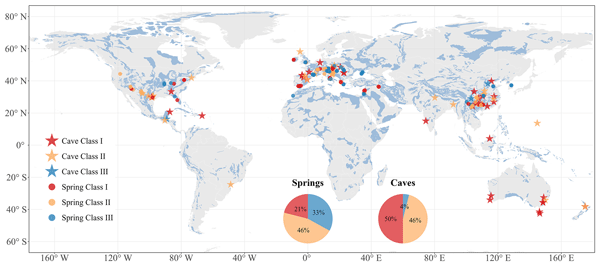
Yining Zang, Pauline C. Treble, Kei Yoshimura, Jayson Gabriel Pinza, Fengbo Zhang, Kübra Özdemir Çallı, Xiaojun Mei, Admin Husic, Alena Gessert, Andrej Stroj, Bartolomé Andreo, Bernard Ladouche, Christine Stumpp, Diana Mance, Eleni Zagana, Fen Huang, Giuseppe Sappa, Harald Kunstmann, Heike Brielmann, Hong Zhou, Huaying Wu, Jakob Garvelmann, James Berglund, Jean-Baptiste Charlier, Jens Lange, Juan Antonio Barberá Fornell, Junbing Pu, Konstantina Katsanou, Kun Ren, Laura Toran, Laurence Gill, Maria Filippini, Martin Kralik, Matías Mudarra Martínez, Min Zhao, Mingming Luo, Nico Goldscheider, Nikolaos Lambrakis, Pantaleone De Vita, Qiong Xiao, Shi Yu, Silvia Iacurto, Silvio Coda, Ted McCormack, Vincenzo Allocca, W. George Darling, Walter D'Alessandro, Xulei Guo, Yundi Hu, Zhijun Wang, Eva Kaminsky, Jiří Faimon, Marek Lang, Pavel Pracný, Aurel Persoiu, and Andreas Hartmann
Earth Syst. Sci. Data, 18, 7199–7225, https://doi.org/10.5194/essd-18-7199-2026, https://doi.org/10.5194/essd-18-7199-2026, 2026
Short summary
Short summary
We developed the first global database of water from karst springs and cave drips that records different forms of oxygen and hydrogen, which naturally trace how rainwater moves through rocks. By gathering and checking thousands of measurements from around the globe and linking them with flow and rainfall data, the database provides a comprehensive view of water movement, allows scientists to compare regions, understand groundwater processes, and support sustainable water management worldwide.
Immanuel Frenzel, Tristan Schröder, Britta Kattenstroth, Barbara Herbstritt, Jonas Pyschik, Michael Müller, and Jens Lange
EGUsphere, https://doi.org/10.5194/egusphere-2026-4811, https://doi.org/10.5194/egusphere-2026-4811, 2026
This preprint is open for discussion and under review for Hydrology and Earth System Sciences (HESS).
Short summary
Short summary
Rain carries the man-made chemical TFA into forests, where it doesn't break down. We sampled water moving sideways through a forested slope in the Black Forest. Fresh autumn leaves hold the most TFA, and the soil water carried far more than the rain did. If earlier rain has already rinsed the soil, TFA just gets diluted. If not, a pulse comes through; bigger storms give longer, multi-peaked signals. TFA keeps a memory of what came before the storm; usual water tracers don't.
Konstantin Ilgen, Dirk Schindler, and Jens Lange
Earth Syst. Sci. Data Discuss., https://doi.org/10.5194/essd-2026-177, https://doi.org/10.5194/essd-2026-177, 2026
Preprint under review for ESSD
Short summary
Short summary
Floating solar panels are increasingly installed on lakes, but their effects on water temperatures are not well understood. We analysed detailed measurements from three European lakes with floating solar systems. The results show that temperature changes depend strongly on climate, lake conditions, and system design. Sun shading and reduced wind are key drivers. These findings help improve environmental assessments and support responsible planning of floating solar projects.
Cited articles
Albers, C. N. and Sültenfuss, J.: A 60-Year Increase in the Ultrashort-Chain PFAS Trifluoroacetate and Its Suitability as a Tracer for Groundwater Age, Environ. Sci. Technol. Lett., 11, 1090–1095, https://doi.org/10.1021/acs.estlett.4c00525, 2024.
Alexandrino, D. A. M., Almeida, C. M. R., Mucha, A. P., and Carvalho, M. F.: Revisiting pesticide pollution: The case of fluorinated pesticides, Environ. Pollut., 292, 118315, https://doi.org/10.1016/j.envpol.2021.118315, 2022.
Arena, M., Auteri, D., Barmaz, S., Bellisai, G., Brancato, A., Brocca, D., Bura, L., Byers, H., Chiusolo, A., Court Marques, D., Crivellente, F., Lentdecker, C. de, Maglie, M. de, Egsmose, M., Erdos, Z., Fait, G., Ferreira, L., Goumenou, M., Greco, L., Ippolito, A., Istace, F., Jarrah, S., Kardassi, D., Leuschner, R., Lythgo, C., Magrans, J. O., Medina, P., Miron, I., Molnar, T., Nougadere, A., Padovani, L., Parra Morte, J. M., Pedersen, R., Reich, H., Sacchi, A., Santos, M., Serafimova, R., Sharp, R., Stanek, A., Streissl, F., Sturma, J., Szentes, C., Tarazona, J., Terron, A., Theobald, A., Vagenende, B., Verani, A., and Villamar-Bouza, L.: Updated peer review of the pesticide risk assessment of the active substance flurtamone, EFSA Journal, 15, e04976, https://doi.org/10.2903/j.efsa.2017.4976, 2017.
Arp, H. P. H., Gredelj, A., Glüge, J., Scheringer, M., and Cousins, I. T.: The Global Threat from the Irreversible Accumulation of Trifluoroacetic Acid (TFA), Environ. Sci. Technol., 58, 19925–19935, https://doi.org/10.1021/acs.est.4c06189, 2024.
Bachmair, S. and Weiler, M.: Interactions and connectivity between runoff generation processes of different spatial scales, Hydrol. Process., 28, 1916–1930, https://doi.org/10.1002/hyp.9705, 2014.
Berg, M., Müller, S. R., Mühlemann, J., Wiedmer, A., and Schwarzenbach, R. P.: Concentrations and Mass Fluxes of Chloroacetic Acids and Trifluoroacetic Acid in Rain and Natural Waters in Switzerland, Environ. Sci. Technol., 34, 2675–2683, https://doi.org/10.1021/es990855f, 2000.
Berger, T. W., Tartowski, S. L., and Likens, G. E.: Trifluoroacetate Retention in a Northern Hardwood Forest Soil, Environ. Sci. Technol., 31, 1916–1921, https://doi.org/10.1021/es960667e, 1997.
Bhat, A. P., Pomerantz, W. C. K., and Arnold, W. A.: Finding Fluorine: Photoproduct Formation during the Photolysis of Fluorinated Pesticides, Environ. Sci. Technol., 56, 12336–12346, https://doi.org/10.1021/acs.est.2c04242, 2022.
Boutonnet, J. C., Bingham, P., Calamari, D., Rooij, C. de, Franklin, J., Kawano, T., Libre, J.-M., McCul-loch, A., Malinverno, G., Odom, J. M., Rusch, G. M., Smythe, K., Sobolev, I., Thompson, R., and Tiedje, J. M.: Environmental Risk Assessment of Trifluoroacetic Acid, Hum. Ecol. Risk Assess., 5, 59–124, https://doi.org/10.1080/10807039991289644, 1999.
Cahill, T. M., Thomas, C. M., Schwarzbach, S. E., and Seiber, J. N.: Accumulation of trifluoroacetate in seasonal wetlands in California, Environ. Sci. Technol., 35, 820–825, https://doi.org/10.1021/es0013982, 2001.
Cahill, T. M.: Increases in Trifluoroacetate Concentrations in Surface Waters over Two Decades, Environ. Sci. Technol., 56, 9428–9434, https://doi.org/10.1021/acs.est.2c01826, 2022.
CORINE Land Cover: CLMS, European Commission Copernicus Land Monitoring Service, https://land.copernicus.eu/en/products/corine-land-cover (last access: 2 June 2025), 2018.
Dawson, T. E.: Fog in the California redwood forest: ecosystem inputs and use by plants, Oecologia, 117, 476–485, https://doi.org/10.1007/s004420050683, 1998.
Didszun, J. and Uhlenbrook, S.: Scaling of dominant runoff generation processes: Nested catchments approach using multiple tracers, Water Resour. Res., 44, https://doi.org/10.1029/2006WR005242, 2008.
Diehle, M., Schneider, F., Banning, H., and Heinrich, C.: Trifluoroacetate leaching potential from fluorinated pesticides: an emission estimation and FOCUS modelling approach, Environ. Sci. Eur., 37, https://doi.org/10.1186/s12302-025-01215-5, 2025.
Eckschlager, K.: Errors, Measurement and Results in Chemical Analysis, Van Nostrand series in analytical chemistry, Van Nostrand Reinhold Company, ISBN 13 9780442022303, 1969.
Federal Statistical Office of Germany: Landwirtschaftliche Betriebe und Menge an Wirtschaftsdünger auf Ackerland oder Dauergrünland ausgebracht haben, nach Düngerarten, https://www.destatis.de/DE/Themen/Branchen-Unternehmen/Landwirtschaft-Forstwirtschaft-Fischerei/Produktionsmethoden/Tabellen/landwirtschaftliche-betriebe-wirtschaftsduenger.html (last access: 30 October 2025), 2021.
Franklin, J.: The atmospheric degradation and impact of 1,1,1,2-tetrafluoroethane (hydrofluorocarbon 134a), Chemosphere, 27, 1565–1601, 1993.
Freeling, F. and Björnsdotter, M. K.: Assessing the environmental occurrence of the anthropogenic contaminant trifluoroacetic acid (TFA), Current Opinion in Green and Sustainable Chemistry, 41, 100807, https://doi.org/10.1016/j.cogsc.2023.100807, 2023.
Freeling, F., Scheurer, M., Koschorreck, J., Hoffmann, G., Ternes, T. A., and Nödler, K.: Levels and Temporal Trends of Trifluoroacetate (TFA) in Archived Plants: Evidence for Increasing Emissions of Gaseous TFA Precursors over the Last Decades, Environ. Sci. Technol. Lett., 9, 400–405, https://doi.org/10.1021/acs.estlett.2c00164, 2022.
Freeling, F., Behringer, D., Heydel, F., Scheurer, M., Ternes, T. A., and Nödler, K.: Trifluoroacetate in Precipitation: Deriving a Benchmark Data Set, Environ. Sci. Technol., 54, 11210–11219, https://doi.org/10.1021/acs.est.0c02910, 2020.
Frenzel, I.: Markdown and Data – Diffuse sources of TFA: atmospheric and terrestrial inputs, retention and pathways at the catchment scale, Zenodo [code and data set], https://doi.org/10.5281/zenodo.17572244, 2025.
Frey, M.: Tracerhydrologische Untersuchungen im Brugga Einzugsgebiet: Gase, Silikat und stabile Isotopen, Institut for Hydrology, Albert Ludwigs Universität, Freiburg i. Br., https://www.hydrology.uni-freiburg.de/abschluss/Frey_M_1999_DA.pdf (last access: 9 April 2026), 1999.
Fuchs, P., Muller-Westermeier G., and Schmidt, A.: Hydrologischer Atlas von Deutschland, Bundesministerium für Umwelt, Naturschutz und Reaktorsicherheit, ISBN 3-00-005624-6, 2001.
German Environment Agency: Wie wird die landwirtschaftliche Fläche in Deutschland genutzt?, https://www.umweltbundesamt.de/umweltatlas/umwelt-landwirtschaft/einfuehrung/landwirtschaft-in-deutschland/wie-wird-die-landwirtschaftliche-flaeche-in, last access: 30 October 2025.
German Environment Agency: Trifluoroacetate (TFA): Laying the foundations for effective mitigation – Spatial analysis of the input pathways into the water cycle, 75 pp., https://www.umweltbundesamt.de/publikationen/trifluoroacetate-tfa-laying-the-foundations-for (last access: 9 April 2026), 2023.
German Environment Agency: Persistent degradation products of halogenated refrigerants and blowing agents in the environment: type, environmental concentrations, and fate with particular regard to new halogenated substitutes with low global warming potential, 259 pp., https://www.umweltbundesamt.de/en/publikationen/persistent-degradation-products-of-halogenated (last access: 9 April 2026), 2021.
Ghisi, R., Vamerali, T., and Manzetti, S.: Accumulation of perfluorinated alkyl substances (PFAS) in agricultural plants: A review, Environ. Res., 169, 326–341, https://doi.org/10.1016/j.envres.2018.10.023, 2019.
Hangen, E., Lindenlaub, M., Leibundgut, C., and von Wilpert, K.: Investigating mechanisms of stormflow generation by natural tracers and hydrometric data: a small catchment study in the Black Forest, Germany, Hydrol. Process., 15, 183–199, https://doi.org/10.1002/hyp.142, 2001.
Harrell, F. J.: Hmisc, R package version 5.2-3, https://doi.org/10.32614/CRAN.package.Hmisc, 2024.
Henne, S., Storck, F. R., Wöhrnschimmel, H., Leuenberger, M., Vollmer, M. K., and Reimann, S.: Trifluoroacetate (TFA) in precipitation and surface waters in Switzerland: trends, source attribution, and budget, Atmos. Chem. Phys., 25, 18157–18186, https://doi.org/10.5194/acp-25-18157-2025, 2025.
Hoeg, S., Uhlenbrook, S., and Leibundgut, C.: Hydrograph separation in a mountainous catchment – combining hydrochemical and isotopic tracers, Hydrol. Process., 14, 1199–1216, https://doi.org/10.1002/(SICI)1099-1085(200005)14:7<1199::AID-HYP35>3.0.CO;2-K, 2000.
Horner, I., Renard, B., Le Coz, J., Branger, F., McMillan, H. K., and Pierrefeu, G.: Impact of Stage Measurement Errors on Streamflow Uncertainty, Water Resour. Res., 54, 1952–1976, https://doi.org/10.1002/2017WR022039, 2018.
Joerss, H., Freeling, F., van Leeuwen, S., Hollender, J., Liu, X., Nödler, K., Wang, Z., Yu, B., Zahn, D., and Sigmund, G.: Pesticides can be a substantial source of trifluoroacetate (TFA) to water resources, Environ. Int., 193, 109061, https://doi.org/10.1016/j.envint.2024.109061, 2024.
Jordan, A. and Frank, H.: Trifluoroacetate in the Environment. Evidence for Sources Other Than HFC/HCFCs, Environ. Sci. Technol., 33, 522–527, https://doi.org/10.1021/es980674y, 1999.
Kienzler, P. M. and Naef, F.: Subsurface storm flow formation at different hillslopes and implications for the “old water paradox”, Hydrol. Process., 22, 104–116, https://doi.org/10.1002/hyp.6687, 2008.
Kirchner, J. W.: Quantifying new water fractions and transit time distributions using ensemble hydrograph separation: theory and benchmark tests, Hydrol. Earth Syst. Sci., 23, 303–349, https://doi.org/10.5194/hess-23-303-2019, 2019.
Lange, J. and Haensler, A.: Runoff generation following a prolonged dry period, J. Hydrol., 464–465, 157–164, https://doi.org/10.1016/j.jhydrol.2012.07.010, 2012.
Lange, J., Bulka, L., Nöltge, D., Freeling, F., Ilgen, K., Külls, C., and Müller, M.: Trifluoroacetate (TFA) – Potentials and limits of a new hydrological pollution tracer, Sci. Total Environ., 997, 180175, https://doi.org/10.1016/j.scitotenv.2025.180175, 2025.
Li, F., Zhang, C., Qu, Y., Chen, J., Chen, L., Liu, Y., and Zhou, Q.: Quantitative characterization of short- and long-chain perfluorinated acids in solid matrices in Shanghai, China, Sci. Total Environ., 408, 617–623, https://doi.org/10.1016/j.scitotenv.2009.10.032, 2010.
Liang, S.-H., Steimling, J. A., and Chang, M.: Analysis of ultrashort-chain and short-chain (C1 to C4) per- and polyfluorinated substances in potable and non-potable waters, J. Chromatogr. Open, 4, 100098, https://doi.org/10.1016/j.jcoa.2023.100098, 2023.
Likens, G. E., Tartowski, S. L., Berger, T. W., Richey, D. G., Driscoll, C. T., Frank, H. G., and Klein, A.: Transport and fate of trifluoroacetate in upland forest and wetland ecosystems, P. Natl. Acad. Sci. USA, 94, 4499–4503, https://doi.org/10.1073/pnas.94.9.4499, 1997.
Liu, H., He, S., Anenkhonov, O., Guozheng, H., Sandanov, D., and Badmaeva, N.: Topography-Controlled Soil Water Content and the Coexistence of Forest and Steppe in Northern China, Phys. Geogr., 33, https://doi.org/10.2747/0272-3646.33.6.561, 2012.
Liu, J., Kleinman, P. J. A., Aronsson, H., Flaten, D., McDowell, R. W., Bechmann, M., Beegle, D. B., Robinson, T. P., Bryant, R. B., Liu, H., Sharpley, A. N., and Veith, T. L.: A review of regulations and guidelines related to winter manure application, Ambio, 47, 657–670, https://doi.org/10.1007/s13280-018-1012-4, 2018.
Ogawa, Y., Tokunaga, E., Kobayashi, O., Hirai, K., and Shibata, N.: Current Contributions of Organofluorine Compounds to the Agrochemical Industry, iScience, 23, 101467, https://doi.org/10.1016/j.isci.2020.101467, 2020.
Rauthe, M., Steiner, H., Riediger, U., Mazurkiewicz, A., and Gratzki, A.: A Central European precipitation climatology Part I: Generation and validation of a high-resolution gridded daily data set (HYRAS), Meteorol. Z., 22, 235–256, https://doi.org/10.1127/0941-2948/2013/0436, 2013.
Richey, D. G., Driscoll, C. T., and Likens, G. E.: Soil Retention of Trifluoroacetate, Environ. Sci. Technol., 31, 1723–1727, https://doi.org/10.1021/es960649x, 1997.
Richter, D.: Ergebnisse methodischer Untersuchungen zur Korrektur des systematischen Meßfehlers des Hellmann-Niederschlagmessers, Offenbach am Main, 194, 97 pp., https://www.dwd.de/EN/ourservices/pbfb_verlag_berichte/pdf_einzelbaende/194_pdf.pdf?__blob=publicationFile&v=3 (last access: 9 April 2026), 1995.
Scheurer, M. and Nödler, K.: Ultrashort-chain perfluoroalkyl substance trifluoroacetate (TFA) in beer and tea - An unintended aqueous extraction, Food Chem., 351, 129304, https://doi.org/10.1016/j.foodchem.2021.129304, 2021.
Scheurer, M., Nödler, K., Freeling, F., Janda, J., Happel, O., Riegel, M., Müller, U., Storck, F. R., Fleig, M., Lange, F. T., Brunsch, A., and Brauch, H.-J.: Small, mobile, persistent: Trifluoroacetate in the water cycle – Overlooked sources, pathways, and consequences for drinking water supply, Water Res., 126, 460–471, https://doi.org/10.1016/j.watres.2017.09.045, 2017.
Shapiro, S. S. and Wilk, M. B.: An Analysis of Variance Test for Normality (Complete Samples), Biometrika, 52, 591, https://doi.org/10.2307/2333709, 1965.
Seibert, J., Uhlenbrook, S., Leibundgut, C., and Halldin, S.: Multiscale calibration and validation of a conceptual rainfall-runoff model, Phys. Chem. Earth Pt. B, 25, 59–64, https://doi.org/10.1016/S1464-1909(99)00121-5, 2000.
Steinbrich, A., Leistert, H., and Weiler, M.: Model-based quantification of runoff generation processes at high spatial and temporal resolution, Environ. Earth Sci., 75, https://doi.org/10.1007/s12665-016-6234-9, 2016.
Sun, M., Cui, J., Guo, J., Zhai, Z., Zuo, P., and Zhang, J.: Fluorochemicals biodegradation as a potential source of trifluoroacetic acid (TFA) to the environment, Chemosphere, 254, 126894, https://doi.org/10.1016/j.chemosphere.2020.126894, 2020.
Synek, V.: Evaluation of the standard deviation from duplicate results, Accred. Qual. Assur., 13, 335–337, https://doi.org/10.1007/s00769-008-0390-x, 2008.
Tilch, N., Uhlenbrook, S., and Leibundgut, C.: Regionalisierungsverfahren zur Ausweisung von Hydrotopen in von periglazialem Hangschutt geprägten Gebieten, Grundwasser, 7, 206–216, https://doi.org/10.1007/s007670200032, 2002.
Uhlenbrook, S. and Leibundgut, C.: Process-oriented catchment modelling and multiple-response validation, Hydrol. Process., 16, 423–440, https://doi.org/10.1002/hyp.330, 2002.
Uhlenbrook, S.: Untersuchung und Modellierung der Abflußbildung in einem mesoskaligen Einzugsgebiet, Institut für Hydrologie, Albert Ludwigs Universität Freiburg i. Br., Freiburg i. Br., 218 pp., https://www.hydrology.uni-freiburg.de/publika/FSH-Bd10-Uhlenbrook.pdf (last access: 9 April 2026), 1999.
Uhlenbrook, S., Frey, M., Leibundgut, C., and Maloszewski, P.: Hydrograph separations in a mesoscale mountainous basin at event and seasonal timescales, Water Resour. Res., 38, https://doi.org/10.1029/2001WR000938, 2002.
Wang, Q., Wang, X., and Ding, X.: Rainwater trifluoroacetic acid (TFA) in Guangzhou, South China: levels, wet deposition fluxes and source implication, Sci. Total Environ., 468–469, 272–279, https://doi.org/10.1016/j.scitotenv.2013.08.055, 2014.
Wenninger, J., Uhlenbrook, S., Tilch, N., and Leibundgut, C.: Experimental evidence of fast groundwater responses in a hillslope/floodplain area in the Black Forest Mountains, Germany, Hydrol. Process., 18, 3305–3322, https://doi.org/10.1002/hyp.5686, 2004.
Wood, W. W. and Sanford, W. E.: Chemical and Isotopic Methods for Quantifying Ground-Water Recharge in a Regional, Semiarid Environment, Groundwater, 33, 458–468, https://doi.org/10.1111/j.1745-6584.1995.tb00302.x, 1995.
Xu, B., Alizray, R., Lammel, D. R., Riedel, S., and Rillig, M. C.: Concentration-dependent response of soil parameters and functions to trifluoroacetic acid, European J. Soil Science, 73, e13266, https://doi.org/10.1111/ejss.13266, 2022.
Short summary
We studied trifluoroacetate (TFA) in a German river catchment. TFA from rain was not permanently retained in soils or plants and can be mobilized by heavy rain, meaning soils and plants may hold more TFA than rivers or rainfall indicate. In areas with precipitation input only, TFA served as a new tracer for determining actual evapotranspiration. The agricultural area showed higher TFA in surface and groundwater, suggesting that agriculture increases TFA pollution.
We studied trifluoroacetate (TFA) in a German river catchment. TFA from rain was not permanently...


