Articles | Volume 30, issue 4
https://doi.org/10.5194/hess-30-1221-2026
© Author(s) 2026. This work is distributed under
the Creative Commons Attribution 4.0 License.
https://doi.org/10.5194/hess-30-1221-2026
© Author(s) 2026. This work is distributed under
the Creative Commons Attribution 4.0 License.
Modeling surface water and groundwater mixing and mixing-dependent denitrification with bedform dynamics

Hubei Key Laboratory of Yangtze Catchment Environmental Aquatic Science, School of Environmental Studies, China University of Geosciences, Wuhan, China
State Key Laboratory of Biogeology and Environmental Geology, China University of Geosciences, Wuhan, China
Yang Xian
Hubei Key Laboratory of Yangtze Catchment Environmental Aquatic Science, School of Environmental Studies, China University of Geosciences, Wuhan, China
Menggui Jin
Hubei Key Laboratory of Yangtze Catchment Environmental Aquatic Science, School of Environmental Studies, China University of Geosciences, Wuhan, China
State Key Laboratory of Biogeology and Environmental Geology, China University of Geosciences, Wuhan, China
Stefan Krause
School of Geography, Earth and Environmental Sciences, University of Birmingham, Birmingham, UK
Related authors
No articles found.
Qi Zhu, Ye Kang, Zhang Wen, Hui Liu, Luguang Liu, Yan Li, Xu Li, and Eungyu Park
EGUsphere, https://doi.org/10.5194/egusphere-2025-5682, https://doi.org/10.5194/egusphere-2025-5682, 2025
Short summary
Short summary
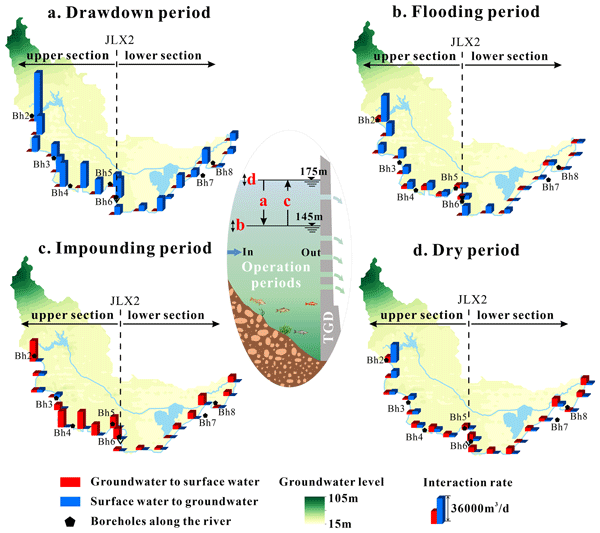
The Three Gorges Dam (TGD)'s impact on downstream groundwater dynamics remains poorly understood. We established monitoring profiles in the first downstream river-lake wetland to spatially quantify groundwater response for the first time. With numerical simulation, how each operation period affects hyporheic exchange is deeply studied. We found TGD suppresses river-aquifer exchange, particularly during dry-season. These findings provide critical insights into dam effects on watershed hydrology.
Susan E. Quick, Giulio Curioni, Nicholas J. Harper, Stefan Krause, and A. Robert MacKenzie
Biogeosciences, 22, 1557–1581, https://doi.org/10.5194/bg-22-1557-2025, https://doi.org/10.5194/bg-22-1557-2025, 2025
Short summary
Short summary
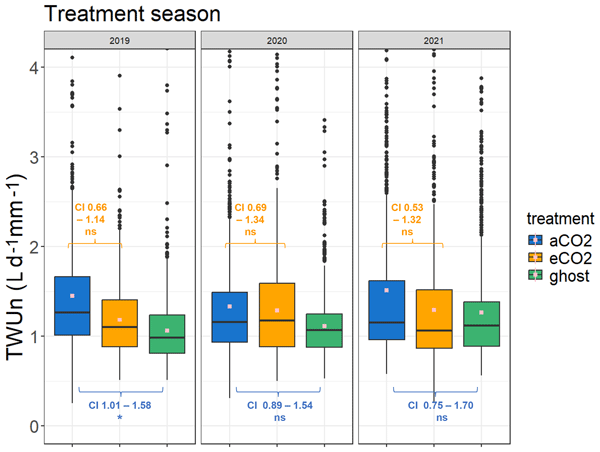
To study the effects of rising CO2 levels on water usage of old-growth temperate oak forest, we monitored trees in an open-air elevated CO2 experiment for 5 years. We found 4 %–16 % leaf-on season reduction in daylight water usage for ~35% increase in atmospheric CO2. July-only reduction varied more widely. Tree water usage depended on tree size, i.e. stem size and projected canopy area, across all treatments. Experimental infrastructure increased the water usage of the trees in leaf-on season.
Yiming Li, Uwe Schneidewind, Zhang Wen, Stefan Krause, and Hui Liu
Hydrol. Earth Syst. Sci., 28, 1751–1769, https://doi.org/10.5194/hess-28-1751-2024, https://doi.org/10.5194/hess-28-1751-2024, 2024
Short summary
Short summary
Meandering rivers are an integral part of many landscapes around the world. Here we used a new modeling approach to look at how the slope of riverbanks influences water flow and solute transport from a meandering river channel through its bank and into/out of the connected groundwater compartment (aquifer). We found that the bank slope can be a significant factor to be considered, especially when bank slope angles are small, and riverbank and aquifer conditions only allow for slow water flow.
Xianzhang Dang, Maosheng Gao, Zhang Wen, Guohua Hou, Hamza Jakada, Daniel Ayejoto, and Qiming Sun
Hydrol. Earth Syst. Sci., 26, 1341–1356, https://doi.org/10.5194/hess-26-1341-2022, https://doi.org/10.5194/hess-26-1341-2022, 2022
Short summary
Short summary
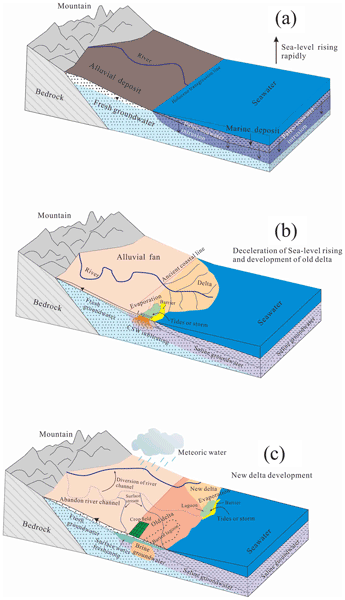
Due to the widespread salinity in coastal zones, freshwater supplies are now under pressure. This study analyzes the recharge and salinity sources of coastal groundwater (brine, saline, brackish, fresh), as well as salinization and freshening processes, using hydrochemical and isotopic methods. The evolution of saline groundwater is studied using sedimentary characteristics as multiple lines of evidence. This study can be used to better understand groundwater evolution in the coastal zone.
Liwen Wu, Jesus D. Gomez-Velez, Stefan Krause, Anders Wörman, Tanu Singh, Gunnar Nützmann, and Jörg Lewandowski
Hydrol. Earth Syst. Sci., 25, 1905–1921, https://doi.org/10.5194/hess-25-1905-2021, https://doi.org/10.5194/hess-25-1905-2021, 2021
Short summary
Short summary
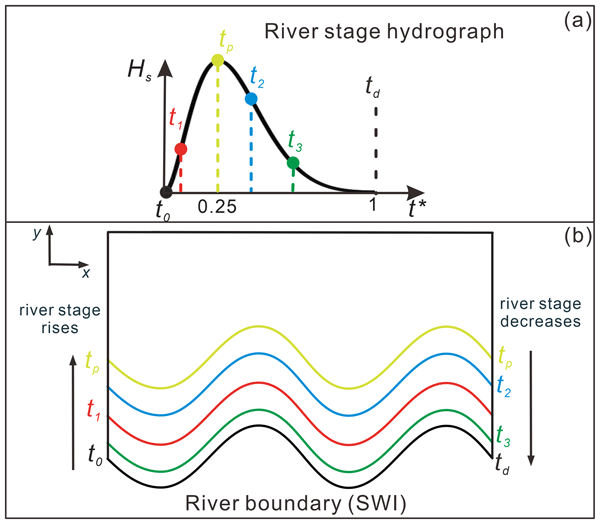
With a physically based model that couples flow and heat transport in hyporheic zones, the present study provides the first insights into the dynamics of hyporheic responses to the impacts of daily groundwater withdrawal and river temperature fluctuations, allowing for a better understanding of transient hyporheic exchange processes and hence an improved pumping operational scheme.
Cited articles
Ahmerkamp, S., Winter, C., Janssen, F., Kuypers, M. M., and Holtappels, M.: The impact of bedform migration on benthic oxygen fluxes, J. Geophys. Res.: Biogeosci., 120, 2229–2242, https://doi.org/10.1002/2015JG003106, 2015.
Ahmerkamp, S., Winter, C., Krämer, K., Beer, D. D., Janssen, F., Friedrich, J., Kuypers, M. M. M., and Holtappels, M.: Regulation of benthic oxygen fluxes in permeable sediments of the coastal ocean, Limnol. Oceanogr., 62, 1935–1954, https://doi.org/10.1002/lno.10544, 2017.
Ascott, M. J., Stuart, M. E., Gooddy, D. C., Marchant, B. P., Talbot, J. C., Surridge, B. J., and Polya, D. A.: Provenance of drinking water revealed through compliance sampling, Environ. Sci.: Processes & Impacts, 21, 1052–1064, https://doi.org/10.1039/C8EM00437D, 2019.
Ashley, G. M.: Classification of large-scale subaqueous bedforms: A new look at an old problem-SEPM bedforms and bedding structures, J. Sediment. Res., 60, 160–172, https://doi.org/10.1306/212F9138-2B24-11D7-8648000102C1865D, 1990.
Azizian, M., Grant, S. B., Kessler, A. J., Cook, P. L. M., Rippy, M. A., and Stewardson, M. J.: Bedforms as biocatalytic filters: a pumping and streamline segregation model for nitrate removal in permeable sediments, Environ. Sci. Technol., 49, 10993–11002, https://doi.org/10.1021/acs.est.5b01941, 2015.
Bardini, L., Boano, F., Cardenas, M. B., Revelli, R., and Ridolfi, L.: Nutrient cycling in bedform induced hyporheic zones, Geochim. Cosmochim. Acta, 84, 47–61, https://doi.org/10.1016/j.gca.2012.01.025, 2012.
Bartholdy, J., Ernstsen, V. B., Flemming, B. W., Winter, C., Bartholomä, A., and Kroon, A.: On the formation of current ripples, Sci. Rep., 5, 11390, https://doi.org/10.1038/srep11390, 2015.
Bear, J. and Verruijt, A.: Modeling groundwater flow and pollution, D. Reidel Publishing Company, https://doi.org/10.1007/978-94-009-3379-8, 1998.
Boano, F., Poggi, D., Revelli, R., and Ridolfi, L.: Gravity-driven water exchange between streams and hyporheic zones, Geophys. Res. Lett., 36, L20402, https://doi.org/10.1029/2009GL040147, 2009.
Boano, F., Revelli, R., and Ridolfi, L.: Water and solute exchange through flat streambeds induced by large turbulent eddies, J. Hydrol., 402, 290–296, https://doi.org/10.1016/j.jhydrol.2011.03.023, 2011.
Boano, F., Revelli, R., and Ridolfi, L.: Modeling hyporheic exchange with unsteady stream discharge and bedform dynamics, Water Resour. Res., 49, 4089–4099, https://doi.org/10.1002/wrcr.20322, 2013.
Boano, F., Harvey, J. W., Marion, A., Packman, A. I., Revelli, R., Ridolfi, L., and Wörman, A.: Hyporheic flow and transport processes: Mechanisms, models, and biogeochemical implications, Rev. Geophys., 52, 603–679, https://doi.org/10.1002/2012RG000417, 2014.
Bottacin-Busolin, A. and Marion, A.: Combined role of advective pumping and mechanical dispersion on time scales of bed form induced hyporheic exchange, Water Resour. Res., 46, W08518, https://doi.org/10.1029/2009WR008892, 2010.
Boulton, A. J., Findlay, S., Marmonier, P., Stanley, E. H., and Valett, H. M.: The functional significance of the hyporheic zone in streams and rivers, Annu. Rev. Ecol. Syst., 29, 59–81, https://doi.org/10.1146/annurev.ecolsys.29.1.59, 1998.
Briggs, M. A., Lautz, L. K., Hare, D. K., and González-Pinzón, R.: Relating hyporheic fluxes, residence times, and redox-sensitive biogeochemical processes upstream of beaver dams, Freshw. Sci., 32, 622–641, https://doi.org/10.1899/12-110.1, 2013.
Burt, T. P., Howden, N. J. K., Worrall, F., Whelan, M. J., and Bieroza, M.: Nitrate in United Kingdom rivers: Policy and its outcomes since 1970, Environ. Sci. Technol., 45, 175–181, https://doi.org/10.1021/es101395s, 2011.
Cardenas, M. B.: Hyporheic zone hydrologic science: A historical account of its emergence and a prospectus, Water Resour. Res., 51, 3601–3616, https://doi.org/10.1002/2015WR017028, 2015.
Cardenas, M. B. and Wilson, J. L.: The influence of ambient groundwater discharge on exchange zones induced by current-bedform interactions, J. Hydrol., 331, 103–109, https://doi.org/10.1016/j.jhydrol.2006.05.012, 2006.
Cardenas, M. B., Wilson, J. L., and Haggerty, R.: Residence time of bedform-driven hyporheic exchange, Adv. Water Resour. 31, 1382–1386, https://doi.org/10.1016/j.advwatres.2008.07.006, 2008.
Coleman, S. E. and Melville, B. W.: Bed-form development, J. Hydraul. Eng., 120, 544–560, https://doi.org/10.1061/(ASCE)0733-9429(1994)120:5(544), 1994.
Conley, D. J., Paerl, H. W., Howarth, R. W., Boesch, D. F., Seitzinger, S. P., Havens, K. E., Lancelot, C., and Likens, G. E.: Ecology: controlling eutrophication: nitrogen and phosphorus, Science, 323, 1014–1015, https://doi.org/10.1126/science.1167755, 2009.
Dallmann, J., Phillips, C. B., Teitelbaum, Y., Sund, N., Schumer, R., Arnon, S., and Packman, A. I.: Impacts of suspended clay particle deposition on sand-bed morphodynamics, Water Resour. Res., 56, e2019WR027010, https://doi.org/10.1029/2019WR027010, 2020.
Drummond, J. D., Larsen, L. G., González-Pinzón, R., Packman, A. I., and Harvey, J. W.: Fine particle retention within stream storage areas at base flow and in response to a storm event: Particle retention stream storage areas, Water Resour. Res. 53, 5690–5705, https://doi.org/10.1002/2016WR020202, 2017.
Elliott, A. H. and Brooks, N. H.: Transfer of nonsorbing solutes to a streambed with bed forms: Theory, Water Resour. Res., 33, 123–136, https://doi.org/10.1029/96wr02784, 1997.
Fox, A., Boano, F., and Arnon, S.: Impact of losing and gaining streamflow conditions on hyporheic exchange fluxes induced by dune-shaped bed forms, Water Resour. Res., 50, 1895–1907, https://doi.org/10.1002/2013WR014668, 2014.
Fox, A., Packman, A. I., Boano, F., Phillips, C. B., and Arnon, S.: Interactions between suspended kaolinite deposition and hyporheic exchange flux under losing and gaining flow conditions, Geophys. Res. Lett., 45, 4077–4085, https://doi.org/10.1029/2018GL077951, 2018.
Gangi, A. F.: Permeability of unconsolidated sands and porous rocks, J. Geophys. Res., 90, 3099–3104, https://doi.org/10.1029/JB090iB04p03099, 1985.
Gomez-Velez, J. D., Harvey, J., Cardenas, M. B., and Kiel, B.: Denitrification in the Mississippi River network controlled by flow through river bedforms, Nat. Geosci., 8, 941–975, https://doi.org/10.1038/NGEO2567, 2015.
Gomez-Velez, J. D., Wilson, J. L., Cardenas, M. B., and Harvey, J. W.: Flow and residence times of dynamic river bank storage and sinuosity-driven hyporheic exchange, Water Resour. Res., 53, 8572–8595, https://doi.org/10.1002/2017WR021362, 2017.
Gu, C., Hornberger, G. M., Herman, J. S., and Mills, A. L.: Effect of freshets on the flux of groundwater nitrate through streambed sediments, Water Resour. Res., 44, W05415, https://doi.org/10.1029/2007WR006488, 2008.
Harvey, J. W., Drummond, J. D., Martin, R. L., Mcphillips, L. E., Packman, A. I., Jerolmack, D. J., Stonedahl, S. H., Aubeneau, A. F., Sawyer, A. H., and Larsen, L. G.: Hydrogeomorphology of the hyporheic zone: Stream solute and fine particle interactions with a dynamic streambed, J. Geophys. Res., 117, G00N11, https://doi.org/10.1029/2012JG002043, 2012.
Hedin, L. O., Von Fischer, J. C., Ostrom, N. E., Kennedy, B. P., Brown, M. G., and Robertson, G. P.: Thermodynamic constraints on nitrogen transformations and other biogeochemical processes at soil-stream interfaces, Ecology, 79, 684–703, https://doi.org/10.1890/0012-9658(1998)079[0684:TCONAO]2.0.CO;2, 1998.
Hester, E. T., Young, K. I., and Widdowson, M. A.: Mixing of surface and groundwater induced by riverbed dunes: Implications for hyporheic zone definitions and pollutant reactions, Water Resour. Res., 49, 5221–5237, https://doi.org/10.1002/wrcr.20399, 2013.
Hester, E. T., Young, K. I., and Widdowson, M. A.: Controls on mixing-dependent denitrification in hyporheic zones induced by riverbed dunes: A steady state modeling study, Water Resour. Res., 50, 9048–9066, https://doi.org/10.1002/2014WR015424, 2014.
Hester, E. T., Cardenas, M. B., Haggerty, R., and Sourabh, S. V. A.: The importance and challenge of hyporheic mixing, Water Resour. Res., 53, 3565–3575, https://doi.org/10.1002/2016WR020005, 2017.
Hester, E. T., Eastes, L. A., and Widdowson, M. A.: Effect of surface water stage fluctuation on mixing-dependent hyporheic denitrification in riverbed dunes, Water Resour. Res., 55, 4668–4687, https://doi.org/10.1029/2018WR024198, 2019.
Howden, N. J. K. and Burt, T. P.: Temporal and spatial analysis of nitrate concentrations from the Frome and Piddle catchments in Dorset (UK) for water years 1978 to 2007: Evidence for nitrate breakthrough?, Sci. Total Environ., 407, 507–526, https://doi.org/10.1016/j.scitotenv.2008.08.042, 2008.
Hu, H., Binley, A., Heppell, C. M., Lansdown, K., and Mao, X.: Impact of microforms on nitrate transport at the groundwater-surface water interface in gaining streams, Adv. Water Resour., 73, 185–197, https://doi.org/10.1016/j.advwatres.2014.07.013, 2014.
Janssen, F., Cardenas, M. B., Sawyer, A. H., Dammrich, T., Krietsch, J., and de Beer, D.: A comparative experimental and multiphysics computational fluid dynamics study of coupled surface-subsurface flow in bed forms, Water Resour. Res., 48, W08514, https://doi.org/10.1029/2012WR011982, 2012.
Jiang, Q., Liu, D., Jin, G., Tang, H., Wei, Q., and Xu, J.: N2O dynamics in the hyporheic zone due to ripple migration, J. Hydrol., 610, 127891, https://doi.org/10.1016/j.jhydrol.2022.127891, 2022.
Kessler, A. J., Cardenas, M. B., and Cook, P. L. M.: The negligible effect of bed form migration on denitrification in hyporheic zones of permeable sediments, J. Geophys. Res.: Biogeosci., 120, 538–548, https://doi.org/10.1002/2014JG002852, 2015.
Krause, S., Heathwaite, L., Binley, A., and Keenan, P.: Nitrate concentration changes at the groundwater-surface water interface of a small Cumbrian River, Hydrol. Processes, 23, 2195–2211, https://doi.org/10.1002/hyp.7213, 2009.
Krause, S., Tecklenburg, C., Munz, M., and Naden, E.: Streambed nitrogen cycling beyond the hyporheic zone: Flow controls on horizontal patterns and depth distribution of nitrate and dissolved oxygen in the upwelling groundwater of a lowland river, J. Geophys. Res.: Biogeosciences, 118, 54–67, https://doi.org/10.1029/2012JG002122, 2013.
Krause, S., Abbott, B. W., Baranov, V., Bernal, S., Blaen, P., Datry, T., Drummond, J., Fleckenstein, J. H., Velez, J. G., Hannah, D. M., Knapp, J. L. A., Kurz, M., Lewandowski, J., Martí, E., Mendoza-Lera, C., Milner, A., Packman, A., Pinay, G., Ward, A. S., and Zarnetzke, J. P.: Organizational principles of hyporheic exchange flow and biogeochemical cycling in river networks across scales, Water Resour. Res., 58, e2021WR029771, https://doi.org/10.1029/2021WR029771, 2022.
Lansdown, K., Trimmer, M., Heppell, C. M., Sgouridis, F., Ullah, S., Heathwaite, L., Binley, A., and Zhang, H.: Characterization of the key pathways of dissimilatory nitrate reduction and their response to complex organic substrates in hyporheic sediments, Limnol. Oceanogr., 57, 387–400, https://doi.org/10.4319/lo.2012.57.2.0387, 2012.
Lansdown, K., Heppell, C. M., Dossena, M., Ullah, S., Heathwaite, A. L., Binley, A., Zhang, H., and Trimmer, M.,: Fine-Scale in situ measurement of riverbed nitrate production and consumption in an armored permeable riverbed, Environ. Sci. Technol., 48, 4425–4434, https://doi.org/10.1021/es4056005, 2014.
Lansdown, K., Heppell, C. M., Trimmer, M., Binley, A., Heathwaite, A. L., Byrne, P., and Zhang, H.: The interplay between transport and reaction rates as controls on nitrate attenuation in permeable, streambed sediments, J. Geophys. Res. Biogeosci., 120, 1093–1109, https://doi.org/10.1002/2014JG002874, 2015.
Lawrence, J. E., Skold, M. E., Hussain, F. A., Silverman, D. R., Resh, V. H., Sedlak, D. L., Luthy, R. G., and McCray, J. E.: Hyporheic zone in urban streams: A review and opportunities for enhancing water quality and improving aquatic habitat by active management, Environ. Eng. Sci., 30, 480–501, https://doi.org/10.1089/ees.2012.0235, 2013.
Liu, F., Ding, Y., Liu, J., Latif, J., Qin, J., Tian, S., Sun, S., Guan, B., Zhu, K., and Jia, H.: The effect of redox fluctuation on carbon mineralization in riparian soil: An analysis of the hotspot zone of reactive oxygen species production, Water Res., 265, 122294, https://doi.org/10.1016/j.watres.2024.122294, 2024.
Liu, Y., Liu, C., Nelson, W. C., Shi, L., Xu, F., Liu, Y., Yan, A., Zhong, L., Thompson, C., Fredrickson, J. K., and Zachara, J. M.: Effect of water chemistry and hydrodynamics on nitrogen transformation activity and microbial community functional potential in hyporheic zone sediment columns, Environ. Sci. Technol., 51, 4877–4886, https://doi.org/10.1021/acs.est.6b05018, 2017.
Marzadri, A., Tonina, D., and Bellin, A.: Morphodynamic controls on redox conditions and on nitrogen dynamics within the hyporheic zone: application to gravel bed rivers with alternate-bar morphology, J. Geophys. Res.: Biogeosci., 117, 184–189, https://doi.org/10.1029/2012JG001966, 2012.
Monod, J.: The growth of bacteria cultures, Annu. Rev. Microbiol., 3, 371–394, https://doi.org/10.1146/annurev.mi.03.100149.002103, 1949.
Munz, M., Krause, S., Tecklenburg, C., and Binley, A.: Reducing monitoring gaps at the aquifer-river interface by modelling groundwater-surface water exchange flow patterns, Hydrol. Processes, 25, 3547–3562, https://doi.org/10.1002/hyp.8080, 2011.
Naranjo, R. C., Niswonger, R. G., and Davis, C. J.: Mixing effects on nitrogen and oxygen concentrations and the relationship to mean residence time in a hyporheic zone of a riffle-pool sequence, Water Resour. Res., 51, 7202–7217, https://doi.org/10.1002/2014WR016593, 2015.
Nogueira, G. E. H., Schmidt, C., Brunner, P., Graeber, D., and Fleckenstein, J. H.: Transit-time and temperature control the spatial patterns of aerobic respiration and denitrification in the riparian zone, Water Resour. Res., 57, e2021WR030117, https://doi.org/10.1029/2021WR030117, 2021.
Nogueira, G. E. H., Schmidt, C., Partington, D., Brunner, P., and Fleckenstein, J. H.: Spatiotemporal variations in water sources and mixing spots in a riparian zone, Hydrol. Earth Syst. Sci., 26, 1883–1905, https://doi.org/10.5194/hess-26-1883-2022, 2022.
Nogueira, G. E. H., Partington, D., Heidbuchel, I., and Fleckenstein, J. H.: Combined effects of geological heterogeneity and discharge events on groundwater and surface water mixing, J. Hydrol., 638, 131467, https://doi.org/10.1016/j.jhydrol.2024.131467, 2024.
Ocampo, C. J., Oldham, C. E., and Sivapalan, M.: Nitrate attenuation in agricultural catchments: shifting balances between transport and reaction, Water Resour. Res., 42, 85–88, https://doi.org/10.1029/2004WR003773, 2006.
Peleg, E., Teitelbaum, Y., and Arnon, S.: Exploring the influence of sediment motion on microplastic deposition in streambeds, Water Res., 249, 120952, https://doi.org/10.1016/j.watres.2023.120952, 2024.
Pescimoro, E., Boano, F., Sawyer, A. H., and Soltanian, M. R.: Modeling influence of sediment heterogeneity on nutrient cycling in streambeds, Water Resour. Res., 55, https://doi.org/10.1029/2018WR024221, 2019.
Ping, X., Xian, Y., and Jin, M.: Influence of bedform migration on nitrate reduction in hyporheic zones of heterogeneous sediments, Water Resour. Res., 58, e2022WR033258, https://doi.org/10.1029/2022WR033258, 2022.
Ping, X., Xian, Y., and Jin, M.: Effect of particulate organic carbon deposition on nitrate reduction in the hyporheic zone, Water Resour. Res., 59, e2022WR034253, https://doi.org/10.1029/2022WR034253, 2023.
Precht, E., Franke, U., Polerecky, L., and Huttel, M.: Oxygen dynamics in permeable sediments with wave-driven pore water exchange, Limnol. Oceanogr., 49, 693–705, https://doi.org/10.4319/lo.2004.49.3.0693, 2004.
Quick, A. M., Reeder, W. J., Farrell, T. B., Tonina, D., Feris, K. P., and Benner, S. G.: Controls on nitrous oxide emissions from the hyporheic zones of streams, Environ. Sci. Technol., 50, 11491–11500, https://doi.org/10.1021/acs.est.6b02680, 2016.
Raudkivi, A. J.: Ripples on stream bed, J. Hydraul. Eng., 123, 58–64, https://doi.org/10.1061/(ASCE)0733-9429(1997)123:1(58), 1997.
Reeder, W. J., Quick, A. M., Farrell, T. B., Benner, S. G., Feris, K. P., and Tonina, D.: Spatial and temporal dynamics of dissolved oxygen concentrations and bioactivity in the hyporheic zone, Water Resour. Res., 54, 2112–2128, https://doi.org/10.1002/2017WR021388, 2018.
Risse-Buhl, U., Arnon, S., Bar-Zeev, E., Oprei, A., Packman, A. I., Peralta-Maraver, I., Robertson, A., Teitelbaum, Y., and Mutz, M.: Streambed migration frequency drives ecology and biogeochemistry across spatial scales, Wiley Interdiscip. Rev.: Water, 10, https://doi.org/10.1002/wat2.1632, 2023.
Rivett, M. O., Buss, S. R., Morgan, P., Smith, J. W. N., and Bemment, C. D.: Nitrate attenuation in groundwater: A review of biogeochemical controlling processes, Water Res., 42, 4215–4232, https://doi.org/10.1016/j.watres.2008.07.020, 2008.
Roche, K. R., Blois, G., Best, J. L., Christensen, K. T., Aubeneau, A. F., and Packman, A. I.: Turbulence links momentum and solute exchange in coarse-grained streambeds, Water Resour. Res., 54, 3225–3242, https://doi.org/10.1029/2017WR021992, 2018.
Roche, K. R., Li, A., Bolster, D., Wagner, G. J., and Packman, A. I.: Effects of turbulent hyporheic mixing on reach-scale transport, Water Resour. Res., 55, https://doi.org/10.1029/2018WR023421, 2019.
Rouse, J. D., Bishop, C. A., and Struger, J.: Nitrogen pollution: an assessment of its threat to amphibian survival, Environ. Health Perspect., 107, 799–803, https://www.jstor.org/stable/3454576 (last access: 25 February 2026), 1999.
Salehin, M., Packman, A. I., and Paradis, M.: Hyporheic exchange with heterogeneous streambeds: Laboratory experiments and modeling, Water Resour. Res., 40, W11504, https://doi.org/10.1029/2003WR002567, 2004.
Santizo, K. Y., Widdowson, M. A., and Hester, E. T.: Abiotic mixing-dependent reaction in a laboratory simulated hyporheic zone, Water Resour. Res., 56, e2020WR027090, https://doi.org/10.1029/2020WR027090, 2020.
Sawyer, A. H.: Enhanced removal of groundwater-borne nitrate in heterogeneous aquatic sediments, Geophys. Res. Lett., 42, 403–410, https://doi.org/10.1002/2014GL062234, 2015.
Schindler, R. J., Parsons, D. R., Ye, L., Hope, J. A., Baas, J. H., Peakall, J., Manning, A. J., Aspden, A. J., Malarkey, J., and Simmons, S.: Sticky stuff: redefining bedform prediction in modern and ancient environments, Geology, 43, 399–402, https://doi.org/10.1130/G36262.1, 2015.
Schulz, H., Teitelbaum, Y., Lewandowski, J., Singer, G. A., and Arnon, S.: Moving bedforms control CO2 production and distribution in sandy river sediments, J. Geophys. Res.: Biogeosci., 128, e2022JG007156, https://doi.org/10.1029/2022JG007156, 2023.
Shelley, F., Klaar, M., Krause, S., and Trimmer, M.: Enhanced hyporheic exchange flow around woody debris does not increase nitrate reduction in a sandy streambed, Biogeochem., 136, 353–372, https://doi.org/10.1007/s10533-017-0401-2, 2017.
Song, X., Chen, X., Stegen, J., Hammond, G., Song, H.-S., Dai, H., Graham, E., and Zachara, J. M.: Drought conditions maximize the impact of high-frequency flow variations on thermal regimes and biogeochemical function in the hyporheic zone, Water Resour. Res., 54, 7361–7382, https://doi.org/10.1029/2018WR022586, 2018.
Soulsby, R.: Dynamics of marine sands: a manual for practical applications, Oceanogr. Lit. Rev., 9, 947, https://doi.org/10.1680/doms.25844, 1997.
Stelzer, R. S. and Bartsch, L. A.: Nitrate removal in deep sediments of a nitrogen-rich river network: A test of a conceptual model, J. Geophys. Res., 117, G02027, https://doi.org/10.1029/2012JG001990, 2012.
Tonina, D. and Buffington, J. M.: Hyporheic exchange in gravel bed rivers with pool-riffle morphology: Laboratory experiments and three-dimensional modeling, Water Resour. Res., 43, W01421, https://doi.org/10.1029/2005WR004328, 2007.
Trauth, N. and Fleckenstein, J. H.: Single discharge events increase reactive efficiency of the hyporheic zone, Water Resour. Res., 53, 779–798, https://doi.org/10.1002/2016WR019488, 2017.
Trauth, N., Musolff, A., Knller, K., Kaden, U. S., and Fleckenstein, J. H.: River water infiltration enhances denitrification efficiency in riparian groundwater, Water Resour., 130, 185–199, https://doi.org/10.1016/j.watres.2017.11.058, 2017.
Venditti, J. G., Church, M., and Bennett, S. J.: Morphodynamics of small-scale superimposed sand waves over migrating dune bed forms, Water Resour. Res., 41, W10423, https://doi.org/10.1029/2004WR003461, 2005.
Wolke, P., Teitelbaum, Y., Deng, C., Lewandowski, J., and Arnon, S.: Impact of bed form celerity on oxygen dynamics in the hyporheic zone, Water, 12, 62, https://doi.org/10.3390/w12010062, 2020.
Wondzell, S. M., LaNier, J., Haggerty, R., Woodsmith, R. D., and Edwards, R. T.: Changes in hyporheic exchange flow following experimental wood removal in a small, low-gradient stream, Water Resour. Res., 45, https://doi.org/10.1029/2008WR007214, 2009.
Woessner, W.: Stream and fluvial plain ground water interactions: rescaling hydrogeologic thought, Ground Water, 38, 15–25, https://doi.org/10.1111/j.1745-6584.2000.tb00228.x, 2000.
Wu, L., Gomez-Velez, J. D., Li, L., and Carroll, K. C.: The fragility of bedform-induced hyporheic zones: Exploring impacts of dynamic groundwater table fluctuations, Water Resour. Res., 60, e2023WR036706, https://doi.org/10.1029/2023WR036706, 2024.
Xian, Y., Jin, M., Zhan, H., and Liang, X.: Permeable biofilms can support persistent hyporheic anoxic microzones, Geophys. Res. Lett., 49, e2021GL096948, https://doi.org/10.1029/2021GL096948, 2022.
Zarnetske, J. P., Haggerty, R., Wondzell, S. M., and Baker, M. A.: Dynamics of nitrate production and removal as a function of residence time in the hyporheic zone, J. Geophys. Res. Biogeosci., 116, G01025, https://doi.org/10.1029/2010JG001356, 2011a.
Zarnetske, J. P., Haggerty, R., Wondzell, S. M., and Baker, M. A.: Labile dissolved organic carbon supply limits hyporheic denitrification, J. Geophys. Res. Biogeosci., 116, G04036, https://doi.org/10.1029/2011JG001730, 2011b.
Zarnetske, J. P., Haggerty, R., Wondzell, S. M., Bokil, V. A., and González-Pinzón, R.: Coupled transport and reaction kinetics control the nitrate source-sink function of hyporheic zones, Water Resour. Res., 48, 1–15, https://doi.org/10.1029/2012WR011894, 2012.
Zheng, L., Cardenas, M. B., Wang, L., and Mohrig, D.: Ripple effects: Bed form morphodynamics cascading into hyporheic zone biogeochemistry, Water Resour. Res., 55, 7320–7342, https://doi.org/10.1029/2018WR023517, 2019.
Zhu, Y., Dai, H., and Yuan, S.: The competition between heterotrophic denitrification and DNRA pathways in hyporheic zone and its impact on the fate of nitrate, J. Hydrol., 626, 130175, https://doi.org/10.1016/j.jhydrol.2023.130175, 2023.
Zomer, J. Y. and Hoitink, A. J. F.: Evidence of secondary bedform controls on river dune migration, Geophys. Res. Lett., 51, https://doi.org/10.1029/2024GL109320, 2024.
Short summary
Bedform migration affects hyporheic exchange, its impact on surface-groundwater mixing and groundwater-borne contaminant removal in groundwater-fed streams remained unclear. This study numerically simulated how bedform migration influences mixing and mixing-induced nitrate reduction. In fine-to-medium sands, higher bedform migration celerities reshape mixing zones, enhance mixing flux and extent, but reduce nitrate removal rate and efficiency, thus impairing hyporheic purification capacity.
Bedform migration affects hyporheic exchange, its impact on surface-groundwater mixing and...