
Articles | Volume 30, issue 4
https://doi.org/10.5194/hess-30-1143-2026
© Author(s) 2026. This work is distributed under
the Creative Commons Attribution 4.0 License.
the Creative Commons Attribution 4.0 License.
https://doi.org/10.5194/hess-30-1143-2026
© Author(s) 2026. This work is distributed under
the Creative Commons Attribution 4.0 License.
the Creative Commons Attribution 4.0 License.
Research article
| 
26 Feb 2026
Research article |
| 26 Feb 2026
| 26 Feb 2026
Enhancing process interpretation with isotopes: potential discharge-isotope trade-offs in ecohydrological modelling of heavily managed lowland catchments
Hanwu Zheng
CORRESPONDING AUTHOR

Geography Institute and IRI THESys, Humboldt University of Berlin, Berlin, Germany
Leibniz-Institute of Freshwater Ecology and Inland Fisheries, Berlin, Germany
Doerthe Tetzlaff
Geography Institute and IRI THESys, Humboldt University of Berlin, Berlin, Germany
Leibniz-Institute of Freshwater Ecology and Inland Fisheries, Berlin, Germany
Northern Rivers Institute, School of Geosciences, University of Aberdeen, Aberdeen, UK
Christian Birkel
Department of Geography, University of Costa Rica, San Jose, Costa Rica
Songjun Wu
Leibniz-Institute of Freshwater Ecology and Inland Fisheries, Berlin, Germany
Tobias Sauter
Geography Institute and IRI THESys, Humboldt University of Berlin, Berlin, Germany
Chris Soulsby
Northern Rivers Institute, School of Geosciences, University of Aberdeen, Aberdeen, UK
Leibniz-Institute of Freshwater Ecology and Inland Fisheries, Berlin, Germany
Related authors
No articles found.
Hyekyeng Jung, Chris Soulsby, Christian Birkel, Songjun Wu, Kristina Yordanova, and Dörthe Tetzlaff
EGUsphere, https://doi.org/10.5194/egusphere-2026-4371, https://doi.org/10.5194/egusphere-2026-4371, 2026
This preprint is open for discussion and under review for Hydrology and Earth System Sciences (HESS).
Short summary
Short summary
A model is built on domain knowledge and improved by analysing its errors, which often leads to new insight about the system being studied. Here, we propose a machine-learning approach that analyses the time series of model errors and separates the information they contain by time step and by the delay to the driving conditions. Applied to an ecohydrological model, it shows how many days earlier a driving factor contributed to the model errors, and how this changes through the seasons.
Alexander Georgi, Leopold Schlagbauer, Kristine Flacké Haualand, Malte Springer, Lindsey Nicholson, and Tobias Sauter
EGUsphere, https://doi.org/10.5194/egusphere-2026-3922, https://doi.org/10.5194/egusphere-2026-3922, 2026
Short summary
Short summary
We studied how well a high-resolution weather model simulates atmospheric conditions over a glacier in the Austrian Alps. By comparing model results with extensive field observations from weather stations, lasers, and research drones, we found that the model accurately captures temperature, moisture, and wind patterns. Some errors remain close to the surface and during transitions of wind regimes. Overall, the model provides a reliable tool to support future climate and glacier research.
Kristine Flacké Haualand, Marie Pontoppidan, Henning Åkesson, and Tobias Sauter
Weather Clim. Dynam., 7, 1033–1050, https://doi.org/10.5194/wcd-7-1033-2026, https://doi.org/10.5194/wcd-7-1033-2026, 2026
Short summary
Short summary
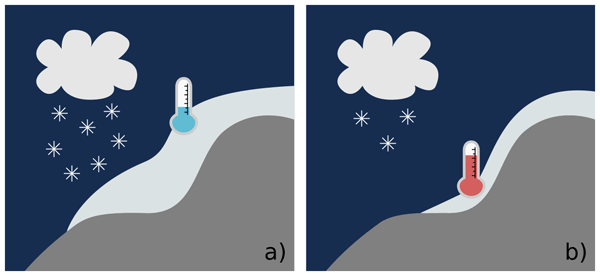
Melting glaciers worldwide cause changes in land surface type and elevation that may impact regional climate. In a weather and climate model, we find that these changes result in warming and less precipitation, particularly less snow, over Jostedalsbreen ice cap in western Norway. Most of these impacts are related to thinning of the ice cap and the associated lowering of the surface and reduction in orographic lifting of moist air masses. The findings suggest accelerated melting of the ice cap.
Cong Jiang, Doerthe Tetzlaff, Songjun Wu, Christian Birkel, Hjalmar Laudon, and Chris Soulsby
Hydrol. Earth Syst. Sci., 30, 3715–3739, https://doi.org/10.5194/hess-30-3715-2026, https://doi.org/10.5194/hess-30-3715-2026, 2026
Short summary
Short summary
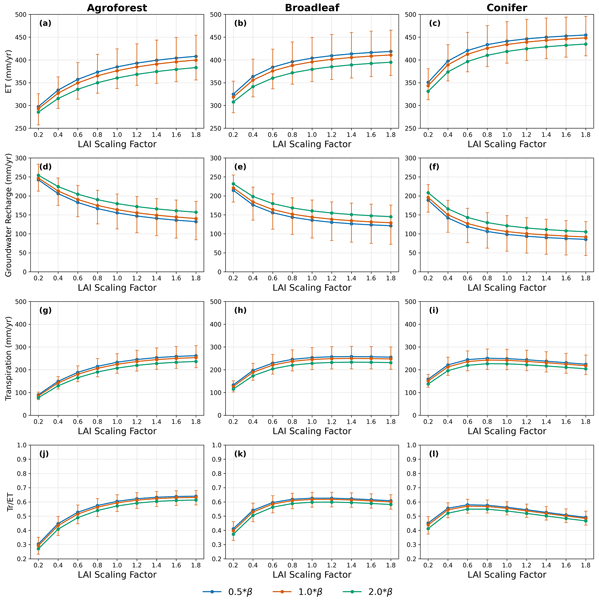
We used a modelling approach supported by stable water isotopes to explore how forest management – such as conifer, broadleaf, and mixed tree–crop systems – affects water partitioning and drought resilience in a drought-sensitive region of Germany. By representing forest type, forest density, and rooting depth, the model helps quantify and show how land use choices affect water availability and ecohydrological resilience, thereby supporting improved land and water management decisions.
Juan Francisco Morales Arteaga, Grace Tatiana Páez-Barrera, Matthias Beyer, Christian Birkel, Werner Huber, María Auxiliadora Zúñiga Amador, Harald Biester, and Marta Pérez-Rodríguez
EGUsphere, https://doi.org/10.5194/egusphere-2026-1354, https://doi.org/10.5194/egusphere-2026-1354, 2026
Short summary
Short summary
Mercury (Hg) is a toxic pollutant that vegetation removes from the atmosphere. We examined how rainfall seasonality regulates Hg sequestration in understudied tropical dry and rainforests. Dry forests showed strong seasonality, with Hg uptake peaking in the wet season, while high water availability kept stable uptake in rainforests. Vegetation absorbed Hg in both, but higher litterfall enhanced Hg transfer to rainforest soils, emphasizing tropical forests as major yet vulnerable global Hg sinks.
Songjun Wu, Doerthe Tetzlaff, Yi Zheng, and Chris Soulsby
Geosci. Model Dev., 19, 2257–2278, https://doi.org/10.5194/gmd-19-2257-2026, https://doi.org/10.5194/gmd-19-2257-2026, 2026
Short summary
Short summary
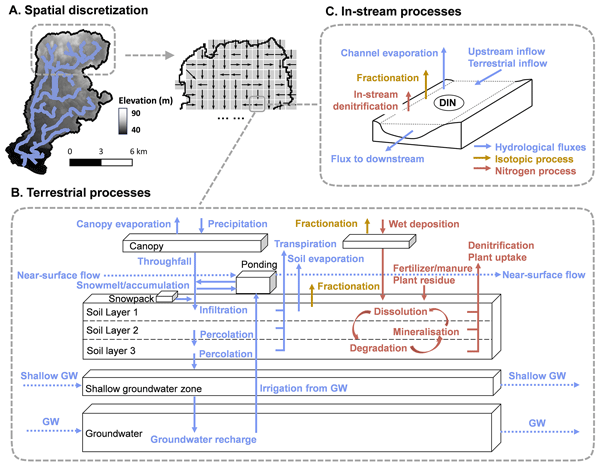
We developed EcoTWIN v1.0, a new fully distributed tracer-aided ecohydrological model that tracks water, isotopes, and nutrients fluxes. The model was successfully tested in 17 large European catchments across diverse geological and climatic backgrounds. As a tracer-aided model, EcoTWIN not only captures flow paths but also estimates water ages/travel times, thus bridging hydrology with water quality. This opens new possibilities for understanding the synergy between water and nitrogen cycles.
Phillip Schuster, Ana-Lena Tappe, Alexander Georgi, Christoph Schneider, Mia Janzen, and Tobias Sauter
EGUsphere, https://doi.org/10.5194/egusphere-2025-3461, https://doi.org/10.5194/egusphere-2025-3461, 2025
Short summary
Short summary
We present MATILDA-Online, an open-source, cloud-based modeling toolkit, to support integrated water management in glacierized mountain regions. It integrates glacier and hydrology models with open data and cloud computing. Despite data scarcity, this tool empowers local professionals, students, and researchers to generate climate impact assessments, promoting informed decision-making. Despite its accessibility, effective calibration and interpretation still require expert knowledge.
Ann-Marie Ring, Dörthe Tetzlaff, Christian Birkel, and Chris Soulsby
Hydrol. Earth Syst. Sci., 29, 6663–6683, https://doi.org/10.5194/hess-29-6663-2025, https://doi.org/10.5194/hess-29-6663-2025, 2025
Short summary
Short summary
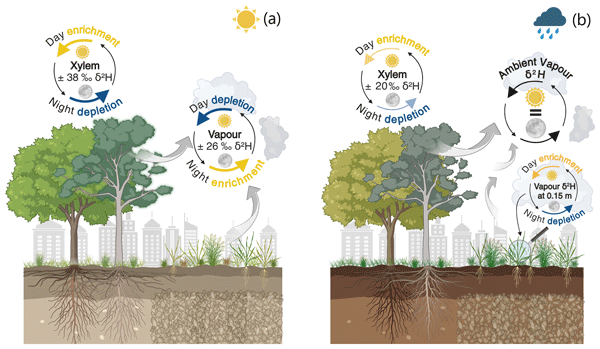
During summer drought, a clear sub-daily cycling of atmospheric water vapour isotopes (δv) and plant xylem water isotopes (δxyl) was observed. δv daytime depletion was driven by evaporation and local atmospheric factors (entrainment). δxyl daytime enrichment was consistent with high vapor pressure deficit and stomatal regulation of transpiration. This sub-daily dataset provides unique insights on sub-daily cycling of stable water isotopes and can help constrain ecohydrological models.
Phillip Schuster, Azamat Osmonov, Alexander Georgi, Christoph Schneider, and Tobias Sauter
EGUsphere, https://doi.org/10.5194/egusphere-2025-3462, https://doi.org/10.5194/egusphere-2025-3462, 2025
Short summary
Short summary
This study examines water resources in a high-mountain basin in Kyrgyzstan facing climate change. The applied MATILDA-Online toolkit aims to integrate scientific research with practical water management. Projections indicate severe glacier melt and a significant reduction in runoff by 2100, with earlier peak flows and increased dry periods. The main challenges are the limited number of observations and their low accuracy, as well as the substantial effort required for model calibration.
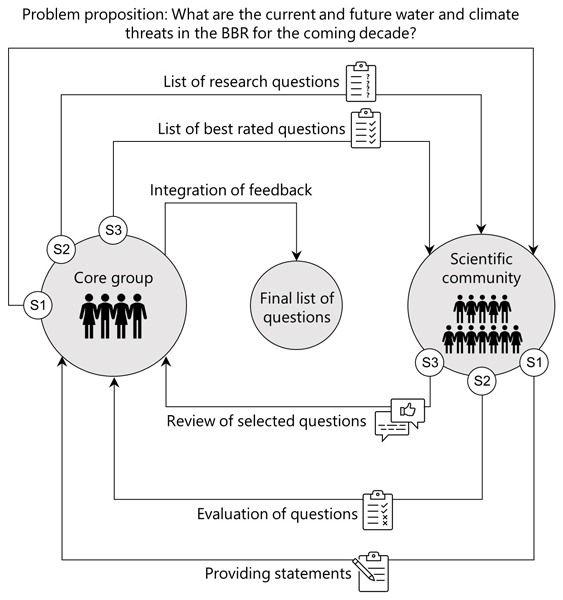
Pedro Henrique Lima Alencar, Saskia Arndt, Kei Namba, Márk Somogyvári, Frederik Bart, Fabio Brill, Juan F. Dueñas, Peter Feindt, Daniel Johnson, Nariman Mahmoodi, Christoph Merz, Subham Mukherjee, Katrin Nissen, Eva Nora Paton, Tobias Sauter, Dörthe Tetzlaff, Franziska Tügel, Thomas Vogelpohl, Stenka Valentinova Vulova, Behnam Zamani, and Hui Hui Zhang
Nat. Hazards Earth Syst. Sci., 25, 4043–4051, https://doi.org/10.5194/nhess-25-4043-2025, https://doi.org/10.5194/nhess-25-4043-2025, 2025
Short summary
Short summary
As climate change escalates, the Berlin-Brandenburg region faces new challenges. Climate change-induced extreme events are expected to cause new conflicts to emerge and aggravate existing ones. To guide future research, we co-develop a list of key questions on climate and water challenges in the region. Our findings highlight the need for new research approaches. We expect this list to provide a roadmap for actionable knowledge production to address climate and water challenges in the region.
Wilhelm Furian and Tobias Sauter
Nat. Hazards Earth Syst. Sci., 25, 3779–3802, https://doi.org/10.5194/nhess-25-3779-2025, https://doi.org/10.5194/nhess-25-3779-2025, 2025
Short summary
Short summary
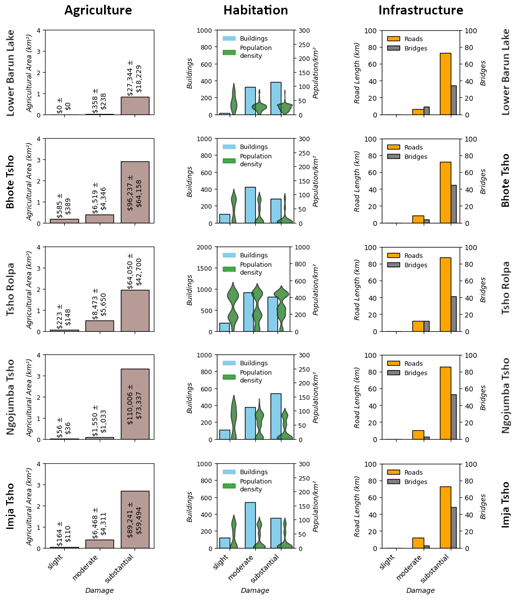
Glacial lake outburst floods (GLOFs) continue to threaten high-mountain communities in Nepal. We simulate potential GLOF events from five glacial lakes in the Everest region during the 21st century using a 3D flood model and several breach and SSP scenarios. Large GLOFs could extend over 100 km and inundate 80 to 100 km of roads/trails, 735 to 1989 houses and 0.85 to 3.52 km2 of agricultural land. The results help to assess the changing GLOF impacts and support more accurate risk assessments.
Maria Magdalena Warter, Dörthe Tetzlaff, Chris Soulsby, Tobias Goldhammer, Daniel Gebler, Kati Vierikko, and Michael T. Monaghan
Hydrol. Earth Syst. Sci., 29, 2707–2725, https://doi.org/10.5194/hess-29-2707-2025, https://doi.org/10.5194/hess-29-2707-2025, 2025
Short summary
Short summary
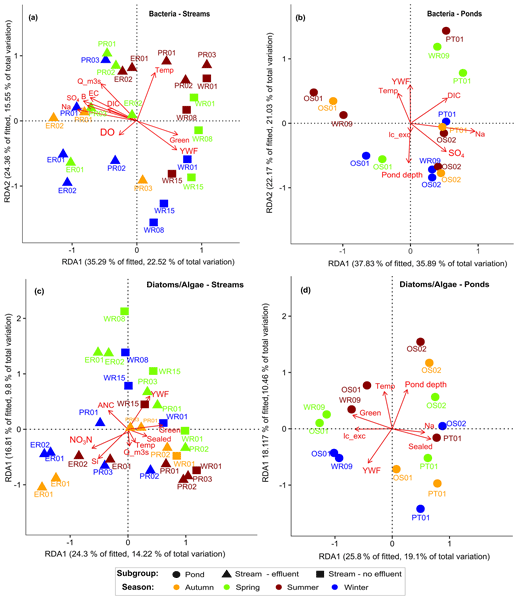
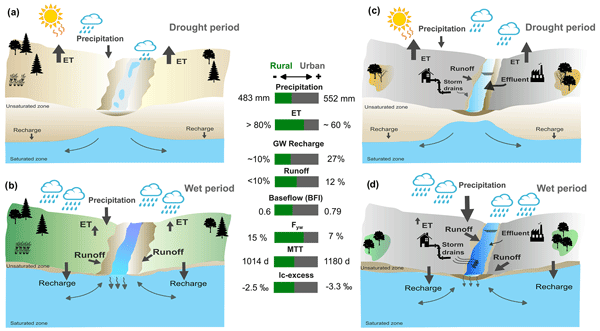
There is a lack of understanding of how urban aquatic nature-based solutions (aquaNBSs) affect ecohydrology and how they in turn are affected by urbanization and climate change. We use a multi-tracer approach of stable water isotopes, hydrochemistry, and microbial and macrophyte diversity to disentangle the effects of hydroclimate and urbanization. The results show potential limitations of aquaNBSs regarding water quality and biodiversity in response to hydroclimate and urban water sources.
Maria Magdalena Warter, Dörthe Tetzlaff, Christian Marx, and Chris Soulsby
Nat. Hazards Earth Syst. Sci., 24, 3907–3924, https://doi.org/10.5194/nhess-24-3907-2024, https://doi.org/10.5194/nhess-24-3907-2024, 2024
Short summary
Short summary
Streams are increasingly impacted by droughts and floods. Still, the amount of water needed for sustainable flows remains unclear and contested. A comparison of two streams in the Berlin–Brandenburg region of northeast Germany, using stable water isotopes, shows strong groundwater dependence with seasonal rainfall contributing to high/low flows. Understanding streamflow variability can help us assess the impacts of climate change on future water resource management.
Salim Goudarzi, Chris Soulsby, Jo Smith, Jamie Lee Stevenson, Alessandro Gimona, Scot Ramsay, Alison Hester, Iris Aalto, and Josie Geris
EGUsphere, https://doi.org/10.5194/egusphere-2024-2258, https://doi.org/10.5194/egusphere-2024-2258, 2024
Preprint archived
Short summary
Short summary
Planting trees on farmlands is now considered as one of the potential solutions to climate change. Trees can suck CO2 out of our atmosphere and store it in their trunks and in the soil beneath them. They can promote biodiversity, protect against soil erosion and drought. They can even help reduce flood risk for downstream communities. But we need models that can tell us the likely impact of trees at different locations and scales. Our study provides such a model.
Annelies Voordendag, Brigitta Goger, Rainer Prinz, Tobias Sauter, Thomas Mölg, Manuel Saigger, and Georg Kaser
The Cryosphere, 18, 849–868, https://doi.org/10.5194/tc-18-849-2024, https://doi.org/10.5194/tc-18-849-2024, 2024
Short summary
Short summary
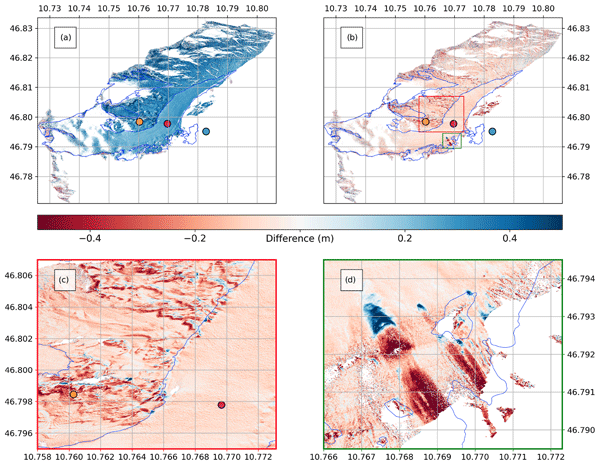
Wind-driven snow redistribution affects glacier mass balance. A case study of Hintereisferner glacier in Austria used high-resolution observations and simulations to model snow redistribution. Simulations matched observations, showing the potential of the model for studying snow redistribution on other mountain glaciers.
Franziska Temme, David Farías-Barahona, Thorsten Seehaus, Ricardo Jaña, Jorge Arigony-Neto, Inti Gonzalez, Anselm Arndt, Tobias Sauter, Christoph Schneider, and Johannes J. Fürst
The Cryosphere, 17, 2343–2365, https://doi.org/10.5194/tc-17-2343-2023, https://doi.org/10.5194/tc-17-2343-2023, 2023
Short summary
Short summary
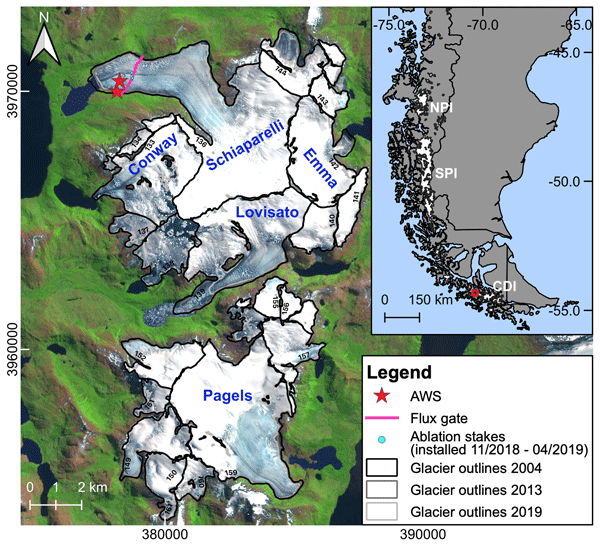
Calibration of surface mass balance (SMB) models on regional scales is challenging. We investigate different calibration strategies with the goal of achieving realistic simulations of the SMB in the Monte Sarmiento Massif, Tierra del Fuego. Our results show that the use of regional observations from satellite data can improve the model performance. Furthermore, we compare four melt models of different complexity to understand the benefit of increasing the processes considered in the model.

Doerthe Tetzlaff, Aaron Smith, Lukas Kleine, Hauke Daempfling, Jonas Freymueller, and Chris Soulsby
Earth Syst. Sci. Data, 15, 1543–1554, https://doi.org/10.5194/essd-15-1543-2023, https://doi.org/10.5194/essd-15-1543-2023, 2023
Short summary
Short summary
We present a comprehensive set of ecohydrological hydrometric and stable water isotope data of 2 years of data. The data set is unique as the different compartments of the landscape were sampled and the effects of a prolonged drought (2018–2020) captured by a marked negative rainfall anomaly (the most severe regional drought of the 21st century). Thus, the data allow the drought effects on water storage, flux and age dynamics, and persistence of lowland landscapes to be investigated.
Xiaoqiang Yang, Doerthe Tetzlaff, Chris Soulsby, and Dietrich Borchardt
Geosci. Model Dev. Discuss., https://doi.org/10.5194/gmd-2022-239, https://doi.org/10.5194/gmd-2022-239, 2022
Preprint retracted
Short summary
Short summary
We develop the catchment water quality assessment platform HiWaQ v1.0, which is compatible with multiple hydrological model structures. The nitrogen module (HiWaQ-N) and its coupling tests with two contrasting grid-based hydrological models demonstrate the robustness of the platform in estimating catchment N dynamics. With the unique design of the coupling flexibility, HiWaQ can leverage advancements in hydrological modelling and advance integrated catchment water quantity-quality assessments.
Guangxuan Li, Xi Chen, Zhicai Zhang, Lichun Wang, and Chris Soulsby
Hydrol. Earth Syst. Sci., 26, 5515–5534, https://doi.org/10.5194/hess-26-5515-2022, https://doi.org/10.5194/hess-26-5515-2022, 2022
Short summary
Short summary
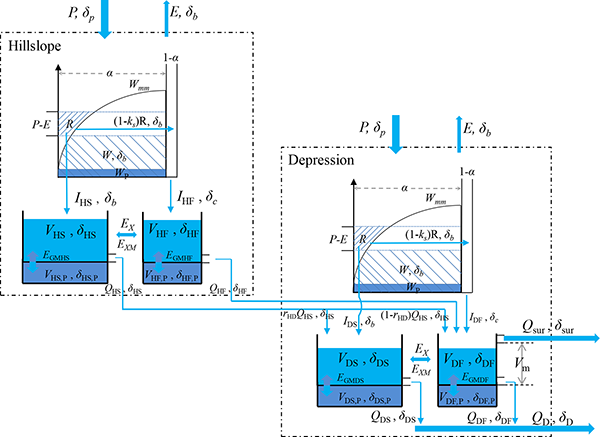
We developed a coupled flow–tracer model to understand the effects of passive storage on modeling hydrological function and isotope dynamics in a karst flow system. Models with passive storages show improvement in matching isotope dynamics performance, and the improved performance also strongly depends on the number and location of passive storages. Our results also suggested that the solute transport is primarily controlled by advection and hydrodynamic dispersion in the steep hillslope unit.
Aaron Smith, Doerthe Tetzlaff, Jessica Landgraf, Maren Dubbert, and Chris Soulsby
Biogeosciences, 19, 2465–2485, https://doi.org/10.5194/bg-19-2465-2022, https://doi.org/10.5194/bg-19-2465-2022, 2022
Short summary
Short summary
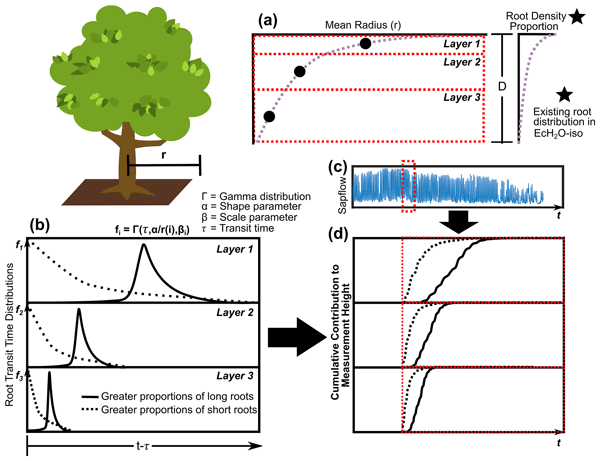
This research utilizes high-spatiotemporal-resolution soil and vegetation measurements, including water stable isotopes, within an ecohydrological model to partition water flux dynamics and identify flow paths and durations. Results showed high vegetation water use and high spatiotemporal dynamics of vegetation water source and vegetation isotopes. The evaluation of these dynamics further revealed relatively fast flow paths through both shallow soil and vegetation.

Jessica Landgraf, Dörthe Tetzlaff, Maren Dubbert, David Dubbert, Aaron Smith, and Chris Soulsby
Hydrol. Earth Syst. Sci., 26, 2073–2092, https://doi.org/10.5194/hess-26-2073-2022, https://doi.org/10.5194/hess-26-2073-2022, 2022
Short summary
Short summary
Using water stable isotopes, we studied from which water source (lake water, stream water, groundwater, or soil water) two willows were taking their water. We monitored the environmental conditions (e.g. air temperature and soil moisture) and the behaviour of the trees (water flow in the stem). We found that the most likely water sources of the willows were the upper soil layers but that there were seasonal dynamics.
Saúl Arciniega-Esparza, Christian Birkel, Andrés Chavarría-Palma, Berit Arheimer, and José Agustín Breña-Naranjo
Hydrol. Earth Syst. Sci., 26, 975–999, https://doi.org/10.5194/hess-26-975-2022, https://doi.org/10.5194/hess-26-975-2022, 2022
Short summary
Short summary
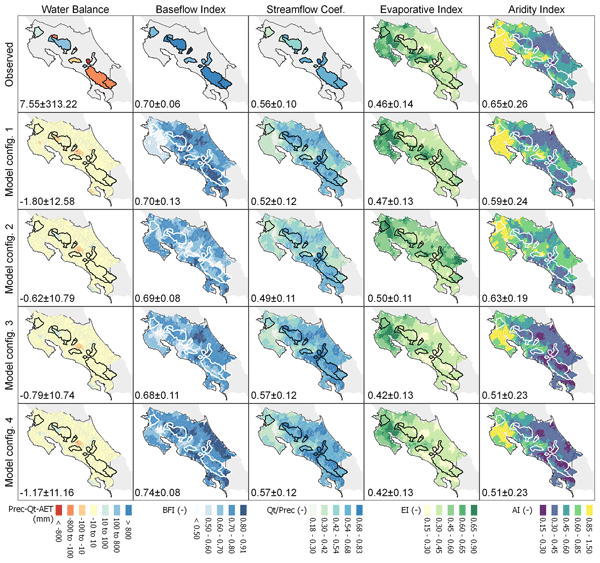
In the humid tropics, a notoriously data-scarce region, we need to find alternatives in order to reasonably apply hydrological models. Here, we tested remotely sensed rainfall data in order to drive a model for Costa Rica, and we evaluated the simulations against evapotranspiration satellite products. We found that our model was able to reasonably simulate the water balance and streamflow dynamics of over 600 catchments where the satellite data helped to reduce the model uncertainties.
Cited articles
Ala-Aho, P., Tetzlaff, D., McNamara, J. P., Laudon, H., and Soulsby, C.: Using isotopes to constrain water flux and age estimates in snow-influenced catchments using the STARR (Spatially distributed Tracer-Aided Rainfall-Runoff) model, Hydrol. Earth Syst. Sci., 21, 5089–5110,
doi10.5194/hess-21-5089-2017, 2017a.
doi10.5194/hess-21-5089-2017, 2017a.
Ala-Aho, P., Tetzlaff, D., Wang, H., and Soulsby, C.: Integrated surface-subsurface models to investigate the role of groundwater in runoff generation in headwater catchments: a minimalist approach to parameterization, J. Hydrol., 547, 664–677, https://doi.org/10.1016/j.jhydrol.2017.02.023, 2017b.
Arndt, S. and Heiland, S.: Current status of water-related planning for climate change adaptation in the Spree river basin, Germany, Nat. Hazards Earth Syst. Sci., 24, 4369–4383, https://doi.org/10.5194/nhess-24-4369-2024, 2024.
Beven, K.: A manifesto for the equifinality thesis, J. Hydrol., 320, 18–36, https://doi.org/10.1016/j.jhydrol.2005.07.007, 2006.
Birkel, C. and Soulsby, C.: Advancing tracer-aided rainfall-runoff modelling: A review of progress, problems and unrealised potential, Hydrol. Process., 29, 5227–5240, https://doi.org/10.1002/hyp.10594, 2015.
Birkel, C., Soulsby, C., and Tetzlaff, D.: Modelling catchment-scale water storage dynamics: Reconciling dynamic storage with tracer-inferred passive storage, Hydrol. Process., 25, 3924–3936, https://doi.org/10.1002/hyp.8201, 2011.
Blank, J. and Deb, K.: Pymoo: Multi-Objective Optimization in Python, IEEE Access, 8, 89497–89509, https://doi.org/10.1109/ACCESS.2020.2990567, 2020.
Bowen, G. J., Wassenaar, L. I., and Hobson, K. A.: Global application of stable hydrogen and oxygen isotopes to wildlife forensics, Oecologia, 143, 337–348, https://doi.org/10.1007/s00442-004-1813-y, 2005.
Cao, R., Huang, H., Wu, G., Han, D., Jiang, Z., Di, K., and Hu, Z.: Spatiotemporal variations in the ratio of transpiration to evapotranspiration and its controlling factors across terrestrial biomes, Agr. Forest. Meteorol., 321, 108984, https://doi.org/10.1016/j.agrformet.2022.108984, 2022.
Chakraborty, S., Belekar, A. R., Datye, A., and Sinha, N.: Isotopic study of intraseasonal variations of plant transpiration: An alternative means to characterise the dry phases of monsoon, Sci. Rep., 8, 1–11, https://doi.org/10.1038/s41598-018-26965-6, 2018.
Chen, K., Tetzlaff, D., Goldhammer, T., Freymueller, J., Wu, S., Smith, A. A., Schmidt, A., Liu, G., Venohr, M., and Soulsby, C.: Synoptic water isotope surveys to understand the hydrology of large intensively managed catchments, J. Hydrol., 623, 129817, https://doi.org/10.1016/j.jhydrol.2023.129817, 2023.
Chow, V. T.: Open-channel hydraulics, in: Civil engineering series, McGraw-Hill, Erlangga, Bandung, 1959.
Correa, A., Birkel, C., Gutierrez, J., Dehaspe, J., Durán-Quesada, A. M., Soulsby, C., and Sánchez-Murillo, R.: Modelling non-stationary water ages in a tropical rainforest: A preliminary spatially distributed assessment, Hydrol. Process., 34, 4776–4793, https://doi.org/10.1002/hyp.13925, 2020.
Craig, H. and Gordon, L. I.: Isotopic oceanography: deuterium and oxygen-18 variation in the ocean and the marin atmosphere, in, Stable Isotopes in Oceanographic Studies and Paleotemperatures, Laboratorio di Geologia Nucleare, Pisa, https://books.google.de/books/about/Deuterium_and_Oxygen_18_Variations_in_th.html?id=6wIKAQAAIAAJ&redir_esc=y (last access: 15 May 2024), 1965.
Deb, K., Pratap, A., Agarwal, S., and Meyarivan, T.: A fast and elitist multiobjective genetic algorithm: NSGA-II, IEEE T. Evol. Comput., 6, 182–197, https://doi.org/10.1109/4235.996017, 2002.
Dehaspe, J., Birkel, C., Tetzlaff, D., Sánchez-Murillo, R., Durán-Quesada, A. M., and Soulsby, C.: Spatially distributed tracer-aided modelling to explore water and isotope transport, storage and mixing in a pristine, humid tropical catchment, Hydrol. Process., 32, 3206–3224, https://doi.org/10.1002/hyp.13258, 2018.
Dembélé, M., Hrachowitz, M., Savenije, H. H. G., Mariéthoz, G., and Schaefli, B.: Improving the predictive skill of a distributed hydrological model by calibration on spatial patterns with multiple satellite data sets, Water Resour. Res., 56, e2019WR026085, https://doi.org/10.1029/2019WR026085, 2020.
DWD – Deutscher Wetterdienst: Daily station observations (temperature, pressure, precipitation, sunshine duration, etc.) for Germany, https://cdc.dwd.de/portal/ (last access: 25 May 2024), 2024.
Efstratiadis, A. and Koutsoyiannis, D.: One decade of multi-objective calibration approaches in hydrological modelling: a review, Hydrolog. Sci. J., 55, 58–78, https://doi.org/10.1080/02626660903526292, 2010.
Fatichi, S., Vivoni, E. R., Ogden, F. L., Ivanov, V. Y., Mirus, B., Gochis, D., Downer, C. W., Camporese, M., Davison, J. H., Ebel, B., Jones, N., Kim, J., Mascaro, G., Niswonger, R., Restrepo, P., Rigon, R., Shen, C., Sulis, M., and Tarboton, D.: An overview of current applications, challenges, and future trends in distributed process-based models in hydrology, J. Hydrol., 537, 45–60, https://doi.org/10.1016/j.jhydrol.2016.03.026, 2016.
Fenicia, F., McDonnell, J. J., and Savenije, H. H. G.: Learning from model improvement: On the contribution of complementary data to process understanding, Water Resour. Res., 44, 1–13, https://doi.org/10.1029/2007WR006386, 2008.
Gibson, J. J. and Edwards, T. W. D.: Regional water balance trends and evaporation-transpiration partitioning from a stable isotope survey of lakes in northern Canada, Global Biogeochem. Cy., 16, 10-1–10-14, https://doi.org/10.1029/2001gb001839, 2002.
Godsey, S. E., Aas, W., Clair, T. A., de Wit, H. A., Fernandez, I. J., Kahl, J. S., Malcolm, I. A., Neal, C., Neal, M., Nelson, S. J., Norton, S. A., Palucis, M. C., Skjelkvåle, B. L., Soulsby, C., Tetzlaff, D., and Kirchner, J. W.: Generality of fractal
Guevara-Escobar, A., Gonzalez-Sosa, E., Ramos-Salinas, M., and Hernandez-Delgado, G. D.: Experimental analysis of drainage and water storage of litter layers, Hydrol. Earth Syst. Sci., 11, 1703–1716, https://doi.org/10.5194/hess-11-1703-2007, 2007.
Gupta, H. V., Kling, H., Yilmaz, K. K., and Martinez, G. F.: Decomposition of the mean squared error and NSE performance criteria: Implications for improving hydrological modelling, J. Hydrol., 377, 80–91, https://doi.org/10.1016/j.jhydrol.2009.08.003, 2009.
He, Z., Unger-Shayesteh, K., Vorogushyn, S., Weise, S. M., Kalashnikova, O., Gafurov, A., Duethmann, D., Barandun, M., and Merz, B.: Constraining hydrological model parameters using water isotopic compositions in a glacierized basin, Central Asia, J. Hydrol., 571, 332–348, https://doi.org/10.1016/j.jhydrol.2019.01.048, 2019.
Herrera, P. A., Marazuela, M. A., and Hofmann, T.: Parameter estimation and uncertainty analysis in hydrological modeling, Wiley Interdisciplin. Rev.: Water, 9, 1–23, https://doi.org/10.1002/wat2.1569, 2022.
Holmes, T., Stadnyk, T. A., Kim, S. J., and Asadzadeh, M.: Regional calibration with isotope tracers using a spatially distributed model: a comparison of methods, Water Resour. Res., 56, https://doi.org/10.1029/2020WR027447, 2020.
Holmes, T. L., Stadnyk, T. A., Asadzadeh, M., and Gibson, J. J.: Guidance on large scale hydrologic model calibration with isotope tracers, J. Hydrol., 621, https://doi.org/10.1016/j.jhydrol.2023.129604, 2023.
Hrachowitz, M., Savenije, H. H. G., Blöschl, G., McDonnell, J. J., Sivapalan, M., Pomeroy, J. W., Arheimer, B., Blume, T., Clark, M. P., Ehret, U., Fenicia, F., Freer, J. E., Gelfan, A., Gupta, H. V., Hughes, D. A., Hut, R. W., Montanari, A., Pande, S., Tetzlaff, D., Troch, P. A., Uhlenbrook, S., Wagener, T., Winsemius, H. C., Woods, R. A., Zehe, E., and Cudennec, C.: A decade of predictions in ungauged basins (PUB), a review, Hydrolog. Sci. J., 58, 1198–1255, https://doi.org/10.1080/02626667.2013.803183, 2013.
Iorgulescu, I., Beven, K. J., and Musy, A.: Flow, mixing, and displacement in using a data-based hydrochemical model to predict conservative tracer data, Water Resour. Res., 43, 1–12, https://doi.org/10.1029/2005WR004019, 2007.
Jung, H., Tetzlaff, D., Birkel, C., and Soulsby, C.: Recent developments and emerging challenges in tracer-aided modeling, WIREs Water, 12, https://doi.org/10.1002/wat2.70015, 2025.
Karssenberg, D., Schmitz, O., Salamon, P., de Jong, K., and Bierkens, M. F. P.: A software framework for construction of process-based stochastic spatio-temporal models and data assimilation, Environ. Model. Softw., 25, 489–502, https://doi.org/10.1016/j.envsoft.2009.10.004, 2010.
Kirchner, J. W.: A double paradox in catchment hydrology and geochemistry, Hydrol. Process., 17, 871–874, https://doi.org/10.1002/hyp.5108, 2003.
Kirchner, J. W.: Getting the right answers for the right reasons: Linking measurements, analyses, and models to advance the science of hydrology, Water Resour. Res., 42, 1–5, https://doi.org/10.1029/2005WR004362, 2006.
Klaus, J. and McDonnell, J. J.: Hydrograph separation using stable isotopes: Review and evaluation, J. Hydrol., 505, 47–64, https://doi.org/10.1016/j.jhydrol.2013.09.006, 2013.
Kröcher, J., Ghazaryan, G., Lischeid, G., and Cudennec, C.: Unravelling regional water balance dynamics in anthropogenically shaped lowlands: A data-driven approach, Hydrol. Process., 39, 1–17, https://doi.org/10.1002/hyp.70053, 2025.
Kuppel, S., Tetzlaff, D., Maneta, M. P., and Soulsby, C.: What can we learn from multi-data calibration of a process-based ecohydrological model, Environ. Model. Softw., 101, 301–316, https://doi.org/10.1016/j.envsoft.2018.01.001, 2018.
Landesregierung Brandenburg, Landesamt für Umwelt Brandenburg (LfU): https://lfu.brandenburg.de/lfu/de/ (last access: 25 May 2024), 2024.
Landgraf, J., Tetzlaff, D., Wu, S., Freymüller, J., and Soulsby, C.: Using stable water isotopes to understand ecohydrological partitioning under contrasting land uses in a drought-sensitive rural lowland catchment, Hydrol. Process., 36, e14779, https://doi.org/10.1002/hyp.14779, 2022a.
Landgraf, J., Tetzlaff, D., Dubbert, M., Dubbert, D., Smith, A., and Soulsby, C.: Xylem water in riparian willow trees (Salix alba) reveals shallow sources of root water uptake by in situ monitoring of stable water isotopes, Hydrol. Earth Syst. Sci., 26, 2073–2092, https://doi.org/10.5194/hess-26-2073-2022 2022b.
Lindström, G., Johansson, B., Persson, M., Gardelin, M., and Bergström, S.: Development and test of the distributed HBV-96 hydrological model, J. Hydrol., 201, 272–288, https://doi.org/10.1016/S0022-1694(97)00041-3, 1997.
Liu, J., Liu, X., Wang, Y., Li, Y., Jiang, Y., Fu, Y., and Wu, Y.: Landscape composition or configuration: which contributes more to catchment hydrological flows and variations, Landsc. Ecol., 35, 1531–1551, https://doi.org/10.1007/s10980-020-01035-3, 2020.
Luo, S., Tetzlaff, D., Smith, A., and Soulsby, C.: Assessing impacts of alternative land use strategies on water partitioning, storage and ages in drought-sensitive lowland catchments using tracer-aided ecohydrological modelling, Hydrol. Process., 38, 1–21, https://doi.org/10.1002/hyp.15126, 2024.
Martinelli, L. A., Victoria, R. L., Sternberg, L. S. L., Ribeiro, A., and Moreira, M. Z.: Using stable isotopes to determine sources of evaporated water to the atmosphere in the Amazon basin, J. Hydrol., 183, 191–204, 1996.
Marx, C., Tetzlaff, D., Hinkelmann, R., and Soulsby, C.: Isotope hydrology and water sources in a heavily urbanized stream, Hydrol. Process., 35, 1–20, https://doi.org/10.1002/hyp.14377, 2021.
McDonnell, J. J. and Beven, K.: Debates, The future of hydrological sciences: A (common) path forward, a call to action aimed at understanding velocities, celerities and residence time distributions of the headwater hydrograph, Water Resour. Res., 50, 5342–5350, https://doi.org/10.1002/2013WR015141, 2014.
McDonnell, J. J., Sivapalan, M., Vaché, K., Dunn, S., Grant, G., Haggerty, R., Hinz, C., Hooper, R., Kirchner, J., Roderick, M. L., Selker, J., and Weiler, M.: Moving beyond heterogeneity and process complexity: A new vision for watershed hydrology, Water Resour. Res., 43, 1–6, https://doi.org/10.1029/2006WR005467, 2007.
Morris, M. D.: Factorial sampling plans for preliminary computational experiments, Technometrics, 33, 161–174, 1991.
Nan, Y. and Tian, F.: Isotope data-constrained hydrological model improves soil moisture simulation and runoff source apportionment, J. Hydrol., 633, https://doi.org/10.1016/j.jhydrol.2024.131006, 2024.
Oerter, E. J. and Bowen, G. J.: Spatio-temporal heterogeneity in soil water stable isotopic composition and its ecohydrologic implications in semiarid ecosystems, Hydrol. Process., 33, 1724–1738, https://doi.org/10.1002/hyp.13434, 2019.
Oliveira, A. M., Fleischmann, A. S., and Paiva, R. C. D.: On the contribution of remote sensing-based calibration to model hydrological and hydraulic processes in tropical regions, J. Hydrol., 597, 126184, https://doi.org/10.1016/j.jhydrol.2021.126184, 2021.
Paul-Limoges, E., Revill, A., Maier, R., Buchmann, N., and Damm, A.: Insights for the partitioning of ecosystem evaporation and transpiration in short-statured croplands, J. Geophys. Res.-Biogeo., 127, 1–19, https://doi.org/10.1029/2021JG006760, 2022.
Pianosi, F., Sarrazin, F., and Wagener, T.: A Matlab toolbox for global sensitivity analysis, Environ. Model. Softw., 70, 80–85, https://doi.org/10.1016/j.envsoft.2015.04.009, 2015.
Pohle, I., Koch, H., and Grünewald, U.: Potential climate change impacts on the water balance of subcatchments of the River Spree, Germany, Adv. Geosci., 32, 49–53, https://doi.org/10.5194/adgeo-32-49-2012, 2012.
Pohle, I., Zeilfelder, S., Birner, J., and Creutzfeldt, B.: The 2018–2023 drought in Berlin: impacts and analysis of the perspective of water resources management, Nat. Hazards Earth Syst. Sci., 25, 1293–1313, https://doi.org/10.5194/nhess-25-1293-2025, 2025.
Pusch, M. and Hoffmann, A.: Conservation concept for a river ecosystem (River Spree, Germany) impacted by flow abstraction in a large post-mining area, Landsc. Urban Plan., 51, 165–176, https://doi.org/10.1016/S0169-2046(00)00107-9, 2000.
Pusch, M., Andersen, H. E., Behrendt, H., Tor, M., Hoffmann, C. C., Kronvang, B., Pedersen, M. L., Tor, M., and Wolter, C.: Rivers of the Central European Highlands and Plains, Academic Press, 525–576, https://doi.org/10.1016/B978-0-12-369449-2.00014-X, 2009.
Ren, X., Li, P., He, X., and Zhang, Q.: Tracing the sources and evaporation fate of surface water and groundwater using stable isotopes of hydrogen and oxygen, Sci. Total Environ., 931, 172708, https://doi.org/10.1016/j.scitotenv.2024.172708, 2024.
Schilling, O. S., Cook, P. G., and Brunner, P.: Beyond classical observations in hydrogeology: The advantages of including exchange flux, temperature, tracer concentration, residence time and soil moisture observations in groundwater model calibration, Rev. Geophys., 57, 146–182, https://doi.org/10.1029/2018RG000619, 2019.
Schlesinger, W. H. and Jasechko, S.: Transpiration in the global water cycle, Agr. Forest Meteorol., 189–190, 115–117, https://doi.org/10.1016/j.agrformet.2014.01.011, 2014.
Scudeler, C., Pangle, L., Pasetto, D., Niu, G.-Y., Volkmann, T., Paniconi, C., Putti, M., and Troch, P.: Multiresponse modeling of variably saturated flow and isotope tracer transport for a hillslope experiment at the Landscape Evolution Observatory, Hydrol. Earth Syst. Sci., 20, 4061–4078, https://doi.org/10.5194/hess-20-4061-2016, 2016.
Seibert, J. and Vis, M. J. P.: Teaching hydrological modeling with a user-friendly catchment-runoff-model software package, Hydrol. Earth Syst. Sci., 16, 3315–3325, https://doi.org/10.5194/hess-16-3315-2012, 2012.
Shah, S., Duan, Z., Song, X., Li, R., Mao, H., Liu, J., Ma, T., and Wang, M.: Evaluating the added value of multi-variable calibration of SWAT with remotely sensed evapotranspiration data for improving hydrological modeling, J. Hydrol., 603, 127046, https://doi.org/10.1016/j.jhydrol.2021.127046, 2021.
Shen, H., Tolson, B. A., and Mai, J.: Time to update the split-sample approach in hydrological model calibration, Water Resour. Res., 58, 1–26, https://doi.org/10.1029/2021WR031523, 2022.
Simůnek, J., Sejna, M., Saito, H., and van Genuchten, M. T.: The HYDRUS-1D software package for simulating the one-dimensional movement of water, heat, and multiple solutes in variably-saturated media, Dep. Environ. Sci., Univ. of California, Riverside, https://www.ars.usda.gov/arsuserfiles/20360500/pdf_pubs/P2119.pdf (last access: 15 May 2024), 2013.
Smith, A., Tetzlaff, D., Kleine, L., Maneta, M., and Soulsby, C.: Quantifying the effects of land use and model scale on water partitioning and water ages using tracer-aided ecohydrological models, Hydrol. Earth Syst. Sci., 25, 2239–2259, https://doi.org/10.5194/hess-25-2239-2021, 2021.
Smith, A., Tetzlaff, D., Maneta, M., and Soulsby, C.: Critical zone response times and water age relationships under variable catchment wetness states: Insights using a tracer-aided ecohydrological model, Water Resour. Res., 58, https://doi.org/10.1029/2021WR030584, 2022.
Soulsby, C., Birkel, C., Geris, J., Dick, J., Tunaley, C., and Tetzlaff, D.: Stream water age distributions controlled by storage dynamics and nonlinear hydrologic connectivity: Modeling with high-resolution isotope data, Water Resour. Res., 51, 7759–7776, https://doi.org/10.1002/2015WR017888, 2015.
Sprenger, M., Volkmann, T. H. M., Blume, T., and Weiler, M.: Estimating flow and transport parameters in the unsaturated zone, Hydrol. Earth Syst. Sci., 19, 2617–2635, https://doi.org/10.5194/hess-19-2617-2015, 2015.
Sprenger, M., Tetzlaff, D., and Soulsby, C.: Soil water stable isotopes reveal evaporation dynamics at the soil-plant-atmosphere interface of the critical zone, Hydrol. Earth Syst. Sci., 21, 3839–3856, https://doi.org/10.5194/hess-21-3839-2017, 2017.
Stevenson, J. L., Birkel, C., Comte, J.-C., Tetzlaff, D., Marx, C., Neill, A., Maneta, M., Boll, J., and Soulsby, C.: Quantifying heterogeneity in ecohydrological partitioning in urban green spaces through the integration of empirical and modelling approaches, Environ. Monit. Assess., 195, https://doi.org/10.1007/s10661-023-11055-6, 2023.
Sun, W., Wang, Y., Wang, G., Cui, X., Yu, J., Zuo, D., and Xu, Z.: Physically based distributed hydrological model calibration based on a short period of streamflow data: case studies in four Chinese basins, Hydrol. Earth Syst. Sci., 21, 251–265, https://doi.org/10.5194/hess-21-251-2017, 2017.
Tafvizi, A., James, A. L., Holmes, T., Stadnyk, T., Yao, H., and Ramcharan, C.: Evaluating the significance of wetland representation in isotope-enabled distributed hydrologic modeling in mesoscale Precambrian shield watersheds, J. Hydrol., 637, 131377, https://doi.org/10.1016/j.jhydrol.2024.131377, 2024.
Tunaley, C., Tetzlaff, D., Birkel, C., and Soulsby, C.: Using high-resolution isotope data and alternative calibration strategies for a tracer-aided runoff model in a nested catchment, Hydrol. Process., 31, 3962–3978, https://doi.org/10.1002/hyp.11313, 2017.
van der Sande, C. J., de Jong, S. M., and de Roo, A. P. J.: A segmentation and classification approach of IKONOS-2 imagery for land cover mapping to assist flood risk and flood damage assessment, Int. J. Appl. Earth Obs. Geoinf., 4, 217–229, https://doi.org/10.1016/S0303-2434(03)00003-5, 2003.
van Huijgevoort, M. H. J., Tetzlaff, D., Sutanudjaja, E. H., and Soulsby, C.: Using high resolution tracer data to constrain water storage, flux and age estimates in a spatially distributed rainfall-runoff model, Hydrol. Process., 30, 4761–4778, https://doi.org/10.1002/hyp.10902, 2016.
Wada, Y., Bierkens, M. F. P., De Roo, A., Dirmeyer, P. A., Famiglietti, J. S., Hanasaki, N., Konar, M., Liu, J., Schmied, H. M., Oki, T., Pokhrel, Y., Sivapalan, M., Troy, T. J., Van Dijk, A. I. J. M., Van Emmerik, T., Van Huijgevoort, M. H. J., Van Lanen, H. A. J., Vörösmarty, C. J., Wanders, N., and Wheater, H.: Human-water interface in hydrological modelling: Current status and future directions, Hydrol. Earth Syst. Sci., 21, 4169–4193, https://doi.org/10.5194/hess-21-4169-2017, 2017.
Wanders, N., Bierkens, M. F. P., de Jong, S. M., de Roo, A., and Karssenberg, D.: The benefits of using remotely sensed soil moisture in parameter identification of large-scale hydrological models, Water Resour. Res., 50, 6874–6891, https://doi.org/10.1002/2013WR014639, 2014.
Wu, S., Tetzlaff, D., Yang, X., Smith, A., and Soulsby, C.: Integrating tracers and soft data into multi-criteria calibration: implications from distributed modeling in a riparian wetland, Water Resour. Res., 59, 1–21, https://doi.org/10.1029/2023WR035509, 2023.
Wu, S., Tetzlaff, D., Beven, K., and Soulsby, C.: DREAM(LoAX): Simultaneous calibration and diagnosis for tracer-aided ecohydrological models under the equifinality thesis, Water Resour. Res., 61, https://doi.org/10.1029/2024WR038779, 2025.
Xia, C., Zuecco, G., Marchina, C., Penna, D., Borga, M., and Soulsby, C.: Effects of short-term climate variations on young water fraction in a small pre-Alpine catchment, Water Resour. Res., 60, 1–22, https://doi.org/10.1029/2023WR036245, 2024.
Yang, X., Tetzlaff, D., Müller, C., Knöller, K., Borchardt, D., and Soulsby, C.: Upscaling tracer-aided ecohydrological modeling to larger catchments: implications for process representation and heterogeneity in landscape organization, Water Resour. Res., 59, https://doi.org/10.1029/2022WR033033, 2023.
Yang, Y. and Yoshimura, K.: Simulation of water isotopes in combustion-derived vapor emissions in winter, J. Geophys. Res.-Atmos., 129, https://doi.org/10.1029/2023JD040543, 2024.
Ying, Z., Tetzlaff, D., Freymueller, J., Comte, J.-C., Schmidt, A., and Soulsby, C.: Developing a conceptual model of groundwater–surface water interactions in a drought sensitive lowland catchment using multi-proxy data, J. Hydrol., 628, 130550, https://doi.org/10.1016/j.jhydrol.2023.130550, 2024.
Zhang, Y., Kong, D., Gan, R., Chiew, F. H. S., McVicar, T. R., Zhang, Q., and Yang, Y.: Coupled estimation of 500 m and 8-day resolution global evapotranspiration and gross primary production in 2002–2017, Remote Sens. Environ., 222, 165–182, https://doi.org/10.1016/j.rse.2018.12.031, 2019.
Short summary
Ecohydrological processes in heavily managed catchments are often inadequately represented in models. We applied a tracer-aided model STARR (Spatially distributed Tracer-Aided Rainfall-Runoff) in an ET (evapotranspiration)-dominated region (the Middle Spree, NE Germany) with major management impacts. Water isotopes were useful in identifying runoff contributions and partitioning ET even at sparse resolution. Trade-offs between discharge- and isotope-based calibrations could be partially mitigated by integrating more process-based conceptualizations into the model.
Ecohydrological processes in heavily managed catchments are often inadequately represented in...


