Articles | Volume 29, issue 24
https://doi.org/10.5194/hess-29-7217-2025
Research article
 | 
19 Dec 2025
Research article |  | 19 Dec 2025

An explainable deep learning model based on hydrological principles for flood simulation and forecasting

Xin Xiang, Shenglian Guo, Chenglong Li, and Yun Wang

Related authors

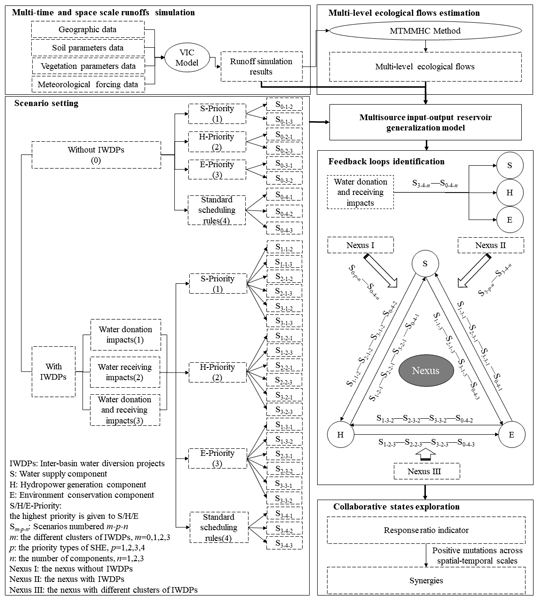
Impacts of inter-basin water diversion projects on the feedback loops of water supply–hydropower generation–environment conservation nexus
Jiaoyang Wang, Dedi Liu, Shenglian Guo, Lihua Xiong, Pan Liu, Hua Chen, Jie Chen, Jiabo Yin, and Yuling Zhang
Hydrol. Earth Syst. Sci., 29, 3315–3339, https://doi.org/10.5194/hess-29-3315-2025,https://doi.org/10.5194/hess-29-3315-2025, 2025
Short summary
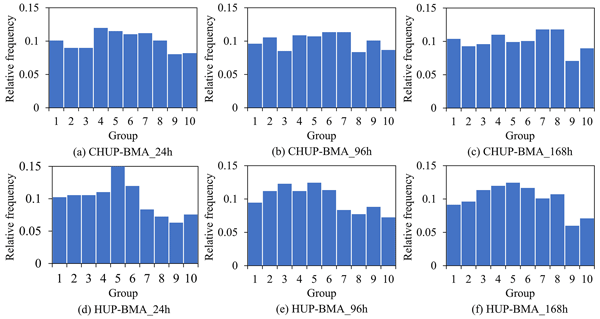
Quantifying and reducing flood forecast uncertainty by the CHUP-BMA method
Zhen Cui, Shenglian Guo, Hua Chen, Dedi Liu, Yanlai Zhou, and Chong-Yu Xu
Hydrol. Earth Syst. Sci., 28, 2809–2829, https://doi.org/10.5194/hess-28-2809-2024,https://doi.org/10.5194/hess-28-2809-2024, 2024
Short summary
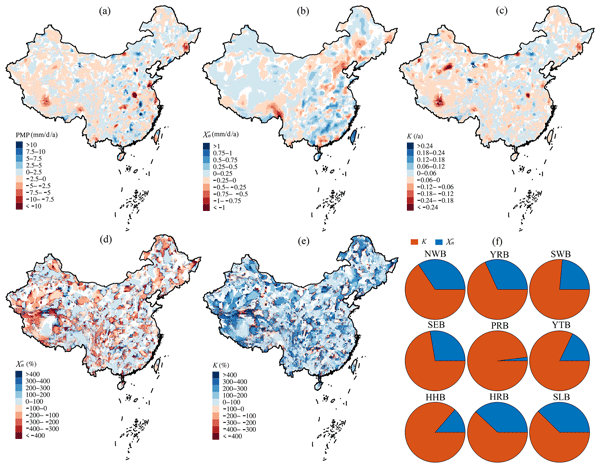
Variation and attribution of probable maximum precipitation of China using a high-resolution dataset in a changing climate
Jinghua Xiong, Shenglian Guo, Abhishek, Jiabo Yin, Chongyu Xu, Jun Wang, and Jing Guo
Hydrol. Earth Syst. Sci., 28, 1873–1895, https://doi.org/10.5194/hess-28-1873-2024,https://doi.org/10.5194/hess-28-1873-2024, 2024
Short summary
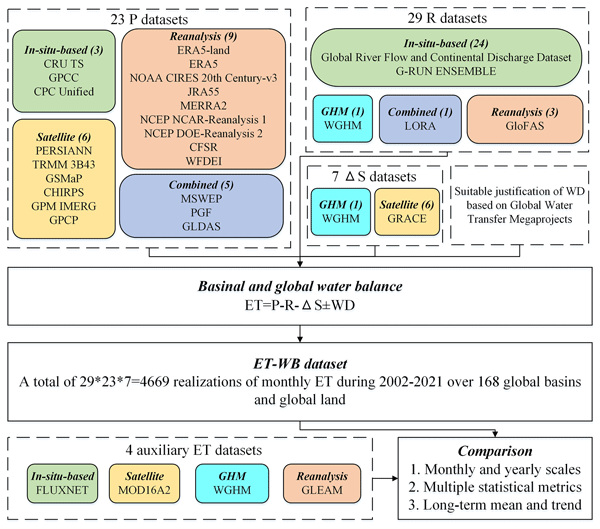
ET-WB: water-balance-based estimations of terrestrial evaporation over global land and major global basins
Jinghua Xiong, Abhishek, Li Xu, Hrishikesh A. Chandanpurkar, James S. Famiglietti, Chong Zhang, Gionata Ghiggi, Shenglian Guo, Yun Pan, and Bramha Dutt Vishwakarma
Earth Syst. Sci. Data, 15, 4571–4597, https://doi.org/10.5194/essd-15-4571-2023,https://doi.org/10.5194/essd-15-4571-2023, 2023
Short summary
Global evaluation of the “dry gets drier, and wet gets wetter” paradigm from a terrestrial water storage change perspective
Jinghua Xiong, Shenglian Guo, Abhishek, Jie Chen, and Jiabo Yin
Hydrol. Earth Syst. Sci., 26, 6457–6476, https://doi.org/10.5194/hess-26-6457-2022,https://doi.org/10.5194/hess-26-6457-2022, 2022
Short summary

Cited articles

Alizadeh, B., Ghaderi Bafti, A., Kamangir, H., Zhang, Y., Wright, D. B., and Franz, K. J.: A novel attention-based LSTM cell post-processor coupled with Bayesian optimization for streamflow prediction, J. Hydrol., 601, 126526, https://doi.org/10.1016/j.jhydrol.2021.126526, 2021. 
Bindas, T., Tsai, W., Liu, J., Rahmani, F., Feng, D., Bian, Y., Lawson, K., and Shen, C.: Improving river routing using a differentiable Muskingum-Cunge model and physics-informed machine learning, Water Resour. Res., 60, e2023WR035337, https://doi.org/10.1029/2023WR035337, 2024. 
Boucher, M. A., Quilty, J., and Adamowski, J.: Data assimilation for streamflow forecasting using extreme learning machines and multilayer perceptrons, Water Resour. Res., 56, e2019WR026226, https://doi.org/10.1029/2019WR026226, 2020. 
Chen, C., Jiang, J., Liao, Z., Zhou, Y., Wang, H., and Pei, Q.: A short-term flood prediction based on spatial deep learning network: A case study for Xi County, China, J. Hydrol., 607, 127535, https://doi.org/10.1016/j.jhydrol.2022.127535, 2022. 
Cheng, C., Zhao, M., Chau, K. W., and Wu, X.: Using genetic algorithm and TOPSIS for Xinanjiang model calibration with a single procedure, J. Hydrol., 316, 129–140, https://doi.org/10.1016/j.jhydrol.2005.04.022, 2006. 
Download
Short summary
Deep learning models achieve strong results in hydrological simulations but often lack links to physical processes. We integrate the principles of the Xinanjiang rainfall–runoff model into a recurrent neural network layer, then combine it with long short-term memory layers. This design improves accuracy while keeping the model explainable, showing small errors in flood peaks and timing.
Share