
Articles | Volume 30, issue 4
https://doi.org/10.5194/hess-30-929-2026
© Author(s) 2026. This work is distributed under
the Creative Commons Attribution 4.0 License.
the Creative Commons Attribution 4.0 License.
https://doi.org/10.5194/hess-30-929-2026
© Author(s) 2026. This work is distributed under
the Creative Commons Attribution 4.0 License.
the Creative Commons Attribution 4.0 License.
Research article
| 
17 Feb 2026
Research article |
| 17 Feb 2026
| 17 Feb 2026
Hydrological regime shifts in Sahelian watersheds: an investigation with a simple dynamical model driven by annual precipitation
Erwan Le Roux
IMT Atlantique, Lab-STICC, UMR CNRS 6285, 29238, Brest, France
Valentin Wendling
HydroSciences Montpellier (Univ. Montpellier, IMT Mines Ales, CNRS, IRD) Ales, France
Gérémy Panthou
Institut des Géosciences de l’Environnement (Univ. Grenoble Alpes, INRAE, CNRS, IRD, Grenoble INP), Grenoble, France
Océane Dubas
Institut des Géosciences de l’Environnement (Univ. Grenoble Alpes, INRAE, CNRS, IRD, Grenoble INP), Grenoble, France
Jean-Pierre Vandervaere
Institut des Géosciences de l’Environnement (Univ. Grenoble Alpes, INRAE, CNRS, IRD, Grenoble INP), Grenoble, France
Basile Hector
Institut des Géosciences de l’Environnement (Univ. Grenoble Alpes, INRAE, CNRS, IRD, Grenoble INP), Grenoble, France
Guillaume Favreau
Institut des Géosciences de l’Environnement (Univ. Grenoble Alpes, INRAE, CNRS, IRD, Grenoble INP), Grenoble, France
Jean-Martial Cohard
Institut des Géosciences de l’Environnement (Univ. Grenoble Alpes, INRAE, CNRS, IRD, Grenoble INP), Grenoble, France
Caroline Pierre
Institut d’Ecologie et des Sciences de l’Environnement de Paris (CNRS, Sorbonne Univ., Univ Paris Est Creteil, IRD, INRAE, Univ. de Paris) Paris, France
Luc Descroix
Patrimoines locaux, Environnement et Globalisation (MNHN, IRD, CNRS), Paris, France
Eric Mougin
Géosciences Environnement Toulouse (CNRS, IRD, UPS, CNES) Toulouse, France
Manuela Grippa
Géosciences Environnement Toulouse (CNRS, IRD, UPS, CNES) Toulouse, France
Laurent Kergoat
Géosciences Environnement Toulouse (CNRS, IRD, UPS, CNES) Toulouse, France
Jérôme Demarty
HydroSciences Montpellier (IRD, Univ. Montpellier, CNRS) Montpellier, France
Nathalie Rouche
HydroSciences Montpellier (IRD, Univ. Montpellier, CNRS) Montpellier, France
Jordi Etchanchu
HydroSciences Montpellier (IRD, Univ. Montpellier, CNRS) Montpellier, France
Christophe Peugeot
CORRESPONDING AUTHOR

HydroSciences Montpellier (IRD, Univ. Montpellier, CNRS) Montpellier, France
Related authors
Erwan Le Roux, Pierre Tandeo, Carlos Granero Belinchon, Melika Baklouti, Julien Le Sommer, Florence Sevault, Samuel Somot, Antoine Doury, and Mahmoud Al Najar
EGUsphere, https://doi.org/10.5194/egusphere-2026-1991, https://doi.org/10.5194/egusphere-2026-1991, 2026
Short summary
Short summary
Projected impacts of climate change are assessed with impact models driven by climate projections. However, impact models can have a high computational cost. Here, we design statistical emulators of impact models based on automatic equation discovery. To our knowledge, this approach is a promising innovation that could pave the way to develop simple and interpretable emulators for various climate impact studies, but also to validate existing knowledge and to understand novel links.
Erwan Le Roux, Guillaume Evin, Raphaëlle Samacoïts, Nicolas Eckert, Juliette Blanchet, and Samuel Morin
The Cryosphere, 17, 4691–4704, https://doi.org/10.5194/tc-17-4691-2023, https://doi.org/10.5194/tc-17-4691-2023, 2023
Short summary
Short summary
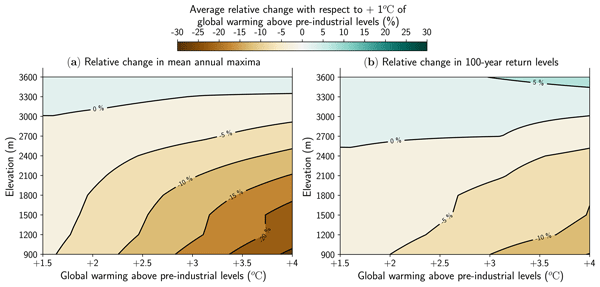
We assess projected changes in snowfall extremes in the French Alps as a function of elevation and global warming level for a high-emission scenario. On average, heavy snowfall is projected to decrease below 3000 m and increase above 3600 m, while extreme snowfall is projected to decrease below 2400 m and increase above 3300 m. At elevations in between, an increase is projected until +3 °C of global warming and then a decrease. These results have implications for the management of risks.
Erwan Le Roux, Guillaume Evin, Nicolas Eckert, Juliette Blanchet, and Samuel Morin
Earth Syst. Dynam., 13, 1059–1075, https://doi.org/10.5194/esd-13-1059-2022, https://doi.org/10.5194/esd-13-1059-2022, 2022
Short summary
Short summary
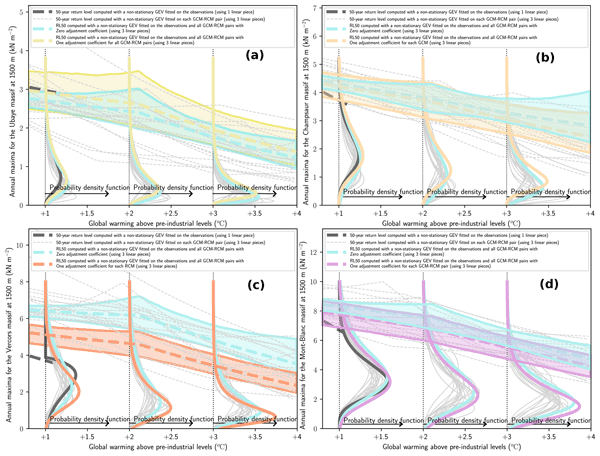
Anticipating risks related to climate extremes is critical for societal adaptation to climate change. In this study, we propose a statistical method in order to estimate future climate extremes from past observations and an ensemble of climate change simulations. We apply this approach to snow load data available in the French Alps at 1500 m elevation and find that extreme snow load is projected to decrease by −2.9 kN m−2 (−50 %) between 1986–2005 and 2080–2099 for a high-emission scenario.
Christine Vallet-Coulomb, Christophe Peugeot, Diego Chávez-Espinoza, Alexandre Zappelli, David Au Yang, Claudia Voigt, Alassane Abdoukarim, Valerie Kotchoni, Rita Houngue, Theodore Ouani, Simon Afouda, Maxime Wubda, Houegnon Géraud Vinel Gbewezoun, and Anne Alexandre
EGUsphere, https://doi.org/10.5194/egusphere-2026-5233, https://doi.org/10.5194/egusphere-2026-5233, 2026
This preprint is open for discussion and under review for Atmospheric Chemistry and Physics (ACP).
Short summary
Short summary
A seven-year precipitation isotope record from the West African Monsoon reveals that triple oxygen isotope composition is strongly influenced by convective organization, while also retaining a weaker signature of continental moisture recycling. The combined use of δ¹⁸O, d-excess and ¹⁷O-excess provides new observational constraints on the processes shaping tropical precipitation isotopes.
Julien Lefebve, Sylvain Biancamaria, Alejandro Blazquez, Simon Munier, Laetitia Gal, Rômulo Augusto Jucá Oliveira, and Jordi Etchanchu
EGUsphere, https://doi.org/10.5194/egusphere-2026-4569, https://doi.org/10.5194/egusphere-2026-4569, 2026
Short summary
Short summary
Approaching the water budget closure of a basin gives confidence in our understanding of its water cycle. By analysing 82 major basins worldwide with the most up‑to‑date data, we demonstrate that the large spread in precipitation (44 %), evapotranspiration (33 %) and runoff (36 %) can produce compensations and lead to erroneous conclusions about water budget closure. In the absence of gauge records, calculating discharge from satellite observations rather than from models reduces these errors.
Farida Boube Dobi, Guillaume Favreau, Yahaya Nazoumou, Alexandre Zoppis, Marie Boucher, Maman Sani Abdou Babaye, Boukari Issoufou Ousmane, Yuliia Movchan, Titouan Courgey, and Thierry Pellarin
EGUsphere, https://doi.org/10.5194/egusphere-2026-4198, https://doi.org/10.5194/egusphere-2026-4198, 2026
This preprint is open for discussion and under review for Hydrology and Earth System Sciences (HESS).
Short summary
Short summary
In the Sahel, groundwater supports people, farming, and livestock, but field monitoring remains very limited. We tested the reliability of a new way to estimate water table depth by measuring animal-traction tracks around wells on high-resolution satellite images. Long-term field data showed that the approach works, but only if biases are considered. This method could help map groundwater across large dryland areas with few field observations and support both science and development actions.
Philippe Gamet, Bimal K. Bhattacharya, Jean-Louis Roujean, Gilles Boulet, Corinne Salcedo, Albert Olioso, Kanishka Mallick, Marie Weiss, Emmanuelle Sarrazin, Emmanuelle Autret, Laure Roupioz, José Antonio Sobrino, Olivier Merlin, Ghislain Picard, Thomas H. G. Vidal, Mark Irvine, Rahul Nigam, Mehul Pandya, Simon Gascoin, Sébastien Marcq, Manoj K. Mishra, Emilie Delogu, Vincent Rivalland, Jordi Etchanchu, Jean-Louis Raynaud, Meenakshi Sarkar, Rishi K. Gangwar, Sushil K. Singh, Renaud Binet, Sara Arioli, Hervé Yésou, Isabelle Dadou, Alexei Kouraev, Julien Michel, Benoit Coudert, Samuel Mwangi, Nesrine Farhani, Ayan Das, Stéphane Saux-Picart, Thierry Tormos, Jean-François Piollé, Charles Verpoorter, Auline Rodler, Jonathan Leon Tavares, Jennifer Adams, Anand S. Sahadevan, Besavaraju Santhi Sree, Manikumar Vedantam, Dheeraj Adlakha, Laurence Buffet, Kathrin Naegeli, Itziar Barat, Jerome Demarty, Olivier Hagolle, and Philippe Maisongrande
EGUsphere, https://doi.org/10.5194/egusphere-2026-4492, https://doi.org/10.5194/egusphere-2026-4492, 2026
Short summary
Short summary
This paper highlights how the upcoming TRISHNA satellite mission (launching 2027) will transform Earth observation by providing high-resolution (60 m) thermal infrared imagery with sub-weekly revisits. It details the mission's design and its synergies with other future missions to significantly improve the monitoring of global surface temperature and its dynamics, water stress, and ecosystem energy processes.
Yacouba Nouhou Chaweye, Guillaume Favreau, Amaury Dehecq, Marie Boucher, Boukari Issoufou Ousmane, Rabilou Abdou Mahaman, and Yahaya Nazoumou
EGUsphere, https://doi.org/10.5194/egusphere-2026-4118, https://doi.org/10.5194/egusphere-2026-4118, 2026
Short summary
Short summary
This study provides an empirical yet finely documented example highlighting a significant but often overlooked or misunderstood trade-off between land restoration strategies and groundwater sustainability in drylands at a global scale. It emphasizes that interventions to achieve climate change adaptation and land restoration goals may inadvertently compromise fragile water resources when hydrological feedbacks are not sufficiently considered.
Erwan Le Roux, Pierre Tandeo, Carlos Granero Belinchon, Melika Baklouti, Julien Le Sommer, Florence Sevault, Samuel Somot, Antoine Doury, and Mahmoud Al Najar
EGUsphere, https://doi.org/10.5194/egusphere-2026-1991, https://doi.org/10.5194/egusphere-2026-1991, 2026
Short summary
Short summary
Projected impacts of climate change are assessed with impact models driven by climate projections. However, impact models can have a high computational cost. Here, we design statistical emulators of impact models based on automatic equation discovery. To our knowledge, this approach is a promising innovation that could pave the way to develop simple and interpretable emulators for various climate impact studies, but also to validate existing knowledge and to understand novel links.
Gabrielle Sorini, Juliette Blanchet, Gérémy Panthou, Théo Vischel, and Yves Tramblay
EGUsphere, https://doi.org/10.5194/egusphere-2026-1176, https://doi.org/10.5194/egusphere-2026-1176, 2026
Short summary
Short summary
This study investigates regional flood trends across West Africa using time-varying extreme-value distributions. While most catchments show declining flood magnitudes up to the 1970s–1990s, recent trends diverge, ranging from decrease to intensification, revealing an original typology of regional hydrosystems. These results refine the narrative of hydrological changes in West Africa and provide clues to their attribution.
Samuel Mwangi, Albert Olioso, Jordi Etchanchu, Kanishka Mallick, Aolin Jia, Jérôme Demarty, Nesrine Farhani, Emmanuelle Sarrazin, Philippe Gamet, Jean-Louis Roujean, and Gilles Boulet
Hydrol. Earth Syst. Sci., 30, 1117–1142, https://doi.org/10.5194/hess-30-1117-2026, https://doi.org/10.5194/hess-30-1117-2026, 2026
Short summary
Short summary
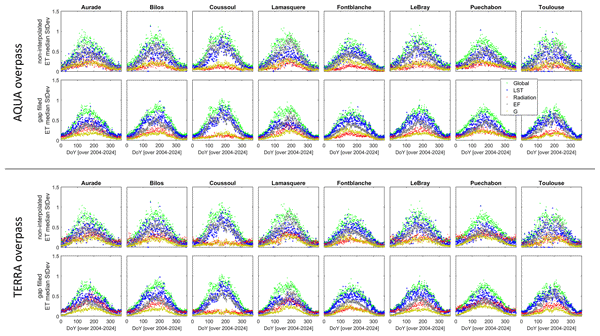
The EVapotranspiration Assessment from SPAce (EVASPA) algorithm that will generate TRISHNA evapotranspiration (TRISHNA ET) products shows good agreement with observations. Analyses conducted on 4 variables used in contextual ET modelling showed that land surface temperature and evaporative fraction methods introduce the largest uncertainty in ensemble estimates, followed by radiation. Soil heat flux methods contribute the least. Robust ET products will require optimizing the sensitive variables.
Fabian Merk, Timo Schaffhauser, Faizan Anwar, Ye Tuo, Jean-Martial Cohard, and Markus Disse
Hydrol. Earth Syst. Sci., 28, 5511–5539, https://doi.org/10.5194/hess-28-5511-2024, https://doi.org/10.5194/hess-28-5511-2024, 2024
Short summary
Short summary
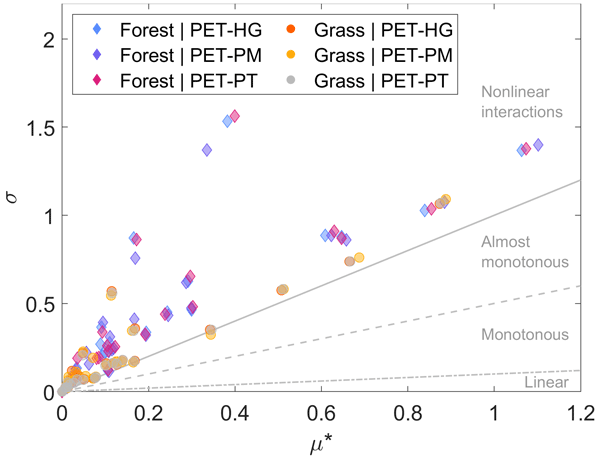
Evapotranspiration (ET) is computed from the vegetation (plant transpiration) and soil (soil evaporation). In western Africa, plant transpiration correlates with vegetation growth. Vegetation is often represented using the leaf area index (LAI). In this study, we evaluate the importance of the LAI for ET calculation. We take a close look at this interaction and highlight its relevance. Our work contributes to the understanding of terrestrial water cycle processes .
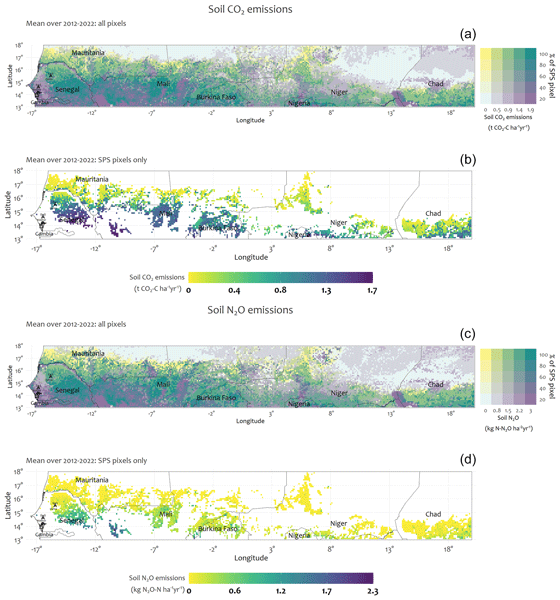
Yélognissè Agbohessou, Claire Delon, Manuela Grippa, Eric Mougin, Daouda Ngom, Espoir Koudjo Gaglo, Ousmane Ndiaye, Paulo Salgado, and Olivier Roupsard
Biogeosciences, 21, 2811–2837, https://doi.org/10.5194/bg-21-2811-2024, https://doi.org/10.5194/bg-21-2811-2024, 2024
Short summary
Short summary
Emissions of greenhouse gases in the Sahel are not well represented because they are considered weak compared to the rest of the world. However, natural areas in the Sahel emit carbon dioxide and nitrous oxides, which need to be assessed because of extended surfaces. We propose an assessment of such emissions in Sahelian silvopastoral systems and of how they are influenced by environmental characteristics. These results are essential to inform climate change strategies in the region.
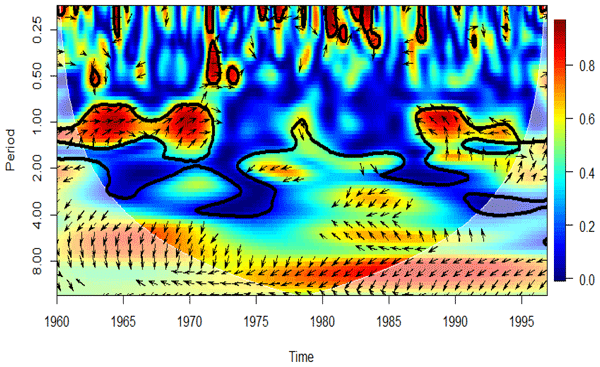
Marc Auriol Amalaman, Gil Mahé, Béh Ibrahim Diomande, Armand Zamblé Tra Bi, Nathalie Rouché, Zeineddine Nouaceur, and Benoit Laignel
Proc. IAHS, 385, 365–370, https://doi.org/10.5194/piahs-385-365-2024, https://doi.org/10.5194/piahs-385-365-2024, 2024
Short summary
Short summary
L’objectif de ce travail est d’analyser les liens entre les indices climatiques et la variabilité des séries de précipitations et de débits. La méthode a consisté à rechercher les changements survenus dans ces données à travers la variabilité du signal. Ainsi, au niveau de l’analyse interannuelle et saisonnière, le signal indique une forte oscillation marquée par une prédominance de la couleur rouge. L’utilisation de l’indice ENSO montre que le phénomène El-Niño impacte le débit et la pluie.
Erwan Le Roux, Guillaume Evin, Raphaëlle Samacoïts, Nicolas Eckert, Juliette Blanchet, and Samuel Morin
The Cryosphere, 17, 4691–4704, https://doi.org/10.5194/tc-17-4691-2023, https://doi.org/10.5194/tc-17-4691-2023, 2023
Short summary
Short summary
We assess projected changes in snowfall extremes in the French Alps as a function of elevation and global warming level for a high-emission scenario. On average, heavy snowfall is projected to decrease below 3000 m and increase above 3600 m, while extreme snowfall is projected to decrease below 2400 m and increase above 3300 m. At elevations in between, an increase is projected until +3 °C of global warming and then a decrease. These results have implications for the management of risks.
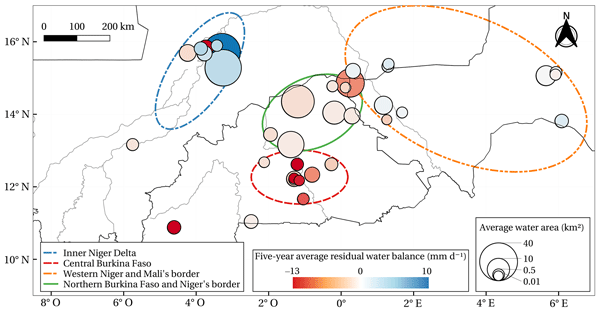
Mathilde de Fleury, Laurent Kergoat, and Manuela Grippa
Hydrol. Earth Syst. Sci., 27, 2189–2204, https://doi.org/10.5194/hess-27-2189-2023, https://doi.org/10.5194/hess-27-2189-2023, 2023
Short summary
Short summary
This study surveys small lakes and reservoirs, which are vital resources in the Sahel, through a multi-sensor satellite approach. Water height changes compared to evaporation losses in dry seasons highlight anthropogenic withdrawals and water supplies due to river and groundwater connections. Some reservoirs display weak withdrawals, suggesting low usage may be due to security issues. The
satellite-derived water balance thus proved effective in estimating water resources in semi-arid areas.
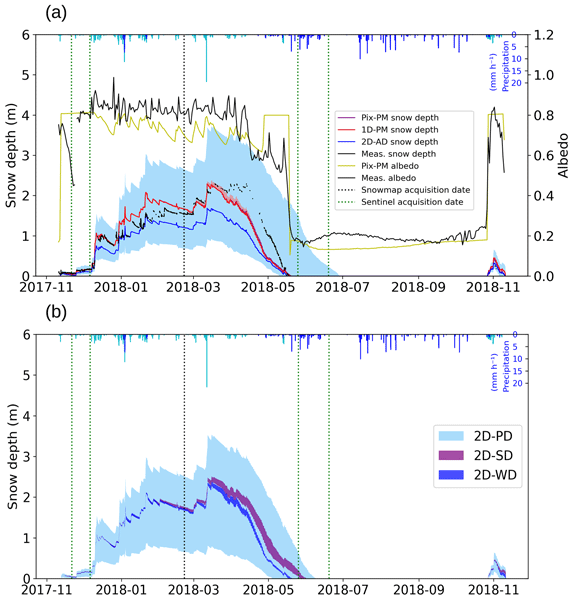
Aniket Gupta, Alix Reverdy, Jean-Martial Cohard, Basile Hector, Marc Descloitres, Jean-Pierre Vandervaere, Catherine Coulaud, Romain Biron, Lucie Liger, Reed Maxwell, Jean-Gabriel Valay, and Didier Voisin
Hydrol. Earth Syst. Sci., 27, 191–212, https://doi.org/10.5194/hess-27-191-2023, https://doi.org/10.5194/hess-27-191-2023, 2023
Short summary
Short summary
Patchy snow cover during spring impacts mountainous ecosystems on a large range of spatio-temporal scales. A hydrological model simulated such snow patchiness at 10 m resolution. Slope and orientation controls precipitation, radiation, and wind generate differences in snowmelt, subsurface storage, streamflow, and evapotranspiration. The snow patchiness increases the duration of the snowmelt to stream and subsurface storage, which sustains the plants and streamflow later in the summer.
Erwan Le Roux, Guillaume Evin, Nicolas Eckert, Juliette Blanchet, and Samuel Morin
Earth Syst. Dynam., 13, 1059–1075, https://doi.org/10.5194/esd-13-1059-2022, https://doi.org/10.5194/esd-13-1059-2022, 2022
Short summary
Short summary
Anticipating risks related to climate extremes is critical for societal adaptation to climate change. In this study, we propose a statistical method in order to estimate future climate extremes from past observations and an ensemble of climate change simulations. We apply this approach to snow load data available in the French Alps at 1500 m elevation and find that extreme snow load is projected to decrease by −2.9 kN m−2 (−50 %) between 1986–2005 and 2080–2099 for a high-emission scenario.
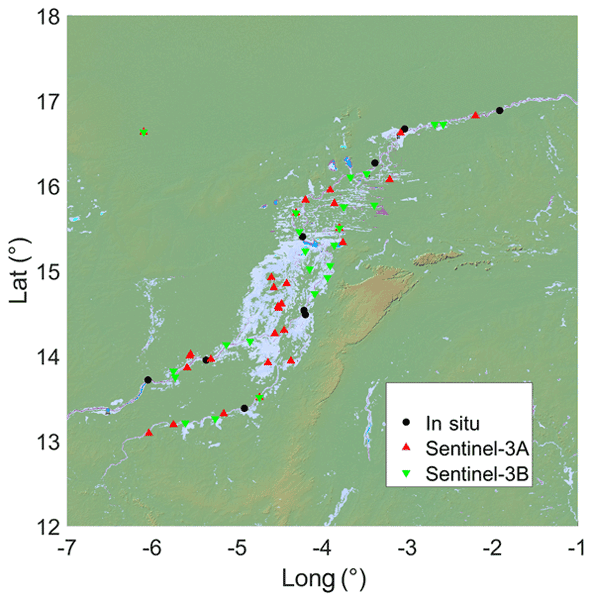
Adama Telly Diepkilé, Flavien Egon, Fabien Blarel, Eric Mougin, and Frédéric Frappart
Proc. IAHS, 384, 31–35, https://doi.org/10.5194/piahs-384-31-2021, https://doi.org/10.5194/piahs-384-31-2021, 2021
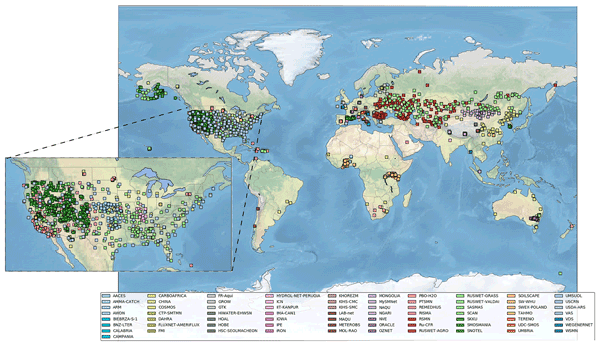
Wouter Dorigo, Irene Himmelbauer, Daniel Aberer, Lukas Schremmer, Ivana Petrakovic, Luca Zappa, Wolfgang Preimesberger, Angelika Xaver, Frank Annor, Jonas Ardö, Dennis Baldocchi, Marco Bitelli, Günter Blöschl, Heye Bogena, Luca Brocca, Jean-Christophe Calvet, J. Julio Camarero, Giorgio Capello, Minha Choi, Michael C. Cosh, Nick van de Giesen, Istvan Hajdu, Jaakko Ikonen, Karsten H. Jensen, Kasturi Devi Kanniah, Ileen de Kat, Gottfried Kirchengast, Pankaj Kumar Rai, Jenni Kyrouac, Kristine Larson, Suxia Liu, Alexander Loew, Mahta Moghaddam, José Martínez Fernández, Cristian Mattar Bader, Renato Morbidelli, Jan P. Musial, Elise Osenga, Michael A. Palecki, Thierry Pellarin, George P. Petropoulos, Isabella Pfeil, Jarrett Powers, Alan Robock, Christoph Rüdiger, Udo Rummel, Michael Strobel, Zhongbo Su, Ryan Sullivan, Torbern Tagesson, Andrej Varlagin, Mariette Vreugdenhil, Jeffrey Walker, Jun Wen, Fred Wenger, Jean Pierre Wigneron, Mel Woods, Kun Yang, Yijian Zeng, Xiang Zhang, Marek Zreda, Stephan Dietrich, Alexander Gruber, Peter van Oevelen, Wolfgang Wagner, Klaus Scipal, Matthias Drusch, and Roberto Sabia
Hydrol. Earth Syst. Sci., 25, 5749–5804, https://doi.org/10.5194/hess-25-5749-2021, https://doi.org/10.5194/hess-25-5749-2021, 2021
Short summary
Short summary
The International Soil Moisture Network (ISMN) is a community-based open-access data portal for soil water measurements taken at the ground and is accessible at https://ismn.earth. Over 1000 scientific publications and thousands of users have made use of the ISMN. The scope of this paper is to inform readers about the data and functionality of the ISMN and to provide a review of the scientific progress facilitated through the ISMN with the scope to shape future research and operations.
Cited articles
Anderies, J. M.: Minimal models and agroecological policy at the regional scale: An application to salinity problems in southeastern Australia, Regional Environmental Change, 5, 1–17, https://doi.org/10.1007/s10113-004-0081-z, 2005. a, b
Anderies, J. M., Ryan, P., and Walker, B. H.: Loss of resilience, crisis, and institutional change: Lessons from an intensive agricultural system in southeastern Australia, Ecosystems, 9, 865–878, https://doi.org/10.1007/s10021-006-0017-1, 2006. a
Armstrong McKay, D. I., Staal, A., Abrams, J. F., Winkelmann, R., Sakschewski, B., Loriani, S., Fetzer, I., Cornell, S. E., Rockström, J., and Lenton, T. M.: Exceeding 1.5 °C global warming could trigger multiple climate tipping points, Science (New York, N. Y.), 377, eabn7950, https://doi.org/10.1126/science.abn7950, 2022. a
Ashwin, P., Wieczorek, S., Vitolo, R., and Cox, P.: Tipping points in open systems: bifurcation, noise-induced and rate-dependent examples in the climate system, Philosophical Transactions of the Royal Society A: Mathematical, Physical and Engineering Sciences, 370, https://doi.org/10.1098/rsta.2011.0306, 2012. a
Avanzi, F., Rungee, J., Maurer, T., Bales, R., Ma, Q., Glaser, S., and Conklin, M.: Climate elasticity of evapotranspiration shifts the water balance of Mediterranean climates during multi-year droughts, Hydrol. Earth Syst. Sci., 24, 4317–4337, https://doi.org/10.5194/hess-24-4317-2020, 2020. a
Bennour, A., Jia, L., Menenti, M., Zheng, C., Zeng, Y., Barnieh, B. A., and Jiang, M.: Assessing impacts of climate variability and land use/land cover change on the water balance components in the Sahel using Earth observations and hydrological modelling, Journal of Hydrology: Regional Studies, 47, 101370, https://doi.org/10.1016/j.ejrh.2023.101370, 2023. a
Beven, K.: A manifesto for the equifinality thesis, Journal of Hydrology, 320, 18–36, https://doi.org/10.1016/j.jhydrol.2005.07.007, 2006. a
Blöschl, G., Bierkens, M. F., Chambel, A., Cudennec, C., Destouni, G., Fiori, A., Kirchner, J. W., McDonnell, J. J., Savenije, H. H., Sivapalan, M., Stumpp, C., Toth, E., Volpi, E., Carr, G., Lupton, C., Salinas, J., Széles, B., Viglione, A., Aksoy, H., Allen, S. T., Amin, A., Andréassian, V., Arheimer, B., Aryal, S. K., Baker, V., Bardsley, E., Barendrecht, M. H., Bartosova, A., Batelaan, O., Berghuijs, W. R., Beven, K., Blume, T., Bogaard, T., Borges de Amorim, P., Böttcher, M. E., Boulet, G., Breinl, K., Brilly, M., Brocca, L., Buytaert, W., Castellarin, A., Castelletti, A., Chen, X., Chen, Y., Chen, Y., Chifflard, P., Claps, P., Clark, M. P., Collins, A. L., Croke, B., Dathe, A., David, P. C., de Barros, F. P., de Rooij, G., Di Baldassarre, G., Driscoll, J. M., Duethmann, D., Dwivedi, R., Eris, E., Farmer, W. H., Feiccabrino, J., Ferguson, G., Ferrari, E., Ferraris, S., Fersch, B., Finger, D., Foglia, L., Fowler, K., Gartsman, B., Gascoin, S., Gaume, E., Gelfan, A., Geris, J., Gharari, S., Gleeson, T., Glendell, M., Gonzalez Bevacqua, A., González-Dugo, M. P., Grimaldi, S., Gupta, A. B., Guse, B., Han, D., Hannah, D., Harpold, A., Haun, S., Heal, K., Helfricht, K., Herrnegger, M., Hipsey, M., Hlaváčiková, H., Hohmann, C., Holko, L., Hopkinson, C., Hrachowitz, M., Illangasekare, T. H., Inam, A., Innocente, C., Istanbulluoglu, E., Jarihani, B., Kalantari, Z., Kalvans, A., Khanal, S., Khatami, S., Kiesel, J., Kirkby, M., Knoben, W., Kochanek, K., Kohnová, S., Kolechkina, A., Krause, S., Kreamer, D., Kreibich, H., Kunstmann, H., Lange, H., Liberato, M. L., Lindquist, E., Link, T., Liu, J., Loucks, D. P., Luce, C., Mahé, G., Makarieva, O., Malard, J., Mashtayeva, S., Maskey, S., Mas-Pla, J., Mavrova-Guirguinova, M., Mazzoleni, M., Mernild, S., Misstear, B. D., Montanari, A., Müller-Thomy, H., Nabizadeh, A., Nardi, F., Neale, C., Nesterova, N., Nurtaev, B., Odongo, V. O., Panda, S., Pande, S., Pang, Z., Papacharalampous, G., Perrin, C., Pfister, L., Pimentel, R., Polo, M. J., Post, D., Prieto Sierra, C., Ramos, M. H., Renner, M., Reynolds, J. E., Ridolfi, E., Rigon, R., Riva, M., Robertson, D. E., Rosso, R., Roy, T., Sá, J. H., Salvadori, G., Sandells, M., Schaefli, B., Schumann, A., Scolobig, A., Seibert, J., Servat, E., Shafiei, M., Sharma, A., Sidibe, M., Sidle, R. C., Skaugen, T., Smith, H., Spiessl, S. M., Stein, L., Steinsland, I., Strasser, U., Su, B., Szolgay, J., Tarboton, D., Tauro, F., Thirel, G., Tian, F., Tong, R., Tussupova, K., Tyralis, H., Uijlenhoet, R., van Beek, R., van der Ent, R. J., van der Ploeg, M., Van Loon, A. F., van Meerveld, I., van Nooijen, R., van Oel, P. R., Vidal, J. P., von Freyberg, J., Vorogushyn, S., Wachniew, P., Wade, A. J., Ward, P., Westerberg, I. K., White, C., Wood, E. F., Woods, R., Xu, Z., Yilmaz, K. K., and Zhang, Y.: Twenty-three unsolved problems in hydrology (UPH) – a community perspective, Hydrological Sciences Journal, 64, 1141–1158, https://doi.org/10.1080/02626667.2019.1620507, 2019. a
Boyer, J. F., Dieulin, C., Rouche, N., Cres, A., Servat, E., Paturel, J. E., and Mahé, G.: SIEREM: an environmental information system for water resources, in: Proceedings of the Fifth FRIEND World Conference, vol. 308, IAHS Publications, Cuba, 19–25, https://iahs.info/uploads/dms/13630.08-19-25-111-308-Boyer.pdf (last access: 14 February 2026), ISBN 978-1-901502-78-7, 2006. a
Casenave, A. and Valentin, C.: A runoff capability classification system based on surface features criteria in semi-arid areas of West Africa, Journal of Hydrology, 130, 231–249, https://doi.org/10.1016/0022-1694(92)90112-9, 1992. a
Descroix, L., Mahé, G., Lebel, T., Favreau, G., Galle, S., Gautier, E., Olivry, J. C., Albergel, J., Amogu, O., Cappelaere, B., Dessouassi, R., Diedhiou, A., Le Breton, E., Mamadou, I., and Sighomnou, D.: Spatio-temporal variability of hydrological regimes around the boundaries between Sahelian and Sudanian areas of West Africa: A synthesis, Journal of Hydrology, 375, 90–102, https://doi.org/10.1016/j.jhydrol.2008.12.012, 2009. a, b, c
Descroix, L., Laurent, J. P., Vauclin, M., Amogu, O., Boubkraoui, S., Ibrahim, B., Galle, S., Cappelaere, B., Bousquet, S., Mamadou, I., Le Breton, E., Lebel, T., Quantin, G., Ramier, D., and Boulain, N.: Experimental evidence of deep infiltration under sandy flats and gullies in the Sahel, Journal of Hydrology, 424–425, 1–15, https://doi.org/10.1016/j.jhydrol.2011.11.019, 2012. a
Descroix, L., Guichard, F., Grippa, M., Lambert, L. A., Panthou, G., Mahé, G., Gal, L., Dardel, C., Quantin, G., Kergoat, L., Bouaïta, Y., Hiernaux, P., Vischel, T., Pellarin, T., Faty, B., Wilcox, C., Abdou, M. M., Mamadou, I., Vandervaere, J. P., Diongue-Niang, A., Ndiaye, O., Sané, Y., Dacosta, H., Gosset, M., Cassé, C., Sultan, B., Barry, A., Amogu, O., Nnomo, B. N., Barry, A., and Paturel, J. E.: Evolution of surface hydrology in the Sahelo-Sudanian Strip: An updated review, Water (Switzerland), 10, https://doi.org/10.3390/w10060748, 2018. a, b, c
Dijkstra, Y. M., Schuttelaars, H. M., and Schramkowski, G. P.: A Regime Shift From Low to High Sediment Concentrations in a Tide-Dominated Estuary, Geophysical Research Letters, 46, 4338–4345, https://doi.org/10.1029/2019GL082302, 2019. a
Favreau, G., Cappelaere, B., Massuel, S., Leblanc, M., Boucher, M., Boulain, N., and Leduc, C.: Land clearing, climate variability, and water resources increase in semiarid southwest Niger: A review, Water Resources Research, 45, https://doi.org/10.1029/2007WR006785, 2009. a
Fowler, K., Knoben, W., Peel, M., Peterson, T., Ryu, D., Saft, M., Seo, K. W., and Western, A.: Many Commonly Used Rainfall-Runoff Models Lack Long, Slow Dynamics: Implications for Runoff Projections, Water Resources Research, 56, https://doi.org/10.1029/2019WR025286, 2020. a
Fowler, K., Peel, M., Saft, M., Nathan, R., Horne, A., Wilby, R., McCutcheon, C., and Peterson, T.: Hydrological Shifts Threaten Water Resources, https://doi.org/10.1029/2021WR031210, 2022a. a, b, c
Fowler, K., Peel, M., Saft, M., Peterson, T. J., Western, A., Band, L., Petheram, C., Dharmadi, S., Tan, K. S., Zhang, L., Lane, P., Kiem, A., Marshall, L., Griebel, A., Medlyn, B. E., Ryu, D., Bonotto, G., Wasko, C., Ukkola, A., Stephens, C., Frost, A., Gardiya Weligamage, H., Saco, P., Zheng, H., Chiew, F., Daly, E., Walker, G., Vervoort, R. W., Hughes, J., Trotter, L., Neal, B., Cartwright, I., and Nathan, R.: Explaining changes in rainfall–runoff relationships during and after Australia's Millennium Drought: a community perspective, Hydrol. Earth Syst. Sci., 26, 6073–6120, https://doi.org/10.5194/hess-26-6073-2022, 2022b. a
Fowler, K. J., Peel, M. C., Western, A. W., Zhang, L., and Peterson, T. J.: Simulating runoff under changing climatic conditions: Revisiting an apparent deficiency of conceptual rainfall-runoff models, Water Resources Research, 52, 1820–1846, https://doi.org/10.1002/2015WR018068, 2016. a
Gal, L., Grippa, M., Hiernaux, P., Pons, L., and Kergoat, L.: The paradoxical evolution of runoff in the pastoral Sahel: analysis of the hydrological changes over the Agoufou watershed (Mali) using the KINEROS-2 model, Hydrol. Earth Syst. Sci., 21, 4591–4613, https://doi.org/10.5194/hess-21-4591-2017, 2017. a, b
Gal, Y.: Uncertainty in Deep Learning, PhD thesis, https://www.cs.ox.ac.uk/people/yarin.gal/website/thesis/thesis.pdf (last access: 14 February 2026), 2016. a
Gardelle, J., Hiernaux, P., Kergoat, L., and Grippa, M.: Less rain, more water in ponds: a remote sensing study of the dynamics of surface waters from 1950 to present in pastoral Sahel (Gourma region, Mali), Hydrol. Earth Syst. Sci., 14, 309–324, https://doi.org/10.5194/hess-14-309-2010, 2010. a
Gbohoui, Y. P., Paturel, J. E., Tazen, F., Mounirou, L. A., Yonaba, R., Karambiri, H., and Yacouba, H.: Impacts of climate and environmental changes on water resources: A multi-scale study based on Nakanbé nested watersheds in West African Sahel, Journal of Hydrology: Regional Studies, 35, https://doi.org/10.1016/j.ejrh.2021.100828, 2021. a, b
Goswami, P., Peterson, T. J., Mondal, A., and Rüdiger, C.: On the existence of multiple states of low flows in catchments in southeast Australia, Advances in Water Resources, 187, 104675, https://doi.org/10.1016/j.advwatres.2024.104675, 2024. a
Hastings, A., Abbott, K. C., Cuddington, K., Francis, T., Gellner, G., Lai, Y. C., Morozov, A., Petrovskii, S., Scranton, K., and Zeeman, M. L.: Transient phenomena in ecology, Science, 361, https://doi.org/10.1126/science.aat6412, 2018. a
Hiernaux, P., Diarra, L., Trichon, V., Mougin, E., Soumaguel, N., and Baup, F.: Woody plant population dynamics in response to climate changes from 1984 to 2006 in Sahel (Gourma, Mali), Journal of Hydrology, 375, 103–113, https://doi.org/10.1016/j.jhydrol.2009.01.043, 2009. a
Hindmarsh, A. C.: ODEPACK, a systemized collection of ODE solvers, Scientific computing, https://computing.llnl.gov/sites/default/files/ODEPACK_pub1_u88007.pdf (last access: 14 February 2026), 1983. a
Holling, C. S.: Resilience and Stability of Ecological Systems, Tech. rep., https://www.jstor.org/stable/2096802?seq=1&cid=pdf (last access: 14 February 2026), 1973. a
Horton, R. E.: The Rôle of infiltration in the hydrologic cycle, Eos, Transactions American Geophysical Union, 14, 446–460, https://doi.org/10.1029/TR014i001p00446, 1933. a
IPCC: Annex VII: Glossary, in: Climate Change 2021 – The Physical Science Basis, Cambridge University Press, 2215–2256, https://doi.org/10.1017/9781009157896.022, 2023. a
Kéfi, S., Génin, A., Garcia-Mayor, A., Guirado, E., Cabral, J. S., Berdugo, M., Guerber, J., Solé, R., and Maestre, F. T.: Self-organization as a mechanism of resilience in dryland ecosystems, Proceedings of the National Academy of Sciences of the United States of America, 121, https://doi.org/10.1073/pnas.2305153121, 2024. a
Lafore, J. P., Flamant, C., Guichard, F., Parker, D. J., Bouniol, D., Fink, A. H., Giraud, V., Gosset, M., Hall, N., Höller, H., Jones, S. C., Protat, A., Roca, R., Roux, F., Saïd, F., and Thorncroft, C.: Progress in understanding of weather systems in West Africa, Atmospheric Science Letters, 12, 7–12, https://doi.org/10.1002/asl.335, 2011. a
Le Barbé, L., Lebel, T., and Tapsoba, D.: Rainfall Variability in West Africa during the Years 1950–90, Journal of Climate, 15, 187–202, https://doi.org/10.1175/1520-0442(2002)015<0187:RVIWAD>2.0.CO;2, 2002. a
Leblanc, M. J., Favreau, G., Massuel, S., Tweed, S. O., Loireau, M., and Cappelaere, B.: Land clearance and hydrological change in the Sahel: SW Niger, Global and Planetary Change, 61, 135–150, https://doi.org/10.1016/j.gloplacha.2007.08.011, 2008. a
Lenton, T. M.: Early warning of climate tipping points, Nature Climate Change, 1, 201–209, https://doi.org/10.1038/nclimate1143, 2011. a
Le Roux, E.: Hydrological Regime Shifts In Sahelian Watershed v1.0, Zenodo [code and data set], https://doi.org/10.5281/zenodo.18607664, 2026. a
Liu, Q., Yang, Y., Liang, L., Yan, D., Wang, X., Li, C., and Sun, T.: Shift in precipitation-streamflow relationship induced by multi-year drought across global catchments, Science of the Total Environment, 857, https://doi.org/10.1016/j.scitotenv.2022.159560, 2023. a
Mahe, G., Paturel, J. E., Servat, E., Conway, D., and Dezetter, A.: The impact of land use change on soil water holding capacity and river flow modelling in the Nakambe River, Burkina-Faso, Journal of Hydrology, 300, 33–43, https://doi.org/10.1016/j.jhydrol.2004.04.028, 2005. a
Massuel, S., Cappelaere, B., Favreau, G., Leduc, C., Lebel, T., and Vischel, T.: Modélisation intégrée surface-souterrain dans un contexte de hausse des réserves d'un aquifère régional Sahélien, Hydrological Sciences Journal, 56, 1242–1264, https://doi.org/10.1080/02626667.2011.609171, 2011. a
Mathias, J. D., Deffuant, G., and Brias, A.: From tipping point to tipping set: Extending the concept of regime shift to uncertain dynamics for real-world applications, Ecological Modelling, 496, https://doi.org/10.1016/j.ecolmodel.2024.110801, 2024. a, b
May, R. M.: Thresholds and breakpoints in ecosystems with a multiplicity of stable states, Nature, 269, 471–477, https://doi.org/10.1038/269471a0, 1977. a
Mayor, A. G., Bautista, S., Rodriguez, F., and Kéfi, S.: Connectivity-Mediated Ecohydrological Feedbacks and Regime Shifts in Drylands, Ecosystems, 22, 1497–1511, https://doi.org/10.1007/s10021-019-00366-w, 2019. a
Mockus, V.: Estimation of Direct Runoff from Storm Rainfall, Tech. Rep. 210-VI-NEH, US Department of Agriculture, https://irrigationtoolbox.com/NEH/Part630_Hydrology/H_210_630_10.pdf (last access: 14 February 2026), 1972. a
Mouelhi, S., Claude, M., Perrin, C., and Andréassian, V.: Linking stream flow to rainfall at the annual time step: The Manabe bucket model revisited, Journal of Hydrology, https://doi.org/10.1016/j.jhydrol.2005.12.022, 2006. a
Panthou, G., Vischel, T., and Lebel, T.: Recent trends in the regime of extreme rainfall in the Central Sahel, International Journal of Climatology, 34, 3998–4006, https://doi.org/10.1002/joc.3984, 2014. a
Panthou, G., Lebel, T., Vischel, T., Quantin, G., Sane, Y., Ba, A., Ndiaye, O., Diongue-Niang, A., and Diopkane, M.: Rainfall intensification in tropical semi-arid regions: The Sahelian case, Environmental Research Letters, 13, https://doi.org/10.1088/1748-9326/aac334, 2018. a, b
Peterson, T. J. and Western, A. W.: Multiple hydrological attractors under stochastic daily forcing: 1. Can multiple attractors exist?, Water Resources Research, 50, 2993–3009, https://doi.org/10.1002/2012WR013003, 2014. a
Peterson, T. J., Western, A. W., and Argent, R. M.: Analytical methods for ecosystem resilience: A hydrological investigation, Water Resources Research, 48, https://doi.org/10.1029/2012WR012150, 2012. a
Peterson, T. J., Saft, M., Peel, M. C., and John, A.: Watersheds may not recover from drought, Science, 372, 745–749, https://doi.org/10.1126/science.abd5085, 2021. a, b
Rahimi, M., Ghorbani, M., Ahmadaali, K., Salajeghe, A., and Azadi, H.: Dryland river regime shifts in Iran: Drivers and feedbacks, River Research and Applications, 39, 1173–1186, https://doi.org/10.1002/rra.4138, 2023. a
Redelsperger, J.-L., Thorncroft, C. D., Diedhiou, A., Lebel, T., Parker, D. J., and Polcher, J.: African Monsoon Multidisciplinary Analysis – An International Research Project and Field Campaign, B. Am. Meteorol. Soc., 87, 1739–1746, https://doi.org/10.1175/BAMS-87-12-1739, 2006. a
Saft, M., Western, A. W., Zhang, L., Peel, M. C., and Potter, N. J.: The influence of multiyear drought on the annual rainfall-runoff relationship: An Australian perspective, Water Resources Research, 51, 2444–2463, https://doi.org/10.1002/2014WR015348, 2015. a
Saft, M., Peel, M. C., Western, A. W., Perraud, J. M., and Zhang, L.: Bias in streamflow projections due to climate-induced shifts in catchment response, Geophysical Research Letters, 43, 1574–1581, https://doi.org/10.1002/2015GL067326, 2016. a
Sauzedde, E., Vischel, T., Panthou, G., Tarchiani, V., Massazza, G., and Housseini Ibrahim, M.: Compound-event analysis in non-stationary hydrological hazards: a case study of the Niger River in Niamey, Hydrological Sciences Journal, 70, 406–421, https://doi.org/10.1080/02626667.2024.2435534, 2025. a
Scheffer, M., Carpenter, S., Foley, J. A., Folke, C., and Walkerk, B.: Catastrophic shifts in ecosystems, Nature, 413, 591–596, https://doi.org/10.1038/35098000, 2001. a, b, c
Séguis, L., Cappelaere, B., Milési, G., Peugeot, C., Massuel, S., and Favreau, G.: Simulated impacts of climate change and land-clearing on runoff from a small Sahelian catchment, Hydrological Processes, 18, 3401–3413, https://doi.org/10.1002/hyp.1503, 2004. a
Sivapalan, M.: From engineering hydrology to Earth system science: milestones in the transformation of hydrologic science, Hydrol. Earth Syst. Sci., 22, 1665–1693, https://doi.org/10.5194/hess-22-1665-2018, 2018. a
Tramblay, Y., Rouché, N., Paturel, J.-E., Mahé, G., Boyer, J.-F., Amoussou, E., Bodian, A., Dacosta, H., Dakhlaoui, H., Dezetter, A., Hughes, D., Hanich, L., Peugeot, C., Tshimanga, R., and Lachassagne, P.: ADHI: the African Database of Hydrometric Indices (1950–2018), Earth Syst. Sci. Data, 13, 1547–1560, https://doi.org/10.5194/essd-13-1547-2021, 2021. a
Tucker, C., Brandt, M., Hiernaux, P., Kariryaa, A., Rasmussen, K., Small, J., Igel, C., Reiner, F., Melocik, K., Meyer, J., Sinno, S., Romero, E., Glennie, E., Fitts, Y., Morin, A., Pinzon, J., McClain, D., Morin, P., Porter, C., Loeffler, S., Kergoat, L., Issoufou, B. A., Savadogo, P., Wigneron, J. P., Poulter, B., Ciais, P., Kaufmann, R., Myneni, R., Saatchi, S., and Fensholt, R.: Sub-continental-scale carbon stocks of individual trees in African drylands, Nature, 615, 80–86, https://doi.org/10.1038/s41586-022-05653-6, 2023. a
Turnbull, L., Wilcox, B. P., Belnap, J., Ravi, S., D'Odorico, P., Childers, D., Gwenzi, W., Okin, G., Wainwright, J., Caylor, K. K., and Sankey, T.: Understanding the role of ecohydrological feedbacks in ecosystem state change in drylands, Ecohydrology, 5, 174–183, https://doi.org/10.1002/eco.265, 2012. a
van Hateren, T. C., Jongen, H. J., Al-Zawaidah, H., Beemster, J. G., Boekee, J., Bogerd, L., Gao, S., Kannen, C., van Meerveld, I., de Lange, S. I., Linke, F., Pinto, R. B., Remmers, J. O., Ruijsch, J., Rusli, S. R., van de Vijsel, R. C., Aerts, J. P., Agoungbome, S. M., Anys, M., Blanco Ramírez, S., van Emmerik, T., Gallitelli, L., Chiquito Gesualdo, G., Gonzalez Otero, W., Hanus, S., He, Z., Hoffmeister, S., Imhoff, R. O., Kerlin, T., Meshram, S. M., Meyer, J., Meyer Oliveira, A., Müller, A. C., Nijzink, R., Scheller, M., Schreyers, L., Sehgal, D., Tasseron, P. F., Teuling, A. J., Trevisson, M., Waldschläger, K., Walraven, B., Wannasin, C., Wienhöfer, J., Zander, M. J., Zhang, S., Zhou, J., Zomer, J. Y., and Zwartendijk, B. W.: Where should hydrology go? An early-career perspective on the next IAHS Scientific Decade: 2023–2032, Hydrological Sciences Journal, 68, 529–541, https://doi.org/10.1080/02626667.2023.2170754, 2023. a
Van Nes, E. H. and Scheffer, M.: Implications of spatial heterogeneity for catastrophic regime shifts in ecosystems, Ecology, 86, 1797–1807, https://doi.org/10.1890/04-0550, 2005. a
Van Nes, E. H., Hirota, M., Holmgren, M., and Scheffer, M.: Tipping points in tropical tree cover: Linking theory to data, Global Change Biology, 20, 1016–1021, https://doi.org/10.1111/gcb.12398, 2014. a, b
Wang, L., Jiao, W., Macbean, N., Rulli, M. C., Manzoni, S., Vico, G., and Odorico, P. D.: Dryland productivity under a changing climate, https://doi.org/10.1038/s41558-022-01499-y, 2022. a
Wendling, V., Peugeot, C., Mayor, A. G., Hiernaux, P., Mougin, E., Grippa, M., Kergoat, L., Walcker, R., Galle, S., and Lebel, T.: Drought-induced regime shift and resilience of a Sahelian ecohydrosystem, Environmental Research Letters, 14, https://doi.org/10.1088/1748-9326/ab3dde, 2019. a, b, c, d, e, f
Yonaba, R., Biaou, A. C., Koïta, M., Tazen, F., Mounirou, L. A., Zouré, C. O., Queloz, P., Karambiri, H., and Yacouba, H.: A dynamic land use/land cover input helps in picturing the Sahelian paradox: Assessing variability and attribution of changes in surface runoff in a Sahelian watershed, Science of the Total Environment, 757, 143792, https://doi.org/10.1016/j.scitotenv.2020.143792, 2021. a
Yonaba, R., Mounirou, L. A., Tazen, F., Koïta, M., Biaou, A. C., Zouré, C. O., Queloz, P., Karambiri, H., and Yacouba, H.: Future climate or land use? Attribution of changes in surface runoff in a typical Sahelian landscape, Comptes Rendus. Géoscience, 355, 1–28, https://doi.org/10.5802/crgeos.179, 2023. a
Zipper, S., Popescu, I., Compare, K., Zhang, C., and Seybold, E. C.: Alternative stable states and hydrological regime shifts in a large intermittent river, Environmental Research Letters, 17, https://doi.org/10.1088/1748-9326/ac7539, 2022. a
Short summary
In hydrological science, better accounting for regime shift (abrupt and/or irreversible changes) remains a challenge that could lead to a new paradigm for the adaptation to extreme events (flood , drought). In this article, we present a simple model that can account for a hydrological regime shift in Sahelian watersheds. Based on this model, we find that the Gorouol, Dargol, Nakanbé, and Sirba watersheds have shifted during the droughts of the '70s–'80s.
In hydrological science, better accounting for regime shift (abrupt and/or irreversible changes)...


