
Articles | Volume 30, issue 3
https://doi.org/10.5194/hess-30-849-2026
© Author(s) 2026. This work is distributed under
the Creative Commons Attribution 4.0 License.
the Creative Commons Attribution 4.0 License.
https://doi.org/10.5194/hess-30-849-2026
© Author(s) 2026. This work is distributed under
the Creative Commons Attribution 4.0 License.
the Creative Commons Attribution 4.0 License.
Research article
| 
13 Feb 2026
Research article |
| 13 Feb 2026
| 13 Feb 2026
River intermittency: mapping and upscaling of water occurrence using unmanned aerial vehicle, Random Forest and remote sensing landscape attributes
Nazaré Suziane Soares
CORRESPONDING AUTHOR

Federal University of Ceará, Campus do Pici, Fortaleza, Brazil
University of Potsdam, Institute of Environmental Science and Geography, Potsdam, Germany
Carlos Alexandre Gomes Costa
Federal University of Ceará, Campus do Pici, Fortaleza, Brazil
University of Potsdam, Institute of Environmental Science and Geography, Potsdam, Germany
Christian Mohr
Federal Institute for Geoscience and Natural Resources, Hannover, Germany
University of Potsdam, Institute of Environmental Science and Geography, Potsdam, Germany
Wolfgang Schwanghart
University of Potsdam, Institute of Environmental Science and Geography, Potsdam, Germany
Pedro Henrique Augusto Medeiros
Federal Institute of Education, Science and Technology, Campus Fortaleza, Fortaleza, Brazil
Related authors
No articles found.
Philippe Davy, Wolfgang Schwanghart, Jürgen Mey, Caroline Darcel, and Angela Landgraf
Earth Surf. Dynam., 14, 635–651, https://doi.org/10.5194/esurf-14-635-2026, https://doi.org/10.5194/esurf-14-635-2026, 2026
Short summary
Short summary
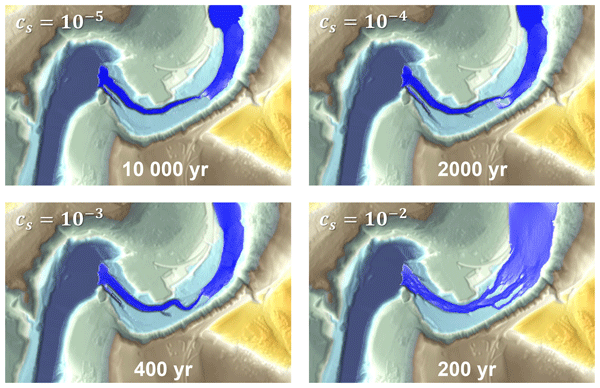
The impact of sediment grains on the riverbed is a key driver of bedrock erosion yet is rarely included in studies of landscape evolution. We propose an equation to address this issue by considering the distinction between grain lift and grain impact. We solved and analysed these equations for simple cases, such as the downstream evolution of a riverbed, and implemented them in a numerical code that simulated the retreat of a knickpoint.
William Kearney, Gina Arnau, Theophil Bringezu, Michael Dietze, Boris Gailleton, Anna-Lena Lamprecht, Kilian Lenz, Richard Ott, Dirk Scherler, Philippe Steer, and Wolfgang Schwanghart
EGUsphere, https://doi.org/10.5194/egusphere-2026-2478, https://doi.org/10.5194/egusphere-2026-2478, 2026
Short summary
Short summary
TopoToolbox is a software package that enables users to analyze maps of the Earth's surface. The newest version of TopoToolbox makes it accessible to more users, makes it easier to integrate TopoToolbox with other software used to study the Earth's surface and establishes a new development process to ensure that TopoToolbox continues to meet the needs of its community of users. We present a series of examples to demonstrate how users can incorporate the new TopoToolbox version into their work.
Peter M. Grosse, Elodie Marret, Lena Scheiffele, Katya Dimitrova Petrova, Till Francke, Daniel Altdorff, Maik Heistermann, Merlin Schiel, Carsten Neumann, Daniel Scheffler, Mehdi Saberioon, Matthias Kunz, Jonas Marach, Marcel Reginatto, Miroslav Zboril, Anna Balenzano, Daniel Rasche, Christine Stumpp, Benjamin Trost, and Sascha E. Oswald
Earth Syst. Sci. Data, 18, 1703–1727, https://doi.org/10.5194/essd-18-1703-2026, https://doi.org/10.5194/essd-18-1703-2026, 2026
Short summary
Short summary
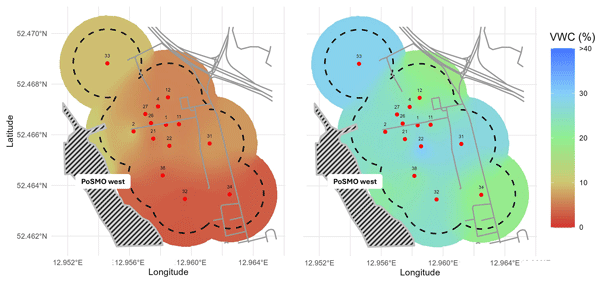
This data paper describes a comprehensive collection of soil moisture and related data from an extensive cosmic-ray neutron sensing (CRNS) network at an agricultural research site in north-east Germany. The data set comprises not only soil moisture observations at different spatio-temporal scales, but also a wealth of accompanying data that provide the context to interpret soil moisture dynamics within a broader hydrological and environmental framework.
Maik Heistermann, Daniel Altdorff, Till Francke, Martin Schrön, Peter M. Grosse, Arvid Markert, Albrecht Bauriegel, Peter Biró, Sabine Attinger, Frank Beyrich, Peter Dietrich, Rebekka Eichstädt, Jakob Terschlüsen, Ariane Walz, Steffen Zacharias, and Sascha E. Oswald
Nat. Hazards Earth Syst. Sci., 26, 465–486, https://doi.org/10.5194/nhess-26-465-2026, https://doi.org/10.5194/nhess-26-465-2026, 2026
Short summary
Short summary
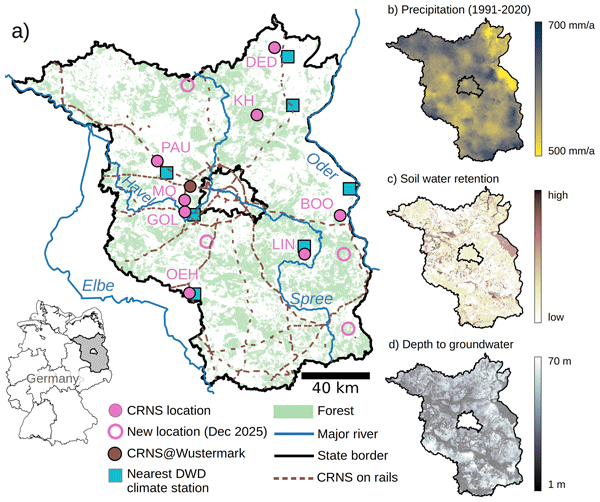
The German federal state of Brandenburg is particularly prone to soil moisture droughts. To support the management of related risks, we introduce a novel soil moisture monitoring network based on cosmic-ray neutron sensing technology. The resulting observations can be particularly helpful to evaluate and improve soil moisture products from modelling or remote sensing.
Marie-Therese Schmehl, Yojana Adhikari, Cathrina Balthasar, Anja Binder, Danica Clerc, Sophia Dobkowitz, Werner Gerwin, Kristin Günther, Heinrich Hartong, Thilo Heinken, Carsten Hess, Pierre L. Ibisch, Florent Jouy, Loretta Leinen, Thomas Raab, Frank Repmann, Susanne Rönnefarth, Lilly Rohlfs, Marina Schirrmacher, Jens Schröder, Maren Schüle, Andrea Vieth-Hillebrand, and Till Francke
Earth Syst. Sci. Data, 17, 6295–6313, https://doi.org/10.5194/essd-17-6295-2025, https://doi.org/10.5194/essd-17-6295-2025, 2025
Short summary
Short summary
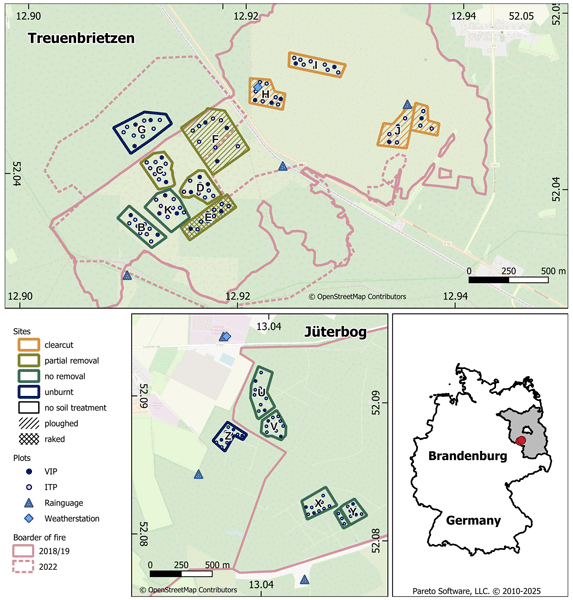
We present data recorded by eight institutions within the PYROPHOB project, running from 2020 to 2024 at two forest research sites in northeastern Germany. The aim of the project was to monitor abiotic and biotic parameters of forest regrowth under different management regimes on former wildfire sites. The multitude of collected data allows for detailed analyses of the observables separately, as well as their interaction for a more multidisciplinary view on forest recovery after a wildfire.
Till Francke and Maik Heistermann
Nat. Hazards Earth Syst. Sci., 25, 2783–2802, https://doi.org/10.5194/nhess-25-2783-2025, https://doi.org/10.5194/nhess-25-2783-2025, 2025
Short summary
Short summary
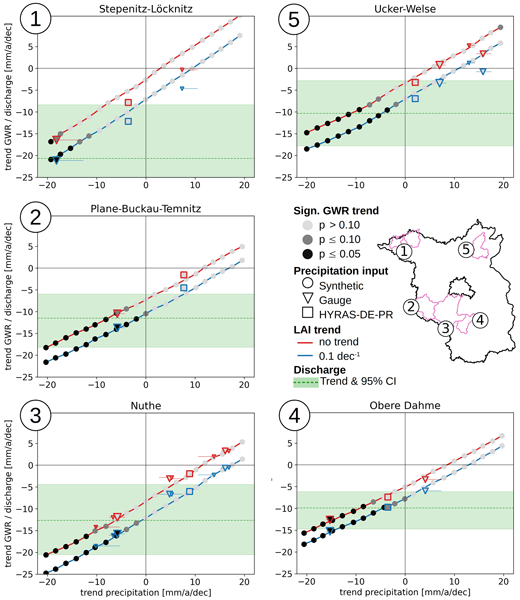
Brandenburg is among the driest federal states in Germany. The low groundwater recharge (GWR) is fundamental to both water supply and the support of natural ecosystems. In this study, we show that the decline of observed discharge and groundwater tables since 1980 can be explained by climate change in combination with an increasing leaf area index. Still, simulated GWR rates remain highly uncertain due to the uncertainty in precipitation trends.
Till Francke, Cosimo Brogi, Alby Duarte Rocha, Michael Förster, Maik Heistermann, Markus Köhli, Daniel Rasche, Marvin Reich, Paul Schattan, Lena Scheiffele, and Martin Schrön
Geosci. Model Dev., 18, 819–842, https://doi.org/10.5194/gmd-18-819-2025, https://doi.org/10.5194/gmd-18-819-2025, 2025
Short summary
Short summary
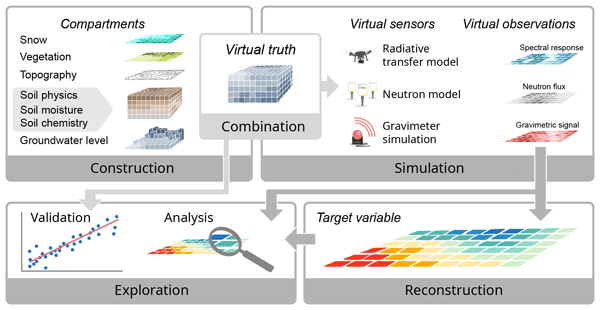
Multiple methods for measuring soil moisture beyond the point scale exist. Their validation is generally hindered by not knowing the truth. We propose a virtual framework in which this truth is fully known and the sensor observations for cosmic ray neutron sensing, remote sensing, and hydrogravimetry are simulated. This allows for the rigorous testing of these virtual sensors to understand their effectiveness and limitations.
Boris Gailleton, Philippe Steer, Philippe Davy, Wolfgang Schwanghart, and Thomas Bernard
Earth Surf. Dynam., 12, 1295–1313, https://doi.org/10.5194/esurf-12-1295-2024, https://doi.org/10.5194/esurf-12-1295-2024, 2024
Short summary
Short summary
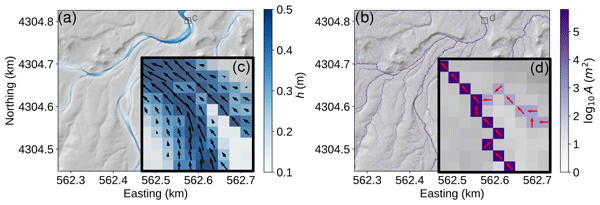
We use cutting-edge algorithms and conceptual simplifications to solve the equations that describe surface water flow. Using quantitative data on rainfall and elevation, GraphFlood calculates river width and depth and approximates erosive power, making it a suitable tool for large-scale hazard management and understanding the relationship between rivers and mountains.
Wolfgang Schwanghart, Ankit Agarwal, Kristen Cook, Ugur Ozturk, Roopam Shukla, and Sven Fuchs
Nat. Hazards Earth Syst. Sci., 24, 3291–3297, https://doi.org/10.5194/nhess-24-3291-2024, https://doi.org/10.5194/nhess-24-3291-2024, 2024
Short summary
Short summary
The Himalayan landscape is particularly susceptible to extreme events, which interfere with increasing populations and the expansion of settlements and infrastructure. This preface introduces and summarizes the nine papers that are part of the special issue,
Estimating and predicting natural hazards and vulnerabilities in the Himalayan region.
Jürgen Mey, Ravi Kumar Guntu, Alexander Plakias, Igo Silva de Almeida, and Wolfgang Schwanghart
Nat. Hazards Earth Syst. Sci., 24, 3207–3223, https://doi.org/10.5194/nhess-24-3207-2024, https://doi.org/10.5194/nhess-24-3207-2024, 2024
Short summary
Short summary
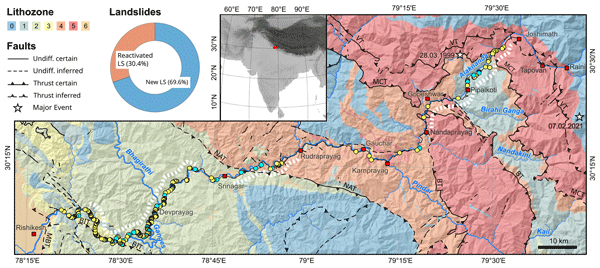
The Himalayan road network links remote areas, but fragile terrain and poor construction lead to frequent landslides. This study on the NH-7 in India's Uttarakhand region analyzed 300 landslides after heavy rainfall in 2022 . Factors like slope, rainfall, rock type and road work influence landslides. The study's model predicts landslide locations for better road maintenance planning, highlighting the risk from climate change and increased road use.
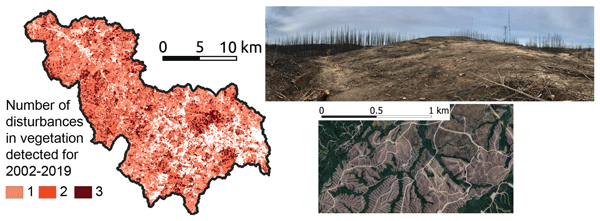
Violeta Tolorza, Christian H. Mohr, Mauricio Zambrano-Bigiarini, Benjamín Sotomayor, Dagoberto Poblete-Caballero, Sebastien Carretier, Mauricio Galleguillos, and Oscar Seguel
Earth Surf. Dynam., 12, 841–861, https://doi.org/10.5194/esurf-12-841-2024, https://doi.org/10.5194/esurf-12-841-2024, 2024
Short summary
Short summary
We calculated disturbances and landscape-lowering rates across various timescales in a ~ 406 km2 catchment in the Chilean Coastal Range. Intensive management of exotic tree plantations involves short rotational cycles (planting and harvesting by replanting clear-cuts) lasting 9–25 years, dense forestry road networks (increasing connectivity), and a recent increase in wildfires. Concurrently, persistent drought conditions and the high water demand of fast-growing trees reduce water availability.
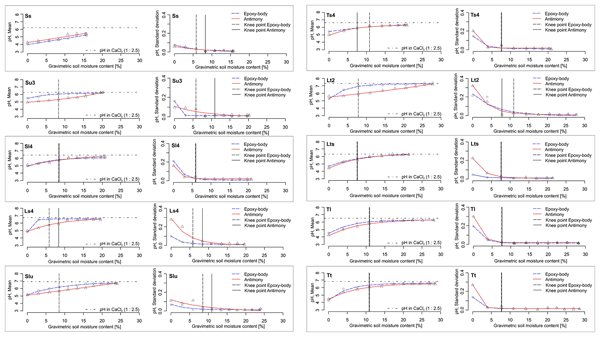
Sebastian Vogel, Katja Emmerich, Ingmar Schröter, Eric Bönecke, Wolfgang Schwanghart, Jörg Rühlmann, Eckart Kramer, and Robin Gebbers
SOIL, 10, 321–333, https://doi.org/10.5194/soil-10-321-2024, https://doi.org/10.5194/soil-10-321-2024, 2024
Short summary
Short summary
To rapidly obtain high-resolution soil pH data, pH sensors can measure the pH value directly in the field under the current soil moisture (SM) conditions. The influence of SM on pH and on its measurement quality was studied. An SM increase causes a maximum pH increase of 1.5 units. With increasing SM, the sensor pH value approached the standard pH value measured in the laboratory. Thus, at high soil moisture, calibration of the sensor pH values to the standard pH value is negligible.
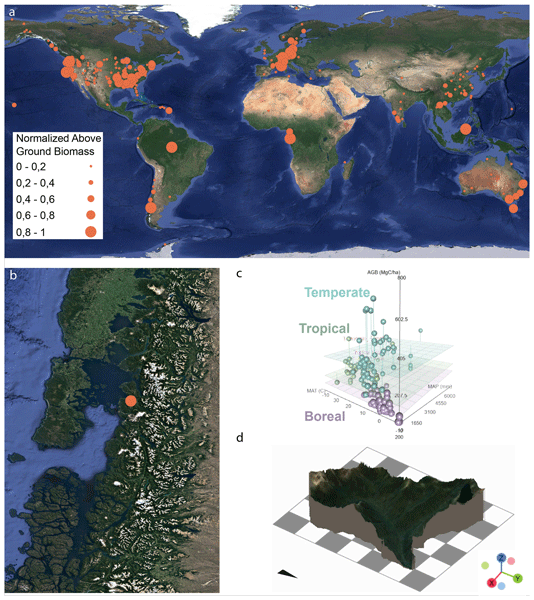
Christian H. Mohr, Michael Dietze, Violeta Tolorza, Erwin Gonzalez, Benjamin Sotomayor, Andres Iroume, Sten Gilfert, and Frieder Tautz
Biogeosciences, 21, 1583–1599, https://doi.org/10.5194/bg-21-1583-2024, https://doi.org/10.5194/bg-21-1583-2024, 2024
Short summary
Short summary
Coastal temperate rainforests, among Earth’s carbon richest biomes, are systematically underrepresented in the global network of critical zone observatories (CZOs). Introducing here a first CZO in the heart of the Patagonian rainforest, Chile, we investigate carbon sink functioning, biota-driven landscape evolution, fluxes of matter and energy, and disturbance regimes. We invite the community to join us in cross-disciplinary collaboration to advance science in this particular environment.
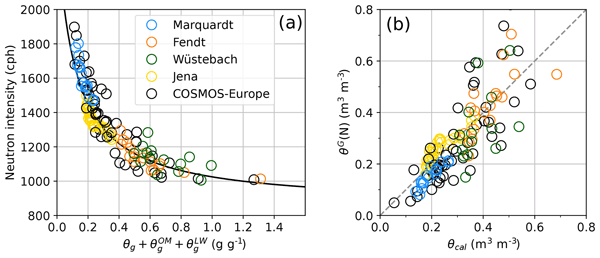
Maik Heistermann, Till Francke, Martin Schrön, and Sascha E. Oswald
Hydrol. Earth Syst. Sci., 28, 989–1000, https://doi.org/10.5194/hess-28-989-2024, https://doi.org/10.5194/hess-28-989-2024, 2024
Short summary
Short summary
Cosmic-ray neutron sensing (CRNS) is a non-invasive technique used to obtain estimates of soil water content (SWC) at a horizontal footprint of around 150 m and a vertical penetration depth of up to 30 cm. However, typical CRNS applications require the local calibration of a function which converts neutron counts to SWC. As an alternative, we propose a generalized function as a way to avoid the use of local reference measurements of SWC and hence a major source of uncertainty.
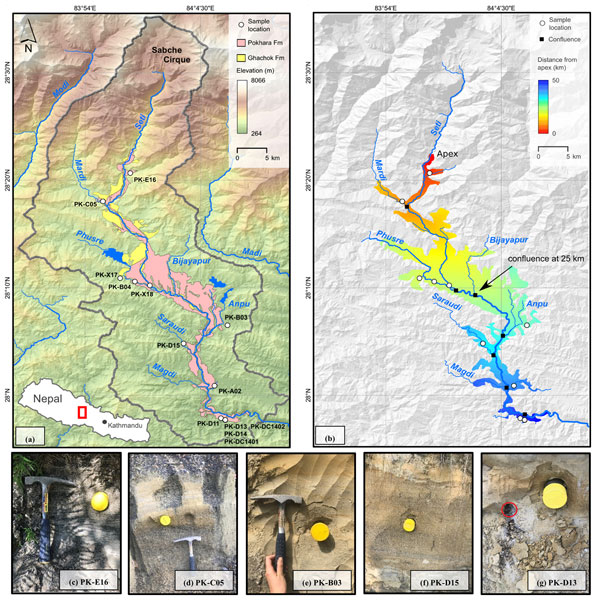
Anna-Maartje de Boer, Wolfgang Schwanghart, Jürgen Mey, Basanta Raj Adhikari, and Tony Reimann
Geochronology, 6, 53–70, https://doi.org/10.5194/gchron-6-53-2024, https://doi.org/10.5194/gchron-6-53-2024, 2024
Short summary
Short summary
This study tested the application of single-grain feldspar luminescence for dating and reconstructing sediment dynamics of an extreme mass movement event in the Himalayan mountain range. Our analysis revealed that feldspar signals can be used to estimate the age range of the deposits if the youngest subpopulation from a sample is retrieved. The absence of clear spatial relationships with our bleaching proxies suggests that sediments were transported under extremely limited light exposure.
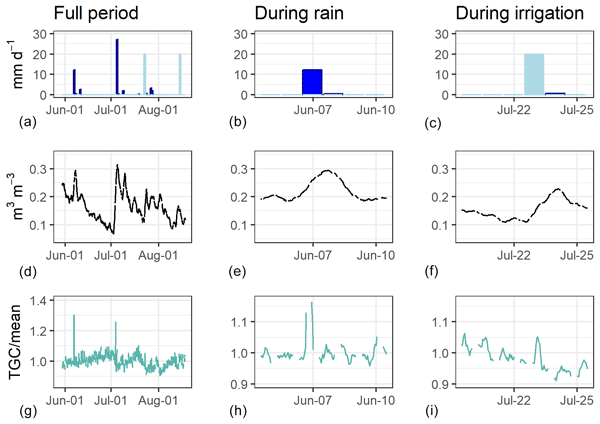
Stefano Gianessi, Matteo Polo, Luca Stevanato, Marcello Lunardon, Till Francke, Sascha E. Oswald, Hami Said Ahmed, Arsenio Toloza, Georg Weltin, Gerd Dercon, Emil Fulajtar, Lee Heng, and Gabriele Baroni
Geosci. Instrum. Method. Data Syst., 13, 9–25, https://doi.org/10.5194/gi-13-9-2024, https://doi.org/10.5194/gi-13-9-2024, 2024
Short summary
Short summary
Soil moisture monitoring is important for many applications, from improving weather prediction to supporting agriculture practices. Our capability to measure this variable is still, however, limited. In this study, we show the tests conducted on a new soil moisture sensor at several locations. The results show that the new sensor is a valid and compact alternative to more conventional, non-invasive soil moisture sensors that can pave the way for a wide range of applications.
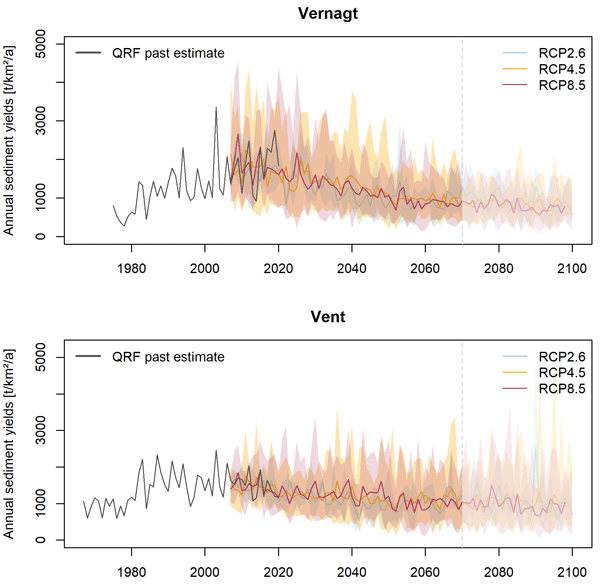
Lena Katharina Schmidt, Till Francke, Peter Martin Grosse, and Axel Bronstert
Hydrol. Earth Syst. Sci., 28, 139–161, https://doi.org/10.5194/hess-28-139-2024, https://doi.org/10.5194/hess-28-139-2024, 2024
Short summary
Short summary
How suspended sediment export from glacierized high-alpine areas responds to future climate change is hardly assessable as many interacting processes are involved, and appropriate physical models are lacking. We present the first study, to our knowledge, exploring machine learning to project sediment export until 2100 in two high-alpine catchments. We find that uncertainties due to methodological limitations are small until 2070. Negative trends imply that peak sediment may have already passed.
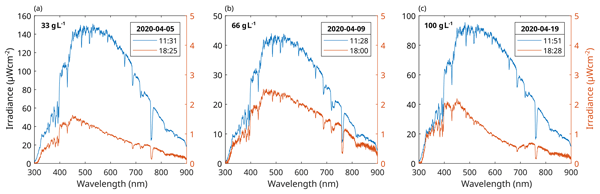
Jürgen Mey, Wolfgang Schwanghart, Anna-Maartje de Boer, and Tony Reimann
Geochronology, 5, 377–389, https://doi.org/10.5194/gchron-5-377-2023, https://doi.org/10.5194/gchron-5-377-2023, 2023
Short summary
Short summary
This study presents the results of an outdoor flume experiment to evaluate the effect of turbidity on the bleaching of fluvially transported sediment. Our main conclusions are that even small amounts of sediment lead to a substantial change in the intensity and frequency distribution of light within the suspension and that flow turbulence is an important prerequisite for bleaching grains during transport.
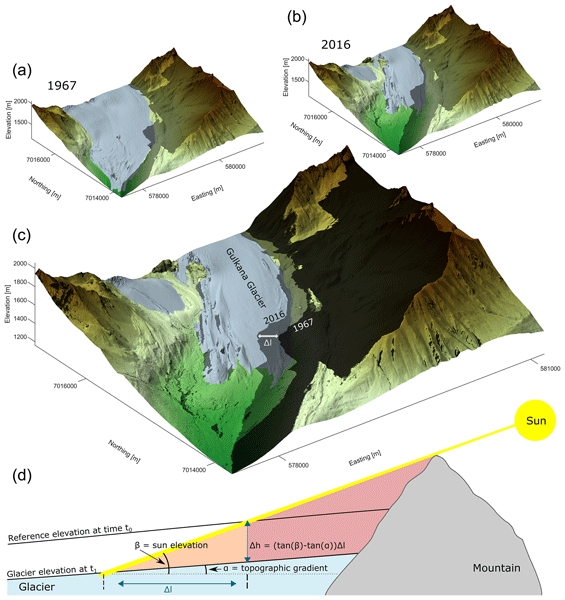
Monika Pfau, Georg Veh, and Wolfgang Schwanghart
The Cryosphere, 17, 3535–3551, https://doi.org/10.5194/tc-17-3535-2023, https://doi.org/10.5194/tc-17-3535-2023, 2023
Short summary
Short summary
Cast shadows have been a recurring problem in remote sensing of glaciers. We show that the length of shadows from surrounding mountains can be used to detect gains or losses in glacier elevation.
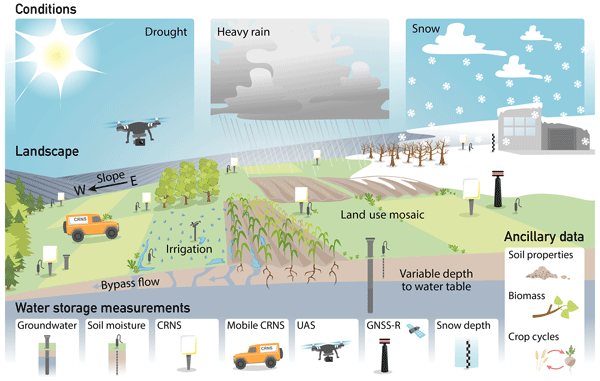
Maik Heistermann, Till Francke, Lena Scheiffele, Katya Dimitrova Petrova, Christian Budach, Martin Schrön, Benjamin Trost, Daniel Rasche, Andreas Güntner, Veronika Döpper, Michael Förster, Markus Köhli, Lisa Angermann, Nikolaos Antonoglou, Manuela Zude-Sasse, and Sascha E. Oswald
Earth Syst. Sci. Data, 15, 3243–3262, https://doi.org/10.5194/essd-15-3243-2023, https://doi.org/10.5194/essd-15-3243-2023, 2023
Short summary
Short summary
Cosmic-ray neutron sensing (CRNS) allows for the non-invasive estimation of root-zone soil water content (SWC). The signal observed by a single CRNS sensor is influenced by the SWC in a radius of around 150 m (the footprint). Here, we have put together a cluster of eight CRNS sensors with overlapping footprints at an agricultural research site in north-east Germany. That way, we hope to represent spatial SWC heterogeneity instead of retrieving just one average SWC estimate from a single sensor.

Lena Katharina Schmidt, Till Francke, Peter Martin Grosse, Christoph Mayer, and Axel Bronstert
Hydrol. Earth Syst. Sci., 27, 1841–1863, https://doi.org/10.5194/hess-27-1841-2023, https://doi.org/10.5194/hess-27-1841-2023, 2023
Short summary
Short summary
We present a suitable method to reconstruct sediment export from decadal records of hydroclimatic predictors (discharge, precipitation, temperature) and shorter suspended sediment measurements. This lets us fill the knowledge gap on how sediment export from glacierized high-alpine areas has responded to climate change. We find positive trends in sediment export from the two investigated nested catchments with step-like increases around 1981 which are linked to crucial changes in glacier melt.
Jürgen Mey, Ravi Kumar Guntu, Alexander Plakias, Igo Silva de Almeida, and Wolfgang Schwanghart
Nat. Hazards Earth Syst. Sci. Discuss., https://doi.org/10.5194/nhess-2022-295, https://doi.org/10.5194/nhess-2022-295, 2023
Manuscript not accepted for further review
Short summary
Short summary
The current socioeconomic development in the Himalayan region leads to a rapid expansion of the road network and an increase in the exposure to landslides. Our study along the NH-7 demonstrates the scale of this challenge as we detect more than one partially or fully road-blocking landslide per road kilometer. We identify the main controlling variables, i.e. slope angle, rainfall amount and lithology. As our approach uses a minimum of data, it can be extended to more complicated road networks.
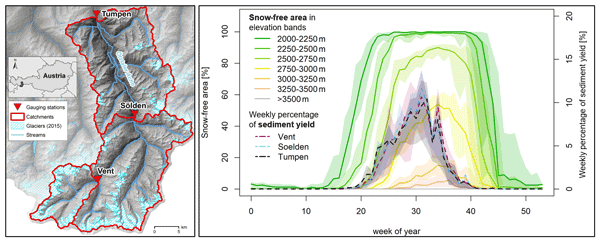
Lena Katharina Schmidt, Till Francke, Erwin Rottler, Theresa Blume, Johannes Schöber, and Axel Bronstert
Earth Surf. Dynam., 10, 653–669, https://doi.org/10.5194/esurf-10-653-2022, https://doi.org/10.5194/esurf-10-653-2022, 2022
Short summary
Short summary
Climate change fundamentally alters glaciated high-alpine areas, but it is unclear how this affects riverine sediment transport. As a first step, we aimed to identify the most important processes and source areas in three nested catchments in the Ötztal, Austria, in the past 15 years. We found that areas above 2500 m were crucial and that summer rainstorms were less influential than glacier melt. These findings provide a baseline for studies on future changes in high-alpine sediment dynamics.
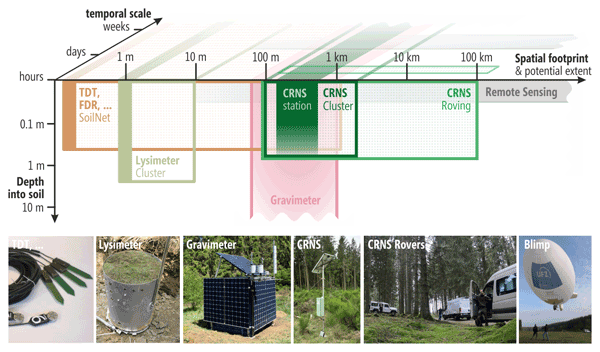
Maik Heistermann, Heye Bogena, Till Francke, Andreas Güntner, Jannis Jakobi, Daniel Rasche, Martin Schrön, Veronika Döpper, Benjamin Fersch, Jannis Groh, Amol Patil, Thomas Pütz, Marvin Reich, Steffen Zacharias, Carmen Zengerle, and Sascha Oswald
Earth Syst. Sci. Data, 14, 2501–2519, https://doi.org/10.5194/essd-14-2501-2022, https://doi.org/10.5194/essd-14-2501-2022, 2022
Short summary
Short summary
This paper presents a dense network of cosmic-ray neutron sensing (CRNS) to measure spatio-temporal soil moisture patterns during a 2-month campaign in the Wüstebach headwater catchment in Germany. Stationary, mobile, and airborne CRNS technology monitored the root-zone water dynamics as well as spatial heterogeneity in the 0.4 km2 area. The 15 CRNS stations were supported by a hydrogravimeter, biomass sampling, and a wireless soil sensor network to facilitate holistic hydrological analysis.
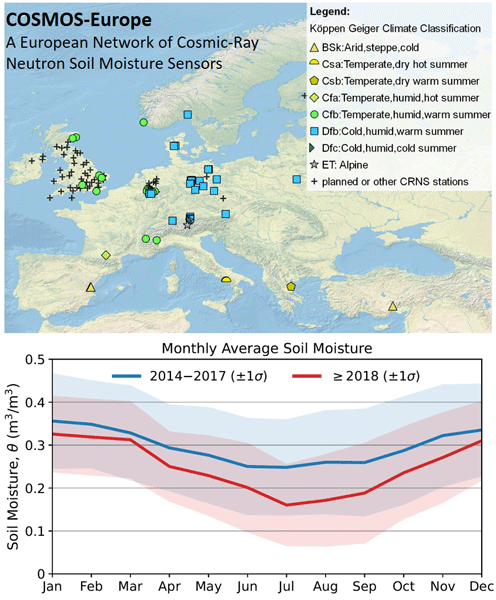
Heye Reemt Bogena, Martin Schrön, Jannis Jakobi, Patrizia Ney, Steffen Zacharias, Mie Andreasen, Roland Baatz, David Boorman, Mustafa Berk Duygu, Miguel Angel Eguibar-Galán, Benjamin Fersch, Till Franke, Josie Geris, María González Sanchis, Yann Kerr, Tobias Korf, Zalalem Mengistu, Arnaud Mialon, Paolo Nasta, Jerzy Nitychoruk, Vassilios Pisinaras, Daniel Rasche, Rafael Rosolem, Hami Said, Paul Schattan, Marek Zreda, Stefan Achleitner, Eduardo Albentosa-Hernández, Zuhal Akyürek, Theresa Blume, Antonio del Campo, Davide Canone, Katya Dimitrova-Petrova, John G. Evans, Stefano Ferraris, Félix Frances, Davide Gisolo, Andreas Güntner, Frank Herrmann, Joost Iwema, Karsten H. Jensen, Harald Kunstmann, Antonio Lidón, Majken Caroline Looms, Sascha Oswald, Andreas Panagopoulos, Amol Patil, Daniel Power, Corinna Rebmann, Nunzio Romano, Lena Scheiffele, Sonia Seneviratne, Georg Weltin, and Harry Vereecken
Earth Syst. Sci. Data, 14, 1125–1151, https://doi.org/10.5194/essd-14-1125-2022, https://doi.org/10.5194/essd-14-1125-2022, 2022
Short summary
Short summary
Monitoring of increasingly frequent droughts is a prerequisite for climate adaptation strategies. This data paper presents long-term soil moisture measurements recorded by 66 cosmic-ray neutron sensors (CRNS) operated by 24 institutions and distributed across major climate zones in Europe. Data processing followed harmonized protocols and state-of-the-art methods to generate consistent and comparable soil moisture products and to facilitate continental-scale analysis of hydrological extremes.
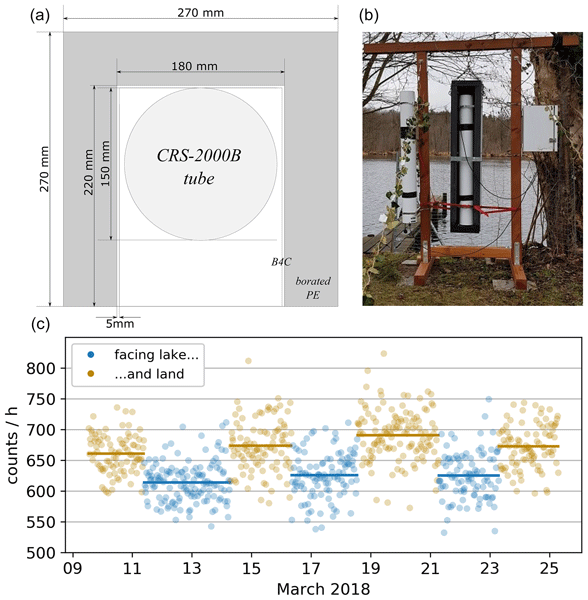
Till Francke, Maik Heistermann, Markus Köhli, Christian Budach, Martin Schrön, and Sascha E. Oswald
Geosci. Instrum. Method. Data Syst., 11, 75–92, https://doi.org/10.5194/gi-11-75-2022, https://doi.org/10.5194/gi-11-75-2022, 2022
Short summary
Short summary
Cosmic-ray neutron sensing (CRNS) is a non-invasive tool for measuring hydrogen pools like soil moisture, snow, or vegetation. This study presents a directional shielding approach, aiming to measure in specific directions only. The results show that non-directional neutron transport blurs the signal of the targeted direction. For typical instruments, this does not allow acceptable precision at a daily time resolution. However, the mere statistical distinction of two rates is feasible.
Cited articles
Acharya, B. S., Bhandari, M., Bandini, F., Pizarro, A., Perks, M., Joshi, D. R., Wang, S., Dogwiler, T., Ray, R. L., Kharel, G., and Sharma, S.: Unmanned aerial vehicles in hydrology and water management: Applications, challenges, and perspectives, Water Resources Research, 57, e2021WR029925, https://doi.org/10.1029/2021WR029925, 2021. a
Agisoft, L.: Agisoft Metashape User Manual: Professional Edition, Version 2.3, https://www.agisoft.com/pdf/metashape-pro_2_3_en.pdf (last access: 10 February 2026), 2026. a
Borg Galea, A., Sadler, J. P., Hannah, D. M., Datry, T., and Dugdale, S. J.: Mediterranean intermittent rivers and ephemeral streams: Challenges in monitoring complexity, Ecohydrology, 12, e2149, https://doi.org/10.1002/eco.2149, 2019. a
Breiman, L.: Random forests, Machine Learning, 45, 5–32, https://doi.org/10.1023/a:1010933404324, 2001. a
Brown, C. F., Brumby, S. P., Guzder-Williams, B., Birch, T., Hyde, S. B., Mazzariello, J., Czerwinski, W., Pasquarella, V. J., Haertel, R., Ilyushchenko, S., Schwehr, K., Weisse, M., Stolle, F., Hanson, C., Guinan, O., Moore, R., and Tait, A. M.: Dynamic World, Near real-time global 10 m land use land cover mapping, Scientific Data, 9, 251, https://doi.org/10.1038/s41597-022-01307-4, 2022. a
Búrquez, A., Ochoa, M. B., Martínez-Yrízar, A., and de Souza, J. O. P.: Human-made small reservoirs alter dryland hydrological connectivity, Science of The Total Environment, 947, 174673, https://doi.org/10.1016/j.scitotenv.2024.174673, 2024. a
Busch, M. H., Costigan, K. H., Fritz, K. M., Datry, T., Krabbenhoft, C. A., Hammond, J. C., Zimmer, M., Olden, J. D., Burrows, R. M., Dodds, W. K., Boersma, K. S., Shanafield, M., Kampf, S. K., Mims, M. C., Bogan, M. T., Ward, A. S., Perez Rocha, M., Godsey, S., Allen, G. H., Blaszczak, J. R., Jones, C. N., and Allen, D. C.: What’s in a name? Patterns, trends, and suggestions for defining non-perennial rivers and streams, Water, 12, 1980, https://doi.org/10.3390/w12071980, 2020. a
Conant Jr., B., Robinson, C. E., Hinton, M. J., and Russell, H. A.: A framework for conceptualizing groundwater-surface water interactions and identifying potential impacts on water quality, water quantity, and ecosystems, Journal of Hydrology, 574, 609–627, https://doi.org/10.1016/j.jhydrol.2019.04.050, 2019. a
Costa, A. C., Foerster, S., de Araújo, J. C., and Bronstert, A.: Analysis of channel transmission losses in a dryland river reach in north-eastern Brazil using streamflow series, groundwater level series and multi-temporal satellite data, Hydrological Processes, 27, 1046–1060, https://doi.org/10.1002/hyp.9243, 2013. a
Costa, J. A., Navarro-Hevia, J., Costa, C. A. G., and de Araújo, J. C.: Temporal dynamics of evapotranspiration in semiarid native forests in Brazil and Spain using remote sensing, Hydrological Processes, 35, e14070, https://doi.org/10.1002/hyp.14070, 2021. a
Costigan, K. H., Jaeger, K. L., Goss, C. W., Fritz, K. M., and Goebel, P. C.: Understanding controls on flow permanence in intermittent rivers to aid ecological research: Integrating meteorology, geology and land cover, Ecohydrology, 9, 1141–1153, https://doi.org/10.1002/eco.1712, 2016. a
Costigan, K. H., Kennard, M. J., Leigh, C., Sauquet, E., Datry, T., and Boulton, A. J.: Flow regimes in intermittent rivers and ephemeral streams, in: Intermittent rivers and ephemeral streams, 51–78, Elsevier, https://doi.org/10.1016/B978-0-12-803835-2.00003-6, 2017. a, b
D'Ambrosio, E., De Girolamo, A. M., Barca, E., Ielpo, P., and Rulli, M. C.: Characterising the hydrological regime of an ungauged temporary river system: a case study, Environmental Science and Pollution Research, 24, 13950–13966, https://doi.org/10.1007/s11356-016-7169-0, 2017. a
Datry, T., Allen, D., Argelich, R., Barquin, J., Bonada, N., Boulton, A., Branger, F., Cai, Y., Cañedo-Argüelles, M., Cid, N., Csabai, Z., Dallimer, M., de Araújo, J., Declerck, S., Dekker, T., Döll, P., Encalada, A., Forcellini, M., Foulquier, A., Heino, J., Jabot, F., Keszler, P., Kopperoinen, L., Kralisch, S., Künne, A., Lamouroux, N., Lauvernet, C., Lehtoranta, V., Loskotová, B., Marcé, R., Martin Ortega, J., Matauschek, C., Miliša, M., Mogyorósi, S., Moya, N., Müller Schmied, H., Munné, A., Munoz, F., Mykrä, H., Pal, I., Paloniemi, R., Pařil, P., Pengal, P., Pernecker, B., Polášek, M., Rezende, C., Sabater, S., Sarremejane, R., Schmidt, G., Senerpont Domis, L., Singer, G., Suárez, E., Talluto, M., Teurlincx, S., Trautmann, T., Truchy, A., Tyllianakis, E., Väisänen, S., Varumo, L., Vidal, J.-P., Vilmi, A., and Vinyoles, D.: Securing biodiversity, functional integrity, and ecosystem services in drying river networks (DRYvER), Research Ideas and Outcomes, 7, e77750, https://doi.org/10.3897/rio.7.e77750, 2021. a
de Almeida, C. L., de Carvalho, T. R. A., and de Araújo, J. C.: Leaf area index of Caatinga biome and its relationship with hydrological and spectral variables, Agricultural and Forest Meteorology, 279, 107705, https://doi.org/10.1016/j.agrformet.2019.107705, 2019. a
De Figueiredo, J. V., de Araújo, J. C., Medeiros, P. H. A., and Costa, A. C.: Runoff initiation in a preserved semiarid Caatinga small watershed, Northeastern Brazil, Hydrological Processes, 30, 2390–2400, https://doi.org/10.1002/hyp.10801, 2016. a, b, c, d
Eris, E., Aksoy, H., Onoz, B., Cetin, M., Yuce, M. I., Selek, B., Aksu, H., Burgan, H. I., Esit, M., Yildirim, I., and Karakus, E. U.: Frequency analysis of low flows in intermittent and non-intermittent rivers from hydrological basins in Turkey, Water Supply, 19, 30–39, https://doi.org/10.2166/ws.2018.051, 2019. a
Fencl, J. S., Mather, M. E., Costigan, K. H., and Daniels, M. D.: How big of an effect do small dams have? Using geomorphological footprints to quantify spatial impact of low-head dams and identify patterns of across-dam variation, PLoS ONE, 10, https://doi.org/10.1371/journal.pone.0141210, 2015. a, b, c, d
Fovet, O., Belemtougri, A., Boithias, L., Braud, I., Charlier, J.-B., Cottet, M., Daudin, K., Dramais, G., Ducharne, A., Folton, N., Grippa, M., Hector, B., Kuppel, S., Le Coz, J., Legal, L., Martin, P., Moatar, F., Molénat, J., Probst, A., Riotte, J., Vidal, J.-P., Vinatier, F., and Datry, T.: Intermittent rivers and ephemeral streams: Perspectives for critical zone science and research on socio-ecosystems, Wiley Interdisciplinary Reviews: Water, 8, e1523, https://doi.org/10.1002/wat2.1523, 2021. a
Fullhart, A., Ponce-Campos, G. E., Meles, M. B., McGehee, R. P., Armendariz, G., Oliveira, P. T. S., Das Neves Almeida, C., De Araújo, J. C., Nel, W., and Goodrich, D. C.: Gridded 20-year climate parameterization of Africa and South America for a stochastic weather generator (CLIGEN), Big Earth Data, 1–26, https://doi.org/10.1080/20964471.2022.2136610, 2022. a
Godsey, S. and Kirchner, J. W.: Dynamic, discontinuous stream networks: Hydrologically driven variations in active drainage density, flowing channels and stream order, Hydrological Processes, 28, 5791–5803, https://doi.org/10.1002/hyp.10310, 2014. a, b
González-Ferreras, A. M. and Barquín, J.: Mapping the temporary and perennial character of whole river networks, Water Resources Research, 53, 6709–6724, https://doi.org/10.1002/2017WR020390, 2017. a, b, c, d
Gregorutti, B., Michel, B., and Saint-Pierre, P.: Correlation and variable importance in random forests, Statistics and Computing, 27, 659–678, https://doi.org/10.1007/s11222-016-9646-1, 2017. a, b
Heggen, R. J.: Normalized antecedent precipitation index, Journal of hydrologic Engineering, 6, 377–381, https://doi.org/10.1061/(ASCE)1084-0699(2001)6:5(377), 2001. a
Hunt Jr., E. R. and Rock, B. N.: Detection of changes in leaf water content using near-and middle-infrared reflectances, Remote Sensing of Environment, 30, 43–54, https://doi.org/10.1016/0034-4257(89)90046-1, 1989. a
Jaeger, K. L., Sando, R., Dunn, S. B., and Gendaszek, A. S.: Predicting probabilities of late summer surface flow presence in a glaciated mountainous headwater region, Hydrological Processes, 37, e14813, https://doi.org/10.1002/hyp.14813, 2023. a
Jiang, W., Ni, Y., Pang, Z., Li, X., Ju, H., He, G., Lv, J., Yang, K., Fu, J., and Qin, X.: An effective water body extraction method with new water index for sentinel-2 imagery, Water, 13, 1647, https://doi.org/10.3390/w13121647, 2021. a, b
Kuhn, M.: Building Predictive Models in R Using the caret Package, Journal of Statistical Software, 28, 1–26, https://doi.org/10.18637/jss.v028.i05, 2008. a
Lastovicka, J., Svec, P., Paluba, D., Kobliuk, N., Svoboda, J., Hladky, R., and Stych, P.: Sentinel-2 data in an evaluation of the impact of the disturbances on forest vegetation, Remote Sensing, 12, 1914, https://doi.org/10.3390/rs12121914, 2020. a
Li, D., Wu, B., Chen, B., Qin, C., Wang, Y., Zhang, Y., and Xue, Y.: Open-surface river extraction based on Sentinel-2 MSI imagery and DEM data: case study of the upper Yellow River, Remote Sensing, 12, 2737, https://doi.org/10.3390/rs12172737, 2020. a
Liaw, A. and Wiener, M.: Classification and regression by random-Forest, R news, 2, 18–22, https://journal.r-project.org/articles/RN-2002-022/RN-2002-022.pdf (last access: 10 February 2026), 2002. a
Lima, G. D., Lima, T. B. R., Soares, N. S., and de Araújo, J. C.: Modelling intermittence and river flow in the semi-arid region of Brazil: The Umbuzeiro River, Ceará, Revista Ciência Agronômica, 53, https://doi.org/10.5935/1806-6690.20220051, 2022. a
Mamede, G. L., Guentner, A., Medeiros, P. H. A., de Araújo, J. C., and Bronstert, A.: Modeling the Effect of Multiple Reservoirs on Water and Sediment Dynamics in a Semiarid Catchment in Brazil, Journal of Hydrologic Engineering, 23, 05018020, https://doi.org/10.1061/(ASCE)HE.1943-5584.0001701, 2018. a
Mazor, R. D., Stein, E. D., Ode, P. R., and Schiff, K.: Integrating intermittent streams into watershed assessments: applicability of an index of biotic integrity, Freshwater Science, 33, 459–474, https://doi.org/10.1086/675683, 2014. a
McFeeters, S. K.: The use of the Normalized Difference Water Index (NDWI) in the delineation of open water features, International Journal of Remote Sensing, 17, 1425–1432, https://doi.org/10.1080/01431169608948714, 1996. a
Medeiros, P. and Sivapalan, M.: From hard-path to soft-path solutions: slow–fast dynamics of human adaptation to droughts in a water scarce environment, Hydrological Sciences Journal, 65, 1803–1814, https://doi.org/10.1080/02626667.2020.1770258, 2020. a
Medeiros, P. H. A. and de Araújo, J. C.: Temporal variability of rainfall in a semiarid environment in Brazil and its effect on sediment transport processes, Journal of Soils and Sediments, 14, 1216–1223, https://doi.org/10.1007/s11368-013-0809-9, 2014. a
Messager, M. L., Lehner, B., Cockburn, C., Lamouroux, N., Pella, H., Snelder, T., Tockner, K., Trautmann, T., Watt, C., and Datry, T.: Global prevalence of non-perennial rivers and streams, Nature, 594, 391–397, https://doi.org/10.1038/s41586-021-03565-5, 2021. a, b, c
Mimeau, L., Künne, A., Branger, F., Kralisch, S., Devers, A., and Vidal, J.-P.: Flow intermittence prediction using a hybrid hydrological modelling approach: influence of observed intermittence data on the training of a random forest model, Hydrology and Earth System Sciences, 28, 851–871, https://doi.org/10.5194/hess-28-851-2024, 2024. a, b, c, d, e
Niedzielski, T., Witek, M., and Spallek, W.: Observing river stages using unmanned aerial vehicles, Hydrol. Earth Syst. Sci., 20, 3193–3205, https://doi.org/10.5194/hess-20-3193-2016, 2016. a
Pekel, J.-F., Cottam, A., Gorelick, N., and Belward, A. S.: High-resolution mapping of global surface water and its long-term changes, Nature, 540, 418–422, https://doi.org/10.1038/nature20584, 2016. a, b
Pereira, B. S., Uchôa, J. G. S., Freitas, G. S., Meira Neto, A. A., Anache, J. A., Wendland, E. C., Mendiondo, E. M., and Medeiros, P. H.: Hydrological heritage: A historical exploration of human–water dynamics in northeast Brazil, Hydrological Sciences Journal, https://doi.org/10.1080/02626667.2024.2446272, 2025. a
Pereira, F. J. S., Costa, C. A. G., Foerster, S., Brosinsky, A., and de Araújo, J. C.: Estimation of suspended sediment concentration in an intermittent river using multi-temporal high-resolution satellite imagery, International Journal of Applied Earth Observation and Geoinformation, 79, 153–161, https://doi.org/10.1016/j.jag.2019.02.009, 2019. a
Perez, A. B., Innocente dos Santos, C., Sá, J. H., Arienti, P. F., and Chaffe, P. L.: Connectivity of ephemeral and intermittent streams in a subtropical atlantic forest headwater catchment, Water, 12, 1526, https://doi.org/10.3390/w12061526, 2020. a
Prancevic, J. P., Seybold, H., and Kirchner, J. W.: Variability of flowing stream network length across the US, Science, 387, 782–786, https://doi.org/10.1126/science.ado2860, 2025. a, b
Price, A. N., Jones, C. N., Hammond, J. C., Zimmer, M. A., and Zipper, S. C.: The drying regimes of non-perennial rivers and streams, Geophysical Research Letters, 48, e2021GL093298, https://doi.org/10.1029/2021GL093298, 2021. a
QGIS Development Team: QGIS 3.16 Geographic Information System User Guide, Open Source Geospatial Foundation Project, https://docs.qgis.org/3.16/en/docs/ (last access: 5 November 2025), 2022. a
Reynolds, L. V., Shafroth, P. B., and Poff, N. L.: Modeled intermittency risk for small streams in the Upper Colorado River Basin under climate change, Journal of Hydrology, 523, 768–780, https://doi.org/10.1016/j.jhydrol.2015.02.025, 2015. a, b
Rodrigues, I. S., Costa, C. A. G., Raabe, A., Medeiros, P. H. A., and de Araújo, J. C.: Evaporation in Brazilian dryland reservoirs: Spatial variability and impact of riparian vegetation, Science of The Total Environment, 797, 149059, https://doi.org/10.1016/j.scitotenv.2021.149059, 2021. a
Sarremejane, R., Cañedo-Argüelles, M., Prat, N., Mykrä, H., Muotka, T., and Bonada, N.: Do metacommunities vary through time? Intermittent rivers as model systems, Journal of Biogeography, 44, 2752–2763, https://doi.org/10.1111/jbi.13077, 2017. a, b
Sauquet, E., Beaufort, A., Sarremejane, R., and Thirel, G.: Predicting flow intermittence in France under climate change, Hydrological Sciences Journal, 66, 2046–2059, https://doi.org/10.1080/02626667.2021.1963444, 2021. a
Sefton, C. E., Parry, S., England, J., and Angell, G.: Visualising and quantifying the variability of hydrological state in intermittent rivers, Fundamental and Applied Limnology, 193, 21–38, https://doi.org/10.1127/fal/2019/1149, 2019. a
Shanafield, M., Bourke, S. A., Zimmer, M. A., and Costigan, K. H.: An overview of the hydrology of non-perennial rivers and streams, Wiley Interdisciplinary Reviews: Water, 8, e1504, https://doi.org/10.1002/wat2.1504, 2021. a, b
Simplício, A. A., Costa, C. A., Navarro-Hevia, J., and de Araújo, J. C.: Erosion at hillslope and micro-basin scales in the Gilbués desertification region, Northeastern Brazil, Land Degradation & Development, 32, 1487–1499, https://doi.org/10.1002/ldr.3809, 2021. a
Snelder, T. H., Datry, T., Lamouroux, N., Larned, S. T., Sauquet, E., Pella, H., and Catalogne, C.: Regionalization of patterns of flow intermittence from gauging station records, Hydrology and Earth System Sciences, 17, 2685–2699, https://doi.org/10.5194/hess-17-2685-2013, 2013. a, b, c, d
Soares, N. S., Costa, C. A. G., Carneiro de Lima, J. B., Francke, T., and de Araújo, J. C.: Method for identification of hydrological seasons in the semi-arid Caatinga biome, Brazil, Hydrological Sciences Journal, 69, 309–320, https://doi.org/10.1080/02626667.2024.2311758, 2024. a, b
Soares, N. S., Costa, C. A. G., Francke, T., Mohr, C., Schwanghart, W., and Medeiros, P. H. A.: suzianesoares/River_intermittency: Release v1.0.0, Zenodo [data set] and [code], https://doi.org/10.5281/zenodo.18518759, 2026. a, b
Sophocleous, M.: Interactions between groundwater and surface water: the state of the science, Hydrogeology Journal, 10, 52–67, https://doi.org/10.1007/s10040-001-0170-8, 2002. a
USGS: Shuttle Radar Topography Mission (SRTM): U.S. Geological Survey Fact Sheet 2009–3087, Tech. rep., USGS, https://pubs.usgs.gov/fs/2009/3087/pdf/fs2009-3087.pdf (last access: 10 February 2026), 2009. a
van Meerveld, H. J. I., Kirchner, J. W., Vis, M. J. P., Assendelft, R. S., and Seibert, J.: Expansion and contraction of the flowing stream network alter hillslope flowpath lengths and the shape of the travel time distribution, Hydrol. Earth Syst. Sci., 23, 4825–4834, https://doi.org/10.5194/hess-23-4825-2019, 2019. a, b
Vellame, L. M., Raabe, A., van Lier, Q. d. J., Araújo, G. P., and de Araújo, J. C.: Canopy-Radiation Balance Method to Assess Daily Actual Evapotranspiration: Applications in Brazil’s Caatinga Forest, Journal of Hydrologic Engineering, 29, 04024035, https://doi.org/10.1061/JHYEFF.HEENG-6210, 2024. a
Venter, Z. S., Barton, D. N., Chakraborty, T., Simensen, T., and Singh, G.: Global 10 m Land Use Land Cover Datasets: A Comparison of Dynamic World, World Cover and Esri Land Cover, Remote Sensing, 14, 4101, https://doi.org/10.3390/rs14164101, 2022. a
Xu, H.: Modification of normalised difference water index (NDWI) to enhance open water features in remotely sensed imagery, International Journal of Remote Sensing, 27, 3025–3033, https://doi.org/10.1080/01431160600589179, 2006. a
Yao, Y., Hu, C., Cannizzaro, J. P., Zhang, S., Barnes, B. B., Xie, Y., Qi, L., Armstrong, C., and Chen, Z.: Detecting cyanobacterial blooms in the Caloosahatchee River and Estuary using PlanetScope imagery and deep learning, IEEE Transactions on Geoscience and Remote Sensing, 62, 1–13, https://doi.org/10.1109/TGRS.2024.3354211, 2024. a
Zhang, S., Foerster, S., Medeiros, P., de Araújo, J. C., and Waske, B.: Effective water surface mapping in macrophyte-covered reservoirs in NE Brazil based on TerraSAR-X time series, International Journal of Applied Earth Observation and Geoinformation, 69, 41–55, https://doi.org/10.1016/j.jag.2018.02.014, 2018. a
Zhou, R., Yang, C., Li, E., Cai, X., Zhao, S., Zhang, Y., and Liu, S.: Monitoring and analyzing the dynamics of Zizania floating mats with PlanetScope imagery and Google Earth Engine, Ecological Indicators, 166, 112356, https://doi.org/10.1016/j.ecolind.2024.112356, 2024. a
Zimmermann, B., Zimmermann, A., Turner, B. L., Francke, T., and Elsenbeer, H.: Connectivity of overland flow by drainage network expansion in a rain forest catchment, Water Resources Research, 50, 1457–1473, https://doi.org/10.1002/2012WR012660, 2014. a
Short summary
We use drone surveys to map river intermittency in reaches and classify them into "Wet", "Transition", "Dry" or "Not Determined". We train Random Forest models with 40 candidate predictors, and select altitude, drainage area, distance from dams and dynamic predictors. We separate different models based on dynamic predictors: satellite indices (a) and (b); or (c) antecedent precipitation index (30 days). Model (a) is the most successful in simulating intermittency both temporally and spatially.
We use drone surveys to map river intermittency in reaches and classify them into "Wet",...


