
Articles | Volume 30, issue 22
https://doi.org/10.5194/hess-30-7177-2026
© Author(s) 2026. This work is distributed under
the Creative Commons Attribution 4.0 License.
the Creative Commons Attribution 4.0 License.
https://doi.org/10.5194/hess-30-7177-2026
© Author(s) 2026. This work is distributed under
the Creative Commons Attribution 4.0 License.
the Creative Commons Attribution 4.0 License.
Research article
| 
20 Nov 2026
Research article |
| 20 Nov 2026
| 20 Nov 2026
Characterizing runoff response to rainfall in permafrost catchments and its implications for hydrological and biogeochemical fluxes in a warming climate

Department of Earth, Ocean and Atmospheric Sciences, University of British Columbia, Vancouver, BC V6T 1Z4, Canada
PermaC Land & Environment Inc., Vancouver, BC V6K 1E2, Canada
Sarah Godsey
Department of Geosciences, Idaho State University, Pocatello, ID 83209, USA
Shawn Chartrand
Department of Geography, Simon Fraser University, Burnaby, BC V5A 1S6, Canada
Melissa Lafrenière
Department of Geography and Planning, Queen's University, Kingston, ON K7L 3N6, Canada
James P. McNamara
Department of Geosciences, Boise State University, Boise, ID 83725, USA
Department of Environmental Systems Science, ETH Zürich, Zürich, 8092, Switzerland
Swiss Federal Research Institute WSL, Birmensdorf, 8903, Switzerland
Related authors
Zhuoyi Tu, Taihua Wang, Juntai Han, Hansjörg Seybold, Shaozhen Liu, Cansu Culha, Yuting Yang, and James W. Kirchner
EGUsphere, https://doi.org/10.5194/egusphere-2025-3018, https://doi.org/10.5194/egusphere-2025-3018, 2025
Preprint archived
Short summary
Short summary
This study provides the first event-scale observational evidence that runoff sensitivity to precipitation decreases significantly in degrading permafrost regions of the Tibetan Plateau. Data-driven analysis reveals that permafrost thaw enhances infiltration and subsurface storage, reducing peak runoff and runoff coefficients, especially during heavy rainfall. These results are important for drought and flood risk management under climate change.
Cristina Prieto, Dmitri Kavetski, Fabrizio Fenicia, James W. Kirchner, David McInerney, Mark Thyer, and César Álvarez
Hydrol. Earth Syst. Sci., 30, 6907–6925, https://doi.org/10.5194/hess-30-6907-2026, https://doi.org/10.5194/hess-30-6907-2026, 2026
Short summary
Short summary
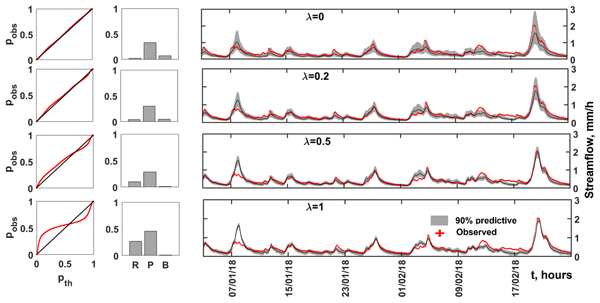
Hourly streamflow data are increasingly available and can improve streamflow predictions. We tested simple ways to describe uncertainty by transforming flow values and by accounting for how errors persist from hour to hour, using seven catchments in Spain, Switzerland and the United States. Simple transformations and short-term error memory improve the reliability of probabilistic predictions and help combine hourly results into longer time scales for practical operational contexts.
Yingxi Zeng, Cong Wang, Bojie Fu, Guangyao Gao, Vinícius B. P. Chagas, Shuai Wang, Yu Liu, Yihe Lü, Marcus Schaub, and James W. Kirchner
EGUsphere, https://doi.org/10.5194/egusphere-2026-4886, https://doi.org/10.5194/egusphere-2026-4886, 2026
This preprint is open for discussion and under review for Hydrology and Earth System Sciences (HESS).
Short summary
Short summary
We studied how river flows across China’s Loess Plateau changed from 1990 to 2020 as vegetation recovery, climate, and human water use evolved. Using records from 13 river basins, we found that both low and high flows generally declined before 2005 but increased afterward. Vegetation recovery was closely linked to changes in low flows, while short-term water availability was more important for high flows. These findings can help guide ecological restoration and flood-risk management.
Andrew R. Hedrick, Brandon Stairs, C. Jason Williams, Joachim Meyer, James P. McNamara, and Patrick Kormos
Earth Syst. Sci. Data, 18, 5531–5543, https://doi.org/10.5194/essd-18-5531-2026, https://doi.org/10.5194/essd-18-5531-2026, 2026
Short summary
Short summary
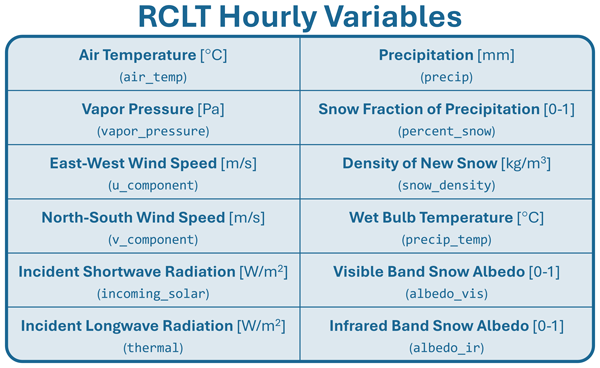
This dataset provides hourly gridded estimates of meteorologic variables based on station observations between 1984 and 2023 in the Reynolds Creek Experimental Watershed, including air temperature, humidity, wind, incoming solar radiation, and precipitation. This dataset exists as a resource for energy balance modeling and independent validation of atmospheric reanalysis datasets and is publicly available in a cloud-optimized format at the Ag Data Commons data repository.
Delaney M. Peterson, C. Nathan Jones, Stephen Plont, Sarah E. Godsey, Kaci Zarek, Adam S. Ward, and Carla L. Atkinson
EGUsphere, https://doi.org/10.5194/egusphere-2026-4201, https://doi.org/10.5194/egusphere-2026-4201, 2026
Short summary
Short summary
How much watersheds can store and how that water moves between stores are key controls on flow in streams. We measured both at coarse and fine spatial scales in 3 watersheds and found patterns at larger scales often contradicted fine-scale patterns in storage and flows. We also found that characteristics like stream downcutting created similar patterns in storage and flows across watersheds, emphasizing that differences in watershed characteristics are important for water moving through streams.
Maxime Thomas, Julien Fouché, Hugues Titeux, Charlotte Morelle, Nathan Bemelmans, Melissa J. Lafrenière, Joanne K. Heslop, and Sophie Opfergelt
SOIL, 12, 633–664, https://doi.org/10.5194/soil-12-633-2026, https://doi.org/10.5194/soil-12-633-2026, 2026
Short summary
Short summary
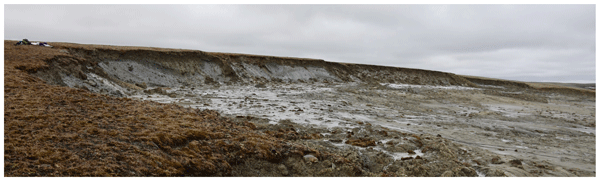
This study examines organic carbon (OC)–mineral interactions in permafrost soils undergoing thermokarst degradation in Cape Bounty (Melville Island, Canada). Chemically stabilized OC accounts for 13 ± 5 % as organo-metallic complexes and 6 ± 2 % as associations with iron oxides. Including physical protection, up to 64 ± 10 % of OC is mineral-protected. Deeper layers show a sharp decline in mineral-bound OC, suggesting increased vulnerability to degradation when exposed by deep thaw features.
Stefano Martinetti, James Kirchner, Peter Molnar, and Marius Floriancic
EGUsphere, https://doi.org/10.5194/egusphere-2026-2481, https://doi.org/10.5194/egusphere-2026-2481, 2026
Short summary
Short summary
We measured impulse responses of water fluxes to atmospheric forcing in a mixed beech and spruce forest. We found rapid responses to precipitation in soils and trees, and rapid responses to solar radiation and aerodynamic evaporative demand in trees, but not in soils, which suggests that the forest canopy significantly shielded the soils from atmospheric forcing. We also found impulse-response functions to be affected by species-specific stomatal regulation and hydraulic capacitance.
Carolin Winter, Julia L. A. Knapp, and James W. Kirchner
EGUsphere, https://doi.org/10.5194/egusphere-2026-2218, https://doi.org/10.5194/egusphere-2026-2218, 2026
Short summary
Short summary
Droughts not only affect stream water quantity but also its quality, potentially aggravating water scarcity. To understand the underlying mechanisms, we studied the impacts of drought on stream concentrations of ten substances in a forested mountain area. We found that drought affected all substances. The different responses could be explained by changes in the transport by water, combined with biological and chemical processes that alter the availability and mobility of certain substances.
Guilhem Türk, Christoph J. Gey, Bernd R. Schöne, Marius G. Floriancic, James W. Kirchner, Loic Leonard, Laurent Gourdol, Richard F. Keim, and Laurent Pfister
Hydrol. Earth Syst. Sci., 30, 343–369, https://doi.org/10.5194/hess-30-343-2026, https://doi.org/10.5194/hess-30-343-2026, 2026
Short summary
Short summary
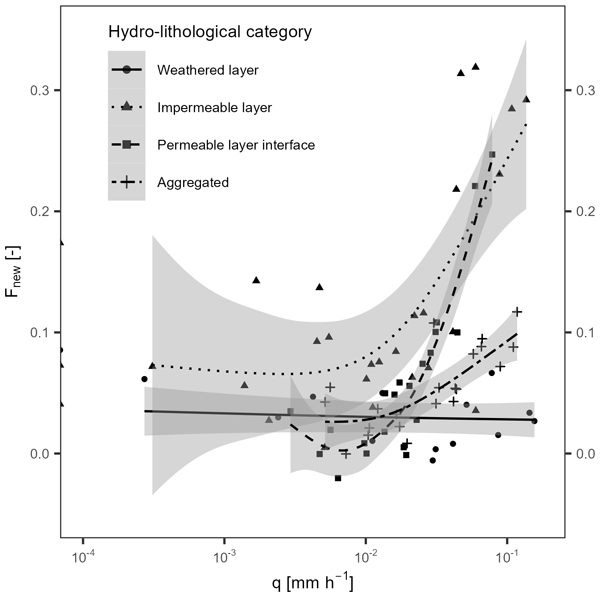
How landscape features affect water storage and release in catchments remains poorly understood. Here we used water stable isotopes in 12 streams to assess the fraction of precipitation reaching streamflow in less than 2 weeks. More recent precipitation was found when streamflow was high and the fraction was linked to the geology (i.e. high when impermeable, low when permeable). Such information is key for better anticipating streamflow responses to a changing climate.
Huibin Gao, Laurent Pfister, and James W. Kirchner
Hydrol. Earth Syst. Sci., 29, 6529–6547, https://doi.org/10.5194/hess-29-6529-2025, https://doi.org/10.5194/hess-29-6529-2025, 2025
Short summary
Short summary
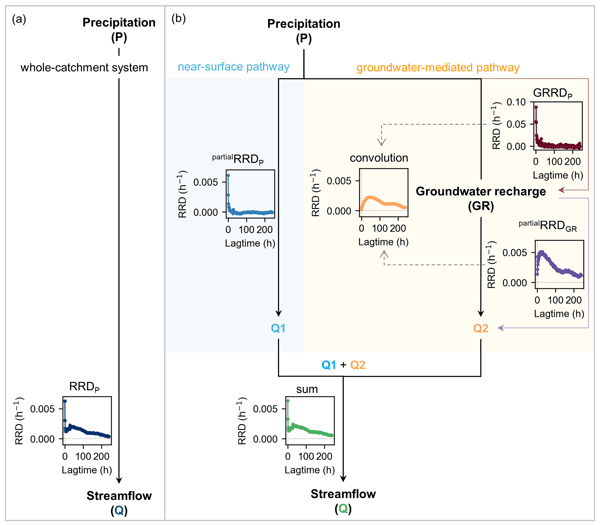
Some streams respond to rainfall with flow that peaks twice: a sharp first peak followed by a broad second peak. We analyzed data from a catchment in Luxembourg to better understand the processes behind this phenomenon. Our results show that the first peak is mostly driven directly by rainfall, and the second peak is mostly driven by rain that infiltrates to groundwater. We also show that the relative importance of these two processes depends on how wet the landscape is before the rain falls.
Quentin Duchemin, Maria Grazia Zanoni, Marius G. Floriancic, Hansjörg Seybold, Guillaume Obozinski, James W. Kirchner, and Paolo Benettin
Geosci. Model Dev., 18, 8663–8678, https://doi.org/10.5194/gmd-18-8663-2025, https://doi.org/10.5194/gmd-18-8663-2025, 2025
Short summary
Short summary
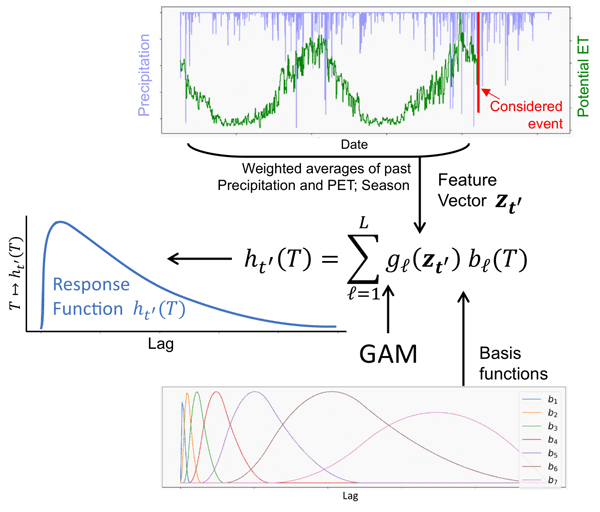
We introduce GAMCR (Generalized Additive Models for Catchment Responses), a data-driven model that estimates how catchments respond to individual precipitation events. We validate GAMCR on synthetic data and demonstrate its ability to investigate the characteristic runoff responses from real-world hydrologic series. GAMCR provides new data-driven opportunities to understand and compare hydrological behavior across different catchments.
Zahra Eslami, Hansjörg Seybold, and James W. Kirchner
Hydrol. Earth Syst. Sci., 29, 5121–5130, https://doi.org/10.5194/hess-29-5121-2025, https://doi.org/10.5194/hess-29-5121-2025, 2025
Short summary
Short summary
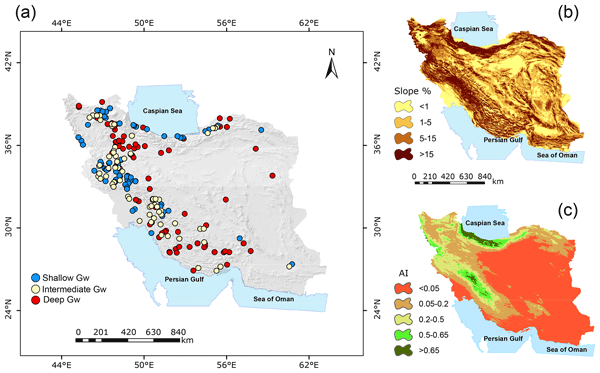
We used a new method to measure how streamflow responds to precipitation across a network of watersheds in Iran. Our analysis shows that streamflow is more sensitive to precipitation when groundwater levels are shallower, climates are more humid, topography is steeper, and drainage basins are smaller. These results are a step toward more sustainable water resource management and more effective flood risk mitigation.
Julia L. A. Knapp, Wouter R. Berghuijs, Marius G. Floriancic, and James W. Kirchner
Hydrol. Earth Syst. Sci., 29, 3673–3685, https://doi.org/10.5194/hess-29-3673-2025, https://doi.org/10.5194/hess-29-3673-2025, 2025
Short summary
Short summary
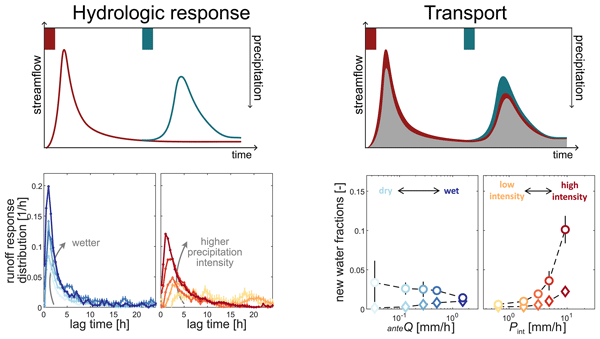
This study explores how streams react to rain and how water travels through the landscape to reach them, two processes rarely studied together. Using detailed data from two temperate areas, we show that streams respond to rain much faster than rainwater travels to them. Wetter conditions lead to stronger runoff by releasing older stored water, while heavy rainfall moves newer rainwater to streams faster. These findings offer new insights into how water moves through the environment.
Zhuoyi Tu, Taihua Wang, Juntai Han, Hansjörg Seybold, Shaozhen Liu, Cansu Culha, Yuting Yang, and James W. Kirchner
EGUsphere, https://doi.org/10.5194/egusphere-2025-3018, https://doi.org/10.5194/egusphere-2025-3018, 2025
Preprint archived
Short summary
Short summary
This study provides the first event-scale observational evidence that runoff sensitivity to precipitation decreases significantly in degrading permafrost regions of the Tibetan Plateau. Data-driven analysis reveals that permafrost thaw enhances infiltration and subsurface storage, reducing peak runoff and runoff coefficients, especially during heavy rainfall. These results are important for drought and flood risk management under climate change.
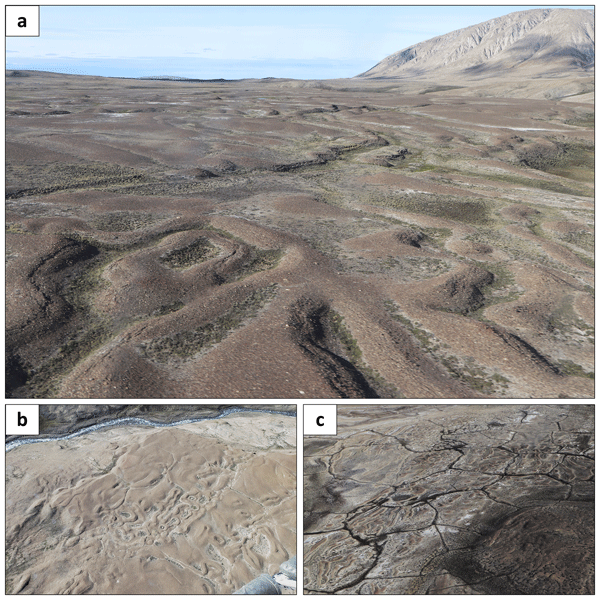
Shannon M. Hibbard, Gordon R. Osinski, Etienne Godin, Chimira Andres, Antero Kukko, Shawn Chartrand, Anna Grau Galofre, A. Mark Jellinek, and Wendy Boucher
The Cryosphere, 19, 1695–1716, https://doi.org/10.5194/tc-19-1695-2025, https://doi.org/10.5194/tc-19-1695-2025, 2025
Short summary
Short summary
This study investigates enigmatic ring forms found on Axel Heiberg Island (Umingmat Nunaat) in Nunavut, Canada. These ring forms comprised a series of ridges and troughs creating individual rings or brain-like patterns. We aim to identify how they form and assess the past climate conditions necessary for their formation. We use surface and subsurface observations and comparisons to other periglacial and glacial ring forms to infer a formation mechanism and propose a glacial origin.
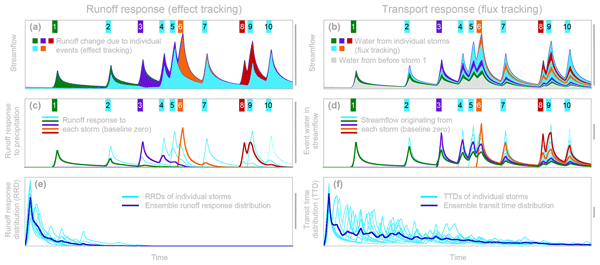
James W. Kirchner
Hydrol. Earth Syst. Sci., 28, 4427–4454, https://doi.org/10.5194/hess-28-4427-2024, https://doi.org/10.5194/hess-28-4427-2024, 2024
Short summary
Short summary
Here, I present a new way to quantify how streamflow responds to rainfall across a range of timescales. This approach can estimate how different rainfall intensities affect streamflow. It can also quantify how runoff response to rainfall varies, depending on how wet the landscape already is before the rain falls. This may help us to understand processes and landscape properties that regulate streamflow and to assess the susceptibility of different landscapes to flooding.
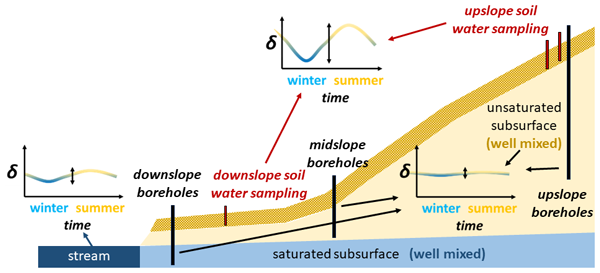
Marius G. Floriancic, Scott T. Allen, and James W. Kirchner
Hydrol. Earth Syst. Sci., 28, 4295–4308, https://doi.org/10.5194/hess-28-4295-2024, https://doi.org/10.5194/hess-28-4295-2024, 2024
Short summary
Short summary
We use a 3-year time series of tracer data of streamflow and soils to show how water moves through the subsurface to become streamflow. Less than 50% of soil water consists of rainfall from the last 3 weeks. Most annual streamflow is older than 3 months, and waters in deep subsurface layers are even older; thus deep layers are not the only source of streamflow. After wet periods more rainfall was found in the subsurface and the stream, suggesting that water moves quicker through wet landscapes.
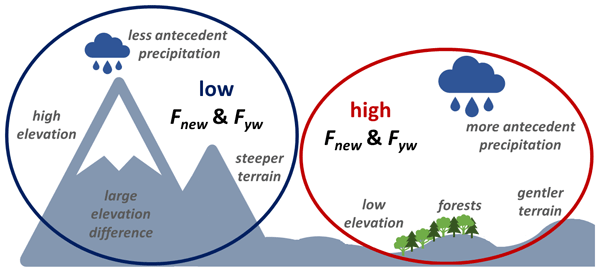
Marius G. Floriancic, Michael P. Stockinger, James W. Kirchner, and Christine Stumpp
Hydrol. Earth Syst. Sci., 28, 3675–3694, https://doi.org/10.5194/hess-28-3675-2024, https://doi.org/10.5194/hess-28-3675-2024, 2024
Short summary
Short summary
The Alps are a key water resource for central Europe, providing water for drinking, agriculture, and hydropower production. To assess water availability in streams, we need to understand how much streamflow is derived from old water stored in the subsurface versus more recent precipitation. We use tracer data from 32 Alpine streams and statistical tools to assess how much recent precipitation can be found in Alpine rivers and how this amount is related to catchment properties and climate.
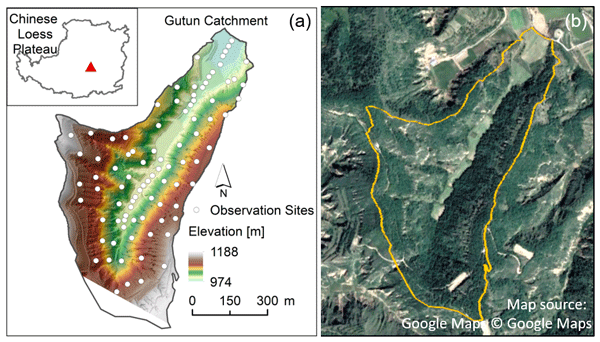
Shaozhen Liu, Ilja van Meerveld, Yali Zhao, Yunqiang Wang, and James W. Kirchner
Hydrol. Earth Syst. Sci., 28, 205–216, https://doi.org/10.5194/hess-28-205-2024, https://doi.org/10.5194/hess-28-205-2024, 2024
Short summary
Short summary
We study the seasonal and spatial patterns of soil moisture in 0–500 cm soil using 89 monitoring sites in a loess catchment with monsoonal climate. Soil moisture is highest during the months of least precipitation and vice versa. Soil moisture patterns at the hillslope scale are dominated by the aspect-controlled evapotranspiration variations (a local control), not by the hillslope convergence-controlled downslope flow (a nonlocal control), under both dry and wet conditions.

Shawn M. Chartrand, A. Mark Jellinek, Marwan A. Hassan, and Carles Ferrer-Boix
Earth Surf. Dynam., 11, 1–20, https://doi.org/10.5194/esurf-11-1-2023, https://doi.org/10.5194/esurf-11-1-2023, 2023
Short summary
Short summary
Rivers with alternating patterns of shallow and deep flows are commonly observed where a river widens and then narrows, respectively. But what if width changes over time? We use a lab experiment to address this question and find it is possible to decrease and then increase river width at a specific location and observe that flows deepen and then shallow consistent with expectations. Our observations can inform river restoration and climate adaptation programs that emphasize river corridors.
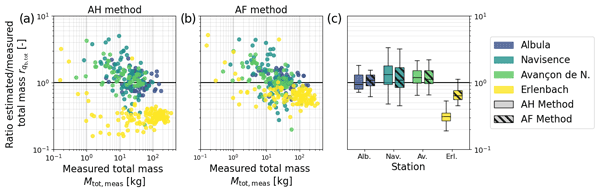
Tobias Nicollier, Gilles Antoniazza, Lorenz Ammann, Dieter Rickenmann, and James W. Kirchner
Earth Surf. Dynam., 10, 929–951, https://doi.org/10.5194/esurf-10-929-2022, https://doi.org/10.5194/esurf-10-929-2022, 2022
Short summary
Short summary
Monitoring sediment transport is relevant for flood safety and river restoration. However, the spatial and temporal variability of sediment transport processes makes their prediction challenging. We investigate the feasibility of a general calibration relationship between sediment transport rates and the impact signals recorded by metal plates installed in the channel bed. We present a new calibration method based on flume experiments and apply it to an extensive dataset of field measurements.
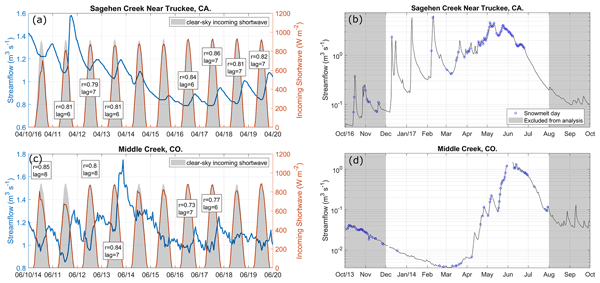
Sebastian A. Krogh, Lucia Scaff, James W. Kirchner, Beatrice Gordon, Gary Sterle, and Adrian Harpold
Hydrol. Earth Syst. Sci., 26, 3393–3417, https://doi.org/10.5194/hess-26-3393-2022, https://doi.org/10.5194/hess-26-3393-2022, 2022
Short summary
Short summary
We present a new way to detect snowmelt using daily cycles in streamflow driven by solar radiation. Results show that warmer sites have earlier and more intermittent snowmelt than colder sites, and the timing of early snowmelt events is strongly correlated with the timing of streamflow volume. A space-for-time substitution shows greater sensitivity of streamflow timing to climate change in colder rather than in warmer places, which is then contrasted with land surface simulations.
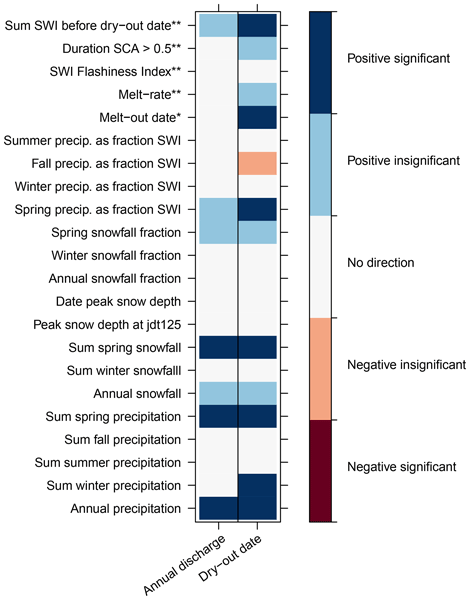
Leonie Kiewiet, Ernesto Trujillo, Andrew Hedrick, Scott Havens, Katherine Hale, Mark Seyfried, Stephanie Kampf, and Sarah E. Godsey
Hydrol. Earth Syst. Sci., 26, 2779–2796, https://doi.org/10.5194/hess-26-2779-2022, https://doi.org/10.5194/hess-26-2779-2022, 2022
Short summary
Short summary
Climate change affects precipitation phase, which can propagate into changes in streamflow timing and magnitude. This study examines how variations in rainfall and snowmelt affect discharge. We found that annual discharge and stream cessation depended on the magnitude and timing of rainfall and snowmelt and on the snowpack melt-out date. This highlights the importance of precipitation timing and emphasizes the need for spatiotemporally distributed simulations of snowpack and rainfall dynamics.
Nikos Theodoratos and James W. Kirchner
Earth Surf. Dynam., 9, 1545–1561, https://doi.org/10.5194/esurf-9-1545-2021, https://doi.org/10.5194/esurf-9-1545-2021, 2021
Short summary
Short summary
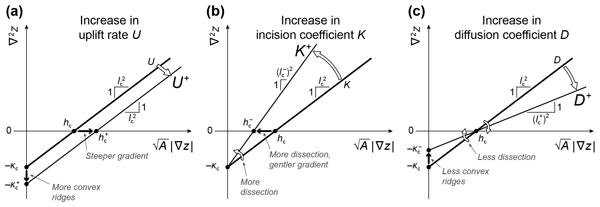
We examine stream-power incision and linear diffusion landscape evolution models with and without incision thresholds. We present a steady-state relationship between curvature and the steepness index, which plots as a straight line. We view this line as a counterpart to the slope–area relationship for the case of landscapes with hillslope diffusion. We show that simple shifts and rotations of this line graphically express the topographic response of landscapes to changes in model parameters.
Cited articles
Ackerson, C. M., Ward, B., and Kennedy, K.: Surficial geological mapping of the central Kluane Ranges (parts of NTS 115G/1, 2, 3, 7 and 115B/15, 16), southwestern Yukon, in: Yukon Exploration and Geology 2020, edited by: MacFarlane, K. E., Yukon Geological Survey, Whitehorse, Yukon, Canada, 157–176, https://emrlibrary.gov.yk.ca/ygs/yeg/2020/8_Ackerson_etal.pdf (last access: 20 October 2026), 2021.
Arp, C., Kane, D. L., Stuefer, S., and Hinzman, L.: Hydrographic data, Upper Kuparuk River watershed, Alaska, 1993–2017, Arctic Data Center [data set], https://doi.org/10.18739/A2WH2DD7W, 2017.
Arp, C. D., Jones, B. M., Liljedahl, A. K., Hinkel, K. M., and Welker, J. A.: Depth, ice thickness, and ice-out timing cause divergent hydrologic responses among Arctic lakes, Water Resour. Res., 51, 9379–9401, 2015.
Beel, C., Lamoureux, S., and Orwin, J.: Fluvial response to a period of hydrometeorological change and landscape disturbance in the Canadian High Arctic, Geophys. Res. Lett., 45, 10446–10456, https://doi.org/10.1029/2018GL079660, 2018.
Beel, C., Lamoureux, S., Orwin, J., Pope, M., Lafrenière, M., and Scott, N.: Differential impact of thermal and physical permafrost disturbances on High Arctic dissolved and particulate fluvial fluxes, Sci. Rep., 10, 11836, https://doi.org/10.1038/s41598-020-68824-3, 2020.
Beel, C., Heslop, J., Orwin, J., Pope, M., Schevers, A., Hung, J., Lafrenière, M., and Lamoureux, S.: Emerging dominance of summer rainfall driving High Arctic terrestrial-aquatic connectivity, Nat. Commun., 12, 1448, https://doi.org/10.1038/s41467-021-21759-3, 2021.
Beven, K. J.: Rainfall–Runoff Modelling: The Primer, 2nd edn., John Wiley and Sons, Chichester, UK, ISBN 978-0-470-71459-1, https://doi.org/10.1002/9781119951001, 2012.
Bieniek, P. A., Walsh, J. E., Fresco, N., Tauxe, C., and Redilla, K.: Anticipated changes in Alaska extreme precipitation, J. Appl. Meteorol. Clim., 61, 97–108, 2022.
Bigalke, S. and Walsh, J. E.: Future changes of snow in Alaska and the Arctic under stabilized global warming scenarios, Atmosphere, 13, 541, https://doi.org/10.3390/atmos13040541, 2022.
Bintanja, R. and Andry, O.: Towards a rain-dominated Arctic, Nat. Clim. Change, 7, 263–267, 2017.
Bintanja, R., van der Wiel, K., van der Linden, E., Reusen, J., Bogerd, L., Krikken, F., and Selten, F.: Strong future increases in Arctic precipitation variability linked to poleward moisture transport, Sci. Adv., 6, eaax6869, https://doi.org/10.1126/sciadv.aax6869, 2020.
Biskaborn, B. K., Smith, S. L., Noetzli, J., Matthes, H., Vieira, G., Streletskiy, D. A., Schoeneich, P., Romanovsky, V. E., Lewkowicz, A. G., Abramov, A., Allard, M., Boike, J., Cable, W. L., Christiansen, H. H., Delaloye, R., Diekmann, B., Drozdov, D., Etzelmüller, B., Grosse, G., Guglielmin, M., Ingeman-Nielsen, T., Isaksen, K., Ishikawa, M., Johansson, M., Johannsson, H., Joo, A., Kaverin, D., Kholodov, A., Konstantinov, P., Kröger, T., Lambiel, C., Lanckman, J.-P., Luo, D., Malkova, G., Meiklejohn, I., Moskalenko, N., Oliva, M., Phillips, M., Ramos, M., Sannel, A. B. K., Sergeev, D., Seybold, C., Skryabin, P., Vasiliev, A., Wu, Q., Yoshikawa, K., Zheleznyak, M., and Lantuit, H.: Permafrost is warming at a global scale, Nat. Commun., 10, 264, https://doi.org/10.1038/s41467-018-08240-4, 2019.
Bowden, W. B., Gooseff, M. N., Balser, A., Green, A., Peterson, B. J., and Bradford, J.: Sediment and nutrient delivery from thermokarst features in the foothills of the North Slope, Alaska: Potential impacts on headwater stream ecosystems, J. Geophys. Res.-Biogeo., 113, https://doi.org/10.1029/2007JG000470, 2008.
Chen, S., Fu, Y. H., Geng, X., Hao, Z., Tang, J., Zhang, X., Xu, Z., and Hao, F.: Influences of shifted vegetation phenology on runoff across a hydroclimatic gradient, Front. Plant Sci., 12, 802664, https://doi.org/10.3389/fpls.2021.802664, 2022.
Coch, C., Lamoureux, S. F., Knoblauch, C., Eischeid, I., Fritz, M., Obu, J., and Lantuit, H.: Summer rainfall dissolved organic carbon, solute, and sediment fluxes in a small Arctic coastal catchment on Herschel Island (Yukon Territory, Canada), Arct. Sci., 4, 750–780, 2018.
Connon, R. F., Quinton, W. L., Craig, J. R., and Hayashi, M.: Changing hydrologic connectivity due to permafrost thaw in the lower Liard River valley, NWT, Canada, Hydrol. Process., 28, 4163–4178, 2014.
Cook, R. D. and Weisberg, S.: Residuals and Influence in Regression, Chapman and Hall, New York, USA, ISBN 978-0-412-24280-9, 1982.
Crowther, T. W., Todd-Brown, K. E. O., Rowe, C. W., Wieder, W. R., Carey, J. C., Machmuller, M. B., Snoek, B. L., Fang, S., Zhou, G., Allison, S. D., Blair, J. M., Bridgham, S. D., Burton, A. J., Carrillo, Y., Reich, P. B., Clark, J. S., Classen, A. T., Dijkstra, F. A., Elberling, B., Emmett, B. A., Estiarte, M., Frey, S. D., Guo, J., Harte, J., Jiang, L., Johnson, B. R., Kröel-Dulay, G., Larsen, K. S., Laudon, H., Lavallee, J. M., Luo, Y., Lupascu, M., Ma, L. N., Marhan, S., Michelsen, A., Mohan, J., Niu, S., Pendall, E., Peñuelas, J., Pfeifer-Meister, L., Poll, C., Reinsch, S., Reynolds, L. L., Schmidt, I. K., Sistla, S., Sokol, N. W., Templer, P. H., Treseder, K. K., Welker, J. M., and Bradford, M. A.: Quantifying global soil carbon losses in response to warming, Nature, 540, 104–108, 2016.
Culha, C.: Data and code for: Characterizing runoff response to rainfall in permafrost catchments and its implications for hydrological and biogeochemical fluxes in a warming climate (Version v1.0.0), Zenodo [data set] [code], https://doi.org/10.5281/zenodo.23171392, 2026.
DeBeer, C. M., Wheater, H. S., Carey, S. K., and Chun, K. P.: Recent climatic, cryospheric, and hydrological changes over the interior of western Canada: a review and synthesis, Hydrol. Earth Syst. Sci., 20, 1573–1598, https://doi.org/10.5194/hess-20-1573-2016, 2016.
Del Vecchio, J. and Evans, S. G.: Climate and hydrogeological controls on water tracks in permafrost landscapes, Rev. Geophys., 63, e2024RG000854, https://doi.org/10.1029/2024RG000854, 2025.
Déry, S. J., Crow, W. T., Stieglitz, M., and Wood, E. F.: Modeling snow-cover heterogeneity over complex Arctic terrain for regional and global climate models, J. Hydrometeorol., 5, 33–48, 2004.
Déry, S. J., Salomonson, V. V., Stieglitz, M., Hall, D. K., and Appel, I.: An approach to using snow areal depletion curves inferred from MODIS and its application to land surface modelling in Alaska, Hydrol. Process., 19, 2755–2774, 2005.
Dingman, S. L.: Hydrology of the Glenn Creek watershed, Tanana River basin, central Alaska, Research Report 297, U.S. Army Cold Regions Research and Engineering Laboratory, Hanover, NH, USA, 00204405, 111 pp., 1971.
Eschenfelder, J. A., Chartrand, S. M., Jellinek, A. M., and Culha, C.: Seasonal freezing increases High Arctic erosion and landscape response to climate extremes, Commun. Earth Environ., 7, 388, https://doi.org/10.1038/s43247-026-03468-1, 2026.
Evans, S. G., Godsey, S. E., Rushlow, C. R., and Voss, C.: Water tracks enhance water flow above permafrost in upland Arctic Alaska hillslopes, J. Geophys. Res.-Earth, 125, e2019JF005256, https://doi.org/10.1029/2019JF005256, 2020.
Favaro, E. A. and Lamoureux, S. F.: Antecedent controls on rainfall runoff response and sediment transport in a High Arctic catchment, Geogr. Ann. A, 96, 433–446, https://doi.org/10.1111/geoa.12063, 2014.
Fouché, J., Lafrenière, M. J., Rutherford, K., and Lamoureux, S.: Seasonal hydrology and permafrost disturbance impacts on dissolved organic matter composition in High Arctic headwater catchments, Arct. Sci., 3, 378–405, 2017.
Frampton, A. and Destouni, G.: Impact of degrading permafrost on subsurface solute transport pathways and travel times, Water Resour. Res., 51, 7680–7701, 2015.
Frey, K. E. and McClelland, J. W.: Impacts of permafrost degradation on Arctic river biogeochemistry, Hydrol. Process., 23, 169–182, 2009.
Genxu, W., Tianxu, M., Juan, C., Chunlin, S., and Kewei, H.: Processes of runoff generation operating during the spring and autumn seasons in a permafrost catchment on semi-arid plateaus, J. Hydrol., 550, 307–317, 2017.
Gooseff, M. N., Balser, A., Bowden, W. B., and Jones, J. B.: Effects of hillslope thermokarst in northern Alaska, Eos Trans. AGU, 90, 29–30, 2009.
Grewal, A., Nicholls, E. M., and Carey, S. K.: The role of catchment characteristics, discharge, and active- layer thaw in seasonal stream chemistry across 10 permafrost catchments, Hydrol. Earth Syst. Sci., 29, 2467–2483, https://doi.org/10.5194/hess-29-2467-2025, 2025.
Hamm, A. and Frampton, A.: Impact of lateral groundwater flow on hydrothermal conditions of the active layer in a high-Arctic hillslope setting, The Cryosphere, 15, 4853–4871, https://doi.org/10.5194/tc-15-4853-2021, 2021.
Helbig, M., Waddington, J. M., Alekseychik, P., Amiro, B. D., Aurela, M., Barr, A. G., Black, T. A., Blanken, P. D., Carey, S. K., Chen, J., Chi, J., Desai, A. R., Dunn, A., Euskirchen, E. S., Flanagan, L. B., Forbrich, I., Friborg, T., Grelle, A., Harder, S., Heliasz, M., Humphreys, E. R., Ikawa, H., Isabelle, P.-E., Iwata, H., Jassal, R., Korkiakoski, M., Kurbatova, J., Kutzbach, L., Lindroth, A., Löfvenius, M. O., Lohila, A., Mammarella, I., Marsh, P., Maximov, T., Melton, J. R., Moore, P. A., Nadeau, D. F., Nicholls, E. M., Nilsson, M. B., Ohta, T., Peichl, M., Petrone, R. M., Petrov, R., Prokushkin, A., Quinton, W. L., Reed, D. E., Roulet, N. T., Runkle, B. R. K., Sonnentag, O., Strachan, I. B., Taillardat, P., Tuittila, E.-S., Tuovinen, J.-P., Turner, J., Ueyama, M., Varlagin, A., Wilmking, M., Wofsy, S. C., and Zyrianov, V.: Increasing contribution of peatlands to boreal evapotranspiration in a warming climate, Nat. Clim. Change, 10, 555–560, 2020.
Hinzman, L. D., Kane, D. L., Gieck, R. E., and Everett, K. R.: Hydrologic and thermal properties of the active layer in the Alaskan Arctic, Cold Reg. Sci. Technol., 19, 95–110, 1991.
Jan, A. and Painter, S. L.: Permafrost thermal conditions are sensitive to shifts in snow timing, Environ. Res. Lett., 15, 084026, https://doi.org/10.1088/1748-9326/ab8ec4, 2020.
Jan, A., Coon, E. T., and Painter, S. L.: Evaluating integrated surface/subsurface permafrost thermal hydrology models in ATS (v0.88) against observations from a polygonal tundra site, Geosci. Model Dev., 13, 2259–2276, 2020.
Jorgenson, K. L., Douglas, T. A., Jorgenson, M. T., Pastick, N. J., and Harms, T. K.: Permafrost and Rain Influence Summer Hydrologic Flowpaths in Boreal Catchments, Water Resour. Res., 61, e2024WR039024, https://doi.org//10.1029/2024WR039024, 2025.
Jorgenson, M. T., Romanovsky, V., Harden, J., Shur, Y., O'Donnell, J., Schuur, E. A. G., Kanevskiy, M., and Marchenko, S.: Resilience and vulnerability of permafrost to climate change, Can. J. Forest Res., 40, 1219–1236, 2010.
Kane, D. L., Hinzman, L., McNamara, J., Zhang, Z., and Benson, C.: An overview of a nested watershed study in Arctic Alaska, Nord. Hydrol., 31, 245–266, 2000.
Kane, D. L., Hinzman, L. D., Yang, D., Galloway, J. M., and Benson, C. S.: Contrasting extreme runoff events in areas of continuous permafrost, North Slope of Alaska, Hydrol. Res., 39, 287–298, 2008.
Kane, D. L., Hinzman, L., Stuefer, S., and Arp, C.: Updated meteorological, radiation, and soil temperature data, Kuparuk River and nearby watersheds: Upper Kuparuk (UK) station, 1994–2018, Arctic Data Center [data set], https://doi.org/10.18739/A29P2W70H, 2021.
Kirchner, J. W.: Impulse response functions for nonlinear, nonstationary, and heterogeneous systems, estimated by deconvolution and demixing of noisy time series, Sensors, 22, 3291, https://doi.org/10.3390/s22093291, 2022.
Kirchner, J. W.: Characterizing nonlinear, nonstationary, and heterogeneous hydrologic behavior using ensemble rainfall–runoff analysis (ERRA): proof of concept, Hydrol. Earth Syst. Sci., 28, 4427–4454, https://doi.org/10.5194/hess-28-4427-2024, 2024.
Knapp, J. L. A., Berghuijs, W. R., Floriancic, M. G., and Kirchner, J. W.: Catchment hydrological response and transport are affected differently by precipitation intensity and antecedent wetness, Hydrol. Earth Syst. Sci., 29, 3673–3685, https://doi.org/10.5194/hess-29-3673-2025, 2025.
Koch, J. C., Dornblaser, M. M., and Striegl, R. G.: Storm-scale and seasonal dynamics of carbon export from a nested subarctic watershed underlain by permafrost, J. Geophys. Res.-Biogeo., 126, e2021JG006268, https://doi.org/10.1029/2021JG006268, 2021.
Kokelj, S. V., Lacelle, D., Lantz, T. C., Tunnicliffe, J., Malone, L., Clark, I. D., and Chin, K. S.: Thawing of massive ground ice in mega slumps drives increases in stream sediment and solute flux across a range of watershed scales, J. Geophys. Res.-Earth, 118, 681–692, 2013.
Kokelj, S. V., Lantz, T. C., Tunnicliffe, J., Segal, R., and Lacelle, D.: Climate-driven thaw of permafrost preserved glacial landscapes, northwestern Canada, Geology, 45, 371–374, 2017.
Kokelj, S. V., Kokoszka, J., van der Sluijs, J., Rudy, A. C. A., Tunnicliffe, J., Shakil, S., Tank, S. E., and Zolkos, S.: Thaw-driven mass wasting couples slopes with downstream systems, and effects propagate through Arctic drainage networks, The Cryosphere, 15, 3059–3081, https://doi.org/10.5194/tc-15-3059-2021, 2021.
Kokelj, S. V., Gingras-Hill, T., Daly, S. V., Morse, P. D., Wolfe, S. A., Rudy, A. C. A., van der Sluijs, J., Weiss, N., O'Neill, H. B., Baltzer, J. L., Lantz, T. C., Gibson, C., Cazon, D., Fraser, R. H., Froese, D. G., Giff, G., Klengenberg, C., Lamoureux, S. F., Quinton, W. L., Turetsky, M. R., Chiasson, A., Ferguson, C., Newton, M., Pope, M., Paul, J. A., Wilson, A., and Young, J. M.: The Northwest Territories Thermokarst Mapping Collective: A northern-driven mapping collaborative toward understanding the effects of permafrost thaw, Arct. Sci., 9, 886–918, 2023.
Kokelj, S. V., Wolfe, S. A., Weiss, N., Froese, D., Baltzer, J. L., Lantz, T. C., O'Neill, H. B., Morse, P. D., Sniderhan, A., Speetjens, N. J., van der Sluijs, J., Alvarez, A., Tank, S. E., and Gruber, S.: Permafrost landsystems define regional variability in climate change effects on northern environments, Nat. Commun., 17, 4799, https://doi.org/10.1038/s41467-026-71216-2, 2026.
Kurylyk, B. L. and Watanabe, K.: The mathematical representation of freezing and thawing processes in variably-saturated, non-deformable soils, Adv. Water Resour., 60, 160–177, 2013.
Lafrenière, M. J. and Lamoureux, S. F.: Effects of changing permafrost conditions on hydrological processes and fluvial fluxes, Earth-Sci. Rev., 191, 212–223, 2019.
Lamoureux, S. F. and Lafrenière, M. J.: Fluvial impact of extensive active layer detachments, Cape Bounty, Melville Island, Canada, Arct. Antarct. Alp. Res., 41, 59–68, https://doi.org/10.1657/1523-0430-41.1.59, 2009.
Lamoureux, S. F. and Lafrenière, M. J.: Seasonal fluxes and age of particulate organic carbon exported from Arctic catchments impacted by localized permafrost slope disturbances, Environ. Res. Lett., 9, 045002, https://doi.org/10.1088/1748-9326/9/4/045002, 2014.
Lamoureux, S. F., Lafrenière, M. J., and Favaro, E. A.: Erosion dynamics following localized permafrost slope disturbances, Geophys. Res. Lett., 41, 5499–5505, 2014.
Levy, J. S., Fountain, A. G., Gooseff, M. N., Welch, K. A., and Lyons, W. B.: Water tracks and permafrost in Taylor Valley, Antarctica: Extensive and shallow groundwater connectivity in a cold desert ecosystem, Geol. Soc. Am. Bull., 123, 2295–2311, https://doi.org/10.1130/B30436.1, 2011.
Liljedahl, A. K., Hinzman, L. D., Harazono, Y., Zona, D., Tweedie, C. E., Hollister, R. D., Engstrom, R., and Oechel, W. C.: Nonlinear controls on evapotranspiration in Arctic coastal wetlands, Biogeosciences, 8, 3375–3389, 2011.
Liljedahl, A. K., Boike, J., Daanen, R. P., Fedorov, A. N., Frost, G. V., Grosse, G., Hinzman, L. D., Iijma, Y., Jorgenson, J. C., Matveyeva, N., Necsoiu, M., Raynolds, M. K., Romanovsky, V. E., Schulla, J., Tape, K. D., Walker, D. A., Wilson, C. J., Yabuki, H., and Zona, D.: Pan-Arctic ice-wedge degradation in warming permafrost and its influence on tundra hydrology, Nat. Geosci., 9, 312–318, 2016.
Luo, J., Niu, F., Lin, Z., Liu, M., Yin, G., and Gao, Z.: Inventory and frequency of retrogressive thaw slumps in the permafrost region of the Qinghai–Tibet Plateau, Geophys. Res. Lett., 49, e2022GL099829, https://doi.org/10.1029/2022GL099829, 2022.
Massari, C., Pellet, V., Tramblay, Y., Crow, W. T., Gründemann, G. J., Hascoet, T., Penna, D., Modanesi, S., Brocca, L., Camici, S., and Marra, F.: On the relation between antecedent basin conditions and runoff coefficient for European floods, J. Hydrol., 625, 130012, https://doi.org/10.1016/j.jhydrol.2023.130012, 2023.
McNamara, J. P., Kane, D. L., and Hinzman, L. D.: Hydrograph separations in an Arctic watershed using mixing model and graphical techniques, Water Resour. Res., 33, 1707–1719, 1997.
McNamara, J. P., Kane, D. L., and Hinzman, L. D.: An analysis of streamflow hydrology in the Kuparuk River Basin, Arctic Alaska: a nested watershed approach, J. Hydrol., 206, 39–57, https://doi.org/10.1016/S0022-1694(98)00083-3, 1998.
McNamara, J. P., Kane, D. L., and Hinzman, L. D.: An analysis of an Arctic channel network using a digital elevation model, Geomorphology, 29, 339–353, 1999.
Mekis, E. and Hogg, W. D.: Rehabilitation and analysis of Canadian daily precipitation time series, Atmos. Ocean, 37, 53–85, 1999.
Neilson, B. T., Cardenas, M. B., O'Connor, M. T., Rasmussen, M. T., King, T. V., and Kling, G. W.: Groundwater flow and exchange across the land surface explain carbon export patterns in continuous permafrost watersheds, Geophys. Res. Lett., 45, 7596–7605, 2018.
Nelson, F., Shiklomanov, N., Mueller, G., Hinkel, K., Walker, D., and Bockheim, J.: Estimating active-layer thickness over a large region: Kuparuk River basin, Alaska, USA, Arctic Alpine Res., 29, 367–378, 1997.
O'Connor, M. T., Cardenas, M. B., Ferencz, S. B., Wu, Y., Neilson, B. T., Chen, J., and Kling, G. W.: Empirical models for predicting water and heat flow properties of permafrost soils, Geophys. Res. Lett., 47, e2020GL087646, https://doi.org/10.1029/2020GL087646, 2020.
Painter, S. L., Moulton, J. D., and Wilson, C. J.: Modeling challenges for predicting hydrologic response to degrading permafrost, Hydrogeol. J., 21, 221–224, 2013.
Painter, S. L., Coon, E. T., Atchley, A. L., Berndt, M., Garimella, R., Moulton, J. D., Svyatskiy, D., and Wilson, C. J.: Integrated surface/subsurface permafrost thermal hydrology: Model formulation and proof-of-concept simulations, Water Resour. Res., 52, 6062–6077, 2016.
Painter, S. L., Coon, E. T., Khattak, A. J., and Jastrow, J. D.: Drying of tundra landscapes will limit subsidence-induced acceleration of permafrost thaw, P. Natl. Acad. Sci. USA, 120, e2212171120, https://doi.org/10.1073/pnas.2212171120, 2023.
Paquette, M., Rudy, A. C., Fortier, D., and Lamoureux, S. F.: Multi-scale site evaluation of a relict active layer detachment in a High Arctic landscape, Geomorphology, 359, 107159, https://doi.org/10.1016/j.geomorph.2020.107159, 2020.
Porter, C., Morin, P., Howat, I., Noh, M.-J., Bates, B., Peterman, K., Keesey, S., Schlenk, M., Gardiner, J., Tomko, K., Willis, M., Kelleher, C., Cloutier, M., Husby, E., Foga, S., Nakamura, H., Platson, M., Wethington, M., Williamson, C., Bauer, G., Enos, J., Arnold, G., Kramer, W., Becker, P., Doshi, A., D'Souza, C., Cummens, P., Laurier, F., and Bojesen, M.: ArcticDEM, Version 3, Harvard Dataverse [data set], https://doi.org/10.7910/DVN/OHHUKH, 2018.
Qin, J., Yang, B., Ding, Y., Cui, J., and Zhang, Y.: Assessment of runoff generation capacity and total runoff contribution for different landscapes in alpine and permafrost watershed, Catena, 249, 108643, https://doi.org/10.1016/j.catena.2024.108643, 2025.
Quinton, W. L. and Carey, S. K.: Towards an energy-based runoff generation theory for tundra landscapes, Hydrol. Process., 22, 4649–4653, 2008.
Quinton, W. L. and Marsh, P.: A conceptual framework for runoff generation in a permafrost environment, Hydrol. Process., 13, 2563–2581, 1999.
Quinton, W. L., Gray, D. M., and Marsh, P.: Subsurface drainage from hummock-covered hillslopes in the Arctic tundra, J. Hydrol., 237, 113–125, 2000.
Quinton, W. L., Bemrose, R. K., Zhang, Y., and Carey, S. K.: The influence of spatial variability in snowmelt and active layer thaw on hillslope drainage for an alpine tundra hillslope, Hydrol. Process., 23, 2628–2639, 2009.
Rawlins, M. A. and Karmalkar, A. V.: Regime shifts in Arctic terrestrial hydrology manifested from impacts of climate warming, The Cryosphere, 18, 1033–1052, https://doi.org/10.5194/tc-18-1033-2024, 2024.
Rawlins, M. A., Connolly, C. T., and McClelland, J. W.: Modeling terrestrial dissolved organic carbon loading to western Arctic rivers, J. Geophys. Res.-Biogeo., 126, e2021JG006420, https://doi.org//10.1029/2021JG006420, 2021.
Rushlow, C. R. and Godsey, S. E.: Rainfall–runoff responses on Arctic hillslopes underlain by continuous permafrost, North Slope, Alaska, USA, Hydrol. Process., 31, 4092–4106, 2017.
Scherler, M., Hauck, C., Hoelzle, M., Stähli, M., and Völksch, I.: Meltwater infiltration into the frozen active layer at an alpine permafrost site, Permafrost Periglac., 21, 325–334, 2010.
Shiklomanov, N.: Toolik MAT: Active layer thickness grid measurements at Toolik, Alaska (site ID: 229), Circumpolar Active Layer Monitoring (CALM) program, The George Washington University [data set], http://gtnpdatabase.org/activelayers/view/229 (last access: 30 January 2024), 2014.
Shogren, A. J., Zarnetske, J. P., Abbott, B. W., Iannucci, F., Frei, R. J., Griffin, N. A., and Bowden, W. B.: Revealing biogeochemical signatures of Arctic landscapes with river chemistry, Sci. Rep., 9, 12894, https://doi.org/10.1038/s41598-019-49296-6, 2019.
Shogren, A. J., Zarnetske, J. P., Abbott, B. W., Bratsman, S., Brown, B., Carey, M. P., Fulweber, R., Greaves, H. E., Haines, E., Iannucci, F., Koch, J. C., Medvedeff, A., O'Donnell, J. A., Patch, L., Poulin, B. A., Williamson, T. J., and Bowden, W. B.: Multi-year, spatially extensive, watershed-scale synoptic stream chemistry and water quality conditions for six permafrost-underlain Arctic watersheds, Earth Syst. Sci. Data, 14, 95–116, https://doi.org/10.5194/essd-14-95-2022, 2022.
Shogren, A. J., Zarnetske, J. P., Abbott, B. W., Grose, A. L., Rec, A. F., Nipko, J., Song, C., O'Donnell, J. A., and Bowden, W. B.: Hydrology controls dissolved organic carbon and nitrogen export and post-storm recovery in two Arctic headwaters, J. Geophys. Res.-Biogeo., 129, e2023JG007583, https://doi.org/10.1029/2023JG007583, 2024.
Sjöberg, Y., Jan, A., Painter, S. L., Coon, E. T., Carey, M. P., O'Donnell, J. A., and Koch, J. C.: Permafrost promotes shallow groundwater flow and warmer headwater streams, Water Resour. Res., 57, e2020WR027463, https://doi.org/10.1029/2020WR027463, 2021.
Smith, L. C., Pavelsky, T. M., MacDonald, G. M., Shiklomanov, A. I., and Lammers, R. B.: Rising minimum daily flows in northern Eurasian rivers: A growing influence of groundwater in the high-latitude hydrologic cycle, J. Geophys. Res.-Biogeo., 112, https://doi.org/10.1029/2006JG000327, 2007.
Spence, C., Kokelj, S. V., Kokelj, S. A., McCluskie, M., and Hedstrom, N.: Evidence of a change in water chemistry in Canada's subarctic associated with enhanced winter streamflow, J. Geophys. Res.-Biogeo., 120, 113–127, https://doi.org/10.1002/2014JG002809, 2015.
St. Jacques, J.-M. and Sauchyn, D. J.: Increasing winter baseflow and mean annual streamflow from possible permafrost thawing in the Northwest Territories, Canada, Geophys. Res. Lett., 36, https://doi.org/10.1029/2008GL035822, 2009.
Stähli, M., Jansson, P.-E., and Lundin, L.-C.: Soil moisture redistribution and infiltration in frozen sandy soils, Water Resour. Res., 35, 95–103, 1999.
Stieglitz, M., Shaman, J., McNamara, J., Engel, V., Shanley, J., and Kling, G. W.: An approach to understanding hydrologic connectivity on the hillslope and the implications for nutrient transport, Global Biogeochem. Cy., 17, https://doi.org/10.1029/2003GB002041, 2003.
Tank, S. E., Striegl, R. G., McClelland, J. W., and Kokelj, S. V.: Multi-decadal increases in dissolved organic carbon and alkalinity flux from the Mackenzie drainage basin to the Arctic Ocean, Environ. Res. Lett., 11, 054015, https://doi.org/10.1088/1748-9326/11/5/054015, 2016.
Tank, S. E., Vonk, J. E., Walvoord, M. A., McClelland, J. W., Laurion, I., and Abbott, B. W.: Landscape matters: Predicting the biogeochemical effects of permafrost thaw on aquatic networks with a state factor approach, Permafrost Periglac., 31, 358–370, 2020.
Tank, S. E., McClelland, J. W., Spencer, R. G. M., Shiklomanov, A. I., Suslova, A., Moatar, F., Amon, R. M. W., Cooper, L. W., Elias, G., Gordeev, V. V., Guay, C., Gurtovaya, T. Y., Kosmenko, L. S., Mutter, E. A., Peterson, B. J., Peucker-Ehrenbrink, B., Raymond, P. A., Schuster, P. F., Scott, L., Staples, R., Striegl, R. G., Tretiakov, M., Zhulidov, A. V., Zimov, N., Zimov, S., and Holmes, R. M.: Recent trends in the chemistry of major northern rivers signal widespread Arctic change, Nat. Geosci., 16, 789–796, 2023.
Tebaldi, C., Hayhoe, K., Arblaster, J. M., and Meehl, G. A.: Going to the extremes: an intercomparison of model-simulated historical and future changes in extreme events, Climatic Change, 79, 185–211, 2006.
Toohey, R. C., Herman-Mercer, N. M., Schuster, P. F., Mutter, E. A., and Koch, J. C.: Multidecadal increases in the Yukon River Basin of chemical fluxes as indicators of changing flowpaths, groundwater, and permafrost, Geophys. Res. Lett., 43, 12120–12130, https://doi.org/10.1002/2016GL070817, 2016.
Van der Sluijs, J., Kokelj, S. V., Fraser, R. H., Tunnicliffe, J., and Lacelle, D.: Permafrost terrain dynamics and infrastructure impacts revealed by UAV photogrammetry and thermal imaging, Remote Sens., 10, 1734, https://doi.org/10.3390/rs10111734, 2018.
van Everdingen, R. (Ed.): Multi-language glossary of permafrost and related ground-ice terms in Chinese, English, French, German, International Permafrost Association, Arctic Institute of North America, University of Calgary, Calgary, Canada, https://www.permafrost.org/wp-content/uploads/Glossary/Glossary_of_Permafrost_and_Related_Ground-Ice_Terms_1998.pdf (last access: 20 October 2026), 1998.
Velicogna, I., Tong, J., Zhang, T., and Kimball, J. S.: Increasing subsurface water storage in discontinuous permafrost areas of the Lena River basin, Eurasia, detected from GRACE, Geophys. Res. Lett., 39, https://doi.org/10.1029/2012GL051623, 2012.
Walvoord, M. A. and Kurylyk, B. L.: Hydrologic impacts of thawing permafrost – a review, Vadose Zone J., 15, 1–20, https://doi.org/10.2136/vzj2016.01.0010, 2016.
Walvoord, M. A. and Striegl, R. G.: Increased groundwater to stream discharge from permafrost thawing in the Yukon River basin: Potential impacts on lateral export of carbon and nitrogen, Geophys. Res. Lett., 34, https://doi.org/10.1029/2007GL030216, 2007.
Wang, K., Zhang, T., and Yang, D.: Permafrost dynamics and their hydrologic impacts over the Russian Arctic drainage basin, Adv. Clim. Change Res., 12, 482–498, 2021a.
Wang, P., Huang, Q., Pozdniakov, S. P., Liu, S., Ma, N., Wang, T., Zhang, Y., Yu, J., Xie, J., Fu, G., Frolova, N. L., and Liu, C.: Potential role of permafrost thaw on increasing Siberian river discharge, Environ. Res. Lett., 16, 034046, https://doi.org/10.1088/1748-9326/abe326, 2021b.
Woo, M. and Steer, P.: Occurrence of surface flow on Arctic slopes, southwestern Cornwallis Island, Can. J. Earth Sci., 19, 2368–2377, https://doi.org/10.1139/e82-206, 1982.
Woo, M.-K., Marsh, P., and Pomeroy, J. W.: Snow, frozen soils and permafrost hydrology in Canada, 1995–1998, Hydrol. Process., 14, 1591–1611, 2000.
Xiao, X., Liu, Z., Liu, K., and Wang, J.: Temporal variation of suspended sediment and solute fluxes in a permafrost-underlain headwater catchment on the Tibetan Plateau, Water, 14, 2782, https://doi.org/10.3390/w14182782, 2022.
Youcha, E. and Stuefer, S.: Arctic hydrology: a water balance study of Imnavait Creek and Kuparuk River watersheds, Alaska, Arct. Sci., 12, 1–30, https://doi.org/10.1139/as-2025-0033, 2026.
Short summary
We study how Arctic rivers respond to rainfall in a warming climate. Runoff response can increase more than 5x under wetter conditions. Also thaw-driven erosion, called active layer detachments, can increase the response of water, sediment, and carbon moving through rivers during storms. Warmer winters and springs may have the opposite effect. These findings can help forecast when Arctic rivers are likely to become flashy and carbon-rich during rainstorms.
We study how Arctic rivers respond to rainfall in a warming climate. Runoff response can...


Altmetrics
Final-revised paper
Preprint