
Articles | Volume 30, issue 19
https://doi.org/10.5194/hess-30-6189-2026
© Author(s) 2026. This work is distributed under
the Creative Commons Attribution 4.0 License.
the Creative Commons Attribution 4.0 License.
https://doi.org/10.5194/hess-30-6189-2026
© Author(s) 2026. This work is distributed under
the Creative Commons Attribution 4.0 License.
the Creative Commons Attribution 4.0 License.
Research article
| 
05 Oct 2026
Research article |
| 05 Oct 2026
| 05 Oct 2026
Improved seasonal hydrological forecasting for Great Britain

UK Centre for Ecology and Hydrology, Maclean Building, Benson Lane, Crowmarsh Gifford, Wallingford, Oxfordshire, OX10 8BB, UK
Victoria A. Bell
UK Centre for Ecology and Hydrology, Maclean Building, Benson Lane, Crowmarsh Gifford, Wallingford, Oxfordshire, OX10 8BB, UK
Nicky Stringer
Hadley Centre, Met Office, Fitzroy Road, Exeter, Devon, EX1 3PB, UK
Helen Baron
UK Centre for Ecology and Hydrology, Maclean Building, Benson Lane, Crowmarsh Gifford, Wallingford, Oxfordshire, OX10 8BB, UK
Helen Davies
UK Centre for Ecology and Hydrology, Maclean Building, Benson Lane, Crowmarsh Gifford, Wallingford, Oxfordshire, OX10 8BB, UK
Jeff Knight
Hadley Centre, Met Office, Fitzroy Road, Exeter, Devon, EX1 3PB, UK
Related authors
No articles found.
Martin B. Andrews, Neal Butchart, James A. Anstey, Ewa Bednarz, Dillon Elsbury, Jorge L. García-Franco, Vinay Kumar, Froila M. Palmeiro, Natasha E. Trencham, Kohei Yoshida, Zhaoyang Chai, Dong-Chan Hong, Kai Huang, Aleena M. Jaison, Yoshio Kawatani, Jeff R. Knight, Pu Lin, François Lott, Yixiong Lu, Hiroaki Naoe, Scott M. Osprey, Jadwiga H. Richter, Federico Serva, Seok-Woo Son, Qi Tang, Shingo Watanabe, and Jinbo Xie
Weather Clim. Dynam., 7, 1797–1820, https://doi.org/10.5194/wcd-7-1797-2026, https://doi.org/10.5194/wcd-7-1797-2026, 2026
Short summary
Short summary
The observed winds in the upper atmosphere over the equator have alternating easterly and westerly regions that descend towards the lower atmosphere before dissipating, with a period of approximately 28 months. This is known as the Quasi-Biennial Oscillation (QBO). The QBO is known to influence remote regions of the atmosphere. This paper details the results of multi-model experiments where the QBO is nudged towards the observed QBO allowing the assessment of these remote connections.
Ségolène Berthou, Juan Manuel Castillo, Vivian Fraser-Leonhardt, Sana Mahmood, Nefeli Makrygianni, Alex Arnold, Claudio Sanchez, Huw W. Lewis, Dale Partridge, Martin Best, Lucy Bricheno, Helen Davies, Douglas B. Clark, James R. Clark, Jeff A. Polton, Andrew Saulter, Chris J. Short, Jonathan Tinker, Simon Tucker, and Maisie Wright
Geosci. Model Dev., 19, 8535–8564, https://doi.org/10.5194/gmd-19-8535-2026, https://doi.org/10.5194/gmd-19-8535-2026, 2026
Short summary
Short summary
The UK’s new RCS-UKC4 (Regional Coupled Suite – UK Coupled domain version 4) system combines atmosphere, ocean, waves, land, rivers, and biogeochemistry models to improve coastal weather and climate predictions. It offers better storm wave predictions, more accurate river flows, and captures rapid sea-level changes. These advances help predict multiple hazards more reliably, supporting safer communities and helping better planning.
Aleena M. Jaison, Lesley J. Gray, Scott M. Osprey, James A. Anstey, Martin B. Andrews, Neal Butchart, Zhaoyang Chai, Dong-Chan Hong, Kai Huang, Yoshio Kawatani, Jeff R. Knight, Pu Lin, Francois Lott, Yixiong Lu, Hiroaki Naoe, Jadwiga H. Richter, Nan Rosenbloom, Federico Serva, Anne K. Smith, Seok-Woo Son, Qi Tang, Shingo Watanabe, Jinbo Xie, and Kohei Yoshida
EGUsphere, https://doi.org/10.5194/egusphere-2026-4135, https://doi.org/10.5194/egusphere-2026-4135, 2026
Short summary
Short summary
The tropical upper stratosphere has winds that switch between westerly and easterly every six months known as the semi-annual oscillation (SAO). Climate models commonly show an easterly bias in the SAO. We analysed data from many models to test if correcting the biases in winds lower in the stratosphere could improve SAO. We find correcting the lower-level wind biases reduces the SAO easterly bias, though further improvements, such as better representation of atmospheric waves, are still needed.
Hyun-Kyu Lee, James A. Anstey, Hye-Yeong Chun, Shingo Watanabe, Francois Lott, Zhaoyang Chai, Yixiong Lu, Qi Tang, Jinbo Xie, Dong-Chan Hong, Seok-Woo Son, Federico Serva, Pu Lin, Martin B. Andrews, Neal Butchart, Aleena M. Jaison, Jeff R. Knight, Scott Osprey, Hiroaki Naoe, Kohei Yoshida, Yoshio Kawatani, and Jadwiga H. Richter
EGUsphere, https://doi.org/10.5194/egusphere-2026-2856, https://doi.org/10.5194/egusphere-2026-2856, 2026
Short summary
Short summary
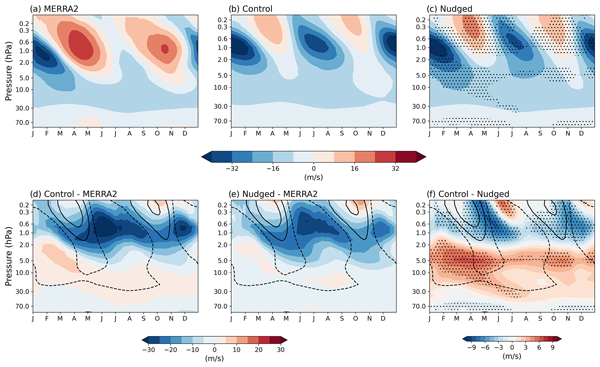
This study investigates the systematic biases in equatorial wave forcing of the quasi-biennial oscillation (QBO) by comparing internally generated and bias-corrected experiments using a multi-model ensemble. Although nudging effectively mitigates QBO biases, systematic biases in wave forcing are not fully resolved. The equatorial wave forcing in the lower stratosphere remains weaker than that in reanalyses, while an eastward wave forcing bias is observed in the mid-to-upper stratosphere.
James A. Anstey, Neal Butchart, Scott Osprey, Yoshio Kawatani, Kevin Hamilton, Jadwiga H. Richter, Tim Stockdale, Martin B. Andrews, Zhaoyang Chai, Paolo Davini, Dong-Chan Hong, Kai Huang, Aleena M. Jaison, Tobias Kerzenmacher, Jeff R. Knight, Pu Lin, Francois Lott, Yixiong Lu, Hiroaki Naoe, Federico Serva, Isla Simpson, Seok-Woo Son, Qi Tang, Shingo Watanabe, Jinbo Xie, and Kohei Yoshida
EGUsphere, https://doi.org/10.5194/egusphere-2026-1165, https://doi.org/10.5194/egusphere-2026-1165, 2026
Short summary
Short summary
We describe experiments where modelled tropical stratosphere winds are adjusted by "nudging" them toward realistic time-evolving eastward and westward Quasi-Biennial Oscillation (QBO) winds. The effects of this bias correction on other atmospheric processes, such as the stratospheric polar vortex or tropical waves that force the QBO, can then be assessed. We describe details of the experiments, the multi-model ensemble that has performed them, and basic validation of the nudging response.
Blanca Ayarzagüena, Amy H. Butler, Peter Hitchcock, Chaim I. Garfinkel, Zac D. Lawrence, Wuhan Ning, Philip Rupp, Zheng Wu, Hilla Afargan-Gerstman, Natalia Calvo, Alvaro de la Cámara, Martin Jucker, Gerbrand Koren, Daniel De Maeseneire, Gloria L. Manney, Marisol Osman, Masakazu Taguchi, Cory Barton, Dong-Chan Hong, Yu-Kyung Hyun, Hera Kim, Jeff Knight, Piero Malguzzi, Daniele Mastrangelo, Jiyoung Oh, Inna Polichtchouk, Jadwiga H. Richter, Isla R. Simpson, Seok-Woo Son, Damien Specq, and Tim Stockdale
Weather Clim. Dynam., 7, 411–437, https://doi.org/10.5194/wcd-7-411-2026, https://doi.org/10.5194/wcd-7-411-2026, 2026
Short summary
Short summary
Sudden Stratospheric Warmings (SSWs) are known to follow a sustained wave dissipation in the stratosphere, which depends on both the tropospheric and stratospheric states. However, the relative role of each state is still unclear. Using a new set of subseasonal to seasonal forecasts, we show that the stratospheric state does not drastically affect the precursors of three recent SSWs, but modulates the stratospheric wave activity, with impacts depending on SSW features.
Wilson Chan, Katie A. Facer-Childs, Maliko Tanguy, Eugene Magee, Burak Bulut, Nicky Stringer, Jeff Knight, and Jamie Hannaford
Hydrol. Earth Syst. Sci., 30, 905–927, https://doi.org/10.5194/hess-30-905-2026, https://doi.org/10.5194/hess-30-905-2026, 2026
Short summary
Short summary
The UK Hydrological Outlook river flow forecasting system recently implemented the Historic Weather Analogues method. The method improves winter river flow forecast skill across the UK, especially in upland, fast-responding catchments with low catchment storage. Forecast skill is highest in winter due to accurate prediction of atmospheric circulation patterns like the North Atlantic Oscillation. The Ensemble Streamflow prediction method remains a robust benchmark, especially for other seasons.
Aleena M. Jaison, Lesley J. Gray, Scott M. Osprey, Jeff R. Knight, and Martin B. Andrews
Weather Clim. Dynam., 5, 1489–1504, https://doi.org/10.5194/wcd-5-1489-2024, https://doi.org/10.5194/wcd-5-1489-2024, 2024
Short summary
Short summary
Models have biases in semi-annual oscillation (SAO) representation, mainly due to insufficient eastward wave forcing. We examined if the bias is from increased wave absorption due to circulation biases in the low–middle stratosphere. Alleviating biases at lower altitudes improves the SAO, but substantial bias remains. Alternative methods like gravity wave parameterization changes should be explored to enhance the modelled SAO, potentially improving sudden stratospheric warming predictability.
Alison L. Kay, Nick Dunstone, Gillian Kay, Victoria A. Bell, and Jamie Hannaford
Nat. Hazards Earth Syst. Sci., 24, 2953–2970, https://doi.org/10.5194/nhess-24-2953-2024, https://doi.org/10.5194/nhess-24-2953-2024, 2024
Short summary
Short summary
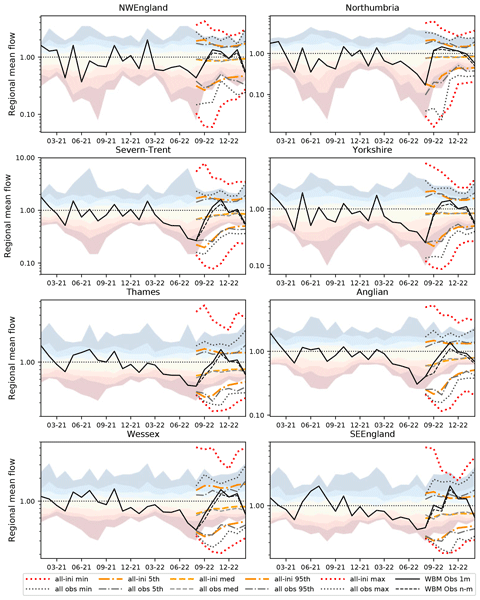
Hydrological hazards affect people and ecosystems, but extremes are not fully understood due to limited observations. A large climate ensemble and simple hydrological model are used to assess unprecedented but plausible floods and droughts. The chain gives extreme flows outside the observed range: summer 2022 ~ 28 % lower and autumn 2023 ~ 42 % higher. Spatial dependence and temporal persistence are analysed. Planning for such events could help water supply resilience and flood risk management.
Adam Griffin, Alison L. Kay, Paul Sayers, Victoria Bell, Elizabeth Stewart, and Sam Carr
Hydrol. Earth Syst. Sci., 28, 2635–2650, https://doi.org/10.5194/hess-28-2635-2024, https://doi.org/10.5194/hess-28-2635-2024, 2024
Short summary
Short summary
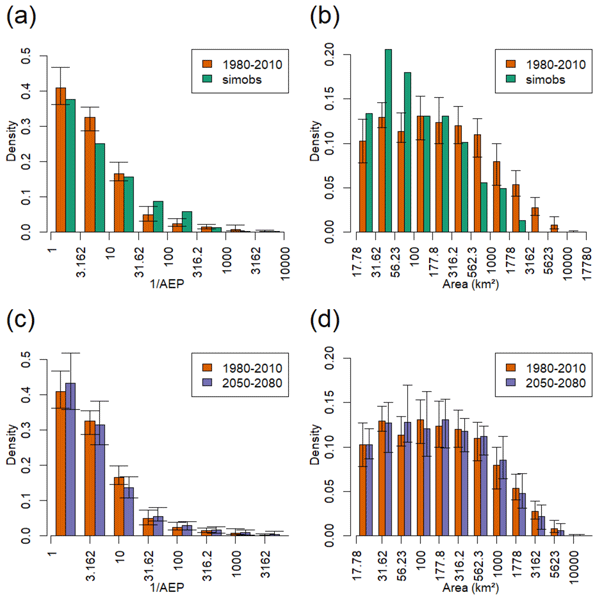
Widespread flooding is a major problem in the UK and is greatly affected by climate change and land-use change. To look at how widespread flooding changes in the future, climate model data (UKCP18) were used with a hydrological model (Grid-to-Grid) across the UK, and 14 400 events were identified between two time slices: 1980–2010 and 2050–2080. There was a strong increase in the number of winter events in the future time slice and in the peak return periods.
Simon Parry, Jonathan D. Mackay, Thomas Chitson, Jamie Hannaford, Eugene Magee, Maliko Tanguy, Victoria A. Bell, Katie Facer-Childs, Alison Kay, Rosanna Lane, Robert J. Moore, Stephen Turner, and John Wallbank
Hydrol. Earth Syst. Sci., 28, 417–440, https://doi.org/10.5194/hess-28-417-2024, https://doi.org/10.5194/hess-28-417-2024, 2024
Short summary
Short summary
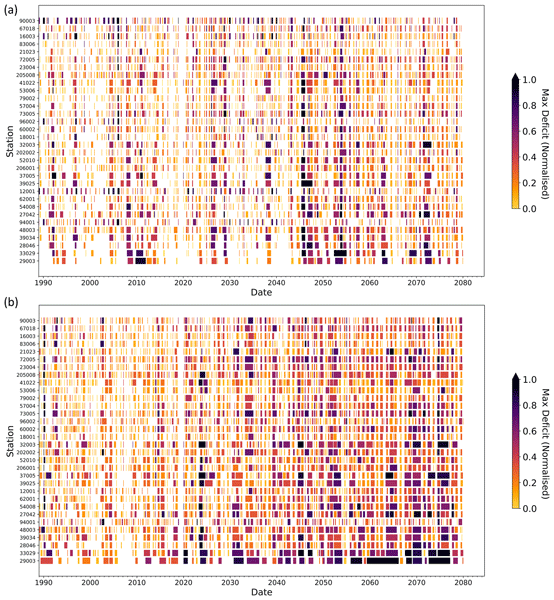
We studied drought in a dataset of possible future river flows and groundwater levels in the UK and found different outcomes for these two sources of water. Throughout the UK, river flows are likely to be lower in future, with droughts more prolonged and severe. However, whilst these changes are also found in some boreholes, in others, higher levels and less severe drought are indicated for the future. This has implications for the future balance between surface water and groundwater below.
Emma L. Robinson, Matthew J. Brown, Alison L. Kay, Rosanna A. Lane, Rhian Chapman, Victoria A. Bell, and Eleanor M. Blyth
Earth Syst. Sci. Data, 15, 4433–4461, https://doi.org/10.5194/essd-15-4433-2023, https://doi.org/10.5194/essd-15-4433-2023, 2023
Short summary
Short summary
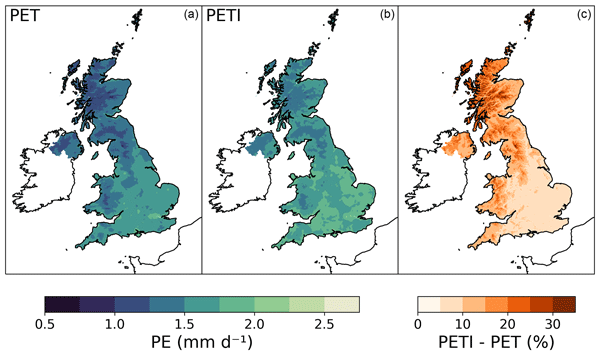
This work presents two new Penman–Monteith potential evaporation datasets for the UK, calculated with the same methodology applied to historical climate data (Hydro-PE HadUK-Grid) and an ensemble of future climate projections (Hydro-PE UKCP18 RCM). Both include an optional correction for evaporation of rain that lands on the surface of vegetation. The historical data are consistent with existing PE datasets, and the future projections include effects of rising atmospheric CO2 on vegetation.
Alison L. Kay, Victoria A. Bell, Helen N. Davies, Rosanna A. Lane, and Alison C. Rudd
Earth Syst. Sci. Data, 15, 2533–2546, https://doi.org/10.5194/essd-15-2533-2023, https://doi.org/10.5194/essd-15-2533-2023, 2023
Short summary
Short summary
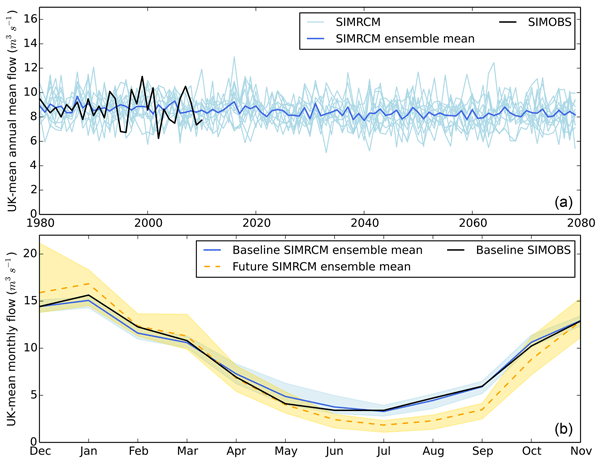
Climate change will affect the water cycle, including river flows and soil moisture. We have used both observational data (1980–2011) and the latest UK climate projections (1980–2080) to drive a national-scale grid-based hydrological model. The data, covering Great Britain and Northern Ireland, suggest potential future decreases in summer flows, low flows, and summer/autumn soil moisture, and possible future increases in winter and high flows. Society must plan how to adapt to such impacts.
Jamie Hannaford, Jonathan D. Mackay, Matthew Ascott, Victoria A. Bell, Thomas Chitson, Steven Cole, Christian Counsell, Mason Durant, Christopher R. Jackson, Alison L. Kay, Rosanna A. Lane, Majdi Mansour, Robert Moore, Simon Parry, Alison C. Rudd, Michael Simpson, Katie Facer-Childs, Stephen Turner, John R. Wallbank, Steven Wells, and Amy Wilcox
Earth Syst. Sci. Data, 15, 2391–2415, https://doi.org/10.5194/essd-15-2391-2023, https://doi.org/10.5194/essd-15-2391-2023, 2023
Short summary
Short summary
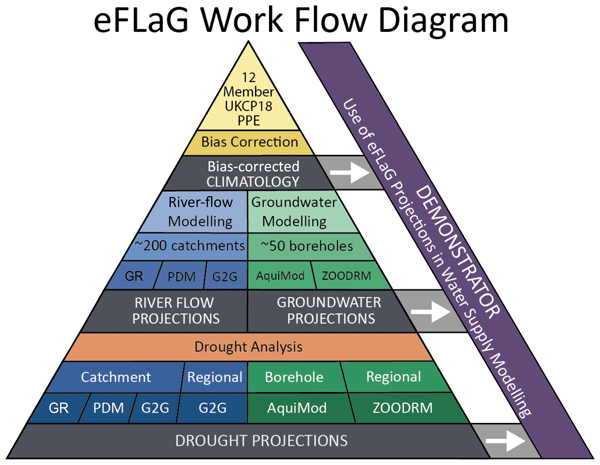
The eFLaG dataset is a nationally consistent set of projections of future climate change impacts on hydrology. eFLaG uses the latest available UK climate projections (UKCP18) run through a series of computer simulation models which enable us to produce future projections of river flows, groundwater levels and groundwater recharge. These simulations are designed for use by water resource planners and managers but could also be used for a wide range of other purposes.
Peter Hitchcock, Amy Butler, Andrew Charlton-Perez, Chaim I. Garfinkel, Tim Stockdale, James Anstey, Dann Mitchell, Daniela I. V. Domeisen, Tongwen Wu, Yixiong Lu, Daniele Mastrangelo, Piero Malguzzi, Hai Lin, Ryan Muncaster, Bill Merryfield, Michael Sigmond, Baoqiang Xiang, Liwei Jia, Yu-Kyung Hyun, Jiyoung Oh, Damien Specq, Isla R. Simpson, Jadwiga H. Richter, Cory Barton, Jeff Knight, Eun-Pa Lim, and Harry Hendon
Geosci. Model Dev., 15, 5073–5092, https://doi.org/10.5194/gmd-15-5073-2022, https://doi.org/10.5194/gmd-15-5073-2022, 2022
Short summary
Short summary
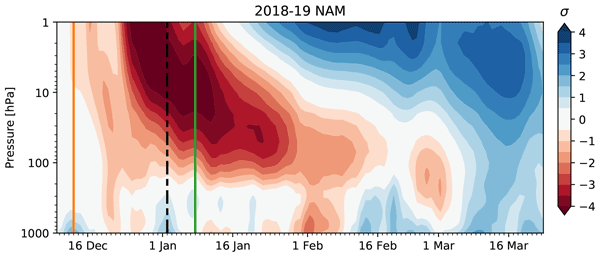
This paper describes an experimental protocol focused on sudden stratospheric warmings to be carried out by subseasonal forecast modeling centers. These will allow for inter-model comparisons of these major disruptions to the stratospheric polar vortex and their impacts on the near-surface flow. The protocol will lead to new insights into the contribution of the stratosphere to subseasonal forecast skill and new approaches to the dynamical attribution of extreme events.
Cited articles
Alfieri, L., Burek, P., Dutra, E., Krzeminski, B., Muraro, D., Thielen, J., and Pappenberger, F.: GloFAS – global ensemble streamflow forecasting and flood early warning, Hydrol. Earth Syst. Sci., 17, 1161–1175, https://doi.org/10.5194/hess-17-1161-2013, 2013.
Anghileri, D., Voisin, N., Castelletti, A., Pianosi, F., Nijssen, B., and Lettenmaier, D. P.: Value of long-term streamflow forecasts to reservoir operations for water supply in snow-dominated river catchments, Water Resour. Res., 52, 4209–4225, https://doi.org/10.1002/2015WR017864, 2016.
Arribas, A., Glover, M., Maidens, A., Peterson, K., Gordon, M., MacLachlan, C., Graham, R., Fereday, D., Camp, J., Scaife, A. A., Xavier, P., McLean, P., Colman, A., and Cusack, S.: The GloSea4 Ensemble Prediction System for Seasonal Forecasting, Mon. Weather Rev., 139, 1891–1910, https://doi.org/10.1175/2010MWR3615.1, 2011.
Baker, L. H., Shaffrey, L. C., Scaife, A. A.: Improved seasonal prediction of UK regional precipitation using atmospheric circulation, Int. J. Climatol., 38, e437-e453, https://doi.org/10.1002/joc.5382, 2017.
Bell, V. A., Kay, A. L., Jones, R. G., Moore, R. J., and Reynard, N. S.: Use of soil data in a grid-based hydrological model to estimate spatial variation in changing flood risk across the UK, J. Hydrol., 377, 335–350, https://doi.org/10.1016/j.jhydrol.2009.08.031, 2009.
Bell, V. A., Kay, A. L., Cole, S. J., Jones, R. G., Moore, R. J., and Reynard, N. S.: How might climate change affect river flows across the Thames Basin? An area-wide analysis using the UKCP09 Regional Climate Model ensemble, J. Hydrol., 442–443, 89–104, https://doi.org/10.1016/j.jhydrol.2012.04.001, 2012.
Bell, V. A., Davies, H. N., Kay, A. L., Marsh, T. J., Brookshaw, A., and Jenkins, A.: Developing a large-scale water-balance approach to seasonal forecasting: application to the 2012 drought in Britain, Hydrol. Process., 27, 3003–3012, https://doi.org/10.1002/hyp.9863, 2013.
Bell, V. A., Kay, A. L., Davies, H. N., and Jones, R. G.: An assessment of the possible impacts of climate change on snow and peak river flows across Britain, Climatic Change, 136, 539–553, https://doi.org/10.1007/s10584-016-1637-x, 2016.
Bell, V. A., Davies, H. N., Kay, A. L., Brookshaw, A., and Scaife, A. A.: A national-scale seasonal hydrological forecast system: development and evaluation over Britain, Hydrol. Earth Syst. Sci., 21, 4681–4691, https://doi.org/10.5194/hess-21-4681-2017, 2017.
Boorman, D. B. and Turner, S.: Assessing the skill of the UK Hydrological Outlook, Hydrolog. Sci. J., 64, 1932–1942, https://doi.org/10.1080/02626667.2019.1679375, 2019.
Boorman, D. B., Hollis, J. M., and Lilly, A.: Hydrology of soil types: a hydrologically-based classification of the soils of United Kingdom, IH Report no. 26, Institute of Hydrology, Wallingford, 146 p., https://nora.nerc.ac.uk/id/eprint/7369/ (last access: 29 September 2026), 1995.
Brown, T. A.: Admissible scoring systems for continuous distributions, Manuscript P-5235, The Rand Corporation, Santa Monica, CA, 22 pp., https://www.rand.org/content/dam/rand/pubs/papers/2008/P5235.pdf (last access: 29 September 2026), 1974.
Buizza, R. and Palmer, T. N.: Impact of Ensemble Size on Ensemble Prediction, Mon. Weather Rev., 126, 2503–2518, https://doi.org/10.1175/1520-0493(1998)126<2503:IOESOE>2.0.CO;2, 1998.
Chan, W., Facer-Childs, K. A., Tanguy, M., Magee, E., Bulut, B., Stringer, N., Knight, J., and Hannaford, J.: UK Hydrological Outlook using Historic Weather Analogues, Hydrol. Earth Syst. Sci., 30, 905–927, https://doi.org/10.5194/hess-30-905-2026, 2026.
Copernicus Climate Change Service, Climate Data Store: Seasonal forecast monthly statistics on single levels, Copernicus Climate Change Service (C3S) Climate Data Store (CDS) [data set], https://doi.org/10.24381/cds.68dd14c3, 2018.
Day, G. N.: Extended Streamflow Forecasting Using NWSRFS, J. Water Res. Pl. Man., 111, 157–170, https://doi.org/10.1061/(ASCE)0733-9496(1985)111:2(157), 1985.
Demargne, J., Wu, L., Regonda, S. K., Brown, J. D., Lee, H., He, M., Seo, D., Hartman, R., Herr, H. D., Fresch, M., Schaake, J., and Zhu, Y.: The Science of NOAA's Operational Hydrologic Ensemble Forecast Service, B. Am. Meteorol. Soc., 95, 79–98, https://doi.org/10.1175/BAMS-D-12-00081.1, 2014.
Donegan, S., Murphy, C., Harrigan, S., Broderick, C., Foran Quinn, D., Golian, S., Knight, J., Matthews, T., Prudhomme, C., Scaife, A. A., Stringer, N., and Wilby, R. L.: Conditioning ensemble streamflow prediction with the North Atlantic Oscillation improves skill at longer lead times, Hydrol. Earth Syst. Sci., 25, 4159–4183, https://doi.org/10.5194/hess-25-4159-2021, 2021.
Dunstone, N., Smith, D., Scaife, A., Hermanson, L., Eade, R., Robinson, N., Andrews, M., and Knight, J.: Skilful predictions of the winter North Atlantic Oscillation one year ahead, Nat. Geosci., 9, 809–814, https://doi.org/10.1038/ngeo2824, 2016.
Epstein, E. S.: A Scoring System for Probability Forecasts of Ranked Categories, J. Appl. Meteorol. Clim., 8, 985–987, https://doi.org/10.1175/1520-0450(1969)008<0985:ASSFPF>2.0.CO;2, 1969.
Ferro, C. A. T.: Fair scores for ensemble forecasts, Q. J. Roy. Meteor. Soc., 140, 1917–1923, https://doi.org/10.1002/qj.2270, 2014.
Gustard, A., Bullock, A., and Dixon, J. M.: Low flow estimation in the United Kingdom, IH Report No. 108, Institute of Hydrology, Wallingford, 88 pp., https://nora.nerc.ac.uk/id/eprint/6050/ (last access: 29 September 2026), 1992.
Fisher, R. A., and Yates, F.: Statistical tables: for biological, agricultural and medical research, 6th edn., Oliver & Boyd, Edinburgh, ISBN 0-05-000872-2, 1963.
Formetta, G., Prosdocimi, I., Stewart, E., and Bell, V. A.: Estimating the index flood with continuous hydrological models: an application in Great Britain, Hydrol. Res., 49, 123–133, 2018.
Hamlet, A. F., Huppert, D., and Lettenmaier, D. P.: Economic Value of Long-Lead Streamflow Forecasts for Columbia River Hydropower, J. Water Res. Pl. Man., 128, 91–101, https://doi.org/10.1061/(ASCE)0733-9496(2002)128:2(91), 2002.
Harrigan, S., Prudhomme, C., Parry, S., Smith, K., and Tanguy, M.: Benchmarking ensemble streamflow prediction skill in the UK, Hydrol. Earth Syst. Sci., 22, 2023–2039, https://doi.org/10.5194/hess-22-2023-2018, 2018.
Hersbach, H.: Decomposition of the Continuous Ranked Probability Score for Ensemble Prediction Systems, Weather Forecast., 15, 559–570, https://doi.org/10.1175/1520-0434(2000)015<0559:DOTCRP>2.0.CO;2, 2000.
Hollis, D., McCarthy, M., Kendon, M., Legg, T., and Simpson, I.: HadUK-Grid – A new UK dataset of gridded climate observations, Geosci. Data J., 6, 151–159, https://doi.org/10.1002/gdj3.78, 2019.
Hough, M. N. and Jones, R. J. A.: The United Kingdom Meteorological Office rainfall and evaporation calculation system: MORECS version 2.0-an overview, Hydrol. Earth Syst. Sci., 1, 227–239, https://doi.org/10.5194/hess-1-227-1997, 1997.
Jackson-Blake, L. A., Clayer, F., de Eyto, E., French, A. S., Frías, M. D., Mercado-Bettín, D., Moore, T., Puértolas, L., Poole, R., Rinke, K., Shikhani, M., van der Linden, L., and Marcé, R.: Opportunities for seasonal forecasting to support water management outside the tropics, Hydrol. Earth Syst. Sci., 26, 1389–1406, https://doi.org/10.5194/hess-26-1389-2022, 2022.
Jenkins, A., Dixon, H., Barlow, V., Smith, K., Cullmann, J., Berod, D., Kim, H., Schwab, M., and Silva Vara, L. R.: HydroSOS – The Hydrological Status and Outlook System towards providing information for better water management, WMO Bulletin, 69, 14–19, https://library.wmo.int/idurl/4/57750 (last access: 29 September 2026), 2020.
Johansson, Å.: Prediction Skill of the NAO and PNA from Daily to Seasonal Time Scales, J. Climate, 20, 1957–1975, https://doi.org/10.1175/JCLI4072.1, 2007.
Johnson, S. J., Stockdale, T. N., Ferranti, L., Balmaseda, M. A., Molteni, F., Magnusson, L., Tietsche, S., Decremer, D., Weisheimer, A., Balsamo, G., Keeley, S. P. E., Mogensen, K., Zuo, H., and Monge-Sanz, B. M.: SEAS5: the new ECMWF seasonal forecast system, Geosci. Model Dev., 12, 1087–1117, https://doi.org/10.5194/gmd-12-1087-2019, 2019.
Kay, A. L., Davies, H. N., Lane, R. A., Rudd, A. C., and Bell, V. A.: Grid-based simulation of river flows in Northern Ireland: Model performance and future flow changes, J. Hydrol: Reg. Studies, 38, 100967, https://doi.org/10.1016/j.ejrh.2021.100967, 2021.
Kay, A. L., Rudd, A. C., and Coulson, J.: Spatial downscaling of precipitation for hydrological modelling: Assessing a simple method and its application under climate change in Britain, Hydrol. Process., 37, 14823, https://doi.org/10.1002/hyp.14823, 2023.
Kendon, M., Marsh, T., and Parry, S.: The 2010–2012 drought in England and Wales, Weather, 68, 88–95, https://doi.org/10.1002/wea.2101, 2013.
Kettleborough, J. A., Davis, P. J., Comer, R. E., Martin, M. J., Barbosa Aguiar, A., Collier, T., Scaife, A. A., Clark, A., Mancell, J., Smout-Day, K. A., and Hardiman, S. C.: Global Seasonal Forecasting System 6 (GloSea6): A Large Ensemble Seasonal Forecasting System, Mon. Weather Rev., 154, 39–57, https://doi.org/10.1175/MWR-D-25-0007.1, 2026.
Kharin, V. V., Merryfield, W. J., Boer, G. J., and Lee, W.-S.: A Postprocessing Method for Seasonal Forecasts Using Temporally and Spatially Smoothed Statistics, Mon. Weather Rev., 145, 3545–3561, https://doi.org/10.1175/MWR-D-16-0337.1, 2017.
Kim, H., Webster, P. J., Curry, J. A.: Seasonal Prediction skill of ECMWF System 4 and NCEP CFSv2 retrospective forecast for the Northern Hemisphere Winter, Clim. Dynam., 39, 2957–2973, https://doi.org/10.1007/s00382-012-1364-6, 2012.
Kirtman, B. P., Min, D., Infanti, J. M., Kinter III, J. L., Paolino, D. A., Zhang, Q., van den Dool, H., Saha, S., Mendez, M. P., Becker, E., Peng, P., Tripp, P., Huang, J., DeWitt, D. G., Tippett, M. K., Barnston, A. G., Li, S., Rosati, A., Schubert, S. D., Rienecker, M., Suarez, M., Li, Z. E., Marshak, J., Lim, Y.-K., Tribbia, J., Pegion, K., Merryfield, W. J., Denis, B., and Wood, E. F.: The North American Multimodel Ensemble: Phase-1 Seasonal-to-Interannual Prediction; Phase-2 toward Developing Intraseasonal Prediction, B. Am. Meteorol. Soc., 95, 585–601, https://doi.org/10.1175/BAMS-D-12-00050.1, 2014.
Knight, J. R. and Scaife, A. A.: Influences on North-Atlantic summer climate from the El Niño-Southern Oscillation, Q. J. Roy. Meteor. Soc., 150, 4498–4510, https://doi.org/10.1002/qj.4826, 2024.
Lockwood, J. F., Stringer, N., Hodge, K. R., Bett, P. E., Knight, J., Smith, D., Scaife, A. A., Patterson, M., Dunstone, N., and Thornton, H. E.: Seasonal prediction of UK mean and extreme winds, Q. J. Roy. Meteor. Soc., 149, 3477–3489, https://doi.org/10.1002/qj.4568, 2023.
MacLachlan, C., Arribas, A., Peterson, K. A., Maidens, A., Fereday, D., Scaife, A. A., Gordon, M., Vellinga, M., Williams, A., Comer, R. E., Camp, J., Xavier, P., and Madec, G.: Global Seasonal forecast system version 5 (GloSea5): a high-resolution seasonal forecast system, Q. J. Roy. Meteor. Soc., 141, 1072–1084, https://doi.org/10.1002/qj.2396, 2015.
Mason, I.: A model for assessment of weather forecasts, Aust. Meteorol. Mag., 30, 291–303, https://doi.org/10.1071/ES82036, 1982.
Mason, S. J. and Graham, N. E.: Conditional Probabilities, Relative Operating Characteristics, and Relative Operating Levels, Weather Forecast., 14, 713–725, https://doi.org/10.1175/1520-0434(1999)014<0713:CPROCA>2.0.CO;2, 1999.
Matheson, J. E. and Winkler, R. L.: Scoring Rules for Continuous Probability Distributions, Manage. Sci., 22, 1087–1096, https://doi.org/10.1287/mnsc.22.10.1087, 1976.
Met Office; Hollis, D., Carlisle, E., Kendon, M., Packman, S., and Doherty, A.: HadUK-Grid Gridded Climate Observations on a 1 km grid over the UK, v1.3.0.ceda (1836-2023), NERC EDS Centre for Environmental Data Analysis [data set], https://doi.org/10.5285/b963ead70580451aa7455782224479d5, 2024.
Moore, R. J.: The PDM rainfall-runoff model, Hydrol. Earth Syst. Sci., 11, 483–499, https://doi.org/10.5194/hess-11-483-2007, 2007.
Müller, W. A., Appenzeller, C., Doblas-Reyes, F. J., and Liniger, M. A.: A Debiased Ranked Probability Skill Score to Evaluate Probabilistic Ensemble Forecasts with Small Ensemble Sizes, J. Climate, https://doi.org/10.1175/JCLI3361.1, 2005.
Murphy, A. H.: A Note on the Ranked Probability Score, J. Appl. Meteorol. Clim., 10, 155–156, https://doi.org/10.1175/1520-0450(1971)010<0155:ANOTRP>2.0.CO;2, 1971.
Murphy, S. J., Washington, R., Downing, T. E., Martin, R. V., Ziervogel, G., Preston, A., Todd, M., Butterfield, R., and Briden, J.: Seasonal Forecasting for Climate Hazards: Prospects and Responses, Nat. Hazards, 23, 171–196, https://doi.org/10.1023/A:1011160904414, 2001.
Nash, J. E., and Sutcliffe, J., V.: River flow forecasting through conceptual models part I — A discussion of principles, J. Hydrol., 10, 282–290, https://doi.org/10.1016/0022-1694(70)90255-6, 1970.
Nikraftar, Z., Mbuvha, R., Sadegh, M., and Landman, W. A.: Impact-Based Skill Evaluation of Seasonal Precipitation Forecasts, Earths Future, 12, e2024EF004936, https://doi.org/10.1029/2024EF004936, 2024.
Peñuela, A., Hutton, C., and Pianosi, F.: Assessing the value of seasonal hydrological forecasts for improving water resource management: insights from a pilot application in the UK, Hydrol. Earth Syst. Sci., 24, 6059–6073, https://doi.org/10.5194/hess-24-6059-2020, 2020.
Portele, T. C., Lorenz, C., Dibrani, B., Laux, P., Bliefernicht, J., and Kunstmann, H.: Seasonal forecasts offer economic benefit for hydrological decision making in semi-arid regions, Sci. Rep., 11, 10581, https://doi.org/10.1038/s41598-021-89564-y, 2021.
Prudhomme, C., Hannaford, J., Harrigan, S., Boorman, D., Knight, J., Bell, V. A., Jackson, C., Svensson, C., Parry, S., Bachiller-Jareno, N., Davies, H. N., Davis, R., Mackay, J., McKenzie, A., Rudd, A., Smith, K., Bloomfield, J., Ward, R., and Jenkins, A.: Hydrological Outlook UK: an operational streamflow and groundwater level forecasting system at monthly to seasonal time scales, Hydrolog. Sci. J., 62, 2753–2768, https://doi.org/10.1080/02626667.2017.1395032, 2017.
Quaglia, C. F., Terzago, S., and von Hardenberg, J.: Temperature and precipitation seasonal forecasts over the Mediterranean region: added value compared to simple forecasting methods, Clim. Dynam., 58, 2167–2191, https://doi.org/10.1007/s00382-021-05895-6, 2022.
Rameshwaran, P., Bell, V. A., Brown, M. J., Davies, H. N., Kay, A. L., Rudd, A. C., and Sefton, C.: Use of abstraction and discharge data to improve the performance of a national-scale hydrological model, Water Resour. Res., 5, e2021WR029787, https://doi.org/10.1029/2021WR029787, 2022.
Rudd, A., Bell, V. A., and Kay, A.: National-scale analysis of simulated hydrological droughts (1891–2015), J. Hydrol., 550, 368–385, https://doi.org/10.1016/j.jhydrol.2017.05.018, 2017.
Scaife, A. A. and Smith, D.: A signal-to-noise paradox in climate science, npj Clim. Atmos. Sci., 1, 28, https://doi.org/10.1038/s41612-018-0038-4, 2018.
Scaife, A. A., Arribas, A., Blockley, E., Brookshaw, A., Clark, R. T., Dunstone, N., Eade, R., Fereday, D., Folland, C. K., Gordon, M., Hermanson, L., Knight, J. R., Lea, D. J., MacLachlan, C., Maidens, A., Martin, M., Peterson, A. K., Smith, D., Vellinga, M., Wallace, E., Waters, J., and Williams, A.: Skillful long-range prediction of European and North American winters, Geophys. Res. Lett., 41, 2514–2519, https://doi.org/10.1002/2014GL059637, 2014.
Schepen, A. and Wang, Q. J.: Model averaging methods to merge operational statistical and dynamic seasonal streamflow forecasts in Australia, Water Resour. Res., 51, 1797–1812, https://doi.org/10.1002/2014WR016163, 2015.
Schepen, A., Zhao, T., Wang, Q. J., and Robertson, D. E.: A Bayesian modelling method for post-processing daily sub-seasonal to seasonal rainfall forecasts from global climate models and evaluation for 12 Australian catchments, Hydrol. Earth Syst. Sci., 22, 1615–1628, https://doi.org/10.5194/hess-22-1615-2018, 2018.
Sheffield, J., Wood, E. F., Chaney, N., Guan, K., Sadri, S., Yuan, X., Olang, L., Amani, A., Ali, A., Demuth, S., and Ogallo, L.: A Drought Monitoring and Forecasting System for Sub-Sahara African Water Resources and Food Security, B. Am. Meteorol. Soc., 95, 861–882, https://doi.org/10.1175/BAMS-D-12-00124.1, 2014.
Slater, L. J., Villarini, G., and Bradley, A. A.: Evaluation of the skill of North-American Multi-Model Ensemble (NMME) Global Climate Models in predicting average and extreme precipitation and temperature over the continental USA, Clim. Dynam., 53, 7381–7396, https://doi.org/10.1007/s00382-016-3286-1, 2019.
Stringer, N., Knight, J., and Thornton, H.: Improving Meteorological Seasonal Forecasts for Hydrological Modeling in European Winter, J. Appl. Meteorol. Clim., 59, 317–332, https://doi.org/10.1175/JAMC-D-19-0094.1, 2020.
Svensson, C.: Seasonal UK river flow forecasts based on persistence and historical analogy, in: Geophysical Research Abstracts, EGU General Assembly, Vienna, Austria, EGU2014-3868, https://meetingorganizer.copernicus.org/EGU2014/EGU2014-3868.pdf (last access: 29 September 2026), 2014.
Svensson, C.: Seasonal river flow forecasts for the United Kingdom using persistence and historical analogues, Hydrolog. Sci. J., 61, 19–35, https://doi.org/10.1080/02626667.2014.992788, 2016.
Svensson, C., Brookshaw, A., Scaife, A. A., Bell, V. A., Mackay, J. D., Jackson, C. R., Hannaford, J., Davies, H. N., Arribas, A., and Stanley, S.: Long-range forecasts of UK winter hydrology, Environ. Res. Lett., 10, 064006, https://doi.org/10.1088/1748-9326/10/6/064006, 2015.
Swets, J. A.: The Relative Operating Characteristic in Psychology, Science, 182, 990–1000, https://doi.org/10.1126/science.182.4116.990, 1973.
Thornton, H. E., Smith, D. M., Scaife, A. A., and Dunstone, N. J.: Seasonal Predictability of the East Atlantic Pattern in Late Autumn and Early Winter, Geophys. Res. Lett., 50, e2022GL100712, https://doi.org/10.1029/2022GL100712, 2023.
Vitart, F. and Robertson, A. W.: The sub-seasonal to seasonal prediction project (S2S) and the prediction of extreme events, npj Clim. Atmos. Sci., 1, 1–7, https://doi.org/10.1038/s41612-018-0013-0, 2018.
Wang, Q. J., Shao, Y., Song, Y., Schepen, A., Robertson, D. E., Ryu, D., Pappenburger, F.: An evaluation of ECMWF SEAS5 seasonal climate forecasts for Australia using a new forecast calibration algorithm, Environ. Modell. Softw., 122, 104550, https://doi.org/10.1016/j.envsoft.2019.104550, 2019.
Weigel, A. P., Liniger, M. A., and Appenzeller, C.: The Discrete Brier and Ranked Probability Skill Scores, Mon. Weather Rev., 135, 118–124, https://doi.org/10.1175/MWR3280.1, 2007.
Weisheimer, A., Baker, L. H., Bröcker, J., Garfinkel, C. I., Hardiman, S. C., Hodson, D. L. R., Palmer, T. N., Robson, J. I., Scaife, A. A., Screen, J. A., Shepherd, T. G., Smith, D. M., and Sutton, R. T.: The Signal-to-Noise Paradox in Climate Forecasts: Revisiting Our Understanding and Identifying Future Priorities, B. Am. Meteorol. Soc., 105(3), E651-E659, https://doi.org/10.1175/BAMS-D-24-0019.1, 2024.
West, H., Quinn, N., and Horswell, M.: Spatio-Temporal Variability in North Atlantic Oscillation Monthly Rainfall Signatures in Great Britain, Atmosphere, 21, 763, https://doi.org/10.3390/atmos12060763, 2021.
White, C. J., Franks, S. W., and McEvoy, D.: Using subseasonal-to-seasonal (S2S) extreme rainfall forecasts for extended-range flood prediction in Australia, Proc. IAHS, 370, 229–234, https://doi.org/10.5194/piahs-370-229-2015, 2015.
Wilks, D. S.: Statistical Methods in the Atmospheric Sciences, 3rd edn., Academic Press, Oxford, ISBN 978-0-12-385022-5, 2011.
Williams, K. D., Copsey, D., Blockley, E. W., Bodas-Salcedo, A., Calvert, D., Comer, R., Davis, P., Graham, T., Hewitt, H. T., Hill, R., Hyder, P., Ineson, S., Johns, T. C., Keen, A. B., Lee, R. W., Megann, A., Milton, S. F., Rae, J. G. L., Roberts, M. J., Scaife, A. A., Schiemann, R., Storkey, D., Thorpe, L., Watterson, I. G., Walters, D. N., West, A., Wood, R. A., Woollings, T., and Xavier, P. K.: The Met Office Global Coupled Model 3.0 and 3.1 (GC3.0 and GC3.1) Configurations, J. Adv. Model. Earth Sy., 10, 357–380, https://doi.org/10.1002/2017MS001115, 2018.
Zhao, T., Bennet, J. C., Wang, Q. J., Schepen, A., Wood, A. W., Robertson, D. E., and Ramos, M.-H.: How suitable is quantile mapping for postprocessing GCM precipitation forecasts?, J. Climate, 30, 3185–3196, https://doi.org/10.1175/JCLI-D-16-0652.1, 2017.
Short summary
River flow forecasts up to three months ahead can allow early preparations for future floods and droughts. We test a new forecasting system using weather forecasts made by selecting historical weather patterns that match current conditions and running them through a simulation of Great Britain's rivers. Our tests show that this system performs particularly well in the winter and spring, in northern Scotland and in southern England. We now use this system to produce forecasts regularly.
River flow forecasts up to three months ahead can allow early preparations for future floods and...


