
Articles | Volume 30, issue 17
https://doi.org/10.5194/hess-30-5769-2026
© Author(s) 2026. This work is distributed under
the Creative Commons Attribution 4.0 License.
the Creative Commons Attribution 4.0 License.
https://doi.org/10.5194/hess-30-5769-2026
© Author(s) 2026. This work is distributed under
the Creative Commons Attribution 4.0 License.
the Creative Commons Attribution 4.0 License.
Research article
| 
14 Sep 2026
Research article |
| 14 Sep 2026
| 14 Sep 2026
Impacts of Mediterranean snow droughts on mountain socio-ecohydrology
Francesco Avanzi
CORRESPONDING AUTHOR

CIMA Research Foundation, Via Armando Magliotto 2, Savona, 17100, Italy
Stefano Terzi
Eurac Research, Viale Druso 1, 39100, Bolzano, Italy
Mariapina Castelli
Eurac Research, Viale Druso 1, 39100, Bolzano, Italy
Francesca Munerol
CIMA Research Foundation, Via Armando Magliotto 2, Savona, 17100, Italy
Margherita Andreaggi
CIMA Research Foundation, Via Armando Magliotto 2, Savona, 17100, Italy
Marta Galvagno
Climate Change Unit, Environmental Protection Agency of Aosta Valley, Loc. La Maladière, 48-11020, Saint-Christophe, Italy
Andrea Galletti
Eurac Research, Viale Druso 1, 39100, Bolzano, Italy
Tessa Maurer
CIMA Research Foundation, Via Armando Magliotto 2, Savona, 17100, Italy
Blue Forest, Sacramento, CA 95822, USA
Christian Massari
National Research Council (CNR), Research Institute for Geo-Hydrological Protection, Perugia, 06126, Italy
Grace Carlson
Department of Environmental Science, Policy, and Management, University of California, Berkeley, Berkeley, CA 94720, USA
Manuela Girotto
Department of Environmental Science, Policy, and Management, University of California, Berkeley, Berkeley, CA 94720, USA
Giacomo Bertoldi
Eurac Research, Viale Druso 1, 39100, Bolzano, Italy
Edoardo Cremonese
CIMA Research Foundation, Via Armando Magliotto 2, Savona, 17100, Italy
Simone Gabellani
CIMA Research Foundation, Via Armando Magliotto 2, Savona, 17100, Italy
Umberto Morra di Cella
Climate Change Unit, Environmental Protection Agency of Aosta Valley, Loc. La Maladière, 48-11020, Saint-Christophe, Italy
CIMA Research Foundation, Via Armando Magliotto 2, Savona, 17100, Italy
Marco Altamura
CIMA Research Foundation, Via Armando Magliotto 2, Savona, 17100, Italy
Lauro Rossi
CIMA Research Foundation, Via Armando Magliotto 2, Savona, 17100, Italy
Luca Ferraris
CIMA Research Foundation, Via Armando Magliotto 2, Savona, 17100, Italy
Dipartimento di informatica, bioingegneria, robotica e ingegneria dei sistemi – DIBRIS, Università di Genova, Genova, 16126, Italy
Related authors
Martina Leone, Francesco Avanzi, Umberto Morra di Cella, Simone Gabellani, Edoardo Cremonese, Michel Isabellon, Paolo Pogliotti, Riccardo Scotti, Andrea Monti, Luca Ferraris, and Roberto Colombo
Hydrol. Earth Syst. Sci., 30, 4649–4666, https://doi.org/10.5194/hess-30-4649-2026, https://doi.org/10.5194/hess-30-4649-2026, 2026
Short summary
Short summary
We investigated how glaciers helped sustain summer river flow during the severe snow shortages of 2022 and 2023 in the Italian Alps. Using high-resolution modeling and long-term data, we found that glacier melt contributed up to three times more than in average years. This enhanced melt partly compensated for low snow and precipitation, showing the critical role of glaciers in supporting water resources during droughts.
Francesco Avanzi, Hans Lievens, Michael Matiu, Paolo Filippucci, Oscar M. Baez Villanueva, Simone Gabellani, Fabio Delogu, Lorenzo Alfieri, Andrea Libertino, Pere Quintana-Seguì, Diego G. Miralles, Luca Brocca, Christian Massari, and Gabriëlle J. M. De Lannoy
EGUsphere, https://doi.org/10.5194/egusphere-2026-2851, https://doi.org/10.5194/egusphere-2026-2851, 2026
Short summary
Short summary
We developed a new system to map and monitor snow and stored water across large mountain regions using satellite data and computer simulations. Tested in four major European river basins, the system reproduced snow conditions with high accuracy and realistically captured how snow changes with elevation. Because it does not rely on ground measurements, it can help provide consistent information on snow-water resources worldwide, supporting water management and climate adaptation.
Gökhan Sarigil, Mattia Neri, Francesco Avanzi, and Elena Toth
EGUsphere, https://doi.org/10.5194/egusphere-2026-2484, https://doi.org/10.5194/egusphere-2026-2484, 2026
Short summary
Short summary
The study evaluates Snow Water Equivalent estimates from three large-scale land-surface products against a national reference dataset in Italy. Highlighting the performances of the products over the different regions and relating them to the biases in the meteorological forcing, the results provide insights for using SWE estimates in long-term hydro-climatological assessments in Italy and for data selection when evaluating snow dynamics in mountainous regions lacking high-quality benchmark data.
Sofia Ortenzi, Lucio Di Matteo, Daniela Valigi, Marco Donnini, Marco Dionigi, Davide Fronzi, Josie Geris, Fabio Guadagnano, Ivan Marchesini, Paolo Filippucci, Francesco Avanzi, Daniele Penna, and Christian Massari
Hydrol. Earth Syst. Sci., 30, 1755–1778, https://doi.org/10.5194/hess-30-1755-2026, https://doi.org/10.5194/hess-30-1755-2026, 2026
Short summary
Short summary
The study presents an integrated approach to analyze groundwater–surface water interactions in a Central Italy catchment, combining hydrological, hydrochemical–isotopic, thermal drone, and satellite data. Results indicate that fractured limestone aquifers sustain streamflow, with snowmelt accounting for about 18 % of recharge. The workflow is transferable and suitable for similar data-scarce Mediterranean basins.
Domenico De Santis, Silvia Barbetta, Sumit Sen, Viviana Maggioni, Farhad Bahmanpouri, Ashutosh Sharma, Ankit Agarwal, Sagar Gupta, Francesco Avanzi, and Christian Massari
Nat. Hazards Earth Syst. Sci., 26, 1075–1104, https://doi.org/10.5194/nhess-26-1075-2026, https://doi.org/10.5194/nhess-26-1075-2026, 2026
Short summary
Short summary
A conceptual, semi-distributed hydrological model was tailored to simulate high flows in monsoon-dominated, glacier-influenced and flood-prone Himalayan basins. Multi-data calibration using satellite-based glacier mass loss and evapotranspiration estimates improved process realism in data-scarce environments. The proposed modelling approach captured key streamflow features despite significant input uncertainties, proving to be a useful tool for exploring the local hydrological response dynamics.
Giulia Blandini, Francesco Avanzi, Lorenzo Campo, Simone Gabellani, Kristoffer Aalstad, Manuela Girotto, Satoru Yamaguchi, Hiroyuki Hirashima, and Luca Ferraris
The Cryosphere, 19, 4759–4783, https://doi.org/10.5194/tc-19-4759-2025, https://doi.org/10.5194/tc-19-4759-2025, 2025
Short summary
Short summary
Reliable snow water equivalent and snow depth estimates are key for water management in snow regions. To tackle computational challenges in data assimilation, we propose a Long Short-Term Memory neural network for operational use in snow hydrology. Once trained, it reduces computational cost by 70 percent compared to the Ensemble Kalman Filter, with a slight decrease in performances. This deep learning approach provides a scalable, efficient, and cost-effective modeling solution for hydrology.
Paolo Filippucci, Luca Brocca, Luca Ciabatta, Hamidreza Mosaffa, Francesco Avanzi, and Christian Massari
Earth Syst. Sci. Data, 17, 5221–5258, https://doi.org/10.5194/essd-17-5221-2025, https://doi.org/10.5194/essd-17-5221-2025, 2025
Short summary
Short summary
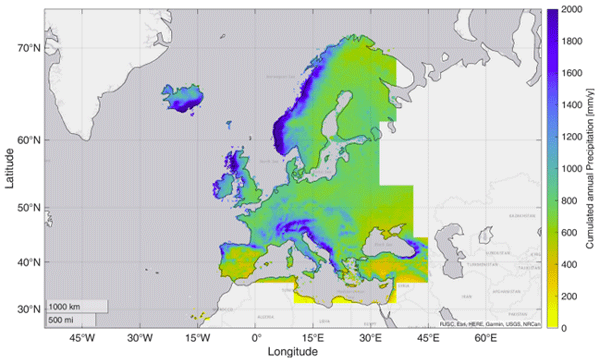
Accurate rainfall data is essential, yet measuring daily precipitation worldwide is challenging. This research presents HYdroclimatic PERformance-enhanced Precipitation (HYPER-P), a dataset combining satellite, ground, and reanalysis data to estimate precipitation at a 1 km scale from 2000 to 2022. HYPER-P improves accuracy, especially in areas with few rain gauges. This dataset supports scientists and decision-makers in understanding and managing water resources more effectively.
Francesca Munerol, Francesco Avanzi, Eleonora Panizza, Marco Altamura, Simone Gabellani, Lara Polo, Marina Mantini, Barbara Alessandri, and Luca Ferraris
Geosci. Commun., 7, 1–15, https://doi.org/10.5194/gc-7-1-2024, https://doi.org/10.5194/gc-7-1-2024, 2024
Short summary
Short summary
To contribute to advancing education in a warming climate and prepare the next generations to play their role in future societies, we designed “Water and Us”, a three-module initiative focusing on the natural and anthropogenic water cycle, climate change, and conflicts. This study aims to introduce the initiative's educational objectives, methods, and early results.
Giulia Blandini, Francesco Avanzi, Simone Gabellani, Denise Ponziani, Hervé Stevenin, Sara Ratto, Luca Ferraris, and Alberto Viglione
The Cryosphere, 17, 5317–5333, https://doi.org/10.5194/tc-17-5317-2023, https://doi.org/10.5194/tc-17-5317-2023, 2023
Short summary
Short summary
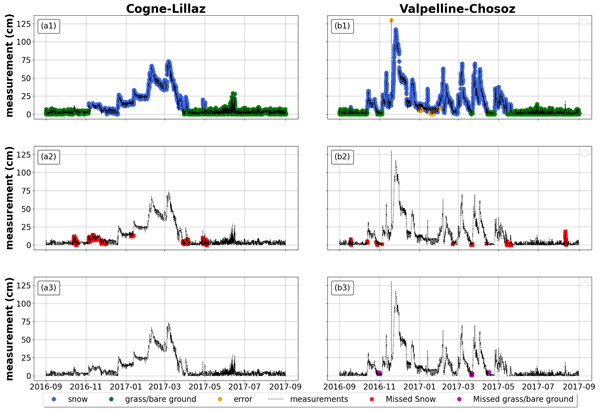
Automatic snow depth data are a valuable source of information for hydrologists, but they also tend to be noisy. To maximize the value of these measurements for real-world applications, we developed an automatic procedure to differentiate snow cover from grass or bare ground data, as well as to detect random errors. This procedure can enhance snow data quality, thus providing more reliable data for snow models.
Francesco Avanzi, Simone Gabellani, Fabio Delogu, Francesco Silvestro, Flavio Pignone, Giulia Bruno, Luca Pulvirenti, Giuseppe Squicciarino, Elisabetta Fiori, Lauro Rossi, Silvia Puca, Alexander Toniazzo, Pietro Giordano, Marco Falzacappa, Sara Ratto, Hervè Stevenin, Antonio Cardillo, Matteo Fioletti, Orietta Cazzuli, Edoardo Cremonese, Umberto Morra di Cella, and Luca Ferraris
Earth Syst. Sci. Data, 15, 639–660, https://doi.org/10.5194/essd-15-639-2023, https://doi.org/10.5194/essd-15-639-2023, 2023
Short summary
Short summary
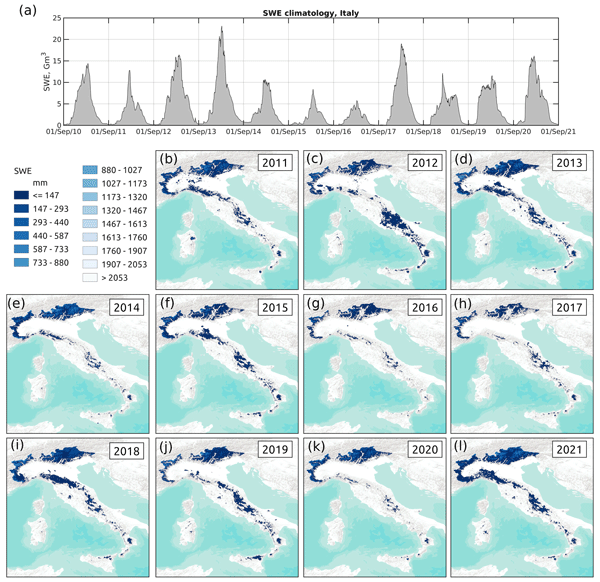
Snow cover has profound implications for worldwide water supply and security, but knowledge of its amount and distribution across the landscape is still elusive. We present IT-SNOW, a reanalysis comprising daily maps of snow amount and distribution across Italy for 11 snow seasons from September 2010 to August 2021. The reanalysis was validated using satellite images and snow measurements and will provide highly needed data to manage snow water resources in a warming climate.
Giulia Bruno, Doris Duethmann, Francesco Avanzi, Lorenzo Alfieri, Andrea Libertino, and Simone Gabellani
Hydrol. Earth Syst. Sci. Discuss., https://doi.org/10.5194/hess-2022-416, https://doi.org/10.5194/hess-2022-416, 2022
Manuscript not accepted for further review
Short summary
Short summary
Hydrological models often have issues during droughts. We used the distributed Continuum model over the Po river basin and independent datasets of streamflow (Q), evapotranspiration (ET), and storage. Continuum simulated Q well during wet years and moderate droughts. Performances declined for a severe drought and we explained this drop with an increased uncertainty in ET anomalies in human-affected croplands. These findings provide guidelines for assessments of model robustness during droughts.
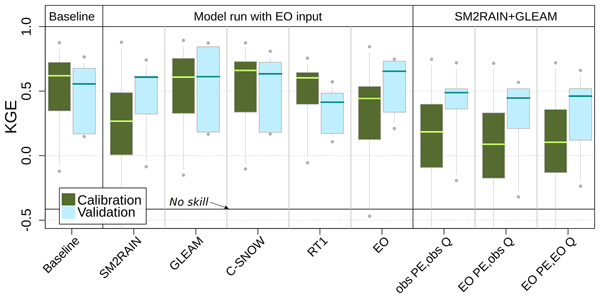
Lorenzo Alfieri, Francesco Avanzi, Fabio Delogu, Simone Gabellani, Giulia Bruno, Lorenzo Campo, Andrea Libertino, Christian Massari, Angelica Tarpanelli, Dominik Rains, Diego G. Miralles, Raphael Quast, Mariette Vreugdenhil, Huan Wu, and Luca Brocca
Hydrol. Earth Syst. Sci., 26, 3921–3939, https://doi.org/10.5194/hess-26-3921-2022, https://doi.org/10.5194/hess-26-3921-2022, 2022
Short summary
Short summary
This work shows advances in high-resolution satellite data for hydrology. We performed hydrological simulations for the Po River basin using various satellite products, including precipitation, evaporation, soil moisture, and snow depth. Evaporation and snow depth improved a simulation based on high-quality ground observations. Interestingly, a model calibration relying on satellite data skillfully reproduces observed discharges, paving the way to satellite-driven hydrological applications.
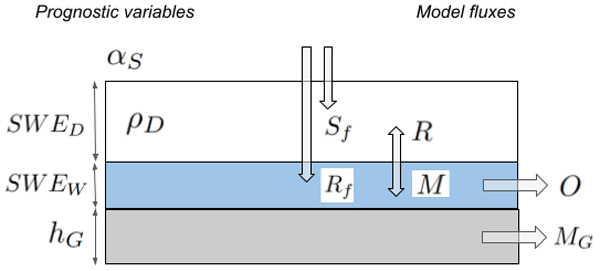
Francesco Avanzi, Simone Gabellani, Fabio Delogu, Francesco Silvestro, Edoardo Cremonese, Umberto Morra di Cella, Sara Ratto, and Hervé Stevenin
Geosci. Model Dev., 15, 4853–4879, https://doi.org/10.5194/gmd-15-4853-2022, https://doi.org/10.5194/gmd-15-4853-2022, 2022
Short summary
Short summary
Knowing in real time how much snow and glacier ice has accumulated across the landscape has significant implications for water-resource management and flood control. This paper presents a computer model – S3M – allowing scientists and decision makers to predict snow and ice accumulation during winter and the subsequent melt during spring and summer. S3M has been employed for real-world flood forecasting since the early 2000s but is here being made open source for the first time.

Christian Massari, Francesco Avanzi, Giulia Bruno, Simone Gabellani, Daniele Penna, and Stefania Camici
Hydrol. Earth Syst. Sci., 26, 1527–1543, https://doi.org/10.5194/hess-26-1527-2022, https://doi.org/10.5194/hess-26-1527-2022, 2022
Short summary
Short summary
Droughts are a creeping disaster, meaning that their onset, duration and recovery are challenging to monitor and forecast. Here, we provide further evidence of an additional challenge of droughts, i.e. the fact that the deficit in water supply during droughts is generally much more than expected based on the observed decline in precipitation. At a European scale we explain this with enhanced evapotranspiration, sustained by higher atmospheric demand for moisture during such dry periods.

Tessa Maurer, Francesco Avanzi, Steven D. Glaser, and Roger C. Bales
Hydrol. Earth Syst. Sci., 26, 589–607, https://doi.org/10.5194/hess-26-589-2022, https://doi.org/10.5194/hess-26-589-2022, 2022
Short summary
Short summary
Predicting how much water will end up in rivers is more difficult during droughts because the relationship between precipitation and streamflow can change in unexpected ways. We differentiate between changes that are predictable based on the weather patterns and those harder to predict because they depend on the land and vegetation of a particular region. This work helps clarify why models are less accurate during droughts and helps predict how much water will be available for human use.
Nunzio Romano, Harry Vereecken, Heye R. Bogena, Giorgio Cassiani, Matteo Censini, Giovanna Armiento, Marco Proposito, Lorenzo De Silvestri, Eyal Ben Dor, Nicolas Francos, Christian Massari, János Mészáros, Tünde Takáts, Caterina Mazzitelli, Benedetto Sica, Ugo Lazzaro, and Paolo Nasta
Earth Syst. Sci. Data Discuss., https://doi.org/10.5194/essd-2026-725, https://doi.org/10.5194/essd-2026-725, 2026
Preprint under review for ESSD
Short summary
Short summary
Understanding how climate and land-use change affect water resources requires observations that connect processes from soils and vegetation to groundwater and streams. The Alento dataset is presented that integrates environmental monitoring with targeted field observations across multiple Critical Zone components and scales. The dataset offers a distinctive resource for studying water storage and movement, evaluating environmental models, and improving understanding of water-limited regions.
Martina Leone, Francesco Avanzi, Umberto Morra di Cella, Simone Gabellani, Edoardo Cremonese, Michel Isabellon, Paolo Pogliotti, Riccardo Scotti, Andrea Monti, Luca Ferraris, and Roberto Colombo
Hydrol. Earth Syst. Sci., 30, 4649–4666, https://doi.org/10.5194/hess-30-4649-2026, https://doi.org/10.5194/hess-30-4649-2026, 2026
Short summary
Short summary
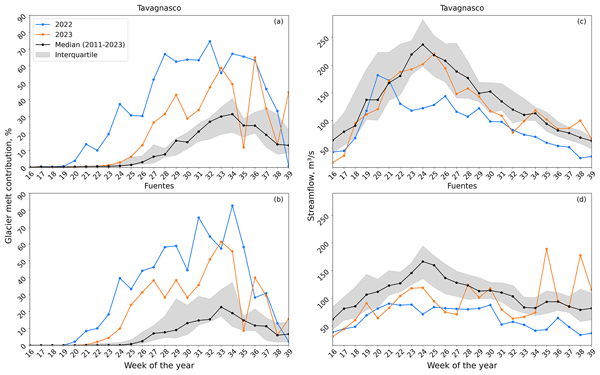
We investigated how glaciers helped sustain summer river flow during the severe snow shortages of 2022 and 2023 in the Italian Alps. Using high-resolution modeling and long-term data, we found that glacier melt contributed up to three times more than in average years. This enhanced melt partly compensated for low snow and precipitation, showing the critical role of glaciers in supporting water resources during droughts.
Monika Hlavsová, Lauro Rossi, Kathrin Szillat, Kerstin Stahl, Mirko D'Andrea, Veit Blauhut, Gabriela Ivaňáková, Livia Labudová, and Miroslav Trnka
EGUsphere, https://doi.org/10.5194/egusphere-2026-3041, https://doi.org/10.5194/egusphere-2026-3041, 2026
This preprint is open for discussion and under review for Natural Hazards and Earth System Sciences (NHESS).
Short summary
Short summary
Information about drought impacts is often incomplete because collecting such data requires substantial time and resources. We tested whether online news articles available in all official EU languages could help fill gaps in the European Drought Impact Database. The approach added many new records, especially for recent droughts, but results varied strongly between countries and sectors. Online sources can improve drought monitoring, but expert observations and local reporting remain essential.
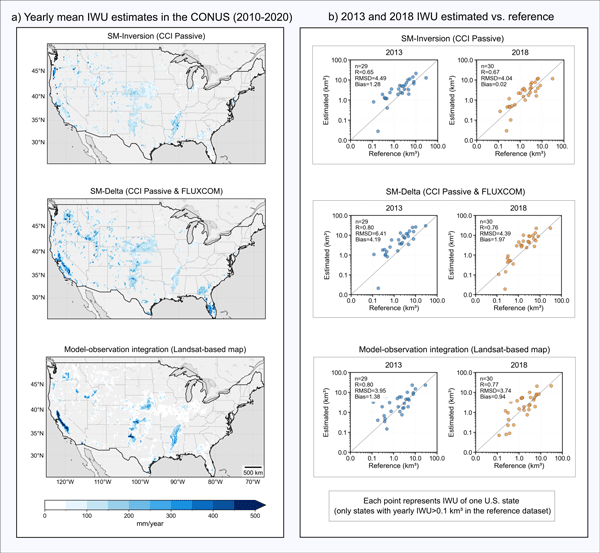
Pierre Laluet, Jacopo Dari, Louise Busschaert, Zdenko Heyvaert, Gabrielle De Lannoy, Pia Langhans, Sara Modanesi, Christian Massari, Luca Brocca, Carla Saltalippi, Renato Morbidelli, Clément Albergel, and Wouter Dorigo
Earth Syst. Sci. Data, 18, 4833–4853, https://doi.org/10.5194/essd-18-4833-2026, https://doi.org/10.5194/essd-18-4833-2026, 2026
Short summary
Short summary
We developed a long-term dataset collection of irrigation water use based on about two decades of satellite observations, three distinct approaches, and many input datasets. The collection provides monthly estimates for major agricultural regions and helps describe how irrigation varies across locations, seasons, and years. It offers a foundation for improving how irrigation is quantified, compared across methods, and integrated into large-scale hydrological and climate studies.
Francesco Avanzi, Hans Lievens, Michael Matiu, Paolo Filippucci, Oscar M. Baez Villanueva, Simone Gabellani, Fabio Delogu, Lorenzo Alfieri, Andrea Libertino, Pere Quintana-Seguì, Diego G. Miralles, Luca Brocca, Christian Massari, and Gabriëlle J. M. De Lannoy
EGUsphere, https://doi.org/10.5194/egusphere-2026-2851, https://doi.org/10.5194/egusphere-2026-2851, 2026
Short summary
Short summary
We developed a new system to map and monitor snow and stored water across large mountain regions using satellite data and computer simulations. Tested in four major European river basins, the system reproduced snow conditions with high accuracy and realistically captured how snow changes with elevation. Because it does not rely on ground measurements, it can help provide consistent information on snow-water resources worldwide, supporting water management and climate adaptation.
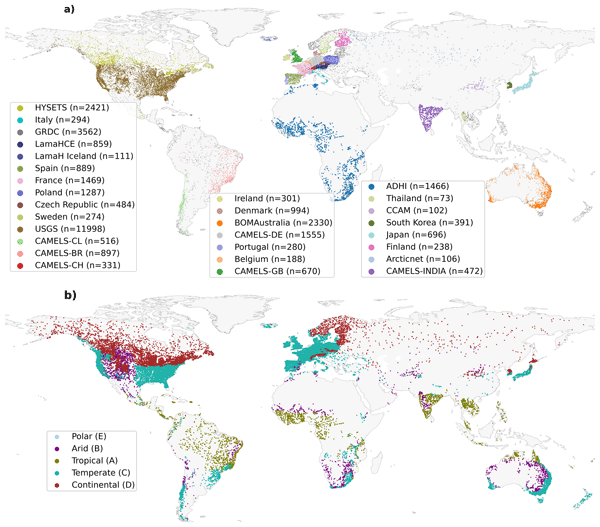
Ather Abbas, Yuan Yang, Ming Pan, Yves Tramblay, Chaopeng Shen, Haoyu Ji, Solomon H. Gebrechorkos, Florian Pappenberger, JongCheol Pyo, Dapeng Feng, George Huffman, Phu Nguyen, Christian Massari, Luca Brocca, Jackson Tan, and Hylke E. Beck
Hydrol. Earth Syst. Sci., 30, 3399–3423, https://doi.org/10.5194/hess-30-3399-2026, https://doi.org/10.5194/hess-30-3399-2026, 2026
Short summary
Short summary
Our study evaluated 24 precipitation datasets using a hydrological model at global scale to assess their suitability and accuracy. We found that MSWEP (Multi-Source Weighted-Ensemble Precipitation) V2.8 excels due to its ability to integrate data from multiple sources, while others, such as IMERG (Integrated Multi-satellitE Retrievals for Global Precipitation Mission) and GDAS (Global Data Assimilation System), demonstrated strong regional performances. This research assists in selecting the appropriate dataset for applications in water resource management, hazard assessment, agriculture, and environmental monitoring.
Gökhan Sarigil, Mattia Neri, Francesco Avanzi, and Elena Toth
EGUsphere, https://doi.org/10.5194/egusphere-2026-2484, https://doi.org/10.5194/egusphere-2026-2484, 2026
Short summary
Short summary
The study evaluates Snow Water Equivalent estimates from three large-scale land-surface products against a national reference dataset in Italy. Highlighting the performances of the products over the different regions and relating them to the biases in the meteorological forcing, the results provide insights for using SWE estimates in long-term hydro-climatological assessments in Italy and for data selection when evaluating snow dynamics in mountainous regions lacking high-quality benchmark data.
Süleyman Selim Çallı, Kübra Özdemir Çallı, Brahim Akdim, Bruno Arfib, Aleksey Benderev, Sandra Beranger, Avi Burg, Onur Can, Jean-Baptiste Charlier, Mehmet Çelik, Arda Melih Çetin, Fehdi Chemseddine, Miroslava Deliyska, Lucio Di Matteo, Marco Dionigi, Romeo Eftimi, Jutta Eybl, Davide Fronzi, Nico Goldscheider, Ergin Gökkaya, Jorge Jodar, Herve Jourde, Eva Kaminsky, Konstantina Katsanou, Alireza Kavousi, Melike Kaya, David Labat, Tanja Liesch, Peter Malik, Christian Massari, Cyril Mayaud, Naomi Mazzilli, Pavel Pracny, Natasa Ravbar, Nathan Rispal, Simon Seelig, Vianney Sivelle, Marc Steinmann, Daniela Valigi, Gerfried Winkler, Ahmet Kemal Yahşi, and Andreas Hartmann
Earth Syst. Sci. Data Discuss., https://doi.org/10.5194/essd-2026-281, https://doi.org/10.5194/essd-2026-281, 2026
Revised manuscript under review for ESSD
Short summary
Short summary
Karst groundwater systems are vital but highly sensitive to climate change. Their complex underground flow makes them hard to manage without good data, so we gathered 118 high-quality records of spring discharge across Mediterranean mountain ranges. With an average of 19 years of data – including one nearly century-long record – this collection provides the detailed information needed to better predict water availability and protect these vulnerable groundwater sources.
Louise Busschaert, Michel Bechtold, Sara Modanesi, Christian Massari, Dirk Raes, Sujay V. Kumar, and Gabriëlle J. M. De Lannoy
Hydrol. Earth Syst. Sci., 30, 2579–2611, https://doi.org/10.5194/hess-30-2579-2026, https://doi.org/10.5194/hess-30-2579-2026, 2026
Short summary
Short summary
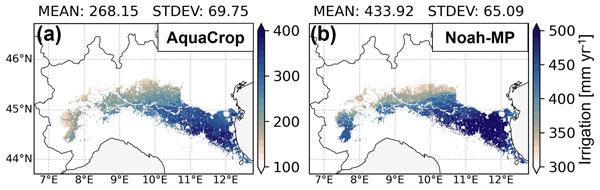
Two models, AquaCrop (crop model) and Noah-MP (land surface model), were compared estimating irrigation in Italy's Po Valley. Noah-MP simulated higher water use (434 mm/yr) than AquaCrop (268 mm/yr), mainly due to extra water losses like runoff. Once losses were accounted for, both aligned with basin-scale reports of around 500 to 600 mm/yr. The study highlights how complex irrigation modeling is, and the need for better observational data to validate results.
Steven A. Margulis, Maya Hildebrand, Xiaolan Xu, Manuela Girotto, Hans-Peter Marshall, Rashmi Shah, Elias Deeb, Simon Yueh, Dara Entekhabi, and Jessica Lundquist
EGUsphere, https://doi.org/10.5194/egusphere-2026-1594, https://doi.org/10.5194/egusphere-2026-1594, 2026
Short summary
Short summary
This paper demonstrates the feasibility of using a Bayesian framework for estimating snow water equivalent (SWE) from InSAR phase data at C-, L-, and P-band wavelengths. The Bayesian approach shows promise as a value-added approach to estimating SWE from phase delay measurements that are not only accurate at the measurement times, but interpolate between measurements and extrapolate beyond measurements and provide distributional (uncertainty) estimates for SWE.
Oscar M. Baez-Villanueva, Alfredo Crespo-Otero, Sara Modanesi, Pierre Laluet, Sergio Vicente-Serrano, Jaap Schellekens, Jacopo Dari, Hylke E. Beck, Wouter Dorigo, Christian Massari, Chiara Corbari, Joppe Massant, Kwint Delbare, Olivier Bonte, Aaron Boone, Diego Fernández-Prieto, and Diego G. Miralles
EGUsphere, https://doi.org/10.5194/egusphere-2026-1856, https://doi.org/10.5194/egusphere-2026-1856, 2026
Short summary
Short summary
We developed a new method to estimate daily land evaporation at high resolution across the Iberian Peninsula, explicitly accounting for irrigation. By combining satellite and meteorological data, we show that irrigation can strongly increase evaporation in agricultural areas. The results better match ground observations and improve understanding of water use. This approach can support farming decisions and water management at the regional scale, and will be extended to global applications.
Sofia Ortenzi, Lucio Di Matteo, Daniela Valigi, Marco Donnini, Marco Dionigi, Davide Fronzi, Josie Geris, Fabio Guadagnano, Ivan Marchesini, Paolo Filippucci, Francesco Avanzi, Daniele Penna, and Christian Massari
Hydrol. Earth Syst. Sci., 30, 1755–1778, https://doi.org/10.5194/hess-30-1755-2026, https://doi.org/10.5194/hess-30-1755-2026, 2026
Short summary
Short summary
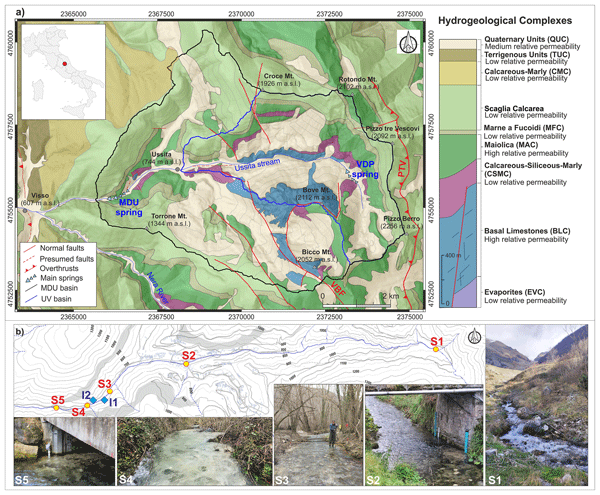
The study presents an integrated approach to analyze groundwater–surface water interactions in a Central Italy catchment, combining hydrological, hydrochemical–isotopic, thermal drone, and satellite data. Results indicate that fractured limestone aquifers sustain streamflow, with snowmelt accounting for about 18 % of recharge. The workflow is transferable and suitable for similar data-scarce Mediterranean basins.
Shima Azimi, Manuela Girotto, Riccardo Rigon, Gaia Roati, Silvia Barbetta, and Christian Massari
EGUsphere, https://doi.org/10.5194/egusphere-2026-793, https://doi.org/10.5194/egusphere-2026-793, 2026
Short summary
Short summary
Even ground-based precipitation observations, often considered the most reliable, can introduce substantial uncertainty into snow modeling due to sparse gauge coverage at high elevations in mountainous catchments.This challenge motivates the present study, in which we propose a data assimilation framework that integrates satellite-based snow depth into a hydrological model to correct snowfall estimates over the Italian Alps, with implications for water management in data-scarce mountain regions.
Domenico De Santis, Silvia Barbetta, Sumit Sen, Viviana Maggioni, Farhad Bahmanpouri, Ashutosh Sharma, Ankit Agarwal, Sagar Gupta, Francesco Avanzi, and Christian Massari
Nat. Hazards Earth Syst. Sci., 26, 1075–1104, https://doi.org/10.5194/nhess-26-1075-2026, https://doi.org/10.5194/nhess-26-1075-2026, 2026
Short summary
Short summary
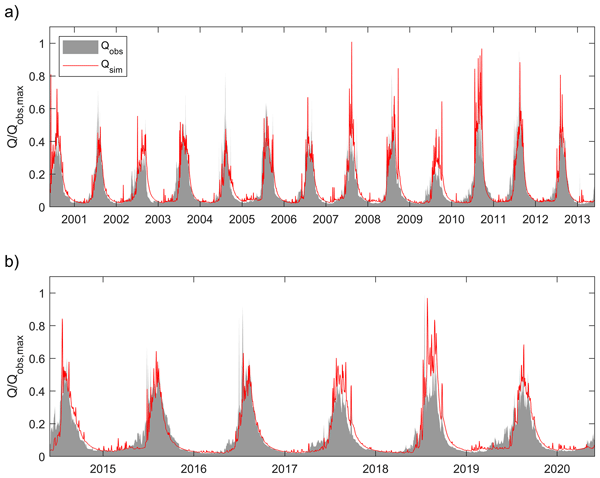
A conceptual, semi-distributed hydrological model was tailored to simulate high flows in monsoon-dominated, glacier-influenced and flood-prone Himalayan basins. Multi-data calibration using satellite-based glacier mass loss and evapotranspiration estimates improved process realism in data-scarce environments. The proposed modelling approach captured key streamflow features despite significant input uncertainties, proving to be a useful tool for exploring the local hydrological response dynamics.
Kerstin Stahl, Kathrin Szillat, Veit Blauhut, Monika Hlavsová, Lauro Rossi, Dario Masante, and Andrea Toreti
Nat. Hazards Earth Syst. Sci., 26, 845–861, https://doi.org/10.5194/nhess-26-845-2026, https://doi.org/10.5194/nhess-26-845-2026, 2026
Short summary
Short summary
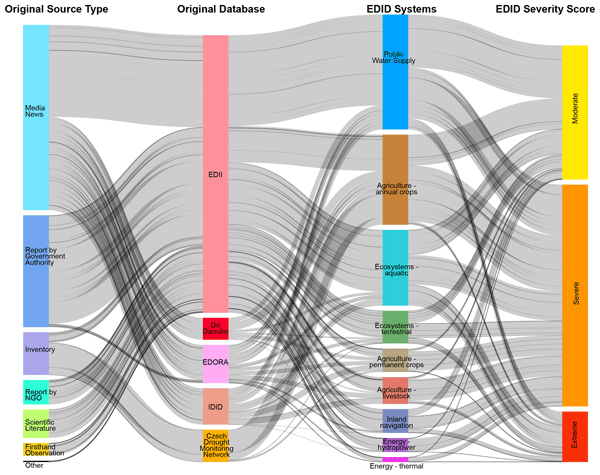
Drought impact information is important for risk assessment. But, there is little consensus on impact data monitoring. The European Drought Impacts Database (EDID) combines several existing text-based datasets with the results from new searches for impact information into a structured database with spatial and temporal attributes. Allowing research as well as operational use, its contents show where and when in Europe drought has affected agriculture, water supply, ecosystems, and other sectors.
Senna Bouabdelli, Martin Morlot, Christian Massari, and Giuseppe Formetta
EGUsphere, https://doi.org/10.5194/egusphere-2026-464, https://doi.org/10.5194/egusphere-2026-464, 2026
Short summary
Short summary
Drought is becoming more common in the Alps as warmer winters reduce snow and alter river flow. We used hydrological model simulations in the Adige basin to understand when and why droughts occur. Results show that droughts are happening earlier, becoming more intense, and increasingly driven by lack of rain instead of melting snow at high elevations. This shift toward lower-elevation river behaviour calls for new strategies to manage water for hydropower, agriculture, and tourism.
Leire Retegui-Schiettekatte, Manuela Girotto, Maike Schumacher, Mohammad Shamsudduha, Henrik Madsen, and Ehsan Forootan
EGUsphere, https://doi.org/10.5194/egusphere-2025-5625, https://doi.org/10.5194/egusphere-2025-5625, 2026
Short summary
Short summary
An improved method is used to integrate satellite-derived terrestrial water storage and surface soil moisture observations into a hydrological model within the Brahmaputra River basin (South Asia). This integration leads to a more realistic representation of the water stored in the land, allowing us to better understand its changes in space and time, which is crucial in this basin due to its increasing water demand and vulnerability to extreme events due to climate change.
Susen Shrestha, Stefano Terzi, Davide Zoccatelli, Mattia Zaramella, Marco Borga, Andrea Galletti, Mattia Callegari, Roberto Dinale, Massimiliano Pittore, and Giacomo Bertoldi
EGUsphere, https://doi.org/10.5194/egusphere-2025-6387, https://doi.org/10.5194/egusphere-2025-6387, 2026
Short summary
Short summary
Glaciers and snow contribute to buffer river streamflow during droughts. Due to climate change, their role is shrinking with severe implications for water management. Here we investigated the role of glaciers to buffer the 2003, 2005 and 2022 droughts that occurred in the upper Adige River Basin (Italy). Glaciers provided 4 to 12 % of summer water during droughts and their buffering is weakening due to their retreat with lower contribution in 2022 compared to the similar drought of 2003.
Fatemeh Zakeri, Gregoire Mariethoz, and Manuela Girotto
Hydrol. Earth Syst. Sci., 29, 6935–6958, https://doi.org/10.5194/hess-29-6935-2025, https://doi.org/10.5194/hess-29-6935-2025, 2025
Short summary
Short summary
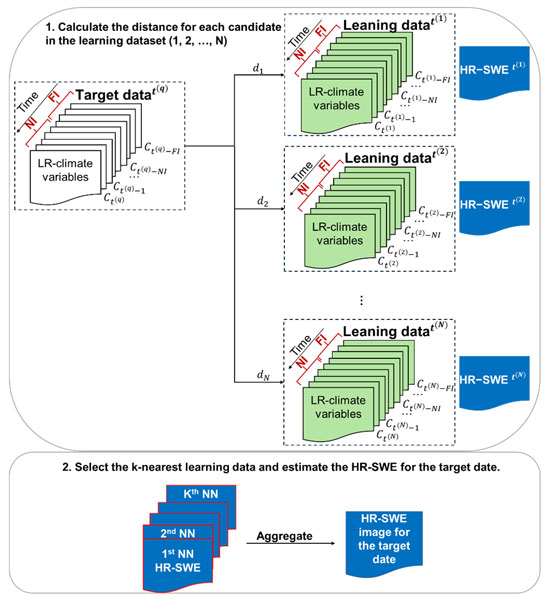
Our study presents a method to estimate high-resolution snow water equivalent (HR-SWE) using low-resolution climate data (LR-CD). By using a data-driven approach, we analyze historical weather patterns from LR-CD to generate HR-SWE maps. Machine learning and statistical relationships between LR-CD and HR-SWE enable estimation for dates without HR-SWE data. This method enhances water resource management and climate impact assessments, especially in data-scarce regions.
Marc Lemus-Canovas, Alice Crespi, Elena Maines, Stefano Terzi, and Massimiliano Pittore
Hydrol. Earth Syst. Sci., 29, 6781–6809, https://doi.org/10.5194/hess-29-6781-2025, https://doi.org/10.5194/hess-29-6781-2025, 2025
Short summary
Short summary
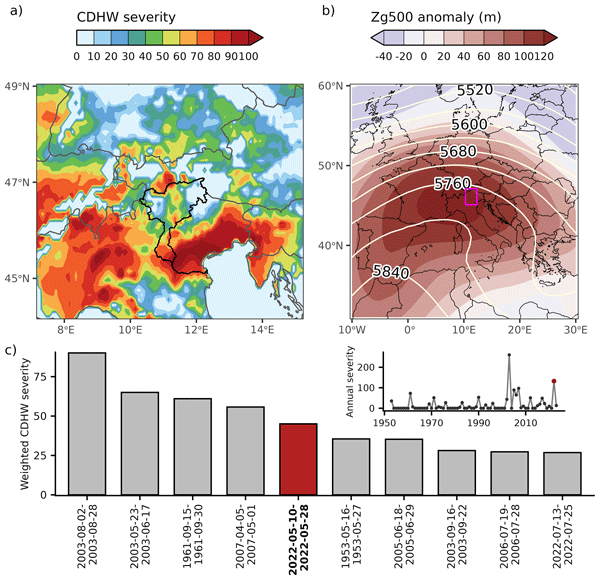
We studied a severe compound drought and heatwave event in the Adige River basin in May 2022 and found that similar events are now hotter and drier due to current warming. These changes worsen water stress and river drying. We show that timing matters: events in June are now more critical than in April, as the snowmelt contribution to streamflow in June has become much lower than in the past. However, many climate models still fail to capture these changes.
Giulia Blandini, Francesco Avanzi, Lorenzo Campo, Simone Gabellani, Kristoffer Aalstad, Manuela Girotto, Satoru Yamaguchi, Hiroyuki Hirashima, and Luca Ferraris
The Cryosphere, 19, 4759–4783, https://doi.org/10.5194/tc-19-4759-2025, https://doi.org/10.5194/tc-19-4759-2025, 2025
Short summary
Short summary
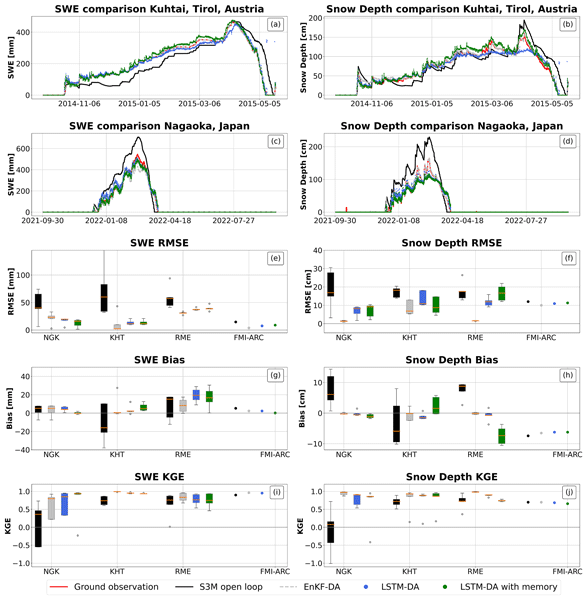
Reliable snow water equivalent and snow depth estimates are key for water management in snow regions. To tackle computational challenges in data assimilation, we propose a Long Short-Term Memory neural network for operational use in snow hydrology. Once trained, it reduces computational cost by 70 percent compared to the Ensemble Kalman Filter, with a slight decrease in performances. This deep learning approach provides a scalable, efficient, and cost-effective modeling solution for hydrology.
Paolo Filippucci, Luca Brocca, Luca Ciabatta, Hamidreza Mosaffa, Francesco Avanzi, and Christian Massari
Earth Syst. Sci. Data, 17, 5221–5258, https://doi.org/10.5194/essd-17-5221-2025, https://doi.org/10.5194/essd-17-5221-2025, 2025
Short summary
Short summary
Accurate rainfall data is essential, yet measuring daily precipitation worldwide is challenging. This research presents HYdroclimatic PERformance-enhanced Precipitation (HYPER-P), a dataset combining satellite, ground, and reanalysis data to estimate precipitation at a 1 km scale from 2000 to 2022. HYPER-P improves accuracy, especially in areas with few rain gauges. This dataset supports scientists and decision-makers in understanding and managing water resources more effectively.
Xiangmei Liu, Peng Shen, Jiaqi Chen, David Andrew Barry, Christian Massari, Jiansheng Chen, Mingming Feng, Xi Zhang, Fenyan Ma, Fei Yang, and Haixia Jin
EGUsphere, https://doi.org/10.5194/egusphere-2025-4263, https://doi.org/10.5194/egusphere-2025-4263, 2025
Preprint archived
Short summary
Short summary
Our research in the Songnen Basin of Northeast China has revealed why numerous lakes remain unfrozen during winter. By studying Lake Chagan, we discovered that deep groundwater sustains these lakes, likely flowing through subterranean channels from the Tibetan Plateau. When earthquakes disrupt these conduits, water rises along fault lines to replenish the lakes. This finding challenges the theory that graben lakes primarily depend on local precipitation.
Susanna Werth, Manoochehr Shirzaei, Grace Carlson, and Roland Bürgmann
EGUsphere, https://doi.org/10.5194/egusphere-2024-4023, https://doi.org/10.5194/egusphere-2024-4023, 2025
Preprint archived
Short summary
Short summary
We report large sets of geodetic remote sensing observations directly linking Sierra Nevada’s snowmelt to Central Valley's deep aquifer system recharge. We investigate annual changes in the datasets and compare them with hydrological records. Our results highlight the importance of high mountain groundwater systems for recharging valley aquifers. We suggest that in-depth modeling studies are needed to quantify their contribution accurately and to support groundwater management.
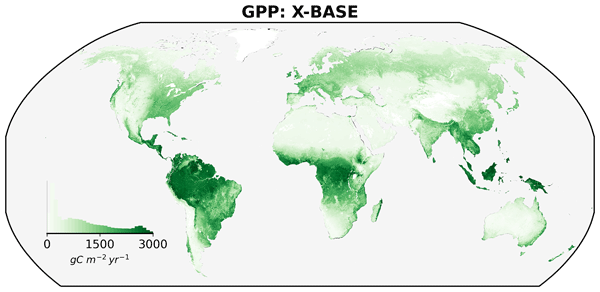
Jacob A. Nelson, Sophia Walther, Fabian Gans, Basil Kraft, Ulrich Weber, Kimberly Novick, Nina Buchmann, Mirco Migliavacca, Georg Wohlfahrt, Ladislav Šigut, Andreas Ibrom, Dario Papale, Mathias Göckede, Gregory Duveiller, Alexander Knohl, Lukas Hörtnagl, Russell L. Scott, Jiří Dušek, Weijie Zhang, Zayd Mahmoud Hamdi, Markus Reichstein, Sergio Aranda-Barranco, Jonas Ardö, Maarten Op de Beeck, Dave Billesbach, David Bowling, Rosvel Bracho, Christian Brümmer, Gustau Camps-Valls, Shiping Chen, Jamie Rose Cleverly, Ankur Desai, Gang Dong, Tarek S. El-Madany, Eugenie Susanne Euskirchen, Iris Feigenwinter, Marta Galvagno, Giacomo A. Gerosa, Bert Gielen, Ignacio Goded, Sarah Goslee, Christopher Michael Gough, Bernard Heinesch, Kazuhito Ichii, Marcin Antoni Jackowicz-Korczynski, Anne Klosterhalfen, Sara Knox, Hideki Kobayashi, Kukka-Maaria Kohonen, Mika Korkiakoski, Ivan Mammarella, Mana Gharun, Riccardo Marzuoli, Roser Matamala, Stefan Metzger, Leonardo Montagnani, Giacomo Nicolini, Thomas O'Halloran, Jean-Marc Ourcival, Matthias Peichl, Elise Pendall, Borja Ruiz Reverter, Marilyn Roland, Simone Sabbatini, Torsten Sachs, Marius Schmidt, Christopher R. Schwalm, Ankit Shekhar, Richard Silberstein, Maria Lucia Silveira, Donatella Spano, Torbern Tagesson, Gianluca Tramontana, Carlo Trotta, Fabio Turco, Timo Vesala, Caroline Vincke, Domenico Vitale, Enrique R. Vivoni, Yi Wang, William Woodgate, Enrico A. Yepez, Junhui Zhang, Donatella Zona, and Martin Jung
Biogeosciences, 21, 5079–5115, https://doi.org/10.5194/bg-21-5079-2024, https://doi.org/10.5194/bg-21-5079-2024, 2024
Short summary
Short summary
The movement of water, carbon, and energy from the Earth's surface to the atmosphere, or flux, is an important process to understand because it impacts our lives. Here, we outline a method called FLUXCOM-X to estimate global water and CO2 fluxes based on direct measurements from sites around the world. We go on to demonstrate how these new estimates of net CO2 uptake/loss, gross CO2 uptake, total water evaporation, and transpiration from plants compare to previous and independent estimates.

Paulina Bartkowiak, Bartolomeo Ventura, Alexander Jacob, and Mariapina Castelli
Earth Syst. Sci. Data, 16, 4709–4734, https://doi.org/10.5194/essd-16-4709-2024, https://doi.org/10.5194/essd-16-4709-2024, 2024
Short summary
Short summary
This paper presents the Two-Source Energy Balance evapotranspiration (ET) product driven by Copernicus Sentinel-2 and Sentinel-3 imagery together with ERA5 climate reanalysis data. Daily ET maps are available at 100 m spatial resolution for the period 2017–2021 across four Mediterranean basins: Ebro (Spain), Hérault (France), Medjerda (Tunisia), and Po (Italy). The product is highly beneficial for supporting vegetation monitoring and sustainable water management at the river basin scale.
Louise Busschaert, Michel Bechtold, Sara Modanesi, Christian Massari, Dirk Raes, Sujay V. Kumar, and Gabrielle J. M. De Lannoy
EGUsphere, https://doi.org/10.2139/ssrn.4974019, https://doi.org/10.2139/ssrn.4974019, 2024
Preprint archived
Short summary
Short summary
This study estimates irrigation in the Po Valley using AquaCrop and Noah-MP models with sprinkler irrigation. Noah-MP shows higher annual rates than AquaCrop due to more water losses. After adjusting, both align with reported irrigation ranges (500–600 mm/yr). Soil moisture estimates from both models match satellite data, though both have limitations in vegetation and evapotranspiration modeling. The study emphasizes the need for observations to improve irrigation estimates.
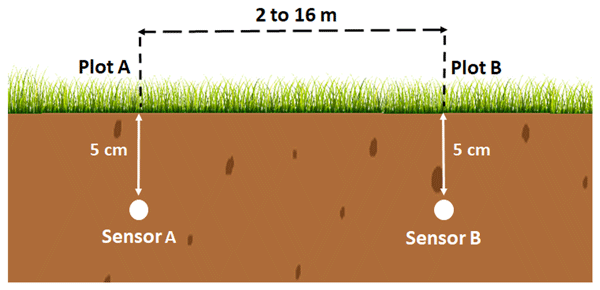
Raul-David Şerban, Huijun Jin, Mihaela Şerban, Giacomo Bertoldi, Dongliang Luo, Qingfeng Wang, Qiang Ma, Ruixia He, Xiaoying Jin, Xinze Li, Jianjun Tang, and Hongwei Wang
Earth Syst. Sci. Data, 16, 1425–1446, https://doi.org/10.5194/essd-16-1425-2024, https://doi.org/10.5194/essd-16-1425-2024, 2024
Short summary
Short summary
A particular observational network for ground surface temperature (GST) has been established on the northeastern Qinghai–Tibet Plateau, covering various environmental conditions and scales. This analysis revealed the substantial influences of the land cover on the spatial variability in GST over short distances (<16 m). Improving the monitoring of GST is important for the biophysical processes at the land–atmosphere boundary and for understanding the climate change impacts on cold environments.
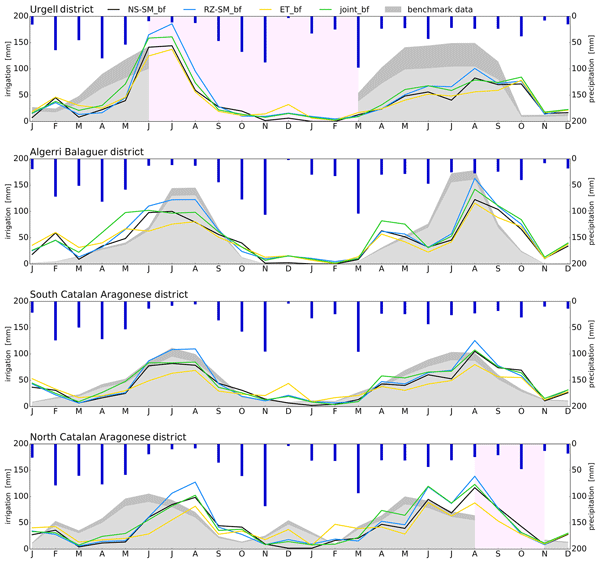
Søren Julsgaard Kragh, Jacopo Dari, Sara Modanesi, Christian Massari, Luca Brocca, Rasmus Fensholt, Simon Stisen, and Julian Koch
Hydrol. Earth Syst. Sci., 28, 441–457, https://doi.org/10.5194/hess-28-441-2024, https://doi.org/10.5194/hess-28-441-2024, 2024
Short summary
Short summary
This study provides a comparison of methodologies to quantify irrigation to enhance regional irrigation estimates. To evaluate the methodologies, we compared various approaches to quantify irrigation using soil moisture, evapotranspiration, or both within a novel baseline framework, together with irrigation estimates from other studies. We show that the synergy from using two equally important components in a joint approach within a baseline framework yields better irrigation estimates.
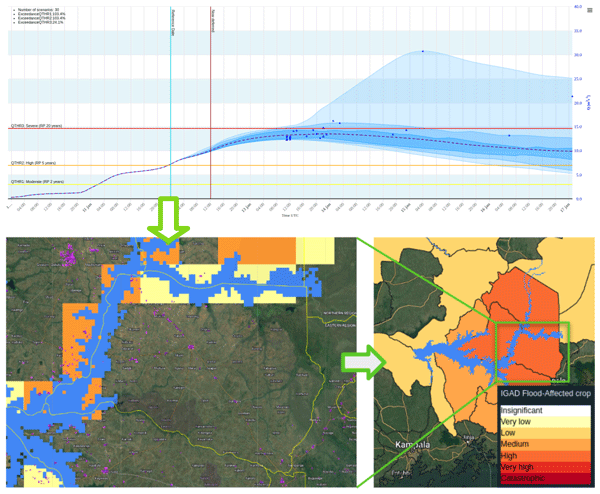
Lorenzo Alfieri, Andrea Libertino, Lorenzo Campo, Francesco Dottori, Simone Gabellani, Tatiana Ghizzoni, Alessandro Masoero, Lauro Rossi, Roberto Rudari, Nicola Testa, Eva Trasforini, Ahmed Amdihun, Jully Ouma, Luca Rossi, Yves Tramblay, Huan Wu, and Marco Massabò
Nat. Hazards Earth Syst. Sci., 24, 199–224, https://doi.org/10.5194/nhess-24-199-2024, https://doi.org/10.5194/nhess-24-199-2024, 2024
Short summary
Short summary
This work describes Flood-PROOFS East Africa, an impact-based flood forecasting system for the Greater Horn of Africa. It is based on hydrological simulations, inundation mapping, and estimation of population and assets exposed to upcoming river floods. The system supports duty officers in African institutions in the daily monitoring of hydro-meteorological disasters. A first evaluation shows the system performance for the catastrophic floods in the Nile River basin in summer 2020.
Francesca Munerol, Francesco Avanzi, Eleonora Panizza, Marco Altamura, Simone Gabellani, Lara Polo, Marina Mantini, Barbara Alessandri, and Luca Ferraris
Geosci. Commun., 7, 1–15, https://doi.org/10.5194/gc-7-1-2024, https://doi.org/10.5194/gc-7-1-2024, 2024
Short summary
Short summary
To contribute to advancing education in a warming climate and prepare the next generations to play their role in future societies, we designed “Water and Us”, a three-module initiative focusing on the natural and anthropogenic water cycle, climate change, and conflicts. This study aims to introduce the initiative's educational objectives, methods, and early results.
Shima Azimi, Christian Massari, Giuseppe Formetta, Silvia Barbetta, Alberto Tazioli, Davide Fronzi, Sara Modanesi, Angelica Tarpanelli, and Riccardo Rigon
Hydrol. Earth Syst. Sci., 27, 4485–4503, https://doi.org/10.5194/hess-27-4485-2023, https://doi.org/10.5194/hess-27-4485-2023, 2023
Short summary
Short summary
We analyzed the water budget of nested karst catchments using simple methods and modeling. By utilizing the available data on precipitation and discharge, we were able to determine the response lag-time by adopting new techniques. Additionally, we modeled snow cover dynamics and evapotranspiration with the use of Earth observations, providing a concise overview of the water budget for the basin and its subbasins. We have made the data, models, and workflows accessible for further study.
Giulia Blandini, Francesco Avanzi, Simone Gabellani, Denise Ponziani, Hervé Stevenin, Sara Ratto, Luca Ferraris, and Alberto Viglione
The Cryosphere, 17, 5317–5333, https://doi.org/10.5194/tc-17-5317-2023, https://doi.org/10.5194/tc-17-5317-2023, 2023
Short summary
Short summary
Automatic snow depth data are a valuable source of information for hydrologists, but they also tend to be noisy. To maximize the value of these measurements for real-world applications, we developed an automatic procedure to differentiate snow cover from grass or bare ground data, as well as to detect random errors. This procedure can enhance snow data quality, thus providing more reliable data for snow models.
Valentina Premier, Carlo Marin, Giacomo Bertoldi, Riccardo Barella, Claudia Notarnicola, and Lorenzo Bruzzone
The Cryosphere, 17, 2387–2407, https://doi.org/10.5194/tc-17-2387-2023, https://doi.org/10.5194/tc-17-2387-2023, 2023
Short summary
Short summary
The large amount of information regularly acquired by satellites can provide important information about SWE. We explore the use of multi-source satellite data, in situ observations, and a degree-day model to reconstruct daily SWE at 25 m. The results show spatial patterns that are consistent with the topographical features as well as with a reference product. Being able to also reproduce interannual variability, the method has great potential for hydrological and ecological applications.
Jacopo Dari, Luca Brocca, Sara Modanesi, Christian Massari, Angelica Tarpanelli, Silvia Barbetta, Raphael Quast, Mariette Vreugdenhil, Vahid Freeman, Anaïs Barella-Ortiz, Pere Quintana-Seguí, David Bretreger, and Espen Volden
Earth Syst. Sci. Data, 15, 1555–1575, https://doi.org/10.5194/essd-15-1555-2023, https://doi.org/10.5194/essd-15-1555-2023, 2023
Short summary
Short summary
Irrigation is the main source of global freshwater consumption. Despite this, a detailed knowledge of irrigation dynamics (i.e., timing, extent of irrigated areas, and amounts of water used) are generally lacking worldwide. Satellites represent a useful tool to fill this knowledge gap and monitor irrigation water from space. In this study, three regional-scale and high-resolution (1 and 6 km) products of irrigation amounts estimated by inverting the satellite soil moisture signals are presented.
Elias C. Massoud, Lauren Andrews, Rolf Reichle, Andrea Molod, Jongmin Park, Sophie Ruehr, and Manuela Girotto
Earth Syst. Dynam., 14, 147–171, https://doi.org/10.5194/esd-14-147-2023, https://doi.org/10.5194/esd-14-147-2023, 2023
Short summary
Short summary
In this study, we benchmark the forecast skill of the NASA’s Goddard Earth Observing System subseasonal-to-seasonal (GEOS-S2S version 2) hydrometeorological forecasts in the High Mountain Asia (HMA) region. Hydrometeorological forecast skill is dependent on the forecast lead time, the memory of the variable within the physical system, and the validation dataset used. Overall, these results benchmark the GEOS-S2S system’s ability to forecast HMA hydrometeorology on the seasonal timescale.
Francesco Avanzi, Simone Gabellani, Fabio Delogu, Francesco Silvestro, Flavio Pignone, Giulia Bruno, Luca Pulvirenti, Giuseppe Squicciarino, Elisabetta Fiori, Lauro Rossi, Silvia Puca, Alexander Toniazzo, Pietro Giordano, Marco Falzacappa, Sara Ratto, Hervè Stevenin, Antonio Cardillo, Matteo Fioletti, Orietta Cazzuli, Edoardo Cremonese, Umberto Morra di Cella, and Luca Ferraris
Earth Syst. Sci. Data, 15, 639–660, https://doi.org/10.5194/essd-15-639-2023, https://doi.org/10.5194/essd-15-639-2023, 2023
Short summary
Short summary
Snow cover has profound implications for worldwide water supply and security, but knowledge of its amount and distribution across the landscape is still elusive. We present IT-SNOW, a reanalysis comprising daily maps of snow amount and distribution across Italy for 11 snow seasons from September 2010 to August 2021. The reanalysis was validated using satellite images and snow measurements and will provide highly needed data to manage snow water resources in a warming climate.
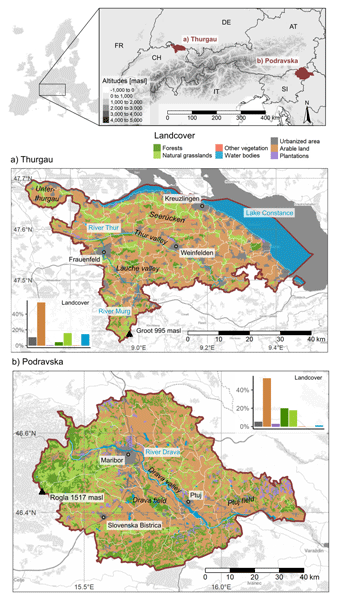
Ruth Stephan, Stefano Terzi, Mathilde Erfurt, Silvia Cocuccioni, Kerstin Stahl, and Marc Zebisch
Nat. Hazards Earth Syst. Sci., 23, 45–64, https://doi.org/10.5194/nhess-23-45-2023, https://doi.org/10.5194/nhess-23-45-2023, 2023
Short summary
Short summary
This study maps agriculture's vulnerability to drought in the European pre-Alpine regions of Thurgau (CH) and Podravska (SI). We combine region-specific knowledge with quantitative data mapping; experts of the study regions, far apart, identified a few common but more region-specific factors that we integrated in two vulnerability scenarios. We highlight the benefits of the participatory approach in improving the quantitative results and closing the gap between science and practitioners.
Giulia Bruno, Doris Duethmann, Francesco Avanzi, Lorenzo Alfieri, Andrea Libertino, and Simone Gabellani
Hydrol. Earth Syst. Sci. Discuss., https://doi.org/10.5194/hess-2022-416, https://doi.org/10.5194/hess-2022-416, 2022
Manuscript not accepted for further review
Short summary
Short summary
Hydrological models often have issues during droughts. We used the distributed Continuum model over the Po river basin and independent datasets of streamflow (Q), evapotranspiration (ET), and storage. Continuum simulated Q well during wet years and moderate droughts. Performances declined for a severe drought and we explained this drop with an increased uncertainty in ET anomalies in human-affected croplands. These findings provide guidelines for assessments of model robustness during droughts.
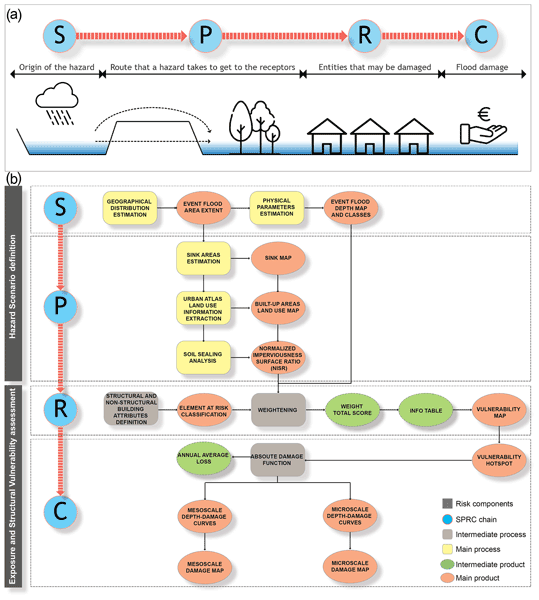
Andrea Taramelli, Margherita Righini, Emiliana Valentini, Lorenzo Alfieri, Ignacio Gatti, and Simone Gabellani
Nat. Hazards Earth Syst. Sci., 22, 3543–3569, https://doi.org/10.5194/nhess-22-3543-2022, https://doi.org/10.5194/nhess-22-3543-2022, 2022
Short summary
Short summary
This work aims to support decision-making processes to prioritize effective interventions for flood risk reduction and mitigation for the implementation of flood risk management concepts in urban areas. Our findings provide new insights into vulnerability spatialization of urban flood events for the residential sector, demonstrating that the nature of flood pathways varies spatially and is influenced by landscape characteristics, as well as building features.
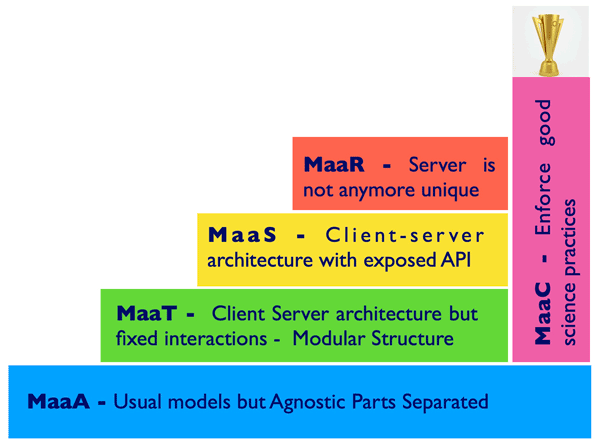
Riccardo Rigon, Giuseppe Formetta, Marialaura Bancheri, Niccolò Tubini, Concetta D'Amato, Olaf David, and Christian Massari
Hydrol. Earth Syst. Sci., 26, 4773–4800, https://doi.org/10.5194/hess-26-4773-2022, https://doi.org/10.5194/hess-26-4773-2022, 2022
Short summary
Short summary
The
Digital Earth(DE) metaphor is very useful for both end users and hydrological modelers. We analyse different categories of models, with the view of making them part of a Digital eARth Twin Hydrology system (called DARTH). We also stress the idea that DARTHs are not models in and of themselves, rather they need to be built on an appropriate information technology infrastructure. It is remarked that DARTHs have to, by construction, support the open-science movement and its ideas.
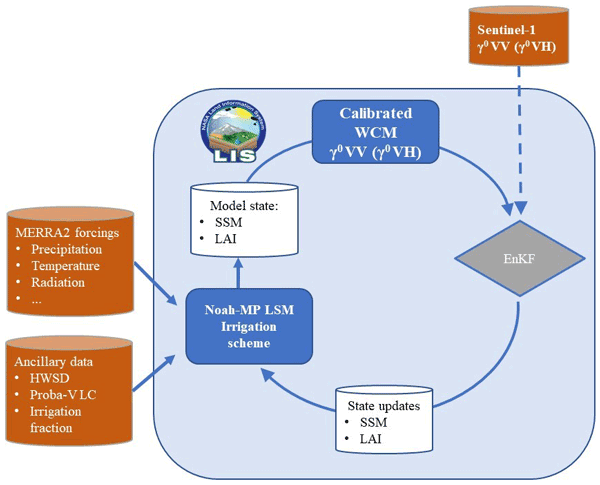
Sara Modanesi, Christian Massari, Michel Bechtold, Hans Lievens, Angelica Tarpanelli, Luca Brocca, Luca Zappa, and Gabriëlle J. M. De Lannoy
Hydrol. Earth Syst. Sci., 26, 4685–4706, https://doi.org/10.5194/hess-26-4685-2022, https://doi.org/10.5194/hess-26-4685-2022, 2022
Short summary
Short summary
Given the crucial impact of irrigation practices on the water cycle, this study aims at estimating irrigation through the development of an innovative data assimilation system able to ingest high-resolution Sentinel-1 radar observations into the Noah-MP land surface model. The developed methodology has important implications for global water resource management and the comprehension of human impacts on the water cycle and identifies main challenges and outlooks for future research.

Stefania Camici, Gabriele Giuliani, Luca Brocca, Christian Massari, Angelica Tarpanelli, Hassan Hashemi Farahani, Nico Sneeuw, Marco Restano, and Jérôme Benveniste
Geosci. Model Dev., 15, 6935–6956, https://doi.org/10.5194/gmd-15-6935-2022, https://doi.org/10.5194/gmd-15-6935-2022, 2022
Short summary
Short summary
This paper presents an innovative approach, STREAM (SaTellite-based Runoff Evaluation And Mapping), to derive daily river discharge and runoff estimates from satellite observations of soil moisture, precipitation, and terrestrial total water storage anomalies. Potentially useful for multiple operational and scientific applications, the added value of the STREAM approach is the ability to increase knowledge on the natural processes, human activities, and their interactions on the land.
Lorenzo Alfieri, Francesco Avanzi, Fabio Delogu, Simone Gabellani, Giulia Bruno, Lorenzo Campo, Andrea Libertino, Christian Massari, Angelica Tarpanelli, Dominik Rains, Diego G. Miralles, Raphael Quast, Mariette Vreugdenhil, Huan Wu, and Luca Brocca
Hydrol. Earth Syst. Sci., 26, 3921–3939, https://doi.org/10.5194/hess-26-3921-2022, https://doi.org/10.5194/hess-26-3921-2022, 2022
Short summary
Short summary
This work shows advances in high-resolution satellite data for hydrology. We performed hydrological simulations for the Po River basin using various satellite products, including precipitation, evaporation, soil moisture, and snow depth. Evaporation and snow depth improved a simulation based on high-quality ground observations. Interestingly, a model calibration relying on satellite data skillfully reproduces observed discharges, paving the way to satellite-driven hydrological applications.
Francesco Avanzi, Simone Gabellani, Fabio Delogu, Francesco Silvestro, Edoardo Cremonese, Umberto Morra di Cella, Sara Ratto, and Hervé Stevenin
Geosci. Model Dev., 15, 4853–4879, https://doi.org/10.5194/gmd-15-4853-2022, https://doi.org/10.5194/gmd-15-4853-2022, 2022
Short summary
Short summary
Knowing in real time how much snow and glacier ice has accumulated across the landscape has significant implications for water-resource management and flood control. This paper presents a computer model – S3M – allowing scientists and decision makers to predict snow and ice accumulation during winter and the subsequent melt during spring and summer. S3M has been employed for real-world flood forecasting since the early 2000s but is here being made open source for the first time.
P. Garieri, F. Diotri, G. Forlani, U. Morra di Cella, and R. Roncella
Int. Arch. Photogramm. Remote Sens. Spatial Inf. Sci., XLIII-B2-2022, 665–672, https://doi.org/10.5194/isprs-archives-XLIII-B2-2022-665-2022, https://doi.org/10.5194/isprs-archives-XLIII-B2-2022-665-2022, 2022
Christian Massari, Francesco Avanzi, Giulia Bruno, Simone Gabellani, Daniele Penna, and Stefania Camici
Hydrol. Earth Syst. Sci., 26, 1527–1543, https://doi.org/10.5194/hess-26-1527-2022, https://doi.org/10.5194/hess-26-1527-2022, 2022
Short summary
Short summary
Droughts are a creeping disaster, meaning that their onset, duration and recovery are challenging to monitor and forecast. Here, we provide further evidence of an additional challenge of droughts, i.e. the fact that the deficit in water supply during droughts is generally much more than expected based on the observed decline in precipitation. At a European scale we explain this with enhanced evapotranspiration, sustained by higher atmospheric demand for moisture during such dry periods.
Tessa Maurer, Francesco Avanzi, Steven D. Glaser, and Roger C. Bales
Hydrol. Earth Syst. Sci., 26, 589–607, https://doi.org/10.5194/hess-26-589-2022, https://doi.org/10.5194/hess-26-589-2022, 2022
Short summary
Short summary
Predicting how much water will end up in rivers is more difficult during droughts because the relationship between precipitation and streamflow can change in unexpected ways. We differentiate between changes that are predictable based on the weather patterns and those harder to predict because they depend on the land and vegetation of a particular region. This work helps clarify why models are less accurate during droughts and helps predict how much water will be available for human use.
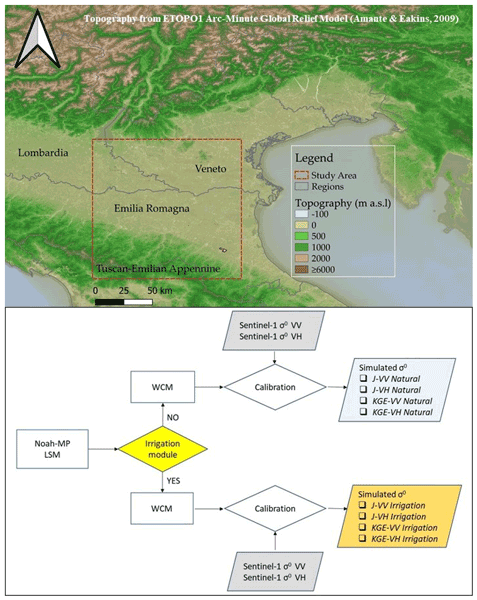
Sara Modanesi, Christian Massari, Alexander Gruber, Hans Lievens, Angelica Tarpanelli, Renato Morbidelli, and Gabrielle J. M. De Lannoy
Hydrol. Earth Syst. Sci., 25, 6283–6307, https://doi.org/10.5194/hess-25-6283-2021, https://doi.org/10.5194/hess-25-6283-2021, 2021
Short summary
Short summary
Worldwide, the amount of water used for agricultural purposes is rising and the quantification of irrigation is becoming a crucial topic. Land surface models are not able to correctly simulate irrigation. Remote sensing observations offer an opportunity to fill this gap as they are directly affected by irrigation. We equipped a land surface model with an observation operator able to transform Sentinel-1 backscatter observations into realistic vegetation and soil states via data assimilation.
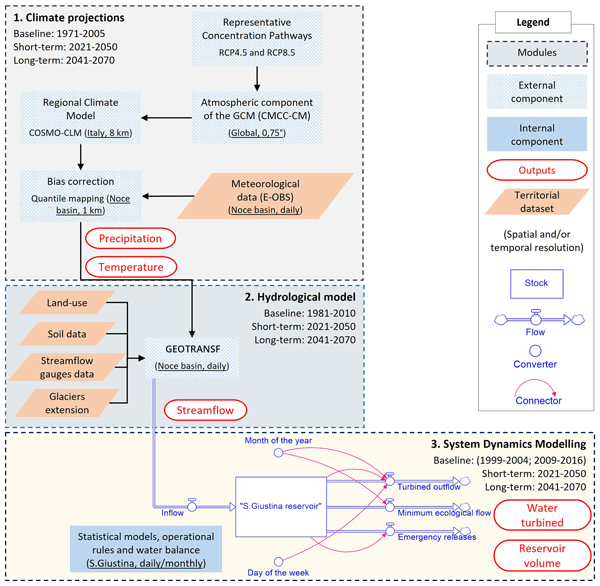
Stefano Terzi, Janez Sušnik, Stefan Schneiderbauer, Silvia Torresan, and Andrea Critto
Nat. Hazards Earth Syst. Sci., 21, 3519–3537, https://doi.org/10.5194/nhess-21-3519-2021, https://doi.org/10.5194/nhess-21-3519-2021, 2021
Short summary
Short summary
This study combines outputs from multiple models with statistical assessments of past and future water availability and demand for the Santa Giustina reservoir (Autonomous Province of Trento, Italy). Considering future climate change scenarios, results show high reductions for stored volume and turbined water, with increasing frequency, duration and severity. These results call for the need to adapt to reductions in water availability and effects on the Santa Giustina reservoir management.
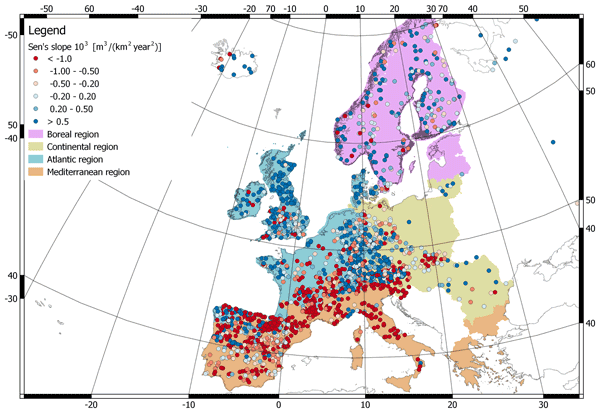
Daniele Masseroni, Stefania Camici, Alessio Cislaghi, Giorgio Vacchiano, Christian Massari, and Luca Brocca
Hydrol. Earth Syst. Sci., 25, 5589–5601, https://doi.org/10.5194/hess-25-5589-2021, https://doi.org/10.5194/hess-25-5589-2021, 2021
Short summary
Short summary
We evaluate 63 years of changes in annual streamflow volume across Europe, using a data set of more than 3000 stations, with a special focus on the Mediterranean basin. The results show decreasing (increasing) volumes in the southern (northern) regions. These trends are strongly consistent with the changes in temperature and precipitation.
Cited articles
Adler, C., Wester, P., Bhatt, I., Huggel, C., Insarov, G., Morecroft, M., Muccione, V., and Prakash, A.: Cross-Chapter Paper 5: Mountains, Cambridge University Press, Cambridge, UK and New York, USA, 2273–2318, https://doi.org/10.1017/9781009325844.022, 2022. a
Alpine Convention: The Statement on the Value of Alpine Forests and the Alpine Convention's Protocol on Mountain Forests in the framework of the international forestry policies beyond 2015, Technical report/working group report, Alpine Convention, ISBN 978-88-97500-25-4, https://www.alpconv.org/en/home/news-publications/publications-multimedia/detail/the-statement-on-the-value-of-alpine-forests-and-the-alpine-conventions-protocol-on-mountain-forest/ (last access: 10 September 2026), 2015. a
Avanzi, F., Rungee, J., Maurer, T., Bales, R., Ma, Q., Glaser, S., and Conklin, M.: Climate elasticity of evapotranspiration shifts the water balance of Mediterranean climates during multi-year droughts, Hydrol. Earth Syst. Sci., 24, 4317–4337, https://doi.org/10.5194/hess-24-4317-2020, 2020. a, b, c, d, e
Avanzi, F., Ercolani, G., Gabellani, S., Cremonese, E., Pogliotti, P., Filippa, G., Morra di Cella, U., Ratto, S., Stevenin, H., Cauduro, M., and Juglair, S.: Learning about precipitation lapse rates from snow course data improves water balance modeling, Hydrol. Earth Syst. Sci., 25, 2109–2131, https://doi.org/10.5194/hess-25-2109-2021, 2021. a, b
Avanzi, F., Gabellani, S., Delogu, F., Silvestro, F., Pignone, F., Bruno, G., Pulvirenti, L., Squicciarino, G., Fiori, E., Rossi, L., Puca, S., Toniazzo, A., Giordano, P., Falzacappa, M., Ratto, S., Stevenin, H., Cardillo, A., Fioletti, M., Cazzuli, O., Cremonese, E., Morra di Cella, U., and Ferraris, L.: IT-SNOW: a snow reanalysis for Italy blending modeling, in-situ data, and satellite observations, Zenodo [data set], https://doi.org/10.5281/zenodo.7034956, 2022. a, b, c, d, e, f, g
Avanzi, F., Gabellani, S., Delogu, F., Silvestro, F., Pignone, F., Bruno, G., Pulvirenti, L., Squicciarino, G., Fiori, E., Rossi, L., Puca, S., Toniazzo, A., Giordano, P., Falzacappa, M., Ratto, S., Stevenin, H., Cardillo, A., Fioletti, M., Cazzuli, O., Cremonese, E., Morra di Cella, U., and Ferraris, L.: IT-SNOW: a snow reanalysis for Italy blending modeling, in situ data, and satellite observations (2010–2021), Earth Syst. Sci. Data, 15, 639–660, https://doi.org/10.5194/essd-15-639-2023, 2023. a
Avanzi, F., Munerol, F., Milelli, M., Gabellani, S., Massari, C., Girotto, M., Cremonese, E., Galvagno, M., Bruno, G., Morra di Cella, U., Rossi, L., Altamura, M., and Ferraris, L.: Winter snow deficit was a harbinger of summer 2022 socio-hydrologic drought in the Po Basin, Italy, Communications Earth and Environment, 5, 64, https://doi.org/10.1038/s43247-024-01222-z, 2024. a, b, c, d, e, f, g, h
Avanzi, F., Gabellani, S., Delogu, F., Silvestro, F., Pignone, F., Bruno, G., Pulvirenti, L., Squicciarino, G., Fiori, E., Rossi, L., Puca, S., Toniazzo, A., Giordano, P., Falzacappa, M., Ratto, S., Stevenin, H., Cardillo, A., Fioletti, M., Cazzuli, O., Cremonese, E., Morra di Cella, U., and Ferraris, L.: IT-SNOW: a snow reanalysis for Italy blending modeling, in-situ data, and satellite observations [Dataset]. In IT-SNOW: a snow reanalysis for Italy blending modeling, in situ data, and satellite observations (2010–2021) (Version v5, Vol. 15, pp. 639–660), Zenodo [data set], https://doi.org/10.5281/zenodo.17226478, 2025. a
Baglioni, L., Morresi, D., Garbarino, M., Urbinati, C., Lingua, E., Marzano, R., and Vitali, A.: Forestlines in Italian mountains are shifting upward: detection and monitoring using satellite time series, Biogeosciences, 22, 4349–4366, https://doi.org/10.5194/bg-22-4349-2025, 2025. a
Baldocchi, D. D.: Assessing the eddy covariance technique for evaluating carbon dioxide exchange rates of ecosystems: past, present and future, Glob. Change Biol., 9, 479–492, 2003. a
Baldocchi, D., Ma, S., and Verfaillie, J.: On the inter-and intra-annual variability of ecosystem evapotranspiration and water use efficiency of an oak savanna and annual grassland subjected to booms and busts in rainfall, Glob. Change Biol., 27, 359–375, 2021. a
Bales, R., Molotch, N. P., Painter, T. H., Dettinger, M. D., Rice, R., and Dozier, J.: Mountain hydrology of the western United States, Water Resour. Res., 42, W08432, https://doi.org/10.1029/2005WR004387, 2006. a, b
Barnett, T., Dümenil, L., Schlese, U., and Roeckner, E.: The effect of Eurasian snow cover on global climate, Science, 239, 504–507, 1988. a
Barnett, T. P., Adam, J. C., and Lettenmaier, D. P.: Potential impacts of a warming climate on water availability in snow-dominated regions, Nature, 438, 303–309, https://doi.org/10.1038/nature04141, 2005. a
Barnett, T. P., Pierce, D. W., Hidalgo, H. G., Bonfils, C., Santer, B. D., Das, T., Bala, G., Wood, A. W., Nozawa, T., Mirin, A. A., Cayan, D. R., and Dettinger, M. D.: Human-induced changes in the hydrology of the western United States, Science, 319, 1080–1083, 2008. a
Beltramo, R., Duglio, S., and Cappelletti, G. M.: Should I stay or Can I Go? Accessible tourism and mountain huts in Gran Paradiso National Park, Sustainability, 14, 2936, https://doi.org/10.3390/su14052936, 2022. a
Bertoldi, G., Bozzoli, M., Crespi, A., Matiu, M., Giovannini, L., Zardi, D., and Majone, B.: Diverging snowfall trends across months and elevation in the northeastern Italian Alps, Int. J. Climatol., 2023, 2794–2819, 2023. a
Biella, R., Shyrokaya, A., Ionita, M., Vignola, R., Sutanto, S. J., Todorovic, A., Teutschbein, C., Cid, D., Llasat, M. C., Alencar, P., Matanó, A., Ridolfi, E., Moccia, B., Pechlivanidis, I., van Loon, A., Wendt, D. E., Stenfors, E., Russo, F., Vidal, J.-P., Barker, L., de Brito, M. M., Lam, M., Bláhová, M., Trambauer, P., Hamed, R., McGrane, S. J., Ceola, S., Bakke, S. J., Krakovska, S., Nagavciuc, V., Tootoonchi, F., Di Baldassarre, G., Hauswirth, S., Maskey, S., Zubkovych, S., Wens, M., and Tallaksen, L. M.: The 2022 drought needs to be a turning point for European drought risk management, Nat. Hazards Earth Syst. Sci., 25, 4475–4501, https://doi.org/10.5194/nhess-25-4475-2025, 2025. a
Blandini, G., Avanzi, F., Campo, L., Gabellani, S., Aalstad, K., Girotto, M., Yamaguchi, S., Hirashima, H., and Ferraris, L.: Learning to filter: snow data assimilation using a Long Short-Term Memory network, The Cryosphere, 19, 4759–4783, https://doi.org/10.5194/tc-19-4759-2025, 2025. a
Bozzoli, M., Crespi, A., Matiu, M., Majone, B., Giovannini, L., Zardi, D., Brugnara, Y., Bozzo, A., Cat Berro, D., Mercalli, L., and Bertoldi, G.: Long-term snowfall trends and variability in the Alps, Int. J. Climatol., 2024, https://doi.org/10.1002/joc.8002, 2024. a, b
Braca, G. and Ducci, D.: Development of a GIS Based Procedure (BIGBANG 1.0) for evaluating groundwater balances at national scale and comparison with groundwater resources evaluation at local scale, in: Groundwater and Global Change in the Western Mediterranean Area, edited by: Calvache, M. L., Duque, C., and Pulido-Velazquez, D., Springer International Publishing, Cham, 53–61, https://doi.org/10.1007/978-3-319-69356-9_7, 2018. a
Braca, G., Bussettini, M., Lastoria, B., Mariani, S., and Piva, F.: Il Bilancio Idrologico GIS BAsed a scala Nazionale su Griglia regolare – BIGBANG: metodologia e stime. Rapporto sulla disponibilità naturale della risorsa idrica, Tech. Rep. 339/2021, Istituto Superiore per la Protezione e la Ricerca Ambientale (ISPRA), Roma, Italy, https://www.isprambiente.gov.it/files2021/pubblicazioni/rapporti/rapporto_ispra_339-21_bigbang_ld.pdf (last access: 19 May 2026), 2021. a
Bruno, G., Avanzi, F., Gabellani, S., Ferraris, L., Cremonese, E., Galvagno, M., and Massari, C.: Disentangling the role of subsurface storage in the propagation of drought through the hydrological cycle, Adv. Water Resour., 169, 104305, https://doi.org/10.1016/j.advwatres.2022.104305, 2022. a, b
Carlson, G., Massari, C., Rotiroti, M., Bonomi, T., Preziosi, E., Wilder, A., Whitaker, D., and Girotto, M.: Intensive irrigation buffers groundwater declines in key European breadbasket, Nature Water, 1–10, https://doi.org/10.1038/s44221-025-00445-4, 2025. a, b, c
Carrer, M., Dibona, R., Prendin, A. L., and Brunetti, M.: Recent waning snowpack in the Alps is unprecedented in the last six centuries, Nat. Clim. Change, 13, 155–160, 2023. a
Chartier-Rescan, C., Wood, R. R., and Brunner, M. I.: Snow drought propagation and its impacts on streamflow drought in the Alps, Environ. Res. Lett., 20, 054032, https://doi.org/10.1088/1748-9326/adc824, 2025. a, b
Chiambretti, I., Dellavedova, P., Segor, V., Valt, M., and Cianfarra, P.: Winter 2013/2014 on the Italian Alps – Analysis and Lesson Learned About Avalanche Risk Treatment and Management Strategies, in: Proceedings of the ISSW 2014, https://arc.lib.montana.edu/snow-science/item/2186 (last access: 11 September 2026), 2014. a
Colombo, N., Guyennon, N., Valt, M., Salerno, F., Godone, D., Cianfarra, P., Freppaz, M., Maugeri, M., Manara, V., Acquaotta, F., Petrangeli, A. B., and Romano, E.: Unprecedented snow-drought conditions in the Italian Alps during the early 2020s, Environ. Res. Lett., 18, 074014, https://doi.org/10.1088/1748-9326/acdb88, 2023. a
Cowherd, M., Leung, L. R., and Girotto, M.: Evolution of global snow drought characteristics from 1850 to 2100, Environ. Res. Lett., 18, 064043, https://doi.org/10.1088/1748-9326/acd804, 2023. a
Cremonese, E., Galvagno, M., and Morra di Cella, U.: ETC L2 ARCHIVE from Torgnon, 2016–2024, ICOS RI, iCOS RI data resource, https://hdl.handle.net/11676/JZIDLUbkyXeyHCypLm6JIaPu (last access: 10 September 2026), 2025. a
Dall'Amico, M., Tasin, S., Di Paolo, F., Brian, M., Leoni, P., Tornatore, F., Formetta, G., Wani, J. M., Rigon, R., and Roati, G.: 30-years (1991–2021) snow water equivalent dataset in the Po River district, Italy, Scientific Data, 12, 374, https://doi.org/10.1038/s41597-025-04633-5, 2025. a
Di Mauro, B., Baccolo, G., Garzonio, R., Giardino, C., Massabò, D., Piazzalunga, A., Rossini, M., and Colombo, R.: Impact of impurities and cryoconite on the optical properties of the Morteratsch Glacier (Swiss Alps), The Cryosphere, 11, 2393–2409, https://doi.org/10.5194/tc-11-2393-2017, 2017. a
Dietz, A. J., Kuenzer, C., Gessner, U., and Dech, S.: Remote sensing of snow – a review of available methods, Int. J. Remote Sens., 33, 4094–4134, https://doi.org/10.1080/01431161.2011.640964, 2012. a
Fattorini, S.: The role of vegetation in elevational diversity patterns of tenebrionid beetles in Central Italy, Diversity, 16, 110, https://doi.org/10.3390/d16020110, 2024. a
Ferraris, D., Filippa, G., and Galvagno, M.: ETC L2 ARCHIVE from Torgnon-LD, 2012–2024, ICOS RI, iCOS RI data resource, https://hdl.handle.net/11676/VJs2fq0IhrnIESzg3bccsxI4 (last access: 10 September 2026), 2025. a
Flanner, M. G., Shell, K. M., Barlage, M., Perovich, D. K., and Tschudi, M. A.: Radiative forcing and albedo feedback from the Northern Hemisphere cryosphere between 1979 and 2008, Nat. Geosci., 4, 151–155, https://doi.org/10.1038/ngeo1062, 2011. a
Friedl, M., Gray, J., and Sulla-Menashe, D.: MODIS/terra+aqua land cover dynamics yearly L3 global 500 m SIN grid V061, NASA EOSDIS Land Processes DAAC, Missoula, MT, USA [data set], https://doi.org/10.5067/MODIS/MCD12Q2.061, 2022. a, b
Galvagno, M., Wohlfahrt, G., Cremonese, E., Rossini, M., Colombo, R., Filippa, G., Julitta, T., Manca, G., Siniscalco, C., Morra di Cella, U., and Migliavacca, M.: Phenology and carbon dioxide source/sink strength of a subalpine grassland in response to an exceptionally short snow season, Environ. Res. Lett., 8, 025008, https://doi.org/10.1088/1748-9326/8/2/025008, 2013. a, b, c, d
Gan, R., Zhang, Y., Shi, H., Yang, Y., Eamus, D., Cheng, L., Chiew, F. H., and Yu, Q.: Use of satellite leaf area index estimating evapotranspiration and gross assimilation for Australian ecosystems, Ecohydrology, 11, e1974, https://doi.org/10.1002/eco.1974, 2018. a, b
García-Herrera, R., Garrido-Perez, J. M., Barriopedro, D., Ordóñez, C., Vicente-Serrano, S. M., Nieto, R., Gimeno, L., Sorí, R., and Yiou, P.: The European 2016/17 drought, J. Climate, 32, 3169–3187, 2019. a
Girotto, M., Formetta, G., Azimi, S., Bachand, C., Cowherd, M., De Lannoy, G., Lievens, H., Modanesi, S., Raleigh, M. S., Rigon, R., and Massari, C.: Identifying snowfall elevation patterns by assimilating satellite-based snow depth retrievals, Sci. Total Environ., 906, 167312, https://doi.org/10.1016/j.scitotenv.2023.167312, 2024. a, b
Goulden, M. L. and Bales, R. C.: Mountain runoff vulnerability to increased evapotranspiration with vegetation expansion, P. Natl. Acad. Sci. USA, 111, 14071–14075, https://doi.org/10.1073/pnas.1319316111, 2014. a, b
Goulden, M. L., Anderson, R. G., Bales, R. C., Kelly, A. E., Meadows, M., and Winston, G. C.: Evapotranspiration along an elevation gradient in California's Sierra Nevada, J. Geophys. Res.-Biogeo., 117, https://doi.org/10.1029/2012JG002027, 2012. a
Gray, J., Sulla-Menashe, D., and Friedl, M. A.: User guide to collection 6 modis land cover dynamics (mcd12q2) product, NASA EOSDIS Land Processes DAAC, Missoula, MT, USA, 6, 1–8, https://modis-land.gsfc.nasa.gov/pdf/MODIS_Land_Cover_Dynamics_MCD12Q2_C61_Product.pdf (last access: 11 September 2026), 2019. a
Hagenlocher, M., Naumann, G., Meza, I., Blauhut, V., Cotti, D., Döll, P., Ehlert, K., Gaupp, F., Van Loon, A. F., Marengo, J. A., Rossi, L., Sabino Siemons, A. S., Siebert, S., Tsehayu, A. T., Toreti, A., Tsegai, D., Vera, C., Vogt, J., and Wens, M.: Tackling growing drought risks – the need for a systemic perspective, Earths Future, 11, e2023EF003857, https://doi.org/10.1029/2023EF003857, 2023. a
Hamlet, A. F., Mote, P. W., Clark, M. P., and Lettenmaier, D. L.: Effects of temperature and precipitation variability on snowpack trends in the western United States, J. Climate, 18, 4545–4561, https://doi.org/10.1175/JCLI3538.1, 2005. a
Han, J., Yang, Y., Guo, Y., Li, C., Liu, Z., Tu, Z., and Xi, H.: Changes in snow drought and the impacts on streamflow across northern catchments, Water Resour. Res., 61, e2024WR037492, https://doi.org/10.1029/2024WR037492, 2025. a, b
Hanus, S., Burek, P., Smilovic, M., Seibert, J., and Viviroli, D.: Seasonal variability in the global relevance of mountains to satisfy lowland water demand, Environ. Res. Lett., 19, 114078, https://doi.org/10.1088/1748-9326/ad8507, 2024. a, b
Harpold, A. A., Dettinger, M., and Rajagopal, S.: Defining snow drought and why it matters, EOS, 98, https://doi.org/10.1029/2017EO068775, 2017. a, b, c
Harrison, B. and Bales, R.: Skill assessment of water supply forecasts for western Sierra Nevada watersheds, J. Hydrol., 21, 04016002, https://doi.org/10.1061/(ASCE)HE.1943-5584.0001327, 2016. a, b
Hatchett, B. J. and McEvoy, D. J.: Exploring the origins of snow drought in the northern Sierra Nevada, California, Earth Interact., 22, 1–13, https://doi.org/10.1175/EI-D-17-0027.1, 2018. a, b
Hatchett, B. J., Daudert, B., Garner, C. B., Oakley, N. S., Putnam, A. E., and White, A. B.: Winter snow level rise in the northern Sierra Nevada from 2008 to 2017, Water-Sui., 9, 899, https://doi.org/10.3390/w9110899, 2017. a
Hatchett, B. J., Rhoades, A. M., and McEvoy, D. J.: Monitoring the daily evolution and extent of snow drought, Nat. Hazards Earth Syst. Sci., 22, 869–890, https://doi.org/10.5194/nhess-22-869-2022, 2022. a, b
Joshi, J., Stocker, B. D., Hofhansl, F., Zhou, S., Dieckmann, U., and Prentice, I. C.: Towards a unified theory of plant photosynthesis and hydraulics, Nature Plants, 8, 1304–1316, 2022. a
Klos, P. Z., Goulden, M. L., Riebe, C. S., Tague, C. L., O’Geen, A. T., Flinchum, B. A., Safeeq, M., Conklin, M. H., Hart, S. C., Berhe, A. A., Hartsough, P. C., Holbrook, W. S., and Bales, R. C.: Subsurface plant-accessible water in mountain ecosystems with a Mediterranean climate, WIRES Water, 5, e1277, https://doi.org/10.1002/wat2.1277, 2018. a
Koehler, J., Dietz, A. J., Zellner, P., Baumhoer, C. A., Dirscherl, M., Cattani, L., Vlahović, Ž., Alasawedah, M. H., Mayer, K., Haslinger, K., Bertoldi, G., Jacob, A., and Kuenzer, C.: Drought in Northern Italy: long earth observation time series reveal snow line elevation to be several hundred meters above long-term average in 2022, Remote Sens.-Basel, 14, 6091, https://doi.org/10.3390/rs14236091, 2022. a
Kraft, M. and McNamara, J. P.: Evapotranspiration across the rain–snow transition in a semi-arid watershed, Hydrol. Process., 36, e14519, https://doi.org/10.1002/hyp.14519 2022. a
Livneh, B. and Badger, A. M.: Drought less predictable under declining future snowpack, Nat. Clim. Change, 10, 452–458, 2020. a
López-Moreno, J. I., Callow, N., McGowan, H., Webb, R., Schwartz, A., Bilish, S., Revuelto, J., Gascoin, S., Deschamps-Berger, C., and Alonso-González, E.: Marginal snowpacks: the basis for a global definition and existing research needs, Earth-Sci. Rev., https://doi.org/10.1016/j.earscirev.2024.104751, 2024. a, b
Lorenzi, V., Sbarbati, C., Banzato, F., Lacchini, A., and Petitta, M.: Recharge assessment of the Gran Sasso aquifer (Central Italy): time-variable infiltration and influence of snow cover extension, J. Hydrol., 41, 101090, https://doi.org/10.1016/j.ejrh.2022.101090, 2022. a
Magnusson, J., Gustafsson, D., Hüsler, F., and Jonas, T.: Assimilation of point SWE data into a distributed snow cover model comparing two contrasting methods, Water Resour. Res., 50, 7816–7835, https://doi.org/10.1002/2014WR015302, 2014. a
Mariani, S., Braca, G., Lastoria, B., Tropeano, R., Casaioli, M., Piva, F., and Bussettini, M.: Il bilancio idrologico, la disponibilità di risorsa idrica e il bilancio idrico, in: Siccità, scarsità e crisi idriche, edited by: Romano, E. and Portoghese, I., Vol. 1 of Habitat Signa, Cnr Edizioni, Roma, https://doi.org/10.69115/habitatsigna-2024-1/01, 29–46, 2024. a, b
Massari, C., Avanzi, F., Bruno, G., Gabellani, S., Penna, D., and Camici, S.: Evaporation enhancement drives the European water-budget deficit during multi-year droughts, Hydrol. Earth Syst. Sci., 26, 1527–1543, https://doi.org/10.5194/hess-26-1527-2022, 2022. a
Mastrotheodoros, T., Pappas, C., Molnar, P., Burlando, P., Manoli, G., Parajka, J., Rigon, R., Szeles, B., Bottazzi, M., Hadjidoukas, P., and Fatichi, S.: More green and less blue water in the Alps during warmer summers, Nat. Clim. Change, 10, 155–161, 2020. a
Matanó, A., Hamed, R., Brunner, M. I., Barendrecht, M. H., and Van Loon, A. F.: Drought decreases annual streamflow response to precipitation, especially in arid regions, Hydrol. Earth Syst. Sci., 29, 2749–2764, https://doi.org/10.5194/hess-29-2749-2025, 2025. a
Montanari, A., Nguyen, H., Rubinetti, S., Ceola, S., Galelli, S., Rubino, A., and Zanchettin, D.: Why the 2022 Po River drought is the worst in the past two centuries, Science Advances, 9, eadg8304, https://doi.org/10.1126/sciadv.adg8304, 2023. a, b, c
Mote, P. W., Li, S., Lettenmaier, D. P., Xiao, M., and Engel, R.: Dramatic declines in snowpack in the western US, npj Climate and Atmospheric Science, 1, https://doi.org/10.1038/s41612-018-0012-1, 2018. a
Mountain Research Initiative EDW Working Group: Elevation-dependent warming in mountain regions of the world, Nat. Clim. Change, 5, 424–430, 2015. a
Musselmann, K. N., Clark, M. P., Liu, C., Ikeda, K., and Rasmussen, R.: Slower snowmelt in a warmer world, Nat. Clim. Change, 7, 214–219, https://doi.org/10.1038/nclimate3225, 2017. a
Napoli, A., Crespi, A., Ragone, F., Maugeri, M., and Pasquero, C.: Variability of orographic enhancement of precipitation in the Alpine region, Sci. Rep.-UK, 9, 1–8, https://doi.org/10.1038/s41598-019-49974-5, 2019. a
Oddi, L., Migliavacca, M., Cremonese, E., Filippa, G., Vacchiano, G., Siniscalco, C., Morra di Cella, U., and Galvagno, M.: Contrasting responses of forest growth and carbon sequestration to heat and drought in the Alps, Environ. Res. Lett., 17, 045015, https://doi.org/10.1088/1748-9326/ac5b3a, 2022. a, b
Oroza, C. A., Bales, R. C., Stacy, E. M., Zheng, Z., and Glaser, S. D.: Long-term variability of soil moisture in the southern Sierra: measurement and prediction, Vadose Zone J., 17, 170178, https://doi.org/10.2136/vzj2017.10.0178, 2018. a
Peel, M. C., Finlayson, B. L., and McMahon, T. A.: Updated world map of the Köppen-Geiger climate classification, Hydrol. Earth Syst. Sci., 11, 1633–1644, https://doi.org/10.5194/hess-11-1633-2007, 2007. a
Pepin, N., Apple, M., Knowles, J., Terzago, S., Arnone, E., Hänchen, L., Napoli, A., Potter, E., Steiner, J., Williamson, S. N., Ahrens, B., Dhar, T., Dimri, A. P., Palazzi, E., Rameshan, A., Salzmann, N., Shahgedanova, M., de Deus Vidal Jr., J., and Zardi, D.: Elevation-dependent climate change in mountain environments, Nature Reviews Earth and Environment, 1–17, https://doi.org/10.1038/s43017-025-00740-4, 2025. a
Petersky, R. and Harpold, A.: Now you see it, now you don't: a case study of ephemeral snowpacks and soil moisture response in the Great Basin, USA, Hydrol. Earth Syst. Sci., 22, 4891–4906, https://doi.org/10.5194/hess-22-4891-2018, 2018. a, b, c, d
Petersky, R. S., Shoemaker, K. T., Weisberg, P. J., and Harpold, A. A.: The sensitivity of snow ephemerality to warming climate across an arid to montane vegetation gradient, Ecohydrology, 12, e2060, https://doi.org/10.1002/eco.2060, 2019. a
Pulliainen, J., Aurela, M., Laurila, T., Aalto, T., Takala, M., Salminen, M., Kulmala, M., Barr, A., Heimann, M., Lindroth, A., Laaksonen, A., Derksen, C., Mäkelä, A., Markkanen, T., Lemmetyinen, J., Susiluoto, J., Dengel, S., Mammarella, I., Tuovinen, J.-P., and Vesala, T.: Early snowmelt significantly enhances boreal springtime carbon uptake, P. Natl. Acad. Sci. USA, 114, 11081–11086, 2017. a
Qin, Y., Abatzoglou, J. T., Siebert, S., Huning, L. S., AghaKouchak, A., Mankin, J. S., Hong, C., Tong, D., Davis, S. J., and Mueller, N. D.: Agricultural risks from changing snowmelt, Nat. Clim. Change, 10, 459–465, 2020. a
Redowan, M.: Spatial pattern of tree diversity and evenness across forest types in Majella National Park, Italy, Forest Ecosystems, 2, 24, https://doi.org/10.1186/s40663-015-0048-1, 2015. a
Rhoades, A. M., Hatchett, B. J., Risser, M. D., Collins, W. D., Bambach, N. E., Huning, L. S., McCrary, R., Siirila-Woodburn, E. R., Ullrich, P. A., Wehner, M. F., Zarzycki, C. M., and Jones, A. D.: Asymmetric emergence of low-to-no snow in the midlatitudes of the American Cordillera, Nat. Clim. Change, 12, 1151–1159, 2022. a
Rossi, G. and Benedini, M.: Water Resources of Italy, Springer, https://doi.org/10.1007/978-3-030-36460-1, 2020. a, b
Rungee, J., Bales, R., and Goulden, M.: Evapotranspiration response to multiyear dry periods in the semiarid western United States, Hydrol. Process., https://doi.org/10.1002/hyp.13322, 2018. a
Sansone, G.: La governance dell'acqua in Italia, in: Siccità, scarsità e crisi idriche, edited by: Romano, E. and Portoghese, I., Vol. 1 of Habitat Signa, Cnr Edizioni, Roma, https://doi.org/10.69115/habitatsigna-2024-1/02, 49–70, 2024. a
Schaefli, B., Hingray, B., and Musy, A.: Climate change and hydropower production in the Swiss Alps: quantification of potential impacts and related modelling uncertainties, Hydrol. Earth Syst. Sci., 11, 1191–1205, https://doi.org/10.5194/hess-11-1191-2007, 2007. a
Segura, C.: Snow drought reduces water transit times in headwater streams, Hydrol. Process., 35, e14437, https://doi.org/10.1002/hyp.14437, 2021. a, b, c
Serreze, M. C., Clark, M. P., Armstrong, R. L., McGinnis, D. A., and Pulwarty, R. S.: Characteristics of the western United States snowpack from snowpack telemetry (SNOTEL) data, Water Resour. Res., 35, 2145–2160, https://doi.org/10.1029/1999WR900090, 1999. a
Sprenger, M., Carroll, R. W. H., Dennedy-Frank, J., Siirila-Woodburn, E. R., Newcomer, M. E., Brown, W., Newman, A., Beutler, C., Bill, M., Hubbard, S. S., and Williams, K. H.: Variability of snow and rainfall partitioning into evapotranspiration and summer runoff across nine mountainous catchments, Geophys. Res. Lett., 49, e2022GL099324, https://doi.org/10.1029/2022GL099324, 2022. a
Stahl, K., Kohn, I., Blauhut, V., Urquijo, J., De Stefano, L., Acácio, V., Dias, S., Stagge, J. H., Tallaksen, L. M., Kampragou, E., Van Loon, A. F., Barker, L. J., Melsen, L. A., Bifulco, C., Musolino, D., de Carli, A., Massarutto, A., Assimacopoulos, D., and Van Lanen, H. A. J.: Impacts of European drought events: insights from an international database of text-based reports, Nat. Hazards Earth Syst. Sci., 16, 801–819, https://doi.org/10.5194/nhess-16-801-2016, 2016. a, b, c, d
Sturm, M., Goldstein, M. A., and Parr, C.: Water and life from snow: a trillion dollar science question, Water Resour. Res., 53, 3534–3544, https://doi.org/10.1002/2017WR020840, 2017. a
Takeuchi, N.: The altitudinal distribution of snow algae on an Alaska glacier (Gulkana Glacier in the Alaska Range), Hydrol. Process., 15, 3447–3459, 2001. a
Terzi, S., Pomella, A., Frey, J.-C., Piemontese, L., Cremonese, E., and Pittore, M.: Advancing drought impact data collection for the Italian Alps through automatic harvesting and analysis of textual data, EGU General Assembly 2025, Vienna, Austria, 27 Apr–2 May 2025, EGU25-10520, https://doi.org/10.5194/egusphere-egu25-10520, 2025. a, b
Toreti, A., Tsegai, D., Maurer, T., Cremonese, E., Rossi, L., Wens, M., de Moel, H., Sabino Siemons, A.-S., Acosta Navarro, J., Hrast Essenfelder, A., Volpi, D., Cotti, D., Sparkes, E., and Hagenlocher, M.: World Drought Atlas, https://op.europa.eu/en/publication-detail/-/publication/9da1cb20-b090-11ef-acb1-01aa75ed71a1/language-en (last access: 11 September 2026), 2024. a
Unbehaun, W., Pröbstl, U., and Haider, W.: Trends in winter sport tourism: challenges for the future, Tourism Review, 63, 36–47, 2008. a
van Tiel, M., Aubry-Wake, C., Somers, L., Andermann, C., Avanzi, F., Baraer, M., Chiogna, G., Daigre, C., Das, S., Drenkhan, F., Farinotti, D., Fyffe, C. L., de Graaf, I., Hanus, S., Immerzeel, W., Koch, F., McKenzie, J. M., Müller, T., Popp, A. L., Saidaliyeva, Z., Schaefli, B., Schilling, O. S., Teagai, K., Thornton, J. M., and Yapiyev, V.: Cryosphere–groundwater connectivity is a missing link in the mountain water cycle, Nature Water, 2, 624–637, 2024. a, b
Viviroli, D., Messerli, H. H. D. B., Meybeck, M., and Weingartner, R.: Mountains of the world, water towers for humanity: typology, mapping, and global significance, Water Resour. Res., 43, W07447, https://doi.org/10.1029/2006WR005653, 2007. a, b
Viviroli, D., Archer, D. R., Buytaert, W., Fowler, H. J., Greenwood, G. B., Hamlet, A. F., Huang, Y., Koboltschnig, G., Litaor, M. I., López-Moreno, J. I., Lorentz, S., Schädler, B., Schreier, H., Schwaiger, K., Vuille, M., and Woods, R.: Climate change and mountain water resources: overview and recommendations for research, management and policy, Hydrol. Earth Syst. Sci., 15, 471–504, https://doi.org/10.5194/hess-15-471-2011, 2011. a
Viviroli, D., Drenkhan, F., Scott, C. A., Somers, L., and van Tiel, M.: Cascading downstream impacts of water cycle changes in mountain regions, Nat. Clim. Change, 16, 129–142, 2026. a
Zhao, M., A, G., Liu, Y., and Konings, A. G.: Evapotranspiration frequently increases during droughts, Nat. Clim. Change, 12, 1024–1030, 2022. a
Short summary
Snow droughts are periods with below-average snow accumulation and are becoming more frequent in a warming climate, yet their ecosystem and societal impacts remain poorly known. Using 13 years of data from 38 Italian catchments, we show that snow droughts reduced snow duration, increased winter melt-out events, and cut summer runoff by ~50 %. Photosynthesis increased by up to 10 % due to earlier meltout. These events also caused widespread water-supply reductions, especially in foothills.
Snow droughts are periods with below-average snow accumulation and are becoming more frequent in...


