
Articles | Volume 30, issue 16
https://doi.org/10.5194/hess-30-5195-2026
© Author(s) 2026. This work is distributed under
the Creative Commons Attribution 4.0 License.
the Creative Commons Attribution 4.0 License.
https://doi.org/10.5194/hess-30-5195-2026
© Author(s) 2026. This work is distributed under
the Creative Commons Attribution 4.0 License.
the Creative Commons Attribution 4.0 License.
Research article
| 
17 Aug 2026
Research article |
| 17 Aug 2026
| 17 Aug 2026
Hydrologic model parameter estimation in snow-dominated headwater catchments using multiple observation datasets

Hydrologic Science and Engineering, Colorado School of Mines, Golden, 80401, United States of America
Adrienne M. Marshall
Hydrologic Science and Engineering, Colorado School of Mines, Golden, 80401, United States of America
Glenn A. Tootle
Civil and Environmental Engineering, University of Alabama, Tuscaloosa, 35401, United States of America
Lisa Davis
Department of Geography, University of Alabama, Tuscaloosa, 35401, United States of America
Andy W. Wood
Hydrologic Science and Engineering, Colorado School of Mines, Golden, 80401, United States of America
National Center for Atmospheric Research, Boulder, 80305, United States of America
Eric J. Anderson
Cooperative Institute for Research in Environmental Sciences, Boulder, 80309, United States of America
Related authors
No articles found.
David R. Casson, Guoqiang Tang, Nicolás Vásquez, Andrew W. Wood, and Martyn P. Clark
The Cryosphere, 20, 5895–5940, https://doi.org/10.5194/tc-20-5895-2026, https://doi.org/10.5194/tc-20-5895-2026, 2026
Short summary
Short summary
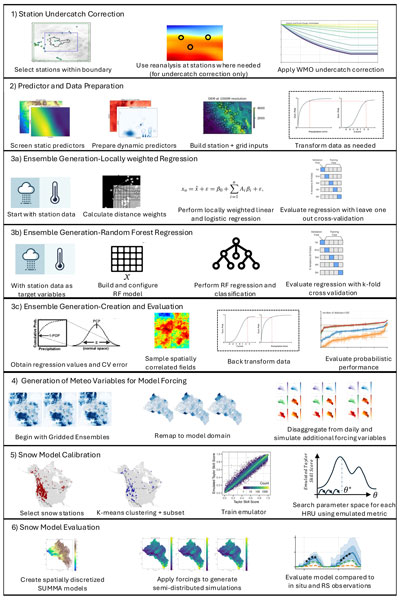
Improving mountain snow prediction requires better representation of meteorological uncertainty. This study generates meteorological ensembles accounting for topography, gauge undercatch, and large-scale atmospheric patterns. Driving a physics-based snow model calibrated using a Large Sample Emulator with these ensembles propagates forcing uncertainty into snow accumulation and melt, producing probablistic estimates for data assimilation and hydrological forecasting.
William Rudisill, Dan Feldman, Adrienne Marshall, and Arielle Koshkin
The Cryosphere, 20, 5585–5607, https://doi.org/10.5194/tc-20-5585-2026, https://doi.org/10.5194/tc-20-5585-2026, 2026
Short summary
Short summary
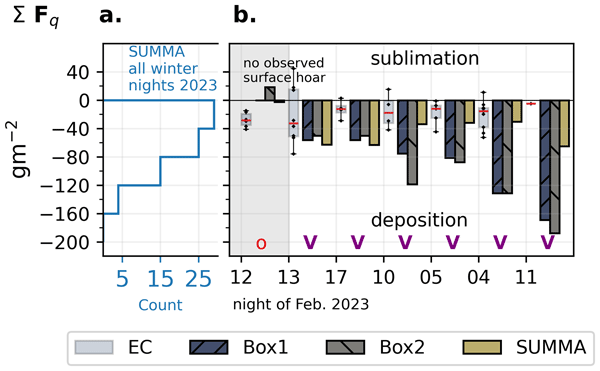
Surface hoar crystals occasionally grow on the top of snowpacks overnight. Little work has focused on climatic conditions leading to surface hoar. We use data from three field campaigns in the Colorado Rockies to investigate. We show that surface hoar events decline as the climate warms, and that there may be 14 % fewer events per year in the future. There is still work needed to reconcile measured amounts of surface hoar crystals, models, and the relationship with turbulent air.
Cyril Thébault, Wouter J. M. Knoben, Nans Addor, Andrew J. Newman, Diana Spieler, Nicolás A. Vásquez, Yalan Song, Gaby J. Gründemann, Shaun Carney, Mukesh Kumar, Katie van Werkhoven, Chaopeng Shen, Andrew W. Wood, and Martyn P. Clark
Hydrol. Earth Syst. Sci., 30, 3945–3977, https://doi.org/10.5194/hess-30-3945-2026, https://doi.org/10.5194/hess-30-3945-2026, 2026
Short summary
Short summary
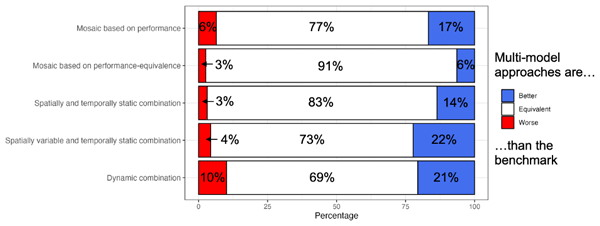
Reliable river flow prediction guide water supply planning and flood protection. We tested whether selecting or combining multiple models improves accuracy compared with a single model. 78 models were used and tested in 559 river basins across the United States. A carefully chosen single model nearly matched more complex multi-model approaches, while combining models gave slightly higher accuracy and lower uncertainty. However, no approach worked best everywhere.
Arielle Koshkin and Adrienne M. Marshall
The Cryosphere, 20, 3467–3481, https://doi.org/10.5194/tc-20-3467-2026, https://doi.org/10.5194/tc-20-3467-2026, 2026
Short summary
Short summary
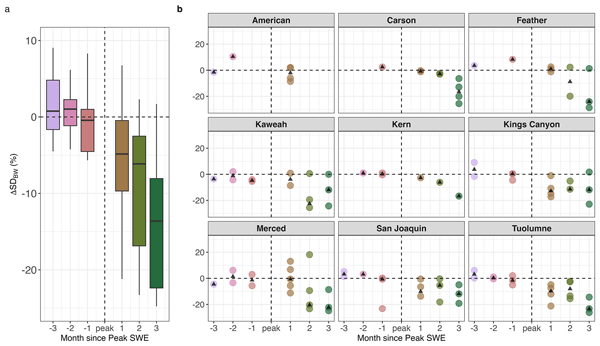
Wildfires are burning higher in elevation and changing how snow accumulates and melts, disrupting the magnitude and timing of streamflow. Using machine learning and high resolution snow maps, we found that burned forests hold less snow compared to unburned forests, especially in spring, at higher elevations, and on south-facing slopes. These results show how fire reshapes mountain snowpacks, with important implications for water resources in a warming climate.
Scott Peckham, Keith Jennings, Wanru Wu, Andy Wood, and Lauren Bolotin
EGUsphere, https://doi.org/10.5194/egusphere-2025-5786, https://doi.org/10.5194/egusphere-2025-5786, 2026
Preprint archived
Short summary
Short summary
Several US federal agencies (e.g., USGS, NOAA, USDA, and NSF) collect information for river basins to support their water-related missions. Data is published online in named collection that each have their own attributes and objectives. HARBOR harmonizes and brings together all these datasets, just as many large cargo ships can be moored in one harbor. It also classifies basins based on hydrologic similarity, helping researchers find the best model for predicting their hydrologic response.
Ethan Ritchie, Andrew W. Wood, Ryan Johnson, Adrienne Marshall, Josh Sturtevant, Dane Liljestrand, and Emily Golitzin
EGUsphere, https://doi.org/10.5194/egusphere-2025-5514, https://doi.org/10.5194/egusphere-2025-5514, 2025
Short summary
Short summary
Snow water equivalent (SWE) is a critical water resource to many regions globally. Estimating SWE remains a challenge in hydrology highlighting the need for consistent evaluation frameworks. This study applied a standard approach for SWE evaluation across a range of datasets in the western US, using the Airborne Snow Observatory (ASO) SWE dataset as the reference observational dataset. We outline and demonstrate an example of a community evaluation protocol using datasets in this study.
Mozhgan A. Farahani, Andrew W. Wood, Guoqiang Tang, and Naoki Mizukami
Hydrol. Earth Syst. Sci., 29, 4515–4537, https://doi.org/10.5194/hess-29-4515-2025, https://doi.org/10.5194/hess-29-4515-2025, 2025
Short summary
Short summary
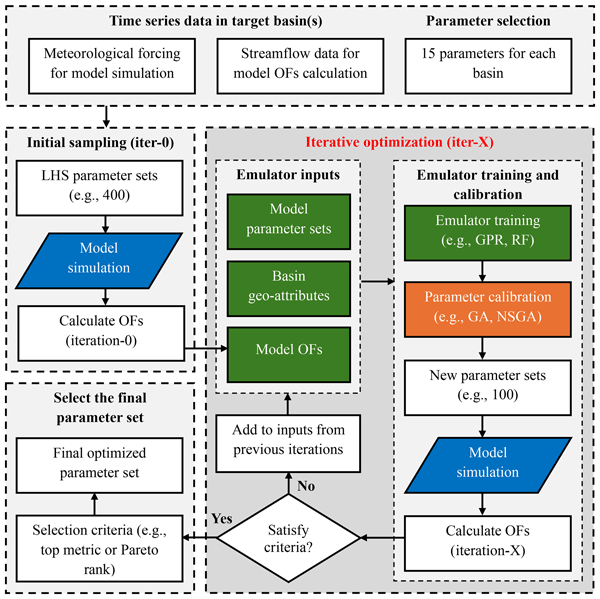
We present a new strategy to calibrate large-domain land/hydrology models over diverse regions. Using the Structure for Unifying Multiple Modeling Alternatives (SUMMA) and mizuRoute models, our approach integrates catchment attributes, parameters, and performance metrics to optimize streamflow simulations. Leveraging advances in machine learning for hydrology, we improve calibration and enable regionalization to ungauged basins, which is valuable for national-scale water security studies.
Simon Moulds, Louise Slater, Louise Arnal, and Andrew W. Wood
Hydrol. Earth Syst. Sci., 29, 2393–2406, https://doi.org/10.5194/hess-29-2393-2025, https://doi.org/10.5194/hess-29-2393-2025, 2025
Short summary
Short summary
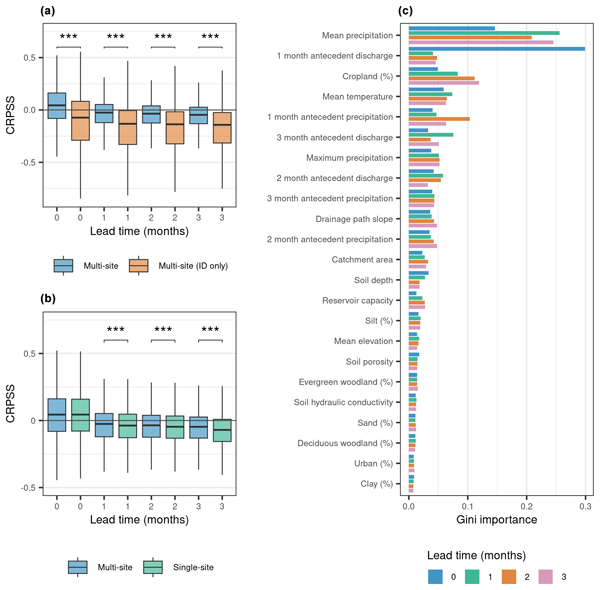
Seasonal streamflow forecasts are an important component of flood risk management. Here, we train and test a machine learning model to predict the monthly maximum daily streamflow up to 4 months ahead. We train the model on precipitation and temperature forecasts to produce probabilistic hindcasts for 579 stations across the UK for the period 2004–2016. We show skilful results up to 4 months ahead in many locations, although, in general, the skill declines with increasing lead time.
Wouter J. M. Knoben, Ashwin Raman, Gaby J. Gründemann, Mukesh Kumar, Alain Pietroniro, Chaopeng Shen, Yalan Song, Cyril Thébault, Katie van Werkhoven, Andrew W. Wood, and Martyn P. Clark
Hydrol. Earth Syst. Sci., 29, 2361–2375, https://doi.org/10.5194/hess-29-2361-2025, https://doi.org/10.5194/hess-29-2361-2025, 2025
Short summary
Short summary
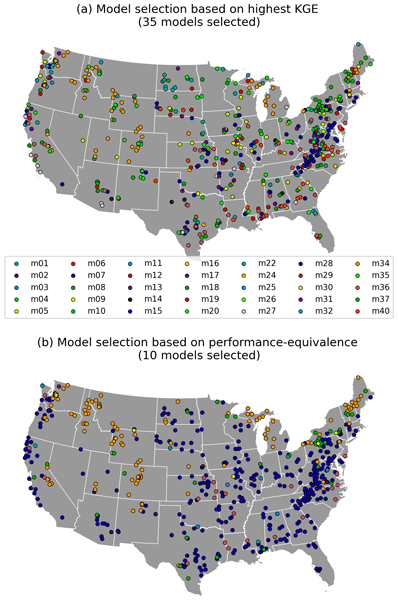
Hydrologic models are needed to provide simulations of water availability, floods, and droughts. The accuracy of these simulations is often quantified with so-called performance scores. A common thought is that different models are more or less applicable to different landscapes, depending on how the model works. We show that performance scores are not helpful in distinguishing between different models and thus cannot easily be used to select an appropriate model for a specific place.
Marnie B. Bryant, Adrian A. Borsa, Eric J. Anderson, Claire C. Masteller, Roger J. Michaelides, Matthew R. Siegfried, and Adam P. Young
The Cryosphere, 19, 1825–1847, https://doi.org/10.5194/tc-19-1825-2025, https://doi.org/10.5194/tc-19-1825-2025, 2025
Short summary
Short summary
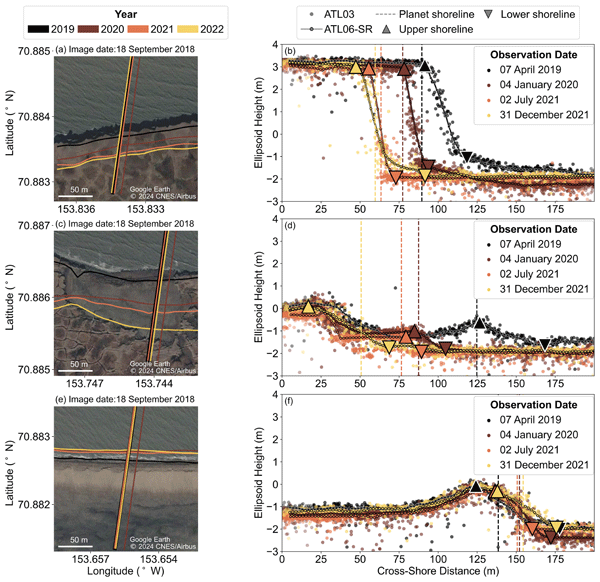
We measure shoreline change across a 7 km stretch of coastline on the Alaskan Beaufort Sea coast between 2019 and 2022 using multispectral imagery from Planet and satellite altimetry from ICESat-2. We find that shoreline change rates are high and variable and that different shoreline types show distinct patterns of change in shoreline position and topography. We discuss how the observed changes may be driven by both time-varying ocean and air conditions and spatial variations in morphology.
Mari R. Tye, Ming Ge, Jadwiga H. Richter, Ethan D. Gutmann, Allyson Rugg, Cindy L. Bruyère, Sue Ellen Haupt, Flavio Lehner, Rachel McCrary, Andrew J. Newman, and Andy Wood
Hydrol. Earth Syst. Sci., 29, 1117–1133, https://doi.org/10.5194/hess-29-1117-2025, https://doi.org/10.5194/hess-29-1117-2025, 2025
Short summary
Short summary
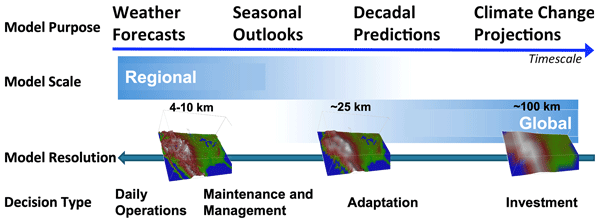
There is a perceived mismatch between the spatial scales on which global climate models can produce data and those needed for water management decisions. However, poor communication of specific metrics relevant to local decisions is also a problem. We assessed the credibility of a set of water management decision metrics in the Community Earth System Model v2 (CESM2). CESM2 shows potentially greater use of its output in long-range water management decisions.
Louise Arnal, Martyn P. Clark, Alain Pietroniro, Vincent Vionnet, David R. Casson, Paul H. Whitfield, Vincent Fortin, Andrew W. Wood, Wouter J. M. Knoben, Brandi W. Newton, and Colleen Walford
Hydrol. Earth Syst. Sci., 28, 4127–4155, https://doi.org/10.5194/hess-28-4127-2024, https://doi.org/10.5194/hess-28-4127-2024, 2024
Short summary
Short summary
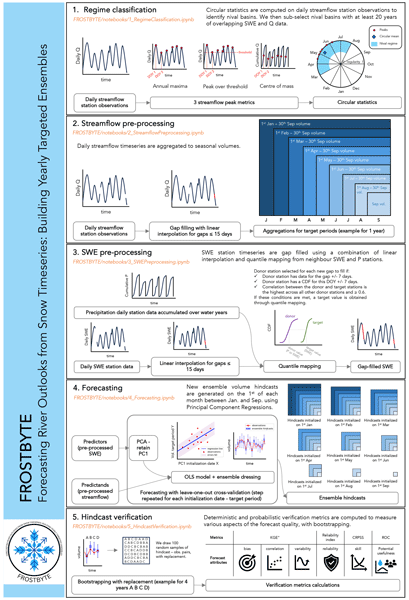
Forecasting river flow months in advance is crucial for water sectors and society. In North America, snowmelt is a key driver of flow. This study presents a statistical workflow using snow data to forecast flow months ahead in North American snow-fed rivers. Variations in the river flow predictability across the continent are evident, raising concerns about future predictability in a changing (snow) climate. The reproducible workflow hosted on GitHub supports collaborative and open science.
Guoqiang Tang, Andrew W. Wood, Andrew J. Newman, Martyn P. Clark, and Simon Michael Papalexiou
Geosci. Model Dev., 17, 1153–1173, https://doi.org/10.5194/gmd-17-1153-2024, https://doi.org/10.5194/gmd-17-1153-2024, 2024
Short summary
Short summary
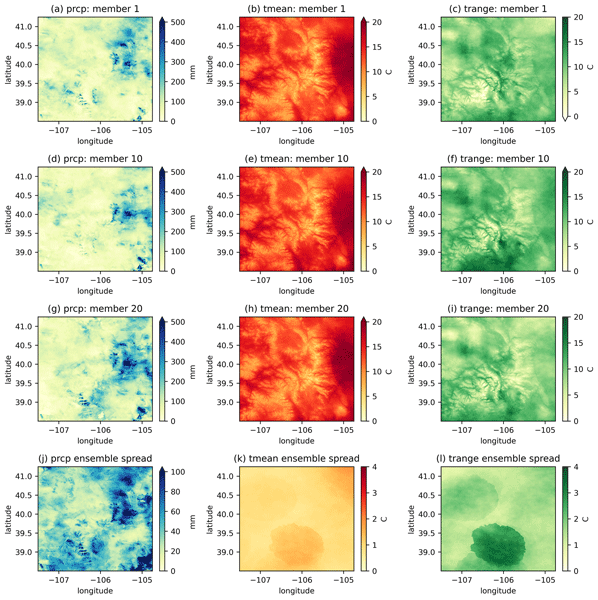
Ensemble geophysical datasets are crucial for understanding uncertainties and supporting probabilistic estimation/prediction. However, open-access tools for creating these datasets are limited. We have developed the Python-based Geospatial Probabilistic Estimation Package (GPEP). Through several experiments, we demonstrate GPEP's ability to estimate precipitation, temperature, and snow water equivalent. GPEP will be a useful tool to support uncertainty analysis in Earth science applications.
Louise J. Slater, Louise Arnal, Marie-Amélie Boucher, Annie Y.-Y. Chang, Simon Moulds, Conor Murphy, Grey Nearing, Guy Shalev, Chaopeng Shen, Linda Speight, Gabriele Villarini, Robert L. Wilby, Andrew Wood, and Massimiliano Zappa
Hydrol. Earth Syst. Sci., 27, 1865–1889, https://doi.org/10.5194/hess-27-1865-2023, https://doi.org/10.5194/hess-27-1865-2023, 2023
Short summary
Short summary
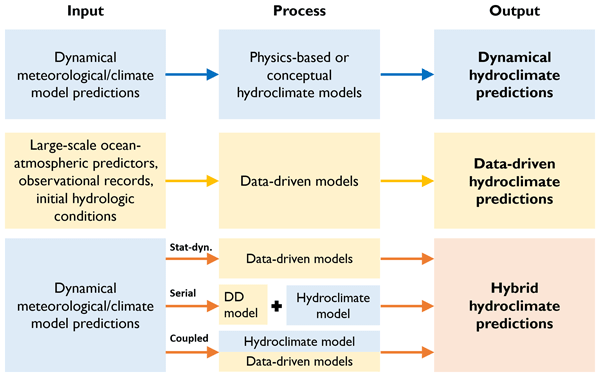
Hybrid forecasting systems combine data-driven methods with physics-based weather and climate models to improve the accuracy of predictions for meteorological and hydroclimatic events such as rainfall, temperature, streamflow, floods, droughts, tropical cyclones, or atmospheric rivers. We review recent developments in hybrid forecasting and outline key challenges and opportunities in the field.
Stanley G. Benjamin, Tatiana G. Smirnova, Eric P. James, Eric J. Anderson, Ayumi Fujisaki-Manome, John G. W. Kelley, Greg E. Mann, Andrew D. Gronewold, Philip Chu, and Sean G. T. Kelley
Geosci. Model Dev., 15, 6659–6676, https://doi.org/10.5194/gmd-15-6659-2022, https://doi.org/10.5194/gmd-15-6659-2022, 2022
Short summary
Short summary
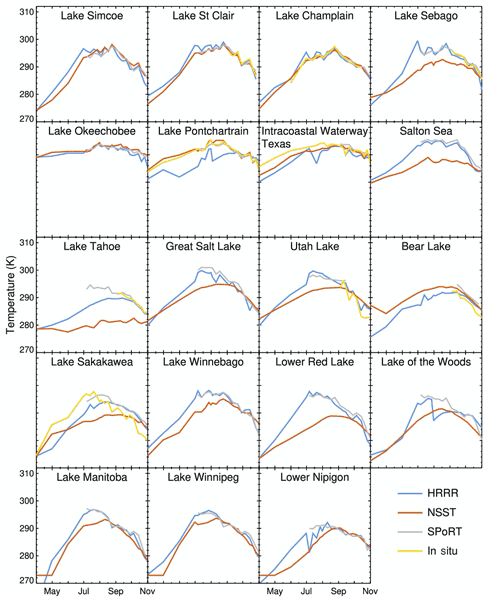
Application of 1-D lake models coupled within earth-system prediction models will improve accuracy but requires accurate initialization of lake temperatures. Here, we describe a lake initialization method by cycling within a weather prediction model to constrain lake temperature evolution. We compared these lake temperature values with other estimates and found much reduced errors (down to 1-2 K). The lake cycling initialization is now applied to two operational US NOAA weather models.
Cited articles
Adla, S., Tripathi, S., and Disse, M.: Can We Calibrate a Daily Time-Step Hydrological Model Using Monthly Time-Step Discharge Data?, Water-Sui., 11, https://doi.org/10.3390/w11091750, 2019.
Althoff, D. and Rodrigues, L. N.: Goodness-of-fit criteria for hydrological models: Model calibration and performance assessment, J. Hydrol., 600, 126674, https://doi.org/10.1016/j.jhydrol.2021.126674, 2021.
Balbi, M. and Lallemant, D. C. B.: The Cost of Imperfect Knowledge: How Epistemic Uncertainties Influence Flood Hazard Assessments, Water Resour. Res., 59, e2023WR035685, https://doi.org/10.1029/2023WR035685, 2023.
Bárdossy, A. and Anwar, F.: Why do our rainfall–runoff models keep underestimating the peak flows?, Hydrol. Earth Syst. Sci., 27, 1987–2000, https://doi.org/10.5194/hess-27-1987-2023, 2023.
Bárdossy, A. and Singh, S. K.: Robust estimation of hydrological model parameters, Hydrol. Earth Syst. Sci., 12, 1273–1283, https://doi.org/10.5194/hess-12-1273-2008, 2008.
Beven, K.: A Discussion of Distributed Hydrological Modelling, in: Distributed Hydrological Modelling, edited by: Abbott, M. B. and Refsgaard, J. C., Springer Netherlands, Dordrecht, 255–278, https://doi.org/10.1007/978-94-009-0257-2_13, 1996.
Beven, K. and Freer, J.: Equifinality, data assimilation, and uncertainty estimation in mechanistic modelling of complex environmental systems using the GLUE methodology, J. Hydrol., 249, 11–29, https://doi.org/10.1016/S0022-1694(01)00421-8, 2001.
Brocca, L., Zucco, G., Mittelbach, H., Moramarco, T., and Seneviratne, S. I.: Absolute versus temporal anomaly and percent of saturation soil moisture spatial variability for six networks worldwide, Water Resour. Res., 50, 5560–5576, https://doi.org/10.1002/2014WR015684, 2014.
Campolongo, F. and Saltelli, A.: Sensitivity analysis of an environmental model: an application of different analysis methods, Reliab. Eng. Syst. Safe., 57, 49–69, https://doi.org/10.1016/S0951-8320(97)00021-5, 1997.
Campolongo, F., Cariboni, J., and Saltelli, A.: An effective screening design for sensitivity analysis of large models, Environ. Modell. Softw., 22, 1509–1518, https://doi.org/10.1016/j.envsoft.2006.10.004, 2007.
Carnell, R.: lhs: Latin Hypercube Samples (Version 1.2.0), The Comprehensive R Archive Network [code], https://doi.org/10.32614/CRAN.package.lhs, 2024.
Chen, Y., Steinberg, D. M., and Qian, P.: Maximin Sliced Latin Hypercube Designs with Application to Cross Validating Prediction Error, in: Handbook of Uncertainty Quantification, edited by: Ghanem, R., Higdon, D., and Owhadi, H., Springer International Publishing, Cham, 289–309, https://doi.org/10.1007/978-3-319-12385-1_6, 2017.
Cho, E., Vuyovich, C. M., Kumar, S. V., Wrzesien, M. L., Kim, R. S., and Jacobs, J. M.: Precipitation biases and snow physics limitations drive the uncertainties in macroscale modeled snow water equivalent, Hydrol. Earth Syst. Sci., 26, 5721–5735, https://doi.org/10.5194/hess-26-5721-2022, 2022.
Choi, H. T. and Beven, K.: Multi-period and multi-criteria model conditioning to reduce prediction uncertainty in an application of TOPMODEL within the GLUE framework, J. Hydrol., 332, 316–336, https://doi.org/10.1016/j.jhydrol.2006.07.012, 2007.
Christensen, N. S., Wood, A. W., Voisin, N., Lettenmaier, D. P., and Palmer, R. N.: The Effects of Climate Change on the Hydrology and Water Resources of the Colorado River Basin, Climatic Change, 62, 337–363, https://doi.org/10.1023/B:CLIM.0000013684.13621.1f, 2004.
Clark, M. P., Vogel, R. M., Lamontagne, J. R., Mizukami, N., Knoben, W. J. M., Tang, G., Gharari, S., Freer, J. E., Whitfield, P. H., Shook, K. R., and Papalexiou, S. M.: The Abuse of Popular Performance Metrics in Hydrologic Modeling, Water Resour. Res., 57, e2020WR029001, https://doi.org/10.1029/2020WR029001, 2021.
Cuntz, M., Mai, J., Zink, M., Thober, S., Kumar, R., Schäfer, D., Schrön, M., Craven, J., Rakovec, O., Spieler, D., Prykhodko, V., Dalmasso, G., Musuuza, J., Langenberg, B., Attinger, S., and Samaniego, L.: Computationally inexpensive identification of noninformative model parameters by sequential screening, Water Resour. Res., 51, 6417–6441, https://doi.org/10.1002/2015WR016907, 2015.
DeCicco, L., Hirsch, R., Lorenz, D., Read, J., Walker, J., Carr, L., Watkins, D., Blodgett, D., Johnson, M., and Krall, A.: dataRetrieval: Retrieval Functions for USGS and EPA Hydrology and Water Quality Data (Version 2.7.16), The Comprehensive R Archive Network [code], https://doi.org/10.32614/CRAN.package.dataRetrieval, 2024.
Dembélé, M., Hrachowitz, M., Savenije, H. H. G., Mariéthoz, G., and Schaefli, B.: Improving the Predictive Skill of a Distributed Hydrological Model by Calibration on Spatial Patterns With Multiple Satellite Data Sets, Water Resour. Res., 56, e2019WR026085, https://doi.org/10.1029/2019WR026085, 2020.
Douglas-Mankin, K. and Moeser, D.: Calibration of Precipiation-Runoff Modeling System (PRMS) to Simulate Prefire and Postfire Hydrologic Response in the Upper Rio Hondo Basin, New Mexico, U.S. Geological Survey, https://doi.org/10.3133/sir20195022, 2019.
Draper, C. S., Walker, J. P., Steinle, P. J., de Jeu, R. A. M., and Holmes, T. R. H.: An evaluation of AMSR–E derived soil moisture over Australia, Remote Sens. Environ., 113, 703–710, https://doi.org/10.1016/j.rse.2008.11.011, 2009.
Ehlers, L. B., Sonnenborg, T. O., and Refsgaard, J. C.: Observational and predictive uncertainties for multiple variables in a spatially distributed hydrological model, Hydrol. Process., 33, 833–848, https://doi.org/10.1002/hyp.13367, 2019.
Elkouk, A., Pokhrel, Y., Livneh, B., Payton, E., Luo, L., Cheng, Y., Dagon, K., Swenson, S., Wood, A. W., Lawrence, D. M., and Thiery, W.: Toward Understanding Parametric Controls on Runoff Sensitivity to Climate in the Community Land Model: A Case Study Over the Colorado River Headwaters, Water Resour. Res., 60, e2024WR037718, https://doi.org/10.1029/2024WR037718, 2024.
Emerton, R. E., Stephens, E. M., Pappenberger, F., Pagano, T. C., Weerts, A. H., Wood, A. W., Salamon, P., Brown, J. D., Hjerdt, N., Donnelly, C., Baugh, C. A., and Cloke, H. L.: Continental and global scale flood forecasting systems, WIREs Water, 3, 391–418, https://doi.org/10.1002/wat2.1137, 2016.
Finger, D., Vis, M., Huss, M., and Seibert, J.: The value of multiple data set calibration versus model complexity for improving the performance of hydrological models in mountain catchments, Water Resour. Res., 51, 1939–1958, https://doi.org/10.1002/2014WR015712, 2015.
Gan, Y., Duan, Q., Gong, W., Tong, C., Sun, Y., Chu, W., Ye, A., Miao, C., and Di, Z.: A comprehensive evaluation of various sensitivity analysis methods: A case study with a hydrological model, Environ. Modell. Softw., 51, 269–285, https://doi.org/10.1016/j.envsoft.2013.09.031, 2014.
Gelfan, A. N., Pomeroy, J. W., and Kuchment, L. S.: Modeling Forest Cover Influences on Snow Accumulation, Sublimation, and Melt, J. Hydrometeorol., https://doi.org/10.1175/1525-7541(2004)005<0785:MFCIOS>2.0.CO;2, 2004.
Gleason, K. E., McConnell, J. R., Arienzo, M. M., Chellman, N., and Calvin, W. M.: Four-fold increase in solar forcing on snow in western U.S. burned forests since 1999, Nat. Commun., 10, 2026, https://doi.org/10.1038/s41467-019-09935-y, 2019.
Gorski, G., Stets, E. G., Scholl, M. A., Degnan, J. R., Mullaney, J. R., Galanter, A. E., Martinez, A. J., Padilla, J., LaFontaine, J. H., Corson-Dosch, H. R., and Shapiro, A.: Water supply in the conterminous United States, Alaska, Hawaii, and Puerto Rico, water years 2010–20, Professional Paper, U.S. Geological Survey, https://doi.org/10.3133/pp1894B, 2025.
Gupta, H. and Razavi, S.: Revisiting the Basis of Sensitivity Analysis for Dynamical Earth System Models, Water Resour. Res., 54, 8692–8717, https://doi.org/10.1029/2018WR022668, 2018.
Gupta, H., Sorooshian, S., and Yapo, P. O.: Toward improved calibration of hydrologic models: Multiple and noncommensurable measures of information, Water Resour. Res., 34, 751–763, https://doi.org/10.1029/97WR03495, 1998.
Gupta, H., Wagener, T., and Liu, Y.: Reconciling theory with observations: elements of a diagnostic approach to model evaluation, Hydrol. Process., 22, 3802–3813, https://doi.org/10.1002/hyp.6989, 2008.
Gupta, H., Kling, H., Yilmaz, K. K., and Martinez, G. F.: Decomposition of the mean squared error and NSE performance criteria: Implications for improving hydrological modelling, J. Hydrol., 377, 80–91, https://doi.org/10.1016/j.jhydrol.2009.08.003, 2009.
Hammond, J. C. and Kampf, S. K.: Subannual Streamflow Responses to Rainfall and Snowmelt Inputs in Snow-Dominated Watersheds of the Western United States, Water Resour. Res., 56, e2019WR026132, https://doi.org/10.1029/2019WR026132, 2020.
Hao, Z., Yuan, X., Xia, Y., Hao, F., and Singh, V. P.: An Overview of Drought Monitoring and Prediction Systems at Regional and Global Scales, B. Am. Meteorol. Soc., 98, 1879–1896, https://doi.org/10.1175/BAMS-D-15-00149.1, 2017.
Harpold, A. A., Molotch, N. P., Musselman, K. N., Bales, R. C., Kirchner, P. B., Litvak, M., and Brooks, P. D.: Soil moisture response to snowmelt timing in mixed-conifer subalpine forests, Hydrol. Process., 29, 2782–2798, https://doi.org/10.1002/hyp.10400, 2015.
Hasan, H. M. M., Döll, P., Hosseini-Moghari, S.-M., Papa, F., and Güntner, A.: The benefits and trade-offs of multi-variable calibration of the WaterGAP global hydrological model (WGHM) in the Ganges and Brahmaputra basins, Hydrol. Earth Syst. Sci., 29, 567–596, https://doi.org/10.5194/hess-29-567-2025, 2025.
Hay, L. E. and Umemoto, M.: Multiple-Objective Stepwise Calibration Using Luca, Open-File Report, U.S. Geological Survey, https://doi.org/10.3133/ofr20061323, 2007.
Hay, L. E., Leavesley, G. H., Clark, M. P., Markstrom, S. L., Viger, R. J., and Umemoto, M.: Step Wise, Multiple Objective Calibration of a Hydrologic Model for a Snowmelt Dominated Basin, J. Am. Water Resour. As., 42, 877–890, https://doi.org/10.1111/j.1752-1688.2006.tb04501.x, 2006.
Hay, L. E., LaFontaine, J. H., Beusekom, A. E. V., Norton, P. A., Farmer, W. H., Regan, R. S., Markstrom, S. L., and Dickinson, J. E.: Parameter estimation at the conterminous United States scale and streamflow routing enhancements for the National Hydrologic Model infrastructure application of the Precipitation-Runoff Modeling System (NHM-PRMS), Techniques and Methods, U.S. Geological Survey, https://doi.org/10.3133/tm6B10, 2023.
Helton, J. C. and Davis, F. J.: Latin hypercube sampling and the propagation of uncertainty in analyses of complex systems, Reliab. Eng. Syst. Safe., 81, 23–69, https://doi.org/10.1016/S0951-8320(03)00058-9, 2003.
Herbert, J. N., Raleigh, M. S., and Small, E. E.: Reanalyzing the spatial representativeness of snow depth at automated monitoring stations using airborne lidar data, The Cryosphere, 18, 3495–3512, https://doi.org/10.5194/tc-18-3495-2024, 2024.
Herman, J. D., Kollat, J. B., Reed, P. M., and Wagener, T.: From maps to movies: high-resolution time-varying sensitivity analysis for spatially distributed watershed models, Hydrol. Earth Syst. Sci., 17, 5109–5125, https://doi.org/10.5194/hess-17-5109-2013, 2013a.
Herman, J. D., Kollat, J. B., Reed, P. M., and Wagener, T.: Technical Note: Method of Morris effectively reduces the computational demands of global sensitivity analysis for distributed watershed models, Hydrol. Earth Syst. Sci., 17, 2893–2903, https://doi.org/10.5194/hess-17-2893-2013, 2013b.
Herrera, P. A., Marazuela, M. A., and Hofmann, T.: Parameter estimation and uncertainty analysis in hydrological modeling, WIREs Water, 9, e1569, https://doi.org/10.1002/wat2.1569, 2022.
Hogue, T. S., Sorooshian, S., Gupta, H., Holz, A., and Braatz, D.: A Multistep Automatic Calibration Scheme for River Forecasting Models, J. Hydrometeorol., 1, 524–542, https://doi.org/10.1175/1525-7541(2000)001<0524:AMACSF>2.0.CO;2, 2000.
Huang, Q., Qin, G., Zhang, Y., Tang, Q., Liu, C., Xia, J., Chiew, F. H. S., and Post, D.: Using Remote Sensing Data-Based Hydrological Model Calibrations for Predicting Runoff in Ungauged or Poorly Gauged Catchments, Water Resour. Res., 56, e2020WR028205, https://doi.org/10.1029/2020WR028205, 2020.
Iooss, B., Veiga, S., Janon, A., and Pujol, G.: sensitivity: Global Sensitivity Analysis of Model Outputs and Importance Measures (Version 1.30.1), The Comprehensive R Archive Network [code], https://doi.org/10.32614/CRAN.package.sensitivity, 2024.
Jennings, K. S., Winchell, T. S., Livneh, B., and Molotch, N. P.: Spatial variation of the rain–snow temperature threshold across the Northern Hemisphere, Nat. Commun., 9, 1148, https://doi.org/10.1038/s41467-018-03629-7, 2018.
Johnson, J. M., Fang, S., Sankarasubramanian, A., Rad, A. M., Kindl da Cunha, L., Jennings, K. S., Clarke, K. C., Mazrooei, A., and Yeghiazarian, L.: Comprehensive Analysis of the NOAA National Water Model: A Call for Heterogeneous Formulations and Diagnostic Model Selection, J. Geophys. Res.-Atmos., 128, e2023JD038534, https://doi.org/10.1029/2023JD038534, 2023.
Johnson, M. E., Moore, L. M., and Ylvisaker, D.: Minimax and maximin distance designs, J. Stat. Plan. Infer., 26, 131–148, https://doi.org/10.1016/0378-3758(90)90122-B, 1990.
Kavetski, D., Fenicia, F., and Clark, M. P.: Impact of temporal data resolution on parameter inference and model identification in conceptual hydrological modeling: Insights from an experimental catchment, Water Resour. Res., https://doi.org/10.1029/2010WR009525, 2011.
Kirchner, J. W.: Getting the right answers for the right reasons: Linking measurements, analyses, and models to advance the science of hydrology, Water Resour. Res., 42, https://doi.org/10.1029/2005WR004362, 2006.
Koster, R. D., Liu, Q., Mahanama, S. P. P., and Reichle, R. H.: Improved Hydrological Simulation Using SMAP Data: Relative Impacts of Model Calibration and Data Assimilation, J. Hydrometeorol., https://doi.org/10.1175/JHM-D-17-0228.1, 2018.
Kunnath-Poovakka, A., Ryu, D., Renzullo, L. J., and George, B.: The efficacy of calibrating hydrologic model using remotely sensed evapotranspiration and soil moisture for streamflow prediction, J. Hydrol., 535, 509–524, https://doi.org/10.1016/j.jhydrol.2016.02.018, 2016.
Lahmers, T. M., Kumar, S. V., Rosen, D., Dugger, A., Gochis, D. J., Santanello, J. A., Gangodagamage, C., and Dunlap, R.: Assimilation of NASA's Airborne Snow Observatory Snow Measurements for Improved Hydrological Modeling: A Case Study Enabled by the Coupled LIS/WRF-Hydro System, Water Resour. Res., 58, e2021WR029867, https://doi.org/10.1029/2021WR029867, 2022.
Lamontagne, J. R., Barber, C. A., and Vogel, R. M.: Improved Estimators of Model Performance Efficiency for Skewed Hydrologic Data, Water Resour. Res., 56, e2020WR027101, https://doi.org/10.1029/2020WR027101, 2020.
Leavesley, G. H., Lichty, R. W., Troutman, B. M., and Saindon, L. G.: Precipitation-runoff modeling system; user's manual, Water-Resources Investigations Report, U.S. Geological Survey, Water Resources Division, https://doi.org/10.3133/wri834238, 1983.
Legates, D. R. and McCabe Jr., G. J.: Evaluating the use of “goodness-of-fit” Measures in hydrologic and hydroclimatic model validation, Water Resour. Res., 35, 233–241, https://doi.org/10.1029/1998WR900018, 1999.
Li, D., Wrzesien, M. L., Durand, M., Adam, J., and Lettenmaier, D. P.: How much runoff originates as snow in the western United States, and how will that change in the future?, Geophys. Res. Lett., 44, 6163–6172, https://doi.org/10.1002/2017GL073551, 2017.
Liu, P.-W., Bindlish, R., Fang, B., Lakshmi, V., O'Neill, P. E., Yang, Z., Cosh, M. H., Bongiovanni, T., Bosch, D. D., Collins, C. H., Starks, P. J., Prueger, J., Seyfried, M., and Livingston, S.: Assessing Disaggregated SMAP Soil Moisture Products in the United States, IEEE J. Sel. Top. Appl., 14, 2577–2592, https://doi.org/10.1109/JSTARS.2021.3056001, 2021.
Liu, X., Yang, K., Ferreira, V. G., and Bai, P.: Hydrologic Model Calibration With Remote Sensing Data Products in Global Large Basins, Water Resour. Res., 58, e2022WR032929, https://doi.org/10.1029/2022WR032929, 2022.
Liu, Y., Weerts, A. H., Clark, M., Hendricks Franssen, H.-J., Kumar, S., Moradkhani, H., Seo, D.-J., Schwanenberg, D., Smith, P., van Dijk, A. I. J. M., van Velzen, N., He, M., Lee, H., Noh, S. J., Rakovec, O., and Restrepo, P.: Advancing data assimilation in operational hydrologic forecasting: progresses, challenges, and emerging opportunities, Hydrol. Earth Syst. Sci., 16, 3863–3887, https://doi.org/10.5194/hess-16-3863-2012, 2012.
Livneh, B. and Badger, A. M.: Drought less predictable under declining future snowpack, Nat. Clim. Change, 10, 452–458, https://doi.org/10.1038/s41558-020-0754-8, 2020.
Livneh, B. and Lettenmaier, D. P.: Multi-criteria parameter estimation for the Unified Land Model, Hydrol. Earth Syst. Sci., 16, 3029–3048, https://doi.org/10.5194/hess-16-3029-2012, 2012.
Lukas, J. and Payton, E.: Colorado River Basin Climate and Hydrology: State of the Science, CU Scholar, https://doi.org/10.25810/3HCV-W477, 2020.
Lundquist, J. D., Dickerson-Lange, S. E., Lutz, J. A., and Cristea, N. C.: Lower forest density enhances snow retention in regions with warmer winters: A global framework developed from plot-scale observations and modeling, Water Resour. Res., 49, 6356–6370, https://doi.org/10.1002/wrcr.20504, 2013.
Lundquist, J., Abel, M. R., Gutmann, E., and Kapnick, S.: Our Skill in Modeling Mountain Rain and Snow is Bypassing the Skill of Our Observational Networks, B. Am. Meteorol. Soc., https://doi.org/10.1175/BAMS-D-19-0001.1, 2019.
Madsen, H.: Parameter estimation in distributed hydrological catchment modelling using automatic calibration with multiple objectives, Adv. Water Resour., 26, 205–216, https://doi.org/10.1016/S0309-1708(02)00092-1, 2003.
Mai, J.: Ten strategies towards successful calibration of environmental models, J. Hydrol., 620, 129414, https://doi.org/10.1016/j.jhydrol.2023.129414, 2023.
Mai, J., Craig, J. R., Tolson, B. A., and Arsenault, R.: The sensitivity of simulated streamflow to individual hydrologic processes across North America, Nat. Commun., 13, 455, https://doi.org/10.1038/s41467-022-28010-7, 2022.
Manikanta, V. and Vema, V. K.: Formulation of Wavelet Based Multi-Scale Multi-Objective Performance Evaluation (WMMPE) Metric for Improved Calibration of Hydrological Models, Water Resour. Res., 58, e2020WR029355, https://doi.org/10.1029/2020WR029355, 2022.
Markstrom, S. L., Regan, R. S., Hay, L. E., Viger, R. J., Webb, R. M., Payn, R. A., and LaFontaine, J. H.: PRMS-IV, the precipitation-runoff modeling system, version 4, Techniques and Methods, U.S. Geological Survey, https://doi.org/10.3133/tm6B7, 2015.
Markstrom, S. L., Hay, L. E., and Clark, M. P.: Towards simplification of hydrologic modeling: identification of dominant processes, Hydrol. Earth Syst. Sci., 20, 4655–4671, https://doi.org/10.5194/hess-20-4655-2016, 2016.
Marshall, A. M., Link, T. E., Flerchinger, G. N., and Lucash, M. S.: Importance of Parameter and Climate Data Uncertainty for Future Changes in Boreal Hydrology, Water Resour. Res., 57, e2021WR029911, https://doi.org/10.1029/2021WR029911, 2021.
Massmann, C., Wagener, T., and Holzmann, H.: A new approach to visualizing time-varying sensitivity indices for environmental model diagnostics across evaluation time-scales, Environ. Modell. Softw., 51, 190–194, https://doi.org/10.1016/j.envsoft.2013.09.033, 2014.
Maxwell, J. and St Clair, S. B.: Snowpack properties vary in response to burn severity gradients in montane forests, Environ. Res. Lett., 14, 124094, https://doi.org/10.1088/1748-9326/ab5de8, 2019.
Mazzotti, G., Webster, C., Quéno, L., Cluzet, B., and Jonas, T.: Canopy structure, topography, and weather are equally important drivers of small-scale snow cover dynamics in sub-alpine forests, Hydrol. Earth Syst. Sci., 27, 2099–2121, https://doi.org/10.5194/hess-27-2099-2023, 2023.
McCabe, M. F., Franks, S. W., and Kalma, J. D.: Calibration of a land surface model using multiple data sets, J. Hydrol., 302, 209–222, https://doi.org/10.1016/j.jhydrol.2004.07.002, 2005.
McCabe, M. F., Rodell, M., Alsdorf, D. E., Miralles, D. G., Uijlenhoet, R., Wagner, W., Lucieer, A., Houborg, R., Verhoest, N. E. C., Franz, T. E., Shi, J., Gao, H., and Wood, E. F.: The future of Earth observation in hydrology, Hydrol. Earth Syst. Sci., 21, 3879–3914, https://doi.org/10.5194/hess-21-3879-2017, 2017.
Mei, Y., Mai, J., Do, H. X., Gronewold, A., Reeves, H., Eberts, S., Niswonger, R., Regan, R. S., and Hunt, R. J.: Can Hydrological Models Benefit From Using Global Soil Moisture, Evapotranspiration, and Runoff Products as Calibration Targets?, Water Resour. Res., 59, e2022WR032064, https://doi.org/10.1029/2022WR032064, 2023.
Melton, F. S., Huntington, J., Grimm, R., Herring, J., Hall, M., Rollison, D., Erickson, T., Allen, R., Anderson, M., Fisher, J. B., Kilic, A., Senay, G. B., Volk, J., Hain, C., Johnson, L., Ruhoff, A., Blankenau, P., Bromley, M., Carrara, W., Daudert, B., Doherty, C., Dunkerly, C., Friedrichs, M., Guzman, A., Halverson, G., Hansen, J., Harding, J., Kang, Y., Ketchum, D., Minor, B., Morton, C., Ortega-Salazar, S., Ott, T., Ozdogan, M., ReVelle, P. M., Schull, M., Wang, C., Yang, Y., and Anderson, R. G.: OpenET: Filling a Critical Data Gap in Water Management for the Western United States, J. Am. Water Resour. As., 58, 971–994, https://doi.org/10.1111/1752-1688.12956, 2022.
Mendoza, P. A., Clark, M. P., Mizukami, N., Newman, A. J., Barlage, M., Gutmann, E. D., Rasmussen, R. M., Rajagopalan, B., Brekke, L. D., and Arnold, J. R.: Effects of Hydrologic Model Choice and Calibration on the Portrayal of Climate Change Impacts, J. Hydrometeorol., 16, 762–780, https://doi.org/10.1175/JHM-D-14-0104.1, 2015.
Mitchell, K. E., Lohmann, D., Houser, P. R., Wood, E. F., Schaake, J. C., Robock, A., Cosgrove, B. A., Sheffield, J., Duan, Q., Luo, L., Higgins, R. W., Pinker, R. T., Tarpley, J. D., Lettenmaier, D. P., Marshall, C. H., Entin, J. K., Pan, M., Shi, W., Koren, V., Meng, J., Ramsay, B. H., and Bailey, A. A.: The multi-institution North American Land Data Assimilation System (NLDAS): Utilizing multiple GCIP products and partners in a continental distributed hydrological modeling system, J. Geophys. Res.-Atmos., 109, https://doi.org/10.1029/2003JD003823, 2004.
Morris, M. D.: Factorial Sampling Plans for Preliminary Computational Experiments, Technometrics, 33, 161–174, https://doi.org/10.1080/00401706.1991.10484804, 1991.
Motovilov, Y. G., Gottschalk, L., Engeland, K., and Rodhe, A.: Validation of a distributed hydrological model against spatial observations, Agr. Forest Meteorol., 98–99, 257–277, https://doi.org/10.1016/S0168-1923(99)00102-1, 1999.
Nash, L. L. and Gleick, P. H.: Sensitivity of streamflow in the Colorado Basin to climatic changes, J. Hydrol., 125, 221–241, https://doi.org/10.1016/0022-1694(91)90030-L, 1991.
Nassar, A., Tarboton, D., Anderson, M., Yang, Y., Fisher, J. B., Purdy, A. J., Baig, F., He, C., Gochis, D., Melton, F., and Volk, J.: Intercomparison of the U.S. National water model with OpenET over the Bear River Basin, U.S, J. Hydrol., 132826, https://doi.org/10.1016/j.jhydrol.2025.132826, 2025.
northlh: northlh/pwsMultiObsR: The initial release of pwsMultiObsR (Version v1.0.0), Zenodo [code], https://doi.org/10.5281/zenodo.17180693, 2025.
Oubeidillah, A., Tootle, G., and Piechota, T.: Incorporating Antecedent Soil Moisture into Streamflow Forecasting, Hydrology, 6, 50, https://doi.org/10.3390/hydrology6020050, 2019.
Painter, T. H., Berisford, D. F., Boardman, J. W., Bormann, K. J., Deems, J. S., Gehrke, F., Hedrick, A., Joyce, M., Laidlaw, R., Marks, D., Mattmann, C., McGurk, B., Ramirez, P., Richardson, M., Skiles, S. M., Seidel, F. C., and Winstral, A.: The Airborne Snow Observatory: Fusion of scanning lidar, imaging spectrometer, and physically-based modeling for mapping snow water equivalent and snow albedo, Remote Sens. Environ., 184, 139–152, https://doi.org/10.1016/j.rse.2016.06.018, 2016.
Pathiraja, S., Marshall, L., Sharma, A., and Moradkhani, H.: Hydrologic modeling in dynamic catchments: A data assimilation approach, Water Resour. Res., 52, 3350–3372, https://doi.org/10.1002/2015WR017192, 2016.
Pendergrass, A. G., Meehl, G. A., Pulwarty, R., Hobbins, M., Hoell, A., AghaKouchak, A., Bonfils, C. J. W., Gallant, A. J. E., Hoerling, M., Hoffmann, D., Kaatz, L., Lehner, F., Llewellyn, D., Mote, P., Neale, R. B., Overpeck, J. T., Sheffield, A., Stahl, K., Svoboda, M., Wheeler, M. C., Wood, A. W., and Woodhouse, C. A.: Flash droughts present a new challenge for subseasonal-to-seasonal prediction, Nat. Clim. Change, 10, 191–199, https://doi.org/10.1038/s41558-020-0709-0, 2020.
Pianosi, F., Beven, K., Freer, J., Hall, J. W., Rougier, J., Stephenson, D. B., and Wagener, T.: Sensitivity analysis of environmental models: A systematic review with practical workflow, Environ. Modell. Softw., 79, 214–232, https://doi.org/10.1016/j.envsoft.2016.02.008, 2016.
Povey, A. C. and Grainger, R. G.: Known and unknown unknowns: uncertainty estimation in satellite remote sensing, Atmos. Meas. Tech., 8, 4699–4718, https://doi.org/10.5194/amt-8-4699-2015, 2015.
Rajib, M. A., Merwade, V., and Yu, Z.: Multi-objective calibration of a hydrologic model using spatially distributed remotely sensed/in-situ soil moisture, J. Hydrol., 536, 192–207, https://doi.org/10.1016/j.jhydrol.2016.02.037, 2016.
Rakovec, O., Kumar, R., Attinger, S., and Samaniego, L.: Improving the realism of hydrologic model functioning through multivariate parameter estimation, Water Resour. Res., 52, 7779–7792, https://doi.org/10.1002/2016WR019430, 2016.
Razavi, S., Jakeman, A., Saltelli, A., Prieur, C., Iooss, B., Borgonovo, E., Plischke, E., Lo Piano, S., Iwanaga, T., Becker, W., Tarantola, S., Guillaume, J. H. A., Jakeman, J., Gupta, H., Melillo, N., Rabitti, G., Chabridon, V., Duan, Q., Sun, X., Smith, S., Sheikholeslami, R., Hosseini, N., Asadzadeh, M., Puy, A., Kucherenko, S., and Maier, H. R.: The Future of Sensitivity Analysis: An essential discipline for systems modeling and policy support, Environ. Modell. Softw., 137, 104954, https://doi.org/10.1016/j.envsoft.2020.104954, 2021.
Regan, R. S., Markstrom, S. L., Hay, L. E., Viger, R. J., Norton, P. A., Driscoll, J. M., and LaFontaine, J. H.: Description of the National Hydrologic Model for use with the Precipitation-Runoff Modeling System (PRMS), Techniques and Methods, U.S. Geological Survey, https://doi.org/10.3133/tm6B9, 2018.
Regan, R. S., Juracek, K. E., Hay, L. E., Markstrom, S. L., Viger, R. J., Driscoll, J. M., LaFontaine, J. H., and Norton, P. A.: The U.S. Geological Survey National Hydrologic Model infrastructure: Rationale, description, and application of a watershed-scale model for the conterminous United States, Environ. Modell. Softw., 111, 192–203, https://doi.org/10.1016/j.envsoft.2018.09.023, 2019.
Ritter, A. and Muñoz-Carpena, R.: Performance evaluation of hydrological models: Statistical significance for reducing subjectivity in goodness-of-fit assessments, J. Hydrol., 480, 33–45, https://doi.org/10.1016/j.jhydrol.2012.12.004, 2013.
Saltelli, A., Ratto, M., Campolongo, F., Cariboni, J., Gatelli, D., Saisana, M., and Tarantola, S.: Elementary Effects Method, in: Global Sensitivity Analysis. The Primer, John Wiley & Sons, Ltd, 109–154, https://doi.org/10.1002/9780470725184.ch3, 2007.
Saltelli, A., Aleksankina, K., Becker, W., Fennell, P., Ferretti, F., Holst, N., Li, S., and Wu, Q.: Why so many published sensitivity analyses are false: A systematic review of sensitivity analysis practices, Environ. Modell. Softw., 114, 29–39, https://doi.org/10.1016/j.envsoft.2019.01.012, 2019.
Santner, T. J., Williams, B. J., and Notz, W. I.: The Design and Analysis of Computer Experiments, Springer, New York, NY, https://doi.org/10.1007/978-1-4939-8847-1, 2018.
Shafii, M., Tolson, B., and Shawn Matott, L.: Addressing subjective decision-making inherent in GLUE-based multi-criteria rainfall–runoff model calibration, J. Hydrol., 523, 693–705, https://doi.org/10.1016/j.jhydrol.2015.01.051, 2015.
Sheikholeslami, R. and Razavi, S.: Progressive Latin Hypercube Sampling: An efficient approach for robust sampling-based analysis of environmental models, Environ. Modell. Softw., 93, 109–126, https://doi.org/10.1016/j.envsoft.2017.03.010, 2017.
Shields, M. D. and Zhang, J.: The generalization of Latin hypercube sampling, Reliab. Eng. Syst. Safe., 148, 96–108, https://doi.org/10.1016/j.ress.2015.12.002, 2016.
Shin, M.-J., Guillaume, J. H. A., Croke, B. F. W., and Jakeman, A. J.: Addressing ten questions about conceptual rainfall–runoff models with global sensitivity analyses in R, J. Hydrol., 503, 135–152, https://doi.org/10.1016/j.jhydrol.2013.08.047, 2013.
Singh, B., Ferdousi, T., Abatzoglou, J. T., Swarup, S., Adam, J. C., and Rajagopalan, K.: Sensitivity of snow magnitude and duration to hydrology model parameters, J. Hydrol., 645, 132193, https://doi.org/10.1016/j.jhydrol.2024.132193, 2024.
Skiles, S. M., Flanner, M., Cook, J. M., Dumont, M., and Painter, T. H.: Radiative forcing by light-absorbing particles in snow, Nat. Clim. Change, 8, 964–971, https://doi.org/10.1038/s41558-018-0296-5, 2018.
Smyth, E. J., Raleigh, M. S., and Small, E. E.: Improving SWE Estimation With Data Assimilation: The Influence of Snow Depth Observation Timing and Uncertainty, Water Resour. Res., 56, e2019WR026853, https://doi.org/10.1029/2019WR026853, 2020.
Sobol', I. M.: Global sensitivity indices for nonlinear mathematical models and their Monte Carlo estimates, Math. Comput. Simulat., 55, 271–280, https://doi.org/10.1016/S0378-4754(00)00270-6, 2001.
Song, X., Zhang, J., Zhan, C., Xuan, Y., Ye, M., and Xu, C.: Global sensitivity analysis in hydrological modeling: Review of concepts, methods, theoretical framework, and applications, J. Hydrol., 523, 739–757, https://doi.org/10.1016/j.jhydrol.2015.02.013, 2015.
Stillinger, T., Rittger, K., Raleigh, M. S., Michell, A., Davis, R. E., and Bair, E. H.: Landsat, MODIS, and VIIRS snow cover mapping algorithm performance as validated by airborne lidar datasets, The Cryosphere, 17, 567–590, https://doi.org/10.5194/tc-17-567-2023, 2023.
Széles, B., Parajka, J., Hogan, P., Silasari, R., Pavlin, L., Strauss, P., and Blöschl, G.: The Added Value of Different Data Types for Calibrating and Testing a Hydrologic Model in a Small Catchment, Water Resour. Res., 56, e2019WR026153, https://doi.org/10.1029/2019WR026153, 2020.
Tang, G., Clark, M. P., Knoben, W. J. M., Liu, H., Gharari, S., Arnal, L., Beck, H. E., Wood, A. W., Newman, A. J., and Papalexiou, S. M.: The Impact of Meteorological Forcing Uncertainty on Hydrological Modeling: A Global Analysis of Cryosphere Basins, Water Resour. Res., 59, e2022WR033767, https://doi.org/10.1029/2022WR033767, 2023.
Thornton, P. E., Thornton, M. M., Mayer, B. W., Wei, Y., Devarakonda, R., Vose, R. S., and Cook, R. B.: DaymetDaymet: Daily Surface Weather Data on a 1 km Grid for North America, Version 3, ORNL DAAC, Oak Ridge, Tennessee, USA, https://doi.org/10.3334/ORNLDAAC/1328, 2016.
Troin, M., Arsenault, R., Wood, A. W., Brissette, F., and Martel, J.-L.: Generating Ensemble Streamflow Forecasts: A Review of Methods and Approaches Over the Past 40 Years, Water Resour. Res., 57, e2020WR028392, https://doi.org/10.1029/2020WR028392, 2021.
van Werkhoven, K., Wagener, T., Reed, P., and Tang, Y.: Characterization of watershed model behavior across a hydroclimatic gradient, Water Resour. Res., 44, https://doi.org/10.1029/2007WR006271, 2008.
Viger, R. J.: Preliminary spatial parameters for PRMS based on the Geospatial Fabric, NLCD2001, and SSURGO, U.S. Geological Survey, https://doi.org/10.5066/F7WM1BF7, 2014.
Vrugt, J. A., Diks, C. G. H., Gupta, H. V., Bouten, W., and Verstraten, J. M.: Improved treatment of uncertainty in hydrologic modeling: Combining the strengths of global optimization and data assimilation, Water Resour. Res., 41, https://doi.org/10.1029/2004WR003059, 2005.
Wheeler, K. G., Udall, B., Wang, J., Kuhn, E., Salehabadi, H., and Schmidt, J. C.: What will it take to stabilize the Colorado River?, Science, 377, 373–375, https://doi.org/10.1126/science.abo4452, 2022.
Wongchuig, S., Paiva, R., Siqueira, V., Papa, F., Fleischmann, A., Biancamaria, S., Paris, A., Parrens, M., and Al Bitar, A.: Multi-Satellite Data Assimilation for Large-Scale Hydrological-Hydrodynamic Prediction: Proof of Concept in the Amazon Basin, Water Resour. Res., 60, e2024WR037155, https://doi.org/10.1029/2024WR037155, 2024.
Zhou, J., Wu, Z., Crow, W. T., Dong, J., and He, H.: Improving Spatial Patterns Prior to Land Surface Data Assimilation via Model Calibration Using SMAP Surface Soil Moisture Data, Water Resour. Res., 56, e2020WR027770, https://doi.org/10.1029/2020WR027770, 2020.
Short summary
We assessed the U.S. National Hydrologic Model's ability to simulate several components of the water cycle using multiple datasets of environmental variables. We find that the model's accuracy in streamflow simulation is positively and negatively impacted by the additional constraints, and more model parameters are identified as important. Our results inform operational hydrologic modeling by illuminating the complexities of using the continually expanding suite of data products.
We assessed the U.S. National Hydrologic Model's ability to simulate several components of the...


